Shared posts

08 Apr 14:40

How Ti West Recreated X's Retro-Horror Aesthetic

by Caroline Madden

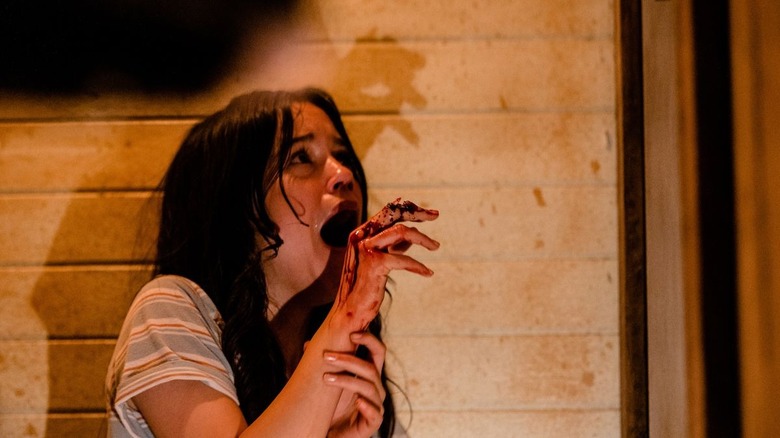
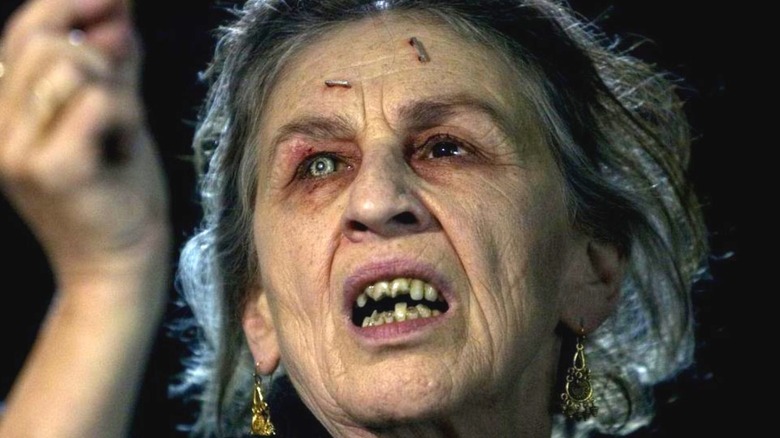
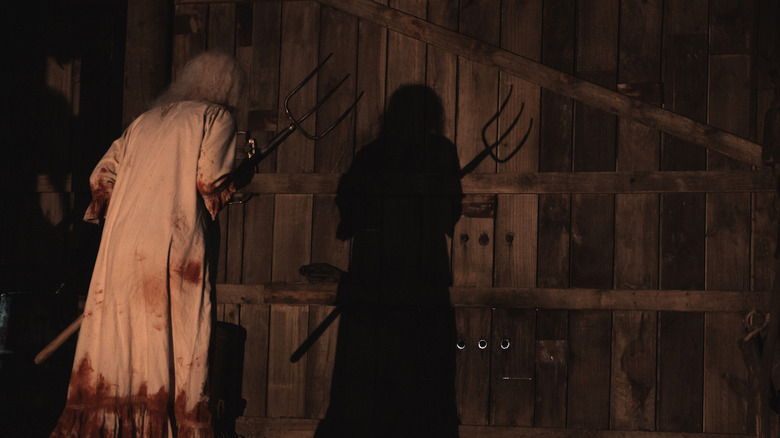
"X" marks Ti West's first horror feature in nearly 10 years, and the articulate genre filmmaker delivers a splashy and reflective take on the slasher genre. Set in 1979, "X" follows a group of filmmakers with artistic and economic aspirations who travel to a rural farmhouse in Texas to create a low-budget porn film, "The Farmer's Daughter." The cast includes Mia Goth (who doubles magnificently as an eerie elderly woman named Pearl), Brittany Snow, Jenna Ortega, and Kid Cudi. Its gritty, retro style harkens back to "The Texas Chain Saw Massacre." But "X" is something entirely different. 

While shooting on the farm, the actors' nubile lovemaking ignites Pearl's jealousy and bloodlust. She has been resigned to celibacy for a number of years because her husband, Howard, has heart problems. Over the course of the terrifying night, Pearl pursues the crew with a deadly rage. "X" subverts horror genre expectations by having protagonists (and antagonists) with sexual agency and desire, portraying villains with empathy, and sharing a thoughtful perspective on the sorrows of aging.

"X" was made in New Zealand by the crew of "Avatar," who were on hiatus. The country was the perfect filming location because it had largely eradicated COVID-19 and thus had no need for COVID-19 protocols. "It's obviously not a very social-distanced kind of movie," Ti West joked in The Daily Beast.

He Used Special Lenses To Evoke 16mm Film

COVID-19 did affect how Ti West approached making "X." In an interview with IndieWire, West explained how he used "special lenses and post-production effects to create the grainy look of 16mm film" to evoke the time period and other films from the era such as "Debbie Does Dallas" or "Deep Throat." But this was not always how he wanted to shoot "X." He told his prepandemic ideas to IndieWire

"The original plan was to shoot on 16mm, but because we made the movie in New Zealand during COVID, it would've been impossible to get dailies within two weeks. We shot on the Sony Venice and used these groovy hawk lenses. I went exhaustively out of my way so that people thought I shot on 16. That's not so much because of nostalgia for the format. Film offers a certain aesthetic that digital is almost there but not the same. Especially when you make a movie like this, that is part of the charm of it."

West used older light fixtures to create the feel of celluloid. He continued: 

"In post, there's a minimal amount of defocus on the whole movie, which takes away some of the sharpness — and then there's a certain amount of moving grain we shot from film to overlay onto it. All of that sounds like a ton of work, and it's kind of invisible when you watch the movie, because it's not grindhouse-y or kitschy. It's there to take the edge off the modernness of the technology."

The director has used film in the past. "The House of the Devil," about a babysitter who becomes part of a Satanic plot, was shot on 16mm film, lending a vintage aesthetic that matches its 1980s setting. Shooting in 35mm laced "The Innkeepers" with a chilling nostalgia that offsets the quirky humor of two inn employees searching for spirits.

In "X," West also uses popular 1970s techniques such as split screens and wipe transitions, the former of which is used in a moving montage set to Fleetwood Mac's "Landslide." The clips from "The Farmer's Daughter" seem lifted out of the 1970s, using Academy ratio and a grainier style. The celluloid look of "X" is more than just a visual aesthetic, it comments on the craft of filmmaking itself.

An Ode To The Craft Of Filmmaking

"X" is a self-reflexive meditation on what it means to create and consume cinema. Specifically, "X" acknowledges the artistry behind grindhouse cinema — which is traditionally considered lowbrow. As Ti West told The Daily Beast, it explores how horror and porn have a "symbiotic relationship of being the outsider genres that you could make without any permission or any access to the things that Hollywood had to offer, and you could go direct to an audience and you could find a lane there."

The director of "The Farmer's Daughter" wants to evoke the avant-garde stylings of Jean Luc-Godard and Federico Fellini, not just make another porn; he wants to elevate what is seen as an inferior, smutty genre by taking from his French New Wave inspirations. In The Daily Beast, West describes the time period as "probably the most revered time for American filmmaking, where mainstream movies were pretty challenging and sort of experimental, and at the same time exploitation movies were very rich and we had places from drive-ins to 42nd Street. It's just a rich cultural time for cinema." 

While making "X," West decided to take advantage of the sets and crew available and shot a prequel, "Pearl," which will explore the antagonist in more depth. "Pearl" will be a spin on Douglas Sirk melodramas and Disney movies with a Technicolor aesthetic. "If 'X' is about the way this auteurist era of independent filmmaking is affecting people, 'Pearl' is sort of about the old Hollywood way that affected people," he told IndieWire. He's also currently working on a sequel, which will explore the rise of home video. It will be exciting to see the story of "X" fleshed out in these upcoming films!

Read this next: The Horror Movies We Can't Wait To See In 2022

The post How Ti West Recreated X's Retro-Horror Aesthetic appeared first on /Film.

08 Apr 14:37

10 Non-Alcoholic Beers That Are Actually Worth Drinking

by Jeff Somers

Beer is one of mankind’s greatest achievements. We’ve been brewing it according to various recipes for thousands of years—the ancient Egyptians were brewing up a storm, and we can actually replicate their recipes in the modern day. While beer is often associated with alcohol and inebriation, people who love beer…

Read more...

08 Apr 14:36

A 2000s One-Hit Wonder Became A Vital Part Of Everything Everywhere All At Once

by Lex Briscuso

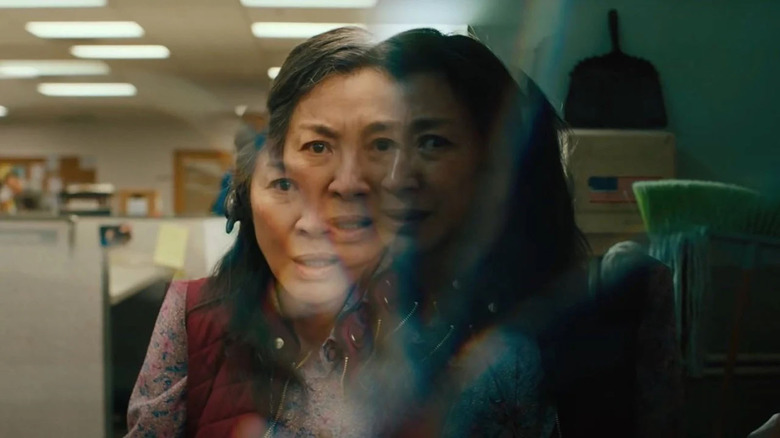
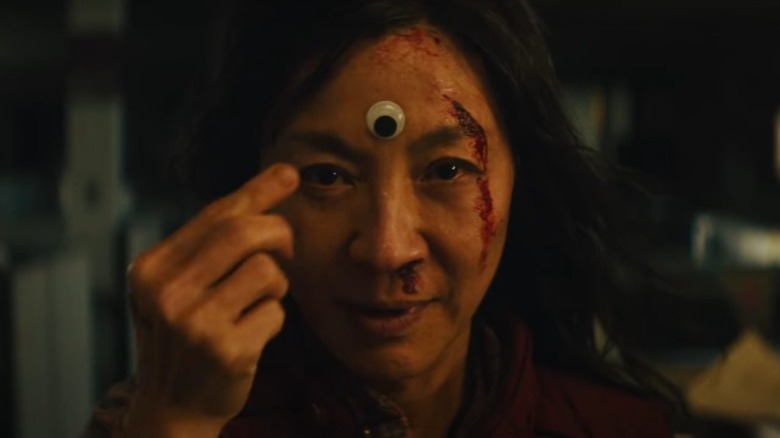
"Everything Everywhere All At Once" is exactly what the film's title leads you to expect: a feast for the eyes, ears, and the soul. There are so many little details that will certainly take several rewatches to uncover — but if you have eagle ears, you may have noticed one particular 2000s hit that played a crucial part in the through-line of the film: Nine Days' "Absolutely (Story of a Girl)."

During a March 30 post-screening Q&A that /Film's own Ethan Anderton attended, "EEAAO" directors Daniel Kwan and Daniel Scheinert — known collectively as Daniels — explained that the song was a major influence in the script first before it actually made it to the screen. The track is initially used during the pivotal scene when Evelyn (Michelle Yeoh) is told by her husband (Ke Huy Quan) that she is the only hope of the multiverses to be saved from an evil force called Jobu (Stephanie Hsu). Kwan explained:

"We were writing this scene, and as we were writing this monologue, we were struggling. Then these words came out of my hands. Like, the muse inspired us. I was like, 'Oh, this is good! But I didn't write this. Where did this come from?' So I Googled the lyrics, and I was like, 'Oh, this is a song from the '90s that has been stuck in my brain, somewhere in my subconscious, wanting to come out.' And I was like, 'That's really funny. I'm not gonna tell anyone and just see if anybody notices.' ... So the night before [shooting], we were like, 'We have to rewrite it. We can't just steal this guy's lyrics. That's so stupid.' But we couldn't come up with anything better. So we just shot it with the lyrics."

"The test was, does anybody notice in the screenplay. But on the page, on the paper, it's not as noticeable," Scheinert added during the post-screening conversation. "As soon as he said it out loud, we were like, 'Oh, it's really noticeable.' Your brain just connects it once you hear the words."

The line serves as a turning point for Evelyn, because it marks the moment where she not only comprehends the gravity of the situation at hand — despite its unbelievability — but she agrees to take part in it. "It was that way [in the script] for years, we could never beat it," Scheinert explained during an interview with Mashable. "Then instead of replacing it, the joke became, maybe we can just put the song in the movie, and it'll become part of it?" Kwan agreed, "For some reason, it makes sense in the multiverse. And then it just kind of grew from there." Additionally, they recognized how fitting the track was in relation to Jobu's character, who deals with a metric ton of emotional turmoil and inner angst throughout the film. Kwan told Mashable:

"It's little things like that push us over the edge. Because I think there was probably a moment where we're like, 'Let's just cut [the lines] out. Let's try something else." But then, we're like, 'But look at the lyrics. It's about [her]. She's so sad [that] she's going to destroy the world.' Come on!"

One Song Four Ways

The filmmakers ended up loving the addition of the soft treatment of the song that they reached out to Nine Days' lead singer, John Hampson, who was thrilled about their decision to use his song in the film so distinctly. Hampson is now a teacher and has teen sons who "love the multiverse," according to Mashable, so the former musician decided to go the extra mile and collaborate even further with Daniels. "We thought, 'What if we lean into it more? What if we reach out to the lead singer of Nine Days [John Hampson] and ask him to re-record his song with different lyrics so we can put them in different universes," Kwan revealed during the March 30 Q&A. 

Yeah, you read that right. There's layers upon layers to this stuff. So what and where are the three custom covers, you ask? Some sharp fans may have already caught them but here goes. The first usage is in a parallel universe where Evelyn and her husband are sitting in an RV and having a conversation. A country ballad cover of the original song plays on the radio during the scene in an effort to convey Evelyn's pain about her crumbling marriage.

Next, the song is used during a scene where Evelyn is a hibachi chef in another parallel universe. The second version of the track is actually called "Absolutely (Story of a Chef)," and includes some telling lyrics if you listen closely as it plays over the restaurant's PA system. Finally, the tune is used in a third parallel universe scene where our leading lady is a performer at a BDSM club, and it accompanies her on the radio. During the Mashable interview, Scheinert confirmed the lyrics to first verse of this version — Absolutely (Story of a Dom) — are as follows:

"This is the story of a Dom / She ties me up so good, but it's so wrong / And while she'll post uncensored photographs / I absolutely love it / My safe word's smile."

Kwan said of witty lyrics and inventive stylings of the new versions of "Absolutely (Story of a Girl)": 

"That's all John Hampson. He's the lead singer of that band, and now he's an English teacher. We were like, it can be 'This is the story of a dom,' and then the rest of the lyrics are the same. But he was like, 'No, no, no.' And then he wrote his own version. He came to a screening the other night, but he had to leave to pick up his kids, and we didn't get to meet him. We've still only Zoom'd with him. But he sat with an audience like this one and heard everyone laugh. He was so excited."

Clearly, the song is an incredible fit for the emotional life and chaotic container of "Everything Everywhere All At Once." It deeply represents its flawed and beautiful characters and it's truly the perfect linchpin to connect the audience with a grandiose film with a lot of moving parts. Needless to say, this meeting of the minds — Daniels and Nine Days' John Hampson — was a match made in multiverse heaven.

"Everything Everywhere All At Once" is playing in U.S. theaters in wide release now.

Read this next: 20 Movies About Time Travel Ranked Worst To Best

The post A 2000s One-Hit Wonder Became a Vital Part of Everything Everywhere All at Once appeared first on /Film.

08 Apr 14:36

This new oral history of the song "Barbie Girl" is strangely fascinating

by Thom Dunn

To mark the momentous 25th anniversary of Aqua's once-inescapable pop earworm "Barbie Girl," Rolling Stone spoke with the remaining members of Danish pop group about their unexpected one hit wonderdom. It's a surprisingly earnest interview; apparently they're still making music, even after two of them got married and divorced and now co-parent their kids from separate homes in the same building. — Read the rest

08 Apr 14:33

GTA IV Ultimately Beautiful Edition is a 7.8GB mod pack, aiming to overhaul the game’s graphics

by John Papadopoulos

NexusMods’ member ‘hip63’ has released a mod pack for Grand Theft Auto 4, aiming to completely overhaul the game’s graphics. Since this is a mod pack, it does not feature any brand new graphical mod. Still, this is one of the best ways via which you can improve the graphics of this GTA game. Going … Continue reading GTA IV Ultimately Beautiful Edition is a 7.8GB mod pack, aiming to overhaul the game’s graphics →

The post GTA IV Ultimately Beautiful Edition is a 7.8GB mod pack, aiming to overhaul the game’s graphics appeared first on DSOGaming.

08 Apr 14:32

Timestomping Registry Keys

by Unknown

If you're worked in DFIR or threat intel for any amount of time, you've likely either seen or heard how threat actors modify systems to meet their own needs, configuring systems to provide data or hide their activities, as they make their way through an infrastructure. From disabling services, to modifying the system to maintain credentials in memory in plain text, to clearing Windows Event Logs, sometimes it seems that the threat actor knows more about the platform than the administrators. These system modifications are used to either provide easier access to the threat actor, or hide the impacts of their activities by "blinding" the administrators, or simply be removing clear evidence of the activity. Sometimes these system modifications go beyond the administrators, and meant to instead hamper/impede the efforts of forensic analysts investigating an incident. Today, thanks to the efforts of a bright, shining star in DFIR, we'll take a look at one such possible technique, one that hasn't been addressed in some time.

Continuing with her excellent content creation and sharing, Lina recently illustrated another means threat actors can use to disguise their activity on systems and hide their presence from DFIR analysts and threat hunters; in this case, Lina shared awareness of a technique to modify the LastWrite times on Registry keys. As we've seen in the past, Lina's blog posts are comprehensive, well-thought-out, and extremely cogent.

In her blog post, Lina used Joakim Schicht's SetRegTime (wiki) to modify Registry key LastWrite times, providing several attack demonstrations. She then followed it up with detection methodology insights, providing additional thoughts as to how threat hunters and DFIR analysts might go about determining if this technique was used. I was particularly interested in her "part 2", relying on key LastWrite time discrepancies in hopes of spotting the use of such a technique.

In addition to her blog post, Lina also tweets out her content, and in this case, Maxim stepped up to provide some additional color to Lina's content, providing more detection techniques. Maxim specifically mentioned the use of Registry transaction logs, something he's addressed in detail before in his own blog.

Other resources regarding Registry transaction logs and tools can be found:
- Andrea Fortuna (uses regipy)
- WindowsIR (refs Maxim's yarp + registryFlush.py)
- Mandiant

More Detection Possibilities
Adding to both Lina and Maxim's incredible contributions regarding detections, other possible detection methodologies might include:

** The use of the RegIdleBackup Scheduled Task; you might remember that this task used to backup the system Registry hive files into the C:\Windows\system32\config\RegBack folder. I say "used to" because a bit ago, we stopped seeing those Registry hive backups in the RegBack folder. Per Microsoft, this change is by design, but there is a way to get those hive backups back, by setting the EnablePeriodicBackup value to "1" and rebooting the system. 

** Or, you can create your own Scheduled Task that uses reg.exe to create periodic hive backups, with names appended with time stamps in order to differentiate individual backups.

Both of these methodologies would serve purposes beyond simply detecting or verifying the use of Registry key time stomping techniques. However, both of these methodologies require that system owners modify systems ahead of an incident, and I'll admit that the reality is that this simply doesn't happen nearly enough. So, what can we do with what we have?

Lina had a great detection methodology in "part 2", in that looking at an arbitrary key with subkeys, the line of reasoning is that the key LastWrite time should be equal to or more recent than the subkeys; remember that adding, deleting or modifying a value beneath the key via the usual API will cause the key LastWrite time to be updated, as well. This is an interesting approach, and would apply only under specific circumstances, but it is definitely worth testing. 

Some additional thoughts...

If an adversary copies the SetRegTime executable over to a system and uses it in a similar manner to the way Lina described, there may be indications of the use available via EDR telemetry, as well as the ShimCache and AmCache.hve files. If there's an entry in the AmCache.hve file, then the entry may also include a hash (even given the limitations of that process). This approach (by the adversary) isn't entirely underheard of, either copying the executable file over to the system, downloading once they're on the system, or including the executable in the resource section of another executable. Of course, if the adversary includes the code from the SetRegTime executable into their own, then that's a whole other ball of wax, but the key thing to remember is that nothing bad happens on a system without something happening, and that something will leave traces or an indicator.

There are a number of examples of the use of SetRegTime on the wiki; if some of the example time stamps are used, there's potential for a possible detection mechanism (yes, the wording there was intentional). Registry key LastWrite times are 64-bit FILETIME objects, or "QWORDs", which are comprised of two "DWORDs". Examples used in the wiki, such as "1743:04:01:00:00:00:000:0000" will result in one of the DWORDs consisting of all zeros. As it is unlikely the case that such a loss of granularity would be unintentional, so reading the two DWORDs and checking to see if one is all zeros might be a good automated DFIR analysis technique, either across the entire hive or by focusing on a subset of keys.

Conclusion
So, again...fantastic content by both Lina and Maxim! Be sure to visit both of their blogs, as well as give them a follow on Twitter for more amazing content!

Lina - blog - Twitter
Maxim - blog - Twitter

Addendum: After publishing this post, I wrote a RegRipper plugin (based on the sizes.pl plugin) to run through a hive file and find all the keys that had LastWrite times that were smaller/older than their most recently-updated subkey...and it turns out, there are a LOT! It seems that doing something...anything...that updates a subkey and causes the LastWrite time to be updated does not then roll that change up to the subkey's parent. This would be necessary for this detection methodology to work.

08 Apr 13:49

Fedora 37 Considering Removal Of Legacy X.Org Drivers

Adding to the interesting changes being worked on for Fedora 37 due out later this year is the removal of legacy X.Org drivers. Fedora is looking at removing the legacy graphics driver paths that are incompatible with running Wayland...
08 Apr 13:49

OpenSSH 9.0 Released With Hardening Against Future Quantum Computers

OpenSSH 9.0 is available today as the latest version of this widely-used, open-source SSH implementation. With OpenSSH 9.0 comes new features as well as changes like scp using the SFTP protocol by default...
08 Apr 13:46

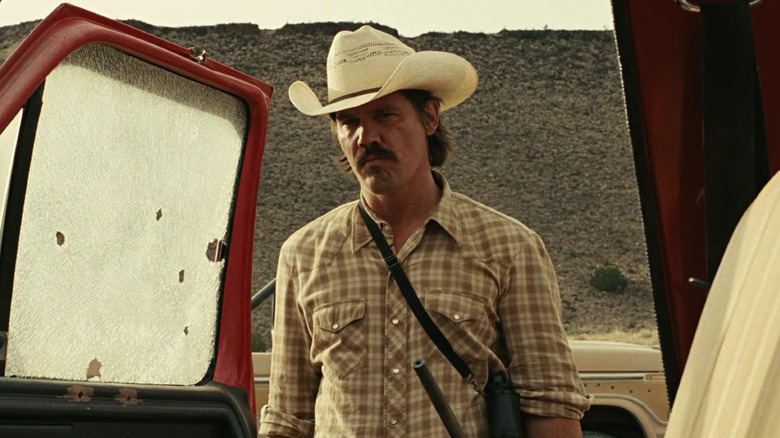
Josh Brolin Thinks The Coen Brothers Pranked Him While Shooting No Country For Old Men

by BJ Colangelo

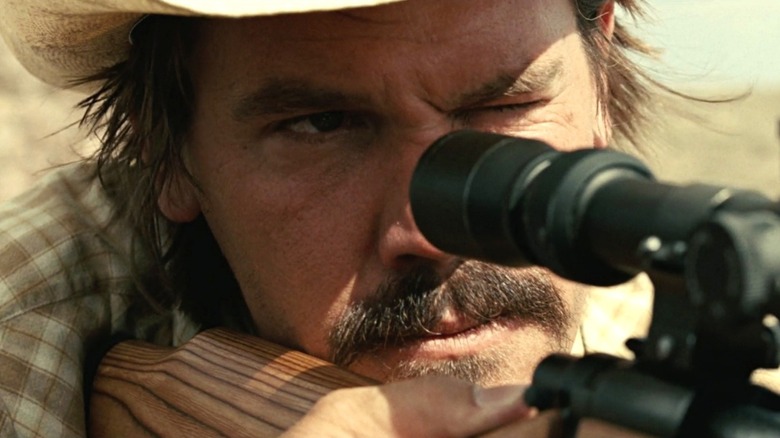
Once upon a time, Josh Brolin broke onto the mainstream as Brand Walsh, the heartthrob older brother of Sean Astin's Mikey in "The Goonies." He appeared in a variety of films and even nabbed a leading role on the series "The Young Riders," but new life was breathed into Brolin's career after he was cast as Llewelyn Moss in the Joel and Ethan Coen film "No Country for Old Men." Brolin's Moss is a hunter who inadvertently finds himself mixed up with the deadly assassin Anton Chigurh (Javier Bardem) after stumbling across the aftermath of a drug deal that left bodies in the wake. Moss leaves the scene with a briefcase filled with $2 million, cash that Chigurh desperately wants to retrieve. The film was nominated for eight Academy Awards, winning four for Best Picture, Best Director, Best Supporting Actor for Javier Bardem, and Best Adapted Screenplay.

The success of the film helped reignite the industry's interest in Brolin, who went on to appear in major films like "American Gangster," "W.," True Grit," "Inherent Vice," "Sicario," and "Dune." Not mention his casting as the biggest villain in the galaxy, Thanos, in the Marvel Cinematic Universe. His role as Llewelyn Moss didn't require a lot of dialogue, which initially concerned Brolin. "I mean it was a fear, for sure, because dialogue, that's what you kind of rest upon as an actor, you know?" The lack of dialogue did allow for space to try new things, and for the Coen brothers, the opportunity to possibly screw with Josh Brolin.

'Was It A Joke, Or Did It Help The Movie And The Scene?'

In one of the earliest moments in "No Country For Old Men," Brolin's Moss finds the briefcase full of money and the corpses of those in the drug deal. As he said in an interview, "When I got the satchel and I opened it up, I said, 'Don't you think he should say something?'' As Brolin tells it, Joel Coen asked Brolin to offer suggestions, which he did in the form of inquisitive sounds. It's not as if Brolin was looking to bust out a soliloquy or anything, just some form of audible indication of what his character was feeling:

And I said, "I don't know, like a 'huh' or a 'hm.'" And they go, "Is there anything else?" And I go, "Like 'hmm?'" And they go, "What else?" And, now you're thinking, "They're f****** with me, right?"

Brolin tried six different responses before Ethan Coen told him to "try the second one" again. Brolin did as directed, and while we aren't sure which take the Coen brothers ended up using in the final cut of the film, Brolin thinks the directors used the moment to mess with him. "Every time we screened the movie I always knew where Ethan was in the theater, because every time that moment happened he would burst out laughing," he said. "So, was it a joke, or did it help the movie and the scene? We'll never know." 

Despite the possibility the directors were messing with him, Brolin still spoke highly of his experience, but playfully joked "Any kind of film that they've come out with and they've manifested that's good is an accident, not because of skill or anything." There's clearly some magical method to the Coen Bros. madness, and the duo and Brolin were able to laugh their way to nearly-universal acclaim. 

Read this next: War Of The Gargantuas: The Entire Godzilla Series Ranked From Worst To Best

The post Josh Brolin Thinks the Coen Brothers Pranked Him While Shooting No Country for Old Men appeared first on /Film.

08 Apr 13:46

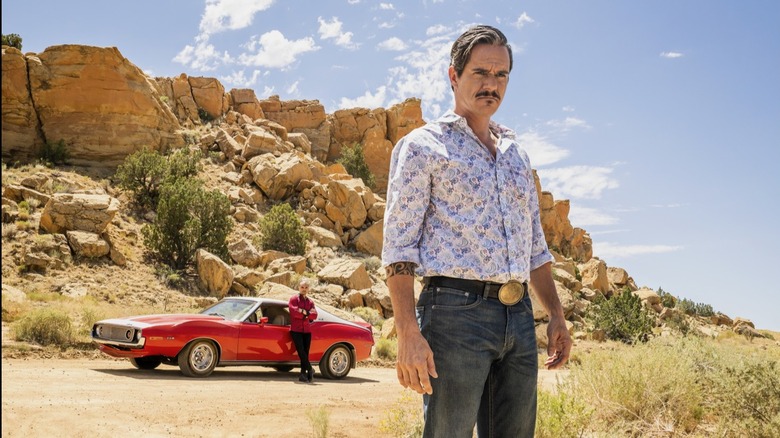
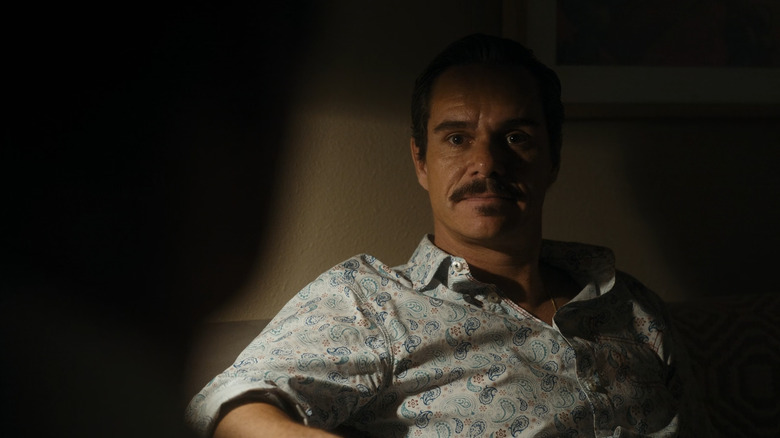
Vince Gilligan Was Against Adding This Fan-Favorite Character To Better Call Saul

by Steven Ward

Despite being arguably one of the standout characters to appear in "Better Call Saul," it was never a certainty that Lalo Salamanca (Tony Dalton) would surface in the show. This might seem strange given the two episodes from "Breaking Bad" that reference him, which felt like a tee-up for an eventual reveal. Lalo is first mentioned by Saul Goodman himself (Bob Odenkirk) during a terrified rant in Season 2. Then in Season 4, Gus Fring (Giancarlo Esposito) reveals he's killed every Salamanca except Hector, implying Lalo is dead or unable to retaliate. Seeing how the "Better Call Saul" Season 5 finale, "Something Unforgivable," ended, we wouldn't exactly bet against his survival just yet.

From the moment he appeared in Season 4 of "Better Call Saul," the character of Lalo has lived up to his fearsome reputation. It is often in ways that contrast him from other Salamanca family members like Tuco and Hector, something owed to Tony Dalton's fantastic flexibility as an actor. It's no wonder how quickly the audaciously stylish Lalo has become a fan favorite. But what's surprising is just how long it took creators Vince Gilligan and Peter Gould to agree if and how they'd introduce Lalo into the "Better Call Saul" storyline.

Gilligan Lagged On Lalo

Apparently, there really is only one person to blame for the delay in Lalo's appearance on the show, and that's Vince Gilligan. But since he co-created "Better Call Saul" in the first place (not to mention "Breaking Bad") and is intensely repentant, it's hard to hold it against him. During an interview with Rolling Stone, Gilligan explained why he initially thought it was unnecessary for Lalo to appear at all:

"Back in Season 1 or 2, when I was more active on the show, Peter kept saying, 'We've gotta answer who Lalo is,' and I finally said, 'I don't know that we need to answer every single question.' And, man, I was wrong. If Peter hadn't pushed, we wouldn't have Tony Dalton. We wouldn't have this amazing character. So, some of the ones that I found the most frustrating to deal with, that I said, 'Ah, the hell with them. Who cares?' tend to be the best ones of all."

It's nice to know Peter Gould was there to badger Gilligan over Lalo, and it's clear he's grateful for the persuasion. In retrospect, the world of "Better Call Saul" would be a much less fantastical place without Dalton's often larger-than-life performance. He's more than just an amazing character. He's an antagonist that rivals even the scarily astute Gus Fring and does so with a charm that only makes him more unpredictable.

Gould Knew Dalton Was Perfect From The Start

After Vince Gilligan finally conceded to adding Lalo to "Better Call Saul," he and Peter Gould sat down to decide on characterization. Then came the hard part: casting. Gould went into detail with "Rolling Stone" about the whole process and their unbelievable luck in finding Tony Dalton.

"We went to our brilliant casting folks, Sharon Bialy, Sherry Thomas, and Russell Scott ... and we told them, 'We have a new member of the Salamanca family. He's a charming Salamanca, and playful.' They brought us Tony Dalton, and I don't know what else to say. We found a guy who's got movie-star charisma, and he's athletic, and he's charming, and he plays every layer to every scene."

Dalton's charisma is unquestionable. His athleticism also doesn't hurt, especially considering how often his character is seen leaping from high places. It's just one aspect of Lalo's extraordinary nature that Gould discussed is at times difficult to portray realistically.

"First of all, we try to make sure that the characters obey the rules of physics ... Everything Lalo has done was actually accomplished by an actual human being without wire work. I think that helps. The problem we run into most often is that Lalo, Nacho, Gus, and Mike are savvy, intelligent people. Gus, in particular, is a brilliant chess player who sees many moves ahead. Sometimes it's very difficult to dramatize what's going on beneath all these moves and countermoves. How much does Gus know before he becomes omniscient? How much can Lalo deduce from what he's seen? It's the intellectual side that gives us fits."

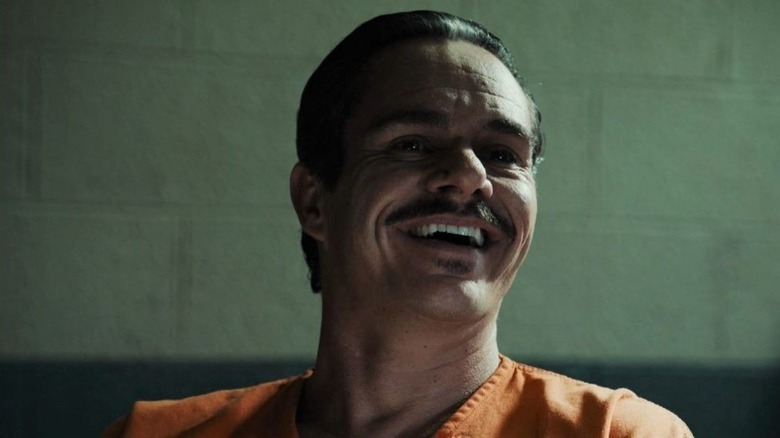
Dalton certainly has a flair for portraying the fiercely intelligent and deceptively charming Lalo. Even when characters like Saul or Fring can see right through his smile, it's still nearly impossible to detect his reactions or motivations. The harder he grins, the more sinister it feels.

Dalton Drew Inspiration From A Pulp Fiction Character

There's a certain tension Lalo elicits the moment he walks into a room. But despite being the source of that anxious apprehension, he's always the coolest and calmest present. It's no accident that Lalo is magnetizing to watch as Tony Dalton designed him to be that way. As he told Looper:

"You got to start with how he talks, how he walks and start seeing other maybe characters or people that he could be similar to. For example, one of the things that I pride myself on is I think Lalo is very similar to Jules Winnfield, which is Samuel L. Jackson's character in 'Pulp Fiction.' Kind of this smart a**, sort of scary but kind of carefree, kind of cool guy. That's one tiny little thing that you grab. Also, I have a friend down here in Mexico who's just the most charming guy in the world, so I kind of grab a little bit of him, and then the stuff that's written and then how he walks and how he kind of bends over. You start doing all that stuff for a while at home like a crazy person and then you got to go show up on the set and you kind of got it."

All that prep clearly paid off by the time Dalton made his first appearance as Lalo in the Season 4 episode "Coushatta." After arriving unannounced at his father's restaurant to talk shop, Lalo tells Nacho Varga with a sinister grin: "You won't even notice I'm here." Who else is known for hiding menacing implications behind over-the-top niceties? Jules Winnfield — a man who is all too polite when asking to taste your Big Kahuna burger, but not so much when he points his gun at you. Dalton gave us a glimpse of this vengeful other-half of Lalo's personality in that bloody season finale. Facing betrayal by Nacho and the deaths of his family members, I think the mask is about to come off. I'm looking to Dalton to give Lalo a more than fitting end.

Read this next: The 15 Best Netflix Original Series Of 2021 Ranked

The post Vince Gilligan Was Against Adding This Fan-Favorite Character to Better Call Saul appeared first on /Film.

08 Apr 13:45

Doctor Who's Regeneration Was A Sci-Fi Solution To A Real-World Problem

by Ryan Leston

Classic British sci-fi show "Doctor Who" has been on our screens since 1963 and it's renowned for some of science fiction's coolest deus ex machina. The TARDIS, the sonic screwdriver, and the vortex manipulator are all answers to various futuristic storytelling problems.But the best one of all? Regeneration.

A signature ability of the Doctor, regeneration is the process of molecular readjustment that allows Time Lords to essentially cheat death ... at the expense of becoming a different person. Regeneration creates some of the show's most iconic moments — when a Doctor comes to the end of their tenure, passing the baton to their successor.

In the context of the show, it's a furious process — the Doctor literally bursting with regenerative energy as their bodies rewrite and reconfigure themselves into another form. The Thirteenth Doctor described it as "every cell in [her] body burning" as her "whole body changed."

"There's this moment when you're sure you're about to die and then ... you're born."

This rebirth allows the Doctor to become an entirely different person each time. And while early incarnations tended to be white men, we've recently seen the Doctor change skin color and even gender. Most recently, we saw Peter Capaldi's Twelfth Doctor regenerate into their current form, Jodie Whittaker. And with her time as the Doctor coming to a close, it won't be long before we see her regenerate into her successor, too.

But why does it happen?

The Time Lords explain that it's a biological process that kicks in like instinct, allowing them to survive certain death. But it's also a very neat solution to a real-world problem: what do you do when your lead leaves the show?

Doctor Who's First-Ever Regeneration

The First Doctor was famously played by William Hartnell, a role he kept until 1966. A combination of ill health and a clash with the show's creative team led to Hartnell's eventual departure ... but the BBC was keen to keep "Doctor Who" running.

"I'm not brassed off," said Hartnell in one of his few televised interviews.

But clearly, the grueling schedule was getting to him:

"It's the association of this Dalek question – this mechanical, mobile object that I'm beginning to find distracting. And they were difficult to play to because you're not looking into human eyes. You're looking at a metal object, moving about with a voice-over."

Of course, the BBC could have just recast the role. But they chose a more creative solution. Originally, producer John Wiles and script editor Donald Tosh planned to write out Hartnell during April 1966 story "The Celestial Toymaker." The classic "Doctor Who" villain would have made the Doctor disappear ... only to reappear later as an entirely different actor. Ultimately, this didn't pan out, but Hartnell's departure was still on the cards.

It's unclear who came up with the idea of regeneration, though it's thought to have been from discussions between new "Doctor Who" producer Innes Lloyd and his story editor, Gerry Davis. And so, in the October 1966 episode "The Tenth Planet," we saw the Doctor regenerate for the first time. This essentially allowed the BBC to recast the now-iconic role without any trickery — framing the recasting within the context of the sci-fi series itself. It's a neat trick and one that has served it well, with every new actor eventually regenerating into their successors before parting ways with the show.

As for Hartnell's successor, the man himself actually helped choose:

"There's only one man in England who can take over, and that's Patrick Troughton."

Troughton appeared for the first time as the Second Doctor in that very same episode and regeneration became a huge part of the Doctor's identity, and a part of the DNA of the show itself.

What Happened When Hartnell Regenerated?

The first-ever on-screen regeneration in "Doctor Who" was a fairly simple one. During the Cybermen's invasion of Earth, the Doctor becomes weak and is captured. Although he soon escapes and rescues his companions, it's clear that the Doctor is not himself. He's become frail since his earlier encounter with The Celestial Toymaker and explains to Polly (Anneke Wills) that his body is "wearing a bit thin."

After clambering back to the TARDIS, he collapses to the floor and begins the regeneration process — his face flooded with bright light as it transforms into that of a younger man. The episode ends with Patrick Troughton becoming the Doctor ... although little is explained about how this came to be.

Initially, the process of regeneration was simply termed "renewal" and it wasn't until the Doctor's third regeneration in 1974 that it was actually called "regeneration." But while the Doctor is revitalized with the vigor of a much younger man, it seems that his transformation came at a cost.

A BBC production note sheds some light on the regeneration process:

"The metaphysical change which takes place every 500 or so years is a horrifying experience — an experience in which he re-lives some of the most unendurable moments of his long life, including the galactic war. It is as if he has had the LSD drug and instead of experiencing the kicks, he has the hell and dank horror which can be its effect."

After the regeneration, it became clear that the process was not without side effects as the Second Doctor began experiencing post-regenerative issues. The most obvious? Confusion about his own identity — even though he adjusted to his new physical body with ease.

Essentially, regeneration had allowed the Doctor to avoid death at the hands of old age — a poignant moment considering Hartnell's own advancing years. More importantly, it allowed the BBC to recast its most iconic leading role with a solution that leaned into the show's science fiction background. It would become a long-running practice, too with the Doctor still regenerating to this day.

The Doctor had made his first-ever regeneration ... but there were many more still to come.

Regeneration Became A Doctor Who Staple

After Hartnell's successful transition into Troughton, "Doctor Who" embraced regeneration as its means of recasting the Doctor. Throughout the show's almost 60-year history, we've seen a total of 13 Doctors — each one of them regenerating from the last. Even if there were some mysterious transitions in-between.

But the process isn't exactly the same for every Doctor.

Since the Doctor's first regeneration, the process has been portrayed in many ways, with both physical and psychological effects on the Doctor's new incarnation. He's often depicted with some form of amnesia — a by-product of the regeneration process, which was introduced with the Seventh Doctor, Sylvester McCoy. But it can also cause other negative effects, including impaired motor functions and even an increased appetite as the Doctor becomes starved of energy. Thankfully, they tend to get over these side effects rather quickly ... but the regeneration process clearly takes its toll on the Doctor.

It's often explained that Time Lords experience a surge of regenerative energy during regeneration, causing their entire body to be rewritten across the very fabric of space-time. No wonder they're all pretty exhausted afterward.

Visually, the regeneration process differed from Doctor to Doctor until the show's revival in 2005. Here, showrunner Russell T. Davis created the new quintessential regeneration — the Doctor bathed in bright, golden light exploding from his face and hands. This form of regeneration has since been used by each subsequent Doctor.

Before this, regeneration varied from a bright white light that illuminated the Doctor's face during the transition, a cacophony of rainbow-colored lights, or even a crackle of electricity. However it looks, the iconic transformation has become a well-known part of the show.

Now, with Jodie Whittaker due to bow out from "Doctor Who" we're all waiting to see just who will take over as the Fourteenth Doctor. Not to mention, how her particular regeneration will pan out.

Read this next: 20 Movies About Aliens That You Definitely Need To Watch

The post Doctor Who's Regeneration Was a Sci-Fi Solution to a Real-World Problem appeared first on /Film.

08 Apr 13:44

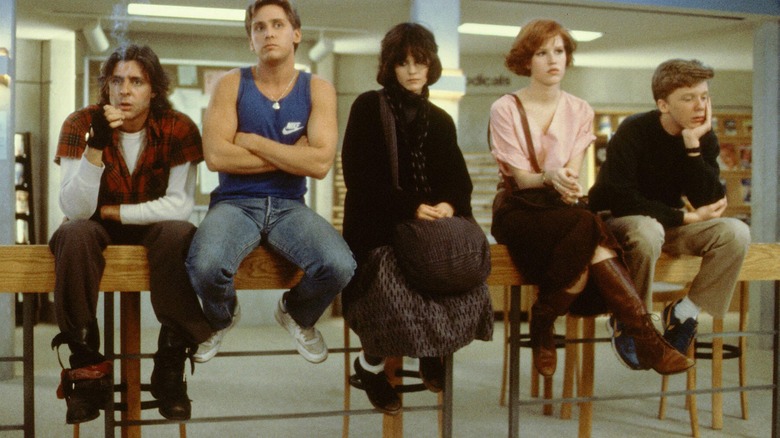
Don't You Forget About Me: The Breakfast Club Cast Will Never Reunite

by Debopriyaa Dutta

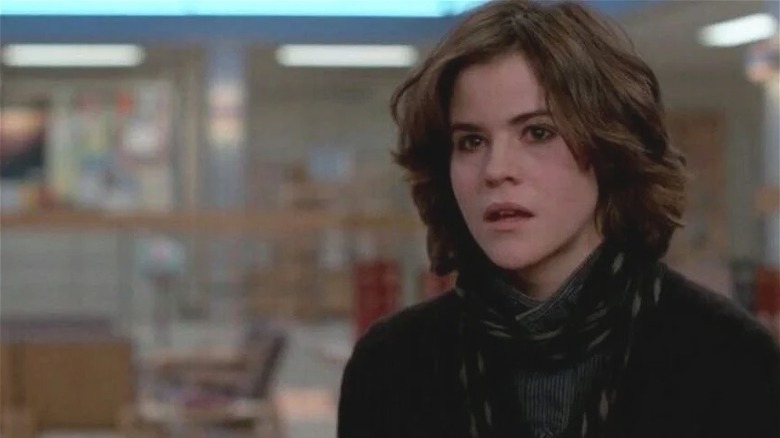
The core stars of "The Breakfast Club" will regrettably never reunite with one another. Ally Sheedy, who played shy, socially awkward Allison Reynolds in the classic John Hughes film, recently appeared on the Behind The Velvet Rope with David Yontef podcast, and stated that a reunion of the cast is improbable (via ET Canada). Sheedy firmly held on to her stance, saying that a reunion is out of the question, even if there is to be a perfectly good reunion script sometime in the future:

"We wouldn't do it. We wouldn't do it. It would feel like trying to recreate something that happened. No matter what the script would be. I just don't... I don't think, I don't think it would happen. It would just feel too, ugh."

While our hopes are dashed, if Sheedy feels so strongly against the reunion, it is best to simply respect that.

It's Probably For The Best

Now, don't get me wrong — "The Breakfast Club" is a classic coming-of-age film, a staple in the teen drama genre, still hailed as one of the most beloved John Hughes classics. It is a tale of how five teenagers, who seem to have nothing in common and play out typical high-school stereotypes, bond together on an innately emotional level in spite of their differences. Apart from Sheedy, the film stars Emilio Estevez, Anthony Michael Hall, Judd Nelson, and Molly Ringwald.

The overwhelming fame that the actors experienced came along with something unsavory, namely the dubbing of a group of young actors who frequently starred in teen coming-of-age films in the 1980s as The Brat Pack. The stars of "The Breakfast Club" were directly defined by this nickname, first mentioned in a 1985 New York Magazine article, alongside stars such as Rob Lowe, Demi Moore, Andrew McCarthy and a young Robert Downey Jr., to name a few.

The term had demeaning connotations at the time it was hurled at the young actors, who were unjustifiably associated with the wild, reckless teen movie star trope, heavily impacting some of their careers. Sheedy spoke about the mean-spiritedness of the term, and how "undermining" it felt for her personally (via The Independent):

"We weren't young actors running around town spending all our time together. I thought it was a little gossipy and undermining, and I didn't know that it was going to stick the way that it did. It was uncomfortable for quite a long time."

While this might not be the only reason behind Sheedy's proclamation, it is also important to understand that a replication of the original, no matter how well handled, might not have the same impact in the current scenario. Instead, it is best to support the independent careers of the actors at the moment, and remember "The Breakfast Club" as an impactful nostalgia piece.

Sheedy currently stars in the comedy series, "Single Drunk Female," which premiered on January 20, 2022 on Freeform.

Read this next: The 15 Best '80s Comedies Ranked

The post Don't You Forget About Me: The Breakfast Club Cast Will Never Reunite appeared first on /Film.

08 Apr 10:03

Secret Government Info Confirms First Known Interstellar Object On Earth, Scientists Say

by BeauHD
An anonymous reader quotes a report from Motherboard: An object from another star system crashed into Earth in 2014, the United States Space Command (USSC) confirmed in a newly-released memo. The meteor ignited in a fireball in the skies near Papua New Guinea, the memo states, and scientists believe it possibly sprinkled interstellar debris into the South Pacific Ocean. The confirmation backs up the breakthrough discovery of the first interstellar meteor -- and, retroactively, the first known interstellar object of any kind to reach our solar system -- which was initially flagged by a pair of Harvard University researchers in a study posted on the preprint server arXiv in 2019. Amir Siraj, a student pursuing astrophysics at Harvard who led the research, said the study has been awaiting peer review and publication for years, but has been hamstrung by the odd circumstances that arose from the sheer novelty of the find and roadblocks put up by the involvement of information classified by the U.S. government. The discovery of the meteor, which measured just a few feet wide, follows recent detections of two other interstellar objects in our solar system, known as 'Oumuamua and Comet Borisov, that were much larger and did not come into close contact with Earth. "I get a kick out of just thinking about the fact that we have interstellar material that was delivered to Earth, and we know where it is," said Siraj, who is Director of Interstellar Object Studies at Harvard's Galileo Project, in a call. "One thing that I'm going to be checking -- and I'm already talking to people about -- is whether it is possible to search the ocean floor off the coast of Papua New Guinea and see if we can get any fragments." Siraj acknowledged that the odds of such a find are low, because any remnants of the exploded fireball probably landed in tiny amounts across a disparate region of the ocean, making it tricky to track them down. "It would be a big undertaking, but we're going to look at it in extreme depth because the possibility of getting the first piece of interstellar material is exciting enough to check this very thoroughly and talk to all the world experts on ocean expeditions to recover meteorites," he noted. "Siraj called the multi-year process a 'whole saga' as they navigated a bureaucratic labyrinth that wound its way though Los Alamos National Laboratory, NASA, and other governmental arms, before ultimately landing at the desk of Joel Mozer, Chief Scientist of Space Operations Command at the U.S. Space Force service component of USSC," adds Motherboard. Mozer confirmed that the object indicated "an interstellar trajectory," which was first brought to Siraj's attention last week via a tweet from a NASA scientist. He's now "renewing the effort to get the original discovery published so that the scientific community can follow-up with more targeted research into the implications of the find," the report says.

Read more of this story at Slashdot.

08 Apr 03:04

Severance Season 1 Ending Explained: Innies, Meet Outies

by Valerie Ettenhofer

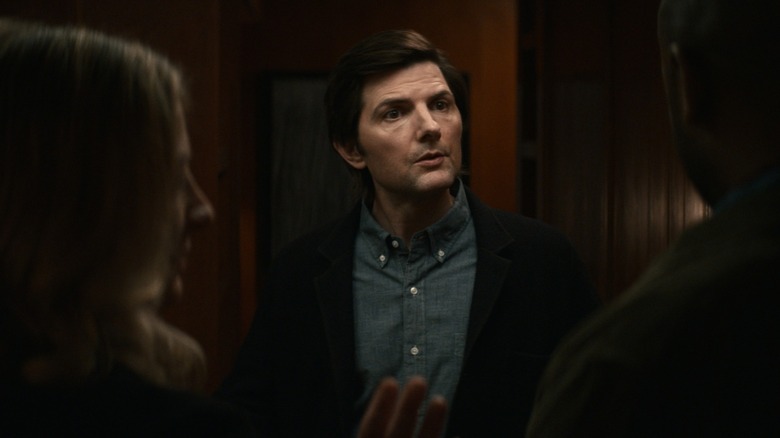
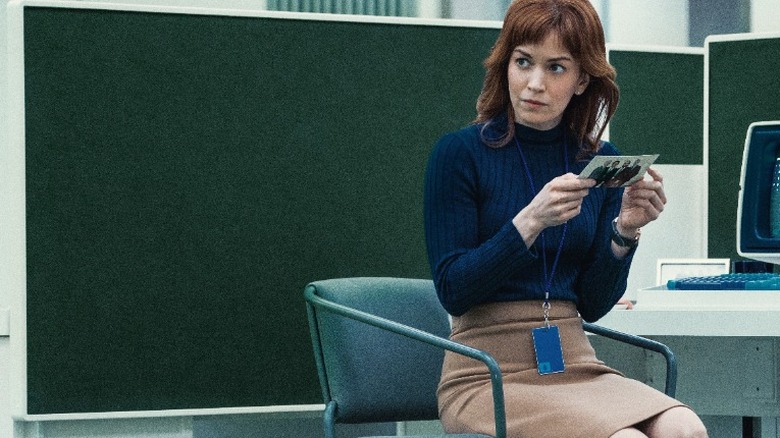
"Severance" slipped onto the scene in February, easing viewers into a Phillip K. Dick-like sci-fi story about workers at a mysterious company who have their consciousness split into an on-the-clock self and an off-the-clock self. The series started out as an eerie if deliberately paced workplace allegory set in a brutalist office building, led by Adam Scott as worker bee Mark.

Over its nine weeks, though, "Severance" grew into one of the best and most propulsive shows on TV. Its heart-pounding finale, "The We We Are," sees three of Lumon's employees wake up to the outside world. The results are scream-at-your-TV level thrilling and rewarding. The series, which is directed by Ben Stiller and created by Dan Erickson, has always been more concerned with the emotional effects of its inhumane central procedure than anything else. As such, this is the rare TV finale that answers more questions than it asks, finally cluing us in about the outside lives of the characters we've come to know only inside Lumon's doors.

The Truth About Irving

Let's start with Irving (John Turturro), since we got a quick glimpse into his outie's life last week. This episode really packs a punch in its opening minutes, frontloading a bunch of information about each of our heroes and allowing them to react to it for the rest of the episode. For Irving, who we know as a sweet, gay man who is a stickler for following Lumon procedures, we realize almost immediately that he's a military veteran. It's also pretty clear that he's lonely.

We see that the thick black acrylic paint he was smearing on a canvas last week is actually him painting the Lumon hallway again and again, like something from a nightmare. We also see that he apparently lives alone, but has a dog named Radar. That the good boy is named after a character from "M*A*S*H" should have been our first clue that Irving has a (probably emotionally complex) tie to the military, but we know for sure when we see his assorted medals and an American flag.

All of this seems to make Irving quietly sad — his innie is so peaceful, after all, and he's pictured such a highbrow life for himself. He's heartened and surprised to realize his outie is hiding one more thing: he's been researching Lumon. He has a cache of secret documents, including a map with his work crush Burt's (Christopher Walken) name already written in the corner! Does Irving already know Burt? We never find out for sure, but we do get to see him drive to Burt's house — a harrowing task for someone who's never driven before — where he sees the man seems to be happily living with a partner of his own. At episode's end, Irving is banging on Burt's door, but his workplace love hasn't answered it yet.

Helly: A Severance Story

The episode's biggest jaw-dropping moment is another one that comes early on. When Helly (Britt Lower) awakens, she's in the middle of a fancy party, talking to none other than Lumon board liaison Natalie (Sydney Cole Alexander). The show doesn't give us time to question this, instead immediately laying its cards on the table: Helly, the woman who hates Lumon so much she tried to kill herself to escape, is actually Helena Eagen, daughter of the company's CEO and the latest in a long line of cult-ish family members working on the Severance concept.

Helena, it soon becomes clear, has been working at Lumon as a PR stunt, to put a positive spin on Severance ahead of a vote on its legality. Helly learns this a little at a time as she wanders, wide-eyed, through the crowd of an event that seems to be the opening of some type of gala dedicated to her project. In a talking-head interview snippet displayed on a giant, slowly rotating photo wall, Helena tells interviewers the Lumon employees are like family to her. "I took a Severed job because it sounds freaking awesome," she says, in direct contradiction to everything we know about her. "So no, I don't think Severance divides us, I think it brings us together."

We get a taste of exactly how cultish Lumon is later in the episode, when Helly goes to the bathroom to compose herself and her father meets her there. This will probably be the most closely-examined part of the episode, and for good reason: there's a lot going on here. "I cried in my bed when they told me what she tried to do to you," her father tells her in a creepy, reverent whisper, referencing her innie's suicide attempt as if they really are different people.

He says the grandfather would cherish her sacrifice, and that one day she'll sit beside him. He also tells an ominous story: Helly's father says that when he brought home the first prototype Severance chip to show her, she said it looked pretty and that "everybody in the whole world should get one." Just before he's pulled away, Helly's father adds one last comment. "They will, because of you. They'll all be Kier's children." What the hell does that mean? Nothing good, clearly.

Mark Finds Himself

Mark's transition from innie to outie is smoother than the others because he starts off in a vaguely familiar situation. He's talking to Harmony (Patricia Arquette), who his outie knows as his batty neighbor Mrs. Selvig. Mark doesn't make much of this but finds an excuse to leave the conversation. He runs into his sister, who he briefly mistakes for his wife. This episode sneaks in so many small moments expressing the innies' tentative hopes, and Mark's hope for a family is one of the sweeter, sadder ones. He's pretty thrilled to discover he does have a family of sorts, and that his brother-in-law wrote the book that changed his life inside Lumon.

The scene at the reading is one of the episode's most intense, since Mark keeps trying to speak with his family privately to explain that he's actually his innie, but keeps getting sidelined by silly book event-related issues. By the time he finally tells Devon (Jen Tullock) that Lumon needs to be investigated, their conversation is cut short by the realization that Harmony is Mrs. Selvig, and she now has Devon's baby. The family tears out after her, only for Mark to realize soon after that Harmony left the baby safely in a bedroom. Still, it's one of the episode's freakier moments, and Tullock is excellent as a mother realizing just how fully this woman has invaded her life.

There's a sweetness to Mark's plot that's missing from the others in this episode. You get the sense he doesn't need to be severed at all, because he feels instantly at home in his outie's world. When Devon tells him he used to be a history professor, but got the procedure after losing his wife in a car crash, you can sense some deeper understanding of self click into place within Mark. He's been on a journey of self-discovery all season, and now, he seems to easily and empathetically reconcile his two halves.

20 Minutes Of Freedom

"The We We Are" ends on one of the best cliffhangers in recent TV history, the kind that would leave all of us screaming into a pillow if "Severance" somehow didn't come back for a second season. Luckily, based on Erickson's comments in a TCA Zoom panel and the show's overwhelming acclaim, it most likely will.

Mark's sense of peace evaporates quickly when his eye catches a photo of his wife. It's Ms. Casey (Dichan Lachman), the Lumon therapist he grew fond of before her sudden firing. He runs out to the living room, and shouts, "She's alive!" Meanwhile, Harmony has rushed to Helly's event, and tries to stop her from going on stage. "I'm gonna kill your company," Helly tells her, and Harmony responds with a threat to torture Mark's innie. Helly goes through with it anyway, turning her speech into a frantic but purposeful tirade against the company for its secret, despicable policies. Meanwhile, Irving is pounding on Burt's door.

All the while, Dylan (Zach Cherry) is in the control room at the Lumon building, stretching as far as he can to hold the two switches keeping his coworkers in "overtime mode." Milcheck (Tramell Tillman) attempts to saw through the rope outside the door, hilariously offering Dylan insignificant workplace incentives like coffee cozies all the while. "Just say the word and I'll get you a coffee cozy literally right now," he says. Dylan answers by screaming: "I wanna remember my f***ing kid being born!"

Dylan is genuinely a hero here, giving up his own chance to have a life outside Lumon so the others can get a glimpse of their own. When he's finally tackled to the ground, we hear the system turn off with a perfectly underwhelming "ding," signifying the trio will immediately revert back to their outie selves. Mark, mid-scream, trying to tell his sister his wife is still alive. Helly, mid-speech, trying to tell the world Lumon is corrupt. Irving, mid-knock, trying to tell Burt he loves him. Ding. The credits roll.

We're left with the residual shock of the innies' adventure, which amounts to about 20 life-changing minutes total. It's like Plato's Allegory of the Cave: these people have seen the real world now, and they can never go back to clapping for the shadows on the wall.

Read this next: The 15 Best Anthology TV Series Ranked

The post Severance Season 1 Ending Explained: Innies, Meet Outies appeared first on /Film.

07 Apr 23:27

Review: SONIC THE HEDGEHOG 2 Arrives Dizzy

Jim Carrey headlines a Sega video game sequel; with Idris Elba, Ben Schwartz, Tika Sumpter, James Marsden and Natasha Rothwell.

[Read the whole post on screenanarchy.com...]

07 Apr 23:26

GOG will refocus on retro PC gaming

by Dustin Bailey
GOG will refocus on retro PC gaming

GOG was once at the forefront of making retro PC gaming legally available to the masses, but over the years the store has focused more and more on modern games and features to compete with the likes of Steam. Now, the folks running the store want to return it to its roots: a service focused on good old games.

"Originally, GOG stood for Good Old Games," the company says in a new blog post. "The idea for the company was born from the wish to play older games in a legal and easy-to-use way. As the classic games hold a special place in our heart, we’d like to devote more attention to highlighting them. It means that our goal is for GOG to become, once again, the best place for the classic PC games."

You can look to the recent release of The Wheel of Time for an idea of what this means in practical terms. The 1999 adaptation of Robert Jordan's novel series got a gentle remaster courtesy of GOG and Nightdive Studios, updated to run at modern resolutions on modern computers.

07 Apr 21:59

The 12 Best Characters From Jujutsu Kaisen 0 Ranked

by Margaret David

"Jujutsu Kaisen" is one of the biggest new anime franchises to come out of Japan, a fine rival to other top shows like "Demon Slayer" and "One-Punch Man." While opinions as to which one is the best are always going to vary, one key to this series' popularity may be in its accessibility. It's recent enough to only have a couple of dozen episodes to catch up on, and its first film, "Jujutsu Kaisen 0," feels designed from the ground up to be a smooth entry point for new fans.

"Jujutsu Kaisen 0" is a prequel to the main series, and it eases viewers in with a new protagonist that allows some recognizable faves to explain to him — and us — what's going on without bogging things down for established fans. Its characters are excellently designed and easy to learn about, with the best of them leaving us wanting to know more about them. As one of these fresh fans coming in off the movie, let's take a look at these characters together and talk about our new favorites.

Larue
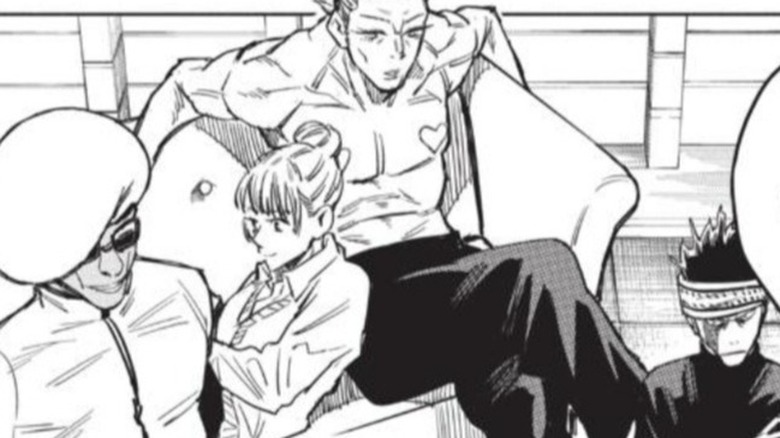
Larue is the only member of Suguru Geto's villainous crew to not get much in the way of exposition in "Jujutsu Kaisen 0," making his appearance in the film kind of weird for a new viewer. Well, maybe not that weird if you've watched anime before. But still, getting an eyeful of a half-naked bloke with heart pasties on his nipples is going to leave you with some questions. Are they reusable nipple pasties? Is that his curse, having cute pink shojo nips? We are left only with this mystery.

Larue is physically ripped, always barefoot, and is ride-or-die for Geto's crew. We don't know why he personally hates the mundane world outside of these curse-wielding sorcerers, but he sure is loyal about it. Despite being on the side of the bad guys, he seems like a fairly nice guy. Does he turn around in the series, or does he become crueler and more dangerous? Not a clue. But as henchmen go, Larue's charmingly strange and totally likable.

Masamichi Yaga
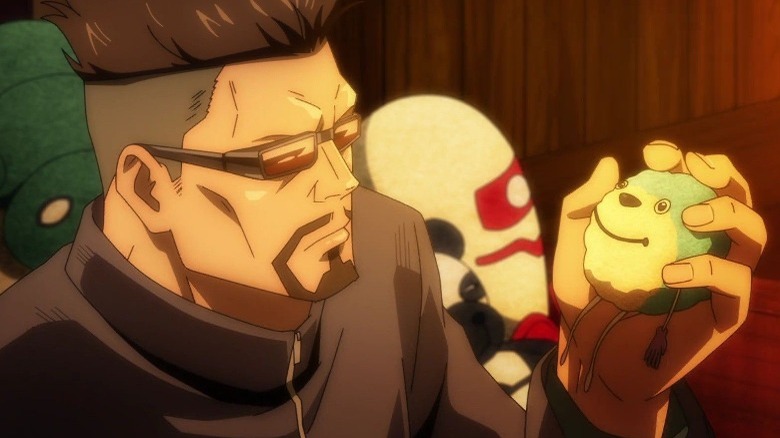
There's a lot left to uncover about the movie's mysterious Masamichi Yaga. "Jujutsu Kaisen 0" presents him as a major leadership figure at Tokyo Jujutsu High, and there's just enough exposition to let us know he's got something to do with Panda, one of its weirder students. Mostly, he's here to whip up the graduates and senior staff when it's time to throw down with bad guy Geto.

Like Larue, new fans using the film as their introduction into the franchise have to take Yaga at face value. His character design makes him look a little like an aging Adam Jensen from the newer "Deus Ex" games, and we're here for it. Serious and stolid, he's intriguing enough to suggest that there's a lot of politics at play behind Jujutsu High. We glimpse those mysterious figures that hide behind shoji doors and decide the fate of their students, and Yaga seems to follow their lead. It's clear Yaga is loyal to his fellow curse-wielders and sorcerers.

Kento Nanami And The Cameo Crew

"Jujutsu Kaisen" fans came alive in the theater I was in as the showdown between Geto's goons, the faculty, and grads of Jujutsu High spun into total action. These dedicated moviegoers got to see the characters they love from the series in a blow-out that showcases some of their coolest skills. These rapid-fire displays don't leave us new arrivals with a lot in the way of introductions, but there are clearly a ton of neat characters to get to know. From Dr. Shoko Ieiri to Mai Zenin, Maki's sister, there's a lot going on.

The highlight of this big battle sequence is a character named Kento Nanami. He's a businessman who tosses out his day planner to become a sorcerer instead, and he gets one of the coolest moments in the movie. A powerful graduate, it's a big deal when he fires off his most powerful magical techniques in battle so quickly and efficiently that it sparks something "Jujutsu Kaisen" fans know as the Black Flash. For a mild-looking guy in a tailored tan suit, that sounds pretty cool. (It sure looked cool on the big screen.)

Nanako And Mimiko Hasaba
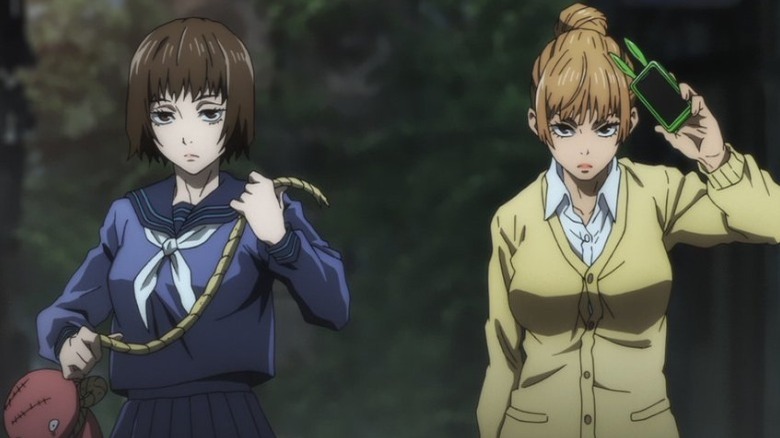
Sisters Nanako and Masabi are clearly meant to be a package deal. At first glimpse, they seem like self-absorbed teens. Nanako has a cute green cellphone, and she loves taking selfies with Geto and the rest of her villainous friends with it. Mimiko tends towards the gothic, keeping at hand a creepy, slashed-up doll hanging at the end of a rope.

But "Jujutsu Kaisen 0" makes a point of showing us that these kids have a good reason to choose the crueler side in this sorcerer's conflict. A flashback shows us these sisters when they were little kids, trapped in a cage because their village was too frightened of these girls to try and understand their differences and their curse. Geto's rescue has brutal results; he's not merciful to the mundane people of the world. But seeing the sisters and their round, frightened faces in contrast to the brash teens they are now, it's hard not to sympathize with the path Nanami and Mimiko took.

Miguel

"Jujutsu Kaisen 0" is our introduction to some new characters that, for anime watchers, haven't yet become part of the main series. Miguel is one of the new guys on Geto's side, and he's such a fun, respectable antagonist that his appearance in the film's stinger is a genuine delight.

Anime fans know that there can occasionally be some awkward moments when Japanese anime handles Black characters. Miguel is proudly Kenyan, but his portrayal avoids the biggest pitfalls. His cursed tool, a hand-woven black rope, feels like it honors the idea of African folklore without adding on any problematic stereotypes. Spoiler ahead: It's even better that the film's post-credits scene takes him home, happy and free of his ties to Geto. He even introduces his new friend to the local cuisine; everything on the table looks delicious. More importantly, it feels like Miguel is going to be a big deal in the future of "Jujutsu Kaisen," and that's great news.

Toge Inumaki

Explaining Toge's special curse to a new fan is pretty easy if they've ever played "Skyrim." Toge Inumaki is kind of like a Greybeard, in that any attempt to speak normally could have deadly effects on the person he's talking to. Instead, he talks sparingly, using onigiri ingredients and tone to get basic information across. Salmon is positive, kelp is "hey there," and bonito is a no-go. Anything else? Good luck trying to read his body posture. And if he tells you, clearly, to drop dead, well. You're going to.

That's tough luck for a kid as young as Toge. To help make the point that his voice can be dangerous, he hides his face with its "Tron"-like cursed marks behind a tall collar. Because he's so quiet, it's easy for the film's protagonist, Yuta, to assume the worst and think Toge dislikes him. Toge can be a little stoic in battle, sure, but he's actually a reliable friend who cares about his classmates. The movie helps us realize what he's really like in pace with Yuta. Toge is an all-around good dude.

Maki Zenin

The Defrosting Ice Queen is a common trope that can go ugly fast, turning a cool female character into an underwhelming sidekick for our newly empowered male hero. Luckily, Maki Zenin doesn't go through that. From beginning to end, she can whip Yuta's butt with her cursed tools. By the end, though, the two are real friends, and she's out to help Yuta reach his goals without needing to compromise her own.

Maki also helps introduce us to the Zenin family subplot that's apparently a big deal in the series going ahead. Her motivation is bitter, but easily understandable. She's the black sheep of an important clan of sorcerers, a girl born without an inherent power of her own. Flashbacks show us how Maki became a defensive and angry young woman, verbally abused by her family and hesitant to reach out to people who could be her friends. It makes her fight with Geto near the end all the more poignant. Maki knows who her real family is by the end of "Jujutsu Kaisen 0."

Sugaru Geto

A good story rises or falls on the strength of its villain, and Suguru Geto is creepily charming throughout "Jujutsu Kaisen 0." He's got a solid gig going, acting as a Buddhist priest to cleanse curses from ordinary people. Geto hates his clients, though, allowing them close to him only so he can collect their various curses. People unable to use jujutsu sorcery are monkeys, only fit to be used or disposed of. And some of the sorcerers he meets, like the Hasaba sisters, are mistreated by scared people who don't understand. It gives him a pretty decent rationale.

That said, his fanatic behavior becomes clear by the end of the movie, stripping away his valid points and showing him as capable of violent hypocrisy in order to get what he wants. In the end, he'll hurt the sorcerers he claims to adore in order to build a perfect world. Nothing can ever be perfect if we're willing to destroy love to get it, though. Gojo leaves his fate in question at the end of "Jujutsu Kaisen 0," which leaves some big mysteries open for fans who were introduced to Geto in the series first.

Satoru Gojo

If a "Jujutsu Kaisen" novice is aware of anything before coming onboard, it's probably that Gojo is the most popular character in the whole thing. Apparently, that's to creator Gege Akutami's chagrin, and honestly? Understandable. Gojo is capable of kicking enough butt in the final minutes of the movie to make Super Saiyan God Vegeta go, "Maybe cool it a bit?" And that's not even Gojo's full power on display.

It's a heady contrast to his film introduction, which presents Gojo as a sometimes daffy high school teacher who spares his serious moments for keeping the higher-ups off the kids' backs. Goofy and sometimes unreliable, it's a real whiplash for new viewers when he turns into a hyper-competent general at the end, right down to knowing when to pull a sacrifice play and when to personally get involved. The nature of his curse power is a little unclear; there's some scientific garble mixed with the supernatural power of his frighteningly blue eyes, which he often blindfolds. Gojo sees all, though. Sorry, Gege, he's a ton of fun to watch.

Yuta Okkotsu

Poor Yuta. He's another poster boy for anime kids who need therapy. But Yuta makes more progress in the brief runtime of "Jujutsu Kaisen 0" than Shinji did in dozens of hours of "Evangelion." By the very end of the film, he looks like he's ready to live his own, full life. We get to watch his self-awareness grow, following an introduction that sees him totally withdrawn after he severely hurts a gang of bullies at his previous school.

It's not an easy ride for Yuta, and there are a lot of realizations about the nature of his curse and the burden of love he put on himself. It's remarkable to watch an anime character stop wallowing and realize the value of his new friends in time to actually do something about it. Support is crucial for anyone in a traumatized state, and "Jujutsu Kaisen 0" makes sure he gets it, if not in the most standard of ways. He's a great introductory protagonist, full of reasons why he feels the way he does, and why he learns it's necessary to change.

Rika Orimoto

Rika is nobody's damsel in distress. She's a young girl who befriends Yuta when they're both sick in the hospital together. She gives young Yuta a ring with a promise to marry him when they get older. But Rika won't get the chance to grow up. Yuta's so shocked by her violent death in a car accident that it binds her now-cursed spirit to him. Rika is empowered by her love and loyalty to Yuta, making her one of the strongest cursed spirits to appear in "Jujutsu Kaisen." God help the person who comes for Yuta when she's around — and that includes Geto, who tries to steal this ill-fated bride-to-be for himself.

As terrifying as Rika can be when released, her true story is vastly more powerful. She's a tale about the power of love and forgiveness. When it's revealed that it's Yuta's fault that she's trapped on our plane as a violent spirit and Yuta releases her, it's obvious her spirit still cares for him. There's no rage in Rika, only the tenacity of someone whose partner still needed her.

Panda

Panda refuses to elaborate on what he is, though we're given a few clues, such as Masamichi Yaga's corpse doll abilities and the sight of plump cotton stuffing coming out of Panda's back after a rumble. He has a power-up he reveals in the film's big showdown, where the big cuddly goof turns into a black and white gorilla ready to go full Wookiee and rip his opponent's limbs off.

An absolute unit who weaponizes his size only when necessary, Panda is also something more important. He's the film's counterbalance, a reminder to not take everything we see too seriously. He's the most anime thing in a sometimes serious flick about forgiveness and growth, and his corny goofball charm keeps melodramatic bathos away. His teenage antics help put Yuta at ease, and his chats about Maki's not always girlish charms are way less leering than Mineta from "My Hero Academia." He's a dude, a reliable friend, and the rock this weird sorcery school sits on. He's also so squishy and huggable that it's impossible to come away without falling completely in love with him. 

Read this next: 10 Anime Movies That Deserved To Win The Oscar For Best Animated Feature

The post The 12 Best Characters From Jujutsu Kaisen 0 Ranked appeared first on /Film.

07 Apr 21:45

Laptop Plugged In but Not Charging? 8 Tips to Solve Your Issue

by Ben Stegner

It's easy to get nervous when your laptop is plugged in but not charging, since you obviously can't use your computer once the battery dies. But in many cases, you can figure out why your laptop says "plugged in, not charging" and correct it.

07 Apr 21:43

/sfall/sfall_4.3.4.7z

07 Apr 21:43

Vague Standards are Trouble

by Michal Necasek

Through the course of time I’ve been going over the IDENTIFY data of various old IDE hard disks. Today I happened to come across a Conner CP30254H drive, apparently made in June 1993 or so.

This is a circa 250 MB drive, but looking at the contents of IDENTIFY words 57-58 (current CHS capacity in sectors), I see the value 2,195,324,935 which just does not look right, as it’d be about a terabyte; completely impossible for a drive without 48-bit LBA support. The drive reports 895/10/55 CHS geometry, so the capacity really should be 492,250 sectors. That’s rather far off from the reported value.

Now, 492,250 decimal is 782DA hex, whereas 2,195,324,935 decimal is 82DA0007 hex. Obviously not a coincidence. So what does the ATA standard say? The ATA-2 standard (1996) is quite clear (section 7.1.15): Some parameters are defined as 32 bit values (e.g., words 57 and 58). Such fields are transferred using two word transfers. The device shall first transfer the least significant bits, bits 15 through 0 of the value, on bits DD15 through DD0 respectively. After the least significant bits have been transferred, the most significant bits, bits 31 through 16 of the value, shall be transferred on DD15 through DD0 respectively.

The Conner drive is clearly doing it wrong. Except… a drive made in 1993 obviously can’t conform to a 1996 standard. So what does the original ATA standard which was finalized (but not yet officially ratified and published) in 1993 have to say about this?

It says nothing. At all. With word-sized values, there was never any question—the data is transferred as words in the first place, and no one was creative enough to do anything but return bit 0 on data pin 0, bit 1 on pin 1, and so on up to bit 15. But the original ATA standard gives no hint as to how double-word values should be transferred.

It is likely that the data was always meant to be transferred low word first, and the ATA-2 standard explicitly says that, but there is no such clarity in the original ATA standard.

And it wasn’t just Conner transferring the high word first. At minimum, Maxtor (seen with 25128 AT drive) and IBM (seen with H3256-A3 and H3342-A4 drives) did it the same way. On the other hand, Quantum (ELS 85A, LPS 170A drives) or Seagate (ST3243A, ST9096A drives) always returned the low word first.

I’m actually having some difficulty understanding why the current capacity in sectors in words 57-58 was even specified at all. It is defined to be the product of words 54, 55, and 56, i.e. current cylinders/heads/sectors per track. The host might as well calculate the product directly, instead of asking the drive. Moreover, if the product calculated by the host does not match what the drive returns, what is the host expected to do?

As it is, one practical use of the current sector count in words 57-58 is that the host can determine whether the drive returned the information with the low word first or high word first. But that alone is not particularly useful.

It is noteworthy that the first ATA standard also already specifies the LBA capacity in sectors, another 32-bit value presented in IDENTIFY words 60-61. The LBA capacity is not necessarily the same as the CHS capacity, and cannot be cross-checked with other data. But so far at least, all drives I have found that return “incorrect” (high word first) data in words 57-58 do not return the LBA capacity at all.

It is possible or even likely that the vendors who supported LBA access early (e.g. a 1994 Quantum ProDrive LPS 170AT) always reported the LBA capacity in words 60-61 with the low word first. I have not seen any hints in the ATA-2 standard that hosts should expect 32-bit LBA capacity values to be returned with the high word first.

I’m not aware of the low word vs. high word first discrepancy causing trouble in practice. I suspect that since words 54-58 (current CHS settings) are optional, most host software did not use them at all, and simply calculated the capacity from the CHS geometry. For LBA-capable drives, the value in words 60-61 would have been critical, but there were probably very few, if any, drives that both supported LBA and returned 32-bit values with the high word first.

In any case, this is a good illustration that standards should strive to be precise and complete. The first ATA standard was not, and clearly some companies understood it such that the high word should be returned first, while others returned the low word first. ATA-2 rectified the situation and unambiguously specified how 32-bit values should be returned in IDENTIFY data.

07 Apr 21:43

Microsoft's CEO Warns of the Impact of All Those Late-Night Emails

by msmash
Microsoft Chief Executive Officer Satya Nadella warned that employee well-being could suffer from an ever-expanding workday that often now creeps well into the night. From a report: Nadella, whose company has studied how remote work impacts collaboration in an effort to improve its Teams software, cited Microsoft research showing that about a third of white-collar workers have a "third peak" of productivity late in the evening, based on keyboard activity. Productivity typically spikes before and after lunch, but this third peak illustrates how remote work has broken down already-blurred boundaries between our job and our home lives. Nadella, speaking Thursday at the Wharton Future of Work Conference, said managers need to set clear norms and expectations for workers so that they're not pressured to answer emails late at night. "We think about productivity through collaboration and output metrics, but well-being is one of the most important pieces of productivity," he said. "We know what stress does to workers. We need to learn the soft skills, good old-fashioned management practices, so people have their wellbeing taken care of. I can set that expectation, that our people can get an email from the CEO on the weekend and not feel that they have to respond." Two out of 3 employees who consider leaving their job say their employer has not followed through on early pandemic promises to focus on employee mental health, according to a Harris Poll commissioned by online therapy provider Talkspace.

Read more of this story at Slashdot.

07 Apr 21:43

Hugos, 2022

Empire Games cover

The Merchant Princes series is on the shortlist for the Hugo Award for best series, winner to be announced at Chicon 8, the World Science Fiction Convention in Chicago, this September 1st-5th.

I'd like to congratulate all the nominees, in all the various categories: the full list is here.

For the first three omnibus books in the Merchant Princes series, you can do worse than start here; for the Empire Games trilogy—originally pitched as Merchant Princes: The Next Generation—you can find it here.

(Links go to Amazon ebook format, US store: you can find 'em elsewhere, in the UK and EU as well. I'm going to talk to the folks at Tor about providing series purchase links and links to other stores presently.)

For reasons which should be obvious, I'm going to do my best to get to Chicago this September. Usual caveats apply: it's an 8-9 hour flight from Edinburgh (although there are ofteen direct flights, so no extra airports to traverse in the middle), there's a pandemic on, and who the hell knows what hopeful mutants will emerge in the next five or six months. Getting to attend my first in-person worldcon since 2019 would be good, but Not Dying is my absolute priority.

07 Apr 16:42

Astronomers May Have Just Discovered The Most Distant Galaxy Yet - CNET

by Jackson Ryan
HD1 appears as a faint red pixel in a cosmic disco but it might just be the farthest astronomical object yet spotted.
07 Apr 16:40

How to Track Your 2025 Federal Tax Refund

by Meredith Dietz

The 2026 tax filing season has begun, which means you can now submit your return for the 2025 tax year and start the clock on receiving any refund you're due. The IRS expects more than 164 million tax returns to be filed by the April 15 federal deadline this year. The sooner you complete your return, the sooner you'll get your money back (and the longer you'll have to prepare to pay any balance owed). Luckily, the IRS makes it easy to check the status of your refund online. Here's everything you need to know to track your 2025 federal tax refund.

Wait at least 24 hours after filing

The IRS needs time to process your tax return, so you'll have to be patient before checking your refund status. If you e-filed, you can check as soon as 24 hours after the IRS received your tax return. For paper returns, you'll need to wait at least four weeks before checking.

Have your information ready

To check your refund status, you'll need to provide your Social Security number or Individual Taxpayer Identification Number (ITIN), filing status (single, married filing jointly, etc.), and the exact refund amount you're expecting.

Use the IRS2Go App or IRS.gov website

The IRS offers a mobile app called IRS2Go and an online refund tracking tool. Both allow you to check the status of your federal tax refund. On the IRS2Go app, you'll tap "Refund Status" and enter your information. On the IRS.gov refunds page, click "Check Your Refund."

Note that the "Where's My Refund?" tool is updated once daily, typically between 4 a.m. and 5 a.m. ET, so you don't need to keep refreshing throughout the day.

Understand the refund status meaning

The IRS provides a refund status that explains where your refund is in the process:

  • Return Received: The return is being processed.

  • Refund Approved: The refund has been approved and is in the queue for payment.

  • Refund Sent: The refund payment has been sent.

Also check for a refund date if your refund was approved to get the expected deposit or mailing date.

Be patient for your refund

Most tax refunds are issued by the IRS within 21 days for returns that are e-filed (six weeks or more for paper returns). However, the IRS says refund times can vary depending on volume. Requesting your refund by direct deposit is faster than waiting for a paper check. For the 2026 filing season, most taxpayers will have to provide bank information for direct deposit, as the IRS began phasing out paper checks in September 2025.

If you're eligible for a refund for the Earned Income Tax Credit and/or the Additional Child Tax Credit, you can expect to see that deposited to your account by March 2.

What if it’s been longer than 21 days?

Don’t file a second tax return. If it’s been more than 21 days since e-filing, the IRS recommends you call them. The “Where’s My Refund?” tracker will also prompt you to call the IRS if need be.

Unfortunately, calling the IRS isn’t always a breezy, reliable solution. Once you build the resolve to call the IRS, here’s our guide to increase your odds of getting to a real human on the other end of the line.

07 Apr 16:40

The FBI silently removed Russian malware to thwart global cyberattacks

by Mariella Moon

Attorney General Merrick B. Garland has revealed that the United States secretly removed malware from computer networks around the world over the past few weeks to pre-empt Russian cyberattacks. As The New York Times reports, Garland's announcement comes shortly after the White House warned companies that Russia could attack critical infrastructure in the country, such as financial institutions and the electric grid. Apparently, the malware the US removed enabled the intelligence arm of the Russian military called the GRU to create botnets out of the infected computer networks. 

According to the Justice Department, the malware was designed to infect firewalls and made the compromised networks part of a botnet called Cyclops Blink. It's controlled by Sandworm, a notorious group that the US government had previously connected to the GRU. Cyclops Blink is Sandworm's latest known botnet, and it only came to light back in February. It's still unclear what Russia was planning to do with the hijacked computers, but botnets are typically used to perform large-scale Distributed Denial of Service (DDoS) attacks, as well as to send spam and to compromise sensitive information. 

In its press release, the DOJ said the FBI notified owners of infected devices in the US before Cyclops Blink was identified in February 23rd. It also notified companies outside the country through local law enforcement partners. However, US authorities didn't want to wait to find out what the botnet would be used for. 

The Justice Department and the FBI obtained secret court orders in the US and secured the help of governments worldwide to quietly remove the malware from infected devices. Those court orders even gave them the power to remotely remove the malware from American companies' networks without their knowledge. After the feds disinfected the compromised machines, they also closed the external management ports Sandworm was using for access.

Over the past months, the Biden administration has been exposing as much intelligence on Russia as possible without giving away its actions to catch Putin off guard. This disclosure is just its latest effort to send a message to the Russian president. The fact that Sandworm infiltrated networks around the world to create a botnet just shows, however, that there's a cyber warfare going on that might end up affecting countries other than Ukraine. If you'll recall, a major cyberattack took down Ukraine's government websites before the Russian invasion of the country began. Ukraine's government, as well as US and UK authorities, blamed the attacks on the GRU.

07 Apr 16:38

Documentary about "Star Wars Kid" and the consequences of his pre-YouTube viral video

by Thom Dunn

"Star Wars Kid" was a video from 2002, in which Canadian high schooler Ghyslain Raza filmed himself earnestly swinging a golf ball receiver as if it were Darth Maul's lightsaber. It was never meant for public consumption, but after the video got around his school — leading to much mockery and bullying — it became a viral sensation through P2P filesharing, even without the help of YouTube. — Read the rest

07 Apr 16:37

Google Teams Up With GitHub for Supply Chain Security

by Eduard Kovacs

Google has teamed up with GitHub for a solution that should help prevent software supply chain attacks such as the ones that affected SolarWinds and Codecov.

read more

07 Apr 16:26

Why Are Old People Meant To Be Scary?

by Kayleigh Donaldson

In "X", the new '70s-inspired horror film by Ti West, a ragtag group of filmmakers go on a road-trip through Texas to make a porno. They intend to shoot in the guesthouse of an elderly couple who are unaware of their plans, but in true horror fashion, it doesn't take long for the unwitting old people to reveal their sinister truth. Pearl, one half of the pair, speaks often of her hatred of aging and her jealousy of the gorgeous heroine's youth, then demonstrates her still-eager sex drive to the horrified lead. Driven by their envy over their own wasted pasts, Pearl and her husband Howard start picking off the kids one by one.

"X" takes great pains to emphasize the grotesque nature of Pearl, who is actually played by Mia Goth, the 29-year-old actress who also plays the young porn-star lead. The makeup, which took close to eight hours to apply each day, totally conceals Goth's unique beauty and makes her seem more corpse-like than your typical elderly woman. It's a striking image, to be sure, and one that horror cinema has made a common feature of the genre. Vampires or zombies may come and go out of fashion but there's something about being old or facing it that remains eternally scary to audiences and filmmakers alike.

What's Behind The Horror Trope Of The Scary Old Person?

Gerontophobia is the specific fear of the elderly and age-related issues. Ageism has a lot to do with this concept, of course, and that force is incredibly powerful throughout society on both a macro and politically reinforced level. The phobia is rooted in pretty familiar ideas, most notably the realization that we will all one day be old, infirm, and in some way debilitated by the ravages of age. With getting older comes degradation of the body, a change in our physical appearances, and an overall vulnerability. We're more likely to be derided by younger generations (and we realize how much we did such things ourselves.) You can't outrun getting older, and no amount of botox, trainer-mandated push-ups, or obscenely expensive medical treatment can stave off the conclusion to our own lives.

All of that is, admittedly, scary as all hell. Nobody wants to lose control of their faculties or struggle with things we currently take for granted. Being forced to face that issue head-on, either actively or metaphorically, can make for excellent horror. "Old," the latest M. Night Shyamalan movie, for all of its messiness and overstuffed ambitions, captures the agony of realizing how short this one life we have on Earth is, albeit sped up to terrifying levels. In "The Hunger," Tony Scott's luscious vampire movie, David Bowie ages decades in mere days, and seeing him grow old and infirm in a way that the singer never did in real life is painful for fans.

At the heart of horror is loss: of life, of our minds, of safety and hope and things that make our existence comforting. The genre, at its best, is a conduit for our contemporary concerns, a way to confront them while making the existential horrifyingly literal. "Relic," directed by Natalie Erika James, featured a woman who moves her daughter into her own elderly mother's home to help care for her as she deals with dementia. While the grandmother's declining state is mirrored by the moldy and desolate state of her crumbling home, her family must confront what this means for themselves. There's no hereditary link with dementia in families but the irreversible nature of aging haunts the family. The other thing the grandmother's elderly status heightens is the collateral damage often caused by one's physical and mental decline. It's tough, often destructive, to care for someone who is breaking down in such a manner. It leaves scars that society is quick to dismiss but "Relic" offers a haunting reminder of the generational trauma of aging.

The Dangers Of Ageism

It's not just that horror tackles the fear of aging itself: it often makes the elderly the big scary bogeyman at the heart of the narrative. There is something about that image of an old person stumbling towards you that proves unnerving. Consider how many of the slowly shuffling specters of doom in "It Follows" are the elderly, or the central fear at the heart of "The Visit." In David Lynch's scariest film, "Mulholland Drive," an older couple act as the maniacally grinning symbols of guilt that drive the protagonist to her doom. All of these films shoot the elderly like they're movie monsters, less human than creature-esque. In Sam Raimi's "Drag Me to Hell," the Roma woman who curses the heroine is styled to look as gross as possible (fitting for a delightfully gooey movie, as Raimi loves to do). While there is a lesson to be learned about not judging a book by its cover, said cover is still mined for much shock value.

Such ideas are inevitable in a society that is simultaneously deeply ageist and dominated by power structures that have left generations of young people struggling financially and personally in comparison to their elders. The "OK Boomer" jokes write themselves with stuff like this. If horror is a way to understand the real-life mundanities that haunt us then what better way to gain catharsis over this tension than by having the old guy be the ultimate evil?

A March 2021 report from the World Health Organisation noted that ageism is a global challenge, one that "leads to poorer health, social isolation, earlier deaths and cost economies billions." This is a problem that has only gotten worse following COVID-19 and age-based stereotypes have strengthened as many world governments all but admitted that mass deaths of the elderly were predictable yet all-but-accepted as part of lockdown rules. We're all going to get old and that shouldn't scare us but it does. It's the wearily inevitable conclusion we must acknowledge and destigmatize. Horror can be a great tool for that but it, like all of pop culture, can also reinforce the more negative aspects it hopes to subvert.

Perhaps the trope of the scary old person can help us to move pass that, but there's a reason the imagery will stick around. "X" is getting a prequel soon, so we'll get to see the woman who became the monster, and that could be the most terrifying story of all.

Read this next: The Horror Movies We Can't Wait To See In 2022

The post Why Are Old People Meant to be Scary? appeared first on /Film.
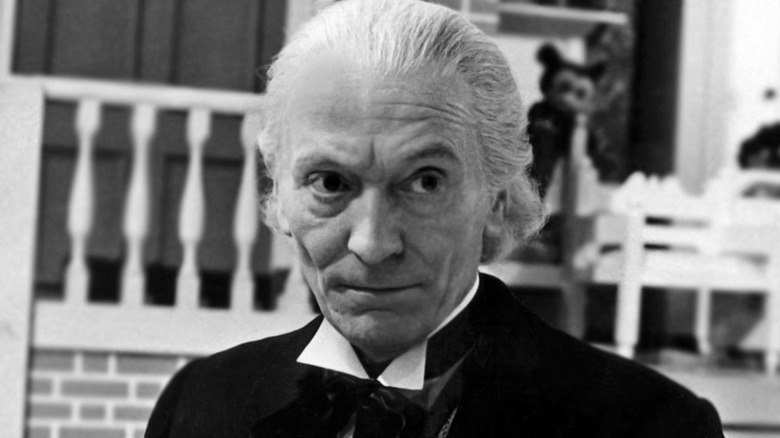
07 Apr 16:25

Mushrooms Communicate With Each Other Using Up To 50 'Words', Scientist Claims

by BeauHD
An anonymous reader quotes a report from the Guardian: Buried in forest litter or sprouting from trees, fungi might give the impression of being silent and relatively self-contained organisms, but a new study suggests they may be champignon communicators. Mathematical analysis of the electrical signals fungi seemingly send to one another has identified patterns that bear a striking structural similarity to human speech. Previous research has suggested that fungi conduct electrical impulses through long, underground filamentous structures called hyphae -- similar to how nerve cells transmit information in humans. It has even shown that the firing rate of these impulses increases when the hyphae of wood-digesting fungi come into contact with wooden blocks, raising the possibility that fungi use this electrical "language" to share information about food or injury with distant parts of themselves, or with hyphae-connected partners such as trees. But do these trains of electrical activity have anything in common with human language? To investigate, Prof Andrew Adamatzky at the University of the West of England's unconventional computing laboratory in Bristol analyzed the patterns of electrical spikes generated by four species of fungi -- enoki, split gill, ghost and caterpillar fungi. He did this by inserting tiny microelectrodes into substrates colonized by their patchwork of hyphae threads, their mycelia. The research, published in Royal Society Open Science, found that these spikes often clustered into trains of activity, resembling vocabularies of up to 50 words, and that the distribution of these "fungal word lengths" closely matched those of human languages. Split gills -- which grow on decaying wood, and whose fruiting bodies resemble undulating waves of tightly packed coral -- generated the most complex "sentences" of all. The most likely reasons for these waves of electrical activity are to maintain the fungi's integrity -- analogous to wolves howling to maintain the integrity of the pack -- or to report newly discovered sources of attractants and repellants to other parts of their mycelia, Adamatzky suggested. "There is also another option -- they are saying nothing," he said. "Propagating mycelium tips are electrically charged, and, therefore, when the charged tips pass in a pair of differential electrodes, a spike in the potential difference is recorded." Whatever these "spiking events" represent, they do not appear to be random, he added.

Read more of this story at Slashdot.

07 Apr 10:09

Chinese Hackers Abuse VLC Media Player To Launch Malware Loader

by BeauHD
Security researchers have uncovered a long-running malicious campaign from hackers associated with the Chinese government who are using VLC Media Player to launch a custom malware loader. BleepingComputer reports: The campaign appears to serve espionage purposes and has targeted various entities involved in government, legal, and religious activities, as well as non-governmental organizations (NGOs) on at least three continents. This activity has been attributed to a threat actor tracked as Cicada (a.k.a. menuPass, Stone Panda, Potassium, APT10, Red Apollo) that has been active for more than 15 years, since at least 2006. Brigid O Gorman of Symantec Threat Hunter Team told BleepingComputer that the attacker uses a clean version of VLC with a malicious DLL file in the same path as the media player's export functions. The technique is known as DLL side-loading and it is widely used by threat actors to load malware into legitimate processes to hide the malicious activity. Apart from the custom loader, which O Gorman said Symantec does not have a name but has been seen in previous attacks attributed to Cicada/APT10, the adversary also deployed a WinVNC server to gain remote control over victim systems. The attacker also executed the Sodamaster backdoor on compromised networks, a tool believed to be used exclusively by the Cicada threat group since at least 2020. Sodamaster runs in the system memory (fileless) and is equipped to evade detection by looking in the registry for clues of a sandbox environment or by delaying its execution. The malware can also collect details about the system, search for running processes, and download and execute various payloads from the command and control server. [...] The attackersâ(TM) dwell time on the networks of some of the discovered victims lasted for as long as nine months, the researchers note in a report today.

Read more of this story at Slashdot.