Shared posts

19 May 16:48

The Classic Star Trek Episodes That Inspired Strange New Worlds Episode 3

by Witney Seibold

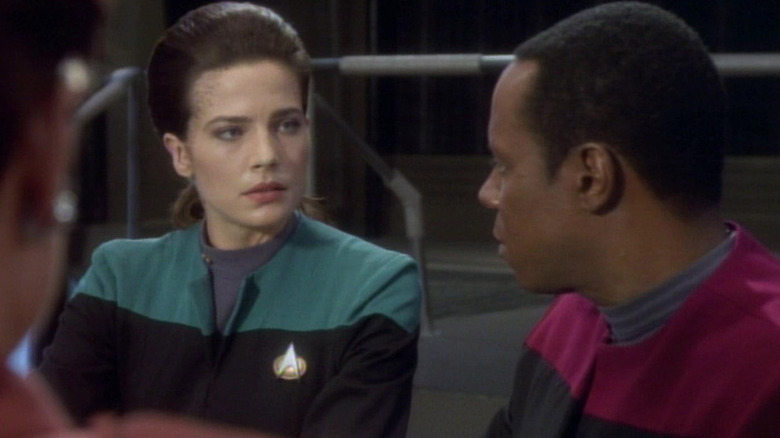
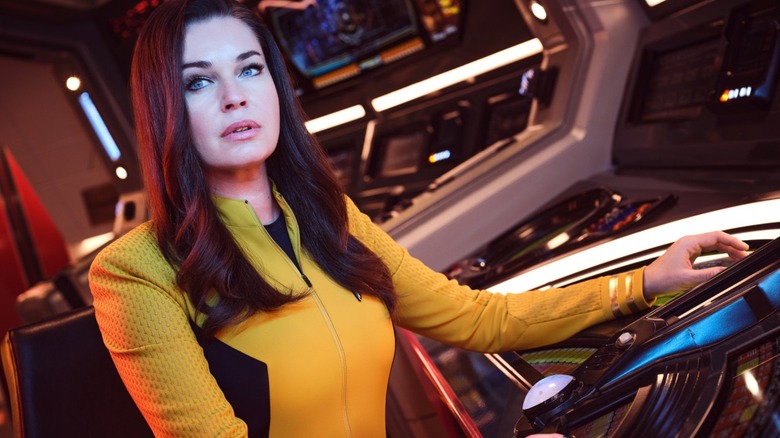
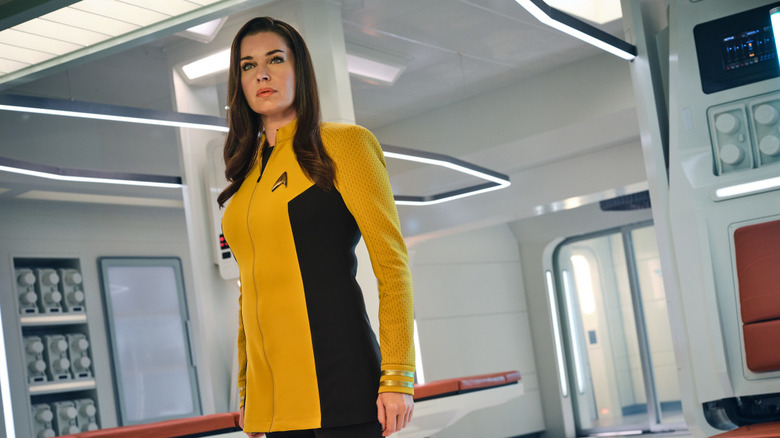
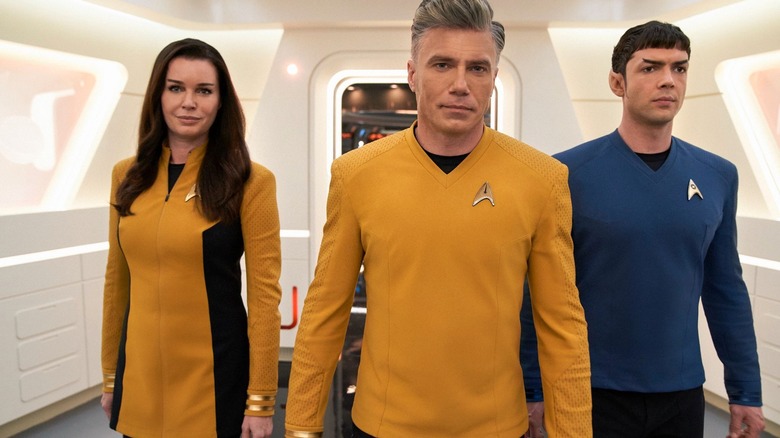
The third episode of "Star Trek: Strange New Worlds" — entitled "Ghosts of Illyria," written by Akela Cooper and Bill Wolkoff — involves a mysterious contagious disease that infiltrates the Enterprise after an away team visits a seemingly abandoned planet called Illyria. Those infected find themselves, like moths, drawn toward and mesmerized by bright lights, likely due to a sudden lack of vitamin D. The only person who appears to be immune is Cmdr. Una Chin-Riley (Rebecca Romijn), who manages to solve the problem nearly singlehandedly while Capt. Pike (Anson Mount) and Spock (Ethan Peck) remain on the planet's surface facing a crisis of their own. 

Contagion/disease episodes are common and expected from "Star Trek." Given that each of the shows takes place largely in space (occasional away missions and most of "Star Trek: Picard" notwithstanding), every "Star Trek" cast must necessarily be confined to an enclosed starship or space station. With little chance to isolate, such places become Petri dishes. This reflects real-life instances of naval vessels becoming infected while at sea. Indeed, as anyone who has worked in a sealed office with recirculated air knows all too well, viruses can spread remarkably easily when no one is going outside.

Additionally, "Strange New Worlds" is following a tradition that goes back to the early days of the original series; the very first contagion episode of "Star Trek" came only four episodes into its first season. Or seven episodes in, if you're one of those sticklers who prefers to watch "Star Trek" in production order instead of broadcast order. Note: The author is of the latter camp.

The Naked Time

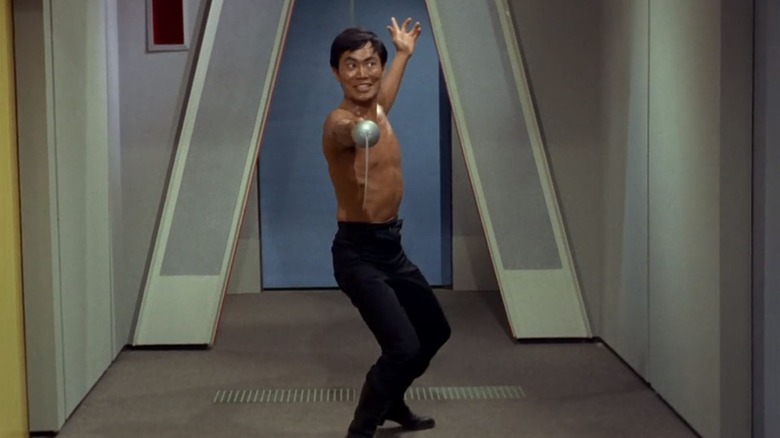
"The Naked Time" first aired on September 29, 1966, and one of "Star Trek" most famous images — Sulu (George Takei) shirtless, wielding a fencing foil — comes from this episode. In "The Naked Time," the Enterprise discovers a distant outpost wherein all the workers have died, frozen to death due to an environmental malfunction. One of the investigating Enterprise crewmates foolishly removes the glove of his futuristic hazmat suit and immediately contracts some sort of mysterious disease. When the away team returns to the ship, said crewmate begins spreading the disease immediately, with each passing accompanied by a hissing sound effect. 

The disease in question, as Dr. McCoy (DeForest Kelley) eventually reveals, infects the water in your body, more or less transforming it into booze. The disease impairs its victims similar to the way alcohol does. As the entire crew becomes intoxicated, they stop doing their jobs and the Enterprise threatens to crash into a nearby planet. 

A repeated conceit of "Star Trek" disease episodes is that Spock — the most notable nonhuman character on the show — will often prove to be immune to the diseases infecting the humans around him. Each "Star Trek" show conveniently features a character with unconventional biology that will usually be the last character standing. "Next Generation" has an android. "Deep Space Nine" has a liquid-based changeling. "Voyager" has a hologram. "Enterprise" had a Vulcan and a Denobulan. Given the nature of streaming-era Trek, bottle episodes are rare, and such characters aren't as explicitly included. 

The Naked Now

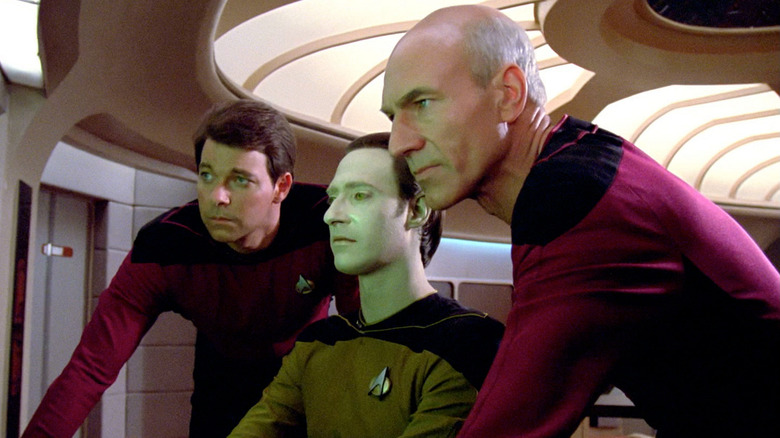
"The Naked Now" (first aired October 8, 1987), was essentially a sequel to "The Naked Time." It was the second episode of "Star Trek: The Next Generation," wherein the crew of the Enterprise-D was infected with the same virus as in "Time." Given that "Next Generation" was, in its first season, still declaring itself an autonomous entity — free from the characters and conceits of the 1966 TV series and the successful movies from the 1980s — "Now" was able to show how a new crew would react to a similar situation previously seen by Trekkies. So Capt. Picard (Patrick Stewart) struggled to retain his composure, engineers playfully removed vital isolinear chips from the central computer, and it would be up to the drunken teenage character Wesley (Wil Wheaton) to save the day. 

Standing frustratingly contrary to the above-stated thesis, Data (Brent Spiner) is not immune to the disease, and also gets drunk, leading to an ill-advised tryst with the ship's security chief Tasha Yar (Denise Crosby). 

The appeal of episodes like "The Naked Now" is watching how a disease forced an otherwise staid and professional crew to behave out of character. It may have been unwise to have an "out-of-character" episode nearly right out of the gate, but "Now" was a fun watch regardless and established how disease would be handled nearly a century hence from Kirk. 

'The Deadly Years' And 'Unnatural Selection'

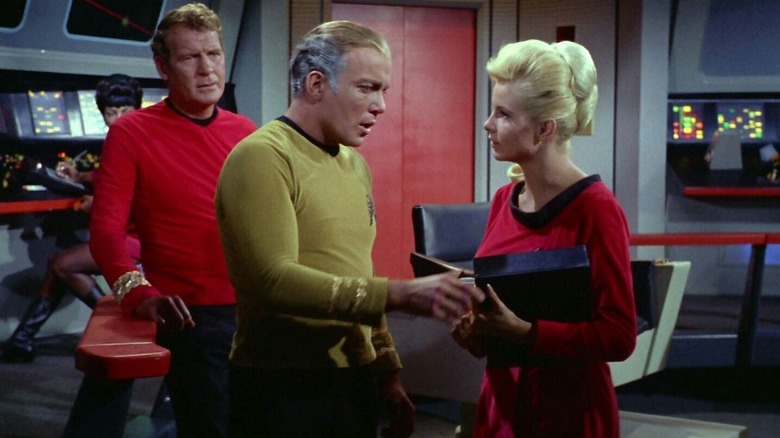
There were two virus episodes of "Star Trek" that involved accelerated aging. In the original series, there was "The Deadly Years," which first aired on December 8, 1967. The episode saw Kirk and most of the Enterprise crew becoming infected and growing grey overnight. They lose their mental acuity and have aching hands. The episode is condescending to the aged, declaring that helming a starship is a young man's game. Spock (Leonard Nimoy) may have been infected, but because Vulcans are so long-lived (they can live several hundred years), he showed no effects. It turns out the show's most youthful character, Pavel Chekov (Walter Koenig) would hold the biology that would lead to a cure.

Although not the same virus, the "Next Generation" episode "Unnatural Selection" from the show's second season saw Dr. Pulaski (Diana Muldaur) investigating a genetic experiment wherein youths have been engineered to be psychic, into having telekinetic powers, and into being immune from all diseases. Although Pulaski is cautious -- she examines one of the engineered youths on board an enclosed shuttlecraft with Data to assist — she still has her own DNA invaded and begins aging rapidly. 

Pulaski's plight is solved by Chief O'Brien (Colm Meany) extensively reworking the ship's transporters to rewrite her body to a previous version of itself. This is such a convenient way to cure diseases, one wonders why there isn't a transporter in sickbay. 

Genesis

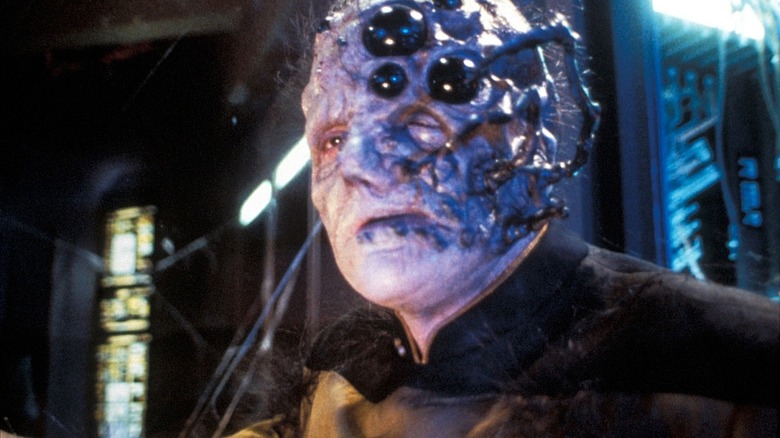
In one of the scarier — and more fun — episodes of "Next Generation" — "Genesis," first aired on March 21, 1994 — Dr. Crusher (Gates McFadden) gives the nervous Lt. Barclay (Dwight Schultz) an injection to take care of a minor genetic "drift" she found in his system. This will unwittingly trigger a deeply-coded quirk in humanoid DNA that will rewrite them into species from their distant evolutionary past. Barclay will de-evolve into a spider. Riker (Jonathan Frakes) will become a Neanderthal. Troi (Marina Sirtis) will become an amphibian. Worf (Michael Dorn) will become some sort of aggressive, shell-encased Klingon gorilla/crab monster. Data, immune, will ultimately find the cure. 

An amusing detail: Data and Picard were off of the Enterprise when the virus initially strikes, and Picard isn't infected until the pair beam back aboard. Data, able to discern what is happening, informs Picard that he is turning into a pygmy marmoset. Picard's look of embarrassment is priceless. 

'Babel' And 'Fascination'

The first season of "Star Trek: Deep Space Nine" was rough going, and an episode like "Babel" — January 25, 1993 — proves it. In the show's fifth episode, DS9's crew begins suffering from aphasia, a mental disorder wherein one loses the ability to comprehend language. Soon, the entire station begins mixing up words and speaking nonsense. Aphasia is not contagious, so a virus must be the culprit. Eventually, Odo (René Auberjonois) finds that the cost-cutting Quark (Armin Shimerman) has been selling bootleg food which has been attracting the disease. The "babble" language was clearly a struggle for the actors, and the crisis doesn't seem too serious; one would think professional Starfleet officers could whip up a pictorial communication format. 

The other notable "Deep Space Nine" disease episode is "Fascination." Lwaxana Troi (Majel Barrett) visits Deep Space Nine, bringing with her a cloud of powerful Betazoid pheromones that infect the entire station, causing everyone to fall in love indiscriminately. Jake Sisko (Cirroc Lofton) falls in love with Maj. Kira (Nana Visitor), while Kira falls in love with Dr. Bashir (Alexander Siddig). It takes a while for the crew to figure out the source of the love virus. Visitor and Siddig would end up getting married in real life. 

The Voyager Viruses

"Star Trek: Voyager" dealt with on-ship viruses a lot, so here is only a brief rundown of each: 

In the episode "Resolutions," Capt. Janeway (Kate Mulgrew) and Chakotay (Robert Beltran) contract a life-threatening virus and have to consider building a life for themselves off the ship. "Macrocosm" saw the ship itself spreading a virus to the crew (the computers have a biological element on the Voyager) and the appearance of large insect monsters; it turns out the Doctor (Robert Picardo) accidentally beamed the virus aboard after helping a diseased remote colony. In "Favorite Son," Harry Kim (Garrett Wang) gets a disease that mutates his DNA. The episode "Scientific Method" surely counts, as the Voyager crew is infected by hidden aliens who are studying the effects of various diseases. Not so much a conventional spread, but an episode wherein an entire ship is sick. And of course, "The Disease," wherein Kim had an affair with an alien engineer and contracts, more or less, an alien STI. 

And, to mention it briefly, "Star Trek: Enterprise" did have one episode wherein a virus swept through the ship, in the fourth season episode "Observer Effect." 

So, as the reader can see, "Ghosts of Illyria" has a good deal of precedent, and presents a common crisis in "Star Trek" with skill and traditional aplomb. The familiarity of "Strange New Worlds" is proving to be a strength rather than a gimmick, and a well-worn "Star Trek" story will be welcome in its annals. 

Read this next: 12 Shows Like Stranger Things You Definitely Need To Stream

The post The Classic Star Trek Episodes That Inspired Strange New Worlds Episode 3 appeared first on /Film.

19 May 16:48

Amy Adams Will Turn Into A Dog In The Very Literally Titled Nightbitch

by Debopriyaa Dutta

There is no dearth of literal movie titles — consider "Snakes on a Plane" or the grindhouse flick "Hobo with a Shotgun" — but now, brace yourselves for ..."Nightbitch."

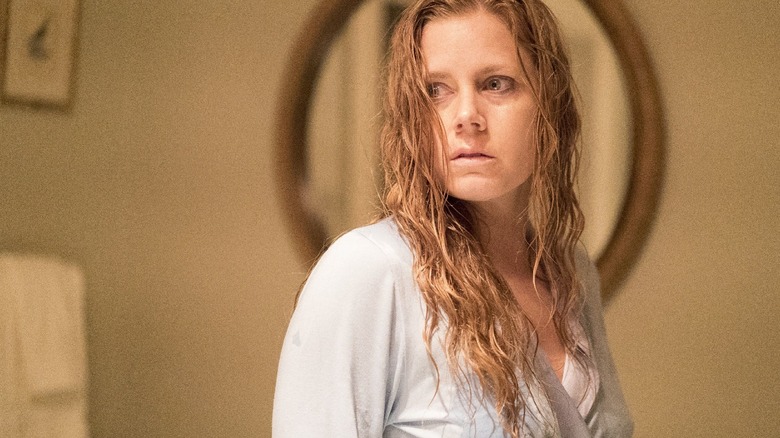
Described as a darkly comic neo-horror, "Nightbitch," with Amy Adams as the lead, will follow a woman raising a toddler in the suburbs, spending most of her time staying at home and taking care of the child. However, something deeply primordial is awakened by virtue of her motherhood, and several incidents lead to her transforming into a dog, er, in the night.

I have been more than happy to see Adams communicate with extraterrestrials ("Arrival") and even play a nosy woman who spies on her neighbors ("The Woman in the Window") but her transforming into a literal canine in the night sure is a bizarre horror movie premise, even for me.

Searchlight Pictures has acquired the worldwide rights for "Nightbitch" in a $25 million deal, and Marielle Heller ("Can You Ever Forgive Me?") will be helming the film (via Deadline).

Going Feral

"Nightbitch" is based on Rachel Yoder's novel of the same name, and is primarily a story of transformation, in which the protagonist gradually embraces the inevitability of her turning into a canine. Her everyday life is inert and her familial support virtually absent — she is the sole caregiver of her two-year-old, whose hyperactivity often drives her to the edge. An urge to give in to the primal takes over, and soon, she longs for raw meat, completing her transformation into Nightbitch — in a commentary on modern womanhood.

While the horror movie starring Adams will be based on Yoder's novel, Heller will be penning an original script, introducing fresh themes and ideas within the established premise. Adams herself, alongside Stacy O'Neil ("Dead Ringers"), will be producing the film via Bond Group, along with Heller. Megan Ellison, Christina Oh, Adam Paulsen, Sue Naegle, and Sammy Scher will be serving as executive producers.

Searchlight Presidents David Greenbaum and Matthew Greenfield told Deadline about their admiration of Adams, along with the premise of a "provocative" film, which is rather appealing for them:

"We are long-time admirers of Amy Adams, and we are thrilled to join with Annapurna and this incredibly creative team of filmmakers to bring this unique story to the screen. We're also delighted to reunite with Mari Heller and Anne Carey again following the collaboration on Can You Ever Forgive Me? Mari has brilliantly adapted Rachel Yoder's stunning debut for what promises to be a provocative film."

"Nightbitch" is expected to stream as a Hulu Original in the U.S., although there is an additional release plan that will be announced later. A release date has not been attached to it yet.

Read this next: Horror Roles That Changed Actors Forever

The post Amy Adams Will Turn Into a Dog in the Very Literally Titled Nightbitch appeared first on /Film.

19 May 16:45

The Best Original Songs Written For Movies

by Caroline Madden

Filmmakers like Sofia Coppola and Martin Scorsese have perfected the art of the needle drop: placing a pre-existing song within a film to conjure a specific mood or comment on the narrative's themes. But equally as important is the collaboration of musical artists on an original song that is tailor-made for a film. 

Original songs can either be non-diegetic (unheard by the characters because it exists outside of their world) or diegetic (a song that the characters can hear or sing themselves). This list explores films from across a wide range of genres and styles with songs that flawlessly capture their mood and aesthetic. These are the best original songs that were created specifically for a film to emphasize the story or flesh out the characters' perspectives, heard either during the narrative or over the end credits

''Cat People (Putting Out Fire)'' From Cat People (1982)

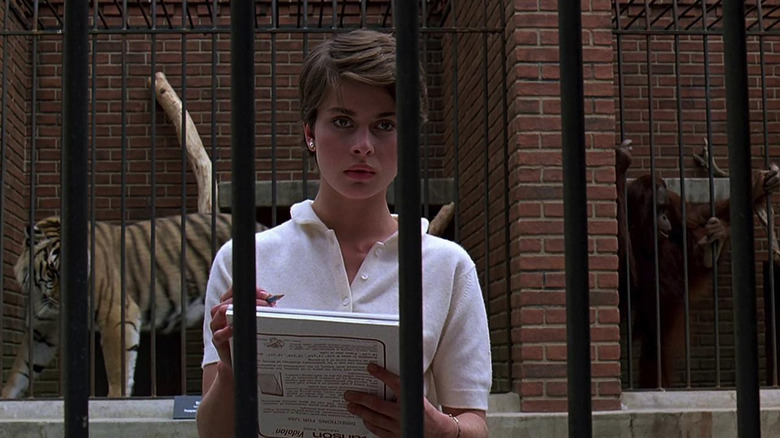
Paul Schrader directs a lurid remake of the Jacques Tourneur 1942 horror film "Cat People" featuring a hypnotic new wave score by Giorgio Moroder to compliment the psychosexual themes of a beautiful woman's transformation into a lethal black panther. David Bowie's "Cat People (Putting Out Fire)" adds to its transgressive stylings. In the final shots, the song overlays a close-up of the alert Irena in her panther form. The soaring octave change "with gasolineeee" kicks in as soon as she opens her fearsome jaws. 

When interviewed about the song for the book "Ashes to Ashes: The Songs of David Bowie 1976–2016," Bowie said: "It works on a dream state, it feels like the kind of thing you go through at night. That's the way I look at it lyrically." The words do have an ethereal eroticism that matches the film's tone. Bowie's seductive baritone references the deadly feline's piercing green eyes and the idea of "putting out fire with gasoline" hints towards the werecats' incestuous attraction in order to continue their ancestral line. Quentin Tarantino notably repurposed this song for his triumphant Nazi-killing preparation scene in "Inglourious Basterds." 

''Jai Ho'' From Slumdog Millionaire

Danny Boyle's Oscar-winning "Slumdog Millionaire" follows a young Indian boy who triumphs in spite of poverty, homelessness, and other such difficult ordeals. Dev Patel brings a wide-eyed optimism to the role of Jamal, who finds himself competing on the Indian version of "Who Wants to be a Millionaire?" 

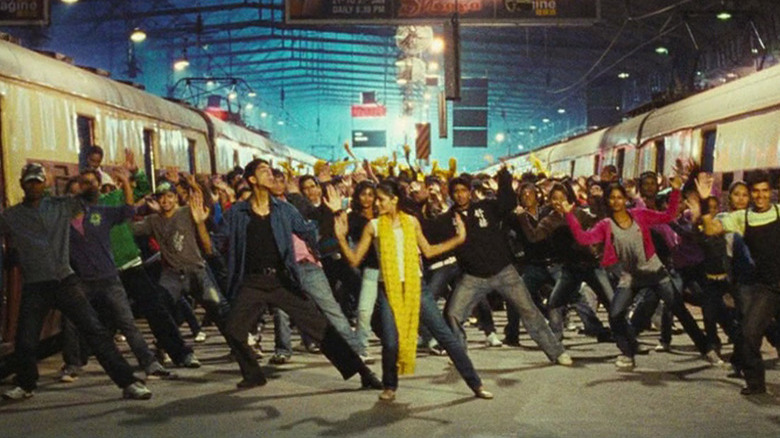
The end credits sequence honors Indian filmmaking with a Bollywood-style song and dance number to offset the gritty subject matter of Jamal's upbringing. The main cast energetically moves to "Jai Ho," by A.R. Rahman, which has a gleeful beat and catchy chorus that translates to "Hallelujah" or "Victory." It's quite fitting for the jubilant ending where Jamal wins the money and secures the affection of his childhood crush, Latika (Freida Pinto). The lyrics allude to the themes of destiny that director Danny Boyle toys with throughout the film, and the joy of finding someone who is the reason you breathe and believe in love. The brightly-colored merriment of "Jai Ho" leaves a lasting impression. 

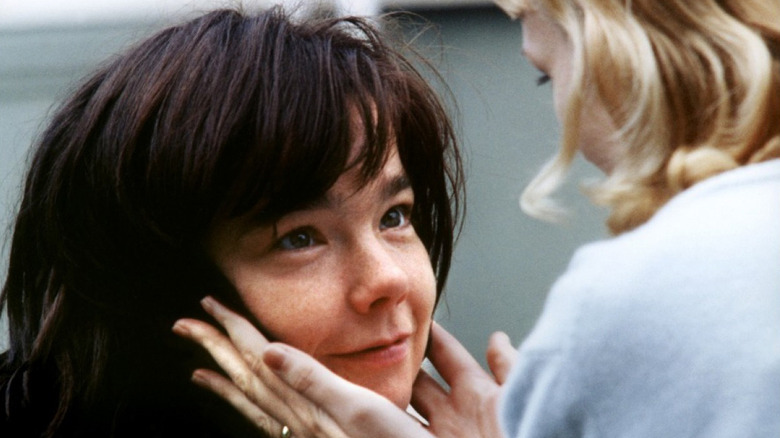
''I've Seen It All'' From Dancer In The Dark

Like the majority of Lars Von Trier films, "Dancer in the Dark" is a grueling cinematic experience. Von Trier manipulates the genre conventions of the classic Hollywood MGM musical for the bleak tale of an immigrant (Björk) with failing eyesight. "I've Seen it All" starts out slowly with the driving rhythm matching the train tracks, and builds to grand orchestrations as Selma insists that she will not despair over her blindness because she has already seen both positive and negative things throughout her life. 

Selma refuses to dwell on what she hasn't seen because it will make her feel worse about her deteriorating vision. Bjork's sweet and gentle voice accentuates the character's altruism, and also twists a knife your heart. Her open-hearted spunk accompanied by the bright surroundings of a crystal-clear river and blue sky, moving train, and dancing townspeople makes Selma's ultimate fate even more devastating. 

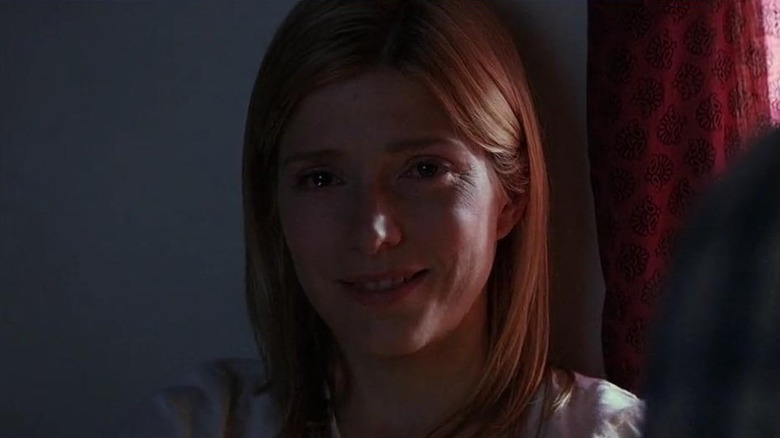
''Save Me'' From Magnolia

Paul Thomas Anderson's epic ode to human solitude, "Magnolia" was inspired by the work of singer/songwriter Aimee Mann and she was asked to compose songs for the film. "Save Me" accompanies the final scene with Claudia, a troubled young woman estranged from her sexually abusive father. The affable John C. Reilly plays a police officer who is called to check in on her after she blasts music during a cocaine binge. Over the course of "Magnolia," they develop an attachment, but Claudia fears that her traumas will push him away. 

With Mann's song prominent in the background, the camera pulls closer and closer on Claudia's face as Reilly's character, his back turned to the camera and voice barely audible, says that he wants to make it work with her. For the first time, we see her smile — straight into the lens. Mann's low, calm vocals have a raw quality that underpin Claudia's longing for mental stability. Here is a girl in need of a tourniquet for her emotional wounds, as Mann sings in her haunted tones. She has possibly found someone to save her; another "freak" or outsider that she can relate to. 

''Vindicated'' From Spider-Man 2

Millennials have a strong nostalgic affection for the emo rocker "Vindicated" at the end of "Spider-Man 2" by Dashboard Confessional. Thrillist details the origins of lead singer Chris Carrabba's composition of the song. In the half-whispered opening and passionate chorus, Carrabba expresses Peter Parker's turbulent emotions as he struggles to balance his dual human and superhero identities, longs for romance with Mary Jane, and deals with self-doubt. He yearns to be "vindicated" of these problems. The lyrics reference Mary Jane's engagement and Peter's hope dangling on a string that he will be able to honor his promise to Uncle Ben and face his responsibilities. "Vindicated" is the perfect song to accompany Sam Raimi's superhero melodrama, which deftly balances eye-popping visuals with high emotions.

''Falling Slowly'' From Once

The Academy Award-winning "Falling Slowly" is a delicate piece that captures the connection between a busker and an immigrant (played by musicians Glen Hansard and Markéta Irglová) in John Carney's 2007 film "Once." The low-budget musical follows them documentary-style as they write and record songs that reflect their burgeoning relationship. "Falling Slowly" begins with a light guitar and tender piano, then gradually swells to an ardent confession about being drawn to a stranger. The folk song is about slowly exposing your true self and vulnerabilities. According to Performing Songwriter, Hansard and Irglová wrote it over the course of a single evening and was a true back-and-forth collaboration. In the film, their intimate performance makes you completely forget that they are in the public setting of a music shop.

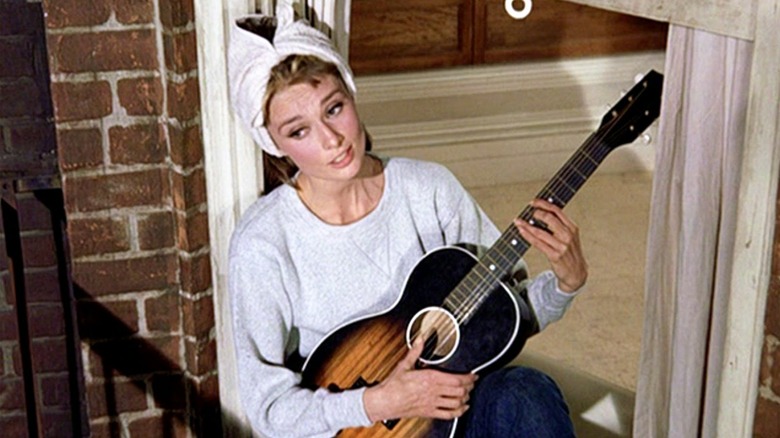
''Moon River'' From Breakfast At Tiffany's

One of "Breakfast at Tiffany's" most memorable scenes is in the opening in which the lithe Holly Golightly, dressed in a gorgeous black dress and oversized sunglasses, looks longingly in the Tiffany's window, munches on an oversized Danish, and sips coffee while Henry Mancini's instrumental version of "Moon River" plays. Later in the film, Audrey Hepburn performs the song with Johnny Mercer's lyrics. Paul "Fred" Varjak, the object of Holly's affection, overhears her on the fire escape accompanying herself on the quiet guitar, barely audible over the swirling strings. 

With tight close-ups of her beautiful, longing face, Audrey Hepburn's gentle voice carries the song's dulcet tones and the soft words evoke her melancholic loneliness. The nostalgic lyrics of rainbows and huckleberries were inspired by Johnny Mercer's carefree childhood in Savannah, Georgia. In the wavering harmonica, we hear the tenderness of summertime.

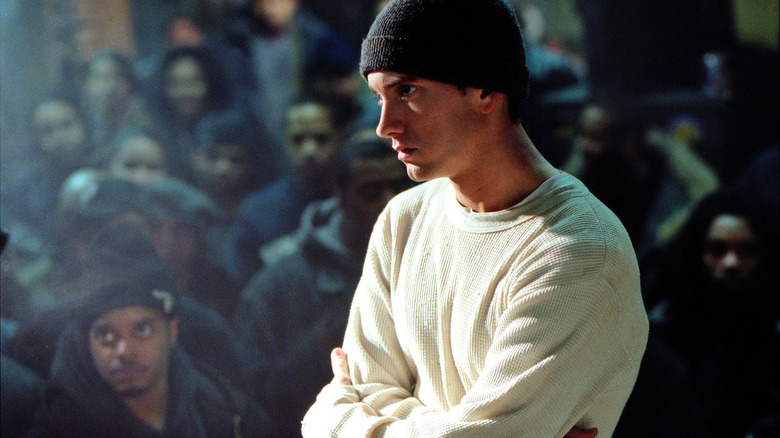
''Lose Yourself'' From 8 Mile

"Lose Yourself" was the first rap song to win the Academy Award for Best Original Song. It's from Eminem's semi-autobiographical film "8 Mile," in which he stars as an aspiring rapper named B-Rabbit from Detroit. NME praised the song's use of adrenaline-pumping instrumentals, the "thundering rawk guitars and Rocky-ish bassline" that carries his urgent delivery. The song notably occurs in the sequence where B-Rabbit, so nervous to compete in a rap battle that he can only get sick or stand in silence, finally gains the courage to spit out a furious rhapsody. "Lose Yourself" draws on Eminem aka B-Rabbit's personal history: his desire to rise from poverty and traumatic upbringing to become a successful rap artist. The inspiring rap is performed with a feverish aggression about seizing the moment and losing yourself inside of your creative passions so that you are no longer self-conscious. 

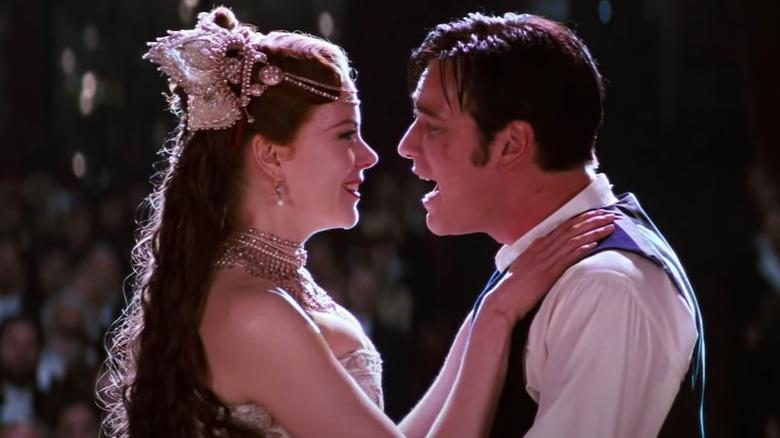
''Come What May'' From Moulin Rouge

"Come What May" was originally written for Baz Luhrmann's modern retelling of Shakespeare's "Romeo + Juliet" (and the title is lifted from another Shakespeare play, "Macbeth"). Instead, it ended up being used for another pair of star-crossed lovers: Christian and Satine in Luhrmann's dazzling jukebox musical "Moulin Rouge!" 

The stirring love proclamation of "Come What May" plays an important role in the film. Christian writes it for his musical that Satine is performing in, but it also serves as a secret reminder that their forbidden love is deep and true — even as Satine must pretend to love The Duke for money. The simple lyrics are dripping with sentimental romance, thanks to Ewan McGregor's soaring voice and Kidman's dainty warmth. Christian and Satine pledge their love to one another across the changing of seasons, until their dying day — which tragically comes sooner rather than later for one of them. 

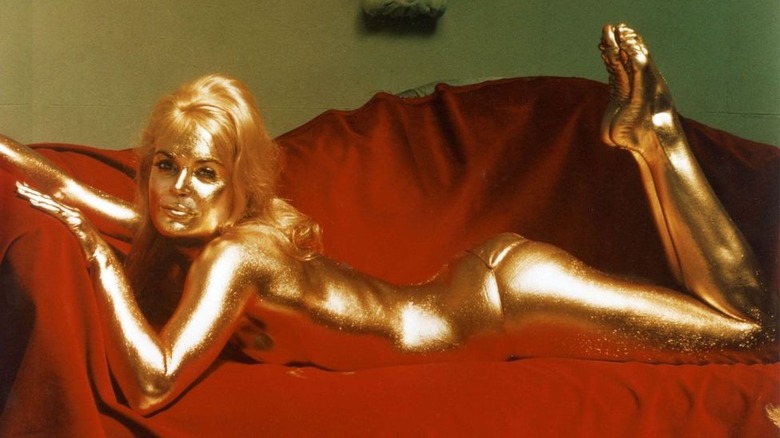
''Goldfinger'' From Goldfinger

Shirley Bassey's brassy voice and the wailing trumpets make "Goldfinger" one of the best songs in the James Bond canon, as Bassey sharply spits out her disdain for the cold-hearted, modern day King Midas villain Auric Goldfinger. The song is brought to life in a hypnotic title sequence with Sean Connery as James Bond superimposed against gold-plated women. In the final verse, Bassey growls out Auric's obsession with gold, and her elongated final note blasts as if to clarify Auric's overwhelming obsession. "'Gold-finga!" she snaps, backed by composer John Barry's iconic, sensual jazz sound. This combination adds a sense of mystery, dread, and even allure to Bond's entanglement with Goldfinger. Bassey's booming voice warns the womanizing spy of the dastardly criminal who charms with golden words. 

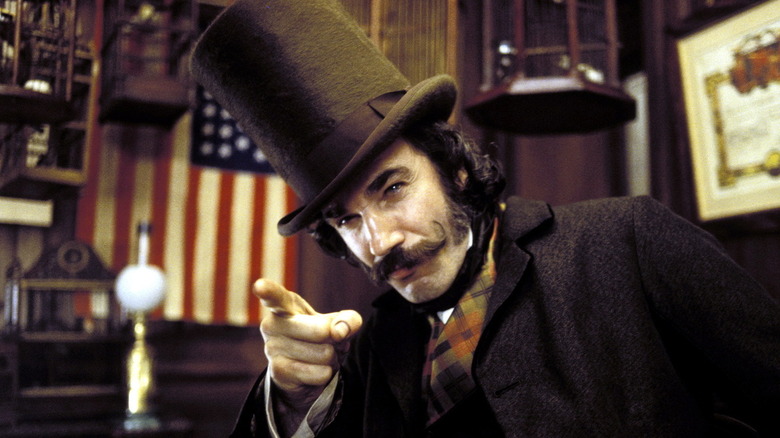
''Hands That Built America'' From Gangs Of New York

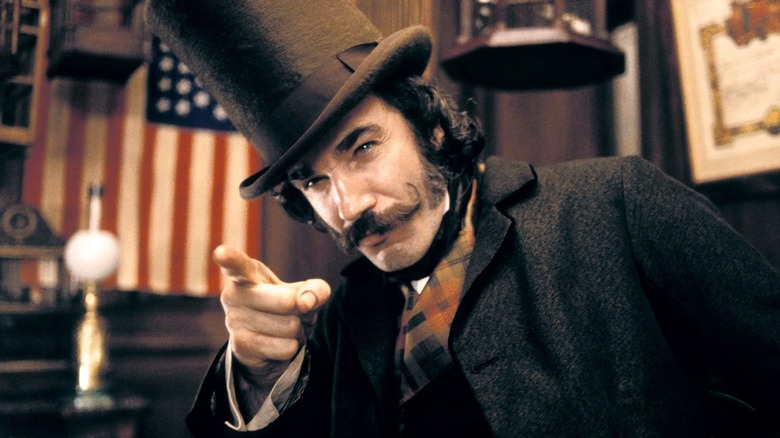
The Irish post-punk band U2 was the perfect choice to underscore the finale of Martin Scorsese's sprawling epic "Gangs of New York," the story of a 19th century Irish settler named Amsterdam who returns from jail to seek revenge on his father's killer, the anti-immigrant gang leader Bill "the Butcher" Cutting. U2 salutes all of the hands that built America: "Russian, Sioux, Dutch, Hindu, Polish, Irish, German, Italian," and "The Irish, the Blacks, the Chinese, the Jews, Korean, Hispanic, Muslim, Indian." They are the backbone of this country and the reason we are standing tall today. Many of these immigrants crafted the mammoth steel that soars into the city skies. 

Scorsese displays their incredible contribution in the breathtaking ending where Amsterdam buries Bill in a Brooklyn cemetery next to his father. Against the moving strings of "The Hands That Built America," images of the New York City skyline evolving over the next century fade into and out of one another. We see the Brooklyn Bridge and the World Trade Center rise as the cemetery watches on, eventually becoming a forgotten patch of weeds. It's a pitch-perfect ending that honors those who came before us and their historical contribution to the incredible, thriving metropolis of New York City and the rest of America.

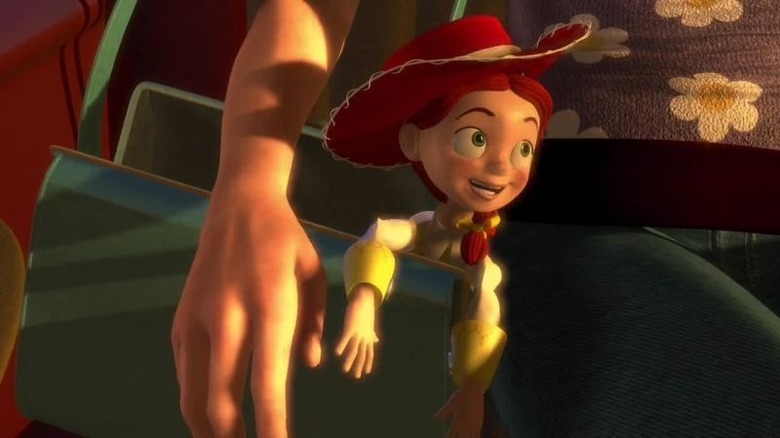
''When She Loved Me'' From Toy Story 2

The A.V. Club jokes that, "There are two kinds of people: People who weep during the 'When She Loved Me' montage, and people who lie about it." "When She Loved Me" was composed by country crooner Randy Newman, who penned other great music for the "Toy Story" franchise such as "You've Got a Friend In Me" and "We Belong Together." The heart-wrenching ballad from "Toy Story 2" overlays a montage from the perspective of tough cowgirl Jessie, who was abandoned by her former owner, Emily. 

In golden-hued flashbacks, we see their sweet bond when Emily was a child; they swing on a tire and spin around in grassy fields. Jessie ends up falling and getting trapped under the bed, where she watches Emily grow into a teenager and becoming more interested in music and doing her nails. When Emily eventually finds her, Jessie thinks she has finally been reunited; she sleeps peacefully next to her beloved owner ... until she realizes she has been abandoned at a donation truck. Sarah McLachlan's angelic voice, the gutting lyrics about losing a loved one, and the sparse piano underscores the agonizing montage. The end of childhood has never been captured so poignantly.

''Into The West'' From Lord Of The Rings: The Return Of The King

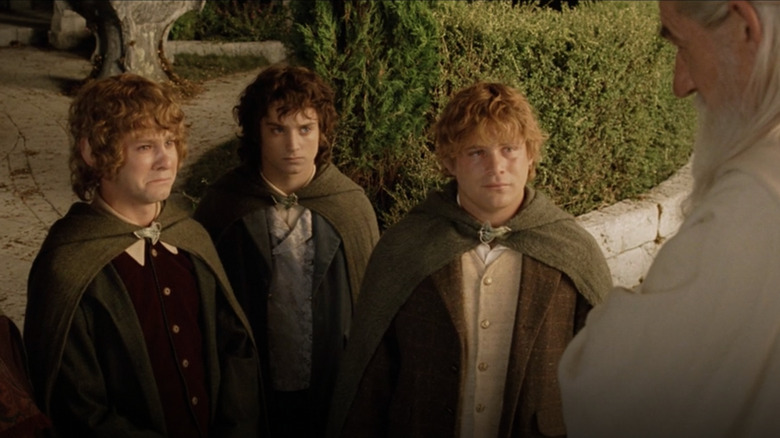
There were two original songs, "May It Be" and "Gollum's Song," that built on the themes of the first two "Lord of the Rings" films, but "The Lord of the Rings: The Return of the King" needed a song to conclude the epic series overall. At first, composer Howard Shore was going to include a lament from the "The Grey Havens" chapter, but it wasn't as grand in scope. Inspired by the untimely passing of a 16-year-old Māori New Zealand filmmaker named Cameron Duncan, Howard Shore, screenwriter Fran Walsh, and singer Annie Lennox composed "Into the West" (via the Extended Edition Appendices, Part 6, "Music for Middle-earth" and "Cameron Duncan: The Inspiration for 'Into the West'"). The melody incorporates musical themes used throughout the trilogy, including the triumphant "Black Gate Opens" as Sam carries Frodo up to Mount Doom.

The somber yet peaceful lyrics detail the Undying Lands where Frodo and Bilbo go to rest after suffering with the ring for so long, and reference Gandalf's monologue to Pippin about the beauty of the afterlife: "The grey rain-curtain of this world rolls back, and all turns to silver glass. ... White shores, and beyond, a far green country under a swift sunrise." Annie Lennox's soulful voice, the simple guitar, and floating flute not only encapsulates the tearful farewell between the hobbits but the total end of an arduous journey. 

The tranquil "Into the West' plays over the end credits of "The Lord of the Rings: The Return of the King," which include beautiful illustrated portraits of the cast. The battle for Middle-Earth is over, and we feel both relief for the fellowship and sadness that this incredible fantasy series has come to an end. 

''Don't You (Forget About Me)'' From The Breakfast Club

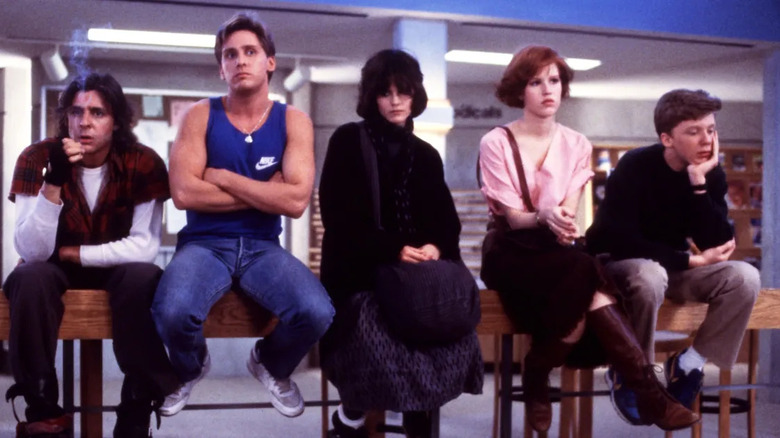
After five teenager archetypes spend a weekend detention together in "The Breakfast Club," — the brain, basket case, princess, jock, and criminal — they realize that they have a lot in common. The opening chords of Simple Minds' "Don't You (Forget About Me)" play underneath their manifesto to Principal Vernon: they are more than what meets the eye. The rich keyboards, motivating drums, and Jim Kerr's deep croon accompanies John Bender, the criminal, walking down the football field in his oversized trench coat. He raises his fist in a declaration of anti-authoritarianism, defying the insipid adults who ignore their emotional truths and stifle their authentic selves. 

The pining lyrics foreshadow the characters returning to their respective cliques on Monday. As the slow change of adulthood pulls them apart, they promise never to forget the brief but impactful time they spent together. Somehow this little Glasgow new wave band managed to capture the turbulent emotions and nostalgia of teenagehood in its melancholy and romantic sound. 

''(I've Had) The Time Of My Life'' From Dirty Dancing

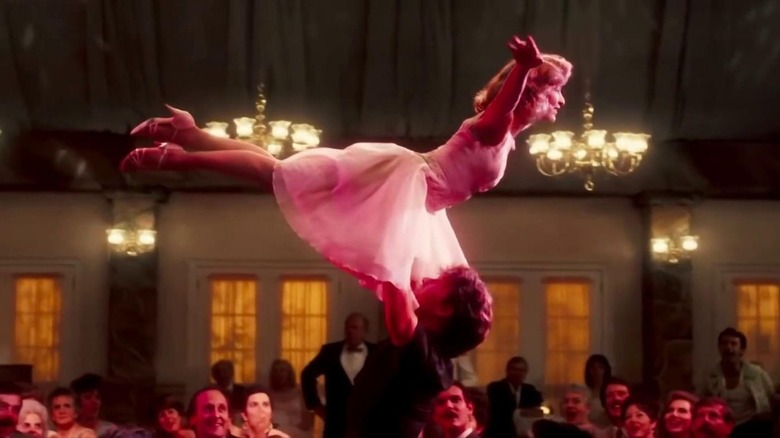
Thrillist details the fascinating history behind "(I've Had) The Time of My Life," the Academy Award-winning original song for the exhilarating "Dirty Dancing" finale. Despite taking place in the 1960s, "Dirty Dancing" uses 1980s songs such as Eric Carmen's sexy "Hungry Eyes" to connect contemporary stylings with nostalgia for a bygone era. 

Bill Medley and Jennifer Warne's love duet is the song Johnny chooses to end the talent show with his own unique creative vision. Johnny thrusts Baby out of the corner and puts her onstage where they dance together. The lyrics summarize their relationship: a fleeting but perfect time in their lives where they fell madly in love. The upbeat song builds to an aspirational crescendo where Baby nails the long-anticipated lift. "(I've Had) The Time of My Life" is the perfect song to capture the end of this sweet, feminist coming of age film about summer romance. It's about a first love that may not last forever, but at this moment means everything. 

''My Heart Will Go On'' From Titanic

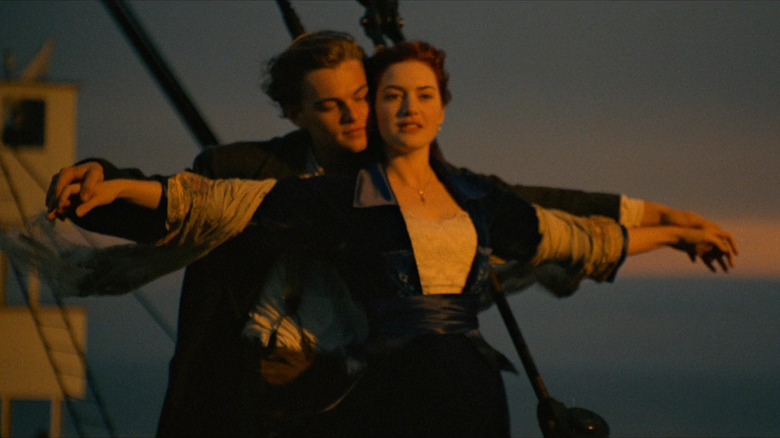
"My Heart Will Go On" is the full-throated ballad that plays at the end of the monumental blockbuster "Titanic." Written by the film's composer, James Horner, the romantic lyrics "communicate Rose's love for Jack, which might be brief, but it's a love that's as deep as the ocean and will remain in Rose's heart for a lifetime." Despite her grief, Rose fulfills Jack's dying promise to endure and make the most of her life. Celine Dion brings Jack and Rose's great passion to life with her powerful voice, especially in the final verse where, after a somber flute solo, her voice ascends to a resonant belt. "My Heart Will Go On" brings together the tragic themes of grief and true love. Its sentimental grandeur is fitting for James Cameron's melodrama about two ill-fated lovers aboard the equally ill-fated ship of dreams. 

''Glory'' From Selma

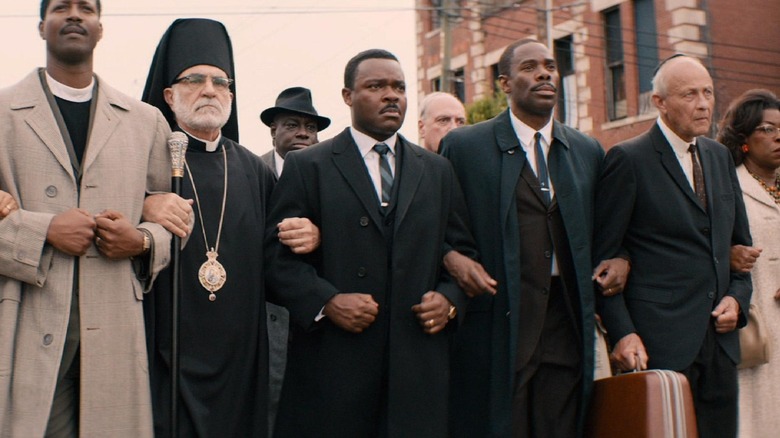
Ava DuVernay's "Selma" is a searing examination of Martin Luther King, Jr.'s public and private lives, anchored by David Oyelowo's gripping performance. The end credits feature the Academy Award-winning original song "Glory," written by John Legend, Common, and Rhymefest. "Glory" is a heady mix of John Legend's silky vocals and Common's forceful delivery that illustrates the struggles of the Black community across the decades. It's an inspiring call for social justice. NPR's pop critic Ann Powers writes on the soul influences of "Glory"

The song is structured sort of like a bridge between the gospel music that was so crucial to the civil rights movement and contemporary R&B and rap. So John Legend's part is very stirring, very uplifting, taken right out of gospel. And then you have Common, who also plays a preacher in the film, rapping in a very preacherly style and even bringing in references to contemporary politics, like Michael Brown's shooting and the protests that happened in Ferguson this past year.

Legend and Common's powerful voices and the stirring strings epitomize all of the hope, rage, and effort in the fight for racial equality. "Glory" is a pivotal work that brings the past and present together in an urgent demand for change.

''Part Of Your World'' From The Little Mermaid

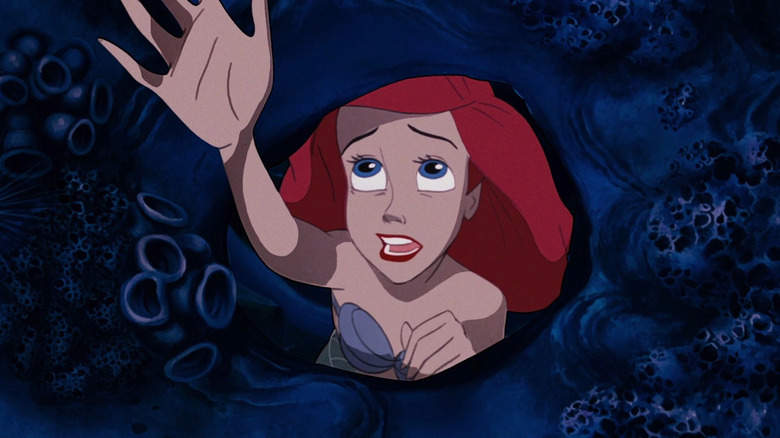
There are countless Disney tunes that deserve to be on this list, but there is one key song that highlights the key to the studio's '90s golden age of animation. "The Little Mermaid" was a vital turning point for Disney, because it featured a Broadway song structure. Lyricist Howard Ashman and composer Alan Menken included an "I Want" song -- a solo musical number for the main character that express what they want to change about their life. In "Part of Your World," Ariel declares her burning desire to live as a human in the world above. Sung with sweet-voiced passion by Jodi Benson, it allows the audience to identify with the teenage mermaid's struggles. The song also establishes that Ariel's love of the human world started way before she ever saw Prince Eric. It took her a long time to build that collection of thingamabobs! 

''Streets Of Philadelphia'' From Philadelphia

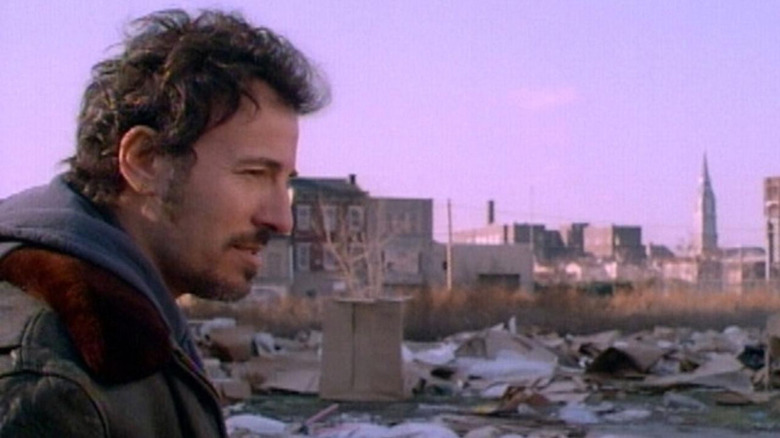
For the opening montage of "Philadelphia," director Jonathan Demme originally envisioned a hard rocking song. He specifically chose Bruce Springsteen to write it because, much like star Tom Hanks, Springsteen was an American everyman who could help make a film about a gay man with AIDS more palatable for conservative audience members during the 1990s. This was part of Jonathan Demme's goal to have the film change minds by reaching mainstream viewers (via Rolling Stone). 

Springsteen composed a mournful ballad with a simple drum machine beat and layered synths, lending it a reverent quality. His use of first person narration puts the listener in the shoes of the countless men and women whose lives were tragically taken by AIDS. The simple poetics of the main character's physical and emotional despair — wasting away until he is unrecognizable, left alone to hear the voices of those left behind  —  are devastating and intensely relatable to anyone who is dealing with pain. This kind of intimate and universal perspective was especially important during a time period when HIV-positive people were feared and castigated by society. 

Through a contemporary lens, "Philadelphia" has questionable queer politics, but there is no denying that Springsteen's poignant contribution to the film was essential in garnering empathy to mainstream audiences for HIV-positive people, especially those within the LGBTQ+ community. 

''Fight The Power'' From Do The Right Thing

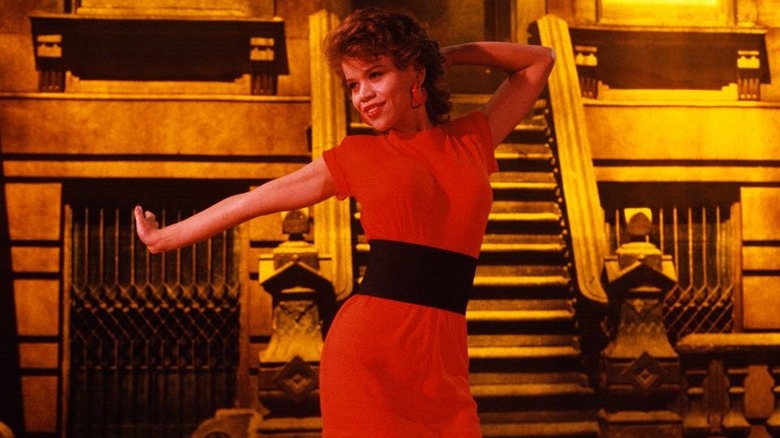
Spike Lee's groundbreaking "Do the Right Thing" takes place on the hottest day of the year in the Bedford-Stuyvesant area of Brooklyn, where racial tensions explode into violence after a cop murders the boombox-carrying Radio Raheem. The film features one of the most audacious openings of all time. With gritted teeth, thrashing limbs, and nimble feet, Rosie Perez dances furiously to Public Enemy's "Fight the Power" — a song commissioned specifically for the film. 

Rolling Stone calls the fierce hip-hop track "a dissonant call to revolution" that critiques iconic white figures such as John Wayne and Elvis Presley for cultural appropriation and chauvinism, as well as other racist institutions such as the U.S. Postal Service. Hank Shocklee, a member of Public Enemy's production team, told Rolling Stone that the group wanted "Fight the Power" to have a "defiant, aggressive, I'm-not-gonna-take-it feeling," and this comes across in every sweat-dripped stomp from Rosie Perez. 

Read this next: The Coen Brothers Movies Ranked Worst To Best

The post The Best Original Songs Written for Movies appeared first on /Film.

19 May 13:20

Microsoft Teams Exploits Earn Hackers $450,000 at Pwn2Own 2022

by Eduard Kovacs

Vulnerability researchers earned a total of $800,000 on the first day of the Pwn2Own Vancouver 2022 hacking contest, including $450,000 for exploits targeting Microsoft Teams.

read more

19 May 13:18

RPCS3 Latest Updates Bring Major Performance Improvements for Metal Gear Solid 4, Red Dead Redemption and Persona 5

by Francesco De Meo

RPCS3

Recent updates made to the RPCS3 PlayStation 3 emulator have brought major performance improvements for select titles like Metal Gear Solid 4, Red Dead Redemption, and Persona 5.

The new updates have been showcased in a new video shared by the emulator's developers on the RPCS3 official YouTube channel. You can check out the video below.

Thanks to Nekotekina optimising SPU performance, SPU bottlenecks have been reduced across the board allowing for higher RSX (PS3 GPU) utilisation. Metal Gear Solid 4 saw the largest improvement from this change with most users seeing a 25-50% performance uplift! This change gave kd-11 some much-needed headroom to optimise RSX performance even further! And kd-11 has done just that, with a 5-20% performance gain in most RSX heavy games/areas such as outside of towns in Red Dead Redemption.

In fact, kd-11 is already working on another RSX improvement, this time to Zcull performance! Early testing has revealed yet another huge gain in Metal Gear Solid 4, and of course other games as well. Stay tuned. kd-11 also resolved a NVidia specific physics issue affecting Uncharted 1 & 2 due to differences in float calculations.

More information on the RPCS3 emulator can be found on its official website.

RPCS3 is a multi-platform open-source Sony PlayStation 3 emulator and debugger written in C++ for Windows, Linux and BSD. It was founded by programmers DH and Hykem. Initially hosted on Google Code, the project was eventually migrated to GitHub later on in its development. RPCS3's first successful boots were primarily composed of small homebrew projects and hardware tests. The emulator was later publicly released in June of 2012 and gained substantial attention from both the open-source community and PlayStation enthusiasts alike. Today, RPCS3 is primarily developed by its two lead developers; Nekotekina, kd-11 and backed by flourishing team of GitHub contributors.

The post RPCS3 Latest Updates Bring Major Performance Improvements for Metal Gear Solid 4, Red Dead Redemption and Persona 5 by Francesco De Meo appeared first on Wccftech.

19 May 13:15

Star Trek's Most Mysterious Character Now Has A Backstory

by Witney Seibold

This post contains spoilers for episode 3 of "Star Trek: Strange New Worlds."

"Star Trek: Strange New Worlds" is, even more so than most of the recent "Trek" shows, a legacy program. While "Star Trek: Picard" steers into nostalgia like a raft caught in a current and "Star Trek: Lower Decks" is lousy with references to older "Trek" episodes, it's "Strange New Worlds" that features a cast made up almost entirely of "Trek" characters previously seen. Captain Pike (Anson Mount) was originally played by Jeffrey Hunter. Spock (Ethan Peck) was played by Leonard Nimoy. Nurse Chapel (Jess Bush) was played by Majel Barrett. Dr. M'Benga (Babs Olusanmokun) was originally played by Booker Bradshaw. Uhura (Celia Rose Gooding) was originally played by Nichelle Nichols. And while Khan (Ricardo Montalbán) is not on the show, his descendant La'an (Christina Chong) is. The only wholly new characters are the engineer Hemmer (Bruce Horak) and helm operator Erica Ortegas (Melissa Navia). 

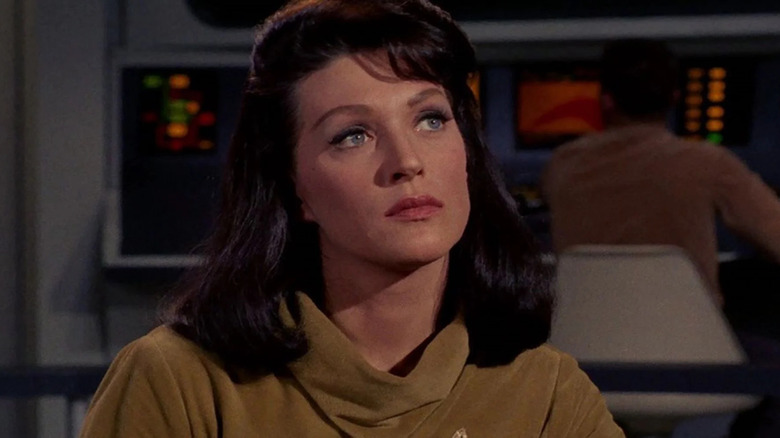
The most exciting legacy character on "Strange New Worlds," however, is certainly Una Chin-Riley (Rebecca Romijn), previously only known as Number One and originally played by Majel Barrett in the 1966 "Star Trek" pilot episode "The Cage." 

Exciting, because "Strange New Worlds" will finally have an opportunity to explore a character that has remained notoriously mysterious for multiple decades of "Trek" history. In 1966, all audiences knew about Number One was that she was the first officer of the Enterprise, possessed a great deal of authority, and was going to have to stare sexism in the face on a regular basis (Pike has a notorious line of dialogue in "The Cage," saying that he can't get used to having a woman on the bridge). Thanks to the third episode of "Strange New Worlds," -- "Ghosts of Illyria" -- a lot of Number One's backstory is now filled in, and -- playing fair -- the "Trek" creators have redefined her, broadening her character into something few viewers could have predicted. 

The Original Number One

In "The Cage," Number One was little more than a professional authority figure. The pilot episode was so busy with its story of Pike, the Talosians' mental illusions, and trying to hook up the captain with a potential mating partner in a woman named Vina (Susan Oliver) that few other members of the ensemble were given a moment to shine. Number One is eventually kidnapped by the Talosians, along with a young yeoman (Laurel Goodwin), each one presented to Pike as potential mating partners when Pike refuses to procreate with Vina in front of the voyeuristic aliens (One might sense a small streak of prurient male fantasy running through Roddenberry's creation). 

When Number One is trapped in the Cage with Pike, the Talosians describe her as having a superior mind. She's the one who is interested in computations and numbers. The Talosians also read her mind and say that, while she apparently lacks emotions, it's merely a pretense and that she frequently fantasizes about the captain. Her secret feelings for the captain are wisely -- at least so far -- being ignored by the makers of "Strange New Worlds." 

It was posited in Daniel Leonard Bernardi's 1998 book "Star Trek and History: Race-ing Toward a White Future" that one of the reasons NBC rejected the original pilot, apart from it being "too cerebral," was the presence of a woman in authority. Additionally, NBC was upset that Roddenberry wanted Barrett in the role, an unknown actress that the studio knew Roddenberry was dating. For the second "Trek" pilot, the character was written out.

The Illyrians

In "Ghosts of Illyria," the newly christened Una Chin-Riley ("Una," I'm guessing, as a play on "Number One") takes command of the Enterprise in the middle of a health crisis: A mysterious virus is spreading among the crew, the primary symptom being their hypnotic attraction to bright lights. Una is able to fight off the virus (!) and goes about investigating the disease's spread. Pike and Spock, meanwhile, are stranded on the planet below, a place called Illyria. And no, while stranded in Illyria, neither of them disguises themselves as their dead fraternal twin sibling to infiltrate the court of Duke Orsino. (That's a "Twelfth Night" reference. Sorry.)

 The planet of Illyria is a reference to the "Star Trek: Enterprise" episode "Damage" (first aired: April 21, 2004). In that episode, the Enterprise had been damaged in a dogfight with the Xindi in the previous episode, and were left with dead crew members and a broken warp coil. While adrift, the ship encounters an Illyrian vessel, also damaged by some gravitational razzmatazz in a forbidding area of space called the Delphic expanse. The Illyrians explain that they are genetically enhanced race that tinkers with their own genomes as a matter of course. By the end of the episode, Captain Archer (Scott Bakula) will attack the Illyrians and steal their warp coil. No one is happy about that. The Illyrians are left stranded. Archer never goes back to help them. 

Una, The Illyrian

At the end of "Ghosts of Illyria," Commander Chin-Riley has to reveal a secret to the captain: She was able to fight off the disease because she is, in fact, an Illyrian herself. She lied about her species on her Starfleet application and has been posing as a human this whole time. Pike, being a laidback kind of captain, does not reprimand her, nor suggest disciplinary actions to his superiors. He simply rolls with it. Whether or not Number One will restore her cranial ridges -- the Illyrians in "Damage" didn't look entirely human -- remains to be seen. 

In the mythology of "Star Trek," genetic engineering is strictly verboten, largely because of the much talked-out and devastating Eugenics Wars. Khan was a tyrant from said wars, and the conflict would lead to an outright ban on genetic manipulation for reasons of personal enhancement. La'an still bears the genes of her enhanced ancestor, and her status is well-known in Starfleet. Cin-Riley, knowing the law -- and the taboo -- against manipulation, opted to keep her identity secret. By episode three, the cat is out of the bag. Perhaps she was relieved when that Talosians didn't find that in her mind back in 1966. 

Not only is Una now a far richer character with a more interesting backstory, but it seems that the "Trek" writers have played fairly. Because Number One was grievously underwritten in the 1960s, she's more or less a blank canvas. Presenting the character as a genetically enhanced Illyrian does not undo anything established. It merely confronts our assumptions. Additionally, La'an and Una now have something in common, and may find themselves bonding over their "outsider" status on the Enterprise. 

Now, we find, there is much more to explore.

Read this next: Every Star Trek Show And Movie In Chronological Order

The post Star Trek's Most Mysterious Character Now Has a Backstory appeared first on /Film.

19 May 13:14

Intel, AMD Ban Sees Russia Turn To Chinese Chips

by Ramish Zafar

After U.S. chip providers Intel Corporation and Advanced Micro Devices, Inc (AMD) decided to stop chip shipments to Russia in the aftermath of the ongoing Ukraine invasion, Russian motherboard manufacturers have started to use Chinese microprocessors with the same designs as those provided by the American companies. This news comes courtesy of a Russian publication and has been picked up by Tom's Hardware. It marks one of the first such instances of a shift to Chinese processors by an industry that has limited options to build and sell products due to intellectual property and local industry constraints.

Russian Motherboard Manufacturer Selling Product With China's KaiXian Microprocessor

According to Habr, the Russian motherboard manufacturer, Dannie introduced a new motherboard earlier this week which uses a Chinese processor. This lineup of chips is one of the few out there that use the x86 microarchitecture. These designs have been optimized for personal computing and other workloads and come with higher power consumption when compared to those with other designs such as the Arm architecture.

Intel and AMD are two of the fourth firms in the world that have the authority to design and sell chips with this microarchitecture for use in personal computers. With the pair out of the picture in Russia, the country's board manufacturers are left with few options to choose from.

One of these, Zhaoxin, designs and sells the KaiXian lineup of processors primarily for use inside China. The latest of these chips is the KX 6000 lineup which was introduced in 2019 and is manufactured using the Taiwan Semiconductor Manufacturing Company's (TSMC) 16-nanometer semiconductor manufacturing process.

Avid readers will note that when compared to the latest products from both Intel and AMD, the 16nm process node is an older technology that uses more power and has a larger product surface area.

Lenovo's N7 notebooks announced in 2019 also use the Zhaoxin KaiXian KX-6600MA4 central processing unit (CPU). Image: Lenovo

The board in question is the Russian firm Dannie's MBX-Z60A micro-ATX motherboard and the processor that it uses is Zhaoxin's KaiXian KX-6640MA processor. This chip has a top frequency of 2.7Ghz and is designed for low to mid power use such as notebooks.

Dannie is headquartered in both Russia and China and it has offices in Turkey and Lithuania as well. The company also designs and sells other products in addition to computer motherboards. These include automotive smart cameras and digital displays.

Zhaoxin has been launching processors since 2014 and the KaiXian lineup is its latest set of chips. The company is also aiming at launching newer products that should compete with their global counterparts in some aspects. Its KX-7000 processors aim to use the 7nm manufacturing process via China's largest chipmaker, the Semiconductor Manufacturing International Corporation (SMIC). However, SMIC's progress with the 7nm node is unclear, and the company has been aiming to develop the breakthrough technology for several years.

All in all, the KX-6640MA is a last resort for computer firms looking to sell their products in the post-Ukraine invasion era. The country's government has announced several plans to beef up local chip production, but the complexities of the industry coupled with difficulties in accessing the advanced machines that print millions and billions of tiny circuits on a piece of silicon remain key hurdles towards developing a homegrown semiconductor industry. For its part, the United STates government has warned Chinese companies, particularly SMIC, of strict actions in case they try to help Russia in avoiding the consequences of U.S. sanctions.

The post Intel, AMD Ban Sees Russia Turn To Chinese Chips by Ramish Zafar appeared first on Wccftech.

19 May 09:32

New Bluetooth Hack Can Unlock All Kinds of Devices

by BeauHD
An anonymous reader quotes a report from Ars Technica: When you use your phone to unlock a Tesla, the device and the car use Bluetooth signals to measure their proximity to each other. Move close to the car with the phone in hand, and the door automatically unlocks. Move away, and it locks. This proximity authentication works on the assumption that the key stored on the phone can only be transmitted when the locked device is within Bluetooth range. Now, a researcher has devised a hack that allows him to unlock millions of Teslas -- and countless other devices -- even when the authenticating phone or key fob is hundreds of yards or miles away. The hack, which exploits weaknesses in the Bluetooth Low Energy standard adhered to by thousands of device makers, can be used to unlock doors, open and operate vehicles, and gain unauthorized access to a host of laptops and other security-sensitive devices. [...] [The] attack uses custom software and about $100 worth of equipment. [Sultan Qasim Khan, a principal security consultant and researcher at security firm NCC Group] has confirmed it works against the Tesla Model 3 and Model Y and Kevo smart locks marketed under the Kwikset and Weiser brand names. But he says virtually any BLE device that authenticates solely on proximity -- as opposed to also requiring user interaction, geolocation querying, or something else -- is vulnerable. "The problem is that BLE-based proximity authentication is used in places where it was never safe to do so," he explained. "BLE is a standard for devices to share data; it was never meant to be a standard for proximity authentication. However, various companies have adopted it to implement proximity authentication." Because the threat isn't caused by a traditional bug or error in either the Bluetooth specification or an implementation of the standard, there's no CVE designation used to track vulnerabilities. Khan added: "In general, any product relying on BLE proximity authentication is vulnerable if it does not require user interaction on the phone or key fob to approve the unlock and does not implement secure ranging with time-of-flight measurement or comparison of the phone/key fob's GPS or cellular location relative to the location of the device being unlocked. GPS or cellular location comparison may also be insufficient to prevent short distance relay attacks (such as breaking into a home's front door or stealing a car from the driveway, when the owner's phone or key fob is inside the house)." There's a few countermeasures one can take to mitigate this attack. "One mechanism is to check the location of the authenticating device to ensure that it is, in fact, physically close to the locked car or other device," reports Ars. "Another countermeasure is to require the user to provide some form of input to the authenticating device before it's trusted." The phone's accelerometer could also be used to measure its movements. The advisories published by NCC Group can be found here, here, and here.

Read more of this story at Slashdot.

18 May 22:26

The Best Movies Of 2022 So Far

by SlashFilm Staff

Movies are good.

Sorry. Ahem. We can do better than that. Movies are not only good, movies are enriching, nourishing, rejuvenating, beautiful, weird, funny, exhilarating, terrifying, discombobulating, and any other adjective you care to throw at them. The bad ones melt away. The good ones linger on. Therefore: movies are good. 

And 2022 proves that yes, movies are indeed still good. And to make that crystal clear, we're keeping a running tally, presented alphabetically, of the films we loved this year. The Indies. The blockbusters. The stuff you've heard of. The stuff that may not be on your radar. If it's on this list, it has the /Film staff's seal of approval. And we'll be updating it every few weeks. Happy to have you here. And we'll see you later. 

After Yang
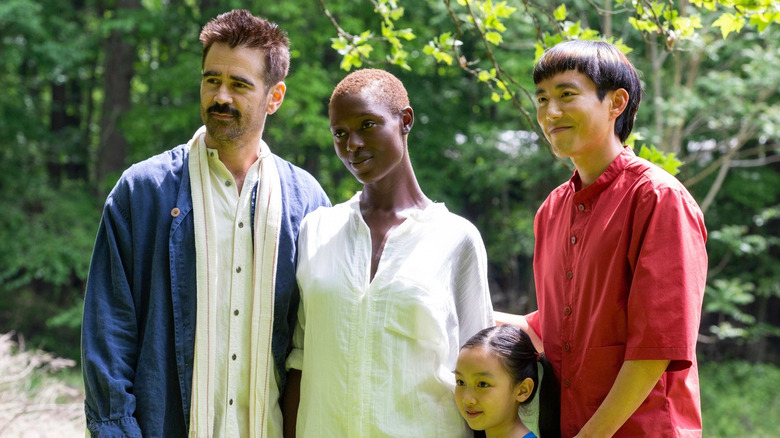
"After Yang," Kogonada's follow-up to his exquisite 2017 film "Columbus" is another minimalist masterpiece. Set in a near future where android helpers are a common staple of families, "After Yang" is a meditative drama that uses its sci-fi premise to ask a key question: what do we really know about each other's inner lives?

Jake (Colin Farrell) and Kyra (Jodie Turner-Smith) purchased a recycled android named Yang (Justin H. Min) as a companion for their adoptive Chinese daughter Mika (Malea Emma Tjandrawidjaja), in an attempt to bring her closer to her ancestral culture. They've owned Yang for several years now, and Mika has grown attached at the hip to the android, who has become a friend, babysitter, and confidante to the young girl while her busy parents attend to their careers. But one day, Yang malfunctions, and Jake sets out to repair it for the sake of his devastated daughter. In the process, he uncovers something incredible about Yang's past.

Despite its minimalist approach and slow, methodical pace, "After Yang" manages to convey so much: the fallacy of the "hollow Asian" trope, the feeling of being an outsider looking in, of being but not belonging. It unravels the internality of a character thought to be long gone in fragments — a memory here, a melody there. But by showing a life in pieces rendered meaningful through the sheer weight of existence, "After Yang" manages to capture the heartache of transracial transhumanism, and make the case that every life is beautiful and worth admiring. After all, isn't that what makes us human? (Hoai-Tran Bui)

Ambulance
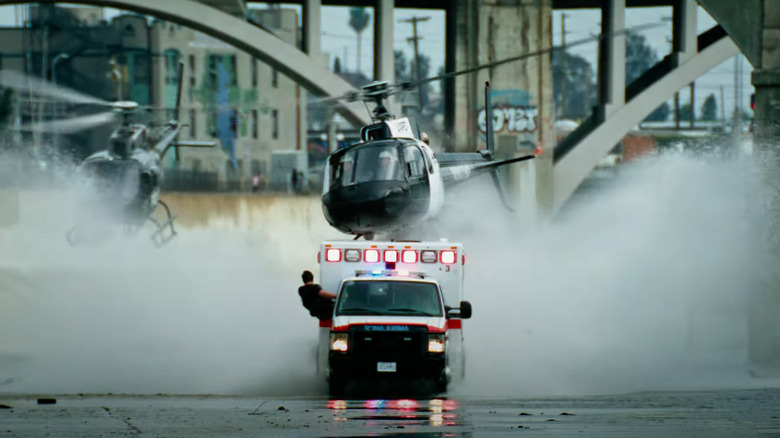
Michael Bay goes Full Bayhem with "Ambulance," a big, loud, incredibly entertaining movie about a team of bank robbers who highjack an ambulance as a getaway vehicle, and then proceed to wreak havoc wherever they go. The crooks are played by Jake Gyllenhaal and Yahya Abdul-Mateen II, who are adoptive brothers with very different temperaments. Abdul-Mateen's character seems like a genuinely good guy, and he needs money to help pay for an operation for his sick wife. Gyllenhaal's character, meanwhile, is a wild and crazy freakshow of a man, always sweating and shouting as if he's ingested all the cocaine in the world. 

The ambulance rockets through Los Angeles with a paramedic (Eiza González) and an injured cop on board while law enforcement tries to close in on. Lots and lots of destruction follows, and Bay unleashes dizzying drone footage that swoops everywhere. But the real draw here is Gyllenhaal, who continues to confirm he's really a character actor in a leading man's body. His unhinged, wacky work has to be seen to be believed, and includes moments where he demands everyone stop for a moment so he can listen to his favorite song, "Sailing" by Christopher Cross. "Ambulance" is not going to convert anyone who thinks of Bay as a cinematic antichrist (and Bay has no problem leaning into things by having multiple scenes where characters discuss his previous movies). But if you're up for the goofiness he's selling, you're in for a wild ride. (Chris Evangelista)

The Batman
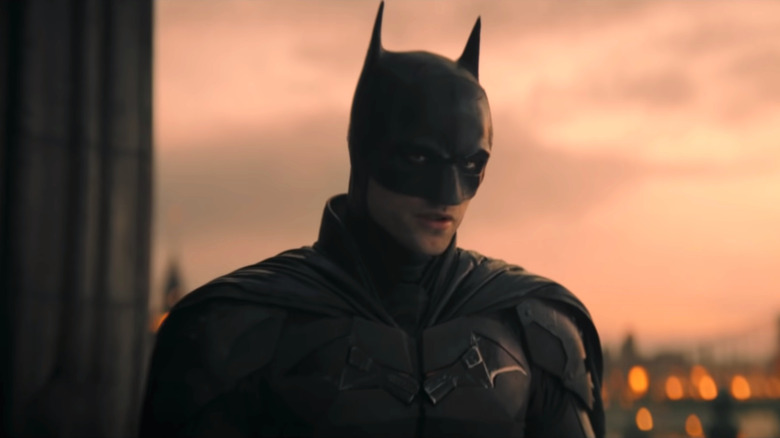
Every second of director Matt Reeves' new take on the Caped Crusader feels like a filmmaker getting away with something. "The Batman" isn't just terrific for a superhero movie, it's a terrific movie overall -- odd, sexy, sinister, exciting, and grimly funny, this three-hour noir about what it means to struggle for moral oxygen in corrupt and suffocating world is a big, bold swing, and a reminder that Batman and Bruce Wayne, when in the right hands, are as thematically malleable and fascinating as any character in pop culture.Not since "Blade Runner 2049" has a massive, expensive Hollywood blockbuster felt like it escaped the oversight of the people who are generally employed to keep a movie like this from getting made. Robert Pattinson's Dark Knight isn't an idealized hero, but a moody goth nutcase who looks like he hasn't seen the sun in a couple years and has the social skills to match. It's an outstanding performance, one that anchors the movie when he's both in and out of the cowl. And Reeves surrounds him with a murderer's row of support. Zoe Kravitz, Paul Dano, Jeffrey Wright, and Colin Farrell supply performances that feels as weary and lived-in as the crumbling Gotham around them. It's the kind of bench you dream of building a franchise around. And as complete and definitive as "The Batman" feels as a standalone movie, it's the rare franchise-starter that actually feels like it has the dramatic heft to shoulder an entire series of movies that movie fans will actually want to see. (Jacob Hall)

Brian And Charles
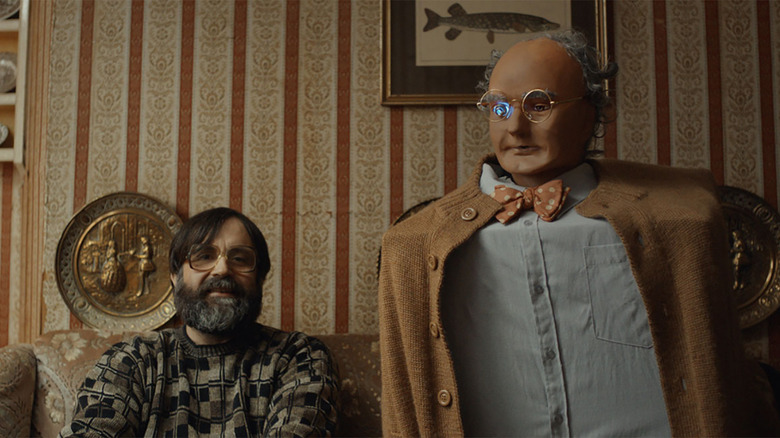
How could you possibly resist the adorable story of a quirky, reclusive inventor and his makeshift robot with the head of a mannequin and the body of a washing machine? You simply can't. "Brian and Charles" is a delightful story of friendship mixed with a dryly hilarious take on "Frankenstein" tropes with a little "E.T. The Extra-Terrestrial" and "The Iron Giant" thrown in for good measure.

In the movie from director Jim Archer, adapted from his own short film of the same name, Brian Gittins (David Earl) spends his time creating oddball inventions such as shoes with trawler nets on the back, a belt for holding eggs, and a flying cuckoo clock that he attempts to launch on a bicycle. Shy and socially awkward, he steers clear of most people in his small town, especially some bullying rough-around-the-edges locals. But he lights up after creating Charles, a robot somehow formed from some roadside junk and a washing machine. The two become best friends, inspiring Brian to come out of his shell a bit. However, their friendship is tested when Charles desperately wants to learn more about the world around him, and Brian keeps him from venturing too far away from their countryside home. 

What follows is a wonderful, hilarious and charming adventure where Brian and Charles learn a lot about what it really means to be friends and even more about themselves. It's simple but lovely and will undoubtedly be a crowdpleaser when it hits theaters on June 17, 2022. Check out our review from the 2022 Sundance Film Festival right here. (Ethan Anderton)

Cha Cha Real Smooth
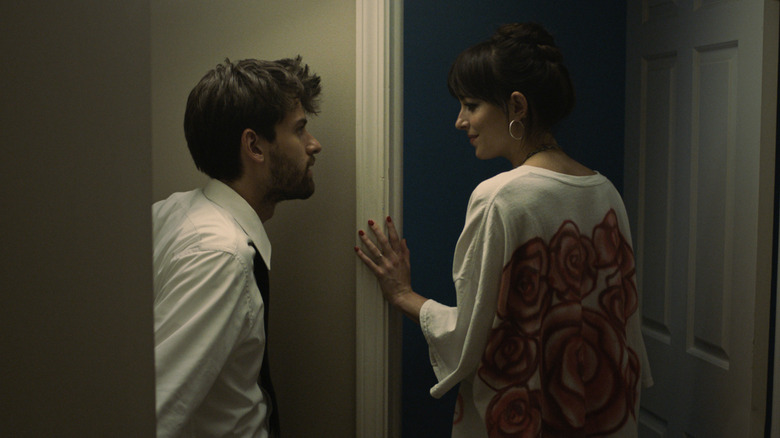
Writer/director/producer/star Cooper Raiff made a splash on the indie scene with his 2020 debut feature "Sh*thouse," and his latest movie, the delightful and ultra-charming "Cha Cha Real Smooth," proves he's not a one-hit wonder. Raiff plays an aimless college grad who stumbles into a career as a DJ/party starter at bar/bat mitzvahs, and the movie centers on his budding relationship with a beguiling woman (Dakota Johnson) who has a teenage daughter (Vanessa Burghardt) on the autism spectrum. Raiff's character strikes up a genuine friendship with both of them individually, and much of the drama hinges on whether his friendship with Johnson's character will evolve into something more romantic. Sparks undeniably fly between the two of them (and the actors have sizzling chemistry on screen), but are these characters at the right place in their lives for a connection like this? 

Once all of the pieces are on the board, the patterns of the narrative may become familiar to those with a passing knowledge of independent movies in the 21st century, but this movie is elevated by Raiff's inherent charisma, Johnson's magnetic performance, and the movie's willingness to use melancholy to great effect. The romantic comedy has experienced its fair share of ups, downs, near-deaths, and resurgences over the past thirty years, and "Cha Cha Real Smooth" is a fantastic example of how there's still plenty of life left in the genre when mesmerizing performers are given great material to work with. The film will arrive in theaters on June 17, 2022. (Ben Pearson)

Chip 'N Dale: Rescue Rangers
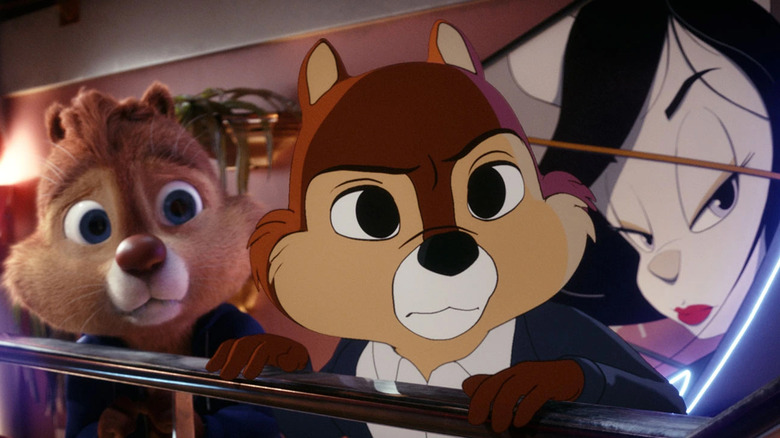
After all the insufferable live-action CGI hybrid movies we've gotten based on classic cartoons, from "Alvin and the Chipmunks" to "Tom & Jerry," it's totally understandable if you initially rolled your eyes at the new Disney+ movie based on "Chip 'n Dale: Rescue Rangers." But we're here to tell you that this is one of the best movies of the year and it's a worthy successor to the innovative live-action animation hybrid "Who Framed Roger Rabbit."

With a self-aware sense of humor and a cavalcade of cartoon cameos and references, "Chip 'n Dale: Rescue Rangers" is a witty Hollywood satire that lovingly sends up the animation industry, from two-dimensional Saturday morning cartoons to not-quite-lifelike computer generated imagery and even more in-between. Fueled by a mystery that threatens the cartoon characters of Hollywood, "Chip 'n Dale" finds John Mulaney and Andy Samberg as the estranged crime-fighting TV duo who are forced to become real-life heroes instead of just chipmunks acting for the small screen. Family friendly and endlessly rewatchable thanks to the dozens of Easter eggs sprinkled throughout, this is one of the biggest surprises of 2022, and it's easily one of the best original movies to come out of Disney+ since the streaming service launched. We're keeping our fingers crossed for a sequel. (Ethan Anderton)

Doctor Strange In The Multiverse Of Madness
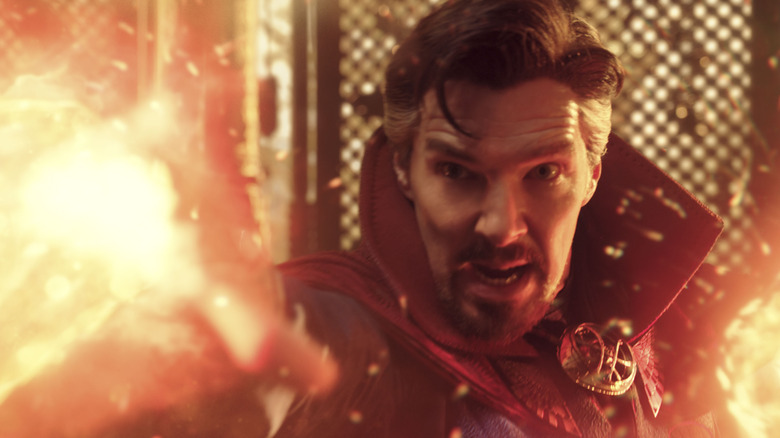
For its first half, "Doctor Strange in the Multiverse of Madness" serves up the Marvel formula: amusing quips, fun actors saying said quips, and energetic enough action to keep you occupied and entertained. The usual. And then the film takes a hard turn for the unusual, and what could've been just another Marvel movie transforms into a Sam Raimi movie.20 years after he invented the modern blockbuster with the original "Spider-Man" trilogy, Raimi returns to the superhero stomping grounds by ... stomping all over superhero movies. The gleeful, maniacal filmmaker reaches deep into his toolbox and pulls out the skills that he utilized in the "Evil Dead" trilogy, transforming the "Doctor Strange" sequel into a horror show where no one is safe and no camera angle can co un-canted. Once the gloves come off, the film comes to startling life: a chase scene that feels like "Evil Dead 4" actually happened, and it just stars the Scarlet Witch; a bizarre and beautiful duel between powerful magicians where music becomes a literal weapon; a climax that feels like Clark Ashton Smith's greatest heavy metal nightmare. It's a lot!"Doctor Strange in the Multiverse of Madness" is messy. You can see the seams of the reshoots, of the script that was never quite finished when cameras rolled. But you can also see the energy of a one-of-a-kind filmmaker marching into the Marvel Cinematic Universe and steamrolling your expectations. You thought you knew what you were getting, and boy, you were wrong. (Jacob Hall)

Everything Everywhere All At Once
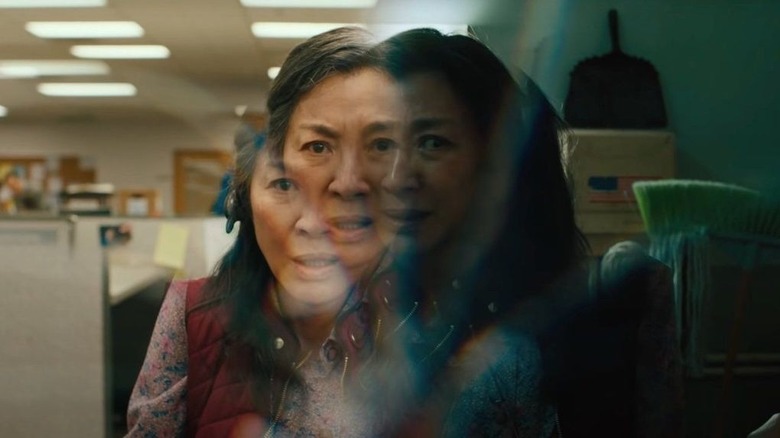
"Everything Everywhere All At Once" is a mind-melting masterpiece. Not just because of everything it throws at the audience in Daniels' jam-packed, maximalist depiction of living in today's nihilistic, anxiety-filled world. But because it's a surprisingly compassionate knife that cuts through the noise.

It doesn't feel like there are enough words to describe what makes "Everything Everywhere All At Once" so incredible, but here is a string of several: It's an absurd, gonzo, sweet, silly, sad sci-fi flick. It's a multiversal adventure that makes the most of Michelle Yeoh's tremendous talents — whiplashing between comedy, to drama, to romance, to the martial arts excellence that we all know and love her for — casting the international superstar as a laundromat owner stressed over her taxes and impending divorce, who must also contend with a destructive omnipotent force that threatens to shatter all of reality. And because she's lived such an abysmally disappointing existence, she's the only one who can save us all.

In a way, "Everything Everywhere All At Once" feels like it's speaking a secret language. A language spoken through absurd hot dog jokes, and pop culture homages to Stephen Chow and Wong kar-wai and Satoshi Kon. We don't understand all of it, but we feel it. We feel the overwhelming state of existing, and we want it all to stop. But stop we can't, and "Everything Everywhere All At Once" reminds us of why we all go on. And if it has to do it with a butt plug joke, then so be it. (Hoai-Tran Bui)

Fire Of Love

Sara Dosa's visually stunning documentary "Fire of Love" is an unconventional love story. For decades, Katia and Maurice Krafft were two of the bravest and most well-known scientists in the field of volcanology (the study of volcanoes), and they were both obsessed with learning as much as they could about these natural phenomena -- even if that meant donning suits that look like something out of a pulp sci-fi novel in order to get up close with erupting lava. From the 1970s into the 1990s, the scientific power couple shot hundreds of hours of legitimately jaw-dropping footage of themselves standing on the precipice of active volcanoes, documenting how they behaved and helping to establish a foundation for the way we think about how they work. 

Tapping into that wealth of archival footage, Dosa and narrator Miranda July weave an almost fairy tale romance about this duo who clearly loved each other deeply, but who also loved studying volcanoes just as much. The movie's greatest success is balancing those two sides of this unusual love triangle; we learn a ton about the personalities of Katia and Maurice, who seem like eccentric characters out of a Wes Anderson movie, and their relationship to each other, but we're also allowed to sit in awe and witness the hypnotically powerful and natural splendor of the footage they were able to capture, and we learn what volcanoes meant to each of them. See this on the biggest screen possible -- you won't regret it. "Fire of Love" doesn't have an exact release date yet, but it's expected in theaters sometime this year. (Ben Pearson)

Good Luck To You, Leo Grande
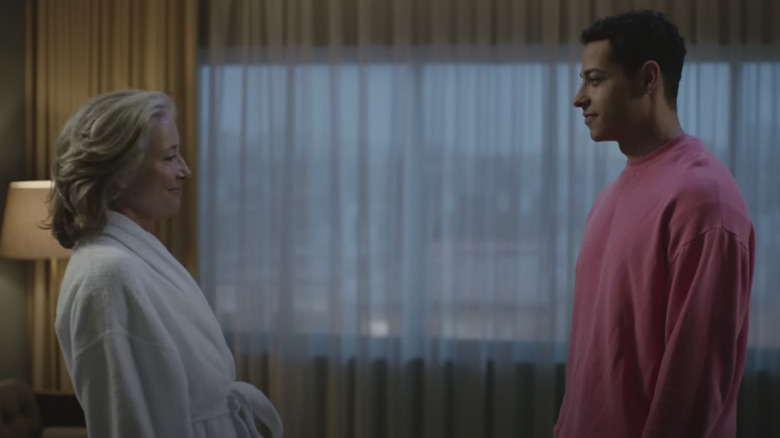
Everyone loves Emma Thompson, and rightfully so: The two-time Oscar winner is a fantastic writer and mega-talented performer who is equally comfortable portraying shades of whimsy, wistfulness, and joyful glee. "Good Luck to You, Leo Grande," the latest movie from filmmaker Sophie Hyde, gives her arguably her best role yet as Nancy, a repressed widow and retired teacher who has only been with one man her whole life and has never experienced an orgasm. That ends tonight: the nervous and charmingly bumbling Nancy hires a sex worker named Leo Grande in an attempt to have every sexual experience she always wanted, but never achieved with her late husband. Up-and-comer Daryl McCormack lights up the screen as Leo, a smooth, confident guy whose ultra laid-back vibe is the polar opposite to Nancy's understandable jitteriness. 

But as the film goes on and the two actually get to know each other, they begin to develop a deeper connection -- one that's so personal and intimate, it begins penetrating their layers of defenses and exposing their true selves in more ways than one. Writer Katy Brand sets a majority of the movie in a single hotel room, which, on paper, might make this sound like one of those movies that might be better off as a stage play than a film. Thankfully, Hyde's roving camera gives the film a sense of immersion that would be impossible to capture on stage. A touching, passionate, soulful, and moving exploration of self-love and self-acceptance, "Good Luck to You, Leo Grande" is unquestionably one of best movies of the year, and you can see it starting on June 17, 2022. (Ben Pearson)

The House

There's so much junk on Netflix. But there are hidden gems, too. Titles that get next to no promotion from the streaming service. Titles that are doomed to slip through the cracks if you're not actively on the hunt for them. One such title just waiting to be discovered by more audiences is "The House," a spooky little treat featuring stop-motion animation. Three different stories unfold in this anthology, and the only connection is that they all appear to take place in the same mysterious house.

In the first story, which appears to be set sometime in the late 1800s, a family is offered a chance by a famous, mysterious architect to move into a brand new house. They leap at the chance, but as you might've guessed, the house is full of dark, scary secrets that threaten to destroy them all. The second tale is set in the present day, and for unexplained reasons, the characters have now transformed from humans to anthropomorphic rats. One such rat has bought the house and intends to flip it for a profit, but once again, nothing goes accordingly to plan. The final story is set sometime in the future, where a catastrophe (global warming seems the most likely culprit) has sunk most of the world underwater. But the house remains, standing like an island. 

Eerie, strange, and even a little beautiful, "The House" got next-to-no-buzz when it dropped in January. But you owe it to yourself to seek it out. (Chris Evangelista)

I Love My Dad
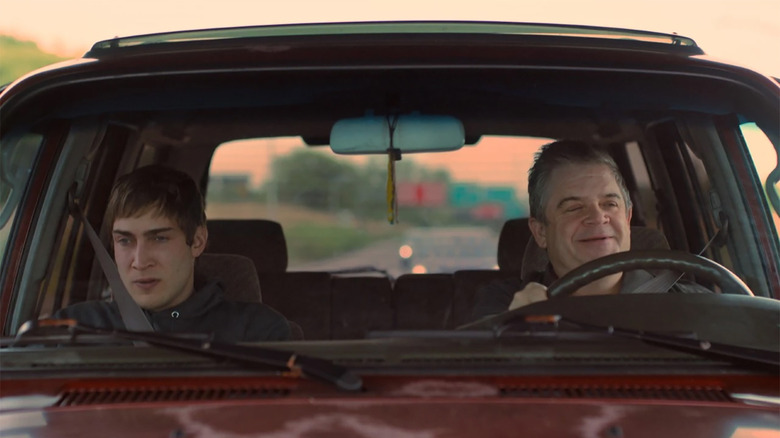
Cringeworthy comedy isn't for everybody, but if you can handle uncomfortably shifting in your seat and truly skincrawling awkwardness, then you will absolutely crack up at this comedy starring Patton Oswalt. "I Love My Dad" finds the stand-up comedian playing Chuck, a deadbeat father who has always had the best intentions but can't help disappointing his son Franklin (played by James Morosini, who also wrote and directed the film inspired by his real life) at every turn. Things have gotten so bad that Franklin attempted suicide, and he's only just now starting to feel normal after a stint in a mental hospital where he learned to finally set healthy boundaries with his perpetually maddening father. 

That might sound pretty dark for a comedy, but the humor comes when Chuck starts to catfish his son online as an effort to maintain contact with him after being blocked on social media. Pretending to be an attractive young girl, Chuck creates a dreamy romance for Franklin that escalates into a despicable lie that only gets worse and worse. It's the manner in which this story unfolds that brings the laughs. Though terribly misguided, Chuck is clearly desperate to reconnect with this son, even if it's in the most ill-advised way possible. Patton Oswalt has never been better, and this movie will have you laughing and wincing simultaneously over and over again. After premiering at SXSW earlier this year, "I Love My Dad" is slated to hit theaters on August 5, 2022, followed by a VOD release on August 12. (Ethan Anderton)

Kimi
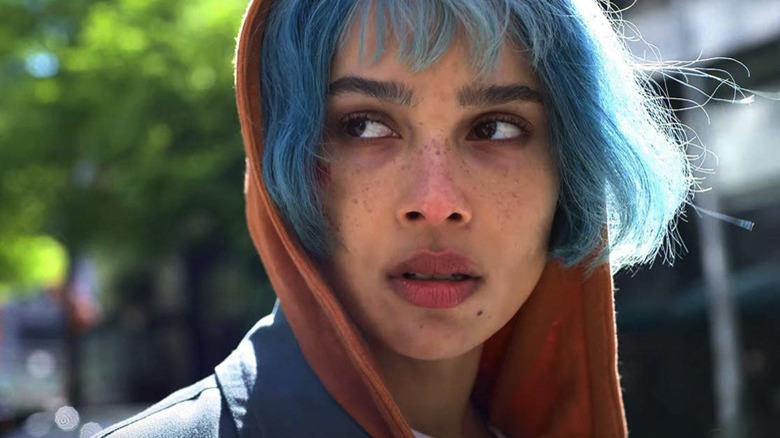
Hey, did you know there was a movie this year in which the uber-prolific Steven Soderbergh paid homage to Alfred Hitchcock and Brian De Palma? You may have missed it in the deluge of streaming content, but this particular HBO Max original is absolutely worth checking out. "Kimi" is Soderbergh's riff on movies like "Rear Window" and "Blow Out," and the result is a heart-pumping little thriller that's actually made for adults. There are no post-credits stingers here, no big cameos or connections to other movies. "Kimi" knows exactly what it wants to do, and executes that vision efficiently and effectively. 

Zoe Kravitz stars as Angela, who works for a big tech company reviewing the audio that comes in from its Amazon Echo-style device in peoples' homes. When she overhears what she thinks is a murder, she tries to run it up the corporate chain -- but the people in power aren't interested in dealing with the issue. In fact, they just might be willing to kill to keep it covered up. For the first half of the film, Soderbergh keeps us inside Angela's apartment. She's agoraphobic, and has not handled the isolation of the pandemic well. (Yes, this movie acknowledges the pandemic, but in a refreshing and not obnoxious way.) But as soon as she ventures beyond her familiar walls, the movie opens up and kicks into another gear, and "Kimi" never lets up after that. A streamlined, simple premise in the hands of a master filmmaker? More like this, please. (Ben Pearson)

Marcel The Shell With Shoes On

"Marcel the Shell With Shoes On" is the best live-action movie that Studio Ghibli never made. So it's fitting that indie distributor darling A24 made it, and that it's their first venture into family-friendly filmmaking. Because "Marcel the Shell With Shoes On" is an utter delight.

Based on the short films of the same name created by Dean Fleischer-Camp and Jenny Slate, "Marcel the Shell With Shoes On" stars Slate as the titular sentient shell, who lives in an Airbnb with his grandma. But it wasn't always this way. Once, Marcel was part of a thriving community of shells and pencils and erasers and other sentient tiny objects, including his huge family of boisterous shells. But one stormy night, the man and woman who once lived in this house got into a terrible fight and the man stormed out, taking Marcel's family and friends with him. Now it's just Marcel and his grandma living alone, the woman having abandoned the house and turned it into an Airbnb that brings in all kinds of weird guests. Including Dean Fleischer-Camp's aspiring filmmaker, who meets Marcel and decides to make a documentary on him.

"Marcel the Shell With Shoes On" is sweet and lovely magical realism tale for the millennial age, but it has a sharp edge of melancholy to it, delving into issues of abandonment, lost love, and aging. Through the naïve, wide-eyed perspective of Marcel, the whole world can seem amazing and full of possibility, before it turns scary. But "Marcel the Shell With Shoes On" never loses its shining optimism, even as it reduces you to tears over the antics of a shell with one giant eye and pink shoes. "Marcel the Shell with Shoes On" arrives in theaters on June 24, 2022. (Hoai-Tran Bui)

Men

Alex Garland's "Men" is a puzzle. Garland is a filmmaker who seems to relish not spoon-feeding his audience, and you know what? Good for him! We need more directors who are willing to challenge us. Of course, there's a flip-side to that: some folks who watch Garland's latest might get annoyed at how mysterious it all is. There are no easy answers here. No moment where someone stops to explain to the audience just what the hell is going on. There are plenty of clues mixed in with plenty of strange images, and the rest is up to us.

Jessie Buckley plays a recently widowed woman who decides to get away from it all by renting a country house in a small village. It looks peaceful and idyllic, but almost as soon as Buckley's character arrives, things seem off. As she moves about, the strangeness only increases as it becomes clear that every male figure Buckley encounters (save for flashbacks with her husband) is played by Rory Kinnear. Kinnear, who dons a series of wigs, false noses, and more, to play multiple characters, is phenomenal, bringing a distinct air of menace to each of his parts. Every single man Buckley interacts with is slightly off, or even downright threatening. That includes a child, also played by Kinnear (or rather, Kinnear's face digitally added to a younger actor's body, which is just as disturbing as it sounds). 

By the time "Men" reaches its gruesome, body-horror-heavy finale, audiences will either love the folk horror insanity Garland is dishing out, or vow to never watch one of his movies again. (Chris Evangelista)

Navalny
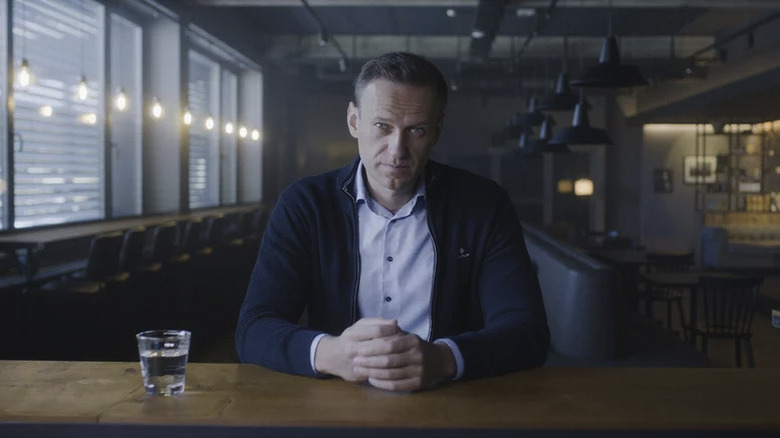
With Russia's authoritarian leader Vladimir Putin waging war on the citizens of Ukraine, Daniel Roher's new documentary "Navalny" feels more vital than ever. The doc follows Alexei Navalny, a charming and handsome orator who became a major player in Russian politics and eventually Putin's chief political rival after openly criticizing the corruption that was happening in his home country. He's amassed a huge social media following, and he knows how to galvanize the younger electorate: As a middle-aged man, he's making viral TikTok videos and regularly meets Russians on their level by directly addressing them on the digital platforms they use on a daily basis. Putin, willing to do anything to retain his grip on power, is so scared of Navalny that he won't even speak his name aloud in press conferences -- oh, and there was also that whole thing when Navalny was poisoned using a method frequently utilized by the Kremlin. 

After Navalny recovers from the botched assassination attempt, he teams up with a Bulgarian journalist to try to find proof that the Kremlin organized the hit on him, and the movie shifts into a "Bourne"-style spy thriller. The doc gives us access to these stories in a way the headlines never could, tapping into the politician's family members and closest allies and showcasing the footage they captured of these events while they were happening. Unfortunately, things don't end well for the protagonist -- but perhaps if this film is more widely seen, it could prompt harsher official responses from global powers than the tepid statements that have been made thus far. (Ben Pearson)

The Northman
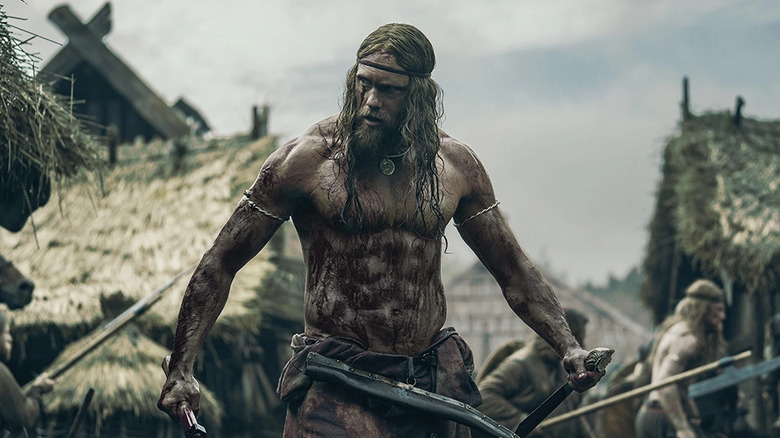
It's a testament to Robert Eggers' talent that "The Northman" is his weakest film so far, and yet still completely rocks. While not as brilliant as the one-two punch of "The Witch" and "The Lighthouse," "The Northman" is still a great showcase for Eggers' unique brand of historical storytelling. Here, Eggers draws on the legend of Amleth, which heavily inspired Shakespeare's "Hamlet." As a result, the film often feels like a Viking version of "Hamlet," with a little of "The Lion King" thrown in for good measure. 

Alexander Skarsgård and his gigantic traps plays Amleth, a prince who, as a child, flees his kingdom after his father (Ethan Hawke) is murdered by his uncle (Claes Bang). When Amleth grows up, he becomes a hulking killing machine and vows to finally get his revenge. Anya Taylor-Joy plays a witchy woman who helps him along the way, and Nicole Kidman chews plenty of scenery as Amleth's mother. 

Full of strange, mystical energy and bursts of brutal violence, "The Northman" probably should've seen a little weirder than it ended up being. Eggers does pepper in plenty of evocative imagery, but this is also his most mainstream, straightforward film to date. (Chris Evangelista) 

On The Count Of Three
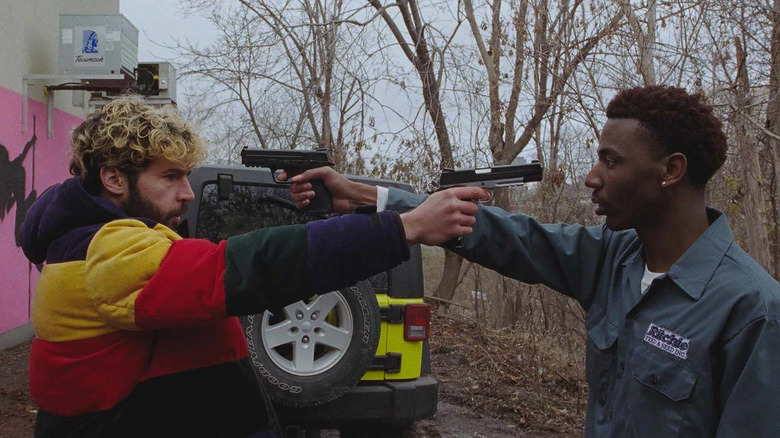
A comedy about suicide? It sounds like a difficult topic to spark laughs, but in the Sundance-selected "On the Count of Three," stand-up comedian Jerrod Carmichael somehow finds a delicate balance between the raw, introspective emotions that come from depression and suicidal thoughts and the dark comedy that can come from following two best friends who form a suicide pact to kill each other by the end of the day.

Jerrod Carmichael and Christopher Abbott ("Girls") play the two leads, Val and Kevin. Just a few days ago, Kevin tried to take his own life and is currently being monitored in a hospital. Meanwhile, Val has been paralyzed by the fear of proposing to his girlfriend, and simply can't deal with the mediocrity of a life spent working at a job he hates. Val quits his job, breaks his best friend Kevin out of the hospital, and the two agree to kill each other, but not before living out some answers an age-old question: What would you do if you only had one day left to live?

The result is a hilarious series of misadventures, emotionally stirring conversations, and a story that somehow finds light in pitch black darkness. Carmichael has a bright future ahead of him as a filmmaker and star, and if he can pull of something like this with his directorial debut, then I can't wait to see what else he has up his sleeve. (Ethan Anderton)

RRR
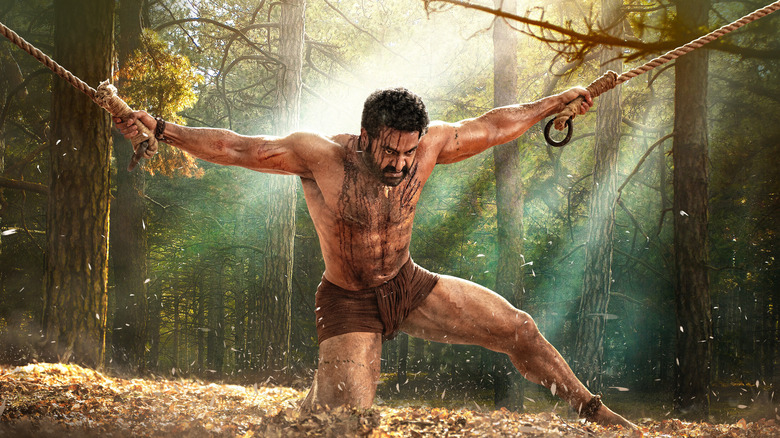
"RRR" asks the important question: what if two legendary revolutionaries who were active at the same time in colonial India actually met? Better yet, what if they were best friends? Better yet, what if one betrayed the other in a melodramatic twist of fate that ended in a climactic musical showdown that basically ends in them becoming god-like superheroes? That's "RRR," the incredible, insane, maximalist Indian Telugu-language epic directed by S. S. Rajamouli.

"RRR" tells the (fictionalized) story of Alluri Sitarama Raju (Charan) and Komaram Bheem (Rama Rao), two real-life revolutionaries who, again, probably weren't best friends in real life. But "RRR" imagines that they were, in the most eye-popping, adrenaline-pumping, hyperstylized action flick of the year.

In "RRR," Raju is a police officer working for the British Raj who is tasked with finding and arresting the legendary Bheem, a sort of John Wick-ian figure (except with more tiger punching) who protects the peaceful Gond tribe, after the British governor forcibly takes one of the Gond tribes' young girls as a pet for his wife. But Raju and Bheem, disguising himself as a lowly Muslim mechanic, unknowingly meet for the first time while rescuing a young boy from a train crash and instantly become best friends by virtue of their equivalent manliness (and also through a musical montage straight out of a rom-com). All this time, Raju doesn't know that Bheem is the man he is hunting, and Bheem doesn't know that Raju is actually an undercover cop working to steal weapons away from the British government. It all climaxes in a fiery inferno of betrayal, more tiger punching, motorcycle-throwing, and a viral musical sequence where Raju and Bheem happily outdance a bunch of white people. Take that, imperialism. (Hoai-Tran Bui)

Sundown

"Sundown" is set almost entirely in bright, tropical locales. On sunny beaches and in vacation spots where people soak up the rays and relax. And yet ... it's also one of the most chilling movies of the year. This is definitely a "less is more" movie — as in, the less you know, the more shocked you're going to be as the film slowly reveals what it's all about. As writer-director Michel Franco's film begins, we meet a man (Tim Roth) on vacation in Acapulco with a woman (Charlotte Gainsbourg) and two 20-somethings. Based on how they're acting, our first assumption is that Roth and Gainsbourg's characters are a couple, and the younger characters are their children. But appearances can be deceiving. 

An emergency sends Gainsbourg and the kids back home, but Roth's character stays behind. He says he left his passport back at the resort and that he'll catch another plane home. But that's not what happens. Instead, he checks himself into a new place and begins what seems like a never-ending vacation. Is he abandoning his family? Or is something else going on here? Little by little, piece by piece, "Sundown" begins to give us some answers. All of this is frequently punctured by sudden bursts of shocking violence that turn the film completely on its head. We suddenly find ourselves rethinking the entire movie, only to have it happen again and again. This is slow-burn storytelling at its finest, and Roth, who is in nearly every frame but spends a huge chunk of the film saying very little, is fantastic. (Chris Evangelista) 

Top Gun: Maverick
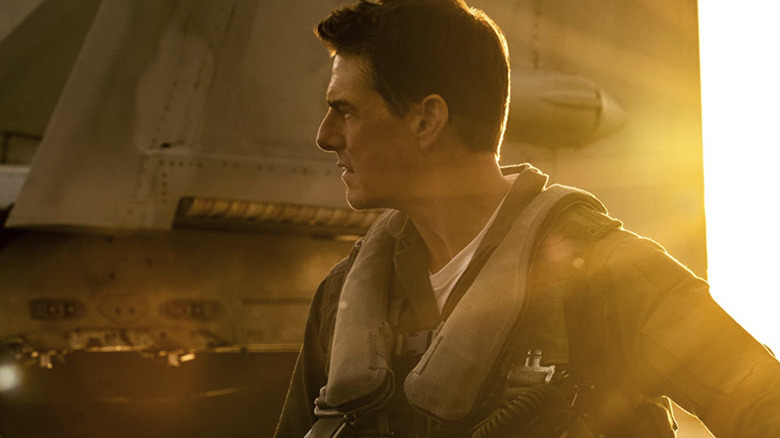
Tom Cruise finally returns to the role that made him a superstar in "Top Gun: Maverick," a spectacular sequel that, against all odds, actually ends up being worth the three-decade wait between movies. Despite his boundary-pushing personality constantly getting him in trouble, Pete "Maverick" Mitchell is called back into action to train the next generation of fighter pilots, who are faced with an impending mission that could avert nuclear disaster. Maverick's particular set of skills makes him the perfect person to teach the new class, but when he realizes that one of his students is Bradley Bradshaw (Miles Teller), the son of Maverick's beloved and long-dead former partner, things get a lot more complicated. The stage is set for high drama and even higher flying -- and you know Maverick isn't gonna be sitting on the sidelines as a teacher when the real mission kicks off. 

Even though director Joseph Kosinski doesn't have the same eye for pure style that original filmmaker Tony Scott had (there is significantly less sweat in this movie, and the color palette isn't nearly as creative overall), he's still able to deliver outstanding aerial action that will get your heart pumping and have you holding your breath in the theater. There's also a surprising emotional core to this movie: If you happen to find yourself wiping away tears and asking yourself, "Wait, did a 'Top Gun' movie just make me cry?", you won't be alone. When all is said and done, this just might be the most crowd-pleasing film of the year. (Ben Pearson)

Turning Red
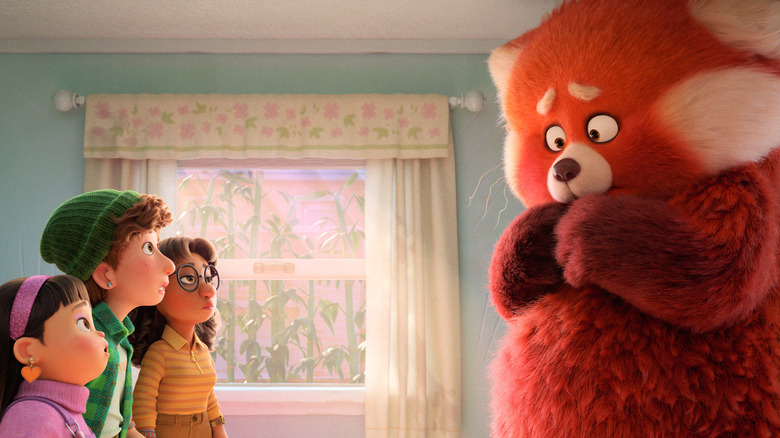
Pixar's "Turning Red" is one of the most accurate cinematic depictions of what it was like to be a hormonal teenage girl, and of feeling so much you just might burst. Directed by Domee Shi (who won an Oscar with her first directorial effort, the lovely Pixar short "Bao"), this coming-of-age fantasy comedy makes the coming-of-age part literal in one of the most vibrant, exciting, and joyous animated films to come out of the animation house in years. 

"Turning Red" follows the uber-confident Meilin "Mei" Lee (breakout star Rosalie Chiang), a Chinese-Canadian 13-year-old who does what she wants and says what she wants — except in the presence of her parents. Mei was raised in that classic Asian immigrant second-generation way: to revere and respect her parents' wishes, while living a double life to hide her own burgeoning identity and urges. But the precarious balance she holds between her two lives is shattered by that great beast: puberty. In this case, puberty manifests in the form of a giant red panda that Mei turns into when she experiences a strong emotion.

Like I said in my review, "Turning Red" wears its anime influences on its sleeve and its middle-school shame on its face, bursting at the seams with bright colors and emotions thanks to an elastic animation style that takes its inspiration from anime like Rumiko Takahashi's "Ranma 1/2." But "Turning Red" is more than the sum of its inspirations, delivering a sweet and fresh depiction of the power of friendship, and the pain of intergenerational trauma. (Hoai-Tran Bui)

The Unbearable Weight Of Massive Talent
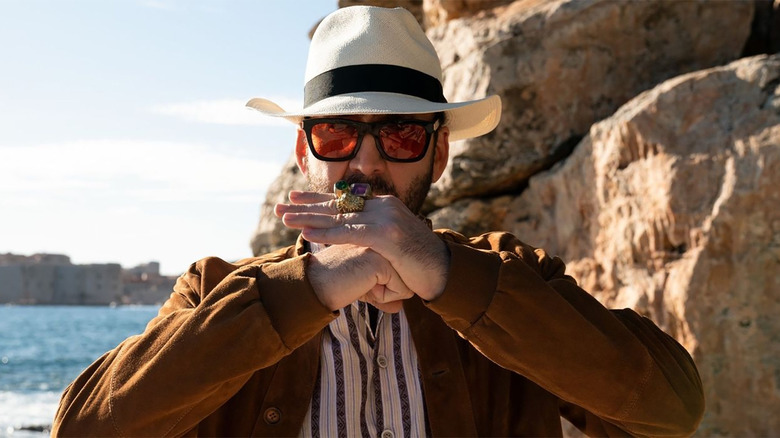
Nicolas Cage playing Nicolas Cage. That's all you need to know in order to get psyched about "The Unbearable Weight of Massive Talent." All right, so Cage is actually playing an exaggerated, fictional version of himself, including a digitally de-aged, physically manifested inner-monologue who appears from time to time. This version of the Hollywood star is down on his luck at this stage in his career, so he finds himself taking a somewhat embarrassing gig asking him to appear at the birthday party of Javi, a rich superfan. However, the FBI is interested in this fan because he's a dangerous drug cartel kingpin, and they end up recruiting Cage to help them find a girl that Javi seems to have abducted.

What makes this meta comedy from director Tom Gormican work so well is that it manages to be a great buddy action comedy that not only makes impeccable use of Cage's eccentric and eclectic career, but it allows "The Mandalorian" star Pedro Pascal to be his hilarious fanboy counterpart. Watching Cage get caught up in espionage and intrigue has an almost "Last Action Hero" vibe to it, and there are flares of "Tropic Thunder" and "Three Amigos" too. It's wildly entertaining, and it will make you wonder why Cage hasn't been asked to make more comedies. His timing is extraordinary, and he's not afraid to really cut loose, even if it means making fun of himself. There are also plenty of fun references to Nicolas Cage movies, from "Con-Air" to "Captain Corelli's Mandolin." It's an irresistibly good time. (Ethan Anderton)

Read this next: The Best Movies Of 2021

The post The Best Movies of 2022 So Far appeared first on /Film.
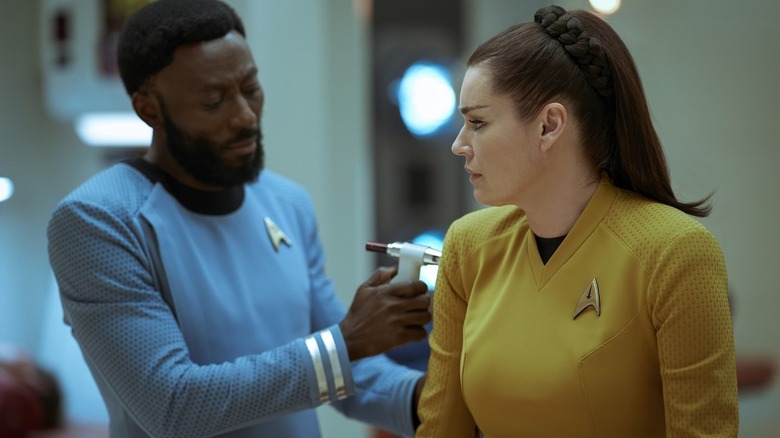
18 May 21:45

Cyber Hell: Exposing an Internet Horror – Netflix Review (4/5)

by Karina "ScreamQueen" Adelgaard
18 May 21:40

Latest Real-Life Tests Show Apple’s M1 Ultra Chip is 40 to 80 Percent Faster Than M1 Max – Video

by Ali Salman

Apple M1 Ultra Test Comparison against M1 Max benchmarks

Apple's latest and greatest M1 Ultra chip in the Mac Studio is plenty fast to handle your processing and graphics needs. We have previously covered the M1 Ultra benchmarks and their comparison to the 28-core Intel Mac Pro and other machines. However, a new series of tests have been conducted that aims to give us a better comparison between the M1 Ultra with the M1 Max in real-life usage. Scroll down to read more details on the subject.

Latest Tests Show M1 Ultra Comparison Against M1 Max and How Much Power Apple's Latest Chip Brings In Real-Life

Apple announced the new M1 Ultra chip with the launch of its new Mac Studio product line. While it can be seen as two Mac mini models stacked on top of each other, the show's real star rests on the inside. The Mac Studio is designed to bolster proper thermals so the machine does not heat up. The M1 Ultra can be described as two M1 Max chips as a single unit. The latest tests compare the M1 Ultra and the M1 Max chips based on real-life performance.

The tests are performed by Engadget and they have taken a slightly different approach. Instead of devising tests themselves, it consulted its readers to list the demanding tasks that they perform in their everyday life. The publication could then specifically create a benchmark comparison between the M1 Ultra and M1 Max chips.

The M1 Ultra fuses two M1 Max chips together to get you a processor with 20 CPU cores and 64 GPU cores, along with up to 128GB of RAM, and it’s one of the fastest processors we’ve ever tested.

We asked what tests you’d like to see run on the M1 Ultra and assembled quite a list, including Adobe Lightroom and Premiere Pro, Davinci Resolve and Fusion, 3D modeling in Blender, machine learning tests like TensorFlow and Pytorch, and even some gaming.

Apple M1 Ultra Test Comparison against M1 Max benchmarks

It was concluded in the comparison that the M1 Ultra in the Mac Studio is twice as fast as the M1 Max chip. This is not surprising since the prior is made up of two M1 Max chips fused together to form a single SoC. In terms of GPU, the differences were not proportional as the M1 Ultra only saw a gain of 40 percent to 80 percent. However, when it comes to video rendering, the M1 Ultra chip performs like a champ. The M1 Ultra chip takes ten 8K videos and gets the job done in 29 seconds.

The M1 Ultra does best when its hardware accelerators can kick in. These are the parts of the chip built to speed up specific tasks, namely video rendering and AI processing. In a test processing ten 8K video clips at once, the M1 Ultra did the job in just 29 seconds when its accelerators were able to help out. This was about twice as fast as the PC we were testing, despite it having a 16-core AMD 5950X processor and Nvidia RTX 3080 Ti graphics card.

The tests between the M1 Ultra and the M1 Max show real-life CPU and GPU performance comparisons. You can check out the video embedded above for more details. This is all there is to it, folks. Do you need the power of the M1 Ultra chip for your daily tasks? Let us know in the comments.

The post Latest Real-Life Tests Show Apple’s M1 Ultra Chip is 40 to 80 Percent Faster Than M1 Max – Video by Ali Salman appeared first on Wccftech.

18 May 21:40

Eternal Threads review: Eastenders meets time travel meets electrical safety

by Alice Bell

Time travel stories can have pretty high stakes, because usually you only travel in time when you really need to change something. A killer robot is trying to kill a lady because of something her son will eventually do, that kind of thing. My favourite episodes of Doctor Who, by contrast, were always the ones where the Doctor met a miserable dog-alien thousands of years in the future, and the dog alien is like "Not only is the planet about to blow, but my marriage is in trouble," and then the episode was mostly about the latter issue rather than the former. This is all by way of introduction to Eternal Threads, a puzzle game where you go back in time to stop everyone in a house share dying in a fire.

To save a present that has been rendered apocalyptic by time travel itself, you are part of a team who go back and change tiny things in the past to fix it, in this case 2015. While it is imperative for some reason that the fire does indeed happen, it is just as important that all six occupants live. You can alter small decisions they make in the week running up to the fire, and so save their lives by choosing whether they go to the pub, if they comfort each other in times of need, or what they have arguments about. The beat of a butterfly's wing, indeed.

Read more

18 May 21:34

Final Fantasy XV hits 10 million in worldwide sales

by Chris Carter

Final Fantasy XV sales

That's a lot of road trip money

It's hard to believe that Final Fantasy XV is in the rear-view mirror of the Regalia. This is a game where I once had to create a giant checklist to keep track of all of the demos, cross-media projects, DLC, and crossovers. Well, as of this week Square Enix reports that Final Fantasy XV sales have hit a new milestone of 10 million units worldwide.

Square Enix "thanks fans for their continued support" for the game. And continued support it has gotten, from a certain point of view! Even as recently as the past few years, there's been crossovers with other games, including a recurring Final Fantasy XIV event. In a sense, this game refused to die, and earned that 10 million through sheer force of will. I'm not just talking about the cross-media projects either. Two years after launch it came to PC, where it was met with a flourishing modding community. Then it arrived on Stadia a year later.

Final Fantasy XV is polarizing still, I get it. It has what I can only describe as "Final Fantasy VIII energy," which was also polarizing at the time, and a mixed legacy that endures to this day. Playing through it in a bubble before all the controversy, DLC, and post-launch content delays, I found it to be exceedingly relaxing, among other things. In the eternal "Final Fantasy rankings" debate that's been going on since I can remember (Final Fantasy VI kind of sealed that top spot at release though, and for some, even still): it'll probably end up somewhere in the middle.

The post Final Fantasy XV hits 10 million in worldwide sales appeared first on Destructoid.

18 May 21:30

Woman rescues tiny kitten but… it wasn't that

by David Pescovitz

A kind woman in Rocklin, California spotted what appeared to be an abandoned or orphan kitten in need. So she brought the cute creature home. However, a family member noticed that the "kitten" was not a kitten but rather a kit—a a baby fox. — Read the rest

18 May 21:29

Latest version of RPCS3 offers major performance improvements in God of War 3, Metal Gear Solid 4, Red Dead Redemption & more

by John Papadopoulos

The RPCS3 team has released a brand new version of its incredible Playstation 3 emulator that packs major performance improvements to a number of games. Going into more details, Nekotekina optimized SPU performance which reduced SPU bottlenecks across the board allowing for higher RSX (PS3 GPU) utilization. Metal Gear Solid 4 saw the largest improvement … Continue reading Latest version of RPCS3 offers major performance improvements in God of War 3, Metal Gear Solid 4, Red Dead Redemption & more →

The post Latest version of RPCS3 offers major performance improvements in God of War 3, Metal Gear Solid 4, Red Dead Redemption & more appeared first on DSOGaming.

18 May 21:29

How to Make Going to the Beach Not Suck

by Jonathan van Halem

Not everyone loves the sun. Not everyone loves the sand. Not everyone loves to swim. There are no shortage of ways for a person to fashion themselves as “not a beach person.” But maybe they’re just not doing it right. When properly prepared, the beach is a wonderful way to relax on a summer day and spend some time in…

Read more...

18 May 20:56

Will Anyone Ever Care About HDR?

by Jeff Greenberg

What is High Dynamic Range video? Why should I care about it or want it? We've got answers to all your questions right here.

The post Will Anyone Ever Care About HDR? appeared first on Rocket Yard.

18 May 20:48

The 14 Best Daniel Day-Lewis Movies Ranked

by Fiona Underhill

Daniel Day-Lewis is widely regarded as one of the best actors of all time. Famously choosy with roles, he has only been in 11 feature films in the last 30 years, and 2017's "Phantom Thread" really is (devastatingly) supposed to be his last. Known for his rigorous preparation for roles and remaining in character during filming, Day-Lewis' name will always come up when discussing method acting, even if he doesn't like to ascribe to any one technique. Day-Lewis has worked with the likes of Martin Scorsese, Steven Spielberg, Michael Mann, and Paul Thomas Anderson, as well as some of his best work with Jim Sheridan. It must be nice to dip into the acting world, blow everyone away, probably win an Oscar, then go back to your life as an Italian cobbler or whatever it is you're doing these days.

Even across these 14 films, which represent Day-Lewis' almost entire filmography, it is clear to see his wildly impressive range. In 12 lead roles, and two supporting ones, Day-Lewis commands the screen, sometimes bringing a barn-storming speech, or a subtle desperation to frequently unlikable characters. Very few of these protagonists are heroes; they are usually far more complex, and Day-Lewis has deliberately sought out roles that provide a challenge. If we really have seen the last of Day-Lewis on the big screen, it's such a loss to the world of movies, but we can at least cling onto these 14 incredible films.

The Bounty (1984)

From 1984 to 1985, Daniel Day-Lewis had two roles where he could use his own upper-class English accent. His reputation as the greatest actor of his generation would form from him playing Irish (and Northern Irish) and American men, as he's actually rarely played Englishmen. In "The Bounty," starring Anthony Hopkins as Captain Bligh and Mel Gibson as Fletcher Christian, the famous mutineer, Day-Lewis plays Fryer, an officer who initially clashes with Bligh, but then remains loyal to him and the "proper" way of doing things aboard ship. Like Bligh, Fryer is horrified by the sexual freedom that many of the crewmembers indulge in while in Tahiti. 

Even at this early stage of his career, and with limited screen time, Day-Lewis still manages to use micro-expressions to express disgust or frustration brilliantly. Perhaps his greatest achievement is disguising his natural beauty and charisma, and to embody a sniveling coward who turns the audience off, rather than drawing them in. It was Gibson who had to have the appeal here, so Day-Lewis does a good job of blending into the background. making for an interesting early role.

Gangs Of New York (2002)

Making a good counterpoint to "The Age of Innocence," which is set amongst the upper classes in 1870s New York, director Martin Scorsese and Daniel Day-Lewis cinematically traveled back to NYC nearly 10 years later. This time, they explored the 1860s and an area that may as well be on another planet: Five Points. "Gangs of New York" is set amongst rival gangs in a working-class neighborhood. Bill the Butcher (Day-Lewis) and his gang ironically call themselves Native Americans because they have at least been born there. Their rivals are Irish Catholic immigrants, initially led by Priest Vallon (Liam Neeson) and Happy Jack (John C. Reilly).

The first thing that has to be discussed with "Gangs of New York" is, of course, the accents. A miscast Leonardo DiCaprio and Cameron Diaz lead the way in the embarrassingly bad accent department. This being Scorsese, it still looks absolutely gorgeous and the costumes are a real highlight here, especially on Bill's gang. And, like "Age of Innocence," his mastery of crowd scenes is second-to-none, except here they are usually brawling instead of dancing. Once again, his use of lighting, color, framing, and blocking elevates and distinguishes scenes that would all look samey in less experienced hands.

Bill the Butcher is the first of two bombastic, over-the-top lead performances that Day-Lewis would deliver in the 2000s, the second of which he, of course, won the Oscar for. While not to everyone's tastes, these performances once again demonstrate his range.

There Will Be Blood (2007)

Set across a 30-year period at the start of the 20th century, mainly in California, Paul Thomas Anderson used the novel "Oil!" as a jumping-off point for this saga of greed, alcoholism, religion, and fatherhood. Although Daniel Day-Lewis received the majority of the plaudits for "There Will Be Blood," it absolutely would not be the film it is without Paul Dano, who also co-starred with him in "The Ballad of Jack and Rose." The scenes between Daniel Plainview's oilman and Dano's preacher Eli Sunday are when the movie really comes alive; the violence of Plainview's words is often more stinging than anything he does physically.

The casting of Plainview's deaf son HW (Dillon Freasier as a child, and in an important scene, Russell Harvard as an adult) is another masterstroke. Like much of Anderson's work, there are many memorable lines of dialogue, with "I've abandoned my boy!" and "I drink your milkshake" probably being the most famous. It's the classic American tale of a man selling his soul for money, acquiring more and more at the cost of any personal relationships, and being left alone and alcoholic, rattling around a Hearst Castle-like mansion.

Jonny Greenwood's score is one of the movie's main strengths. Critical reception was split on the film's infamous ending, but if you're going to have a film as melodramatic and overwrought as this, you may as well go for broke at the end. The 2000s were certainly an interesting decade for Day-Lewis.

Lincoln (2012)

It's funny to think that while Bill the Butcher was tearing up the Five Points, Abraham Lincoln was the president, something that encroaches on their lives at the end of "Gangs of New York" with the Civil War Draft Riots. Steven Spielberg and Daniel Day-Lewis don't seem like a natural match, but Spielberg was determined that it should be Day-Lewis to take on the role of Lincoln. Spielberg waited years for Day-Lewis to accept the role, then a further year or so for him to prepare.

"Lincoln" has a vast cast, with blink-and-you'll-miss-it roles for the likes of Adam Driver and Colman Domingo, as well as supporting roles for Tommy Lee Jones, Lee Pace, Michael Stuhlbarg, Walton Goggins, David Strathairn, Jared Harris, and David Oyelowo, to name but a few. A large key to the film's success is Sally Field as Mary Todd Lincoln. The film does well to balance Lincoln's private life and family concerns, with the problems of a troubled nation that he also had to contend with.

There was really nothing more inevitable than Daniel Day-Lewis playing Abraham Lincoln in a Steven Spielberg film leading to his third Oscar win. Of course, it goes without saying that it's a good performance, if not his most exciting — unlike the one in "Phantom Thread," which thankfully came afterward.

The Boxer (1997)

Returning to work with director Jim Sheridan for the third time, Daniel Day-Lewis took on the role of Danny Flynn in 1997. The character is newly released from jail after 14 years, attempting to restart his life in his former community in Belfast. In "The Boxer," Emily Watson (a worthy screen partner) plays the woman who was Danny's girlfriend when they were teenagers, and Brian Cox plays her father, the local kingpin. 

Influenced by real-life Northern Irish boxer Barry McGuigan, who helped train Day-Lewis for the film, "The Boxer" features Danny finding his feet back in civilian life, mainly in the boxing ring. In typical Day-Lewis style, he trained so rigorously while preparing to shoot the film that McGuigan said he reached the level of a professional. The movie was made during the ceasefire that lead up to the Good Friday Agreement, and it captures the uneasy alliances and tensions of this specific moment in time very well.

The scenes between Day-Lewis and Watson are the greatest strength of this film, and it's a shame that there aren't more of them. Another highlight is when Danny travels to a posh gentleman's club in England for a boxing match. Ken Stott is also excellent as Ike Weir, an alcoholic friend of Danny's. They work together to attempt to rebuild and reopen an abandoned gym, in the hope of training youngsters and helping them avoid jail. This lesser-known entry in Day-Lewis' filmography is worth seeking out.

The Crucible (1996)

Theater director Nicholas Hytner followed up his film adaptation of the play "The Madness of George III" with an adaptation of Arthur Miller's most famous work. After "The Age of Innocence," Winona Ryder was once more doomed to play a woman who is in love with Daniel Day-Lewis, but he does not return the feeling. Unlike the selfless May Welland though, Abigail Williams is jealous and vindictive to the woman she considers her rival: Elizabeth Proctor (Joan Allen). It seems quite a choice for John Proctor to be perhaps the most attractive version of Day-Lewis to have ever graced our screens, but it also works quite well, so we can go some way to understanding why Abigail destroys so many lives over him. 

Day-Lewis is as impressive as ever, as a tortured soul who will do anything to make up for his former betrayal of his wife, and to restore his honor and good name as a legacy for his sons. An actor who is more under-the-radar than Day-Lewis, but also one of the best of all time, is Paul Scofield, who plays the judge who must contend with an endless parade of hysterical teenage girls who keep changing their stories. While it's a pretty straightforward adaptation of something that works so well in the confines of a stage, the source material and the acting are of high enough quality to make "The Crucible" a worthwhile exercise.

My Left Foot (1989)

Method acting has always been a source of much discussion, and Daniel Day-Lewis earned his reputation for going to extraordinary lengths for his roles early in his career. In his Oscar-winning role in "My Left Foot," he plays real-life Irish writer and painter Christy Brown, who had cerebral palsy. Director Jim Sheridan's daughter, Kirsten Sheridan, said that Day-Lewis did not leave his wheelchair during filming: "You'd be feeding him, wheeling him around."

The physical control required for such a role is one thing, but Day-Lewis also makes an impression mainly through his interactions with the women who were important in Christy's life. There's his mother, a physical therapist, and nurse Mary Carr, who features heavily in the film's framing device. Christy turns on the charm with them and he is fiercely protective of his mother and sister (who are under threat from his father), but he can also be belligerent, jealous, frustrated, and angry — all of which Day-Lewis expresses through extremely limited physical movements. 

As much as this is an insight into this specific man's life, the Brown family is representative of many working-class British and Irish families of the time. Overcrowded in tiny homes, with never enough to eat, and ruled by a (frequently drunk) patriarch who they all feared. It's a snapshot of a place and time, and we should be grateful that filmmakers such as Sheridan are around to chronicle this way of life.

The Last Of The Mohicans (1992)

Michael Mann, known for some of the finest neo-noirs ever made, took a detour into the historical epic in 1992. Kevin Costner's "Dances with Wolves" had won seven Oscars the year before, perhaps leading to "The Last of the Mohicans" being virtually ignored by the Academy. This is the first time that Daniel Day-Lewis would play an American in a leading role, as a white man who has a Mohican father and brother. The film is primarily a love story between Hawkeye (Day-Lewis) and Cora Munro (Madeleine Stowe), and also Cora's sister Alice (Jodhi May) and Hawkeye's brother Uncas (Eric Schweig).

The stunning landscape that is captured by Dante Spinotti, and the stirring score by Trevor Jones and Randy Endelman, are the film's two main strengths. The "Main Title" theme combined with the Scottish folk song "The Gael" — most notably in a track called "The Kiss" — provide all of the emotion we need over scenes that contain little-to-no dialogue. The main characters are being hunted and the entire film sees them on the move, trying to stay one step ahead of Wes Studi's Magua, which leads to a tragic conclusion.

Much has been made of the Mann and Day-Lewis' dogged commitment to historical authenticity, but the film's greatest strengths are the cinematography, score, and Day-Lewis' usual grounded performance at the center, convincing us that he entirely belongs to this time and place. It's an epic that deserves the biggest screen and speakers possible.

A Room With A View (1985)

Daniel Day-Lewis broke onto the scene with two roles in 1985 movies that could not have been more different from one another, demonstrating his extraordinary range right from the get-go. In a supporting role in Merchant Ivory's "Room with a View," he plays the snobby Cecil Vyse, with who the central character Lucy Honeychurch (Helena Bonham Carter) becomes engaged. The delightful Denholm Elliott plays eccentric Mr. Emerson, and Julian Sands plays his son George, a romantic, passionate, impetuous young man who is a stark contrast to Cecil.

The cast is rounded out by British acting stalwarts such as Maggie Smith, Judi Dench, and Simon Callow. The film contains stunning scenery, firstly in Florence, then in the Surrey countryside. "A Room with a View" has some of the best hair ever seen onscreen — from Carter's piles of Gibson Girl curls to Rupert Graves' floppy mop. One of the most memorable scenes is when George, Freddy, and Reverend Beebe are bathing in a pool in the woods, and Cecil and Lucy stumble across them.

Day-Lewis spends the entire film looking down his nose (through his pince-nez) at everyone, bristling at the joy others find in silly songs, romantic literature, or anything else he considers "ugly things." It is typical of Day-Lewis to choose a prickly, thorny, unsympathetic role over someone we could easily fall in love with, and he's been challenging himself in this way ever since.

My Beautiful Laundrette (1985)

The other 1985 film that Daniel Day-Lewis starred in really exemplifies the opposite side of British cinema, which is in total contrast to Merchant Ivory costume dramas, the kinds of things that people first think of when it comes to British films. But there's a working-class British cinema (from filmmakers like Mike Leigh and Ken Loach) that tackled Margaret Thatcher's Britain and showed a more modern, unflinching reality. "My Beautiful Laundrette" is written by Hanif Kureshi, and stars Gordon Warnecke as Omar, trying to be more like his successful businessman uncle than his alcoholic father. 

Day-Lewis plays Johnny, who the film surprisingly implies has been two things — a "skinhead," and Omar's former lover. Johnny comes back into Omar's life and they try to turn the laundrette that Omar has been entrusted with into a success. The film does not make a big deal about the gay romance as it seamlessly ebbs and flows around other events and never really seems to be under threat in the kind of overdramatic way it would usually be in movies, particularly of this era. The movie contains so many sensual and sexy moments between Omar and Johnny; most famously, Johnny licking Omar's neck, but also the use of the two-way mirror at the back of the laundrette. It offers them a sanctuary, as well as provides a great shot where their faces blur together. Day-Lewis is charming, dangerous, and complex here in a thrilling breakout role.

The Age Of Innocence (1993)

Just as Daniel Day-Lewis starred in an anomaly in Michael Mann's oeuvre, he also took the lead role in a film that many may overlook when discussing Martin Scorsese's career. Adapted from Edith Wharton's book, "The Age of Innocence" has some of the best uses of color, cross-fades, and framing in all of cinema, thanks to Michael Ballhaus' cinematography, and of course Thelma Schoonmaker's editing. The crowd shots are exquisite, and they're juxtaposed with the breathlessly snatched private moments that Newland Archer (Day-Lewis) manages to grasp with Countess Olenska (Michelle Pfeiffer).

Despite not containing any sex scenes, this manages to be one of the erotically-charged films ever — from the unbuttoning of a glove and kissing a wrist, to a (fully-clothed) kiss of the neck, to the lovers collapsing over one another, to hands grasping around a chest from behind. Every stolen moment is precious. While Day-Lewis is perhaps viewed on another level in terms of acting, there have been a few actresses working opposite him that rise to meet him, and Pfeiffer is absolutely one of them. Winona Ryder's very different style works well for the seemingly naive May Welland, and Robert Sean Leonard as their son at the tail-end of the film is delightful. Most of Day-Lewis' best performances have been in romantic roles, but he brings a level of vulnerable yearning here that we don't often see from him. 

Phantom Thread (2017)

Daniel Day-Lewis has unfortunately only made two films in the last decade, and has apparently really, officially retired this time. If Paul Thomas Anderson's "Phantom Thread" does end up being his swan song, it is an absolutely perfect one. Anderson's dialogue and Day-Lewis' line readings combine to make "Phantom Thread" one of the best comedies of the last 10 years. Day-Lewis stars as Reynolds Woodcock, a fussy and fastidious fashion designer in 1950s London, and it is fitting that his final role acknowledges his own accent and class.

Day-Lewis' performance is matched by Lesley Manville as his sister Cyril, and crucially Vicky Krieps as his young lover-turned-wife Alma, who has such a tricky role to get right. Every scene, mostly revolving around food, is memorable — from the Hungry Boy breakfast, to the asparagus prepared the wrong way, to the interrupting tea, and the infamous mushroom omelet — the facial expressions as characters look daggers at one another and spit passive-aggressive insults through gritted teeth remain burned in the brain.

"Phantom Thread" is a perfect example of building a film around an utterly unlikeable central character, but still making it completely compelling and somehow has us rooting for a relationship that should be doomed from the start. Day-Lewis once again pulls out a performance completely unlike anything he's delivered before, demonstrating comedic timing and skills that would have been good to have seen more of in his career. 

The Unbearable Lightness Of Being (1988)

Milan Kundera's novel, which depicted Czechoslovakia in the lead-up to, and aftermath of, the Soviet invasion in 1968, was adapted by Philip Kaufman just a few years after it was published. Daniel Day-Lewis plays surgeon Tomas, a womanizer who is drawn to two particular women: the worldly Sabina (Lena Olin) and the more naive Tereza (Juliette Binoche). Binoche is a formidable screen partner for Day-Lewis, giving one of her best performances here — and that's saying something. "The Unbearable Lightness of Being" is one of the sexiest films ever made, and even though it isn't truly a European film (everyone speaks English, for one thing), it certainly borrows a lot from European cinema.

Day-Lewis dialed up his sparkly-eyed charm to 11 here, making it so however rakish Tomas is, you can still entirely understand Tereza being drawn back to him again and again. As detached as Tomas tries to remain, attempting to keep sex and romance and love separate, he enters into the conventionality of marriage with Tereza. Olin and Binoche share some electric scenes in the absence of Day-Lewis, and the film really rests on the shoulders of all three of them. This is the kind of movie that makes you long for the days of "movies for grown-ups" and proper movie stars who are utterly magnetic. Day-Lewis would probably like to think of himself as a character actor, but a star is what he is.

In The Name Of The Father (1993)

The fact that Daniel Day-Lewis made two films in one year is surprising enough, but his two 1993 roles could not be more different from one another — and both performances are astonishing. Going from an upper-class Gilded Age New Yorker in "The Age of Innocence" to a working-class Northern Irish petty criminal, and being utterly convincing and compelling in both roles, is one of the many reasons why Day-Lewis is one of the best to ever do it.

"In the Name of the Father" is based on the true story of the wrongly-convicted Gerry Conlon, who spent 15 years in prison for an IRA bombing. At the center of the film is the relationship between Gerry and his father Giuseppe (the extraordinary Pete Postlethwaite), who would also be convicted of helping to make the bomb. The film uses poetic license to depict Gerry and Giuseppe sharing a cell, but this leads to some of the best scenes. Day-Lewis' performance is nothing short of sensational, from the scenes of interrogation and being tortured to confessing to his struggles in jail, particularly surrounding his father's illness and death. 

Gerry is a deeply flawed man who is not presented as a hero, but Day-Lewis easily fluctuates between his charm and youthful arrogance, through to his utter desperation and despair while in jail. In a career of performances at the level of Day-Lewis', it's hard to pick the best, but this just might be it.

Read this next: /Film's Top 10 Movies Of 2021

The post The 14 Best Daniel Day-Lewis Movies Ranked appeared first on /Film.
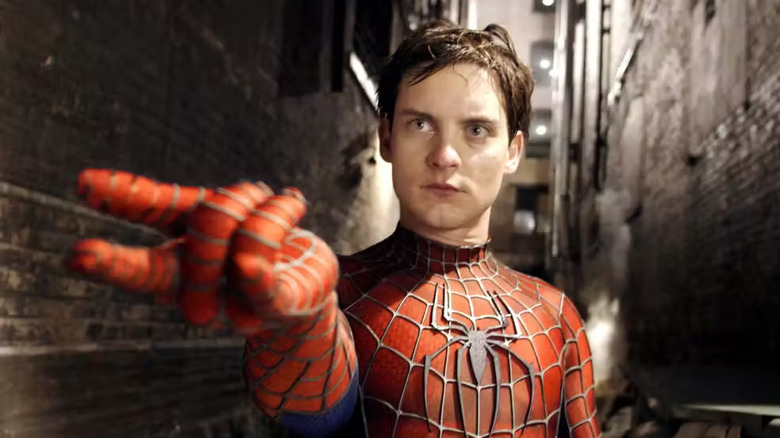
18 May 18:33

India Says VPN Firms Unwilling To Comply With New Rules 'Will Have To Pull Out' of the Country

by msmash
India is pushing ahead with its new cybersecurity rules that will require cloud service providers and VPN operators to maintain names of their customers and their IP addresses and suggested firms unwilling to comply to pull out of the world's second largest internet market. From a report: The Indian Computer Emergency Response Team clarified (PDF) on Wednesday that "virtual private server (VPS) providers, cloud service providers, VPN service providers, virtual asset service providers, virtual asset exchange providers, custodian wallet providers and government organisations" shall follow the directive, called Cyber Security Directions, that requires them to store customers' names, email addresses, IP addresses, know your customer records, financial transactions for a period of five years. The new rules, which were unveiled late last month and go into effect late June, won't be applicable to corporate and enterprise VPNs, the government agency clarified. Several VPN providers have expressed worries about India's new cybersecurity rules. NordVPN, one of the most popular VPN operators, said earlier that it may remove its services from India if "no other options are left." Rajeev Chandrasekhar, the junior IT minister of India, said that VPN providers who wish to conceal who uses their services "will have to pull out."

Read more of this story at Slashdot.

18 May 18:33

Google Subsidiary in Russia To File for Bankruptcy

by msmash
The Russian subsidiary of Alphabet's Google plans to file for bankruptcy, saying it had become impossible for the company to pay employees and suppliers. From a report: Google submitted a notice of intent to declare itself bankrupt, according to a message published Wednesday on Russia's Fedresurs registry. A Google spokesperson separately said an earlier move by authorities to seize its bank account made continuing operations in the country impossible. "The Russian authorities' seizure of Google Russia's bank account has made it untenable for our Russia office to function, including employing and paying Russia-based employees, paying suppliers and vendors, and meeting other financial obligations," the Google spokesperson said. The company had already paused most of its commercial operations in Russia, including all advertising, after the country's communications censor accused the company's YouTube video service of spreading misinformation and stoking protests.

Read more of this story at Slashdot.

18 May 13:38

Researchers Expose Inner Workings of Billion-Dollar Wizard Spider Cybercrime Gang

by noreply@blogger.com (Ravie Lakshmanan)
The inner workings of a cybercriminal group known as the Wizard Spider have been exposed, shedding light on its organizational structure and motivations. "Most of Wizard Spider's efforts go into hacking European and U.S. businesses, with a special cracking tool used by some of their attackers to breach high-value targets," Swiss cybersecurity company PRODAFT said in a new report shared with The
18 May 13:37

Day 84 of WW3: Finland and Sweden join NATO today and Russia begins what is hopefully the last massive attack on the eastern front - this is not a repeat from 1945. It's your Wednesday Ukraine War thread [Scary]

18 May 13:37

National Cybersecurity Agencies Describe Commonly Used Initial Access Techniques

by Ionut Arghire

Cybersecurity agencies in the United States, the United Kingdom, Canada, the Netherlands, and New Zealand warn that threat actors exploit poor security practices for initial access to victim environments.

read more

18 May 13:37

The best kitchen gadgets for 2026

by Nicole Lee

Whether you love cooking already or you want to try to cook more at home to spend less money on takeout, there are tons of gadgets that can make your time in the kitchen even more enjoyable. As food lovers and tech reviewers, the Engadget team has tried out pizza ovens, sous vide machines, air fryers, ice cream makers and more. Here, we gathered all of the best gear we’ve tested, reviewed and used in our own kitchens for when you’re looking to spice things up in yours. We’ve also linked to our reviews and buying guides so you can dive deeper into our recommendations for the best kitchen gadgets around.

Best kitchen gadgets for 2026

Nicole Lee contributed to this report.

This article originally appeared on Engadget at https://www.engadget.com/home/kitchen-tech/best-kitchen-tech-gadgets-small-appliances-124515179.html?src=rss
18 May 13:37

The title of this article, two years into the pandemic, tells you everything you need to know about why more Americans have died of COVID than anywhere else in the world and why we're too collectively stupid for it to be any other way [Murica]

18 May 13:37

Want to turn your AC on in your house this summer? Brace yourself [Scary]

18 May 13:36

GrubHub Was Getting 6,000 Orders A Minute During Its Promo Day, Overwhelming Restaurants

by BeauHD
A delivery app marketing campaign offering a "free lunch" -- aka a $15 promo code valid for three hours -- sent customers and restaurant workers alike into a spiral on Tuesday as thousands of orders jammed the system and disgruntled New Yorkers tweeted through their hunger pains. BuzzFeed News reports: GrubHub's New York City campaign on May 17 touted the physical and mental benefits of eating lunch, but yielded dozens of complaints, cancelled orders and service workers telling BuzzFeed News they were "exhausted" trying to keep up. GrubHub told BuzzFeed News that at times during the promotion that ran from 11 a.m. to 2 p.m. the app was averaging 6,000 orders per minute. "It got overwhelming," said Brandon Ching, who was working the counter at Greenberg's Bagels, a popular sandwich spot in Bedford-Stuyvesant, Brooklyn. "We were short-staffed today so it really added extra stress to my day." And customers were frustrated at the delays. Ebenezer Ackon told BuzzFeed News he was in 3,630th place in line to talk to GrubHub's customer service when he gave up, after waiting more than an hour for food, and went to get something from across the street from his apartment. Blake, who didn't want to use his last name, said the small Brooklyn cafe he ordered from received 200 orders in five minutes as soon as the promo began, so they reluctantly had to cancel orders -- including his. [...] Customers may be frustrated about not getting a product they wanted, but for service industry workers it was a day of non-stop stress. A spokesperson from GrubHub sent BuzzFeed News a statement following the fiasco: "It's clear, New Yorkers were hungry for lunch! While we knew 72% of New York workers call lunch the most important meal of the day, our free lunch promotion exceeded all expectations." Tuesday's campaign received six times more orders than a similar promo last year, they said. The company's statement mentioned that "initial demand temporarily overwhelmed" the app and served customers an error message that was "rectified so New Yorkers could enjoy their much-deserved lunch."

Read more of this story at Slashdot.

18 May 13:36

Fanttik Apex X8: This Ultimate Emergency Tire Inflator Doubles as a Battery and Flashlight

by James Bruce

Emergency tire inflators aren't the most exciting of gadgets, but they sure can be helpful. The Fanttik Apex X8 is the fastest, smartest tire inflator I've ever seen—capable of fully inflating a bike tire in under 30 seconds, and shutting off automatically when it reaches the target pressure. It also features a bright and easy-to-see screen, emergency flashlight, and a USB port so you can keep your smartphone on. For vehicle emergencies or when biking, the Apex X8 is so small and lightweight, considering the enormous peace of mind it brings.

18 May 13:35

Everything To Watch (And Read And Play) Before Obi-Wan Kenobi

by Bryan Young

Obi-Wan Kenobi has a long history. As a character from the original "Star Wars" film, he's been around since the beginning and, as one of the older characters in that film, he had the longest history there.

When we're first introduced to him, we see him in exile on Tatooine, watching over Luke Skywalker in case the Sith discovered him, talking about his glory days as a Jedi Knight. We knew he'd been through hell, walking through the desert, but we'd never quite understood the totality of his story. Old Ben sacrificed himself for the good of the galaxy, to help Luke Skywalker escape the Death Star with the plans that would destroy it. Over the intervening 43 years, we've been given more and more of Obi-Wan's saga. At the end of this month, we'll see yet another chapter with "Obi-Wan Kenobi" on Disney+, a six-part series that tells a tale between the original trilogy of "Star Wars" films and the prequel trilogy.

With all of the material that's come out, it can sometimes be difficult to know what you need to watch, read, or play for the context you want for the story to have its maximum impact. Obviously, the bare minimum is going to be the first six "Star Wars" films. But I think we can all assume we've watched those (though there's never a wrong time to rewatch them). For those of us who want to dive deeper into the context of what we'll want to know, this is the place for you.

The Clone Wars

George Lucas and Dave Filoni expanded on the relationship between Obi-Wan Kenobi and his apprentice, Anakin Skywalker, in the critically acclaimed show "Star Wars: The Clone Wars." Coursing through seven seasons across more than a decade, the show added context and complications to Kenobi, his moral center, and the trials he faced. Particular arcs to watch include the first trilogy of Mandalorian episodes in season 2, "The Mandalore Plot," "Voyage of Tempation," and "The Duchess of Mandalore." These episodes show us that Obi-Wan had a past with a woman that would have had him leave the Jedi order entirely and figure into later episodes. Obi-Wan Kenobi's interactions with Darth Maul intertwine with this story as well, ending in tragedy as they always do. In fact, with Darth Maul hellbent on revenge against Kenobi, all of the episodes of "The Clone Wars" with Darth Maul and Death Watch make those episodes practically mandatory to watch for "Obi-Wan Kenobi" as well as "The Mandalorian."

The biggest thing a complete rewatch of "The Clone Wars" does, though, is tighten the connection between Anakin and Obi-Wan. The pair of them had a contentious relationship as master and padawan, but as equals they develop into true brothers. "The Clone Wars" really charts the ups of their relationship, making Obi-Wan's continued confrontations with his former apprentice all the more heartbreaking.

Star Wars Comics And Books

There are more wisps of Obi-Wan Kenobi's story to be found in the pages of Marvel comics. Most recently, a limited series started this week with Obi-Wan at the center. These comics are framed around Old Ben in the desert, writing in his journal, reminiscing about his past. The first issue tells a story of Obi-Wan as a youngling, on the eve of the Gathering, before he got his lightsaber crystal. The second issue promises an adventure with his master, Qui-Gon Jinn. That relationship between master and apprentice is further explored in Claudia Gray's terrific novel "Master and Apprentice" as Obi-Wan and Qui-Gon struggle with their different philosophies, all the while getting hints of Count Dooku's turn to the dark side. The story is rife with political intrigue and excellent moments across characters. It's definitely worth reading.

Going back to the Marvel "Star Wars" series that relaunched with Jason Aaron as a writer, there are more excerpts from Obi-Wan Kenobi's journal that Luke Skywalker finds. These document everything from conflicts with Uncle Owen to a knock-down fight with Black Krrsantan, made even more famous in "The Book of Boba Fett." These hints of Obi-Wan's time on Tatooine tell the story of a man who just can't stay out of trouble. You can take the Jedi out of the galaxy, but you can't take the Jedi out of Obi-Wan.

The Inquisitors

The villains in the new "Obi-Wan Kenobi" show — aside from Darth Vader — appear to be the Inquisitors. For those who don't know, the Inquisitors were users of the dark side of the Force who were trained to hunt down the remnants of the Jedi. Some were former Jedi themselves, others were merely touched by the dark side. Though they work for the Sith and use red lightsabers, they are, themselves, not Sith. There can only be two Sith. To watch the origin of the Inquisitors in their early days after the events of "Revenge of the Sith," you're going to want to turn to Charles Soule's 2017 "Darth Vader" comics series from Marvel. That documents those early days and shows what a powerful force the Inquisitors can be.

Another great resource to delve into the Inquisitors would be the video game "Star Wars Jedi: Fallen Order." First released in 2019, "Fallen Order" tells the tale of a former Jedi padawan on his journey back to the ways of the Force, hunted by the Inquisitors the entire time. The game culminates in a confrontation on the moon of Nur in the Mustafar system. There, one can find the Fortress Inquisitors, headquarters of the order. This underwater facility features prominently in the trailer for "Obi-Wan Kenobi" and playing the game will certainly add gravitas to any scenes set there.

Star Wars Rebels And The Grand Inquisitor

The first season of "Star Wars Rebels" gives us a look at the Grand Inquisitor, who seems to be the chief villain in "Obi-Wan Kenobi." A former Jedi Temple Guard who turned against the Jedi order, he's voiced in the cartoon by Jason Isaacs. On "Obi-Wan Kenobi," actor Rupert Friend plays the part with what seems to be an equal menace.

Subsequent seasons of the show introduce us to other members of the Inquisitors, including the Fifth Brother who is played by Sung Kang on "Obi-Wan Kenobi." On "Rebels" the Fifth Brother was teamed up with Seventh Sister, voiced by none other than Sarah Michelle Gellar.

Although Obi-Wan Kenobi's single appearance on "Star Wars Rebels" takes place after the events of the television show, it is definitely worth your time. The episode in the third season, "Twin Suns," ties up his long storyline with Darth Maul and gives us another look at a more peaceful moment in his mission to protect a young Luke Skywalker.

"Obi-Wan Kenobi" begins streaming with two episodes on Disney+ on May 27, 2022.

Read this next: The 20 Best Clone Wars Episodes Ranked

The post Everything to Watch (and Read and Play) Before Obi-Wan Kenobi appeared first on /Film.
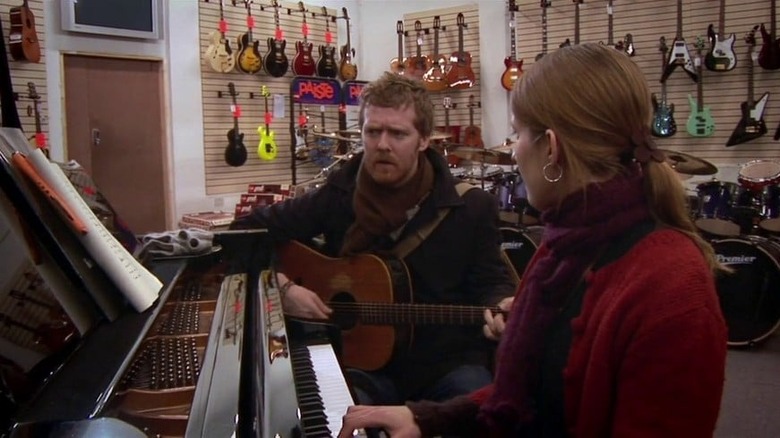
18 May 10:06

Elon Musk Personally Attacked By Twitter Exec Mocking Him In Leaked Conversation

by Ramish Zafar

Electric vehicle and aerospace billionaire Elon Musk's bid to take over social media network Twitter, Inc took an ugly turn when a company executive personally targetted the executive and stated that Twitter had to regulate speech in order to push users to make the right choices. The video, which is a personal conversation between Twitter's Lead Client Partner Mr. Alex Martinez and a member of the group dubbed 'Project Veritas' in which Mr. Martinez discusses his company's take on regulating information on its platform and Mr. Musk's attempt to change things at Twitter by buying the company. It ends with the Twitter executive commenting on an email shared with employees warning them about Project Veritas and being glad that he had avoided being targeted by the group.

Twitter Executive Believes Company Is All About Making Money - Targets Musk Personally

The bombshell video clip surfaced earlier today and was published by the Candian right wing publication The Post Millenial. It was also, rather ironically, shared by a Florida based journalist on Twitter, where he tagged Mr. Musk and stated that the executive would love to share his thoughts on the affair as well.

It starts with Mr. Martinez sitting in what appears to be a restaurant with another individual and sharing his thoughts on Musk's attempt at taking over Twitter and changing the manner in which the platform controls the flow of information present on it. The clip shared on Twitter was shorter than the one shared by TPM, with the latter's recording including profanity and more comments about Musk and his beliefs about free speech. Martinez was led on by his friend and reassured the latter that Musk would face some tough questions from Twitter's board and executives.

It included controversial opinions about Martinez's beliefs about the public being able to decide their own beliefs, with the executive stating that:

People don’t know how to make a rational decision if you don’t put out -- correct things that are supposed to be out in the public, right?

He also shared cynicism about the true intentions of Twitter's board, its founder Jack Dorsey and Mr. Musk, stating that money-making was their primary goal.

TWITTER Elon Musk ALEX MARTINEZ
A screengrab of Mr. Martinez's conversation recorded by Project Veritas and shared by The Post Millenial.

When asked whether profit or ideology reigned supreme at Twitter, he replied:

Now I think it's about it, well, right now we don't make profit. So it's gonna say ideology, which is what's led us into not being profitable.

. . .Well if we're implementing all these rules that they're – and Elon wants to dismantle them, then technically our ideology has led us to not making money because we're not making money.  And Elon wants to turn it the other way so that we can make money. Do you get what I mean?

I have no doubt that there's more to what they tell us than what, than what they tell us. Like there probably is some more, tell me the real, like-like what you're asking. I have no doubt there is, but there's a statement they, [Twitter Board Members] need all 7,000 people to say. And so they can't like tell us like the real truth, like you get what I mean? Like that's what I'm saying. I think at the end of the day, what the real truth is that they can't ever really say is it's all about money.

That it's all about money and making all these money. Parag, Jack, the board members, everyone gets paid. Elon gets like tax benefits. Doesn't have to pay taxes forever. Everything. Like it's all like a money, sh*t, greed America.

TWITTER Elon Musk ALEX MARTINEZ
A screengrab of Mr. Martinez's conversation recorded by Project Veritas and shared by The Post Millenial.

Some of his choicest remarks were however reserved for Mr. Musk, whom he described as having special needs:

Elon Musk as a person is whatever. I don't. . .like he's a loony tune, he has Asperger's.

So he's special. We all know that. And that's fine. So here, no one's gonna say some f**cking crazy sh*t because he's special.

Cause again like. . . don't you also see his piece about "why can't we just all love each other?" Haven't you seen his other tweets where he's like, I'm like you're special needs -- you're literally special needs. Literally though, you really are. So I can't even take what you're saying seriously. Cause you're special.

The video ends with Martinez being grateful that he had avoided Project Veritas so far and that Twitter had warned its employees of being targeted by the group and instructed them to not disclose internal information to others.

Musk's response to the entire affair was brief where he simply pointed out that the Twitter executive was trashing and mocking free speech and people with Asperger's. The executive has shared his doubts about proceeding ahead with his takeover after Twitter's chief executive officer Mr. Parag Agarwal shared controversial details about the number of fake accounts on his platform.

The post Elon Musk Personally Attacked By Twitter Exec Mocking Him In Leaked Conversation by Ramish Zafar appeared first on Wccftech.