Shared posts

11 Apr 18:54

Potential Outcomes of the US National Cybersecurity Strategy

by Kevin Townsend

The national strategy outlined by the Federal Government on March 1, 2023, is a monumental attempt to weave a consistent approach to cybersecurity for the whole nation.

The post Potential Outcomes of the US National Cybersecurity Strategy appeared first on SecurityWeek.

11 Apr 18:53

Hollywood's Voice Actors Sound Off About The Perils And Possibilities Of Artificial Intelligence

by Ben Pearson

In 2021, director Morgan Neville made headlines when he revealed that he and his team had built an AI model of the late Anthony Bourdain's voice for his documentary "Roadrunner," and Neville had secretly slipped AI-generated narration into the doc alongside narrations that Bourdain himself actually read aloud. In this case, the AI narrations were for lines the acclaimed chef and television personality had written in books or articles but never physically recorded ("We were merely trying to articulate things he had already said," Neville explained), but controversy swirled about the ethics of that decision.

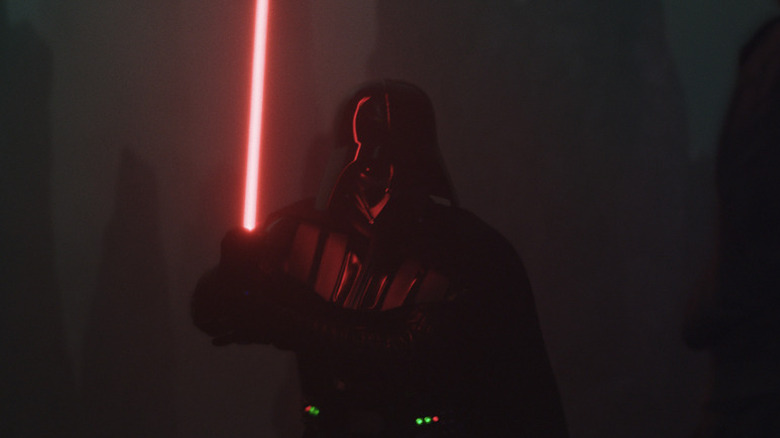
In 2022, actor James Earl Jones, who has provided the voice of Darth Vader since the original "Star Wars" in 1977, made his own headlines when he allowed a start-up company called Respeecher to use artificial intelligence to generate new vocal performances using his early archival recordings as source material, letting Lucasfilm retain a consistency to Darth Vader's iconic intonations instead of recasting the role. Jones, now 92 years old, reportedly provides guidance and advice to the teams working to keep Darth Vader at the forefront of pop culture. After 45 years of existence, Darth Vader has become a more synthesized combination of man and machine than ever before.

Over the past nine months, artificial intelligence has exploded back into mainstream conversation, with AI art generators (or, more accurately, art stealers) like Lensa sweeping across Instagram and generative AI tools like ChatGPT taking the idea of chat bots to the next level. But the James Earl Jones news raised questions about what impacts AI might have on the voiceover community as a whole. If archival recordings can now be fed into a computer that can create brand new line readings, have we entered the final days of human artists being paid to do voice work for studios and production companies?

/Film spoke with some of the biggest and most prolific voice actors in the country to try to answer that question.

How The Technology Works
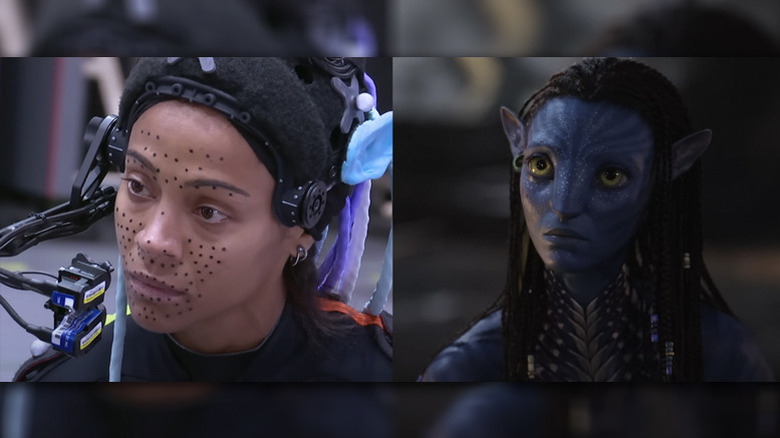
You've likely seen split-screen videos of actors wearing motion capture suits performing on a soundstage alongside the fully rendered image which appears in the final product. This AI technology for voiceovers works in a similar manner, only with audio.

"They'll hire an actor to basically be a puppeteer for the James Earl Jones voice," explains Keythe Farley, an actor and voiceover director who has credits on the Mass Effect games, "Adventure Time," and Cyberpunk 2077. "So the actor's performance will then get 'skinned' by James Earl Jones' [AI-generated voice]." And it's not just celebrities who provide those "skins," or customized voices that are overlaid onto a baseline performance.

Abigail Savage has appeared on shows like "Orange is the New Black" and "What We Do in the Shadows." She's uniquely positioned to talk about this technology, because she's not only an actor, but she's also been working as a sound editor and sound designer for over 20 years. She's worked closely with Respeecher, the same company that Lucasfilm teamed with for the new Darth Vader vocals, and was "smitten" with what the technology was able to do.

For a project Savage was working on that planned to utilize this technology, Respeecher had to recreate someone's voice, and in her estimation, it "seemed to have jumped over the uncanny valley into something that was quite usable and realistic and incredibly impressive." That particular project ended up not coming to fruition, but she was so taken by what the company was able to accomplish that she became a beta tester for its voice marketplace program.

"They have a bunch of pre-set AI voices they've developed [using] synthesized other human beings, so the voices aren't actual individuals, but are amalgamations of people. It's a way to record yourself saying something and choose whatever voices you want from their marketplace. Then it outputs those voices with what you said, and it maintains your performance but through another voice. That's something that's just great for a sound editor who's doing things and needs the occasional line said. It used to be you'd just spend a night doing group loop, which you'd get a bunch of friends and some pizza and you have people come into the booth and say the one random line that you need covered. Now, I can do it all myself, which is just, frankly, awesome."

Are Voice Actors About To Become Obsolete?
/Film reached out to Nancy Cartwright, who has provided the voice of Bart Simpson for more than 35 years. She responded to questions via email, and has faith that voice actors will not be replaced by artificial intelligence.

"Ultimately, the true magic of performance lies in the human element and the nuances can never be replicated by technology alone," she wrote (emphasis hers). "In many ways, it is faster and easier to get a performance out of a person, rather than a machine -- like when I am being directed on an animated show. I take the direction, change my voice, and even ad-lib — something a machine cannot do. This is what truly separates just a 'sound' [from something that gives] life to the artwork ... I believe that technology can enhance the voiceover profession rather than make it obsolete."

The importance of the human element was a recurring refrain from the people we spoke with for this article, including Billy West, who was the voice of Fry on "Futurama," Doug Funnie on "Doug," and Bugs Bunny in the original "Space Jam."

"You can't replicate the acting," he says. "You can't replicate the original artistry, the original synapses ... they can't steal your mind or how you interpret things ... you could use it to the extent where it would be touches here and there and nobody would know the difference. But if you're going to let everything rest on that technology, they probably have a long way to go."

"They could not sample Michelle Yeoh, and create a CGI rendering of her, and recreate what she did in 'Everything Everywhere All at Once,'" echos Maurice LaMarche, who has over 400 credits to his name and is most famous for his work on "Pinky and The Brain," voicing Brain. "I don't care how advanced the AI technology, it doesn't have a heart. It doesn't have a soul. It doesn't come from within to know what will make a viewer cry, or make a viewer laugh."

If you've ever watched "The Powerpuff Girls," "Loki," or played the latest Batman video games, you've heard the voice of Tara Strong, a veteran performer with over 600 credits. She says she's been in studio sessions with actors who can perfectly mimic a legacy character, but despite their ability to capture a similar tonality, "they don't have the soul of that character." She thinks AI "will be able to mimic, I think they'll be able to star in movies, star in cartoons, maybe fool some people. But I don't think — and maybe this is Pollyanna of me — I don't think they're going to be able to capture the essence of someone who was born to be a performer."

The Technology Isn't There Yet
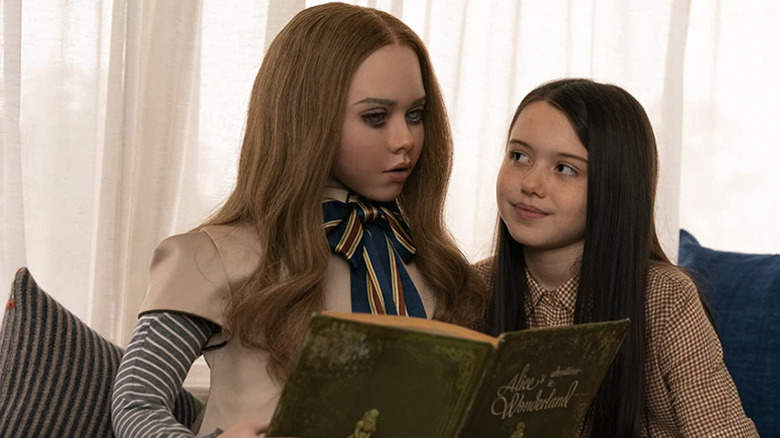
Duncan Crabtree-Ireland is the National Executive Director of SAG-AFTRA, the labor union that represents actors across film, television, radio, and more. He's recognized an uptick in AI quality, but also doesn't think it has progressed to the point where AI could fully replace human actors. "I think any of us who've used text-to-speech technology know that it is a lot better than it used to be, but it's still quite limited," he points out. "If you imagine listening to the Harry Potter books with text-to-speech technology versus listening to the audiobooks of the Harry Potter books, which are full of artistry and really performed as much as they are read, those are two very different things. I can't tell you that it could never be the case in the future someday that AI technology couldn't attempt to replicate that performance quality. But it's definitely not there now."

Keythe Farley isn't fully buying it, either. "I don't think that AI is going to replace actors doing scene work anytime soon. They keep making these claims about how it can be emotionally viable, but I don't know how two AI actors play out a scene together in that regard."

While none of the people /Film spoke to believe voice actors will imminently be made obsolete, most acknowledged being scared or at least concerned about the implications of AI on their profession. "It's really terrifying how great the technology is getting, and I think it's super dangerous," Strong admits.

Tim Friedlander, a voice actor with credits on "Hunter x Hunter" and "One Punch Man," likens this new wave of AI technology to the long-term effects certain innovations had on the music industry.

"You look back at music, it's the same. 'Oh, well, synthesizers are going to make piano players obsolete, and loopers and samplers and digital interfaces audio is going to make performers obsolete.' And to a certain extent, we are now, 30 or 40 years later, where you can go to a performance and you'll have everything running off a Pro Tools rig and one singer [on stage] ... So it has eliminated an entire generation of performers, of musicians. Potentially, it's going to have the same impact here."

Even so, Hollywood has not raced to replace actors en masse — not yet, anyway. "The hope that we have, at least any kind of shining light, bright light in this, is that producers still want a human person to direct," Friedlander says. "They still, for the most part, don't want to replace human voice actors, if it comes down to the performance."

"It's all about how clever the voice actor will get with what they were born with and what tools will exist in the future," Nancy Cartwright writes. "Innovating rather than fighting change is a good perspective to keep in mind. I believe that the artist can and will always find ways to use technology to create, rather than simply allowing technology to dominate them and make their art form a thing of the past."

"By the way," she adds, "the derivation of 'animation' is 'a bestowing of life ... filled with breath ... make alive ... spirit' — something unique to the artist and not a machine."

The Intangibles

Try as it might, there are some things technology simply cannot do as well as a human. In Jon Favreau's 2003 Christmas classic "Elf," there's a scene in which Will Ferrell's character, Buddy the Elf, chugs a two-liter bottle of Coke and, a couple of minutes later, lets out a comically long belch. After a failed attempt to use computers to produce the burp, the production hired Maurice LaMarche to provide the vocal effect.

"The filmmakers had tried using the technology they had to cobble together digitally several long burps," he explains. "They needed 15 seconds. What they came out with, there were no nuances of speech or emotion to it. They couldn't get a convincing-sounding 15 second-long burp. Now I do something with my throat. I've done it since fifth grade. It's a combination of Tuvan throat singing technique, where you just rasp your voice at the very lowest note it'll go to, and [a tongue move]. You're making echo chambers in your cheeks by doing that with your tongue. You combine that, and you get [makes loud burping noise]. And just hold that for 15 seconds. Because a human being did it, a human being with a sense of humor, and more important, a sense of comedy — because I was really trying to crack up the recording engineer as I was doing it — you got the result of what cracks people up when they watch 'Elf' every Christmas."

Another thing computers can't do effectively is ad-lib. Bart Simpson's famous "eat my shorts!" catchphrase spontaneously sprang forth from Nancy Cartwright during a table read. That intangible aspect of voice acting and performance was also underlined by several members of the community, including Candi Milo, who has nearly 300 acting credits; she recently worked on the reboot of "Animaniacs" and previously voiced the title character in "Dexter's Laboratory." She tells us, "We all miss group records because you miss reacting to, and laughing with [other people], and thinking of ad-libs ... there's nobody to react to. There's nobody there that says something funny so you can do an ad-lib, and it misses that natural pace, that natural energy, that natural vibrancy."

Meanwhile, LaMarche recounts an instance in which he employed a trick he'd heard from another actor, incorporating an element to his performance that a computer never could. "I delivered every Lexus commercial to my best friend. I pictured them in the corner of the booth, on the other side of all the ad people and the creatives, in a little chair in the corner. I told them to keep it empty. I delivered every Lexus commercial to my best friend. I think that's what made my run as that voice so successful. An AI doesn't have a best friend to talk to."

Possible Upsides To Artificial Intelligence
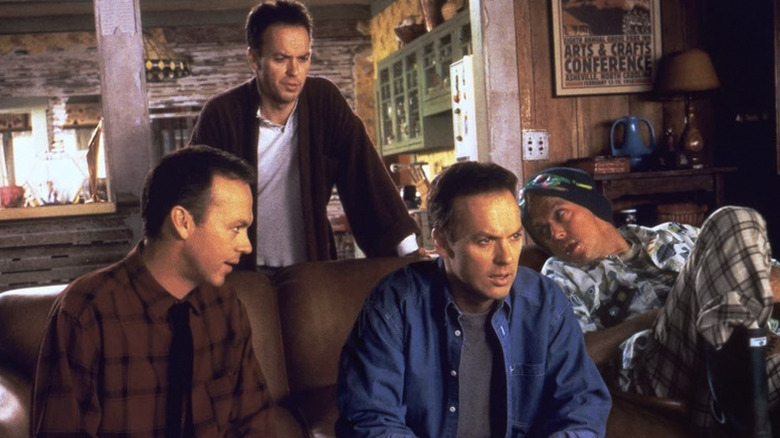
While artificial intelligence may seem like an existential threat to the voiceover profession, several of the people /Film interviewed are trying to find a silver lining. In Nancy Cartwright's view, "[AI technology] could provide more opportunities for voice actors and make their performances more accessible to a wider audience by learning how to create artificial changes to their voices or adding nuances to their voices that they couldn't perform physically before — for example, speaking in a higher or lower octave or accent."

That accent example is currently being put into practice at a company called Veritone. Working with clients like NCAA, the Australian Open, The Masters golf tournament, CBS News, and hundreds more, Veritone uses AI in several different ways, but over the last year, they've become a significant player when it comes to synthetic voices. Co-founder and CEO Ryan Steelberg believes every voiceover artist should have their own versions of their synthetic voice created. Then, each artist can essentially become their own boss by overseeing an AI model of their voice which can produce more sessions in a day than a human could physically record — and speak in languages the human artist can't actually speak.

"Voice talent is not just the sound of their voice," Steelberg says. "Voice talent and voiceover is how effective they are in speaking. Right now, we can create great-sounding clones, but how the presentation of that voice is melded with and into a production is still a talent. Our position with voiceover talents is we embrace them. We have lots of voiceover talents as customers. We create synthetic voices, and we help manage those voices for them. They need to view this as a tool ... You take a great American English voiceover talent. Tomorrow, they can set up shop and offer their voice and their capabilities of, ironically, voicing their voice in multiple different languages. We can actually help bring a lot more business opportunity for voiceover talent by them investing and being willing to work with synthetic models."

"The Price is Right" host Drew Carey recently experimented with using an AI-generated model of his voice during a portion of an episode of his SiriusXM radio show, and after it didn't go over particularly well, he said he wouldn't be using it again. The technology may not be quite advanced enough to take over hosting duties for a radio show yet, but imagine an artist being tasked with recording a large number of hyper-local radio spots. ("You're listening to the Big Ape, 95.1, WAPE, Jacksonville's number one hit music station.") If that artist has a synthetic version of their voice (and if they reach an agreement with their employer), they could farm out those hundreds of recordings to the AI model and sit back while the check rolls in. The same thing applies for an artist hired to record audio versions of articles on websites, or to narrate audiobooks.

There are practical uses for this in the sports world, as well. One of Veritone's clients is soccer announcer Alan Smith. For the World Cup, the company used an audio clone of Smith's voice to do real-time announcing for hundreds of games that he wasn't able to actually voice himself. Using the same real-time data that powers box score updates, the clone of Smith's voice can read that data and do play-by-play commentary for a match the real man has never even seen.

'It's Time And It's Money'
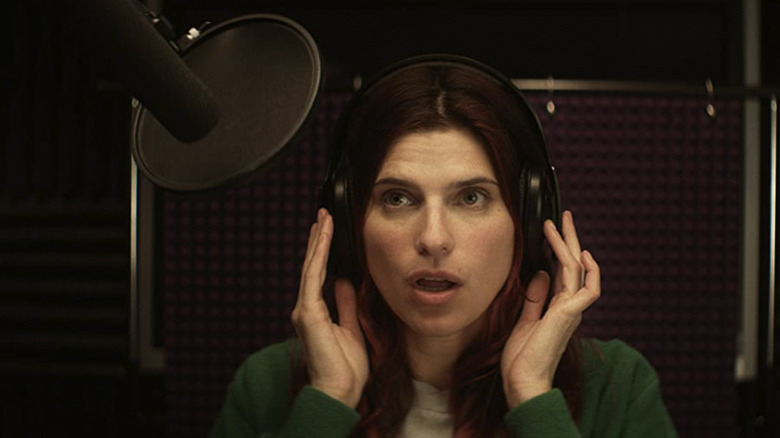
In addition to using synthetic copies of actors' or celebrities' voices, remember that companies like this can also generate totally new voices as "skins" for additional line readings. Ryan Steelberg offered a practical example of how that could be used going forward. If a company wanted to set up a tip line about mental health issues, he and his team could design a voice they think could be soothing and empathetic to the callers in an effort to help calm any anxiety they may have.

"Voiceover talent has historically been using their own voice as their asset," he says. "They need to start thinking of their expertise of all things voiceover and looking at these tools because companies are doing it right now. And voiceover talent, they actually are in the driver's seat right now. They understand the industry. They understand the boards, [industry marketplace] Voices.com, how to get the jobs out there. When there's an opportunity, they need to be able to apply for that job, if you will, by using all the tools at their disposal. By them just saying, 'I'm only going to use my real voice,' I don't think that makes a lot of sense."

For Abigail Savage, that skinning AI technology simplifies things and allows a film or TV production to spend that money in other areas where it may be spent more effectively. "It's time and it's money," she says of the two greatest benefits she's experienced working with AI. "I can be the single microphone input for 20 different voices throughout a documentary that just needs occasional background conversation to fill in and create a realistic soundtrack. That's a lot more straightforward than asking 20 different people to come in and record one single line of audio and then trying to tease out a performance from them ... especially in my case, where I'm comfortable with the performative aspect of it."

Tim Friedlander identified a couple of other possible benefits. Instead of listening to article narrations through robotic-sounding text-to-speech voices, those with impaired vision could have a more enjoyable and authentic experience with an AI-enhanced version. The technology also has the potential to provide a literal voice for people who are non-verbal, allowing them the ability to customize the sound to match their personality.

"You're going to see premium talent who are embracing this," Ryan Steelberg predicts. "They're going to get a lot more work. And you're going to see, people who are not embracing this are potentially the ones who are going to be exited out of this industry."

But Maurice LaMarche isn't aligned with Steelberg's stance that all voiceover performers should have an AI model made of their voice. "No, I can't see that happening. Why? Because I can already do it. I enjoy making my voice do my bidding. I enjoy becoming ["Futurama" character] Lieutenant Kif Kroker. I don't want to push a button and hear Lieutenant Kif Kroker come back at me. I can just record me saying that, and go, 'Oh. You know what? That I can do that better.' It's retakes and retakes until I think it's funny enough. You should see how many times I do a Cameo, until it's funny enough. A computer doesn't know when it's funny enough."

Potential Downsides
A prediction Steelberg could be right about, though, is that AI-generated voices may soon spell the end of so-called "soundalikes," actors who make their living by impersonating famous voices in a variety of official capacities. "[Tobias Meister] is the name of the voiceover talent who's famous for doing Brad Pitt's voiceover work in Germany," Steelberg says. "Those days are going to be numbered here. Brad Pitt and Tom Hanks and these people, when their show and their scene is being exported, it's going to be [an AI] version of their voice that's going to be speaking in [another language]."

It's funny Steelberg mentioned Tom Hanks, because the "Toy Story" and "Cast Away" star has actually had a secret weapon in the voiceover industry for years. Jim Hanks, Tom's younger brother, has been acting since the early 1990s and has credits on projects like "Robot Chicken," "JAG," and "Dexter." But he's also arguably the most famous soundalike in the world, having doubled Tom's voice as Woody from the "Toy Story" franchise since 1995. When you hear Woody's voice in toys, theme parks, video games, and Disney on Ice, you're hearing Jim's voice, not Tom's.

Since famous Hollywood nice guy Tom Hanks probably wouldn't create an English-speaking AI version of his voice that would take away work from his brother, Jim himself may not have to worry about being replaced. However, he knows others in his field may not be so lucky. "I think the soundalike industry is definitely vulnerable," he says.

Candi Milo has also done some soundalike work. "Part of the contract for a film is that you will do pickups or reshoots, but mostly audio pickups, as the actor's time allows," she says. "I cannot tell you how many times I have gone on a set because so-and-so won't do their pickups, or it's too expensive to fly Angela Lansbury in, so they hire somebody like me to go in and do two lines of her. That's how easy it is to do."

When Lansbury was in London during the making of "Mr. Popper's Penguins," the studio called Milo onto the Fox lot in Los Angeles to perform a couple of lines. She was paid a one-time fee and does not get residuals on the project, because she's not credited as an extra voice. This has been a common practice in Hollywood for decades, but AI models could conceivably bring that to an end.

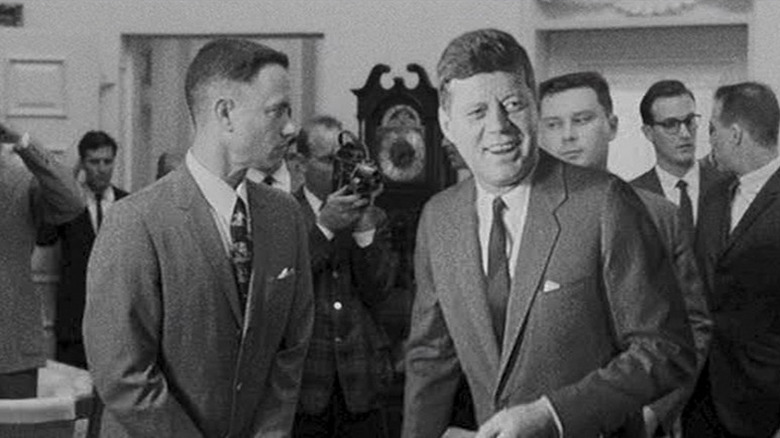
And pour one out for all of the John F. Kennedy voice impersonators who have previously gotten work in movies like "Transformers: Dark of the Moon" and "Forrest Gump"; today, a production could work with the former President's estate and generate the lines they need using his actual voice as a foundation.

"If you want to reproduce a piece of history in a film, like a 'Forrest Gump' kind of scenario, maybe using the real JFK and using this technology to use his voice print to say, 'I believe he said he had to go pee,' maybe that would've produced a more convincing moment in the film," Maurice LaMarche concedes.

But Jim Hanks' concerns extend far beyond soundalikes. He suspects a rise in AI might lead to lower wages for all voice actors. "I've been in this industry long enough to watch earnings drop, because every time anybody who actually creates content on the producer end of it finds a way to pay talent less. So if you're going to allow people to use AI based on your voice, I suspect they're going to immediately go, 'Well, you're not going into the studio, so why should we pay you as much?'"

Regarding the examples provided earlier about artists licensing their AI voice to read hundreds of articles or audiobooks, Hanks doesn't imagine the outcome will be quite as rosy as it seems at first glance. "I can't imagine that those people would go, 'You know what? We want Morgan Freeman to read this article instead of this [text-to-speech voice],' because why would they pay somebody? They don't have to at this point."

Ethical Concerns
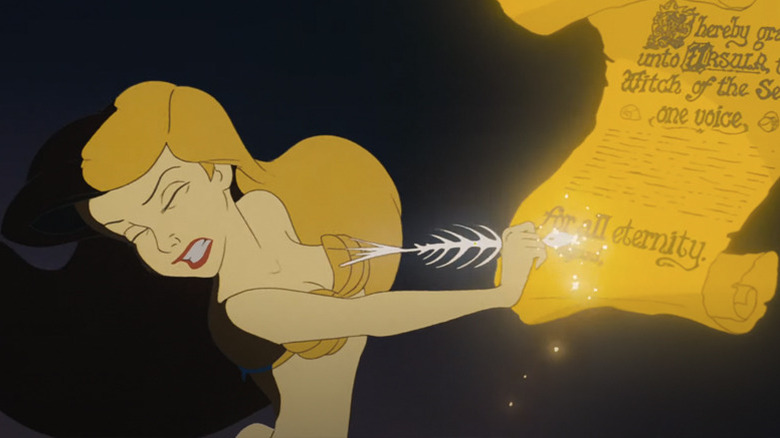
Concerns about the morality of implementing new technologies are often as old as the technologies themselves, and AI is no different. The Bourdain documentary was a particularly thorny example, given that Bourdain's family members apparently did not give the filmmakers permission to use an AI-generated version of his voice. That was a creative-driven solution to an obstacle, but some corporate business practices are also being called into question. Two months ago, major audiobook distributor Findaway Voices came under fire after revelations that the company, which was acquired by Spotify last summer, was giving Apple the right to use Findaway's human-read audiobook narration files as training data for Apple's machine learning models. The problem was the voice artists who provided those recordings were not aware that their voices were contributing to that technology, and they did not give their permission for the recordings to be used in that manner. Apple and Findaway have since stopped the practice.

"I want to make sure that if I give permission for someone to use my voice, that I'm the one giving the permission and that I'm paid fairly for the use, that I have an understanding of how long my voice is going to be used and for what," Keythe Farley says. "I don't think there's anybody who's a performer out there who doesn't want to know that their voice or their performance or their image is being used in a way that they wouldn't consent to, whether that's moral or for any reason whatsoever. So it's just really about actors maintaining control over their voices as this new technology comes into the fore."

Jim Hanks recommends that voice actors take an extra close look at their contracts before signing on the dotted line. "I just recently signed a contract for something that I can't talk about. But in the first couple of negotiations, when the contracts were going back and forth, there was really specific language where they were saying that they wanted the right to use whatever I did and be able to manipulate it and make other things down the line. And my lawyer caught it right away, and I caught it too, [and] my lawyer went, 'No, that's not going to happen,' and they went, 'Okay, no problem.' But again, what I feel is what big business is going to do is they're going to try to slip that stuff in and hope that people don't notice it, and then go, 'Whoops, [it says] right here in this contract we can do it. You signed it.' So I think people definitely need to be aware of that."

In addition to his acting credits, Tim Friedlander is the founder and president of NAVA, the National Association of Voice Actors, an organization that has been trying to educate the community and arm voice actors with the proper tools to combat being exploited. He explained that NAVA hired a lawyer to draft a "synthetic voice AI rider that we have on our website that talent can put in to proactively hopefully protect against this going forward."

Keythe Farley is also a member of NAVA and has been involved with these education efforts. "What we've been putting out to our membership is basically if you go to work, and there's a standard SAG-AFTRA contract, [and] frequently there will be addenda to that contract, there'll be riders attached to that contract. If there's anything in those riders regarding synthetic use of your voice or your likeness — or your movement, if you're a performance capture performer — those clauses are what they call mandatory subject of bargaining, which means that until they have sat across a table and negotiated those terms, they're absolutely null, void, and unenforceable. So for actors in the union, what we've been counseling people to do is sign the contract, forward it to the union, and then let our lawyers go to work."

The organization's hope is that non-union actors will download their rider to attach to their contracts to ensure that no one's voice is being stolen and used without permission and compensation. Thankfully, it seems to be going well so far. "One of the things, at least that we're finding, the feedback we've heard from people, is that [many productions are] more than happy to add these in there, because they don't have the intention of synthesizing or digitizing somebody's voice," Friedlander reveals. "So a lot of people are having a lot of luck adding this into their contracts."

"We're looking to avoid any contract that says, 'You have the right to use my voice for anything you want to forever across all known media now or hereafter devised throughout the known universe,'" Farley says.

Questionable Offers And A Complicated System
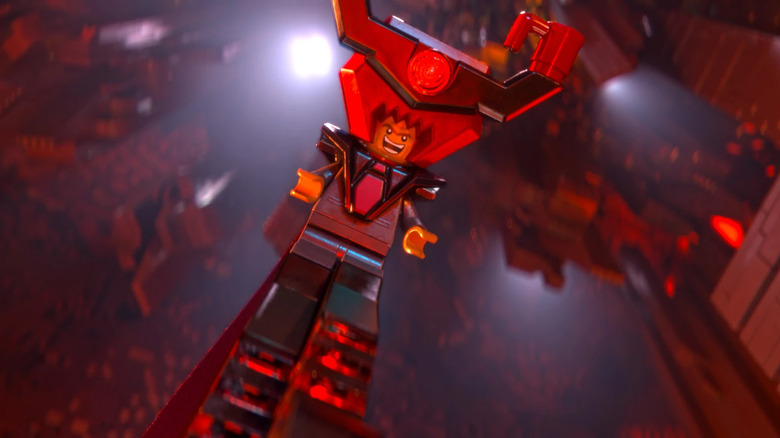
Even prominent voice actors have had close brushes with sketchy situations. "I was approached to do a voice thing for an NFT project and they wanted to basically have me say a million different lines, really random things, and then they would teach this computer program to say anything in my voice," Tara Strong recalls. "And I said, 'So theoretically, they could make it say I hate a specific human, or type of human, or race, or say really terrible words that I wouldn't say in my real world?' And they're like, 'No, there are failsafes.' But let's be real a minute. Right? You can't really guarantee that."

Similarly, Maurice LaMarche says he was approached by one of the top studios to perform a particular impression. "They wanted me to basically read a telephone book into the microphone, and see if they could then create an animated character using the voice of the celebrity, who I presume refused to do this, and see if they could create this character with my very decent impression layering over samples of his real voice. They offered me a large sum of money, and I've turned it down flat. Do I think that stopped it in its tracks? No, but I would not be able to look at whatever the product was later and go, 'I helped with that.' I can't be the person that helped with that. I can't say, 'Well, they're going to do it anyway, so I may as well take the money and run.' I can't do it."

Unfortunately, there are plenty of people who would take that job (or one like it), especially people who are attempting to gain a foothold in the industry. Things can quickly become complicated.

"What you have is a cadre of underemployed actors that would be happy to replace you," Candi Milo laments. "They would be happy to do it, because they call it their way in. 'I've got my foot in the door, I'm just going to do this.' And I went, 'That is your entire body in the door. Because once you do that, there's no going back.' ... Screen Actors Guild, as a union to protect us, is so big and they're so disparate that [they're providing] different needs. Maybe I've done [the first entry in a franchise] and the studio wants to do part two and they don't want to pay more money, and I say, 'Fine, you can't use me, then.' But somebody says, 'Well, I want that job. They don't want Candi, and I want that job, and I can sound like her real voice, so I'm just going to do it.' Do they represent her, or do they represent me saying, 'I don't give permission for you to do this'?"

That constant fear of being replaced, relatable in so many professions operating in capitalist societies, is about more than just money for these performers. There's something indescribable that happens when an actor truly inhabits a role — something that can't be quantified, but can be felt by those who connect with the final result.

"There are definitely many times, particularly in voiceover, where the industry doesn't like to make you feel cherished as much as the fans do," Tara Strong says. "The [production] will say, 'Oh, we made this billion in toys' — which we don't have a backend on — 'and this billion on the movie, and we want to make the next movie and we want to give you guys scale and a half.' So you guys are making billions and you want to give us $2,000? [They'll say], 'Right, and if you don't do it, we're going to hire someone to copy your voice.' That doesn't feel so good. I don't know any actor that doesn't, especially in my world that I'm in every day, which is the animation world, put their heart and soul into something and feel very connected to a character. It's hurtful when they say, 'We could get someone else.' Because you really feel like once you are established as that character, it's a part of you. There's a part of me in everything that I do. That negotiation is a little soul-crushing. So I don't know that some genius company working with a Hollywood mogul would really give a s*** about honoring what a voice actor's created if they can mimic it."

Duncan Crabtree-Ireland specifically addressed a question many people had about the James Earl Jones scenario: Why didn't Disney just hire a replacement actor instead?

"That's a question that's impossible to answer, but what we can say is that so long as that work is being compensated and paid for, then the incentive to do it because of that is removed," he says. "So the company isn't choosing to do that because they're saving money. The company is choosing to do that because they believe they're getting the best creative output by using that iconic voice. And that is inherently a protection for our members, because if it's not being done for economic reasons, if it's being done for creative reasons and it's being done with consent and compensation, that preserves the whole range of other job opportunities that aren't tied to one particular performer's voice for everyone else. So really, I think establishing that principle that synthesized voices and AI voices don't translate into free work, that's the most important principle to help make sure our members are protected."

/Film reached out to multiple people at Skywalker Sound, but a senior publicist told us they are not able to participate in this story.

"I think that the misconception is that we are trying to stop this technology from coming into being, which is a fool's errand," Keythe Farley clarifies. "What we need to understand is that we are partners in this technology, and what the creators of this technology need to understand is that there are rules of the road, and that those rules need to be followed."

Deepfakes Will Continue To Be A Problem
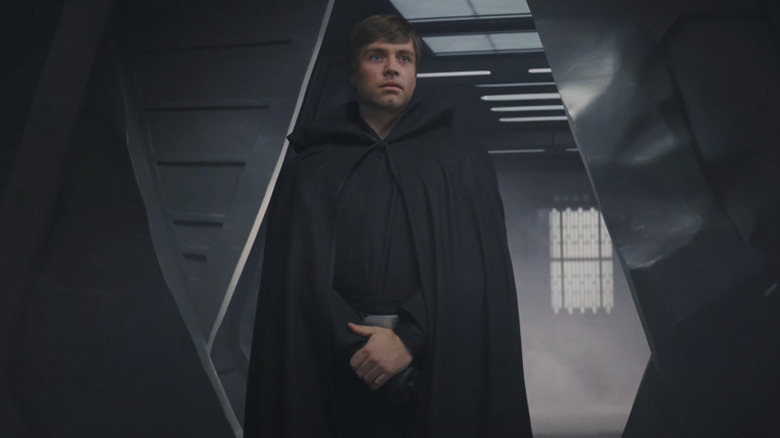
Perhaps the most egregious and obvious example of not following those rules of the road comes in the form of deepfakes, which have been a problem for years. But this new AI technology provides new methods of abuse to the worst offenders online.

Duncan Crabtree-Ireland says the realm of deepfakes are where SAG-AFTRA has seen "the most egregious violations" of the rules, and Tim Friedlander cited a terrifying real-world incident that happened not long before /Film spoke with him for this piece. "A month ago or so, there were voice actors who were having their voices doxxed on Twitter, saying racist and homophobic things and giving out somebody's home address. Like saying, 'Hi, my name is so-and-so, here is my home address,' and then going on a racist tirade from there. It sounds like them. I mean, it sounds legitimately like, 'Oh, that sounds just like you. I know who you are.' And we're just the beginning of this. We're just at the beginning."

"They can have you saying things you never said," Billy West tells /Film. "They can stick your face on Johnny 'The Wad' Holmes from a porno film and put it on Twitter and go, 'Ah, here's your boy. Here's the guy you think is so great. He's a smut peddler.' That's a game people are just dying to play."

"I think people are hungry to get people canceled," agrees Tara Strong, who has experienced an AI company taking her voice and making her say "horrible" things. "I think that some people deserve to, but I think, by and large, a lot more are targeted that don't really deserve to. And I think that's going to make that even scarier."

"The worry is that anybody with a synthetic voice app can grab Bart Simpson's voice and then put it out saying and doing things that the actor might not be even aware of, and making money on it," Keythe Farley says. "And the other thing, too, is to be able to take that voice, Nancy Cartwright's Bart Simpson, and sell it to folks without Fox's knowledge and compensation or the actor's knowledge and compensation. That's where the rubber meets the road."

Billy West sounds disgusted by the lack of artistry involved with using AI technology. "What drives somebody to [devote their career to voice acting]? The love of the art. I think that's why it's never boring. That's why we never run out of passion or inspiration. I don't know how much passion or inspiration you need to be an AI artist or to swipe prerecorded tracks and mold it like it was Play-Doh."

Here's What's Being Done About These Issues
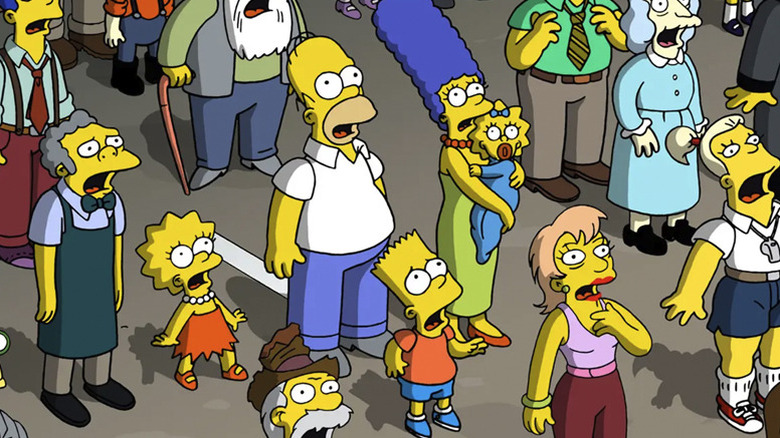
The James Earl Jones news conjured nightmarish imaginary scenarios involving voice actors. Consider a situation in which 20th Century TV decides it wants to keep "The Simpsons" running, but when it comes time to renew Nancy Cartwright's contract, the network decides that instead of hiring her, it would rather tap into her old archival recordings and use AI to generate new line readings for Bart Simpson for future seasons. Thankfully, that won't actually happen, and Duncan Crabtree-Ireland explained why.

"All of those episodes of 'The Simpsons' that have ever been recorded since it started, and everything going back decades before that, is subject to a reuse of footage of photography and soundtrack provision. It's in our collective bargaining agreement. It basically says if they're going to make any kind of other use of the soundtrack or photography of any project, they have to negotiate with the performers who are involved and pay compensation as part of that negotiation process. So in that example that you gave, if they wanted to use that as the basis for creating an AI voice model and then using that for further projects, they would have to negotiate with her for permission to do that. And if they did it without negotiating or getting permission, we, the union, can pursue that through an arbitration. There will be circumstances in which she could sue them in court if she wanted to. So there are legal remedies that are already built into the collective bargaining agreement to address any kind of use beyond the original use. And that includes making it part of an AI training data set, that includes use of clips, it includes any aspect of that kind of use."

While there are safeguards in place against major studios engaging in bad behavior, those don't apply to the comparative Wild West of deepfakes. But SAG-AFTRA is trying to protect its members from that, as well. Crabtree-Ireland explained that the union has had success in getting some legislation enacted in New York and California to help put those protections in place, but he would still like to see action taken at the federal and even global levels.

That's all well and good for union members. But what about people who aren't union members? In addition to downloading NAVA's free AI rider and applying that to their contracts, is there anything that can be done for them? Crabtree-Ireland said even non-union work can be done under union contracts that help protect people from being exploited.

"It is really hard to envision how you can adequately protect people from this sort of thing without using collective bargaining, because there is such a tendency for overreach on the part of companies who do this stuff. And if you aren't part of a collective bargaining group and you don't have a lot of leverage, it can be very hard to push back on demands that you do things like sign away your rights to your image, likeness, or voice. What I would just say to everyone who will be reading this is it is essential that you not do that. Once you've signed away, in perpetuity, the rights to your image, likeness, or voice, it is virtually impossible to get it back. We've seen many, many examples of people that have really been abused in this way. I know it's really hard to say no to that sort of thing, but it is essential that you say no to that thing. One way you can do that is simply by reaching out to us to help get a project organized. Even if you're not a member yet, we can help organize projects. And once they're under a collective bargaining agreement, now it's no longer the individual performer's job to have to fight that."

It's also worth noting SAG-AFTRA is working with other partners inside and outside the industry to, as Crabtree-Ireland put it, "establish a common set of principles for the human-centered implementation of AI technology."

"This goes beyond voiceover or even beyond just the entertainment industry," he says. "This is a broader issue."

If the past few months are any indication, artificial intelligence is going to be a major part of our lives going forward. That may be an uneasy realization for many, but Abigail Savage suggests we shouldn't be afraid of it.

"I think right now, people are uncomfortable with it unless it's very [clearly] specified in a project, 'This is an AI-recreated voice of this past person. They never really said these lines into a recording.' I think if the common audience knew the degree to which we are already manipulating reality when we are doing sound editing work, I think it would be less controversial. At some point in the future, it's probably going to be more normalized, because we're already cobbling together interviews to make people say sentences that were never actually spoken. I do documentaries all the time, and the degree to which we are imposing, manufacturing, a reality so that the director's viewpoint and the interviewee's viewpoint comes across in a more obvious or clear manner, I think would really shock most audiences ... At some point it will, I think, become a normal tool in our toolkit for being able to tell stories."

"CGI sucked when it first came out too, but it was abused everywhere," she concludes. "I think it took something away from filmmaking for a few years while we grappled with how much to use, how to use it, and the fact that there was a deep uncanny valley going on. Technology gets absorbed by artistry, and artistry eventually wins out."

Read this next: The 30 Most Anticipated Movies Of 2023

The post Hollywood's Voice Actors Sound Off About The Perils and Possibilities of Artificial Intelligence appeared first on /Film.

11 Apr 18:51

Newly Discovered "By-Design" Flaw in Microsoft Azure Could Expose Storage Accounts to Hackers

by info@thehackernews.com (The Hacker News)
A "by-design flaw" uncovered in Microsoft Azure could be exploited by attackers to gain access to storage accounts, move laterally in the environment, and even execute remote code. "It is possible to abuse and leverage Microsoft Storage Accounts by manipulating Azure Functions to steal access-tokens of higher privilege identities, move laterally, potentially access critical business assets, and
11 Apr 18:47

As Gen Z flounders at work and Millennials struggle to buy a house, Boomers are enjoying a golden moment. Once again, Gen X is ignored. Whatever [Obvious]

11 Apr 18:47

Back in the 50s the Air Force dropped a nuke in South Carolina. Sadly, it failed to explode [Vintage]

11 Apr 18:46

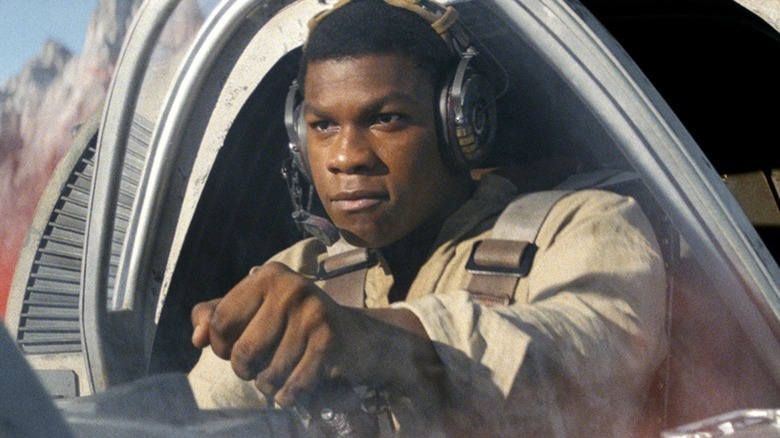
Star Wars' Gwendoline Christie Thinks Captain Phasma Secretly Had A Crush On Finn

by Rafael Motamayor

Star Wars Celebration is a place full of treasures and gems for fans of the galaxy far, far away. This is where the biggest news is announced, and where movies that may or may not get made are first unveiled alongside first looks at incoming projects. Naturally, all of this happens while all kinds of merch and art are open to the public to purchase with their hard-earned credits.

While the flashy panels with big announcements get all the attention, it is often in the less extravagant panels that you find the juiciest information and insights about the making of this franchise. One such panel was the Villains of the Sequel Trilogy discussion, in which actors Gwendoline Christie (Captain Phasma), Andy Serkis (Supreme Leader Snoke), and Ian McDiarmid (the Senator himself, Sheev Palpatine) talked about joining the franchise in new or returning roles and how they developed their roles in these three films.

Always a joy to watch, Gwendoline Christie absolutely ate up the conversation and held the crowd on the palm of her hand. She told stories of playing this generation's Boba Fett, the character with the cool costume who appeared for only a handful of scenes but chewed up every moment on screen and left people wanting more as they took to buying the figure to imagine what happened to them.

Phasma remains one of the most bafflingly vague and mysterious characters of the sequel trilogy, one with as little information about her background as she has lines in the film. Still, she is also one of the coolest. During the panel, Christie finally answered one of the biggest lingering questions about the chrome-clad stormtrooper captain — why the hell was she so fixated on Finn? Well, in short, Christie explained to thunderous applause that it was "because she fancies him."

Tale As Old As Time, Song As Old As Rhyme

It makes all the sense in the world when you think about it. Phasma and Finn have little screen time in the trilogy, but whenever they are together on screen, there is a palpable and intense chemistry, which leads to some of the best verbal confrontations in those movies alongside sparring sessions between Reylo (Rey and Kylo Ren) and Poemitage (Poe Dameron and Armitage Hux).

Phasma doesn't seem that much different from other abusive Imperials we've met throughout the decades like Tarkin or Thrawn. She has a commanding presence and overall very intense vibe, but for some reason, she is very much out to get Finn more than any other rebel, even before he joins the Resistance. That there is something else there, something Christie defines as "oppressed lust," would make this one of the most fascinating and funny relationships in the franchise.

It's not like the text disproves this theory, either. As Christie explained, the fact that Phasma never removes her armor like she was a Children of the Watch suggests inflexibility, which "suggests huge suppression of many, many things." When Phasma realizes that Finn escapes and turns to the Resistance, she starts envying him, because he is "someone who has liberated themselves from the confines of order and convention," as Christie described it, while Phasma herself remains "someone that has an inner fragility that is so intense that they have to press and lean into a sense of order and authority."

So where does that leave us? During the panel, Gwendoline Christie and Andy Serkis joked about wanting their characters to return, and given that Finn is still out there, why not fulfill this prophesied romance? Let Finn and Phasma explore their slow will-they-won't-they relationship, you cowards!

Read this next: Andor Character Guide: Meet The Cast Of The Rogue One Prequel Series

The post Star Wars' Gwendoline Christie Thinks Captain Phasma Secretly Had A Crush On Finn appeared first on /Film.

11 Apr 18:45

AMD CPUs Are Safe For Late-Loading Microcode, Will No Longer Taint The Linux Kernel

Intel processors should have any CPU microcode updates loaded early during the Linux boot process to avoid various known issues. When "late loading" CPU microcode after the system is up and running, various issues can happen on Intel processors that led them to mark the Linux kernel as tainted under such conditions. Tainting the kernel also happened when late-loading microcode on AMD CPUs but now that's been deemed unnecessary and late-loading CPU microcode on AMD processors is reportedly safe...
11 Apr 18:44

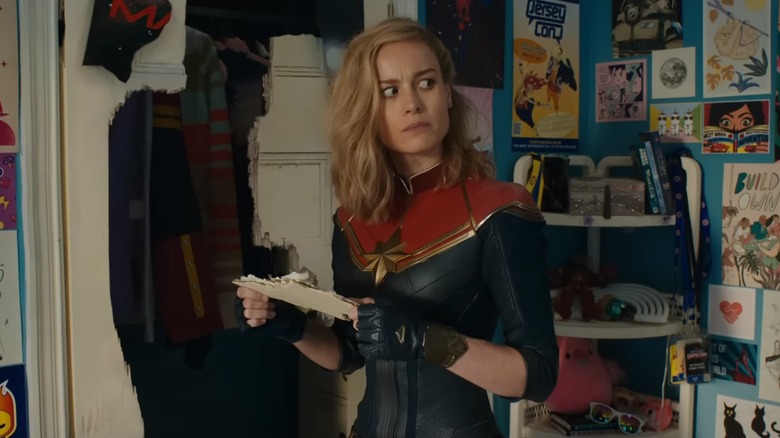
The Marvels Trailer Breakdown: When Superhero Movies Go Full Body-Swap

by Jeremy Mathai

Carol Danvers, her supporting cast, and the Marvel Cinematic Universe as a whole have all come a long way since our very first tease of Brie Larson's space-faring superhero. Most would agree that the 2019 film did an adequate job of establishing the origin story for the eponymous Captain Marvel, tying together her Air Force background, a test flight gone horribly awry, and her subsequent team-up with a young, pre-eyepatch Nick Fury (Samuel L. Jackson) against the perceived threat of the shapeshifting Skrulls and the sinister Supreme Intelligence (played, incredibly enough, by Annette Bening). After saving the world once again in "Avengers: Endgame" and making brief cameos in both "Shang-Chi and the Legend of the Ten Rings" and "Ms. Marvel," the Disney+ series starring Iman Vellani as the lovable Kamala Khan, we've yet to see the energy-blasting superhero back in action ... until now.

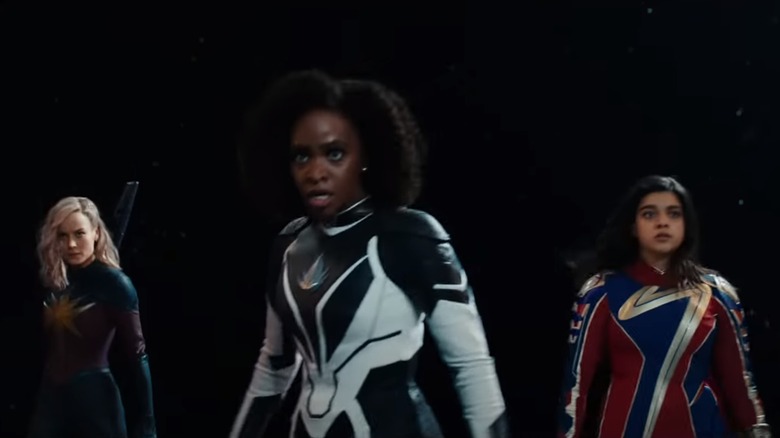
With the release of the new teaser for "The Marvels," the follow-up film directed by Nia DaCosta, the MCU is once again foregrounding its most powerful hero alongside two of her most integral supporting characters -- Kamala and Teyonah Parris' Monica Rambeau, first introduced in "WandaVision." As the title would heavily suggest, the sequel features the trio joining forces to combat yet another cosmic threat. But, as is usually the case with the Avengers, their biggest obstacle might just be figuring out how to get along.

The new footage reveals just enough to get excited about the upcoming film, though without giving away too many major plot details. But since when has that ever stopped us before? Read on for our extensive breakdown of the teaser trailer for "The Marvels."

Intergalactic

Teasers are all about setting up expectations and, if there's one thing Marvel tends to be good at, it's teasing audiences with skyrocketing expectations. That's likely why the teaser for "The Marvels" wastes no time at all kicking off with the strains of "Intergalactic" by the Beastie Boys, setting the mood for the cosmic-based shenanigans to come. We open on a nifty-looking space station in orbit around Earth, under the auspices of "S.A.B.E.R." -- and not the preestablished organization known as "S.W.O.R.D.," interestingly enough, which Monica's mother Maria (played by Lashana Lynch in "Captain Marvel") helped found.

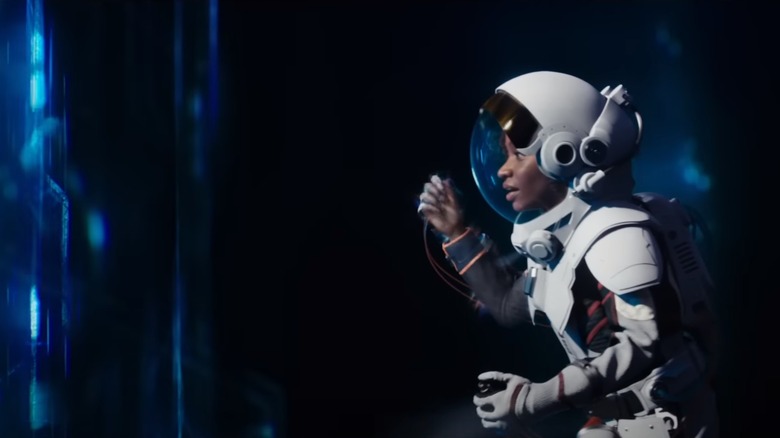
This is all little more than nerdy window-dressing surrounding the inciting element of the teaser (and, presumably, the film). While on a spacewalk to investigate a jump point -- those hexagonal portals that allow advanced ships to jump from point to point in the galaxy, as we've seen in the "Guardians of the Galaxy" movies, "Captain Marvel," and others -- Monica does what she did best in "WandaVision" and inexplicably touches another mysterious, energy-based anomaly that activates her latent powers and sends her careening back towards the space station. But the person in the spacesuit is no longer Monica, but an incredibly terrified (yet rather excitable) Kamala Khan! Nick Fury can only stare aghast as Kamala recognizes him and innocently asks if this is some sort of Avengers entry-level membership test. Classic Kamala.

Catching Up

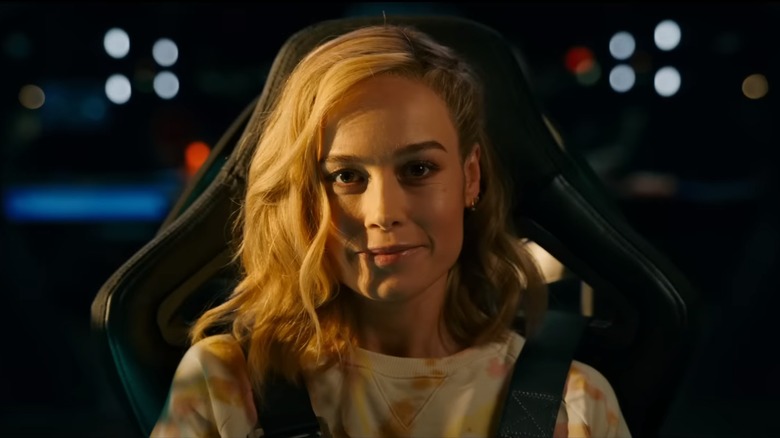
The very last time we saw Larson suited up as Captain Marvel, she'd just teleported into Kamala's room in the post-credits scene of the "Ms. Marvel" finale with absolutely no idea how she ended up there. As it turns out, the weird space energy that Monica can't help but interact with appears to be responsible for the "entanglement" between the three heroes, activating whenever one uses their powers and essentially causing any one of them to swap places with the other at any given moment. Call it the ol' switcheroo, superhero-style.

Obviously, this rather hilarious plot development (Carol's increasingly frustrated reaction to appearing in Kamala's house turns into something of a running gag in this teaser) also has some serious consequences, as Monica realizes that Kamala has been transported halfway across the galaxy to wherever Carol had just been, facing off against some bad guys in an unknown locale. But for the present, it's just plain funny to see Larson ham it up with as much incredulity as she can muster as she looks around the room of her ultimate, Number One fangirl.

House Crashers

Based on the (potentially misleading) series of events laid out in the teaser, it seems as if Monica's bizarre encounter in space leads her and Nick Fury to the very steps of Kamala's New Jersey home, which we saw in "Ms. Marvel." When they appear on her doorstep, we're reintroduced to her charismatic supporting characters: her father Yusuf (Mohan Kapur), her mother Muneeba (Zenobia Shroff), and brother Aamir (Saagar Shaikh). In short, it's pretty refreshing to see that many brown people all at once in an MCU movie, even if it's not likely that any of them beyond Kamala get much screen time.

In any event, it appears that Fury and Rambeau are interrupting the Khans in the middle of the family trying to figure out exactly what's going on. There's an unconscious henchmen tied up in their living room, Kamala is in her spiffy new superhero suit, and we see a bunch of debris as they all sit in a circle and attempt to make sense of their predicament. Monica exposits (which is hopefully not what she does for the entire movie) that their powers are somehow "entangled" and, as Kamala unhelpfully demonstrates, it's somehow exacerbated whenever they use their abilities. Cue Kamala's typical nervous excitement to prove herself to others, Carol appearing out of nowhere to smash the Khans' dinner table, and Kamala finding herself in a serious jam.

Goose!

There are a few certainties in life: Death, taxes, and the fact that Goose the cat is not, in actuality, a cat. The scene-stealing extraterrestrial from "Captain Marvel" returns to save the day and simultaneously freak Kamala out, breezily dispatching some bad guys that Carol had just been fighting a second before their latest inconvenient body-swap. Of course, our young hero likely wasn't prepared for the tentacle-spewing little feline to do what it did and Vellani gets to wild out with one of the funniest reactions in the entire trailer. For those who haven't watched "Ms. Marvel," well, it's clear that fans are going to have a tough time keeping up with all the developments in this movie. But, most importantly, this platform ought to give Vellani a chance to prove what the rest of us already knew: that she's a star in the making with tons of personality, talent, and charisma to spare.

Culture Shock

Are ... are musical numbers about to become a Marvel Cinematic Universe trope? We saw Kumail Nanjiani throw himself into a Bollywood dance sequence in "Eternals" as the character Kingo, and now it looks like the heroes of "The Marvels" showed up for a galactic superhero movie and instead found themselves in a musical. The surrounding architecture sure looks similar to the establishing shot of a downright extravagant-looking city seen earlier in the footage, located on a tropical beach and filled with high-tech buildings that look like something straight out of DC's Themyscira.

It's likely this is some as-of-yet unknown alien world that the Marvels have to travel to at some point in the film, but I'm mostly singling this out for the amusing shot of Brie Larson's Carol peeking out from behind the colorful outfits of that region. The visual can't help but bring to mind the awfully tone-deaf "Basmati Blues," another Larson-starring movie from 2017 that everyone involved would likely want you to forget about, where Larson travels to India as a fish out of water and promptly tries to save the day. In any case, I'm pretty curious how this sequence will unfold under the eye of "Candyman" director Nia DiCosta.

A Team-Up For The Ages

The teaser footage flies higher, further, and faster as we're subjected to a burst of blink-and-miss-it imagery, from Kamala putting the moves on some unfortunate bad guys in the S.A.B.E.R. space station to Monica saving Kamala in mid-air free-fall to a bunch of cats (or other Goose-like aliens) running down some stairs to literal one-second shots of Park Seo-Joon as the enigmatic Prince Yan and Zawe Ashton as what could very well be the villainous General Dar-Benn. The brief glimpse of Ashton says a lot, as she's holding a hammer that appears suspiciously similar to Ronan the Accuser's (Lee Pace) and flanked by soldiers who sure seem to be Kree. The trailer is surprisingly light on any clear shots of definitive villains, either Kree or Skrull or otherwise, but that's to be expected from an early marketing push that's mostly meant to get this movie on the average person's radar.

It all builds towards a show-stopping fight sequence between the three Marvels. Edited to look like they're fighting each other in earnest, we get one last gag as Monica, Carol, and Kamala stand around each other in a spaceship. "We're a team?" Kamala dreamily asks to the dismay of the other two. Getting immediately shut down has zero effect on her, however, as the footage ends on the high note that, once again, Vellani deserves to be a total star.

"The Marvels" will fly into theaters in November 10, 2023.

Read this next: 11 Marvel Comics Villains We Really Want To See In The MCU

The post The Marvels Trailer Breakdown: When Superhero Movies Go Full Body-Swap appeared first on /Film.

11 Apr 18:44

SAKRA Review: Takes a Licking, Keeps on Kicking

Donnie Yen stars in and directs a sprawling story of revenge and justice.

[Read the whole post on screenanarchy.com...]

11 Apr 18:43

The Succession Writers Room Had A Secret Code For That Huge Plot Twist

by Andrew Housman

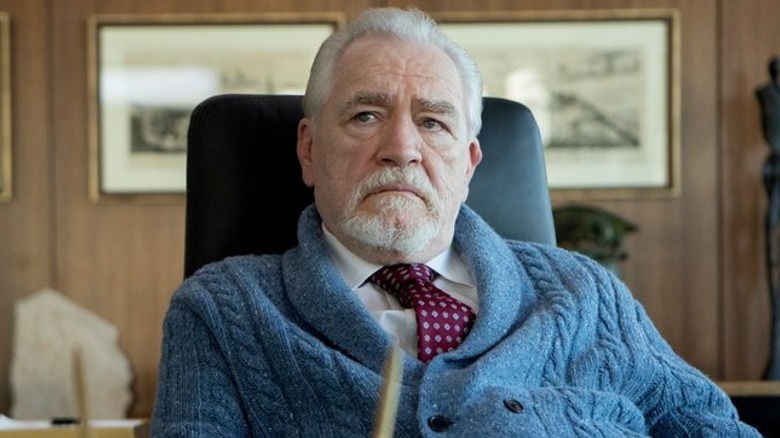
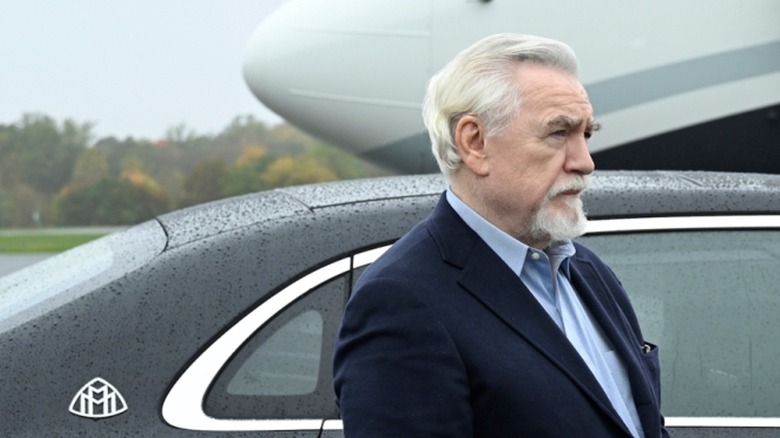
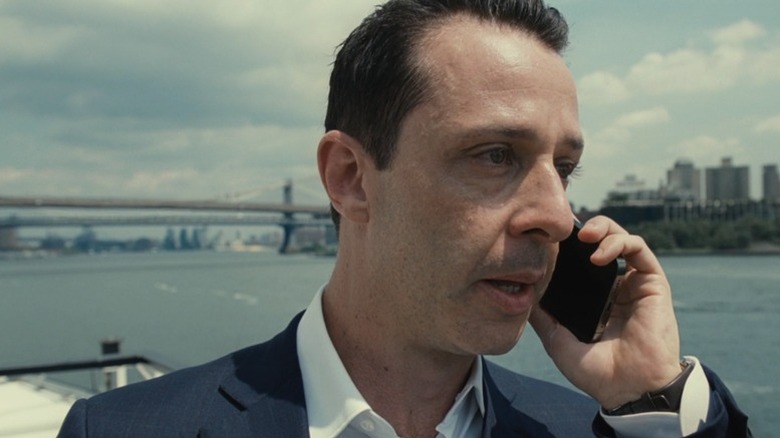
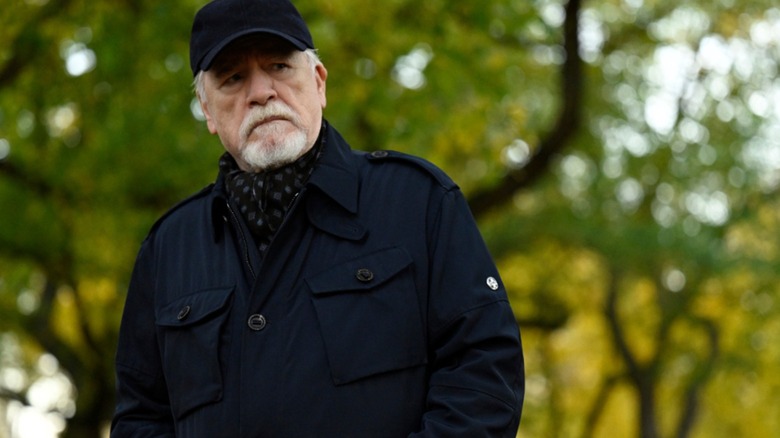
The latest episode of "Succession" dropped what was possibly the biggest bombshell on the show so far, maybe one of the biggest in all of television. Patriarch Logan Roy has died, while the future of his company and his children are left up to fate. It was an unceremonious passing that happened without warning, taking both the characters and the audience by surprise. Logan began the series in the hospital, but he recovered a while ago and there was little, if anything, to suggest that he might pass. In order to preserve the absolute shock of the event, the writers' room had to mask the news of Logan's death with a "Curb Your Enthusiasm" reference.

Showrunner Jesse Armstrong had to plan out all the different ways the news could leak. In a move that resembles a PR strategy devised by Waystar Royco and Logan himself, actor Brian Cox showed up for a church funeral scene to make it seem as if his character was still alive. Cox presumed that a shoot staged like a funeral service would attract attention and stated that paparazzi bombarded him upon exiting the car, proving that his instincts were correct. The writers' room may not have been as public, but it was still important to keep the news from dropping from close within the HBO offices.

Codename: Larry David

According to Georgia Pritchett, one of the series' writers, she and all of her cohorts were informed of Logan's death in January 2022 so they could properly map out the entire series (Remember, there are still seven episodes left in the show!). Tasked with guarding this highly sensitive information, Pritchett tweeted that the writers adapted the codeword "Larry David" when discussing the episode. Thus, the whiteboard in the writers' room listed episode 403 as "Connor's Wedding, Larry David." "Mind you, that would also have been a great episode," Pritchett added.

It's important for writers to keep track of all the major events happening throughout the course of the series so they can keep their plans and ideas organized. That can create a problem when a particular episode calls for a major plot twist or reveal, and "Connor's Wedding" ranks among the most unexpected but game-changing moments of them all. Using Codename: Larry David was just innocuous enough to write off as an inside joke. Little did everyone know the insider information the term truly carried. Pritchett was right about the golden potential for Larry David at Logan's funeral, though. The man sure knows how to ruin a mourning.

Read this next: 10 Worst Things The Roys Have Done In Succession

The post The Succession Writers Room Had A Secret Code For That Huge Plot Twist appeared first on /Film.

11 Apr 18:42

Windows 11 update adds Local Administrator Password Solution and design tweaks

by João Carrasqueira

It's that time of the month again when Microsoft rolls out new cumulative updates for all supported versions of Windows, which now includes just Windows 11 and Windows 10. While all versions of Windows 11 are supported, Windows 10 users are only supported on specific versions, depending on the edition they're running. The more interesting updates are also exclusive to Windows 11, since that's the more active platform.

11 Apr 17:38

Reddit Moderators Brace for a ChatGPT Spam Apocalypse

by msmash
Reddit moderators say they already see an increase in spam and that the future will "require a lot of human labor." From a report: In December last year, the moderators of the popular r/AskHistorians Reddit forum noticed posts popping up that appeared to carry the hallmarks of AI-generated text. "They were pretty easy to spot," said Sarah Gilbert, one of the forum's moderators and a postdoctoral associate at Cornell University. "They're not in-depth, they're not comprehensive, and they often contain false information." The team quickly realized their little corner of the internet had become a target for ChatGPT-created content. When ChatGPT launched last year, it set off a seemingly never-ending carousel of hype. According to evangelists, the tech behind ChatGPT may eradicate hundreds of millions of jobs, exhibit "sparks" of singularity-esque artificial general intelligence, and quite possibly destroy the world, but in a way that means you must buy it right now. The less glamorous impacts, like unleashing a tidal wave of AI-produced effluvium on the internet, haven't garnered the same attention so far. The two-million-strong AskHistorians forum allows non-expert Redditors to submit questions about history topics, and receive in-depth answers from historians. Recent popular posts have probed the hive mind on whether the stress of being "on time" is a modern concept; what a medieval scribe would've done if the monastery cat left an inky paw print on their vellum; and how Genghis Khan got fiber in his diet. Shortly after ChatGPT launched, the forum was experiencing five to 10 ChatGPT posts per day, says Gilbert, which soon ramped up as more people found out about the tool. The frequency has tapered off now, which the team believes may be a consequence of how rigorously they've dealt with AI-produced content: even if the posts aren't being deleted for being written by ChatGPT, they tend to violate the sub's standards for quality.

Read more of this story at Slashdot.

11 Apr 09:54

NASA Reveals What Made an Entire Starlink Satellite Fleet Go Down

by BeauHD
schwit1 shares a report from Inverse: On March 23, sky observers marveled at a gorgeous display of northern and southern lights. It was a reminder that when our Sun gets active, it can spark a phenomenon called "space weather." Aurorae are among the most benign effects of this phenomenon. At the other end of the space weather spectrum are solar storms that can knock out satellites. The folks at Starlink found that out the hard way in February 2022. On January 29 that year, the Sun belched out a class M 1.1 flare and related coronal mass ejection. Material from the Sun traveled out on the solar wind and arrived at Earth a few days later. On February 3, Starlink launched a group of 49 satellites to an altitude only 130 miles above Earth's surface. They didn't last long, and now solar physicists know why. A group of researchers from NASA Goddard Space Flight Center and the Catholic University of America took a closer look at the specifics of that storm. Their analysis identified a mass of plasma that impacted our planet's magnetosphere. The actual event was a halo coronal mass ejection from an active region in the northeast quadrant of the Sun. The material traveled out at around 690 kilometers per second as a shock-driving magnetic cloud. Think of it as a long ropy mass of material writhing its way through space. As it traveled, it expanded and at solar-facing satellites -- including STEREO-A, which took a direct hit from it -- made observations. Eventually, the cloud smacked into Earth's magnetosphere creating a geomagnetic storm. The atmosphere thickened enough that it affected the newly launched Starlink stations. They started to experience atmospheric drag, which caused them to deorbit and burn up on the way down. It was an expensive lesson in space weather and provided people on Earth with a great view of what happens when satellites fall back to Earth. It was also that could have been avoided if they'd delayed their launch to account for the ongoing threat.

Read more of this story at Slashdot.

10 Apr 22:58

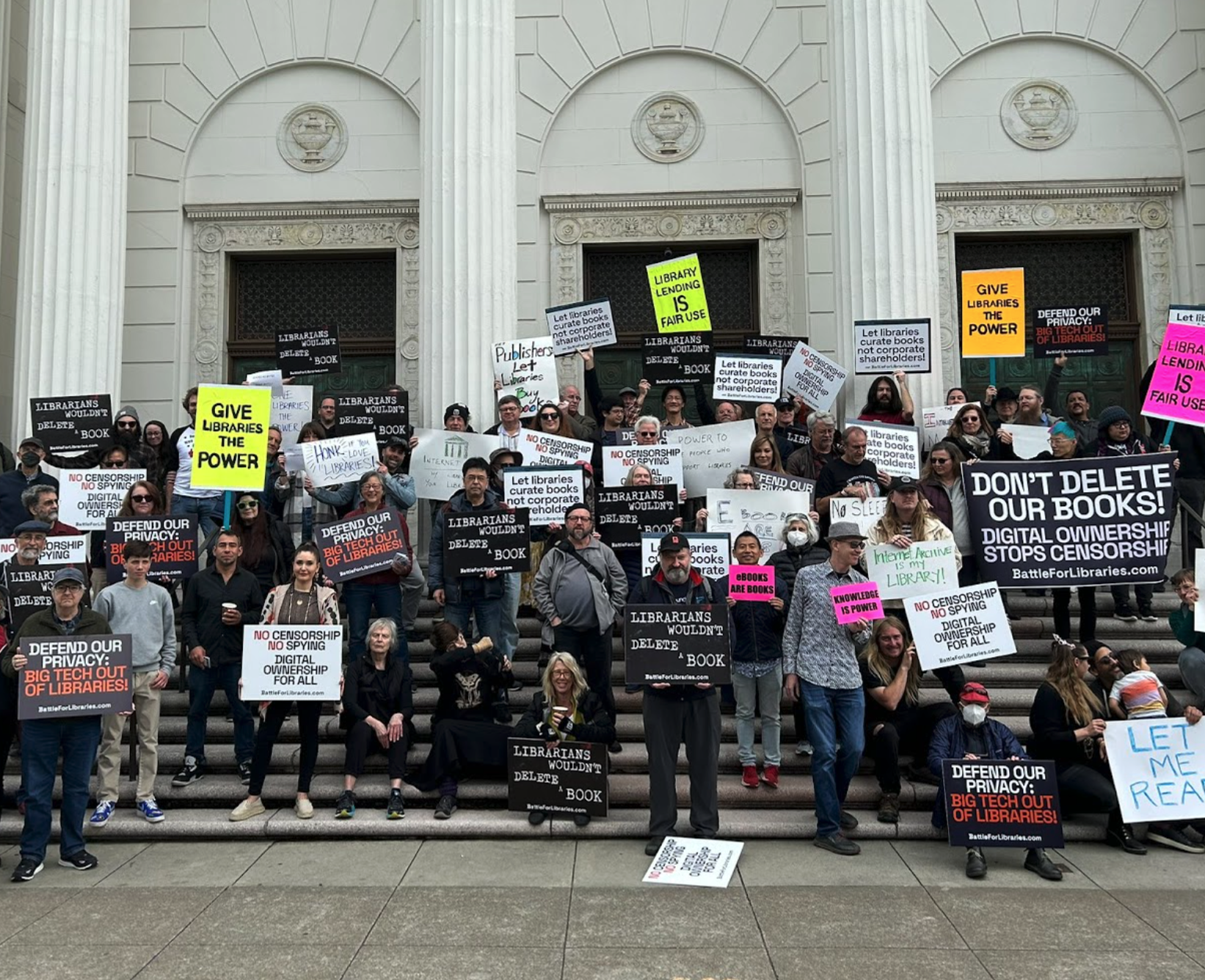
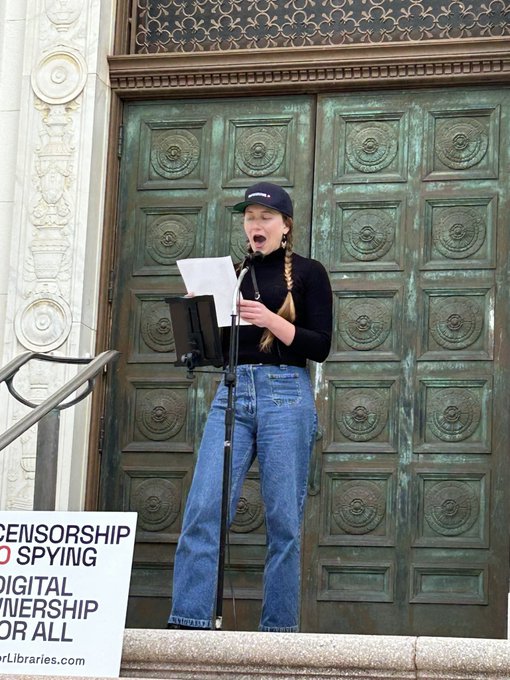
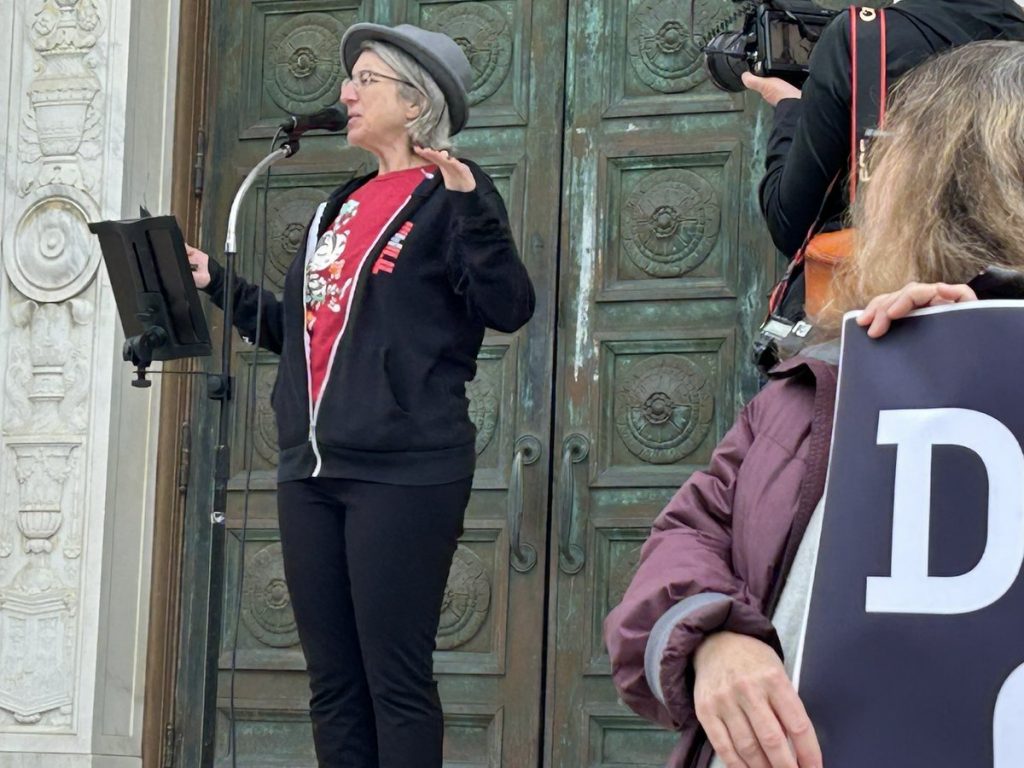
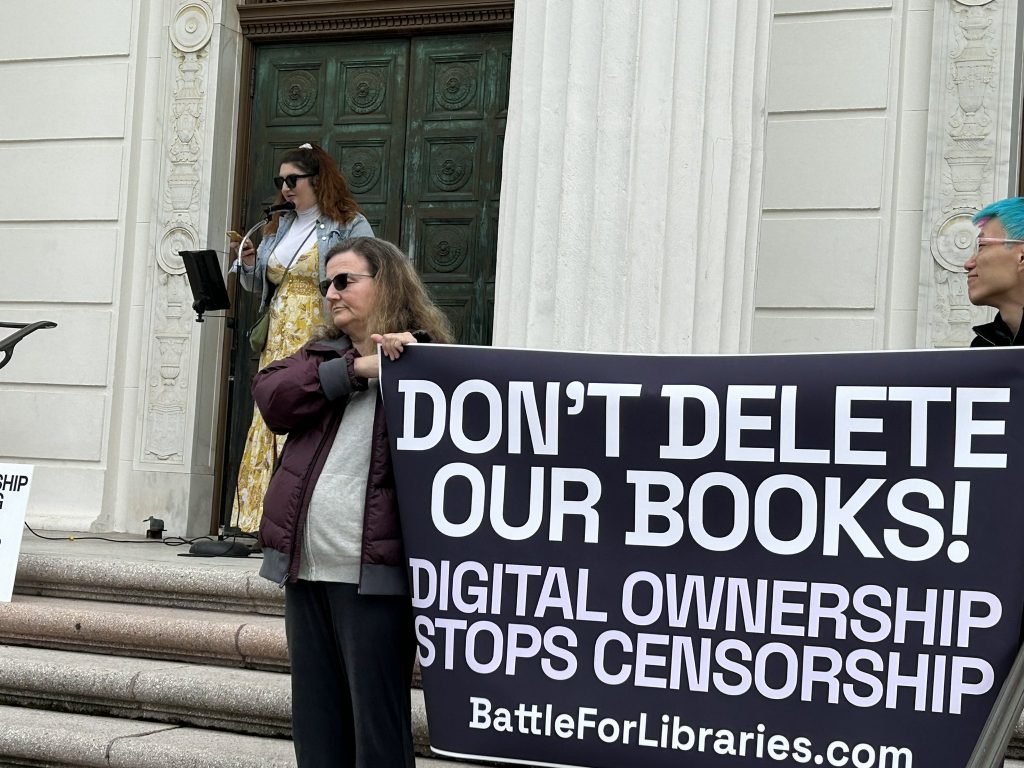
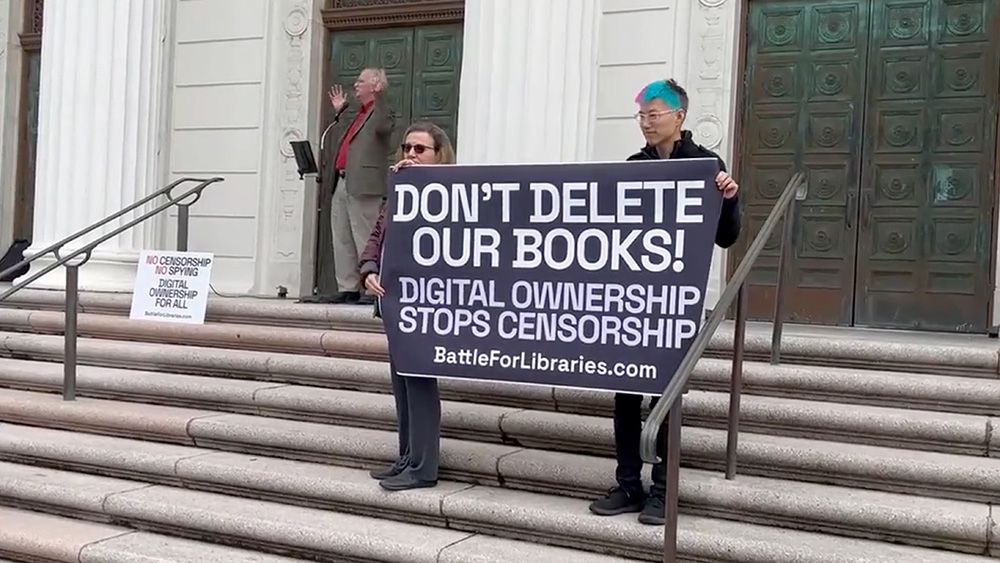
Supporters Rally For Library Digital Rights on the Steps of the Internet Archive

by chrisfreeland

More than one hundred supporters gathered on the steps of the Internet Archive last Saturday to rally support for our library in the face of a judgment that threatens the digital future of all libraries. 

Digital rights advocate Lia Holland of Fight for the Future read from the letter signed by Neil Gaiman, Naomi A. Klein, Chuck Wendig, Karen Joy Fowler, Cory Doctorow and more than 1,000 additional authors who are speaking out on behalf of libraries, demanding that publishers and trade associations put the digital rights of librarians, readers, and authors ahead of shareholder profits.

Cindy Cohn, the Executive Director of the Electronic Frontier Foundation (EFF), who are representing Internet Archive in our lawsuit, underscored the valuable role that libraries play in protecting reader privacy; values that are not shared by the corporations and platforms that have become intertwined around ebooks. “When libraries can’t own ebooks, how private will your reading be?” Cohn asked. “Everyone deserves the right to read without someone looking over their shoulder.”

The Internet Law & Policy Foundry’s Lili Siri Spira spoke from her perspective as a “Gen-Z-Millennial cusper growing up on the Internet” about the importance of access to quality information in the face of book bannings and attacks on libraries. “As a former open-source investigator, I know first-hand how important open and free access to knowledge is in order to address the world’s injustices…As a former misinfo analyst, I know what information is out there to replace these burned books and it’s not good,” she said.

Brewster Kahle, the founder and digital librarian of the Internet Archive, gave an impassioned plea about why the lawsuit against the Internet Archive is harmful to libraries and the entire publishing ecosystem. “[The lawsuit] doesn’t make any sense for authors, it doesn’t make any sense for readers, it doesn’t make any sense for libraries, and it doesn’t make any sense for publishers. The library system…has always bought lots of books. But now, [the publishers] are saying you cannot buy an ebook. This makes no sense!” 

The rally wrapped with cheers for continued action in support of libraries’ digital rights. As EFF’s Cindy Cohn shouted to roars from the crowd, “On to the court of appeals!”

The post Supporters Rally For Library Digital Rights on the Steps of the Internet Archive appeared first on Internet Archive Blogs.

10 Apr 18:58

If We Lose the Internet Archive, We're Screwed

by msmash
An anonymous reader shares a report: If you've ever researched anything online, you've probably used the Internet Archive (IA). The IA, founded in 1996 by librarian and engineer Brewster Kahle, describes itself as "a non-profit library of millions of free books, movies, software, music, websites, and more." Their annals include 37 million books, many of which are old tomes that aren't commercially available. It has classic films, plenty of podcasts and -- via its Wayback Machine -- just about every deleted webpage ever. Four corporate publishers have a big problem with this, so they've sued the Internet Archive. In Hachette v. Internet Archive, the Hachette Publishing Group, Penguin Random House, HarperCollins and Wiley have alleged that the IA is committing copyright infringement. Now a federal judge has ruled in the publishers' favor. The IA is appealing the decision. [...] Not only is this concern-trolling disingenuous, but the ruling itself, grounded in copyright, is a smack against fair use. It brings us one step closer to perpetual copyright -- the idea that individuals should own their work forever. The IA argued that their project was covered by fair use, as the Emergency Library provides texts for educational and scholarly purposes. Even writers objected to the court's ruling. More than 300 writers signed a petition against the lawsuit, including Neil Gaiman, Naomi Klein and -- get this -- Chuck Wendig. Writers lost nothing from the Emergency Library and gained everything from it. For my part, I've acquired research materials from the IA that I wouldn't have found anywhere else. The archive has scads of primary sources which otherwise might require researchers to fly across the country for access. The Internet Archive is good for literacy. It's good for the public. It's good for readers, writers and anyone who's invested in literary education. It does not harm authors, whose income is no more dented by it than any library programs. Even the Emergency Library's initial opponents have conceded this. The federal court's decision is a victory for corporations and a disaster for everyone else. If this decision isn't reversed, human beings will lose more knowledge than the Library of Alexandra ever contained. If IA's appeal fails, it will be a tragedy of historical proportions.

Read more of this story at Slashdot.

10 Apr 18:38

Cyberpunk 2077 RT: Overdrive Mode Is the Real Deal, Says Digital Foundry Test

by Alessio Palumbo

Cyberpunk 2077 RT: Overdrive Mode

The long awaited Cyberpunk 2077 RT: Overdrive Mode, originally announced by NVIDIA and CD Projekt RED for the debut of the GeForce RTX 4000 Series GPUs a few months ago, is just a few hours away.

Tomorrow, the Polish studio is set to release Cyberpunk 2077 update 1.62, which will include the path traced mode developed for high-end PCs as a technology preview. The folks at Digital Foundry were the only ones able to check it out before the April 11th launch date, and their hands-on test is glowing, to say the least.

To begin with, DF's Alexander Battaglia showcased the enormous difference between the rasterized version of the game with the new Cyberpunk 2077 RT: Overdrive Mode. That was hardly surprising, though, as even the rather extensive ray tracing features included when the game launched in December 2020 delivered a significant visual upgrade over the regular rasterization method. In fact, Cyberpunk 2077 already had more ray traced effects than almost any other game:

  • Shadows
  • Local shadows
  • Reflections
  • Diffused illumination
  • Ambient occlusion
  • Single pass global illumination

When we last saw Cyberpunk 2077 RT: Overdrive Mode in action, as part of a behind-the-scenes video with CD Projekt RED programmers and graphics engineers, the path tracing glimpses weren't all that much more impressive than the previous 'Psycho' ray tracing setting available in the game.

Luckily, the new footage shared as part of Digital Foundry's test clearly shows improvements that, in Battaglia's words, are quite large. One example mentioned in the video is local lighting, which was all done in rasterization with the exception of neon lights. As such, many lights in the scenes didn't cast any shadow at all, whereas here, per-pixel soft shadows are realistically borne out of any lights you'll see in the game (and there are a lot in Night City). Furthermore, the multi-bounce local lighting also affects the color of the lights, which in turn bounces off environments. If your car light is pointed at a red container, it'll naturally extend a red glow to nearby surfaces.

Likewise, indirect lighting was mostly handled with the traditional IBL (image-based lighting) probes, leading to wildly incorrect lights when compared to the new path traced Cyberpunk 2077 RT: Overdrive Mode.

The overall look of the game is much more consistent, according to the report, though it comes with a significant performance cost. While the test didn't go too in-depth on this front, it did highlight a particular scene where Overdrive was running at 18 FPS versus 40 FPS with Psycho RT (and DLAA) and 48 FPS with rasterized graphics.

The solution is, of course, activating NVIDIA's Deep Learning Super Sampling upscaler, both 2 (Super Resolution) and 3 (Frame Generation). DLSS Super Resolution performance mode more than triples that 18 FPS to 59 FPS, while activating Frame Generation nearly doubles the frame rate again to 95 FPS on an RTX 4090 GPU, providing a very smooth gameplay experience with incredible visuals, according to Digital Foundry.

I'm very eager to check out Cyberpunk 2077 RT: Overdrive mode myself. Stay tuned for our hands-on!

Written by Alessio Palumbo

10 Apr 17:14

Ethereum’s Shanghai Update Opens a Rift in Crypto

by Joel Khalili
Ether is finally untethering itself from mining—and driving renewed debate about bitcoin’s environmental impact.
10 Apr 17:13

Top 10 Cybersecurity Trends for 2023: From Zero Trust to Cyber Insurance

by info@thehackernews.com (The Hacker News)
As technology advances, cyberattacks are becoming more sophisticated. With the increasing use of technology in our daily lives, cybercrime is on the rise, as evidenced by the fact that cyberattacks caused 92% of all data breaches in the first quarter of 2022. Staying current with cybersecurity trends and laws is crucial to combat these threats, which can significantly impact business development
10 Apr 17:12

The Weekly Watchlist: Seven Kings Must Die And Titans Season 4 Bring The Action (April 10, 2023)

by Danielle Ryan

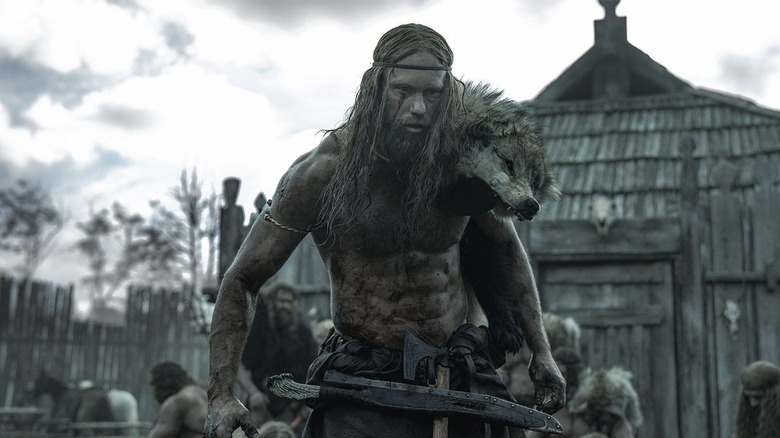
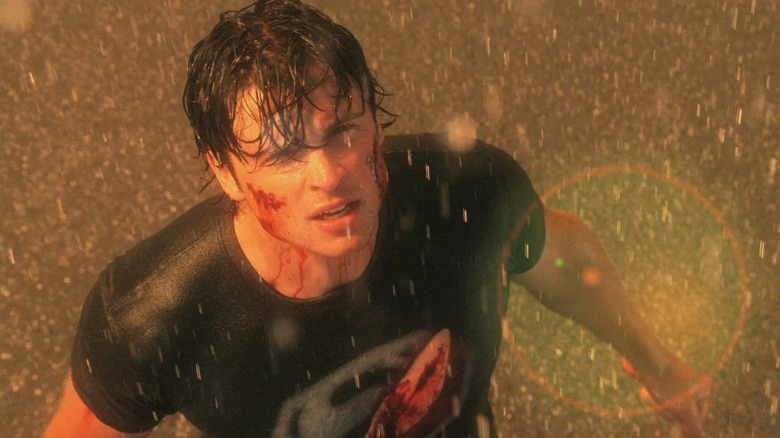
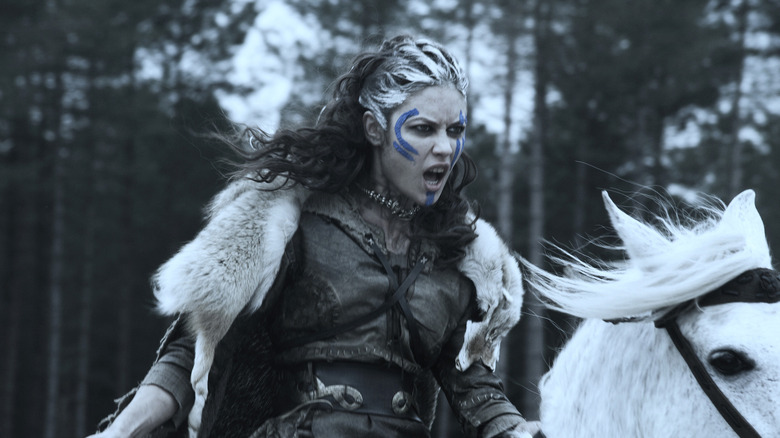
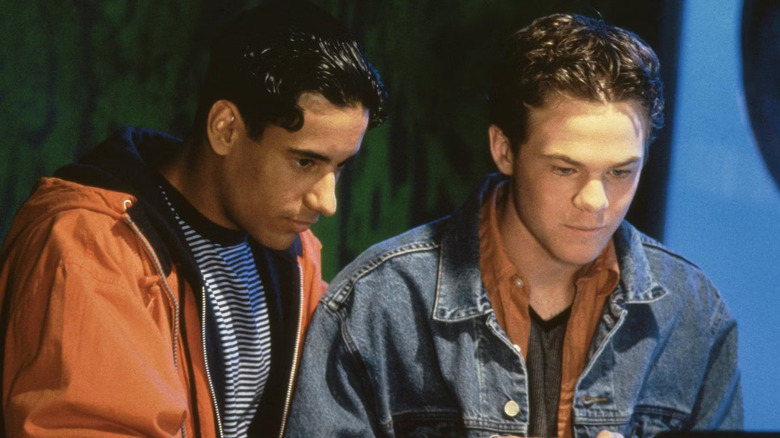
There's lots of great stuff hitting streaming this week, but the debut of the Netflix film "Seven Kings Must Die" and the return of HBO Max's fourth season of "Titans" are two guaranteed to deliver high-intensity action. Fans looking to pair brutal historical epics with their watch of "Seven Kings Must Die" need to look no further than Robert Egger's Shakespearean Viking epic "The Northman" on Prime Video or Neil Marshall's Romans-vs-Picts action-adventure film "The Centurion," available on more than half a dozen streaming services. For those looking for something less bloody and closer tied to "Titans," there's always the Superman origin story series "Smallville," streaming on Hulu, or if you want to get really vintage, there's the young adult shapeshifting series "Animorphs," streaming on Prime Video. There's no shortage of action and adventure available on streaming this week, so let's get to it. 

Seven Kings Must Die Brings The Last Kingdom To A Close

Where to watch "Seven Kings Must Die": Netflix

When "Seven Kings Must Die" releases: April 14, 2023

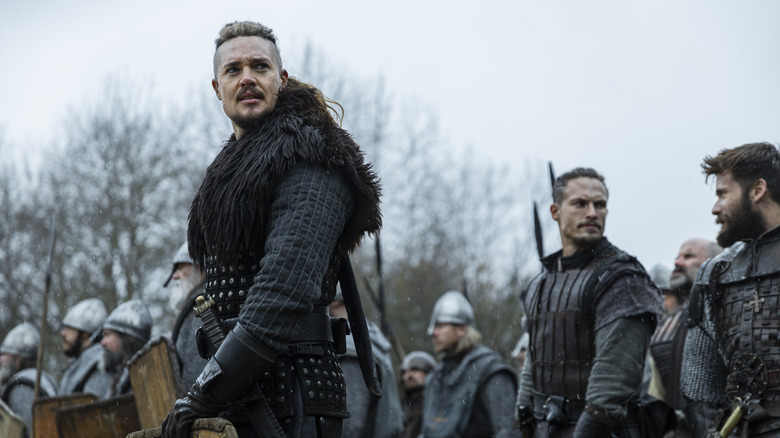
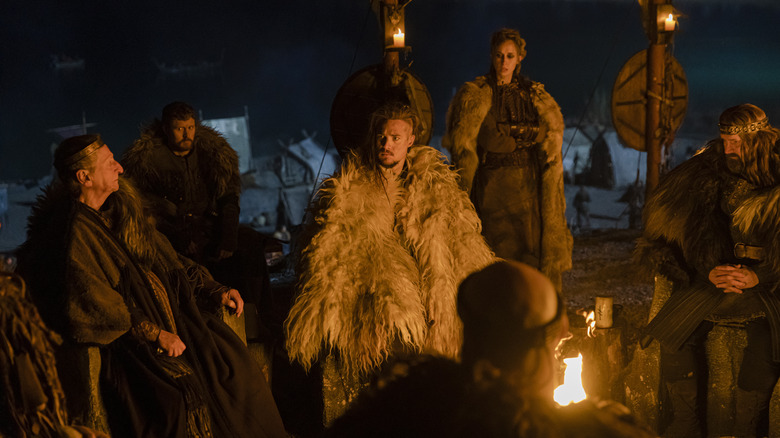
Fans of the Netflix and BBC Two series "The Last Kingdom" were disappointed to hear that the series would be ending, but at least there's a movie headed our way to wrap things up. "The Last Kingdom: Seven Kings Must Die" is the feature film sequel to "The Last Kingdom," directed by Ed Bazalgette, who directed six episodes of the series. The film will take place after the events of season 5 when King Edward's heirs, Æthelstan and Ælfweard, begin vying for the throne and send all of the kingdoms into chaos. Series hero Uhtred of Bebbanburg (Alexander Dreymon) is back, of course, to try and help put an end to the constant war and in-fighting between the kingdoms and create a united England. 

"The Last Kingdom" was a gorgeous but frequently brutal historical action-drama series based on "The Saxon Stories" novels by British author Bernard Cromwell, condensing the 13 books into five seasons of television. There were some major changes from the books to the TV series, especially in later seasons, so even fans of the book series probably don't know everything that could happen in "Seven Kings Must Die." History tells us that England eventually gets united, of course, but it will be interesting to see how Uhtred and his best mate Finan (Mark Rowley) manage to deal with both the troubled succession and a new invasion by a Danish warrior-king. It's sure to be bloody, but also bloody entertaining.

Titans Season 4 Returns For More Adolescent Superhero Action

Where to watch "Titans": HBO Max

When "Titans" season 4 part 2 releases: April 13, 2023

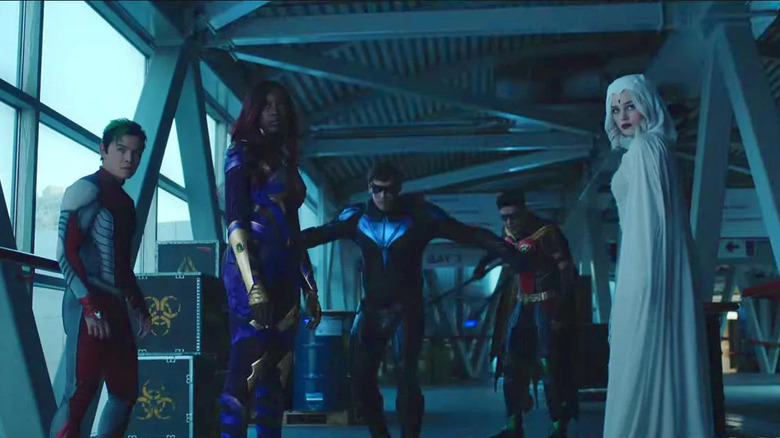
On the other end of the action-adventure series spectrum is "Titans," based on the "Teen Titans" comics from DC Comics, bringing the teenage heroes to live action with a bit of edge. The first half of the fourth season was the best the series has been so far, establishing a tone that really works by balancing a bit of humor with some darker, spookier material. There's some of the traditional "Teen Titans" stuff in there, of course, like dealing with the evils of Lex Luthor, but there are also some truly wacky moments, like Bruce Wayne (Iain Glen) doing a dance that originated on the 1960s Adam West "Batman" series, the gang fighting a team of ninjas, and demonic enemies with some seriously scary supernatural abilities. It's been a little scattered so far, but things were coming together in the first half of season 4, and hopefully, that means the second half will be even better. 

The Northman Is A Brutal And Beautiful Historical Epic

The movie: "The Northman"

Where you can stream it: Netflix

After terrifying audiences with his slow-burn Puritan horror nightmare "The Witch" and re-creating the tale of Proteus and Prometheus through a pair of wickies in "The Lighthouse," director Robert Eggers delivered his ferocious take on Shakespeare's "Hamlet" with "The Northman." Alexander Skarsgård plays Amleth, an exiled Viking prince who returns to take the kingdom that is rightfully his (if that sounds like "The Lion King," that's because it's based on "Hamlet," too!). Eggers doesn't have his Vikings speaking in verse, however, instead opting for a version of the tale where action tells the story much more than words. It's a beautiful and truly brutal historical epic, much like "The Last Kingdom" and "Seven Kings Must Die," and features similar themes around succession, feudalism, and warrior kings. (You can read our review here!) They're also set in close to the same time period, as both take place within the same stretch of about 100 years. 

"The Northman" is both dreamlike and a nightmare, as Amleth takes psychedelics in order to enter a trance-like berserker state and the visuals go totally wild. If you want to see an old story told in a bold new way, check out "The Northman." 

Smallville Paved The Way For Teen Superhero TV

The series: Smallville

Where you can stream it: Hulu

Once upon a time, live-action superhero shows were few and far between. There had been a few attempts at bringing the story of Superman to television, but the first to feature a young Clark Kent as he first realizes his Superman identity was "Smallville," which premiered in 2001 on The WB (which later became The CW). The series starred Tom Welling as Clark, who befriended Lex Luthor (Michael Rosenbaum) before the two grew apart and eventually became mortal enemies. It's a fun series about teens and young adults that manages to be fun enough to hook older audiences, too, even if they're not big Superman fans.

"Smallville" helped usher in the earliest parts of the superhero boom of the 2000s, kicking off the beginning of what would eventually become The CW's massive Arrowverse. It was a game-changer that featured some inventive ways of bringing comic book storylines to the small screen and had some great performances, especially from Rosenbaum as the best live-action Luthor to date. There's a direct line from "Smallville" to "Titans," so if you haven't checked it out, now is the time.

Centurion Shows British History Before The Last Kingdom

The movie: "Centurion"

Where you can watch it: Prime Video, Peacock, Roku, Tubi, and Vudu

"Centurion" is another violent historical epic set on the island of Great Britain, though it takes place about a thousand years earlier than either "The Northman" or "Seven Kings Must Die." The film follows a Roman officer named Quintus Dias (Michael Fassbender), who is captured by a clan of Pict warriors. He's rescued by a legion of Roman centurions who are looking to kill the Pictish leader, and he joins them. They end up far behind enemy lines when the majority of them are slaughtered, and they must survive both the fierce wilderness and the furious Picts. It's a grueling story that has moments of real beauty, especially with a subplot that involves a healer woman (Imogen Poots) who nurses Dias back to health. 

There aren't a ton of movies about the Picts, but they were just as fierce and fascinating as the Vikings, and "Centurion" shows them as complex and courageous warriors. It's not the most historically accurate thing, but it's nice to look at, and Liam Cunningham (the Onion Knight from "Game of Thrones") gets to play a grumpy officer, which is automatically a bonus.

Animorphs Was Willing To Get Weird

The series: "Animorphs"

Where you can stream it: Prime Video

Hear me out on this one: "Titans" is a series about a group of young people with extraordinary powers fighting forces beyond our comprehension. "Animorphs" is a series about a group of young people with extraordinary powers fighting forces beyond our comprehension. It's just a lot older, cheesier, and somehow even weirder. Based on the novel series by K.A. Applegate, "Animorphs" aired on Nickelodeon and followed five teenagers who found a crashed alien spaceship and were given the ability to shapeshift into any animal they had physically touched. It turns out there's a full-scale alien invasion on Earth with slug-like aliens called the Yeerk that crawl into people's brains and drive them, creating a real "Invasion of the Body Snatchers"-style problem for the teens. 

What makes "Animorphs" so fascinating is that it is incredibly dark and adult given its target audience, and the series executives were willing to get as weird as the source material, with several species of goofy-looking CGI-aliens, some absolutely horrifying transformation sequences, and the inherent weirdness of being a teenager in charge of saving the world and being able to turn into a Golden Retriever. "Animorphs" was honestly way ahead of its time, and helped create an entire generation of kids who would go on to love seriously strange science fiction. 

Read this next: 14 Underrated Fantasy Shows That Deserve Your Attention

The post The Weekly Watchlist: Seven Kings Must Die and Titans Season 4 Bring the Action (April 10, 2023) appeared first on /Film.

10 Apr 17:11

Review: The Super Mario Bros. Movie

by CJ Andriessen

The Super Mario Bros movie review

Strap your tool belt on, kid. We’re going in.

If there was ever a time for Nintendo to expand beyond games and enter the film industry, it’s right now. With the smashing success of the Nintendo Switch and a continuous stream of titles that easily eclipse the ten million mark in sales, this is arguably the most popular the company has been in its 100+ year history.

And that popularity can only grow as the millennials who have been with the brand since the early days of little gray boxes are starting to have families of their own, introducing their kids to the plumbers, the princesses, and the piranha plants that have defined their lives. This is a prime time for Nintendo to get out there with a product that’ll appeal to the original generation of Nintendo fans and those who will carry the torch in the future, and releasing a bright and beautiful animated film is a perfect way to do that.

I just wish it would have picked a better company than Illumination to do it with.

[caption id="attachment_372968" align="alignnone" width="640"]Bowser and Luigi Screenshot via Illumination[/caption]

The Super Mario Bros. Movie
Directed by Aaron Horvath and Michael Jelenic
Written by Matthew Fogel
Produced by Universal Pictures, Illumination, Nintendo
Released: April 5, 2023

For all the bluster and brouhaha that we had to endure in the months following the revelation that Chris Pratt would voice Mario, that should have been what people focused on. Despite its astounding success at the box office, Illumination doesn’t really make good films. Its first picture, Despicable Me, is the only movie from the company with a Rotten Tomatoes score over 80% and a Metacritic score over 70. I know The Super Mario Bros. Movie has sparked yet another tired debate about whether or not reviewers matter anymore, but let’s not pretend this company isn’t out there just coasting on the popularity of its Minions. Illumination isn’t a studio that’s going to take chances or attempt to subvert expectations. It has a dog-eared playbook it sticks to with every one of its films, The Super Mario Bros. Movie included.

That doesn't mean there's no love for the property here. The animation team did an incredible job in bringing every inch of the Mushroom Kingdom and beyond to the big screen. The art direction may be overly clean and without a unique personality, but it looks good enough. And great attention was paid to implementing many different elements from the games into the world, telling the audience the filmmakers have more than just cursory knowledge and appreciation of the series they're adapting.

The same can be said of the film's music. Composer Brian Tyler did a fantastic job seamlessly incorporating so many Koji Kondo works into his original score. It’s arguably the best part of the film, which is why it’s so disappointing several sequences were injected with predictable pop songs rather than letting Tyler work his magic. And when I say predictable pop songs, I mean predictable. Nobody should be using “Holding Out for a Hero” after Jennifer Saunders's mic drop in Shrek 2, “Battle Without Honor or Humanity” has been done to death, and going with a-ha's “Take On Me” for a brief karting sequence was enough to pull me right out of the film. Surprisingly, it was the voice acting that was able to pull me back in.

https://www.youtube.com/watch?v=RjNcTBXTk4I

It's clear Jack Black is reveling in his role as Bowser, but he's not the only one going all out with his performance. Keegan-Michael Key, who plays the central Toad of the film, is outstanding, as are Kevin Michael Richardson (Kamek) and Fred Armisen (Cranky Kong), who seems to be channeling about six of his different SNL characters for the role. Despite the endless arguments and social media posts, Chris Pratt (Mario) is okay with a Brooklyn-adjacent accent layered on top of his regular voice. Charlie Day (Luigi) takes the same approach, and the two do come off sounding like brothers. At the opposite end of the spectrum, Anna-Taylor Joy (Princess Peach) sounds like Anna-Taylor Joy, while Seth Rogen (Donkey Kong) decided to attempt a cocky teenage version of himself, complete with "the Seth Rogen laugh."

The voice acting gets the job done, even if the story they're telling doesn't. The Super Mario Bros. Movie is hurriedly paced following its opening sequence in Brooklyn, allowing no time for original ideas or character development. Mario comes into this movie fully formed, already a tenacious go-getter who can handle himself well on a platform stage. Princess Peach also doesn't stray far from when we first meet her. If I were being generous with the term, I'd argue the only character here that does exhibit some growth is Luigi. But because he's sidelined for most of the film, his big moment doesn't have the impact it should.

It's surprising how many moments of this movie did not land with the audience at my screening. While a few points elicited laughter from the entire crowd, this reviewer included, many of its more obvious jokes failed to generate any reaction at all. Nearly all of its action sequences fell similarly flat. The only thing in this film that received any type of sustained response was the Mario Kart sequence. Once the first kart popped up on the screen, every kid around me started chirping “Mario Kart 8” like they were the seagulls from Finding Nemo.

[caption id="attachment_372970" align="alignnone" width="640"]Mario and Donkey Kong Screenshot via Illumination[/caption]

Beyond that scene, I didn’t really get the sense any of the kids in the theater were engaging with the film. It could be that I couldn’t hear them over the child next to me who would NOT SHUT UP, or it could be they just weren’t connecting with a movie that seems to be trying to speedrun itself.

At just 92 minutes, The Super Mario Bros. Movie doesn’t have a lot of time to work with. And the filmmakers did themselves no favors by trying to pack in as much as they could into such a brief runtime. From Mario Kart to Smash Bros. to a Bowser ballad the filmmakers probably should have just let Jack Black write himself, there isn’t one moment of respite throughout this film. Even when characters find themselves in peril, it’s resolved so quickly I wonder why that sequence was included at all, outside of using it as an opportunity to pop in a few more references from the games.

To be clear, I'm not anti-reference. I don’t necessarily have an issue with the filmmakers including details that connect this movie to the games. In fact, I enjoyed quite a few of them, particularly how they weren’t afraid of using elements from the more recent titles in the series (Cat Suit, Ice Flower) rather than just sticking to the classics. However, many of the references here are so inconsequential that they were clearly included, Chekov’s gun be damned, with the expectation they'll find their way into 50 different YouTube videos about “Things You Missed in The Super Mario Bros. Movie.” The backgrounds of the early scenes in Brooklyn are littered with early Nintendo references, the type designed to turn the adults in the audience into the Pointing Rick Dalton meme.

[caption id="attachment_372971" align="alignnone" width="640"]The Super Mario Bros movie review Screenshot via Illumination[/caption]

Again, the references here would be fine if they were in a movie attempting to tell an interesting story. But Illumination films don't tell interesting stories. Maybe they will in the future with Mike White (School of Rock, The White Lotus) on tap to pen the next two films from the studio. For now, they're settling with an experience designed to shuffle audiences from set piece to set piece as quickly as possible, never once asking you to think about what it is you're seeing on the screen.

The end result is The Super Mario Bros. Movie is a rather torpid piece of entertainment. I’ve seen many people online trying to deflect criticism of this film by stating it’s a kid’s movie, but that’s a rather lousy line of defense. Just because something is made for kids doesn’t mean it has to be superficial. Children are far more capable and cognizant than adults are willing to give them credit for, and we should be offering them more than literal eye candy, something beautiful to look at that provides zero sustenance.

Or, just make a Mario Kart movie because that seemed to be the only thing the kids at my screening actually cared about.

The post Review: The Super Mario Bros. Movie appeared first on Destructoid.

10 Apr 17:08

Most Attack Paths Are Dead Ends, but 2% Lead to Critical Assets: Report

by Kevin Townsend

Security posture management firm XM Cyber took tens of thousands of attack path assessments involving more than 60 million exposures affecting 20 million entities during 2022.

The post Most Attack Paths Are Dead Ends, but 2% Lead to Critical Assets: Report appeared first on SecurityWeek.

10 Apr 17:06

FBI Warns Against Using Public Phone Charging Stations

by msmash
The FBI recently warned consumers against using free public charging stations, saying crooks have managed to hijack public chargers that can infect devices with malware, or software that can give hackers access to your phone, tablet or computer. From a report: "Avoid using free charging stations in airports, hotels or shopping centers," a tweet from the FBI's Denver field office said. "Bad actors have figured out ways to use public USB ports to introduce malware and monitoring software onto devices. Carry your own charger and USB cord and use an electrical outlet instead." The FBI offers similar guidance on its website to avoid public chargers.

Read more of this story at Slashdot.

10 Apr 10:56

Speedy Black Hole in Intergalactic Space Could be Creating a Trail of Stars

by EditorDavid
"There's an invisible monster on the loose," NASA wrote on Thursday, "barreling through intergalactic space so fast that if it were in our solar system, it could travel from Earth to the Moon in 14 minutes. " This supermassive black hole, weighing as much as 20 million Suns, has left behind a never-before-seen 200,000-light-year-long "contrail" of newborn stars, twice the diameter of our Milky Way galaxy... Rather than gobbling up stars ahead of it, like a cosmic Pac-Man, the speedy black hole is plowing into gas in front of it to trigger new star formation along a narrow corridor. The black hole is streaking too fast to take time for a snack. Nothing like it has ever been seen before, but it was captured accidentally by NASA's Hubble Space Telescope. "We think we're seeing a wake behind the black hole where the gas cools and is able to form stars. So, we're looking at star formation trailing the black hole," said Pieter van Dokkum of Yale University in New Haven, Connecticut... The trail must have lots of new stars, given that it is almost half as bright as the host galaxy it is linked to... Researchers believe gas is probably being shocked and heated from the motion of the black hole hitting the gas, or it could be radiation from an accretion disk around the black hole... Because it was so weird, van Dokkum and his team did follow-up spectroscopy with the W. M. Keck Observatories in Hawaii. He describes the star trail as "quite astonishing, very, very bright and very unusual." This led to the conclusion that he was looking at the aftermath of a black hole flying through a halo of gas surrounding the host galaxy. This intergalactic skyrocket is likely the result of multiple collisions of supermassive black holes. Astronomers suspect the first two galaxies merged perhaps 50 million years ago. That brought together two supermassive black holes at their centers. They whirled around each other as a binary black hole. Then another galaxy came along with its own supermassive black hole. This follows the old idiom: "two's company and three's a crowd." The three black holes mixing it up led to a chaotic and unstable configuration. One of the black holes robbed momentum from the other two black holes and got thrown out of the host galaxy.

Read more of this story at Slashdot.

10 Apr 10:56

Humphrey Bogart & Ingrid Bergman's Casablanca Chemistry Stopped When The Cameras Cut

by Eric Vespe

There are precious few cinematic romances that can hold a candle to Rick Blaine and Ilsa Lund in 1942's "Casablanca." It's a relationship that rekindles after heartbreak and is filled to the brim with complications far beyond the usual romantic drama scope. When Ilsa re-enters Rick's life, he's a bit bitter after being left flat with little more than a Dear John letter. He resents being hurt and has lived his life determined to wall off his emotions so that never happens again. 

To further complicate things, Ilsa happens to be traveling with her husband, a resistance leader named Victor Lazlo (Paul Henreid), who was believed to have been killed by the Nazis but is very much alive and still fighting the good fight. But Rick and Ilsa's love is deep and real and the two can't help but fall back to their old emotions around each other, even as the noose slowly tightens and they find themselves more and more likely never to make it out of "Casablanca" alive.

Humphrey Bogart and Ingrid Bergman were the personifications of lovestruck individuals, their characters madly and deeply intoxicated with each other and willing to do just about anything to keep that feeling going. The funny thing is, though, that Bogart and Bergman's chemistry only ever existed in front of the camera. The second "cut" was called, all pretense was dropped and none of their character's feelings ever infiltrated their real lives. Like, at all.

Of All The Gin Joints In All The Towns In All The World, She Walks Into Mine

Sure, they're actors pretending to be in love and that's kind of their job, but movie history is filled with co-stars legitimately falling in love. Paul Newman and Joanne Woodward, John Cassavetes and Gena Rowlands, Tom Hanks and Rita Wilson, and Ryan Reynolds and Blake Lively are all examples of how that on-screen chemistry can translate into real life.

According to Stefan Kanfer's 2010 book "Tough Without a Gun: Humphrey Bogart, Men In Movies, and Why It Matters," Bogart was going through a lot of private life drama during the making of "Casablanca," including a tumultuous relationship with his then-wife Mayo Methot, who, it should be noted, he met while they were making a movie together in 1938. Methot was drinking heavily at the time and would accuse Bogart of having an affair with Bergman, which didn't do much to help Bogart's feelings for his costar knowing that her mere presence in his work life was making his personal life a living hell.

Bogart was no angel, though. He'd go on to cheat on Methot with Lauren Bacall just a couple of years after "Casablanca" (another legendary Hollywood example of co-stars falling in love). Methot would later divorce Bogart in 1945 after being diagnosed with paranoid schizophrenia, and because, you know, Bogart actually was messing around on her. Tragically, her depression and alcoholism would spiral and she died in 1951 at the age of 47.

Ingrid Bergman might have had more to do with nothing happening between her and her leading man than Bogart, truth be told. She reportedly never found herself attracted to Bogart off-screen, having said "I kissed him, but I never knew him."

Here's Looking At You, Kid

She also had no spark with her onscreen husband, Paul Henreid, who played Victor Laszlo, the resistance hero and concentration camp escapee who was a vital figure in Europe's fight against the Nazis. That one is a little easier to believe from a cinephile perspective. They're both great actors perfectly cast in their roles, but I never bought them as being madly in love. Ilsa respects her husband, but the fire that the character has is for Rick, which is what makes that love triangle so intriguing. 

It should be noted that Bergman was also married (to Petter Lindstrom) when she made "Casablanca," so even if she did feel a spark with either of her on-screen romantic partners she likely wouldn't have acted on it.

Also, despite being thought of as one of the best movies of all time now, most involved with making "Casablanca" thought it was going to be a disaster. None of the actors liked the script and according to actress Geraldine Fitzgerald, the only time Bogart and Bergman really talked off-camera was when they were going over plans to try to get out of their contracts and walk off the movie. 

But that's the magic of the movies, is it not? Everybody gets together and for a small sliver of time as film rolls through that camera, they get to pretend to be other people with other passions and life goals. Sometimes actors not getting along can't help but show through in their performances, but sometimes you get one of the most touching on-screen romances ever captured between two people who could barely stand to be in the same room with each other.

Read this next: The 15 Best Humphrey Bogart Movies Ranked

The post Humphrey Bogart & Ingrid Bergman's Casablanca Chemistry Stopped When The Cameras Cut appeared first on /Film.

10 Apr 10:53

“My Ada is a survivor”: Resident Evil 4 Remake actor on backlash

by Lauren Bergin
“My Ada is a survivor”: Resident Evil 4 Remake actor on backlash

The Resident Evil 4 remake cast included Asian-Canadian actor Lily Gao as the horror game's fan-favourite character, Ada Wong, but she has faced backlash post-launch. After deleting the contents of her Instagram account, Gao has returned to discuss the "racist, sexist harassment" she received as part of Resident Evil 4 Remake's launch.

MORE FROM PCGAMESN: Resident Evil 4 Remake review, Resident Evil 4 Remake system requirements, Best Resident Evil 4 remake weapons
09 Apr 12:06

Yellowjackets' Samantha Hanratty Hadn't Seen Steel Magnolias Before Misty's Big Monologue

by Valerie Ettenhofer

This post contains spoilers from the latest episode of "Yellowjackets."

From Natalie's chicken-killing tips to Jeff's hatred of strawberry lube to Misty's "I want my lawyer" cake, season 2 of "Yellowjackets" has already delivered dozens of delightful little moments -- which is especially impressive considering it's a horror story about cannibal teens. The show has so far managed to strike a rare tonal balance, often delivering dark humor, endearing character-driven moments, and disturbing new developments over the course of a single scene.

This week's episode was no exception, as a wilderness baby shower for Shauna (Sophie Nélisse) took a turn when Lottie's (Courtney Eaton) occult symbol-emblazoned blanket seemingly caused a flock of birds to slam into the cabin and die. A strangely sweet scene turned sinister, but before "Yellowjackets" dipped its toes back into the (possibly) supernatural, it let the teammates have a moment of genuine celebration. In addition to Lottie's blanket and Van's (Liv Hewson) changing teepee, chronic weird girl Misty Quigley (Samantha Hanratty, with Christina Ricci playing the character in the present day) delivered an unorthodox gift: the dramatic delivery of a tearful monologue from "Steel Magnolias."

'I Didn't Want To Be Too Exact'

The 1989 film starring Sally Field, Shirley McClaine, and Dolly Parton was a pop culture staple for many upon its release, and apparently Misty is one of its superfans. "I wanna know WHY!" Misty declares, giving the performance of a lifetime while embodying the role of M'lynn. It's a rare moment of acceptance for the outsider; the group starts off snickering over her earnest theater kid antics but ends up engrossed in her speech about the (perhaps not-so-baby shower-friendly) topic of a child's death.

In an interview with Variety, Hanratty admitted that she hasn't actually seen "Steel Magnolias," a conscious choice she made while preparing for the monologue. Instead, she watched the scene in question about six times on YouTube. "I didn't want to be too exact, because I didn't want to be like she knew too much," Hanratty told the outlet. "But at the same time when you think of your favorite movies, I feel like a lot of us are able to recite really big parts. We all have our things we remember, and this just happens to be Misty's cup of tea."

The actress explains that she found the monologue "very intimidating," so she opted not to watch the entire film because she figured it would just make her more nervous to step into Field's shoes. She also delivered the scene partly without her castmates present, which speaks to Misty's knack for retreating inside her own mind. "For the most part it was just me in there," she explained. "They all got to hang out in the trailers, and I just had fake markers that I looked at every now and then. She's not really looking at them, she's so into her own world when she's doing the monologue."

Misty Quigley, Acting Legend

Hanratty says when she did shoot with the rest of the ensemble, their scripted laughter "helped fuel the emotions" as she really had to tell herself, "All right, I'm not gonna let this get to me." The end result is a great performance that's both sincerely emotional and, given the ridiculous nature of Misty as a character, a little bit camp. Hanratty is clearly aware of those elements of Misty as well. "She's the kind of person that everybody can kind of chuckle at, and have a good laugh at," she tells Variety, "But she doesn't view herself as that, so I have to take her as seriously as possible." When filming, the actor explains, she tries to portray Misty as 100% serious, even if others are having a laugh at her expense.

The actress definitely pulls that tightrope walk off, and Misty remains one of the most enjoyably batty (and sometimes legitimately dangerous) characters in the show. As unforgivable as Misty may be (remember when she smashed the plane's black box?!), it's hard to see her put down all the time, especially when so much of her shunning is more related to her obvious eccentricity than her actual actions. After seeing her ostracized so much, it's great to watch Misty have this big, theatrical moment that unites the Yellowjackets during a time of tremendous stress. Judging by the whole dead bird storm situation, though, it might be the last time the team experiences a lighthearted moment for a while.

"Yellowjackets" airs Sundays on Showtime, with new episodes available in the Showtime streaming app on Fridays.

Read this next: The 30 Best Horror TV Shows Of All Time

The post Yellowjackets' Samantha Hanratty Hadn't Seen Steel Magnolias Before Misty's Big Monologue appeared first on /Film.
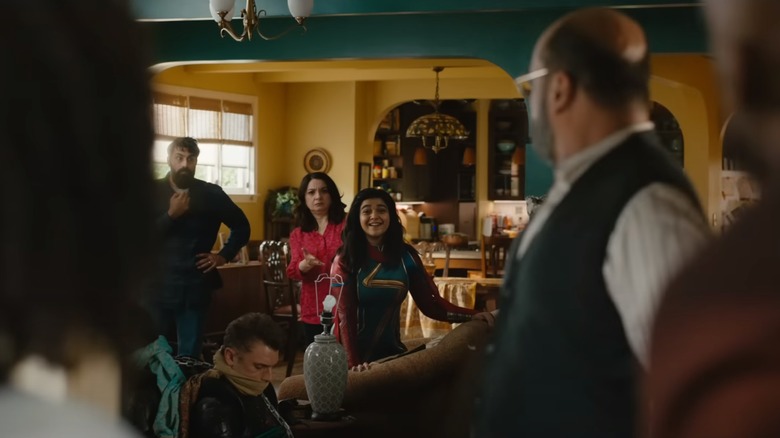
08 Apr 22:51

How Much Data Did the Chinese Spy Balloon Collect?

by EditorDavid
Long-time Slashdot reader schwit1 shared this report from NBC News: The Chinese spy balloon that flew across the U.S. was able to gather intelligence from several sensitive American military sites, despite the Biden administration's efforts to block it from doing so, according to two current senior U.S. officials and one former senior administration official. China was able to control the balloon so it could make multiple passes over some of the sites (at times flying figure-eight formations) and transmit the information it collected back to Beijing in real time, the three officials said. The intelligence China collected was mostly from electronic signals, which can be picked up from weapons systems or include communications from base personnel, rather than images, the officials said. The three officials said China could have gathered much more intelligence from sensitive sites if not for the administration's efforts to move around potential targets and obscure the balloon's ability to pick up their electronic signals by stopping them from broadcasting or emitting signals. America's Department of Defense "directed NBC News to comments senior officials made in February that the balloon had 'limited additive value' for intelligence collection by the Chinese government 'over and above what [China] is likely able to collect through things like satellites in low earth orbit.'"

Read more of this story at Slashdot.

08 Apr 17:48

The 12 Best Benedict Cumberbatch Roles That Aren't Doctor Strange

by Rachel Ho

Today he may be best known for setting up the multiverse threads of the MCU, but before (and after) taking on the role of Dr. Stephen Strange, British actor Benedict Cumberbatch put together an impressive resume of performances, ranging from the stage to television to the silver screen. After graduating from the University of Manchester's Drama program and earning a master's from the London Academy of Music and Dramatic Arts in 2000, Cumberbatch found steady work in the U.K., eventually answering Steven Spielberg's call in 2011's "War Horse."

Since then, he's been a mainstay in Hollywood, with an ardent fan base ready to fight for him online and show up to (most) of his films. Throughout his 20-plus years as a working actor, Cumberbatch has had his share of missteps (I'm looking at you, "Star Trek Into Darkness"), but for the most part, his movie choices have typically been sound and his performances solid, even on the rare occasion when the material fails him. Without further ado, and Doctor Strange aside, here are Benedict Cumberbatch's 12 best roles across film, television, and theatre.

Lieutenant-Colonel Mackenzie, 1917

While effectively amounting to a cameo, Benedict Cumberbatch's role as Col. Mackenzie in Sam Mendes' WWI drama "1917" edges its way onto this list due to the character's importance throughout the film. "1917", known for its long-take aesthetic, follows two lance corporals, Will Schofield (George MacKay) and Tom Blake (Dean-Charles Chapman), tasked with delivering a message across the Western Front to the colonel to prevent the British Army from falling into a trap set by the Germans.

With Cumberbatch's Mackenzie as the end goal of their journey, we watch the two young soldiers face tremendous danger and overcome (and succumb to) numerous challenges. There's a sense of relief Schofield finally reaches Mackenzie, and when he turns around to face the camera, Cumberbatch's reveal feels like an applause break. And not just because he's a familiar face but because the excruciating mission we've found ourselves on is at last complete.

Major Jamie Stewart, War Horse

An old-fashioned Spielbergian film, "War Horse" tells the story of Joey, a bay Irish Hunter who develops a close friendship with the son of an English farmer. As WWI breaks out across Europe, Joey is sold to the British Army and deployed to Flanders under Capt. James Nicholls and Maj. Jamie Stewart, who lead the cavalry through a German encampment.

In his first major Hollywood picture, Benedict Cumberbatch plays the small but important role of steely Maj. Stewart, alongside Tom Hiddelston's Capt. Nicholls and Patrick Kennedy's Lt. Charlie Waverly. Collectively, the three soldiers show the varying attitudes of young men sent to war. While Waverly is the subservient soldier who falls in line, and Nicholls has the most realistic understanding of war, Stewart represents the prototypical soldier. As a tough disciplinarian whose fears are deeply suppressed, Cumberbatch gives a glimpse into his abilities to tackle multi-faceted characters in this early role.

Prince Hamlet, Hamlet

As of writing, 2015's "Hamlet" at London's  Barbican Theatre was Benedict Cumberbatch's last stage performance. Like most British actors, Cumberbatch began his career in the theatre, and at the ripe age of 39, it was high time he tackled one of the Bard's most storied characters and plays.

Unfortunately for Cumberbatch, Lyndsey Turner's adaptation of "Hamlet" became an exercise in trying too hard to create a unique vision of one of the most well-known and frequently produced stories. Altering the structure and introducing kitschy elements, Turner's "Hamlet" left much to be desired. However, the brightest spot was Cumberbatch (naturally). Unsurprisingly, his delivery of the legendary "To be or not to be" soliloquy brought the house down, and his stoicism lent gravity to Hamlet's final moments, emphasizing the weight of the events we watched unfold. While his performance deserved a much better show around him, Cumberbatch's Prince Hamlet remains a solid outing by the actor.

William Ford, 12 Years A Slave

Given the recent news of Benedict Cumberbatch's ancestral ties to slavery, his role as William Ford, a benevolent slave owner (the greatest oxymoron to ever exist), is steeped in irony the actor would likely rather not exist. "12 Years a Slave" is the story of Solomon Northup (played with a tremendous amount of depth and heart by Chiwetel Ejiofor), a free man who was kidnapped and sold into slavery. Cumberbatch's Ford, the Baptist preacher who buys Solomon, is described in the latter's memoirs as kind and noble, despite the nature of their relationship.

The role of Ford in a film like "12 Years a Slave" is tricky. The idea of showing a slave owner as anything other than a villain is inconceivable. Yet, through Steve McQueen's direction, John Ridley's script, and Cumberbatch's performance, Ford becomes a compelling character. Cumberbatch offers a carefully sympathetic portrayal, almost befriending Solomon. In contrast to Solomon's next owner, Edwin Epps (Michael Fassbender), Ford seems generous. All of this, though, is belied by Ford's very appearance in the film: He's a man who buys humans when they're convenient and sells them when they're not.

Peter Guillam, Tinker Tailor Soldier Spy

A classic of the spy genre and a staple in John le Carré's storied bibliography, "Tinker Tailor Soldier Spy" is an espionage tale set during the height of the Cold War that has been adapted multiple times, including into a 2011 film by Tomas Alfredson. Benedict Cumberbatch plays Peter Guillam, a recurring character in le Carré novels and right-hand man to George Smiley (Gary Oldman), a lead character in many of the author's books.

Cumberbatch's turn as Guillam is decidedly vulnerable. When we first meet Guillam, he is a staunch follower of Smiley and slightly naive concerning his job as an intelligence officer. Throughout "Tinker Tailor Soldier Spy," we come to understand the human cost associated with this line of work. In a heartbreaking scene in which Guillam breaks up with his boyfriend to protect him from harm, Cumberbatch brings to light the loneliness and personal sacrifice through loud emotional moments as well as quiet subtle nods across the film.

Julian Assange, The Fifth Estate

Benedict Cumberbatch has a reputation for many things among his fans, his abilities as an impressionist primary among them. And while he entertains on programs like "The Graham Norton Show" with his Alan Rickman, Michael Caine, and Chewbacca impressions, his ability to take on real-life individuals with pronounced and distinguishable quirks without becoming a mimic is truly impressive. Throughout his career, Cumberbatch has employed this talent when portraying real-life figures, but perhaps none posed more of a challenge than portraying Julian Assange in Bill Condon's "The Fifth Estate."

When the film was released, WikiLeaks and its founder Julian Assange were heavily featured in the news cycle and satirized by comedians and sketch shows. Although "The Fifth Estate" didn't end up being the topical, dramatic thriller it had hoped, Cumberbatch succeeds in creating a well-rounded portrait of a much-maligned public figure. Cumberbatch finds the humanity in Assange that tabloids and other news outlets chose to ignore.

Phil Burbank, The Power Of The Dog

Jane Campion's "The Power of the Dog" is a tour de force of filmmaking that explores masculinity, societal pressures, and familial bonds. Her deft direction and storytelling make poignant observations that transcend time and space, while her ensemble offers strong performances.

As the unrefined and quick-tempered Phil Burbank, Benedict Cumberbatch leads the film with Jesse Plemons, who plays George, Phil's kind-hearted brother. Surly and cruel, Phil is the textbook overcompensating cowboy, especially unkind to Peter (Kodi Smit-McPhee), the son of Rose (Kirsten Dunst), George's love interest. The reason for Phil's malice and general hostile disposition is revealed in pieces through Cumberbatch's nuanced performance.

In many ways, "The Power of the Dog" is a classic Western, but the characterizations seem very modern, allowing for a complexity not traditionally offered to the staunch alphas of the Wild West. With Cumberbatch's stirring performance at the film's fore, it's no wonder the movie and his performance have been so heavily lauded and awarded.

Alexander Masters, Stuart: A Life Backwards

"Stuart: A Life Backwards" is the television adaptation of Stuart Clive Shorter's biography written by his best friend Alexander Masters (Benedict Cumberbatch). Shorter (played in the film by Tom Hardy) led a difficult life, suffering sexual abuse as a child, having mental health issues, and being homeless at multiple points in his life. In adulthood, he became an activist, and his advocacy would bring to light many of the issues facing unhoused people in the U.K.

Naturally, the meatier and showier role of the two leads belongs to Hardy (who is fantastic), but Cumberbatch's Masters, acting as a conduit for the audience, anchors the film against the intensity of Shorter. Beginning as a jaded and indifferent charity worker, Masters develops a friendship with Shorter that instills sympathy and compassion where there initially was none. Cumberbatch and Hardy work exceptionally well together, with Cumberbatch taking the quieter approach. It's a subtle role that is arresting in all the right ways.

Alan Turing, The Imitation Game

Alan Turing's contributions to technology (and, in turn, society, culture, and politics) cannot be overstated. His work is the basis for the modern-day computer and artificial intelligence. As a codebreaker for the British government during World War II, he cracked the Enigma machine, a complex Nazi device for generating coded messages. The latter is the focus of "The Imitation Game," as well as the appalling treatment of Turing by the British government due to his sexual orientation.

Cumberbatch's universally applauded performance was nominated for every major acting award of 2015, garnering the actor his first Academy Award nomination. The emotional beats Cumberbatch hits across the film are affecting and earned, but it's his ability to melt into Turing's physicality that impresses the most. Cumberbatch actualizes Turing's known eccentricities and physical ticks without becoming a caricature, instead using them to drive the narrative and create a complete picture of the complex man. In years to come, "The Imitation Game" will stand as one of the crown jewels of Cumberbatch's career, and deservedly so.

Smaug, The Hobbit Trilogy

The behind-the-scenes footage of Benedict Cumberbatch's motion-capture performance as Smaug is what initially grabbed my attention and made me want to watch "The Hobbit." Filmed entirely on a sound stage, Cumberbatch, in grey pajamas, a scattering of dots on his face, crawls and leaps around with abandon. Smaug's strength and vanity are apparent in each of Cumberbatch's neck contortions, eye narrowings, and sizzling hisses.

Typically, dragons, as portrayed in film and television, are feared for their gargantuan size and firey breath. However, what makes Smaug unique in J.R.R. Tolkien's literary world is the deliciously devious personality he gave the wicked creature, which Cumberbatch superbly brings to life. He doesn't just act out Smaug; He embodies the smug dragon in every sense of the word. While Cumberbatch's performance alone couldn't save the trilogy, it remains an incredible piece of work and one of his more unique roles.

Victor Frankenstein/The Creature, Frankenstein

I saw Benedict Cumberbatch and Jonny Lee Miller's 2011 production of "Frankenstein" via the Royal National Theatre's "NT at Home" series in April 2020. I was blown away. The story of "Frankenstein" is well-known and has captivated audiences for centuries with its themes of obsession, grief, and power.

In a departure from tradition, Nick Dear's adaptation of the tale of the monster and doctor is told from the Creature's point of view rather than Victor Frankenstein's. Cumberbatch and Miller alternated between the two main roles every night, providing a creative spin on the stage production and giving audiences a reason to go more than once. Both men were incredible in the roles (they shared the 2012 Laurence Olivier Award for best actor), bringing an animalistic quality to the Creature that felt raw and visceral while lending an insidious narcissism to Victor. Similar to his turn as Smaug, Cumberbatch's acting continues to impress beyond impressions, accents, and facial ticks. He uses physicality in a way few of his peers can.

Sherlock Holmes, Sherlock

Of course, we had to include "Sherlock" on this list. It's the role that made Benedict Cumberbatch an international superstar and earned him legions of fans. He's bloody brilliant as Sherlock Holmes.

"Sherlock" brings Sir Arthur Conan Doyle's consulting detective into the modern era by letting him loose in the streets of London with smartphones and GPS apps in tow. Cumberbatch's Sherlock continues the tradition of the great master of deduction by being too logical for his own good. With the help of Martin Freeman's John Watson, we see the stark contrast between polite society and Sherlock's cold demeanor. Cumberbatch imbues a sense of 21st-century bumbling quirkiness into his Sherlock that is balanced with an old-world charm and formality. Although many actors have played Sherlock Holmes on the radio, stage, television, and film, Cumberbatch made the British detective entirely his own. We can only hope that one day Cumberbatch again dons the tweed overcoat and floppy hair because the game is always afoot.

Read this next: The 15 Best Anthony Hopkins Roles Ranked

The post The 12 Best Benedict Cumberbatch Roles That Aren't Doctor Strange appeared first on /Film.
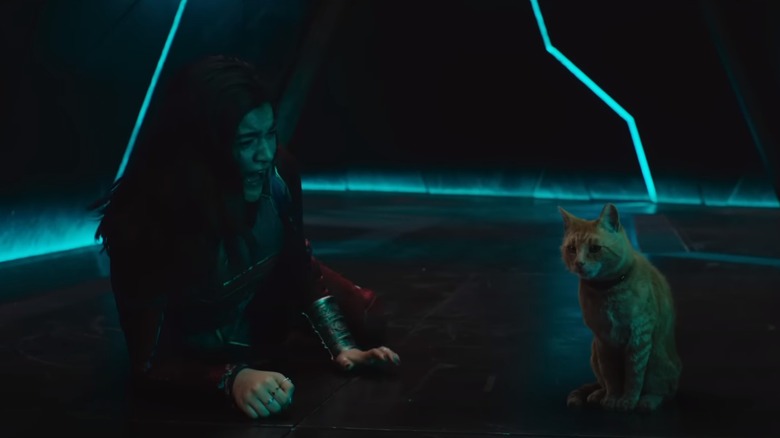
08 Apr 17:47

How Todd Stashwick's Love Of Jaws Inspired Star Trek: Picard's Captain Shaw

by Devin Meenan

Spoilers for "Star Trek: Picard" follow.

"Star Trek: Picard" season 3 has promised to be a grand finale for the "Next Generation" cast. Jean-Luc Picard (Patrick Stewart) has finally reunited his whole bridge crew from Enterprise-D -- also appearing are Seven of Nine (Jeri Ryan) from "Star Trek: Voyager" and the Changelings, the antagonists of "Star Trek: Deep Space Nine."

Despite running headfirst down nostalgia lane, the final season has some new characters too. One is Liam Shaw (Todd Stashwick), captain of the USS Titan-A. Shaw is no fan of Picard or Seven because he has a grudge against the Borg. Why? He was at the Battle of Wolf 359, depicted in the classic "Next Generation" episode, "The Best of Both Worlds." A Borg Cube, led by tactical info gleaned from the assimilated Picard (aka Locutus), decimated the Starfleet forces. Shaw was part of the engineering crew on the USS Constance and one of the few Starfleet officers to survive that battle.

Trekkies might think the inspiration for Shaw's backstory was Benjamin Sisko (Avery Brooks), the lead of "Deep Space Nine." Sisko survived Wolf 359 but lost his wife Jennifer (Felecia M. Bell). The "DS9" pilot, "Emissary," is about Sisko finally coming to terms with what happened, spurred by a face-to-face meeting with Picard.

However, Stashwick confirmed in an interview with Collider that the real inspiration was "Jaws." The name of his character is a tribute to Robert Shaw, who played Quint in "Jaws." Like Shaw with the Borg, Quint had a traumatic past with sharks and this pushed him into becoming a 20th-century Captain Ahab.

Anyway, We Delivered The Bomb

In "Jaws," Quint, Brody (Roy Scheider), and Hooper (Richard Dreyfuss) are enjoying some late-night downtime in their hunt for the shark. Sitting around the dinner table on Quint's boat the Orca, they start swapping stories about scars. When Hooper notices a removed tattoo on Quint's arm, the old fisherman reveals it's from the Navy ship he served on: the USS Indianapolis.

True to history, Indianapolis delivered parts of the bomb that would level Hiroshima before it was sunk by a Japanese submarine. The surviving crew was left stranded in the ocean for four days and five nights, suffering what's been called "the deadliest shark attack in history."

Quint's recounting of this might be my favorite ever scene in a film — it's certainly my favorite monologue. Robert Shaw delivers the lines like a man who's seen every image he describes in his nightmares, every night, for 30 years. He sometimes flashes a smirk or a chuckle but you can tell how uneasy he is. After he recounts how he and his surviving friends were rescued, he declares, "I'll never put on a life jacket again," and you understand why.

Shaw, not only an actor but a playwright and novelist too, even wrote the monologue himself. (There is some disagreement about this, but "Jaws" screenwriter Carl Gottlieb backs up Shaw as the author in his behind-the-scenes book, "The Jaws Log.") He performed the scene over two days: the first he was drunk, and the second he was sober. Footage from both days is in the final film.

Remembering Wolf 359

In "Picard," Shaw's big moment, which he discussed with /Film, begins on the Titan's holodeck. Picard and Jack Crusher (Ed Speelers) are enjoying some belated father-son bonding time. Shaw interjects, asking if Jack has heard about Wolf 359, and calls it "the first time [Picard and I] met."

This has the same visual language as the "Jaws" scene. Most of the time, the camera is focused on Shaw, but there are occasional cuts to reaction shots from Picard and Jack, much like there are to Brody and Hooper in "Jaws." There are no flashbacks, but in a major difference from the Indianapolis monologue, we hear sounds from Shaw's memories. Shaw self-deprecatingly calls his younger self, "Some dips*** from Chicago" -- saying he's from Indianapolis would've been tipping the hat too far -- and then reveals it's survivor's guilt that is haunting him. He was one of only ten crew members who got to board the escape pod.

Unlike Quint, Shaw is directing his words at one of his scene partners. Picard doesn't argue back and quietly leaves the Holodeck. This underlines another similarity between Shaw and Quint -- their hate is understandable but irrational. Picard literally wasn't himself at Wolf 359, he was as much the Borg's victim as the 11,000 people killed in battle.

Meanwhile, sharks are just animals driven by nothing but base instincts. Quint, however, makes them sound like demons, "The thing about a shark is he's got lifeless eyes. Black eyes. Like a doll's eyes. When he comes at ya, he doesn't even seem to be livin'... 'til he bites ya, and those black eyes roll over white." Quint couldn't let go of his hate and it killed him. It remains to be seen how Shaw's story will end.

New episodes of "Star Trek: Picard" stream Thursdays on Paramount+.

Read this next: Every Star Trek Series Ranked From Worst To Best

The post How Todd Stashwick's Love Of Jaws Inspired Star Trek: Picard's Captain Shaw appeared first on /Film.
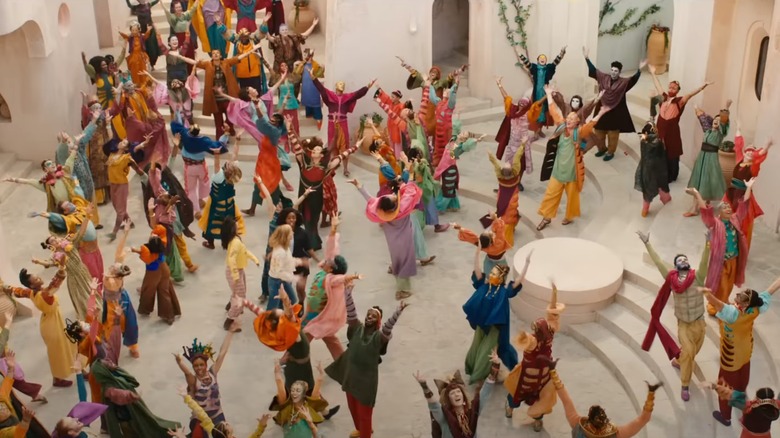
08 Apr 17:46

Florence Pugh's First Movie Audition Left Casting Agents Speechless

by Joshua Meyer

Five years before her breakout role in the ultimate breakup movie, Ari Aster's "Midsommar," Florence Pugh made her feature-film debut in an indie British drama called "The Falling," written and directed by Carol Morley. At the time, Pugh's costar, Maisie Williams, was much more famous for her role as Arya Stark on HBO's "Game of Thrones." In "The Falling," Pugh and Williams play Abbie and Lydia, two best friends at a girls' school of the strict, "sit down, stand up" variety. Judging from the way the trailer positions its young stars with the words "starring Maisie Williams and introducing Florence Pugh," someone at BBC Films seems to have recognized that they had a significant new talent on their hands with Pugh.

Casting agents apparently felt the same way. A 2023 cover story in Vogue revealed that Pugh was just 16 when she tried out for "The Falling" in an open audition, but even then, she made an impression. Morley told the magazine that after Pugh departed from her audition, a hush came over the room, leading the director to ask her casting agents, "What's the matter? Did you not think she was amazing?"

"They said to me: 'We've got goosebumps. That was like discovering a young Kate Winslet,'" Morley explained.

A Girls' School, 'Not A Mental Institution'

The official synopsis of "The Falling" (per the BBC) details how a "fainting outbreak" occurs at the aforementioned girls' school. Vogue describes it as "collective hysteria," and the trailer also contains references to "crazy witches" and secrets rising to the surface. "This is a school," someone says. "It's not a mental institution."

It's as if the folk-horror hysteria of "Midsommar" were already bubbling under the surface. Compare the scene in that movie where Florence Pugh suffers self-inflicted abuse as the May Queen, Dani, kneeling on the floor and crying her eyes out, surrounded by empathetic women who fall in synch with her grief, after she spies her boyfriend cheating on her.

If her audition for "The Falling" had half as much emotion as that scene, it's easy to see why the film's casting agents might have been rendered speechless. Of course, "Midsommar" wasn't Pugh's only breakout film role in 2019. She also received her first Academy Award nomination for her performance that year as Amy March in Greta Gerwig's adaptation of "Little Women."

From there, Pugh was off to the races, donning a Russian accent and trading barbs and blows with Scarlett Johansson in Marvel's "Black Widow," for starters. It just goes to show that Pugh has done some of her best work when surrounded by women, and that's a trend that dates back to when she first appeared onscreen in "The Falling."

Read this next: The 30 Most Anticipated Movies Of 2023

The post Florence Pugh's First Movie Audition Left Casting Agents Speechless appeared first on /Film.