 |
[link] [133 comments] |
Ronald.phillips
Shared posts
07 Sep 21:54
This 'Swiss Army Knife' of cables puts an end to desktop mess
The inCharge XL cables are the single cable to solve your cable overload woes and desktop mess.
Ronald.phillips likes this
07 Sep 21:32
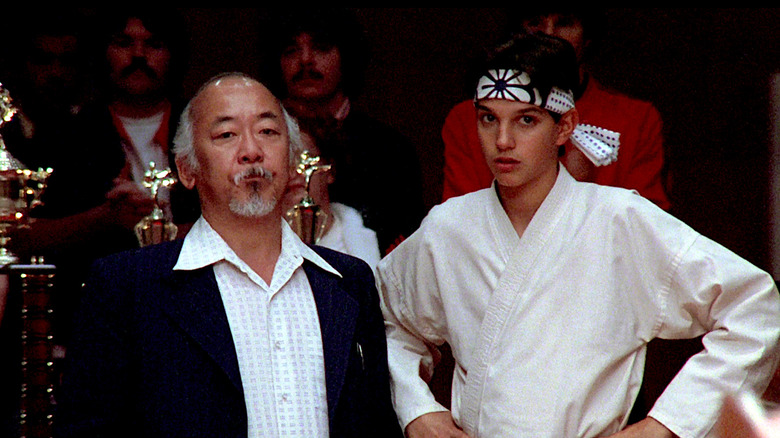
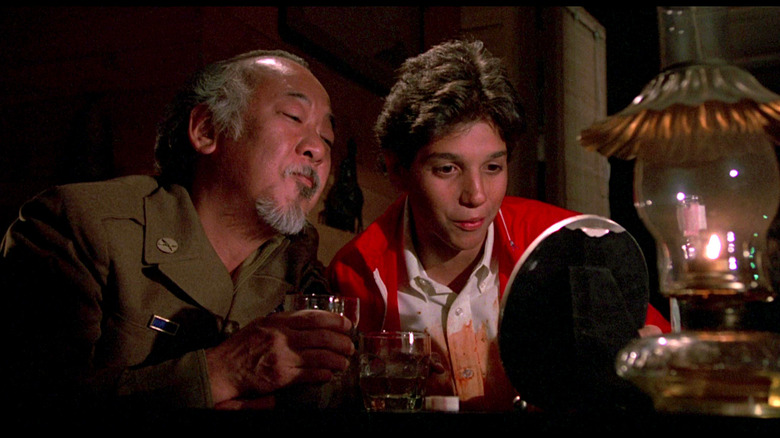
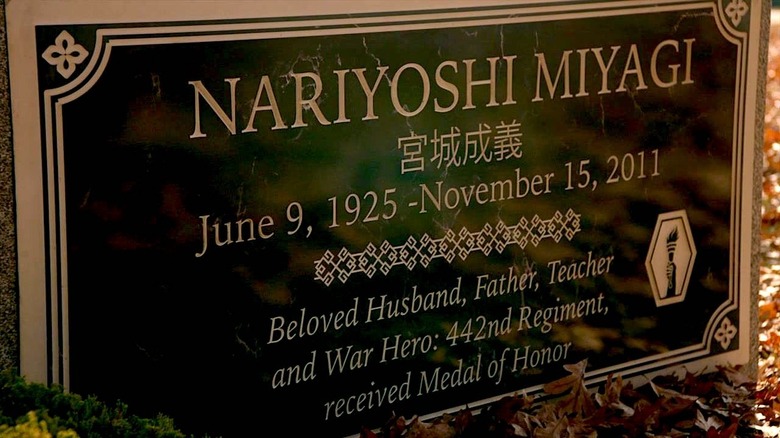
The Karate Kid's Mr. Miyagi Has An Incredible Connection To Real-Life Heroes
by Miyako Pleines
Fans of director John G. Avildsen's "The Karate Kid" franchise will no doubt remember the emotional scene in the first film where a drunk Mr. Miyagi (Pat Morita) reflects on his early life in America. Dressed in his old army uniform, he toasts to a photograph of his late wife and shows a picture of her to Daniel (Ralph Macchio) who is just now learning of his sensei's complicated past.
Born in Okinawa, 18-year-old Miyagi immigrated to the United States after he unsuccessfully professed his love to Yukie, the woman who was arranged to marry his best friend, Sato. He met his wife in Hawaii while working in the cane fields, but their romance was quickly complicated by the United States' decision to enter World War II. When President Roosevelt ordered the incarceration of over 120,000 Japanese and Japanese American citizens in concentration camps, both Miyagi and his wife were relocated to Manzanar, a camp in California. While overseas fighting for the U.S. Army, Miyagi's wife and unborn child died during childbirth — a tragedy that would go on to haunt him for the rest of his life.
Throughout "The Karate Kid" films and "Cobra Kai," Miyagi is always referenced as having been part of the 442nd Regimental Combat Team during his time in the U.S. Army. His service in this particular regiment is even engraved on his headstone. But just what is the 442nd Infantry Regiment, and how is its history significant to "The Karate Kid's" most famous sensei?
Going For Broke
In 1942, when the United States made the heinous decision to incarcerate Japanese Americans in concentration camps, they also refused to allow any of these men to enlist in the United States Army. This decision was reversed a year later with the creation of the 442nd Regimental Combat Team (RCT). This segregated RCT was predominantly made up of Japanese American volunteers, many of which came from Hawai'i as well as the concentration camps on the mainland. During their training, the members of the 442nd excelled, foreshadowing their eventual outstanding success.
The 442nd fought the majority of its battles during World War II in Europe, and they often worked alongside the 100th battalion which was another predominantly Japanese American unit comprised of men that were already enlisted in the U.S. Army before the start of the war. They were famously known for using the phrase, "Go for broke" as their motto, and their strong determination and skill is reflected in the fact that they are, to this day, "the most decorated unit for [their] size and length of service in the history of the US military." Many of the men in the 442nd received awards for their service ("4,000 Purple Hearts, 4,000 Bronze Stars, [and] 560 Silver Star Medals") including 21 Medals of Honor which is the highest military award a person can earn.
The 442nd had a hand in many impressive operations during the war including rescuing members of the 1st battalion, 141st infantry after the group became surrounded by the German Army. Two previous attempts to rescue these men were unsuccessful, but the 442nd prevailed and got the job done. Their success as a unit is extremely impressive when you consider how despite being subject to horrific racial discrimination at the hands of their own government, the men of the 442nd made the decision to still proudly fight for their country. It's no surprise, then, that the valiant Mr. Miyagi is linked to these heroic men.
Isn't Karate For Defense Only?
Not only is Mr. Miyagi a member of the 442nd Regional Combat Team, but he is also one of the 21 men who received a Medal of Honor for his service. In "The Karate Kid," This medal is discovered by Daniel who comes upon it in a box of keepsakes after helping a drunk Miyagi to bed one night. It is a tender and revolutionary moment in the first "Karate Kid" film that quietly speaks to Miyagi's heroic nature, but some might wonder how Miyagi, a man who is so adamant that karate only be used for defense, ended up fighting in a very real, very complicated war in the first place.
It's possible that Miyagi's own sense of justice is what fueled his decision to join the 442nd RCT. When it comes to fighting, Miyagi often chooses not to, however, faced with an unending prison sentence at the hands of the United States, Miyagi may have seen his choice to enlist as a way to both prove his allegiance to his new country and fight for his freedom within it. Historically, many Japanese American men made the decision to enlist in the U.S. Army for this very reason. They believed that their choice to fight despite their incarceration would be a good way to show that they were loyal to the United States. Whatever Miyagi's reasons for enlisting, the film's decision to make him a member of the 442nd is a powerful one that is loaded with important historical significance.
Read this next: The 15 Best Netflix Original Series Of 2021 Ranked
The post The Karate Kid's Mr. Miyagi Has an Incredible Connection to Real-Life Heroes appeared first on /Film.
Ronald.phillips likes this
07 Sep 21:31
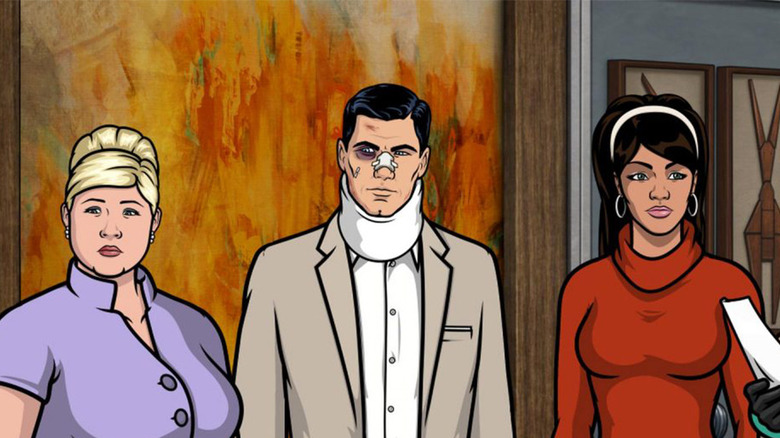
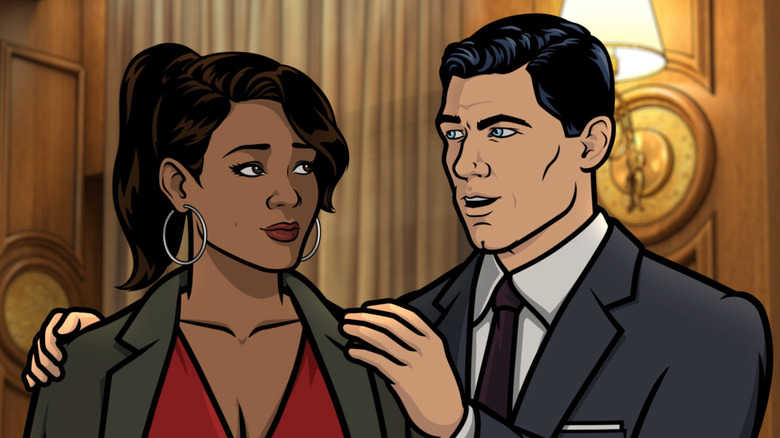
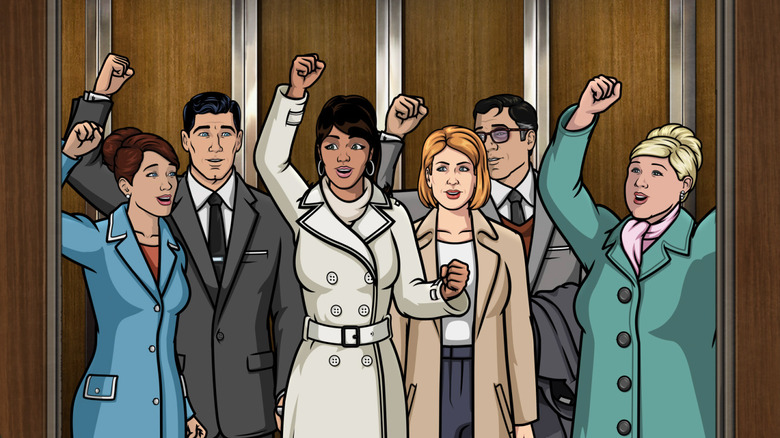
H. Jon Benjamin Hopes Archer Goes On Long After He Is Gone
by Matt Rainis
For more than 12 years, FXX's hit spy comedy "Archer" has proven its ability to constantly reinvent itself. Since the show's fifth season, seasons of the show have taken on distinctive themes, with Sterling Archer and the rest of the show's irreverent secret agents having done everything from spending a season selling cocaine in a "Miami Vice"-inspired setting to spending multiple seasons in alternate timelines taking place entirely within the mind of the comatose Archer. Through all of these extremely different settings, the show's madcap comedic bite has remained sharp, using its constantly shifting landscape to stay funny and fresh throughout its run.
"Archer" also needed to evolve behind-the-scenes, with series creator and longtime showrunner Adam Reed departing the show for good after the tenth season. A showrunner's exit can sometimes spell doom for a series, but "Archer" managed to retain a writing staff strong enough to maintain the show's quality. Even with massive shifts in the show's talented roster of writers, the star-studded voice cast has stayed consistently strong.
As the show enters its 13th season, the production now must contend with the loss of legendary comedic actress Jessica Walters, who passed away in 2021. While the loss of Walter and her character, the overbearing mother of Sterling Archer, will surely be a tough blow to the long-running comedy, if any show has proven its ability to adapt to changes in the status quo, "Archer" certainly has. In a recent interview with ScreenRant, show star H. Jon Benjamin expressed his own optimism for the series' future, one he believes may even outlive himself.
How Long Can It Go?
Benjamin, known for his distinctive low voice, has seen voice acting success on shows like "Bob's Burgers" and "Family Guy" in addition to "Archer". When asked how long he expects "Archer" to last in the interview with ScreenRant, Benjamin responded with his signature low-key wit: "I don't want to be crass, but it's a pretty easy job, my part. So it's really up to the producers of the show, who do the bulk of the work, and the writers."
Benjamin has been consistent with his response to this line of questioning throughout the years, possibly only semi-jokingly saying in an interview with Looper in 2020 that he expects the show to last until his death. With the flexibility the show's format has shown over the years, who can question this assessment? The themed seasons that take place entirely in the dreams of a comatose Archer especially offer the show a more or less infinite amount of soft reboots to work with.
This most recent interview has him sticking with his often touted line of thinking. "I don't know, I think just based on these characters interacting, another 40 years," Benjamin casually threw out when asked to give an estimation of the show's lifespan.
The show's current showrunner, Casey Willis, has stated his own ambitions regarding how long the show will remain on the air. In an interview with Collider in 2020, Willis recalls meeting "The Simpsons" creator Matt Groening:
"I think at that time we were about to go into season 6 and he said, 'So what season are you guys going into? You're going into your sixth season?' And I was like, 'Yeah, sixth season.' And he smiled a little bit and just said, 'Well, call me when you get to 26.' In my fantasy world, I would love to get to 26 seasons and be able to call him up."
In It For The Long Haul
With both cast members and writers who seem ready to stick with the show for the long haul, maybe "Archer" will be able to join shows like "The Simpsons" and "Family Guy" in the pantheon of animated series that seem to continue putting out new episodes forever. While ideally you'd love to see a show as funny as "Archer" be able to continue ad infinitum, it's a scary prospect. Maintaining a show's quality on a run that long is difficult.
And even if the show must eventually come to an end, the show's heartfelt goodbye to the late Jessica Walter's character at the end of the twelfth season shows that the show is capable of wrapping things up neatly and in a way that honors the show and the characters, if the need arises. The show hasn't yet been renewed past its thirteenth season, but Willis seems confident that the network will do right by them. "I'm sure whatever we decide, FX is going to be with us and I think one good thing is that they'll want to give the show, when it does end, a proper ending," said Willis in his interview with Collider.
But "Archer" is here to stay, for now, with the thirteenth season currently airing on FXX. The show's future isn't exactly crystal clear at this point, but if H. Jon Benjamin has his way, maybe one day he'll be recording lines for the show's fifty-seventh season via Ouiji board. That would be pretty spooky.
Read this next: 10 Times South Park Was Ahead Of The Curve
The post H. Jon Benjamin Hopes Archer Goes On Long After He Is Gone appeared first on /Film.
Ronald.phillips likes this
07 Sep 21:23
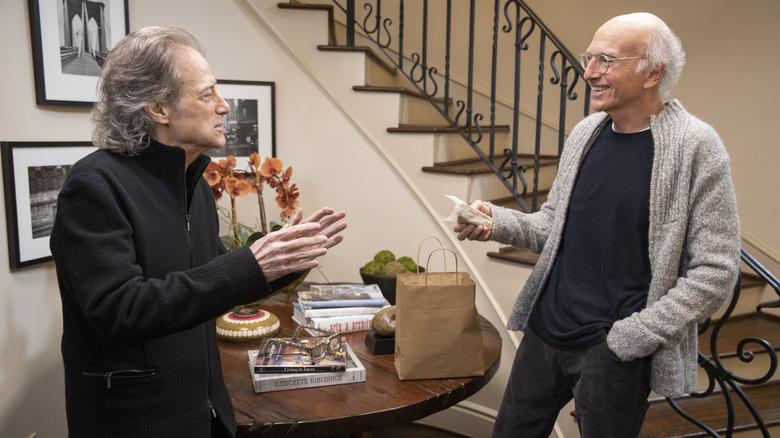
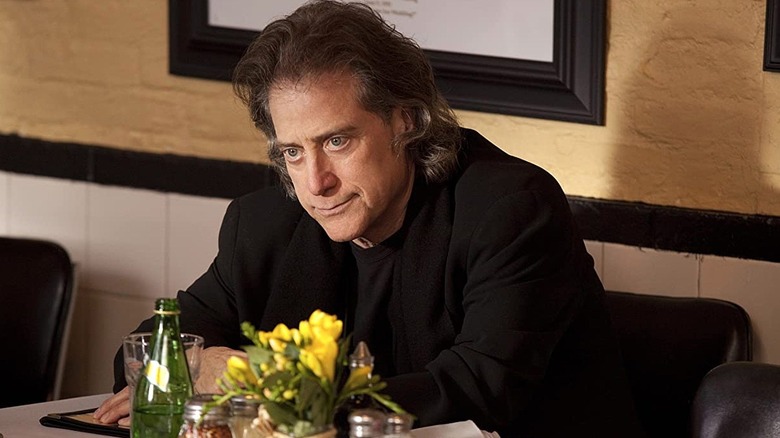
Curb Your Enthusiasm Bled A Little Too Much Into Richard Lewis' Real Life
by Shae Sennett
"Curb Your Enthusiasm" is Larry David's semi-fictional masterpiece, but the show can occasionally get all too real for some of the main cast members. David plays a dramatized version of himself on the HBO comedy series, as do many of his long-time friends. This includes comedian Richard Lewis, who has been heavily featured on "Curb" for many years.
Lewis and David are often at odds in the series. "Whenever I do a scene [with David] we basically argue 99% of the time," Lewis explained to The Paley Center. For example, in "The Lefty Call," they engage in a competition over whose colon is cleaner. The two comics have used their contentious friendship to their advantage on "Curb." "Our fights are almost no different on the show except maybe in how loud they are in real life," Lewis confessed to THR.
David and Lewis met at summer camp as children and instantly disliked each other. Lewis "hated" David at the time, he told Howard Stern, until the comedy circuit brought them back together years later. After a night of reminiscing about their childhoods, they realized where they had met years earlier and their decades-old conflict was reignited. "We came to blows at the bar," Lewis recalled. This familiar and combative dynamic is rooted in the real-life friendship between the two comedians.
The show draws quite a lot from the reality of David and Lewis' friendship. "Curb" is ultimately a work of fiction, but every so often — at the worst possible moments — the imagined world of the show seeps into Lewis' real world.
Even At The Doctor's Office
One sunny day in Los Angeles, Richard Lewis was waiting for his car to be valeted after getting a colonoscopy when he was approached by a "Curb Your Enthusiasm" fan (via THR).
"The guy says to me, 'Are you going to have a colon fight with Larry?' I go, 'You know what? Just do me a favor. I could be dying. Let me get my colonoscopy.' So then I get the car, and some other guy is walking to his car, and he goes, 'Richard, is your kidney OK?' I go, 'What are you talking about?' He goes, 'Well, you've got Larry's kidney.' I go, 'No, no.' I said, 'Please, please."
Lewis understands why the show gives a documentary-like impression. "It gets to the point where, because we're playing our own names and our own people, our own persons, people do believe it." The series also feels real because the actors get truly emotional with each other. "I might be unraveling in some scenes, and Larry might be upset and angry but funny," Lewis admitted. "But I felt it was like doing a Cassavetes movie, but as a comedy. Because it's so real, and it gets really intense sometimes."
These arguments have even affected Lewis' relationship with his wife, the comedian told The Paley Center. His scenes with David would put Lewis in such a combative mood when he got home from work that he would argue with his wife too. "We've gone to counseling over this," he revealed.
Even though it's uncomfortable when "Curb" seeps into Lewis' reality, the comedian still "take[s] pride" in how believable the show is, he told THR. It might make Lewis' life easier if "Curb" was a more obvious fiction, but it wouldn't be half as interesting to watch.
Read this next: Actors Who Died In 2021
The post Curb Your Enthusiasm Bled A Little Too Much Into Richard Lewis' Real Life appeared first on /Film.
Ronald.phillips likes this
07 Sep 18:31
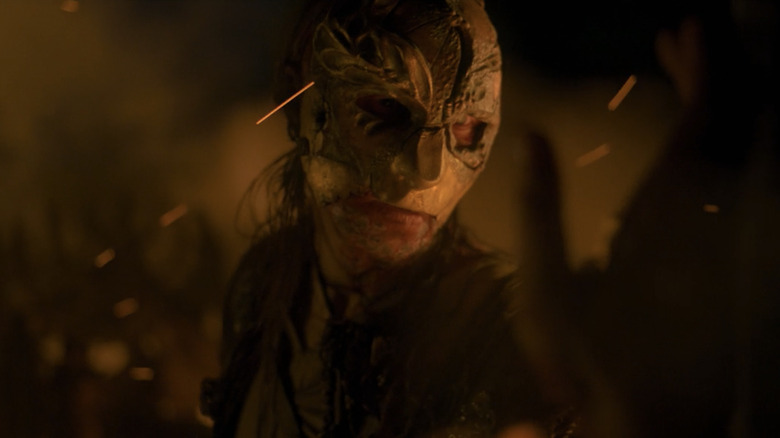
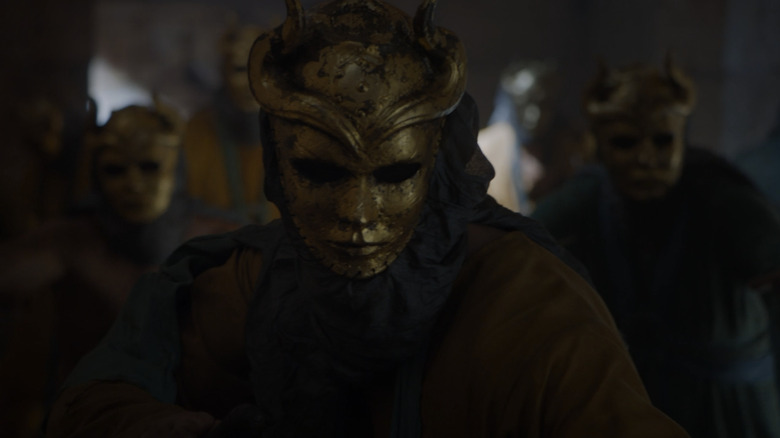
Why The Crabfeeder's Mask In House Of The Dragon Looks So Familiar
by Mike Shutt
When I first heard that there was a character on "House of the Dragon" named the Crabfeeder, I was pumped. This guy disposes of his victims by tying them up on the beach and letting a bunch of crabs slowly kill his victims — sounds like a nasty bugger who would make for an interesting antagonist for the series. At the end of episode 2, Daemon Targaryen (Matt Smith) and Lord Corlys Velaryon (Steve Touissant) decide to go to war with the Crabfeeder, so I fully expected for this character to be a major part of the show. My expectations were for naught.
Basically, the entire war between the two factions takes place off-screen, and the Crabfeeder is unceremoniously dispatched without ever so much as saying a word of dialogue. All we are left with is a pretty cool character design and our imagination. His look does make "Game of Thrones" fans ask a lot of questions. For one, he has Greyscale, the disease we saw plague Ser Jorah Mormont (Ian Glen), Lady Shireen Baratheon (Kerry Ingram), and some unfortunate stone men driven mad.
But the other major factor of his appearance is that broken mask he wears, which is actually a mask that showed up on "Game of Thrones." That is the same mask worn by the Sons of the Harpy, the band of assassins that tried to take down Danaerys during her rule in Meereen. Why does he wear this mask besides it just being a cool design? Well, it just might be a bit of fan service.
The First To Wear It
Daniel Scott-Smith was the actor to portray the Crabfeeder and did a wonderful job of establishing a presence I was keen to see more of. The creators were looking to make the Crabfeeder an instant iconographic figure. To do something like that, having an iconography that already existed proved useful when going back to the masks of the Sons of the Harpy. Wearing a mask that ... well ... masks your expressions does wonders for making someone an enigmatic, unpredictable figure. It gives them power, and in such a short amount of screen time, they needed to establish that power. Speaking with Entertainment Weekly, Scott-Smith recalled how they arrived at the decision for this mask:
"It was definitely a nod to that for, I guess, the fans, because it's something familiar for them. And we spoke about the idea of him being the first person to wear this mask and it becoming iconic and, therefore, it's built from that [for 'Game of Thrones'] ... Why is he wearing the mask? How does he feel about that? It's a power statement, so he's quite happy wearing it."
I'm not sure there's a direct line from the Crabfeeder to the Sons of the Harpy, but I do like the idea of future generations of people who think what they are doing is righteous going back to symbols of the past to express their desires. People still do this today, for both good (like a raised fist) and bad (like the Confederate flag), and this mask is just a more elaborate version of it, "V for Vendetta" style. I just wish the Crabfeeder had the time to make his mark on "House of the Dragon" the way he apparently did for the history of Westeros and Essos.
Read this next: The 15 Best Horror TV Shows Of All Time
The post Why The Crabfeeder's Mask In House Of The Dragon Looks So Familiar appeared first on /Film.
Ronald.phillips likes this
07 Sep 18:31
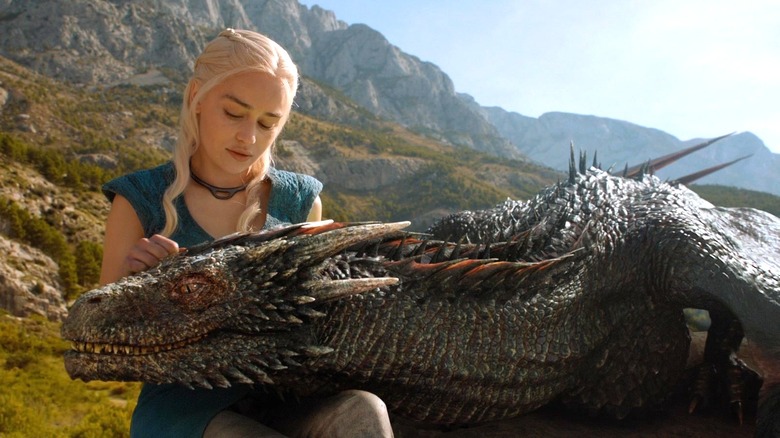
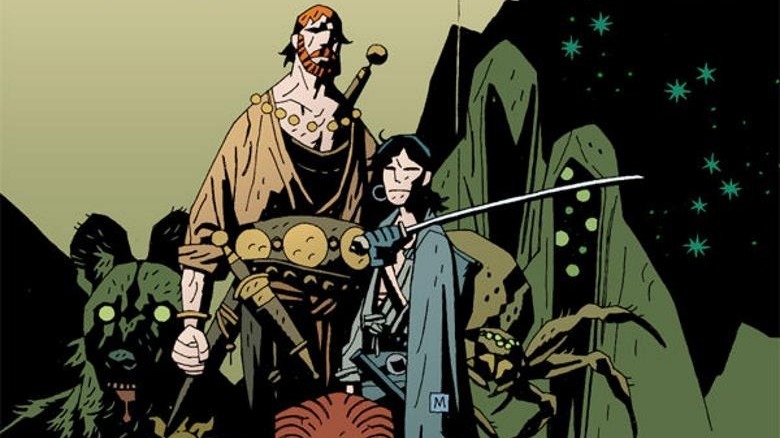

12 Fantasy Novels That Deserve To Be Adapted To TV That Aren't Game Of Thrones
by Adam Wescott
Fantasy is once again resurgent on our television screens. "House of the Dragon," a spin-off of the mega-hit "Game of Thrones," is in the middle of its first season. Meanwhile, Amazon has launched "The Lord of the Rings: The Rings of Power," one of the most expensive television productions ever made. As a fan of genre fiction, I suppose I should be celebrating. Instead, I can't help but be frustrated. The genre of fantasy includes countless weird and fascinating works, including the award-winning "Broken Earth" trilogy published in just the past few years. Yet several of the novels being adapted are epic fantasy stories published in the 1990s. What about everything else?
The following is a list of fantasy works I believe would make excellent television. Some are set in other worlds, others are set in ours. Some are short stories, others are long-running works of webfiction. I sought to strike a balance between canonical classics, recent masterpieces, and oddball picks. As far as I know, none of them have been optioned. I took care to note in each entry what challenges there might be in bringing these works to the screen, and how the cast and crew of each production might overcome those challenges. If you have not yet read everything on this list, I can vouch for all of them; however, one may require you to learn Chinese.
Fafhrd And The Grey Mouser
Dungeons & Dragons is more popular than ever, buoyed by the success of actual play podcasts like "Critical Role" as well as cameos on television shows like "Stranger Things." (Plus, it has its own movie coming up.) So why not bring back "Fafhrd and the Grey Mouser," whose adventures defined the tone and range of countless roleplaying campaigns? Unlike the heroes of fantasy epics like "The Lord of the Rings," Fritz Lieber's rapscallion duo prefer food, sex, and money to honor and duty. The only time you'll catch them saving the world is when two eldritch wizards scam them into doing so. But then, their human frailty is just what makes these two characters appealing. Not to mention their filthy but wondrous home city of Lankhmar, which Terry Pratchett would spoof as Ankh-Morpork in his popular "Discworld" novels.
The other appealing aspect of the Fafhrd and Grey Mouser stories, especially for a television adaptation, is just how weird the best of them are. In one of them, Fafhrd and the Mouser break up and spend the whole story apart. In another, the city is threatened by an extra-dimensional shopping district promising too-good-to-be-true deals. A talented writers' room willing to cut judiciously and adapt these stories for the times could have a field day with this series.
The Sarantine Mosaic
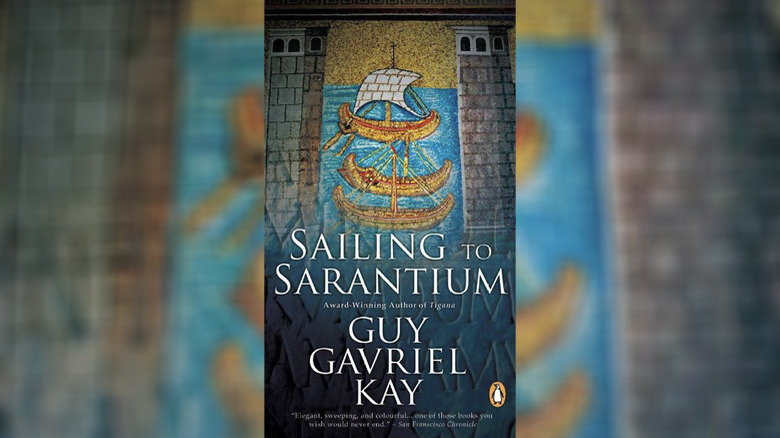
That there has not yet been a television adaptation of Guy Gavriel Kay's work is befuddling. Not only is Kay an award-winning fantasy author whose novels precede "Game of Thrones" in their evocation of real history, he's also an author with a direct connection to the Tolkien family, having assisted Christopher Tolkien in editing "The Silmarillion." You would think that executives would be tripping over each other in a rush to adapt his work to the screen. Perhaps the problem is that Kay himself isn't much for writing multi-entry stories. While his novels share a setting, the majority are standalones featuring distinct characters whose tales are over and done with by the end of each book.
"The Sarantine Mosaic" is an exception. A duology of novels about empire, chariot-racing, and art-making, it's a fan-favorite among Kay's body of work. It serves as a historical prequel to the similarly beloved "Lions of Al Rassan," providing the production team with a follow-up project if a "Mosaic" adaptation is successful. There's even a bit of numinous, world-shaking magic, although Kay's work tends to be even more restrained than George R.R. Martin in this regard. Kay is a deft hand at both writing memorable characters and building tangible worlds, and "The Sarantine Mosaic" represents his most sustained effort until his recent trilogy starting with "A Brightness Long Ago."
Swordspoint
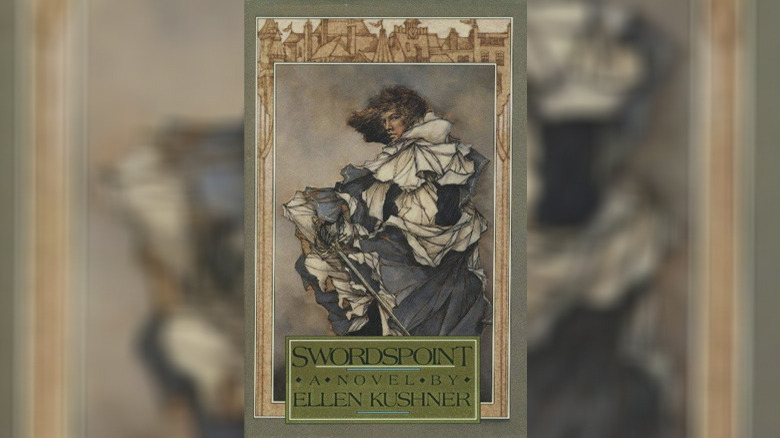
Ellen Kushner's "Swordspoint" takes place in a decadent city, where powerful nobles hire professional duelists to fight each other's battles. Richard St. Vier is one of the best duelists there is, and his boyfriend Alec is a temperamental genius with a suspicious family heritage. The on-again, off-again relationship between these two larger-than-life figures and their descendants forms the core of a surprisingly short body of work, which includes the ambitious but flawed follow-up "The Fall of the Kings" (co-written by Delia Sherman), the excellent coming-of-age tale "The Privilege of the Sword," and the recent "Tremontaine" serialized on Realm by a team of authors led by Kushner.
The majority of Kushner's novels are witty regency melodramas featuring politics and good old-fashioned dueling, with hardly any magic. But then, while "The Fall of the Kings" would add plenty of magic to the equation, I don't know if these books really needed it. Jo Walton has written that the "Swordspoint" books are less traditional epic fantasy than they are a classic family saga in the vein of Trollope. These are stories about big emotions, schemes within schemes, and close-knit relationships between difficult people who you can't help but root for anyway. It's an awkward sell in a fantasy market, but an easy pitch in today's TV market, especially in the wake of a show like "Our Flag Means Death."
The Farseer Trilogy
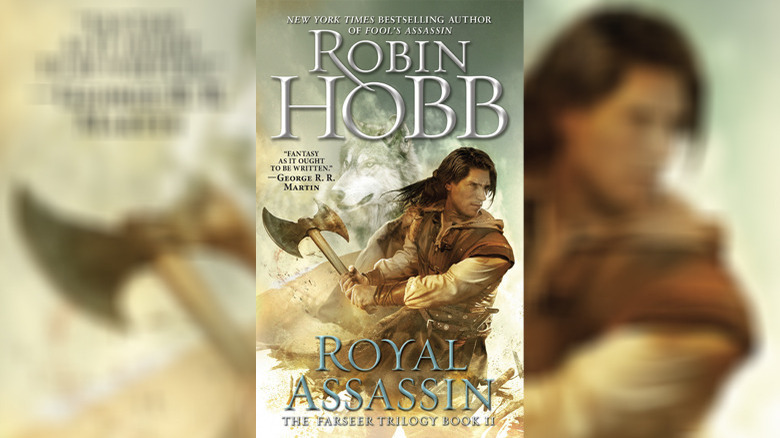
Robin Hobb's books follow a simple formula: Take a flawed but sympathetic character and have them eat dirt for 800 pages at a time until they are forced to change out of necessity. That might sound like painful reading material, but fantasy fans of a certain age devoured Hobb's books. She is very good at putting the reader directly into the shoes of her characters, developing them through what they notice as well as what they leave out of the stories they tell. Her initial "Farseer Trilogy" does a fantastic job fleshing out its protagonist Fitz, subjecting him to an adolescence that feels as brutal and frustrating as the real thing -- even as it is exaggerated beyond belief. Later series, like the "Liveship Traders" trilogy, increased the number of characters in play while further perfecting Hobb's craft.
The author's novels lend themselves well to television for several reasons. She prioritizes complex, messy characters over epic plots, providing plenty of great material for actors to dig into. The magic in her settings is prominent but more often includes body-swapping, telepathy, and brainwashing than fireballs or dragons (although dragons do eventually appear). She's written many novels running for hundreds of pages, most of which are set in the same world. Many of these books include prominent animal parts, but if HBO kept the direwolves in "Game of Thrones," they might as well give Fitz a pet wolf on television.
So You Want To Be A Wizard
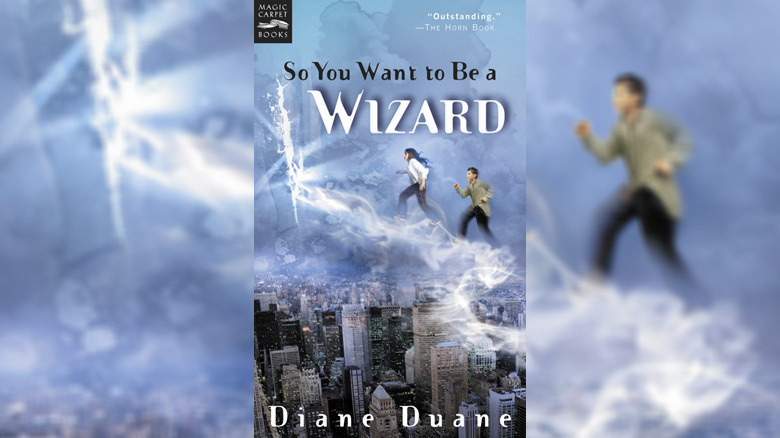
Harry Potter casts such a long shadow in the history of publishing that it's easy to forget that it was not the first novel about child wizards -- not by a long shot. Diana Wynne Jones's "Chrestomanci" novels followed the life and career of a wizarding government official regulating the use of magic across the multiverse. Jane Yolen's "Wizard Hall" told a less sprawling but still memorable story about Henry, a boy who attends a magic school despite exhibiting little in the way of magical talent. (It also features the Quilting Beast, who remains frightening to this day.) I love both of these stories and would love to see them adapted. But the best fit for a television series has to be Diane Duane's "Young Wizard" books, starting with "So You Want to Be a Wizard" from 1982.
"So You Want to be a Wizard" follows the adventures of Nita and Kit, two children given the responsibility of magical powers. Unlike Harry, though, the two of them are thrown immediately into the action, fulfilling their duties everywhere from the deep ocean to Mars to a mythic Ireland. Their foe is the Lone Power, a being of entropy that can be fought off or even befriended, but never truly defeated. Duane has a fascinating career that includes several well-received "Star Trek" tie-in novels as well as contributions to the influential animated series "Gargoyles." The "Young Wizard" books have as much to do with "Star Trek" as they do with traditional fantasy stories, including elements of science fiction along with difficult ethical quandaries. The rawest of these books, like 2001's "The Wizard's Dilemma," rival the best contemporary young adult literature in their fearlessness.
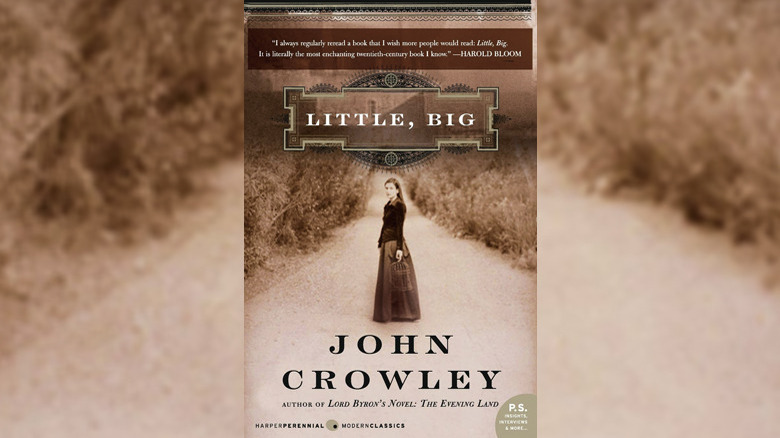
Little, Big
John Crowley's "Little, Big" begins with the marriage of a man named Smoky Barnable to a woman named Daily Alice Drinkwater. Smoky travels to live with Alice and her family in a house that is many houses. Over the course of the novel, the reader comes to learn of the many members of the Drinkwater family, the strange coincidences that dog their footsteps, and an old contract binding them to a future that has not yet been written. "Little, Big" is a love story, a family story, and a fairy story. At times it's a weirdly prescient political tale. And at the very end, it is a novel about the apocalypse, and the function that stories serve. "LIttle, Big" is slow, but the final pages hit with the strength of a star collapsing into a black hole. Few other fantasy novels are as successful at evoking the numinous without ever losing sight of its characters.
"Little, Big" is baggy enough that a film adaptation would likely come up short. A television series would allow for episodic storytelling, giving the novel's many characters and timelines a chance to breathe. The danger of a "Little, Big" adaptation lies in diluting its heady sense of awe into a facile twee-ness. The strength of Crowley's novel is that the world of Faerie lurking beneath its pages inspires fear and awe as much as it does beauty. An adaptation that recognized this, while still centering the relationships of its characters and their small joys, could really be something special.
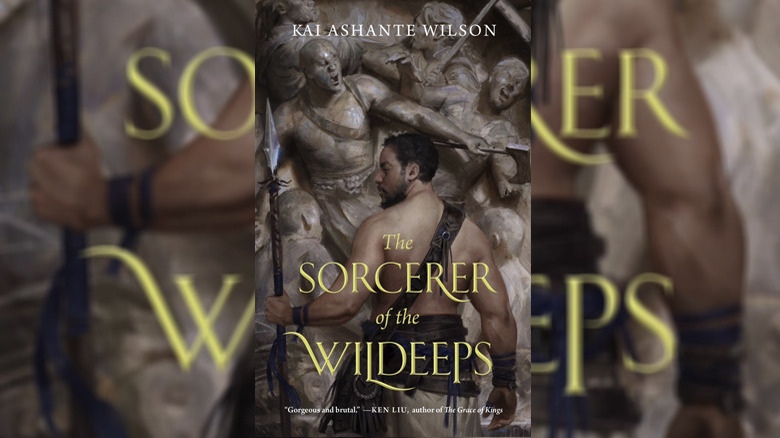
The Sorcerer Of The Wildeeps
Over the past few years, the publishing imprint Tor.com has been putting out novellas spanning genres and subject matter, written by a murderer's row of talented and diverse authors. My personal favorite is "The Sorcerer of the Wildeeps," a sword and sorcery tale that takes place in a future setting so far removed from the modern day that it might as well be magic (my favorite kind!). It's the tragic story of Demane, a Sorcerer who carries the power of a monster in his blood, and Isa, a god-blessed captain who briefly joins his caravan. Despite the sad ending, the novella crackles with energy throughout. Wilson switches on a dime between everyday dialogue loaded with modern slang, and an alien and quite frightening high fantasy register. The result is a novel that impresses not just through its ideas, but through the inspired delivery of those ideas.
There are many challenges that might face an adaptation of "The Sorcerer of the Wildeeps." Translating the appeal of the dialogue from the page to the screen would require a careful hand. Additionally, the novella is built around its ending in such a way that a film may be a better fit for this story. But the framework of Demane traveling from place to place, inching closer to his inevitable estrangement from humanity despite his best efforts, is as good a fit for the medium of television as any.
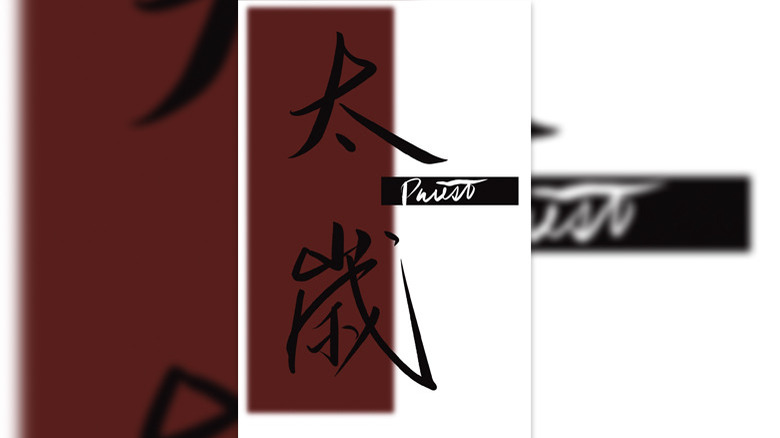
Tai Sui
"Tai Sui" is a webnovel by Priest, a prominent web novel author whose most acclaimed works are to be found in the "danmei" (or "boy's love") scene. Her works "Guardian" and "Word of Honor" have been already been adapted to television. Compared to these, "Tai Sui" deemphasizes the romance element, but is perhaps even more ambitious. It represents her attempt at a "cultivation fantasy," telling the story of a foppish noble named Xi Ping, who is unexpectedly selected among the people of his city to train as an immortal in the mountains. It's a chance that many his age would kill for, an opportunity to transcend the limitations of the body and attain unlimited power. But Priest is too sneaky to give the reader a straightforward power fantasy, and so Xi Ping is soon possessed by the ghost of an "evil cultivator" known as Tai Sui. As the secrets of the world unravel and Xi Ping is radically changed by his experiences, "Tai Sui" imagines a society in revolt against the conventions of Chinese pulp fiction.
Featuring grand-scale set pieces, a large cast of characters, and some memorable creatures, "Tai Sui" would certainly be a challenging story to adapt to TV. But then, "The Untamed" survived the transition to screen (adapted from "Grandmaster of Demonic Cultivation" by Mo Xiang Tong Xiu) to become the biggest pop culture export from China in years. "Tai Sui" represents an opportunity to take an even bigger swing, just as danmei becomes increasingly popular abroad. (Assuming an upcoming TV adaptation of Priest's "Sha Po Lang" doesn't beat it to the punch.)
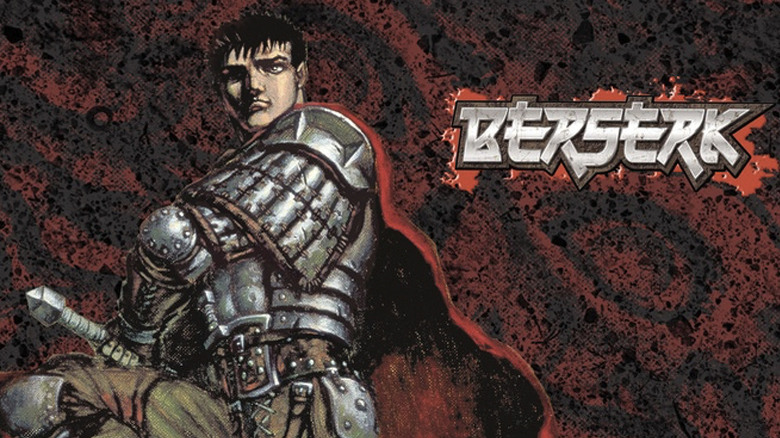
Berserk
"Berserk" is one of the most influential comics of all time. This year's biggest hit video game, "Elden Ring," took its big golden tree directly from "Berserk." Guts, the hero of "Berserk," swung a sword as long as he was tall years before Cloud did the same in "Final Fantasy VII." There have already been two animated series and a movie trilogy. So why adapt "Berserk," which defined the language of dark fantasy in Japan and abroad, into a live-action television series? After all, creator Kentaro Miura passed away just last year. While his talented assistants at Studio Gaga are doing their best to follow up his work, the series currently lacks an ending.
There are certainly aspects of "Berserk" that would be exceedingly challenging to adapt for television. Recent volumes of the series feature monsters the size of buildings and all kinds of ambitious set pieces that would push even the most generous special effects budget to the max. At the same time, a "Berserk" live-action series would present certain opportunities that the anime adaptations could not afford. Miura's art is so detailed that even the well-loved first anime series had to compromise in order to be feasible. Real-life props and sets could provide a texture that no adaptation so far has been able to replicate. As for the story itself: Dated as it is, the tragedy and rebirth of Guts remains as heartbreaking now as it was in the '90s.
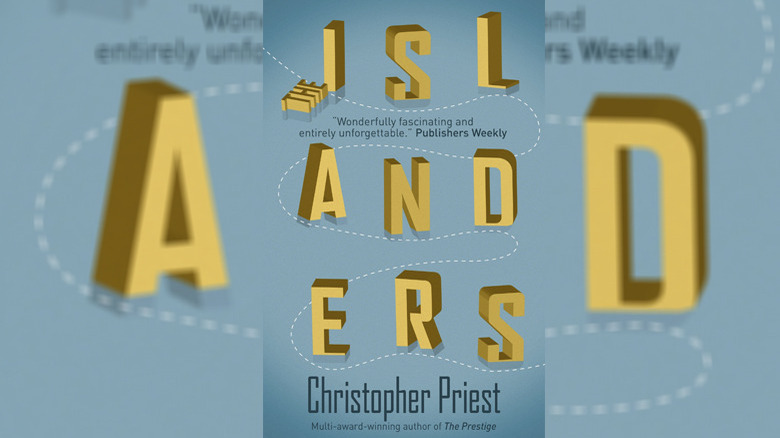
The Islanders
Christopher Priest is best known today for his novel "The Prestige," which was adapted in 2006 into a well-liked Christopher Nolan film. But Priest has written many other novels, all of which interrogate the stories we tell ourselves and others. Most of these are relatively short and feature big, reality-shattering twists, making them a better fit for film than television. But his 2011 novel "The Islanders" is an exception, if only because of its unusual format.
The novel is an alphabetical travel guide to what Priest calls the "Dream Archipelago," a cluster of islands whose names and distance from each other are mutable. A central mystery winds through this guide, with a solution that is tantalizingly within reach and yet seemingly contradictory. Yet "The Islanders" is as much a short story collection as it is a novel, with plenty of time for detours (or are they?) into art criticism, dry comedy, and bone-chilling horror. When Ursula K. Le Guin says "[t]he thryme lives on the island of Aubrac Grande, and you really do not want to meet it," believe her!
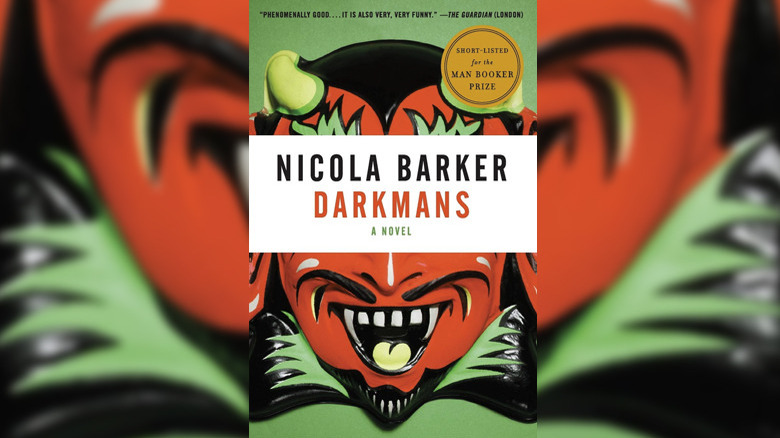
Darkmans
Nicola Barker's "Darkmans" was nominated for the 2007 Man Booker Prize, but did not win. At over 800 pages of absurd digressions, quirky characters, and genre-bending brio, it is not a novel for everyone. Personally speaking, though, I find "Darkmans" even more relevant today than it was on its publication. Years before fascism and social media discourse became a popular topic of discussion, Barker predicted an age of spectacle that would link the opacity of the present day with the Middle Ages. The cast of "Darkmans," who struggle to find happiness in the town of Ashford, are repeatedly thwarted by the ghost of a jester from the 14th century. It's like a very British "Twin Peaks," if BOB was a real person instead of a monster possessing a familiar face.
"Darkmans" wasn't marketed as a fantasy, and folks may find its inclusion confusing on a list that includes relatively straightforward genre fiction like "The Farseer Trilogy." But fantasy is just as useful an ingredient as it is a genre onto itself. The novel is satisfying enough as a black comedy about broken people, but it's the constant destabilizing presence of the ghost that makes it really great. I don't trust a team in the United States to handle this material, but a talented crew located in the United Kingdom could do something fascinating with it.
Babel
R.F. Kuang made her name with "The Poppy War" and its sequels, a ruthless epic fantasy trilogy riffing on 20th century Chinese history. Her newest work is "Babel," a novel that embodies the cutting edge of modern genre fiction. It is a story about academia, drawing on Kuang's own experiences as a teacher and a student. It is also a story about empire, and whether reform is a practical or hopelessly foolish means of changing corrupt systems. "Babel" speaks to the beauty of language, but also to how language is rigorously controlled by a system of power that persists today.
While "Game of Thrones" sought to invest the epic fantasy of Martin's time within the texture of real history, several prominent writers in modern fantasy ask direct questions about the here and now. What does it mean to live and thrive within an imperial system? How does one navigate the ruins of its collapse? Can a fairer, more equitable system be constructed from the rubble, built by and for the marginalized? There are authors right now busy imagining what that imperfect utopia might look like. At the same time, there are also artists like Kuang who have occupied themselves with tearing into those fantasies constructed, deliberately or unknowingly, by the makers of our current imperial reality. Considering the industry of think-pieces that sprung up around the "Game of Thrones" television series, I would hope that a "Babel" adaptation would frustrate and inspire just as many people.
Read this next: The Most Controversial Scenes In Sci-Fi Movies
The post 12 Fantasy Novels That Deserve to Be Adapted to TV That Aren't Game of Thrones appeared first on /Film.
Billy Glenn Hoya, Ronald.phillips likes this
07 Sep 18:30

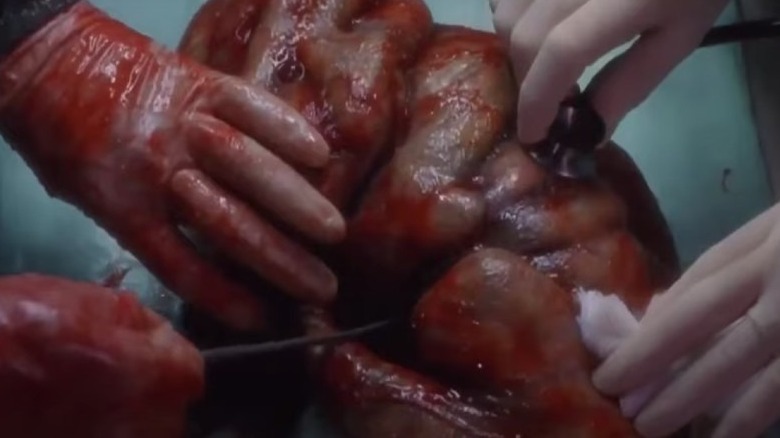
Moments In The Fly Movies That Took Things Too Far
by Bee Scott
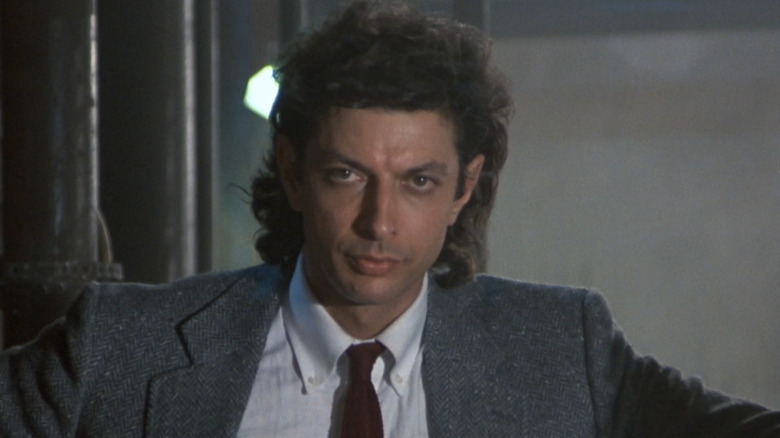
When you think of body horror, "The Fly" is easily a Top 10 contender among the most influential entries. Both the 1958 original and the '86 remake thrilled audiences in very different ways. While the original relied on costuming and admittedly shoddy (by today's standards) visual effects, the remake arrived in a decade famously known for its stomach-turning practical effects. Yet both managed to push the envelope on horror storytelling that often went over the edge, perhaps even taking things way too far.
The first film, directed by Kurt Neumann, was based upon a 1957 short story of the same name. It became a box office success and spawned two sequels, 1959's "Return of the Fly" and "Curse of the Fly" in 1965. Despite a rough road from idea to creation, director David Cronenberg's 1986 remake flipped everything about the original on its head. A sequel, simply titled "The Fly II," followed three years later and didn't quite capture the beautiful tragedy of the previous film.
Across five total films, "The Fly" franchise has become one of the greatest thematic and scare-seeking devices in horror history. This list is a compilation of the moments that stand out as going way too far, either in its animal cruelty or total gross-out sequences. Sit back, and don't lose your lunch.
Mutilated Baboon (The Fly, 1986)
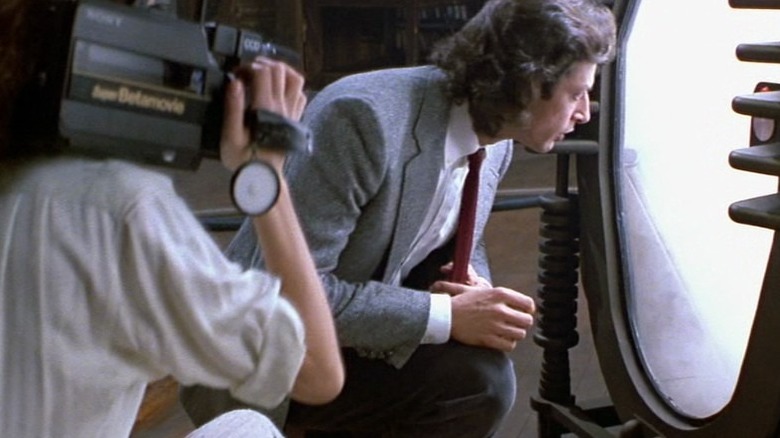
One thing you'll immediately notice if you've ever done a marathon of all five "The Fly" movies is the prevalence of animal cruelty. In the 1986 remake, helmed by David Cronenberg, Seth Brundle (Jeff Goldblum) somehow manages a steady stream of baboons on which to perform his transportation experiments between pods. Organic matter seems harder to transport, so why not test on animals, right?
Seth invites reporter Veronica "Ronnie" Quaife (Geena Davis) to witness an early trial, and it goes far from what he had planned. The experiment is supposed to disintegrate an object or a person's molecules and then reintegrate them. In this case, however, a baboon is rearranged into some sort of mangled monster inside the second pod. Its screeches of sheer agony are enough to run the blood cold. Seth and Ronnie look on in horror.
Human nature is always to be curious, yet it's not a particularly brave act to forge ahead in areas of medicine and science with innocent animals as one's test subjects. Seth is a deeply endearing and charming protagonist, if not fatally flawed with a hunger for recognition. Even before he takes on a full-on fly form, he displays questionable ethics in his research. The baboon never stood a chance.
Bodies Exchanged (Curse Of The Fly, 1965)
Released in 1965, "Curse of the Fly" attempts a very different kind of story than the series had done up to this point. Director Don Sharp tells the story of Martin Delambre (George Baker) who helps his father Henri (Brian Donlevy) with radical, unprecedented experiments into teleportation. They've seemingly mastered transporting human beings from Quebec all the way to London.
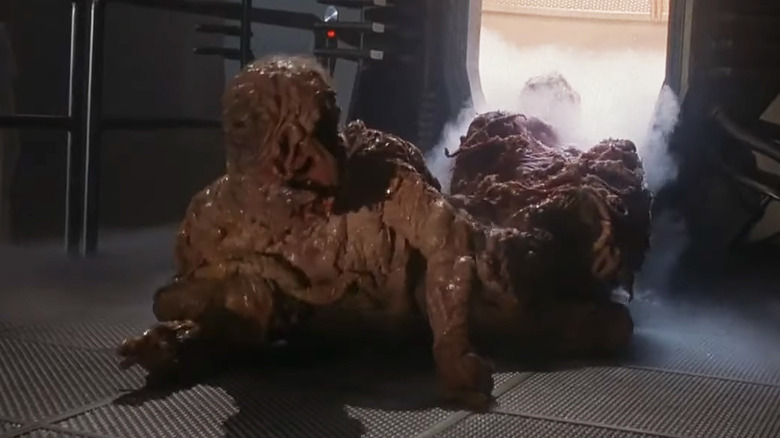
A marvel achievement is quickly undone when Martin falls in love with Patricia (Carole Gray), an escaped mental patient. They marry within a week of meeting, despite them knowing very little about one another. While Patricia has harbored the fact she has been committed to an asylum, Martin has his own skeletons rattling in the closet. One of those secrets lies outside in a stable, where two exchange students have been imprisoned following an experiment gone wrong. They are now horribly disfigured and treated as "the other."
With the police quickly closing in, Martin and Henri transport the two students to London, but it's not smooth sailing. Their bodies fuse together into a pulsing mass of flesh and bone. Martin's brother and colleague Albert (Michael Graham) is aghast and must put them down, grabbing an ax as the camera fades to black. A tragic end to their lives that could have been avoided had Martin and Henri thought better of the situation and not panicked.
Guinea Pig Pâté (Return Of The Fly, 1959)
"Return of the Fly" picks up the story years after the original. Writer-director Edward Bernds focuses on André Delambre's son Philippe (now played by Brett Halsey) and his determination to continue his father's work. Philippe's uncle François (Vincent Price) won't hear of it and refuses to assist in any way. Philippe then turns to his colleague, Alan Hinds (David Frankham), who is more than happy to jump on the opportunity.
Separating itself from the original, the 1959 sequel explores the obsession with the unknown and how a hunger for fame feeds evil itself. When it is revealed Alan is actually a secret spy named Ronald Holmes, an agent confronts him. Ronald overtakes the agent, knocking him out and placing him inside the molecule disintegrator. When the agent reintegrates, he has the hands of a guinea pig — with the guinea pig now possessing human hands.
The guinea pig squeals for help, and it's just heartbreaking. A heart cold as ice, Ronald squashes the furry creature underneath his shiny dress shoe. The camera quickly cuts away, giving the viewer time to process and recover. It's brutally unnecessary. Long live the guinea pig.
The Dog Monster (The Fly II, 1989)
Animal torture reaches a new horrifying level in 1989's "The Fly II." While jumping off from the previous film, it borrows elements from "Return of the Fly" (1959) and "Curse of the Fly" (1965) to mold the tale into something unique. The film itself doesn't quite stand on its own as subversive, but it does strike a nerve.
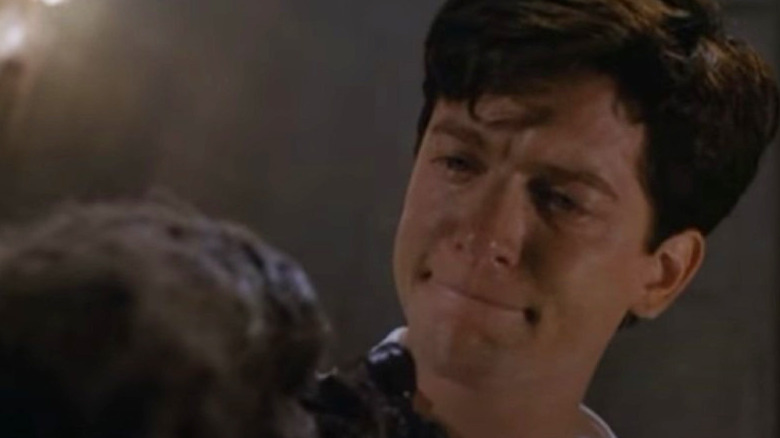
Seth Brundle's son Martin (Eric Stoltz) lives a fraught life as a test subject inside the Bartok Complex. There, he undergoes serum injections to heal his recessive fly gene, which causes his body to accelerate at a frightening speed. He befriends a dog as a way to cope with his less-than-ideal life. They truly become the best of friends. But an experiment mounted by a group of scientists fails to properly transport the dog and causes it to become maimed and disfigured during the reintegration process.
The dog's yelps are heartbreaking, and the scientists refuse to do anything to alleviate its suffering. Martin later discovers what they have done and is forced to put the dog out of its misery, using a chemical-soaked rag to put it down. As its eyes fade, Martin's face distorts, and tears stream down his face. What a moment that makes you hate the human race.
Just A Little Puke (The Fly, 1986)
Chris Walas knocks the special effects out of the park in "The Fly." Where the 1958 original relied on costuming to present the human-fly hybrid, the 1986 film uses top-notch practical makeup effects and gadgets to take the mutant creature to the next level with great, nauseating results.
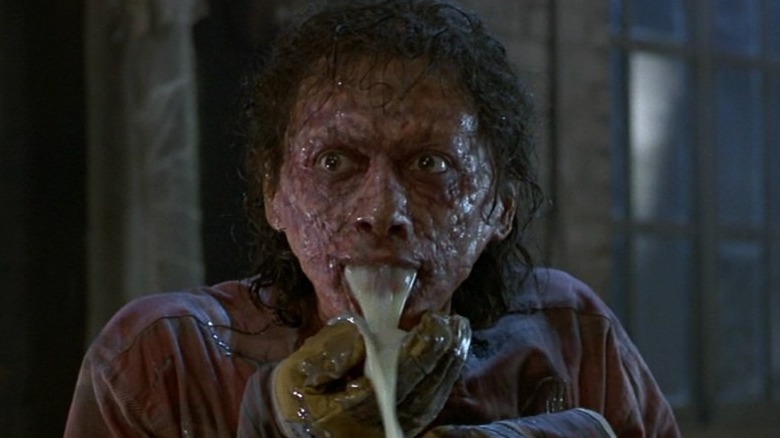
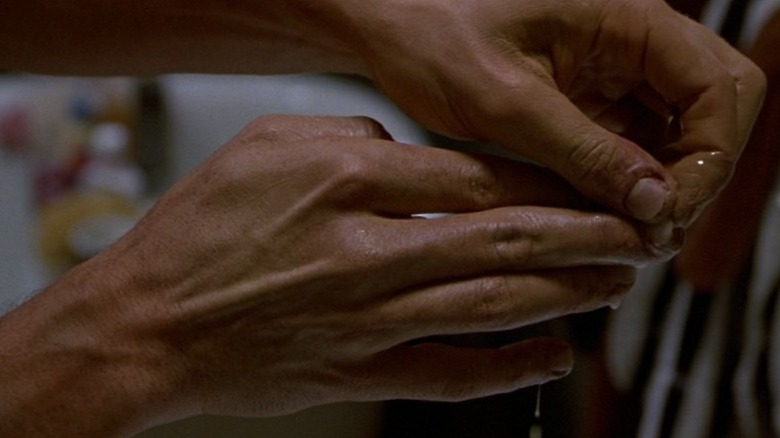
As Seth Brundle transforms into a fly, he takes on many of the attributes of the winged insect, and that includes how a fly eats. Seth must regurgitate digestive juices (yes, you read that correctly) and slather his food in the nasty goo to dissolve his meals into smaller bites so his stomach can actually process them. In one scene, he involuntarily regurgitates into his hand and onto a donut, much to Ronnie's surprise and revulsion. "Oh, that's disgusting," Seth quips.
The audience can stomach most of Seth's transformation, but regurgitation is where the line is unmistakably drawn. Akin to watching someone puke their guts out when they're sick, it's just gross.
Ghost Cat (The Fly, 1958)
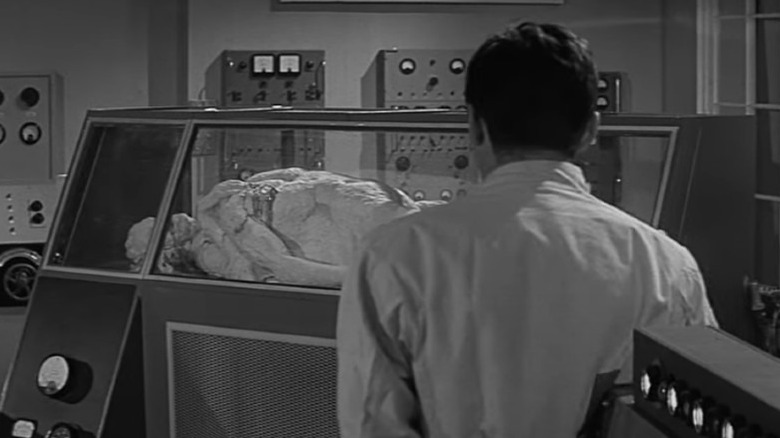
Kurt Neumann's original film came decades before the special makeup effects boom of 1980s horrors. That doesn't mean the 1958 story didn't offer plenty of frights, though. Especially for the era, the mutation of a man into a giant fly was surely ghastly, to say the least. One of the most terrifying moments, however, actually involves an animal.
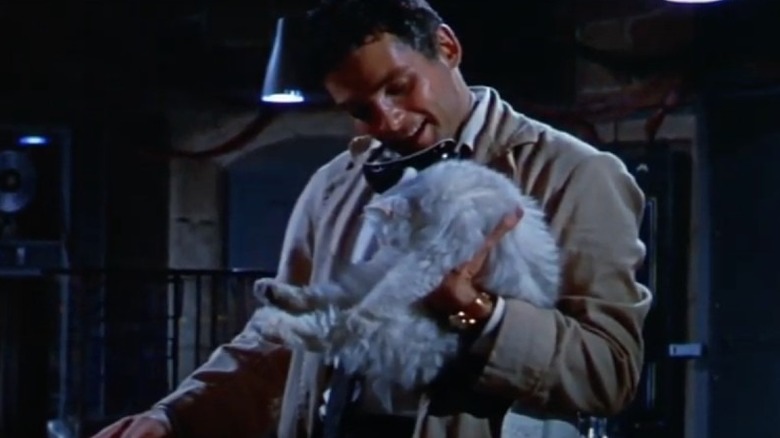
With Quebec-based scientist André Delambre (David Hedison) deep in research with his particle disintegrator, he gets the bright idea to level up from inorganic matter (such as a dish and a newspaper) to organic matter. He places the family cat Dandelo in the contraption. The poor thing disintegrates as it should but doesn't reintegrate in the second glass machine. Its whimpering, disembodied meows can be heard echoing around the laboratory. To make matters worse, André shrugs it off and doesn't tell his wife until things go completely off the rails later on in the film.
The plus side is the feline friend isn't mutilated into a half-cat, half-slimy creature. Dandelo, wherever you are, may you enjoy eating lots of catnip and chasing mice in a meadow. You deserved better.
Larva Baby (The Fly, 1986)
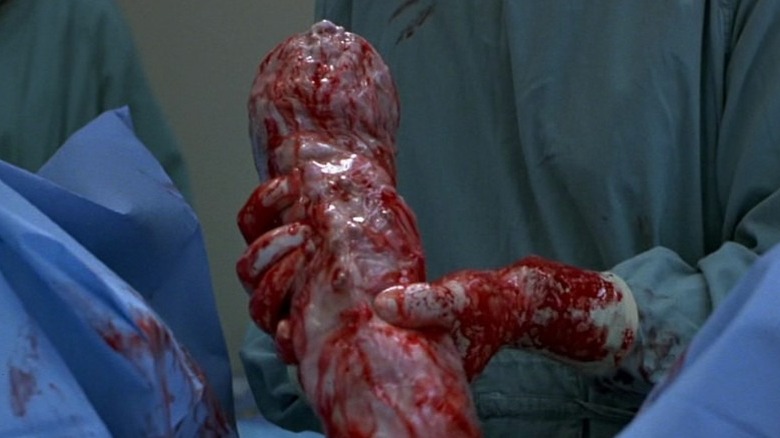
Nobody asked for it (and hopefully never wanted it), but the 1986 remake gave fans a larva baby. It's within Ronnie's dream, but it still counts among the grossest on-screen moments ever. Soon after hooking up with Seth, unaware that he is now half-fly, Ronnie learns that she is pregnant with his child.
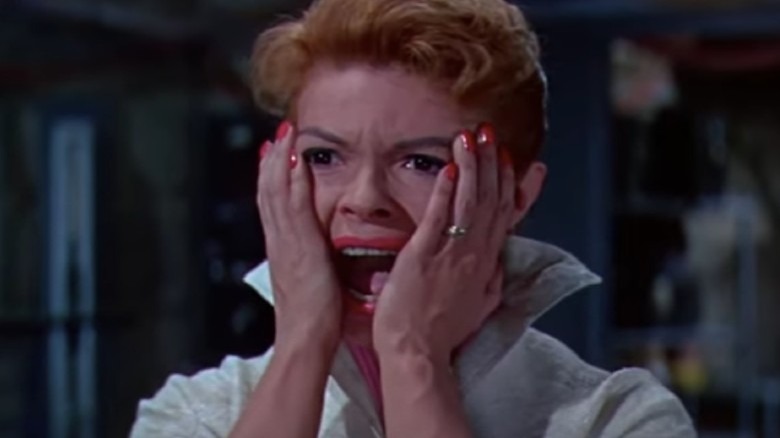
During a midnight reverie, her biggest concern with the pregnancy manifests as her worst nightmare: giving birth to an oversized larva-baby. The viewer is none the wiser that what they're beholding is a dream. Ronnie goes into labor and is wheeled off to the delivery room, where she gives birth to a squirming, football-sized larva sack. It's as frightening and disgusting an image as you might expect. Ronnie can only do one thing, though, and that's scream her lungs out.
Ronnie quickly wakes up in a cold sweat. The clarity of reality doesn't hide the fact that she could very well give birth to a larva-baby. Is that how it works when a human woman sleeps with a half-man, half-fly? Who knows, but it's pure nightmare fuel.
Justice Served Hot (The Fly II, 1989)
As detailed above, Martin's furry companion didn't deserve such a grim fate. The villainous doctors followed orders handed down from Anton Bartok (Lee Richardson), the owner of Bartok Industries, which funded Seth Bundle's initial experiments. "The Fly II" does deliver on much-deserved justice in the third act, however, so the viewer is left feeling somewhat vindicated.
In the action-packed finale, Martin encases himself inside a cocoon and later emerges to take revenge upon Bartok. He forces the industry giant to reveal the password unlocking the telepods and then drags him inside. Colleague Beth Logan (Daphne Zuniga) begins the gene-swapping process, and Martin resurfaces fully human again. Bartok, on the other hand, has morphed into a disfigured mutant and is missing half of his face. You can even see his jaw twitching deep within his skull. It's a chilling and disturbing image.
A deformed Bartok crawls to a food dish, mirroring the sad state Martin's dog was found earlier in the film. Despite how grotesque he looks, the moment is a pure triumph. You can't help but cheer for his comeuppance.
Crushed To Death (The Fly, 1958)
"The Fly" relays the story of André Delambre through an entire flashback sequence. His wife and now widow, Hélène (Patricia Owens), is found in absolute hysterics and confesses to his murder. The crime scene is a gruesome one, as André's body has been mutilated in a hydraulic press not once but twice. Director Kurt Neumann suggests what may have occurred initially, but reveals all in the last 15 minutes.
After transporting himself through the disintegrator-integrator, André soon learns that a fly had become trapped inside with him. Their atoms have now fused together, with half his molecules now residing in a white fly. In his desperation, he pleads with Hélène to capture the insect, or else he must die. Hélène then enlists their son to capture the white-headed fly, but he fails. In the end, André embraces his deadly fate.
Hélène reluctantly agrees to press the big red button on the hydraulic press, and it doesn't work entirely the first time. She is forced to press it again. Imagining being crushed to death, much less as a half-fly human being, is downright haunting.
Seth's Descent (The Fly, 1986)
To reiterate, special makeup effects artist Chris Walas pushes the boundaries until they snap and ooze all sorts of fluids. "The Fly" is nothing if not deliciously gross. Once Seth Brundle has accidentally fused his genetic material with a fly, his body undergoes a deterioration process that is guaranteed to make you gag.
Seth's fingernails begin to peel off, exposing tender layers of skin underneath. His hair grows dry and wispy, frazzled in a way that mirrors that of a fly's. His skin also grows coarse with pulsing pimples sprouting up on his face. As he proceeds to pop them, puss splatters across the mirror. Seth even has trouble keeping his human teeth inside his mouth and ears intact on the side of his head. It's just an icky mess.
In total shock, Ronnie gives Seth a big ole hug right on the side of his now missing ear, replaced with a golf ball hole discharging more puss. These moments still force the audience to want a nice, long, scorching-hot shower afterward.
Larva Baby Redux (The Fly II, 1989)
"The Fly II" doesn't often work as a film itself, but it does further push the boundaries on what audiences should be seeing on-screen. There are several moments that feel more like repackaged greatest hits of the entire franchise, including the reuse of a larva-baby in the opening sequence. Ronnie Quaife, this time played by Saffron Henderson, gives birth to an actual larva sack.
Her worst nightmare has become a reality. The sack squishes, squirms, and writhes around. The doctors are appropriately disturbed, as some creature does appear to be very much alive. When a doctor opens up the bloody vessel, they discover a very real and seemingly healthy baby boy. Anton Bartok adopts the infant child and places him under strict observation for the rest of his life. The image of a human baby popping out of a larva sack sets the tone for a film that goes further over the line than any previous film. It's a nightmare you won't soon forget.
Read this next: Horror Movies With Unconventional Monsters
The post Moments In The Fly Movies That Took Things Too Far appeared first on /Film.
Ronald.phillips likes this
07 Sep 18:29
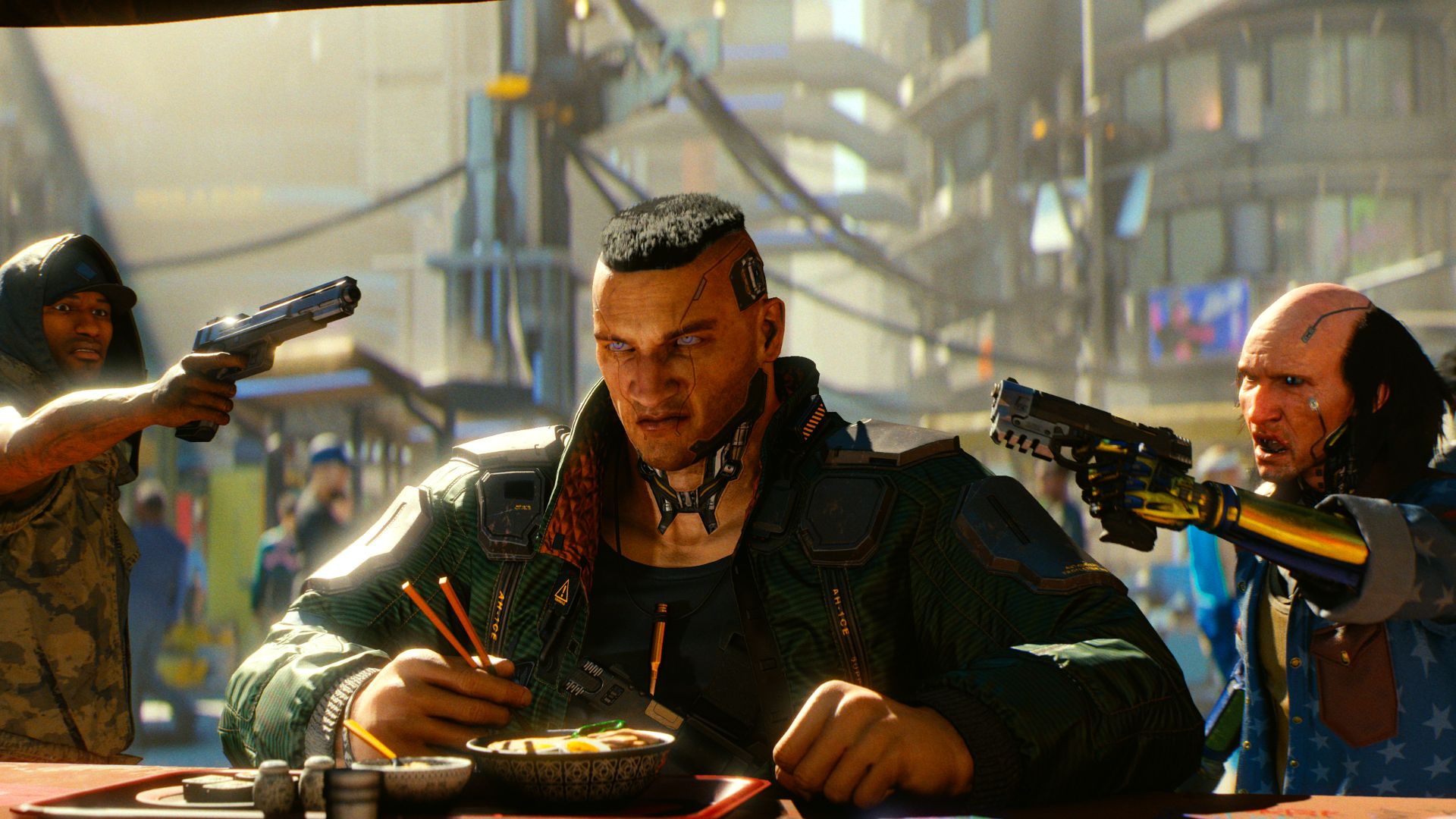
Cyberpunk 2077 Phantom Liberty to be only major expansion says CDPR
by Will Nelson
Cyberpunk 2077 Phantom Liberty is going to be the only major expansion for the game, as it’s been confirmed that the recently announced DLC will be one of a kind for the sci-fi RPG game.
RELATED LINKS: Cyberpunk 2077 review, Cyberpunk 2077 lore & universe, Buy Cyberpunk 2077
Ronald.phillips likes this
07 Sep 18:25
After 20 years, Wolfenstein: Enemy Territory gets official dedicated servers
by John Papadopoulos
Now here is a pleasant surprise. Wolfenstein: Enemy Territory came out in April 2002 and after twenty years, the game finally gets official dedicated servers. These official dedicated servers run the vanilla Enemy Territory Campaign ruleset, with all six original maps and no mods. In other words, you’ll be getting the original vanilla 2002 experience. … Continue reading After 20 years, Wolfenstein: Enemy Territory gets official dedicated servers →
The post After 20 years, Wolfenstein: Enemy Territory gets official dedicated servers appeared first on DSOGaming.
Ronald.phillips likes this
07 Sep 18:25
As Ex-Uber Executive Heads To Trial, the Security Community Reels
by msmash
Joe Sullivan, Uber's former chief of security, faces criminal charges for his handling of a 2016 security breach. His trial this week has divided the security industry. From a report: Joe Sullivan was a rock star in the information security world. One of the first federal prosecutors to work on cybercrime cases in the late 1990s, he jumped into the corporate security world in 2002, eventually taking on high-profile roles as chief of security at Facebook and Uber. When the security community made its annual summer pilgrimage to Las Vegas for two conferences, Mr. Sullivan was an easily recognizable figure: tall with shaggy hair, wearing sneakers and a hoodie. "Everyone knew him; I was in awe, frankly," said Renee Guttmann, who was the chief information security officer for Coca-Cola and Campbell Soup. "He was an industry leader." So it came as a shock to many in the community when Mr. Sullivan was fired by Uber in 2017, accused of mishandling a security incident the year before. Despite the scandal, Mr. Sullivan got a new job as chief of security at Cloudflare, an internet infrastructure company.
But the investigation into the incident at Uber continued, and in 2020, the same prosecutor's office where Mr. Sullivan had worked decades earlier charged him with two felonies, in what is believed to be the first time a company executive has faced potential criminal liability for an alleged data breach. Mr. Sullivan has pleaded not guilty to the charges. Mr. Sullivan stepped down from his job at Cloudflare in July, in preparation for his trial, which begins this week in U.S. District Court in San Francisco. Other chief security officers are following the case closely, worried about what it means for them. [...] At the very least, security executives are worried about being on the hook for potential legal bills. Charles Blauner, a retired CISO and cybersecurity adviser, said security chiefs had taken a strong interest in directors and officers insurance, which covers the legal costs of executives who are sued as a result of their work with a company. "A lot of sitting chief information security officers are going to their bosses and asking if they have D.&O. insurance and, if not, can I have it?" Mr. Blauner said. "They are saying, 'If I'm going to be held liable for something our company does, I want legal coverage.'" After being charged, Mr. Sullivan sued Uber to force it to pay his legal fees in the criminal case, and they reached a private settlement.


Read more of this story at Slashdot.
Ronald.phillips likes this
07 Sep 11:14
BioShock is unplayable for Linux users with new update
by Noelle Warner

We don't want it, 2K
Fifteen years later, BioShock remains one of the most recognizable and beloved series in gaming, and publisher 2K is still releasing updates to support the series. Or, more specifically, to make the games run through their own launcher, as evidenced by the patch notes from both older updates and a new one (via PC Gamer). This time around they even labeled the patch as a "Quality of Life Update," when all it did was enable linking to 2K accounts and added the new launcher "which includes a store to purchase new content."
So they're forcing yet another game launcher on us, but what really has fans peeved is that this new update has rendered the games unplayable for players running them on Linux. At first, it seemed to just be BioShock Infinite that was affected, but now it's looking like the entire series is a bust. The Linux Gaming subreddit is full of players decrying the changes, and trying to find solutions to fix the problem. Some players are expressing their wish that Steam would let them access earlier builds rather than forcing them to use the most recent version, and I'm kind of surprised that wasn't an option already.

Naturally, fans took to the review section on Steam to voice their discontent, where one user said that 2K's launcher is riddled with bugs, crashes, and corrupted saves.
I have my BioShock collection on my PlayStation so I'm in the clear, but man, I am feeling the frustration on behalf of PC gamers. Here's hoping that 2K gets the message soon and decides to scrap the launcher altogether, or at the very least releases a patch to fix the games for Linux users.
Recently I've been partial to arguments about why it's important to own physical media, and I have to say this situation is only pushing me further into that camp. If I spent money on a game, I certainly want to be able to play it without the meddling of a company years after the game's release.
The post BioShock is unplayable for Linux users with new update appeared first on Destructoid.
Billy Glenn Hoya, Ronald.phillips likes this
07 Sep 11:10
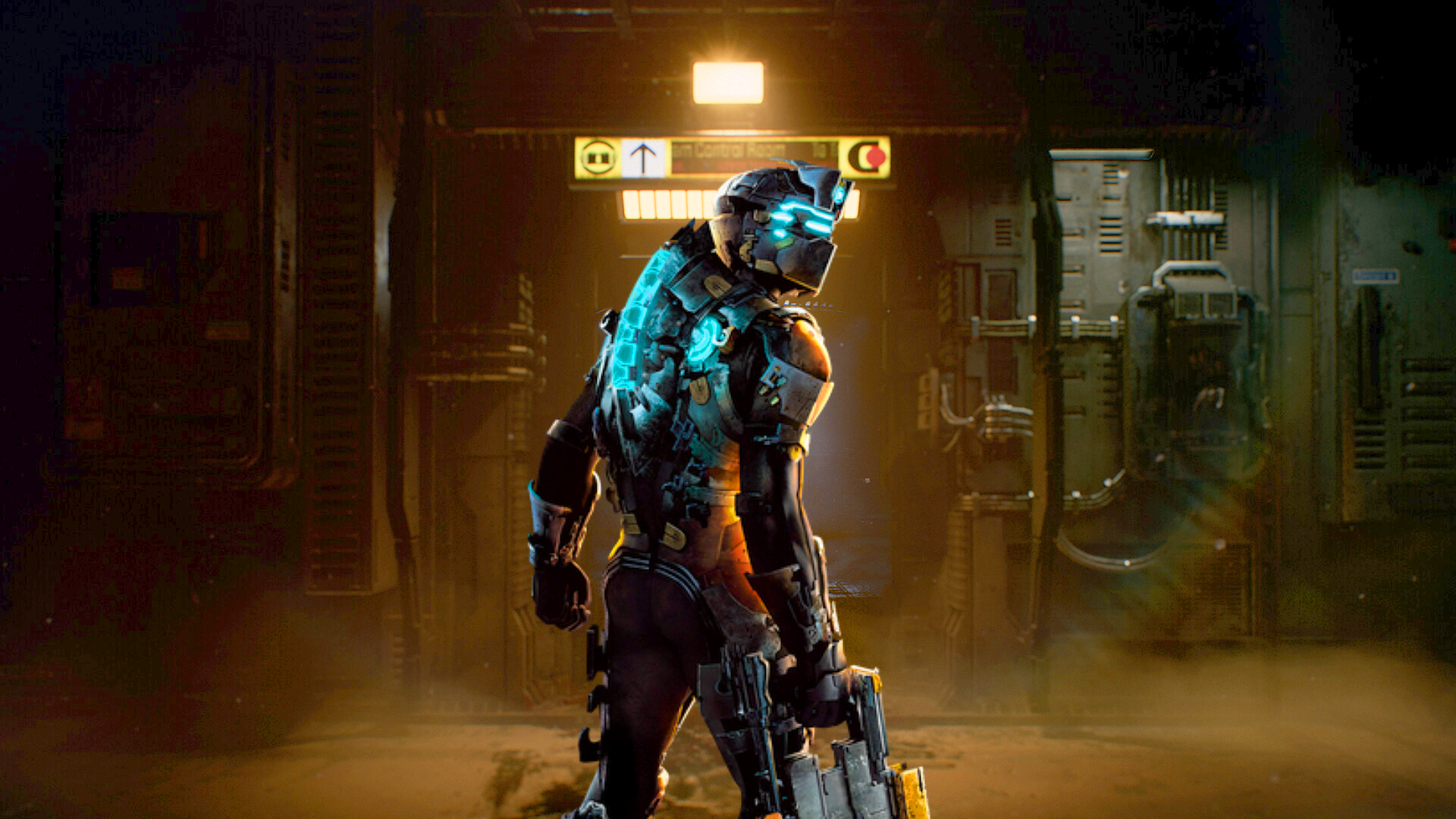
Dead Space system requirements and recommended PC specs
by Phil Hayton
The Dead Space system requirements won't turn your gaming PC into a necromorph, but you'll want to protect your graphics card from any frame rate frights. While you'll be able to play the horror reboot using a Geforce GTX GPU, upgrading to something newer will help you achieve reccomended specs.
Continue reading Dead Space system requirements and recommended PC specs
MORE FROM PCGAMESN: Dead Space release date, Dead Space system requirements, Best horror games on PC
Ronald.phillips likes this
07 Sep 11:09
US Plans Shift To Annual COVID Vaccines Akin To Flu Shots
by BeauHD
The United States is likely to start recommending COVID-19 vaccines annually, health officials said on Tuesday, as new boosters designed to fight currently circulating variants of the coronavirus roll out. Reuters reports: By the end of this week, 90% of Americans will live within five miles (8 km) of sites carrying updated vaccines, U.S. health secretary Xavier Becerra said at a White House briefing. Officials said people could get the new boosters this fall or winter alongside their regular annual flu shots, and said it was likely this would become a yearly ritual.
U.S. Centers for Disease Control and Prevention (CDC) Director Rochelle Walensky said even with the seven-day average of COVID hospitalizations down 14% to 4,500 per day, annual shots could save thousands of lives. "Modeling projections show that an uptake of updated COVID-19 vaccine doses similar to an annual flu vaccine coverage early this fall could prevent as many as 100,000 hospitalizations and 9,000 deaths, and save billions of dollars in direct medical costs," she said. The redesigned boosters, green-lighted by U.S. health regulators last week, aim to tackle the BA.5 and BA.4 Omicron subvariants, which account for over 88% and 11% of circulating viruses, respectively, Walensky said. The so-called bivalent vaccines also still target the original version of the virus.
Top U.S. infectious disease expert Dr. Anthony Fauci said unless a dramatically different variant emerges, annual vaccines should offer enough protection for most people, but that some vulnerable groups might need more frequent vaccinations. "We likely are moving towards a path with a vaccination cadence similar to that of the annual influenza vaccine, with annual, updated COVID-19 shots matched to the currently circulating strains for most of the population," he said.
Read more of this story at Slashdot.
Ronald.phillips, Scott Weigand likes this
06 Sep 22:08

These Habits Are Cute When Dating but Irritating in a Relationship, According to Lifehacker Readers
by Meredith Dietz
Last week I asked you to share the last time your rose-colored glasses lost their rosy tint. Because as the early stages of dating turn into the harsh realities of a serious relationship, certain behaviors go from endearing to downright irritating. Innocuous examples include constant humming, clinical-level snoring,…
Ronald.phillips likes this
06 Sep 22:06

BioShock games' "quality of life" updates actually break them on the Steam Deck
by James Archer
BioShock Remastered, BioShock 2 Remastered and BioShock Infinite have all fallen afoul of some questionably titled “quality of life” updates that publishers 2K Games released last week. These updates added a new 2K Launcher to all three BioShocks that appears when booting them up from Steam, but as found by GamingOnLinux, something about this launcher doesn’t take kindly to Linux-based operating systems. Linux-based operating systems like the Steam Deck’s SteamOS.
As it happens, then, there's a chance – if you’re trying to play on Valve’s handheld PC – that all these updates will do is swing a bloodied 9-iron into the Deck’s ability to launch the affected games at all. Whoopsie doodle.
Ronald.phillips likes this
06 Sep 20:34
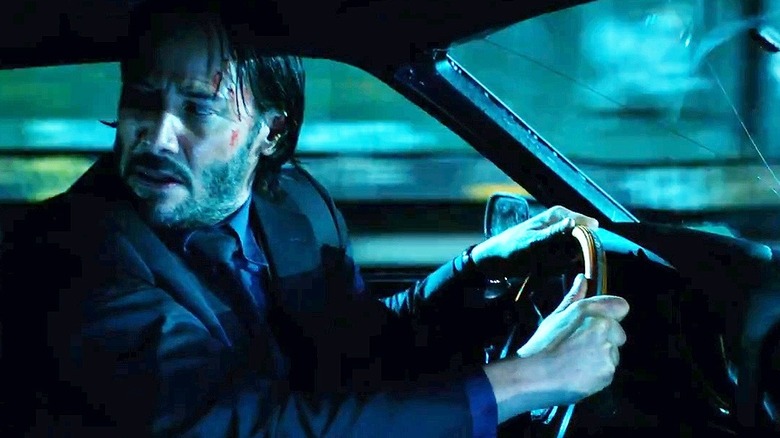
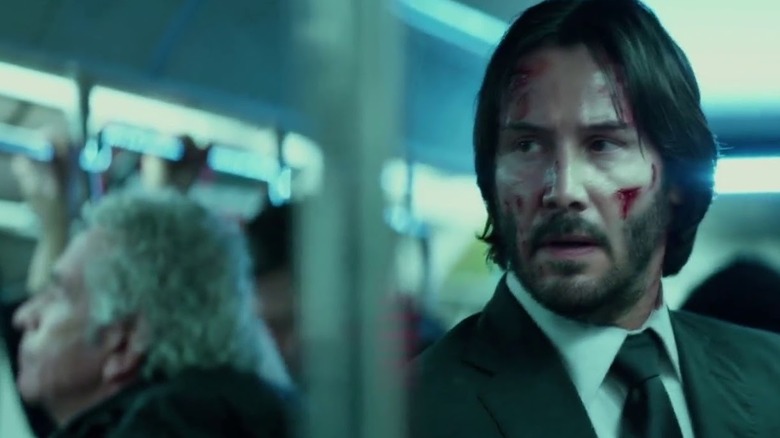
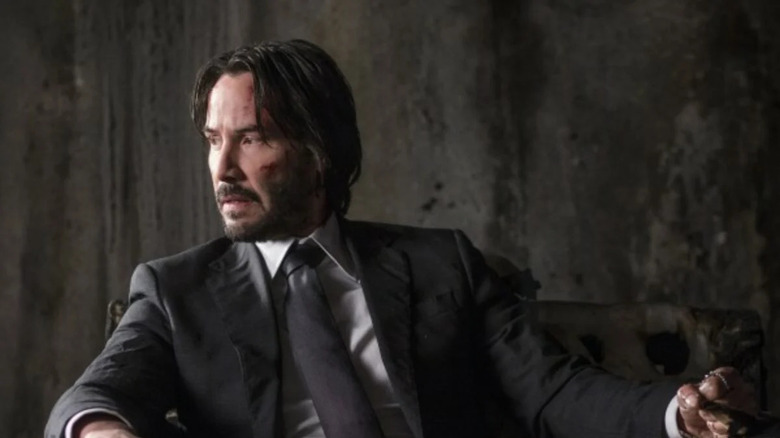
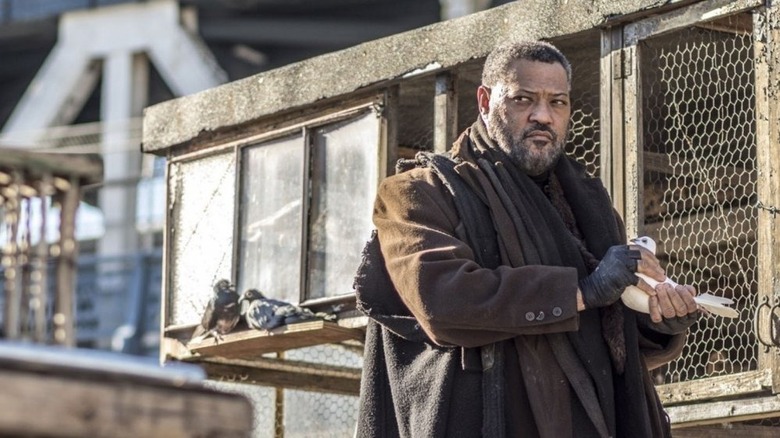
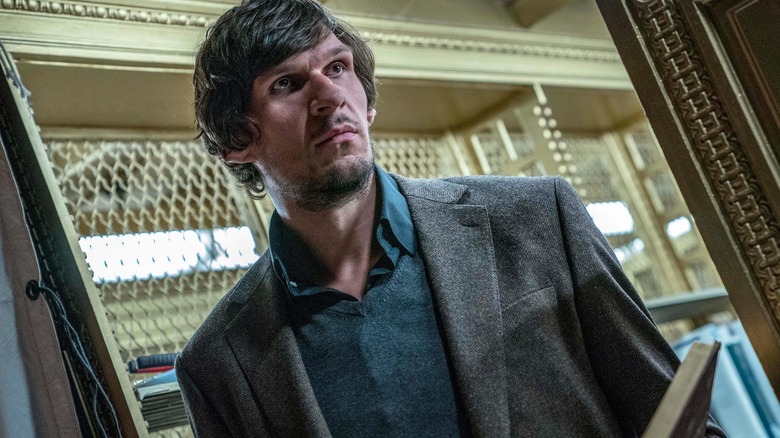
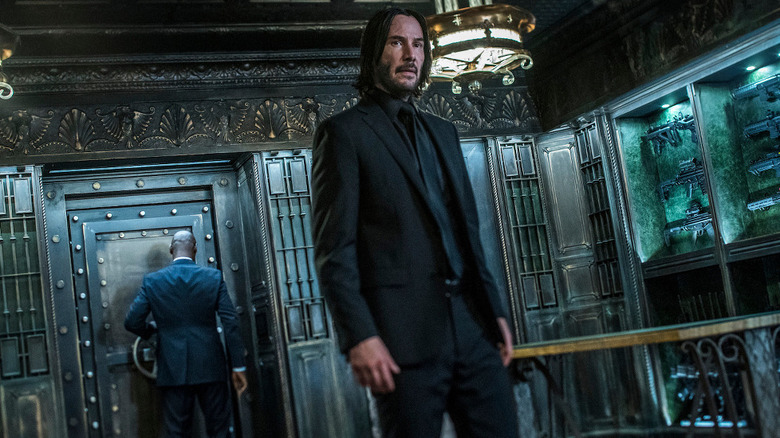
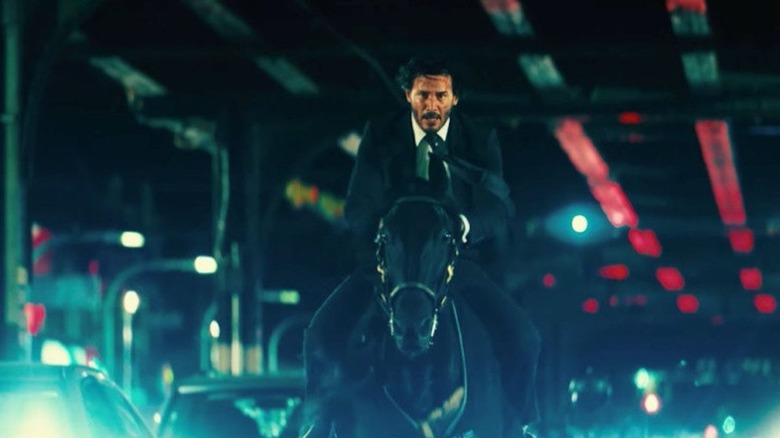
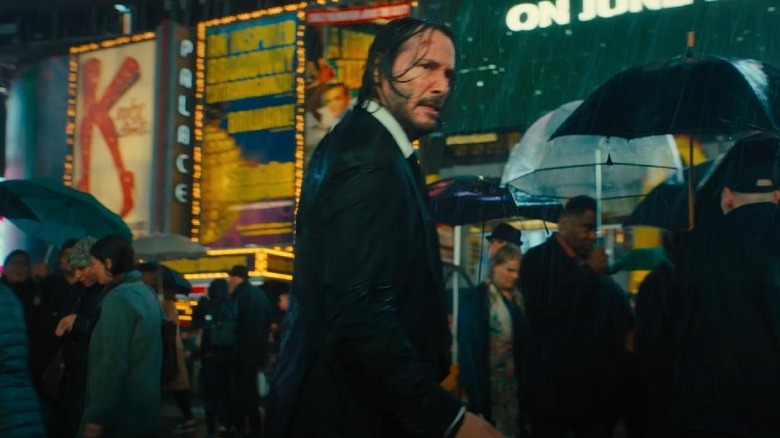

John Wick Moments That Went Too Far
by Scott Thomas
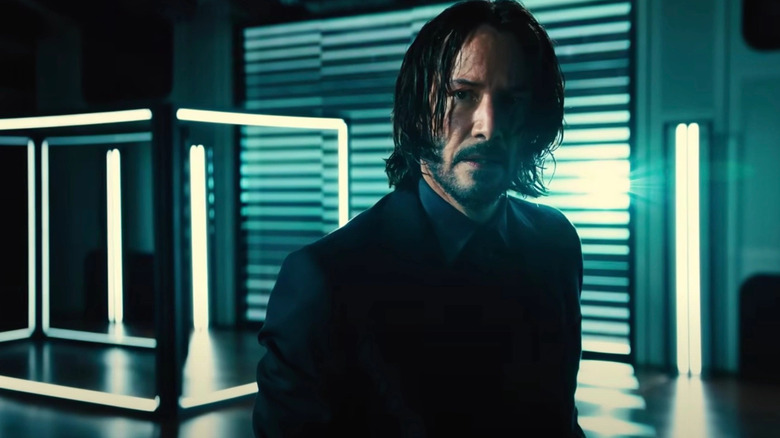
The John Wick movies thrive on maximalism. It's their secret weapon. Released in 2014, the original "John Wick" appeared to be a revenge thriller built from spare and familiar elements. Instead, director and former "Matrix" stuntman Chad Stahelski, uncredited director David Leitch, and writer Derek Kolstad unleashed a sprawling underground of hitmen, John Alberto Leguizamo running a chop shop, and an underworld-only hotel that forbids assassinations on-site. "John Wick" took its world-building and stylistic excesses farther than unsuspecting audiences could guess. As a result, it was a smash at the box office. It's little wonder that "John Wick: Chapter 2" and "John Wick Chapter 3: Parabellum" followed suit, financially and artistically.
Given that, let's look at the "John Wick" movie moments that deliberately took things too far and shifted the needle for the films they occurred in and for action cinema in general. The maximalism of "John Wick" is no longer the exception. It's the standard.
Daisy Gets Murdered (John Wick)
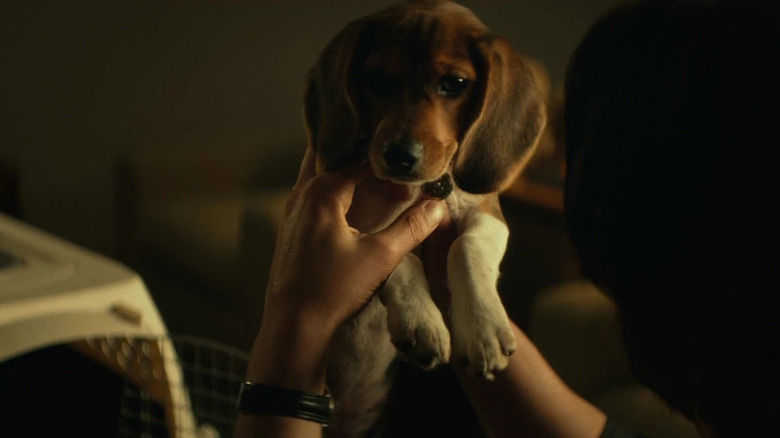
The inciting incident of "John Wick" is a dealbreaker for its audience. John Wick (Keanu Reeves) doesn't take revenge on the Tarasov crime family because they killed his wife (she's already passed from a terminal illness) or his mentor, Marcus (whom they hire to kill Wick). Wick goes full Baba Yaga on the Tarasovs because they kill his beagle puppy, Daisy. "John Wick" is the antithesis of DoesTheDogDie.com and a challenge to those who cannot tolerate animal death in art. For many, it goes too far. It's also an incredible storytelling decision.
Daisy is no mere dog. She's a gift from Wick's terminally ill wife, Helen (Bridget Moynahan), his last living link to her memory and a totem through which to grieve and love again. In retrospect, the opening passages of "John Wick" are ludicrously subdued for this franchise. There's a world in which John Wick goes the way of Jackson Briggs from Channing Tatum's "Dog" and heals his heart through an animal-human bond. Sadly, it's not to be. Iosef Tarasov (Alfie Allen) shifts Daisy off this mortal coil and John Wick is working again.
Given how wild the "John Wick" movies become, ending Daisy's life is a smart catalyst. It's a moment that goes too far for many audience members, but it also opens the door to a world of extreme (and extremely cathartic) action set pieces. It's the first instance in which "too far" is actually "just right" for this franchise.
The Red Circle (John Wick)
For the first two-thirds of its run time, "John Wick" is a good action movie. The action setpieces are tightly choreographed. The cinematography, courtesy of Jonathan Sela ("Deadpool 2"), is naturalistic and evocatively stylish. "Wick" feels like it will be a solid but minor entry in Keanu Reeves' blockbuster canon. Then Wick goes to The Red Circle.
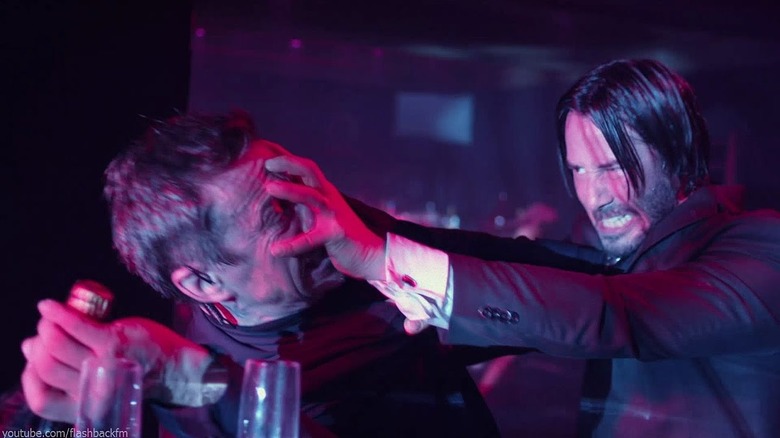
The Red Circle is the Tarasov crime family's stronghold. It is the epitome of sleek sleaze, a paradise of fluorescent neon and blue hues that is one part spa, one part nightclub. From the second Wick arrives there, the visual language of "John Wick" kicks up a notch. So does the violence. Wick eliminates two Tarasov goons in a lavish bathroom by stabbing one in the ear and drowning the other in a shallow sink before snapping his neck. The film is suddenly going farther and harder. It's the tip of the iceberg. As lovely techno music booms, Wick heads into The Red Circle's bathhouses, leaving a trail of bodies in his wake. However, things don't go "too far" (in the best sense) until a half-naked Iosef flees onto The Red Circle's dance floor. There, intricate and brutal gunplay occurs while clubgoers keep dancing, only fleeing after the moment when the film levels up in every sense with Wick eliminating a horde of identically dressed bodyguards. He shoots one through a railing. He uses judo to take down another while changing his gun cartridge. By the time this scene reaches its conclusion, "John Wick" is another strain of action movie entirely. "Too far" is its new normal.
Marcus Gets Killed (John Wick)
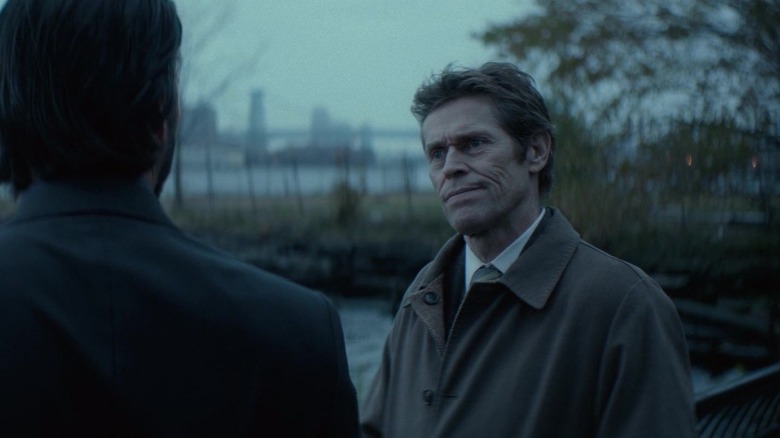
It is insane that a character played by Willam Dafoe is dead in the "John Wick" universe because it's hard to imagine an actor more suited to an underground of cryptography-happy assassins than Dafoe. Dafoe brings gravitas to everything. His famously exaggerated features and deep reserves of talent are an asset to any franchise (look at the MCU and DCEU for proof). Dafoe is an actor the "Wick" franchise should be building towards utilizing. Instead, he's already come and left it.
Dafoe plays Marcus, John's sort-of mentor and an embodiment of the underground's old guard. He is murdered by Viggo Tarasov (the late Michael Nyqvist) and, on paper, the killing is a savvy storytelling decision. Tarasov ending Marcus' life confirms his standing as the film's main villain, a title his son Iosef holds at the movie's outset. The particularly brutal beatdown of Marcus that leaves Viggo icing his ripped-open knuckles and Marcus with a knife in his leg before slugs pierce his chest suggests the world as John has known it is over. That's all good. Simultaneously, the death of Marcus feels like salt in John's wounds. It does not (and cannot) carry the weight of Daisy's slaughter in the film's first reel. This is a moment when "John Wick" adding to its body count dulls its emotional impact, even if the impetus to do so is sound.
Wick Runs Over A Goon And Shoots Him Through The Roof (John Wick)
The John Wick movies are growing more expansive and so is their violence. A moment of carnage described in the first "John Wick" is staged in "John Wick: Chapter 2," and in "John Wick Chapter 3: Parabellum." Horses, books, and old-timey revolvers are viable weapons. Escalation is inevitable in any film series, and the "Wick" movies have become gleefully large and stylistically strange. One action beat in "John Wick" hints at where the franchise is heading and it's a doozy.Wick, driving a Dodge Charger, is pursued by Viggo Tarasov and Viggo's right hand, Avi (Dean Winters), in heavy-duty SUVs. If that weren't enough, there are also goons on the ground trying to riddle John with bullets. At one point, a horde of these street-level enforcers appears to have Wick's car cornered. Wick backs the vehicle straight into them. He hits one unfortunate bad guy who tumbles onto the vehicle. For safety's sake, John whips out his pistol and shoots the guy through the roof of his car while still driving it in reverse.This kill is undeniably excessive. It's also ingenious. In Guy Ritchie's equally excellent modern action film, "Wrath of Man," Andy Garcia's Agent King says they should let Jason Statham's crime boss H "paint." Even violence can be artistic. With this wildly creative burst of gunplay, "John Wick" confirms its aiming for Picasso or Monet-worthy action.
Entering The Subway (John Wick: Chapter 2)
The extended cavalcade of action that occurs when John Wick enters the Westville World Trade Center in "John Wick: Chapter 2" begins with a violinist street performer. This is incredibly fitting. The barrage of beatdowns Chad Stahelski then stages is so eccentric and extreme that it's symphonic. Symphonies have movements and so does the Westville set piece. The best symphonies have stretches of music that burn themselves into memories — so does the Westville set piece.
Wick killing a man with a pencil is as memorable as any action cinema moment from the last 20 years. That's also true of his and Common's gun duel while headed towards the subway. Against the bone-white backdrop of Westville WTC's austere hallways, Wick and Cassian (Common) shoot at one another. No one notices because both utilize silencers. The scene is simultaneously jaw-dropping and hysterical. Yes, New Yorkers are jaded, but they're not "shrug at a mall-set gun battle" jaded. This implication is a bridge too far that works because "John Wick: Chapter Two" works best when it's playing over its skis. That vibe carries into a subway train knife fight that begins once most of the car has emptied and crucially, not all of it. When this ecstatic sequence of action ends, the remaining passengers hysterically bolt, and Cassian is prepared to live the rest of his life with a knife sticking out of his chest. That's more Tchaikovsky-level garish bombast than anything the Russian composer ever wrote.
Wick Switches Weapons (John Wick: Chapter 2)
Keanu Reeves did extensive weapons training for his role in the "John Wick" films. The proof is online. The proof is also on screen in the catacombs shootout from "John Wick Chapter 2," which features a series of gun ballets so absurdly precise that Reeves would have to be a weapons expert to execute them. John is fighting for his life in a series of underground catacombs, assassins closing in from all sides. He uses a sniper rifle to fend them off. When it runs out of ammo, he throws it at an unsuspecting mark and then whips out a pistol to finish him. That's not enough. Wick runs to a nearby alcove where he's stashed a shotgun and ammo belt. He then proceeds to double-barrel his way to freedom.
To be clear, Wick uses three different weapons in approximately 30 seconds. He does so with maximum efficiency. Few action heroes in cinema history have been so brutal with such brevity, but "John Wick Chapter 2" barely registers John's accomplishment. Survival is more important than style. The film's priorities qualify as a rationalization of the ludicrous, proof that "John Wick Chapter 2" has pushed the envelope farther than audiences were ready for. They're on the ride and Reeves, with all his skill, is in the driver's seat.
'Somebody Please Get This Man A Gun.' (John Wick: Chapter 2)
The "John Wick" films aren't renowned for their acting. Action scenes are the franchise's priority. That said, the "John Wick" films aren't lacking in memorable performances. As the extensive underground Wick navigates grows wider and stranger, so too do the characters that populate it, all of whom offer talented performers the chance to cut their teeth on meaty roles. Lance Riddick is iconic as The Contential's manager, Charon. Jason Mantzoukas got to play an informant memorably named "The Tick Tock Man." But the MVP of the "John Wick" films is Laurence Fishburne, whose Bowery King is one of the actor's best-ever characters.
"John Wick: Chapter 2" winkingly reunites Fishburne and Reeves, tapping the livewire chemistry which made "The Matrix" films crackle but letting both actors flex different thespian muscles. Where Fishburne's Morpheus was enigmatic and sleek, the "Bowery King" is gleefully batty and menacing. Accordingly, Fishburne chooses to chew the scenery in a way no "Wick" actor has before. He elongates every vowel of the phrase, "Seven million dollars is a lot of money, Mr. Wick." His grin puts the Cheshire Cat to shame. And in the performance's piece de resistance, he rolls his eyes into the back of his head and moans, "Somebody please get this man a gun."
This line reading is so ridiculous that it approaches campiness. The movie can hold it. Fishburne goes too far for naturalism but proves the "John Wick" movies have never needed naturalistic performances.
Death By Literature (John Wick Chapter 3: Parabellum)
As a performer, basketball player, and human being, Boban Marjanovic is the epitome of "too far." The seven-foot-four-inch 34-year-old Serbian and current Houston Rocket is capable of dunking without ever leaving the ground. During his tenure with the Philadelphia 76ers, he had a web series with Tobias Harris titled "Bobi and Tobi." Once, for ESPN, the two searched for dinosaurs in Hawaii. There has never been anyone so simultaneously quirky and extreme as Marjanovic, which is why his role as an assassin makes so much sense in "John Wick Chapter 3: Parabellum." "Quirky" and "extreme" are the franchise's cornerstones.
That said, Marjanovic's imposing gait begs the question: How on Earth does the six-foot-one-inch Keanu Reeves best someone much taller than him in hand-to-hand combat? The answer is "a library." Reeves and Marjanovic throw down in the New York Public Library's Stephen A. Schwarzman Building, utilizing all sorts of ancient tomes as they do. In one particularly brutal stretch of their brawl, Wick shoves a book into Earnest's mouth then palm slaps it forward. That would defeat a mere mortal. Earnest isn't one. Wick has to go farther. He lays the book on the table and slams Earnest's neck onto it with such force that it snaps.
This is going way too far on multiple levels. It also makes perfect sense. It's the way a character played by Marjanovic should be defeated, even if it wouldn't work in reality. Too far is just right.
Eye Stabbing (John Wick Chapter 3: Parabellum)
The antique store throwdown in "John Wick Chapter 3: Parabellum" is a contender for this century's best action scene. Accordingly, it's full of awe-inspiring "too far" moments. Wick throws a knife into a goon who pulls that knife out of himself and tosses it back. At one point, Wick throws successive knives into an assailant's hand, shoulder and forehead like he's tossing darts at the pub. These beats are simply appetizers for the knife fight sequence's main course. Having already disposed of at least a dozen enemies, Wick battles two employing ancient and rusty blades. One of them receives a dagger in the skull that Wick slams hammer-like downward. The other ends up in a headlock. The headlock's just the start. Wick takes a knife, and in an unbroken shot, slowly shoves the blade into his opponent's open eye. It doesn't even matter that immediately after this, Wick tosses an axe across the room to finish someone off. The eye is the pinnacle. The axe is its coda.
As outlandish as all this is, the antique store fight is proof that "John Wick Chapter 3: Parabellum" is a masterpiece of calibration. The knife-in-eye moment is objectively too far, and yet, it is the perfect peak for every beat that's preceded it. If the scene ended any other way, it might be a disappointment. Instead, "Parabellum" pays off the tone it sets up and the action it promises. It's more appropriate than it is too far.
Horse Kicks An Assassin To Death (John Wick Chapter 3: Parabellum)
The "John Wick" franchise has only left New York City, yet it almost seems like a travelogue. Each movie has found inventive, memorable locations in which to stage its action, and the latter two almost revel in revealing a slightly warped Manhattan. Case in point: Horse stables aren't the first thing that comes to mind when it comes to New York City or action movies, but "John Wick Chapter 3: Parabellum" employs both for a "too far" moment that must be seen to be believed.
Some of the assailants pursuing Wick track him to a stable. Wick is hoping to procure a ride, and the goons are determined to stop him. Hoping to complete his task without scaring the steeds he's surrounded by, Wick positions his enemy by one horse's rear and slaps it. The horse kicks, crumpling the man in an instant.
At the risk of being hyperbolic, action cinema has produced hundreds of awe-inspiring moments. The horse kick death is in the top 20. This moment goes so far that it winds up being logical in the context of the franchise. Of course, John Wick would use a horse to kill someone. Duh. Shame on his opponent for assuming he was safe in an environment that's mostly filled with hay. John Wick could probably kill someone with hay, too, but the horse kick is more efficient. It's righteous, extreme, and a bar setter for all of "Parabellum."
Wick Vanishes (John Wick Chapter 3: Parabellum)
In the first "John Wick," Wick is compared to the Baba Yaga, a nightmarish figure from Slavic folklore. It's a nickname he earned because of his foes' inability to kill him. In "John Wick Chapter 3: Parabellum," however, Wick does something legitimately mythic. He vanishes.
While facing down Zero (Mark Dacascos) and other assailants in New York City's Grand Central Terminal, Wick waits for a crowd to move in front of him. When they do, he disappears. The film doesn't offer a shot of him emerging from the crowd moments later, having blended in briefly. It doesn't explain the moment, well, ever. From Wick's vanishing on, the ability to disappear is a part of the "John Wick" universe — at least if you're a master assassin.
This moment is both the "John Wick" movies going too far and honoring the askew universe they're set in. John is a key cog in New York City's hitman underground. Accordingly, he is versed in its customs. "John Wick Chapter 3: Parabellum" establishes that Wick is a warrior worthy of fanboy reverence (Zero, his primary antagonist, all but worships the ground he walks on). It makes sense that Wick can do things almost no one else can, so he disappears. "Parabellum" later makes it clear that other top assassins can do this, too, further establishing the relative logic of the moment. Even the Baba Yaga would be impressed.
Dogs Go Haywire (John Wick Chapter 3: Parabellum)
A YouTube video released by Lekhanh Productions refers to a scene from "John Wick Chapter 3: Parabellum" as "dog fu." It is an apt description. During a Morroco-set showdown between Berrada (Jerome Flynn), John Wick, and Sofia (Halle Berry), Sofia's bulletproof vest-wearing Belgian Malinois hounds take down an untold number of bad guys. They leap onto tables and flip into other bad guys, ripping into their prone bodies. These events occur amid rapid gunfire and martial arts-style takedowns.
More than any other entry on this list, Sofia's dogs getting in on the action epitomizes the "John Wick" movies going too far and how audiences expect that of them now. "Dog fu" sounds like a punchline from a spoof of action movies, but "John Wick Chapter 3: Parabellum" lends the concept legitimacy. It does so through practical effects, human and animal stunt performers, and inventive combat unlike anything put on screen before. For the "John Wick" films, "too far" is a catalyst to ignite creative imagination. That's why, for all their brutality, the "John Wick" films spark joy. The "dog fu" sequence in Morroco pushes the franchise past the point of parody and into a world where the rules are the franchise's alone to write.
Read this next: The 23 Best Heist Movies Of All Time
The post John Wick Moments That Went Too Far appeared first on /Film.
Ronald.phillips likes this
06 Sep 20:30
FCC Has Obtained Detailed Broadband Maps From ISPs for the First Time Ever
by msmash
The Federal Communications Commission has collected precise broadband availability information from Internet service providers for the first time and aims to release a first draft of a new broadband map in November, FCC Chairwoman Jessica Rosenworcel wrote Friday. From a report: The FCC last week "completed the first filing window for submitting data on where broadband service is and is not available," a milestone in the years-long process of creating an accurate US broadband map, she wrote. "For the first time ever, we have collected extensive location-by-location data on precisely where broadband services are available, and now we are ready to get to work and start developing new and improved broadband maps."
The resulting map should show whether fixed broadband service is available at each residence or business location. The FCC's inaccurate broadband maps have long made it difficult to distribute deployment grants where they're needed most. Current maps are based on the Form 477 data-collection program in which ISPs report whether they offer service in each census block, which essentially lets ISPs count an entire census block as served even if it can serve just one home in the area. The new, more accurate maps will be used to help distribute $42.45 billion from the Broadband Equity, Access, and Deployment program created by Congress in the Infrastructure Investment and Jobs Act.
Read more of this story at Slashdot.
Ronald.phillips likes this
06 Sep 20:24
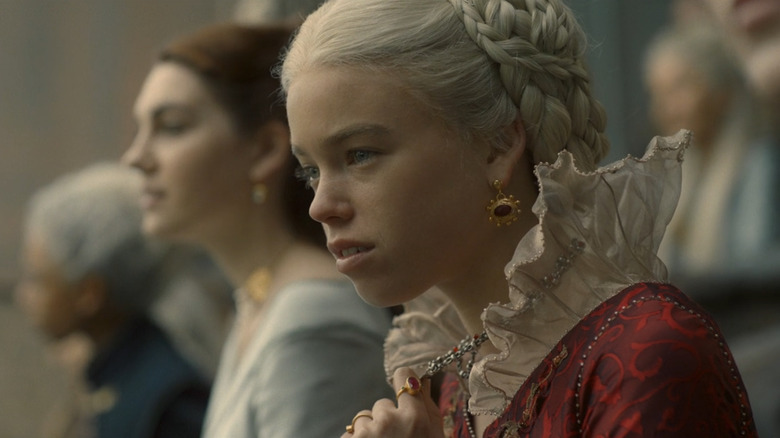
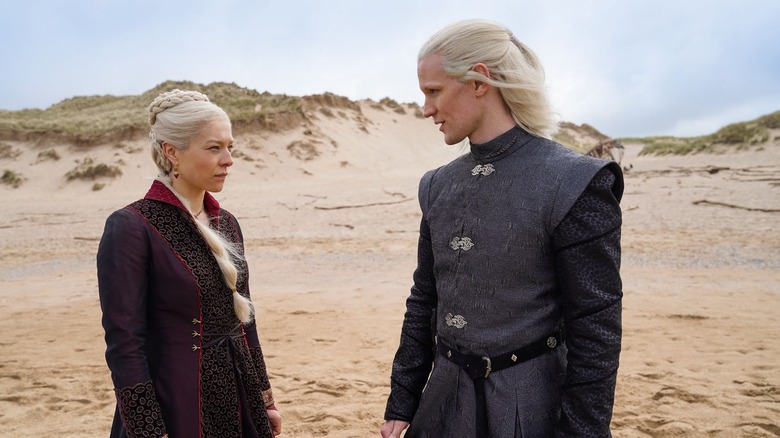
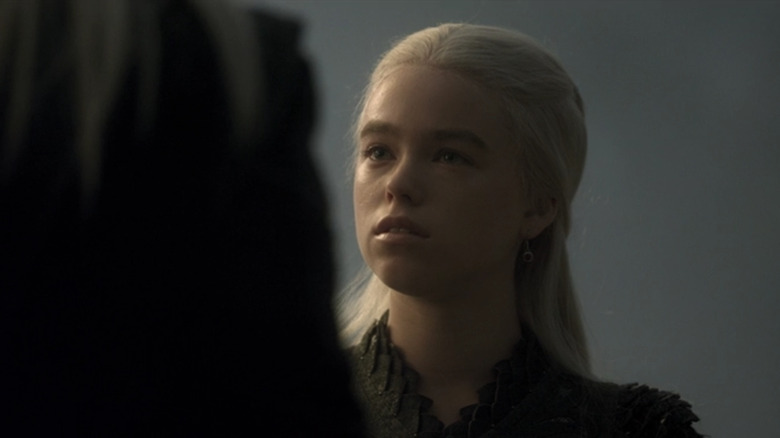
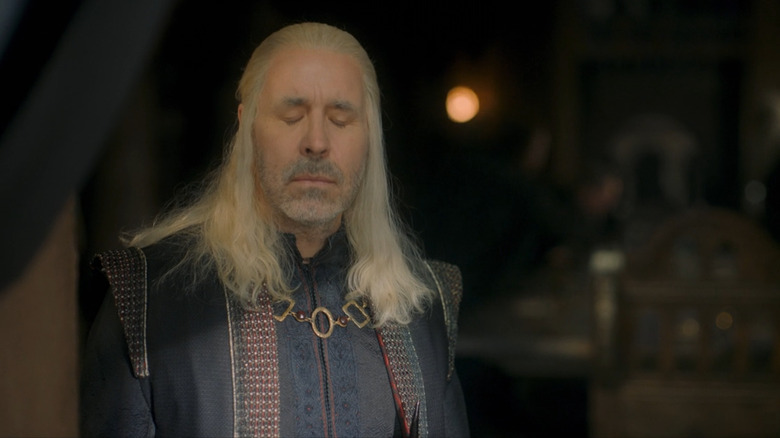
Is House Of The Dragon Missing One Key Game Of Thrones Ingredient?
by Michael Boyle
Understandably, viewers tend to watch "House of the Dragon" with "Game of Thrones" in mind. The show is set in the same universe with the same opening theme, and it covers the same general thematic ground. The consensus at this point seems to be that the prequel series is definitely better than the later seasons of "Thrones," but as for how it compares to the early seasons? That's debatable.
Both shows competently cover a lot of subtle political manipulations between a wide cast of characters. Unlike season 8 of "Game of Thrones," you get the sense that the writers behind this first season truly care about what they're doing, that they're not just phoning things in so they can get around to their Star Wars trilogy. However, many fans and critics have pointed out that the new show isn't particularly funny.
"'House of the Dragon' Could Benefit From Taking Itself Less Seriously," is the title of one critic's take on the series, which bemoans the lack of any Tyrion-esque character in the show so far. "You could reliably count on the fan-favorite imp to look around the room, call out the self-seriousness of it all and remind us this is supposed to be fun," the author argues. He points to other reliably amusing characters like Bronn or Tormund. Perhaps the best comparison he makes is with Littlefinger and Varys, two schemers on the small council who also deliver some pretty consistently funny dialogue. There is no such character to be found yet in the prequel series.
And honestly, that's for the best.
Why Tyrion Was Needed
Those who point to Tyrion are correct in that he was a wonderful character in the early seasons, someone who added much-needed levity to a show that was often unflinchingly bleak. Reading through the original George R.R. Martin books, however, it becomes clear that his sense of humor was never just in there to ease readers who are new to the fantasy genre; it's there to trick us into supporting Tyrion more than we should. Tyrion's humor establishes him as the "voice of reason" character, and by the time you get to the second book ("A Clash of Kings"), it almost seems like Tyrion is being used as a mouthpiece for the author's take on how to handle the cold-hearted political minefield of King's Landing. After all, he initially seems far more successful in his position as Hand of the King than his predecessor, while still seeming like a decent guy.
But as the books go on, it becomes clear that Tyrion's kind of a bad dude, even more so than most of the characters in this series. By the fifth book he's shaping up to be a fully villainous figure, consumed by a lust for vengeance against Cersei and King's Landing as a whole. Remember when Tyrion gave his big speech in season 4 about how he wants to burn King's Landing down? Well by all accounts, it looks like George R.R. Martin is actually planning to follow through on that speech. Book Tyrion is someone who will most likely use his role as Daenerys' adviser to subtly manipulate her into becoming the Mad Queen who burns down King's Landing. Meanwhile, the show treated Tyrion's speech as a momentary outburst, one completely unrelated to anything he did going forward.
The Dangers Of Clinging To Humor
In part because Dinklage's Tyrion was so funny and likeable, the showrunners sort of forgot that Tyrion was supposed go to down a dark path. They kept him in his role as the likeable jokester, and as a result the final season was terrible. Instead of an intelligent Tyrion deviously pushing Daenerys off the edge, the show had Daenerys fall to the dark side thanks to some absurdly bad luck as well as a string of terrible well-meaning advice given by Tyrion. The show struggled hard to make us think he was still smart, even as the plot demanded he not be.
It's a shame, because the book version of the character has an incredibly complicated, sympathetic, well-written arc around his descent into villainy. Book Tyrion's alliance with Daenerys would've been an extremely organic way to make her downward spiral feel believable as well, which the show failed to do. Tyrion serves as the perfect example of how the show's embrace of humor -- which certainly seemed like a good thing at first -- ended up severely damaging the later seasons. They prioritized his funny one-liners at the expense of giving him a compelling character arc, a decision that had a ripple effect on the arcs of several other major characters.
So when it comes to the lack of comedic characters on "House of the Dragon," it's worth remembering that making sure each character is compelling, complicated, and on an interesting journey is far more important. Yeah, maybe they could've made someone like Otto Hightower more of a jokester, but are we sure that would've fit with the larger story the show's telling? Not to mention...
Do We Really Need Any More Winks To The Audience?
In the Collider piece arguing that "House of the Dragon" should take itself seriously, the author described the humor of "Game of Thrones" as a necessary capitulation to the audience who might be turned off by the fantasy elements: "They hung a lantern on the fanciful, usually through Jim Halpert-esque nods or quips that said to the audience, 'Yeah, we know this is a lot too.'"
Maybe those acknowledgements about the absurdity of the situation were necessary back in 2011 when adult fantasy TV wasn't mainstream, but the 2022 TV landscape is a whole different place. "House of the Dragon" is written for an audience that's already watched eight seasons of "Game of Thrones." We're already on board with the weird fantasy stuff. After you've seen the ice zombies, the Crabfeeder doesn't require much suspension of disbelief.
Not to mention that in today's TV and film landscape, the constant knowing winks to the audience have gotten a little exhausting. Movies and shows today are constantly telling its audience "yes, we know this is a lot," and it no longer feels like a relief when they do it. It feels like the writers are afraid of being earnest, that they feel the need to pre-emptively make fun of themselves in the hopes that no one else will. Telling a story that's emotionally compelling requires vulnerability, a thing so many mainstream shows and movies have seemingly replaced with constant quips.
A More Understated Sense Of Humor
As much as humor can be important for a show, it's not a positive attribute when it's done to undermine the immersion or emotional stakes of the scene. "House of the Dragon" made the right decision when it chose to take itself seriously and unselfconsciously embrace the rules and logic of its world.
Besides, it's not like the show is completely humorless. This week's episode opens with a Targaryen soldier cheering at the sight of Daemon (Matt Smith) flying into the battlefield with his dragon to save the day, only for said soldier to get squashed under the dragon's feet. It's a dark joke (like, really dark), but it's still a joke. It's one that helps to highlight the show's theme of the royalty thoughtlessly playing games with each other at the expense of the lower classes.
The show's second episode ends one of its most climactic scene with a joke too. Daemon and Rhaenyra (Milly Alcock) are at a tense standoff, one that could very well result in either character's deaths. But Daemon stands down and gives Rhaenyra back the dragon's egg she came here to get from him. But he doesn't just hand her the egg; he petulantly throws it at her as he storms off. It's peak little kid energy, delivered by a fully grown man who wants to be king. It's a joke that both reveals character and again highlights the larger themes of the show. These larger-than-life figures who think they're fit to rule are basically just entitled kids, and moments like this serve as funny reminders.
Maybe The More Understated Humor's For The Best
Most of the comedy in this show is situational and more subtle than most. You can't convince me it's not supposed to be at least a little bit funny to watch King Viserys get hammered at a public event in this latest episode. It's hard to imagine the show isn't inviting us to laugh to some extent during the final scene of "The Rogue Prince," when Viserys reveals his marriage to Alicent (Emily Carey) to the whole high council without warning anyone in the room ahead of time. As much as Viserys' incompetence hurts everyone around him in serious ways, the show invites you to laugh at him if you wish.
Three episodes in, "House of the Dragon" has never really been humorless; it's just a show that's brave enough to take itself seriously, regardless of how weird some viewers might find it. The writers aren't concerned with throwing in self-conscious jokes to appease any nitpickers in the audience, nor have they made things so serious that there's never a moment for the audience to breathe. Maybe "House of the Dragon" doesn't have a character as funny as Tyrion yet, but so far, they're doing just fine without one.
Read this next: The 15 Best Cold War Movies Ranked
The post Is House of the Dragon Missing One Key Game of Thrones Ingredient? appeared first on /Film.
Ronald.phillips likes this
06 Sep 18:10
'The Serpent Queen' Review: Medici Drama Hisses With Schemes, Misery, Charming Humor - CNET
by Kourtnee Jackson
Starz's real-life Game of Thrones series starring Samantha Morton breaks the fourth wall and challenges ideas of "evil queen."

Ronald.phillips likes this
06 Sep 18:07
The first major 'Cyberpunk 2077' expansion won't come to PS4 or Xbox One
by Jessica Conditt
Night City is going to get bigger next year with Phantom Liberty, an expansion adding new characters and a fresh location to Cyberpunk 2077. It's a spy thriller starring V, the game's protagonist, and Johnny Silverhand, the ghostly character played by Keanu Reeves, and it involves espionage work for the New United States of America. However, Phantom Liberty is only heading to Xbox Series X and S, PlayStation 5, PC and Stadia, skipping Xbox One and PS4 altogether.
CD Projekt RED's decision to drop last-gen console support isn't surprising, considering the difficulties developers had delivering a functional game on those platforms. Cyberpunk has received plenty of patches since its release in December 2020, with most of the focus on fixing major issues with the game's performance; it was incredibly buggy and unplayable in some cases at launch, and it particularly struggled on older-gen hardware. Phantom Liberty is a narrative and world update featuring new content, locations and characters, and it marks a significant step forward in the game's post-launch development cycle, even though it leaves Xbox One and PS4 players in the dust.
Ahead of Phantom Liberty, Cyberpunk 2077 is getting a bit of DLC tied to Edgerunners, the coming anime based on the game. The anime, Cyberpunk: Edgerunners, will hit Netflix on September 13th, and the game update is live right now. Patch 1.6 is known as the Edgerunners Update and it adds items from the Netflix show to the game, including the protagonist's jacket and another character's shotgun. It also unlocks new secrets to be discovered in Night City — but like the Phantom Liberty rollout, these won't be available on Xbox One or PS4.
"Due to some technical challenges, this change isn't available on the previous generation of consoles," the update blog reads. To get around these challenges in future patches, CDPR is halting work on previous-gen consoles: Patch 1.6 will be the last for Xbox One and PS4.
The Edgerunners Update adds three new gigs, six new firearms and five new melee weapons, plus it unlocks cross-progression and brings a new mini-game called Roach Race to the arcade cabinets scattered throughout Night City. Roach Race is also available on Android and iOS today, no Cyberpunk required. On top of all this, there's a litany of gameplay, UI and other updates hitting Cyberpunk in Patch 1.6.
Ronald.phillips likes this
06 Sep 18:04

Huawei Eyewear Hands-On: Audio glasses that pump out surprisingly good sound
by Adam Conway
 Huawei launched a series of flashy products at the IFA trade show in Berlin over the weekend, including a new upper mid-range phone with a whopping 60MP selfie camera, a new flagship laptop running Intel’s 12th generation Intel processor, and the Huawei Watch Fit D that can measure blood pressure via a miniature pump inside the band. However, one product that didn’t get any stage or show booth time was the Huawei Eyewear. These are a pair of “smart glasses” with an open acoustic system and microphone built into the arms so the wearer can listen to audio or take phone calls while wearing the glasses, without needing to access their smartphone.

To be clear, this is not Huawei’s first venture into this category. The Chinese tech giant had partnered with South Korean eyewear brand Gentle Monster for at least two editions of smart sunglasses. These new pair, however, no longer feature the Gentle Monster branding. According to a Huawei rep, “this one is just made by Huawei.” The reason Eyewear didn’t have much of a presence at all at IFA was that Huawei apparently hasn’t decided if these will actually launch globally. We as media persons were not given any press information on them — both Ben Sin and I were simply given a pair to test unannounced. However, a quick online search shows that these are already on sale in Japan and Malaysia, and listed on Huawei’s international English site. The model that both Ben and I received to test is the Rectangle Semi-Frame Glasses, and there are three other styles as seen below.
The Huawei Eyewear comes in four styles: Aviator Full-Frame Sunglasses (upper left); Rectangle Full-Frame glasses (upper right); Rectangle Half-Frame; Circular Full-Frame glasses (bottom left); Rectangular Semi-Frame glasses (bottom right)
About this article: Huawei supplied both myself and Ben Sin with pairs of the Huawei Eyewear for review. The company had no input into the contents of this article. Huawei did sponsor my travel and accommodation to attend the IFA trade show, alongside other media persons. This article was written by both myself and Ben Sin.
Previous Huawei Eyewear products all came with a bulkier case that also doubled as the charging dock for the glasses. Not this time, as the new Eyewear comes in a soft fabric case, and a charging cable.

The charging cable is a bit clunky in practice: it’s a female-to-female cable, with one end accepting USB-C input, and the other end splits into two pogo pin plugs that attach to the end of the arms. A full charge powers the glasses for about five hours of audio playback or four hours of phone calls, and about 16 hours of standby time. I have only tested these glasses for half a day so far, but a full hour of listening to music only drained about 23% of the battery, so the numbers seem to add up. I found that the cable was very easy to disconnect, which made charging these glasses difficult at times, especially if you need to move them after plugging them in.

The eyeglasses weigh 38.8g, and the lens can be swapped for prescription lenses. There are touch panels on both arms, just next to the Huawei logo. You tap or swipe on them to control audio playback, volume, taking calls, and voice assistant.

The glasses sport two speakers and a microphone on each arm, and they work together to produce audio and that sounds surprisingly good for an open ear design. The audio quality is of course not going to beat any reputable pair of wired or wireless earbuds, as the speaker system lacks bass for that extra oomph. However, the highs are crisp and mids are tight — with Ben finding that airy pop songs and Ziggy Stardust-era David Bowie play nicely through the glasses. The microphones are used to reduce wind noise during calls. Huawei’s website says it designed an intelligent algorithm to reduce noise leakage so that it’s harder for people next to the wearer to hear the audio.

My colleague Ben Sin says that he only got to test these for half a day, but former XDA contributor TK Bay confirmed he couldn’t hear the audio coming from the glasses despite sitting right next to him. Ben also tried taking a call, and the other party said she heard me loud and clear when he was indoors, but outdoors in a crowd, it was hard for her and Ben to hear each other. That’s just a shortcoming of these open-air acoustics systems that we will have to accept. When I tested this outside with XDA TV host Alex Dobie, he was able to hear the music that I was listening to when I had the audio level above 75%. I also noticed that the Eyewear will vibrate a lot at louder volumes, though it’s not hugely visible.

For the most part, when wearing these in a quiet outdoor environment, like Berlin on a Sunday morning, Ben said that he was able to hear podcasts and music perfectly fine even as he was zipping around at relatively high speed on an electric bicycle. In a noisier city, though, which is Hong Kong at almost all hours of the day, he wouldn’t be able to hear the audio much. Neither of us was able to trigger Google Assistant with the long-press gesture, but this may be a bug that will be fixed later because Ben says he was able to access Google Assistant and Siri with the previous pair of Huawei Eyewear released in 2020.
In terms of features, there’s not a whole lot else these glasses can do. The AI Life app can be paired with them, though the only feature I found interesting was “Greetings”. This feature will enable the glasses to talk to you throughout the day, which can be… odd. It explained why the glasses said “Good afternoon” to me in an American accent when I put them on, but I don’t really understand the reason for the feature to exist. Maybe to help you keep track of time?

The glasses are also equipped with a trio of sensors — accelerometer, gyroscope, capacitance sensor — that allow the glasses to turn on or off automatically, and stop or start music playback when taking them on or off. In my experience, I found that this worked quite well, and I was surprised at how accurate it was when detecting being placed on my head. They’re comfortable to wear for long periods of time too, and I kept them on me for quite a while when listening to music just to try them out. What I especially love is how open they are, as you can hear your surroundings while still listening to your music in a (relatively) private environment.
As mentioned, Huawei did not give media persons any official press information on this product, so we have no idea when or if these are getting released outside of Japan and Malaysia, nor do I have official pricing. In Malaysia, a Google search shows the exact pair I tested retail for around the Malaysian currency equivalent of $240. If these ever get released in other markets, I’d expect the price to be in this range. To be clear, these aren’t necessarily “smart glasses” akin to the likes of the Lenovo Glasses T1. These only play audio, and are more akin to a new form factor for headphones or wireless earphones.
The post Huawei Eyewear Hands-On: Audio glasses that pump out surprisingly good sound appeared first on XDA.

Ronald.phillips likes this
06 Sep 18:04
Integrating Live Patching in SecDevOps Workflows
by noreply@blogger.com (The Hacker News)
SecDevOps is, just like DevOps, a transformational change that organizations undergo at some point during their lifetime. Just like many other big changes, SecDevOps is commonly adopted after a reality check of some kind: a big damaging cybersecurity incident, for example.
A major security breach or, say, consistent problems in achieving development goals signals to organizations that the
Ronald.phillips likes this
06 Sep 17:59
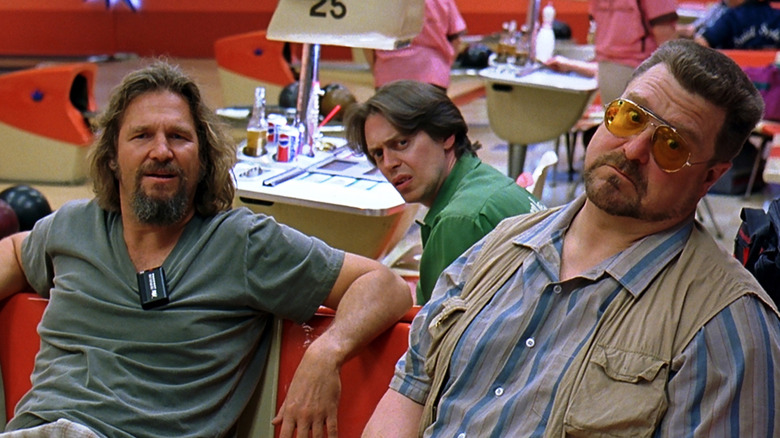
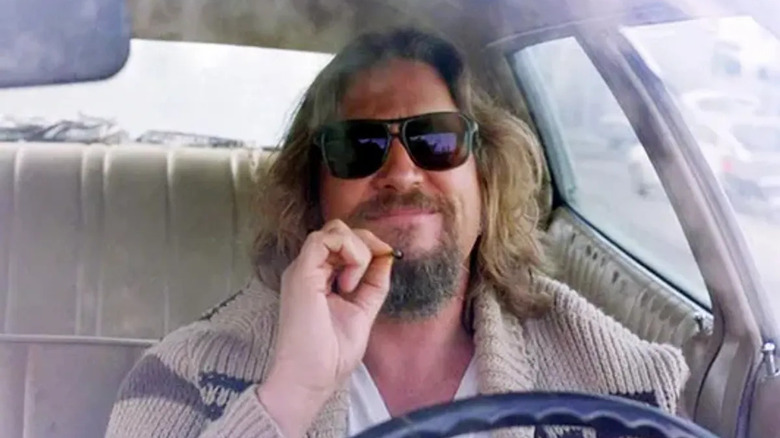
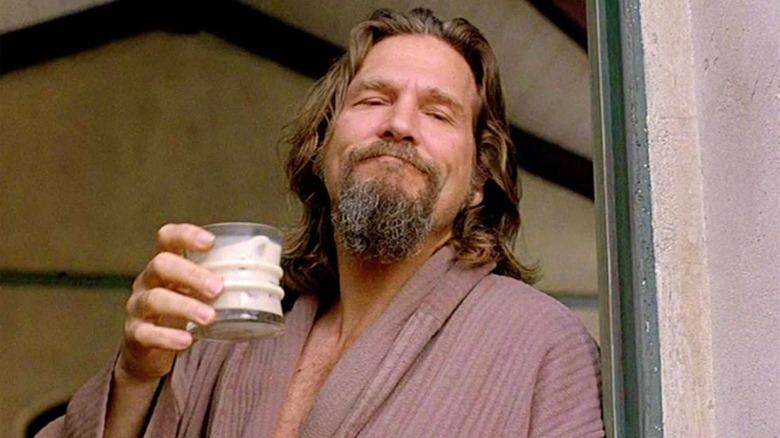
How The Big Lebowski Inspired Its Own Religion
by Lee Adams
My favorite cult movie story goes like this: One Saturday evening in 1982 in the UK, the start of the BBC's football show "Match of the Day" was delayed, causing some impatient viewers to flip over to the other two channels to kill some time. Some landing on BBC 2 found themselves drawn into a wacky time travel farce from Czechoslovakia involving identical twins, suitcase nukes, and Hitler's bunker called "Tomorrow I'll Wake Up and Scald Myself With Tea." Oldrich Lipsky's nutty film never received a theatrical release in the UK and only aired that one time on terrestrial TV, creating an unlikely following among a small group of bewildered footy fans.
Almost anything has the potential to become a cult film if it strikes a chord with the right audience. "The Rocky Horror Picture Show" was a midnight movie staple almost from the get-go, with fans attending screenings dressed as the characters and interacting with the movie via a selection of props. In India, the romantic musical "Dilwale Dulhania Le Jayenge" ran for almost 20 years straight in theaters as whole families repeatedly went back to sing along, quote the dialogue, and fall in love with the movie all over again. When screenings were canceled in 2015, popular demand brought it back and it continues to this day.
Then you have the Coen brothers' "The Big Lebowski," the stoner classic following the misadventures of the perpetually baked Jeffrey "The Dude" Lebowski (Jeff Bridges) as he is drawn into a Chandler-esque kidnapping plot involving soiled rugs, German Nihilists, marmots, suave pornographers, and strongly vaginal artists. As one of the most quotable films ever made, it turned people all over the world onto White Russian cocktails and inspired the long-running Lebowski Fest. Hell, it's a movie so cultish that it even spawned its own religion: Dudeism.
So What Exactly Is Dudeism?
Dudeism, officially known as The Church of the Latter-Day Dude, was formed in 2005 by Oliver Benjamin, a freelance journalist who came up with the idea of forming a religion based on the film while watching it with a group of fellow travelers in a Thai cafe in 2005. The "Dudely Lama" said (via CNN):
"I felt as if I'd seen a story that put all the difficulties of modern life into a manageable perspective. And it was probably the most touchingly funny film I'd ever seen. Oddly enough, I'd long wanted to start a religion. During my travels I'd become an earnest student of religion and philosophy."
Skip forward 17 years and the Church now has over 600,000 ordained Dudeist ministers around the world and, in the United States, you can legally have your wedding overseen by a clergydude. Not only that, the philosophy has branched out into education with the Abide University and Institute, which hands out free honorary degrees in non-standard fields such as Comedic Science and Rockology, a study of rock music.
Along with Lao Tzu, the founder of Taoism, the site lists other "Great Dudes in History," a wide range of people from the Buddha, Greek philosopher Heraclitus, and Jesus Christ to modern-day dudes like Snoopy, Jennifer Lawrence, and Kurt Vonnegut. Their site states:
"Probably the earliest form of Dudeism was the original form of Chinese Taoism, before it went all weird with magic tricks and body fluids. The originator of Taoism, Lao Tzu, basically said "smoke 'em if you got 'em" and "mellow out, man", although he said this in ancient Chinese so something may have been lost in the translation."
Are These Dudes Serious?
Although there is plenty of quotes from "The Big Lebowski" and other fun stuff on the Dudeist site, the founders and followers of Dudeism are clearly making a semi-serious attempt to understand the modern world through the filter of the movie:
"People instinctively feel the need for religion. Yet the only religions around are about 2000 years old or more and so can't possibly provide the worldview for a world that's changed so much. Traditional religions have tried to adapt but can't; the Atheist movement has gathered steam but hasn't provided anything to fill the gap where religion used to be. Finally, some who self-apply the handle "New Age" have tried to replace old religions with even older supernatural ideas. Dudeism, on the other hand, takes the essential messages of all the world religions and simplifies them, purging them of all their dogma and superstitions, leaving only the easygoing, useful and fortifying parts."
I spent some time scrolling through discussion posts about Dudeism, and I was surprised by how sensibly many people talk about it. Folks who buy into the ethos report that it makes them less stressed and helps them avoid burnout; find a more relaxed work-life balance and spend more time on leisure activities with family and friends; put less pressure on themselves to achieve and generally do stuff that doesn't really matter in the grand scheme of things; live in the now, and stand up for themselves while also making a conscious effort not to be "Un-Dude" to others. Few claim any great epiphanies, but Dudeism seems to help followers protect their lives from the go-getting grind of Capitalist society, putting a name to abstract ideas that they might have been exploring anyway in pursuit of a less intense way of existing.
So How Does Dudeism Link Up With These Older Religions?
There are a lot of strands to keep in your head regarding Dudeism, so let's make a few comparisons between Taoism, the Church of the Latter-Day Dude, and "The Big Lebowski" itself. From the Dudeist manifesto:
"Life is short and complicated and nobody knows what to do about it. So don't do anything about it. Just take it easy, man. Stop worrying so much whether you'll make it into the finals. Kick back with some friends and some oat soda and whether you roll strikes or gutters, do your best to be true to yourself and others – that is to say, abide."
This corresponds with the Taoist belief that the Universe has a natural order and the best route to contentment is to attune yourself to nature's ways, and just go with the flow (via Nations Online):
"Wu Wei [inaction] does not signify not acting at all, but rather not forcing things on their way. Wu Wei signifies that action should be immediately in accordance with the Tao, hence the necessary will be done without exaggeration, hyperbole, or overeagerness as these are considered obstructive, though rather in an easy, facile, non-disturbing way, leading to overall harmony and balance. It is a state of inner tranquility, which will show the right effortless action at the right time."
While the character of The Dude is introduced as "possibly the laziest man in Los Angeles county," his attitude is that of a guy who has found inner tranquility. We get clues that he was a political activist in his younger years, as one of the original authors of the Port Huron Statement who spent time occupying various administration buildings. But, at some point, he decided to say "f*** it" and become The Dude instead.
The Dangers Of Becoming Un-Dude
With all this in mind, we can read "The Big Lebowski" as a cautionary tale about becoming Un-Dude in your thinking. When we first meet the Dude he is completely content with his spartan existence, enjoying the simple pleasures of listening to whale song tapes in the bath, bowling with buddies, drinking White Russians, and smoking lots of weed. He isn't materialistic at all, driving a beaten-up car and slobbing around in shorts, old T-shirts, and comfy sweaters. He seems happy just to go with the flow, which takes us back to the Taoist principle of Wu Wei:
"Wu Wei could be characterized by the adaptability of the flow of water in a stream... Water flows without awareness, or naturally, downriver. It might be blocked by an object (a branch or a stone), though without contriving to do so, it finds its way around the object. Water acts without motive, it acts with Wu Wei."
Difficulties arise when people attempt to go against the natural order of the Universe. Things get tricky for Lebowski when he acts Un-Dude: While he is right to seek compensation when someone urinates on his rug, stealing a replacement from his millionaire namesake tips the cosmos against him. The "Big" Lebowski sees him as the perfect dupe to unwittingly assist his scheme to embezzle ransom money for his missing wife, causing The Dude no end of trouble. It's only when the mystery resolves itself that he is able to regain his tranquil state.
After a few years of pandemic and lockdown that has caused many people to re-evaluate their lives and seek out what is truly important to them, Dudeism's time may have come. To paraphrase the movie, sometimes there's a religion, well... it's the religion for its time and place.
Read this next: The 14 Best Noir Movies Ranked
The post How The Big Lebowski inspired its own religion appeared first on /Film.
Ronald.phillips likes this
06 Sep 17:54
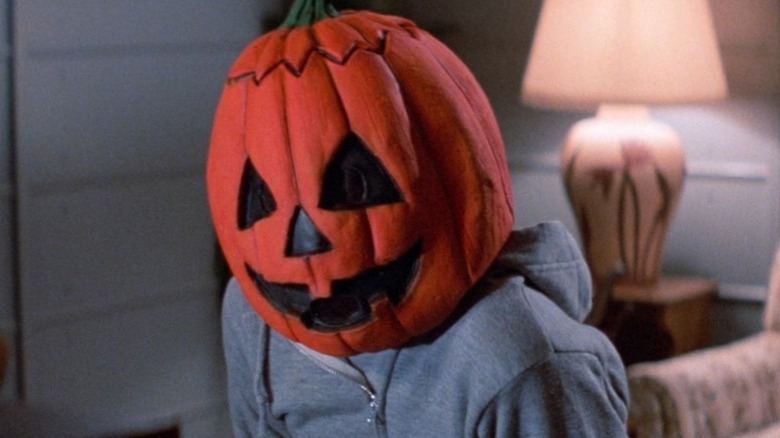
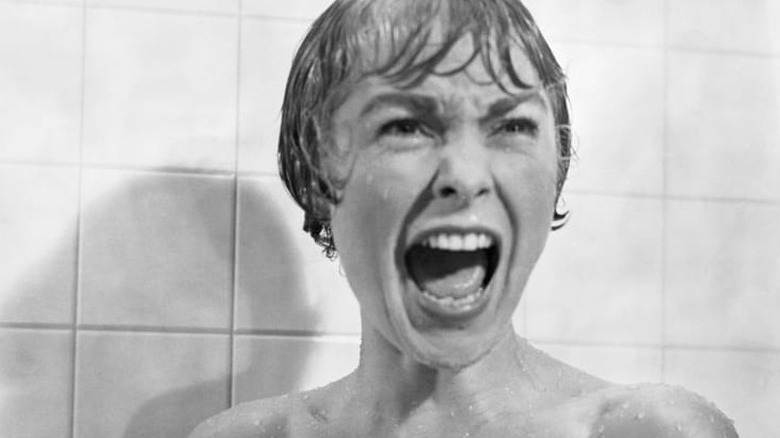
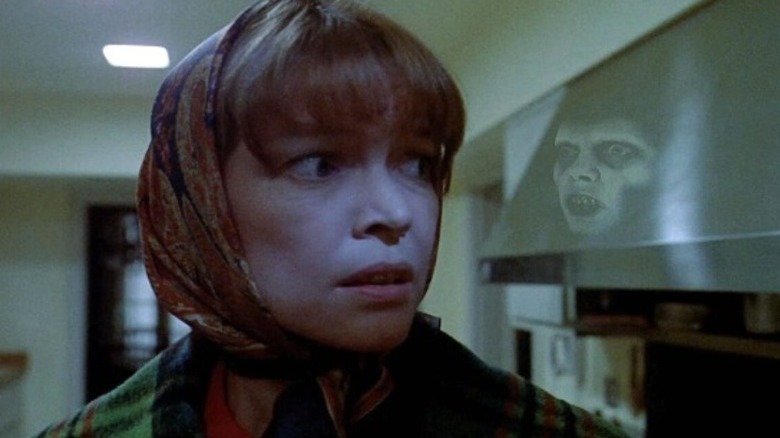
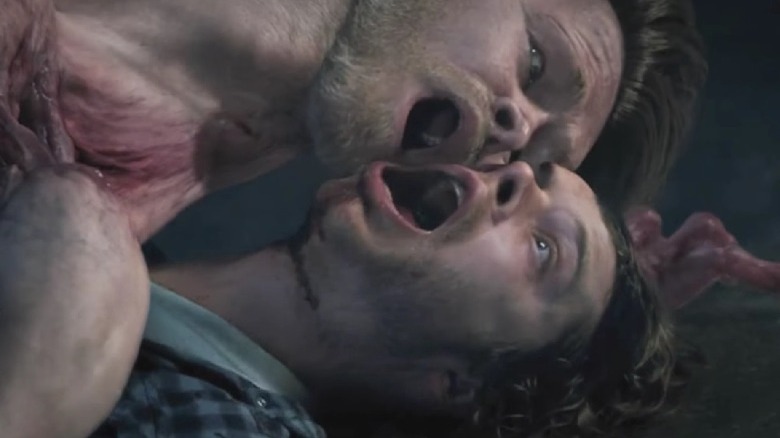
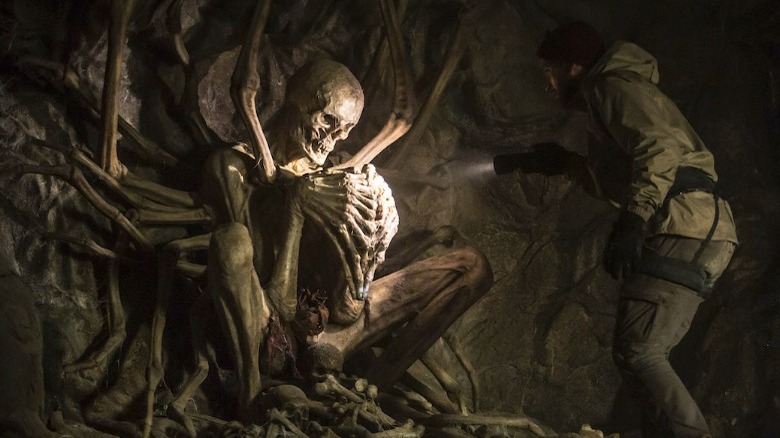
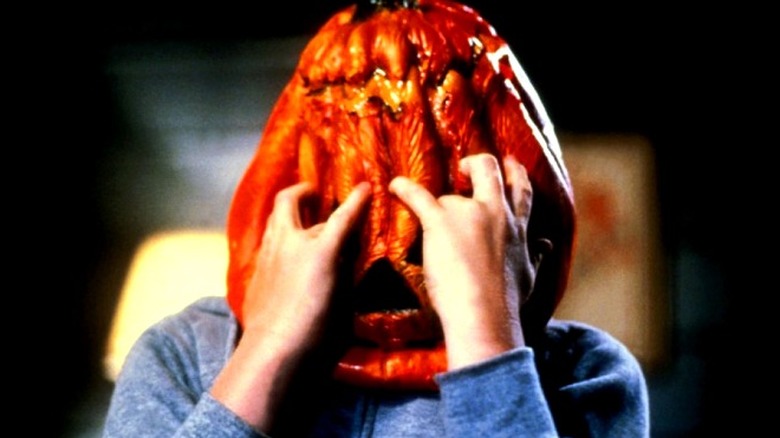
Small Mistakes That Almost Ruined Horror Masterpieces
by Chad Collins
Movie mistakes come in a lot of different forms. Sometimes they're inconsequential gaffes, minor continuity errors, or shaky science. Sure, they're occasionally noticeable, but "The Shining" is still "The Shining," even if the infamous hedge maze is missing from the first overhead shot of the hotel. "Moonfall" is still "Moonfall," even if the moon would never quite fall like that. It's part of the filmmaking process itself. Some of it is practicality — like empty mugs movie characters toss around — and some is simply a matter of rushed schedules and truncated budgets.
Still, some mistakes are more consequential. Especially in horror films, these mistakes can make or break a movie, sucking the scares right out of the film reels. This list specifically focuses on small mistakes that almost ruined horror masterpieces. Luckily, most of these were addressed prerelease, leaving audiences with the classics they know and love today. While not every title here is an objective masterpiece, they are all part of masterful horror lineages; the names, faces, and scares are part and parcel with the horror genre itself.
Michael Myers Is Computer-Generated
Michael Myers, like most slasher icons, is principally defined by his mask. With unclear mythos and no fewer than four distinct canonical timelines, the "Halloween" mask is the piece of iconography that holds the entire franchise together. In broader terms, the iterative masks are fiercely debated as fans all have a favorite. Yet, within the franchise the masks have been the equivalent of the mechanical shark in "Jaws," and it's a problem.
Beginning with "Halloween II," the original mask was used to better create the illusion the long-delayed sequel was a direct follow-up. However, on account of age, original co-writer Debra Hill's tobacco habit, and other bits of wear and tear, the mask needed considerable love and care to get into shape.
Additionally, "Halloween H20," on account of post-production interference, features Michael in an entirely computer-generated mask, arguably one of the worst in the series. Even "Halloween 4" is abounding with gaffes. In one key scene, Michael's mask incredulously features blond hair, a goof no one noticed until the movie was released theatrically. While silly in retrospect, the mask gaffes undermine their respective movies, jeopardizing the integrity of one of horror's most enduring icons.
Scream 2 Script Leaks Changed The Ending
The finale of "Scream 2" is the moment the franchise jumped the colloquial shark. Neve Campbell's Sidney Prescott is at Windsor College, and unfortunately, some knife-happy Ghostface killers have followed her, carving their way through co-eds en route to her. In the conclusion, Sidney finally unmasks the killers, revealing them to be film geek Mickey (Timothy Olyphant) and Mrs. Loomis (Laurie Metcalf), the mother of original killer Billy Loomis (Skeet Ulrich). Still, "Scream 2" is one of the best horror movies ever made, and certainly one of the best sequels, period.
Sure, the killer reveal is a little hammy — Mrs. Loomis recruited Mickey from some internet serial killer classifieds — but in the assured hands of Wes Craven, there was little that could ruin just how much fun it was. Well, other than script leaks. "Scream 2" had a notoriously rushed production, releasing less than a year after the first to capitalize on as much momentum as possible. Resultantly, everything moved at an accelerated clip, including script drafts.
One of these leaked online, spoiling Kevin Williamson's original ending. In addition to Mrs. Loomis and Mickey, Williamson had planned to include both boyfriend Derek (Jerry O'Connell) and roommate Hallie (Elise Neal) as the third and fourth killers, respectively. While fans might debate the efficacy of the idea, the actual reveal does reek of last-minute changes. It's effective enough ("Scream 2" rules, remember), but without the leaks, "Scream 2" might have had a little more time to iron out its big finale.
Jaws Shark Malfunctioned
It's the stuff of Hollywood legend. Steven Spielberg had planned to film much of "Jaws" with a mechanized shark. Well-known among prop aficionados, one of these sharks is presently available to view at the Academy Museum. As originally reported by Time Magazine in 1975, the mechanical sharks proved exceptionally difficult during production. They frequently malfunctioned, ballooned with water, and delayed shooting considerably alongside some bickering co-stars.
Resultantly, Spielberg had to refine the script, shifting focus during key scenes to keep the shark as obfuscated as possible, if not simply hidden entirely. Key scenes, such as the famous opening where swimmer Chrissie (Susan Backlinie) is dragged into the depths and devoured by a great white, are considerably more frightening as simulated. Without revealing the shark at all, Spielberg kept the tension high, accomplishing one of the most frightening horror movie opening scenes of all time.
Spielberg himself remarked, "The film went from a Japanese Saturday matinee horror flick to more of a Hitchcock, the less-you-see-the-more-you-get thriller." While it ostensibly spelled doom for the production, the malfunctioning shark, next to Spielberg himself, is the best thing that could have happened to "Jaws."
Get Out's Horrific Original Ending
The theatrical ending to "Get Out" is pitch-perfect. Chris Washington (Daniel Kaluuya in an Oscar-nominated role), a Black Brooklyn photographer, has ostensibly escaped the clutches of his girlfriend Rose's (Allison Williams) twisted cult family. As he finally puts an end to Rose on a rural stretch of road, police sirens approach. In a movie that wickedly plays with contemporary race relations and systemic racism, audience members are expecting the worst. Luckily, the driver is Rod (Lil Rel Howery), a TSA officer and Chris' best friend. After almost two hours of Chris enduring tragedy and trauma, it's a welcome relief.
Yet, in Jordan Peele's original filmed ending, the police actually do arrive. Chris is arrested and prosecuted, a cruel way to end his compelling arc. Peele was luckily mindful enough to make the last-minute shift. In an interview with Vulture, producer Sean McKittrick spoke about the test screenings of the original ending, saying, "You could feel the air being sucked out of the room. The country was different." Had the original ending been left in, a horror masterpiece would have been marred by one of the genre's worst endings ever.
Psycho Almost Didn't Feature Its Iconic Score
Alfred Hitchcock's "Psycho" is a masterpiece in more ways than one. Among all its successes, though, it's the introduction and death of Janet Leigh's Marion Crane that resonates the strongest. Curiously, however, Hitchcock himself originally had a very different idea for her iconic shower death. Writing to composer Bernard Herrmann, Hitchcock said, "There should be no music at all through the next sequence (the first Motel sequence)." In other words, Hitchcock had originally planned to leave Marion's death scene silent.
Herrmann reportedly composed a score anyway on the chance the inimitable Hitchcock might change his mind. Luckily, he did, and a classic horror beat was born. The music is so iconic, that it's been featured in the likes of "Carrie" and others. Few pieces of score have endured as well as Hermann's "Psycho" theme. Had Hitchcock kept the scene silent as originally planned, its legacy would likely be very different than it is today.
Ellen Burstyn Was Seriously Injured Filming The Exorcist
Ellen Burstyn's Chris MacNeil, mother to possessed youngster Regan (Linda Blair), is a huge part of what makes "The Exorcist" such a devilishly famous slice of horror history. With grounded character work, Chris MacNeil is the horror mom to end all horror moms. Fiercely dedicated, but skeptical where it counts, Regan would still be spinning her head and spewing pea soup if not for Chris.
Burstyn, to her credit, earned an Oscar nomination for her role, though things could have gone very differently. A famously grueling shoot, director William Friedkin's cast had to endure more than most, though Burstyn likely had it the worst of anyone. In a climactic, mid-movie scene, Regan punches her mother and sends her flying across the room. Tethered to a pulley and wire around her midriff, Burstyn was pulled back by a crew member hidden behind a curtain to simulate the force of Regan's slap.
During a second take, captured on film, Burstyn is in real agony. The wire was pulled too hard, and an ambulance apparently had to be called for Burstyn. While Burstyn somewhat recovered (she calls the spot on her back where she hit the floor a "permanent companion" now), and will feature in David Gordon Green's sequel trilogy, the injury could have easily derailed the entire production.
The Thing Almost Ruined Perfectly Good Monsters
Matthijs van Heijningen Jr.'s 2011 "The Thing," written by Oscar-nominated scribe Eric Heisserer, is considerably better than its critical reception might lead audiences to believe. At release, "The Thing" was often conceptualized as "serviceable." A decent prequel to John Carpenter's horror masterpiece (itself a remake of Christian Nyby's "The Thing from Another World"), Heijningen Jr.'s prequel has augmented its reception in retrospect. Its gaffes are reasonably interpreted as strengths, and in a rare move, "The Thing" actually makes Carpenter's original look that much better. It's difficult to extricate one from the other, and as a duology, it's one of the genre's most accomplished double-features.
Nevertheless, "The Thing" almost ruined any chance it had for contemporary reconsideration. Largely filmed with practical effects, "The Thing" was edited to death in post-production. In other words, all of the practical effects studioADI made for the film were discarded, replaced with unconvincing computer effects. Admittedly, the impact has been embellished some. Most of the time, "The Thing" looks fine. Still, as brethren to Carpenter's original, it's incredulous that the studio would jeopardize a core element of what made Carpenter's "The Thing" a modern classic.
Later, studioADI crowd-funded a movie of their own, "Harbinger Down," using practical effects and paying homage to films like "The Thing." In 2011, the shift from practical creature effects was almost enough to sink "The Thing" upon arrival. Years later, it's not quite enough to detract from how brilliantly it continues the original film's legacy.
Ringu's Forgotten Sequel
Fans of Hideo Nakata's "Ringu," sometimes simply titled "Ring," are likely aware of the franchise's enduring relevancy. Followed up by "Ringu 2," similarly helmed by Nakata, the curse of Sadako shows no signs of slowing down, most recently appearing in 2022's "Sadako DX" from Hisashi Kimura. Yet, outside of franchise diehards, Western audiences might not know that there was another direct sequel to Nakata's "Ringu" released right alongside the first.
In order to capitalize on the likely success of "Ringu," itself based on a best-selling novel from writer Koji Suzuki, a sequel titled "Spiral" was released into theaters with "Ringu" at the same time. "Ringu" was an unqualified success, which is no surprise given how the franchise endures to this day. "Spiral," meanwhile, was a critical and financial disaster, a movie that could have stopped the "Ring" film series dead in its tracks.
There are a lot of reasons it likely failed, whether that be an oversaturation of the market or a ridiculous ending that retroactively hurts the first. No matter the reason, Nakata had to direct another sequel to compensate, all but consigning "Spiral" to the realm of forgotten sequels. At least "The Rage: Carrie 2" is good company.
Cult Classic The Empty Man's Disastrous Theatrical Release
"The Empty Man" didn't make much of an impact until it arrived on home video in January 2021. Serendipitously, the right people saw "The Empty Man" at the right time, and David Prior's movie, adapted from Cullen Bunn and Vanesa R. Del Rey's comic book of the same name, has become something akin to a modern cult classic. Released in October 2020, "The Empty Man" was long delayed until it hit theaters, part of a mandated release wrapped in Disney's acquisition of 20th Century Fox.
Disney, as Disney is wont to do with Fox properties, dumped "The Empty Man" in theaters at a time where, on account of the Covid-19 pandemic, theaters weren't even open. Those that were amounted to ghost towns. Several months after Covid hit domestic shores, no one was risking it to see a cerebral horror IP.
Luckily, its streaming success has been enough to compensate for a release that could have reasonably ruined the movie's chance of success forever. Wildly successful on streaming, "The Empty Man" is hailed as one of the century's boldest, most original horror offerings. It's not perfect, but few horror movies in the last decade have taken as many big swings as "The Empty Man." Sure, it looks and sounds like a conventional haunter, but Prior takes the material to some weird places, and it's all the better for it.
Michael Myers Isn't In Halloween III: Season Of The Witch
Tommy Lee Wallace's "Halloween III: Season of the Witch" is a classic, no doubt about it. The iconographic Silver Shamrock masks, part of the horror film's core conflict surrounding Halloween masks being used to take over the world, have even featured in both of David Gordon Green's contemporary "Halloween" sequels. It's big, grinning Halloween cheese, with Tom Atkins, hordes of icky insects, and some genuinely well-designed masks at its core. Still, at the time of release — especially in an era that predated accessible home video and streaming — "Season of the Witch" was a disaster.
Michael Myers would return six years later in "Halloween 4: The Return of Michael Myers" to compensate for the failure of the "Season of the Witch." John Carpenter and Debra Hill had, at the time, envisioned the "Halloween" franchise as an anthology following the conclusion of "Halloween II." Resultantly, "Season of the Witch" bore the "Halloween" moniker, just without everyone's favorite slasher Michael Myers. Audiences were furious, and it took decades for franchise fans to reclaim Wallace's sequel.
At the time, however, "Halloween 4" was the knife in the third film's heart. It was the studio's way of urging audiences to forget what happened six years before. In truth, "Halloween III" might have had better contemporaneous success had it simply dropped the "Halloween" moniker and released it as its own thing.
Read this next: Horror Roles That Changed Actors Forever
The post Small Mistakes That Almost Ruined Horror Masterpieces appeared first on /Film.
Ronald.phillips likes this
06 Sep 17:52
The Superbad Crew Was Resistant To Letting Jonah Hill Play A Young Seth Rogen
by Shae Sennett
It's hard to imagine "Superbad" without Jonah Hill, but the actor had to fight hard to earn the part of Seth. In fact, director Greg Mottola almost turned him away entirely.
"Superbad" stars Jonah Hill and Michael Cera as two teenagers as they're wrapping up their senior year of high school. The boys are hellbent on losing their virginity before going off to college, and their first and last high school party may be their only chance. Hill's character is based on a teenage version of co-writer Seth Rogen, who also has a minor role in the film as a reckless police officer. But the two had already worked together before.
Rogen and Hill first got to know each other on the set of Judd Apatow's "The 40-Year-Old Virgin," as the duo recalls. "The day we shot the dancing scene that plays over the end credits, I remember Seth specifically asked to be friends," Hill recalled to Backstage. "It was the first time we'd really worked together," Rogen added. Their budding friendship was slow-going at first. "We exchanged numbers, and I called Seth, and he didn't call me back for six months," Hill revealed.
The pair would work together again soon in another Judd Apatow production, "Knocked Up." This was where Hill first heard whispers of Rogen and Apatow's next project, "Superbad," which is celebrating its 15th anniversary this year. "We were making 'Knocked Up,' and they couldn't find the lead," Hill recalled to Vanity Fair. According to Apatow, "The problem became there didn't seem to be anybody in the world who was as funny as Michael [Cera]," who was cast as the teenage version of co-writer Evan Goldberg.
When Hill got his hands on the "Superbad" script, he fell in love with the role of Seth. "I just thought it was a great part. I thought it was brilliant," he exclaimed. Hill had the connections and the talent to nab the part. There was just one problem.
Can Jonah Hill Play A Teen?
Hill knew all the major players of "Superbad," but that wasn't enough to land him the role. "We all knew Jonah, and knew Jonah was great," Mottola conceded. Still, the director was afraid Hill was too old to pass as a high schooler. "I was like, 'Let's just read people who are closer to the actual age,' because Jonah was in his early 20s," he explained.
But the young actor was persistent. "Jonah was like, 'I should play Seth. I should play Seth. I should play Seth.' And we said no, like, 100 times," co-writer Evan Goldberg recalled. In the end, it was Apatow who caved on Hill's final day of shooting "Knocked Up." The producer recalled, "I said, 'Go shave really well and put yourself on tape reading these two scenes.'"
Hill just needed one chance to prove that he was right for the role. Upon watching Hill's audition, Apatow said, "It was immediately clear that he should've been cast a long time ago, and it was ridiculous that we ever thought there was an option other than him."
Despite being a few years older than his character, Hill brings a youthful delinquency to "Superbad" that has resonated with teenagers since its release in 2007. The movie has a lot of incredible talent on board, but it would not be one of the funniest coming-of-age films ever made if not for Hill's incredible performance as Seth. Fans of "Superbad" have Jonah Hill to thank for badgering the crew — and Judd Apatow, for finally giving in.
Read this next: 14 Awesome Comedies That Never Got Sequels
The post The Superbad Crew Was Resistant To Letting Jonah Hill Play A Young Seth Rogen appeared first on /Film.
Ronald.phillips likes this
06 Sep 17:32
Cyberpunk 2077: Phantom Liberty Expansion Unveiled, Adds New Night City District in 2023
by Nathan Birch

CD Projekt Red has long promised that Cyberpunk 2077 would eventually get major story expansions similar to those offered for The Witcher 3, but given the game’s messy launch and long road to redemption, those expansions were largely pushed to the back burner. Thankfully, that changes today, as CD Projekt Red has officially announced Cyberpunk 2077: Phantom Liberty, a “spy-thriller” story expansion coming exclusively to next-gen platforms.
As the new Phantom Liberty teaser trailer hints, V will be enlisted by the New United States of America. What exactly you’ll be doing for the government is unclear, but as Johnny Silverhand warns (it sounds like Keanu Reeves will be returning), whatever it is is probably a “bad idea.” You can check out the debut Phantom Liberty teaser trailer for yourself, below.
Well, consider me intrigued! Phantom Liberty’s visuals are certainly impressive, although hopefully this isn’t a case of CD Projekt Red overpromising like they've done in the past. Need to know more about Cyberpunk 2077: Phantom Liberty? Well, we don’t have a ton to go on, as this is as in-depth as CDPR’s official description goes…
“I, V, do solemnly swear that I shall faithfully serve the New United States of America. Get ready for Phantom Liberty — a spy-thriller expansion for Cyberpunk 2077 set in an all-new district of Night City.”
Phantom Liberty seems to tell a different story than the one hinted at by a major datamining leak earlier this year, although there is still a chance they’re one in the same. The datamining hinted at an expansion that offered seven new core missions and opened up some previously-locked areas of the Night City map. But again, take all that with a very large grain of salt – this expansion may well be something completely different.
Cyberpunk 2077: Phantom Liberty launches on PC, Xbox Series X/S, PS5, and Stadia in 2023.
The post Cyberpunk 2077: Phantom Liberty Expansion Unveiled, Adds New Night City District in 2023 by Nathan Birch appeared first on Wccftech.

Ronald.phillips likes this
06 Sep 10:51
Descent to Undermountain - Retrospective Review
William SRD reviewed the notorious RPG Descent to Undermountain.
Descent to Undermountain was a Dungeons and Dragons video game released in 1998 by Interplay. Despite coming between Interplay releasing back-to-back classics like Fallout and Balder's Gate - Descent still manages to go down in history as one of the greatest trash fires of the 90's....
Ronald.phillips likes this