Read more of this story at Slashdot.
Read more of this story at Slashdot.


Amanda, Rich, and Andrew talk about Ooblets, Foretales, Little Noah, Riven on SteamDeck as well as discuss their picks for games announced during the Playstation State of Play and Nintendo Direct for September.
Read more of this story at Slashdot.

Following the many GeForce Beyond hardware and software announcements, some NVIDIA engineers took to Twitter to discuss them with the community at large.
For instance, NVIDIA Vice President of Applied Deep Learning Research Bryan Catanzaro expressed his pride in the work done by his team on DLSS 3.
DLSS 3 has been a labor of love in Applied Deep Learning Research since the group was founded. I can’t wait for people to play with it.
In the same Twitter thread, he then explained why the technology will be exclusive to the upcoming NVIDIA GeForce RTX 4000 series.
DLSS 3 relies on the optical flow accelerator, which has been significantly improved in Ada over Ampere - it’s both faster and higher quality.
The OFA has existed in GPUs since Turing. However, it is significantly faster and higher quality in Ada, and we rely on it for DLSS3. [RTX 2000 and 3000] customers would feel that DLSS 3 is laggy, has bad image quality, and doesn’t boost FPS.
That said, Catanzaro left a door open to NVIDIA DLSS 3 potentially becoming compatible with GeForce RTX 2000 and 3000 series in the future, although he stressed it wouldn't yield the same benefits seen with the new graphics cards. As a reminder, DLSS 3 games will still provide DLSS 2 + Reflex support for GeForce RTX 2000 and 3000 owners.
It’s theoretically possible that with additional research and engineering that we could get this technology working on other cards, although it wouldn’t provide as much benefit. The current version only works on 4000-series cards.
Catanzaro also commented on the potential latency issue potentially introduced by the new DLSS 3 method. As we had surmised, NVIDIA plans to circumvent the problem by bundling their Reflex anti-system latency technology.
NVIDIA Reflex removes significant latency from the game rendering pipeline by removing the render queue and more tightly synchronizing the CPU and GPU. The combination of NVIDIA Reflex and DLSS3 provides much faster FPS at about the same system latency.
Bryan Catanzaro was even kind enough to check with another NVIDIA team on the status of the RTX I/O project, which we haven't heard about for a while. He relayed that people interested in RTX I/O should stay tuned since 'cool stuff has happened' and NVIDIA is looking forward to sharing more with the public.
Catanzaro wasn't the only NVIDIA engineer to share some info after the GeForce Beyond presentation. Alexey Panteleev (who previously worked on projects such as Quake2RTX, RTXDI, and Portal RTX) also engaged with Twitter to explain a bit of how the RTX Remix tool is going to work.
The Remix runtime is a pretty complicated "reverse game engine" that finds objects in draw calls, which allows us to derive motion vectors. The runtime doesn't make any artistic decisions, it works with the original and replacement assets that it's given. Modders can choose to use AI tools for like material upscaling or do everything by hand.
Particles and decals "just" work. Some DX hacks need special processing or should be disabled.
We'll have more information from NVIDIA regarding DLSS 3, RTX Remix and more soon; stay tuned.
The post NVIDIA Engineer Says DLSS 3 on Older RTX GPUs Could Theoretically Happen, Teases RTX I/O News by Alessio Palumbo appeared first on Wccftech.

If you thought that serious-looking collision with a bull from "Jackass Forever" was enough to send Johnny Knoxville out of commission from stunt work, you'd be wrong. You should know by now that a little hospital trip wouldn't keep this man down for long! Sure, while an official "Jackass" revival might not be in the works, he's still up to his old tricks on Hulu's newest comedy series, "Reboot."
/Film's Ethan Anderton recently spoke with Knoxville and co-star Judy Greer about the show, where they play cast members of a revived sitcom navigating the tumultuous 2020s comedy space. Knoxville, in particular, is introduced in spectacular fashion, with star Keegan-Michael Key accidentally running into him on set. And when we say "run into," we mean it – when walking through the backlot, Key's character accidentally hits Knoxville with his car. According to him and Greer, he did that stunt himself.
"He seemed offended that they'd hired a stunt person that day," Greer joked.

Considering Knoxville is 51 years old, it makes sense that the "Reboot" team would play it safe and hire another stunt performer for the scene. However, it turns out that they weren't needed all that often. According to Knoxville, the stunt performer would prepare for the stunt itself before he took their place.
"Sometimes they're like, 'Oh, we just need to line up the shot for lighting before you do it,'" he explained. "So he has to get smoked for lighting and then I come in and get to steal all the thunder by doing it for real."
This sounds like a good compromise to make, and it certainly looks like a seamless transition on the show. Besides, do you expect to hire Knoxville for a project and not have him do at least one crazy stunt? That's just not reasonable.
Of course, the veteran performer is just one piece of the puzzle that is "Reboot." Alongside Greer and Key, the meta-comedy stars Rachel Bloom, Paul Reiser, Calum Worthy, and Krista Marie Yu. Steven Levitan, who created "Modern Family," serves as showrunner and creator of the series, directing the pilot episode.
The first three episodes of "Reboot" are now streaming on Hulu. Check out the show's official synopsis below:
"Hulu reboots an early 2000's family sitcom, forcing its dysfunctional cast back together. Now they must deal with their unresolved issues in today's fast-changing world."
Read this next: The Horror Movies We Can't Wait To See In 2022
The post Johnny Knoxville is Still Doing His Own Stunts on Reboot, Including Getting Hit by a Car [Exclusive] appeared first on /Film.

The best way I can explain the difference between Devil Daggers and its surprise sequel is comparison to another pair of goth-o-ramas: Devil Daggers is Dark Souls to Hyper Demon's Bloodborne. Both first-person score attack shooters are dressed in similar beautiful cloaks of skulls and gurgling industrial soundscapes, but while Devil Daggers nudges you into cautious survival, Hyper Demon shoves you into aggression. In Hyper Demon, a long and cautious run will likely score lower than a short burst of ultraviolence. What glorious ultraviolence it is!
When I first saw Hyper Demon's trailer, I felt excitement, wonder, and fear. Here's the important thing to realise: the unearthly and incomprehensible violence you see in that trailer is genuinely what the game looks like to play. That's how it feels to play, too.

This week marks a milestone birthday for Stephen King, a diamond jubilee for one of America’s most popular, prolific, and accomplished writers. Snobs may unfairly dismiss his work, but they can’t ignore his impact. Even if you’ve never so much as thumbed through one of King’s many bestsellers, you’re certainly…
We discussed Microsoft Detection and Response Team’s (DART) threat hunting principles in part 1 of The art and science behind Microsoft threat hunting blog series. In this follow-up post, we will talk about some general hunting strategies, frameworks, tools, and how Microsoft incident responders work with threat intelligence.
In DART, we follow a set of threat hunting strategies when our analysts start their investigations. These strategies serve as catalysts for our analysts to conduct deeper investigations. For the purposes of this blog, we are listing these strategies under the assumption that a compromise has been confirmed in the customer’s environment.
An incident response investigation is more manageable when you start off with an initial indicator of compromise (IOC) trigger, or a “known bad,” to take you to any additional findings. We typically begin with data reduction techniques to limit the data we’re looking at. One example is data stacking, which helps us filter and sort out forensic artifacts by indicator across the enterprise environment until we’ve determined that several machines across the same environment have been confirmed with that same IOC trigger. We then enter the hunting flow and rinse and repeat this process.

Figure 1: The hunting cycle starts with hunting for indicators or “known bads,” ranging from the smallest unit of indicators to behavioral indicators that may define the actor.
Types of indicators can be classified into:
Unfortunately, not everything we start out with is interrelated with the trigger IOC. Another hunting strategy we employ is to look for quick wins; in other words, looking for indicators of typical adversary behavior present in a customer environment. Some examples of quick wins include typical actor techniques, actor specific TTPs, known threats, and verified IOCs. Identifying our quick wins is the most impactful to the customer, as it helps us formulate our attack narrative while guiding customers to keep the actor away from the environment.

Figure 2: Hunting order of operations.
If you’re out of leads, another strategy to employ is pivoting to hunting for anomalies, which draws on information derived from our “known bads” and quick wins. We discussed anomalies in the first part of this series as part of understanding the customer data. Some techniques:
Pure anomaly-based hunting may be performed concurrently with other hunting strategies on a customer engagement, depending on the data we’re presented. This method is incredibly nuanced and requires seasoned experts to verify whether data patterns may encompass normal or “abnormal” behavior. This prevalence checking and data science approach is the most time consuming but can bear some of the most interesting evidence in an investigation. Case in point, we can detect new advanced persistent threat (APT) actor groups and campaigns with anomaly hunting, while they are rarely detected just by searching for the “known bads.“
Stringing together our patterns of anomalous activity, factual data from quick wins, and analytical opinions must conclude with an attack narrative. In an incident response investigation, the MITRE ATT&CK framework serves as a foundation for adversary tactics and techniques based on real-world observations.
The MITRE framework helps us ensure that that we’re looking at our hypothesis in a structured manner to enable us to tell a cohesive narrative to the customer that is rooted in our analysis. We aim to answer questions such as:
Additionally, we want to answer questions surrounding threat actor intent to help tell a better story and build better defenses. Some common attack patterns from the MITRE framework are listed in Table 1.
| Tactic | Techniques |
|---|---|
| Initial access | Phishing files |
| Execution | PowerShell and service execution |
| Persistence | Services installations, webshells, scheduled tasks, registry run keys |
| Defense evasion | Masquerading, obfuscation, Background Intelligent Transfer Service (BITS) jobs, signed executables |
| Credential access | Brute forcing, credential dumping |
| Discovery | Network share enumeration |
| Lateral movement | Overpass the hash, WinRM |
| Collection | Data staging |
| Command and control | Un/commonly used ports |
| Exfiltration | Data compression |
| Impact | Data encrypted for impact |
Table 1: Common attack patterns from MITRE.
To ensure maximum visibility of the attack chain, hunters use data sourced from proprietary incident response tooling for point-in-time deep scanning on endpoints, as well as bespoke forensic triage tools on devices of interest.
For point-in-time deep scanning, DART uses:
For continuous monitoring:

Figure 3 explains the products and services used to identify and monitor threats:
Continuous monitoring includes the following:
In addition, we work with internal threat intelligence teams, like the Microsoft Threat Intelligence Center (MSTIC), to provide details from our hands-on experience with customer environments and going toe-to-toe with the threat actors. The information collected from these experiences, in turn, provides a trail of evidence to help threat teams and services conduct enriched threat intelligence and security analytics to ensure the security of our customers.
We give organizations and customers the visibility and relevance of security events by sharing our data from dynamic threat intelligence and our continued collaboration with the MSTIC team. This collaboration has proven successful in instances where Microsoft Security teams have actively tracked large-scale extortion campaigns targeted at multiple organizations, resulting in an industry-wide effort to understand and track the threat actor’s tactics and targets.
The NOBELIUM incident in late 2021 was another instance of a large-scale cyberattack that launched a global hunting effort formed around MSTIC and Microsoft’s team of global security experts. The threat actor targeted privileged accounts of service providers to move laterally in cloud environments, leveraging trusted relationships to gain access to downstream cloud service provider (CSP) customers. We engaged directly with affected customers to assist with incident response and drive detection and guidance around this activity. Through a successful partnership and continuous feedback loop, we have been able to improve our ability to minimize impact and protect customers over time.
The work we delivered in protecting customers against NOBELIUM attacks would not have been possible if not for the continuous hunting process and feedback loop with threat intelligence. We’ve crafted a symbiotic relationship that empowers threat hunters at DART to become better incident responders by looking at additional vectors seen in threat intelligence platforms.
Seeing events from a threat intelligence perspective, applying the art and science of threat hunting, and partnering with the security industry at large are all but signs of our commitment to growth and helping organizations stay protected from cyberattacks.
To read about the latest attack methods and cybersecurity best practices from our investigations and engagements, visit the Microsoft Detection and Response Team (DART) blog series. To learn more about our specialized incident response and recovery services before, during, and after a cybersecurity crisis, visit Microsoft Security Services for Incident Response.
To learn more about Microsoft Security solutions, visit our website. Bookmark the Security blog to keep up with our expert coverage on security matters. Also, follow us at @MSFTSecurity for the latest news and updates on cybersecurity.
The post The art and science behind Microsoft threat hunting: Part 2 appeared first on Microsoft Security Blog.
Looking long is an important skill for cybersecurity and fraud teams to develop
Video game publisher 2K is warning the public not to open any emails from its support account after confirming it had been hacked. “Earlier today, we became aware that an unauthorized third party illegally accessed the credentials of one of our vendors to the help desk platform that 2K uses to provide support to our customers,” the official 2K Support Twitter account posted on Tuesday.
News of the security breach broke yesterday after Bleeping Computer shared screenshots of phishing emails sent to 2K customers. The emails took the form of unsolicited support tickets. Those who opened the message were subsequently sent a second email prompting them to download “the new 2K games launcher.” Putting the 107MB executable through VirusTotal and Any.Run, Bleeping Computer found it contained malware designed to steal any passwords its target may have stored on their browser.
Hey folks, please read an important message from our Customer Support team. Thank you. pic.twitter.com/yKI18eL7mY
— 2K Support (@2KSupport) September 20, 2022
For anyone who may have clicked on a link in the emails, 2K recommends immediately changing any passwords stored in your browser, enabling two-factor authentication where possible, installing anti-virus software and checking that the forwarding settings on your email accounts haven’t been changed.
2K shares the same parent company as Rockstar Games. Over the weekend, the studio suffered an unprecedented security breach that saw early gameplay footage of Grand Theft Auto VI shared widely online. While there’s no evidence to suggest the two incidents are linked, the Rockstar Games hacker claimed they were also responsible for the recent Uber security breach. On Monday, the company said it was working with the FBI to investigate the incident.
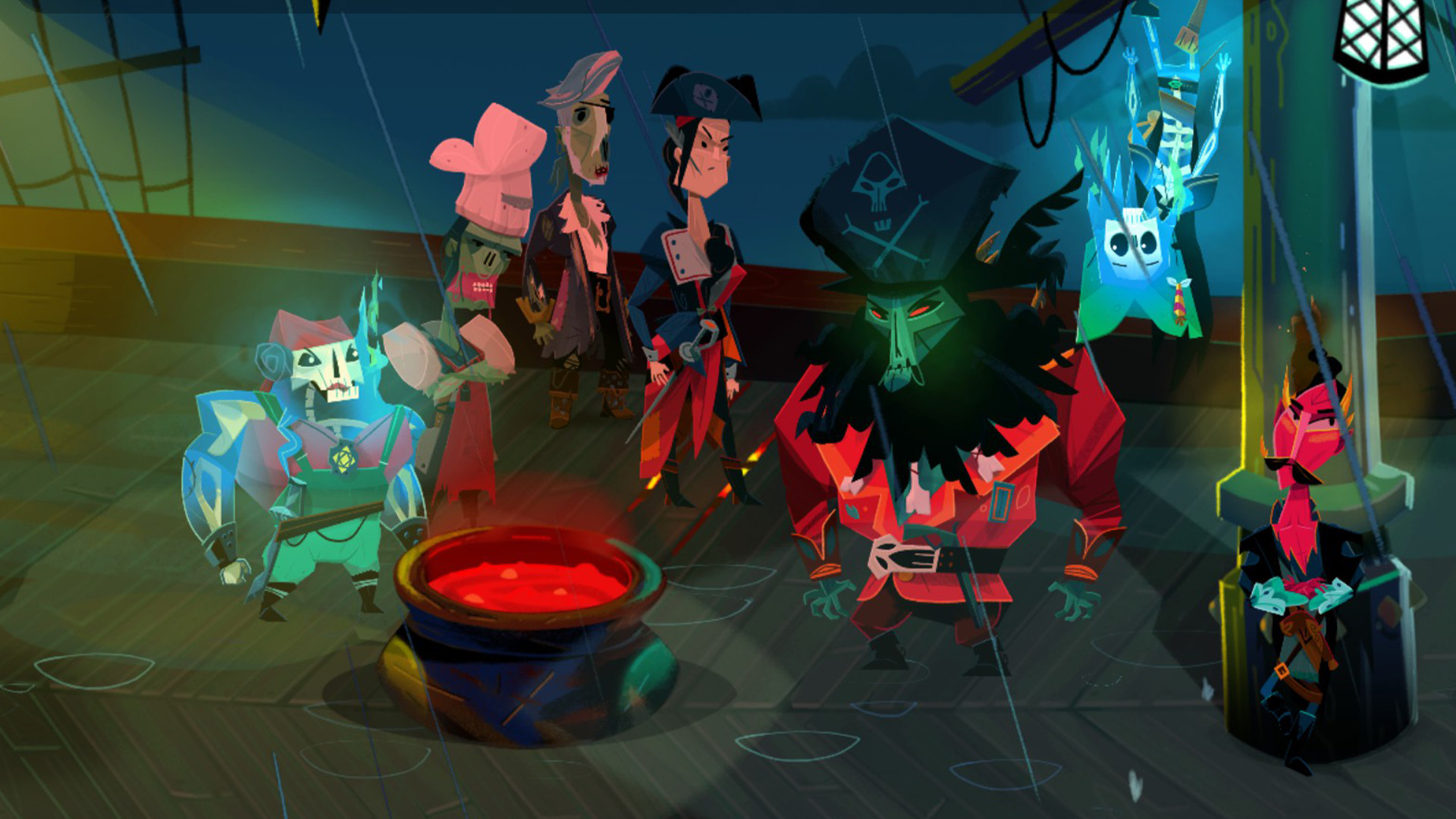
Trying to escape the hold in Return to Monkey Island? Part two of Return to Monkey Island starts with Guybrush Threepwood disguised as a Swabbie and trapped in the hold of his nemesis LeChuck’s ship.
After a bristly confrontation with First Swab Gullet in this adventure game, the player is tasked with escaping the hold so that Guybrush can rise above his Swabbie station and continue the search for The Secret of Monkey Island. We’re going to show you how to escape the hold so you can continue the second half of Return to Monkey Island.
RELATED LINKS: Return to Monkey Island system requirements, Return to Monkey Island difficulty modes, Return to Monkey Island mop guide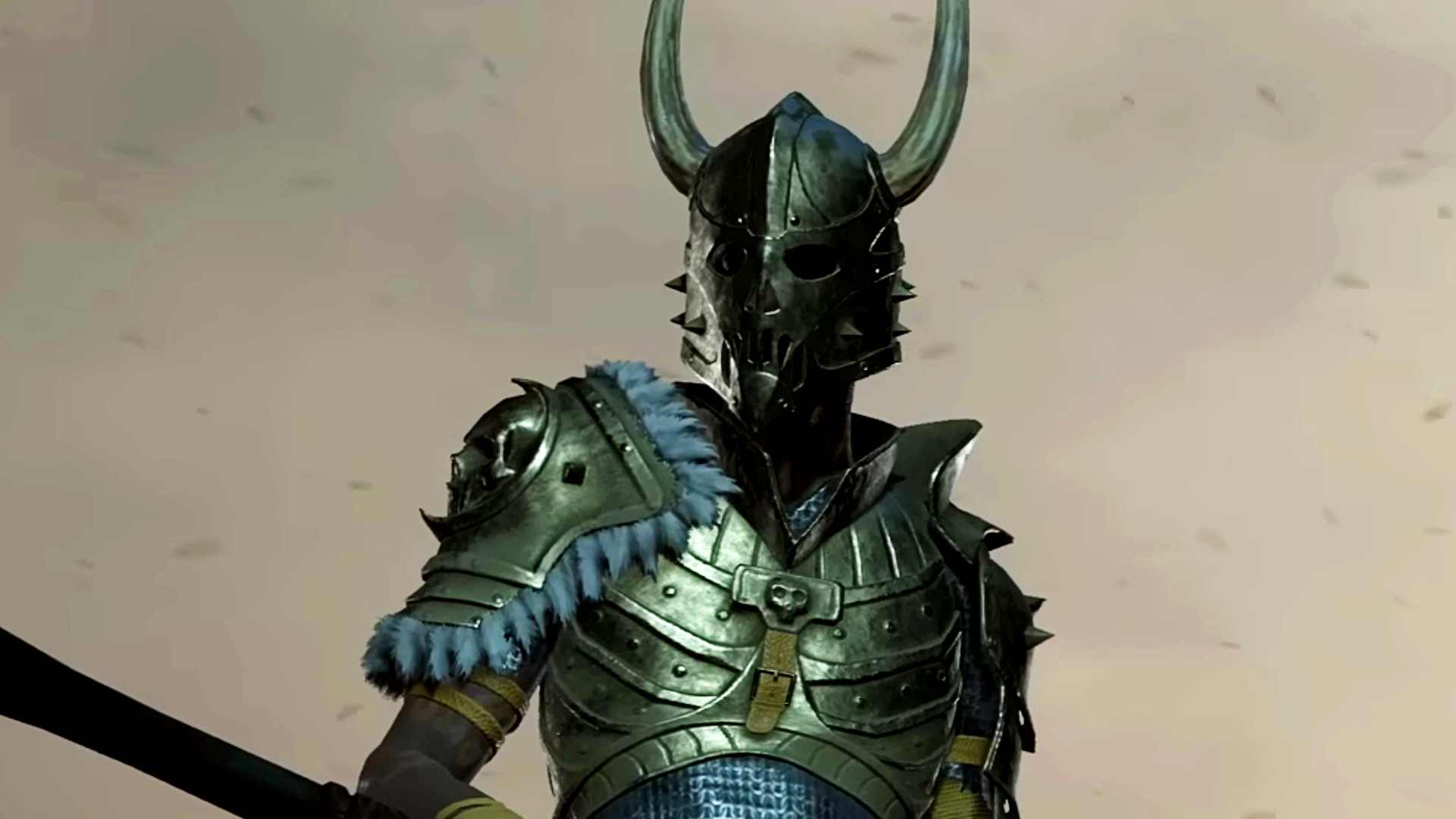
A Diablo 4 closed beta announced for November says it will focus on the endgame experience as developer Blizzard aims to hone its next title to go toe-to-toe with the best RPG games on PC. However, fans are taking exception to a certain event type, saying they fear the introduction of ‘daily quests’ and more timed live-service elements that make the game feel too much like a chore - despite the long tail of past entries as proven by the successful recent launch of Diablo 3 season 27.
RELATED LINKS: Diablo 4 release date, The best games like Diablo you can play on PC, Diablo 4 classes
We're heading back to the ritziest part of Los Angeles in the upcoming film "Beverly Hills Cop: Axel Foley," the long-awaited fourth entry in the "Beverly Hills Cop" franchise. The first one came out in 1984, starring Eddie Murphy as a police officer who heads to Beverly Hills to solve the murder of his best friend. It spawned two sequels; "Beverly Hills Cop II" in 1987 and "Beverly Hills Cop III" in 1994.
Also starring in the film was Paul Reiser ("Stranger Things," "Mad About You"), who played the character of Jeffrey. Though Reiser didn't make it into the third film, he'll be back for the fourth, along with Murphy, Joseph Gordon-Levitt, Taylour Paige, James Preston Rogers, and James Aviel.
Reiser is also starring in the new sitcom "Reboot," about the cast of an early 2000s sitcom that is getting rebooted with the original actors. The new series premiered on September 20, 2022, with its first three episodes. /Film's own Ethan Anderton spoke to Reiser and co-star Rachel Bloom about "Reboot" and asked him about the upcoming "Beverly Hills Cop" film.

Reiser was asked about reuniting with Eddie Murphy for the fourth film in a series that has spanned almost four decades. Reiser joked that he tries to "help Eddie out whenever I can and to boost his career. So it's an honor." The "Stranger Things" star also had something to say about the fact that Eddie Murphy looks pretty similar to when the first movie premiered, saying, "I was finally glad to see that he actually didn't quite look 23 anymore. It's like, a year ago, this f***ing guy looks exactly the same."
I mean, he's not wrong. Reiser also reminisced about the amount of time that has passed since the first film. "We were chatting," Reiser said, "and I remember, I was at his 21st birthday party, which was at Studio 54, or whatever Studio 54 became. And now, we're in our 60s, even Eddie's in his 60s. I'm like, 'That's a long span. We've been doing this a while.'"
Maybe it's best not to think about how long it's been since that first film. Reiser even joked about meeting up again and "jarring names out of our brains that have not been uttered for 40 years."

As Reiser was talking, Bloom looked up some pictures that leaked from the set of "Beverly Hills Cop: Axel Foley," including one of Reiser in sweatpants. When she found them, he said he was glad it was a picture of him walking. "It wasn't like picking my nose or whatever." He explained that he was supposed to be driving in the film and was told that no one would see his legs or feet.
Who among us hasn't gotten up during a Zoom meeting and forgotten that they were wearing penguin pajamas or something? Stars, they're just like us!
Bloom got in on the conversation as well, saying that she's in a new "Rush Hour" film. She joked, "It hasn't been announced yet, but I play a gun ... boom, boom, boom." To be fair, if anyone could pull that off, it's probably Bloom!
"Beverly Hills Cop: Axel Foley" is directed by Mark Molloy with a script from Will Beall. We'll keep you updated on all the developments. Meanwhile, the first three episodes of "Reboot" are now available to stream on Hulu, with new episodes every Tuesday on the platform.
Read this next: 14 Remakes That Are Better Than The Original
The post Paul Reiser Was Glad to See Eddie Murphy Aged Just a Little Bit While Reuniting for Beverly Hills Cop 4 [Exclusive] appeared first on /Film.
Read more of this story at Slashdot.

Director David Bruckner has such sights to show us. The time to taste the pleasures of hell is soon upon us as the cenobites are set to invade your television on October 5 with the upcoming release of the highly anticipated "Hellraiser" reboot. The 1987 film, adapted by Clive Barker from his novella "The Hellbound Heart," and its subsequent sequels posit the great Doug Bradley as the legendary cenobite Pinhead. But the time has come for new blood to torture those curious about the Lament Configuration.
"Sense8" star Jamie Clayton will be stepping into the role and based on what I've seen, it appears that she's primed to give nightmares to a whole new generation. Akin to most horror icons, if an actor embodies the role for long enough, it can make it difficult for folks to adjust to a new actor filling their shoes. Bradley has already done enough direct-to-video "Hellraiser" flicks, so I say we let him rest.
According to a report from Syfy Wire, when Bradley was at Silver Scream Con, he commented on Clayton's casting, saying that while he's not familiar with how she'll play the part, he is, however, quite a fan of her "Sense8" performance. "Jamie was in that, and I really, really liked her performance in that," praised Bradley.
In the rare instance of social media being an alright place, the pair have even complimented one another's work on Twitter. In terms of whether or not Bradley believes Bruckner's film will be a good one, his barometer is a simple one.

Bradley asserts that the fact that Clayton is transgender is irrelevant to what he feels will make "Hellraiser" work (via Syfy Wire):
"The thing that will make the movie work or not is none of that. It's the story. If the story is strong, the movie will work [...] That's why 'Hellraiser has succeeded; not because the Cenobites are gloriously f***ed up."
With the first trailer having just arrived, we've finally received a better glimpse of Clayton's Pinhead. It should come as no surprise that the Cenobites, coupled with Bruckner's vision of hell, look incredible. Clayton looks straight-up terrifying. Although details about what's going on are still pretty sparse, barring the film's synopsis:
In the all-new "Hellraiser," a young woman struggling with addiction comes into possession of an ancient puzzle box, unaware that its purpose is to summon the Cenobites, a group of sadistic supernatural beings from another dimension.
The film stars Hiam Abbass, Adam Faison, Brandon Flynn, Aoife Hinds, Selina Lo, Drew Starkey, and Goran Visnjic, with Odessa A'zion as the film's protagonist.
Time will tell if this new vision of pain and pleasure will live up to Barker's story or the Pinhead legacy, but given Bruckner's pedigree as a horror filmmaker, along with Clayton's prowess as an actor, I think it's safe to say we're in good hands.
"Hellraiser" will premiere on Hulu on October 7, 2022.
Read this next: The Horror Movies We Can't Wait To See In 2022
The post What Will Make Or Break Hulu's Hellraiser, According To Doug Bradley appeared first on /Film.
In the world of Saturnalia, nothing is as it seems. The Italian village of Gravoi may appear quaint and unassuming at first glance, but it holds many secrets. Similarly, there’s more to the four co-protagonists of Saturnalia than meets the eye. Although each of them are outsiders for different reasons, they all share a common cause: rooting out the darkness that haunts Gravoi, even if it means bringing their own demons into the light.
The first of these is Anita Giannini, geologist extraordinaire and the very picture of the late 80’s businesswoman. Unlike her fellow protagonists, she had no attachment to Gravoi prior to her arrival a year before the game’s events. In fact, her initial purpose in the village was to conduct reconnaissance in the area on behalf of corporate mining interests eager to exploit the surrounding natural resources. A woman of her assurance and confidence isn’t easily deterred, in matters both professional and personal—so perhaps it was inevitable that she’d find herself involved in an illicit affair with none other than Damiano, the married town sacristan. At the outset of Saturnalia, she’s discovered that she’s with child, and despite the controversy sure to arise if her affair was made public, she’s determined to keep the baby.
The conservative values of Gravoi are at odds with Anita’s unflappable character, but there are other, darker forces at work that even she can’t dismiss.

In contrast, Paul Izem is a child of Gravoi, even if he didn’t know it for most of his life. After his birth parents died under mysterious circumstances while he was still an infant, Paul was soon adopted by a family in Iglesias, a city in southern Sardinia. Only after discovering a letter urging his adoptive parents to never let him return to Gravoi does he defy that very request and embark on a personal mission to find out the truth about what happened to his mother and father. To avoid raising the suspicions of a town already distrustful of outsiders, Paul uses his profession as a photojournalist to shield his true motive, claiming he’s working on a feature for a tourist magazine even as he quietly seeks out clues about his past. Little does he know that his camera will be of critical importance in documenting the horror lurking in Gravoi…
Quick to put on a brave face, Paul hides his insecurity just as he hides his real motivation in coming to the village. But the other protagonists of Saturnalia don’t exactly share his self-consciousness.

Sergio Aulas was born and raised in Gravoi, but left for Manchester when he was only sixteen. At the time, his departure seemed like something to be celebrated: a chance to study abroad paid for by the generosity of Bruno Bissani, the lord and owner of the castle in Gravoi. But in truth, this wasn’t an opportunity, but an exile: discovered in bed with Bisssani by the lord’s own wife, Sergio was sent to England as a means of covering up the scandal, at the urging of his father. Thirty years later, he’s become a successful computer programmer, returning to Gravoi only to care for his iron lung-bound father. Aloof and analytical, Sergio is inherently antagonized by the traditionalist norms of his hometown, particularly as a gay man no longer compelled to hide his sexuality. But motivated by his obligation to his sick father, as well as his lingering curiosity about the fate of his former lover—who’s since disappeared—Sergio has no choice but to reinsert himself back into the community and mystery of Gravoi.
But Sergio is also secretly battling a morphine addiction, which he treats by pilfering his father’s medicine. If he wants to find the answers he seeks, he’ll need the one thing he’s most discomfited by: the help of others.

Claudia Mirai would rather suffer in silence than ask for help. More than anyone else in Saturnalia, she despises Gravoi: as a sixteen-year-old punk, she knows she was made for more than just tending her father’s bar, and the antiquated culture of her remote hometown stifles her to the point of exasperation. But it’s not just youthful rebellion shaping her worldview. As a child, she stumbled onto a horrific scene: her aunt, clad in her wedding dress and hanging from the centenary olive tree in the ancient nuragic area right outside the village. The sight left Claudia with painful trauma she can never be freed from, as did the omerta (the Southern Italian code of silence) that followed, when her father and the other townsfolk refused to acknowledge the death as a suicide. Since then, she’s stood in stark opposition to every institution in her community, be it patriarchal values or religious instruction. She’s defiant and only aligns herself with those she views as in opposition to the system—but in truth, her cynicism is a coping mechanism for her painful memories and her bitter relationship with her father. Her wish is to leave Gravoi and begin a new life somewhere far away from everything she’s ever known.
In order for that wish to come true, however, she has to make it through the night of the winter solstice.
Alone, each of these characters can only do so much. Together, they stand a chance to uncover the mystery of Gravoi and escape Saturnalia.
The team here at Santa Ragione is putting the finishing touches to the game, and we can’t wait for you to play it. Saturnalia launches for Xbox One and Xbox Series X|S on October 27th, 2022.

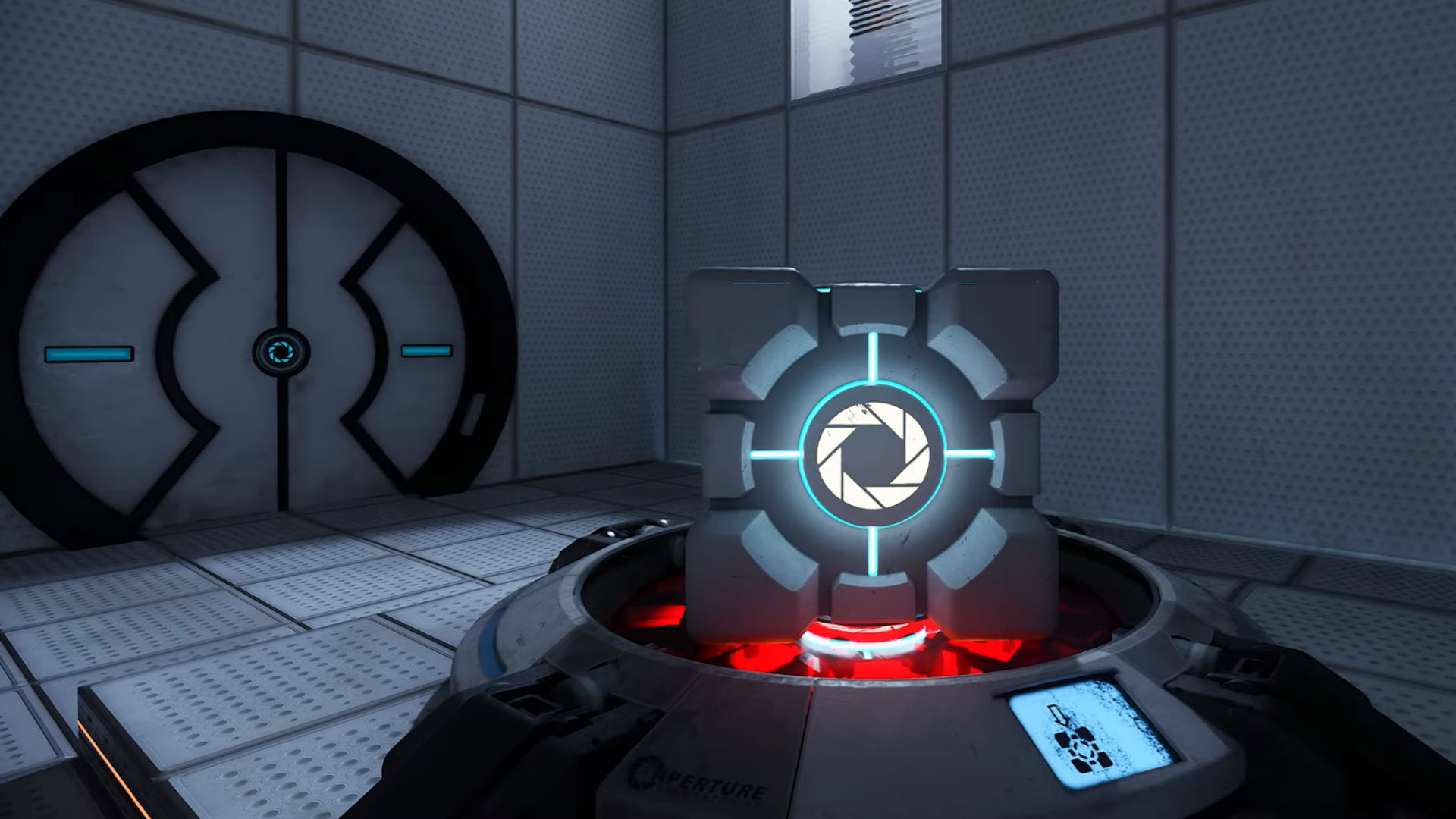
Whenever someone goes back to refresh the visuals of an iconic video game with a very established and well-remembered look, things can get a bit funky. So while I understand the appeal of something like Portal with RTX, a "reimagined" Portal kitted out with ray tracing, that doesn't mean it's strictly better. It's different! And you may or may not dig it.
Alongside (pricey!) GeForce RTX 40 series GPUs, Nvidia announced Portal with RTX as free DLC coming to Steam in November for Portal owners. 15 years later, if you can believe it.
https://www.youtube.com/watch?v=AZHBl5yWqJk
"Every light is ray-traced and casts shadows, global illumination indirect lighting naturally illuminates and darkens rooms, volumetric ray-traced lighting scatters through fog and smoke, and shadows are pixel perfect," according to Nvidia's announcement.
While the detailed surfaces are immediately noticeable, some comparison screenshots are more flattering than others, so it's best to watch the trailer to get a comprehensive view before you start messing with sliders on Nvidia's lengthy blog post that breaks down Portal with RTX. It's not just lighting — there's also "new art evocative of the original."
As the game's Steam page notes, "Portal with RTX is compatible with all ray-tracing capable GPUs." It's a sparse listing, but there are screenshots (and you can wishlist).
I like that this is DLC, rather than a forced update. We're not always that fortunate.
[caption id="attachment_345318" align="alignnone" width="1920"] The Companion Cube has a new glow.[/caption]
This flashy project came to fruition at Nvidia Lightspeed Studios, following earlier RTX upgrades for Quake II and Minecraft. There's more where that came from, too.
Nvidia will be releasing RTX Remix, a free modding platform for supported PC games that "can add ray tracing with just a few clicks." While Portal with RTX is the main showcase, Nvidia also showed off glossed-up scenes from 2002's The Elder Scrolls III: Morrowind.
"RTX Remix Mods work alongside existing gameplay mods downloaded from Nexus Mods or other sites, giving games with rich modded content an instant ray-traced upgrade," the company said. It also noted that "previously unmoddable" games will be compatible with these tools, and "every RTX Mod also comes packaged with the RTX Remix Runtime editor, giving players a multitude of options to customize their experience in real-time."
Whether you're a modder or just a player, expect lots of new possibilities for supported DirectX 8 and DX9 games. No shade, but I'm curious to see fan creations that take a more nuanced, measured approach to upgrading outdated lighting. Less is more sometimes.
The post Portal with RTX might be overkill, but at least it’s free DLC on Steam appeared first on Destructoid.
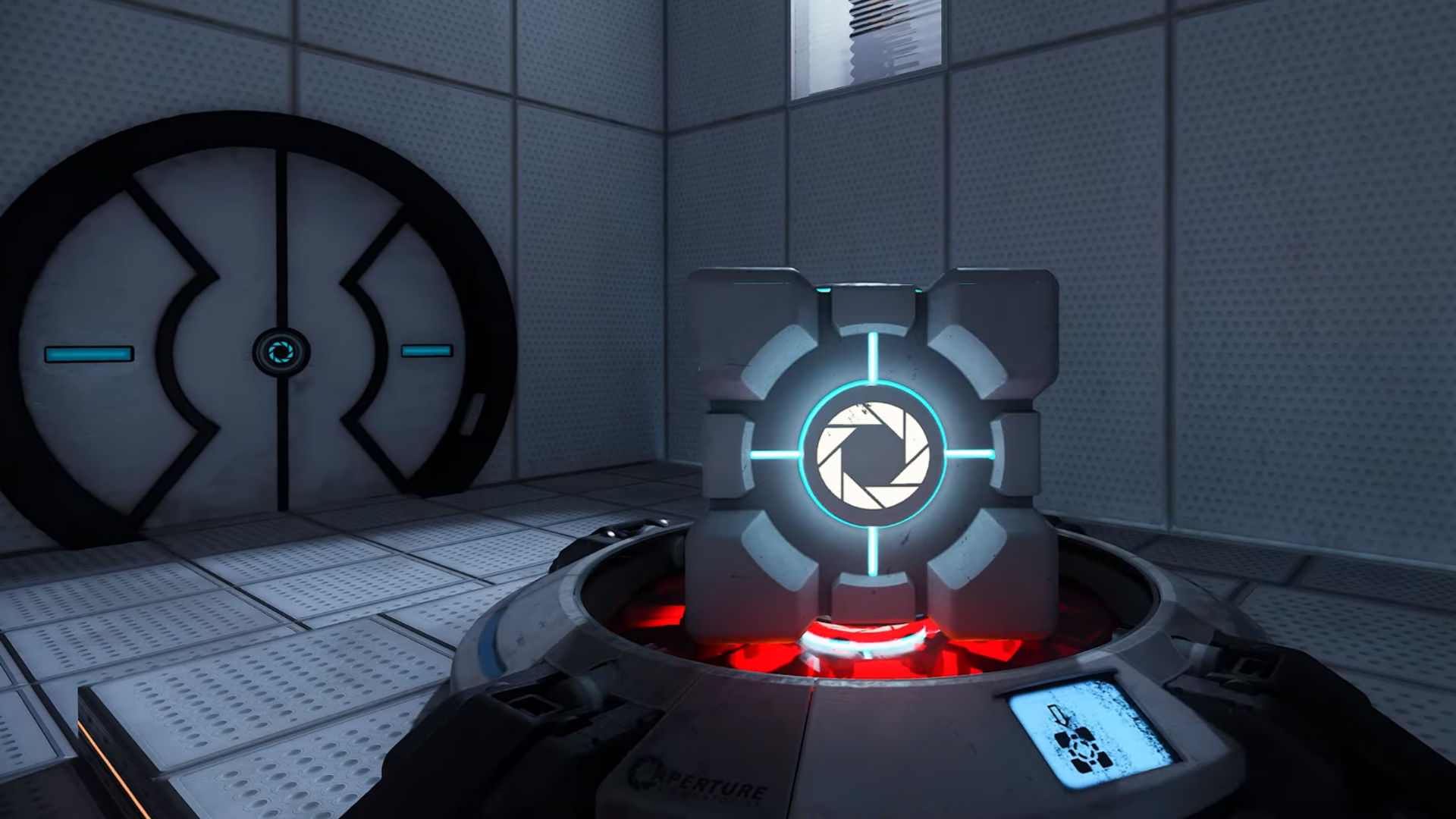
Free Portal DLC is an unexpected treat 15 years after Valve released it as part of the Orange Box collection, and it brings the platformer into 2022 with style. Dubbed Portal with RTX, the update doesn't add any new gameplay elements, but it does completely transform the iconic puzzle game with RTX ray tracing and Nvidia DLSS 3.0.
RELATED LINKS: Portal system requirements
The thought of earning money without doing any active work sounds pretty nice. When people talk about “earning money while you sleep” (even though that’s a myth), they’re usually referring to passive or residual income. Although the two terms are often used interchangeably, there are some key differences between…
One would assume that after the 3.5 GB memory controversy NVIDIA would be careful about ensuring the amount of VRAM on their GPUs was absolutely clear which goes to show why…
Attackers are constantly evolving, becoming increasingly sophisticated and destructive—the median time for an attacker to access your private data if you fall victim to a phishing email is 1 hour, 12 minutes.1 Microsoft tracks more than 35 ransomware families and more than 250 unique nation-state attackers, cybercriminals, and other actors. We have unparalleled threat intelligence—processing more than 43 trillion signals per day, including 2.5 billion daily endpoint queries and 921 password attacks blocked every second. We work alongside more than 15,000 partners in our security ecosystem and we have more than 8,500 engineers, researchers, data scientists, cybersecurity experts, threat hunters, geopolitical analysts, investigators, and frontline responders across 77 countries. We combine human and machine intelligence with built-in AI to continuously learn from the attack landscape, and we have a dedicated team, the Microsoft Offensive Research and Security Engineering (MORSE), that works to stop threats before they reach your device.2 All of this goes into the design process to deliver a more secure Windows with every release.
“Because Microsoft designed the security model of Windows 11 from the ground up to assume that some component has already been compromised, threat actors will find it orders of magnitude more difficult to remain undetected [and persist] in the environment than in traditional architectures.”
–SANS Institute
Today, we’re proud to announce that the security features you heard about in April 2022 are now available on Windows 11.
We’ve added features that give people the flexibility to choose their own applications, while still maintaining tight security. Smart App Control is a new feature for individuals or small businesses designed to help prevent scripting attacks and protect users from running untrusted or unsigned applications often associated with malware or attack tools.3 This feature creates an AI model using intelligence, based on the 43 trillion security signals gathered daily, to predict if an app is safe. App control is known to be one of the most effective approaches to protecting against malware but can be complex to deploy. Windows 11 uses the power of AI to generate a continually updated app control policy that allows common and known safe apps to run while blocking unknown apps often associated with new malware. Our customers have asked us to make this simpler and we have responded.
The Smart App Control approach achieves the goal of making advanced app control protection widely available. Smart App Control is built on the same same OS core capabilities used in Windows Defender Application Control. Smart App Control is provided on all Windows client editions with clean installations of Windows 11 2022 Update. Alternatively, for enterprises, your IT team can use Microsoft Intune with Windows Defender Application Control to remotely apply policies to control what apps run on workplace devices.
Malware increasingly targets drivers to exploit vulnerabilities, disable security agents, and compromise systems. Window 11 uses virtualization-based security (VBS) for enhanced kernel protection against potential threats.
HVCI ensures that only validated code can be executed in kernel mode. The hypervisor leverages processor virtualization extensions to enforce memory protections that prevent kernel-mode software from executing code that has not been first validated by the code integrity subsystem. HVCI protects against common attacks like WannaCry that rely on the ability to inject malicious code into the kernel. HVCI can help prevent the injection of malicious kernel-mode code even when drivers and other kernel-mode software have bugs.
The Windows kernel is the most privileged software and is therefore a compelling target for malware authors. Since Windows has strict requirements for code running in the kernel, cybercriminals commonly exploit vulnerabilities in kernel drivers to get access. Taking advantage of Windows Defender Application Control, the kernel blocklisting feature prevents vulnerable versions of drivers from running. Microsoft works with ecosystem partners to constantly identify and respond to potentially vulnerable kernel drivers. Users who want the highest level of protection can still specify an allow list to implement driver control.
With Windows 11, you can protect your valuable data and enable secure hybrid work with the latest advanced security that small or medium-sized businesses say results in 2.8 times fewer instances of identity theft.5 Here are a few enhancements that can help you stay secure now and in the future:
Config lock builds on the security fundamentals of Windows 11 and is, in part, secured by specific hardware features. The feature monitors a pre-configured set of configuration service providers (CSPs) and policies. If you assign any of these policies to devices in your tenant, enabling config lock will maintain your defined settings.
We’re continuing to add protection from chip to cloud, with an emphasis on the benefits of using new, modern devices with hardware features optimized for security and hybrid work.
For example, if you work in data-sensitive scenarios, Secured-core PCs with Windows 11 can be a great choice. These devices come with additional safeguards enabled, including advanced firmware protection, for the highest level of Windows security. We also will now detect if a device is capable of Windows Defender System Guard and alert users in the Windows Security app that the feature can be enabled. This update to the Windows Security app is currently available to the Windows Insider population and will be broadly available soon.
The Microsoft Pluton security processor, designed by Microsoft and our silicon partners, directly integrates into the silicon of the CPU, providing protection for sensitive assets like credentials and encryption keys by isolating them from the rest of the system. The Pluton firmware also gets security updates straight from the cloud through the Windows updates process which helps security and IT teams simplify management and ensure they have the latest, ongoing protection against threats.
We’re all working together toward a more secure future, and we look forward to delivering more innovation that will not only detect threats but help prevent them. Microsoft has committed a USD20 billion investment in security research and development over five years.4 We’re committed to your security and to continuously improving the foundational security provided by Windows with default security baselines to help you thrive now and in the future.
To get more information on Windows 11 chip-to-cloud security, visit our website and check out the Windows 11 Security Book details on how Microsoft optimizes Windows 11 for Zero Trust.
To learn more about Microsoft Security solutions, visit our website. Bookmark the Security blog to keep up with our expert coverage on security matters. Also, follow us at @MSFTSecurity for the latest news and updates on cybersecurity.
1Cyber Signals: 3 strategies for protection against ransomware, Vasu Jakkal. August 30, 2022.
2MORSE security team takes proactive approach to finding bugs, Elliott Smith. August 3, 2022.
3Availability may vary by region.
4Microsoft has a $20 billion hacking plan, but cybersecurity has a big spending problem, Eric Rosenbaum. September 8, 2021.
5Hardware dependent.
The post New Windows 11 security features are designed for hybrid work appeared first on Microsoft Security Blog.
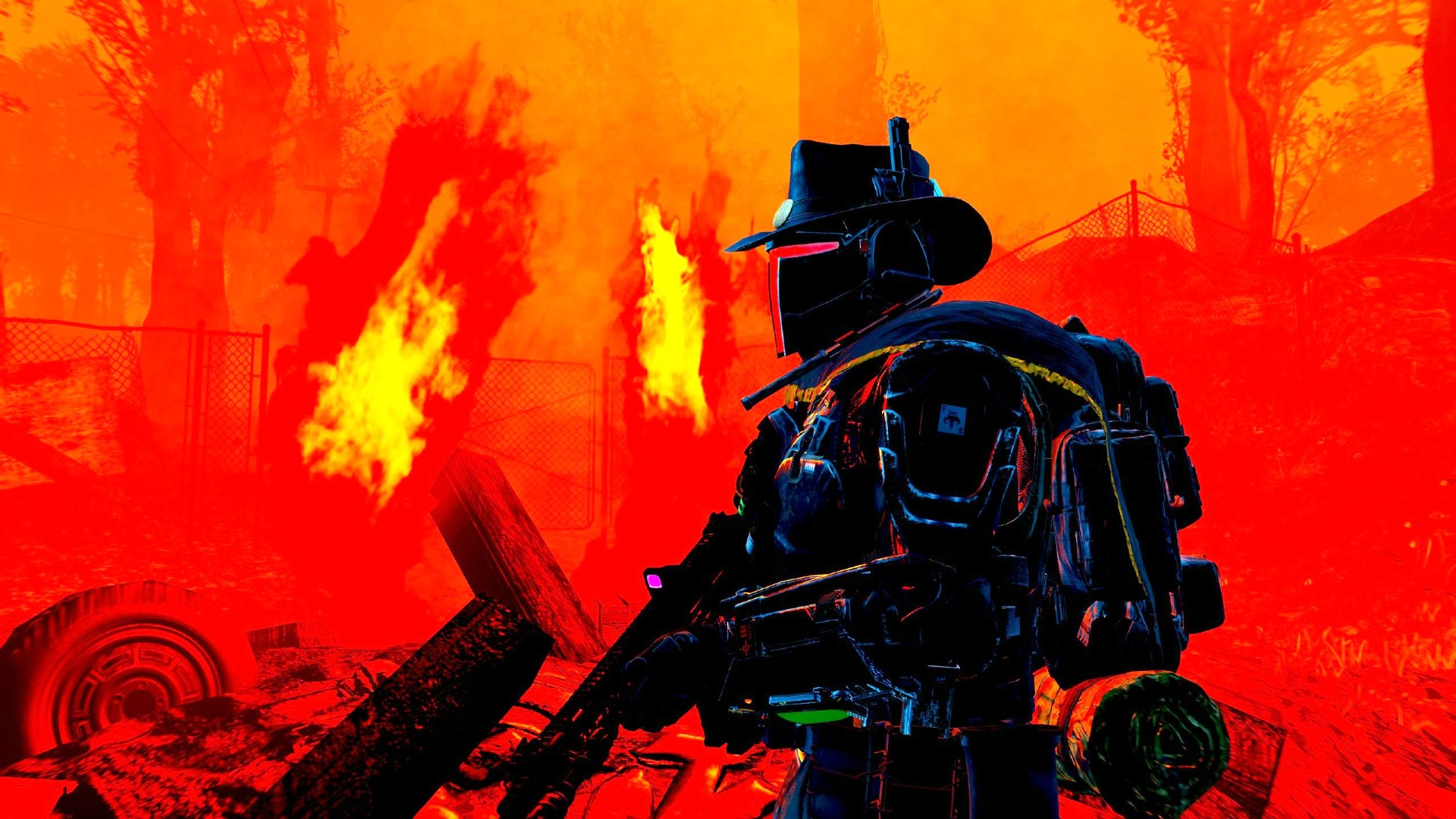
Fallout 4 mods have progressively transformed the Bethesda RPG, adding new weapons, enemies, armour, and quest lines. As we eagerly await news on the Starfield release date, we’re constantly on the hunt for new ways to pass the time in nuclear Commonwealth, and this latest project, a Star Wars-inspired DLC-sized expansion for Fallout 4, seems ideal.
RELATED LINKS: Fallout 4 console commands, Fallout 4 mods, Buy Fallout 4
AMD has just confirmed the launch of its RDNA 3 GPU-powered Radeon RX 7000 graphics cards on the 3rd of November. The announcement comes literally hours before NVIDIA is about to launch its own next-gen GeForce RTX 40 series graphics cards.
The announcement was shared by Senior Vice President and General Manager of Radeon, Scott Herkelman, over on Twitter. While no details are shared yet, the company has announced that it will be an official launch of the RDNA 3 to the world and more details are coming soon. The AMD RDNA 3 GPUs will be featured on the next-gen Radeon RX 7000 graphics cards, offering a massive gaming performance uplift and they might as well be the first chips to come close to the 4 GHz GPU clock speed mark.
Join us on November 3rd as we launch RDNA 3 to the world! More details to come soon! #RDNA3 #AMD pic.twitter.com/oftq1Fjrgt
— Scott Herkelman (@sherkelman) September 20, 2022
AMD confirmed that its RDNA 3 GPUs will be coming later this year with a huge performance uplift. The company's Senior Vice President of Engineering, Radeon Technologies Group, David Wang, said that the next-gen GPUs for Radeon RX 7000 series will offer over 50% performance per watt uplift vs the existing RDNA 2 GPUs. Some of the key features of the RDNA 3 GPUs highlighted by AMD will include:

In the information published by AMD, the company highlighted a few key features of its RDNA 3 GPUs that will power the next generation of Radeon RX graphics cards. The RDNA 3 GPU will be based on a 5nm process node and utilize an advanced chiplet packaging that delivers increased performance per watt. Furthermore, the GPU will house a range of new technologies such as a brand new and rearchitected Compute Unit, an optimized graphics pipeline, and the next-gen of Infinity Cache.

AMD's SVP & Technology Architect, Sam Naffziger, has highlighted that the next-generation RDNA 3 GPUs featured on the Radeon RX 7000 GPUs and next-gen iGPUs, will going to offer a range of new technologies including a refined adaptive power management tech to set workload-specific operation points, making sure that the GPU only utilizes the power required for the workload. The GPUs will also feature a next-gen AMD Infinity Cache which will offer higher-density, lower-power caches and reduced power needs for the graphics memory.
What’s Next?
Looking ahead, we’re continuing our push for more efficient gaming with AMD RDNA 3 architecture. As the first AMD graphics architecture to leverage the 5nm process and our chiplet packaging technology, AMD RDNA 3 is on track to deliver an estimated >50 percent better performance per watt than AMD RDNA 2 architecture – truly bringing top-of-the-line gaming performance to gamers in cool, quiet, and energy-conscious designs.
Contributing to this energy-conscious design, AMD RDNA 3 refines the AMD RDNA 2 adaptive power management technology to set workload-specific operating points, ensuring each component of the GPU uses only the power it requires for optimal performance. The new architecture also introduces a new generation of AMD Infinity Cache, projected to offer even higher-density, lower-power caches to reduce the power needs of graphics memory, helping to cement AMD RDNA 3 and Radeon graphics as a true leaders in efficiency.
We’re thrilled with the improvements we’re making with AMD RDNA 3 and its predecessors, and we believe there’s, even more, to be pulled from our architectures and advanced process technologies, delivering unmatched performance per watt across the stack as we continue our push for better gaming.

The AMD Navi 31 GPU, the flagship RDNA 3 chip, would power the next-gen enthusiast cards such as the Radeon RX 7900 XT graphics card. We have heard that AMD will drop CU (Compute Units) in favor of WGP (Work Group Processors) on its next-gen RDNA 3 GPUs. Each WGP will house dual CU (Compute Units) but with twice the SIMD32 clusters as opposed to just 2 on each CU within RDNA 2. Rumors are that AMD has the option to select between Samsung and TSMC for the 6nm die.
According to the latest information, the AMD Navi 31 GPU with RDNA 3 architecture is expected to offer a single GCD with 48 WGPs, 12 SAs, and 6 SEs. This will give out a total of 12,288 SPs or stream processors. This is an increase of 2.4x in cores compared to the 5120 SPs featured on the Navi 21 GPU. The GPU or the Navi 31 GCD is said to measure 308mm2 and will come packaged on TSMC's 5nm process node.

The Navi 31 GPU will also carry 6 MCD's which will feature 16 MB Infinity Cache per die and are also likely to carry the 64-bit (32-bit x 2) memory controllers that will provide the chip with a 384-bit bus interface. While this equals 96 MB of Infinity Cache which is lower than the 128 MB featured on the current Navi 21 GPUs, there's also a 3D-Stacked solution in the works which was pointed out recently and that would double the Infinity Cache with 32 MB (16 MB 0-hi + 16 MB 1-hi) capacities for a total of 192 MB of cache. This is a 50% increase versus the current Navi 21 design and it also makes Navi 31 the first GPU with both, chiplet and 3D stacked designs. These chiplets or MCD's will be fabricated on TSMC's 6nm process node and measure 37.5mm2 each.
The outlet reports that there was an even higher 288 MB (16 MB 0-Hi + 16 MB 1-Hi + 16 MB 2-Hi) MCD package planned but that was scrapped due to cost-benefit reasons. There are also talks of a cut-down variant of the Navi 31 GPU which will feature 42 WGPs or 10,752 cores and 5 MCDs for 80MB Infinity Cache across a 320-bit bus interface.
Now, this is going to result in higher power draw and AMD seems to have confirmed this much that their next-generation graphics card lineup will feature higher power consumption but they will still be a more efficient option than what NVIDIA has to offer. The AMD Radeon RX 6950 XT already has a TBP of 335W so for a >2x performance gain. The cards are expected to retain their dual 8-pin plug input for power and feature an updated triple-fan cooling design which is slightly taller than the one currently in use.
The AMD Navi 32 GPU codenamed "Wheat Nas" is also one of the two MCM GPUs featured in the RDNA 3 lineup. The GPU will feature a single GCD (Graphics Compute Dies) and four MCDs (Multi-Cache Die). The GPU or GCD is said to measure 200mm2 while each MCD will retain the same size at 37.5mm2.

The GCD will be equipped with 3 Shader Engines and each Shader Engine has 6 Shader Arrays (18 in total). The GPU will feature a total of 30 WGP or 60 Compute Units for a total of 7680 cores. This rounds up to >50% more cores than the Navi 31 flagship.
Each MCD should also feature 2 memory connect links (32-bit). That's a total of 8 32-bit memory controllers for a 256-bit bus interface. Each MCD will retain the 16 MB 0-Hi capacity but there does not seem to be any 1-Hi variant which means that the chip will have just 64 MB maximum configs. That Navi 32 GPU is said to launch in 2023 and will be the highest chip for mobile and mid-tier chip for desktops. The GPU would be first rolled out to the mobile segment and might be announced at CES 2023 which makes ideal sense since we will have Phoenix Range and Dragon Range laptops with Zen 4 cores ready by then.
The AMD Navi 33 GPU codenamed "Hotpink Bonefish" will start the monolithic segment within the RDNA 3 family. The GPU will feature a single die. The die is very similar to the flagship Navi 21 GPU and is expected to utilize a 6nm process node for fabrication with a die size of 203mm2.

The Navi 33 GCD is expected to feature 2 Shader Engines and each Shader Engine has 2 Shader Arrays (2 per SE / 4 in total). This rounds up to 16 WGP's or 32 Compute Units for a total of 4096 cores which is higher than the Radeon RX 6800 "Navi 21 XL" GPU. The GPU will come packaged with 32 MB of Infinity Cache, the same amount as the Navi 23 GPU, and across a 128-bit wide bus. Just like the Navi 32 GPUs, the Navi 33 chips will be focused first on the mobile lineup with early graphics performance putting them ahead of the Intel Arc Alchemist lineup at less than half the cost & while pulling less power.
The AMD Radeon RX 7000 "RDNA 3" GPU lineup based on the Nav 3x GPUs is expected to launch later this year with reports pitting the flagship Navi 31 launch first followed by Navi 32 and Navi 33 GPUs.
| GPU Name | Navi 21 | Navi 33 | Navi 32 | Navi 31 | Navi 3X |
|---|---|---|---|---|---|
| Codename | Sienna Cichlid | Hotpink Bonefish | Wheat Nas | Plum Bonito | TBD |
| GPU Process | 7nm | 6nm | 5nm/6nm | 5nm/6nm | 5nm/6nm |
| GPU Package | Monolithic | Monolithic | MCM (1 GCD + 4 MCD) | MCM (1 GCD + 6 MCD) | MCM (TBD) |
| GPU Die Size | 520mm2 | 203mm2 (Only GCD) | 200mm2 (Only GCD) 425mm2 (with MCDs) |
308mm2 (Only GCD) 533mm2 (with MCDs) |
TBD |
| Shader Engines | 4 | 2 | 4 | 6 | 8 |
| GPU WGPs | 40 | 16 | 30 | 48 | 64 |
| SPs Per WGP | 128 | 256 | 256 | 256 | 256 |
| Compute Units (Per Die) | 80 | 32 | 60 | 96 | 128 (per GPU) 256 (Total) |
| Cores (Per Die) | 5120 | 4096 | 7680 | 12288 | 8192 |
| Cores (Total) | 5120 | 4096 | 7680 | 12288 | 16,384 |
| Memory Bus | 256-bit | 128-bit | 256-bit | 384-bit | 384-bit x2? |
| Memory Type | GDDR6 | GDDR6 | GDDR6 | GDDR6 | GDDR6 |
| Memory Capacity | Up To 16 GB | Up To 8 GB | Up To 16 GB | Up To 24 GB | Up To 32 GB |
| Memory Speed | 16-18 Gbps | TBD | TBD | 20 Gbps | TBD |
| Memory Bandwidth | 512-576 GB/s | TBD | TBD | 960 GB/s | TBD |
| Infinity Cache | 128 MB | 32 MB | 64 MB | 96/192 MB | TBD |
| Flagship SKU | Radeon RX 6900 XTX | Radeon RX 7600 XT? | Radeon RX 7800 XT? Radeon RX 7700 XT? |
Radeon RX 7900 XT? | Radeon Pro |
| TBP | 330W | ~150W | ~250W | ~350W | TBD |
| Launch | Q4 2020 | Q4 2022? | Q4 2022? | Q4 2022? | 2023? |
The post AMD Radeon RX 7000 RDNA 3 GPUs Confirmed For Launch on 3rd November by Hassan Mujtaba appeared first on Wccftech.
AMD has just announced that it will launch its RX 7000 series RDNA 3 GPUs on November 3rd. AMD will launch an event on November 3rd, and will reveal more details about in soon. Join us on November 3rd as we launch RDNA 3 to the world! More details to come soon! #RDNA3 #AMD pic.twitter.com/oftq1Fjrgt … Continue reading AMD will launch its RDNA 3 GPUs on November 3rd →
The post AMD will launch its RDNA 3 GPUs on November 3rd appeared first on DSOGaming.
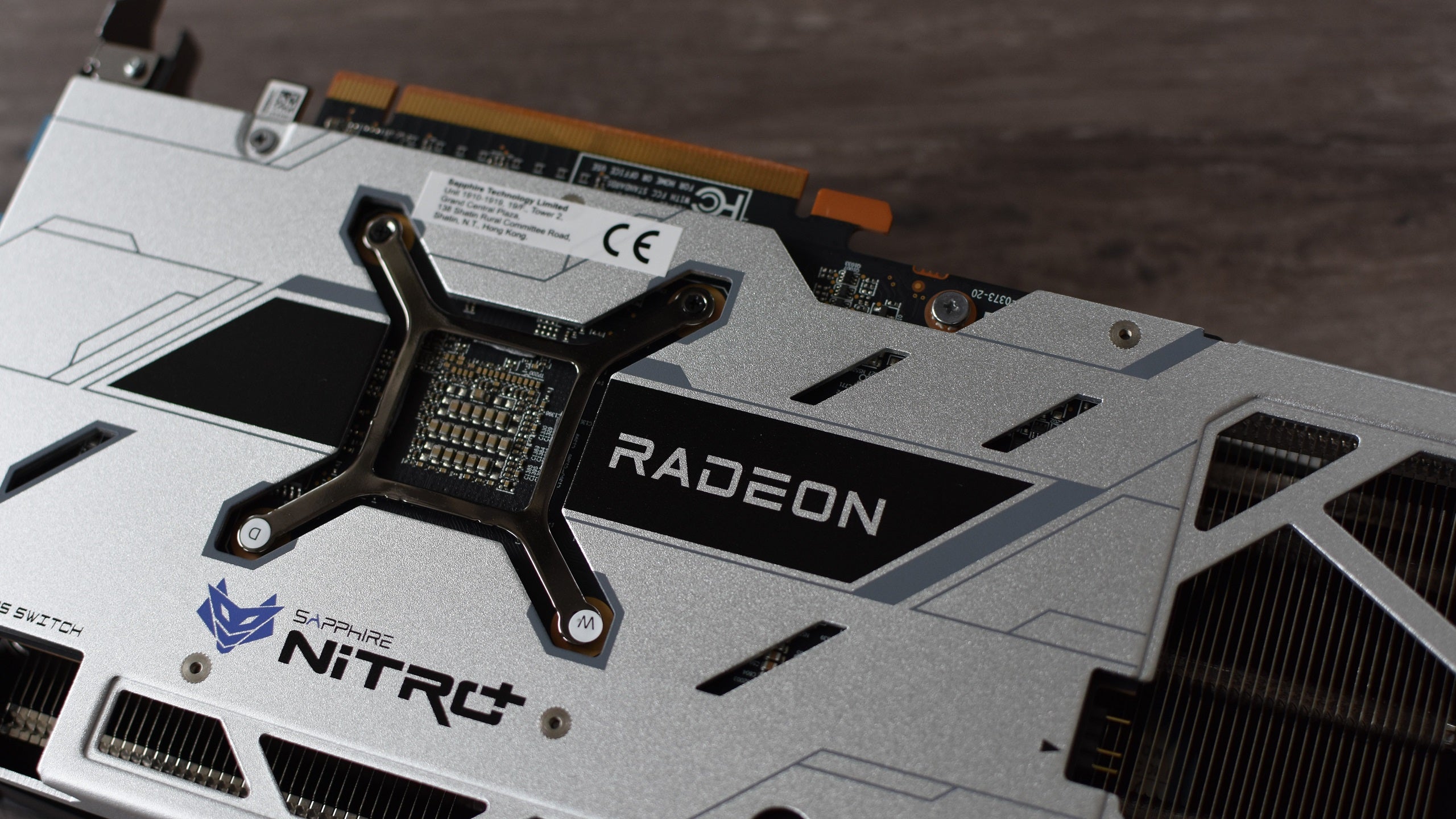
Cheekily dropping the news two hours before Nvidia’s RTX 40 series showcase, AMD senior vice president Scott Herkelman has tweeted a date for the official reveal of the RDNA 3 graphics card generation: November 3rd 2022. That’s less than two weeks before we’ll see how AMD will combat the GeForce RTX 4090 and its brethren, most likely taking the form of the Radeon RX 7000 series of GPUs.
Threat actors are impersonating various US government departments in phishing attacks targeting the Microsoft 365 credentials of government contractors.
NVIDIA's GeForce RTX 40 series GPUs won't just rely on brute force to deliver high-performance visuals. The company has unveiled Deep Learning Super Sampling 3 (aka DLSS 3), a new version of its AI-based rendering accelerator. Rather than generating 'only' pixels, the third-gen technology can create entire new frames independently. It's a bit like the frame interpolation you see (and sometimes despise) with TVs, although this is clearly more sophisticated — NVIDIA is improving performance, not just smoothing out video.
The technique relies on both fourth-gen Tensor Cores and an "Optical Flow Accelerator" that predicts movement in a scene by comparing two high-resolution frames and generating intermediate frames. As it doesn't involve a computer's main processor, the approach is particularly helpful for Microsoft Flight Simulator and other games that are typically CPU-limited. A new detail setting in Cyberpunk 2077 runs at 62FPS in 4K resolution using DLSS2 in NVIDIA's tests, but jumps beyond 100FPS with DLSS 3.
Roughly 35 apps and games will offer DLSS 3 support early on. This includes Portal RTX, older titles like The Witcher 3: Wild Hunt and releases based on Unreal Engine 4 and 5.
It's too soon to say how well DLSS 3 works in practice. NVIDIA is choosing games that make the most of DLSS, and the technology might not help as much with less constrained titles. Nonetheless, this might be useful for ensuring that more of your games are consistently smooth. Provided, of course, that you're willing to spend the $899-plus GPU makers are currently asking for RTX 40-based video cards.