Shared posts

13 Jul 00:03

The Best Responses to Donald Trump’s Claim That Bitcoin Is Backed by ‘Thin Air’

by Kai Sedgwick
The Best Responses to Donald Trump’s Claim That Bitcoin Is Backed by ‘Thin Air’

The cryptosphere was rubbing its hands with glee when U.S. president Donald Trump fired off a typically cantankerous tweetstorm on June 11 in which he took aim at Bitcoin, cryptocurrencies and Libra. Bitcoiners relished the sudden attention directed towards their sphere from the president’s 62 million-strong Twitter account, but took issue with the veracity of his claims. Here are 10 of the best replies.

Also read: Expert Witness in Satoshi Case Claims Dr Wright’s Documents Were Doctored

Trump Tweetstorm Sparks a Thunderous Response

“I am not a fan of Bitcoin and other Cryptocurrencies, which are not money, and whose value is highly volatile and based on thin air,” began Donald Trump, never one to mince his words or check his facts before hitting send. “Unregulated Crypto Assets can facilitate unlawful behavior, including drug trade and other illegal activity.” He went on to pillory Facebook’s Libra currency, asserting that a banking charter is required to engage in money transmission. Then came the kicker, draped in the stars and stripes and dispatched on the wings of a bald eagle:

We have only one real currency in the USA, and it is stronger than ever, both dependable and reliable. It is by far the most dominant currency anywhere in the World, and it will always stay that way. It is called the United States Dollar!

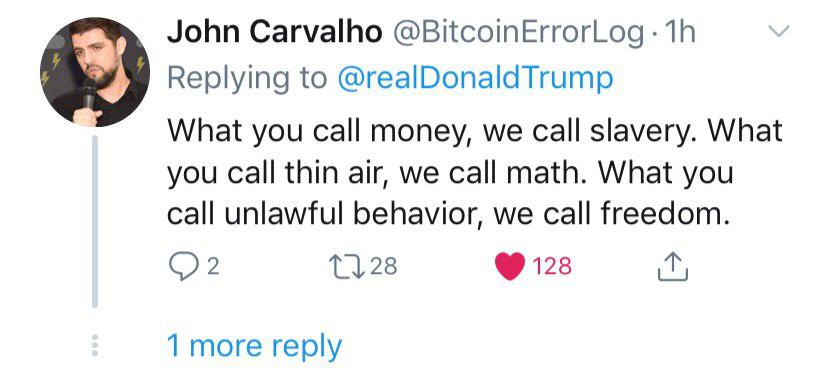
As several million people were exposed to Bitcoin for the first time, 15,000 who were already familiar with the benefits of cryptocurrency took to Twitter and set President Trump right on a few matters.

The Best Responses to Donald Trump’s Claim That Bitcoin Is Backed by ‘Thin Air’

The Best Responses to Donald Trump’s Claim That Bitcoin Is Backed by ‘Thin Air’

‘Cryptocurrency Is Used by Criminals’

To counter the second of Trump’s misleading claims (the first being that the value of bitcoin is based on ‘thin air’), one user directed the president towards a series of images dispelling the notion that cryptocurrency is crims’ currency of choice:

The Best Responses to Donald Trump’s Claim That Bitcoin Is Backed by ‘Thin Air’The Best Responses to Donald Trump’s Claim That Bitcoin Is Backed by ‘Thin Air’The Best Responses to Donald Trump’s Claim That Bitcoin Is Backed by ‘Thin Air’The Best Responses to Donald Trump’s Claim That Bitcoin Is Backed by ‘Thin Air’

Others attacked the U.S. dollar’s diminishing value against bitcoin by linking to usdsat.com.

The Best Responses to Donald Trump’s Claim That Bitcoin Is Backed by ‘Thin Air’

And then there were those who targeted broader issues, such as America’s role in causing global instability through phony drug wars, unwarranted drone attacks, dragnet surveillance and operating a de facto financial cartel.

The Best Responses to Donald Trump’s Claim That Bitcoin Is Backed by ‘Thin Air’The Best Responses to Donald Trump’s Claim That Bitcoin Is Backed by ‘Thin Air’

The Best Responses to Donald Trump’s Claim That Bitcoin Is Backed by ‘Thin Air’

The Best Responses to Donald Trump’s Claim That Bitcoin Is Backed by ‘Thin Air’

The Best Responses to Donald Trump’s Claim That Bitcoin Is Backed by ‘Thin Air’

Many bitcoiners, however, were simply content in the knowledge that ‘the virus’ was spreading, and tomorrow millions would awaken with their curiosity piqued by Bitcoin’s capabilities.

The Best Responses to Donald Trump’s Claim That Bitcoin Is Backed by ‘Thin Air’

The Best Responses to Donald Trump’s Claim That Bitcoin Is Backed by ‘Thin Air’

As Nic Carter, addressing the tribalistic battleground that is crypto Twitter, put it, “For one glorious moment we were united.”


Real time responses to #TrumpTweetsBitcoin.

What are your thoughts on Donald Trump’s Bitcoin assertions? Let us know in the comments section below.


Images courtesy of Shutterstock.


Did you know you can verify any unconfirmed Bitcoin transaction with our Bitcoin Block Explorer tool? Simply complete a Bitcoin address search to view it on the blockchain. Plus, visit our Bitcoin Charts to see what’s happening in the industry.

The post The Best Responses to Donald Trump’s Claim That Bitcoin Is Backed by ‘Thin Air’ appeared first on Bitcoin News.

11 Jul 03:53

Mathematician to present a proof of the Sensitivity Conjecture

The Sensitivity Conjecture has stood as one of the most important, and baffling, open problems in theoretical computer science for nearly three decades. It appears to have finally met its match through work by Hao Huang, an assistant professor of mathematics at Emory University.
07 Jul 02:49

「熊麻雞」來了!逃過「熊口」的雞

by BoWei
文:黃美秀

小熊野化訓練期間,團隊除了到處擺放各式食物之外,也需要訓練牠獵捕的能力。因此,在2018年12月初時,南安小熊進入森林籠舍後,特地為牠安排了第一場野放訓練——捕抓活禽。訓練捕食動物的技能,總得從簡單的開始,於是為小熊找來了一隻雞,讓牠試著進行獵捕。

在雞群中挑選了一隻活動力最弱的母雞,本想早點替牠解圍讓牠結束被同伴霸凌的生活。怎知還沒在小熊面前擺好紙箱,一不小心,雞就趁縫飛走了,求生意志堅強的雞遇上了沒有獵捕經驗的小熊,所擦撞出來的火花竟是——雞飛也似地逃亡了,而小熊竟然也沒有太大的反應。從此這雞就「銷聲匿雞」了。直到一個月後,牠敗部逆轉,且彷彿重生般地登場,在小熊吃飯時悠悠地從旁出場。有別於昔日凌亂微禿,今日已換上一席亮麗的羽衣,並帶著自信的步伐,不急不慌地在小熊旁邊啄食,令人驚訝不已呀!

在雞消失的近一個月期間,團隊後來還給了小熊第二隻雞練習,小熊成功獵食活禽。野訓團隊因此幫這隻存活下來的雞取名為「熊麻雞」(熊麻吉),牠不僅逃過了熊口,還跟小熊有著微妙的關係,這是大家始料未及的。甚至後來小熊還獵捕了第三隻雞,看來真是獨厚「熊麻雞」。


南安小熊妹仔與熊麻雞

我們以為這隻雞遲早會成為小熊的盤中飧,但是這隻雞卻日漸豐滿、羽毛光澤亮麗的好好和小熊相處在一個林子中,打破了團隊所有人的想像。每天到了小熊進食時間,只見這位小「閨密」就默默地跟在小熊後面,當小熊拿起植物、漿果狼吞虎嚥,雞就在小熊的下方啄食從小熊嘴邊落下的果實和碎屑。小熊偶爾也會做做樣子驅趕這陰魂不散的跟屁蟲,但雞總能精明地躲開揮過來的熊掌,並耐心地等待小熊自餐桌「離席」,隨即補位啄食掉落一地的碎屑。

這樣看似突破大眾認知的「相處方式」,或許並非不可能。熊是獨居動物,且極度「明哲保身」,通常在非必要的情況之下都不希望發生爭執,甚至大打出手。在食物充足的狀況之下,只要每一隻熊都覺得自己可以飽食,和其他競爭者在同一空間進食並非不可能。因此,在美洲,我們也可以看見一整群的棕熊排排站在河中央,相安無事地一同捕食鮭魚的畫面。小熊在食物供應無虞下,小熊獵捕的動機可能變低。那些食物碎屑對小熊來說,根本不看在眼裡,小雞的存在對小熊自然也沒太大威脅性。由此可見,小熊之所以對「熊麻雞」的行為視若無睹,或許是在驅趕雞的體力以及犧牲掉落碎屑食物的權衡之下,似乎不怎麼划算,因此小熊便懶得去管「熊麻雞」了。

但「熊麻雞」偶爾也會觸發小熊的警戒心,事情發生在小熊進行獵捕訓練後,這次的獵物——小豬仔,就沒有這隻雞這樣的好運。豐盛的豬肉大餐,小熊只吃了一半,另一半被小熊帶回了牠的遊戲場。邊玩邊舔,並將豬排枕在頭下,就這樣睡去。此時「熊麻雞」愣頭愣腦地靠近小熊,認為會像平常一樣沒事,但不料小熊此時卻警鈴大作,直接坐了起來。「熊麻雞」被嚇得倒退,但仍沒有學乖,在第二次接近時,小熊突然發難,伸出利爪攻擊「熊麻雞」,遲鈍的「熊麻雞」終於感受到性命威脅,落荒而逃。這樣的現象即是典型的「護食行為」,平常雞啄食熊掉落的食物碎屑,小熊都不理會,因為塞牙縫都不夠,但是輪到一大「豬排」時,由於豬排得來不易,又只有這麼一塊,豈有分享之理,必當警戒以對。

話說回來,安置小熊之初,團隊本也想到為孤單的小熊找伴,如狗或其他熊,但因各種考量而作罷。如今冒出一隻地表最強的「奇雞」,五個月以來一直陪著小熊,算是山神送給小熊的禮物嗎?小熊和「熊麻雞」的關係,究竟是跨物種的友誼,還是養雞取蛋,或是養肥殺來吃的儲備糧食的概念,沒有人知道。但身為唯一逃過「熊口」的雞,肯定對於小熊來說有特別的意義,也讓我們對於台灣黑熊的研究有了一項有趣而溫馨的紀錄。不知可否登上金氏世界紀錄。

在小熊野放回山林前一天,我們也從森林場裡帶回熊麻雞。我捧在胸前,深深聞了一大口,「怎麼香香的!」次日,熊麻雞隨即被安置於「台灣黑熊夢想藝術館」安養天年,完成一段雞「熊」同籠的佳話。


書名:《小熊回家:南安小熊教我們的事》

作者:黃美秀

出版商:時報出版 出版日期:2019年6月14日

售價:360


【本書特色】

★台灣首度送野生小熊重返山林的感人故事

★「妹仔」野放訓練過程的獨家可愛照片、文字紀錄

★專家誠懇心聲,扎根保育觀念,一起守護台灣黑熊!

※本書版稅全數捐贈給台灣黑熊保育協會

06 Jul 07:52

Alaska heatwave: Anchorage hits record temperature

Several places in southern Alaska are experiencing record temperatures, including its largest city.
06 Jul 05:16

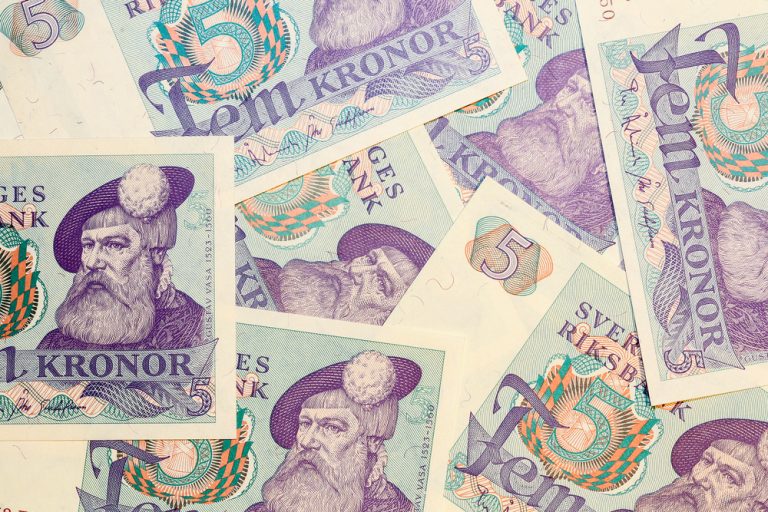
Swedish Central Bank Ponders Even Lower NIRP

by Graham Smith

At a press conference on Wednesday, the head of the Swedish Central Bank admitted that interest rates could potentially go as low as -1.5%, and quipped that Swedes likely wouldn’t even protest. Other countries implementing negative interest rate policies are producing lukewarm results that don’t address the root causes of currency devaluation. Nor do they change the bleak overall trajectory of fiat financial systems across the globe.

Also read: Bitcoin’s Survival Depends on an Uncensorable Internet

A Dreary Forecast, But Too Lazy To Care

Stefan Ingves, governor of the Swedish Central Bank, implied on Wednesday that Swedes are too comfortable to be concerned about negative interest rates. Citing the convenience of online banking and mobile payment systems, Ingves doesn’t think people will be hiding money in their mattresses anytime soon. This observation followed his confirmation that Sweden could possibly go from -0.25% all the way down to a -1.5% interest rate if deemed necessary.

The Riksbank leadership takes an arguably optimistic view of things long term, hoping to potentially hike rates to 1% by 2021. This is despite a currently dreary economic climate. Yields on 10-year government bonds in Sweden dipped below zero the same day Ingves made his remarks. At the same time in Denmark, where the national interest rate is -0.65%, yields on all government bonds were plunging into negative territory in a historic, if depressing milestone.

Switzerland, Denmark, Sweden, and Japan are all experimenting with negative interest rate policies (NIRP) in bids to stimulate uniquely embattled economies. Due to an influx of safe haven-seeking capital, the Swiss franc has appreciated over 80% against the USD in the last decade. To balance this effect, the Swiss National Bank has interest set at -0.75%. The Bank of Japan has continued at -0.1% as of mid-June. NIRP is a relatively new tactic, with Sweden being the first to try it, cutting into negative territory just 10 years ago.

'Don't Worry We Can Just Print More Money' – Central Bank Prepared To Go Way Below Zero

Effects of NIRP On Unemployment

In Japan, where negative yielding debt accounts for almost two thirds of the global total, “Abenomics” has not brought much healing. Bank of Japan Governor Haruhiko Kuroda’s “bazooka” stimulus of 2013 failed to live up to its target, never achieving the proposed 2% interest rate within two years. Prime Minister Shinzo Abe, who hand-selected Kuroda for the job, is now doubling back, telling the parliament in June:

It’s true the BOJ has yet to hit its 2% inflation target, but the real purpose of having the target is, for example, to create jobs and achieve full employment.

While it’s true that Japanese unemployment has fallen since 2013, there’s a bigger picture. Most companies are hesitant to raise wages, and the types of jobs worked are also not being taken into account. Nor is the amount of jobs any given individual works accounted for.

For example, an employed person in Japan is defined by International Labor Organization standards as someone who has worked “even slightly for one week” in a month. A person working two or more low-wage jobs just to survive can then be used in these models to give an image of “success” and “strength” to an economy. This in spite of whatever debt-saddled, difficult existence might be the reality.

'Don't Worry We Can Just Print More Money' – Central Bank Prepared To Go Way Below Zero

Taxation and GDP in NIRP Countries

Sweden’s personal income tax rate is currently 61.85%. Japan’s clocks in at 55.95%. Denmark’s, 55.80%. The Swiss pay 40%. These countries dominate global rankings with some of the highest taxes in the world. What is worth exploring is whether this high expenditure translates into lasting economic gains for the taxpayer.

Socialized medicine, government grants and subsidies, and elaborate welfare programs are often marketed by Keynesians as means to increase the general economic wellbeing of a nation, and in a roundabout way, GDP. An increased GDP is then expected to translate to a better standard of living. According to the Obama White House:

[Health care reform] would likely increase labor supply. Increased insurance coverage and, hence, improved health care, is likely to increase labor supply by reducing disability and absenteeism in the work place. This increase in labor supply would tend to increase GDP and reduce the budget deficit.

'Don't Worry We Can Just Print More Money' – Central Bank Prepared To Go Way Below Zero
A Growing GDP Does Not Equate to Sound Money

Growing GDP is not surprising where interest rates are slashed, especially into the negatives, and where debt is the model monetary system. To the engineers of these NIRP economies, money can be printed indefinitely, so people can be taxed indefinitely. The system is said to be secure, and growth is said to continue because the state can simply “print more money.”

In the Bitcoin whitepaper, Satoshi talks about financial institutions and governments debasing the money supply. While anyone might be able point out problems like unemployment, poor healthcare, or inflation, understanding the root causes of currency devaluation is critical.

'Don't Worry We Can Just Print More Money' – Central Bank Prepared To Go Way Below Zero

There Is A Limit to Reckless Financial Policy

Money is a symbol of value, so it follows that there must be something of value behind it. In and of itself, even gold’s value is subjective. It has value because of what it can do for the holder; what resources or conditions it has the potential to secure. These resources and conditions—concrete or abstract—are scarce, and require scarce commodities like time and labor to achieve. At base, the old maxim “You can’t have your cake and eat it, too” applies.

If money can be printed indefinitely, historically new “monetary tools” like negative interest rates must be used to balance the inflationary, detached and “floating” economies. In the same way that play money from a board game cannot buy anything, an ever-ticking world debt clock is not going to be fixed simply by printing more pieces of paper.

Ingves’ refusal to switch to sound—if temporarily painful—financial policy can only result in a self-inflicted collision with an economic brick wall. There is a real limit to the number of apples on a given tree in a given season. Bitcoin and other economically sound conceptions of money model themselves after this principle. The play money of banksters is simply disconnected from this reality.

What are your thoughts on NIRP and Ingves’ remarks? Let us know in the comments section below.

OP-ed disclaimer: This is an Op-ed article. The opinions expressed in this article are the author’s own. Bitcoin.com is not responsible for or liable for any content, accuracy or quality within the Op-ed article. Readers should do their own due diligence before taking any actions related to the content. Bitcoin.com is not responsible, directly or indirectly, for any damage or loss caused or alleged to be caused by or in connection with the use of or reliance on any information in this Op-ed article.


Images courtesy of Shutterstock


Did you know you can verify any unconfirmed Bitcoin transaction with our Bitcoin Block Explorer tool? Simply complete a Bitcoin address search to view it on the blockchain. Plus, visit our Bitcoin Charts to see what’s happening in the industry.

The post Swedish Central Bank Ponders Even Lower NIRP appeared first on Bitcoin News.

27 Jun 18:29

The Politicization of Money: Crypto as a Safeguard Against Economic Propaganda 

by Graham Smith

Money has come a long way since its origins. From cowry shells to crypto, transferable, divisible, and economically sound means of exchange have been adopted by market actors everywhere. Modern history has brought us to a dangerous place, however, a cultural climate where politics and bad economics have co-opted monetary utility in the name of control and coercive influence. Blockchain and crypto provide everyone the opportunity to experience clean, sound, peaceful money. Many, especially younger generations, are now waking up to this reality.

Also read: How to Cold Store Your Cryptocurrency for Safekeeping

The Empty Promise of Free Money

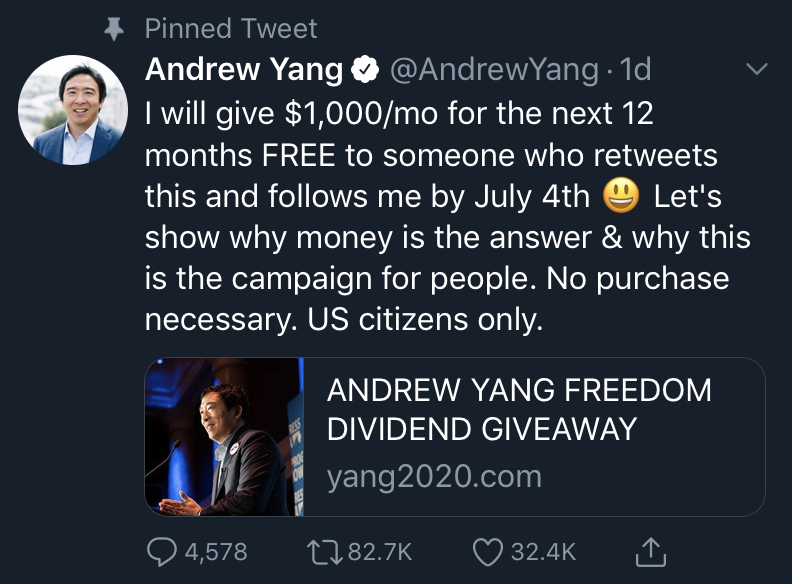
A few days ago, 2020 Democratic Presidential candidate Andrew Yang released a telling tweet.
The Politicization of Money: Crypto as a Safeguard Against Economic Propaganda

Of course, paying $1,000 to someone is never “free,” but beyond his misinformed promise, what seems most striking about this is the phrase “money is the answer.” As if money itself, divorced from economic application, can solve anything. U.S. President Donald Trump has recently claimed in similar fashion on live TV that “you never have to default because you print the money…” This is akin to claiming one never has to starve because food will magically appear on the table.

What Money Is

Money as a bare, standalone economic concept has nothing to do with politics, of course. That’s not always easy to tell, however. In a reality where centralized, government-embedded ‘Federal Reserves’ and ‘Financial Services Agencies’ run the socioeconomic landscape, critical definitions have been lost. The concept of money has been grossly perverted. Money is a tool for exchange. A symbol of value. In and of itself it’s not “political” at all.
The Politicization of Money: Crypto as a Safeguard Against Economic Propaganda

The history of money predates written record, and as such is subject to much contentious debate. Still, some basic observations can be hazarded. From the cowry shell economies of ancient times all the way to the present day, monetary utility has been recognized and celebrated by humans all over, and for good reason. One man makes wagon wheels. Another, cheese. There comes a time when the one doesn’t need another wagon wheel. But the other guy still needs the cheese, creating a very real problem. Trade becomes impossible. A useful medium of exchange such as tiny shells, bills, or gold coins solves this dilemma by creating an easily transferable and readily divisible representation of value.

Money as Political Propaganda

Donald Trump’s recent tariff-slinging toward Mexico and China has already begun to engender trade war overtones. On the other side of the statist aisle, Democratic opponents of the president are calling for more taxation to pay for everything “for free.”The Politicization of Money: Crypto as a Safeguard Against Economic Propaganda

Trump’s tariffs ultimately penalize the individuals they purport to protect by raising prices and restricting demanded imports. The “everything for free” cries for endless taxation from Democrats results in a restricted free trade as well, as capital and resources are consumed parasitically by the state. Price calculation becomes clunky, centralized and inefficient. Both methodologies are intrinsically violent. They both require legislated threats of aggression to uphold and enforce. Both ideologies are also anti-trade and anti-money. As money’s development was originally a means of keeping peace and order between market actors, the current propagandized model is thus incompatible.

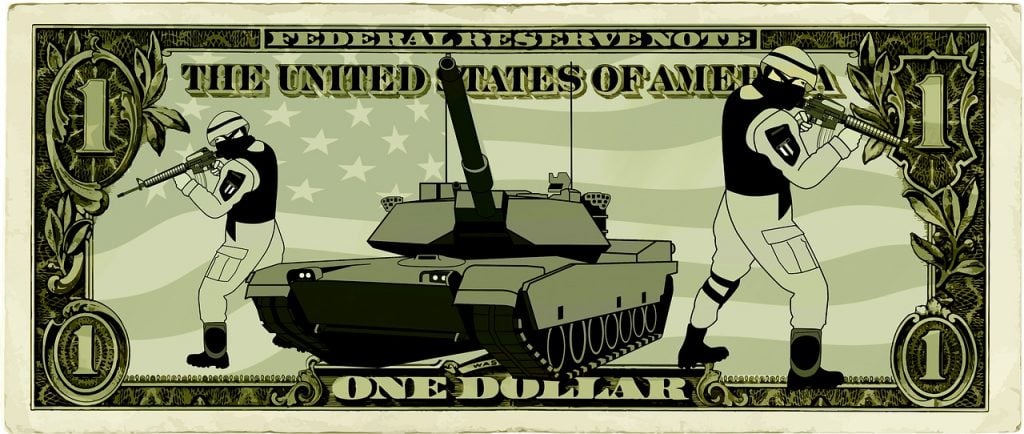
This desperate jockeying for political position is the new “money,” and the cost of the departure from meaning is paid in human lives. This is manifested in the quality of life and in the erosion of free trade itself. When finance is leveraged not as a means of free exchange, but as punitive policy, sanctions begin to starve people. Bombs begin to fall on non-violent men, women, children, and babies. Trade wars escalate tensions. And of course, consumers suffer. Voluntary exchange is made “illegal” in order to ensure that political interests hold sway over all of us.
The Politicization of Money: Crypto as a Safeguard Against Economic Propaganda

Fairy Tales From the Wall Street War Machine

“Beautiful ideals were painted for our boys who were sent out to die … No one told them that dollars and cents were the real reason. No one mentioned to them, as they marched away, that their going and their dying would mean huge war profits. No one told these American soldiers that they might be shot down by bullets made by their own brothers here.”

-Major General Smedley D. Butler, War is a Racket.

Most have heard the basic Wall Street fairy tale: the great stock market crash of 1929 was caused by a huge credit bubble. This was the result of unregulated, leveraged trading and speculation in the still relatively new and exciting stock market of the time. If the government would have stepped in, it could have been prevented. Or at least mitigated.

But wait a minute. These very same issues persist today, in spite of massive economic regulations and new laws. 2008’s subprime mortgage crisis and taxpayer subsidized bailout of huge banking interests is one example. The US Department of Defense being unable to account for trillions of dollars is one more of many. If more state regulation is the cure-all, it doesn’t seem to be working.

The classic line is there were too many backroom deals and a systematic private sector gaming of the market in 1929. This is not the whole truth. Politicians and representatives of the state—in conjunction with the Federal Reserve—were also making these secret negotiations and implementing reckless financial policies. The disaster would eventually plunge America into the deeply impoverished period known as the Great Depression. The market did exactly as expected, economically speaking. It corrected itself.

The Politicization of Money: Crypto as a Safeguard Against Economic Propaganda

War Is Not the Cure-All

The words of Smedley Butler ring true today. As the world’s leading military arms dealer, and seat of exactly half of the world’s biggest defense contractors, killing in America is big business. U.S.-based arms companies sold an estimated $226B in arms in 2017. One of these companies—Lockheed Martin—sold a bomb to Saudi Arabia which would later destroy a school bus in Yemen. The blast killed 51 people—mostly children. A recent Cato report notes that it’s not uncommon for American soldiers to face enemies wielding U.S.-manufactured weapons on the battlefield.

It would be beyond the scope of this article to trace the complete history of the war-money racket. Suffice to say that Keynesian economists usually point to World War II as “solving” the Great Depression. This isn’t true. According to Richard W. Fulmer, freelance author for the Foundation for Economic Education:

“Contrary to popular belief, the “public works program” known as World War II did not end the Great Depression; it ended the New Deal. The end of the war brought federal spending and tax cuts and the repeal of the Smoot-Hawley tariffs.”

Fulmer is far from alone in his assessment. Boosting GDP statistically, wartime economies do demonstrate remarkable growth. But the production focuses on munitions and other wartime necessities, not items critical to sustaining a flourishing, peacetime economy. There is always a shortage of these goods. Keynesians love the myth, though. It justifies unlimited spending and firing up their beloved Federal Reserve printing presses. The true cure for economic despair, however, is not war, but less centralized interference in markets.
The Politicization of Money: Crypto as a Safeguard Against Economic Propaganda

A Return to Concept and Consent via Crypto

If holding vast amounts of money equates to a significant influence in a given society, then controlling the money supply itself would be something akin to godhood. As such, government-backed centralized banks like the Federal Reserve reign supreme. To question them is to question the “almighty,” as it were. To exercise financial autonomy and hold one’s own money directly, and without interference, is the new “blasphemy” for the old guard.

Notwithstanding, this is the return to sound concepts which blockchain and cryptocurrency are providing to many. A property and self-ownership based view of monetary tools. It’s also why so many—especially younger generations—are taking a newfound interest in economics and financial literacy.

The Politicization of Money: Crypto as a Safeguard Against Economic Propaganda

The New Cowry Shell Generation

According to Financial Post “Four percent of millennials have owned bitcoin —twice as many as the general population…30 percent said they would prefer to own $1000 of bitcoin over the same value in government bonds. More than a quarter (27 percent) said they considered bitcoin more trustworthy than big banks.” Young people are beginning to look at money differently.

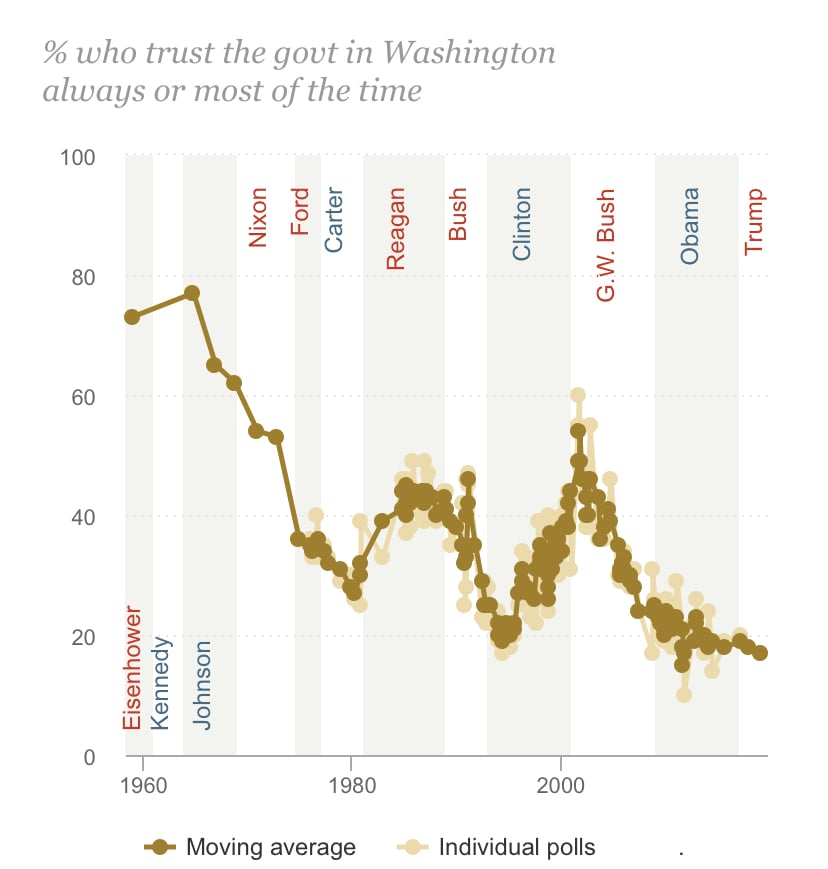
Paying for war with taxes, funding criminal bankers, police, and politicians who harm and kill others, with no say in how one’s money is allocated, is becoming less and less popular. This is not only true for young people, but individuals of all ages and backgrounds. In fact, U.S. public trust in government is now near historic lows, with just 17% trusting the government. Individuals are disengaging from a paradigm rapidly losing any real meaningful relevance to their lives. In the 2016 U.S. presidential election, a whopping 43% of Americans didn’t even show up to the polls.
The Politicization of Money: Crypto as a Safeguard Against Economic Propaganda

Great revolutions are philosophical ones. Ideas, and not the initiation of force and violence, have historically been what bring about lasting innovative change and improvements. Information available at the click of a mouse, or the swipe of a smartphone screen is changing society; individuals are questioning the very economic premises once thought to be unshakeable.

A sense of dread and unease has pervaded the fiat system for many, though perhaps they couldn’t pinpoint why. Now they can. Crypto affords a clean, sound means of exchange. A new cowry shell. No inflationary printing, no degrading “percentage of theft” charged under threat of violence, and no ties to war machines destroying human life.

Will new monetary technology like blockchain and cryptocurrencies bring about a philosophical revolution? Let us know in the comments section below.

OP-ed disclaimer: This is an Op-ed article. The opinions expressed in this article are the author’s own. Bitcoin.com is not responsible for or liable for any content, accuracy or quality within the Op-ed article. Readers should do their own due diligence before taking any actions related to the content. Bitcoin.com is not responsible, directly or indirectly, for any damage or loss caused or alleged to be caused by or in connection with the use of or reliance on any information in this Op-ed article.


Images courtesy of Pixabay, fair use, and the public domain


Did you know you can verify any unconfirmed Bitcoin transaction with our Bitcoin Block Explorer tool? Simply complete a Bitcoin address search to view it on the blockchain. Plus, visit our Bitcoin Charts to see what’s happening in the industry.

The post The Politicization of Money: Crypto as a Safeguard Against Economic Propaganda  appeared first on Bitcoin News.
19 Jun 16:17

Facebook plans its own currency for 2 billion-plus users

Facebook already rules daily communication for more than 2 billion people around the world. Now it wants its own currency, too.
17 Jun 02:29

Bitcoin Trades for a Premium in Hong Kong During Protests

by Jamie Redman
Bitcoin Trades for a Premium in Hong Kong During Protests

Right now, thousands of citizens from Hong Kong are protesting certain leaders and opposing a proposed extradition law. Alongside the protests, the country’s political issues are reportedly pushing wealthy Hong Kong residents to move their capital offshore. Since last week, the price of bitcoin core (BTC) has gained a premium in Hong Kong as the digital asset has been trading between $75-150 higher than the global average.

Also Read: How to Exchange Your Amazon Gift Cards for Bitcoin Cash

Political and Economic Unrest in Hong Kong Spurs Capital Movement Offshore

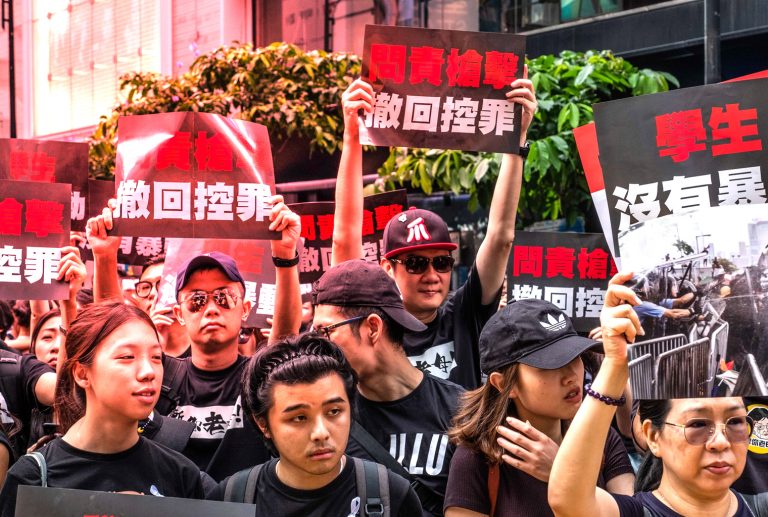
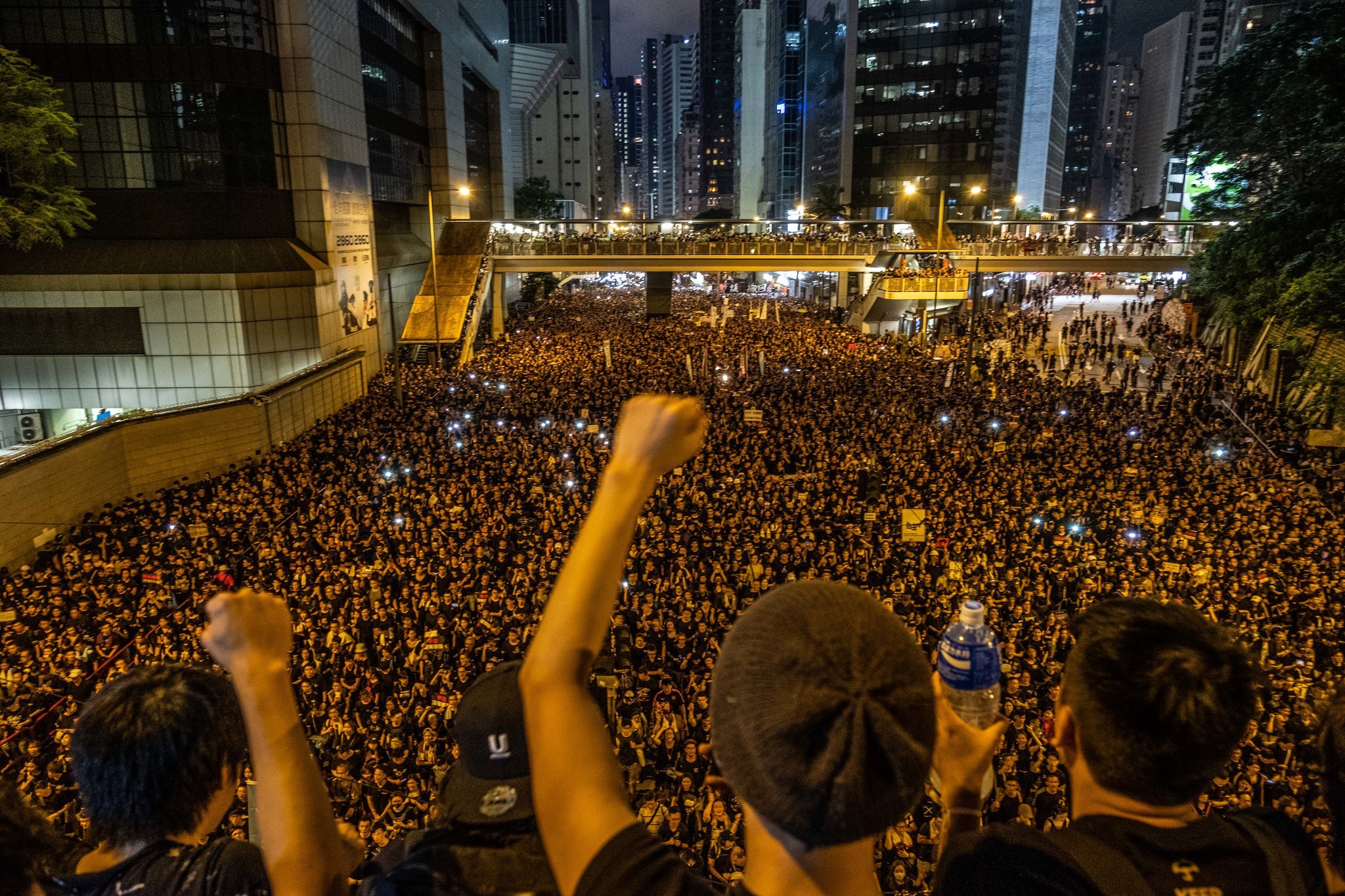
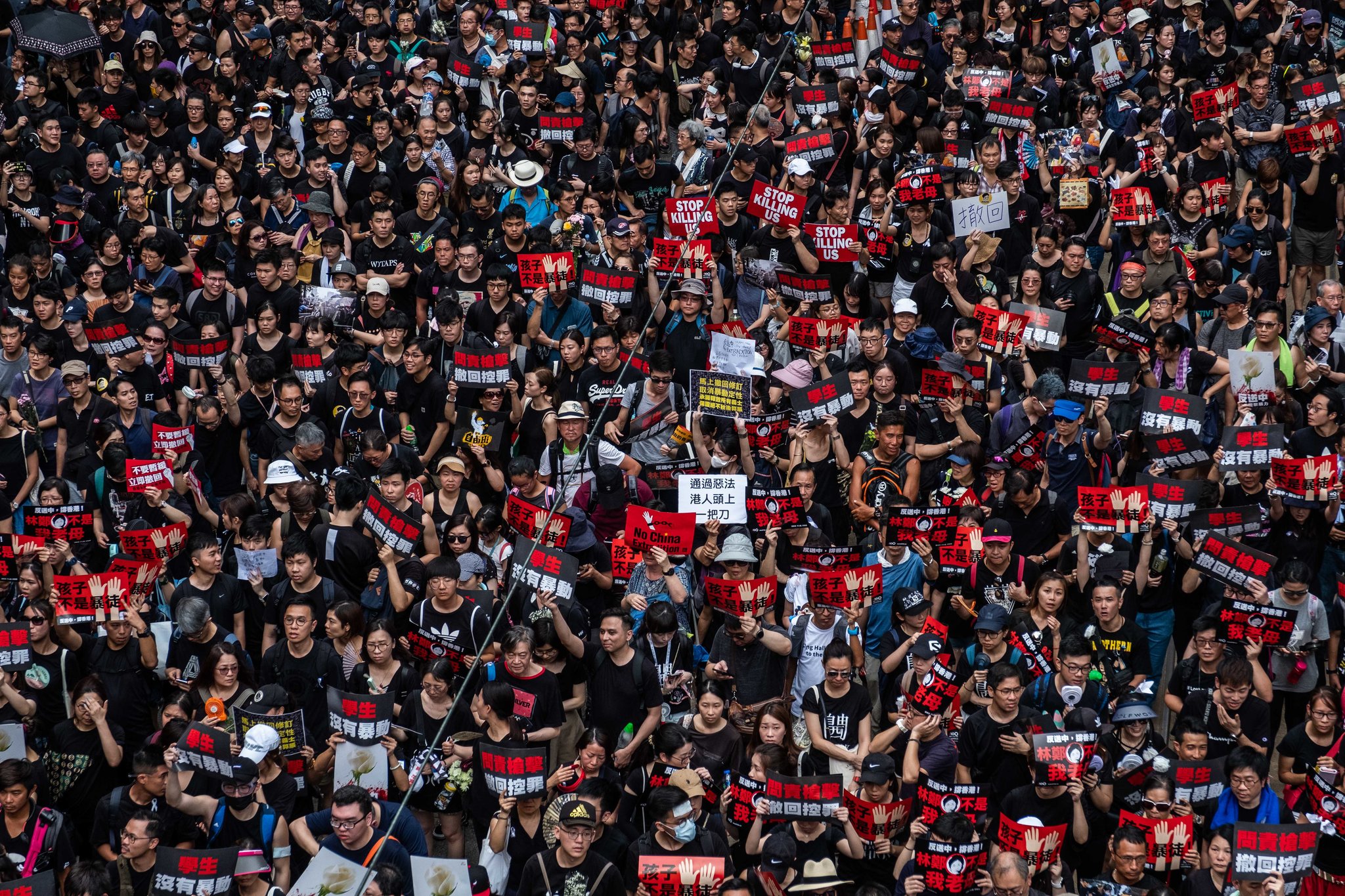
Tens of thousands of Hong Kong protestors have filled the streets of downtown Victoria Park and started marching toward government buildings on Sunday, June 16. The crowds of people dressed in black have been chanting things like “resign” and “withdraw” due to their hatred for the proposed extradition law. The ruling would basically allow Chinese authorities to come in and extradite any Hong Kong citizen to mainland China if they are accused of a crime. It all started in 1997 after Beijing took over and promised to keep Hong Kong’s government intact under “one country, two systems.” Before 1997, Hong Kong was a British dependent territory but the sovereignty over Hong Kong was transferred to China. Everything was fine up until 2014 when pro-democracy protests called the Umbrella Movement stirred the Chinese government and things have never been the same since.

Bitcoin Trades for a Premium in Hong Kong During Protests
Sunday’s protest in Hong Kong was one of the largest turnouts so far.

Crypto proponents believe the current political strife will push more people toward decentralized assets. The protesters demand that Chief Executive Carrie Lam resigns and withdraw her plans to initiate the extradition law. “Our demands are simple. Carrie Lam must leave office, the extradition law must be withdrawn and the police must apologize for using extreme violence against their own people,” John Chow a Hong Kong-based banker, told press on Sunday. Additionally, a few days ago, Reuters reported that wealthy Hong Kong residents have started moving funds offshore to escape possible economic turmoil.

“Some Hong Kong tycoons have started moving personal wealth offshore as concern deepens over a local government plan to allow extraditions of suspects to face trial in China for the first time, according to financial advisers, bankers and lawyers familiar with such transactions,” Reuters explained on June 14. One specific tycoon who wished to be unnamed revealed that the capital outflow has “started,” adding:

We’re hearing others are doing it, too, but no-one is going to go on parade that they are leaving — The fear is that the bar is coming right down on Beijing’s ability to get your assets in Hong Kong. Singapore is the favored destination.

Bitcoin Trades for a Premium in Hong Kong During Protests
The reason Hong Kong tycoons are moving money is because if the bill becomes law, Chinese courts can request Hong Kong courts to freeze and confiscate assets related to crimes committed in mainland China.

The BTC/HKD Premium

In addition to the wealthy individuals moving capital, crypto enthusiasts have noticed a premium on BTC growing larger in Hong Kong. For instance, over the last few days on the cryptocurrency exchange Tidebit, the price of BTC has been $75-150 higher than the global average. At the time of writing, 1 BTC is currently 73,100 HKD or US$9,337 in Hong Kong which is more than $100 higher than the Bitstamp price at $9,230. Speculators believe the unrest in Hong Kong has sparked some flow into bitcoin so people can hedge against uncertainty. Other exchanges such as Bitpoint and Liquid show similar BTC/HKD premiums as well.

Bitcoin Trades for a Premium in Hong Kong During Protests
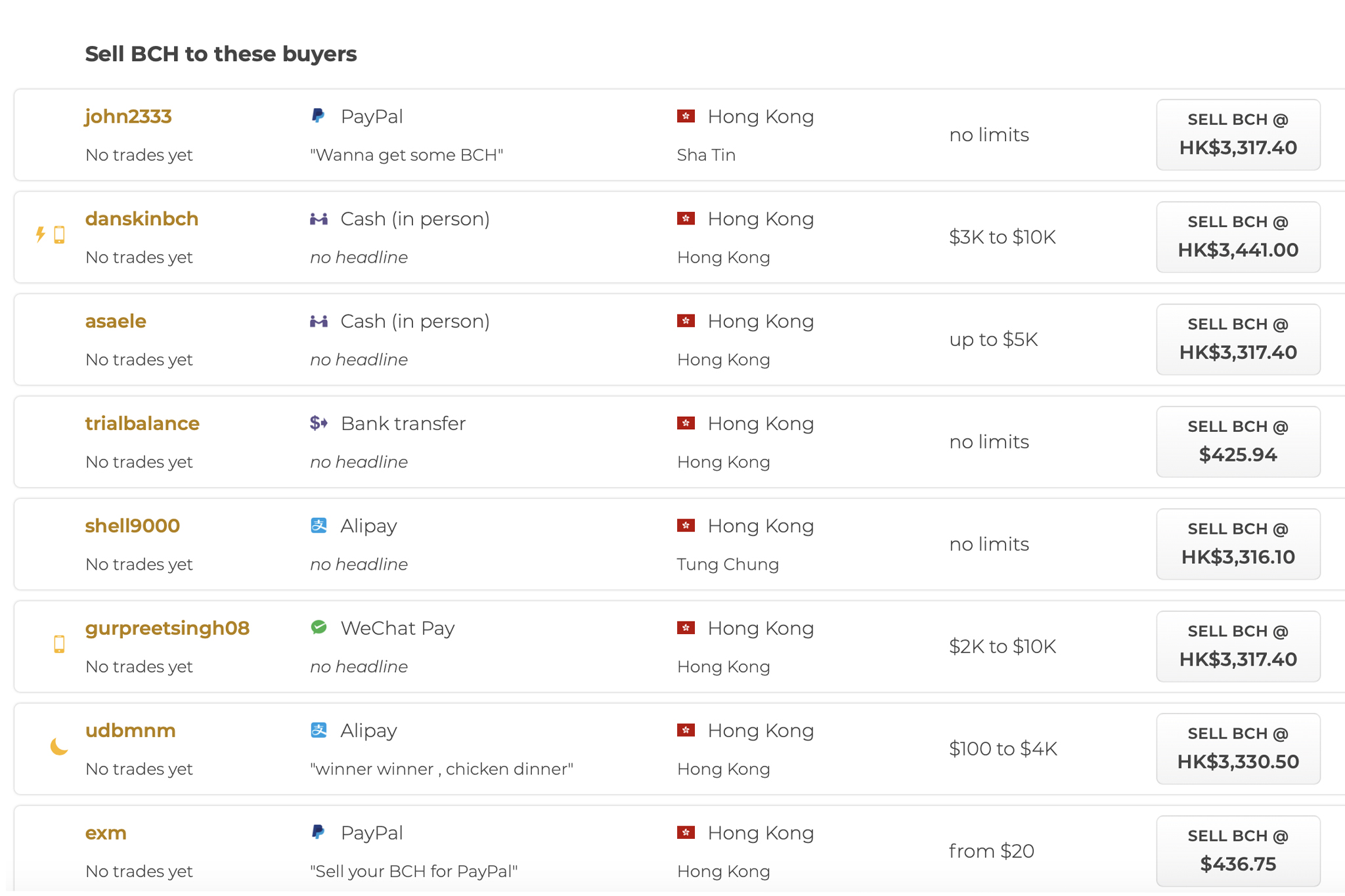
Local.Bitcoin.com buyers in Hong Kong looking for bitcoin cash (BCH).

There’s also been some demand in Hong Kong for bitcoin cash (BCH) on Local.Bitcoin.com as there are buyers looking to purchase BCH in person for cash and alternative payment methods as well. On the data aggregation website Coin Dance, BTC/HKD volumes have been rising week after week on Paxful as well. It’s difficult to say how the Hong Kong government will handle the large protests and whether more money will flow into the crypto economy. As of right now, Hong Kong is not China and they are still two very distinct systems but many citizens fear that some day that will change.

What do you think about the recent political and economic climate in Hong Kong? Do you think the unrest will push more people into seeking out cryptocurrencies? Let us know what you think about this subject in the comments section below.


Image credits: Shutterstock, Pixabay, Getty, Merlin, and Twitter.


Verify and track bitcoin cash transactions on our BCH Block Explorer, the best of its kind anywhere in the world. Also, keep up with your holdings, BCH, and other coins, on our market charts at Bitcoin.com Markets, another original and free service from Bitcoin.com.

The post Bitcoin Trades for a Premium in Hong Kong During Protests appeared first on Bitcoin News.

12 Jun 06:16

Why is so much of the US under water?

America's heartland has faced months of record-breaking floods. Why is it so bad now and what's the impact?

08 Jun 22:10

【地球日】蜂群神秘消失 原來是新菸鹼農藥五鬼搬運

by 吳宜靜
環境資訊中心記者 吳宜靜報導
你能想像有一天走進市場,有一半的貨架都空蕩蕩的嗎?全球超過八成的經濟作物仰賴蜂群授粉,光是蜂群的消失,就可能引發全球糧食危機。今年世界地球日即選定蜂作為代表物種,象徵「再小的生物,都具有無可取代的生態地位」,一個都不能少,就讓我們來關心蜂群的狀況。

蜂群不見了,然後呢?

2006年陸續傳出蜂群集體失蹤、死亡數以百萬計的蜂巢崩壞、大量蜂類離奇死亡的消息。近十年間,美國及歐洲的養蜂者紛紛表示,每年蜂巢的數量至少已減少30%。這個比例已超出蜂類長期持續生存的正常數值。極度不尋常的現象,讓蜂農感到恐慌,也讓生物和農業研究領域的科學人成了偵探,上窮碧落下黃黃泉做調查,甚至在蜂的身上安裝了感應器,企圖了解蜂兒究竟去了哪裡,殺蟲劑、寄生蟲、細菌、病毒、沙塵暴、電磁波、氣候暖化都曾經被推測是可能的原因。

蜂群不見了,究竟有什麼好著急?那麼……你可以想像走進菜市場或超級市場,卻發現熟悉的食物消失了大半嗎?夏天想要消暑卻沒有西瓜可以吃、冬天煮不出一碗暖心的南瓜濃湯、中秋節吃不到文旦、三餐吃不到炒高麗菜、芭樂只拿來當形容詞、心情不好再也吃不到撫慰人心的巧克力、蘿蔔糕裡面沒有蘿蔔......。幾乎所有水果和多數蔬菜都仰賴蜂類(及其他昆蟲)授粉,全球有將近75%的糧食作物靠蜂類授粉,藉由蜂類授粉的穀物占全球食物產量的35%。一旦我們失去了蜂,就等於失去了大半的食物來源。

除此之外,蜂類不僅是透過授粉提供人類食物而已。在生態系中,蜂類還扮演捕食或寄生等等生態功能的角色,很多動物也必須要依靠蜂類才能生存,牠們的食物必須仰賴昆蟲授粉──包括堅果、莓果、種子、水果等等。授粉不僅僅在於提供其他生物食物的來源,同時更促使花朵生長,讓花叢可以成為鳥類和其他昆蟲的棲息處,開花植物並且進一步提供人類的糧食、牧草、藥物和材料等原料。


蜂是授粉能力最強的昆蟲。圖片來源:我們的島

是誰施了魔術把蜂群變不見?

儘管我們平常都習慣用「蜜蜂」來稱呼蜂類1 ,其實,全世界有超過2萬種的蜂,會釀蜂蜜的蜜蜂 (honey bee)只有11種,為數更多的還有熊蜂(bumble bee)、木蜂(carpenter bee)、地花蜂(mining bee)及壁蜂(mason bee)等等。台灣人在戶外活動,常常害怕被虎蜂螫,但其實世界上多數的蜂類是沒有螫針而無法螫人的。

蜂類生活在世界上各種氣候帶中,從歐洲的森林到非洲的沙漠,甚至是在北極圈內,都能看到蜂的蹤影。不同於蜜蜂會住在蜂巢裡面,更多的蜂類居住在各種不同的環境裡,例如樹間/樹洞、岩石縫隙、坑洞,或是挖土石「穴居」在地底。


熊蜂。圖片來源:Laura Pontiggia  via flickr(CC BY-NC-ND 2.0)

那麼,曾經分佈廣大、種類眾多的蜂類,到底去了哪裡了呢?科學家們經過多年的追查,歸納出以下幾種原因:

  1. 農藥(殺菌劑、除草劑等)大量使用;

  2. 支離破碎的棲息地;
  3. 蜂群崩壞症候群(Colony Collapse Disorder)2
  4. 氣候變遷3
圖片來源:Alex Wild/University of Texas at Austin

農藥大爆發,將蜂群逼得走投無路

2006年以來,北美與歐洲的養蜂人每年損失1/3的蜂群。多項研究不約而同地發現:農藥與蜂群消失有關。

「當我發現英國典型的農田裡用了多少化學藥液時,我大吃了一驚。那時我們正在調查英國境內農藥對蜂的影響,考察了25塊於2012~2013生長季節種植冬油菜或冬小麥的田地。每塊田的農藥施用名單都長得嚇人。」英國薩塞克斯大學生物學教授戴夫‧古​​爾森(Dave Goulson)訝異於這個發現。

自1940年代,濫用農藥的程度已經把蜂逼到走投無路。為了確保農地的收穫,現代農業普遍使用農藥,將不利於作物生長的細菌、雜草、昆蟲消滅;為了確保植物頭好壯壯且按照計畫成熟,植物生長調節激素4(人們通常稱它為生長激素)也開始被應用在農作上。


新菸鹼農藥被廣泛應用在農作物上,例如油菜。圖片來源:Martin Nikolaj Christensen CC BY-NC-ND 2.0 

新菸鹼農藥的使用,讓蜂變得挑食又健忘

解密蜂類大量消失,近年來被科學家們討論得最熱烈的就是「新菸鹼類」5農藥。研究發現,蜂類吸取新菸鹼類的「益達胺」之後,將會喪失部分的學習與記憶力,例如:忘了回巢,忘了用跳舞(waggle dance)來通知同巢夥伴前往覓食;變得偏愛高甜度的花蜜,使得牠們帶回巢裡的養分大幅減少;甚至讓牠們的行為像是醉漢一般失控。更不妙的是,蜂類不但不懂得避開農藥,甚至還對新菸鹼類農藥上癮!新菸鹼類農藥跟尼古丁作用類似,能讓含有這些物質的食物變得較吸引人,使得蜂類沈迷其中。

蜂類的衰亡,終於水落石出,歐洲食品安全局(EFSA)審視超過1500份科學研究後,明確指出新菸鹼農藥「益達胺」(imidacloprid)6、「可尼丁」(clothianidin)和「賽速安」(thiamethoxam)就是主要的兇手。連沒有施灑農藥的鄰近農地植物,也可能沾染了類尼古丁粉塵。2018年5月,歐盟通過全面禁用以上三種新菸鹼類農藥,並於當年年底生效。


新菸鹼農藥是把蜂逼上絕路的主因之一。圖片來源:Jack Zalium  via flickr(CC BY-NC-ND 2.0)

然而,上述被歐盟禁用的三種新菸鹼類農藥,目前在台灣仍是合法使用在油菜、高麗菜、花椰菜、枸杞、冬瓜、香蕉、可可、木瓜、芭樂、柑桔類等等不勝枚舉的作物種植之上……。我們真的想吃用這種方式生產出來的食物嗎?噴灑這些農藥,是為了對抗蟲害,還是「萬一不噴,如果蟲來了怎麼辦?」的預防性噴灑呢?

現在,是時候重新思考蜂類的可貴和我們的飲食習慣了。農藥殺死開花植物和蜂群,生物因為少了蜂群授粉而失去食物和家園,人類的食物種類也將減少三分之二。生態危機就是糧食危機,在環環相扣的生態系中,人類僅是其一而已。


三種新菸鹼農藥於2018年底全面禁用,但在台灣人被合法用於柑桔類等作物上。圖片來源:George Socka(CC BY-NC-ND 2.0)

※ 註釋:

[1] 中文一般並未將bee與wasp的使用區分開,因此容易導致名稱的混淆,即使兇猛如虎頭蜂的物種,也經常與較溫馴的蜜蜂混用。

[2] 泛指一個蜂群突然之間完全崩解的現象。蜂群可能因為疾病,或者體力耗盡、迷失方向,最後死在野外。

[3] 報導引述《科學》期刊上一份研究指出,北美和歐洲南部的熊蜂已大量減少,更因氣候變遷而快速消失。

[4] 包括植物生長促進劑、植物生長延緩劑、植物生長抑製劑三類。

[5] 主要指內含新種尼古丁系的物質,其作用類似於香菸所含的尼古丁因此以此命名。尼古丁是一種急性毒,毒性之強不下於氰化鉀。新菸鹼類農藥是世界各地最常使用的殺蟲劑,主要有七種:達特南(Dinotefuran)、賽速安(Thiamethoxam)、賽果培(Thiacloprid)、烯啶蟲胺(Nitenpyram)、益達胺(Imidacloprid)、亞滅培(Acetamiprid)、可尼丁(clothianidin)。

[6] 歐洲食品安全局(EFSA)曾指出,新菸鹼類(neonicotinoids)「益達胺」可能對胎兒的腦部發展產生負面影響。

作者

吳宜靜

右手按快門,也寫字。念過歷史、勞工關係和攝影。希望自己經營的圖文,能像孤獨星球一樣,提供訊息,同時也保留自由且開放的可能。嗜奶茶,正在學著當一個好人,想要明年去尼泊爾爬山。

03 Jun 18:38

「以草養肉就像燒煤」 救地球最佳實踐 研究建議少吃肉和奶製品

by 鄒敏惠
環境資訊中心綜合外電;姜唯 編譯;林大利 審校

一般民眾若想在生活中做些改變來減輕地球負擔,從哪裡開始最有效,換電動車?少搭一趟飛機?根據一份刊登在《科學》(Science)期刊的研究指出,減少肉類和奶製品的攝取,是減少環境衝擊的最佳方法。

這是學術界目前為止最全面的一份農業環境影響研究。根據研究結果,如果停止消費肉類和乳製品,全球農地使用量可減少75%以上,相當於美國、中國、歐盟和澳洲國土面積的總和,而且還能餵飽全世界人口。農業擴張使原野地消失是目前野生動物大量滅絕的主要原因。

CAFNR(CC BY-NC 2.0)

根據研究結果,如果停止消費肉類和乳製品,全球農地使用量可減少75%以上。圖片來源:CAFNR(CC BY-NC 2.0)

肉和奶製品:占用大面積農地 供應少少熱量

英國衛報報導,雖然肉類和奶製品只提供18%的卡路里和37%的蛋白質,卻佔用83%的農地,並產生60%的農業溫室氣體排放。

其他近期研究顯示,所有陸域哺乳動物的生物量(biomass)中有86%是牲畜或人類。科學家還發現,肉類和乳製品中環境影響最低的,其造成的環境危害比最不永續的蔬菜和穀類作物還多。

這份研究根據119個國家、近4萬個農場的資料建立起龐大的資料集,涵蓋40種食品,總食用量佔所有食品的90%。研究評估了這些食品從農場到餐桌對土地利用、溫室氣體排放、淡水利用和水污染(優養化)和空氣污染(酸化)的全面影響。

不只是碳排放  盤點環境衝擊  研究作者呼籲純素飲食

英國牛津大學教授普爾(Joseph Poore)說:「純素飲食很可能是減少人類對環境衝擊的最佳單一途徑,不僅減少溫室氣體,還能改善全球酸化、優養化、土地利用和水資源利用。比少搭飛機或購買電動汽車要大得多,因為這兩個行為只能減少溫室氣體排放量。」

「農業能產生各式各樣的環境危害,真的就是動物產品會造成這麼多的問題。避免使用動物產品比嘗試購買永續肉品和乳製品,能夠帶來更好的環境效益。」普爾說。

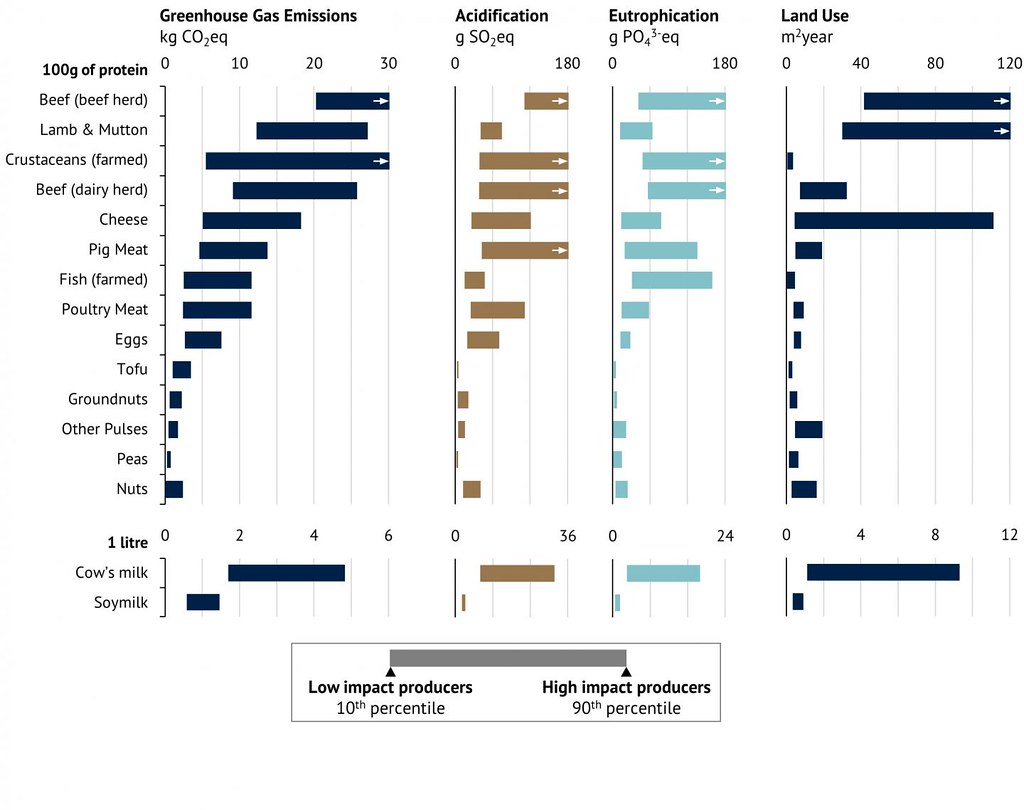
研究也揭露了生產相同食物不同方式之間的巨大差異。例如,在毀林後的土地上養殖的肉牛導致溫室氣體排放量增加12倍,使用的土地面積比自然放牧牧場多50倍。但牛肉與植物性蛋白質如豌豆的差異之巨大,即使是環境衝擊最小的牛肉,溫室氣體排放還是高達豌豆的六倍,使用土地面積高達36倍。

圖片來源:Joseph Poore

圖片來源:Joseph Poore。

農業的嚴峻挑戰 全球數億農場有改善空間

普爾說,部分農場的環境衝擊可以遠低於其他農場,顯示農業的環境影響確實可以被縮小,也不一定要全球人口都吃純素。如果環境影響最大的那一半肉乳製品可以被植物性食品所取代,效果等同於全球2/3人口吃純素。

普爾警告,削減農業對環境的影響並不容易,「全球有超過5.7億座農場,全都或多或少需要改善,農業的環境挑戰可說是所有產業中最嚴峻的。」但他認為,每年全球農業補貼至少5000億美元,「這些錢大可有更好的用途。」

用產品標籤載明環境影響就是一個好的開始,消費者可以選擇危害最小的產品,此外普爾也表示,有必要改補貼永續和健康食品,甚至抽肉類和奶製品稅。

淡水養殖不那麼永續  成甲烷排放溫床

這份研究另一個令人驚訝的發現是,一向被認為相對永續的淡水養殖漁業,其環境影響不容小覷。亞洲的魚產品2/3來自淡水養殖,歐洲比例更高達96%。 普爾說:「所有淡水養殖魚的排泄物和沒吃完的飼料會落在池塘的底部,那裡幾乎沒有氧氣,是產生甲烷的理想環境,而甲烷是強效的溫室氣體。」

研究還發現,被認為環境影響相對較低的草飼牛肉仍然比植物性食品的環境影響要大得多。「用草養肉就像燃燒煤炭,碳排超高。」普爾說。

研究方法獲同儕青睞  認同研究結論

其他食品專家強烈讚賞這份研究。美國巴德學院教授艾許爾(Gidon Eshel)說,過去量化農業影響的研究,包括他自己的研究,都採用由上而下的研究方法,使用國家層級資料,但新研究採用由下而上的研究方法,使用農場資料。「這兩種研究方法獲得大致相同的結果,令人感到安心,而新研究揭露了很多重要的細節。」

英國里茲大學教授班頓(Tim Benton)說:「這份研究非常有用。它彙整了大量的資料,讓結論更顯有力,從一顆星球的角度來看,我們生產食物、消費和浪費食物的方式是非永續的。再考慮到全球的肥胖危機,改變飲食習慣,少吃畜產品,多吃蔬菜和水果,可以使人類和地球更健康。」

英國愛丁堡大學的亞歷山大(Peter Alexander)博士指出:「永續管理的放牧也可以帶來環境效益,像是改善生物多樣性,而增加動物產品消費可改善全球最貧窮人口的營養狀況。我個人認為應將研究結果解釋成調節肉類消費,而不是要一夜之間成為素食者。」

作者

姜唯

如果有一件事是重要的,如果能為孩子實現一個願望,那就是人類與大自然和諧共存。

林大利

於特有生物研究保育中心服務,小鳥和棲地是主要的研究對象。是龜毛的讀者,認為龜毛是探索世界的美德。

02 Jun 21:34

Could making recycling pay save the planet?

Encouraging recycling as a moral good may not make sense.
02 Jun 21:21

Are rare earth minerals China's trump card in its trade war with US?

There is speculation that China might restrict rare earth minerals to the US. What could the impact be?
02 Jun 21:15

Huawei: US blacklist will harm billions of consumers

Huawei says the US is "using the strength of an entire nation to come after a private company".
02 Jun 17:19

他們眼中的鈔票 燃燒經濟付出何種代價?

by 林昕慧
整理:林昕慧;圖文提供:《窒息行動》製作團隊

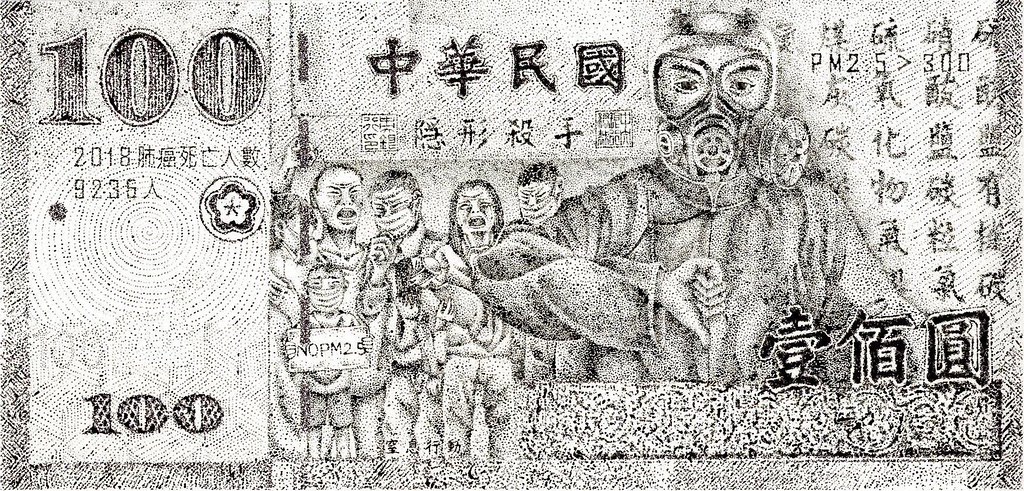
今年,雲林科技大學視覺傳達系的一組專題作品《窒息行動》,引用娜歐蜜‧克萊恩(Naomi Klein)《天翻地覆:資本主義 vs. 氣候危機》一書的觀點,三位來自印尼、馬來西亞和台灣的學生,用三國硬幣與紙鈔探討空污與資本主義之間的關係,揭露資本主義如何燃燒地球。

他們戴起口罩,用燃煤的產物——煤渣,混合阿拉伯膠與鹿膠製成墨水,使用沾水筆點描,將紙鈔原本的設計改為與環境污染相關的問題或事件。

這組作品強烈的視覺傳達,獲得高雄放視大賞的「銅賞」,他們希望政府正視也希望大眾理解,空污不僅是身體的危害,對於環境、動植物、食品安全等等脫不了關係,與燃煤、資本主義之間更是無法分離。

台灣

台幣100元:隱形殺手

戴防毒面具的國父正諷刺著犧牲之下的經濟利益;受空污迫害的人民決定站上街頭進行抗議,無論是男人女人、小孩亦或老人,他們用力地嘶吼、抗議、哭喊,換來的都只有政府的無視與漠不關心,他們的抗爭會持續下去,但他們的健康與生命也將隨著抗爭消失殆盡。根據衛福部調查結果,2018年的10大癌症死因「肺癌」位居第一,年奪9235條人命居全癌症之首,死亡率逼近四成。

台幣500元:石化食安

在台灣,許多石化工廠都與農田及緊鄰,而石化工廠排放的有毒廢氣與廢水,內含重金屬,會漸漸影響農產品,導致食安問題。土壤重金属污染物主要有汞(Hg)、镉(Cd)、鉛(Pb)、銅(Cu)、鉻(Cr)、砷(As)、鎳(Ni)、錳(Mn)、鋅(Zn)等。農民只是無辜的受害者,石化工業不僅奪取了他們的用水,還污染他們土地,但為了生活,他們不得不向石化產業屈服。

印尼

印尼幣100000盾:貪婪與無知

充滿視覺衝擊的畫面,在印尼,同性議題與他們的文化是衝突的,以此為契機來探討勞工與資本家之間的衝突關係。資本家給予人民的是不平衡的交易,優先考慮的應該是人類的需求,而非企業的貪婪。資本家只將利益留給自己,而其後果全留給人民承擔。可怕的是,人民絲毫沒有自覺,自己已經淪為資本家的垃圾桶。

印尼幣5000盾:勞工剝削

低薪剝削勞工與工廠的高碳排有關,當燃煤燒得越多,勞工做越多,資本家越賺,碳排也越多,給地球的負擔也越大。印尼為世界第四大煤炭生產國,台灣的燃煤電廠主要燃料也源自印尼。但是,在印尼,6歲以下童工約為230萬人,不論成年與否,最低時薪為新台幣10元,每月約新台幣3000元。台灣要想與國際接軌,就不能只是關注國外科技以及高層的政策,在全世界更多的是,被資本家剝削的勞工。

馬來西亞

馬幣5令吉:石油與生態浩劫

馬來西亞是東南亞第二大石油及天然氣生產商,也是台灣主要石油進口國之一。根據馬來西亞能源協會統計,2015年馬來半島擁有22億桶的原油與凝析油儲量,占全馬儲量的37.3%。但是大量開採石油導致動物棲息地被破壞,海洋生態系統混亂。2009-2015年期間,馬來西亞環境局就接獲了121宗海域漏油事件。我們的經濟,只能建立在犧牲環境與生態上嗎?

馬幣10令吉:境外霾害

印尼蘇門答臘和婆羅洲,每年7-10月份都會出現大面積非法燒芭(當地的火耕法),釋放大量溫室氣體。受地理位置與季候風的影響,造成馬來西亞境內多個地區嚴重煙霾。燒芭隨著經濟發展,為降低土地開發成本,而實施的一種開拓土地的方式。2015年,印尼非法燒芭引發東南亞霾害,航空及航海界進入嚴密戒備狀態,各地4778所學校因而停課。此外,美國哈佛大學和哥倫比亞大學團隊研究指出,這場霾害造成馬來西亞6500人過早死亡,死因主要為心血管疾病,同時也有呼吸道疾病致死案例。

※ 本文文案與圖片轉載於雲科大視傳系108級專題作品〈窒息行動〉

01 Jun 06:22

謝承恩/經濟與環保的衝突:以電子廢棄物非法跨境轉移為例

by 鄒敏惠
Joshua Chen

1. 無法enforce的法律只是自high
2. 法律的enforce需要錢
3. 金錢incentive主宰真實行為

文:謝承恩(中興大學國際政治研究所研究生)

隨著全球化下各國跨境貿易活動趨於頻繁,跨國環境污染問題亦如雨後春筍般浮現,而現今主權國家間為有效解決這些跨界的環境污染,共同制定了諸多「多邊環境公約」(multilateral environmental agreements, MEAs),希冀透過MEAs來規範主權國家的行為,進而有效治理跨界的環境污染問題。然而,許多跨界環境問題的治理狀況並未隨著MEAs的訂定和參與國數目的增加而獲得有效改善,甚至有時結果還比這些MEAs生效前來的更糟,全球暖化的治理即是一例,而有害廢棄物的跨境轉移(hazardous waste transboundary)又是一例。

令人不解的是,在國際法院(international court of justice)與MEAs所規範的仲裁(arbitration)機關中,為什麼甚少看到有締約國被判定為違約(non-compliance)的情況。易言之,為何在某些MEAs違約率極低的情況下,該MEAs所預治理的環境議題卻無顯著的改善?


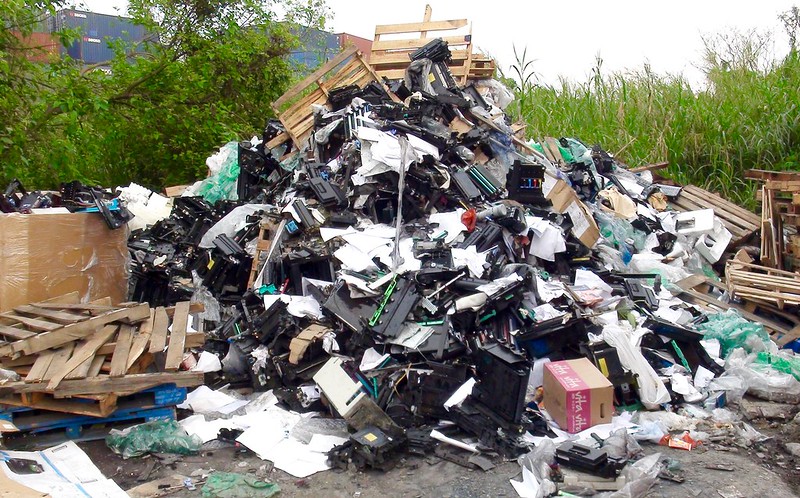
棄置在香港新界的電子垃圾。圖片來源:baselactionnetwork(CC BY-NC-ND 2.0)

此一現象背後所反應出的是一個在學界間爭論已久的問題,即國際制度究竟有沒有效?此問題在國際法(international law)與國際關係(international relation)學者間有不同的論述與觀點,且在各自的學術領域中亦有未盡一致的主張。

舉例來說,在國際公法學界有強調國家與個人同樣受到國際法規範所拘束的一元論,也有主張國家與人民是分別受到國際法與國內法約束的二元論,而即便是一元論的學派,也還可再區分出國際公法優於國內法或國內法優於國際公法的極端差異 [1]。類似的情況在國際關係學界也存在,如主張「權力」是影響國家行為之關鍵的現實主義學派認為,國際法迥異於國內法,其對於國家行為並不具有實質的拘束力 [2];相較之下,強調觀念(idea)與國際社會(international society)重要性的英國學派(English School)就主張,條約是一種可以有效約束國際秩序的法律規範。[3]

然而,無論是上述的國際法還是國際關係學界中對於國際制度的討論,皆忽略了國內企業與人民在國際制度所扮演的角色,因為國家本身是不會製造碳排放或是廢棄物的,真正造成這些環境污染的元兇是國家內部的企業與人民,故而本文認為在跨界的環境議題上,MEAs參與國的國內企業與人民對於國際制度有相當大的影響力

電子廢棄物跨境轉移現象就是符合上述推論中的一個實際案例,根據聯合國大學(United Nations University)2017年公布的調查報告,目前全球每年約會產生44.7億噸的電子廢棄物,是固體廢棄物(solid waste)當中成長速度最快的類型,然而這些電子廢棄物中僅有約20%的比例有被妥善回收處理 [4]。而其他未被合法回收處置的電子廢棄物,最終從我們手中流向了奈及利亞、迦納等開發中國家境內。

根據巴塞爾行動網絡(Basel Action Network,以下簡稱BAN)的資料,奈及利亞與迦納當地民眾透過焚燒、徒手拆解等方式處理這些電子廢棄物,造成大量有毒廢氣排出,使得當地年輕人口罹患癌症等重大疾病的人數迅速攀升,這些資料都顯示出電子廢棄物跨境轉移現象對於發展中國家造成的危害 [5]

而《巴塞爾公約》(The Basel Convention)是現今主權國家間為解決各種類型廢棄物跨境轉移現象所制定的MEAs,該公約創設的宗旨在於盡可能地減少有害廢棄物的產生,並要求公約締約國不得任意輸出/入本國境內的廢棄物至第三國。然而弔詭的現象是,現今大多數電子廢棄物進口國(如:奈及利亞、迦納、泰國等)與出口國(如:歐美等西方國家),皆是《巴塞爾公約》的締約國。換言之,參與《巴塞爾公約》並未改善這些締約國境內電子廢棄物非法轉移的現象,但在國際法院的判決與依《巴塞爾公約》規定之方式所提出的仲裁案中,卻幾乎沒有《巴塞爾公約》締約國被裁定為違約的情況,而造成此一現象產生的根源,來自於電子廢棄物本身所具有的經濟價值與《巴塞爾公約》締約國政府的執法態度。

首先就電子廢棄物的經濟價值而論,其本身除了廢棄物的性質外,亦可透過人工拆解等方式萃取出稀有貴金屬或轉換為其他工業所需之原物料 [6]。根據聯合國環境署(United Nations Environment Programme,以下簡稱UNEP)的資料,目前在全球的電子廢棄物中,所蘊含的經濟價值年平均高達62.5億美元,顯見電子廢棄物所具有的經濟利益龐大 [7]。其次就《巴塞爾公約》而論,從公約的條文內容中,可以看出《巴塞爾公約》本身並沒有直接的制裁機制懲罰違約國,因此公約內容的實踐需要仰賴各締約國政府制定相關的國內環境法規來達成,然而根據《巴塞爾公約》官方網站的資料發現大多數的締約國皆有依據公約內容制定國內法,但其境內電子廢棄物跨境轉移現象的治理成效卻不預期 [8]。由此推論,《巴塞爾公約》締約國政府的立法與否並不是影響電子廢棄物跨境轉移現象治理成效的關鍵,真正左右電子廢棄物跨境轉移現象治理成效的因素應是《巴塞爾公約》締約國政府的執法態度。

而本文根據BAN在2019所公布的三份調查報告,將電子廢棄物出口量與進口量排名前段的《巴塞爾公約》締約國作為個案檢視,並將上述「經濟利益」與「執法態度」的兩個變數帶入進行比較分析,整理出個案在變數中的變化情況,如下表1-1所示 [9]

表 1-1 研究個案的質性比較
 

進口國是否有利可圖

出口國是否有利可圖

進口國的執法有無變嚴

出口國的執法有無變嚴

電子廢棄物跨境轉移現象有無改善

中國(進)加拿大(出)

泰國(進)澳洲(出)

奈及利亞(進)英國(出)

迦納(進)義大利(出)

從上表1-1中,首先可以觀察到無論是電子廢棄物的「進口國」還是「出口國」,皆是在轉移電子廢棄物可以獲得經濟利益的狀況下,才會選擇輸出/入電子廢棄物。簡言之,國家能否獲得經濟利益是電子廢棄物跨境轉移現象產生的必要條件。其次就「執法情況」來看,亦可發現要使電子棄物跨境轉移現象獲得有效的改善,必須仰賴廢棄物進口國具體落實執法。換言之,真正左右電子棄物跨境轉移現象治理成效的關鍵,在於進口國有無意願積極參與《巴塞爾公約》的治理,在受害國無意解決此一環境問題的情況下,即使《巴塞爾公約》如何努力地去要求出口國的行為,亦無助於改善電子廢棄物跨境轉移現象所帶來的環境污染問題。

從上述電子廢棄物跨境轉移現象的例子中,可以看出現今許多的跨國環境問題在國際制度的規範下仍難以改善,主要原因是出自於受害國本身的國內經濟條件,由於國家經濟發展上的需要,在經濟與環境兩種法益的衝突之下,發展中國家的政府僅能選擇犧牲其原本因受MEAs所保護的環境利益來發展經濟,進而腐蝕了MEAs在特定跨界環境議題上的效力,故而本文建議在MEAs未來的修法方向上,應提供發展中國家充分的技術協助與誘因敦促其政府與業者履約,否則像電子廢棄物跨境轉移此類型的跨國環境問題難以透過國際制度獲得具體的治理成效。

註1: 邱宏達著、陳純一修訂,《現代國際法》(台北:三民書局,2017年),頁122-123。
註2: 譚偉恩,〈國際法律規範的認知與評價:現實主義的觀點〉,《國際關係學報》,第20期(2005年),頁143。
註3: Roy Jones, “The English School of International Relations: A Case Study for Closure,” Review of International Studies, Vol.7, No.1(1981), pp.1-13.
註4: Kees Balde, Vanessa Forti, Vanessa Gray, Ruediger Kuehr, Paul Stegmann, The Global E-Waste Monitor 2017 Quantiies, Flows, and Resources (Geneva: United Nations University Press, 2017), pp.4-7.
註5: Jim Pucket, Chris Brandt, and Hayley Pamler, “ Holes in the Circular Economy: WEEE Leakage from Europe,” A Report from the E-trash Transparency Project, (Seattle: Basel Action Network Press, 2018), pp. 22-32.
註6:Brett H. Robinson, “E-Waste: An Assessment of Global Production and Environmental Impacts,” Science of Total Environment, Vol.408, No.2(2009), pp.183-191.
註7:  Houlin Zhao, Joyce Msuya, Nikhil Seth, Dominic Waughay, Guy Ryder, Li Yong, David M. Malone, Peter Bakker, Rolph Payet, A New Circular Vision for Electronics: Time for a Global Reboot (Nairobi: United Nations Environment Programme, 2019), pp.15.
註8:ECOLEX, “Legislation of the Basel Convention,” the Gateway to Environmental Law (2019/5/12), https://www.ecolex.org/result/?type=legislation
註9:Jim Puckket, Chris Brandt, Hayley Palmer, “Export of E-Waste from Canada: A Story as Told by GPS Trackers,” A Report from the E-trash Transparency Project, (Seattle: Basel Action Network Press, 2018), pp. 6-13; Hayley Plamber, Jim Puckett and Chris Brandt, “ Illegal Export of E-Waste From Austalia: A Story as Told by GPS Trackers,” A Report from the E-trash Transparency Project, (Seattle: Basel Action Network Press, 2018), pp. 10-11; Jim Pucket, Chris Brandt, and Hayley Pamler, “ Holes in the Circular Economy: WEEE Leakage from Europe, op. cit., pp. 3-5. 
27 May 21:30

Billionaire Robert F Smith to pay entire US class's student debt

A US billionaire shocks graduating students in Atlanta by promising to pay off their student loans.
18 May 21:18

Fuel subsidies defy green trend amid rising climate alarm

Even as warnings of climate catastrophe and calls for greener economies grow ever louder, the world is still spending hundreds of billions of dollars every year to subsidise the fossil fuels that are causing the planet to overheat.
13 May 20:26

5/9 (四) 22:00【隱藏版星巴克】一場「奢華」的幻術

by 公共電視-紀錄觀點

5/9 (四)│晚間十點│90min│Luc Hermann & Gilles Bovon|2018

這個跨國咖啡品牌,靠著一致的舒適氛圍和規格化的產品,進駐全球各大城市。
身為負責任的消費主義推動者,這個連鎖企業為自己塑造了以人為本和高級品牌的形象。但是在一杯5歐元的咖啡的背後,隱藏著什麼呢?這個深入的調查報導探索這個品牌成功背後的原因,揭發這個全球化的代表品牌不為人知的一面–從應該是公平交易咖啡,到成為環境威脅;從公司蒸蒸日上的業績,到咖啡師傅苦不堪言的工作環境。

*5/9 22:00 同步直播➜https://www.ptsplus.tv/live/150770625...
*5/10 起 七天限時免費看➜https://www.ptsplus.tv/

★節目介紹➜http://viewpoint.pts.org.tw/
★粉絲專頁➜https://goo.gl/MLU8AN
★訂閱頻道➜ https://goo.gl/rEYG6h
11 May 22:53

Leicester: A city fighting fast-fashion sweatshops

Fast-fashion has caused a resurgence in Leicester’s textiles industry – but it's come at the expense of some workers' rights.
19 Mar 21:38

珍納‧詹姆貝克:每年有高達800萬噸的塑膠垃圾進入海洋

by 鄒敏惠
採訪/撰稿:陳寧;剪輯:葉鎮中、林容安

你知道每年有多少塑膠垃圾進到海洋嗎?2015年美國喬治亞大學工程學院副教授珍納‧詹姆貝克(Jenna Jambeck)帶領的研究團隊,所發表的研究,估算出每年有高達800萬噸塑膠垃圾流入海洋,這項驚人的研究成果,喚起了世界各地對於海洋廢棄物問題的關注。詹姆貝克博士從2001年就投入海洋廢棄物的研究,她經常走訪世界各地,了解不同國家的廢棄物處理政策與設施,希望世界各地的人們能夠攜手合作,來解決這個全球性的環境問題。

今年2月,在美國在台協會邀請下,詹姆貝克博士來到台灣舉辦了兩場演講,也參觀了台灣的焚化廠、資源回收場等設施,並且對台灣有播放音樂的垃圾車,以及全民高度參與的回收文化印象深刻,以下是我們的島記者本次專訪詹姆貝克博士的內容。

Q:您曾經統計過每年有高達800萬噸的塑膠垃圾流入海洋,非常龐大的數字,我們有可能嘗試把海中的垃圾清除嗎?或者有什麼方式可以解決問題?

J:我認為如何預防,是我比較關注的問題,畢竟每年還是有這麼大量的垃圾進到海中。不過我認為漁具是一定要清除的,因為漁具對海洋生物來說是致命的,而且體積很大,必須要提供漁民一些誘因,讓他們在漁季結束後,確實地把漁具帶回陸地上。至於分布在海中的許多微塑膠,要去收集它們實在是非常大的挑戰,畢竟地球有70%的面積都是海洋,所以我們還是把能量放在如何預防。

詹姆貝克博士也研發出一款名為「Marine Debris Tracker」的手機app軟體,世界各地的人們都可以在手機上登錄自己在何時、何地,清除的海洋垃圾種類和數量,目前已經成功清除累積超過100萬件的海洋垃圾。

Q:要如何從設計端的改變,來達到廢棄物減量的效果?

J:我認為改變產品的設計,可以朝向更標準化的方向。為什麼塑膠的用途這麼廣泛,是因為它可以藉由不同的添加物,製造出不同的質地、顏色等等,但這也使得回收變得更加困難。比方說可以改用無毒的添加物,或者改變材料的顏色,這跟畫畫的道理相同,你一旦加入深色,你就沒辦法讓它再變成淺色。在製造塑膠材料時,如果能在顏色的選擇上更加標準化,就可以增加回收的經濟規模,也可以減少因為污染而無法回收的塑膠物品,應該要把每樣產品都設計到能夠完整回收。

例如:在美國已經有一些企業,成立了永續包材聯盟,我們持續在關注怎麼建立一些產品設計的標準。我常舉的一個例子,是在挪威的「製造者延伸責任」制度,企業必須向政府提出證明,他們有能力回收公司賣出的95% PET瓶,於是這又衍生出了新的公司,他們為這些企業提供達成回收率的解方,如果這些企業在設計商品時,能夠採取某些特定的方式來製造PET瓶,以免破壞了回收鏈,因為採取了這樣的措施,他們確實達成了這個回收率。

Q:您在關注塑膠廢棄物之外,也經常鼓勵女性投入科學研究工作,可以請您談談背後的原因?這和您本身的研究歷程有什麼樣的關聯?

J:關於塑膠廢棄物的這個議題,女性扮演著很重要的角色,在不少廢棄物所衍生的經濟活動中,女性就負擔了許多撿拾、收集的工作。在家庭中,女性也是很多事的決策者,包括採買、管理,甚至是家裡的廢棄物怎麼處理。在印度,我就曾經拜訪過一個婦女組成的合作社,他們教導民眾怎麼妥善的分類廢棄物,以及如何製作堆肥。很多的女性投入環境工作,也包括女性科學家。我認為這是一件很美好的事,女性可以在這個議題上產生很多的正向影響。

這也包括我參與的eXXpedition(女力遠征隊),我和其他13位同樣關注海洋廢棄物議題的女性一起橫渡北大西洋,團隊之中有人是藝術家,也有人是電影製片,我們都來自不同的領域,這是一個很棒的經驗,透過女性的力量,讓全世界一起來關注這個問題。

這趟旅程總共長28天,其中19天是航行在海上,我不是很有航海經驗的水手,出發之前也完全無法預料會發生什麼事,要在帆船上生活19天,而且要進行科學調查,是滿漫長的。我們一開始先測試如何採集樣本,沒想到天氣狀況卻很差,我們長達五天都沒辦法採到任何一個樣本,不過我們第一個成功採到的樣本,就是一小瓶微塑膠。 

Q:您這次在台灣也參觀了焚化廠、回收站等設施,和其他國家看到的資源回收處理有什麼不同之處?

J:我經常到世界各地做調查,在一些垃圾處理設施還不完善的國家,我也看到很多非正式的「垃圾經濟」,許多人在掩埋場、垃圾桶拾荒,這些經驗都讓我認為我們應該要建立更完善的廢棄物管理制度,因為數以百萬計的人是在毫無支援的狀況下以此為生,政府沒有投入資源,沒有建立完善的設施讓這些人能在好的條件下工作,也沒有任何的防護裝備和保險制度。

在台灣我看到這裡有非常多的回收活動,這裡的人們很努力的把各種東西分類,在回收場也可以看到有高達19種分類,我認為台灣的回收文化是很強的,人們對於回收有高度的參與性,很有條件朝著循環經濟的方向發展。

Q:中國宣布禁收洋垃圾之後,對全世界的回收產業鏈,有很大的影響,我們應該怎樣來看待中國新政策對全世界帶來的衝擊?

J:我們最新發表的研究,是想了解全世界的塑膠交易情形,研究進行的過程中,中國針對需要經過再利用處理的塑膠,頒布了進口禁令,這些廢棄物也因此流入馬來西亞、台灣、越南等地。遍尋全世界,很難找到能像過去的中國這樣,容納這麼大量體的地方,所以對我而言,這個訊息促使了我們必須開始思考,怎麼在國內做到更完善的回收。這也提供了一個契機,讓各個國家能夠一起合作來解決這個問題,因為我們發現一直以來,大多數高所得的國家一直把塑膠廢棄物出口到中國,以及這個區域內的其他國家。我們必須合作,比方說重新思考塑膠材料的設計,這是修復整個系統的其中一個想法。

詹姆貝克博士在2018年所發布的最新研究也指出,在中國宣布禁收「洋垃圾」之後,已經改變了全世界塑膠廢棄物的回收產業鏈,許多高所得國家所產生的塑膠垃圾,轉往東南亞等國家,然而沒有一個國家能容納像中國這麼大的處理容量。詹姆貝克博士預估,到2030年為止,可能有1.11億噸的塑膠垃圾會因為中國的新政策而無處可去,她呼籲各國應該加強國內的回收率,也應該透過跨國合作,來共同制定治理塑膠垃圾的對策。

Q:塑膠廢棄物以及海洋污染是全球性的問題,有非常多的NGO、學者都很關心這個議題,但也難免感到很無力,您怎麼在研究中持續保有熱情?

J:每一次當世界各地的人聚集在一起討論這個問題,我就感到被鼓舞,不僅在聯合國的層次,或者一些比較區域型的會議,AESAN、APEC或者G7、G20,雖然這是個全球性的問題,我仍然抱持樂觀的態度,因為我們可以用各種在地化的方式來處理它。不管地方政府、企業甚至是公民,都可以在這個議題上做出一些改變,尤其是一些草根運動也不斷在發生。因為我所看到的,是在不同的層級都有人發起這些行動,大家也持續的進行,所以我還是認為,我們可以期待這些正向的效應將會減輕這個問題。

※ 本文轉載自 公視《我們的島》節目—【珍納‧詹姆貝克:每年有高達800萬噸的塑膠垃圾進入海洋】

更多節目內容請見

我們的島官網 http://ourisland.pts.org.tw
我們的島影音中心 http://www.youtube.com/user/ourislandTAIWAN
我們的島粉絲專頁 https://www.facebook.com/PTSourisland