西班牙大流感,102年前的最強瘟疫,曾改變世界
1918 年,第一次世界大戰結束,這是歐洲歷史上破壞性最強的戰爭之一。
在這次大戰中, 人類首次動用了坦克,首次動用了毒氣,首次出現了重機槍屠殺戰。
原計劃3個月的戰爭,整整打了4年,投入了6500萬人,受傷人數高達2000萬人,死亡士兵和百姓共1600萬人。
但沒人知道,一戰造成的死傷,在一款小小的病毒面前微不足道。甚至一戰的結束,和這個病毒也有直接的關係。
西班牙大流感,102年前的最強瘟疫,曾改變世界
1918 年,第一次世界大戰結束,這是歐洲歷史上破壞性最強的戰爭之一。
在這次大戰中, 人類首次動用了坦克,首次動用了毒氣,首次出現了重機槍屠殺戰。
原計劃3個月的戰爭,整整打了4年,投入了6500萬人,受傷人數高達2000萬人,死亡士兵和百姓共1600萬人。
但沒人知道,一戰造成的死傷,在一款小小的病毒面前微不足道。甚至一戰的結束,和這個病毒也有直接的關係。
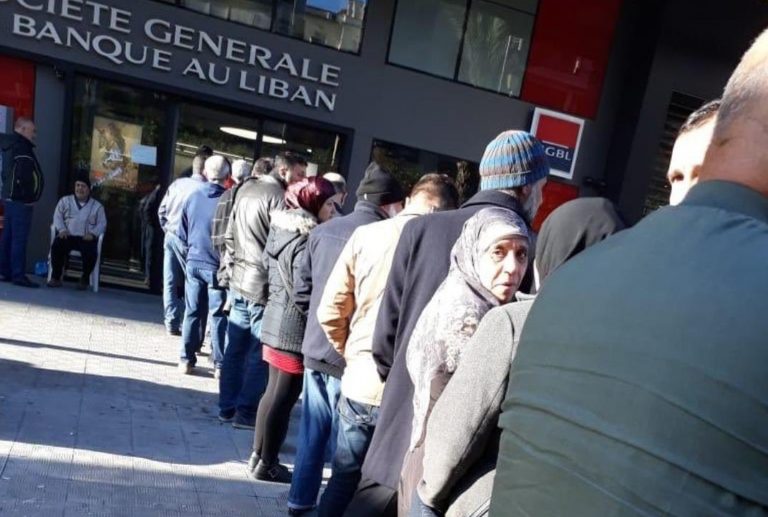
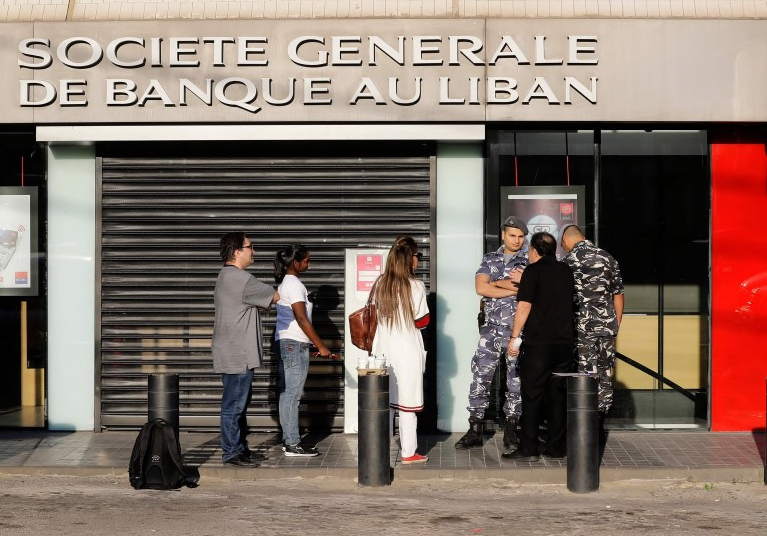
Lebanese citizens have been dealing with economic hardship, as the country’s central bank imposed customer withdrawal limits last October. The problems have continued over the last two months, as ATMs have stopped dispensing cash and bank branches close doors in fear of angry clients. Regional reports disclose Lebanese bank customers often wait for hours in long lines at local branches only to be told the bank’s cash reserves have run dry.
Also read: Problems Escalate in Venezuela as Millions Rush to Spend Petros
During the last few months, banking customers in Lebanon have been dealing with withdrawal limits and cash shortages throughout the country. News.Bitcoin.com reported on the start of the friction between the country’s citizens and Lebanon’s central bank. At the time the financial institution (Banque du Liban or BDL) imposed cash withdrawal limits across the country and bank customers were only allowed to withdraw $1,000 per week.
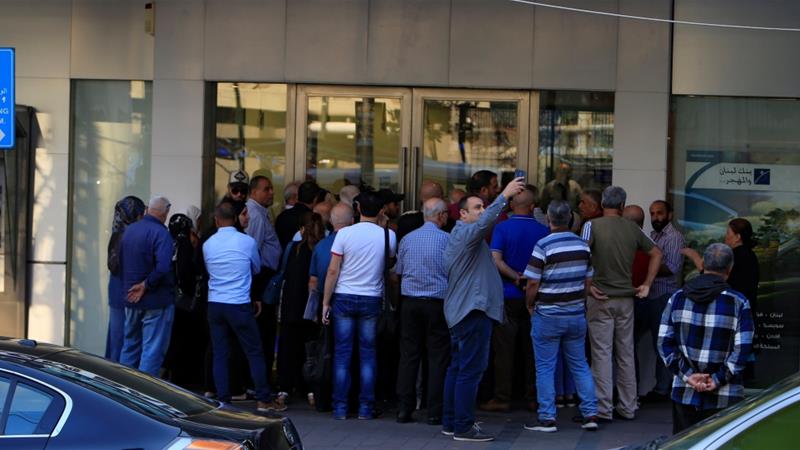
After the withdrawal restrictions, Lebanese citizens began protesting as the nationwide cash crisis saw emptied ATMs and a slew of banking institutions closed. The problems continued into November, as banks remained closed because they were constantly dealing with protestors and angry clients. Demonstrators say Lebanon’s central bank and the country’s smaller financial institutions mismanaged the country’s wealth.
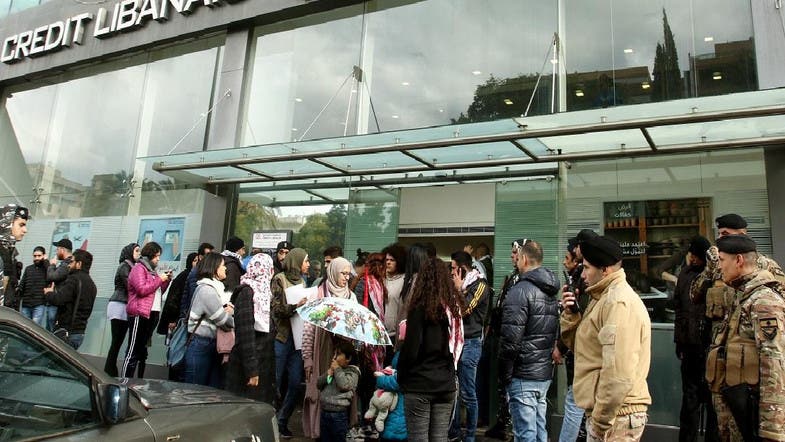
In 2020, the situation in Lebanon remains the same and local reports detail on January 4, banks in northern Lebanon started closing again. Lebanon’s National News Agency said that lenders “balked at customer anger over a liquidity crisis.” AFP reports that banks in the northern region of Akkar locked the doors and shut down on Friday and Saturday. Sources noted that Lebanon’s Association of Banks called the branches and told them to shut down “until further notice.”
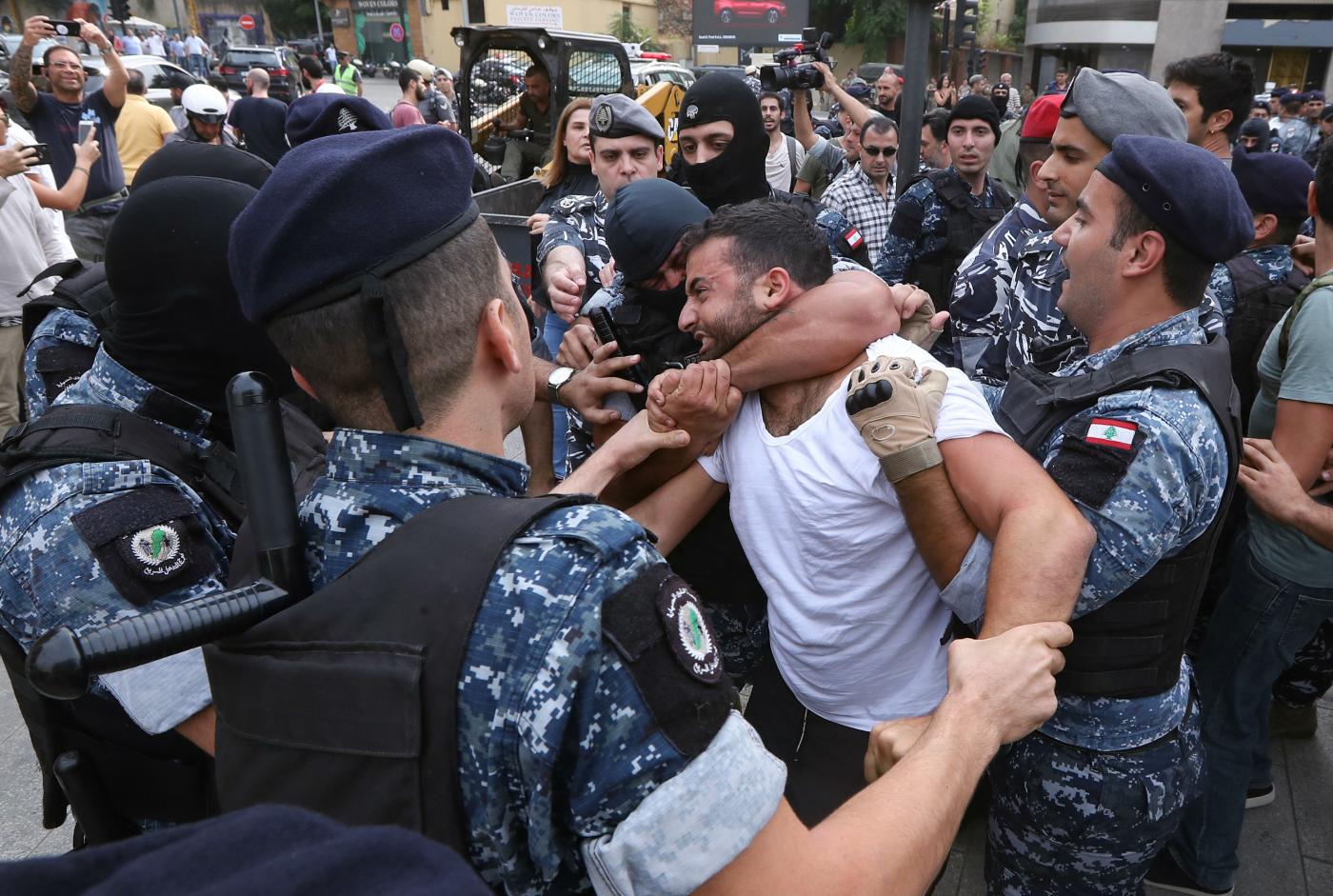
AFP also added that angry customers went to a bank office in Halba in order to protest the withdrawal limits. The demonstration ended with a 10-hour standoff between a customer and the bank’s officials. The customer said he wouldn’t leave the bank branch unless he was compensated with his money, but he was escorted out by law enforcement to a local hospital. As the man was ushered to the clinic, bank officials promised the man his funds were safe. That same day, Lebanon’s Association of Banks made a call to certain branches and told them to shut down. The banking organization cited the demonstrations as a “threat to the lives and safety banking employees.”
The news from Lebanon follows the restrictions on withdrawals Indian banks levied after the Reserve Bank of India (RBI) imposed strict restrictions at the end of September. Similarly to the Lebanese situation, Indian bank clients protested the rules and several arrests took place after the RBI placed regulatory guidelines on more than 100 branches.
In Lebanon, it’s become a common sight to see people crying or screaming inside bank branches as Lebanese banking clients believe financial institutions have mismanaged their life savings. Last Friday, Lebanon’s Melhem Khalaf, the head of the Lebanese Bar Association, said the Lebanon central bank’s withdrawal restrictions are “unconstitutional.”
What do you think of the situation at Lebanese banks and lending institutions? What do you think of Lebanon’s central bank restricting people from accessing their savings? Do you think cryptocurrencies are the answer to problems like these? Let us know in the comments section below.
Images courtesy of Shutterstock, Reddit, Al Jazeera, Wiki Commons, Pixabay, and Fair Use.
Did you know you can buy and sell BCH privately using our noncustodial, peer-to-peer Local Bitcoin Cash trading platform? The Local.Bitcoin.com marketplace has thousands of participants from all around the world trading BCH right now. And if you need a bitcoin wallet to securely store your coins, you can download one from us here.
The post Bank Closures and Withdrawal Restrictions Anger Lebanese Citizens appeared first on Bitcoin News.
![Pretty good selling point for Bitcoin... War on cash continues in Greece [ Greece forcing citizens to spend electronically ]](https://b.thumbs.redditmedia.com/pM6fmfO_WXvWpa42JXR4Z2sltkWVu2JLWSv1SfVG6Bw.jpg "Pretty good selling point for Bitcoin... War on cash continues in Greece [ Greece forcing citizens to spend electronically ]") |
submitted by /u/datarider [link] [comments] |
小時候很愛玩的遊戲,就是拔起周圍還未成熟的雜草種子,偷偷丟在別人的衣服後面,然後再快速跑走,小小的種子黏在衣服上,等到對方發現後哈哈大笑,或者是一群小朋友彼此互丟「飛鏢」,對這樣的惡作劇樂此不彼,逗得大夥哈哈大笑,這就是你我周圍常見的雜草──大花咸豐草,俗稱「恰查某」。

台灣原生的蜜源植物雖多,但並非一年四季皆有,因此早期蜂農為了增加蜂蜜的產量,引進大花咸豐草來當作蜜源植物。沒想到繁殖能力極強的大花咸豐草,就這樣在台灣落地生根,被列為國內二十大危害程度最高的外來植物,成為強勢的入侵種,也取代了台灣原生地植物,除了四季都會開花外,也很容易隨著接觸者散播到其他地方,現在隨處路邊、任何一塊荒地上首先長滿的絕對就是大花咸豐草了。

大花咸豐草可以說是讓人又愛又恨,大部分的植物都有不同的開花季,較少四季開花,然而大花咸豐草卻是四季開花,對蜂農來說:「有花,蜜蜂得以採集花蜜及花粉」,因此才被引進大量種植。此外,你如果在戶外想來場自然觀察,那麼這蜜源植物絕對不會讓你失望,只要花點時間觀察大花咸豐草,你就可以看到蜜蜂、蝴蝶訪花,也可以看到許多昆蟲躲藏其中。
但與此同時,農民卻很討厭它,除不完的雜草彷彿噩夢一般,在一塊農地上,如果使用除草機切除大花咸豐草,幾乎不用兩個禮拜它又長回原來頭好壯壯的模樣,甚至在使用割草機過後,反而使得植物的莖部越長越粗、更為強勢,這也許就是人家說的「斬草不除根,春風吹又生」。而強勢的雜草,甚至可以淹沒樹苗、搶走陽光與養分,困擾不已的農民只能定期除草,但越挫越勇的大花咸豐草並沒有因此消失,這也是為什麼許多農民寧可直接噴灑除草劑,取代割草機的緣故。我曾經聽一位老農民說過,他花了十年才根除農地上的大花咸豐草,現在偶爾出現一兩株,也是立刻拔起,才讓果樹周圍得以綠油油一片,留下其他原生的低矮雜草。

一般人以為中間是花蕊,而周圍是花瓣,但其實不完全是這樣唷,菊科植物最主要的特徵就是頭狀花序,由舌狀花和管狀花組成。舌狀花通常為長條形長在外圍,而管狀花的花瓣成管狀,通常長在頭狀花序中央。讓我來仔細觀察一下大花咸豐草,果然可以發現,除了外圍白色的舌狀花辦外,中間凸起的就是黃色管狀花,原來真的是花呢!中間的管狀花為兩性花,具有雄蕊與雌蕊,兩個分岔柱頭的雌蕊像一個個小愛心,非常可愛。

其實咸豐草家族總共有三種,除了大花咸豐草外,還有「咸豐草」和「鬼針草」,只不過因為大部分的人並不知如何區別,因此都叫它恰查某。花比較小的是咸豐草,周圍的舌狀花辦長約在0.5公分內,而沒有白色舌狀花,只開黃色花的是鬼針草,而這其中只有大花咸豐草為多年生植物,其餘兩種都為一年生草本,也因此大花咸豐草逐漸成為台灣的強勢外來種植物,取代了原有的植物。



中文名:大花咸豐草
別名:恰查某(台語)
科名:菊科
學名:Bidens pilosa L. var. radiata Sch.
分佈:原產地美洲,現台灣隨處可見
特徵:
※本文由自然谷團隊提供,原刊載於台灣環境資訊協會官網
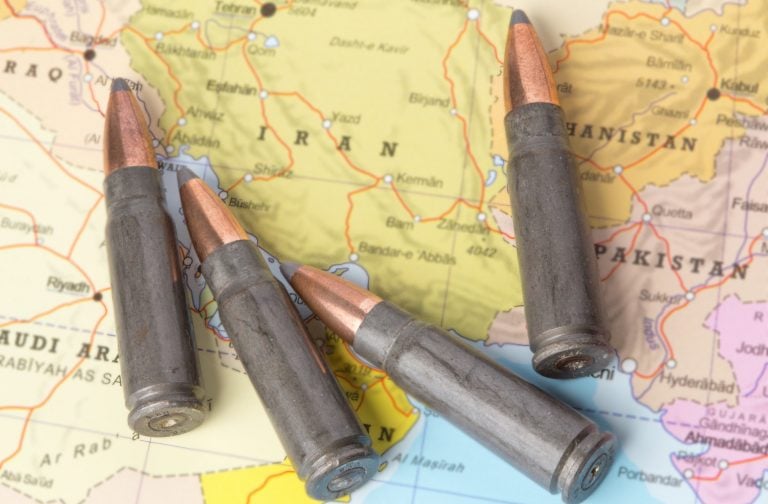
New, unprecedented economic sanctions have been imposed on Iran’s central bank after blame for a September 14 oil field attack was pinned on the nation by U.S. leaders. The sanctions blacklist the Iranian central bank and sovereign wealth fund, further severing the country’s already tenuous ties to the global market. With soldiers and weapons “of defensive nature” to be shipped to the Middle East in the wake of the attacks, some are questioning the true motives of U.S. foreign policymakers. Iran is not the first nation openly critical of the U.S. petrodollar to face such extreme sanctions, and threats of military invasion.
Also Read: How Cryptocurrencies Can Mitigate Some of Brexit’s Negative Effects
Like Iran, a nation whose leaders are resolute about moving away from USD hegemony via cryptocurrencies, non-USD reporting policies, and gold, Iraq was also a thorn in the side of petrodollar dominance at one time. That is, before it was invaded by U.S. forces in 2003. Iraq had begun trading oil for euros in 2000 as a means of surpassing crippling U.S. sanctions starving the country. This policy ended abruptly when America entered under the auspices of fighting 9/11-related terrorism, although there was no substantial connection. Nevertheless, Iraq now trades its oil for dollars, once again.
Both Iran and Iraq are rich in the natural resource, have refused to fall in line with western political dominance, seeking plans to create sound, independent currencies backed by gold. Libya is yet another example. When Muammar Gaddafi sought to bring about his gold-backed dinar and abandon the world reserve USD, NATO forces found their way to him briskly and, in the cackling words of then-Secretary of State Hillary Clinton, “We came, we saw, he died.”

The basic breakdown is as follows:
1971 – U.S. abandons the gold standard.
Mid 1970’s – Agreement between U.S. and Saudi Arabia solidifies OPEC nations’ policy of pricing oil in dollars, effectively creating the petrodollar and further entrenching the USD as world reserve currency.
1970’s to present – Perpetual sanctions and warfare for any country seeking to abandon the USD and return to gold or alternate currencies for pricing oil.
As the gold standard was abandoned, and the petrodollar instituted to guarantee U.S. debt securities in the wake of massive deficits from the Vietnam war, the smoke cleared; the dollar was no longer backed by gold, but by oil, and the dominance of oil, by blood. Trump stated Monday, September 16, from the Oval Office:
In a few moments I’ll be signing an executive order imposing hard-hitting sanctions on the supreme leader of Iran … Today’s action follows a series of aggressive behaviors by the Iranian regime in recent weeks including shooting down of U.S. drones.
Trump also cited Iran’s nuclear program repeatedly (now product of a deal his own administration broke and backed out of) and recent, questionable conflicts involving oil tankers in the region, as well as “other things that were done also which were not good.”
Of course, the attacks on Saudi oil facilities were the supposed straw that broke old Uncle Sam’s already aching back. For the leader of the only nation to ever use a nuclear weapon in war, twice, and which has routinely engaged in fraudulent, artificial provocations of conflict such as the Gulf of Tonkin incident, the president’s words struck many as darkly ironic. This not to mention the increasingly harsh battery of sanctions on Iranian oil exports which have been escalating for years now under the current administration.

Iraq, Iran, Venezuela and Libya have of course been historically abusive to those living within their confines. Saddam Hussein was infamous for poison gas attacks killing thousands of innocent Kurdish villagers in Halabja. Iran’s iron-fisted regime has flogged people for drinking alcohol, suffocates freedom of expression in brutal fashion, and targets women, minority groups and children, denying them basic human rights. Venezuela’s sociopathic leadership is, essentially, no different. Opposition to the state in Gaddafi’s Libya resulted in horrific consequences as well, with the leader himself once saying: “I could at any moment send them to the People’s Court … and the People’s Court will issue a sentence of death based on this law, because execution is the fate of anyone who forms a political party.”
Though the U.S. government has itself destroyed the lives of countless millions, taking hundreds of thousands in one fell swoop with nuclear bombs, routinely imprisoning the non-violent for any number of arbitrary, dictatorial edicts, for some reason the “us vs. them” mass media narrative remains. The reality is, however, that there are no good governments. Combined with an unsound monetary system, this problem is exacerbated to a place of sheer and unimaginably tragic proportions.
The last century’s ongoing bloodbath has coincided with a historically unprecedented abandonment of sound money in favor of inflationary and debt-based models. This is no plain coincidence. After all, if it is now war — and not gold — that backs the global monetary system, how else can value be preserved save through killing? Money like gold and bitcoin, with a set-in-stone supply limit, cannot simply be “printed” to finance these terroristic regimes.
Iran has denied responsibility for the September 14 oil facility attacks. Iranian-backed Houthi rebels in Yemen have openly claimed responsibility for the act. Still, U.S. policy makers have fingers pointed at Iran. Javad Zarif, foreign minister of Iran, stated in a recent interview with CNN:
It wasn’t an act of war against the United States and it was, as I said, an agitation of war because it’s based on a lie…If they lift the sanctions that they reimposed illegally…then we would consider it [talks].
Zarif went on to emphasize, when prompted about Iran’s citizens suffering under U.S. sanctions:
They’re lying if they tell you that food and medicine is not restricted.
Humanitarian crises, such as the starvation happening in Iran, Venezuela and elsewhere, cannot be staved off with traditional currencies, which ultimately trace back to U.S. dollar hegemony, and are impeded by state-compliant banking institutions. Cryptocurrencies however, can and do bridge this gap. Though conversion to local currencies and merchant acceptance presents significant logistical challenges, the technology allows for something that no government blood money can: a limited-supply, permissionless cash valued voluntarily by a market of independent actors, irrespective of what violent state mandates or unsound economic policies may be in place. When sanctions tell the impoverished Middle Eastern family they can’t eat, crypto and free markets say that they can indeed trade, politics be damned.
When lawmakers in Washington D.C. demand Americans fund things like the slaughter of pine nut farmers in Afghanistan — 30 were killed this week in a single strike — or the imprisonment of innocent people for the so-called war on drugs, Bitcoin has no such sociopathic mandate. The next world war will be a decidedly economic one, where those eschewing human dignity and peaceful solutions will be forced to face an ever-growing faction of human beings for peaceful, non-violent trade and voluntary market interaction, made possible by disruptive technologies like Bitcoin.
What are your thoughts on the economic situation with Iran? Let us know in the comments section below.
Op-ed disclaimer: This is an Op-ed article. The opinions expressed in this article are the author’s own. Bitcoin.com is not responsible for or liable for any content, accuracy or quality within the Op-ed article. Readers should do their own due diligence before taking any actions related to the content. Bitcoin.com is not responsible, directly or indirectly, for any damage or loss caused or alleged to be caused by or in connection with the use of or reliance on any information in this Op-ed article.
Images courtesy of Shutterstock, Fair Use.
You can now purchase Bitcoin without visiting a cryptocurrency exchange. Buy BTC and BCH directly from our trusted seller and, if you need a Bitcoin wallet to securely store it, you can download one from us here.
The post Iran Is Being Targeted for Economic Independence, Not Terrorism appeared first on Bitcoin News.
2014年9月,由諸多政府、企業、民間團體和原住民組織簽署「紐約森林宣言」,承諾在2020年之前將熱帶森林砍伐量減半,並恢復1.5億公頃土地。但針對森林狀態進行的全球性評估已經揭露,簽署方並未履行承諾。
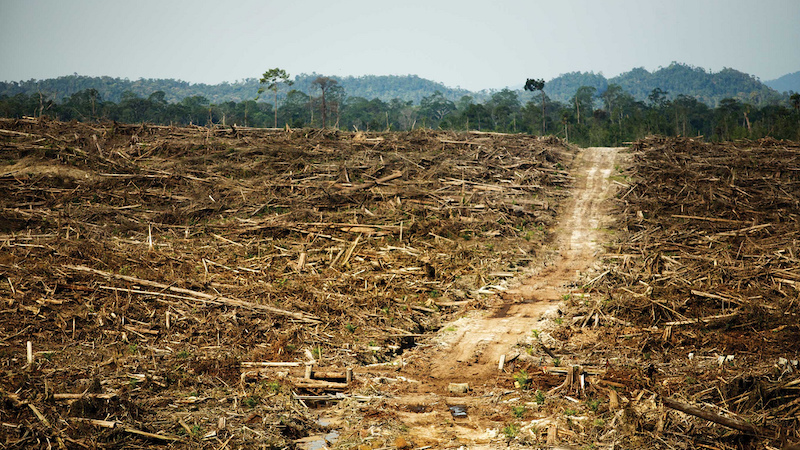
根據宣言中的10點聲明,簽署方還承諾在2030年前終止森林砍伐。
這份由智庫「氣候焦點組織」(Climate Focus)協調25個單位合作編撰的進度報告指出,在2014年至2018年期間,每年都有一塊面積相當於英國國土(約2,600萬公頃)的森林流失,全球森林砍伐年增率增加了43%。
在此期間,熱帶森林的損失佔全球森林砍伐的90%以上,亞馬遜和剛果盆地遭受的打擊最大。全球熱帶森林面積損失產生的年度碳排放量與歐盟公布的相當。
報告結論是,宣言的整體恢復目標達成率不到20%。2020年,承諾供應鏈零森林砍伐的跨國企業都無法實現目標。
世界資源研究所(World Resources Institute)糧食、森林、水和海洋副總裁漢森(Craig Hansen)認為,這個評估結果是一次沈痛的呼籲,「我們正往失敗走去,但不應該放棄希望」。
2014年,41個國家和20多個地方和區域主管機關在潘基文於紐約主持的聯合國峰會上簽署紐約宣言,包括歐盟、美國、加拿大、英國、法國、德國、日本、肯亞、衣索比亞和剛果民主共和國。另有三個巴西州政府、五個墨西哥州政府和六個秘魯州政府也簽約。
該報告發現,迄今為止的行動「缺乏積極度,且仍各自獨立作業」,未能處理多個彼此相關的森林砍伐因素。
報告警告,「森林砍伐的短期利潤仍然超過許多土地使用決策中森林保護和恢復的長期效益」,森林繼續被農業、礦業和其他企業砍伐。
參與評估的組織之一英國皇家戰略研究所(Chatham House)的高級研究員霍爾(Alison Hoare)表示,政府和企業「沒有意識到解決森林砍伐問題的困難度」,現在他們必須面對土地和森林治理的複雜性以及土地所有權決策的種種現實。
霍爾說,雖然森林和木材相關產業改善了治理方式,並採取了更多永續的做法,但他們的努力被農業、採礦和基礎建設等其他產業抵銷。商業性農業仍然是森林砍伐的主要動力。消費者權力在幫助「改變經濟激勵和決策過程」方面必須發揮更大的作用,呼籲歐盟「研議法案選項,鼓勵企業控制其供應鏈」 。
今年稍早,歐盟執委會開放讓企業強制規範其進口供應鏈。
另一方面,報告指出,土地復育計畫進度緩慢,大多數植樹活動都不在天然森林中。
報告主要作者、氣候焦點組織報告與土地使用顧問舒爾特(Ingrid Schulte)表示,雖然各種土地復育方式絕大部分都是正面的-僅有少數幾點需要注意-不同的土地復育計畫適合不同的目標,產生不同的利益。「像是林業收益就不容易量化,」但她也指出在森林外種植樹木有助於支持就業和生計。
舒爾特認為,關鍵問題依然是「如何從森林中獲得更多經濟利益」,因為人們仍然認為只能靠砍伐樹木獲利。
少數國家有所進展,如印尼2018年的原始森林損失降至2003年以來的最低水平。薩爾瓦多、衣索比亞和墨西哥有可觀的植樹步調。今年7月,衣索比亞聲稱他們一天內種植了3.5億棵樹,打破世界紀錄。

The opioid epidemic is the new devil Bitcoin is being blamed for inflaming, to be added to the already long list of heinous crimes crypto is supposedly responsible for, like terrorism, money laundering, and trafficking. While it’s painfully clear that the U.S. dollar is a much more common tool for these unethical and illicit activities, that doesn’t stop the powers that be from continuing their propagandistic assault on financial freedom — ignoring their own central role in creating these massive problems, by pumping up the artificial monopolies that peddle them, and outlawing less dangerous and non-addictive solutions.
Also Read: Doing What You Want With Your Money Is a Fundamental Right
In new advisories issued by Whitehouse.gov entitled: “White House Announces Actions to Crack Down on Trafficking of Fentanyl and Synthetic Opioids and Better Position Private Sector to Protect the Homeland,” the U.S. government has named a new enemy in America’s deadly opioid crisis: Bitcoin. Among culprit cryptos named as aiding in trafficking of Fentanyl are BTC, BCH, ETH, and XMR. For those in the know, this is a little more than darkly ironic, as the U.S. government’s systematic U.S. dollar finance of big pharmaceutical companies, and combined violent prohibition of safe alternatives like cannabis, dwarf any paltry contribution crypto might be making.

Opioids — being basically heroin in a pill — are highly addictive. According to the Drug Enforcement Administration (DEA) itself, Fentanyl is “80-100 times stronger than morphine.” With the wild financial success of oxycodone (commonly known by the trade name Oxycontin) and other opioids in the 90’s, big pharma began seeing big dollar signs. After an industry and government-wide push to address chronic pain, and a new Joint Commission initiative which now recognized pain as the “5th vital sign” (basically conditioning patients to take meds for any and every discomfort and nagging pain) opiate use exploded.
Prescriptions for opioid analgesics skyrocketed by 104%, from 43.8 million in 2000 to 89.2 million in 2010. In 2016, more than 289 million prescriptions were filled. According to a Surgeon General’s Report released the same year:
Over-prescription of powerful opioid pain relievers beginning in the 1990s led to a rapid escalation of use and misuse…This led to a resurgence of heroin use, as some users transitioned to using this cheaper street cousin of expensive prescription
opioids. As a result, the number of people dying from opioid overdoses soared—increasing nearly four-fold between 1999 and 2014.
Fentanyl and its analogues, the central theme of the recent White House advisories, are currently causing the most deaths where opioids are concerned. Chinese drug kingpins and crypto are being blamed, but the government conveniently ignores its own central role in the chemical devastation of tens of thousands of lives.
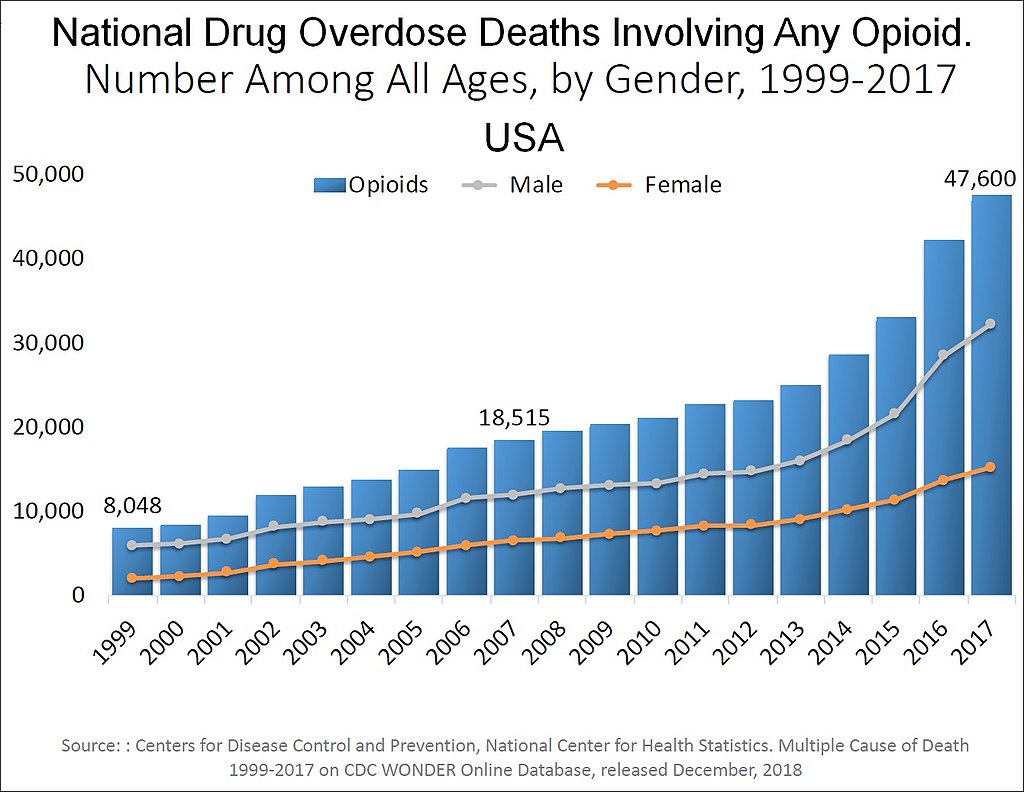
In 2017, over 72,000 died of overdose, and most of these were opioid-related. While the numbers of prescriptions are finally leveling off, the U.S. government’s recent statements painting crypto as a key culprit are laughable, spurious, and telling. As U.S. Senators Dick Durbin (D-IL) and John Kennedy (R-LA) recently expressed in a letter to the DEA:
We have previously shared our deep concern that, between 1993 and 2015, DEA allowed aggregate production quotas for oxycodone to increase 39-fold, hydrocodone to increase 12-fold, hydromorphone to increase 23-fold, and fentanyl to increase 25-fold.
The senators go on to state that “the pharmaceutical industry flooded every corner of the country with 76 billion oxycodone and hydrocodone pills between 2006 and 2012—egregious volumes of painkiller production that was undertaken with DEA approval and awareness.”

The “Money” section of the four-part advisory details how criminals use “convertible virtual currency” (CVC) to facilitate trafficking of illicit substances:
Foreign representatives will instruct the U.S.-based individual to send payments through CVC, such as bitcoin, bitcoin cash, ethereum, or monero.
The document goes on to state: “Additionally, U.S.-based individuals may find fentanyl dealers on Darknet markets and contact Darknet vendors located worldwide, including in the United States.” Advising financial institutions on methods for discovering and reporting business transaction red flags, things like use of Virtual Privacy Networks (VPN), inability to determine the source of funds, sending “low-dollar money transfers to an individual in China for no apparent legitimate purpose,” and association with a pharmaceutical company are listed.
Information “particularly helpful to law enforcement” is identified as crypto wallet addresses, account info, tx IDs, tx history, login/IP info, “mobile device information,” and “information obtained from analysis of the customer’s public, online profile and
communications.” The report also details, in a footnote:
Tumbling or mixing involves the use of mechanisms to break the connection between an address sending CVC and the addresses receiving
CVC.
While the crypto crowd is put under the hot lights of sloppy state scrutiny once again, now being blamed for Fentanyl abuse and Chinese drug lords — who simply fulfilled a demand for a ferociously successful black market the U.S. government itself created, anyway — level-headed, statistical assessment puts the propaganda straight to bed.

As news.bitcoin.com reported last month, when it comes to the currency most overwhelmingly used to facilitate illicit transactions like Fentanyl trafficking, the USD remains the preferred money of criminals by leaps and bounds. This is irrelevant, though, according to many crypto enthusiasts and free market advocates, because any tool anywhere can be used unethically. This doesn’t make the tool bad, but the actor.
With only $72 billion (erring on the side of extreme caution) of the estimated $400 billion annual market volume for illegal drugs being bitcoin-related, the point is moot, even by statist standards. Still, those tragically affected by the opioid epidemic have a more pointed bone to pick.
When safe alternatives to highly addictive substances like Fentanyl are naturally, readily available, and dirt cheap, there can be only one reason the powers that be would seek to destroy families, incomes, and literal lives to stop people from possessing them: control. So while the gutters are strewn with mountains of cold corpses from an opiate cash cow, and innocent men and women are locked in cages for trying to save their lives, or the lives of their children with a plant, it’s hard to imagine any sane person believing the White House talking heads. They may feign concern and cry crocodile tears for the plague they willingly created, blaming a non-violent, decentralized money for the damage, but to believe that line of blather one would have to be very drugged up, indeed.
What are your thoughts on the White House advisory? Let us know in the comments section below.
Images courtesy of Shutterstock, fair use.
Did you know you can buy and sell BCH privately using our noncustodial, peer-to-peer Local Bitcoin Cash trading platform? The Local.Bitcoin.com marketplace has thousands of participants from all around the world trading BCH right now. And if you need a bitcoin wallet to securely store your coins, you can download one from us here.
The post The White House Just Blamed Bitcoin for America’s Opiate Crisis appeared first on Bitcoin News.

The supposed coordination of governments and tech companies to create a one-world, cashless society is often viewed as little more than fodder for silly Youtube conspiracy videos. After all, cash is still king in daily life, even in extremely high-tech, innovative societies like Japan. Upon closer examination, though, current realities like Australia’s proposed cash transaction ban for 2020, the continuing removal of higher denomination bills from several world economies, and the creation of centralized, state cryptocurrencies by governments worldwide cannot be ignored. These trends signal a global push to kill paper money in the name of safety, security, and financial inclusion.
Also Read: Major Swedish Bank Orders Negative Interest Rate on Euro Deposits
Australia’s “Black Economy Taskforce” wants to put people accepting over 10,000 AUD (~$6,750) in cash in the slammer for up to two years, or fine them up to 25,000 (~$16,890), in an ostensible bid to fight black market economies. The Currency (Restrictions on the Use of Cash) Bill 2019 states:
Transactions equal to, or in excess of this amount would need to be made using the electronic payment system or by cheque. The Black Economy Taskforce recommended this action to tackle tax evasion and other criminal activities.
Note the similarity here with talking points of other governments. India’s Prime Minister, Narendra Modi, when announcing the devastating surprise removal of 86% of the country’s circulating paper cash in 2016, proclaimed:
Black money and corruption are the biggest obstacles in eradicating poverty.
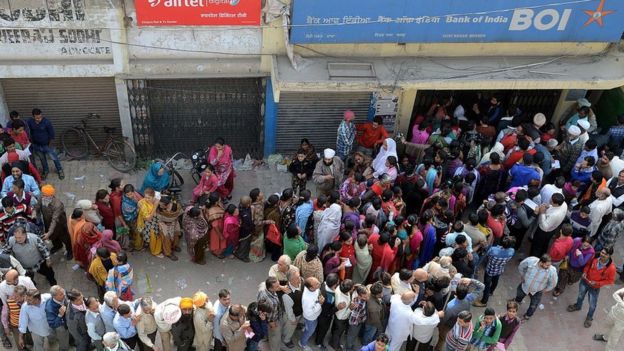
Not surprisingly, Modi’s shock move put the dominantly cash-based society in a panic, forcing people to take their now worthless 1,000 and 500 rupee notes to banks within 50 days of the announcement, to exchange them for smaller denominations. Now The Royal Bank of India is moving to ban all cryptocurrencies but one, the state-approved, digital rupee.
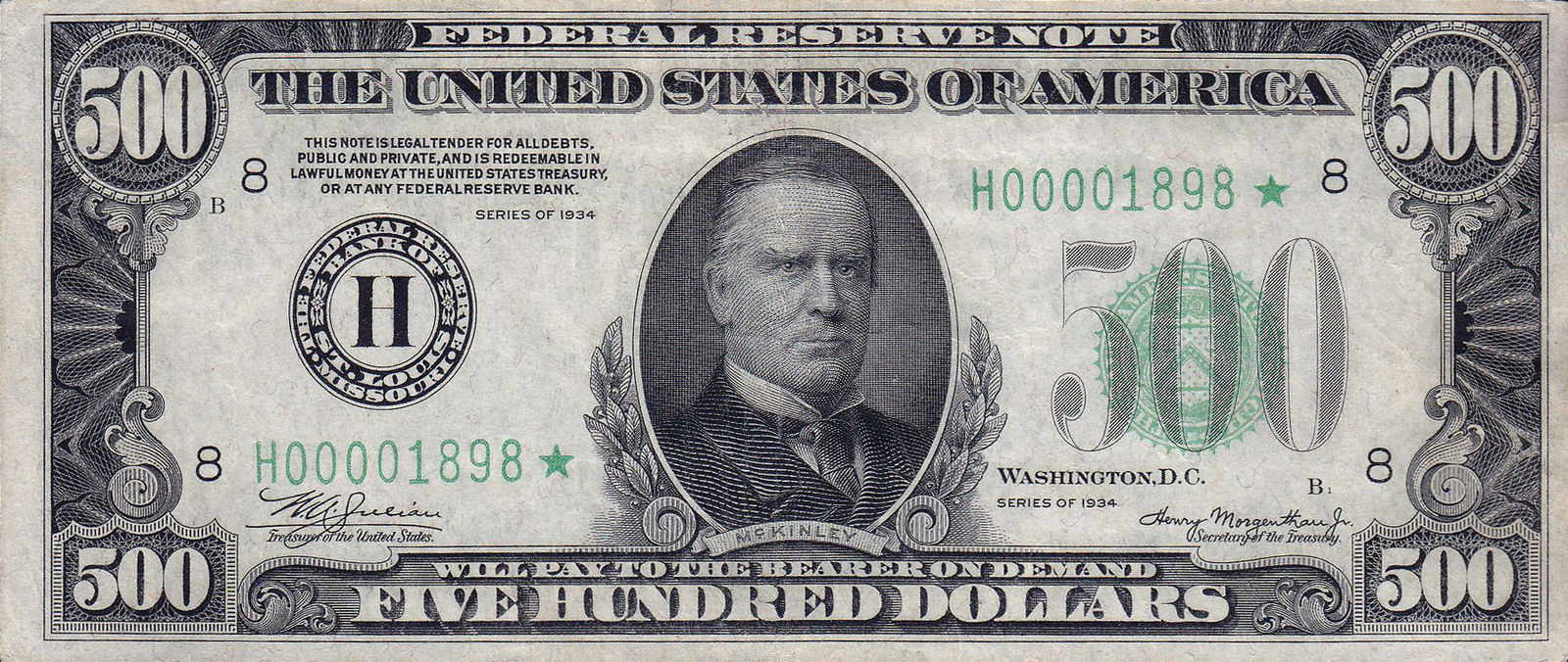
The removal of large cash bills is a worldwide, ongoing reality, with the European Central Bank (ECB) stopping production of the 500 euro note earlier this year. The note, dubbed by the media as “the Bin Laden,” was said to be used disproportionately in financing terrorism. The U.S. used to have banknotes worth $500 and higher as well, some which were known as gold certificates, entitling the bearer to physical gold upon redemption. As fractional reserve banking took over, however, and national debt increased, these systems were progressively abandoned. The trend continues today in the form of Negative Interest Rate Policy (NIRP), and the resultant push for digitization of money.

“If everyone is holding cash, negative interest rates become useless.” These are the words of former People’s Bank of China (PBOC) governor Zhou Xiaochuan after the Chinese government had just completed a trial run of their new national cryptocurrency back in 2017. Now the country’s sovereign digital currency is “almost ready.” Zhou has also officially stated:
At the current stage, the central bank’s major goal of issuing digital currency is to replace the physical cash.
Earlier in the same interview, he maintained that “The cost for cash transaction will gradually increase in the later stage. For instance, banks do not charge any fee for counting a large amount of coins now, but in the future they may charge their clients for such services.” Zhou’s remarks about negative interest rates are arguably the biggest giveaway as to what is going on here. If people are holding cash outside of banks, reckless, Keynesian NIRP policies won’t have the desired effect of coercing spending in the populace.
New Zealand Reserve Bank governor Adrian Orr agrees with Zhou:
Let’s tax cash holdings, simple as that: we’re back to monetary policy as usual; people are disincentivised to be holding large lumps of physical cash; they are having to think harder about putting money to work.

While draconian government monetary policy is alarming, the lack of support for actual financial sovereignty in the crypto and tech space is indicative of another problem. Government’s designs on eliminating paper money and fighting permissionless, decentralized crypto exchange — both moves to control money supply and populations of individuals — are obvious, and to be expected. But even big tech companies and exchanges like Facebook and Binance are jumping on the propaganda bandwagon, dragging many well-meaning enthusiasts into the fight against financial freedom (even if unintentionally) right along with them.
“We believe that we all have a responsibility to help advance financial inclusion, support ethical actors, and continuously uphold the integrity of the ecosystem.” – Libra whitepaper
“This is why we believe in and are committed to a collaborative process with regulators, central banks, and lawmakers…” – Facebook’s David Marcus
“Binance is looking to create new alliances and partnerships with governments, corporations, technology companies, and other cryptocurrency companies and projects involved in the larger blockchain ecosystem, to empower developed and developing countries to spur new currencies.” – Binance’s ‘Venus’ announcement
The common theme here is eager compliance with Keynesian value destroyers. And these examples are illustrative of the true financial epidemic.

Digital currencies really are extremely convenient. Everybody in the world really should have a chance at financial inclusion. Holding wads of paper cash and coins really can be a bother, as well as a safety hazard, where crime is concerned. In Finland, passengers on state railways won’t be able to purchase tickets with cash for long-distance trips, starting in September. Much easier than messing with the paper stuff. ATMs are becoming less common worldwide, even in countries like China, the U.S., and cash-obsessed Japan. Settlements and payments can be made effortlessly, though, with just a quick scan or entering a PIN, so it’s no big deal.
But this is not a perfect world. Governments are corrupt. Artificial monopolies and seas of red tape exist, keeping the life-threateningly impoverished and entrepreneurial from accessing crypto and banking services via strict KYC and AML policy, and by mandating, like Modi in India, that their hard-earned and hard-saved money is worthless. People already have the opportunity for extreme financial inclusion. A $40 smartphone and an internet connection enables anyone, anywhere in the world, to make or receive money with Bitcoin. In the name of regulation, safety, and financial inclusion, however, the state makes the situation more chaotic, less safe, and extremely exclusive where real human need is concerned.

Some of us crazy people still like paper cash, and prefer to pay that way. Some annoying, behind-the-times luddites still put money in their mattresses, where global financial policy turns more and more toward negative rates, continued inflation, and devaluation of money sitting in banks. Some entrepreneurs and tech-savvy fans of crypto simply think it’s nobody else’s damn business, preferring paper wallets, coin shuffling, and VPNs, in a world where everyone but those in power are presumed guilty until proven innocent. Some of us “conspiracy nuts” just like crypto for crypto, and paper cash is still closer to that clean and private model than any slimy, centralized digital state currency could ever hope to be.
Do you think there is a global push to end cash? Let us know in the comments section below.
OP-ed disclaimer: This is an Op-ed article. The opinions expressed in this article are the author’s own. Bitcoin.com is not responsible for or liable for any content, accuracy or quality within the Op-ed article. Readers should do their own due diligence before taking any actions related to the content. Bitcoin.com is not responsible, directly or indirectly, for any damage or loss caused or alleged to be caused by or in connection with the use of or reliance on any information in this Op-ed article.
Images courtesy of Shutterstock, fair use.
Did you know you can buy and sell BCH privately using our noncustodial, peer-to-peer Local Bitcoin Cash trading platform? The Local.Bitcoin.com marketplace has thousands of participants from all around the world trading BCH right now. And if you need a bitcoin wallet to securely store your coins, you can download one from us here.
The post The Push to Kill Cash – Australia’s Proposed Ban Shows It’s Not Conspiracy Theory appeared first on Bitcoin News.
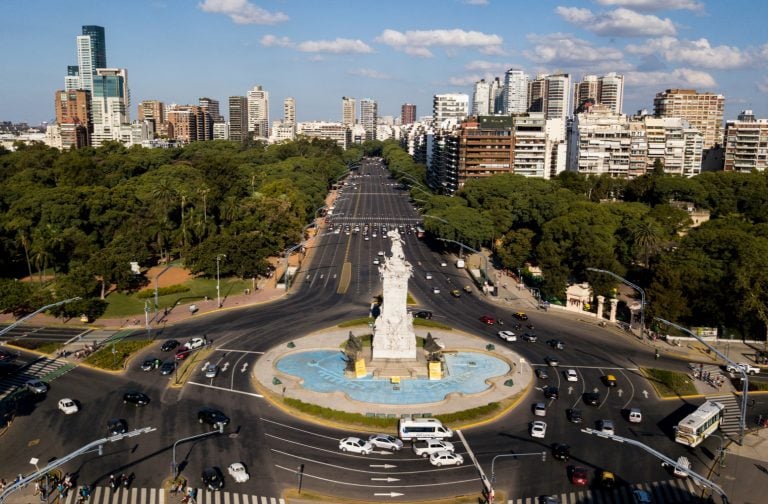
Whenever bitcoin experiences a sharp drop or volatility, mainstream media analysts jump to declare that cryptocurrency isn’t stable enough to be considered money. The double-digit crash of the Argentine peso in one day, simply due to an election in the country, can be said to prove the same about fiat.
Also Read: Big Banks Enabled Jeffrey Epstein’s Sex Trafficking Crimes
On Monday Argentina’s peso currency dropped over 30% in value to a record low of 65 pesos per 1 U.S. dollar. The country’s central bank intervened in the foreign exchange market, using its reserves to prop up the peso, but it still ended the day around 15% down. At the same time, the Argentine equity markets were doing even worse, with the country’s benchmark S&P Merval Index losing almost half its value in dollar terms. This was the worst daily performance by any stock market in the world for the past three decades and only the second worst in the last 70 years.
In case you missed the news, don’t worry, no foreign power has declared war on Argentina, nor has Buenos Aires been hit by a giant meteor. Instead, the event that triggered such a major financial crisis, with people seeing so much of their life’s savings vanishing into thin air overnight, was just a routine election. On Sunday there was a primary vote that signaled that the current politician in charge of the government might be replaced by another one in a few months, which was enough to send the markets tumbling in historic proportions.
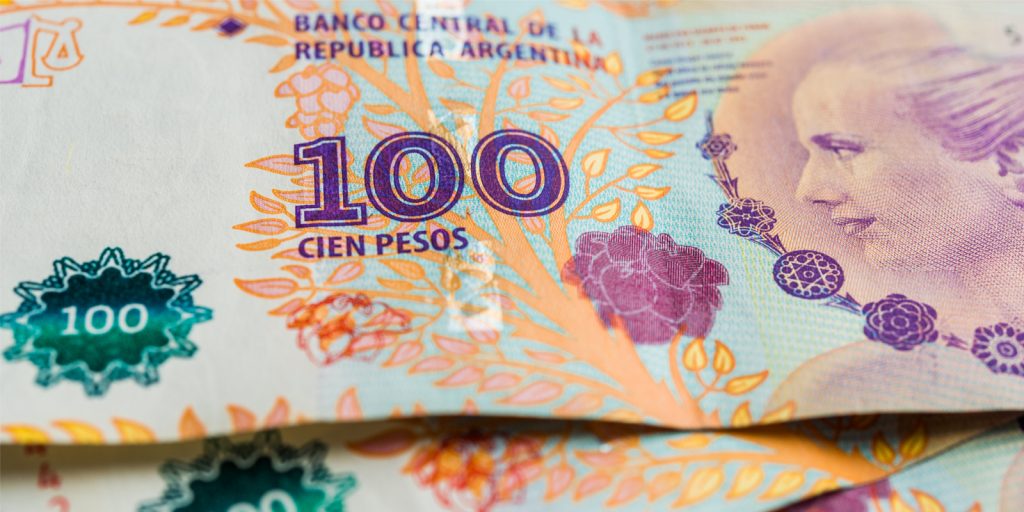
Looking at the details of the elections that spooked the markets and led to the collapse of the Argentine peso shows that there is room for some concern. The current president of the country, Mauricio Macri, is at least perceived to have tried to fix some of the structural problems of the local economy, even if his detractors can say that he has failed in doing so. His opposition, on the other hand, the Peronist Alberto Fernández and former president Cristina Fernández de Kirchner, are considered to be left wing populists who could set the country back with disastrous policies that will wreck Argentina’s economy once more. Regardless of whether these perceptions are true, the fact is that enough investors hold the news that the opposition might assume control of the government from Macri to be a serious threat to stability.
It is important to note that Argentina is not some small and inconsequential banana republic. In fact, it is the second largest economy in South America and even a member in the G20 group of major economies. It also inhabits a vast land rich in natural resources. Unfortunately, Argentina is also a common example in economic textbooks on how government mismanagement can destroy economies as it was once one of the richest countries in the world in terms of GDP per capita, at the start of the previous century, but has greatly deteriorated in relative terms over the subsequent decades.

The country has often fallen into financial crises and the people of Argentina have suffered from several severe recessions in recent memory. One of the persistent ills of the economy is very high inflation and the government even had to resort to redenomination, cutting zeros off the fiat currency, four times between 1970 to 1992 alone. This has remained true also in recent years, as in August 2013 one US dollar was exchanged for less than six Argentine pesos and today is worth about 10 times as much.
In 2001 the government of Argentina defaulted on its bonds, which cut the country off from the international financial market for years and caused a lasting economic crisis whose impact the people will not soon forget. Now the country might be at the start of another such calamity, with Argentinians again seeing their peso savings crashing to new lows.
Argentina of course isn’t the only country that is suffering from high inflation of its fiat currency. Two very notable examples of countries suffering from hyperinflation are Zimbabwe and Venezuela. In 2009, the Zimbabwe dollar set a world record for inflation, estimated to be in the billions of percent, with even the highest notes of 100 trillion dollars not worth enough to buy a single loaf of bread. In 2018 the Venezuelan government removed five zeros off its fiat, making the new “sovereign bolivar” worth 100,000 times the older bolivar which became basically useless as money. However, it shouldn’t be understood that these are the only countries to suffer from inflation. In fact, all fiat currencies suffer from inflation; it is merely a matter of degrees between the extreme cases and the average.
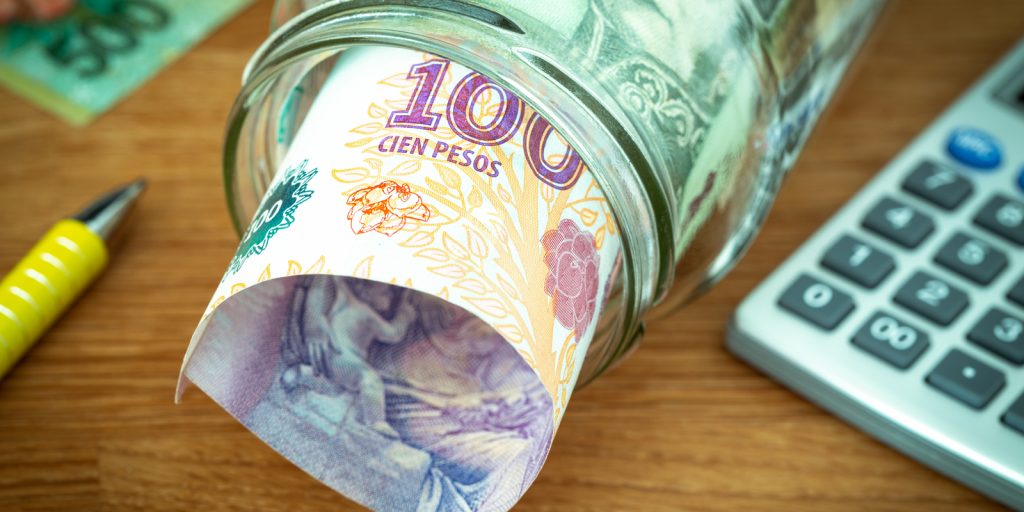
If you think that what happened with the peso can never happen with the U.S. dollar, this demands wholly trusting the American government to never mismanage its economic affairs to this extent. It means that you need to trust American politicians to always look beyond their own short-term incentives to weaken the currency to pump artificial growth ahead of elections or to print new money to buy votes. And it means that you need to trust that the Federal Reserve will always be willing and able to protect the USD from all external threats. Right now, with an international currency war going on, none of these seem to be set in stone.
The need to trust governments not to debase their fiat has always been a concern. It is why some people try to hamper government control of money by asking to return to a system like the gold standard where there is a natural limitation on the currency. However, in such a system you still need to trust the central bank to hold as much gold as it claims. Even in ancient times, those controlling the mints often diluted the percentage of precious metals in their coins, thus causing inflation. Cryptocurrency tries to overcome these problems by removing the need to trust any centralized entity, instead promising to base the value of your money on cold, hard math.
Do you think that the situation in Argentina proves governments shouldn’t control money? Share your thoughts in the comments section below.
Images courtesy of Shutterstock.
Verify and track bitcoin cash transactions on our BCH Block Explorer, the best of its kind anywhere in the world. Also, keep up with your holdings, BCH and other coins, on our market charts at Bitcoin.com Markets, another original and free service from Bitcoin.com.
The post Argentina’s Peso Collapse Shows Governments Shouldn’t Control Money appeared first on Bitcoin News.

Government dominance of human beings via slavery and violent economic oppression is as old as government itself. For thousands and thousands of years kings and rulers, usually held to be “appointed by God,” have used free, non-violent individuals as their tax farm livestock to exploit for economic gain and political power. Without individuals with the grit to stand up and fight back in unique ways, the history books might read very differently. But lucky for everyone, they did exist, and continue to today.
Also Read: How Governments Steal Your Money and Conceal It Through Inflation
Throughout the history of governments worldwide, those who seem to be most severely punished, threatened, and hotly pursued are they who compromise the bread and butter of the state. Namely, the unethical and violent economic practices that give the individuals calling themselves government their power and security. The following list, while not comprehensive by any stretch, serves as a brief historical overview of notable freedom fighters who have challenged evil economic paradigms and inspired their fellow humans to rise up and take their own power back. In the wake of cases like Eric Garner (strangled to death for allegedly selling loose, untaxed cigarettes) and Ross Ulbricht, it seems a timely endeavor.

A gladiator slave turned rebel, Spartacus would defy Roman rule and escape the tax farm in 73 B.C., leading around 70 of his fellow slaves to freedom. Arming themselves only with kitchen implements, they fought their way out of the gladiator school at Capua and headed for defensive shelter on Mt. Vesuvius. Though gladiators are often depicted in modern times as ancient rockstars of sorts, the truth is that most were slaves to the Roman state, trained brutally and treated cruelly. Gladiators were forced to swear the oath where one “vows to endure to be burned, to be bound, to be beaten, and to be killed by the sword,” and served as tools of political influence for their owners. Though Spartacus would ultimately fall to the Roman sword, he assembled an army of 120,000 men, women, and children from nothing, and successfully challenged – and even defeated, at times – the most powerful empire in the world. His legend continues to serve as an inspiration for many struggling under the heavy hand of political exploitation and economic oppression.

While some legendary characters become so surrounded by folklore they are impossible to trace historically, Robin Hood actually isn’t that mysterious, according to some sources. There are two main versions of the alleged historical character, the argued “real one” likely being not so polite and heroic as tradition would maintain, but more brutal and wild, coming to prominence sometime in the mid-14th century. All the same, Robert (or Robin) Hood is believed to have been pitted against the very real corrupt religio-political leaders of the time, which had taken to pilfering the poor via corrupt politics and threats of hellfire. Whether or not this character actually gave back to the poor habitually, or mostly stole money back from corrupt politicians for himself, is up for debate. What seems to stand up to scrutiny though, is that there was likely a real-life basis for the legend who was an excellent archer, often stood on the side of the downtrodden, and fought against the crooked powers of the time. The most powerful part of the story being the wild, justice-seeking spirit that still inspires courage in freedom-minded individuals today.

Taking a long walk to make and sell one’s own salt might not seem revolutionary, but in the context of Mohandas Gandhi’s times, this was an act of bold defiance. Traveling to the Arabian Sea to protest Britain’s 1882 Salt Act, Gandhi took with him 78 volunteers and walked 240 miles to the village of Dandi, to make salt from seawater. The act was illegal, despite the fact that British law and accompanying taxes were starving masses of Indians of the much needed mineral. Police beat Gandhi to the punch and pushed many salt deposits into the mud before his arrival. Nevertheless, the activist was able to remove a chunk of raw salt with his hand and raise it into the air, effectively breaking colonialist British law. 60,000 people were arrested as a result of the march and accompanying non-violent protests. Journalist Webb Miller described one scene at the Dharasana salt works:
Scores of native policemen rushed upon the advancing marchers and rained blows on their heads with their steel-shod lathis [batons]. Not one of the marchers even raised an arm to fend off the blows. They went down like ten-pins. From where I stood I heard the sickening whack of the clubs on unprotected skulls … Those struck down fell sprawling, unconscious or writhing in pain with fractured skulls or broken shoulders.
It’s hard to imagine this level of brutality over salt, but these are the games government plays. As a lesser known, brief aside, British taxes on food products also played a role in Ireland’s great potato famine, with some labeling the warped implementation of British “free market” policies as an actual genocide.

A lesser known tax protestor, who stood face to face in battle with the U.S. federal government, is Vivien Kellems. In 1948, Kellems defied the state in refusing collection of withholding taxes from her employees, and cited the practice as unconstitutional, openly inviting the state to indict her. Writing about her in his book “For a New Liberty,” libertarian philosopher and economist Murray Rothbard states:
She demanded that the federal government indict her, so that the courts would be able to rule on the constitutionality of the withholding system. The government refused to do so, but instead seized the amount due from her bank account. Miss Kellems then sued in federal court for the government to return her funds. When the suit finally came to trial in February 1951, the jury ordered the government to refund her money.
Kellems would continue to refuse taxes until her death, reportedly sending in blank forms to the IRS every year.

A Japanese given name meaning “intelligence,” “wisdom,” or “guidance,” Satoshi has broken the world of global finance wide open. In creating and releasing the world’s first decentralized and secure cryptocurrency via the Bitcoin protocol, the pseudonymous Nakamoto, much like Robin Hood and other legends, commands riveted fascination from specialized experts and laymen alike. Cryptically hinting at the reason for the creation, hashed into the genesis block, Satoshi communicates:
The Times 03/Jan/2009 Chancellor on brink of second bailout for banks.
This is commonly thought to be a reference to the irresponsible and reckless monetary policies of banks and governments worldwide, during a time of extreme economic unrest and upheaval, as well as a nod to the upcoming generations of value holders who would resist this insanity. This resistance taking the form of a new, secure, sound and decentralized currency called Bitcoin.

There are so many other figures who deserve to be included in this list. From Henry David Thoreau and his refusal to fund the Mexican-American war via poll taxes, to Ed and Elaine Brown, who faced potential death at the hands of federal agents to stand by their convictions, and are now spending their last years on earth caged. Or Sherry Jackson, the former IRS agent who would spend three years in prison for refusing to pay income tax. Some even argue that the Jesus Christ of the Bible stood opposed to taxation, confounding sly interrogators with a riddle of an answer, concerning paying tribute to Caesar.
Whatever the case, and however foggy the actual historic natures of some of these individuals may be, or become over time, there is a reason their stories are so compelling. In Howard Fast’s 1951 novel “Spartacus,” rebels and escaped slaves sympathetic to the cause of their leader would shout “I am Spartacus!” when attacking and fighting, so as to confuse the Roman authorities as to the real location of their gladiator-in-chief. It’s only too easy to draw a decentralization metaphor here. Suffice to say that when an idea resonates, and individuals of the same spirit unite and act as one, it becomes unstoppable.
Who’s your favorite rebel for economic freedom? Let us know in the comments section below.
OP-ed disclaimer: This is an Op-ed article. The opinions expressed in this article are the author’s own. Bitcoin.com is not responsible for or liable for any content, accuracy or quality within the Op-ed article. Readers should do their own due diligence before taking any actions related to the content. Bitcoin.com is not responsible, directly or indirectly, for any damage or loss caused or alleged to be caused by or in connection with the use of or reliance on any information in this Op-ed article.
Images courtesy of Shutterstock, fair use.
Did you know you can buy and sell BCH privately using our noncustodial, peer-to-peer Local Bitcoin Cash trading platform? The Local.Bitcoin.com marketplace has thousands of participants from all around the world trading BCH right now. And if you need a bitcoin wallet to securely store your coins, you can download one from us here.
The post From Spartacus to Satoshi: A Brief History of Economic Rebellion appeared first on Bitcoin News.
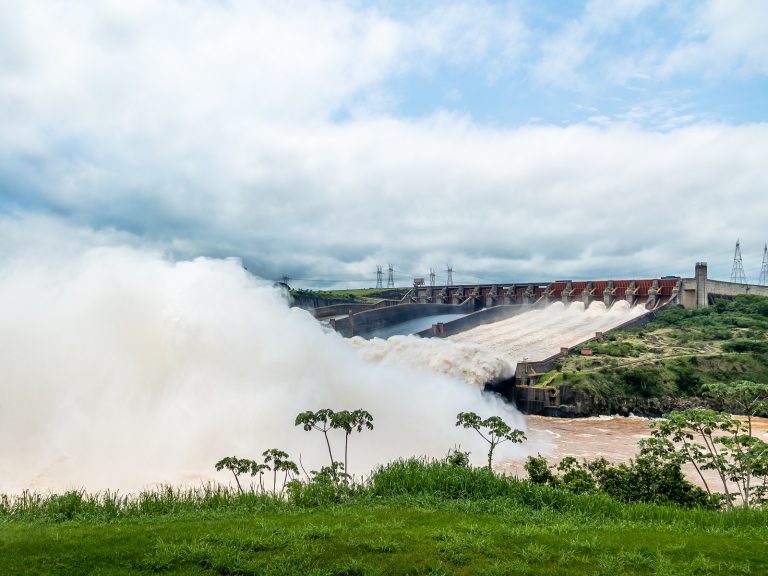
We are often told that the verification of bitcoin transactions eats a lot of energy. The largely inaccurate comparison to a small country, the size of Ireland or Denmark, is evoked thanks to numerous clickbait headlines. What mainstream media fails to explain, however, is that bitcoin mining is actually helping electricity producers prevent energy waste. Hydropower plants, for example, can generate and sell much more electricity during rainy seasons in some regions or when snow melts in others. Wastage can be mitigated through a symbiosis with bitcoin farms, at no additional cost for the environment.
Also read: Three Bank Failures Open New Chapter in Never-Ending Financial Crisis
During the prolonged winter the crypto industry had to endure, the mining sector saw its profits diminish almost to the point of no return. After another of Bitcoin’s prematurely pronounced deaths turned out to be a false alarm, miners are back exploring business opportunities. The days when mining companies were turning their ASIC rigs into scrap metal are gone.
With spring, prices unseen since last year returned to the crypto markets. In China, which controls a large portion of the global hashrate, the wet season, known in Eastern Asia as the ‘plum rain,’ brought lower electricity rates in provinces with developed hydroelectric infrastructure. The main ingredients in the recipe of profitable mining are back on the table. It’s been reported that miners are once again buying ASICs.

When rain starts pouring in May, rivers and dams in China fill up pretty quickly. Hydroelectric stations reach their peak capacity producing more than local industry and households need. That prompts authorities and utilities in provinces such as the southwestern Sichuan to bring down electricity rates to as low as 0.2 yuan (around $0.03) per kilowatt-hour (kWh), stimulating the consumption of cheap and green energy produced by hydroelectric plants.
Beijing-based Bitmain is among the companies taking advantage of lower electricity prices by utilizing surplus hydro power generated in Sichuan during the spring and summer months. Back in March, Chinese media reported that the mining giant had deployed around 100,000 mining rigs in the region before the start of the rainy season, with plans to install another 200,000 devices within the next few months.
Using hydro power for coin minting, when water levels are at their highest, is a win-win situation for both crypto miners and electricity producers. The cooperation can be highly profitable not only for the bitcoin mining facilities but also for energy companies as it allows them to raise the efficiency of their power generating capacities and ultimately increase their revenue.
Hydroelectric generation provides a great way to use excess power for cryptocurrency mining and also fund renewable energy, commented Shaun Chong, mining product manager at Bitcoin.com. He also acknowledged that mining profitability has improved significantly with rising crypto prices. “Cloud mining sales do a lot better during bull markets,” he said. The Bitcoin.com Pool is in partnership with mining datacenters in the U.S., Sweden and China. Chong noted:
All of them are using hydro power. All our cloud mining is powered by hydroelectricity.
Most mining companies working in Sichuan have direct contractual relations with the hydropower plants they build their farms at, Kirk Su, business development manager responsible for Bitcoin.com’s operations in China, told news.Bitcoin.com. The contracts do provide lower electricity prices for crypto miners. “Everyone gets different rates but they are typically around 0.2 RMB,” Su added. That’s around $0.03 per kWh.
Kirk Su himself runs a mining farm operating in Aba, Sichuan using electrical energy from a 150MW state-owned hydropower plant. His 10MW facility is considered a midsized farm in the province, which is home to 50MW and even bigger farms. “During the wet season, typically from April through November, these power plants will generate much more electricity than the grid needs. Hence, the excess power eventually goes to waste,” the miner explained.

Su noted that most companies in Sichuan work with private power plants as crypto mining in the People’s Republic is still somewhat a grey area. Some mining businesses, however, have managed to establish relations with state-owned enterprises. That actually provides them some protection against potential government crackdowns. On the flip side, these farms are more expensive to build as state enterprises are obliged to meet strict official standards.
Nevertheless, the cooperation is beneficial for both sides. “For the hydropower plant, they get to sell excess energy they wouldn’t be able to transfer to the grid during the wet season. For cryptocurrency miners, it’s obvious – we get cheap power,” Kirk Su pointed out. He further added that Chinese miners prefer to attract power plants as investors in their projects. The participation incentivizes energy producers to protect the mining farms from authorities when needed.
China, while very important for bitcoin minting at this stage, with its low electricity rates and authorities mostly turning a blind eye to mining, has one serious disadvantage – the lack of long-term predictability. The rainy season comes and goes year after year, but no one really knows when the regulatory storm will begin. The People’s Republic, just like many other countries in the Eastern hemisphere, including the former Soviet republics, offers miners a lot in terms of potential profits. But for many companies with insufficient local connections, the inability to ensure uninterrupted operations for years ahead is a major concern.
Russia, another country with a huge surplus of cheap energy, is also a good example in that respect. The collapse of many heavy industries following the dissolution of the Soviet Union left a third of its power generating capacities idling. Electricity rates in some energy-rich regions like Irkutsk can drop below $0.02 per kWh. The Siberian oblast, where the Angara River flows, is home to a large number of hydropower stations.
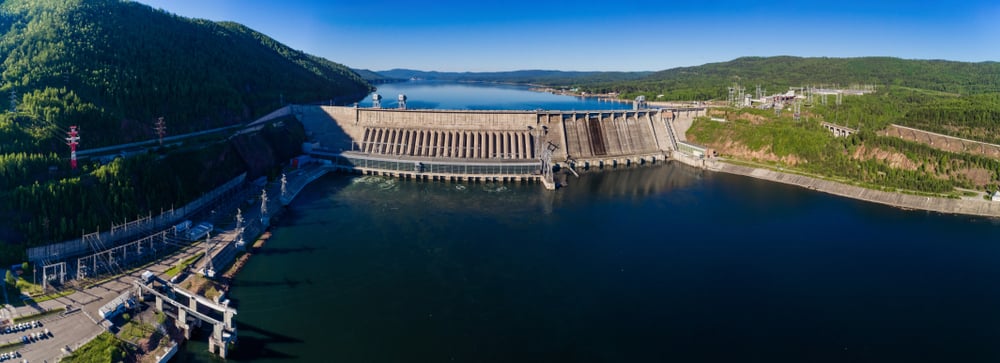
The local power company Irkutskenergo, which belongs to the large Russian En+ Group, announced last year a tender to lease five land plots to cryptocurrency mining farms and supply them with cheap electricity. The sites are located at its hydroelectric stations in Ust Ilimsk, Bratsk and Irkutsk, the largest of which has a generating capacity of almost 4,000 MW. En+ held talks with several mining investors in an effort to diversify its customer base. Another major operator, Eurosibenergo, also tried to attract mining businesses to some of its 20 power plants.
The realization of such partnerships, however, is hampered by the lack of a comprehensive legal framework for the growing Russian crypto industry. The adoption of a package of laws designed to regulate the sector has been postponed multiple times. For now, the future of cryptocurrencies in Russia remains uncertain and that applies to the mining sector as well, despite the more positive attitude of authorities in Moscow towards data processing in general.
This is precisely why Race-Cap, a company with interests in various blockchain-related fields and a partner of Bitcoin.com, has chosen Sweden for its high-performance datacenter and maintains offices in crypto-friendly Zurich as well as the global financial capitals London and New York. News.Bitcoin.com spoke with Race-Cap CEO Arthur Davis about the reasoning behind their preferences for mining destinations.
Davis believes Sweden and the United States are the two most important Western regions where a stable mining operation can be established. In his view, very important considerations when choosing a location suitable to crypto mining are regulations permitting this activity in the first place, favorable public opinion, and a stable tax environment. Next on the checklist are low energy prices and the presence of renewable sources ensuring “the best long-term natural value for all participants.”
Sweden, where Race-Cap has deployed its “Sky Computing” facility, as the entrepreneur calls it, meets these preconditions in one degree or another. Like any other mining hotspot, the Nordic country has its distinctions and they provide bitcoin miners with a different set of challenges in comparison with China. As Arthur Davis puts it:
One cannot simply look at parking an operation next to a hydro dam and thinking all will work well.
Unlike the People’s Republic, the energy system in Sweden is integrated with all power sources – hydro, wind, nuclear – feeding into the common grid. Energy is purchased from the market based on plugging into this grid at three levels of downstream availability, Davis explained. Only a power company may plug into the fourth, national level.
The price of electricity for end users has two components, as is the case in many other European countries. “Transmission” refers to the cost of consumed energy and the cost of “distribution” varies depending on where a consumer plugs into the grid. The higher into the grid the electricity is purchased from a distributor, or the closer to a primary source, the cheaper it is. There are certain advantages to being close to an energy producer. In terms of transmission, electricity is purchased from the open market at floating tariffs and any surplus from hydro sources is reflected in the spot price.
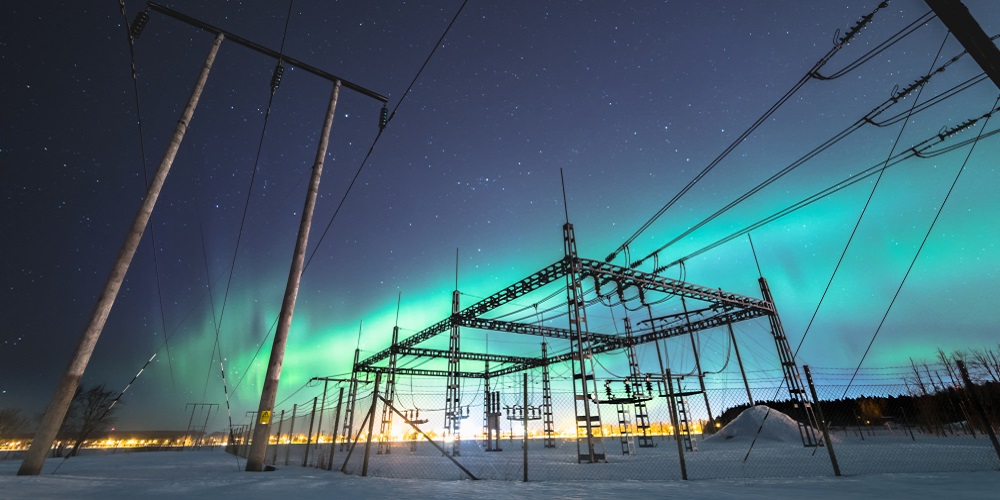
“There are pockets where one could build facilities near primary sources of power. But they are on a case by case basis. Even if power is available near a hydro station, it may be that the grid requires upgrading to take off the power, and this may be a 5 year process to actually be able to draw it down,” Race-Cap’s chief executive noted. “We have looked at a number of sites where the timeframe is 3-5 years to actually obtain the power near a primary power generation and transmission facility.”
The company’s mining facility is situated in Norrsundet, on the coast and in the middle of the country, which is the termination point for a planned enormous offshore wind energy development, which should be constructed in the next few years. Arthur Davis pointed out that Microsoft has recently purchased a big parcel of land to deploy datacenter infrastructure in the region, and Google has also reserved large-scale power in the area.
However, the crypto entrepreneur remarked that the proximity to efficient power generating facilities is not necessarily the only consideration. A decision to build and operate a datacenter should depend on the balance between all factors: “In the far north, where hydro power is plentiful, it may be too cold to properly operate the servers. We have seen other datacenters have significant issue with it being too cold, and therefore capital is required to invest to warm them up, somewhat counterproductive.”
Cold is not an issue in certain parts of South America that are also very rich in water resources and hydropower capacities. While many countries experience energy shortages, Paraguay is one of those producing more than they need. It is home to the world’s most powerful hydroelectric plant, built at the Itaipú dam on the Paraná River, which generates over 100 terawatt-hours of electricity annually. Another large hydroelectric power station is operating at the Yacyretá dam built over the waterfalls of Jasyreta-Apipé. The country currently uses only about half of the electricity the two power plants can produce.
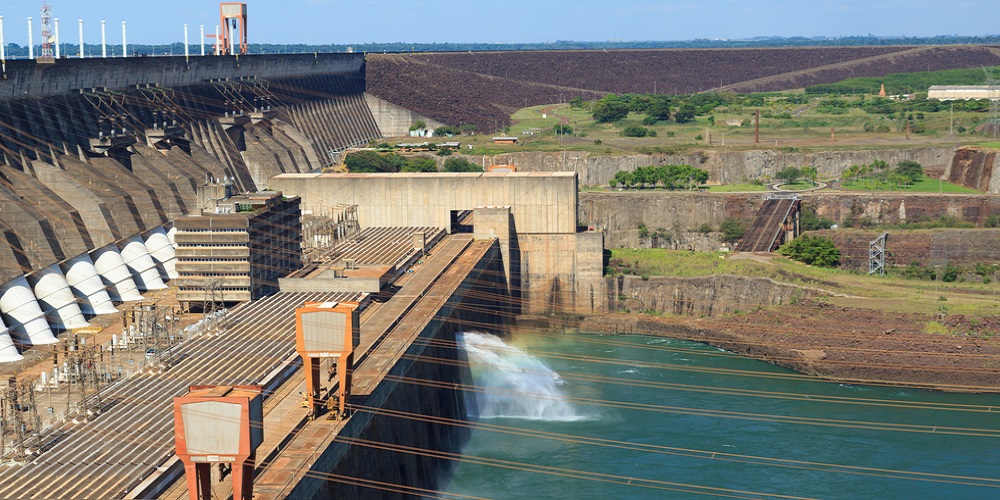
Unlike other nations, the Paraguayan government has realized the benefit of having bitcoin farms next to its hydroelectric stations. A deal with two crypto companies aims to prevent energy waste. Bitfury Group, and the Korea-based Commons Foundation, announced earlier this year their new partnerships to create and operate mining facilities powered by the hydroelectric energy from the plants at the two dams. Authorities in Asunción have promised to provide five sites for the project.
Do you agree that energy producers and crypto mining companies should cooperate more closely to utilize surplus hydro power that would otherwise be wasted? Share your thoughts on the subject in the comments section below.
Images courtesy of Shutterstock.
Do you want to maximize your Bitcoin Mining potential? Plug your own hardware into the world’s most profitable Bitcoin mining pool or get started without having to own hardware through one of our competitive Bitcoin cloud mining contracts.
The post How Big Hydro Power Partners With Bitcoin Miners to Prevent Energy Waste appeared first on Bitcoin News.
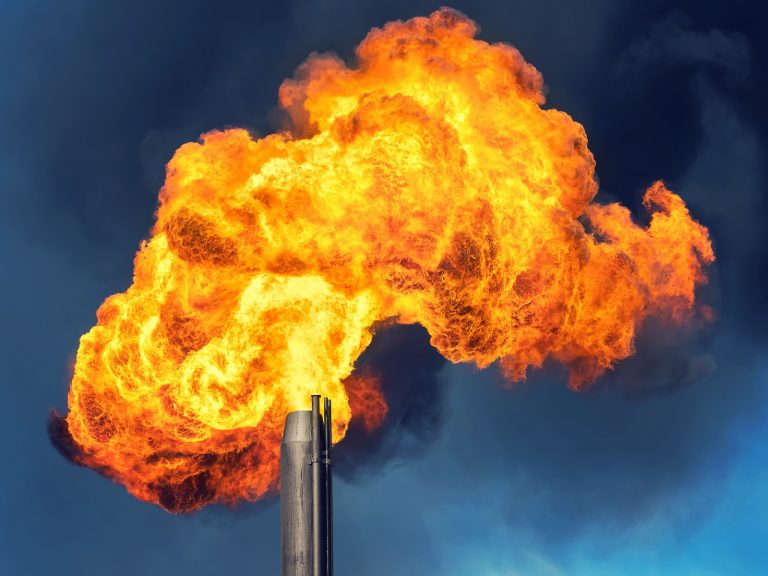
Natural gas acquired as a byproduct of oil extraction has become synonymous with wasted energy. In certain areas, drilling companies are unable to find a profitable market for the excess fuel. It’s often vented into the atmosphere. Startups are now offering on-site systems that utilize the surplus to mine cryptocurrencies. This new business is growing in regions where shale oil and gas extraction are major industries.
Also read: Georgia Exempts Bitcoin From VAT to Become the Next Country to Affirm Its Currency Status
At least for the foreseeable future, traditional energy sources such as oil and gas are here to stay. Their abundance and relatively low price compared to some renewables, their utility, mobility and well developed supporting infrastructure are hard to beat. However, despite these obvious advantages, getting them out of the ground can sometimes be a wasteful process.
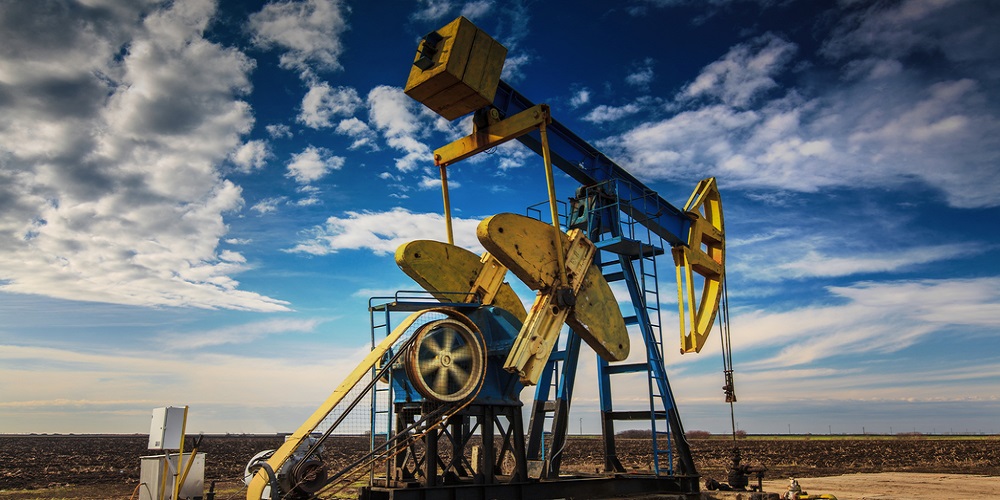
Electricity is the primary cost of bitcoin mining and while coin minting is often powered by renewables like hydro, energy from traditional sources is widely used as well. Cryptocurrency mining can utilize the surplus fuel that would otherwise be wasted, and the oil and gas industry is a good example of this. With the spread of alternative methods of extraction to even remote, hard-to-access places, the need for on-site consumers grows.
New shale oil wells have been popping up across North America and other parts of the world in the past few years. They are often located far from potential markets, and the transportation of certain byproducts such as methane and other compounds forming natural gas is not always economically viable, because grid prices are too low or because expensive additional infrastructure is needed to transport the fuel.
Associated gas, or flare gas, is a liability for oil companies and they have several options for dealing with it. If a well is close to a market, producers can pipe it to end consumers. Alternatively, they can flare it or vent it into the atmosphere. However, authorities in the U.S. and Canada impose restrictions on the amount of gas that can be released or burned. Exceeding these limits usually leads to costly production stoppages.
Installing bitcoin mining equipment at oil production sites provides a solution to these problems. Some companies are already offering this type of service. Gas engines are used to generate electricity and power mining rigs. Oil producers remain compliant with venting quotas and receive additional income, while ensuring uninterrupted oil extraction. Mining rewards can be significantly higher than the price most companies get when they sell gas to the grid. At the same time, nature is spared from a very potent greenhouse gas – methane gas is 25 times more harmful than CO2.
Upstream Data is a Canadian company offering mobile mining datacenters that can be bought or rented by oil companies and installed at facilities which need to vent associated gas. They can bring in over 15 times more revenue than the market price of the fuel, while limiting carbon footprint. The datacenters come in different configurations depending on their equipment and power rating. The all-in-one Ohmm Combo can be ordered with up to 125 kW of ASICs and a natural gas genset, all housed in a modified shipping container. The midrange version starts at 28,000 Canadian dollars ($21,400). A new product called Ohmm Mini, a 50 kW stackable datacenter, is also on sale, and Ohmm Mega, a 1,000 kW datacenter, is currently under development.
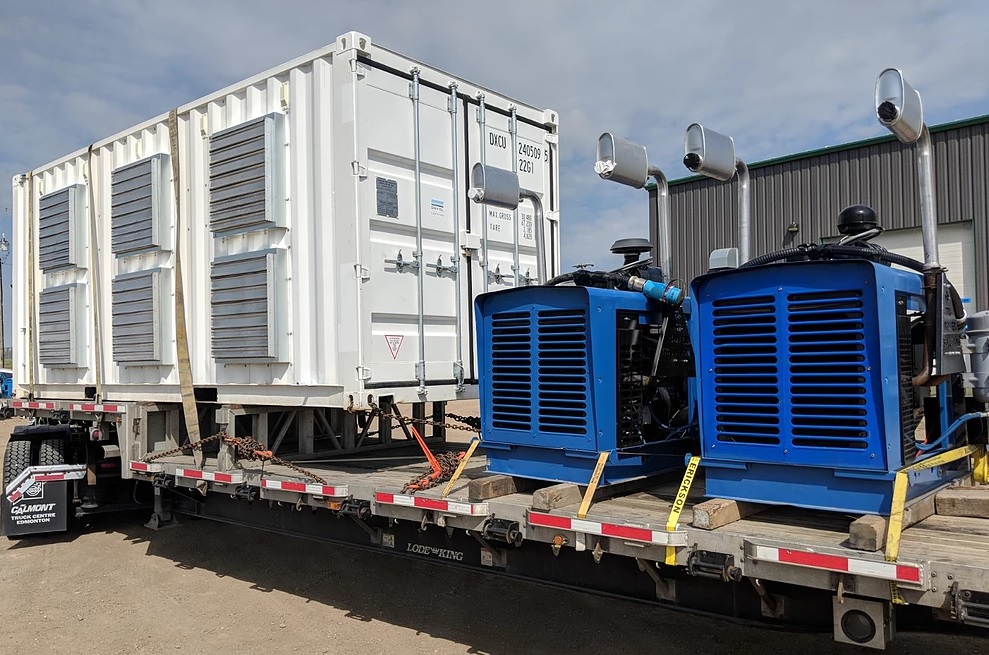
Upstream Data founder and CEO Stephen Barbour, who is a mechanical engineer with eight years of experience in the oil industry, told news.Bitcoin.com that his business continues to pick up. Earlier this month, he tweeted about the commissioning of a new Ohmm datacenter in Texas. The entrepreneur noted that media reports on his solutions have brought more legitimacy to crypto mining as a means of utilizing stranded gas. His company continues to get new orders and is conducting trials with small and large groups. “A lot of great things are happening for us so we’re pretty excited to expand our services,” Barbour said and added:
Aside from the oil industry, our datacenters can also be used in traditional mining applications. However, I believe the future of bitcoin mining is in the oil and gas industry due to the enormity of the energy produced and wasted.
Various studies have shown that oil companies vent or flare enormous quantities of natural gas year after year. According to the World Bank, 5.3 trillion cubic feet (150 billion cubic meters) of natural gas is flared annually, which amounts to 25% of the total consumption in the United States. An analysis conducted by General Electric claims that 5% of the global gas production is flared annually. It has been estimated that the stranded natural gas accounts for up to 60% of the planet’s reserves.
EZ Blockchain is another company expanding its operations in the sector. It has designed a mobile flare mitigation system which can be deployed on oil well pads and mine digital coins using energy from the flared gas. Its EZ Smartbox portable mining units are powered by gas-electric generators to convert associated gas into electricity used in data processing including crypto mining. The Chicago-based company has already delivered 13 mobile units to three locations, with 6 MWs under operation and 64 PH/s of hash power. To find out more about these operations and get further insights about the industry, news.Bitcoin.com contacted Sergii Gerasymovych, founder of EZ Blockchain.

“Our primary area of operation and target market is the Bakken region in North Dakota, which has very rich gas being flared, with over 1,500 BTU/ft3. Raw gas is dirty, it consists of methane, butane, hexane, pentane, ethane, and other gases. NGL companies are required by law to clean it before it can be burned and producers spend money to do that,” the entrepreneur explained.
In the smallest configuration of the EZ Smartgrid solution, a 350 kW datacenter can be equipped with 250 S9 miners and utilize up to 100 MCF of gas daily with a gas-electric generator. “This is a drop in the ocean for oil producers, but we worked hard to solve the scaling problem. We strategically partnered with a distributor of generators from Jenbacher with a power range of 200 kW to 10 MW and flexibility to run either on natural gas or a number of other gases,” Gerasymovych noted. He thinks this is a game changer as the average small well in North Dakota produces around 350 MCF of gas daily, and an oil pad can have five or more wells.
The company is currently working with one oil producer in the Bakken region and is about to start operations with another. Its team is also evaluating a 10 MW location in the Appalachian Basin. EZ Blockchain’s founder believes there’s huge opportunity for the expansion of this type of crypto mining, particularly in North America where due to the shale boom, there are many wells where gas is flared. This fuel isn’t going anywhere and building pipes is not economically feasible.
There is enough wasted gas in North Dakota alone to power a third of Bitcoin’s whole network. Bitcoin mining can be done completely off-grid, solving an environmental problem.
Sergii Gerasymovych expects more drilling companies to install and operate on-site mining equipment to utilize the excess gas that would otherwise be wasted. However, this will not happen quickly as the oil and gas industry is very conservative. It’s going to take time for small to midsize companies to look for a new, innovative approach. “They are in the business of pumping oil, not mining bitcoin. That’s why EZ Blockchain usually runs the mining operations,” he remarked.
Gerasymovych emphasized that these operations generally require a lot of investment into gas generation equipment upfront. “This is another obstacle we face with oil producers. Small companies can operate tens of wells and midsize companies – hundreds or even thousands. That means very big mining operations have to be built and funded in order for the flaring problem to go away completely,” he explained. Oil and gas companies are a bit hesitant to invest money in an industry which they do not know well and it may take more time before the technology becomes a mainstream solution.
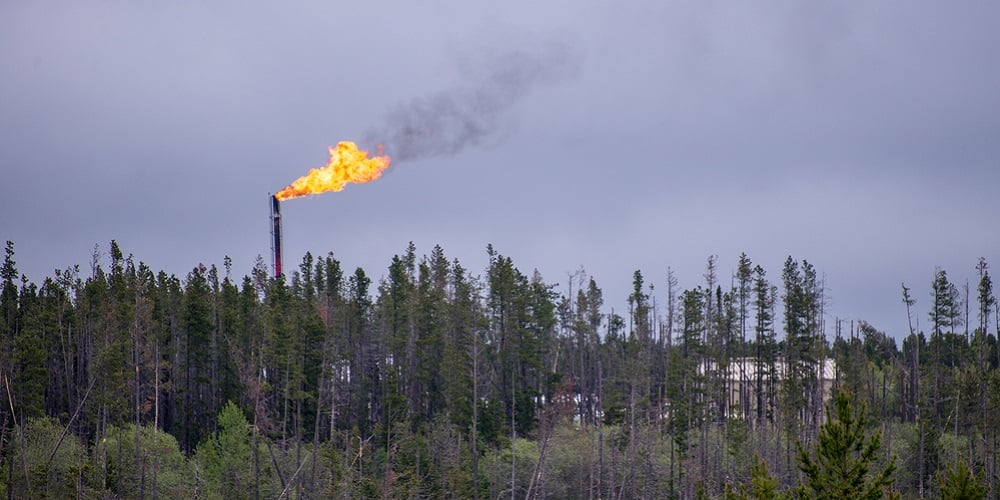
The expansion of the shale oil industry in North America and the scale of gas wastage have created ideal conditions for services such as those offered by Upstream Data and EZ Blockchain, and they are not the only companies that are working to utilize the abundant byproduct in crypto mining applications. The U.S.-based Crusoe Energy Systems is developing its own solutions in the niche, helping oil and gas producers to reduce gas flaring while making a profit by verifying crypto transactions. This spring, the startup raised $4.5 million in a seed funding round led by Bain Capital Ventures and Founders Fund Pathfinder, bringing its total funding to $5.1 million.
The capital will be used to finance the production of Crusoe’s mobile datacenters designed to mine digital coins at oil drilling sites. The goal is to provide a large-scale flare mitigation service for oil and gas extraction companies across North America. Crusoe’s modular datacenter units are installed in shipping containers and can be quickly deployed on any oil well site in the U.S. and Canada to start mining within days. The systems not only reduce flaring but also eliminate most of the smog-forming emissions of volatile compounds such as nitrogen oxide (NOx) and carbon monoxide (CO).
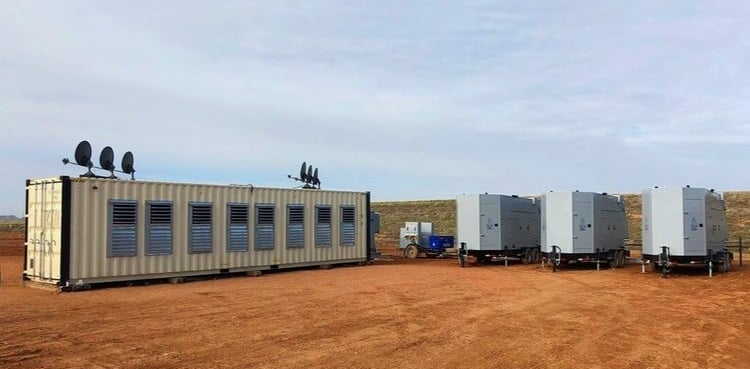
While cryptocurrency mining has become more and more centralized over the years, there’s a strong case that the generation of power used in the process will be gradually decentralizing, thanks to solutions like these. Datacenters running on stranded gas do mine on pools, but they are mobile units that can be installed anywhere. As the hunt for cheap energy intensifies, with electricity being the main expense in bitcoin mining, more and more businesses are likely to develop products allowing for the use of energy close to its source.
Companies specializing in flare gas utilization have some challenges to overcome. Datacenters require maintenance, rigs need to be restarted sometimes, fuel pipes can freeze, and it can be hard to establish a reliable internet connection in remote places. Add to that the low efficiency of gas engines used to power the mining modules – it’s less than 30% and most of the energy is still lost as heat and through the exhaust pipe. Bans imposed on shale oil and gas extraction and fracking also pose a threat to the business.
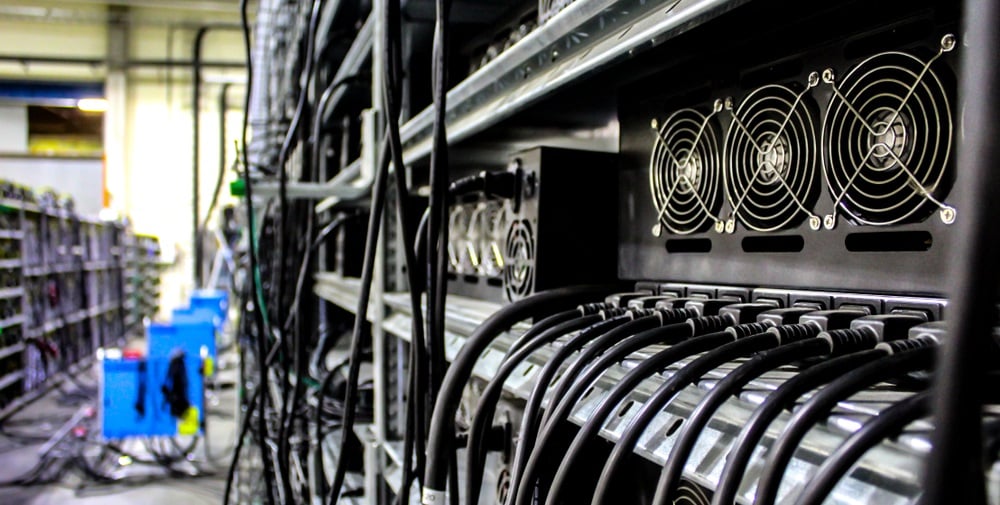
Nevertheless, bitcoin mining remains a viable option for energy companies operating far from potential markets and under strict regulations on venting and flaring. Mining containers can also be installed at ordinary natural gas fields and exploited whenever coin minting is more profitable than selling the fuel to other consumers. Along with Canada and the U.S., Russia, China, Iran, and Saudi Arabia are among the largest natural gas producers in the world. Global proven reserves have been estimated at 6.95 quadrillion cubic feet.
Do you expect to see a rapid development of other crypto mining technologies utilizing excess or wasted fossil fuels? Share your thoughts on the subject in the comments section below.
Images courtesy of Shutterstock, Upstream Data, Crusoe Energy Systems.
Do you want to maximize your Bitcoin Mining potential? Plug your own hardware into the world’s most profitable Bitcoin mining pool or get started without having to own hardware through one of our competitive Bitcoin cloud mining contracts.
The post Bitcoin Mining Helps Oil Companies Reduce Carbon Footprint appeared first on Bitcoin News.
7月11日是世界人口日,聯合國機構在這一天發起「共榮共存」(Thriving Together)運動,試著透過提供人類節育服務幫助解決野生動植物保育問題。活動組織表示,人口增長往往導致大自然遭到破壞,而無法節育是「最重要卻被忽視的環境挑戰」。

「共榮共存」運動共有150多個健康節育和保育組織參與,這些組織每年在170個國家共花費80億英鎊。這些組織表示,他們打算共同努力改善人們的生活,透過減少人口成長防止生物多樣性大量流失。
聯合國人口基金會、珍古德研究所和瑪麗斯特普國際組織(Marie Stopes International)聯合簽署的聲明指出,「需要改善家庭計畫和需要保育的地區往往高度重疊。我們相信只要一起努力,就可以幫助人類及其生態系統蓬勃發展。」
英國衛報報導,珍古德研究所自1994年起就提供計畫生育服務,創辦人珍古德表示,由於家庭人口減少,赤裸的山已經恢復成森林。「越來越多人口出生並追求更高的生活水準,繼續這樣下去,地球的自然資源將遭到破壞。我們沒有太多時間來改變,而且改變的機會正在快速縮小。」
瑪格麗特派克信託(Margaret Pyke Trust)執行長強森(David Johnson)提供醫生避孕培訓並負責協調該活動。他說,「缺乏家庭計畫服務是現今最被忽視的環境問題,但現在情況有了變化。你想要幾個孩子都可以,那是你的權利,問題是很多人孩子數量超過他們所願。」
參與烏干達鶴保護計畫的教師Phionah Orishaba指出,每天都看到缺乏計畫生育服務對婦女和環境的影響。想要避孕的婦女必須步行六個小時去診所,許多孩子沒人照顧,人民貧窮、沒有工作,只好將濕地放乾改種植馬鈴薯。「他們也知道灰冠鶴需要濕地築巢,並不想傷害牠們,但他們有什麼選擇呢?」「我們現在正與瑪格麗特派克信託合作,因為女性需要這種服務,這對當地婦女和灰冠鶴都有益。」
灰冠鶴(Grey-crowned Crane )是烏干達國鳥,也是該國唯一的常見鶴。
智庫「人口大事」(Population Matters)的梅納德(Robin Maynard)認為,對共存共榮運動而言,解決人口增長問題是積極的行動,不是強迫或將動物看得比人類重要。「阻礙計畫生育,無論是政治、宗教還是經濟因素,都是在妨礙人類生活獲得改善。」
許多科學家認為第六次大規模滅絕正在發生,主要原因是農業和木材需求使自然棲地遭到破壞及過度獵捕。到了2050年,全球人口預計將增長到97億。
多年來人們一直在爭論人口不斷增長的後果。有些人認為,富裕國家人們過度消費造成的環境問題比貧窮國家人口增長嚴重。
珍古德說:「富裕國家普遍的浪費和過度消費正在破壞地球的自然資源。我們必須解決人類和牲畜數量成長和非永續生活方式等問題。」
經常對人口增長表示擔憂的大衛·艾登堡爵士2013年曾說:「所有的環境問題都是人越少越好解決,人越多越難、甚至不可能解決。」
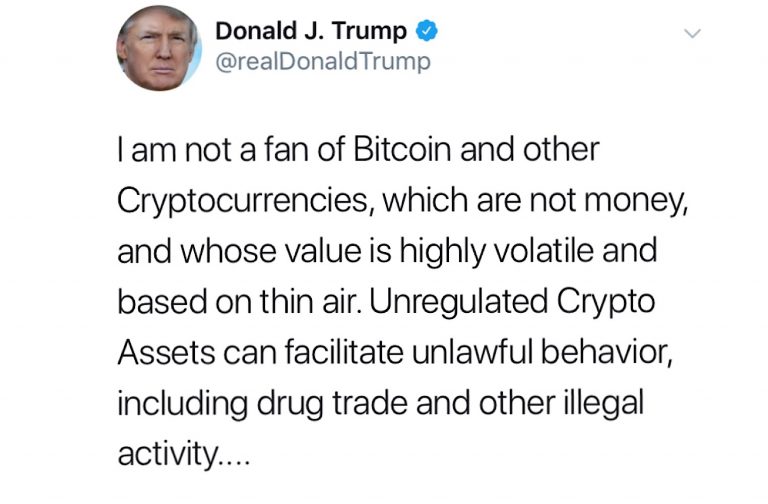
Donald Trump has taken to Twitter yet again, and this time he’s talking about bitcoin and the superiority of the United States dollar. Bashing lack of regulation and potential for criminal activity inherent to crypto, Trump claims the U.S. fiat will always be the strongest currency in the world. As empirical evidence goes, however, it’s USD that’s really in need of moral and economic scrutiny.
Also read: How 10 Countries Respond to Facebook’s Libra Cryptocurrency
On July 11, U.S. President Donald Trump went into full rant mode on Twitter, taking swipes at Bitcoin, Libra and cryptocurrencies in general, claiming they are “not money” and “based on thin air.” In addition to supplying the internet with a shining gem of mathematical, economic, and historical ineptitude, the president took things one step further, claiming that:
Unregulated Crypto Assets can facilitate unlawful behavior, including drug trade and other illegal activity.
Of course, he’s right. Unregulated crypto assets really can facilitate bad things. What makes his three-part proclamation so problematic, though, is that he closes it out by praising the strength and dominance of the U.S. dollar in pulsating, Orwellian tone:
“It is by far the most dominant currency anywhere in the World, and it will always stay that way. It is called the United States Dollar!”
But when we examine the actual nature of the USD versus bitcoin and cryptocurrencies, all the blustery rhetoric seems to lose its force, and the picture that remains is one of striking—if not tragic—clarity.

Yes, crypto finances bad things and good things. Yes, fiat does the same. The almighty U.S. dollar is used to buy bread, iPhones, and throw birthday parties. It is also used to dismember infants in foreign lands, blasting them to bloody pieces with bombs, traffic illegal drugs, kidnap all manner of non-violent individuals, and keep billions impoverished, enslaved, and fearful. A butterknife can butter bread. A butterknife can kill someone. What is Trump’s argument, then? If the implicit claim is that bitcoin and crypto are more dangerous than the dollar empirically, then history, mathematics, and the science of economics can set the record straight here.
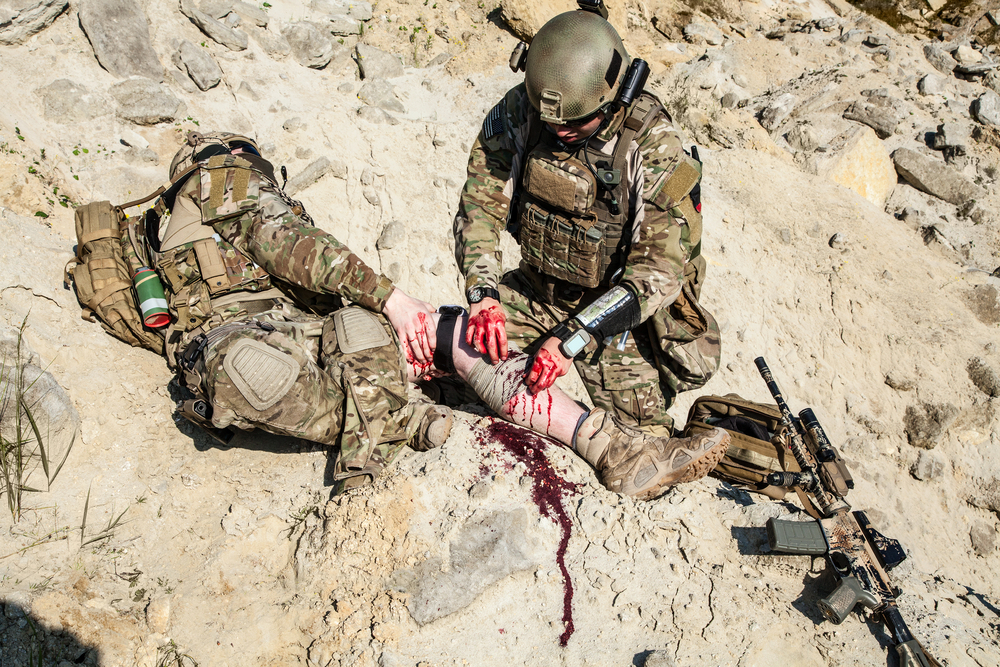
The United States has been at war for 226 years of its 243-year existence. Perpetual warfare remains the reality today. A testament to this is the story of Cpl. Joseph Maciel, killed at age 20 in Afghanistan, who was only three years old when the conflict was set in motion in 2001. As sad as this is, it’s anecdotal, admittedly. But the numbers ultimately tell the same tragic story as Joseph’s.
Since 2001, wars in Iraq, Afghanistan, and Pakistan, have cost at least half a million human lives, and over half of these deaths have been non-combatants—civilians. Of course this does not take into account drone bombings and battle in Yemen, Syria, Somalia, Libya, and elsewhere. These numbers also do not account for indirect deaths. According to a study by the Co-Director of the Costs of War Project at Brown University, Neta C. Crawford:
Because of limits in reporting, the numbers of people killed in the United States
post-9/11 wars, tallied in this chart, are an undercount … In addition, this tally does not include “indirect deaths.” Indirect harm occurs when
wars’ destruction leads to long term, “indirect,” consequences for people’s health in war
zones, for example because of loss of access to food, water, health facilities, electricity or
other infrastructure.
As of November 2018, U.S. taxpayers have been forced to pay $5.9T to support war in the Middle East and Asia since 2001. The inflation-adjusted cost of military conflict since World War I is estimated by the Congressional Research Service to be over $5.6T. With numbers this astronomical, and a war machine that continues to grow cancerously, it is difficult to get a feel for the sheer amount of state-sanctioned economic power being leveraged here by the United States Federal Government.
It’s no problem, either, if the money supply runs low. According to Trump:
This is the United States government. First of all, you never have to default because you print the money.
Don’t worry about the resultant devalued currency. It is also important to ignore the repeating pattern of systematic U.S. violence against any leader or nation attempting to distance itself from the USD as a reserve currency. Libya, Iraq, and now Iran are examples of what happens when Trump’s “most dominant currency anywhere in the World” is challenged.

The following is a only a short overview of some of the illicit activity the USD has facilitated over the years:
This list goes on and on. For as long as it has existed, the United States dollar has leveraged violence to stifle competing currencies, fund war, murder, rape, extortion, kidnapping, theft, terrorism, human trafficking, slavery, medical malpractice, child sexual abuse, illegal drugs and more with relative impunity, thanks to its “regulators.” If this is the result of banking charters and regulation, a hands-off approach might be a better consideration for Donald Trump.
Though the data varies wildly, when it all comes down to it, bitcoin and crypto are no competition for the USD and its fiat counterparts for funding violent, criminal activity. The government itself backs this finding up. Just two years ago, then-U.S. Department of the Treasury officer Jennifer Fowler said:
Although virtual currencies are used for illicit transactions, the volume is small compared to the volume of illicit activity through traditional financial services.
More recent research backs up these findings, and from a global perspective, where total annual market volume for illegal drugs is estimated to be around $400B, even the most generous estimates put all illicit BTC transactions (not just drug-related) at around $72B. The clear winner here then, when it comes to financing violent and criminal activity, is USD and the fiat racket.

The president’s Twitter tantrum is telling, and has sparked a momentous, flash explosion of internet commentary. All of this boils down to something rather simple, though. The real difference between USD and bitcoin is easy: one is backed by guns, and the other isn’t.
One is forced upon its users under threat of violence and ultimately death if refused, and the other isn’t. If you choose not to use bitcoin or crypto, nobody cares. But should you try to use money that doesn’t hail from the printers of the glorious Federal Reserve, or attempt to spend USD in a manner that isn’t approved, you can be caged. And if you resist being caged, you may be killed.
This is a government handing paper garbage to someone, and creating value out of “thin air” by putting a pistol to their head to force “adoption.” If this isn’t creating value “based on thin air,” I don’t know what is, Mr. President. This isn’t how bitcoin works. This isn’t how any sane, ethical, or moral system works.
What are your thoughts on Trump’s statements? Let us know in the comments section below.
OP-ed disclaimer: This is an Op-ed article. The opinions expressed in this article are the author’s own. Bitcoin.com is not responsible for or liable for any content, accuracy or quality within the Op-ed article. Readers should do their own due diligence before taking any actions related to the content. Bitcoin.com is not responsible, directly or indirectly, for any damage or loss caused or alleged to be caused by or in connection with the use of or reliance on any information in this Op-ed article.
Images courtesy of Shutterstock, Fair Use
Did you know you can verify any unconfirmed Bitcoin transaction with our Bitcoin Block Explorer tool? Simply complete a Bitcoin address search to view it on the blockchain. Plus, visit our Bitcoin Charts to see what’s happening in the industry.
The post What Are Dollars Used for, President Trump? – The Gun Money Known as USD appeared first on Bitcoin News.