Danielsoh1234
Shared posts
A Pod of Killer Whales Attacked a Yacht During the International Ocean Race

How to use large language models and knowledge graphs to manage enterprise data

By combining ontology and large language model-driven techniques, engineers can build a knowledge graph that is easily queried and updatable.Read More
The post How to use large language models and knowledge graphs to manage enterprise data appeared first on AiTopTools.
How easy is it to upgrade a Framework laptop?
Framework sold its eponymous laptop on the promise that end users should feel comfortable enough to fix almost any hardware problem themselves. Replacing a component shouldn’t be the reserve of dedicated service professionals if all you need is a T5 screwdriver and patience.
When the company released its new 12th-generation Intel Core mainboards, it couriered over a new board which could be inserted into last year’s model. And given that I don’t consider myself to be a very confident DIY-er, it made sense for me to put Framework’s promises to the test.
As you can see in the video below, laptops aren’t yet at the stage where you can pull components out as if they were Lego bricks. Although I think the industry is missing a trick by not making these components a lot simpler to assemble by standardizing the connections.
That said, one of the biggest hurdles was the ZIF connectors, which briefly made me wonder if I was really cut out for tech journalism. Those little lay-flat ribbons may be great for space but they’re a nightmare if you’ve got big hands and poor eyesight.
But, as I said when the new hardware was released, it’s empowering just how easy this stuff can be, more or less, if companies make even the smallest bit of effort. I was able to do this, talk to the camera (which probably slowed me down by quite a bit) and not blow myself up. And if I can do this, then surely you can too.
The Best Cheap and Easy DIY Planters

Whether you’re trying to bring a little bit of the outdoors in with some house plants, or spruce up your porch or patio, the planter you use can make all the difference. Choosing pre-made baskets and pots is certainly one option—but those can be pricey, and you might not be investing in long-lasting plants if you are…
Siri says Apple will hold a special event on April 20th
Make a Quick Salad Dressing With Hummus

Most folks are well aware that hummus is an excellent sandwich spread; it’s creamy, nutty, savory, and friendly to almost every kind of diet. Those are all things I enjoy in a salad dressing, but hummus—straight from the tub—is a little too thick for drizzling on a pile of greens.
Anker's MFi-certified USB-C to Lightning cable launches this month
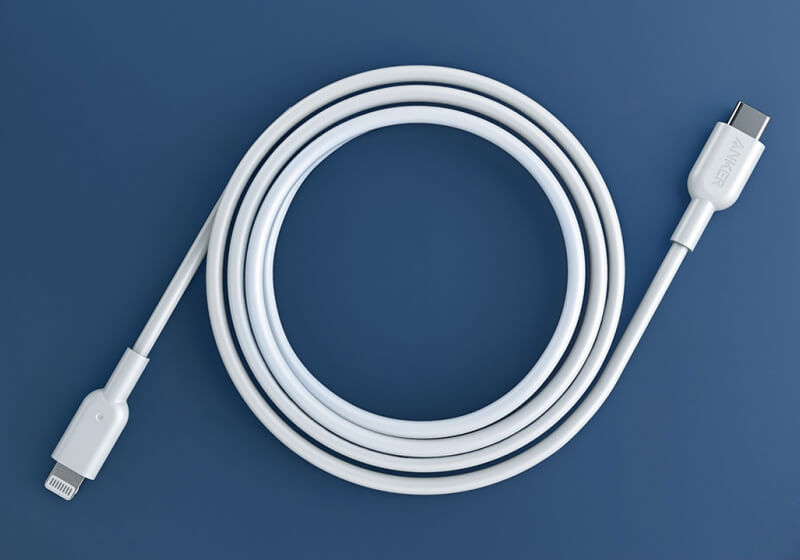
Mobile peripheral maker Anker is now accepting pre-orders for its first MFi-certified USB-C to Lighting cable for iDevices.


Researchers figure out how to eliminate purple fringing in photography

Camera systems like those found in cutting-edge smartphones and high-end DSLRs are far more advanced than examples from just a decade ago. The underlying technology behind lenses, however, hasn’t changed much since the mid-1700s which means we’re still dealing with some of the same shortcomings that plagued our forefathers....
La Cabrera’s Beef Empanadas
La Cabrera is affectionately one of Argentina’s great restaurants. Loved by locals and gourmet tourists around the world – here are the delicious Beef Empanadas by World’s Best and Top Chef, Gaston Riveira.
Recipe from Gaston’s Book – Edited and published by Catapulta Editores

- 1 kg bread flour
- 1 pinch of salt
- 250/350 g lard or rendered beef fat
- Warm water, as required
- 50 g rendered beef fat
- 1 kg onion, diced
- 1 kg beef, such as sirloin tip, knife cut into small cubes
- Cumin and sweet or hot paprika, to taste
- 1 tbsp. sugar
- Oregano or an herb blend, to taste
- 1 leek, only the white part, sliced into rounds
- 250 g spring onions, chopped
- Salt and pepper to season
- Vegetable oil, such as sunflower, for frying
- For the filling, first heat the fat in a deep sauté pan and sauté the onions over medium heat until translucent. Add the meat to the pan along with the cumin, paprika, sugar, salt, pepper and oregano or other herbs, as you like, and cook for 30 minutes.
- Just before removing from heat, stir in leeks and spring onion and allow to soften for 2-3 minutes.
- Remove from heat, adjust seasoning, cover and allow to cool before refrigerating for a full day.
- For the dough, combine the flour and salt and on a clean dry surface form a volcano with the mixture.
- Add the lard or beef fat to the centre and incorporate into the flour, slowly adding water as needed until the dough is smooth and uniform. Wrap the dough in cling film and refrigerate for 3 hours.
- Remove dough from the refrigerator and knead, making sure to rotate the mass four or five times. Wrap the dough again and return to refrigerator for a half hour more.
- On a floured surface, roll out the dough to a thickness of 4 mm (about inch).
- Cut discs with an 8-cm (3-inch) pastry cutter and set aside for use.
- Using a tablespoon, place the meat in the centre of the disc, fold in half and crimp the edges. Everyone has their own technique for this last step, but I stick with what my grandfather taught me: after folding, simply use the tines of a fork to crimp around the edge.
- In a heavy pot, fry the empanadas in ample hot oil until the bottom sides are golden, then carefully turn them until the other sides are the same colour. Remove with a slotted spoon and place on absorbent paper. Serve them very hot.
The post La Cabrera’s Beef Empanadas appeared first on Honest Cooking.
Zeiss' first digital camera is the ZX1 full-frame compact
 Zeiss has unveiled its first-ever digital camera, the interesting and exotic ZX1 compact. It has a full-frame 37.4-megapixel sensor and a fixed 35mm f/2.0 T* lens, putting it into exclusive company with Sony's RX1 and the Leica Q. The boxy body is di...
One Year Since Release, WiFox Is Now A Top 7 App Store Download

In August of 2016, I released the first version of WiFox, an offline map of airport wireless and lounge passwords from around the world, on iOS. A month later, the Android version of WiFox became available. In that time, WiFox has been a trending app on Google Play and the 7th most popular travel app on iOS.
It’s been a busy year – WiFox 14.0 is out for iOS, 21.0 for Android – here’s some of what’s been going on, as well as a little sale, details below.
WiFox Around The Web
Currently available in over 30 languages, WiFox has been reviewed or mentioned by Mashable, lifehacker, TIME, The New York Times, plus a lot of other places. Many of you sent me emails with links of WiFox appearing in international publications for which I am grateful, thank you very much for your support.


WiFox now has over 920 airports with passwords and details on how to get online. (New wifi connection information is updated literally around the clock.) I continue to develop WiFox as well with added features, graphics, performance enhancements in each version.

 No Ads, No In-App Purchases, No Privacy Sales
Your privacy is still very important to me, something which not only goes for the WiFox app, the foXnoMad website, but my DroneMate app as well. The WiFox privacy policy is very clear. I mention this because a (surprising) number of companies have offered me a lot of money to modify WiFox so it could be used to collect various data about its users. I’ve refused them all. I recommend you check the privacy policy of any app you download, particularly ones that are free to download. You may be paying with your personal information instead.
Bundle Up With The foXnoMad Air Pack
On the App Store right now, WiFox is part of the foXnoMad Air Pack. You can download WiFox for half off when you purchase it with DroneMate (or the other way around). Current WiFox users can get 25% off DroneMate to complete the Air Pack bundle.
Those of you who’ve downloaded WiFox, if you’re happy with the app, I would really appreciate your 5-star review on Google Play or the App Store. You can also email me any feedback or feature requests as well.
I wanted to catch you up on WiFox since I don’t often get the opportunity to follow up here on foXnoMad. I also want to thank you all for your continued support of WiFox, the other projects I work on, and of course, the foXnoMad site. You are the reason I get to do what I love for a living as I get closer to my goal of visiting every country in the world.
The post One Year Since Release, WiFox Is Now A Top 7 App Store Download appeared first on foXnoMad.
Japanese Noodle Masters share Ramen and Soba Techniques

Whenever I'm in Japan, I like to stop and watch the noodle makers. On occasion, you'll come across someone hand-making soba noodles and the process is spell-binding to observe. The Italian grandmas making pasta got such a positive response, I thought it would be fun to follow that up with a selection of videos highlighting Japanese noodle masters making beautiful soba, ramen, and udon noodles. The photo, above, is from the last time I was in Tokyo, we rode the train from to the coastal town of Kamakura, strolled around a bit, and came across this soba maker. You could observe the soba being made as you wait in line outside the tiny shop. Enjoy the videos! -h
1. Soba start to Finish
Not all of the videos on this list show the dough making process, AND the rolling out process, but chef Shuji Ozeki does. And(!) the cooking. Triple threat.
2. Soba in Hokkaido
The video of soba master Tatsuru Rai from Niseko, Hokkaido. Completely hypnotizing.
3. Ramen
Ivan Orkin makes (and talks) ramen here. The most interesting part to me is the wonderful blend of flours he uses in his dough, for example, toasted rye.
4. Somen Noodle Factory
The footage here is incredible. A ten minute look at the two day process the Akagi fmaily takes to make and dry somen noodles.
5. Soba in Hokkaido
A great video of local chef Syuji Konishi working at his soba restaurant, Soba-no-mi. I never get tired of the moment when they take the special soba knife and cut incredibly precise noodles - seems impossible.
6. Peaceful Cuisine Soba
I'm a fan of the Peaceful Cuisine channel, and you'll get a sense of why through this video. Soba, beautifully made in a home kitchen.
7. Traditional Noodle Making in Japan
More noodle factory footage, because I can't stop looking at it. Fascinating. And, the sun-drying!
Nvidia's new GeForce 368.69 driver supports Dirt Rally VR

Nvidia has released a new set of GeForce graphics card drivers, version 368.69, this time introducing support for Dirt Rally's upcoming virtual reality mode, which is expected to launch in the new few days.

Gnocchi di Ricotta
Ricotta gnocchi are some of the simplest gnocchi to prepare, requiring only a good quality ricotta cheese. Try a simple brown butter or truffle oil sauce to accompany them.
By Kathy Bechtel


Probably the most ubiquitous form of pasta we find on our cycling and ski adventures in Northern Italy is gnocchi. Well, it is likely the predecessor of pasta – originally dumplings formed from flour and water, poached in water. These small dumplings, the name gnocchi probably coming from the Italian word for knuckle, nocca, date as early as the Roman empire. Recipes for gnocchi incorporating cheese, flour, and eggs appear as far back as the cookbooks of the thirteenth century. The original flour and water mixture for gnocchi is still used today in many regional recipes in Italy, where they take different names and shapes, and are now considered pasta – from orecchiette from Apulia to Sardinia’s malloreddus.
As the years passed, gnocchi evolved to include a myriad of possible ingredients, incorporating whatever leftovers were on hand. The result is a wonderful variety of regional variations. Among the options, you can find gnocchi based on stale bread, ricotta and other cheeses, semolina, buckwheat, spinach, meats like speck and even spleen. Potato gnocchi are the ones we see most frequently on our Veneto tours, but these didn’t appear in Italy until potatoes were introduced in the 1600s.
My latest favorite flavor is ricotta gnocchi. These are some of the simplest gnocchi to prepare, requiring only a good quality ricotta cheese. But there are still the same basics principles to producing a light dumpling rather than a heavy lead one, so a bit of care is needed. But the steps are simple, and the result wonderful.
The secrets: use as little flour as possible, handle as little as possible.
To start, use the best quality ricotta cheese you can find. But I have made perfectly acceptable ricotta gnocchi from grocery store ricotta. Spoon it out of the container into either cheesecloth or a strainer, and hang over a bowl to drain for about 4 hours before using. You can even do this the day before, and leave it draining in your refrigerator. This will eliminate as much liquid as possible from the ricotta. Less liquid means less flour.
- 1½ lbs. ricotta, drained for 4 hours or overnight
- 2 large eggs
- 1½ c. grated grana cheese
- 1 cup all-purpose flour, plus extra for shaping
- Kosher salt and freshly ground pepper
- In a large bowl, beat the ricotta vigorously with a whisk. If, after beating for some time, you still have some firm curds, press the cheese through a strainer to break them down.
- Add the eggs and grated cheese and whisk well, until fluffy. Add the flour and whisk until just combined. Season with salt and pepper.
- Place a layer of flour in a pie plate or other shallow dish. Have a sheet pan handy as well, with a dusting of flour on the bottom. Dust your hands with a bit of this flour. Using a spoon, scoop up about 1 tablespoon or so of the ricotta mixture, and place the spoonful into the pie plate on top of the flour. Using your hands, turn the ricotta ball until it is coated with a dusting of flour, then pick it up and lightly shape it into an oblong dumpling. Don’t worry too much about getting a perfect shape – lumps and bumps are just fine. Place the gnocchi on the sheet pan.
- If you are doing this recipe for the first time, or are using a ricotta cheese you haven’t used before, at this point I would recommend you test your first gnocchi to make sure it holds together. You don’t want to shape 80 gnocchi to find out they fall apart when you cook them! Poach the first in a small pot of simmering, not rapidly boiling water; if it holds together, you are good to go. If it blows apart, add a touch more flour.
- Repeat and shape your gnocchi until all of the ricotta mixture has been used. I usually do 4 or so at one time. Make sure they are not touching as to place them on the sheet pan. When done, place the sheet pan in the refrigerator to keep cool as you continue.
- Bring a large pot of water to boil over high heat. When boiling, add a liberal amount of salt. Turn down to a simmer.
- Prepare your sauce in a large sauté pan. See below for ideas – you want your sauce to be warm and ready to go when the gnocchi are done cooking.
- Remove the sheet pan from the refrigerator. Transfer about a quarter of the gnocchi to the boiling water, making sure not to overfill the pot. You will most likely need to cook them in batches. They will sink to the bottom initially, but as they cook will rise to float at the top. Scoop them up as they float, and transfer to the sauté pan with the sauce.
- When all are cooked and coated with sauce, serve immediately.