Shared posts

25 Sep 23:07

Big Bird Adult Kit

by Tiffany
Rachel

WTF? This is not a Big Bird costume!

Big Bird Adult Kit

Is Big Bird a giant canary, lark, or golden condor? We don't know. All we know is that he is amazing. What other 8-foot, 2-inch tall bird do you know that can roller skate, ice skate, dance, and sing. We are guessing none. Big Bird is truly one of a kind.   

This Halloween celebrate your all-time favorite Sesame Street character with the Big Bird Adult Kit from the NeatoShop. This quick and easy Halloween costume includes a bright yellow fabric boa and a character headpiece featuring the fabulous Big Bird. 

Be sure to check out the NeatoShop for more great Halloween items and fantastic Sesame Street stuff. 

Link

25 Sep 23:00

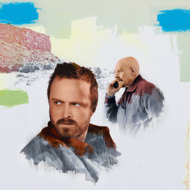
Crazy-Detailed Analysis of 'Breaking Bad' Scene Will Hurt Your Brain

by Neha Prakash
Rachel

Maybe spoilers...but Gold.

Breakingbadguys
Feed-twFeed-fb

The epic series finale of Breaking Bad is nigh, and waiting to discover how the series will draw to a close is slowly wrenching a screwdriver through fans' minds.

Will everyone die? Will everyone live? Will there be a song-and-dance number about breakfast?

Most of us have stooped to imagining nonsensical endings, but one fan is analyzing — scratch that, overanalyzing — a scene from this past season's 11th episode, "Confessions."

Redditor joey-joe-joe posted the image on Tuesday, and it quickly gained popularity because of its astute observations Read more...

More about Reddit, Pics, Tv Shows, Tv, and Watercooler
24 Sep 01:52

TV: Great Job, Internet!: The Breaking Bad Easter egg hunt continues with the hockey game and New York Times column from “Granite State” 

by Kevin McFarland
Rachel

I missed seeing this game live by one year!

There is only one more week left until Breaking Bad is over, so there are precious few stories left for the Internet to blast at anyone not mired in Easter egg fatigue. So many details have been parsed and dissected and researched that no stone has been left unturned by the post-mortem scramble the day after. And to prove that point, here are two more Easter eggs from last night’s “Granite State” that popped up around the Internet.

First, Sports Illustrated’s Extra Mustard blog did the heavy lifting on tracking down the hockey game playing in the bar where Walt uses a pay phone to call his son. (Honestly, if you were so distracted by a 15-year-old hockey game during that scene, you’re watching the wrong show.) It was a game between UW-Madison and the University of Denver—two perennially successful college hockey programs—from back in ...

Read more


24 Sep 01:04

Damon Lindelof on Breaking Bad: How Heisenberg Is Like Batman

by Damon Lindelof

He was always Heisenberg.

I know this isn’t a revelation nor am I the first one to say it, but long before his tightie-whitie-clad first cook, Walter White was already breaking bad.

It’s pretty clear that Vince Gilligan and the brilliant storytellers around him don’t want us to reduce morality to binary terms — “good” and “evil” are simply magnetic poles that influence the actions of the characters caught between them. We’ve seen Walt do both generous things and horrible things … and we were certainly asked to believe that all of them were motivated by a single, seismic moment in his life. This moment was his origin story.

Now I’m going to go on a tangent about superheroes because, hey, I spend way too much money on comic books and I have to justify it somehow.

The conventional thinking is that Bruce Wayne became Batman on the day that his parents were murdered. This is his origin story. We all know it.  We all accept it. We all love it. Because it makes sense. Your parents are gunned down in front of you, so of course you vow an unending vendetta against crime and then dress up like a winged mammal to exact it.

Except that’s not how Bruce Wayne became Batman.

Bruce Wayne was already Batman.

Because millions upon millions of people are murdered by criminals all the time — especially in comic books. But the sons and daughters of those people do not become Batman. But Bruce Wayne?

Bruce was different. There was something inside him. Lying dormant. He just needed something powerful enough to awaken it.

In chemical terms, this is called a catalyst.

I think it is, anyway. I kind of hated chemistry. I guess I could probably look up “catalyst” on Wikipedia, but I’m afraid it will mean something different than I think it means and therefore put me in a retroactive tailspin for having used it wrong all this time and more important, ruin my point. My point! Yes. There is one! 

In the very first episode of this masterful show, Walter White is told he has advanced, inoperable, most likely fatal lung cancer. And in that moment, time slows down. Sound drops out. It is intense and it is effective and the reason we are starting here is because this is the start. The origin. The moment Walt begins his journey. The moment he becomes Heisenberg.

We know all this because Walt tells us so. The ticking time bomb that is the cancer becomes his rationale for everything that comes next; the lying, the lawbreaking, the child-poisoning.

But then the cancer goes away.

This is the equivalent of Bruce Wayne’s parents suddenly reappearing to him and saying, “We had to fake our deaths when you were a kid and we’ve been in witness protection all this time, and we’re so sorry, but the guy who shot us was actually an FBI agent helping us and he wasn’t even a criminal and we love you, so can we have our pearls back and NOW YOU DON’T HAVE TO BE BATMAN ANYMORE!!!”

But would Bruce stop being Batman?

No. He would not. Because he is Batman. And once the catalyst has … well, catalyzed? There is no going back.

And this is how I know the same is true with Walter White.

The first scene of the season-three finale, “Full Measures” is a flashback, which, as you might surmise, I have an affinity for. In this moment from the distant past, we see a newly married Walt and Skyler being shown a house by a real-estate agent. This house, of course, is the one they will end up living in for the next couple of decades, the one that will ultimately have the word “Heisenberg” scrawled across its living room wall. But Walt doesn’t know any of that yet.

So here’s your homework. Go and watch that scene. Hear Walter White’s voice as he frowns upon the modesty of the home he has not yet purchased. Look into Walter White’s eyes when he says, “I don’t think this is gonna be enough.” Is it ambition you see? Or is it something else? And while we’re at it ...

Let’s rewind. Let’s go back to the beginning of the scene. The first moments of the episode. Quiet. Moving off a single unlit log in a fireplace as we find the real-estate agent, standing in the empty living room, jotting notes on his pad, waiting for his potential clients.

And how do we know Walter White has arrived?

He’s the one who knocks.

Damon Lindelof is a co-creator of Lost and the showrunner for the upcoming HBO series The Leftovers.

Read more posts by Damon Lindelof

Filed Under: damon lindelof ,breaking bad ,vulture essays ,tv ,walter white ,heisenberg

21 Sep 12:08

Sockness Monster Socks

by Tiffany
Rachel

Want.

Sockness Monster Socks

There is a legend that lurking beneath a sea of well hemmed trousers and jeans is a Sockness Monster. If you are quick and cunning you might be able to capture a pair of these mythical Sockness Monster Socks from the NeatoShop. Think of the pride you will have knowing that you spotted sported the wild beast.   

Be sure to check out the NeatoShop for more great Footwear

Link

20 Sep 12:13

RIP, the middle class: 1946-2013

I know I’m dating myself by writing this, but I remember the middle class.

I grew up in an automaking town in the 1970s, when it was still possible for a high school graduate -- or even a high school dropout -- to get a job on an assembly line and earn more money than a high school teacher.

“I had this student,” my history teacher once told me, “a real chucklehead. Just refused to study. Dropped out of school, a year or so later, he came back to see me. He pointed out the window at a brand-new Camaro and said, ‘That’s my car.’ Meanwhile, I was driving a beat-up station wagon. I think he was an electrician’s assistant or something. He handed light bulbs to an electrician.”

In our neighbors’ driveways, in their living rooms, in their backyards, I saw the evidence of prosperity distributed equally among the social classes: speedboats, Corvette Stingrays, waterbeds, snowmobiles, motorcycles, hunting rifles, RVs, CB radios. I’ve always believed that the ’70s are remembered as the Decade That Taste Forgot because they were a time when people without culture or education had the money to not only indulge their passions, but flaunt them in front of the entire nation. It was an era, to use the title of a 1975 sociological study of a Wisconsin tavern, of blue-collar aristocrats.

Continue Reading...

17 Sep 23:44

5 Surprisingly Great Things About Sleepy Hollow

by Sabrina Rojas Weiss
Rachel

“Sleepy Hollow? Nope. Don’t need another old-timey-literature/modern mystery mashup in my life.” I thought this!

Tom Mison

So, you might be thinking: “Sleepy Hollow? Nope. Don’t need another old-timey-literature/modern mystery mashup in my life.” We thought that too, for a minute. And then we actually watched the first episode of the Fox drama. And yes, that is exactly what it is. But done in with the blend of scary and funny that gets us. Alex Kurtzman and Roberto Orci, the writers behind the new Star Trek movies and Fringe, and Underworld director Len Wiseman seem to have got it right so far. Here are five things we didn’t realize we’d love about this admittedly kooky show:

Nicole Beharie Tom Mison
1. Funny dialogue. Of course, Ichabod Crane (Tom Mison), who died in the Revolutionary War and just woke up in the 20th century, and Lt. Abbie Mills (Nicole Beharie), who just saw a headless horseman murder her partner, have serious things to talk about. But then they also have time to discuss the prevalence of Starbucks in the world (“Is there some kind of law?” Ichabod wonders about the coffee chain; “Did you get up to pee?” she asks him about being asleep for 200+ years.

2. Tom Mison is way hotter than anyone named Ichabod has a right to be. And we’re rather looking forward to the possibility of a love triangle between him, Abbie and his not-quite-dead wife, Katrina.

16 Sep 16:14

Seitz: Is There Any Satisfying Way to End a Modern Drama?

by Matt Zoller Seitz

Walter White goes free. Walter White redeems himself. Walter White dies of cancer. Walter White gets buried in the desert and eaten alive by ants. Walter White goes to the Black Lodge from Twin Peaks and has coffee and pie with Special Agent Dale Cooper.

One of these potential endings might satisfy you, or none might. But Breaking Bad creator Vince Gilligan and his collaborators had to come up with something to finish their AMC crime drama, which airs its series finale September 29, and may or may not collect the Emmy for Outstanding Drama Series on September 22. The end is a show’s most important moment, because it ­retroactively shapes what we think about everything that came before it. Audiences understandably crave answers to the basic questions. Can Buffy ever return, or is this the end for her? How will all of the conspiracy threads on The X-Files tie together? What were Lost’s smoke monster and golden pool about, and was the show’s “sideways timeline” real or glimpses of an alternate universe? But they want answers to the big questions, too: What was this show trying to say about human nature, about ­society, about life? Was it ever saying anything? Did it deserve all the time and emotion I invested in it?

A satisfying finale was no small achievement even in the pre-Sopranos era, when most episodes of shows played like self-contained stories rather than chapters of an ongoing serial, but some managed to pull it off. The snow-globe pullout that ended St. Elsewhere is still a head-scratcher, because it implies that the globe’s owner is a child who somehow knew everything there was to know about medicine and TV history, but it’s of a piece with the surreal randomness that fueled that great eighties drama. The end of Newhart was ­delightfully humble: By having Newhart wake up in bed next to Suzanne Pleshette and realize the whole thing was a dream, the finale tacitly admitted that, whatever the sitcom’s charms, it was no The Bob Newhart Show. The Cheers finale lent sneaky heft to a light comedy by peeling away the major characters until womanizing hero Sam Malone was left in the bar. The closing scene confirmed that Cheers was to some degree about loneliness, or aloneness, and the necessity of seeking happiness within. The jail-cell payoff of Seinfeld, on the other hand, divided fans. It confirmed that the ­creators did, in fact, have a point of view on all the petty monstrousness they’d shown us, but some viewers balked at the implication that by enjoying the characters’ bad behavior for nine seasons, they were virtual accessories after the fact.

In the mid-nineties and early aughts—the heyday of Buffy the Vampire Slayer, The Sopranos, The Wire, Battlestar Galactica, The Shield, and ­other dramas driven by mythology, long-form storytelling, or both—a new conundrum presented itself: How to sum up an experience that has made a point of saying, “I am large, I contain multitudes”? The great modern TV drama is not a discrete, self-contained story, like a movie, a play, or a novel. It’s a living thing that grows and changes over time. It’s subject to the vagaries of production: A certain actor wants out of his contract; a producer has to be fired because he’s always late delivering episodes; the star is tired of working in Vancouver and wants to shoot in Los Angeles. (The latter isn’t a ­hypothetical: It happened on The X-Files.) Making television is not merely an artistic endeavor but an athletic one: a display of in-the-moment ingenuity and endurance. The answer to the question “Did you have a plan, or were you making it up as you went along?” is always “Both.” Gilligan’s Breaking Bad writers, for example, realized midway through writing season three that they weren’t happy with the story’s direction, so they killed off their two main antagonists and focused on a new one. Gilligan’s crew did a lot of this sort of thing in seasons three through five, and because they’re Carol Burnett–level masters of Acting Like They Meant to Do It, and equally good at cleaning up loose ends after the fact, the show hangs together better than it probably should.

The post-Sopranos dramas embraced these built-in aspects of chaos, telling viewers “Neat storytelling is not the only valid kind of storytelling.” But then the ends draw nigh, and the shows are expected to deliver a socko, all-questions-answered finale and pretend that they always planned to end up in that place, by that route, on that timetable, by way of a map they’d drawn years ago. Incredibly, some modern programs achieved this preposterous feat. The end of The Wire, for instance, felt structurally and philosophically right because its ­layer-cake drama was built on the foundation of one basic question: “Why do our institutions fail us?” The last half of the finale hazarded an answer: “Because institutions are run by people, and people are flawed and weak and easily discouraged and tend to reach a point where they’d rather give in than fight.” Other series had a harder time. Fans still grumble that the endings of Lost and Battlestar Galactica were too mystical or too obscure—or worse, a payoff that made them regret the years they spent watching.

It’s probably especially hard to write an ending for an anti-hero, like the ones on dark post-Sopranos dramas such as Breaking Bad, Dexter (which ended last week), and Mad Men (which enters its final season next year, and will compete with Breaking Bad at the Emmys), because a big part of such shows’ excitement comes from the dual pleasure of simultaneously loathing and cheering the protagonist. Old audience habits die hard: For all David Chase’s innovations in attraction-­repulsion storytelling, a lot of viewers still seem to think that a “satisfying” ending is one that punishes destructive characters, as in gangster films of yore. To quote a commenter on one of my Breaking Bad recaps on ­Vulture, “It will end with Justice or No Justice, so to speak. It will be the creators’ and writers’ final say on what they believe.” No pressure or anything.

There are big problems with both “justice” and “no justice” endings. If the anti-hero is punished, the viewer is guilty by association: the Seinfeld effect. But if the anti-hero is let off the hook—or has to “live with himself”—the show can seem amoral, or at least wishy-washy. Even a more nuanced or ambiguous nod toward one end of the scale or the other could backfire, seeming to neaten up a worldview that was intriguingly complicated. On top of all that, there’s the vision thing: Endings put a frame around the story and suggest why it was told to us, and what we should take away from it. If the anti-hero walks free, some might think the creator is a cynic, or a provocateur testing our moral compass for years but declining to say what direction the show was really headed in. Gilligan has addressed all this in the run-up to the finale, telling Vulture that he understood and shared the audience’s “yearning” to see “bad people” punished, but that he didn’t “feel any real pressure to pay off the characters, morally speaking.” He sounded blasé, but anyone who’s spent time around writers knows how agonizingly hard it can be to devise the one and only perfect ending. If there were a drug that treated choice paralysis, every writer’s room in Hollywood would be packed with addicts.

In addition to its virtues as puzzle and provocation, The Sopranos’ ending also represents an end run around the ­problems outlined above, though, of course, that’s not why Chase chose it. Any grousing about Chase making us write an ending for him was eventually subsumed by appreciation for that finale’s sheer audacity, as well as the larger questions it provoked. It felt fresh and singular, so much so that it’s hard to imagine any subsequent drama attempting an enigmatic ending without coming off as a pathetic Sopranos wannabe. And really, the vast majority of viewers don’t want that kind of ending. They’re not watching for the aesthetic ambition, however much they may appreciate it; they’re watching for the story and the characters. While they may not demand that the ending be tied up in a neat little bow, they won’t turn one down if it’s pretty, and tied with skill.   And when the show is done, they want to move on. Yes, people want art, but more than that, they want answers, and finality. It’s not wrong to want these things. It’s human.

Curiously, though, television history is littered with countless examples of what you might call an accidental cut-to-black: finales that were never intended as finales, but served that function because the shows were canceled, and that in some cases grew to seem perfect, or at least backhandedly satisfying. Sometimes this is because the writers learned that cancellation was certain or likely and wrote a season finale that doubled as a series finale. Other times the feeling of closure is just a happy (or unhappy) accident. The closing episode of the one-­season wonder Freaks and Geeks, which showed the academically gifted heroine ditching the “straight” life to go follow the Grateful Dead, works fine as a series ender. The end of Deadwood is perhaps an even more dramatic example of a nonending that feels somewhat like an ending. David Milch’s Western drama was meant to run five years but got axed after three. The program inadvertently ended on a despairing note, with the forces of commerce lording it over the show’s Milch-style loquacious outlaw anti-hero: If nothing else, it felt like an oblique admission of why there were no more episodes of Deadwood. Like the endings of so many prematurely canceled series, it wasn’t ideal, but it had to do, because that’s where the curtain fell. That’s how life is, in a way: It’s ultimately about coming to terms with death. Some deaths you see coming. Others appear without warning. An end is an end is an end.     

Read more posts by Matt Zoller Seitz

Filed Under: tv ,matt zoller seitz ,endings ,breaking bad ,the sopranos ,mad men ,dexter ,lost ,the x-files ,new york magazine

16 Sep 16:09

'Shadow' App Helps You Track Your Dreams

by Emily Price
Pup-tracking-dreams
Feed-twFeed-fb

You probably don’t remember what you dreamed about last night.

A new app called Shadow is attempting to change that, offering an easy way for you to record your dreams, track them, and discover what they might all mean.

According to Shadow, 95% of dreams are forgotten if they’re not recorded shortly after waking up. It aims to combat that by working first as an alarm clock that gently wakes you up through escalating alarms, transitioning you smoothly from sleeping to being awake

Once you wake up, the app instantly has you type or speak answers to questions about your dreams, recording those memories while they’re still fresh in your mind. The longer you use the app, the more information you’ll be able to record, and the better your chances will be to discover patterns within those dreams. Read more...

More about Itunes, App, Apps Software, Mobile, and Lifestyle
16 Sep 16:06

Quinoa Now Under Attack For Being "Dickensian Gruel"

by Rebecca Fishbein
Rachel

"Basically, you're eating a beet in grain form."...that sounds like heaven. Seriously, haters can have their white rice.

Quinoa Now Under Attack For Being "Dickensian Gruel" Few health food trends have ignited the nation quite like quinoa, that crumbly pseudocereal that's crept into our hearts and salads over the past few years. But while most of us have accepted the Health Gods' decree that pasta dishes be replaced with something that has a similar consistency to a bowl of ants, it appears that some people are rebelling; a recent expose on the famed chenopod suggests quinoa might actually be disgusting. [ more › ]


14 Sep 23:05

How Did Christopher McCandless Die?

by Nick Moran

Working off of some investigative work done by Ronald Hamilton – a writer who recently worked as a bookbinder at the Indiana University of Pennsylvania library – Into the Wild author Jon Krakauer may have finally determined the cause of Christopher McCandless’s death in the Alaskan wilderness.

Related posts:

  1. Ann Patchett’s Byliner Original Ann Patchett is the latest well-known writer with a Kindle...
  2. Defiance unto Death: On Mortality by Christopher Hitchens Martin Amis recalls that when he was in Cyprus to...
  3. A Year in Reading: Christopher Sorrentino Christopher Sorrentino’s second novel, Trance, was a finalist for the...
12 Sep 03:30

Breaking Bad Spinoff Better Call Saul Is Really Happening

by Ben Yakas
<em>Breaking Bad</em> Spinoff <em>Better Call Saul</em> Is Really Happening There are only three episodes left of Breaking Bad, only three more chances to appreciate those hazy Albuquerque sunsets with a case of the finest Schraderbrau. But it won't be the last time you get to spend time with colorful metaphor-machine Saul Goodman. AMC and Breaking Bad producer Sony Pictures TV have reached a licensing agreement for a spinoff focusing on everyone's favorite shady lawyer, played by Bob Odenkirk. This is a trip to Belize we'll gladly take. [ more › ]


11 Sep 13:21

What would have killed your 19th-century doppelgänger?

by Maggie Koerth-Baker
Rachel

I don't think I would be dead yet. I'd be cross-eyed, but still alive!

Slate is doing a series of articles on life expectancy in the United States, both how it's changed and why. It kicks off with a piece that gives a broad overview of the medical and public health factors involved in our increased longevity — from clean water and the germ theory of disease, to generally increased wealth and nutrition, to vaccination. But author Laura Helmuth also offers up a morbidly fun challenge, asking you to think about how many times you might have already died had you been born before all these revolutionary changes happened.

It’s a fun conversation starter: Why are you not dead yet? It turns out almost everybody has a story, but we rarely hear them; life-saving treatments have become routine. I asked around, and here is a small sample of what would have killed my friends and acquaintances:

• Adrian’s lung spontaneously collapsed when he was 18.
• Becky had an ectopic pregnancy that caused massive internal bleeding.
• Carl had St. Anthony’s Fire, a strep infection of the skin that killed John Stewart Mill.
• Dahlia would have died delivering a child (twice) or later of a ruptured gall bladder.
• David had an aortic valve replaced.
• Hanna acquired Type 1 diabetes during a pregnancy and would die without insulin.
• Julia had a burst appendix at age 14.
• Katherine was diagnosed with pernicious anemia in her 20s. She treats it with supplements of vitamin B-12, but in the past she would have withered away.
• Laura (that’s me) had scarlet fever when she was 2, which was once a leading cause of death among children but is now easily treatable with antibiotics.
• Mitch was bitten by a cat (filthy animals) and had to have emergency surgery and a month of antibiotics or he would have died of cat scratch fever.

Life expectancy at birth and individual life span are different things. I've talked here before about the way high childhood mortality rates skew historic life expectancy stats in ways that can be really misleading, and give you an incorrect mental image of the age at which most adults were actually dying.

That said, it's clear that we now live in a place and time where people do live significantly longer (as a function of life expectancy at birth, life expectancy at age 20, and individual life spans) than they did in the past. Things that were once a death sentence have become, instead, stories you get to tell your friends a couple of decades later — that time I was in the hospital. It's nothing short of miraculous. And it's a technological/social miracle that we often forget to be amazed by. Which is why I really like the personal way Helmuth is framing this. What life are you on? How many times should you have died by now?

Weirdly, I think I might still on life #1. Childhood illness and malnutrition could certainly have gotten me 200 years ago. And maybe that time I stepped on a rusty nail in grade school. But, overall, I've been lucky enough to not have had any major issues that would have certainly been fatal in the past. How about you?

Image: Tombstone, a Creative Commons Attribution (2.0) image from akuchling's photostream


10 Sep 00:26

Toronto: The Double Life of Jake Gyllenhaal

by Kyle Buchanan
Rachel

I'm sharing for this line alone: "God only gives you as many Gyllenhaals as you’re prepared to handle; maybe this week, we’ve learned there’s no such thing as too many."


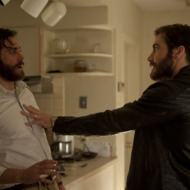
Here’s a bit of movie math for you: At this year’s Toronto Film Festival, Jake Gyllenhaal gives three strong performances in two movies for one director. If you’re confused — or wondering whether this is the fortunate byproduct of all those infinitely spawning Gyllenhaals in 2011’s Source Code — then just know that your confusion is exactly what Gyllenhaal and director Denis Villeneuve intended.

You’ll find a good 66.6 percent of those Gyllenhaals in Enemy, directed by homegrown Canadian hero Villenueve (whose film Incendies was Oscar nominated in 2010 for Best Foreign Language Film). In it, Gyllenhaal stars as Adam, a college professor whose days and nights seem awfully routine: Adam lectures his class about repetition, heads home to grade papers, doffs his clothes, and boffs girlfriend Melanie Laurent. Lather, rinse, repeat ... until Adam happens to watch a movie starring his doppelgänger in a bit part. Soon enough, Adam has tracked down this carbon copy — a part-time actor named Anthony (also played by Gyllenhaal, natch) — and before long, Adam and Anthony have become obsessed with one another, though the film frequently implies that this might actually be an elaborate, schizophrenic case of self-obsession.

To judge from some of the walkouts at the screening today, Enemy isn’t for everybody — it suggests a mash-up of director Shane Carruth’s two head-scratchers, Primer and Upstream Color, and the movie is clearly goading you to parse its clever timeline with your friends afterwards — but it’s a good showcase for Gyllenhaal, who juggles both Adam and Anthony with aplomb, even as Enemy seeks to intentionally blur the lines between both men. It’s too bad that a more fitting title, The Two Jakes, was already taken; then again, Enemy is based on the José Saramago novel The Double, a title that’s already been claimed by another Toronto film ... Richard Ayoade’s The Double, which stars Jesse Eisenberg as a man who confronts his own dopplegänger.

This weird situation — double the double movies — suggests some more meta-textual readings: Are both movies somehow the same movie? Are all the Gyllenhaals and Eisenbergs different facets of one single character? Is this the epiphany at the end of the second act where I realize that I’m Gyllenhaal and/or Eisenberg? It would explain the moment yesterday when a strangely accented woman accosted me in the elevator to tell me about her run-in with Jesse Eisenberg, whom she’d just seen on the street. “He’s so short, and his jeans were so tight,” she insisted, before giving me the once-over. Her eyes alighted on my skinny jeans.

Enemy is still seeking distribution, but Gyllenhaal’s other Toronto collaboration with Villeneuve, the dramatic thriller Prisoners, is getting a big awards season push by Warner Bros. this month. Hugh Jackman is the lead, a distraught father who takes the law into his own hands when his daughter is kidnapped, but Gyllenhaal delivers his best work in years as the detective assigned to the case. It would be hard to call Gyllenhaal’s performance unshowy — the character has a blinking tic and awfully conspicuous tattoos that practically announce, “Ask me about my backstory” — but it still takes good advantage of Gyllenhaal’s inherent calmness, especially when it pits him against Jackman’s justifiably overwrought sad dad. It’s a quietly appealing turn that could put Gyllenhaal back into the Best Supporting Actor race eight years after his first Oscar-nominated role in Brokeback Mountain

Even though Villeneuve and Gyllenhaal first collaborated on Enemy, it’s Prisoners that will get the first (and wider) theatrical release, and if that seems like an unusual twist ... well, isn’t that tortured timeline a little apropos, given the subject matter? At the very least, this concentrated triple dose of Gyllenhaal will give Hollywood types and festgoers a chance to reappraise the actor, who has kept a low studio profile since the 2010 flop Prince of Persia. God only gives you as many Gyllenhaals as you’re prepared to handle; maybe this week, we’ve learned there’s no such thing as too many.

Read more posts by Kyle Buchanan

Filed Under: toronto film festival 2013 ,movies ,jake gyllenhaal

08 Sep 21:39

How to Be

by Tess Malone
Rachel

Choose your own adventure books are all the rage...we have to get on this romance idea, Carol!

If you were never satisfied with Hamlet’s answer to the famous “to be or not to be?” question, now is your chance to change it. Ryan North rewrote Hamlet as a choose-your-own-adventure book, To Be or Not To Be. You can play as Ophelia, Hamlet, or King Hamlet and choose from more than 110 alternate deaths. Brain Pickings got a first look at some of the book’s excellent illustrations.

Related posts:

  1. The Day After Hun’s Day Brain Pickings whipped up a sample of Neil Gaiman’s new...
  2. Not Exactly a Science At Brain Pickings, Maria Popova reads an essay in Biographia Literaria, a...
  3. A Titillating Read The new book by Alain de Botton, How to Think...
07 Sep 13:31

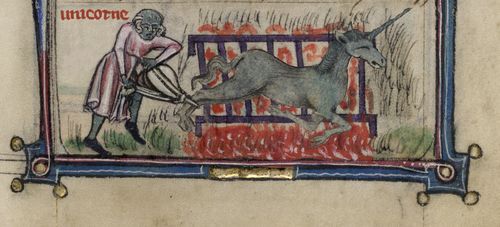
Medieval Cookbook's Unicorn Recipe Begins with "Taketh One Unicorne...."

by John Farrier

(Image: Geoffrey Fule's Cookbook, British Library)

The British Library recently discovered a Fourteenth Century English cookbook written by Geoffrey Fule, a royal cook. Fule included a recipe for unicorn meat. 

The recipe calls for the beast to be marinaded in cloves and garlic, and then roasted on a griddle. The cookbook's compiler, doubtless Geoffrey Fule himself, added pictures in its margins, depicting the unicorn being prepared and then served. Sarah J Biggs, a British Library expert on medieval decoration, commented that "the images are extraordinary, almost exactly as we'd expect them to be, if not better".

At the link, you can see additional illustrations of the unicorn preparation process.

Link -via TYWKIWDBI

07 Sep 00:07

50% of the US Population Is In These 146 Counties

by Jill Harness

Earlier this month, John posted an image showing how 98% of Australia's population is clustered in a few coastal regions. While that was fascinating, it turns out that America is pretty highly clustered as well. In fact, 50% of our population is located solely in the 146 counties marked in blue on this map.

Link Via io9

06 Sep 01:09

Entertainment Geekly: ‘Breaking Bad,’ ‘Lost,’ and the precarious hysteria of TV fandom

by Darren Franich
Rachel

Obv. The Wire is the best show ever, so what's the argument?

Entertainment Geekly is a new weekly column which examines contemporary pop culture through a geek lens and simultaneously examines contemporary
04 Sep 23:31

What’s New on Netflix Streaming This Month: September 2013

by Gilbert Cruz
Rachel

I was going to quote the Requiem for a Dream, but Zoolander trumps: Orange Mocha Frappucchino!


The beginning of every month sees additions to Netflix Streaming's library. Here is a quick list of new movies that you might be interested in. (Some of these were added at the very end of August, but we're going to include them in this roundup anyway.) Feel free to note anything we've left out in the comments below.

The 4400: All four seasons of this TV show about alien abductees are now available.

50 First Dates: Adam Sandler and Drew Barrymore reunite in this Hawaii-set romantic comedy.

Carrie: The 1976 Brian De Palma film of the Stephen King novel. Prom, blood, fire.

Doctor Dolittle: The 1967 movie in which Rex Harrison talks to animals.

Fear and Loathing in Las Vegas: Johnny Depp playing wacky before it was all that he did.

Frenzy: Alfred Hitchcock’s second to last film — a tense, nasty thriller about a serial killer in London.

Ghidorah: The Three Headed Monster: The last twenty minutes of this 1964 movie has a giant monster battle royale. You might have to search under the title San Daikaijû: Chikyu Saidai no Kessen.

Godzilla vs. Mothra: The 1964 giant lizard fights giant moth movie. You might have to search under the title Mosura tai Gojira.

I’m Gonna Git You Sucka: The 1988 blaxploitation spoof starring and directed by Keenan Ivory Wayans.

Jade: The 1995 erotic thriller that is perhaps now best known as a joke in The 40-Year Old Virgin: “There are three rules when it comes talking to women. Number one, ask questions … Two, be cool and three, be kind of a dick. Look, be like David Caruso in Jade.”

Men in Black: The 1997 hit movie starring Will Smith and Tommy Lee Jones as guys who dress like morticians and wrangle aliens. The inspiration for this summer’s R.I.P.D.

Open Water: The 2003 thriller about two scuba divers who must defend themselves against sharks after being left behind in the middle of the ocean.

The Panic in Needle Park: The 1971 film in which Al Pacino plays a junkie. This is good pre-Godfather Pacino stuff.

The People Under the Stairs: The 1991 oddball Wes Craven horror movie.

The Purple Rose of Cairo: The 1985 Woody Allen movie starring Mia Farrow as a movie-obsessed housewife and Jeff Daniels as the object of her screen affection.

Requiem for a Dream: The 2000 Darren Aronofsky film about drug addiction that is among the most depressing American movies ever made. Still, worth seeing. It’ll ruin your night. Regardless, check it out.

Rodan: The 1956 Japanese monster movie about a giant pterodactyl.

Saturday Night Fever: You can tell by the way John Travolta uses his walk that he’s a woman’s man, with no time to talk.

Scandal, season two: Catch up before the season-three premiere on October 3.

The Seven Year Itch: The 1955 film in which Marilyn Monroe stands on a subway grate.

Six Degrees of Separation: Will Smith stars alongside Stockard Channing and Donald Sutherland as a young gay con artist in one of his most interesting and little seen performances.

There Will Be Blood: One of the best movies of the millennium so far. Not to oversell it or anything.

Wargames: The 1983 computer thriller starring a young Ally Sheedy and Matthew Broderick. Shall we play a game?

Zoolander: Orange Mocha Frappuccino!

Read more posts by Gilbert Cruz

Filed Under: movies ,tv ,across the streaming-verse ,new to netflix

04 Sep 23:30

50 Shades of Grey Casts Charlie Hunnam, Dakota Johnson

by Kyle Buchanan
Rachel

nonononononononononono.


It's official! After months of rumors, director Sam Taylor-Johnson has finally locked down the two leads for her big-screen adaptation of the erotic E.L. James novel 50 Shades of Grey: Now Sons of Anarchy and Pacific Rim star Charlie Hunnam will play wealthy, damaged Christian Grey, while Dakota Johnson (Ben and Kate) will take the role of Anastasia Steele, who falls for Grey and becomes the submissive to his dominant lover. Now that we've got that settled, longtime 50 Shades aspirant Bret Easton Ellis is spilling the tea on Twitter: According to him, E.L. James confessed this summer at a party that Robert Pattinson was her first choice for Christian — an unsurprising pick, perhaps, since 50 Shades had its genesis in Twilight fanfiction.

Read more posts by Kyle Buchanan

Filed Under: charlie hunnam ,dakota johnson ,movies ,50 shades of grey ,casting

04 Sep 01:32

Arrested Development Binge-Watch vs. One a Week: Which Viewing Strategy Worked Best?

by Wendy McClure,Maris Kreizman
Rachel

As Chekhov always said, if a stair-car is introduced in the first season, someone must be killed on it by the end of season four. Right? omg, I need to rewatch.


It may seem like years ago that Netflix dumped the fifteen episodes of Arrested Development's fourth season on us, but that momentous event occurred just fifteen weeks ago. Knowing that cannonballing the entire season on the day of release would be difficult to resist, yet also wanting to heed show creator Mitch Hurwitz's advice not to binge-watch them, Vulture commissioned Slaughterhouse 90210 curator Maris Kreizman to chug down the entire stash in a single sitting and The Wilder Life author Wendy McClure to watch them in the old-school manner of one episode per week. So, which writer watched it best? Below, the vitamin D-deprived Kreizman and "listless consumptive" McClure discuss the highs and lows of our grand Arrested Development viewing experiment.

Maris Kreizman: Hi, Wendy! Are you finally through with your moderately paced summer of the Bluth family, round four? Did you have fun? I found season four of Arrested Development a little depressing, and I wonder how much that has to do with the fact that I watched it inside, alone on my couch, during the gorgeous Memorial Day weekend, while gorging on Netflix, air-conditioning, and cheese. I thought the return of my favorite straight man, Michael Bluth, would be sunshine enough for me, but alas. In the original series, it always seemed like the rest of the Bluths were the result of some new-money zombie apocalypse, and Michael had to do his best to protect himself and his son from getting bitten. This season it was like Michael stopped running, put his brain on a silver platter, and offered it up to his family with a "bon appétit." I kept waiting for a moment of humanity or redemption, and it never arrived. Am I just bitter because I didn't get enough vitamin D while binge-watching? Was your reunion with the Bluth clan less angsty than mine? Looking forward to hearing what you think.

Wendy McClure: Interesting to hear you suffered from vitamin-D deficiency during your marathon, because I felt a bit like a listless consumptive during my once-a-week watching schedule. It was like I had some vague, inexplicable disease and each episode was the elaborately quacky treatment that I had to endure every week. I'd lie back and get my dose of Bluth shenanigans (with a bracing course of ukulele injections) but never feel any progress.

I think that feeling was definitely a side effect of the season's crazy Mobius-strip structure, which moved the story around and around in a twisted circle rather than forward. (Maybe that explains why Michael Bluth seems so different this time: He wasn't the anchor at the center; he was caught up in the same spiral as everyone else.) Once I figured out that the narrative kept going back to the same scenes from different perspectives, I began to wonder if this season was actually written with binge-watching in mind — with the intention to create a trippy, sucked-into-the-vortex effect for marathon viewers. Did you feel anything like that? Anything at all? Was it ever enough to overpower the loneliness of spending the whole weekend indoors eating a whole thing of candy beans cheese? Because I feel like I missed something. Tell me if I did.

MK: Wendy, this whole summer I've been jealous of your watching experience because I'd imagined you'd be able to come to the show each week with a clear head, with seven days to have contemplated the genius of the episode before. Did having a little distance make it any easier for you to take it all in? Because by the fifth episode or so, I started feeling like this season had become the sitcom equivalent of The Wire (had The Wire been narrated by Ron Howard) in terms of the attention span required to appreciate it. There were so many details to absorb, so many sight gags and throwaway lines and tiny little threads of narrative to piece together. I was afraid I'd become too distracted by Twitter and bathroom breaks and general stir craziness to appreciate all of the overlaps, the jokes within jokes that were supposed to add up to bigger and more satisfying revelations.

Wendy, I was sure I was the one who was missing something, that I'd become addled from overdosing on the show. I was Gob and I'd roofied myself. Was there any benefit in viewing responsibly, having the episodes meted out in controlled doses? Were there particular scenes or performances you were able to savor?

WM: Oh, Maris, this is like group therapy at Austerity! Our experiences so different, our pain so similar. I guess there were some benefits to watching all that stuff on a leisurely schedule. Like, I'd sit down and fire up the Netflix and think, Hey, Maria Bamford! She might be on my TV again today! So, yes, I had time to get excited about that. And I suppose the first few times I caught the story lines overlapping, the knowingness felt extra good because the payoff happened after a couple of weeks instead of just a couple of hours.

But I never felt like time was on my side. Because ... okay, Maris, a confession: You asked me if I was through with the episodes. Well, see, I think I actually have a few left. Not sure how many. Three? Cuatro? Did I miss a week? Did I start late? I don't know how it happened. I think after about three episodes, time lost all meaning in the face of all the wackadoo chronology. Maybe I drifted off. I feel like I wasn't spinning fast enough to stay in orbit. But of course I'm going to try to finish this weekend. Or maybe I already finished, and this moment right now is just the backstory, and I'm wearing a red wig for reasons that haven't been explained yet. Who knows?

MK: Ooh, Wendy, it's always been my dream to perform in a musical (however shitty) with Tommy Tune, so the Austerity patient comparison kind of made my day. How to locate you in the mire of circuitous narrative is harder. Tell me what you know about the ostrich, how immobile Portia de Rossi's forehead seems, and how many times Andy Richter has shown up so far, and maybe I can help you figure out where you got lost and where you are. Then again, it's so hard to tell!

Arrested Development has always rewarded close viewers, those of us who are experts enough in Bluth family trivia to trace the recurrence of a joke throughout a string of seasons. And while one of the pleasures of watching the fourth season came from revisiting some of our favorite old tropes (George Michael, Star Wars Kid, makes an appearance in Spain!), the overlapping narrative structure proves that one of the show's biggest strengths could become its downfall — recurring jokes can turn into recurring nightmares. I was struck by a claustrophobia that had nothing to do with being stuck indoors. The Bluths had always been miserable people, but delightfully so. Season four was the first time they felt overwhelming. I wanted to turn off my TV and get away from them, maybe run off to India and get in touch with my spiritual side instead. Even though you weren't binging, Wendy, did you experience any claustrophobia like this?

WM: A-ha! It was only two episodes I hadn't watched yet. For complicated reasons, I couldn't check to see how many I had left in my Netflix queue; my previous dispatches had been sent during a massive thunderstorm in Chicago that knocked out my Internet service for about 30 hours. It was like I was stuck in Sudden Valley. (Fun fact: The iPhone voice dictation hears “Michael Bluth” as “my medical blues.”) But more troubling was the way I didn’t feel like I was that close to the end — just lost in that mire that you described so well, going in circles, coming back again and again to the same old things, the shtick about Rebel Alley and Ron Howard, the maritime law jokes, the ostrich squawks. Yes, I guess it must have been claustrophobia, because at the end of each episode, I rarely felt like I wanted to go back in right away.

But this morning I got my Wi-Fi back and watched the Buster episode! And while I love me some Buster, I had given up hope that his story would be as funny this time around. But in one fell swoop of a giant hand, I finally felt rewarded for sticking it out all these weeks, not just with the usual Motherboy hilarity, but with the drone-attacks-from-a-strip-mall bit that was the first genuinely on-the-money political commentary I’d seen all season. And more than any other episode this season, it felt like it could stand on its own, and instead of just watching the next and final episode in the same sitting (because I am, after all, behind schedule), I was able to savor this one.

So maybe there’s something of an arc there after all? In the midst of your epic weekend of viewing, did you feel you were close to the end by the time Buster’s robotic hand beckoned to us all?

MK: You know, I was looking over our e-mails, Wendy, and I realized how negative my tone had become. I want to back up and say that my lost weekend of binging on AD was not all eye rolling and disappointment and ODing on juice boxes. I was genuinely excited reunite with this lunatic family and their crazy chicken dancing, and to see how time had treated each of the characters. Then, as I got farther along and realized that each episode would have a different narrative focus, I was particularly psyched to see the Buster and George Michael episodes. How do the innocents of the family deal with being the star of the show for a while?

The Buster episode did not disappoint. I can't say, like you did, Wendy, that it made the arc feel more complete. But I do think it was particularly clever, and I loved the war-games angle with Buster playing drone strike in the strip mall. And the nostalgia factor was in full effect as I watched Buster making "breakfast" for his mommy — so many martini glasses, so much sadness! Wendy, you might be watching the final episode as I type this, so let me just say this: If the ultimate payoff was less than satisfying, then at least it set things up for a potentially brilliant season five. Get back at me when you've finished, and we'll talk about the great big mystery of what happened to Lucille Austero ...

WM: Oh yeah, Maris, for all the unevenness, there were some good times: Michael and Gob's chase/fight in the kiddie ballroom, dinner at Swapigans, and even Kristen Wiig playing eighties Lucille made my night a little brighter once a week. And now I think I'm convinced that there wasn't an ideal pace for watching this season. If anything, I think it was probably made for repeated viewing, where we can go back and see how the puzzle fit together — when you think about it, isn't it all just like a series of backward callbacks? I still think George Michael's heightened ability to track the passage of time would have served me well in watching this season, but in the end I suppose it's given me plenty to keep me occupied during the long wait for season five ...

... Including — wow — a good old-fashioned cliff-hanger with Lucille II! You weren't kidding, Maris. But of course, it had to happen. As Chekhov always said, if a stair-car is introduced in the first season, someone must be killed on it by the end of season four. Right?

MK: Wendy, if the next chapter of Arrested Development is Clue the movie only starring the Bluth family, I will be more than satisfied! Looking back over my notes from my lost weekend, I found that as early as episode two I jotted, "Timeline is gonna be tough to figure out." Indeed, it was. I was so concerned about making all the pieces fit, and cramming the whole show into my brain, that I didn't get to fully enjoy the fact that Gob was part of an entourage that went to a club on the Strip called And Jeremy Piven. Or that Lucille was a gang member on The Real Asian Housewives of the Orange County White Collar Prison System. Or that "George Maharis" sounds like the name of a young Internet tycoon who is capable of growing a really sexy mustache. I'll do my next viewing at my own pace, no concerns about dodging spoilers and piecing together the circuitous plot. Who cares? Knowing that Michael Bluth will receive a well-deserved punch in the face by the end of the season will only help me to enjoy the journey to the finale. Right?

WM: I think so, Maris. After all, the Bluths (and the show's writers) had so much catching up to do over the last six years, maybe a rewatch is meeting them halfway. And knowing that this timeline now exists might help me with my own encore viewing — whenever I hit one of those moments when the sheer barrage of onscreen details (wigs, foam Thing hands, Mark Cherry entourage members, glitter bombs, etc.) threatens to send me into a "Sound of Silence"–playing fugue state, I can always find my place again. Then again, just like you said, maybe next time I won't care if I'm a little lost. Remember, there's always the Something search.

Read more posts by Wendy McClureMaris Kreizman

Filed Under: arrested development ,tv ,binge-watching

27 Aug 14:30

Christmas Creep Now Staging Aural Invasion With Carols Piping Merrily Over Eatery Speakers

by Mary Beth Quirk
Rachel

I just read Nos4a2u....I'm afraid of Christmas now.

(Robrrt)

(Robrrt)

The red-and-green forces of Christmas Creep have evolved: Unseasonal decorations and trees? That’s elves’ play. The new battle in the war for your holiday dollars is being waged on an aural front, by way of Christmas Carols piped merrily over the speakers at various Manhattan Pret a Manger locations.

Customers at the chain eatery reported hearing tunes like “Walking in a Winter Wonderland,” “The Twelve Days of Christmas” and “Have Yourself a Merry Little Christmas” playing on a loop, reports the New York Post. And it doesn’t appear to be a mistake at just one store — dozens are reportedly warbling a merry tune throughout the day.

“I’ve heard of Christmas in July, but this is August!” said a customer on site at one of the aforementioned merry locations.

Workers say the sleigh bell onslaught has been jingling through plenty of Pret locations, but that there’s no way to simply change the playlist, except to turn the music off entirely. Seems the music is chosen “by corporate” and they can’t access the magic boxes that spin the tunes beyond to shut’em down.

“Even my boss can’t figure out what’s going on,” one worker told the Post. “Corporate decides the music we’re supposed to play, and this is what we got!”

One brave manager made the decision to go silent instead of listen to Whitney Houston singing Christmas classics.

“I shut it off because customers were a little confused,” he explained. “I heard it, and I was like ‘OK, maybe it’ll go away,’ ” he said. “But then we have the little box and after about an hour and a half, I was like, ‘It’s time to go.’

“I love the music, but I just figured… it’s too early.”

We reached out to Pret a Manger for comment and you bet your winter boots we’ll update this post if we hear anything back.

Jingle what?! Pret à Manger starts Christmas in August with carol tunes over store speakers [New York Post]


27 Aug 13:49

I Am the One Who Knock-Knocks: 15 Breaking Bad Knock-Knock Jokes

by Jesse David Fox
Rachel

Fine, Walter, Jr.


The most literal and humorless but accurate answer to the classic joke setup, "Knock-knock/Who's there?" is actually "the one who knocks." So considering that "the one who knocks" is kind of Walter White's catchphrase on Breaking Bad, it's safe to assume that when he is not stressing out about a drug-dealing competitor or a death threat or cancer, knock-knock jokes are his favorite way to laugh and relax! So let's get in the spirit with some of our own Breaking Bad knock-knock jokes. Sure to make you the life of the party! And if people don't laugh, just poison them with an untraceable plant!

Knock-knock.
Who’s there?
Champ.
Champ who?
Champ-who? No, thanks, don't need it. I'm one of the show’s many bald characters.

Knock-knock.
Who’s there?
Hank.
Hank who?
No, Hank you for having the courtesy to at least flush after learning your brother-in-law was Heisenberg.

Knock-knock.
Who’s there?
Marie.
Marie who?
Marie-lly adorable baby tiara is gone. Did Skyler’s sister take it?

Knock-knock.
Who’s there?
Interrupting Hector Salamanca
Interrupt—
Ding ding ding ding ding ding ding ding [explosion.]

Knock-knock.
Who’s there?
Pizza Deliveryman.
Just throw it on the roof.

Knock-knock.
Who’s there?
Huell.
Huell who?
Huell get a bad back if you try to actually sleep on a bed of money.

Knock-knock.
Who’s there?
Woo.
Woo who?
Woo who! Science, bitch!
 

Knock-knock.
Who’s there?
Dwayne.
Dwayne who?
Dwayne the tub, before the
hydwofwuoric acid burns thwough and a gwoss mixture of guts and teeth wains through the ceiwing.

Knock-knock.
Who’s there?
Turtlesgo.
Turtlesgo who?
No, owls go "who." Turtles go BOOOOOOOOOOOOOOOOOM.

Knock-knock.
Who’s there?
Flynn.
Flynn who?
Fine, Walt Jr.

Knock-knock.
Who’s there?
Gus.
Gus who?
Gus Who's Albuquerque’s meth kingpin? That Pollos Hermanos dude!

Knock-knock.
Who’s there?
Methhead.
Methhead who?
Methhead acting is the best way to get into character when the scene involves getting your head smashed in by an ATM.

Knock-knock.
Who’s there?
Bitch.
Bitch who?
Bitch your bottom dollar that tomorrow, there’ll be meth.

Knock-knock.
Who’s there?
Badger.
Badger who?
Badger bottom dollar that tomorrow, there’ll be Star Trek scripts.
 

Knock-knock.
Who’s there?
Mark Strong.
Mark Strong who?
Come on! The star of Low Winter Sun. You know, the show that plays right after Breaking Bad — why won't you watch? I’m also bald!

Read more posts by Jesse David Fox

Filed Under: breaking bad ,tv ,joke book ,knock knock jokes

19 Aug 19:33

Fear of clustered small holes

by Cory Doctorow
Rachel

I have this fear!


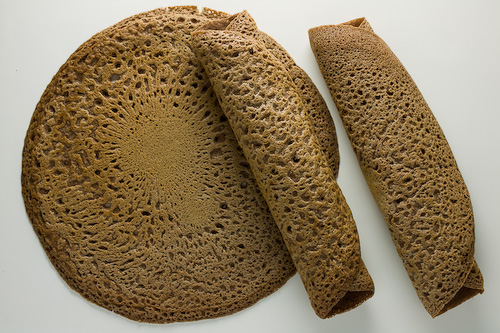
The Trypophobia subreddit is a place for posting photos of things with clusters of small holes or pits in them, like lotus plants, funguses, multi-chambered plants, and strange infections. Trypophobia is the (not medically recognized) fear of "objects with small holes." It sounded weird to me, but after clicking through the first couple-dozen links, I was massively squicked. Shown here, Ethiopian injera bread from Apple Pie, Patis, and Pâté Recipes. Normally, I love the stuff, but in the context, I have to admit, it gives me the frisson.

The most common phobia you've never heard of. (Thanks, Fipi Lele!)


19 Aug 19:23

How I Live Now Is the Post-Apocalyptic Teenage Love Story We Deserve

by Doug Barry
Rachel

I loved the book. Exciting.

We live in an age of cultural morbidity, which is exactly why we're getting yet another post-apocalyptic fantasy/nightmare movie — to let us all indulge our cynicism towards the human race. How I Live Now, based on Meg Rosoff's 2004 YA novel about a Manhattanite teenager who goes to live on a remote English farm during the outbreak of World War III: Nuclear Boogaloo, stars Saoirse Ronan and looks...pretty compelling, actually.

Read more...


14 Aug 01:10

TV: Great Job, Internet!: Watch the full MythBusters Breaking Bad special 

by Kevin McFarland
Rachel

Yeah, Science!

Capitalizing on all the Breaking Bad press that led to the show doubling its audience for Sunday’s premiere, Discovery Channel’s MythBusters got Aaron Paul and Vince Gilligan on the show for a Breaking Bad special to investigate the plausibility of Walt’s fulminated mercury stunt and the bathtub/hydrofluoric acid incident from the first season. The entire episode is available on YouTube, so you can watch Jamie and Adam (and the B-team) test out the scenes, and then ultimately say screw it and just blow some stuff up because that’s what the people want. This is a family show, so it cuts out some of the gory details in the clips from the show—though they do dissolve pig flesh as a substitute for organic human matter—and there are none of Jesse's vulgar exclamations, but it's still good fun.

Read more
13 Aug 02:33

Bryan Cranston and Aaron Paul: An Adorable Photo History of Breaking Bad’s BFFs

by Jesse David Fox
Rachel

ha,ha,ha.


Many great things have come out of Breaking Bad: Wonderful television, classic quotes, reasons for high schoolers to pay attention in science class. However, few are cuter than Bryan Cranston and Aaron Paul’s effusive friendship. They're not unlike childhood besties — always touching and goofing around – albeit a bit more critically acclaimed. So with Breaking Bad’s final season starting this Sunday, it seemed appropriate to take a photographic survey of one of TV's most adorable friendships. Enjoy – you can tell they did.

Read more posts by Jesse David Fox

Filed Under: breaking bad ,aaron paul ,bryan cranston ,bffs ,tv

12 Aug 17:58

Breaking Bad: Does Badger's Star Trek Episode Hold Up Under Trek Rules?

by Matt Patches
Rachel

I promise to not share anything spoilery. This was gold.


Breaking Bad has always contained winks and allusions to other pop culture biggies (Scarface, Sergio Leone), but tonight's episode featured an impressively long love letter to Star Trek, with Badger mesmerizing Skinny Pete with his brilliant idea for an episode for the original series involving transporters and a pie-eating contest. (All that's left to do is for Badger to actually write it...and build a time machine to go back 44 years to when the show was on.) Badger's treatment was nerdy as hell, wicked funny, and seemed steeped in Trek lore. We couldn't help but wonder, though: Just how canonically accurate is Badger's plot? We decided to consult with an expert: John Van Citters, the Star Trek brand's resident fact-checker, and CBS Consumer Products VP.

Before getting to the script, we must address Skinny Pete's issues with the show's transporters, which inspired Badger to weave his tale. Theoretically (in Pete's mind), when a person is beamed from one place to another, they're basically dying and a new identical person is born (a "color Xerox"). Skinny Pete is not alone in his fear of the device. Both Trek characters (including Pete's go-to source, Original Series Dr. Leonard "Bones" McCoy) and Trekkies alike have speculated that what goes into a transporter may not be what comes out. But the line of thinking is purely speculative, even in the context of the show. Van Citters says that there has never been an incident where a crew member has been "rebooted" by the beaming process, nor has any incarnation of Trek confronted the existential question. Winding up with a clone, on the other hand, is a frightening possibility.

In The Original Series episode "The Enemy Within," a planet's magnetic ore overloads the Enterprise's transporter, splitting Captain Kirk (William Shatner) into a positive half and a negative half. In The Next Generation's "Second Chances," Will Riker (Jonathan Frakes) stumbles upon an identical version of himself. An investigation reveals that, while on a routine mission eight years prior, an energy surge caused Riker's beam to fry, prompting the transporter to activate a second beam.

The transporter wasn't part of creator Gene Roddenberry's original vision for Star Trek. When shuttling the Enterprise crew down to planetary surfaces on a weekly basis proved too costly, Roddenberry's team innovated the instantaneous mode of transportation. Loose rules for how the technology functions have only worked in Trek's favor. "Basically, the transporter seems to be able to do whatever the writers want it do on any given week," Van Citters jokes. "Most notable in this arena is on Voyager, when B'Elanna tries a new transporter technique called a 'skeletal lock' where she can get a lock on the person via their combadge signal or bio-signs." Yes, there's a risk in skeletal locking of beaming back a pile of bones and person goop. But in the right hands, it's the perfect canonical loophole.

The transporter's potential for precision may validate Badger's Star Trek scenario. In his proposed episode, Ensign Chekov (with the help of Chief Engineer Scotty) plot to take down Kirk, Spock, and the rest of the Enterprise crew in a ship-wide pie eating contest. For the Russian cadet, the face-off is like the Kobayashi Maru of baked goods. So the two crew members pull a Kirk, using the transporter to beam the pie out of his body on its way into his stomach and into outer space, therefore circumventing digestion and a full tummy. As Badger puts it, the tactic works perfectly until Scotty accidentally beams out Chekov's guts.

But since Badger is setting his imaginary episode in the Original Series universe, the timeline is a factor. Before you even get to transporter issues, there's the plot point that the pies are being churned out at a rapid pace thanks to the wonders of "the replicator," Star Trek's computerized short order cook. Unfortunately, the Enterprise crew didn't have that luxury in 2265. "A replicator would seemingly be able to spit out pie after pie after pie, but in The Original Series they didn't have replicators per se," Van Citters says. "They used 'food slots' or 'food synthesizers' that took a pre-programmed card or disk inserted into a slot that had the instructions for what to create on it. The tech seems pretty much the same, but it does seem a bit more tedious and slow."

Anachronisms aside, Van Citters believes Scotty's pinpoint stomach beaming jives with Trek's scientific history, though the process would require an excessive amount of work. According to the Trek fact checker, the transporter scans the subject at the quantum level, tracks the position and movement of its subatomic particles, then funnels them into the new location. To ensure that the Uncertainty Principle doesn't wreck havoc on their composition, the transporter is used in tandem with — and this is a nice coincidence — a "Heisenberg compensator."

"Theoretically, Scotty could compare the pre-contest Chekov pattern with the 'new' Chekov and remove any foreign contaminants from the transporter stream, much the way it would filter out any dangerous new micro-organisms or parasites," Van Citters says. "However, that depends on him continuously scrambling and dematerializing all of Chekov and not just beaming the pie from his gullet into space."

Van Citters’ final assessment of Badger's Original Series plot? "Seems like a lot of work to cheat at a pie eating contest."

Read more posts by Matt Patches

Filed Under: star trek ,breaking bad ,vulture fact-check ,tv ,badger

12 Aug 01:30

Let's Talk About Housecats

by Miss Cellania

There are 600 million housecats in the world -give or take a few- making them the most popular pet worldwide. It wasn't always so. How did the world become so cat-obsessed? Cats as we know them are descended from the African wildcat Felis sylvestris, shown here. It doesn't look so different from a housecat, except for those dangerous-looking fangs.

There’s a very similar saying among researchers that dogs were domesticated, but cats domesticated themselves.

While not strictly true in terms of dogs (oh, I can go off on dog domestication do not get me started) this is pretty much on the money for cats. Humans didn’t grab cats and make them start hunting mice. In fact, that would be incredibly difficult, as wildcats are extremely shy. Cats simply heard the rodents squeaking around in whatever the ancient version of a silo was and went after them. And the humans certainly had no reason to discourage them (once they figured out what was going on, I presume- I imagine the first human opening a door and spotting a cat inside shrieking “THE MICE HAVE GROWN HUGE SAVE YOURSELF”)

Flight distance refers to the distance an animal is willing to let you approach it before it flees. African wildcats today have a pretty massive flight distance- you are extremely lucky if you see one before it spots you and jets. Those first cats attacking the mice in human granaries would have had a big disadvantage if they were running every time they spotted a human within thirty feet. So, they adapted. Their flight distance shrank from generation until eventually they were able to tolerate humans within feet of them. Think of the behavior of squirrels in suburban areas. They aren’t going to let you pick them up, exactly… but they’re definitely not afraid of you.

But this relationship underwent a big change when Egyptians went nuts about cats. Koryos at Newt in the Throat tells us the history of the domestic cat in an entertaining and understandable way, with lots of cute pictures. Link -via Metafilter

05 Aug 17:14

Books: Great Job, Internet!: Watch Simon Pegg wish Harry Potter happy birthday as a drunk Ron Weasley

by Dennis DiClaudio
Rachel

:)

If Harry Potter were a real person, he would have turned 33 years old yesterday. Oh, and he'd probably also not have, like, magical powers and stuff. But he almost certainly would have an emotionally-stunted alcoholic former classmate who would drunkenly stumbled through the public-domain version of 'Happy Birthday' for him before heading off to puke in a strip club toilet somewhere.
Bringing that reality to life last night was Simon Pegg—in New York City to promote his pub crawl apocalypse film The World's End—on Late Night With Jimmy Fallon doing an impeccable inebriated 30-something Ron Weasley, marking his second cinematic impersonation in one day. Earlier yesterday, Pegg portrayed a more-gingery Rocky Balboa on Philadelphia's Art Museum steps.

Read more