So this just happened.
So this just happened.
In an effort to get a full legal picture about the issues involved with Donald Trump’s months-long campaign of strikes against suspected drug boats, I reached out as many people as I could think of: lawyers I knew and didn’t know, veterans I knew and didn’t, plus a few others who had things to add but ended up not being quoted in the forthcoming piece “Insane Clown Pentagon.” These people were nearly unanimous in denouncing the Venezuela operation as a nadir of the Trump era: “Probably the dumbest shit he’s pulled,” is how one appalled source put it.
A number of these people are not exactly Democratic partisans but still argued that whatever Trump is trying to do in Venezuela colors well outside the lines, even by War on Terror standards. Several sources said the closest parallel they could think of is Barack Obama’s Libyan bombing campaign, in which Obama was ripped for blowing past ostensible War Powers guidelines in an action that probably should be more infamous than it is. We also looked at past drone bombings, incuding campaigns that seem at least as gruesome as the allegations of the current scandal, which is how Greg Collard ended up with the upcoming “Original Double Tap” story. Greg’s interview with an original investigator of “double tap” drone strikes, Mustafa Qadri, offers a brutal (and surprising) short-cut comparison between then and now.
Every story about Donald Trump is really two or three stories. Separating media hypocrisy from the Trump administration’s unaided faceplants requires constant attention, and where there are legal issues with one party in the last ten years, we usually also find them with the other. Please bear with us as we work on faster ways to deal with the “jerks in all direction” factor in American news. Thanks, and more to come soon.
To let Americans buy smaller cars, Trump had to weaken fuel-efficiency standards. Does that sound crazy? Small cars, of course, have much higher fuel efficiency. Yet this is exactly how the Corporate Average Fuel Economy (CAFE) standards work.

Since 2011, fuel-economy targets scale with a vehicle’s “footprint” (wheelbase × track width). Big vehicles get lenient targets; small vehicles face demanding ones. A microcar that gets 40 MPG might be judged against a target of 50-60 MPG, while a full-size truck doing 20 MPG can satisfy a 22 MPG requirement.. The small car is clearly more efficient, yet it fails the rule that the truck passes.
The policy was meant to be fair to producers of large vehicles, but it rewards bloat. Make a car bigger and compliance gets easier. Add crash standards built around heavier vehicles and it’s obvious why the US market produces crossovers and trucks while smaller and much less expensive city-cars, familiar in Europe and Asia, never show up. At a press conference rolling back CAFE standards, Trump noted he’d seen small “kei” cars on his Asia trip—”very small, really cute”—and directed the Transportation Secretary to clear regulatory barriers so they could be built and sold in America.
Trump’s rollback—cutting the projected 2031 fleet average from roughly 50.4 MPG to 34.5 MPG—relaxes the math enough that microcars could comply again. Only Kafka would appreciate a fuel-economy system that makes small fuel-efficient cars hard to sell and giant trucks easy. Yet the looser rules remove a barrier to greener vehicles while also handing a windfall to big truck makers. A little less Kafka, a little more Tullock.
The post Welcome to the Crazy CAFE appeared first on Marginal REVOLUTION.
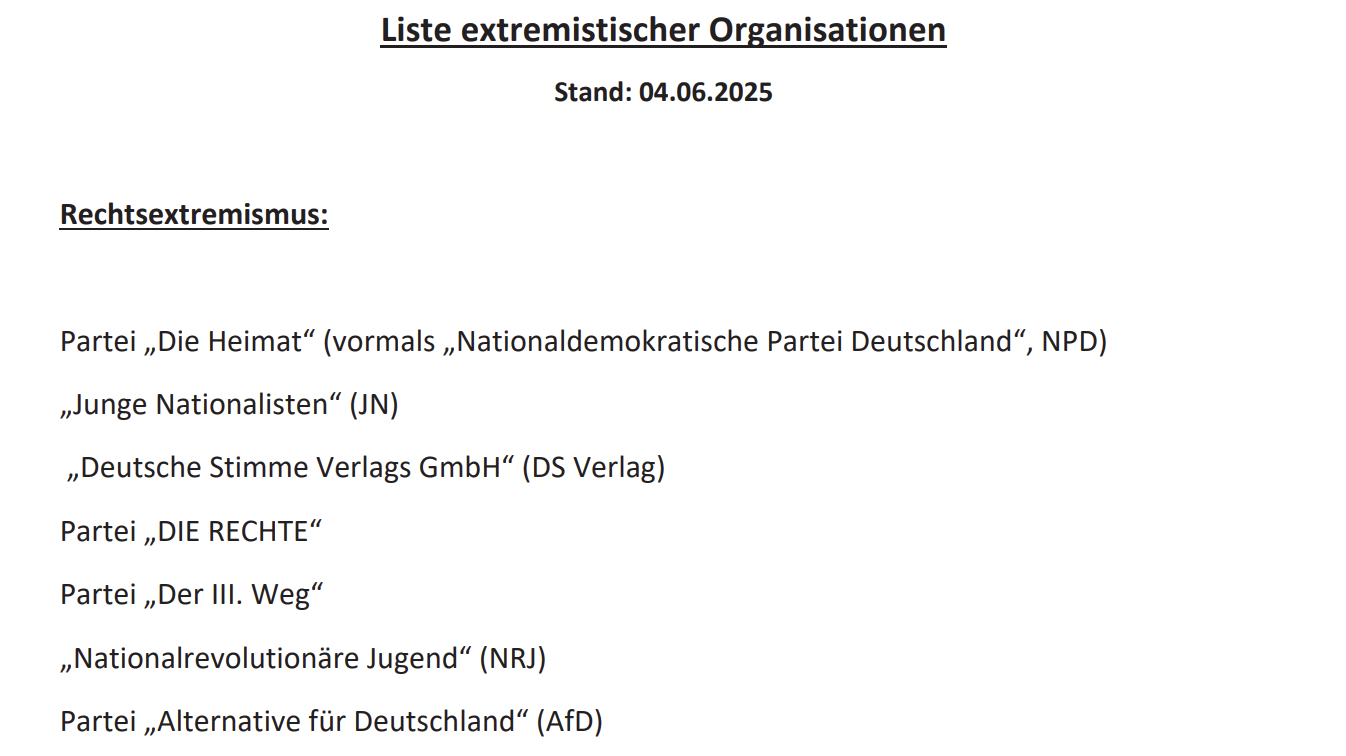
From Junge Freiheit, just this morning:
AfD members are not allowed to run for mayoral office in the municipality of Nieder-Olm. Candidates for election must sign a declaration stating that they are not members of Alternative für Deutschland, because the party occurs on a “list of extremist organisations” issued by Social Democrat-led Interior Ministry of Rheinland-Pfalz …
In addition to the strongest-polling party in Germany, the list also includes the Islamist terrorist organizations Al-Qaeda and Hamas. Interior Minister Michael Ebling (SPD) has not, however, included on this list the militant group “Antifa Ost,” also known as the “Hammer Gang,” although the U.S. has declared it a terrorist organisation. Various Antifa Ost members are presently on trial in Germany and Hungary for attempted murder.
Nieder-Olm is set to elect their mayor on 22 March. Roberto Kiefer hopes to run for office as the AfD candidate. “This is tantamount to banning the party,” the 57-year-old German-American said … Despite being unable to comply with the requirement that he not be a member of the AfD, Kiefer will still apply for eligibility with the district administration on Thursday.
The backstory here is ominous in its simplicity:
Back in July, the Rheinland-Pfalz Interior Minister Michael Ebling published a “Declaration of Constitutional Loyalty.” All civil servants in his state are asked to sign this declaration and thereby to attest their loyalty to the Basic Law and the state constitution. They must also pledge that they are not presently members of any of the groups currently considered to be “extremist” by the goons in the Office for the Protection of the Constitution. Any civil servant who refuses to sign this bizarre document will be subjected to bureaucratic harassment in the form of an “individual review,” which could result in disciplinary proceedings or even termination.
The question we all want answered, is to what degree the powers that be in Rheinland-Pfalz also hope to impose this “Declaration of Constitutional Loyalty” on elected officials. Doing so might come close to a de facto AfD ban, depending on what measures are triggered by a refusal to sign. The case of Nieder-Olm seemed to answer this question in the affirmative. They would indeed try to use this declaration to ban AfD candidates from every elected office in all of Rheinland-Pfalz, where more than four million Germans live and where the AfD is polling at just over 20%.
This story quickly became national news. Almost immediately, Nieder-Olm deleted from their website the requirement that mayoral candidates sign this declaration, and Interior Minister Ebling gave a strange interview to Welt, in which he claimed to know nothing about Kiefer’s case and insisted that AfD candidates are not subjected to a blanket ban on running for office in his state. He said nothing, however, about what constitutional loyalty tests might be imposed on elected AfD officials when they attempt to assume office.
The Social Democrats in Rheinland-Pfalz absolutely hope to use their bullshit constitutional loyalty test as an electoral strategy against the AfD. Some months ago, the sitting (ex-SPD) mayor of Ludwigshafen colluded with the state Office for the Protection of the Constitution and the municipal election committee to deny another AfD mayoral candidate, Joachim Paul, his right to run for office – also on constitutional grounds. Paul’s interest in Tolkien and his criticism of migrants, they argued, raised doubts about his loyalty to the constitution. In protest, many Ludwigshafen voters boycotted the election or submitted invalid ballots, while the U.S. State Department invited Paul to Washington.

A review article concluding the weed killer Roundup “does not pose a health risk to humans” has been retracted eight years after documents released in a court case revealed employees of Monsanto, the company that developed the herbicide, wrote the article but were not named as coauthors.
The safety of glyphosate, the active ingredient in Roundup, is hotly debated and currently under review at the U.S. Environmental Protection Agency. The International Agency for Research on Cancer, part of the World Health Organization, in 2015 declared glyphosate “possibly carcinogenic.”
The now-retracted article appeared in Regulatory Toxicology and Pharmacology, an Elsevier title, in 2000. Gary Williams, then a pathologist at New York Medical College in Valhalla, Robert Kroes, a toxicologist at the University of Utrecht in the Netherlands, and Ian C. Munro, a toxicologist at Cantox Health Sciences International in Ontario, Canada, were listed as the authors. The paper has been cited 614 times, according to Clarivate’s Web of Science.
Three papers about glyphosate on which Williams was an author received an expression of concern and lengthy corrections in 2018 because the authors didn’t fully disclose their ties to Monsanto or the company’s involvement in the articles.
In 2017, internal Monsanto documents, including emails between employees discussing scientific publications on the safety of glyphosate, were released in the course of a lawsuit alleging exposure to glyphosate caused people to develop non-Hodgkin’s lymphoma. In one email, a Monsanto employee proposed “keeping the cost down” to produce a scientific paper with outside scientists “by us doing the writing and they would just edit & sign their names so to speak. Recall that is how we handled Williams Kroes & Munro, 2000.” (The email is on page 203 of the document linked here and above.)
Despite the revelation of corporate ghost-writing, the paper continued to be cited in research and policy documents without criticism, as well as in Wikipedia articles, according to scholars who analyzed its impact. The researchers, Alexander Kaurov of Victoria University of Wellington in New Zealand, and Naomi Oreskes, a historian of science at Harvard University in Cambridge, Mass., published their findings in September in another Elsevier journal, Environmental Science & Policy. They also wrote to the editors of Regulatory Toxicology and Pharmacology to formally request the paper’s retraction, they wrote in editorials describing their work in Science and Undark.
Their request “was actually the first time a complaint came to my desk directly,” Martin van den Berg, a co-editor-in-chief of the journal, told Retraction Watch. The article was published long before he took over, said van den Berg, a toxicologist at the University of Utrecht in the Netherlands, and “it was simply not brought to my attention” until Kaurov and Oreskes’ article. The retraction “could have been done as early as 2017, but it is clearly a case of two parallel information streams not connecting earlier,” he said.
Kaurov and Oreskes wrote to the editors on July 25, Kaurov told us. The editors’ reaction “was exemplary and professional,” Kaurov said. They replied promptly, he said, and conducted their investigation in one month, which he considered “a reasonable amount of time.”
The notice, which is more than 1,000 words long, appeared online in November. In it, van den Berg detailed “several critical issues that are considered to undermine the academic integrity of this article and its conclusions.” Most concerns were related to what van den Berg described as “the apparent contributions of Monsanto employees as co-writers to this article” without acknowledgment as coauthors. He also called out the authors’ reliance on unpublished studies from Monsanto for their conclusions that glyphosate exposure did not cause cancer, though other studies existed.
“The concerns specified here necessitate this retraction to preserve the scientific integrity of the journal,” van den Berg wrote.
Van den Berg reached out to Williams, the sole surviving author, but did not receive a response, according to the notice. Williams, now an emeritus professor at New York Medical College, did not respond to our request for comment. An institutional investigation found “no evidence” Williams violated a policy against authoring a ghostwritten paper, the college told Science magazine in 2017. Kroes died in 2006 and Munro in 2011.
A spokesperson for Bayer, which bought Monsanto, provided a statement which said the company “believe[s] Monsanto’s involvement was appropriately cited in the acknowledgments, which clearly states: ‘we thank the toxicologists and other scientists at Monsanto who made significant contributions to the development of exposure assessments and through many other discussions,’ and further identifies several ‘key personnel at Monsanto who provided scientific support.’”
“The consensus among regulatory bodies worldwide that have conducted their own independent assessments based on the weight of evidence is that glyphosate can be used safely as directed and is not carcinogenic,” said the company’s statement.
The ghostwritten paper was among the 0.1 percent of most cited articles on glyphosate, Kaurov and Oreskes found in their analysis. Retracting the article “would not erase twenty-five years of influence,” they concluded, “but it would send a clear, overdue message that fraudulent authorship is unacceptable and that the scholarly record will be protected—no matter how old, how cited or how profitable the journal.”
Like Retraction Watch? You can make a tax-deductible contribution to support our work, follow us on X or Bluesky, like us on Facebook, follow us on LinkedIn, add us to your RSS reader, or subscribe to our daily digest. If you find a retraction that’s not in our database, you can let us know here. For comments or feedback, email us at team@retractionwatch.com.
By clicking submit, you agree to share your email address with the site owner and Mailchimp to receive marketing, updates, and other emails from the site owner. Use the unsubscribe link in those emails to opt out at any time.
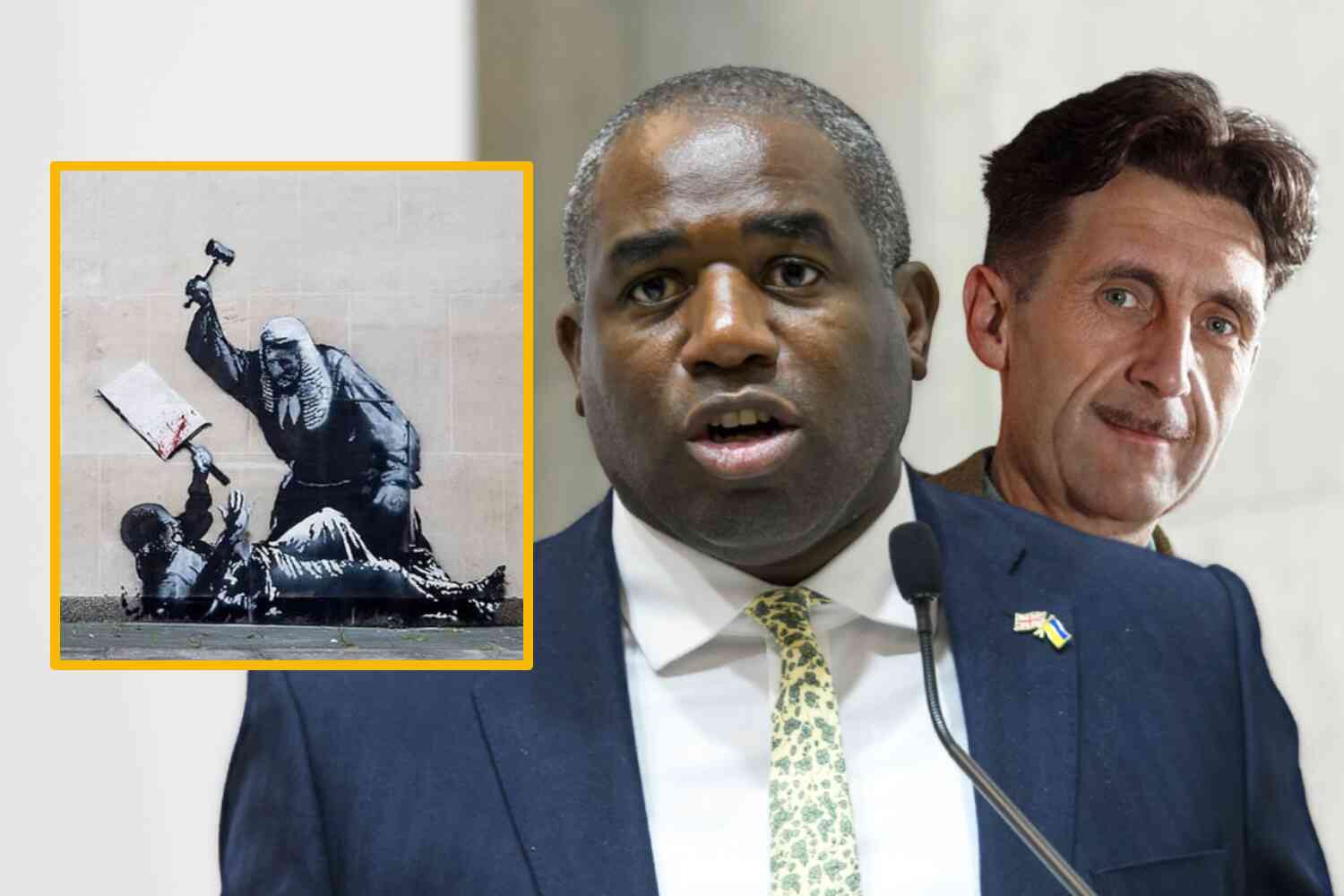
It's like the UK read 1984 and took it as an instruction manual instead of a warning.
Jts5665Closer than advertised, I guess. Or fraud? Did the pillage and plunder party cheat? Sounds like they stopped the vote count for some reason.
Did the Draconian Lockdowns Kill More People than Covid-19?
by Peter C. Gøtzsche at Brownstone Institute

People familiar with respiratory viruses know it is impossible to lock out such viruses by locking down the society. Yet, in virtually all countries, the politicians panicked to such an extent that, two months into the COVID-19 pandemic, I dubbed it the COVID-19 panic.1
The lockdowns were foolish and illogical. Denmark closed its borders with Germany and Sweden when we had more coronavirus than they had. Golf was forbidden, which led to the absurdity that you were allowed to walk on the fairways if you didn’t look like a golfer. Tennis courts were closed, although gatherings of four people were not forbidden. Even outdoor running clubs closed.2 Life as we knew it stopped, on government orders.
There were early warnings but they were not heeded. After India introduced a lockdown three months into the pandemic, migrant labourers feared that hunger would kill them before the coronavirus did.3 Ten months into the pandemic, the World Bank estimated that it had caused an increase of about 100 million people living in extreme poverty,4 and poverty kills.
The pandemic saw a new breed of people who had become experts overnight but knew very little about the issues. They constantly appeared on TV with sinister messages about the need for lockdowns and many other interventions, including dressing whole populations as bank robbers with face masks, although they don’t work.5
Curiously, governments all over the world preferred to listen to the false gurus rather than to the real experts. I think it was because they supported the official narratives, ideas and dogma, which were flimsily created on the spot by politicians eager to be seen as powerful people who didn’t sit on their hands but did something.
The pseudo experts were also loved by the media. I wrote in a newspaper that after a year with the same Danish “expert” on TV, Allan Randrup Thomsen, a laboratory researcher, who was always worried and uttered trifles virtually every day about the pandemic anyone could have said, I needed a new remote control because I had used the mute button so much that it had stopped working.6 When I asked a TV journalist why they always interviewed Thomsen, he said it was because Thomsen was well prepared as he read what some journalists had written!
Only Sweden had a real expert the politicians listened to and respected, even after a public outrage7 when mortality figures became rather high in early 2020 compared with the other Nordic countries,8,9 which was because Sweden had failed to protect the elderly in the beginning. State epidemiologist Anders Tegnell stood his ground and advised that Sweden should not change its policy, which was to keep the society open and not mandate face masks, which were rarely seen in Sweden.
Sweden was a lone star in the darkness. I think it was the only country that didn’t panic and did the right things, and it had the lowest excess mortality in the whole western world during the pandemic9-11 (excess mortality is the increase in all-cause mortality during the pandemic compared with prepandemic levels).
The most harmful panickers were researchers from the Centre for Global Infectious Disease Analysis at the Imperial College London.12,13 The modelling exercises of Neil Ferguson and his team played a preeminent role in shutting down most of the world in early 2020, a couple of months into the pandemic. A year later, historian Phillip Magness wrote that the exaggerated forecasts of this modelling team “may well constitute one of the greatest scientific failures in modern human history.”13
I agree, and 2020 became the most surreal and shocking year in my whole professional life. The Danish Board of Health claimed it was documented that face masks were effective, which wasn’t true, and our government decided to kill all our 17 million mink only because a mutation had been found that might make future vaccines less effective, which was also wrong.2,14 In Denmark, we have four pigs for every citizen, and I asked in a newspaper: “What if our pigs got swine flu and there was a mutation in the flu virus? Should all our 25 million pigs then be killed? Where will this madness end?”14
Magness wrote that Ferguson’s team claimed credit for saving millions of lives through the lockdown policies and explained that they arrived at this figure through a ludicrously unscientific exercise where they purported to validate their model by using its own hypothetical projections as a counterfactual of what would happen without lockdowns.13
It became very dirty. Already one month after Ferguson’s model was published, researchers in Uppsala used it and showed clear signs of faltering. Later, at the one-year mark, Sweden had a little over 13,000 COVID-19 fatalities, smaller on a per-capita basis than many European lockdown states and a far cry from the 96,000 deaths predicted.13
In a House of Lords hearing, Ferguson snapped back, disavowing any connection to the Swedish results: “First of all, they did not use our model. They developed a model of their own.”13 This wasn’t true, but Ferguson continued deceiving people: “Imperial’s work is being conflated with that of an entirely separate group of researchers.”
Ferguson was dishonest. He had made country-level projections, which few people would find as they were hidden in an Excel appendix to the College’s report, and they showed that their results for Sweden were nearly identical to those of the Uppsala team.
Yet again, the foremost deceptor was the team at the Imperial College London. They published a seriously misleading modelling study in a Lancet journal about the global impact of the first year of COVID-19 vaccination.15
It became the most-cited study of the number of lives saved, which they estimated as 14.4 million avoided COVID deaths and 19.8 million excess deaths, with remarkably narrow uncertainty intervals, which their data and methods did not allow: 13.7 to 15.9 million and 19.1 to 20.4 million, respectively.
In 2025, John Ioannidis and colleagues published a study that estimated that, during five years, from 2020 to 2024, the vaccines had averted 2.5 million deaths, with sensitivity analyses suggesting between 1.4 and 4.0 million.16
Considering that the College only looked at the first year of vaccination, the discrepancy between the two estimates is gigantic.
Even so, there were critical comments on John’s paper on the journal’s website that I agreed with and I also published my own.17 I noted that I had never seen a paper with so many assumptions before and that I found the estimates for vaccine effectiveness much too high, e.g. a reduction of 75% in mortality overall and 50% for the Omicron variant.
The essential issue is that there were, and always will be, too many assumptions for estimating the effect of the COVID vaccines on mortality reliably.
In March 2024, AstraZeneca withdrew its COVID adenovirus based vaccine from the market worldwide, officially due to a surplus of updated vaccines that targeted new variants of the virus,18 but with drug companies, we rarely know what the real reason is.
Many newspapers quoted an AstraZeneca statement that, “According to independent estimates, over 6.5 million lives were saved in the first year of use alone,” but strangely, not a single newspaper provided any link to the source.
As I got nowhere by searching on the Internet, I went to the company website where, mysteriously, I could not find anything either about the saved 6.5 million lives. But in a press release from May 2022, the vaccine, called Vaxzevria, was claimed to have “helped prevent 50 million COVID-19 cases, five million hospitalisations, and saved more than one million lives worldwide, based on model outcomes assessing COVID-19 worldwide.”19
These were monstrous lies. COVID-19 vaccines cannot prevent infection of other people because they produce IgG antibodies in the blood, not IgA antibodies in the respiratory mucosa.20 The whole idea of getting vaccinated to protect others, which we have heard constantly about in the media, is simply not true.
Interestingly, the 6.5 million lives saved were said to be an “independent” estimate, and the reference to the 1 million lives saved had only an internal reference: “Data on File Number: REF-131228.”
Non-traceable statements and unavailable data on file in a drug company should not be trusted and I could not find any of them, even though I searched intensely on the AstraZeneca website. But I found a press release from November 2021, six months earlier, which also claimed that 1 million lives had been saved.21 So, apparently no lives were saved between November 2021 and May 2022.
Pascal Soriot, AstraZeneca’s CEO, found it remarkable that a million lives were saved less than a year after the vaccine’s approval. So do I, but not for the same reason.
I suggest that Neil Ferguson and his team at the Imperial College London look for highly paid jobs in the drug industry. The industry also loves wild exaggerations about how dangerous diseases are and how many lives they can save. This is what they announce all the time. As I have explained, the drug industry doesn’t sell drugs, they sell lies about drugs.22
If the huge numbers of lives saved claimed by Ferguson and AstraZeneca were correct, it should be possible to see an effect of the vaccine rollout on mortality in a graph. But the cumulative vaccine rollout and mortality ascribed to COVID are both smooth graphs:23,24
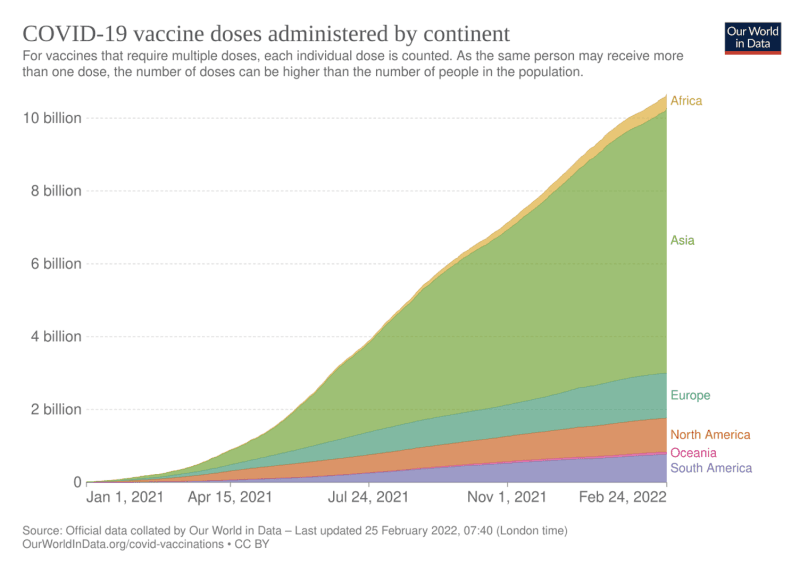
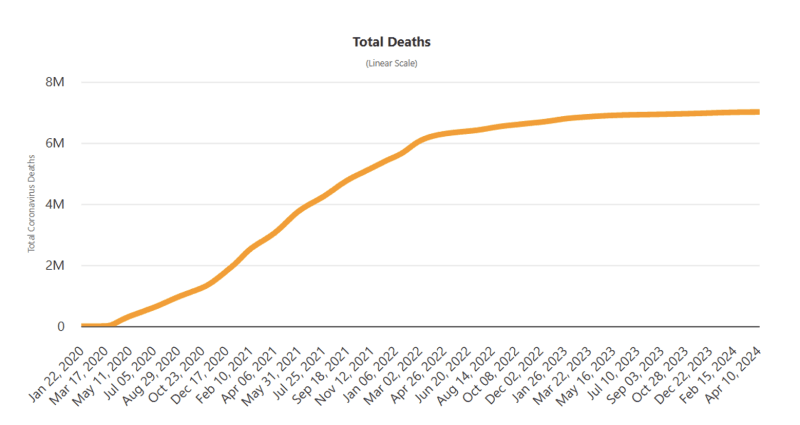
In contrast to the COVID vaccines, the measles vaccine is highly effective and when it was introduced in the USA in 1963, the incidence of measles dropped immediately and dramatically:25
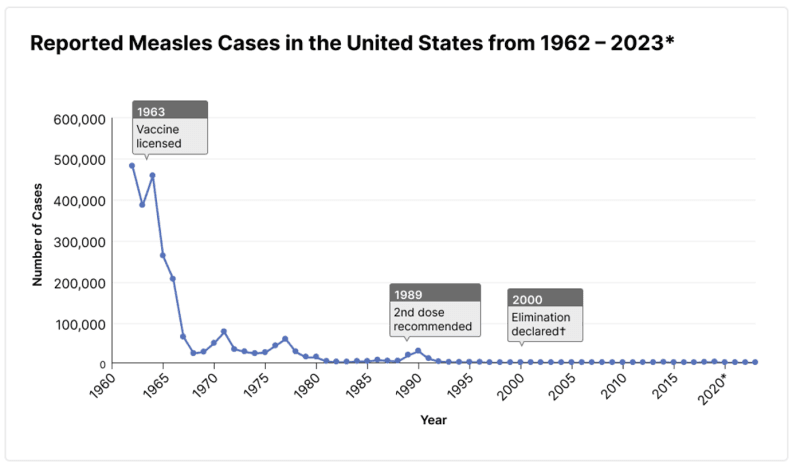
These data are from the CDC, which, in an earlier publication, showed a graph that went further back in time. It is no longer available but is included in my vaccine book.2 The graph shows that the measles incidence was rather stable before the vaccine came on the market (the arrow is misplaced, should be moved two years to the left):
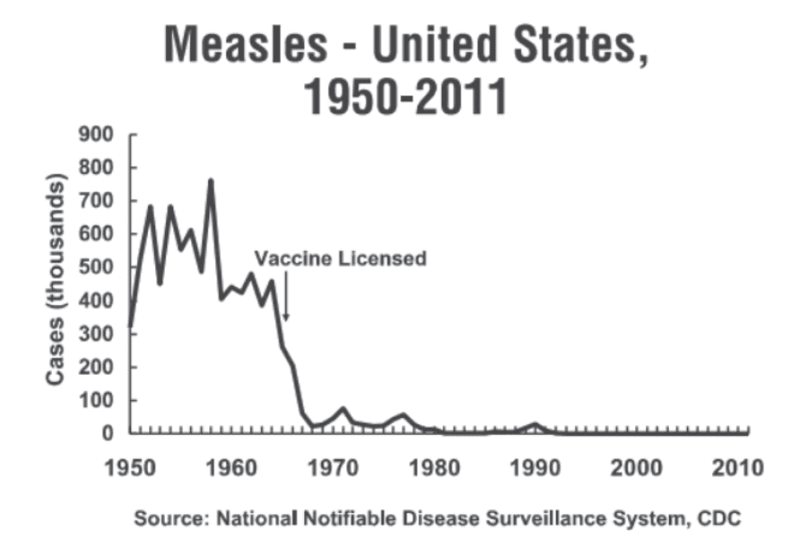
The major differences to measles are that COVID-19 was caused by a new virus, highly likely manufactured in Wuhan,8,26 and that it was still spreading in a non-immune population when the vaccines were introduced, in December 2020 onwards. This makes it difficult to conclude anything about lives saved with the vaccines, but the graphs do not suggest any major effect on mortality.
It is futile to try to estimate the number of lives saved by the Covid vaccines. There were far too few deaths in the randomised trials to be of any use and the uncertainties in observational studies are far too many and too large to allow trustworthy estimates.
But in the trials, there was an interesting difference between vaccine types. Overall mortality for the mRNA vaccines was not reduced, risk ratio 1.03 (95% confidence interval 0.63 to 1.71) whereas it was reduced for the adenovirus-vector vaccines, risk ratio 0.37 (0.19 to 0.70).27
One of the many uncertainties is that the virus mutates rapidly. Another obstacle is that the WHO advised already in April 2020 that:28 “A death due to COVID-19 is defined for surveillance purposes as a death resulting from a clinically compatible illness, in a probable or confirmed COVID-19 case, unless there is a clear alternative cause of death that cannot be related to COVID disease (e.g. trauma).”
This meant that some deaths ascribed to COVID were not caused by the virus, and the opposite was also true. Some people who died for various reasons without having been tested for COVID might have been killed by it.
The lockdowns killed a huge amount of people but we will never get anywhere near a realible estimate, for at least seven reasons.
First, as noted, lockdowns increased poverty dramatically.4 In an analysis by John Ioannidis and colleagues that compared 17 vulnerable countries defined as those with a low gross domestic product or large income inequality (which included the USA and the UK) with 17 other countries, there were 3,046 excess death per million inhabitants in the former group and only 500 per million in the latter.29
Second, it has been estimated, albeit in a modelling study, that lockdowns, lack of staff, and fear of getting infected increased maternal and child mortality in low- and middle-income countries so much that hundreds of thousands of lives have been lost.30 This is disastrous because it is loss of lives right from life’s beginning, childbirth, and the deaths of tens of thousands of young mothers. In contrast, the median age of those who died from COVID in the UK was 83 years.31
Third, people have died because they were not allowed to go to hospital, e.g. young people with meningitis.
Fourth, people have died because they were afraid of going to hospital, as they might get a COVID infection. Hospital avoidance behaviour has been documented for heart disease,32-34 which led to increased mortality for heart attacks35,36 and heart failure.34 In Hong Kong, emergency department visits dropped by 25% while the 28-day mortality of non-COVID-19 deaths increased by 8%.37
Fifth, the lockdowns increased risk factors for cardiovascular diseases, e.g. because of low physical activity, stress, and unhealthy diet, and for other diseases, too, e.g. psychiatric ones.
Sixth, living closely together increases the risk of dying from a respiratory virus substantially because people get a high infectious dose and therefore may not mount an adequate immune response before it is too late. This was shown for measles in ground-breaking research by Peter Aaby, both in Africa38 and in one hundred-year-old historic Danish data.39 During the pandemic, people were asked to work from home, and if infected, they were quarantined, which increased mortality. The index person - the one who gets infected in the community - will often have a good prognosis because of low viral load, but when that person is ordered to stay at home, secondarily infected people in the household will have a considerably higher risk of dying.
Seventh, deaths caused by the lockdowns are still occurring. For example, lack of cancer care may lead to shorter survival in future.
However, we could at least estimate how many lives that might have been saved, if other countries had had the same low excess mortality as Sweden. In the United States and in the United Kingdom, around 600,000 and 100,000 lives could have been avoided.40 These estimates agree reasonably well with the difference in population size. They do not take into account that many factors are different, e.g. many more people are obese in the US than in Sweden. On the other hand, that was also the case before the pandemic. Ioannidis estimated that the United States would have had 1.6 million fewer deaths if it had performed as Sweden.29
Since we cannot separate virus deaths from deaths caused by lockdowns, we are left to estimate the total number of deaths the pandemic caused.
A study comprising the years 2020 and 2021 estimated that there were 6 million COVID deaths worldwide and 18 million (95% uncertainty interval 17 to 20 million) excess deaths (which include the COVID deaths).41 Another study, which also included only 2020 and 2021, provided a similar estimate, an excess mortality of 16 million (15 to 17 million).42
In Europe, 66% of the excess mortality during 2020 to 2023 occurred in the first two years.11 If we adjust the average worldwide estimate of 17 million for this, we get 26 million excess deaths.
The Economist has also estimated the total number of excess deaths in the world during the pandemic.40 A graph shows that the estimated number of COVID deaths was 7 million whereas the estimated number of excess deaths was 27 million, with an uncertainty interval from 19 to 37 million. This is remarkably similar to my adjusted estimate of 26 million.
The 34 countries studied by Ioannidis et al. had a total population of 983 million.29 If we extrapolate their 2 million excess deaths to the world, we get 17 million deaths. But as there were vastly more deaths in poor countries, this is likely a substantial underestimate.
The two current NIH directors have explained that we need a new pandemic playbook so that we don’t repeat the mistakes.43 The subtitle of their paper is telling: “The old one failed to cope with COVID and may even have caused it.” They outline how insane it was to allow the dangerous gain-of-function experiments in Wuhan with US financial support that rendered a harmless virus deadly.
The combined effect of fabricating the virus, the serious lack of appropriate safety precautions in the Wuhan lab in China, and the non-evidence-based draconian lockdowns created one of the worst man-made disasters ever in public health, with an estimated 27 million deaths.
China has killed many people before. The so-called Great Leap Forward under Chairman Mao is estimated to have led to between 15 and 55 million deaths in mainland China during 1959 to 1961. Mao’s so-called cultural revolution from 1966 to 1976 likely also caused millions of deaths.
For comparison, the number of deaths in the two world wars has been estimated as 40 million in WW1 and 70 to 85 million in WW2.
What I miss the most is for the WHO to call for a total ban on gain-of-function research. Perhaps there is a reason for WHO’s foot dragging.2 On December 31, 2019, Taiwan alerted WHO to the risk of human-to-human transmission of a new virus, but WHO did not pass on the concern to other countries. China had ensured that Taiwan is not a member of WHO, and WHO’s cozy relationship with China was criticised, particularly when WHO overly praised China’s handling of the coronavirus outbreak despite the fact that China did everything it could to cover it up.2,8,26
I consider this the biggest cover up in medical history and in the US, particularly Anthony Fauci also did what he could to deceive the public, which included lying to Congress and at a White House press briefing.26,44
The COVID saga demonstrates that the monomanic focus on just one disease increases deaths from other diseases. This is not public health and I wonder why the media have betrayed us to the extent they have, acting as uncritical microphone holders for our politicians without asking the relevant questions.
Time has come for the media to discuss the many millions of deaths all the unwise decisions have caused. We also need documentary films that can help us never forget what happened. Public memory is surprisingly short-lived.
1 Gøtzsche PC. Covid-19: Are we the victims of mass panic? BMJ 2020;Mar 8.
2 Gøtzsche PC. Vaccines: truth, lies, and controversy. New York: Skyhorse; 2021.
3 Kuloo M. “Hunger will kill us before coronavirus does”: Migrant labourers in Kashmir say
incomes have dried up and relief shelters are inadequate. Firstpost 2020;Apr 8.
4 COVID-19 to add as many as 150 million extreme poor by 2021. World Bank 2020;Oct 7.
5 Gøtzsche PC. False propaganda about face masks and Cochrane editorial misconduct. Institute for Scientific Freedom 2023;Sept 11.
6 Gøtzsche PC. Åbn Danmark igen, og gør det frivilligt at bære mundbind. Jyllands-Posten 2021;Feb 18.
7 Vogel G. Sweden's gamble: The country's pandemic policies came at a high price - and created painful rifts in its scientific community. Science 2020;Oct 6.
8 Gøtzsche PC. The Chinese virus: Killed millions and scientific freedom. Copenhagen: Institute for Scientific Freedom; 2022 (freely available).
9 Burström B, Hemström Ö, Doheny M, et al. The aftermath of COVID-19: Mortality impact of the pandemic on older persons in Sweden and other Nordic countries, 2020-2023. Scand J Public Health 2025;53:456-64.
10 Gøtzsche PC. Sweden did exceptionally well during the COVID-19 pandemic with its open society. Brownstone Journal 2023;March 28.
11 Pizzato M, Gerli AG, La Vecchia C, et al. Impact of COVID-19 on total excess mortality and geographic disparities in Europe, 2020-2023: a spatio-temporal analysis. Lancet Reg Health Eur 2024;44:100996.
12 Ferguson NM, Laydon D, Nedjati-Gilani G, et al. Impact of non-pharmaceutical interventions (NPIs) to reduce COVID-19 mortality and healthcare demand. London: Imperial College, UK Govt 2020;March 16.
13 Magness P. The failure of Imperial College modeling is far worse than we knew. The Daily Economy 2021;April 22.
14 Gøtzsche PC. Har mundbind nogen effekt? Og hvad med minkene? Eller svinene? Dagens Medicin 2020;Nov 9.
15 Watson OJ, Barnsley G, Toor J, et al. Global impact of the first year of COVID-19 vaccination: a mathematical modelling study. Lancet Infect Dis 2022;22:1293-1302.
16 Ioannidis JPA, Pezzullo AM, Cristiano A, et al. Global estimates of lives and life-years saved by COVID-19 vaccination during 2020-2024. JAMA Health Forum 2025;6:e252223.
17 Gøtzsche PC. Too many assumptions for estimating the effect of Covid-19 vaccines on mortality. JAMA Health Forum 2025;Sept 12.
18 Davey M. AstraZeneca withdraws Covid-19 vaccine worldwide, citing surplus of newer vaccines. The Guardian 2024;May 8.
19 Vaxzevria approved in the EU as third dose booster against COVID-19. AstraZeneca Press Release 2022;May 23.
20 Siri A. Vaccines, Amen. The Religion of Vaccines. Injecting Freedom LLC; 2025.
21 Two billion doses of AstraZeneca’s COVID-19 vaccine supplied to countries across the world less than 12 months after first approval. AstraZeneca Press Release 2021;Nov 16.
22 Gøtzsche PC. Deadly medicines and organised crime: How big pharma has corrupted health care. London: Radcliffe Publishing; 2013.
23 COVID-19 vaccine. Wikipedia 2024;June 18. Data from Our World in Data.
24 https://www.worldometers.info/coronavirus/.
25 Measles cases and outbreaks. CDC 2025;Nov 19.
26 Gøtzsche PC. Origin of COVID-19: The biggest cover up in medical history. Brownstone Institute 2023; Oct 9.
27 Benn CS, Schaltz-Buchholzer F, Nielsen S, et al. Randomized clinical trials of COVID-19 vaccines: Do adenovirus-vector vaccines have beneficial non-specific effects? iScience 2023;26:106733.
28 International guidelines for certification and classification (coding) of covid-19 as cause of death. WHO 2020;April 20.
29 Ioannidis JPA, Zonta F, Levitt M. Variability in excess deaths across countries with different vulnerability during 2020-2023. Proc Natl Acad Sci USA 2023;120:e2309557120.
30 Roberton T, Carter ED, Chou VB, et al. Early estimates of the indirect effects of the COVID-19 pandemic on maternal and child mortality in low-income and middle-income countries: a
modelling study. Lancet Glob Health 2020;8:e901-8.
31 Average age of those who had died with COVID-19. UK Government 2021;Jan 11.
32 Krumholz HM. Where have all the heart attacks gone? New York Times 2020;April 6.
33 Wilcock AD, Zubizarreta JR, Wadhera RK, et al. Factors underlying reduced hospitalizations for myocardial infarction during the COVID-19 pandemic. JAMA Cardiol 2024;9:914-20.
34 Ponzoni M, Morabito G, Corrao G, et al. The COVID-19 pandemic was associated with a change in therapeutic management and mortality in heart failure patients. J Clin Med 2024;13:2625.
35 Qamar A, Abramov D, Bang V, et al. Has the first year of the COVID pandemic impacted the trends in obesity-related CVD mortality between 1999 and 2019 in the United States? Int J Cardiol Cardiovasc Risk Prev 2024;21:200248.
36 Lippi G, Sanchis-Gomar F, Lavie CJ. Excess mortality for acute myocardial infarction in the United States during the first two years of the COVID-19 pandemic. Prog Cardiovasc Dis 2024;85:120-1.
37 Wai AK, Yip TF, Wong YH, et al. The Effect of the COVID-19 Pandemic on Non-COVID-19 Deaths: Population-Wide Retrospective Cohort Study. JMIR Public Health Surveill. 2024 Feb 13;10:e41792.
38 Aaby P. Malnourished or overinfected. An analysis of the determinants of acute measles
mortality. Dan Med Bull 1989;36:93-113.
39 Aaby P. Severe measles in Copenhagen, 1915–1925. Rev Infect Dis 1988;10:452-6.
40 Excess mortality during the Coronavirus pandemic (COVID-19). Our World in Data (undated).
41 COVID-19 Excess Mortality Collaborators. Estimating excess mortality due to the COVID-19 pandemic: a systematic analysis of COVID-19-related mortality, 2020-21. Lancet 2022;399:1513-36.
42 GBD 2021 Demographics Collaborators. Global age-sex-specific mortality, life expectancy, and population estimates in 204 countries and territories and 811 subnational locations, 1950-2021, and the impact of the COVID-19 pandemic: a comprehensive demographic analysis for the Global Burden of Disease Study 2021. Lancet 2024;403:1989-2056.
43 Bhattacharya J, Memoli MJ. NIH Directors: The world needs a new pandemic playbook. City Journal 2025;Nov 13.
44 NIH infectious disease researcher calls for end of dangerous virus studies. The DisInformation Chronicle 2025;May 4.
Did the Draconian Lockdowns Kill More People than Covid-19?
by Peter C. Gøtzsche at Brownstone Institute - Daily Economics, Policy, Public Health, Society

The official word is that the economy is great and America is back and the good times are here.
Using transaction-level data on US congressional stock trades, we find that lawmakers who later ascend to leadership positions perform similarly to matched peers beforehand but outperform them by 47 percentage points annually after ascension. Leaders’ superior performance arises through two mechanisms. The political influence channel is reflected in higher returns when their party controls the chamber, sales of stocks preceding regulatory actions, and purchase of stocks whose firms receiving more government contracts and favorable party support on bills. The corporate access channel is reflected in stock trades that predict subsequent corporate news and greater returns on donor-owned or home-state firms.
That is from a new NBER working paper by Shang-Jin Wei and Yifan Zhou. Of course Alex T. has been on this issue for a long time now.
The post Congressional leadership is corrupt appeared first on Marginal REVOLUTION.
Way back in 2009, I cited a very good article in The American Spectator in hopes of getting people to understand that the United States does not have a capitalist health care system (and I’ve since tried to reinforce that argument, over and over and over again).
Instead of a free market system, we have an inefficient and expensive system that it almost entirely the result of bad government policies.
These programs and policies cause “third-party payer,” which is what happens (as explained in this video) when consumers pay for something with other people’s money.
For this sequel column, here’s a visual that further cements the argument. It shows prices rising as the third-party payer problem worsens.

The chart comes from an article in National Affairs by Michael Cannon.
Here’s some of what he wrote.
Many critiques of U.S. health care begin with the assumption that, as The Economist put it, the United States is “one of the only developed countries where health care is mostly left to the free market.” …That assumption gets the situation backward: In truth, among wealthy nations, the United States may have one of the least-free health-care markets. In a free market, government would control 0% of health spending.
Yet the Organization for Economic Cooperation and Development (OECD) reports that in the United States, government controls 84% of health spending. In fact, government controls a larger share of health spending in the United States than in 27 out of 38 OECD-member nations, including the United Kingdom (83%) and Canada (73%), each of which has an explicitly socialized health-care system. When it comes to government control of health spending, the United States is closer to communist Cuba (89%) than the average OECD nation (75%). …Direct government price-setting, price floors, and price ceilings determine prices for more than half of U.S. health spending, including virtually all health-insurance premiums. …U.S. health-care prices are excessive because government controls them.
By the way, this is just a small excerpt from an article that is almost 3,800 words. As they say, read the whole thing.
But I will share Michael’s proposed solution. Simply stated, get government out of the way.
Making health care more universal will require policymakers to eliminate regulatory and tax distortions of health-care prices, and to remove government from the business of purchasing health insurance and medical care. The most important step would be to adopt tax and entitlement reforms that let consumers control all $5.6 trillion in U.S. health spending. When 340 million consumers find that they — rather than employers, insurers, or the government — get to keep the savings from price-conscious purchasing, they will spark price competition that will cause prices to plummet and thereby make health care continuously more universal. Insurers and providers will offer consumers what they want — better, more affordable, more secure health care — or go out of business. The government could still redistribute to the elderly, the poor, and the sick. But it would do so as Social Security does: with cash. No more centralized economic planning to drive up health-care prices and reduce health-care quality. The next step would be to eliminate the reams of regulations that block access to lower-cost, higher-quality health insurance and medical care.
Basically, we should want the market for health care to work the way it does for strawberries or laptops.
Like shown by this comparison of free-market simplicity and Obamacare complexity.

As you might expect, I’m partial to this visual I created, which shows how government creates layers between consumer and providers.
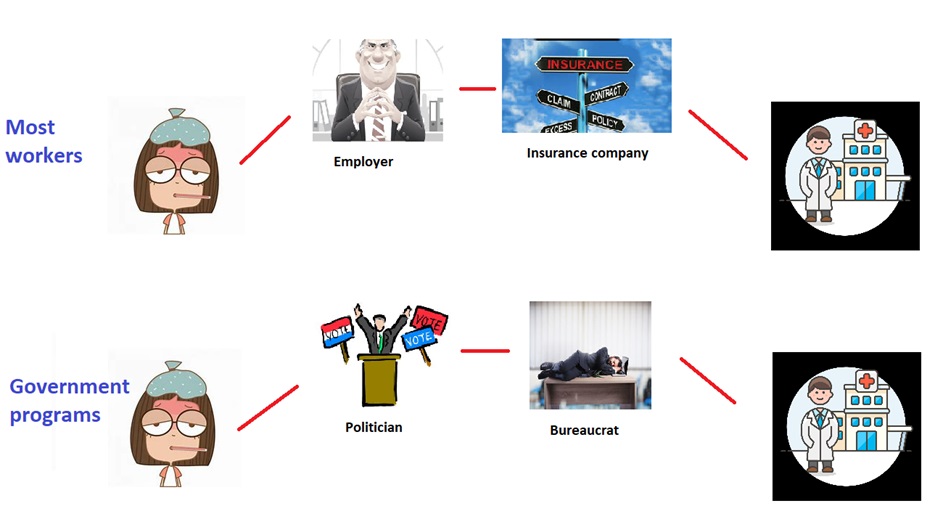
And here’s my back-of-the-envelope estimate of how Obamacare simply made a bad situation worse.

Here’s another one of my visuals.
It’s another way of depicting the spread between free markets and statism in health policy.

Last but not least, I can’t claim any credit for this meme, but it accurately depicts the way government is responsible for messing up the market for health care.

P.S. There are some slivers of the American health system that are governed by market forces. Not surprisingly, those are areas where there are not problems with inefficiency and high prices.
P.P.S. According to an international comparison, Switzerland arguably has the world’s best system.
As noted in my First Theorem of Government, politics is a largely a scam, a way for well-connected insiders to obtain undeserved wealth.
With taxpayers, consumers, and businesses bearing the cost, of course.
Unfortunately (but perhaps predictably), politicians oftentimes defend fraud for self-interested reasons,  either because money is being stolen by their voters or their campaign contributors.
For instance, I wrote 10 years ago about horrific Medicaid fraud in Texas.
Now let’s travel northwards for an equally atrocious report.
The New York Times has a remarkable story exposing jaw-dropping levels of welfare fraud in Minnesota.
Here are some excerpts from the report by Ernesto Londoño.
The fraud scandal that rattled Minnesota was staggering in its scale and brazenness. …Over the last five years, law enforcement officials say, fraud took root in pockets of Minnesota’s Somali diaspora as scores of individuals made small fortunes
by setting up companies that billed state agencies for millions of dollars’ worth of social services that were never provided. Federal prosecutors say that 59 people have been convicted in those schemes so far, and that more than $1 billion in taxpayers’ money has been stolen in three plots they are investigating. …Minnesota’s fraud scandal stood out even in the context of rampant theft during the pandemic, when Americans stole tens of billions through unemployment benefits, business loans and other forms of aid, according to federal auditors.
Here’s one of the scams.
The first public sign of a major problem in the state’s social services system came in 2022, when federal prosecutors began charging defendants in connection to a program aimed at feeding hungry children. …The prosecutors focused on a Minneapolis nonprofit organization called Feeding Our Future, which became a partner to dozens of local businesses that enrolled as feeding sites. …State agencies reimbursed the group and its partners for invoices claiming to have fed tens of thousands of children. In reality, federal prosecutors said, most of the meals were nonexistent, and business owners spent the funds on luxury cars, houses and even real estate projects abroad. …The program’s annual cost ballooned to more than $104 million last year, the authorities said, from a budgeted projection of $2.6 million when it began in 2020.
Here’s another one.
In another program, aimed to provide therapy for autistic children, prosecutors said providers recruited children in Minneapolis’s Somali community, falsely certifying them as qualifying for autism treatment and paying their parents kickbacks for their cooperation.
The most disturbing part of the story is how politicians overlooked the fraud because Somalians are a big voting bloc (helped by the fact that Somalians learned to play the race card).
Mr. Pacyga, who also has represented other defendants in the fraud cases, said that some involved became convinced that state agencies were tolerating, if not tacitly allowing, the fraud. “No one was doing anything about the red flags,” he said. “It was like someone was stealing money from the cookie jar and they kept refilling it.” …Kayseh Magan, a Somali American who formerly worked as a fraud investigator for the Minnesota attorney general’s office, said elected officials in the state — and particularly those who were part of the state’s Democratic-led administration — were reluctant to take more assertive action in response to allegations in the Somali community. “There is a perception that forcefully tackling this issue might cause political backlash among the Somali community, which is a core voting bloc” for Democrats, said Mr. Magan.
The state’s incompetent governor, Tim Walz, obviously deserves primary blame for this catastrophe.
But he’s just the tip of the iceberg, as illustrated by this tweet.

Let’s now look at the issue from a taxpayer perspective.
The amount of fraud probably exceeds $2 billion, according to the experts at the Minnesota-based Powerline Blog (who have been on top of this story for years).
For some examples of how the government managed to waste so much money, here are some excerpts from an article in City Journal by Ryan Thorpe and Christopher Rufo.
Minnesota is drowning in fraud. Billions in taxpayer dollars have been stolen during the administration of Governor Tim Walz alone. Democratic state officials, overseeing one of the most generous welfare regimes in the country, are asleep at the switch. And the media, duty-bound by progressive pieties, refuse to connect the dots. In many cases, the fraud has allegedly been perpetrated by members of Minnesota’s sizeable Somali community.
Federal counterterrorism sources confirm that millions of dollars in stolen funds have been sent back to Somalia, where they ultimately landed in the hands of the terror group Al-Shabaab. …If you were to design a welfare program to facilitate fraud, it would probably look a lot like Minnesota’s Medicaid Housing Stabilization Services program. …It was designed with “low barriers to entry” and “minimal requirements for reimbursement.” Nonetheless, before the program went live in 2020, officials pegged its annual estimated price tag at $2.6 million. Costs quickly spiraled out of control. In 2021, the program paid out more than $21 million in claims. In the following years, annual costs shot up to $42 million, then $74 million, then $104 million. …Joe Thompson, then the Acting U.S. Attorney for the District of Minnesota, went even further, stating that the “vast majority” of the HSS program was fraudulent.
From $2.6 million to $104 million. Sounds like a typical government program.
Meanwhile, another program jumped from $3 million to $399 million.
…autism claims to Medicaid in Minnesota have skyrocketed in recent years—from $3 million in 2018 to $54 million in 2019, $77 million in 2020, $183 million 2021, $279 million in 2022, and $399 million in 2023. Meantime, the number of autism providers in the state spiked from 41 to 328 over the same period, with many in the Somali community establishing their own autism treatment centers, citing the need for “culturally appropriate programming.” By the time the fraud scheme was exposed, one in 16 Somali four-year-olds in the state had reportedly been diagnosed with autism
If this was merely a case of Minnesota politicians wasting the money of Minnesota taxpayers, I probably would not have cared that much.
I would have written one of my columns about “Great Moments in State Government” and assumed it was typical leftism from the Land of 10,000 Lakes.
But all of us are paying for this wretched fraud. Medicaid is mostly financed by Washington (meaning all of us) and and the federal government also kicks in big shares for other redistribution programs.
So there are two lessons to be learned from this grotesque episode.
P.S. Speaking of Tim Walz, I can’t resist sharing this tweet from whistleblower bureaucrats from Minnesota’s Department of Human Services.

I feel confident in asserting that Minnesota’s DHS is not staffed by rabid libertarians. Indeed, I suspect that employees overwhelmingly lean to the left.
But there are good and honest folks on the left who may be naively wrong on whether we should have big government (they are wrong, needless to say), but at least they don’t approve of fraud.
Perhaps the largest barrier to housing availability and affordability in places like California are permitting rules, land use restrictions, and construction codes that make it absurdly expensive, or even outright impossible, to construct new single or multi-family housing. Part of this is a conspiracy of current homeowners to protect and increase the value of their property -- after all, new home construction inevitably reduces their property value (or future escalation) by adding competing inventory and/or by creating congestion and loss of property-value-enhancing open space. Another part of this is "everything bagel liberalism" where every program has to achieve every Leftish goal -- eg we want new housing but it has to have solar and appliances with a minimum SEER and use recycled materials and have a certain number of units set aside for protected groups and create a conservation easement on part of the land, etc etc -- until even units that can get permitted are too expensive for all but the very wealthy.
But another barrier to housing availability and affordability that is less talked-about is the combination of rent control and tenant protections for existing housing stock. Alex Tabarrok links to a great video from a Santa Monica homeowner on why he would never rent his home given the local regulations. The key part is only a couple minutes and Tabarrok has done a fact check on most of the claims and found them to accurately represent local real estate law. If you are not a video person (I am not, as information density is often too low, Tabarrok summarizes the key points).
The narrator's proposed rent is clearly at the high end of the market, but all his arguments apply at least as well to less expensive rentals. As some of you know, in my former business life I operated campgrounds on public lands under a lease/concession arrangement with the public authority. Several of the larger campgrounds had sections that were basically trailer parks occupied by long-term residents rather than overnight visitors (It is a little known fact that many famous National Parks had these trailer villages -- we operated one of the last ones on NPS land at Lake Mohave). Some of these trailers were basically weekend homes for people living somewhere else, but many provided affordable living spaces in poorer rural communities.
All these same tenant laws in the linked article applied in these trailer parks, and management was a nightmare in California. Every tenant had a tenant-rights lawyer on speed dial and any effort to take the smallest action against them -- even enforcement of published rules -- often met with a legal rejoinder. But here is the ironic part -- the situation has become so hard to manage that several California county governments, themselves author of these very rules, were requiring us to slowly close down the residential parts of their campgrounds because the rules made operation impossible. And by slowly close down I mean sssslllllooooowwwllllyyyyyy -- closing down the trailer park is not considered proper cause for eviction, so the only way to clear it out is to, over a period of literally decades, wait for the tenants to die or move away. Even on Federal land, where state and local rules technically don't have to apply and one has the full power of the Federal government, the NPS gave trailer park residents 10-years notice the residential leases were going to end and they still have been in court having to fight for the change every one of those years.
Many people in California let their house sit empty rather than face these hassles, and it is completely understandable.
 In my book, The Indispensable Right, I discuss how free speech is in a free fall in Great Britain, where officials continue to crack down on an ever-widening array of viewpoints. This week, that ignoble record worsened with the arrest of Jon Richelieu-Booth, who told the Yorkshire Post that he was arrested for posting a picture on the networking site LinkedIn of himself holding a shotgun at a friend’s homestead in Florida.
West Yorkshire Police allegedly warned him about the post and told him to be “careful” about what he says online and “how it makes people feel.”
They later came back and arrested Richelieu-Booth over allegedly possessing a firearm with intent to cause fear of violence, and a charge of alleged stalking over another picture of a house on his profile. He attempted to show that the photo was taken in the United States, but the police brushed him off.
While the police eventually dropped the case, it dragged on for months, with multiple visits from officers. However, according to The Telegraph, Mr Richelieu-Booth has been charged with a public order offense over another social media post. The media reported that he was not informed of the contents of that picture.
The West Yorkshire Police spokesman issued a statement: “Police received a complaint of stalking involving serious alarm or distress, relating partly to social media posts, several of which included pictures of a male posing with a variety of firearms which the complainant took to be a threat.”
None of this is in the least surprising. For years, I have been writing about the decline of free speech in the United Kingdom and the steady stream of arrests. A man was convicted of sending a tweet while drunk, referring to dead soldiers. Another was arrested for an anti-police t-shirt. Another was arrested for calling the Irish boyfriend of his ex-girlfriend a “leprechaun.” Yet another was arrested for singing “Kung Fu Fighting.” A teenager was arrested for protesting outside of a Scientology center with a sign calling the religion a “cult.”Last year, Nicholas Brock, 52, was convicted of a thought crime in Maidenhead, Berkshire.
The neo-Nazi was given a four-year sentence for what the court called his “toxic ideology” based on the contents of the home he shared with his mother in Maidenhead, Berkshire. Judge Peter Lodder QC dismissed free speech or free thought concerns with a truly Orwellian statement: “I do not sentence you for your political views, but the extremity of those views informs the assessment of dangerousness.”
Lodder lambasted Brock for holding Nazi and other hateful values:
“[i]t is clear that you are a right-wing extremist, your enthusiasm for this repulsive and toxic ideology is demonstrated by the graphic and racist iconography which you have studied and appeared to share with others…”
After the sentencing, Detective Chief Superintendent Kath Barnes, Head of Counter Terrorism Policing South East (CTPSE), warned others that he was going to prison because he “showed a clear right-wing ideology with the evidence seized from his possessions during the investigation….We are committed to tackling all forms of toxic ideology, which has the potential to threaten public safety and security.”
The Times of London reported in April that police are making around 12,000 arrests per year over online posts.
The years of criminalization and censorship have created a culture of intolerance in Great Britain toward opposing views. Every group is now on a hair-trigger to call the police on those who espouse conflicting values. At the same time, British police departments now expend considerable personnel and resources as speech police.

It is not clear what figures like William Hulton would face today with famous British oil paintings featuring shotguns, including some still hanging in British museums and presumably terrifying citizens.
For free speech groups in Great Britain, the situation could not be more dire, where even silently praying can lead to your arrest. Indeed, expressing support for Western cultural concerns is viewed as evidence of “right-wing ideology.”
Speech in the UK now becomes entirely on “how it makes people feel.”
 California was once known as the destination for anyone seeking a fortune, from the Gold Rush to Hollywood. The image of a line of wagon trains heading West has now been replaced by a line of U-Hauls heading anywhere but California. Unable to stem the exodus, California is again toying with retroactive taxes — targeting the wealthy regardless of whether they flee the state. Welcome to Hotel California, “you can check out any time you like, but you can never leave.”California democrats have long faced the same dilemma of constantly tapping the wealthy to cover their deficit spending: these individuals and their wealth are mobile. They can simply leave and many are doing so. We recently discussed how California is now losing a taxpayer every minute.Previously, the state moved to tax people who left the state. Now, the state is seeking a billionaire tax and making it retroactive. Thus, even if you were waiting to decide to leave, it is too late. You are being taxed for the prior year.
 California Democrats are pushing the retroactive billionaire tax targeting the roughly 220 billionaires residing in California in 2025. It signals not just desperation in the face of crippling debt and overspending but a recognition that California is chasing its highest earners out of the state.
The “2026 Billionaires Tax Act” would impose a one-time 5% tax on individual wealth exceeding $1 billion. While technically using 2026 wealth figures, it would apply to billionaires who resided in California in 2025. So you cannot hope to flee… at least with your wealth intact. It is a penalty for those who stayed too long hoping that rational minds would prevail in California.
The tax is a familiar tactic of many in politics who attack the wealthiest citizens as somehow ripping off the poor. If states can do this for billionaires, it is likely to do it for those in lower tax brackets as they face the choice between financial discipline and tax increases.
As I discuss in my forthcoming book, Rage and the Republic: The Unfinished Story of the American Revolution, there is a common myth that the top five percent of this country do not “pay their fair share.” However, putting that debate aside, the question is whether it will produce more revenue than it costs the state in the long run. As these politicians campaign on clipping the “fat cats” who are not paying their fair share, many are likely to follow the exodus to lower tax states with greater fiscal discipline.
The constitutionality of a retroactive tax has long been controversial. In Landgraf v. USI Film Products (1994), the Supreme Court declared “the presumption against retroactive legislation is deeply rooted in our jurisprudence… [e]lementary considerations of fairness dictate that individuals should have an opportunity to know what the law is and conform their conduct accordingly; settled expectations should not be lightly disrupted.”
Most Americans are obviously not billionaires, but see the obvious unfairness to such retroactive taxes. People are allowed to make decisions on whether they want to stay in a state and how to invest their money in light of tax and other considerations. These retroactive taxes allow a bait-and-switch for taxpayers as politicians tap wealth from prior years.
However, in United States v. Carlton (1994), the Court addressed a new estate tax deduction for selling stock in employee stock ownership plans that was included in the 1986 tax reform law. In January 1987, the IRS announced that the legislation had a flaw: it did not require a taxpayer to own the stock before dying. New legislation was passed in December 1987 with retroactive effect to the 1986 law.
The Supreme Court refused to strike down the 14 months of retroactive application. Calling the change “modest,” the Court noted that the IRS sent out a quick notice that it would seek a legislative fix, and that the law essentially corrected an unintended error. However, even that left some on the Court uneasy, and justices like Sandra Day O’Connor, Antonin Scalia, and Clarence Thomas warned against “bait-and-switch taxation.” The key was the notice and the fact that it only applied to a single year.
Some retroactive taxes have been struck down. For example, in Blodgett v. Holden, 275 U.S. 142 (1927), a 12-year period of retroactivity was struck down as “so arbitrary and capricious as to amount to confiscation.”
The Court has left the area a mess of countervailing rationales and holdings. However, it has clearly held that retroactive taxes are not per se unconstitutional. In Welch v. Henry, 305 U.S. 134, 147 (1938), the Court upheld a retroactive tax and held that the outcome depends upon whether “retroactive application is so harsh and oppressive as to transgress the constitutional limitation.” It stressed that:
“Provided that the retroactive application of a statute is supported by a legitimate legislative purpose furthered by rational means, judgments about the wisdom of such legislation remain within the exclusive province of the legislative and executive branches . . .’
The rational basis test is difficult for a state to fail. However, California could force the Court to reexamine this area and offer more concrete protections for citizens who are retroactively fleeced by a state.
Until then, welcome to the Hotel California:
Last thing I remember, I was
Running for the door
I had to find the passage back
To the place I was before
“Relax,” said the night man
“We are programmed to receive
You can check out any time you like
But you can never leave”
When debating raising minimum wages, proponents will often point to Australia and Finland as examples that contradict the warnings from (typically American) economists. On the surface, this seems like a fair point. After all, from our American perspective, things in Australia seem fine (other than the fact that even the trees are trying to kill you) and Finland has been romanticized as a triumph of progressive politics “done right.” But before minimum wage proponents declare victory, we should read the fine print.
Looking beyond the simple story of “higher minimum wages” and into the underlying structures of these countries’ respective economies reveals a web of exemptions, alternative employment structures, and differing educational emphases. Mandated high minimum wages with built-in escape hatches and exemptions large enough to drive a truck through are not really “minimums.”
Australia loves to mention that they have one of the world’s highest minimum wages, at $24.95 per hour (the equivalent of about $16.16 in USD). This headline-grabbing figure only tells part of the story, however, as there are exemptions to this depending on an employee’s age, industry, and myriad other conditions. Helpfully, the Australian government has put together a Pay and Conditions Tool to help figure this all out. As a rough approximation, a person who is 17 years old can roughly count on a minimum wage equal to about 60 percent of the “adult” pay rate, giving them an effective minimum wage of $14.42 ($9.34 USD) and $17.04 on their 18th birthday ($11.04 USD).
But what about workers with a disability? The Department of Social Services will determine how much a disabled worker will be paid based on the nature of their disability. Under the Supported Wage System, “a special workplace arrangement can be made for employers to pay wages to a person with disability based on how productive they are in their job. Under [this system] an employee’s work capacity is assessed to find out their rate of pay… For example, someone with an assessed work capacity of 70 percent is entitled to 70 percent of the relevant pay rate in their award or registered agreement.”
In other words, the Australian minimum wage that Americans have heard so much about only applies to people without disabilities who are at least 21 years old, and even then, only sometimes. But this still doesn’t scratch the surface of the employment situation in Australia. Most of the jobs where the minimum wage actually applies are in industries such as restaurant and retail, where the work is so highly standardized that there are no real, appreciable productivity gains year over year. Are we really to believe that a 21-year-old waitress carries plates or restocks inventory 44 percent better than her 18-year-old counterpart?
As a result of the age-based pay scale, Australian workers in these industries are laid off at a disproportionately higher rate as they approach their 21st birthday, though effects can be seen at every birthday up until the worker turns 21.
Employers defend this system with a simple story: young workers lack experience and are therefore less productive because they’re still learning. They need training, which costs money, and are consequently paid less to “pay for” the training they receive on the job.
It’s a nice story and one that comports with much of what Americans might experience, too. The truth is that many young workers in Australia have already completed pre-employment training, earning certificates and such, before they even start work. And in the sectors where the junior minimum wages are most common, the work is highly standardized, such that there isn’t much productivity gained between 18 and 21.
That said, there are legitimate programs where younger workers earn lower wages than their older counterparts. Australia’s apprenticeship program is incredibly robust. A first-year electrician earns around 60 percent of the wages of a qualified tradesperson because they are genuinely learning and getting demonstrably better each year thanks to the supervision and training they receive from their more senior coworkers. Wages in these settings increase not because of age, but because competence grows, and by the time the worker has completed their training, they earn full rates and have a valuable qualification they can take with them elsewhere, not to mention an all-important line on their resume attesting to their productivity.
Unlike America and Australia, Finland actually does not have a formal, statutory minimum wage. Instead, they use collective bargaining agreements, which cover somewhere around 90 percent of workers. Like Australia, however, they also have exemptions for workers who are “training” or in “apprentice programs.” The difference is that in Finland, the training programs last for a specific amount of time irrespective of the employee’s birthday. They’re based on skill, not age.
Finland also boasts a remarkable vocational and education training program (VET) that “provides students with knowledge and skills necessary in further studies and promotes employment.” According to their own figures, around half of the students who complete their basic education in Finland matriculate on to VET rather than “general upper secondary education.” In other words, at around the age of 16, roughly half of the students decide to go into vocational training rather than continue on to what Americans commonly refer to as “college.”
While Finnish students are enrolled in the VET, they can work for pay at the agreed-upon rates covered by the collective bargaining agreement through formal apprenticeship programs. According to the European Centre for the Development of Vocational Training, about 26 percent of VET students are enrolled in such a program. The remaining 74 percent, however, are either in the classroom or are engaged in “training agreements,” some of which allow the student to be unpaid while being formally employed. Others are informal, handshake agreements “under the table” whereby the student is not an employee and thus receives no wages.
Thus, what Finland has is a high, collectively agreed-upon wage floor. But they do this by pushing most of the vocational training into the (unpaid) education system. The high wage floor exists, but workers don’t get to stand on it until they’ve completed their training, formal and sanctioned or otherwise.
The next time someone tells you about Finland’s wonderful labor market or Australia’s high minimum wage (or any other country, for that matter), ask about the fine print. When you look at these issues more closely, the surface-level claims of minimum wage proponents simply do not hold water.
Still, as the US continues to wrestle with reforms to our education system, we can learn from these countries’ experiences. Finland in particular, with its curricular focus on career preparation instead of rote memorization of obscure knowledge (when was the last time any of you, dear readers, used your knowledge of trigonometry?), provides an important example where lessons for reform can be learned.
We should carefully guard against the headline-grabbing claim that Australia and Finland have high minimum wages. We should especially reject the idea that this somehow proves that raising the minimum wage does not always lead to trade-offs.
That is my latest piece for The Free Press, focusing on the claims of Michael W. Green. Excerpt:
Most of all, there is a major conceptual error in Green’s focus on high prices. To the extent that prices are high, it is not because our supply chains have been destroyed by earthquakes or nuclear bombs. Rather, prices are high in large part because demand is high, which can only happen because so many more Americans can afford to buy things. I am reminded of the old Yogi Berra saying: “Nobody goes there anymore. It’s too crowded.”
There are now numerous excellent criticisms of the same piece, for instance by Scott Winship and Noah Smith. As my piece was in the works, Green published this response to some of the criticisms.
The post The myth of the $140,000 poverty line appeared first on Marginal REVOLUTION.
Jts5665I wonder if the socialist's attempts to loot the free city projects has anything to do with this.
Some of us have known this for some time:
Exposure to economic inequality is widely thought to erode subjective well-being and mental health, which carries important societal implications. However, existing studies face reproducibility issues, and theory suggests that inequality only affects individuals in disadvantaged contexts. Here we present a meta-analysis of 168 studies using multilevel data (11,389,871 participants from 38,335 geographical units) identified across 10 bibliographical databases (2000–2022). Contrary to popular narratives, random-effects models showed that individuals in more unequal areas do not report lower subjective well-being (standardized odds ratio (OR+0.05) = 0.979, 95% confidence interval = 0.951–1.008). Moreover, although inequality initially seemed to undermine mental health, the publication-bias-corrected association was null (OR+0.05 = 1.019; 0.990–1.049)17. Meta-analytical effects were smaller than the smallest effect of interest, and specification curve analyses confirmed these results across ≈95% of 768 alternative models. When assessing study quality and certainty of evidence using ROBINS-E and GRADE criteria, ROBINS-E rated 80% of studies at high risk of bias, and GRADE assigned greater certainty to the null effects than to the negative effects. Meta-regressions revealed that the adverse association between inequality and mental health was confined to low-income samples. Moreover, machine-learning analyses19 indicated that the association with well-being was negative in high-inflation contexts but positive in low-inflation contexts. These moderation effects were replicated using Gallup World Poll data (up to 2 million participants). These findings challenge the view that economic inequality universally harms psychological health and can inform public health policy.
That is now published in Nature, by Nicholas Sommet, et.al., via the excellent Kevin Lewis.
The post Meta-analytical effect of economic inequality on well-being or mental health appeared first on Marginal REVOLUTION.

Rebecca Sear is on a mission to convince publishers to retract articles that use a database that purports to rank countries based on intelligence.
To maintain the integrity of scientific literature, the professor of psychology at Brunel University of London and her colleagues are writing to journals that are publishing papers that rely on the so-called National IQ database, which aims to rank countries based on intelligence. It has drawn criticism for the way the data were collected. Sear’s efforts have so far led to two retractions.
“There is absolutely no scientific merit whatsoever in the National IQ database,” Sear told Retraction Watch. “That means that any conclusions drawn from the database will be faulty and worthless.”
The database was first published in 2002 after psychologists Richard Lynn and Tatu Vanhanen constructed what they claimed were averaged estimates of IQ scores for different countries. Critics say the database fueled networks of “race science” activists who argue Western countries are under threat from certain ethnic groups with low intelligence and higher propensity to commit crimes.
In 2019, Lynn, a self-proclaimed “scientific racist,” was stripped of his emeritus status by Ulster University in Northern Ireland after students protested against his views, as we reported. By our count, three of Lynn’s papers have been flagged with expressions of concern.
While Sear hasn’t tracked how many papers Lynn — who died in 2023 — himself authored, she is tracking the number of studies using his dataset. She shared a list with us that as of now contains 174 such studies.
The latest retraction was issued November 2 by Cross-Cultural Research, which pulled a 2023 study Sear had flagged. The paper, “Likely Electromagnetic Foundations of Gender Inequality,” has been cited twice, according to Clarivate’s Web of Science.
The retraction notice doesn’t identify Sear by name but acknowledges she raised the concerns. It states:
Given the concerns raised by the reader, and that the original round of peer review did not meet the journal’s standards, the Journal Editor and Sage conducted a post-publication peer review of this article. Sage contacted the author for comments on the concerns raised.
Study author Federico R. León of the San Ignacio de Loyola University in Lima, Peru, agreed to the retraction, the notice states. He did not respond to our request for comment.
The other retraction prompted by Sear’s reporting, which we covered when it occurred last year, was for a 2010 paper about intelligence and infections published by the Proceedings of the Royal Society B.
Sear told us she has written to editors at 18 journals that have published papers using the IQ database. So far, however, her efforts have led to just those two retractions.
“The others, I was either ignored or just brushed off by the editors or publishers concerned on the whole,” she said. “I genuinely thought that when concerns were raised about research integrity of papers, something would be done, and that’s not the case.”
The dataset isn’t well known outside psychology, Sear noted, so editors from journals from other disciplines may not know that it is “fundamentally flawed,” she said. According to one 2010 critique, which failed to replicate the database’s low IQ estimates for Africans, Lynn’s methods for selecting data were “unsystematic” and “too unspecific to allow replication,” the authors wrote.

Jelte Wicherts, a statistician and methodologist at Tilburg University in the Netherlands who coauthored that 2010 critique, told us that although Lynn’s colleague, David Becker, has since addressed some methodological issues, the updated iterations of the database are still flawed.
“Becker’s NIQ database inherited many of the fundamental flaws in Lynn’s original national IQ work that we showed quite clearly to be unsystematic and biased towards Lynn’s expectations,” Wicherts told us. “Until it has been validated with rigorous means, I would not recommend the use of Becker’s IQ data in peer-reviewed research.”
Becker, now based at the Chemnitz University of Technology in Saxony, Germany, did not respond to a request for a comment.
However, one researcher who has multiple studies on Sear’s list and spoke to Retraction Watch on the condition of anonymity, told us:
At the time those papers were written, I was not fully aware of the depth of the controversy on that topic and its connection to racialized interpretations of intelligence. Researchers in developing countries are far from such debates, they are under more pressure to publish more research papers. So, my focus then was on contributing to empirical growth and development research, not on questions of race. I stopped using it and publishing papers in impact factor journals and have not relied on it in my more recent research.
The Lynn dataset never met the “minimal standards” for being published, even when it was collected, said Gregory Kohn, an associate professor of psychological and brain sciences at the University of North Florida. “I think there is a burgeoning consensus that is long overdue, that this dataset was not collected in a disciplined way to make any reasonable conclusions,” Kohn said.
Last December, publishing giant Elsevier said it was reviewing papers its journals had published in the past using the dataset. According to the Guardian, Lynn had published more than 100 papers in Elsevier journals, including several iterations of the NIQ database.
An Elsevier spokesperson told us: “In line with our commitment to investigate this matter thoroughly, we invited prominent members of the scientific community to aid us in gathering a consensus on the flaws in the national IQ database and other similar projects. This piece of work is nearing completion.”
One study on Sear’s list is a 2019 paper published by the journal Intelligence, which explored the link between national IQ and scores on a graduate admissions exam that was co-authored by psychologist Bryan Pesta.
On November 4, a U.S. appeals court dismissed an appeal from Pesta, who was stripped of his tenure and fired by Cleveland State University after his colleagues claimed he engaged in research misconduct by misrepresenting his intended use of data from the National Institutes of Health to advance a theory that genetic differences lead to a racial IQ gap.
While Pesta has argued his academic freedom had been violated, the court found that, “Whatever the controversial nature of [Pesta’s work], CSU officials were reasonably alarmed by Pesta’s cavalier handling of sensitive genomic data, misleading representations to the NIH about the nature of his research, failure to observe basic conflict-of-interest reporting, and the impact that his actions had on CSU as a research institution reliant on the NIH.”
A spokesperson for Cleveland State told us:
The ruling confirms that the university and its employees acted properly and that the law and facts support our position. We strongly believe our faculty are entitled to full freedom in their research, but they must adhere to the highest standards of honesty, integrity and professional ethics.
Sear said journals should retract every paper based on Lynn’s database. “Every paper that is published using the database effectively justifies the use of the database,” she said.
Lynn’s work is systematically biased, Sear said, because it has unrepresentative samples — with relatively higher rural populations and numbers of children for some nations — leading to a skewed picture.
“So as long as papers which have used the database sit in literature, that will make it easier for people to continue using a worthless database,” she says. “Retracting these articles is particularly important in order to essentially stop the continued use of the dataset.”
Like Retraction Watch? You can make a tax-deductible contribution to support our work, follow us on X or Bluesky, like us on Facebook, follow us on LinkedIn, add us to your RSS reader, or subscribe to our daily digest. If you find a retraction that’s not in our database, you can let us know here. For comments or feedback, email us at team@retractionwatch.com.
By clicking submit, you agree to share your email address with the site owner and Mailchimp to receive marketing, updates, and other emails from the site owner. Use the unsubscribe link in those emails to opt out at any time.
Let's catch you up to speed before we do this.
“It was a mistake to let Hamas run Gaza,” Halevi told the [bereaved] families, describing the policy of allowing the terror group to manage civilian life in the Strip and receive funding from abroad — a policy employed by successive governments — as a strategic misjudgment.
“Even when we made sure the money reached people in need, Hamas simply diverted other funds to build up its military power,” Halevi said.
He described how Hamas constructed an elaborate mechanism of deception, founded upon the facade of seeking work permits, aid arrangements, and infrastructure projects. According to Halevi, the terror group convinced both Israeli and international actors that it was prioritizing civilian welfare and was uninterested in armed combat against Israel.
“They managed to convince everyone — the mediators, our leadership, the army, intelligence, the Shin Bet, the Mossad,” the former IDF chief said.
Except for a handful of Cassandras such as IDF Ombudsman Gen.-Maj. Yitzchak Brik.
A major component of that deception, Halevi said, was Hamas’s deliberate restraint of Palestinian Islamic Jihad, the other main terror group active in the Strip, which Israel interpreted as evidence of its desire to maintain stability.
Describing drone footage showing Hamas operatives punishing an Islamic Jihad operative who launched a rocket toward Israel, Halevi said: “They pinned him to the ground and shot him in the legs with a Kalashnikov.”
That scene, Halevi said, helped reinforce the belief that Hamas was more interested in maintaining its internal control over Gaza’s affairs than it was in fighting a major war against Israel.
The 2021 Gaza conflict, dubbed Operation Guardian of the Walls by the military, was a turning point, Halevi said, but not the one Israeli leaders assumed. While Israel saw the operation as a military success, Hamas read it very differently, he argued.
“During Guardian of the Walls, everything flipped for them,” Halevi noted. “We told ourselves it was a big success story and that lulled us to sleep.”
Hamas concluded from that operation that Israel was unwilling to use ground forces inside Gaza, he said, an assessment that encouraged the group to move ahead with its plan to carry out a large-scale attack on Israel, which it had been developing for years under the military’s nose.
Halevi noted that alarm bells had sounded over Hamas’s movements in the weeks leading up to October 7, with an unnamed junior intelligence analyst telling her supervisors that she had detected a “sharp change” in the terror group’s training patterns, but her warning went unheeded.
“It was a statement that a division intelligence officer should have been alarmed by,” he said, admitting that the warnings should have been taken more seriously.
Instead, he elaborated, the defense establishment was convinced Hamas was averse to conflict, especially after the group had been seen disciplining Gazans who participated in protests and riots near the Gaza border fence in the weeks leading up to the attack.
“It was all part of the lulling,” he admitted.
“The IDF, we failed,” Halevi recounted telling the General Staff in the military’s command bunker that morning. “I lead the army and I am responsible.”
“Responsibility is all-encompassing,” he told the families in the recordings, in an apparent hint at the role of political leaders who have evaded responsibility for their roles in the failures that led to the attack. “You’re responsible for what you know and what you don’t know.”
Moreover, he argued, “you’re responsible for the results.”
Bucking advice not to do so, Halevi said he had to acknowledge his personal responsibility for the failures: “I don’t care. I’m not competing over who is more responsible.”
“I was the chief of staff that day,” he said in the leaked recording. “And I’ll carry this until my dying day.”
Harrowing.

Not sure how to start this story, so let's jump right in.

I've found at least one perk to living in a nanny state: You get to watch F1 races for free using public street cameras -- and ESPN won't get a dime.
Blockquoted for the X-less:
Breaking: @elonmusk just turned on the location spotlight and the entire “Gaza resident” influencer industry & fake IDF soldier industry just imploded. Turns out the “eyewitness in Rafah living under bombardment” has been live-tweeting from a comfy flat in Islamabad while the only thing exploding is his mum’s pressure cooker. The “Khan Younis nurse who hasn’t slept in 400 days” is apparently posting between shifts at a call centre in Lahore. Babe, the only IV drip you’ve seen is the chai one. Congratulations to the “Gaza dad of six hiding in a tent” who’s been rage-sobbing for donations from a rooftop in Dhaka with better Wi-Fi than most of London. Your ‘link in bio’ days are over. Shout-out to the “Deir al-Balah poet writing by candlelight” who’s actually in Chelyabinsk, Russia, typing manifestos next to a radiator that’s warmer than the entire sob story. Also, a soecial shout out, to the “IDF snipers in Gaza” accounts that are actually posting from a bedroom in London, sipping tea between sobs for your ‘buy me a coffee’ donations. Busted baby. The bot farms are naked, the VPNs are crying, and every “northern Gaza survivor” just got outed as a guy in Punjab who’s never met a rocket that wasn’t in Call of Duty. Grift’s cooked, lads & ladettes. Pack up the fake rubble backdrop and go touch some actual grass. Your mum’s calling you for dinner and the game is finally, gloriously, over.
Breaking: @elonmusk just turned on the location spotlight and the entire “Gaza resident” influencer industry & fake IDF soldier industry just imploded.
— Faerie
Turns out the “eyewitness in Rafah living under bombardment” has been live-tweeting from a comfy flat in Islamabad while the… pic.twitter.com/qx0fWbH2Bj(@LiquidFaerie) November 22, 2025


Jts5665Tariffs are bad economics.
Trump does not understand trade.
But he is effective at imposing bad trade policy, as captured by this tweet.

And why did Trump impose that bad trade policy?
Because he mistakenly thinks trade deficits are bad.
So have his big trade taxes lowered the trade deficit? As captured by our next tweet, just the opposite.

Trump also imposes protectionism because he wants to promote manufacturing and protect blue-collar jobs.
How’s that working out? Not so well, as shown by the following tweet.

So why have Trump’s trade taxes backfired?
As our final tweet shows, Trump does not realize that a majority of goods imported to America are intermediate products used by American manufacturers.

The bottom line is that we shouldn’t be surprised that Trump’s policy has failed. Protectionism didn’t work for Herbert Hoover. It hasn’t worked by any nation.
A new insane German speech crime investigation just dropped.
On 29 September of this year, a German man of libertarian persuasion known only by the pseudonym Damian N. tweeted the following:
No, anyone who is financed by the state pays no net taxes; they live off taxes: Every civil servant, every politician, every employee in a state-owned enterprise, everyone who is subsidized and financed by the state. Not a single parasite pays any net taxes.
You can find the tweet here; as I write this, it has a grand total of 402 views and ten likes.

No matter: Yesterday morning, police acting on behalf of the Ulm public prosecutor’s office raided Damian’s home. He is suspected of the crime of inciting hatred (in violation of Section 130 of the German Criminal Code) for his rough remark about government “parasites.”
“At almost exactly 6 a.m., my doorbell rang. I went to the intercom and heard: ‘Police, please open the door, we have a search warrant,’” N. recounts.
“They then gave me a choice: ‘Either you unlock your cell phone and give us the PIN, and we’ll take the cell phone with us, or we’ll take everything.
“Under pressure, I naturally cooperated, unlocked my cell phone, and gave them the PIN,” he said. The officers then took Damian N. to the police station for identification procedures. “The whole program,” said N.: “Weight, height, photos from many angles, and all the biometric data from my hands. I felt like a serious criminal.” The police also asked for a blood sample – “for your DNA,” as one officer is reported to have said. N. refused. “I thought I hadn’t heard right.”
The identification procedures – roughly comparable to a police booking in the United States – were likely illegal in this case. Damian N. further claims that the police produced no search warrant and provided no receipt for his confiscated phone, which would represent a further violation of the law. Before leaving, an officer instructed our suspected speech criminal to “Think carefully about what you post in future,” because “You must realise that you are now under observation.”
This has all the hallmarks of another NGO-driven speech investigation. We have a low-visibility post containing a suggestive vocabulary item (“Parasit”) that was likely uncovered via keyword search, a lazy attempt to find a distantly relevant criminal statute and then maximum police harassment and intimidation because as in all these cases the process is most of the punishment. They really, really like the 6am morning raids, and they also really like to confiscate phones. As the Lower Saxon prosecutor (and “online hate task force” leader) Frank-Michael Laue told American reporters earlier this year, “It’s a kind of punishment if you lose your smartphone, it’s even worse than the fine you have to pay.”
Jts5665Based on the refusal, we have to assume the information reflects on them so badly that they would potentially face jail time or worse.
 The United Kingdom’s public health service is reportedly refusing to release data on the potential relationship between the COVID vaccine and excess deaths. The reason? It would upset people to know the truth. The question is whether British citizens have become so passive and yielding that they will support their government, keeping them from learning the facts about vaccines and allowing them to reach their own conclusions.
The UK has long embraced speech controls and censorship to protect citizens from unacceptable views or what one criminal defendant was told were “toxic ideologies.”
Social media companies assisted governments in censoring opposing scientific views during the pandemic, including those regarding the potential dangers of the vaccines.
Over the years, dissenting faculty members have been forced out of scientific and academic organizations for challenging preferred conclusions on subjects ranging from transgender transitions to COVID-19 protections to climate change. Some were barred from speaking at universities or blacklisted for their opposing views.
Many of the exiled experts were ultimately proven correct in challenging the efficacy of surgical masks or the need to shut down our schools and businesses. Scientists moved like a herd of lemmings on the origin of the virus, crushing those who suggested that the most likely explanation is a lab leak (a position that federal agencies would later embrace).
Scientists have worked with the government in suppressing dissenting views. For example, The Wall Street Journal released a report on how the Biden administration suppressed dissenting views supporting the lab leak theory, as dissenting scientists were blacklisted and targeted.
When experts within the Biden Administration found that the lab theory was the most likely explanation for COVID-19, they were told not to share their data publicly and were warned about being “off the reservation.”
Universities and associations joined the crackdown. Scientists questioning the efficacy of those blue surgical masks and the six-foot rule were suppressed. So were those arguing that we should, as in Europe, keep schools open. These experts were also later vindicated, but few were rehired or reestablished in universities or associations.
It was all done in the name of protecting the public from opposing views or data.
The UK Health Security Agency (UKHSA) shows that little has changed. According to the Telegraph, the agency declared that releasing the data would lead to the “distress or anger” of bereaved relatives if a link were to be discovered. It also suggested that the data might stress or undermine the mental health of the families and friends of people who died.
The story has received little attention in the media, which previously joined efforts to suppress opposing views during the pandemic.
We have no idea what the data actually says, but there should be uniform agreement that the public has a right to know.
The controversy is reminiscent of the position of the British courts on sharing information with patients. In the United States, there is a strong common law in favor of disclosing to patients any risks or complications associated with possible treatments or surgeries. In the UK, the courts took a more deferential view of doctors. As with the agency’s position, the rationale was hard for many in the United States to comprehend, let alone accept. For example, in Sidaway v. Bethlem Royal Hospital (1985), the court rejected the need for a surgeon to inform a patient of a low risk of nerve damage from a laminectomy, writing:
“I confess that I reach this conclusion with no regret. The evidence in this case showed that a contrary result would be damaging to the relationship of trust and confidence between doctor and patient, and might well have an adverse effect on the practice of medicine. It is doubtful whether it would be of any significant benefit to patients, most of whom prefer to put themselves unreservedly in the hands of their doctors.”
The decision to withhold the data on vaccines shows the same arrogant assumptions. If I had a loved one who died from the vaccine, I would like to know about it. The government is essentially arguing a Jessup rule that “you can’t handle the truth.”
We will now see if the British people have lost all self-respect and separation from their government in yielding to this decision.