The latest in the long succession of attempts at maximizing people’s fear of covid is the claim that it causes brain damage. And not just in those who have spent time in the ICU, in everyone, even if all they had was a mild cold. The claim is currently doing the rounds on social media (apparently alarmist propaganda only counts as misinformation if it’s going … Read more
A study by two economists at the University of California, Berkeley examined the impact that Uber, specifically, has had on alcohol-related traffic deaths and total traffic deaths in the US. They sought to investigate a simple question. By providing people with a safe, convenient, and relatively inexpensive alternative means of transportation, would Uber reduce drunk driving and traffic deaths?
According to their findings, the answer is a resounding yes.
Uber has reduced alcohol-related traffic fatalities by 6.1 percent, the study finds, which equates to roughly 214 lives in 2019. Similarly, Uber reduced overall traffic deaths by 4 percent, likely by reducing other forms of dangerous driving such as driving while very tired. This equates to 494 lives saved in 2019. (And that’s just Uber: To understand the full life-saving impact of ride-sharing technology, we would have to factor in competitors like Lyft, too).
They work extremely well, so naturally California and the Biden administration are trying to shut Uber and Lyft down:
A few weeks ago, I testified in the House Judiciary Committee on the surveillance of journalists in a long series of scandals from the Bush to the Obama to the Trump to the Biden Administrations. These scandals have occurred with almost seasonal regularity. There was a rare sense of bipartisanship in the hearing as both parties called for investigation and new legislation to address this ongoing problem. However, there has been a notable silence among members and the media after Tucker Carlson went public with an allegation that his emails were not just intercepted by the National Security Agency (NSA) but that they were shared with members of the press by intelligence officials. Now, there appears confirmation that the communications were mentioned on intercepts and, as some of us assumed early in the coverage, Carlson was “unmasked” by Biden Administration officials. Yet, the response continues to be crickets from the media and members of Congress.
When the story broke, I stated that it was likely that the communication was not a direct targeting but either an incidental interception (when targeting a foreign intelligence subject) or the gathering of the information when it was discussed by third parties on an intercept. It would then have to have been “unmasked” by an official with such authority. The latest coverage would suggest that it was likely the later circumstance of the communication was discussed or read during an interception and later unmasked.
This is once again an example of how bias continues to distort coverage. Many in the media dislike Carlson and the feeling is obviously mutual. However, what Carlson described on his show was extremely serious and concerning. He said that a journalist and a third party both contacted him to say that his emails were being leaked. He said that one email (where he was seeking to secure an interview with Russian President Vladimir) was literally read back to him.
That should have been sufficient to raise calls for investigation and transparency. Whether the email was intercepted directly, incidentally, or merely discussed in a different intercept is not determinative on why the information would have been circulated or why Carlson’s name was unmasked.
Now, Fox News (who I work for as a legal analyst) is condemning reports in The Record that Carlson was “unmasked” at the request of Biden Administration officials. The NSA had previously denied Carlson’s claims. Now, two sources are being cited as saying that Carlson’s communications were discussed in intercepts and then his identity was unmasked.
There remain very serious questions. Who unmasked Carlson’s name and why was there an unmasking? Moreover, how would such information be discussed with reporters or third parties, if the original allegations are true?
You do not have to like Carlson (any more than other media figures subject to such actions) to be concerned over such alleged unmasking and distribution. This should be part of the bipartisan inquiry discussed in the Judiciary Committee.
Not only did Biden reverse America’s longstanding opposition to the completion of the pipeline by waiving sanctions on the Russia-controlled company involved, but as I reported a few days ago, the Biden team had been leaning on the Ukrainians and folks in Eastern Europe to keep quiet and not voice their objections to the deal that Biden has worked out with Germany to allow the completion.
Politico reported that they’ve been told by four people “with knowledge of the conversations” that the U.S. has been telling Ukraine to shut up about any opposition, not to go public with it, and not to talk to Congress about their concerns, unless they want to “damage” the relationship they have with the Biden administration.
But to Ukraine’s credit, they’re refusing to shut up, despite the threat by Biden to go along to get along.
If you live in Washington DC, and your child comes home a bit wobbly, there is a chance the school you entrust with their care just gave them a clandestine Covid jab. Without talking to you about it first, or even warning you afterwards to keep a close watch on your child for adverse vaccine reactions.
Earlier this week, we reported on the retractions of two papers on Covid-19 in Texas inmates after the journal was told that the researchers did not have proper ethics approval for the studies. According to the senior author on the articles, however, that’s nowhere near the whole story. Kenneth Nugent, of Texas Tech Physicians in … Continue reading When a retraction notice leaves out important details: COVID-19, prisoners, and an IRB
The Centers for Disease Control and Prevention made headlines last week when it announced that Covid-19 had reduced the average life expectancy of Americans in 2020 by a full year…. [But t]he pandemic’s appalling toll could not have reduced life span by nearly that much. My own estimate is that when Covid-19’s ravages in 2020 are averaged across the country’s entire population, we each lost about five days of life.
The CDC’s mistake? It calculated life expectancy using an assumption that is assuredly wrong, which yielded a statistic that was certain to be misunderstood….
People understood [the CDC’s report] to mean that Covid-19 had shaved off a year from how long each of us will live on average. That is, after all, how people tend to think of life expectancy. The New York Times characterized the report as “the first full picture of the pandemic’s effect on American expected life spans.”
But wait. Analysts estimate that, on average, a death from Covid-19 robs its victim of around 12 years of life. Approximately 400,000 Americans died Covid-19 in 2020, meaning about 4.8 million years of life collectively vanished. Spread that ghastly number across the U.S. population of 330 million and it comes out to 0.014 years of life lost per person. That’s 5.3 days. There were other excess deaths in 2020, so maybe the answer is seven days lost per person.
No matter how you look at it, the result is a far cry from what the CDC announced.
It’s not that the agency made a math mistake. I checked the calculations myself, and even went over them with one of the CDC analysts. The error was more problematic in my view: The CDC relied on an assumption it had to know was wrong.
Well, that’s just sad, but not particularly surprising.
Judge drops murder charges after no show of prosecutor from St. Louis Circuit Attorney’s office St. Louis Circuit Attorney Kim Gardner is under fire after a judge drops murder charges against an accused killer. The unusual move came after the prosecutor from Gardner’s office, who was assigned the case, didn’t show up to […]
Or to be honest fighting men. And wait till they figure out that ruining us means their economy tanks, since we won’t buy their cr*p. So buying idiot Joe was probably the stupidest thing they could have done.
To quote the late great Terry Pratchett “We own all your armies, we own all your shoes, we own all your guns, touch us and you’ll lose.”
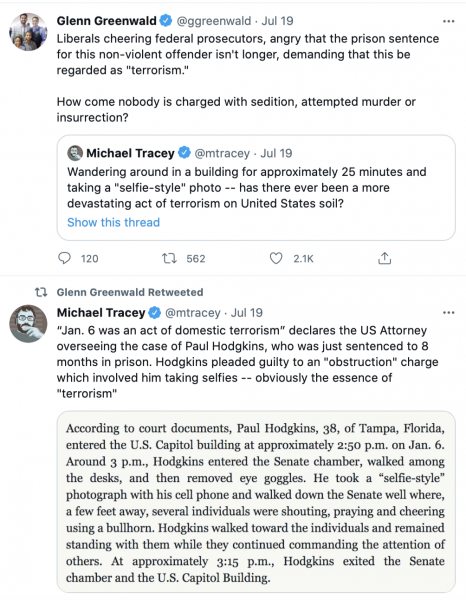
IT WAS AN ARMED ANTI-GOVERNMENT INSURRECTION — BY FEDERAL OFFICERS! DEA agent charged with carrying badge and gun at Capitol riot. “An off-duty special agent for the Drug Enforcement Agency carried his government-issued firearm while attending the January 6 riot at the U.S. Capitol, according to court documents unsealed Tuesday. Prosecutors say he posed for pictures while flashing his DEA badge and climbed onto the Peace Monument to film himself as he delivered a ‘monologue.'”
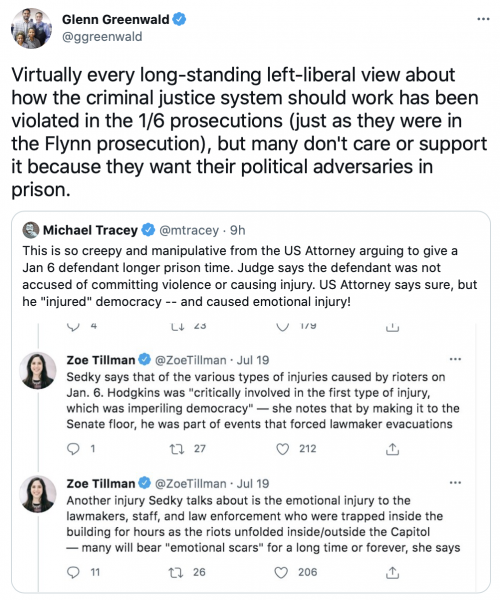
People took selfies and posed for pictures because they thought they weren’t doing anything wrong. They figured as Americans they had a right to protest, and they knew their behavior was much milder than what had been praised all summer. They just didn’t realize that the rules for them were different, because they thought they still lived in America.
We previously discussed the bizarre divorce case of former Chicago Cubs player Ben Zobrist and his estranged wife Julianna Zobrist. The case took a nasty turn when it came out that Zobrist was suing his former pastor Bryon Yawn for $6 million. He is accusing Yawn of sleeping with his wife, Julianna, a contemporary-Christian singer, after they came to him for marital counseling. Yawn, former pastor at Community Bible Church in Nashville, is also accused of stealing money from Yobrist’s charity. Now Julianna has come forward with a claim of $4 million that is breathtaking in its audacity and, in my view, lunacy. Thus, I award it my Equus Gluteus Maximus (EGM) Award for legal argument. The EGM is awarded to only those arguments that truly distinguished themselves in sheer asininity.
At the outset, I have to admit a bias toward Ben Zobrist as a lifelong Cubs fan. We are, after all, indelibly linked in history and baseball legend: Ben as the MVP of the 2016 World Series and myself as the person who broke the Billygoat curse that allowed him (and the Cubbies) to win.
However, the most recent claim of the Julianna Zobrist could seal her reputation as the most ridiculed figure in Chicago since Steve Bartman.
Julianna is demanding millions on the premise that Zobrist did not play hard enough as a player and therefore failed to protect their “marital assets.” This is from a wife who had an affair with their pastor — an affair that reportedly was the reason that Ben Zobrist fell apart. (Ben Zobrist is deeply religious and reportedly did not want a divorce so he consulted with the pastor secretly sleeping with his wife).
Nevertheless, Julianna believes that Ben should have bucked up Buttercup and played harder: she insists her husband “essentially went from the top of his game to basically giving up, which caused a massive loss in income” and that he “intentionally and voluntarily stopped working.” I wonder why.
She is now arguing “In 2019, he had a contract with the Chicago Cubs for ($12 million), but since he only played for 2 months, his salary was prorated and he only earned ($4.5 million) of the ($12 million) he could have earned.” Ben Zobrist claims that it was Julianna who “coaxed him” back into playing.
This is akin to an arsonist suing the victim for failing to have less combustible possessions.
The claim in my view is so utterly beyond the pale that it more than warrants the distinction of a EGM.
We have been discussing the academic saga over the offer of an academic chair by the University of North Carolina to controversial New York Times Magazine reporter Nikole Hannah-Jones. UNC rescinded the offer but then re-extended the offer without tenure. Hannah-Jones accepted but then changed her mind and demanded tenure. UNC then gave her tenure and she changed her mind to take a chair at Howard University. The opposition to Hannah-Jones was based on the historical errors in her 1619 Project and criticism over biased journalism. Now Hannah-Jones is removing any doubt about her view of journalism. She has declared that “all journalism is activism.”
Hannah-Jones told CBS News that journalists now have set aside notions of neutrality. She noted:
“When you look at the model of The Washington Post, right? ‘Democracy dies in darkness,’ that’s not a neutral position. But our methods of reporting have to be objective. We have to try to be fair and accurate. And I don’t know how you can be fair and accurate if you pretend publicly that you have no feelings about something that you clearly do.”
Reporters are now claiming greater and greater license to frame news to illustrate the truth as they see it. They nod to the need for fairness but then note that they have to tell the truth about society and politics as they see it. They then seek to frame rather than report the news. Hannah-Jones is a great example of how this new journalism quickly becomes raw advocacy.
We have have been discussing how writers, editors, commentators, and academics have embraced rising calls for censorship and speech controls, including President-elect Joe Biden and his key advisers. Even journalists are leading attacks on free speech and the free press. Bias is now treated as something that is natural and motivating. Recently, Lauren Wolfe, the recently fired freelance editor for the New York Times, has not only gone public to defend her pro-Biden tweet but published a piece titled “I’m a Biased Journalist and I’m Okay With That.”
This movement includes academics rejecting the very concept of objectivity in journalism in favor of open advocacy. Columbia Journalism Dean and New Yorker writer Steve Coll has denounced how the First Amendment right to freedom of speech was being “weaponized” to protect disinformation. In an interview with The Stanford Daily, Stanford journalism professor, Ted Glasser, insisted that journalism needed to “free itself from this notion of objectivity to develop a sense of social justice.” He rejected the notion that the journalism is based on objectivity and said that he views “journalists as activists because journalism at its best — and indeed history at its best — is all about morality.” Thus, “Journalists need to be overt and candid advocates for social justice, and it’s hard to do that under the constraints of objectivity.”
For those of us who have worked for decades as columnists and in the media, the growing intolerance for dissenting views is stifling and alarming. Hannah-Jones has been a leading voice in attacking those with opposing views. A year ago, the New York Times denounced its own publishing of an editorial of Sen. Tom Cotton (R., Ark.) calling for the use of the troops to restore order in Washington after days of rioting around the White House. It was one of the one of the lowest points in the history of modern American journalism. While Congress would “call in the troops” six months later to quell the rioting at the Capitol on January 6th, New York Times reporters and columnists called the column historically inaccurate and politically inciteful. Reporters insisted that Cotton was even endangering them by suggesting the use of troops and insisted that the newspaper cannot feature people who advocate political violence. (One year later, the New York Times published a column by an academic who has previously declared that there is nothing wrong with murdering conservatives and Republicans).
It is thus no surprise that Hannah-Jones will now teach the same biased approach journalism to students at Howard University. What is saddening is the silence of most journalism professors as they watch their profession just become a new form of advocacy. Few want to risk the professional attacks in opposing figures like Hannah-Jones. However, this movement is killing their profession. Polls show trust in the media at an all-time low with less than 20 percent of citizens trusting television or print media. Yet, reporters and academics continue to destroy the core principles that sustain journalism and ultimately the role of a free press in our society.
Don't drive through Louisiana. Maybe the buildings and infrastructure are dilapidated because the environment is hostile to visitors...
Speeding was not an option for Evelyne Bornier when she hosted relatives from France and took them on a road trip through the Deep South in October 2018. The group of seven adults traveled in a Chevrolet Venture with a broken suspension system that turned potholes into craters.
"It was an old, beaten up van," says Bornier, a language professor who immigrated from France in 1994. "We just needed transportation, and it was cheaper to buy one and use it for the trip rather than rent something for three weeks."
Even with a newer vehicle, Bornier would have followed the traffic rules. "My dad is a retired police officer, and I abide by the law," she says. "I guess it's in my blood."
Her guests understood the need to go slow, but teased Bornier anyway about her cautious driving during the journey from her home in Auburn, Alabama, to Houston and back. Bornier rarely topped 50 mph the whole way, and hitting 60 mph was impossible. So she was surprised when she passed a police car parked on the side of Interstate 10 in Henderson, Louisiana, and the emergency lights started flashing.
"I'm thinking maybe I have a broken taillight or something like that," Bornier says.
Instead, the officer pulled her over and accused her of driving past 70 mph in a 60 mph zone. Stunned by the allegation, Bornier offered her keys to the officer and challenged him to bring the vehicle to 70 mph. He declined and told her that if she had a problem with the ticket, she could talk to the judge.
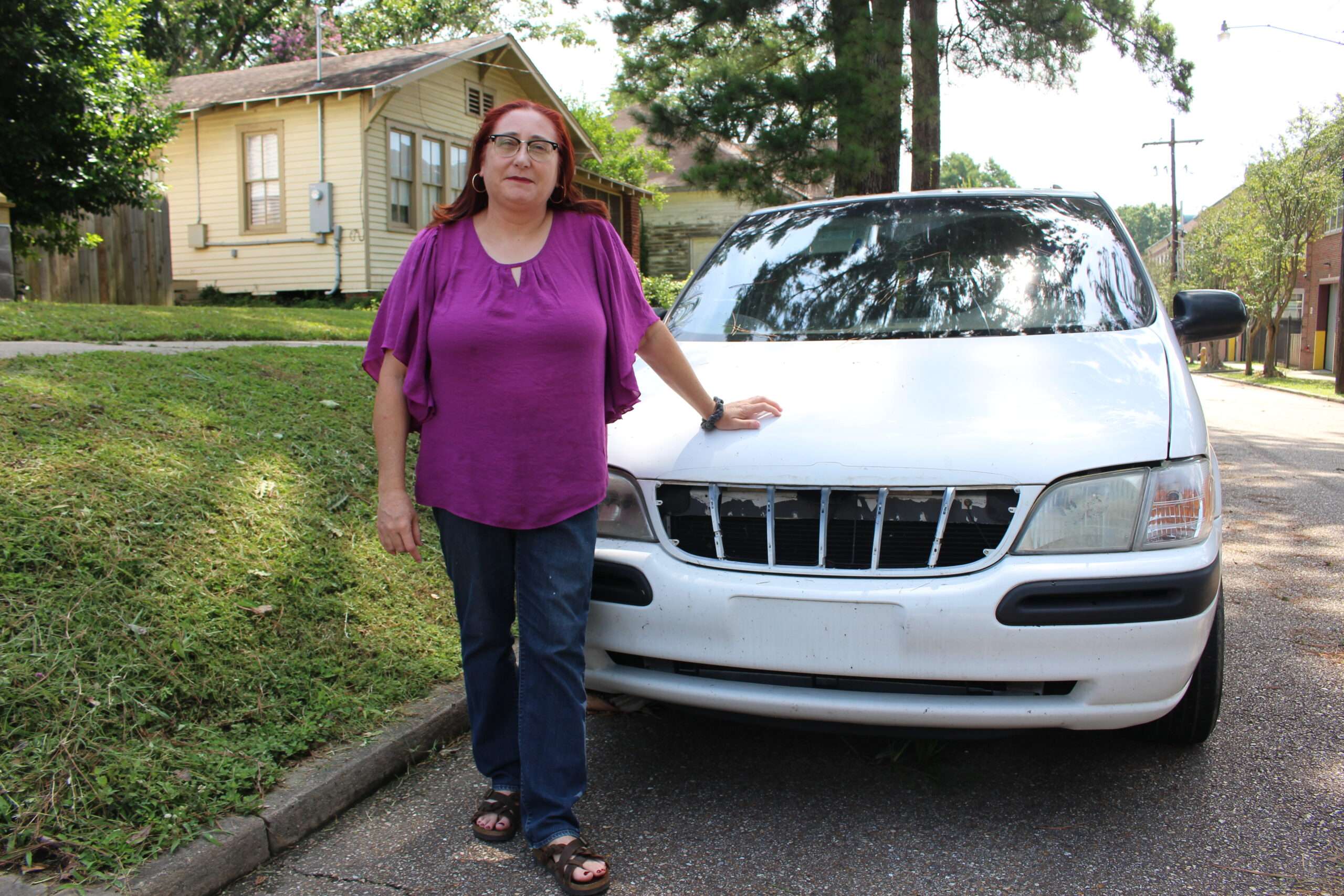
Evelyne Bornier stands with her Chevrolet Venture, which she bought in 2018 for a road trip with relatives.
Bornier considered doing just that, but then weighed the costs. For starters, she would have to drive from Auburn to the middle of Louisiana for the hearing. Most likely, she would have to come more than once—first to plead not guilty and then for a trial on a later date.
Bornier also faced higher penalties if she disputed her ticket. Louisiana allows towns and villages to tack on a $50 "witness fee" when officers testify in court, and costs accumulate if a defendant appeals to the next level.
The clerk who talked to Bornier on the phone also told her that her insurance rates would go up if she fought the ticket and lost. But if she paid immediately, the infraction would not show up on her record.
Taxation by Citation
Louisiana's traffic enforcement system punishes individuals in multiple ways when they exercise their constitutional rights. But none of the pressure tactics are unusual. Small towns all over the United States run speed traps and then use rigged local courts to convert citations into revenue—like a one-two punch that robs people of due process.
The resulting fines and fees supplement tax collections, and many municipalities grow addicted to the funds. Extra revenue for perks quickly becomes essential for daily operations.
A 2020 report from the Institute for Justice calls the practice "taxation by citation," which occurs when local governments issue tickets to raise revenue rather than to protect the public. The nationwide survey of state laws found perverse financial incentives and lack of legislative oversight almost everywhere. But Bornier discovered one key difference in Louisiana.
If she requested a hearing, her judge would be the mayor—the same person who manages the municipal budget. Such an arrangement takes collusion to the next level, cutting out the need for secret meetings and backroom deals. A system that puts the same individual in charge of the executive and judicial branches of government turns every party-of-one into a meeting of political insiders.
To make matters worse, some Louisiana mayors also serve as prosecutors while simultaneously sitting on the bench. First they present evidence to themselves, then they rule in favor of themselves, and then they send payments to themselves. Outsiders can do little more than watch as me-myself-and-I share power—and cash.
Louisiana lawmakers have no problem with the built-in conflicts. The state takes a hands-off approach, allowing about 250 mayor's courts in small towns and villages to operate outside the normal rules of procedure. As the Louisiana Municipal Association acknowledges in its Mayor's Court Handbook, "state law provides little guidance for the day-to-day functioning of these courts."
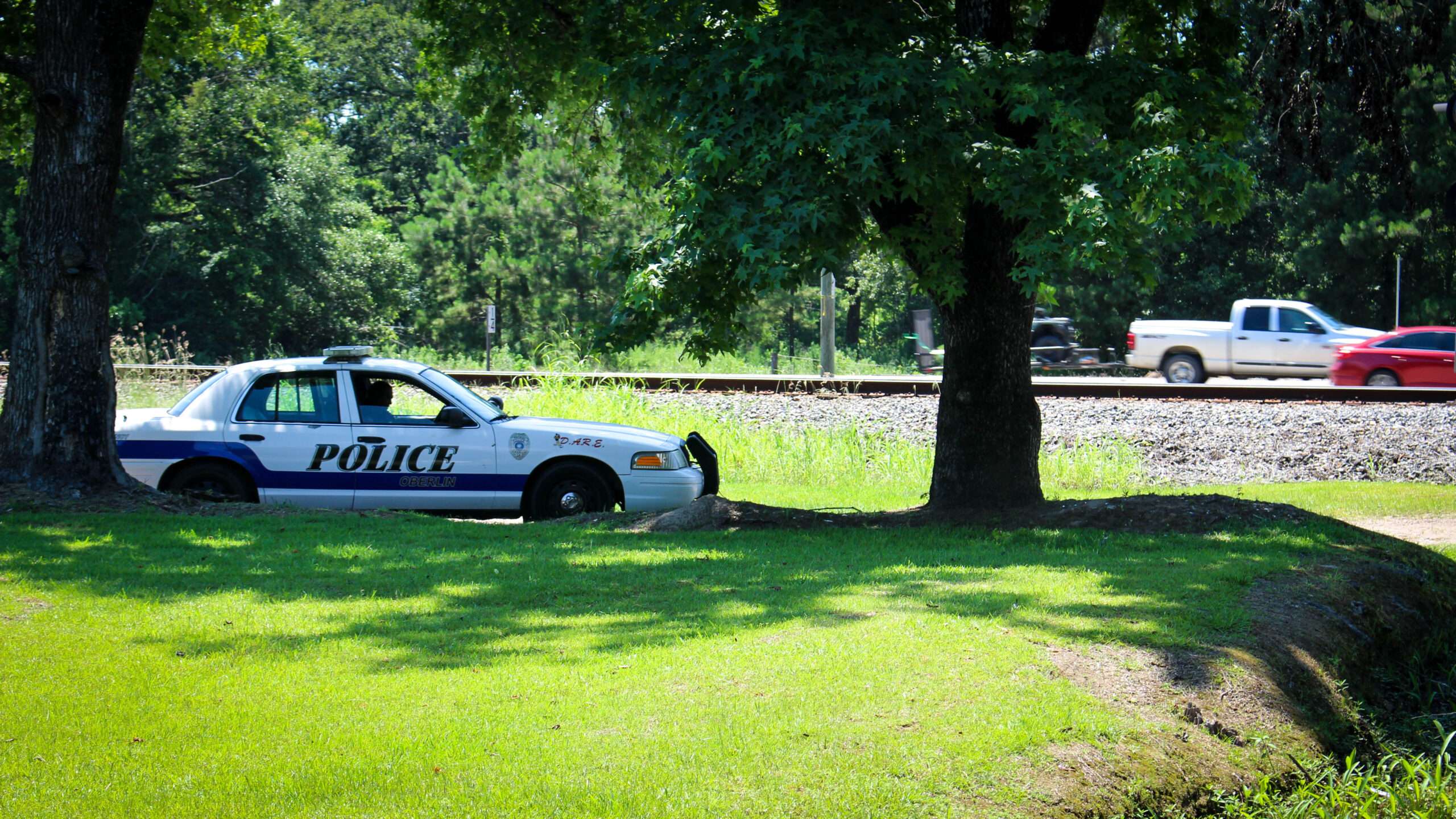
A police officer waits for speeders on northbound U.S. Highway 165 on June 16, 2021, in Oberlin, Louisiana.
Bornier abandoned all hope of fair treatment when she discovered the scheme, so she cut her losses and paid $192 for a violation that she did not commit. "A system that lets the judge be the mayor or the mayor be the judge is outrageous," she says. "It's unethical and should be illegal."
Police, Inc.
No other U.S. jurisdiction except Ohio allows mayors to preside in their own courtrooms. The results are sometimes staggering.
Fenton, a southwest Louisiana village with about 380 residents, has used its mayor's court to pursue taxation by citation as a financial strategy for more than 15 years. Accountants recommended aggressive traffic enforcement as a way to boost revenue in 2005, saying nothing about public safety. The context was strictly business.
Fines and fees more than tripled during the next two years, climbing from $38,000 to $120,000. The revenue more than tripled again to $388,000 by 2011, following the widening of U.S. Route 165 from two lanes to five lanes through the center of the village in 2009.
Increased traffic counts since then have turned law enforcement into the village's number one industry. Fenton planners budgeted $750,000 for fines and fees in the fiscal year that ended on June 30, 2020, putting pressure on a police department with only three patrol officers to deliver.
Despite a COVID-19 stay-at-home order that reduced traffic during the final months of the reporting period, the village easily surpassed the projection and raked in more than $1 million in fines and fees for the fifth year in a row.
The haul represents more than $3,000 per resident, although local families pay almost nothing. The police chief, who is also the mayor's uncle, focuses on out-of-towners.
Overall, at least 24 Louisiana municipalities got more than half their money from fines and fees during the most recent year for which results are available. For comparison, the national average is about 2 percent of municipal revenue from fines and fees—and watchdog groups flag anything above 10 percent as excessive.
Fisher, McNary, and Merryville, Louisiana, blew past that limit like a drag racer in a school zone. All three municipalities got more than 60 percent of their revenue from fines and fees in 2020.
Other Louisiana towns and villages relied on their mayor's courts even more. Forest Hill, Port Vincent, and Creola covered more than 70 percent of their budgets from fines and fees in 2020, while Baskin, Dodson, Reeves, Robeline and Tullos topped 80 percent. So did Henderson, the town that ticketed Bornier.
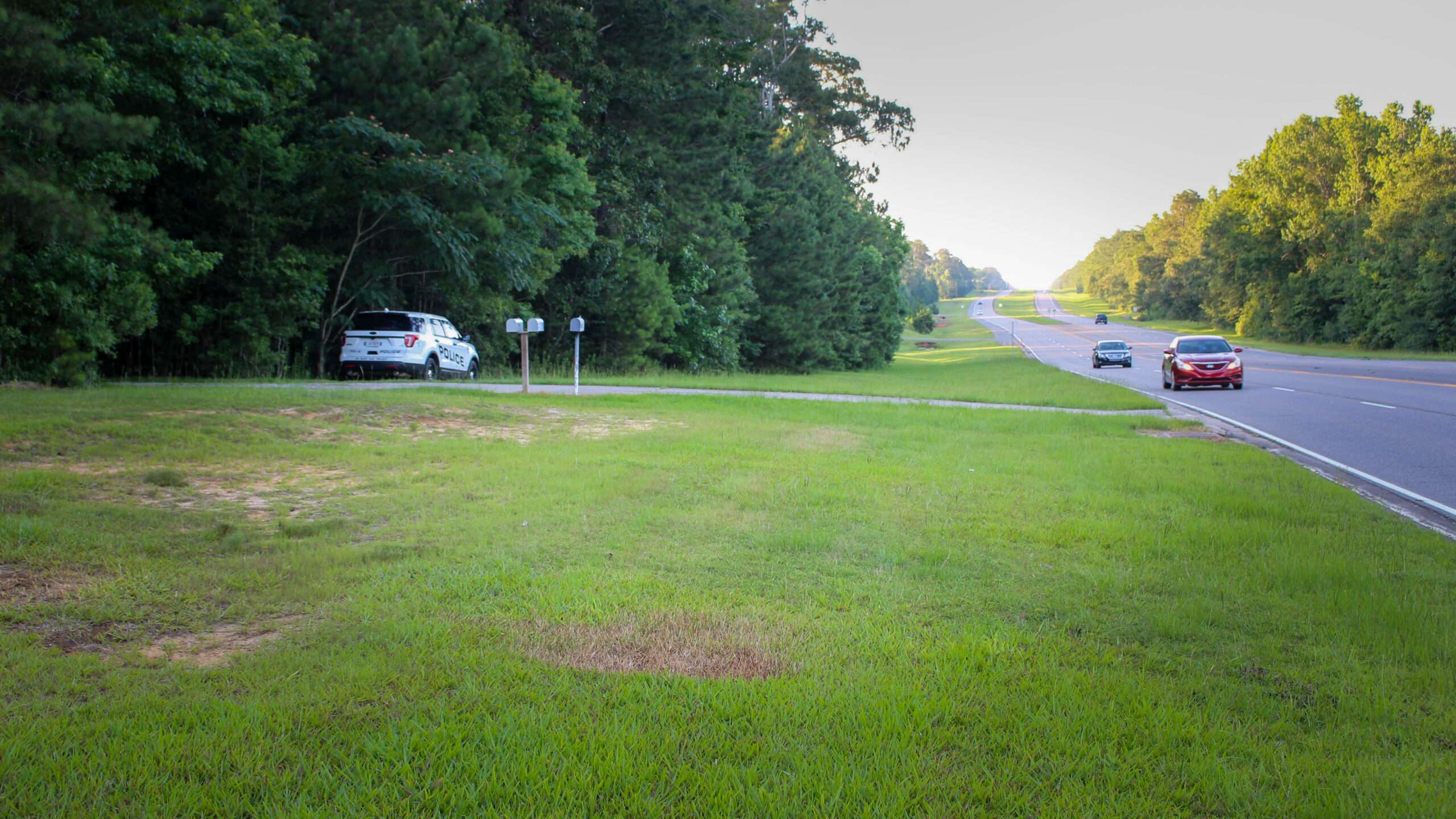
A police officer waits for speeders on southbound U.S. Highway 165 on June 16, 2021, in Forest Hill, Louisiana.
Fenton nearly hit 90 percent, a monster figure but not the highest in Louisiana. Georgetown, another village on Route 165, led all municipalities at 93 percent.
No other state has so many towns and villages that lean so heavily on court revenue. Arkansas, Georgia, Oklahoma, Texas, and New York stood out for aggressive code enforcement in a 2019 report from Governing, but Louisiana outpaced them all.
Bornier sees a direct connection to the mayor's court system, combined with sheer desperation for cash in communities with no tax base. "The mayor has an interest in bringing revenue to the city, obviously, so he's not going to dismiss tickets for someone like me," she says. "Especially for someone who has a license plate from out of state."
Sportsman's Paradise
Mayor's court revenue may come from a range of petty offenses, but Louisiana's smallest municipalities collect virtually all of their fines and fees from traffic enforcement. Fenton shows how the enterprise can work.
Just past the point where the speed limit drops from 65 mph to 50 mph on southbound Route 165, Fenton police built a paved lookout area for themselves in a small cluster of trees. The cover turns the department's black SUVs almost invisible at night, while providing shade on hot summer days.
Patrol officers back into the nook and point their radar guns up the highway toward the Coushatta Casino Resort, a tourist attraction that lures hundreds of visitors daily. Only the deceased residents buried across the highway at a roadside cemetery spend more time in the lookout area. A Fenton police vehicle even appears in the hiding spot on Google Street View.
Public records from January and February 2021 suggest a fast-paced job. Three Fenton officers issued 905 citations during the two-month span, representing one ticket every 36 minutes around the clock. One sergeant cranked out 17 citations during a single shift on February 12 amid a winter storm that shut down parts of Texas and Louisiana.
Other days, the job mostly involves sitting and waiting. In many ways the rhythm resembles fishing, a popular pastime in a state nicknamed the "Sportsman's Paradise." Long periods of quiet are punctuated by occasional bursts of activity.
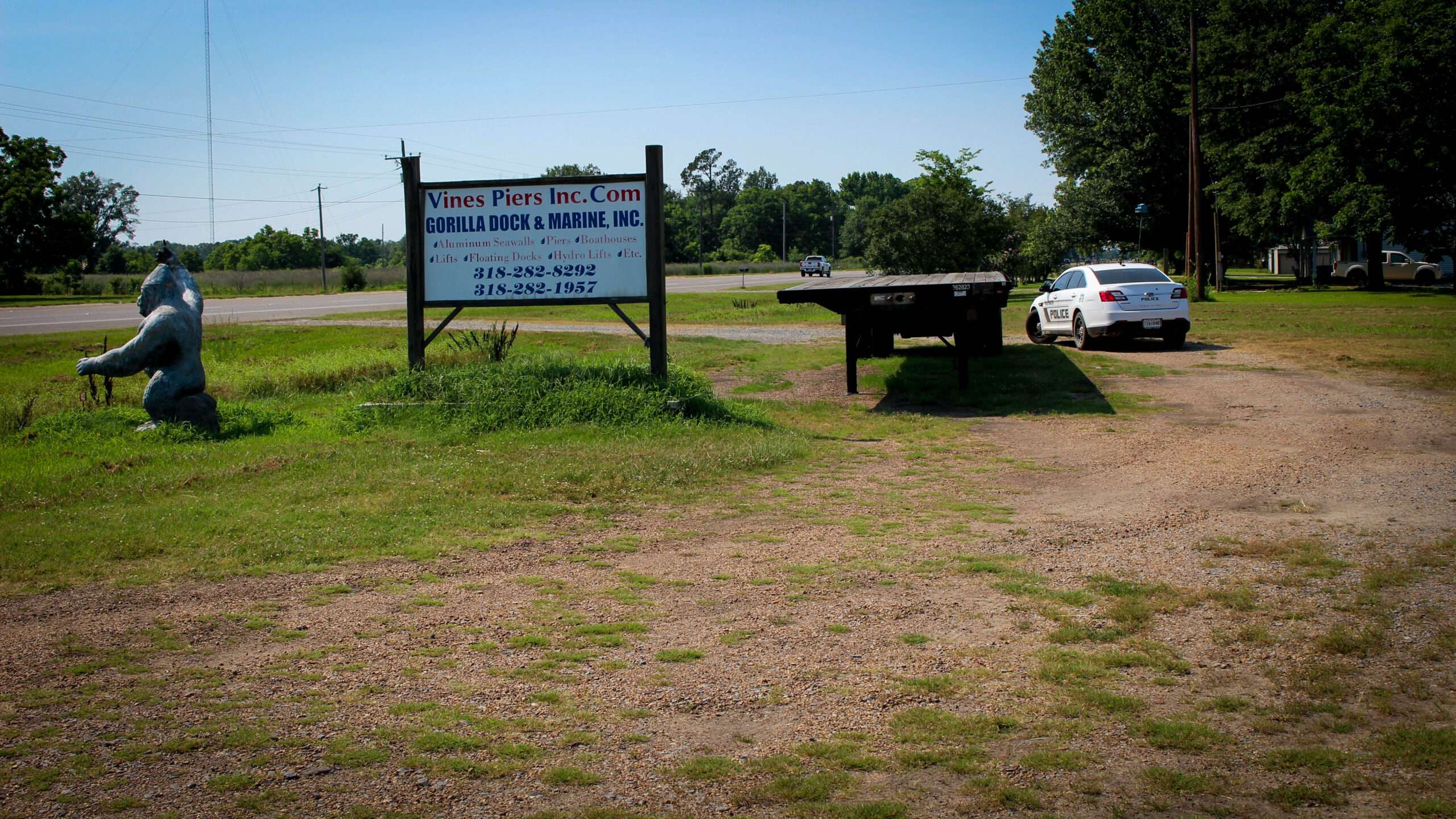
Also like fishing, everyone has a favorite spot. An officer in Baskin hides behind a flatbed trailer outside Gorilla Dock & Marine on U.S. Route 425. Officers in Henderson camp out on Interstate 10 at the bottom of the Louisiana Airborne Memorial Bridge.
A police officer patrols U.S. Route 425 on June 17, 2021, in Baskin, Louisiana.
An officer in Georgetown lurks at the bottom of a highway overpass, clocking southbound cars as they come over the crest. An officer in Forest Hill parks in the grass off a private driveway, using a bend in the tree line for cover.
Many residents welcome the heavy police presence. George Loche, who gets around Fenton on a bicycle, says the speed traps force travelers to slow down. "It keeps the town quiet like it is," he says. "We like it this way."
Other residents talk about financial benefits, but not everyone agrees. One man, who stops to chat while buying a Dr Pepper from a vending machine in Henderson, says the revenue from traffic enforcement has done nothing to improve his town. "They pull in thousands and thousands of dollars, but the town still looks like crap," he says.
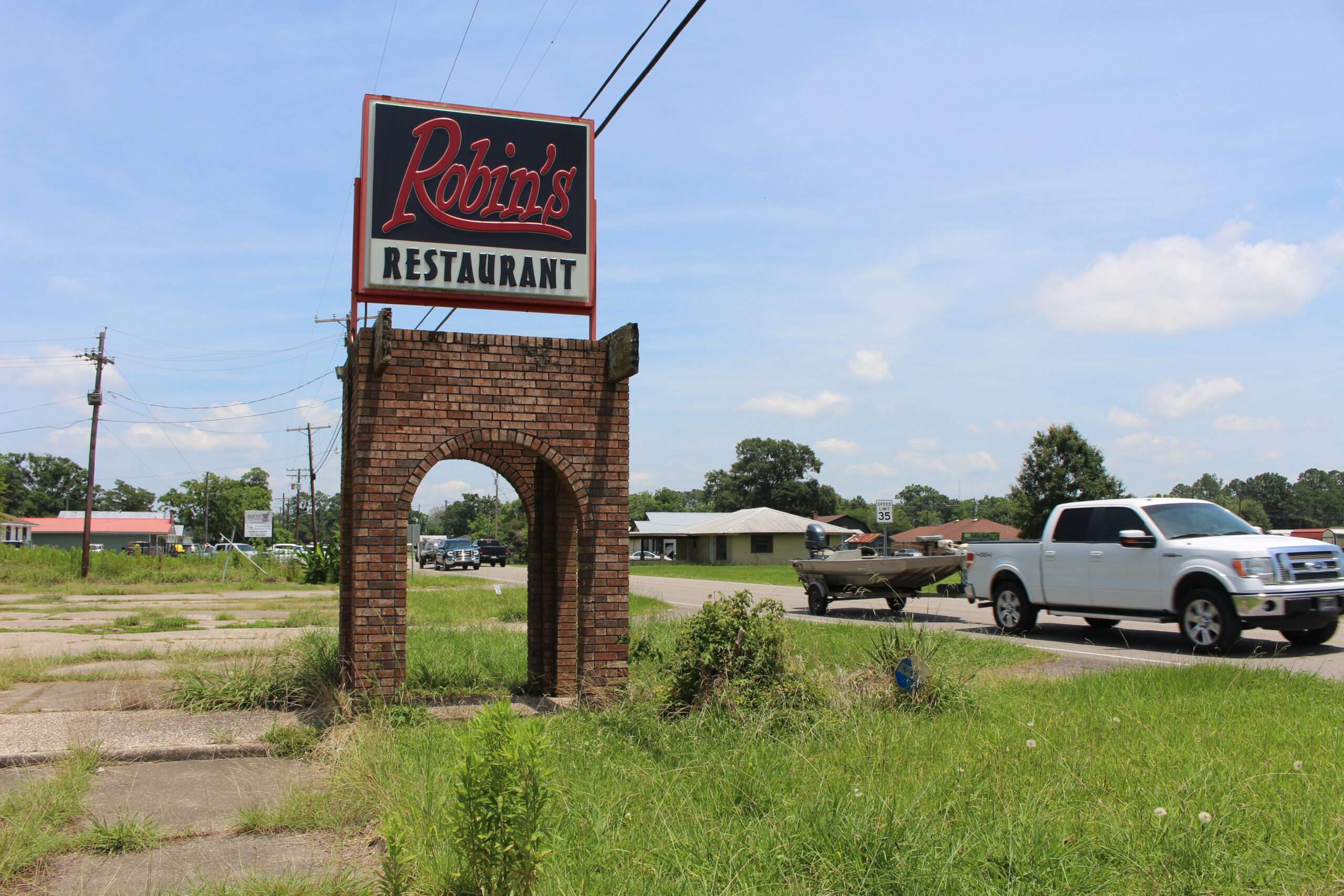
For emphasis, he points down the main road. Dilapidated buildings line the street, and weeds push through the cracks in the parking lot outside Robin's Restaurant, an abandoned eatery that once served Cajun cuisine. The only sign of economic growth is a single construction site—the future home of a new town hall.
Robin's Restaurant, an abandoned eatery, once served Cajun cuisine in Henderson, Louisiana.
A nearby shop owner says most residents will never go inside the building for mayor's court because Henderson does not give tickets to locals. If it did, voters would throw the mayor and police chief out of office.
"Politics," the man says with a smile. "The left hand washes the right hand."
The Hunt for Due Process
Out-of-towners and locals are not the only ones with opinions about mayor's courts. The U.S. Supreme Court has weighed in three times on cases out of Ohio in 1927, 1928, and 1972.
In the most recent decision, Ward v. Village of Monroeville, a 7–2 majority ruled that executive responsibilities for municipal finances made an Ohio mayor too partisan to serve as judge, depriving people of their 14th Amendment right to due process.
Other rebukes have followed. In 2000 a citizens commission studied mayor's courts at the request of the Ohio Supreme Court and recommended ending the system. And in 2019 the American Civil Liberties Union of Ohio published a report showing how mayor's courts violate people's rights while disproportionately targeting black people.
So far, Ohio and Louisiana lawmakers have ignored the evidence. Karen White, executive counsel at the Louisiana Municipal Association in Baton Rouge, says none of the Ohio research or case history applies to Louisiana because mayor's courts work differently in the Pelican State.
"What differentiates Louisiana from Ohio in most cases is that our laws are intentionally designed to create strong checks and balances," she says.
Mayors do not set municipal salaries, allocate funds, or fill law enforcement positions, for example. Police chiefs are either elected by voters or appointed by the board of aldermen. "The mayor has zero interest in that," White says.
Despite the assurances of impartiality, two former police officers described systemic bias when they resigned and filed separate whistleblower lawsuits against Gretna, Louisiana. They claimed that the small city outside New Orleans was using an illegal quota system and punishing officers who fell behind on issuing citations.
Rather than litigating the allegations, the police chief claimed qualified immunity, a legal doctrine that shields government employees from accountability when they violate civil rights. Essentially, the chief asked the court to assume that the allegations were true, but to dismiss the complaints anyway.
The MacArthur Justice Center picked up the matter and filed its own lawsuit against Gretna in 2017, targeting the mayor's court for its role in the money-making scheme. Unlike Fenton and many other Louisiana municipalities, where mayors preside personally on the bench, Gretna appoints magistrates who serve at the mayor's pleasure.
Eric Foley, the lead attorney who filed the 2017 case, says the effect is the same. "A lot of people don't realize what they're walking into," he says. "The trials are a travesty."
Defendants with resources avoid the mess. They just pay online. "If you show up, it's because you can't afford to pay," Foley says. "So you come and hope for a diversion program or payment plan."
Foley says low-income families and people of color often get trapped in debt. A single citation or misdemeanor arrest can turn into a monthslong ordeal, requiring multiple court appearances with stiff penalties for a single missed appointment.
"Just go and sit in one of the sessions," Foley says. "The defendants appearing in the mayor's court are disproportionately poor people of color."
Statistics support the argument, but the U.S. District Court for the Eastern District of Louisiana only considered mayor's court bias in narrow terms. A federal judge ruled in 2020 that Gretna did not violate the Constitution because no one received direct compensation tied to court performance. In other words, the mayor and the officials who served at her pleasure got paid the same whether or not they collected fines and fees—even if their salaries and other perks depended on the money.
The ruling was good news for 250 mayors across Louisiana, who can continue operating business as usual. For everyone else, Evelyne Bornier provides a cautionary tale.
"I was stopped," she says. "I was given a ticket for something I did not do, and I had absolutely zero opportunity to discuss the ticket itself or to fight it."
Man, you gotta give Royce White credit for what he's doing here. This stuff would never fly in the NBA because this man refuses to live inside the China Box.
GREENFAIL: Report: Philadelphia’s Proterra Fleet in Complete Shambles. “More than two dozen electric Proterra buses first unveiled by the city of Philadelphia in 2016 are already out of operation, according to a WHYY investigation. The entire fleet of Proterra buses was removed from the roads by SEPTA, the city’s transit authority, in February 2020 due to both structural and logistical problems—the weight of the powerful battery was cracking the vehicles’ chassis, and the battery life was insufficient for the city’s bus routes. . . . The city paid $24 million for the 25 new Proterra buses, subsidized in part by a $2.6 million federal grant. Philadelphia defended the investment with claims that the electric buses would require less maintenance than standard combustion engine counterparts.”
PAST PERFORMANCE IS NO GUARANTEE OF FUTURE RESULTS:
● Shot: “The two most monumental events of the last year in the US were the election of Joe Biden to the presidency and the introduction of Covid-19 vaccines. Yet there are those who falsely believe Biden won only because of fraud or that they shouldn’t get a vaccine. Having either belief is dangerous — for either the health of society or the health of the republic. It turns out that about half the people in this country either have doubts about Biden’s legitimacy or have not gotten the vaccine. Take a look at the most recent Monmouth University poll, one of the few to ask about both people’s vaccine status and how they view the 2020 election result. Not having received a vaccine was a minority position, at 34%, at the time of the poll in mid-June. Thinking Biden won only because of fraud was a minority position at 32%.”
● Chaser: “The most recent Kaiser poll helps illustrate that the vaccine hesitant group doesn’t really lean Republican. Just 20% of the group called themselves Republican with an additional 19% being independents who leaned Republican. The clear majority (61%) were not Republicans (41% said they were Democrats or Democratic leaning independents and 20% were either pure independents or undesignated).”
As Stephen Kruiser wrote on Thursday, Masks Are Back In L.A. County Because Libs Are Really Anti-Vaxxers, Too: “Unless millions of toothless Republican rubes from the icky flyover hinterlands moved to Los Angeles in the last month, it would appear that a whole bunch of libs aren’t getting their vaccines either.”