Shared posts

20 Feb 20:58

Go to Prison for File Sharing? That's What Hollywood Wants in the Secret TPP Deal

by Maira Sutton

The Trans-Pacific Partnership agreement (TPP) poses massive threats to users in a dizzying number of ways. It will force other TPP signatories to accept the United States' excessive copyright terms of a minimum of life of the author plus 70 years, while locking the US to the same lengths so it will be harder to shorten them in the future. It contains DRM anti-circumvention provisions that will make it a crime to tinker with, hack, re-sell, preserve, and otherwise control any number of digital files and devices that you own. The TPP will encourage ISPs to monitor and police their users, likely leading to more censorship measures such as the blockage and filtering of content online in the name of copyright enforcement. And in the most recent leak of the TPP's Intellectual Property chapter, we found an even more alarming provision on trade secrets that could be used to crackdown on journalists and whistleblowers who report on corporate wrongdoing.

Here, we'd like to explore yet another set of rules in TPP that will chill users' rights. Those are the criminal enforcement provisions, which based upon the latest leak from May 2014 is still a contested and unresolved issue. It's about whether users could be jailed or hit with debilitating fines over allegations of copyright infringement.

Dangerously Low Threshold of Criminality

The US is pushing for a broad definition of a criminal violation of copyright, where even noncommercial activities could get people convicted of a crime. The leak also shows that Canada has opposed this definition. Canada supports language in which criminal remedies would only apply to cases where someone infringed explicitly for commercial purposes.

This distinction is crucial. Commercial infringement, where an infringer sells unauthorized copies of content for financial gain, is and should be a crime. But that's not what the US is pushing for—it's trying to get language passed in TPP that would make a criminal out of anyone who simply shares or otherwise makes available copyrighted works on a “commercial scale.”

As anyone who has ever had a meme go viral knows, it is very easy to distribute content on a commercial scale online, even without it being a money-making operation. That means fans who distribute subtitles to foreign movies or anime, or archivists and librarians who preserve and upload old books, videos, games, or music, could go to jail or face huge fines for their work. Someone who makes a remix film and puts it online could be under threat. Such a broad definition is ripe for abuse, and we've seen such abuse happen many times before.

Fair use, and other copyright exceptions and limitations frameworks like fair dealing, have been under constant attack by rightsholder groups who try to undermine and chip away at our rights as users to do things with copyrighted content. Given this reality, these criminal enforcement rules could go further to intimidate and discourage users from exercising their rights to use and share content for purposes such as parody, education, and access for the disabled.

Penalties That Must be "Sufficiently High"

The penalties themselves could be enough to intimidate and punish users in a way that is grossly disproportionate to the crime. Based upon the leak, which showed no opposition in key sections, it seems TPP negotiators have already agreed to more vague provisions that would oblige countries to enact prison sentences and monetary fines that are "sufficiently high" to deter people from infringing again. Here is the text:

penalties that include sentences of imprisonment as well as monetary fines sufficiently high to provide a deterrent to future acts of infringement, consistently with the level of penalties applied for crimes of a corresponding gravity;

Already in many countries, criminal punishments for copyright grossly outweigh penalties for acts that are comparatively more harmful to others. So the question as to what crimes copyright infringement corresponds to in "gravity" is obscure. What's more alarming is that countries without existing criminal penalties or whose penalties are not "sufficiently high" to satisfy the US government, may be forced to enact harsher rules. The US Trade Representative (USTR) could use the certification process, at the behest of rightsholder groups, to arm-twist nations into passing more severe penalties, even after the TPP is signed and ratified. The USTR has had a long history of pressuring other nations into enacting extreme IP policies, so it would not be out of the realm of possibility.

Property Seizure and Asset Forfeiture

The TPP's copyright provisions even require countries to enable judges to unilaterally order the seizure, destruction, or forfeiture of anything that can be "traceable to infringing activity", has been used in the "creation of pirated copyright goods", or is "documentary evidence relevant to the alleged offense". Under such obligations, law enforcement could become ever more empowered to seize laptops, servers, or even domain names.

Domain name seizure in the name of copyright enforcement is not new to us in the US, nor to people running websites from abroad. But these provisions open the door to the passage of ever more oppressive measures to enable governments to get an order from a judge to seize websites and devices. The provision also says that the government can act even without a formal complaint from the copyright holder. So in places where the government chooses to use the force of copyright to censor its critics, this could be even more disastrous.

Criminalization of Getting Around DRM

We've continued to raise this issue, but it's always worth mentioning—the TPP exports the United States' criminal laws on digital rights management, or DRM. The TPP could lead to policies where users will be charged with crimes for circumventing, or sharing knowledge or tools on how to circumvent DRM for financial gain as long as they have "reasonable ground to know" that it's illegal to do so. Chile, however, opposes this vague language because it could lead to criminal penalties for innocent users.

The most recent leak of the Intellectual Property chapter revealed new exceptions that would let public interest organizations—such as libraries and educational institutions—get around DRM to access copyrighted content for uses protected by fair use or fair dealing, or content that may simply be in the public domain. But even if it's legal, it would be difficult for them to get around DRM since they may not be equipped with the knowledge to do it on their own. If someone else tries to do a public service for them by creating these tools for legally-protected purposes, they could still be put in jail or face huge fines.

Conclusion

Like the various other digital copyright enforcement provisions in TPP, the criminal enforcement language loosely reflects the United States' DMCA but is abstracted enough that the US can pressure other nations to enact rules that are much worse for users. It's therefore far from comforting when the White House claims that the TPP's copyright rules would not "change US law"—we're still exporting bad rules to other nations, while binding ourselves to obligations that may prevent US lawmakers from reforming it for the better. These rules were passed in the US through cycles of corrupt policy laundering. Now, the TPP is the latest step in this trend of increasingly draconian copyright rules passing through opaque, corporate-captured processes.

These excessive criminal copyright rules are what we get when Big Content has access to powerful, secretive rule-making institutions. We get rules that would send users to prison, force them to pay debilitating fines, or have their property seized or destroyed in the name of copyright enforcement. This is yet another reason why we need to stop the TPP—to put an end to this seemingly endless progression towards ever more chilling copyright restrictions and enforcement.

If you're in the US, please call on your representatives to oppose Fast Track for TPP and other undemocratic trade deals with harmful digital policies.


Share this: Share on Twitter Share on Facebook Share on Google+ Share on Diaspora  ||  Join EFF
16 Feb 16:08

Endometriosis is more than just a 'women’s problem’

by Jenny Johnston, Academic GP at Queen's University Belfast
Painful but not taboo. Pain by Shutterstock

Why does a disease which causes pain and infertility, and which affects around 10% of UK women, take up to ten years to diagnose?

Endometriosis is common and debilitating. Deposits of tissue resembling the lining of the womb are left in places they would not normally occur. The ovaries, tubes and walls of the pelvis are common targets. The bladder and bowel can be affected and, on rare occasions, far-flung body parts such as the liver can be involved. With every period the deposits bleed, setting off a vicious cycle of inflammation and scarring.

Women with endometriosis commonly experience very painful periods and painful sex. Some will also have pelvic pain which can last throughout the cycle. Bowel symptoms, such as bloating and diarrhoea, are common and are often put down to irritable bowel syndrome. Symptoms of bladder irritation are experienced by two-thirds of sufferers. Fertility is often reduced. In advanced cases, scarring in the pelvis makes it difficult for an egg and sperm to meet and fertilise. Even in mild cases, a cocktail of inflammatory substances in the pelvis can be toxic to eggs and embryos.

The daily effects of living with chronic illness, including managing pain and associated fatigue, extend to all areas of women’s lives. Depression and anxiety are very common. The impact on relationships and sex, plans for a family, and career and productivity, can be immense. To add further difficulty, many will have a long and difficult journey towards diagnosis and proper management, with multiple attendances at their GP and A&E.

Some will have been told outright, or by implication, that they are simply not managing the normal business of being a woman. From a medical point of view, they can be considered challenging patients, because they attend frequently and never seem to get better.

Why is this difficult to talk about?

There are a number of reasons for the long delay in diagnosis. Firstly, endometriosis touches on a number of issues which are considering challenging, if not exactly taboo, in our culture. It is a disease of women – and one which involves direct discussion of sex, periods and fertility. For many women, it also involves chronic pain, another difficult topic. Secondly, young women may be told, by parents and doctors, that period pain is a normal part of the experience of being a woman. Thirdly, classical teaching for doctors has been that endometriosis is a disease of older women. As a result, it was not something which was usually considered a problem in teenagers and young women.

How, then, can we improve things for this large and somewhat disenfranchised group of patients? In recent years, the growing evidence base around endometriosis has started to improve our understanding. We know that it can and does present in young women, and indeed that it may be aggressive at this stage. We now know that it is associated with other health problems such as asthma and eczema, and that it seems to also be linked with more serious autoimmune problems, such as inflammatory bowel disease. There seems to be a genetic link – and it is more likely where a family member are also affected.

With this improved knowledge comes the power to recognise and to treat earlier. The key message for women and doctors is that disabling period pain is not normal. Women who are routinely struggling with severe period pain or pain during sex should seek medical advice.

Doctors who are considering the diagnosis should then refer women to a gynaecologist with a special interest in endometriosis, or, ideally, to a specialist treatment centre. To diagnose endometriosis properly, a small operation known as a laparoscopy is needed. Patches of endometriosis can be treated surgically, or through hormonal medical treatments, such as the pill. Women can connect with other women through contact with an active network of support groups.

Through better recognition of the common symptoms, women can receive a timely diagnosis and can then start to consider their management options. Only then will we start to improve the long diagnostic delay and quality of life for women with endometriosis.

The Conversation

Jenny Johnston does not work for, consult to, own shares in or receive funding from any company or organisation that would benefit from this article, and has no relevant affiliations.

10 Feb 20:41

Mars is the next step for humanity – we must take it

by Ashley Dove-Jay, PhD researcher in Aerospace Engineering at University of Bristol
Not the Red Planet but Utah, one of the more Mars-like areas on Earth. Ashley Dove-Jay, Author provided

Elon Musk has built a US$12 billion company in an endeavour to pave the way to Mars for humanity. He insists that Mars is a “long-term insurance policy” for “the light of consciousness” in the face of climate change, extinction events, and our recklessness with technology.

On the other hand, astronaut Chris Hadfield is sceptical: “Humanity is not going extinct,” he told me. He added:

There’s no great compelling reason to go, apart from curiosity, and that’s not going to be enough to sustain the immense cost necessary with the technology that exists right now.

But I question our future, stuck here on Earth. Our environment is a highly balanced system and we are the destabilising element. Pursuing “green” initiatives is no long-term solution to the wall we’re hurtling towards, they’re speed bumps. If this is where humankind is destined to remain, then we shall find ourselves fighting over whatever is left of it.

Politically speaking, sending humans into space brings nations together – the International Space Station stood as the physical manifestation of the reunification of the USA and Russia and is now a platform for broader international co-operation.

Space exploration is also inspiring: during NASA’s Apollo programme to the Moon, the number of graduates in mathematics, engineering and the sciences in the US doubled. Igniting the imagination of that generation helped propel the US into the dominant position it’s held since the 1960s. What could a Mars programme do?

The Moon is not a stepping stone

Wouldn’t the Moon, so much nearer than Mars, be a better first step? Actually, no – it’s just too different. It’s better to test hardware and train people in analogs on Earth, such as the geologically similar high-altitude desert in Utah or the cold and dry Canadian Arctic desert. Why the European Space Agency has declared the Moon a stepping-stone to Mars is beyond me, as doing so increases the cost of a Mars programme hugely.

It takes about 50% more energy to put something on the surface of the Moon than it does on Mars. The Martian atmosphere can be used to slow down approaching spacecraft, instead of the need for extra fuel to slow the descent. It would also mean developing two different sets of landing techniques and hardware. There are reasons to go to the Moon, just not if your ultimate destination is Mars.

Even colonising the Moon is questionable: it simply hasn’t the resources to sustain an advanced colony. Mars has fertile soil, an abundance of water (as ice), a carbon-dioxide rich atmosphere and a 24-and-a-half hour day. The Moon’s soil is not fertile, water is as rare, it has no effective atmosphere, and a 708-hour day. It’s feasible to introduce biological life to Mars, but not the Moon.

T-shirts on Mars

With only a relatively small push, Mars could be returned to its former warm, wet, hospitable state. Raising the temperature at the south pole by a few degrees would see frozen CO2 in the soil begin to gasify. As a greenhouse gas, it would further raise the temperature, gasifying more CO2 in a self-sustained global-warming process.

Eventually, water frozen into the soil would liquefy, covering half of the planet. After about a century, Mars would settle down with an atmosphere about as dense as the lowland Himalayas and a climate suitable for T-shirts.

The terraforming of Mars, to a world not unlike ours. Daein Ballard, CC BY-SA

The technological hurdles

Hadfield warns that “we need to invent a lot of things” before going to Mars, and that “there’s no great advantage to being the early explorers who die”. Few would disagree with that, but what are the challenges a crewed mission to Mars faces?

Radiation: An astronaut would receive a lifetime allowable dose of radiation in a single 30-month round-trip, including 18 months on the surface. But this is only equivalent to increasing the lifetime cancer risk from about 20% to 23%. As the majority of this is received in transit between planets, with proper radiological protection on the ship, it would actually be (radiologically speaking) healthier for an astronaut to live on Mars with a radiation dose of 0.10 sieverts per year than to smoke on Earth at 0.16 sieverts per year.

There is no single practical solution to the radiation problem. One strategy I helped develop was to optimise the internal layout of the equipment and structures in the Mars habitat module to minimise exposure – placing existing bulk in all the right places. This reduced exposure by about 20%, without adding any mass. Even taking empty sandbags, packing them with Martian soil and putting them on the roof would be a simple and effective measure on Mars. Radiation is an issue to tackle, but it’s not a deal-breaker.

Power: “We need a compact energy source,” says Hadfield. “We cannot be relying on the tiny bit of solar power that happens to arrive at that location.”

While the solar energy reaching the surface of Mars is about half that on Earth, this isn’t a show-stopper. A quick back-of-the-envelope calculation shows that to power the equivalent of an average US household on Mars, even through dust storms, one would need an array of solar panels totalling six metres square – very achievable.

Mars receives between 500-700 Watts of solar energy per square meter in daylight. Mars One

Reduced gravity: The effects of microgravity on astronauts' health have been studied for decades, and a range of techniques have been developed to mitigate the wasting effects on muscle and bone.

With Martian gravity around a third of that on Earth, it would take astronauts a couple of days to acclimatise, and perhaps a few months to fully adapt. NASA and ESA have been developing an under-suit that compresses the body to overcome the negative effects of a reduction in pressure and gravity.

Gravity Loading Countermeasure Skinsuit. NASA / ESA

However, biological adaption could be made easier if microgravity were avoided altogether. The spacecraft could be spun in-transit to generate an artificial gravity that slowly decayed, simulating a transition from Earth to Mars gravity (and vice versa) over the six-month journey.

Ultimately, until humans are actually living on other planets it’s unlikely we’ll solve or even recognise all the subtle long-term health problems associated with reduced gravity. And who’s to say what the advances in bio-engineering and technology will make the human body capable of when that time comes?

The social hurdles

Life on Mars: If there’s life on Mars, even if it’s microbial, should we be allowed to spread to the planet, potentially risking its extinction? I find this question strange – as Chris McKay put it: “We commit microbial genocide every time we wash our hands”. We engineer and farm the complex life around us as systematically and as cheaply as possible. Billions of people eat the carcasses of organisms that were thinking and breathing only days before. Why, all of a sudden, should Martian microbes be given such sanctity? It should certainly be studied, but it shouldn’t prevent our spreading.

Back contamination: Conversely, the question of whether some Martian plague might accidentally be introduced to Earth should be taken seriously – but not blown out of proportion. There’s only a remote chance that Martian life might be hazardous. The things that kill us do so because they’ve evolved in lock-step with us in a continual evolutionary arms race. Any Martian life will have evolved independently and is unlikely to be capable even of interacting with Earth life on a molecular level. As Robert Zubrin put it: “Trees don’t get colds and humans don’t get Dutch Elm Disease.”

Sunshine (2007) epitomises psychological difficulties and human fallibility in deep-space. Fox Searchlight Pictures

Psychology: Depending on relative orbits, sending a message between Earth and Mars can take between three and 22 minutes. This loss of real-time communication will leave astronauts feeling cut-off and alone. Hadfield says that it’s vital to keep up crew morale and motivation:

Once you get any distance away on any sort of voyage, the epic-ness disappears, the reality becomes the foreground, and the applause is long gone.

Cost: A crewed Mars programme would cost the equivalent of a few weeks of the US defence budget. The US plans on spending about ten times more on nuclear weapons than on space exploration over the coming decade. The UK government spends about as much on gastric band surgery through the NHS as it does on its space activities.

So while a Mars programme certainly has challenges to overcome, the technological gap between us and Mars is far smaller than it was for the Moon programme in the 1960s. And the prospects the Red Planet holds for humanity are far greater.

The Conversation

Ashley Dove-Jay was the Crew Commander of an analog astronauts expedition, at the Mars Desert Research Station, conducting two dozen projects in collaboration with NASA, ESA and a number of academic and private institutes.

10 Feb 20:08

Security researcher releases 10 million username and password combinations

by Cory Doctorow


Security researcher Mark Burnett has released 10,000,000 username/password combos he's downloaded from well-publicized hacks, citing the prosecution of Barrett Brown and the looming Obama administration crackdown on security researchers as impetus to do this before it became legally impossible. Read the rest

09 Feb 20:40

Samsung: watch what you say in front of our TVs, they're sending your words to third parties

by Cory Doctorow


Part of the Samsung Smarttv EULA: "Please be aware that if your spoken words include personal or other sensitive information, that information will be among the data captured and transmitted to a third party through your use of Voice Recognition." Read the rest

09 Feb 20:13

Meet the people who have volunteered to die on Mars

by Walker Lamond
Thousands of people are competing to be the first humans to travel to Mars and colonize it. The only catch--they can never come back. Ever. Read the rest
09 Feb 13:27

Weekend Challenge: It's Time For A Month Of Letters

by Marianne

I challenge you!

About a year ago, I wrote about how to find a penpal and this thing called A Month of Letters. I am still writing back to people, which blows my mind and, occasionally, all of my ability to hold a pen because, whew. Hand cramps.

I even had to take some time off completely over the summer because my head was so full of brain weasels (not literal weasels, figurative weasels) that writing to people just broke me further down. That turned into kind of a nasty spiral, too, because I felt like a mega loser for not writing people back, which just goes to show how depression is an asshole even over little things.

But now it's February once again and that means not only has A Month of Letters begun anew, it's early enough in the month to join in and form a new letter writing habit. Or to renew an old letter writing habit. Or just to write some letters for the joy of it, whatever.

The rules are on the site but here they are so you don't have to click over if you don't want to:

  1. In the month of February, mail at least one item through the post every day it runs. Write a postcard, a letter, send a picture, or a cutting from a newspaper, or a fabric swatch.
  2. Write back to everyone who writes to you. This can count as one of your mailed items.

I know, I know, those of us who are competitive with ourselves may be moaning about how it's already the 8th and that means there's no way to win. Well, that isn't entirely true because we can totally make up for those days that are already behind us. It's a moral victory that way, right? 

The site has achievements to unlock, which is always fun, and the letter writing always continues past this, our shortest month. And if you think you don't have enough people to send something to, you can meet people in the forum and arrange all sorts of postcard swaps and letter trades and zine exchanges. It's good stuff.

I'm going to be playing a little catch-up myself on this. I'll be using Postable.com for some of it because that site is genius. The rest I'll be knocking out the old fashioned way — with my computer and printer because I don't think my hands are up to the old fountain pen right this very moment. 

One day I'll find someone to service my ancient typewriter for more letter-writing options, too. And I am dreaming of finding an electric typewriter locally that is in good repair. Especially one with a cursive wheel. Oh, man, I'd be so excited for that — proving that it doesn't take much to amuse me, sure, but I'm probably happier that way.

Some of my letters this month will be apologies for the long gap in reply. (I have such a huge stack of letters in need of reply.) But I'm also going to write to a few dear friends that I talk to online all the time. And I'm going to ship off a care package or three, as well.

How did the letter writing go for you last year if you joined in? Are you still writing? And who's in it with me this year? I challenge you!

05 Feb 20:48

Get your loved ones off Facebook.

by Blake

The issue here isn't what we have to hide, it's maintaining an important right to our freedom -- which is the right to privacy, and the right to have a say in how information about us is used. We've giving up those rights forever by using Facebook.

http://saintsal.com/facebook/

05 Feb 20:27

Software that can publish every draft of a book simultaneously shows the true beauty of the creative process - Quartz

by Blake

Once his book, Benjamin Buckingham And The Nightmare’s Nightmare, was finished, Mazurek publicly shared the GitHub project so anyone could see the changes he made to the story along the way. Mazurek said that he originally hadn’t intended to make the project public, that he had just used GitHub as a way of keeping track of his thoughts and making sure he could access his work from multiple computers. But after he showed the project to his friends, they convinced him that there was artistic value in sharing the changes made along the way, as well as the novel itself.
http://qz.com/335942/an-author-used-a-tool-for-programmers-to-write-a-book/

05 Feb 15:05

Kickstarting a new life for out-of-print sf classics

by Cory Doctorow


Once again, Brooklyn's wonderful sf bookstore Singularity & Co is running a Kickstarter drive to research and acquire the rights to lost, brilliant science fiction classics, convert them to ebooks, and release them as free or low-cost ebooks (the last campaign rescued 36 books!). Read the rest

05 Feb 15:05

Of Presidential Budgets and Open Access

by Nick Shockey

On Monday, President Obama released his FY16 Budget, which lays out the administration’s policy and funding priorities for the coming year. We are pleased to note that key SPARC program priorities  - opening up access to federally funded research articles and data - continue to align with those of the administration, and are highlighted in the FY16 Budget. 

03 Feb 20:37

Will Your Lipstick cause Early Menopause?

by Ian Musgrave, Senior lecturer in Pharmacology at University of Adelaide

I was going to avoid blogging on this topic, but seeing as the story made the Australian with the headline “Chemicals in lipstick and cleaning products linked to early menopause”, I feel I have to weigh in a bit to avoid undue panic and the inevitable dangers of people hurling their lipsticks out the window at great speed. Also, there are issues of science communication and “the dose makes the poison”

To set the scene, there are a number of chemicals that are persistent pollutants in the environment such as polychlorinated biphenyl’s (PCB’s) and phthalates. These can weakly mimic estrogen or testosterone. As they are (relatively) easily absorbed and can accumulate in the body (Phthalates much less than PCBs), these chemicals may accumulate to levels that have adverse effects on human health (although there is no strong evidence they actually do).

Against this background the Australians' headline (and others like it) were generated by this paper just published in PLOS 1, “Persistent Organic Pollutants and Early Menopause in U.S. Women

This study looks at the occurrence of early menopause in a sample of US women with levels of a variety of persistent organic pollutants that can mimic estrogens’ effects. The study found that women who had high levels of PCB’s or phthalates in their urine, higher than 90% of women in the general community, went through menopause between 6 months to four years earlier than women in the general community (not 2-4 years as reported).

The amount menopause was shifted by, and the statistical strength of the association, varied quite a bit even in the same chemical class.

There are a couple of limitations to the paper. One is that I could not find if they had adjusted their statistical analysis for multiple comparisons, which will exaggerate the strength of the association. As well, it is not clear that for different chemicals were found in different urine samples, or if say, people with high PCB levels also had high Phthalates, which could cause spurious associations. Another is that the urine samples may not accurately reflect exposure when the women were going through menopause. The levels of the chemical were in many cases measured years after menopause occurred.

When the researchers tried to control for the length of time the women had been exposed to these chemicals, the association disappeared for phthalates and some pesticides, and remained for PCB’s. While the associations for PCBs are suggestive, correlation studies suffer from the problem that other factors may be involved.

For example, during the 1952 polio outbreaks in the US, there was a strong correlation between polio and icecream sales, leading some to suggest the banning of icecream. In fact it was simply that in summer more people were outside interacting.

In this case, there is some reasonable evidence that high exposure to PCBs could have a an effect on menopause, so an actual link is plausible. For phthalates, the link is less likely given the concentrations that cause estrogen mimicking effects are relatively high, and that the link goes away when you control for length of exposure.

However, the headlines and stories concentrated on things like lipstick and makeup, cleaning products and food containers. Things that contribute to phthalate exposure, not PCB exposure. Remember that the association with phthalates went away when corrected for length of exposure to the compounds.

Also remember that the associations were seen in people who had concentrations higher than 90% of the US populations.

So what does this mean for Australians, should we be hurling away our lipstick and eye liner with great force? Not eating food wrapped in cling film?

Food Standards Australia and New Zealand surveyed foods for a variety of contaminants, and did not detect phthalates (or a number of other persistent organic pollutants). So food contributions to Phthalate exposure in Australia will be low.

What about make up? There are a variety of phthalates at low levels in makeup. Different phthalates are used as plasticizers in nail polish and hair sprays, and as a solvent in perfumes and such. Studies looking at typical make up and cosmetic product use show that these phthalates are absorbed and excreted, but that the levels of exposure to these compounds is around 10 fold lower than the recommended total daily intake of the compounds.

The amount absorbed depends on how much you use, but even using 11-12 personal care products (lotion, perfumes, lipstick etc.) only doubles the amount of metabolites excreted, suggesting exposure is still well under the recommended levels.

Now, there is a LOT of variability in how people absorb and break down phthalates, but all the data we have suggests that standard use of cosmetics and food consumption is not the source of the phthalates for that 10% of women with the highest phthalate levels. And again remember that the phthalate association went away when length of exposure was corrected for.

Yet this is the angle most newspaper went after, and the PCBs, which were the chemicals with the most consistent association after correcting for exposure, were largely ignored. PCB’s are banned in Australia, but people may still be exposed to PCBs through contaminated land sites, industrial exposure (working with old electrical equipment that contains PCBs, and through food that has been contaminated though bioaccumulation. Fish is the most likely source of PCB exposure, although in Australia the levels are generally low.

Given the association of PCBs with early menopause these results should be carefully considered with a view to reducing PCB exposure in people with the highest levels of PCB’s. This is already occurring to some extent, the latest US National Health and Nutrition Examination Survey shows that exposures to a variety of persistent organic pollutants have fallen (see http://www.cdc.gov/exposurereport/pdf/fourthreport_updatedtables_aug2014.pdf#page=7&zoom=auto,-265,378 WARNING big file).

Including phthalates, levels of phthalates have fallen by around 45% from the levels examined in this study (they looked at menopause and urinary chemical levels from 1999-2008, levels of phthalates have dropped dramatically since then).

So what about lipstick then? While the newspaper articles gave the impression that ordinary personal care product use may put you at risk, the earlier menopause was seen only in women with the highest levels of personal care products, and the association for phthalates, the ones that actually occur in personal care products, went away when corrected for exposure puts a different complexion on things.

Obviously you do not need to hurl your lipstick (or other personal care products) away with great force. But still, you may wish to consider using fewer (12 is probably a bit much). And eating fresh food, especially fresh fruit and vegetables, is always a good idea.

The Conversation

Ian Musgrave does not work for, consult to, own shares in or receive funding from any company or organisation that would benefit from this article, and has no relevant affiliations.

03 Feb 17:34

Sculptures of sea monsters from old maps

by David Pescovitz
02b1fd1916d658d7ff5a95d28699c004

Toronto artist Bailey Henderson's "Monstrorum Marines" sculpture series is based on the creepy creatures illustrated on Medieval and Renaissance maps ("Here be dragons," etc.). Read the rest

03 Feb 17:30

Listen: Marlene Dietrich plays musical saw (with bonus Star Trek theme)

by Andrea James

Marlene Dietrich always wanted to be a classical musician. Since her cabaret act and film career left little time for her to do the required practice, she played the musical saw instead. Throughout World War II she wowed USO audiences with the novelty. Here she is playing "Aloha Oe" in 1944 with the comedic setup she did in her cabaret act. Read the rest

30 Jan 20:56

Why Batman and Rhapsody in Blue should be in the public domain, but aren't

by Dennis Karjala, Jack E. Brown Professor of Law at Arizona State University
If you're in favor of copyright extensions -- and aren't a corporation holding the rights or a descendent of the original author -- you probably need some sense knocked into you. Flickr, CC BY-NC-SA

In 1998, if Congress hadn’t extended copyrights by 20 years, George Gershwin’s Rhapsody in Blue, Hemingway’s The Sun Also Rises and Margaret Mitchell’s Gone with the Wind would all be in the public domain. This year, the comic book characters Superman and Batman would be free to use by anyone. Meanwhile, movies from 1940 – like Charlie Chaplin’s The Great Dictator and John Ford’s The Grapes of Wrath – would have been slated to enter the public domain at the end of 2015.

Instead, all of these works – and tens of thousands more – remain firmly under copyright at least until 2019. Surely, we’ll see another effort by those in the copyright extension camp to lengthen the term yet again.

Why does this matter? Well, how would you feel if you needed to obtain a license from a copyright owner in order to read a passage from the Bible to your church group? Or if before you could ride your bicycle you needed a license from descendants of the inventor of the wheel?

We all take for granted the right to use certain pieces of our cultural heritage, like the Bible. And we’re able to freely use these products because property rights for information – such as patents and copyrights – are constitutionally required to exist for a only limited amount of time. Then they enter the public domain, which means that no one has exclusive rights to control their copying, performance, use, sale, or modification.

Ultimately, extending copyrights prioritizes the desires of special interests (usually corporations or distant descendants of creative authors) over the value to the general public, which could otherwise access materials for lower prices, while being offered a wide range of derivative works.

What’s lost by extending the length of copyright?

Look at the wheel. A great invention, it has served for millennia as the foundation for an abundance of subsequent products. A perpetual property right in the wheel inventor’s name (had there been a patent system back then) would mean that some distant descendant would still control its use and sale. That would obviously be ridiculous, but many have called for perpetual copyright rights.

Of course, it’s important to provide an incentive for creative people to invent things like the wheel – and an exclusive right to exploit serves as that incentive: the inventor reaps his or her reward during a period of time, and thereafter anyone is free to use it and to improve upon it. But tying up the ability of others to use it inevitably hampers further development – all for the sake of benefiting the owner of the exclusive rights.

The same is true for works of authorship protected by copyright. We recognize exclusive rights for authors to give them an opportunity to reap economic rewards from their creative contributions to our culture.

When the copyright expires, the work then becomes available for anyone to republish or reshape. That can mean lifting characters to use as a premise for a new work; just last month it was reported that former NBA star Kareem Abdul-Jabbar would be publishing a book with Mycroft Holmes, the older brother of Sherlock Holmes, as the protagonist.

There have been a number of derivative works based on Sir Arthur Conan Doyle’s Sherlock Holmes series – including an upcoming novel by former NBA star Kareem Abdul-Jabbar. Library of Congress

Sir Arthur Conan Doyle, Jane Austen and Mark Twain may be rolling in their graves over some of the recent derivative works that have been based on their books (such as PD James' “sequel” to Pride and Prejudice, Death Comes to Pemberley). But this is how both our technology and our culture progress.

The free market and current writers and inventors – rather than distant descendants of earlier authors – are better determinants of what kinds of new works based on our cultural heritage are made and distributed. Sure, this will inevitably lead to cheap knock-offs; but it also allows for the addition of some outstanding new derivative works.

The entrance of Frances Hodgson Burnett’s The Secret Garden into the public domain resulted in an explosion of new book, film, and stage versions – even cookbooks. Although Disney strongly pushed the term extension to protect its copyright on Mickey Mouse, the mega media corporation’s reliance on public domain stories is well known. What if Victor Hugo’s Hunchback of Notre Dame were still under copyright when Disney made its movie? Hugo’s heirs denounced the film as a “commercial pillage of heritage.” Would those heirs have licensed without also demanding editorial control? No one can say, but Disney was able to produce the film for public consumption without any interference, because no license was necessary.

Because it’s in the public domain, Victor Hugo’s The Hunchback of Notre Dame has been re-purposed into live action and animated films. Wikimedia Commons

If the public loses, who wins?

Nearly everyone sees the need to allow improvement on creative technological inventions, so the term of patent protection is relatively short (now 20 years from the date an application is filed). The term of copyright, however, is another story.

While in 1790 it was only 14 years (renewable for another 14 years if the author was still alive), this span has steadily increased. An additional 20 years were added to the term in 1998, making it 95 years for works created before 1978 and all works “authored” by corporations. For works of human authorship created after 1977, the copyright was extended to 70 years after the death of the author.

Copyright is a creature of statute, so Congress – through legislation – establishes the rules, subject only to constitutional constraints. When Congress increased the term from 56 years to life-plus-50 years in 1978, it argued that this would allow the U.S. to join the Berne Convention –- the major international treaty on copyright.

But why did Congress increase the term again just 20 years later?

It had nothing to do with current or aspiring authors (had that been the case we would have given the extended term only to new works). Instead, corporate owners of valuable copyrights, such as Disney’s interest in Mickey Mouse and Winnie the Pooh, and descendants of authors, like the Gershwin Family Trust, saw the imminent possibility that some of their royalty stream would dry up. They could afford to lobby heavily and they did, successfully keeping the congressional proceedings under the radar until the legislation passed.

The family of composer George Gershwin – the wealthiest composer of all time – has a vested interest in retaining the rights to his body of work. Wikimedia Commons

This is far from a zero sum game: the general public lost vastly more than the special interests gained. But the politics are such that concentrated interests have the lobbying power.

Those in favor of extension argued that it was necessary to “harmonize” our term with the European Union’s. In reality, old works like Gershwin’s Rhapsody in Blue and characters like Mickey Mouse slated to enter the public domain were the only works supporters were interested in. Plus, how can Gershwin’s work be harmonized if it’s already in the public domain almost everywhere in the world except the United States?

Some other (bogus) reasons cited: a desire to provide for “two generations of descendants” (which fails to explain why a corporation like Disney needed an extension), and a means to further incentivize authors (would John Grisham stop writing books if the copyright would expire 50 years after his death, rather than 70?). Supporters also cited longer life spans as a reason for extending. But as Justice Breyer pointed out in his dissent, longer life spans automatically increase the span of the copyright under a life-plus-50-year term.

Not surprisingly, greed is a factor. If George Gershwin’s grand-nephews and other distant descendants want a continuing stream of royalty income, they ought to write some music themselves.

I, for one, would gladly recognize that copyright. (Listening to their music, however, would be another matter).

The Conversation

Dennis Karjala does not work for, consult to, own shares in or receive funding from any company or organisation that would benefit from this article, and has no relevant affiliations.

30 Jan 18:07

How to fix copyright in two easy steps (and one hard one)

by Cory Doctorow

My new Locus column, A New Deal for Copyright, summarizes the argument in my book Information Doesn't Want to Be Free, and proposes a set of policy changes we could make that would help artists make money in the Internet age while decoupling copyright from Internet surveillance and censorship. Read the rest

30 Jan 17:58

“The Road to Superintelligence,” meaty long-read on future of artificial intelligence

by Xeni Jardin
“What’s happening in the world of AI is not just an important topic, but by far THE most important topic for our future,” writes Tim Urban. Read the rest
30 Jan 17:45

“We Should All Step Back from Security Journalism” after Barrett Brown. “I’ll Go First.“

by Xeni Jardin
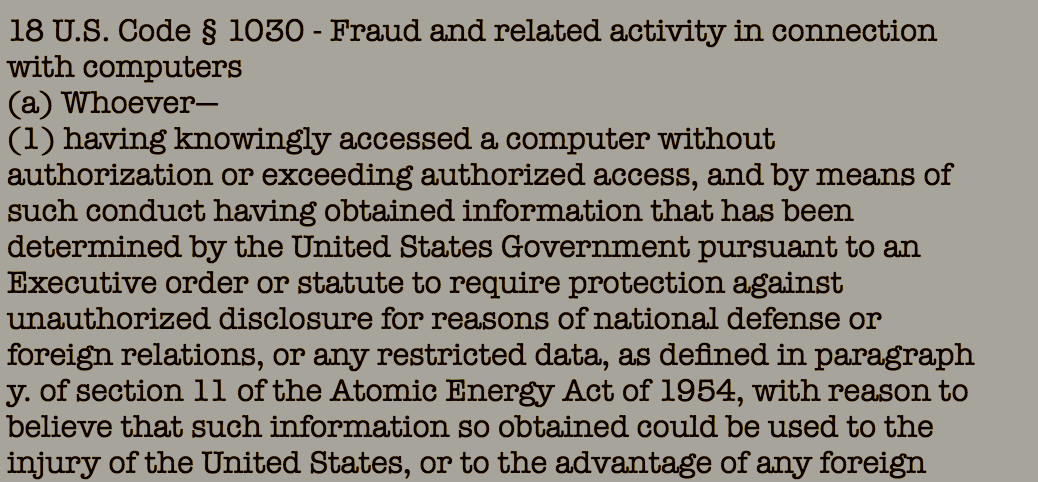
The Computer Fraud and Abuse Act, or CFAA.


The Computer Fraud and Abuse Act, or CFAA.

The federal government's case against Barrett Brown creates a very real chilling effect for other journalists who, like Brown, produce work that deals with hacking and hacktivists. Read the rest

30 Jan 16:25

TV show tricks chronic catcallers into harassing their own mothers

by Cory Doctorow

The Peruvian TV show "Harassing Your Mother" performs secret makeovers on the mothers of habitual catcallers, then uses hidden cameras to record catcallers shouting sexual remarks at their own mothers, who furiously upbraid them in the middle of the busy streets of Lima. (more…)

27 Jan 15:10

Fair Use Is Not An Exception to Copyright, It's Essential to Copyright

by Blake

Unfortunately, there is tremendous pressure in DC right now to rewrite the law and undermine that balance. Fair use has been under assault for decades, thanks to laws like Section 1201 of the DMCA, which makes it illegal to bypass a technical protection measure under most circumstances even if your conduct is an otherwise lawful fair use. Now, more than ever, we must insist that fair use is indispensable to copyright. That’s how we take copyright back.

https://www.eff.org/deeplinks/2015/01/fair-use-not-exception-copyright-its-essential-copyright

22 Jan 19:39

They put a Pirate Party MEP in charge of EU copyright reform: you won't believe awesomesauce that followed

by Cory Doctorow


Julia Reda, the sharp-as-a-tack Member of the European Parliament for the German Pirate Party, has just tendered her draft report on copyright reform in the EU. It is full of amazingly sensible suggestions. Read the rest

21 Jan 20:32

Washington DC's Public Library Will Teach People How to Avoid the NSA

by Blake

%u200BLater this month, the Washington DC Public Library will teach residents how to use the internet anonymization tool Tor as part of a 10 day series designed to shed light on government surveillance, transparency, and personal privacy.

http://motherboard.vice.com/read/washington-dcs-public-library-will-teach-people-how-to-avoi...

21 Jan 15:52

Moog brings back its famed 1973 modular synthesizers

by David Pescovitz
System_55

Moog Music has reproduced a limited edition of its three iconic 1973 synthesizers including the System 55 (seen above with optional keyboard) that can be yours for just $35,000. Video below. Read the rest

20 Jan 20:00

Cuban cigar ban over

by Rob Beschizza
BBC: New travel and trade rules between the US and Cuba are to take effect on Friday, US officials say.
20 Jan 19:44

Announcing Apollo 1201: Eradicate DRM within a decade!

by Cory Doctorow


I have gone back to the Electronic Frontier Foundation to work on a project called Apollo 1201, which will use a combination of code, law, norms and markets to eradicate DRM within a decade: we choose to do this not because it is easy, but because it is hard. Read the rest

14 Jan 20:04

Meet the New Cold War, Same As the Old Cold War

by Matt Novak

Remember the Cold War? We basically spent half a century on the precipice of worldwide nuclear annihilation. Well, like it or not, the Cold War is back. In fact, it never really ended.

Read more...

13 Jan 15:22

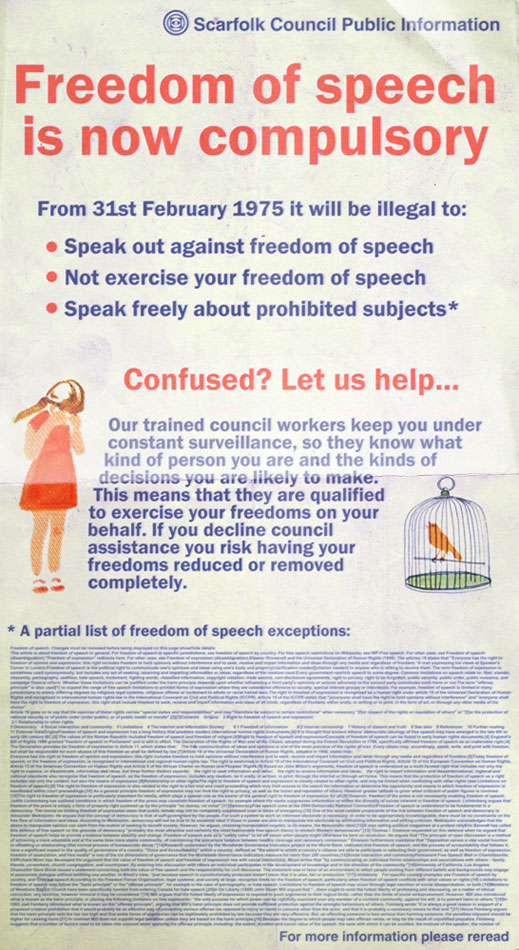
Freedom of speech is now compulsory

by Cory Doctorow


A timely reminder from Scarfolk town council.

12 Jan 18:42

Handy guide to image file types and when to use each

by Andrea James
know-your-file-types-jpeg-gif-png

Arunshory M posted a handy chart from Who is Hosting This describing image file types and the best ways to use each one. Read the rest

09 Jan 20:52

Rebooted Cluetrain Manifesto

by Cory Doctorow

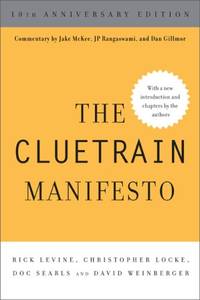
Doc Searls and David Weinberger, two of the original Cluetrain Manifesto authors, have revisited their canonical work of Internet wisdom, publishing a new, remix-friendly document called New Clues; it's funny, sad, humble and inspiring. Read the rest

09 Jan 18:13

The best weapon against terrorists: oblivion

by Marion Mueller, Professor of Mass Communication, Media and Communication Science at Jacobs University Bremen
The power of image Charles Plattiau/Reuters

In 2009, communications scholars Esra Özcan, Ognyan Seizov and I wrote an academic paper on the Danish Muhammad cartoon controversy and its aftermath.

We concluded that “visuals have to be taken more seriously as powerful communication tools on a global scale”. As the murderous attack on the offices of Charlie Hebdo has shown, once again political indifference toward the visual aspects of global communication has led to an underestimation of the risk and the vulnerability of visual artists.

The logic of visuals

Western civilization may be erudite and eloquent when it comes to text-based rhetoric. However, visuals hit a blind spot. The Western text-bias is pervasive in all spheres of life, beginning as early as elementary school, where visual analytic competencies are not trained to the same degree as textual and numeric analyses are.

While text-based communication is sequential – one argument follows another – the logic of visual communication is not; it is based on association. Visuals automatically elicit both interpretation of meaning and emotional reaction. To different people the same visual might mean completely different things. What makes one person laugh, offends another.

If the image remains contained in its original context (a particular French newspaper or a German TV-sitcom), then the usual give and take of social debate will mean that disputes can be resolved between key institutional actors in a non-violent way (think Robert Mapplethorpe's controversial homo-erotic photography.)

Dangerous de-contextualization

Cartoons are a particular type of visual communication.

Biting humor, distortion of reality, satire and provocation are all part of the repertoire of the cartoonist. And in analogue times, his or her cartoons stayed on paper, physically within the territory of the target audience.

In the digital era, however, cartoons have lost their local anchoring and are set free for global, cross-cultural distribution. While the image that we see is the same, its meanings become multiple because they are derived from the context in which it is consumed.

One of the underlying misunderstandings of the original Muhammad cartoon controversy of 2005-2006 was the de-contextualization of the original cartoons produced for a specifically Danish audience.

What is more, visuals on the internet are conserved for eternity. They have an astonishing afterlife, even with those who have never seen them. As with any hearsay or rumor-based lore, the supposed insult of the original cartoon gets bigger and bigger with every retelling of the narrative.

What makes the Paris attacks all the more shocking is that at least one of the victims’ murder had already been visually “announced” in the Spring 2013 issue of Al Qaeda’s online PR-magazine Inspire. Charlie Hebdo editor, Stéphane Chaudronnier was one of nine – mostly Western – men displayed in a “Wanted” poster accompanied by the following text that cynically borrows from President Obama’s 2008 campaign slogan: “Yes We Can. A Bullet A Day Keeps The Infidel Away.”

How then should Western media report this atrocity? What should be the right and ethical visual strategy?

Perpetrator pornography

Experience with the visual coverage of mass shootings – from Columbine in 1999 to Norway in 2011 and Newtown in 2012 – shows that a focus on the perpetrators has serious consequences. Any visual coverage of them provides copycats with iconic images for hero worship. What these mentally-disturbed shooters and terrorists have in common is their ultimate goal: they crave media attention. In the case of Islamist terrorism, “recognition” of their deed in visuals and videos is crucial as a testament to their “martyrdom”.

Unfortunately, many television reports do not seem to understand what message their visual framing sends. To take one example, the first CNN coverage of the Charlie Hebdo massacre was a 3'36" video that included footage of al-Qaeda propaganda material (complete with voice over of the commands to “poison the enemy”) as well as photos of alleged ISIS fighters. Of the total video time, 2'21" are given to the perpetrators and their messages. By comparison the victims are only given 9 seconds and of those 7 seconds are taken up by showing the victim Stéphane Charbonnier portrayed as a felon.

The ISIS logo is in the top right CNN

This type of visual focus on those who are perpetrating the violence is going beyond the typical media romance with “Natural Born Killers”. It is a media transgression that borders, I would argue, on pornography - in the literal sense of providing graphic details that are arousing and voyeuristic for the audience. If that was not enough, what I call perpetrator porn implicitly marginalizes the victims and trivializes the horrendous loss that their loved ones and communities are experiencing.

‘May their memory be deleted from history…’

Instead, democratic media and societies should be inspired by their common historic roots to punish the terrorists with what they fear most – oblivion.

In antiquity, the worst possible societal punishment was not death, but damnatio memoriae – the destruction of any visual or written memory of the perpetrator. Typically, their names were deleted from all public documents on paper and in stone, and their sculptures and likenesses were destroyed in an attempt to delete any future memory of their existence.

Forever forgotten: Geta, the son of Roman Emperor Septimus Severus whose face was deleted from this family portrait after his death Staatliche Museen zu Berlin

In the aftermath of 9/11 and the following terrorist attacks there were a number of concrete examples how media can show respect for the victims, their families, and the traumatized public by denying the perpetrators any visual acknowledgment of their heinous deed. Cover pages of magazines were printed blank. The visual memorials were for the victims, and their families. This choice emphasizes the strength of civil society in times of great loss and mourning: remembering those who were deprived of their lives, and forgetting those who carried out these atrocities.

The Conversation

Marion Mueller does not work for, consult to, own shares in or receive funding from any company or organisation that would benefit from this article, and has no relevant affiliations.