A 1973 county survey showed that, after all deaths and births had been accounted for, there was a surplus of citizens, approximately 665 in total.
This was due to the practice of inserting deceased people's hearts into inanimate objects to bring them back to life. Grieving family members were most likely to attempt the process but there were also a few hobbyists and human traffickers.
Once the heart had been placed in its new host body, over which a medi-legal incantation had been recited, the object would become imbued with the personality of the deceased. However, there were often side effects, for example not being able to say certain words such as 'artichoke', 'help' and 'please kill me, I did not give my consent for this', to name but a few.
Hearts were usually placed inside humanoid objects: dolls, mannequins, large soft toys and the like, though one widow had her dead husband's heart inserted into a guinea pig called Jonathan who flushed himself down the toilet after his application to do an MA course in Linguistics was rejected.
The ACLU's Josh Bell just wrapped up a livestreamed training session for students on their free speech rights and then released the video and slides; these are a great complement to the ACLU's existing know your rights guide for public school students.
(more…)
I've written an op-ed on The Wire, a prominent nonprofit publication in India about access to knowledge. Access to scientific knowledge has been colonized by a few publishers who have improperly laid claim to the ocean of knowledge. This situation is morally untenable and contrary to law. It must change because education is a fundamental right.
The parallels between companies such as Reed Elsevier and the exploiters of old such as the East India Company are remarkable. Scientists are the new indigo farmers. Journals are the railroads built, not to benefit the population of scholars, but to ship raw materials back to England and high-priced goods back to the universities. Paywalls and DRM are the new salt taxes.
The decolonization of knowledge is a great opportunity for our times and I believe India is poised to lead that revolution.
In India, the principle that copyright does not apply for materials used in the course of instruction was recently affirmed by the Delhi high court in the Delhi University copy shop case. The Rameshwari Photocopy Shop is located on the premises of Delhi University, and was selling students course packs with copies of journal articles. At the behest of three large publishers, the shop was raided by armed police and charged with high crimes for violating copyright. After an intervention by an association of students and an association of academics pointed to the “for the purposes of instruction” exception to the copyright, the court said no wrongs had been committed. The right to education triumphed over the baseless claims of the publishers.
Despite this principle of law, students in India are being forced to go to Sci-Hub in Russia to find the materials they need to educate themselves, and forcing them to do so is a wrong being committed against the students. Students should be able to access these materials with the full blessing and support of their institutions and professors instead of being forced to fend for themselves in the wilds of the Internet. I believe this situation should be changed.
Earth Wind Map shows the winds blasting over a beautiful, rotatable 3D animated globe. Various modes (click the text on the bottom left) show air, oceanic, particulate and even auroral maps.
With copyright being abused to shut down innovation and speech, and copyright terms lasting for generations, fair use is more important than ever. Without fair use, we’d see less creativity. We’d see less news reporting and commentary. And we’d see far less innovation.
Fair use allows people to use copyrighted materials for certain purposes without payment or permission. If something is fair use, it is not infringing on a copyright.
A video remix or a story that critiques culture by incorporating famous characters and giving them new meaning or context is an example of fair use in action. Culture grows because creators are constantly reworking what’s in it. If Superman is portrayed as someone other than a white man, that is clearly a commentary on the symbol of “truth, justice, and the American way.”
Commentary also relies on fair use. Criticism is made stronger when the material being interrogated can be included in the critique. It is difficult to show why someone was wrong or add context to someone else’s report without including at least part of it. We recently wrote about the Second Circuit’s decision that part of the service offered by TVEyes, a subscription company that provides searchable transcripts and video archives of television and radio, was not fair use. In particular, the court seemed to say that what makes TVEyes so objectionable was that it made material available without Fox News’ permission. One of the reasons fair use is so important to the First Amendment is because it doesn’t require permission. Who would let researchers, academics, and journalists get access to their material for the purpose of saying if and how they’re wrong?
The ways fair use improves our creative culture and our commentary are apparent every time we see fan art on the Internet or watch news commentary. The ways fair use protects innovation can be more subtle.
Copyright also covers software, which is working its way into every part of our life. We’re entering a world where your lights, toothbrush, coffeemaker, and television are all connected to the Internet. And transmitting all sorts of information all the time. But if you want to ask an expert how to change that, you’re probably going to need fair use.
Much of the problem lies with Section 1201 of the Digital Millennium Copyright Act, which bans breaking restrictions on copyrighted works. That means, for example, that if someone wants to develop an app that better secures your phone but doing so means breaking the digital lock the manufacturer put there, then that inventor faces trouble. Or, say you want to pay a mechanic to fix your car, but that requires them to break the encryption on the computer in it, then Section 1201 would prevent you from getting that help.
Section 1201 can prevent access to things that fair use allows people to use. For example, you may want to make fair use of a clip from a DVD but be banned from breaking a lock to rip the clip. And because of the impact that could have on fair use, there is a process for securing an exemption to it. The exemption process occurs every three years, and we’ll get a new set of exemption in 2018.
Because fair use is important for creativity, commentary, and innovation, and because the ban on circumvention makes that so much harder, convincing the Copyright Office to issue common-sense exemptions is necessary. In 2018, EFF is asking for exemptions for:
Repair, diagnosis, and tinkering with any software-enabled device, including “Internet of Things” devices, appliances, computers, peripherals, toys, vehicle, and environmental automation systems;
Jailbreaking personal computing devices, including smartphones, tablets, smartwatches, and personal assistant devices like the Amazon Echo and the forthcoming Apple HomePod;
Using excerpts from video discs or streaming video for criticism or commentary, without the narrow limitations on users (noncommercial vidders, documentary filmmakers, certain students) that the Copyright Office now imposes;
Security research on software of all kinds, which can be found in consumer electronics, medical devices, vehicles, and more;
It would be even better if hoops like this didn’t exist for fair use to jump through, but while they do, it’s important to keep showing how important it is.
This week is Fair Use/Fair Dealing Week, an annual celebration of the important doctrines of fair use and fair dealing. It is designed to highlight and promote the opportunities presented by fair use and fair dealing, celebrate successful stories, and explain these doctrines.
LeEtta Schmidt has created a new tutorial video that is an introduction to copyright. In the video viewers meet the Tampa Library’s Copyright Librarian, LeEtta, and learn about fair use, creative commons licensed materials, figure notes, and best practices for responsibly using copyrighted material for research and projects.
The USF Tampa library has a guide designed to answer your questions and/or get you in contact with a librarian who can help you figure out how to manage your own copyrights and how to use copyrighted content responsibly. While there are thousands of juicy bits of information to learn about copyright, here’s one tip for the month of February:
Linking is not copying. Many instructors find media, like a YouTube video or 3D visualization, online and wonder if it would be okay to share the content with their class. Sharing a link to that material does not create a copy and thus does not infringe on copyright law. It can sometimes be difficult to tell if something found online was put there legally, so be aware that if the material is found infringing and taken down, your link to it will no longer work. It is also a good idea to communicate this questionable legality to your students, so they can make more informed decisions.
Suffice to say that copyright is a legal regime that deals with unauthorized copying and sharing of a work while plagiarism is an ethical regime that covers attribution and how appropriately use the work of others.
But, while the ethical vs. legal dichotomy is an important distinction, copyright stills ends up being the most common legal mechanism for enforcing the rules of plagiarism. This creates a great deal of overlap between the two, even if it was never intended.
But that lack of intent becomes very clear when you look at what the two cover. In truth, the overlap between plagiarism and copyright is fairly small, with much of the ground plagiarism covers not just unmentioned in copyright, but intentionally not covered at all.
While the overlap between the two is still very important, it’s overlap because of the way people typically plagiarize, not the concept of plagiarism itself.
The Breadth of Plagiarism, The Narrowness of Copyright
Plagiarism, at its core, covers a wide variety of things. This includes words, ideas and facts as the major three things but, depending on the medium and the creativity put into them, can include syntax, style and even format.
This is because plagiarism is about attributing both the work and creativity of others who came earlier. Whether it was a scientist who toiled for hours upon hours to perform a study or a poet who had a flash of clarity and creativity, plagiarism is about attributing the contributions of others, whatever they may be.
Copyright, on the other hand, not only doesn’t cover facts, ideas, syntax, etc., it expressly forbids them. This is because copyright vests solely in creativity, not in the effort behind the creation.
The reason, quite simply is that an alphabetical list of names and numbers doesn’t have the requisite level of creativity to be copyright protected, regardless of the resources and effort that went into compiling it.
While the bar for that creativity is extremely low, “at least a modicum” under the law, it prevents facts and information from being copyright protected at all. Instead, only their expression gets coverage. This is despite the fact that plagiarizing facts and research is a heinous crime in academic circles.
The reason for these very fundamental differences is the intent of the two standards. Copyright was never meant to replace plagiarism and plagiarism cannot replace copyright. However, when it’s all said and done, that’s probably a very good thing.
The Intent of Copyright and Plagiarism
At it’s most fundamental level, plagiarism attempts to establish the rules and boundaries of authorship. This makes plagiarism an inherently philosophical exercise as, before we discuss what is or is not a plagiarism, we have to first discuss what is or is not original.
But philosophy is at home with discussions around plagiarism as it’s the mechanism we enforce the standards of authorship and attribution.
It’s this focus that marks the biggest difference between the two. Plagiarism deals with ethics and authorship, copyright with commercial rights as a means to encourage creativity. Every other difference stems from that fundamental distinction.
Once you understand that difference, it’s much easier to grasp the ways copyright and plagiarism vary and where they overlap. It explains why attribution is a shield against plagiarism but not against infringement or why fair use is important to copyright but not really a thing in plagiarism.
This dichotomy between the two is fundamental to everything that both plagiarism and copyright stand for and explains nearly all of the differences between them./
Why Is This Important
To be clear, this isn’t a call for change. Altering copyright to be more like plagiarism or vice versa would create its own set of challenges. While there may be ways to improve both standards, that is not the purpose of this article.
Instead, it’s to highlight why cases such as the recent lawsuit over The Shape of Water are so complicated. As we discussed in our analysis earlier this month, there’s significant reason to believe that plagiarism occurred, even if it is unproven at this time. However, even if the plagiarism allegations are proved, its unclear if the film meets the qualifications of copyright infringement because of the nature of what was duplicated.
This isn’t to say it’s impossible. The Blurred Lines verdict (which is being appealed) is an interesting example. Though using the vibe or sound of a musician, especially a distinctive one, may feel like plagiarism to some (though not to me personally), it didn’t seem like a candidate for copyright infringement. However, the jury disagreed and ruled against Robin Thicke and Pharrell Williams.
Still, the point is that, as long as this dichotomy exists, we will be confronted with cases that feel like plagiarism but are completely unenforceable in courts, no matter how “wrong” they feel.
Copyright is not there to protect authorship or identity, it’s there to protect the commercial interest in the work. That, in turn, is something that every plagiarized person would be wise to remember.
Bottom Line
Being plagiarized is neither easy nor fun. But as long as copyright remains the primary mechanism for dealing with plagiarism in the courtroom, there will be cases where, no matter how great the injustice feels, there’s little that can be done.
Copyright and plagiarism are fundamentally very different and, though they often overlap, that overlap occurs when a plagiarism harms the commercial viability of a work and, even then, only when it deals with the expression of its ideas, not the ideas itself.
While this view is intentionally simplistic (and is not looking at derivative works) it makes the point about why many egregious plagiarisms go unpunished, at least in courts, and why many who are wronged won’t find justice in a courtroom.
Today, the FCC’s so-called “Restoring Internet Freedom Order,” which repealed the net neutrality protections the FCC had previously created with the 2015 Open Internet Order, has been officially published. That means the clock has started ticking on all the ways we can fight back.
While the rule is published today, it doesn’t take effect quite yet. ISPs can’t start blocking, throttling, or paid prioritization for a little while. So while we still have the protections of the 2015 Open Internet Order and we finally have a published version of the “Restoring Internet Freedom Order,” it’s time to act.
First, under the Congressional Review Act (CRA), Congress can reverse a change in regulation with a simple majority vote. That would bring the 2015 Open Internet Order back into effect. Congress has 60 working days—starting from when the rule is published in the official record—to do this. So those 60 days start now.
The Senate bill has 50supporters, only one away from the majority it needs to pass. The House of Representatives is a bit further away. By our count, 114 representatives have made public commitments in support of voting for a CRA action. Now that time is ticking down for the vote, tell Congress to save the existing net neutrality rules.
Second, it is now unambiguous that the lawsuits of 22 states, public interestgroups, Mozilla, and the Internet Association can begin. While the FCC decision said lawsuits had to wait ten days until after the official publication, there was some question about whether federal law said something else. So while some suits have already been filed, with the 10-day counter from the FCC starting, it’s clear that lawsuits can begin.
And, of course, states and other local governments continue to move forward on their own measures to protect net neutrality. 26 state legislatures are considering net neutrality legislation and five governors have issued executive orders on net neutrality. EFF has some ideas on how state law can stand up to the FCC order. Community broadband can also ensure that net neutrality principles are enacted on a local level. For example, San Francisco is currently looking for proposals to build an open-access network that would require net neutrality guarantees from any ISP looking to offer services over the city-owned infrastructure.
So while the FCC’s vote in December was in direct contradiction to the wishes of the majority of Americans, the publishing of that order means that action can really start to be taken.
The bill passed today 388-25 by the U.S. House of Representatives marks an unprecedented push towards Internet censorship, and does nothing to fight sex traffickers.
H.R. 1865, the Allow States and Victims to Fight Online Sex Trafficking Act (FOSTA), allows for private lawsuits and criminal prosecutions against Internet platforms and websites, based on the actions of their users. Facing huge new liabilities, the law will undoubtedly lead to platforms policing more user speech.
The Internet we know today is possible only because of Section 230 of the Communications Decency Act, which prevents online platforms from being held liable for their users’ speech, except in certain circumstances. FOSTA would punch a major hole in Section 230, enabling lawsuits and prosecutions against online platforms—including ones that aren’t even aware that sex trafficking is taking place.
If websites can be sued or prosecuted because of user actions, it creates extreme incentives. Some online services might react by prescreening or filtering user posts. Others might get sued out of existence. New companies, fearing FOSTA liabilities, may not start up in the first place.
The tragedy is that FOSTA isn’t needed to prosecute or sue sex traffickers. As we’ve said before, Section 230 simply isn’t broken. Right now, there is nothing preventing federal prosecution of an Internet company that knowingly aids in sex trafficking. That includes anyone hosting advertisements for sex trafficking, which is explicitly a federal crime under 18 U.S.C. § 1591, as amended by the 2015 SAVE Act. The website that produced the most discussion around this issue, Backpage.com, is reportedly under federal investigation.
The array of online services protected by Section 230, and thus hurt by FOSTA, is vast. It includes review sites, online marketplaces, discussion boards, ISPs, even news publications with comment sections. Even small websites host thousands or millions of users engaged in around-the-clock discussion and commerce. By attempting to add an additional tool to hold liable the tiny minority of those platforms whose users who do awful things, FOSTA does real harm to the overwhelming majority, who will inevitably be subject to censorship.
Websites run by nonprofits or community groups, which have limited resources to police user content, would face the most risk. Perversely, some of the discussions most likely to be censored could be those by and about victims of sex trafficking. Overzealous moderators, or automated filters, won’t distinguish nuanced conversations and are likely to pursue the safest, censorial route.
We hope the Senate will reject FOSTA and uphold Section 230, a law that has protected a free and open Internet for more than two decades. Call your senator now and let them know that online censorship isn’t the solution to fighting sex trafficking.
More than 15 state legislatures are considering the “Human Trafficking Prevention Act” (HTPA). But don’t let the name fool you: this bill would do nothing to address human trafficking. Instead, it would only threaten your free speech and privacy in a misguided attempt to block and tax online pornography.
EFF opposed versions of this bill in over a dozen states last year, and the bill failed in all of them. Now HTPA is back, and we have written in opposition against the bill again to urge lawmakers to oppose it this year.
The gist of the model legislation is this: Device manufacturers would be forced to install "obscenity filters" on cell phones, tablets, computers, and any other Internet-connected devices. Those filters could only be removed if consumers pay a $20 fee. In addition to violating the First Amendment and burdening consumers and businesses, this would allow the government to intrude into consumers’ private lives and restrict their control over their own devices.
On top of that, the story of this bill’s provenance is bizarre and highly recommended reading for any lawmakers considering it. In short, the HTPA is part of a multi-state effort coordinated by the same person behind a bill to delegitimize same-sex marriages as “parody marriages.” In this post, however, we’ll be focusing on the policy itself.
While some versions of the legislation vary, each hits the following points.
Pre-Installed Filters
Manufacturers of Internet-enabled devices would be required to pre-install filters to block webpages and applications that contain sexual content. Although different versions of the bill specify this content differently, the end result is the same: an unconstitutional restriction on the lawful speech people can access and engage with on the Internet.
A Censorship Tax
After overriding consumer choice and forcing people to purchase filtering software they don’t necessarily want, the bill would require users to pay a $20 fee per device to remove the filters and to exercise their First Amendment rights to look at legal content. Between smartphones, tablets, desktop computers, TVs, gaming consoles, routers, and other Internet-enabled devices, consumers could end up paying a small fortune to unlock all of the devices in their home.
Data Collection
Anyone who wants to unlock the filters on their devices would have to put their request in writing, show ID, and verify that they’ve been shown a “written warning regarding the potential dangers” of removing the obscenity filter. That means that companies would be maintaining records on everyone who wanted their “Human Trafficking” filters removed. As EFF Stanton Fellow Camille Fischer explains in our opposition letter:
To be clear, the HTPA’s deactivation process does not simply chill speech; it also requires consumers to sacrifice their privacy and anonymity, as the price of exercising their First Amendment rights. If enacted, consumers would be forced to identify themselves when making a written request for filter deactivation, creating a humiliating situation that suggests they want access to controversial sexual material. … In short, HTPA deactivation would be a frightening form of thought-based surveillance.
Unlocking such filters would not just be about accessing pornography. A gamer could be seeking to improve the performance of their computer by deleting unnecessary software. A parent may want to install premium child safety software that is incompatible with a pre-installed filter. And, of course, many users will simply want to freely surf the Internet without repeatedly being denied access to legal content.
Building A Censorship Machine
The bill would force the companies we rely upon for open access to the Internet to create a massive, easily abused censorship apparatus. Tech companies would be required to operate call centers or online reporting centers to monitor complaints about which sites should or should not be filtered.
The technical requirements for this kind of aggressive platform censorship at scale are simply unworkable. If the attempts of social media sites to censor pornographic images are any indication, we cannot count on algorithms to distinguish, for example, nude art from medical information from pornography. Facing risk of legal liability, companies would likely over-censor and sweep up legal content in their censorship net.
Do The Right Thing
Already lawmakers are starting to see through this legislation. In 2018, the bill has died in committees in Mississippi and Virginia. Democratic senators in New Mexico who introduced the legislation pulled back the bill days after EFF raised the alarm.
Legislators should continue to do the right thing: uphold the Constitution, protect consumers, and not use the real problem of human trafficking as an excuse to deprive users of their privacy and free speech.
by Donald Nieman, Executive Vice President for Academic Affairs and Provost, Binghamton University, State University of New York
National Guardsmen move into Detroit's riot-torn area, July 23, 1967 AP
On July 23, 1967, Detroit exploded in rioting. Five days later, 43 were dead, 7,200 had been arrested and US$22 million worth of property had been destroyed.
It was just the latest in a string of more than 100 disturbances that shook American cities during “the long, hot summers” of the mid-1960s.
Before the embers cooled, President Lyndon Johnson appointed the National Commission on Civil Disorders to investigate. The panel became known popularly as the Kerner Commission, after its co-chair Otto Kerner, the Democratic governor of Illinois.
Johnson announces the establishment of the Kerner Commission in 1967.
Fifty years ago, on Feb. 29, 1968, the commission issued its report. As a historian of civil rights in the U.S., I’m struck by how the power of institutional racism so trenchantly revealed by the report constrains efforts to advance racial equity 50 years later.
Taproot of violence: White racism
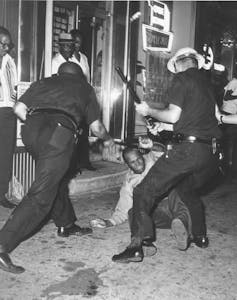
As the report masterfully described, these “racial disorders” were really urban uprisings. They were sparked by poverty, unemployment, discrimination in housing and education, police brutality and a sense of powerlessness among inner city residents.
The taproot, however, was white racism, which the commission found “responsible for the explosive mixture which has been accumulating in our cities since the end of World War II.”
The situation was dire. According to the report, “Our nation is moving toward two societies, one black, one white — separate and unequal.”
To avert this catastrophe, the commission demanded “a commitment to national action on an unprecedented scale.”
Riots erupted in New York’s Harlem neighborhood in July 1974, after a white police officer shot a black teenager.
AP
It recommended creation of public-sector jobs, construction of low- and moderate-income housing, urban school desegregation, expanded early childhood education, welfare benefits at least equal to the poverty level and legislation to end housing discrimination.
Recognizing the role of the police in sparking violence, commissioners urged development of “innovative programs to insure widespread community support for law enforcement” and the hiring of more black police. They also demanded that police cease using massive force in the form of “automatic rifles, machine guns, and tanks.”
President Johnson, confronting budget deficits, rising inflation, defeat in Vietnam and growing criticism from the right and left, offered tepid support. And his successor, Richard Nixon, rode to victory promising to restore law and order, not to support an ambitious civil rights agenda.
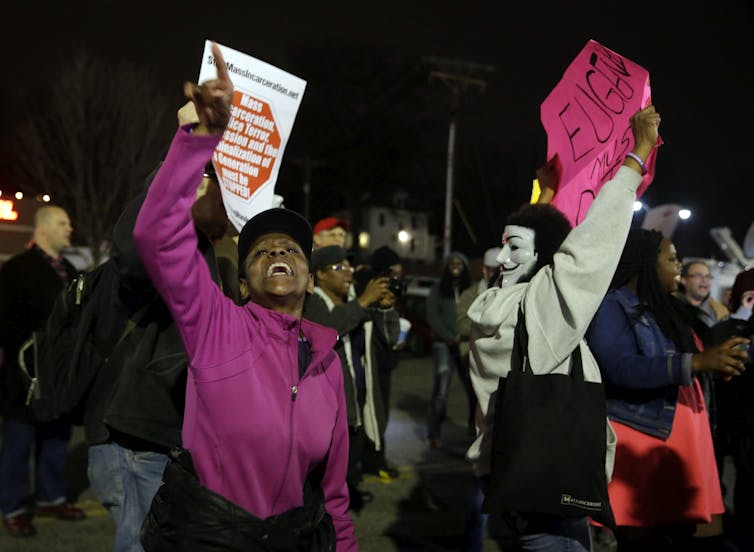
Demonstrators across the street from the Ferguson, Missouri, police department in March 2015.
AP Photo/Jeff Roberson
There are now far more African-American police officers than in 1968, but this is due more to litigation and political gains by African-Americans in major cities than the report’s influence. White officers still make up a disproportionate share of police, especially in inner suburbs like Ferguson, Missouri, where the recent movement of black families into the city has changed the racial demographic.
Other recommendations obtained even less traction. Welfare has become less generous, thanks to the welfare reform adopted in 1995 under President Bill Clinton, and police are as much of a flash point as they were in the 1960s, exacting a terrible toll on urban and suburban black communities.
Why the lack of action?
Five decades of uneven economic growth and federal budget deficits bred resistance to expensive new programs. In addition, the commission’s recommendations on law enforcement relied on action by state and local government, which were often reluctant to act.
Nevertheless, a 2012 AP poll found that 56 percent of non-Hispanic whites held explicit or implicit anti-black attitudes. Other recent polls have revealed that a majority of whites believe that whites work harder than blacks and that the country talks too much about race.
Republican resurgence after 1968 – Democrats have controlled both Congress and the White House for only for only six of the past 50 years – has created partisan gridlock on civil rights, killing serious consideration of the commission’s bold recommendations.
Sadly, the report’s fundamental insight remains as relevant today as 50 years ago.
“What white Americans have never fully understood but what the Negro can never forget – is that white society is deeply implicated in the ghetto,” the report asserted.
“White institutions created it, white institutions maintain it, and white society condones it.”
I’m encouraged by how Black Lives Matter has once again shattered the nation’s complacency about race. The movement reminds Americans that we have not overcome and that institutional racism remains an intractable barrier to equity. It has shattered illusions that the U.S. has become a post-racial society and challenged the nation to grapple with the ugly realities the Kerner Commission laid bare.
Donald Nieman has received funding from the National Endowment for the Humanities and the American Council of Learned Societes..
Students received a notice of an armed suspect near the Nursing Building at around 12:40 p.m. and a second saying the area was safe less than 10 minutes later. ORACLE FILE PHOTO
University Police (UP) arrested a community member for violating a concealed weapons license after he was found to be carrying a concealed firearm on campus.
Paul Palacios, 52, was attending a conference in the College of Nursing when UP was received a call at around 12:23 p.m. on Thursday. A community notification was released at about 12:40 p.m.
“We did receive a report from someone who saw him take it (a firearm) out of the vehicle,” said Audrey Clarke, UP public information representative.
Clarke said Palacios wasn’t brandishing the gun or doing anything threatening with it. According to UP, he has a valid concealed weapons license.
Officers arrested him and charged him with a second degree misdemeanor of violating a concealed weapons license.
Officers secured the gun and Palacios was released with a notice to appear in court.
Under current Florida law, those with a concealed carry license can have a firearm on a university campus as long as it remains in their car. It becomes a violation of the license when the gun is removed from the car.
by Gervase Phillips, Principal Lecturer in History, Manchester Metropolitan University
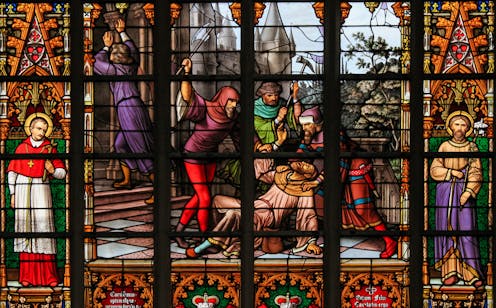
Stained glass depicting the legend of Jews stealing sacramental bread, in the Cathedral of Brussels Shutterstock/jorisvo
Antisemitism is on the march. From the far-right demonstrators in Charlottesville, Virginia, with their “Blood and Soil” chants and their “Jews will not replace us” placards to attacks on synagogues in Sweden, arson attacks on kosher restaurants in France and a spike in hate crimes against Jews in the UK. Antisemitism seems to have been given a new lease of life.
The seemingly endless conflicts in the Middle East have made the problem worse as they spawn divisive domestic politics in the West. But can the advance of antisemitism be attributed to the rise of right-wing populism or the influence of Islamic fundamentalism? One thing is clear. Antisemitism is here and it’s getting worse.
Antisemitism rears its ugly head in every aspect of public life, whether internal debates within political parties or accusations of conspiratorial networks or plots in politics and business. Or even in the accusations that Hollywood mogul Harvey Weinstein’s sexually predatory behaviour was somehow linked to his Jewish origins.
But by focusing narrowly on the contemporary context of modern antisemitism, we miss a central, if deeply depressing, reality. Jeffrey Goldberg, the editor of The Atlantic magazine, puts it correctly when he says that what we are seeing is an ancient and deeply embedded hostility towards Jews that is reemerging as the barbarous events of World War II recede from our collective memory.
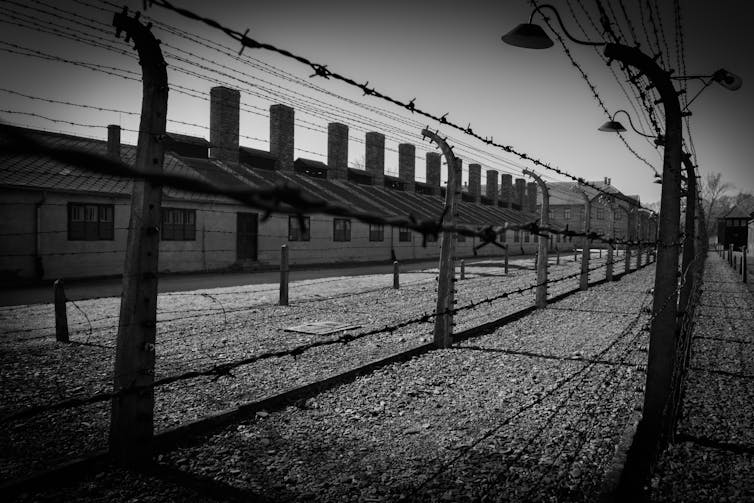
Goldberg says that for 70 years, in the shadow of the death camps, antisemitism was culturally, politically and intellectually unacceptable. But now “we are witnessing … the denouement of an unusual epoch in European life, the age of the post-Holocaust Jewish dispensation”. Without an understanding of antisemitism’s ancient roots, the dark significance of this current trend may not be fully understood and hatred may sway popular opinion unchallenged.
Antisemitism has been called history’s oldest hatred and it has shown itself to be remarkably adaptable. It is carved from – and sustained by – powerful precedents and inherited stereotypes. But it also taking on variant forms to reflect the contingent fears and anxieties of an ever-changing world. Understood this way, it is the modern manifestation of an ancient prejudice – one which some scholars believe stretches back to antiquity and medieval times.
Ancient tradition of hatred
The word “antisemitism” was popularised by the German journalist Wilhelm Marr. His polemic, Der Sieg des Judentums über das Germentum (The Victory of Jewry over Germandom), was published in 1879. Outwardly, Marr was a thoroughly secular man of the modern world. He explicitly rejected the groundless but ancient Christian allegations long made against the Jews, such as deicide or that Jews engaged in the ritual murder of Christian children. Instead, he drew on the fashionable theories of the French academic Ernest Renan (who viewed history as a world-shaping contest between Jewish Semites and Aryan Indo-Europeans). Marr suggested that the Jewish threat to Germany was racial. He said that it was born of their immutable and destructive nature, their “tribal peculiarities” and “alien essence”.
Antisemites like Marr strove for intellectual respectability by denying any connection between their own modern, secular ideology and the irrational, superstitious bigotry of the past. It is a tactic which is employed by some contemporary antisemites who align themselves with “anti-Zionism”, an ideology whose precise definition consequently excites considerable controversy. But this continuing hostility towards Jews from pre-modern to modern times has been manifest to many.
The American historian Joshua Trachtenberg, writing during World War II, noted:
Modern so-called ‘scientific’ antisemitism is not an invention of Hitler’s … it has flourished primarily in central and eastern Europe, where medieval ideas and conditions have persisted until this day, and where the medieval conception of the Jew which underlies the prevailing emotional antipathy toward him was, and still is, deeply rooted.
In fact, up until the Holocaust, antisemitism flourished just as much in western Europe as in central or eastern Europe. Consider, for example, how French society was bitterly divided between 1894-1906, after the Jewish army officer, Captain Alfred Dreyfus, was falsely accused and convicted of spying for Germany. It saw conservatives squaring up against liberals and socialists, Catholics against Jews.
Yet Trachtenberg was undoubtedly correct in suggesting that many of those who shaped modern antisemitism were profoundly influenced by the older “medieval” tradition of religious bigotry. The Russian editor of the infamous Protocols of Zion – a crude and ugly, but tragically influential, forgery alleging a Jewish world conspiracy – was the political reactionary, ultra-Orthodox, and self-styled mystic Sergei Nilus.
Wrought by fear and hatred of the challenges to traditional religion, social hierarchies and culture posed by modernity, Nilus was convinced that the coming of the Antichrist was imminent and that those who failed to believe in the existence of “the elders of Zion” were simply the dupes of “Satan’s greatest ruse”.
So modern antisemitism cannot be easily separated from its pre-modern antecedents. As the Catholic theologian Rosemary Ruether observed:
The mythical Jew, who is the eternal conspiratorial enemy of Christian faith, spirituality and redemption, was … shaped to serve as the scapegoat for [the ills of] secular industrial society.
Antisemitism in antiquity?
Some scholars would look to the pre-Christian world and see in the attitudes of ancient Greeks and Romans the origins of an enduring hostility. Religious Studies scholar Peter Schäfer believes the exclusive nature of the monotheistic Jewish faith, the apparent haughty sense of being a chosen people, a refusal to intermarry, a Sabbath observance and the practise of circumcision were all things that marked Jews out in antiquity for a particular odium.
Finding examples of hostility towards Jews in classical sources is not difficult. The politician and lawyer Cicero, 106-43BC, once reminded a jury of “the odium of Jewish gold” and how they “[stick together]” and are “influential in informal assemblies”. The Roman historian Tacitus, c.56-120AD, was contemptuous of “base and abominable” Jewish customs and was deeply disturbed by those of his compatriots who had renounced their ancestral gods and converted to Judaism. The Roman poet and satirist Juvenal, c.55-130AD, shared his disgust at the behaviour of converts to Judaism besides denouncing Jews generally as drunken and rowdy.
These few examples may point towards the existence of antisemitism in
antiquity. But there is little reason to believe that Jews were the objects of a specific prejudice beyond the generalised contempt that both Greeks and Romans exhibited towards “barbarians” – especially conquered and colonised peoples. Juvenal was every bit as rude about Greeks and other foreigners in Rome as he was about Jews. He complained bitterly: “I cannot stand … a Greek city of Rome. And yet what part of the dregs comes from Greece?” Once the full extent of Juvenal’s prejudice has been recognised, his snide remarks about Jews might be understood as being more indicative of an altogether more sweeping xenophobia.
The ‘Christ killers’
It is in the theology of early Christians that we find the clearest foundations of antisemitism. The Adversus Judaeos (arguments against the Jews) tradition was established early in the religion’s history. Sometime around 140AD the Christian apologist Justin Martyr was teaching in Rome. In his most celebrated work, Dialogue with Trypho the Jew, Justin strove to answer Trypho when he pointed to the contradictory position of Christians who claimed to accept Jewish scripture but refused to follow Torah (the Jewish law).
Justin responded that the demands of Jewish law were meant only for Jews as a punishment from God. Although still accepting the possibility of Jewish salvation, he argued that the old covenant was finished, telling Trypho: “You ought to understand that [the gifts of God’s favour] formerly among your nation have been transferred to us.” Yet Justin’s concern was not really with Jews. It was with his fellow Christians. At a time when the distinction between Judaism and Chritianity was still blurred and rival sects competed for adherents, he was striving to prevent gentile converts to Christianity from observing the Torah, lest they go over wholly to Judaism.
Vilifying Jews was a central part of Justin’s rhetorical strategy. He alleged that they were guilty of persecuting Christians and had done so ever since they “had killed the Christ”. It was an ugly charge, soon levelled again in the works of other Church Fathers, such as Tertullian (c.160-225AD) who referred to the “synagogues of the Jews” as “fountains of persecution”.
The objective of using such invective was to settle internal debates within Christian congregations. The “Jews” in these writings were symbolic. The allegations did not reflect the actual behaviour or beliefs of Jews. When Tertullian attempted to refute the dualist teachings of the Christian heretic Marcion (c.144AD), he needed to demonstrate that the vengeful God of the Old Testament was indeed the same merciful and compassionate God of the Christian New Testament. He achieved this by presenting the Jews as especially wicked and especially deserving of righteous anger; it was thus, Tertullian argued, that Jewish behaviours and Jewish sins explained the contrast between the Old and the New Testament.
To demonstrate this peculiar malevolence, Tertullian portrayed Jews as denying the prophets, rejecting Jesus, persecuting Christians and as rebels against God. These stereotypes shaped Christian attitudes towards Jews from late antiquity into the medieval period, leaving Jewish communities vulnerable to periodic outbreaks of persecution. These ranged from massacres, such as York in 1190, to “ethnic cleansing”, as seen in the expulsions from England in 1290, France in 1306 and Spain in 1492.
Although it was real people who often suffered as a result of this ugly prejudice, antisemitism as a concept largely owes its longevity to its symbolic and rhetorical power. American historian David Nirenberg concludes that “anti-Judaism was a tool that could usefully be deployed to almost any problem, a weapon that could be deployed on almost any front”. And this weapon has been wielded to devastating effect for centuries. When Martin Luther thundered against the Papacy in 1543 he denounced the Roman Church as “the Devil’s Synagogue” and Catholic orthodoxy as “Jewish” in its greed and materialism. In 1790, the Anglo-Irish conservative Edmund Burke published his manifesto, Reflections on the Revolution in France, and condemned the revolutionaries as “Jew brokers” and “Old Jewry.”
The Jew has emancipated himself in a Jewish manner not only annexing the power of money but also through him and also apart from him money has become a world power and the practical spirit of the Jew has become the practical spirit of the Christian people. The Jews have emancipated themselves in so far as the Christians have become Jews … Money is the jealous god of Israel before whom no other god may stand … The god of the Jews has been secularised and has become the god of the world.
And there remain those, from across the political spectrum, who are still ready to deploy what Nirenberg referred to as “the most powerful language of opprobrium available” in Western political discourse, commonly using the language of conspiracy, webs and networks. In 2002, the left-leaning New Statesman included articles by Dennis Sewell and John Pilger, debating the existence of a “pro-Israeli lobby” in Britain. Their articles, however, proved less controversial than the the cover illustration chosen to introduce this theme, which drew on familiar tropes of secret Jewish machinations and dominance over national interests: a gold Star of David resting on the Union Jack, with the title: “A Kosher Conspiracy?” The following year, veteran Labour MP Tam Dalyell accused the then prime minister, Tony Blair, of “being unduly influenced by a cabal of Jewish advisers”. It is still language that is being used now.
On the far right, white supremacists have been quick to project their own time-honoured fantasies of Jewish malfeasance and power onto contemporary events, however seemingly irrelevant. This was quickly apparent in August 2017, as the future of memorials glorifying those who had rebelled against the union and defended slavery during America’s Civil War became the focus of intense debate in the United States. At Charlottesville, Virginia, demonstrators protesting against the removal of a statue of Confederate General Robert E Lee, began chanting “Jews will not replace us”. When journalist Elspeth Reeve asked one why, he replied that the city was “run by Jewish communists”.
When accusations of serious sexual misconduct by Weinstein were published by The New York Times in October 2017, he was quickly cast by the far right as a representative of the “eternal conspiratorial enemy” of American society as a whole. David Duke, former head of the Ku Klux Klan, would write on his website that the “Harvey Weinstein story … is a case study in the corrosive nature of Jewish domination of our media and cultural industries”.
‘The hatreds of our time …’
Responding to such language, The Atlantic’s Emma Green astutely commented on how “the durability of anti-Semitic tropes and the ease with which they slide into all displays of bigotry, is a chilling reminder that the hatreds of our time rhyme with history and are easily channelled through timeless anti-Semitic canards”.
There is real danger here as the spike in antisemitic hate crimes shows. This peculiar way of thinking about the world has always retained the potential to turn hatred of symbolic Jews into the very real persecution of actual Jews. Given the marked escalation of antisemitic incidents recorded in 2017, we are now faced with the unsettling prospect that this bigotry is becoming “normalised”.
For example, the European Jewish Congress expressed “grave concerns” over an increase in antisemitic acts in Poland under the right-wing Law and Justice government which won the 2015 parliamentary election with an outright majority. The group said the government was “closing … communications with the official representatives of the Jewish community” and there was a “proliferation of ‘fascist slogans’ and unsettling remarks on social media and television, as well as the display of flags of the nationalist … group at state ceremonies”.
In response to these fears, a survey investigating antisemitism within the European Union will be undertaken in 2018, led by the European Union Agency for Fundamental Rights. The agency’s director, Michael O'Flaherty, commented, correctly, that: “Antisemitism remains a grave worry across Europe despite repeated efforts to stamp out these age-old prejudices.”
Given the phenomenon’s deep historical roots and its epoch defying capacity for reinvention, it would be easy to be pessimistic about the prospect of another effort to “stamp it out”. But an historical awareness of the nature of antisemitism may prove a powerful ally for those who would challenge prejudice. The ancient tropes and slights may cloak themselves in modern garb but even softly-spoken allegations of conspiratorial “lobbies” and “cabals” should be recognised for what they are: the mobilisation of an ancient language and ideology of hate for which there should be no place in our time.
Gervase Phillips does not work for, consult, own shares in or receive funding from any company or organisation that would benefit from this article, and has disclosed no relevant affiliations beyond their academic appointment.
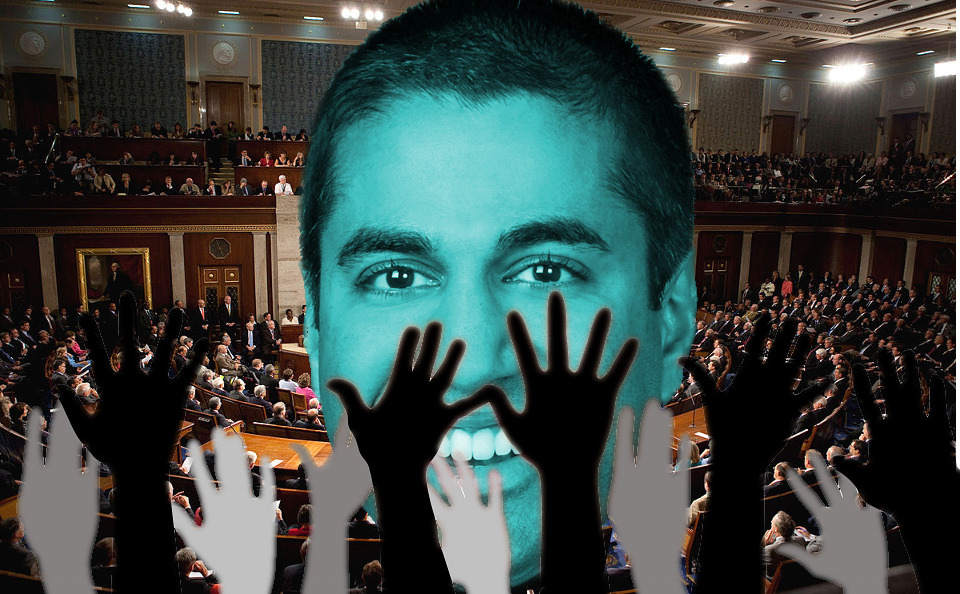
Ajit Pai's Net Neutrality-killing order is scheduled to go into effect on April 23, and when that happens, it'll be open season on the free, fair and open internet.
(more…)
Calling the FCC's decision to kill Net Neutrality the "road to serfdom" Senator Ron Wyden [D-OR] introduced the legislation he'd co-sponsored with Senator Ed Markey [D-MA] to restore Neutrality.
(more…)
If this delightful book is anything to go by then taking photos of cats and brandishing them with an amusing caption, was far from being a phenomenon born with the internet.
The term “fake news” is everywhere these days. After gaining steam during the 2016 US election, it’s become a catch-all phrase used by people from across the political spectrum. Yet “fake” stories – or stories that have been entirely made up – have been around since the dawn of man. And on top of that, stories don’t have to be completely fake to be misleading. Terms such as “propaganda”, “disinformation”, “misinformation” and “post-truth” are used by many people, as though they mean the same thing.
In practice, most people are concerned about “disinformation”: that is, misinformation coupled with the intent to deceive. Today, it’s easier than ever to mislead people. In the online world, posing as a credible news producer requires a bit of money and dedication – but it’s not hard.
Meanwhile, people’s trust in the media is declining, and a majority of Americans say that fake news has left them confused about basic facts. Add to that the growing problem of computational propaganda – where Twitter bots or other social media tools amplify certain hashtags or messages to influence what’s trending – and the current landscape becomes very difficult for people to navigate.
Fighting back
There are many ways companies and governments are trying to combat this growing threat. Google and Facebook are tweaking their algorithms to stop promoting “fake news”. France is in the process of passing a controversial “fake news law”, which limits media activity during election time. And the UK government has announced it’s setting up an “anti-fake news” unit. Yet each of these efforts comes with its own problems.
From our perspective, as researchers studying the fake news phenomenon, we think the best way to fight the bad effects is at the individual level. So, we’re experimenting by combining psychology with technology in a new area of research, which some scholars are calling “technocognition”.
So far, one of us found that it’s possible to “inoculate” people against misinformation by warning and exposing them to a weakened version of the “real” misleading argument, and then revealing to them why it’s misleading. In other words, a small dose of fake news can inoculate you against it – just like a real vaccination would protect you against a disease.
Tricks of the trade
There are many reasons why people produce disinformation: they can be financial, political, personal and even “just for fun”. But the techniques that are being used to mislead people are remarkably similar across the board.
One of the simplest is impersonation: imitating a public figure or organisation with the intent of misleading the public. They might also create “emotional content”, which deliberately plays on people’s basic emotions – such as fear or anger – to get a response. Next, there’s “polarisation” – when fake news merchants stir up existing political tensions, to drive people further apart.
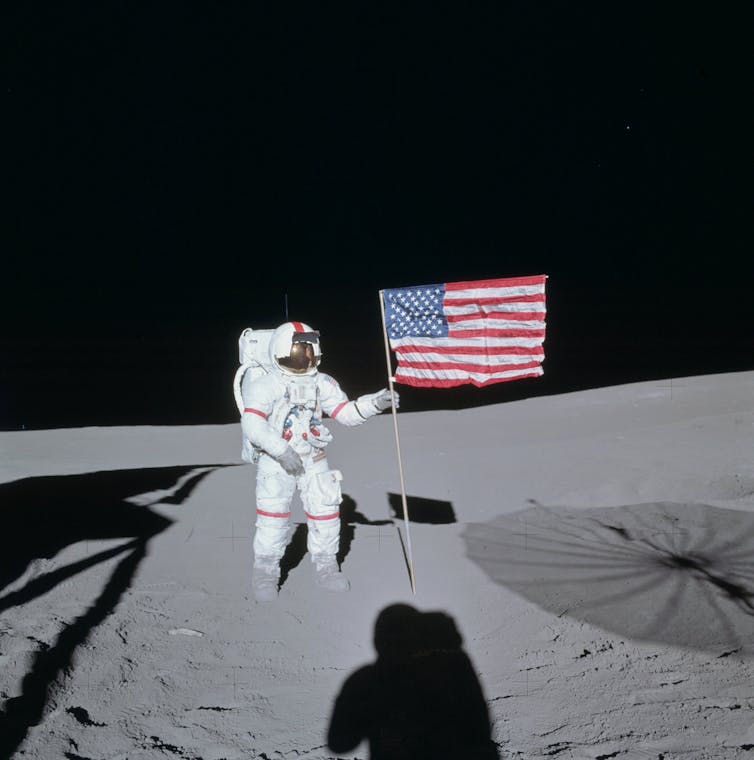
Then there are conspiracies: misleading theories, which often hold a large organisation responsible for some kind of covert agenda – like saying NASA faked the moon landing to win the space race. Then, people whose credibility is under attack will often try to discredit their opponents by engaging in “whataboutism” or personal attacks. And lastly we have trolling, which involves disrupting discussions and provoking reactions from people, combining all of the techniques mentioned above.
Good news, bad news
When people use these techniques themselves, it really improves their ability to recognise them in other contexts. So, together with DROG (a Dutch organisation working against the spread of disinformation), we developed an online game called Bad News (click here to play it), where players use misleading tactics to build their own fake news empire.
The game is free to play in any browser and on any device and takes about 15 minutes to complete. You start as an anonymous Twitter user who goes professional by starting their own news site, and gradually becomes a fake news tycoon. On the way, you earn badges and learn how the techniques mentioned earlier can be used to suit your purposes.
We figured that once you know how the magic trick works, you won’t be fooled by it again. So we put our ideas to the test by doing a pilot study in a high school in the Netherlands. Some classes were assigned to the treatment group and played our game. Others were assigned to the control group, and didn’t play the game.
Although our study was only a starting point, the results so far have been positive: students who played the game thought the fake news articles they read afterwards were less reliable. We hope that our game will play a role in stopping the spread of misleading information: just as misinformation replicates, vaccines can spread, too. The more people that play the game, the further the vaccine spreads – until one day, we may achieve societal resistance against fake news.
Jon Roozenbeek has worked together with DROG on this game and is listed on this organisation's website as a researcher.
Sander van der Linden does not work for, consult, own shares in or receive funding from any company or organisation that would benefit from this article, and has disclosed no relevant affiliations beyond their academic appointment.
French food artist/animator Alexandre Dubosc has done it again. He's created another incredibly impressive zoetrope, this time with a cat theme (previously). It's called "Gâteau Gato" ("cat cake") and it is really quite a delight to watch. I'm not sure which I like better, the curling cookie tongues or the little white mice scurrying away. Fortunately, I don't have to decide.
Dubosc doesn't say how long the cake took to bake, assemble, and film on its "making of" page, but given how detailed the piece is, I'd say many, many hours.
You may have noticed of late that things in America are becoming less, well, American.
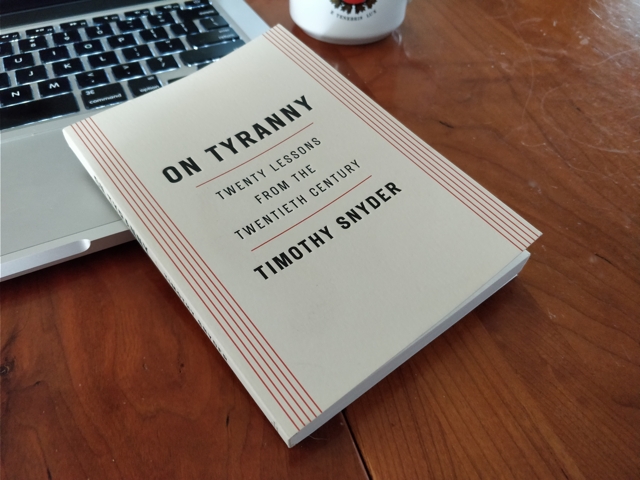
A cruel misogynist with dangerously racist beliefs is running the show. Nazis and bigots of all stripes no long fear giving voice to their hatred in public. The nation's journalists and the free flow of information are under attack. The government is working hard to defund the healthcare apparatus designed to protect the country's most vulnerable citizens. Piece by piece, the country's institutions, its heart and soul are being torn asunder, paving the way for something new. After reading Timothy Snyder's most recent book, On Tyranny: Twenty Lessons from the Twentieth Century, I gotta tell you, if you're scared of the outcome of all of this, chances are you're likely not scared enough.
Snyder is a scholar who specializes in the history of the the 20th century and, more pointedly, the holocaust. His knowledge of how a country's slow slide into fascism at the whim of a tyrant can occur is beyond reproach, given his academic street cred: he's the Richard C. Levin Professor of History at Yale, a Committee on Conscience member at the US Holocaust Memorial Museum. What I'm getting at is that he knows from bad shit, how it starts and historically, how it's gone down. With the current political and popular climate in a number of nations around the world, he's concerned that the ugliest parts of humanity are ready to rear their heads once again.
On Tyranny's only 126 pages long. Over the course of the book's 20 easy-to-read chapters, Snyder explains the signs that can be seen in the lead up to a fascist regime, sites brutal examples of where these signs have pointed to in the past, and what we as individuals can do to stand against the tide of such authoritarianism and hatred. From the book:
"The Founding Fathers tried to protect us from the threat they knew, the tyranny that overcame ancient democracy. Today, our political order faces new threats, not unlike the totalitarianism of the twentieth century. We are no wider than the Europeans who saw democracy yield to fascism, Nazism or Communism. Our one advantage is that we might learn from their experience."
No matter which side of the political fence you walk on, the lessons that the book offers make for essential reading. If you're interested and can't find the book at your local library, getting your hands on a copy of your own won't cost you much. Amazon's got it in paperback for $6.39, as an audiobook for $5.95 and Kindle owners can read it for just $3.99. That's a small price to pay for a tool that'll help you know fascism when you see it and how to stand against it when it comes.
Good news! This week, folks living in as far north as Michigan may get treated to a stunning light show as Auroras will be shining brighter and further away from the planet’s axis than usual. What a rare treat! The bad news: the same phenomenon that causes the Northern Lights to do their thing could also screw with a few important technologies that we rely on, every day.
According to Seeker.com, the National Oceanic and Atmospheric Administration has stated that charged solar particles, the result of a ‘moderate’ solar flare barfed out of the Sun on February 12 could cause minor fluctuations in power grids and have an impact on communications with satellites that are currently orbiting the earth. In her story on the issue, Seeker’s Elizabeth Howell took the time to explain how the particles are created:
Solar flares and particle ejections are associated with sunspots — dark areas on the sun's surface — that host intense magnetic activity. As the magnetic fields in a sunspot cross, NASA stated, this can cause a sudden energy explosion, also known as a solar flare. This sends radiation out into space.
Sometimes these explosions can also send off charged particles, which are called coronal mass ejections or CMEs. "CMEs are huge bubbles of radiation and particles from the sun," NASA stated. "They explode into space at very high speed when the sun's magnetic field lines suddenly organize."
These bubbles of radiation generally bop off into space, away from the earth. But not this week.
Fortunately, the solar storm forecasters at NASA and NOAA believe that we won't take a huge hit from this latest solar storm. But, if you see the lights in your home flickering, you'll now know why. And hey, if the power does go out, you might be able to eat dinner by the Northern Lights.
The change is essentially meant to frustrate users. Google has long been under fire from photographers and publishers who felt that image search allowed people to steal their pictures, and the removal of the view image button is one of many changes being made in response.
There's something old-school stupid about it, like javascript snippets that "block" people from right-clicking on images. It doesn't accomplish what it hopes for, because the image is already downloaded, and there are a half-dozen other ways to get at it conveniently--not least simply dragging and dropping it.
The measure is about satisfying people who have no idea at all how web browsers work and who are mad at an offensive button. Google suggests in a tweet that this was done to make Getty Images' lawyers happy. Their clients will presumably be pleased by its disappearance, then alarmed to find that nothing has changed, because the people who rip off photo agencies aren't sat there clicking the "view image" button.
Meanwhile, Google Images still allows sites to change the images that the cached thumbnails link to. Odd!
Katherine Forrest, an Obama-appointed federal judge in New York, has overturned a bedrock principle of internet law, ruling that embedding a copyrighted work can constitute a copyright infringement on the part of the entity doing the embedding.
(more…)
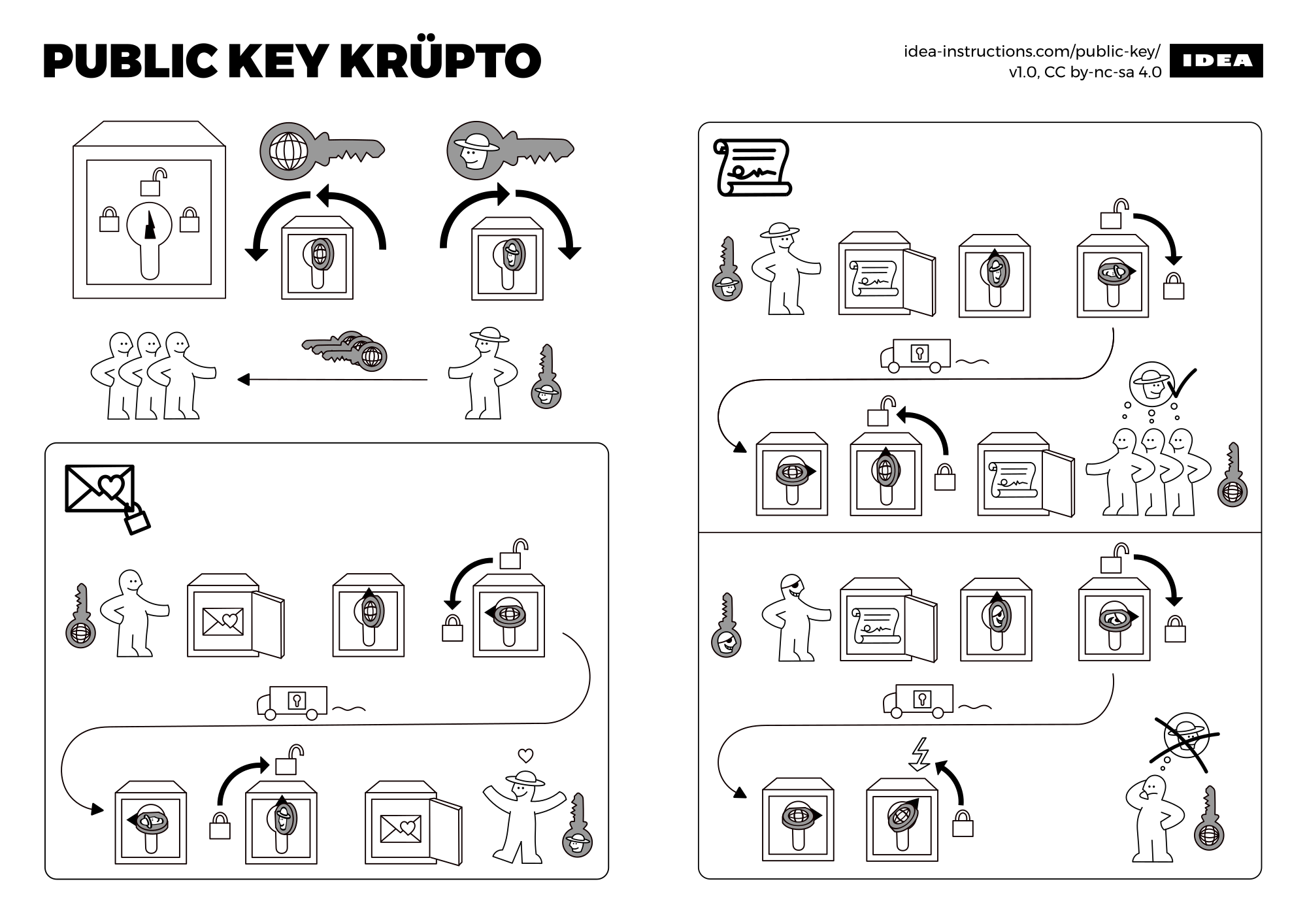
"Idea-instructions" bills itself as "An ongoing series of nonverbal algorithm assembly instructions", with a half-dozen illustrations of popular computer science concepts covered to date; the latest covers Public-Key Crypto, one of the most important and elusive concepts from modern crypto.
(more…)
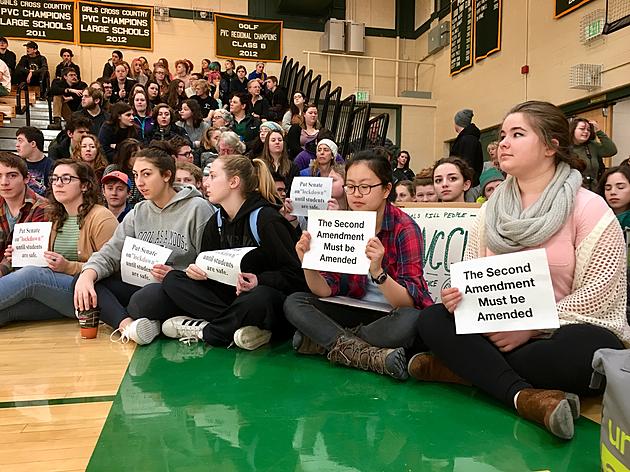
After the mass shooting at Marjory Stoneman Douglas High School in Parkland, Florida, students at MDI High School in Bar Harbor, Maine were scheduled to have a routine lock-down drill, in which students practice how to behave if their school is the site of a similar mass shooting; these drills teach children to sacrifice themselves by distracting the shooter before they are murdered in order to give other students a few more seconds during which the police might arrive and kill the shooter.
(more…)
Anna Rosling Rönnlund, co-founder of the Gapminder Foundation, asked Swedish students where they thought they fell on the global income spectrum. They guessed somewhere in the middle; they were wrong. After having 264 homes photographed in 50 countries and collecting 30,000 photos, she made this tool to help everyone understand the world – and how they fit in – a little better.
Want to see how people at your income level live in other countries? Of course you do.
It's the perfect antidote to Instagram-induced envy. Actually, I'd like to see someone curate a Selby or Apartmento-style lookbook from these images. Anyone?
by Moujan Mirdamadi, PhD Candidate, Lancaster University
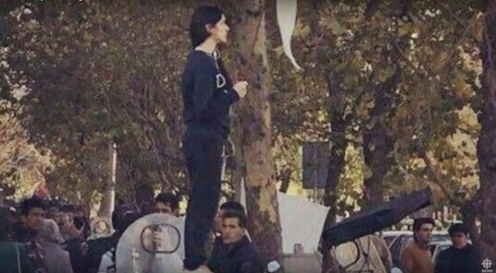
The 'girl from Enghelab Street', recorded holding her hijab aloft in protest in December 2017. The National via YouTube
Protests against Iran’s mandatory hijab law – which requires all women to wear it in public – have sprung up across Iran in the first few weeks of 2018. Women, acting individually, stood on utility boxes in public places, taking off their headscarves and holding them up as flags. Some men also took part in the protests.
The government’s reaction so far has been to arrest 29 people connected to the campaign against the hijab.
But a newly released report by the Iranian government shows that 49% of the population are against the country’s compulsory hijab law, although the real number is likely to be higher.
The hijab has an important place in the power dynamic between society and the ruling Iranian regime. During the revolution in 1978-79, led by Ayatollah Khomeini, the hijab became a symbol of resistance and protest against the monarchy of Mohammad Reza Shah. The Pahlavi regime of the Shah and his predecessor had attempted to modernise the country, but its policies clashed with the religious values of a large part of the population.
Publicly wearing a hijab became a symbol of protest and solidarity against the monarchy, regardless of how religious a woman was. But wearing a veil was not compulsory for protesters, neither was making it so a demand driving the revolution.
Within a few years of the revolution, the Iran-Iraq war was used as an excuse to clamp down on domestic opposition forces and to introduce strict domestic laws. In 1985, it became mandatory for women to wear the hijab with a law that forced all women in Iran, regardless of their religious beliefs, to dress in accordance with Islamic teachings. The hijab became a tool for implementing the government’s strict religious ideology.
A symbol of oppression
The new law marked an ideological way of governing that continues today. The compulsory hijab law has been used to exclude women from various areas of public life, either by explicitly banning women from certain public spaces such as some sports stadiums, or by adding restrictions on their education and workplace etiquette. More generally, it is also used to exclude anyone who disagrees with the ideology of the regime, who are branded as having “bad-hijab”. Not adhering to hijab continues to be seen as a hallmark of opposition to the government.
The law is also used to justify the regime’s increasing involvement in citizens’ private lives. From an early age, girls are forced to wear headscarves in school and public places. Teenagers and young people in Iran are routinely stopped by the “morality police” responsible primarily for policing people’s appearances and adherence to wearing the hijab.
For women it is the way they wear their headscarves and the length of their overcoats. Men are prohibited from wearing shorts, having certain haircuts that could be seen as Western, and wearing tops with “Western” patterns or writings.
In recent years, it has become common practice for the police to raid private parties, arresting both girls and boys on the basis of not adhering to the hijab law. Punishments range from fines to two months in jail.
Going public
Such violations of citizens’ private lives add to a lack of happiness, satisfaction, and hope in Iranian society. This is something the government has acknowledged as one of the many social crises facing the nation.
The protests against the hijab followed widespread demonstrations in late 2017 that shook over 80 cities in Iran. Many of the social analyses of these recent protests, which were in large part fuelled by economic hardships, point to a strong mood of hopelessness.
The compulsory hijab law contributes to this mood, which is pushing opposition to the regime into the private sphere of people’s lives. It is this hidden opposition that fuels the scattered, yet strong public displays of unrest in Iran against the oppressive forces of the regime.
As the anniversary of the 1979 revolution approaches on February 11, some women are boldly bringing these protests back into the public arena. By protesting against the mandatory hijab law, Iranians are protesting against the very ideology of the regime.
The hijab has once again become a symbol, this time of the ideology and power of a regime over its people. By protesting this notion, Iranians are drawing a boundary for the government: individuals have the right to their body and their appearance and this is not a matter for the governing regime to enforce.
What Iranian society is most in need of is hope – not only as a driving force for active participation of citizens, but also as a unifying force bringing together different factions of the society. The protest against the hijab is symbolic. But it is also a protest with a clear demand, and with the potential to bring together Iranians, regardless of gender or religious beliefs. It could be just what Iranian society needs to restore hope for the future, and more importantly, for change.
Moujan Mirdamadi does not work for, consult, own shares in or receive funding from any company or organisation that would benefit from this article, and has disclosed no relevant affiliations beyond their academic appointment.





 The USF Tampa
  Back in 2013,
  To be clear, this isn’t a call for change. Altering copyright to be more like plagiarism or vice versa would create its own set of challenges. While there may be ways to improve both standards, that is not the purpose of this article.