Shared posts

08 Nov 18:50

Controlled Digital Lending of Library Books

by David Hansen, JD

This post is co-authored by Dave Hansen and Kyle K. Courtney

We’re very pleased to announce the release of two documents that we believe have the potential to help greatly expand digital access to print library collections by helping libraries do online what we have always done in print: lend books.

Both documents are aimed at addressing the legal and policy rationales for what we term “controlled digital lending” — a method by which libraries loan digitized print books to digital patrons in a “lend like print” fashion similar to how non-digital patrons check out books in-person. Through CDL, libraries use technical controls to ensure a consistent “owned-to-loaned” ratio, meaning the library circulates the exact number of copies of a specific title it owns, regardless of format, putting controls in place to prevent users from redistributing or copying the digitized version.

CDL isn’t itself a silver bullet for mass digital access to books. It’s not meant to be a competitor to Overdrive, nor a replacement for licensing e-books of best-sellers or other currently licensable e-book content. But we think CDL does deserve significant attention as a legal strategy, particularly to help address access to the large number of books published in the “20th Century black hole” that have little hope of otherwise bring made available to readers online.

The first document is a Position Statement on Controlled Digital Lending, which is meant to help people understand the concept at a glance, give an opportunity for libraries and legal experts to communicate their support for CDL, and provide a centralizing statement around which libraries can build a community of practice. The Statement is signed by a number of leading libraries (some of which are currently employing CDL or actively exploring how to do so) and copyright experts.

 The second document is A White Paper on Controlled Digital Lending of Library Books, which we co-authored. The White Paper delves much deeper into the legal and policy rationales for controlled digital lending, reviewing relevant law, the fair use rationale for CDL, and practical risk and policy considerations for libraries that might consider implementing CDL for some parts of their collections. Our aim with the White Paper is to help libraries and their lawyers become more comfortable with the concept by more fully explaining the legal rationale as well as the situations in which the rationale is the strongest.

We, along with several colleagues, have posted more information at www.controlleddigitallending.org, which includes the statement text.

The white paper can be found at:

David R. Hansen & Kyle K. Courtney, A White Paper on Controlled Digital Lending of Library Books (2018), https://doi.org/10.31228/osf.io/7fdyr.

The post Controlled Digital Lending of Library Books appeared first on Scholarly Communications @ Duke.

12 Oct 17:03

Traditional Knowledge and the Commons: The Open Movement, Listening, and Learning

by Mehtab Khan

CC licenses and public domain tools help individuals, organisations, and public institutions better disseminate digital resources and data, breaking down the typical barriers associated with traditional “all rights reserved” copyright. At the same time, CC licenses can’t do everything for everyone. First, the licenses operate in the sphere of copyright and similar rights. They do not attempt to license, say, personality rights, trademark, or patent rights. Also, the CC community recognizes that voluntary licensing schemes will never be a comprehensive solution for access to and reuse of knowledge and creativity around the world. This is one reason why CC works on international copyright reform issues, including the protection and expansion of user rights.

Another dimension of openness that could be better understood from the perspective of the “open” community is the sharing of cultural works related to indigenous communities. This has been talked about with terms such as “traditional knowledge”. Traditional knowledge consists of a wide range of skills, cultural works, and practices that have been sustained and developed over generations by indigenous communities around the world. These communities hold entitlement over this knowledge as well as responsibility for the preservation of their knowledge, but haven’t always had the autonomy to decide what can be done with their knowledge. International and national instruments have attempted to codify the value of traditional knowledge and rights of indigenous peoples, but the place of such knowledge within conventional intellectual property structures remains  deeply contested and uncertain.

These issues and more were brought up at the 2018 Creative Commons Global Summit as well, and has since started an important conversation within the CC community. I’m an attorney and doctoral candidate at UC-Berkeley Law, and over the summer I worked as a research fellow for Creative Commons to conduct an investigation into the current issues regarding traditional knowledge and its intersection with the open movement. A draft of the paper is complete, and we welcome your thoughts and suggestions to it.

In addition, we’ll be hosting a session on the topic on Thursday, September 27 at 3:00p at the 5th Global Congress on Intellectual Property and the Public Interest in Washington, D.C.

The tension between traditional knowledge protection and IP frameworks is exacerbated by digital technologies that have made the creation, dissemination, appropriation and remixing of knowledge and cultural artifacts easier than ever before. Indigenous communities’ preservation efforts and control over traditional knowledge sometimes also seem to conflict with the ‘open’ ecosystem, which consists of organizations, communities, and individuals supporting open and free culture, open licensing and access to knowledge. This is because traditional knowledge is often perceived as being part of the public domain by default, when it is not. 

There is a colonial history of this perception. The doctrine of discovery, which was used to legitimize and expand colonization, held the assumption that indigenous peoples were “uncivilized,” and hence could not own property like European settlers. Therefore, the land and knowledge of indigenous peoples were seen as part of the commons, open for ‘discovery’ and appropriation. Another oft repeated concern that traditional community representatives have voiced at global venues like WIPO is the misuse and appropriation of their knowledge. Appropriation refers not just to taking something of value to a community, but also reaping economic benefit from it. For these reasons, the public domain may be perceived as detrimental to the interests of indigenous communities. It’s important to recognize this because it affects how these communities might perceive open and free culture movements.

Copyright law in particular is based on a number of assumptions that are sometimes at odds with the protection of indigenous knowledge. For instance, sometimes it can be difficult to identify an author of a cultural work because “ownership” might vest in a community, is sometimes continually being invented, or might be passed from generation to generation. The categories of copyright law may not encompass the kinds of expressions found in traditional knowledge. For example, a dance could be manifested in several ways and may have a sequential unique style over several performances. One sequence might be removed and placed in a western song or performance. Not only would there be no protection for this disparate piece, any social or spiritual meaning that might be attached to that dance would also be lost. Furthermore, some traditions are conveyed and preserved orally, and this might not be ‘fixed’ in a tangible form to receive conventional copyright protection.

This perceived disconnect with copyright law in particular puts Creative Commons in a challenging position with regards to indigenous knowledge. On the one hand, Creative Commons strives to make knowledge and information as widely and freely accessible as possible. It seeks to empower individuals who want to define the terms of access to their works. On the other hand, Creative Commons must grapple with ownership structures of traditional knowledge, its position within copyright law, and the terms of access of different kinds of traditional knowledge online. The CC licenses were never meant to be applied to content that is not meant to be shared broadly — so to the extent such content is not intended to be shared broadly or if open licenses do not adequately meet the needs of these communities for reasons described above, then it makes sense not to expect acceptance or use of open licenses as currently available.

Despite these challenges, digital technologies also represent an opportunity to help resolve some of the tensions between IP structures and traditional knowledge and have been used by indigenous communities. Projects like Mukurtu and Local Contexts help preserve and label traditional works while giving indigenous communities autonomy to set the terms for sharing. Local Contexts also provides guidance to indigenous communities about controlling access and preservation of their knowledge. There are flexibilities within CC licenses that could be used in empowering ways by communities that want to make their works open. The conversation needs to involve more communities, policymakers and scholars and the Creative Commons team is exploring the possibilities of working with other projects and involving indigenous communities more closely to understand the role CC licenses could play in the protection and dissemination of traditional knowledge.

The post Traditional Knowledge and the Commons: The Open Movement, Listening, and Learning appeared first on Creative Commons.

08 Oct 19:48

Want the platforms to police bad speech and fake news? The copyright wars want a word with you.

by Cory Doctorow

There are lots of calls for the platforms to police the bad speech on their platform -- disinformation and fake news; hate speech and harassment, extremist content and so on -- and while that would represent a major shift in how Big Tech relates to the materials generated and shared by its users, it's not without precedent.

For more than 20 years, online platforms have had a legal duty to police their users' copyright enforcements, responding to unproved accusations of copyright infringements by (usually) removing materials, generally without a moment's thought.

Everybody hates this: users, copyright holders, the platforms themselves. Now, maybe it doesn't have to be this way, but if we're going to ask the platforms to expand their policing duties without turning into (more of) a shitshow, it's worth considering the lessons we've learned from decades of copyright enforcement.

EFF's Legal Director Corynne McSherry offers five lessons to keep in mind:

1. (Lots of) mistakes will be made: copyright takedowns result in the removal of tons of legitimate content.

2. Robots won't help: automated filtering tools like Content ID have been a disaster, and policing copyright with algorithms is a lot easier than policing "bad speech."

3. These systems need to be transparent and have due process. A system that allows for automated instant censorship and slow, manual review of censorship gives a huge advantage to people who want to abuse the system.

4. Punish abuse. The ability to censor other peoples' speech is no joke. If you're careless or malicious in your takedown requests, you should pay a consequence: maybe a fine, maybe being barred form using the takedown system.

5. Voluntary moderation quickly becomes mandatory. Every voluntary effort to stem copyright infringement has been followed by calls to make those efforts mandatory (and expand them).

There's no question that the platforms have a problem with bad behavior and bad speech -- the question is what we should do about it. If we're going to put the platforms in charge of deciding what is and isn't acceptable speech, let's at least try to learn from the failures of the recent past.

Notably missing from most of these discussions is a sense of context. Fact is, there’s another arena where intermediaries have been policing online speech for decades: copyright. Since at least 1998, online intermediaries in the US and abroad have taken down or filtered out billions of websites and links, often based on nothing more than mere allegations of infringement. Part of this is due to Section 512 of the Digital Millennium Copyright Act (DMCA), which protects service providers from monetary liability based on the allegedly infringing activities of third parties if they “expeditiously” remove content that a rightsholder has identified as infringing. But the DMCA’s hair-trigger process did not satisfy many rightsholders, so large platforms, particularly Google, also adopted filtering mechanisms and other automated processes to take down content automatically, or prevent it from being uploaded in the first place.

Platform Censorship: Lessons From the Copyright Wars [Corynne McSherry/EFF Deeplinks]

08 Oct 19:44

Guy recreates Disneyland's Fantasyland in his basement

by Cory Doctorow

John Frost writes, "Travis, a railroad engineer, recreated iconic buildings from Disneyland's Fantasyland in his spare time. The result is an incredibly detailed and faithful recreation of facades to Mr. Toad's Wild Ride, Snow White's Scary Adventures and more."

“I drew a scale plan of what space I had to work with then laid out walls where I felt would work,” said Travis. “Upon going through photos I took at Disneyland, I noticed that several of my wall plans lined up with the Fantasyland exteriors in my pictures. It must have been a subconscious inspiration.”

Although he started the project in 2006 and worked on it from time to time, he began to get serious about completing it in 2015. He created a lot of the specialty pieces himself to get an accurate recreation of the exteriors.

“I have many thousands of reference pictures collected from the internet, taken my me or by friends at my request for images of certain items or from certain angles,” said Travis. “From those I have tried to, within reason, faithfully reproduce those exteriors.”

Disneyland’s Fantasyland recreated in incredible detail in a basement [John Frost/The Disney Blog]

08 Oct 19:32

Twitter suspends academic who quoted feminist STEM research

by Cory Doctorow

MIT Comparative Media Studies researcher/instructor Chris Peterson is an adrent supporter of the Math Prize for Girls, and as part of his work with the organization, he's learned about the way that STEM fields were once considered inherently feminine, while the higher-status humanities were dominated by men -- it's the subject of some outstanding feminist scholarship by Professor Maria Charles.

Peterson tweeted a quote from Maria Charles's work on the subject in a discussion of the upcoming Math Prize for Girls, and then found that his Twitter account had been suspended, without any explanation (he was given a chance to appeal the suspension, but has been told he might have to wait for days to find out what Twitter thought he did wrong).

Peterson thinks he tripped over Twitter's new ban on "dehumanizing speech," which is meant to improve the quality of Twitter discourse by prohibiting Tweets that attack whole groups of people (formerly, Twitter banned attacking individuals on the basis of things like race or gender or sexual preferences, but not generalized racism, sexism, homophobia, etc).

Peterson's explanation seems plausible: although his tweet was a condemnation of sexism, it did discuss gender norms through a critical lens, and an overbusy Twitter moderator might well have mistaken its meaning. One of the great ironies of moderation -- etiher human or algorithmic -- is that criticism of bad speech often contains examples of bad speech that can trip up moderators (for example, a complaint about being the subject of a racial slur might repeat the slur).

Peterson is on the board of the nonprofit National Coalition Against Censorship, a charity that fights for free expression (NCAC helped me when one of my books was censored by a high school principal in Florida). He has recently argued for a relaxation of NCAC's "historic hard-line stance against social media intermediaries implementing any kind of steps to make their speech environments less toxic." because he is "deeply sympathetic to the arguments made by people, particularly members of historically subaltern groups, that a space where 'anything goes' reproduces preexisting power dynamics, and prevents members of these groups from participating on equal terms."

But, Peterson writes, he also believes "that the implementation of these policies and processes can’t be this dumb."

However, I also believe that the implementation of these policies and processes can’t be this dumb. I get that this is a really, really hard social and technical problem to solve. But any system that (apparently) flags feminist academic research about the social construction of scientific privilege as being abusive of women as a class is just not ready for production. And any such system, especially one as poorly designed as this, that keeps the reasons for disciplinary actions opaque, and obscures/delays the process of appealing an account to invisible moderators often working rapidly in inhumane conditions, does not meet the standard we must demand for the most powerful speech intermediaries in the world.

Look: I won’t be harmed by a few hours or days without a Twitter account. In fact, in the current political environment, it might be an unexpected benefit, in the same way getting sick before my race forced me to taper more kept me from hurting myself. But I’m posting this because, as someone (again) who is super-sympathetic to what Twitter is trying to do, this is completely bonkers.

And, in the long run, we have to hold our speech intermediaries to a high standard, even (especially) as we try to give them the space to design and cultivate more equitable environments for everyone to tell their stories. If we don’t, then we’re going to face the impossible choice between the free speech nihilism of “anything goes” or the capricious censorship of arbitrary algorithms. We can’t afford to accept either outcome.

Twitter suspended me for tweeting feminist academic research. Here’s why that’s a problem. [Chris Peterson/MIT]

08 Oct 19:17

Celebrate Wolfenoot, the new wolf holiday

by Gina Loukareas

Somewhere in New Zealand, a seven-year-old boy had an idea to celebrate the spirit of the wolf. His mom shared it on Facebook. And over the course of just a few days, thousands of people, many desperate for something happy after a miserable week, joined the call to celebration.

This is Wolfenoot.

A holiday where we get presents and feast on roasted meat and cake for being kind to dogs?

YES, PLEASE.

I first heard of Woolfenoot when a friend shared author Jax Goss's Facebook post, and joined the enthusiastic chorus of people planning their Woolfenoot feasts. I reached out to Jax through Twitter to ask how her son created Wolfenoot.

There's not a huge amount of background really. I have a very imaginative child who is always coming up with stuff like this. I've been posting the crazy awesome and weird things he says for as long as he's been saying things. ;) This one just exploded.

I'm not sure where he got this from, to be honest. When I asked him, he said "from my brain". Hehe. Very helpful that. ;) But I am a writer, editor and publisher. I am also a folklore nerd, so he has grown up in a house with a lot of books and stories and fairytales. I have a masters in children's literature, so there are stacks of books in our house. He reads avidly - well above his age level. I think maybe just growing up among all that story has kinda seeped into his brain. ;)

Plus he is this sweet little empathetic kid who strongly objects to meanness and injustice and likes people around him to be happy, so that probably fed into it. I work at a zoo, so I am quite conservation minded, and we've had a lot of conversations about, you know, protecting animals and protecting wildlife so that maybe factored in. Mostly though, he just makes stuff up all the time, and this particular thing just... took off I guess. :)

I asked Jax if she told her son about the reaction to Wolfenhoot and if he knew how excited people were about celebrating.

I have yeah. I'm not sure he entirely grasps it to be honest. :) He's just like, "Cool, it'll be cool to see how different people celebrate it". I don't think he really gets the phenomenal effect he has had, you know?

It's that kid thing, where he's like, oh that's cool, now let me tell you about this other interesting thing. Haha.

It has been pretty overwhelming for me though, to be honest. Definitely mostly just excitement and love, but there's a part of me kinda bracing to have to get between my kid and the nasty side of the internet, you know? Hopefully it won't get to that though. Hopefully it'll just stay a wholesome joyous thing. :)

I've been sent HUNDREDS of pics of people's dogs, via twitter, fb, the even on fb. It's been amazing. :)

Wolfenoot is still a work-in-progress and there's an FAQ on the official Woolfenoot website. There isn't any official merchandise (soon!) yet, so don't fall for outrageously-priced imitations. In the meantime, you can follow Woolfenoot on Twitter and start planning your menu of roasted meats.

Top Photo: Shutterstock

08 Oct 19:00

Inspired by 'They Live,' these glasses block screens

by Rusty Blazenhoff

Inventor Ivan Cash of Oakland, California was inspired by the 1988 cult classic They Live to create screen-blocking glasses.

In the movie, a drifter (played by Roddy Piper) discovers a box of sunglasses. He puts on a pair and soon learns they reveal hidden messages behind advertising and that many people in charge are actually aliens.

Now, Cash's IRL Glasses don't reveal hidden messages but do mask most TV and some computer screens. When you look through the lenses, the screens just go black. Plus, they double as sunglasses that look like the ones from the movie.

IRL Glasses are in beta. This means they are compatible with most TVs (LCD/LED) and some computers (LCD/LED). IRL glasses do not yet block smartphones or digital billboards (OLED).

If you'd like to CONSUME a pair for yourself, he's got a Kickstarter going for them until the end of the month. The price now is $49 and will be $79 after the campaign is over.

(swissmiss)

03 Oct 11:26

The German Cookbook by Alfons Schuhbeck- My Review

by karenanne

The German Cookbook Recently the people at Phaidon Publishing asked me to take a look at The German Cookbook… and wow, I’m impressed. Alfons Schubeck’s collection of over 500 authentic German recipes brings together all the different regional dishes in one (heavy) comprehensive book. You won’t just find the standard Rouladen, Sauerbraten, Schnitzel Recipes that […]

The post The German Cookbook by Alfons Schuhbeck- My Review appeared first on A German Girl in America.

01 Oct 18:12

Everything he does, he does it for us. Why Bryan Adams is on to something important about copyright

by Rebecca Giblin, ARC Future Fellow; Associate Professor, Monash University

Last Tuesday Bryan Adams entered the copyright debate.

That’s Bryan Adams the singer and songwriter, the composer of “(Everything I Do) I Do It for You”, and “Summer of ’69”.

Authors, artists and composers often have little bargaining power, and are often pressured to sign away their rights to their publisher for life.

Adams appeared before a Canadian House of Commons committee to argue they should be entitled to reclaim ownership of their creations 25 years after they sign them away.

No control until after you are dead

In Canada they get them back 25 years after they are dead, when the rights automatically revert to their estate. In Australia our law used to do the same, but we removed the provision in 1968. In our law, authors are never given back what they give away.

Some publishers voluntarily put such clauses in their contracts, but that is something they choose to do, rather than something the law mandates.

Australia’s copyright term is long. For written works it lasts for 70 years after the death of the author. It was extended from 50 years after death as part of the Australia-United States Free Trade Agreement.

What copyright is for

Copyright is a government-granted limited monopoly to control certain uses of an author’s work.

It is meant to achieve three main things: incentivise the creation of works, reward authors, and benefit society through access to knowledge and culture.

Incentive and reward are not the same thing.

The incentive needn’t be big

The copyright term needed to provide an incentive to create something is pretty short.

The Productivity Commission has estimated the average commercial life of a piece of music, for example is two to five years. Most pieces of visual art yield commercial income for just two years, with distribution highly skewed toward the small number with a longer life. The average commercial life of a film is three to six years. For books, it is typically 1.4 to five years; 90% of books are out of print after two years.

It is well accepted by economists that a term of about 25 years is the maximum needed to incentivise the creation of works.

But the rewards, for creators, should be

The second purpose is to provide a reward to authors, beyond the bare minimum incentive needed to create something. Quite reasonably, we want to give them a bit extra as thanks for their work.

But, in practice authors, artists and composers are often obliged to transfer all or most of their rights to corporate investors such as record labels or book publishers in order to receive anything at all.

In the film and television industries it is not unusual for creators to have to sign over their whole copyright, forever – and not just here on Earth but throughout the universe at large.


Read more: Life plus 70: who really benefits from copyright's long life?


It means investors don’t just take what is needed to incentivise their work but most of the rewards meant for the author as well.

This isn’t new. Creators have been complaining since at least 1737 that too often they have no choice but to transfer their rights before anyone knows what they are worth.

Other countries do it better

In recognition of these realities, many countries, including the US, have enacted author-protective laws that, for example, let creators reclaim their rights back after a certain amount of time, or after publishers stop exploiting them, or after royalties stop flowing. Other laws guarantee creators “fair” or “reasonable” payment.

Australia stands out for having no author protections at all.


Read more: Australian copyright laws have questionable benefits


Canada’s law already protects authors by giving rights back to their heirs 25 years after they die. Bryan Adams’s proposal is to change one word in that law. Instead of copyright reverting to the creator 25 years after “death”, he wants it to revert 25 years after “transfer”.

Copyright is meant to be about ensuring access

Handing rights back to creators after 25 years would not only help them secure more of copyright’s rewards, it would also help achieve copyright’s other major aim: to promote widespread access to knowledge and culture.

Right now our law isn’t doing a very good job of that, particularly for older material.

Copyright lasts for so long, and distributors lose financial interest in works so fast, that they are often neither properly distributed nor available for anyone else to distribute.


Read more: Australian copyright reform stuck in an infinite loop


In the book industry my research into almost 100,000 titles has found that publishers license older e-books to libraries on the same terms and for the same prices as newer ones. That includes “exploding” licences which force books to be deleted from collections even if nobody ever borrows them.

Publishers are interested in maximising their share of library collections budgets, not ensuring that a particular author continues to get paid or a particular title continues to get read.

As a result libraries often forgo buying older (but still culturally valuable) books even though they would have bought them if the publisher cared enough to make them available at a reasonable price.

Restricting access to books is not in the interests of authors or readers.

… and directing rewards where they are needed

If rights reverted after 25 years, as I have proposed and as Adams now proposes, authors would be able to do things like license their books directly to libraries in exchange for fair remuneration – say $1 per loan.

If authors weren’t interested in reclaiming their rights, they could automatically default to a “cultural steward” that would use the proceeds to directly support new creators via prizes, fellowships and grants – much like Victor Hugo envisaged with his idea of a “paid public domain” back in 1878.

We could do it all without changing the total copyright term imposed on us by the Australia-US Free Trade Agreement and other treaties. We could get creators paid more fairly while keeping Australian culture alive.

Reversion is the key.

The Conversation

Rebecca Giblin is an Australian Research Council Future Fellow. She currently leads the Author's Interest fellowship project (authorsinterest.org; FT170100011) and a multidisciplinary linkage project investigating e-lending in public libraries (elendingproject.org; LP160100387). For six years until May 2018 Rebecca volunteered her time and expertise as an independent expert on the Board of the Australian Digital Alliance.

01 Oct 17:58

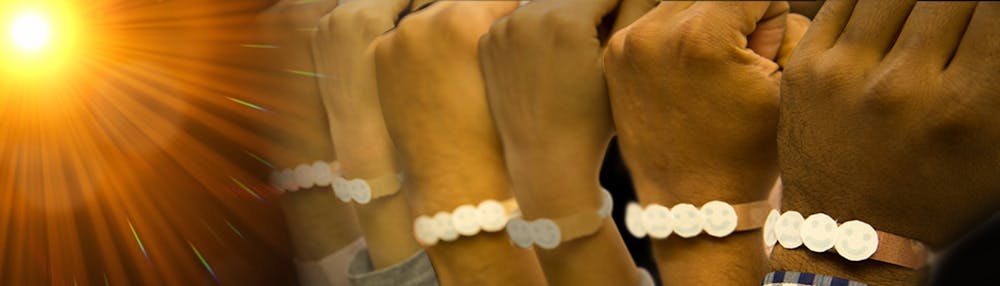
New colour change wristbands help you balance too much sun vs not enough – no matter your skin tone

by Vipul Bansal, Professor, ARC Future Fellow & Founding Director, Sir Ian Potter NanoBioSensing Facility, RMIT University
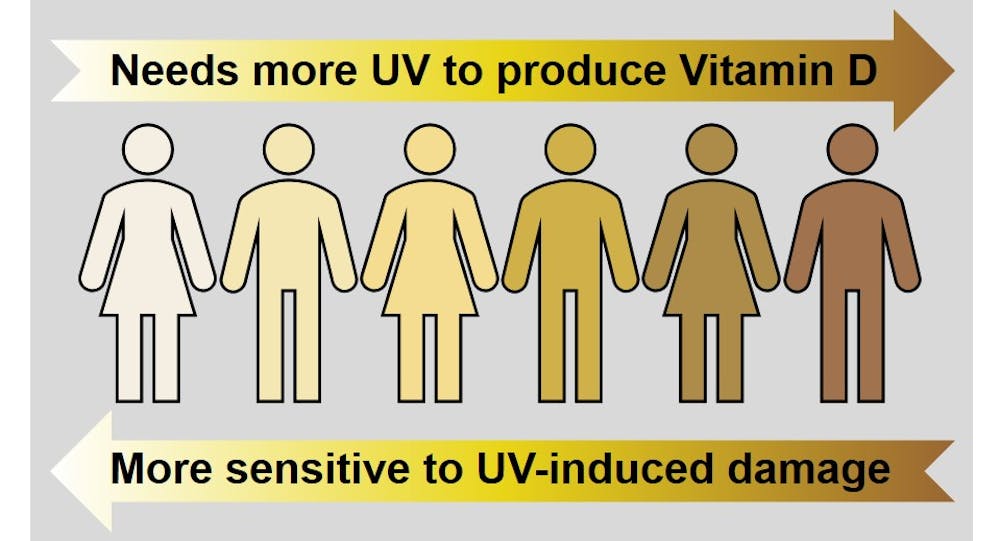
Different skin tones need different amounts of UV light to activate vitamin D in the skin. from www.shutterstock.com

The sun’s ultraviolet (UV) radiations have both harmful and beneficial effects for our health. Too much exposure can lead to sunburn, skin ageing, eye damage or even skin cancer. With too little UV we may become vitamin D deficient.

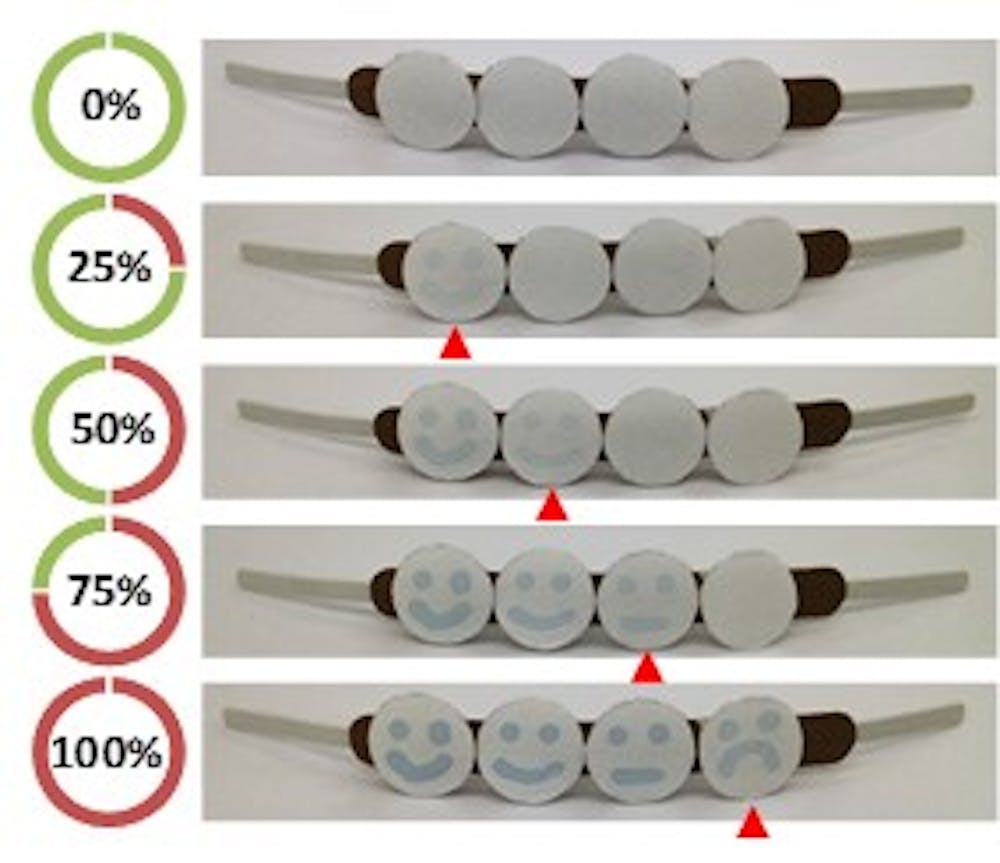
This big challenge of managing our daily UV exposure limits motivated my colleagues and I to develop a low-cost, paper-based sensor people can wear. The colour produced by our sensor indicates when you have achieved 25%, 50%, 75% and 100% of your daily recommended UV exposure.

To accommodate our ethnically-diverse population, we developed six such sensors, each personalised for a particular skin tonality.

The key discovery behind our sensor is an invisible ink that develops a colour when exposed to the UV rays.

We published these findings today in Nature Communications.

Personalised paper-based wearable solar UV sensors suitable for people of different skin tones. Vipul Bansal, RMIT, Author provided

Problems with the UV index

When you step outside your home do you notice the intensity of the sun?

If it’s cloudy where you live today, perhaps you assumed you didn’t need protection. If the sun felt intense, maybe you put on sunscreen and a hat.

But irrespective of your judgement about this risk, in reality UV rays neither feel hot (it’s the infrared rays that do this), nor are they visible to the human eye.

So, how do you track UV intensity?

Your current option is the UV index. This is a number calculated by the Australian Radiation Protection and Nuclear Safety Agency (ARPANSA) that tells you whether the UV intensity is low, moderate, high, very high or extreme.

But UV index is a rather blunt tool: it still leaves you wondering about when and for how long you should step out for your vitamin D dose, and when should you go back inside to minimise skin cancer risk.

A cartoon depicting different Sun exposure needs of individuals based on their skin tonalities. Wenyue Zou, RMIT, Author provided

Our reliance on the UV index is further complicated by the fact that it’s calculated for a fair skin tone. While lighter skinned individuals are more prone to UV damage, darker skin needs much more sunlight to produce enough vitamin D – which is vital for strong bones and other aspects of health.

This means the current UV index may not be suited to our ethnically-diverse population. And substituting sunlight with oral vitamin D supplements may not always be a good solution either, as a number of factors – including certain medications – interfere with oral vitamin D metabolism.

UV sensitive ink

As another way to measure UV exposure, we developed sensor paper made with an ink that changes colour in the presence of UV radiation.

An important component of this ink is a polyoxometalate molecule. It belongs to a family of materials described as “multi-redox photo-electrochromic” – meaning they can produce different intensities and tonalities of colours when excited with different energies.

We know that solar UV irradiation is comprised of different types of UV waves – so our unique ink responds to these different kinds of radiation and produces distinct colours that are visible to the naked eye.

Using this initially-invisible ink, we can draw or print a design on a paper or any other surface. On exposure to UV, the ink starts to become coloured. The colour intensity allows us to track our total UV exposure in real time.

By changing the ink composition and the sensor design, we can make the ink to develop colour either slow or faster. This allows us to produce sensors for people with different skin tonalities and sun exposure needs.

Wearable wrist bands

This low-cost paper-based technology also offers design flexibility to produce UV sensors as stickers, hairbands and wristbands.

A paper-based solar UV sensor prototype in a wristband format after different levels of permissible solar UV exposure. The smileys are initially invisible, but they become blue from left to right after 25%, 50%, 75% and 100% sun-safe UV exposure limits. Wenyue Zou, RMIT, Author provided

Currently, the sensor comes as a wearable wristband with four smiley faces. As the wearer is exposed to more and more UV with increasing time in the sun, the smileys start lighting up one after another. Finally, a sad smiley appears when the wearer approaches their maximum-allowed UV dose – this acts as a warning sign to leave the Sun.

We have successfully tested the performance of these sensors across various environmental conditions, such as changing humidity, temperature and altitude.

The next stage is to distribute UV sensor prototypes to volunteers to collect sensor response data. This feedback will also assist in optimising the sensor design before we progress towards third-party validation, certification and manufacturing.

Applications outside of health

Overall, we are excited that our modular paper-based UV sensor technology will be useful in helping people negotiate the delicate balance between not enough and too much UV exposure.

The developers of the colour-changing UV sensors model their wrist bands (L to R: Rajesh Ramanthan, Wenyue Zou and Vipul Bansal). RMIT, Author provided

But UV rays not only directly impact humans – they also have complex effects on the growth of our agricultural crops, and shelf-lives of many consumer, industrial and defence products.

Our UV sensors show large dynamic range – this means that they can detect extremely low as well as extremely high UV doses. This feature may be particularly promising for those industries that wish to assess the long-term impact of UV rays on their outdoor products.

The Conversation

Vipul Bansal receives funding from Australian Research Council (ARC) and is an ARC Future Fellow.

01 Oct 17:10

Want to be happy? Then live like a Stoic for a week

by John Sellars, Lecturer in Philosophy, Royal Holloway
Shutterstock

What have the Romans ever done for us? Well, obviously the roads – the roads go without saying. How about guidance for how to live in the 21st century? That seems less likely, but in fact the last few years have seen a flurry of interest in the work of three Roman Stoic philosophers who offered just that. They were Seneca, tutor to the Emperor Nero; Epictetus, a former slave; and Marcus Aurelius, himself emperor.

Modern books drawing on their ideas and repackaged as guidance for how to live well today include A Guide to the Good Life by William Irvine, Stoicism and the Art of Happiness by Donald Robertson, The Daily Stoic by Ryan Holiday and Stephen Hanselman, and How to Be a Stoic by Massimo Pigliucci. What all these books share is the conviction that people can benefit by going back and looking at the ideas of these Roman Stoics. There’s even an annual week dedicated to Stoicism.

Stoicism holds that the key to a good, happy life is the cultivation of an excellent mental state, which the Stoics identified with virtue and being rational. The ideal life is one that is in harmony with Nature, of which we are all part, and an attitude of calm indifference towards external events. It began in Greece, and was founded around 300BC by Zeno, who used teach at the site of the Painted Stoa in Athens, hence the name Stoicism. The works of the early Stoics are for the most part lost, so it is the Roman Stoics who have been most influential over the centuries, and continue to be today.

Control how you think

So, what were the ideas? Two foundational principles can both be found in the Handbook, a short work summarising the ideas of Epictetus. The first is that some things are within our control and some are not, and that much of our unhappiness is caused by thinking that we can control things that, in fact, we can’t.

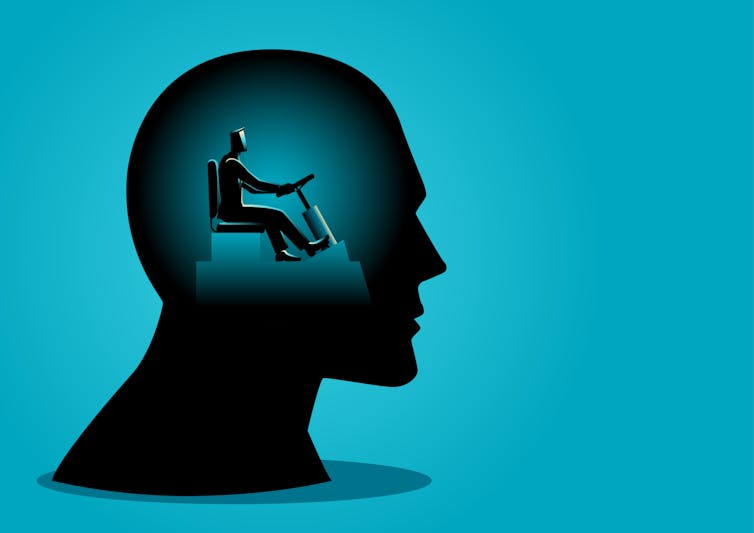
What can we control? Epictetus argues that we actually control very little. We don’t control what happens to us, we can’t control what the people around us say or do, and we can’t even fully control our own bodies, which get damaged and sick and ultimately die without regard for our preferences. The only thing that we really control is how we think about things, the judgements we make about things.

You control how you react. rudall30/Shutterstock

This leads us to the second foundational principle from Epictetus: it’s not things that upset us, but how we think about things. Stuff happens. We then make judgements about what happens. If we judge that something really bad has happened, then we might get upset, sad, or angry, depending on what it is. If we judge that something bad is likely to happen then we might get scared or fearful. All these emotions are the product of the judgements we make. Things in themselves are value neutral, for what might seem terrible to us might be a matter of indifference to someone else, or even welcomed by others. It’s the judgements we make that introduce value into the picture, and it’s those value judgements that generate our emotional responses.

The good Stoic news is that these value judgements are the one thing over which we have complete control. Things happen, none of which are inherently good or bad, and it’s within our power to decide how we value them. The paradox of Stoicism, as Epictetus formulates it, is that we have almost no control over anything, yet at the same time we have potentially complete control over our happiness.

Train your mind

At first glance, this might seem to understate the very real challenges that people face in their daily lives. How can just thinking differently help someone who is struggling to put food on their table, for instance? The Stoics didn’t shy away from this. They fully acknowledged that life can be hard sometimes.

Seneca knew this all too well: he suffered exile, multiple bereavements, and was ultimately forced to commit suicide by Nero. He also knew that it was all too easy to say “I’m not going to let these external things disturb me” but quite another to follow through and not be disturbed oneself.

So the Stoics developed a whole series of practical exercises designed to help train people to incorporate Stoic ideas into their daily lives. Seneca recommended taking stock at the end of each day, noting when you become irritated by something trivial, or act angrily in response to someone who perhaps didn’t deserve it, and so on. By noting his mistakes, he hoped to do better the next day.

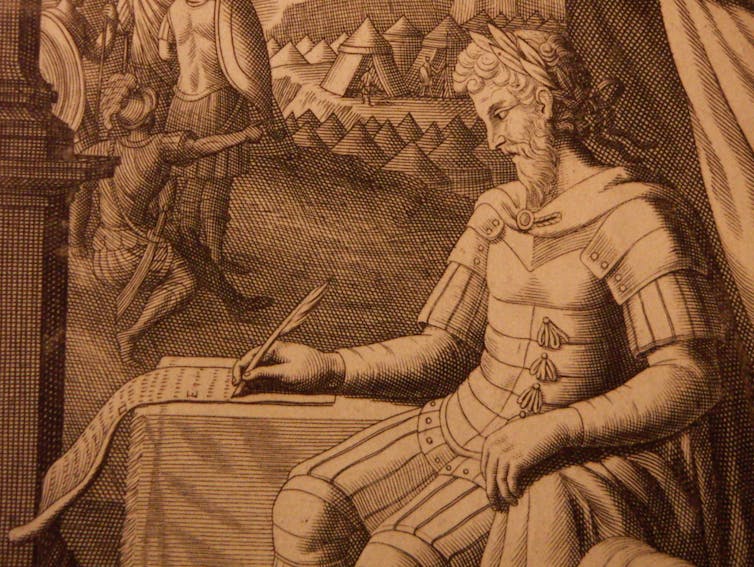
Marcus Aurelius writing his Meditations. Author provided

Marcus Aurelius had another strategy, reminding himself each morning that he was probably going to encounter a lot of angry, stressed, impatient, ungrateful people during the coming day. By reflecting on this in advance, the hope was that he would be less likely to respond in kind. But he also reflected on the fact that none of these people would be like this intentionally. They were the victims of their own mistaken judgements.

Here we get another paradox: no one chooses to be unhappy, stressed, angry, miserable, and yet these are in fact all the product of our judgements, the one thing within our control.

Accept what happens

Another Stoic strategy is to remind ourselves of our relative unimportance. The world does not revolve around us. Aurelius regularly reflected in his Meditations on the vastness of the universe and the infinity of time stretching into the past and future, in order to put his own short life into wider context.

Our lives are but moments when placed within this cosmic perspective. Given this, why should we expect the universe to deliver whatever it is that we might happen to want? On the contrary, it would be absurd to expect it to conform to our will.

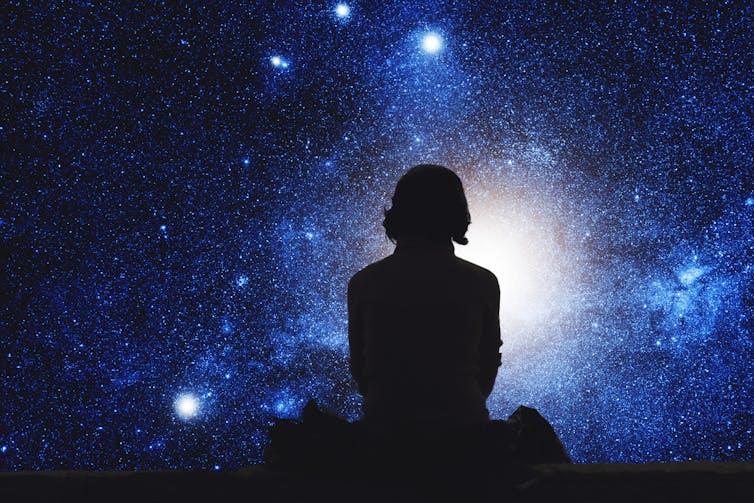
Take a cosmic perspective. AstroStar/Shutterstock

As Epictetus put it, if you expect the universe to deliver what you want, you are going to be disappointed, but if you embrace whatever the universe gives, then life will be a whole lot smoother. Again, this is easier said than done, but more and more people are taking note of this Stoic advice and working hard to incorporate it into their daily lives.

The Conversation

John Sellars is a member of Modern Stoicism, a non-profit organisation that runs Stoic Week and organises Stoicon events.

01 Oct 16:54

Fat people do not need your concerns about their health

by Jamie Khoo, PhD Candidate, University of York

Gravely misinformed ideas about health, beauty and body image still dominate, as derogatory reactions to plus size model Tess Holliday’s October Cosmopolitan UK magazine cover prove. TV presenter Piers Morgan, for example, posted a photo of the cover on Instagram with a caption that called out this “step forward for body positivity” as “a load of old baloney”. He went on to add: “This cover is just as dangerous and misguided as celebrating size zero models.”

Debates along the same lines run throughout discussion of the magazine cover on social media, with many people arguing that the image promotes obesity and an unhealthy lifestyle. There are plenty of supportive and celebratory comments too but why do many diverse audiences – from newspaper op-eds to online fitness coaches to social media users – react to this cover with immediate disapproval?

It comes after a glut of “summer shredding” diet plans and health programmes addressing the obesity panic and offering “fast fixes” to solve health issues by putting patients under dramatic weight loss regimes. Yes, there are correlations between obesity and other health issues, and it is important for us to think and talk about health. But the ways we have been going about this are often not accurate nor helpful.

Fat stigma, thin privilege

Many of the social media comments responding to Holliday’s magazine cover start by exalting the efforts of body positivity and body acceptance movements. But there is always a “but” – “but this isn’t healthy”, “but she’s going to get diabetes”, “but she’s going to die early”.

Why do we feel entitled to comment on anyone’s health when we most likely know nothing about them, their health, nutritional choices or fitness activity? Fat stigma has led us to draw a direct and exclusive connection between fatness and ill health, often disregarding the many other aspects of a person’s life that also bear on their bodies and health. Research has also shown that the stress experienced by fat people in the face of fat phobia, stigma and shaming often make it far harder for them to address the health issues they need to.


Read more: Obesity is about much more than an unhealthy lifestyle


There are plenty of thin people suffering from illness and all manner of health complications too. But the privileges Western culture has accorded to thinness mean that these people will never be subject to the same interrogations, or faux concerns, about their health. Unhealthy diet fads hardly come under the same kind of criticism.

Meanwhile, contemporary Western societies glamorise and laud numerous unhealthy lifestyle practices on a regular basis. People boast about their excessive drinking jaunts, or glorify stress by exalting those who work hard and are constantly under pressure. These practices are not only permissible; they have almost become something to aspire to. But the moment a fat person appears on a public platform, huge concerns about health are suddenly developed.

Perceptions and reality. UConn Rudd Center for Food Policy and Obesity

Multiple body stories

Slurs against fat people almost always draw on two main stereotypes: that they eat copious amounts of unhealthy food and that they are too lazy to exercise. Scrolling through the comments about Holliday’s Cosmo cover alone will pull up a few of these.

Such slurs do not only exclude and deny the material experiences of people suffering from such conditions as hormonal imbalances, genetic issues or other health complications that lead to weight gain. More harmfully, it ignores the many other affective, emotional and mental factors that contribute to an person’s relationship to their body.

Instances of childhood abuse, sexual assault, peer bullying or fractured familial relationships are only a few of many reasons my own interview participants (for my ongoing PhD) have shared of the subsequent damaging practices they took towards their bodies. These include starvation, over-exercising, binge-eating, self-harm or excessive preoccupations with certain beauty practices such as plastic surgery or skin bleaching.


Read more: Discrimination against fat people is so endemic, most of us don’t even realise it’s happening


Seeing bodies differently

People never just arrive at looking a certain way overnight. It is harmful and counterproductive to assume that a woman is very fat because she just eats junk food all day and fails to exercise; that a very thin woman is anorexic, or that people with hair on their bodies or acne on their faces are dirty. A complex set of traumas, experiences, relationships and interactions lie beneath the surface and have led them to where they are – and we need to honour these stories too.

Instead of seeing fat bodies simplistically and sanctimoniously as a glorification of bad health, we might instead try to reframe any display of an unconventional body as a means to understand that health can look very different and take varying forms. We should view a publicly visible fat, confident, self-accepting fat body, like Holliday’s, not as a sign that she is promoting unhealthy life choices but as the opposite: that whatever size we are or whatever state of health we are in, we might begin to find some peace with our bodies.

If health is really what we are concerned about, surely this might be a more helpful and kind approach. After all, the current knee-jerk reactions to images like Holliday’s magazine cover (or any number of her social media posts) of horror and disdain, and consequent shaming and bullying, haven’t been working. They only cause more stigma, and the bodies that may need help and healing become more invisible.

The Conversation

Jamie Khoo does not work for, consult, own shares in or receive funding from any company or organization that would benefit from this article, and has disclosed no relevant affiliations beyond their academic appointment.

26 Sep 18:23

Why For-Profit Academic Publishers Are Laughing All the Way to the Bank

by Jason Schmitt

If you’re not an academic or scientist, then you probably have no idea how off kilter research scholarship has become.  (more…)

26 Sep 18:13

This adhesive patch closes wounds without stitches

by Mark Frauenfelder

Zipstitch is a patch that closes wounds without stitches. It's available over the counter, but I suggest if you get a cut big enough to require this nifty gadget, you should probably go to the doctor as soon as you can.

26 Sep 17:45

Create your own cryptozoological beasts with this web app

by Rusty Blazenhoff

Move aside Fail Whale, now the internet has a Snail Whale (and other strange beasts).

Digital Culture's interactive Hybridizer app allows you to digitally create cryptozoological creatures using the 17th c. art of engraver Matthäus Merian. His work has been digitized, split in half, and animated by the team of Kajetan Obarski, Igor Hardy and Tukasz Kozak.

Give it a whirl.

Monstrous Leviathan

(Nag on the Lake)

25 Sep 19:51

John Oliver on Facebook's role in fomenting genocide, pogroms and authoritarianism.: "a toilet"

by Cory Doctorow

Facebook usage is falling in the US and Canada, especially among young people, but it's still dominating the internet overseas, especially in countries where Zero Rating is legal.

In those countries, Facebook -- more than any other technology, platform or service -- is leading the rise in authoritarianism and genocide. It's become the go-to tool for manipulating public opinion to support violence, racial cleansing and other horrors.

In his latest piece, John Oliver describes how Facebook's business model, moderation tactics, and history have led to this moment -- and how Facebook has become an irredeemable cesspool, an insult to toilets, because toilets "make shit go away, whereas Facebook retains shit, disseminates shit to your acquaintances, and reminds you of shit from seven years ago while allowing corporations to put their shit in front of you. What I’m saying is there’s a purity and integrity to toilets that Facebook seriously lacks."

An August investigation by Motherboard gets a shout-out in the piece, as Oliver references one of Facebook’s many internal content moderation rules—in this case, one that specifies the very specific instances in which photoshopped anuses are allowed on the site. Facebook has similar rules for hate speech (drawing the line on what’s allowed and what isn’t in often difficult ways to understand), which cut across cultures, countries, political regimes, and geographic borders.

“I am not saying the challenges Facebook is facing are not significant. But for a company that moves fast and breaks things, they have sure moved slowly in trying to fucking fix them,” Oliver said. “Until they do it is painfully obvious that everyone should be treating everything on their site with extreme skepticism and see Facebook for what it is: A fetid swamp of mistruths and outright lies, interspersed with an occasional reminder of a dead pet. That’s it. That’s what it is.”

John Oliver Calls Facebook 'a Fetid Swamp of Mistruths and Outright Lies' [Jason Koebler/Motherboard]

25 Sep 19:37

Scholastic fixes greedy copyright rule in this year's awards

by Rob Beschizza

Last year, 8th-grader and cartoonist Sasha Matthews discovered that the Scholastic Awards had a nasty rule buried in the fine print: all the childrens' work submitted for consideration became the property of Scholastic. This year, Scholastic fixed the rules, only taking a license to publish the entries. It's a big victory for the kids and a smart decision by the company.

Nicole Brown reports:

A 14-year-old Manhattan girl has learned firsthand the power of speaking up.

Months after Sasha Matthews, of the Upper West Side, tweeted about the copyright policy of the Scholastic Art & Writing Awards, the organization behind the national teen competition, which gets hundreds of thousands of submissions, announced new participation terms.

Matthews, a cartoonist known for her “Everyday Superheroes” comic book that raises money for the American Civil Liberties Union, questioned why winners of the contest would have to grant the Alliance for Young Artists & Writers Inc. the copyright to their work for two years.

25 Sep 19:35

To fix Canadian copyright, let creators claim their rights back after 25 years

by Cory Doctorow

Copyright markets are -- and always have been -- broken. People make art because they have to, and there's always a middle-man ready to take advantage of the oversupply of willing creators to grab our rights and pay us peanuts.

That's why expanding the term or scope of copyright does little to help creators, especially less-well-known artists or those at the beginning of their careers. When you give a person with no bargaining power more rights, the bullies who've been grabbing the lion's share all along simply take the new rights, too. Merely expanding copyright is like giving your bullied kid more lunch money in the hopes that the bullies will leave them with enough to buy something to eat.

But there's a better way!

One of the best features of the US copyright system is "reversion": this allows creators to fill in a few forms and take back their copyrights after 35 years, even if they have entered into a "perpetual assignment of copyright" with a publisher, studio, label or other party.

Creators at the start of their careers have no negotiating leverage, and most creative works have no commercial life after the first couple of years. Reversion allows the small minority of creators who have attained fame to take back the copyrights they were strong-armed into surrendering when they were unknowns, and it allows other, less-successful creators to take back their creations and distribute them in small, independent editions that give them new life.

Canada is contemplating a sweeping set of copyright reforms; as in inevitable on these occasions, the process has been dominated by batshit proposals from giant corporations who've bilked some creators to front for them.

But one proposal stands out for its sensible, pro-creator obviousness: singer Bryan Adams' proposal to create a 25-year reversion system for creators. Such a system would allow creators like Adams (whose own career peaked long enough ago to allow him to claim back his most successful works under this rule) to right the old wrongs in the contracts he signed when he was starting out.

As Australian copyright scholar Rebecca Giblin notes, this system was once in place in Australia, but was abolished in 1968. Importantly, reversion systems are one of the few areas of copyright that are not tightly constrained by impossible-to-alter international copyright treaties like the Berne Convention and the WTO's TRIPS.

If you're an American who wants to revert your 35-year-old rights, check out the Authors Alliance tool for streamlining the process.

In the book industry my research into almost 100,000 titles has found that publishers license older e-books to libraries on the same terms and for the same prices as newer ones. That includes “exploding” licences which force books to be deleted from collections even if nobody ever borrows them.

Publishers are interested in maximising their share of library collections budgets, not ensuring that a particular author continues to get paid or a particular title continues to get read.

As a result libraries often forgo buying older (but still culturally valuable) books even though they would have bought them if the publisher cared enough to make them available at a reasonable price.

Restricting access to books is not in the interests of authors or readers.

Everything he does, he does it for us. Why Bryan Adams is on to something important about copyright [Rebecca Giblin/The Conversation]

(Image: Gerardo Gonzalez, CC-BY)

17 Sep 19:24

Birtherism for everyone: Kansas woman told birth certificate can't be used for passport renewal

by Cory Doctorow

With nativism and xenophobia on the rise, Americans are increasingly required to "prove" that they are actually Americans: whether it's at a border checkpoint (far from any border), or in a government office. (more…)

17 Sep 17:04

Spiders blamed after broken siren played creepy nursery rhymes randomly at night to UK townsfolk

by Rob Beschizza

Floating in on the wind, yet again, the sound of It's Raining, It's Pouring being sung by a child on the creepiest siren in Britain. The Ipswich Star reports on what one local described as "something from a horror movie." I've embedded a recording made by one alarmed local at the top of this post so you know what they were hearing.

A tormented mother living in Bramford Road with her two young children has been woken on an almost nightly basis by a tinny, distant rendition of ‘It’s Raining, It’s Pouring’. She said the threatening undertone of the song had left her frightened and questioning whether she was imagining things. After months of torment, she finally reported the unusual complaint to Ipswich Borough Council.
The next time it happened, they scrambled workers to her address and she helped them track down the unnerving music to a loudspeaker installed at "an industrial premises on the neighbouring Farthing Road estate [business park]." The council subsequently issued a press statement, which follows.
“This is unique in our experience – it was difficult to believe a nursery rhyme would be playing in the middle of the night. “But we do take all complaints extremely seriously and asked the residents who contacted us to let us know when it was actually playing so we could investigate properly. “We took a call around midnight and immediately went to the Bramford Road area to find out more - we did hear the nursery rhyme playing from an industrial premises and it sounded very eerie at that time of night. We appreciate that people living nearby would find it quite spooky.”
The premises' operators blamed spiders.
“The sound is only supposed to act as a deterrent for opportunistic thieves that come onto our property, and it’s designed only to be heard by people on our private land. We are now aware of the problem - the motion sensors were being triggered by spiders crawling across the lenses of our cameras and it looks like we’ve had it turned up too loudly. We’ve spoken to the resident who brought it to our attention and adjusted it so this shouldn’t happen again.”
The BBC adds that it had gone on for months.
For several months she would hear the rhyme, which would go away only to come again another day. The woman, who did not wish to be named, said: "The first time I heard it it was the most terrifying thing ever, I went cold and felt sick, and thought 'what on earth was that?'"
14 Sep 19:25

This website lets you listen to pleasant noises while you work

by Mark Frauenfelder

Right now I'm listening to a mix of coffee shop chatter and tweeting birds. I'm using a website called A Soft Murmur, which lets you create an ambient mix of rain, thunder, waves, wind, fire, birds, crickets, coffee shop, singing bowl, and white noise. You can save your favorite mixes, too, or click a button for a random mix.

[via Nag on the Lake]

14 Sep 15:21

Today, Europe Lost The Internet. Now, We Fight Back.

by Cory Doctorow

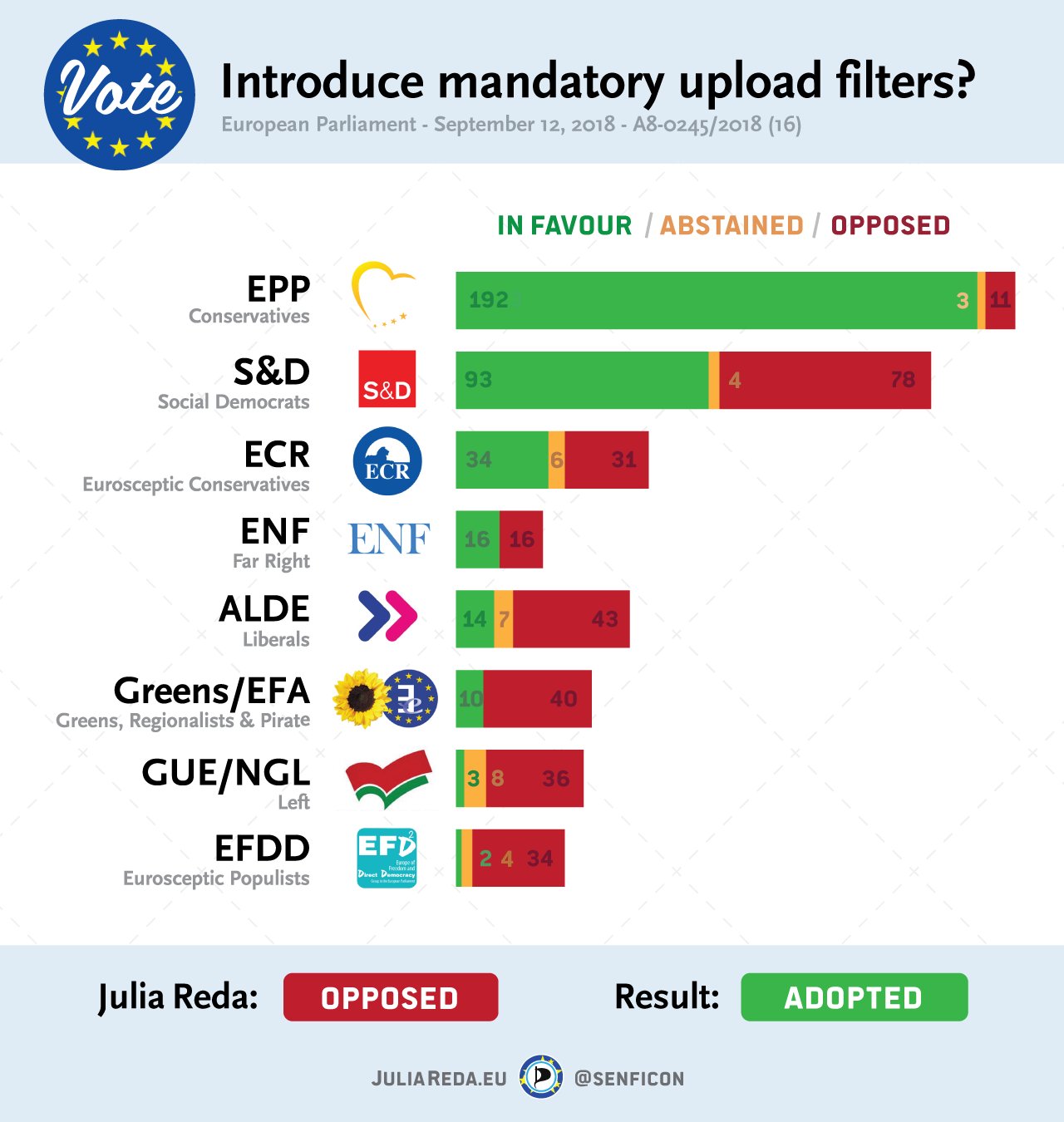
Today, in a vote that split almost every major EU party, Members of the European Parliament adopted every terrible proposal in the new Copyright Directive and rejected every good one, setting the stage for mass, automated surveillance and arbitrary censorship of the internet: text messages like tweets and Facebook updates; photos; videos; audio; software code -- any and all media that can be copyrighted.

Three proposals passed the European Parliament, each of them catastrophic for free expression, privacy, and the arts:

1. Article 13: the Copyright Filters. All but the smallest platforms will have to defensively adopt copyright filters that examine everything you post and censor anything judged to be a copyright infringement.

2. Article 11: Linking to the news using more than one word from the article is prohibited unless you're using a service that bought a license from the news site you want to link to. News sites can charge anything they want for the right to quote them or refuse to sell altogether, effectively giving them the right to choose who can criticise them. Member states are permitted, but not required, to create exceptions and limitations to reduce the harm done by this new right.

3. Article 12a: No posting your own photos or videos of sports matches. Only the "organisers" of sports matches will have the right to publicly post any kind of record of the match. No posting your selfies, or short videos of exciting plays. You are the audience, your job is to sit where you're told, passively watch the game and go home.

At the same time, the EU rejected even the most modest proposals to make copyright suited to the twenty-first century:

1. No "freedom of panorama." When we take photos or videos in public spaces, we're apt to incidentally capture copyrighted works: from stock art in ads on the sides of buses to t-shirts worn by protestors, to building facades claimed by architects as their copyright. The EU rejected a proposal that would make it legal Europe-wide to photograph street scenes without worrying about infringing the copyright of objects in the background.

2. No "user-generated content" exemption, which would have made EU states carve out an exception to copyright for using excerpts from works for "criticism, review, illustration, caricature, parody or pastiche."

I've spent much of the summer talking to people who are delighted with this outcome, trying to figure out why they think this could possibly be good for them. Here's what I've discovered:

* They don't understand filters. They really don't.

The entertainment industry has convinced creators that there is a technology out there that can identify copyrighted works and prevent them from being shown without a proper license and that the only thing holding us back is the stubbornness of the platforms.

The reality is that filters primarily stop legitimate users (including creators) from doing legitimate things, while actual infringers find them relatively easy to get around.

Put it this way: if your occupation is figuring out how filters work and tinkering with getting around them, you can become skilled in the art. The filters used by the Chinese government to block images, for example, can be defeated by simple measures. Meanwhile, these filters that are bound to be thousands of times more effective than any copyright filter because they're doing a much more modest job with far more money and technical talent on hand.

But if you're a professional photographer, or just a regular person posting your own work, there's no time in your life to become a hardcore filter-warrior. When a filter mistakes your work for copyright infringement, you can't just bypass the filter with a trick from the copyright infringing underground: you have to send an appeal to the platform that blocked you, getting in line behind millions of other poor suckers in the same situation as you. Cross your fingers and hope that the overworked human reviewing the appeals decides that you're in the right.

Of course, the big entertainment and news companies aren't worried about this outcome: they have backchannels direct into the platforms, priority access to help-lines that will unstick their content when it gets stuck in a filter. Creators who align themselves with large entertainment corporations will be shielded from filters -- while independents (and the public) will have to fend for themselves.

* They grossly underestimate the importance of competition for improving their lot in life.

Building the filters the EU just mandated will cost hundreds of millions of dollars. There are precious few companies in the world who have that kind of capital: the US-based tech giants, and the Chinese-based tech giants, and a few others, like Russia's VK.

The mandate to filter the Internet puts a floor on how small the pieces can be when antitrust regulators want to break up the big platforms: only the largest companies can afford to police the whole net for infringement, so the largest companies can't be made much smaller. The latest version of the Directive has exemptions for smaller companies, but they will have to stay small or constantly anticipate the day that they will have to take the leap to being copyright police. Today, the EU voted to increase the consolidation in the tech sector, and to make it vastly more difficult to function as an independent creator. We’re seeing two major industries, both with competitiveness problems, negotiate for a deal that works for them, but will decrease competition for the independent creator caught in the middle. What we needed were solutions to tackle the consolidation of both the tech and the creative industries: instead we got a compromise that works for them, but shuts out everyone else.

How did this terrible state of affairs come to pass?

It's not hard to understand, alas. The Internet has become a part of everything we do, and so every problem we have has some intersection with the Internet. For people who don't understand technology very well, there's a natural way to solve those problems: "fix the technology."

Arthur C Clarke famously said that "Any sufficiently advanced technology is indistinguishable from magic." Some technological accomplishments do seem like magic, and it's natural to witness these workaday miracles and assume that tech can do anything.

An inability to understand what tech can and can't do is the source of endless mischief: from the people who blithely assert that networked voting machines can be made secure enough to run a national election; to the officials who insist that we can make cryptography that stops crooks from breaking into our data, but allows the police to break into crooks' data; to the hand-waving insistence that a post-Brexit Irish border can be "solved" with some undefined technical fix.

Once a few powerful entertainment industry figures were persuaded that filtering at scale was possible and consequence-free, it became an article of faith, and when technologists (including a who's who of the world's top experts on the subject) say it's not possible, they're accused of mulish stubbornness and lack of vision, not a well-informed perspective on what is and isn't possible.

That's a familiar-enough pattern, but in the case of the EU's Copyright Directive, there were exacerbating factors. Tying a proposal for copyright filters to a proposal to transfer a few million euros from tech giants to newspaper proprietors guaranteed favorable coverage from the very press looking for a solution to its problems.

Finally, there's the problem that the Internet promotes a kind of tunnel vision in which we assume that the part of the net we interact with is the whole thing. The Internet handles trillions of articles of public communication every day: birthday wishes and messages of condolences, notices of upcoming parties and meetings, political campaigns and love notes. A tiny, sub-one-percent slice of those communications are the kind of copyright infringement that Article 13 seeks to address, but the advocates for Article 13 keep insisting that the "primary purpose" of the platforms is to convey copyrighted works of entertainment.

There's no doubt that people from the entertainment industry interact with a lot of entertainment works online, in the same way that the police see a lot of people using the Internet to plan crimes and fashionistas see a lot of people using the Internet to show off their outfits.

The Internet is more vast than any of us can know, but that doesn't mean we should be indifferent to all the other Internet users and the things they lose when we pursue our own narrow goals at the expense of the wider electronic world.

Today's Copyright Directive vote not only makes life harder for creators, handing a larger share of their incomes to Big Content and Big Tech -- it makes life harder for all of us. Yesterday, a policy specialist for a creator's union that I'm a member of told me that their job isn't to "protect people who want to quote Shakespeare" (who might be thwarted by bogus registration of his works in the copyright filters) -- it was to protect the interests of the photographers in the union whose work is being "ripped off." Not only did my union's support of this catastrophic proposal do no good for photographers -- it will also do enormous damage to anyone whose communications are caught in the crossfire. An error rate of even one percent will still mean tens of millions of acts of arbitrary censorship, every day.

So what is to be done?

Practically speaking, there are several more junctures where Europeans can influence their elected leaders on this issue.

* Immediately: the Directive will now go into "trilogues" -- secretive, closed-door meetings between representatives from national governments and the European Union; these will be hard to influence, but they will determine the final language put before the Parliament for the next vote (Difficulty: 10/10)

* Next spring: The European Parliament will vote on the language that comes out of the trilogues. It's unlikely that they'll be able to revise the text any further, so this will probably come to a vote on whether to pass the Directive itself. It's very difficult to defeat the Directive at this stage. = (Difficulty: 8/10)

* After that: 28 member states will have to debate and enact their own versions of the legislation. In many ways, it's going to be harder to influence 28 individual parliaments than it was to fix this at the EU level, but on the other hand, the parliamentarians in member states will be more responsive to individual Internet users, and victories in one country can be leveraged for others ("See, they got it right in Luxembourg, let's do the same”) (Difficulty: 7/10)

* Somewhere around there: Court challenges. Given the far-reaching nature of these proposals, the vested interests involved, and the unresolved questions about how to balance all the rights implicated, we can expect this to rise — eventually — to the European Court of Justice. Unfortunately, court challenges are slow and expensive. (Difficulty: 7/10)

In the meantime, there are upcoming EU elections, in which EU politicians will have to fight for their jobs. There aren't many places where a prospective Member of the European Parliament can win an election by boasting about expansions of copyright, but there are lots of potential electoral opponents who will be too happy to campaign on "Vote for me, my opponent just broke the Internet."

As we've seen with Net Neutrality in the USA, the movement to protect the free and open Internet has widespread popular support and can turn into a potential third rail for politicians.

Look, this was never going to be a fight we "won" once and for all -- the fight to keep the Internet free, fair and open is ongoing. For so long as people have:

a) problems; that

b) intersect with the Internet;

there will always be calls to break the Internet to solve them.

We suffered a crushing setback today, but it doesn't change the mission. To fight, and fight, and fight, to keep the Internet open and free and fair, to preserve it as a place where we can organise to fight the other fights that matter, about inequality and antitrust, race and gender, speech and democratic legitimacy.

If this vote had gone the other way, we'd still be fighting today. And tomorrow. And the day after.

The fight to preserve and restore the free, fair and open Internet is a fight you commit yourself to, not a fight that you win. The stakes are too high to do otherwise.

Donate to EFF

Help Us Protect the Free, Fair, and Open Internet

14 Sep 15:01

President Trump falsely claims 3000 death toll in Puerto Rico is a lie

by Rob Beschizza

The Republican president speaks for the Republican Party.
3000 people did not die in the two hurricanes that hit Puerto Rico. When I left the Island, AFTER the storm had hit, they had anywhere from 6 to 18 deaths. As time went by it did not go up by much. Then, a long time later, they started to report really large numbers, like 3000.... [twitter] ....This was done by the Democrats in order to make me look as bad as possible when I was successfully raising Billions of Dollars to help rebuild Puerto Rico. If a person died for any reason, like old age, just add them onto the list. Bad politics. I love Puerto Rico! [twitter]
Hurricane Maria hit Puerto Rico in September 2017. The 2,975 count comes from a George Washington University study, published in July, which included people who died of thist, starvation, disease or neglect as a direct result of the storm. 64 (not "6 to 18") were reportedly killed outright by drowning, falling debris, in collapsing buildings, etc.
14 Sep 14:51

The Communist Manifesto: A Graphic Novel

by Gord Doctorow

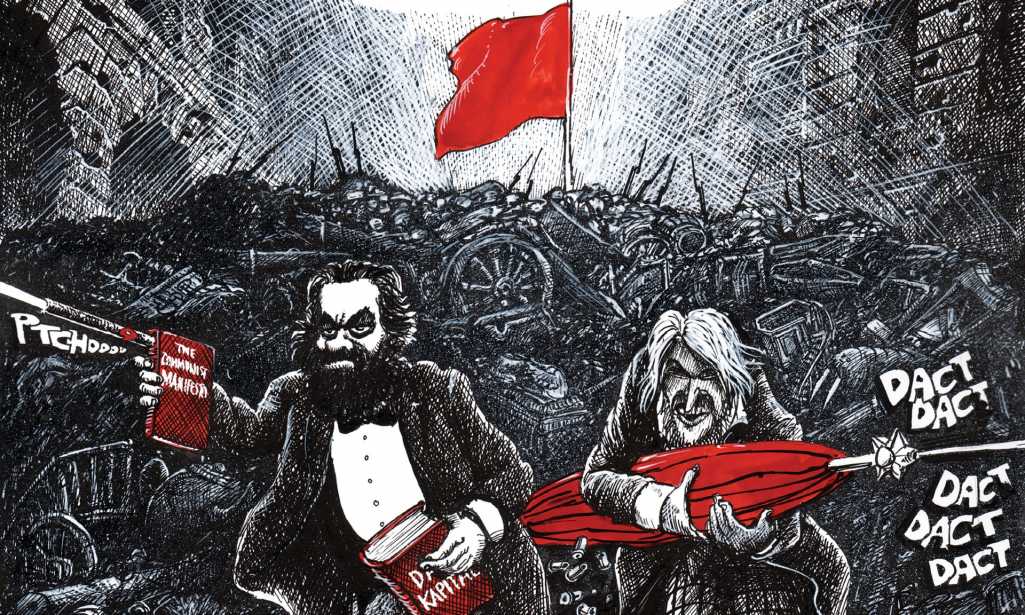
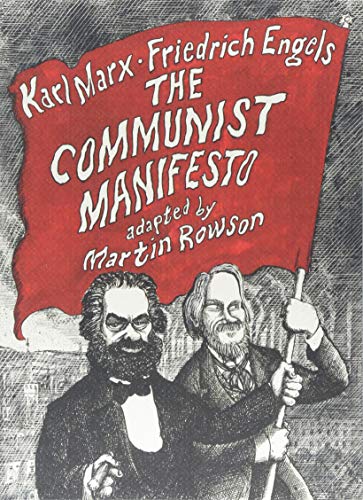
On the 170th anniversary of the publication of Karl Marx’s and Friedrich Engels’ The Communist Manifesto, British graphic novelist Martin Rowson has produced an illustrated adaptation. Apart from a few pages of prose, the whole work is presented in the style of a graphic novel.

The preface describes how the middle-aged Rowson became smitten by Marx and Engels' exciting prose when he was only 16. Aside from expressing his great admiration for Marx’s writing, as well as his own critical stance, he furnishes the reader with some historical backdrop to the completion of The Manifesto. Marx had been commissioned to write it by a socialist group in the summer of 1847, but, under pressure, succeeded in producing it at the beginning of 1848. Significantly, that was before the outbreak of revolutionary movements in Europe later on in 1848. Rowson goes on to explain that the initial publication failed to attract the attention of many people. Only after the events of the Paris Commune in 1871 did the pamphlet receive a wide audience and a publication renewal.

The illustrations create an atmospheric accompaniment to the Marx figures whose speaking balloons relay the text of The Manifesto. The graphics pair nicely with the text with dense images that impart the feeling of the clashes of historical forces (classes) or with the dramatic rendering of the first lines of The Manifesto in which a spectre appears, so Hamlet-like in two dark and foreboding images to haunt the reader’s mind. There is plenty of theatricality too: images of Marx interacting from a stage with a hostile audience (Rowson’s added flourishes added to enhance the exposition in a stimulating theatrical way).

As a literary work, the illustrations do justice to the marvelously compressed, yet sweeping, literary quality of Marx’s verbal imagery and present readers. Though I had read The Manifesto years ago, I found the adaptation to be both a refresher and newly insightful.

The Communist Manifesto: A Graphic Novel [Martin Rowson/SelfMadeHero]

14 Sep 13:12

Friday essay: who owns a family's story? Why it's time to lift the Berndt field notes embargo

by Claire Smith, Professor of Archaeology, College of Humanities, Arts and Social Sciences, Flinders University
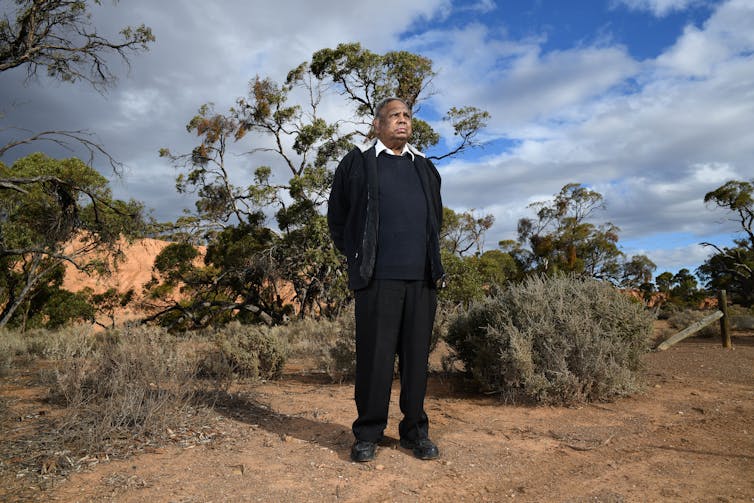
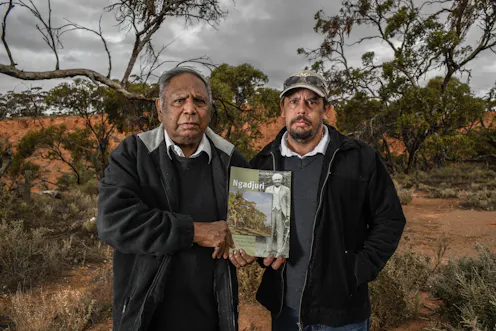
Vincent Copley senior and Vincent Copley junior at Redbanks Conservation Park, Burra, in June, 2018. They are holding Ngadjuri book, with their grandfather and great-grandfather, Barney Waria, on the cover. Photo: C.J. Taylor, Flinders University.

Imagine your grandfather was interviewed about his life, over many hours, some 80 years ago. Everything he says is written down, enough to fill more than 20 notebooks.

You’ve heard that those notebooks hold stories of your grandparents and their grandparents. Stories they would tell as they sat around a fire in the winter, by a river in summer. There are stories about the sports they played, the food they ate, their spirituality, how they celebrated important events. Stories about their songs, dances, artworks. Stories of the events that shaped them, many of which play out even now.

Then you learn that the wife of the person who wrote down your grandfather’s stories has locked the notebooks away. You and your family are not allowed to read them.

This is how it is for a number of Aboriginal people today, among them 81-year-old Vincent (Vince) Copley senior, co-author of this article.

Between 1939 and 1944, Vince Copley’s grandfather, Ngadjuri man Barney Waria, provided information about his people and culture to anthropologist-in-training Ronald Berndt. When Berndt died in 1990, 45 years and an illustrious career later, he’d published only one significant article about Barney Waria and the Ngadjuri people.

Four years after his death, Berndt’s wife and fellow anthropologist Catherine Berndt died. Her will, written in 1993 and following her husband’s wishes, stipulated a 30-year embargo on a subset of their extensive collection of papers. This embargo included the Barney Waria notebooks. As it stands, the embargoed material - stored in the Berndt Museum at the University of Western Australia - will not be accessible until 2024.

Vince Copley hopes to see these notebooks before he dies. He would like to be able to read them with his adult children, to give them a fuller picture of their Ngadjuri ancestry. He hopes they may trigger his own memories of his father’s side of the family.

Barney Waria. Author provided.

Barney Waria was born in 1873 at Orroroo, on Ngadjuri Country in the mid-north of South Australia. He died in 1948. As far as is known, he was the last initiated Ngadjuri man. Vince’s father Frederick Warrior - the name was anglicised at some stage - was the eldest son of Barney. He died in an accident in 1938 when he was 30 and Vince was a baby.

Between 1936 and 1944, Barney Waria worked with three anthropologists: Norman Tindale, Charles Mountford, and Ronald Berndt. Berndt was in his early 20s when he met Waria for the first time, around 1939.

Important cultural knowledge

One of Berndt’s 35 books.

Over his lifetime, Berndt published 35 books and many articles. When he met Waria, however, he was just starting his anthropology studies. They met either at Berndt’s father’s house at Rose Park or at Light Square, in the Adelaide city centre, a gathering place for Aboriginal people from many different language groups.

In either 1942 or 1944, Berndt took the older Aboriginal man to visit the Aboriginal collection at the South Australian Museum. As they walked past the exhibits, Waria pointed out artefacts that were familiar. Berndt writes that at one point, Waria stopped and opened his arms wide as if to embrace the gallery of objects. Waria said:

It’s wonderful that we can look at all these things and know their meanings, wonderful to think of the power and the songs and the ritual associated with them, to think about all that has gone. But what they were lives only in the minds of a few of us!

It’s not clear what to make of Waria’s words, as he would have intended them. Lament? Pragmatic acceptance of a new reality? Something else?

What is clear, however, is that Waria was conscious that important Aboriginal cultural knowledge was disappearing. It is our view that he chose to work with anthropologists as one way of preserving that knowledge for his descendents. Much of Waria’s knowledge was recorded in Ronald Berndt’s field notes.

In the late 1950s, the Berndts moved to Perth, taking up senior roles at the University of Western Australia. In 1976 they founded an anthropology museum to hold their extensive collection of material. In 1992, after Ronald’s death, it was renamed the Berndt Museum.

Why an embargo?

Anthropologist John Stanton is the literary executor of Ronald and Catherine Berndt’s estate. Now retired, he was the couple’s protégé, and worked with them for many years. He became a curator of the Berndt Museum, and then director from 1980 to 2013. He remains on the Committee of the Professor Ronald M. and Dr Catherine Berndt Research Foundation.

Stanton says that neither Catherine nor Ronald Berndt trusted Australian governments to support Aboriginal interests. Thus the embargo on Berndt’s notes - placed during the time of the Mabo case and the eventual 1992 ruling that recognised native title - was a result of their concern that their material could be misused by a government.

In the pre-Mabo era, the embargo on Berndt’s field notes would have been viewed as a purely personal decision. It would not have crossed people’s minds to consult with Aboriginal people. Also, Ngadjuri people had been removed from their lands as a result of colonisation. At that time they were not widely recognised as an identifiable language group.

Today, universities actively pursue decolonised approaches. At the very least, they work in partnership with Indigenous people. Often, their work supports Indigenous self-determination. Within the academy, it is increasingly accepted that field notes should be available to the descendants of the fieldworker’s Indigenous teachers.

Stanton has confirmed that the notebooks containing Barney Waria’s interviews have been read by people outside the Berndt Museum on only two occasions. Both times, access was subject to South Australia Supreme Court writs. The first was during the controversy over the Hindmarsh Island Bridge which concerned the Ngarrindjeri people. The second was by an anthropologist from the South Australian Native Title Service in response to a Ngadjuri native title claim in 2011.

At present, native title claims are the only avenue for Aboriginal people to try to access the embargoed material. However, this is a flawed process. Families seek to find as many of the missing pieces of their traditional languages and cultures as they can. These cultural reasons tend to get lost in complicated and often combative legal processes.

Ronald Berndt may have decided it was best to avoid these confrontations by imposing the embargo. However, the descendants of the people whose lives and culture he documented have much more at stake than he did.

Unfairly withheld

Vince Copley contacted Stanton in November 2017 - a colleague emailed on his behalf - because he’d heard a rumour that the embargo had been lifted. Stanton emailed back saying he’d retired and a new associate director, Dr Vanessa Russ, was in charge. He acknowledged the difficulties for families, saying he was sorry that “we have been so hamstrung by Catherine Berndt’s will.”

Vincent Copley senior, Redbanks Conversation Park, Burra. June 2018. Photo: C.J. Taylor, Flinders University.

In recent email correspondence, Russ, an academic, artist and Ngarinyin/Gija woman from the Kimberley, has confirmed that the embargo continues. The university, she says, accepted the donations made by Berndt in their entirety, to secure the material for future generations, and has been working to conserve and share these collections. “Unfortunately this has included an embargo on the field notebooks. We acknowledge that we would therefore be breaking the law if we contravened the terms of the Will by providing access before 2024, but that this has caused some distress to Elders.”

The university, she says, is striving to ensure that future consultation will take into account all individuals and communities who through their heirs and ancestors provided information to the Berndts, “in order to find the best process and procedure for future research and teaching with this material post 2024.”

Our position is that the Berndts were not solely the owners of the intellectual property in the field notes. It was jointed owned by Aboriginal Elders, such as Barney Waria. Consequently, the field notes are being unfairly withheld from their descendants.

Recently, we published an article arguing that Berndt’s field notes are joint intellectual property. They could not have been produced by either Berndt or Waria by himself. Both men contributed to this intellectual soup. One shared his specialist knowledge. The other recorded this knowledge in a notebook. It is likely that Barney Waria’s knowledge was recorded verbatim in Berndt’s field notes.

Moreover, there is a further injustice behind the current situation, of which many Indigenous people are acutely aware. Academics achieve careers and financial security on the basis of Indigenous cultural knowledge. However, the Indigenous teachers who impart that specialist knowledge, and their descendants, receive meagre pickings.

Where to from here?

The question of who owns this sort of material is slowly being resolved in this country. However, for people like Vince Copley senior and his family, a solution to the Berndt embargo seems an impossibly long way off.

What reasonable expectations did Barney Waria have when he decided to talk to Berndt? It is likely that these expectations were based on his previous experiences with Norman Tindale and Charles Mountford. Their notebooks are readily available in libraries and museums.

The current situation undermines trust between Indigenous people and anthropologists. If the knowledge you impart to a researcher is likely to be kept from your descendants, why share it? The Berndt example demonstrates that intellectual property can be appropriated as soon as it is written down.

It is time that the University of Western Australia re-assessed the legal basis for the embargo. For Vince Copley and other descendants of the people who shared their specialist knowledge with Berndt - whose stories and culture are locked away - time is running out.

The Conversation

The authors do not work for, consult, own shares in or receive funding from any company or organization that would benefit from this article, and have disclosed no relevant affiliations beyond their academic appointment.

13 Sep 11:44

Serena Williams is angry...and rightfully so

by oracleeditor@gmail.com (Samantha Moffett, Associate Editor)

Serena Williams felt she was trested unfairly in 2018's U.S. Open. A series of calls fines have sparked a debate among fans, players and tennis officials. PHOTO COURTESY OF EDWIN MARTINEZ

The discussion surrounding the potential double standard that female athletes face has prompted a firestorm of a debate among athletes, officials and fans since Saturday’s U.S. Open final match between 20-year-old Naomi Osaka and veteran Serena Williams.

When Williams was penalized during the final for breaking her racket and receiving “illegal hand gestures” in the form of coaching, she firmly disputed the umpire’s call, demanding an apology for being accused of cheating and calling him a “thief” for costing her points.

Williams was fined a total of $17,000 for three code violations by chair umpire Carlos Ramos. She lost the match in straight sets — 6-2 and 6-4 — to Japan’s Osaka. Williams later went on to call out the blatantly unfair treatment that women face in sports, explaining how an umpire has never taken a game from a male tennis player or claimed “verbal abuse” for exhibiting the same emotion.

Williams is right.

When British tennis player Andy Murray kicked a ball at an umpire’s head in 2016, he suffered no consequences and was even jokingly praised for his “football skills” by media outlets.

American tennis player Andy Roddick was called for a foot fault in 2010 and repeatedly harassed the lineswoman during the set. After the set, it was the lineswoman who was replaced even though she made the correct call.

Roddick who was never penalized.

Would Williams be treated the same way by officials if she exhibited that behavior? The answer is no, she would not and she was not treated equally at Saturday’s match.

The juxtaposition of these instances to Williams’ is glaring.

Tennis umpires have expressed their distaste with Williams’ behavior by announcing their potential boycott of her matches. The Guardian reported that umpires are also so outraged over the Women’s Tennis Association and the United States Tennis Association showing support for Williams that they are considering forming a union.

While these umpires do indeed have the right to disagree with Williams’ behavior, they are, again, showing a blatant disregard for the double standard shown on Saturday and throughout tennis’ history.

A political cartoon drawn by Mark Knight portrays Williams pitching a fit on the court and exaggerated her features to make her look overweight and like a child. Why is it that when female athletes show outrage for a call, they are labeled as disrespectful, childlike and hysterical, but when male athletes show outrage for a call, they are simply passionate?

The umpires who are threatening to boycott Williams’ matches should consider the sport’s history with an unfair double standard. Perhaps Williams, one of the greatest tennis players of all time, can then too just be considered passionate.

12 Sep 19:43

California Farm Bureau sells out farmers, hands John Deere a monopoly over tractor repair

by Cory Doctorow

Farmers are the vanguard of the Right to Repair movement; accustomed as they are to fixing their own equipment (you can't wait for a repair tech when the tractor doesn't work -- as the saying goes, you have to make hay while the sun shines), they were outraged when companies like John Deere started using DRM to pick their pockets, creating tractors whose engines wouldn't recognize a new part until they paid a tech a few hundred dollars to drive out in a day or two and key an unlock code into the tractor's keyboard. (more…)

12 Sep 19:42

Trump diverts millions from FEMA for ICE detentions, calls Puerto Rico "unsung success"

by Gina Loukareas

As the Carolinas prepare for the arrival of Hurricane Florence, currently a Category 4 storm, Senator Jeff Merkley appeared on the Rachel Maddow Show with a document that shows $10,000,000 was diverted from FEMA's budget to pay for ICE detention centers. [youtube https://www.youtube.com/watch?v=q8Z8o69edAI&w=560&h=315] It's believed the transfer of funds took place at the beginning of summer. You know, right before the start of hurricane season. And if that's not enough to make your blood boil, this video of Trump calling his administration's handling of Puerto Rico during and after Hurricane Maria "an incredible, unsung success" should do the trick. [youtube https://www.youtube.com/watch?v=dlWG9Yz97E8&w=560&h=315] I'm sure Carolinians are relieved the President of the United States considers 3000 dead Americans an incredible, unsung success. No worries, Outer Banks! He'll be there to throw paper towels at you soon. Trump admin took millions from FEMA for ICE detentions [MSNBC]
12 Sep 19:41

Europe just voted to wreck the internet, spying on everything and censoring vast swathes of our communications

by Cory Doctorow

Lobbyists for "creators" threw their lot in with the giant entertainment companies and the newspaper proprietors and managed to pass the new EU Copyright Directive by a hair's-breadth this morning, in an act of colossal malpractice to harm to working artists will only be exceeded by the harm to everyone who uses the internet for everything else. (more…)

11 Sep 11:26

Photo