It’s no coincidence that almost every single sector of industry is contributing to the planet’s downfall, either. A deeper issue underlies each one’s part in the malaise enveloping the planet’s ecosystems – and its origins date back to long before the industrial revolution. To truly bring ourselves into harmony with the natural world, we must return to seeing humanity as part of it.
Though a varied and complex story, the widespread separation of humans from nature in Western culture can be traced to a few key historical developments, starting with the rise of Judeo-Christian values 2000 years ago. Prior to this point, belief systems with multiple gods and earth spirits, such as paganism, dominated. They generally considered the sacred to be found throughout nature, and humanity as thoroughly enmeshed within it.
When Judaism and Christianity rose to become the dominant religious force in Western society, their sole god – as well as sacredness and salvation – were re-positioned outside of nature. The Old Testament taught that God made humans in his own image and gave them dominion over the Earth.
As historian Lynn White famously argued, such values laid the foundations of modern anthropocentrism, a system of beliefs that frames humans as separate from and superior to the nonhuman world. Indeed, those who hold literal beliefs in the Bible tend to express significantly more concerns over how environmental degradation affects humans than animals.
René Descartes considered it an ‘absurd human failure’ to compare the souls of humans and those of non-human ‘brutes’.
W Holl/Giorgos Kollidas/Shutterstock
In the early 17th century, French father of modern philosophy René Descartes framed the world as essentially split between the realm of mind and that of inert matter. As the only rational beings, Descartes saw humans as wholly separate from and superior to nature and nonhuman animals, who were considered mere mindless machines to be mastered and exploited at will. Descartes’ work was hugely influential in shaping modern conceptions of science and human and animal identities in Western society.
White and philosopher Val Plumwood were among the first to suggest that it is these attitudes themselves that cause the world’s environmental crises. For example, when we talk of “natural resources” and fish stocks", we are suggesting that the Earth’s fabric holds no value apart from what it provides us. That leads us to exploit it recklessly.
According to Plumwood, the opposition between reason and nature also legitimised the subjugation of social groups who came to be closely associated with nature – women, the working class, the colonised, and the indigenous among them.
In the Anthropocene, we are seeing more and more how the fates of humanity and nature are intertwined. Governments and corporations have developed such control over the natural systems they exploit that they are destabilising the fundamental chemistry of the global climate system. As a result, inhospitable heat, rising seas, and increasingly frequent and extreme weather events will render millions of humans and animals refugees.
Reconnecting the dots
The good news is that the perceived separation from nature is not universal among the planet’s human inhabitants. Australian, Amerindian, and countless other indigenous belief systems often portray nonhumans as kin with intrinsic value to be respected, rather than external objects to be dominated or exploited.
Eastern philosophies and religions such as Zen Buddhism also entangle humanity and nature, emphasising that there is no such thing as an independent self and that all things depend on others for their existence and well-being. For example, strongly influenced by Mahayana Buddhism, Bhutan has enshrined ecological resilience into its constitution. Mandating that at least 60% of the nation remain forested, the country is one of just two in the world to absorb more carbon than it emits. It measures progress not by GDP but against a “gross national happiness” index, which prioritises human and ecological well-being over boundless economic growth.
Of course, entanglement with nature exists in the Western world too. But the global socioeconomic systems birthed by this region were founded on the exploitation of the natural world for profit. Transforming these entrenched ways of working is no easy feat.
It will take time, and education is key. Higher education textbooks and courses across disciplines consistently perpetuate destructive relationships with nature. These must be redesigned to steer those about to enter the world of work towards care for the environment.
However, to bring about widespread fundamental change in worldviews, we need to start young. Practices such as nature journaling in early primary school – in which children record their experiences of the natural world in written and art form – can cultivate wonder at and connection to the natural world.
Schools should use every opportunity in the curriculum and playtime to tell children a new story of our place within the natural world. Economist and philosopher Charles Eisenstein calls for an overarching “Living Earth” narrative that views the earth not as a dead rock with resources to exploit, but as a living system whose health depends on the health of its organs and tissues – its wetlands, forests, seagrass, mangroves, fish, corals, and more.
According to this story, the decision of whether to fell a forest for cattle grazing is not merely weighed against carbon accounting – which allows us to offset the cost by installing solar panels – but against respect for the forest and its inhabitants.
Such a world might seem unthinkable. But if we use our imagination now, in a few decades we might find our grandchildren creating the story we want them to believe in.
This article is part of The Covering Climate Now series This is a concerted effort among news organisations to put the climate crisis at the forefront of our coverage. This article is published under a Creative Commons license and can be reproduced for free – just hit the “Republish this article” button on the page to copy the full HTML coding. The Conversation also runs Imagine, a newsletter in which academics explore how the world can rise to the challenge of climate change. Sign up here.
Heather Alberro does not work for, consult, own shares in or receive funding from any company or organisation that would benefit from this article, and has disclosed no relevant affiliations beyond their academic appointment.
As students begin the 2019 school year, they’re going to get an earful about plagiarism, what it is, how serious it is and how they can avoid it.
But between the lessons about the honor code, citation formats and paraphrasing is a much broader conversation about plagiarism and cheating that is often missing.
The truth is, in these digital times, students face a myriad of challenges that aren’t in any manual. The instruction they often get on plagiarism, while useful for framing plagiarism in an ethical light, aren’t as useful for dealing with the practical realities.
As such, the education new students get about plagiarism is often woefully incomplete, leaving thing with an understanding that plagiarism is both serious and ethically wrong, but little useful information for tackling the challenges they’ll face in the wild.
The same as the academic environment has changed due to technology, the plagiarism one has as well. Schools need to update their plagiarism education to ensure that they stay on top of it.
To that end, here are five lessons students need to get about plagiarism but often don’t.
1: You WILL Be Targeted By Essay Mills
If you’re a student in a university, you’re almost certain to be targeted by essay mills. It could come in the form of social media spam bots, advertising (either online or in print) or just friends trying to encourage you to buy a paper.
Essay mills have gotten very aggressive with their promotion and their tactics are highly manipulative. They work not just by claiming to offer an amazing service (though they rarely do), they prey on students’ fears and insecurities to make them feel as if they NEED the service to get the grade they want.
The truth is that these services are often just scams, either returning no product or subpar work for the cost. However, students need to be aware of what essay mills are, how they will target them and the tactics they will use. Between that and providing resources to help students feel confident in their writing, it’s possible to counter essay mills before they can reach the students.
2: How to Take Notes and Perform Research Online
Though the vast majority of student research is done online, a lot of times the advice they receive on how to take notes and perform research is stuck in the pre-digital era.
Teaching students how to use the note taking and organization tools that are available to them is key. So much of the advice of how to avoid plagiarism focuses on the writing side but the truth is that a lot of citation issues begin with the research phase as students mingle original writing with outside content or lose citations due to disorganization.
Teaching students how to properly research for a paper is a crucial part of their academic career but it is a part that often gets overlooked in favor of focusing more on the writing aspect. But, while the writing is important, it’s also the last phase of compiling a paper and there needs to be more focus on the other elements.
3: The Cleanroom Writing Process
Speaking of the writing process, when students are taught about plagiarism, they often learn through examples of what is and is not considered plagiarism. While this is great for showing the process someone might go through when analyzing a paper for plagiarism, it’s not very useful in helping students avoid it in their work.
Instead, or at least in addition, students need to learn about the cleanroom writing technique, which prevents the commingling of original and unoriginal text and forces students to paraphrase properly. It eliminates nearly all potential issues related to accidental plagiarism.
Combined with a solid guide on how to research and organize information in a way that can be trivially accessed, it’s possible to ensure that students know how pull together data, cite it and write about it without creating any plagiarism issues.
4: How Plagiarism Detection Tools Work
Plagiarism detection tools are powerful pieces of software that can help detect potential writing and citation issues in a paper. But, as impressive as they are, many schools have hyped them to the point that they can seem like mythical black boxes that see and know all when it comes to plagiarism.
But that’s not how tools work and it’s not even the message being driven home by the creators and marketers of such tools. Plagiarism detection software aids in the detection of plagiarism. It does not make a determination of plagiarism, only a human can do that, and its scores are anything but final.
Students need to understand how the software actually works, what it looks for and, most importantly, that even a wholly original paper is likely to have some matching text. To someone reading the reports, a 0% is often just as suspicious as a 50% or higher. Understanding how the software works will help students be less scared of it and less likely to try and write for it.
5: That Plagiarism Isn’t That Scary
Finally, plagiarism education in schools tends to be very fear based. There’s a lot of talk about what happens if you get caught plagiarizing and how it can damage your academic career. This makes students, understandably, very afraid.
But the truth is that few plagiarism cases result in severe disciplinary consequences. Most result in an in-classroom punishment that might involve redoing an assignment or taking a lowered grade on it. That’s because most issues dealing with plagiarism are, ultimately, minor.
However, when students become too fearful of committing plagiarism, they often get the notion that each plagiarism is equal and, if they’re unsure if they can avoid accidental plagiarism, they might as well go all in.
Instead, it’s much more useful to dial that fear back and create an environment where students can talk about plagiarism issues with their instructors, tutors and others who are there to help them.
Conclusions
This is the time of year students are getting hit with a LOT of information. Not only are they starting their regular classes but, if they’re in a new school or at a new level of their education, they have to learn all about that as well.
As a result, the time available to educate on the subject of plagiarism is very small. While it’s very important to impress the severity of the issue upon students, it’s also important to give them the tools they need to avoid it and be confident that they are avoiding it.
Giving students the tools they need, preparing them for the realities they face and building an environment where students can ask questions on these subjects is crucial in not only avoiding plagiarism, but making students better writers all around.
In the end, schools are supposed to be about encouraging learning and it’s difficult to learn much of anything when you are consumed in a climate of fear. That’s as true for plagiarism as it is anything else.
For many artists, commissioned works is the lifeblood of their business. It’s not only sometimes their biggest paydays, but it’s often a more reliable source of income in an often unreliable business.
However, commissioned pieces can easily create strains between the buyer and the artist that’s making the work. Both sides are often very confused as to what exactly is being sold and what they can do with the work.
The truth is that commissioned art arrangements come in a very wide variety from informal requests made by private collectors that just want something to hang on a wall to much more formal ones from commercial clients with very specific uses in mind. All of these arrangements have different consequences for artist and commissioner alike and need to be understood separately.
After all, whether you’re the buyer or the artists, it’s important to know what your rights are and what exactly is being sold. It might be very different from what you think.
Copyright, Work-for-Hire and Commissioned Works
One of the most common misconceptions that buyers have when commissioning a work is that, since they commissioned the work, that they own the copyright to it. In the United States and the EU, that is usually not the case.
Copyright, by default, goes to the original creator of a particular work. If you write a poem, create a drawing or record a song, you are the owner of its copyright. However, there is one broad exception to that rule in the United StatesL Works-made-for-hire.
There are two ways that a work can be considered a work-for-hire. The first is for it to be performed as part of a person’s employment and the other is it be created under a work-for-hire agreement.
Though it delves more into employment than copyright law, hiring an artist to create a painting (or any other one-off work) doesn’t usually make them an employee. As such, the copyright doesn’t automatically flow to the bury, as it would with a traditional employer/employee relationship.
That leaves a work-for-hire agreement but that often doesn’t apply in cases of commissioned art. First off, work-made-for-hire requires a written agreement be signed by both parties . However, even with that agreement, it may still not apply as it only applies to work commissioned for these uses:
As a contribution to a collective work
As a part of a motion picture or other audiovisual work
As a translation
As a supplementary work
As a compilation
As an instructional text,
As a test,
As answer material for a test
As an atlas
While some of these conditions can certainly apply to a commissioned piece of artwork, many commissioned pieces don’t fit under one of these nine categories. As such, this leaves only one other tool: A copyright transfer.
A copyright, ultimately, is like any other piece of property and it can be bought, sold, rented, leased, etc. just like any other thing you own. However, a copyright transfer also requires a written agreement as well and artists are generally reluctant to provide these transfers as they allow the buyer to do almost whatever they want with the work.
While there may be certain rights that a buyer will have under an implied license. The general rule of thumb is, if you don’t have a written agreement and it was not done by a true employee, the copyright remains with the artist and they have the rights to display, copy, license and even sell other copies of the work they create.
In short, without a written agreement, the buyer obtains the physical work but not the copyrights that back it. While that seems straightforward, it can still cause a great deal of trouble for artists and buyers alike.
Where This Can Cause Trouble
To this end, there are are two common types of commissioned works for artists: Individuals commissioning works for their homes, offices or other personal use, and commercial entities commissioning works for various specific uses.
In private cases, it’s rare for the artist to sign any kind of agreement at all and it’s also rare for the buyer to have any plans for the work that the artist might object to. Other than posting it to social media (hopefully with attribution), it’s unlikely that the work will be used in any public or commercial way.
The more common grievances come from what the artist does. Artists, since they typically hold the copyright in theses cases, are free to post the work online, make prints of it for sale and even create a new work based on the original. For a buyer that paid what they saw as extra money for a unique work, this can seem like a bit of a slap in the face.
In commercial cases, such entities usually work with agreements and the issues stem from either the artist not understanding the rights that they signed away or the buyer overstepping the bounds of their license, as with a recent case involving Clorox and their advertising agency.
However, all of these disagreements come from one things: One side misunderstanding what the agreement actually permits. That’s why the simplest way to prevent these problems isn’t for everyone to suddenly become wise about the ins and outs of copyright law, but to put their desires and intents in writing and for both sides to read that agreement carefully.
The Importance of a Contract
Many times, commissioning a new piece is a very informal affair. A buyer approaches an artist, often online, and pays them X amount of dollars to create a new work for them based on certain specifications.
However, if a disagreement arises between the two parties, the courts have to look at the intent both of them had when they entered into the agreement and decide what is fair. This is known as an implied license.
For example, if you commission a painting to display on your business, you have a clear implied license to publicly display it within those walls. But what about on your website as part of a photograph? What about using it in promotional material? What happens if the painting becomes synonymous with your brand?
Without a clear contract, these issues can be unclear and the court can be left to sort it out looking at the various communications the two sides had in the run up to the deal.
This is where a real contract steps in. A real agreement eliminates those ambiguities and does two simple things:
Provides clarity between the buyer and seller, reducing the chances of a misunderstanding happen.
Giving the courts (and the parties) a clear statement of intent should a dispute arise.
This is why such contracts are a good idea before taking on any commissioned works. It lets both parties know exactly what their rights and expectations are in advance and protects everyone involved when done well.
Ideally, you should have a lawyer draft a contract that you can use with your clients (or at lest have one vet and approve of a stock one you plan on relying upon). Such a service is typically very easy to get at a reasonable price and can save significant headaches down the road.
It’s an area where an ounce of prevention is worth far more than a pound of cure down the road.
Bottom Line
Commissioned works are often a great deal for an artist and it’s easy to see why they’re tempted to forgo contracts in a bid to make the sale go smoothly and quickly. After all, no one wants to have a disagreement over copyright or licensing be the reason a sale falls through.
However, it’s better for a sale to fall through than for it to become a lawsuit later. Though, in the absence of an agreement the artist has the advantage and almost always retains the copyright, a legal headache that can be avoided is time, money and energy saved.
Also, it isn’t just about preventing lawsuits. Misunderstandings can result in bitter feelings, negative reviews and a harmed reputation. In 2019, a lawsuit is just one way a disgruntled customer can harm you.
Though laying out expectations in a formal contract may seem crass and formal for what is so often an informal transaction, it clearly beats the alternatives.
For decades, architectural critic and photographer John Margolies obsessively documented roadside attractions: vernacular architecture, weird sculpture, odd businesses and amusements. By his death in 2016, his collection consisted of more than 11,000 slides (he published books of his favorites, with annotations).
The Library of Congress purchased the Margolies archive and has released it to the public domain, with hi-rez scans of 11,710 slides.
Almost all of Margolies’ work was done in the interest of preserving images of what would otherwise be lost to time. Even his first book, published in 1981, was elegiacally called The End of the Road: Vanishing Highway Architecture in America. From the start, Margolies knew the quirky motels, miniature golf courses, diners, billboards, and gas stations were being endangered by franchising and changing fashions — not to mention changing patterns of automobile traffic. (For decades now, most drivers have, of course, opted for the high speed-limits of superhighways and the convenience of service areas, leaving the old local highways in the lurch.)
Aesthetically, of course, the challenge is whether a group of people can all write in the style of a single person. The Alices seem to have pulled it off -- at least, according to their publisher, who loved the "unified voice" and couldn't put it down. And as Dovey points out, plenty of collaborative art surmounts this challenge. Scripts for TV shows are products of writer's rooms, a lot of songs are co-written, and everyone figures out how to work in single style.
There are some intriguing technical challenges in collaborating on a text as long as a novel. Version control is a nightmare; you've got to keep so many little contributions that I'm almost surprised the Alices don't use Github. (Instead, they appointed one of their group to be "the 'sacred kow,' or Keeper of the Words", fulfilling a function sort of like Linus Torvalds in the early period of Linux.)
There are also entrenched assumptions about what a novel should be that serve as a deterrent. Film and TV scripts depend on many people with different skill sets—producers, directors, actors—to bring the final creation into being; as a result, those scripts are a blend of artistic and technical elements. But novels aren’t generally viewed as technical documents that can be broken down into their constituent parts; they’re more often imagined as being written from the heart. People tend to doubt the “sincerity” of a group-written novel for this reason, the Alices believe. “It’s hard for the culture to get its head around this idea of shared hearts,” they said.
[snip]
“People have a prejudice about literary style,” one of the Wu Ming members has said. “They think each author has his or her own voice, one voice. We think that each author, be it individual or collective, has many voices.” Still, like the Alices and the Helenas, the Wu Ming collective has adopted an approach that has a unifying effect: once a scene has been written by one person in the group, it is rewritten by someone else, then handed on again for rewriting to another member. This continual rewriting breaks down any claims to ownership of characters or scenes, and means that each author has to adapt his or her personal input to the overarching style of the group. (The first scene in “The Painted Sky” was reworked fifteen times by the Alices before the novel was submitted for publication.)
While the Alices and the Helenas regard the ability to suppress one’s ego in order to co-create as a particularly female superpower, the Wu Ming group operates on a similar principle: “Writing together implies being humble.” You have to accept, they said, that “you aren’t carving your words in stone or marble, you’re writing them in sand with a stick.” They insist that the general inability to see the possibilities of novelistic collaboration has everything to do with ideology. “It is all about capitalism, all about expectations you have in the marketplace of ideas, of books, of the publishing industry,” they said, “not about the novel being intrinsically more difficult to write together.”
(CC-4.0-licensed photo of four of the Alices courtesy Wikipedia)
It pays to work for the city of Tampa, seriously. On August 28, the City of Tampa announced it would raise the minimum wage for all city employees to $15/hour.
Mayor Jane Castor made the announcement. The move, according to Castor, is about the quality of life in the city of Tampa today. It’s about attracting and keeping talent in Tampa Bay.
All new and full-time city employees will be paid $15/hour beginning October 1.
“We have a rapidly growing city, and with that growth comes great responsibility,” said Mayor Jane Castor. “We have got to lead by example.” The city of Tampa currently employs 4,500 people.
Any full-time employee not currently making $15 per hour will have their pay bumped up as a result.
Paying employees a living wage will hopefully foster a stronger, more skilled labor force in the city. Castor wants the city to act as a leader in the workforce, and encourage other employers to pay their employees a living wage, too.
“It’s the right thing to do,” Mayor Jane Castor added.
For millennia, people have been interested in the human hand and what its lines represent. But, did you know that the lines in your palm can indicate your inner strengths and passions? Richard Webster, author of Potential in the Palm of Your Hand, explains why and how we should be using this to our advantage.
Some of the most prolific people are the ones who just do the work without fussing over the details. Consider the phrase, “Don’t let the perfect be the enemy of the good.” There is such a fine line between striving for excellence and and seeking perfection. At least for me.
Some friends and I have been collaborating on a creative project that is in the final stages of production. (Stay tuned!) One friend was finishing up the cover design when she held up her drawing and stated, “I think it’s done,” and abruptly set the piece down. She and I discussed how she could have continued fussing and adjusting, but it was best to just consider the drawing done and let it go. It reminded me of one of the best bits of advice I got when I was in art school: One of the most important skills for an artist is to know when a piece is done. To stop laboring over something when it’s time to move on and let the art speak for itself.
This lead me to thoughts on perfectionism. When we began our project, my friend was worried about being able to produce anything of value, but she began anyway. The art she created ended up being the cover design for our collaboration. Had she let her natural perfectionist tendencies take over, she might not have even begun. Many of us seek what we believe to be perfection. But the issue with this is, we can convince ourselves that if we’re not sure we can create perfection, then why start at all?
Such is the battle for the perfectionist. I can see this pattern in my own life and more and more, I see what a trap it is. And yet, it can still be so hard not to fall into it again and again. When starting anything new, I ask myself, “How can I produce excellence when I don’t know what I’m doing?” The thought of producing anything sub-par makes my skin crawl. But I can’t deny that I learn new things by doing them. Nothing is perfect the first time. Or even the second or third. Nothing is ever truly perfect anyway, is it?
Photo: Power Thoughts Cards, Hay House; The Rider Tarot, US Games Systems
What is this need for perfection and what benefit do we expect it to serve? I believe it’s a way to minimize the pain of failure and criticism. Perfectionism also masquerades as many other qualities – procrastination, under-performing, and avoidance. We emotionally invest in the notion that, if what we create can’t be perfect, we just won’t start at all. That way, no one will be able to judge us for our inadequacy.
We may not feel the sting of criticism or face a huge failure. But nothing gets done. People who get things done learn to let go of perfection at some point. Because perfection isn’t real. Art is real. Buildings, bridges, books - they are real. What we create is real. Yet what can hold us back, this fear, is not real. I think of the Magician in the tarot. The Magician has his or her tools laid out and is ready to get to work. There isn’t certainty, but there is confidence. Something is going to be produced, made manifest in physical reality.
To all my fellow perfectionists out there, my hope for us is that we push past the need to be perfect. I wish that we create and produce and push our own imperfect little babies into the world. I’d rather us look back on bodies of work that might be flawed and that we possibly got roasted for, than for us to look back on lives of unfulfilled potential and inertia.
Christina Stewart stopped to film the gator claw its way up a fence before belly-flopping onto the grass and continuing on its way. Officials with NAS Jacksonville said they don't plan on removing the alligator from the base unless he poses a danger to residents.
We're not trapped in here with it, it's trapped in here with us.
Amsterdam's Bibliotheca Philosophica Hermetica (AKA "The Ritman Library) houses more ths 25,000 occult texts, covering "Hermetics, Rosicrucians, Theosophy, alchemy, mysticism, Gnosis and Western Esotericism, Sufism, Kabbalah, Anthroposophy, Catharism, Freemasonry, Manichaeism, Judaica, the Grail, Esotericism, and comparative religion."
The library has begun to scan and post its core collection to an online archive called The Hermetically Open Archive. The project was underwritten by Dan Brown in thanks for the library's contributions to his books "The Lost Symbol" and "Inferno" (the library houses the first illustrated edition of Dante's "Divine Comedy," from 1472).
Though the scans are all in the public domain, the library uses Javascript tricks to try to block scraping, though, according to Maika at Haute Macabre, there are plans to enable downloading in the future.
Haute Macabre has assembled a kind of highlight reel of the collection, which has some gorgeous illustrated texts in it.
The vicious ideology that allegedly drove a gunman to kill 22 people in El Paso, Texas last week could be traced back to a tiny island on the eastern fringe of the Caribbean Sea.
As England’s most famous and profitable colony in the 17th century, Barbados shaped many of the rules and ideas of the future United States. That includes the toxic mix of white privilege and resentment that has plagued the United States ever since.
During that same decade, English merchants gained access to west African slave depots. Responding to the island’s insatiable labour demands, these merchants sent ships full of people from Angola, Guinea-Bissau and Cape Verde to Barbados. The planters put these slaves to work making sugar, which resembled cocaine both in its power to addict users and to enrich producers.
In 1661, the island’s assembly passed two historic acts, one that rejected bondage for “any Children of the English Nation” and one that embraced it for “brutish” Africans.
Henceforth, white meant freedom. Black meant slavery.
A topographical map of Barbados in 1657.
British Library
From island to continent
The Barbados model then spread to British North America, sometimes via word-for-word cribbing of the 1661 laws. South Carolina in particular was as much a colony of Barbados as it was of England. Its haughty elite invited whites to see themselves as members of a ruling race whose manifest destiny was to conquer the New World.
But dangling such unlimited powers before the whole Euro-American population turned out to be self-defeating for the British colonists.
This was especially true for those who later spurned the Crown and declared themselves to be entirely free and independent. Refusing any limits on their pursuit of wealth, the most ruthless owners eventually took over the best lands and the most slaves, leaving many whites with little more than their racist sense of entitlement.
This moment came quickly on tiny Barbados. As one wealthy planter noted in 1666, men like him had already “wormed out” the humble colonists. Many poorer merchants then moved on to other colonies, where they gained a reputation as both proud and bitter.
Things were different in the new United States, because even before the Louisiana Purchase it was some 5,000 times larger than Barbados. But no matter how much land they stole from the Indigenous inhabitants, the spectre of Barbados and South Carolina — places with enslaved Black majorities — haunted American citizens.
Many opposed slavery but not out of sympathy for the enslaved. They opposed slavery because they desired an all-white nation, where everyone was equal because everyone was superior.
These fears and fantasies of white supremacy in America have pushed many people to vigilante violence and racial terrorism. This happened in the 1860s, as Black Americans emerged from slavery, and again a century later, as racial minorities demanded real equality. It’s happening again today.
“You will not replace us!”
Convinced that people like them built America, the white nationalists of the 21st century hate both non-white “others” and “cultural elites” who don’t care enough about blood-and-soil privileges. They are convinced that the world is theirs and at the same time, that the world is against them. They embrace conspiracy theories filled with dark reflections of the distant past.
The alleged El Paso shooter believed in the idea of the “great replacement,” in which whites are replaced by an “other” workforce of low-wage immigrants. Unable to identify with non-white workers, the alleged shooter named them as mortal threats to the way things should be in America — that is, with him on top.
Now more than ever, we need to see that white nationalism came out of some of the darkest corners of American and British colonial history. It’s a product of past decisions rather than something natural or inevitable.
It’s a tangle of lies, greed and fear that we can dissect, confront and overcome.
In moments of despair, we might take a lesson from Barbados. Independent since 1966, the island nation has become a true democracy, a decent society that has awoken from the long nightmare of its past.
by Stephan Lewandowsky, Chair of Cognitive Psychology, University of Bristol
Controversial picture of President Trump and the First Lady holding an orphaned child following the mass shooting in El Paso. The White House
President Donald Trump’s statement on the horrific mass shooting in El Paso on August 3 that killed 22 people and injured 24 covered a lot of ground. From video games and mental illness to the death penalty, the president drew attention to many variables – but not to the semi-automatic guns that are often used in mass shootings. Instead, he claimed that “mental illness and hatred pulls the trigger, not the gun”.
The response angered many people who see tighter gun control as the only way to prevent such tragic events. Some even accused Trump of “gaslighting” – a psychological manipulation to erode someone’s sense of self and sanity – something that’s happened many times before.
Gaslighting typically refers to intimate relationships. It’s a way of controlling someone by creating false narratives – for example, that they are irrational or crazy. If such lies are repeated constantly, victims may get confused and start believing there really is something wrong with them. Confusion, diversion, distraction and disinformation can similarly be used to gaslight an entire society. So how can you tell if you are being gaslighted, and how do you avoid it in the first place?
Most people around us act in good faith. We cooperate with each other in conversations by conforming to norms such as honesty and relevance. We tell the truth and we do not mention irrelevancies without good reason. When people violate those maxims, we normally doubt their sincerity or honesty. But in gaslighting, lying is used in combination with persistent denial, misdirection and contradiction in a way that can make us doubt ourselves instead.
While politicians have always tried to divert attention from issues they consider threatening or uncomfortable, more than 10,000 claims during the Trump presidency have been judged to be false or misleading. This puts Trump – and many other leaders – in conflict with the cooperative norms that make society work.
When confusion, diversion, distraction and disinformation are ramped up so they become an omnipresent pollutant of public debate, we may end up losing faith in the very possibility of truthful discussion – or in our own views.
Take the Russian-made Buk missile which downed Malaysian Airlines MH17 in 2014. Pro-Kremlin websites engaged in massive gaslighting by first denying it was a Russian missile, then saying it was an Ukrainian attack. Later on, they claimed the pilot had deliberately crashed the plane, and finally they said it was all part of a vast conspiracy to turn the world against Russia.
Most of those claims don’t fit together and each is implausible. But the cumulative effect is one of confusion and distraction from the Russian involvement.
Clear signs
So how can you know if you’re being gaslighted? In a close relationship, such as that with a partner or a boss, it will involve feeling confused and depressed. You may also be spending a lot of time apologising or making excuses for the gaslighter – even if you deep down know something is wrong.
If you complain about your experience to the gaslighter, you’d most likely be told it’s not real – you could even be scolded for making false accusations or for being too sensitive.
The term gaslighting comes from the 1944 film Gaslight, in which Ingrid Bergman plays a character who is manipulated by her husband.
When it comes to politics, the signs are similar. You may feel confused and alone in the world, assuming nobody understands your point of view and that it must therefore be wrong. Take racism. You may have known exactly what it is. But when Trump accused US Congresswomen of colour of “racist hatred” in response to himself being criticised for racist remarks against them, this could have sown confusion about what racism actually means.
By the time you notice you are being gaslighted, a lot of damage may have already been done. There is evidence that prevention is actually better than cure – even in the context of pure disinformation. My colleagues and I have repeatedly shown that people can be “inoculated” against being misled if they are taught to recognise misleading rhetorical techniques.
Gaslighting also involves diversion, typically by triggering an emotional response. When Trump repeatedly criticised the cast of a Broadway play via Twitter after the actors pleaded for a “diverse America” at the end of a show, many people felt outraged and some rose to defend the actors.
But most people missed the fact that this Twitter event coincided with Trump agreeing to a US$25m settlement (including a US$1m penalty) of lawsuits against his defunct Trump University. An analysis of Google Trends confirmed the success of this diversion, because the public showed far greater interest in the Broadway controversy than the Trump University settlement.
So the next time a politician says something outrageous, do not just be outraged – look for the real event that this shiny object is trying to distract you from. My colleagues and I have recently shown, in an as-yet unpublished paper, that Trump masterfully diverts the media and the public from information that is threatening to him. Knowing that is a first step in preventing gaslighting. You can’t be gaslighted if you don’t get confused and you won’t get confused if you are not misled in the first place.
In her incisive analysis of totalitarianism, the philosopher and political theorist Hannah Arendt warned that in an incomprehensible world created by gaslighting, people “at the same time, believe everything and nothing, think that everything was possible and that nothing was true”.
Truth is at the heart of liberal democracy. No amount of gaslighting should divert us from that.
Stephan Lewandowsky receives funding from the Australian Research Council.
There's a viral review of a southern plantation tour making the rounds in which a white person complains that the tour was "extremely disappointing" because of the "lecture on how the white people treated slaves" from a tour guide who was "radical about slave treatment."
Michael Twitty is a Black chef and culinary historian who works as a plantation tour interpreter and who wrote The Cooking Gene, billed as "a complex weaving of food history and politics, genealogy and genetics, and ... surprising truths about family, identity, and the destiny of the Southern table."
In a superb, heartfelt essay, Twitty explains how his work at a plantation museum is "an act of devotion to my Ancestors" by exploring how the food of enslaved people "contained whole narratives that reached into spirituality, health practices, linguistics, agricultural wisdom and environmental practices."
Twitty recounts the daily round of an interpreter at a plantation museum, and the window it affords into contemporary attitudes towards slavery and genocide, and how he tries to use his position to shed light on "unexamined whiteness" by refusing to participate in the furtherance of the myth of plantations as "American Downton Abbeys."
But because enslavement was so damn fuzzy…we forget that those maudlin moments of blurred lines passed down by sentimental whites were purchased with pain. I tell my audiences that enslavement wasn’t always whips and chains; but it was the existential terror that at any moment 3/5ths could give way to its remainder, and unfortunately often did.
Guilt is not where to start. If you go back start with humility. Have some shame that NONE of us are truly taught this. Be like the working class white lady whose family I met in Louisiana who brought her young kids because she “wanted them to know the whole story, the story of American history is Black history.” Too bad she ain’t going viral. Wherever you are my cousin, I salute you.
Right now we need people to exercise their compassion muscle over their dissatisfaction or disappointment. Right now we need people to see the parallels. Right now we need people to remember the insidious ways history repeats itself. Right now we need to be better humans to each other. Right now we need people to remember the righteous who sacrificed so we could tweet and leave awful online reviews.
I'm pretty sure that we can all agree that shit has been well out-of-hand in the United States of America for some time now. Children are being taken from their parents and held in deplorable conditions. Folks are murdered for the color of their skin. Gun violence... yeah. It's bullshit. So, it should come as no surprise that a number of nations including New Zealand, The Bahamas, Germany and Japan have all issued travel advisories to their citizens, warning them that traveling to the U.S.A. could result in very bad things. One could argue this away as politics. Amnesty International, however, hasn't got a nationalistic horse in this race. Today, they came out swinging with a statement as well, chatting up the fact that maybe visiting the 'States ain't such a great idea.
“Four years of Donald Trump,” former Vice President Joe Biden claims, “would be an aberration in American history. Eight years will fundamentally change who we are as a nation.” Biden, of course, is running for president.
President Trump, at a campaign rally, Aug. 1, 2019, in Cincinnati.
AP/John Minchillo
There are lessons that can be learned from examining this election’s parallels with two previous presidential elections – 1860 and 1968 – both of which left America deeply divided.
Slavery and geography in 1860
In the lead-up to the 1860 election, the nation was splintered by the question of slavery and by geography, with sectional conflicts between the more industrial northern states from the more agrarian South.
A third party,the Constitutional Union Party, nominated John Bell. It was a splinter party composed of disillusioned Democrats and former members of the Whig party (a major political party in the mid-19th century which stood for protective tariffs, national banking, and federal aid for internal improvements). The Constitutional Union Party wanted to avoid secession over slavery. Bell’s
battle cry was “The Union as it is, and the Constitution as it is.”
Abraham Lincoln, an opponent of slavery, was the Republican candidate. Yet he promised to let the South hold onto its slaves so long as slavery was not extended to any new territories.
“Wrong as we think slavery is,” Lincoln said, “we can yet afford to let it alone where it is… but can we, while our votes will prevent it, allow it to spread into the National Territories, and to overrun us here in these Free States? If our sense of duty forbids this, then let us stand by our duty, fearlessly and effectively.”
Despite winning the election, whites allied with the Southern Democratic Party did not see Lincoln as a legitimate president because of his opposition to the expansion of slavery and perceived hostility to the beliefs and values of Southerners.
Seven Southern states seceded between Lincoln’s election and inauguration: South Carolina, Mississippi, Florida, Alabama, Georgia, Louisiana and Texas.
A little more than 100 years later, the 1968 election was marked by extraordinary bitterness arising from the Vietnam War, the legacy of the assassinations of Martin Luther King Jr. and Robert F. Kennedy, and a backlash against the ongoing civil rights revolution.
In 1968, Republicans nominated Richard Nixon, who relied on a “Southern Strategy” that used opposition to desegregation and barely concealed racist appeals to “law and order” to enlist the support of white Southerners.
“There are two kinds of Americans,” Nixon said, “the ordinary middle-class folks with the white picket fence who play by the rules and pay their taxes and don’t protest and the people who basically come from the left.”
Like today’s Democratic Party, in which some candidates are calling for revolutionary changes while others offer only reform, the Democrats of 50 years ago had to choose among candidates with starkly different visions of the future of their party and the nation.
The Democrats fractured over the Vietnam War with their division on display during the nominating convention. They chose the establishment candidate, Vice President Hubert Humphrey, as their standard bearer.
The 1968 Democratic convention in Chicago was filled with conflict, including this encounter between a demonstrator and National Guard soldiers on Aug. 26.
Library of Congress/Leffler, Warren K., photographer
Today the leading contender for the Democratic nomination for president is yet another establishment candidate and a former vice president – Joe Biden.
In 1968, Segregationist Gov. George Wallace of Alabama, a Democrat well-known for his declaration “segregation now, segregation tomorrow, segregation forever,” ran a third party campaign for president.
Wallace promoted what The New York Times called a “visceral populism” and used raucous rallies to belittle his opponents. He asked his supporters to “Stand Up for America.”
Wallace received 13.5% of the vote. He carried five Southern states - Alabama, Arkansas, Georgia, Louisiana, Mississippi – and almost won enough votes to throw the election to the House of Representatives to decide.
Since his entrance into national politics, President Trump has borrowed from both Nixon and Wallace, sometimes using the same rallying cries. Thus, in 2016 his campaign handed out signs at his rallies, “The Silent Majority Stands with Trump.” And he skillfully evokes the populism of Wallace’s “Stand Up for America” when he promises to “Make America Great Again.”
‘A house divided’
In the 1860 and 1968 elections, arguments about race and appeals to racial resentment were used in ways that injured America. The current campaign is lining up to be a repeat performance.
The 1860 and 1968 elections also offer warnings that the vitriol surrounding an election can leave the losing side feeling that it cannot reconcile with those who prevailed and the winning side angry even after its victory. Such vitriol, I believe, is the daily grist of the politics on both sides of the 2020 campaign.
As the country faces the prospect of a rancorous 2020 presidential election, the elections of 1860 and 1968 should remind all Americans of Lincoln’s prophetic warning that “a house divided against itself cannot stand.”
Austin Sarat does not work for, consult, own shares in or receive funding from any company or organization that would benefit from this article, and has disclosed no relevant affiliations beyond their academic appointment.
It is 1950 and a group of scientists are walking to lunch against the majestic backdrop of the Rocky Mountains. They are about to have a conversation that will become scientific legend. The scientists are at the Los Alamos Ranch School, the site for the Manhattan Project, where each of the group has lately played their part in ushering in the atomic age.
They are laughing about a recent cartoon in the New Yorker offering an unlikely explanation for a slew of missing public trash cans across New York City. The cartoon had depicted “little green men” (complete with antenna and guileless smiles) having stolen the bins, assiduously unloading them from their flying saucer.
By the time the party of nuclear scientists sits down to lunch, within the mess hall of a grand log cabin, one of their number turns the conversation to matters more serious. “Where, then, is everybody?”, he asks. They all know that he is talking – sincerely – about extraterrestrials.
The question, which was posed by Enrico Fermi and is now known as Fermi’s Paradox, has chilling implications.
Bin-stealing UFOs notwithstanding, humanity still hasn’t found any evidence of intelligent activity among the stars. Not a single feat of “astro-engineering”, no visible superstructures, not one space-faring empire, not even a radio transmission. It has beenargued that the eerie silence from the sky above may well tell us something ominous about the future course of our own civilisation.
Such fears are ramping up. Last year, the astrophysicist Adam Frank implored an audience at Google that we see climate change – and the newly baptised geological age of the Anthropocene – against this cosmological backdrop. The Anthropocene refers to the effects of humanity’s energy-intensive activities upon Earth. Could it be that we do not see evidence of space-faring galactic civilisations because, due to resource exhaustion and subsequent climate collapse, none of them ever get that far? If so, why should we be any different?
A few months after Frank’s talk, in October 2018, the Intergovernmental Panel on Climate Change’s update on global warming caused a stir. It predicted a sombre future if we do not decarbonise. And in May, amid Extinction Rebellion’s protests, a new climate report upped the ante, warning: “Human life on earth may be on the way to extinction.”
This article is part of Conversation Insights
The Conversation’s Insights team generates long-form journalism derived from interdisciplinary research. The team is working with academics from different backgrounds who have been engaged in projects aimed at tackling societal and scientific challenges. In generating these narratives, we hope to bring areas of interdisciplinary research to a wider audience.
Meanwhile, NASA has been publishing press releases about an asteroid set to hit New York within a month. This is, of course, a dress rehearsal: part of a “stress test” designed to simulate responses to such a catastrophe. NASA is obviously fairly worried by the prospect of such a disaster event – such simulations are costly.
Space tech Elon Musk has also been relaying his fears about artificial intelligence to YouTube audiences of tens of millions. He and others worry that the ability for AI systems to rewrite and self-improve themselves may trigger a sudden runaway process, or “intelligence explosion”, that will leave us far behind – an artificial superintelligence need not even be intentionally malicious in order to accidentally wipe us out.
In 2015, Musk donated to Oxford’s Future of Humanity Institute, headed up by transhumanist Nick Bostrom. Nestled within the university’s medieval spires, Bostrom’s institute scrutinises the long-term fate of humanity and the perils we face at a truly cosmic scale, examining the risks of things such as climate, asteroids and AI. It also looks into less well-publicised issues. Universe destroying physics experiments, gamma-ray bursts, planet-consuming nanotechnology and exploding supernovae have all come under its gaze.
So it would seem that humanity is becoming more and more concerned with portents of human extinction. As a global community, we are increasingly conversant with increasingly severe futures. Something is in the air.
But this tendency is not actually exclusive to the post-atomic age: our growing concern about extinction has a history. We have been becoming more and more worried for our future for quite some time now. My PhD research tells the story of how this began. No one has yet told this story, yet I feel it is an important one for our present moment.
I wanted to find out how current projects, such as the Future of Humanity Institute, emerge as offshoots and continuations of an ongoing project of “enlightenment” that we first set ourselves over two centuries ago. Recalling how we first came to care for our future helps reaffirm why we should continue to care today.
Extinction, 200 years ago
In 1816, something was also in the air. It was a 100-megaton sulfate aerosol layer. Girdling the planet, it was made up of material thrown into the stratosphere by the eruption of Mount Tambora, in Indonesia, the previous year. It was one of the biggest volcanic eruptions since civilisation emerged during the Holocene.
Almost blotting out the sun, Tambora’s fallout caused a global cascade of harvest collapse, mass famine, cholera outbreak and geopolitical instability. And it also provoked the first popular fictional depictions of human extinction. These came from a troupe of writers including Lord Byron, Mary Shelley and Percy Shelley.
The group had been holidaying together in Switzerland when titanic thunderstorms, caused by Tambora’s climate perturbations, trapped them inside their villa. Here they discussed humanity’s long-term prospects.
Clearly inspired by these conversations and by 1816’s hellish weather, Byron immediately set to work on a poem entitled “Darkness”. It imagines what would happen if our sun died:
I had a dream, which was not all a dream
The bright sun was extinguish’d, and the stars
Did wander darkling in the eternal space
Rayless, and pathless, and the icy earth
Swung blind and blackening in the moonless air
Detailing the ensuing sterilisation of our biosphere, it caused a stir. And almost 150 years later, against the backdrop of escalating Cold War tensions, the Bulletin for Atomic Scientists again called upon Byron’s poem to illustrate the severity of nuclear winter.
Two years later, Mary Shelley’s Frankenstein (perhaps the first book on synthetic biology) refers to the potential for the lab-born monster to outbreed and exterminate Homo sapiens as a competing species. By 1826, Mary went on to publish The Last Man. This was the first full-length novel on human extinction, depicted here at the hands of pandemic pathogen.
Beyond these speculative fictions, other writers and thinkers had already discussed such threats. Samuel Taylor Coleridge, in 1811, daydreamed in his private notebooks about our planet being “scorched by a close comet and still rolling on – cities men-less, channels riverless, five mile deep”. In 1798, Mary Shelley’s father, the political thinker William Godwin, queried whether our species would “continue forever”?
While just a few years earlier, Immanuel Kant had pessimistically proclaimed that global peace may be achieved “only in the vast graveyard of the human race”. He would, soon after, worry about a descendent offshoot of humanity becoming more intelligent and pushing us aside.
Earlier still, in 1754, philosopher David Hume had declared that “man, equally with every animal and vegetable, will partake” in extinction. Godwin noted that “some of the profoundest enquirers” had lately become concerned with “the extinction of our species”.
In 1816, against the backdrop of Tambora’s glowering skies, a newspaper article drew attention to this growing murmur. It listed numerous extinction threats. From global refrigeration to rising oceans to planetary conflagration, it spotlighted the new scientific concern for human extinction. The “probability of such a disaster is daily increasing”, the article glibly noted. Not without chagrin, it closed by stating: “Here, then, is a very rational end of the world!”
So if people first started worrying about human extinction in the 18th century, where was the notion beforehand? There is enough apocalypse in scripture to last until judgement day, surely. But extinction has nothing to do with apocalypse. The two ideas are utterly different, even contradictory.
For a start, apocalyptic prophecies are designed to reveal the ultimate moral meaning of things. It’s in the name: apocalypse means revelation. Extinction, by direct contrast, reveals precisely nothing and this is because it instead predicts the end of meaning and morality itself – if there are no humans, there is nothing humanly meaningful left.
And this is precisely why extinction matters. Judgement day allows us to feel comfortable knowing that, in the end, the universe is ultimately in tune with what we call “justice”. Nothing was ever truly at stake. On the other hand, extinction alerts us to the fact that everything we hold dear has always been in jeopardy. In other words, everything is at stake.
Extinction was not much discussed before 1700 due to a background assumption, widespread prior to the Enlightenment, that it is the nature of the cosmos to be as full as moral value and worth as is possible. This, in turn, led people to assume that all other planets are populated with “living and thinking beings” exactly like us.
Although it only became a truly widely accepted fact after Copernicus and Kepler in the 16th and 17th centuries, the idea of plural worlds certainly dates back to antiquity, with intellectuals from Epicurus to Nicholas of Cusa proposing them to be inhabited with lifeforms similar to our own. And, in a cosmos that is infinitely populated with humanoid beings, such beings – and their values – can never fully go extinct.
In the 1660s, Galileo confidently declared that an entirely uninhabited or unpopulated world is “naturally impossible” on account of it being “morally unjustifiable”. Gottfried Leibniz later pronounced that there simply cannot be anything entirely “fallow, sterile, or dead in the universe”.
Along the same lines, the trailblazing scientist Edmond Halley (after whom the famous comet is named) reasoned in 1753 that the interior of our planet must likewise be “inhabited”. It would be “unjust” for any part of nature to be left “unoccupied” by moral beings, he argued.
Around the same time Halley provided the first theory on a “mass extinction event”. He speculated that comets had previously wiped out entire “worlds” of species. Nonetheless, he also maintained that, after each previous cataclysm “human civilisation had reliably re-emerged”. And it would do so again. Only this, he said could make such an event morally justifiable.
Later, in the 1760s, the philosopher Denis Diderot was attending a dinner party when he was asked whether humans would go extinct. He answered “yes”, but immediately qualified this by saying that after several millions of years the “biped animal who carries the name man” would inevitably re-evolve.
This is what the contemporary planetary scientist Charles Lineweaver identifies as the “Planet of the Apes Hypothesis”. This refers to the misguided presumption that “human-like intelligence” is a recurrent feature of cosmic evolution: that alien biospheres will reliably produce beings like us. This is what is behind the wrong-headed assumption that, should we be wiped out today, something like us will inevitably return tomorrow.
Back in Diderot’s time, this assumption was pretty much the only game in town. It was why one British astronomer wrote, in 1750, that the destruction of our planet would matter as little as “Birth-Days or Mortalities” do down on Earth.
This was typical thinking at the time. Within the prevailing worldview of eternally returning humanoids throughout an infinitely populated universe, there was simply no pressure or need to care for the future. Human extinction simply couldn’t matter. It was trivialised to the point of being unthinkable.
For the same reasons, the idea of the “future” was also missing. People simply didn’t care about it in the way we do now. Without the urgency of a future riddled with risk, there was no motivation to be interested in it, let alone attempt to predict and preempt it.
It was the dismantling of such dogmas, beginning in the 1700s and ramping up in the 1800s, that set the stage for the enunciation of Fermi’s Paradox in the 1900s and leads to our growing appreciation for our cosmic precariousness today.
But then we realised the skies are silent
In order to truly care about our mutable position down here, we first had to notice that the cosmic skies above us are crushingly silent. Slowly at first, though soon after gaining momentum, this realisation began to take hold around the same time that Diderot had his dinner party.
One of the first examples of a different mode of thinking I’ve found is from 1750, when the French polymath Claude-Nicholas Le Cat wrote a history of the earth. Like Halley, he posited the now familiar cycles of “ruin and renovation”. Unlike Halley, he was conspicuously unclear as to whether humans would return after the next cataclysm. A shocked reviewer picked up on this, demanding to know whether “Earth shall be re-peopled with new inhabitants”. In reply, the author facetiously asserted that our fossil remains would “gratify the curiosity of the new inhabitants of the new world, if there be any”. The cycle of eternally returning humanoids was unwinding.
In line with this, the French encyclopaedist Baron d’Holbach ridiculed the “conjecture that other planets, like our own, are inhabited by beings resembling ourselves”. He noted that precisely this dogma – and the related belief that the cosmos is inherently full of moral value – had long obstructed appreciation that the human species could permanently “disappear” from existence. By 1830, the German philosopher F W J Schelling declared it utterly naive to go on presuming “that humanoid beings are found everywhere and are the ultimate end”.
Figures illustrating articles on astronomy, from the 1728 Cyclopaedia.
Wikimedia Commons
And so, where Galileo had once spurned the idea of a dead world, the German astronomer Wilhelm Olbers proposed in 1802 that the Mars-Jupiter asteroid belt in fact constitutes the ruins of a shattered planet. Troubled by this, Godwin noted that this would mean that the creator had allowed part of “his creation” to become irremediably “unoccupied”. But scientists were soon computing the precise explosive force needed to crack a planet – assigning cold numbers where moral intuitions once prevailed. Olbers calculated a precise timeframe within which to expect such an event befalling Earth. Poets began writing of “bursten worlds”.
The cosmic fragility of life was becoming undeniable. If Earth happened to drift away from the sun, one 1780s Parisian diarist imagined that interstellar coldness would “annihilate the human race, and the earth rambling in the void space, would exhibit a barren, depopulated aspect”. Soon after, the Italian pessimist Giacomo Leopardi envisioned the same scenario. He said that, shorn of the sun’s radiance, humanity would “all die in the dark, frozen like pieces of rock crystal”.
Galileo’s inorganic world was now a chilling possibility. Life, finally, had become cosmically delicate. Ironically, this appreciation came not from scouring the skies above but from probing the ground below. Early geologists, during the later 1700s, realised that Earth has its own history and that organic life has not always been part of it. Biology hasn’t even been a permanent fixture down here on Earth – why should it be one elsewhere? Coupled with growing scientific proof that many species had previously become extinct, this slowly transformed our view of the cosmological position of life as the 19th century dawned.
Copper engraving of a pterodactyl fossil discovered by the Italian scientist Cosimo Alessandro Collini in 1784.
Wikimedia Commons
Seeing death in the stars
And so, where people like Diderot looked up into the cosmos in the 1750s and saw a teeming petri dish of humanoids, writers such as Thomas de Quincey were, by 1854, gazing upon the Orion nebula and reporting that they saw only a gigantic inorganic “skull” and its lightyear-long rictus grin.
The astronomer William Herschel had, already in 1814, realised that looking out into the galaxy one is looking into a “kind of chronometer”. Fermi would spell it out a century after de Quincey, but people were already intuiting the basic notion: looking out into dead space, we may just be looking into our own future.
People were becoming aware that the appearance of intelligent activity on Earth should not be taken for granted. They began to see that it is something distinct – something that stands out against the silent depths of space. Only through realising that what we consider valuable is not the cosmological baseline did we come to grasp that such values are not necessarily part of the natural world. Realising this was also realising that they are entirely our own responsibility. And this, in turn, summoned us to the modern projects of prediction, preemption and strategising. It is how we came to care about our future.
As soon as people first started discussing human extinction, possible preventative measures were suggested. Bostrom now refers to this as “macrostrategy”. However, as early as the 1720s, the French diplomat Benoît de Maillet was suggesting gigantic feats of geoengineering that could be leveraged to buffer against climate collapse. The notion of humanity as a geological force has been around ever since we started thinking about the long-term – it is only recently that scientists have accepted this and given it a name: “Anthropocene”.
Will technology save us?
It wasn’t long before authors began conjuring up highly technologically advanced futures aimed at protecting against existential threat. The eccentric Russian futurologist Vladimir Odoevskii, writing in the 1830s and 1840s, imagined humanity engineering the global climate and installing gigantic machines to “repulse” comets and other threats, for example. Yet Odoevskii was also keenly aware that with self-responsibility comes risk: the risk of abortive failure. Accordingly, he was also the very first author to propose the possibility that humanity might destroy itself with its own technology.
Acknowledgement of this plausibility, however, is not necessarily an invitation to despair. And it remains so. It simply demonstrates appreciation of the fact that, ever since we realised that the universe is not teeming with humans, we have come to appreciate that the fate of humanity lies in our hands. We may yet prove unfit for this task, but – then as now – we cannot rest assured believing that humans, or something like us, will inevitably reappear – here or elsewhere.
Beginning in the late 1700s, appreciation of this has snowballed into our ongoing tendency to be swept up by concern for the deep future. Current initiatives, such as Bostrom’s Future of Humanity Institute, can be seen as emerging from this broad and edifying historical sweep. From ongoing demands for climate justice to dreams of space colonisation, all are continuations and offshoots of a tenacious task that we first began to set for ourselves two centuries ago during the Enlightenment when we first realised that, in an otherwise silent universe, we are responsible for the entire fate of human value.
It may be solemn, but becoming concerned for humanity’s extinction is nothing other than realising one’s obligation to strive for unceasing self-betterment. Indeed, ever since the Enlightenment, we have progressively realised that we must think and act ever better because, should we not, we may never think or act again. And that seems – to me at least – like a very rational end of the world.
Thomas Moynihan received funding from the Arts and Humanities Research Council (2014-2017).
This January, we celebrated the Grand Re-Opening of the Public Domain, as the onerous terms of the hateful Sonny Bono Copyright Act finally developed a leak, putting all works produced in 1923 into the public domain, with more to follow every year -- 1924 goes PD in 2020, and then 1925, etc.
But there's another source of public domain works: until the 1976 Copyright Act, US works were not copyrighted unless they were registered, and then they quickly became public domain unless that registration was renewed. The problem has been to figure out which of these works were in the public domain, because the US Copyright Office's records were not organized in a way that made it possible to easily cross-check a work with its registration and renewal.
Enter the New York Public Library, which employed a group of people to encode all these records in XML, making them amenable to automated data-mining.
Now, Leonard Richardson (previously) has done the magic data-mining work to affirmatively determine which of the 1924-63 books are in the public domain, which turns out to be 80% of those books; what's more, many of these books have already been scanned by the Hathi Trust (which uses a limitation in copyright to scan university library holdings for use by educational institutions, regardless of copyright status).
"Fun facts" are, sadly, often less than fun. But here's a genuinely fun fact: most books published in the US before 1964 are in the public domain! Back then, you had to send in a form to get a second 28-year copyright term, and most people didn't bother.
In a “normal” political climate, this threat to one of America’s most fundamental freedoms would warrant the intense and sustained attention of the media and the public. But these aren’t “normal” times – and this threat to democracy, like so many others, is largely ignored as the collective attention of the public shifts from one outrageous incident to the next.
This attack on freedom of expression warrants particular attention because it threatens one of the most fundamental facets of American democracy – the right of the people to criticise the government.
Adopted in 1791 as part of the Bill of Rights, the First Amendment reads:
Congress shall make no law respecting an establishment of religion, or prohibiting the free exercise thereof; or abridging the freedom of speech, or of the press; or the right of the people peaceably to assemble, and to petition the government for a redress of grievances.
Current debates surrounding freedom of expression reveal a key misunderstanding of the nature and scope of the First Amendment. In the US, there exists an enduring tradition of “negative freedom”, which is defined as freedom from government interference.
Indeed, free speech is not the right to say anything you want, whenever and wherever you want to say it. Rather, it is freedom, generally speaking, from the government interfering with you saying anything you want, whenever and wherever you want to say it. This is a distinction with a very important difference that is lost in the clamour of the Trump era.
This means that the protections afforded under the First Amendment are only triggered when the state takes an action that restricts expression. It does not constrain the conduct of private individuals or entities, including businesses. Therefore, contrary to what many Americans (and apparently the president) believe, there is no First Amendment right to use Twitter or have a Facebook page.
As private entities, social media companies are free to adopt policies relating to user content and to remove users who violate such policies without implicating the First Amendment. Moreover, the First Amendment protects the expression of corporations and other associations, as well as individuals. This means that Facebook, Twitter, and others have free speech rights.
Silencing ‘Conservative’ voices?
These are a few of the many reasons why president Trump’s July Social Media Summit, staged in the White House and to which no social media companies were invited, was so outrageous. If we ignore the spectacle and rhetoric surrounding the event, which amounted to little more than a far-right extremist conference hosted by the White House, we are left with a naked attempt by Trump to undermine the First Amendment.
The event was described by the president as part of a larger campaign to address the purported silencing of and bias against conservative voices on social media platforms, a narrative that Trump and the Republican Party have been pushing, without evidence, for some time.
These purported “conservative” voices include far-right conspiracy theorist and InfoWars founder Alex Jones – perhaps best known for perpetuating the lie that the mass shooting at Sandy Hook elementary school that killed 20 children and six adults was a hoax – and white supremacists, including Paul Nehlen, among others.
At the summit, Trump declared that he was directing the administration to “explore all regulatory and legislative solutions to protect free speech and the free speech rights of all Americans”.
The irony of this statement is that any regulatory or legislative action taken by the government, which obviously includes the Trump administration, would constitute a threat to the free speech rights of all Americans.
‘Enemy of the people’
While president Trump’s efforts to regulate speech on social media platforms raise significant free speech concerns, they are just one part of a larger campaign to undermine the First Amendment, which includes his repeated attacks on the press as “the enemy of the people”.
Of particular concern is the president’s attack on the right of every American to criticise state actors and acts, which the United States Supreme Court recognises as a prerogative of citizenship. And his tactic seems to be working: a recent poll by Hill-HarrisX revealed that even 40% of Democrats and Independents view criticising the government as unpatriotic (unsurprisingly, a much higher proportion of Republicans share this view).
Obscured by a veneer of false patriotism and jingoistic rhetoric, president Trump is eroding one of America’s most fundamental freedoms. This attack on freedom of expression is not only dangerous, it is profoundly un-American. To define patriotism as blind allegiance to a political figure is to fundamentally misconstrue the very core of American democracy as enshrined in the First Amendment – it is the right, indeed, the responsibility of citizens to engage in debate over matters of public concern and to criticise the government when it fails to live up to the ideals on which the US was founded.
This is the right of all Americans, regardless of party affiliation. Yet, citizens are living in an era when this most fundamental act of patriotism is characterised by one of the two major political parties as tantamount to treason. An era when citizens are told that the only way to prove one’s allegiance to the US is to pledge allegiance to the president. An era when the flag is used, not as a symbol of American ideals, but as a weapon to stifle political dissent.
The irony is that Trump enjoys the benefits of the most expansive free speech protections on the planet by engaging in the type of hateful rhetoric that is banned in every other liberal democracy, while telling the populace that it is un-American to exercise their First Amendment rights. And, perhaps most dangerous of all, we have a president who is fashioning himself as a great defender of the very right he is actively endeavouring to erode.
It is a privilege to be empowered with the right to criticise one’s government. In many countries, it can result in torture, imprisonment, or death. Americans should not waste this privilege, but use their right to free speech by challenging the president’s version of America, which is predicated on hate, divisiveness and unchecked power. After all, to fully exercise this right is ultimately to be a patriot.
by Liam Kennedy, Professor of American Studies, University College Dublin
Observing the build up of Irish and Irish American energies in Washington DC in preparation for St Patrick’s Day in March, the Economist’s Lexington column marvelled that the Irish Taoiseach is the only world leader guaranteed an annual meeting with the US president. As Ed Luce wrote in the FT: “No one who sampled Washington’s manic schedule of St Patrick’s day events … could miss the formidable display of Ireland’s influence.”
And yet that influence has often been missed, or simply dismissed as “shamrock diplomacy”, particularly by British observers. It’s ironic, then, that this influence may play a significant part in the diplomatic shenanigans around Brexit, and in post-Brexit relations between Britain, Ireland and the US, after strong political groups in Congress warn they are ready to block any US-UK trade deal in the event of a threat to an open Irish border as the UK seeks to leave the EU.
Ireland’s soft power in the US has long been hidden in plain sight, drawing on the appeal of an ethnic identity that around 35m Americans claimed in the last national census. It has close ties to the Irish American leadership at the heart of American politics and to the Irish American lobby in Washington. The power of this lobby, as with any ethnic lobby, is contingent on both US domestic affairs and international interests. Today, it is showing signs of flexing diplomatic muscles long thought dormant.
Nationalism and independence
The main issues that have historically concerned the Irish American lobby are support for Irish independence, the conflict in Northern Ireland, and increasing quotas for Irish immigrant entry to the US.
These issues reflect the scale and nature of Irish emigration to, and patterns of settlement in, the US. Of the more than 6m people who journeyed from Ireland to the US between 1840 and 1900, most settled in northern and eastern urban centres. From immiserated and often traumatic beginnings in the US, the Irish aggregated power and identity in these urban centres over time, via the catholic church, machine politics and union leadership.
Nationalism was a core feature of American life for many Irish emigrants and their offspring. From the United Irish Exiles in the early 1800s to Clan na Gael in the early 1900s, Irish American political culture maintained a strong investment in the imagined freedom of the old country. With reciprocal interest from organisations in Ireland, a transnational culture of political activism developed that eventually fed into the successful struggle for Ireland’s independence in the early 20th century.
Much of this activism worked through civil society organisations. But in 1917, following President Woodrow Wilson’s declaration of war against Germany and the need to defend the rights of small nations, several political resolutions pressed US support for Irish independence. These pressures to address “the Irish question” reached a head with a full floor discussion in Congress in March 1919, which passed a resolution calling on the US delegation at the Versailles peace conference in Paris to make Irish self-determination an urgent matter.
The temperature of Irish nationalism in the US cooled in the later 1920s. Ireland still promoted itself in the US after this but its neutrality meant it had difficulties getting its voice heard. Successive US presidents and administrations deferred to British perspectives, most notably on Northern Ireland.
The Troubles
The eruption of violent conflict in Northern Ireland in the late 1960s fuelled a resurgence of ethnic consciousness in Irish America and politicised portions of it in favour of a militant nationalism. Through the 1970s, there was a small but significant swell in support for the claims and activities of the IRA.
This militancy galvanised moderate Irish American political leaders to promote support for constitutional nationalism and to lobby in Washington for US intervention in Northern Ireland. The Four Horsemen – Senator Edward Kennedy, Speaker Tip O’Neill, Senator Daniel Moynihan and Governor Hugh Carey – had some success in pressing President Jimmy Carter to make a symbolic statement on Northern Ireland in 1977, which broke the silence of American administrations.
In 1981, they helped form Friends of Ireland, a bipartisan group of senators and representatives, which played a significant role in the Anglo-Irish Agreement in 1985 and advanced the idea that a political solution was possible.
Carter’s symbolic line would later be bulldozed by Bill Clinton as he led a major shift in US policy towards Northern Ireland as president. This shift was facilitated by a lobby group of influential Irish Americans, which pressed Clinton to intervene in Northern Ireland and contributed to back-channel diplomacy involving covert discussions with the IRA and efforts to connect Sinn Féin with US policy makers.
There can be no doubt that the Good Friday Agreement of 1998 has the fingerprints of Irish America on it. It was a high-water mark for its Washington lobbyists. But for the next 20 years Northern Ireland would slip off the agenda and focus shifted principally to economic relations between Ireland and the US. After the passing of the Four Horsemen’s generation of leadership and the post-9/11 deterrence to new Irish emigrants, Irish America no longer functioned as a recognisable political block and had drifted from its once strong association with the Democratic Party.
Brexit
But Brexit and Donald Trump – in different but complexly related ways – have galvanised Irish America and re-energised Washington lobbying. On Brexit, there is now consistent messaging around the need to defend the Good Friday Agreement in relation to any trade deal between the UK and the US. Former members of Congress and US ambassadors to Ireland, and the leaders of major Irish American organisations now belong to the Ad Hoc Committee to Protect the Good Friday Agreement, created in January 2019.
Another powerful voice is Congressman Richard Neal, a long time spokesman for Irish interests, stretching back to his involvement in the Northern Irish peace process. His voice carries some authority in Washington as chair of the influential Ways and Means Committee in Congress, which will oversee any post-Brexit trade deal between the US and the UK.
Competing interests
Underlying this coordinated messaging is a complex of political drives and interests. While there can be no doubting Pelosi’s and Neal’s commitment to protecting the Good Friday Agreement, their forthright comments on the makings of a trade deal between the UK and the US are also a form of opposition to President Donald Trump.
This opposition is about more than Brexit but neither is it simply domestic political partisanship. It also reflects a deeper ideological struggle over American identity and the US’s role in the world. Trump supports Brexit, viewing it as a weakening of the European Union’s regulatory power, aligning it with his worldview of “America First” in which all international relations are transactional. Pelosi and Neal view Brexit as a threat to the liberal internationalism that has guided US foreign policy since the end of World War II and now seems imperilled by Trump.
In this regard, Ireland finds itself in the midst of a transatlantic struggle between advocates of nationalism and globalisation. With its government having pinned its colours to the forces of globalisation and the merits of continued EU membership it too has to politick carefully with its powerful neighbours as it designs its future post-Brexit.
Liam Kennedy does not work for, consult, own shares in or receive funding from any company or organisation that would benefit from this article, and has disclosed no relevant affiliations beyond their academic appointment.
In a manifesto posted online shortly before he went on to massacre 22 people at an El Paso Walmart, Patrick Crusius cited the “invasion” of Texas by Hispanics. In doing so, he echoed President Trump’s rhetoric of an illegal immigrant “invasion.”
Think about what this word choice communicates: It signals an enemy that must be beaten back, repelled and vanquished.
Yet this sort of language – what I call “warspeak” – has relentlessly crept into most aspects of American life and public discourse.
After the Columbine shooting, I started writing about how “gunspeak” – the way everyday turns of phrase, from “bite the bullet” and “sweating bullets,” to “trigger warnings” and “pulling the trigger” – reflected a society obsessed with guns.
But warspeak’s tentacles extend much further. Words and phrases derived from war imagery crop up in advertisements, headlines and sports coverage. They’ve inspired an entire lexicon deployed on social media and in politics.
The intent might be as benign as the creative use of language. But I wonder if it communicates larger truths about American violence and polarization.
The political battlefield
For decades, America has been fighting metaphorical wars – wars on heart disease, drugs, smoking, cancer, poverty, advertising and illiteracy.
Then there are the culture wars, which have intensified recently to include wars on Christmas, abortion, bathrooms, cops and women. These are different: They involve people on two sides of a polarizing issue.
War targets an enemy – someone or something to be defeated, using whatever means necessary. It’s one thing when you’re at war with a disease. It’s quite another when you’re at war with a group of people on the other side of a political issue.
The political arena seems to have become especially fertile ground for warspeak.
Otherwise boring legislative machinations have been energized with the drama of a life or death struggle. The Republican-controlled Senate uses a “nuclear option” to confirm judges by a simple majority of 51 votes rather than the older standard of 60 votes. Senate Majority Leader Mitch McConnell’s ability to speed along the appointment of conservative judges constitutes the latest volley in a “judicial arms race.”
Elections deploy the language of military campaigns. Republican donors and lawmakers warned Trump of a potential bloodbath before the 2018 midterm elections. Meanwhile, Democrats running for president strategize in their campaign “war rooms” for ways to build up “war chests” that will leave them with enough funds to compete in the “battleground states.”
The political media reinforces it all. In its coverage of the July primary debates, The New York Times wrote that the moderates were “throwing firebombs” at the progressives. Cory Booker, the “happy warrior,” sparred with former Vice President Joe Biden who “took incoming fire” all night, but “shot back” and survived, even as moderator Don Lemon “threw a generational warfare bomb.”
Our semantic arsenals
Then there are the less obvious ways warspeak has become part of everyday speech.
Baseball players mash bombs while basketball players drain three-point bombs. Social media is replete with photobombs and tweet bombs, and there are so many bombshells on cable news, it’s a miracle your TV hasn’t exploded.
Everything has been “weaponized.” According to Google’s Ngram Viewer, the use of the word in print has increased by more than a factor of 10 between 1980 and 2008.
Then there are the warriors in our midst – the weekend warriors, gridiron warriors, keyboard warriors and spiritual warriors – while the country’s future software engineers sign up for coding boot camps to learn their trade.
We’re all in the trenches, and most of us don’t even know it.
Why warspeak matters
Semantic wars, like all wars, are costly. But the role of warspeak in today’s society isn’t as easily quantified as a military budget or body count.
Nonetheless, I believe warspeak matters for three reasons.
First, it degrades our ability to engage with one another about important issues. Law professors Oren Gross and Fionnuala Aolain have written about how the framing of issues as a “war” can “significantly shape choices.” There is an urgency that’s communicated. Instantaneous action is required. Thought and reflection fall by the wayside.
Second, in the context of politics, warspeak seems to be connected to violent political attitudes. In 2011, researchers at the University of Michigan found that young adults exposed to political rhetoric charged with warspeak were more likely to endorse political violence.
Finally, if everything from weather to sports is charged with violent imagery, perceptions and emotions become needlessly distorted. Political carnage and carnage in the classroom, weaponized songs and weapons of war, snipers on the hockey rink and mass shooters – all blur together across our cognitive maps.
There’s a reason why writers, talking heads and politicians deploy warspeak: It commands people’s attention in an increasingly frenzied and fractured media environment.
I wonder, however, if it contributes to political polarization – what Pew Research describes as the “defining feature of American politics today.” And I wonder if it’s one reason why, according to Gallup, Americans’ stress, worry and anger increased in 2018, to the highest point in a dozen years.
One thing is clear: Americans no longer need to be enlisted in the Army to suffer from battle fatigue or be shell-shocked by the latest mass shooting.
Robert Myers does not work for, consult, own shares in or receive funding from any company or organization that would benefit from this article, and has disclosed no relevant affiliations beyond their academic appointment.
The narrative around plagiarism is often extemely simplified: There is a plagiarist and there is a victim.
It’s a simple and compelling narrative. There is a bad person that has stolen or lifted from a good person by using their work without the decency of at least giving them proper credit.
It’s a visceral and personal kind of theft, one that often feels more akin to identity theft than copyright infringement (which is the most common legal consequence, when there is one). Victims of plagiarism have every right to be angry and upset and society is right to throw support behind them.
However, simple narratives rarely tell the full story, especially with an issue as complicated and nuanced as plagiarism. Focusing as heavily as we do on the plagiarism direct victim not only misunderstands the nature of plagiarism, but risks giving a free pass to certain kinds of “victimless” plagiarism.
The truth is that there isn’t just one victim of most plagiarisms, there are two and it is time for that second victim to stand up and be heard. After all, they’re the ones being most directly lied to and the ones that may not realize they’re being misled at all.
The Second Victim of Plagiarism
Plagiarism, at its most fundamental level, is a lie. It is the taking of works or ideas of others and passing them off as your own, either directly or indirectly. The misdeed itself is in the lie, the “I created this” when it is known to be untrue.
However, that lie isn’t being told to the original victim. It’s a lie about the victim, claiming that they didn’t create it or their contributions didn’t matter, but it’s not a lie to them. Instead, it’s a lie to the audience, which is the second victim and the actual target of the con.
A plagiarist doesn’t hope to fool their source. They know the source will recognize their work and plagiarists will often go to great lengths to hide their falsehoods from those they lifted from.
Instead, plagiarists attempt to fool the audience. They are trying to deceive whatever their target audience is whether that’s just one teacher in a classroom or the world at large. They are saying to that audience “I created this” and hoping that the audience trusts them and believes it even though it is untrue.
To the audience, this misdeed is the same. The reporter is presenting their article as a work of their writing and instead weaving in content from other people. In the case of press release plagiarism, it’s content from a clearly biased source that is being presented as supposedly independent reporting and analysis.
However, it’s not just journalism where this problem is relevant. Anywhere you can find a willing plagiarism victim, you can find a debate about whether it is plagiarism or not.
Essay Mills, Ghostwriting and More
There are two problems with putting so much emphasis on the original victim of plagiarism when discussing it:
It ignores the intent of plagiarism. Plagiarists don’t aim to steal from others, but to fool an audience. They want to have created something without putting in the work. It was never about the victim.
It excuses a wide variety of plagiarisms, even if the deception is exactly the same or even worse.
A good example is an essay mill. If a student buys a paper from an essay mill and submits it, the deception is the exact same as if they’d copied the paper from Wikipedia. The only difference is that the plagiarist went to much greater lengths to obtain the work and hide their misdeed. The plagiarism is no longer impulsive and stupid, but cold and calculating.
Yet, many ignore this or call it something other than plagiarism. The student is still presenting the work of someone else as their own. It doesn’t matter if the original author gives their approval, the fundamental lie is unchanged and there is still a very real victim.
Ghostwriting produces many of these same issues but with more complexities. There are many times that ghostwriting is perfectly acceptable as the audience has no expectations of originality. We all know that politicians don’t write their own speeches and celebrities rarely write their own books. The authorship in those cases is more of a “wink and a nod” than true declaration of originality.
Compare that, for example, to the Cristiane Serruya (Copy Paste Cris) plagiarism scandal. There, a prolific romance author was caught plagiarizing significant portions of her book and, when confronted, blamed the issue on her ghostwriters.
However, rather than placating the audience, the admission of using ghostwriters actually angered them more. With romantic literature, the audience expectation is that the author is either the person who wrote the book or a pseudonym for the person who did. The idea of using ghostwriters is outright offensive to that audience.
The difference is whether the audience has been misled. If the audience knows the truth and accepts it, there is no plagiarism as there is no deception and no victim. If the audience is misled, it is a plagiarism, even if the original author was fine with not being credited.
However, we’ve all experienced situations where someone we followed, knew or otherwise trusted wasn’t who they said they were. We’ve all felt that kind of betrayal. It may not be the personal and visceral betrayal of having your work plagiarized, but it’s a betrayal felt by many more people.
To make matters worse, the way we comfort those that are plagiarized amplifies the problem. Expressions such as “Plagiarism is the sincerest form of flattery” not only trivializes the act of plagiarism itself, but omits the fact, depending upon the nature of the plagiarism, many other people were likely lied to and deceived.
Furthermore, it’s also a lie. Plagiarists are looking for the path of least resistance and seek out works that are adequate for their purpose, not necessarily the best that they find. Works are chosen more on their accessibility and usefulness rather than their quality.
It’s a sad truth but plagiarism harms everyone that’s not the plagiarist and, by ignoring that fact, we’re excusing some abhorrent behavior and not really grasping what plagiarism is about.
After all, a plagiarist isn’t someone who wants to steal your valuables, but someone that wants to fool the world. It’s time we see that for what it is.
As we head into the August, Congress will be on recess and most of your senators and representatives will be heading back to their home states. That means it’ll be easier for you to reach out and talk to them or their staff and ask them to act on important legislation. Earlier this year, the Save the Internet Act—a bill which would restore the net neutrality protections of the 2015 Open Internet Order and make them the law of the land—passed the House of Representatives. The Senate needs to be pressured into following suit.
To help you do that, we’re updating and relaunching our Net Neutrality Defense Guide. Last year, the Defense Guide was focused on using a vehicle called the Congressional Review Act (the CRA) to overturn the FCC’s repeal. Since the Senate voted for the CRA with a bipartisan majority vote, last year’s guide focused on getting the House of Representatives to vote.
This year, we have the opposite situation. Since the House has voted for the Save the Internet Act and the Senate has not, and our guide has been updated to reflect the new bill, the new target, and the new arguments we’ve heard for and against the Save the Internet Act.
Net neutrality means that ISPs like AT&T, Comcast, and Verizon don’t get to block websites, slow speeds on certain sites, or make deals that give faster speeds to some content and not others. It means that you—and not your ISP—control your experience online. A free and open Internet depends on net neutrality to maintain a level playing field, which disappears once ISPs are free to do whatever they want with your traffic. Established players—or companies under the same umbrella as the ISP (like, say, HBO and AT&T)—shouldn’t get to leverage their money and connections to get to customers more easily than competitors with better products, but less money.
We can prevent that by passing strong net neutrality protections, like those in the Save the Internet Act. The Senate needs to know that this is an important issue, supported by a majority of Americans, and that we want them to vote on this bill.
The Net Neutrality Defense Guide is built to empower both regular people and local organizations to make themselves heard on this issue. It includes:
A how-to on setting up in-person meetings with senators
Tips on how to get press coverage and place op-eds in local papers
A sample letter to send to senators
A sample call script for calling local and DC offices of senators
Basic talking points and counters to common arguments against net neutrality
An image pack you can use and remix for your own campaigns
The guide is located here, along with a downloadable pdf version. Get out there and make yourself heard!
The Scite project has a corpus of millions of scientific articles that it has analyzed with deep learning tools to determine whether any given paper has been supported or contradicted by subsequent publications; you can check Scite via the website, or install a browser plugin version (Firefox, Chrome). (Thanks, Josh!)
Scientists at Imperial College London and Université Catholique de Louvain, in Belgium, reported in the journal Nature Communications that they had devised a computer algorithm that can identify 99.98 percent of Americans from almost any available data set with as few as 15 attributes, such as gender, ZIP code or marital status.
Even more surprising, the scientists posted their software code online for anyone to use. That decision was difficult, said Yves-Alexandre de Montjoye, a computer scientist at Imperial College London and lead author of the new paper.
They had to publish because to do the research is to realize that criminals and governments already did the research.
The Jolly Roger Telephone Company is a service that answers phone calls with pre-recorded bots designed to keep telemarketers on the line as long as possible. In these recording, we can hear a scammer trying to trick a bot into paying money for bogus vacation credits. The bot keeps her on the line for 14 minutes.
From the YouTube description:
Here's our newest and my current favorite Jolly Roger bot. His name is Ox-Gut McGee and he has a few new surprises for the telemarketers. In this call, a telemarketer is trying to convince us that we have $2600 in "vacation credits" with a travel agent and we're about to lose all this credit if we don't act now. Naturally, the goal is to get some payment information from us so we can hold this incredible vacation. It breaks my heart that this scam is so effective. We at Jolly Roger Telephone are intercepting as many of these calls as we can, engaging the telemarketers with bots, and wasting as much of their time as possible.
As with all of our bots, Ox-Gut uses IBM Watson to process the speech from the telemarketers. We have found that IBM provides the best speech recognition for low-fidelity telephone calls, and it sure was effective for this particular call. The telemarketer was getting impatient and ready to hang up several times, but Ox-Gut sucked her back into the conversation. Also, I was able to isolate and enhance the inbound audio so we can hear a quiet conversation between the telemarketer and her supervisor. I play two of these conversations at the end of this call.
Anyway, please enjoy this call and, as always, if you're not a Jolly Roger Telephone subscriber, please consider signing up! This call wasted 14 minutes of telemarketer time and we get thousands of calls per day. In most cases (like this one), we can *automatically* intercept the telemarketer so you don't have to do anything to help rid the world of telemarketing. If we all use Jolly Roger bots, we will disrupt the unsolicited telemarketing industry together!
by Terry Wahls, Clinical Professor of Internal Medicine, University of Iowa
Terry Wahls before and after she changed her diet. Author provided
When I was first diagnosed with MS, or relapsing-remitting multiple sclerosis to be precise, I did what most doctors do when they are diagnosed with something serious – I began reading the latest research. I was distressed to discover that within ten years of diagnosis, half of those with MS are unable to work due to severe fatigue and a third have a gait disability.
Multiple sclerosis is a chronic inflammatory disease in which the immune cells attack and damage the brain and spinal cord. At first the episodes are marked by periods of worsening, (relapses) and periods of improvement (remissions). Over time, the damage accumulates, and the brain and spinal cord slowly shrink, and the level of disability steadily increases. Each patient is uniquely affected due to the specific location of the accumulating damage.
My story
Doctors prescribed me the newest drugs, but I continued to decline. A vegetarian for 20 years, I considered the Paleo diet – which mimics the basic diet of our pre-agricultural hunter-gatherer forebears – which claims to have the potential to treat auto-immune conditions.
According to Paleo diet advocate Loren Cordain, by not eating grains, legumes (pulses) and dairy – foods that were introduced into the human diet 10,000 years ago – patients will have fewer dietary lectins (proteins found in most plants). Cordain’s theory is that dietary lectins increase inflammation in susceptible patients. He also theorised that some patients with rheumatoid arthritis would have fewer symptoms if they consumed less lectin-containing food.
I read Cordain’s article in Mayo Clinic Proceedings, which examined the differences between Paleo and the modern Western diet and the theoretical benefits of using the paleolithic diet to reduce the risk of cardiovascular disease. I decided the risk of adopting his dietary suggestions in an attempt to slow my decline was low, so I went back to eating meat.
The next year my illness transitioned to secondary progressive multiple sclerosis. In this phase, no spontaneous remissions occur. Once lost, functions are gone forever. I got the recommended tilt-recline wheelchair. In an effort to slow my decline I underwent chemotherapy to deplete my immune cells and make it more difficult for them to continue their assault on my brain and spinal cord. But it didn’t work.
By 2007, seven years after my initial diagnosis, I was too weak to sit up in a regular chair. I was constantly exhausted and had increasingly severe bouts of trigeminal neuralgia – intense jolts of electrical face pain that were harder and harder to stop.
That summer I researched what I could do to protect my brain, focusing on vitamins and nutritional supplements to further support my mitochondria – the powerhouse for each cell. According to one theory, brain diseases may be more severe due to mitochondria that are not working well. I began taking more supplements to support my cell health, but still little changed.
So I decided to self-experiment, hoping, if I was lucky, to slow the progression of my MS. As a doctor, I certainly did not expect to walk around the hospital again making my rounds. Or go hiking or biking again. Or lead an important clinical trial testing my theories on using diet to treat multiple sclerosis–related fatigue. But that’s what happened.
My new diet
By identifying the key nutrients important to brain health, I redesigned my paleo diet. I wanted to maximise my intake of the nutrients I’d been taking in supplement form – getting them instead directly from the food I ate.
The new diet I created dramatically increased my vegetable intake: each day I consumed three platefuls of green leafy vegetables, sulphur-rich and deeply pigmented vegetables, and ate meat in moderation while eliminating gluten-containing grains, eggs, dairy and legumes. I also added fermented foods, full of good bacteria for digestive health, mineral-rich seaweed and more nutrient-dense organ meats.
Wahls’ diet included big servings of leafy green vegetables, rich in vitamins and minerals.
Shutterstock
Three months after starting the diet, my fatigue was gone. The electrical face pains were gone too. I began doing my hospital rounds using a cane. After six months, I began walking without a cane. At nine months I got on my bike again for the first time in six years and biked around the block. After 12 months of this new way of feeding my cells, I biked 18 miles with my family. If I went off the diet, the electrical face pains came back within 24 hours.
Looking at the science
Paul Rothman, Iowa University’s then-chief of medicine, asked me to write a case report because recovery from progressive multiple sclerosis is rare. I worked with my treating medical team, who wrote up my case, which documented my dietary changes, supplements, neuromuscular electrical stimulation treatment and intensive physical therapy.
Rothman also asked me to write up the protocol that I had used to conduct a safety and feasibility study. My protocol included diet, stress reduction, exercise and electrical stimulation of muscles. The pilot study suggested that the complex protocol “may reduce fatigue and improve quality of life of subjects with progressive MS”.
Now, the idea that diet has an impact on multiple sclerosis is being considered by MS researchers, and many neurologists and patients. However, neurologists at the US National Multiple Sclerosis Society, said: “While many different dietary strategies are being promoted for people with MS, currently there is insufficient evidence to recommend any of these strategies.”
Until the results from my clinical trial are in, we won’t be able to say how effective my dietary protocol is at reducing fatigue in people with multiple sclerosis. But from my own experience, what I eat does matter.
Terry Wahls own shares in Dr. Terry Wahls LLC, The Wahls Institute, PLC, and the website www.terrywahls.com. She is a paid speaker for Genova Diagnostics, Metagenics and BioCeuticals. She has copyrighted the Wahls(TM) Diet and the Wahls Protocol(R). She receives funding from the National Multiple Sclerosis Society. She is affiliated with the University of Iowa at Iowa City, Iowa 52242, USA
Evan Greer from Fight for the Future writes, "Facial recognition might be the most invasive and dangerous form of surveillance tech ever invented. While it's been in the headlines lately, most of us still don't know whether it's happening in our area. My organization Fight for the Future has compiled an interactive map that shows everywhere in the US (that we know of) facial recognition being used -- but also where there are local efforts to ban it, like has already happened in San Francisco, Oakland, and Somerville, MA. We've also got a tool kit for local residents who want to get an ordinance or state legislation passed in their area."
The Senate Judiciary Committee voted on the Copyright Alternative in Small-Claims Enforcement Act, aka the CASE Act. This was without any hearings for experts to explain the huge flaws in the bill as it’s currently written. And flaws there are.
We’ve seen some version of the CASE Act pop up foryearsnow, and the problems with the bill have never been addressed satisfactorily. This is still a bill that puts people in danger of huge, unappealable money judgments from a quasi-judicial system—not an actual court—for the kind of Internet behavior that most people engage in without thinking.
During the vote in the Senate Judiciary Committee, it was once again stressed that the CASE Act—which would turn the Copyright Office into a copyright traffic court—created a “voluntary” system.
“Voluntary” does not accurately describe the regime of the CASE Act. The CASE Act does allow people who receive notices from the Copyright Office to “opt-out” of the system. The average person is not really going to understand what is going on, other than that they’ve received what looks like a legal summons.
Furthermore, the CASE Act gives people just 60 days from receiving the notice to opt-out, so long as they do so in writing “in accordance with regulations established by the Register of Copyrights,” which in no way promises that opting out will be a simple process, understandable to everyone. But because the system is opt-out, and the goal of the system is presumably to move as many cases through it as possible, the Copyright Office has little incentive to make opting out fair to respondents and easy to do.
That leaves opting out as something most easily taken advantage of by companies and people who have lawyers who can advise them of the law and leaves the average Internet user at risk of having a huge judgment handed down by the Copyright Office. At first, those judgments can be up to $30,000, enough to bankrupt many people in the U.S., and that cap can grow even higher without any more action by Congress. And the “Copyright Claims Board” created by the CASE Act can issue those judgments to those who don’t show up. A system that can award default judgments like this is not “voluntary.”
We know how this will go because we’ve seen this kind of confusion and fear with the DMCA. People receive DMCA notices and, unaware of their rights or intimidated by the requirements of a counter-notice, let their content disappear even if it’s fair use. The CASE Act makes it extremely easy to collect against people using the Internet the way everyone does: sharing memes, photos, and video.
If the CASE Act was not opt-out, but instead required respondents to give affirmative consent, or “opt-in,” at least the Copyright Office would have greater incentive to design proceedings that safeguard the respondents’ interests and have clear standards that everyone can understand. With both sides choosing to litigate in the Copyright Office, it’s that much harder for copyright trolls to use the system to get huge awards in a place that is friendly to copyright holders.
We said this the last time the CASE Act was proposed and we’ll say it again: Creating a quasi-court focused exclusively on copyright with the power to pass judgment on parties in private disputes invites abuse. It encourages copyright trolling by inviting filing as many copyright claims as one can against whoever is least likely to opt-out—ordinary Internet users who can be coerced into paying thousands of dollars to escape the process, whether they infringed copyright or not.
Copyright law fundamentally impacts freedom of expression. People shouldn’t be funneled to a system that hands out huge damage awards with less care than a traffic ticket gets.





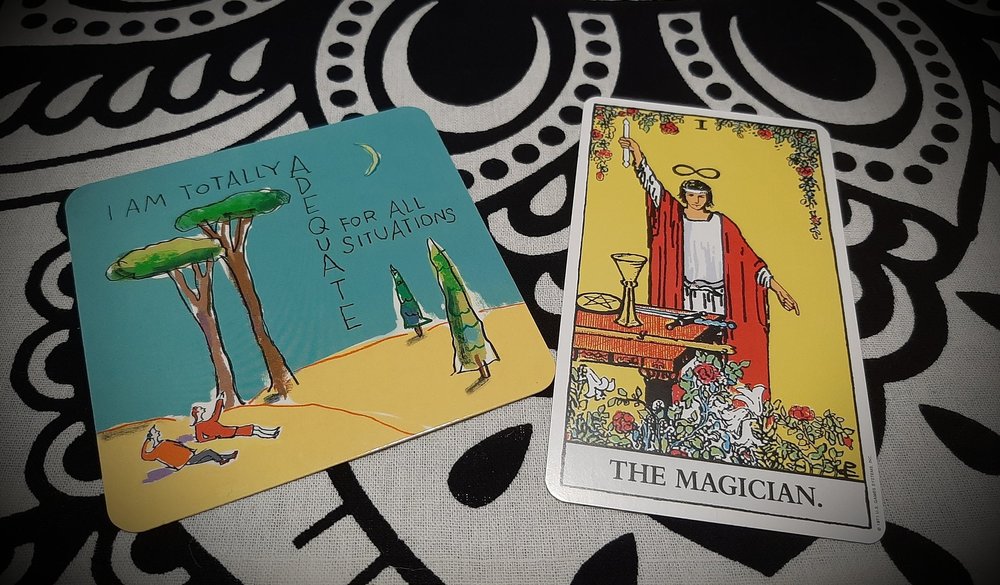


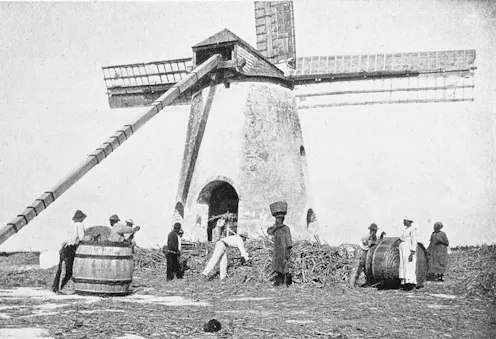
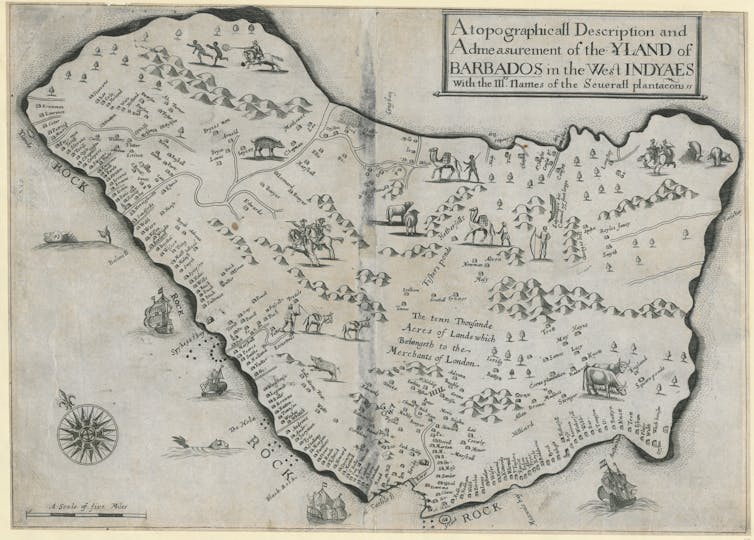


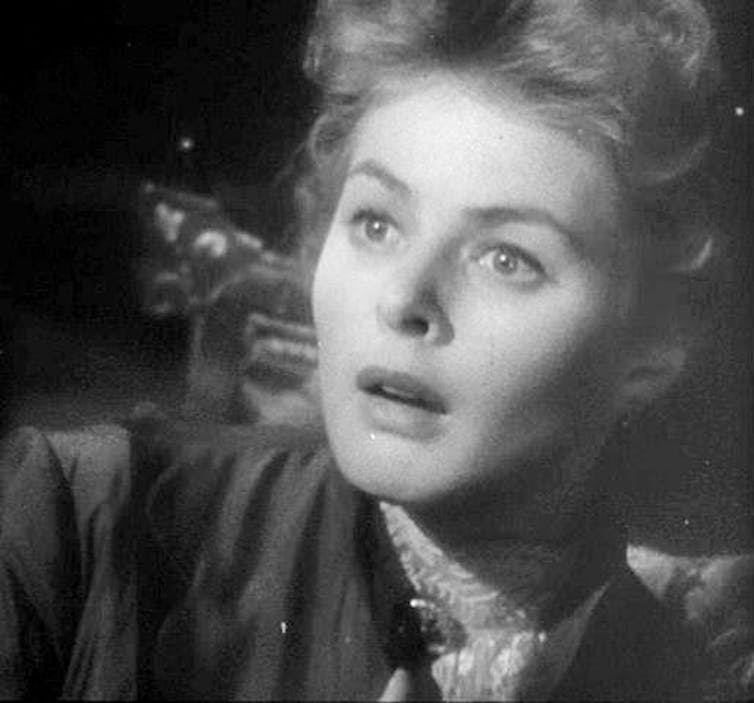




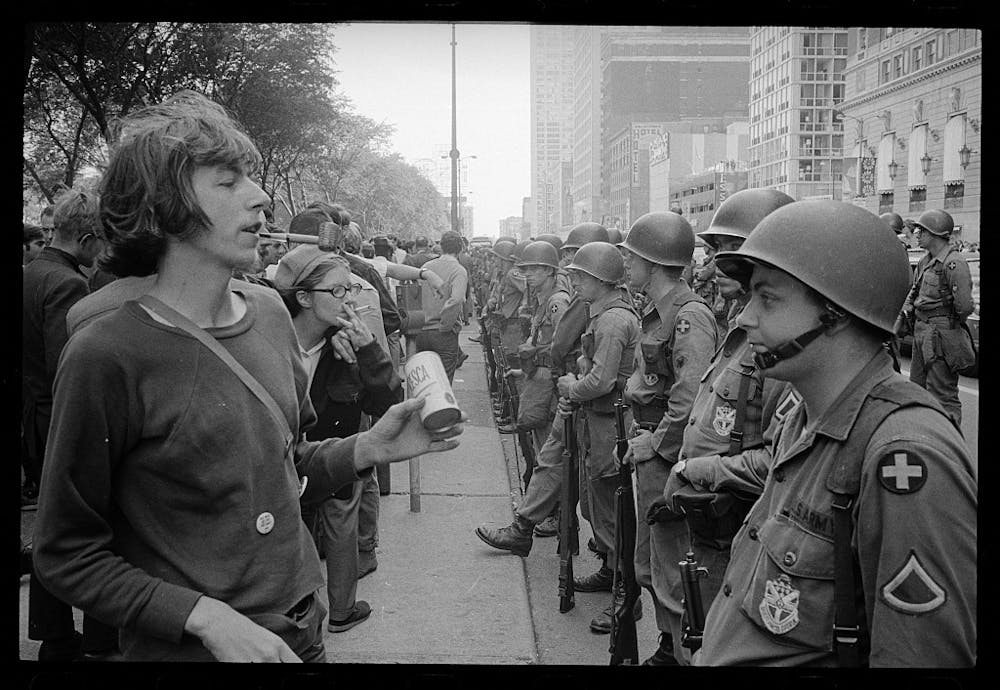

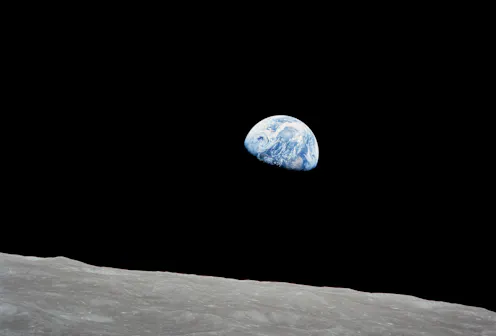
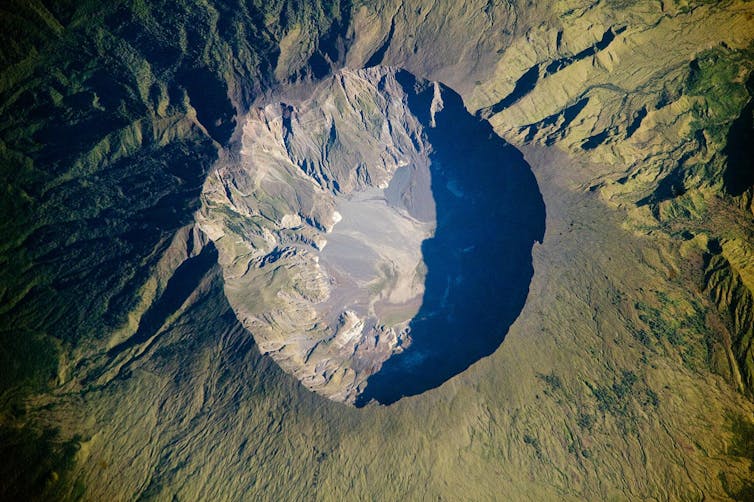
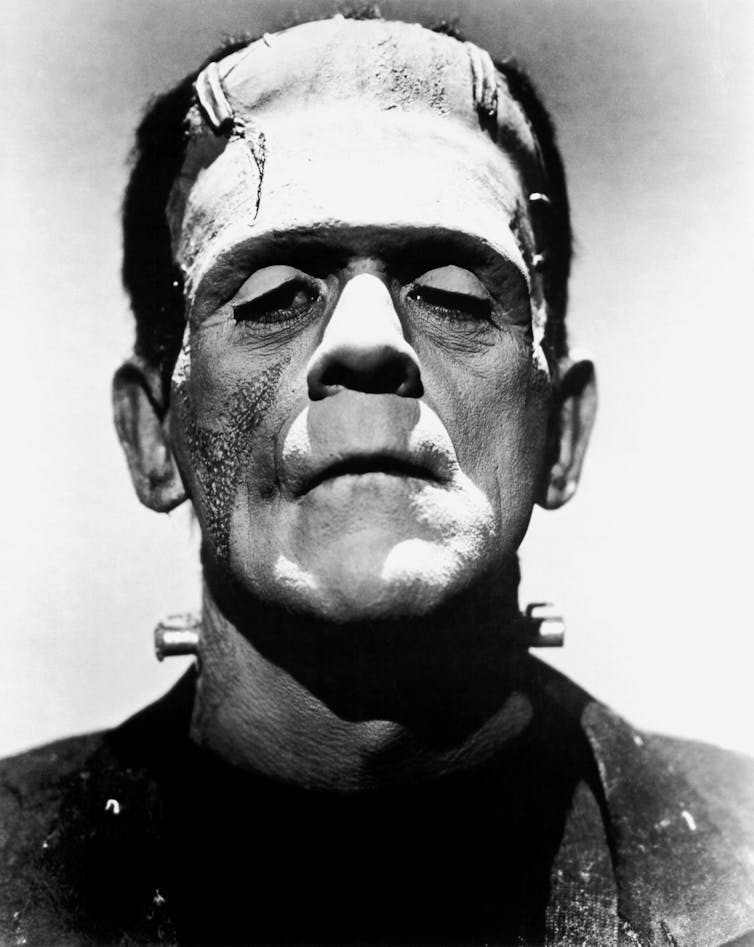
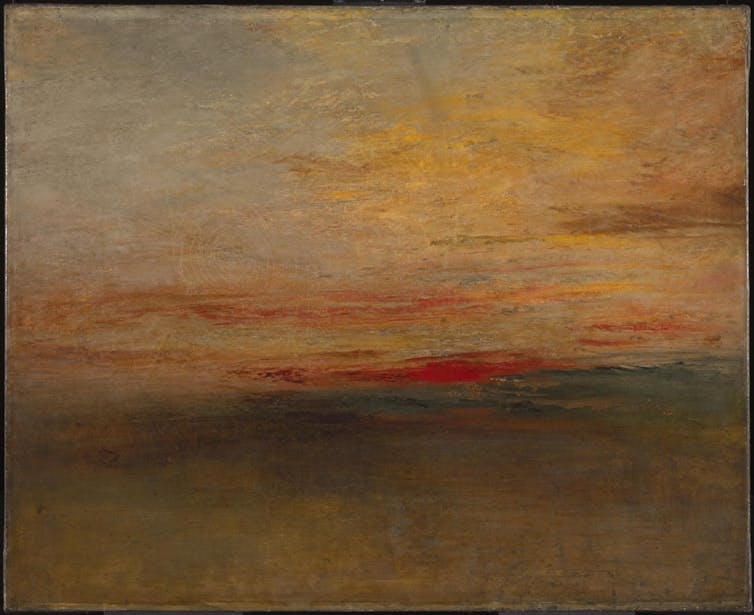
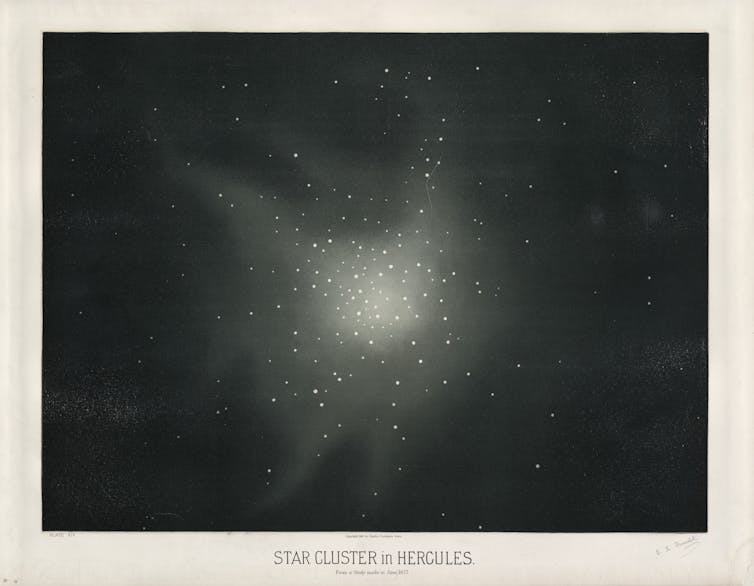
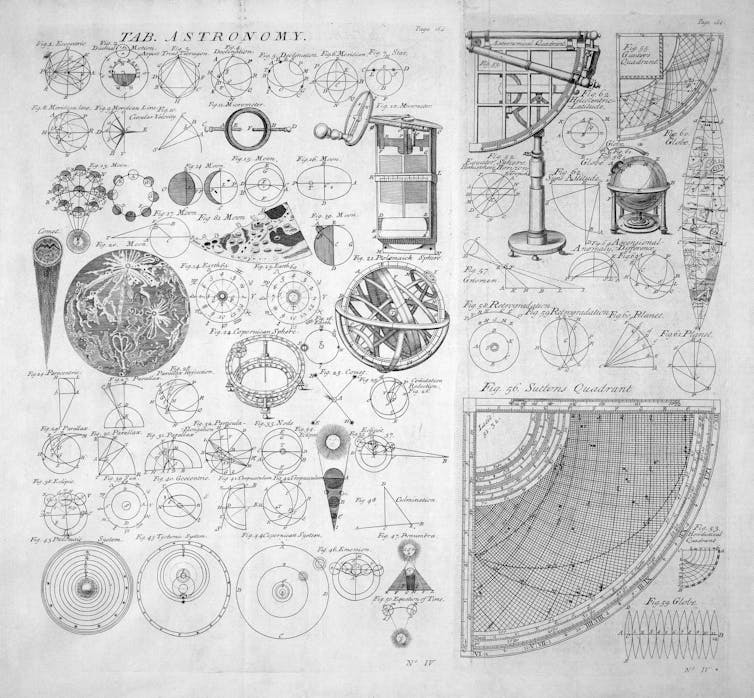
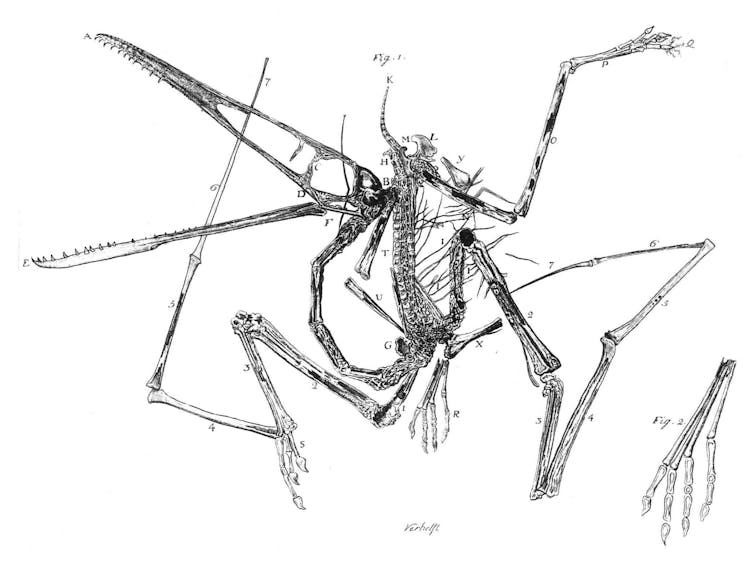
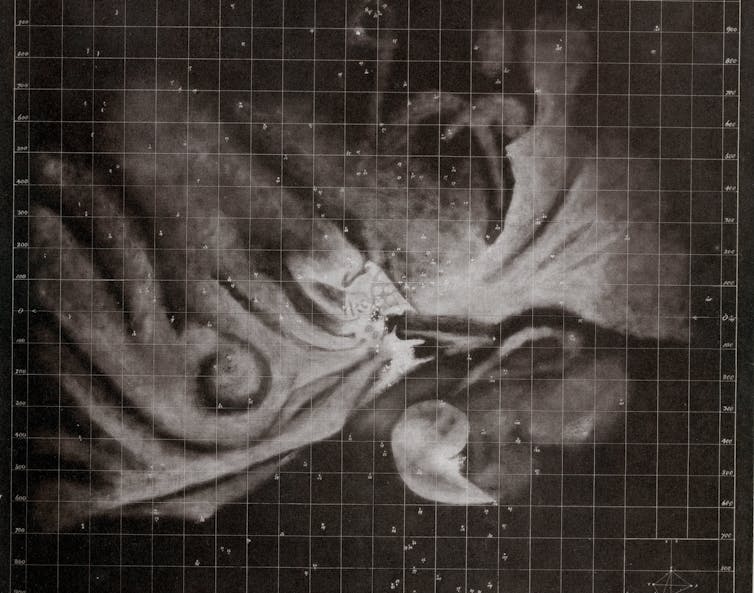

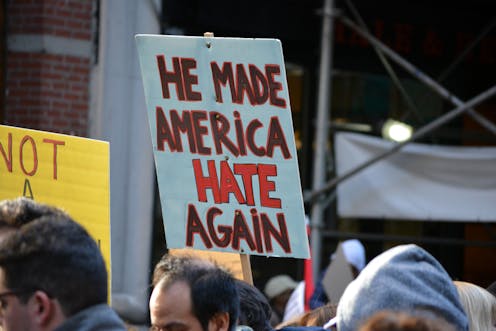
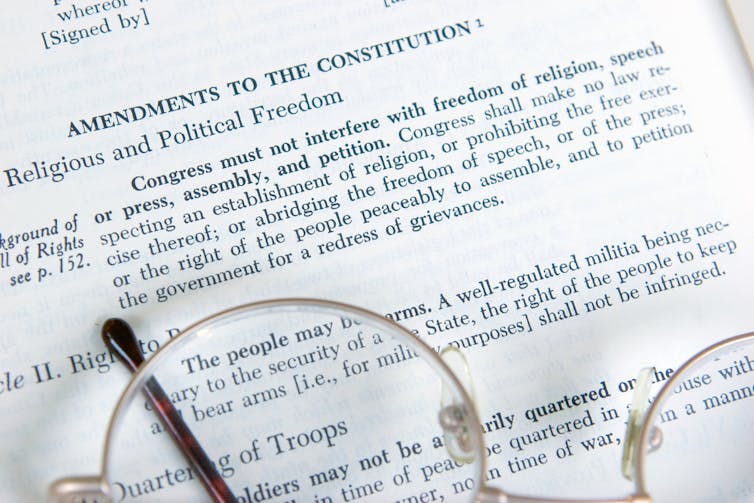


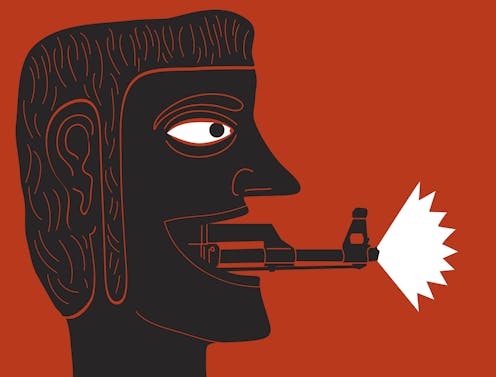


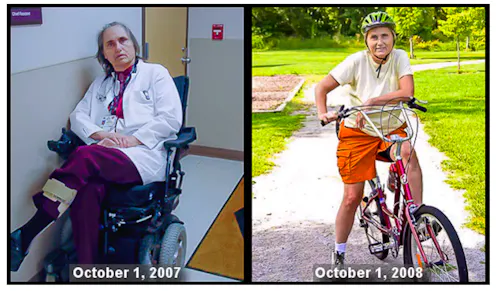


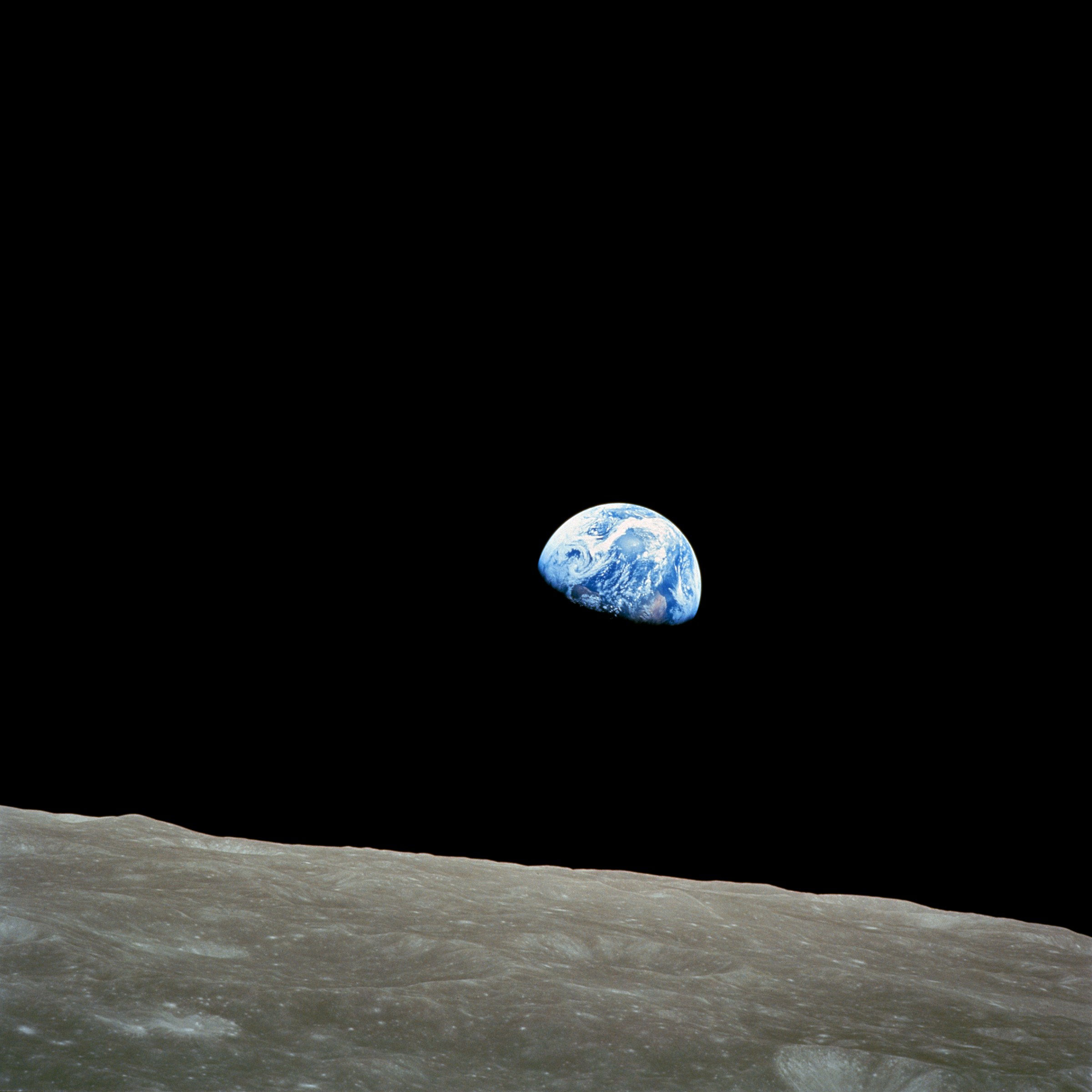

.jpg#/media/File:Frankenstein's_monster_(Boris_Karloff).jpg)


