Shared posts

04 Sep 19:52

How to Make Your Life As An Herbalist Harder

by Alexis J. Cunningfolk
herbalism mistakes

It’ll be nine years next month that I’ve been running this little business of mine. Nine years of making remedies, teaching classes, writing blog posts, finding my voice (currently singing in the key of soft dyke / salty hag), and making lots of mistakes along the way. I love the freedom of owning my own business but I’ve made it unnecessarily difficult for myself at times, too. I’m hoping that this post helps folk stop or avoid altogether these same mistakes. Or maybe this is just a big public post-it note to myself to continue to work on not making these mistakes, because I am certainly still making a few of the mistakes listed below.

While the following post does have someone who runs their own business as an herbalist in mind, it can apply to a wide array of those in self-employed in all sorts of businesses. To be clear for the folks who haven’t been paying attention in the far back, I am not in any way trained as a business coach but I do have a tea-stained certificate in Making Mistakes as a Solopreneur (it arrived three months late and torn in two!).

So here is what I’ve learned about making your life more difficult as an herbalist (or healer or friendly neighborhood witch).

Do unnecessarily (and often repetitive) work.

Whatever you can automate, do. I started my business during the whole “handmade gets itself online” movement and I loved all the purposeful details that went in to creating products. If you ordered from my shop when I was still selling tea and herbal remedies, for example, you would have received a tea-dyed receipt with your order hand written on it. I was particularly proud of this detail - something I didn’t see other folks doing in their packaging.

Precious as that was, it was an absurd thing to be doing when I was receiving as many orders as I did during the height of my remedy-making business. Because I was not only hand-writing receipts, I also hand-stamped and decorated all of the shipment boxes, handwrote addresses (again on that tea stained paper), and hand-wrapped all my remedies in colorful paper and washi tape. And that was just the effort spent after making the remedies in the first place (which were largely underpriced to begin with). But I was absolutely convinced that things like these hand-written receipts were what made folks like my business. And maybe that was true to a point - I got frequent feedback that receiving one of my packages was like getting a delivery from a store in Diagon Alley - but it burnt me out. I needed to choose to do one, maybe two of those things, and automate the rest.

Whatever I can automate these days, I do. And guess what? It’s not stripped the soul from my business but in fact given me more space to feel spiritually connected and renewed in my work. Ways to automate your work as a herbalist include:

  • If you have a newsletter, at a minimum set-up automated emails for when someone joins your list. This is a great way to warmly welcome someone into your community and can act like a map and compass to your work and what thing on your website someone might look at next.

  • Use the auto-generated receipts and shipping labels provided by whatever platform you sell your goods on.

  • Use canned responses in replying to customers when appropriate. Gmail allows you to save a series of canned responses that you can generate into an email - I do this a lot and then customize the email from there.

  • Create handouts for your clients and students that covers basic information that you find yourself sharing again and again. I have print-outs on making tea, taking herbal hand, foot, and body baths, using essences, and more.

Those are just a few broad suggestions - I’m sure you can find many more for your own particular practice. But, please, automate and let it open you up to the path of delegation, cooperation, and the psychic group witch mind dismantling the kyriarchy. Or whatever.
image source

image source

Commit to your relentless belief that you are an imposter.

I wish someone had told me about imposter syndrome before I started my business. I was still  running high on my own special morning blend of imposter syndrome when I started studying herbalism and it colored my early learning experiences. If you’ve heard about imposter syndrome but don’t quite know what it means or if it applies to you here are some resources:

Look, you’re not serving yourself or your community by feeding the imposter monster. It’s fed enough by society at large and overpowering systems that we can’t easily change as individuals. Want a magickal plant-centered suggestion? Give your feelings of being an imposter to a plant and see what they give you back.

Be overly complex in your communications - including client care instructions.

I mean, I love to extrapolate far beyond what is necessary (hi, have you read any of my blog posts?) but just because you providing more doesn’t mean that it’s better. Folks are going to follow-through on your recommendations if you keep it simple and easy to incorporate into their lives.

Learn to edit down your emails, your newsletters, your product and class descriptions to a point where you’re still communicating the essentials and you and those you serve will be better for it. This goes for how you talk about your work face-to-face with folks. You want to hand folks the equivalent of a verbal business card and not a college length thesis.

It’s not to say that there is never time for lengthy communications, but overall, shorter is better. And remember when I mentioned those educational handouts in the first part of our journey down mistake lane? Make those concise, too. You want folks to actually read what you give them so that they’ll feel more empowered to follow-through with their care.  

Undercharge and still feel bad about what your rates.

I’ve written about money and accessibility already on this blog (part 1 | part 2), but struggling to charge what you and your services are worth are a big one. Then throw in the complexity of cultural identities and narratives around money and what you should and should not charge for (i.e. healing and magickal services) and it can feel even more complex. Since I’ll be continuing to write about money, worth, and feelings, here’s my short response to the voice in your head that’s constantly shaming you about your prices : The body that carries that voice needs to eat, needs a safe place to sleep, needs access to transportation, needs to be able to do the things which makes them feel pleasurable and whole. Honor that voice for trying to protect you and keep you safe, and then give it something shiny to look at while you get on with running a business and living a life beyond its fear.

image source

image source

Set boundaries - and watch yourself roll right over them.

Appointments are only an hour but here I am two hours in and just now starting to wrap up.

I don’t do discounts but I’m afraid of losing business with this person so I better give them a big discount.

I shouldn’t be answering emails on 3 AM on a Saturday, but if I don’t respond right away I’ll lose business.

There’s too much suffering in the world for me to take regular time off!

Treat your boundaries like the edges of your most sacred space. Imagine your boundaries as the grove, the temple, the mountain, the church or sanctuary where your spirit is remembered in all its wholeness. When you begin to treat your boundaries as sacred and powerful in their sacredness and that your boundaries make you better as a healer, I can guarantee that you’ll be able to run your business better. And then, when the time comes to change a boundary, you’ll be doing it from a place of feeling empowered instead of backed into a corner.

Hold yourself to ridiculous standards of creativity and making.

Hey don’t do this! Take time off! Value what you’ve created! Creating something and then presenting it to the world can be absolutely terrifying - don’t welcome in any more fear than necessary to the process.

Eat some lunch. Take a breath. All of this is absurd and necessary and in both situations fear is a lousy companion.

Don’t listen to your own advice.

Please do the opposite of this.

I could insert a whole flowy bit here about trusting your intuition and turning the knowledge you’ve gained from experience into wisdom, but here’s the short cut. Do what you advise other folks to do all the time. I know for many herbalists, myself included, it includes things like, drink water, get more sleep, go outside, allow yourself to zone out, seek pleasure, ask for help, so on and so forth… Imagine if you took your own advice as sincerely as you dealt it out.


Have some mistakes you want to share? Comment below and let us commiserate together. Let’s keep growing through and laughing at our mistakes - seeing them as the calling cards of the trickster gods that they are.


Signature Summer 2019.png
 
MagickMailAd 2019 exuberance.png
First Name Last Name Email Address Heck Yeah!

We respect your privacy and will not share your information because that’s a lot of extra work that none of us have time for.

Thank you for signing up for Magick Mail! The digital owls have been dispatched. Once you have confirmed your subscription to the list you will gain access to our member's only apothecary!

19 Jul 19:47

Sony's copyright bots remove a band's own release of its new video

by Cory Doctorow

The Sheffield-based experimental music act 65daysofstatic has a new album coming out in September, called "Replicr, 2019." Today, the band began its launch publicity by releasing a video from the album, only to have the video blocked on multiple services by copyright bots working on behalf of Sony, which distributed the band's label, Superball.

It's an important example of the kinds of problems created by automated filtering systems, like the one that the EU turned into a continent-wide obligation with the passage of the new Copyright Directive in March (the EU is about to gut its online privacy protections to ensure that any future legal challenges to the Copyright Directive fail).

This kind of absurd situation is intrinsic to the way that these filters work: large rightsholder organizations like Sony add "upload everything to the filter databases" to their workflows, so any time something is being entered into their catalog, they're also automatically blocked from being published by anyone else. But often, these copyright claims include works that don't belong to the rightsholder, who faces no penalties for making false copyright claims.

Sony is a particularly egregious offender: it has claimed copyright over stock art that it licensed from independent artists and then blocked those artists from posting their own work; it claims all piano performances of Beethoven and other classical composers, etc.

But this isn't limited to Sony: Back in 2012, multiple news broadcasters claimed copyright over NASA's Mars Lander footage, having aired NASA's livestream in their nightly newscasts, which were automatically uploaded to Youtube's copyrighted work blacklist. No one has learned a damned thing since 2012: last year, Canal+ claimed copyright over Banksy's shredded painting prank, through the same negligent conduct.

Forcing rightsholders to take responsibility for false claims of copyright would have enormous benefits (including providing a way to punish fraudsters who deliberately make false claims in order to steal money from creators)

But forcing rightsholders to be certain they owned copyrights before they blocked them online would also add expense and complexity to their workflow, so we don't do it. It's classical corruption: "In corrupt systems, a few bad actors cost everyone else billions in order to bring in millions – the savings a factory can realize from dumping pollution in the water supply are much smaller than the costs we all bear from being poisoned by effluent. But the costs are widely diffused while the gains are tightly concentrated, so the beneficiaries of corruption can always outspend their victims to stay clear."

17 Jul 19:46

US House condemns Donald Trump's racist tweets – why his language is so dangerous

by Natasha Lindstaedt, Professor, Department of Government, University of Essex

President Donald Trump has been denounced by the US House of Representatives for tweets attacking four Democratic Congresswomen of colour calling on them to “go back and help fix the totally broken and crime infested places from which they came”. The resolution, which passed by 240 to 187 votes on July 16, condemned the “racist comments that have legitimised fear and hatred of New Americans and people of colour”.

In response to Trump’s threat, the four Democratic Congresswomen, Alexandria Ocasio-Cortez, Ilhan Omar, Ayanna Pressley and Rashida Tlaib, who have come to be known as “the squad”, made clear that they would not be marginalised or silenced.

Trump responded to the House vote, by tweeting: “I don’t have a racist bone in my body.” But the House clearly felt otherwise.

The vote was historic, and constitutes the first time the House has voted to rebuke a president in more than 100 years. Mindful of the message that Trump’s statements send to American citizens and the global community, House representatives made clear that the US has no room for “racism, sexism, antisemitism, xenophobia and hate”.

Since his election, Trump has tapped into the latent and overtly racist feelings of some of his supporters, and legitimised their bigotry. Fringe groups such as neo-Nazis, white supremacists, and skinheads marked Trump’s victory in 2016 with a Nazi salute. No longer on the fringe, these groups saw Trump’s election as their coming out party.

Instead of unequivocally condemning these groups, he has pandered to them, leading to dangerous consequences. A recent study reported that every extremist murder in the US in 2018 had links to far-right ideology, making it one of the deadliest years in recent history.

While Trump sees no link between his behaviour and the rise of right-wing white nationalism, Democrats disagree. US Speaker of the House, Nancy Pelosi recently asserted that what Trump means by “making American great again” is to “make America white again”. Trump hit back by claiming that Pelosi was the racist.

Driving division

During the presidential campaign and during his time in office, Trump has thrived on making racist and xenophobic attacks against a diverse set of people, from Latinos to Muslims. But he has a longer history of racist discrimination against African Americans.

In 1973, he was sued by the Nixon administration, accused of violating the Fair Housing Act after officials alleged his real estate company was refusing to rent out properties to black tenants. The case was settled in 1975. In 1992, he had to pay a fine for removing black and female dealers of the tables in the Trump Plaza and Hotel Casino, when big rollers requested it. Trump also played an important role in spreading the “birther movement”, which accused president Barack Obama of not being born in the US.

Though the US has always been one of the more diverse countries in the world, whites have always been the majority. This will change by 2045, when whites are projected to comprise 49.7% of the population compared to 24.6% for Hispanics, 13.1% for blacks, 7.9% for Asians, and 3.8% for multiracial populations. These changes have driven fears by a subset of the white population that they will feel like foreigners in their own country.

According to a 2018 Pew Research Center survey, most Americans think that growing up in a racially and ethnically diverse US is a good thing, but this is divided along partisan lines. While 70% of Democrats believe that diversity makes the US a better place, only 47% of Republicans do. This means that Trump’s strategy of attacking immigration and diversity resonates with his supporters.

Studies show that people who exhibit high levels of racial animosity are more likely to support Trump. Other studies show that the way voters feel about sexism and the importance of tackling it also affected their probability of voting for Trump, much more so than how they felt about the economy.

Trump’s comfort zone

But the focus on the politics of race, ethnicity and religion distracts voters from Trump’s actual political policies, something he has had difficulty defending. In responding to Trump’s tweets, all four Democratic Congresswomen tried to bring the focus back to issues that they believe their supporters care about such as health care, gun violence and, in particular, detentions of migrants on the US border with Mexico.

Trump’s comfort zone is making personal attacks and engaging in identity politics, but he has frequently defended himself – arguing that because he has friends that are African American, Hispanic, Jewish or Muslim he is not a bigot or a racist.

As Trump sees it, he is just being politically incorrect. But such political incorrectness has become a signifier for covert or overt racist sentiments – and studies show it has led to an increase in racially charged violence and discrimination.

Trump’s racist tweets also have global ramifications. Violating human rights and dehumanising and degrading minority groups have become more acceptable in the US of 2019. In response to the controversy surrounding Trump’s tweets, world leaders have been silent and hesitant to criticise. But the House’s condemnation may be a turning point for how much bigotry the world is willing to tolerate from its leaders.

The Conversation

Natasha Lindstaedt does not work for, consult, own shares in or receive funding from any company or organization that would benefit from this article, and has disclosed no relevant affiliations beyond their academic appointment.

16 Jul 19:25

Four Corners’ forced labour exposé shows why you might be wearing slave-made clothes

by Yvette Selim, Interim Deputy Director, Anti-Slavery Australia, University of Technology Sydney
Target, Cotton On, Jeanswest, Dangerfield, IKEA and H&M are among the brands in Australia sourcing cotton from Xinjiang. www.shutterstock.com

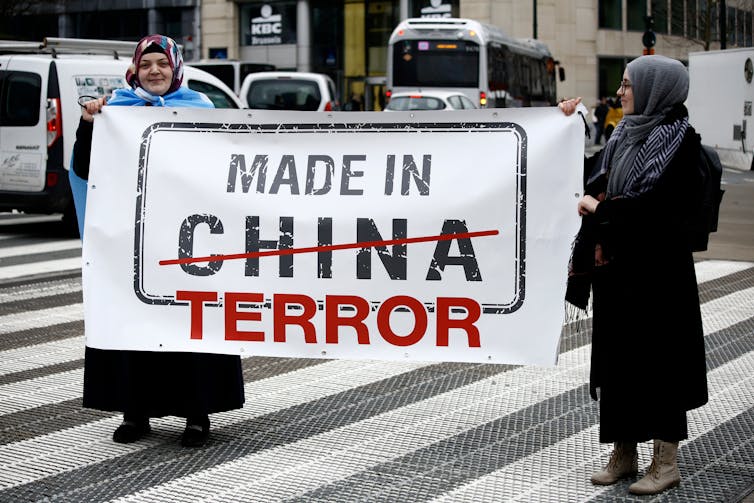
With China’s western-most province of Xinjiang being turned into a mass internment camp, last night’s ABC Four Corners program reported on the Chinese Communist Party’s alleged plans to put up to a million detained Uyghurs to work.

The exposé highlights how global supply chains make it possible for the clothes you’re wearing, and many other things you own, to have been made using slavery.

The program featured the cases of several women who say they have been forced to work in textile factories. According to China scholar Adrian Zenz, government documents reveal plans for “re-education” through labour. Satellite photos show what look like large warehouses close to detention camps.


Read more: Explainer: who are the Uyghurs and why is the Chinese government detaining them?


Target, Cotton On, Jeanswest, Dangerfield, IKEA and H&M are among the brands in Australia sourcing cotton from Xinjiang, according to Four Corners. In response to questions from the ABC, Target and Cotton On declared they would investigate their relationships with suppliers.

Activists protest the treatment of Uyghur Muslims outside the headquarters of the European Union, in Brussels, in February 2019. Alexandros Michailidis/Shutterstock

Modern slavery: a snapshot

For many of us it is hard to believe modern slavery is now more prevalent than at any time in history.

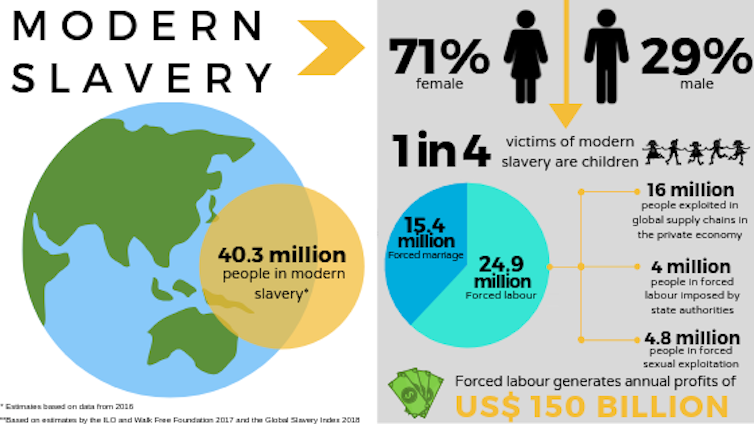
But the ubiquity and lack of accountability in global supply chains mean an estimated 25 million people around the world are in forced labour. A further 15 million are in forced marriage.

About two-thirds of the total number of people in modern slavery are in the Asia-Pacific region, where most Australian companies source their materials and products.

The problem is so widespread it’s unlikely any companies’ operations or supply chains are completely free of modern slavery.

Yet many businesses are unaware of what modern slavery is and what it might look like in their operations and supply chains. And some companies – and their customers – may be complicit in creating a “race to bottom” by demanding cheaper goods and services without checks on social (and environmental) credentials.

Anti-Slavery Australia

Australia’s legal reforms

This problem was recognised with Australia passing modern slavery legislation last year. The Modern Slavery Act 2018 requires businesses of a certain size to report their efforts to keep their supply chains slavery-free. The requirements came into effect this month.

Modelled on the UK Modern Slavery Act 2015, Australia’s law requires businesses with a consolidated annual revenue of more than $100 million a year to publish an annual modern slavery statement.

The statement must address seven mandatory criteria (including risks in the business’ operations and supply chains and the actions taken to address those risks).


Read more: At last, Australia has a Modern Slavery Act. Here's what you'll need to know


The government has the power to publicly name those that fail to comply, but not to fine or penalise them in other ways. It is hoped fear of shaming will be enough incentive to avoid the reputational, financial and other risks that might arise from public scrutiny.

Without penalties, civil, shareholder and consumer activism will be crucial to motivate businesses.

If nothing else, as shoppers we can become better informed about the risks in business supply chains and challenge companies and governments to do better through social media and other avenues. Each purchase of a good or service can be an ethical choice.

More to be done

In the end, the Australian modern slavery legislation is about ensuring businesses do their part to ensure the food, clothes and electronics we buy have not been made using modern slavery.

Drawing on Anti-Slavery Australia’s legal casework experience with survivors of modern slavery, we also know victims aren’t just overseas. An estimated 1,500 people in Australia are victims of modern slavery. They are often migrants, who fear coming forward and are intimidated by the legal system.


Read more: Human trafficking and slavery still happen in Australia. This comic explains how


We continue to advocate for further improvements of the Modern Slavery Act, including for penalties and independent oversight.

NSW has its own legislation that’s about to go under review and it includes an independent Anti-Slavery Commissioner and penalties for up to A$1.1 million for failing to comply or making false or misleading statements. These would be welcome additions to the federal regime, along with more support for survivors, and better monitoring and data collection.

We’ve taken a step in the right direction, but as the ABC Four Corners’ exposé indicates, there is much more to be done.


Anti-Slavery Australia, based at the University of Technology Sydney, is Australia’s only specialist legal research and policy centre focused on the abolition of modern slavery in all its forms. For more information or confidential legal advice, contact www.antislavery.org.au. For information and advice on forced marriage, see www.mybluesky.org.au.

The Conversation

Yvette Selim is the Interim Deputy Director at Anti-Slavery Australia.

16 Jul 19:22

What Canada and South Africa can teach the U.S. about slavery reparations

by Bonny Ibhawoh, Professor of History and Global Human Rights, McMaster University
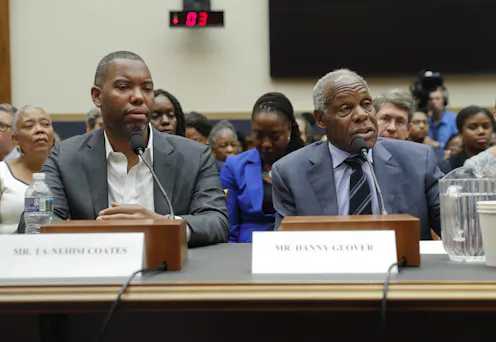
Author Ta-Nehisi Coates, left, and actor Danny Glover, right, testify about reparation for the descendants of slaves during a hearing before the House Judiciary Subcommittee on Capitol Hill on June 19, 2019. (AP Photo/Pablo Martinez Monsivais)

America’s failure to understand, acknowledge and resolve the continuing catastrophe of slavery is holding back the entire nation.

Without broad public recognition that the country’s original wealth was derived unjustly through slavery, and that deliberate post-Emancipation efforts perpetuated the social and economic gulf between white and Black America, there can be no justice or healing.

Recently, a group of prominent African-Americans testified before the United States Congress on reparations for the descendants of slaves, reopening a wound that is as old as America itself, and still acutely painful for those who continue to suffer from the very tangible effects of slavery’s racist legacy.

The first congressional hearing in more than a decade on the subject helped educate yet another new generation to the unresolved debate over whether the U.S. should compensate descendants of enslaved Africans.

Author Ta-Nehisi Coates, whose 2014 essay “The Case for Reparations,” reinvigorated public debate on the issue, argued it’s impossible to untangle the history of America from the legacy of slavery.

The matter of reparations, Coates pointed out, is not only one of “making amends and direct redress but is also a question of citizenship.”

Polarizing question

With several Democratic presidential candidates taking positions on the issue, the idea of reparations, always a polarizing question in the United States, may finally become a ballot-box question.

But there is a less political, more productive and more practical way to address the question, and it has been tested already.

Some commentators have rightly pointed out that Americans can learn from South Africa, which undertook the national, public process of establishing a Truth and Reconciliation Commission to address its long history of apartheid, with its legal institutionalized racism.


Read more: Do truth and reconciliation commissions heal divided nations?


The process included heartbreaking televised testimony by victims whose families had been shattered by violence and brutalized by their own government. By bringing the issues into the open, the process allowed South Africa to come face to face with decades of apartheid atrocities and their devastating impact.

But Americans do not need to go as far as South Africa to see how the truth and reconciliation model can work.

Lessons from Canada?

Canada established its Truth and Reconciliation Commission in 2008, bucking critics of the restorative justice model and those who claimed that the model was better suited for “Third World” countries with weak political and judicial institutions.

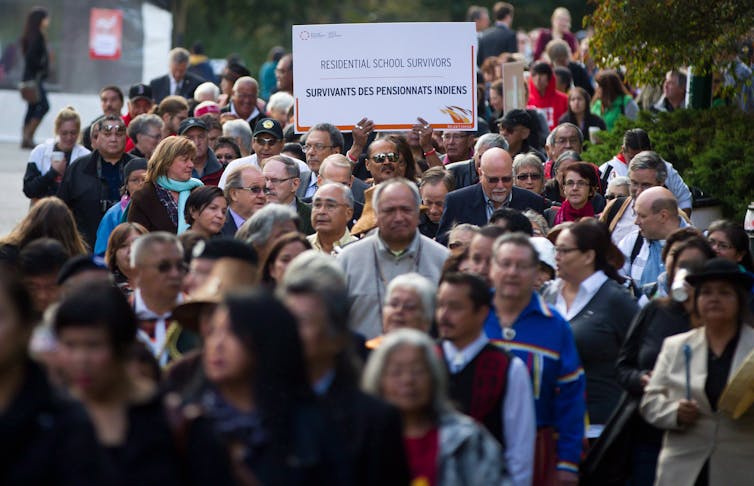
The Truth and Reconciliation Commission of Canada was established to document the history and impact of the country’s residential school system on Indigenous children and their families.

Residential school survivors march to the opening ceremonies of the Truth and Reconciliation Commission of Canada in Vancouver in September 2013. THE CANADIAN PRESS/Darryl Dyck

The commission studied more than a century of determined, officially sanctioned efforts to resolve Canada’s “Indian problem” by separating children from their parents and forcing them into schools where they were often undernourished, physically and sexually abused by their teachers and forbidden to use their own languages.

The effort, described by some as outright genocide, left generations of families broken, impoverished and addicted.


Read more: Genocide is foundational to Canada: What are we going to do about it?


Canada’s Truth and Reconciliation Commission provided opportunities for victims and their families to share their experiences in public and private sessions. The entire country finally heard, in an official capacity, about the shame of what had happened in the schools and its tragic impact on individuals, families and communities.

When Canada’s commission released its findings in 2015, it issued 94 “Calls to Action” to aid reconciliation, covering child welfare, education, health, language and culture, justice and equity for Indigenous peoples in the legal system. The Calls to Action also recommend creating museums and archives to document the history and experiences of Indigenous peoples.

The Canadian commission has hardly solved the problems of marginalization and forced assimilation, but it has spurred official and everyday conversations about these issues in ways the United States has yet to experience with slavery.

Doubt and apathy

As an expert on global human rights, I have been making presentations at American universities and conferences as part of a McMaster University project called Truth Commissions and the Politics of Memory.

When I speak about the South African and Canadian truth and reconciliation models and their relevance for the American reparations debate, I sense doubt and apathy. While U.S. slavery might differ from apartheid or the residential school system, there are important parallels that many Americans fail to see.

Those who favour reparations doubt the prospects for resolving the issue in a political environment paralyzed by hyper-partisanship, where even straightforward matters grind so slowly and painfully through processes that end up being more about political point-scoring than genuine governance.

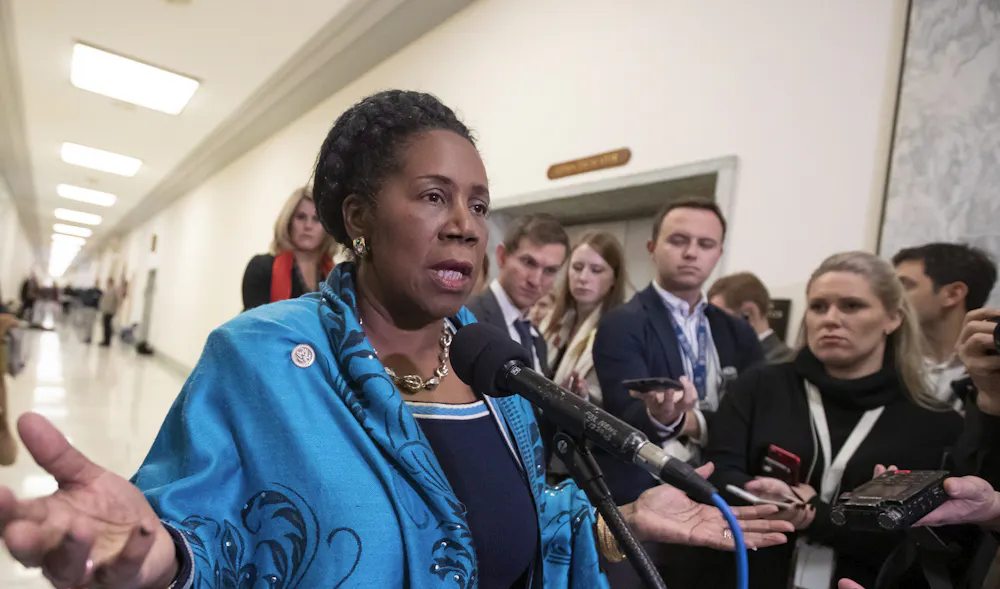
Democratic congresswoman Sheila Jackson Lee of Texas speaks to reporters on Capitol Hill in Washington. Jackson Lee pushed for the slavery reparation hearings held on Capitol Hill in June. (AP Photo/J. Scott Applewhite, File)

Bringing American society to face its truth is difficult when, as one American colleague told me, so many still have no idea that slavery and its ghastly descendants, including the Jim Crow laws and segregation, continue to have terrible impacts on the lives of African-Americans, both by perpetuating racism and by severely limiting economic opportunities and social mobility.

Reparation proponents prefer a congressional commission but have yet to muster the support to hold one. Every year from 1989 until his resignation in 2017, Democratic congressman John Conyers Jr. proposed a bill to study the “impact of slavery on the social, political and economic life of our nation.” Every year, he watched it fail to be adopted.

‘We elected Obama’

American opponents of reparation are too ready to dismiss the need for action. Senate Majority Leader Mitch McConnell says he opposes reparations for descendants of slaves because no one currently alive was responsible for slavery.

He added: “We’ve tried to deal with our original sin of slavery by fighting a civil war, by passing landmark civil rights legislation, by electing an African-American president.” His argument that electing Barack Obama somehow evens the score reflects the yawning gap in America’s understanding of the true legacy of slavery.

The truth and reconciliation process presents an opportunity for a national conversation in the United States that goes beyond simple reparations.

Reparation proponents and opponents alike need to know that the truth and reconciliation process can include objective historical fact-finding and reparative justice. The primary benefit is in recognizing and acknowledging the harm done.

Reparation opponents who oppose truth and reconciliation by insisting that America’s “original sin” of slavery is in the distant past should heed the lessons of South Africa and Canada.

Left to fester, these issues will not disappear in America. With every generation, the demand to address the stubborn legacies of slavery grows stronger.

American politicians and other leaders can choose to begin the difficult conversations now, or kick the can down the road one more time, to the next generation.

The Conversation

Bonny Ibhawoh receives funding from the Social Sciences and Humanities Research Council of Canada.

16 Jul 19:04

Florida DMV makes millions selling Floridians' data...for pennies (and you can't opt out)

by Cory Doctorow

Axciom buys records from Florida's DMV (which include non-driver IDs) at $0.01/each.

They're just one of many, many data-brokers who buy data from the state's DMV. So many, in fact, that the state turned over $77m in data-sales in 2017.

These get sold for bill collection and insurance purposes, and are not supposed to be used for marketing, but these are data brokers and so they sell the data on, and then the data gets sold again, and again.

We know that at least some of that data gets abused, turned into fodder for repeated robocalls and direct-mail solicitations, because of Sonia Arvin's experience with her developmentally disabled sister, who moved to Florida from Idaho to live with her. Sonia took her sister to get a non-driver ID so she could apply for Medicaid, and shortly thereafter, was inundated with direct mail, robocalls, and salespeople ringing their doorbells. Sonia's sister can't read or write and is not registered in any other databases, apart from Florida's DMV.

A lawyer who represents data-brokers told WFTS that buying public data is the cheapest way to acquire it.

Miami attorney Al Saikali, who advises his clients how to legally and ethically use public data for commercial purposes, said his clients are increasingly using public records laws to obtain information for a cheap price.

"We're only going to see this continue over time. Companies are going to continue to seek more data about you," Saikali said. "Companies are essentially paying for information, for leads, for lead generation."

Saikali said consumers can limit the number of marketers contacting them by setting up a secondary email account to give government agencies — which are only checked periodically for renewal notices and other important information — and only giving a telephone number to government agencies when it's necessary.

A state spokesperson said there's no way for drivers to opt-out if they don't want their personal information sold.

"The Florida Department of Highway Safety and Motor Vehicles provides public records as legally required, in accordance with federal and state law, and as a necessary function in order for customers to efficiently conduct everyday business. The department has successfully instituted proactive security measures to ensure customer information is protected and any misuse of customer information will be pursued to the fullest extent of the law."

Florida selling drivers' personal info to private companies [WFTS]

16 Jul 19:02

Heirs' property: how southern states allow white land developers to steal reconstruction-era land from Black families

by Cory Doctorow

Back in 2017, The Nation ran a superb, in-depth story on "heirs' property," a legalized form of property theft that allows primarily rich white developers to expropriate land owned by the descendants' of Black slaves.

Now, an in-depth Propublica investigation returns to the American south and its landgrabbing white grifters, with a piece that blends the personalities of the brave Black landowners who are willing to serve long jail sentences rather than cave in to legalized theft (brothers Melvin Davis and Licurtis Reels are two of the longest-serving inmates for civil contempt in American history, having spent eight years in lockup for refusing to knock down their ancestral homes).

To understand how heirs' property expropriations work, you have to place them in the context of Black expropriation, which starts with the expropriated bodies of kidnapped Black people who were enslaved, and continues through the ages: the (marshy or arid) properties deeded to formerly enslaved Black people who carefully worked the land and prospered until white mobs came and chased them away with arson, murder and threats; many of the ones who stayed were chased off with massive tax-hikes directed at Black landowners (in South Carolina, property taxes levied on Black lands went up as much as 700% in a decade; Hilton Head had thousands of acres of heirs' property and now it has fewer than 200).

As the remaining property owners began to die off, they were (correctly) mistrustful of white southern lawyers, so they did not draw up wills, leaving their family land to their descendants through a regime called "heirs' property," under the incorrect view that this would keep the land in the family. Instead, as those descendants flew Jim Crow only to find themselves frozen out of home ownership through redlining, they became targets for predatory wealthy land developers who could exploit the complex and unfair law governing heirs' property to seize and expropriate hundreds or even thousands of acres at a time.

The main system for doing this is called "partition": if a single heir with even a tiny claim to family land can be found and convinced to sell their title, the developer can use the courts to force a sale of the whole family property, and the "cash poor, land rich" people who live on the family land are unable to outbid their expropriators.

This is exactly as bad as it sounds: consider Wendy Reed who lost her family home in Summerville, South Carolina because she was late paying a $83.81 tax bill -- the property was purchased for a mere $2,000 by a powerful local politician and resort owner named Thomas Limehouse (owner of a nearby luxury resort) for $2,000. Reed was unable to stop the sale by paying her $83.81 because her grandmother had died intestate.

The intersection of partition actions and unclear titles from intestate family elders is bad enough, but it gets especially toxic when mixed with an antiquated, discredited law called the Torrens Act, which allows would-be expropriator to pay a court-appointed lawyer to review their claim to a title and seize land without going through a full court procedure.

14 states have passed laws limiting evictions and partitions and many have repealed the Torrens Act, through model legislation called the Uniform Partition of Heirs Property Act, but eight southern states still support and encourage this kind of white-on-Black land-theft. One notable culprit is North Carolina, especially Carteret County, whose 70,000 residents are 94% white, but whose losers in heirs' property cases are 42% Black.

I've previously said that the difference between "grifters" and "con artists" is that "Grifters put on the veneer of respectability. A grifter doesn't pick your pocket, he gets you to sign a contract full of dirty fine-print. He buys off the judge. He operates out of a 'made town' where the cops are all on the take. The grifter doesn't mount a one-man performance piece. He constructs an immersive LARP in which all the trappings of law and order are present, but filtered through a dream-logic where if he has to pick your pockets, it's only because you don't respect the law enough to empty them voluntarily. A grift is what happens when a con-man hires a lawyer, or a judge, or a legislature, or the President."

In a companion piece, Propublica's Lizzie Presser shows how states can easily stem the tide of disposessions with commonsense legal tweaks. The fact that they don't do this tells you everything you need to know about whether this is an accident or a deliberate campaign of legalized theft.

One of the most pernicious legal mechanisms used to dispossess heirs’ property owners is called a partition action. In the course of generations, heirs tend to disperse and lose any connection to the land. Speculators can buy off the interest of a single heir, and just one heir or speculator, no matter how minute his share, can force the sale of an entire plot through the courts. Andrew Kahrl, an associate professor of history and African-American studies at the University of Virginia, told me that even small financial incentives can have the effect of turning relatives against one another, and developers exploit these divisions. “You need to have some willing participation from black families — driven by the desire to profit off their land holdings,” Kahrl said. “But it does boil down to greed and abuse of power and the way in which Americans’ history of racial inequality can be used to the advantage of developers.” As the Reels family grew over time, the threat of a partition sale mounted; if one heir decided to sell, the whole property would likely go to auction at a price that none of them could pay.

When courts originally gained the authority to order a partition sale, around the time of the Civil War, the Wisconsin Supreme Court called it “an extraordinary and dangerous power” that should be used sparingly. In the past several decades, many courts have favored such sales, arguing that the value of a property in its entirety is greater than the value of it in pieces. But the sales are often speedy and poorly advertised, and tend to fetch below-market prices.

On the coast of North Carolina, I met Billy Freeman, who grew up working in the parking lot of his uncle’s beachside dance hall, Monte Carlo by the Sea. His family, which once owned thousands of acres, ran the largest black beach in the state, with juke joints and crab shacks, an amusement park and a three-story hotel. But, over the decades, developers acquired interests from other heirs, and, in 2008, one firm petitioned the court for a sale of the whole property. Freeman attempted to fight the partition for years. “I didn’t want to lose the land, but I felt like everybody else had sold,” he told me. In 2016, the beach, which covered 170 acres, was sold to the development firm for $1.4 million. On neighboring beaches, that sum could buy a tiny fraction of a parcel so large. Freeman got only $30,000.

The lost property isn’t just money; it’s also identity. In one case that I examined, the mining company PCS Phosphate forced the sale of a 40-acre plot, which contained a family cemetery, against the wishes of several heirs, whose ancestors had been enslaved on the property. (A spokesperson for the company told me that it is a “law-abiding corporate citizen.”)

Their Family Bought Land One Generation After Slavery. The Reels Brothers Spent Eight Years in Jail for Refusing to Leave It. [Lizzie Presser/Propublica]

12 Jul 17:30

Exaggerating how much CO₂ can be absorbed by tree planting risks deterring crucial climate action

by Duncan McLaren, Professor in Practice, Lancaster University
A long way to go... Amenic181/Shutterstock

Planting almost a billion hectares of trees worldwide is the “biggest and cheapest tool” for tackling climate change, according to a new study. The researchers claimed that reforestation could remove 205 gigatonnes of carbon from the atmosphere – equivalent to about 20 years’ worth of the world’s current emissions. This has criticised as an exaggeration. It could actually be dangerous.

While the paper itself included no costings, the researchers suggested a best-case estimate of just US$300 billion to plant trees on 0.9 billion hectares. That’s just 40 US cents per tonne of carbon dioxide (CO₂) removed. More detailed studies on the costs of carbon removal through reforestation put the figure closer to US$20-50 per tonne – and even this may be optimistic at such large scales.


Read more: Reforesting an area the size of the US needed to help avert climate breakdown, say researchers – are they right?


Our research suggests that the promises implied in such studies could actually set back meaningful action on climate change. This is because of what we call “mitigation deterrence” – promises of cheap and easy CO₂ removal in future make it less likely that time and money will be invested in reducing emissions now.

Why would anyone expect governments or the finance sector to invest in renewable energy, or mass transit like high-speed rail, at costs of tens or hundreds of dollars a tonne if they – and shareholders and voters – are told that huge amounts of CO₂ can be absorbed from the atmosphere for a few dollars a tonne by planting trees?

Why should anyone expect energy companies and airlines to reduce their emissions if they anticipate being able to pay to plant trees to offset everything they emit, for the paltry price of less than 50 cents a tonne. If studies like this suggest removing carbon is cheap and easy, the price of emitting carbon for businesses – in emissions trading schemes – will remain very low, rather than rising to the levels needed to trigger more challenging, yet urgently needed, forms of emission reduction.

Tree planting is cheaper but less effective at reducing emissions than building zero-carbon infrastructure like electric high-speed rail. Pedrosala/Shutterstock

A false carbon economy

The promises of cheap and powerful tech fixes help to sideline thorny issues of politics, economics and culture. But when promises that look great in models and spreadsheets meet the real world, failure is often more likely. This has been seen before in the expectations around carbon capture and storage.

Despite promises of its future potential in the early 2000s, commercial development of the technology has scarcely progressed in the last decade. That’s despite many modelled pathways for limiting global warming still assuming – increasingly optimistically – that it will be deployed at a large scale in coming decades.


Read more: George Monbiot Q + A – How rejuvenating nature could help fight climate change


This model of tackling climate change goes hand in hand with another tool – pricing carbon emissions. This potentially allows companies to go on emitting by paying someone else to cut emissions or remove CO₂ elsewhere – an approach called climate offsetting. But offsetting makes exaggerated promises of carbon removal even more risky.

Tree planting financed through offset markets would guarantee the polluter could continue emitting carbon, but the market couldn’t guarantee removals to match those emissions. Trees might be planted and subsequently lost to wildfire or logging, or never planted at all.

Trusting in trees to remove carbon in future is particularly dangerous because trees are slow to grow and how much carbon they absorb is hard to measure. They’re also less likely to be able to do this as the climate warms. In many regions of the world but particularly in the tropics, growth rates are predicted to fall as the climate warms and devastating wildfires become more frequent.

Relying on trees to absorb CO₂ from the atmosphere in the future also appears misleadingly cheap because of the effects of economic discounting. Economists discount the current value of costs or benefits more deeply, the further in the future they occur. Models which determine the cheapest mix of policies available all use some form of discounting.

When researchers add carbon removal options like tree planting to these models, they tend to generate pathways for slowing temperature rise which reduce the role of short term action and replace it with imaginary removals late in the century.

This is because discounting over 30 to 60 years makes the removal options look incredibly cheap in today’s prices. Priming models to focus on minimising cost causes them to maximise the use of discounted future removals and reduce the use of more expensive near term emissions reduction.

I am not arguing against reforestation, nor for a purely technological response to climate change. Trees can help for many reasons – reducing flooding, shading and cooling communities, and providing habitat for biodiversity. Incentives for reforestation are important, and so are incentives for removing carbon. But we shouldn’t make trees or technology carry the whole burden of tackling climate change. That demands moving beyond technical questions, to deliver immediate political action to cut emissions, and to begin to transform economies and societies.

This article was amended on July 13 2019 to clarify the proposed costs of carbon removal by reforestation.

The Conversation

Duncan McLaren receives funding from grant NE/P019838/1, part of the Greenhouse Gas Removal from the Atmosphere programme, funded by NERC, EPSRC, ESRC, BEIS, Met Office & STFC in the UK. He is a member of the Green Alliance, and of Friends of the Earth Scotland.

12 Jul 17:27

The Trump administration wants to dismantle the agency overseeing 2 million federal workers – and weaken safeguards against partisanship

by Matthew May, Senior Research Associate, Boise State University
In 1978, President Jimmy Carter spoke at a Northern Virginia high school about civil service changes underway. AP Photo/Jeff Taylor

The U.S. government has put expertise and competence ahead of political considerations when it hires people for more than 135 years.

As a result of changes made during President Chester Arthur’s administration, the vast majority of government jobs can only be awarded on the basis of merit. Prospective employees historically had to complete a competitive exam and today must complete detailed applications, undergo interviews and get their background checked. Employees also cannot be fired or demoted for political reasons.

These rules apply to all but about 4,000 politically appointed employees among the 2 million people who work for the federal government, not counting postal service workers. Those only require presidential support and, for around 1,200 of these jobs, Senate confirmation.

Safeguards began making the federal workforce more neutral when Chester Arthur was in the White House. Charles Milton Bell

The Trump administration is taking several steps that could remove safeguards against partisanship and nepotism in the federal workforce. Among other things, it is pushing to dissolve the Office of Personnel Management, which oversees the administration of the civil service system. Democrats are objecting to this move.

As a public administration researcher, I look at how political partisanship influences the relationship between government employees and elected officials.

To understand why scholars like me and other experts are concerned that dismantling OPM could harm the civil service system by making it more partisan, it is helpful to understand why the U.S. moved toward a merit-based system in the first place.

To the victor goes the spoils

For about a century following independence from Britain, the U.S. federal workforce operated under a patronage system. Also called the spoils system, it gave elected politicians complete control over the federal workforce, allowing them to dole out government jobs to their most ardent supporters and remove partisan foes.

The political party in power profited directly from the spoils system because a portion of every appointee’s paycheck would be earmarked as a mandatory campaign contribution. By the late 1870s, these mandatory contributions accounted for three-quarters of all campaign contributions.

This emphasis on political loyalty meant that numerous federal employees were either unqualified, unethical or both. Federal government employees were implicated in many bribery scandals, involving everything from regulating railroads to overseeing the whiskey business to awarding contracts for trading posts at military forts.

Even so, members of both major political parties tried to reform the spoils system but were largely unsuccessful until a tragedy brought about change.

An assassination spurs reform

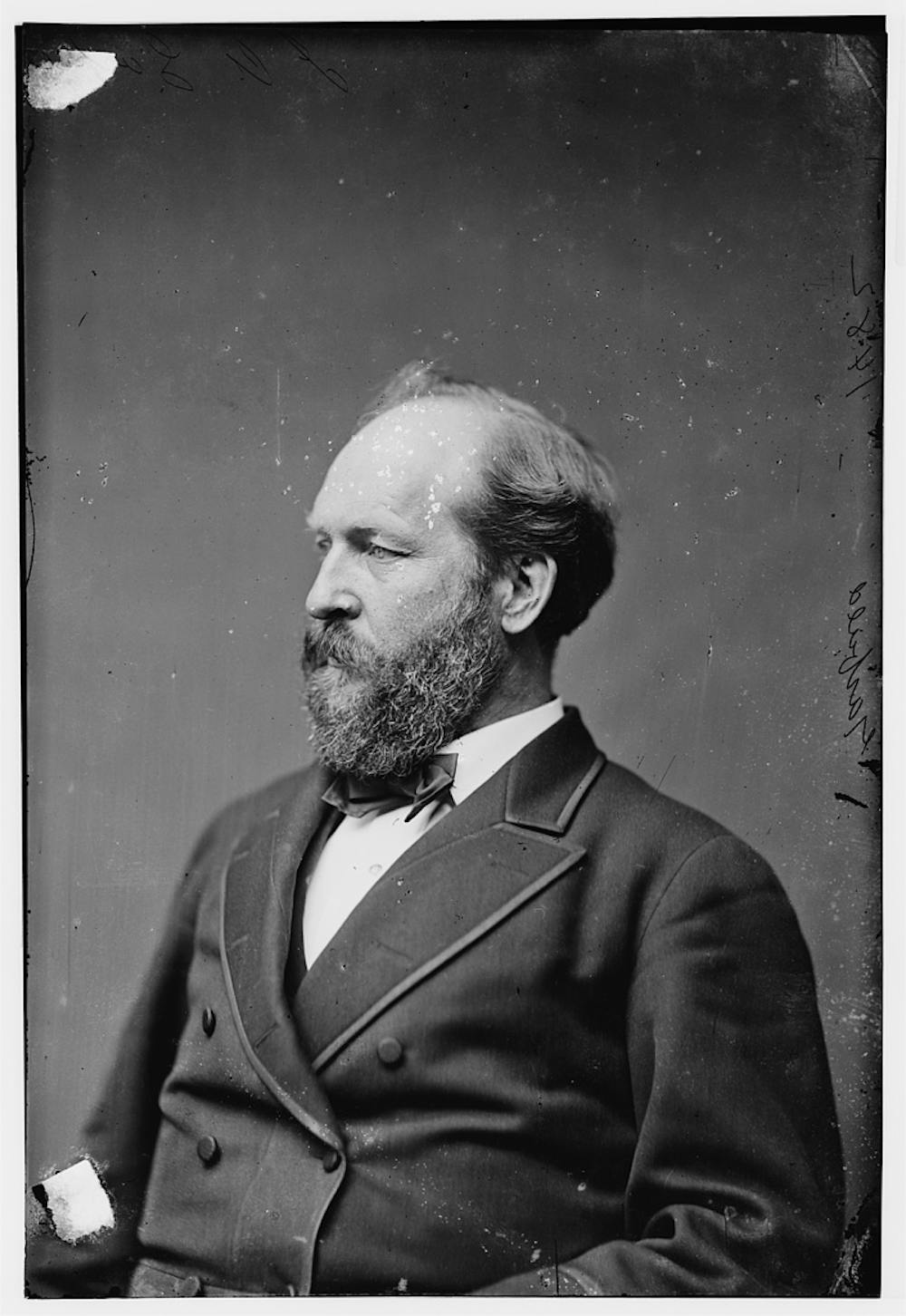
Charles J. Guiteau, a man who by many accounts was suffering from mental illness, shot President James Garfield on July 2, 1881. Garfield soon died from infections related to the gunshot wound.

Guiteau was furious over being denied a federal job despite his perception that he had personally helped Garfield win. The assassination led to a public outcry and widespread demands for personnel reforms.

James Garfield’s assassin said he was angry about not getting a federal job he believed he was due. Brady-Handy photograph collection, Library of Congress, Prints and Photographs Division

A bipartisan legislative majority passed the Pendleton Act in 1883. The law established open competitive exams for most government positions. The goal was to ensure that civil servants were capable of doing their jobs, while letting presidents retain the ability to appoint the most senior positions. That same system remains largely in place today, administered by three agencies since 1978.

Not down with OPM

One of those three agencies is the Office of Personnel Management, which the Trump administration wants to dismantle and then move its civil service functions elsewhere. Most of the agency’s responsibilities would land within the General Services Administration, which currently oversees the government’s real estate and procurement.

House Democrats and federal labor leaders want to block the move. They say it is unwarranted and could inject partisanship into the federal hiring process – meaning that members of the party in the White House would get the bulk of all new civil service jobs.

OPM is an independent federal agency overseen by Congress. Heads of independent agencies are appointed by the president and confirmed by the Senate, but unlike Cabinet members, they cannot be fired without cause. This makes them more autonomous than other executive branch agencies and partially insulates them from presidential directives.

The Office of Management and Budget, which would take over the administration of federal workforce policy if OPM no longer exists, is an executive branch agency under the president’s direct control. Under this arrangement, Trump could potentially exert more influence over those policies, which he has already shown a willingness to do.

In May of 2018, President Trump issued three executive orders designed to make it easier to fire federal employees and limit the power of federal labor unions. A federal judge blocked the orders a few months later, but some agencies are still trying to independently implement the changes.

More grievances

The three-seat U.S. Merit Systems Protection Board is another agency that grew out of the Civil Service Commission. It is charged with adjudicating employee grievances within the civil service system and has lacked a quorum since a few weeks before Trump took office in January 2017. It has a backlog of more than 2,100 cases waiting to be heard.

The term of its last remaining member, Mark Robbins, expired in March 2019. All board positions have been vacant since then, pending Senate approval of Trump’s three nominees.

When he was the last remaining member of the Merit Systems Protection Board, Mark Robbins was unable to move forward with any of the panel’s business. AP Photo/Juliet Linderman

The Federal Labor Relations Authority, the third agency that grew out of the Civil Service Commission, administers labor-management relations for non-postal service federal employees. In June 2019, a union representing more than 8,000 Environmental Protection Agency employees filed a grievance with the authority over the Trump administration’s plans to limit telework to one day a week and make it easier to fire EPA staff. The workplace changes are similar to those included in executive orders Trump had signed but which got tied up in court.

In addition to dismantling OPM, the Trump administration plans to relocate a total of about 550 jobs at two Washington, D.C.-based U.S. Department of Agriculture research agencies to Kansas City.

Even before the USDA announced the new workplace site in June 2019, giving these researchers one month to decide whether to move to Kansas City, many had resigned. Some staff members have argued that the reorganization is a form of retaliation against the researchers for their findings that are sometimes at odds with Trump administration policies on issues, such as the degree to which Supplemental Nutrition Assistance Program benefits – also known as food stamps – help millions of Americans.

The official rationale for the move is that it will cut costs.

[ Deep knowledge, daily. Sign up for The Conversation’s newsletter. ]

The Conversation

Matthew May does not work for, consult, own shares in or receive funding from any company or organization that would benefit from this article, and has disclosed no relevant affiliations beyond their academic appointment.

11 Jul 19:42

Moon landings footage would have been impossible to fake – a film expert explains why

by Howard Berry, Head of Post-Production and Programme Leader for MA Film and Television Production, University of Hertfordshire
Buzz Aldrin on the moon. NASA / Neil A. Armstrong

It’s been half a century since the magnificent Apollo 11 moon landing, yet many people still don’t believe it actually happened. Conspiracy theories about the event dating back to the 1970s are in fact more popular than ever. A common theory is that film director Stanley Kubrick helped NASA fake the historic footage of its six successful moon landings.

But would it really have been possible to do that with the technology available at the time? I’m not a space travel expert, an engineer or a scientist. I am a filmmaker and lecturer in film post-production, and – while I can’t say how we landed on the moon in 1969 – I can say with some certainty that the footage would have been impossible to fake.

Here are some of the most common beliefs and questions – and why they don’t hold up.

‘The moon landings were filmed in a TV studio.’

There are two different ways of capturing moving images. One is film, actual strips of photographic material onto which a series of images are exposed. Another is video, which is an electronic method of recording onto various mediums, such as moving magnetic tape. With video, you can also broadcast to a television receiver. A standard motion picture film records images at 24 frames per second, while broadcast television is typically either 25 or 30 frames, depending on where you are in the world.

If we go along with the idea that the moon landings were taped in a TV studio, then we would expect them to be 30 frames per second video, which was the television standard at the time. However, we know that video from the first moon landing was recorded at ten frames per second in SSTV (Slow Scan television) with a special camera.


To the moon and beyond is a new podcast series from The Conversation marking the 50th anniversary of the moon landings. Listen and subscribe here.


‘They used the Apollo special camera in a studio and then slowed down the footage to make it look like there was less gravity.’

Some people may contend that when you look at people moving in slow motion, they appear to be in a low gravity environment. Slowing down film requires more frames than usual, so you start with a camera capable of capturing more frames in a second than a normal one – this is called overcranking. When this is played back at the normal frame rate, this footage plays back for longer. If you can’t overcrank your camera, but you record at a normal frame rate, you can instead artificially slow down the footage, but you need a way to store the frames and generate new extra frames to slow it down.

Apollo Lunar Television Camera, as it was mounted on the side of the Apollo 11 Lunar Module when it telecasted Armstrong’s ‘One small step’. NASA

At the time of the broadcast, magnetic disk recorders capable of storing slow motion footage could only capture 30 seconds in total, for a playback of 90 seconds of slow motion video. To capture 143 minutes in slow motion, you’d need to record and store 47 minutes of live action, which simply wasn’t possible.

‘They could have had an advanced storage recorder to create slow motion footage. Everyone knows NASA gets the tech before the public.’

Well, maybe they did have a super secret extra storage recorder – but one almost 3,000 times more advanced? Doubtful.

‘They shot it on film and slowed down the film instead. You can have as much film as you like to do this. Then they converted the film to be shown on TV.’

That’s a bit of logic at last! But shooting it on film would require thousands of feet of film. A typical reel of 35mm film – at 24 frames per minutes second – lasts 11 minutes and is 1,000 foot long. If we apply this to 12 frames per second film (as close to ten as we can get with standard film) running for 143 minutes (this is how long the Apollo 11 footage lasts), you would need six and a half reels.

These would then need to be put together. The splicing joins, transfer of negatives and printing – and potentially grains, specks of dust, hairs or scratches – would instantly give the game away. There are none of these artefacts present, which means it wasn’t shot on film. When you take into account that the subsequent Apollo landings were shot at 30 frames per second, then to fake those would be three times harder. So the Apollo 11 mission would have been the easy one.

‘But the flag is blowing in the wind, and there’s no wind on the moon. The wind is clearly from a cooling fan inside the studio. Or it was filmed in the desert.’

It isn’t. After the flag is let go, it settles gently and then doesn’t move at all in the remaining footage. Also, how much wind is there inside a TV studio?

There’s wind in the desert, I’ll accept that. But in July, the desert is also very hot and you can normally see heat waves present in footage recorded in hot places. There are no heat waves on the moon landing footage, so it wasn’t filmed in the desert. And the flag still isn’t moving anyway.


MORE ON THE MOON AND BEYOND
Join us as we delve into the last 50 years of space exploration and the 50 years to come. From Neil Armstrong’s historic first step onto the lunar surface to present-day plans to use the moon as a launchpad to Mars, hear from academic experts who’ve dedicated their lives to studying the wonders of space.


‘The lighting in the footage clearly comes from a spotlight. The shadows look weird.’

Yes, it’s a spotlight – a spotlight, 93m miles away. It’s called the sun. Look at the shadows in the footage. If the light source were a nearby spotlight, the shadows would originate from a central point. But because the source is so far away, the shadows are parallel in most places rather than diverging from a single point. That said, the sun isn’t the only source of illumination – light is reflected from the ground too. That can cause some shadows to not appear parallel. It also means we can see objects that are in the shadow.

Stanley Kubrick. Instituto María Auxiliadora Neuquén/Flickr, CC BY-SA

‘Well, we all know Stanley Kubrick filmed it.’

Stanley Kubrick could have been asked to fake the moon landings. But as he was such a perfectionist, he would have insisted on shooting it on location. And it’s well documented he didn’t like to fly, so that about wraps that one up… Next?

‘It’s possible to recreate dinosaurs from mosquitoes the way they did in Jurassic Park, but the government is keeping it a secret.’

I give up.

The Conversation

Howard Berry does not work for, consult, own shares in or receive funding from any company or organisation that would benefit from this article, and has disclosed no relevant affiliations beyond their academic appointment.

11 Jul 19:15

Chase customers have ONE MONTH left to opt out of binding arbitration

by Cory Doctorow

Ten years ago, Chase was forced to withdraw the binding arbitration clauses in its credit card agreements as part of a settlement in a class-action suit (the company was accused of conspiring with other banks to force all credit-card customers to accept binding arbitration) (one of the things binding arbitration does is deprive you of your right to join class-action suits!). Last May, the company stealthily reintroduced the clauses, and gave customers until August 7 to notify the company in writing if they do not agree to binding arbitration. You have ONE MONTH LEFT to opt out.

Binding arbitration is a system of private law in which you surrender the rights that Congress gave you and resolve your disputes with massive, powerful companies by pleading your case in front of a contractor they hire (these contractors usually find in favor of the companies who are paying their bills, not the customers they've wronged.

To get a sense of why you should always opt out of binding arbitration, even though the companies make it very hard to do so (you have to print and sign a letter opting out and then mail it to them), consider yesterday's news about T-Mobile, who were caught selling realtime access to its customers' location to brokers who sold the information on to bounty hunters, debt collectors and even stalkers. T-Mobile says that its customers can't form a class action suit against it, because they didn't opt out of binding arbitration when they had the chance. There's a real possibility that T-Mobile will get away with this incredibly sleazy, dangerous behavior, thanks to binding arbitration.

Opt out today by mailing a letter to Chase at P.O. Box 15298, Wilmington, DE 19850-5298; make sure the letter includes your name, account number, address, and your signature and the phrase "I reject this agreement to arbitrate."

I mailed my opt-out to Chase in June and received confirmation in writing this week; coincidentally on the same day, the little credit-union that holds our mortgage sent me a notice telling me they were going to impose binding arbitration unless I sent them a written notice.

“Inserting a binding arbitration agreement in its contracts takes away our right to our day in court and ability to band together against a behemoth bank if Chase violates the law,” says Lauren Saunders, associate director for the National Consumer Law Center, an advocacy group.

She says the bank is counting on its customers overlooking the deadline and not opting out in time, essentially giving the bank a “get out of jail free card.”

Spokespeople for JP Morgan Chase didn’t respond to Consumer Reports’ emails requesting comment, but in the notice sent to customers the bank said that arbitrating disagreements is simpler than going to court.

Ted Rossman, a banking analyst with Bankrate.com, says arbitration is indeed generally faster and cheaper than litigation, but he agrees with advocates that arbitration typically benefits companies over consumers.

“The Consumer Finance Protection Bureau found that consumers won only 20 percent of the arbitration cases, and that even when they were victorious, consumers received only 57 cents for every dollar they claimed,” Rossman says.

One Month Left to Opt Out of Chase Binding Arbitration [Octavio Blanco/Consumer Reports]

(via Naked Capitalism)

09 Jul 19:54

You can rewild your garden into a miniature rainforest – Imagine newsletter #4

by Jack Marley, Commissioning Editor, UK edition
Liz Miller/Shutterstock

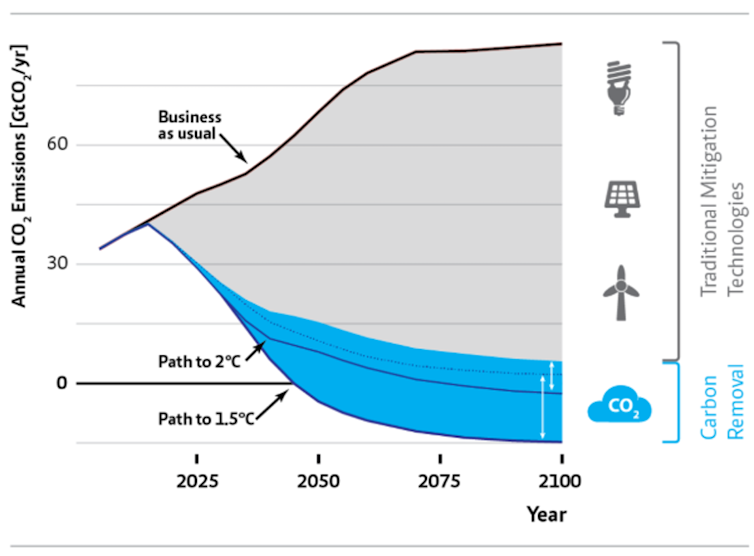
Many scientists believe that halting global warming at 1.5°C will require us to invent Negative Emission Technologies – machines that can suck climate warming gases like carbon dioxide (CO₂) from the air. But such technology already exists and has done for over two billion years. From the trees outside your window to the microscopic algae in the ocean, nature is working hard to absorb the atmospheric carbon that is heating our world.

Limiting warming to 1.5°C or 2°C will require removing CO₂ from the atmosphere. MCC

Rather than reinvent the wheel, some experts are calling for natural solutions to climate change. These involve restoring natural habitats – such as forests and wetlands – which would draw down CO₂ through photosynthesis and store it as living tissue in plants.

Rapidly phasing out greenhouse gas emissions is still vital, but letting nature do much of the hard work in removing the CO₂ that’s already in the atmosphere could save the time and money we’d need to develop artificial methods of capturing carbon.


Read more: George Monbiot Q + A – How rejuvenating nature could help fight climate change


Returning many of the world’s ecosystems to something resembling their former glory could also help solve another crisis simultaneously. In this fourth issue of the Imagine newsletter, we look at the mass extinction crisis that threatens the nearly nine million species on Earth and how radical action to prevent their extinction could also prevent ours.

We asked experts to imagine how natural solutions to climate change could start at home and what a future with more of the wild in our lives might look like. In the end, it’s a case of saving two birds with one tree.


What is Imagine?

Imagine is a newsletter from The Conversation that presents a vision of a world acting on climate change. Drawing on the collective wisdom of academics in fields from anthropology and zoology to technology and psychology, it investigates the many ways life on Earth could be made fairer and more fulfilling by taking radical action on climate change.

You are currently reading the web version of the newsletter. Here’s the more elegant email-optimised version subscribers receive. To get Imagine delivered straight to your inbox, subscribe now.

subscribe to the Imagine newsletter


A wilder world is a cooler world

Nearly a million species are at risk of extinction without “transformative changes” to the way societies and economies are organised in the 21st century. That’s according to a report published in May 2019 by an international team studying Earth’s biodiversity.


Read more: 'Revolutionary change' needed to stop unprecedented global extinction crisis


Climate change drives species to extinction and exacerbates threats such as habitat loss, by destroying the habitats themselves or changing the conditions that make them hospitable to different species.

But it might surprise you to learn that across vast swathes of the world, nature is already returning to places where dense habitats were once destroyed by humans. Even on your own doorstep, your local environment could be wilder than it was 100 years ago.

If you live in mainland Europe, that’s almost certainly the case.


Read more: Rewilding: as farmland and villages are abandoned, forests, wolves and bears are returning to Europe


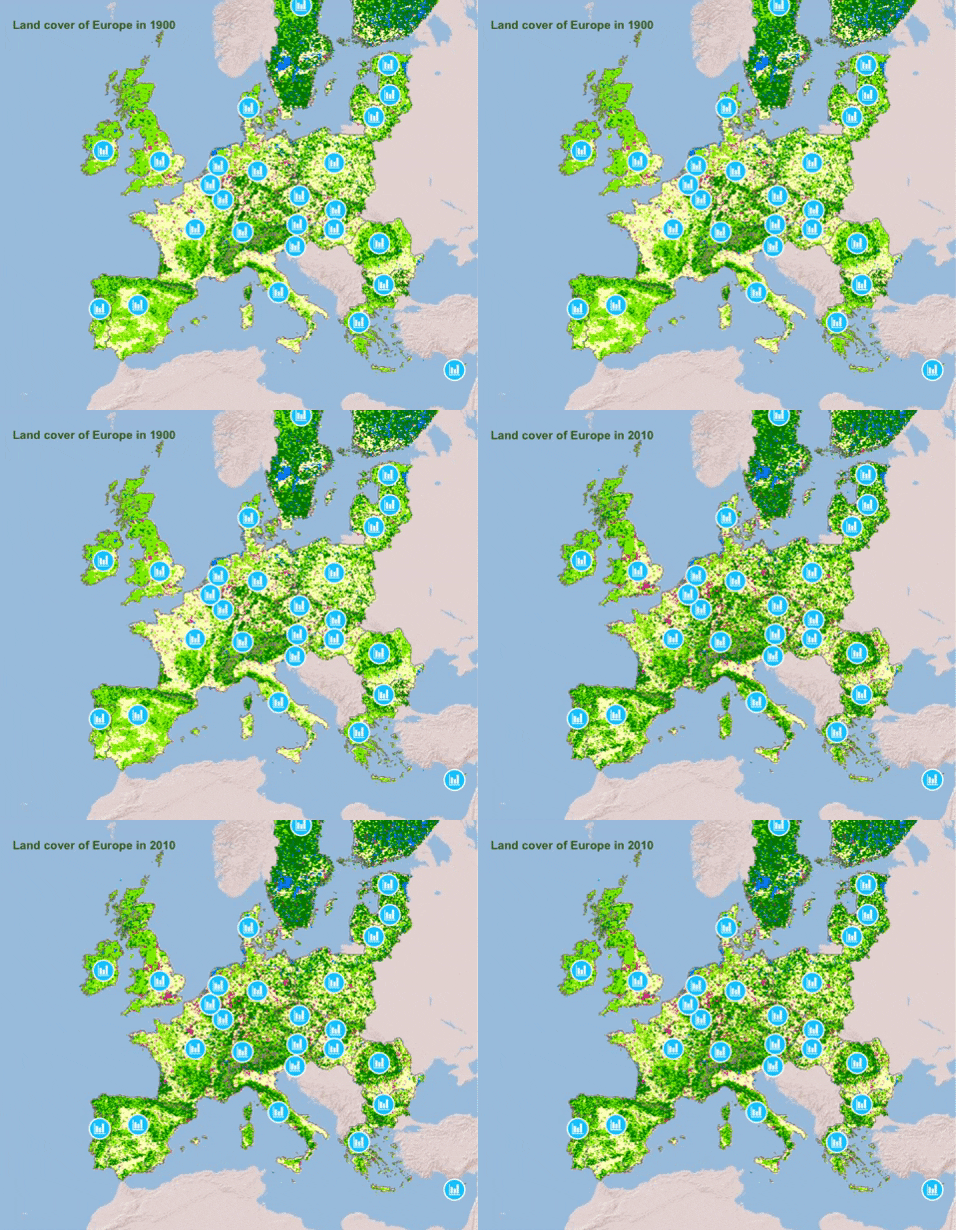
More and more people around the world are abandoning rural landscapes and moving to live in cities. In their absence, the land they once used for agriculture is regenerating as shrubland and forest. These new habitats have ushered in wolves, brown bears, lynx and boar. José M. Rey Benayas, Professor of Ecology at the University of Alcalá, says:

Despite 40% of the world’s land being cultivated or grazed permanently by domestic herbivores… forests returned at a rate of 2.2 million hectares per year between 2010-2015 alone. Spain, for example, has tripled its forest area since 1900 – increasing from 8% to 25% of its territory. The country gained 96,000 hectares of forest every year from 2000-2015.

In the UK, forests have recovered more slowly, from 5% of the land area after World War I to 13% today. It’s been estimated that every hectare of forest that’s restored in the UK could absorb the annual emissions of 30 London buses or 90 cars every year. Restoring forest cover in the UK to just 18% of the land area could absorb a quarter of the carbon that will need to be cut in order to reach net zero emissions by 2050.


Read more: Rewilding is essential to the UK’s commitment to zero carbon emission


Aside from not emitting carbon in the first place, restoring forests across the world on an unprecedented scale could be our best bet for avoiding catastrophic climate change, according to a new study. Mark Maslin, a Professor of Earth System Science and Simon Lewis, a Professor of Global Change, both at University College London, explain the thinking.

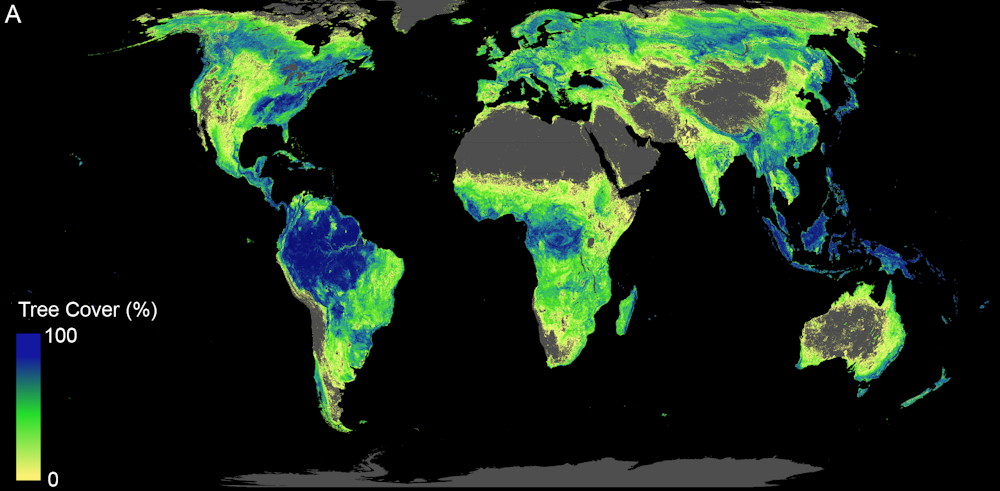
  • Negative emissions – Increasing the world’s forest land by one third – regrowing an extra billion hectares of trees over an area that’s roughly the size of the United States – could capture 205 billion tonnes of CO₂, according to the study. That’s about two thirds of man-made carbon emissions already in the atmosphere.

  • Low disruption – The study’s authors say reforestation on this scale could actually be achieved with fairly limited disruption to our lives. Most of the land needed would be around 1.8 billion hectares in areas with low human activity, so new forests wouldn’t have to compete with land we’d need to reserve for growing food.

  • But there’s a catch – Even if global warming is limited to 1.5°C, the higher temperatures could reduce the area that’s suitable for forest restoration by a fifth by 2050. On its own, reforestation isn’t enough. There’s still a very urgent need to reduce emissions drastically for a reasonable chance of avoiding catastrophic climate change. As Maslin and Lewis point out, the actual sum of CO₂ that reforestation could lock away is also much smaller in other research, perhaps closer to 57 billion tonnes.

Where the billion hectares of forest could be planted – excluding desert, farmland and urban areas. Crowther Lab, Author provided
How all of that new forest would look with the forest that’s already there. Crowther Lab, Author provided

Read more: Reforesting an area the size of the US needed to help avert climate breakdown, say researchers – are they right?


Rewilding starts at home

Reforesting the Earth will take decades, but right now, people in the UK could help bring back one of the country’s most diminished habitats in their own backyards. Since the end of World War II, Britain has lost 97% of its wild grassland – turned into farmland or dug up to build roads and homes.

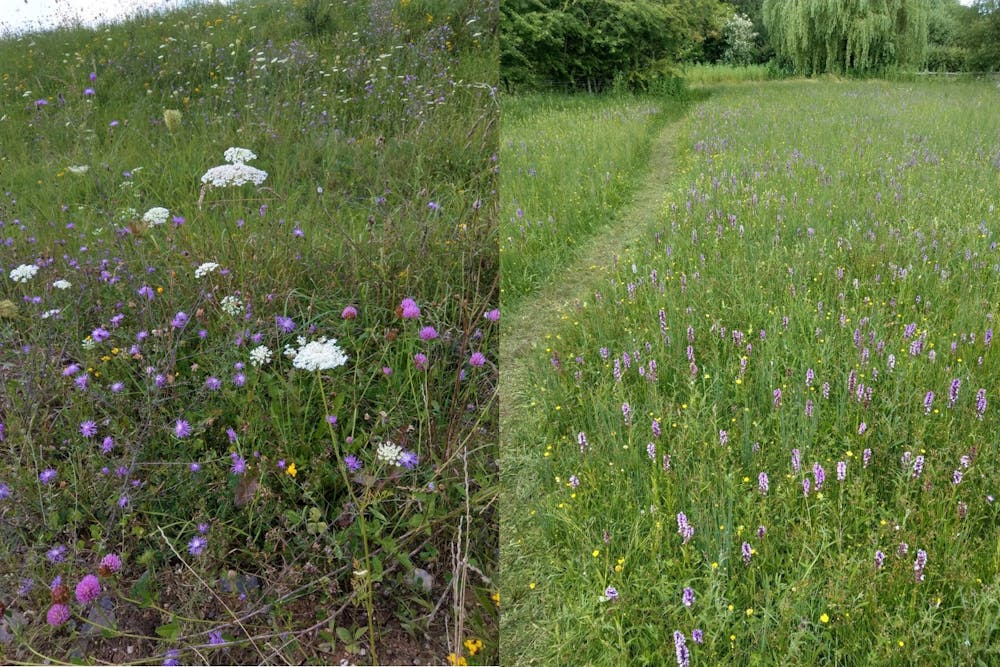
Left - Wild grassland in Transylvania. Right - Potwell Dykes, Nottinghamshire – how much of the UK’s lost grassland would have once looked. Adam Bates

What’s left is a sorry sight. The clipped lawns and neat grass verges of Britain mostly contain only one or two species of turf grass, compared to the more than 40 plant species that can thrive in a single square metre of grassland. As their native habitat has declined, British pollinating insects have vanished from a third of their range since 1980.


Read more: Four steps to make your lawn a wildlife haven – from green desert to miniature rainforest


Maintaining the hyper-manicured lawns that we’re used to seeing in public parks often involves petrol mowers and fertilisers which leak more carbon to the atmosphere during their production and use than the grass itself can store.

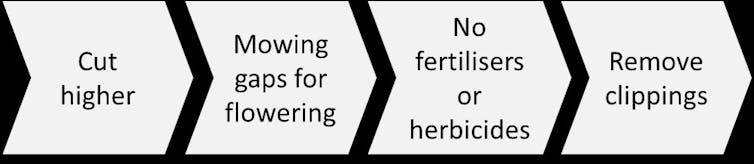
If you have a lawn, you can think of it as your own patch of artificial grassland – a stunted remnant of a once vast ecosystem. But it needn’t be that way, says Adam Bates – an ecologist at Nottingham Trent University. There are four easy steps any gardener can follow to turn their lawn into a wildlife haven that locks away CO₂.

Adam Bates

1. Cut higher

Most lawn mowers have blades that are set as low to the ground as possible, ensuring that the lawn is cut to be flat and featureless, which is no good for wildlife. Bugs and small creatures need nooks and crannies to hide from predators. Spiders in particular need something to anchor their webs to.

By adjusting the blade to the highest possible setting – often around 4 cm off the ground – mowing can leave taller grass with more recesses for insects to hide in.

A traditionally managed lawn. There are few plant species and little structure for bugs to exploit. Adam Bates

2. Include mowing gaps

Leaving longer gaps between mowing the lawn can give wildflower species the time they need to flower and provide nectar for pollinating insects to eat. By leaving a gap in spring, early flowering species like the native cowslip can bloom.

Fox-and-cubs (Hieracium aurantiacum) help feed leafcutter bees. Jörg Hempel/Wikipedia, CC BY-SA

Cowslip is a plant which has been declining for decades, but the Duke of Burgundy butterfly depends on it for somewhere to lay its eggs.

Leaving a mowing gap in summer can give species like cat’s-ear and fox-and-cub time to flower – both important food sources for leafcutter bees.

3. Don’t use fertilisers or herbicides

You might expect herbicides to be a bad idea, but when it comes to lawns, fertilisers are only good for ensuring a luxuriant green colour – one or two grass species will soak up the extra nutrients and outcompete everything else.

To ensure a rich variety of plants can thrive in your wildflower lawn, reducing the fertility of the soil is essential.

4. Remove the clippings

By collecting the cut grass after you mow you can stop more nutrients getting into the soil and reduce the lawn’s fertility with every cut.

If you’re 100% committed, you can leave strips at the sides or patches in the corners to go wild and form small wildflower meadows. Most wildflower seeds will be carried to your garden on the wind or by birds, but if you’re tired of waiting, you can buy and spread the seeds yourself.

Once you’ve seen pockets of wildflower meadow spring up on your lawn, you may not want to stop there…

Ponds – the carbon sink in your backyard

Pollinator species would certainly benefit from more people turning their lawns into the wild grassland habitat that’s so rare in the British landscape today. But a single square metre of grassland might only absorb about 2-5g of CO₂ over the course of a year. So how helpful is rewilding your garden for slowing climate change? Very helpful, if you add a pond, says Associate Professor of Ecology at Northumbria University, Mike Jeffries.


Read more: Ponds can absorb more carbon than woodland – here's how they can fight climate change in your garden


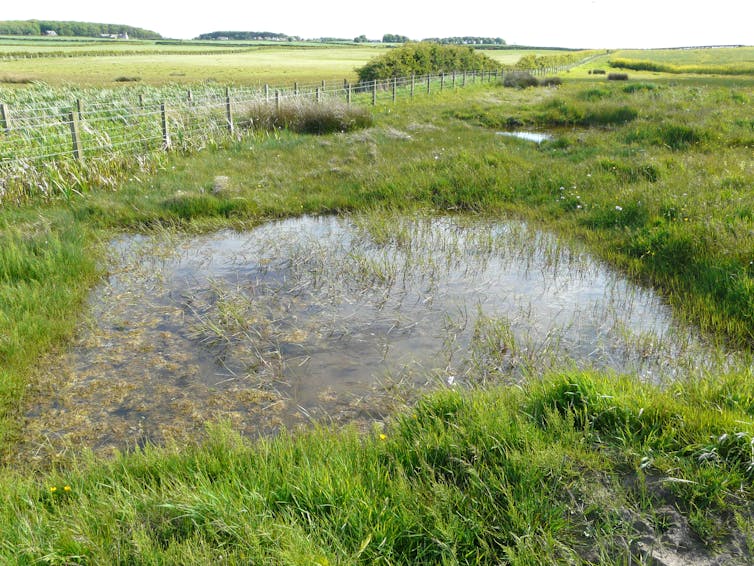
A pond that’s only a square metre in size could suck as much as 247g of carbon from the air every year. Though small ponds make up a tiny proportion of the UK’s land area – about 0.0006% of it – they punch well above their weight in terms of how much carbon they can bury as sediment.

Ponds are carbon sinks which can fit well in intensively managed landscapes. Mike Jeffries, Author provided

By digging a pond in your garden, you’d also be inviting some truly unique wildlife. Perhaps most interesting of all according to Jeffries is the tadpole shrimp – thought to be the oldest animal in the world.

Tadpole shrimps (Triops cancriformis) evolved 220m years ago and can be found in freshwater ponds in Britain. Repina Valeriya/Shutterstock

Garden ponds can also draw in more familiar creatures, like frogs and toads. Half of all the UK’s ponds were lost during the 20th century, leaving many native amphibians searching for somewhere to live. As climate change threatens to dry up much of these habitats, garden ponds could provide an oasis for struggling species says Becky Thomas, a Senior Teaching Fellow in Ecology at Royal Holloway University.

Frogs and toads need clean ponds in which to breed [but] the fashion of keeping our gardens meticulously neat and tidy is leaving our wildlife with nowhere to hide. Creating a pond can be a fun project – especially with children. Once put in, it will only take a matter of days before something decides to make it their home. It will usually be invertebrates and plants to begin with, but it won’t take long for it to be found by a nearby frog or toad population.


Read more: Make your garden frog friendly – amphibians are in decline thanks to dry ponds


A shared home for humans and wildlife

No matter where you look, you’re likely to find a potentially useful habitat for nature that’s under threat. Professors of Conservation Ecology Brendan Wintle (University of Melbourne) and Sarah Bekessy (RMIT University) say that even very small patches can be invaluable for a particular species.

It may not look like a pristine expanse of Amazon rainforest or an African savannah, but the patch of bush at the end of the street could be one of the only places on the planet that harbour a particular species of endangered animal or plant.

In Australia, our cities are home to, on average, three times as many threatened species per unit area as rural environments. This means urbanisation is one of the most destructive processes for biodiversity.


Read more: The small patch of bush over your back fence might be key to a species’ survival


Moving out of gardens and into the streets, how could our towns and cities be reimagined with more space for nature? Heather Alberro, a PhD Candidate in Political Ecology at Nottingham Trent University, believes that “urban greening” could make the places we live resilient to climate change and ensure a refuge for biodiversity:

Shade cools the ground. Roland Ennos, Author provided
  • Cool those heat waves: a single tree can have the cooling effect of more than ten air conditioning units, all while absorbing carbon. Higher temperatures turn cities into concrete heat traps, but using air conditioning to stay cool takes a lot of electricity, adding more CO₂ to the atmosphere. By contrast, trees shade surfaces that might otherwise absorb heat and cool the air by gathering water on their leaves which evaporates in the sun.

  • Filter air pollution: plants capture airborne particulates in the wax or cuticles of their leaves. By filling streets with trees, the air can be made safer to breathe.

  • Increase biodiversity: rooftop gardens and forested terraces can create habitats in new places. Networks of connected habitats – such as wildflower meadows that snake along roadsides – could allow new urban ecosystems to form, populated by species that had previously been squeezed out of the concrete sprawl.


Read more: Urban greening can save species, cool warming cities, and make us happy


The Parkroyal on Pickering Hotel in Singapore is shrouded in forested terraces and sky gardens that encourage local insects and birds. Ariyaphol Jiwalak/Shutterstock

If all that sounds good to you then you’re in luck, Alberro says. Urban greening is being taken very seriously by architects, designers and politicians. You may find your neighbourhood growing wilder in the years to come.

The mass greening and rewilding of our cities is no novel or abstract ideal. It is already happening in many urban spaces around the world. The mayor of Paris has ambitious plans to “green” 100 hectares of the city by 2020. London mayor Sadiq Khan hopes to make London the world’s first “National Park City” through mass tree planting and park restoration, greening more than half of the capital by 2050.

If you live outside a major city then perhaps it’s your daily commute that will change first. Thanks to efforts by campaigners and local councils in the UK, roadside verges are being turned into wildflower meadows, with an eight-mile “river of flowers” now hugging a motorway in Rotherham.

A roadside verge teeming with wildflowers in Rotherham, UK. Pictorial Meadows

According to Olivia Norfolk – a Lecturer in Conservation Ecology at Anglia Ruskin University – bees and butterflies don’t seem to mind the traffic and their numbers have “increased dramatically” where regular mowing has stopped and wildflower meadows have returned on grass verges. She said:

The UK road network spans over 246,000 miles – reducing mowing on the grass verges that surround them to just once a year could save money and create thriving habitats for pollinating insects that return on their own each spring.


Read more: Roadside wildflower meadows are springing up across the UK – and they're helping wildlife in a big way


Seeing so much colour on land that was once devoid of life can really lift the spirits. Alberro believes this may be the greatest benefit from rewilding – more human happiness. The Japanese call it Shinrin-yoku, or “forest bathing” – the idea that regular immersion in nature is as good as therapy. In the future, people may not have to go too far to get their fix.

Further reading

Click here to subscribe to our climate action newsletter. Climate change is inevitable. Our response to it isn’t.

The Conversation
08 Jul 12:56

National Parks Service publishes hi-rez scans of Heinrich Berann's iconic, panoramic paintings of America's parks

by Cory Doctorow

In the 1980s and 1990s, the National Parks Service commissioned Heinrich Berann to produce gorgeous, panoramic paintings of America's beautiful national parks as part of an advertising campaign; this week the NPS published high-resolution scans of these images for free downloading.

These have been available on Wikimedia Commons since 2007, when they were fetched from Berann's site, but those images are only about 2,000 pixels wide -- the NPS scans are 12,000x8,000 pixels!.

Part of the appeal of Berann’s depictions of the national parks is that they look fairly realistic while at the same time greatly enhancing the landscapes in a number of ways. The end result is similar to what you might see from the window of a plane, and yet better than any possible real-world view, Patterson says.

Berann made sure all the important features of each park were visible in the scene. Sometimes this required some creative distortion. On the Yosemite National Park panorama below, for instance, Yosemite Valley is widened to allow all the rock formations, waterfalls, and man-made structures to be clearly seen. All of the valley’s iconic natural features are exaggerated, with Half Dome and El Capitan much taller than in real life, and the waterfalls significantly longer.

Heinrich Berann Panoramas [National Park Service]

Gorgeous Panoramic Paintings of National Parks Now Online [Betsy Mason/National Geographic]

(via Kottke)

05 Jul 19:48

Abraham Lincoln's Gettysburg Address

by Jason Weisberger

Four score and seven years ago our fathers brought forth on this continent, a new nation, conceived in Liberty, and dedicated to the proposition that all men are created equal.

Now we are engaged in a great civil war, testing whether that nation, or any nation so conceived and so dedicated, can long endure. We are met on a great battle-field of that war. We have come to dedicate a portion of that field, as a final resting place for those who here gave their lives that that nation might live. It is altogether fitting and proper that we should do this.

But, in a larger sense, we can not dedicate -- we can not consecrate -- we can not hallow -- this ground. The brave men, living and dead, who struggled here, have consecrated it, far above our poor power to add or detract. The world will little note, nor long remember what we say here, but it can never forget what they did here. It is for us the living, rather, to be dedicated here to the unfinished work which they who fought here have thus far so nobly advanced. It is rather for us to be here dedicated to the great task remaining before us -- that from these honored dead we take increased devotion to that cause for which they gave the last full measure of devotion -- that we here highly resolve that these dead shall not have died in vain -- that this nation, under God, shall have a new birth of freedom -- and that government of the people, by the people, for the people, shall not perish from the earth.

Abraham Lincoln

November 19, 1863

This is the text of the Bliss copy, the most reproduced known version of President Abraham Lincoln's Gettysburg Address.

President Lincoln's speech at the Lyceum also merits a read.

...Here then, is one point at which danger may be expected.

The question recurs, "how shall we fortify against it?" The answer is simple. Let every American, every lover of liberty, every well wisher to his posterity, swear by the blood of the Revolution, never to violate in the least particular, the laws of the country; and never to tolerate their violation by others. As the patriots of seventy-six did to the support of the Declaration of Independence, so to the support of the Constitution and Laws, let every American pledge his life, his property, and his sacred honor;--let every man remember that to violate the law, is to trample on the blood of his father, and to tear the character of his own, and his children's liberty. Let reverence for the laws, be breathed by every American mother, to the lisping babe, that prattles on her lap--let it be taught in schools, in seminaries, and in colleges; let it be written in Primers, spelling books, and in Almanacs;--let it be preached from the pulpit, proclaimed in legislative halls, and enforced in courts of justice. And, in short, let it become the political religion of the nation; and let the old and the young, the rich and the poor, the grave and the gay, of all sexes and tongues, and colors and conditions, sacrifice unceasingly upon its altars...

05 Jul 19:46

Frederick Douglass: What to the Slave Is the Fourth of July?

by Cory Doctorow

1852: "This, for the purpose of this celebration, is the Fourth of July. It is the birthday of your National Independence, and of your political freedom. This, to you, is what the Passover was to the emancipated people of God. It carries your minds back to the day, and to the act of your great deliverance; and to the signs, and to the wonders, associated with that act, and that day."

What, am I to argue that it is wrong to make men brutes, to rob them of their liberty, to work them without wages, to keep them ignorant of their relations to their fellow men, to beat them with sticks, to flay their flesh with the lash, to load their limbs with irons, to hunt them with dogs, to sell them at auction, to sunder their families, to knock out their teeth, to burn their flesh, to starve them into obedience and submission to their masters? Must I argue that a system thus marked with blood, and stained with pollution, is wrong? No! I will not. I have better employments for my time and strength than such arguments would imply.

What, then, remains to be argued? Is it that slavery is not divine; that God did not establish it; that our doctors of divinity are mistaken? There is blasphemy in the thought. That which is inhuman, cannot be divine! Who can reason on such a proposition? They that can, may; I cannot. The time for such argument is passed.

At a time like this, scorching irony, not convincing argument, is needed. O! had I the ability, and could I reach the nation’s ear, I would, today, pour out a fiery stream of biting ridicule, blasting reproach, withering sarcasm, and stern rebuke. For it is not light that is needed, but fire; it is not the gentle shower, but thunder. We need the storm, the whirlwind, and the earthquake. The feeling of the nation must be quickened; the conscience of the nation must be roused; the propriety of the nation must be startled; the hypocrisy of the nation must be exposed; and its crimes against God and man must be proclaimed and denounced.

What, to the American slave, is your Fourth of July? I answer: a day that reveals to him, more than all other days in the year, the gross injustice and cruelty to which he is the constant victim. To him, your celebration is a sham; your boasted liberty, an unholy license; your national greatness, swelling vanity; your sounds of rejoicing are empty and heartless; your denunciations of tyrants, brass-fronted impudence; your shouts of liberty and equality, hollow mockery; your prayers and hymns, your sermons and thanksgivings, with all your religious parade, and solemnity, are, to him, mere bombast, fraud, deception, impiety, and hypocrisy — a thin veil to cover up crimes which would disgrace a nation of savages. There is not a nation on the earth guilty of practices, more shocking and bloody, than are the people of these United States, at this very hour.

What to the Slave Is the Fourth of July? [Frederick Douglass/Jacobin]

(Image: Johnny Silvercloud, CC-BY-SA)

05 Jul 16:35

Reforesting an area the size of the US needed to help avert climate breakdown, say researchers – are they right?

by Mark Maslin, Professor of Earth System Science, UCL
Inga Linder/Shutterstock

Restoring the world’s forests on an unprecedented scale is “the best climate change solution available”, according to a new study. The researchers claim that covering 900m hectares of land – roughly the size of the continental US – with trees could store up to 205 billion tonnes of carbon, about two thirds of the carbon that humans have already put into the atmosphere.

While the best solution to climate change remains leaving fossil fuels in the ground, we will still need to suck carbon dioxide (CO₂) out of the atmosphere this century if we are to keep global warming below 1.5˚C. So the idea of reforesting much of the world isn’t as far-fetched as it sounds.

Since the dawn of agriculture, humans have cut down three trillion trees – about half the trees on Earth. Already 43 countries have pledged to restore 292m hectares of degraded land to forest worldwide. That’s an area ten times the size of the UK. But what the new study advocates is reforesting something like ten times that amount.

Trees absorb CO₂ from the air and store the carbon as bark and other tissue. Mark Maslin, Author provided

Rewilding habitats and reforesting may be easier in the future as the world is already becoming a wilder place in many areas. This may seem a strange prediction, given that the global population will grow from 7.7 billion to 10 billion by 2050, but by then nearly 70% of us will live in cities and have abandoned rural areas, making them ripe for restoration. In Europe already, 2.2m hectares of forest regrew per year between 2000-2015, and forest cover in Spain has increased from 8% of the country’s territory in 1900 to 25% today.


Read more: Rewilding: as farmland and villages are abandoned, forests, wolves and bears are returning to Europe


Massive reforestation isn’t a pipe dream and it can have real benefits for people. In the late 1990s, environmental deterioration in China became critical, with vast areas resembling the Dust Bowl of the American Midwest in the 1930s. Six bold programmes were introduced, targeting over 100m hectares of land for reforestation.

Grain for Green is the largest and best known of these. It reduced soil erosion and stabilised local rainfall patterns. The ongoing programme has also helped to alleviate poverty by making payments directly to farmers who set aside their land for reforestation.

Better yet, the new study suggests that bringing back 900m hectares of forest wouldn’t impact on our capacity to reserve land for growing food. This is certainly possible, and in line with other estimates. Reforestation may even result in production from farmland increasing, as was found in China when more stable rainfall and fertile soil followed the return of forests.

Where the billion hectares of forest could be planted – excluding desert, farmland and urban areas. Crowther Lab, Author provided
How all of that new forest would look, alongside what’s already there. Crowther Lab, Author provided

No solution without emission cuts

There should be more scepticism about how much CO₂ 900m hectares of new forest could store though. The paper insists on 205 billion tonnes of carbon, but this seems too high when compared to previous studies or climate models. The authors have forgotten the carbon that’s already stored in the vegetation and soil of degraded land that their new forests would replace. The amount of carbon that reforestation could lock up is the difference between the two.

Mature forests can store a lot of carbon, but this capacity is only reached after hundreds of years, not a couple of decades of new forest growth as assumed in this study. The most recent estimate from the IPCC suggests that new forests could store on average an extra 57 billion tonnes of carbon by the end of the century. This is still a huge number and could absorb about one sixth of the carbon that’s already in the atmosphere, but reforestation should be thought of as one solution to climate change among many.

Radically reducing carbon emissions and absorbing the carbon that’s already in the atmosphere will be necessary to avert catastrophic climate change. Mark Maslin, Author provided

Even if warming is stabilised at 1.5˚C, the study indicates that one fifth of the land proposed for reforestation could be rendered too hot for growing new forests by 2050. But this concern ignores the role of carbon dioxide fertilisation – when there are higher levels of carbon dioxide in the atmosphere, photosynthesis is more efficient, meaning plants need less water and can still be productive at higher temperatures. Today, the most immediate threat to tropical forests is deforestation by people and the fires they light which get out of control, not the more subtle impacts of higher temperatures.

Reforesting an area the size of the US will have massive benefits on local environments and will store a huge amount of man-made carbon emissions. It is not, however, a substitute for reducing those carbon emissions.

Even if the world reduces its carbon emissions to zero by 2050, there will still need to be negative global carbon emissions for the rest of the century – drawing CO₂ out of the atmosphere to stabilise global warming at 1.5˚C. Reforestation is essential for creating negative emissions – not reducing the amount of carbon that humans are still emitting.

There is another sting in the tail. Massive reforestation only works if the world’s current forest cover is maintained and increasing. Deforestation of the Amazon rainforest – the world’s largest – has increased since Brazil’s new far-right president, Jair Bolsonaro, came to power. Current estimates suggest areas of rainforest the size of a football pitch are being cleared every single minute.

It won’t be easy, but society needs to protect the forests we’ve got, and protect new forests in perpetuity to permanently keep carbon sequestered in trees and out of the atmosphere.

The Conversation

Mark Maslin is a Founding Director of Rezatec Ltd, Director of The London NERC Doctoral Training Partnership and a member of Cheltenham Science Festival Advisory Committee. He is an unpaid member of the Sopra-Steria CSR Board. He has received grant funding in the past from the NERC, EPSRC, ESRC, Royal Society, DIFD, DECC, FCO, Innovate UK, Carbon Trust, UK Space Agency, European Space Agency, Wellcome Trust, Leverhulme Trust and British Council. He has received research funding in the past from The Lancet, Laithwaites, Seventh Generation, Channel 4, JLT Re, WWF, Hermes, CAFOD and Royal Institute of Chartered Surveyors.

Simon Lewis has received funding from Natural Environment Research Council, the Royal Society, the European Union, the Leverhulme Trust, the Centre for International Forestry, National Parks Agency of Gabon, Microsoft Research, the Gordon and Betty Moore Foundation and the David and Lucile Packard Foundation.

02 Jul 19:30

Countries with longer copyright terms have access to fewer books (pay attention, Canada!)

by Cory Doctorow

Rebecca Giblin (previously) writes, "We've just dropped a new study we've been working on for a year. You know how it keeps being claimed that we need longer copyrights because nobody will invest in making works available if they're in the public domain? Heald and some others have done some great work debunking that in the US context, but now we've finally tested this hypothesis in other countries by looking at the relative availability of ebooks to libraries. It's also the first time anyone has been able to compare availability of identical works (by significant authors) across jurisdictions. The books we sampled were all in the public domain in Canada and NZ, all under copyright in Australia, and a mix in the US (courtesy of its historical renewal system)."

"So what'd we find? That Canada and NZ (public domain) have access to more books and at cheaper prices than Australia (copyright) and the US (mixed). Also that publishers don't seem to have any problem competing with each other on the same popular titles. And, sadly but not surprisingly: 59% of our sampled 'culturally significant' authors had no books available to libraries in any country regardless of copyright status. That's because even the shortest terms wildly outlast most books' commercial life (even where they still have cultural value).

"I think this new work is going to be important feeding into the next stage of the Canadian reform process in particular. I'm hopeful the Canadians will think very carefully about the ownership of that additional 20 years of rights they've been forced to give up (we talk about this on the final page)."

There can be no doubt that radical action is needed to address copyright’s ongoing failures to secure a fair share of economic rewards to authors and promote widespread access to knowledge and culture. But it is increasingly clear that longer terms are not the answer, and indeed contribute to the problem. If it simply tacks another 20 years onto its term, Canada can expect its libraries to have worse access, while doing little or nothing to increase payments into author pockets. So what are the options for countries obliged to adopt unjustifiable terms extensions as a condition of accessing trade markets? One promising line of approach is to rethink the ways in which those extended rights are divided up. In ‘A New Copyright Bargain? Reclaiming Lost Culture and Getting Authors Paid’, Giblin recently drew up a roadmap for an alternative copyright bargain. By introducing new reversion rights for authors, combined with safeguards against orphaning, she argues that it is possible to maintain incentives for creation and distribution, reclaim currently-lost culture, and secure to creators a fairer share —all while remaining consistent with treaty obligations. Faced with new evidence about the costs of current approaches,it may be time for nations which are locked in to costly and counter-productive copyright structures to similarly explore the ‘wriggle room’ left to them by treaties.

What Happens When Books Enter the Public Domain? Testing Copyright’s Underuse Hypothesis Across Australia, New Zealand, the United States and Canada [Jacob Flynn, Rebecca Giblin and François Petitjean/University of New South Wales Law Journal]

02 Jul 19:12

#TrumpRaids are coming: ICE raids and mass deportations as early as Sunday in these 10 cities

by Xeni Jardin

Here are the 10 U.S. cities where ICE, CBP, DHS, and other agencies plan to execute mass raids.

Immigration agents will target Miami, Atlanta, Chicago, Baltimore, Denver, Houston, Los Angeles, New Orleans, New York City, and San Francisco this weekend, congressional and U.S. Immigration and Customs Enforcement sources have told the Miami Herald.

Earlier this week, a Trump administration official confirmed that ICE will specifically target for deportation as many as 1 million people “who have been issued final deportation orders by federal judges yet remain at large in the country.”

Among those to be targeted first, sources said: minors who came into the U.S. without their parents and have since turned 18; people who were ordered removed in absentia; and people who missed a court hearing and did not respond to letters mailed to their homes by the Department of Justice.

Also targeted: families on the so-called rocket docket, a slate of cases fast-tracked for deportation by the Justice Department.

Two ICE enforcement briefings were held this week, one on Wednesday, led by ICE Deputy Director Matthew T. Albence, the other on Thursday by Henry Lucero, field office director for the agency’s Enforcement and Removal Operations in Phoenix.

On the call led by Albence, the target cities were mentioned, although the timing was not shared.

The plan might also focus on a very targeted population: recent arrivals from the border with a final order of removal. In certain communities, including South Florida, these families have received “case management” services from an ICE contractor, or might still be in detention. ICE would have access to the information provided to the case manager, including addresses and contact information for these clients.

People rounded up for deportation will be held at family detention centers. During Lucero’s briefing, he said if there were to be U.S. citizen children involved, a parent or guardian would be issued an ankle monitor while they made arrangements on where the child will stay as deportation proceedings move forward.

This is America.

Miami is expected to be one of the cities first targeted by DHS/ICE/CBP raids which may commence as soon as this Sunday, June 23, 2019.

If you're in Southern Florida, call the FLIC Immigrant hotline 1-888-600-5762 to report raids/checkpoints.

If you or your family or others you know are affected, know the law and your rights.

Individuals with questions about the upcoming ICE raids may call the Florida Immigrant Coalition hotline: 1-800-600-5763. Se habla Español, y es una llamada gratis.

KNOW YOUR RIGHTS:

✔ If ICE comes to your house, don’t open the door
✔ Stay silent
✔ Don’t give personal information
✔ Make a plan for you and your family

02 Jul 19:06

America's super-rich write to Democratic presidential hopefuls, demanding a wealth tax

by Cory Doctorow

18 of the richest people in America have sent a letter to all the candidates for the 2020 Democratic presidential nomination, demanding that their election platform include a annual wealth tax on the largest American fortunes, something advocated by economist Thomas Piketty in his blockbuster book Capital in the 21st Century and subsequently integrated into Elizabeth Warren's campaign platform (with Piketty's endorsement).

The letter's signatories include a few super-rich people who amassed their own fortunes (like George Soros and Facebook co-founder Chris Hughes), but many of the remaining signatories are heirs to vast wealth that they did nothing to earn, including Disney heiress Abigail Disney (who has been admirably public on the subject already) and Molly Munger (daughter of Bershire Hathaway chairman and Warren Buffet mentor Charlie Munger). One signatory chose to remain anonymous.

Polls show that a moderate tax on the wealthiest Americans enjoys the support of a majority of Americans — Republicans, Independents, and Democrats.[i] We hope that candidates for President will also recognize the force of the idea and join with most Americans in supporting it. Some ideas are too important for America to be part of only a few candidates’ platforms.

The concept of a wealth tax isn’t new: Millions of middle-income Americans already pay a wealth tax each year in the form of property taxes on their primary form of wealth — their home. The kind of moderate tax on the richest 1/10 of 1% that we support just asks us to pay a small wealth tax on the primary source of our wealth as well.

Several candidates for President, including Senator Elizabeth Warren, Mayor Pete Buttigieg, and Representative Beto O’Rourke, are already supportive of the idea. The first specific candidate proposal, introduced by Senator Warren, would provide millions of families with a better shot at the American dream by taxing only 75,000 of the wealthiest families in the country.[ii] The proposal is straightforward: It puts in place a tax of 2 cents on the dollar on assets after a $50 million exemption and an additional tax of 1 cent on the dollar on assets over $1 billion. If you have $49.9 million or less you are not paying the tax. It is estimated to generate nearly $3 trillion in tax revenue over ten years.[iii][iv]

An Open Letter to the 2020 Presidential Candidates: It’s Time to Tax Us More [Louise J. Bowditch, Robert S. Bowditch, Abigail Disney, Sean Eldridge, Stephen R. English, Agnes Gund, Catherine Gund, Nick Hanauer, Arnold Hiatt, Chris Hughes, Molly Munger, Regan Pritzker, Justin Rosenstein, Stephen M. Silberstein, Ian T. Simmons, Liesel Pritzker Simmons, Alexander Soros, George Soros, and Anonymous/Pay It Forward: Letter for a Wealth Tax]

(via CNN)

02 Jul 18:58

Kids’ mag 'Highlights for Children' condemns Trump policy of separating migrant children from families

by Xeni Jardin

The long-running kids' publication 'Highlights for Children' condemned the Trump administration's policy of separating children from families at the US-Mexico border in a statement published on social media.

The Trump program of maximum cruelty and mass human rights abuses against migrant children and adults has been escalating for more than a year. Stories of horrors involving infants, toddlers, teens, and adults are coming out every day now. An Associated Press photograph of a dead father and daughter who drowned trying to cross into the US -- the photo is everywhere.

Did not expect 'Highlights for Children' to take a stand. But it's a really good thing.

From Lee Moran at HuffPo:

Kent Johnson, CEO of the venerable publication, urged the government to “cease this activity,” which he called “unconscionable” and said “causes irreparable damage to young lives.” He asked people to write to their elected representatives to express their outrage.

“As a company that helps children become their best selves — curious, creative, caring, and confident — we want kids to understand the importance of having moral courage,” Johnson wrote. “Moral courage means standing up for what we believe is right, honest, and ethical — even when it is hard.”

Johnson said the company’s core belief — that “children are the world’s most important people” — applied to “ALL children.”

“This is not a political statement about immigration policy,” Johnson continued, but one “about human decency, plain and simple.”

“Let our children draw strength and inspiration from our collective display of moral courage,” the statement concluded. “They are watching.”

27 Jun 17:54

Extent of institutional racism in British universities revealed through hidden stories

by Katy Sian, Lecturer in Sociology, University of York

“So how’s it going at work?” It’s a common question. The kind of question which normally opens a nice warm catch up between friends. But if you are a non-white academic, the question carries a different connotation.

You might respond to it with an eye-roll and a sigh, which tells your friend what they already know – work isn’t going well at all. For years I have been having this same conversation. It begins with that question. And just like that, we share.

We share the all too recognisable stories of racism. The frustrations and the relief that we are not alone, paranoid, or being unreasonable. These conversations equipped me mentally, they prepared me practically, and in doing so they have helped me to survive my workplace for the past 12 years.

But as I continued in my academic career, I soon got to thinking about all those people who were unable to share, who haven’t had the luxury of having others to speak to, who have felt alone, excluded and isolated. And so the foundations of my research began, as I sought to speak to those silent voices who as yet have not had the opportunity to fully communicate the depth and complexity of their answer to the question: “So how is work?”

Endemic racism

The fact is everyday racism is hiding behind a string of superficial tag lines that have come to brand universities across the UK. Myths about the “liberal” university can often be seen touted in marketing brochures, job announcements, and website pages, promoting the values and responsibilities of the institution.

Myth 1: Universities encourage inclusivity and diversity

Myth 2: Universities invest in non-white academics

Myth 3: Universities are “post-racial”

Myth 4: Universities desire curriculum reform

Myth 5: Universities are committed to race equality

Beyond these false advertising scams, the real message is clear and simple: racism in British universities is endemic. Academic research has pointed to this fact for well over a decade. Alongside the studies, there is also a catalogue of data that explicitly shows the bleak prospects for non-white academics. For example, statistics around Black and Minority Ethnic (BME) representation in universities continue to demonstrate that non-white academics are marginalised from British universities.


This article is part of Conversation Insights

The Conversation’s Insights team generates long-form journalism derived from interdisciplinary research. The team is working with academics from different backgrounds who have been engaged in projects aimed at tackling societal and scientific challenges. In generating these narratives we hope to bring areas of interdisciplinary research to a wider audience.

You can read more Insights stories here.


Data generated from the Higher Education Statistics Agency (HESA) in 2012-2013 revealed that out of 17,880 professors, only 85 were black, 950 were Asian, 365 were “other” (including mixed race). The majority of 15,200 were white.

In terms of black female professors, there are just 17 in the entire British university system. And in January 2017, for the third year in a row, HESA figures recorded no black academics in the elite staff category of managers, directors and senior officials in 2015-2016.

As a result of this skewed landscape, non-white academics are on the whole less likely to be shortlisted, appointed, or promoted in comparison to their white counterparts. In addition to this, it has been reported that BME academics at top universities across Britain earn on average 26% less than their white colleagues.

The data is therefore showing us that very little has been done to encourage progress and racial equality in British universities. The failure of senior managers to accept or even acknowledge the existence of systematic racism operating in their universities, departments and boardrooms is where the heart of the problem lies. My research exposes the entrenched practices of structural and everyday forms of racism in the white academy.


Read more: Race and academia: diversity among UK university students and leaders


Personal stories of racism

I conducted 20 in-depth interviews ranging from early career, mid-career, and advanced career academics, working either as lecturers or researchers, on permanent, part-time or fixed-term contracts. I spoke with a fairly equal mix of male and female respondents, and they came from a range of racial, ethno-national, and religious groups based at Russell Group and post-1992 universities across Britain.

The research is a collection of different voices. These people shared with me their pain, their strength, their challenges, their courage, and their resistance to racism in the academy. Whether in their office, or in a coffee shop, the conversations flowed. For some, it was like they needed the space to finally get things off their chest – a kind of therapy session, where they could speak about their experiences in the academy.

There were tears, sometimes from them, and at other times from me. There was also a sense of defiance, perseverance, and hope. Some conversations were particularly emotional and harder than others. On some occasions, hours and even days after they had taken place, I found myself replaying their experiences in my head, overcome with a deep feeling of sadness that our bodies had all been injured in some way or another by systemic, structural, and symbolic manifestations of racism in our universities.

‘Liberal’ racism

Subtle practices of racism in the form of micro-aggressions are often more challenging because they operate against the common sense understanding of racism as easily identifiable. My interviews reveal the way in which micro-aggressions – the everyday slights and indignities non-white people encounter all the time – are intensely bound up with forms of structural “liberal” racism.

In the British university setting, liberal racism is perhaps the most dominant form of racism practised by white faculty staff members. For Eduardo Bonilla Silva, professor of Sociology at Duke University, liberal racism – or what he characterises as “colourblind racism” – takes the form “racism lite” or “smiling face discrimination”.

What is essentially being described here is the idea of the “post-racial” which signals an apparent “end” of racism. This post-racial logic has steadily cemented itself into the very culture of our universities. The idea that we are “over race” is precisely how racism is sustained. This manifests itself in the dismissal or trivialisation of racism and operates to both facilitate and embolden it. The liberal, post-racial culture of denial, which my interviewees say is operating in British universities, has meant the daily realities of racism experienced by non-white academics are obscured, as white faculty members are unable to conceive themselves as perpetrators of racism.

As one said:

Racism is much more insidious in HE (Higher Education). It’s this idea that they don’t want to look bad that gets to me the most.

The notion that white colleagues are more nuanced in their exercise of racism – as they are keen to present themselves as “nice”, “respectable” and “tolerant” people –- was also echoed by another respondent:

People in academia are a bit smarter, they’re more subtle and they understand what they can’t say. Everything is just a bit more institutionalised. But you get the sense that it’s also the place where things are unchecked. I think in general people try to be nice and they want to be nice but they have all these ingrained biases.

‘Sometimes it’s just so damn subtle’

My participants frequently felt that such enactments of liberal racism produced hidden forms of differential treatment, which in most cases could not be placed as direct discrimination due to their very subtleties. Another academic told me:

The problem with the day-to-day encounters of racism is that it’s difficult to pinpoint them down. I’ve felt that I’ve not been included a number of times, or I am the last person to be consulted on something. Sometimes it’s just so damn subtle. It’s in the gestures, it’s in what’s not said.

Feelings of otherness, marginality, and white discomfort around difference, were all common, everyday experiences. Those I spoke to shared examples of their names being mispronounced by white staff members, being mistaken for the only other academic of colour in the department and being made to feel both visible and invisible at the same time.

These daily realities are indicative of the racism lurking beneath the “liberal” university, in which white colleagues like to claim that they are tolerant, and certainly not racist. But the examples given by my interviewees show that when confronted with these situations they can only revert back to their ingrained biases.

My participants went on to point out that the lack of other minorities within the institution produced feelings of alienation and discomfort as they were positioned as “outsiders”:

I always feel like an outsider in the academy … like I am the only one … my experience of the academy is that I’m a black man in a white world. All it takes is for you to go to a meeting and you immediately realise that the one thing that is missing here is colour – there is no colour … it’s a colourless environment.

Are universities truly ‘post-racial’?. Matej Kastelic/Shutterstock.com

Teaching and decolonising the curriculum

The classroom is often thought to represent a “safe space” that encourages critical learning and the exchange of ideas. But it would be naive to simply suggest the classroom is free from antagonism because it sits within the broader university environment which is structured by institutional racism.

In fact, my research demonstrates how the classroom can often become a key site in which white students may express feelings of resentment and guilt, as well as a place to confront their privilege. One respondent recalled:

A white male undergraduate student challenged me on a series of issues when I explained the topic of political violence. He started to ask questions and make points that were Islamophobic. He was talking about child molestation by the Prophet Muhammad, how Islam had been a religion spread by the sword, how Muslims believed in female genital mutilation, and so on. I was constantly having to explain and defend a religion of over a billion people, because somehow in the eyes of the student, I was Islam. So I found that to be a really uncomfortable experience.

All my participants said they were made to feel as though they lacked authority and credibility by many of their students. The notion of having to “prove” themselves was an experience that came up time and again. These incidents demonstrate the insidious workings of racism at play, whereby non-white academics have to almost always go the extra mile to prove their competence.

For example, another participant recalled how students “snigger”, “roll their eyes” and walk out of their classes and how uncomfortable this makes them:

I start sweating, I start rushing my material and I just want to get it over with because it’s such a horrible experience. They make out over and over again that I don’t know what I’m talking about, or that I’m biased and it makes me extremely uncomfortable.

From direct insults, to accusations of being biased, my interviews reveal that for some non-white academics, teaching can be a challenging experience. By being made to feel as though they lack authority or having to prove themselves, non-white academics encounter disruptive behaviour that is fundamentally racialised in nature.


Read more: Whiteness characterises higher education institutions – so why are we surprised by racism?


The inability of the largely white student body to critically reflect upon their own histories, practices, and structures of oppression is symptomatic of white privilege, white entitlement and a lack of awareness of other cultures in general.

This suggests the need for universities to take seriously calls to decolonise the curriculum as a way to dismantle discourses and practices that reaffirm white superiority. Currently, intellectual agendas in British universities operate to maintain a narrow, inward looking perspective that reinforces the logics of Orientalism (the Western attitude that views Eastern societies as exotic, primitive, and inferior).

The call to decolonise seeks to equip students with more complex and critical understandings of global debates and issues as a way to generate more productive and insightful accounts, beyond eurocentric narratives. Decolonising the curriculum is vital to both the transformation of higher education and the development of inclusive, non-hostile spaces where difference is respected, not denigrated.

Career progression

On the surface, universities have strutted out various strategies that seem to promote positive action around equality.

But beneath these jamborees the reality is dire. My respondents shared their experiences of being unsupported in applications for promotion, a lack of mentoring, job insecurity, and an overwhelming sense of being undervalued. The obstacles and challenges that they have encountered in relation to hiring practices and career progression are immense and for the most part appear impossible to overcome. One of my interviewees said:

I don’t get the support networks, I don’t get the mentoring, but I get overburdened with teaching. I don’t see a future where I will progress. I see my white colleagues being encouraged, but that never seems to happen to me. There really is no support. It’s dismal.


Read more: Why a post-racial British society remains a myth – even in universities


Both my research and my own personal experience have shown that non-white academics are at a real loss without proper mentoring. It is so often the case that we go to other non-white academics (externally and informally), who take on mentoring in an unofficial capacity. This support has often been crucial for us, however, at the same time – as my respondents pointed out – it is utterly disgraceful that they have had to actively seek support in other places as a result of their own institutions failing to provide them with sufficient or appropriate mentoring.

Feelings of being “expendable” or “disposable” were common across my interviewees who frequently said employment opportunities tended to be “rigged” in favour of white candidates.

The inability to access (white) hidden rules or (white) hidden networks was a common experience across my interviews. The academics felt their future prospects, particularly in terms of promotion, were negatively impacted as a consequence. One said:

I’ve always struggled to know what the rules are. I’ve gone to sessions on what you need to do to get promoted, but I think there’s a whole set of hidden rules that I don’t know or that I can’t find out and that’s frustrating.

It comes as no surprise then that many of my respondents, despite having all the skills and knowledge, often found themselves continuously blocked from promotion and career advancement opportunities that were frequently afforded to their less established, white peers.

Another respondent commented:

I know people are less experienced than me, who might have a similar role, but are on higher pay and at a higher grade. I look at the rate at which white colleagues are promoted and I often think how have they got that? I thought promotion was to be based on your value and what you put in, and it seems that isn’t the case. This is definitely about race.

Meanwhile another academic said:

We have to be exceptional just to be ordinary. And I’m so sad this has manifested in higher education the way that it has. There’s no reprieve for us, there’s no meritocracy.

Discriminatory practices are entrenched within the university environment. My respondents felt that no amount of achievements could surpass whiteness, in other words, meritocracy in the academy is a myth. If non-white academics are to feel truly valued and supported then a series of structural, intellectual, and ethical obligations, must be implemented in higher education to ensure advancement and inclusion for all.

There must be a commitment across the university sector that recognises racism as a fundamentally structural issue. This means engaging with strategies that actively promote the inclusion of non-white academics and students (including those who are classified as international) to ensure that their needs are being addressed appropriately.

Universities need to take steps to live up to their liberal reputations. CappaPhoto/Shutterstock.com

Those of us from non-white backgrounds working and studying within British universities are quite simply fed up of the racism that we continue to endure on a daily basis. If universities are serious about tackling racism, discrimination and under-representation they must take the following steps.

1) Senior management must set annual targets to increase BME representation. To ensure this process is formalised, they must implement a systematic monitoring unit to measure hiring rates of BME staff and student admissions against targets. Regular audits of the data must be made available to all staff and failure to meet quotas should result in penalties.

2) Race equality needs to be on the agenda in every department across every university in the UK. Management committee meetings must report on these issues as a standing item to demonstrate the work that they are doing to tackle institutional racism.

3) Mentoring schemes for new and current BME staff members need be formalised, and they should be partnered with a colleague who is sensitive and fully committed to supporting their needs around career progression and personal development.

4) Promotions committees must take equality issues into special consideration for BME applicants.

5) An independent ombudsman must be established who can properly investigate racist and other discriminatory practices.

6) A commitment to decolonising the curriculum must be led by university management.

7) University and departmental policies on race equality must be fully implemented and formally reviewed and updated on an annual basis.

For too long, non-white academics have been absent from the conversation. We need to feel like we are included within the debate and that our voices matter. The day-to-day and structural racist operations of the university need to be systematically reviewed and these failures need to be addressed seriously. Race equality must be practised in the academy, not just preached.


Katy Sian’s new book Navigating Institutional Racism in British Universities is published by Palgrave Macmillan.

The Conversation

This article is based on my recently published book: Navigating Institutional Racism in British Universities, Palgrave Macmillan.

27 Jun 17:46

I've started acknowledging the people who lived on this land first – and you should too

by Chip Colwell, Lecturer on Anthropology, University of Colorado Denver
It's unlikely your ancestors were the first to set foot here. Fred Harvey, Kansas City/ Library of Congress, Prints and Photographs Division

In Toronto, before singing “O Canada,” students and teachers in public schools begin their day by acknowledging that they are on the traditional lands of the Anishinaabe, Haundenosaunee Confederacy and Wendat.

Although the Toronto School District Board mandated the brief statement in 2016, the practice of land acknowledgment, which recognizes “the unique and enduring relationship that exists between Indigenous Peoples and their traditional territories,” has spread on its own across Canada. Today, a declaration is read before most public meetings, celebrations and events. Even hockey games.

One presentation in Australia includes a slide acknowledging the traditional owners of the region’s land. Vivian Evans/Flickr, CC BY-SA

Versions of land acknowledgments are widely practiced in countries that are working to untangle the historical knots of colonialism. In Australia, those leading public occasions often recognize whose traditional lands they are on; others invite an Aboriginal elder to conduct a more formal “Welcome to Country.” In New Zealand, it is common for public speakers to acknowledge they are situated within Aotearoa, the homeland of the Māori.

But no matter where one is located or how it is performed, as essayist Stephen Marche has written, “The acknowledgment forces individuals and institutions to ask a basic, nightmarish question: Whose land are we on?”

As land acknowledgment has gained traction in the U.S., I have recently started doing it. I’m an anthropologist who has researched the dispossession of Native Americans and their enduring connections to ancestral places. I’ve come to see the possibilities of land acknowledgment to confront the past while laying the groundwork for building a shared future. Land acknowledgment offers a needed reckoning.

Even as Apache Indians were pushed from their lands, their connection to those places endured – and endures. Edward S. Curtis/Library of Congress Prints and Photographs Division

Losing land, enduring connections

Just before the sun rose over Arizona on April 30, 1871, gunfire woke an encampment of Apache Indians belonging to the Aravaipa and Pinal bands. The Apaches had surrendered to the U.S. Army at Camp Grant and were supposedly under its protection. But a few raids in the area, likely committed by unrelated Chiricahua Apache bands, inflamed leaders in nearby Tucson who assembled a group of vigilantes. They attacked the encampment with guns and clubs. Within hours, some 100 Apache lay dead – mostly women, children and the elderly.

All of North America belonged to indigenous peoples before immigrants from Europe arrived. According to one study of the lower 48 states, the U.S. government and its citizens took around 1.5 billion acres from Native Americans between 1776 and 1887. Government officials and settlers seized the land in many ways – through war and violence, purchase and trade, bribery and trickery, treaties and sharing, debt and bondage. Once removed from their homelands, most tribes were concentrated on reservations, the leftovers of colonial greed.

Even after being forcibly confined to reservations, Native Americans continued to lose more land. For example, the Dawes Act of 1887 allowed the U.S. president to break up reservations by dispersing communal lands and allotting parcels to specific tribal members. The “surplus” land was then sold to non-Indians. Through this law alone, 100 million more acres were lost.

After the Camp Grant Massacre, the Aravaipa and Pinal fled to the wilderness. Eventually, most regrouped about 60 miles north, where the U.S. government was forming the San Carlos Reservation. That reservation offered little refuge, as the government kept shaving down its size. In the next several years, some Aravaipa and Pinal tried to return to their traditional lands to the south. For example, the Apache leader Eskiminzin established a legal homestead not far from the massacre site. In 1887, he was chased out by Anglos who threatened to murder him and his family.

Over the decades, Apaches from the reservation traveled to their southern territory for hunting, gathering plants and performing ceremonies. But eventually, more non-Apaches arrived and erected fences and gates, cutting off Apaches from their traditional lands.

Anglo ranchers in Arizona fenced off land that had been Apache. John Henry Cady and Basil Dillon Woon

And yet, Apache connections to their broader homeland has endured. When colleagues and I conducted an anthropological study of southern Arizona, we found many Apaches maintain deep bonds to their ancestral homelands through stories, place names, ancestral sites and plant-gathering areas.

I have also seen this in my work with the Hopi Tribe. While most outsiders could easily believe the Hopi Reservation in northern Arizona contains their cultural world, Hopis look out and see Hopitutskwa, their vast homeland. They have fought the use of reclaimed sewage water on their sacred San Francisco Peaks 100 miles away. They worked to get another revered point, Mt. Taylor, in New Mexico, listed as a traditional cultural property. They want to see their ancestors’ homes protected within Bears Ears National Monument, in Utah.

Native American reservations rarely encompass a tribe’s entire cultural landscape. Rather, their traditional lands, more often than not, are where people like you and I make our homes.

The possibilities of land acknowledgment

As I started doing land acknowledgments before public talks, I worried whether I was succumbing to liberal guilt, imagining that a version of political correctness could atone for centuries of history that cannot be undone.

I’m not alone. Despite, or perhaps because of its increasing popularity, some have criticized the growing practice of land acknowledgment. Even advocates of indigenous peoples have warned that “the scripts can be disingenuous token gestures, a symbolic way for settlers to appease First Nations without taking meaningful action.”

But, in recent months I have come to believe land acknowledgment is the start of action – a concrete step to bring forgotten histories into present consciousness. Land acknowledgment is a recognition of a truth, a kind of verbal memorial that we erect in honor of indigenous peoples. Like a memorial, land acknowledgment pays respect to indigenous peoples by recognizing where they came from and affirming who they are today. And like a memorial, land acknowledgment is an education – enlisting speakers and audiences to learn about a region’s indigenous history.

Reconciliation with indigenous peoples will require work: improving education, creating economic opportunities, protecting sacred places and much more. Confronting the past in all its beauties and horrors does not replace these efforts, but helps animate them.

We can begin by simply saying, “We respectfully acknowledge that we are on the traditional land of the ______ People.”

The Conversation

Chip Colwell received funding for anthropological research in southern Arizona from the National Endowment for the Humanities.

24 Jun 15:09

modernwitchesdaily: 🌻☀️ Blessed Litha ~ ☀️🌻  Happy Summer...


modernwitchesdaily:

🌻☀️ Blessed Litha ~ ☀️🌻 

 Happy Summer Solstice my fellow witches!! I wish you the best Summer! May the celebrations bring you joy and happiness! 

 You are free to use it as a phone background :3

21 Jun 19:25

Jewish human rights scholar: yes, America has built concentration camps

by Cory Doctorow

Anna Lind-Guzik ("a writer, attorney, and scholar of Soviet history, international law, and human rights, with degrees from Duke University, Harvard Law School, and Princeton") has written an essay defending Alexandria Ocasio-Cortez's use of the term "concentration camps" to describe the facilities in which America has imprisoned brown-skinned asylum seekers who have presented themselves at the nation's border.

Lind-Guzik -- who is Jewish -- points out that the term "concentration camp" predates the Holocaust, and that the US refered to the internment camps where it illegally imprisoned Japanese Americans during WWII as concentration camps. There's no question that as a matter of linguistics, "concentration camp" is the right word for what the US is doing on its border.

More pointedly, Lind-Guzik defends comparisons to the Holocaust, because "the lessons of the Holocaust will be lost if we refuse to engage with them...Locking up refugees in camps is the real betrayal of the legacy of the Holocaust... 'Never again' means we must work to deescalate before atrocities rise to the horrors of Auschwitz."

She closes with this: "In memory of the 6 million Jews who perished because they were considered less human, I will not accept my government treating migrants like animals. And as the daughter of a Soviet Jewish refugee, I will not accept the criminalization of stateless people."

I'm also the son of a Soviet Jewish refugee, and I agree. What's more, as a "white-passing" Jew, I've watched with increasing unease as my fellow Ashkenazis have thrown their lot in with white supremacy, making common cause with white supremacists who support apartheid in Israel as part of a deranged end-times prophecy (liberally salted with racism and Islamophobia) and with white supremacists in the GOP who defend white privilege with every weapon at their disposal.

When my father arrived in Canada as a child, he was racialized, subjected to anti-Semitic slurs, discrimination and violence. By the time I was born, no one cared -- or even knew -- that I was Jewish. I had been pulled over the gunwales and given a cabin aboard the SS Whiteness.

But the last people welcomed into the boat are always the first people tossed overboard. If there was ever any doubt that Jews' whiteness was contingent and temporary, it should have been erased when Civil War larpers marched through the streets of Charlottesville, chanting "Jews will not replace us."

The alliance of American oligarchs with white supremacists that controls the White House and the Senate is the real threat to us Jews -- not the BDS movement, which seeks to end injustice and halt a vast, wicked program of racist discrimination and militarized violence. The fact that some Jews are on the side of white supremacy does not mean that white supremacists will be on the side of Jews."First they came for the Central Americans" (and I said nothing because I thought racists wouldn't turn on me next).

America has built concentration camps and put innocent people in them. Some of them have already died and more will die in the days and weeks to come. If "never again" ever meant anything, it meant this: Jews must take a stand and say, "Not in our name. Never again. Not here, not anywhere, not ever."

It’s tragic that Yad Vashem, an institution I’ve venerated and visited, has opted to chasten a young woman for calling out crimes against humanity that mirror what Jews endured less than a century ago, at the same that it embraces visitors like Viktor Orban, the anti-Semitic, ethnonationalist Hungarian prime minister.

In memory of the 6 million Jews who perished because they were considered less human, I will not accept my government treating migrants like animals. And as the daughter of a Soviet Jewish refugee, I will not accept the criminalization of stateless people. Perpetrators depend on complacency, on our inability to care for people unlike ourselves. No person is illegal, or a pest to be exterminated. If you don’t like the term concentration camp, help close them.

I’m a Jewish historian. Yes, we should call border detention centers “concentration camps.” [Anna Lind-Guzik/Vox]

(via Naked Capitalism)

21 Jun 19:24

America can only go to war against Iran if it reinstates the draft

by Cory Doctorow

Gil Barndollar -- a Marine veteran who served in Afghanistan, the Republic of Georgia, Guantanamo Bay and Bahrain, who also holds a PhD in History from Cambridge -- writes in USA Today about what a US regime change effort in Iran would mean, logistically speaking.

Barndollar observes that in "Hitler’s Germany, Ho Chi Minh’s Vietnam or Saddam’s Iraq," US air power was not sufficient to "topple a government," and also that America's regional Sunni allies, having "stalemated in Yemen" would not rush to serve as boots on the ground for an invasion and occupation of Iran, which will require enormous numbers of occupiers because "even if the Islamic Republic were to somehow collapse on its own, concerns about radiological material, the security of the Strait of Hormuz or another massive wave of refugees" would demand that the vacuum be filled.

America boasts of its "all volunteer" military (conveniently ignoring how much of that "all-volunteer" force is composed of people who face economic privation, or who hope for an increasingly unlikely path to citizenship through military service), but the volunteer force is dwindling: just getting the bodies to send to Iraq and Afghanistan required that the forces double their felony waivers for new recruits from 2003-2006.

The reality is that the "all volunteer" US forces are entirely dependent on mercenaries to get the job done (the ratio of soldiers to "military contractors" in Iraq was 50 times the ratio from the Vietnam War); and "getting the job done" is a charitable description: "The All-Volunteer Force was barely able to sustain two large, but low-casualty, campaigns [in Iraq and Afghanistan] — neither of which has resulted in anything resembling a U.S. strategic victory."

Meanwhile, Iran is the size of Western Europe, with most of the population concentrated in mountains that would stymie the US military with its dependence on aerial and motorized movement and supply. America will have to throw a lot of human bodies into Iran to secure a victory, and may very well fail.

And according to the Pentagon, "71% of Americans between the ages of 17 and 24 are ineligible to serve in the U.S. military, most for reasons of health, physical fitness, education, or criminality" -- and it's mutual, with those Americans being notably reluctant to don a uniform and risk their lives in military adventures.

For Barndollar, all this adds up to a reinstatement of the draft as literally the only way that "our modern Bourbons in Washington" can hope to stage the invasion of Iran that they're so eager to launch.

The force with which we would occupy Iran is also not as resilient as most Americans probably think. Even now, in a time when most troops are not seeing direct combat, the the volunteer force is struggling just to maintain numbers and standards. The Air Force, Marine Corps, and Navy are each short of a full quarter of their required fighter pilots. The Army recently announced that it is already 12,000 recruits behind on its recruiting goal for 2018 and will not make mission.

The Pentagon stated last year that 71% of Americans between the ages of 17 and 24 are ineligible to serve in the U.S. military, most for reasons of health, physical fitness, education, or criminality. The propensity of this age group to serve is even lower. The likely demands and casualties of a war in Iran would spell the end of the All-Volunteer Force, requiring the conscription of Americans for the first time since 1973.

There is ample evidence that American foreign policy elites haven’t learned much from Iraq or Afghanistan; one need only look at the latest headlines from Libya or Syria. But perhaps even our modern Bourbons in Washington can grasp one simple lesson from the post-9/11 campaigns: Wars have an uncanny tendency to take on a life of their own.

If we're headed for regime change in Iran, get ready for a military draft. We'll need one. [Gil Barndollar/USA Today]

(via Naked Capitalism)

21 Jun 19:19

Elizabeth Warren proposes a ban on private prisons and immigration facilities

by Cory Doctorow

Elizabeth Warren has added another plank to her prodigious and admirable campaign platform of well-thought-through, progressive, sensible, popular proposals for a Warren administration: banning federal agencies (including ICE and the Department of Corrections) from contracting with private prisons. Warren also wants to stop contractors from charging inmates fees for essential services (including price-gouging on phone-calls, videoconferncing, mail, and email), and forcing contractors to comply with FOIA requests for information on their activities on behalf of government agencies.

However bad you imagine private prisons are, you're probably underestimating their awfulness. It's not just the slave labor, it's also the torture, the inhumane medical situation, the incredible violence, and worse. Private prisons are incredibly profitable, and some of those profits are used to draft laws that send more people to (private) prisons; the industry also pays out massive sums (we see you, Chuck Schumer) and their lobbyists are everywhere (looking at you, Beto O'Rourke); when all else fails, they're not above bribing judges to fill their cells with young, brown bodies.

When Obama tried to sunset federal reliance on private prisons, the industry responded by diversifying into immigration detention, halfway houses, and mental health and even though Trump reverse the Obama policy, immigration detention has ushered in a golden age of grifting for the industry, and the GOP #taxscam was especially kind to firms who earn their profits by imprisoning people.

The massive profits from private prisons have also been used to fund legislative initiatives to expand the industry at the state level, rather than improving the conditions in inhumane immigration detention centers, where things have been deteriorating for years.

Warren's federal ban isn't just a way of ending billions in grift by beltway bandits who wax fat at public expense: it's also a way of heading off a humanitarian emergency that is a stain on the nation's conscience.

I am a donor to both Elizabeth Warren and Bernie Sanders's campaigns for the 2020 Democratic presidential nomination.

Here’s what I’ll do:

* Ban private prisons and detention facilities. There should be no place in America for profiting off putting more people behind bars or in detention. That’s why I will shut down the use of federal private detention facilities by ending all contracts that the Bureau of Prisons, ICE, and the U.S. Marshals Service have with private detention providers. And I will extend these bans to states and localities by conditioning their receipt of federal public safety funding on their use of public facilities.

* Stop contractors from charging service fees for essential services. Companies shouldn’t be able to treat incarcerated individuals as captive profit centers. We should prohibit contractors from charging incarcerated and detained people for basic services they need, like phone calls, bank transfers, and healthcare. I’ll also keep contractors from imposing exploitative price markups on other services they provide, like commissary or package services. And I’ll prohibit companies from charging for re-entry, supervision, and probation services, too — because no one should have to pay for their own incarceration, whether it’s inside a facility or outside of one.

* Hold contractors accountable by expanding oversight, transparency and enforcement. It’s time to shine sunlight on the black box of private services that receive taxpayer dollars. I’ll close the ridiculous FOIA loophole that lets private prison subcontractors operate in the shadows. I will put in place an independent Prison Conditions Monitor within the Department of Justice’s Office of the Inspector General. The Monitor will keep contractors from cutting corners to make a quick buck by setting enforceable quality standards, regularly auditing and investigating contractors, and terminating their contracts if they fall short. I’ll direct the Department of Justice to prosecute companies that blatantly violate the law. And I’ll make sure companies are held accountable no matter who’s in the White House by allowing people to bring a lawsuit against abusive contractors who violate their rights.

Ending Private Prisons and Exploitation for Profit [Elizabeth Warren]

Elizabeth Warren Wants to Ban Private Prisons [Aída Chávez/The Intercept]

(Image: Tim Pierce, CC-BY)

04 Jun 19:55

Public outcry has killed an attempt turn clickthrough terms of service into legally binding obligations (for now)

by Cory Doctorow

On May 21, the American Law Institute -- a kind of star chamber of 4,000 judges, law professors, and lawyers -- was scheduled to pass a "restatement" of the law of consumer contracts, with the plan being to codify case-law to ensure that terms of service would be treated as enforceable obligations by US courts.

This would have led to a virtual ban on class action suits, and would have severely curtailed the role of courts in hearing legal complaints brought by members of the public who had been harmed or lied to by corporations, replacing them with binding arbitration kangaroo courts where the "judge" is working for the company that wronged you.

The normally obscure workings of the ALI drew unprecedented attention over the move, with a bipartisan coalition of 23 states' Attorneys General publicly denouncing the plan, along with consumer rights groups and other campaigners.

The pressure worked! When the ALI sat down to finalize it at their meeting on the 21st, virtually the entire four-hour debate slot was taken up with a debate over the first of nine sections; debate began on the second section but time ran out before it could come to a vote.

A year from now, the ALI will sit again and could take up the matter once more.

Although the meeting agenda had assigned a four-hour session for consideration of the Restatement, only the first of the Restatement’s nine sections reached a vote. Section One contains the Restatement’s definitions and describes its scope. ALI’s members voted to approve an amendment to Section One to clarify that to the extent the Uniform Commercial Code applies to a transaction and provides a rule, the Restatement does not apply. While not objectionable, the amendment seems unnecessary since to the extent the Restatement sets forth the common law, common law cannot override statutory law such as the UCC.

The remainder of the session was devoted to debate on Section Two, which deals with how a consumer manifests consent to a transaction. No vote was taken on Section Two. A motion to convert the Restatement into a “principles project” was deferred until the 2020 annual meeting.

While the Restatement technically remains alive, its future is unclear. Instead of becoming a principles project, the Restatement could continue as such but with redrafting. Possible next steps could include a meeting of ALI’s Council or a meeting of the Restatement’s Advisers (of which I am one) and/or ALI’s Members Consultative Group.

ALI annual meeting ends with uncertain future for Restatement of the Law, Consumer Contracts [Alan S. Kaplinsky/Consumer Finance Monitor]

Consumer Contracts Restatement Delayed: Consumers Win...For Now [Jerri-Lynn Scofield/Naked Capitalism]

04 Jun 19:54

Hawaii reports three more cases of parasitic worms that burrow into human brains

by Mark Frauenfelder

Friends, don't eat slugs and snails you find on trails in Hawaii. And while you're at it, make sure to wash lettuce leaves thoroughly to get rid of slug and snail excretions. Failure to heed these warnings could result in rat lungworms that dig into your brain and cause "neurological problems, severe pain and long-term disability."

From Ars Technica:

The Centers for Disease Control and Prevention confirmed three new cases in unrelated adults visiting Hawaii Island from the US mainland, the health department announced. The latest known victims—who became infected at different times—bring the state’s 2018 case total to 10 and the 2019 total to five.
While there were 17 confirmed cases in 2017, the state counted only two cases total in the prior decade. The new case counts indicate a sustained boom in the parasite’s population and spread.

The parasitic worm in these cases is the rat lungworm, aka Angiostrongylus cantonensis. As its common name suggests, the wandering worm primarily takes up residence in rats’ lungs, where female worms lay their eggs. Young worms leave the nest early to find their own windy homes, though. Larvae get coughed up into rats’ throats then swallowed. The hosting rat eventually poops out the young parasites, which then get gobbled up by feces-feasting snails and slugs (intermediate hosts). When other rodents come along and eat those infected mollusks, the prepubescent parasites migrate to the rats’ brains to mature before settling into the lungs and reproducing. The cycle then starts again.

Image: Punlop Anusonpornperm - Own work, CC BY 4.0, Link

04 Jun 19:53

David Silverberg's "Terms and Conditionals": the things you just agreed to

by David Silverberg

[David Silverberg's As Close to the Edge Without Going Over is a new book of genre poetry from Canadian speciality press ChiZine (previously). I was tickled by his poem "Terms and Conditionals" (for reasons that will be immediately obvious) and I asked him if we could reprint it here -- he graciously assented. -Cory]

Thanks for purchasing the latest Augmented Phone!

You can acquire Content on our Services for free or for a charge,
which will come as a form of a credit-card payment or a drop of your
mitochondrial DNA.

Each Transaction is an electronic contract between you and Zaphex,
but we are under no obligation to meet your parents and/or play nice
with your cousins. However, if you are a customer of Zaphex
Distribution International and you acquire an App or a book, our
Distribution team may send a representative to taste that new pasta
primavera you cooked up Sunday night, yet we are under no obligation
to Instagram it.

When you make your first Transaction or DNA droplet, we will ask
you to choose how frequently we should ask for your password for
future purchases. Your password should be a minimum of seven
characters and have some, well, character, and include at least an
Aramaic letter, half a pun and a melody from a Nina Simone song.

If you enable Emotion ID for Transactions, we will ask you to
authenticate all Transactions with your BrainPrint and sense of humour.
Failure to make our machine-learning program even chuckle may result
in the failure to confirm said Transaction.

All Transactions are final, unless you can prove you were delightfully
drunk and/or self-loathing at the moment of purchase. A Zaphex ID
employee may visit your home to root through your recycling to check
for empty booze bottles, or scavenge your bedroom floor for Lay’s bags.
Content prices may change at any time, especially on our bad days,
like when one of our Chinese manufacturers reports of another suicide
attempt by $3/hour workers.

If technical problems prevent or unreasonably delay delivery of
Content, your exclusive and painfully sole remedy is either replacement
of the Content or mixing the blood of a grumpy escape-room
operator with the moustache grease of a Russian hacker. We will accept
North Korean hacker moustache grease if a Russian hacker cannot
be sourced in time.

Using our Services and accessing your Content requires a Zaphex ID,
and being acutely aware of how cool our company has become in the past
decade. A Zaphex ID is the account you use across our Neurosystem,
including astral planes where variations of our Company may exist.
Your Zaphex ID is valuable, and you are responsible for maintaining
its confidentiality and security. Don’t tell it to this new girl you’re
dating, we really don’t think it’s going to last beyond six weeks. And
definitely don’t use it as your safe word.

Zaphex is not responsible for any losses or sudden depression
arising from the unauthorized use of your Zaphex ID. Please contact
Zaphex if you suspect that your Zaphex ID has been compromised.
The surest method of contacting us is screaming into your pillow for
10 minutes, or shaking your fists to the heavens like an old-timey
curmudgeon.

You may use the Services and Content only for personal, noncommercial
purposes, and it’s encouraged to promote our Content to nearby
Samsung users and report back to Zaphex Distribution
International the degree of jealousy you detect in their eyes, cheeks and
dry elbow skin.

Zaphex‘s delivery of Content does not transfer any promotional use
rights to you, even if you really really like that Tetris game that’s
not really Tetris but is revamped for the modern era with slicker
graphics.

You can use Content from up to five different Zaphex IDs on each
device. We may also augment your boring life from up to 25 different
devices.

It is your responsibility not to lose, destroy, or make naughty with
Content once downloaded. We encourage you to back up your
Content regularly, and when doing so you are required to evoke a truck-
backing-up noise. Yes, we will be listening.

You may not tamper with or circumvent any security technology
included with the Services. Doing so may result in the ghost of faulty
microprocessors haunting your Saturday afternoon naps.

We may amend these Terms and Conditions at any time by
posting the amended terms on our Instagram profile. Please ignore the
manicured cheerleading photos of our “engaging workplace culture”
populating that feed at any given moment. Our right to amend the
Conditions includes the right to modify, add to, or pointlessly reduce
the font size of said terms in the document. We will provide you 30.75
days’ notice by posting the amended terms.


David Silverberg's new book of poetry As Close to the Edge Without Going Over (KQP, an imprint of ChiZine Publications) is now available. Fusing science fiction with horror and surrealism, As Close is a unique book that encourages us to examine how we'll live and love in decades to come.

David is a poet, theatre artist, journalist, editor, event organizer and producer. He is the artistic director and founder of Toronto Poetry Slam, and was the director of two Canadian Festivals of Spoken Word in Toronto. He edited the Canadian spoken word anthology Mic Check (Quattro Books) and has performed his spoken word poetry across the world, including Vancouver, Montreal, London (UK) and Paris. His first solo theatre show Jewnique debuted in May 2018. His non-fiction work has appeared in The Washington Post, BBC News, The Globe & Mail, Vice, Ars Technica, Broken Pencil, Quill & Quire, NOW Magazine and many more. Find him at DavidSilverberg.ca.

04 Jun 19:25

The New York Privacy Act goes even farther than California's privacy legislation

by Cory Doctorow

In 2015, California enacted groundbreaking privacy legislation and in 2018, the state took up the matter again with even tougher rules that have been fought tooth-and-nail by Big Tech companies, many of whom are headquartered in the state.

Not to be outdone, New York State Senator Kevin Thomas introduced The New York Privacy Act in May, which binds over all tech companies to serve as "data fiduciaries," with a legal requirement to use your data in ways that benefit you -- and not ways that benefit themselves at your expense (lawyers, doctors and other professionals have similar fiduciary duties); specifically, companies must not use your data in ways that would be "unexpected and highly offensive to a reasonable consumer."

Facebook hates this and reportedly told Thomas that it would force them to leave New York State (Facebook denies they told him this).

Thomas believes he can get his bill through the state senate this summer, and is seeking a co-sponsor in the state assembly.

But the New York bill, as it’s currently written, departs from the California model in significant ways. While the California law leaves enforcement to the state’s attorney general, the New York Privacy Act would give New Yorkers the right to sue companies directly over privacy violations, possibly setting up a barrage of individual lawsuits. Industry groups vehemently opposed a similar provision—also known as a private right of action—in California, and they succeeded in driving it out of the bill when it was finally signed into law last year. And while California’s law applies only to businesses that make more than $25 million annual gross revenue, the New York bill would apply to companies of any size.

New York's Privacy Bill Is Even Bolder Than California's [Issie Lapowsky/Wired]