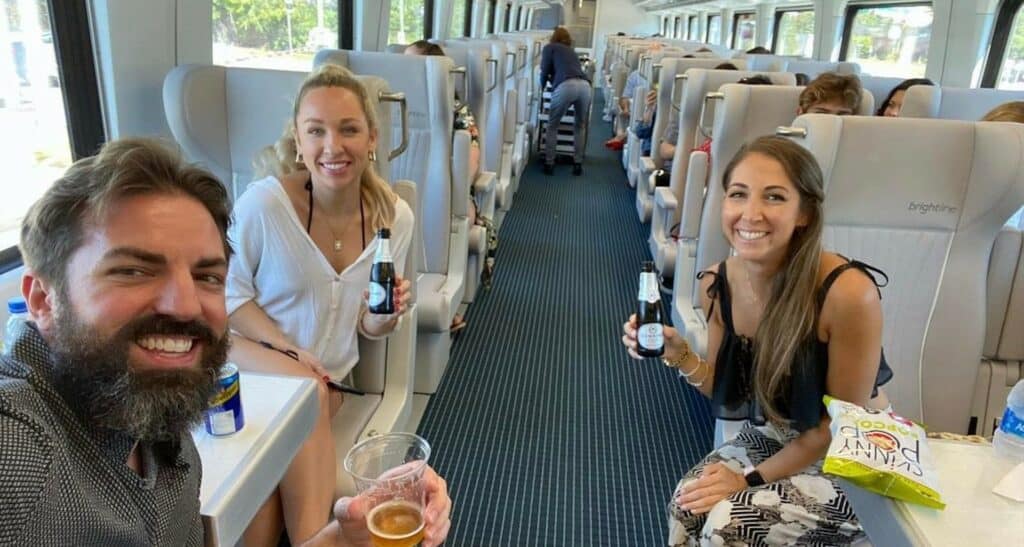
The University of South Florida is exploring the unique history of America’s oldest city–St Augustine. The online exhibit will explore archives from St. Augustine dating back to the 16th century with a unique glimpse into parish life.
The University of South Florida has launched an innovative online exhibit titled “Lost Voices from America’s Oldest Parish Archive, 1594-1821,” This exhibit explores historic St. Augustine, America’s oldest continuously inhabited European settlement. Covering the 16th-19th centuries, exhibit explorers will uncover unique perspectives about the lives, relationships, and hardships of this historic multi-ethnic population.
This exhibit is part of a greater exhibit, “La Florida: The Interactive Digital Archives of the Americas.” This digital platform allows teachers, students, scholars and the public to research pivotal moments in early Florida history, conduct detailed searches on individuals and demographic changes and create custom infographics from the entire collection.
The digital archive includes 4,000 pages of ecclesiastical records from America’s first parish in St. Augustine. The collection presently includes baptism, marriage, death and burial records, including the 1801 burial record of Georges Biassou, an early leader of the Haitian Revolution. Other documents identify the names of dozens of runaway slaves who risked their lives to escape English plantations in search of freedom in Spanish Florida.
“These records give us biographical sketches and can help us track individuals through time,” said J. Michael Francis, the Hough Family Endowed Chair of Florida Studies at USF’s St. Petersburg campus and the executive director of the La Florida project. “When combined with other records from Florida and Spain, we can flesh out stories of individuals that hardly ever appear in historical records, such as women and Native Americans and free and enslaved African Americans.”
Piecing together clues about the little-known lives of Native Americans, free and enslaved Africans, and conquistadors from Spain, Portugal, Germany, Ireland and elsewhere, La Florida brings early Florida’s diverse population to life through short videos, interactive maps and a searchable population database. It weaves together the lives and events of over three centuries of Florida’s colonial past, from Juan Ponce de León’s 1513 expedition to 1821, when Florida became a U.S. territory.
“This project breaks new ground by giving a voice to those who have been traditionally overlooked by the history books,” said Martin Tadlock, regional chancellor of USF’s St. Petersburg campus. “By enhancing those complex and nuanced stories through the use of updated technology, Dr. Francis and his team have given all of us a new and fuller understanding of Florida’s rich colonial history.”
The “Lost Voices” project was supported by a $250,000 major initiatives grant from the National Archives and the generous support of the Hough Family Foundation, the Lastinger Family Foundation and the Frank E. Duckwall Foundation.
Almost all American adults – including parents, medical patients and people who are sexually active – regularly exercise their right to privacy, even if they don’t know it.
Privacy is not specifically mentioned in the U.S. Constitution. But for half a century, the Supreme Court has recognized it as an outgrowth of protections for individual liberty. As I have studied in my research on constitutional privacy rights, this implied right to privacy is the source of many of the nation’s most cherished, contentious and commonly used rights – including the right to have an abortion.
For instance, the First Amendment rights of speech and assembly allow people to privately decide what they’ll say, and with whom they’ll associate. The Fourth Amendment limits government intrusion into people’s private property, documents and belongings.
Relying on these explicit provisions, the court concluded in Griswold v. Connecticut that people have privacy rights preventing the government from forbidding married couples from using contraception.
In short order, the court clarified its understanding of the constitutional origins of privacy. In the 1973 Roe v. Wade decision protecting the right to have an abortion, the court held that the right of decisional privacy is based in the Constitution’s assurance that people cannot be “deprived of life, liberty or property, without due process of law.” That phrase, called the due process clause, appears twice in the Constitution – in the Fifth and 14th Amendments.
Decisional privacy also provided the basis for other decisions protecting many crucial, and everyday, activities.
The right to privacy is also key to a person’s ability to keep their family together without undue government interference. For example, in 1977, the court relied on the right to private family life to rule that a grandmother could move her grandchildren into her home to raise them even though it violated a local zoning ordinance.
Under a combination of privacy and liberty rights, the Supreme Court has also protected a person’s freedom in medical decision-making. For example, in 1990, the court concluded “that a competent person has a constitutionally protected liberty interest in refusing unwanted medical treatment.”
Limiting government disclosure
The right to decisional privacy is not the only constitutionally protected form of privacy. As then-Supreme Court Justice William Rehnquist noted in 1977, the “concept of ‘privacy’ can be a coat of many colors, and quite differing kinds of rights to ‘privacy’ have been recognized in the law.”
This includes what is called a right to “informational privacy” – letting a person limit government disclosure of information about them.
According to some authority, the right extends even to prominent public and political figures. In one key decision, in 1977, Chief Justice Warren Burger and Rehnquist – both conservative justices – suggested in dissenting opinions that former President Richard Nixon had a privacy interest in documents made during his presidency that touched on his personal life. Lower courts have relied on the right of informational privacy to limit the government’s ability to disclose someone’s sexual orientation or HIV status.
All told, though the word isn’t in the Constitution, privacy is the foundation of many constitutional protections for our most important, sensitive and intimate activities. If the right to privacy is eroded – such as in a future Supreme Court decision – many of the rights it’s connected with may also be in danger.
Scott Skinner-Thompson serves on the advisory board of the Electronic Privacy Information Center (EPIC).
by Vinita Srivastava, Host + Producer, Don't Call Me Resilient | Senior Editor, Culture + Society
Critical race theory simply holds a mirror up to society, reflecting its realities. (Vince Flemining/Unsplash)
Critical race theory has a lot of people upset. In the United States some parents are calling for schools to ban critical race. They claim it distorts reality and invokes shame for white students.
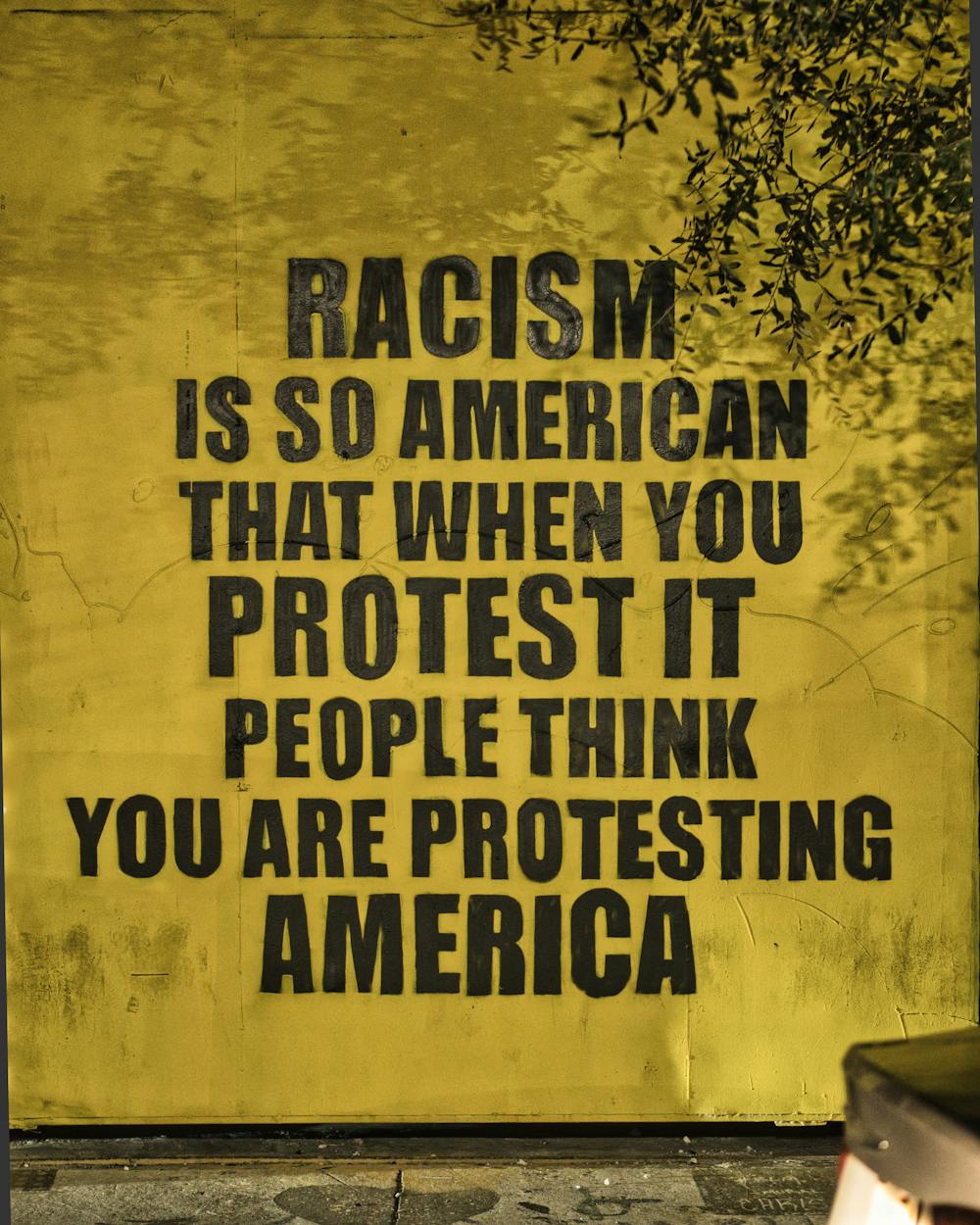
Racism is so American that when you protest it people think you are protesting America.
But critical race theory is not an abstract concept — it is actually simply a reflection of us: of our unequal laws and systems already in place. It points out the history of our society and its ongoing inequalities. And asks us to look at issues as systemic instead of as individual problems.
Today we explore how applying critical race theory in classrooms across Canada helps both students and teachers.
Teresa Fowler, assistant professor of education at Concordia University of Edmonton, is one of our guests on today’s episode of Don’t Call Me Resilient. She said the reason we feel fear when it comes to discussing race is because:
“We’re afraid of what CRT is revealing … and that is our own bias. CRT is a mirror and we’re all afraid to look into it.”
Also joining us on today’s episode is Dwayne Brown. He is a PhD student in education at York University, and a Grade 7 teacher with the Toronto District School Board. Brown grew up in the Jane and Finch neighbourhood in Toronto, and studies mental health in relation to Black male student success.
Brown who teaches within Canada’s largest school board, where anti-racism curriculum is already embedded into the classroom (although with mixed application) said change begins at school:
It starts with our education system. It starts with the conversations that we have. And critical race theory as a tool, is definitely effective. It’s definitely necessary in order to interrogate the insecurity and the fragility that we have in our society. The social conditioning that we have all endured has to be exposed for what it is and held complicit in the fragility that it’s developed inside of each and every one of us.
Both Brown and Fowler use critical race theory in their classrooms every day, and say that it helps them to see and evaluate their own biases — while also making students feel truly included in their own education.
Series co-producers of this podcast are: Haley Lewis, assistant producer Vaishnavi Dandekar and sound producer Lygia Navarro. Jennifer Moroz is our consulting producer. Reza Dahya is our original sound designer. Lisa Varano is our audience development editor and Scott White is the CEO of the Conversation Canada. This podcast was produced with a grant for Journalism Innovation from the Social Sciences and Humanities Research Council of Canada.
Downtown St. Petersburg is going through some changes. The St. Pete Pier construction is finally finished. Rapid transit is being added. The entire southern waterfront is soon to be revitalized. However, Sunken Gardens remains an oasis of calm in the middle of a busy downtown. Learn about the Sunken Gardens history and how the four acres of gorgeous flora and fauna will remain in the heart of St. Pete for years to come.
From relaxing hobby to roadside attraction
The gardens once belonged to one man — George Turner, Sr. A plumber by trade, he also had a passion for gardening. In 1922, he purchased six acres that would one day become a world famous roadside attraction. In order to create the winding garden maze we know today, he had to drain an ancient lake. This left a rich, mucky soil — ideal for tropical flowers and fruiting trees. His wife, Eula Turner, also had a love for plants and played a large role in establishing the gardens as a landmark.
Sunken Gardens through the years
A brochure advertising the tourist attractions in Florida’s “Fun Triangle.” There is a map of the triangle and a list of attractions with their locations. 1966
Entrance to Sunken Gardens 1976.
Advertisement for the Sunken Gardens attraction in Saint Petersburg, Florida, 1969
Postcard of Ladies walking a path bordered by brilliant azaleas at Sunken Gardens.
By the 1920s, Turner had enough plants to start a nursery. He began selling fruits, vegetables, and plants. In the 1930s, the gardens became a popular place for neighbors to go for a stroll. Eventually, the Turners charged a nickel for tours. By 1935, he had to fence in his garden and start charging 24-cents for admission. The rise possibly because of Depression-era inflation.
Miss Florida Pageant, 1947. Held at Sunken Gardens
In the 1950s, the Gardens were officially in their roadside attraction era. Along with the actual botanical gardens, visitors could now see capybaras, alligator wrestling, “The World’s Largest Gift Shop,” and, of course, flamingos. An original flock of 17 flamingos came to roost in 1956. These pink birds became a trademark of Sunken Gardens and drew in even more tourists. In 2016, dedicated volunteers and their non-profit group bought a new young flock from San Antonio Zoo.
Mary Letts performing a Latin dance number in the Miss Florida Pageant 1947
Contestants being judged during the evening gown part of the pageant.
Laurel Norden, Miss Winter Haven 1947, at the 1947 Miss Florida Pageant
Jean Duket dancing during the talent part of the 1947 Miss Florida Pageant
Judges and contestants from the Miss Florida Pageant 1947
From the 1970s on, organizations ranked the Gardens as one of Florida’s best roadside attractions. Turner died in 1961 and passed the Gardens onto his sons, who passed it on to their sons. The Gardens were eventually sold to the city of St. Pete in 1999.
A gem of the city
The city purchased Sunken Gardens with funds from a voter-approved tax. The nearby building, know as the Sanitary Public Market, also came with the purchase. The Sanitary Public Market was constructed in 1927. It was a Mediterranean Revival style arcade. In 1940, it was converted for use as the Coca-Cola Bottling Company. In 1967, the Turner family purchased the building to create the “World’s Largest Gift Shop” and the King of Kings Wax Museum. After the city purchased it, the building and the Gardens were designated as a local historic landmark and treated to several years’ efforts of restoration.
Sunken Gardens through the years
Young women pose for a photograph at Saint Petersburg’s Sunken Gardens, 1964
Young woman stares at a peacock as it spreads it plumage at Sunken Gardens, 1968
Visitors with macaws at the Sunken Gardens, 1969
Young woman poses with toucan 1968
Alligators at the Sunken Gardens, 1980
The Gardens have become so much more than, well, a garden. People get married there. Amateur photographers improve their nature photography-taking skills. This past year there was a Cinco de Mayo fiesta. Tons of horticultural and education programs are offered year-round to both children and adults.
Over 100 years later, Sunken Gardens remains a tranquil oasis nestled in the heart of St. Pete. It’s a place where visitors can go to escape the hustle and bustle of downtown and locals can go to take advantage of cultural and educational opportunities.
One of deep-seated problems with copyright is that its supporters believe everything created should be “owned” by someone and protected from being “stolen” by others. We’ve already written about how that’s a bad fit for writing music, and NBC News has a fascinating story about how the same issue is plaguing a very different world – that of indigenous languages (pointed out by D. J. Mary on Twitter). It concerns the Lakota language, one of many native American languages that are at risk of extinction because so few people speak them fluently. In recent years, there have been increasing efforts to create language resources from the surviving speakers, to prevent the language and its culture being lost, and to produce learning materials. The long and interesting article discusses the details of the dispute between the Lakota Language Consortium and some Lakota language speakers, like Ray Taken Alive:
The Lakota Language Consortium had promised to preserve the tribe’s native language and had spent years gathering recordings of elders, including Taken Alive’s grandmother, to create a new, standardized Lakota dictionary and textbooks.
But when Taken Alive, 35, asked for copies, he was shocked to learn that the consortium, run by a white man, had copyrighted the language materials, which were based on generations of Lakota tradition. The traditional knowledge gathered from the tribe was now being sold back to it in the form of textbooks.
The story touches on many important issues concerning cultural appropriation. But one of the key problems is that materials recorded and written down from native speakers are automatically covered by copyright, and that means people can argue over who owns them.
A common trait of Native American cultures is to hold things like land, resources and knowledge communally. That runs into conflict with U.S. copyright laws, which allow companies and nonprofit organizations to commoditize their work product — including pieces of a shared language.
That’s an issue not just for the Lakota tribe, but many others, both in the North America and further afield. It’s ironic that laudable endeavors to preserve culture and heritage for humanity can end up in these kind of legal squabbles over ownership – all thanks to copyright.
Emma Frank has dedicated her time to finding LGBTQ literary artifacts in her position as a digital humanities intern at the USF Tampa Library. SPECIAL TO THE ORACLE
This story is part of a continuing series that features leaders at USF during Pride Month.
When presented with the opportunity to conduct research on LGBTQ literature, senior English literature and history major Emma Frank knew she wanted to inform the public about the impact historically marginalized queer authors have had upon contemporary literary culture.
Frank conducted extensive research across multiple online databases, archives and social media posts over several months in search of queer cultural artifacts. Although the process often required her to prioritize research over her coursework, she said she felt a sense of responsibility to educate students and faculty on queer authors given the rise of LGBTQ awareness in recent years.
“At first, the intention of my project was to create a digital exhibit out of underutilized materials in the collection, which led me to choose not to study the 20th century because while it’s a very important part of queer history, it’s also important to recognize that so much happened before then,” she said.
“While the idea was that I was supposed to try to create a project using underutilized materials, I decided to instead take initiative and make a project based on literature that has not been generally known by the public, literature that has been underrepresented.”
Despite being primarily motivated to conduct research on LGBTQ culture for a deeper historical understanding, Frank said the catalyst for her advocacy was growing up with parents who weren’t accepting of the community. In an attempt to develop her own beliefs, she said she often found solace by engaging with queer young adult novels.
Getting her parents to accept her research focus required a considerable amount of time, patience and education, according to Frank. While she has encountered many influential professors and mentors throughout the course of her research, she said her father has stood as one of her primary sources of motivation.
“Although I’m inspired by quite a few people in my life, my dad is one of the biggest for sure,” she said. “I grew up very conservative and so he was very much a conservative guy, but he’s gotten so comfortable with everything now that I’ve started this research and that it has led to so many good opportunities.
“It has started so many good conversations that probably wouldn’t have happened or that I would not have been competent enough to hold five years ago before starting college. He stands as such a big support now in my life and I’m incredibly grateful for that.”
Taking classes during her freshman year that explored different perspectives of the LBGTQ community was something Frank said influenced her decision to begin historical research into marginalized communities.
Over the course of her position as a digital humanities intern, Frank has participated in various research projects as a member of the library special collections team, where she has been able to access thousands of archival records and journal volumes on LGBTQ history.
For LGBTQ studies library operations coordinator Sydney Jordan, Frank’s passion to educate library visitors on queer history has made her an invaluable asset to their workplace. Whether it be offering historical knowledge to guests or presenting at research conferences to attract prospective donors for the library’s special collections, Jordan said Frank’s love of research can be better understood as a love for people.
“I love Emma’s ability to see issues from multiple perspectives and never stop questioning and interrogating the limits and systemic exclusions that can exist within the information profession and academia,” she said.
“Much of her work has been focused on social justice, conscious editing and restoring agency to queer and historically marginalized groups. She’s very dedicated to making resources on these topics accessible and relevant in response to the needs and values of communities being served.”
Efforts to honor marginalized queer authors can be shown throughout Frank’s online Queer Life and Literature in the 19th Century exhibit, which debuted in April 2021. The presentation, which is still accessible to the public, contains story maps of queer historical events and literary works between 1800 and now.
Viewers are able to read analyses of various novels, such as The Picture of Dorian Gray, Dracula and the poetry of Sapphos. However, Frank added the presentation also holds her own personal message. When designing the project, she said she hoped people would be able to understand that her research came not only from an academic perspective, but from her insights as a fellow member of the LGBTQ community.
“To me, this has meant finding ways in my everyday life to weave queerness into my research and in that sense, it has been such a fantastic way to make this my own and make it feel like more than just an assignment. People have to read this, understand something about you afterward and as a researcher, you have to be vulnerable,” she said.
“Being able to research LGBTQ history and work on projects like this is almost like a way to celebrate myself alongside that part of history. Even if no one’s going to read it, even if it’s going to be seen by only a handful of people, it really feels like I have left people a part of myself.”
Curator of digital collections Amanda Bozcar said that in addition to Frank’s efforts for inclusivity, her contributions to LGBTQ research have been greatly appreciated by the academic community. She said Frank’s research has not only reached academics at USF, but received attention and acclaim from researchers at many other institutions.
Frank hopes to find a research position after graduation to continue her work on uncovering the history of marginalized communities. She said while homophobia can be deterring, the acceptance she has received from her mentors and peers makes her hopeful for the future of LGBTQ rights.
“Sometimes people ask me why I do this kind of research and I try to treat it as a conversation, which is reaffirming in a lot of ways because I get to show people my research and the research of those that came before me. You can’t possibly sit and say this isn’t a valid thing to study because it obviously is,” she said.
“I have been really lucky to find people in academia who have been encouraging and pushed forward projects similar to my own. It’s nice to not only recognize what this kind of research has allowed me to do, but how it has allowed me to respond to people that question its significance.”
by Jacquie Gahagan, Full Professor and Associate Vice-President, Research, Mount Saint Vincent University
2SLGBTQQIA+ history cannot be complete without the stories of lesbian women. (Shutterstock)
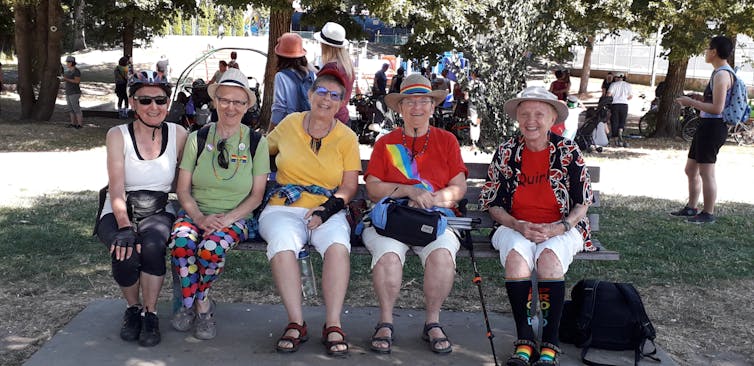
Many older lesbians sought out invisibility, they called each other “friends” or “career girls” or “not the marrying kind.” These terms worked as camouflage and helped many women feel safe during a time where their sexuality wasn’t accepted.
Over the past several decades, identity terms — like lesbian — have gone through cycles. Words coined by 2SLGBTQQIA+ communities are often misused until they become insults, but these insults can be reclaimed.
“Lesbian” was reclaimed by activists in the 1960s, just before the community adopted “LGBT,” which grew to become the more inclusive “2SLGBTQQIA+.” And while still a contested term, the next generation began to reclaim the term “queer.”
2SLGBTQQIA+ history cannot be complete without these women’s stories, but breaching their fiercely protected invisibility raises ethical questions: Can we describe them in their own language?
Older lesbians are not an invisible artifact of the times, but rather the keepers of a rich history of the lives of women who love other women. We have found that there is a struggle for our stories to be heard. As many of us age, we risk losing this rich history. But lesbian oral history archival projects — like ours — are helping counteract this.
Through community consultations, the Nova Scotia LGBT Seniors Archive became aware of the lack of archival records in the province pertaining specifically to older lesbian histories, including their contributions to Nova Scotia history in general and 2SLGBTQQIA+ history more specifically.
To mitigate this lack of representation, the archive sought funding from the provincial government to develop the Lesbian Oral History Project, which will allow older lesbians (specifically those born between 1946-64) across Nova Scotia to share their stories.
The oral histories were collected over a two-year period, recently transcribed and will be included in the larger Nova Scotia LGBT Seniors Archive collection at Dalhousie University.
It was necessary for the Lesbian Oral History initiative to be run by lesbians because of the importance in being mindful of who controls the process of visibility and with what motives.
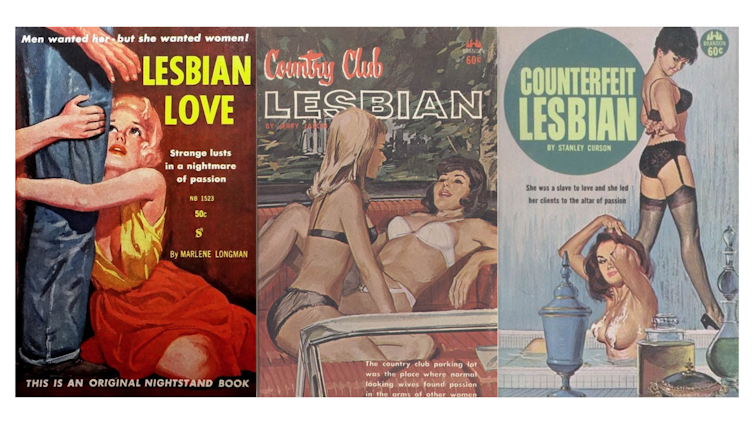
Despite the publishers’ constraints and who they were written by, many of these books formed what became known as “lesbian survival literature.” The stories depicted queer women living and loving in difficult times, where desire and self-determination were more important than happy endings. It helped many lesbians of that era feel seen despite not being the target audience.
Our projects — the Nova Scotia LGBT Seniors Archive and the Lesbian Oral History Project — hope to do what lesbian pulp fiction did for many lesbians in the ‘50s and '60s — help them feel seen. But we’re doing it differently as the Lesbian Oral History project is created by and for lesbians.
We need to see additional systemic changes in, for example education, to ensure these important contributions of older lesbians are not lost.
This piece was co-authored by Anne Bishop an activist, author, educator, food security advocate, labour organizer and community development worker. Since the 1980s she has advocated for LGBTQ rights, union organization, equity and anti-racist policies in the province of Nova Scotia.
Jacqueline (Jacquie) Gahagan receives funding from the Nova Scotia Department of Seniors, Nova Scotia Department of Communities, Culture and Heritage, Research Nova Scotia, Canadian Institutes of Health Research, Social Sciences, and Humanities Research Council.
Denyse Rodrigues
Anne Bishop
Denyse Rodrigues does not work for, consult, own shares in or receive funding from any company or organization that would benefit from this article, and has disclosed no relevant affiliations beyond their academic appointment.
Across the United States, the cost of gas has been a hot topic of conversation lately, as prices reach record-breaking highs. Learning what key factors influence gas prices can help you understand a little more about what’s going on.
The national average now sits at $5.00 per gallon, and by the end of summer, this figure could grow to $6 per gallon, according to estimates by JPMorgan.
But before we can have an understanding of what’s happening at the pump, it’s important to first know what key factors dictate the price of gas.
This graphic, using data from the U.S. Energy Information Administration (EIA), outlines the main components that influence gas prices, providing each factor’s proportional impact on price.
The Four Key Factors
According to the EIA, there are four main factors that influence the price of gas:
Crude oil prices (54%)
Refining costs (14%)
Taxes (16%)
Distribution, and marketing costs (16%)
More than half the cost of filling your tank is influenced by the price of crude oil. Meanwhile, the rest of the price at the pump is split fairly equally between refining costs, marketing and distribution, and taxes.
Let’s look at each factor in more depth.
Crude oil prices
The most influential factor is the cost of crude oil, which is largely dictated by international supply and demand.
Despite being the world’s largest oil producer, the U.S. remains a net importer of crude oil, with the majority coming from Canada, Mexico, and Saudi Arabia. Because of America’s reliance on imports, U.S. gas prices are largely influenced by the global crude oil market.
A number of geopolitical factors can influence the crude oil market, but one of the biggest influences is the Organization of the Petroleum Exporting Countries (OPEC), led by Saudi Arabia.
Established in 1960, OPEC was created to combat U.S. dominance of the global oil market. OPEC sets production targets for its 13 member countries, and historically, oil prices have been linked to changes in OPEC production. Today, OPEC countries are responsible for about 60% of internationally traded petroleum.
Refining costs
Oil needs to be refined into gasoline before it can be used by consumers, which is why refining costs are factored into the price of gas.
The U.S. has hundreds of refineries across the country. The country’s largest refinery, owned by the Saudi Arabian company Saudi Aramco, processes around 607,000 barrels of oil per day.
The exact cost of refining varies, depending on a number of factors such as the type of crude oil used, the processing technology available at the refinery, and the gasoline requirements in specific parts of the country.
In general, refining capacity in the U.S. has not been keeping up with oil demand. Several refineries shut down throughout the pandemic, but even before COVID-19, refining capacity in the U.S. was lagging behind demand. Incredibly, there haven’t been any brand-new refining facilities built in the country since 1977.
Taxes
In the U.S., taxes also play a critical role in determining the price of gas.
Across America, the average gasoline tax is $0.57 per gallon, however, the exact amount fluctuates from state to state. Here’s a look at the top five states with the highest gas taxes:
States with high gas taxes usually spend the extra money on improvements to their infrastructure or local transportation. For instance, Illinois doubled its gas taxes in 2019 as part of a $45 billion infrastructure plan.
California, the state with the highest tax on gas, is expecting to see a rate increase this July, which will drive gas prices up by around three cents per gallon.
Distribution and market costs
Lastly, the costs of distribution and marketing have an impact on the price of gas.
Gasoline is typically shipped from refineries to local terminals via pipelines. From there, the gasoline is processed further to ensure it meets market requirements or local government standards.
Gas stations then distribute the final product to the consumer. The cost of running a gas station varies—some gas stations are owned and operated by brand-name refineries like Chevron, while others are smaller-scale operations owned by independent merchants.
The big-name brands run a lot of advertisements. According to Morning Consult, Chevron, BP PLC, Exxon Mobil Corp., and Royal Dutch Shell PLC aired TV advertisements in the U.S. more than 44,495 times between June 1, 2020, and Aug. 31, 2021.
How Does the Russia-Ukraine Conflict Impact U.S. Gas Prices?
If only a fraction of America’s oil comes from Russia, why is the Russia-Ukraine conflict impacting prices in the U.S.?
Because oil is bought and sold on a global commodities market. So, when countries imposed sanctions on Russian oil, that put a squeeze on global supply, which ultimately drove up prices.
This supply shock could keep prices high for a while unless the U.S. falls into a recession, which is a growing possibility based on how recent data is trending.
A new report from the MIT Technology Review serves as perfect microcosm of everything wrong with the carbon credit system here in these United States of America. The article explores the case of the Massachusetts Audubon Society, a 125-year-old conservation non-profit that protects some 38,000 acres of land. — Read the rest
The drive down McIntosh Road in Dover from I-4 is a lot more cheerful these days. The landscape moves from fast-food restaurants and produce stands to a vast field of brilliant zinnias and sunflowers. It’s one of the many local farms that are planting fields of wildflowers, allowing people to visit and pick their own bouquet.
From strawberries to wildflowers
Zinnia field at 3 Sons FarmSunflower field from 3 Sons Farm
Planting fields of flowers was Gerald Wlliams’ way of attracting people to the small farm stand on his property at 3830 McIntosh Road. And it is working. The owner of 3 Son Farm is even planning to plant flowers again in the fall and hopes to add a U-pick pumpkin patch for families to enjoy.
“I was surprised so many people like flowers,” said Williams, who also farms strawberries and vegetables in Eastern Hillsborough County. He is not the only one. There are several summer flower farms scattered throughout the county, drawing families, grandparents and couples holding hands, all eager to pluck red, yellow, orange and purple posies to take home and enjoy. It is a business, and some would say, a public service.
With Florida’s summer heat, the winter strawberry season ends. And these days, tourists and residents, alike, get this colorful replacement–the U-pick flower farms.
Guests can grab a basket and some shears and head out into the acres of sunflowers and zinnias to create colorful bouquets for their tables at home. For those who are not terribly interested in picking flowers, but want to enjoy the beauty of the fields, there is a trail to wander.
Recently, some of these fields were ablaze with ruby red strawberries that get shipped across the nation during the winter months. Farmers are finding new uses for their dirt during the rest of the year, including for growing squash, bell peppers, watermelons and cucumbers. Some, though, are choosing these glorious flashes of roadside color to fill in the gaps.
At 3 Sons Farm, guests grab a basket and sheers and head out. For $1, they can get one sunflower or four zinnias. So, for $10, they can walk away with enough flowers to create a substantial arrangement or several smaller ones.
“I have 11 acres I purchased two years ago, and I lease another six more,” Williams said. “I’ve had the little farm stand from the beginning, so I planted the flowers to attract people. They’ll come pick flowers and get a strawberry milkshake while they’re there. People like the flowers, so I am trying to produce different things to make it a better experience every year.” For example, he said, he is looking for various types of sunflowers that will bloom in stages, instead of every flower busting out at the same time.
This fall, he plans to add more varieties of flowers, so people can make varied bouquets.
“I also think I am going to turn that field into a U-pick field year-round and that includes for strawberries. I am going to try to have them available in December.” Typically, Williams said, people cannot go into the strawberry fields for U-pick until after Easter, at the end of the growing season. So, this will be a new option. “We’re just playing with it, trying to get people’s attention.”
Other flower farms in Hillsborough County
Here is a list of other u-pick flower farms in Hillsborough County:
Some pickings from Fancy Farms.Picking some fresh flowers at Fancy Farms.
Fancy Farms on the eastern edge of Plant City also offers U-pick zinnias and sunflowers. The farm is at 5204 Drane Field Road. It offers 12 acres of flowers, a sunflower maze and photo opportunities. There are also seasonal desserts, including peach milkshakes, blackberry cobbler, and cookies. The farm is open for U-pick 10 a.m. to 5 p.m. Wednesday through Saturday. The $5 admission includes one free sunflower. Additional sunflowers are $2 each, three for $5 or one dozen for $15.
Food and honey from A Land of Delight Natural Farm & NurseryFood from A Land of Delight Natural Farm & Nursery
A Land of Delight Natural Farm & Nursery, at 2514 Leaning Pine Drive, in Plant City, offers sunflowers, citrus trees, raw honey and pasteurized eggs Thursday through Saturday.
That ban was limited – it covered only certain categories of semi-automatic weapons such as AR-15s and applied to a ban on sales only after the act was signed into law, allowing people to keep hold of weapons purchased before that date. And it also had in it a so-called “sunset provision” that allowed the ban to expire in 2004.
Nonetheless, the 10-year life span of that ban – with a clear beginning and end date – gives researchers the opportunity to compare what happened with mass shooting deaths before, during and after the prohibition was in place. Our group of injury epidemiologists and trauma surgeons did just that. In 2019, we published a population-based study analyzing the data in a bid to evaluate the effect that the federal ban on assault weapons had on mass shootings, defined by the FBI as a shooting with four or more fatalities, not including the shooter. Here’s what the data shows:
Before the 1994 ban:
From 1981 – the earliest year in our analysis – to the rollout of the assault weapons ban in 1994, the proportion of deaths in mass shootings in which an assault rifle was used was lower than it is today.
In the years after the assault weapons ban went into effect, the number of deaths from mass shootings fell, and the increase in the annual number of incidents slowed down. Even including 1999’s Columbine High School massacre – the deadliest mass shooting during the period of the ban – the 1994 to 2004 period saw lower average annual rates of both mass shootings and deaths resulting from such incidents than before the ban’s inception.
From 2004 onward:
The data shows an almost immediate – and steep – rise in mass shooting deaths in the years after the assault weapons ban expired in 2004.
Breaking the data into absolute numbers, between 2004 and 2017 – the last year of our analysis – the average number of yearly deaths attributed to mass shootings was 25, compared with 5.3 during the 10-year tenure of the ban and 7.2 in the years leading up to the prohibition on assault weapons.
Saving hundreds of lives
We calculated that the risk of a person in the U.S. dying in a mass shooting was 70% lower during the period in which the assault weapons ban was active. The proportion of overall gun homicides resulting from mass shootings was also down, with nine fewer mass-shooting-related fatalities per 10,000 shooting deaths.
Taking population trends into account, a model we created based on this data suggests that had the federal assault weapons ban been in place throughout the whole period of our study – that is, from 1981 through 2017 – it may have prevented 314 of the 448 mass shooting deaths that occurred during the years in which there was no ban.
And this almost certainly underestimates the total number of lives that could be saved. For our study, we chose only to include mass shooting incidents that were reported and agreed upon by all three of our selected data sources: the Los Angeles Times, Stanford University, and Mother Jones magazine.
Furthermore, for uniformity, we also chose to use the strict federal definition of an assault weapon – which may not include the entire spectrum of what many people may now consider to be assault weapons.
Cause or correlation?
It is also important to note that our analysis cannot definitively say that the assault weapons ban of 1994 caused a decrease in mass shootings, nor that its expiration in 2004 resulted in the growth of deadly incidents in the years since.
Many additional factors may contribute to the shifting frequency of these shootings, such as changes in domestic violence rates, political extremism, psychiatric illness, firearm availability and a surge in sales, and the recent rise in hate groups.
Nonetheless, according to our study, President Biden’s claim that the rate of mass shootings during the period of the assault weapons ban “went down” only for it to rise again after the law was allowed to expire in 2004 holds true.
As the U.S. looks toward a solution to the country’s epidemic of mass shootings, it is difficult to say conclusively that reinstating the assault weapons ban would have a profound impact, especially given the growth in sales in the 18 years in which Americans have been allowed to purchase and stockpile such weapons. But given that many of the high-profile mass shooters in recent years purchased their weapons less than one yearbefore committing their acts, the evidence suggests that it might.
Michael J. Klein does not work for, consult, own shares in or receive funding from any company or organization that would benefit from this article, and has disclosed no relevant affiliations beyond their academic appointment.
by Mark Satta, Assistant Professor of Philosophy, Wayne State University
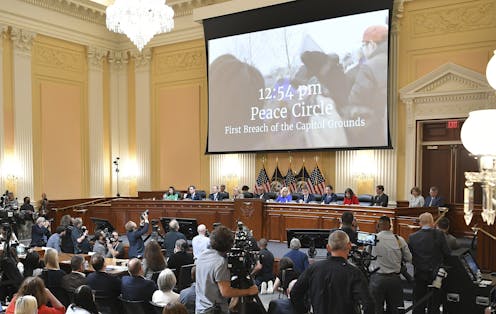
A video image shows the U.S. Capitol grounds being breached as the House Jan. 6 committee holds its first public hearing. Mandel Ngan/Pool via AP
A violent mob of Trump supporters attacked the U.S. Capitol building on Jan. 6, 2021, intent on disrupting a joint session of Congress that was meeting to count electoral votes and declare Democrat Joe Biden the winner of the 2020 presidential election.
“Our work must do much more than look backwards,” said committee chairman, U.S. Rep. Bennie Thompson of Mississippi. “Because our democracy remains in danger.” We asked three scholars to watch the hearing and respond.
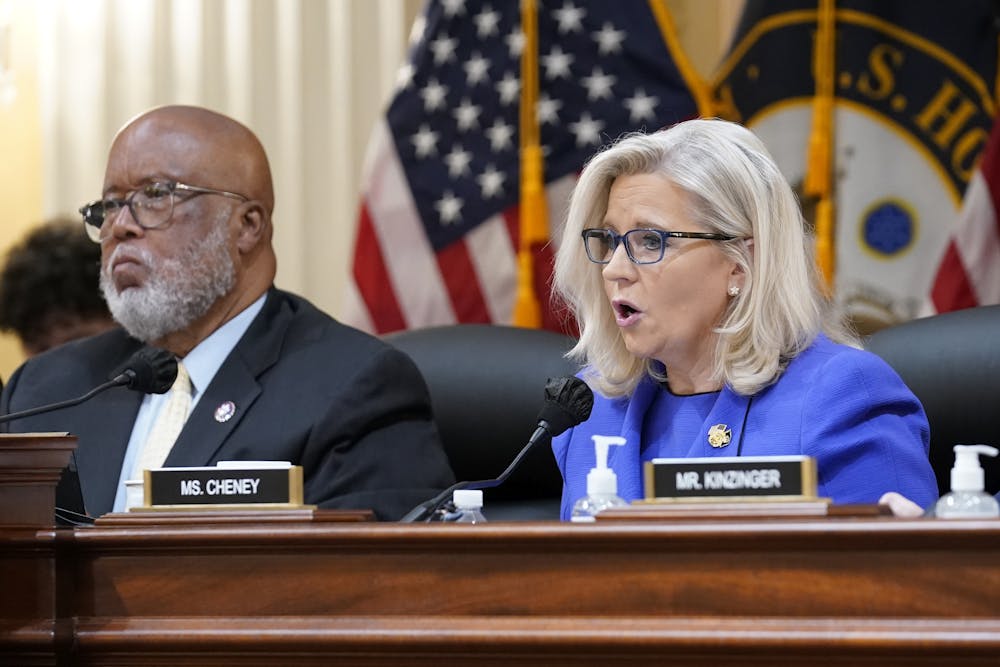
Committee Vice Chair Liz Cheney, R-Wyo., gives her opening remarks as Committee Chairman Rep. Bennie Thompson, D-Miss., left, looks on.
AP Photo/J. Scott Applewhite
Theatrical? Yes, but also substantive
Claire Leavitt, visiting assistant political science professor, Grinnell College
But what viewers saw is perhaps even more significant – it was history being written in real time. These hearings will inform future history textbooks, movies and novels that depict the first non-peaceful transfer of power in American history.
The first of several hearings planned in the coming weeks was theatrical and slickly produced. Former ABC News President James Goldston is advising the committee and helping to maximize viewership, producing the hearings like a mini-drama.
Speakers of the evening session, including committee vice-chair U.S. Rep. Liz Cheney, spliced their comments with violent, new footage from the Capitol attacks.
But we should not mistake theatrics for lack of substance.
Both Cheney and committee chair Bennie Thompson peppered their statements with extensive primary evidence, including video testimony from top Trump administration figures, including Ivanka Trump. This, it would appear, was to strengthen the case that the evidence being presented was nonpartisan.
“I repeatedly told the president in no uncertain terms that I did not see evidence of fraud,” Trump’s former Attorney General William Barr said in one interview.
In another exchange presented during the hearing, Greg Jacob, former counsel to Vice President Mike Pence, wrote in an email to Trump’s lawyer John Eastman: “Thanks to your bullshit, we are under siege.”
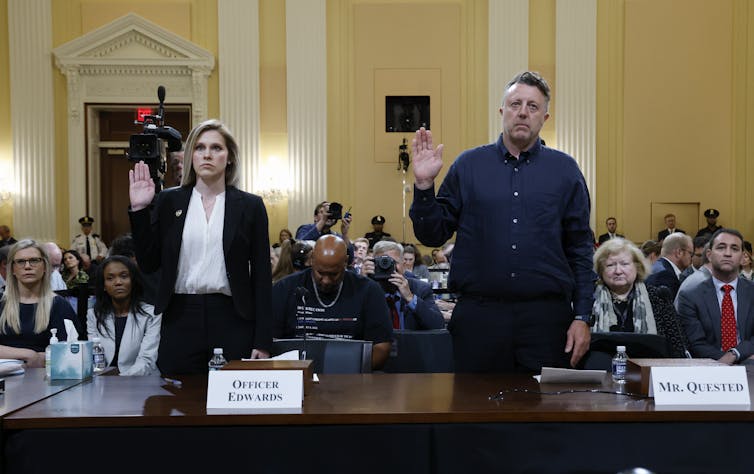
Edwards detailed how she suffered a concussion after rioters pushed a bike rack against her and she fell on a stairway. She regained consciousness, and then continued to push people back, as they “started overpowering us,” she recalled.
But neither appeared to have political axes to grind, and both exuded a highly valuable political commodity: likability.
U.S. Capitol Police Officer Caroline Edwards and documentary filmmaker Nick Quested gave firsthand accounts of the Jan. 6 attack.
Jonathan Ernst/Getty Images
Show, don’t tell
Mark Satta, assistant professor of philosophy, Wayne State University
Confronted with that reality, the committee seems to have decided upon a smart response: Show, don’t tell.
Rather than simply telling the American public the facts, the panel’s first public hearing focused on showing what former president Donald Trump’s allies and supporters themselves have said and done. They paired that with the testimony of seemingly nonpartisan figures like Capitol police officer Caroline Edwards and documentary filmmaker Nick Quested.
It’s not clear whether these hearings will make a demonstrable difference in the public’s perception of the Jan. 6 attack. Maybe they won’t. Maybe America’s partisan divisions are too deep.
But the committee’s choice to showcase the words and deeds of others is in line with philosopher C. Thi Nguyen’s 2019 observation that “the crucial issue right now isn’t what people hear, but whom people believe.”
The committee chose to emphasize the words and actions of figures who Trump supporters and other Republicans would appear inclined to believe, such as Trump’s daughter Ivanka and his former attorney general, William Barr. Importantly, the committee chose to do so not only by reading statements into the record but by showing videos, tweets and text exchanges. The facts were purveyed directly, not interpreted by committee members.
The committee could have told the American public that the mob that stormed the capitol was violent. But they could not have conveyed the gravity of the situation the same way that Edwards did when she testified about her experience on the Jan. 6 attack.
“I was slipping in people’s blood,” she said. “I was catching people as they fell. It was carnage. It was chaos … Never in my wildest dreams did I think as a police officer, I would find myself in the middle of a battle.”
A multi-front battle
Ken Hughes, research specialist, University of Virginia
None of it was enough, as long as Republicans were afraid that their primary voters would punish them if they didn’t support the president.
Once their primaries were behind them, these same politicians grew afraid that general election voters, the American majority, would punish them for continuing to give the president their support, even when his high crimes were evident.
The revelation of the “smoking gun” tape in August of 1974 was the occasion for Nixon’s resignation, not the cause.
Republicans abandoned the president then because they realized that the majority of voters were abandoning them.
What’s different in this era is that Republican political elites calculate that they don’t have to serve the majority.
Constitutional provisions designed to protect minority rights – the courts, the Senate and the Electoral College – have become the instruments of minority rule.
That’s why the struggle to preserve the republic is a multi-front battle, being fought out not only at the federal level, but in state races and in polling places where votes are counted and certified.
Claire Leavitt has received funding from the Project on Government Oversight (POGO) and the Levin Center for Oversight and Democracy.
Ken Hughes and Mark Satta do not work for, consult, own shares in or receive funding from any company or organisation that would benefit from this article, and have disclosed no relevant affiliations beyond their academic appointment.
Raw food diets are a fairly recent trend, including raw veganism. The belief being that the less processed food is, the better. However, not all food is more nutritious when eaten raw. Indeed, some vegetables are actually more nutritious when cooked. Here are nine of them.
1. Asparagus
All living things are made up of cells, and in vegetables, important nutrients are sometimes trapped within these cell walls. When vegetables are cooked, the walls break down, releasing the nutrients that can then be absorbed more easily by the body. Cooking asparagus breaks down its cell walls, making vitamins A, B9, C and E more available to be absorbed.
2. Mushrooms
Mushrooms contain large amounts of the antioxidant ergothioneine, which is released during cooking. Antioxidants help break down “free radicals”, chemicals that can damage our cells, causing illness and ageing.
3. Spinach
Spinach is rich in nutrients, including iron, magnesium, calcium and zinc. However, these nutrients are more readily absorbed when the spinach is cooked. This is because spinach is packed with oxalic acid (a compound found in many plants) that blocks the absorption of iron and calcium. Heating spinach releases the bound calcium, making it more available for the body to absorb.
Cooking, using any method, greatly increases the antioxidant lycopene in tomatoes. Lycopene has been associated with a lower risk of a range of chronic diseases including heart disease and cancer. This increased lycopene amount comes from the heat that helps to break down the thick cell walls, which contain several important nutrients.
Cooked carrots contain more beta-carotene than raw carrots, which is a substance called a carotenoid that the body converts into vitamin A. This fat-soluble vitamin supports bone growth, vision and the immune system.
Bell peppers are a great source of immune-system-boosting antioxidants, especially the carotenoids, beta-carotene, beta-cryptoxanthin and lutein. Heat breaks down the cell walls, making the carotenoids easier for your body to absorb. As with tomatoes, vitamin C is lost when peppers are boiled or steamed because the vitamin can leach out into the water. Try roasting them instead.
7. Brassica
Brassica, which include broccoli, cauliflower and brussels sprouts, are high in glucosinolates (sulfur-containing phytochemicals), which the body can convert into a range of cancer-fighting compounds. For these glucosinolates to be converted into cancer-fighting compounds, an enzyme within these vegetables called myrosinase has to be active.
Research has found that steaming these vegetables preserves both the vitamin C and myrosinase and, therefore, the cancer-fighting compounds you can get from them. Chopping broccoli and letting it sit for a minimum of 40 minutes before cooking also allows this myrosinase to activate.
Similarly, sprouts, when cooked produce indole, a compound that may reduce the risk of cancer. Cooking sprouts also causes the glucosinolates to break down into compounds that are known to have cancer-fighting properties.
Let your chopped broccoli sit for at least 40 minutes before cooking it.
Dream79/Shutterstock
8. Green beans
Green beans have higher levels of antioxidants when they are baked, microwaved, griddled or even fried as opposed to boiled or pressure cooked.
9. Kale
Kale is healthiest when lightly steamed as it deactivates enzymes that prevent the body from using the iodine it needs for the thyroid, which helps regulate your metabolism.
For all vegetables, higher temperatures, longer cooking times and larger quantities of water cause more nutrients to be lost. Water-soluble vitamins (C and many of the B vitamins) are the most unstable nutrients when it comes to cooking because they leach out of vegetables into the cooking water. So avoid soaking them in water, use the least amount of water when cooking and use other cooking methods, such as steaming or roasting. Also, if you have cooking water left over, use it in soups or gravies as it holds all the leached nutrients.
Laura Brown does not work for, consult, own shares in or receive funding from any company or organisation that would benefit from this article, and has disclosed no relevant affiliations beyond their academic appointment.
Florida has several crops it is famous for — cattle, citrus, strawberries — but tea leaves? Not so much. But scientist at the University of Florida are trying to see if this could be a possibility in the future.
Growing Florida Tea Plants
University of Florida researchers are investigating whether you can grow tea plants in the Sunshine State. Their findings are from a yearslong trial at the UF/IFAS Plant Science Research and Education Unit in Citra.
For the trial, scientists tested seven tea “accessions” during years three to five of their growth, which includes the time the plants are expected to reach harvesting maturity. Researchers use the term “accessions” for any plant that does not yet have a cultivar name in the United States.
“We started with eight varieties, and one of them had 100% mortality,” said Brantlee Richter, assistant professor in the UF/IFAS department of plant pathology and member of the research team. “We put weed cloth in to manage the intense weed pressure here in Florida and used a drip irrigation system, but otherwise, we didn’t do anything to baby these plants. They were out there in the harsh Florida sun, and we even had a hurricane remnant hit the plot during the study period. Even tropical storm-force winds didn’t seem to faze the plants or cause them to lose a lot of leaves.”
Despite being commonly grown in many countries around the world, tea is still considered a specialty in commercial production for the United States. That’s why obtaining plants for the trial proved challenging.
“We actually found a few of the selections from camellia ornamental nurseries,” Richter said. “Tea is a camellia species, but it’s not sold or produced at the scale of commercial production.”
Tea varieties, she explained, derive from two lineages: A Chinese line that’s more sun-adapted and an Indian line that’s more shade-adapted. For Florida, the team concluded, plants from the shade-adapted line may be better suited to the fickle climate. The best-performing plants in this study overall were from a variety called Fairhope.
Bala Rathinasabapathi, a UF/IFAS professor of horticultural sciences and another researcher on the project, notes this study marks a “starting point” for learning which varieties will grow best in Florida.
“We feel that North-Central Florida is pretty good in terms of climate for growing tea, and tea likes acidic soil, just as citrus does,” Rathinasabapathi said. “In South Florida, we would have to do more experimentation to find out whether tea can grow in a truly tropical region with harsher temperature conditions.”
The UF/IFAS tea research continues, including exploring shade production practices and breeding new varieties that may hold the best potential for Florida’s conditions.
“It’s not impossible to grow tea in different regions of Florida,” Rathinasabapathi said. “I think eventually we’ll find material that would suit different climatic zones.”
by Marcus Harmes, Professor in Pathways Education, University of Southern Queensland
Wikimedia
Why did people think cannibalism was good for their health? The answer offers a glimpse into the zaniest crannies of European history, at a time when Europeans were obsessed with Egyptian mummies.
Driven first by the belief that ground-up and tinctured human remains could cure anything from bubonic plague to a headache, and then by the macabre ideas Victorian people had about after-dinner entertainment, the bandaged corpses of ancient Egyptians were the subject of fascination from the Middle Ages to the 19th century.
Mummy mania
Faith that mummies could cure illness drove people for centuries to ingest something that tasted awful.
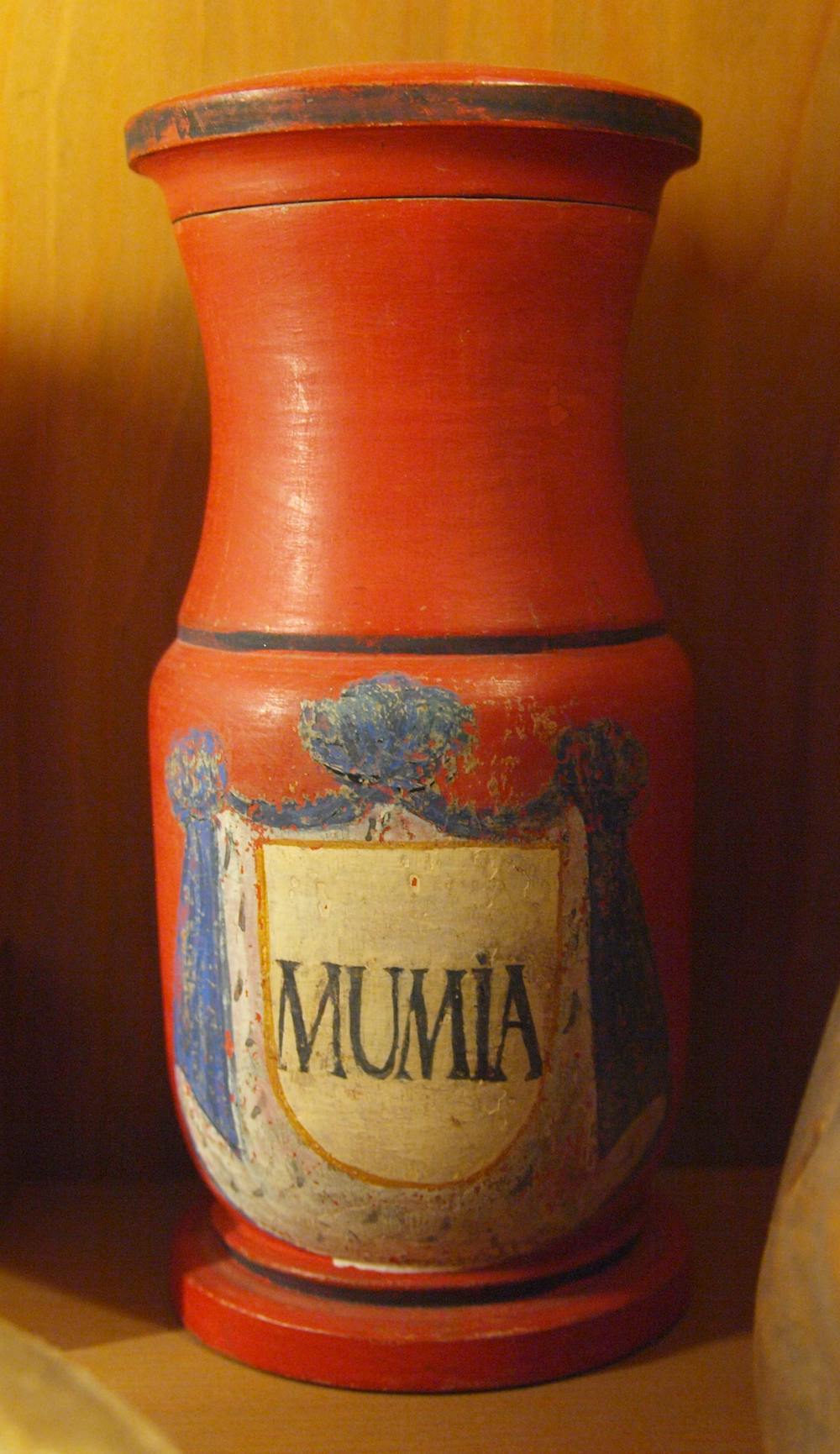
Mumia, the product created from mummified bodies, was a medicinal substance consumed for centuries by rich and poor, available in apothecaries’ shops, and created from the remains of mummies brought from Egyptian tombs back to Europe.
By the 12th century apothecaries were using ground up mummies for their otherworldly medicinal properties. Mummies were a prescribed medicine for the next 500 years.
A jar used for storing mumia, a medicine made from the ground up remains of mummified humans.
Wikimedia Commons, CC BY
In a world without antibiotics, physicians prescribed ground up skulls, bones and flesh to treat illnesses from headaches to reducing swelling or curing the plague.
Not everyone was convinced. Guy de la Fontaine, a royal doctor, doubted mumia was a useful medicine and saw forged mummies made from dead peasants in Alexandria in 1564. He realised people could be conned. They were not always consuming genuine ancient mummies.
But the forgeries illustrate an important point: there was constant demand for dead flesh to be used in medicine and the supply of real Egyptian mummies could not meet this.
Not all doctors thought dry, old mummies made the best medicine. Some doctors believed that fresh meat and blood had a vitality the long-dead lacked.
The claim that fresh was best convinced even the noblest of nobles. England’s King Charles II took medication made from human skulls after suffering a seizure, and, until 1909, physicians commonly used human skulls to treat neurological conditions.
For the royal and social elite, eating mummies seemed a royally appropriate medicine , as doctors claimed mumia was made from pharaohs. Royalty ate royalty.
Dinner, drinks, and a show
By the 19th century, people were no longer consuming mummies to cure illness but Victorians were hosting “unwrapping parties” where Egyptian corpses would be unwrapped for entertainment at private parties.
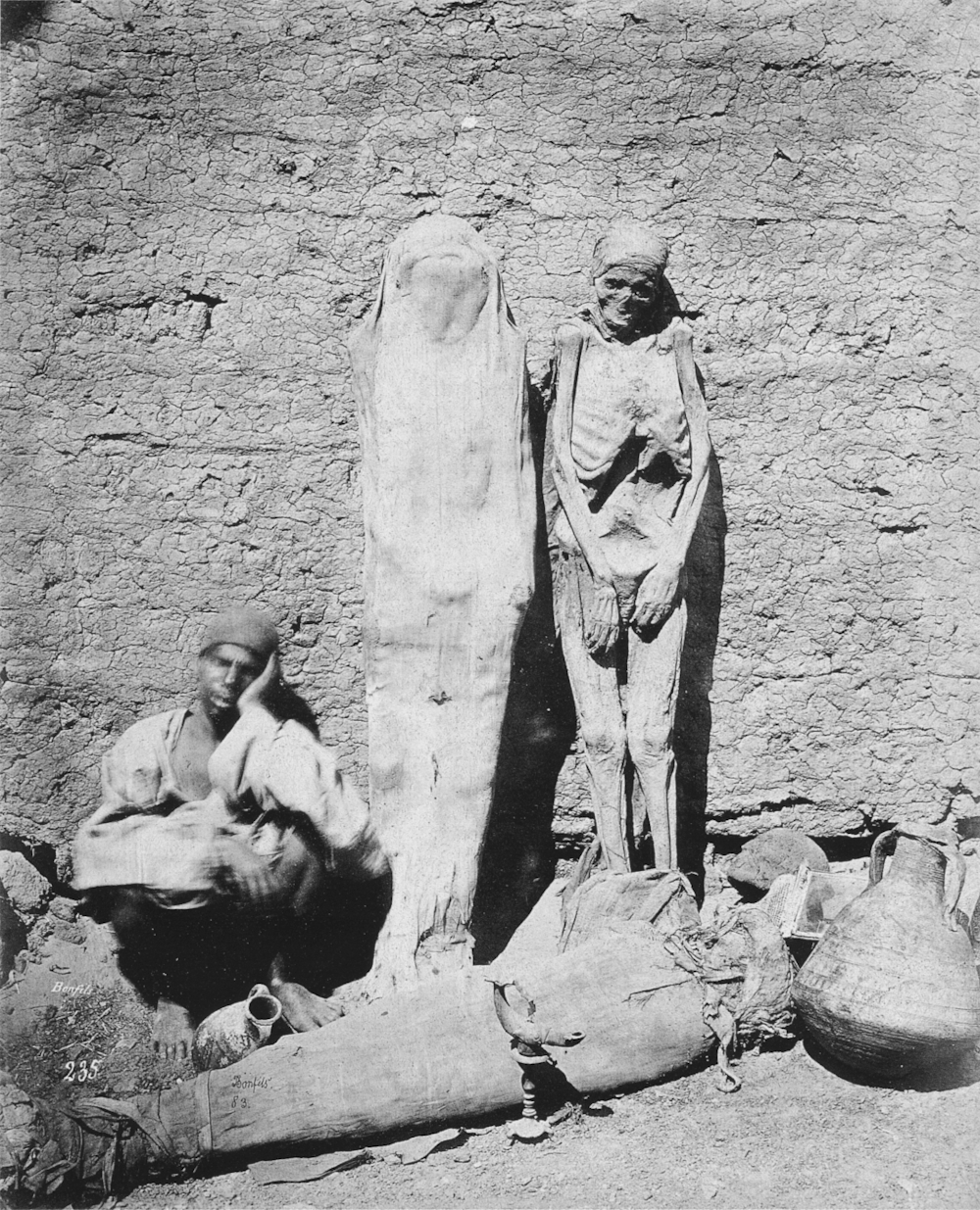
An Egyptian street mummy seller in 1875.
Félix Bonfils/ Wikimedia
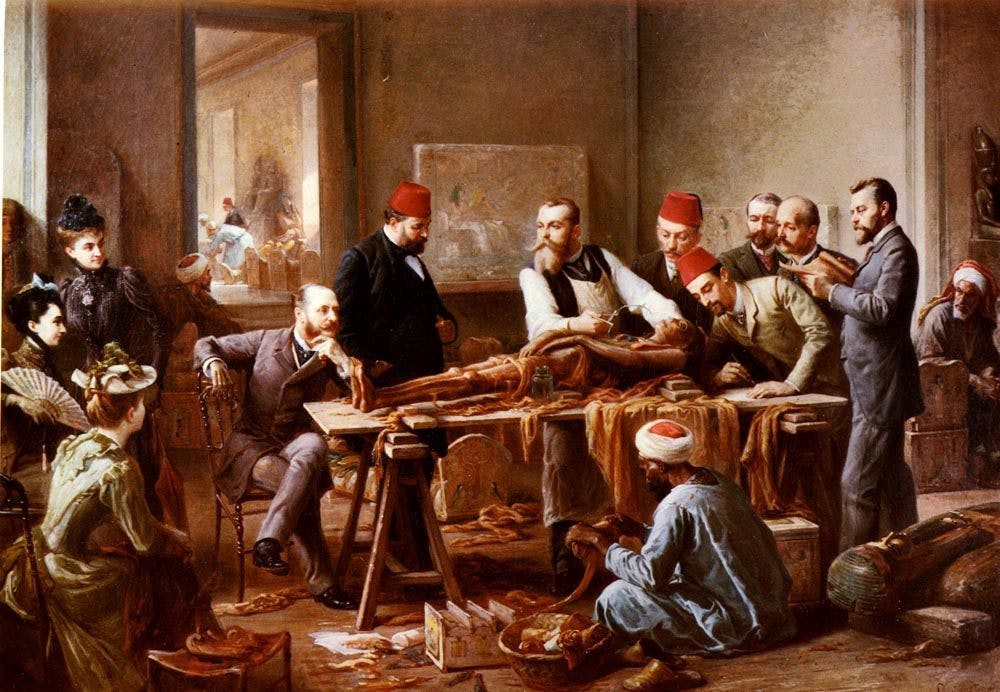
Victorians held private parties dedicated to unwrapping the remains of ancient Egyptian mummies.
Early unwrapping events had at least a veneer of medical respectability. In 1834 the surgeon Thomas Pettigrew unwrapped a mummy at the Royal College of Surgeons. In his time, autopsies and operations took place in public and this unwrapping was just another public medical event.
Soon, even the pretence of medical research was lost. By now mummies were no longer medicinal but thrilling. A dinner host who could entertain an audience while unwrapping was rich enough to own an actual mummy.
The thrill of seeing dried flesh and bones appearing as bandages came off meant people flocked to these unwrappings, whether in a private home or the theatre of a learned society. Strong drink meantaudiences were loud and appreciative.
Examination of a Mummy by Paul Dominique Philippoteaux c 1891.
Wikimedia
The mummy’s curse
Mummy unwrapping parties ended as the 20th century began. The macabre thrills seemed in bad taste and the inevitable destruction of archaeological remains seemed regrettable.
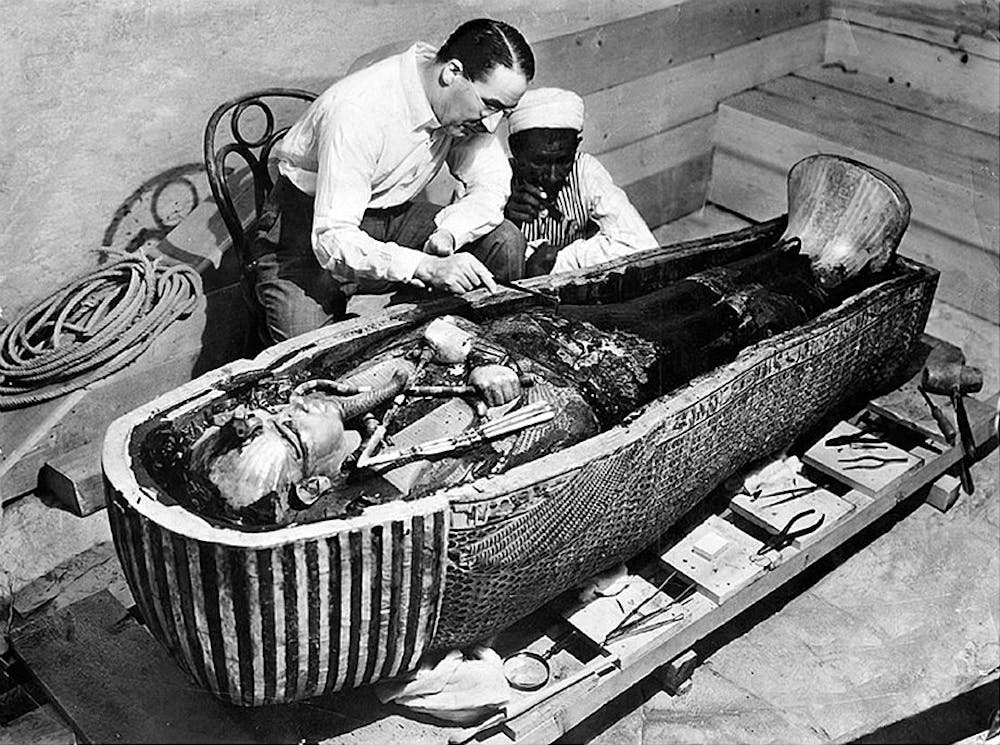
Then the discovery of Tutankhamen’s tomb fuelled a craze that shaped art deco design in everything from the motifs of doors in the Chrysler Building to the shape of clocks designed by Cartier. The sudden death in 1923 of Lord Carnarvon, sponsor of the Tutankhamen expedition, was from natural causes but soon attributed to a new superstition – “the mummy’s curse”.
Howard Carter opens the innermost shrine of King Tutankhamen’s tomb.
The New York Times photo archive/ Wikimedia
Modern mummies
In 2016 Egyptologist John J. Johnston hosted the first public unwrapping of a mummy since 1908. Part art, part science, and part show, Johnston created a an immersive recreation of what it was like to be present at a Victorian unwrapping.
It was as tasteless as possible, with everything from the Bangles’ Walk Like an Egyptian playing on loud speaker to the plying of attendees with straight gin.
The mummy was only an actor wrapped in bandages but the event was a heady sensory mix. The fact it took place at St Bart’s Hospital in London was a modern reminder that mummies cross many realms of experience from the medical to the macabre.
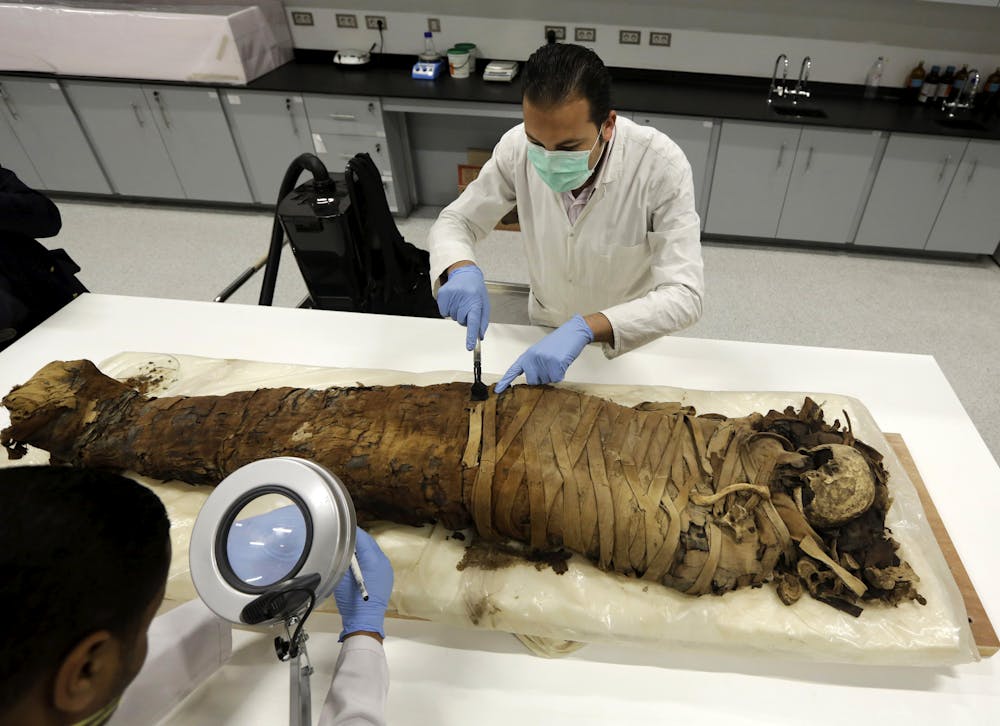
Egyptian conservators clean a female mummy dated to Pharaonic late period, (712-323 BC), in the conservation centre of Egypt’s Grand Museum.
Amr Nabil/AP
Today, the black market of antiquity smuggling – including mummies – is worth about US$3 billion.
No serious archaeologist would unwrap a mummy and no physician suggest eating one. But the lure of the mummy remains strong. They are still for sale, still exploited, and still a commodity.
Marcus Harmes does not work for, consult, own shares in or receive funding from any company or organisation that would benefit from this article, and has disclosed no relevant affiliations beyond their academic appointment.
by Heather Alberro, Lecturer in Global Sustainable Development, Nottingham Trent University
Anatoliy Lukich / shutterstock
The accelerating loss of other species around the globe is so extensive that many experts now refer to it as the sixth mass extinction. It’s driven in large part by an unprecedented loss of vital ecosystems such as forests and wetlands, the result of social and economic systems that are focused on constant growth.
The latest UN Biodiversity Conference, COP15, the second session of which is due to take place in October 2022, aims to implement ambitious measures for stemming biodiversity loss. The ultimate goal is to establish harmony between humans and nature by 2050.
However, in a recent academic article, we argue that key players such as the body of conservation scientists that produces reports on biodiversity for the UN, continue to prioritise human wellbeing above all else. This prioritisation may stem from an anthropocentric culture that typically considers humans to be separate from and of greater value than other species.
To effectively address our extinction crisis, we argue that we need more than merely technical advances or policies that remain mired in anthropocentric assumptions. Rather, we need fundamental changes in how we view and value nature and other species.
Human supremacy
Anthropocentrism results in the treatment of other species and nature as objects and resources for human ends. This assumption still underlies the way many people approach conservation.
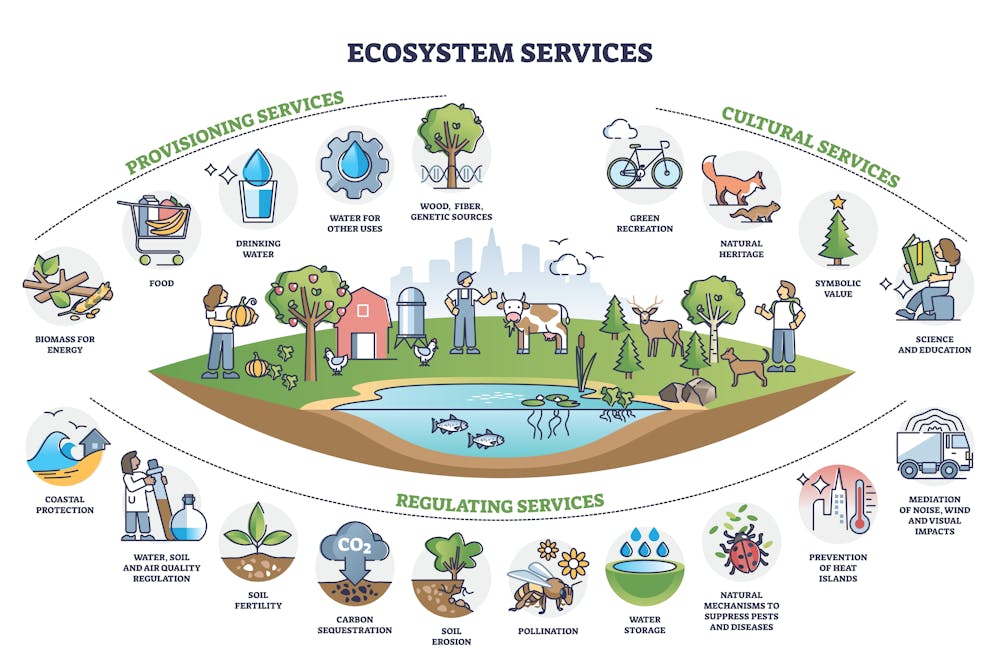
In environmental science and resource management, the concepts of “natural resources” and “ecosystem services” reflect the prevailing anthropocentric approach for assessing natural value, especially through cost-benefit economic analyses.
What natural ecosystems can do – for us.
VectorMine / shutterstock
COP15 will be partly informed by the work of the Intergovernmental Science-Policy Platform on Biodiversity and Ecosystem Services (IPBES), conservation scientists’ equivalent of the IPCC group of climate scientists. The IPBES’s most recent Global Assessment of Biodiversity and Ecosystem Services, published in 2019, promotes the term “nature’s contributions to people” as a more inclusive framework for capturing natural value beyond mere economic indicators.
The stated aim is to emphasise that nature and other species are “not just commodities”, and to highlight nature’s range of contributions, both material and non-material, to “the quality of life for people”.
The report is commendable for attempting to include a wider range of environmental worldviews and values as a basis for biodiversity conservation. We maintain, however, that its approach remains human-centered. Non-human species are still valued only instrumentally, in terms of what they can provide for us.
Thank you for your service.
herain kanthatham / shutterstock
The relationship between people and natural entities is still centred around other species’ perceived utility for helping humans live the “good life”. There is no explicit reference to the good lives of our earth kin, to what they might need to thrive.
The report also fails to advocate for the inherent value of all Earthly inhabitants. We believe this is a profound flaw for any platform that seeks to promote the fundamental cultural transformations required to meet the UN’s “harmony with nature” goal by 2050.
Towards ecocentric conservation
An alternative would be to broaded the focus of conservation science and policy from “ecosystem services” and “nature’s contributions to people” to explicitly include peoples’ moral obligations to nature. We argue that this would require a shift towards ecocentrism, a moral point of view in which every species and ecosystem type is seen as having intrinsic value.
This kind of moral sentiment, which rests on lots of religious and philosophical work, means in essence that non-human organisms and environmental systems have value in and of themselves, not merely as means to human ends.
How should we value wild animals?
Andrzej Rostek / shutterstock
From this perspective, we would ask not only what nature can do for us, but also how we can contribute to the health and resilience of the entire biosphere and all of the living things that animate it. With this approach we would also ask how we can ensure that other species have what they need to have a “good life” too.
From resources to kin
Motives matter. If we continue to value nature and other species based only on what they can provide for us, we won’t be able to radically transform our relationship with them. Their lives are priceless, and their loss cannot be quantified or recovered. After all, extinction is forever. Their proliferating absence doesn’t just threaten our existence – it constitutes a grave ethical failing.
As the final session of COP15 looms, it is critical to recognise that the innovative policies that are needed to prevent biological annihilation cannot possibly be rooted in entirely anthropocentric premises. An adequate response to the biodiversity crisis requires a fundamental shift in our values wherein we see other species as kin and all of Earth’s diverse environmental systems as inherently valuable.
The authors do not work for, consult, own shares in or receive funding from any company or organization that would benefit from this article, and have disclosed no relevant affiliations beyond their academic appointment.
by Lingshan Li, PhD student, Department of Geography, Planning and Environment, Concordia University
Concrete and asphalt roads, and other built materials readily absorb, store and release heat, raising city temperatures, a phenomenon called the urban heat island. (Pixabay)
A recent World Meteorological Organization report called heat waves the “deadliest meteorological hazard” from 2015 to 2019, affecting people living on all continents, and setting new national heat records in many regions. Canada’s top weather event in 2021 was British Columbia’s record-breaking heat, according to Environment and Climate Change Canada. The temperature in Lytton, B.C., hit 49.6 C on June 29. The following day a wildfire destroyed 90 per cent of the town, killing two people and displacing 1,200 others.
During heat waves, the highest temperatures are often found in urbanized areas. Urbanization is almost always associated with an increase in paved, impervious areas, and often a decrease in greenery. Concrete and asphalt roads, and other built materials readily absorb, store and release heat, raising city temperatures, a phenomenon called the urban heat island.
Many studies have shown that urban forests can reduce the urban heat island, and many policies focus their attention on large green spaces. Small green spaces, such as yards, rooftops and small parcels of undeveloped land, can make impressive contributions to lowering urban heat, but they are often overlooked when developing strategies for urban cooling.
The effect of small green spaces
Cities rarely have the opportunity to add large green spaces to help counter the effects of heatwaves. Smaller vegetated spaces, however, can still meaningfully decrease local land temperatures.
Small green spaces, such as yards, rooftops and small parcels of undeveloped land, can make impressive contributions to lowering urban heat, but they are often overlooked when developing strategies for urban cooling.
(Shutterstock)
At a quite small scale, on the order of tens of square metres, trees reduced daytime surface temperatures twice as much as grass cover. But grass and other small, low-lying plants, grow relatively quickly, compared to trees.
Cities should adopt short-term and long-term strategies to respond to extreme heat, including the replacement of paved and impervious surfaces with grasses and turf, and increasing tree plantings to boost canopy coverage.
For example, tree canopies with large leaves and high transpiration rates — the evaporation of water from plants occurring at the leaves — could provide more cooling.
Planting a variety of species, of different heights, can have a larger cooling effect than tall trees alone.
(Shutterstock)
The layout of the green spaces — their spatial configuration — is another factor that the city planners should care about when thinking of the cooling capacity of small green spaces. When green spaces are heavily fragmented — broken up into smaller pieces — spread further apart or unevenly distributed, their cooling contribution is lower.
A study investigating the spatial configuration of green spaces in two cities, Baltimore, Md., and Sacramento, Calif., showed varying results, for example. The researchers looked at the total perimeter of green patches for each square kilometre of land (a metric called edge density) and measured the cooling effect. A greater edge density was associated with less cooling in Baltimore, but more cooling in Sacramento.
The discrepancy is likely due to the local conditions: More shade might be being cast by trees onto surfaces with cooling effects, muting their effects. Or a green patch with a larger edge density could include a larger number of smaller and fragmented tree patches with weaker evapotranspiration (evaporation from the land surface, plus transpiration from plants). For a manager, the trade-offs can be tricky to navigate.
But overall, trees usually have a stronger effect on cooling than grass. Planting trees in groups, not individually or in lines, is recommended for regulating the microclimate (local climate conditions near the Earth’s surface).
Small green spaces can offer a lot of summer cooling in cities. And cities can learn to manage the configuration of small green spaces better to get more cooling benefits and minimize the trade-offs.
Lingshan Li does not work for, consult, own shares in or receive funding from any company or organization that would benefit from this article, and has disclosed no relevant affiliations beyond their academic appointment.
Why EFF Supports Colorado’s Right to Repair Wheelchairs Law
Wheelchairs Break
Three million Americans rely on wheelchairs, which makes wheelchairs a key driver of the $50 billion Durable Medical Equipment industry. Many people depend on wheelchairs to help with the basic necessities of life: getting around the house, going to work, shopping, and spending time with families. This is especially true of powered wheelchairs, which integrate sophisticated computers that allow wheelchairs to respond dynamically to their environment.
Anyone who’s ever dropped a cellphone or laptop knows that any gadget that travels with you around the world will eventually need repairs. This goes double for powered wheelchairs, not least because Medicare has adopted a narrow interpretation of its statutory obligations and will only pay for indoor chairs, despite the fact that the owners of these chairs use them outdoors, as well.
Any product that travels with you is likely to break, eventually. A product that is designed solely for indoor usage but gets used outdoors is even more at risk. But for powered wheelchair users, this situation is gravely worsened by an interlocking set of policies regarding repair and reimbursement that mean that when their chairs are broken, it can take months to get them repaired.
This has serious consequences. Wheelchairs are powerful tools that enable mobility and freedom; But broken wheelchairs can strand people at home—or even in bed, at risk of bedsores and other complications from immobilization—away from family, friends, school and work. Broken wheelchairs can also be dangerous for their users, leading to serious injuries.
Stranded
Stranded is a new report from the Public Interest Research Group (PIRG), based on interviews with 141 wheelchair users about their experiences with mechanical and electrical failures in their powered chairs.
The report documents the dismally frequent incidents of wheelchair failures (93% of respondents needed wheelchair service in the previous year, 68% needed two or more repairs), and the long service delays that wheelchair users must endure (62% waited four or more weeks for each repair; 40% waited seven or more weeks).
Most importantly for addressing this untenable situation, the authors tease apart the many factors that lead to these lengthy service delays and endorse legislation—Colorado’s recently passed Consumer Right To Repair Powered Wheelchairs—as a means of bringing immediate, dramatic improvements to the lives of wheelchair users.
The Fix is Nixed
Almost everything breaks eventually, and good product design isn’t merely a matter of making gadgets that don’t need frequent service—it’s also a matter of making gadgets easy to fix then when they do break down.
Here, too, Medicare rules play a role. Medicare reimburses wheelchair vendors for parts and labor—but not for their technicians’ travel to examine, pick up, and return a wheelchair.
For wheelchair users with private insurance, repairs are delayed while they wait for their insurers to approve their repairs.
All that means that repair is a money-losing proposition for large firms, so they underinvest in staff, training and facilities.
But, as Stranded makes clear, manufacturers of Complex Rehabilitation Technology (CRT)—the formal classification for powered wheelchairs—have adopted repair-hostile tactics that make all of this much, much worse for wheelchair users.
Why Good Wheelchairs Go Bad
The PIRG report makes it clear that there are complex reasons why it’s so hard to get your wheelchair fixed—and also makes it clear that wheelchair users overwhelmingly support legislation that would let them get service at independent fix-it shops or fix their own chairs. Giving wheelchair users the right to repair won’t fix the structural problems with the industry, but it will fix their wheelchairs. That’s an important start.
So why is it so hard to fix wheelchairs? Writing for Kaiser Health News, Markian Hawryluk explains that the powered wheelchair industry is dominated by just two private equity-owned companies: Numotion and National Seating and Mobility, both of whom made deep cuts to their service budgets as part of their private equity owners’ plans to realize a profit on their investments.
have to use chairs designed for indoor use even when they’re outside;
the chairs are made by low-bid contractors who skimp on quality;
aren’t entitled to preventative maintenance; and
must make their chairs last for five years.
Small wonder that these chairs need a lot of service!
Oh Great, There’s DRM in Wheelchairs Now
Wheelchair users don’t want to wait for repair, and so they often source their own parts and do their own repairs. When confronted with a choice between injury and immobilization or paying out of pocket for parts and tools, many wheelchair users feel they have no choice but to pay.
Home repairs that involve powered chairs’ electronic systems are a different matter. Not because electronics are more complex—but because manufacturers use “Digital Rights Management” (DRM): digital locks that are designed to block independent access.
Section 1201 of the DMCA deals with DRM. It says that “trafficking” in a tool or even information that helps someone bypass an “access control” for a copyrighted work is a felony that can be punishable by up to five years in prison and up to $500,000 in fines.
Most importantly, DMCA 1201 doesn’t limit itself to banning bypassing DRM in order to infringe copyright (for example, in order to make thousands of copies of a DVD and sell them on the black market). That has allowed companies to use copyright law to criminalize businesses that have nothing to do with copyright. A company that designs a product that has some DRM that prevents repair or maintenance or improvement can use Section 1201 to attack anyone who engages in those activities, because removing the DRM is itself against the law. To be clear, the DMCA’s ban on bypassing DRM is unconstitutional, and gets in the way of many activities beyond repair. That’s why we’re suing to overturn it.
But in the meantime, the DRM in wheelchairs prevents wheelchair users and independent technicians from diagnosing routine problems with the chairs’ electronics. It also stops wheelchair users from making routine adjustments to their wheelchairs, as when “a wheelchair user with a balky wheel or failing motor may need to adjust the power wheelchair’s speed damping setting, which is accomplished using the administrative software” or when “a wheelchair user who installs a different tire on their chair for navigating inclement weather may want to access administrative software features to adjust the chair’s grip parameters.”
Access to power wheelchairs’ electronic systems is often restricted to people with cryptographic security dongles, as well as passwords. As the PIRG report notes, “without a [hardware] key, the diagnostic tool [for chairs with Dynamix DX control systems] can display parameter values and diagnostic messages, but nothing can be edited or written to a power wheelchair’s controller.”
DRM also restricts powered wheelchair users’ access to settings that allow them to fine-tune their controls. Arthur Torrey describes how badly tuned delays between input devices and steering make controlling a wheelchair “like driving with bungee cords.” He also describes how these restrictions prevent wheelchair users from increasing speed and handling restrictions to keep up with their skill at operating their chairs.
Parts is Parts
The CRT duopoly charge shocking markups on their parts, extracting margins that put even the aerospace industry to shame. In Stranded, we read accounts like these:
“Had a flat tire. new (sp) innertube was $6 on Amazon. (National CRT supplier) Numotion wanted to replace both wheels at a cost of $300 to Medicaid and 6-8 weeks to get them. Got the innertubes in 2 days but they would not install them”
“Numotion took 4 months and charged $500 for a button that allows Bruce to power his wheelchair. Without it, he is stuck in bed. Got it overnight mailed from eBay for about $20”
There are plenty of skilled technicians who can change a button or an inner-tube, including powered wheelchair users themselves.
Robin Bouldoc discussed this with the PIRG researchers. Bouldoc’s husband has primary, progressive multiple sclerosis and uses a powered chair with a respirator and a device that allows him to control the chair using head movements. She asked “Why can’t the local bicycle shop change the flat tire on our wheelchair?”
Arthur Torrey is one of the other wheelchair users interviewed for the report. He is paraplegic, and feels confident that he can perform many routine repairs on his chair: “There’s nothing about manual wheelchairs or power wheelchairs that is that complex or difficult.”
This was affirmed by wheelchair technicians interviewed for the report, who said that “most repairs to wheelchairs are straightforward and don’t require specialized skills or training, just a familiarity with mechanical devices.”
But despite this, the CRT companies refuse to ship parts to wheelchair users, blaming Medicare and Medicaid policies that refuse to reimburse them for parts that are sent to wheelchair users directly.
The bill requires a manufacturer to provide parts, embedded software, firmware, tools, or documentation, such as diagnostic, maintenance, or repair manuals, diagrams, or similar information, to independent repair providers and owners of the manufacturer's powered wheelchairs to allow an independent repair provider or owner to conduct diagnostic, maintenance, or repair services on the owner's powered wheelchair. A manufacturer's failure to comply with the requirement is a deceptive trade practice. In complying with the requirement to provide these resources, a manufacturer need not divulge any trade secrets to independent repair providers and owners.
Any new contractual provision or other arrangement that a manufacturer enters into that would remove or limit the manufacturer's obligation to provide these resources to independent repair providers and owners is void and unenforceable.
While this is the first successful Right to Repair law for wheelchairs, it bears a striking similarity to dozens of Right to Repair laws introduced in state houses that sought to protect your right to fix your phone, laptop, appliances, car or tractor.
Colorado’s wheelchair-specific Right to Repair bill has broken through. By forcing companies to bypass their own DRM on behalf of wheelchair users and independent repairers, the law sidesteps the DMCA’s prohibition on removing DRM.
Making it easier for people who use powered wheelchairs to get them fixed won’t solve all the other problems with powered wheelchairs: it won’t solve the problem of being forced to use indoor chairs outdoors; it won’t solve the problem of a market concentrated into the hands of two companies that refuse to invest in repair, it won’t solve Medicare’s refusal to replace chairs when they wear out.
But safeguarding repair will help people who rely on wheelchairs. Making it possible for wheelchair users and the technicians they trust to fix their chairs means that while the fight to fix everything else goes on, wheelchair users will still have functional chairs—and they’ll be freed from the cruel, bureaucratic nightmare of wheelchair repair monopolies, giving them time to fight for the deep structural changes the sector so desperately, obviously needs.
Years before the Weimar Republic’s well-chronicled freedoms, the 1904 non-fiction study Berlin’s Third Sex depicted an astonishingly diverse subculture of sexual outlaws in the German capital. James J. Conway introduces a foundational text of queer identity that finds Magnus Hirschfeld — the “Einstein of Sex” — deploying both sentiment and science to move hearts and minds among a broad readership.
Readers may have seen that the media have picked up on a claim made against Mariah Carey for copyright infringement by her infamous song "All I Want for Christmas is You". Just in case there was any doubt in readers' minds, here are the reasons why this Kat believes that this claim is nonsense and will likely – or at least, should - be dismissed as such.
Background
Andy Stone (performing as Vince Vance & the Valiants), the Plaintiff bringing the claim, co-wrote a song titled “All I Want for Christmas is You” in 1989 (Registration Number PAu001163343, registered 21 November 1988). [The other co-owner, Troy Powers, is not currently joined in the complaint.] Whilst the lesser known of the two songs, it has charted several times on the Billboard country singles' charts.
He could have at least filed in December... Image: Josh Berglund
On 3 June 2022, Stone filed a complaint against Mariah Carey, her co-writer Walter Afanasieff and record label Sony, for copyright infringement, unjust enrichment and misappropriation and Lanham Act violation, claiming USD 60 million.
Carey’s song "All I Want for Christmas Is You" was published on her fourth studio album Merry Christmas and released as the lead single from the album on 29 October 1994. It subsequently became a global success, topping the charts in 26 countries, with an estimated sales of over 16 million copies worldwide. It is the best-selling holiday song by a female artist, and one of the best-selling physical singles in music history. The song is certified Diamond by RIAA, denoting sales of 10 million copies in the United States, becoming the first and only holiday song to accomplish this feat.
The claims
The complaint claims that the Defendants committed “acts of unjust enrichment by the unauthorized appropriation of Plaintiff’s work and the goodwill associated therewith, all which are proprietary to Plaintiff as set forth herein, to the commercial gain, personal profit and unjust enrichment of the defendants and the irreparable injury and financial loss of Plaintiff.” This appears to suggest that Carey – who was already an internationally known popstar at the time – rode off the reputation of Stone in order to benefit financially from her song, at the expense of Stone. Whilst it may be true that Carey’s song overshadowed Stone’s, there is no evidence that Carey’s success was in any way connected to Stone.
Curiously, the complaint does not exactly state that there has been any substantial copying, but rather that the “Defendants never sought or obtained permission from Plaintiff to use “All I Want for Christmas is You” in creating, reproducing, recording, distributing, selling, or publicly performing said song.” However, as readers will know, there can be no copyright in a title (see also Compendium US Copyright Offices Practices, §313.4C). And in fact, after a quick search of the US copyright register, there are 177 entries for “All I Want for Christmas is You.”
However, the complaint does states that the “Defendants, have knowingly, willfully, and intentionally engaged in a campaign to infringe Plaintiff’s copyright in the work “All I Want for Christmas is You,” and points to violation of Section 106 (1)-(3) and (5) of 17 U.S.C. (the copyright holder’s exclusive right to reproduction, derivative works, distribution and display the work publicly). This indicates that the claim is for conscious copying, as opposed to subconscious copying, which would require the Plaintiff to demonstrate, first, that the Defendants heard their song and, secondly, that they copied a substantial part of it. Other than the song’s popularity at the time, there is no evidence that Carey heard Stone’s song. In general, the two songs are not similar, and there is no suggestion of their similarities in the complaint. The parts that are similar would be the theme, the title and evidently the lyrics “all I want for Christmas is you,” which, of course, are unoriginal elements and therefore do not constitute substantial similarities for the purpose of a copyright infringement claim.
Delay in bringing the claim
In any event, the laches defence (unreasonable, prejudicial delay in commencing suit) will likely be raised by Carey since - to recap - Stone released his song in 1989 and Mariah Carey published her song with the same title 5 years later - which became the biggest selling and streamed holiday song that takes over the festive season annually and reportedly generates an estimated $600,000 per year – and yet, the complaint states that the Plaintiff’s counsel initially made contact with Defendants in April 2021, 27 years later.
The statute of limitations under the US law is three years from the act of infringement. However, a claim can still be made if the infringement is continuing, which means the complaint will not fail on this point alone since Carey’s song is still being distributed. But it does limit Stone’s damages to three years prior to the complaint.
Conclusion
In summary then, this complaint will likely be dismissed for the following reasons:
1) copyright does not protect titles,
2) the complaint does not argue that there is any substantial similarities between the two songs, or indeed that there has been any actual copying, although copyright infringement is mentioned,
3) the songs are not similar,
4) the parts that are similar (i.e., the lyrics “all I want for Christmas is you”) are not original and therefore not protected by copyright,
5) there is no evidence that Carey heard Stone’s song in order to have copied it, and,
6) there is no justification for bringing the claim 27 years after the release of Carey’s song.
This appears to be a case, not of copyright infringement, but of terrible legal advice. I don’t want a lot for Christmas, but there is just one thing I need… and that is for the music industry to stop suing each other over baseless copyright infringement claims!
Despite the fact that scholarship and knowledge about sex and sexuality have grown enormously in the last century, these topics in the Library of Congress Classification (LCC) schedules have remained stagnant, particularly in the HQ schedule (a classification subclass), entitled “The Family. Marriage. Women.” In this schedule, multiple structural issues in organization and placement of topics demonstrate a deeply sex negative attitude that has seen relatively little change in over a century. This article takes a deep dive into the negative attitudes toward sex and sexuality in the LCC HQ schedule, analyzing the ways in which sex negativity manifests structurally in LCC, and is informed by a thematic review of schedule editions between 1910 and 2020. It turns critical efforts that are traditionally applied to the Library of Congress Subject Headings (LCSH) in critical cataloging literature, to the deeper underlying structure of LCC. Though critiques and shortcomings of both LCC and LCSH on the treatment of LGBTQIA+ topics are well noted in the literature, very few examine the underpinnings of LGBTQIA+ marginalization as informed by sex negativity. This article examines some major issues in the HQ schedule with an eye toward providing a roadmap for future revisions. We aim for readers to realize what it means for structural inequity to exist in LCC, the harm that that structural inequity can impart, and to take a critical eye to the foundational classification used within numerous libraries, beyond the subject headings overlaying and masking that classification.
Introduction
“Curiosa.”
“Marriage with deceased wife’s sister.”
“Social purity.”
These are but a few topics within the Library of Congress Classification (LCC) that focus on human sex and sexuality. Despite the fact that scholarship and knowledge about sex and sexuality have grown enormously in the last century, the treatment of sex and sexuality topics within LCC have remained stagnant.
Library classification systems like LCC organize knowledge into a systematic order whereby catalogers assess materials and assign classification numbers based on standardized criteria in tandem with subject headings, resulting in the physical embodiment of that classification that we see on the shelves – a shelf list of titles grouped by common subjects or authors, situated relationally adjacent to one another. Catalogers rely on Library of Congress publications like the Library of Congress Classification Schedules to help guide them in selecting the right classification number for their materials, often relying on scope notes and references to help guide their decisions.
In thinking about library organization structures, classification can be understood metaphorically as a skeleton that organizes the physical collection of a library, overlaid (and sometimes masked) by controlled vocabularies. Much of the research involving the critical cataloging movement has focused on controlled vocabularies and subject analysis, and particularly examine the Library of Congress Subject Headings (LCSH). We argue that classification structures also deserve substantial critique and work. The topics that a classification structure lifts up can be seen as individual “bones” of a library’s skeleton. A topic’s appearance in classification makes it a locus point that many controlled vocabulary terms can be organized around — a bone with its attendant muscles, tendons, and ligaments. Interrogating the ways that subject headings reinforce oppression and marginalization and changing them as we expand our understanding of “inclusive language” is a worthy endeavor. Yet, these efforts cannot add up to structural change if we do not also attend to the bones around which the muscles are organized, and the ways that they also perpetuate erasure, stigmatization, stereotyping, and disempowerment.
This marginalization is particularly evident in the section of the Library of Congress Classification schedule that deals with sex, sexuality, and queerness. Housed within the H schedule for social sciences, the bulk of the LC classification that deals with sex and sexuality occurs in subclass HQ, entitled “The Family. Marriage. Women” (see Table 1 for an excerpt of this subclass). Its title is the first clue as to its outdated overall outlook. The order, structure, and hierarchy presented in the HQ class schedule has changed very little since its creation in 1910. The implication of the lack of change and adaptation in the HQ schedule is both negative and significant considering that LCC is the primary classification scheme used in academic and research libraries worldwide.
As catalogers working within academic and research libraries, all three authors have come across titles classed in HQ and individually questioned placement or presence of specific class numbers or the structure of the schedule itself. As people trained to classify materials and who have either currently or previously done classification as part of our regular job duties, we are often baffled or outright offended by some structural choices within the HQ schedule. To determine why warrants further investigation.
Table 1. Excerpt from the Library of Congress Classification Outline Subclass HQ (HQ12-449 Sexual Life) (Library of Congress Policy and Standards Division, n.d., p. 16).
HQ1-2044: The Family. Marriage. Women
HQ12-449: Sexual life
HQ19-30.7: Sexual behavior and attitudes. Sexuality
HQ31-64: Sex instruction and sexual ethics
HQ71-72: Sexual deviations
HQ74-74.2: Bisexuality
HQ75-76.8: Homosexuality. Lesbianism
HQ77-77.2: Transvestitism
HQ77.7-77.95: Transexualism
HQ79: Sadism. Masochism. Fetishism, etc.
HQ101-440.7: Prostitution
HQ447: Masturbation
HQ449: Emasculation. Eunuchs, etc.
Problem Statement
The HQ schedule presents many areas in need of further critique and structural change given the broad range of topics classed there. Despite its title, the HQ schedule includes a large, yet unnamed section dedicated to sex and sexuality. We chose to interrogate the way sex and sexuality show up in the LCC HQ schedule, primarily in the range of HQ12-472, a section that specifically covers human sex, sexuality, and similar topics. In our analysis, we identified an extreme level of sex negativity, defined as “a negative attitude or stance toward any sexual behavior other than procreative marital coitus” (“Sex Negativity,” n.d.). Sex positivity, by contrast, is “a positive attitude or stance toward sexual activity between consenting individuals when this is seen as promoting healthy relationships and forms of self-expression. Sex is seen as neither good nor bad, per se, and the purpose of sexual relations is not deemed to be confined exclusively to procreation through marital coitus” (“Sex Positivity,” n.d.).
Sex negativity, which is deeply and systemically ingrained in our society, is intimately tied with anti-queerness because it narrowly normalizes procreative marital sex only. This effectively marginalizes a great many queer people, in part because the institution of marriage is denied to queer people in many legal jurisdictions, and in part because many queer ways of being include an understanding of sex as relationship-building, identity-building, and pleasurable, which is seen through a sex negative lens as inherently immoral, dirty, or otherwise negative. Sex negativity shows up in many ways, and in many places across HQ12-472. For example, many classmarks in this range lack explanatory notes to clarify vague and dubious labels, such as “Curiosa” (HQ25), implying an unwillingness to engage directly with topics related to sex.
Queerphobia and transphobia are also deeply endemic to HQ’s treatment of sexuality, and are often underpinned by sex negativity, precisely because sex negativity denies the possibility that for many people, relationality can be more important in sex than procreation. HQ reduces queer identities down to what is visible in mainstream media, and by lumping together topics that queer and trans communities and scholars often understand as separate, even if related. For example, as the section on “Human sexuality. Sex” (HQ12-449) handles queer sexual orientations, it lifts up “gay,” “lesbian,” and “bisexual” people, but otherwise only provides “sexual minorities” as a catch-all, without specific designations for any other specific sexualities, and provides no room for works exploring the broad spectrum of sexuality, including but not limited to pansexuality, greysexuality, aromanticism, polyamory, and asexuality.
We see HQ manifest its sex negativity and anti-queerness through five major mechanisms: granularity or spacing issues, scope note issues, harmful topical correlations due to proximity, issues with labels, and high stagnancy over time. The presence of sex negativity and anti-queerness in the structure of HQ can impart harm by reflecting back at library users either perspectives that may disparage part of their personal identities or promote a very narrow and singular idea of what sex is and should be for everyone. How knowledge is organized is directly shaped by the culture and era that produced the system; LCC is no exception. The presence of both sex negativity and anti-queerness merely reflects how both topics have historically been regarded in U.S. culture, given the history and origin of LCC.
Below, we situate our approach and perspective as part of the critical cataloging movement, and provide some analysis of major ranges and themes in HQ that exemplify sex negativity and anti-queerness.
Literature Review
To inform our analysis of HQ, we consulted sources that we see as “secondary sources,” analyzing cataloging systems and issues with a critical, or social-justice-oriented, lens, as well as “primary sources” which directly govern the cataloging systems that we are interested in. Our secondary literature helps us frame our perspective and analysis within the movement of critical cataloging (or #critcat). The “primary” literature provides an understanding of the overall governance of LCC, and thus, how the issues that we see came to be and how they compounded over time.
Brief overview of critical cataloging
We situate our work within the critical cataloging movement overall, by analyzing HQ with a critical, queer, feminist, and holistic lens. The lens through which we work is by no means original or new, and many radical and critical catalogers have argued for similar ways to critique cataloging work and cataloging tools. Sanford Berman is perhaps the most well known for his work to author and submit numerous changes to biased LCSH beginning in the late 1960s, targeting terms that were outright chauvinist, racist, and Euro- and Christian-centric (Berman, 1971; Roberto, 2008). Berman is commonly known as the founder of radical cataloging, a term used to describe ways in which catalogers can look critically at catalog records and headings (especially those supplied by LC), as they are often incomplete and disregard the viewpoints and experience of marginalized populations (Roberto, 2008). Radical cataloging was originally imagined as an approach that “addresses the root issues that can make access to information problematic” (Lember et al., 2013).
Somewhat recently, critical cataloging evolved within critical librarianship, a movement of librarianship that examines social justice issues in our work (Critlib: About / Join the Discussion, n.d.). Critical cataloging, which revitalizes some of the principles of radical cataloging, recognizes the power of labeling and naming (Olson, 2002), takes into account potential harm or benefit of terms being used, and exposes and challenges the ways in which we replicate the systems of oppression within society and the library profession (Critlib: Critcat, n.d.; Drabinski, 2008; Watson, 2020). The current wave of critical cataloging efforts to revise subject headings and classmarks includes perhaps most famously the recommendation for the change to the subject heading “illegal aliens” to “noncitizens” or “unauthorized immigration,” and “aliens” to “noncitizens” (Baron et al., 2016; Price, 2021). A collaborative worksite, the Cataloging Lab (Fox, 2018a, 2018b), was recently created to lower barriers to proposing new classification numbers, subject, and name authority headings. New headings have been created thanks to the work of Cataloging Lab participants, including “Afrofuturism” (“Afrofuturism,” 2019), and “SayHerName movement” (“SayHerName Movement,” 2021), and many new headings and revisions to existing headings have been suggested. Indeed, the current movement in radical and critical cataloging has remained true to its roots of calling attention to the systemic systems of oppression within which we work, a framework within which this article is placed.
A bulk of cataloging literature that criticizes Library of Congress Classification and Subject Headings, which we seek to add to, points out that these systems were not originally intended to organize the entirety of knowledge as we currently use it; their original intent was to organize a very specific collection of volumes for the United States Congress in the late nineteenth century. This is evidenced by large sections of the LCC specifically devoted to American history (classes E&F); and political, military and naval science (J, U, and V schedules respectively) (Higgins, 2012; Watson, 2020). Their scope and focus have a definite bias toward Western, American, white, heterosexual, cisgender, Christian, and male points of view as one would imagine would be the case for a controlled vocabulary and a classification system created “within a Western framework of late Victorianism, rampant industrial expansion, and feverish empire-building” (Berman, 1971).
Treatment of sex and queerness in LC cataloging systems
A major body of scholarly criticism about LCSH and LCC’s treatment of sex and queerness already exists. A bulk of this literature focuses on LCSH, which correlates strongly to LCC, but is separate from it. While this article focuses on a classification rather than on subject headings, many of the approaches that we take to analyze a portion of the HQ schedule are drawn from approaches detailed in this LCSH work.
It is no secret that the Library of Congress Subject Headings (LCSH) have a problematic history of using pejorative and outdated terminology. LC has a process for suggesting new or modifying existing terms and references for the vocabulary, which is the same process used to suggest additions or changes to LCC. However, both can be considered “rigid system[s] defined by hierarchical organization that [are] extremely slow and resistant to change” (Howard & Knowlton, 2018). The process of creating or changing terms can be challenging, as Watson (2020) summarized for the proposal process for the terms “Asexuality (Sexual orientation)” and “Asexual people;” previously “Asexual” only appeared in reference to asexually reproducing plants in biology.The proposal was first rejected, and after much philosophical discussion and rewriting, the two headings were accepted as new subject headings in 2016. If making changes to LCSH is difficult and painstakingly slow, the process for making changes to LCC is even slower.
Throughout LCSH, queer identities are heavily stigmatized, if not outright erased, a trend that we find correlates strongly to how queer identities are represented in LCC. The only subject heading that uses the term “queer” in LCSH is “Queer theory” (Roberto, 2011; Kauffman & Anderson, 2018), compared to the 100+ terms that include “queer” in Homosaurus, the international linked data vocabulary of Lesbian, Gay, Bisexual, Transgender, and Queer (LGBTQ) terms (Homosaurus: An International LGBTQ+ Linked Data Vocabulary, 2019). Terms that do appear in LCSH are heavily binary, with straight as the default, and gay, lesbian, or bisexual as the other options for sexual orientations (plus, now, asexuality). The options for sexual orientations and identities fail to illustrate the fluidity and nuances of sexual identities. As Roberto (2011) observes, “Queer identities do not have an explicit place in LCSH.” We argue that for both similar and different reasons, the same is true of LCC.
Since Roberto’s 2011 article on transgender identities was published, some hierarchies of terms within LCSH have changed. Roberto notes that at the time of writing, “Gays” was used for “Gay people,” “Gay persons,” and “Homosexuals,” which still holds true today, as does the term “Sexual minorities” for LGBTQ people at large. Roberto also noted cross references for “Sexual minorities” included “Gender minorities,” “non-heterosexual people,” and “Sexual dissidents,” all of which are “use for” references for “Sexual minorities” today. “Use for” references are acknowledgements of natural-language terms in LCSH, and they lead people from natural-language versions of a term to the authorized version of a term. Much like “Soft drinks” is a use-for term for “Soda pop” and “Sodas (Beverages),” if a person searches for “Gender minorities” in a catalog, they will be redirected to resources with the subject heading “Sexual minorities.” Cross references are those related terms that LC includes to say to a user, “You might also like…” Cross references for “Sexual minorities” today include, “Asexual people,” “Bisexuals,” “Gays,” and others. While there have been changes to LCSH within the last decade, there still exists the element of marginalization and othering of non-gay, non-lesbian, non-bisexual people, lumping them into “Sexual minorities,” without even acknowledging that they are people.
Substantial literature analyzes how the terms chosen as the authorized form in LCSH and references between terms can also be problematic. The act of naming terms is quite powerful and encodes systemic bias into the means by which library materials are discovered and organized (Matienzo, 2015; Olson, 2002). “Paraphilias” is the current term for what was previously called “Sexual deviation,” and prior to that, “Sexual perversion.” These changing terms originally drew directly from medical literature, such as the Diagnostic and Statistical Manual of Mental Disorders (DSM).
Likewise, a term’s placement within the LCSH hierarchy can be problematic. For instance, “homosexuality” was filed under “Sexual deviation” and prior to that under “Sexual perversion” before it was moved to “Human sexuality. Sex” after 1980 (Adler, 2017; Drucker, 2017). LCSH terminology regarding homosexuality and its placement within and outside of sexual deviation and perversion has mirrored its treatment within the DSM, and subsequent social movements to remove homosexuality as a psychiatric disorder from the DSM (Adler, 2017). Sandy Berman even petitioned to have the subject heading “Sexual perversion” changed to “Sexual deviation” and went further to suggest its cancellation as a cross reference to “homosexuality” and “lesbianism” (Berman, 1971). In short, the placement of terms within a vocabulary’s hierarchy insinuates judgment, and while changes have been made, they are slow to match the speed of societal change.
These issues of naming, placement, harmful correlations through proximity, and stagnancy over time also show up in LCC, in part due to the high level of correlation between it and LCSH. Our analysis adds to these existing observations by digging into precisely how they show up in LCC, and by adding consideration of an issue that manifests most clearly in classification: a lack of space for granularity on topics of queerness and sex.
Critical classification
The body of literature on critical classification and knowledge organization looks like a trickle in comparison to the roaring waterfall of literature on subject terms and controlled vocabularies, and our article seeks to contribute to filling some of the gap by offering a classification-specific analysis. Yet, the existing body of literature is not insubstantial. For example, it is particularly robust in the area of Indigenous Knowledge Organization. Yeh & Frosio (1971), Lincoln (1987), Webster & Doyle (2008), and Lee (2011) all problematize LCC’s treatment of Indigenous people and cultures. Cherry & Mukunda (2015), Littletree & Metoyer (2015), and Littletree, Belarde-Lewis, and Duarte’s work (2020) delve further to highlight and present Indigenous-centered ways of seeing and understanding Indigenous knowledges.
LIS scholarship also includes many other critical perspectives specific to LCC. Foskett (1971) presented a (White) feminist critique of LCC, as well as a general critique of cultural norms in cataloging that upheld (and uphold) the myth of “neutrality” in classification work. Soltani (1996); Kublik, et al (2003); Idrees & Mahmood (2009); Higgins (2012); Baker & Islam (2020); and Hart (2021) each presented cases of LCC’s othering, exoticization, and erasure of women and people of color all over the world, and put forth guidance to radically correct LCC, or to adapt it to local and culturally specific contexts. A common thread across these pieces is their reminder to catalogers that it is always significant that LCC originated as a system designed for the specific collection focuses of the United States Congress’s library, and holds all of that collection’s biases.
Additionally, a growing body of critical literature on LCC focuses specifically on queer sexualities and genders. Keilty (2009) illustrates the paradoxical nature of classifying queerness at all, pointing to many ways in which queerness simultaneously defies and relies on categorization and classification. In their paper on classifying a queer community organization’s collection, Nowak and Mitchell (2016) detail the practical problems of using LCC, including how extremely small the call number ranges for queerness and queer people are. Adler (2017) provides a great deal of historical context for the rampant bias against queer sexualities in HQ, and contends that LCC is not just a reflection of mainstream bias against queer people, but a structure that reseeds and recreates that bias in research libraries across the US and around the world. Howard & Knowlton (2018) depict the practical difficulties of describing and classifying African American Studies and LGBTQIA Studies works that result from LCC’s and LCSH’s anti-Blackness and anti-queerness.
We draw, with gratitude, on all of these existing observations to critique HQ, and seek to add to these threads by showing, through an analysis of sex and queerness in HQ, that the ways that bias manifests in LCC can be complex and intertangled, well beyond what the systems that exist to correct it were designed to address.
LCC/LCSH proposal process and the problem of literary warrant
To better understand how the issues that we see came into being and are maintained over time, it is important to understand how the official revision process works for LCC. Accordingly, we also consulted both the Subject Authority Cooperative Program (SACO) Manual (Schiff & Program for Cooperative Cataloging, 2007) and the Classification and Shelflisting Manual (CSM)’s “F50” classification proposal guidelines (Library of Congress Policy and Standards Division, 2013).
The SACO Manual is important because the SACO program is responsible for organizing the maintenance of official LC vocabularies such as LCSH and LC Demographic Terms, as well as the LCC schedules. It is part of the Library of Congress’s Program for Cooperative Cataloging (PCC), and its proposals are reviewed and decided upon by the Library of Congress Policies and Standards Division (PSD). LC PSD is also the body that maintains the CSM, which provides guidance to catalogers on how to understand and use the LC Classification system. The policies set forth in the SACO manual on how to propose new subject headings and class numbers serves as a supplement to the rules set forth by CSM, providing extra guidance on how and when to create proposals, as well as examples.
Both of these major manuals display a deeply-ingrained reliance on “literary warrant” for all alterations and new class numbers in the governance of LCC and LCSH. Literary warrant is a principle based on the idea that “classes are created to cope with the literature that must be classified by the scheme, rather than on the basis of any theoretical analysis of knowledge, either documentary or philosophical” (Broughton, 2015, p. 164). It requires catalogers to furnish a title as evidence that the change requested in the LCC proposal is “necessary.” Both the CSM F50 and SACO manual provide multiple examples of specific titles and situations that would demand a proposal. In twenty examples given in the SACO manual, only one did not contain or require literary warrant. In that example, the illustrated modification was a minimal change to ensure that terminology used in LCC matched a corresponding LCSH (2007, p. 223). Similarly, within CSM the only proposal example without a specific work tied to it is an example of adding a “see reference” (Library of Congress Policy and Standards Division, 2013, pp. 56–57). Both examples are very small in relation to the overwhelming body of literary-warrant-based examples; this weighting of examples creates an impression that proposals not based on literary warrant should be extremely rare and that catalogers are virtually always expected to provide a work as a basis for their proposals.
The critique of literary warrant is already something of a tradition in critical cataloging (Biswas, 2018; Watson, 2020). To add to it, we offer an observation that orienting the proposal process around literary warrant introduces two major issues, one regarding the size and scale of proposed changes and another around its reliance on the publishing industry for equity and representation. The proposal process is optimized for smaller alterations to LCC. The examples given in both the SACO manual and CSM F50 guidelines suggest that successful proposals alter only one or a couple of classmarks at a time. Otherwise, changes may require multiple proposals, often contingent on prior ones’ acceptance and implementation. That approach is prohibitive given the time and effort required by both the petitioner and PSD review committee. Even with breakthroughs in knowledge published in the formats that libraries value most, reflecting those changes in LCC for collection organization will be a slow process. There are also known inequities around who and what traditionally gets published, and thus, what gets collected by libraries (Roh & Inefuku, 2016). For example, Roh (2016) highlighted in her article the racial disparities found within publishing by noting the whiteness of both scholarly publishing (Greco et al., 2016), and mainstream publishing (Lee and Low Books et al., 2016, 2020). Literary warrant then replicates the inequities in publishing in our knowledge organization systems.
Thematic Review of HQ Over Time
In order to explore how classmarks and class ranges have or have not changed over time, including their placement within the hierarchy, as well as the introduction of new topics, we compared editions from 1910, 1920, 1950, 1965, 1980, and 2020, analyzed particular labels, themes, class ranges, and classmarks over time. Some general findings are noted here.
We see labels and granularity of categorizations for sex and sexuality remain largely unchanged until after 1965, with the introduction of distinct classmarks for “Lesbians,” “Gay men,” “Bisexuality” (see Table 2), “Cross-dressing. Transvestism,” as well as “Sexual behavior and attitudes” for specific groups of people like boys, girls, men, women, etc. introduced in the 1980 edition, and remain largely unchanged today.
“Homosexuality” has appeared since the first edition in 1910, and was initially nested under “Abnormal sex relations,” whose label was changed to “Sexual deviations” by the 1980 edition. It currently sits under “Human sexuality. Sex.” (See Table 2)
Curiously, HQ73 has undergone some changes and is currently described as “Sexual minorities. General works.” However, prior to and including the 1965 edition, this same classmark was described as “Abnormal sex relations. Sexual perversion in woman.” We did not see any entry for HQ73 in the 1980 edition.
Table 2. Selection of HQ classmarks across Library of Congress Classification editions, with nesting terms included.
Edition Year
2020 ed.
1980 ed.
1965 ed.
1950 ed.
1920 ed.
1910 ed.
Group 1
HQ18.6: Sexual attraction
N/A
N/A
N/A
N/A
N/A
Group 2
HQ25: Curiosa
HQ25: Curiosa
HQ25: Curiosa
HQ25: Curiosa
HQ25: Curiosa
HQ25: Curiosa
Group 3
HQ71-72: Sexual practices outside of social norms. Paraphilias
HQ71-72: Sexual deviations
HQ71-72: Abnormal sex relations
HQ71-72: Abnormal sex relations
HQ71-72: Abnormal sex relations
HQ71-72: Abnormal sex relations
Group 4
HQ73: Sexual minorities. General works
N/A
HQ73: Abnormal sex relations. Sexual perversion in woman.
HQ73: Abnormal sex relations. Sexual perversion in woman.
HQ73: Abnormal sex relations. Sexual perversion in woman.
HQ73A: bnormal sex relations. Sexual perversion in woman.
Group 5
HQ75-76.965: Human Sexuality. Sex. -Homosexuality. Lesbianism
HQ75-76.8: Sexual deviations. -Homosexuality. Lesbianism
HQ76: Abnormal sex relations. -Homosexuality
HQ76: Abnormal sex relations. -Homosexuality
HQ76: Abnormal sex relations. -Homosexuality
HQ76: Abnormal sex relations. -Homosexuality
Group 6
HQ75.3-.6: Lesbians
HQ75.3-.6: Lesbians
N/A
N/A
N/A
N/A
Group 7
HQ75.7-.8: Gay men
HQ75.7-.8: Gay men
N/A
N/A
N/A
N/A
Group 8
HQ74-.2: Bisexuality
HQ74-.2: Bisexuality
N/A
N/A
N/A
N/A
The majority of changes within HQ regarding sex and sexuality that we see in the 2020 edition were made in the 1980 edition and after, broadly acknowledging the sexual revolution, women’s liberation, and gay liberation movements of the 1960s-1980s. Further analysis of our findings is detailed below.
Analysis
We have selected seven topical examples to highlight how sex negativity, anti-queerness, or both manifests in the HQ schedule. Each instance of sex negativity or anti-queerness analyzed here carries one or a combination of the five mechanisms named earlier: issues with granularity, a lack of or problematic scope notes, harmful associations created by proximity, issues with the labeling of class numbers, and high stagnancy of the class schedule over time.
Naming sex and sexuality in the schedule
The first and largest example of sex negativity in HQ lies in the incongruence between the name of the schedule, “The Family. Marriage. Women” and the fact that roughly its entire first third (HQ12 to HQ472) is about sex and sexuality. Notably, sex and sexuality topics are organized and placed before class numbers that speak to the schedule’s title, including families, marriage, parenthood, and women. This treatment of sex and sexuality in the class schedule, and the conspicuous lack of direct naming of sex in the schedule title, ensure that sex is heavily framed as being inseparable from marriage and family.
Furthermore, there is very little in the schedule that builds room for any understanding of sex and sexuality as having significant purposes of pleasure, relationship-building, or building self-identity. The closest that the 2020 edition of the HQ schedule comes to any acknowledgment of these aspects of sex lie in the range “Sex instruction and sexual ethics” (HQ 31-64), which includes some space for works on specific sexual practices. Yet, even here, because the focus of the section is on “teaching” and “ethics,” its main impact is not ultimately to affirm that sex serves more purposes than procreative ones, but rather to signal that only specific types of sex are normative and appropriate, namely sex between married heterosexual couples.
Treatment of queer sexualities and identities
A prime example of HQ’s failure to provide granularity or sufficient space to topics related to sex, is its treatment of sexualities and sexual identities, particularly queer ones. We define granularity or spacing issues as instances in which there is either a dearth of numerical space given to broad topics, disproportionate space devoted to niche topics within the classification subclass, or the absence of specifically naming topics. Avoiding specifically allotting space and naming topics for non-majority sexualities and sexual identities contributes to the erasure of non-heterosexual identities. In this instance, non-heterosexual identities are only allotted a meager five integers’ worth of space between HQ73 and HQ78, with little delineation among the many varied sexual identities that exist. The HQ73 to HQ78 range is the only space that delves into non-heterosexual identities, with minor exceptions for same-sex marriage (HQ1033) and same-sex divorce (HQ825). The inadequate level of space for granularity directly contributes to the queer and trans erasure throughout the entire schedule.
Table 3. Excerpt adapted from Library of Congress Classification, HQ: The Family. Marriage. Women (Library of Congress Policy and Standards Division, 2020, pp. 456–458)
HQ73-73.63: Sexual minorities
Sexual minority parents
Cf. HQ75.27+: Gay parents
Cf. HQ755.7+: Parents. Parenthood
HQ74-74.9: Bisexuality. General works
Cf. HQ1035+: Bisexuality in marriage
Cf. RC560.B56: Psychiatric aspects
HQ74.2-74.6.A-Z: Bisexual women
HQ74.7-74.9.A-Z: Bisexual men
HQ75-76.956.A-Z: Homosexuality. Lesbianism
Including queer theory
Cf. D804.5.G38: Gay victims of the Holocaust
Cf. E98.S48: Indian gays and lesbians
Cf. HQ1033+: Same-sex marriage
Cf. QP81.6: Physiology
Cf. RC558+: Psychiatric aspects
HQ75.14-75.16.A-Z: Gay and lesbian studies
HQ75.25-75.26.A-Z: Travel
HQ75.27-75.28: Gay parents
Cf. HQ75.53: Lesbian mothers
HQ75.3-75.6.A-Z: Lesbians
Cf. HS3357.L47: Lesbian Girl Scouts
HQ75.7-76.2.A-Z: Gay men
HQ76.25: Homosexuality. Lesbianism. General works
HQ76.26: Juvenile works
HQ76.27.A-Z: Special classes of gay people, A-Z
HQ76.34-76.35.A-Z: Same-sex relationships
Cf. HQ1033+: Same-sex marriage
HQ76.4-76.45.A-Z: Homophobia. Heterosexism
HQ76.5-76.8.A-Z: Gay rights movement. Gay liberation movement. Homophile movement
HQ76.85: Gay conservatives
HQ76.9-76.95.A-Z: Gay press publications
Class here works on publications of any type produced by the gay and lesbian community
HQ76.96-76.965.A-Z: Gay and lesbian culture
It is clearly visible that too many subjects have been crammed into a small range of class numbers given the liberal use of decimals in that range to expand. What falls between HQ73 and HQ78 attempts to capture and place nearly all things pertinent to queerness, not only naming (a select few) queer identities, but also aspects of queer culture, and more. While attempting to be inclusive, this is actually to the detriment of the people that this space describes and represents. Some examples of what falls into this range include “Travel” specifically for queer people at HQ75.25, “Gay parents” at HQ75.27, “Gay rights movement. Gay liberation movement. Homophile movement” at HQ76.5, and “Gay and lesbian culture” at HQ76.96 to name only a few. This demonstrates how broad the subjects are in this range for so little space within the classification schedule. The use of decimal points to fit in a newer class number within the established schedule is a typical LCC cataloging practice and is seen in numerous, if not all available LCC schedules. Its pervasive use in the HQ73 to HQ78 range indicates initial disregard during design of the class schedule.
Providing very little space for subjects covering numerous aspects of queer and trans identities illustrates the indifference LC catalogers had for it during construction and development of the schedule. There was no anticipation that the subject would grow, and that more than five class numbers would be needed in the future. This is another example of how heteronormativity is reinforced by the class schedule if the inclusion of queer identities and people are treated as an afterthought. Due to the lack of initial space afforded in the class schedule and the use of more decimals to accommodate new subjects, it does not encourage further growth. Catalogers using LCC are less inclined to establish new class numbers in a range where the numbers are already so close together. It is work that can be done but becomes harder to do as time passes and subject area knowledge expands. Encouraging growth within a LCC class schedule is visualized via numerical gaps between class numbers and the overuse of decimals in class numbers indicates the opposite.
Again, this already small class number range and lack of delineation of subcategories does a poor job at differentiating sexual identities, providing nuance where needed, as well as placing topics relating to all queer and trans communities together without critical thought on placement or distinctions. Broad strokes are utilized in the HQ73 to HQ78 range for all queer identities. Only “gay”, “lesbian”, and “bisexual” identities are directly named while other queer identities that might fall outside the popular imagination and mainstream media such as pansexuality, greysexuality, aromanticism, polyamory, and asexuality receive an inadequate umbrella term of “sexual minorities.” While space is given for both trans and intersex people at HQ77.7 and HQ77.97 respectively, the placement and labeling of the class numbers appears to be less of a thoughtful integration of these subjects.
By contrast, the class numbers assigned to Computer Science (QA75.5-76.95), an entirely new field of research since LCC was originally constructed, was squeezed into a small space but is organized with multiple delineations for subcategories and aspects of the field. Subcategories include reserved class numbers for many topics, including types of programming (QA76.6-76.66), an A-Z list of individual programming languages (QA76.73 A-Z), and another A-Z list of special topics in computer software (QA76.76 A-Z). Even within this small number range, a breadth of topics is covered with surprising granularity. Applying similar attention to sexual and queer identities by assigning specific class number ranges to them would give a legitimate place to these otherwise erased sexual and queer identities that fall outside of gay, lesbian, bisexual, and trans.
Discrimination based on gender, sex, or sexuality
Another example of HQ’s lack of granularity on topics related to queerness and sex is that there are very few class numbers directly dealing with discrimination based on gender, sex, or sexual orientation. There are four named class numbers total related to sexuality- and gender-based discrimination within HQ:
Homophobia. Heterosexism (HQ76.4)
Transphobia. Transgender discrimination (HQ77.96)
Intersex discrimination (HQ78.4)
Sex discrimination against women. Sexual harassment of women. Sexism (HQ1237)
Each of these topics is broad in nature, but cramped within very little numerical space in the schedule. The lack of space afforded to a broad swath of topics further reinforces the reduction and erasure of queer identities, by restraining classification of the ways that anti-queer and anti-feminist movements have impacted the histories and cultural processes of queer communities. Topics as nuanced as discrimination, gender-based harassment, and sexism in totality need more than four LCC class numbers to adequately delve into each subject. The lack of granularity is a disservice to the importance of the topic, especially within a schedule purportedly about sex and human sexuality. We see less than whole integers between the numbers assigned for each of these very broad types of discrimination, cramping catalogers’ capacity to describe them with the specificity that they need to be understood.
The remaining class number dealing with discrimination is a numerical outlier compared to the other three but also has a similar granularity issue. The class number HQ1237 covers the subjects of sexual harassment, discrimination against women, and sexism. It is worth noting that the distance in the schedule from the HQ73-HQ78 range implies that this class number was conceptualized to cover works about cisgender women. This only furthers the trans erasure seen throughout other parts of the schedule. Unlike the other class numbers covering the topic of discrimination in multiple forms, HQ1237 is allotted a whole integer. While this presents more of a modicum of space than the four discrimination-related topics that we identified in the range that we were primarily interested in (HQ12-472), it nevertheless allots only a single integer to three related, but distinct topics. Each subject covered by HQ1237 could warrant its own class number at a minimum, given the potential depth of the topics.
We observed above that only a few queer identities that are visible in the mainstream media are afforded their own place in HQ. In a similar fashion, HQ only recognizes a few select types of discrimination and harassment based on gender and sexuality. While the discrimination against people who are queer, trans, intersex, and women is certainly worthy of their own space carved out in the classification, these groups of people are not the only ones who experience oppression or discrimination. The existing discrimination-oriented call numbers are afforded so little space, that it is difficult to imagine room for acknowledgement for the discrimination against other groups of people who also experience gender- or sexuality-based discrimination. Although we find that all four class numbers are more recent additions to the HQ schedule based on our historical analysis, we also find that there are other new classmarks and ranges with deeper and more granular coverage in other classes, which makes the argument that the topics are “new” a rather inadequate excuse for the lack of space made for them in HQ. As phenomena, sexism and discrimination or harassment based on gender, sex, or sexual orientation are not new, and the level of scholarship and cultural conversation about them warrant far more space and granularity than they are given in HQ.
Curiosa
During our examination, we collectively stopped in our tracks at HQ25 “Curiosa,” which occurs under “Sexual behaviors and attitudes.” There are no subcategories, and it is also separate from the miscellaneous category of “General special.” It lacks any scope notes or explanation to clarify what should be classed in this vaguely-labeled class number, and the vagueness and prurience of the label engenders sex negative and anti-queer understandings of the topics classed there, which though not clear, can still be understood as being non-normative, and related to sex. To find out what has been placed in this section, we searched our libraries’ and LC’s catalogs, as well as OCLC’s WorldCat, and discovered that books classed here cover a range of general topics pertaining to sex and sexual activities, including sex tips to spice up a marriage, aphrodisiacs, and one title called Curiositates eroticæ physiologiæ; or tabooed subjects freely treated by John Davenport, published in 1875, with the table of contents “Generation — Virginity and chastity — Marriage — Circumcision — Eunuchism — Hermaphrodism — Death.” Many of the works were published in the late 19th and early 20th century, with a large break until the 1970s and then again in the 2000s, where many are presented as popular culture books on human sex and sexuality, and are given the subject heading “Sex – Miscellanea,” for example Sex facts : a handbook for the carnally curious by Leslee Welch (1995) or The Mammoth book of erotic confessions by Barbara Cardy (2009).
Curiosa appeared in the first edition of HQ in 1910 and remains unchanged today. While curiosa might mean “unusual or erotic books” (“Curiosa,” n.d.) or be a euphemism for pornographic works (“Curiosa, n.,” 2021), we posit that in HQ, this was a puritanical catchall for those sexual activities and subjects that are not considered polite to speak of, but are not quite considered “sexually perverse.” The lack of scope notes and poor terminology creates a veil of mystery behind a term that severely needs updating. In a more sex positive environment books classed here could be placed under a term like “Human sexuality. Sex – Popular Works” that celebrates human sexuality and curiosity, rather than placing it in an antiquated moral catchall of “Curiosa.”
Sex instruction, sex education, and sexual ethics
Morality, religion, and marriage are embodied deeply into the section of HQ that addresses sex instruction, sex education, and sexual ethics (HQ 31-59). The ways the class numbers and labels within the HQ31-59 range purport a specific view of sex through the moral and ethical lens of heterosexual marriages is a prime example of type of structural sex negativity seen in HQ.
As if to create a foundation for this section, one of the first references for “Sex instruction and sexual ethics” is a “see also” reference for “HQ728-743 Treatises on marriage,” associating sexual ethics with marriage, and connoting that sexual ethics outside the context of maritality or extramaritality, such as ethics of consent, or ethics of shared marital agreements around extramarital sex, are not worth speaking of. The label and structure of “Sex instruction and sexual ethics” insinuates a moral judgment on sexual pleasure. This is the portion of the schedule that directly addresses specific sexual practices, even if they are enormously phallic-centric, and includes “Specific practices and techniques A-Z” and explicitly mentions dildos, oral sex, and penis pumps (HQ31.5 A-Z). Even these somewhat sex positive sections are lacking inclusivity of other activities and preferences, such as BDSM, sexual role play, or sexual positions, to name a few. Immediately following this section is “Sexual ethics” (HQ32) – its placement not unnoticed.
Embedded within “Sex instruction and sexual ethics” is “Sex teaching,” which has no scope note to help a cataloger distinguish this from “Sex instruction,” or to define the parameters of the topic. Embedded within “Sex teaching” occurs “Sex instruction in the schools,” which lacks a clear scope note as well and can mean many different things. The labeling and placement under “Sex instruction and sexual ethics” connotes the anti-sex-education view that any type of sex education equates to mechanical instruction on sexual intercourse, and to endorsement of sexual risk-taking. Without a scope note, it is unclear what the topic encompasses. Is “Sex instruction in the schools” comparable to sex education that students might get from school that includes various topics including human sexual anatomy, sexual activity, sexual reproduction, “safe sex” practices, sexual health, or abstinence-only sex education, or any combination thereof? None of the subtopics relating to current sex education curricula in schools appear in this range or near the current label. The only mention of “sexual health” within the HQ31-59 range is a see reference in a completely different class schedule for medicine (RA788). The lack of a scope note or additional related subtopics forces catalogers to guess what is meant to be classed in “Sex instruction in the schools.”
Marriage with deceased wife’s sister
One of the most surprising class numbers that we found during our analysis of the HQ schedule was one that fell outside our primary range of interest, HQ12-472. It was “Marriage with deceased wife’s sister” at HQ1028, and we include it in this analysis because of the parallel that we see between its issues and those of the other topics that we analyze from HQ12-472. Appearing in the first edition of the schedule published in 1910, works classified here date back to the early 18th century about men marrying their sister-in-law after the death of their previous spouse. This class number and its label initially struck all the authors as an oddly specific instance of remarriage to name so plainly. To get a sense of how this call number has been used and is applied in cataloging, all three authors did a cursory search of our respective institutional library catalogs, OCLC, and the Library of Congress Catalogs. Searches of our catalogs yielded either no results or lead to works published in the late 19th or early 20th century. OCLC and LC catalogs contained mostly works from the 18th and 19th centuries on discourses, sermons, and pamphlets on the morality and legalization of men marrying the sister of their deceased wife. These quick searches confirmed that the call number might be a historical relic of an earlier era. The cursory catalog searches gave us a sense that the call number is no longer in regular use and that this topic is not currently being written about. Falling out of contemporary scholarly discourse while still maintaining space in the classification structure is stagnancy in action. The potential strangeness of this class number is more visually evident in a modern catalog to contemporary library users and illustrates the unchanging nature of the class schedule. Moreover, this stagnancy leads to issues with appropriate labeling, proximity imbuing problematic associations, and further reinforcement of sex negativity.
“Marriage with deceased wife’s sister” (HQ1028) appears with a range (HQ1018-1026, HQ1031-1041) dedicated to either stigmatized or “non-normative” forms of marriage (see Table 4). This is another example where the influence of sex negativity influences the structure of the schedule, imbuing the social stigma regarding what kinds of sex are appropriate to nearby HQ1028.
Table 4. Excerpt adapted from Library of Congress Classification, HQ: The Family. Marriage. Women (Library of Congress Policy and Standards Division, 2020, p. 473).
HQ1018: Remarriage
HQ1026: Consanguineous marriage
Cf. HV4981: Social pathology
HQ1028: Marriage with deceased wife’s sister
HQ1031: Mixed marriages. Intermarriage. Interfaith marriage
Including material on mixed marriages in general
Cf. GN254: Racial crossing
Cf. HQ750+: Eugenics
HQ1032: Intercountry marriage
HQ1033: Same-sex marriage
Cf. HQ825: Same-sex divorce
HQ1035: Bisexuality in marriage
HQ1036-1041: Marriage of people with disabilities
“Consanguineous marriages,” another term for close kin marriages, occurs at HQ1026, and “Mixed marriages. Intermarriage. Interfaith marriage” at HQ1031. All three of these class numbers were established in the 1910 edition of the schedule, with HQ1031 originally labeled as only “Mixed marriages” with a reference to “Racial crossing” or interracial marriages. A class number for “Same-sex marriage” was added at HQ1033 in the 2020 edition of the Library of Congress Classification Schedule. The past and present class numbers in this swath of the schedule all allude to marriages that were stigmatized and often legally regulated (within a U.S. context, at least). Tacitly, it commonly stigmatized non-marital sexual relations, and the class numbers and labels gathered in this range exhibit extremely similar patterns to those that we observe in HQ12-472. We posit that this is because of who tends to be coupled in the marriages that are specifically called out in this range. These kinds of marriages have been or are culturally frowned upon due to the presumption that these couples would have sex. Proximity of these class numbers to each other strengthens the sex negative ideas present elsewhere in HQ and promotes a specific idea of which sexual relationships and interactions are deemed culturally normative. It reinforces a type of cultural gatekeeping by perpetuating ideas around who is permitted to marry and which unions are considered appropriate.
Sex work
The class range labeled “Prostitution” (HQ101-440.9) has appeared in all editions of LCC since 1910. Unsurprisingly, it is a range in which sex negativity is rife both in analysis of the current schedule and in analysis of historical changes over time. At the broadest level, sex work has always been seen and understood as “abnormal” in LCC, and for many years, this manifested literally, through labeling as it was included in the “Abnormal sex relations” range (HQ71-449). (As noted above, that range also contained “Homosexuality,” limited at the time to a single classmark, HQ76). By 1980, “Prostitution,” had been subsumed within a larger range, called “Sexual life” (HQ31-449). However, by tacitly retaining the norm that “Prostitution” is part of a logical cluster with “Sadism, Masochism, Fetishism, etc.” (HQ79), “Sex tourism,” (HQ444-445), and “Masturbation” (HQ447), the issue that began as a judgmental label became an issue of proximal association between topics that aren’t particularly related, other than by being types of sex that are even more taboo than sex already is in general.
In its present form, the range displays its sex negativity in many other ways. This includes the high granularity of classmarks that associate sex work with criminality and “impurity,” and low granularity of classmarks that associate sex work with anything other than social stigma. Because most taxonomies function with the assumption that a parent concept is fully explored by its child concepts, this creates a social reality within HQ wherein sex work has no salient traits other than criminality and social impurity. There are no classmarks, or references to classmarks in other schedules, about sex worker movements for decriminalization and labor protections. Nor are there any classmarks or see references about anti-poverty and sex work legalization policies as sex trafficking prevention policies, despite the growth of these efforts in the global sex workers’ rights movement, particularly after the 1970s. However, there are long-established classmarks for “Regulation” of prostitution (HQ121–125), “Human trafficking” (HQ280-285), and “Social purity” (HQ291-295). These absences and presences tell a story about how LCC sees and understands sex work – as something to be socially stigmatized as non-procreative sex, and legally criminalized to solidify the social stigma.
The granularity issues are compounded by the associations created by many of the sequences of classmarks in this range, as well as by explanatory note issues interspersed within the range. For example, the sequencing of “Human trafficking” (HQ280-285), “Social purity” (HQ291-295), and “Rescue work” (HQ301-440.9) directly one after another tells a particular story about how sex workers are seen and understood in the schedule (see Table 5 below). To start that sequence, “Human trafficking” has a note directing catalogers to classify works that are about human trafficking in general, in addition to works about sex trafficking specifically, in this subrange. Given that this is a subrange nested within “Prostitution,” this implies an understanding of sex trafficking as the main form of human trafficking, erasing significant histories of other types of labor exploitation involving trafficking.
Table 5. Excerpt adapted from Library of Congress Classification, HQ: The Family. Marriage. Women (Library of Congress Policy and Standards Division, 2020, p. 460)
HQ101-440.9: Prostitution
Class here works on prostitution in general and on female prostitution
For works on male prostitution see HQ119+
(…)
HQ280-285: Human trafficking
Class here works on human trafficking for prostitution as well as human trafficking in general
HQ280: Periodicals. Societies. Serials
e.g., International Congress for the Suppression of the White Slave Traffic
HQ281: General works
HQ285.A-Z: Cases, A-Z
HQ291-295: Social purity
HQ291: General works
HQ293: General special. Prophylaxis
HQ295: The White Cross
HQ301-440.9: Rescue work
From there, the ranges that immediately follow are “Social purity” (HQ291-295) and “Rescue work” (HQ301-440.9). Although there is room for new classmarks to be established between each of these, nothing has been established to interrupt their proximal associations in over a century, calcifying the association between human trafficking, the concept and movement of “social purity,” and “rescue work.” The “social purity” of HQ291-295 refers specifically to the 19th century anti-prostitution movement, evidenced by the inclusion of a special classmark for the White Cross, a social purity organization founded in the 1880s. The social purity movement is often understood as a response to moral panic over high levels of news reporting of the time on sexually transmitted diseases and sex trafficking, and was largely informed by Christian moral ideals of sexual chastity. “Social purity campaigns surrounding moral policing of prostitution, incest, masturbation, drink, sex education, and the censorship of obscene forms of literature and entertainment took place […] throughout the United States, the United Kingdom, Canada, and Europe, each exhibiting their own distinctive national emphases” (Morgan, 2008). The continued retention of “social purity” in HQ recognizes that even in the absence of the movement itself, the concept of “purity” as something that diametrically opposes sex as work continues to be a cultural force that drives the stigmatization of sex and sex work.
The immediate following of “Social purity” by “Rescue work” creates another link in the association chain, positioning the social purity movement’s Christian chastity values as the impetus to “save” sex workers and survivors of sex trafficking, not from the harm inherent in trafficking or exploitation, but from the “impurity” seen as inherent in sex as work. For years, survivors of sex trafficking and trafficking intervention experts have pointed out that this term has the negative impact of centering the “rescuer” as a (White) hero, disempowering and removing agency from trafficking survivors, and removing agency from all sex workers by positioning sex work as something that inherently cannot be consented to. Tying trafficking intervention efforts to the social purity movement in library resource organization in this way has the negative impact of imbuing the organization scheme for sex trafficking intervention efforts with sex-negative values, which are antithetical to many modern anti-trafficking experts’ values.
Further up in the range currently labeled “Prostitution,” the classmark “Drugs and prostitutes” (HQ120) uses race to associate sex work with stigma and criminality. It is notable that this classmark was established sometime between 1965 and 1980, a timeframe that significantly lines up with the rise of the War on Drugs campaign, which destroyed thousands of Black and Brown communities through mass incarceration (Alexander, 2012; Rudolph, 2010), and created an indelible connection in the American consciousness between drugs, Black and Brown people, and the vague idea of “danger” or “risk-taking” (Provine, 2011). The creation of the “Drugs and prostitutes” classmark in this timeframe inescapably imbues it with all the same harmful associations, while also enlarging the range’s clear positioning of sex work as a topic about which the only salient conversations to be had are associated with criminality. This classmark’s establishment in the schedule solidified the sex negativity already inherent in the range, and additionally layered on a deeply harmful idea that drugs, Black and Brown people, and sex work all go hand-in-hand as nexuses of “risk.” Its placement directly after the subrange for “Prostitution–Regulation” (see Table 6 below) has the impact of strengthening sex-negative associations between criminality and sex work.
Table 6. Excerpt adapted from Library of Congress Classification, HQ: The Family. Marriage. Women (Library of Congress Policy and Standards Division, 2020, p. 459)
HQ101-440.9: Prostitution
Class here works on prostitution in general and on female prostitution
For works on male prostitution see HQ119+
(…)
HQ119-119.4: Male prostitution. Male prostitutes.
HQ120: Drugs and prostitutes
HQ121-125: Regulation
Overall the divide between the HQ schedule’s portrayal of sex work and the positions and rhetoric of movements informed by sex workers’ lived experiences is very wide, and riddled with issues that are difficult to address through the LCC proposal process, which arguably discourages catalogers from attempting to create any sex-positive change in HQ101-440.9. For example, though “sex worker” became a Library of Congress Subject Heading in 2017, and is clearly noted as a broader term for “prostitute,” “sex work” remains unestablished and catalogers are directed to use the subject heading “prostitution” in its place. Among other things, keeping “prostitution” as the dominant LCSH to be used in place of “sex work” preserves a tidy 1:1 correlation between the “prostitution” LCSH and the LCC range for “prostitution” (HQ101-440.9), evading the work of expanding the LCC range’s scope at all beyond what it currently covers.
Conclusion & Future Work
The examples detailed above are only a sampling of the sex negativity and anti-queerness in the HQ classification schedule. Overall, they are exemplars of the five distinct ways that sex negativity and anti-queerness manifest (and sometimes intertwine) in HQ. Granularity issues, inadequate scope notes, issues with topical proximity and implication of association, problematic labeling, and high stagnancy over time all contribute to the continued reduction, erasure, and disempowerment of queer identities. Furthermore, the broad range of structural issues in only a limited section of HQ (12-472) on sex and sexuality demonstrates that a feasible solution cannot be achieved solely through the established revision process for LCC.
We decided to approach to detail the problems in HQ through written scholarship, rather than directly engaging in the LCC proposal process for specific reasons. First, the proposal process is currently limited to small changes, at most one or two classmarks at a time. We estimate that the issues that we have analyzed in this article alone could potentially take hundreds of proposals to mitigate, and many would need to be proposed in sequence, with later proposals relying on earlier proposals to be accepted in order to achieve the new goal structure. This is an excessive level of work, even with the power of collectives like the Cataloging Lab or SACO. Second, we realized in our research that the existing proposal system essentially requires a readily available solution that simultaneously fixes the issue and adheres to the guidelines set forth by the PSD. The onus is on the cataloger who submits a proposal to recognize, explain, and find the precise 1:1 solution for the issue with the classification schedule. This requirement for every proposal is overtaxing and causes retention of many problems. It excludes potential solutions that can address structural issues that do not neatly fit within guidelines or structures. Much as a coloring book provides a structure for some creativity but limits our capacity to shape what is depicted on the page, the LCC/LCSH proposal system only allows us to select certain colors for our proposals, and strongly discourages us from straying outside its boundary guidelines and structures. Some of those guidelines and principles, such as literary warrant, (which requires all proposed changes to LCC to be based upon the publication of a book and its acquisition by a library), are such high barriers that it is impossible for LCC to be a realistically “living” document that reflects and responds to changes in knowledge and research.
The proposal system’s barriers essentially limit collective imagination to such a degree that it can be difficult to even imagine the full extent of changes that could affirm queer identities and sex positivity in HQ and beyond. One radical step that we propose to address the named issues with HQ is to re-imagine what changes could occur in the class schedule if the existing proposal system’s constraints were not in place. What could the HQ schedule look like if we tried to unravel its endemic sex negativity and anti-queerness, and replace them with sex positivity plus better integration and inclusion of queer subjects? What shifts could be implemented to the schedule if we could exceed the existing boundaries and color outside the lines?
Acknowledgements
The authors wish to thank the editorial board of In the Library with the Lead Pipe for the opportunity to share our research. We wish to particularly thank our peer reviewers, Adrian Williams and Dr. Nicole Cooke, and our editor, Ian Beilin, for their time and thoughtful comments.
References
Adler, M. (2017). Cruising the Library: Perversities in the Organization of Knowledge. Fordham University Press.
Alexander, M. (2012). The Lockdown. In The New Jim Crow: Mass Incarceration in the Age of Colorblindness (Revised ed., pp. 59–96). The New Press.
Baker, D., & Islam, N. (2020). From Religion Class to Religion Classification and Back Again: Religious Diversity and Library of Congress Classification. Theological Librarianship, 13(1), 27–37.
Baron, J. E., Gross, T., & Cornejo Cásares, Ó. R. (2016). Timeline of “Illegal Aliens” Subject Heading Change Petition. Cataloging & Classification Quarterly, 54(7), 506–520. https://doi.org/10.1080/01639374.2016.1218707
Berman, S. (1971). Prejudices and antipathies: A tract on the LC subject heads concerning people. In Prejudices and antipathies: A tract on the LC subject heads concerning people. Scarecrow Press.
Biswas, P. (2018). Rooted in the Past: Use of “East Indians” in Library of Congress Subject Headings. Cataloging & Classification Quarterly, 56(1), 1–18. https://doi.org/10.1080/01639374.2017.1386253
Broughton, V. (2015). Essential Classification (2nd ed.). ALA Neal-Schuman, an imprint of the American Library Association.
Cherry, A., & Mukunda, K. (2015). A Case Study in Indigenous Classification: Revisiting and Reviving the Brian Deer Scheme. Cataloging & Classification Quarterly, 53(5–6), 548–567. https://doi.org/10.1080/01639374.2015.1008717
Critlib: About / Join the Discussion. (n.d.). Critlib: Critical Librarianship, In Real Life & On the Twitters. Retrieved March 10, 2022, from http://critlib.org/about/
Critlib: Critcat. (n.d.). Critlib: Critical Librarianship, In Real Life & On the Twitters. Retrieved March 10, 2022, from http://critlib.org/critcat/
Drucker, D. J. (2017). How subjects matter: The Kinsey Institute’s Sexual Nomencalature: A thesaurus (1976). Information & Culture, 52(2), 207–228. https://doi.org/10.7560/IC52204
Greco, A. N., Wharton, R. M., & Brand, A. (2016). Demographics of scholarly publishing and communication professionals. Learned Publishing, 29(2), 97–101. https://doi.org/10.1002/leap.1017
Higgins, C. (2012). Library of Congress Classification: Teddy Roosevelt’s World in Numbers? Cataloging & Classification Quarterly, 50(4), 249–262. https://doi.org/10.1080/01639374.2012.658989
Homosaurus: An International LGBTQ+ Linked Data Vocabulary. (2019). Homosaurus: An International LGBTQ+ Linked Data Vocabulary. https://homosaurus.org/
Howard, S. A., & Knowlton, S. A. (2018). Browsing through Bias: The Library of Congress Classification and Subject Headings for African American Studies and LGBTQIA Studies. Library Trends, 67(1), 74–88. https://doi.org/10.1353/lib.2018.0026
Idrees, H., & Mahmood, K. (2009). Devising a Classification Scheme for Islam: Opinions of LIS and Islamic Studies Scholars. Library Philosophy & Practice, 1–15. https://digitalcommons.unl.edu/libphilprac/308/
Kauffman, R. Y., & Anderson, M. S. (2018). Diversity, inclusion, and social justice in library technical services. In S. Marien (Ed.), Technical Services: Adapting to the Changing Environment (pp. 1–15). Purdue University Press.
Kublik, A., Clevette, V., Ward, D., & Olson, H. A. (2003). Adapting Dominant Classifications to Particular Contexts. Cataloging & Classification Quarterly, 37(1–2), 13–31. https://doi.org/10.1300/J104v37n01_03
Lee, D. (2011). Indigenous Knowledge Organization: A Study of Concepts, Terminology, Structure and (Mostly) Indigenous Voices. Partnership: The Canadian Journal of Library and Information Practice and Research, 6(1). https://doi.org/10.21083/partnership.v6i1.1427
Lember, H., Lipkin, S., & Lee, R. J. (2013). Radical Cataloging: From words to action. 19, 9.
Library of Congress Policy and Standards Division. (n.d.). Library of Congress Classification Outline: Class H – Social Sciences. Library of Congress Policy and Standards Division. Retrieved April 29, 2022, from https://www.loc.gov/aba/cataloging/classification/lcco/lcco_h.pdf
Library of Congress Policy and Standards Division (Ed.). (2013). Classification Proposals: F 50. In Library of Congress Classification and Shelflisting Manual. Library of Congress Classification and Shelflisting Manual. https://www.loc.gov/aba/publications/FreeCSM/F050.pdf
Library of Congress Policy and Standards Division (Ed.). (2020). HQ: The Family. Marriage. Women. In Classification. Class H: Social Sciences (General) (6th ed.). Library of Congress Policy and Standards Division. https://www.loc.gov/aba/publications/Archived-LCC2020/LCC_H2020TEXT.pdf
Lincoln, T. (1987). Ethno-Linguistic Misrepresentations of the Alaskan Native Languages as Mirrored in the Library of Congress System of Cataloging and Classification. Cataloging & Classification Quarterly, 7(3), 69–90. https://doi.org/10.1300/J104v07n03_06
Littletree, S., Belarde-Lewis, M., & Duarte, M. (2020). Centering Relationality: A Conceptual Model to Advance Indigenous Knowledge Organization Practices. Knowledge Organization, 47(5), 410–426. https://doi.org/10.5771/0943-7444-2020-5-410
Littletree, S., & Metoyer, C. A. (2015). Knowledge Organization from an Indigenous Perspective: The Mashantucket Pequot Thesaurus of American Indian Terminology Project. Cataloging & Classification Quarterly, 53(5–6), 640–657. https://doi.org/10.1080/01639374.2015.1010113
Morgan, S. (2008). Social purity. In S. Mumm (Ed.), The Greenwood Encyclopedia of Love, Courtship, and Sexuality through History: The Nineteenth Century (1st ed.). Greenwood.
Nowak, K., & Mitchell, A. J. (2016). Classifying Identity: Organizing an LGBT Library. Library Philosophy & Practice, 1–13.
Olson, H. A. (2002). The power to name: Locating the limits of subject representation in libraries. Kluwer Academic Publishers.
Roh, C., & Inefuku, H. (2016). Agents of Diversity and Social Justice: Librarians and Scholarly Communication. In K. Smith & K. Dickson (Eds.), Open Access and the Future of Scholarly Communication: Policy and Infrastructure. Rowman & Littlefield Publishers. https://repository.usfca.edu/librarian/8
Rudolph, A. (2010). The Impact of Poverty on African American Children in the Child Welfare and Juvenile Justice Systems. Forum on Public Policy, 2010(4). https://eric.ed.gov/?id=EJ913052
Sex negativity. (n.d.). In APA Dictionary of Psychology. American Psychological Association. Retrieved February 14, 2022, from https://dictionary.apa.org/sex-negativity
Sex positivity. (n.d.). In APA Dictionary of Psychology. American Psychological Association. Retrieved February 14, 2022, from https://dictionary.apa.org/sex-positivity
Soltani, P. (1996). Translation and expansion of classification systems in the Arab countries and Iran. International Cataloguing and Bibliographic Control, 25(1), 13–15.
Watson, B. M. (2020). “There was Sex but no Sexuality*:” Critical Cataloging and the Classification of Asexuality in LCSH. Cataloging & Classification Quarterly, 58(6), 547–565. https://doi.org/10.1080/01639374.2020.1796876
Webster, K., & Doyle, A. (2008). Don’t class me in antiquities! Giving voice to Native American Materials. In Radical cataloging: Essays at the front (pp. 189–197). Macfarland & Co.
Yeh, T. Y.-R., & Frosio, E. T. (1971). The Treatment of the American Indian in the Library of Congress E-F Schedule. Library Resources and Technical Services, 15(2), 122–131. http://downloads.alcts.ala.org/lrts/lrtsv17no2.pdf
The official count of Americans lost to COVID-19 has surpassed 1 million. It is the latest grim milestone that has marked the progression of deaths and infections since the virus took hold in the U.S. in March 2020.
Such numbers make it hard to memorialize individuals – a problem that has existed throughout the ages.
Greek texts cannot name all their countless fallen heroes, but they show how to honor the lives of those lost to war or plague, and the significance of doing so.
Moral tales and the countless dead
Some of the earliest texts about deaths in plagues and war from ancient Greece emphasize the difference between the individuals who lead their citizens into disasters and the masses of people who suffer and die because of them.
Homer’s other epic, the “Iliad,” set in the conflict between the Greeks and the city of Troy, starts out by lamenting the “myriad Greeks sent to their doom” not by the war itself but the superhuman rage of Achilles, son of the goddess Thetis, and the most powerful of the Greek warriors. Achilles’ rage during the war against his commanding officer, Agamemnon, leads to the deaths of his own people.
Nameless victims also haunt Sophocles’ Athenian tragedy, “Oedipus Tyrannus,” or “Oedipus the King,” when a plague afflicts the city of Thebes. An oracle says the plague will not end until the killer of Oedipus’ father Laius is brought to justice. Oedipus struggles to realize that he is the killer and cause of the plague, as the one who murdered his father and married his mother, not knowing who they are.
Probably the most famous account of a plague from ancient Greece comes from Thucydides’ “History of the Peloponnesian War,” a generation-long war between the city-states of Athens and Sparta from 432 to 404 B.C. Thucydides describes how a plague overtook Athens in 430 B.C.
Thucydides’ first-person account describes fevers and boils and frustrated doctors, but little sense of the individuals who suffered from it. Instead, he focuses on the breakdown of social order, how people abandoned their neighbors and loved ones, and how, shockingly, traditional burial rites were abandoned.
Homer and Sophocles do not give names to individuals among the dead masses. As the narrator in the Iliad announces, someone would need “ten mouths and an inexhaustible voice” to name all those who fought at Troy. The contrast between the large numbers of undifferentiated dead and the heroes or leaders responsible for them helps the readers think about culpability. But this might also be a reflection of the limits of human cognition.
Our brains are not well suited to comprehending large numbers: We are good at comparing sums, but the larger a number gets, the harder it is for us to attach concrete meaning to it. This is in part why the milestone COVID-19 death tolls of 100,000 and 1,000,000 may mean as much to us as the “myriad deaths of Greeks” at the beginning of the “Iliad.”
Our ability to identify with and feel compassion for victims of violence decreases as the number lost increases, leaving us numb. We are also psychologically better suited at mourning our near and dear ones, or a handful of people, than a group. This is, lamentably, why mass killings and genocides are so difficult for many people to process emotionally.
Burial and rhetoric
Our inability to comprehend large numbers of the dead render them faceless and nameless. This can create a tension with practices for honoring those we have lost. Greek myth centers burial rites as the honor due to the dead. Their practices included caring for the body through cremation or burial, but also through lamentation and the creation of memory.
Achilles lamenting the death of his friend Patroclus. Painting by artist Gavin Hamilton (1723 - 1798).
Scottish National Gallery, CC BY-NC
Indeed, the final two books of Homer’s “Iliad” are lessons in how to memorialize the dead. First, Achilles holds a funeral and games in honor of his friend Patroclus, and then the Trojans retrieve and mourn their fallen defender, Hektor.
The eulogies of modern funerals function in part to help create a shared memory of a lost loved one. COVID-19, however, has not only exhausted people’s capacity to grieve through sheer numbers, it has also disrupted memorial practices.
In ancient Athens, there was a practice of providing an annual funeral speech for those who had died in service to the city. The speech was a sacred occasion that provided honor to the dead as a group. These speeches connected their sacrifice to civic survival and the glory of the state, situating their deaths in a story that connected their survivors’ past with future endeavors.
One of the most famous examples of ancient rhetoric comes from this practice. Thucydides places the funeral speech of Pericles, the leader of Athens and architect of its war with Sparta, at the end of the first year of the conflict, right before the onset of the plague. Pericles rallies his people not to mourn their losses but to praise their sacrifice.
The politics of counting
Nations can choose to memorialize the dead through a monument or a holiday. Such memorialization arises from a public and political will. But the number of lives lost are subject to selection.
U.S. COVID-19 deaths, for example, may be undercounted by a third because of local and national decisions on record keeping and classification. The impact of these losses is impossible to estimate. Worldwide, COVID-19 has become a long-term disabling event for millions. In the United States alone, a quarter of a million children have lost a caregiver to the pandemic.
It is important to count the numbers and to tell their stories, because what countries officially count in part communicates who they think matters. Consider, for instance, that the the number of Iraqis and Afghans killed during America’s wars in those regions is not known. By contrast, the number of American servicemen killed is well known.
The contrast between what is countable and what is felt brings tension to the stories of the Iliad, Oedipus and Thucydides’ “History of the Peloponnesian War.” Poorly read, these narratives glorify their failed leaders, but careful consideration can help readers see how many were lost to preserve a handful of names.
Who our nations count today will go a long way in telling future generations the story of the COVID-19 era. And it will also help define those who lived through it.
Joel Christensen does not work for, consult, own shares in or receive funding from any company or organization that would benefit from this article, and has disclosed no relevant affiliations beyond their academic appointment.
It’s no secret that copyright and libraries are often in conflict with one another. We’ve pointed out repeatedly how modern publishers would never allow libraries to come into existence if they weren’t here already. The publishers have made that clear by trying to sue out of existence all sorts of things that appear to be indistinguishable from libraries, including the Internet Archive.
The International Federation of Library Associations and Institutions (IFLA) recently released a research report based on a survey of over 100 libraries worldwide, exploring whether or not copyright laws got in the way of libraries being libraries during the pandemic, and the answer was a resounding “yes!”
In short, it appears that libraries repeatedly found copyright getting in the way of doing basic, fundamental, library-related tasks, in part because attempts to go online during the pandemic were blocked by publishers who want to believe everything digital must be licensed at all times. 83% of libraries surveyed pointed out that they had “copyright-related challenges” during the pandemic.
One of the most troubling parts of this was that libraries that serve schools found that they could not do what they would have had every right to do in person, because of the publishers’ views of how the internet and licensing works.
Libraries supporting online classrooms faced legal issues around communicating content at a
distance. These included whether it was allowed to play music or films in online class
settings, as would have been done during in-person classes, or to record lectures that
involved copyrighted material. Technical restrictions on conferencing and streaming
platforms designed to limit unauthorized sharing of audio & video content restricted uses
allowed under copyright. Licenses that allowed material to be accessed on-site only were
not useful during closures, and were not necessarily re-negotiated to allow off-site access.
Also more than half of libraries surveyed found that they were unable to serve people online even though they would have been able to serve them in person… but thanks to the pandemic, that was not an option:
In particular, 52% of libraries that had copyright challenges indicated challenges with
providing access internationally, as students and faculty returned to their home countries
where differences in licenses and technological infrastructure created difficulties. In other
cases, libraries had difficulty providing articles and books to patrons who were not
institutionally affiliated, but who would have otherwise been served as ‘walk-ins’ on-site.
Given that the purpose of copyright is supposed to be to provide the public with more access to content, this seems like a real problem.
Of course, this is the kind of thing that Congress could fix, and the Copyright Office could help in that effort, but instead, both are simply looking to come up with more ways to make it even more difficult for people to access content online.
by Toby James, Professor of Politics and Public Policy, University of East Anglia
A disappointing slide for the US after an election blighted by disinformation. Aaron Burson/Unsplash
Defending democracy has suddenly become one of the central challenges of our age. The land war in Ukraine is widely considered a front line between autocratic rule and democratic freedom. The United States continues to absorb the meaning of the riot that took place on January 6 2021 in an attempt to overthrow the result of the previous year’s election. Elsewhere, concerns have been raised that the pandemic could have provided cover for governments to postpone elections.
Elections are an essential part of democracy. They enable citizens to hold their governments to account for their actions and bring peaceful transitions in power. Unfortunately, elections often fall short of these ideals. They can be marred by problems such as voter intimidation, low turnout, fake news and the under-representation of women and minority candidates.
Our new research report provides a global assessment of the quality of national elections around the world from 2012-21, based on nearly 500 elections across 170 countries. The US is the lowest ranked liberal democracy in the list. It comes just 15th in the 29 states in the Americas, behind Costa Rica, Brazil, Trinidad & Tobago and others, and 75th overall.
There were claims made by former president Donald Trump of widespread voter fraud in the 2020 presidential election. Theses claims were baseless, but they still caused the US elections ranking to fall.
Elections with disputed results score lower on our rankings because a key part of democracy is the peaceful transition of power through accepted results, rather than force and violence. Trump’s comments led to post-election violence as his supporters stormed the Capitol building and sowed doubt about the legitimacy of the outcome amongst much of America.
This illustrates that electoral integrity is not just about designing laws – it is also dependent on candidates and supporters acting responsibly throughout the electoral process.
Perceptions of electoral integrity are measured by experts for each country one month after polls close. Experts are asked to assess the quality of national elections on 11 sub-dimensions: electoral laws; electoral procedures; district boundaries; voter registration; party registration; media coverage; campaign finance; voting process; vote count; results; and electoral authorities. These items sum to an overall Electoral Integrity Index scored from 0 to 100. F.
Electoral Integrity Project.
Problems with US elections run much deeper than this one event, however. Our report shows that the way electoral boundaries are drawn up in the US are a main area of concern. There has been a long history of gerrymandering, where political districts are craftily drawn by legislators so that populations that are more likely to vote for them are included in a given constituency – as was recently seen in North Carolina.
Voter registration and the polls is another problem. Some US states have recently implemented laws that make it harder to vote, such as requiring ID, which is raising concern about what effect that will have on turnout. We already know that the costs, time and complexity of completing the ID process, alongside the added difficulties for those with high residential mobility or insecure housing situations, makes it even less likely that under-represented groups will take part in elections.
Nordics on top, concern about Russia
The Nordic countries of Finland, Sweden and Denmark came out on top in our rankings. Finland is commonly described as having a pluralistic media landscape, which helps. It also provides public funding to help political parties and candidates contest elections. A recent report from the Office for Democratic Institutions and Human Rights found a “high level of confidence in all of the aspects of the electoral process”.
Cape Verde has the greatest quality of electoral integrity in Africa. Taiwan, Canada and New Zealand are ranked first for their respective continents.
Electoral integrity in Russia has seen a further decline following the 2021 parliamentary elections. A pre-election report warned of intimidation and violence against journalists, and the media “largely promote policies of the current government”. Only Belarus ranks lower in Europe.
Globally, electoral integrity is lowest in Comoros, the Central African Republic and Syria.
Money matters
How politicians and political parties receive and spend money was found to be the weakest part of the electoral process in general. There are all kinds of threats to the integrity of elections that revolve around campaign money. Where campaign money comes from, for example, could affect a candidate’s ideology or policies on important issues. It is also often the case that the candidate who spends the most money wins – which means unequal opportunities are often part and parcel of an election.
It helps when parties and candidates are required to publish transparent financial accounts. But in an era where “dark money” can be more easily transferred across borders, it can be very hard to trace where donations really come from.
Democracy may need to be defended in battle, as we are currently seeing in Ukraine. But it also needs to be defended before it comes to all-out conflict, through discussion, protest, clicktivism and calls for electoral reforms.
Toby James has previously received funding from the Canadian SSHRC, AHRC, ESRC, Joseph Rowntree Reform Trust, British Academy, Leverhulme Trust, Electoral Commission, Nuffield Foundation, and the McDougall Trust. His current research is funded by the Canadian SSHRC and ESRC.
Holly Ann Garnett receives funding from the Social Sciences and Humanities Research Council of Canada and the Canadian Defence Academy Research Programme. She has previously received funding from: the British Academy, the Canadian Institute for Advanced Research, the NATO Public Diplomacy Division, the American Political Science Association Centennial Centre, and the Conference of Defence Associations.
by Nick Fuller, Charles Perkins Centre Research Program Leader, University of Sydney
Shutterstock
One of the most contentious questions asked in the health community today is whether you can be overweight and healthy.
This question – sometimes framed using the term “fat but fit” – has preoccupied medical researchers for decades, fuelling numerous studies both supporting and debunking the concept.
The debate revolves around whether a physically active overweight or obese person can still be considered metabolically healthy – that is, they have good blood pressure, cholesterol and insulin levels.
As a health professional and obesity expert, my response to this question often surprises: I believe a person can indeed be overweight and healthy. Here’s why.
1. Weight and health are not perfectly correlated
As I discussed in my article on the Body Mass Index (BMI), a person’s weight doesn’t always tell the full story of their health.
While being overweight increases an individual’s risk of a range of health issues, including heart disease, stroke, diabetes and some cancers, many studies have shown a person’s disease risk is linked not to weight, but to body fat and where it’s distributed in the body.
While BMI calculators provide a starting point for assessing body fat, the BMI is not an accurate measure of health because it doesn’t explain where fat is distributed in the body.
People with a high amount of visceral fat – a type of especially unhealthy fat stored around the stomach, close to the organs – have a higher risk of disease than people who hold body fat around their hips.
If you are physically fit and don’t have a high amount of visceral fat, your weight category might be less important.
Shutterstock
It’s also important to remember muscle is much denser than fat – another thing the BMI can’t measure.
Therefore, if a BMI calculator classifies you as overweight or obese, but you’re physically fit, have a healthy diet and lifestyle, and fat stored around your hips, you could be healthier than someone with a BMI in the “normal” range if they don’t exercise or eat a balanced diet.
2. Weight and fitness are not perfectly related either
We’ve been conditioned to believe being overweight is directly associated with being unfit. But it’s inactivity, not our weight, that directly impacts our fitness levels.
Indeed, numerous studies have used exercise testing to show that some overweight and obese people have high cardiovascular fitness and strength levels. The difference? These people engaged in regular physical activity.
Regular exercise will improve your fitness, no matter what you weigh. Sadly, more than half of the Australian population don’t even do the 30 minutes of exercise needed five days a week to stay healthy and alive, let alone help them manage their weight.
3. Lifestyle is more important than a number on the scales
It may sound obvious, but healthy behaviours – not weight – make us healthy.
While understanding and managing the relationship between our weight and health is important, we need to remember other factors influence good health too. Top among these are getting enough exercise, eating a healthy and balanced diet, reducing stress, and improving our sleep quality.
Getting enough exercise, eating a healthy and balanced diet, reducing stress and improving our sleep quality are integral to maintaining good health.
Shutterstock
How to be healthy at any weight
You can do several simple things right now to support your overall health, no matter what you weigh.
Mix up your exercise routine
It’s indisputable that exercise has enormous health benefits. Alongside improving your heart health, regular activity improves muscle strength and mobility, reduces stress levels and promotes better sleep and energy levels.
To encourage more exercise, take up something you enjoy, no matter what it is. But make sure to include variety, as doing the same routine every day is a surefire way to get bored and avoid activity, and can also make it hard to hit your goals.
It’s also important to look for ways to incorporate incidental activity in your daily routine. Our sedentary lifestyles are literally killing us, with experts suggesting a week of physical inactivity has the equivalent personal health cost of smoking 20 cigarettes.
Introducing more activity can be as simple as taking the stairs instead of the lift, parking the car a little bit further away from our destination, or switching off the robot vacuum cleaner and taking on the housework ourselves.
Improve your sleep
Getting the recommended seven to nine hours of shuteye we need each night will significantly benefit your health. The good news is it’s easy to dramatically improve your sleep quality by taking simple steps to support good sleep hygiene. Start with the “no blue light after twilight” rule, switching off your devices early to boost your body’s secretion of sleep-inducing hormones such as melatonin.
Find exercise you enjoy doing - like a hike in nature.
Shutterstock
Retrain your brain to manage your stress
Stress will adversely impact your health, often encouraging unhealthy dietary habits and contributing to chronic conditions such as high blood pressure.
Contrary to popular belief, alcohol isn’t a good way to deal with stress! Instead, take up more beneficial activities to relieve stress, such as exercise and meditation.
The bottom line
Your weight does matter when it comes to your overall levels of health. It’s just not the only thing that matters, and it’s not always necessary to achieve the definition of a “healthy weight” category.
We should all be engaging in healthier lifestyle habits – whatever our weight.
Dr Nick Fuller works for the University of Sydney and has received external funding for projects relating to the treatment of overweight and obesity. He is the author and founder of the Interval Weight Loss program.
by Bradley J. Cardinale, Department Head, Ecosystem Science and Management, Penn State
A ladybug crawls on a paloverde flower in Joshua Tree National Park, California. Hannah Schwalbe, NPS/Flickr
As spring phases into summer in North America, with trees flowering and birds migrating, nature seems abundant. In fact, however, the Earth is losing animals, birds, reptiles and other living things so fast that some scientists believe the planet is entering the sixth mass extinction in its history.
This fall, the United Nations will convene governments from around the world in Kunming, China, to establish new goals for protecting Earth’s ecosystems and their biodiversity – the variety of life at all levels, from genes to ecosystems.
Some people, cultures and nations believe biodiversity is worth conserving because ecosystems provide many services that support human prosperity, health and well-being. Others assert that all living things have a right to exist, regardless of their usefulness to humans. Today, there’s also growing understanding that nature enriches our lives by providing opportunities for us to connect with each other and the places we care about.
As a conservation biologist, I’ve been part of the effort to value biodiversity for years. Here’s how thinking in this field has evolved, and why I’ve come to believe that there are many equally valid reasons for protecting nature.
Biodiversity describes both the amount of genetic diversity within species and the range of species that make up ecosystems.
In a 1985 essay, Michael Soulé, one of the field’s founders, described what he saw as the core principles of conservation biology. Soulé argued that biological diversity is inherently good and should be conserved because it has intrinsic value. He also proposed that conservation biologists should act to save biodiversity even if sound science isn’t available to inform decisions.
Soule’s essay spurred many researchers to push for a more science-driven approach to conservation. They sought to directly quantify the value of ecosystems and the roles species played in them. Some scholars focused on calculating the value of ecosystems to humans.
They reached a preliminary conclusion that the total economic value of the world’s ecosystems was worth an average US$33 trillion per year in 1997 dollars. At the time, this was nearly twice the global value of the entire world’s financial markets.
This estimate included services such as predators controlling pests that would otherwise ruin crops; pollinators helping to produce fruits and vegetables; wetlands, mangroves and other natural systems buffering coasts against storms and flooding; oceans providing fish for food; and forests providing lumber and other building materials.
Researchers have refined their estimates of what these benefits are worth, but their central conclusion remains the same: Nature has shockingly high economic value that existing financial markets don’t account for.
Forests and fields help to supply New York City with high-quality drinking water, most of which doesn’t need filtering.
This research found that spending time in nature tended to reduce blood pressure, lower hormones related to stress and anxiety, decrease the probability of depression and improve cognitive function and certain immune functions. People exposed to nature fared better than others who took part in similar activities in non-natural settings, such as walking through a city.
Losing species weakens ecosystems
A third line of research asked a different question: When ecosystems lose species, can they still function and provide services? This work was driven mainly by experiments where researchers directly manipulated the diversity of different types of organisms in settings ranging from laboratory cultures to greenhouses, plots in fields, forests and coastal areas.
By 2010, scientists had published more than 600 experiments, manipulating over 500 groups of organisms in freshwater, marine and land ecosystems. In a 2012 review of these experiments, colleagues and I found unequivocal evidence that when ecosystems lose biodiversity, they become less efficient, less productive and less stable. And they are less able to deliver many of the services that underlie human well-being.
For example, we found strong evidence that loss of genetic diversity reduced crop yields, and loss of tree diversity reduced the amount of wood that forests produced. We also found evidence that oceans with fewer fish species produced less-reliable catches, and that ecosystems with lower plant diversity were more prone to invasive pests and diseases.
We also showed that it was possible to develop robust mathematical models that could predict reasonably well how biodiversity loss would affect certain types of valuable services from ecosystems.
Many motives for protecting nature
For years, I believed that this work had established the value of ecosystems and quantified how biodiversity provided ecosystem services. But I’ve come to realize that other arguments for protecting nature are just as valid, and often more convincing for many people.
I have worked with many people who donate money or land to support conservation. But I’ve never heard anyone say they were doing it because of the economic value of biodiversity or its role in sustaining ecosystem services.
Instead, they’ve shared stories about how they grew up fishing with their father, held family gatherings at a cabin or canoed with someone who was important to them. They wanted to pass on those experiences to their children and grandchildren to preserve familial relationships. Researchers increasingly recognize that such relational values – connections to communities and to specific places – are one of the most common reasons why people choose to conserve nature.
I also know many people who hold deep religious beliefs and are rarely swayed by scientific arguments for conservation. But when Pope Francis published his 2015 encyclical Laudato si’: On Care for Our Common Home and said God’s followers had a moral responsibility to care for his creation, my religious relatives, friends and colleagues suddenly wanted to know about biodiversity loss and what they might do about it.
Surveys show that 85% of the world’s population identifies with a major religion. Leaders of every major religion have published declarations similar to Pope Francis’ encyclical, calling on their followers to be better stewards of Earth. Undoubtedly, a large portion of humanity assigns moral value to nature.
Research clearly shows that nature provides humanity with enormous value. But some people simply believe that other species have a right to exist, or that their religion tells them to be good stewards of Earth. As I see it, embracing these diverse perspectives is the best way to get global buy-in for conserving Earth’s ecosystems and living creatures for the good of all.
Bradley J. Cardinale receives funding from the National Science Foundation, the U.S. Department of Energy and the National Oceanic and Atmospheric Administration. He is affiliated with the American Association for the Advancement of Science, the Ecological Society of America, the American Institute of Biological Sciences, the Society for Conservation Biology, the Society for Freshwater Science, and the Midwest's Environmental Law and Policy Center,
by Henry L. Chambers Jr., Professor of Law, University of Richmond
Mississippi state legislators review an option for redrawing the state's voting districts at the state Capitol in Jackson on March 29, 2022. AP Photo/Rogelio V. Solis
In the upcoming midterm elections, states may use maps that a federal court has found unlawful.
You read that right: The U.S. Supreme Court recently barred federal courts from requiring states to fix their newly adopted, but unlawful, congressional maps before the 2022 midterm congressional elections.
In Merrill v. Milligan, the Supreme Court in February 2022, stayed the decision of a lower court that ruled Alabama had improperly redistricted its congressional seats. The lower court found Alabama’s maps resulted in Black and Democratic voters wielding less political power in Alabama’s congressional delegation than they otherwise would or should. It required Alabama to redraw its congressional map immediately.
The Supreme Court left Alabama’s congressional redistricting – deemed a violation of the Voting Rights Act by the lower court – in place through the 2022 midterm elections, without deciding for itself whether the maps are unlawful.
This ruling will guide federal judges considering similar cases in states across the country.
The decision will affect who gets elected to the U.S. House of Representatives and may determine control of Congress. It may not flip control of Congress from one party to another, but it almost certainly will affect the majority of the party that controls Congress.
The Supreme Court froze a lower court ruling that Alabama must draw new congressional district maps after revised ones were ruled unlawful and would have lowered Black voting power in the 2022 elections.
Mandel Ngan/AFP via Getty Images
The ideal
The U.S. Constitution requires a census every 10 years, which triggers congressional redistricting. As the Congressional Research Service describes this process, “reapportionment is the process of dividing seats for the House among the 50 states following the decennial census. Redistricting refers to the process that follows, in which states create new congressional districts or redraw existing district boundaries to adjust for population changes and/or changes in the number of House seats for the state.”
The reapportionment of the House of Representatives mandated by the Constitution and the requirement the Supreme Court enshrined in the 1960s that one person’s vote in a state should be approximately equal to another person’s vote in the state – known as “one person, one vote” – require virtually every state to redistrict after each census. States losing or gaining congressional representatives because of population loss or gain are most clearly required to redistrict.
States that do not gain or lose congressional representation typically must also redraw their congressional districts. Population shifts inside a state – people moving from one part of the state to another – over the prior decade will require new districts be drawn to create districts with equal population. A state’s congressional districts must contain roughly equal populations to meet the Constitution’s one person, one vote doctrine.
Consequently, a state that has been apportioned 10 representatives and has 8 million people must redistrict to guarantee each of its congressional districts contains approximately 800,000 people.
Election posters in Huntington, West Virginia, on Oct. 19, 2018; the state lost one seat in the U.S. House of Representatives during 2020 redistricting.
Michael Mathes/AFP via Getty Images
Voters, political organizations and legislators, among others, may challenge redistricting plans. Dozens of cases have been filed in state and federal court challenging aspects of congressional redistricting plans drawn in the wake of the 2020 census. Litigants may request that the districts be redrawn either by the legislature or redistricting commission that originally drew them, or by courts.
The legal principle that justice delayed is justice denied would suggest improper gerrymandering should be fixed as quickly as possible. The Supreme Court appears to disagree.
The court rests its mandated indolence on the Purcell principle, which claims electoral changes occurring too close to an election will confuse voters. The court has not defined how close to an election is too close to an election. The court also does not appear to closely consider how crucial such an electoral change might be in creating a fair electoral outcome.
Certainly, some changes that occur on the eve of an election – altering who can vote, how they can vote and where they can vote – may unfairly confuse voters and provide no significant benefits. But redrawing an electoral map months before a general election might not be that kind of disruptive change. Redrawing maps close to primary elections may cause confusion; however, primary elections may be delayed until legal maps can be drawn.
Congressional candidates may be inconvenienced if congressional districts are altered relatively close to an election, however “close” is defined. However, their inconvenience may not outweigh the need to draw fair districts that give everyone an equal voice.
The effect
The court’s choice to allow unlawful congressional redistricting plans to stand will likely affect who gets elected to the House of Representatives.
The Supreme Court’s approach may have two important effects. First, the power to gerrymander or stop gerrymandering will now rest with state officials and judges.
In New York, state courts have deemed the congressional districts the State Assembly drew to be unlawfully gerrymandered under state law to benefit Democrats. The New York Court of Appeals, the state’s highest court, ordered non-gerrymandered maps be drawn. New maps – drawn by an independent scholar – that are more favorable to Republicans than prior maps were released in mid-May.
The House of Representatives is created by 435 local races. If one party is a net winner in the state-level gerrymandering battles, the winning party will keep its spoils until at least 2024. That will affect the legislation Congress passes and the run-up to the 2024 presidential election.
Second, even if Democrats and Republicans are equally successful in their ability to win state-level gerrymandering battles, the Supreme Court’s refusal to allow federal courts to address gerrymandered congressional districts may lead to districts that are more gerrymandered on both sides than they would have been otherwise. That, too, may affect the composition of the House of Representatives.
If gerrymandered districts yield more highly partisan representatives, the Supreme Court’s actions will likely lead to a House that is more highly partisan and less likely to produce bipartisan legislation. That may have implications for abortion, tax and economic policies and the many other issues Congress may address or fail to address.
The Supreme Court’s mandate to lower courts to take time to decide gerrymandering cases may appear procedural. However, it may have real, measurable effects in the lives of Americans.
Henry L. Chambers Jr. does not work for, consult, own shares in or receive funding from any company or organisation that would benefit from this article, and has disclosed no relevant affiliations beyond their academic appointment.
After the school shooting in Parkland, Florida, in 2018, psychology professor Paul Boxer and his colleagues reviewed research to see what could be learned from what they refer to as the “science of violence prevention.” In the wake of the May 24, 2022, massacre at Robb Elementary School in Uvalde, Texas, Boxer has revisited that research anew – and other research conducted since then – for insights on what can be done to reduce the risk of school shootings in the future. Here he offers five policy changes – based on his findings – that can be implemented to achieve that end.
This relation held even after we took demographic, economic and educational factors into account. Others researchers have found that “permissive firearm laws and higher rates of gun ownership” were linked with higher rates of school shootings.
What these results essentially mean is that in states where it is more difficult to acquire a gun, fewer people are killed by guns. Examples of these restrictions are raising the age for legal purchase, imposing lengthy waiting periods before access, requiring meaningful background checks, and more. These and similar measures – for example, eliminating access for individuals at a high risk of committing violence, such as the perpetrators of domestic violence – all move toward making it significantly harder to access guns, which would reduce gun violence substantially.
Placing meaningful restrictions or outright bans on firearm equipment associated with greater lethality, such as assault-style rifles and high-capacity magazines, should also lower the number of people being killed by firearms. Research already has shown that greater access to guns is associated with higher numbers of gun deaths.
2. Use more violence risk assessments in schools
In the years since the Columbine shooting in 1999, researchers and federal law enforcement agencies have studied school shootings and developed risk assessments to gauge the likelihood of actual violence by a young person identified as a possible risk.
These assessments are conducted by professionals that include police officers, school officials and teachers. They also involve mental health professionals, such as school counselors and psychologists. Together, these professionals all consult with one another to determine a young person’s risk for violence.
These teams may not be able to prevent every possible incident. Still, this sort of approach is critical to improving the process of identifying and stopping potential shooters overall. Guidance on how to use these assessments is freely available and based in extensive applied research. For example, in one 2015 study, the Virginia Student Threat Assessment Guidelines – a set of guidelines for the investigation of a reported threat, thorough assessment of the individual making the threat, and preventive or protective measures to be taken in response – were shown to reduce rates of student aggression. They were also shown to lower out-of-school suspension rates while improving teacher and student perceptions of safety.
3. Expand evidence-based strategies to reduce violent behavior
To help reduce the number of youths who grow up to become violent, governmental agencies could increase the availability and use of evidence-based interventions in schools.
Aggressive and violent behavior has been shown by research to emerge from a mix of personal and environmental risk factors. The factors include impulsivity, callousness, exposure to violence and victimization.
In light of this research, effective approaches were developed to prevent aggression by teaching students to problem-solve for better responses to peer conflict. They also teach students to think carefully about others’ motivations when they feel provoked.
Programs shown to reduce aggressive behavior typically train youths who already have exhibited some aggression on new and better coping skills for managing stress and anger. And for youths who have become seriously violent, treatments teach new, constructive behavioral and communication skills to youths and their caregivers. The treatments also help young people develop better relationships with family members and school personnel.
4. Make school buildings safer
The Robb Elementary School shooter entered the school building through a door that reportedly malfunctioned. This highlights the absolute importance for schools to take and maintain physical security measures.
These measures can have mixed effects on students’ perceptions of safety and support – cameras posted outside appear to increase felt safety, whereas cameras posted inside seem to promote unease.
Still, there are number of ways for schools to improve physical security without increasing student anxiety or needlessly deploying law enforcement. For example, in one large study, students were less likely to skip school because of safety concerns when metal detectors were used at school entry points. In that study, those metal detectors also reduced the likelihood of weapons being brought into schools.
5. Reduce exposure to violence through media and social media
Entertainment media and social media are saturated with violent images of physical assaults, gun violence and gore. Exposure to and participation in virtual violence might not lead to aggressive behavior for all children and adolescents. But watching violent programs and playing violent video games can lead to increased hostility, aggressive feelings, emotional desensitization to violence and ultimately aggressive behavior. These effects can potentially be lessened by reducing the amount of screen violence to which children and adolescents are exposed over time, particularly early in development.
Paul Boxer receives funding from the Centers for Disease Control.
High speed rail service is coming to Tampa! Yes, at the same time that air taxis are being discussed, and the future of our year-round ferry service is still up in the air (or floating on choppy waters), Brightline is moving at a modest pace to bring a station and service from Tampa to Orlando. Listen, Tampa residents love train, or at least a streetcar. Ridership for the Tampa streetcar surpassed 100,000 in April, and is on pace to serve more than 1 million riders this fiscal year.
Reps. Darren Soto, Dan Webster, Stephanie Murphy, Gus Bilirakis and Val Demings announced the Central Florida region has received a grant award of up to $15,875,000 in federal funding from the United States Department of Transportation (USDOT) Consolidated Rail Infrastructure and Safety Improvements (CRISI) Grant Program. The funding will go toward Central Florida’s Sunshine Corridor and Brightline’s proposed Tampa to Orlando intercity passenger rail project. The grant award, combined with up to $15,875,000 in contributing funds from Brightline, will result in a $31,750,000 total investment. The grant application received substantial community and bipartisan support.
Brightline bringing high speed rail service to Tampa
How will Brightline use the federal funding? The grant award will support the preliminary engineering activities and environmental approvals required to construct an intercity passenger rail system between Orlando International Airport and Tampa. The activities will include completing 15% and 30% engineering design for a completely grade-separated, mostly double-tracked railway built within the right-of-way of the I-4 median and other existing transportation corridors.
Brightline, the nation’s only provider of modern, eco-friendly intercity passenger rail service, is currently operating between Miami and West Palm Beach and constructing an extension from West Palm Beach to Orlando, which is expected to be complete at the end of 2022 and carry passengers in 2023. An extension to Tampa is the next step in connecting 70 percent of the state’s population by Brightline.
“The Sunshine Corridor is a comprehensive, ambitious transportation solution for Central Florida. It represents the missing link in Brightline’s plan to connect Orlando and Tampa with modern, eco-friendly, intercity passenger rail,” said Brightline Chief Executive Officer Michael Reininger. “New, innovative transportation solutions will provide an economic boost to Central Florida and makes the state even more attractive to businesses and future residents.”
Improving the nation’s infrastructure, offering transit solutions
“Thrilled to see that Brightline’s proposed Tampa to Orlando intercity passenger rail project will receive funding thanks to the Department of Transportation’s CRISI grant. As a result of this administration’s efforts to improve our nation’s infrastructure, Central Floridians will be one step closer to easily accessing Orlando International Airport, our beautiful theme parks, and Tampa,” said Congressman Darren Soto. “I was proud to be a part of this bipartisan request with Reps. Demings, Murphy, Bilirakis, and Webster to keep Central Florida moving and look forward to the future of transportation in our state.”
Immediate access to Orlando from Tampa, and vice versa, could provide major economic impacts for both bustling cities. The train service could ease congestion on I-4, provide easy access for Orlando residents wanting to catch a Lightning game or experience the Riverwalk, and let Tampa residents take a breezy ride up to Universal or Disney. This kind of connectivity is essential in the state of Florida.
“Transportation – moving people and goods – is a vital element of Florida’s economy. As a senior member of the Transportation & Infrastructure Committee, engineer and longtime advocate for infrastructure ensuring our state has the resources needed is one of my priorities,” said Congressman Dan Webster. “This grant will help ensure this rail line that connects Central Floridians and our tourists to key points across our region is operating efficiently and effectively.”
An eco-friendly rail system starts to connect Florida
“This federal grant will help build a modern and environmentally-friendly rail system between Orlando and Tampa,” said Congresswoman Stephanie Murphy. “It’s great news for Central Florida families and businesses and for visitors to our thriving region. Orlando is a world-class city and it deserves a world-class transportation system—and this grant will bring us one step closer to making that a reality.”
Central Florida is projected to experience significant growth in population, employment and tourism over the next decade, which will increase the demands and congestion on current roadways. Currently, travel between Tampa and Orlando is mainly by I-4, which recent studies identified as the deadliest road in America. Intercity passenger rail is a vital tool to help the state manage future growth under constrained conditions that limit the ability to expand highways.
Gov. Ron DeSantis wants to pass “constitutional carry” into law, but with gun violence in the country, it’s fuel to the fire. SPECIAL TO THE ORACLE/FLICKR
Gov. Ron DeSantis promised that the Florida Legislature will pass “constitutional carry” into law at his April 29 press conference in Levy County. This is something that would promote irresponsibility and violence in the wake of the recent Uvalde, Texas school shooting.
Constitutional carry is the legal right in the U.S. to carry a firearm without a permit or license, as defined by the Concealed Carry Society. This means, if passed, Floridians will be able to buy and carry firearms without taking a training course or earning a permit.
Though DeSantis hasn’t put a date on when he’ll sign it into law, he assured Floridians that he would do so before his time ends as governor.
This law is the last thing Florida needs. In the midst of daily gun violence, our governor should make it safer to obtain guns, rather than encouraging those who are untrained to get their hands on them.
Current Florida gun laws don’t require a permit, license or registration for buying a gun, according to FindLaw.
A license is needed for concealed carry, and background checks are performed on people looking to buy a gun. Those under the age of 18, or those with a violent criminal record under Florida law, aren’t allowed to purchase firearms.
There’s also no limit on the number of firearms you can own or buy in a single transaction. These laws aren’t nearly strict enough, and constitutional carry will only further loosen these restrictions.
Florida has restrictions on concealed carry and open carry, which aren’t the same as constitutional carry, but there is overlap.
Open carry allows for publicly carrying a legally owned firearm in plain sight and is currently banned in Florida. Concealed carry allows people to publicly carry a legally owned firearm hidden from view, and currently requires special training and a license before it’s allowed.
Constitutional carry allows both, without permits, licensing or training. We need more firearm restrictions, not more leniency, with the violence this country faces daily.
Proponents of constitutional carry argue that good citizens need ways to defend themselves from shootings. There’s no solid evidence that using a gun in self-defense reduces the likelihood of injury, according to David Hemenway, a health policy professor at Harvard.
“There’s evidence that having a gun may reduce property loss, but the evidence is equally compelling that having another weapon, such as a mace or a baseball bat, will also reduce the likelihood of property loss,” Hemenway said.
Firearms were the leading cause of death for children 1-19 years old for the first time in 2020, the most recent year for which Centers for Disease Control and Prevention data is available. American children are now more likely to be killed by gun violence than they are from a car accident.
Motor vehicle crashes were formerly the leading cause of death for U.S. children in that age group, killing nearly 4,000 in 2020. Guns, comparatively, killed 4,368 children that same year.
One of the most recent tragedies is the school shooting on May 25 in Uvalde, Texas. The suspect, 18-year-old Salvador Ramos, claimed 21 lives with two legally obtained semi-automatic rifles, according to Texas Sen. John Whitmire.
Ramos purchased the guns and 375 rounds of ammunition on his 18th birthday, according to Whitmire.
Despite lack of credentials, Ramos was still given access to guns.
More thorough firearm restrictions should be presented to the Florida Legislature, such as regular training check-ins and better background checks. Giving leeway to those purchasing guns is the opposite of what our state, or country, should be doing right now.