Shared posts

09 Nov 12:17

941

by Gene Ambaum

07 Nov 17:45

What is the difference between a populist and a dictator? The ancient Greeks have answers

by Edmund Stewart, Assistant Professor in Ancient Greek History, University of Nottingham
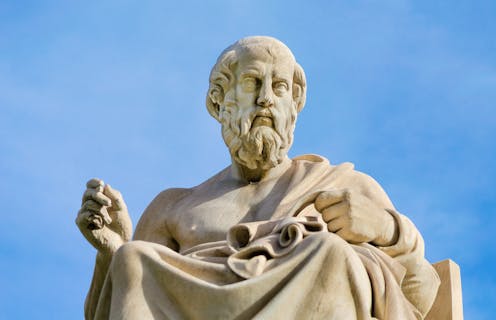
A statue of Plato. Richard Panasevich/Shutterstock

Giorgia Meloni is Italy’s new prime minister. Her party, Fratelli d’Italia, received 26% of the vote and, as part of a far-right coalition, now controls a majority in both chambers of the legislature.

According to Stern magazine, Meloni is the “most dangerous woman in Europe”. One concern is that her party are a “neo-fascist” organisation and so pose a danger to democracy in Europe.

Her victory poses an old question: how can we tell the difference between a democratic populist and an aspiring tyrant?

Twentieth-century experience suggests that highly ideological and totalitarian parties, such as Mussolini’s Fascists, represent the greatest threat to democracy. But we can better identify threats to democracy in the modern world using a wider range of historical examples. The 21st-century “despots” and “strongmen” resemble an older model of authoritarian rule: the personalist dictator or tyrant, in which power is vested more in an individual than a party or ideological group.

The first people to examine the puzzle of how to recognise a future dictator, and the first theorists of tyranny, were the ancient Greeks. Classical theorists, including Plato and Aristotle, identified two truths that have since been neglected by the western world.

First, tyranny is primarily defined not by ideology or behaviour but by the distribution of power within a state. Constitutions in the ancient world were categorised by who was sovereign (thus democracy is a state where the people, demos, have power, kratos). In a tyranny, one individual and his closest supporters have a monopoly of power and wealth. To identify a tyranny, the key question is not whether a politician is a demagogue but whether the state’s structures allow him or (much less frequently) her to consolidate power.

The second basic principle is that power corrupts and the distribution of power determines behaviour. If so, the tyrant – who possesses excessive power – will in time be corrupted morally. This observation is recorded first by the Greek historian Herodotus (around 430BC). Herodotus claimed that certain Persian nobles debated what constitution they should adopt (in around 522BC). One of those nobles, Otanes, observed that the absence of effective legal checks led even good people to yield to the temptation of abusing power over time.

Separation of powers

Modern data goes some way towards confirming these observations. Authoritarian regimes tend to be associated with higher levels of corruption and worse governance than functioning democracies. At the most extreme end, “personalist” dictatorships (of which Vladimir Putin’s Russia is a current egregious example) are characterised by erratic decision-making, high levels of repression internally and belligerence externally.

The key is to examine the separation (or concentration) of power in particular countries. The overall health of democratic institutions, with or without nationalist politics, determines whether states are susceptible to democratic decay. An important factor (as demonstrated by data on regime transitions) is how long these institutions last. Established democracies are far less likely to move towards authoritarianism than democracies in which constitutions are new or routinely altered.

Aspiring tyrants do not generally remove institutions: they prevent them from functioning properly. Populists mistrust institutions, dictators use them. In the ancient world a tyrant such as Pisistratus of Athens (ruled around 546-526BC) did not need to abolish the existing laws. One anecdote tells how Pisistratus attended a trial for murder as a defendant. The prosecutor, however, did not. He was intimidated into dropping the case. Tyrants can act this way, because they control who holds state offices. They also often possess a personal militia or means of coercion. One of Pisistratus’ first moves was to persuade the Athenians to grant him a bodyguard. Tyranny is thus a state where the law does not rule, but the tyrant rules by means of law.


Read more: What's a laureate? A classicist explains the word's roots in Ancient Greek victors winning crowns of laurel leaves


Modern analysts tend to focus less on the distribution of power and more on leaders’ ideologies, public pronouncements and leadership styles. In Meloni’s case, any resemblance to 1930s fascism in Italy sparks alarm. Many point to the origins of Meloni’s party in the neo-fascist Movimento Sociale Italiano.

Aspiring and established dictators come from all ideological backgrounds. Nationalist politics do not necessarily lead to authoritarianism. While xenophobia is often a tool of dictators, Fratelli d’Italia’s promotion of national sovereignty is also mainstream conservatism.

Victor Orban’s Hungary is an example of where a right-wing party (Fidesz) has not only won elections but has been able to concentrate power to a worrying degree. The government has increasing (though not universal) control over the media, there are widespread allegations of corruption. Judicial independence is now questionable and unlawful surveillance has been reported.


Read more: Italy's election is a case study in a new phase for the radical right


Criticism of Orban has focused on ideological elements of his programme, such as traditional Christian views on sexuality. This has helped Fidesz to rally support from the right. The EU, through its attempts at aggressive economic coercion, has also turned Orban into something of a martyr for those concerned by European federalism. For opponents of the European project, Orban and Putin are fighting a common enemy.

Based on these definitions, Meloni is not a dictator, and neither is Orban, although the second is edging closer as he seeks to control the major institutions of power.

How to respond to populism

Overreaction to nationalist populism in democracies can backfire. Orban has won four elections in 12 years. Meloni’s triumph shows that the politics of Europe remain unstable. A more conciliatory approach is needed to diffuse the toxic belief, held by many on the right, that the system is rigged against them.

It was possible to predict Putin’s monopolisation of power would lead to increasingly aggressive behaviour. Aristotle noted that “the tyrant is a stirrer-up of war, with the deliberate purpose of keeping the people constantly in need of a leader”.

Policymakers and the media need to distinguish between movements or individuals that legitimately challenge the political status quo in a democracy and those that are a genuine threat to democracy itself.

Democracy, demagogues and tyrants are all words used by the Greeks. Demagogues, or populists, are an inherent feature of democracy where all have equal rights. For many theorists, from Aristotle to the US Founding Fathers, this is a key weakness of democracy. But if western societies are to remain democracies, it is also an unavoidable part of politics.

The Conversation

Edmund Stewart receives funding from UKRI Policy Fund.

07 Nov 17:27

American voters are angry – that is a good thing for voter turnout, bad thing for democracy

by Steven Webster, Assistant Professor of Political Science, Indiana University
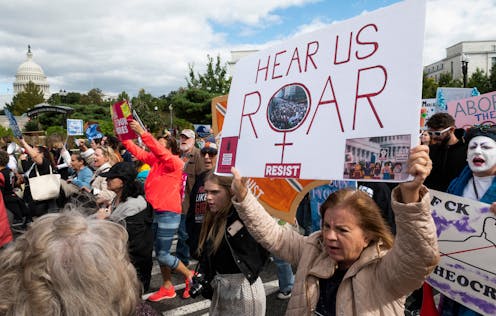
Thousands of demonstrators gather in Washington, D.C., to support women's rights on Oct. 8, 2022. Roberto Schmidt/AFP via Getty Images

Regardless of whether they live in a red state or a blue state, identify as Democrats or Republicans, or claim to be ideologically liberal or conservative, Americans have one thing in common.

They are angry – especially about this year’s midterm elections.

Americans’ anger is driven by contemporary political events.

Republicans are enraged by troubling economic indicators and perceived spikes in crime. Democrats, meanwhile, are angry about the U.S. Supreme Court’s landmark decision in Dobbs v. Jackson Women’s Health Organization, which overturned abortion rights enshrined by Roe v. Wade.

Politicians on both the left and the right are eager to capitalize on this anger. In fact, Democratic and Republican politicians alike deliberately and repeatedly seek to elicit voters’ anger. And, predictably, this anger leaves voters in a sour mood.

Recent polls reflect this reality.

Whipped into an emotional frenzy, Americans are likely to believe that things in the country have pretty seriously gotten off on the wrong track. So, too, do Americans believe that their preferred political party loses more often than not in legislative disputes.

Why, then, do politicians provoke anger if this emotional state leads to such pessimism? As a scholar who studies American politics and the author of “American Rage: How Anger Shapes Our Politics,” I believe the reason for this is quite simple: Anger provides ample benefits to those politicians who are able to use it most skillfully.

Angry voters, loyal voters

To begin, anger encourages Americans to vote.

Across a range of political settings, angry people are more likely to participate than those who are not angry. With elections increasingly being determined by which side can best motivate its base into showing up to vote, anger has become a powerful tool in a politician’s arsenal.

A middle-aged white man dressed in a business suit and wearing a red baseball cap walks on stage as hundreds of people in nearby grandstands applaud in support.
Former U.S. President Donald Trump attends a ‘Save America’ rally on Oct. 22, 2022, in Robstown, Texas. Brandon Bell/Getty Images

In addition to its propensity to boost participation, anger has been shown to play a role in shaping individuals’ decisions at the ballot box.

The angrier voters are at the opposing political party, the more likely they are to vote for their own party. Guided by the mantra that an angry voter is a loyal voter, politicians have a strong incentive to agitate the American public – incumbents and challengers alike.

Anger and negativity, rather than adoration and optimism, drive contemporary American political behavior.

Political anger and social consequences

Though politicians’ strategy of appealing to the public’s anger brings them electoral benefits, this anger is not without costs. In fact, anger can cause Americans to lose trust in the government and alter their views about the opposing political party’s legitimacy.

Alarmingly, political anger has consequences that extend beyond how Americans view their governing institutions or the opposing political party.

When American voters are angry about politics, they are inclined to avoid social interactions or social events where they are likely to come into contact with those whose political leanings differ from their own.

I have found that anger leads Americans to avoid assisting neighbors with various chores, such as watering houseplants or watching over property when the neighbor is out of town, if the neighbor supports the opposing political party.

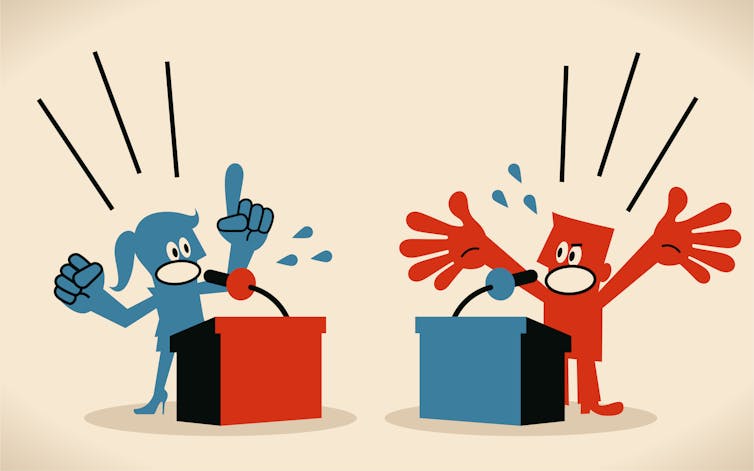
A cartoon depicts a blue character behind a red lectern and a red character behind a blue lectern, both wildly gesturing at each other.
In this illustration, two angry politicians from opposing sides are screaming at each other. Alashi

Political anger also can lead Americans to refuse requests to go on a date with those whose political leanings are opposed to their own.

Most concerning, political anger has the ability to alter Americans’ friendships and familial ties.

When angry about politics, Americans are more likely to express a desire to end friendships with those who support the other political party. So, too, do angry individuals express a desire to reduce – or completely eliminate – contact with family members whose political preferences deviate from their own.

Wither democracy?

Anger’s ability to cause individuals to socially polarize has potentially drastic ramifications for the health of American democracy. Crucially, social polarization precludes opportunities to form ties and build relationships with people from diverse backgrounds.

In societies divided along many lines, these interactions and relationships are essential to a healthy and functioning democracy. Among other things, such relationships forge bonds of mutual understanding and facilitate a climate in which good-faith cooperation is possible.

As American politics becomes increasingly fragmented along racial, religious and ideological lines, the need to form these cross-partisan social ties will become more pressing.

Anger’s ability to induce social polarization, combined with politicians’ overwhelming incentives to appeal to our emotional fury, means that this will be no easy task.

This story incorporates material from a story originally published on Sept. 10, 2020.

The Conversation

Steven Webster does not work for, consult, own shares in or receive funding from any company or organization that would benefit from this article, and has disclosed no relevant affiliations beyond their academic appointment.

07 Nov 17:26

Three reasons to eat pumpkins instead of carving them this Halloween

by Hazel Flight, Programme Lead Nutrition and Health, Edge Hill University
Pumpkins are regularly consumed as part of many diets around the world. Zulfiska/ Shutterstock

Pumpkins are synonymous with autumn. But while most of us associate them with Halloween, pie and pumpkin spice lattes, these fruits are in fact extremely versatile. And depending on how they’re prepared, they can be good for your health.

Though pumpkins are grown all year round, most of us only buy them in October for carving into jack-o’-lantern. This means many are missing out on a surprisingly nutritious food from their diet. Pumpkins are nutrient-dense while being low in calories. They contain a variety of vitamins, minerals and antioxidants that each have different benefits for our health.

Here are just a few of the reasons you should consider including pumpkins in your diet.

1. They’re a source of antioxidants

Pumpkins contain high levels of antioxidants. These are molecules that fight harmful free radicals (a type of unstable molecule that can sometimes cause damage to our cells, which may cause ageing and contribute to various diseases over time). While some antioxidants occur naturally in our bodies, others we get from fruits and vegetables.

The high antioxidant content in pumpkins could therefore be associated with a lower risk of developing certain diseases, such as heart disease and cancer.

Pumpkins are also one of the best sources of the antioxidant beta-carotene. Not only does this give pumpkins their vivid orange colour, but it’s also converted into vitamin A which is essential for good vision, our immune system and even heart and lung function.

Pumpkins also contain vitamins C and E, antioxidants that are known to strengthen our immune systems. In addition, vitamin C is important for wound healing and helping the body build collagen – a fibrous protein used in our connective tissues – including our bones, muscles and even blood. Vitamin E on the other hand is good for preventing clots from forming and may also be good for our skin, hair and nails.

2. They’re full of important minerals

Pumpkins contain both iron and folate.

Iron of course is important in helping our red blood cells carry oxygen from the lungs to tissues around the body. It also helps to keep our muscles and connective tissues healthy. Iron helps to preserve many vital functions in the body including energy and focus, gastrointestinal processes, the immune system, regulation of temperature and growth and neurological development.

Folate, also known as vitamin B9, is an essential nutrient that supports the formation of DNA and RNA. This is why it’s particularly important during pregnancy, infancy and adolescence. Low levels of folate are associated with an increased risk of several health conditions, including birth defects and cardiovascular disease. Research also shows that folate is linked to a reduce risk of pancreatic, oesophagal and colorectal cancer.

It should be noted that pumpkins are high in potassium, too, so patients on dialysis will need to limit their intake.

3. Even pumpkin seeds pack a punch

Although they’re small, pumpkin seeds are also packed full of valuable nutrients.

A person holds a carved Halloween pumpkin in their hands.
Save your seeds after pumpkin carving instead of throwing them away. kobeza/ Shutterstock

For example, pumpkin seeds contain magnesium, a mineral that supports muscle and nerve function, regulates blood pressure and supports the immune system. They also contain zinc, which alongside supporting our immune system also plays an important role in cell growth, building DNA and protein and healing damaged tissue.

Another perk of pumpkin seeds is that they contain unsaturated fatty acids, which help lower levels of LDL cholesterol (often known as “bad” cholesterol as it contributes to fatty build-up in arteries and can raise the risk of heart attacks or stroke, reduce inflammation and strengthen our cells).

They also contain many of the same antioxidants pumpkins do.

How to prepare your pumpkin

Pumpkins are a versatile fruit that is regularly consumed in many different parts of the world. It can be prepared in a variety of different ways.

For example, when carving a jack-o’-lantern this year, instead of throwing your seeds away, separate them from the flesh, rinse them off, and set them to the side. Once they’re dry, roast them – either plain or perhaps consider topping them with honey. This is a popular dessert in Mexico known as palanquetas. You can also use the flesh (or pulp) in several dishes, including in soup or a puree, or even in desserts, such as muffins, pudding or flan.

The fruit itself can be peeled and prepared or eaten as you would any other vegetable. As with other winter vegetables – such as squash – it goes particularly well with chilli, nutmeg and sage. Or perhaps you’d like to try preparing your pumpkin as they do in other parts of the world. In Armenia, pumpkin is used in the dish ghampama, in which the inside of a pumpkin is stuffed with boiled rice, dried fruits, nuts and honey before it’s cooked. Or maybe you’d prefer to try South African pampoenkoekies, which are tiny pumpkin fritters made with cinnamon and nutmeg.

Each year thousands of acres of farmland are used to grow pumpkins which are merely carved and then thrown away. This could be considered a waste of valuable, nutritious and delicious food. So this year, you might want to consider turning your jack-o’-lantern into a delicious, homemade meal instead.

The Conversation

Hazel Flight does not work for, consult, own shares in or receive funding from any company or organisation that would benefit from this article, and has disclosed no relevant affiliations beyond their academic appointment.

07 Nov 17:20

Republicans and Democrats see news bias only in stories that clearly favor the other party

by Marjorie Hershey, Professor Emeritus of Political Science, Indiana University
If you detect news media bias, that perception may be a result of your own bias. Anna Moneymaker/Getty Images

Charges of media bias – that “the media” are trying to brainwash Americans by feeding the public only one side of every issue – have become as common as campaign ads in the run-up to the midterm elections.

As a political scientist who has examined media coverage of the Trump presidency and campaigns, I can say that this is what social science research tells us about media bias.

First, media bias is in the eye of the beholder.

Communications scholars have found that if you ask people in any community, using scientific polling methods, whether their local media are biased, you’ll find that about half say yes. But of that half, typically a little more than a quarter say that their local media are biased against Republicans, and a little less than a quarter say the same local media are biased against Democrats.

Research shows that Republicans and Democrats spot bias only in articles that clearly favor the other party. If an article tilts in favor of their own party, they tend to see it as unbiased.

Many people, then, define “bias” as “anything that doesn’t agree with me.” It’s not hard to see why.

‘Liberal bias’ in the media is a constant topic on Fox News.

‘Media’ is a plural word

American party politics has become increasingly polarized in recent decades. Republicans have become more consistently conservative, and Democrats have become more consistently liberal to moderate.

As the lines have been drawn more clearly, many people have developed hostile feelings toward the opposition party.

In a 2016 Pew Research Center poll, 45% of Republicans said the Democratic Party’s policies are “so misguided that they threaten the nation’s well-being,” and 41% of Democrats said the same about Republicans. A poll conducted in midyear 2022 by Pew showed that “72% of Republicans regard Democrats as more immoral, and 63% of Democrats say the same about Republicans.”

Not surprisingly, media outlets have arisen to appeal primarily to people who share a conservative view, or people who share a liberal view.

That doesn’t mean that “the media” are biased. There are hundreds of thousands of media outlets in the U.S. – newspapers, radio, network TV, cable TV, blogs, websites and social media. These news outlets don’t all take the same perspective on any given issue.

If you want a very conservative news site, it is not hard to find one, and the same with a very liberal news site.

First Amendment rules

“The media,” then, present a variety of different perspectives. That’s the way a free press works.

The Constitution’s First Amendment says Congress shall make no law limiting the freedom of the press. It doesn’t say that Congress shall require all media sources to be “unbiased.” Rather, it implies that as long as Congress does not systematically suppress any particular point of view, then the free press can do its job as one of the primary checks on a powerful government.

When the Constitution was written and for most of U.S. history, the major news sources – newspapers, for most of that time – were explicitly biased. Most were sponsored by a political party or a partisan individual.

The notion of objective journalism – that media must report both sides of every issue in every story – barely existed until the late 1800s. It reached full flower only in the few decades when broadcast television, limited to three major networks, was the primary source of political information.

Since that time, the media universe has expanded to include huge numbers of internet news sites, cable channels and social media posts. So if you feel that the media sources you’re reading or watching are biased, you can read a wider variety of media sources.

Front page of the April 15, 1789 edition of the Gazette of the United States
Thomas Jefferson described this partisan newspaper, The Gazette of the United States, as ‘a paper of pure Toryism … disseminating the doctrines of monarchy, aristocracy, and the exclusion of the people.’ Library of Congress, Chronicling America collection

If it bleeds, it leads

There is one form of actual media bias. Almost all media outlets need audiences in order to exist. Some can’t survive financially without an audience; others want the prestige that comes from attracting a big audience.

Thus, the media define as “news” the kinds of stories that will attract an audience: those that feature drama, conflict, engaging pictures and immediacy. That’s what most people find interesting. They don’t want to read a story headlined “Dog bites man.” They want “Man bites dog.”

The problem is that a focus on such stories crowds out what we need to know to protect our democracy, such as: How do the workings of American institutions benefit some groups and disadvantage others? In what ways do our major systems – education, health care, national defense and others – function effectively or less effectively?

These analyses are vital to citizens – if we fail to protect our democracy, our lives will be changed forever – but they aren’t always fun to read. So they get covered much less than celebrity scandals or murder cases – which, while compelling, don’t really affect the ability to sustain a democratic system.

Writer Dave Barry demonstrated this media bias in favor of dramatic stories in a 1998 column.

He wrote, “Let’s consider two headlines. FIRST HEADLINE: ‘Federal Reserve Board Ponders Reversal of Postponement of Deferral of Policy Reconsideration.’ SECOND HEADLINE: ‘Federal Reserve Board Caught in Motel with Underage Sheep.’ Be honest, now. Which of these two stories would you read?”

By focusing on the daily equivalent of the underage sheep, media can direct our attention away from the important systems that affect our lives. That isn’t the media’s fault; we are the audience whose attention media outlets want to attract.

But as long as we think of governance in terms of its entertainment value and media bias in terms of Republicans and Democrats, we’ll continue to be less informed than we need to be. That’s the real media bias.

This story is an updated version of an article that was originally published on Oct. 15, 2020.

The Conversation

Marjorie Hershey does not work for, consult, own shares in or receive funding from any company or organisation that would benefit from this article, and has disclosed no relevant affiliations beyond their academic appointment.

07 Nov 17:19

When the Supreme Court loses Americans' loyalty, chaos – even violence – can follow

by Joseph Daniel Ura, Professor of Political Science, Texas A&M University
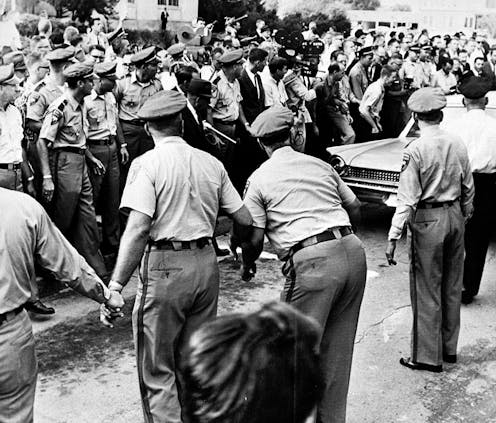
Policemen keep a mob back as James Meredith, a Black student trying to enroll at the University of Mississippi, is driven away after being refused admittance to the all-white university in Oxford on Sept. 25, 1962. AP Photo

The Supreme Court’s historically low public standing has prompted a national conversation about the court’s legitimacy. It’s even drawn rare public comment from three sitting Supreme Court justices. What’s referred to by experts as the problem of “judicial legitimacy” may seem abstract, but the court’s faltering public support is about more than popularity.

Eroding legitimacy means that government officials and ordinary people become increasingly unlikely to accept public policies with which they disagree. And Americans need only look to the relatively recent past to understand the stakes of the court’s growing legitimacy problem.

Cost ‘paid in blood’

The Supreme Court’s 1954 decision in Brown v. Board of Education shined a light on many white Americans’ tenuous loyalty to the authority of the federal judiciary.

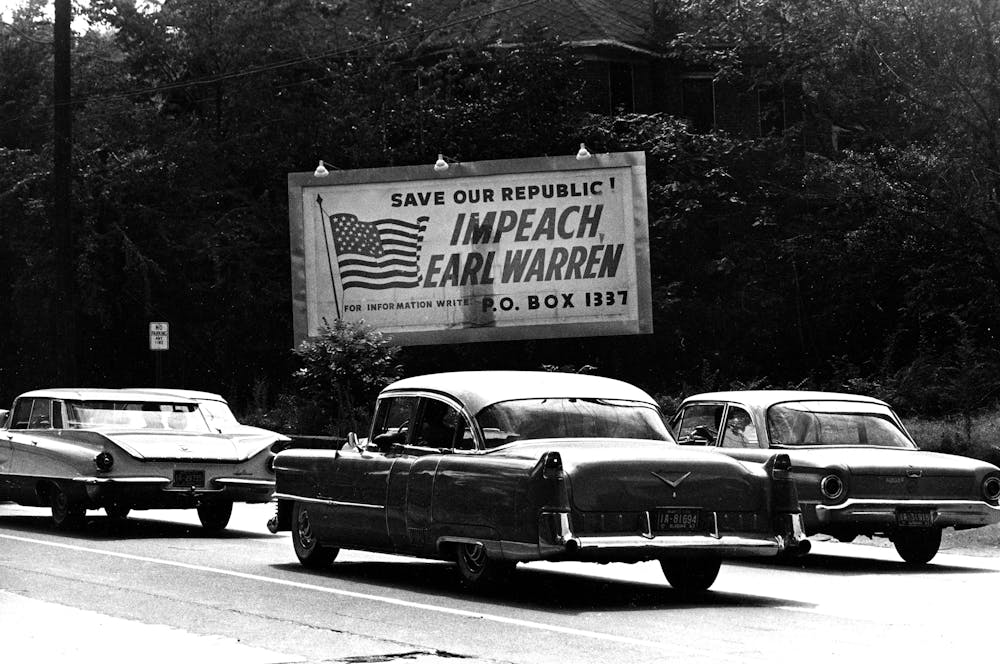
In Brown, the court unanimously held that racial segregation in public education violates the equal protection clause of the 14th Amendment. The justices were abundantly aware that their decision would evoke strong emotions. So Chief Justice Earl Warren worked tirelessly to ensure that the court issued a unanimous, short and readable opinion designed to calm the anticipated popular opposition.

Warren’s efforts were in vain. Rather than recognizing the court’s authoritative interpretation of the Constitution, many white Americans participated in an extended, violent campaign of resistance to the desegregation ruling.

A highway with old cars on it and a billboard that says 'IMPEACH EARL WARREN' on the side.
Resistance in the South to the Supreme Court’s school desegregation order was strong and often violent. This billboard urged impeachment of the court’s then-chief justice, Earl Warren. AP photo

The integration of the University of Mississippi in 1962 provides a pointed example of this resistance.

The Supreme Court had backed a lower federal court that ordered the university to admit James Meredith, a Black Air Force veteran. But Mississippi Gov. Ross Barnett led a wide-ranging effort to stop Meredith from enrolling at Ole Miss, including deploying state and local police to prevent Meredith from entering campus.

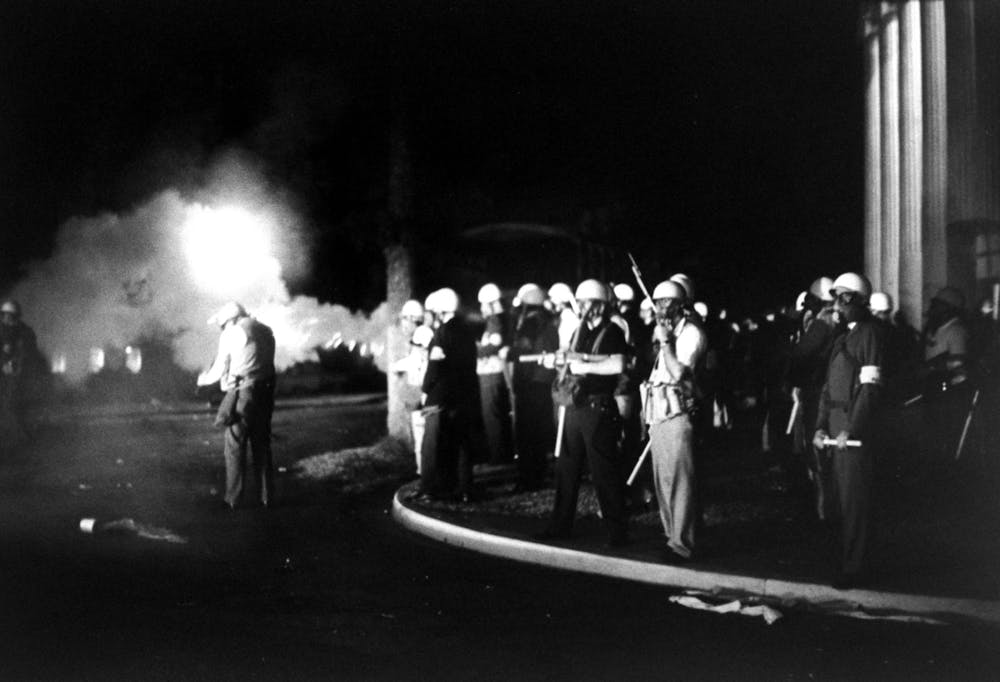
On Sunday, Sept. 30, 1962, Meredith nevertheless arrived on the university’s campus, guarded by dozens of federal marshals, to register and begin classes the next day. A crowd of 2,000 to 3,000 people gathered on campus and broke into a riot. Meredith and the marshals were attacked with Molotov cocktails and gunfire. The marshals fired tear gas in return.

In response, President John F. Kennedy invoked the Insurrection Act of 1807 and ordered the U.S. Army onto campus to restore order and protect Meredith. Overnight, thousands of troops arrived, battling rioters.

Armed troops along a sidewalk in the night, with fire in the background.
President John F. Kennedy called in federal troops to quell the violence against James Meredith’s enrollment in the University of Mississippi in 1962. Lynn Pelham/Getty Images

The violence finally ended after 15 hours, leaving two civilians dead – both killed by rioters – and dozens of wounded marshals and soldiers in addition to hundreds of injuries among the insurgent mob.

The next day, Oct. 1, Meredith enrolled in the university and attended his first class, but thousands of troops remained in Mississippi for months afterward to preserve order.

What some call “the Battle of Oxford” was fueled by white racism and segregation, but it played out against the backdrop of weak judicial legitimacy. Federal courts did not command enough respect among state officials or ordinary white Mississippians to protect the constitutional rights of Black Mississippians. Neither Gov. Barnett nor the thousands of Oxford rioters were willing to follow the court order for Meredith to enroll at the university.

In the end, the Constitution and the federal courts prevailed only because Kennedy backed them with the Army. But the cost of weak judicial legitimacy was paid in blood.

Legitimacy leads to acceptance

In contrast, when people believe in the legitimacy of their governing institutions, they are more likely to accept, respect and abide by the rules the government – including the courts – ask them to live under, even when the stakes are high and the consequences are far-reaching.

For example, two decades ago, the Supreme Court resolved a disputed presidential election in Bush v. Gore, centered on the counting of ballots in Florida. This time, the court was deeply divided along ideological lines, and its long, complicated and fragmented opinion was based on questionable legal reasoning.

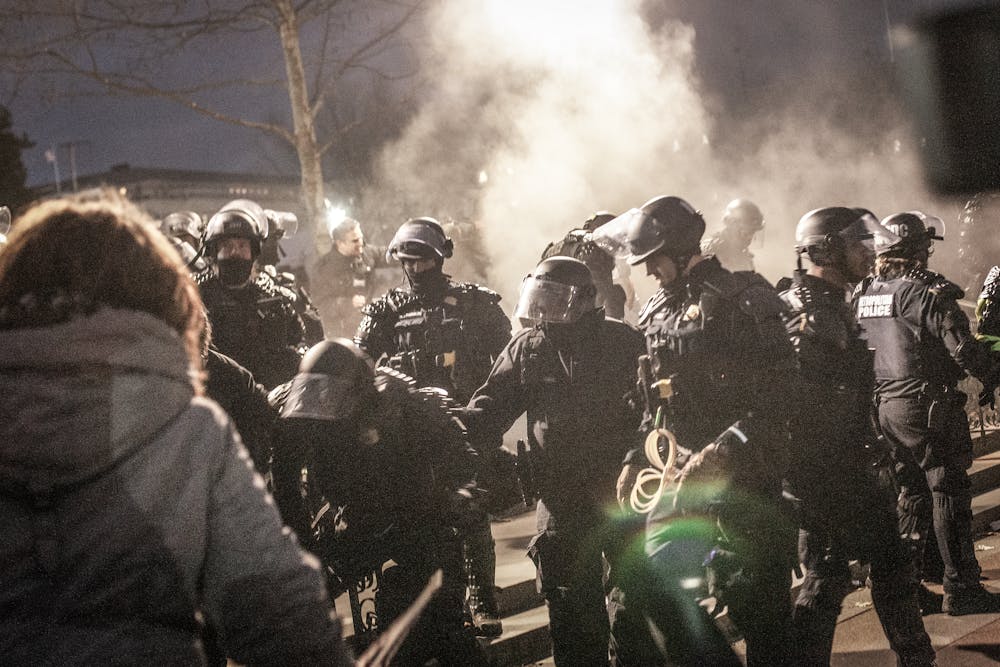
Police in helmets with riot gear with smoke in the background.
Clashes between riot police and Donald Trump supporters near the U.S. Capitol on Jan. 6, 2021, in Washington. Shay Horse/NurPhoto via Getty Images

But in 2000, the court enjoyed more robust legitimacy among the public than it does today. As a consequence, Florida officials ceased recounting disputed ballots. Vice President Al Gore conceded the election to Texas Gov. George W. Bush, specifically accepting the Supreme Court’s pivotal ruling.

No Democratic senator challenged the validity of Florida’s disputed Electoral College votes for Bush. Congress certified the Electoral College’s vote, and Bush was inaugurated.

Democrats were surely disappointed, and some protested. But the court was viewed as sufficiently legitimate to produce enough acceptance by enough people to ensure a peaceful transition of power. There was no violent riot; there was no open resistance.

Indeed, on the very night that Gore conceded, the chants of his supporters gathered outside tacitly accepted the outcome: “Gore in four!” – as if to say, “We’ll get you next time, because we believe there will be a next time.”

Risks ahead

But what happens when institutions fail to retain citizens’ loyalty?

The Jan. 6, 2021, insurrection showcased the consequences of broken legitimacy. The rioters who stormed the Capitol had lost faith in systems that undergird American democracy: counting presidential votes in the states, tallying Electoral College ballots and settling disputes over election law in the courts.

The rioters may well have believed their country was being stolen, even if such beliefs were baseless. So, they rebelled in the face of a result they didn’t like.

This threat is far from gone. In addition to numerous important questions about individual rights and the scope of government power, the Supreme Court may soon be asked to resolve disputes over the administration of elections and the power to certify election winners – particularly the authority to designate a slate of presidential electors.

Nothing is certain in politics, but the specter of constitutional crisis looms over the United States. It’s dangerously unclear whether the Supreme Court retains enough legitimacy to authoritatively resolve such disputes. If it doesn’t, the court’s abstract legitimacy problem could once again end with blood in the streets.

The Conversation

Joseph Daniel Ura has previously received research funding from the National Science Foundation and funding for academic programs from the Charles Koch Foundation.

Matthew E. K. Hall has previously received research funding from the National Science Foundation.

07 Nov 17:10

Why inflation will likely stay sky-high regardless of which party wins the midterms

by William Chittenden, Associate professor of Finance, Texas State University
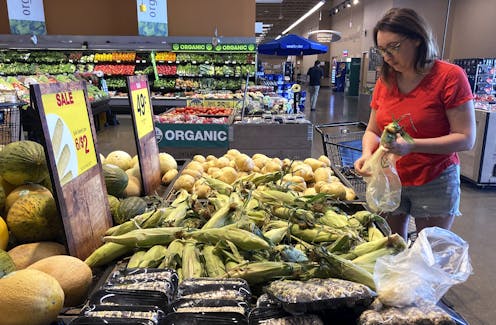
The U.S. government can’t do much about rising food prices, which are primarily caused by supply chain problems. AP Photo/Nam Y. Huh

Soaring inflation is the top issue for a lot of voters heading into the midterms, with most saying Republicans would do a better job of handling the problem.

Indeed, Republican candidates are taking full advantage of voter concern about inflation by hammering Democrats on the issue and pushing their own ideas to fight inflation, such as cutting both government spending and taxes.

As a finance and economics expert, I have studied inflation, what causes it and what can bring it down. That’s why I doubt a Republican Congress would have much, if any, effect on inflation.

Two drivers of inflation

Inflation, or a sustained rise in consumer prices, is created in two main ways.

The first is by way of an increase in demand for products and services. For example, at the beginning of the pandemic, demand for webcams soared, as lots of employees were required to work remotely. As a result, the prices of webcams increased significantly.

Or take leisure travel, which has increased significantly as COVID-19 infections have come down. People are flying more, which has led to higher ticket prices.

When these types of demand-driven price increases occur across a large number of products and services, the result is rising inflation.

Inflation can also result from higher production costs.

For instance, gas prices are on the rise because it has become a lot more expensive to produce it. The war in Ukraine sent oil prices soaring at the beginning of 2022. They’ve come down, but a recent supply cut by OPEC+ oil-producing nations caused another spike. As oil prices increase, the higher costs are passed on to refiners, which leads to higher prices at the pump.

The increase in the price of eggs is another example of this type of inflation. Bird flu caused the deaths of about 10% of egg-laying hens beginning in January 2022. In addition, farmers faced higher fuel and fertilizer costs. These factors have caused the average price of eggs to soar to an all-time high.

The Fed can fight only half the battle

An economy’s central bank – not Congress or the president – is typically the first line of defense when it comes to battling inflation. Central banks set monetary policy, and their primary way of combating inflation is by raising interest rates.

In the U.S., the Federal Reserve focuses on the so-called federal funds rate, which is the base rate that banks use in setting their own deposit and loan rates. The Fed has raised this benchmark five times in 2022, from about 0% in March to 3% – and is expected to lift rates another 0.75 percentage point on Nov. 2, 2022.

The main goal of the rate hikes is to increase borrowing costs and thus drive down demand – the first driver of inflation that I noted above. The idea is that higher interest rates lead people and businesses to borrow less. The less people and businesses borrow, the less they will spend.

The impact of higher interest rates is already being felt in the housing market, for example. Current 30-year mortgage rates are over 7% on average, more than double the rates of a year ago and the highest since 2002. This is resulting in fewer home sales and falling prices.

The problem is that this approach has absolutely no effect on the other main generator of inflation, rising production costs.

The Fed’s higher rates will not stop the war in Ukraine or prompt hens to lay more eggs. Therefore, energy and egg prices won’t drop as a result. This is also true for all products and services whose production costs are increasing because of supply chain issues.

These issues have affected the prices of everything from bicycles to bathroom tissue. Higher interest rates will not affect the demand for and thus the prices for bikes, toilet paper or any other goods feeling supply chain strains.

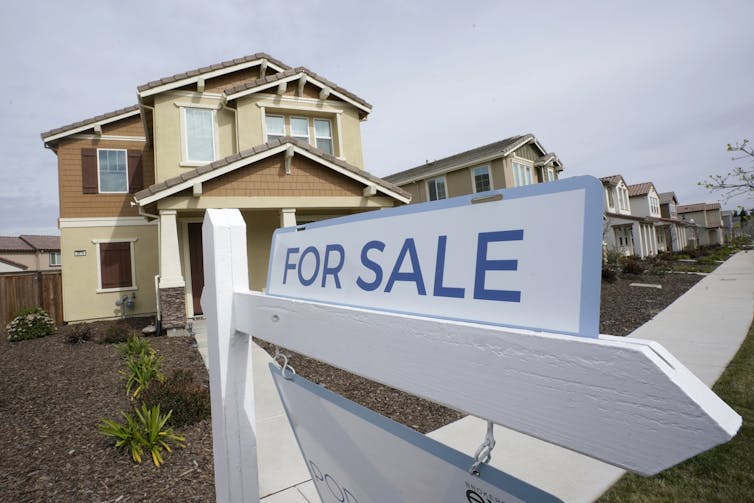
For sale sign sits atop a white post in front of a cream/brown multi-floor house
The Fed’s interest rate hikes are starting to sap demand for new homes – the one way policymakers can fight inflation. AP Photo/Rich Pedroncelli

Congress’ fiscal tools are also limited

Congress and the White House do have some tools they can use in the inflation fight. One problem is they’re not very popular and so hard to pass. Another is that, like the Fed’s rate hikes, they address only one kind of inflation.

The main thing the government can do is take money out of the pockets of consumers and businesses, either by raising taxes or cutting spending – or both. A reduction in money in the economy leads to lower demand for goods and services, both as the government spends less and individuals and businesses give more or get less from the government.

But as with higher rates, it won’t do anything to fix the global economy’s ongoing supply chain problems or lower production costs. Changes in taxes or government spending will not reduce food prices or the cost of heating your home this winter.

So even while a Republican Congress might want to do more about inflation, whatever it does will affect only one of the drivers.

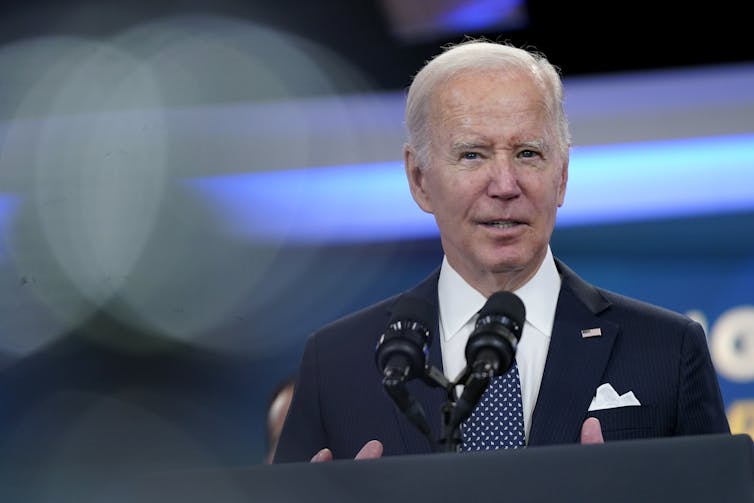
an elderly white man with gray hair and a suit stands behind a lectern
Republicans hope they can pin the blame for inflation on President Biden, though the data shows that which party is in the White House doesn’t make that much of a difference to the rate of inflation. AP Photo/Patrick Semansky

Who’s better on inflation

Taking a step back, does either political party have a better track record on inflation?

The short answer is no, based on my analysis of economic data from 1953 to 2020. From Presidents Dwight D. Eisenhower through Donald Trump, inflation has averaged 3.35% under Democratic administrations and 3.5% under Republicans.

One caveat, however. When the House and Senate are controlled by Republicans while the president is a Democrat, inflation averaged 2 percentage points less than than when everything was in Democratic hands. There are fewer data points, so it’s not as strong a finding, but it suggests divided government has an upside.

Another way to look at this is to examine the parties’ current or proposed policies. Democrats have touted their “Inflation Reduction Act,” a package of climate, health care and tax measures passed in August, as proof that they are tackling the problem. But despite the name, economists expect it to have very little impact on inflation anytime soon, because most of the measures will take years to go into effect.

Republicans, meanwhile, have proposed cutting spending – such as on America’s social safety net – and lowering taxes for wealthier individuals and businesses. While spending cuts could reduce demand – and inflation – the lower taxes would work at cross purposes and drive up prices by pumping more money into the economy.

In other words, expect inflation to stay high regardless of which political party is in the majority of the House and Senate. And then, turn to hope – that the Fed’s rate hikes work, and the supply chain problems driving up costs begin to ease.

The Conversation

William Chittenden does not work for, consult, own shares in or receive funding from any company or organization that would benefit from this article, and has disclosed no relevant affiliations beyond their academic appointment.

07 Nov 17:09

Why inequality is growing in the US and around the world

by Fatema Z. Sumar, Executive Director of the Center for International Development, Harvard Kennedy School
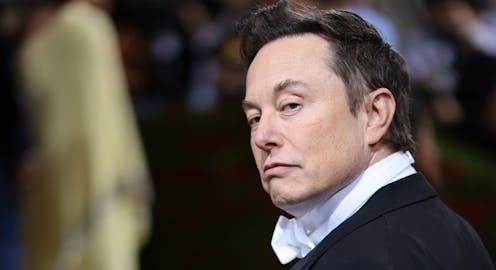
Elon Musk is the world's wealthiest person. Dimitrios Kambouris/Getty Images for The Met Museum/Vogue

U.S. income inequality grew in 2021 for the first time in a decade, according to data the Census Bureau released in September 2022.

That might sound surprising, since the most accurate measure of the poverty rate declined during the same time span.

But for development experts like me, this apparent contradiction makes perfect sense.

That’s because what’s been driving income inequality in the United States – and around the world for years – is that the very rich are getting even richer, rather than the poor getting poorer.

In every major region of the world outside of Europe, extreme wealth is becoming concentrated in just a handful of people.

Gini index

Economists and other experts track the gap between the rich and the poor with what’s known as the Gini index or coefficient.

This common measure of income inequality is calculated by assessing the relative share of national income received by proportions of the population.

In a society with perfect equality – meaning everyone receives an equal share of the pie – the Gini coefficient would be 0. In the most unequal society conceivably possible, where a single person hoarded every penny of that nation’s wealth, the Gini coefficient would be 1.

The Gini index rose by 1.2% in the U.S. in 2021 to 0.494 from 0.488 a year earlier, the Census found. In many other countries, by contrast, the Gini has been declining even as the COVID-19 pandemic – and the deep recession and weak economic recovery it triggered – worsened global income inequality.

Inequality tends to be greater in developing countries than wealthier ones. The United States is an exception. The U.S. Gini coefficient is much higher than in similar economies, such as Denmark, which had a Gini coefficient of 0.28 in 2019, and France, where it stood at 0.32 in 2018, according to the World Bank.

Wealth inequality

The inequality picture is even bleaker when looking beyond what people earn – their income – to what they own – their assets, investments and other wealth.

In 2021, the richest 1% of Americans owned 34.9% of the country’s wealth, while average Americans in the bottom half had only US$12,065 – less money than their counterparts in other industrial nations. By comparison, the richest 1% in the United Kingdom and Germany owned only 22.6% and 18.6% of their country’s wealth, respectively.

Globally, the richest 10% of people now possess nearly 76% of the world’s wealth. Meanwhile, the bottom 50% own just 2%, according to the 2022 World Inequality Report, which analyzes data and the work of more than 100 researchers and inequality experts.

Drivers of extreme income and wealth

Large increases in executive pay are contributing to higher levels of income inequality.

Take a typical corporate CEO. Back in 1965, he – all CEOs were white men then, and most still are today – earned about 20 times the amount of an average worker at the company he led. In 2018, the typical CEO earned 278 times as much as their typical employees.

But the world’s roughly 2,700 billionaires make most of their money not through wages but through gains in the value of their stocks and other investments.

Their assets grow in large part because of a cascade of corporate and individual tax breaks, rather than salaried wages granted by shareholders. When the wealthy in the United States earn money from capital gains, the highest tax rate they pay is 20%, whereas the highest income earners are on the hook for as much as 37% on every additional dollar they earn.

This calculation does not even count the effects of tax breaks, which often slash the real-world capital gain tax to much lower levels.

Tesla, SpaceX and Twitter CEO Elon Musk is currently the world’s richest man, with a fortune of $240 billion, according to a Bloomberg estimate. The $383 million he made per day in 2020 made it possible for him to buy enough Tesla Model 3 cars to cover almost the whole of Manhattan had he wished to do so.

Musk’s wealth accumulation is extreme. But the founders of several tech companies, including Google, Facebook and Amazon, have all earned many billions of dollars in just a few years. The average person could never make that much money through a salary alone.

Another day, another billionaire

A new billionaire is created every 26 hours, according to Oxfam, an international aid and research group where I used to work.

Globally, inequality is so extreme that the world’s 10 richest men possess more wealth than the 3.1 billion poorest people, Oxfam has calculated.

Economists who study global inequality have found that the rich in large English-speaking countries, along with India and China, have seen a dramatic rise in their earnings since the 1980s. Inequality boomed as deregulation, economic liberalization programs and other policies created opportunities for the rich to get richer.

Why inequality matters

The rich tend to spend less of their money than the poor. As a result, the extreme concentration of wealth can slow the pace of economic growth.

Extreme inequality can also exacerbate political dysfunction and undermine faith in political and economic systems. It can also erode principles of fairness and democratic norms of sharing power and resources.

The richest people have more wealth than entire countries. Such extreme power and influence in the hands of a select few who face little accountability is raising concerns that are part of a robust debate on whether and how to address extreme inequality.

Many proposed solutions call for new taxes, regulations and policies, along with philanthropic strategies like using grants and community-based investments to dismantle inequality.

Voters in some states, like Massachusetts, will get to weigh in on whether to raise taxes on the income earned by their richest residents in ballot initiatives in November 2022. Proponents of these initiatives claim the revenue raised would boost funding for public services, such as education and infrastructure. President Joe Biden is also proposing to almost double the top capital gains tax for those making over $1 million.

However societies choose to act, I believe change is needed.

The Conversation

Fatema Z. Sumar previously worked as the Vice President of Global Programs at Oxfam America.

07 Nov 17:06

How a 2013 US Supreme Court ruling enabled states to enact election laws without federal approval

by Joshua F.J. Inwood, Professor of Geography and Senior Research Associate in the Rock Ethics Institute, Penn State
Terry Hubbard, a former felon, voted in the 2020 presidential election and was arrested two years later in Florida on voter fraud charges. Josh Ritchie for The Washington Post via Getty Images

Since 2019, legislators and election officials in Florida have revised, passed and enforced restrictive voting laws that make it harder for poor people, former felons and people of color – who traditionally favor Democrats in elections – to vote.

At the same time, they appear to have taken exceptional measures that have made it easier for voters in Republican areas of the state to cast their ballots, especially after a natural disaster.

The pattern of favoring GOP voters and discriminating against people of color, especially against Blacks, has been so obvious that, in a brief filed in federal court on Aug. 17, 2022, federal prosecutors argued that Republicans lawmakers targeted Black voters when they enacted the new election law in Florida, a charge denied by lawyers defending the state.

Yet less than a week after the filing, instead of addressing widespread concerns over the restriction of voting rights, Florida Gov. Ron DeSantis held a news conference to show how his state is taking “voter fraud” seriously.

Despite the lack of evidence of widespread voter fraud, DeSantis told the assembled media that the state’s new Office of Election Crimes and Security was in the process of arresting 20 Florida residents for allegedly committing voting fraud.

Based on media reports, the majority of those pursued by authorities were Black voters.

Although a judge dismissed charges filed against one man, we believe these arrests are a bellwether of more efforts Americans will likely see to intimidate voters under the guise of election security.

The question, then, is how are states allowed to enact election laws that appear race neutral – but have a disproportionate impact on voters who have been historically disenfranchised?

Impact of Shelby v. Holder

We are scholars of the American civil rights movement and the role of geography and voter intimidation in the long struggle for Black voting rights.

The actions in Florida are part of a national trend that saw dozens of states across the country overhaul their election laws after former President Donald Trump’s persistent and false claims of fraud in the 2020 presidential election.

A white man dressed in a business suit stands with outstretched arms behind a lectern that has a sign bearing the words Election Integrity.
Florida Gov. Ron DeSantis announces on Oct. 18, 2022, that the state’s new Office of Election Crimes and Security is in the process of arresting 20 individuals for voter fraud. Joe Raedle/Getty Images

The rash of new state election laws includes everything from closing polling places to restricting the time and place of early voting. They also include partial bans on providing water and food to people standing in line to vote.

Not all of these laws included restrictions, and some were established to avoid health risks during the COVID pandemic.

These bills were often couched in the language of preventing voter fraud to protect democracy. “Voter confidence in the integrity of our elections is essential to maintaining a democratic form of government,” said Florida’s Republican Senate president, Wilton Simpson.

But voting rights experts argue that instead of prohibiting election fraud, many of the new laws may make it harder for people to vote.

In the past, the 1965 Voting Rights Act included requirements that, in states that historically had discriminated against the right of Black people to vote, such major changes to election law would have sparked a review by the U.S. Department of Justice to determine whether they could take effect.

The loss of that federal oversight was made possible by a 2013 U.S. Supreme Court 5-4 decision in the case of Shelby v. Holder. That decision eliminated the oversight requirements of the 1965 Voting Rights Act.

From the outset of the Voting Rights Act, Alabama, Alaska, Georgia, Louisiana, Mississippi, South Carolina and Virginia were required to have federal oversight in order to prohibit those states’ adopting discriminatory election laws.

In addition, several specific counties in Arizona, Hawaii, Idaho and North Carolina were also found to have discriminated in the past, thus requiring federal oversight.

New state election laws

These states, long under scrutiny by the federal government for discriminatory voting laws, were some of the first states to enact new and more restrictive voting regulations and rules after the 2013 Supreme Court ruling.

Yet these states were not the only ones to consider changing or enacting new election laws since the 2020 presidential election. In 2022 the effort to restrict the right to vote has accelerated.

Thirty-four bills currently are moving through 11 state legislatures to restrict access to the vote. In all, 39 states have considered over 390 restrictive bills, and these efforts affect minority voters most specifically.

Though the impact on voter turnout is an open question among election experts, one thing is clear – the number of polling places and voting drop boxes in communities of color has diminished since before the COVID-19 pandemic.

While inconsistent data reporting makes it difficult to determine the exact number and location of closed polling places, recent statistics suggest that since the 2013 ruling, at least 750 voting locations in Texas, 320 in Arizona, 240 in Georgia, 126 in Louisiana, 96 in Mississippi and 72 in Alabama have closed.

Modern-day poll tax

In all, over 1,600 polling places have closed across the U.S. since the Holder decision in 2013.

Recently, civil rights organizations, including the NAACP Legal Defense Fund, have pressed Mississippi for information on poll closures in the state to determine if new election laws there are having a detrimental impact on Black residents’ ability to vote.

According to the Mississippi Free Press, the state “does not provide an up-to-date, comprehensive list or database of voting precincts to the public,” as required by law.

These closings, often done with little notice or public accountability, have occurred across communities of varying racial and demographic characteristics.

What unites these places across the country are the increased burdens and costs they impose on voters of color, older voters, rural voters, voters with disabilities and poor working people in general.

In our view, the poll closings since the Holder decision have created significant financial costs for those least able to bear them. We see the long lines as more than an inconvenience – they are effectively a modern-day poll tax.

Scores of black demonstrators holding posters march to support black voting rights.
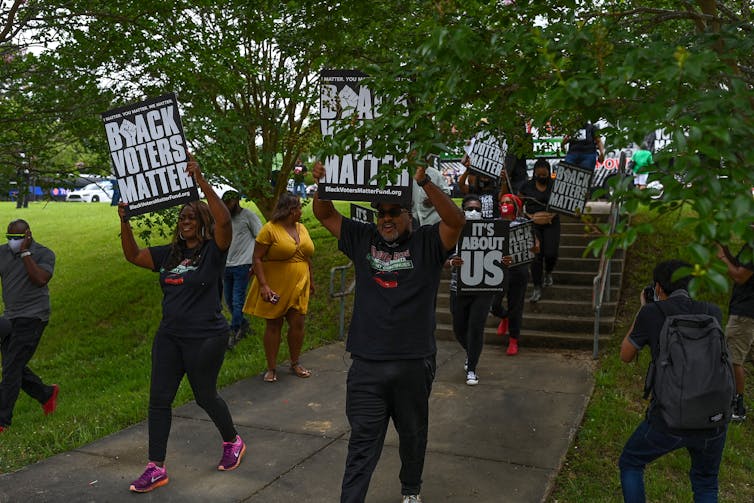
Black Voters Matter demonstrators march during a voting rights rally on June 19, 2021, in Jackson, Miss. Joshua Lott/The Washington Post via Getty Images

The poll tax was an amount of money each voter had to pay before being allowed to vote. After the Civil War, many Southern and Western states used the poll tax and other Jim Crow measures to keep poor and minority voters from being able to cast ballots.

The frequently exorbitant taxes were outlawed in 1964 by the the 24th Amendment to the U.S. Constitution.

Our research shows that democracy depends upon communities’ having equitable social and geographic access to voting places.

The new Florida election law was challenged in March 2022 by voting rights advocates, the League of Women Voters of Florida and the Florida NAACP. Though that case is under appeal – and restrictions were allowed to remain in place during the midterm election – Chief U.S. District Judge Mark Walker found in his lower court ruling that the Florida law placed restrictions on voters that were unconstitutional and discriminated against minority citizens.

“At some point, when the Florida Legislature passes law after law disproportionately burdening Black voters, this court can no longer accept that the effect is incidental,” Walker wrote.

The Conversation

The authors do not work for, consult, own shares in or receive funding from any company or organization that would benefit from this article, and have disclosed no relevant affiliations beyond their academic appointment.

07 Nov 17:04

Conservative US Supreme Court reconsidering affirmative action, leaving the use of race in college admissions on the brink of extinction

by Travis Knoll, Adjunct Professor of History, University of North Carolina – Charlotte
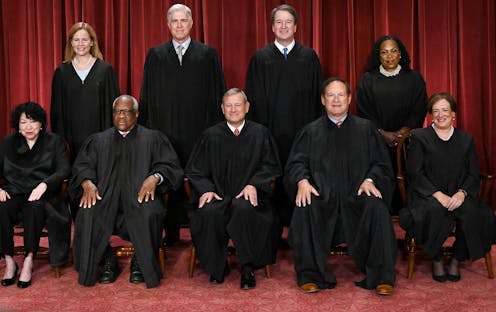
The U.S. Supreme Court in its official portrait on Oct. 7, 2022. Olivier Douliery/AFP via Getty Images

The U.S. military learned a valuable lesson about race during the Vietnam War: Diversity does not happen without affirmative action.

That helps explain why a distinguished group of 35 military officials wrote a brief to the Supreme Court supporting the use of race as a part of college admissions – as the U.S. military has done at its four service academies over the last nearly 50 years.

While the Supreme Court has agreed in the past that racial diversity on college campuses is an important goal, the problem is just how to achieve that goal without using race as a factor.

In two cases that are expected to determine the fate of affirmative action programs across the country, the court heard oral arguments on Oct. 31, 2022, that could bring an end to using race as one of many factors in college admissions decisions.

Questions from the justices reflected the ideological divisions on the court. Conservative justices argued that race-based admissions policies had no defined end point.

“I don’t see how you can say that the program will ever end,” Chief Justice John Roberts said.

Associate Justice Clarence Thomas cut right to the point in his questions.

“I may be tone-deaf when it comes to all these other things that happen on campus, about feeling good and all that,” Thomas said to one of the attorneys defending affirmative action. “I’m really interested in a simple thing: What benefits academically are there to your definition or the diversity that you’re asserting.”

In sharp contrast, liberal Justice Sonia Sotomayor reminded the court that diversity was deemed an issue of national importance in previous rulings and that without such programs, the number of historically disadvantaged applicants decreases substantially.

“What we know,” Sotomayor said about the nine states who have tried dropping affirmative action programs, “in each of them, white admissions have either remained the same or increased. And clearly, in some institutions, the numbers for underrepresented groups has fallen dramatically, correct?”

The US military experience

In my view as a scholar of the history of affirmative action, the military officers make the case that diversity is a matter of life and death.

The officers argued in their brief that barring universities from taking race into account in admissions risks sowing “internal resentment, discord, and violence” in an era when “diversity is imperative to our military’s dealings with international allies and complex global challenges.”

In addition, the military leaders argued that overturning affirmative action would damage the extremely successful talent pipeline that the officer corps has set up directly through military academies and indirectly through the university-based ROTC programs.

This is not the first time former military officials have weighed in on affirmative action. They did so in the 2003 case against the affirmative action program at the University of Michigan in Grutter vs. Bollinger.

“The importance of maintaining a diverse, highly qualified officer corps has been beyond legitimate dispute for decades,” the military officials wrote.

Indeed, in 1962, when U.S. involvement was starting to grow in Vietnam, Black commissioned officers represented only 1.6% of the officers corps. Military academies remained virtually segregated, with Black people making up less than 1% of enrollees. As a result, the number of Black officers didn’t grow much.

A wounded white solider is carried by a black soldier during the Vietnam War.
A wounded soldier is carried by members of the 1st Calvary Division near the Cambodian border during the Vietnam War. Bettmann/GettyImages

Over the next five years, the number of Black soldiers fighting and dying on the front lines grew to about 25%. Racial tensions between white and Black soldiers led to at least 300 fights in a two-year-period that resulted in 71 deaths.

Fueling those fights was the belief among Black soldiers that the largely white officers didn’t care about their lives.

The lack of diversity, the military leaders wrote in their brief, “led to a complete breakdown in understanding between minority enlisted service members and the white officers who led them.”

In what they described as “a painful chapter,” military officials said the Vietnam War “brought home the importance of cultivating diversity across all levels of leadership.”

It also began the military’s use of affirmative action, including race-conscious admissions policies at service academies and in ROTC programs.

Conservative target for decades

In their lawsuits now in the Supreme Court against Harvard and the University of North Carolina, the anti-affirmative action organization Students for Fair Admissions argued that the schools’ race-conscious admissions process was unconstitutional and discriminated against high-achieving Asian American students in favor of traditionally underrepresented Blacks and Hispanics.

These cases mark the second time the Students for Fair Admissions and its founder, Edward Blum, a conservative activist who has raised millions of dollars from right-wing donors, have reached the Supreme Court in their efforts to dismantle affirmative action.

In 2016, they challenged the University of Texas on behalf of white and Asian students, but lost. That didn’t stop Blum from filing the latest challenges before the Supreme Court – all in the effort to eliminate the use of race in college admissions.

In an October 2022 interview, Blum said he believes that diversity on campus is a good thing, but “there is a way to go about doing this without putting a thumb on the scale.”

Given the conservative 6-3 majority on the Supreme Court and its controversial ruling that overturned the landmark 1973 abortion decision in Roe v. Wade, it does not appear likely that affirmative action as it’s known will survive, despite decades of rulings that protected the use of race as an admissions criteria.

In 2007, for instance, Chief Justice Roberts wrote in a school busing case that “the way to stop discrimination on the basis of race is to stop discriminating on the basis of race.”

Forms of that argument have been around since the 1970s, when a legal challenge reached the Supreme Court in Regents of the University of California v. Bakke.

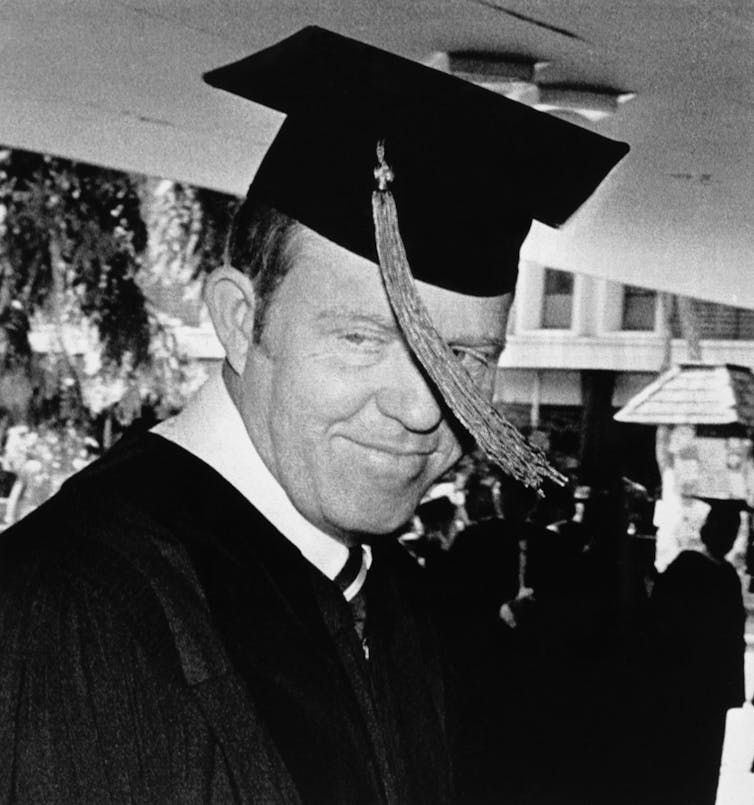
A white man wearing a black robe is seen graduating from medical school.
Allan Bakke, 42, receives his medical diploma in 1982 after successfully challenging affirmative action admissions policies to the Supreme Court. Bettmann Archive/Getty Images

In that 1978 case, Allan Bakke, a white man, had been denied admission to University of California at Davis’ medical school. Though ruling that a separate admissions process for minority medical students was unconstitutional, Associate Justice Lewis Powell wrote that race can still be one of several factors in the admissions process.

Since then, the Supreme Court has issued different rulings on whether race could be used in college admissions.

In the 2003 Grutter v. Bollinger case, Justice Sandra Day O’Connor wrote the majority opinion that endorsed the University of Michigan’s “highly individualized, holistic review” that included race as a factor and had been legally challenged.

Most recently, in Fisher v. University of Texas at Austin in 2016, the court reaffirmed its belief in schools that “train students to appreciate diverse viewpoints, to see one another as more than mere stereotypes, and to develop the capacity to live and work together as equal members of a common community.”

If not race, then what?

Race-neutral admissions policies have had mixed results.

In the cases before the Supreme Court, the University of California also filed a brief urging the Court to allow the use of race. The school argued that the elimination of its affirmative action program in 1996 has caused its diversity numbers to decline in some cases by more than 50%.

“UC’s experience demonstrates that the race-neutral methods which it has diligently pursued for 25 years have been inadequate to meaningfully increase student-body diversity,” the school said in its brief.

The impact on the number of Black and Latino students was virtually immediate. At UCLA, for instance, African American students made up 7.13% of the freshman class in 1995, and only 3.43% in 1998.

More than two decades later, the numbers have not improved. Though Latino students comprise 52.3% of California public high school graduates, only about 25.4% of college freshmen in the UC system identified as Latino. For Black students, the number graduating from high school was 5%, while the number of Black college freshmen was about 4%.

“UC’s decades-long experience with race-neutral approaches demonstrates that highly competitive universities may not be able to achieve the benefits of student body diversity through race-neutral measures alone,” the UC brief stated.

The Conversation

Travis Knoll received funding from the Social Science Research Council in 2018-2019 to study the history of affirmative action in Brazil.

07 Nov 16:17

Strictly not Halloween: why Day of the Dead is misunderstood – and why that matters

by Jane Lavery, Lecturer In Hispanic Studies, University of Southampton
Sebastien Le Cocq / Alamy

Known in Spanish as Día de los Muertos, Day of the Dead is commonly celebrated every year on November 1 and 2. Although the ritual “belongs” to Mexico, it is in fact a global phenomenon celebrated across Latin America, the US, Europe, Asia and Africa by migrant Mexican communities.

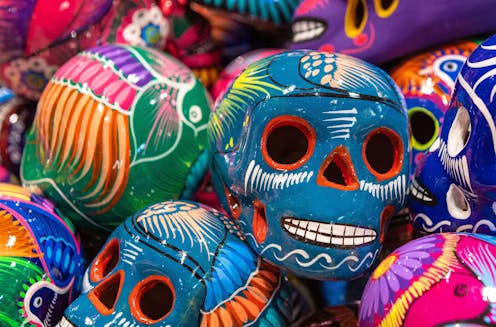
With its Mesoamerican, Roman Catholic and pagan roots, this deeply religious celebration sees families gather annually to honour and commemorate their loved ones. They build altars and parade the streets dressed as skeletons or Catrinas – the “grand lady of the afterlife” – and bake sugar skulls and “bread of the dead”.

But the Day of the Dead is commonly misunderstood in some countries, including the UK, where the perception is that this highly important ritual is simply a Mexican version of Halloween.

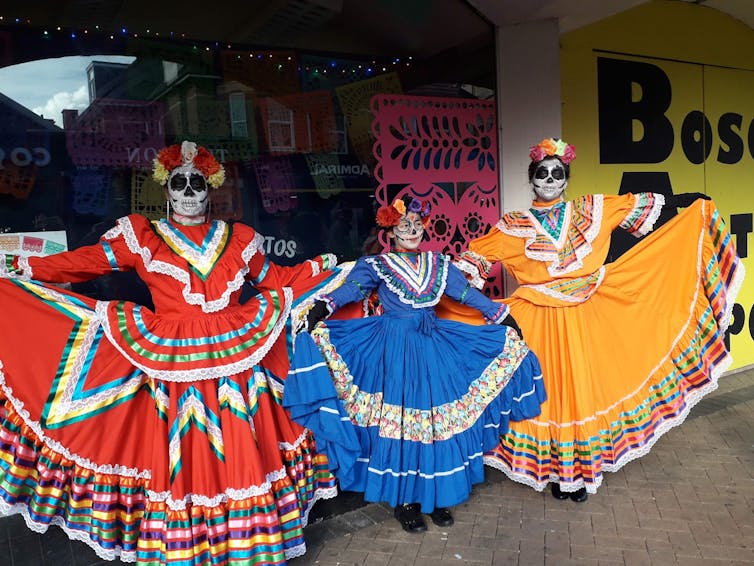
Three women dressed in colourful Day of the Dead costumes.
Elisa Ponce, founder of Mexicans in Bournemouth, left, taking part in a Day of the Dead event in the town. Jane Lavery, Author provided

My work looks at the way Day of the Dead is viewed and consumed in the UK and Ireland, and how Mexican communities celebrate their customs there. The UK has a Mexican community of around 10,000 people and although not all participate, many will celebrate Day of the Dead from Fife and Dublin, to London and Southampton, as an important way of connecting with each other, and Mexico. The event is a valuable way for Mexicans to foster pride in their cultural heritage, celebrate difference and inclusivity – and showcase how the festivity is not a Mexican Halloween.

In Bournemouth for example, the Mexican community has organised public street events welcoming the wider community by building community altars, offering delicious orange blossom “bread of the dead” and by dancing special folkloric Day of the Dead dances.

Elisa Ponce, founder of the Mexicans in Bournemouth community, and co-founder of the folkloric dance group Colores Mexicanos, which is comprised of Mexican and Latin American women, mothers and daughters, sees their local Day of the Dead celebrations as vital for community cultural pride:

We were so proud to hear the excitement of the passers-by, the conversations about death, suffering and sadness becoming happiness and colours. Just like in Mexico.

Such events create a sense of belonging by passing down cultural heritage from one generation to the next, and raising awareness in the broader public.

The ‘Halloweenisation’ of a Mexican custom

As my previous research shows, interest in all things Mexican has been growing steadily in the UK due to tourism, the media and Day of the Dead events organised by Mexican communities in Britain.

Even though many British people are aware that Day of the Dead is not a Mexican Halloween, the so-called “Halloweenisation” of the practice is still widespread. The two may share similar Catholic origins, but the former has lost its religious roots and is now merely a commercialised phenomenon.

Besides retailers and the media, Day of the Dead’s Halloweenisation has been fuelled by Hollywood movies such as Bond film Spectre (2015) with its Day of the Dead parade, and, to a point, Coco (2018) the Pixar animation about a young Mexican boy who ends up in the land of the dead.

The festival has undergone a worldwide cultural transformation due to globalisation and the internet-based world we live in, which can have a bulldozing effect on individual cultures. This has led to Day of the Dead becoming divested of its local roots and religious meanings, and turned into an object of mass consumerism.

During Halloween, Day of the Dead costumes and accessories have become an increasingly familiar sight in UK shops. With their striking colourful patterns and iconography, it is not difficult to understand the attraction. With British retailers selling Halloween costumes and decorations interchangeably with Day of the Dead items, it’s no wonder that the public may perceive the Mexican practice as simply an extension of Halloween.

Strictly confusing

Still, this Halloweenisation of the Day of the Dead has resulted in fierce debates about whether this is cultural appropriation, capturing polarised opinions spanning allegations of offensive misappropriation to celebrations of cultural fusion.

Nowhere is this response better exemplified than when the Mexican celebration was appropriated by the ever-popular BBC dancing programme, Strictly Come Dancing. In 2018 its Halloween episode featured a colourful Day of the Dead-themed opening dance performance with mariachi singers, sombreros, papier mâche skeletons and dancers donning sexy Catrina dresses and alluring skeleton make-up.

A row followed, with the media picking up on the mixed responses to the controversial performance. The Huffington Post for example reported the performance being blasted for cultural appropriation and featured several tweets from unhappy viewers who found it “racist” and “offensive”.

But others praised the show’s celebration of cultural heritage and its fusion of Halloween, Day of the Dead and the movie Coco, with some drawing delighted comparisons with the popular film that has given prominence to Day of the Dead. Such comparisons suggest that some believe the ritual is based on a film rather than a Mexican religious practice, fuelling further misconceptions of Day of the Dead as “another Halloween”.

With the Mexican community in the UK playing an important role in contributing to the local economy, culture and society, more visibility is needed of the Day of the Dead celebration to break with unhelpful racial stereotypes and issues around mislabelling.

This lack of visibility could be addressed by encouraging retailers to rethink how they sell and brand their items. Local councils could promote and fund Day of the Dead events to the wider community by including them in their post-COVOD social and cultural regeneration strategies. And schools could do more to teach children about what the practice is actually about – and why it’s not an extension of Halloween but something culturally distinct underpinned by its own religious history, meaning and rituals.

The Conversation

Jane Lavery does not work for, consult, own shares in or receive funding from any company or organisation that would benefit from this article, and has disclosed no relevant affiliations beyond their academic appointment.

07 Nov 16:03

Why some people think fascism is the greatest expression of democracy ever invented

by Mark R Reiff, Research Affiliate in Legal and Political Philosophy, University of California, Davis
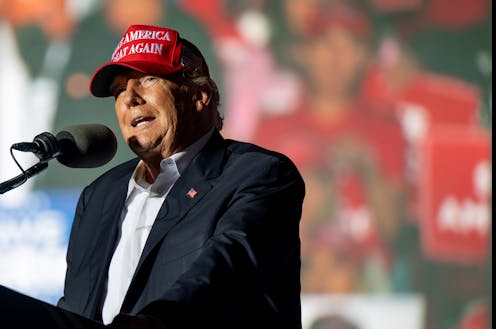
Donald Trump is one of many political leaders through history who has claimed he embodies the voice of 'the people' – but which people he means matters quite a lot. Brandon Bell/Getty Images

Warnings that leaders like Donald Trump hold a dagger at the throat of democracy have evoked a sense of befuddlement among moderates. How can so many Republicans – voters, once reasonable-sounding officeholders and the new breed of activists who claim to be superpatriots committed to democracy – be acting like willing enablers of democracy’s destruction?

As a political philosopher, I spend a lot of time studying those who believe in authoritarian, totalitarian and other repressive forms of government, on both the right and the left. Some of these figures don’t technically identify themselves as fascists, but they share important similarities in their ways of thinking.

One of the most articulate thinkers in this group was the early-20th-century philosopher Giovanni Gentile, whom Italian dictator Benito Mussolini called “the philosopher of fascism.” And many fascists, like Gentile, claim they are not opposed to democracy. On the contrary, they think of themselves as advocating a more pure version of it.

Unity of leader, nation-state and people

The idea that forms the bedrock of fascism is that there is a unity between the leader, the nation-state and the people.

For instance, Mussolini famously claimed that “everything is in the state, and nothing human or spiritual exists, much less has value, outside the state.” But this is not an end to be achieved. It is the point from which things begin.

This is how Trump, according to those around him, can believe “I am the state” and equate what is good for him is by definition also good for the country. For while this view may seem inconsistent with democracy, this is true only if society is viewed as a collection of individuals with conflicting attitudes, preferences and desires.

But fascists have a different view. For example, Othmar Spann, whose thought was highly influential during the rise of fascism in Austria in the 1920s and 1930s, argued that society is not “the summation of independent individuals,” for this would make society a community only in a “mechanical” and therefore trivial sense.

On the contrary, for Spann and others, society is a group whose members share the same attitudes, beliefs, desires, view of history, religion, language and so on. It is not a collective; it is more like what Spann describes as a “super-individual.” And ordinary individuals are more like cells in a single large biological organism, not competing independent organisms important in themselves.

This sort of society could indeed be democratic. Democracy is intended to give effect to the will of the people, but it doesn’t require that society be diverse and pluralistic. It does not tell us who “the people” are.

Who are the people?

According to fascists, only those who share the correct attributes can be part of “the people” and therefore true members of society. Others are outsiders, perhaps tolerated as guests if they respect their place and society feels generous. But outsiders have no right to be part of the democratic order: Their votes should not count.

This helps explain why Tucker Carlson claims “our democracy is no longer functioning,” because so many nonwhites have the vote. It also helps explain why Carlson and others so vigorously promote the “great replacement theory,” the idea that liberals are encouraging immigrants to come to the U.S. with the specific purpose of diluting the political power of “true” Americans.

The importance of seeing the people as an exclusive, privileged group, one that actually includes rather than is represented by the leader, is also at work when Trump denigrates Republicans who defy him, even in the smallest ways, as “Republicans in Name Only.” The same is also true when other Republicans call for these “in-house” critics to be cast out of the party, for to them any disloyalty is equivalent to defying the will of the people.

How representative democracy is undemocratic

Ironically, it is all the checks and balances and the endless intermediate levels of representative government that fascists view as undemocratic. For all these do is interfere with the ability of the leader to give direct effect to the will of the people as they see it.

Here is Libyan dictator and Arab nationalist Moammar Gadhafi on this issue in 1975:

Parliament is a misrepresentation of the people, and parliamentary systems are a false solution to the problem of democracy. … A parliament is … in itself … undemocratic as democracy means the authority of the people and not an authority acting on their behalf.”

In other words, to be democratic, a state does not need a legislature. All it needs is a leader.

How is the leader identified?

For the fascist, the leader is certainly not identified through elections. Elections are simply spectacles meant to announce the leader’s embodiment of the will of the people to the world.

But the leader is supposed to be an extraordinary figure, larger than life. Such a person cannot be selected through something as pedestrian as an election. Instead, the leader’s identity must be gradually and naturally “revealed,” like the unveiling of religious miracle, says Nazi theorist Carl Schmitt.

For Schmitt and others like him, then, these are the true hallmarks of a leader, one who embodies the will of the people: intense feeling expressed by supporters, large rallies, loyal followers, the consistent ability to demonstrate freedom from the norms that govern ordinary people, and decisiveness.

So when Trump claims “I am your voice” to howls of adoration, as happened at the 2016 Republican National Convention, this is supposed to be a sign that he is exceptional, part of the unity of nation-state and leader, and that he alone meets the above criteria for leadership. The same was true when Trump announced in 2020 that the nation is broken, saying “I alone can fix it.” To some, this even suggests he is sent by God.

If people accept the above criteria for what identifies a true leader, they can also understand why Trump claims he attracted bigger crowds than President Joe Biden when explaining why he could not have lost the 2020 presidential election. For, as Spann wrote a century earlier, “one should not count votes, but weigh them such that the best, not the majority prevails.”

Besides, why should the mild preference of 51% prevail over the intense preference of the rest? Is not the latter more representative of the will of the people? These questions certainly sound like something Trump might ask, even though they are actually taken from Gadhafi again.

The duty of the individual

In a true fascist democracy, then, everyone is of one mind about everything of importance. Accordingly, everyone intuitively knows what the leader wants them to do.

It is therefore each person’s responsibility, citizen or official, to “work towards the leader” without needing specific orders. Those who make mistakes will soon learn of it. But those who get it right will be rewarded many times over.

So argued Nazi politician Werner Willikens. And so, it appears, thought Trump when he demanded absolute loyalty and obedience from his administration officials.

But most importantly, according to their own words, so thought many of the insurrectionists on Jan. 6, 2021, when they tried to prevent the confirmation of Biden’s election. And so Trump signaled when he subsequently promised to pardon the rioters.

With that, the harmonization of democracy and fascism is complete.

The Conversation

Mark R. Reiff is a registered Democrat. He does not work for, consult, own shares in, or receive funding from any company or organization that would benefit from this article, and has disclosed no other relevant affiliations beyond his academic appointment.

04 Nov 19:59

Parents have very warm feelings toward other parents – here’s why that could be bad news for the child-free

by Zachary P. Neal, Associate Professor of Psychology, Michigan State University
Parents exhibit what psychologists call 'in-group favoritism.' SolStock/E+ via Getty Images

The aphorism “birds of a feather flock together” describes the fact that people tend to prefer associating with others who are similar to themselves. The phenomenon goes by different names: Sociologists call it homophily, psychologists call it in-group favoritism and political scientists call it affective polarization. It’s observed in a wide range of demographic and social characteristics including sex, race, religion, age, education and political party.

But what about parental status? Do parents prefer other parents? What about child-free people who don’t want to be parents? Do these preferences even matter?

Pronatalism, a set of beliefs and political policies that promotes and favors human reproduction, is common in many countries. Therefore, it’s not surprising that people tend to have more positive attitudes about parents than they do about child-free people.

For example, people generally perceive parents as kinder and more psychologically fulfilled than child-free people. Additionally, people express feelings of admiration toward mothers and feelings of disgust toward child-free women.

However, these are general attitudes and don’t tell us about how people feel about others who have made the same reproductive choices as themselves. That’s why, in a 2022 study of 1,500 Michigan adults, we asked parents how they felt toward other parents and toward child-free people. We also asked child-free people how they felt toward other child-free people and toward parents.

We found that parents strongly favored other parents, but child-free adults didn’t necessarily favor other child-free adults. That is, parents exhibit in-group favoritism, but child-free adults don’t.

Measuring interpersonal warmth

A “feeling thermometer” question is one common way to measure how people in one group feel about people in their own group or in other groups. This question asks a person to rate how warmly they feel toward a group on a scale from 0, or very cool, to 100, or very warm.

For example, in 2017 the Pew Research Center asked people how they felt about members of their own religion and members of different religions. White evangelicals reported feeling very warm toward other white evangelicals, with an average warmth score of 81. Likewise, atheists reported feeling very warm toward other atheists, with an average warmth score of 82.

This is evidence of in-group favoritism. At the same time, evangelicals reported feeling very cool toward atheists, with an average warmth score of only 33. Likewise, atheists reported feeling very cool toward evangelicals, with an average warmth score of only 29. This is evidence of what’s called “out-group derogation” – people dislike members of other groups.

We used the same approach to compare parents and child-free adults, and discovered three important patterns.

First, child-free people feel about the same toward other child-free people as they do toward parents. This was surprising because usually people feel warmer toward members of their own group, but we saw no evidence of in-group favoritism among child-free people.

Second, parents feel much warmer toward other parents than they do toward child-free people. This is a classic example of in-group favoritism – parents like other parents.

Finally, both parents and child-free people feel about the same toward child-free people. This is important because it means that although parents really like other parents, they don’t dislike child-free people. That is, we saw no evidence of out-group derogation.

Does it really matter?

Although these results weren’t as extreme as comparisons between evangelicals and atheists or between Republicans and Democrats, they may still matter.

In a related 2022 study, we surveyed 1,000 adults living in rural, suburban and urban areas throughout Michigan, asking them how satisfied they were with their neighborhood. We found that child-free adults were significantly less satisfied with their neighborhoods than both married parents and people who were planning to become parents.

The strong in-group favoritism among parents might help explain why. Although we did not observe evidence that parents dislike child-free people, their strong preference for other parents could still lead them to inadvertently exclude their child-free neighbors. For example, when it’s time to plan a neighborhood event like a block party, parents may be more inclined to recruit other parents to help. This could lead child-free people feeling out of place in parent and child-focused neighborhoods.

When neighborhoods are focused on parents and children, as commenters increasingly suggest they should be, they are often described as being “family-friendly.” As a result, there are websites offering advice about how to find a family-friendly neighborhood. However, these neighborhoods may be more friendly toward some types of families than others.

With both fertility and marriage rates declining in the United States, the numbers of child-free people are likely to increase.

As this new family type becomes more common, it’s important to rethink who neighborhoods are for and what it means for a neighborhood to be family-friendly. But it also means rethinking other areas of life too, including workplace work-life balance policies and government tax credits.

The Conversation

Zachary P. Neal receives funding from the Institute for Public Policy and Social Research at Michigan State University.

Jennifer Watling Neal receives funding from the Institute for Public Policy and Social Research at Michigan State University.

04 Nov 19:25

Eco-activist attacks on museum artwork ask us to figure out what we value

by Sally Hickson, Associate Professor, Art History, University of Guelph
Police officers patrol the entrance of the Tate Modern gallery, in London, Oct. 15, 2022, after climate protesters threw soup over glass covering Vincent van Gogh's 'Sunflowers' in London's National Gallery. (AP Photo/Alberto Pezzali)

In the last few weeks climate change activists have perpetrated various acts of reversible vandalism against famous works of art in public galleries.

In the latest incident on Oct. 27, two men entered the Mauritshuis gallery in the Hague. After taking off their jackets to reveal t-shirts printed with anti-oil slogans, one proceeded to glue his head to glass overtop Johannes Vermeer’s Girl with a Pearl Earring, while the other bathed the head of his partner-in-crime with what appeared to be tinned tomatoes before gluing his own hand to the wall adjacent to the painting.

This was just the latest in a series of similar art attacks that have peppered the news.

The motivation of the eco-activists involved is to draw attention to the crisis of climate change, the role of big oil in hastening the deterioration of the environment and the necessity to save our planet.

By attacking a famous and high-value cultural target like Vermeer’s Girl with a Pearl Earring — it even starred in its own movie — the protesters are asking us to examine our values.

A gold-framed photo of a girl with a pearl earring against a green wall.
Johannes Vermeer’s ‘Girl with a Pearl Earring,’ c. 1665, was recently targeted by climate activists in a protest at the Mauritshuis museum in The Hague. (AP Photo/Peter Dejong)

Big oil protests

The first Vermeer painting to come to auction for almost 80 years sold for almost $40 million in 2004. Today a Vermeer (there are not that many) could easily be valued at twice that. Whether you like Vermeer or not, the monetary value of the targets under attack enhances the sheer audacity and shock value of the current art attacks.

The eco-activists want to appear to desecrate something that people associate with value and with culture. Their point is that if we don’t have a planet, we’ll lose all the things in it that we seem to value more.

As activist Phoebe Plummer of Just Stop Oil told NPR after being involved in the attack on Van Gogh’s Sunflowers at London’s National Gallery:

“Since October, we have been engaging in disruptive acts all around London because right now what is missing to make this change is political will. So our action in particular was a media-grabbing action to get people talking, not just about what we did, but why we did it.”

Note, the idea is disruption, not destruction. As acts designed for shock value, the activists did draw immediate public attention.

Attacking art

By staging their attacks in public galleries, where the majority of visitors carry cell phones, activists could be assured film and photos of the incidents would draw immediate attention. By sticking to non-corrosive substances and mitigating damage to the works under attack, they don’t draw the kind of public ire that wilful destruction would evoke.

In recent news, attacking art as a form of public protest has largely been limited to public monuments outside the gallery space, like the destruction and removal of Confederate or colonial statues.

But it’s also true that works of museum art have come under attack before. Over the course of its history, Rembrandt’s Night Watch in the Rijksmuseum in Amsterdam was stabbed in two separate incidents in 1911 and 1975; in 1990, it was sprayed with acid; but all of those attacks were ascribed to individuals with unclear and less clearly rational motives.

A sign seen dripping with red soup and police arresting a protestor.
Just Stop Oil protesters throw tomato soup over an outdoor sign at the Department of Business, Energy and Industrial Strategy in London, Oct. 17, 2022. (AP Photo/Alastair Grant)

I see a few issues at stake with assessing what these recent art attacks could mean.

1. How effective is the messaging?

The activists have been articulate about their objectives, but those objectives haven’t been obvious to everyone who sees via social media, but doesn’t stick around to hear the explanation. When a broad range of media outlets all perceive the need to publish editorials on why eco activists are targeting art, something is getting lost in translation.

People see the endangerment of the works of art, but may ascribe that to the activists, not to the planetary erosion wrought by climate change. I don’t think everyone is getting the message.

2. Possible misplaced outrage

The incidents up until now have been pretty effective and harmless acts. But what if something is irreparably damaged? People will be outraged, but they’ll still be outraged about the art, not about the planet.

And while there will be a call for stiff prison sentences, precedent suggests that’s an unlikely outcome.

A man who damaged a Picasso valued at $26 million USD at the Tate Modern in London in 2020 was sentenced to 18 months in jail.

3. Violation of public trust

The third effect is what I consider a violation of the public trust, and this gives me pause. Works of art, even the most famous ones, lead precarious lives of constant endangerment; war, weather, fire, floods. The protesters are destabilizing the idea that public galleries are “safe” spaces for works of art, held in public trust.

As fari nzinga, inaugural curator of academic engagement and special projects at the Speed Art Museum in Louisville, KY, pointed out in a 2016 paper:

“The museum doesn’t serve the public trust simply by displaying art for its members, it does so by keeping and caring for the art on behalf of a greater community of members and non¬members alike, preserving it for future generations to study and enjoy.”

Right now these acts, no matter how well-intentioned, could lead to increased security and more limited access, making galleries prisons for art rather than places for people.

At the same time, part of the activsts’ point is that economy that sustains big oil is entwined with arts infrastructure and the art market.

The thing that saves us?

The pandemic taught us, I think, that art could be the thing we share that saves us; think of people during quarantine in Italy singing opera together from their balconies.

Eco-activists engaged in performance protests ask us to question our public institutions and make us accountable for what they, and we, value. Their climate activism is dedicated to our shared fate.

If you’re willing to fight for the protection of art, maybe you’re willing to fight to protect the planet.

The Conversation

Sally Hickson does not work for, consult, own shares in or receive funding from any company or organisation that would benefit from this article, and has disclosed no relevant affiliations beyond their academic appointment.

04 Nov 19:21

Inoculate yourself against election misinformation campaigns – 3 essential reads

by Jeff Inglis, Freelance Editor, The Conversation US
Get a shot of preparation and protect yourself from malicious information warriors. boonchai wedmakawand/Moment via Getty Images

As the midterm elections approach, Americans are already being subjected to misinformation campaigns, often online, that are intended to provoke confusion, anger or even action. When the election is over, it’s almost certain there will be even more misleading material competing for people’s attention.

You can defend yourself against this onslaught and help curb both the spread and the effect of misinformation. Several scholars have written for The Conversation U.S. about this process, often called “inoculation,” because it prepares your mind to repel infectious, harmful ideas. Here are some of their key pieces of advice.

1. Learn about misinformation’s effects

Misinformation not only gives people incorrect material – it leads them to disbelieve facts. As John Cook, a cognitive psychologist at George Mason University, explained: “When people were presented with both the facts and misinformation about climate change, there was no net change in belief. The two conflicting pieces of information canceled each other out.”

He went on to explain that “when they collide, there’s a burst of heat followed by nothing. This reveals the subtle way that misinformation does damage. It doesn’t just misinform. It stops people believing in facts.”


À lire aussi : Inoculation theory: Using misinformation to fight misinformation


2. Know yourself

A hand stopping a Pinocchio-nosed person
Identify and stop the lies. NLshop/iStock via Getty Images Plus

It’s useful to note, as social psychology scholar H. Colleen Sinclair at Mississippi State University did, that “research has found people are more susceptible to misinformation that aligns with their preexisting views.”

So, Sinclair recommends, “be particularly critical of information from groups or people with whom you agree or find yourself aligned – whether politically, religiously, or by ethnicity or nationality. Remind yourself to look for other points of view, and other sources with information on the same topic.”


À lire aussi : 7 ways to avoid becoming a misinformation superspreader


3. Seek help

Russia is not the only source of misinformation, but here is a look at its propaganda machine.

The Baltic nations – Estonia, Latvia and Lithuania – are small countries right next to Russia, and former parts of the Soviet Union. Their people have decades of experience with misinformation campaigns and are among the best in the world at resisting them.

Terry Thompson, a cybersecurity scholar at the University of Maryland, Baltimore County, explained how: First, they cooperate with other nations to report what’s going on, including “analyz[ing] Russian social media activities targeting Baltic nations … and provid[ing] insight into identifying and detecting Russian disinformation campaigns” so regular citizens can be informed.

There are also “‘Baltic elves’ – volunteers who monitor the internet for Russian disinformation” and spread the word, Thompson explained.

Further, those nations are part of a collective European Union project that “identifies disinformation efforts and publicizes accurate information” that disinformation warriors would like to undermine.

It’s all part of a wide-ranging effort to help people understand what’s real and what’s out there to mislead them.


À lire aussi : Countering Russian disinformation the Baltic nations' way


Editor’s note: This story is a roundup of articles from The Conversation’s archives.

The Conversation
04 Nov 18:53

What's at stake this Election Day – 7 essential reads

by Amy Lieberman, Politics + Society Editor, The Conversation
People volunteer at a Native Alaskan voting station on Nov. 2, 2022 in Anchorage. Spencer Platt/Getty Images

As Election Day closes in, uncertainty and concern about potential chaos – from violence at polling sites to candidates refusing to accept defeat – continue to rise.

Problems that have historically plagued the U.S. electoral and political system – like voter intimidation – are cropping up ahead of the midterms. But so, too, are less familiar issues, like how previously run-of-the-mill state election positions are becoming opportunities for political activism.

Here are seven key issues that affect the midterm elections, drawn from stories in The Conversation’s archive.

A white older man in a dark blue suit stands next to two American flags, and a third very large flag over a blue backdrop. A Black man in a suit stands on the other side of the American flag.
President Joe Biden spoke on Nov. 2, 2022, warning of the need to preserve and protect democracy. Kent Nishimura/Los Angeles Times via Getty Images

1. Who is voting

Voter participation during midterm elections is typically low – though some experts say that there could be heavy turnout this year. But the question of who actually heads to the polls will also be critical, as races in key swing states tighten.

Young voters are much less likely to vote during midterms than older people, as opposed to their higher turnouts during presidential elections, American University government scholar Jan Leighley wrote. Young voters are also more likely to identify as Democrats.

“So if younger voters are underrepresented in the November 2022 elections, more Republicans may be elected, as well as candidates less likely to reflect younger citizens’ views on key issues,” Leighley wrote.


Read more: Young voters are more likely to skip midterm elections than presidential races


This year, meanwhile, record numbers of Latinos are also expected to turn out to vote. In 2020, most Latinos voted for President Joe Biden – but increasing numbers of Latino voters are also supporting GOP candidates, including former president Donald Trump, wrote University of Tennessee social work scholar Mary Lehman Held.

One reason is that Latino voters have different backgrounds, values and priorities. And not all would be turned off by Republican candidates’ restrictive immigration politics.

“Immigration policies only affect a subset of Latinos, most notably Mexicans, followed by Salvadorans, Guatemalans and Hondurans,” Lehman Held explained.


Read more: The GOP made gains among Latino voters in 2020 but Democrats remain the party of choice for upcoming midterms


2. What voters want

It’s the economy, stupid, as the famous 1992 political adage about voters’ top concern goes.

Soaring inflation rates top voters’ concerns this year, even though neither political party has been found particularly more effective at tackling the issue and bringing down inflation, as Texas State University finance scholar William Chittenden wrote.


Read more: Why inflation will likely stay sky-high regardless of which party wins the midterms


There was a flurry of political activism around the Supreme Court’s decision to overturn Roe v. Wade in June 2022, undoing the federal right to an abortion. But just four months later, men and women both say that abortion politics are not bringing them to the polls, according to Harvard Kennedy School and Northwestern University social science scholars Matthew A. Baum, Alauna Safarpour, Jonathan Schulman and Kristin Lunz Trujillo.

“The Supreme Court’s Dobbs v. Jackson decision may have initially mobilized some voters in June and July, particularly women, but its effects appear to have diminished when we asked Americans about their intentions to vote again in August and October,” they wrote.


Read more: Abortion is not influencing most voters as the midterms approach – economic issues are predominating in new survey


3. Elections aren’t what they used to be

Gone are the days when election administrators were considered low profile, conducting essential – but not flashy – work, like organizing voter lists, staffing polling places and counting election results.

Overall mistrust in elections is high in the U.S. following the 2020 elections – and former President Trump’s refusal to accept his defeat. It’s a new era in politics, where it is not necessarily a given that “elections happen, votes are counted, the winners are declared and democracy moves on,” wrote Arizona State University’s Thom Reilly, a public governance scholar and former state election official.

One complicating factor is that the U.S. is the only democracy that elects many of its election officials, and high-ranking members of the Republican or Democratic parties usually oversee elections at the state level.

“That partisan system largely worked until now because, in essence, each party checked the other party’s ability to influence election outcomes. As long as states were politically diverse, members of the two major parties acted in good faith, and this model functioned – albeit imperfectly,” wrote Reilly.

But there’s already evidence that newly minted and highly partisan poll workers and election observers plan to disrupt the elections, potentially diminishing public faith in this essential democratic institution and weakening democracy itself. And a high number of candidates running for state election administration roles are election deniers. If they win, wrote Reilly, that will further erode public confidence in election integrity.

A large white sign says 'Vote!' People walk past the sign outside, in what appears to be a green campus with trees.
Young people pass a voting information sign on the Emory University campus in Atlanta on Oct. 14, 2022. Elijah Nouvelage/AFP via Getty Images

Read more: Good faith and the honor of partisan election officials used to be enough to ensure trust in voting results – but not anymore


4. Black voters face possible intimidation

Amid warnings from the Department of Homeland Security about political violence on Election Day – which University of Maryland, Baltimore County security researcher Richard Forno recently explored – there’s an increased risk that polling sites will become yet another place for political violence.


Read more: Political violence in America isn't going away anytime soon


The threat brings to mind long-standing efforts by white supremacists to intimidate and threaten Black voters.

Georgia is one place with a long history of voter intimidation that is rolling out election reform laws, making it actually harder for voters – especially people of color – to vote. One part of this new law, called SB 202, removes some voting drop boxes, which people of color predominantly use. This comes as Black voters gain number and power in Georgia – and the tightened voting rules are reminiscent of the 1940s and other times when white conservatives cracked down on voting rights in response to rising Black political strength.

“The almost immediate passage of new election laws at a time of growing Black political strength suggests the persistence of a white backlash in Georgia,” wrote Emory University political science scholar Richard Doner.


Read more: Georgia's GOP overhauled the state's election laws in 2021 – and critics argue the target was Black voter turnout, not election fraud


Editor’s note: This story is a roundup of articles from The Conversation’s archives.

The Conversation
04 Nov 16:37

3D tour: explore the Great Pyramid

by Rob Beschizza

Inside the Great Pyramid is a 3D tour of Khufu's enormous tomb, painstakingly scanned by Luke Hollis. It works just like the ones on real estate websites, but this one's not for sale at any price (besides, it looks like tweakers already stripped it for copper and anything else shiny). — Read the rest

04 Nov 15:21

Perception gap grows between actual crime rates and what Americans believe is happening

by Elías Villoro

When perception is reality, you do not have to edit reality. Amplify the perception. As a new Gallup poll demonstrates, even though many Americans believe that crime is rising, that is not the case. But the GOP and other politicians will exploit that perception as reality to capitalize on these manufactured fears. — Read the rest

04 Nov 15:05

New video release, "Wolf," from Yeah Yeah Yeahs

by Gareth Branwyn

The Yeah Yeah Yeahs have a new video out from their most recent record, Cool It Down. The track is called "Wolf" and the video stars Britt Lower, probably best known for her role in the sci-fi psych-thriller series, Severance. — Read the rest

04 Nov 15:03

Judge blocks merger of publishing giants Penguin Random House and Simon & Shuster

by Rob Beschizza

As mega-mergers go, the one between publishing giants PRH and S&S was openly feared and loathed by almost everyone other than corporate financiers. Authors and staff knew they were for the chop by the hundreds if not thousands, readers knew that choice would evaporate, and bookstores knew their place in the ecosystem would more difficult than ever. — Read the rest

04 Nov 15:01

Prescient Orson Welles warns against homage, "the most detestable habit in cinema"

by Devin Nealy
OW

We need art. The world can either be so crushingly dull or horrifically brutal that only love and art can serve as a respite from the storm. Consequently, it's of the utmost importance that artists should be careful with their profession. — Read the rest

02 Nov 19:27

Unfortunately, Paying For The Public Domain Already Exists In Many Countries

by Mike Masnick

A couple of weeks ago, we reported on a terrible idea in France: requiring companies to pay for the use of public domain material. As the post explained, this is a subversion of what it means for something to enter the public domain, and a betrayal of the implicit bargain of copyright. Fortunately, the plan was dropped, partly as a result of the outrage it generated.

Naively, I assumed that this was a lucky escape, but that the idea would be back unless we were on our guard. I was wrong: the idea won’t be back, because it has already been implemented in a number of other countries. For example, Jorge Gemetto pointed out on Twitter that something called the “paying” public domain has existed in Uruguay and Argentina for many years. He linked to an interesting article on the topic by Maximiliano Marzetti, who lists even more countries blighted by this copyright perversion: Algeria, Kenya, Ruanda, Senegal, Republic of the Congo, Côte d’Ivoire, and Paraguay. Marzetti refers to a 2010 report from WIPO, which explore the idea of the “paying” public domain further.

A recent article in the Guardian reveals that Italy, too, has this awful approach, whereby any use of the country’s publicly owned art to sell merchandise requires permission and payment of a fee. That includes works that were never in copyright, and have been in the public domain for hundreds of years, as the French fashion house Jean Paul Gaultier found to its cost:

Italy’s Uffizi Galleries are suing the French fashion house Jean Paul Gaultier for damages that could exceed €100,000 (£88,000) after the company’s allegedly unauthorised use of images of Botticelli’s Renaissance masterpiece The Birth of Venus to adorn a range of clothing products, including T-shirts, leggings and bodices.

The article goes on to explain that the Uffizi Galleries sell merchandise themselves, which means this is about money, as it always is. That’s what copyright does, even to some of the people running the greatest art galleries and museums. The idea that the real public domain – not the damaged, “paying” kind – should be defended for itself, as a matter of principle, never seems to enter their heads.

Follow me @glynmoody on Twitter, or Mastodon. Originally posted to Walled Culture.

02 Nov 19:24

Stop the Copyright Creep

by Katharine Trendacosta

In 2020, two copyright-related proposals became law despite the uproar against them. The first was the unconstitutional CASE Act. The second was a felony streaming proposal that had never been seen or debated in public. In fact, its inclusion was in the news before its text was ever made public. The only way to find it was when the 6,000-page year-end omnibus was published. We want to make sure that doesn’t happen again.

Take Action

Tell Congress to Stop the Copyright Creep

No copyright proposal—or copyright-adjacent one—has a place in “must-pass” legislation. Must-pass legislation is a bill that is vital to the running of the country and therefore must be passed and signed into law. They are usually the bills that fund the government for the upcoming year, in all its forms.

Because so many copyright-related bills involve proposals that would harm lawful free expression, they are not the kind of controversy-free proposals that belong in such legislation. Too many important rights hang in the balance, so bills that propose to remove expression for any reason must stand alone and be passed on their own merits, not borrow those of a funding bill. The public deserves to know exactly where their representatives stand on online expression and censorship.

Notwithstanding any secret bills like 2020’s felony streaming, there are three terrible bills already on the table:

All three trade some form of protected speech for some corporate profit motive. All three also give a minority with billions of dollars the ability to control the speech of billions of users. That is not acceptable, no matter what the stated reasoning is. In each case, there are good arguments against the proposals and better options for carrying out the stated purpose of each bill.

These proposals, and any like them, should be kept out of the upcoming must-pass bills. They are too flawed and too important to let them evade a public debate and vote on their own merits. Tell Congress to stop copyright from creeping into must-pass laws.

02 Nov 18:41

Shopapalooza Festival brings more than 350 vendors together for a waterfront holiday market

by Andrew Harlan

Shopapalooza Festival is one of the biggest shopping events in the entire Tampa Bay region. This huge vendor market takes place on the waterfront in downtown St. Petersburg, which means you can take the Cross-Bay Ferry to St. Pete and enjoy a breezy walk to the ultimate Tampa area holiday market. LocalShops1 Founder Ester Venouziou is the prolific mind behind this celebration small businesses.

The 12th annual Shopapalooza Festival takes place November 26 and 27 from 10am-5pm. The event features four outdoor food halls, live entertainment and activities all weekend long, food trucks, several beer and wine stations, and the most glam seating lounge. Altogether, Shopapalooza Festival showcases more than 350 local vendors in the Tampa Bay Area. It is the biggest Small Business Saturday (and Sunday!) celebration ever.

Shopapalooza is the biggest local shopping event of the season

Each food hall will feature snacks, drinks, entrees and desserts for everyone to enjoy. Selections include options for vegans and those with more carnivorous sensibilities.
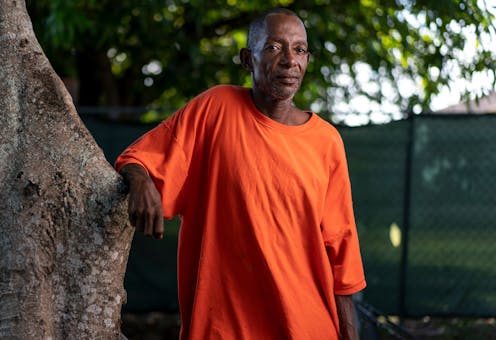
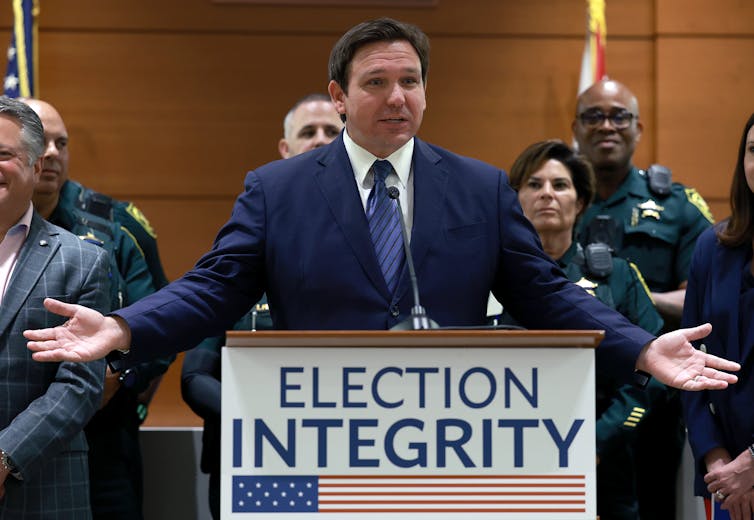
A kids zone featuring crafts, play and learning stations will also be set up. The zone is sponsored by Imagine Orthodontic Studio and Great Explorations Children’s Museum, one of the great local gems for young St. Pete residents. This kids zone will include a Santa Station (including Mrs. Claus too), plus face-painting, desserts, food, local rescues, gift ideas for children, and more. 

This family-friendly event is absolutely free to attend. You can even win a $500 shopping spree by registering in advance on Eventbrite (one winner will be picked for each festival day). This year’s nonprofit partners are Jump for Kids and St. Pete Youth Farm. The festival is co-sponsored by the beautiful City of St. Pete.

Food halls, kid zones, and more at Vinoy Park

“Shopapalooza Festival celebrates the great independent businesses that make Tampa Bay such an amazing place,” said Ester Venouziou, LocalShops1 founder said ahead of last year’s festival. “It’s going to be 11.6 acres filled with pure local awesomeness, and we are stepping things up on the ‘wow’ factor.”

Vinoy Park is located at 701 Bayshore Drive NE in St. Petersburg, FL. Parking is available at garages across downtown St. Pete. There will be free trolley rides to and from Shopapalooza at the Sundial Parking garage, which is located at 117 2nd Street North.

Learn more about the vendors and the event on the Shopapalooza Festival website or Facebook event. Keep up with everything happening with LocalShops1 on its website!

What to read next: 

The post Shopapalooza Festival brings more than 350 vendors together for a waterfront holiday market appeared first on That's So Tampa.

02 Nov 18:33

How To Fill Your Yard With Native Florida Plants

by Gillian Finklea

A lush, manicured lawn is as American as apple pie and baseball. And while they are nice to look at, they don’t provide many benefits to native insects and animals. Having a yard filled with native Florida plants can help pollinators and beneficial insects while looking great. Our lawns play a large role in keeping our local ecosystem running smoothly. So I reached out to some local businesses to find out how to go native.

The benefits of native plants

Having a lawn filled with native Florida plants is a tremendous benefit to you and your entire neighborhood. Kathryn Adeney, owner of The Nectary in Lakeland, enjoys filling plant her yard with native plants that, “Provide seasonal beauty, habitat for wildlife, and can be an economical choice when carefully matched to the site conditions.”

I personally enjoy feeling connected to my yard and my local ecosystem by cultivating native plants in my landscape.

Kathryn Adeney, The Nectary

Plus, having a yard full of native plants requires a lot less work. Planting native plants means dealing with plants that are perfectly suited to Florida weather. “As long as they are put in the right growing conditions (light/shade, dry/wet) you will have a plant that needs little to now maintenance after its establishment,” says Elise Pickett with The Urban Harvest in St. Pete.

The problems with lawns

Manicured lawns can be a great source of pride and beauty to a home. But they can also be a danger to the neighborhood. In order to get those blades of grass in tip-top condition, you’ll usually need fertilizer, pesticides, and specific irrigation. Pollutants and chemicals from a lawn can stormwater that builds during heavy rains. Stormwater runoff that cannot reabsorb into the ground flows across surfaces until it ends up in our streams, rivers, ponds, lakes, and wetlands.

Did you know lawns originated in France & England during the 1700s for grazing livestock?

Elise Pickett, The Urban Harvest

Lawns definitely have their use, for example, for sports or recreational activities. However, if much of our neighborhoods are dedicated to grass lawns, there’s less room for habitats for native pollinators and birds. Another important part of our ecosystem.

Related: How to Create a Rain Garden

Taming the wild

Choosing not to have a manicured lawn doesn’t mean your yard has to become a jungle. “You can have a beautiful landscape that is planted with a diversity of natives that still looks like a garden featured in Better Homes & Gardens,” Pickett explains, “Native landscapes can be eye-catching and productive garden designs without all the sterile space, toxic maintenance, and lack of pollinators or other wildlife.”

Want to start a yard with native Florida plants, but unsure of where to start? Here are some easy ones to begin with:

American beautyberry

A graceful and adaptable shrub found throughout the state. It provides flowers for pollinators in the spring, followed by clusters of deep magenta berries for birds in fall and winter. The berries are also edible to humans, and the crushed leaves can be used as a temporary mosquito repellant.

Garberia

Garberia. Courtesy of the Florida Wildlife Foundation.

Garberia is a scrub/sandhill shrub that becomes a pollinator magnet with beautiful purple blooms in November.

Porterweed

Porterweed. Courtesy of the Florida Wildlife Foundation.

Porterweed is an annual in North Florida. Small blue or pink flowers appear in numbers on long spikes at the end of the stems and are very attractive to butterflies and hummingbirds. Plants vary in size and growth habit depending on the species.

Elderberry

Elderberry. Courtesy of Florida Foresting.

You often see fast-growing elderberry as a broad, spreading, multi-stemmed plant. But you can effectively prune it into a nice, small, single or multi-stemmed, small, flowering tree. The small, dark purple berries which are quite popular with birds, and can be used in pies, jellies, or fermented to make a wine. 

Butterfly Weed

Butterfly Weed. Courtesy of IFAS

Butterfly weed is a member of the milkweed family. The plants grow to two feet tall and flower from July to September. The flower colors are orange, red, and yellow. It tolerates dry soil but not heavy soil. Butterfly weed is slow to start growth in the spring.

Phlox

Moss phlox (Phlox subulata) ‘Emerald Pink’. Photo: Dow Gardens, Bugwood.org

Plants grow to only 6 inches tall, form thick clumps and make an excellent ground cover. You can use Phlox as a ground cover or allowed to grow cascading down a wall. They are also good plants for stabilizing a sloping landscape.

Frogfruit

Photo: Tia Silvasy, UF/IFAS

Frogfruit is a great alternative to a lawn. It’s attractive to butterflies. It may go dormant in the winter and cannot withstand heavy foot traffic. This plant is both drought and flood tolerant.

Want to receive a Modern Globe newsletter once a week? *

Select list(s) to subscribe toNewsletter

Example: Yes, I would like to receive emails from ModernGlobe. (You can unsubscribe anytime)

Constant Contact Use. Please leave this field blank.


By submitting this form, you are consenting to receive marketing emails from: ModernGlobe, modernglobe.com, TAMPA, FL, 33605, https://www.modernglobe.com. You can revoke your consent to receive emails at any time by using the SafeUnsubscribe® link, found at the bottom of every email. Emails are serviced by Constant Contact

The post How To Fill Your Yard With Native Florida Plants appeared first on ModernGlobe.

26 Oct 14:47

The future of creative freedom is on the line, starring Andy Warhol, Prince and 2 Live Crew

by Hannibal Travis, Professor of Law, Florida International University
Fair Use says it is OK to use this image because this is a commentary on it. Right? U.S. Supreme Court

The internet has opened access to culture. Billions of webpages build on the art, images, music, film, television and writing of the past.

This explosion of content leads to tough questions over ownership of creative work and exclusivity of use. The highest court in the land may soon try to better define the limits of free use, or the right to remix previously published work.

On Oct. 12, 2022, the U.S. Supreme Court heard oral arguments in Andy Warhol Foundation for the Visual Arts, Inc. v. Goldsmith. The case addresses when artists or writers may quote from and comment on others’ works. While quotation in everyday speech usually refers only to text, as a legal matter, paintings, photographs and architectural forms are also subject to quotation.

In 1984, Warhol created 16 variations of a portrait of the singer Prince based on a photograph taken by Lynn Goldsmith. For a payment of US$400, Goldsmith granted Warhol permission to use the photograph to make a sketch or painting to illustrate a Vanity Fair article on the success of Prince’s recording “Purple Rain.” The license allowed no other uses.

The foundation now owns the paintings, prints and sketches Warhol made of the photograph, and profits handsomely selling them to museums and licensing them to others.

My research often deals with how the right to express oneself can be harmed by narrow interpretations of the law. I focus on the First Amendment, which guarantees free speech, and the fair use privilege, which moderates the effect of copyright law on artists and writers by allowing a certain amount of copying.

In the Goldsmith case, the Court is being asked to correct what I think is an important error in copyright case law – the assumption that deriving any value from another’s copyrighted work is an infringement that is automatically “unfair” unless one can meet the difficult burden of proving the use has no impact on the value of the original.

Intellectual property shapes the international economy. The U.S. market has an outsized effect on creators around the world. So the way that the Supreme Court defines fair use affects everyone from journalists and politicians to musicians, photographers and streamers in the U.S. and abroad.

Future of fair use is technical

Enforcement of copyright in the digital world takes many forms.

The rise of file fingerprinting and filtering algorithms means online creators face an often relentless barrage of threats when attempting to quote other creators’ works. These can take the form of copyright strikes, which can lead to account suspension and termination, and takedown requests. Channel demonetization happens when YouTube blocks a creator’s ability to make money by refusing to share advertising revenue. These techniques result in works being deleted from websites without a trial or much in the way of due process.

YouTube itself and other platforms like Facebook, where images and videos can be shared, might have been banned all along had the Supreme Court not clarified in the 1980s that new technologies that have a mix of lawful and copyright-violating uses are not necessarily illegal.

The Court also issued a double-edged ruling on fair use nearly three decades ago in a case involving the rap group 2 Live Crew’s “Pretty Woman” which spoofs a Roy Orbison song. While helpfully clarifying that parodies and harsh attacks on copyrighted works can be a fair use, many legal observers, including me, feel that the opinion undermined the text and intentions behind fair use. Specifically, it required that fair users vary their “meaning or message” starkly from the original work, and imposed a difficult burden of proof upon them.

Two young Black men wearing hats stand back to back on a stage.
2 Live Crew’s parody of ‘Pretty Woman’ helped define U.S. law around fair use. Photo by Jeff Kravitz/FilmMagic, Inc

Fast-forward to arguments made before the Court in October 2022. The lower court judgment being reviewed by the Supreme Court concluded that because Warhol’s modified print of a photograph of Prince looked similar to and derived value from the photographer’s original version, it was a copyright infringement. The court saw it as infringing on the photographer’s rights despite Warhol’s intention to place the photograph into a new artistic context as a comment on celebrity culture – as his 1962 soup can and Marilyn Monroe works did.

A toddler in a red coat walks by a display of colorful variations of a Marilyn Monroe portrait
Andy Warhol’s portraits of Marilyn Monroe have themselves been parodied countless times. Stefan Rousseau/PA Images via Getty Images)

Other federal courts had ruled that a subsequent creation deriving value from and sharing the message of a previous work is unlikely to be a fair use. This presumption applied even if an initial work’s textual or audiovisual components are altered in major ways by the new work, whether it is a news report on a book, a remix of comic book characters or song lyrics, a guide to a film or television series, or a new level of a video game.

Judges and justices who opposed this trend argued that the First Amendment was being trampled and that fair use was endangered.

The Warhol Foundation argues that fair use may exist in diverse circumstances ranging from postmodern art to showing corporate logos in films, displaying street art in music videos and making unauthorized use of photographs in newspapers. The argument gained traction among the Supreme Court’s justices, with severalsuggesting during their questioning that artists and other Americans should be able to shed new light on existing images and words, and not simply as parodies or critiques.

My research has traced how a particular brand of economics and a set of sociological assumptions have distorted the free speech right to engage in fair use expression. In place of an older libertarian system that permitted authors to put text and characters from prior authors’ work into new creations, 20th century courts developed what I consider to be a restrictive and arbitrary standard that quotations must serve different meanings and purposes. This departs from the language and intentions behind the Copyright Act of 1976, which refers to “comment” on existing works as being potentially fair, in addition to criticism or ridicule.

However the court rules, fair use will continue to be with us. As law professor Lawrence Lessig once observed, people inevitably imitate the tales and images or music that they admire or grew up with. That impulse will be impossible “to kill it off once the public has tasted the freedom to create and share what they create with others via the web,” Lessig wrote.

A decision from the court is expected in May or June 2023. With the justices’ questioning bringing out serious problems with the lower court ruling, a resolution in favor of subsequent artists’ rights could help writers and filmmakers as well. It will help decide whether a few unlucky creators will be hit with large judgments, and millions more creators will be deterred from expressing themselves or may have their work automatically filtered by faceless censors.

The Conversation

Hannibal Travis does not work for, consult, own shares in or receive funding from any company or organization that would benefit from this article, and has disclosed no relevant affiliations beyond their academic appointment.

26 Oct 14:44

Ukraine war: what are 'dirty bombs' and why is Russia suddenly talking about them?

by Christoph Bluth, Professor of International Relations and Security, University of Bradford

Since the invasion of Ukraine in February, the threat that weapons of mass destruction would be used has been a constant concern. Discussion of this threat has tended to focus on the possibility that Russia might resort to using its nuclear arsenal – something hinted at several times by the Russian president Vladimir Putin and his senior colleagues.

On October 23 the Russian defence minister called his British, French and Turkish counterparts to claim that Ukraine was planning to use a “dirty bomb”. The claim has widely been interpreted as a possible “false flag” operation by the Kremlin which might indicate that it is Russia that is planning to deploy such a weapon and blame it on Ukraine. But what are dirty bombs and have they ever been used?

The term refers to a device that uses conventional explosive mixed with radioactive materials designed to contaminate large areas. In a letter to the UN Security Council on October 24, Russia claimed that Ukraine is planning to use these devices at two sites inside its own territory. These are the Eastern Mineral Enrichment Plant in the central Dnipropetrovsk region and the Institute for Nuclear Research in Kyiv.

It is not the first time Russia has accused Ukraine of using weapons of mass destruction. In March 2022, Vasily Nebenzya, Russia’s ambassador to the UN, told the Security Council that Russia had discovered evidence of US-funded biological weapons research in Ukraine.

Dirty bombs became part of the discourse on national security when it became clear that international terrorist networks such as al-Qaeda were trying to get hold of weapons of mass destruction but were unable to acquire pure fissile material or other components and technology to build a nuclear explosive device. In the event, such a weapon has never been used, despite various efforts by some terrorist groups. Two failed attempts to detonate such a device were reported in the southern Russian province of Chechnya more than 20 years ago. Investigators also found nuclear material capable of being used in a dirty bomb in an abandoned factory in Chechnya.

Unconventional weapons

A “dirty bomb” is a dispersion device containing radioactive material – possibly uranium, but more likely low-grade materials such as caesium-137 or other radioactive materials in common use. These are sometimes found, for example, in medical facilities that are not as highly protected as other sites with radioactive material. In 2020, a study was published in the Journal of Instrumentation on the effects of the dispersion of such radioactive materials in a densely populated metropolitan. It found that:

the event is likely to have a small biological effect on local populations and that the main concern is the explosion itself, which can cause serious injuries and property damage. The radioactive materials used in a dirty bomb would probably not create enough radiation exposure to cause immediate serious illness or future detectable increases in cancer rates.

The study found that more people would die from the localised effects of the explosion than radiation. This suggests that the idea of dirty bombs as weapons of mass destruction are exaggerated.

So it seems that such a bomb is not an effective military weapon. But like the attacks on Ukraine’s energy infrastructure, use of such a weapon could cause a serious dislocation of the civilian population. Many people would have to leave their homes and businesses for an indeterminate period of time.

Ominous warning

The west sees Russia’s accusations as a preemptive attempt to shift the blame on Ukraine in the event of any incidents which cause major radiation leaks that could be due to a dispersal device. This has raised the suspicion that Russia itself is planning some attacks on the two named facilities.

The Institute of Nuclear Physics in Kyiv was created in 1944 to consolidate atomic research in Ukraine. It houses various nuclear research facilities including a VVR-M research reactor that was started in 1960 and involves fissile materials. The Eastern Mineral Enrichment Plant is involved in nuclear fuel production.

If the Russian military was to target these facilities it would risk releasing radioactive materials into the general environment – although the effect might not be on the same scale as using a nuclear bomb. The director general of the International Atomic Energy Agency, Rafael Mariano Grossi, announced on October 24 said the IAEA conducts regular visits to these sites to ensure all nuclear safeguards were observed. Grossi added that at the request of the Ukrainian government, it will conduct a further visit in the near future to verify conditions at the two sites.

Shoigu’s claims must be balanced against the doubt that the Ukrainian government or military would want to put its own people at such risk and Russia is unlikely to be able to garner much support for these allegations in the UN. But the major concern is that this is an indication that Russia – which has suffered multiple setbacks on the battlefield in recent months – could be planning some unconventional method of escalation and is trying to preemptively shift the blame for any death and destruction on to Ukraine.

The Conversation

Christoph Bluth received funding from the Volkswagen Foundation and the Nuclear History Program

26 Oct 11:55

Jurassic World Live makes thunderous return to Amalie Arena in 2023

by Andrew Harlan

Jurassic World Live Tour, an exhilarating and unpredictable live, family entertainment experience that brings the wonder and thrills of Jurassic World to generations of fans returns to Tampa’s AMALIE Arena with multiple show times from Friday, January 6 through Sunday, January 8, 2023. The event brings larger than life animatronic dinosaurs to the city of Tampa. They roar, and roam like the mighty creatures they represent.

With unrivaled arena production quality, Jurassic World comes to life against a backdrop of captivating scenery where dinosaurs from the iconic franchise, including fan-favorite Velociraptor Blue and a Tyrannosaurus rex more than 40 feet in length, take center stage. The production features more than 24 film-accurate, life-sized dinosaurs, with scale, speed and ferocity, operated by animatronics and performers.

Jurassic World’s unmistakable score combined with projection and practical scenery transforms the arena into the dense jungles of Isla Nublar, where real Gyrospheres roll through the valley and scientists work to unravel a corrupt plan and save anew dinosaur from a terrible fate. With pulse-pounding stunts and an original, authentic storyline, this show is guaranteed to make memories that will last another 65 million years.

Those interested in securing tickets can do so online. Tickets for Jurassic World are not yet for sale, but once they hit the markets prices will start at $20.

What to read next: 

The post Jurassic World Live makes thunderous return to Amalie Arena in 2023 appeared first on That's So Tampa.

25 Oct 15:31

School shootings are already at a record in 2022 – with months still to go

by James Densley, Professor of Criminal Justice, Metropolitan State University
St Louis' Central Visual and Performing Arts High School -- the latest scene of school gun violence. AP Photo/Jeff Roberson

As a Michigan teen pleaded guilty on Oct. 24, 2022, to killing four students in a December 2021 attack, America was learning of yet another school shooting. This time, it was a performance arts high school in St. Louis, where a former student opened fire, killing two and injuring at least seven others before dying in a shootout with police.

The fact that yet another school shooting took place within hours of a gunman in a separate case appearing in court underscores how often these events take place in the U.S. As criminologists who have built a comprehensive database to log all school shootings in the U.S., we know that deadly school gun violence in America in now a regular occurrence – with incidents only becoming more frequent and deadlier.

Our records show that seven more people died in mass shootings at U.S. schools between 2018 and 2022 – a total of 52 – than in the previous 18 years combined since the watershed 1999 Columbine High School massacre.

Since the February 2018 mass shooting at Marjory Stoneman Douglas High School in Florida, moreover, more than 700 people have been shot at U.S. schools on football fields and in classrooms, hallways, cafeterias and parking lots.

Many of these shootings were not the mass killing events that schools typically drill for. Rather, they were an extension of rising everyday gun violence.

More frequent and deadlier

There have been shootings at U.S. schools almost every year since 1966, but in 2021 there were a record 250 shooting incidents – including any occurrence of a firearm being discharged, be it related to suicides, accidental shootings, gang-related violence or incidents at after-hours school events.

That’s double the annual number of shooting incidents recorded in the previous three years – in both 2018 and 2019, 119 shootings were logged, and there were 114 incidents in 2020.

With more than two months left, 2022 is already the worst year on record. As of Oct. 24, there have been 257 shootings on school campuses – passing the 250 total for all of 2021.

Many of these incidents have been simple disputes turned deadly because teenagers came to school angry and armed. At East High in Des Moines, Iowa, in March 2022, for example, six teens allegedly fired 42 shots in an incident that took place during school dismissal time. The hail of gunfire killed one boy and critically injured two female bystanders. The district attorney described the case as one of the most complex murder investigations their office has ever conducted, partly because six handguns were used.

At Miami Gardens High in Florida that same month, two teens are alleged to have sprayed more than 100 rounds with a rifle and handgun modified for fully automatic fire. They targeted a student standing in front of the school, but bullets penetrated the building, striking two students sitting inside.

A similar situation unfolded outside Roxborough High in Philadelphia in October. A lunchtime dispute among students allegedly turned into a targeted shooting after a football scrimmage. Five teenage shooters are believed to have fired 60 shots at five classmates leaving the game, killing a 15-year-old.

In each of these cases, multiple student shooters fired dozens of shots.

The tally for 2022 also includes incidents involving lone shooters.

In April, a sniper with 1,000 rounds of ammunition and six semiautomatic rifles fired from a fifth-floor window overlooking the Edmund Burke School in Washington, D.C. at dismissal. A student, parent, school security officer and bystander were wounded before the shooter died by suicide.

Threats, hoaxes and false alarms

The increase in shootings in and around school buildings has many parents, students and teachers on edge. An October 2022 Pew Research survey found that one-third of parents report being “very worried” or “extremely worried” about a shooting at their child’s school.

Aside from the near daily occurrences of actual school shootings, there are also the near misses and false alarms that only add to the heightened sense of threat.

In September, a potential attack was averted in Houston when police got a tip that a student planned to chain the cafeteria doors shut and shoot students who were trapped inside. The following day near Dallas, another tip sent police scrambling to stop a vehicle on the way to a high school homecoming football game. Two teens had a loaded semiautomatic rifle and planned to commit a mass shooting at the stadium, it is alleged.

There have also been thousands of false reports of shootings this year. Hoaxes, swatting calls, even a viral TikTok school shooting challenge have sent schools across the nation into lockdown. Dozens, possibly hundreds, of these threats are automated 911 calls from overseas, but police have no choice but to respond.

People are so much on edge that a popped balloon at one California school in September led to an active shooter response from police. The sound of a metal pipe banging in August caused thousands of people to flee an Arkansas high school football stadium for fear of being shot. A loud bang from a chair being thrown caused a code red lockdown and parents to rush to a Florida high school.

A better way?

The rising annual tally of school shootings has occurred despite enhanced school security in the two decades since the Columbine massacre. Metal detectors, clear backpacks, bulletproof chalkboards, lockdown apps, automatic door locks and cameras have not stopped the rise in school shootings. In fact, the May 2022 mass shooting at Robb Elementary School in Uvalde, Texas, provides a case study in systemic failure across the school safety enterprise.

Federal legislation passed in the wake of Uvalde will provide districts with money to hire additional school social workers, or pay for better communication mechanisms in school buildings to address the warning signs of violence missed in dozens of high-profile attacks.

It is aimed at better identifying and helping at-risk students before they turn to violence. However, another area that needs attention is students’ ready access to firearms.

Some school shooters, like the perpetrator in Uvalde, are young adults old enough to get their guns legally from gun stores, prompting questions over whether some states need to reconsider a minimum age for firearms sales.

Meanwhile, most school shooters get their guns from home, making safe storage of firearms a public health priority.

But many children get their guns from the streets. Preventing weapons from getting into the hands of potential school shooters will require police and policymakers to devote resources toward cracking down on straw purchasers – those who buy firearms for someone else – and getting stolen weapons, unserialized ghost guns and guns modified with auto-sears to make them fully automatic off the streets.

Such measures could be what it takes to stop the tragic normalization of school shootings.

The Conversation

James Densley receives funding from the National Institute of Justice and the Bureau of Justice Assistance.

Jillian Peterson receives funding from the National Institute of Justice and the Bureau of Justice Assistance

David Riedman does not work for, consult, own shares in or receive funding from any company or organization that would benefit from this article, and has disclosed no relevant affiliations beyond their academic appointment.

25 Oct 13:57

Tampa named one of the top Halloween towns in the US

by Andrew Harlan

It’s the spookiest time of the year, and Tampa sure knows how to celebrate. Haunted ships, ghost tours on a water taxi, a lighted boat parade, and a haunted carnival are just some of the ways you can celebrate the Halloween season in Tampa. For this, and myriad other reasons, Tampa was just named one of the top cities to celebrate Halloween by Wallethub.

The survey looked at Trick-or-Treater friendliness, abundance of Halloween-related events for kids and adults, and Halloween weather. When you consider the fact that you can visit the largest pumpkin in Florida at Bearss Groves, enjoy a family-friendly corn maze, and watch spooky flicks under the stars in a pumpkin patch, it’s not hard to see why Tampa placed in the top 20.

Wallethub compared 100 of the most populated cities across three categories to determine these rankings. Trick-or-Treater friendliness refers to walkability, pedestrian safety, population density, and range of potential trick-or-treaters.

The study also looks at amusement parks per capita, pumpkin patches per capita, the number of candy/sweet shops in town, and forecasted Halloween precipitation. The forecast calls for trick-or-treating along the Tampa Riverwalk. If you need to indulge in some super sweet Halloween fun, make sure to partake in Tampa Theatre’s Nightmare on Franklin Street series.

What to read next: 

The post Tampa named one of the top Halloween towns in the US appeared first on That's So Tampa.