A couple of weeks ago, we reported on a terrible idea in France: requiring companies to pay for the use of public domain material. As the post explained, this is a subversion of what it means for something to enter the public domain, and a betrayal of the implicit bargain of copyright. Fortunately, the plan was dropped, partly as a result of the outrage it generated.
Naively, I assumed that this was a lucky escape, but that the idea would be back unless we were on our guard. I was wrong: the idea won’t be back, because it has already been implemented in a number of other countries. For example, Jorge Gemetto pointed out on Twitter that something called the “paying” public domain has existed in Uruguay and Argentina for many years. He linked to an interesting article on the topic by Maximiliano Marzetti, who lists even more countries blighted by this copyright perversion: Algeria, Kenya, Ruanda, Senegal, Republic of the Congo, Côte d’Ivoire, and Paraguay. Marzetti refers to a 2010 report from WIPO, which explore the idea of the “paying” public domain further.
A recent article in the Guardian reveals that Italy, too, has this awful approach, whereby any use of the country’s publicly owned art to sell merchandise requires permission and payment of a fee. That includes works that were never in copyright, and have been in the public domain for hundreds of years, as the French fashion house Jean Paul Gaultier found to its cost:
Italy’s Uffizi Galleries are suing the French fashion house Jean Paul Gaultier for damages that could exceed €100,000 (£88,000) after the company’s allegedly unauthorised use of images of Botticelli’s Renaissance masterpiece The Birth of Venus to adorn a range of clothing products, including T-shirts, leggings and bodices.
The article goes on to explain that the Uffizi Galleries sell merchandise themselves, which means this is about money, as it always is. That’s what copyright does, even to some of the people running the greatest art galleries and museums. The idea that the real public domain – not the damaged, “paying” kind – should be defended for itself, as a matter of principle, never seems to enter their heads.
by Hannibal Travis, Professor of Law, Florida International University
Fair Use says it is OK to use this image because this is a commentary on it. Right? U.S. Supreme Court
The internet has opened access to culture. Billions of webpages build on the art, images, music, film, television and writing of the past.
This explosion of content leads to tough questions over ownership of creative work and exclusivity of use. The highest court in the land may soon try to better define the limits of free use, or the right to remix previously published work.
In 1984, Warhol created 16 variations of a portrait of the singer Prince based on a photograph taken by Lynn Goldsmith. For a payment of US$400, Goldsmith granted Warhol permission to use the photograph to make a sketch or painting to illustrate a Vanity Fair article on the success of Prince’s recording “Purple Rain.” The license allowed no other uses.
The foundation now owns the paintings, prints and sketches Warhol made of the photograph, and profits handsomely selling them to museums and licensing them to others.
My research often deals with how the right to express oneself can be harmed by narrow interpretations of the law. I focus on the First Amendment, which guarantees free speech, and the fair use privilege, which moderates the effect of copyright law on artists and writers by allowing a certain amount of copying.
In the Goldsmith case, the Court is being asked to correct what I think is an important error in copyright case law – the assumption that deriving any value from another’s copyrighted work is an infringement that is automatically “unfair” unless one can meet the difficult burden of proving the use has no impact on the value of the original.
Intellectual property shapes the international economy. The U.S. market has an outsized effect on creators around the world. So the way that the Supreme Court defines fair use affects everyone from journalists and politicians to musicians, photographers and streamers in the U.S. and abroad.
Future of fair use is technical
Enforcement of copyright in the digital world takes many forms.
The rise of file fingerprinting and filtering algorithms means online creators face an often relentless barrage of threats when attempting to quote other creators’ works. These can take the form of copyright strikes, which can lead to account suspension and termination, and takedown requests. Channel demonetization happens when YouTube blocks a creator’s ability to make money by refusing to share advertising revenue. These techniques result in works being deleted from websites without a trial or much in the way of due process.
YouTube itself and other platforms like Facebook, where images and videos can be shared, might have been banned all along had the Supreme Court not clarified in the 1980s that new technologies that have a mix of lawful and copyright-violating uses are not necessarily illegal.
The Court also issued a double-edged ruling on fair use nearly three decades ago in a case involving the rap group 2 Live Crew’s “Pretty Woman” which spoofs a Roy Orbison song. While helpfully clarifying that parodies and harsh attacks on copyrighted works can be a fair use, many legal observers, including me, feel that the opinion undermined the text and intentions behind fair use. Specifically, it required that fair users vary their “meaning or message” starkly from the original work, and imposed a difficult burden of proof upon them.
Fast-forward to arguments made before the Court in October 2022. The lower court judgment being reviewed by the Supreme Court concluded that because Warhol’s modified print of a photograph of Prince looked similar to and derived value from the photographer’s original version, it was a copyright infringement. The court saw it as infringing on the photographer’s rights despite Warhol’s intention to place the photograph into a new artistic context as a comment on celebrity culture – as his 1962 soup can and Marilyn Monroe works did.
Other federal courts had ruled that a subsequent creation deriving value from and sharing the message of a previous work is unlikely to be a fair use. This presumption applied even if an initial work’s textual or audiovisual components are altered in major ways by the new work, whether it is a news report on a book, a remix of comic book characters or song lyrics, a guide to a film or television series, or a new level of a video game.
Judges and justices who opposed this trend argued that the First Amendment was being trampled and that fair use wasendangered.
The Warhol Foundation argues that fair use may exist in diverse circumstances ranging from postmodern art to showing corporate logos in films, displaying street art in music videos and making unauthorized use of photographs in newspapers. The argument gained traction among the Supreme Court’s justices, with severalsuggesting during their questioning that artists and other Americans should be able to shed new light on existing images and words, and not simply as parodies or critiques.
My research has traced how a particular brand of economics and a set of sociological assumptions have distorted the free speech right to engage in fair use expression. In place of an older libertarian system that permitted authors to put text and characters from prior authors’ work into new creations, 20th century courts developed what I consider to be a restrictive and arbitrary standard that quotations must serve different meanings and purposes. This departs from the language and intentions behind the Copyright Act of 1976, which refers to “comment” on existing works as being potentially fair, in addition to criticism or ridicule.
However the court rules, fair use will continue to be with us. As law professor Lawrence Lessig once observed, people inevitably imitate the tales and images or music that they admire or grew up with. That impulse will be impossible “to kill it off once the public has tasted the freedom to create and share what they create with others via the web,” Lessig wrote.
A decision from the court is expected in May or June 2023. With the justices’ questioning bringing out serious problems with the lower court ruling, a resolution in favor of subsequent artists’ rights could help writers and filmmakers as well. It will help decide whether a few unlucky creators will be hit with large judgments, and millions more creators will be deterred from expressing themselves or may have their work automatically filtered by faceless censors.
Hannibal Travis does not work for, consult, own shares in or receive funding from any company or organization that would benefit from this article, and has disclosed no relevant affiliations beyond their academic appointment.
by Christoph Bluth, Professor of International Relations and Security, University of Bradford
Since the invasion of Ukraine in February, the threat that weapons of mass destruction would be used has been a constant concern. Discussion of this threat has tended to focus on the possibility that Russia might resort to using its nuclear arsenal – something hinted at several times by the Russian president Vladimir Putin and his senior colleagues.
On October 23 the Russian defence minister called his British, French and Turkish counterparts to claim that Ukraine was planning to use a “dirty bomb”. The claim has widely been interpreted as a possible “false flag” operation by the Kremlin which might indicate that it is Russia that is planning to deploy such a weapon and blame it on Ukraine. But what are dirty bombs and have they ever been used?
The term refers to a device that uses conventional explosive mixed with radioactive materials designed to contaminate large areas. In a letter to the UN Security Council on October 24, Russia claimed that Ukraine is planning to use these devices at two sites inside its own territory. These are the Eastern Mineral Enrichment Plant in the central Dnipropetrovsk region and the Institute for Nuclear Research in Kyiv.
It is not the first time Russia has accused Ukraine of using weapons of mass destruction. In March 2022, Vasily Nebenzya, Russia’s ambassador to the UN, told the Security Council that Russia had discovered evidence of US-funded biological weapons research in Ukraine.
Dirty bombs became part of the discourse on national security when it became clear that international terrorist networks such as al-Qaeda were trying to get hold of weapons of mass destruction but were unable to acquire pure fissile material or other components and technology to build a nuclear explosive device. In the event, such a weapon has never been used, despite various efforts by some terrorist groups. Two failed attempts to detonate such a device were reported in the southern Russian province of Chechnya more than 20 years ago. Investigators also found nuclear material capable of being used in a dirty bomb in an abandoned factory in Chechnya.
Unconventional weapons
A “dirty bomb” is a dispersion device containing radioactive material – possibly uranium, but more likely low-grade materials such as caesium-137 or other radioactive materials in common use. These are sometimes found, for example, in medical facilities that are not as highly protected as other sites with radioactive material. In 2020, a study was published in the Journal of Instrumentation on the effects of the dispersion of such radioactive materials in a densely populated metropolitan. It found that:
the event is likely to have a small biological effect on local populations and that the main concern is the explosion itself, which can cause serious injuries and property damage. The radioactive materials used in a dirty bomb would probably not create enough radiation exposure to cause immediate serious illness or future detectable increases in cancer rates.
The study found that more people would die from the localised effects of the explosion than radiation. This suggests that the idea of dirty bombs as weapons of mass destruction are exaggerated.
So it seems that such a bomb is not an effective military weapon. But like the attacks on Ukraine’s energy infrastructure, use of such a weapon could cause a serious dislocation of the civilian population. Many people would have to leave their homes and businesses for an indeterminate period of time.
Ominous warning
The west sees Russia’s accusations as a preemptive attempt to shift the blame on Ukraine in the event of any incidents which cause major radiation leaks that could be due to a dispersal device. This has raised the suspicion that Russia itself is planning some attacks on the two named facilities.
If the Russian military was to target these facilities it would risk releasing radioactive materials into the general environment – although the effect might not be on the same scale as using a nuclear bomb. The director general of the International Atomic Energy Agency, Rafael Mariano Grossi, announced on October 24 said the IAEA conducts regular visits to these sites to ensure all nuclear safeguards were observed. Grossi added that at the request of the Ukrainian government, it will conduct a further visit in the near future to verify conditions at the two sites.
Shoigu’s claims must be balanced against the doubt that the Ukrainian government or military would want to put its own people at such risk and Russia is unlikely to be able to garner much support for these allegations in the UN. But the major concern is that this is an indication that Russia – which has suffered multiple setbacks on the battlefield in recent months – could be planning some unconventional method of escalation and is trying to preemptively shift the blame for any death and destruction on to Ukraine.
Christoph Bluth received funding from the Volkswagen Foundation and the Nuclear History Program
Jurassic World Live Tour, an exhilarating and unpredictable live, family entertainment experience that brings the wonder and thrills of Jurassic World to generations of fans returns to Tampa’s AMALIE Arena with multiple show timesfrom Friday, January 6 through Sunday, January 8, 2023. The event brings larger than life animatronic dinosaurs to the city of Tampa. They roar, and roam like the mighty creatures they represent.
With unrivaled arena production quality, Jurassic World comes to life against a backdrop of captivating scenery where dinosaurs from the iconic franchise, including fan-favorite Velociraptor Blue and a Tyrannosaurus rex more than 40 feet in length, take center stage. The production features more than 24 film-accurate, life-sized dinosaurs, with scale, speed and ferocity, operated by animatronics and performers.
Jurassic World’s unmistakable score combined with projection and practical scenery transforms the arena into the dense jungles of Isla Nublar, where real Gyrospheres roll through the valley and scientists work to unravel a corrupt plan and save anew dinosaur from a terrible fate. With pulse-pounding stunts and an original, authentic storyline, this show is guaranteed to make memories that will last another 65 million years.
Those interested in securing tickets can do so online. Tickets for Jurassic World are not yet for sale, but once they hit the markets prices will start at $20.
The fact that yet another school shooting took place within hours of a gunman in a separate case appearing in court underscores how often these events take place in the U.S. As criminologists who have built a comprehensive database to log all school shootings in the U.S., we know that deadly school gun violence in America in now a regular occurrence – with incidents only becoming more frequent and deadlier.
Our records show that seven more people died in mass shootings at U.S. schools between 2018 and 2022 – a total of 52 – than in the previous 18 years combined since the watershed 1999 Columbine High School massacre.
Many of these shootings were not the mass killing events that schools typically drill for. Rather, they were an extension of rising everyday gun violence.
More frequent and deadlier
There have been shootings at U.S. schools almost every year since 1966, but in 2021 there were a record 250 shooting incidents – including any occurrence of a firearm being discharged, be it related to suicides, accidental shootings, gang-related violence or incidents at after-hours school events.
That’s double the annual number of shooting incidents recorded in the previous three years – in both 2018 and 2019, 119 shootings were logged, and there were 114 incidents in 2020.
With more than two months left, 2022 is already the worst year on record. As of Oct. 24, there have been 257 shootings on school campuses – passing the 250 total for all of 2021.
Many of these incidents have been simple disputes turned deadly because teenagers came to school angry and armed. At East High in Des Moines, Iowa, in March 2022, for example, six teens allegedly fired 42 shots in an incident that took place during school dismissal time. The hail of gunfire killed one boy and critically injured two female bystanders. The district attorney described the case as one of the most complex murder investigations their office has ever conducted, partly because six handguns were used.
At Miami Gardens High in Florida that same month, two teens are alleged to have sprayed more than 100 rounds with a rifle and handgun modified for fully automatic fire. They targeted a student standing in front of the school, but bullets penetrated the building, striking two students sitting inside.
A similar situation unfolded outside Roxborough High in Philadelphia in October. A lunchtime dispute among students allegedly turned into a targeted shooting after a football scrimmage. Five teenage shooters are believed to have fired 60 shots at five classmates leaving the game, killing a 15-year-old.
In each of these cases, multiple student shooters fired dozens of shots.
The tally for 2022 also includes incidents involving lone shooters.
In April, a sniper with 1,000 rounds of ammunition and six semiautomatic rifles fired from a fifth-floor window overlooking the Edmund Burke School in Washington, D.C. at dismissal. A student, parent, school security officer and bystander were wounded before the shooter died by suicide.
Threats, hoaxes and false alarms
The increase in shootings in and around school buildings has many parents, students and teachers on edge. An October 2022 Pew Research survey found that one-third of parents report being “very worried” or “extremely worried” about a shooting at their child’s school.
Aside from the near daily occurrences of actual school shootings, there are also the near misses and false alarms that only add to the heightened sense of threat.
In September, a potential attack was averted in Houston when police got a tip that a student planned to chain the cafeteria doors shut and shoot students who were trapped inside. The following day near Dallas, another tip sent police scrambling to stop a vehicle on the way to a high school homecoming football game. Two teens had a loaded semiautomatic rifle and planned to commit a mass shooting at the stadium, it is alleged.
People are so much on edge that a popped balloon at one California school in September led to an active shooter response from police. The sound of a metal pipe banging in August caused thousands of people to flee an Arkansas high school football stadium for fear of being shot. A loud bang from a chair being thrown caused a code red lockdown and parents to rush to a Florida high school.
A better way?
The rising annual tally of school shootings has occurred despite enhanced school security in the two decades since the Columbine massacre. Metal detectors, clear backpacks, bulletproof chalkboards, lockdown apps, automatic door locks and cameras have not stopped the rise in school shootings. In fact, the May 2022 mass shooting at Robb Elementary School in Uvalde, Texas, provides a case study in systemic failure across the school safety enterprise.
Federal legislation passed in the wake of Uvalde will provide districts with money to hire additional school social workers, or pay for better communication mechanisms in school buildings to address the warning signs of violence missed in dozens of high-profile attacks.
It is aimed at better identifying and helping at-risk students before they turn to violence. However, another area that needs attention is students’ ready access to firearms.
Some school shooters, like the perpetrator in Uvalde, are young adults old enough to get their guns legally from gun stores, prompting questions over whether some states need to reconsider a minimum age for firearms sales.
But many children get their guns from the streets. Preventing weapons from getting into the hands of potential school shooters will require police and policymakers to devote resources toward cracking down on straw purchasers – those who buy firearms for someone else – and getting stolen weapons, unserialized ghost guns and guns modified with auto-sears to make them fully automatic off the streets.
Such measures could be what it takes to stop the tragic normalization of school shootings.
James Densley receives funding from the National Institute of Justice and the Bureau of Justice Assistance.
Jillian Peterson receives funding from the National Institute of Justice and the Bureau of Justice Assistance
David Riedman does not work for, consult, own shares in or receive funding from any company or organization that would benefit from this article, and has disclosed no relevant affiliations beyond their academic appointment.
It’s the spookiest time of the year, and Tampa sure knows how to celebrate. Haunted ships, ghost tours on a water taxi, a lighted boat parade, and a haunted carnival are just some of the ways you can celebrate the Halloween season in Tampa. For this, and myriad other reasons, Tampa was just named one of the top cities to celebrate Halloween by Wallethub.
The survey looked at Trick-or-Treater friendliness, abundance of Halloween-related events for kids and adults, and Halloween weather. When you consider the fact that you can visit the largest pumpkin in Florida at Bearss Groves, enjoy a family-friendly corn maze, and watch spooky flicks under the stars in a pumpkin patch, it’s not hard to see why Tampa placed in the top 20.
Wallethub compared 100 of the most populated cities across three categories to determine these rankings. Trick-or-Treater friendliness refers to walkability, pedestrian safety, population density, and range of potential trick-or-treaters.
The study also looks at amusement parks per capita, pumpkin patches per capita, the number of candy/sweet shops in town, and forecasted Halloween precipitation. The forecast calls for trick-or-treating along the Tampa Riverwalk. If you need to indulge in some super sweet Halloween fun, make sure to partake in Tampa Theatre’s Nightmare on Franklin Street series.
Somewhere along North Florida Ave. lies an old-school, 1950s diner. With gently curved metallic walls and neon red striations, the classic spot is hard to miss. Go there expecting milkshakes and antiquity, however, and you’re in for a surprise.
Inside that once-diner lies Chanko Ichiban; an innovative new Japanese restaurant that’s making nostalgia a thing of the past. From its elevated Asian street fare to its comic-covered walls and iPad ordering system, the young spot is completely futuristic.
Under owners Steve and Olivia Sera, 4603 North Florida Ave. has officially been turned on its head. What was once “traditional American” is now “retro Americana”—and the food is kewpie mayo-covered fantastic.
Japanese comfort food in retro Tampa digs at Chanko
At Chanko, the name of the game is Okonomiyaki, AKA a popular pan-fried Japanese crepe dish topped with meat, veggies and savory sauces. Though the plate is usually associated with street vendors in the Osaka region, the Seras serve it Hiroshima style, which adds a hearty layer of fried noodles above the crepe base.
Essentially, Chanko’s Okonomiyaki is like a Mexican pizza, but layered higher, flavored smarter and—of course—Japanese.
Outside of that star dish, the restaurant offers other Japanese comfort classics such as Karaage fried chicken and curry-soaked Katsu cutlets. Perhaps as notable as the food itself, however, is the way that it’s served.
Dining in a “vending machine”
“I’ve always wanted a quick-service restaurant,” Steve, the concept’s head chef, said. “But with high quality food. In Japan, everything is so fast-paced. There is limited service—the register spits a ticket out and the chef hands you your order. But everything is still handmade; you get gourmet food.”
Striving to recreate that Japanese street energy, Steve designed Chanko Ichiban without front-of-house service. There are no waiters, hostesses or bartenders. Instead, visitors enter the restaurant and proceed directly to large-screened tablets where they can swipe through dish photos, select the ones they’d like to order, and complete their purchase electronically.
This system, which fits well with the spot’s futuristic theme, was summed up perfectly by a customer who referred to restaurant as a “vending machine.” And—until the Seras decide to franchise (because vending machine restaurants totally need to be a thing)—this converted little diner in Seminole Heights is going to continue to be a unique find.
What’s on the menu?
So, now that the technological, conceptual background has been set, let’s jump back to the food.
Because, you know, when you’re standing inside of that “vending machine,” you’re going to have to know what to button to press.
Here’s what we recommend.
The food
Hiro Classic Okonomiyaki
There are three variations of Okonomiyaki on Chanko’s menu, all of which start with a crepe on the bottom. From there, the team layers on grilled yakisoba noodles, cabbage and bean sprouts with leeks, a fried egg, furikake seasoning, seaweed flakes, tempura crisps (which are a game changer), sticky sweet okonomi sauce and—arguably the best component—Kewpie mayo.
The “Hiro Classic” Okonomiyaki simply tops that perfect base with your choice of protein. We recommend the pork belly.
Miyagi Okonomiyaki
The second variation of Okonomiyaki, the “Miyagi” expands upon the classic by adding Japanese pickles, wasabi peas and Japanese mayo.
If you’re looking for a little extra kick, this is totally the oko for you.
Mentaiko Okonomiyaki
The final oko on Chanko’s menu is Chef Steve’s favorite (and probably ours, too).
On paper, the rendition only adds grilled kimchi and mentaiko mayo. That mayo, however, is infused with fish roe; a caviar-like delicacy appreciated universally by true foodie palates. The addition of this ingredient, therefore, gives the condiment a umami, smoked salmon-reminiscent flavor that diffuses throughout the rest of the dish.
Put simply: this oko is just more sophisticated than the rest.
Karaage
Outside of Okonomiyaki, the Karaage is the most popular item on Chanko’s menu. That doesn’t come as a surprise, though, because the dish is essentially Japanese fried chicken.
Order it over rice, noodles or by itself, but make sure to ask for it smothered in the restaurant’s signature “Chanko Sauce.”
Chicken Katsu Curry
Another crispy chicken dish, this hearty plate features a tender, hand-breaded cutlet covered in Japanese curry sauce. Flash-fried to order, the juicy cut of white meat is always amazingly crunchy—even while drowning under a layer of rich brown gravy.
And if you’re not a chicken fan? No problem. Chanko’s curry can be made with any protein (or vegetable) on their menu.
Okonomiyaki for all
Ready to indulge in some trendy Japanese comfort food? Chanko is open for dine-in and takeout seven days a week.
So whether you’re looking to step into the “vending machine” of the future, or snuggle up (with a good crepe) in a red booth of the past, we 10/10 recommend making this Asian-fusion hotspot the next hit on your list.
To keep up with Chanko, guests can follow the restaurant on Instagram or Facebook. Online orders can be placed here, or delivered through Door Dash and Uber Eats.
As many long-time readers likely know, most Halloweens I help operate a neighborhood haunted house and, as a result, I usually take some time away from the site in late October.
However, for the past few years, the haunt has been closed. In 2019, it was due to road work on my street and both 2020 and 2021 due to the pandemic. This year, for the first time since 2018, we will be open, and we couldn’t be more excited.
Unfortunately, there’s a lot of last-minute stuff to do before Halloween weekend, so I will be stepping away the rest of the week. But, before I go, I wanted to leave you with five tales of how copyright has shaped Halloween that I’ve written over the years.
If you want a more complete list of the Halloween-related articles that have been featured on this site, check out this post from October 2021. However, if you want more of a highlight reel, this article should help get you started.
Night of the Living Dead is possibly one of the most famous public domain movies of all time. However, that wasn’t how it was meant to be released.
When the film was released, the print was missing a copyright notice. Under the laws at the time, this mean that it didn’t have copyright protection. This was a disaster for those that made the film, including many of the actors who also backed the project, but was a boon for the zombie genre.
The film ultimately ended up writing the template for the modern zombie film, and it’s unclear if that would be the case if the film had been protected by copyright.
On a personal note, I was fortunate enough to meet Judith O’Dea, who played Barbra in the film, at a conference. I’m working on an updated look at this film, including efforts to get some degree of control back, that simply isn’t ready yet.
One of the most important films in horror movie history is the 1922 film Nosferatu. However, due to a copyright infringement lawsuit filed by the widow of Bram Stoker, Florence Stoker, the movie almost didn’t survive at all.
There wasn’t much double that Albin Grau got the idea to shoot Nosferatu from Dracula and that many of the elements between the two overlapped. This prompted Florence Stoker to sue, a case she won handily with an order that all copies of the film be destroyed.
However, at least one copy made it to the United States, where the original book was already in public domain. That copy was preserved and is the basis for all copies of the film we have today.
The article also looks at changes Grau made to unsuccessfully avoid that lawsuit, such as the vampire being killed by sunlight and vampires killing their victims rather than turning them into vampires. Many of these elements have become common elements in vampire lore, all created in a bid to avoid infringement.
The book Frankenstein, written by Mary Shelley in 1818, has long lapsed into the public domain. However, the most iconic image and version of the monster featured in that book is very tightly controlled by Universal Pictures.
The reason they were able to do this is simple. Shelley didn’t go into great detail in describing the monster. So, when Universal crafted their version of the monster for their 1930s-era films, they gave the monster a distinctive look that they still control to this day.
Though they can’t stop others from making Frankenstein films, they control what is the most iconic version of the monster and have a long history of targeting those whose monsters are a bit too close to their own.
The 1927 German Expressionist film Metropolis has had one of the most unusual and convoluted histories when it comes to copyright, at least in the United States.
Direct by Fritz Lang, Metropolis is one of the best-known films from the silent era. However, it lapsed into the public domain in 1953 after the owners failed to renew their copyright registration, which was required at the time. The film went on to be a cult classic, including being featured in the music video for Queen’s song Radio Ga Ga.
However, in 1994, the United States signed a series of agreements that resulted in the film getting its copyright status restored in 1996. After 43 years of being in the public domain, it was now protected by copyright again.
The case even spawned a Supreme Court battle, where it was eventually decided that Congress does have the authority to remove works from the public domain, letting the law stand.
However, that copyright is not long for this world as it expired this year, meaning that it will formally end on January 1, 2023.
Finally, one of the ways copyright (and trademark) have their biggest impact on Halloween is through costumes. However, it’s also one of the most misunderstood.
You can walk into your favorite Halloween shop and find a myriad of costumes clearly meant to represent popular characters but carrying names like “Juice Demon” (instead of Beetlejuice) and “One-Eyed Master’s Helper” (instead of Minion).
The reason for this comes down to copyright and both the limited copyright protection costumes get, but the much more broad protection their trademarked names do.
It’s an interesting area of nuance that incorporates the nuance of copyright and fashion design and mixes it with trademark issues.
Bottom Line
All in all, I hope everyone has a safe and happy Halloween that is free of infringement and legal obstacles.
I will return November 2nd with all new content and updates on everything that happened while I was gone.
So enjoy the spooky season, and I will see you in about a week!
What if even by saying “fake science” you inadvertently participate in a scam? What if this phrase legitimizes fraud, lies, and deceit? Let's call it what it is - dupery.
by Dr William James Baker, Senior Lecturer, School of Education, University of Tasmania
Members of Tasmanian Youth Orchestra Mike Morffew, Author provided
One of the most important qualities for a young person to develop is resilience. This involves their ability to overcome adversity.
Resilience is perhaps more important now than ever. Today’s young people have been facing adversity on a mass-scale, thanks to COVID and all the disruptions to their education and social, home and working lives.
The good news is, resilience is not just something you are born with. It can be learned from our experiences and interactions with others.
Parents may not be aware that one way to develop resilience is through group music making, such as in a school or community choir, orchestra or band.
Our research
We wanted to investigate how group music making can develop skills beyond just learning to play an instrument or sing.
Our study is based on the Tasmanian Youth Orchestras, which include accomplished musicians aged from 14 to 25. This includes the state youth orchestra as well as two other orchestras, specialist ensembles and two choirs.
For our project, we collected comments from players, managers and conductors/teachers on a closed Facebook site and then did eight follow-up interviews.
Our findings show how qualities like teamwork, empathy and grit – all components of resilience – can be developed through group music making.
In order for a group of players to make a piece of music work, they have to work together.
People have to listen to each other, understand what is happening around them, and be prepared to change how they play something (slow or fast, loud or soft) depending on how the group is performing. You need to be able to value the contributions of other people, not just your own.
So, we found if you are playing in a band, you are learning team work skills. As David*, a conductor told us:
After a while, players realised that they were ultimately responsible to the other players not to the conductor.
Empathy
Players also need to be able to understand others in a group and share their feelings.
In a choir or orchestra, the music making is a shared creative experience – that involves the whole body. And this is where empathy comes in.
Empathy, like teamwork, can be cumulative, growing over time through rehearsals and performances, as players and teachers support one another. As brass player Tom said,
I have to understand that I am not always going to be the main focus of a piece.
Another player, Simon, told us about his realisation that other people were also having to work hard (and it wasn’t just about him).
You certainly aren’t the only person having to practise your doubles [playing two notes at once] for that piece.
Grit
It is important for young people to develop a “growth mindset”, where they understand effort makes them stronger and learning is a long-term commitment.
This is where grit also comes in: pursing a goal and sticking with it even if it takes a lot of work or gets difficult.
It can take many months to learn a piece of music up to performance standard. And learning an instrument requires practice every day. So commitment is a key part of learning music.
Lawrence, a player, told us about participating in his school musical:
There were many points throughout the year which I felt like giving up […] but it was something I had committed to […]. I kept working on playing the music to the best of my ability, even if it felt like I couldn’t do it.
Tory, a choir conductor, described performance as both “safe and unsafe”. Young people in a choir learn to deal with the unexpected as part of performance. And this takes a kind a bravery.
You’ve got safety in numbers, to some extent, but you are still stepping into the unknown every time you walk on stage to do a thing. You can rely on each other, because you’ve rehearsed, but stuff does go pear shaped. Stuff happens […] It’s an incredibly useful life skill to be able to go, ‘well, that sucked’ […] and go, all right ‘let’s [go again]’.
Why music?
But what is so special about music in fostering resilience? Young people also work in sporting teams or academic assignments. They can also work together while playing games.
Playing music provokes activity in many different parts of the brain at the same time. Listening to music that we like triggers the pleasure/reward centre of the brain. Dopamine and serotonin are released, resulting in that “feel good” sensation, and providing an incentive to keep engaging with music.
Playing music releases ‘feel good’ hormones.
Shutterstock
Learning a musical instrument also strengthens connections in the brain, linking the auditory cortex to parts of the brain involved in the processing of complex information. This link has been shown to improve memory, motor functions and learning in other subject areas.
Making music with others also affects levels of the bonding hormone oxytocin, supporting a sense of togetherness, while reducing levels of the stress hormone cortisol, and boosting immune function.
For young people, music can provide valuable respite from study and daily life, and help manage and express their emotions.
So, if you want your child to be a team player who is empathetic and shows grit, our research suggests that joining a music group could be the answer.
*names have been changed
Dr William James Baker is employed by UTAS.
He receives funding from the Tasmanian Community Fund, the Tasmanian Department of Education and the Australian Strings Association.
Associate Professor Anne-Marie Forbes is employed by the University of Tasmania and received funding from the Tasmanian Community Fund supporting this research.
Kim McLeod is employed by The University of Tasmania and received funding from the Tasmanian Community Fund supporting this research.
But as a scholar of criminology and criminal justice, I believe it’s important to note that, despite the apparently confident assertions of politicians, it’s not so easy to make sense of fluctuations in the crime rate. And whether it’s going up or down depends on a few key questions:
What you mean by “crime,”
What the “up” or “down” comparisons are in reference to, and
The location or area being examined.
Here’s an explanation of those elements – and why there is no one answer to whether crime has increased in the past year, or over the past decade.
What is ‘crime,’ anyway?
Republican politicians across the nation, including Cicely Davis in Minnesota, are working to get voters concerned about crime.
Cicely Davis campaign email
Usually when politicians, public officials and scholars talk about crime statistics, they’re referring to the most serious crimes, which the FBI officially calls “index” or “Part 1” offenses: criminal homicide, rape, robbery, aggravated assault, burglary, larceny, motor vehicle theft and arson.
Because these crimes vary a great deal in terms of seriousness, experts break this list up into “violent” and “property” offenses, so as not to confuse a surge in thefts with an increase in killings.
Each month, state and local police departments tally up the crimes they have handled and send the data to the FBI for inclusion in the nation’s annual Uniform Crime Report.
But that system has limitations. According to the U.S. Bureau of Justice Statistics, fewer than half of all events that could count as crimes actually get reported to police in the first place. And police departments are not required to send information about known crimes to the FBI. So each year what are presented as national crime statistics are derived from whichever of the roughly 17,000 police departments across the country decide to send in their data.
In 2021, the optional nature of reporting crime statistics was a particular problem, because the FBI asked for more detailed information than it had in the past. Historically, the bureau received data from police departments covering about 90% of the U.S. population. But fewer agencies supplied the more detailed data requested in 2021. That data covered only 66% of the nation’s population. And the patchwork wasn’t even: In some states, such as Texas, Ohio and South Carolina, nearly all agencies reported. But in other states, such as Florida, California and New York, participation was abysmal.
With those caveats in mind, the 2021 data estimates that criminal homicide rose about 4% nationally from 2020 levels. Robberies were down 9%, and aggravated assaults remained relatively unchanged.
Those comparisons look at the prior year to assess whether certain types of crime are up or down. Such comparisons may seem straightforward, but violent crime, particularly homicide, is statistically rare enough that a rise or fall from one year to the next doesn’t necessarily mean there is reason to panic or celebrate.
Another way to assess trends is to look at as much data as possible. Over the past 36 years, clear trends have emerged. The national homicide rate in 2021 wasn’t as high as it was in the early 1990s, but 2021’s figure is the highest in nearly 25 years.
Meanwhile, robberies have been trending steadily downward for the better part of 30 years. And though the aggravated assault rate didn’t change much from 2020 to 2021, it is clearly higher now than at any time during the 2010s.
Crime is highly localized
These figures are imperfect in other ways, too. The data being used in today’s assertions about crime rates is more than 10 months old and presents national figures that mask a substantial amount of local variation. The FBI won’t release 2022 crime data until the fall of 2023.
But there is more current data available: The consulting firm AH Datalytics has a free dashboard that compiles more up-to-date murder data from 99 big cities.
As of October 2022, it indicates that murder in big cities is down about 5% in 2022 when compared with the first 10 months of 2021. But this aggregate change masks the fact that murder is up 85% in Colorado Springs, Colo.; 33% in Birmingham, Ala.; 28% in New Orleans; and 27% in Charlotte, N.C. Meanwhile, murder is down 38% in Columbus, Ohio; 29% in Richmond, Va.; and 18% in Chicago.
Even these city-level statistics don’t tell the whole story. It is now well established that crime is not randomly distributed across communities. Instead, it clusters in small areas that criminologists and police departments often refer to as “hot spots.” What this means is that regardless of whether crime is up or down in cities, a handful of neighborhoods in those cities are likely still significantly and disproportionately affected by violence.
Justin Nix does not work for, consult, own shares in or receive funding from any company or organization that would benefit from this article, and has disclosed no relevant affiliations beyond their academic appointment.
As Halloween approaches, people get ready to celebrate the spooky, the scary and the haunted. Ghosts, zombies, skeletons and witches are prominently displayed in yards, windows, stores and community spaces. Festivities center around the realm of the dead, and some believe that the dead might actually mingle with the living on the night of Halloween.
You can listen to more articles from The Conversation, narrated by Noa, here.
As a folklorist with a special interest in Celtic culture, I find it interesting to note the longevity of this holiday: The celebration of the dead on Halloween is not a recent innovation, but rather one of the oldest surviving traditions that continues today as a vibrant part of many peoples’ lives.
Early evidence from archaeology
In ninth century Irish literature, Samhain is mentioned many times as an integral part of the Celtic culture. It was one of four seasonal turning points in the Celtic calendar, and perhaps the most important one. It signaled the end of the light half of the year, associated with life, and the beginning of the dark half, associated with the dead.
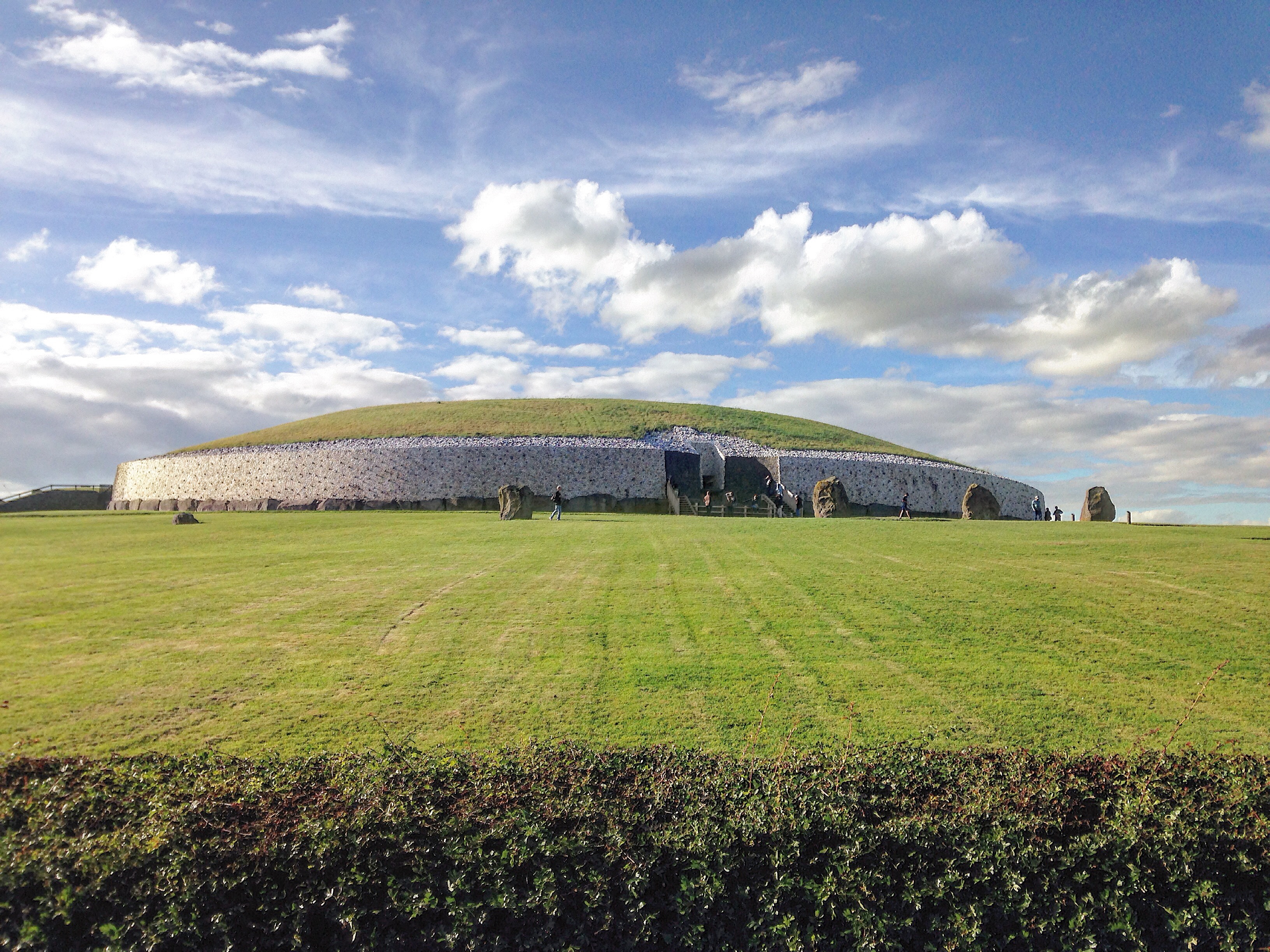
Archaeological records suggest that commemorations of Samhain can be traced back to the Neolithic period, some from 6,000 years ago. Neolithic Ireland had no towns or cities, but did craft huge architectural monuments, which acted as seasonal gathering spots, and housed the remains of the societies’ elites.
These megalithic sites, from the Greek “mega” and “lithos,” meaning big stone, would at times host vast numbers of people, gathered together for brief periods around specific calendar dates. Archaeological records reveal evidence of massive feasts, yet little to no evidence of domestic use. If people did live year-round at these sites, they would have been a select few.
Data from animal bones can reveal approximate time periods of the feasts, and further data comes from the monuments themselves. Not only are the monuments situated in key places in the landscape, but they are also carefully celestially aligned to allow the sun or moon to shine directly into the center of the monument on a particular day.
These sites connect the landscape to the cosmos, creating a lived calendar, scripted in stone. The UNESCO World Heritage monument of Newgrange, for example, is built so that a shaft of sunlight illuminates the innermost chamber precisely on the day of winter solstice.
According to early Irish literature, as well as traditional folklore collected in the 19th century, Samhain of long ago was a time for people to come together, under a command of peace, to feast, tell stories, make social and political claims, engage in important sacred rituals and, perhaps most importantly, to commune with the dead.
The traditional, pre-Christian realm of the dead was referred to as the Otherworld. The Otherworld was not somewhere far away, but rather overlapping with the world of the living. The Irish beliefs about the Otherworld were detailed and complex. It is full of magic, of witchcraft, of speaking with the dead as well as seeing into the future. The dead were traditionally believed to continue to see the living, although the living could only occasionally see them. The most prominent occasion would be on Samhain itself, when lines between the Otherworld of the dead and the realm of the living were weakened.
Not only were there particular days that one might encounter the dead, but particular places as well, these being the same megalithic sites. These sites are known in Irish Gaelic as “sí” sites, but there is another meaning of the word sí in Irish, that being the spirits of the mounds. This is often translated into English as “fairies”, which loses a great deal of meaning. “Fairies” in Ireland are spirits deeply connected with the realm of the dead, the mounds, and, perhaps most especially, Samhain.
The connection can be witnessed in the figure of the banshee – or bean sí, in Irish – an important mythological figure in Irish folklore, believed to be heard wailing with grief directly before the death of a family member. With Irish “bean” meaning simply “woman”, the banshee is thus a female spirit of the mounds, and a ruler of the realm of the dead.
The sí spirits are not only spirits of the dead, but they are also a particular aristocracy of the dead, who host the dead with feasting, merriment and eternal youth, often at the age-old megalithic sites. In Irish lore, they are powerful and dangerous, able to give great gifts or exact great damage. They once ruled Ireland, according to folklore, and now they rule the world of the dead.
The Otherworld is always there, but it is on the beginning of the dark half of the year, the evening of Samhain, now Halloween, when the dead are at their most powerful and when the lines between this world and the next are erased.
As the light of summer fades and the season of darkness begins, the ancient holiday of Halloween continues to celebrate the dead mingling with the world of the living once again, as it has for thousands of years.
Tok Thompson does not work for, consult, own shares in or receive funding from any company or organization that would benefit from this article, and has disclosed no relevant affiliations beyond their academic appointment.
by Quentin Grafton, Australian Laureate Professor, Crawford School of Public Policy, Australian National University
You may recall when, at the height of summer in 2019, more than a million fish floated to the surface of the Darling River’s Menindee Lakes. Iconic Murray cod and silver perch were among the dead.
A couple of months later, an expert investigation concluded excessive upstream water extractions, compounded by the ongoing drought, were to blame.
In another investigation in 2020, the Murray-Darling Basin Inspector-General reported he was informed that water theft, lack of compliance, unsustainable water extraction rules, and floodplain harvesting were driving the northern basin’s declines in stream flow – the measured volume of water flowing in a river or stream over a given period of time.
And yet, there appears to be a widely held view that we can place most of the blame of drying rivers on climate change. So what’s the truth? And why does it matter?
Our new research investigated the effects of climate change and water resource development on the Darling River over the past 40 years. We found much of the recent decline of river (stream) flow has not been because of climate change, but almost certainly a result of increased water extractions.
This is important, because naming climate change as the primary culprit for drying rivers may let water managers, ministers and irrigation lobbyists off the hook for failing to effectively control water consumption.
Our point isn’t that climate change is not happening – it’s here, it’s now and it’s global in its devastation. But, our research shows climate change shouldn’t be used as a “get out of jail free” card to excuse bad decision-making and poor planning decisions.
The Baaka-Darling River has nine major headwater dams and tributaries with a total storage capacity in excess of 4,500 billion litres, about equal to nine Sydney harbours. For decades, it has had high rates of water extraction, provided by 15 main channel weirs and more than 1,000 small weirs along its 1,000 kilometre or so length.
Our analyses looked back at 40 years of meteorological trends and water extractions data, then separated the effects of each on declining river flows.
We found between 1981 and 2020, the northern Murray-Darling Basin has become drier (11 millilitres less rainfall per decade, on average) and hotter (by 0.26℃ per decade, on average) – a trend consistent with climate change projections.
These trends reduced stream flows on the nearby, pristine Paroo River by 28%. The Paroo River has had virtually no water extractions in the last 40 years, which means that lower rainfall and higher temperatures completely explain its decline in river flows.
But this is not true for the Baaka-Darling River. We found stream flows declined by 53% at the Baaka-Darling River. Less than half of this decline could be explained by meteorological trends. This means the rest – more than half of the decline in stream flows – was almost certainly due to other factors: namely, increased water extractions.
Further peer-reviewed evidence in support of our conclusion can be drawn from the large, unmetered, and possibly increasing, water extractions associated with floodplain harvesting. This harvesting may be in the order of hundreds of billions of litres per year in the northern Basin, some of which may be illegal.
This is coupled with much smaller increases in metered water extractions along the Baaka-Darling River and its tributaries over the period 2014-15 to 2017-18.
Reduced river flows are profoundly damaging to the ecosystems of the Murray Darling Basin, and its harms accumulate over time. A key pillar of these ecosystems are waterbirds, such as herons, spoonbills, ibis and kingfishers.
Our research investigated the abundance of waterbirds on the Paroo and Baaka-Darling rivers. We found they were more resilient on the Paroo River wetlands than at Menindee Lakes along the Baaka-Darling River.
In 40 years, the average decline in waterbird abundance on the Paroo River Wetlands was 50%, compared to 75% at Menindee Lakes.
Waterbirds are a key pillar of Murray-Darling Basin ecosystems.
Shutterstock
We also simulated what would happen if water were to be reallocated from irrigation to increase the flow in the river, during a drought. Our results suggest the resilience of waterbird numbers at Menindee Lakes and nearby could be improved.
Increases in river flows during drought (relative to business as usual) also supports people, as it improves the availability and quality of drinking water in downstream communities, such Wilcannia and Menindee. And it’s crucial for the habitats of fish, wetland plants, trees, mammals, frogs, and reptiles.
Based on our calculations, the annual cost would be around 1.3% of estimated total irrigation profits if 100 gigalitres per year of water were reallocated to increased stream flows. It would be 4% of estimated total irrigation profits if 300 gigalitres per year of water were reallocated to increased stream flows.
Understanding why our rivers are getting drier helps us to respond to both the problem of climate changes and to water mismanagement.
Fundamental to water management is knowing how much water is in the entire system, where it is, where it goes, and what value it brings. The measurement technologies to answer these questions are available.
If we are to meet the key objects of the Water Act and the Basin Plan, we need to reduce water extractions and to reallocate water on this iconic river to ensure minimum river flows for downstream communities and for critically important environments.
This task is urgent if Australia is to achieve the goal of the Murray-Darling Basin Plan a decade ago: to create and maintain healthy sustainable working rivers.
The last thing Australia needs in a climate change crisis is for water ministers and their advisers to bury their heads in the sand, about what can, and must, be done to ensure a much more sustainable water outcome for all.
Quentin Grafton has received research from the Australian Research Council.
Gilad Bino receives funding from state and federal governments (Australian Research Council, Murray-Darling Basin Authority) and non-government organisations.
Gilad Bino is affiliated with Charles Sturt University, Institute of Land Water and Society as an adjunct Lecturer
John Williams is affiliated with Charles Sturt University, Institute of Land Water and Society as an honorary Professor
Richard Kingsford works for UNSW Sydney. He receives funding from government (Murray-Darling Basin Authority, Australian, NSW, Queensland, South Australia and Victoria Governments, Australian Research Council) and non-government organisations. He is affiliated with the Ecological Society of Australia, Birdlife Australia, Society for Conservation Biology Oceania.
Long Chu does not work for, consult, own shares in or receive funding from any company or organisation that would benefit from this article, and has disclosed no relevant affiliations beyond their academic appointment.
OneZoom: All life is an interactive map of how all life on earth is related, including endangered and extinct species. I love how the organized layout of this map makes it fun to navigate for both kids and adults. Each leaf on the map correlates with a different species, and the branches represent common ancestors. — Read the rest
by Stephen Skalicky, Senior Lecturer in the School of Linguistics and Applied Language Studies, Te Herenga Waka — Victoria University of Wellington
Shutterstock
If you’ve read, watched and enjoyed the work of America’s best-known satirical publication The Onion, you might be surprised by how serious it suddenly became earlier this month. So serious, in fact, that it might end up before the US Supreme Court.
Each year approximately 7,000 appellants peition to have their cases heard before the Supreme Court, but only 100 to 150 of these petitions are reviewed. What are known as amicus curiae briefs can be filed by interested third parties to strengthen the need for a petition to be seen by the court.
Little wonder, then, that it caught the eye of the media when such a brief was filed by The Onion. Despite the publication’s typically absurd claim to a daily readership of 4.3 trillion, the intent of the brief is far from ridiculous. Because The Onion believes the right to use satire is under threat.
The brief was filed to support an appellant named Anthony Novak, who in 2015 was arrested and charged with using a computer to disrupt police operations. The disruption was said to arise from Novak’s decision to create a satirical Facebook page identical in appearance to that of the police department in the city of Parma, Ohio.
At trial, Novak was found not guilty and then sued the city for violation of his civil rights. The city sought qualified immunity for its officers, which shields them from civil litigation unless they had been shown to violate someone’s civil rights – exactly the claim raised by Novak.
A state judge agreed with Novak and rejected the city’s qualified immunity, indicating Novak could sue. The city appealed and the case moved to the Sixth Circuit Court of Appeals. The Sixth Circuit reversed the lower court’s rejection and ruled the officers should be granted qualified immunity because Novak’s actions were not protected speech.
This barred Novak from seeking any damages for his arrest. His last chance for appeal is now in the hands of the Supreme Court.
Satire and protected speech
The purpose of The Onion’s brief is to provide additional information about the nature of satire, and to urge the Supreme Court to hear Novak’s case and reconsider the decision handed down by the Sixth Circuit.
It’s written with humorous and satirical flair, and is indeed a very good read. True to form, though, the playful aspects of The Onion’s brief contain a serious message: if the Supreme Court were not to hear Novak’s case, future satirists (including the writers at The Onion) may face legal prosecution for creating satire.
Therefore, it argues, the Supreme Court must hear Novak’s case to ensure the preservation of satire as a legitimate means of free speech.
Yet more than 30 years ago, the Supreme Court decided in Hustler v. Falwell that satire and parody are protected speech under the First Amendment of the US Constitution. Why then did the Sixth Circuit rule in favour of the city if Novak’s page was a form of protected speech?
The reason is simple: the Sixth Circuit limited the boundaries of what it considered to be satire. In its decision, the Sixth Circuit noted that while the Facebook site was satire and thus protected, Novak also deleted spoiler comments from his page and copied a warning from the real page to his own.
The Sixth ruled the police officers could not be expected to extend first amendment protection to these actions and thus granted them qualified immunity, squashing Novak’s civil suit.
The court’s decision presents a quandary: how can the creation of a satirical work be protected speech when the maintenance of the work is not? The seemingly contradictory logic behind the Sixth Circuit’s decision is why The Onion’s brief is so important – it provides a definition of satire from a position of experience and expertise.
Defining how satire works
So, what is satire and how does it work? While there is a tradition of defining it as a literary genre, satire is much more than a category on a bookshelf. Satire can occur in any medium, such as Novak’s Facebook page.
This is because satire is “parasitic” – a satirist appropriates formal features of an existing genre, person or event to create a pretence of authenticity and sincerity. By pretending to be something it is not – such as a news story or a police Facebook page – a satirical work arouses expectations and stereotypes associated with that genre.
At the same time, the satirist provides indirect and subtle clues which, when interpreted correctly, belie the satirical pretence and pull back the curtain to expose the ruse, which distinguishes the satire from the real thing.
The second step must be indirect for satire to work, and it cannot work if the satirical object is labelled “satire” in advance. This point is strongly emphasised in The Onion’s brief: killing the satirical pretence kills the satire. If Novak’s efforts to maintain a satirical pretence are an arrestable offense, then satire is no longer protected speech.
Whether Novak’s case goes to the Supreme Court is still uncertain, and the details of his case are more nuanced than asking whether someone can be jailed for making satire. Instead, the Supreme Court would need to draw new lines defining what satire is and how it works. Agreeing on a universal definition of satire is far from easy.
Fortunately, “America’s Finest News Source” has provided the court with an excellent explanation, demonstrating just how serious satire can be.
Stephen Skalicky does not work for, consult, own shares in or receive funding from any company or organization that would benefit from this article, and has disclosed no relevant affiliations beyond their academic appointment.
Hurricane Ian barreled ashore with winds of up to 150 mph (240 kph) on Florida’s southwest coast on Sept. 28, 2022.
The storm’s powerful winds and torrential rains reduced entire communities to rubble, killing more than 120 people, including many who drowned in floodwaters resulting from the nearly 18-foot (5.5-meter) storm surge. Bridges connecting Sanibel, Captiva and other barrier islands with the mainland flooded and crumbled, isolating those areas.
And based on how Florida has responded to similar devastation in the past, I highly doubt that Ian will do much to slow the pace of the state’s rapid population growth in the near future.
But many Florida residents spend only the winter months there, returning when the climate warms up back home. In the weeks that followed the storm, analysts were predicting that most of these annual short-term residents – called snowbirds – will not forgo their annual voyage. Instead, many say they’ll simply shift their migratory course and land somewhere else in Florida.
South Florida real estate agents are bracing for stronger-than-usual demand for seasonal rentals in Dade and Broward counties on Florida’s southeast coast, which escaped Ian’s wrath. The extra interest is leading to further spikes in the already overheated real estate markets in places like Miami and Fort Lauderdale.
Today’s new and part-time Floridians are drawn by the same factors that have lured settlers and snowbirds for a century: warm weather and waterfront views, along with lower taxesand fewer regulations than in other parts of the country.
Draining the swampland
Early developers didn’t let inhospitable environments deter them. In the decades after the Civil War, they transformed the peninsular state’s mosquito-ridden, alligator-occupied swampland into hotels, homesteads and farmland.
Florida promoters lured tourists and settlers alike with promises of wealth, land and leisure, whether their sales pitches had to do with citrus and sugar, or sun and sand. Engineers used modern technology to accomplish the large-scale transformation and make way for unprecedented land speculation and development.
Everglades drainage began in earnest in the 1880s when a wealthy Philadelphian named Hamilton Disston created the Okeechobee Land Co. to develop a system of canals that would facilitate “land reclamation.”
Disston purchased over 4 million acres the state had designated as uninhabitable swampland in exchange for US$1 million and his promise to transform it. In 1881, The New York Times called this “the largest purchase of land ever made by a single person in the world.”
His gambit sparked Florida’s first real estate boom.
Disston sent brochures around the country, and to people as far away as Scotland, Denmark, Germany and Italy, that touted Florida’s “inexhaustibly rich lands” and an “equitable and lovely climate where merely to live is a pleasure, a luxury heretofore accessible only to millionaires,” according to Frank B. Sessa’s 1950 history of greater Miami.
The drainage made it possible for the railroad magnates Henry Flagler and Henry Plant to extend their railroads to southeast and southwest Florida, respectively. Train travel greatly expanded opportunities for tourists and new residents by the late 19th century.
This tiny thatched Florida house, photographed in the early 1900s, looks nothing like housing there today.
Hulton Archive/Getty Images
Stormy weather from the start
Attempts to control water on the ground, however, couldn’t curtail weather-related hazards. In 1926, a hurricane slammed into Miami, leaving more than 390 people dead and causing property damage of more than $76 million.
A Western Union telegram from Jessie Wirth Munroe, a survivor, read like a text from someone who had endured Hurricane Ian: “We are safe. Water front completely destroyed.”
Subsequent storms wrought greater devastation.
A 1928 hurricane killed over 2,500 people just south of Lake Okeechobee, most of them Black farmworkers laboring in the new agricultural town of Belle Glade, which was washed away.
“Clinging to beds, using mattresses as overhead cover, the people of the Keys had watched large rocks roll about like pebbles, buildings crumble like houses of cards, water lift up houses and carry them off,” wrote Helen Muir, a journalist who moved to Miami in 1934 and chronicled the city’s growth. “The hurricane moved in like a giant mowing machine and leveled everything.”
Housing construction was booming in Miami in 2002, a few years after Andrew destroyed many homes.
Joe Raedle/Getty Images
Rebuilding and rebuilding
Though each storm seemed to threaten the population boom, the new arrivals tended to stick around. Civic boosters, business leaders and policymakers have invariably promised to rebuild.
Windstorm insurance premiums were climbing beyond the reach of many homeowners before it hit. Analysts predict that premiums will continue to rise, making it harder for residents to afford to remain in Florida and even more challenging for new homebuyers to secure policies.
It remains to be seen if the pro-growth mentality and belief in technological innovation that have shaped Florida’s history can forestall the challenges of climate change and the increasingly severe storms it brings about in the decades ahead.
Robin Faith Bachin receives funding from JPMorgan Chase and Co., Miami-Dade County Department of Public Housing and Community Development.
by Jahkarli Romanis, PhD Candidate, Monash University
Within western society, maps are often perceived as scientific, neutral and objective tools. Map making has always been shaped by our social and cultural relationships to the land. In the last 20 years, approaches to map creation have become much more reliant on photographic and digital technologies, including Google Earth.
My artistic exploration of western maps began during my honours year in 2020 and has since become a key part of my PhD research. Due to the pandemic, travel to Pitta Pitta Country was prohibited, therefore making it impossible for me to create photographs of Country for my project.
Pitta Pitta is located in western Queensland, 300 kilometres south of Mount Isa. My maternal great-grandmother Dolly Creed was stolen from Country as a young child and my family has been dislocated since. My understanding of this landscape is informed by oral history, and my relationship to it is shaped by my distance from it.
I grew up on Wadawurrung Country, an hour south from Naarm (Melbourne), and have lived in Victoria my whole life. Like many Aboriginal and Torres Strait Islander people, my understanding of self is scarred by the atrocities my family have experienced due to colonisation.
These experiences heavily inform my practice and research.
In response to COVID travel restrictions, I decided to go to Pitta Pitta “virtually” via Google Earth. While looking around Pitta Pitta via the street view function, I began noticing the inaccuracy of the technology. The images hadn’t been updated since 2007, the technology glitched a lot and, most importantly, there was no acknowledgement of Indigenous Custodianship.
I went looking for places I recognised on Country within Google Earth to see what had been photographed.
On the outskirts of Boulia, a small town on Country, a Waddi tree sits. Waddi trees are rare species of Acacia endemic to central parts of Australia. This particular tree was a significant gathering place for my people.
Within Google Earth it had been reduced to a blob of pixels, a dark shadow smeared on a reddish landscape. I was angered that Google decided this tree was unimportant, but also began to wonder why.
Responding to Google’s representation of the tree, Waddi Tree from my series (Dis)connected to Country aims to demonstrate where Google Earth has erased topographical information and Indigenous Knowledges of place.
My research addresses this gap. Waddi Tree layers a photograph I made of the tree during my last visit to Country in 2019 onto a screenshot from its location within Google Earth.
Through the omission of Indigenous Knowledges of place, western maps of Australia continue the false colonial narrative of terra nullius – land belonging to no one.
The photographic technologies used within Google Earth don’t allow, nor represent, the significant relationships Indigenous peoples have with Country. Photographic and digital images have also become intertwined with mapping in Google Earth. This changes how we relate to place, normalising a flattened and very limited view.
Indigenous Knowledges of place are rooted in relationships which recognise that all forms of life have agency and are interconnected.
Put very simply, Country, all that it encompasses, and self are intertwined and valued equally.
Other images from the series seek to identify where the technology dysfunctions and breaks down within itself. I like to think of these “glitches” as tears in the technological fabric of Google Earth, and therefore the narratives the technology enforces. Pitta Pitta (Google’s Earth) and Pitta Pitta (Published Without Permission) are freeze-frames from transitions between the aerial and street view functions which emphasise this glitch.
My research and arts practice are informed by my family history and my positionality as a Pitta Pitta woman.
I acknowledge my Ancestors and my great-grandmother Dolly whose story has shaped my family in unimaginable ways. Additionally, I extend my respects to the ongoing Custodians of the Kulin Nations where I work and live.
Sovereignty has never been ceded and it always was, and forever will be, Aboriginal land.
I’ll finish with a quote from Indigenous scholar Aunty Mary Graham:
There is no Aboriginal equivalent to the Cartesian notion of ‘I think therefore I am’ but, if there were, it would be – I am located therefore I am. Place, being, belonging and connectedness all arise out of a locality in Land.
Jahkarli Romanis does not work for, consult, own shares in or receive funding from any company or organisation that would benefit from this article, and has disclosed no relevant affiliations beyond their academic appointment.
This is a fascinating bit of history, courtesy of the Library of Congress:
Most silent-era film productions have been lost to time & hardly *any* material shot by Black filmmakers pre-1920 has survived. But recently, the earliest known footage produced by a Black film company was found, hiding in plain sight, in our collections.
The Cross-Bay Ferry is officially back! The mode of transportation that connects downtown St. Pete with downtown Tampa is ready to carry passengers again after a slight delay. Riders can now reserve tickets aboard the Cross-Bay Ferry beginning October 19. Adult tickets cost $24 round trip. Senior (65+), Military, College Student (w/ ID)*, and Youth (Ages 5 – 18) cost $16 round trip. Persons who use a wheelchair cost $10 round trip. Children 4 years and under ride free. You can reserve tickets online. Below you can see a full schedule that shows service Wednesday and Thursday, Friday and Saturday, and Sunday.
SCHEDULE
Wed/Thur
Fri/Sat
Sunday
St. Pete
10:00am
11:00am
Tampa Departure
11:30am
12:30pm
St Pete
1:30pm
2:00pm
Tampa Departure
3:00pm
3:30pm
St Pete
4:45pm
4:45pm
6:00pm
Tampa Departure
6:15pm
6:15pm
7:30pm
St Pete
9:30pm
9:45pm
Tampa Departure
10:45pm
11:00pm
The ferry vessel is a twin-hull aluminum catamaran that can carry a maximum of 149 guests at an average speed of 30 mph. The vessel has a full-service bar with basic food service. Passengers may bring up to two pieces of luggage and one small personal item at no extra charge, and they may also bring bikes on board.
While we’ve enjoyed seasonal service, by 2024 year-round service could be implemented. Hillsborough Area Regional Transit received a $4.9 million grant to secure a larger vessel that would call the St. Petersburg and Tampa area home permanently.
A project of this magnitude isn’t the undertaking of just one group, of course. The Cross-Bay Ferry is a regional collaboration between Hillsborough County, Pinellas County, the City of Tampa, and the City of St. Petersburg.
Cross-Bay Ferry’s St. Pete docking station is located at 375 Bayshore Dr. NE. The ferry arrives at 333 S Franklin Street in Tampa.
It’s that time of year again. Fall brings mildly cooler weather, all things pumpkin flavored, and in Lakeland, the annual Swan Roundup. Similar to the UK’s Swan Upping, the Lakeland Swan Roundup allows the city’s government to get a count of how many swans are currently living in the city. It’s also a way for the swans to get their annual check-up. At 7 a.m on Tuesday, October 18th, spectators can watch this unique Lakeland event.
The Lakeland Swan Roundup
During the Lakeland Swan Roundup, Parks & Recreation employees will carefully gather the swans to get them ready for their annual veterinary check-up. The swans will be confined in large holding pens on the south side of Lake Morton for their annual wellness examinations. Examinations are done in partnership with My Pet’s Animal Hospital. The Roundup allows the City to closely monitor the health and vitality of Lakeland’s swan population.
41st Annual Swan Roundup Recap 2021. Photo courtesy of City of Lakeland Government.
41st Annual Swan Roundup Recap 2021. Photo courtesy of City of Lakeland Government.
41st Annual Swan Roundup Recap 2021. Photo courtesy of City of Lakeland Government.
41st Annual Swan Roundup Recap 2021. Photo courtesy of City of Lakeland Government.
41st Annual Swan Roundup Recap 2021. Photo courtesy of City of Lakeland Government.
41st Annual Swan Roundup Recap 2021. Photo courtesy of City of Lakeland Government.
41st Annual Swan Roundup Recap 2021. Photo courtesy of City of Lakeland Government.
41st Annual Swan Roundup Recap 2021. Photo courtesy of City of Lakeland Government.
41st Annual Swan Roundup Recap 2021. Photo courtesy of City of Lakeland Government.
During the wellness exam, vets weigh the swans and look them over for any signs of deteriorating health. Sometimes, the swans receive inoculations based on results from the exam. Baby swans, or signets, get a micro-chip.
After the Roundup, the City will know just how many swans are living in Lakeland. Each year, mating swans produce signets and over the past few years, the birds have produced a lot of offspring!
The history of Lakeland’s swans
As all local Lakelanders know, the first two swans were a gift from Queen Elizabeth II in 1957. But Lakeland had quite a large population of swans even before that. In the 1920s, seasonal residents of Lakeland (aka Snowbirds) wanted to have swans as pets or as nice animals to adorn their winter homes. By 1926, Lakeland had over 20 swans and their numbers continued to grow for the next few decades. However, by the 1950s, the last two swans passed. The swan population had succumbed to things like dogs, alligators, and human interactions.
Enter Queen Elizabeth II. In 1956, a former Lakeland resident who was living in England decided to a make a plea on behalf of his hometown. The Queen of England, among many other titles, is also the Seigneur of Swans. Although now just a formality, the royal family technically owns all the swans in England and has since the middle ages. The queen responded to the request for new Lakeland swans and donated a pair of mating swans from the royal swannery.
Unfortunately, later that year, the male swan was fatally injured. Eventually, the widow had to take a commoner swan as her mate. This makes the swans of Lakeland only half royal.
The UK’s Swan Upping
Lakeland’s Swan Roundup is a similar exercise to the UK’s Swan Upping. The Swan Upping is the annual census of the swan population on a particular stretch of the River Thames. Participants are called Swan Uppers and they form a flotilla of traditional Thames rowing skiffs. They row steadily up the Thames, lifting swans out of the water and checking their health.
The Swan Marker’s iconic five-day journey upriver has been an annual ceremony for hundreds of years, and today it has two clear goals; conservation and education.
Want to receive a Modern Globe newsletter once a week? *
Select list(s) to subscribe toNewsletter
Example: Yes, I would like to receive emails from ModernGlobe. (You can unsubscribe anytime)
Constant Contact Use. Please leave this field blank.
By submitting this form, you are consenting to receive marketing emails from: ModernGlobe, modernglobe.com, TAMPA, FL, 33605, https://www.modernglobe.com. You can revoke your consent to receive emails at any time by using the SafeUnsubscribe® link, found at the bottom of every email. Emails are serviced by Constant Contact
Friday, protesters from Just Stop Oil threw tomato soup over Van Gogh’s Sunflowers fourth version (don’t worry, the painting itself is fine) before gluing themselves to the wall. This was ostensibly a protest against climate change, but it’s left a lot of people with a lot of feelings.
Some are angry at the choice of painting. After all, Van Gogh was poor, mentally ill, a lover of nature, and unappreciated during his lifetime. If there’s an artist likely to align with environmentalism, it’s him.
I’m not here to debate the relative merits of attacking a priceless cultural artifact. The most effective protests are ones that shock and inconvenience us, forcing us to notice things we haven’t considered before. In that respect, this kind of action can be effective. The road to any kind of progress was never paved with politeness and respectability.
The fact is, though, that you have a very limited window of time to convey your message with that kind of action. Once you’ve thrown the soup and whipped out the glue, security is already on their way. You have at best a few minutes to convey why you’re there, what you’re doing, and why people should care. There is no room for confusion. Your window is limited, and your shit needs to be extremely together.
That’s where this ultimately falls apart. At first, I even wondered if it was intentional performance art intended to critique the movement.
It’d be charitable to say that the call to action was a bit muddled. The world should stop allowing new drilling for oil, but also fuel prices should be cheaper so people can heat up soup in the winter. British Petroleum raises fuel prices so they can donate to museums, which leaves people cold and hungry. Since this is theoretically an environmental protest, I’m assuming that the intended message wasn’t supposed to be “BP needs to stop donating to museums and make oil more accessible.” I figure that this wa intended to convey that we need decentralized grids made up of renewables, but there are several layers of abstraction between that message and Van Gogh’s Sunflowers doused in tomato soup.
It also invokes the idea that life is more valuable than art. This is true, but art is also our only record of some extinct species. Life is also a nebulous concept — “life,” in general, will continue. The planet will recover. Human life will not, but that’s always been our fate. The only thing that will outlast us and hold any echo of us, whether our species is taken out by climate change, an asteroid, or simply by evolving into a genetically distinct descendant, is the artifacts we leave behind. Maybe another species will come along to see it, maybe it won’t. In either case, a piece of artwork is a perplexing vehicle ‘for the message the protesters seemed to be trying to convey.
There’s also something very “pink ribbon” about it. I don’t know that there’s anyone in the world who isn’t aware of climate change and the need to switch away from fossil fuels. Hell, even the companies that profit from it know they need to try to cleanse their reputations. That’s one benefit of this protest, though — it did draw attention to the fact that many museums are funded by oil companies (in this case, British Petroleum) in an attempt to make themselves look bett-
Oh.
Still, maybe some oil heirs are sincere in their desire to divest from the industry that gave them their money. Ideally, nobody would accept “blood money” funding from something that’s actively destroying the envi-
Oh.
Ever since “The Merge,” Ethereum touts itself as an environmentally friendly form of cryptocurrency. While this did reduce this specific crypto currency’s energy consumption by 99.9%, it should be noted that its prior consumption was roughly equivalent to the entire country of Chile (which consumes about 73 billion kWh per year). This change is a positive development in the world of crypto, and more currencies should adopt it, but .1% of that is still massive. It’s touted as being good for the environment, but this is a bit misguided — it’s just less of a massive energy sink when compared to its competitors.
This isn’t to suggest that individuals or organizations have to pass some kind of ideological purity test in order to make a statement, but it’s important to remember that they aren’t exempt from scrutiny just because they’re saying something that you agree with. No one is immune to propaganda, and this kind of thing is literally why greenwashing persists. Know who’s cutting the checks.
The whole thing is especially baffling when you consider this that the National Gallery is just a few minutes’ walk away from a British Petroleum office. There’s already a problem with pushing the responsibility for climate change onto individuals rather than the big businesses that contribute the most. Big business, especially oil companies and the fishing industry, love the fact that people focus on making incremental lifestyle changes. While the rest of us squabble about who is and isn’t allowed to use a plastic straw, they get away with (often literal) murder.
It’s no secret that many individuals found the soup-throwing upsetting, but what impact has it had on the key players driving climate change? Why is this action directed at the public? Even if every person at the museum left and wrote angry letters to BP, is boycotting BP’s product something that public infrastructure will actually allow them to do?
There was also concern that one of the protesters flashed what appeared to be a white supremacy hand gesture as she was led away. I haven’t seen the photos or video of this, so I can’t speak to its veracity. It makes me wonder if it was genuinely a white power signal, or if she was trying to make the “OK” hand gesture because a thumb up doesn’t really work in cuffs. (The “OK” hand gesture is now listed as a hate symbol, but this is entirely because a bunch of dipshits on 4chan back in 2017 tried to convince the internet that it was.) Assuming that the accusation of racism is correct, the use of any kind of white supremacist gesture in this context is kind of baffling. Women of color are the group that’s the most negatively impacted by climate change. I guess a white supremacist might want to contribute to the oppression of other people by discrediting the environmental movement? They’re strange concepts to link together in the context of some soup-throwing, I tell you what.
So, here’s an environmental protest, but one that’s funded by oil money and crypto donations. A protest that wants to end the use of oil, but also wants fuel to be cheaper and more accessible. An action that targeted a representational artwork of nature, by an impoverished, mentally ill artist, instead of any of the British Petroleum corporate offices a few minutes’ walk away. One that, like so many actions before it, seems to push the responsibility for climate action on individuals instead of corporate entities.
In the end, I feel bad for these kids. I remember having intense, unfocused passions that I dedicated to causes I strongly believed in (but weren’t always well thought-out). If this was their idea, I hope they can learn and do better in the future. If someone put them up to this, I hope that person is held responsible.
As an artist and environmentalist, it all leaves me with one question: What was the actual end game here?
State officials need to address the sharp rise in antisemitic hate crimes in Florida, not ignore them. SPECIAL TO THE ORACLE/TED EYTAN
The U.S. has seen a drastic increase in antisemitism, and Florida is ranked third in the country for antisemitic activity, according to a Sept. 13 report by the Anti Defamation League (ADL).
Anti-Jewish incidents have dangerously increased in Florida this year, so state officials must denounce hate groups and address the issue before it becomes violent.
On May 7, there were Nazi demonstrations in front of Walt Disney World. On July 23, Neo-Nazi group Goyim Defense League appeared outside of a Turning Point USA convention in Tampa handing out antisemitic flyers with their group proudly claiming responsibility.
These acts can be seen on social media, where even popular celebrities spread antisemitic rhetoric.
Rapper Kanye West has come under fire on social media after an Oct. 9 Instagram post claimed rapper Sean Diddy was controlled by the Jewish media.
Following his suspension from Instagram, West took to Twitter to rant before his account was restricted. Kanye’s tweet and Instagram caption shared the same conspiracy theory that Jewish people control the media and everyday life.
“I’m a bit sleepy tonight but when I wake up I’m going death con 3 – ON JEWISH PEOPLE – the funny thing is I actually can’t be Anti Semitic because Black people are actually Jew also – You guys have toyed with me and tried to black ball anyone who opposes your agenda,” West tweeted on Oct. 9 following his Instagram suspension.
West is a popular figure in the media, especially now due to his political beliefs and controversial behavior. The artist is popular among college students, which is concerning for some students.
“I believe that such extreme and offensive claims made by such a major and influential artist of our time has serious implications, both socially and politically, and they should not be taken lightly,” senior Munira Alani said to The Oracle on Oct. 13.
The increase in antisemitic conspiracies coming from popular artist is alarming, but to see hate groups in Florida proudly standing with swastikas and yelling hate filled antisemitic language is a warning. While just words, they can evolve into something much more dangerous.
“It is important as members of the Jewish community and Americans for people to pay serious attention to this,” Jacob Soliman, CEO and president of the Greater Miami Jewish federation, said in a Sept. 16 NBC 6 interview.
“It is very easy for people to write it off as another bunch of crazies and it does not mean anything or going anywhere, but words lead to actions, and we have seen what happens when hate goes unchecked.”
From January to August there have been over 400 instances of antisemitic propaganda distributed in Florida filled with misinformation and hateful stereotypes surrounding the Jewish community, according to the ADL report.
In 2020, there were 127 antisemitic incidents reported in Florida, and this year 190 incidents have been reported so far. A 2020 report by the FBI showed 676 anti-Jewish incidents across the U.S., meaning that in 2020, Florida alone accounted for 19% of antisemitic crimes in the country.
On Jan. 30, UCF student David Newstat was allegedly attacked by a Neo-Nazi group in Orlando.
In an interview, Newstat told Fox 35 reporters he had an Israeli flag on his car, leading the group to call him antisemitic slurs and attack him once he stepped out to confront the group. The hate crime included being pepper sprayed, assaulted and having his phone stolen by his attackers, who were self-proclaimed Nazi members.
“I’m literally Jewish and I got attacked, assaulted, pepper-sprayed, spit on, you name it,” Newstat told Fox 35. “[I was] called disgusting slurs just because of my religion.”
One of the suspects, Joshua Terell, a member of the Nazi demonstration, said Newstat was brandishing the star of david in a May 16 interview. In the interview with detectives, Terrell continued stating antisemitic conspiracy theories that Jewish people controlled the banks.
Hateful rhetoric like this is not new, and sadly it is not something USF is immune to.
Pi Kappa Phi members drew a swastika on a Jewish member’s chest during an initiation activity hosted on Feb. 11, according to a Feb. 23 Oracle story. The fraternity condemned the incident on its Instagram, issuing an apology and denouncing antisemitism.
Florida officials have yet to release any statement or comments on the ADL report, let alone acknowledge the rise of antisemitic behavior. Without denouncing antisemitic attacks, it allows these hate groups to feel safe and continue their deplorable actions. This inaction not only harms Jewish communities, but the people of Florida opening their mailboxes to flyers filled with antisemitic rhetoric.
USF’s main principle of community includes diversity and inclusion, uniting the community that lives and works on campus as one. To see Florida rank so high in antisemitic hate crimes should not only make students sad, but should get them angry.
Hate has no place in the Sunshine State, and to see such blatant acts of violence against one group is an attack against everyone.
The Junior League of Tampa is hosting a massive Holiday Gift Market with 200+ merchants selling exquisite goods. This is a significant fundraising event for the organization, and provides a wonderful boost for our local makers and small businesses in Tampa. Get your tickets online here.
The Holiday Gift Market Presented by Publix is the League’s largest fundraiser bringing together merchants and shoppers for a unique shopping event. Attracting over 20,000 attendees every year, the Holiday Gift Market raises vital funds for their community projects and programs.
Holiday Gift Market spreads cheer throughout Tampa
The Junior League’s goal is to provide attendees with a thoughtfully curated market featuring products and makers from around the country. To create a unique shopping experience, the Holiday Gift Market accepts merchants from a variety of categories including Apparel, Home & Holiday Décor, Gourmet Food & Cookware, Children’s Gifts and more.
You can visit the Holiday Gift Market from November 11-13, with a special preview party set for November 10. Here’s the full Holiday Gift Market schedule:
Friday, November 11th: 9am – 4pm: General Admission
Saturday, November 12th: 9am – 6pm: General Admission
Sunday, November 13th: 9am – 4pm: General Admission
Learn more and reserve your tickets on Junior League’s website.
Holiday Gift Market helps fund vital Junior League programs
Shopping for a cause has never been better or more satisfying. Founded in 1926, The Junior League of Tampa, Inc. is an organization of 1,900 women committed to promoting voluntarism, developing the potential of women, and improving communities through effective action and leadership of trained volunteers. Its purpose is exclusively educational and charitable. The 19th annual Holiday Gift Market Presented by Publix is one of the largest fundraisers of the year for The Junior League of Tampa.
This event provides a unique shopping experience featuring over 200 merchants. Merchants sell everything from clothing and jewelry to holiday décor, food, and children’s items. The Junior League of Tampa commits 100% of the net proceeds from this event to funding their programs and community projects in the areas of education and child welfare.
Visit: Florida State Fairgrounds: Expo Hall and Entertainment Hall, 4800 US Hwy 301, Tampa, FL 33610
Some tribes have differing opinions on how they want the remains of their ancient ancestors handled, according to anthropology professor Thomas Pluckhahn. ORACLE PHOTO/LEDA ALVIM
The Department of Anthropology is about to end a decades-long goal of returning the remains of 200 ancient ancestors of Native Americans to the Seminole Tribe of Florida, according to anthropology professor Thomas Pluckhahn.
Due to the National Graves Protection and Repatriation Act of 1990, institutions are required to inventory their possession of Native American remains and speak with tribes on how they want to handle the transfer of guardianship, Pluckhahn said.
These remains have been mostly found in excavations for construction projects, in archaeological investigations or they were donated by the public, according Pluckhahn.
Achieving this goal is monumental for USF, and the university’s involvement with this project will hopefully encourage other universities to join in and correct the missteps of the past, tribal member and director of the Seminole Tribe of Florida’s Tribal Historic Preservation Office Tina Marie Osceola said.
The remains USF is in possession of have also been affiliated with the Quapaw Nation, Osage Nation and Shawnee Tribe in Arkansas, the Hopi Tribe and the Zuni Tribe of the Zuni Reservation in Arizona and the Agua Caliente Band of Cahuilla Indians and the Morongo Band of Cahuilla Mission Indians in California, according to Pluckhahn.
Returning these remains has sometimes proven to be difficult, Pluckhahn said, as not all tribes are on the same page on how they want them to be handled.
“It’s a highly complicated process as some tribes may prefer that the remains of their ancestors stay with the museum, at least for the time being,” Pluckhahn said.
“Others prefer to have them reburied, but don’t wish to have any physical contact with the remains – owing to spiritual prohibitions on handling them – and others want to move forward with reburial, such as the Seminole Tribe of Florida, as expeditiously as possible.”
Though the process is one that needs to be handled with care, Osceola said the end goal of this journey is worth it from a moral perspective.
“The repatriation of our ancestors is paramount to the health and well-being of tribal populations today. Let’s not forget, the ancestors who sit in collections were erroneously stolen from their graves,” she said.
Keystone and other Florida communities are being victimized by developers and the county needs to step in. SPECIAL TO THE ORACLE/ WIKIMEDIA COMMONS
Land development company Taylor Morrison has continued to bully residents of Keystone by exploiting legal loopholes and blatantly ignoring local laws, and Hillsborough County has yet to put a stop to it.
Keystone, a rural area about half an hour north of USF, has been fighting to stop the development of 194 new homes in its community since August. Not only does it threaten their agricultural way of life, but the plans explicitly violate local ordinances, such as the Keystone Community Plan and the Unincorporated Hillsborough County Comprehensive Plan.
There is still time for county commissioners to step in and end this by issuing a stop work order for the project instead of letting Taylor Morrison with it, hurting the environment and community in the process.
Taylor Morrison has already been in hot water for environmentally damaging practices. In April they were issued a stop work order for removing trees without a permit, as reported in an Aug. 25 Oracle column.
One major recent concern of Keystone residents is what the new housing will mean for schools. Residents are worried about the increase in school-age children brought by these new homes. Hillsborough County Development Services found in a 2020 study that there will be sufficient space for the estimated 82 new children in the community.
Critics wonder where the county got this number and if it is even accurate, including Melissa Nordbeck, a Keystone resident and lead plaintiff in their lawsuit against Hillsborough County.
“Schools are already overcrowded even though the school capacity study says 194 homes will only result in 38 elementary, 17 middle and 27 high school students. Where do they even come up with that,” Nordbeck said in an Oct. 12 email to The Oracle.
Taylor Morrison has also been rushing to finish this project by exploiting loopholes in its work permits. The company was permitted to work during the business week, so when residents saw workers out on a Saturday, they filed complaints and asked for penalties to be imposed.
The response from Richard Reidy, assistant to County Commissioner Ken Hagan, stated that the term “work week” is subjective so they can change the wording, but technically no violation occurred.
“I’d venture to say 99% of the world’s population, we’d take work days to coincide with week days. Nevertheless, it is a legal ambiguity. So technically there was no violation last week,” Reidy said in a Sept. 23 email to Nordbeck.
Irresponsible and inconsiderate development is a problem faced throughout Tampa Bay. USF Patel College of Global Sustainability students and members of the Land O’ Lakes community have been facing the same fight for the Rosebud Continuum Sustainability Education Center.
This group, called the Hale No! Citizens Coalition for Responsible Development, has been trying to protect the 46 acres surrounding the education center from money hungry developers for the past six years, as stated by USF professor Thomas Culhane in an Oct. 11 interview with The Oracle.
This isn’t to say there shouldn’t be any development at all.
There are ways to develop communities responsibly and safely, as evidenced by the Southwest Florida community Babcock Ranch, a “smart city” designed to be sustainable. The entire community is powered by a grid of solar panels and 50% of their footprint is greenspace, as stated on their website.
“We felt you could develop and improve land, not just develop in a traditional way where people think you are destroying the land. We have a lot of open spaces. We have a lot of trails. We have a lot of parks,” Jennifer Languell, resident and sustainability engineer, said in an Oct. 6 interview with NPR.
This is a sharp contrast to Taylor Morrison’s rushed, overcrowded Keystone development plan.
Development isn’t the issue here. The root of the problem is developers who see these buildings as money and don’t think about the way their projects affect real people, according to Culhane.
Public outcry has already helped push county commissioners in the right direction.
Taylor Morrison was planning to build a three-way intersection on the corner of Racetrack Road and Patterson Road near the Keystone community, as described on the Protect Keystone website. Residents were opposed to this. The vocal opposition led the county to suspend this project indefinitely.
“We see this victory as another example of the importance of public input regarding any project, but especially one of this magnitude and involving such legal complexities,” Nordbeck said.
It is past time for Hillsborough County Commissioners to do the right thing and stop these unnecessary and harmful developments.
Work on the book with Andy Huse (right) mostly occurred during the pandemic, something that made the process of composing it more difficult, social sciences professor Bárbara Cruz said. SPECIAL TO THE ORACLE/cubansandwichbook.com
When social sciences professor Bárbara Cruz came to USF in 1991, she never believed her time as an English language learner (ELL) and educator would overlap. But over two decades later, she still found challenges between her native language and her English-speaking job.
“In 2015, I was approached and asked ‘How do you teach [social studies] if a kid doesn’t know English?’ There was nothing at the time written for social studies teachers,” she said. “I had to start a new line of research 24 years in.”
Cruz was born in Cuba and immigrated to Miami as a child. Before coming to USF, she attended the University of Miami and Florida International University. She credits her desire to teach to the diverse course load she took on in college.
“I was interested in a lot of different things. I was interested in psychology, law, I was a dance minor even,” Cruz said. “But I kept taking all these classes and I realized that the thing I loved the most was that I loved learning. And then I loved communicating that passion to others.”
Writing books was a practice Cruz was accustomed to during her time as an educator. So when Andy Huse, curator of Florida Studies collections at USF libraries, approached her about writing “The Cuban Sandwich: A History in Layers,” she was excited to join in.
“When he reached out to me, I thought it combined two specific interests I love — history and food,” she said. “I also happen to be Cuban, so it was a natural triangulation with all those things colliding.”
Born in Chicago and raised in Clearwater, Huse came to Tampa to study creative writing at USF. He later realized his passion for storytelling came from an appreciation of historical context.
“History is what makes writing meaningful for me. I decided that fiction wasn’t really a meaningful exercise for me,” Huse said. “And to make it meaningful, it had to be attached to real people.”
The position of librarian was one Huse said he didn’t initially seek out. As a student looking for hours, he started at the media center filling in for a friend and slowly took on bigger roles.
Huse and Cruz’s friendship grew from a faculty trip to Spain in 2006, and they have remained close ever since. The two collaborated alongside Edible Tampa Bay writer Jeff Houck to take a deep dive into the origins of the Cuban sandwich, as well as the individuals across the world working to keep its history alive.
Pulling back the curtain on the hidden art of sandwich making did not come without its obstacles, Huse said, such as finding contacting sources to use for the book.
“We wanted to interview a lot of people from famous restaurants, as well as restaurants that were more hidden,” Huse said. “We wanted our book to be based on evidence and actual interviews. But it can be very difficult to reach people to let them know that you’re legit.”
The book got the green light in March 2020, which made the interviewing process difficult since in-person meetups now had to be conducted virtually.
This required using whatever technology was available, such as WhatsApp, for interviewing those outside the U.S. One goal they were not able to reach was going overseas to the libraries in Cuba.
“We would have loved to have gone over there and seen what they had,” Cruz said. “COVID made that a challenge, but just the relationship between the United States and Cuba [already] makes it difficult to go.”
Problems showed up at the very basics of research, Huse said. The language barrier meant that commonplace words in English would often not have a Spanish counterpart, such as the word sandwich.
On the other end of the spectrum, Cruz was able to find a new opportunity to integrate her Cuban heritage with her work.
“Every once in a while from an insider’s perspective, I would share with [Andy and Jeff] a particular Cuban superstition or saying,” Cruz said. “Those were the fun times because that’s how you really dig deep into a culture. Those are the things that give you insight.”
Though the majority of the writing was conducted during the lockdown, they both said the prospect of sharing ideas and joking around with each other made the experience feel more involved, and it created fond personal memories that have lasted beyond their work.
Writing this book has been an unconventional continuation of the ever-evolving research her work requires, but Cruz said she wouldn’t trade the experience for anything.
“I didn’t know English when I came to the United States. As I became an educator, never in a million years did I think that I was going to work on ELL research,” Cruz said.
“Then Andy came to me and said ‘Hey, how about we take on this Cuban sandwich research project?’ That’s not a part of what I do, but I’m certainly glad I did it. It’s been an incredibly fun time, it’s been enjoyable and I’ve learned a tremendous amount.”
“Bodhisattva” is a key idea in Buddhism. The word is constructed from the Sanskrit root bodhi, meaning “awakening” or “enlightenment,” and sattva, meaning “being.” The core meaning of the word is “a being who is on the way to becoming enlightened.”
In Theravāda Buddhism, which is most prevalent in Southeast Asia, the term is exclusively used to refer to Siddhartha Gautama, as the Buddha was known before he became enlightened. In this school of thought, the word bodhisattva can also refer to Gautama in one of his previous rebirths as he worked toward enlightenment through numerous lifetimes as animals, people or other types of beings.
According to legend, Gautama was born as the crown prince of a kingdom in far northeastern India, but he gave up his throne and all of his riches in order to pursue enlightenment. Eventually, he fulfilled his destiny and transitioned from a being who is on the way to becoming awakened to a fully enlightened person – in other words, a Buddha.
In Mahāyāna Buddhism, practiced widely in East and Central Asia, the term bodhisattva can be used in a similar way. However, this form of Buddhism says that there are many more than just one Buddha; indeed, the ultimate goal of all true believers of Mahāyāna is to become a Buddha themselves. Most serious followers of this path take the bodhisattva vow to become recognized as bodhisattvas.
Additionally, in Mahāyāna belief, there are certain highly evolved bodhisattvas who have been practicing Buddhism for so many lifetimes that they have become superhuman divine beings. These so-called “celestial bodhisattvas” are said to have accrued immense merits and powers. However, they have intentionally chosen to delay becoming Buddhas in order to dedicate themselves to compassionately helping others.
Why do bodhisattvas matter?
Some of the most famous advanced bodhisattvas, such as Avalokiteśvara, Kṣitigarbha, Mañjuśrī, Samantabhadra and Vajrapāṇi, are regularly prayed to and given offerings. Texts and mantras associated with most of them are regularly chanted in temples around the world. Devotees hope that the bodhisattvas, in their infinite compassion, will hear these calls and respond by sending blessings of health, good fortune and happiness.
Buddhists believe that celestial bodhisattvas reside in heavenly realms called Pure Lands located in faraway dimensions of the cosmos. The bodhisattva Maitreya, for example, is said to currently live in the Tuṣita Heaven, where he is awaiting rebirth as the next Buddha of our world.
Because they can manifest in different bodies simultaneously, bodhisattvas can also appear on Earth disguised as humans, animals, or other types of beings. For example, Tibetan Buddhists believe that the Dalai Lama is a manifestation of the bodhisattva Avalokiteśvara, called Chenrezig in Tibetan, who regularly comes to earth to spread his message of compassion among humanity.
Pierce Salguero does not work for, consult, own shares in or receive funding from any company or organization that would benefit from this article, and has disclosed no relevant affiliations beyond their academic appointment.
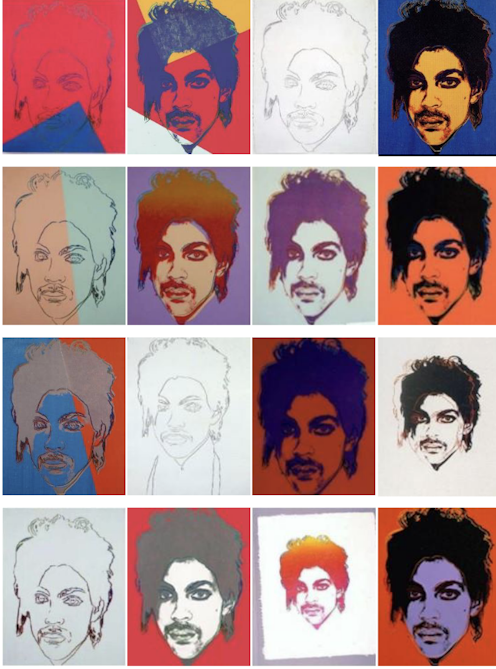

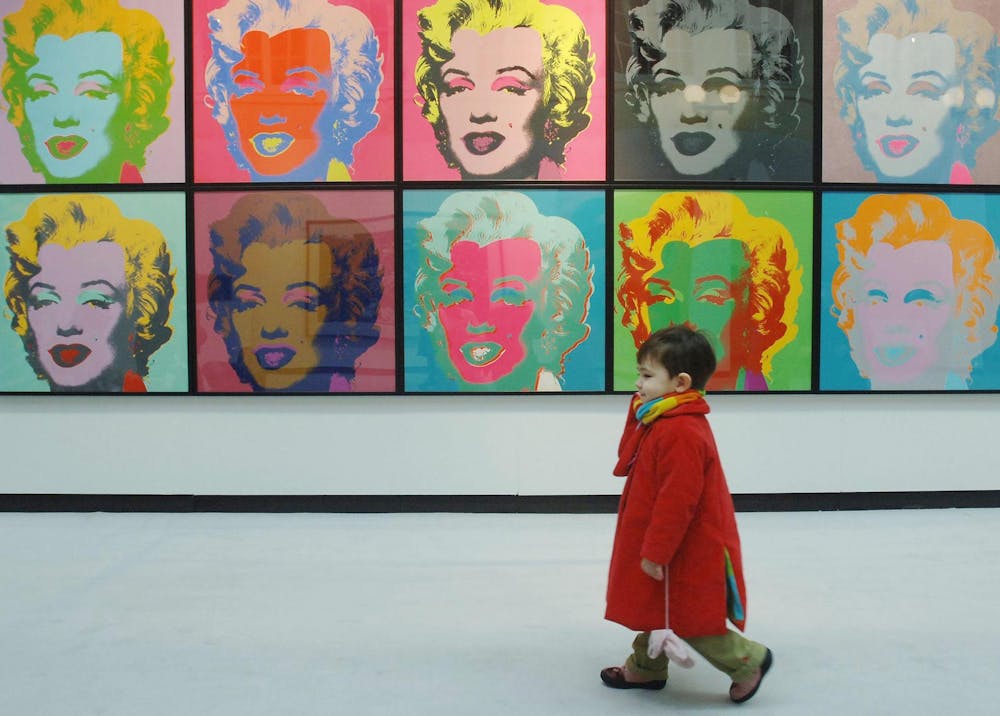


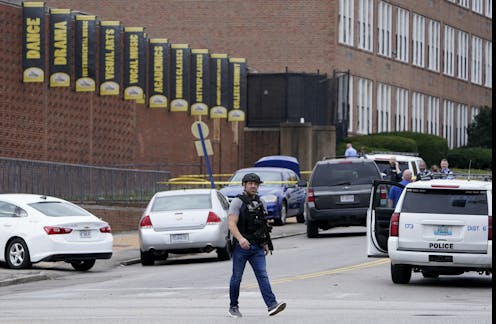


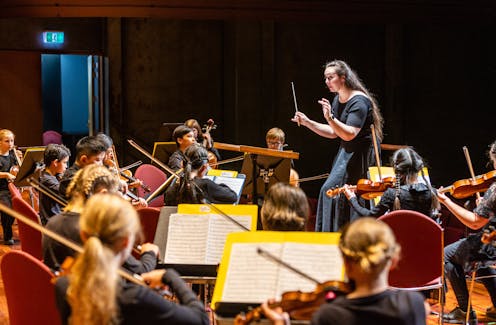
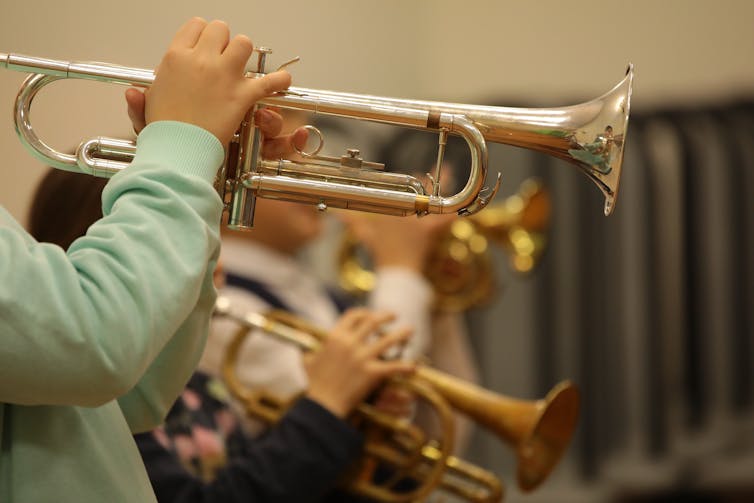




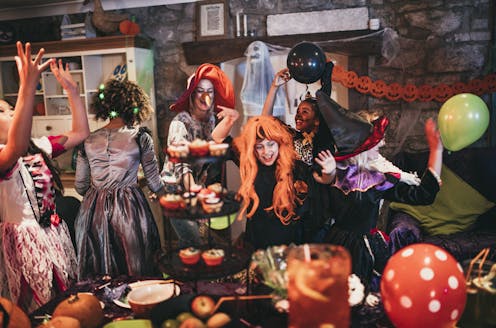




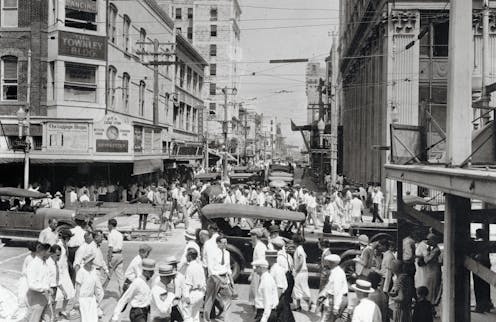
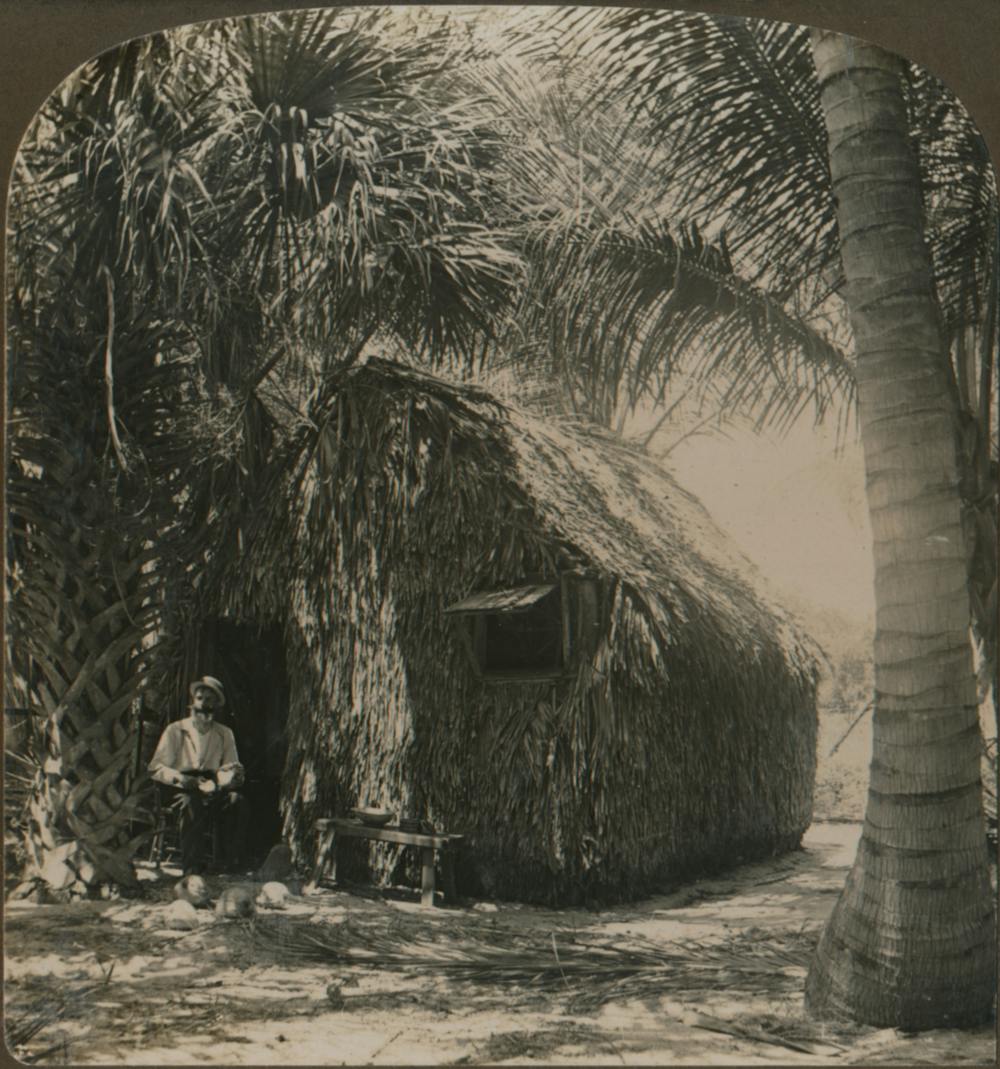



 You can put them in your closet, kitchen, home office... there are so many possibilities!