Every January, we celebrate the addition of formerly copyrighted works to the public domain. You’ve likely heard that this year’s crop of public domain newcomers includes Steamboat Willie, the 1928 cartoon that marked Mickey Mouse’s debut. When something enters the public domain, you’re free to copy, share, and remix it without fear of a copyright lawsuit. But the former copyright holders aren’t always willing to let go of their “property” so easily. That’s where trademark law enters the scene.
Unlike copyright, trademark protection has no fixed expiration date. Instead, it works on a “use it or lose it” model. With some exceptions, the law will grant trademark protection for as long as you keep using that mark to identify your products. This actually makes sense when you understand the difference between copyright and trademark. The idea behind copyright protection is to give creators a financial incentive to make new works that will benefit the public; that incentive needn’t be eternal to be effective. Trademark law, on the other hand, is about consumer protection. The function of a trademark is essentially to tell you who a product came from, which helps you make informed decisions and incentivizes quality control. If everyone were allowed to use that same mark after some fixed period, it would stop serving that function.
So, what’s the problem? Since trademarks don’t expire, we see former copyright holders of public domain works turn to trademark law as a way to keep exerting control. In one case we wrote about, a company claiming to own a trademark in the name of a public domain TV show called “You Asked For It” sent takedown demands targeting everything from episodes of the show, to remix videos using show footage, to totally unrelated uses of that common phrase. Other infamous examples include disputes over alleged trademarks in elements from Peter Rabbit and Tarzan. Now, with Steamboat Willie in the public domain, Disney seems poised to do the same. It’s already alluded to this in public statements, and in 2022, it registered a trademark for Walt Disney Animation Studios that incorporates a snippet from the cartoon.
The news isn’t all bad: trademark protection is in some ways more limited than copyright—it only applies to uses that are likely to confuse consumers about the use’s connection to the mark owner. And importantly, the U.S. Supreme Court has made clear that trademark law cannot be used to control the distribution of creative works, lest it spawn “a species of mutant copyright law” that usurps the public’s right to copy and use works in the public domain. (Of course, that doesn’t mean companies won’t try it.) So go forth and make your Steamboat Willie art, but beware of trademark lawyers waiting in the wings.
by Martine Kropkowski, PhD Candidate and Casual Academic, The University of Queensland
Phil Robson/Unsplash
A coven of faces. All women, all weathered. Old, middle-aged, younger; one teenager among them. […] They sat and breathed in each other’s stale exhalations. Breath like the grave. Jessica couldn’t help thinking that they were rotting inside. And now she was one of them. She had started to decompose.
The widows are foul, unwashed, rank. They gather at an old farmstead with peeling wooden boards and “holes in the veranda you could put a fist though”. They give off a “urinous fug of sweat and unwashed clothing”. A woman in “a brown shapeless dress, sweat-stained at the armpits” grows long, dark hairs from her upper lip and neck. Their partners have all disappeared. And so has Jessica’s.
These women are from Kris Kneen’s novel Wintering, which includes one of my favourite depictions of monstrosity – a man–thylacine hybrid, a type of werewolf, that stalks remote southern Tasmania, turning people into monsters (in a recognisable gothic tradition).
But it’s not the man–thylacine monster that has stayed with me all these years. It’s the second type of (metaphorical) monster, the widows, who speak to me far more profoundly.
Initially, the stories these widows tell – about monster hunting – are easy for the novel’s protagonist, Jessica, to reject. They’re the kind of ramblings she might hear from people she’d stand next to at the liquor store and joke about afterwards.
But there’s more to their monstrosity than the grotesque. The widows present as a collection of disparate elements — a Frankenstein’s creature composed of fragments. They are a collective aberration, in a society bent on advancing women who meet social expectations while rejecting those who do not.
What monsters mean
Monsters – millennia old – continue to populate our imaginations. The gothic novels of the 18th and 19th centuries, such as Mary Shelley’s Frankenstein and Bram Stoker’s Dracula, have menaced shelves for hundreds of years.
More recently and closer to home, Lisa Fuller’s Ghost Bird and First Nations anthology This All Come Back Now (edited by Mykaela Saunders) depict monsters from Indigenous perspectives, while novels such as Trent Jamieson’s Day Boy, which inventively reimagines the vampire, breathe new life into gothic monsters.
As American philosopher and cultural theorist Noel Carroll points out, monsters are not just physically threatening – they threaten and challenge our ways of thinking, too. And in this way, Kneen’s mismatched collection of othered women prompts me to reflect on our assumptions about women and the social norms we’ve constructed for them.
Monsters represent the ‘other’
I’m fascinated by the many ways we interpret monsters. Dracula represents concerns about racial otherness and imperial decline. No, it’s about fears of AIDS infection and supernatural surveillance – no, it’s about homoerotic desire. Zombies illuminate rampant consumerism, slave labour and, by pushing them to their limits, the intricate workings of human communities. (If you’ve read or watched The Walking Dead, this last one will be familiar to you.)
These readings attempt to project and inscribe a specific cultural meaning, belonging to a particular time and place, onto a monstrous creature. “The monstrous body is pure culture,” writes Jeffrey Jerome Cohen, who researches the cultural function of monsters. It “exists only to be read”. And maybe this is why monsters preoccupy me.
Monsters often depict the so-called “other”: the outside, the beyond and all that we perceive as distant and distinct from us … but actually comes from within. Monsters, after all, always require a creator. They exist only because we design them, constructing them from our deepest fears.
Monsters exist because we design them – constructing them from our deepest fears.
Monsters reveal how societies define – and decide how to punish – difference and deviance. And by doing so, they also call into question the very social structures on which those decisions are based.
By creating monsters, we police social boundaries and define community norms. In Wintering, Jessica does this by rejecting the widows. Initially, she sees them as something other: something to be avoided, something lesser.
At the same time, though, Kneen’s widows subvert and challenge – even reappropriate – their categorisation as “other”. They are women who don’t meet conventional beauty standards, who flout social expectations. They are women who are older, single, who are sole parents. In short, they’re characters who transgress ideas of traditional womanhood – a transgression traditionally punished by derision and exclusion.
But Jessica’s initial repulsion gradually shifts into acceptance and eventually respect. Later, she’ll view widow elder Marijam as a window onto her future self:
[…] she felt dizzy, seeing her future staring into her eyes. And it wasn’t so bad really. Tough, solitary, self-sufficient. Wise? Maybe.
Literature is a powerful vehicle for revealing and naturalising different ways of thinking. I first read Wintering after having children, when I was experiencing a newfound respect for the wisdom and strength of my own mother – and by extension, all those who have carried, lost, terminated, delivered or nurtured babies.
It was a time when I really started to unpack monstrous tropes for what I think they are – particularly those of the female monster, so often maligned for their reproductive experiences. Maybe this is why Kneen’s creation spoke to me so profoundly (especially Marijam, the wise, wrinkled old lady, who’s quick on a walking stick and slick on a monster hunt).
Kneen’s reframing of the widows contributes to our ongoing process of dismantling internalised misogyny. It alerts me to a different view of those women society might have us trivialise or ignore. Certainly, this is the journey Jessica takes in the novel, eventually viewing herself as a member of the widows.
“Well,” the old lady said, her smile, unbelievably, wrinkling her face even more. “We are glad you are with us, love.”
Wintering’s widows leave me thinking about the women in my own life – about my own coven – and how they’re strong and wise in ways not always recognised or endorsed by the mainstream.
These covens have seen me through. They have decimated the idea we’re all write-offs to some degree, depending on how near or far we are from meeting “ideal” social expectations. They have shown me that together, we can be monstrously powerful.
And they’ve shown me it’s my job to pass this knowledge forward: the way Marijam passes hers to Jessica.
Unpicking harmful tropes, of course, is an unfinished task. We have more work to do, especially for women whose identities include further marginalisation surrounding disability, race, class and gender. Monsters are particularly well equipped to help us do this.
Wiradjuri writer Jeanine Leane, for instance, writes about how Indigenous speculative fiction – including fiction containing monsters – “unwrites settler control and knowing of the future and the present and the past” and re-establishes First Nations ways of knowing, being and telling.
There’s another, more literal, monster in Wintering – the man–thylacine werewolf – which skilfully picks at the threads of coercive control, domestic abuse and violence. It deserves its own analysis.
But it’s the monstrous widows who have remained with me, long after finishing the novel. They’ve invited me to reject the label of “monstrous” woman as an indication of shame or exclusion – and to reassign it as a symbol of progress.
Martine Kropkowski does not work for, consult, own shares in or receive funding from any company or organization that would benefit from this article, and has disclosed no relevant affiliations beyond their academic appointment.
by Harry Barbee, Assistant Professor of Health, Behavior and Society, Johns Hopkins University
Gender-affirming surgeries give transgender people the opportunity to align their bodies with their gender identity. Luke Dray/Getty ImagesCC BY-SA
You’ll often hear lawmakers, activists and pundits argue that many transgender people regret their decision to have gender-affirming surgeries – a belief that’s been fueling a wave of legislation that restricts access to gender-affirming health care.
But in an article we recently published in JAMA Surgery, we challenge the notion that transgender people often regret gender-affirming surgeries.
Evidence suggests that less than 1% of transgender people who undergo gender-affirming surgery report regret. That proportion is even more striking when compared to the fact that 14.4% of the broader population reports regret after similar surgeries.
For example, studies have found that between 5% and 14% of all women who receive mastectomies to reduce the risk of developing breast cancer say they regretted doing so. However, less than 1% of transgender men who receive the same procedure report regret.
These statistics are based on reviews of existing studies that investigated regret among 7,928 transgender individuals who received gender-affirming surgeries. Although some of this prior research has been criticized for overlooking the fact that regret can sometimes take years to develop, it aligns with the growing body of studies that show positive health outcomes among transgender people who receive gender-affirming care.
Why access to gender-affirming surgery matters
About 1.6 million people in the U.S. identify as transgender. While only about 25% of these individuals have obtained gender-affirming surgeries, these procedures have become more commonplace. From 2016 to 2020, roughly 48,000 trans people in the U.S. received gender-affirming surgeries.
These procedures provide transgender people with the opportunity to align their physical bodies with their gender identity, which could positively impact mental health. Research shows that access to gender-affirming surgeries may reduce levels of depression, anxiety and suicidal ideation among transgender people.
The mental health benefits may explain the low levels of regret. Transgender people have far higher rates of mental health concerns than cisgender people, or people whose gender identity aligns with their sex at birth. This is largely because transgender people have a more difficult time living authentically without experiencing discrimination, harassment and violence.
Gender-affirming surgery often involves going through a number of hoops: waiting periods, hormone therapy and learning about the potential risks and benefits of the procedures. Although most surgeries are reserved for adults, the leading guidelines recommend that patients be at least 15 years old.
This thorough process that trans people go through before receiving surgery may also explain the lower levels of regret.
In addition, many cisgender people get surgeries that, in their ideal world, they wouldn’t receive. But they go through with the surgery in order to prevent a health problem.
For instance, a cisgender woman who receives a mastectomy to avoid breast cancer may ultimately regret the decision if she dislikes her new appearance. Meanwhile, a transgender man who receives the same procedure is more likely to be pleased with a masculine-looking chest.
Improving research and public policy
It’s important to note that this research is not conclusive. Views of surgeries can change over time, and patients can feel quite differently about their outcomes eight years after their surgery as opposed to one year after their surgery.
Nonetheless, the consensus among experts, including at the American Medical Association, is that gender-affirming surgery can improve transgender people’s health and should not be banned.
U.S. states such as Oklahoma and North Dakota have ignored this consensus and have restricted access to these procedures. In response, 12 states have designated themselves “sanctuaries” for gender-affirming care.
Although our statistics on surgical regret may change as researchers learn more, they are the best data that health care providers have. And public policies that are based on the best available evidence have the most potential to improve people’s lives.
Harry Barbee has received funding from the National Institute on Aging for their past work.
Bashar Hassan and Fan Liang do not work for, consult, own shares in or receive funding from any company or organization that would benefit from this article, and have disclosed no relevant affiliations beyond their academic appointment.
With faculty working hard to make USF a great experience for students, employers should show their appreciation. Yet, 14,980 members of faculty and staff at USF are slapped with a parking bill each year. “Apparently we have plenty of money to build fancy vanity buildings and a stadium,” said Richard Manning, faculty senate secretary and […]
by Beverly Law, Professor Emeritus of Global Change Biology and Terrestrial Systems Science, Oregon State University
An old-growth forest of noble fir trees at Marys Peak in Oregon's Coast Range. Beverly Law, CC BY-ND
Forests are an essential part of Earth’s operating system. They reduce the buildup of heat-trapping carbon dioxide in the atmosphere from fossil fuel combustion, deforestation and land degradation by 30% each year. This slows global temperature increases and the resulting changes to the climate. In the U.S., forests take up 12% of the nation’s greenhouse gas emissions annually and store the carbon long term in trees and soils.
Most forests in the continental U.S. have been harvested multiple times. Today, just 3.9% of timberlands across the U.S., in public and private hands, are over 100 years old, and most of these areas hold relatively little carbon compared with their potential.
The Biden administration is moving to improve protection for old-growth and mature forests on federal land, which we see as a welcome step. But this involves regulatory changes that will likely take several years to complete. Meanwhile, existing forest management plans that allow logging of these important old, large trees remain in place.
As scientists who have spent decades studying forest ecosystems and the effects of climate change, we believe that it is essential to start protecting carbon storage in these forests. In our view, there is ample scientific evidence to justify an immediate moratorium on logging mature and old-growth forests on federal lands.
Remote sensing data from space is a new tool for estimating forest growth and density.
Federal action to protect mature and old-growth forests
A week after his inauguration in 2021, President Joe Biden issued an executive order that set a goal of conserving at least 30% of U.S. lands and waters by 2030 to address what the order called “a profound climate crisis.” In 2022, Biden recognized the climate importance of mature and old-growth forests for a healthy climate and called for conserving them on federal lands.
Most recently, in December 2023, the U.S. Forest Service announced that it was evaluating the effects of amending management plans for 128 U.S. national forests to better protect mature and old-growth stands – the first time any administration has taken this kind of action.
These actions seek to make existing old-growth forests more resilient; preserve ecological benefits that they provide, such as habitat for threatened and endangered species; establish new areas where old-growth conditions can develop; and monitor the forests’ condition over time. The amended national forest management plans also would prohibit logging old-growth trees for mainly economic purposes – that is, producing timber. Harvesting trees would be permitted for other reasons, such as thinning to reduce fire severity in hot, dry regions where fires occur more frequently.
Forest biologist Beverly Law with an old-growth Douglas fir in Corvallis, Oregon.
Beverly Law, CC BY-ND
Remarkably, however, logging is hardly considered in the Forest Service’s initial analysis, although studies show that it causes greater carbon losses than wildfires and pest infestations.
In one analysis across 11 western U.S. states, researchers calculated total aboveground tree carbon loss from logging, beetle infestations and fire between 2003 and 2012 and found that logging accounted for half of it. Across the states of California, Oregon and Washington, harvest-related carbon emissions between 2001 and 2016 averaged five times the emissions from wildfires.
A 2016 study found that nationwide, between 2006 and 2010, total carbon emissions from logging were comparable to emissions from all U.S. coal plants, or to direct emissions from the entire building sector.
Pacific fishers (Pekania pennanti) are small carnivores related to minks and otters. They live in forests with large, mixed-tree canopy covers, mainly on federal land on the West Coast. A subpopulation in the southern Sierra Nevada is listed as endangered.
Pacific Southwest Forest Service, USDA/Flickr, CC BY
Logging pressure
Federal lands are used for multiple purposes, including biodiversity and water quality protection, recreation, mining, grazing and timber production. Sometimes, these uses can conflict with one another – for example, conservation and logging..
Multiple large logging projects on public land clearly qualify as major federal actions, but many thousands of acres have been legally exempted from such analysis.
An analysis of 152 national forests across North America found that five forests in the Pacific Northwest had the highest carbon densities, but just 10% to 20% of these lands were protected at the highest levels. The majority of national forest area that is mature and old growth is not protected from logging, and current management plans include logging of some of the largest trees still standing.
Letting old trees grow
Conserving forests is one of the most effective and lowest-cost options for managing atmospheric carbon dioxide, and mature and old-growth forests do this job most effectively. Protecting and expanding them does not require expensive or complex energy-consuming technologies, unlike some other proposed climate solutions.
Allowing mature and old-growth forests to continue growing will remove from the air and store the largest amount of atmospheric carbon in the critical decades ahead. The sooner logging of these forests ceases, the more climate protection they can provide.
Richard Birdsey, a former U.S. Forest Service carbon and climate scientist and current senior scientist at the Woodwell Climate Research Center, contributed to this article.
This is an update of an article originally published on March 2, 2023.
Beverly Law receives funding from the Conservation Biology Institute.
William Moomaw receives funding from the Rockefeller Brothers Fund.
Placebos have been studied more than any treatment in the history of medicine, yet they remain mysterious.
I’ve been studying placebos for 20 years and I’ve done some of the key studies that have advanced the scientific knowledge in this area. Here are six facts about this strange effect that still fascinate me.
1. Placebos have a dark cousin: nocebos
A 29-year-old builder went to the hospital after having jumped onto a 15cm nail that pierced his boot. Moving the nail was so painful he had to be sedated with powerful drugs (fentanyl and midazolam) to remove it. But when he took off his boot, the medics discovered that the nail had gone between his toes. The builder’s pain was caused by the wrong belief that the nail had penetrated his foot.
The detrimental effects of negative expectations are called nocebo effects. For evolutionary reasons (survival depends on avoiding danger), nocebo effects are larger than placebo effects.
Unfortunately, patients are often told more about the bad things that might happen than the good things, which can result in a self-fulfilling prophecy. For example, learning that a drug has a possible side-effect of nausea or pain can actually cause nausea or pain.
2. Placebos work even if people know they are placebos
Linda Buonanno suffered so badly from irritable bowel syndrome that she often couldn’t leave the house for weeks. She signed up for a trial of “honest” (open-label) placebos, which is a placebo that patients know is a placebo.
The Harvard doctors in the trial told her the pills were “placebo pills made of an inert substance, like sugar pills, that have been shown in clinical studies to produce significant improvement in [irritable bowel] symptoms through mind-body self-healing processes”.
The honest placebos worked so well that she was able to resume a normal life.
Honest placebos have worked in other trials for treating depression, back pain and attention deficit hyperactivity disorder (ADHD).
Honest placebos work because of our subconscious expectations. Our past experiences of doctors and hospitals can generate subconscious expectations that activate our body’s inner pharmacy, which produces morphine (endorphins) and other beneficial drugs.
3. Honest placebos are ethically acceptable
It is often considered unethical for doctors to give placebos to patients because this supposedly involves lying (telling patients that a sugar pill is a powerful medication). But honest placebos do not involve lying, so there is no ethical barrier.
In one ongoing trial, doctors asked patients whether they would be willing to try a mix of real painkillers and honest placebos. Patients in this trial have the same level of pain relief following surgery, but are less likely to become dependent on painkillers.
4. Placebo effects are part of most treatment effects
When a doctor prescribes ibuprofen for back pain, the effects are due to the ibuprofen and the patient’s beliefs and expectations, which can be influenced by the doctor’s communication. Doctors who offer positive messages in a warm, empathic manner will increase the effect of the drugs.
The size and colour of the pill can also influence the effect. A large, orange pill can reduce pain more than a small, red one.
By contrast, blue pills generally have a sedative effect – except for Italian men, for whom blue pills have an excitative effect), probably because their revered football team wears blue.
Doctors’ ethical duty to benefit patients suggests it is an ethical duty to maximise the placebo effects of all treatments they provide.
5. You don’t need placebos to have placebo effects
In one trial, patients were given morphine via an intravenous line following surgery. However, only half of the patients were told they were receiving morphine. The patients who were told this had 50% more pain relief than those who were not told they were receiving morphine. This is an example of a placebo effect without a placebo.
6. You can generate placebo (and nocebo) effects in yourself
All communication can have a beneficial or harmful effect. One study found that teaching communication skills to families reduced anxiety and depression. On the other hand, couples who dwell on problems and negative aspects of their relationships were shown in a study to have weaker immune systems.
Acts of altruism, focusing on a brighter future, or gratitude are proven ways to reduce the effect of negative communication. An easy way to generate positive placebo effects for yourself is by performing a random act of kindness, such as making a colleague a cup of tea, or simply smiling and saying hello.
You can learn more about the amazing effects of placebos and nocebos in my latest book, The Power of Placebos: How the Science of Placebos and Nocebos can Improve Health Care.
Jeremy Howick has received funding from the Medical Research Council (MRC), National Institute for Health and Care Research (NIHR), the General Medical Council (GMC). He is currently funded by the Stoneygate Trust.
Dear Rich: I have written a play and movie script around a public matricide. I gained access to years of diaries, photos, and scrapbooks
through a university's special collections library. The entire collection
was placed on the curb for the trash collector in 1973 or 1974 but was then
rescued and given to the library. I have read that the "change of
ownership" of this collection is considered a publication. Is that correct? Included in the collection is an
undated typewritten poem by the daughter-murderer (who died in 2007), probably written
1944-1949. Plus, there were threatening letters from the daughter to the parents in
1969. I wish to use the poem and parts of the letters in the script. Is
there any chance that the poem and letters are copyrighted? There are also
numerous photos taken by unknown persons. If someone owns this collection,
how would I know who? The library wants money to use these items
in our play/movie. Does paying the library for their use put the burden of
ownership/copyright on them? Is this solvable, or should we drop the
project?
We can't tell you whether to drop the project, but we can illuminate some potential issues.
Is there copyright? The daughter's poem and letters are likely protected by copyright. (The author of a letter is the copyright owner.) If we assume these works are unpublished, copyright protection lasts until 2077 (life of the author plus 70 years). The expiration date would be different if the letters or poems had been published (95 years from publication or 70 years from the author's death, depending upon the year of publication).
Transfer of ownership ≠ publication. The acquisition of the works by the library doesn't affect their unpublished status. In a case involving author J.D. Salinger, recipients of unpublished letters from Salinger transferred ownership to the Princeton Library, where they were accessible for research purposes. When Salinger later learned that an author was planning to reproduce portions of the letters in a book, he registered the unpublished letters, sued, and won a judgment preventing the book's release.
Who owns the copyright? Whoever acquired the daughter's estate is the copyright owner of her poem and letters. That person or institution may not be aware of the copyright. Still, if they become aware, they can, like Salinger, register the unpublished materials and seek to prevent the release of your play or movie.
Paying the library. Unless the library acquired a written assignment from the copyright owner, they have no copyright claim. So, paying the library for the use of the materials won't get you copyright permission.
The photographs. The copyright in a photograph is owned by the photographer. As you can imagine, tracking down the copyright owners for 40- or 50-year-old photos is likely a fruitless quest. The photos are probably orphan works in most cases, placing the rights in limbo.
What to do? If your play/movie gets a good reception and a distributor or producer wants to become involved, you may want to see an attorney particularly if you have to sign an indemnity provision. An entertainment lawyer can guide you in the intricacies of fair use, and provide you with an opinion letter that you can use with insurers.
by Bethanie Carney Almroth, Associate Professor, Department of Biological and Environmental Sciences, University of Gothenburg
Plastic pollution is a menace worldwide. Plastics are now found in every environment on the planet, from the deepest seas to the atmosphere and human bodies.
Scientific evidence describing harm to the environment and humans is growing. Hence, the United Nations has resolved to negotiate a legally binding instrument to end plastic pollution.
Strategies to achieve this goal include provisions throughout the plastics lifespan: production, use, waste management and remediation.
In designing rules for managing plastic, it’s important to understand that plastic materials and waste streams are complex. Not all plastics are the same. And recycled plastics are not necessarily “better” – less harmful – than virgin plastics. If they contained harmful chemicals to begin with, recycling doesn’t make them less harmful. And sometimes they are contaminated by other substances.
We conducted a study identifying and measuring the concentration of contaminants in recycled pellets from 28 small-scale recycling facilities in the global south. Plastic waste is often exported from high income countries to less developed countries, with few to no requirements for reporting their makeup.
Our investigation covered facilities in Cameroon, Mauritius, Nigeria, Tanzania and Togo in Africa as well others in Asia, Europe and South America.
We found 191 pesticides, 107 pharmaceuticals and 81 industrial compounds among many others in the recycled plastic pellets. Many of these chemicals could be hazardous and make the plastics unsuitable for reuse.
This finding can inform regulations for recycled plastics. The chemical composition of the plastic should be checked before it is recycled.
Chemicals used in production of plastics
More than 13,000 chemicals are currently used in the production of plastic materials and products. They can include thousands of plastics additives – but also substances that are added unintentionally. Some unwanted chemicals form during the production or life of plastics. Thousands of these chemicals have dangerous properties. The health risks of some others are unknown.
Throughout the plastics value chain, during production, use, waste and recycling, other chemicals can contaminate the material too. The result may be recycled materials whose chemical composition is unknown.
Previous studies have reported the presence of plastics additives in recycled materials. Among them were chemicals that are known to have negative effects on health. Examples include phthalates (plastic softeners), bisphenols like BPA, and UV-stabilisers used to protect plastics from sun damage and yellowing.
In our work, we established the presence of chemicals in recycled plastic that can cause harm to humans or other organisms. They include pesticides, pharmaceuticals and fragrances. Others are chemicals that result from burning natural materials, man-made organic chemicals used for industrial applications like paint, and ultraviolet filters.
We quantified a total of 491 different chemical substances. Some had specific uses and others formed from the breakdown of products.
Some national and regional policies regulate the allowable concentration of hazardous chemicals in specific plastic products. But only 1% of plastics chemicals are subject to international regulation in existing multilateral environmental agreements. Policies don’t adequately address the issue of transparent reporting of chemicals in plastics across their value chain. Also, there are no laws to govern monitoring of chemicals in recycled materials. This is a serious gap in oversight. Stronger and more globally coordinated measures are necessary.
Our findings emphasise the importance of regulating mechanical recycling, as many of the substances measured were contaminants and not plastic additives. Many of the chemicals we identified may have contaminated the materials during use. For example, a jug used for storing pesticides will absorb some of the pesticides and will contaminate the recycling waste stream. Plastics in the environment are also known to absorb organic pollutants.
To assess the quality of recycled plastics, it’s crucial to know which chemicals are present and in what concentrations. This information can guide regulations about how recycled plastics may be used. It will also be valuable for plastics producers, waste management workers (including recyclers), consumers, and the scientific community.
A path towards safer reuse of plastics
To recycle more materials safely, several changes are necessary. These include:
increased transparency regarding the use of chemicals and their risks
chemical simplification of the plastics market, so that fewer and less toxic chemicals are permitted for use
improved waste management infrastructure with separated waste streams
improved recycling methods, including monitoring of hazardous chemicals.
Chemical simplification of plastic additives will promote sustainability, safety and regulatory compliance. It will help manufacturers to minimise the environmental impact and adverse health effects of complex chemical formulations. Simpler chemical structures also improve the recycling potential of plastics and make recycling more efficient and cost-effective.
Chemical simplification can also reduce potential health risks in the disposal of plastic materials.
From a regulatory perspective, chemical simplification supports clearer and more enforceable safety guidelines.
It’s is a crucial step towards the sustainable production and use of plastics, as countries work towards a legal instrument to end pollution.
Bethanie Carney Almroth receives funding from the Swedish Research Council for Sustainable Development
FORMAS (grant number 2021-00913) and The Carl Tryggers Foundation (grant number 21:1234).
Eric Carmona Martinez received funding from Carl Trygger Foundation.
The mosque was first built in the early seventh century and named after Islam’s second caliph, Umar ibn al-Khattab, a successor to the Prophet Muhammad and leader of the early Islamic community. It was a graceful white stone structure, with repeating vistas of pointed arches and a tall octagonal minaret encircled by a carved wooden balcony and crowned with a crescent.
Gaza is rich in cultural treasures, with some 325 formally registered heritage sites within just 141 square miles, including three designated for UNESCO’s World Heritage tentative list. The Omari Mosque is one of over 200 ancient sites damaged or destroyed in Israeli raids since the Oct. 7, 2023, Hamas attack.
The sun-soaked coastal enclave of Gaza, with the tidy stone buildings of its old city and its verdant olive and orange groves, has been a trade hub that connected the Mediterranean with Africa, Asia and Europe for millennia. It was famed in particular as a transit point for incense, one of the ancient world’s most precious commodities. Given its abundant agricultural and maritime riches, Gaza has known conquest by nearly every powerful empire, including the ancient Egyptians, the Romans, the early Islamic caliphs, the Crusaders and the Mongols.
Gaza’s history of repeated conquest meant that buildings were often destroyed, reimagined and rededicated to accommodate changing political and religious practices. New sacred structures were continually built over old ones, and they frequently incorporated “spolia,” or stones reused from prior buildings. The Omari Mosque, too, was such an architectural palimpsest: a building embodying the layered, living material history of the city.
In the second millennium B.C., the site of the mosque is believed to have been a temple for Dagon, the Philistine god of the land and good fortune. The temple is mentioned in the Hebrew Bible as the one whose walls were felled by the warrior Samson, who is locally believed to be buried in its foundations.
In 323 B.C., Gaza fiercely resisted the conquest of Alexander the Great, and the city endured devastating destruction when it was finally subdued. Yet after Gaza was conquered by the Romans in 50 B.C. it entered a period of renewed wealth and prosperity. A concentric domed temple was built for Marnas, a god of storms and the protector of the city, on the site of the future mosque. He was venerated there until just before 400 A.D., when the Byzantine Empress Eudoxia imposed the new faith of Christianity and ordered the destruction of the temple.
The priests of the temple barricaded themselves inside and hid the statues and ritual objects in an underground room. But the temple was destroyed and a Greek Orthodox church rose in its place. The stones, however, preserved the tale: in 1879 a monumental, 10-foot-high statue of Marnas, portrayed in the guise of Zeus, was excavated and its discovery made international media headlines. The statue is now in the Istanbul Archaeological Museums.
Gaza thrived under Islamic rule: Medieval travelers described it as a remarkably fertile, creative and beautiful city, with prominent Muslim, Christian and Jewish communities. It was still a flourishing urban center when the European Crusaders arrived. When the city fell to the Crusader King of Jerusalem, Baldwin III, in 1100, the Omari Mosque was converted once again – this time into a Catholic cathedral dedicated to St. John the Baptist.
The Muslim general Saladin defeated the Crusaders in 1187, and Gaza returned to Islamic rule. The church was transformed back into a mosque, and in the 13th century its elegant octagonal minaret was raised. Yet the reconversion into a mosque preserved much of the Crusader church, and the majority of the nave and the western portal were still visible in modern times.
It was in this period that the mosque became famed for its extraordinary library containing thousands of books, the earliest dating to the 13th century. After the library of the Al-Aqsa Mosque in Jerusalem, the Omari Mosque’s collection was one of the richest in Palestine.
In the 13th century, the mosque endured destruction by the Mongols as well as major earthquakes that would repeatedly topple the minaret. Its rebuilding after each of these disasters speaks to the ongoing centrality of the mosque in the communal life of the people of Gaza.
The stones tell the tale
Later, Gaza continued to flourish as a coastal port city, where Muslims, Christians, Jews and others lived in the vast, cosmopolitan Ottoman Empire.
In the late 19th century, as scholars explored Gaza’s heritage, an eloquent reminder of the building’s layered history emerged: a relief on a mosque pillar depicting a seven-branched menorah and Jewish ritual objects, including a shofar, or horn, surrounded by a wreath. The name Hanania, son of Jacob, was engraved in Hebrew and Greek.
Its date is uncertain, but it seems likely to have been a column from a synagogue reused during the building of the Byzantine church, which was used again in the building of the mosque: yet another layer in the architectural palimpsest that was the Omari Mosque.
A few decades later, during World War I, the mosque was severely damaged when a nearby Ottoman arms depot was targeted by British artillery fire. In the 1920s, the stones were once again gathered and the mosque was rebuilt.
Early 20th century photographs of the Omari Mosque of Gaza after the British bombing include this image of the central part of the Crusader church preserved in the mosque.
Archnet, CC BY-NC
After the 1948 creation of the state of Israel, Gaza became the sanctuary of tens of thousands of Palestinian refugees. The area was primarily administered by Egypt until it was captured by Israel in 1967.
It was at some point after the 1967 war, when Jewish symbols had come to be associated with the state of Israel and its occupation of Gaza, that the menorah relief was effaced from the column in the mosque.
A future for the Omari Mosque
On Dec. 8, 2023, Israel became the most recent military force to target the mosque. The library, too, may have been ruined, a treasure house of knowledge that will not so easily be rebuilt. A digitization project completed in 2022 preserves an imprint of the library’s riches. Still, digital files can’t replace the material significance of the original manuscripts.
The hundreds of other heritage sites damaged or destroyed include Gaza’s ancient harbor and the fifth century Greek Orthodox Church of Saint Porphyrius, one of the oldest churches in the world.
From today’s vantage point, it seems extraordinary that the menorah relief had endured for over 1,000 years: a Jewish symbol unremarkably cohabiting inside a Muslim prayer hall. In truth, both the relief and its removal embody the story of Gaza itself, a fitting reminder of the many centuries of destruction, coexistence and resilience embodied in the mosque’s very stones.
And if the Omari Mosque’s richly layered history is any indication, the people of Gaza will raise those stones again.
Stephennie Mulder does not work for, consult, own shares in or receive funding from any company or organization that would benefit from this article, and has disclosed no relevant affiliations beyond their academic appointment.
Some nonprofits like the League of Women Voters have engaged in these nonpartisan efforts for decades. Others, like Nonprofit Vote and Rock the Vote, seek to motivate people of color and young voters to cast their ballots.
It’s hard to find data on how much charitable money funds these causes. But there’s no shortage of conjecture about its possible impact.
The Republican Party has long seen nonpartisan voter registration and get-out-the-vote campaigns as being somehow tied to the Democratic Party or more helpful for turning out votes for Democratic candidates than Republican hopefuls. As far back as the 1960s, Republican representatives accused the Ford Foundation of using voter registration in what they alleged was a partisan manner.
Because it’s against the law for charities to overtly engage in political activity, any direct politicking tied to these nonpartisan registration drives could jeopardize their tax-exempt status.
These “organizations may encourage people to participate in the electoral process through voter registration and get-out-the-vote drives, conducted in a non-partisan manner,” the Internal Revenue Service states. “On the other hand, voter education or registration activities conducted in a biased manner that favors (or opposes) one or more candidates is prohibited.”
In practice, that means it’s OK if a charity sets up a voter registration booth at a state fair and registers anyone who comes to the booth, regardless of their political leanings. But if a charitable organization runs a phone bank that encourages people to vote only if they agree with a particular candidate’s position, that would break the law.
The Center for American Progress, a progressive think tank, isn’t allowed to endorse President Joe Biden’s reelection bid. Nor is The Heritage Foundation, a conservative think tank, at liberty to urge voters to support his Republican rival.
Professor Philip Hackney testifies before the House Ways and Means oversight subcommittee on Dec. 13, 2023.
Johnson amendment
This restriction, on the books since 1954, is known as the Johnson amendment because of Lyndon B. Johnson’s insistence on its passage when he was serving in Congress.
Former President Donald Trump tried and failed to get rid of the Johnson amendment for churches and other houses of worship, which the U.S. government lumps together with all other charities.
At the same time Republicans are trying to significantly weaken restrictions on the use of charitable money for politicking, they are also calling out nonpartisan voter registration and get-out-the-vote efforts as unfair uses of tax-deductible charitable dollars.
Republicans expressed their concerns that charities are engaging in voter registration and get-out-the-vote efforts in communities that might boost the electoral chances of Democratic candidates. Because contributions to charities can be tax deductible, those lawmakers said they are concerned that the federal government is thus being used to further Democratic interests.
Some of them highlighted a memo from Mind the Gap, a Democratic super PAC. According to the memo, donating to charities for voter registration in the 2020 election cycle was “the single most effective tactic for ensuring Democratic victories.”
Republican lawmakers are particularly incensed by the over US$400 million in contributions Mark Zuckerberg and his wife, Priscilla Chan, made to two charities to make grants to state and local election administrations to aid those authorities during the COVID-19 crisis.
Conservatives have dubbed this support aimed at ensuring a well-run election system “Zuckerbucks.” A Republican bill pending in Congress would outlaw this kind of spending in the future.
However, the Federal Elections Commission, which is responsible for this kind of oversight, has found no cause for concern. In a rare unanimous decision in 2022, three Republican and three Democratic commissioners determined that all complaints of violations of campaign finance law in the case of the Zuckerberg grants were without merit.
Concerns moving forward
As I advised House lawmakers, I believe that drafting any restrictions on the nonprofit sector requires proceeding with great care. Charities make up a part of civil society – a place outside of government and business – where we all have an opportunity to generate important information, develop our opinions and share those with government representatives.
In my view, Congress needs to assess whether any cure it seeks to implement will be better or worse than the disease that it thinks afflicts the U.S. electoral system. Clamping down on nonpartisan voter registration and get-out-the-vote efforts seems to me to be misguided at best.
Congress can, if it wishes to take action, appropriate more funds to ensure that all local and state authorities have the money they need for a well-run election system. That could eliminate the need for donors to step in.
In any case, Congress can help by supporting increases in the IRS budget, especially for the tax agency’s capacity to enforce compliance with the laws pertaining to tax-exempt organizations.
Philip Hackney is a member of the Democratic Party.
Teachers are experiencing high levels of stress, anxiety and work-related trauma in the classroom – much of it stemming from student behavioral problems. The pandemic exacerbated this issue, impacting students and teachers alike.
As teachers navigate the highs and lows of their profession, taking care of their emotional and mental well-being is essential. Research backs this up. Not only do teachers personally benefit from improved mental health, but their students do, too.
As the author of a forthcoming paper about teacher experiences during the pandemic, I have identified four benefits of prioritizing teacher mental health that create a more stable and effective educational environment.
Reduces burnout and turnover
An undeniable link exists between teacher mental health and burnout and turnover, especially for early career teachers. For young teachers in particular, a workaholic culture can contribute to the deterioration of their mental health.
Teachers excel at their jobs when school leaders prioritize their mental well-being. Research has directly linked teachers’ well-being with greater resilience. For instance, the research found, when a teacher remains calm and solution-oriented in the face of challenging classroom situations, it creates a more positive environment and supportive atmosphere for students.
Teachers also burn out less when they’re encouraged to be creative in the classroom. Creative activities allow for a greater level of connection between student and teacher – and satisfaction on the job.
Being creative and having a positive rapport with their teachers also develops students’ competence and improves their academic performance. A teacher with poor mental health, however, may have a hard time showing up for their students in such a positive way.
Preserves institutional knowledge
Reduced turnover has a profound impact on preserving institutional knowledge – the collective understanding of how a school and its students work best. When experienced educators leave unexpectedly or earlier than planned, schools lose a lot of valuable insight and expertise. Reducing turnover enables schools to benefit from experienced teachers for longer periods of time.
When teachers remain at their schools, they contribute to the schools’ ongoing stability and the accumulation of best practices over time.
Recognizing and supporting the needs of teachers is crucial. It’s not just about problem-solving. It’s a smart investment in the long-term success and resilience of the entire educational community.
Lee Ann Rawlins Williams does not work for, consult, own shares in or receive funding from any company or organization that would benefit from this article, and has disclosed no relevant affiliations beyond their academic appointment.
by Maria Serban, Lecturer in Philosophy, University of East Anglia
Ai Weiwei, China’s most famous dissident and artist, has called art that can be easily replicated by artificial intelligence (AI) “meaningless”. What I find most striking about this comment is how it manages to look both backwards into the intricate corridors of art history and forwards into the uncertain future of the art world.
Does Ai Weiwei mean that AI should make us rethink our appreciation of the works of art of the past? Or is AI so powerful that it should shape the mission of future artists?
The undertones of this double challenge are familiar to philosophers of art, who have, at times, seriously entertained the claim that art can come to an end.
Exploring art’s goal
Among the most famous and influential voices are G. W. Hegel in the early 19th century and Arthur Danto in the late 20th century. Both have argued that while artworks can continue to be produced in great numbers – and perhaps even in new and exciting ways – there is a sense in which the progress of art has reached its peak.
According to their arguments, art has “ended” because it has completed its goal. This claim might seem obscure to a contemporary audience, but what both Hegel and Danto were getting at is pretty simple.
If you think about art as having some sort of innermost goal, then you can imagine that at some point in time, that goal has been attained. Art always does something in that it has an effect. An effect on the artist creating it, on its audience and ultimately on the world. But that intended overall effect can change.
Danto claimed that looking into the history of art, we can extract a narrative, or a story, about how art has achieved its goal.
The first narrative, capturing centuries of art history from classical Greek sculpture to Renaissance paintings, was focused on verisimilitude – here art’s goal was to create realistic representations of its subject.
The second of art’s narratives, Danto believed, was triggered by a crisis which came from the technological advancement brought by the camera. Since art’s first goal – of creating perfect representations – had been superseded, art needed a new one. The second goal was to enquire into what art itself could be, seeking out its own limits.
The works of various modernist artists – such as Pablo Picasso’s The Aficionado (1912) or Wassily Kandinsky’s Bustling Aquarelle (1923), up to Andy Warhol’s Brillo Boxes (1964) – could then be understood as a quest for establishing what it means for an object to be an artwork and asking: “What is the meaning of art itself?”
Writing in 1967, Danto believed that even this second goal had been fulfilled – but perhaps its repercussions haven’t quite been felt yet.
This is where I think Weiwei’s new perspective is refreshing. It seems to suggest that AI technology might be pushing us towards a new goal for art. The new challenge would be establishing what a truly digital future of art might look like – and what our human contribution to it might be.
We can then ask how art can be meaningful again in our AI-shaped social worlds. And what the role of the artist should be in creating this meaning.
Philosophers of various convictions, from John Dewey to Kendall Walton, have pointed to such a solution for a long time. We can create new meaning for art by exploring new forms of expression – by doing new things with both new and old tools.
Art not only adapts to new tools and technology, it does something new with them, and in that process, it has the potential to become something new itself.
Ai Weiwei himself touches upon this in one of his quotations in his book Weiwei-isms (2012), when he says that art is: “About freedom of expression, a new way of communication. It is never about exhibiting in museums or about hanging it on the wall … I don’t think anybody can separate art from politics.”
The subtle slide here, from new forms of expression to new ways of contributing to political conversations, prompts another important question: how can art contribute to political conversations in distinctive ways?
In his new book, Artists Remake the World: A Contemporary Art Manifesto, philosopher Vid Simoniti suggests a possible answer. He claims that art provides a distinct mode of political expression which enables audiences to reflect on central issues while momentarily setting aside binary judgments of right or wrong.
Art permits engagement with political matters without imposing the burden of adopting a specific stance. It is moored to the real world, but allows also for an open-ended space where new positions can be imagined, explored and inhabited. Could AI create those artistic spaces with us, or for us? Perhaps confronting this challenge could set a new goal for the digital art of the future.
Looking for something good? Cut through the noise with a carefully curated selection of the latest releases, live events and exhibitions, straight to your inbox every fortnight, on Fridays. Sign up here.
Maria Serban does not work for, consult, own shares in or receive funding from any company or organisation that would benefit from this article, and has disclosed no relevant affiliations beyond their academic appointment.
by Dorje C Brody, Professor of Mathematics, University of Surrey
Shutterstock/Pictrider
Rightwing populists appear to be enjoying a surge across the western world. For those who don’t support these parties, their appeal can be baffling and unsettling. They appear to play on people’s fears and offer somewhat trivial answers to difficult issues.
But the mathematics of human inference and cognition can help us understand what makes this a winning formula.
Because politics largely boils down to communication, the mathematics of communication theory can help us understand why voters are drawn to parties that use simple, loud messaging in their campaigning – as well as how they get away with using highly questionable messaging. Traditionally, this is the theory that enables us to listen to radio broadcasts and make telephone calls. But American mathematician Norbert Wiener went so far as to argue that social phenomena can only be understood via the theory of communication.
Wiener tried to explain different aspects of society by evoking a concept in science known as the second law of thermodynamics. In essence, this law says that over time, order will turn into disorder, or, in the present context, reliable information will be overwhelmed by confusion, uncertainties and noise. In mathematics, the degree of disorder is often measured by a quantity called entropy, so the second law can be rephrased by saying that over time, and on average, entropy will increase.
One of Wiener’s arguments is that as technologies for communication advance, people will circulate more and more inessential “noisy” information (think Twitter, Instagram and so on), which will overshadow facts and important ideas. This is becoming more pronounced with AI-generated disinformation.
The effect of the second law is significant in predicting the future form of society over a period of decades. But another aspect of communication theory also comes into play in the more immediate term.
When we analyse information about a topic of interest, we will reach a conclusion that leaves us, on average, with the smallest uncertainty about that topic. In other words, our thought process attempts to minimise entropy. This means, for instance, when two people with opposing views on a topic are presented with an article on that subject, they will often take away different interpretations of the same article, with each confirming the validity of their own initial view. The reason is simple: interpreting the article as questioning one’s opinion will inevitably raise uncertainty.
In psychology, this effect is known as confirmation bias. It is often interpreted as an irrational or illogical trait of our behaviour, but we now understand the science behind it by borrowing concepts from communication theory. I call this a “tenacious Bayesian” behaviour because it follows from the Bayes theorem of probability theory, which tells us how we should update our perspectives of the world as we digest noisy or uncertain information.
A corollary of this is that if someone has a strong belief in one scenario which happens to represent a false reality, then even if factual information is in circulation, it will take a long time for that person to change their belief. This is because a conversion from one certainty to another typically (but not always) requires a path that traverses uncertainties we instinctively try to avoid.
Polarised society
When the tenacious Bayesian effect is combined with Wiener’s second law, we can understand how society becomes polarised. The second law says there will be a lot of diverging information and noise around us, creating confusion and uncertainty. We are drawn to information that offers greater certainty, even if it is flawed.
For a binary issue, the greatest uncertainty happens when the two alternatives seem equally likely – and are therefore difficult to choose between. But for an individual person who believes in one of the two alternatives, the path of least uncertainty is to hold steady on that belief. So in a world in which any information can easily be disseminated far and wide but in which people are also immovable, society can easily be polarised.
Where are the leftwing populists?
If a society is maximally polarised, then we should find populists surging on both the left and right of the political spectrum. And yet that is not the case at the moment. The right is more dominant. The reason for this is, in part, that the left is not well-positioned to offer certainty. Why? Historically, socialism has rarely been implemented in running a country – not even the Soviet Union or China managed to implement it.
At least for now, the left (or centrists, for that matter) also seem a lot more cautious about knowingly offering unrealistic answers to complex problems. In contrast, the right offers (often false) certainty with confidence. It is not difficult to see that in a noisy environment, the loudest are heard the most.
Today’s politics plays out against a backdrop of uncertainties that include wars in Ukraine and Gaza with little prospect of exit strategies in sight; the continued cost of living crisis; energy, food and water insecurity; migration; and so on. Above all, the impact of the climate crisis.
The answer to this uncertainty, according to rightwing populists, is to blame everything on outsiders. Remove migrants and all problems will be solved – and all uncertainties eradicated. True or false, the message is simple and clear.
In conveying this message, it is important to instil in the public an exaggerated fear of the impact of migration, so their message will give people a false sense of certainty. What if there are no outsiders? Then create one. Use the culture war to label the “experts” (judges, scholars, etc.) as the enemy of the people.
For populists to thrive, society needs to be divided so that people can feel certain about where they belong – and so that those on the opposing side of the argument can be ignored.
The problem, of course, is that there are rarely simple solutions to complex issues. Indeed, a political party campaigning for a tough migration policy but weak climate measures is arguably enabling mass migration on a scale unseen in modern history, because climate change will make many parts of the world uninhabitable.
Wiener was already arguing in 1950 that we will pay the price for our actions at a time when it is most inconvenient to do so. Whatever needs to be done to solve complex societal issues, those who wish to implement what they believe are the right measures need to be aware that they have to win an election to do that – and that voters respond to simple and positive messages that will reduce the uncertainties hanging over their thoughts.
Dorje C Brody receives funding from the UK Engineering and Physical Science Research Council (EP/X019926/1).
by James MacKillop, Peter Boris Chair in Addictions Research; Director, Peter Boris Centre for Addictions Research; Director, Michael G. DeGroote Centre for Medicinal Cannabis Research; Professor, Department of Psychiatry and Behavioural Neurosciences, McMaster University
By now, most are familiar with the idea of Dry January, a voluntary month without alcohol that follows a month when many drink more than usual.
The idea of Dry January started in the United Kingdom in 2012, and has become popular internationally since then. The point is to use a date on the calendar that traditionally prompts resolutions to encourage drinkers to make a month-long commitment to giving their bodies a break and resetting their attitudes and habits in a healthier way for the rest of the year and possibly beyond.
For those who use cannabis, the idea of taking a month off is also worth considering, whether it’s January or not.
1 in 4 use cannabis
Canadians are among the world’s biggest consumers of cannabis, especially since it was legalized in 2018. Prior to legalization, about 15 per cent of adults used cannabis once a year or more. Today, about one in four adult Canadians use cannabis once a year or more, with a higher concentration among young adults.
Though daily use and cannabis use disorder are not identical, daily use is nonetheless a reasonable way to identify people who are more likely to experience negative consequences and might benefit from taking a break.
Beyond frequency, the amount of cannabis one uses and the concentration of THC, the psychoactive component of cannabis, are important considerations in the likelihood of experiencing harms. Many of the risks and harms from cannabis scale to the amount of THC consumed, so it’s not just a matter of consuming less frequently.
The benefits of a weed-free month
A Weed-Free January could do more good than cannabis users may realize. Any month will do, of course, but January is traditionally a time for resolutions and fresh starts, so it may be the most natural time to cut out weed.
Based on the existing evidence, regular cannabis users could expect to experience a number of positive physical and lifestyle changes from a 31-day pause.
Among them:
Resetting one’s tolerance for cannabis. In response to cannabis use, the body’s endocannabinoid system adapts over time, causing users to develop tolerance. Indeed, for heavy users, unpleasant symptoms of withdrawal also follow these adaptations, although cannabis withdrawal is not life-threatening like alcohol withdrawal. Users could expect that taking a month off would be enough for the body to revert to its natural set-points.
Giving your lungs a break. It’s well established that inhaling combusted cannabis smoke is bad for the lungs in a number of ways, which may be one of the reasons cannabis has been linked to heart attack and stroke risk.
Developing other habits and routines that take advantage of a clearer mind, such as sports, reading and sober socializing. A rich repertoire of activities without substance use is an important lifestyle counterbalance.
Saving money. Cannabis is not cheap and adds up quickly if you consume daily. A Weed-Free January could save hundreds of dollars.
Taking stock of whether you may have a problem. Cannabis use disorder is real and can have serious consequences. A weed-free month can provide a chance to do a self-check and see how hard it is to stop. If quitting for a month is impossible (or feels like torture), it may be time to talk to a health professional. Effective treatments do exist for cannabis use disorder.
Importantly, many people have authorizations to use medical cannabis to manage a variety of conditions and this is not to suggest that those individuals should abruptly stop for a month, just as it would be foolhardy to recommend an annual abstinence from cholesterol, blood-pressure, or other medications. For medical cannabis patients who think it might be beneficial to take a break, a chat with their authorizing physician or family doctor would be in order.
Bottom line, though, if you use recreational cannabis regularly, especially daily, having a Weed-Free January could be both good for your health and a good way to promote other healthy resolutions. A real win-win.
James MacKillop receives research funding from the Canadian Institutes of Health Research, Health Canada, the National Institutes of Health, and other non-profit funders. He is a principal and senior scientist in Beam Diagnostics, Inc., a technology transfer startup. No Beam products or services are related to this topic. MacKillop has previously consulted to Clairvoyant Therapeutics, Inc.
by Thomas Gift, Associate Professor and Director of the Centre on US Politics, UCL
US politics will start with a bang in January 2024. The long-awaited Iowa caucuses and New Hampshire primaries promise to provide early clarity on a likely Donald Trump v Joe Biden rematch for the presidential election this year. But beneath the hoopla of the first-tier White House candidacies will be another race – the sprint to get on the ballot for those not running as Republicans or Democrats.
Third-party candidates in the US always prove controversial. Not just because the two-party system is so ingrained into the country’s consciousness. But because, almost by definition, anyone who runs without an “R” or “D” on the ballot has the potential to play spoiler.
Duverger’s law, named after the 20th-century French social scientist Maurice Duverger, makes a simple prediction: election systems such as in the US, with single-member districts and winner-take-all voting, invariably trend toward two parties.
That means if 2024 is a rematch between Biden and Trump, there’s almost zero chance of a third-party candidate snatching victory. Yet none of this changes a simple fact: a third-party candidate doesn’t have to win to play a starring role in who’s given the keys to the Oval Office.
Tipping the balance
Could a third-party candidate really tip the balance in 2024? In short, absolutely. In 2016, some 80,000 votes breaking differently across three states — Michigan, Pennsylvania, and Wisconsin — would have ensured a Hillary Clinton victory. Today, polls in a hypothetical Biden v Trump match look like a statistical dead heat, giving even more of an opening for a third-party candidate to be a gamechanger.
A survey in early 2024 by left-wing thinktank Data For Progress, for example, found that a “moderate, independent candidate” would draw 13% of the vote and grant Trump a slight edge in the popular vote over Biden.
To the extent that this tracks outcomes in swing states such as Pennsylvania, Michigan, Wisconsin, Florida and elsewhere, even a candidate who could earn a much lower percentage could tip the balance in a razor-tight election.
History also suggests that third-party candidates can be decisive. In 1992, for example, business tycoon Ross Perot earned nearly 19% of the national popular vote. Although he failed to carry any state in the electoral college, he helped ensure Bill Clinton’s victory over George H.W. Bush.
In 2000, liberal activist Ralph Nader, who ran on the Green Party ticket, paved the way for George W. Bush’s narrow defeat of Al Gore, particularly in the decider state of Florida.
In 2016, experts crunched the numbers and found that, if all the votes captured by Green Party candidate Jill Stein had gone to Clinton, she would have won the requisite 270 electoral votes to be president.
Contenders (and potential contenders)
Given the overwhelming majority of Americans who aren’t excited about a 2020 election rerun, it’s unsurprising that the last year has been filled with “will they, won’t they?” speculation about what third-party candidates might jump into the race.
Robert F. Kennedy Jr, the nephew of former president John F. Kennedy Jr, declared in October he was running for the White House as an independent, after suspending his flagging bid to challenge Biden as a Democrat.
A former environmental lawyer with a populist message that appeals to both progressives (he supports minimum wage hikes) and some hardline conservatives (he’s sceptical of vaccines), RFK Jr is the candidate most likely to shake up 2024. Almost one in five Americans would consider voting for Kennedy, according to a recent Monmouth University poll.
No Labels, which bills itself as a “national movement of commonsense Americans”, is the organisation with the money and legitimacy best poised to put forward a different major third-party candidate. Although no one has yet committed to running under its banner, rumours have swirled around at least two names.
Joe Manchin, a moderate Democrat senator from West Virginia, could also grab the No Labels mantle. Manchin has been a thorn in Biden’s side during his three years in office, slowing and altering the passage of several major pieces of legislation, such as the signature Build Back Better Act. Yet the question is whether he’d risk his long political legacy only to help Trump return to power.
Outside of No Labels, other candidates may also find their way onto the ballot in a small number of states. Cornel West, the black theologian, academic and activist, is perhaps the most notable. Previously part of the Green Party, West recently announced that he would run as an independent to, in his words, “end the iron grip of the ruling class”.
‘Rematch from hell’
An irony is that virtually no Americans seem satisfied with their likely choices for president. A New York Times headline has called 2024: The Biden-Trump rematch that nobody wants. One Congressman has decried it as “the rematch from hell”.
For that reason alone, a third-party contender who catches fire, or gains even a modicum of momentum with the politically “homeless”, could provoke a wild and unpredictable election night.
Highly partisan nomination systems, dominated by tiny fractions of voters in unrepresentative states, seem to guarantee Americans the presidential nominees they don’t want. Yet while there’s plenty of appetite for busting up the two-party monopoly, Duverger’s law is a law for a reason. Third-party candidates can play spoiler. But what they can’t do is win.
Thomas Gift does not work for, consult, own shares in or receive funding from any company or organization that would benefit from this article, and has disclosed no relevant affiliations beyond their academic appointment.
No one thinks twice about other everyday behaviors implemented to ensure safety: seat belts, door locks and phone passwords. Masks should not be viewed any differently. Even though COVID-19 hospitalizations are on the rise in Florida, it’s no longer common practice to wear a mask in public when you feel unwell. However, students continue to […]
Daniel Belgrad, USF humanities and cultural studies professor, began his academic journey as an engineering major at Princeton. After taking a philosophy course as an elective, he quickly realized the academic fulfillment he desired was in the humanities. “I thought engineering would make me happy and secure, but I don’t think it would’ve. I’m pretty […]
by Tom Higgs, Honorary Researcher, Lancaster Environment Centre; Consultant, Small World Consulting, Lancaster University
Methane has contributed [around 25%](https://www.nature.com/articles/s41597-023-02041-1) of the global temperature rise since industrialisation ksrecomm/flickr, CC BY
Lobbyists from major polluting industries were out in force at the recent UN climate summit, COP28. Groups representing the livestock industry, which is responsible for around 32% of global methane emissions, want to increase their use of a new way of measuring these emissions that lets high polluters evade their responsibility to make big emissions cuts.
Not all greenhouse gases are created equal. Carbon dioxide, the biggest driver of global warming, will build up in the atmosphere when continuously emitted, warming the Earth for centuries to come. Methane, the second-biggest driver, is more effective at trapping heat in the atmosphere, but most of it naturally breaks down a couple of decades after being emitted. The damage from a single burst of methane is intense but limited.
When emitted continuously, the additional heating caused by methane will remain constant after the initial rise. But ramping down methane emissions rapidly would have a swift and positive effect on global heating.
To understand the climate effects of different activities and develop pathways consistent with limiting warming to 1.5°C, it is often useful to combine the effects of different gases into a single metric. GWP100 – a gas’s global warming potential over 100 years – has become the dominant metric and has been adopted as a standard by the UN.
However, GWP100 fails to capture the different ways methane and carbon dioxide behave in the atmosphere. It also masks the more intense short-term effect of methane compared to carbon dioxide. GWP100 simply measures the mass of each gas released into the atmosphere and considers 1kg of methane as equivalent to 28kg of carbon dioxide in terms of its climate impact.
Carbon dioxide and methane behave differently in the atmosphere.
hkhtt hj/Shutterstock
So in 2016, scientists at the University of Oxford proposed a new method for modelling methane and carbon dioxide together called GWP*. This model is more complex and takes account of both the level of emissions and the changes in emissions compared to a recent baseline year.
But, because it relies on changes since the baseline year, GWP* can allow a historically high emitter to look good by making minor cuts to their emissions.
When used at any level other than globally, the use of the baseline year bakes in the current unequal distribution of responsibility for methane emissions and simply projects this situation into the future. The usual baseline year is 20 years before today, and so would imply rich countries’ retaining their high share of global methane emissions, mainly due to their high meat and dairy consumption.
This precludes any debate about the equity of responsibility for current and ongoing emissions, and favours today’s high emitters, while not allowing developing countries with low emissions any space to grow in the future.
Twisted tools
The tempting narrative that some in the beef and dairy industry have started to promote is that GWP* (“the latest science”) tells us methane emissions are not as serious as we thought they were, and only small reductions are required.
Industry-backed statements along the lines of the “UK’s livestock is not contributing to climate heating since numbers have not increased in recent years” may seem correct and convincing when looking at the GWP* results without delving into the nuances. The correct statement, however, is that the “UK’s livestock is not contributing additional warming compared to already high levels”. This is what incorrect use of GWP* masks.
This narrative is dangerous. It can be used to shift the burden of responsibility for tackling climate change further away from the agricultural sector. And it conceals the important role that methane reduction can play in keeping temperature rise to within 1.5°C, particularly by enabling near-term reductions of warming.
We need all emissions to reduce quickly and immediately. There are no trade-offs to be made.
The authors of GWP* cautioned that using it to water down ambitious climate mitigation targets would lead to invalid results. If GWP* was used properly (as a global climate model), it would show that GWP100 has been partially masking the benefits of rapid and permanent reduction in methane emissions, not least due to a reduction in ruminant livestock numbers. This is again due to GWP100 averaging methane’s effects over a century.
Because of the added complexity of GWP*, and future projections of the distribution of emissions of key greenhouse gases, it is not a drop-in replacement for existing greenhouse gas accounting metrics like GWP100. To do so is akin to setting a temperature target in celsius but then reporting progress in fahrenheit.
Research has found that such a replacement would imperil the Paris agreement’s goals. The meat and dairy lobby are (correctly) betting on policymakers not understanding these subtle yet vital differences. We must not allow these high emitters to shirk their responsibilities.
The authors do not work for, consult, own shares in or receive funding from any company or organisation that would benefit from this article, and have disclosed no relevant affiliations beyond their academic appointment.
I once restored a 1950s timepiece for a customer who waxed lyrical about the intricacies of my work – all the while refusing to pay. They baulked when I presented them with the bill we’d previously agreed. Then they garbled on about the philosophical nature of time, still resisting payment.
It was during that wistful, skyward narrative that I saw the timepiece slip from their hand and hit the marble floor. The mineral glass shattered, sending the hands spiralling. Sunlight streamed in from the winter setting Sun – its sharp, angular rays reminding me of how our ancient ancestors marked the passing of time.
Time was important enough to our ancestors that they went to the effort of building an extraordinary prehistoric monument, Stonehenge. The first part of this enormous solar calendar was built around 2200-2400BC.
But it is far from unique – primeval solar observatories are dotted around the world, including the Chankillo mounds in Peru (built in 200-250BC) and the Australian Aboriginal Wurdi Youang stone arrangement (age unknown). Societies around the world, thousands of miles apart, independently created sites to help mark the passing of time.
As communities developed into cities, empires and states, and societies became more segregated, time became more important and was divided into hours.
The Sumerians (4100-1750BC) based around Mesopotamia (modern-day Iraq) calculated that the day was approximately 24 hours and that each hour was 60 minutes long. They used the Sun, stars and water clocks to keep track of time. Water clocks used the gradual flow of water from one container to another to measure time.
The ancient Egyptians also introduced a 24-hour time system around 1550-1069BC. But the length of these “hours” varied depending on the time of year – longer in summertime than winter. These measures of time were based on the Sun, with 12 parts during daylight, and another 12 parts through the night. The Egyptians started using a sundial to represent this time system around 1000-800BC. Since sundials cannot tell the time at night, they used water clocks after dark.
In Europe, the development of time measurement gets a bit foggy over the centuries around AD700-1300AD, as all time-telling devices are bundled into the same Latin word, Horologium, in written European records.
The economist and historian David S. Landes claims in his book, Revolution in Time, that monastic Christian prayers were more rigid compared with Judaism and Islam, using the heavens to dictate what time to pray across the Catholic church’s seven set canonical hours. For example, sext was supposed to be recited at midday. The time period between these canonical prayers became equal in length because of the rigidity of prayer times.
Timepieces may also have been more important in central Europe, because the cloudier weather would have made it harder to track the Sun and stars.
Prayer time
While we can’t be certain from historical records if it was monks who made the first mechanical clocks, we do know that they first appeared in the 14th century.
Drawing of the bottom section of De Dondi’s astronomical clock.
Giovanni de Dondi
These weren’t the accurate clocks we see today – they probably kept time to within 15-30 minutes a day. These early clocks started popping up in city centres but, since they did not have a face, they used bells to signal the hours. These signals began to organise the market times and administrative needs of each city.
Coiled springs as a method of releasing energy for clocks began to appear in Europe in the 15th century. This didn’t do anything to improve accuracy, but it could reduce the size of the clock. So, time became more of a personal as well as status object – you only have to look at oil paintings where subject’s watches are proudly displayed.
The Dutch scientist Christian Huygens first applied the pendulum to a clock in about 1656. This bolstered their accuracy to within 15 seconds a day, because each swing now took almost exactly the same time to complete.
As a result, time could be used more accurately in scientific observations, including of the stars. It also meant that clocks could now show an accurate minute hand.
Elsewhere in the world, some time-tracking devices date back many centuries earlier. In the 13th century, there is evidence of the use of gears to control the movement of components in Arabic astrolabes – devices that could calculate time and help navigators determine their position. And long before that, the Ancient Greek Antikythera mechanism, regarded as the world’s first computer, is dated at around 100BC (having been discovered in AD1901). These are both devices that predicted the motions of the planets.
Meanwhile in China, there was Su Song’s astronomical clock – dated to AD1088 – which was powered by water. So, while the clock was invented in Europe in the 14th century, Arabic and Chinese societies were far more technologically advanced at this time than their western Christian counterparts.
Today, wherever we are in the world, time is a unified construct – and the search for ever-more precise measurements continues. In 2021, scientists identified a new shortest timespan, the zeptosecond, which is how long it takes for a particle of light to pass through a molecule of hydrogen.
In modern society, time is usually organised to the minute or even second (think of train timetables, how we document transactions, or record setting in sports). This internalises within ourselves an obsession with being on time. People arrange to meet a friend, and hurry to the destination when they’re a minute or too late. But really, what’s a few minutes between friends?
Jaq Prendergast does not work for, consult, own shares in or receive funding from any company or organisation that would benefit from this article, and has disclosed no relevant affiliations beyond their academic appointment.
The start of the new year brings inevitable pressure to start fresh, with new hobbies, exercise regimes and healthy diets. But there is one diet you may not have thought of improving this year: your media and news consumption.
It’s not easy to stay informed these days. We have more access to information than ever, but not all of it is good quality. Media publications are accused of bias. False stories go viral in seconds. And misinformation generated by artificial intelligence may appear in our feeds.
Many people get their news on social media. These platforms have algorithms and rankings that create filter bubbles, in which users are exposed to a tailored or personalised selection of information on a certain topic, which may be furthering polarisation.
People tend to select and consume media and information that echoes their own pre-existing beliefs. This can be due to the publications and commentators they choose to follow, or because of the algorithms controlled by platforms.
A recent review of the research on this topic, however, suggests that audiences may not be as polarised as previously thought. And algorithms may actually help increase the variety of sources someone would access independently.
Despite this, it can still be difficult to wade through the many sources, voices and opinions – particularly as people who hold very strong beliefs tend to be more vocal online. Here are a few tips to help you build a more varied and high-quality media diet.
1. Be curious about other viewpoints
Social media and personalisation algorithms feed users more of the same, in order to keep them engaged. This can mean that inaccurate information is included, so long as it fits the narrative of what the user wants to click on.
If something you come across online fits neatly in your pre-existing narrative, it may be the result of a process of self-selection, combined with algorithmic personalisation.
You can combat this by consuming information from diverse sources. Read articles from news outlets with a political alignment different from your own. Click on articles that may not be your usual fare. This may also help “trick” an algorithm into feeding you more sources you wouldn’t otherwise come across.
2. Keep an eye out for attention-seeking
Now more than ever, it is important to be aware of our own biases, and look at social and political issues with the goal of seeing things the way they are, rather than spotting the enemy. Be a scout, not a soldier.
Remember that what you read online might not be a reflection of what people think, but what they think will attract more attention (and upset more people). A 2022 study found, that in an attempt to gain a greater following, people expressed amplified versions of their actual opinions. Pay attention to who is “shouting” their opinion, and who is simply sharing.
Keep an open mind and do listen to the various arguments, but do not indulge in any one extreme view without challenging it with others.
3. Recognise and share balanced sources
The authors of the 2022 study found that social media platforms could reduce polarisation by flooding the “information environment” (users’ social media feeds) with balanced sources. Of course, most users cannot produce balanced news, nor can we predict what the algorithm will propose. However, we can recognise bias in the news and actively try to counteract it by sharing other, reliable sources.
Research suggests that social media users are more aware and critical of the news they read when they are asked to think critically and rate it. Instead of just scrolling through and clicking to the next article, take a moment to ask yourself questions about what you’ve just read. What did you learn? Who are the sources in the article? What do you still not understand?
Like a well-balanced meal, a healthy media diet pulls from many different sources.
JanAdamache/Shutterstock
4. Beware of strong emotions
Publishers and social media companies do their utmost to try and elicit strong emotions in users, particularly emotions that make them feel positive or negative arousal (awe v anger). This is because news that elicits these emotions is more likely to go viral.
If you come across content that prompts a strong emotional response, before reacting, ask yourself: is there anything in how this content is presented that is designed to make me feel this way? Is it helpful for me to feel this way? You may find that the emotions you feel drive you to take action for a cause you care about. Or, you may find that your emotions are causing you to overlook questionable information and sourcing.
A good way to check the credibility of a particular source is to read other articles by the same source, and look for evidence of inaccurate information or overblown headlines. You can also check to see if the same story has been reported on sites you know are reputable.
You may also want to add fact-checking accounts and well-respected journalists to your media diet, following them on social media or subscribing to their newsletters.
Sharon Coen does not work for, consult, own shares in or receive funding from any company or organisation that would benefit from this article, and has disclosed no relevant affiliations beyond their academic appointment.
Mothers – and non-mothers. Our language creates the falsehood that being with a child is a norm. Words like childless or childfree firmly place the person without a child as the one lacking. Women who decide not to have children are marked as outsiders by our social and cultural norms.
And the expectation is not just that women will be mothers – it is that they will be the right kind of mother.
Should I have children? The pieces in this series will help you answer this tough question – exploring fertility, climate change, the cost of living and social pressure.
Women commonly search for the perfect time to be pregnant, delaying pregnancy decisions. This might seem like autonomy, but it is often a consequence of the vast gender inequality still existing in our society. Women lack the privilege and support to have children at “less convenient” times.
This is because no matter what we want to believe, women do not have the same status as men. They carry more mental and emotional labour at home, working longer hours than men who are fathers.
And although there has been a significant rise in the number of single parents in the UK, there are still many barriers – social and practical – to going solo. As poet and essayist Adrienne Rich wrote in her work Of Woman Born:
The ‘childless woman’ and the ‘mother’ are a false polarity, which has served the institutions both of motherhood and heterosexuality.
The reasons people do not want to have children may be culturally, socially, environmentally and financially motivated. These can be individual choices – or people might be childfree not by choice.
I continue to wonder if, even in this era of unprecedented freedom and choice, women are really free to understand their own reproductive options or have the autonomy to shape these decisions.
Decisions and regret
Often, discussions about having a child are shaped in terms of regret. What if you regret it and it is too late? What if you change your mind and it is too late?
In 2023, researchers from Michigan State University found that one in five adults in the state, or about 1.7 million people, didn’t want to have children. This was followed up with another study, published later in 2023, which looked more deeply at people who are childfree by choice. Turns out they’re pretty happy with their decisions.
On the other hand, studies have shown that people who have children are more likely to regret this choice. In 2021, a survey by YouGov of over 1,200 British parents found that 8% say they currently regret having children. And a 2016 YouGov study in Germany of over 2,000 people found that 19% of mothers and 20% of fathers said if they could decide again, they would not want to have children.
There may be many reasons for these regrets, but a lack of childcare options, and lack of support are likely to be significant. We don’t have a village any more. We are trying to do it all, ourselves, alone.
I keep wondering why society still puts so much pressure on people, especially women, to have children – why it tells them that their primary, most important goal in life is to be a mother, but then quickly labels them a bad mother, an inattentive mother, a neglectful mother.
The reproductive justice movement aims to change this. It asserts the human right to maintain personal bodily autonomy, to have children or not have children, and to parent the children we have in safe communities. It brings focus to marginalised communities, those who are most harmed due to barriers in reproductive health, and those who are also most at risk of sexual and reproductive violence.
Reproductive inequalities also affect those whose lives are outside the binary framework. We cannot discuss autonomy without considering the intersectional aspects of its effects on trans, non-binary, agender and gender non-conforming people.
A choice can sometimes be an illusion. While we might believe that we are perfectly autonomous and free to make our decisions at will, we are never free of our societal and cultural context.
Pragya Agarwal discussed the themes in this article as keynote speaker at The Conversation’s Quarter Life live event, Should I have children?, held with Waterstones in November 2023. Read more articles on this topic here.
Pragya Agarwal does not work for, consult, own shares in or receive funding from any company or organisation that would benefit from this article, and has disclosed no relevant affiliations beyond their academic appointment.
Brown vs. Board of Education, the pivotal Supreme Court decision that made school segregation unconstitutional, turns 70 years old on May 17, 2024.
At the time of the 1954 ruling, 17 U.S. states had laws permitting or requiring racially segregated schools. The Brown decision declared that segregation in public schools was “inherently unequal.” This was, in part, because the court argued that access to equitable, nonsegregated education played a critical role in creating informed citizens – a paramount concern for the political establishment amid the Cold War. With Brown, the justices overturned decades of legal precedent that kept Black Americans in separate and unequal schools.
As a professor of education and demography at Penn State University, I research racial desegregation and inequality in K-12 schools. I’m aware that, after several decades of unraveling of desegregation progress, the upcoming Brown vs. Board of Education anniversary comes at an especially uncertain moment for public education and efforts to make America’s schools reflect the nation’s multiracial society.
Meanwhile, politicians and school boards have banned or removed books by authors of color from school libraries and restricted teaching about racism in U.S. history. I believe these legal setbacks amid the current political climate make finally realizing the full promise of Brown more urgent.
Resistance to Brown ruling
The Brown vs. Board of Education decision did not immediately change the nation’s public schools, especially in the completely segregated South, where there was massive resistance to desegregation. Resistance was so fierce in the first decade after Brown that compliance with desegregation orders at times required federal troops to escort Black students to enroll in formerly all-white schools.
The Little Rock Nine leave Little Rock Central High School in 1957 with a military escort after the governor of Arkansas tried to prevent them from attending the racially segregated school.
Bettmann/Getty Images
While only 2% of Southern Black K-12 students attended majority white schools in 1964 – 10 years after Brown – the number had grown to 33% by 1970. The South surpassed all other regions in desegregation progress for Black students.
Segregation persists
Public school students today are the most racially diverse in U.S. history. At the time of Brown, about 90% of students were white and most other students were Black.
Today, according to a 2022 federal report, 46% of public school students are white, 28% are Hispanic, 15% are Black, 6% Asian, 4% multiracial and 1% American Indian. Based on my analysis of 2021 federal education data, public schools in 22 states and Washington, D.C., served majorities of students of color.
And yet, public schools are deeply segregated. In 2021, approximately 60% of Black and Hispanic public school students attended schools where 75% or more of students were students of color. Black and Hispanic students who attend racially segregated schools also are overwhelmingly enrolled in high-poverty schools.
A 2019 report by EdBuild, a nonprofit that produced reports on school funding inequities, found that schools in predominantly nonwhite districts received $23 billion less in funding each year than schools in majority white districts. This equates to roughly $2,200 less per student per year. Unequal funding results in less student access to advanced, college-prep courses, to name just one example.
Benefits of diversity
While Brown was an attempt to address the inequality that students experienced in segregated Black schools, the harms of segregation affect students of all races.
Racially integrated schools are associated with building cross-racial relationships that teach children how to work effectively with others.
Klaus Vedfelt/DigitalVision via Getty Images
White students are the least exposed to students of other races and ethnicities, and therefore they often miss out on the benefits of diversity. Nearly half of white public school students attend a school in which white students are 75% or more of the student body.
However, how students are assigned to schools and districts can play a key role in how segregated those schools are.
This is because school attendance boundaries often determine which local public school a student may attend. How those boundaries are drawn or redrawn can exacerbate or alleviate school segregation. More than 13,000 U.S. public schools that are predominantly of one race are located within 10 miles of a school that is predominantly of another race.
Studies show that redrawing school attendance zones within school districts could make a substantial number of schools less segregated.
The same is true when it comes to school district boundaries. A high level of income and racial segregation also exists between neighboring school districts. And district secession – when schools leave an existing school district to form a new district – is linked to higher segregation. Redrawing district boundaries or preventing the formation of new boundaries could affect segregation.
Another key factor is the rise of public school choice, which allows parents to send children to charter schools or other schools beyond their zoned school. One study found that areas with more students enrolled in charter schools were associated with higher school segregation.
Potential solutions
Several hundred remedial court desegregation orders, which require districts to eradicate segregation that existed prior to the Brown decision, still exist. These are largely concentrated in some Southern states.
Finally, since reducing residential segregation could also reduce school segregation, some efforts have combined school desegregation and housing integration policies. Connecticut, for example, has piloted coordinating housing mobility vouchers for eligible participants in its interdistrict school desegregation program.
Like 70 years ago when Brown was decided, addressing public school segregation remains important for a healthy democracy – one that today is more multiracial than ever before.
Erica Frankenberg does not work for, consult, own shares in or receive funding from any company or organisation that would benefit from this article, and has disclosed no relevant affiliations beyond their academic appointment.
Our lives are becoming increasingly data driven. Our phones monitor our time and internet usage and online surveys discern our opinions and likes. These data harvests are used for telling us how well we’ve slept or what we might like to buy.
Numbers are becoming more important for everyday life, yet people’s numerical skills are falling behind. For example, the percentage of Year 12 schoolchildren in Australia taking higher and intermediate mathematics has been declining for decades.
To help the average person understand big data and numbers, we often use visual summaries, such as pie charts. But while non-numerate folk will avoid numbers, most numerate folk will avoid pie charts. Here’s why.
What is a pie chart?
A pie chart is a circular diagram that represents numerical percentages. The circle is divided into slices, with the size of each slice proportional to the category it represents. It is named because it resembles a sliced pie and can be “served” in many different ways.
An example pie chart below shows Australia’s two-party preferred vote before the last election, with Labor on 55% and the the Coalition on 45%. The two near semi-circles show the relatively tight race – this is a useful example of a pie chart.
A simple pie chart showing the percentages for the two major Australian parties in an opinion poll.
Victor Oguoma
What’s wrong with pie charts?
Once we have more than two categories, pie charts can easily misrepresent percentages and become hard to read.
The three charts below are a good example – it is very hard to work out which of the five areas is the largest. The pie chart’s circularity means the areas lack a common reference point.
Three example pie charts, each with five similar categories. Can you quickly tell which colour is the largest in each pie?
Schutz/Wikimedia Commons, CC BY
Pie charts also do badly when there are lots of categories. For example, this chart from a study on data sources used for COVID data visualisation shows hundreds of categories in one pie.
A pie chart with dozens of categories. Not every category has a label, it’s not clear what the total number of categories is and what the unlabelled slices refer to.
Trajkova et al., Informatics (2020), CC BY
The tiny slices, lack of clear labelling and the kaleidoscope of colours make interpretation difficult for anyone.
It’s even harder for a colour blind person. For example, this is a simulation of what the above chart would look like to a person with deuteranomaly or reduced sensitivity to green light. This is the most common type of colour blindness, affecting roughly 4.6% of the population.
The same data chart as above, but run through a simulation filter to demonstrate what it would look like for someone with a common type of colour blindness.
Trajkova et al., Informatics (2020); modified., CC BY
It can get even worse if we take pie charts and make them three-dimensional. This can lead to egregious misrepresentations of data.
Below, the yellow, red and green areas are all the same size (one-third), but appear to be different based on the angle and which slice is placed at the bottom of the pie.
A standard two-dimensional pie chart and two three-dimensional pie charts. In every chart the proportions are one-third but there appear to be differences between states in the three-dimensional versions.
Victor Oguoma, CC BY-ND
So why are pie charts everywhere?
Despite the well known problems with pie charts, they are everywhere. They are in journal articles, PhD theses, political polling, books, newspapers and government reports. They’ve even been used by the Australian Bureau of Statistics.
While statisticians have criticised them for decades, it’s hard to argue with this logic: “if pie charts are so bad, why are there so many of them?”
Possibly they are popular because they are popular, which is a circular argument that suits a pie chart.
A collection of terrible pie charts gathered from various open access sources, including ‘exploded’ pie charts and 3D pie charts.
Adrian Barnett and Victor Oguoma, CC BY-ND
What’s a good alternative to pie charts?
There’s a simple fix that can effectively summarise big data in a small space and still allow creative colour schemes.
It’s the humble bar chart. Remember the brain-aching pie chart example above with the five categories? Here’s the same example using bars – we can now instantly see which category is the largest.
Three pie charts, each with five similar categories, and the same data presented using bar charts.
Schutz/Wikimedia Commons, CC BY
Linear bars are easier on the eye than the non-linear segments of a pie chart. But beware the temptation to make a humble bar chart look more interesting by adding a 3D effect. As you already saw, 3D charts distort perception and make it harder to find a reference point.
Below is a standard bar chart and a 3D alternative of the number of voters in the 1992 US presidential election split by family income (from under US$15K to over $75k). Using the 3D version, can you tell the number of voters for each candidate in the highest income category? Not easily.
The same voter data presented as a standard two-dimensional bar chart and an unhelpful three-dimensional version.
Victor Oguoma, CC BY-ND
Is it ever okay to use a pie chart?
We’ve shown some of the worst examples of pie charts to make a point. Pie charts can be okay when there are just a few categories and the percentages are dissimilar, for example with one large and one small category.
Overall, it is best to use pie charts sparingly, especially when there is a more “digestible” alternative – the bar chart.
Whenever we see pie charts, we think one of two things: their creators don’t know what they’re doing, or they know what they are doing and are deliberately trying to mislead.
A graphical summary aims to easily and quickly communicate the data. If you feel the need to spruce it up, you’re likely reducing understanding without meaning to do so.
by Diego Luis, Assistant Professor of History, Tufts University
Catarina was revered in Puebla, Mexico – but devotion to her attracted Catholic authorities' disapproval after her death. Image from the collections of the Biblioteca Nacional de España
Jan. 5, 2024, marked 336 years since the passing of an extraordinary woman you have probably never heard of: Catarina de San Juan.
Her life reads like an epic. Born in South Asia during the early 17th century, she was captured by the Portuguese at age 8 and sold to Spaniards in the Philippines. Spanish merchants then traded her across the Pacific to Mexico, where she became a free woman and a spiritual icon, famous in the city of Puebla for her devotion to Catholicism. As a scholar of colonial Latin America, I believe she deserves to become a household name for anyone with even a passing interest in Asian American history or the history of slavery.
Catarina was one of the first Asians in the Americas – a focus of my historical research – and arrived through a little-known slave trade that crossed the Pacific Ocean. In colonial Mexico, she lived in the “nideaquínideallá,” the “neither-from-here-nor-from-there”: a valley between acceptance and foreignness, an in-between state familiar to many migrants today.
The particulars of Catarina’s journey are quite unfamiliar, even for those who study the history of slavery.
Most people have heard of the transatlantic slave trade, which lasted from the early 16th century to the mid- to late 19th century. It was responsible for the violent displacement of some 12.5 million Africans to the Americas.
The transpacific slave trade, on the other hand, remains largely unknown. From the late 16th to early 18th centuries, Spaniards forced some 8,000-10,000 captives onto rickety galleons, where they would endure a six-month odyssey from the Philippines to Mexico. The enslaved captives came from South, Southeast and East Asia, as well as East Africa.
After her capture, Catarina – whose name at birth was Mirra – was taken to Kochi, India, where she was baptized and received her Christian name. Later, in Manila, a young Spaniard stabbed and beat her within an inch of her life when she refused his advances. In her words, “Only the divine majesty knows what I went through.”
She only ended up on a galleon destined for Mexico because Captain Miguel de Sosa desired the service of a “chinita,” or little Asian girl. Yet he quickly realized that Catarina had uncommon virtues when she showed little regard for money or objects of material value. Sosa freed Catarina in his will.
For the next six decades, she led a life of social isolation, abstinence, humility and rejection of material pleasures – what her admirers saw as an exemplary life of holy Catholic suffering. She lived entirely on charitable offerings and, according to one Jesuit observer, wore only a “dark, wool dress” with “the crudest, the coarsest” cloak. Her modest lodgings were “filled with filthy critters.”
And she prayed. She prayed for water in drought, for Indigenous people dying of famine and disease, for ships lost at sea, for travelers braving the roads. She prayed for those who needed help the most.
Even as Catarina gained renown, some Spaniards questioned the sincerity of her devotion. Throughout Catarina’s life, detractors described her as a “trickster,” “a witch,” “untamed” and “unknowable,” while Spanish allies viewed her as evidence that all the world could be converted to Catholicism.
The Catholic priest who regularly heard her confessions was a Jesuit named Alonso Ramos. After Catarina died, he authored an enormous three-volume biography of her life, the longest text ever published in colonial Mexico.
Ramos turned an unlikely subject – a formerly enslaved South Asian woman – into a superhero of the colonial world. Catarina’s portrait, which appeared in Ramos’ first volume, became a popular relic, and followers in Puebla converted her humble bedroom into an altar where Catholics could pray for her divine favor.
Historical amnesia
Why, then, do few people know about Catarina today?
The answer is twofold. First, Ramos’ text was considered controversial outside of Puebla because it depicted Catarina with powers reserved only for God, Jesus and the Holy Spirit. He describes her announcing prophecies, performing miracles, traveling in her dreams and regularly conversing with Jesus, whom she considered her celestial husband.
In short, Ramos had committed blasphemy. The Inquisitions of Spain and Mexico censored and burned his volumes shortly after publication. Inquisitors ended all devotion to Catarina’s image and took down the makeshift altar in her room.
Over time, the memory of the real Catarina morphed into something entirely different. Spaniards sometimes called her a “china,” the word colonists in Mexico used to refer to any Asian subject. Today, though, the phrase “china poblana” – the Asian woman from Puebla – refers to a popular, coquettish style of Mexican dress, with a patterned skirt, white blouse and shawl.
Virtually nothing about Catarina’s life has been preserved in the modern “china poblana,” which was invented in the 19th century. In fact, it connotes sexual confidence and national pride, two concepts that Catarina would have likely rejected.
Second, the field of Asian American history has been hesitant to peer south of the U.S. border, despite several noteworthy efforts. Many people in the U.S. remain unaware that many Asian people live in Latin America and the Caribbean – indeed, that they have lived there for centuries longer than in the United States. Asians had been coming and going from the Americas for over 200 years by the time the U.S. Declaration of Independence was signed in 1776.
Today, significant Asian populations inhabit nearly all Latin American and Caribbean nations, mostly due to later waves of immigration and indentured servitude. Brazil hosts the largest number of Japanese and Japanese descendants outside of Japan at around 2 million, and the Chinatown in Havana, Cuba, was once the largest in the Americas. Indo-Caribbean people are the first- or second-largest group on many Caribbean islands, including Trinidad and Tobago and Grenada.
Catarina de San Juan and the first Asians in the Americas challenge the traditional timeline and geography of Asian American history. Their stories also capture what many people who end up in the Americas have faced: the trauma of displacement.
As Catarina coped with the harsh realities of her new life, she once told Ramos that she frequently saw her parents in her spiritual visions. Sometimes, they were in purgatory, where Catholics believe their souls are purified before they can enter heaven. However, she most often envisioned them coming “in the company of the ship from the Philippines to the port of Acapulco, from where, on their knees, they came into my presence.”
Her pain and longing for a stolen family, a lost youth and a hazily remembered homeland were those of generations of Asian captives taken to the Americas. I believe that her extraordinary life merits long-overdue recognition.
Diego Javier Luis does not work for, consult, own shares in or receive funding from any company or organisation that would benefit from this article, and has disclosed no relevant affiliations beyond their academic appointment.
My annual reminder that January 1st is Public Domain Day, and this year copyright has ended for books, movies, and music first published in the U.S. in 1928, so you are free to use, reprint, quote, remix, and adapt them without permission or payment.
Notable 1928 literary works now in the public domain include Virginia Woolf’s Orlando, D.H. Lawrence’s Lady Chatterley’s Lover, A.A. Milne’s The House at Pooh Corner, Radclyffe Hall’s The Well of Loneliness, William Butler Yeats’ The Tower, and Robert Frost’s West-Running Brook, to name just a few. The full texts of the 1928 books that have been scanned by the Internet Archive, Hathi Trust, Google Books, and other digital archives should now be publicly available on their websites.
These 1928 works should have gone into the public domain in 1984, after 56 years, but retroactive copyright extensions changed that date first to 2004 and then to 2024, thanks to the 1998 Sony Bono Copyright Term Extension Act, which extended copyright terms of works published before 1978 from 75 to 95 years and works created on or after that date to the life of the author plus 70 years. For many years the public domain in the U.S. was frozen, including only works published through 1922, but since 2019, thousands of works have been released into the public domain each New Year’s Day.
Visit the Public Domain Day 2024 website created by Jennifer Jenkins from Duke Law’s Center for the Study of the Public Domain to read important news and information about copyright and the public domain and to explore some of the 1928 works that you can now use as you like.
by Mark A. Graber, University System of Maryland Regents Professor of Law, University of Maryland
On Jan. 6, 2021, then-President Donald Trump exhorted followers to object to the results of the 2020 presidential election. AP Photo/Evan Vucci
In 2024, former President Donald Trump will face some of his greatest challenges: criminal court cases, primary opponents and constitutional challenges to his eligibility to hold the office of president again. The Colorado Supreme Court has pushed that latter piece to the forefront, ruling on Dec. 19, 2023, that Trump cannot appear on Colorado’s 2024 presidential ballot because of his involvement in the Jan. 6, 2021, insurrection.
“No person shall be a Senator or Representative in Congress, or elector of President and Vice-President, or hold any office, civil or military, under the United States, or under any State, who, having previously taken an oath, as a member of Congress, or as an officer of the United States, or as a member of any State legislature, or as an executive or judicial officer of any State, to support the Constitution of the United States, shall have engaged in insurrection or rebellion against the same, or given aid or comfort to the enemies thereof. But Congress may by a vote of two-thirds of each House, remove such disability.”
To me as a scholar of constitutional law, each sentence and sentence fragment captures the commitment made by the nation in the wake of the Civil War to govern by constitutional politics. People seeking political and constitutional changes must play by the rules set out in the Constitution. In a democracy, people cannot substitute force, violence or intimidation for persuasion, coalition building and voting.
The power of the ballot
The first words of Section 3 describe various offices that people can only hold if they satisfy the constitutional rules for election or appointment. The Republicans who wrote the amendment repeatedly declared that Section 3 covered all offices established by the Constitution. That included the presidency, a point many participants in framing, ratifying and implementation debates over constitutional disqualification made explicitly, as documented in the records of debate in the 39th Congress, which wrote and passed the amendment.
Senators, representatives and presidential electors are spelled out because some doubt existed when the amendment was debated in 1866 as to whether they were officers of the United States, although they were frequently referred to as such in the course of congressional debates.
No one can hold any of the offices enumerated in Section 3 without the power of the ballot. They can only hold office if they are voted into it – or nominated and confirmed by people who have been voted into office. No office mentioned in the first clause of Section 3 may be achieved by force, violence or intimidation.
A required oath
The next words in Section 3 describe the oath “to support [the] Constitution” that Article 6 of the Constitution requires all office holders in the United States to take.
The people who wrote Section 3 insisted during congressional debates that anyone who took an oath of office, including the president, were subject to Section 3’s rules. The presidential oath’s wordingis slightly different from that of other federal officers, but everyone in the federal government swears to uphold the Constitution before being allowed to take office.
These oaths bind officeholders to follow all the rules in the Constitution. The only legitimate government officers are those who hold their offices under the constitutional rules. Lawmakers must follow the Constitution’s rules for making laws. Officeholders can only recognize laws that were made by following the rules – and they must recognize all such laws as legitimate.
This provision of the amendment ensures that their oaths of office obligate officials to govern by voting rather than violence.
Section 3 then says people can be disqualified from holding office if they “engaged in insurrection or rebellion.” Legal authorities from the American Revolution to the post-Civil War Reconstruction understood an insurrection to have occurred when two or more people resisted a federal law by force or violence for a public, or civic, purpose.
Shay’s Rebellion, the Whiskey Insurrection, Burr’s Rebellion, John Brown’s Raid and other events were insurrections, even when the goal was not overturning the government.
What these events had in common was that people were trying to prevent the enforcement of laws that were consequences of persuasion, coalition building and voting. Or they were trying to create new laws by force, violence and intimidation.
These words in the amendment declare that those who turn to bullets when ballots fail to provide their desired result cannot be trusted as democratic officials. When applied specifically to the events on Jan. 6, 2021, the amendment declares that those who turn to violence when voting goes against them cannot hold office in a democratic nation.
A chance at clemency
The last sentence of Section 3 announces that forgiveness is possible. It says “Congress may by a vote of two-thirds of each House, remove such disability” – the ineligibility of individuals or categories of people to hold office because of having participated in an insurrection or rebellion.
For instance, Congress might remove the restriction on office-holding based on evidence that the insurrectionist was genuinely contrite. It did so for repentant former Confederate General James Longstreet .
Or Congress might conclude in retrospect that violence was appropriate, such as against particularly unjust laws. Given their powerful anti-slavery commitments and abolitionist roots, I believe that Republicans in the House and Senate in the late 1850s would almost certainly have allowed people who violently resisted the fugitive slave laws to hold office again. This provision of the amendment says that bullets may substitute for ballots and violence for voting only in very unusual circumstances.
After fleeing Union forces, Confederate president Jefferson Davis, at center climbing into the carriage, was arrested on May 10, 1865.
Buyenlarge/Getty Images
A clear conclusion
Taken as a whole, the structure of Section 3 leads to the conclusion that Donald Trump is one of those past or present government officials who by violating his oath of allegiance to the constitutional rules has forfeited his right to present and future office.
But in fact, both common sense and history demonstrate that Trump was an officer, an officer of the United States and an officer under the United States for constitutional purposes. Most people, even lawyers and constitutional scholars like me, do not distinguish between those specific phrases in ordinary discourse. The people who framed and ratified Section 3 saw no distinction. Exhaustive research by Trump supporters has yet to produce a single assertion to the contrary that was made in the immediate aftermath of the Civil War. Yet scholars John Vlahoplus and Gerard Magliocca are daily producing newspaper and other reports asserting that presidents are covered by Section 3.
Constitutional democracy is rule by law. Those who have demonstrated their rejection of rule by law may not apply, no matter their popularity. Jefferson Davis participated in an insurrection against the United States in 1861. He was not eligible to become president of the U.S. four years later, or to hold any other state or federal office ever again. If Davis was barred from office, then the conclusion must be that Trump is too – as a man who participated in an insurrection against the United States in 2021.
Mark A. Graber does not work for, consult, own shares in or receive funding from any company or organization that would benefit from this article, and has disclosed no relevant affiliations beyond their academic appointment.

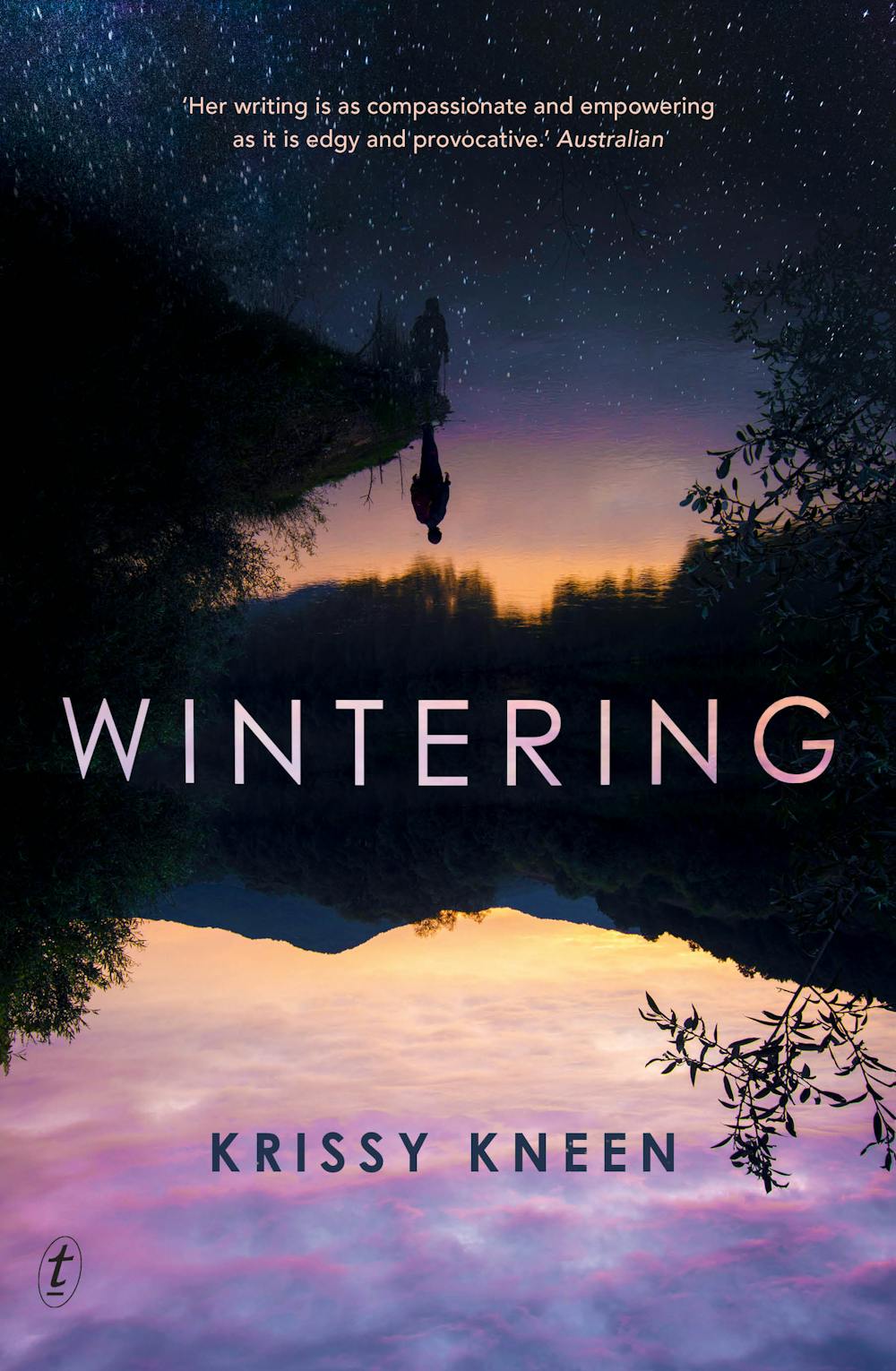


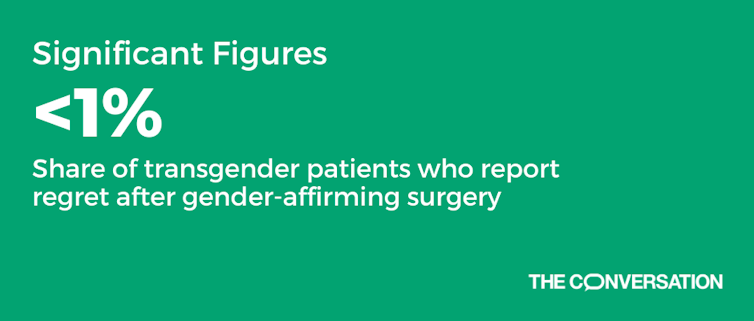
















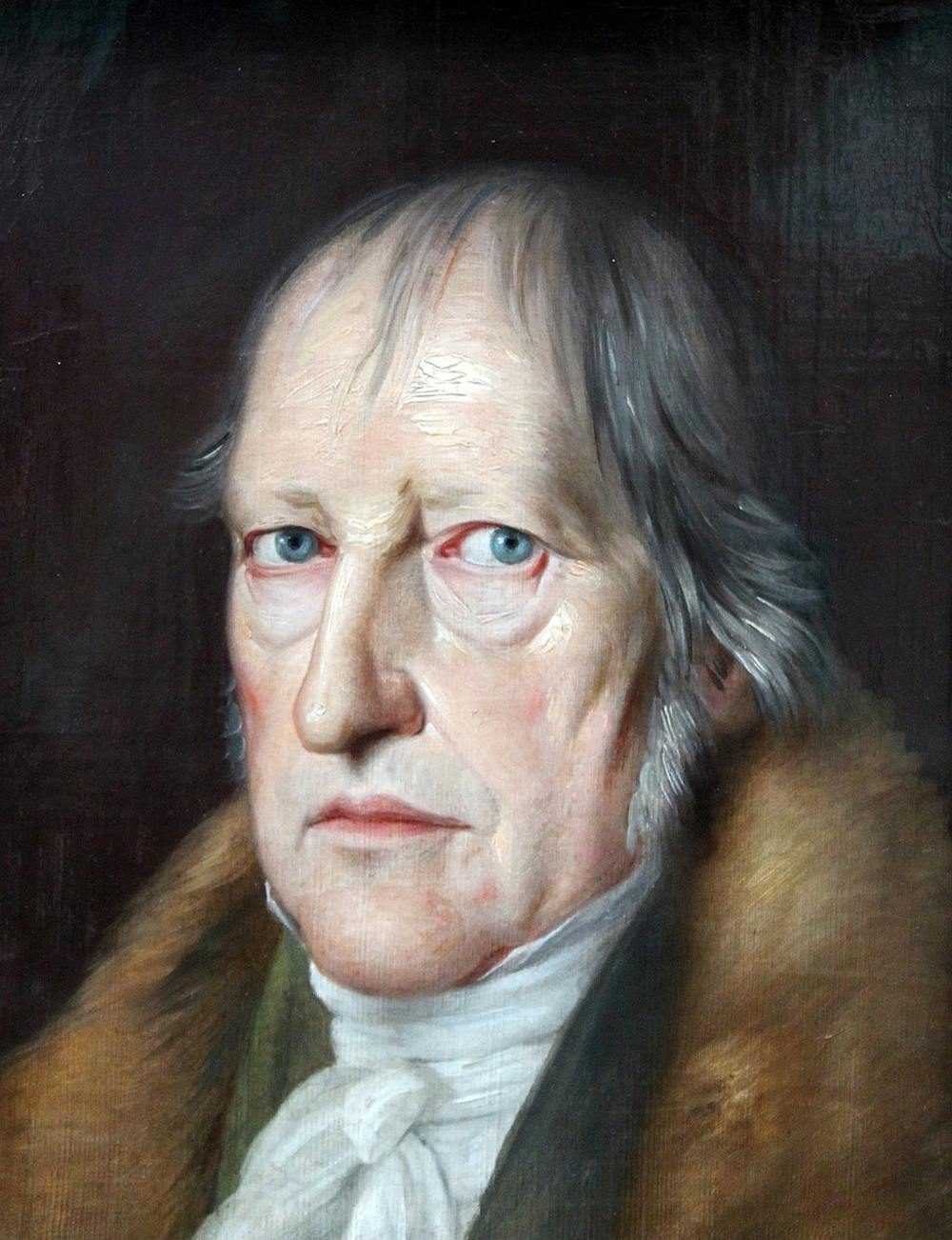












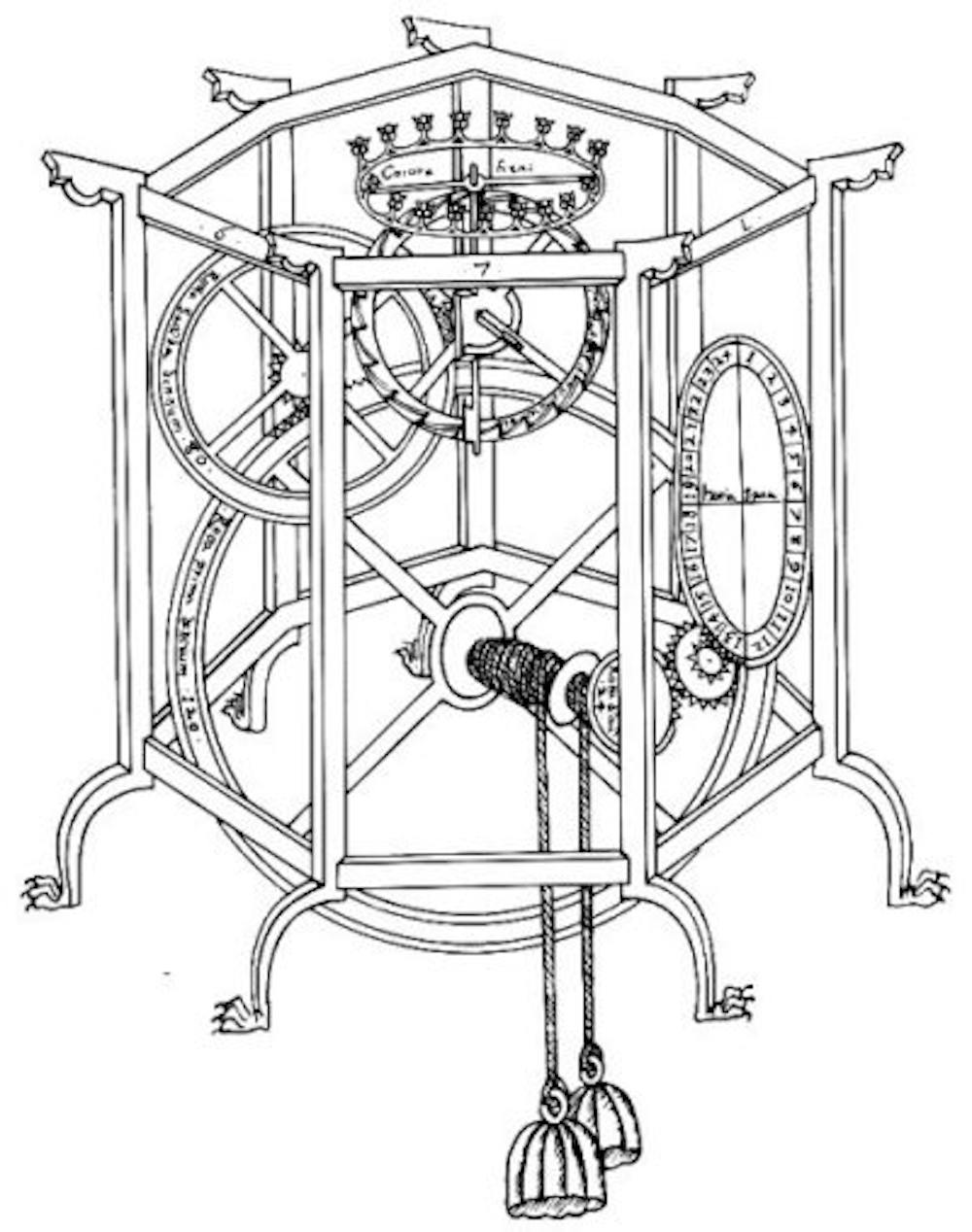









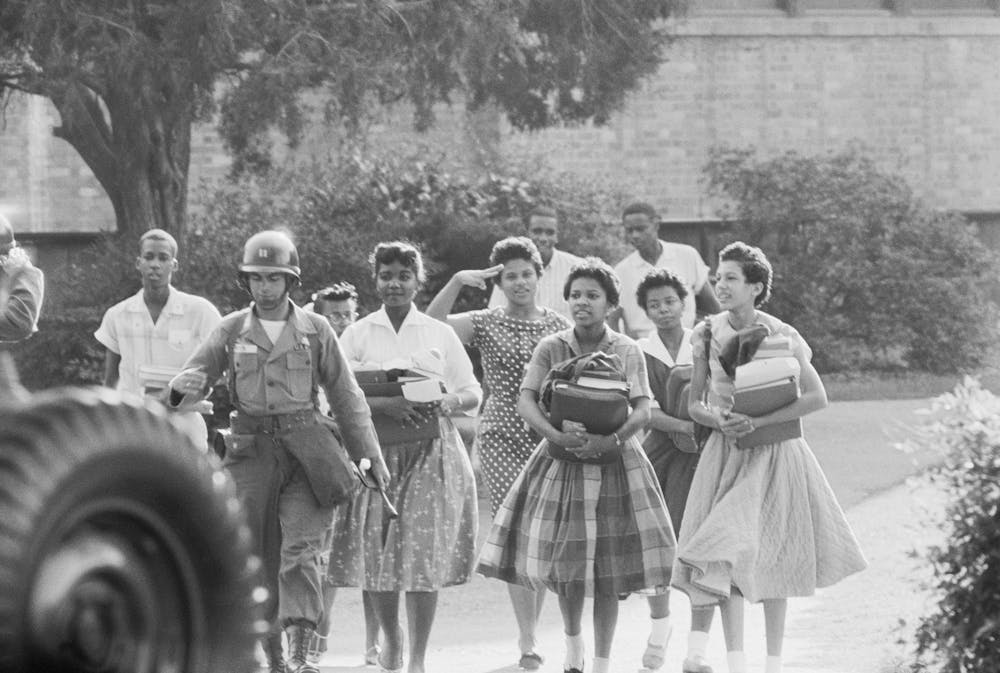











.jpg)


