And those things aren't true, according to an Ipsos-Mori poll that put the USA second-from-the-top in the race to see who's the most ignorant, preceded only by Italians.
Read the rest
by James Meese, Research fellow at University of Melbourne
Status update: this party's dead, and so am I. Eddi van W., CC BY-ND
Earlier this year, start-up Eterni.me emerged from the Massachusetts Institute of Technology Entrepreneurship Development program. The company’s tagline – “simply become immortal” – quickly attracted media headlines.
Eterni.me is developing a set of algorithms that will learn to emulate a dead person’s personality by analysing digital footprint of the dead. The algorithms would then function as an artificial intelligence for a 3D avatar, which could:
interact with and offer information and advice to your family and friends after you pass away.
Eterni.me develops a representation of an individual’s personality through algorithms, pattern matching and data mining. The company will collect:
almost everything that you create during your lifetime and process … this huge amount of information using complex Artificial Intelligence algorithms.
This incorporates data from:
Facebook, Twitter, e-mail, photos, video, location information, and even Google Glass and Fitbit devices.
A public launch could be up to five years away as the company waits for advances in artificial intelligence applications. But, despite this wait, within weeks of the start-up’s launch, tens of thousands of users had signed up on a waiting list for the service. Marius Ursache, Eterni.me’s chief executive, is publicly confident of the company’s success, because, as he puts it: “Nobody wants to be forgotten.”
The company has emerged from a wider research and development context, where a range of projects and companies are working towards the goal of digital immortality. New media commentator Adam Ostrow outlined the possibilities of this field in his 2011 TED talk, “After Your Final Status Update”. He argues that computers will soon be able to:
[U]nderstand human language and process [and] analyse an entire life’s worth of content … it’s going to become possible for our digital personas to continue to interact in the real world long after we’re gone …
Ostrow went on to anticipate a future where the collective content uploaded will be embedded in robotic or holographic representations of the deceased, which could interact with the living based on the archive of content produced by a person over a lifetime.
For the likes of Ostrow, Eterni.me is just the beginning signs of a computer-assisted immortality, a dream that sounds like a plot from a science-fiction novel. But these “digital afterlives” raise a range of important ethical issues around what it means to be a person.
The concept of personhood is directly linked to being able to act in the world in relation to other living beings. In the contemporary West dying is increasingly linked to hospitalisation and palliative care. In these spaces denying or relieving the dying of authority and decision-making is common.
As health anthropologist Julia Lawton has explained, this allows people to slowly “fall out of the category of personhood” as they prepare for death.
In contrast, these new technologies directly challenge those contemporary cultural and social rituals that presume a diminishment of personhood around death. These research and development efforts work towards giving the dead a limited form of digital agency and potentially allowing them to intervene in a much more capable fashion than when they were alive, such as when they were elderly or terminally ill and close to their biological death.
Furthermore, if personhood partly rests on being able to act in the world in relation to the living, once we consider technologies such as Eterni.me, things become complicated.
What is the cultural and social status of this digital persona? Do they have an economic and legal status? How are our own duties and rights as living beings measured against theirs? How should the living treat, engage and interact with these entities? Is it possible to maintain intimacy through shared interaction with the dead?
If digital personae can effectively act in the world, how does a notion of personhood accommodate them? Or to put it another way, where our only point of social contact is through Twitter, and the deceased tweet, are they still “people” of the same order as those who tweeted us before death?
Interestingly, these services could be limited by their own technological innovation. Consistency is privileged by pattern-matching analytics. Improvisation, surprise or other unpredictable actions that living people always engage in are, at best, clumsily simulated by randomising functions.
It may be easier for these services to mimic a target than to engage in random acts. But the ability for people to say or do something utterly unpredictable is an important marker of being human. That’s difficult to achieve in digital efforts toward a social immortality, and so these innovations may ultimately disappoint consumers.
Eterni.me’s work is largely speculative at the moment. The company is yet to produce a “living” avatar of a dead person. But we suggest the presence of a digital afterlife is not just a novelty, as various commercial services have presented it.
Instead it challenges us to rethink what it means to be a person and raises a host of issues that are important to address as this and other efforts towards digital immortality emerge.
The Conversation is currently running a series on Death and Dying.
Bjorn Nansen receives funding from the Australian Research Council.
Martin Gibbs receives funding from the Australian Research Council.
Michael Arnold receives funding from the Australian Research Council.
Tamara Kohn receives funding from ARC
James Meese does not work for, consult to, own shares in or receive funding from any company or organisation that would benefit from this article, and has no relevant affiliations.
by Richard Pancost, Professor of Biogeochemistry, Director of the Cabot Institute at University of Bristol
You might never know that you're hard of thinking. Robin Zebrowski/Flickr, CC BY-NC
This is the second article in a series, How we make decisions, which explores our decision-making processes. How well do we consider all factors involved in a decision, and what helps and what holds us back?
It is an unfortunate paradox: if you’re bad at something, you probably also lack the skills to asses your own performance. And if you don’t know much about a topic, you’re unlikely to be aware of the scope of your own ignorance.
Type in any keyword into a scientific search engine and a staggering number of published articles appears. “Climate change” yields 238,000 hits; “tobacco lung cancer” returns 14,500; and even the largely unloved “Arion ater” has earned a respectable 245 publications.
Experts are keenly aware of the vastness of the knowledge landscape in their fields. Ask any scholar and they will likely acknowledge how little they know relative to what is knowable – a realisation that may date back to Confucius.
Here is the catch: to know how much more there is to know requires knowledge to begin with. If you start without knowledge, you also do not know what you are missing out on.
This paradox gives rise to a famous result in experimental psychology known as the Dunning-Kruger effect. Named after Justin Kruger and David Dunning, it refers to a study they published in 1999. They showed that the more poorly people actually performed, the more they over-estimated their own performance.
People whose logical ability was in the bottom 12% (so that 88 out of 100 people performed better than they did) judged their own performance to be among the top third of the distribution. Conversely, the outstanding logicians who outperformed 86% of their peers judged themselves to be merely in the top quarter (roughly) of the distribution, thereby underestimating their performance.
John Cleese argues that this effect is responsible for not only Hollywood but the actions of some mainstream media.
Ignorance is associated with exaggerated confidence in one’s abilities, whereas experts are unduly tentative about their performance. This basic finding has been replicated numerous times in many different circumstances. There is very little doubt about its status as a fundamental aspect of human behaviour.
Confidence and credibility
Here is the next catch: in the eyes of others, what matters most to judge a person’s credibility is their confidence. Research into the credibility of expert witnesses has identified the expert’s projected confidence as the most important determinant in judged credibility. Nearly half of people’s judgements of credibility can be explained on the basis of how confident the expert appears — more than on the basis of any other variable.
Does this mean that the poorest-performing — and hence most over-confident — expert is believed more than the top performer whose displayed confidence may be a little more tentative? This rather discomforting possibility cannot be ruled out on the basis of existing data.
But even short of this extreme possibility, the data on confidence and expert credibility give rise to another concern. In contested arenas, such as climate change, the Dunning-Kruger effect and its flow-on consequences can distort public perceptions of the true scientific state of affairs.
To illustrate, there is an overwhelming scientific consensus that greenhouse gas emissions from our economic activities are altering the Earth’s climate. This consensus is expressed in more than 95% of the scientific literature and it is shared by a similar fraction — 97-98% – of publishing experts in the area. In the present context, it is relevant that research has found that the “relative climate expertise and scientific prominence” of the few dissenting researchers “are substantially below that of the convinced researchers”.
Guess who, then, would be expected to appear particularly confident when they are invited to expound their views on TV, owing to the media’s failure to recognise (false) balance as (actual) bias? Yes, it’s the contrarian blogger who is paired with a climate expert in “debating” climate science and who thinks that hot brick buildings contribute to global warming.
‘I’m not an expert, but…’
How should actual experts — those who publish in the peer-reviewed literature in their area of expertise — deal with the problems that arise from Dunning-Kruger, the media’s failure to recognise “balance” as bias, and the fact that the public uses projected confidence as a cue for credibility?
Speaker of the US House of Representatives John Boehner admitted earlier this year he wasn’t qualified to comment on climate change.
We suggest two steps based on research findings.
The first focuses on the fact of a pervasive scientific consensus on climate change. As one of us has shown, the public’s perception of that consensus is pivotal in determining their acceptance of the scientific facts.
When people recognise that scientists agree on the climate problem, they too accept the existence of the problem. It is for this reason that Ed Maibach and colleagues, from the Centre for Climate Change Communication at George Mason University, have recently called on climate scientists to set the record straight and inform the public that there is a scientific consensus that human-caused climate change is happening.
One might object that “setting the record straight” constitutes advocacy. We do not agree; sharing knowledge is not advocacy and, by extension, neither is sharing the strong consensus behind that knowledge. In the case of climate change, it simply informs the public of a fact that is widely misrepresented in the media.
The public has a right to know that there is a scientific consensus on climate change. How the public uses that knowledge is up to them. The line to advocacy would be crossed only if scientists articulated specific policy recommendations on the basis of that consensus.
The second step to introducing accurate scientific knowledge into public debates and decision-making pertains precisely to the boundary between scientific advice and advocacy. This is a nuanced issue, but some empirical evidence in a natural-resource management context suggests that the public wants scientists to do more than just analyse data and leave policy decisions to others.
Instead, the public wants scientists to work closely with managers and others to integrate scientific results into management decisions. This opinion appears to be equally shared by all stakeholders, from scientists to managers and interest groups.
Advocacy or understanding?
In a recent article, we wrote that “the only unequivocal tool for minimising climate change uncertainty is to decrease our greenhouse gas emissions”. Does this constitute advocacy, as portrayed by some commenters?
It is not. Our statement is analogous to arguing that “the only unequivocal tool for minimising your risk of lung cancer is to quit smoking”. Both statements are true. Both identify a link between a scientific consensus and a personal or political action.
Neither statement, however, advocates any specific response. After all, a smoker may gladly accept the risk of lung cancer if the enjoyment of tobacco outweighs the spectre of premature death — but the smoker must make an informed decision based on the scientific consensus on tobacco.
Likewise, the global public may decide to continue with business as usual, gladly accepting the risk to their children and grandchildren – but they should do so in full knowledge of the risks that arise from the existing scientific consensus on climate change.
Some scientists do advocate for specific policies, especially if their careers have evolved beyond simply conducting science and if they have taken new or additional roles in policy or leadership.
Most of us, however, carefully limit our statements to scientific evidence. In those cases, it is vital that we challenge spurious accusations of advocacy, because such claims serve to marginalise the voices of experts.
Portraying the simple sharing of scientific knowledge with the public as an act of advocacy has the pernicious effect of silencing scientists or removing their expert opinion from public debate. The consequence is that scientific evidence is lost to the public and is lost to the democratic process.
But in one specific way we are advocates. We advocate that our leaders recognise and understand the evidence.
We believe that sober policy decisions on climate change cannot be made when politicians claim that they are not scientists while also erroneously claiming that there is no scientific consensus.
We advocate that our leaders are morally obligated to make and justify their decisions in light of the best available scientific, social and economic understanding.
Click on the links below for other articles in the series, How we make decisions:
Stephan Lewandowsky receives funding from the Royal Society, from the World University Network (WUN), and from the 'Great Western 4' (GW4) consortium of English universities.
Richard Pancost receives funding from RCUK, the EU and the Leverhulme Trust.
by Roberta Anderson, Senior Lecturer in History at Bath Spa University
Burning crosses in Lewes. Gareth Fuller/PA Archive
Remember, remember!
The fifth of November
Gunpowder, treason and plot.
I see no reason
Why the gunpowder treason
Should ever be forgot!
Versions of this rhyme have been chanted in the UK for centuries and whether you call it Guy Fawkes Night or Bonfire Night, it is a tradition that shows no sign of abating. The bonfires and fireworks displays of today are steeped in a tradition that started on January 21 1606, when an Act of parliament was passed to appoint November 5 each year as a day of thanksgiving for “the joyful day of deliverance”. The Act ordered people to attend church on the morning of the 5th, when parish clergy would read prescribed prayers of thanksgiving as well as the Act itself, which justified the continuation of laws against Catholic worship.
If those legislators knew that this particular law would reach into the 21st century, they’d be pretty pleased with themselves.
Burning Guy Fawkes.
Gareth Fuller/PA Archive
Off the back of this yearly celebration of the failure of the plot, November 5 quickly became a focus beyond church for anti-Catholic feeling and concerns about the perceived dangers of popery. And over time it was to become a day of bells, bonfires and bright lights.
One of the first big bonfires happened in 1626 when the citizens of Norwich staged a highly symbolic bonfire when they burned a collection of Catholic paraphernalia, found in a chest in the church. Bonfires only happened occasionally, and were banned during the Interregnum of 1649-60. But they returned with force when Charles II came to the throne. Following a number of Catholic plots, the celebrations became even more anti-Catholic focused. In this period it was not uncommon to find a burning Guy Fawkes next to an effigy of the Pope.
Official and respectable celebrations continued throughout the 18th century and in some cases, local councils sponsored celebrations into the early 19th century. In Exeter, up until the 1830s, the mayor and councillors continued to march to the cathedral for the service of thanksgiving and had the Guildhall illuminated. After the service a huge bonfire was lit in the churchyard, followed by an oyster supper.
Towards the end of the 18th century reports appear of children begging for money with effigies of Guy Fawkes in tow. This continued to be a common sight on the streets of towns and villages well into the 1970s with children begging “a penny for the Guy” to buy fireworks.
Following Catholic emancipation the act itself was repealed in the 19th century. But the tradition of bonfires and fireworks has continued – and so the Act can be thanked for some of the more extreme festivities around today.
Tradition today
Probably one of the most famous Bonfire Night celebrations takes place in Lewes, where true to tradition Guy Fawkes and the Pope are burned together. There are six societies that put on competing displays – all also parade burning crosses through the streets to remember the death at the stake of 17 Protestant martyrs during the reign of Mary I. An incredible 80,000 spectators have been known to attend.
In the West Country celebrations evolved in the 19th century into processions of floats, or carts, now brightly lit by some 25,000 light bulbs. A current estimation is that more than a third of a million bulbs are used during each carnival season. Each Carnival Club, like those of Lewes, has its own theme, which is kept secret while they work on building their creations. They then tour the towns of Somerset, starting in Bridgwater and winding their way through Weston-super-Mare and Wells before a grand finale in Glastonbury later in November.
Ottery St Mary in 1963.
PA/PA Archive
Ottery St Mary goes one step further. As well as the traditional West Country style carnival procession and a bonfire, they also burn tar barrels. The hardy competitors – who have to have been born in the town – don’t roll the barrels through the streets, a tradition suppressed in other areas in the 19th century, but run with the burning barrels on their shoulders until the heat becomes too unbearable or the barrel breaks down.
In Surrey, the Brockham bonfire is usually around 40ft tall, made with logs, brushwood, grass, leaves and discarded furniture. More than 500 fiery torches that are dispersed around the village are dramatically thrown on the bonfire in unison to set the inferno alight. An 8ft Guy, made from papier-mâché, is paraded through the streets, before being cast on to the bonfire. The evening closes, like all good bonfire nights, with a huge fireworks display.
So whether you’re watching fireworks, furnaces, or sprinting down a street with a burning barrel on your back, you’re doing it because 400 years ago, a law was passed that forced people to attend church and give thanks for “the joyful day of deliverance”.
Roberta Anderson does not work for, consult to, own shares in or receive funding from any company or organisation that would benefit from this article, and has no relevant affiliations.
ORACLE PHOTO / KATIE LAMONT
It’s nearing midnight. The Library looms over the nearly empty campus, palm trees rustling in the wind above the benches out front, the windows glowing in the dark. If the...
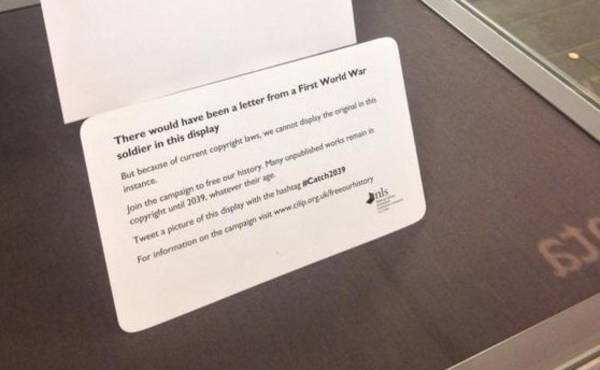
They want the term of copyright changed to life plus 70 years, instead of 2039 for unpublished works of uncertain date, a standard that makes it impossible to reproduce or display things like letters home from the front.
Read the rest
Online and social media’s capacity to enable anyone to communicate their ideas and views is much celebrated. So why do so many people feel nervous about getting involved with online debate?
Too often, the reason is they have had vitriol poured all over them, or seen that happen to others.
This was the experience of one of this article’s authors (Helen), who recently wrote an opinion piece for a popular Australian website, Mamamia, which ran with the headline Why I’d never be with a man who always pays the bill. And the public response to what was her first foray into writing for a major website left her wondering if it’s worth repeating the exercise.
Beyond this single anecdotal example – just one of the millions of blog posts and articles published every day around the world – why does online incivility matter?
It matters, in part, because recent research has shown that the content and tone of comments on articles can actually affect the way people read and interpret the original article.
One online experiment examined attitudes to nanotechnology by taking a neutral blog post on the subject and exposing its participants to either rude or polite comments to see if it affected their views. The research revealed the “Nasty Effect”, showing that:
[…] those who are exposed to uncivil deliberation in blog comments are more likely to perceive the technology as risky than those who are exposed to civil comments.
So what each one of us posts online matters. And as we’ll show, there are ways to improve the general standard of online comments and to not let trolls get the better of you.
Faceless bullying
Sociological discussions of incivility have tended to focus on everyday urban encounters between people in spaces such as streets and public transport.
But although urban incivility attracts a great deal of attention and may result in action by the police, the practice of aggressively insulting strangers is being given a new lease of life online.
As is common in such pieces of “confessional journalism”, when writing for Mamamia Helen used examples from personal experience to dissect broader social values: in this case, gendered assumptions about who pays for restaurant meals. It was intended to be a critique of gender inequality wrapped in the garb of benevolent sexism.
The response from readers in the comments below the article and particularly on Mamamia’s Facebook page was frequently savage. While it was a bruising surprise for Helen, sadly when you look at online comments around the world, the comments she got were not particularly unusual.
That prompted us to reflect on some examples of how online media can easily function as a vehicle for harshness and abuse, often against – as well as by – women.
Demanding silence: ‘just eat your dinner and be quiet’
A favourite technique in the incivility repertoire involves undermining the legitimacy of the author to say anything at all on the subject.
Some of the public comments from Mamamia’s Facebook page.
Facebook
In statements such as “Just eat your dinner and be quiet” and “first world problem”, hostile commenters are essentially demanding muteness.
Telling the speaker explicitly or implicitly to shut up means that there is no need to engage with what they have actually said.
Curiously, this response can be triggered among those who have not read the original article, but have caught the wave of author-baiting – this is incivility by proxy.
Name-calling: ‘you are just a bitch’
Several commenters bemoaned the confusion that the article would prompt amongst men, whose embattled masculinity had received a below-the-belt blow.
Some more of the public comments from Mamamia’s Facebook page.
Facebook
By being “bitchy” and “another malcontent female”, the author was confounding men and letting the side down for women who want to be pampered by them.
A “man-hating” attitude – seemingly interpreted as any questioning of men’s conduct – somehow justified expressions of hatred from commenters.
Even more of the public comments on Mamamia’s Facebook page.
Facebook
In the absence of the constraint of having to look someone in the eye when spitting venom at them, keyboard warriors can unload freely on others with little recourse for the target.
There is a growing back catalogue of experiences of women being the subject of online assaults that challenge not only their arguments, but their right to speak at all.
It is now routine for incivility to pass for critique when historically marginalised groups such as women freely express their opinions.
The circuits of privilege and power that exist offline are easily replicated in a digital universe, where the heedless slam-dunking of strangers is a sport designed to enforce a code of silence and submission.
You’re the problem: ‘she should have taken more control’
Incivility can also masquerade as being ostensibly helpful by not being openly hostile.
Some readers seem sympathetic and suggest remedies that involve behaviour modification on the woman’s part; for example, that she needs to be less complicit, more assertive, and a better negotiator.
Suggesting that it is all a matter of the woman’s individual responsibility, and leaving her date’s behaviour unquestioned, de-politicises and de-contextualises the issue of gender equality that was raised in the first place.
While it can be hard not to feel bruised if someone attacks you online, many trolls are just taking their frustrations out on you.
Flickr/Ryan Tracey, CC BY-NC-ND
Five tips for handling incivility
So what is to be done? While there are many common types of incivility, authors and commenters need not surrender to them. Here are five ways to say no, politely, to online incivility.
1. Take responsibility for a good quality conversation
Online environments can be polluted like any other, and dumping insults on fellow humans can only result in a degraded public culture.
Think first, type later.
2. Remember the human being behind the screen
Authors bleed when cut by cruel words, but uncivil commenters may think they’re just “gaming”. Recognise that the pleasure rush of the snide put-down has a human cost.
3. Apply the in-person test
If as original author or commenter you would not say to someone’s face what you would happily post, you probably having nothing worthwhile to say.
Even Queen Elizabeth famously got trolled when she sent her first tweet. But as the Palace later pointed out, for every rude remark there were many more positive responses.
4. Take pity on trolls: they’re often unhappy people
Instead of fretting too much about comments from uncivil, anonymous people, read up on some of the many cases where they have been exposed. Some are funny, such as the case of the boxer who tracked down his troll and won a grovelling public apology.
There are also many cases where seemingly ordinary people have taken their frustrations out on others online, without considering the harm they could do to others or themselves.
Examples include the 2012 exposure of “the biggest troll on the web”. He turned out to be a middle-aged man from Texas who begged not to be unmasked and subsequently lost his job over online behaviour including posting “jailbait” images of underage girls.
There was also a tragic case of a church-going Englishwoman in her 60s, Brenda Leyland, who had obsessively attacked missing girl Madeleine McCann’s parents using an anonymous Twitter account @Sweepyface. Leyland recently committed suicide after her real identity was revealed.
5. Don’t be cowed by cowards
Online bullies, especially those who hide behind pseudonyms and avatars, have all the courage of the playground legends who never pick a fight that they might lose. Your persistence in not giving up your right to join online debates means that they picked on the wrong person.
Online incivility and its ugliest side, trolling, are seen by some as the norm rather than as aberrant. But it often has consequences.
Calling out online incivility for what it is and insisting on basic standards of respect for others does not impede robust debate – it’s vital for sustaining it.
Editor’s note: Showing respect for others and taking responsibility for the quality of the conversations you take part in are among the most important guidelines for comments on this site too – all outlined in The Conversation’s Community Standards.
David Rowe is a previous and current recipient of funding from the Australian Research Council.
Helen Barcham does not work for, consult to, own shares in or receive funding from any company or organisation that would benefit from this article, and has no relevant affiliations.
The American public’s dislike of Congress is far from a new development in US politics. However, over the past few years the situation has gotten even worse with public approval of this institution hovering around historic lows.
The vast majority of citizens in this country think most members of Congress have lost touch with the people and don’t represent their interests. There are not many simple answers to remedy this problem but one change that might help bring members of Congress closer to the people is to increase the size of the US House of Representatives to 680 members.
One hundred years at 435 seats
For almost a century the House has consisted of 435 members. This seemingly permanent fixture of American politics often obscures the reality that during the first century of the country’s existence the House was increased almost every ten years after its original size of 65 members was established.
Increasing the size of the House was seen as necessary to offset the growth in the nation’s population. However, after the last increase that occurred in 1911, members concluded that the House could no longer operate efficiently if the its size continued on an upward trajectory.
The major consequence of this decision is that the average number of citizens each House member represents has risen dramatically as, over the past 100 years, the nation’s population has grown by more than 200 percent to over 300 million people.
US House members now represent on average more than 700,000 people per district. As a point of comparison, at the time of the nation’s founding, the corresponding figure was 30,000 citizens.
In light of these developments and the fact that the population is only continuing to grow, political commentators across the ideological spectrum have raised serious questions about whether the House can retain its representative character if the present 435-seat limit remains in place. No wonder people feel so detached from their representatives in Washington.
It is because of this diminished state of representation that I argue now is the time for the House to be increased to 680 seats and to commit to further increases every ten years in order to reflect the population census.
Why 680 is better
Implementing this change would lead to better representation in many ways.
Most importantly it would make it easier for House members to remain in touch with their constituents and improve their level of responsiveness. Significantly increasing its size would move it closer to fulfilling the ideal that it is, truly, the people’s House.
But why specifically do I support 680 seats as the appropriate size of the House?
The freezing of the number of seats in the House at 435 came about in a somewhat arbitrary manner. In most advanced democracies, the number of seats in the lower house of national legislatures happens to approximate a number that is the cube root of the nation’s population. (The cube root of a number is a value that, when used in a multiplication three times, gives that number. For example, 27= 3x3x3 so the cube root of 27 is 3.) This is an observation, by the way, that was first made in a report on the British elections of 1909.
If we apply this “cube root law,” as it’s called by political scientists, to the current American population of 315,000,000 then it mandates that the US House ought to have a membership of 680 representatives.
There is a rationale that underpins this empirical regularity in other democracies' legislatures. All legislative bodies must balance the need to operate efficiently while providing effective representation to the citizens in their districts. Legislators need to communicate with their fellow members. They also need to stay in touch with their constituents. The cube root law allows the number of seats to reflect an increase in the country’s population but on a proportional or graduated scale.
Legislatures are not designed to expand in direct proportion to the population because to do so would undermine the capacity to legislate effectively. However, if the average number of constituents in a district becomes too large, the legislator will be unable to communicate effectively with constituents.
The US House has clearly reached the point that the channels of communication between representatives and their constituents have been hindered by the 435 seat limit.
Increasing the size of the of the House to account for population growth in line with the cube root law of national assembly size is far from the only solution for remedying the lack of responsiveness of House members to their constituents, but it would certainly make a contribution toward bridging the divide that presently exists. If the average House district population size continues to expand, the prospect for greater divergence between constituency preferences and policy responsiveness will only be heightened.
The ideal of the people’s House
As someone who has studied the Congress closely for many years I am under no illusions that a change of this magnitude is on the horizon in the current political environment.
In the final analysis, a United States House of Representatives consisting of close to 435 members seems likely to remain a permanent fixture of the political system for years to come.
Nevertheless, for the House to genuinely live up to its status as the federal institution closest to the people, it ultimately must be a larger House and continue to grow as the nation’s population grows. A failure to do so would be contrary to the representative character this institution is supposed to embody.
Even though I concede the prospects for an increase seem bleak at this juncture, that does not mean it should be discounted as policy option that is off the table for serious consideration from national policymakers. Political realities should not be allowed to derail an increase in the size of the House that is so desperately needed to enhance the representativeness of what is supposed to be the people’s House.
Brian Frederick does not work for, consult to, own shares in or receive funding from any company or organisation that would benefit from this article, and has no relevant affiliations.
Canadian digital rights organization, OpenMedia, released a copyright report today that crowdsourced input from users from around the world. Their survey asked users to express their thoughts about copyright and to determine what issues they would like policymakers to prioritize in constructing innovation policy domestically and internationally. The process took over two years and attracted participation from over 300,000 people in 155 countries.
The result was published today at Our Digital Future, which features the highlights of this extensive study. Hundreds of thousands of users have spoken and they have made three main recommendations to policymakers.
First, users called for creators interests' to be upheld and respected. 67% of respondents wanted to see at least three-quarters of revenue from the sale of creative works to go directly to artists and creators. They also called for the promotion of new ways for creators to share their work, flexible exemptions to copyright, and rules that encourage a rich public domain.
Secondly, they called for copyright policies to prioritize free expression. Nearly three-quarters of respondents selected “Prioritize Free Expression” as their first priority for developing more balanced copyright. Respondents proposed a four-pronged agenda, including: preventing censorship, protecting fair use and fair dealing, promoting access and affordability, and creating clear rules to govern the sharing of knowledge and culture online.
And third, users called for policymakers to embrace democratic processes. Over 72 percent of respondents indicated that they wanted rules created through “a participatory multi-stakeholder process...that includes Internet users, creators, and copyright law experts.” Respondents denounced closed-door processes that plague negotiations over trade agreements like the Trans-Pacific Partnership (TPP). These users overwhelmingly called for participatory, democratic, and transparent policymaking fora to shape copyright rules.
In short, people want copyright laws to make sense and balance the interests of everyone. At a time when the line between creator and cultural consumer has become blurred, users want copyright policy to uphold our collective rights and concerns, not just those of a separate illusory class of "creators." Despite how copyright laws both internationally and in most domestic regimes fiercely protect the special interests of Hollywood and Big Content industries, they are not the only ones producing creative works. Their exclusive access to international policymaking negotiations does not reflect the current reality of cultural creativity and consumption online.
This user-driven study is just one way of reflecting our interests, and showing policymakers that the secretive processes of agreements like TPP completely fail at respecting those interests when it comes to crafting copyright policy for the digital age.
Michael says, "'The Conversation' has been in Australia for a couple of years: writing by academics, for a lay audience, which aims to be readable and relevant. Their slogan is 'academic rigor, journalistic flair', and they've done pretty well at that so far."
Read the rest
The Electronic Frontier Foundation has updated its indispensable "Know Your Rights" guide for dealing with police search requests for your phone, computer, and other devices.
The History Channel's created a bizarre secret history of a war against Martian invaders that's an allegory for WWI. The accompanying video has a spooky resonance and plausibility that is not to be missed.
Read the rest
A science-fiction musical of Edgar Allan Poe's 1842 Masque of the Red Death featuring a same-sex lead couple, e-bongs and enough red goo to make David Cronenberg squirm?
The American Library Association's code of ethics demands that library professionals "protect each library user's right to privacy and confidentiality" and they've been taking that duty seriously since the first days of the Patriot Act.
Read the rest
Sir Ken Robinson is a leading authority on education and creativity. A former professor of education, he now advises governments and businesses around the world and is one of the most sought-after speakers on education. The quotes used in the comic are taken from Robinson’s now-famous 2006 TED talk How schools kill creativity. It is the most viewed TED talk ever, and also one of the funniest in my opinion (gotta love that dry British humour). If you haven’t seen it, then stop what you’re doing and go watch it.
Robinson explains that the school system was invented in the 19th century to meet the needs of rapid industrialisation and is extremely outdated, focusing way too much on left-brain academic learning. “If you think of it, the whole system of public education around the world is a protracted process of university entrance. And the consequence is that many highly talented, brilliant, creative people think they’re not, because the thing they were good at at school wasn’t valued, or was actually stigmatised.” He gives the example of Gillian Lynne, a world-renowned dancer and choreographer, who as a student was terrible at school and most likely would have been diagnosed with ADHD today. Luckily, a specialist noticed that Lynne wouldn’t sit still and was naturally dancing to the music playing in the office and suggested to Lynne’s mother that she send the child to dance school. (Robinson explains it a lot better than I just typed it).
In his best-selling book The Element, Robinson gives many more examples of how famous artists found their life’s calling (or ‘element’ as Robinson calls it). For instance, he interviews Matt Groening, creator of The Simpsons, who tells Robinson that he was always drawing crude cartoons as a student and knew he wanted to do it for the rest of his life, even if it meant working a crappy job forever. “My vision was that I’d be working in a tire warehouse. I have no idea why I thought it was a tire warehouse. I thought I’d be rolling tires around and then on my break, I’d be drawing cartoons.” Everyone tried to convince Groening to give up the cartooning dream (even his father, who was a cartoonist), but he persisted and only remembers one teacher fondly that encouraged him (he later named the character of Ms. Hoover after her). It’s a fascinating book and Robinson interviews big names like Paul McCartney, Ridley Scott, Aaron Sorkin, Meg Ryan and Richard Branson about how they embraced their creativity. This year, Robinson released the follow-up book Finding Your Element: How to Discover Your Talents and Passions and Transform Your Life.
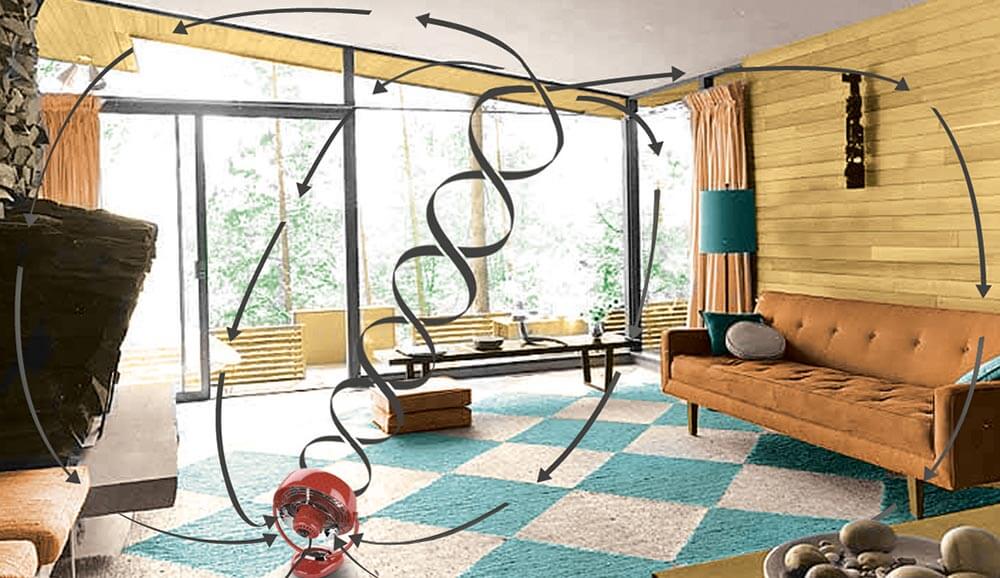
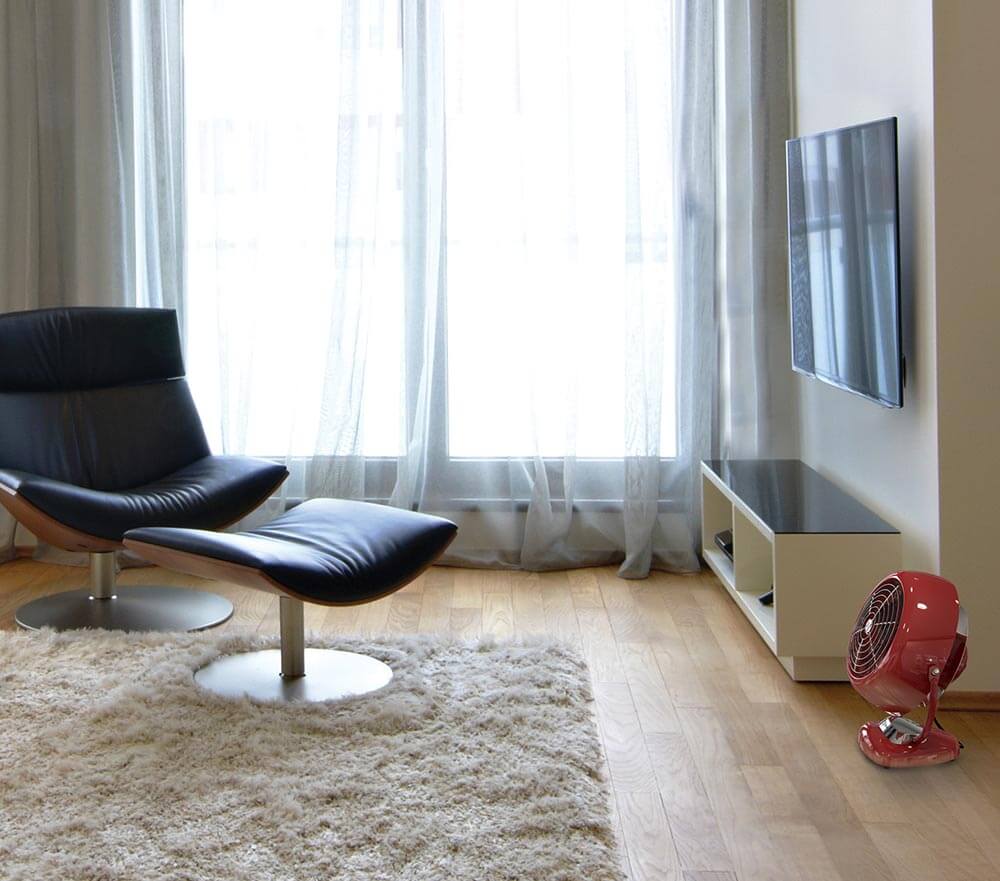
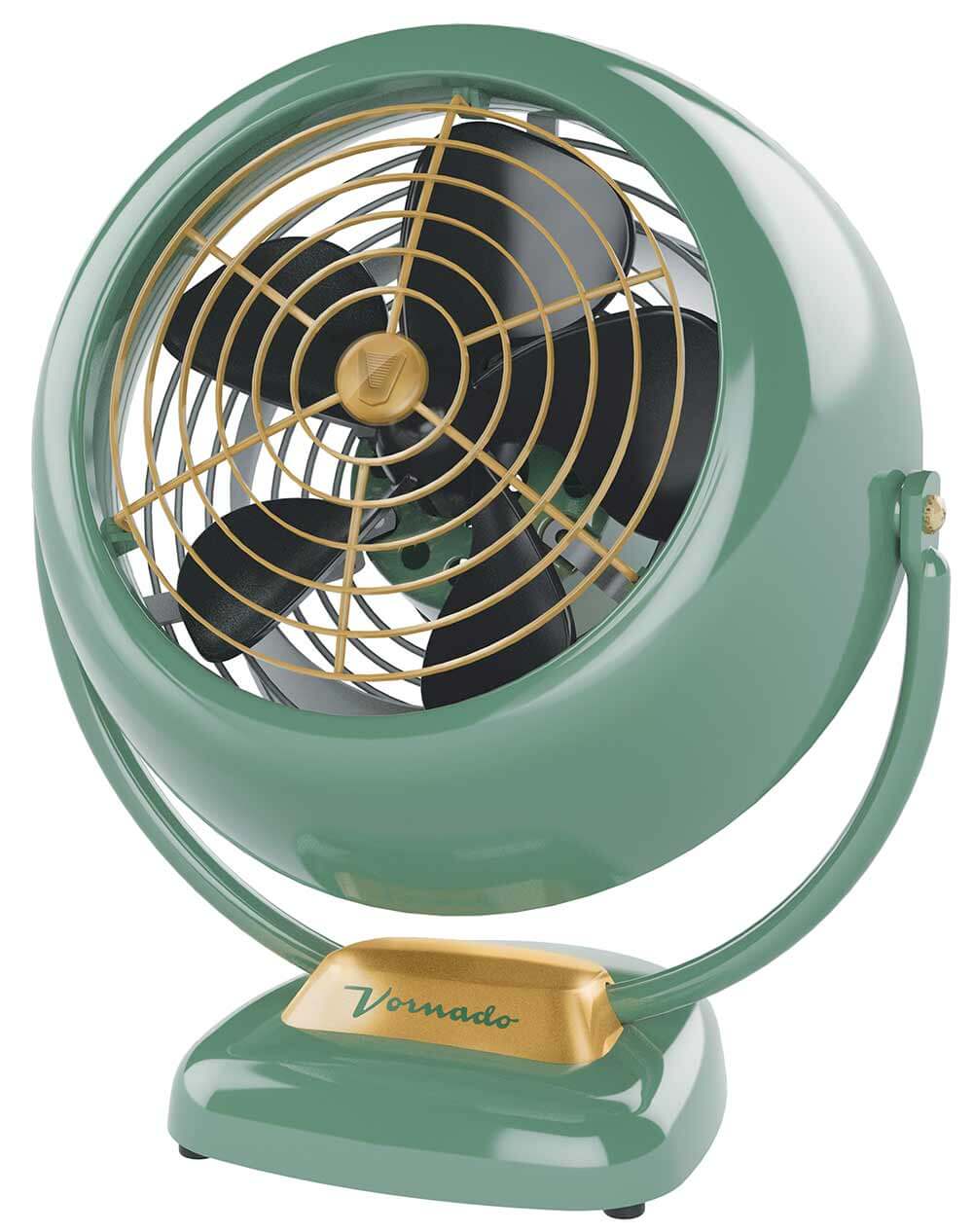
70 years after its invention, Vornado now has reissued the classic “Vortex Tornado” fan design that inspired the company’s name. With patented engineering, and with styling by famed industrial designer Richard Ten Eyck, this Vornado fan design is one of the most famed in fan history — at peak popularity, nearly one-third of the fans sold in American were Vornados. Now reisssued, this Vornado VFAN is available in three colors — red, stainless and the gorgeous, original 1945 green. And, it’s “real metal” — yay!
Made mostly of metal like the original and updated with enhanced safety and quieter airflow, this delicious looking fan retails for $139. Currently it’s on Amazon for $130 (affiliate link):
Darn fun video — seriously, you gotta!
The video above shares more information about the company history of Vornado and the innovative fan design.
Info and photos from Vornado:
From the press release:
THE RETURN OF THE CLASSIC VORNADO – INTRODUCING VFAN™
The Vornado “Fan” That Started It All Almost 70 Years Ago Has Returned
In 1945, Vornado® introduced a fan with a unique appearance – that would soon become an icon of the “Streamlined” Age of Design. Now, nearly 70 years later, the quintessential Vornado returns as an authentic reissue called VFAN™.
The original Vornado products challenged how a fan should look and function – focusing on finely tuned aerodynamics and pure power. The result was a “fan” that looked completely different, and had the ability to circulate all the air in the room. For the first time, in an era without air conditioning, everyone in the room could be cool and comfortable. With an “air circulator” there was no longer a need to stand in front of a fan to stay cool. The secret was Vornado’s “Vortex Tornado” airflow that was so unique and powerful that it literally inspired the company’s name – “Vornado”.
Today, the VFAN™ delivers the same powerful circulation on which it’s reputation was built, and its classic styling adapts perfectly to any setting. Available in Chrome, Red and the original Vornado Green the VFAN™ blends harmoniously with any decor or color schemes. Though the classic design is a decorator’s dream, Vornado has also enhanced safety features and quieted the airflow, making VFAN™ perfect for the needs of today’s discerning consumer.
True to the original, VFAN™ is built with high standards using real metal for durability and authenticity. The VFAN™ delivers true whole room air circulation – a 70 year old concept that still out-performs stationary and oscillating fans sold today. With Whole Room Circulation, everyone in the room feels comfortable. With a VFAN™ circulating the air in the room, the room feels up to 5 degrees cooler. This allows VFAN™ owners to save money by reducing their central air conditioning bills.
The VFAN™ features 3 speed settings, and a pivoting head to direct airflow in any direction. The VFAN™ comes from an age when brands took pride in their products and stood behind them – the approach Vornado continues today. That is why VFAN™ comes with a 5 Year Complete Satisfaction Guarantee. Beyond a warranty, if a customer is not completely satisfied, Vornado® will repair or replace VFAN™ for 5 years from the date of verified original purchase.
From circulators and heaters, to air purifiers and humidifiers, Vornado has a long line of products built to keep you comfortable. Now’s your chance to own the one that started it all.
UPDATE: Some of you have been wondering why the fan blades on the Vornado VFAN are plastic, Pam even thought she read somewhere that the original fan blades were also plastic, so I reached out to Brian Cartwright from Vornado for clarification on the matter.
Brian writes:
Various models of Vornado fans did have metal blades –primarily starting in the 1950’s.
However, Vornado’s original products in the 1940’s utilized “bakelite” blades. Bakelite was among the earliest forms of plastic. And it wasn’t to save cost – actually it was very progressive. The bakelite blades were quieter, created less vibration, and were more aerodynamic. We don’t have records of what drove later models to metal blades in the 1950’s – but our plastic blades relate back to those original 1940’s bakelite models.
Even though plastic is passé now, it actually is a pretty cool part of the product tradition.
Personally, I love these fans and immediately wanted one — as my husband has been complaining about the need for a fan in-between air conditioning and heating season. The only reason I don’t have one yet — I can’t decide on a color — all three of them are great options to coordinate with retro decor.
Over at Medium, Steven Johnson, author of How We Got To Know, writes about how the 19th century invention of flash photography shined a light on poverty.
Some American kids today are being told that what happened on September 11, 2001 was unimaginable. But that's simply not true. We had imagined it—or something like it—for years, in about a thousand different ways
.
by Jason Torchinsky on Jalopnik, shared by Matt Novak to Paleofuture
You know what manner of shit I can't believe? This shit. This shit right here. This flying car crap. Wired in the UK is telling us that the "flying car may have just landed," but what they really mean is "here's another remarkable flying car that'll never get made because this is how this always goes, forever."
As summer fades into fall, the cooler weather makes tea the perfect beverage to help keep you warm. With so many options on how to make it, we did our best to narrow down our 10 favorite modern tea kettles and pots to help you get the job done.
by Kelsey Campbell-Dollaghan on Gizmodo, shared by Matt Novak to Paleofuture
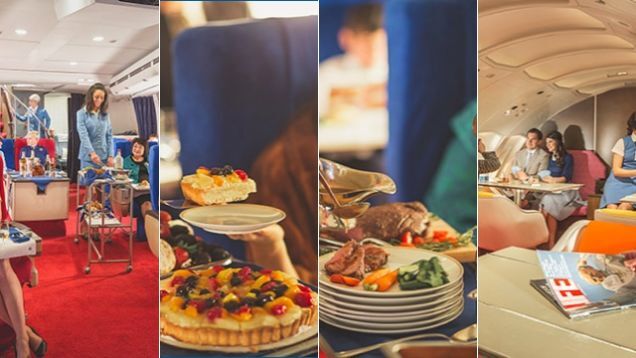
Pan Am ceased to exist 23 years ago, but the defunct airline enjoys a dedicated cult following—whose fixation with the past that doesn't seem quite so odd when considered in light of the stinky, knee-obsessed
, genital-groping
present of air travel. Now, for roughly what it costs to fly to Ft. Lauderdale, you can turn back the clock.
My latest Guardian column, Privacy technology everyone can use would make us all more secure, makes the case for privacy technology as something that anyone can -- and should use, discussing the work being done by the charitable Simply Secure foundation that launches today (site is not yet up as of this writing), with the mandate to create usable interfaces to cryptographic tools, and to teach crypto developers how to make their tools accessible to non-technical people.
Read the rest
The website of Heaven's Gate, the cult whose members killed themselves in hopes of riding Hale-Bopp to the eschaton, remains live 17 years later. Web developer and writer Jason Kottke remembers the day: "It was the first time an internet meme was a major aspect of a national news story."









 Michael says, "'The Conversation' has been in Australia for a couple of years: writing by academics, for a lay audience, which aims to be readable and relevant. Their slogan is 'academic rigor, journalistic flair', and they've done pretty well at that so far."
Read the rest
Michael says, "'The Conversation' has been in Australia for a couple of years: writing by academics, for a lay audience, which aims to be readable and relevant. Their slogan is 'academic rigor, journalistic flair', and they've done pretty well at that so far."
Read the rest


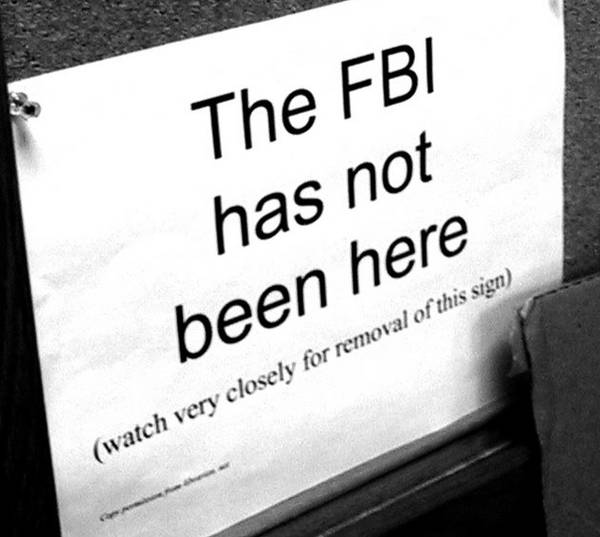 The American Library Association's code of ethics demands that library professionals "protect each library user's right to privacy and confidentiality" and they've been taking that duty seriously since the first days of the Patriot Act.
Read the rest
The American Library Association's code of ethics demands that library professionals "protect each library user's right to privacy and confidentiality" and they've been taking that duty seriously since the first days of the Patriot Act.
Read the rest



 From the press release: