[Via Faildesk]
The post Have You Tried Turning It Off And On Again? [Pic] appeared first on Geeks are Sexy Technology News.
[Via Faildesk]
The post Have You Tried Turning It Off And On Again? [Pic] appeared first on Geeks are Sexy Technology News.

[Source: Charlie Higson – Heck if I Know | Like “Heck if I Know” on Facebook]
The post Robot Love Triangle [Comic] appeared first on Geeks are Sexy Technology News.
There’s a fan-made live action take on Futurama in the works and while many of the characters are humans in costume, the makers are showing off the animatronic Hypnotoad that will appear in the project.
If you missed it, check out the trailer for Fan-o-Rama:
The post Futurama Hypnotoad Comes To Life appeared first on Geeks are Sexy Technology News.

Overwatch is getting a revamp of its competitive online mode. There’ll be no more sudden death and the rankings system is being tweaked to be more informative about a player’s level.
The changes will take effect in the second “season” of competitive play. One big difference is to the scoring for rankings. For season one, players were ranked only out of 100 points and the full scale wasn’t really used: as Digital Trends notes, it was possible to be among the top six percent of players yet only have a ranking score of 60.
In season 2 each player will have a ranking out of a maximum 5,000. Rather than rely on the specific scores for comparisons, there’ll be a seven tier system. It’ll be more about peak achievements rather than recent results as in most cases a player who reaches a tier will never drop any lower than that tier for the rest of the season, even if they have the odd bad game or two. The tiers will also be used to make sure players are more evenly matched in the matchmaking system.
The only exceptions will be for the top two tiers, master and grandmaster, which will effectively be the current elite leaderboard. Players in these tiers will not only lose points if they go on a bad run, but will also see their score drop gradually if they stop playing for an extended period.
Another change is an end to the sudden death mode that was criticised by many players. Instead there’ll now be the potential for a tie, earning both sides some ranking points. To accompany this there’ll be some minor tweaks to bonuses in the final 30 seconds that should make ties rare.
Check out the video below for game director Jeff Kaplan’s explanation of the changes:
The post Overwatch Drops Sudden Death, Expands Rankings appeared first on Geeks are Sexy Technology News.
Last year, Chrome made Flash ads click-to-play; now, Google is trying to kill off Flash completely.
Starting with Chrome 53, due out early next month, the browser will automatically block tiny and non-visible Flash content, such as tracking and fingerprint cookies that are notoriously hard to shake off. Then, with Chrome 55 in December, Flash will be deprecated entirely, with exceptions for "sites which only support Flash." In both cases HTML5 is expected to take up the reins.
The changes in Chrome 53 are mostly targeted at behind-the-scenes Flash widgets that many sites use for tracking and analytics purposes. Best-case these non-visible elements can slow down your browsing experience, worst-case they might cause stability issues or reduce battery life on mobile devices. Google says that publishers are in the process of moving these widgets over to HTML5.
Read 6 remaining paragraphs | Comments

(credit: Google Maps)
Ever since James and Theresa Arnold moved into their rented 623-acre farm in Butler County, Kansas, in March 2011, they have seen “countless” law enforcement officials and individuals turning up at their farm day and night looking for links to alleged theft and other supposed crime. All of these people are arriving because of a rounding error on a GPS location, which wrongly points people to their farm.
In their lawsuit filed against MaxMind, the IP mapping firm, the Arnolds allege:
The following events appeared to originate at the residence and brought trespassers and/or law enforcement to the plaintiffs’ home at all hours of the night and day: stolen cars, fraud related to tax returns and bitcoin, stolen credit cards, suicide calls, private investigators, stolen social media accounts, fund raising events, and numerous other events.
James Arnold has even been “reported as holding girls at the residence for the purpose of making pornographic films.”
Read 8 remaining paragraphs | Comments
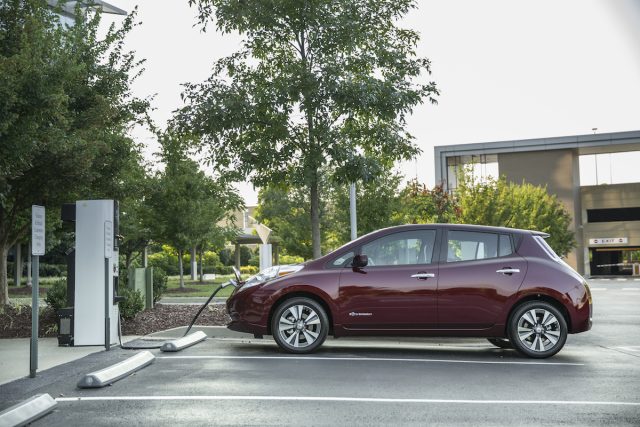
(credit: Nissan)
The vast majority of American drivers could switch to battery electric vehicles (BEVs) tomorrow and carry on with their lives unaffected, according to a new study in Nature Energy. What's more, those BEVs need not be a $100,000 Tesla, either. That's the conclusion from a team at MIT and the Santa Fe Institute in New Mexico that looked at the potential for BEV adoption in the US in light of current driving patterns. Perhaps most interestingly, the study found that claim to be true for a wide range of cities with very distinct geography and even per-capita gasoline consumption.
The authors—led by MIT's Zachary Needell—used the Nissan Leaf as their representative vehicle. The Leaf is one of the best-selling BEVs on the market, second only to the Tesla Model S in 2015 (10,990 sold vs 13,300 Teslas). But it's not particularly long-legged; although the vehicle got an optional battery bump from 24kWh to 30kWh for 2016, its quoted range is 107 miles on a full charge. You don't need to spend long browsing comment threads or car forums to discover that many drivers think this is too short a range for their particular use cases. Yet, Needell and colleagues disagree.
The authors use the 24kWh Nissan Leaf as the basis for their calculations, based on a probabilistic model of BEV range based on driving behavior (rather than just looking at average commute distances and BEV range). This involved using information from the National Household Travel Survey, hourly temperature data for 16 US cities, and GPS data from travel surveys in California, Atlanta, and Houston (to calculate second-by-second speed profiles of different trip types).
Read 7 remaining paragraphs | Comments
COLOGNE, Germany—It finally happened, a decade's worth of expectation fulfilled with a simple push of a button. Though I still can't quite believe it (and a recent delay hasn't helped) Final Fantasy XV, a game that's taken on near mythical status alongside the likes of The Last Guardian, Beyond Good and Evil 2, and Half Life 3, is finally being released on November 29—and I've already played it.
Selecting "New Game" has never been quite as satisfying before.
Read 11 remaining paragraphs | Comments

(credit: NBCUniversal)
Warning: This piece contains minor spoilers for the most recent episode of Mr. Robot (S2E6)
Last week on Mr. Robot, the intrepid hackers of fsociety went back to command-line school. They didn't need the training, of course. In order to access an FBI system on location at E-Corp headquarters—which currently houses a temporary FBI division after last season's cyber-attacks—the hacker collective needed someone on the inside. Their only option was a relative n00b: Elliot Alderson's family-friend-turned-E-Corp-employee Angela Moss.
The episode ends on a slight cliff-hanger. As Angela continues to execute instructions pumped into her headphones from fsociety, the show's new FBI character, Dom DiPierro, arrives at her side to request a quick interview. Until that point, this newly made hacker had successfully socially engineered her way into an FBI space, executed some code in a bathroom stall, and then dropped a femtocell at an official workstation. For a show that prides itself so much on accuracy in hacking, does having a novice best the FBI go one step too far?
Read 10 remaining paragraphs | Comments
There’s something strange in the can tonight.

Cable landing at Minami-boso city, Chiba, Japan (credit: NEC)

The Faster Cable System. (credit: NEC)
"We'll use this capacity to support our users, including Google Apps and Cloud Platform customers," the announcement said. "This is especially exciting, as we prepare to launch a new Google Cloud Platform East Asia region in Tokyo later this year. Dedicated bandwidth to this region results in faster data transfers and reduced latency as GCP customers deliver their applications and information to customers around the globe."
NEC is the supplier that built the $300 million "Faster Cable System" for Google, China Mobile International, China Telecom Global, Global Transit, KDDI, and Singtel. It won't be the highest-capacity cable for very long, as Microsoft and Facebook recently announced a 160Tbps undersea cable from the US to Europe, to be completed in October 2017.
Read 4 remaining paragraphs | Comments
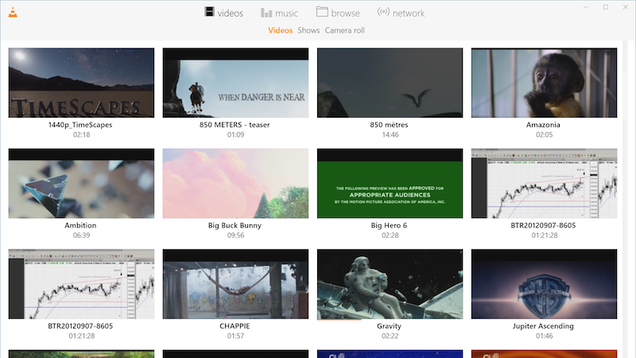
VLC is already available for Windows 10, but this newly-released “Modern” beta runs on the Universal Windows Platform. That means it’ll get some special features, including Cortana support and live tiles, and it’ll be perfect for the Xbox One, Windows tablets, and even HoloLens, when it’s released.
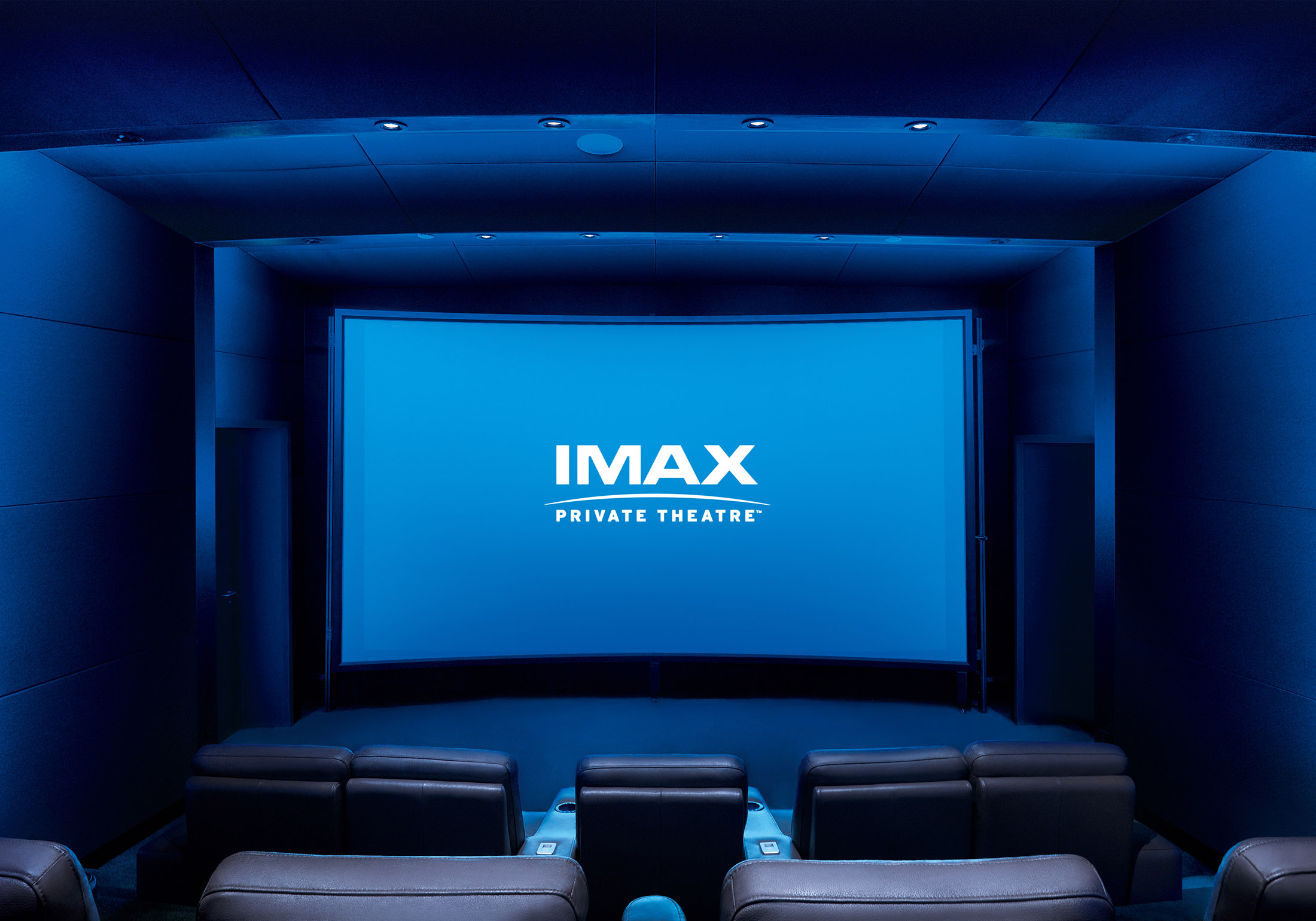
An IMAX Private Theatre (presumably a render). Prices start at around £300K.
4 more images in gallery
If you have about £300,000 ($400K) to spare, IMAX's Private Theatre division will now build an IMAX cinema setup in your own home.
The entry-level IMAX Private Theatre is the "Palais," which starts at about £300K for a screening room with up to 18 seats. For your money you get dual 4K 2D/3D projectors, a proprietary IMAX sound system, and a media playback system that supports everything you might want to throw at it (TV, games, Blu-ray, etc.) No word on the exact specifications of the projectors, but they're probably not IMAX-with-laser. Screen size will vary depending on the setup, but generally they will be 3 metres (10ft) tall or more.
Stepping up to the "Platinum" IMAX home theatre for about £750,000 ($1 million) gets you a much larger screening room with space for up to 40 people. The IMAX website doesn't break out the specs of the Platinum setup, but presumably it's similar to the Palais. Both the Palais and Platinum models come with automatic daily self-calibration to ensure optimal picture and audio setup, 24/7 remote monitoring (whatever that means in the context of home theatres), and, of course, the design and architecture of the room itself is so exquisite that your friends will think you have great taste (if that was ever in doubt).
Read 4 remaining paragraphs | Comments

| Specs at a glance: AMD RX 480 | |
|---|---|
| COMPUTE UNITS | 36 |
| TEXTURE UNITS | 144 |
| ROPS | 32 |
| CORE CLOCK | 1120MHz |
| BOOST CLOCK | 1266MHz |
| MEMORY BUS WIDTH | 256-bit |
| MEMORY SPEED | 8GHz or 7GHz |
| MEMORY BANDWIDTH | 320GB/s or 224GB/s |
| MEMORY SIZE | 8GB GDDR5 or 4GB GDDR5 |
| Outputs | 3x DisplayPort 1.3, 1x HDMI 2.0b with support for 4K60 HDR |
| Release date | June 29 |
| PRICE | 8GB (as reviewed): £215, $230. 4GB: £180, $200 |
Brave? Foolhardy? Desperate? Whatever you might think about AMD's decision to cede the top end of the graphics card market (at least for now) to Nvidia and launch the mainstream-focused RX 480 instead, the fact remains that for £180/$200 it's the best graphics card you can buy. It's faster than Nvidia's GTX 970, and (mostly) faster than an R9 390, making it more than powerful enough to meet the minimum spec for virtual reality—and it'll blitz through demanding 1080p games at a smooth 60FPS too. It even does a decent job at 1440p, so long as you're fine with dialling down a few settings.
As a consumer product, then, the RX 480 is a success, even if one of AMD's core pitches—that it'll help drive VR adoption—is a little suspect. VR headsets still cost well over £500, after all.
But—and sadly, there always seems to be but with AMD—the RX 480 is not a great debut for Polaris 10, its first GPU based on an all-new, theoretically-more-efficient 14nm FinFET manufacturing process. At 150W, the RX 480 sits in the same power envelope as the GTX 1070, yet offers less performance. It runs hotter too, hitting 80 degrees Celsius, even struggling to hit its advertised boost clock at times—and that's in a big, well ventilated case. Compared to AMD's previous cards, it's an improvement, but those were always power-hungry beasts, and the bar has since been raised.
Read 31 remaining paragraphs | Comments

(credit: Aurich Lawson)
The Wi-Fi Alliance industry group is now certifying products that can deliver multi-gigabit speeds and improve coverage in dense networks by delivering data to multiple devices simultaneously.
The new certification program, announced today, focuses on the so-called "Wave 2" features of the 802.11ac specification. 802.11ac is a few years old, but it includes several important features that were not available at launch. One such feature is MU-MIMO (multi-user, multiple-input, and multiple-output), which we wrote a feature on in May 2014. MU-MIMO is powered by multi-user beamforming technology that lets wireless access points send data streams to at least three users simultaneously. Without MU-MIMO, routers stream to just one device at a time but switch between them very fast so that users don't notice a slowdown except when lots of devices are on the network.
With the 80MHz channels supported in 802.11ac Wave 1, each data stream could provide up to 433Mbps and, when coupled with MU-MIMO routers, can send up to 433Mbps to at least three users simultaneously for a total of 1.3Gbps. But in addition to supporting MU-MIMO, Wave 2 also doubles the maximum channel bandwidth from 80MHz to 160MHz, boosting the potential throughput of each stream to 866Mbps. Wave 2 also supports four spatial streams instead of three, further boosting the theoretical maximum capacity. Technically, 802.11ac supports up to eight streams, but the certification program is still at four. Delivering eight streams with these data rates would use a lot of electricity.
Read 3 remaining paragraphs | Comments
 This is one of those comics that people get unnecessarily butthurt about.
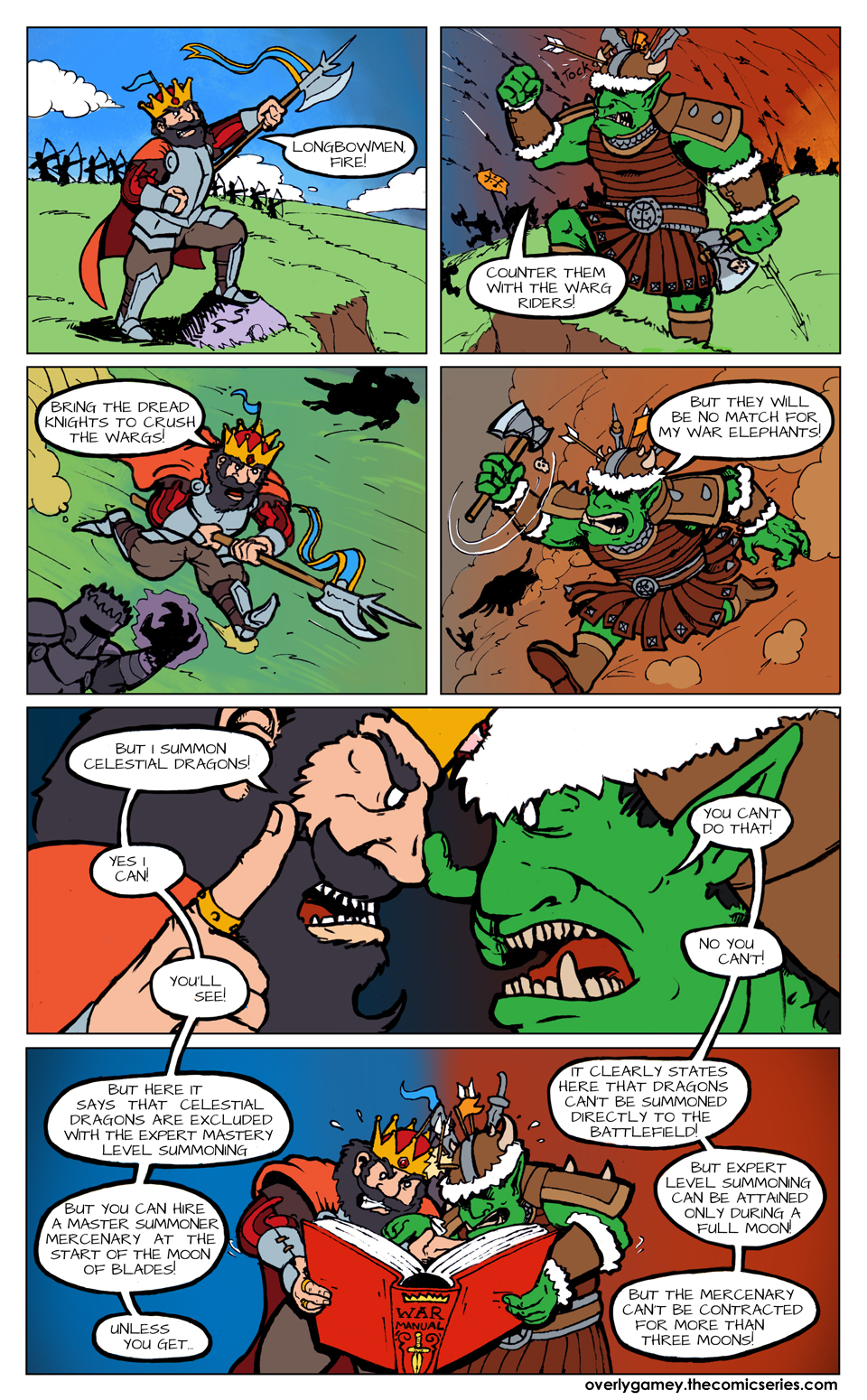 This is nothing like real war. At least here, there is some sort of civil discourse.
Are you going to give the new Ghostbusters movie a chance? The trailer was just posted, it it already has more 4 times more thumbs down than thumbs up!
The movie will hit the big screen on July 15, 2016.

A new episode of Epic Rap Battle of History featuring the foul mouthed chef Gordon Ramsay fighting the late Julia Child, the lady that is seen as the person responsible for bringing French cuisine to the American public back in the 1960s.
Warning: Language.
[ERB]
Revisit Disney’s epic adventure that finally cracked how to make a good video game movie… by not focusing too much on the video game – Wreck-It Ralph!
At the CBS Upfront presentation at Carnegie Hall in New York on May 18, CBS unveiled the logo for the new STAR TREK television series within the first-ever promotional video for the highly-anticipated program.
New crews, new villains, new heroes, and new worlds? Now how awesome does that sound? The only problem is the release date: 2017! We still have to wait a full year before the show goes live! That’s TORTURE!
[CBS]