Illustration by Lance Miyamoto, 1981.
I think I'm going with The Odyssey


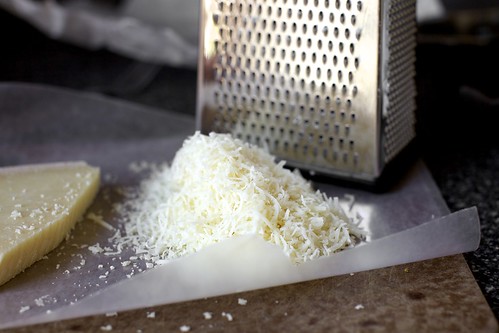

And who am I to fight the broccoli love? I started making this… well, I’m going to call it pesto but it’s less a pounded mixture of raw herbs, garlic and cheese and more a tender broccoli sauce. Anyway, I started making it over the summer. It was loosely inspired by this dish I saw on the most stunning blog, one that is in fact dangerous for me to look at because I immediately start to question everything: Why don’t we live in the French countryside? Why haven’t I ever biked home with a cluster of warm-from-the-oven baguettes prepared in the ancient style in my wicker basket? Why don’t I have any heliciculturalist (escargot farmers, of course) for neighbors and why don’t those yelling people down the hall (my actual neighbors) ever bring me freshly-dug morels? Alex, are you reading along right now? Honey, why don’t we have 14 dogs? It’s gotten to the point where I greet a new post on the blog by peeking nervously through my fingers the way you would when watching a scary movie because I’m so terrified that it will be the post that breaks my will to live a single moment longer as we previously happily did, that all there will be left to do is pack this place up, and holler “Thanks anyway for the morels!” at the yelling neighbors door as we head for the stairs/street/taxi/airport/new life, one with backyard plum trees.

... Read the rest of spaghetti with broccoli cream pesto on smittenkitchen.com
© smitten kitchen 2006-2012. | permalink to spaghetti with broccoli cream pesto | 254 comments to date | see more: Broccoli, Budget, Pasta, Photo, Vegetarian

Ian Gonsher is an artist, designer, and educator who studies and teaches the creative process at the School of Engineering at Brown University. Today, he sent me photos of these attractive geometric structures he made from drinking straws and wooden coffee stirrers while sitting in a coffee shop this weekend. He said that the coffee shop employees “tend not to mind if you tip generously.”


Van Der Lichaam is a dutch aromatherapy company based out of Delft, Holland.
I am not sure what is a bigger fetish for me, eggs or noodles. The folks over at Modernist Cuisine demonstrated quite eloquently that omelets can be flat and striped. Looking at eggs through this lens allowed us to leapfrog to noodles. We took the idea of flat scrambled eggs and made them thin. We added a little tapioca starch for the strength and flexibility we needed to gve our noodles a little bounce in the mouth. The results were delicious.
Scrambled Egg Noodles
110 grams/ 2 large eggs
54 grams/ 3 large egg yolks
10 grams/ 1 tablespoon + 2 teaspoons tapioca starch
1 gram/ 1/6 teaspoon fine sea salt
Put the eggs, yolks, tapioca starch and salt in a medium bowl and use a whisk to gently stir them together until the mixture is smooth. Strain it through a fine mesh sieve. Set a steamer over medium high heat. Line a flat 6 x 9 inch stainless steel sizzle pan (or other flat, heatproof dish) that will fit into your steamer with plastic wrap and pour one third of the scrambled egg mixture onto the pan. The mixture should be about 1-2 mm thick. When the steamer is hot, put the pan with the egg mixure inside and cover with the lid. Steam for 1 minute. Remove the pan from the steamer and let the egg sheet cool to room temperature. Repeat with the remaining egg mixture in two more sheets. When the egg sheets are cool cut them into noodles or other shapes according to your preference.
Years Past
EditorConfig helps developers define and maintain consistent coding styles between different editors and IDEs. The EditorConfig project consists of a file format for defining coding styles and a collection of text editor plugins that enable editors to read the file format and adhere to defined styles. EditorConfig files are easily readibly and they work nicely with version control systems.
A modular collection of prompt themes, scripts, functions and aliases for bash.

grc—the Generic Colouriser—lets you add colour to the output of commands. It comes with configuration files for various popular commands (e.g. ping, shown above).
Via Wynn Netherland.
New on his blog Phil Sturgeon has a post about the social integration package PHP has been dying for - NinjAuth. It has hooks for OAuth and OAuth2 connections and makes it simple to use them completely abstracted.
In the past I have never needed to implement oAuth into a PHP project. I have done it in Rails and boy it was easy thanks to OmniAuth. OmniAuth abstracts away so much of the grunt work that it takes about 5 minutes to add a new social network to your site, and 4 of those minutes are spent signing up for the API keys. What options do we have in the world of PHP? A bunch of screwy hacks or provider specific classes like TwitterOAuth. I don't want to hunt down 20 libraries with different methods, I want to get a key, bang it in and go to the pub. Well, now I can!
The fuel-oauth and fuel-oauth2 packages to drive its backend. He includes a code snippet showing how to configure the providers (complete with keys needed for auth) including Facebook, Flickr, GitHub, YouTube and - of course - Twitter. You can grab the latest version of this library from Phil's github account.
A gaggle of women in brightly colored saris choose snacks from shelves behind a long counter, their dark eyes widening as bags of goodies change hands. I watch the gulab jamon man to one side pouring a thin ribbon of saffron-yellow batter onto hot oil. He works his funnel quickly, creating a pattern of looping swirls the length of the wide cauldron. The sweet smell of sticky honey hangs in the air. As he deftly flips the puffed dough with a wire implement he chatters in Punjabi to a man standing next to him. Families in freshly laundered clothes crowd the sweet shop’s doorway, jostling for position.

Manchester's Curry Mile at night. Photo by Pete Morris
At a café nearby tables sporting hookahs spilled out onto the dingy sidewalk. Around each table sits a group of young people smoking shaggy bricks the size of sugar cubes which nestle in glowing brass bowls. Snaking ropes connect the mouths of the partakers who let out dribbles of smoke from around their mouthpieces and lean back against spongy cushions with broad Cheshire cat smiles.
‘Shisha,’ our friend’s son tells me with a glint of his 16-year-old eyes. ‘Comes in all sorts of flavors: blackcurrant, mango, coffee. That’s what I want to try,’ he said in his strong accent and then – looking at his mother as if having said too much – he darts off down the street.
You might be forgiven for thinking that we Bullhogs were on a street in, say, Mumbai or New Delhi. But this all took place in Manchester, in northern England. If it wasn’t the best Indian food experience we had on that trip (that honor would go to Kayal in Leicester), Manchester’s Curry Mile was certainly the most entertaining. With some 70 curry and kebab houses to choose from, this stretch of Wilmslow Road claims the highest concentration outside of the Indian subcontinent. On that warm summer’s evening the constant flow of the ethnically diverse population surely transported us.
At clean and spacious Shere Khan, my friend Roy’s face turned red as he began to sweat from the heat of his Madras curry. I got up to find him another napkin and was delayed by the sight of a large brazier to one side of the kitchen. At its massive rectangular grill, a tall man in a turban stood slathering a spice and yogurt mixture onto skewers of chicken and lamb. As the meat sputtered and popped fantastic smells rose on the sweet smoke. The man met my eye and gave me a knowing smile.
Back home in Seattle, I marinated chicken in yogurt and spices before cooking the skewers over a very hot fire, just the way that man did. The smells wafted up around me, smoky and spicy at the same time, and the resulting texture was sensational. And I decided that even though I was far from India – and even far from the Curry Mile – I was close to Nirvana. Yum! Here’s what to do.
Tandoori Chicken Skewers
Makes 4 large skewers
2 pounds of boneless skinless chicken thighs
8 ounces of plain yogurt
¼ cup of dry Tandoori spice (see note)
¾ teaspoon of salt
Black pepper to taste
2 teaspoons of canola oil
4 long metal skewers
Tandoori spice note: World Spice Market here in Seattle sells a fresh curry mixture called Tandoori Spice, which is what I use. In place of red food coloring, their mixture uses mild paprika. You can mix your own Tandoori spice with mild curry powder and paprika in equal portions, and add a bit of cayenne if you want more heat.

Chicken pieces in the yogurt marinade
Marinate the chicken for 4 hours: Trim any fat from the chicken thighs and cut each one into 3 or 4 pieces. Set aside one heaping tablespoon of the spice mixture for later. Mix the yogurt and the rest of the tandoori spice in a medium-sized bowl. Put the chicken into the yogurt mix and fold so that all the pieces are well coated. Cover with plastic wrap and let marinate for 4 hours or longer.
Get the grill HOT: A charcoal grill is best for this dish. Mine is a little Smokey Joe from Weber, which puts the grill surface about an inch and a half from the coals. Perfect! Light 40 coals and let the pile burn for 20 minutes. Spread the hot coals out, add 10 fresh coals and put the grill surface in place. Ten minutes later you’ll be ready to rock and roll.
Thread the skewers: Distribute the chicken evenly onto 4 metal skewers and spread any yogurt mixture that stays in the bowl onto the meat. Sprinkle the top side of the meat with half the leftover Tandoori spice and salt and pepper generously. Drizzle 1 teaspoon of the oil onto the meat as well.
Grill the meat: Scrape the surface of the grill clean if necessary and wipe with a bit of oil, if desired. Put the meat top side down onto the hot grill. Now sprinkle the meat with the rest of the Tandoori spice and more salt, pepper and oil. If the charcoal flames a bit, ignore it.
Grill the skewers for 2 minutes before turning. If the meat wants to stick, use a metal spatula or tongs to free it. Grill the other side for 2 or 3 minutes and then turn the meat ¼ turn to grill the undercooked sides for a minute or two.
Depending on the heat of your grill, the chicken will be cooked thoroughly in 8-10 minutes. For best results, shift the positions of the skewers to alleviate any hot or cold spots on the grill. Whatever you do, resist any temptation to put the lid over the grill. The chicken will grill perfectly without it.
Cheers!

A liquid lens is pretty much exactly what it sounds like. The really cool thing about them is that, though they have no moving parts (unless you count the liquid itself), they can achieve a pretty wide range of dynamically-variable focal lengths over a relatively short optical path. When I first read about them, the killer app was supposedly going to be phone cameras.

Anyway, in this, his most recent vid, übermaker Ben Kransnow explains not only what a liquid lens is and how it works, but how he managed to get his hands on one to play with by ripping it out of this “snake” autofocus webcam. I note that the manufacturer is now selling this camera, in the US, on eBay, though their feedback rating is not great. Once you have the lens module in hand, apparently getting a driver IC to talk to it is another ball of wax. Ben explains nicely, as usual.

Sebastian Korczak hacked together a 360° rotating 3D scanner using little more than a record turntable modified with Arduino, digital camera, and a laser pointer. Korczak’s laser was mated with a special lens to create a linear beam. The distortion of this beam as it scanned the room coupled with the video data is put into a Python script, which outputs a point cloud of whatever is scanned. In this manner he is able to get full real-time scans of entire rooms. Fortunately for us, he’s provided extensive documentation on his homepage.

More:

 Explore the power of microbes with the MudWatt™ Microbial Fuel Cell (MFC) Kit from the Maker Shed. Simply fill this kit with soil from your backyard (or someone else’s backyard), along with any biological matter you find in your refrigerator. Within days the attached LED light will start to blink using only the power produced by the electricity-generating microbes in your soil! The MudWatt™ is the perfect educational kit for classrooms and hobbyists since it incorporates a wide range of scientific topics. It’s easy to incorporate the MudWatt™ into a class discussion on microbiology, soil chemistry, electrochemistry, or electrical engineering.
Features
1 Complete MudWatt™ MFC:
- MudWatt™ Anode
- MudWatt™ Cathode
- MudWatt™ Vessel
- MudWatt™ Hacker
- Educational Booklet
- Instructional Booklet
- Pair of Nitrile Gloves

Yogurt, bread, beer, kimchi, wine, cheese, miso, kraut, and vinegar are among the many foods that are produced with the aid of microorganisms. Those are living beasties of a type that we ordinarily try to remove from what we eat. This cookbook is full of fermentation recipes. It presents a unified theory of "live-culture foods," a way of connecting their different methods in order to understand why fermentation is a Good Thing, and why there should be more of it.
Fermentation is fairly easy to do. It can self-correct many beginner's errors. It is definitely a slow-food process, but at the same time, a low-effort process since the bugs do most of the work. The recipes here are starter ones, broad in scope, easy to do, just to get you going. The appendix contains a good roundup of sources for a large variety of live cultures. You can find deeper more complex recipes in specific books, but here in one slim volume is a great introduction to how to ferment. At least once, you should make your own yogurt, bread, beer, kimchi, wine, cheese, miso, kraut, and vinegar. Find what you do well and make more of it.
More importantly, ferment something new.
-- KKWild Fermentation
Sandor Ellix Katz
2003, 200 pages
$17
Available from Amazon
Sample Excerpts:
By eating a variety of live fermented foods, you promote diversity among microbial cultures in your body.
*
*
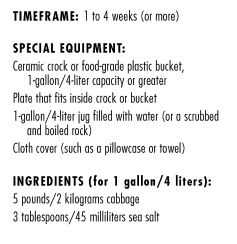
I know of no food that is without some tradition of fermentation.
*
Hamid Dirar has identified eighty distinct fermentation processes in The Indigenous Fermented Food of the Sudan, a book describing an incredible array of ferments that result in consumption of every bit of animal flesh and bone.
In my newest obsession I am looking to integrate the flavors of marinated meat into a burger. For our first explorations we are marinating short ribs in a blend of red wine, soy sauce and Crystal hot sauce. We have added crushed garlic and dried onions to the marinade for the flavors of the alliums and their wonderful aromatics. In this slightly skewed representation of beef bourgignon we are marinating the ribs for two days. When they are done we will grind and mix them in the style of our butter burgers. The wine marinade will be boiled and used to make red wine ketchup. The theories are good, now it's time to put them to the taste test.


Traditional content management systems are monolithic beasts. Just to make your website editable you need to accept the web framework imposed by the system, the templating engine used by the system, and the editing tools used by the system. Want to have a better user interface? Be prepared to rewrite your whole website, and to the pain of having to migrate content between different storage systems.
But none of this should be necessary. When web editing tools were more immature, it made sense for the same people to build the whole stack from database content models to web page generation and editing tools. But that was ten years ago, now we could do better.
Here is how a traditional CMS looks like:

As you can see, the whole system is a monolithic block. The CMS provides content storage, routing, templating, editing tools, the kitchen sink. Probably you're even tied to a particular relational database for content storage. Want to use a cool new editor like Aloha, or a different templating engine, or maybe a trendy NoSQL storage back-end? You'll have to convince the whole CMS project or vendor to switch over.
A much better picture would be something like the following:

In this scenario, the concept of Content Management is decoupled. There is a content repository that manages content models and how to store them. This could be something like JCR, PHPCR, CouchDB or Midgard2. Then there is a web framework, responsible of matching URL requests to particular content and generating corresponding web pages. This could be Drupal, Flow3, Django, CodeIgniter, Midgard MVC, or something similar. And finally there is the web editing tool. The web editing tool provides an interface for managing contents of the web pages. This includes functionalities like rich text editing, workflows and image handling.
The web editing tools have traditionally been part of the web framework, the framework serving forms and toolbars to the user as part of the generated web pages. But with modern browsers you could throw forms out of the window and just make pages editable as they are.
How would the communication between the web editing tool and the backend work, then?

First of all, the web editing tool has to understand the contents of the page. It has to understand what parts of the page should be editable, and how they connect together. If there is a list of news for instance, the tool needs to understand it enough to enable users to add new news items. The easy way of accomplishing this is to add some semantic annotations to the html pages. These annotations could be handled via Microformats, html5 microdata, but the most power lies with RDFa.
RDFa is a way to describe the meaning of particular html elements using simple attributes. For example:
<div typeof="http://rdfs.org/sioc/ns#Post" about="http://example.net/blog/news_item">
    <h1 property="dcterms:title">News item title</h1>
    <div property="sioc:content">News item contents</div>
</div>
Here we get all the necessary information for making a blog entry editable:
Truncated by Planet PHP, read more at the original (another 4733 bytes)

Gorgeously geeky and detailed how-to on homodyne measurement of the Earth’s rotation using an old turntable (remember those?) and a PS Move motion sensor:
In this project we follow in the footsteps of Léon Foucault who in 1851 produced the first convincing experimental evidence of Earth’s diurnal rotation, thus confirming a crucial element of the heliocentric model of the solar system. For lack of a 28 kg pendulum and a 70-meter-high ceiling to suspend it from, we use a table-top apparatus whose main components are a PlayStation Move motion-sensing videogame controller and a 33/45 RPM record player.
With an acquisition time of several hours, our device has little practical use, but this is an enlightening physics experiment that anyone can easily replicate. Technical details and source code are provided.
[Thanks to Jon Johns over on the O'Reilly mothership for this link.]

Among the more delightful members of the set of all possible World’s X-est Ys, IMHO, is this 3 x 2.4 x 1.4 cm freshwater fishtank from Russian miniaturist Anatoly Konenko. It’s stocked with three tiny zebrafish and outfitted with matching tiny net and bubbler. There’s an English-language piece at The Daily Mail. [Thanks, Alan Dove!]

Our post from three weeks back about Instructables user mikey77's "Oogoo" formulation generated some really great discussions in the comments. Now, reader Iceman086 has reported some successful experiments combining caulk, cornstarch and a solvent to make homebrew silicone with a pourable consistency. Perhaps we can call it "Ooze-oo?"
I found that when making a mould you can use a 4 to 1 ratio of paint thinner to caulk (2 oz of caulk to 1/2 oz of paint thinner) to make a small mould using the bottom of a plastic cup. I added in about 3 drops (literally drops) of paint to the mix in order to help show the details of the mould. Once I had a consistent mix of paint thinner to caulk I added in about 1 tbs of corn starch as the hardening agent. This gave me about 5 to 10 minutes worth of pot time and fully set within 45 minutes.
I gave it an hour and a half just to be sure before I mixed up some casting silicone. This time I used a ratio of 3/4 to 1 (silicone to paint thinner) in order to get a mix that was able to flow. You can go 1 to 2 (silicone to paint thinner) if you want a thinner mix that is pourable but its up to you. I added in my paint (again 3 drops but yellow this time) and mixed until the 3 parts were consistent. I then added in 1/2 tbs of corn starch to the mix as a hardener. After doing this though the mix thickened and I ended up having to spoon it out. This batch still worked how ever and I was able to get some very nice
results. The pot time was about 15 to 20 minutes with this mix and the dry time was around 2 1/2 hours.If you want a casting consistency that is still pourable I would recommend using the same ratio of Silicone to Paint Thinner but you can reduce the amount of corn starch to 1/4 tbs. HOWEVER! Reducing the amount of corn starch will increase the set time.
In some of the posts above people talked about shrinkage. I didn't see any noticeable shrinkage given the amount of paint thinner that I used.
His full comment also includes some interesting reports about his experiences with improvised mold releases. Well done, sir!
More:
For the last two years, I’ve had three books on garbage near the top of my reading pile, and I’ve gradually worked my way through two of them and am nearly done with the third. The books are Rubbish: The Archeology of Garbage by William Rathje and Cullen Murphy (1992), Garbage Land: On the Secret Trail of Trash by Elizabeth Royte (2005), and Gone Tomorrow: The Hidden Life of Garbage by Heather Rogers (2005). Last week, I also watched the CNBC documentary, Trash Inc.: The Secret Life of Garbage. Notice something about the four subtitles? Each hints at the hidden nature of the subject. It is a buried, hidden secret physically and philosophically. And there are many reasons why uncovering the secret is an interesting and valuable activity. The three books are motivated by three largely separate reasons: Rathje and Cullen bring an academic, anthropological eye to the subject. Royte’s book is a mix of amateur curiosity and concerned citizenship, while Rogers’ is straight-up environmental activism. But reading the 3 books, I realized that none of those reasons interested me particularly. I was fascinated by a fourth reason: garbage (along with sewage, which I won’t cover here) is possibly the only complete, empirical big-picture view of humanity you can find.
The Boundary Conditions of Civilization
Sometimes an engineering education can lead to very curious ideas about what is important. Garbage is important and interesting in an engineering sense because it illuminates one of the boundary conditions of any systemic view of the world. If you cut through the crap (no pun intended) of all our lofty views of ourselves, humanity is essentially a giant system that feeds on low-entropy resources on one end (mines, forests, oilfields) and defecates high-entropy waste at the other. Among other things, this transformation allows us to create low-entropy islands of order around ourselves (cities, buildings and everything else physical that we build). If this flow from resources to garbage were to shut down, nature would rapidly reclaim every inch of civilization, and you can read about this fascinating thought experiment in The World Without Us by Alan Weisman which I’ve mentioned before.
Here’s the thing about this view: the input end is simply too complex to comprehend in any summary sense. We suck resources out of the planet in extremely complicated and diversified ways. The processing part is also far too complex to understand (it is basically “civilization”), but thought experiments like Weisman’s at least help us get a non-empirical sense of the scale and complexity of our presence on this planet.
But the output end? Easy. Just drill into the nearest landfill. Or follow the course of a single man-made artifact. In Trash Inc., there is a revealing example: plastic beverage bottles.
Message in a Bottle
The story of plastic water/soda bottles from a trash perspective is simple. According to Trash Inc., in the US, about 51 billion bottles are used every year (this number seems incredible. It amounts to about 1 bottle per person every 2 days. But it seems to be correct).
Only about 22% are recycled. The recycled stuff goes to make polyester fabrics, mats and the like. Ironically, a manufacturer of such recycled plastic goods in the US profiled in the documentary noted that he was forced to import about 70% of his bottle needs from countries like Canada.
What happens to the rest? Those that get thrown away with the regular trash make it into the regular waste stream, with companies like Waste Management working hard to figure out how to cheaply separate the bottles out (since they represent a significant revenue opportunity; a WM talking head in the documentary noted that WM could potentially increase its revenues from $13 billion to $23 billion if it could just figure out how to cheaply separate valuable recyclables from the waste stream headed to landfills).
And there is a third category: stuff that doesn’t even get to landfills, but washes down streams and rivers into the open ocean, where it drifts for hundreds of miles to form garbage islands in the middle of the ocean, such as the Great Pacific Garbage Patch.
The story of the plastic water bottle serves as a sort of radioactive tracer through the garbage industry, touching as it does every piece of the puzzle.
The three books and the documentary explore different aspects of the system, so let’s briefly review them.
Rubbish by Rathje and Cullen
Rubbish, though a little dated, is the most professional of the three books, since it is the result of a large, long-term academic study, with no particular agenda in mind, and written by the godfather of the entire field of Garbology. To the principals of the University of Arizona Garbage project, garbage is just archeological raw material. The fact that drilling into modern, active landfills tells us about modern humans, while digging into ancient mounds tells us about Sumerians, is irrelevant to them. The perspective lends an interesting kind of objectivity to the book.
The first and most basic thing I learned from the book surprised me no end, and answered a question that I had always wondered about. Why do ancient civilizations seem to get buried under “mounds”?
Turns out that for much of history, waste simply accumulated on floors inside dwellings. Residents would simply put in new layers of fresh clay to cover up the trash. Every dwelling was a micro landfill. When the floor rose too high, they raised the ceiling and doorways.
The result was that most ancient civilizations rose (literally) on a pile of their own trash. There is even a table of historical waste accumulation rates included. South Asia is the winner in this contest: the Bronze Age Indus Valley Civilization apparently had the fastest accumulation of waste at nearly 1000 cm/century. (I can’t resist a little subcontinental humor: how about we attribute all the great cultural achievements of the Indus Valley Civilization to modern India, and the trash to modern Pakistan, where the major archeological sites are situated today?)
Ancient Troy was also quite the trash generator, at about a 140 cm/century. Since those ancient times, accumulation rates have declined dramatically (this doesn’t mean we’ve been producing less trash per capita; merely that we’ve stopped burying it under our own floors).
Historically, trash was also thrown out onto streets, and burned outside cities. The composition of trash has changed as well. If you think today’s plastic water bottles are a menace, you should read the description of the horse-manure problem that (literally) buried New York before the automobile.
Skipping ahead a few thousand years, you get the modern sanitary landfill. But the takeaway here is a sense of perspective. Historically speaking, our modern times are not the trashiest time in our history. Though the scale and chemical diversity of the trash management problem is huge in our time simply because of the size of the global population, we are relatively far ahead of older civilizations in managing our trash.
Much of the work described in the book is about the insights you can obtained by drilling into landfills, or collecting garbage bags directly from households. The findings provide fascinating glimpses into the delusions of human beings. Take food habits for instance. One interesting research exercise the book describes is a study comparing self-reported food habits to the revealed food habits based on trash analysis. The authors call this the Lean Cuisine Syndrome:
People consistently underreport the amount of regular soda, pastries, chocolate, and fats that they consume; they consistently over-report the amount of fruits and diet soda.
The book notes a related phenomenon called the Surrogate Syndrome: people are able to describe the actual habits of family members and neighbors with “chilling accuracy.”
Another fascinating analysis involves pull-tabs of beer cans. These seem to be a sort of carbon-dating tool for modern garbage.
The unique “punch-top” on Coors beer cans, for example, was used only between March of1974 and June of 1977… In landfills around the country, wherever Coors beer cans were discarded, punch-top cans not only identify strata associated with a narrow band of dates but also separate two epochs fone from another.
Perhaps the most fascinating part of the book is the demographic detective work stories. It turns out you can accurately figure out a lot of things about neighborhoods: income levels, race, number of children, consumption patterns and the like, simply by looking at and classifying the trash. Trash also appears to be a goldmine of market research (I am surprised there isn’t a market research agency out there offering segmentation reports based on personas/clusters derived from trash analysis. Or perhaps there is). Interestingly, the hardest thing to infer from trash is the proportion of men in a population. A Census Bureau funded project failed to find any convincing models. For other variables, reliable equations are available. For example,
Infant Population = 0.01506*(Number of diapers in a 5 week collection)
There are similar correlates for women. For men though, such indicators are unreliable: “Men are not exactly invisible in garbage, but garbage is a more unreliable indicator of their live-in presence than it is for any other demographic group… ”
Overall, the book is fascinating in the sense that Levitt’s Freakonomics is fascinating. There is no overarching conceptual framework, just an entertainingly told story that weaves together a few broad themes and dozens of anecdotes chosen as much for entertainment as insight.
Garbage Land by Elizabeth Royte
Royte’s book is much more of a popular science treatment. The interesting part is her “follow the trail” approach to her subject.
She starts with an account of an urban adventure: canoeing in Gowanus Canal, a highly polluted waterway in Brooklyn, in 2002, with volunteers dedicated to keeping it clean. From there she moves on to an analysis of her own life by examining her own garbage, an amateur self-study along the lines of the Rathje-Cullen study of larger communities. Among her reflections:
Picking through garbage was smelly and messy and time-consuming, but it was revelatory in a way. I hadn’t realized my diet was so boring. Anyone picking through my castoffs would presume my family survived on peanut butter, jelly, bread, orange juice, milk, and wine. And, largely, we did.
The opening chapter includes a page from her garbage diary, and it inspired me enough to stop and reflect on my own garbage and recycling that week. Suffice it to say, the lessons were not pleasant.
From her home, Royte moves on to the next logical step: the curbside. She arranges a ride-along with a garbage truck. This section is a fascinating portrait of New York’s Strongest, as the sanitation department workers call themselves (the cops are the “Finest” and the firefighters are “the bravest”). The NYC garbagemen lift about five to six tons a day, in seventy-pound bags. The view from the garbageman’s perspective is disturbing. Royte notes:
I knew, after just one day on the job, that san men constantly made judgments about individuals. They determined residents’ wealth or poverty by the artifacts they left behind. They appraised real estate by the height of a discarded Christmas tree, measured education level by the newspapers and magazines stacked on the curb. Glancing at the flotsam and jetsam as it tumbled through their hopper, they parsed health status and sexual practices.
It is not entirely a first-person narrative though. Bits of history and research are woven through the narrative. There is an interesting section on the history of New York’s sanitation history, and the horse manure problem I mentioned before. In 1880, we learn, 15,000 dead horses had to be cleared from city streets. City horses dumped 500,000 pounds of manure and 45,000 gallons of urine onto city streets daily. The situation needed a hero, and Colonel George Waring was that hero. He created the first modern civic garbage-handling infrastructure in the US.
The rest of the book continues in this vein, chronicling Royte’s explorations of landfills, incinerator plants, toilets and sewage. The story is by turns alarming, amusing, disgusting and scary. While there is no overt alarmism, the book, by virtue of being a very personal exploration, gets to you in a way that the more detached and objective Rathje-Cullen book does not.
Gone Tomorrow by Heather Rogers
For completeness, I’ll offer just a note about Gone Tomorrow, since I haven’t finished reading it. It covers much of the same ground as the first two books, but primarily from an environmentalist perspective (there is also a documentary). It lacks the open-ended curiosity and sense of discovery you get from the other two books, but you do get the right pattern of highlighting if you are interested in the environmental angle.
Trash Inc.
And let’s wrap with the CNBC documentary. While rather shallow, the documentary does have the largest scope of all the material I went through. Of particular interest is a segment on the garbage problem in China, another on the MIT Trash Track project, and the plastic water bottle story I told in the beginning. Catch a rerun if you can.
Landfills
Through the three books and the documentary, the star of the show is definitely the landfill. One particular landfill, the Fresh Kills landfill in New York (closed about a decade ago) plays a role in all the stories (the largest landfill in the US today is the Apex landfill in Nevada).
The closing of Fresh Kills turned out to be a big event in garbage history, since it triggered possibly the biggest trash transport program in history, as the city orchestrated a massive garbage trucking program that today ships its trash out all over the country. Of New York City’s 1.3 billion dollar annual budget, about $330 million a year goes towards exporting the trash.
New York’s statistics are astounding: 12,000 tons a day, 24,000lb per person per year, garbagemen making $70,000 a year with overtime (the most experienced making six figures), a 300 square mile territory, a Mafia angle, 1500 trucks, and a transport network that fans out hundreds of miles into the American hinterland.
At the other end of the distribution chain are towns like Fox Township in Pennsylvania, neighbor to the Greentree landfill owned by Veolia, a French company. The residents are understandably ambivalent about the presence of a giant garbage can in their backyard. On the one hand, the landfill is a constant threat to the local environment, the water quality in particular. But on the other hand, half the town’s budget comes from the fees paid by the landfill, which charges $3 per ton as tipping fees to customers, and passes along a cut to the city.
The landfills themselves are fascinating civil engineering structures. Today’s modern sanitary landfills are “dry” landfills (the old theory that garbage should be “wet” so it can degrade faster has been discarded in favor of keeping it as dry as possible and sealing it in so that a landfill is effectively forever). Liquid runoff (“leachate“: exactly the same stuff that you sometimes find at the bottom of your trash can, the brown smelly liquid) is carefully directed to the sewage stream, while vents release the gases. The gases include methane and are a source of revenue, via power generation (there is a BMW plant that runs off landfill gas).
But despite the engineering complexity, these are basically just large trash cans. Lined with plastic like the one in your kitchen. The only difference is that the trash has nowhere to go. Once it is full, it is capped and landscaped, and you get all those strangely beautiful platonic mountains you see when you drive along country highways (you can tell when you are looking at a trash mountain: you will see venting pipes sticking out, and the slopes will be at a precise 30 degree gradient). There doesn’t appear to be any need for alarmism though. America at least, has plenty of room. Other parts of the world may not be as lucky.
There are 2300 landfills around the country. You could say the United States is a collection of 2300 large families, each with one giant trash can.
The Global Picture
I haven’t found a good source that provides a global picture. The CNBC documentary provides a glimpse into China, where Beijing alone has a catastrophe looming (the city is overflowing with garbage in unauthorized dump sites, because the available government-owned landfills are insufficient for the growing city’s waste stream).
Growing up in India, I have some sense of the world of garbage there. There are both positives and negatives. On the positive side, the large-scale consumerist levels of trash production are still relatively rare in India, and limited to the most well-off, westernized households. Growing up, we generated practically no trash, simply because we mostly ate home-cooked food and did not consume the bewildering array of consumer products that Americans routinely consume. As I recall, we owned a small 2-3 gallon trash basket, and generated perhaps one basket-full a week, most of which was organic matter (which went to our garden). There was little packaging. Groceries came in recycled newspaper bags, which we recycled again.
But what little waste we did generate was poorly captured in the organized waste stream. There were many disorganized small dumps in the back alleys and few dumpsters.
By my teenage years in the 80s, modernity began catching up. Thin plastic bags made from recycled (downcycled actually) plastic caught on and replaced the newspaper bags. After reigning for about a decade, they thankfully declined in popularity (thanks in part due to an unanticipated consequence: stray cows eating them and then dying as the plastic choked their intestines), and I believe have actually been banned, at least in major cities.
On the other end, though much of the waste is basically un-managed, recycling is probably vastly more efficient than anywhere in the West. But the efficiency comes at a great human cost: there is an entire hierarchy of impoverished classes (and socially immobile castes) that makes its living off the waste stream. At the very top (which isn’t saying much) are the door-to-door used-newspaper buyers, who make paper bags or sell to recycling plants (our gardener made some money on the side in this trade, and I spent many evenings as a kid happily helping him and his son, who was about my age, make paper bags). Also at the top are the wandering traders who exchange junk and scrap metal for new aluminum kitchenware. Below them you find a variety of roles, from the ragpickers and scavengers, who clamber over landfills looking for anything of value, to entire shantytowns of scrap merchants that spring up around the landfills, buying from the scavengers. The system is efficient and picks the waste-stream clean of anything of even the lowest potential value. But yes, it involves humans running a daily risk of all sorts of infection and other dangers.
To foreigners, looking out the window as an airplane comes in to land at Mumbai can be a shock. The landing/take off glide paths often go right over the main garbage dumps of Mumbai and the sprawling mess is anything but pleasant to look at. But if you ever drive past through the city’s neighborhoods where the scavenger trade shops line the streets, you cannot help but admire the gritty resourcefulness with which so many people manage to live off garbage.
But the situation is gradually getting worse, driven both by the exploding population and the rise of American-style consumerism. During my last visit to India in 2008, I noticed that while my mother still ran the same tight, low-footprint household she always has, many of the younger yuppie couples seemed to have adopted the same lifestyle that had shocked me when I first arrived in America in 1997. A lifestyle whose story is written with discarded paper cups, too many paper napkins, water bottles, product packaging and discarded, broken appliances. A culture of home-cooked food is gradually transforming into a culture of take-out food. And it isn’t American-style fast-food that is to blame. You can now buy frozen or packaged versions of almost everything that I thought of as home-made Indian food, growing up. And I have to admit, every passing year here in the States, I cook less, and buy more frozen, packaged foods from my local Indian grocery store. Pizza boxes may be appearing in Indian trash cans, but frozen chana masala boxes are appearing in American trash cans as well (looking around the world though, it seems to me that the Japanese are possibly the most in love with ridiculous amounts of packaging).
But there’s even more to the globalization of garbage than just different country-level views. There is the international trade in garbage. Places like India and China import garbage and recycling at all levels from entire ships destined for the scrap-metal yard (which I wrote about earlier), to lead batteries to paper meant for recycling. The waste stream is more than a network of dump routes that fans out from cities like New York. It is a huge circulatory system that spans the globe.
Exploring Further
I have to admit, despite reading a ton of material on the subject, I am merely a lot more informed, not much wiser. What is the true DNA of the world of garbage? What is its significance within an overall understanding of our world? Is it merely a treasure-trove of anthropological insights, or is there a deeper level of analysis we can get to? The books left me with the uncomfortable feeling that the garbage professionals were so absorbed in the immediate details that they were missing something bigger. But I don’t know what that is. Somehow garbage in the literal sense probably fits into the End of the World theme that I blogged about before (where I proposed my “garbage eschatology” model of how the world might end).
Anyway, I expect my interest in this topic will continue to evolve. I’ve started a trail on the subject (click the image below), which you can explore. Do send me link/resource suggestions to add to it. As you can tell by the relative incoherence of the trail, I don’t yet have a good idea about how to put the jigsaw puzzle together in a more meaningful way.

Buy me a coffee to sponsor more posts like this!
DjottoBoilerpipe
 |
If you work as part of an in-house Web team, you have my sympathy. If that in-house team is within a large organization, then doubly so. Being part of an in-house Web team sucks. Trust me, I know. I worked at IBM for three years and now spend most of my days working alongside battle-weary internal teams.

Web designer trying to hang himself.
It’s hardly surprising that most in-house teams are worn down and depressed. They face almost insurmountable challenges:
With the odds stacked so high against them, I am surprised in-house Web teams get anything done at all. Their success depends as much on their ability to navigate politics and bureaucracy as it does on their skills as designers and developers.
But do not despair. I can tell you from the over-subscription to workshops I have run on the subject that you are not alone. This is a universal problem and one that can be overcome, as I will outline in this post.
Our Web design agency specializes in complex projects. During my time there, I have developed certain techniques that will hopefully help others keep their Web projects moving.
Let’s look at four areas in particular:
Let’s begin by addressing how Web teams are perceived.
[Offtopic: by the way, did you know that we are publishing a Smashing eBook Series? The brand new eBook #3 is Mastering Photoshop For Web Design, written by our Photoshop-expert Thomas Giannattasio.]
In too many organizations, the Web team is considered the lowest of the low. It looks like something straight out of The IT Crowd.
This is all the more bizarre considering that websites themselves are perceived as being important. Somehow there is a disconnect between those who produce websites and the websites themselves.
This poor attitude toward Web teams boils down to two beliefs:
Fortunately, much can be done to overcome these beliefs. For a start, improve your communication skills.

A disturbingly cheerful Web designer.
Most internal Web teams are terrible at selling themselves. If they were a Web agency, they would be out of business in a few weeks. Perhaps that is their reason for working in-house. But despite what you may think, most internal Web teams could desperately do with communicating and selling better.
To overcome the negative impressions people have of your team, you need to actively promote yourself and the work you do.
Here are just a few ideas to try:
By improving communication within your organization, you significantly improve the perceived value of your team.
There can be little doubt that internal Web teams are undervalued. As an external consultant, if I say exactly the same thing to management as the Web team, management will listen to me and ignore its own people. This is largely because as an external consultant, the cost of my advice is more evident. They listen to me because they are paying me in a very visible way.
Of course, they are paying as much (if not more) for their internal Web team. But that cost is not as evident and so is not valued as highly. The way to increase the value of your team is to make that cost more visible.
People are less likely to ignore your advice or waste your time if they are obviously paying for your advice or time. The way to establish this kind of value is to cross-charge for your work between departments. Have an internal charge-out rate based on salary, infrastructure, training, etc., and then price any new work coming into the department based on that rate.
This not only makes your value obvious, it also makes “internal clients” think twice before asking you to build some ill-conceived project just because you’re “free.” Nothing will change perception more than making them pay for your time.

Man holding a briefcase of money saying nothing is free, not even your internal Web team.
Of course, you might not be in a position to cross-charge. But that doesn’t mean you can’t go through the process of setting rates and costing projects. When you receive a request for work, respond with a breakdown of tasks, how long it will take and how much it will cost the company based on your charge-out rate.
While not as compelling as charging for work, it still drives home the point that your time is valuable. It might also make them think twice before suggesting a project, especially if they know that pricing will be included in your report to management.
Finally, keep track of the time you actually spend on projects. This will help with scope creep (see below) and show management how efficient you are.
Of course, cross-charging can be perceived as another blocking tactic, reinforcing people’s negative opinion of your team. Therefore, balance this with a positive and helpful approach…
No offence, but most of the in-house Web professionals I meet are a miserable lot. Okay, that was probably offensive. Still, it shouldn’t come as a surprise. With so much negativity aimed at Web teams, some of it is bound to rub off on them. It is up to you to keep the website on course, and that involves telling people “No” or putting constraints on what they can do. The problem is that this damages relationships and eventually forces people to bypass you, often by outsourcing to agencies such as mine!
However, you don’t need to say no to people or even constrain them with rules. Take my situation, for example. When clients pay me, I don’t have the luxury of saying no. I have to be Mr. Positive, or they’ll just find someone else.
The next time someone asks you to implement a stupid idea on the website, try to be positive. Praise positive aspects of the idea (if there are any), and encourage the “client” to explain their thinking behind the rest. Often you will find something workable in the idea.
Even when the idea has no redeeming feature, there is still no need for you to say no. Instead, explain the probable consequences of the idea to the client, and guide them to the point that they reject it themselves. The problem with “No” is that it is a dead end. It leads only to confrontation. By focusing on the positive and educating the client on the consequences of their suggestion, you create an open and honest conversation.
The process of educating the client on the potential pitfalls of their suggestion also demonstrates your expertise…
The ultimate aim of improving your reputation is to establish yourself as an expert. If people see you in that way, then they will listen to your opinions and follow your advice. But if your reputation is already damaged, coming to be seen as the expert is hard.
One way to be perceived as an expert is by association. This comes in two forms: referring to another expert or having an expert refer to you.
Referring to an expert is easy. If you have no credibility in the eyes of internal stakeholders, borrow the credibility of others. For example, the next time a client asks you to put all content above the fold, don’t just tut and say that it’s a stupid idea. Instead, refer to a study on the subject, such as one of the several by Jacob Nielsen. This lends weight to your argument and demonstrates that you are well read on the subject.
The second approach is to get an expert to back you up. Essentially, this is the very reason why I am hired by many Web teams. I am brought in to reinforce the arguments they have been making all along. Because I am perceived as an expert and support what the Web team says, I add creditability to the team and increase their expertise in the eyes of management. It’s ridiculous, but it works.

Web designer suggesting a better way of working.
Finally, don’t try too hard. A true expert demonstrates their knowledge but is not afraid to admit their limitations. They are confident enough to challenge wrong thinking, but not arrogant or aggressive. I speak with too many in-house Web developers who come across as sneering and condescending because they believe they are above everyone else.
While improving your reputation will go a long way to pushing your projects forward, it is not the only hurdle to overcome. No matter how respected you are, there will always be those with agendas that interfere with the smooth running of your website…
Politics are unavoidable in large organizations, and yet most of us consider ourselves above them. We claim not to play politics, and we moan about those who we perceive do. But in reality, we all do it. We all have an agenda and want our point of view to be taken seriously. To believe otherwise is naive.
Ultimately, having a holier-than-thou attitude to internal politics is damaging. If you refuse to deal with those who play politics and avoid pushing your own agenda, you will only damage the website.
To get things done in a large organization, don’t shy away from playing the political game. As the saying goes, if you can’t beat ’em, join ’em.
While we’re citing aphorisms, another one is, keep your friends close…
One of the biggest mistakes people make with problem people is avoiding them. A far better strategy is to keep them close. The problem with avoiding your “enemies” is that you are entrenching their position. If they know you are hostile towards them (and trust me, they’ll know), then they’ll become even more hostile towards you. Eventually, the arms race of hostility will get out of control.
A better approach is to keep talking. Meet with them regularly. Ask them what they want from the website? Look for ways to build bridges. Listen to what they say.
Some individuals only want their voice to be heard. As long as you listen and make them feel important, they’ll go away happy. Also, let them win whenever possible. It may dent your pride, but that is a small price to pay for winning the war.

A client refuses to sign off a design.
On the topic of war…
When I suggest that you meet with problem people regularly, I’m not setting the scene for a monthly showdown. In fact, avoid confrontation whenever possible, especially when other people are around. No one wants to lose face in front of their peers, which is why people become entrenched in their views in group settings.
Instead, use the tactics I spoke of in relation to being positive. Use the question “Why” as a way to encourage people to think through their position. Encourage positive contributions with praise, and explain their consequences in the gentlest language possible.
Finally, when you are criticized in a group setting (such as a committee meeting or group email), take a long deep breath before deciding whether to respond.
In my experience, there is little point in becoming defensive or, worse, retaliating. Most of the time I don’t say anything at all. It’s amazing how often someone else will leap to your defence if given the chance. Better that they say how great you are than saying so yourself!
Of course, it should never come to that, especially if you learn to empathize with problem people…
As Web professionals, we pride ourselves on our ability to empathize. We go to great lengths to get into the heads of our users and understand what they want to achieve and how to motivate them. We have become experts at nudging users towards the goals we want them to complete.
Interesting, then, that we totally fail to demonstrate this ability with our colleagues. Instead, we often dismiss them as stupid or “not getting it.” This kind of narrow-minded attitude causes many of the problems we encounter. Take the time to really understand your colleagues. What makes them tick? What problems do they face in their jobs that the Web could solve? What pet subjects could we use to nudge them in the right direction?
If we tried to empathize with our colleagues and understand their psychology, we would find internal politics much less painful.

A Web designer talking to a client about his problems.
The second part of this article will be published soon here, at Smashing Magazine. Please stay tuned for our updates: subscribe to our RSS-feed and follow us on Twitter.
You can also check Paul’s workshop that he ran on the topic of this article.
You may be interested in the following related posts:
© Paul Boag for Smashing Magazine, 2010. | Permalink | Post a comment | Add to del.icio.us | Digg this | Stumble on StumbleUpon! | Tweet it! | Submit to Reddit | Forum Smashing Magazine
Post tags: