Shared posts

22 Mar 21:02

#1178: “A friend paid me to read her book and it’s terrible.”

by JenniferP
Kate

this is a pretty good conversation about art and critique and the blending of friendships between creative people... neat.

Hello Captain,

Two years ago, a friend paid me to critique her novel because I studied writing and know the publishing industry. I agreed to read three drafts of the work. We did not sign a formal contract.

Then I got the manuscript, and it’s terrible on all levels, from prose to plot. I’ve tried addressing the issues tactfully. I’ve suggested good examples in her genre to emulate. She is unwilling to analyze WHAT makes stories good and apply those lessons. From unrelated conversations I know she doesn’t respect people who think about why they like what they like (i.e. my partner). “They take the fun out of things.” She also thinks “time invested=value to others” regardless of the quality of her efforts.

To date, I have read 1.5 drafts and given one in-person, intensive critique session. I have (unprofessionally) delayed talking with her about the work because I suspected (correctly) that even saying, “I’m sorry, but I’m not finding improvements or good technique,” would upset her. I’ve been there, and I know how much it hurts. However, she tunes out anything she doesn’t want to hear.

In my professional opinion, the manuscript is unpublishable and her attitude/ego will not lead to success.

When I finally was direct, like I would be with a non-friend client, she became upset because in her words, I don’t “like” the work. I’ve explained that it’s not about “liking,” but whether or not the work communicates effectively (It doesn’t). I’ve asked what her ideal outcome is, and how she wants me to handle feedback I think she won’t like. When I did, accused me of not taking the project “seriously,” again, because I don’t “like” it.

I realize that delaying so long has eroded my credibility/professionalism, but I feel like we’re at an impasse. I’ve told her I care and want her to succeed, but I can’t help her do that if I can’t be honest.

At this point, I think the best I can do is offer her a partial refund for the incomplete work, with the latest marked-up manuscript and an apology for the delay, then walk away. I don’t know that our friendship will survive. I’m not sure if I want it to.

How should I resolve this, Captain?

Sincerely,
Never Crossing the Streams Again

Dear Never Crossing The Streams,

I like your plan of refunding the rest of the money and severing the professional relationship. You’re right, the friendship may not survive, but I think getting rid of this …thing… that’s grown between you, this giant knot of vulnerability and expectations and guilt, is the only way to see if anything will.

I’m sure you can already compose a very professional letter along the lines of “Dear Friend, I am returning the remainder of your fee and the most recent round of notes on your manuscript. I’m so sorry it took me so long, I just know I can’t devote the time to this project that you deserve and its time for me to release it so you can move forward” note, but something jumped out at me in your letter that I think can help you either phrase this to your liking or handle awkward follow-up conversations.

You say: “When I finally was direct, like I would be with a non-friend client, she became upset because in her words, I don’t “like” the work. I’ve explained that it’s not about “liking,” but whether or not the work communicates effectively (It doesn’t). I’ve asked what her ideal outcome is, and how she wants me to handle feedback I think she won’t like. When I did, accused me of not taking the project “seriously,” again, because I don’t “like” it.”

As professional makers of things (see also: editors, agents, producers, packagers and distributors of creative things), we’re taught that “I like it/I don’t like it” isn’t valid for critique. We’re taught to dig deeper: What is it trying to be or do? Is it successfully communicating that thing? Can we identify specific things that aren’t working? Can we identify specific steps that the artist might take that would solve the issues or make a piece stronger? (People can read this past post and these slides for more detailed explorations of how to get beyond “I liked it/I didn’t like it” and deliver more specific, helpful, motivating feedback, it’s kind of an obsession of mine).

This is an important thing to learn! It is valuable to interrogate our individual tastes and not expect that every thing that every single person makes is supposed to cater to us, to be for us, to be exactly what we were looking for. Professionally speaking, “how the heck can I market this thing” or “is this a good professional sample that matches what this person says they are trying to do?” is more urgent liking particular piece of work if we are to earn a living. It also matters urgently on a global level that we learn this, especially when we examine and start to pull on the threads that are knit between whose stories have counted more than other people’s, where power tends to congregate, and what is done with that power.

(And, not for nothing, outside of film school or career considerations, I just got happier as a human being when I learned to reframe “That thing sucks!” into “Maybe that thing isn’t for me.”)

Letter Writer, you learned this and you learned this lesson well! You’re trying to do right by your friend to teach her, “Hey, it’s not about whether I like it, it’s about whether these specific facets of it are successfully communicating your story. Work on these specific, identifiable things and it will get much better! This is the professional advice you paid me for and asked me for!”

That’s all true! You are doing a good job at the job you were hired for! You’re trying to keep feelings out of it and be the objective eye for your friend.

And yet, what your friend wants is for you to like it. She wants you to love it. These emotions aren’t professional but it doesn’t mean they aren’t present, and real.

And what we like matters, even professionally. What keeps those brave script readers and keepers of the submission piles everywhere slogging through mountains and mountains of material is the hope that they’ll come across something they like, something they love, something that turns them into a champion. 

So, when you tell her “it’s not about like,” she can tell that it means that you don’t like it. And if you try to reassure you that you do, she can tell you’re lying. And when you respond with objective criteria why her story is bad instead of love, it hurts her. Why would someone who likes her try to prove her work is bad? This (completely unintentionally on your part, or her part, or anyone’s part) risks BADLY fucking up her process from here on out, because as long as the book is tied up with you (her friend, and her feelings about what she wants from her friend) the less it CAN be shaped into something better.

Your professional opinion that she’s not ready for the next steps  – substantial revision, professional submission, editing  – are almost certainly dead on. At this stage she would probably benefit most from a writer’s group and/or a class in the genre she wants to work in, where she’ll get regular feedback on craft and a community of people who are in the same boat.

And yet, you aren’t the boss of her creative career! “Terrible” books succeed all the time. As her friend, maybe the way forward is to remind yourself that even your educated opinion is just your opinion, your opinion is just one opinion, and give her that information as a parting gift. In other words, stop using objective reasons to make the case that the work isn’t good, and own up to some subjectivity. Tell her:

“Friend, I’m so sorry I’ve waited this long to return this to you. It’s the last set of notes I made, and the portion of the fees that were budgeted for future revisions. I think I’ve taken this as far as I can as an editor. This happens sometimes, I come across a book that’s not quite my taste, and I can offer edits and suggestions that I think will work, but I’m not the right person to be the champion that the author needs.

I know some of our conversations have upset you, and I’m so sorry about that. As a friend, I’m really honored that you trusted me with something this important to you. As an editor, I know it’s time for you to find someone who can encourage you and work closely with you to help you turn it into what you want it to be (vs. what I want it to be).”

Hopefully she’ll accept this. If she tries to argue with you about your feedback or the decision (this is very possible, given that she’s argued with you before), think of it as an example of how setting and maintaining firm boundaries allow us to be gentle with people. The only way you’re ever reading this thing again is when you buy a published copy from your local bookseller and ask her to sign it at her fancy book launch party. As long as you know that for sure inside your head,  you can answer her arguments with “Friend, I love you, I am rooting for you, but I don’t want to argue with you about your book anymore, ever. I gave you my opinion when you asked, and that’s what it was: An opinion. It’s just one opinion, I’m not the boss of what you do with your writing! We tried our best, but there’s a reason people say never mix friendship and business. I have formally resigned as your editor, being your friend is way better!”

If y’all drift apart? Then you drift. Whatever happens, her dreams won’t be locked in your drawer or taunting you from your “should” pile anymore and you’ll know that you tried your best.

Before we go, I think there are some very practical things we can learn about asking for and giving creative feedback from your experience, Letter Writer

A) If you’re asking a friend to read your work, openly discuss and plan for what happens if they don’t love it or don’t want to take it on as a project. This is so hard but it’s better than dread or mismatched expectations. If you don’t understand that it’s just one person’s opinion, if you can’t take no for an answer, if you can’t accept the possibility that they won’t like it, it’s a strong sign that your friend is not the right beta-reader for it. Give people a ton of room to opt out. That way if they opt in, you can know they wanted to.

B) Put work things in writing, even with friends (especially with friends). Attach payment of fees to specific deadlines, and also specify what happens if things don’t work out as planned and what steps either person could take if they want to end the agreement.

C) Narrow the scope of work and the time window. I’m not a lawyer so i can’t offer you legal advice, but one very specific suggestion I have is to put a pretty short time window on arrangements like this. TWO YEARS IS WAY TOO LONG FOR THIS TO BE TAKING UP SPACE IN YOUR BRAIN. There is no way she paid you “think about this for two years” money.

If you (or a reader) ever tries something like this in the future, Agree that you’ll get the manuscript and the first payment by [date], you’ll give notes within 30 days, maybe you’ll look at any revision submitted within [x time window] for [y more money], and build in a specific process that any future revisions or discussions will be negotiated separately. This protects everyone – if the work isn’t good, if it’s taking up a ton of time, if one or both of you runs out of interest or steam, if you get work that pays better and is more urgent – you have to be able to take things OFF your plate and it will help if that can be as transparent as possible from the start.

D) Start with a sample chapter or an excerpt, not the whole dang thing before you agree to anything. “I’m so flattered you asked. Before I take this on, could you send me the first chapter and we can do a test run?”  If you finish the sample and you’re not impatient to read more? ABORT NOW. “Thanks for letting me look at it, how exciting for you! I think you should keep working on this, and it’s worth finding a pro who isn’t a friend to take the next step with you!” And remember, you always have “I don’t know what to say” on your side. “I enjoyed reading it, but I don’t know what to suggest for revisions, that’s always a sign that someone else would be a better fit as an editor.”

E) Agree on a format for criticism and discussing criticism. Written notes? A meeting? Both?

When I used to read screenplays for people for a fee, I put language in the agreement like this:

For $(Fee) I will write professional coverage of your screenplay, evaluating it the way staffers who work for production companies or agencies who are considering buying it or signing you on as a writer might do.

How coverage works: Assistants (and freelancers, like me) read scripts as they come in, fill out their company’s template, make notes about the story, enter the info into a database, and then decide whether to pass the script up the chain to decision-makers.

Coverage like this is not addressed to the writer or for the writer, rather it’s a guide for making business decisions about whether to move forward with a project or relationship. What strengths and liabilities does this have as a commercial property? What kind of projects are best suited to this writer? If you have a polished draft and want to see how it reads as a potential commercial product, opt for this.

For $(Fee) I will write extensive handwritten comments on your screenplay as I read, and sum those up in 1-2 pages of informal notes and suggestions, the way I would do if you were my student and I were your professor. For example, I may ask questions about your intent and suggest things that could be fleshed out or trimmed from a future draft. These notes aren’t about marketability, they are all about your story, the emotions it evokes, how to help you say what you want to say. Hopefully these notes will help you make the story stronger and grow as a writer.

Fees are nonrefundable. They are payable in advance when you submit your screenplay, and include delivery of my notes to you in writing no later than [Date].

If you wish to schedule a follow-up meeting or phone call to discuss possible revisions, the rate is $Fee/hour. Rates for reading and giving notes on revisions start at $Fee.

That last fee, for the meeting or phone call? I added it after I’d done a bunch of these, specifically  to make it expensive for people who just wanted to argue with me about my notes. Like, you paid me, you asked me to tell you what I thought, I did, use it or don’t, rewrite it or don’t, but arguing with me about costs extra.

I stopped doing this service pretty soon after I started the blog. I wasn’t working as a script reader much anymore, it was too time-consuming to do it right, and there started to be not enough money to read & keep giving notes on things I didn’t like, that kept not getting any better, and especially where the writers were more invested in arguing with me that their stuff was actually great (in which case, AWESOME, GO SELL IT, PROVE ME WRONG, SPITE IS V. MOTIVATING, I HAVE NO ACTUAL POWER OVER YOU!) than doing any rewrites. I still charge money for arguments, though.
 

20 Mar 18:41

A Simple Cake

by Jenny
Kate

damn this sounds good. have been doing a lot of baking lately (mostly cookies) but maybe need to branch out to cakes.

anybody have any fave baking recipes? this one I bake on repeat, and have even subbed tahini for the pb which is awesome https://cooking.nytimes.com/recipes/1017030-salty-sweet-peanut-butter-sandies


Odette Williams’s 
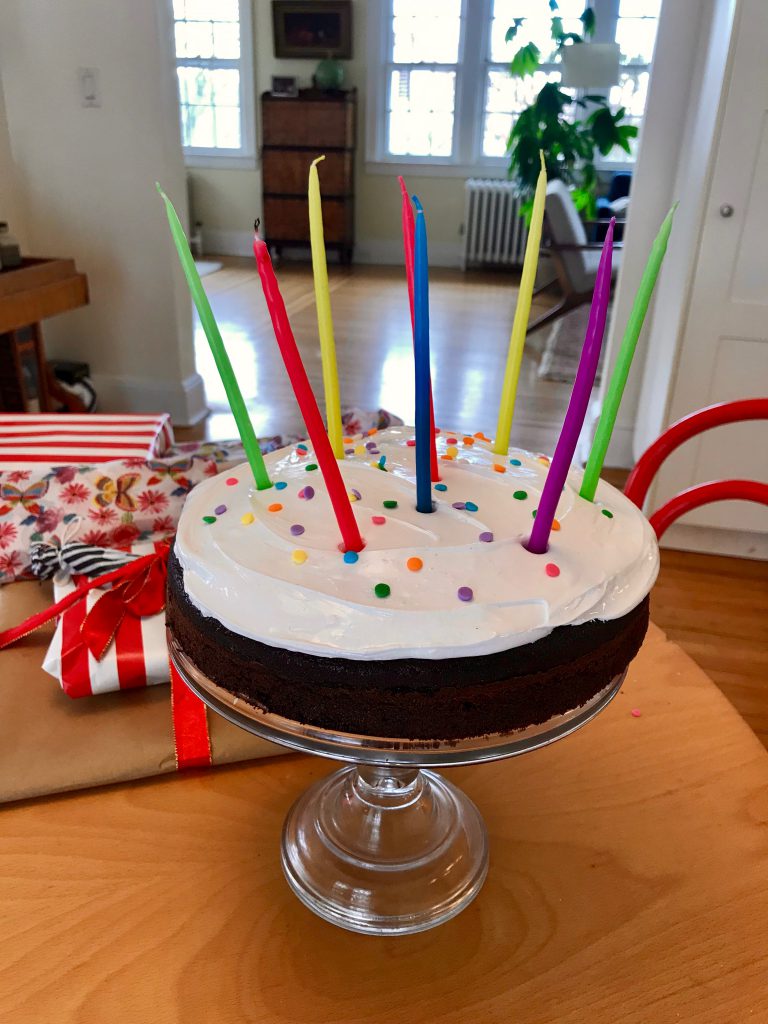
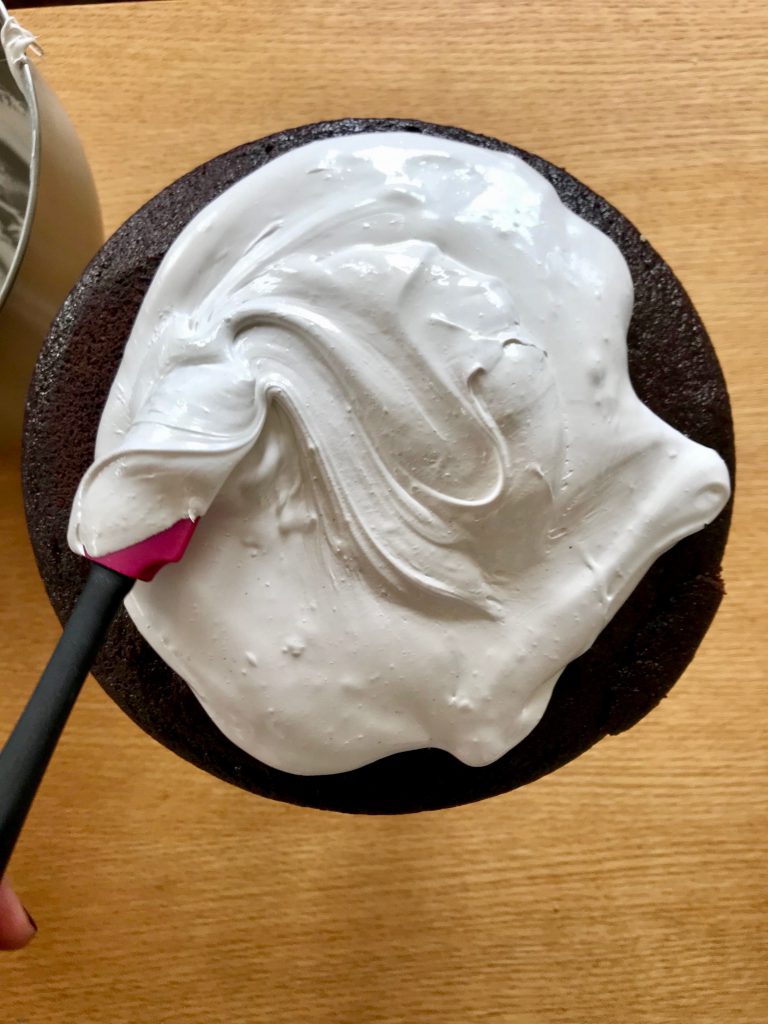
Simple Cake arrived on my doorstep the day before Phoebe’s birthday, but something tells me even if it was a random Tuesday in the middle of the night, this book would’ve given me no choice but to beeline for the kitchen to bake a cake, like the one you are looking at above: What she calls Chocolatey Chocolate Cake with Silky Marshmallow Icing.

Simple Cake is my favorite kind of cookbook: Beautiful, personal, poetic without being treacly. While there’s something to be said for the biblical “category killer” type of collection, the one that has every recipe you’ll ever need, the baking books that get me to break out the standing mixer are the ones that feel like the author just pulled out a few stained index cards from her wooden recipe box; the ones that have the overall feel of How lovely of you to stop by. That’s what Simple Cake is. Williams gives us recipes for 10 cakes and 15 toppings. And though that might not sound like a lot, once you do the mix-and-match math there, you’ll see it’s probably all you’ll ever need.

Once you leaf through it, you will find yourself so happy you still have that bag of almond flour in the pantry because: Almond Gato! (So simple! Seven ingredients; one of them is salt.) It will suddenly occur to you that maybe a warm Cinnamon Donut Cake (think farmer’s market cider donuts, but in cake form) would cheer up your daughter who is injured and sidelined from playing her favorite sport. Or perhaps Bribery Cake (Chocolatey chocolate cake with chocolate Swiss meringue buttercream) would work for that, too. As Williams’ writes, “It’s the cake you bake to help you or a loved one across the finish line.” Next up for me: TLC Cakes (pan-fried Coconut Cake), Self-Care Cake (Milk and Honey Cake with Whipped Cream); Poppy Seed Yogurt Cake, called A Cake for the Working Week.

In other words, it’s impossible to read this book and not think: It’s a good day to bake a cake.

.
Chocolatey Chocolate Cake with Silky Marshmallow Icing

You can double this recipe when it’s party time—just use a 15 by 11-inch sheet pan and bake for 35 to 40 minutes. Makes one 10 by 3-inch round cake. Preparation: 20 minutes

1 3/4 cups (225g) all-purpose flour
1/2 cup (45g) unsweetened Dutch-processed cocoa powder
1 1/2 teaspoons baking powder
1 1/2 teaspoons baking soda
1/2 teaspoon salt
1 1/2 cups (300g) granulated sugar
2 eggs, at room temperature
1 cup (240ml) whole milk
1/2 cup (120ml) grapeseed oil or any mild-flavored oil
1/2 teaspoon pure vanilla extract
1 cup (240ml) boiling water

Preheat the oven to 350°F. Grease a 10-by-3-inch round pan with butter, line the bottom and sides of the pan with parchment paper, and grease the paper. (I’ll let you just grease, line the bottom of the pan, and lightly flour the sides if you’re feeling lazy.)

Place a large sifter or a sieve in a large mixing bowl. Add the flour, cocoa,baking powder, baking soda, and salt and sift.

Add the sugar and whisk until combined.

In another large bowl, whisk the eggs, milk, oil, and vanilla together.

Gradually add the wet ingredients to the dry ingredients and whisk until there are no lumps and the batter is smooth.

Carefully pour in the boiling water and stir until combined. (Watch the little ones with the hot water!)

Pour the batter into the prepared pan. Bake in the center of the oven for approximately 50 minutes or until a wooden skewer inserted in the center comes out clean, and the cake bounces back when lightly pressed.

Remove from the oven and let the cake stand for 10 minutes. Run a butter knife around the cake to gently release. Peel off the parchment paper from the sides. Invert the cake, peel off the bottom piece of parchment, and cool on a wire rack.

Other Options:
Two 8- or 9-inch round pans. Bake for 35 to 40 minutes.
One 12 by 8-inch or 13 by 9-inch rectangular pan. Bake for 25 to 30 minutes.
10 to 12 individual ramekins (grease and fill halfway). Bake for 20 to 25 minutes.
Two 12-cup cupcake pans (fill liners no more than halfway). Bake for 20 to 25 minutes.
.
Silky Marshmallow Icing
Makes 3 cups; enough for one 8- or 9-inch round cake. Preparation 15 minutes.
2 1/2 tablespoons water
2 large egg whites, at room temperature
1 cup (200g) granulated sugar)
1/2 teaspoon cream of tartar
1/4 teaspoon salt
1 teaspoon pure vanilla extract
.
Fill a medium saucepan with about 1 1/2 inches of water, bring to a boil, and then lower the heat to maintain a gentle simmer.
.
Place the water, egg whites, sugar, cream of tartar, salt and vanilla in a metal mixing bowl. (Use the mixing bowl of a standing mixer if you have one.) Place the bowl on top of the saucepan. Make sure the bottom of the bowl doesn’t touch the water.
.
Whisk the mixture constantly for 4 minutes until it reaches a temperature between 160° and 165°F if using a candy thermometer. The sugar will have dissolved, and the mixture will be opaque, bubbly, and dry warm to the touch.
.
Carefully transfer the hot bowl to the electric mixer. Using a whisk attachment, beat the mixture on high speed for 4 minutes or until it’s white and fluffy with stand-up peaks.
.
.
Reprinted with permission from 
Simple Cake by Odette Williams, copyright © 2019. Published by Ten Speed Press, a division of Penguin Random House, Inc. For more Odette, follow her on instagram.

The post A Simple Cake appeared first on Dinner: A Love Story.

13 Mar 18:08

The 6 Wildest Details From the College Cheating Scandal Court Documents

by Katie Rothstein
Kate

this is bonkers!

The Perfect Score - 2003

Spring has sprung, and so has a new season of scam. CEOs and actresses have been indicted in a scheme that included bribing standardized test administrators and college athletic coaches to fabricate information about applicants to elite colleges that would ensure their admission. No, this isn’t the old “donate a library” situation — this is the new “fake your kids’ test scores and athletic abilities” situation.

According to court documents released today, a college counseling company called the Key engaged in a variety of scams on behalf of applicants at the behest of their parents, often without the kids’ knowledge. Scams included paying off SAT and ACT test administrators to correct the responses of the real test-takers for a higher score, having someone take the test in place of the kids and replace the scores (a man named Igor was noted as a particularly good test faker), or paying off college coaches to flag applicants as athletic “recruits,” even when the applicant did not even play that sport.

In the documents we obtained from the U.S. District Court in Massachusetts, these tactics were sometimes referred to as the “side door.” In some cases, the parents expressed distress at the thought of their kids or other parents finding out what was going on. Well, it’s kind of hard for these things to stay private when a lot of racketeering occurred using Gmail.

Thirty-three parents have been charged, including actress Lori Loughlin and her husband, Mossimo Giannulli; and actress Felicity Huffman. Huffman’s husband, William H. Macy, was not charged.

Below, we rounded up some of the craziest info in the affidavits. For your reading convenience, references to CW-1 in the indictment refer to “Cooperating Witness 1.” CW-1 is described as “an individual who participated in the scheme. CW-1 founded, and together with others operated, the Key and “KWF.” KWF stands for “the Key Worldwide Foundation,” the “charity” through which some of the payments were funneled.

In one exchange with CW-1, Huffman realized she had gotten herself into a pickle. A counselor from her daughter’s high school told her via email that she would proctor the test herself (instead of having Huffman’s daughter sit for the test at one of the specialized testing centers arranged by the company, where the tests were fixed). The indictment states, “Huffman forwarded the e-mail to CW-1 with the note, ‘Ruh Ro! Looks like [my daughter’s high school] wants to provide own proctor.’”

Another great detail: In one exchange between Huffman and CW-1, CW-1 informs Huffman that the guy who took a standardized test for Huffman’s older daughter had to reschedule because he had just had a baby when her younger daughter was about to take the test.

In the indictment, a set of parents referred to as “the Hillsborough Parents” apparently “donated 2,150 shares of Facebook, Inc. stock to KWF as a purported charitable donation … the Hillsborough Parents filed personal tax returns that falsely reported total gifts to charity … a sum that included the purported contribution to KWF.”

In one email, a parent named Sloane was concerned that if their child was recruited for athletics and went to practice, it would become obvious that the child was “a clear misfit.” The parent asked in an email to an employee of the company that organized the scams,“Would the other kids know [my son] was a bench warmer side door person?”

Some cases involved Photoshopping pictures of kids playing sports that they did not play. For example, one parent “e-mailed CW-1 a photograph of his son purporting to play water polo, with his right arm and upper torso exposed above the water line. In the e-mail, Sloane asked, ‘Does this work??’ CW-1 responded: ‘Yes but a little high out of the water-no one gets that high.’”

In some cases, the company fabricated the physical profiles sent to coaches. The affidavit reads, “The basketball profile created by Janke falsely listed Macfarlane’s son’s height as 6’1’’ and indicated that he played on his high school’s varsity basketball team … a personal statement for Macfarlane’s son, drafted by CW-1 but ultimately not submitted to USC, described how he knew that his height (5’5’’) would be a detriment to making his high school’s varsity basketball team.”

But be warned: This scam is not easy. CW-1 chastised one parent for assuming that all it took to get their child a spot at Stanford was CW-1 giving the Stanford sailing coach $160,000. The parent asked “[inaudible] all it takes?” CW-1 replied, “So–no, no, no, no. That’s not all it takes. … This is not TJ Maxx or Marshall’s or something like that.”

*Correction: A previous version of this post erroneously stated that actor Douglas Hodge was indicted in this case. He was not, the indicted was ex-Pimco CEO Douglas Hodge.

13 Mar 16:07

Captain Marvel’s Cat Wrangler Explains How Goose Became a Flerken Hero on Set

by April Wolfe
Kate

haven't seen this yet but... excellent #catcontent

null

A cat named Goose pranced his way into Captain Marvel fans’ hearts this month as the movie’s hilariously intemperate scene-stealer. The Flerken, as Goose is better known (since he’s actually not a cat at all but a deadly, secretly tentacled alien), didn’t just get his own character poster in the marketing for the film, he also walked the red carpet in a sensible ensemble at the premiere. Soon after, he became the subject of a very popular (and nice!) South Korean meme, wherein people Photoshop pictures of their ordinary house cats to look like the Captain Marvel sidekick. The role is the largest for any animal actor in the MCU, but animal trainer Ursula Brauner, of Boone’s Animals for Hollywood, had no idea how big a figure her kitties — Reggie, Archie, Rizzo, and Gonzo all play Goose — would become, or how integral Goose’s part would be to the film. Reggie, specifically, has gained a small but devoted cult following, and how could he not after Brauner revealed that he was so dedicated an actor that he knew when his take was bad; upon flubbing, Reggie would go back to “one,” without being told, for another shot.

Brauner called us for a quick chat to talk diva animal actors, Skrull mishaps, and fan demand for Flerkens to save the world in Avengers: End Game. Oh, and she cleared the air about Samuel L. Jackson’s alleged feelings toward feline co-stars.

I heard Brie Larson was allergic, and Samuel L. Jackson was kind of so-so on cats when they started filming.
None of that really was a factor when we started working. Brie with her allergies, she still did everything we asked. If Reggie needed to walk up to her, she would just give him a little treat. The same with Sam. He says he’s not a cat person, but he was probably one of the best people working with the cats. They loved him, went right up to him.

It’s so like a cat to choose the one that’s not a cat person.
The first day working with Sam Jackson was probably my favorite day.

You must have tried to get a personal photo of Goose with Nick Fury.
No. We try to stay very professional.

Goose is actually multiple cats, right? The very last end-cap scene stars Goose coughing up the energy core on the desk. It looks like a mix of a real cat and CG. Which cat did they model that one after?
We had four total. Reggie, Archie, Rizzo, and Gonzo. You may have to ask Disney about which one they used for that scene, but it was probably Reggie. He was really the hero and did most of the shots. We always work cats in teams so we can spread the work on different days. They each have strengths. Reggie was good at almost everything. He probably featured [as] like 70 percent of the live cat on the film. If Reggie had a big day or a big scene, we would switch him out for another one after that to give him some rest. Some of the holding scenes, Gonzo was great being held in arms, so we used him for that. Archie is the spunky cat with personality. Rizzo we trained to be the master of all trades, and we would save Reggie for the big scenes.

Reggie’s the diva.
They’ve always been divas. They always think they’re the bomb. They’re cats. People want to meet them. We have no problem with anyone coming and giving Reggie a pet, but we need to keep them focused. In the middle of a shot, we don’t want them to run up to the camera operator. In their perspective, they’re in a room full of people who want to give them attention. Every now and then, they’re like, Oh, and who are you? Disney provided us with a full decked-out trailer, where they had big areas where they could play — cat trees and toys, all of it. We had a little cart with their crates, litter boxes, and water, and we’d wheel them in when set was ready for them, and they were covered so nobody could see them.

Divas. “Don’t look at me!” Right? Did Reggie have to sign an NDA?
[Laughs suspiciously.] I did. But the cats didn’t. I’ve been doing this for 30 years, and we’ve worked on the biggest features to the smallest independent features, so we kind of flow, depending on what the project is. We did Pirates of the Caribbean for Disney, too. The most important thing for the animals — and this is the most important part of what we do — our philosophy in training is to build a trust and a bond with any of our animals. So much of what we do in the preproduction and training was getting them comfortable to be in that environment, so they feel calm and safe and concentrate on the job at hand.

How do you sense if they’re comfortable?
If they’re looking at us and asking us, Is this okay? and we look at them, and we say, “It’s fine,” then they feel comfortable, because we’re comfortable. And we don’t breach that trust.

I mean, the cats aren’t actually talking to you. I know I talk to my cats like they’re humans when I’m alone in the house, but when I do it around other people, I realize that it comes off as though I’m a little …
Oh, yeah. People think we’re crazy. You gotta remember, we’re with them all the time, and it is like a relationship. Especially when they’re training. We’re like, “Oh, no, that wasn’t right. Please try this again,” and we get so close that we understand each other very well. And they know our movements.

Did you notice anyone on set starting to talk to the cats like humans, too? Maybe Sam Jackson shooting the breeze with Reggie?
We really felt that everyone there was all-in. Everyone on the film respected the cats. And they always reached out and helped us whenever we asked them to do something, a pet or a piece of food.

I’ll assume Sam Jackson talked to the cats. I like thinking that the set might have to shut down for five minutes, so Reggie can get his pets in. Was anything especially difficult for the cats?
I think maybe it was probably the Skrull costumes. That was one of our challenges because they look so different from people. Ben Mendelsohn was so amazing getting the cats used to the costume and makeup, though. He showed them how he moved and sounded, and he was just really great getting the cats to like him.

Good. That’s the level of exceptionality I expected out of Ben Mendelsohn.
I remember being in the quad-jet set in a very tight space, and Ben doesn’t look anything like a human being in his costume. Reggie was a little unfurled. [Captain Marvel directors Anna Boden and Ryan Fleck] took the time to say, “Let’s stop what we’re doing and get the cat comfortable.” We had Reggie sitting on a chair, and Ben was sitting in the chair next to him, and we let Reggie go to him and explore on his own volition, and pretty soon, he realized Ben was just like us, but he just looked different. It’s about taking the time to stop. And it shows onscreen.

That’s a pretty good PSA for embracing people or Flerkens who look different from you. I imagine Reggie and Ben Mendelsohn just sitting quietly next to each other for ten minutes while a hundred crew people watch, and it’s like a really Zen image.
It was awesome. One of those surreal moments where you go, “Yeah, I dunno, I’m getting my cat used to a Skrull now.” I guess if they see another one in the wild, they’ll be fine.

So back to that end-cap scene with Goose? I think it left a lot of us very hopeful that the Flerkens will be back to help save the world from Thanos in Avengers: Endgame. How do you think a Flerken could save the world?
[Laughs even more suspiciously.] I don’t know. I think that’s more a Disney question. I know nothing … [suspicious pause]. But it’s remarkable how much Goose has resonated with people.

Did you know he was going to get a character poster?
I did not! Like I say, that’s so great for us. We do what we love. That’s our first love, and our second love is being able to be involved with something like this. It’s the coolest thing to see your buddy up on a billboard or a poster. Not everybody has a Flerken. Wait, actually, we are the only people who have a Flerken … and that’s pretty cool!

That is cool. You’re kind of like a stage mom. I bet you’ve got your favorite.
We love all our animals. Every one of them is special. I don’t care if it’s a feature or a commercial, we are very proud of them …

But Reggie is my favorite, yes. Don’t tell the other ones.

12 Mar 14:36

Janelle Monáe's stylist Ali Mandelkorn releases a new collection—of used clothes available through Goodwill.

Kate

#janellemonáecontent

Janelle Monáe's stylist Ali Mandelkorn releases a new collection—of used clothes available through Goodwill.

↩︎ LAist

View Post →

09 Mar 16:53

update: car alarm keeps disrupting our office

by Ask a Manager
Kate

life is a rich tapestry etc etc...

Remember the letter-writer who was being constantly disrupted by a car alarm outside her office? Here’s the rather magnificent update.

Thanks so much for helping me with this. Glad to know I wasn’t the only person thinking this situation was beyond illogical.

Just a clarification of why certain actions could not be taken. I mentioned in the original letter that my boss did not want to go over and let the other employee know that her car was disruptive because of his fear it would raise tensions between us and their company. Both of our companies are having to work together to address an issue on the street and my boss thought bringing it up to her was going to cause more harm than good. This, originally, did not make sense to me, because surely just letting her know her car was a nuisance couldn’t cause any issues. However I have come to find out that they tried that path before I started, and the woman that owns the car was hostile and easily offended. She raged a war against my company and it ended up in one of those “well, if you have a problem with this, I suddenly have a problem with that” type of deal, and she was making our work difficult. With this context, I now understand why that action was not used again, especially since we have to be friendly with them to eradicate a common foe.

Some readers wondered why the alarm only bothered me. Two reasons, I am only one of three in the office and the other two wear headphones. I couldn’t just wear headphones because I answer the door and phones and was having a hard time hearing either of them with headphones on. I’m also closer to the side of the building that the car is parked, so it is significantly louder where I am than elsewhere in the office.

The day you posted my letter I spoke to my boss again, this time letting him know that the constant car alarms were causing me daily headaches, and that my clients won’t meet in our conference room, forcing me to spend company money on meetings at Starbucks (which is horrible in my business for so many different reasons) and lunches. Silly me, but I had never mentioned the headaches to him before. This caught his attention and he told me that I could start doing office work at home and that he planned to talk to the other company’s owner when he came to our office for a meeting about an unrelated issue at the end of this month. This was great because I could leave the office earlier in the day and work remotely for administrative work. However, this became a nuisance quickly because I have a specific program on my work computer that I can’t put on my laptop.

The week following your answer, I spent a lot of time being frustrated that I couldn’t work as efficiently at home as I could in my office, and grew resentful. At this point, with yours and your readers’ advice, I decided to just file a noise complaint with the city (I kicked myself in the bum for not thinking of that myself, especially since I work frequently with the city) and beg forgiveness later if it bit me in the butt later on. I was worried abut going behind my boss’ back on this, but something had to be done.

Thankfully, someone above heard my cries and blessed me with the best possible solution to my problem. While I was venting to my significant other, I mentioned that I was going to file a noise complaint to the city. The next words out of his mouth nearly made me sob with joy. “You know that the guy across the hall that moved in last month is the son of the [City]’s Chief of Police right? You should talk to him.”

Hallelujah. I immediately made him some sweets for bribing purposes and walked across the hall. We chatted and he got his father on the phone within minutes. His dad was extremely kind, and told me he would “casually drive around the neighborhood” the following Monday so we could avoid filling a formal complaint, thus keeping me entirely out of it.

Yesterday when I arrived to work, there was a police car parked in the street and the car alarm was already going off when I arrived. After about half an hour, the alarms had stopped completely and the cruiser was gone. Last night my neighbor, we shall call him Shane, said that his dad had gone by in the afternoon and was shocked at the amount of times it had gone off in just the first 10 minutes. After the fourth time, he walked to the company himself, asked to speak with the owner and told her that she either needed to remove the after market alarm she had on, or park in an area where the car would not be triggered. His dad said she originally gave him some attitude and he told her if she did not comply he would be forced to escalate the matter further, which would likely result in fines for her and possibly her company. (Funnily enough, while he was talking to her, she said the car alarm was not that obnoxious and he was exaggerating. Even though she had to turn off the car alarm numerous times during the convo.) If she does not comply, then I will actually have to file a complaint, but I will cross that bridge when we get there.

That was yesterday afternoon and today she parked across the street. We have not heard anything from her car all day. I can already feel my sanity starting to restore itself. Thank you to you and your readers for the advice and sorry for the long letter!

update: car alarm keeps disrupting our office was originally published by Alison Green on Ask a Manager.

08 Mar 16:56

Work by Eiko Ojala

by swissmiss

In love with Eiko Ojala’s beautiful cut paper illustrations.

04 Mar 20:59

THREEDOM: BEHIND THE THREENES!Episode 23: Some video from the...

Kate

Saving just for Paul's laughter. I wish I could bottle it and drink it.


THREEDOM: BEHIND THE THREENES!

Episode 23: Some video from the feature “One-Word Impressions”

04 Mar 15:36

IT’S THREEDOM THRURSDAY!THREEPISODE 23: “Hamilton Was Bae”Scott,...

Kate

this one cracked me up. Solid A. And the One-Word Impressions needs to be a repeat feature.


IT’S THREEDOM THRURSDAY!

THREEPISODE 23: “Hamilton Was Bae”

Scott, Paul and Lauren discuss weird Kidz Bop songs, punish Chevin for an unjust spanking and play “One-Word Impressions.”

LISTEN

25 Feb 20:38

monsieurcouture: Joseph Abboud F/W 2019 Menswear New York...

Kate

sharing for mads mikkelsen content


monsieurcouture:

Joseph Abboud F/W 2019 Menswear New York Fashion Week

Oh no Alan Cumming fell through three old steamer trunks and maybe Mads Mikkelsen?

22 Feb 18:09

update: we have twice-daily mandatory group therapy at work

by Ask a Manager
Kate

Go OP!!!!

Remember last week’s letter-writer whose office was requiring people to attend twice-daily group therapy? Here’s the update.

Hi! OP here! OMG it’s been a week. So when I wrote this, I called out the whole week because I couldn’t wrap my head around all of this, and I had luckily enough gotten a job interview somewhere else. I appreciate your comments and the support and advice and I’m going to give some back. I gotta say something here, y’all: no job is worth what I was going through mentally. Never is a job worth it. Never ever. Some of you sound like you’d have stayed. I’ve been living below the poverty level my whole life, I’ve been poor, I’m still poor. I’d scrub toilets before I’d go through that job again. You are worth more than your work.

I ended up talking to a friend of mine who has a lawyer in the family and she had her cousin on the phone in seconds during this coffee date. Monday morning (the day this posted, ironically) I went in with a lawyer, who was boggled at what was going on. She was literally speechless for a few minutes after I told her about the therapy mandate.

My lawyer and I met with HR and the two board members on site and we addressed everything. Their reaction to what was going on ranged from shock and horror to almost comic apathy. After one board member stated that “work was what I make it” and one HR staff member brought up that she was concerned about my safety and retaliation (I can’t even), my lawyer and I decided I’d be better off elsewhere. There are some details I can’t talk about that did end in my favor, so I’m very okay with this.

The aftermath of me quitting over the therapy mandate precipitated two of my coworkers threatening to walk out with me, which precipitated an internal investigation and my former boss being put on suspension. I understand his license is on the line now as well.

It’s okay to be the powder keg when something isn’t right, that’s what this has taught me.

update: we have twice-daily mandatory group therapy at work was originally published by Alison Green on Ask a Manager.

14 Feb 20:31

our office won’t tell us in advance when people leave – and sometimes won’t confirm or deny if someone still works here

by Ask a Manager
Kate

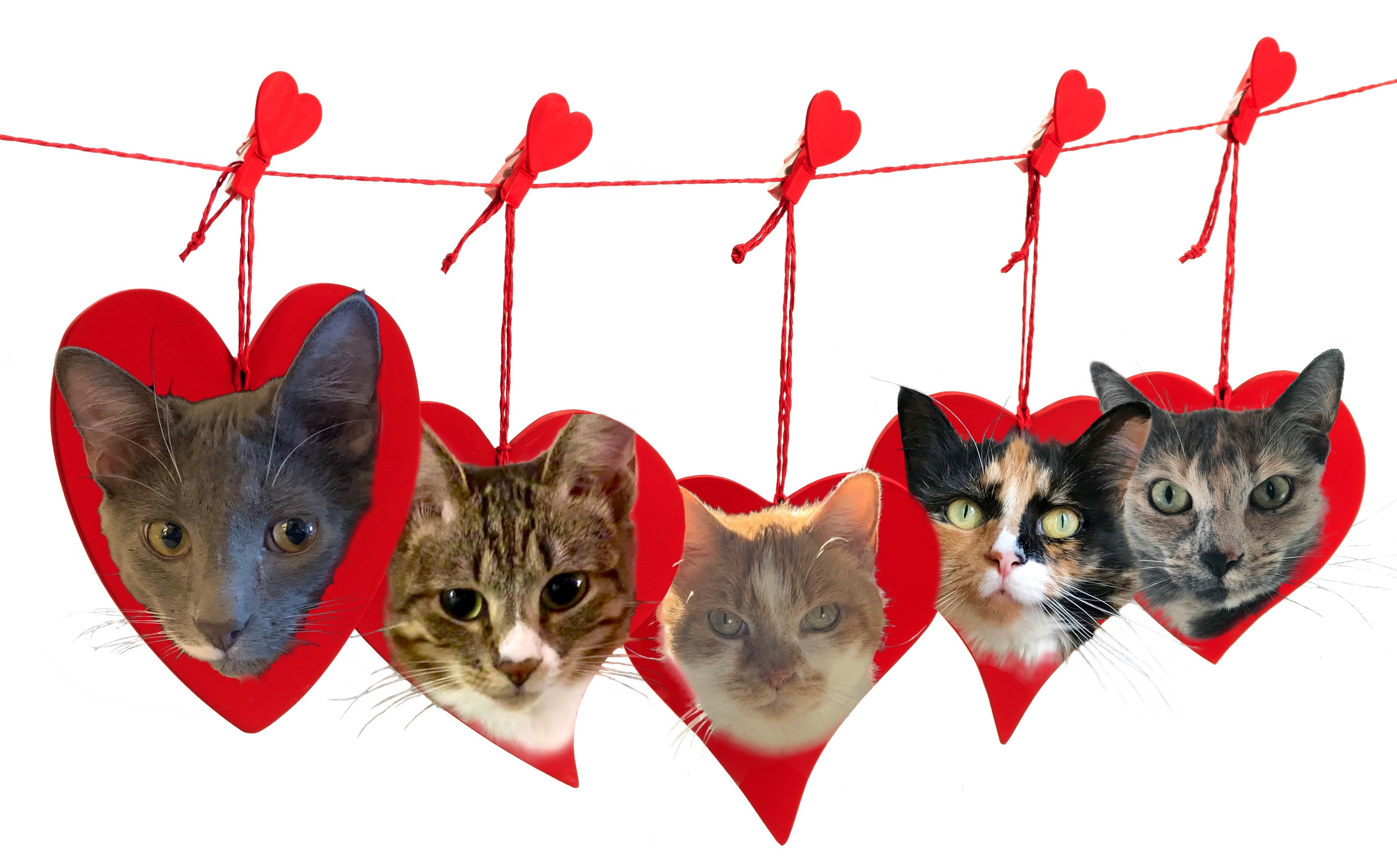
sharing for #catcontent

A reader writes:

I wanted to reach out about something I perceive as “odd” in our workplace, but, this is my first full-time, professional office job so I wasn’t sure if I’m just not used to a normal practice!

Our office generally has a unique culture, because we are almost like an “outpost” office attached alongside the company’s warehouse. Our corporate headquarters office is in a different location, and they have a much more professional atmosphere than we do. As a result, we often don’t get many of the perks the headquarters employees enjoy, and are treated noticeably differently.

One curious way this manifests is that our management doesn’t allow our coworkers to share that they’re leaving the company until the very day before they will no longer be working for us. Then, they make sure the coworker doesn’t announce it themselves, but that a senior member draws everyone together to make the announcement for them to the whole team. It’s not only jarring, but has also caused significant disruptions in the workflow. Recently, two team leads have left in this fashion, with only a day to redistribute new tasks among the remaining team. We realized that many of their duties weren’t discussed in the shortened timeline, and we’ve had to do a lot of detective work to accommodate. I’ve confirmed with both coworkers that they were made to sign a document saying that they couldn’t tell anyone they were leaving. Also, our managers don’t tell us when a coworker has a family emergency or is sick for an extended period, and will refuse to confirm or deny their continued employment, even after weeks of absence, which gets worrying when you care about the person!

When this lack of transparency is hinted to management, they double down and get defensive over their choice not to tell us, citing negotiations to keep the coworker. However, it honestly feels like a power play, and makes us feel like children — like we can’t handle the truth and it must be mitigated. However, I could be totally off-base, which is why I’d love your opinion. Is this a common management practice you’ve used? Do your offices work this way? Is there a way to bring this up that doesn’t sound accusatory?

Nope, this is not normal. It’s extremely weird!

There definitely are some offices that are weird and secretive about people leaving. It’s not at all the norm, but they’re out there. More often than not, it’s because they’re concerned about the appearance of high turnover (which is of course terrible logic, because it’s not like you’re not going to notice the person is suddenly gone.)

And it’s a terrible practice! It creates a culture where people don’t trust their management to give them relevant information, and where people feel they’re not trusted to be able to handle totally routine and normal information. Plus, as you note, it creates a ton of inefficiencies because people don’t have time to get information from the person who’s leaving or fully transition their work.

It’s particularly odd that your company makes resigning employees sign a document saying they won’t tell anyone they’re leaving. They have very little leverage over people at that point, so ideally people would simply decline to sign. Any chance that lots of your coworkers are relatively young and inexperienced and thus don’t realize they could or should push back on that?

It’s also especially strange that your company is similarly secretive when someone is out for an extended period and won’t tell you whether or not they still work there! I can’t imagine what their rationale would be for that, which makes me think that your company is run by people with severe control issues, and I’m betting they’re weirdly controlling or secretive in other ways.

                                                                    unrelated image for Valentine’s Day

our office won’t tell us in advance when people leave – and sometimes won’t confirm or deny if someone still works here was originally published by Alison Green on Ask a Manager.

14 Feb 20:21

ask-kitom: slumberinggirl: thedarkperidot: Dramatic snow leopard spots new camera in enclosure...

Kate

LOL this is the cat content we NEED.

ask-kitom:

slumberinggirl:

thedarkperidot:

Dramatic snow leopard spots new camera in enclosure for the first time

I love him

He chonk

10 Feb 01:05

my coworkers treat me like I’m not very smart

by Ask a Manager
Kate

I like "while you were studying I was working!" - it's a good reminder that we all have our own wheelhouses.

A reader writes:

This question is inspired by the question in your recent post about coworkers attacking people over grammar. I had a really emotional response to the post and wanted to ask you this.

How do you learn to manage in a job where everyone thinks you are stupid and/or uneducated? I know those characteristics are different, but in my job they are very closely interlinked. I’m the only person on staff with just one, lower class degree. Most people have two or three. I was surprised in the interview process when I was asked repeatedly why I chose this school and this degree — 15 years into my career and nobody has ever cared. I was told that I nearly didn’t get the job due to poor academic performance and they pay people with degrees more money automatically. This isn’t academia or an industry where you need certain qualifications, but they won’t interview anyone without a strong academic performance, even at the expense of a solid work history.

Background — this is a new industry for me and I was hired as an outsider to bring my skills into the business. I am doing this, but I obviously don’t know a lot about the day to day detail of this industry (I understood I didn’t have to).

I’m a manager and in management meetings they will sometimes stop to explain something really obvious (think, “Jane, tea pots often contain tea”) but then casually use Latin phrases that I have to try to google on my laptop to understand the context.

I’ve never pretended to be academically gifted but I do have a set of skills other people here don’t have, hence my hire. I’m scared to speak up in meetings in case people laugh at me (which they have done previously) and if I ask for help or explanation I get an eye roll and a snide comment.

Any rudeness or cruelty is written off as a side effect of being smart. “Oh, Natasha is so clever, sometimes she gets frustrated, that’s all.” I want to scream — I’m smart too! But while you were studying I was working! Since when were clever people exempt from being kind?

Working here has increased the chip on my shoulder from my upbringing and I hate the idea that people think I’m stupid. In case that sounds paranoid, it’s not — other managers treat me like you’d treat a very young child — or at least you would if you were abusive. Screaming at me for nearly an hour because I asked a question, cutting me out of anything that requires deep thought and relegating me to basically shuffling numbers.

I can’t leave this job for another six months at least so tell me, how do I not let this ruin my self-esteem?

These are not kind or sensible or well-adjusted people, and so their assessment of you is not one to put any stock in, just like you would not put much stock in what Martin Shkreli or a Real Housewife thought of you.

What you’re describing is beyond simple rudeness. Talking to you like a young child? Laughing at you in meetings? Rolling their eyes and making snide comments when you ask questions? Then blaming it on you for frustrating clever Natasha?

No.

You are not the problem here. You are a normal person who has somehow stumbled into a horde of jackasses.

It doesn’t even matter if your questions were bad/silly/obvious ones, or if what you said in a meeting wasn’t especially sharp. No reasonable, mature, mildly decent person, no matter how smart, responds the way these people are responding — and so that is definitive proof that this is about them, not about you. (And really, people — even smart people — ask bad/silly/obvious questions and say not-especially-sharp things all the time. That’s what humans do. Mildly decent people do not respond with mockery.)

For whatever remaining period of time you have to stay there, the healthiest thing you can do is to marvel at this weird micro-society you’ve been temporarily transplanted into. If you were spending a few months in a foreign culture with baffling, unfamiliar customs, you wouldn’t take those cultural differences personally, right? And they might even be fascinating to observe? That’s what you want here — along with a very vigorous job search to hasten your exit.

Typically with a tough situation like this one, I might suggest that you at least try to address it with someone there (maybe the person who hired you and wanted to bring outside skills in), to see if there’s any way to reach a better understanding and get some changes made. But I just think these people are cruel, and it sounds like it’s so deeply entrenched in the culture that there’s not a lot of hope of changing it. If I’m reading the letter wrong and it’s only a couple of people, or only one department that you don’t have to deal with often, then there could be value in doing that. But if this is just The Way It Is there, get out get out get out.

my coworkers treat me like I’m not very smart was originally published by Alison Green on Ask a Manager.

09 Feb 09:52

boss asked someone to take her family off her health insurance, how to encourage someone you’re rejecting, and more

by Ask a Manager
Kate

lol #5

It’s five answers to five questions. Here we go…

1. My boss begged my coworker to take her husband and baby off her health insurance

So I recently started a new job in a very small office right before the New Year. As I was being hired, they were doing their budget for 2019. My boss, who is not my favorite person in the world, forgot to budget for my benefits. According to a coworker, he had asked (more like begged) her to take her husband and her baby off of the company’s insurance so that the budget wouldn’t be so screwed up. Everyone in the office knows about this. He had talked about it during a staff meeting and then someone told me after I came on. Everyone in the office has varying degrees of how they feel about this ranging from complete outrage to just kinda “Eh, that’s a normal Tuesday.”

What are your thoughts? My coworker has started talking about going to the board about this, among his various other issues.

It was wildly inappropriate, and it calls into question your boss’s basic competence on two fronts: (1) forgetting to budget for benefits (anyone who manages a budget knows personnel costs aren’t just salaries) and (2) trying to make this your coworker’s family’s problem, when the stakes are as high as health insurance. (I assume he knew or figured that the husband and baby could be insured through the husband’s job, but it’s still incredibly obnoxious and not how you handle any budget shortfall, and particularly not a colossal mistake of your own making.)

2. How to encourage someone you’re rejecting

I work for a nonprofit that hosts a summer internship for a well known university. My job, among other things, is to ride herd on the process of selecting the intern. My opinion on who to select is solicited, but I am not the decision maker. The internship is very popular and very competitive, so as we do every year, we had a number of excellent candidates to choose from. Unfortunately, we had a less than great experience with last year’s intern, so the decision makers this year were not in a mood to take chances.

It came down to a final three: two older, high achieving students with great references and on-point experience and a first year student who blew everyone away in the interviews, but had little to no experience. Because the decision makers were feeling risk adverse this year, they went with one of the older student. I totally understand and accept this.

By the same token, everyone agrees the first year had the highest ceiling of them all. If she’d had just a little of the track record of the other two, she might have pulled it off! Two of the three decision makers came to me afterwards and asked that I reach out to the first year and encourage her to apply again, especially if she picks up some relevant experience, course work, etc., along the way. Obviously no promises can be made, but if she did so, it would not surprise me in the least if she was the selection next year.

One thing I have learned about myself is I have a tendency to lay it on a little thick when I am trying to console someone, and that sounds insincere to some. I do not want to let this first year down easy, I want to let her know she missed out by a whisker, encourage her to pursue relevant volunteer work or coursework, and strongly encourage her to apply next year … again, without making any promises. Can you suggest an approach or useful language to do so?

I think you’re maybe getting overly invested in exactly the right away to reject this candidate. It’s great to let her know that she was a strong candidate and you’d love it if she applied again next year, but don’t think of this in terms of consoling her or cushioning the blow. That’s not really the appropriate role for you to take as the employer. (It might not even be a blow. This could be her third choice, for all we know.)

Instead, just be direct! Something like: “We all agreed you were a really strong candidate, and we’d love to see you apply again next year, especially if you’re able to do some related volunteer work or coursework between now and then.” And since you said that you tend to lay it on a little thick, limit yourself to three sentences in this message.

3. Company is hounding me after I downloaded their white paper

I’m a software developer with plenty of technical experience, but I’m trying to get better at industry experience, if that makes sense. I read advice to go to conferences, join the relevant professional organization, that sort of thing. So far so good.

I’ve also started downloading and reading white papers. They’re interesting! I like hearing what kinds of products other people are making! But I ran into a problem. One company wanted my email address before letting me read it. I gave them my work email, and didn’t think anything of it.

And then their sales rep Jane emailed me. I said I didn’t make purchasing decisions. Then their sales rep John emailed me. And Jane found our phone number and called the office manager asking for me. And found the name of one of the other project managers and called asking for him. And John emailed me again asking why I hadn’t responded. And Jane called again asking if a decision was made yet.

I’m not sure what to do. Was it dumb to give out my work email like that? Do I owe Office Manager and Project Manager an apology? How do I keep this from happening again?

Yeah, sometimes a white paper is just a white paper, and other times it is a gateway into aggressive sales hell.

But you weren’t naive in giving out your email address. This company is just particularly rude and pushy. Email John and Jane and tell them that you want your company taken off their contact list and not to attempt to contact you or your colleagues again. (Seriously, this is fine to say. They hear this all day long.)

You don’t really owe apologies here; sales people get ahold of potential leads and sometimes hassle them. Your colleagues probably know this. But you can tell them that you’re trying to get the company off this sales list.

4. My coworker reacts badly when I won’t come in on my days off

I’m a relatively new grad school grad working at my first real job ever. I’m running into an issue with a coworker where we are the same level in title but she feels as if she has seniority over me due to her having been there before me. We work in a professional field where accreditation is legally required and she acquired hers after I did, despite graduating way before I did, and as a result had to actually have me as her “supervisor” for a very short time for professional ethics purposes.

Recently, she’s been slacking a lot and her supervisor had a talk with me about potentially firing her due to her slacking off. But she will just skip off work and then expect me to cover for her. It’s gotten to the point where she texts me on my clearly designated off days to ask me to come back into work to cover for her. She’s gotten so used to me covering her duties that she feels entitled and reacts badly when I tell her that I’ve indicated that this is my off day and I will not be coming back to the office just to do her job. But as a green employee, I’m just always very insecure about doing stuff like this. So how do I draw boundaries with coworkers like this?

“Sorry, I’m off today and can’t come in!” You can drop the “sorry” if you’d like.

You also don’t need to respond at all. It’s your day off. Mute her texts and go about your day.

If you want to, you can tell her, “Hey, just so you know, I’m generally never going to be able to come in on my days off because I always make plans for those days ahead of time.”

This is all 100% okay to do. You shouldn’t feel awkward about this; it’s very, very normal to want to preserve your days off, and it’s especially normal not to want to do major favors for someone who’s rude to you when you say no. Plus, it really sounds like your manager would support you and not her if it ever came to her attention.

5. My boss saw me guzzling chocolate in my car

After a particularly long day, I stopped at the convenience shop by work and got myself a well deserved candy bar. While waiting to merge back into traffic, I proceeded to shove it in my mouth, barely avoiding eating the wrapper. To my horror, my boss was the car waving me into the lane and witnessed me unhinge my jaw like a snake in order to get as much chocolate in my mouth as quickly as possible.

My question is, can I take FMLA due to dying of embarrassment or should I just email my resignation right now?

Just ghost the job entirely and let her think what she witnessed was part of your jubilance on your bacchanalian flight to freedom.

boss asked someone to take her family off her health insurance, how to encourage someone you’re rejecting, and more was originally published by Alison Green on Ask a Manager.

29 Jan 15:30

my coworkers won’t cut expenses, pop culture references in interviews, and more

by Ask a Manager
Kate

#1 is a joke... right?!

It’s four answers to four questions. Here we go…

1. My coworkers won’t help me cut expenses

A few months ago we received an email from the Big Boss (head of our business unit) that we are entering a “cost cutting” exercise due to business needs and they need everyone to make efforts to ensure our costs/expenses are “as close to zero as possible.”

I’m in an internal role that doesn’t deal with contracts, purchases, software licensing, travel, etc. so there’s only a limited amount I can contribute to that cost cutting. But I’ve done what I can — e.g. I walked five miles with heavy equipment rather than take public transport which the others did. I “forgot” to claim for overtime payments that I should/could have claimed (not in U.S. so those laws don’t apply), didn’t claim mileage for driving two hours out of my way multiple times, etc. It’s galling every month the department admin sends out the emails asking for “overtime forms” and “travel expenses” and I know I have a lot I could claim and don’t.

We have to work late a couple of times a month due to client deadlines (the company usually orders food in) and I’ve gone on “hunger strike” conspicuously refusing to eat or order, and working through while others eat the company-paid pizzas, etc. (we know in advance when we’ll have to stay late – why didn’t they bring their own food?!) because I don’t believe that’s a legit business expense. I’ve tried to convince the others but without success.

I’ve now asked to reduce my retirement contributions (matched by the company) which will save them thousands a year. I’ve indicated to HR that I want to opt out of the healthcare insurance at the next renewal date.

I’ve done pretty much everything I can at this point other than asking for a pay cut (which I could — I’m senior, single and have enough money but I realize this could affect my prospects in the future) but I’m becoming more and more resentful of coworkers who haven’t even considered the things I’ve done. They still submit overtime, travel expenses, etc. At some point we all have to pull together but I feel like I’m the only one pulling,

Whoa, you are making way too many sacrifices here. You should not be walking five miles with heavy equipment or not getting paid for time you worked, and conspicuously not having a slice of pizza isn’t going to make any practical difference. As for reducing your retirement contributions and opting out of health insurance (!!) — NO. Is it too late to undo that?

“Help us cut costs” means “watch for extraneous spending and be frugal with business expenses.” It does not mean “take on great personal sacrifice for the benefit of a company someone else owns.” What are you doing is way beyond the realm of anything that would be expected, some of it won’t even matter (the hunger strike), and the rest of it is so extreme as to be entering the realm of the absurd unless this is your own personal business and you get all the profits.

You should of course respect requests to watch expenses, but it’s actually not helpful to do what you’re doing because it creates a false idea of what various projects cost. It’s also going to look incredibly weird to your coworkers, especially when you pressure them to join you, to the point that it could reflect on your judgment long after this is over.

Leave your retirement account and your health care alone. Submit for the money that you’re owed. Quit the hunger strikes. Be responsible with expenses, and leave it there.

2. Can you reference pop culture in an interview?

Is it okay to reference pop culture in a job interview as long as the reference itself is not inappropriate or obscure?

For instance, in previous interviews, I have referenced my “Monica Geller-esque sense of neatness,” how I consider Leslie Knope to be one of my role models, and how I had learned to work with a supervisor like Angela from The Office.

For what it’s worth, in each of these positions, I was applying for something relatively junior and in a pretty liberal field/office environment, not, like, the CEO of Morgan Stanley or something.

There are better ways to convey what you want to convey. It’s just too likely that your interviewer hasn’t seen the show you’re referencing and so misses your meaning entirely — and maybe doesn’t even know you’re referencing a show and has no idea who this Monica Geller is or why you’re mentioning her. (There’s also a risk of it making you seem less professionally mature — not because you’re referencing pop culture, which isn’t inherently unprofessional, but because you’re not realizing that not everyone will get that particular reference.)

3. Candidates who ask “how did I do?” at the end of an interview

I’m a corporate recruiter, and lately, at the end of phone screens I’ve had people asking me how they did on that very call and asking for performance feedback. Everyone who has asked me this question hasn’t done very well. I think its a really awkward question that puts the interviewer on the spot. What’s your take? Is this the new normal? What’s the best way to respond to this, especially if the candidate hasn’t done well?

Yeah, this is a terrible question to ask at the end of an interview. It’s fine to say “are there any reservations I could address for you?” But “how did I do?” puts the interviewer on the spot, and while some interviewers will be willing to answer it, far more are going to feel uncomfortable and mildly annoyed that you’re asking them to deliver potentially awkward info to you with no preparation or time to think it out.

You’re not obligated to answer that question candidly with no preparation. When I’m asked it by a candidate who wasn’t strong, I generally say, “Oh, I always prefer to spend some time reflecting on our conversation before I can answer that.”

4. Can I contact my replacement to ask why they left?

I left a job on my one-year anniversary about two years ago. I left for a seemingly innocuous reason and on good terms (I was moving across the country and got a new job). But in actuality, I was waiting for the second I could run away from this job. What started as an in-office marketing position with support and a budget quickly turned into a nightmare. I was moved to work from home permanently (I HATE working from home). In addition, whenever I would submit my health insurance reimbursement every month, which I had to negotiate to even get, my boss would respond directly via email to my premium invoice with comments along the line of “So, sales are down, what’s on your agenda today?” and other passive aggressive items. The thing is, I was not hired to do sales, I was told that we were hiring a VP of sales, but suddenly I was responsible for that too. On top of it all, I watched a married coworker book an escort from start to finish because he didn’t realize his screen was mirroring to a monitor that was right next to me. When I brought this up, nothing was done except telling me to work from home when he was in office if I felt uncomfortable.

All that aside, I held my tongue when the CEO hired someone else for my position, even though I wanted to warn them. I now see they only made it eight months and no longer work there. I would like to reach out to them on LinkedIn and talk to them about their reasons for leaving. I guess I just want confirmation I am not crazy from still having nightmares surrounding my life that year. Is this a bad idea?

I think you already know everything you need to know about this job. Just based on your short letter, your boss was a jerk, you were given a major area of work you hadn’t signed up for and didn’t want, you were denied office space, people were booking escorts at work and no one cared … You had good reason for disliking it there and for leaving.

The more interesting question, to me, is why you’re looking for outside confirmation that it was a bad situation when it clearly was. And what’s more, even if it wasn’t a situation that everyone would have hated, you hated it and that’s reason enough to leave. Are you worried on some level that you should have been able to hack it? Are you looking for the satisfaction of hearing someone else thought it was awful too? That last one is perfectly human, but it probably doesn’t warrant emailing a stranger with those questions and I think is likely to keep you mired in the drama of a past job rather than moving forward.

my coworkers won’t cut expenses, pop culture references in interviews, and more was originally published by Alison Green on Ask a Manager.

18 Jan 21:01

Carol Channing, Star of Hello, Dolly!, Is Dead at 97

by Jackson McHenry
Kate

Oh, Carol!

Hello Dolly!

Carol Channing, the Broadway legend best known for big personality, smoky belt, and dedication to the musical Hello, Dolly!, is dead at 97. The New York Times confirmed the news, writing that Channing died at her home in Rancho Mirage, California, Tuesday morning and that she had suffered two strokes in the past year. Born in Seattle to a family of Christian Scientists, Channing went to Bennington College in Vermont, before moving to New York to work as an actress and sustain herself with survival gigs. Her first big break came with Gentlemen Prefer Blondes in 1949, in which she played Lorelei Lee and made “Diamonds Are a Girl’s Best Friend” into a signature song. But the role that cemented Channing’s legacy came with Hello, Dolly!, the adaptation of Thornton Wilder’s play The Matchmaker with a score by Jerry Herman, in which Channing played Dolly Gallagher Levi herself, and of course, famously descended the staircase of the Harmonia Gardens hotel bedecked with jewelry, plumage, and her signature wide smile.

Channing won the 1964 Tony Award for Best Actress in a musical for Hello, Dolly!, but she also returned to the role throughout her career, on Broadway in 1978 and 1995 and on numerous national tours. (The Times estimates that she played Dolly Levi more than 4,500 times.) Though other many actresses have starred in Dolly!, from Ethel Merman to Pearl Bailey to Bette Midler, Channing made the musical, which celebrates a woman’s decision to step back into the world and celebrate, into a sort of vocation. Even after decades of performing in Dolly, Channing continued to appear in cabaret acts. She even appeared at a celebration in honor of Dolly!’s anniversary in 2014. “It’s easy to slide downhill, but who are the ones that just won’t do it? Who are the diamonds in the rough that go upstream against everything?” Channing once said of the musical. “That’s what it was all about, that’s what Thornton Wilder kept writing about.”

18 Jan 13:18

Takes Time

by swissmiss

“To see takes time, like to have a friend takes time.”
Georgia O’Keeffe

16 Jan 16:11

open thread – January 11-12, 2019

by Ask a Manager
Kate

Good news, everybody!

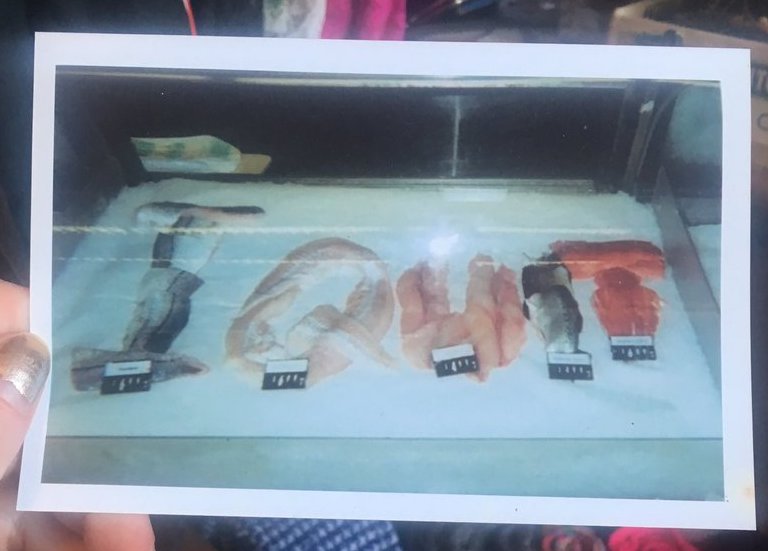
Do you remember the person who wrote out “I QUIT” in cod, haddock, and tilapia? A photo of the incident has been obtained!

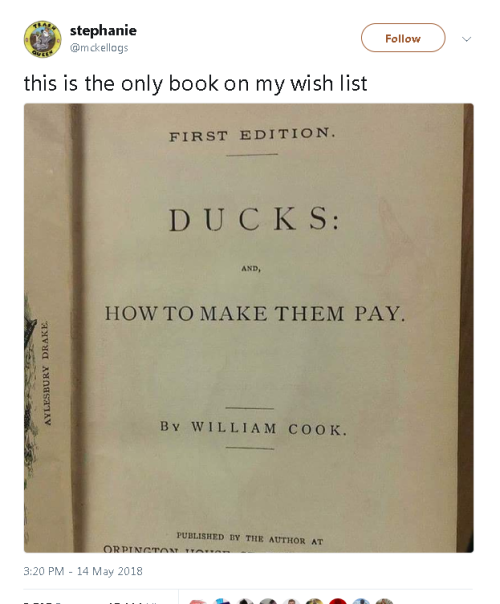
Also, in late-breaking news, two photos of the ducks from this morning’s post have also been obtained.

I don’t think there’s anything to talk about after that, but it’s still the Friday open thread! The comment section on this post is open for discussion with other readers on anything work-related that you want to talk about. If you want an answer from me, emailing me is still your best bet*, but this is a chance to talk to other readers.

* If you submitted a question to me recently, please don’t repost it here, as it may be in the to-be-answered queue.

open thread – January 11-12, 2019 was originally published by Alison Green on Ask a Manager.

07 Jan 14:45

The 2018 kottke.org Holiday Gift Guide

by Jason Kottke
Kate

oh these are lovely! that jeff goldblum pillow, lol

Gift Guide 2018

As I’ve done for the last five years, I’ve spent the past few weeks scouring the internet for the best 2018 gift guides and pulled a few of the most interesting items from each. Think of it as a curated meta-guide for your holiday giving. Let’s dig in.

Charitable giving always tops this list. Check out GiveWell and Charity Navigator to find organizations that will put your money to the best use. (Read up on big charities like Red Cross and Salvation Army…they are often not the best use of your charity dollar.) GiveDirectly sends money directly to people living in extreme poverty around the world. I always recommend Volunteer Match to find local volunteer opportunities but they force you to log in now, so just an FYI. Alternate sites for volunteering are the AARP’s Create the Good and United Way. If you’re giving to the local food shelf, skip buying food yourself for the donation bin and set up a direct debit or CC payment instead…that will put your donation to better use.

If you’re looking for great gift ideas for kids (and/or Toys for Tots), the best place to look remains the excellent The Kid Should See This Gift Guide. I use this almost exclusively for all of my kid-related holiday and birthday shopping. This year’s stand-out items include The littleBits Space Rover Inventor Kit (littleBits stuff is *huge* in our household), The Atlas Obscura Explorer’s Guide for the World’s Most Adventurous Kid (got this for my daughter for her birthday), SET (a pal also recently recommended this game), and a set of four board books including Quantum Physics for Babies. And whoa, the Harry Potter Coding Kit from Kano? Accio Coding Kit!

The Accidental Shop is a collection of products I’ve previously linked to on kottke.org. It is heavy on books…I’d particularly recommend Emily Wilson’s The Odyssey, Small Fry by Lisa Brennan-Jobs, and Arbitrary Stupid Goal by Tamara Shopsin. Oh, and I’m flying through Madeline Miller’s Circe right now…what a read!

For those of you into food, you’ve probably already have an Instant Pot and Anova Sous Vide Cooker, so check out the gift guides from Eater, Food52, Serious Eats, Kitchn, and Ruth Reichl. Among their recommendations are a Korean fermeting crock (for making kimchi), the Five Two double-sided cutting board, Salt, Fat, Acid, Heat by Samin Nosrat, a Taco Passport, Anita Lo’s well-regarded Solo: A Modern Cookbook for a Party of One, and aged fish sauce (!!).

I love my Kindle Paperwhite and there’s an updated version this year that’s waterproof, lighter & thinner, has Bluetooth for audiobooks, and has more storage.

I’ve seen several guides touting so-called “inexpensive” gifts and then going on to recommend $50 bars of soap, so Slate’s The Good Enough List is a welcome effort. They’ve recommended a bunch of items that are almost as good as the best available options but more affordable. My favorite pick is their rec for a $7 pedometer over a Fitbit or Apple Watch. They also highlight the Gulliver crib from Ikea, which I have taken apart and put back together approximately 30 times. It’s a basic, durable, simple, and fantastic crib.

The kids and I have been playing two games pretty heavily this year: Sushi Go Party and Harry Potter Hogwarts Battle. I really like Hogwarts Battle because it’s cooperative — all the players play together against the villans on the board and it’s fun to strategize how to allocate tokens and hearts to get everyone through the danger areas.

The 2018 Engineering Gift Guide from Purdue University is full of “gift ideas that engage girls and boys in engineering thinking and design”. Their picks this year include Duct Tape Engineer and Kiwi Crate’s monthly subscription service for project kits (which a friend also recently recommended).

The Astronomers Without Borders OneSky Reflector Telescope is probably the best $200 telescope you can buy. I got one this summer and it’s been great for looking at the Moon, planets, and even some nearby galaxies.

Gift Guide 2018

My kids would flip out if I bought the family a Nintendo Switch with Mario Kart 8 Deluxe but I don’t think it’s going to happen. [crying emoji]

Whenever I need to buy something for around the house, Wirecutter is the first (and often only) place I go for recommendations. From their Gifts We Want to Give in 2018, I found Blue Planet II (the *perfect* family holiday entertainment), a Carhartt tool bag, fleece blankets from Uniqlo, and a pack of Blackwing pencils.

Remember Viewmaster? Now you can Create Your Own Reel Viewer.

The 2018 Christmas Catalog from Tools & Toys is blissfully heavy on the nerdy stuff. Their picks include an instant photo printer for your iPhone, the Field Cast Iron Skillet, these enamel steel signs from Best Made, and this clever magnetic wrist band for keeping track of errant screws and parts while you’re doing projects. And Lego has a Voltron kit? Holy nostalgia.

Every year I “recommend” this 55-gallon drum of personal lubricant because why would anyone actually buy this? (Have any of you ever bought this? Report back, please!)

I recently did a round-up of Adult Nonfiction Adapted for Younger Readers, including The Omnivore’s Dilemma by Michael Pollan and Howard Zinn’s A Young People’s History of the United States.

Recommended this last year but gonna repeat: a Christmas storybook based on Die Hard. Self-recommending. See also this sequined Jeff Goldblum pillow.

Some friends of mine love this Ooni portable pizza oven…it can cook a pizza at 932°F in just 60 seconds.

I’m lucky to know so many people who have written books or built companies that sell great products. Here are some of them: Advencher, prints from Mari Andrew (a rare occurrence), This Book is a Planetarium, Legal Nomads, 20x200, Tattly, The Bloody Mary, SDR Traveller, Cora Ball, Austin Kleon, Happy Cooking Hospitality, you think you know me, Gracie’s Ice Cream, Kingston Stockade FC, Storyworth, The Aviary Cocktail Book, Chris Piascik, Salty Avocado, Hoefler & Co, Tinybop, Fat Gold, Hella Cocktail Co, Storq maternity wear, Milkmade, and Field Notes.

From The Colossal Shop, multi-colored toy soldiers doing yoga. See also this maddening puzzle…the pieces change colors depending on how you look at them.

My daughter endlessly rereads her Good Night Stories for Rebel Girls books (sequel). I Am A Rebel Girl Journal is their newest product and just might be under our family tree this year.

Socks inspired by Eric Carle’s Very Hungry Caterpillar? Yes, please. And they make them for adults too! The same company makes all sorts of book-related products, from Harry Potter t-shirts to Kurt Vonnegut necklaces.

From the NY Times’ collection of gift guides, a US National Parks annual pass (I put mine to good use this summer), a phone mount for your car (I got one of these this summer and love it), and these Jabra wireless earbuds that the Wirecutter rates as better than Apple AirPods. Oh and Bananagrams.

From Curbed’s 21 holiday gifts for people who like nice things, this ramen puzzle and a radio designed by Charles and Ray Eames in 1946 but was never produced (until now).

More gift guides: Cup of Jo, Canopy, Engadget (tech), The Guardian, Buzzfeed, Daily Nous (philosophy), Tom’s Guide (tech), and Red Tricycle (kids).

My gift guides from the last few years have yet more ideas: 2017, 2016, 2015, 2014, and 2013.

Update: A few miscellaneous gifts suggested by readers. Island Creek’s Oyster of the Month Club. A retro SNES game console from Ghostly and Analogue. From Richard Eaglespoon’s 2018 Holiday Gift Guide, these small metal tins of Malden’s sea salt for bringing to restaurants.

I’ve also posted my yearly round-up of best books of the year. Among the most frequent recommendations for 2018 are Madeline Miller’s Circe, David Blight’s biography of Frederick Douglass, Educated by Tara Westover, and How to Change Your Mind: The New Science of Psychedelics by Michael Pollan.

Update: I wasn’t going to update this anymore but I’m making an exception for this: a firelog that smells like Kentucky Fried Chicken when you burn it. !!! Only $18.99 (incl s&h).

Tags: kottke.org
18 Dec 23:37

The Yoda of Silicon Valley

Kate

i'm just here for the cat photo.

Image
Donald Knuth at his home in Stanford, Calif. He is a notorious perfectionist and has offered to pay a reward to anyone who finds a mistake in any of his books. CreditCreditBrian Flaherty for The New York Times

Profiles in science

Donald Knuth, master of algorithms, reflects on 50 years of his opus-in-progress, “The Art of Computer Programming.”

Donald Knuth at his home in Stanford, Calif. He is a notorious perfectionist and has offered to pay a reward to anyone who finds a mistake in any of his books. CreditCreditBrian Flaherty for The New York Times

For half a century, the Stanford computer scientist Donald Knuth, who bears a slight resemblance to Yoda — albeit standing 6-foot-4 and wearing glasses — has reigned as the spirit-guide of the algorithmic realm.

He is the author of “The Art of Computer Programming,” a continuing four-volume opus that is his life’s work. The first volume debuted in 1968, and the collected volumes (sold as a boxed set for about $250) were included by American Scientist in 2013 on its list of books that shaped the last century of science — alongside a special edition of “The Autobiography of Charles Darwin,Tom Wolfe’s “The Right Stuff,” Rachel Carson’s “Silent Spring” and monographs by Albert Einstein, John von Neumann and Richard Feynman.

With more than one million copies in print, “The Art of Computer Programming” is the Bible of its field. “Like an actual bible, it is long and comprehensive; no other book is as comprehensive,” said Peter Norvig, a director of research at Google. After 652 pages, volume one closes with a blurb on the back cover from Bill Gates: “You should definitely send me a résumé if you can read the whole thing.”

The volume opens with an excerpt from “McCall’s Cookbook”:

Here is your book, the one your thousands of letters have asked us to publish. It has taken us years to do, checking and rechecking countless recipes to bring you only the best, only the interesting, only the perfect.

Inside are algorithms, the recipes that feed the digital age — although, as Dr. Knuth likes to point out, algorithms can also be found on Babylonian tablets from 3,800 years ago. He is an esteemed algorithmist; his name is attached to some of the field’s most important specimens, such as the Knuth-Morris-Pratt string-searching algorithm. Devised in 1970, it finds all occurrences of a given word or pattern of letters in a text — for instance, when you hit Command+F to search for a keyword in a document.

[Like the Science Times page on Facebook. | Sign up for the Science Times newsletter.]

Now 80, Dr. Knuth usually dresses like the youthful geek he was when he embarked on this odyssey: long-sleeved T-shirt under a short-sleeved T-shirt, with jeans, at least at this time of year. In those early days, he worked close to the machine, writing “in the raw,” tinkering with the zeros and ones.

“Knuth made it clear that the system could actually be understood all the way down to the machine code level,” said Dr. Norvig. Nowadays, of course, with algorithms masterminding (and undermining) our very existence, the average programmer no longer has time to manipulate the binary muck, and works instead with hierarchies of abstraction, layers upon layers of code — and often with chains of code borrowed from code libraries. But an elite class of engineers occasionally still does the deep dive.

“Here at Google, sometimes we just throw stuff together,” Dr. Norvig said, during a meeting of the Google Trips team, in Mountain View, Calif. “But other times, if you’re serving billions of users, it’s important to do that efficiently. A 10-per-cent improvement in efficiency can work out to billions of dollars, and in order to get that last level of efficiency, you have to understand what’s going on all the way down.”

Image
Dr. Knuth at the California Institute of Technology, where he received his Ph.D. in 1963.CreditJill Knuth

Or, as Andrei Broder, a distinguished scientist at Google and one of Dr. Knuth’s former graduate students, explained during the meeting: “We want to have some theoretical basis for what we’re doing. We don’t want a frivolous or sloppy or second-rate algorithm. We don’t want some other algorithmist to say, ‘You guys are morons.’”

The Google Trips app, created in 2016, is an “orienteering algorithm” that maps out a day’s worth of recommended touristy activities. The team was working on “maximizing the quality of the worst day” — for instance, avoiding sending the user back to the same neighborhood to see different sites. They drew inspiration from a 300-year-old algorithm by the Swiss mathematician Leonhard Euler, who wanted to map a route through the Prussian city of Königsberg that would cross each of its seven bridges only once. Dr. Knuth addresses Euler’s classic problem in the first volume of his treatise. (He once applied Euler’s method in coding a computer-controlled sewing machine.)

Following Dr. Knuth’s doctrine helps to ward off moronry. He is known for introducing the notion of “literate programming,” emphasizing the importance of writing code that is readable by humans as well as computers — a notion that nowadays seems almost twee. Dr. Knuth has gone so far as to argue that some computer programs are, like Elizabeth Bishop’s poems and Philip Roth’s “American Pastoral,” works of literature worthy of a Pulitzer.

He is also a notorious perfectionist. Randall Munroe, the xkcd cartoonist and author of “Thing Explainer,” first learned about Dr. Knuth from computer-science people who mentioned the reward money Dr. Knuth pays to anyone who finds a mistake in any of his books. As Mr. Munroe recalled, “People talked about getting one of those checks as if it was computer science’s Nobel Prize.”

Dr. Knuth’s exacting standards, literary and otherwise, may explain why his life’s work is nowhere near done. He has a wager with Sergey Brin, the co-founder of Google and a former student (to use the term loosely), over whether Mr. Brin will finish his Ph.D. before Dr. Knuth concludes his opus.

At age 19, Dr. Knuth published his first technical paper, “The Potrzebie System of Weights and Measures,” in Mad magazine. He became a computer scientist before the discipline existed, studying mathematics at what is now Case Western Reserve University in Cleveland. He looked at sample programs for the school’s IBM 650 mainframe, a decimal computer, and, noticing some inadequacies, rewrote the software as well as the textbook used in class. As a side project, he ran stats for the basketball team, writing a computer program that helped them win their league — and earned a segment by Walter Cronkite called “The Electronic Coach.”

During summer vacations, Dr. Knuth made more money than professors earned in a year by writing compilers. A compiler is like a translator, converting a high-level programming language (resembling algebra) to a lower-level one (sometimes arcane binary) and, ideally, improving it in the process. In computer science, “optimization” is truly an art, and this is articulated in another Knuthian proverb: “Premature optimization is the root of all evil.”

Eventually Dr. Knuth became a compiler himself, inadvertently founding a new field that he came to call the “analysis of algorithms.” A publisher hired him to write a book about compilers, but it evolved into a book collecting everything he knew about how to write for computers — a book about algorithms.

Dr. Knuth in 1981, looking at the 1957 Mad magazine issue that contained his first technical article. He was 19 when it was published.CreditJill Knuth
“The Art of Computer Programming,” volumes 1-4. “Send me a résumé if you can read the whole thing,” Bill Gates wrote in a blurb.CreditBrian Flaherty for The New York Times

“By the time of the Renaissance, the origin of this word was in doubt,” it began. “And early linguists attempted to guess at its derivation by making combinations like algiros [painful] + arithmos [number].’” In fact, Dr. Knuth continued, the namesake is the 9th-century Persian textbook author Abū ‘Abd Allāh Muhammad ibn Mūsā al-Khwārizmī, Latinized as Algorithmi. Never one for half measures, Dr. Knuth went on a pilgrimage in 1979 to al-Khwārizmī’s ancestral homeland in Uzbekistan.

When Dr. Knuth started out, he intended to write a single work. Soon after, computer science underwent its Big Bang, so he reimagined and recast the project in seven volumes. Now he metes out sub-volumes, called fascicles. The next installation, “Volume 4, Fascicle 5,” covering, among other things, “backtracking” and “dancing links,” was meant to be published in time for Christmas. It is delayed until next April because he keeps finding more and more irresistible problems that he wants to present.

In order to optimize his chances of getting to the end, Dr. Knuth has long guarded his time. He retired at 55, restricted his public engagements and quit email (officially, at least). Andrei Broder recalled that time management was his professor’s defining characteristic even in the early 1980s.

Dr. Knuth typically held student appointments on Friday mornings, until he started spending his nights in the lab of John McCarthy, the founder of artificial intelligence, to get access to the computers when they were free. Horrified by what his beloved book looked like on the page with the advent of digital publishing, Dr. Knuth had gone on a mission to create the TeX computer typesetting system, which remains the gold standard for all forms of scientific communication and publication. Some consider it Dr. Knuth’s greatest contribution to the world, and the greatest contribution to typography since Gutenberg.

This decade-long detour took place back in the age when computers were shared among users and ran faster at night while most humans slept. So Dr. Knuth switched day into night, shifted his schedule by 12 hours and mapped his student appointments to Fridays from 8 p.m. to midnight. Dr. Broder recalled, “When I told my girlfriend that we can’t do anything Friday night because Friday night at 10 I have to meet with my adviser, she thought, ‘This is something that is so stupid it must be true.’”

When Knuth chooses to be physically present, however, he is 100-per-cent there in the moment. “It just makes you happy to be around him,” said Jennifer Chayes, a managing director of Microsoft Research. “He’s a maximum in the community. If you had an optimization function that was in some way a combination of warmth and depth, Don would be it.”

Dr. Knuth discussing typefaces with Hermann Zapf, the type designer. Many consider Dr. Knuth's work on the TeX computer typesetting system to be the greatest contribution to typography since Gutenberg.CreditBettmann, via Getty Images

Dr. Knuth lives in Stanford, and allowed for a Sunday visitor. That he spared an entire day was exceptional — usually his availability is “modulo nap time,” a sacred daily ritual from 1 p.m. to 4 p.m. He started early, at Palo Alto’s First Lutheran Church, where he delivered a Sunday school lesson to a standing-room-only crowd. Driving home, he got philosophical about mathematics.

“I’ll never know everything,” he said. “My life would be a lot worse if there was nothing I knew the answers about, and if there was nothing I didn’t know the answers about.” Then he offered a tour of his “California modern” house, which he and his wife, Jill, built in 1970. His office is littered with piles of U.S.B. sticks and adorned with Valentine’s Day heart art from Jill, a graphic designer. Most impressive is the music room, built around his custom-made, 812-pipe pipe organ. The day ended over beer at a puzzle party.

Puzzles and games — and penning a novella about surreal numbers, and composing a 90-minute multimedia musical pipe-dream, “Fantasia Apocalyptica” — are the sorts of things that really tickle him. One section of his book is titled, “Puzzles Versus the Real World.” He emailed an excerpt to the father-son team of Martin Demaine, an artist, and Erik Demaine, a computer scientist, both at the Massachusetts Institute of Technology, because Dr. Knuth had included their “algorithmic puzzle fonts.”

“I was thrilled,” said Erik Demaine. “It’s an honor to be in the book.” He mentioned another Knuth quotation, which serves as the inspirational motto for the biannual “FUN with Algorithms” conference: “Pleasure has probably been the main goal all along.”

But then, Dr. Demaine said, the field went and got practical. Engineers and scientists and artists are teaming up to solve real-world problems — protein folding, robotics, airbags — using the Demaines’s mathematical origami designs for how to fold paper and linkages into different shapes.

Of course, all the algorithmic rigmarole is also causing real-world problems. Algorithms written by humans — tackling harder and harder problems, but producing code embedded with bugs and biases — are troubling enough. More worrisome, perhaps, are the algorithms that are not written by humans, algorithms written by the machine, as it learns.

Programmers still train the machine, and, crucially, feed it data. (Data is the new domain of biases and bugs, and here the bugs and biases are harder to find and fix). However, as Kevin Slavin, a research affiliate at M.I.T.’s Media Lab said, “We are now writing algorithms we cannot read. That makes this a unique moment in history, in that we are subject to ideas and actions and efforts by a set of physics that have human origins without human comprehension.” As Slavin has often noted, “It’s a bright future, if you’re an algorithm.

Dr. Knuth at his desk at home in 1999.CreditJill Knuth
A few notes.CreditBrian Flaherty for The New York Times

All the more so if you’re an algorithm versed in Knuth. “Today, programmers use stuff that Knuth, and others, have done as components of their algorithms, and then they combine that together with all the other stuff they need,” said Google’s Dr. Norvig.

“With A.I., we have the same thing. It’s just that the combining-together part will be done automatically, based on the data, rather than based on a programmer’s work. You want A.I. to be able to combine components to get a good answer based on the data. But you have to decide what those components are. It could happen that each component is a page or chapter out of Knuth, because that’s the best possible way to do some task.”

Lucky, then, Dr. Knuth keeps at it. He figures it will take another 25 years to finish “The Art of Computer Programming,” although that time frame has been a constant since about 1980. Might the algorithm-writing algorithms get their own chapter, or maybe a page in the epilogue? “Definitely not,” said Dr. Knuth.

“I am worried that algorithms are getting too prominent in the world,” he added. “It started out that computer scientists were worried nobody was listening to us. Now I’m worried that too many people are listening.”

08 Dec 20:34

The 10 Best Songs of 2018

by Vulture Editors
Kate

nate, thoughts???

There is no denying that we currently have more music immediately available to us than at any other point in the history of recorded music. This is a gift and a curse: There’s so much good stuff out there, but there’s also just so much stuff. As such, top-ten lists like this serve a dual purpose. On one hand, these are ten songs that altered the course of popular music as we understand it, and the hope here is to emphasize that fact. On the other hand, these are also just very good songs, even devoid of the context of where they sit in the 2018 musical canon. These are either the very best songs of the year, or ten of many very best songs of the year, but they’re here because they are undeniable jams, or they said something about who we are or the world we live in. In a couple cases, they just held up really well.

10. The Carters, “Apeshit”

In Beyoncé and Jay-Z’s world, black opulence isn’t a luxury but the standard. “Apeshit,” a “Niggas in Paris” for 2018 where Bey out-raps both members of the original Throne, outlines its master plan for dismantling the racial class divide brazenly: trade debt for equity, calculate your worth then triple it, and flex accordingly. Who knew you could have the run of the Louvre until Bey and Hov unlocked the doors? “Apeshit” functions as a petri dish of aspirational candy for a generation to devour, a gold mine of Migos-brand gaudiness and one-percenter reverie that remains in awe of its own excess (“I can’t believe we made it,” the Carters repeat). That Bey can reduce her own rap legend of a husband into background hype man for her own dizzying bars (“She went crazy!” he ad-libs) only further serves their point: The time for abiding by limitations is over. —Dee Lockett

9. Travis Scott ft. Drake, “Sicko Mode”

No one was surprised that “Sicko Mode” was good. It’s Drake and Travis Scott in top form: Drake manages to make reminiscing about how he used to take the bus to dances in high school, but now takes Xanax to go to sleep on the plane, sound like the biggest come-up in the world, instead of just, like, some adult shit that happens because everyone — including Drake — is anxious and tired all the time. But “Sicko Mode” ultimately shines as the centerpiece of Astroworld, an album that is credited to Travis Scott alone, but is actually more of an ensemble piece that welds blown-out bass to blurry organ runs and sucks the entire history of hip-hop into a psychedelic universe grounded by absolutely nothing at all. “Sicko Mode” changes up so much that it sounds like it’s a million minutes long, and that isn’t a bad thing. —Sam Hockley-Smith

8. The 1975, “Love It If We Made It”

If every generation needs its clarion call to address the times, Matty Healy won’t give it to this one the way history’s used to. The 1975’s “Love It If We Made It” takes stock of all that is wrong with the world in the language that speaks loudest to this Zeitgeist: by shouting, sans context, references to the headlines of the last two years. From Lil Peep’s death, to the Syrian refugee crisis, to quoting Donald Trump praising Kanye West, and also the time Trump said “moved on her like a bitch,” our societal grievances are all presented in one giant clusterfuck of a scrawl. But what to do about it? This is not a diagnosis with an antidote. Healy proposes no action, just sentiment: hope that we’ll make it out of this alive. It’s all there’s really left to say. —D.L.

7. Pusha T, “If You Know You Know”

A great bane of social media is that too many people using it know too little about the history of what they’re speaking on. Case in point: Pusha T, whom the uninitiated thought to be acting out of pocket when he dropped the bomb about Drake’s secret son in his juicy diss track over the summer. How did this guy, a supposed relic of the Clipse days to anyone under the age of, say, 25, acquire that kind of intel? “If You Know You Know” won’t answer that (though he did eventually reveal his sources) because Push is the rap type whose old-school ethos trades in quiet, calculated movements, the code of the streets he used to run. If you know Push’s story, then you’ll know how he’s always finessed the game to put himself in the position of those in the know. If you don’t, you’ll just have to take his word for it. —D.L.

6. Kacey Musgraves, “Slow Burn”

There’s a specific quality to a Kacey Musgraves turn of phrase that she’s perfected over the years: featherweight verses heavy with emotion. “Slow Burn” comes at you like a long exhale after a lifetime of breathing in hot air. “Good in a glass, good on green / good when you’re putting your hands all over me” are maybe all things you’re not supposed to say when you’re a woman in country music, but Musgraves has never cared much for tradition and gatekeeping. If she wants to take the edge off life a bit — and shed some of the self-seriousness of this genre while she’s at it — by sparking up a blunt paired with a stiff glass of whiskey, she will. Her life, her career, on her terms. Musgraves knows exactly who she is and what kind of artist she wants to be and, amazingly, even so, will keep pace with everyone else while they’re still catching up to where she’s at: “Taking my time, let the world turn.” —D.L.

5. Robyn, “Human Being”

You know those videos of those Boston Dynamics robots that all for some reason look like large dogs and move so fluidly that for a brief second you can envision a very near future (maybe tomorrow?) where they take over and suddenly America is run by a robot with four legs and no discernible face? “Human Being,” a song about a probably not-so-distant-future (also maybe tomorrow?) where AI is the majority, and run-of-the-mill humans with hearts and blood, etc. are the minorities, is not about those robots, but if it were then it would probably lose some of its emotional resonance, of which there is quite a bit. To wit: If you listen to this song without knowing that Robyn wrote it after reading Sapiens: A Brief History of Humankind and began to compare that book’s description of humans’ relationship to animals to a hypothetical relationship we might have with AI, you’ll hear it as an affecting piece about emotional disconnect and what happens when we forget about the interior histories of those around us. In other words, it’s about the future, but it’s also about right now. —S.H-S.

4. Mitski, “Nobody”

Written while Mitski was on a very long tour and was stranded in Malaysia over the holidays due to the evils of capitalism (very expensive plane tickets), and a misguided idea that because she’d spent a lot of time there as a kid she’d feel at home as an adult, “Nobody” is about being completely alone. It is also about time-zone-based alienation and the primal desire to just have someone around when you’re at your loneliest. The disco backbeat prevents it from veering into mopey territory, and also helps make a case for the song as an instant classic. You know the kind: It’s new, but may as well have been a radio staple for the last 40 years. —S.H-S.

3. Juice WRLD, “Lucid Dreams”

If Juice WRLD never makes another great song, he will always have “Lucid Dreams,” which crashes the best (and a couple of the worst) parts of the Ghosts of Emo’s Past with a fluid, singsong flow that sounds like a run-on sentence. Yes, this song is built on a sample of Sting’s “Shape of my Heart,” but the appeal of the song is all Juice WRLD. It’s not what he’s saying — which is at times rote (“You were my everything / Thoughts of a wedding ring.” Come on, man!) and at other times heartbreaking (“I take prescriptions to make me feel okay.” That vocal lilt!) Basically, it’s not perfect, but it is still great. —S.H-S.

2. Lady Gaga and Bradley Cooper, “Shallow”

We don’t need to wonder about when Bradley Cooper first knew he had a hit on his hands, because in interviews he talks about A Star Is Born like it was the movie he was destined to make, and we were all destined to love with the same furor the entire population of the year 1997 had for Titanic. Still, it’s surprising that the songs were, well, so good. “Shallow” is the song that everyone you know loves: your old college roommate, that snobby dude who cloaks his love of big hits in karaoke performances he pretends are ironic, your mom, her sister, your dad, and probably your small child, pet, fish, or other living thing whose thoughts are not easily communicable, too. “Shallow” is undeniably the hit of the movie, and a major song in general, and it’s due to the interplay between Lady Gaga and Cooper. Gaga in particular soars (is there a more triumphant moment than around 2:33 into the track?), but it’s a testament to the power of this song that even the fake crowd noise sounds legit. Cooper may have manufactured the triumphant moment as a plot point in his movie, but it has officially crossed over into reality. —S.H-S.

1. Ariana Grande, “Thank U, Next”

Following a year that culturally conditioned people to feed off of spite and vengeance, Ariana Grande decided for the public good to end it with an alternative: maturity. The past year and a half for Grande has been defined by more tragedy than most will encounter in a lifetime, from the Manchester massacre to the sudden death of her ex-boyfriend Mac Miller to the fast rise and faster fall of her relationship with former fiancé Pete Davidson. She’d already released one album this year, Sweetener, trying to rebound from the bombing, but then every other shoe that could drop did so with a seismic thud. Musicians create to pull through, so Ari returned to the studio to make a whole other forthcoming album, Thank U, Next. Its title track is the anthem 2018 deserves: Rather than zap the pain from memory, Grande assesses the damage — specifically, her history with love — and rebuilds from the ground up, rekindling her most crucial relationship: Ariana and Ariana. Though she gives her exes their flowers, do not mistake this for a song about men; it’s dedicated to the woman at the eye of their storm who survived. So 2018 will go down as the year that Ariana Grande entered pop immortality. What can she possibly do next? —D.L.

06 Dec 22:02

Pizza Socks Deliver On Style

by Chris Durso
Kate

OMG any jumbos read this headline and immediately think: PIZZA DAYS?!

Want to deliver the best gift this year? Consider a box of Pizza Socks. Brought to us by Etsy shop, MegCyprianStore, the footwear is available in a variety of toppings for the footsies. They’re also available by the pie (4 pairs) or by the slice (1 pair). Either way, the pizza socks will make someone […]
04 Dec 18:38

The Heart

by swissmiss
Kate

Thanks to all my fellow TOR folks for so generously giving their shares!

“The Heart that gives, gathers.”
— Tao Te Ching

03 Dec 23:04

Photo

Kate

mood


01 Dec 19:29

marius-pont-de-bercy:

30 Nov 22:28

Advent of Code 2018

Kate

this looks like work I miss the days where i could punch out a paper window and get a waxy chocolate santa.

The first puzzles will unlock on December 1st at midnight Eastern Time. See you then!

25

24

23

22

21

20

19

18

17

16

15

14

13

12

11

10

9

8

7

6

5

4

3

2

_ _ __ ___ __ _ _ 1

29 Nov 19:03

demilardner:well, @jame.r.johnson has pissing done is haven’t...

Kate

50 centaur


demilardner:

well, @jame.r.johnson has pissing done is haven’t they. that’s my 50 Centaur on some real damn skin.
#knifesale
https://www.instagram.com/p/Bpv8AhClLpJ/?utm_source=ig_tumblr_share&igshid=dresf7ts7ndg

28 Nov 18:18

ask the readers: what past work behavior do you now cringe over?

by Ask a Manager
Kate

(It's an AAM kind of day.) Interested in TOR's responses to this one. A lot of the comments involve dress code infractions, and being a presumptuous whippersnapper with lots and lots of "helpful" ideas, both of which I have totally been guilty of.

Thinking about my early workplace interactions, I placed too high a value on office Drama Llamas' opinions, and was just super ignorant to the larger workings of office politics. I would listen aghast to stories relayed by folks who were all too eager to spill the tea to newbies, and gullibly assume they had the full story. Took a while to learn to apply a little skepticism to their stories.

A reader writes:

The more I read your column, the more I cringe because I recognize various periods in my work life where I did the sorts of things AAM readers write in about without realizing the impact my actions may have had. Eek. And since your post soliciting weird intern stories, I’ve been wondering about other AAM readers’ stories re: mishandling work situations and/or being the weirdo at work beyond the intern stage. 

I guess the idea of a group confessional appeals to me, because if my newfound embarrassment can amuse others, it could take the sting out of not being to change the past.

This seems perfect for a Thursday “ask the readers” question. So, have it: What did you do at work in the past that you now cringe over?

ask the readers: what past work behavior do you now cringe over? was originally published by Alison Green on Ask a Manager.

28 Nov 18:07

This Winter Coat! OMG!

by swissmiss
Kate

channel your inner ezra miller.

This sculptural winter coat by Moncler stopped me in my tracks. There’s also a dress that goes with it. I love EVERYTHING about this!