Across the country, municipal governments have signed contracts with police unions including provisions that shield officers from punishment for brutal behavior as well as from legitimate complaints by the citizens they are supposed to serve.
That may soon change, as public outrage over police killings of civilians is ratcheting up pressure on elected officials to radically revise police contracts that make it almost impossible to bring officers to justice.
The most striking case in point is Chicago, which has been roiled by a police scandal stemming from a cover-up in the case of a 17-year-old named Laquan McDonald, who was executed by a police officer nearly two years ago.
What's changed? Even old white folks are becoming scared of the cops. If it shows just how bad this problem has gotten, it's also a bitter reminder of what it takes to get something done about it.
OnePlus phone owners can probably agree that the company needs to work on faster OS updates. (It's a safe bet: pretty much everyone can agree on that, including Nexus owners.) OnePlus is trying. To that end, the company has announced that its two disparate Android software builds will be merged into one: Oxygen OS and Hydrogen OS. I'll pause for a moment to allow the chemistry nerds to make an H2O joke before we continue.
This year’s inaugural Dragon Awards were handed out today at Dragon Con in Atlanta, Georgia. The winners show a remarkable contrast to the recipients of this year’s Hugo Award winners, one of the major awards in science fiction and fantasy literature.
The Dragon Awards were instituted earlier this year in conjunction with the convention's 30th anniversary. The award is designed to be a "true reflection of the works that are genuinely most beloved by the core audience," the larger fan world, rather than the core literary circles that help choose the Nebula Awards and Hugo Awards. The Dragon Awards opened nominations and voting to the general public.
Nominations for the Dragon Awards were open to the general public
I watch YouTube like a lot of people watch television. I also love cooking shows, so this week I’m putting both together to share some great YouTube channels that will help you get into the kitchen and make something delicious.
A combination of how-tos and interesting food documentaries and shorts make up the official Bon Appetit YouTube channel, and all of them are interesting. You may not always agree with the techniques or the recipes (I certainly don’t—their approach to grilling pizza and their entire “kids try” series are often overwrought to the point of being eyeroll-worthy) but many of them are solid, enough that we’ve highlighted some of their tips before.
Epicurious’s YouTube channel is mostly recipes and how-tos, complete with a little pop flair here and there and some Game of Thrones inspired recipes, among other fun topics. From basics like how to roast broccoli or make crispy smashed potatoes to more interesting walkthroughs like their trip to a Japanese supermarket (shown above), you’ll find something that’ll either show you how to make something delicious, or inspire you to make something delicious yourself.
The folks behind ChefSteps are awesome people, and we’ve highlighted a number of their tips—largely because their approach to cooking mirrors ours: low-effort, big-impact, and great results through solid technique and technology where applicable. So it shouldn’t be a surprise that we’ve posted some of their sous vide videos, like their super-juicy burger recipe (shown above) or how to get a great crust on a sous vide steak.
Tastemade is one of my favorite cooking channels, partially because they manage to combine straight cooking tutorials with interesting and fun travel and cooking shows in a way that even the bigwigs at Food Network could take a lesson from. Some of my other favorites (below) are channels I subscribed to because I loved the personalities I discovered at Tastemade. From the fun and whimsical Alice in Paris series to the hilarious and obsessive All The Pizza, to the very very sponsored (but still fun to watch) Local Flight (seriously, I’d love to see what some of those bartenders could do if they weren’t locked into a Grey Goose partnership), you’re bound to find a series you’ll love.
YSAC is more than just a cooking channel, it’s a lifestyle. Go in expecting comedy—not cooking tutorials, and you’ll be fine. Honestly, I feel bad even trying to explain the channel here, because I feel like anything I say will diminish its hilarity and greatness. Start with the cold brew coffee episode (above), but really, you can’t go wrong. I may have highlighted their “kitchen hacks” episode in a recent Brain Buffet because I love it so much. If you have time, start from the beginning, catch up, and then salivate waiting for more.
Julie Nolke, the face of Feeling Peckish, started the channel to make recipes inspired by movies, and while I’m not nearly as much as a movie buff as she is, the skits she does before each recipe are hilarious and fun. I found out about Julie via Tastemade, and had to subscribe to her channel—and just in time too, since she’s working on her own movie project, which is shaping up to be amazing. As for cooking though, her Batman/Superman pizza video is hilarious, and her Straight Outta Compton cocktails are drinks I would absolutely put back.
The guys behind SortedFood have been making cooking videos for a long time, and they’re a combination of personality-driven hilarity and super informative recipe demonstration. They’re based in the UK, so if you ever watch their videos and wonder why they make some of the ingredient choices they do—or why their classic potato salad really is kind of a salad and has a lot of green in it—that’s why. Heck, we just posted their grilling hacks video not too long ago.
Cooking with Dog has been on YouTube since....well, before YouTube was the YouTube we know today, and has been introducing audiences to Japanese food and cooking ever since. Chef and her toy poodle Francis have been narrating recipes for years, going on trips together, and have been demonstrating amazing cooking technique all at the same time. The playlists page is broken up into all sorts of recipe types you’ll want to explore, including the out-of-the-kitchen Go! Francis! series that’ll teach you a few things about Japanese food culture.
The story of how I came to admire Jen Phanomrat is a funny one, and starts with Tastemade (where she also posts recipes). I adored her Hungry AF series at Tastemade, and when she started doing hosted video there as well, I started watching everything she did. Then I found her YouTube channel and subscribed and the rest is history. Between her recipes, cooking technique, and hilarious puns and Leo’s incredible camerawork shooting everything she does, you have some of the best food and cooking videos to grace YouTube.
Oh, we should point out that this list is in no particular order. Personally, I love all of these channels and subscribe to each and every one. So should you.
Lifehacker’s Weekend Roundup gathers our best guides, explainers, and other posts on a certain subject so you can tackle big projects with ease. For more, check out our Weekend Roundup and Top 10 tags.
Like Garmin, TomTom’s been getting pretty aggressive with its wearable strategy. No wonder, really – it’s a space that’s seen exponential growth over the past few years, as in-car GPS systems have, at best, flatlined, thanks to the near ubiquity of smartphones. But TomTom’s not giving up the ghost. The company’s been playing around in the space to see what,… Read More
If you love collecting virtual cats and you have Android Nougat, you’re in luck: Google dropped a cat-collecting easter egg called Android Neko into the latest version of Android, and while it’s not nearly as fun as Neko Atsume, you do get to collect cats by putting out treats.
First let’s set your expectations. Android Neko isn’t so much a “game” as it’s just a function of the operating system. You put out food, wait for a cat to show up, and the cat is added to your collection. It’s passive fun, but there’s no “game” screen, no play area to browse, no treats or toys to buy. It’s not going to replace your favorite cat collecting game—but it is neat that Google rolled this into the OS.
We found it thanks to the fine folks at How-To Geek, and it’s easy to start playing, as long as you have Nougat. Here’s how:
Open Settings on your phone (either by dragging down the notifications shade and tapping the gear, or opening the Settings App in the App Drawer.)
Scroll down to “Android Version,” which should read 7.0, and tap three or four times until it fades away and is replaced by a big “N” on your screen.
Tap the N four or five times, then long-press it until your phone vibrates. You’ll see a tiny cat emoji under the N appear, then fade away.
Pull down the notifications shade again, then pull the menu down again until you see “edit” in the lower right side of the shade. Tap it.
Under “Drag to Edit Tiles,” you should see a cat labeled “Android Easter Egg.” Tap and hold on the cat and drag it up to your Quick Settings, and drop it wherever you want.
Tap back to get out of this screen, then pull down the notifications shade to see where you dropped the cat. It should now be an dish, labeled “Empty Dsih.”
Tap the Empty Dish to choose food to put out for the cats. You have four options: Bits, Fish, Chicken, or Treat. Choose whatever you like!
Now close the notifications shade and wait. When a cat arrives, you’ll get a notification alert, and your home screen will tell you “A cat has arrived,” (shown at the top of the article) along with its number. Tap the notif to see which cat it is, and its number. (How-To Geek says if you have an Android Wear device, it’ll vibrate to notify you!)
When you open the notification, you’ll be dropped at the “Cats” menu, where you can see all of the cats you’ve collected since you enabled the easter egg and started putting out food. Tap any of them to give them custom names. I renamed the one above “Sandy.” You can always get back to the Cats menu to browse your collection by long-pressing on the dish, even if there’s food in it.
You can share your cats (or delete them, not that you’d ever want to do that) by long-pressing any one of them, and tapping the appropriate icon.
Like we said—not a fully-fledged “game” exactly, but defintely a little fun built in to the latest version of Android that most of us would have otherwise missed. For more, and for screenshots of the step-by-step, head over to How-To Geek at the link below, and once you have it enabled, let us know which cats show up first for you!
“Super Bad Mario” is a YouTube series of internet “fail videos” edited and compiled with the titular character from the Super Mario Bros. game, being his mischievous little self.
Last week, CodeWeavers announced that after three years of development, a preview version of CrossOver for Android would be released. Why was I so excited? Because CrossOver allows you to run Windows programs on Mac and Linux, and they brought their expertise over to Android. After trying out the Preview version for a week (which you can sign up for here), I'm extremely impressed by its capabilities, despite some major limitations.
The UK government has agreed to ban the sale of microbeads in beauty products, The Guardian reports. The tiny plastic beads, usually found in soaps and lotions, pose a threat to marine life once they end up in the water supply. Although some companies have already removed microbeads from their products in the UK, the government will now mandate the beads be phased out entirely by the end of 2017.
Tiny plastic, no-good beads
Scientists have noted that the beads are about the size of fish eggs, which makes them look like food to a lot of marine life. Consumption of the plastic may harm a fish's ability to grow, or cause digestive problems. As The Guardian notes, the European Food and Safety Agency found the beads posed no discernible...
by Beth Skwarecki on Vitals, shared by Andy Orin to Lifehacker
Within a year, soaps containing antibacterial ingredients like triclosan will be gone from store shelves. The US Food and Drug Administration announced a rule today that it’s no longer considering these ingredients safe and effective in soaps sold to consumers.
We’ve long recommended that you stick to plain old soap and water, since regular soap does a fine job of washing away germs. The antibacterial ingredients might also pose risks to your health and to the environment.
Years ago, the FDA allowed the sale of these soaps because the chemicals in them are fairly safe, and a few squirts of soap aren’t likely to hurt anyone. Their use became so widespread, though, that triclosan has been found in human milk and dolphins’ blood. Most freshwater streams are contaminated with it. Triclosan kills both “good” and “bad” bacteria, and it may be encouraging germs to become resistant to other antibiotics.
In 2013, the FDA asked manufacturers for more data on the safety and effectiveness of 22 antibacterial ingredients used in hand soaps. Today, they announced a decision for 19 of the ingredients, including triclosan:
Companies will no longer be able to market antibacterial washes with these ingredients because manufacturers did not demonstrate that the ingredients are both safe for long-term daily use and more effective than plain soap and water in preventing illness and the spread of certain infections.
By September 6 of next year, those 19 ingredients won’t be legal in over-the-counter hand washes. The other three ingredients are benzalkonium chloride, benzethonium chloride and chloroxylenol. A decision on those has been deferred to next year.
This rule doesn’t affect hand sanitizers or antibacterial wipes. Hospitals will also still be able to use antibacterial soaps. Some soap makers, knowing they didn’t have a strong case, started reformulating their products right after the 2013 request for information. That means your favorite soap may have already ditched the antimicrobials. Check out the links below for the official FDA rule, and the easier-to-read consumer update.
Amazon sent a mysterious invite out to UK publications this morning, hinting that the company might be about to launch its popular Echo voice-controlled speaker. Amazon originally launched the Echo in the US last June, but has not yet made it available in Canada or internationally. The company's invite doesn't drop too many hints, but if you ask Alexa (Echo's voice assistant) what's happening on September 14th, you get a good idea.
"I promised I wouldn't tell," replies Alexa, in a video posted by Engadget editor Matt Brian. "A visit to London has always been on my bucket list." The press invite comes just weeks after a blogger found that Bing was caching a mysterious URL on Amazon's UK site for Echo preorders with a September 16th...
"What would a secret and remarkably pristine slot canyon hidden in the wilderness of the Oregon Cascades have to say to those who first step foot into its halls?" This serene video imagines those words of wisdom. (more…)
Crikey: 43,570,999 user accounts were breached in a hack of Last.fm that occurred in March of 2012, according to a report from LeakedSource. Three months after the breach, in June of 2012, Last.fm issued the following statement:
“We are currently investigating the leak of some Last.fm user passwords. This follows recent password leaks on other sites, as well as information posted… Read More
HDMI Licensing, the company that defines hardware rules for HDMI cables, announced today that it's releasing an HDMI Alt Mode for USB-C products. The specification allows for USB-C-to-HDMI cables to be made with no need for extra dongles or converters, and allow compatible devices to output video directly from a USB-C device to an HDMI display. This means that smartphones, tablets, laptops, cameras, and any other devices with a USB-C port can be built to directly output video to any HDMI display with a single cable.
Here are three bears: two cubs and a mama. It’s the end of summer, and presumably the mama is about to send the cubs back to bear school, where they will learn important skills like addition, subtraction, and hibernation. So what did they do for a little summer fun? Oh, naturally: they went swimming.
Just look how happy they are!The young bears appear to be adept swimmers, though their mother kept a watchful eye on them. Fair enough, there’s no lifeguard on duty, and even if there was, do you think many lifeguards are trained to rescue drowning bears? (If you are a lifeguard who has been trained to rescue drowning bears, please email me, I need to know everything.) Granted, their little bit of summer fun apparently terrorized a Pasadena...
Samsung just announced a global recall of the Galaxy Note 7 due to a potential fire issue, in what has to be considered one of the most dramatic and high-profile quality control incidents seen in the tech industry's recent years. The company confirmed the recall in a press conference this afternoon in South Korea, and just issued a statement on the matter that we've reproduced below.
Speaking to two independent sources, we now strongly believe that Google's formerly-maybe-Nexus-phones, Marlin and Sailfish, will be marketed as the Pixel and the Pixel XL. We do not have pricing information. At this time, it is unknown to us when Google decided to shift its in-house smartphone brand from Nexus to Pixel or why (though speculation will likely run wild).
According to a reliable source, Google plans to hold a major event focusing on hardware October 4th. It will use the event to announce its new Pixel-branded smartphones Pixel and Pixel XL, a 4K Chromecast, fully detail Google Home, and reveal the company's in-house design for a Daydream VR viewer device (Google previously confirmed this was happening). Here is what we know.
The 4K Chromecast will do 4K and be called either the Chromecast Plus or Chromecast Ultra (makes sense - ultra HD).
It has been a long and winding road for Google's Project Ara, and a new report claims this is the end of the road. Sources tell Reuters that Google has suspended work on Project Ara as part of its efforts to bring together its disparate hardware projects.
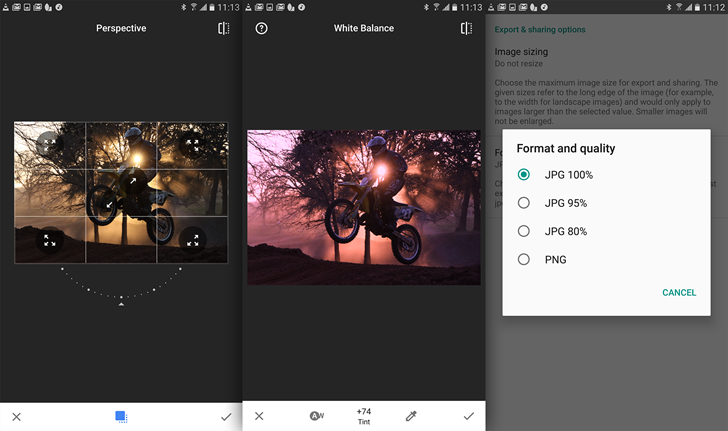
Google bought photo editor Snapseed a little less than four years ago, and the developers have been steadily improving the app and adding new features since then. The latest version is 2.9, which started rolling out to new users yesterday and just hit the publicly-accessible Play Store a few hours ago. There's nothing mind-blowing in the updated version, but a handful of new features will make long-time users happy (and might get rid of one of the other photo apps you rely concurrently).
3Doodler's 3D-printing pens have always had a lot of potential (who doesn't want a souped-up glue gun that can draw 3D structures in midair?), but in our hands-on with the pens, their rough build quality means they come across more as toys than serious design tools. The company's latest model, the 3Doodler Pro, wants to shake up this perception, offering professional users more control, faster-setting plastics, and a whole new range of materials to work with.
JBL makes some killer portable speakers and I'm a big fan of its affordable, stylish, and stellar sounding product lineup. This morning, JBL announced that its latest generation of products is getting even a little better. As of today, JBL's current gen speakers will support Google Now voice integration.
The Flip 3, Charge 3, Xtreme, and Pulse 2 are all compatible with the new update (sorry Clip 2 owners, no support for you).
Who's a good kitty? Who's a good kitty? These are good kitties, with their massive paws, their sharp claws, and enough bite force to crush your throat. Okay, maybe that last part isn't so good, but these good kitties make good wallpapers, because while they look cute and cuddly, they are also deadly, which takes your home screen from glum to grrrrrrrreat!
Is it nap time yet? I think it's nap time… This is one of the most adorable tiger pictures I could find, and that is saying something. Yes, it's not completely ferocious, but it is reminding me to make like this tiger and give in to sleep. Speaking of which, it's time to shut my phone off for a few minutes and grab a cat nap.
This dark wallpaper is surprisingly deep for its simple appearance. Rather than simple orange stripes in this negative-image tiger, you can see a whole jungle scene within the bright lines if you start to look for it.
Tigers are powerful, furry, springs, always coiled up and waiting to strike. They seemed fairly electric on their own, and just imagine how big a shock you'd get if one snuggled up against your leg? This dark wallpaper adds the static anticipation of a tiger preparing to pounce.
Okay, remember what I said before about tigers elevating your big kitty wallpaper? Yeah, I might've been stretching the truth a bit. This is a nostalgic wallpaper for me, like I feel like I have a watching folder and notebook in one of my old school backpacks….
Most kitties are majestic and ever so cuddly or pouncy, but even they sometimes have to drop the nice act and just roar at an idiot. He almost seems to be roaring Eye of the Tiger, with his tongue out like that. "And he's watchin' us all with the EYYYYEEEEEEEEEEEEEEEE!!!!!"
There’s a lot more to “going under” than just counting down from ten and then waking up when the surgery is over, although it’s great we can do that. Here’s how anesthesia affects you, what makes it risky enough for your doctor to warn you about it before surgery
The video above goes into the details, but if you can’t watch, here are the basics. There are three main types of anesthesia: regional, inhalational, and intravenous. Regional anesthesia prevents electrical pain signals from going from one part of your body to your brain. Inhalational anesthesia affects your whole nervous system, including your brain and is often used together with intravenous anesthesia to put you under and keep you unconscious during major surgery.
Anesthesia affects your nervous system and brain, but also other vital organs like your heart, lungs, and liver, which is why it is so important the anesthesiologist mixes the right balance for you. They also monitor your vital signs during surgery so they can adjust the anesthesia as needed. Check out the video above for a little more history here, what some of the common drugs used are and where they came from, and more.
To legally watch broadcast television in the UK, viewers need to buy a TV license. Currently, one of those costs £145.50 per year but there are signs that the numbers of those investing in one have been dwindling.
Aside from the usual license dodgers, some people have legally chosen not to buy a TV license due to increasing volumes of BBC programming being made available on its iPlayer streaming service.
The iPlayer is split into two types of service – live TV and catchup. People viewing live TV, BBC1 for example, have always needed a TV license. However, those watching only catchup TV have been able to do so without parting with £145. This morning all of that changed.
“The law changed on 1 September 2016,” says a notice posted today to the UK’s official TV Licensing site.
“You must be covered by a TV Licence to download or watch BBC programmes on iPlayer – live, catch up or on demand. This applies to any device and provider you use. Don’t forget, you still need a TV Licence to watch or record programmes on any channel as they are being shown on TV or live on an online TV service.”
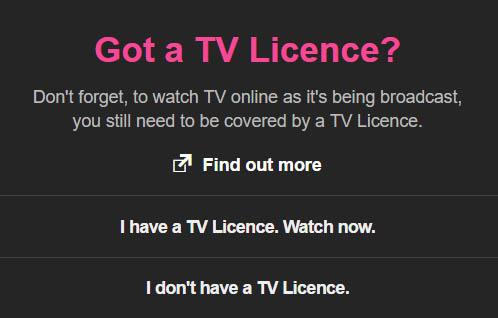
With the so-called “iPlayer loophole” closed from a legal perspective, eyes are now turning to how this can possibly be enforced. To do so properly, the BBC could provide license payers with a password and username to log into the service. Instead, however, the BBC has chosen to maintain its trust-based service, shown in the image below.
Simply clicking “I have a TV License. Watch now” is all that’s required to access the service and it’s expected that at least hundreds of thousands will do so without having an appropriate license. So what enforcement options does the BBC and the UK’s TV Licensing body have?
“We know the vast majority of people are law abiding and would anticipate those who need a licence for the first time will buy one,” a TV Licensing spokesperson said today, adding:
“We have a range of enforcement techniques which we will use and these have already allowed us to prosecute people who watch on a range of devices, not just TVs.”
Just as they have been for decades, TV Licensing are deliberately vague about the options available to them, but one thing they won’t be doing is spying on the traffic flying around people’s home wifi networks. That rumor began to circulate earlier this month but the reporting was both sensational and inaccurate. That’s not to say there aren’t options available though.
In ordinary circumstances, anyone who connects to the iPlayer service does so via an IP address allocated to them by their ISP. At this point, the BBC often has a clear idea of which ISPs are being used and the rough geographic location of the IP addresses accessing their service. Useful perhaps, but not particularly so.
Even if your IP address is static (doesn’t change) and you do (or don’t) have a license, TV Licensing and/or the BBC have no easy way of matching that IP address to a TV License payer. Indeed, the IP address they know accessed their service could belong to almost anyone.
Only complicating matters is that a TV license covers an entire household and all of the people in it, regardless of what device they’re using to access the service. Indeed, many IP addresses could be covered under one license. Some of those IP addresses, used by mobile phones for example, could be in an entirely different geographic location.
These variables and numerous others mean that TV Licensing would have huge difficulty trying to use Internet technology to track down unlicensed iPlayer users in the same way that copyright holders might track down BitTorrent pirates.
While the latter knows for sure that no one has permission to be sharing files, the former has no idea whether there is a licensed person behind any IP address. On that basis, getting a court to force ISPs to hand over details would be unlikely, if not impossible. Even if that did happen, the chances of the person having a license or some other mitigating circumstance would be extremely high indeed.
But of perhaps more importance are the chances of TV Licensing and the BBC even trying. By their own estimations around 94% of households have a valid TV license, which means that around the same percentage of UK IP addresses accessing iPlayer are doing so legally. That is not a particularly good starting point for weeding out pirates.
But for those who are truly cautious (or simply using one anyway), accessing the iPlayer from a VPN service is also a possibility. In tests carried out this morning, a properly licensed TF tester accessed iPlayer from three separate VPN services without any issues whatsoever.
Not only did UK-based IP addresses work, but an overseas one too, meaning that foreign users who aren’t eligible to buy a license might also gain access to the service. Indeed, properly licensed UK viewers can also view from a foreign IP address which might initially appear unlicensed. It’s a minefield.
So in conclusion, it seems unlikely that the BBC or TV Licensing will be enforcing illegal use of its iPlayer service in any different manner than it already does for conventional TV.
All households without a license will be gathered into a database and presumed to be TV license dodgers. They will receive letters in the post warning them that not having a license is illegal. However, unless they get caught in the act of viewing, there’s little that can be done to stop them. TV Licensing has no power of entry.
Finally, catchup services offered by other companies other than the BBC aren’t covered, so people can watch ITV Player, 4OD, Demand 5 and any other service such as Netflix without needing any license. That being said, a TV license is just £3 per week and is hardly going to break the bank.
 Welcome to the roundup of the best new Android applications that went live in the Play Store or were spotted by us in the previous 2 weeks or so.


 Like Garmin, TomTom’s been getting pretty aggressive with its wearable strategy. No wonder, really – it’s a space that’s seen exponential growth over the past few years, as in-car GPS systems have, at best, flatlined, thanks to the near ubiquity of smartphones. But TomTom’s not giving up the ghost. The company’s been playing around in the space to see what,…


 Crikey: 43,570,999 user accounts were breached in a hack of Last.fm that occurred in March of 2012, according to a report from LeakedSource. Three months after the breach, in June of 2012, Last.fm issued the following statement:
“We are currently investigating the leak of some Last.fm user passwords. This follows recent password leaks on other sites, as well as information posted…
Crikey: 43,570,999 user accounts were breached in a hack of Last.fm that occurred in March of 2012, according to a report from LeakedSource. Three months after the breach, in June of 2012, Last.fm issued the following statement:
“We are currently investigating the leak of some Last.fm user passwords. This follows recent password leaks on other sites, as well as information posted…