Lenovo's not new to tablets or convertibles — but the Yoga Book is something fresh and exciting.
The end game for any sort of tablet is, really, for it to transcend its status as merely being a tablet. And this is the stuff of legend, folks. We're talking about the likes of the aborted Microsoft Courier. We're talking about what ASUS tried to do with its Transformer line. Or, really, what Microsoft has managed to accomplish with its Surface devices. And we're also talking about what Google generally failed to do with the Pixel C.
And now we have the Lenovo Yoga Book. Two, really. One running Android, the other Windows 10. (With the latter named "Yoga Book with Windows.") Two huge swaths of glass, but only one is a display — the other moves between a touch-only keyboard and giant stylus tablet. And it's a really neat idea — let's take a look.
The display comes in at 10.1 inches with a 1920x1200 resolution and can put out 400 nits of brightness. It's got 64GB of internal storage and 4GB of RAM, along with an Intel Atom processor and an 8500 mAh battery inside that slim and svelte 9.6 mm thick exterior. And we know what you're thinking ... no, this isn't one of the processors that Intel has dropped support for or discontinued — Intel is still committed to the Atom line and powering convertible devices just like the Yoga Book.
The Yoga Book is unique and fantastic ... but has trade offs like any convertible tablet
But that's all of the relatively simple stuff — let's talk about the design and functionality of this thing. Clearly borrowing from Lenovo's Yoga line of laptops, this isn't a detachable 2-in-1 but rather a laptop-like form factor with its watch band-style hinge. But instead of a physical keyboard on the non-screen half, you get an expansive glass panel that pulls double duty — a press of a button turns it into a backlit touch-only keyboard or a tablet-sized stylus writing area.
The "halo" keyboard appears out of nowhere with lights defining where keys can be pressed, and while typing on it definitely takes a little bit of getting used to it's something we could immediately manage for shorter bursts of text input and if the software is done right could be something you could get quite quick with. And no matter what it beats typing directly on the screen — this way you can more easily multitask and hop between typing, writing and managing content on the screen.
And when you're not actively using the keyboard or stylus and want "just" a tablet, the hinge lets the bottom half of the device fold back completely and marry up to the back of the screen for a tablet-like form factor. Sure at 1.52 pounds (690 g) it's a little heavier than what you get in some dedicated tablets of the same screen size, but then again these convertible devices will always offer some sort of trade of in experience on one side or the other.
The Yoga Book is perhaps the most visually appealing and interesting convertible Android tablet we've seen, and we have to applaud Lenovo for trying something entirely new rather than trotting out a simple detachable keyboard 2-in-1. How it actually lines up as a device you'd want to type a bunch on or be willing to carry around the extra weight of will be something that has to be determined over more time using it. For now, color us enamored with it — the practical stuff can come later.
A new gadget on Kickstarter is basically designed to make you feel like a secret agent. It's called Sgnl, and it lets you make phone calls just by wearing a wristband and touching your ear, with your fingers acting as the receiver.
There's no speaker on the device — instead, audio is directed into your ear through vibrations that are sent through your body, into your wrist and up to the fingers touching your ear; a mic is built into the band. It's not a new concept, but it's a neat twist on the not-very-cool Bluetooth headset.
The project comes from Innomdle Lab, a startup that's been spun out of Samsung. This is its first project, and it's launching with a Kickstarter campaign looking for $50,000, which it's very nearly reached at the...
A prestigious brand is joining Lenovo's MotoMod lineup today: it's Hasselblad. Confirming some recent leaks, both companies have just announced the new Hasselblad True Zoom. The True Zoom is a camera attachment that magnetically latches onto the back of the Moto Z and expands the phone's photography prowess by adding optical zoom up to 10x. It will launch in September for $250 when purchased from Verizon, or $299 if you buy it from Motorola.com.
Entomologist Justin O. Schmidt has written a book called The Sting of the Wild, about his mission to "compare the impacts of stinging insects on humans, mainly using himself as the gauge." Here's how he poetically describes a few bug stings, based on his own 4-point "Schmidt Pain Scale for Stinging Insects."
Red fire ant (1): "Sharp, sudden, mildly alarming. Like walking across a shag carpet and reaching for the light switch."
Anthophorid bee (1): "Almost pleasant, a lover just bit your earlobe a little too hard."
California carpenter bee (2): "Swift, sharp, and decisive. Your fingertip has been slammed by a car door."
Western yellowjacket (2): "Hot and smoky, almost irreverent. Imagine W.C. Fields extinguishing a cigar on your tongue."
Fierce black polybia wasp: (2.5): "A ritual gone wrong, satanic. The gas lamp in the old church explodes in your face when you light it."
Velvet ant (3): "Explosive and long lasting, you sound insane as you scream. Hot oil from the deep frying spilling over your entire hand."
Florida harvester ant (3): "Bold and unrelenting. Somebody is using a power drill to excavate your ingrown toenail."
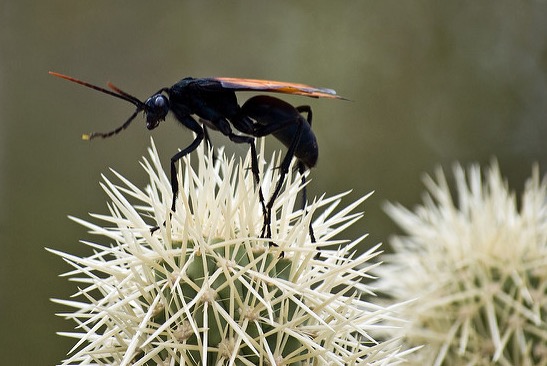
Tarantula hawk (4): "Blinding, fierce, shockingly electric. A running hair dryer has just been dropped into your bubble bath."
Bullet ant (4): "Pure, intense, brilliant pain. Like walking over a flaming charcoal with a 3-inch nail embedded in your heel."
Warrior (or armadillo) wasp: "Torture. You are chained in the flow of an active volcano. Why did I start this list?"
A pile of cocaine worth US$55 million was found at a Coca-Cola plant in Signes, France.
"The first elements of the investigation have shown that employees are in no way involved," said regional Coca-Cola president Jean-Denis Malgras.
The 370kg stash of bagged blow was discovered in a shipment of orange juice concentrate from South America.
When first launched at the end of the 19th century, a glass of Coca-Cola was estimated to contain nine milligrams of cocaine. In 1904, the company replaced that ingredient with cocaine-free coca leaf extract. Or at least that's what they tell us.
Kratom is an herbal supplement that's become popular in recent years in the United States. Kratom users say taking capsules of the powdered herb helps with social anxiety, chronic pain, and post-traumatic stress disorder. On Tuesday, the Drug Enforcement Administration announced that it intends to place two of kratom’s psychoactive chemicals into its list of Schedule I controlled substances, on temporary basis, citing the necessity "to
avoid an imminent hazard to public safety."
According to the DEA, substances in Schedule I "are those that have a high potential for abuse, no currently accepted medical use in treatment in the United States, and a lack of accepted safety for use under medical supervision."
From the DEA's announcement:
Evidence from poison control centers in the United States also shows that there is an
increase in the number of individuals abusing kratom, which contains the main active
alkaloids mitragynine and 7-hydroxymitragynine. As such, there has been a steady
increase in the reporting of kratom exposures by poison control centers. The American
Association of Poison Control Centers identified two exposures to kratom between 2000
and 2005. Additionally, the Texas Poison Center Network (TPCN), which is comprised
of six poison centers that service the State of Texas, reported 14 exposures to kratom
between January 2009 and September 2013. Between January 2010 and December 2015
U.S. poison centers received 660 calls related to kratom exposure. During this time, there
was a tenfold increase in the number of calls received, from 26 in 2010 to 263 in 2015.
“It’s a very tragic day,” said Susan Ash, the founder and director of the American Kratom Association, an advocacy group that works to keep the substance legal.
The issue is more than just work-related for Ash, who used kratom to wean herself off opiates to treat the chronic pain she attributes to Lyme disease. She still takes kratom every day to help control her pain.
“This just ripped my quality of life right out from under me,” she said. “This is the plant that returned me to being a productive member of society, and I truly fear for my future, and I fear for all of the people who found kratom to be a solution for them to get off things like heroin. I foresee a large jump in the already epidemic proportions of opiate deaths in this country.”
Ash and other kratom advocates insist that the substance is no more addictive than coffee, and that as long as it is unadulterated, it is safe for adults to consume. They claim that it is impossible to overdose because consuming too much kratom will make you throw up.
Emergency room doctors and toxicologists, on the other hand, have seen kratom interact negatively with other drugs. In the most extreme cases, seizures have been reported.
Xiaomi isn't your average phone manufacturer. The Chinese company makes everything from air purifiers to hoverboards, smart rice cookers, smartwatches, body scales, power banks, routers, and even an electric screwdriver. Xiaomi brings these products to market under its Mi Ecosystem label, which sees the company facilitating startups across various categories by providing monetary assistance and connecting them with its supply chain partners.
The latest entrant in the Mi Ecosystem is the Mi Robot Vacuum, which will go on sale in China starting September 6 for ¥1,699 ($250). The vacuum cleaner features a laser distance sensor that is able to scan its surroundings up to 1800 times a second. The Mi Robot Vacuum uses its complement of 12 sensors — including an ultrasonic radar sensor, cliff sensor, gyroscope, and accelerometer — to map out the interiors of your house, and the Simultaneous Localization and Mapping (SLAM) algorithm calculates the most efficient route for cleaning.
The robot vacuum comes with three processors that track its movements in real-time, and it features a Nidec brushless DC motor that has a suction rating of 1800Pa. To put that into context, the $900 Roomba 980 has a 1670Pa motor. The vacuum has two circular side brushes that direct dirt toward the main brush, which can adjust its height to create more suction with the floor.
The vacuum also syncs with the Mi Home app, allowing you to view real-time progress, change cleaning modes, set automatic schedules, and power on the device remotely. The vacuum comes with a 5200mAh battery that can clean for two and a half hours on a full charge, following which it will return to the base unit.
As with most products in the Mi Ecosystem, it is likely the Mi Robot Vacuum will be limited to China.
Last year’s Gear S2 was, without question, one of the best looking smartwatches around. After a few generations of unwieldy wearables, the company took it down a few notches with a device that was smaller and decidedly more minimalist. Where other companies have looked to bling it up, the electronics giant stayed subtle.
Announced this week at IFA, the S3 isn’t that. The company… Read More
Macro Room grabbed a bunch of frozen treats and filmed extreme closeups as they melted. The melting patterns create beautiful and sometimes surprising delights. (more…)
Lost in Light is Sriram Murali's simple yet beautifully-crafted demonstration of levels of light pollution from worst to best, and how much gets lost in the night sky.
Over the past three months, Durita Andreassen and a few friendly sheep equipped with solar-powered cameras strapped to their woolly backs set out to collect imagery of the Faroe Islands for Street View. The 18 Faroe Islands are home to just 50,000 people, but — fittingly for a country whose name means “Sheep Island” — there are 70,000 sheep roaming the green hills and volcanic cliffs of the archipelago. So when Durita decided to document the country for Street View, sheep weren’t a baaad place to start.
When we herd about the Sheep View project, we thought it was shear brilliance. So we decided to help the Faroese by supplying them with a Street View trekker and 360 cameras via our Street View camera loan program. Last week, the Google Maps team arrived in the Faroe Islands to help train and equip the local community to capture even more (but slightly less woolly) Street View imagery.
Now that the Faroe Islands is supplied with a Trekker and 360 cameras, residents and tourists can assist the sheep in collecting Street View imagery of their beautiful lands using selfie-sticks, bikes, backpacks, cars, kayaks, horses, ships and even wheelbarrows. The Visit Faroe Islands office in Tórshavn and Atlantic Airways at the airport will be lending out Street View 360 cameras to visitors willing to lend a hoof.
The Faroe Islands have shown us that even sheep can contribute to Street View. If your hometown or favorite hiking trail hasn’t made it into Google Maps yet, grab your own 360 camera or apply to borrow one from us through our Street View camera loan program. We’re excited to see what ewe map!
Posted by David Castro González de Vega, Google Maps Program Manager https://4.bp.blogspot.com/-fzv6Y0RTrws/V8YrY8mjULI/AAAAAAAAS18/qBSLmHwW310gItDLSnioxX94Z3CxkwD5gCLcB/s1600/primaryimage2_10mb.jpg David Castro González de Vega Google Maps Program Manager Google
The race for who will take the lead in the next generation of automotive technology is on, and today Uber is kicking off a program that it hopes will help put it in pole position. Today, the transportation-on-demand behemoth is launching a new electric car service in the UK, in partnership with Nissan and China’s BYD, where it will offer leasing and purchase options for fully-electric… Read More
More of the content we’re looking for is saved in mobile applications, which is why Google has been working to bring that information to the surface by indexing apps in search. Now, it will do the same thing on your phone, too. The company is introducing a new search mode in its Google app called “In Apps,” which will allow you to search inside your mobile applications for… Read More
Acer is getting IFA 2016 off to a wondrous start this morning with the launch of the incredibly thin Swift 7 laptop. This Windows 10 machine, powered by Intel’s brand new 7th-generation Core i5 processor, measures a scant 9.98mm, making it the first to limbo under the 1cm bar (0.39 inches). Despite beating Apple’s MacBook and HP’s Spectre 13 for the braggadocious title of being the world’s thinnest laptop, the Swift 7 doesn’t sacrifice much in the way of either ports or battery. It offers two USB-C 3.1 ports and a headphone jack, plus Acer promises a 9-hour endurance thanks to Intel’s newly updated and more efficient Y series of chips.
The display up front is a 13.3-inch Full HD IPS panel with nothing to truly distinguish it. It’s not...
Amazon's Dash Button is coming to Germany, Austria, and the UK, the company announced today, marking its first expansion outside of the US. The Wi-Fi-connected devices, which allow consumers to order certain products with the push of a button, are available for Amazon Prime subscribers on the German store for €4.99, and on the Amazon UK store for £4.99.
Amazon is also launching its Dash Replenishment service in the three countries, in partnership with several appliance manufacturers. Under the Dash Replenishment program, makers of connected devices can program appliances to automatically reorder household items such as laundry detergent or dish soap whenever a customer's stock runs low. Bosch, Siemens, Whirlpool, and Samsung are among...
The second season of Netflix's surprise summer hit Stranger Things is officially on its way. The streaming service just revealed on Twitter that the next run of episodes will premiere next year.
Today's announcement comes with a video revealing what may or may not be the names of next season's episodes, including such eerie titles as "The Pumpkin Patch" and "The Lost Brother." We also learn that the plot will take place in the fall of 1984. (Will anyone in Hawkins, Indiana have brand new Macintoshes? We'll find out soon enough!)
I’ve seen this scene before: fancy Berlin venue, shiny new Asus smartwatches, and precious little in the way of any differentiation. Even the Android Wear demo loop on Asus’ new ZenWatch 3 units is the same one we’ve all been seeing for years. It’s not for lack of trying, of course, as Asus has upgraded the hardware to Qualcomm’s Snapdragon 2100 processor, specifically designed for wearable devices. But that still only gets you the regular one to two days of battery life, albeit with a new fast charging option that bumps the battery from 0 to 60 percent in 15 minutes. Asus even added two extra buttons for a total of three, but the new additions are just physical shortcuts to your favorite apps.
Google’s newest smartphones won’t be Nexus devices after all. According to Android Central, Google is dropping the Nexus branding with its two upcoming, HTC-made smartphones. Instead, the company is expected to market the devices under a different name and to lean heavily on the Google brand in the process.
This news jives with recent rumors surrounding the upcoming devices, codenamed "Marlin" and "Sailfish." Android Police reported earlier this month that Google may strip the Nexus name from the phones and replace it with a "G" logo. It’s unclear what direction the company will take, as it has spent years fashioning the Nexus brand as a hardware entity while Google has reserved its own name for software services. We do know the two...
Google updated the photos app a few months ago to add proper support for burst photos, and it looks like the web version has now done the same. We're not sure when this happened, but the change seems to have gone mostly unnoticed. So, we're just letting you know.
Photos taken in burst mode and auto-uploaded to Photos will include a tag in the file name that identifies them as part of a burst.
Back in November last year, Google rolled out a new-look Google+ and deemed it a 'preview' of what was to come. It was generally assumed that at some point this would replace what has become known as 'Google+ Classic,' and that day has now arrived, with the announcement that the Web preview will be the default look from today onwards.
This isn't entirely a surprise: last week Google issued a reminder saying that today was the day, so we were prepared for this eventuality.
The next time you do a search on your phone, you may notice something unusual—the search history drop down has a new look. Well, it's new for some people. It's more compact with search terms in a series of blocks. This appears to be the default for a few users, but everyone can try it with a little keyboard trickery.
The search history appears when tapping on the home screen search widget or the search widget in the Google search UI.
Piper's home security and automation unit has been improving year over year. Since my initial review, it has overhauled its app and improved many of its features, but it also recently released an IFTTT channel that enabled Amazon Alexa integration and let you schedule and automate a couple of actions.
Now Piper is improving its IFTTT channel with more triggers and actions. You can now control your Piper-connected lights with Alexa, get a tweet when Piper detects smoke via a connected sensor, and set dimmer levels or lights when events are detected while you're away.
by Beth Skwarecki on Vitals, shared by Andy Orin to Lifehacker
Sports drinks seem like they should be healthy. Athletes endorse them, and they don’t have the same “liquid candy” reputation as the Pepsi a few shelves over. But how helpful are they to serious and casual exercisers? Not very, it turns out.
To be clear, we’re talking about sports drinks, not energy drinks like Rockstar and Monster. Despite the similar names, they’re no relation. Energy drinks are super-caffeinated soda with a few gimmicky supplements thrown in to make them look special. Sports drinks, on the other hand, are the beverages like Gatorade and Powerade that deliver carbohydrates and electrolytes in a typically fruity, brightly colored fluid sold in plastic bottles. To put it another way: energy drinks are for all-night video game marathons; sports drinks are for actual marathons.
For Casual Sipping, Sports Drinks Are Little Better Than Other Sugary Drinks
Aside from sugar, sports drinks mainly contain electrolytes like sodium and potassium. If you’re not in the middle of a marathon, you don’t need an extra dose of electrolytes. You get plenty of them from the food you eat, and arguably, when it comes to sodium, a lot of us already get too much.
If you’re feeling dehydrated, either from a stomach bug or from a hangover, sports drinks may help a little bit—not because there’s anything special about them, but just because water and sugar and electrolytes are helpful when you’re rehydrating. You can get the same benefits from a glass of water and your favorite snacks. Enjoy the Powerade if you like, but don’t expect miracles.
Twelve ounces of Gatorade have 21 grams of sugar. But if you drink the 32 ounce bottle, one of the common sizes, you’re getting far more than what experts recommend we consume in a day. The FDA’s new limit on added sugars (coming soon to a label near you) is 200 calories per day, or 50 grams.
At least sports drinks fare better than soda and juice. Twelve ounces of Gatorade’s shelfmate, Pepsi, contain 41 grams of sugar. The same amount of orange juice contains 33 or so. But really, all of these are more empty calories than we need—and don’t forget that the guidelines are per day, not per drink.
If you’re looking for a way to save calories compared to soda, sports drinks work, but not as well as switching to water, seltzer, or diet drinks. Some sports drinks are also available in a low calorie version, like Gatorade’s G2. At eight grams of sugar per 12 ounces, it’s even easier to fit G2’s calories into your diet. In short, sports drinks aren’t good for you, they’re just less bad than some of the other options.
Sports Drinks Aren’t Necessary for Most Exercise
Most of us know it’s cheating to chug a Powerade while sitting in the couch, but it probably seems like a good idea to grab a bottle on your way home from the gym. But if you’re doing a quick bodyweight workout, an hour’s sweat session in the gym, or a few miles of running, you still probably don’t need sports drinks. Here are the ingredients that are supposed to help athletes:
Sugar: Your body keeps enough sugar on hand to get through at least an hour or two of working out. You definitely don’t need to consume any during a workout that lasts less than 60 minutes. After you finish, your next meal or snack will easily replenish what you lost.
Electrolytes: Your body loses sodium in the form of sweat, plus smaller amounts of other electrolytes like potassium. Again, we replenish these when we eat. There’s no need for an emergency infusion of electrolytes before, during, or after a short workout.
There is a tiny advantage to consuming sugar during a workout, even a short one, but it’s not what you think. In several studies on runners and cyclists, reviewed here in Nutrition Journal, athletes who tasted sugar were able to turn in better performances. They didn’t even have to swallow the sports drink to get this effect; a swish and spit worked just as well. Researchers still aren’t sure why this happens, but if you’d like to experiment with it yourself, any sugar source should do the trick.
If You Need Electrolytes, Sports Drinks Aren’t Your Only Option
The classic case for a sports drink is an athlete who is working out for hours at a time, burning tons of calories so they need sugar to keep them going, and sweating a lot so they need to replace sodium. That leaves us with people like marathoners, who want to make sure their blood sugar stays in an optimal range during their whole race. Football and soccer players also drink the stuff, since their game day exercise adds up to several hours and they’ll be working out at a fairly intense level.
These are the athletes sports drinks were originally developed for, like the University of Florida’s football team, the Gators whom Gatorade was named. Still, a lot of athletes who fit the bill don’t actually drink commercial sports drinks. Some do, of course, especially if their team has a sponsorship deal with a sports drink company. But many marathoners, for example, prefer water with (or sometimes without) a separate source of electrolytes.
Those electrolytes can come in packets like Ultima Replenisher or tablets like Nuun. Some athletes swear by pretzels for sodium and bananas or coconut water for potassium. The advantage of this DIY approach is that you can manage your electrolytes, sugar, and water as separate factors.
Sports drinks and their alternatives make the most sense for endurance athletes. If your specialty is strength training, on the other hand, you aren’t continually draining sugar out of your blood in the same was as a runner or cyclist who is covering mile after mile. If you’re working out to gain muscle or to lose weight, you’re also probably watching your diet closely. Rather than using some of your day’s calories on sports drinks, you’re probably better off spending those on protein or other healthy foods that help you towards your goals.
One argument against sports drinks, even for runners, is that sugary liquids can cause digestive upset. If you’re chugging sports drinks all marathon long, don’t be surprised if you’re spending a lot of time in the porta potties after the race - or, if you’re especially unlucky, during it.The ACSM recommends that sports drinks be less than eight percent carbohydrate for exactly this reason; soda and juice are both too sugary. Bottled sports drinks are usually between six and eight percent carbohydrate, which works for some athletes but not others.
If you’re in this category of super-active exerciser, you probably already know it. As you’re training for your marathon, you’ll end up experimenting with drinks and snacks that fuel you for the long haul without upsetting your digestive system. Maybe sports drinks will be part of your routine for when you’re on your feet. Maybe they’ll just be a favorite treat to cool down after a long run. And if you choose to go without sports drinks entirely, that’s a perfectly good option too.
From a conversation with Letty Cottin Progrebin, in 2007, comes this darling animation set to Gene Wilder's wise words on comedy, laughter, love, and confidence.
Mark Ryden and Porterhouse Fine Art Editions have published a new micro-portfolio of Ryden's paintings and drawings from his recent exhibitions The Gay 90's Olde Tyme Art Show and The Gay Nineties West. The postcards are 9" x 6" and packaged in a gold foil stamped and embossed card stock box.
Ever tried to trick your dog with a cheerful tone but non-sense words? Chances are you dog didn't buy it. Unsurprising to those of us who live with dogs, a new study shows us canines process language in a similar fashion to humans!
When dogs hear speech, he explains, they seem to separate the meaning of words from the intonation, and each aspect of speech is analyzed independently. The left hemisphere of the brain processes meaning, while intonation is analyzed in the right hemisphere.
All the dogs in the study were willing volunteers and were trained to lie still in the scanner using a training method developed by Marta Gacsi. The dogs could get up and leave the machine whenever they wanted. But it was clear to the dogs that their human companions loved it when they did this very easy task.
"They are really happy to participate," says Andics. "The difficult aspect of the training was to convince dogs that 'motionless' means really motionless. They can't move more than 3 millimeters in any direction, otherwise we have to throw out all of the data."
He says most dog owners have experimented with trying to "trick" their dogs by saying nonsense words in a cheerful, happy tone of voice. "I think the big difference here is that they only heard us, they didn't see us," says Andics, because the dogs were inside the machine. "Here, the only information they had was the speech signal. What we saw is that for praise to be processed as a reward, when there is no other supporting information, both word meaning and intonation have to fit."
And while this study reveals something about dogs, he believes it also says something important about what it means to be human.
"Humans seem to be the only species which uses words and intonation for communicating emotions, feelings, inner states," he says. "To find that dogs have a very similar neural mechanism to tell apart meaningful words from meaningless sound sequences is, I think, really amazing."
Lion fish are a serious invasive threat along the southern Atlantic coast. Extremely aggressive, lion fish eat a lot of other fish. Fishery managers suggest we eat them!
Your smartphone does so much that it feels impossible to get through the day on a full charge. It doesn’t have to be that way, though. Android’s Doze feature, introduced in Marshmallow and refined in Nougat, keeps battery drain low when you’re not using your phone. Here’s how it works, and how to make the most of it.
Android Doze Keeps Apps From Draining Your Battery While You’re Not Using Them
In Android, apps have the ability to use what’s called a “wakelock” to prevent your phone from going into a power-saving deep sleep mode. This deep sleep mode usually kicks in when your phone’s screen is off, but that can get in the way of how some apps work. For example, if you’re using a fitness tracker, you don’t want your phone turning off GPS or your accelerometer just because your phone is in your pocket with the screen turned off.
In principle, this is a good concept. Apps keep your phone awake and working when they need to, and let it sleep when they don’t. This is a problem, though, when every developer thinks their app is important enough to keep your phone on all the time. That’s why apps like Facebook kill your battery, even when you’re not using them.
Instead of constantly using your battery all day, Doze spaces out your usage periodically.
Doze helps solve this problem by periodically blocking wakelocks and shutting off network access if your phone goes unused for a while. It will then periodically allow apps to check in during “maintenance windows” every so often (these windows occur less frequently the longer you don’t use your device). Depending on which version of Android you have, Doze works slightly differently under certain conditions:
Android 6.0 Marshmallow: In this version, Doze activates if your phone’s screen is off, if it’s not on a charger, and and if the phone has been stationary for a while. In this state, all wakelocks are blocked and network access is disabled until the maintenance window. For example, instead of Facebook Messenger keeping your phone active all the dang time, it will be forced to only check in once every few minutes for any new messages.
Android 7.0 Nougat: In Nougat, Google added a lighter version of Doze that will activate if your phone’s screen is off and it’s not on a charger, even if it’s moving. In this mode, wakelocks are still allowed, and the phone will still search for GPS or Wi-Fi signals, but cell network access will be disabled outside the maintenance windows. This will still let things like your fitness tracker continue watching your activity, while still keeping Facebook from tearing through your battery.
If you don’t do anything with your phone, Doze will still do its job. It runs almost invisibly in the background. Occasionally you’ll get a few messages at once, rather than spread over a few minutes, but for the most part there’s no noticeable change. However, you can tweak it to give certain apps priority or squeeze a little extra battery life out of your phone.
Choose Which Apps Can Ignore Doze to Get Your Important Messages
By default, only the most essential services—like Google Play Services—in Android can ignore Doze. If you’re not getting messages from an important app—or alternatively, if you’d like to squash a particularly battery-draining app—you can customize which ones are suppressed, or push through Doze. Here’s how:
Open the Settings app on your phone (Pull down the notifications shade, and tap the gear in the upper right corner, or find “Settings” in the App Drawer.)
Tap Battery.
Tap the menu button and choose “Battery optimization.”
Tap the dropdown menu at the top of the screen and select “All apps.”
Here you can see a full list of apps installed on your phone. Most should say “Optimizing battery use” by default. These apps are affected by Doze. If you want one to always stay connected—say, for example, your work messaging app—then tap it and select “Don’t optimize.” From now on, that app will always be able to receive messages or access the network, but it might drain your battery.
Use Apps Like Greenify to Make Doze Even More Aggressive
Doze on its own is already pretty powerful. However, some third-party apps can make it even better. If you’re on Android Marshmallow, Greenify offers a huge bump over the basic Doze features with Aggressive Doze. It can activate Doze in minutes, instead of hours, and it can work even when you’re moving. Unfortunately, this doesn’t work in Nougat, but most of Greenify’s aggressive features are part of Android 7.0 anyway, so it’s not that big of a deal. To get started, follow these steps:
Download and install Greenify. (Don’t worry, root isn’t required for what we’re doing.)
Launch the app and tap the menu button in the top-right corner, then tap Settings.
Tap “Aggressive Doze (experimental)“
Enable the Aggressive Doze toggle at the top of the screen.
(Optional) Enable “Doze on the Go” to activate Doze even if the device is moving.
If you do nothing else with Doze or Greenify, this will already give you a pretty big bump in your battery life over time. However, Marshmallow users can also go even further with the root app Doze Settings Editor. This lets you tweak things like how much your phone can move before Doze is disabled. You can also choose from preset profiles to tweak your phone’s battery settings without having to do all the legwork yourself. Once again, Nougat users are left out of the fun for now, but the built-in improvements to Doze should make up for it.
Doze is a huge boon for your phone or tablet’s battery life. Even if you never bother tweaking it at all, using Android Marshmallow or Nougat should help you squeeze out a couple more hours. If you need to pull a bit more juice out of that battery, though, these tweaks should help.




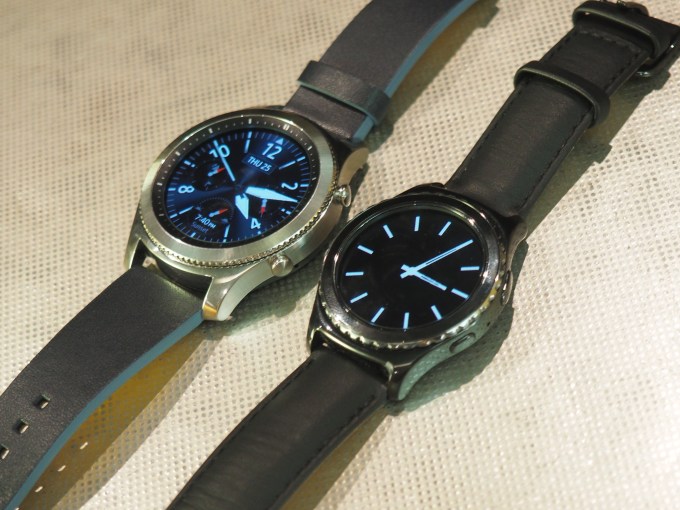 Last year’s Gear S2 was, without question, one of the best looking smartwatches around. After a few generations of unwieldy wearables, the company took it down a few notches with a device that was smaller and decidedly more minimalist. Where other companies have looked to bling it up, the electronics giant stayed subtle.
Announced this week at IFA, the S3 isn’t that. The company…
Last year’s Gear S2 was, without question, one of the best looking smartwatches around. After a few generations of unwieldy wearables, the company took it down a few notches with a device that was smaller and decidedly more minimalist. Where other companies have looked to bling it up, the electronics giant stayed subtle.
Announced this week at IFA, the S3 isn’t that. The company… 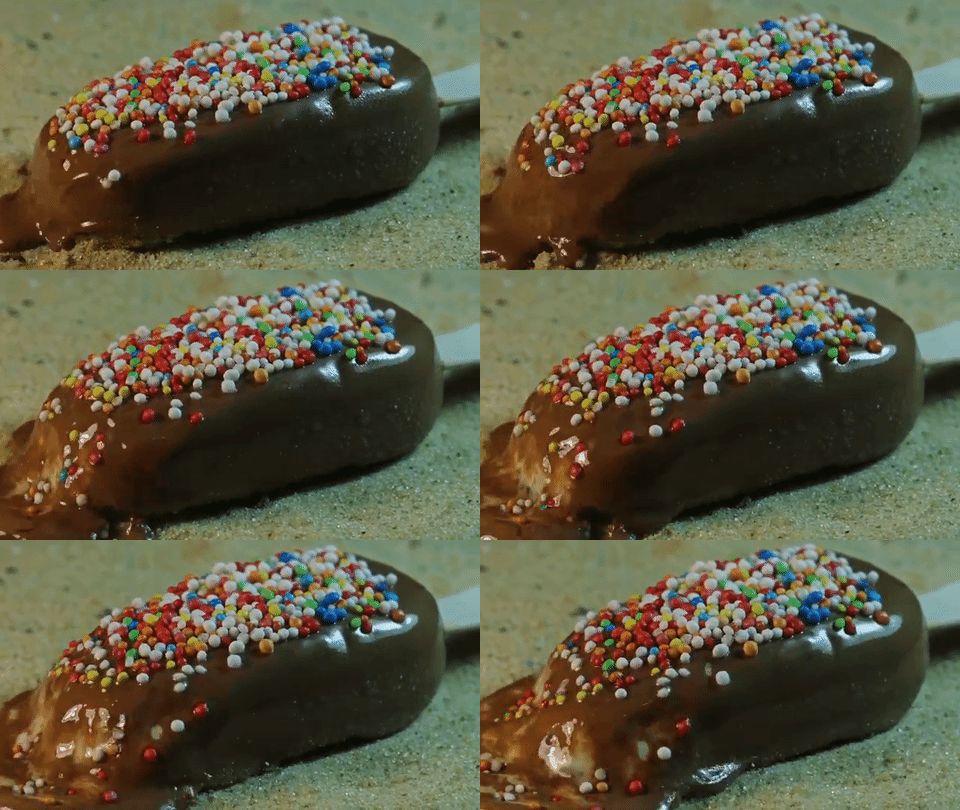




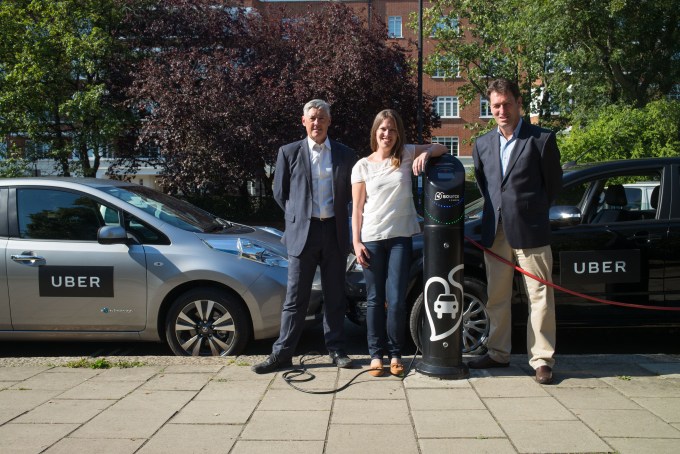 The race for who will take the lead in the next generation of automotive technology is on, and today Uber is kicking off a program that it hopes will help put it in pole position. Today, the transportation-on-demand behemoth is launching a new electric car service in the UK, in partnership with Nissan and China’s BYD, where it will offer leasing and purchase options for fully-electric…
 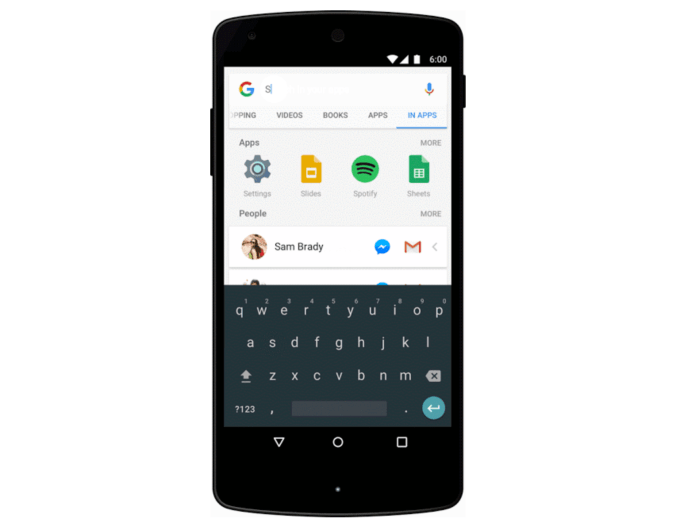 More of the content we’re looking for is saved in mobile applications, which is why Google has been working to bring that information to the surface by indexing apps in search. Now, it will do the same thing on your phone, too. The company is introducing a new search mode in its Google app called “In Apps,” which will allow you to search inside your mobile applications for…