
Online classes are a great way to learn new skills . SlideRule makes your search easier by letting you browse and search through over 17,000 online courses.
Online classes are a great way to learn new skills . SlideRule makes your search easier by letting you browse and search through over 17,000 online courses.
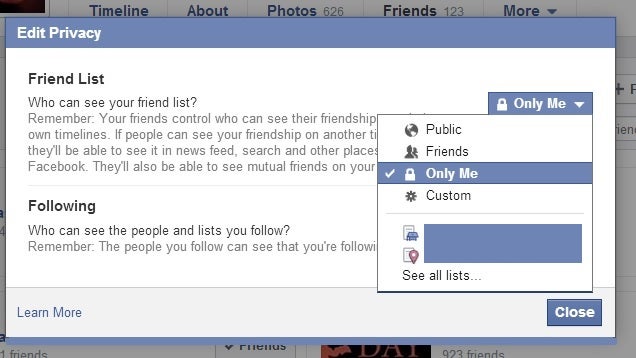
Some people on Facebook may opt to hide their friends list from you. WonderHowTo shares some tricks on revealing those "private" lists.
QUEBEC CITY • Quebec’s new Liberal government is shifting its tone on hostile-takeover defences, abandoning plans to dedicate specific state money for equity stakes in targeted companies.
The change is part of a larger break by Premier Philippe Couillard with the previous Parti Québécois government that will also see the Liberals wean businesses off the generous tax credits they’ve been hooked on for years and revive plans to open up development of Quebec’s vast north. The bottom line: Coming off a deficit of $3.1-billion in its last fiscal year, Quebec just doesn’t have the money to pay for the corporate largesse of the past, and it’s bearing down on new ways to generate wealth.
“Something needs to be done” to keep Quebec-based companies in Quebec, Finance Minister Carlos Leitao said in an interview Wednesday before unveiling his budget in the legislature. “[But] we are more interested in creating new head offices, attracting new head offices, than protecting existing ones.”
Business leaders across Quebec have been calling on political leaders to do as much as they can to maintain corporate head offices in the province following several high-profile headquarters losses in recent years. Montreal-based Osisko Mining Corp. was the latest test of takeover defences, ending in its sale to Yamana Gold Inc. and Agnico-Eagle Mines Ltd. for $3.9-billion.
The response to hostile takeovers is also a big issue nationally as provincial regulators debate ways to give boards more power to fend off unwanted approaches while maintaining shareholder rights to vote on an offer.
Quebec’s new government is dropping plans articulated during the spring election campaign to tap up to 20% of the provincial Generations Fund, a dedicated debt repayment fund worth $5.6-billion, to take equity stakes in companies that are the subject of unwanted takeover bids. It says the state’s current financial firepower, held by Investment Quebec and the province’s economic development fund, is adequate to take equity stakes in companies as needed.
“After discussion and reflection we realized it wasn’t appropriate to use the Generations Fund for that purpose,” Mr. Leitao said. “We want to be more broadly based, less interventionist.”
In February a special task force on the protection of Quebec businesses, whose members included Molson Coors Brewing Co. vice-chairman Andrew Molson, recommended the government take several major steps to protect head offices, including allowing companies to adopt variable voting rights that would increase the clout of longer-term shareholders and scare off arbitrageurs.
Mr. Leitao said the government will consult with the financial community further before taking any definitive steps to act on the report’s recommendations, noting there are potential changes in Quebec’s Business Corporations Act and Securities Act that would need to be made. The government nevertheless vowed to “act rapidly and in a targeted manner” to an unwanted takeover attempt if needed.
“Quebec companies are more often predators than victims,” a senior finance department official said in explaining the government’s policy shift. “You have to watch out too, a company is not necessarily worth saving.”
In his budget speech, Mr. Leitao said the Liberal government can guarantee a stable business environment during its four-year term and that in turn will help retain and foster development of head offices in Quebec. “The best support we can give them is an environment that is conducive to economic growth and that offers a competitive tax system.”
There were 671 takeovers of publicly traded Quebec companies between January 2001 and July 2013, according to research by KPMG-Secor. Of those only 2% were considered hostile, suggesting acquirers are already sensitive to the preference of doing a friendly deal over a hostile one.
Critics have spoken repeatedly about the need to rein in Quebec’s generous corporate aid, with the province responsible for an estimated one-third of all such spending nationwide. After years of inaction, the Liberals are closing the spigot to save money.
Among other measures, the government said Wednesday it will cut the rates of about 30 business tax credits by 20% in an effort to save about $680-million over three years. The reductions will affect specific industries like video-game development and design, touching some of Quebec’s largest corporations.
On the flip side, it is halving the taxation rates for small manufacturers to 4% from 8% to pump economic growth, restarting Plan Nord to develop Quebec’s north and re-committing $1-billion to take equity stakes in natural resource companies to share in their profit-making.
“We need to have public finances that are in good shape and that’s what [this government is trying to deal with] right now,” said Yves-Thomas Dorval, head of Quebec’s powerful Conseil du Patronat business lobby.
“[If they don't act] fiscal policy will just blow up, and it will not be sustainable for companies. So that’s the first ingredient.”


What prompts customers to share their personal data with brands? And how can email marketers adapt their data acquisition strategies to encourage their customers to share more? It’s a vexing challenge, particularly in this age where data drives most major marketing decisions.
Unfortunately, consumers are often leery of losing control over their data; according a Communispace survey, almost one in three consumers would actually pay a fee to guarantee that merchants would not be able to capture their data.
So we’re at a standstill: Marketers want to gather as much data as possible, but consumers don’t always want to share that data.
Fortunately, all is not lost. It turns out that in the right circumstances, consumers are willing to share their data. It just boils down to two things: building trust and offering the right incentives.
The easiest way to gain the trust of your customers is by establishing a relationship. According to a new report from SDL, nearly 80% of consumers are more likely to share their personal information with a brand they have purchased from before.
Interestingly, whether a customer is shopping online or in person matters. A study from Infosys found that more than half of consumers always or usually share their personal information with retailers when buying online. This may be a natural outcome of the online shopping experience. After all, consumers expect to have to provide a postal address, phone number and email address when purchasing goods online. However, when buying in a brick-and-mortar store, only four in ten consumers are willing to share. And although consumers often express interest in receiving offers targeted to their location, fewer than half are willing to have their location tracked (such as via their smart device) in order to receive those offers.
As the authors of the SDL report explain, “The trick is to learn what data your customers are willing to share and then act accordingly.”
Sometimes, all it takes is a compelling incentive for the consumer to share their data. And it doesn’t need to be much. In fact, the Communispace study found that a whopping 70% of consumers would willingly share their personal data in exchange for even a 5% price discount. And 93% of consumers are willing to share at least one piece of data if it means they can receive more customized offers.
Dunkin Donuts gets this right. Tyler Loechner of MediaPost wrote about a recent experience where he gladly forked over some personal information in return for a coupon to receive a free donut. The cost to Dunkin Donuts was minimal, but the information they received was priceless. Even better, Loechner felt great about the experience, admitting that he willingly paid for the donut with his data.
At the end of the day, consumer data doesn’t have to be that tricky. The key is integrating your customers into the data collection process be it through trust or incentive. After all, consumers will gladly share quite a bit if you have their trust and you’re willing to give them something in return.
Looking for more opportunities to add more data to your list? Contact us to learn how Email Intelligence can help you gain a deeper understanding of who your customers are!


We recently declared the fracking debate was over. Despite clear evidence of the shale boom's local environmental impacts, it's probably added around 50 basis points to GDP, shrunk the trade deficit, and created tens of thousands of jobs.
Despite all that, Goldman Sachs believes America has left tons of figurative barrels and cubic feet on the table by not more aggressively investing in spurring demand. While the U.S. share of global upstream (i.e. production) investment outpaced funds into Saudi Arabia and Russia by 10:1, the rest of the world outspent the U.S. on demand-side investment — places to put all those resources — by 15:1.
"...Far less attention has been paid to the economic opportunities North America has failed to harness from the revolution," Goldman's Steve Strongin, Jeff Currie and Daniel Quigley warn. "Instead, the United States seems more on track to export shale, as the United States has lagged other countries in generating the demand – and the high-value manufacturing jobs that come along with this demand – needed to consume shale gas. In this respect, we believe that the shale revolution may stall and not see the full longevity of the “demand response” phase."
What we are experiencing, the Goldman team says, is a failure of ambition and foresight on the both public and private sides of the energy policy equation.
"To successfully develop domestic gas demand over the longer term, business and government leaders need to work together to solidify the confidence that is required to attract capital over the next 30 years," they write.
How big could the missed opportunity get? Goldman projects up to 2 million new jobs could be created over the next decade, 1.0% of additional GDP, and at least a 5% incremental reduction on greenhouse gas emissions.
Goldman sees three main areas where demand for shale resources could be expanded. First, manufacturing. Despite what you may have heard about a manufacturing renaissance, Goldman says that on a comparative basis the U.S. has massively underspent to transition its manufacturing base toward its newfound shale stocks.
Even though natural gas prices in the United States are 60% to 75% lower than in Asia and Europe, energy-intensive manufacturing has failed to rise significantly or to create much- needed jobs. Since the onset of the shale revolution in late 2010, key energy-intensive manufacturing sectors such as chemicals and petroleum products have underperformed the broader economy by 2.2% p.a. and have generated only 5,000 new jobs, compared to 40,000 jobs if these industries had grown in line with US manufacturing more generally.
You may recall Jan Hatzius made this same argument a year ago. Apparently little has changed since. Here's the chart comparing to output of products that would use shale resource-based inputs:

Next up is transportation. Goldman says that spending up to $5.1 trillion to boost gas-based capacity in our vehicle fleet would allow us to reduce our energy bills by as much as 10% by 2035. Consumers would see the most immediate return on natural gas-based ethanol, for which, as it currently stands, there is almost no refining capacity in the U.S. Plus, the renewable fuels standard makes no exception for this kind of ethanol, further impeding its adoption. While the cost of doubling down on gas-based ethanol could run as high as $3.7 trillion, "... Just because something costs a lot does not mean it’s not worth doing," Goldman argues.
There is another scenario whereby the U.S. doubles down on electric vehicles. This would cause electricity demand to surge, which in turn would stimulate demand for more natural gas power plants. Even a gradual shift would accomplish this:
Based on our supply/demand analysis of the US power market, we believe the new capacity our base case forecast includes could meet gradual increases in electric vehicle demand for power, but could add 8-10 Bcf/d in natural gas demand from the US power sector. We also assume that this incremental natural gas generation would lead (relative to our base case) to a minor increase in CO2 emissions from the power sector, albeit an increase of only 5%-10%.
Finally, there's the power and environment case: If we switched out all unscrubbed coal plants with natgas plants (a scenario not likely to be fully realized, but a version of which is not out of the question) natural gas-fired power generation would grow by 22 Bcf/d over the next 25 years, to 40% from 23% of the overall power mix. Goldman:
Natural gas plays two important roles in a successful environmental power strategy. First, it provides the bridge away from coal toward cleaner renewables – gas is more able to respond in the short term to coal retirements (for example, by increasing utilization at current facilities). But second, it is an important complement to renewables, able to respond at short notice to the intermittency of renewables generation.
We're already begun to feel the effects of our lack of investment. While there was ample natural gas around to get us through the grueling winter, electricity prices spiked anyway because the gas could not be delivered to where it needed to go. While much of the country enjoyed the standard price of $4/mmBtu, prices in large metro regions in the northeast soared to above $120/mmBtu due to lack of adequate infrastructure.
Policy and market design adjustments throughout the Northeast appear necessary to enable more potential gas/power customers — whether those of regulated utilities, merchant power companies or large commercial/industrial companies – to enter multi-year gas/power contracts that could then stimulate more gas infrastructure development. Alternatively, clarity to producers that pipeline expansions will be approved over an acceptable investable time horizon are likely be needed for producers to fund new pipelines. Both of these outcomes could lead to additional supplies of gas flowing to New England markets and accommodate greater residential/commercial use of natural gas, reducing the use of fuel oil.
So where do we wind up if the status quo persists? Goldman says we appear shockingly willing to allow exports to carry American resources outside our shores, and all because we can't be bothered to put in the effort to allow it to be consumed here. This will provide some growth, but far less than what could be accomplished.
A clear commitment to keeping the export ban in place would stimulate downstream refinery capex investment to catch up to the upstream investment, helping to absorb growing domestic light crude production. On the other hand, if the export ban was lifted, US crude oil production would realize its strongest growth potential. However, with domestic prices converging back to seaborne crude oil prices, the margin advantage of domestic refiners would diminish and limit capex growth in the downstream sector. While export volumes would increase, the United States would be exporting the “value added” of processing its shale oil along with these barrels.
A strong indictment.

Cloud computing is producing a huge crop of big and successful companies. There are already 23 public cloud companies trading at more than $1 billion in market cap, tracked by Bessemer Venture Partners' BVP Cloud Index.
Bessemer has also identified another 300 successful cloud startups; among them, 16 have already hit a $1 billion valuation or on the verge of it, a concept BVD calls the "cloud unicorn." The unicorn indicates the mythical nature of crossing that $1 billion valuation milestone.
BVD predicts many of these companies could hit the $1 billion valuation through an acquisition.
The companies are:
1. AppDynamics: makes "application performance monitoring" software that helps developers find and fix problems.
2. Atlassian: makes software for collaborating on software development and other projects and is already valued at $3.3 billion, after it raised $150 million from T. Rowe Price in April.
3. Box: offers enterprise and consumer cloud storage. Box filed for a much-publicized IPO, but it hasn't priced shares or shared a valuation.
4. Cloudera: offers commercial support for a popular free and open source big data technology called Hadoop.
5. DocuSign: lets businesses securely sign, send and management electronic documents.
6. Domo: offers what's known as a "business intelligence" app that lets companies capture data in spreadsheets and other documents and use that data to create charts, graphs, reports.
7. Dropbox: offers consumer and business cloud storage.
8. Evernote: offers a note-taking app that is popular with enterprises and consumers.
9. HubSpot: offers marketing software.
10. Mobile Iron: offers mobile device security software used by enterprises. Filed for a $128 million IPO in April.
11. MuleSoft: offers a cloud service that connects clouds together so they can share data.
12. New Relic: offers an application performance monitoring service.
13. Shopify: offers e-commerce website hosting.
14. Stripe: turns a tablet or smartphone into a credit card payment machine.
15. SurveyMoney: offers an online survey tool.
16. Twilio: offers software that lets companies add support for phone calls and text messages in their apps and websites.
SEE ALSO: The 20 Most Valuable Enterprise Tech Companies In The World

New technologies don’t become popular with the masses unless they’re sexy. And that’s exactly the obstacle that smartwatch makers — including Apple, which will reportedly release its own entrant later this year — must overcome.
Smartwatch technologies are still in their early stages of maturation (read: awkward), which means most current designs like Samsung's Galaxy Gear 2 and Qualcomm's Toq are unfortunately bulky and industrial-looking, and not very fashionable. That might appeal to some men, but the current designs might not attract any appearance-obsessed techies, particularly those with two X chromosomes.
Sorry guys, but smartwatches aren’t going to take off unless they’re appealing to women, too.
When you take “smart” out of the equation, watches designed specifically for women don’t look like men’s watches. Women’s watches tend to have smaller and thinner wristbands, as well as smaller watch faces. This means smartwatch designers will need to either appeal to both sexes with one singular design (which is ideal), or release two separate models for men and women.
There are two unreleased smartwatches dominating the conversation: The first is Google and Motorola’s Moto 360 smartwatch, which unfortunately looks bigger and bulkier than originally anticipated; the other is Apple’s secret smartwatch project, which many presume to be called “iWatch.”

Many wonder what Apple’s watch will look like; some think it will look like the old iPod Nano, or a curved iPhone, or even similar to the Moto 360. Others still believe it will look more like a bracelet, similar to Samsung’s Gear Fit.
Apple would be wise to consider the bracelet look, which was lovingly mocked up on Dribbble by Thomas Bogner. After all, Livestrong Foundation managed to sell more than 80 million of its yellow bracelets over the last decade, inspiring hundreds of other multicolored copycats in the process. It's a smart, simple, asexual design.

Sure, Livestrong's bracelets had the cheap price going for it, but they did a lot of things right: They were sold in a one-size-fits-all solution, easy to take on and off, comfortable to wear, and offered a fashionable, colorful touch to one’s appearance. Smartwatches, particularly Apple’s, ought to match all of these descriptors if they hope to become popular.
SEE ALSO: Jailbreaking Your iPhone Is Now Pointless Thanks To Apple's iOS 8 Software
Amid the introduction of iOS 8 and OS X Yosemite this week, Apple also announced its iCloud Drive along with some price cuts to go with it. Of course, a large part of choosing a cloud storage provider is based on the features they provide.
Apple’s iCloud, for instance, is obviously more tailored to an iPhone user than Android while Dropbox and Box aim to be more multi-platform. Price is still a priority though so here’s how the personal cloud storage competition shakes out:
| Cloud Provider | Free | Pricing Tiers |
|---|---|---|
| Apple iCloud Drive | 5GB | 20GB = $0.99/month 200GB = $3.99/month Tiers available up to 1TB |
| Amazon Cloud Drive | 5GB | 20GB = $10/year 50GB = $25/year 100GB = $50/year 200GB = $100/year 500GB = $200/year 1000GB = $500/year |
| Box Personal | 10GB (up to 250mb file size) |
100GB = $10/month with 5GB file upload size ($120/year) |
| Dropbox | 2GB+ (Earn more space by referring friends, completing task) |
100GB = $9.99/month or $99/year 200GB = $19.99/month or $199/year 500GB = $49.99/month or $499/year |
| Google Drive | 15GB (includes Google Drive, Gmail, Google+ photos) |
100GB = $1.99/month 1TB = $9.99/month 10TB=$99.99/month 20TB=$199.99/month 30TB=$299.99/month |
| Microsoft OneDrive | 7GB+ (Gain more storage by linking camera roll, referring friends up to 15GB free) |
50GB = $25/year 100GB = $50/year 200GB = $100/year |

Related research and analysis from Gigaom Research:
Subscriber content. Sign up for a free trial.
You can get a 3D printer for just a few hundred dollars now, but machines that can print in multiple colors remain relatively expensive. Monoprice, an online wholesale marketplace, is now offering a 3D printer that can print with two different materials for $1,199–a price that won’t shock anyone, but is still relatively low for a dual extruder printer.
Simply known as Product Number 11614, the printer uses two extruders to be able to print two colors in the same print job. Most 3D printers have one extruder, limiting objects to one color or forcing users to make a tricky switch between the type of plastic filament that is feeding into the printer in the middle of a job.

The dual extruders on the Monoprice machine, which allow it to print in two different colors. Photo courtesy of Monoprice.
It prints at the same 100 micron resolution as MakerBot’s line of printers. But its build volume is smaller, measuring in at 8.9 x 5.7 x 5.9 inches. It has an LCD screen and can print via a 4 GB memory card (included) or USB. That means it can’t be controlled over Wi-Fi from a mobile device, which is an increasingly common feature.
Still, it is clear that the printer is aimed squarely at people interested in the MakerBot Replicator’s design and function. It closely resembles MakerBot’s old experimental Replicator 2X, which included two extruders. Even MakerBot’s cheapest printer costs $1,375, so the Monoprice machine’s $1,199 price tag makes it an interesting alternative.

Related research and analysis from Gigaom Research:
Subscriber content. Sign up for a free trial.
Consumers are becoming increasingly more sensitive to the experiences that businesses provide and, as a result, their online expression is becoming more and more valuable to internal decision making processes. Being able to capture what your customers say online can be fed into internal processes in order to enable more focused decision making and to offer an advantage over competitors who don’t have access to similar insights. Below are just a few of the ways in which incorporating what customers are saying online into your internal decisions can boost overall success.
1. Offer a better experience to your customers – although traditionally a customer experience with a business started and ended with the sale, these days there is much more involved. Listening to what your customers are saying, engaging in conversations with them and building a genuine bond results in better long-term relationship and being able to position your brand as a partner, rather than just a product provider.
2. Incorporating their ideas into your strategy – those who use your products are those who can provide the most insight into how to innovatively market them, what aspects most appeal to customers and where improvements might be made. A great example is the “Diet Coke/Mentos fountain phenomenon,” which gave the drinks brand such a successful marketing opportunity that it actually commissioned those behind the original video to produce more for the business.
3. Getting feedback. Although customers are often hesitant to take the time to fill out online surveys or to provide direct feedback, this can be easily gleaned from tapping in to comments, complaints and issues raised online via channels such as social media. Feedback like this is hugely valuable when it comes to making decisions on where marketing should be targeted and on tweaking products and services.
4. Communication and trust. It’s difficult to build trust with customers when you are a commercial entity, however using online channels to address issues and problems openly goes a long way to giving your business credibility. Customers tend to be more tolerant of price increases, more willing to forgive mistakes and more likely to comment positively about their experiences if they feel like they are not being ignored or where an organisation is actively looking for ways to deal with problems they have actually experienced.
These are just a few of the ways in which capturing real time responses can be fed into your organisation’s decision making in order to improve your overall offering. At Klood we have a broad range of experience with digital marketing and specific areas such as social media for business and we can help you make the most of the resources that you have to make better decisions going forward.
Your company needs to make waves this year. Perhaps campaigns took a tumble or initiatives fell off the radar. As a way of getting back on track, your boss comes into your office and explains that the company is planning to roll out a huge new product. This is make-or-break for your company, and guess who he’s entrusting with the product launch? You.

You nod your head agreeably but you’re panicking on the inside. To ensure the successful rollout of a new product—and to prove to upper management that you’re their shining star—you need an unbeatable line of attack. Here are 10 best practices to keep top of mind:
The top third of the best performing companies introduce an average of 47 new products per year, according to the Harvard Business Review. That’s a whole lot of strategizing that needs to take place. Do you have the right measures in place to ensure a successful product launch?

The truly effective business website has compelling, effective copy on every single page—and that includes the landing page.
“What is a landing page?” you ask. A landing page is any page of your website that is narrowly focused on eliciting a certain action from readers. It may be a page on which you are asking the user to opt in to a newsletter or email list; it may be a page where you are trying to get people to download a white paper or e-book; of course, it may also be a page where you’re asking people to buy one specific product. A landing page is characterized, first and foremost, by its narrow focus on conversion. Usually, a landing page is going to be quite brief and to the point, as well.
In other words, a landing page is all about action—but how can you write content that will actually provoke the desired action?
1. You need a headline that clearly communicates value.
Usually, people find their way on a landing page because they are deliberately seeking specific information—so offer it to them, as candidly as you can. The landing page is not a place for you to show off your creative writing chops. Rather, make sure you spell out what the page is all about—even with the headline.
2. Focus on the offer.
More than anything else, a landing page needs to be streamlined. Eliminate the paradox of choice: Rather than provide information about various products, and rather than offer a number of different options, keep the copy very deliberately focused on your offer—on the action you want people to take. As you sit down to write and revise your landing page copy, try to cut out all the fat, all the excess.
3. Use your verbs.
If a landing page is designed to promote action, then of course you’re going to want to use your action words—your verbs—pretty heavily. Start your sentences with verbs, and make them strong, powerful ones: Conquer your fears! Discover the possibilities! Transform your small business! Overcome your problems! These are the kinds of powerful action words you’re really going to want to emphasize.
4. Close the sale.
The fact that the reader has opened your landing page is a positive thing; it shows that he or she is interested in what you’re offering. However, it’s not a done deal, and you’ve got to close the sale by hammering home the value of your offer. Make your landing page copy focused on the benefits users will receive when they take the desired action.
5. Keep it simple.
Again, the best landing pages are clear, quick, and to the point—so it’s always best to keep them uncluttered and easy to read and to navigate. It’s not a coincidence that most of the best landing pages use bullet points.

From personalized subject lines to custom content videos, emails are getting flashier. After all, marketers are continually looking to improve results with an edge over the competition. There’s always a new tactic, technology or theory that promises to drive more opens, clicks and conversions. The problem is that in our zeal to find “the next big thing,” we often lose sight of what really matters: putting together the right foundational elements that will drive sales consistently and predictably.
Here are four basics every successful email marketing strategy should include. By getting back to these basics, you can rest assured that you’ve built a strong foundation to support all that flashy content.
Matthew Collis at Inman News says it perfectly: “Great email marketing isn’t about selling – it’s about providing value.” Your audience’s time is simply too valuable to waste with spammy, self-serving ads, no matter how cool they look.
These people have already demonstrated their trust in you when they opted in to your list. Prove that you deserve this trust (as well as their time and attention) by providing an exchange of valuable information. This engagement will lead to deeper relationships that will ultimately drive more sales.
The more relevant your content is to a subscriber, the more likely that subscriber is to open and engage with your email. Segmenting your list allows you to tailor your messages to the specific audience at hand. The trick is to find the segmentation formula that’s right for your list.
A study by MailChimp reviewed approximately 11,000 segmented campaigns and found that segmentation by customer type, zip code or job title increased open rates by nearly 19% whereas segmenting by subscriber interests increased opens by only 2%. When it comes to email marketing, there is no one-size-fits-all. Keep testing until you find the solution that’s right for your list.
Although easy answers can be hard to come by in email marketing, email personalization can often be your silver bullet. In a report by Experian Marketing Services, personalized promotional emails lifted transaction rates and revenue per email by an astonishing six times over that of non-personalized emails. Surprisingly, though, 70% of brands fail to personalize their emails which means they’re potentially leaving huge amounts of money on the table.
And remember: Personalization doesn’t need to be complicated in order to be effective. Keep it warm to keep the “person” in personalization. In other words, make sure your email sounds as if it was written by a real person for a real person. No flash, just warmth.
Speaking of warm, who doesn’t appreciate a warm welcome when they walk into a store for the first time? You can treat your new subscribers to that same warm welcome when they join your list. Or send a cheerful reminder when they abandon their shopping cart. Or make a purchase. (You get the idea.)
Triggered email campaigns round out your overall strategy by ensuring you’re reaching your audience at precisely the right time based on the actions they take. The best way to implement triggered emails is to leverage real-time data to ensure your emails are always spot-on in their delivery.
Knowing how to implement this data is also key to engaging your list. For insights into how to creatively use subscriber data to boost your email communications, download “3 Ways to Use Subscriber Data to Modernize Your Email Marketing” today!

Do people love your business? Are they willing to say so publicly?
Awesome! So you’re featuring them on your landing page, yeah? Even more awesome!
But are you sure your customer testimonials themselves are optimized? Or are they, in fact, having a detrimental effect on your conversions?
Versatile, relatable and hugely beneficial, customer testimonials are fast-becoming my favorite landing page variable… so long as they’re done right.
This article will give you three reasons your customer testimonials may be working against your business’ landing page success. I’ll also give you suggestions on how you can amend these mistakes.
Let’s get rolling.
Customer testimonials are awesome because they’re incredibly versatile:
The value of engaging with your business is never clearer than when a previous customer is willing to stand ahead of you and say “Seriously, this business behind me had a huge influence on my own success.”
Everybody has seen those ambiguous, generic customer testimonials that look like the CMO wrote it out and the customer just gave the okay.
Something like:

What do these kinds of testimonials actually tell us about your tool or why it’s awesome? What do they tell us at all except that someone was happy with something that probably involved your business?
Nothing, and that’s where these testimonials fall down. Initially they sound like they’re great, but they don’t actually inform your landing page traffic in any way. They don’t feature the solution to an issue that people are looking to solve. They don’t give concrete numbers or KPI’s that a possible customer might be looking for.
How to Fix this Mistake:


When I talk about fixing your mistakes, I’m referring to how you prompt your customers, not re-writing the testimonials yourself. For instance, when I know I need a number-based testimonial, I will take a customer’s analytics, show them to them in an email, and say something like “Could you talk specifically about what you did at this point here and how it affected your business?”
Because most testimonials are incentivized (business credit, linkbacks or whatever) don’t be afraid to be straightforward with your customers.
Does your customer testimonial come from an anonymous source? Perhaps they were averse to having you feature their headshot on your website?
The issue with this is that a faceless (or, gasp, nameless) customer testimonial is about a tenth as effective as a customer testimonial that features a real person’s name and real person’s face.
It’s far harder to trust a testimonial that comes from an unidentified person. Showcasing your customers not only increases the chance that whatever they say will be believed, but also that you’re working with real people that possible customers can relate to.
How to Fix this Mistake:

Okay, that might be a bit over the top, but you know what I’m talking about – those customers who think that they’ll get more of that sweet sweet incentive if they make your business sound like winning the lottery or the second coming.
All a testimonial like this accomplishes is to make landing page traffic skeptical. Even if your USP and benefit lists are completely legitimate (or even under-sell) they won’t be believed as readily because of the perceived “too-good-to-be-true” nature of your testimonials.
How to Fix this Mistake:

These three customer testimonial mistakes are easy to make, and easy to fix.
Don’t forget:
By James Scherer

Crowdsourcing is the one of the latest brainstorming techniques being employed by major businesses. The practice takes like-minded people, fans, and experts and asks them to collaborate and exchange ideas, with the goal of building something sustainable and innovative.
While this sounds great in theory, we all know innovation programs are not always that easy to execute, especially given the resources and time required to implement them. However, brands can accomplish this more efficiently if they take the perspective of the crowd’s individuals into consideration.
The next Big Idea could very well come from outside of your professional perimeter. Aside from your employees, many enthusiastic professionals and fans in your industry are waiting to be discovered online, and they can be, as long as you know how to reach out.
Announcing a contest on Facebook could work, but to understand what the issues are from a customer’s standpoint, you need to truly get in on the conversation, track the dialogues being exchanged, and use that information to discover trends. Potential crowdsource volunteers are typically active on social media, contributing to trending topics and bringing new ones to light. To cut through the noise, you need to track real-time data so you can sift through and find the right keywords, along with the people who are talking about these topics. Chances are, the people who you are interested in connecting with are already using them, so all you need to do is go out and discover them.
This approach can also be used in the workplace, which is typically a private conversation within the organization. The same rules apply — with, of course, the exception of keeping the conversation internal.
Participants in any crowdsourcing experiment need to feel like they are really part of something, and it’s up to you to provide the right environment. This includes, but is not limited to, focusing on the following:
Control. There are times when contests and crowdsourcing initiatives, otherwise known as Challenges, can spiral out of control and get hijacked by pranksters or people who don’t take the experiment seriously. Unfortunately, this can turn away genuine innovators, since their voices are unlikely to be heard amongst the fluff. It’s important that, once you know what you need to work on, you identify the parameters of the Challenge up front, so that volunteers with the right kind of talent and enthusiasm show up. Having a framework or software that keeps data safe is just as important; it adds a sense of legitimacy for participants. In a nutshell? Create an environment where people can effectively and comfortably share their ideas.
Motivation. Motivation is an extremely important aspect of the innovation process. Remember, most of the “crowd” are not typically part of the decision-making process, so they need to know that what they’re working on will amount to something of value, even if their idea isn’t chosen. This could include letting them know that they are part of a mission to discover or create a new, cutting-edge product or service. Alert them to the fact that key stakeholders are giving them a chance to be a part of implementing winning ideas, and empowering them with a space where their voices will be heard no matter the outcome.
Rewards. This goes without saying: participants need to be rewarded and recognized for their efforts; that’s what brings them back, and keeps them willing to participate and innovate further. Plus, if you’re executing the crowdsourcing experiment publicly, these volunteers and participants can open the doors to new networks and communities. Innovators need to be looked upon as an investment rather than an expectation or byproduct. When the knowledge and effort of the participants are respected, brands can build collaborative relationships — and in turn, communities — for the long run.
If you want to keep innovation and ideation alive in your organization, take these steps to implementing a crowdsourcing strategy that your employees and potential fans can support.

Words. They equip us to define and explain, that’s their literal and ‘on the nose’ purpose. Their description in Hamlet (Act 2, Scene 2); “Words are the pegs on which we hang ideas”.
Words as pegs. For ideas. I’ve always liked that idea. What I also find so eloquently smart and cunning about words is what they don’t say, but rather what they evoke. Words don’t just convey meaning but incite feeling.
Beyond being pegs, words are triggers, provocateurs. Without even asking us to, words force us to feel. They prompt us to reveal ourselves, our opinions of things and view of the world and how we believe it should be. Here’s where I‘m going with this.
ART. MONEY. Two words, two triggers, two serious opinion grenades, no pin, chucked right into your lap. So many connotations, so much harbored opinion, such baggage.
I remember the first time I was pointedly asked about art and money, ‘The Art vs Advertising Question’, specifically, ‘Is advertising about art or commerce?’
‘AND’ NOT ‘OR’
1996, a sultry Spring day, muggier than ideal if you’re in a job interview. I was an applying graduate, feigning wisdom I still don’t have as I considered the semantic hand grenade. The Head of Planning across from me gave no clues as she thoughtfully opened the window in her office, before blowing cigarette smoke at it. I can’t say I nailed the answer, and I didn’t go on to work at McCann Erickson, but the question has stood the test of time considerably better than the unreformed social mores and interviewing techniques practiced in yesteryear Adland.
‘Is advertising art or commerce?’ It hasn’t taken me 18 years to formulate a decent reply, but it remains an unresolved and divisive polemic showing as much signs of wrinkle as Dorian Gray.
The answer to the question, of course, isn’t an ‘either-or’, but an ‘and’. ‘Art’ and ‘Commerce’ (more pointedly, ‘Money’) are not ninja’s striking poses on opposing sides. Certainly advertising is the inventive flux that helps ensure the wheels of consumerism glide smoothly. Consumerism is vital to the health of capitalism. Ergo, no denying it, advertising is commerce.
But. This is where the ‘And’ comes in.
Advertising is also, when done brilliantly, ambitiously, wonderfully, remarkably… an example of art. You betcha.
Advertising is artistry that can be registered on numerous levels. The art of human understanding and insight into what drives us and prompts us to behave as we do. The subtle art of encouraging us to behave differently, to feel something or something new about a brand, to buy into that brand’s representation and by extension, to part with actual cash in order for it to be ours.
Aside from these subtleties, simply consider the advertising we can see. Consider the genius print campaigns for Nike, Silk Cut, The Economist, Club 18-30, Wonderbra and Absolut. Advertising can, of course, be wildly creative, and is no less ‘art’ for being a message-carrier. Doesn’t all art try and communicate, on levels both literal and sub-textual?
But let’s now talk more of money, because this is where the water really muddies.
MONEY
We all need it, and most would agree that having more would, at the very least, be useful. Yet craving money, along with overt demonstrations of wealth, we typically find vulgar, in bad taste, rather unseemly.
We incline to link money with greed, and struggle to see the kind of goodness in it that Gordon Gekko found so easy. Akin to the Pleasure-Guilt conflict of Catholicism, money is as incendiary as they come, a hand grenade packed with conflict and cognitive dissonance. Money makes things better. Money makes things worse. With claims abound, that it spoils things; is amoral; overrides integrity; takes the fun out of it; “has ruined the sport”.
And it’s when we consider ‘money’ and ‘art’ in the same breathe, sentence and context that we really feel the eternal struggle.
For the ‘true artist’ does it for his art, never the money. It’s about the purity, the nobility, some kind of deeper truth on some kind of moral or spiritual plain that sits in a skyscraper viewing deck far above the amoral basement in which money counts its beans. And yet, I gotta say, to me this kind of posturing has always reeked high, with the thickest olfactory notes of bullshit. And adding an extra note is the notion that for art to truly be ART there needs to be some kind of suffering.
The starving writer, the penniless painter, the threadbare poet – caricatures that imply that hard yards have to we walked, like some kind of purge or pilgrimage. Nobility in adversity? The only thing in adversity is adversity.
What’s wrong with being paid, paid well even, for the art you create? That is surely every artist’s ultimate goal? Art shouldn’t be a not-for-profit endeavour. Quite the contrary, unique creative talent should and can be worth its weight in gold. Cashing in on your God-given talent has nothing to do with selling out.
The American ‘commercial illustrator’ Bob Peak is a personal favourite of mine. His movie poster and advertising artwork are collage scenes of high-end glamour, covetable lifestyles of 60’s swagger resplendent of the life Peak himself could afford to live.
Crack open John le Carré’s latest novel, A Delicate Truth. Inside front page, third line of his biog: “For the last fifty years he has lived by his pen”. Now that’s awesome. To be brilliant at what you do, and paid to do what you love. To be able to commercialise your passion. For half a century. Crazy cool. Doesn’t get cooler.
We might not write or paint or sing for the money, rather the love of it, but you can only turn passions into professions if someone applies a price tag.
I believe there is everything right with art being collectively viewed as something of fiscal worth, of people wanting to own it, and by extension, its value increasing.
In March 1987, top art sales entered a new dawn when van Gogh’s Vase with Fifteen Sunflowers went under hammer for £24.75 million (that’s $82 million in today’s dollars).
In 2011, Cézanne’s The Card Players became the most expensive painting ever sold. Someone’s for the cool sum of $250 million.
Rothko, Malevich, Warhol, Baishi, Kooning, Modigliani, Pollock, Picasso, Bacon (Francis not Kevin), Newman, Klimt, Johns, Munch – 20th century artists who’ve produced works bought for north of $50m.
Long short: when art works, it works in all senses of the word. Art commands monetary worth, which is as it should be.
But for me, where this all gets seriously exciting, is that it’s no longer 1996. Which is to say, while ‘The Art vs Advertising Question’ remains relevant, it’s no longer exclusive to those being interviewed at a big ad agency. What makes ‘advertising’ great, and who gets to make it is changing fundamentally. It’s becoming something anyone can become part of.
THE AD MODEL HAS MUTATED
“Mutation: it is the key to our evolution. It has enabled us to evolve from a single-celled organism into the dominant species on the planet. This process is slow, and normally taking thousands and thousands of years. But every few hundred millennia, evolution leaps forward.”
Professor Charles Francis Xavier, X-Men (2000)
In Professor Charles Xavier’s sense of the word, ‘advertising’ has mutated. This is where we’re at, what we’re witnessing, what we can all potentially be part of. Advertising’s evolutionary leap. Presently mid-air.
Push marketing, ‘magic bullets’, passive consumption, naïve consumers, silent witnesses: so much throwback thinking to the mass media conventions of a bygone age, to 1996 and considerably earlier.
Today brands have an opportunity to play a very different role in people’s lives. To create new opportunities for people. Consider Samsung’s ‘Launching People’ initiative.
Today brands can have a powerful role in society, and can contribute to society. They can mobilise and move things powerfully and positively forward. Consider the Arthur Guinness Projects.
Today brands can demonstrate genuine taste and be all the better perceived for their associations with independent talent. Consider Burberry’s Acoustic platform and Christopher Bailey’s helping hand in Jake Bugg’s career.
Today, great ‘advertising’ can potentially be made by anyone. If it’s content that turns people’s heads or prompts us to grin or shudder with delight, then brands like Samsung and Burberry and Guinness crave to be part of it.
Technological convergence, of devices that all connect, has inevitably rippled into cultural consequence.
‘Cultural convergence’ is about personal and creative liberation. The internet is an open-invitation to share, upload, express and create. Technology has become an opportunity-maker, an introducer, the connector of talent and inclination to new possibilities. From connectivity: connections.
The Digital Age is all about creating connections. The meeting of like-minds and kindred spirits. The connection of talents, of attractions, collaborations, mutual benefits and remarkable outcomes. So many synaptic snaps. Dots joined in new ways, something new, something brilliant. Sizzle, zing, spark. Wham. Not alchemy, but the potential for awesomeness.
‘Art & Advertising’ have never been more curvy and compatible bedfellows. In the words of Mr Jake Bugg, it’s time for advertising “to jump on that lightning bolt”. It’s time for brands to embrace their brilliant mutation and bare their adamantium claws.
Back in 1996, if only I could have talked about Wolverine.
I wrote the Not So New Principles of Sales, where I identified the second not so new principle as:
“Selling is about exchanges in value between people. Each must have something the other wants, otherwise there’s no need for an exchange. The exchange can be about a variety of things: ideas, problems, dreams, information, data, opinions, and, sometimes, money.”
This post dives deeper into this principle. The concept of value is tossed around a lot in any conversation about selling, but everyone has a different context or meaning for value. Also, the over-use, or misuse of the term diminishes it’s importance. It becomes one of those meaningless things sales people babble about but don’t understand.
The concept of a value proposition has been with sales for decades. Value propositions are an important part of a process in which value is exchanged. However, they aren’t the only part and they are terribly misunderstood.
Let me start with value propositions are terribly misunderstood. Too often, we think of value as something static and generic. Websites proclaim a company’s “value proposition,” marketing provides sales the value propositions to include in their pitches to customers. We cannot define value for the customer, only the customer (or recipient) can define what they value. In constructing our value proposition, we have to first determine what the customer values, then present what we can do in the context of that value. It has to be relevant, differentiated, and unique–A “me too,” is not a value proposition.
One of the most important things about our value proposition is the accompanying Business Case Or Justification. We can’t get around it, a financial case, expressed in Dollars/Euros/Pound/Yuan/Rupees is critical—particularly in this moment, since the exchange of value is positioned as a financial exchange. If the value proposition we have presented is the one the recipient (customer) chooses to act on, then the exchange of value is that we get a purchase order and get paid for the value we create with the solution.
But value is created, communicated, and exchanged in so many different ways both before and after the actual financial transactions.
We can provide our customers insight, ideas, information that can be of value to them. It can help them learn, consider new things, identify and address problems …. all sorts of things. In turn they choose to invest their time in listening and engaging us if what we provide is of value to them. That time they invest is of value to us, because we use it to build our understanding, to build a relationship, to learn more from them.
We create value in the process. We can provide the customer leadership, advice, support in facilitating their buying process, in which case the customer considers us a trusted business advisor, making us a value part of their decision making process.
We create value after the sale through creating great customer experience, in return, they become loyal customers–providing referrals, renewals, cross/upsell opportunities.
I’ve written about it before, but there is an emerging concept of value c0-creation–where working together we create value for each other that is greater than that we could have done individually. In this case, each party is exchanging value and leveraging that to create even further value.
I’ll stop here, I’ve written hundreds of posts on various aspects of value propositions, value creation, value delivery, and value co-creation. Just click on this link, Value, to go into much greater detail. But my point is that too often we have thought of value as a one way process, focusing only on the value we create. But in reality value is an exchange–the specific value that is exchanged varies, it could be time, ideas, information, engagement, money, or many other things.
Why is this important?
If there isn’t a relative balance in the exchange, at least in perception of the exchange, the exchange is not viable. The deal collapses (if the possibility of one existed in the first place).
I think the understanding the exchange of value is important to sales people. Too often, we get caught up in trying to provide value, to create value, without paying attention to the value we are getting in return.
We invest time, energy, our knowledge, and experience–as well as the resources of our companies–in catching a customer’s attention, trying to engage them, trying to get them to change, ultimately trying to get them to buy. But if the customer doesn’t provide value in return, then we are wasting and devaluing our time.
What’s the value the customer provides as part of the exchange? Well just as the value we provide varies, it does with the customer as well. But here’s a start on how we might think of it. They provide their time, access, information, feedback, questions, engagement. They provide hard data on their challenges and issues. They provide a compelling desire to change, a dissatisfaction with the way things are and a desire to do something different. They provide a willingness to learn, criticism/questioning/pushback. Higher forms of value are collaborative problem solving. And ultimately, they invest their trust, and possibly, the future of their careers and companies—along with the money they invest in our solution.
As sales professionals, we have to pay attention to the exchange of value through the entire process, through the life cycle of our relationship with the customer. Value isn’t only measured in a business case, ROI, or the money they pay us. The moment value stops being exchanged, the relationship, the deal, the account begins to collapse. Too often, we don’t pay attention to the exchange of value–we our pipelines become filled with deals that will never be closed; we desperately discount to get a deal–because the customer doesn’t value what we provide (or values it less than we do); we invest in servicing customers who we should really be firing.
Value has to be exchanged or there is simply no value in the relationship.
As some concluding thoughts, this is somewhat a new idea for me–clearly I’m fleshing it out. It would be great to get your feedback and ideas to continue to develop this stream of thought.

Many people think that in order to land their dream job, attract the ideal client or secure that great promotion, it just takes hard work, dedication and expertise. In part, that’s true.
But unless you work in a vacuum, you need to relate to other people, too. The critical influencers, decision-makers and contacts who can drive or stall your career goals are called your “target audience.” And knowing what they need from you for so they can help you be successful can be tricky to figure out.
Your target audience doesn’t include everyone around you. Not everyone you meet, work with or sell to will love you, find you compelling, get your jokes or need your services. But those people who will find you compelling must know about you, what you offer and how you’re different from your competitors.
For these target audiences, your reputation is everything. When your clients, prospects, recruiters, staff, peers and other key stakeholders perceive that you’re of value to them, they’re more likely to want to engage you for great opportunities. This brief video explains the power of of demonstrating your value:
So, how do you identify what your audience really needs from you?
Your personal brand is created through your behavior and actions over time. Your reputation already exists in the minds of colleagues, peers, clients, friends and other important people in your career. These people have formed opinions about you and what you value, and these beliefs are a critical part of building your sustainable and meaningful personal brand over time.
In building your personal brand, you set a goal to achieve a certain legacy in your life. Over time, and with the help of your target audience, you will move your reputation into a place that is intentional and focused, which will return you great rewards.
Your target audience is made up of the groups and individuals who hold the opportunities you desire. For you, those opportunities might be a job, promotion, better access to resources, increased responsibility and visibility or information. Your audience holds the key to unlocking and unleashing the power of your personal brand — so it’s critical to know what they need from you.
Most people are good at understanding what their target audience needs functionally. Your audience’s functional needs are often spelled out in job descriptions, proposals and the list of requirements to win an engagement. For instance, your supervisor might need you to be on time, on budget and accountable for all details of a project. As long as you can meet that functional need of his, you’re in contention to run the project.
But what target audiences also have — and which we too often neglect — are emotional needs. This is the softer side of the human equation. Your supervisor’s emotional needs might not be as clearly identified and articulated. Sometimes, your audience can’t even tell you what they need to feel about you in order to make you the right fit for an opportunity. But as human beings, we all have emotions, and emotions drive opportunity.
Have you heard the expression, “We act on logic but buy on emotion”? It’s true! Your target audience has very real emotional needs that need to be met. Figuring out their needs is part of the challenge; meeting them is the other part.
Understanding your audience’s emotional needs begins with turning your focus to what they’re saying (and not saying):
Next, you have to decide if you’re able to fulfill those emotional needs. Can you communicate confidence, loyalty, trust, empathy or whatever else your audience needs? If so, your job becomes communicating those qualities in ways that make you compelling to your audience.
When I began my work in personal branding, I quickly learned that no matter how technically solid my methodology was or how complete my strategies, if I couldn’t relate to the emotional needs of my audience, I was irrelevant to them. I had to become so “dialed in” to their feelings that I could help them manage the logistics of their process as well as the emotional journey.
Listening, watching and responding to your target audience is about more than checking boxes and filling orders. Your value and relevance increases when you can learn what they need to feel and then deliver that in ways that are authentic to you and meaningful to them.
The next time you face a job interview, performance review, critical conversation or important meeting with your target audience, pay attention to the words they’re saying and the feeling behind those words. What are they asking you to make them feel?
As an example, your target audience might need to feel:
trust safe happy confident
welcomed valued validated celebrated
hopeful important empathy compassion
…or a myriad of other feelings. Your goal is to help them see that you can deliver on the job in more than just functional ways.
Say your target audience is a hiring manager who holds a fabulous job opportunity. You know you’d be great in that job, working for that wonderful company. You also know this job would bring out your best, most authentic self, and you could grow your career here. But you need to get past the hiring manager first
You look at the hiring manager’s LinkedIn profile, scour the company’s website and talk to everyone you know who works there or does business with that company. What have you learned? Maybe you can tell they hire top-tier talent, have low staff turnover, are growing fast and donate a lot of time and effort to rebuilding the local community. Now, what could this reveal about the company and what this hiring manager needs to feel about you to get you past the first interview?
Perhaps she needs to feel that you’re:
Understanding what motivates your target audience is as important as being able to fulfill their functional requirements. In some cases, companies have hired candidates who fell short of meeting all of the technical requirements of a position but gave such a great feeling about their abilities the company was willing to take a chance and invest in them.
Knowing which audiences you should target, and then positioning yourself to be relevant and compelling to them, is an important step in developing and marketing an effective personal brand — and launching a successful career.
Who is your target audience, and how can you meet their needs?
This week we hosted a roundtable on Managing Digital Teams, and some useful tips for recruitment, retention and internal communication came out of the discussion.
I wanted to share those tips here as I know these are big issues for marketers.
One attendee recently worked at Google and said that employees there are offered between £4,000 and £5,000 for each new employee referred to recruitment.
This helps create buzz for a company as employees encourage friends to join them at work and encourages sharing of roles through social channels.
One participant at the roundtable said that it encourages employees to "drink the Kool-Aid". If your employees are trying to recruit friends, they are in essence convincing themselves of the value of working at your organisation.
And, wouldn't you rather give the money you are currently paying in fees to recruiters to people on your team?
Another attendee said that he has recently had some success hiring temporary employees. After he evaluates performance, he encourages the star performers to apply for permanent roles.
There are risks with this strategy - it may appeal to 'promiscuous' employees who are more likely to change jobs frequently.
However, the attendee who had experimented with this had success recruiting a fairly senior candidate.
There was agreement at the table that sometimes the best approach is simply to contact the person you want directly.
The sense was that recruitment agencies contact people directly on LinkedIn and sometimes it is worthwhile to use the same tactics without the hefty fees.
An attendee at the roundtable shared a strategy her firm has used for retention - job swapping. In digital, in order to really understand a channel, you need to do it. It's even difficult to manage someone if you haven't done it yourself.
So to help employees grow and broaden their skills, she is experimenting with job swapping on her team. This allows the social manager and the email manager and the PPC manager to get a real understanding of what is being done in other channels - and how it's done.
This reduces boredom and grows skills on her team. It has also helped with internal communication as there is a better understanding across the team of what each other are actually doing.
Another key to retention mentioned by several attendees was giving employees access to senior managers.
This can be done through mentorship but recognition and exposure in meetings is also important. There was much agreement that compensation is not the most important factor in retention.
Recognition and new challenges are arguably more important. In fact, a recent survey by LinkedIn found just that - compensation figured third in the list of reasons employees quit their employers.
Advancement opportunities and leadership were the top two factors.

Depending on the size of your business this can be tricky but trying to give employees the opportunity to move and grow within the organisation is important.
This diversity in roles and teams can be really important to retaining talent beyond two or three years. Looking for internal transfers or promotions can help reduce employee churn.
Another key challenge that was raised by attendees was communication, in particular internal communications.
We are increasingly looking for marketers to have deep vertical knowledge, to have data analysis skills, to be technologically savvy. But we also need people who are storytellers, can manage stakeholder relationships and who are creative.
It's a tricky balance and the few people who meet these criteria are very hot commodities. Here were some tips to address this challenge.
An approach taken by one attendee was to pair up members of her team - put a good communicator together with someone with really strong vertical knowledge.
As a team, they will be able to deliver the result and communicate it across the business.
Set up a mentorship programme to help develop communication skills. It was universally agreed that teaching communication skills is near impossible.
The most effective way to teach it was thought to be through mentorship.
Make sure teams are meeting face to face (or screen to screen on skype) regularly. Nothing replaces face to face communication to understand what is going on within the team and across the business.
You may also be interested in our recent Skills of the Modern Marketer report that defines the skills that senior marketers are looking for on their teams.

Sales Managers
If you want to get better at management a good first step is – stop annoying you staff. But sometimes first steps aren’t so easy. How often have you heard a colleague say something like: “I just wish he would start doing that – it drives me crazy.” People complain about their managers regardless of their position inside the organization or the type of business all the time.
Suzanne Peterson, an ASU B-school professor shared five ways bosses annoy their staff. While her five points were written to apply to all managers – we thought salespeople would be able to relate to them.
Front-line sales managers are the pivotal job for driving sales success. Unfortunately one of the consequences is everything they do, all the time – matters. So a great first step is to stop doing annoying things that are easy to stop doing.

A client of mine presented a difficult but common challenge this week:
“We’re seeing the same numbers of prospects as we have over the past several months; we’re just not converting the sales.”
Been there?
Her statement is based on the idea that a consistent flow of new prospects should translate into a steady stream of new sales. Oh, that it were so easy. The problem is that prospects and buyers are two different animals, and they are driven by two different motivations.
If you want to solve this riddle you need to burn this fact into your brain:
Pain Creates Prospects; Confidence Creates Buyers.
Why does anyone buy anything? The simple (but accurate) answer: because of the desire to improve their lives. So, if we are all motivated by the potential of an improved life, we can infer that something needs improving; that there is dissatisfaction, a problem, and pain.
That pain, when severe enough, will drive us to seek a remedy. The couple whose car is constantly in the shop starts looking for options. The small business owner who cannot accurately keep track of her payroll surfs the web for a software solution. The CEO with damaged customer relationships asks colleagues about effective CRM platforms.
The point is that pain is persistent, and once it shows up, it continues to gain steam until action is taken… and a salesperson is contacted.
But that’s just the start of the journey, isn’t it? Getting someone to talk about what they want and need is no guarantee of a sale—a point that is validated in sales conversations around the globe, every second of every day.
If the pain is so high, why is the conversion rate so low? It all comes down to one elusive element: confidence. Pain may get me to the dance hall, but only confidence will get me to step onto the floor and move!
Buyer confidence (or lack thereof) is the key to every new sale. I can be experiencing all kinds of pain, but if I have no confidence in your remedy, I’m not going to take action.
It really comes down to just two questions:
1) How deeply do you understand the pain your customers are experiencing?
2) Are you building confidence in them with your remedy?
Get those two things right and the sale will surely follow.

Shockingly, if you choose the wrong marketing automation system, you won’t be happy with it long-term.
So how do you choose the right one?
 With marketing automation growing at 60 percent annually on a still-small base, a lot of companies are presumably choosing their first systems. Leading marketing automation analyst David Raab surveyed 156 of them (with VentureBeat) to find out how it’s going, including what went right — and what went wrong.
“Industry deep thinkers often say that deployment failure has more to do with bad users than bad software,” Raab said. “But … it turns out that 25 percent of users cited “missing features” as a major obstacle, indicating that the system they bought wasn’t adequate after all.”
In other words, a lot of companies are buying the wrong systems.
That’s not the only cause of defeat, of course. But it is the single most important cause of marketing automation failure — a failure, Raab said, that could have been avoided if companies chose solutions that suited their needs better. Interestingly, one of the top challenges that is often cited as a problem with marketing automation — creating enough content to feed the marketing machine — is cited as an obstacle only by people who are highly satisfied with their systems.
Which suggests the content problem can be overcome but that the fit problem is more significant.
Raab’s report is available via VB Intel:
5 Worst Mistakes in Selecting a Marketing Automation System
The core challenge is that marketers make poor choices when selecting a marketing automation system, according to the study, including deciding too quickly, considering only one system, and not evaluating features in depth.
“These could have been avoided if marketers had chosen a different product that better suited their needs,” Raab said.
One key driver of satisfaction appears to be a thorough evaluation focused on the depth and breadth of features in a system. In fact, companies that focused on features in their product evaluation were much more likely to be satisfied with the system they eventually chose:

“These findings all point to concluding that the primary driver of marketing automation success is careful preparation, which means defining in advance the types of programs you’ll run and how you’ll use marketing automation,” Raab said.
The full report is available on VB Intel.

"Built by marketers, for marketers". Marketo provides online software to manage demand generation marketing campaigns: from generating sales leads and email marketing, to lead nurturing and lead scoring – with analytics to measure m... read more »
Pardot is a B2B cloud marketing automation software provider that increases revenue and maximizes efficiency for companies with multi-touch sales cycles. Pardot's platform features CRM integration, email marketing, lead nurturing, lead... read more »
Act-On was created to empower small and mid-sized businesses to effectively market online at a fraction of the effort and cost incurred by larger enterprises. Little beyond email marketing existed to serve small marketing teams until A... read more »
HubSpot is the world’s leading inbound marketing and sales platform. Since 2006, HubSpot has been on a mission to make the world more inbound. Today, over 10,000 customers in 65 countries use HubSpot’s software, services, and suppo... read more »


If you think creative marketing that gets people talking about your brand is only for companies with big budgets and full-time marketing teams, think again! In today’s socially-connected world of Facebook, Twitter, YouTube, and other social media sites, your small business now has access to the same online marketing tactics big brands use to build awareness, drive engagement, and even generate leads.
So, which popular big-brand tactics should you take advantage of for your small business? Take a look at three of the most popular online marketing trends well-known brands are using to drive awareness and social engagement for their products and services. Then, break out your smartphone, fire up your social media pages, and have some fun as you apply the same concepts to market your own small business online.
1. Take Smartphone Selfies
Chances are you’ve heard of selfies by now (and have even taken your own). If you’re not familiar with selfies, they’re simply photos people take of themselves — usually with smartphones — and post to social media sites like Instagram, Facebook, Twitter, and more. Selfies are effective at driving likes, shares, and comments on the user’s photo, and brands using this online trend can increase both awareness and engagement from their fans and followers on social media.
Recently, brands, not just individuals, have used selfies to promote their products and services on social mediums. For instance, with more than 3 million retweets across the Web, the selfie that Oscar host Ellen Degeneres took at the 2014 Oscars holds the current record for most tweeted photo in Twitter history. Using a Samsung Galaxy smartphone and the literal star power of several audience members this selfie generated huge online exposure for the Samsung mobile device (and temporarily crashed Twitter).
How To Do It:
While you may not have a live televised audience of millions or a handful of Hollywood celebrities at your disposal, you can still use the popularity of selfies to drive awareness for your own products and services. To create your own star-powered selfie, start by looking for big personalities in your town or city. For instance, politicians such as your mayor or state representative, well-known business people, and local celebrities (think popular bloggers, TV anchors and reporters, radio hosts, and more) can be great people to leverage. For example, you could invite them to a grand opening of a new location or to a charity event you are participating in as a great way to get them interested in supporting your business. Then, by taking your picture with them and sharing it on your social accounts, you can personalize your pages and create buzz among your social media followers.
Don’t have a local celebrity to share the spotlight? Don’t worry! Consider taking a selfie with your employees during a team outing, with a happy customer, or even with a new product and sharing it across your social presence. Just be creative and this simple online marketing trend can work to your advantage.
2. Create & Share Unique YouTube Videos
According to Nielsen’s 2013 data of top U.S. web brands, YouTube is the fifth most-visited website in the United States. And, it’s the top source for video streaming, with 128 million viewers watching video content on the site each month. With video’s immense popularity among U.S. consumers, this online marketing trend can help drive awareness for your business. Videos can also be a huge benefit for search engine optimization (SEO) both on and off your website, which can help boost your visibility on search engine results pages.
So, how are businesses leveraging video to drive consumer buzz and engagement? Big brands like Coca-Cola, Fiat, and Redbull have taken unique approaches to their online videos, which have gone viral and racked up millions of YouTube page views. What these three videos have in common is an out-of-the-box approach to their product positioning. Rather than delivering straightforward sales pitches about their products, these big brands focus on the experiences and personalities their products represent.
For instance, Coca-Cola uses a hidden camera featuring real students enjoying the surprises of free soda from a Coca-Cola machine. Fiat takes a lighthearted approach to motherhood with its own version of a hip-hop video, and RedBull’s compilation video glorifies adventure and extreme athleticism. And, each video closes with an important call-to-action message, whether it’s to visit the company’s Facebook page or to watch the next video on the company’s YouTube channel.
While there’s no way to ensure a video will go viral, these companies also drove YouTube page views by promoting their videos across their social media pages. For instance, Fiat has a dedicated “Motherhood” Facebook page that promotes their hip-hop video and gives fans a way to share the YouTube link and post comments. And, Coca-Cola has its own “happiness hub” Facebook page where viewers can go to post comments and watch additional hidden camera videos that feature Coca-Cola.
How To Do It:
The main takeaway when creating your own videos is to focus on the lifestyles and personalities behind the products you are promoting, just like these big brands have done. (Coke: youthful and fun; Fiat: hip motherhood; RedBull: extreme living). And, don’t to be afraid to be creative in your own video marketing. While making videos that take a straightforward approach to your products and services can be helpful to your target consumers, a more entertaining approach can help increase the YouTube page views you’re seeking to drive brand and company awareness.
Then, once your video is made and posted on YouTube, don’t forget to optimize the video for the products and services you want it to show up for in search. Also, make sure to include a CTA in your video like visiting your website or buying your product. Then, promote the video on your website, social media pages, and even through email to generate views, shares, and discussion from your target audience.
3. Leverage Hashtags in Social Posts
The hashtag is a curation mechanism that filters all the posts about a particular subject into one single feed on sites like Facebook, Twitter, and Instagram, Pinterest, and Google+. And today, a lot of famous brands are creating their own hashtags to promote their products online.
For example, Oreo Cookie, a popular brand on Twitter with more than 347,000 followers, uses these company-created hashtags (among others) on their Twitter page: #OreoDeepThoughts, #Ollusions, and #OreoSnackHacks. Each hashtag feed is filled with whimsical images and creative messages about Oreo cookies. By creating and sharing these hashtags with their followers (who can in turn share the posts with their own audiences or create their own posts using the hashtag), Oreo Cookie creates interest and drives brand awareness and engagement across Twitter.
How To Do It:
Use this popular online trend in your social media marketing by creating your own unique hashtags. You can start by creating a hashtag that’s associated with your business, a company event, or even a product or service. Use a word or words that are catchy and memorable, rather than a branded term. Then, write and share posts that contain that hashtag.
You can also leverage generic hashtags that are commonly used on certain social media sites if they are related to your post. For instance, the “throwback Thursday” hashtag (#tbt) is very popular on Facebook. So, if you can tie your company, products or services around nostalgia messaging, you might consider asking your social media fans to post their own “throwback Thursday” photos to your company page. For example, if you own a hair salon, you could post a photo of yourself taken 20 years ago with a message like, “Happy throwback Thursday! What hairstyle were you wearing 20 years ago? #tbt.” By opening up the conversation around the hashtag, you can encourage your fans to share their own photos on your site.
Keep in mind that you might not want to use hashtags for every post you publish, and that certain hashtags may work better on some platforms than others. Do a little digging on the different platforms you want to use and see which hashtags are popular with other users and brands on the site. Then, when you’re ready to share your post, don’t overload it with too many hashtags; three or less is best.
Now that you have a basic overview of how to use three online trends to market your small business, go have some fun!
What kinds of selfies, videos, or hashtags are you using or do you plan to use in your marketing? Let us know with a comment!
Let me tell you a REAL story about the most inept group of marketers I’ve ever met.
Couple of years ago, I was down to my pennies. Actually.. less than pennis. -$12,860 to be exact. Yes, I owed money to the bank.
At that point, I really didn’t know what I was going to do.
Keep going, start another business or get a job?
With no cash to pay for rent, food, and basic necessities of life, keeping on didn’t seem very wise.
Starting another business? Same problem. Basic needs are not met.
Getting a job didn’t sound TOO interesting… yet at the same time, having stable cashflow sounded interesting.
So I approached a business with my proposal to do sort of a hybrid consulting / employee thing (actually you can read that story of how I started a zero risk business).
Of course, they wanted to meet.. so I went.
On the day that I went, I met a BUNCH of marketers that were actually looking for jobs.
I mean, the room was PACKED.. as in 30-40 people dressed in sharp business suits.
It looked like one of those MBA meet & greet events I used to go to when I thought about going to business school.

It was quite impossible to schmooze with their 2 decision makers, but i kept trying.
Of course, the minute that I get the chance to talk to them… someone would be a total jackass and interrupt. I would wait.. then continue where I left off. Then another jackass would interrupt.
All in all, i ended up having probably 1 minute of conversation while I stood there 20 minutes. Ugh.
At one point, I thought this was completely useles… so I said “screw it.. the destiny is telling me a message”. So I just sat down on one of the round desks with some food and some drinks (hell, I drove 30 minutes, i might as well get SOMETHING out of it.)
Eventually, more and more people got tired and sat down at the table with me.
I know they’re competition, but there’s no hurt in getting to know people. So I started talking to them.
One gentleman was this older dude who used worked at the local CBS (or NBC, i forget), doing in-house marketing for their ad sales.
He told me that the KEY to any business success is advertising.
Of course, i just smiled.
He was older so he must know everything and must be wiser than me .
So I asked him how he calculated the ROI for his clients’ campaigns, and his response?
“Oh, we don’t need to do that. They were ALL great.”

which was apparently why he got fired in the first place.
Here’s the kicker… after everyone left, and I was getting formally interviewed by that company, I gave them a 45 minute presentation on how lead generation works and how to calculate their online marketing ROI on an interview that was supposed to last 15 minutes long.
Don’t want to brag, but while the others got a rejection email 2 weeks later (according to the HR manager), I got a phone call within 30 minutes of me leaving the office, asking me when I can start.
So if you do ANY marketing, this is how you calculate it.
(BTW, these examples do NOT take into account time.. that’s a whole another matter that needs a separate post).

LTV = Life Time Value
This is what your company gets in exchange for work delivered for that duration of time that your customer is a customer.
For example,
Now, these numbers must be calculated in AGGREGATE.
If you have one customer buying 1 $50k solar system at 30% margin does NOT mean you have a $15k LTV.
What if your other 99 customers are buying $10k solar systems at 10% margin?
In another words, like A/B testing, you have statistically significant enough data to paint an accurate picture what you’re really getting per customer.
This is true for any relationship / long term business services, such as SaaS, gym memberships, dental/health services, leases, rentals, etc. where the transaction is often repeated.
You must take into account time in aggregate to get fair picture of what you’re LTV is.

CAC = Customer Acquisition Cost
Quite simply: Other than “fixed” costs, how much did you spend to get this customer to say “ok, i’ll buy”.
There are really only 2 that you need to worry about
Cost of Distribution:

Remember that your cost of distribution & media, like your LTV, must be calculated in AGGREGATE.
If you don’t like this aggregate stuff, then calculate both LTV in gross with respect to CAC as gross as well.
(In another words, don’t mix aggregate with gross when dividing).
Note: This is straight forward if you outsource your content, but if you do this in-house, i recommend taking a fair cost assessment of how much time your media person’s time is worth and by how long. The argument gets a bit fuzzy, so I’ll just assume for now that your content has been acquired by you giving cash to someone.
The math is VERY simple.
ROI = (LTV – CAC) / CAC
Going back to the example of solar (since that’s where I had a ton of experience)…
So… ROI = ( 35% x 25k – $5k ) / $5k = 75%.
So you’re thinking “holy hell, 75% ROI? I’m gonna sell solar!!!!”
Except.. this doesn’t take into account all the labor involved: permitting, analysis, getting up on the roof (try going up 40 ft high up, climbing a ladder with 40 lb panels 20 times, with no real protection)…. PLUS you gotta deal with insane number of government organizations, utilities, insurances, bonds, etc etc.
Remember it’s one thing to understand the ROI overall, but you have to understand the tiny details that gets you to the big number, mainly your cost of leads.
Suppose in that solar example, their closing rate was 1%. Suppose out of 100 Facebook leads, 1 became a customer.
So to achieve 75% ROI, they spent $5k. IN another words, that had to receive the leads at $50/lead.
Some companies are in “growth” mode where profit is not really an issue to them because they’re trying to optimize for market share. (Usually these companies are investor funded.)
So in those cases, their “net revenue” of 35% x 25k = $8,750 doesn’t have to show profit.
Instead of spending $5k, they can get more aggressive and spend $8,750 (or more) to get that customer.
Even at 1% conversion rate, that means they can up to $87.50 per lead.
Side note: If you’re trying to land marketing customers or if you’re trying to work with an advertiser to figure out your commission per conversion, explaining this to them will make you 1000% more intelligent.
Written by: Pat Loftus
If your sales & marketing teams are like most B2B commercial organizations, demand generation is likely towards the top of your “areas to improve” list. Across the last few years, CEB Marketing has surveyed over 2000 B2B sales & marketing leaders across more than 60 companies through our Commercial Integration Diagnostic. This diagnostic measures the importance, effectiveness, and ownership of twenty attributes pivotal to the success of any B2B commercial organization. The attribute rated least effective by commercial leaders… you guessed it — demand generation.
Take a moment to think about your demand gen efforts. What steps have you taken to improve demand gen over the last couple years? What works well & what could be improved? Most commercial teams have taken a number of steps to grow their pipeline of leads and improve the quality of leads generated. CEB Marketing has seen that many commercial teams have invested heavily in process improvements and marketing automation to improve demand generation. Marketing teams have largely looked at technological improvements as they strive to capture more leads and successfully funnel them to sales. While these endeavors have helped, most commercial teams are looking for a bigger bang from demand generation.
CEB Marketing’s B2B Demand Generation Survey will help your commercial team determine where it can boost demand generation efforts. Our survey includes two main components to help you measure how demand generation at your organization stacks up with other B2B organizations:
1.) Demand Generation Metrics – benchmark your organization against the full lead-to-revenue cycle performance spectrum. CEB Marketing will compare your organization with B2B peers across a number of metrics, including: the number of qualified leads generated, conversion rates for marketing vs sales generated leads, and average deal size for marketing vs sales generated leads.
2.) Practice of Demand Generation – CEB Marketing will provide you with an understanding for the differences in the strategic orientation and design of demand generation programs. The survey will generate insight on the key areas behind demand generation operations and strategy. How these areas link to demand generation metrics will be pivotal for understanding where top performing commercial teams are focusing demand generation improvements.
Get started now! CLICK HERE to participate in the B2B Demand Generation Survey. The survey closes on 30 June so we can compile responses and prepare custom benchmark reports for participating companies.
Access our Lead Generation Campaign Toolkit for CEB Marketing’s newest support center related to campaign content creation and developing a success lead nurturing platform.
 When I downgraded to a 900 sq ft. apartment from a 4 bedroom house, Craigslist became my best friend. After 2 years of slowly getting rid of my clutter, I realized how much I learned about marketing along the way. Here are four lessons to help you with Craigslist selling and inbound marketing!
Craigslist can be brutal if you don’t know how to put together an ad geared towards the Craigslist crowd. Here’s what I know about the typical Craigslist user:
They don’t read or read well. Short sentences. Or just bullets. Sometimes even pictures can confuse them.
They are paranoid – have been burned in the past or are expecting to meet a serial killer. Include detail on the condition of the item and a map with your general vicinity so you can be perceived as an honest individual.
They both love a bargain and to bargain. Start at a fair price but always list “OBO” (or best offer).
They are of the mindset that they are doing you a favor by taking X, Y or Z off your hands. Be clear on how they should contact you.
Every experience on Craigslist is a little different, but by considering your average user you can focus on ads that WORK!
Same can be said for inbound marketing. Not every blog, advanced content or email campaign will be for your top persona. But the majority of content should be written with your persona in mind.
In my area, the number of Craigslist posts per hour is incredible. Without a solid title, your post can be missed. A few things that have worked for me:
Including brand names
Humor
Describe sales or discounts such as “Mother’s Day” or “Great Birthday Present”
With inbound marketing, your content is everything so the title is important to not get lost in the crowd. Thankfully you have tools to see common search terms so make your titles smarter. Test new titles and consider what questions your customers are asking.
Dark, cluttered or no photographs of items for sale on Craigslist rarely works. I always post a couple photographs with various lighting so it’s clear I’m being honest about the item I’m selling.
I always encourage my clients to consider their inbound marketing website photography carefully. Bring real photographs into your websites:
Screenshots of your software
Team members
Examples of projects
Nothing kills credibility faster than a stock photo that’s impersonal and generic.
Craigslist users are flaky and drop off the face of the earth 50% of the time. The right follow-up email that makes the deal more urgent or offers an incentive can go a long way.
If you aren’t following up with your leads in a meaningful way, you are missing out. Once you understand your typical buying cycle, address their common fears then offer a timely deal. Test and re-test your lead nurturing campaigns.
Do you need help making your inbound marketing work? We’re happy to help. Contact us here.

 A question I get quite often is “Why can’t my sales people sell?”
This is a very complicated and complex question, and it cannot be answered in one simple sentence.
Selling is probably the most difficult and one of the most sophisticated processes in business. It is difficult, (sophisticated/complex) because you have to convince another company to part with its money. And, in B2B sales, this usually requires more than one person (group or committee) to say yes.
There are many things a B2B sales person must know and understand before he/she can become good at his/her craft. This is true with most professions, but in no other job, other than marketing, must you get another company to part with its money.
There are three areas that B2B sales people must be competent in before they will be able to sell. B2B marketers should also be competent in these areas too.
The three areas are;
1. Selling skills.
2. Company issues.
3. Client Objections.
Let’s look at the first area today – B2B Selling Skills.
CSO Insights, a B2B sales research company, came up with the following startling statistics for 2012-2013. They researched over 1200 companies for these results.
• 41.8% sales reps missed quota.
• 58% of firms missed revenue.
• Forecast accuracy for 90 days is only 46.5%.
• 35% of new sales people take up to 10 months to get up to speed.
• On average 4.5 people make decisions in the B2B buyer companies.
These are scary stats. But you can see why so many companies are asking the question – “Why can’t my sales people sell?”
Let’s take a closer look at the reasons why it takes so long, and many B2B sales people fail.
There are two basic issues here about why B2B sales people fail.
1. The amount of training and coaching needed to ensure B2B sales success.
2. The job responsibilities B2B sales people face.
B2B Training & Coaching
There are four basic areas B2B sales people must be become competent in, before they can really sell in B2B sales situations. These four areas are,
• Selling skills
• Market/Client, Issues, Value
• Competition
• Research
Did you know that there are no University degrees in salesmanship? Every Business school has marketing degrees, but none have sales degrees.
Most B2B sales people are lacking in basic selling skills. Many B2B sales people are hired either right out of school, and they are given no training or coaching by the firm that hires them. And very few had any training and/or coaching with their previous company.
And if they do have training, most times it is because they are behind in quota, and they get the flavour of the month training with no coaching. This type of training lasts about two months maximum, and sales people go back to their old, usually incompetent, ways.
Many other B2B sales people come from a company that has a marketing department that feeds them leads. And yet many of these are not followed up on, and very few close a sale.
Very few B2B companies give their sales people such basic marketing and sales information as;
• An ideal client company profile
• An ideal client company decision maker
• What issues these clients and decision makers face to help them sell better
• A value proposition that set their company apart, showing the value a potential client will receive by using their products and services.
And very few B2B companies arm their sales people with competitive research, or even how to properly do the research on their potential clients and the competition.
And these are just for starters. No wonder so many sales people fail.
B2B Sales Job Responsibilities
These responsibilities include the following;
• Product Knowledge
• Client Facing meetings
• Product/Service Updates
• Internal Meetings
• Travel
• Updating internal systems such as CRM
• Etc.
Without going into each one of these job duties, you can see there are many distractions that take away from actual selling time for B2B sales people.
B2B companies need to find ways to minimize these other duties, so that their sales people can spend 50-75% of their time strictly on prospect and client duties.
The next time we will look at the second reason B2B sales people can’t sell – Company Issues.
So look for the next article in the next few days.
In today’s fast pace, there are as many high-tech solutions as there are ways to market them. White papers remain popular in the Technology sector as more than half of B2B and business-to-government (B2G) marketers focus on them as key components of their content marketing (MarketingSherpa).
But choosing the wrong white paper can be costly. When used incorrectly, a white paper will drain valuable resources and completely miss the mark by not resonating with the reader.
Just how do you choose the right white paper? By knowing your goal which is determined by where your prospect sits in the sales funnel.
Goal 1: Capture prospects and build credibility
When you want to generate leads, educate industry bloggers, journalists or channel partners or reinforce your brand positioning, choose a Problem/Solution white paper. As the most complex type of white paper, it’s also the workhorse with the highest ROI.
This popular soft-sell pulls in prospects who don’t need to be sold, but rather, want to understand how your organization can help them make a decision. That’s why they appeal to B2B executives and C-level prospects.
A Problem/Solution white paper introduces an industry-wide issue, breaks down past solutions, highlights their drawbacks and then seamlessly introduces your solution as an indispensable solution. So it perfectly aligns with prospects who experience similar problems and need to know how to solve it.
Goal 2: Nurture and entertain your leads mid-funnel
Now that your leads are in the funnel, you want to stay top-of-mind. When you need to keep leads engaged mid-funnel, do it with a succinct Numbered List white paper.
The middle of the funnel can be a long journey, but you can shorten the ride with an attention-grabbing list of tips, “How-to’s, “Reasons why”, or “Things to know before”. Numbered List white papers can set you apart when you inject humour, challenge popular beliefs, or undermine the competition.
This format appeals to anyone in your funnel because it’s a quick and entertaining read that will keep them hooked before they decide to evaluate you. It’s where you can have some fun and even be a bit cheeky as you move prospects closer to the finish line.
Goal 3: Seal the deal with in-depth knowledge
The bottom of the funnel is where marketing and technical experts evaluate your solutions, so why not defend your market position with a Backgrounder white paper?
Unlike the other formats, a Backgrounder lets you showcase your solutions. This is where you can boast about features, benefits and functionalities, cost of ownership, your USP and competitive advantages or expected ROI. Deeper than a product brief or brochure, it gets into the nitty-gritty of why your offering is better.
Backgrounder white papers appeal to the bottom of the funnel as they prepare to shortlist you. It’s how you can shut down the competition and edge your way closer to being the vendor of choice.
Optional combinations
Not all combinations work well, but in some cases, merging two white paper formats can address two audiences sitting close together in the funnel. For example, a Problem/Solution + Numbered List can highlight a specific problem and list what prospects should consider before buying. A Backgrounder + Numbered List can describe your solutions’ features and cast doubt on your competition.
By Tibor Shanto - tibor.shanto@sellbetter.ca

Everyone in sales has heard the expression “You are your own worst enemy, or biggest obstacle.” Usually in the context is our ability to break through barriers, or reach new highs. But it is also true that we are our own biggest asset when it comes to the same opportunity. It really is just a question of how we choose to view and respond to things. Given this, I am always surprised to see how many sales professionals continue to get in their own way, rather than be a force of progress in their own success.
I would be easy to just look at attitude or self-limiting thinking, and if that is your challenge there plenty of good sources of information and ideas to address that. More often than not though, sales people know what they have to do, they just don’t do it. Don’t get me wrong, it’s not like they say “I know that I have to do that, but I just won’t.”, there are other factors. But the net effect of their inaction leads to the same result, and they end up getting in their own way.
There are some basic things, and yes I know basic is out of fashion in these days of ‘complex sales’, but making things complex when they don’t have to be is one way we get in our own way. There are clear steps we can take to get outta the way and move towards sales success.
First is how we choose to deal with our resources, especially non-renewable resources, the most precious of which is time. Time is the one thing we all have in equal portions, and in especially sales, how you use your time is usually the difference between success or not. While full speed ahead is a nice mantra, and “trying to stuff as much in to a day as we can” may sound politically correct, there are better ways to leverage this resource for sales success. Start by inventorying how much time you need to allocate to each of these high value activities over the course of the cycle, allocate that time, and focus on managing your activity within that time, not on managing time. (More on time click here)
Another is to develop a clear road map for the sale, beyond high value activities, what has to happen in what sequence. Which of these are “Musts” and which are non-fatal. Stage by stage, activity by activity, it should be mapped. Some will say that they have the experience, they don’t need this, but I disagree. You favourite athlete has a play book, and while they do execute in their own way, they still have their play book. Without it you can’t make adjustments, improvements, or see the small things that will help you run the play better, sell better, in less time.
These are but two elements, and there others. The key is to step back, really examine what you are doing that is getting in your way, and then address it directly and methodically.
What’s in Your Pipeline?
Tibor Shanto
