Shared posts

15 Jul 16:22

Embrace Pressure to Drive Sales Results

by Eliot Burdett

Pressure and performancePressure can be paralyzing for some and energizing for others. Just as top athletes experience butterflies before an important event, top sales people experience nerves before a big meeting or negotiation, but what separates the elite level talent from the rest is how they react.

Stress is Linked to High Performance Author Dr John Eliot, has extensively studied top athletes and business people. His research shows that performance anxiety is a very natural and important part of overachievement. In his book, Overachievement, he notes that “the physical symptoms of fight or flight are what the human body has learned over thousands of years to operate efficiently and at the highest level…anxiety is a cognitive interpretation of that physical response.” Simply put, we need performance anxiety to have an opportunity to achieve at our highest level.


The best players in any high-stakes field – business, entertainment, law, surgery, as well as sport – recognize that pressure occurs at the moments when meaningful accomplishment is possible. In fact, that is the reason why performers perform: for the opportunity to tackle challenges head on, to do something significant, to demonstrate what their hard work and talent can produce. ~ John Eliot


A Double Edged Sword The problem with having a brain is that it tends to do a lot of thinking which can get in the way of not only performance, but even performing the most simple of tasks when required. As reported in the University of Chicago Magazine, “during the relaxed execution of a practiced skill, communication between the motor and reasoning areas of the brain decreases. A beginner’s brain, on the other hand, is abuzz with motor and reasoning cross talk, trying to translate newfound knowledge into action. When anxiety increases, experts can start to think like novices, and their performances suffer.” This is probably not news to former baseball player, Bill Buckner, who committed one of the most infamous chokes when he misplayed a routine ground ball while playing for the Red Sox during the 1986 world series.

Tapping into the Subconscious Research conducted by Sian Beilock, a Psychology Professor at the University of Chicago, and author of Choke: What the Secrets of the Brain Reveal About Getting It Right When You Have To, indicated that athletes performed better when they were given tools that enabled them to stop analysing their acrtivities and trying to control their performance. Her team found that even something as simple as whistling can avoid the analysis paralysis that stands in the way of great performance…which reminds me of that scene in the movie Bull Durham where Crash, a veteran minor league baseball player, played by Kevin Costner, is coaching a rookie, Nuke, played by a young tim Robbins. Crash tells Nuke that in order to pitch well, “don’t think; it can only hurt the ball club.” Dr. Eliot’s research also indicated that while all high achievers are innately confident, it is not so much winning that creates the winning attitude, but the process of becoming a winner.


We tend to view confidence as a product of accomplishment rather than part of the process that leads there.


Preparation In fact, in all pursuits, whether it be sports, business, music and particularly the military, practice plays the important role of conditioning the the body to stress and creating familiarity with the situations that typically cause the body to feel anxiety. Athletes train and play sequences of events in their heads to visualize desired outcomes, while military personnel practice with live ammunition to get as used to battle conditions as is possible. In all cases, training is a big part of performance and ideally we are so familiar with an activity, we are able to operate outside our conscious awareness – like pedalling a bike. The more familiar something is the less likely we are to feel. I know from my own experiences and being involved in negotiations on a daily basis, what used to make me nervous, say walking into a room full of A-type executives, now hardly raises my blood pressure at all and I sometimes find myself coming up with ways to make meetings more exciting to create the uncertainty that gets me excited.

Public speaking, which I do often, but not as often as I am involved in business negotiations, is another personal example of dealing with stress. Obviously repetition breeds comfort and I have done a lot of speeches, but when I step up to the podium to begin a speech in front of a large audience, like most people who speak in public, I experience a sense of pressure from wanting to deliver a great presentation and make a positive impression – even if I have prepared well in advance. To use this to my advantage, I have a little routine that helps me achieve my goals and prevents the situation from controlling me. First, at the outset, I anticipate my anxiety coming on and when it does, I smile because after giving many speeches my nerves are as familiar to me as an old friend. To a large extent I stay focussed on what I am doing, how I am going to do the things I have practiced and give the performance I have prepared to give, but I also try to drink in the energy in the room and I want that nervous feeling because its a valuable tool for getting all my juices flowing and starting my speech with a bang. It excites me. Plus I know from experience how quickly nervousness subsides once I get rolling, so I can consciously ride the wave until I hit my groove.

Make Pressure Work to Drive Sales Whether it be cold calls, or important negotiations, there are many situations where sales reps, even the best ones, will feel pressure and performance anxieties. There are many ways we can prepare for these situations to improve outcomes.

  • Role Plays – Practicing activities such as cold calling or negotiating can help people get more familiar with situations that would otherwise be unfamiliar and stressful. Going through the activities over and over can help.
  • Repetition – One of the best ways to get over cold calling anxiety is to schedule time to do a while of them back to back. For me personally, I always found the first few cold calls on any given day were tough, but after a few calls, I warmed up, found a rhythm and was able to react effortlessly to all questions and objections that were thrown at me.
  • Scripts – Writing down meaningful responses to likely questions from prospects in advance of sales calls helps a sales rep visualize doing the right things when they have to which, aids in actually doing the right things when required. More importantly, it can help the right spend more time thinking about what to say, over stressing about saying the wrong thing.
  • Meditation – Beilock’s research showed that relaxation techniques such as singing or meditation, even in small amounts, allow people to separate themselves from over analysis, which in turn results in higher performance on high stakes tests.
  • Positive Thinking – If we think of all experiences as positive in that we always are learning and always building a foundation for future success, then there really is no way to fail. And if there is no way to fail, then there is less chance of analysis paralysis. Just act and trust that things will ultimately turn out well.
  • Keeping Things in Perspective – Unlike armed forces personnel, we in sales are not in life threatening situations, nor are we performing life saving duties like a doctor. Often we are not even in life changing situations. We need to keep in mind that the worst case scenario is often not as bad as we think it might be.

High performers experience pressure, which is both natural and necessary for high achievement, and the highest sales performers know the importance of embrace that pressure to win. But all sales reps can benefit from learning to manage stress and if a sales leader not only promotes these stress mitigation practices, but also demonstrates them in their own behaviour there is a high chance that the sales reps will also adopt them and experience better performance - which is great for overall sales force performance and numbers. To your success!   References: Overachievement – the New Model for Exceptional Performance University of Chicago Magazine – Performance Anxiety Choke: What the Secrets of the Brain Reveal About Getting It Right When You Have To

The post Embrace Pressure to Drive Sales Results appeared first on Peak Sales Recruiting | Sales Recruiter.

05 Jun 16:34

The Gap in Buyer-Seller Behavior [INFOGRAPHIC]

by marketing@wittyparrot.com (WittyParrot)

The new-age buyers are more aware, and this is widening the gap in the buyer-seller relationships. The following infographic provides an insight into the evolved buyer-seller behavior and looks at building a better relationship between them. The IMPACT buying process is key to narrowing the gap in the buyer-seller relationship.

05 Jun 16:25

Are You Fragile or Agile?

by PFPS
The sellers I’ve been working with this year seem battered and fatigued, unsure how to reenter and win the fight for new business. Certainly, it’s tough out there. Tougher than it’s ever been for those in the sales profession. Not only do the current sales climate and conditions make it harder than ever to do […]
05 Jun 15:54

Studies Suggest Creative Resumes and Video Resumes Aren't Effective

by Melanie Pinola

Studies Suggest Creative Resumes and Video Resumes Aren't Effective

In an attempt to stand out from the crowd of other job applicants, some people get creative with their resume format and/or send videos. Over-the-top resumes, however, are not a very good idea , as two studies suggest.

Read more...

05 Jun 15:54

How to Step Up Your Social Media Game For Your Business or Group

by Eric Ravenscraft

How to Step Up Your Social Media Game For Your Business or Group

For most people, social media is a fun time waster or a way to keep up with an extended network of friends. If you're running a business or promoting a group, you have a lot more to deal with. Here's how to stay on top of your internet life.

Read more...

05 Jun 15:21

Big Breakthroughs Are Happening In Cancer Research — But Patients Can't Afford Them

by Business Insider

Leukine cancer drugResearch presented at a US conference has revived hopes of eventually curing cancer, but at what cost?

The annual meeting of the American Society of Clinical Oncology (ASCO) is always an opportunity to show off promising research, and this year has been no exception.

As thousands of researchers, clinicians and policy-holders met in Chicago on May 30th to June 3rd, the presentations have sparked headlines about breakthroughs resulting from over a decade of immuno-oncology research.

But this year's ASCO also focused on a less encouraging debate—over the affordability of the next generation of cancer drugs.

On the research side, the biggest buzz this year was over anti-PD-1 therapies, the so-called checkpoint inhibitors that disable the programmed cell death 1 proteins used by tumours to evade attack from the patient's immune system.

Two of them, pembrolizumab and nivolumab, roused particular interest at ASCO for their success in Phase I melanoma trials. The trial for pembrolizumab (previously MK-3475) showed that, of 411 patients with advanced melanoma, 69% survived for more than a year. The trial for Nivolumab, a drug candidate that has already shown impressive trial results, reported an 85% one-year survival rate when used in combination with a licensed therapy, Yervoy (ipilimumab).

The resulting headlines have circled the world. One consultant, whose patient reported a near-cure on pembrolizumab, described the drug as a "paradigm shift for cancer research". Its developer, Merck & Co (US), is already well on its way to getting it approved for the treatment of advanced melanoma, after the US Food and Drug Administration (FDA) gave it a priority review designation in May.

But the drug may have other capabilities too. The ten clinical trials of pembrolizumab that are currently under way involve more than 4,000 patients and a wide range of cancers, from bladder and gastric to lung and renal.

Nivolumab, developed by Bristol-Myers Squibb (US), is also undergoing several trials, as it heads for a large-scale Phase III one. Though this is still at the recruitment stage, results from the earlier trials have been extremely encouraging. Bristol-Myers has also reported progress with BMS-936559, which targets the PD-1 ligand (or PD-L1). As with the Merck drug, both may work against a number of different cancers, and trials are ongoing.

In all, around eight anti-PD-1 or PD-L1 drugs are now in clinical trials. Roche/Genentech (Switzerland) recently reported encouraging Phase I results for bladder cancer for MPDL3280A, which has an FDA breakthrough designation. Amplimmune of the US, an immunology specialist that was last year bought by AstraZeneca to expand its work in this area, currently has two anti-PD-1s in development.

Yet not everyone involved in immuno-oncology is backing anti-PD-1s. Last December, Teva of Israel shocked investors by stepping back from its collaboration with Celltech, an Israeli biotech company with which it had been developing one such drug, dubbed pidiluzumab. GlaxoSmithKline, despite its decision to sell its oncology arm to Novartis in April, recently snapped up Adaptimmune, a US biotech company, in order to focus on its cell-based approach instead.

Value for money

This may be less because of doubts over the potential of anti-PD-1s than concerns over the amount of competition in this area. With several companies piling in to invest in immuno-oncology, not all will benefit equally—all the more so because of the rising concern over healthcare payors' ability to pay for new cancer drugs. At ASCO, one key speaker was Ezekiel Emanuel, the architect of US healthcare reforms, who warned that the US would struggle to afford the cancer treatments that are now becoming available.

Among the drugs getting attention at ASCO, for example, was ramucirumab, a drug developed by Eli Lilly (US) that was approved for gastric cancer in April. Research presented at ASCO suggests it extends life for patients with advanced gastric cancer by 2.4 months; it may also be effective against lung cancer, a rare bit of good news in a difficult area. Yet in the US ramucirumab costs US$7,140 per infusion, with one needed every two weeks. That is a price that may prove prohibitive, particularly if it extends life by just weeks.

Eli Lilly will clearly have work to do to prove the value of ramucirumab, but it is not alone. According to Express Scripts' annual Drug Trends Report, the average cost per prescription for a cancer drug in 2013 was US$4,023—22 times more than when reporting began in 1997. In the UK, the National Institute for Health and Care Excellence recently issued a public call for Roche to cut the price of its new breast cancer drug Kadcyla, after deciding it was unaffordable for the NHS.

The issue is also raising questions about the FDA's "breakthrough" designation, which is intended to pinpoint particularly innovative treatments. This has gone to 40 drugs so far, of which nearly half are cancer drugs. For the FDA, which is barred from considering cost, this is a way of highlighting which drugs may deserve priority approval.

But it may also end up influencing funding decisions. Indeed, many are starting to ask whether FDA approval should take into account the number of weeks of life added, so that the value of cancer breakthroughs becomes easier to determine. Others are fearful that this might dampen the flow of good news coming from ASCO's annual meetings.

Click here to subscribe to The Economist.

Join the conversation about this story »

05 Jun 15:19

The Industries Apple Could Disrupt Next

by Scott Anthony

After an unprecedented decade of growth, analysts wrote off 2013 as a year to forget for Apple. Most pundits agreed on what was wrong — a lack of breakthrough innovation since the passing of founder Steve Jobs. But in our view, Apple faces a deeper problem: the industries most susceptible to its unique disruptive formula are just too small to meet its growth needs.

Apple has seemingly served as an anomaly to the theory of disruptive innovation. After all, it grew from $7 billion in 2003 to $171 billion in 2013 by entering established (albeit still-emerging) markets with superior products — something the model suggests is a losing strategy.

Back in 2008, we suggested that the key to Apple’s success was that it had perfected a particular disruptive strategy we dubbed “value chain disruption.” That is, rather than employ a new technology to disrupt a company’s business model, an upstart disrupts the entire breadth of an entrenched value chain by wresting control of a critical asset. Thus Apple’s integration of its iPod device, iTunes software, and iTunes music store disrupted the existing music industry value chain from the record labels to the CD retailers to the MP3 device makers. The key to Apple’s success was that Steve Jobs was able to convince the major record labels to sell its critical asset — individual songs — for 99 cents.

Achieving such a wholesale disruption of an industry is exceeding rare because the key players in the existing value chain typically have controlling rights to the scare resource, which prevents a new value chain from forming. And they are understandably loathe to give it up. But at the time, the music labels were under attack by upstarts giving their offerings away for free and were embroiled in a fairly hopeless effort to sue Napster and other music-sharing services into oblivion. In relation to nothing, 99 cents looked pretty good.

The deal Jobs struck allowed Apple to form a new digital value chain for the legal distribution of music content with itself at its center, reaping high margins on its iPod hardware. Apple quickly became the largest music retailer in the U.S. The record labels grumbled that Apple sucked the lion’s share of the profits out of the industry, but it was too late.

Jobs and Apple were able to run this play again with the introduction of the iPhone. About a decade ago, wireless carriers like AT&T, Verizon, and Sprint tightly controlled the wireless telecom value chain through the critical asset – so-called “walled gardens” they had placed around their service that prevented users from putting any nonauthorized content on their phones.

Jobs made the iPhone’s success possible by negotiating the famous deal in 2007 with the then-struggling AT&T Wireless which, in an effort to distinguish itself from its rival carriers, surrendered control over phone content in exchange for exclusive access to the iPhone in the U.S. for three years. As a result, Apple was once again able to create a new value chain, with the App Store playing a role similar role to the iTunes store, and once again reaping high margins on its hardware.

AT&T’s deal with the devil allowed it to grow substantially, but it started a process that has led wireless carriers to increasingly complain that profits have shifted from them to the device and content producers. Customers now decide first what mobile value chain they will join (Apple or Android), and choose a carrier second.

Today, Apple sits at a crossroads. In our view, the question facing CEO Tim Cook isn’t how Apple will remain “insanely great” without Jobs at the helm. It’s whether there are any other value chains it can disrupt in industries both desperate enough to be vulnerable — and big enough to fuel Apple’s further growth beyond its current $171 billion in annual revenues. After all, even modest 6% growth at this point equates to more than $10 billion in new revenue.

Let’s look at four value chains Apple could disrupt, each of which in markets that, on the face of it, seem large enough to offer hope: television, advertising, health care, and automobiles.

The TV market is immense, and Apple has a toe in the door with its Apple TV, a special purpose device that allows users to stream content from the iTunes library and a select group of partners to existing televisions. But by this time, content owners like Time Warner and cable operators like Comcast have learned from the music and mobile phone industries and won’t cede sufficient control over content to enable Apple to disrupt the entire value chain. So, at the moment Apple TV is a $1 billion line of hardware that is so small, relatively speaking, that Jobs dismissed it as a hobby. What’s more, Apple already has to contend with competing offerings from start-ups like Roku and other tech companies like Google and Amazon, both of which have introduced set-top boxes with streaming content services.

Just as traditional television will be with us for many more years, so will traditional television advertisements. The market looks more than big enough for Apple, and it has made several acquisitions that edge onto the market, including Quattro Wireless (a platform for mobile advertising) for $250 million in 2010. But the critical asset in that value chain is the viewership data that Nielsen provides, which sets the price for advertising. And Nielsen has no reason to cede control of it.

Apple might try to compete with Nielsen directly by offering up a superior metric, such as a measure of audience engagement or a way to track actual transactions generated by a broadcast advertisement. That’s not entirely impossible, given the obvious limitations of Nielsen ratings as a predictor either of audience size or of a commercial’s ability to increase sales. But that approach would take substantial investment, and the fight with entrenched incumbents on their own ground would be fierce.

The delivery of primary health care in the United States is ripe for disruption. Apple might conceivably go beyond what seems to be inevitable forays into the fitness and health-monitoring markets to create new disruptive ways to diagnose and deliver primary care and support the ongoing treatment and management of chronic illness. Doing so would require some nifty regulatory maneuvering. It would also require the company to crack a problem that has flummoxed Google and Microsoft: the creation of a simple, common electronic medical record, which could function as the glue of a new primary care value chain.

IBM with its Watson computer seems to be positioning itself as a vital partner for the world’s most complicated problems, but Apple has a demonstrated history of bringing elegant simplicity to the kinds of everyday problems that serve as the core of primary care. Our view is this is the most complicated of the organic options and therefore the one with the lowest chances of success, but the one that also has the most upside potential.

These first three paths are primarily organic in nature. But what if Apple followed through on rumors that it might acquire Tesla, Elon Musk’s rapidly growing electric vehicle company?

Tesla is clearly attempting to disrupt the automobile value chain by building charging stations and battery factories and challenging independent dealers with direct sales. Perhaps combining with Apple would help Tesla navigate the complicated regulatory challenges facing its deployment. However, rather than leveraging preexisting assets at the center of the sprawling petroleum-powered car value chain to disrupt it, Apple and Tesla would have to invest heavily to create an entirely new one. Apple’s vast assets would certainly help Tesla wage that battle, but the required investments would be gargantuan.

None of these options is a slam dunk, of course. If they all end up being strategic dead ends and Apple can’t find another mega-industry value chain ripe for disruption, perhaps the company needs to consider something more radical. A recent article in The Economist counseled Warren Buffet to break Berkshire Hathaway into smaller pieces. Perhaps Cook should consider a similarly radical decision to break Apple up so that the remaining pieces are small enough to again love niche opportunities that aren’t quite so difficult to pull off. Otherwise, Apple’s next decade runs a high risk of looking like Microsoft’s last — steady performance, attractive cash flows, but an overall sense of stagnation.

When Innovation Is Strategy
An HBR Insight Center
05 Jun 14:51

5 Steps to Blast Through Fear and Create Epic Content

by Hunter Boyle

person belaying off cliffYou know what keeps most of our content from attaining epic status, don’t you?

Fear.

Our fear of looking foolish. Of negative responses on social media. Or, worse, of getting hardly any visits, social shares, leads, or sales from our best efforts.

We all like to think of content marketing pros like Darren Rowse, Ann Handley, and Brian Clark as fearless. But at the recent Authority Intensive conference, they and other speakers admitted they still face the same trepidation we do around content. 

“We cannot defeat the fear voice in our head,” marketing icon Seth Godin advised the audience. “What works is welcoming the fear into your life and dancing with it.”

While you’re lacing up your dancing shoes in preparation for creating epic content, consider these five timely takeaways from the event:

1. Start with value, expand to authority

It’s no secret that information is a commodity. The rush to publish and a focus on quantity over quality further has exacerbated the issue of content shock, or the overload of available content.

So we need to combine actionable information with personality, creativity, and empathy to strike a chord with real people — not just search engines. In turn, that makes our content more likely to be noticed and shared, increasing engagement and attracting an even wider audience.

That concept was distilled and presented by pioneering chief content officer Handley as a formula:

Useful x Empathy x Inspired = Great Content

Or, as Mark Twain put it: “People don’t care how much you know until they know how much you care.”

As an example of this idea in practice, Handley pointed to the OpenView Labs blog. Aiming to be a consistent resource for its audience and to provide a variety of epic content efforts (such as videos and eBooks), OpenView saw unique blog visits increase by more than 300 percent, its email list grew by 60 percent (to 31,000), and the company was able to shorten its sales cycle.

2. Break out of your content comfort zone

Quality is the elephant in the content marketing room, and it was artfully tackled by Velocity Partners’ blockbuster-hit slide deck, “Crap.” Playing it safe with content isn’t the path to authority and a bigger audience. (There’s a reason why CMI’s Joe Pulizzi called his latest book Epic Content Marketing rather than Average Content Marketing — nobody wants to aim for average!).

That’s why we need to take more risks with our content creation and distribution. As Godin noted, filling templates with clever headlines that lead to unsatisfying fluff isn’t a model for success. “Failures are most responsible for my success,” he told the crowd. “We need to do things that are off the grid.” And he’s right (again).

Look at your own content. Where can you take more chances? How often do you analyze the performance of the best and worst performers to find ways to further improve future content creation efforts? Do you solicit feedback from a few trusted advisers outside your organization (top customers, key partners, industry peers) before shipping?

The Buffer blog is a great example. When the team pivoted from posting all about social media to a broader focus on productivity and life hacks, the blog’s reach grew dramatically. As they refine their content mix, they even post their stats and share their views on what did and didn’t work. Epic posts like 53+ Free Image Sources For Your Blog and Social Media Posts or The Ideal Length of Everything Online, Backed by Research employ a powerful mix of value, authority validated by data, and a fresh take on common subjects, in this case aggregating content from several channels.

3. Listen, interact and connect — don’t just broadcast

Whether you’ve already got great content, or you’re still trying to get there, one rule that never changes is that you need to learn from your audience members. It can be easy to forget that they are the engines driving your business, and their needs should come first — even before your own business’ needs.

Listening to his community has been crucial to the growth of Rowse’s Problogger business. Case in point: After launching his 31-day blogging course in 2005 and improving the marketing of relaunches in successive years, Rowse heard increasing requests for a course his readers could access anytime — not just once every other year. So he turned the content into an eBook for roughly $1,000, and launched it with a $20 price tag. On Day One he sold 1,000 copies. To date, it’s sold more than 30,000 copies, and Rowse has since launched more than a dozen other eBooks, plus a blogging conference in Australia for more than 500 attendees.

How can you get your audience more involved in your content? Rowse makes a point of asking for input with a brief annual survey that’s netted Problogger 50,000 responses in the last five years.

Another simple yet powerful option: Link to a short survey from your email list’s welcome message. SocialTriggers.com does this, and as the site’s audience tripled in recent years, thousands of responses have played a vital role in shaping the site’s content marketing and products.

email welcome message-Social Triggers

4. Enhance your content calendar with customer insights

If you’re serious about content marketing, you already know a content calendar is an indispensable tool for managing the process.

But complementing that tool with real data — qualitative audience feedback, your site and marketing channel analytics, and insights about customer journeys — is what paves the way to epic content marketing.

As Lee Odden put it, to be the best answer for buyers, you need to identify the tough questions they need answered at every stage, from initial awareness and interest to purchase decisions, loyalty, and advocacy.

What your audience members need today will change along with their situation, so your content and communications must evolve to keep pace.

For example, the system Raven Tools uses for this is what its Director of Marketing and Customer Experience Arienne Holland called its “AVA” model: Answering the needs and issues raised by customers; reinforcing the Value as it relates to the product’s benefits and features; and Anticipating the next steps, questions, and needs likely to arise for the customer.

You can see this model in action with the email welcome series Raven Tools sends its trial customers. The five-part series focuses heavily on benefits, provides a variety of content formats to resonate with customers’ various learning styles and engagement preferences, and makes it easy for them to learn to use the software tool.

raven reports series

5. Keep pursuing your passion

If there were a shortcut to convert the energy from inspirational events into epic content results, we’d all be using it already. So that’s off the table.

But we can control our perception of what it takes to create great content — and we can adjust the preconceived notions that often stymie our efforts.

Rowse shared a story of how he nearly talked himself out of publishing a post entitled, How to Hold a Digital Camera. He fought it, thinking it was far too simplistic to be useful, but ultimately he convinced himself the need was there and he published the post. It’s been viewed more than 600,000 times and ranks No. 1 in Google for a variety of relevant searches.

“This is a marathon not a sprint,” said Rowse, who has published every day for more than 11 years, and credits discipline and following his curiosities for helping him uncover his true passions. “Success is more about doing the things you already know you should do than discovering secrets you don’t yet know.”

For more great ideas, insights, and examples for advancing your content marketing, read Epic Content Marketing, by Joe Pulizzi.

Cover image via Bigstock 

05 Jun 14:51

Tips to Help You Create a Unique Value Proposition

by Tabitha Jean Naylor

Tips to Help You Create a Unique Value Proposition image apple 300x200It is extremely unfortunate that there are such a large number of internet marketers, minipreneurs, entrepreneurs and corporations that are investing extremely heavily in order to grow and market their business, but unknowingly do not stand a chance of being successful with what they are doing.

After all, if you put a large amount of effort into marketing your services, websites and products, wouldn’t you want to know why you are receiving much less return than you expected?

If you are experiencing this type of frustration, it is crucial that you determine your Unique Value Proposition (UVP) and how to apply it to your business.

The Unique Value Proposition (UVP)

If you have ever had to seek venture capital financing for an idea you had for your business, you understand the term “30-second elevator pitch.” This is much tougher than you would ever imagine to be able to organize each of the following items into just a few concise sentences:

  • Your actual target market
  • The top benefit your target market receives from your service of product
  • A description of the service of product you offer
  • What it is that makes you

However, you will not be able to deal with each of these criteria alone. Your UVP needs to be based on an idea that includes each of the criteria outlined above prior to its actual development. In situations of existing businesses, you need to invent or to re-invent what your business is and then develop the UVP from that instead of trying to piece it together after you have launched.

Even if you have the savviest sales team and marketers, superior services and products and the best work ethic in the market this all means nothing without a great UVP.

Reaching Your UVP

Are you ready to develop your very own unique value proposition? If so, use the tips here.

Use a Two Phase Approach

Phase one is when you decide what is different about what you have to offer. Phase two is creating this uniqueness into a type of outbound message to send to your target market – this should be an assured, confident and beneficial statement to your entire market.

Listen to Your Market

Being able to find what makes you unique in your market is much more probable when you are involved and understand what your customers need and want from you.

Seek Inspiration Outside of Your Industry

Take the time and put in the effort to study all types of successful companies. You need to understand what their unique value proposition is and how they are different in their respective markets.

Find a Way to Improve Your Target Customer’s Life

When you are working to discover your unique value proposition, you should think big. Being the very best in shipping time, selection and price is usually not enough to separate you from your actual competition. You need to think about what you can do with your product or service to really improve your customer’s lives, status, health, financial situation, etc.

The UVP you develop is mandatory when it comes to achieving superior success with your offline or online business and your internet marketing efforts. Your strategic planning, idea generation and market research should all wind up leading to your UVP. All of the aspects you put into selling, building, delivering, supporting and marketing your services and products need to work to fulfill the UVP you have created. This is really the missing piece that leads to the failure of up to 90 percent of all small businesses in the first five years – don’t allow this to happen to you!

04 Jun 15:15

Why Sales Training Sustainment Fails and Five Steps to Improve Success

by Dario Priolo

Why Sales Training Sustainment Fails and Five Steps to Improve Success: Part II of an interview with Gregg Kober

This is the second part of an interview with Gregg Kober, Richardson’s Vice President of Change Management, to discuss our experience and point of view on sustaining the impact of sales training. Part 1 focused on the
three phases of behavior change. In this article, Gregg explains why sales training sustainment fails, and our 5-Steps of Sustainment Framework.

Dario: Why does sustainment fail?

Gregg: There are a lot of reasons why sales training sustainment can fail. This failure potential is one of the reasons that learning and development leaders have been somewhat reluctant to take on the sustainment dilemma. Learning and development leaders typically do not have any kind of direct control over the systems, the processes, the metrics, the HR practices, and the management practices that people go back into and return to after training. Because of this lack of authority over those things, learning and development leaders are justly reluctant to be held responsible for making changes in areas where they do not have any authority.

The best learning and development leaders that we work with or sales enablement leaders are using their influence in these other areas to corral HR, to corral technology, to corral management into making changes that compliment what is going on in the training. It requires a certain amount of courage on the learning and development or sales enablement leaders’ part because they are going outside of their expertise. It requires high ability to influence one’s peers and to help make things a priority that may not be a priority for these other people. But ultimately, help to sustain that behavior change afterwards.

DP: What are the five steps to sustainment?

GK: The five steps are: set expectations, retain knowledge, apply skills, align systems, prevent relapse.

5-steps-sales-training-sustainment

The steps to sustainment come out of research or review of the research literature on transfer of training so what successfully makes people go from what – take what they learned in a classroom or a virtual environment and apply it back on the job. There has been quite a bit of research done over the last 30 years on how that works.

What the steps to sustainment seek to do is to codify those into some simple to remember principles so that you can apply this going forward. And at a high level, the steps are set expectations, retain knowledge, apply skills, align systems, and prevent relapse.

DP: Can you go into the steps in more detail?

GK: The first step is to set expectations. Most organizations have significant issues both for their sales leaders, their sales managers, and their salespeople. And so when people have to be taken out of the field for two days or three days’ worth of training, they are naturally coming back to a game of catch up. You can almost hear them. “Oh my gosh, I’ve got to respond to this client. I have so many emails to do. I had to reschedule some meetings. I got to get back on the road. I have got to fly. Yeah, the training was great. But now I am back in the real world. “

This first step is about the organization helping people to focus and saying we know you are no longer in training. But we still need you to focus on the application of these skills and this is how we would like you to do it. And it is pretty clear, concise, and really incremental steps to get people started.

Step number two, retain knowledge, is similar to when you buy a new car. The value of the car begins to deteriorate when you drive if off the dealership’s lot. The sane thing happens with learning. As soon as participants set foot outside of that classroom, the forgetting curve kicks in. The forgetting curve is a naturally occurring cognitive phenomenon that we all experience in our daily life. So people, when they leave training, find the forgetting curve kicking in. Things that they knew in the classroom start to be lost out in the real world because they are not being reinforced. Retaining knowledge is all about making sure that that forgetting curve does not become a major problem in people retaining all the good skills and knowledge that they have so that that – those skills and knowledge can serve as a foundation going forward for step number three.

Step number three is to apply skills. It is important to retain the knowledge after you leave the training, but then you have to use that retained knowledge as a foundation for applying your skills back on the job. Using those skills back on the job really involves three things. One, identifying when the new skills and knowledge are appropriate, when to use them; two, actually using those skills and knowledge; and three, receiving constructive feedback. So that may be feedback as far as self-reflection on your own performance. It may be peer feedback. It may be feedback from your manager, both strengths and areas for improvement.

Step number four is to align systems. This sustainment step is the heart of ensuring that people believe the required behavior changes are “real” and not a “flavor of the month.” If people go through training but their work environment has not noticeably changed to support the new behaviors, people will think that the new behaviors are optional or, worse, that management is not really serious about changing behaviors. On the other hand, if people go through training and return to a work environment that is significantly different and better aligned to support the new behaviors, people will think “management is serious about this change.”

The fifth is probably the most important step, persisting in using those skills and knowledge. We all know that any time you try and do something new, you are not proficient at it the first time. So your performance is naturally going to drop. It is hard for highly skilled, highly experienced sales people and sales managers to see their performance drop. They get worried that they are doing something wrong by using the new skills; but they are not. It is the naturally occurring move toward conscience competence. And so what we need to do is have people persist in using the skills and knowledge so that they do become consciously competent and that they can move forward with the new skills and not worry about the short-term drop in performance.

DP: How do you do that?

GK: The way you do that is really about having a developmental coaching culture. This culture automatically assumes that a person is trying to do his or her best and that we all have strengths and areas for improvement. By focusing in a non-judgmental, non-performance way on what people are trying to achieve, we help them get over that hump. And again, there is a short-term drop off in performance. We trade that for the long-term gain in mastering of those skills with clients.

The other thing that can really help is to apply those skills in real deal situations and get feedback in real time. So in a deal of pursuit or in an account management situation or in a prospecting or negotiation situation, having someone who you can go to who can give you real time coaching guidance just makes all the difference because then you feel like you are operating with these new skills and knowledge with a safety net under you. You are not going to fail. If you fall, you are going to fall into that safety net and bounce back and be fine.

DP: Do you have any other advice for a learning leader, sales leader, or a line of business leader that really wants to ensure that whatever investment they make in training sticks?

GK: Make sure you have a systematic process for making sure that training sticks. So if you are going to invest 20 percent of your overall project budget or more than 20 percent of your overall project budget in sustainment, first of all, have that number in mind. What is that number? And preserve that number in your project budget. But then really look systematically at a way to identify what interventions at each of the five stages are appropriate in our culture.

How do I really help people to focus by setting expectations? How am I going to kick that forgetting curve so people are retaining knowledge? Make sure that skill application – people are bought into applying the skills back on the job. Ensure that managers are supportive of people applying the skills back on the job because there is nothing that kills sustainment faster than a manager saying to a sales person I know you learned that in training, but that is not how we do things.

“That is not how we do things “ has killed more good sales training than any other sentence. So making sure that your managers are skilled at training or coaching what is being trained in the sales training is really important. Then making sure that they see, in step four, aligned systems, they see a difference. So if you have a sales process, if you have done sales process work, you make sure that sales process is reflected in the CRM. Make sure that coaching conversations around opportunities reflect that sales process. But make sure that the systems are up-to-date and people are returning going oh, this is different. This is not going to be just the sales training fad this year.

And last, really, really make sure to publicize success. People need to hear about early success. They need to hear about the wins. If people do not hear about the wins, they are going to assume that they are the only ones struggling, right. For a few months this will have to be about people changing their behavior because you are not going to see the results immediately. And so wins early on are about people who change their behavior, who try to do things, maybe someone who failed and got back up on the horse and was persistent and tried again and succeeded.

So early wins are really important because human beings are impatient to see success. Those those early wins help to cement for people, even if you do not experience them yourself, hearing about early wins helps to people say they can do this. Other people can do this. I can do this too. And it makes you much more likely to persist and not fall back into your old behavior.

————————————–

Richardson and SAVO have partnered together to bring you  SAVO Sales Process Pro Richardson Edition™, an CRM-enabled application that allows sales and marketing leaders to reinforce training and execute best practices through coaching at each stage of the sales cycle. To learn more, click on the link above or the image below.

savo-launch-sales-training-impact


The post Why Sales Training Sustainment Fails and Five Steps to Improve Success appeared first on The Richardson Sales Excellence Review™.

04 Jun 15:14

The 20 Best Business Books To Read This Summer

by Richard Feloni

Michael Lewis

Whether you want to learn about highly successful businesspeople or gain some practical career advice, there are a bunch of great new books to add to your summer reading list.

There are Wall Street stories like Michael Lewis' "Flash Boys," useful guides like "Talk Like TED," and memoirs from successful people, such as Twitter cofounder Biz Stone's "Things A Little Bird Told Me."

We've collected 20 of the most valuable and interesting business books released this year that can keep you busy on your next flight or trip to the beach.

"Think Like A Freak"

Steven D. Levitt and Stephen J. Dubner, the authors of the hit "Freakonomics," return with a book that explains how to "think like a Freak" by approaching problems from angles nobody else has, and following these ideas through to their absurd ends.

As you pick up some useful problem-solving skills, you'll learn how Takeru Kobayashi became a hot dog eating champion, why Nigerian email scammers are smarter than you may think, and what exactly Biblical King Solomon and Van Halen frontman David Lee Roth have in common.

Buy it here >>


"The Obstacle Is the Way"

Ryan Holiday explains how a range of successful people, from Marcus Aurelius to Steve Jobs, practiced the ancient Greek philosophy of Stoicism when they turned obstacles into opportunities.

You'll learn things like why Thomas Edison's reaction to his factory burning down shows how there's only one logical response to tragedy, and how Alabama coach Nick Saban's "The Way" is a tactic you can use to confront overwhelming adversity.

Buy it here >>


"Thrive: The Third Metric to Redefining Success and Creating a Life of Well-Being, Wisdom, and Wonder"

In 2007, Arianna Huffington collapsed from exhaustion, cutting her eye and breaking her cheekbone. This moment taught her that even though she had achieved great success with her site The Huffington Post, none of it mattered if she couldn't take care of herself.

"Thrive" is an exploration of why true success comes not only from money and power, but from well-being. She cites the latest research in psychology, sports, sleep, and physiology to explain how leading a happier, healthier lifestyle can make you more successful.

Buy it here >>


See the rest of the story at Business Insider
04 Jun 15:14

LinkedIn Updates Premium Profiles To Look More Like Facebook

by Ingrid Lunden,Sarah Buhr
png_base64fc7ee1cf0b9b6ae “Professional” social network LinkedIn today is announcing another new change to its design, one that it hopes will entice more people to sign up for its paid, premium tiers and get everyone to linger a bit longer on the site: it’s updating profiles for Premium users, with bigger pictures, additional features to be more easily found and contacted and expanded data on how… Read More

04 Jun 14:56

China eats about 5,200 Eiffel towers’ worth of pork a year — and 15 other facts that will blow your mind

by Business Insider

The vast scale of China’s landmass and its population means that China produces and consumes copious amounts of natural resources and food.

It also means that China houses a large chunk of the world’s billionaires.

We dug around to find some interesting statistics. Did you know that China’s railway lines could loop around earth twice?

Here are some interesting facts about the world’s second-largest economy, which could soon eclipse the U.S. to become the world’s largest this year.


Twenty million trees are cut every year to meet Chinese demand for chopsticks.

Twenty million trees are cut every year to meet Chinese demand for chopsticks.


REUTERS/Nir Elias

China goes through 80 billion pairs of disposable chopsticks a year. The chopsticks are 1cm-by-0.5 centimeters (cms) and 20 cms long and can cover Tiananmen Square over 360 times. The trees that are cut down are around 20 years old.

Source: South China Morning Post

China’s railway lines could loop around Earth twice.

China's railway lines could loop around Earth twice.


From Cosmos: A Spacetime Odyssey, The Lost Worlds Of Planet Earth


The northern ice cap creeps over earth.

China’s railway length, under operation, totals 93,000 kilometers. The Earth, meanwhile,  is 40,075 kilometers in circumference.

Source: BAML

China’s coal reserves weigh as much as 575 million blue whales.

At 115 billion tons, China has the world’s third-largest proven coal reserves. A blue whale, the largest animals to have lived, are believed to weigh 200 tons or more. China accounts for 46% of global coal production and 49% of global coal consumption.

Source: British Petroleum, Global Post

In two years, China produced more cement than the U.S. did in the 20th century.

China is the world’s largest cement producer and it produces and consumes about 60% of global cement.

Source: Financial Times

Smoking kills 1 million Chinese every year.

Smoking kills 1 million Chinese every year.

That’s more than the entire population of Cyprus (~865,000). The World Health Organization estimates that by 2050, smoking will kill 3 million Chinese each year.

Source: Bloomberg Businessweek

China’s natural gas reserves are equivalent to about 1.24 billion Olympic-size swimming pools.

China's natural gas reserves are equivalent to about 1.24 billion Olympic-size swimming pools.


REUTERS/Tim Wimborne

At 109.3 trillion cubic feet, China has the world’s 13th-largest proven natural gas reserves. An Olympic-size swimming pool reportedly has a volume of 88,000 cubic feet.

Source: British Petroleum

China’s annual instant-noodle consumption is enough to feed all of Algeria three meals a day for a year.

China's annual instant-noodle consumption is enough to feed all of Algeria three meals a day for a year.


REUTERS/Aly Song

China consumed 42.5 billion packs of instant noodles in 2011. Algeria has a population of 38.7 million people.

Source: BAML

China eats about 5,200 Eiffel towers’ worth of pork a year.

China eats about 5,200 Eiffel towers' worth of pork a year.


REUTERS/Jason Lee


A vendor cuts up a piece of pork in her stall at a market in Beijing, January 11, 2013.

China consumed 52 million tons of pork in 2012 and 51.6 million tons in 2011. The Eiffel Tower is reported to weigh 10,000 tons.

Source: Rabobank

China’s 20 richest people have a combined net worth of $145.1 billion, which is larger than Hungary’s GDP.

Hungary has a nominal GDP of $124 billion.

Source: Forbes

Over 30 million people in China live in caves: that’s more than the population of Saudi Arabia.

Over 30 million people in China live in caves: that's more than the population of Saudi Arabia.


Reuters/China Daily


A man smokes at the door of his cave-room in Yuncheng, Shanxi province.

Many of China’s cave-dwellers live in the Shaanxi province. Chinese president Xi Jinping reportedly lived in a cave when he was exiled to Shaanxi province during the Cultural Revolution.

Source: LA Times

About 8 billion pairs of socks are made annually in China’s Datang District, also known as sock city.

About 8 billion pairs of socks are made annually in China's Datang District, also known as sock city.


REUTERS/Aly Song

Datang, Zhuji produces 8 billion pairs of socks a year, which is equivalent to about a pair of socks per person on the planet in 2011.

Source: The Guardian

China’s suicide rate is more than double that of the U.S.

China’s suicide rate is more than double that of the U.S.


Business Insider/Andy Kiersz

China has a suicide rate of about 22.2 deaths per 100,000 people. This compares to 10.3 deaths per 100,000 people in the U.S.

Source: WHO/AFP

China is close in size to the continental U.S. but has just one time zone.

China is close in size to the continental U.S. but has just one time zone.


Claro Cortes/Reuters

Beijing Standard Time is China’s only time zone. China used to have five different time zones, but in 1949, Chairman Mao decided to have just one to promote national unity. This means that in parts of China the sun can rise as late as 10 a.m..

Source: The Atlantic

China’s food system feeds nearly 25% of the global population on just 7% of its arable land.

“China’s total farm output, a broad measure of food churned out, has tripled since 1978. The ramp-up in livestock production in particular is even more dizzying—it rose by a factor of five,” reports Tom Philpott at Mother Jones.

Source: Mother Jones

Chinese consumer spending will triple by 2020.

Chinese consumer spending will triple by 2020.


Getty Images

Chinese consumer spending is projected to rise from $2.03 trillion in 2010 to $6.18 trillion annually in 2020. China will be the top global luxury market at $245 billion.

Source: Boston Consulting Group

Half of the world’s pigs reside in China.

China is the world’s largest pork consumer, so it’s no surprise that 475 million, or half of the world’s pigs reside there.

Source: Earth Policy Institute

04 Jun 14:32

The Smart Way to Use ‘Pay-What-You-Want’ For Your Business

by Shane Jones

The Smart Way to Use ‘Pay What You Want’ For Your Business image Panera Pay what you want 600x419

You want your next big idea to be both creative and profitable. Who doesn’t? Striving to “wow” consumers with your brilliant, original tactics means very little if you don’t have the numbers to back them up.

This’s why I looked into the genuine value of a strategy known as “pay-what-you-want.” Made famous by Panera Bread and other socially-conscious cafes, this marketing idea has potential. The real question, of course, is whether it can actually work for you.

Create a Suggested Price

The big idea in “pay-what-you-want” strategies can be summed up in two words: suggested price. You give consumers the freedom to choose how much they pay for your product.

Will they pay above or below the suggested price? That depends on the customer. Of course, common sense dictates that no one is going to pay above the suggested price. Who would want to pay more when they can pay less? Some popular cafes are showing us how this strategy can be successful.

Since 2010, Panera Bread cafes have been implementing this strategy in many of their stores throughout the U.S. Their goal is and always has been to fight hunger by making their products more affordable for the poorest of their customers.

So the more people pay above the suggested price, the more people are able to pay below it (at a price they can easily afford).

This strategy is not limited to companies with tangible products.   Susan Graham from Susan G IT Consulting claims that the strategy is almost solely responsible for her growth in the past year.  By leaving the first month’s consulting fee up to the customer, Graham claims she was able to established a heightened level of trust with her clients.  Previously, Graham would have to justify every action or opinion she held, and as a result, clients were much more on their guard.  But knowing that at the end of the month they could determine what the service was worth to them, they realize how priceless her consulting was.  As a result, many end up long term clients ongoing for the future.

What About Long-Term Profits?

Again, common sense gets in our way as we attempt to applaud such a “pay-what-you-want” scheme. Where are we going to get the good Samaritans necessary for paying into this “community cafe?”

Kate Antonacci, a Panera Bread spokeswoman, claims that the locations utilizing pay-what-you-want are profitable. She admits, however, that they only bring in 70-80% compared to traditional stores. This might come as a red flag to those of us who understand marketing costs. Why would we want to pay 20% of our store’s income if it’s not increasing long-term profits?

It’s important to note that Panera approaches this model cautiously and quietly. Pay-what-you-want stores are not advertised, and the goal isn’t rooted in dollars and cents. This is because pay-what-you-want is an integrated marketing campaign idea if exercised correctly. It borrows from both the advertising and public relations playbooks, rather than just one.

Most businesses would agree that Corporate Social Responsibility as it relates to your public relations is important, but what if your business has nothing to do with food service? Can this tactic really find success in any industry?


Give Your Customer Buying Power

The truth is that while pay-what-you-want is still a relatively young idea, we have several case studies to refer to. One of the most famous examples is Radiohead’s album “In Rainbows.”

The 2007 record sold copies through the pay-what-you-want model and eventually outsold the one before it. Since then, many other artists have successfully used this idea to increase brand recognition. In 2011, Louis CK sold his comedy special at the outrageously low price of $5 (compared to the typical $20). But this motivated fans into becoming advocates for Louis CK.

The word got out, and the special went on to sell 50,000 copies in 4 days.CK claims that he made more money than he would have if he had charged the $20, and fans were able to keep a little more of their money in the process.

In the same way, your business benefits when you give consumers buying power. It’s not just about giving them an opportunity to pay more for the sake of donating. You’re carefully explaining to them how their purchase transcends the product itself.

You’re selling an idea to them on top of what they’re paying for, and that creates a purchasing experience worth sharing.


Research What Motivates Your Customer to Spend

It’s crucial to note that using pay-what-you-want requires ample research and planning. The model is no good if you’re in a market saturated with too many people that can game the system.

For example, coffee shops that attempt to use an “honor system” are typically met with failure. Understanding what motivates a consumer to spend more for your product takes longer than an afternoon to figure out, after all.

The most important thing to consider when dabbling with pay-what-you-want isn’t what you’d expect. If your goal is to increase sales in the short-term, then I would stay far away from this idea.

But let’s say you’re in the business of standing out among competitors and cultivating a loyal consumer group. Pay-what-you-want could be a highly effective and resonating first step.

Overall, pay-what-you-want is an effective tactic for capturing your audience’s attention and turning customers into influencers. If a group of people who have bought your product are excited about what’s behind their purchase, then you’re in.

Consumers will start having conversations about your brand, extending its reach. It all starts with a willingness to give back in a unique, head-turning way.

04 Jun 14:27

The Rise of the Search and Social Business Buyer

by Bertrand Hazard

Picture this.

You’re planning a family beach vacation and looking for a good resort.

You jump on Google and type in “beach vacation”. One of the first entries that pops up is TripAdvisor.  You’ve used TripAdvisor before and you trust the reviews and candid pictures from fellow travelers more than the marketing from resorts themselves.

After some initial research, you zoom in on one region and start to research hotels. Since you’re traveling with your family, you filter the reviews to prioritize those submitted by family travelers.  You identify a few properties with the most favorable family oriented reviews and visit their sites to compare price, availability and offers.

VacationNow picture this.

You’re looking for new social media management software for your company. As a marketing director, you’ve received promotional emails from vendors, seen ads and talked to colleagues, so you’re familiar with a few options. However, you know that the space moves quickly so you’re not sure who may the best choice for you today.

In days past, you’d probably have begun your search by visiting a few vendors’ websites, downloading collateral and initiating contact with sales. You might also have asked a few friends for recommendations. However, today’s B2B buyers act much more like consumers. Research by the Corporate Executive Board, indicates that B2B customers complete 60% of their purchasing process before having a conversation with a vendor. As a modern B2B buyer, you’re far more likely start with a Google Search than calling a vendor.  Per DemandGen 78% of B2B buyers start their research with a web search.

SM ManagementIf you’re early in your search and trying to identify vendors to evaluate, you’ll likely start with a broad search term like “social media management software”. You’ll see a bunch of different search results ranging from content from vendors to blogs from consultants. You might also stumble across an independent Buyer’s Guide like this.

If you know one product you’d like to evaluate (e.g. Hootsuite) and want to identify alternatives to build your short list, by searching for “Hootsuite alternatives” again you’ll likely see articles from vendors, blogs from consultants, or access a list like this in a software directory/ review site and add vendors like Sprout Social to your list.

As you research your shortlist, you want to hear first-hand experiences by other users, so just like in the beach resort example, you search for reviews. Per DemandGen, 50% of B2B buyers seek insights from social media and peer reviews. Just as the vacation traveler was most interested in reviews from people traveling with their families, software buyers, want to hear from people at similar sized companies, with similar use cases.

How Marketers Should Respond

As a B2B marketer you need to pay strong attention to this trend. You must learn from your B2C counterparts and assume that your products will be reviewed and discussed by customers in public forums, and that prospects will access these forums to conduct independent research.

Here are 3 immediate steps you can take:

  1. Pick a venue to focus on:  Focus on the review site you believe your prospects will find most valuable — i.e., the one that has the most insightful content and can be found easily through search. You can evaluate the popularity of a site by its Alexa ranking, and the effectiveness of its search presence among your prospects, by running searches for your own product under terms like “product X review”, “product x vs. competitor y.”
  1. Invite authentic feedback: Encourage all customers to review you. While it’s tempting to cherry-pick known advocates to write reviews, prospective buyers will place more trust in a more comprehensive balance of perspectives than a few glowing testimonials. Reviews of your product need to include honest accounts of where you product can be improved and what it’s truly like to work with you, the vendor. As you invite customers to review you, express that you are looking for honest feedback. You should also message that they can review you anonymously should they prefer.
  1. Comment on your reviews: Inevitably not all feedback will be positive. Sometimes there will even be factual errors that need to be corrected. Just as managers for great hotels like the Ritz Carlton acknowledge feedback and respond on sites like TripAdvisor, it’s appropriate for you to also appropriately respond to reviews posted in relevant business review forums (where permitted), similar to how you engage and respond to comments on other social networks. Not only does commenting signal to customers that you take their feedback seriously, but it also demonstrates to others reading your reviews that you listen and adapt to feedback.

Last, but not least, reviews on your product will provide great content for you to leverage in your future content marketing efforts.

Are you ready for the Search and Social enabled buyer?


Related Stories

04 Jun 14:25

Inbound Marketing vs. Outbound Marketing: Magnet vs. Megaphone

by Douglas Burdett

Inbound marketing is gaining strength because of the changing ways people buy. But it will not eliminate the need for outbound marketing.

Inbound Marketing vs. Outbound Marketing: Magnet vs. Megaphone image inbound marketing vs. outbound marketing resized 600

There’s a perception of inbound marketing that it is at odds with outbound marketing: That companies who adopt inbound marketing won’t have to do to outbound marketing. Nothing could be further from the truth.

It brings to mind the notion of a kitchen freezer and a microwave. They’re very different appliances. But they work beautifully together.

When radio was first introduced in the 1920s, “experts” predicted that it would replace newspapers. Later, in the 1950s there were many who predicted TV would replace radio.

None of that happened. Instead, companies took advantage of the strengths of each medium to refine their marketing strategies. They still do.

Similarly, the notion that inbound marketing might replace outbound marketing is equally unfounded.

A contributing factor to the inbound vs. outbound rivalry is that inbound marketing is often explained in comparison to outbound marketing. Here’s how Wikipedia defines it:

Inbound marketing is promoting a company through blogs, podcasts, video, eBooks, enewsletters, whitepapers, SEO, social media marketing, and other forms of content marketing which serve to bring customers in closer to the brand, where they want to be.

In contrast, buying attention, cold-calling, direct paper mail, radio, TV advertisements, sales flyers, spam, telemarketing and traditional advertising are considered “outbound marketing.”

Inbound marketing refers to marketing activities that bring visitors in, rather than marketers having to go out to get prospect’s attention. Inbound marketing earns the attention of customers, makes the company easy to be found and draws customers to the website by producing interesting content.

Outbound Marketing

For most of the 20th Century, the outbound approach was the undisputed champion of the marketing world. Think of outbound marketing as a megaphone: Loud and overpowering.

At its core was the notion of interruption. You could interrupt a radio or television broadcast, make cold calls, send direct mail and even blast unwanted emails to prospective customers.

Inbound Marketing vs. Outbound Marketing: Magnet vs. Megaphone image outbound marketing megaphone resized 600

But several technological and legislative developments weakened the longstanding power of outbound marketing.

People have always hated being marketed to, and in recent years they have been able to tune out more and more unwanted marketing messages.

These days, consumers can avoid a lot more marketing messages than before. For that we can thank DVRs, satellite radio, MP3 players, Caller ID, Do Not Call Lists, Do Not Mail Lists, CAN-SPAM legislation, Internet ad pop up blockers and RSS readers.

And the trends for outbound marketing are not good:

  • 86% of the population skips TV ads
  • 91% have unsubscribed from email lists
  • 44% of direct mail is never opened
  • Over 200 million phone numbers are on the Do Not Call List

Newspaper revenues in 2012 dropped to 1950 levels. And they’re not coming back.

Inbound Marketing vs. Outbound Marketing: Magnet vs. Megaphone image newspaper revenues resized 600

And if you know any advertising or promotion managers still employed, congratulate them: From 2002-2012 that job category had the largest decrease (-65%) of any tracked by the Bureau of Labor Statistics. Even more than textile workers.

The Way People Buy Has Changed

While outbound marketing’s effectiveness has been thwarted by marketing message avoidance technology (and legislation), the Internet has changed the way people buy.

In years past, when a buyer was researching a purchase, they had to contact the seller in order to learn about the product, pricing, options, guarantees, etc. For instance, when someone wanted to buy a car they had to make a trip to the dealership to get most of the information. At that point, the sales person could influence the sales process since they had the leverage of information.

Now, thanks to the Internet, buyers can research the product without having to first go to the seller. Before visiting a dealership, the car buyer can research what options are available, the selling price (and the dealer’s price), reviews, safety data, etc. The buyer can also use social media to get the opinion of friends and even strangers.

In a B2B buying situation, a study by the Corporate Executive Board found that buyers are now 57%-70% through their purchase before they first contact the seller.

Inbound Marketing vs. Outbound Marketing: Magnet vs. Megaphone image Screen Shot 2014 05 26 at 3.13.53 PM resized 600

The most important takeaway for marketers: the buyer is now in control. And this has lead to the new champion of the marketing world: inbound marketing.

Inbound Marketing

With consumers’ ability to avoid unwanted marketing messages and their preference for doing their own product research, marketers have had to insinuate themselves into the new buying model. That’s where the visual of a big magnet to represent attracting the interest of buyers comes to mind.

Inbound Marketing vs. Outbound Marketing: Magnet vs. Megaphone image inbound marketing magnet resized 600

In a nutshell, inbound marketing is about getting found online, converting a visitor to a lead, and then measuring, analyzing and iterating to refine the process and improve the results.

Marketers are publishing useful, helpful and even entertaining content about solutions to the problems for which their prospective customers are searching online. Keyword research and SEO are a part of this and blogging is the primary method of publishing the information. Social media is used to help spread their content and attract more traffic.

Once on a site, a visitor is offered something valuable related to their research (like an ebook) in return for their email address and contact information.

Now with permission granted, the marketer continues to offer helpful information via email on a regular basis to the prospective customer. If there’s a fit, the prospect takes the marketers “digital hand” as they are guided through their buying experience.

How are they guided through the buying process? Primarily with two things:

  1. Content – A continuous stream of helpful content that fills the requirements of their buying research.
  2. Context – The right content has to be provided at the right time. For instance, after a lead converts, they are more likely to next want information about your company before getting a price quote or product demo.

Does it work? According to HubSpot’s annual State of Inbound Marketing Report, companies who are increasing their inbound marketing budgets are enjoying a lower cost per lead, shortening their sales cycles and increasing their sales close rates.

Outbound Marketing Is Not Going Away

One of the popular misconceptions about inbound marketing is that it can replace outbound marketing. It can’t – there will always be a role for outbound marketing tactics.

An example of outbound marketing working well with inbound marketing is American Express. Their advertising targeting small business owners is not about signing up for corporate credit cards, but rather urging them to visit their Open Forum website for valuable resources and advice on running a business. Once on the site, visitors can consume information and sign up for additional free resources. Then, the relationship deepens and the sales magic takes place.

Inbound Marketing vs. Outbound Marketing: Magnet vs. Megaphone image 5e088544 a61d 4f87 b899 1743e2e2145e

Photo Credit: Wikipedia, Megaphone/Magnet: HubSpot Inbound Marketing vs. Outbound Marketing: Magnet vs. Megaphone image

04 Jun 14:24

Obama climate proposal will shift industry foundations

by By Mark Chediak and Jim Polson, Bloomberg News

Coal-dependent power companies from American Electric Power Co. to Duke Energy Corp. face billions of dollars in added costs from the Obama administration’s proposed climate rules. Renewable-energy backers and nuclear generators like Exelon Corp. stand to gain from the effort to shift the foundations of the U.S. energy industry.

The regulations will be felt from the coal mines of West Virginia to natural gas wells in the Marcellus Shale as the U.S. moves toward cleaner fuel sources. A clampdown on emissions from coal-fired plants, the largest source of electricity, will force state regulators to determine whether consumers will foot the bill for reducing gases that contribute to climate change.

The redrawing of the U.S. energy map stems from the Environmental Protection Agency’s proposal yesterday to cut power-plant emissions — the nation’s single largest source of carbon dioxide — by 30%  from 2005 levels. The reductions give the Obama administration ammunition as it seeks to convince developing nations from India to China to join a global agreement needed to avert dangerous climate change that’s affecting cities worldwide.

“The rule is going to speed the transition away from coal into natural gas and renewables and potentially increase the role nuclear electricity plays in the U.S.,” said Christopher Knittel, director of the Center for Energy & Environmental Policy Research at the Massachusetts Institute of Technology. “Twenty or thirty years from now, we should expect coal to play a more modest role.”

State Regulators
Supporters of the regulations say they will help public health and cut power bills an average of US$103 per household annually in 2020 because of more energy efficiency. Opponents say the measures will threaten reliable grid operations by forcing the shutdown of additional coal-fired power plants, which have historically been among the cheapest sources of U.S. electricity.

The proposed regulation will permit states to achieve reductions in climate-warming pollutants by promoting renewable energy, encouraging greater use of natural gas, embracing energy efficiency technologies or joining carbon trading markets. The regulations will apply to existing power producers. Separate regulations governing new plants have already been proposed.

American Electric, Duke and Southern Co., which have each struggled with new technologies to burn coal with fewer emissions, may be forced to seek an additional US$1-billion from customers if they’re required to pay for carbon permits, according to one estimate.

“It’s a critical issue for us not to strand all that investment that we made and secondly to make sure the grid can operate in a reliable fashion through this transition,” American Electric Chairman and Chief Executive Officer Nick Akins said in a May 28 interview.

Carbon Price
American Electric is the biggest carbon emitter among U.S. power producers, followed by Duke and Southern, according to a report last month by M.J. Bradley & Associates LLC, a Concord, Massachusetts-based environmental consulting group.

“While we expect investor owned utilities, public power, and cooperative utilities to recover these higher costs from end users, the financial strain could result in weaker financial metrics and flexibility and downward rating pressure,” Fitch Ratings said in a statement yesterday.
Power sellers like Dynegy Inc., which don’t have the ability to pass costs on through regulated customer rates, will also suffer under the rules, said Julien Dumoulin-Smith, an analyst for UBS AG.

Cost Overruns
Southern and Duke have faced cost overruns and delays at plants designed to burn coal with fewer emissions. American Electric in 2011 ended a pilot project to capture carbon dioxide from a plant in West Virginia, saying the technology didn’t make economic sense without federal carbon regulations.

Assuming a $10 per-metric-ton price for emitting the gas, the companies would each face at least $1 billion in added costs, translating to 7%  to 12% increases on customer bills, according to an April 16 research note written by a group of Sanford C. Bernstein & Co. analysts led by Hugh Wynne.

“Our evaluation of the proposed rule will include a thorough examination of potential compliance costs our customers will ultimately bear,” said Chad Eaton, a spokesman for Charlotte, North Carolina-based Duke. Southern and American Electric are also studying the proposal.

Using Gas
Change has already been under way in the utility industry. About 60 gigawatts of coal plants, or 6 percent of the nation’s total capacity, is expected to be forced out of business by the end of the decade to meet mercury emission standards and other existing rules, according to the Energy Information Administration.

Gas prices that fell to a 10-year low in 2012 because of added U.S. output have spurred the largest coal-consuming utilities to use more of the fuel, which produces about half the CO2.

The Obama proposal is less aggressive than expected and the government is giving individual states “considerable flexibility” in how to meet the requirements, Kit Konolige, a New York-based analyst with BGC Partners LLC, said in an e- mailed note.

‘Eminently Doable’
The EPA’s target is “eminently doable by 2030,” Wynne said in an interview yesterday. CO2 emissions, down 15 percent from 2005 levels in 2012, will decline another 5 percent by 2018 based on already planned coal plant retirements. The remaining drop could be achieved by running existing gas plants more frequently, reducing the need for coal, he said.

“You’re eventually going to have to order some gas turbines to replace the coal-fired plants,” said Nicholas Heymann, a New York-based analyst at William Blair & Co. That could prove a boon to turbine makers like General Electric Co., Siemens AG and Alstom SA. “We think those orders are going to start to shape up sometime late this year and early next year.”

In places where wind power is competitive, opportunities exist for some of the capacity lost from coal shutdowns to be replaced with renewables, Bloomberg New Energy Finance wrote in a May 23 report.

Nuclear plants, which emit no CO2 to generate power, may see a boost from the regulations. Exelon and Entergy Corp., the two largest nuclear plant owners, could enjoy “material earning gains,” as the price of power rises on competitors’ needs to purchase emissions permits, the Bernstein analysts wrote.

Margin Gain
Exelon, based in Chicago, has long supported federal rules to limit carbon emissions, at one point leaving the U.S. Chamber of Commerce, the largest business lobbying group, because of a disagreement over global warming policies. The company said it was pleased the draft rule recognizes the importance of nuclear power.

With 23 nuclear reactors and 44 wind-power projects, it has much to gain from carbon regulations. Exelon may see a US$1.3-billion gain in its generation gross margin, adding about 97 cents of earnings per share, according to Bernstein.

The company has suffered in recent years, announcing its first dividend cut in February 2013 after lower gas costs caused power prices to drop. Its shares have rebounded this year, gaining 33%.

“Exelon is clearly the biggest beneficiary here,” said Dumoulin-Smith, who rates the company a hold and doesn’t own the shares. “This is all about keeping the nukes around.”


Bloomberg News

04 Jun 14:20

How to Sell to the Informed Consumer of 2015

by Deena Muno

How to Sell to the Informed Consumer of 2015 image Screen Shot 2014 06 02 at 4.06.39 PM 300x208

It’s no secret that the days of the 9-5 sales job are long gone. The modern sales person is constantly being challenged by the ever-evolving business climate and must invest time outside of work to stay sharp and on top of trends. But the informed consumer of the future will require sales professionals to shift their perspective on what it means to sell. How? They’ll demand it.

A recent article published by Forbes took a no nonsense look at the future of consumer behavior. It focused on “Mike”—the quintessential customer in 2015. According to the article, Mike (and the customer of the future):

  • Never loses sight of his iPhone
  • Is very opinionated and not afraid to share his opinion using his social media channels (whether good or bad)
  • Doesn’t trust advertising and only connects with brands that he feels are authentic
  • Publicly admits to showrooming
  • Has been conditioned to expect everything immediately and now

Now that we know Mike, let’s shift gears to the most important question: How does the customer of the future affect your sales approach?


Always Connected…

Which means you’re always on. The ramifications of the “connected consumer” can be boiled down to one word: mobile. You need it. You need to be it. You need to leverage it. Your sales team needs mobility to do their job and connect with customers that are always on the go. But having mobile capability isn’t enough—you also need to be a mobile presence. As a trailblazer in the mobile-first space, Roambi can attest to the absolute power of being mobile. The customer of the future will spend an incredible amount of time on their mobile devices and will expect you to have a mobile presence. In fact, chances are you’ll be entirely overlooked if you’re not mobile. As a sales leader, it is essential you take a proactive step and start thinking about how your team can leverage the power of mobile to stay connected to your customers at every stage of the sales cycle.

Tip: Consider enabling your sales team with mobile reporting so they are up to speed on critical business data while out in the field.


Opinionated & Not Afraid to Share It…

Which means you’re always listening. The entitled nature of the customer of the future may seem a tad annoying at first. The thought of a bunch of people running around tweeting rants at the slightest inconvenience sounds like a customer service nightmare. But if you look at the silver lining, it’s a huge opportunity for sales reps. People are sharing more personal information now than ever before. As a culture, we have grown comfortable with social media and don’t hesitate to share our likes and dislikes with our admiring audience. You can bet your bottom dollar that the depth and volume of sharing will continue to grow. The customer of the future will share detailed information about experiences with people, products and companies—and smart sales people will be be listening. This invaluable information will allow you to deepen your understanding of the individual you are selling to and create a personalized approach based on the needs of your prospect.

Tip: Using social media monitoring tools like HubSpot can make “listening” to your large prospect base easy and efficient.


Value Conscious…

Which means you need to prove your worth. The customer of the future is an avid “showroomer”. They have no fear of walking into a store, testing a product, then walking right out to buy it on Amazon if it’s cheaper. How does this characteristic translate to your sales approach? You can no longer get away with empty promises or half-hearted examples of how your product worked for someone “just like them.” You need to give your prospects and customers the one thing they want more than anything else… proof. Proof that your product is working, proof it will work for them and proof of ROI, and proof of why they should buy it from you.

What is the best way to prove anything? Tell the story with data. Numbers have neutrality that makes them credible and trust worthy. It is easy for a prospect to get turned off by an over eager sales pitch, but numbers are impossible to ignore. The value conscious customer of the future will require you to prove your value and present the data before they sign the dotted line.


Seeks Authenticity…

Which means you can leave the sales swagger at home. The customer of the future can see through the advertising façade. While they appreciate a good commercial or billboard as “icing on the cake”, choosing products and brands that are considered “authentic” or align with their lifestyle and values is more important. The days of pushy pitches and wining and dining are over. The customer of the future does not want to be sold to but instead wants to make the decision to purchase on her own. She is takes an active role in the sales process by researching products and companies via the Internet. Instead of accepting the information blasted to her by traditional media, she will piece together information from blogs, reviews, social media and company websites to create a more holistic opinion about a product or brand before ever making contact a sales rep.

The customer of the future will refuse to enter the sales arena without a full suit of information armor. They will have an opinion about your product and company before you even get a chance to introduce yourself. While you can’t completely control their opinion, you can speak to their desire for authenticity. The best thing you can do as a sales professional is truly believe in your product and prove why your prospect should, too. This point of authenticity circles back to the importance of presenting the proof without flashy gimmicks or transparent promises. Your customers will start to demand to see the data as their desire for authentic purchasing grows.


Requires Immediacy…

Which means you’re always available. The customer of the future will expect instant gratification—and if you’re not there to give it to them, someone else will. Whether it’s your time, attention or fixing a problem, your customer is going to expect that their issue be addressed immediately—if not sooner. So what does this mean for you? You can’t possibly be 100% available, 100% of the time. No—but having multiple channels of communication is a great way to cover your bases. Half of the battle in making your customers feel like they are getting immediate gratification is giving them a channel to communicate how they want, when they want. By making yourself available via multiple channels (i.e. mobile phone, email, twitter, LinkedIn, text, etc.) you allow your customers to start the conversation right when they want. You are immediately available (in a virtual sense), and can respond as soon as possible.

Tip: Delegate two to three “communication check-in’s” daily to make sure you follow up with customers that may be reaching out via social, text, etc. The customer of the future won’t wait more than a few hours for a response.

Times are a’ changing in the sales world. The customer of the future is already upon us in more ways than one. If you have found your prospects are demanding the data, it may be time to consider a mobile reporting tool. But first, learn why proof is so powerful and how you can use numbers to close deals with the customer of the future.  Download your copy of Selling By The Numbers now!

This was originally published on Roambi’s blog here.

04 Jun 14:20

Reverse Logistics of Refurbished Electronics [Infographic]

by Brian Wallace

Sometimes when consumers purchase electronics, it is done hastily and without considering whether they can afford it. This is one of the major reasons electronics are returned. Another major reason is just being frustrated trying to learn a new device. For these reasons, 95% of retail returns of electronics can be easily refurbished and re-sold. This is a great way to recoup some of the profits lost from retail returns.

Sometimes retailers make costly mistakes when dealing with retail returns. They might sell everything at fire-sale prices just to get rid of it. Conversely, they might spend more money fixing it than it is worth as a resale. It’s important for retailers to properly assess the condition of the returned merchandise and classify it in the proper category before refurbishing it. This ensures that the maximum profitability is recouped from each returned unit.

Young males are most likely to purchase refurbished electronics, and they can sell for 35-75% of their original value. This market is growing as the desire for more technological devices grows. Retailers who offer bundled accessory packages along with refurbished electronics stand to make the most profit.

Check out this infographic for the facts and figures of retail electronic returns. They don’t have to spell disaster for your business. Do you refurbish your retail returns? Be sure to leave us a comment below and tell us what works for your business.

Reverse Logistics of Refurbished Electronics [Infographic] image recon group retail returns3

04 Jun 14:19

Why Sales Reps Don’t Use CRM and What You Can Do About It.

by Frank Donny

I read an article the other day about why many sales reps do not use CRM systems, which cited the most common reason as the sales process did not match the buyer’s process.  This is a reason, but it’s one of many.  In my own experience helping hundreds of sales operations leaders, the top 5 reasons I find – are:

1.       Limited or no flexibility.  It’s impossible to automate the role of a sales rep.  If it was, robots would be selling.  The act of selling takes two humans – a buyer and a seller.  Every human is different.  They have different ways of doing things.  Different comfort levels and what works for one person may not work for another.  What works for a buyer might not work for the seller.  So, forcing everyone to follow the same exact procedures, actions and in some cases process, without some level of flexibility just does not work.  The best way to address this is to interview your sales team, find the areas that need flexibility and build those into your overall system requirements where it makes sense.  Here’s a good example – sales reps who have more of a hunter skill set than a farmer skill set being forced to do the same activities and follow the same rules of engagement.  They are two separate types of reps and forcing one model on the other will result in failure.

2.       Management.  Two issues here – management behaviors and compliance.  Over-bearing managers will crush your CRM adoption.  Constant backseat deal driving, forced deal commitment or managers stepping in to take over deals will cause sales reps to sandbag deals.  Reps will hide deals and activity by not entering them into your CRM system until they feel it is safe to do so.  The risk here is that if the deal is not in your CRM system, there is no record of it at all.  If that rep leaves your company, so does that deal.  The second issue is compliance.  Sales managers have to all be on the same page and stick to the plan.  If even one team deviates from the plan, the word will get out and anarchy will set in.  A final note here is to also ensure you have the right sales process.  Forcing a sales process on a sales team that just does not work will cause sales reps to develop their own work around to your system.

3.       Poor implementation.  During the rollout, the application was not set up and trained properly.  Poor configuration of the sales process and reports.  Too many fields that need to be populated based on the need for too much data (the right data and not big data).  Redundancy of data entry drives reps nuts. Keep data entry simple.  Over-configuration and over-complex process and procedures.  Nothing kills adoption faster than wasting sales people’s time.    Time is a valuable resource for every rep.  Asking them to do unnecessary administrative work that takes time away from selling will only get you the following statement “What do you want me to be doing, entering data all day long or selling?” Only and I mean only ask the sales reps to enter data that you truly need to run your business.  What you need to ensure is that the right opportunities are in the right stage, with the right close date with the right value.  If you can optimize that, few additional requirements really matter when it comes to managing a pipeline.

4.       Value.  The reps don’t see the payback.  If the system is not helping them close more deals faster, they will find another way to manage their book of business.  Oddly enough, just giving them a CRM system will not give them a payback.  You have to surround the system with additional value-added solutions that save them time.   Don’t guess at what your team needs.  Interview them and find out.  Pick the solutions that they want, not what you want or think they need.   There needs to be a balance between the needs of the organization and the needs of the reps.  You need data to run your company.  You need reps to enter that data.  Your CRM system should be designed to make the required data gathering for those reports to be as easy as possible.  Adding value to the reps ability to manage his or her pipeline is a good way to ensure you get the data.

5.       Lack of incentive.  Be the incentive forced compliance by management (do it or you are fired) or paid (follow the plan and get a salary lift or recognition), something needs to be in place.  I’m not a big fan of the stick method.  No one likes to get threatened.  I am a fan of pay for performance.  The little extra compensation or recognition for a job well done will go a long way to improving adoption.  I have seen companies create an awards program (both monetary and non-monetary) that provide monthly, quarterly and annual recognition.  This is where gamificaton can help.

Notice that I did not put a lot of blame on the sales rep.  Many of you might be thinking that I left “lazy” off of the list.  Most reps are not lazy.  For the most part they want to do the right thing – even those pesky top producers.  So do the right thing and get back to the basics.  Cut out the complexity.  Make it more flexible.  Listen to your reps and put value back into your CRM.  One thing is guaranteed, if your reps don’t see the value, you will not see the adoption and the return on your investment.

04 Jun 14:18

6 Tips for Increasing Business Value

by Jane Johnson

Every owner can benefit by increasing their business value. After all, owners never know when they may receive an unexpected offer to sell. That’s right, it happens all of the time. There are many former executives and managers as well as private equity groups looking to acquire businesses in order to get a good return on their money. Even owners who plan to transition their businesses to insiders will benefit from increased value. The business needs to have ever-increasing cash flow in order to support a departing owner and provide a good living for those who will take over the business operation.

Here are 6 tips for increasing business value:

  • Reduce owner dependence – the business must be able to run without the daily involvement of the owner. Owners need to hire and retain key managers who are smart and can garner the respect of the employees
  • Increase revenue – owners must demonstrate that the business has growth potential or it will not be attractive to buyers or successors.  Having a written plan that outlines how the business will gain new customers or tackle new markets and then executing on the plan will go a long way toward proving that the business can grow with the right amount of capital and effort.
  • Show true profits – many owners suppress profits to avoid paying taxes but this decreases value.  Manipulating inventory value and running personal expenses through the business are two popular methods of reducing business profits.  Owners will need to “come clean” and show profits in order to decrease value.  Owners would be wise to research other ways to reduce income taxes that don’t require suppressing profits.
  • Reviewed financials – CPAs provide varying levels of assurance on business financials. We recommend that owners obtain an annual review to bolster the credibility of their financials which are always scrutinized closely when value is determined.
  • Professionalize the business – run it like you mean business!  Have written policies and procedures and follow them. Have job descriptions and employee goals and conduct regular employee performance reviews that determine pay increases. Don’t grant exceptions or provide special treatment to family members or others who may feel entitled.
  • Put on a fresh coat of paint – literally and figuratively.  Giving the business a facelift demonstrates that you care about the business.  Clean, well-lit facilities will inspire respect from employees as well as outsiders.  First impressions count when business value is determined.

Implementing these tips makes good sense and will increase the value of any business.

Owners who are planning to transition business ownership to outsiders or insiders should implement these tips as quickly as possible.  Future owners will want to see a track record of good performance before they will be comfortable investing in the business and providing the owner with the value they have worked so hard to build.

04 Jun 14:18

Why Pinterest’s Visual Content Marketing Will Continue To Rule Social Media

by Anna Bennett

 Why Pinterest’s Visual Content Marketing Will Continue To Rule Social Media  image Why Pinterest’s Visual Content Marketing Will Continue To Rule Social Media  400x600

The visual internet is exploding, Pinterest is in the lead and other social networks are doing everything they can to catch up & maximize their use of images to increase engagement.

Sadly most bloggers have not caught on yet…

One of the biggest mistakes I often see in blogs and articles is that the writer does not include images.

It’s unfortunate because I come across great articles I want to share on socials but there’s no image!

So I can’t share them.

What are they thinking?

Not only that, when images are included they are too teeny tiny and are not even pinnable.

5 million articles are being pinned on Pinterest daily. If you want to grab your reader’s attention and have them sharing your content, visuals are no longer an option, they are mandatory.

If you’re not including images in your articles please begin to do so because you are falling behind the times. The visuals help tell your story. You’ve all heard that saying “a picture is worth a 1,000 words” right? Think about it. We live in a fast paced society where we’re glued to our smartphones, laptops, iPads and images are easy to consume. This shouldn’t be all that surprising when 65% to 85% of people describe themselves as visual learners.

Key Takeaway: Find a way to share your content as simply as possible (which means images). People have a short attention span and are in the habit of moving on to something else very quickly.

Let me dig deeper to illustrate why visuals are so effective:

1) As humans, we are biologically wired to process the world visually. We understand images instantly—long before we learn the language to describe them. In the stone-ages the images were being drawn on rocks! Images have always been powerful.

2) The brain processes images 60,000 times faster than text.

 Why Pinterest’s Visual Content Marketing Will Continue To Rule Social Media  image Screen Shot 2014 05 31 at 2.41.48 PM 600x505

3) We remember 80% of what we see and do compared to 20% of what we read.

 Why Pinterest’s Visual Content Marketing Will Continue To Rule Social Media  image Screen Shot 2014 05 28 at 4.11.42 PM 600x440

4) Visual content drives 84% more views and 94% more clicks than text.  Bloggers….let that sink in.

 Why Pinterest’s Visual Content Marketing Will Continue To Rule Social Media  image Screen Shot 2014 05 28 at 4.19.10 PM 600x312

5) 94% more views were attracted when images were included in the content.

 Why Pinterest’s Visual Content Marketing Will Continue To Rule Social Media  image Screen Shot 2014 06 03 at 7.20.55 PM 600x422

Other social networks quickly picked up on the fact that people like images. Not only does it grab the attention of viewers, images can also drive the message home quickly. In other words, it’s just good for business.

1) According to LTU Technologies images have the most shares and retweets on Twitter.

 Why Pinterest’s Visual Content Marketing Will Continue To Rule Social Media  image Screen Shot 2014 06 03 at 7.22.47 PM 600x294


Twitter’s data scientist Douglas Mason analyzed over 2 million tweets sent by thousands of verified users for a period of 1 month. The key finding: people don’t engage equally with every tweet.  While this isn’t surprising, photographs drive a 35% increase in retweets.


 Why Pinterest’s Visual Content Marketing Will Continue To Rule Social Media  image photographs drive a 35 increase in retweets 600x464


2) Facebook updated the look for their news feed that included larger photos and new icons and fonts.

“People who tested it told us that they liked the bigger photos and images, but found it more difficult to navigate Facebook overall. The updated design has the best of both worlds: It keeps the layout and navigation people liked, but offers bigger images and photos, as well as a new font. The current design on mobile remains the same,” stated Facebook.

75% of Facebook posts worldwide are photos based on Socialbakers.com March 2014 research.

According to Mitt Ray from Social Marketing Writing photos on Facebook receive 53% more likes than the average post. 92.6% of people make purchasing decisions based on the visuals. WOW!

 Why Pinterest’s Visual Content Marketing Will Continue To Rule Social Media  image Screen Shot 2014 06 03 at 7.25.20 PM


According to Simply Measured a month after Facebook debuted Timelines, adding newsfeeds with photos and videos, brands saw a 65% increase in engagement.

3) GooglePlus rolled out a full image feature. According to GooglePlus expert Mike Alton articles and links shared on GooglePlus will includes:

  • a much larger image
  • title of the article
  • a description of their article
  • the name of the site from which it was shared

 Why Pinterest’s Visual Content Marketing Will Continue To Rule Social Media  image Screen Shot 2014 06 03 at 7.26.52 PM


Here are 3 facts from MDG Advertising that reveal visual content’s winning appeal:

  1. 67% of consumers consider clear, detailed images to be very important and carry even more weight than the product information, full description, and customer ratings.
  2. 60% of consumers are more likely to consider or contact a business whose images appear in local search results.

 Why Pinterest’s Visual Content Marketing Will Continue To Rule Social Media  image Screen Shot 2014 06 03 at 7.28.47 PM 600x273


3. 14% increase in page views are seen when press releases contain a photograph. (They climb to 48% when both photographs and videos are included.)


 Why Pinterest’s Visual Content Marketing Will Continue To Rule Social Media  image Screen Shot 2014 05 28 at 1.49.13 PM 600x338


Source: Column Five

Marketers are taking notice of this trend. According to Social Media Examiner in this year’s Social Media Marketing Industry Report marketers value visual marketing more highly than ever before. 66% of marketers with more than 5 years of experience are investing in Pinterest.

 Why Pinterest’s Visual Content Marketing Will Continue To Rule Social Media  image 3030677 inline ek3 600x358


Looking to the future, the report also highlights marketers’ interest in visual channels. It found that:

  • 50% of marketers plan on increasing their Pinterest marketing
  • 70% of marketers plan on increasing their use of visual content content forms over the next year


 Why Pinterest’s Visual Content Marketing Will Continue To Rule Social Media  image Screen Shot 2014 06 02 at 1.53.17 PM


According to Social Media Strategy Consultant Jay Baer he goes on to say in this video “If your brand doesn’t have a visual content strategy you’d better get one and fast”.


The real winner here is Pinterest because it’s all visual and it has the longest shelf life of all social networks. According to Piqora an average Pinterest pin (image) yielded:

  • 2 site visits
  • 6 pageviews
  • Over 10 re-pins.

For small businesses this translates to measurable results.

Pinterest is very addicting because of the visuals. Did you know that the average Pinterest user clocks an average of 1 hour and 17 mins an hour per month on the site compared to 36 mins on Twitter & 12.1 mins on Facebook?

Key takeaway:

1) Make sure you have at least one image posted in your blog sized at least 800×1200 pixels. I highly recommend Canva’s Pinterest template to create your images. It’s super easy to use and they have several free features which I love. Another tool I use to create free images is PicMonkey.

2) For SEO purposes make sure you always add a title to your image including a keyword.

Over to you…

Are you rocking visuals with your on line marketing efforts? If not, what’s preventing you from adding images to your blogs and articles?


If anyone wants to learn more about how to leverage the power of Pinterest into their business please contact me to reserve a free 30 minute business consultation to avoid wasting time or get Chapter 1 from my Pinterest course for FREE.  

04 Jun 14:17

Three brands that show the value of content repurposing

by David Somerville

Repurposing content is a fundamental part of inbound marketing activity. Or it should be if it currently isn’t.

Repurposing content is relatively easy and doesn’t require a large amount of time or budget, but can be really effective.

Do you repurpose your content? If not then this post explains what it is, how it will benefit your brand, and then looks at examples of three brands who are Jedi masters at the practice.

What is content repurposing?

Content repurposing is simply a process of taking one piece of content and reproducing it into various different types or formats.

You could take some existing content, such as a blog post, then find lots of different ways of representing that content.

So, using this blog post as an example, I could turn it into a: 

  • Video.
  • Slide presentation.
  • Interactive graphic.
  • Series of social messages.
  • Podcast.
  • Webinar. 

And with some additional content I could then produce: 

  • A series of blog posts. 
  • An eBook.
  • A whitepaper.
  • A presentation topic for a digital marketing event.

There are plenty of other options, but with a small amount of time and effort I have now created a number of different content elements that can work better across different platforms to drive brand awareness and traffic to my website.

Fresh Egg content repurposing mind map

Content repurposing is also a great way to take existing ‘offline’ content and give it a new digital lease of life. This is something I alluded to in my previous Econsultancy post about ‘The Content Cycle’.

Why should you be doing it?

We’ve already identified that the practice is fundamentally quick and easy, but what other benefits are there?

I would say that the key reasons to use content repurposing are: 

  • It extends the reach of an existing piece of content.
  • It spreads the cost of the existing content, giving your content budget more value for money.
  • It builds brand awareness.
  • The creation of the repurposed content is more efficient and quicker– you already have elements, such as text, quotes or images.
  • It increases the number of locations where users can discover your business – more opportunities to be seen and shared.
  • It appeals to new audiences – some people are visual, some love stats, some love audio.

Repurposing content is great at extending the reach of your existing content and improving not only its visibility, but also increasing the direct effects it will have on your website or blog, especially in terms of driving traffic.

An additional benefit is that you are using a variety of digital platforms (and even in some cases offline) that mean you’re not relying on your content being found in Google (which can be increasingly difficult).

Which brands are winning at content repurposing?

Now you’ve an understanding of what content repurposing is and what is could do for you, here’s a look at three brands that already use it to great effect. 

Marvel

OK, I’m biased as I’m a big Marvel fan, but it is a brand that does content repurposing really well.

Originally focused on comics, its content marketing strategy is coming into play with the growth of the Marvel Cinematic Universe, the media franchise and shared fictional universe centred on a series of superhero films, including Iron Man, Thor, Captain America and The Avengers. 

The films in their own right are huge blockbusters and always going to be popular, but with some excellent content repurposing Marvel has made them the second highest-grossing film franchise of all time (after the Harry Potter movies).

So how does Marvel repurpose content? Taking Captain America: The Winter Soldier film ‘content’ as an example, it then repurposes it online in a number of different ways, including: 

  • Blog posts – a series of these hosted on Marvel.com that gives fans more information on characters and cast.
  • Video – interviews with the cast and crew, and extended trailers and TV ads. Added to the website and YouTube playlists.
  • Podcast – content is pushed-out via the ‘The Week In Marvel’ podcast.
  • Images – galleries of images from the film are hosted on the website, plus more added to their Pinterest channel.
  • Game – an official game has been created for mobile devices.
  • Social messages – a series of social posts pushed through their channels, including Facebook, Twitter, Tumblr and Google+. Also movie-specific social accounts are created, such as the Captain America Facebook page.
  • Wiki – Marvel have their own wiki, ‘Marvel Wikia’, that hosts a range of content on the movie.

Marvel content repurposing

They combine this ‘content reimagining’ with a number of other marketing channels, including TV and offline, and, of course, tie it all into commercial products (clothing, DVD, comics, watches, costumes and more).

Disney

It’s natural that if Disney-owned Marvel is good at content repurposing, then the parent company will be also. 

And with Disney, they show us some great ways of using ‘old content’ then repurposing it, as well as doing it with brand new content.

Winnie The Pooh content repurposing example 

If we take a classic character such as ‘Winnie the Pooh’ as an example, the content from the original films (first released in 1966) is being repurposed for fans of all generations to help promote the new movie release.

Disney adopts a number of the same tactics as Marvel, but also provides some online resources aimed at the target audience of children (and parents looking for resources), such as activity sheets, downloadable posters, soundtracks and Twitter Q&As.

Red Bull

The Austrian energy drink giant is renowned for its exceptional marketing activities, so it’s hardly surprising that it is successfully repurposing content.

It has around 30 different multi-media channels and social networks, which shows an understanding of the need for consumers to view their content in a huge range of different formats.

The Stratos project in 2012, which saw Felix Baumgartner jump into the record books from the edge of space, is one great example of content repurposing at its best.

The ‘content’ in this case was the mission itself, which among other things was repurposed as:

  • Blog posts – these started well before Felix’s jump and gave great background.
  • Gallery of images and video – these include interviews with the project team, and also show the capsule, weather conditions and Felix’s equipment.
  • Interactive infographics – hosted on the Stratos mini-site, there is a huge amount of data displayed interactively.
  • Social media networks –YouTube was key in this project, with the event streamed live via their channel to 8m people. Other content was posted via the Stratos Facebook and Twitter networks. 

Red Bull Stratos content repurposing

Red Bull ties in this online activity with all of its marketing channels to create a joined-up campaign with a massive impact.

Is it relevant to my business or industry?

The simple answer is ‘yes’. While the brands mentioned above are behemoths, with extensive marketing budgets and resources, content repurposing works equally well for businesses of all shapes and sizes. And it’s just as beneficial for B2B brands as it is for consumer-facing ones.

Content repurposing is a great inbound marketing tactic as it’s all about connecting audience with the right content in the right places, to help drive traffic and delight customers.

If your brand supplies businesses with computer equipment, for example, then you can take the product technical specifications and turn them into a range of different content formats – video or audio guides, online presentations, webinar topics, interactive graphics and more.

One final piece of advice: make sure that you add value to each piece of repurposed content, even if that means making it easier to read or digest.

If you’re not including content repurposing in your inbound marketing strategy then make a start today and you too can be reaping the rewards.

04 Jun 14:17

Everyone Hates Comment Spam, So Why Are We Drowning In it?

by Kerry

spam comments

By Kerry Gorgone, {grow} Contributing Columnist
Comment spam is bewildering to me. Readers are thwarted in their attempt to glean additional insight from legitimate blog comments because these are lost in a sea of “I am much enjoyment of your excellent blog” spam posts.

Spam comments range from nonsensical to effusive in their praise, and they are nearly always unrelated to the substance of your post.

The motivation of nearly all spammers is to profit, directly or indirectly, either through better SEO or converting traffic. Theoretically, sprinkling links across the web will boost search engine rankings (links in to their site are good for SEO), or to generate clicks from inside the comment thread itself.

Only links in comments are often nofollow links, which means there is no SEO benefit, and you might even get penalized by Google if you leave too many similar comments on too many sites, or use a “keyword heavy name” instead of your real name.

Moreover, most sites approve comments before they post, and have some type of spam prevention in place to block spam comments from coming through. Site owners might even blacklist your IP address, which is often captured when you leave a comment.

I personally don’t know anyone who’s actually clicked one of those spammy links in a non sequitur blog comment, but someone must. Otherwise, why would the comment spammers continue spamming?

And some people do: in the context of e-mail spam, spam generates 15 responses for every million emails sent out. It seems spamming can be profitable, provided you spam in bulk.

Some spam commenters are fishing (or “phishing”) for people’s personal information, so that they can steal their identity or sell their personal data.

So the spamming continues, and the practice even seems to be growing. (Akismet has a fun graph depicting “Spam vs. Ham” comments on its “About” page.) Spammers have had to change tactics a bit, with some using nofollow links in their posts, so they can avoid the Google penalty while still garnering referral traffic.

Eliminating Spam from Your Diet

Some spammers will post a seemingly legitimate comment, with no link, in the hope that you will approve that first comment and they will thereafter be pre-approved to post more (which will be spam).

If you have a comment you suspect might be this type, check the IP address to see if it has spammed your site before.

There are tools and plug-ins available to help combat spam: Akismet is free for individuals, and paid plans are available for commercial use. In most cases, a combination of approaches works best. In this Search Engine Journal article, Charles Floate described the mix he’s used for his site that’s helped him to eliminate spam comments altogether.

So… No Comments Then?

You could eliminate blog comments from your site, as Copyblogger has done. This will save you time and effort otherwise spent culling through comments to weed out spam, but it will also have ramifications for the community you’re trying to build.

Some people will assume that, because you don’t allow comments, you don’t care what they think of your content. Social strategist Nick Westergaard of Brand Driven Digital wrote a post making the case for not removing blog comments. Mark Schaefer as also written extensively about the economic value of blog comments.

As an alternative to on-site comments, you could encourage people to comment on your posts via social media. Be aware, however, that a Mashable study found that social media spam increased 355% in the first half of 2013, and continues to rise, so relying on social won’t entirely protect you from spammers.

For more tips on reducing comment spam on your site, check out Google’s Help site: https://support.google.com/webmasters/answer/81749.

Kerry O’Shea Gorgone is a writer, lawyer, speaker and educator. She’s also Instructional Design Manager, Enterprise Training, at MarketingProfs. Kerry hosts the weekly Marketing Smarts podcast. Find Kerry on Google+ and Twitter.

The post Everyone Hates Comment Spam, So Why Are We Drowning In it? appeared first on Schaefer Marketing Solutions: We Help Businesses {grow}.


Related Stories

 
04 Jun 14:17

A Google Analytics setup checklist

by Vagelis Varfis

Your Google Analytics Post-launch checklist

In my last post on using Google Webmaster Tools to audit a site post-launch I showed how after the creation of a new or redesigned website, there are many other issues to consider before a new website can be considered to be fully functional. Another key post-launch activity is to check that the effectiveness of the site will be measurable using Google Analytics. Here it’s important to make sure to have a Google Analytics checklist in place to review how to best customise Google Analytics to report on your business success.

[Editor's note: we agree that setting Google Analytics up is often missed on new sites. In particular we see that many don't have goals setup, so thanks to Vagelis for his detailed review and recommendations in this post.  In fact we'd advise considering goal setup and tracking at an early stage in site development rather than post launch. Smart Insights Expert members can see our detailed recommendations on this in our Google Analytics guide and setup template download].

Ideally these checks (and where necessary ,the implementation of certain tasks) should take place as soon as possible one or two days from the moment the website is launched.

This check-list should include standard Google Analytics tasks for each website (e.g. proper implementation of the tracking code depending on the type of our website, use of advanced segments, filters, linking of Google Webmaster Tools and AdWords with our Google Analytics account etc.) or customised Google Analytics tasks based on the needs of each website (e.g. set up of goals, funnels, creation of customised reports, dashboards, event tracking codes etc.).

This essential checklist on Google Analytics concerns:

Implementation of Google Analytics Tracking Code

Even though it sounds a very basic task, it is fundamental to ensure that the Google Analytics tracking code has been properly implemented and that it is properly reporting data. Thus, once the website is launched it is necessary that the tracking code (which is unique for each website) should be already implemented in the site. As it can take up to 24 hours until the tracking code is properly reporting data, then it is important to check the next 24-48 hours that the Google Analytics is properly running.

Tracking ID on Google Analytics

All we need to do, in order to confirm the proper implementation of Google Analytics tracking code is to go to the respective account that we are handling:  Admin > Property > Tracking Info :

 Tracking Info on Google Analytics

E-commerce Tracking Code

It is important to highlight out the fact that in the event that we have an e-commerce site we will need to activate the respective toggle (Admin > View > View Settings) for the e-commerce tracking code, under the ‘View Settings’:

E-commerce settings toggle on Google Analytics

In case we are managing an e-commerce website (with Universal Analytics), the (sample) code that should be installed is:

Sample tracking code for Universal Analytics

In the case that our e-commerce website has standard – not Universal Google Analytics (with asynchronous syntax), this is the (sample) tracking code that should be used:

Standard Analytics tracking code

In the event of cross domain tracking for which we are using a 3rd party shopping card then a slightly different process needs to be implemented.

Why do we need to install the e-commerce tracking code (in the event of having an e-commerce site or a hotel website)? We will be able to have access on transactional data such as: e-commerce conversion rate, transactions, revenue, average value, unique purchases and quantity etc.

Implementation of Event Tracking Codes

For those who are not still familiarised with Google Tag Manager, it is important to start implementing event tracking codes (see tutorial) in order to detect any weaknesses of certain elements of our website in order to conduct split testing (by using Content Experiments) and improve our conversion rates.

For example, let’s assume that we have a set a lead-based goal  (to receive as many contacts as possible from our contact form). However, we are not receiving any submissions through our contact form. With the use of event tracking codes we can identify if our contact form is problematic, if visitors are abandoning our form before filling it out  and then  we can take certain actions. For example, with Content Experiments we will be able to change this negative situation by creating  two  or more variation pages, by increasing/decreasing the number of fields, changing  the size of the fields or by amending the Call-To-Action (CTA).

Thus, a basic implementation of event tracking codes is essential in order to make sure that we will be monitoring effectively our conversions and intervene if that’s necessary.

Standard event tracking codes that each website should have (indicative list):

  •  Contact forms
  • Form Completion Abandonment
  • Tracking form errors
  • Outbound links
  • Newsletter subscriptions
  • Social media sharing buttons
  • Videos (for Play, Pause, Stop)

Customised event tracking codes (indicative list):

  • For chat – as part of the customer support service,  a chat widget can be implemented within the website to track each time (for instance) visitors that have contacted with customer support.
  • For (online) booking forms – for hotel websites.
  • Product Ratings – for e-commerce sites.
  • Baskets and checkouts – for e-commerce sites.

After the launch of our new site and the implementation of event tracking codes we will be able to keep track of any important actions related to our website through Google Analytics (Behaviour > Events > Overview).

In the event we have created a (multi-authored) blog that is considered as potential traffic generator we will be able to gather accurate data – by implementing event tracking codes- on:

  • Scroll reach tracking
  • Blog comments
  • PDF Downloads

Set up Goals

Before the launch of a website it is important to know for our client which conversions we need to monitor (e.g. transactions, bookings, newsletter subscriptions, contact form completions etc.).  Our client’s goals should be aligned with the goals that we are going to set up on Google Analytics.

The best way to measure our conversions can be achieved by setting up Goals (Admin > View > Goals). Some of the goals that we can set (it’s just an indicative list), but not limited to the below are:

  • 404 pages
  • Form completions
  • Bookings
  • Duration
  • Events
  • Destination URLs etc.

It’s important to point out that:

  • Once we create Goals we cannot delete them. We can just set the toggle to ‘Off’.
  • Goals do not offer data retrospectively but from the moment we set them up.
  •  20 Goals are available (and bearing in mind that they cannot be deleted), then they should be used wisely.

The Goal set up is based on pre-determined goals as given by Google Analytics or they can be customised.

Setting up goals on Google Analytics

Once we have set up the respective goal/goals for our website, then we will be able to monitor their performance (Conversions > Goals).

Conversions on Google Analytics

Implementation of Funnels

Before we finalised the set-up of Goals, we can make an extra step and we can monitor the customer journey (in case we have an e-commerce site, or a travel, hotel website).

Funnels on Google Analytics

In this way we will able to find out if the checkout is effective for users. With funnels, if the check-out process for any reason is interrupted (drop-offs), we will be able to work on split testing in order to make the necessary amendments and improve the conversion rates.

For the ideal check-out process, we will need to create 4 steps (in this process we are not including the receipt/confirmation page).

Filters

Once our new website is launched an in order to exclude any internal IP traffic we will need to go to Filters. All we have to do is to exclude our IP address (Admin > View > Filters)

Filters on Google Analytics

Implementation of Site Search

In case we are running an e-commerce site or a blog we can implement the site search. In this way we are able to determine which search terms are used more by visitors in order to find products or certain topics (for our blog).

Once we activate the toggle, we will need to implement the respective query parameter.

Now, how are we going to identify the query parameter for our site? We can easily find it out in by performing a query on our blog or on our own e-commerce website.

If the URL of the page (after the ‘?’) is: http://www.myecommercesite.com/blog/?s=black-suits then our query parameter is ‘s’ ( sometimes it can be: ‘q’, ‘query’, ‘search’).  Afterwards, we will just include the ‘s’ within the box on Query Parameter and that’s it.

Site Search toggle on Google Analytics

Linking Our AdWords and Google Webmaster Tools with Google Analytics

For AdWords, after the launch of our new site and in case we have also started an AdWords campaign for our site,  it would be useful to link our AdWords account with our Analytics:

AdWords Account > AdWords Linking

AdWords on Google Analytics

The reason for linking our AdWords account with our Analytics account is that we will be able  to see how much traffic came from our AdWords campaigns to our websites and how many transactions were made in our website through AdWords.

For Google Webmaster Tools (Acquisition > Search Engine Optimisation), once we link these 2 accounts for our website property then we will be able to have access (on Google Analytics) on data such as: queries, impressions clicks, click-through-rate, countries (which these queries came from).

In order to have on Google Analytics this kind of data, then we will need to enable Google Webmaster Tools.

(On Google Analytics this is how it looks before we link these two accounts for our website property)

Google Webmaster Tools on Google Analytics

Once we link our  website property on Google Analytics and Google Webmaster Tools, we will be able to access on data related to our website property:

Google Webmaster Tools Data on Google Analytics

Custom Alerts

If we want to make sure, after the launch of our site, that everything will run smoothly we can set up customised alerts. In this way we manage to be proactive for any problems that may come up for the website that we are handling. For example,  we can set up a custom alert for the event that our website’s bounce rate is greater than 55%.

Custom Alerts on Google Webmaster Tools

Advanced Segments / Custom Reports / Dashboards

If we want to isolate our data for the unique needs of our website then we can either create our own advanced segments (customised to our needs) or we can use theGoogle Analytics Solutions Gallery that offers a plethora of options for advanced segments, custom reports, dashboards, etc.

For example in the event that we are handling a government website  and the data flow is consecutive and massive, for this reason we can prepare a customised dashboard just for the needs of our website property with customised data in real-time.

Another example of a useful custom report or customised dashboards, is the segmentation or mobile/tablet audience and desktop audience.  For more dashboards, custom reports, advanced segments,  the Google Analytics Solutions Gallery can cover all our needs.

(Example of a custom dashboard)

Custom dashboards on Google Analytics

Summary

Once our new website is launched, we need to have a checklist  (useful for SEO professionals, web developers, digital analysts) that will help them identify on whether all actions have been properly taken in order to increase and/or  maintain conversion rates in high standards and why not improve them furthermore (for more details, just refer to the diagram below).

Are there any actions in your checklist that your make sure to implement on Google Analytics after the launch of a website?

Google Analytics check-list-process

04 Jun 14:17

A Go-To Guide to Screwing Up Your Landing Pages

by lkolowich@hubspot.com (Lindsay Kolowich)

fail_blocks-2Landing pages are the core of the conversion process. They are one of the best ways you can convert website visitors into leads and leads into customers. But a high-converting landing page isn't just a random form, a little description, and a kind-of-related image thrown together onto a web page -- you have to build each component thoughtfully and strategically.
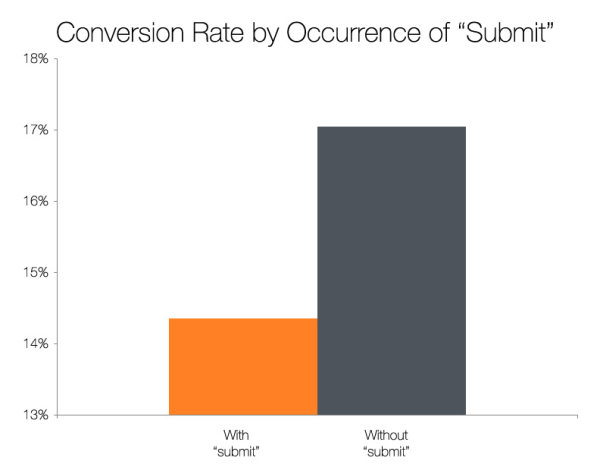
To get people to convert on your website, the conversion process needs to be a) easy, and b) enjoyable. The key is keeping visitors on your page long enough to get them to fill out your form, which means clean formatting, concise language, and a compelling offer.

But it's not as easy as it sounds. There are a lot of really awful landing pages out there. To help you convert as many visitors as possible into leads, here is a comprehensive look at the things you shouldn't do on your landing pages -- and how you can fix them.

The 12 Ways You Can Totally Screw Up Your Landing Page

1) It takes more than a second or two to load.

Did you know that 40% of people will abandon a website that takes more than three seconds to load? That means you will lose 2 out of every 5 people who come to your landing page before you even have a chance to show them what you've got. Fast page load times means better user experience and it helps your Google search ranking.

How to Fix It:

Catch the problem early by monitoring your page load times and fixing them as soon as you notice they're slow. Learn how to monitor and improve your page load time here.

2) The design is cluttered.

Layout is a critical factor in how your landing page will perform. Website visitors judge the value of your offer in the first few seconds they spend on the landing page. We call this the "blink test," which refers to the first three to five seconds a website visitor spends on any page of your website, during which they orient themselves and figure out what they can do on that page. If your landing page is wordy, lacking any images or colors, or jam-packed with way too much information, visitors won't know where to focus their attention and may end up clicking away.

How to Fix It:

Simplicity is the key to landing page design. Design your landing page to look clean and simple with a decent amount of white space. Include a color theme that's easy on the eyes, including a single call-to-action button that stands out. Write a clear headline and include an image or video that communicates the value proposition of the offer.

Check out this great example from SweetiQ:

sweetiqlandingpage

3) It's missing your company name or logo.

When a website visitor arrives on a landing page, it should be very clear to them not only what the offer is, but also which company published it. By excluding your company name and logo, the visitor might wonder where the offer is coming from so she knows it's credible, which can really distract her from the offer itself. Remember, visitors may not be arriving at your landing page from your company's website: others might get to it from external sources or via social media.

How to Fix It:

Your logo doesn't need to be a focal point, but it needs to appear somewhere on your landing page. People are used to seeing logos at the top left-hand or right-hand corners of webpages, so putting it there is intuitive to the viewer. (Remember, you're trying to make it easy for them.) No matter where you choose to put your logo, make sure it's consistent on every one of your web pages.

4) There are menu and navigation links.

On most parts of your website, having a navigation bar is key to delivering a solid user experience -- but on your landing page, they're generally more trouble than they're worth. They guide people to different pages on your website while you're trying to get visitors to focus on the offer so they fill out the form. Links to other parts of your site are a distraction you can avoid by simply not putting them in there.

How to Fix It:

Take off the menu and those navigation links immediately (here's a quick tutorial on how to do that). In fact, take all links off your landing pages except social sharing icons, which allow visitors to share your offer on social media but do not direct visitors away from the page.

5) You've got social following icons.

Social following icons (different from social sharing icons) are buttons that send visitors to your company's Twitter, Facebook, LinkedIn, and Pinterest pages. They're dangerous because they direct visitors away from your landing page -- and they may never come back to fill out your form.

How to Fix It:

It's simple: Remove 'em!

6) Your header is bland or super long.

The header of your landing page is usually the first thing a visitor sees. It's your opportunity to tell visitors what they're getting and how they're getting it, and to create a sense of excitement and urgency about the offer. A headline is bad when:

  • It's not detailed. Without some explicit information on what exactly people will be able to get after filling out the form, your website visitors aren't going to give over their information.
  • It's long and wordy. You'll lose the reader after the first few words.
  • It doesn't sound human. It's easy to get caught up in our own industry jargon, but terms that seem normal to you may be totally foreign to the people you want to convert on your landing page.

How to Fix It:

Try starting the headline with the simplest explanation of what your offer is. For example, if it's a guide to help you put together blog posts quickly, you should start your title with, "Free Guide." Then, use non-jargony terms to describe your offer in the most enticing, yet concise way possible. So back to the example -- the headline would read something like this: "Free Guide: How to Write Better Blog Posts in 30 Minutes a Day." It's short, simple, and jargony free, all while communicating the value of filling out the landing page form.

7) Your supporting copy is in paragraph form.

The supporting copy is the part of a landing page that details the benefits of the offer below the headline. If yours is in paragraph form and reads kind of like a blog post, many visitors won't even read it because it doesn't appear skimmable.

Bad supporting copy is lengthy and dense, detail unspecific benefits, and take a while to get to the point. They say "It'll save you money," rather than "I'll save you $600/year on car maintenance." 

How to Fix It:

The supporting copy is your chance to persuade your website visitor that your offer will benefit them -- but you have to do it succinctly. It should consist of the following:

  • What the offer is (1-3 sentences)
  • How the offer will benefit the person filling out the form (3-5 bullet points)

Use bullet points, numbers, and bold text so the content is easily scannable. The clearer the value and the faster someone can look at the landing page and take away that value, the more likely they'll fill out the form. Check out an example from one of our landing pages to see how you can better format your supporting copy.

BulletPoints

8) The image doesn't totally match the offer.

On landing pages, the phrase, "a picture's worth a thousand words," can definitely hold true. But not just any image will do. If you're offering an ebook about changing the oil in your car, don't just slap on a picture of someone changing the oil on the car. At first glance, your visitor doesn't know what the offer is without reading the headline. Are you offering 50% off their first oil change? Or a checklist of tools they need to change their oil? The image makes it unclear.

How to Fix It:

Anyone should be able to look at your image and be able to tell exactly what the offer is. If you're offering an ebook, include an image of the ebook's cover. If you're offering a free trial, include a screenshot of a tool in the software. If you're trying to get registrants for a webinar, add an image of the title slide or a picture of the presenter overlaid with some explanatory text.

You could also try using video instead of an image if you have the time and resources. On the right landing page, they could make an impact on conversion rate -- and it's an easy way to boil down a lot of information into a small space. (Want to make a marketing video, but don't know where to start? Learn how to make one here.)

9) Your form has too many fields, or the wrong kind.

Choosing the right number of fields -- and the right kind of information you request in those fields -- requires some strategy. The number of fields and the information you ask for should mirror the value of your offer. So, if you're offering a one-pager, don't ask for job title, number of employees at the company, and biggest business challenge -- many of your visitors are probably not willing to share that information for such a light offer. In that case, you'd want to just ask for name, email, and maybe company name.

How to Fix It:

When you're figuring out how long to make your form and what to ask, think about two things. First, ask yourself this question: would you rather have more leads that are lower quality, or fewer leads that are higher quality? It's a tradeoff -- the shorter the form, the more people will probably be willing to fill it out, so you'll generate more leads overall. But visitors who are willing to fill out longer forms with more information about themselves are probably going to be higher quality leads.

Next, think about what information people would be willing to share to get that offer. Where does the offer align with where the visitor is in the buying process? If they're signing up for a free trial, they're probably willing to give you their company name, number of employees, and information about business pain points. At that stage, they know who your company is and they trust you more than first-time visitors to your website.

(HubSpot customers: take advantage of the Smart Fields feature -- it recognizes people who have already converted on another of your offers, automatically removes fields these people have already filled in, and replaces them with new fields of your choice. It means a better experience for the visitor and it gets you the information you hope to better qualify them as a lead.)

10) Your form submit button just says "Submit."

Customizing your "submit" button copy is one of those small changes on your landing page that can make a big difference. A study of our own 40,000 HubSpot landing pages showed that CTAs including the word "submit" performed significantly worse than CTAs without the word "submit." So take the extra 30 seconds to change the copy -- it could help increase conversion rates.

submitvsnosubmit

How to Fix It:

The wording on the submit button should be concise and action-oriented -- very similar to your headline. Change "submit" to something like "Download My Free Ebook" and "Get My Free Consultation." 

11) It lacks social proof.

Don't make visitors take your word for it. People tend to do what other people are doing. In Marketing, this is called social proof, and it helps build trust with people who don't know your company well. You don't need social proof on your landing pages, but without it, you miss out on the chance to convert the skeptics.

How to Fix It:

Use quotes from people who have praised the offer, and include their name, picture, and job title if possible. You can also try embedding tweets and Facebook social plugins to show feedback in real time, or include the number of people who have downloaded the offer so far. Here's an example of how a company used social proof on one of their landing pages:

landingpagedesign-2

12) It's not mobile-friendly.

Filling out forms on your phone is the worst. I know that feeling of dread when realize you have to type in your entire email address to the tiny keyboard on your phone. If your landing page isn't mobile-friendly, then your form will be too tiny to read, and people will get frustrated trying to fill it out. You risk having them bounce off your site now that mobile-friendly websites are such a given.

How to Fix It:

First, check out what your landing pages look like on mobile devices by heading over to HubSpot's Device Lab and inputting the URL of your page. It'll show you exactly what it looks like on a phone, tablet, and other devices.

Next, make sure your landing page is responsive to devices other than desktop computers so that people can fill out your form no matter what device they're on. 

(HubSpot customers on the COS: Not to worry -- all landing pages made with the HubSpot COS have responsive design, so they look great on every device.)

How else do you think people mess up their landing pages? We'd love to hear your thoughts in the comments.

How to Use Landing Pages for Business

subscribe to the hubspot marketing blog

                                     
04 Jun 14:16

Sales Training Article: Qualification As An Ongoing Process

by CustomerCentric Selling

Sales Training Article: Have You Performed a Qualification Physical?

By John Holland, Chief Content Officer, CustomerCentric Selling® - The Sales Training Company

Image courtesy of Hin255 at FreeDigitalPhotos.net

sales training workshopThere comes a time for most people when annual physicals become a routine in trying to maintain good health. Seeing doctors every year increases the chance that major afflictions can be diagnosed early and treatments can start before conditions progress.

In my experience, companies would be far better off if sales managers were more effective in making sure that new opportunities entering each seller's pipeline were better qualified. One of the many responsibilities of a sales manager is to have sellers work on opportunities that have a high probability of resulting in orders.

For those organizations that are effective in this endeavor, the health of pipelines should be evaluated on an ongoing basis. As with an annual physical, developments can cause previously viable opportunities to devolve into low probability. In some cases it may make sense for sellers to continue withdrawing. Some of the causes are that sellers:

  • Are unable to gain access to Key Players
  • Are unable to uncover desired business outcomes
  • Are unable to establish potential payback/value
  • Have offerings that aren't a good fit for buyers
  • Can't get budget allocated

A core concept of CCS® is that bad news early is good news, meaning that early disqualification is better than going the distance and losing. Most sellers want pipelines with many opportunities in them. Left to their own devices they may knowingly or unknowingly focus more on quantity than quality.

Managers would be well served to realize that pipeline health should not be based upon one-time qualifications as opportunities are entered. As with regular physicals, monthly looks at opportunities are necessary to do sanity checks on whether or not they are moving forward.


Need some help with your sales performance? Take a look at the sales training workshops available to you and improve sales performance. Your Roadmap to Revenue Growth® awaits!

Read more sales training articles from CustomerCentric Selling® - The Sales Training Company.

04 Jun 14:16

Google+ isn’t dead. Here are 9 ways it’s crucial to your SEO right now

by John Boitnott

GUEST POST


Many marketing folks have started throwing Google+ by the wayside as they create online marketing strategies in favor of greener pastures over at Twitter, Facebook, Instagram or Vine.

This is partly because Google+ simply does not have as many users as the other huge social platforms out there. There have also been well-documented concerns going back years about strength of click-through and visitor referrals from Google+.

However, while G+ may not command an impressive piece of the social media community overall, it does include elements that provide companies measurable value, especially in increasing organic traffic.

“Google is making changes to its algorithms and how it ranks web pages with the goal of pushing people away from tactical SEO behavior toward a more strategic approach,” says Scott Langdon, Partner at HigherVisibility.com. What does he mean by that? By the very fact G+ exists, certain search scenarios exist that can help a business. Here are some of the best around.

1.) Personalized search

One of the unique ways that Google+ helps companies with their organic ranking is through personalized search. Put simply, personalized search occurs whenever someone logs onto their Google account and sees targeted results catered to them, compared to what people would see if they were not signed in. Google recognizes user preference and modifies search outcomes accordingly.

Research done by Eric Enge in 2013 showed that specific website outcomes, such as increased awareness and reach, can be greater for people who follow a business or individual on G+. This is because Google acknowledges a user’s preference for that business or author and wants to display those entities more whenever a query is typed in. To take advantage of opportunities likes this, make sure you claim a G+ page for your business.

2.) Google+ Local

Google+ Local is Google’s social integration of companies into its social news platform. It is beneficial to set up a G+ local profile page in order to get added publicity on a search engine results page (SERP). Whenever a person types in the title of the company or the services that the company provides, it can trigger a knowledge graph that pulls information from the Google+ local page and adds it to the search results.

Search results from a Google local page include product/service search results and brand search results. Let’s look at each one:

Product/Service Search Results

Whenever people type in the name of a service that is geographically important to them, Google will implement knowledge graph listings below search ads on the results page. If you hover over a specific business, it will trigger an extra knowledge graph that overlays in the right side of the search results page.

Brand Search Results

Whenever a person types in a specific brand it can trigger another knowledge graph. The information that is displayed in a brand name knowledge graph is much more detailed than a service/product knowledge graph.

With brand name knowledge graphs, the user will be able to see a Google+ profile image of the business, or, if Google already has an image of the business in its database, it’ll show a map of where the company is, reviews from users, and company details like address and a phone number. All of this is taken from information on the Google+ business page.

3.) Indexing

Unlike Twitter and Facebook, Google actively has its search bots crawl through each post in Google+. This allows for content that has been published on G+ to be found more quickly. In the same 2013 research by Eric Enge, he mentions how he has seen his content being indexed faster by Google whenever he posts it on G+.

4.) Ranking your social media posts

Along with bots crawling each post on Google+, the posts are also indexed and ranked into Google search pages. Indexing and ranking helps extend the value of your posts. Of course, Google has ranked other social networking pages in the past, but they are primarily community and profile pages, not actual posts. Also, there isn’t any character-length limitation on G+ — unlike Twitter — which makes it easier to repost current website content.

5.) Viral content

Gabe Shaoolian, CEO of Blue Fountain Media says, “Google+ may not be the biggest social media platform, but this network has some of the best user engagement on the web.” In other words, for the right audience, it can be a great place to make your content go viral.

This is especially true for web engineers and content writers that use G+ communities to enhance their work and to network with experts in similar fields.

Using Google’s advanced capabilities to share posts with targeted audiences could be your best shot at using social media to market content to contributors, bloggers, and website engineers.

6.) Google+ Hangouts

Online videos have become extremely valuable to SEO. With Google+ Hangouts, recording and uploading online video clips is simple and free.

Google+ Hangouts is a live movie streaming and recording service from Google where you and a number of other G+ users can get together. Although the videos themselves do not show up in Google’s search results, you can rank the post containing the video and then move your Hangout videos to YouTube to get them ranked that way.

In general, Hangouts also help get you connected with your clients and help you improve the content you post on your website.

7.) Keeping up with the SEO experts

The world of SEO is constantly changing and it’s crucial to keep up-to-date on the latest news, tools, and trends. Although G+ may not have as many users as other social networks, it does have one of the most active communities on the internet for SEO specialists.

Social communities like Technical SEO has SEO webmasters actively assisting each other with optimization problems. Google’s very own John Mueller is in charge of webmaster relations at Google and does regular G+ Hangouts to respond to webmaster concerns. Using these resources on G+ will help you stay on top of your game.

8.) Rich snippets

One of the most famous ways G+ is impacting search results is through Authorship and Publisher rich snippet markup. By entering in a simple code on your website and linking to a website on your Google+ page, website engineers and writers have the ability to incorporate Google+ information into the search engine’s results pages. Such information can include the author name, Google+ follower count, and profile photo associated with each post. Having these items connected with your Google+ page gives you stronger authorship and publisher rankings.

9.) Author Rank

Going hand in hand with rich snippets is “Author Rank.” This last year, Matt Cutts, head of Google’s research spam group, spoke about Google’s intention to recognize authorities on specific subjects. G+ will not be the only social network used in determining social popularity, but it is likely that it will be tied into the algorithms that Google uses to determine author rank.

In Closing

The worlds of social media and SEO have never been more integrated. Since Google+ was launched in 2011, the network’s integration into search engine optimization results has long since pulled ahead of other social media platforms.

Bottom line: it’s crucial to think about this network when forming your online marketing strategies as Google goes on to discover more ways to integrate its products together.


John Boitnott is a longtime digital media consultant living in San Francisco. His writing has appeared in NBC, The Village Voice, FastCompany and USAToday.


Join Hubspot's CMO, VentureBeat's VP of Product, and more for our upcoming webinar: "Enterprise software and the CMO, CTO, CIO -- Who does what, who gets the cash, and who’s in charge?" Sign up for free!


Google's innovative search technologies connect millions of people around the world with information every day. Founded in 1998 by Stanford Ph.D. students Larry Page and Sergey Brin, Google today is a top web property in all major glob... read more »


04 Jun 14:15

The Right Way To Do A Software ROI Analysis

by Brad Feld

On Monday we had a Foundry Group portfolio company sales summit. We are fortunate in that we’ve got a bunch of amazing sales execs in our portfolio, including several CEOs like Howard Diamond of MobileDay and Matthew Bellows of Yesware who have long histories selling and building sales organizations.

The “enterprise sales software ROI analysis” as a selling tool comes up over and over and over again. And most people blow it, or try to bullshit their way through it, or put together something that is clearly not credible. 

So I asked Matthew how he did it at Yesware. Following is his story. Oh, and if you are a Gmail user, check out Yesware.

After spending nearly 20 years selling startup software and services to big companies, I can safely say I’ve seen thousands of “Return on Investment” (ROI) slides. It’s the go-to slide for every enterprise technology salesperson, illustrated with a 4-8 table row, predictably showing that the service in question will pay back the required investment in 6-12 months. Never more (who can wait?), never less (unbelievable).

And like most startup business plans, ROI slides are almost always fake.

The salesperson or their marketing department has no experience to draw on or data from which to extrapolate. Moreover, there’s no accounting for the time value of money, the customer time required to deploy the service, or the risk of time wasted if the deployment doesn’t go well.

Occasionally, a few of the numbers on an ROI slide are based on a previous deployment of the technology. In the rarest cases, the slide has relevant and reference-able data that a potential customer can apply to their situation.

Because of the problems associated with software ROI analyses, we waited a long time to build one at Yesware. And we still failed the first two times we tried. Along the way, we learned that a decent, defensible and compelling ROI analysis requires two key components:

1. Reputable, reference-able customers: The first time we tried to build an ROI slide at Yesware, we anonymously evaluated the data of 40,000 salespeople across a six-month time frame. We were looking for evidence that the people who were using Yesware more actively were making more money than inactive users. Although we found out some great stuff about email open rates and times, and our ROI results looked great to us internally, when we talked to prospects, they were skeptical. Companies, products and industries are so different. No one felt good about applying a broad survey to their specific situation. Lesson learned: Unless a reasonably well-known company is willing to publicly testify to the specific numbers you are showing, you are skating on ice that’s too thin.

2. Identifiable benefits: The second time we tried to build an ROI slide, we worked with one well-known company, analyzing their email and Salesforce.com data. We were blown away by the results – a 40% increase in sales productivity between the active and the inactive Yesware users. It was almost too good to be true.

When we presented the findings to the partner company, they were ecstatic. Not because of our results, but because they just had the best quarter in their company history. They were happy to acknowledge that Yesware had something to do with their success, but a successful product launch also played a big role the 40% increase. Lesson learned: Accounting for your benefits should be easy for both the purchasing manager and the finance evaluator to measure. There shouldn’t be too many variables baked into the results.

We tried again, and this time we got it right.

In our most recent ROI efforts we compiled data from three separate companies to uncover the specific benefits their sales teams have achieved using Yesware. These are all well-known companies that our prospective customers can call to learn more – Acquia,Mimeo, Dyn, and WeddingWire. Each is a leader in building modern sales teams, and has offered to be a reference for Yesware.

With this kind of dataset, a simple survey can reveal incredible results. We discovered that on average, sales teams using Yesware:

  • Grew new business (including upsells) by 25%
  • Improved response rate by 32%
  • Improved overall call connection rate by 32%

There are certainly ways to make our ROI analysis better: We will continue to gather a bigger dataset both in terms of customers and salespeople. We will get data from companies outside the USA. And we will keep trying to better tease apart the various contributing factors to changes in productivity.

But overall, we’ve finally cracked the code on a decent, defensible and compelling Return on Investment analysis. I hope this guide helps you create your own.

Matthew Bellows is co-founder and CEO of Yesware, an email productivity service for salespeople. Follow him on Twitter @mbellows.

The post The Right Way To Do A Software ROI Analysis appeared first on Feld Thoughts.

04 Jun 14:15

5 Hidden Assumptions of Tech Privilege

by H. James Wilson

Privilege has been in the news over the past few weeks. At Princeton, an undergraduate’s objections to being told by classmates to “check your privilege” were published as an op-ed in the school’s conservative paper, then reprinted in Time, and then discussed widely in major media outlets like The New York Times.

There are also stories coming from another sort of campus — the manicured lawns and bikeways of tech firms’ headquarters. Last week, Google released its HR statistics showing that, for technology-specific jobs, 94% of its workers are white or Asian, and just 17% are female. The company’s admitted lack of diversity underscores broader challenges in the sector, such as exclusion of women from male-dominated VC networks and homogeneity of thought among the young, white, hoodie-wearing crowd.

On a related note, Pew’s new survey report on the Internet of Things (IoT) and wearable computing, reveals growing concern about the technology sector’s cognitive privilege — a set of unrestrained assumptions, often based in power and influence, about how the world should operate.

Many of the Pew survey’s expert respondents argue that there’s considerable risk to societal well-being if these privilege-based assumptions from the tech sector were to guide the design and development of the Internet of Things over the next decade. If we’re going to ensure an appropriate balance between commercial and societal interests around the Internet of Things, the data suggest technologists will need to put at least five of these assumptions in check now, before it’s too late:

Ubiquitous consent. The assumption now is the Internet of Things is opt-out, not opt-in. With sensors everywhere, there will be an explosion of new opportunities to conduct Big Data experiments on how people behave and interact with other people and things. Those in the privileged “screen everything crowd,” as one respondent in the survey calls them, naturally assume that previous consent to being tracked suggests future consent, with enhanced tracking capabilities. 

Another respondent notes, “We will assume these people, brought to us by lenses and digital connections, are there for us. … This urge to watch is so compelling that we will adopt its logic — as we do with all our tools — and we will easily move from watching what we can see, to watching what we could see.”

Needless to say, such an approach is rife with privacy implications and untested areas of law. Assuming my data is available for others to profit creates a kind of digital imperialism.

Your behavior needs to be modified. There’s a privileged notion that the next generation of technology should become an unavoidable path to self-improvement — and that efficiency and errorlessness are always inherently good. As one respondent notes, “The Internet of Things will help more things go right and help more dumb things do smarter things. Anywhere there’s currently a human in the loop, there’s an opportunity for failure, as well as an opportunity for a device to make sure things go right.”

The problem with this is that those that don’t want to adhere to this world view may face new forms of economic discrimination. “Every part of our life will be quantifiable, and eternal, and we will answer to the community for our decisions. For example, skipping the gym will have your gym shoes auto tweet (equivalent) to the peer-to-peer health insurance network that will decide to degrade your premiums,” as another respondent cautions.

Those not buying into the system would need to create new forms of retreat from an everyday life characterized by these activities. Respondents note the emergent need for “Google Glass-free zones,” “personal anti video firewalls around our bodies,” and “technology shabbats” — a day of the week where we figure out a place that’s off the grid.

Perceptual insufficiency. Another assumption is that our natural experience of the world is (or soon will be) insufficient. The report mentions dozens of examples of new tools that will help us survive and thrive in the Internet of Things, where data-mediation and analytic decision-making become oxygen for everyday living. Augmented reality (AR) glasses will superimpose information to improve vision and decisions about health and nutrition as we buy groceries, for example; virtual reality (VR) headsets will create immersive connections to loved ones in other environments.

Respondents voiced many concerns about potential consequences of this assumption getting baked into the development of the IoT. Walking down the street will become risker as data is literally cast into your field of vision; life will feel more filtered and moral responsibilities more abstracted; meaning could decay in relationships that have long been based on direct physical interaction, such as in parenting and marriage. And when you do see others directly, you may feel a sense of “social exhaustion” as a result of perpetual feedback and “stimulation due to always-available computing.”

New gadgets are a precondition to human flourishing. As the circuitry of the Internet gets woven into the basics of life — into clothing, home heating systems, fields of corn, and car engines — there’s greater potential to use personal analytics tools to improve health and well-being. Want to gather detailed physiological data to share at your next doctor visit? Wear a health monitoring shirt. Want to figure out how to lower your utility bill? Install a Nest Thermostat, which will analyze your energy habits and use algorithms to reduce energy consumption.

Yet, many respondents voiced concern that this logic could also lead to an even wider digital divide. What about those unable to buy the beneficial tools that interact with ubiquitous sensors? As one respondent opines, “just as students today are burdened if they don’t have home Internet … there will be an expectation that successful living as a human will require being equipped with pricey accoutrements. … Reflecting on this makes me concerned that as the digital divide widens, people left behind will be increasingly invisible and increasingly seen as less than full humans.”

Humans are things, too. A fifth assumption is rooted in the construction and interpretation of rhetoric. To some the phrase ‘The Internet of Things” implies that people, linked to ubiquitous cloud networks with tools like wearable technology, are “just another category of things.”

Rather than technology being at the service of people, the reverse takes hold: people become “nodes” constantly transmitting and receiving data. “Google Glass is already part of Google’s sensory network, with all images and sounds that the user obtains sent onto Google’s servers for storage and analysis,” observes one respondent.

Too often, these five assumptions reveal possibilities for technological invention decoupled from consumer needs: technology for technology’s sake. While the Internet of Things suggests something vast, creating economic and social value will require a lot of small scale experiments. These will give users a say in whether an application is truly solving a problem — or creating a new one based on a faulty assumption or an unconscious exercise of privilege.