We are multi-tasking phenoms. During my last trip to the greatest diner on earth, I scanned an article about CRMs between the first and second coffee pour. Midway through my omelet, I got side-tracked by a tweet about Alexander Graham Bell. By the time the check came, I'd forwarded myself a research report for future download -- content that ended up inspiring this blog post. All of this was done on a screen about the size of an index card.
About half of what I read on my phone is work related. The other half involves, in no particular order:
As it turns out, context has a great deal to do with the content we consume online and how we consume it. Mobile phone reading is fast-paced, half-present, and usually done while doing something else. Contrast that with reading on a tablet. Most tablet reading is slower-paced, deliberate, and done in the home. Desktop use is also different. For marketers, it's worth thinking about how people are consuming your content and what that might change for your approach to content creation. Let's take a look at some of the clearer trends in buyer behavior on mobile.
Mobile Browsing Is More Action Oriented
In an interview with Mashable, Andy Ching, director of mobile for Bing, stated that 70% of mobile searches are followed up by a consumer action within an hour. In other words, if you're searching for car parts on mobile, you're probably going to end up buying those car parts that day. Browsing on a desktop computer or laptop, however, tends to be more leisurely and general-research-driven in nature.
Think for a moment about the last time you pulled your mobile phone out from your pocket. Unless you were waiting for a bus or eating omelets at a diner, you probably had a specific purpose for doing so. Because mobile phones go with us, their users tend to be more action driven. This is probably most true in cases of consumer products and B2C companies, but can extend into the B2B or nonprofit worlds, as well.
In your marketing strategy, think about what you can do to make those action-oriented searches easier. Keep your landing pages and home page simple. Optimize your site for mobile viewing using responsive design and make phone numbers clickable.
Quick Tip: You can make your company's phone number clickable by adding a simple tag in the HTML view of your page. Switch over to HTML View (In HubSpot, this is the button on your toolbar that looks like this </>) then format your phone number like so:
<a href=”tel:18884827768″>1(888)-482-7768</a>
Except ... replace our phone number (888-482-7768) with yours. Note that this is similar to the HTML code for creating a link, it just adds "tel:" and the number.
Most Common Mobile Activities
According to IDC research, email is the most common activity that U.S. adults perform on their smartphones, with reading news/content and using social networking as a close second and third, respectively. Each of these activities have been on the rise. Twice a year, Knotice, a Data Management Platform, releases data on email opens by device. During the second half of 2012, 41% of all emails were opened were opened on a mobile device, which is a full 50% increase over the same time the prior year.
Knowing that emails, content consumption, and social networking are increasingly happening through mobile devices, here are a few tips to add to your checklist:
Make sure your emails and content are easy to read on mobile. Litmus, an email testing service, advises: "To avoid illegible fonts, strive for a body copy minimum of 14px." In fact, you might want to check out their infographic that walks you through a number of email optimization tips in an easy to understand way.
Don't forget that mobile viewers are often hopping between these three activities. If you're sharing a webpage out on social media or email, remember that the end recipient (or the person he forwards it to, or the person that person forwards it to) could very well be on a mobile device. Make sure that your website, blog, and any other content you share is just as optimized for mobile.
Make sure your calls-to-action are big and visible. Litmus advises to include a call-to-action that's at least 44px wide.
Being more aware of how your audience consumes your content can give you a leg up when it comes to conversions from this very action-oriented crowd.
Mobile Behavior and Ads
There are mixed reports as to the effectiveness of ads on mobile devices. According to data from three of Facebook’s biggest ad API partners (who help companies purchase ads) mobile Sponsored Stories are generating more than 13 times the clickthrough rates of all Facebook desktop ads. And a study by Hipcricket, suggests that 64% of people who have viewed an ad on mobile have made at least one purchase as a result.
However, for a few reasons, it can be difficult to effectively measure purchase intent of mobile users who click through on ads. Some clickthroughs are accidental and others get misattributed. The best way to understand the behavior of your mobile audience with ads is to test it with a few campaigns. Create a landing page for the campaign and see how many mobile viewers make it through to the thank you page. You can use Google Analytics to get a breakdown of your mobile visitors. Go to any content page in Google Analytics and use the dropdown to view by a second dimension: "operating system." Doing so will let you track how many mobile users are viewing your landing and thank you pages.
Another advertising tip for mobile users? Be mindful about ad sizes. In their recent ebook, Mobile Advertising in a Multichannel World, predictive lifetime value platform Nanigans advises considering the optimal viewing sizes for your ads on mobile devices. "320X50 is the dominant banner size for smartphones on Android and iOS," explains Nanigans' Director of Marketing Laurie Cutts. "For tablets, half, quarter, and full-page ad formats are typically the most effective for driving eyeballs and conversion."
Device Hopping
A friend of mine recently read an article on Slate that inspired her. She was on a mobile phone when she read it, and liking the content, decided to share it out to her Twitter following.
When I discovered her tweet, I was at my desktop taking a brief break over coffee before diving into my work for the day. I thought the article looked interesting and clicked through. When I clicked through on my desktop, however, the resulting page looked like this:
That's because I was viewing a mobile site from my desktop computer and the resulting page wasn't rendering well. Whenever you create content, it's important to think not just of the first user who reads it, but of the countless others who may access it after through a social share. How many times have you shared a website from one device to a sea of social followers on other devices?
It's as true for personal consumption as it is for sharing. According to research from Google, a full 90% of viewers hop from one device to another to complete a task. You're watching TV, maybe scrolling through your Twitter feed absent-mindedly. You come across a tweet that could be of interest. Not in the right mindset to read it then and there, you forward it to yourself for later reading. Later on, you check your email on a desktop and click through to read the whole thing.
The best way to conquer this? Build your content using responsive design. Responsive design reshuffles your webpages to fit whatever device is viewing them. So your page will look good on phones, tablets, and desktops.
A Final Note: Mobile Users and Search
As inbound marketers know, search is one of the biggest driving factors for how today's companies get found online. So it makes sense to think about the experience of mobile users at the search box. Mobile user behavior at the search engine box is more focused and time-sparing. In a great article on the MediaWiz blog, Marc Purtell explains:
"Consumers do not search the same way on mobile devices as they do on desktops. Search queries on mobile devices are typically shorter, containing fewer characters, and more dependent on Autocomplete suggestions. Therefore, when determining what keyword phrases to perform mobile searches around, focus on the theme of the page to see what Autocomplete suggestions are most common."
The majority of mobile users click on one of the top three organic results on a search engine results page. And since these searches are on the rise, you'll want to focus in on the SEO tactics that will help you get to the top spot on your 2-5 most important keyword phrases. This summer, Google rolled out additional algorithmic changes that actually prioritize search listings of sites that are optimized for mobile over those that aren't when a mobile user is searching. So optimizing for search on mobile is of the utmost importance.
Currently, one out of every three minutes spent online is on a mobile device. (Drop me a comment if you're on one right now!). With this influx of traffic from mobile, it's important to make a plan for how you'll attract and engage the person holding each of these wide-ranging devices. You can get started right now by taking a look at how your current site looks on a number of different devices in this free mobile emulator we've created -- now in beta.
Today's blog post is by Keith Rosen, CEO of Profit Builders, a globally recognized authority on sales and leadership and the pioneer of management coach training. Keith has written several best sellers on time management, cold calling and closing the sale, including the globally acclaimed Coaching Salespeople into Sales Champions, winner of Five International Best Book Awards and rated the #1 book on sales coaching. Keith Rosen recently wrote an interesting blog post, "Coaching Questions that Work in Any Conversation." One of the points he makes is that sales managers frequently express concern that coaching takes time. In some cases,...
SPECIAL NOTE: This is the 1,000th blog post to appear on Convince & Convert since I founded this site in 2008. Many, many thanks to all readers and fans for their tremendous support over these five years. I hope to continue providing you thoughtful, interesting content about social/content/digital for a long time to come! ~ Jay Baer
“It’s hard to get less sexy than taxes.”
That was just one of the excellent and interesting lines I overheard last week at the Expion Social Business Summit in Raleigh, North Carolina. (Expion is an enterprise social media management software platform, and I was the opening keynote speaker at the event’s second day).
Here are my 7 Lessons Learned about the convergence of social and content, from the Expion Summit:
Lesson 1: Don’t Let Your Inherent Seasonality Stand In Your Way
The very frank – and very funny – statement about taxes was put forth on stage by Kevin Cobb, Jerry Green, and Matt Staub – who run the social media team at H&R Block. They delivered a fascinating breakdown of the brand’s social progress, which began in 2011 with a goal of taking back the offseason (most people only think about taxes during spring tax season).
H&R Block wasn’t willing to let customers ignore taxes for most of the year, and used social media and content marketing to keep tax topics on the minds of customers and prospects. With a three-pronged strategy of “Educate; Engage; and Entertain” they set to work.
Lesson 2: Give Your Brand Permission To Talk About More Than Its Products
The brand created many bite-sized educational content pieces that very much epitomize the “marketing sideways” trend I talk about in my book, Youtility. The goal was to make customers realize that many life events were actually tax events. Thus, the content focused on infographics like back-to-school sales tax-free holidays, and preparing for winter checklists.
H&R Block also fully decentralized their social chatter, empowering and enabling 100,000 tax professionals to share content.
Lesson 3: Pick Specific Success Metrics (just a few) and Stick To Them
The hub for the initiative is BlockTalk, an information portal that offers up tax and life advice. Traffic to Block Talk doubled from 2012 to 2013 (more than 2 million visitors, annually), and share of conversation around tax issues increased by 13% year-over-year. The brand has also evened out (to some degree) the previously vast gap in chatter about them during tax season, versus the “off season.”
This was a terrific case study that included broad strategy tied to business outcomes, smart and measurable objectives, and several well-executed tactics.
That kind of unveiling was common at this Expion event (theme: Mission Possible) as companies like IBM, Doubletree, Jeep, Univision, Coca-Cola, and Molson-Coors shared their in-the-trenches stories of what works today, and why. It was like a whole conference of Social Pros podcast episodes! (In fact, if you want more detail on the H&R Block tax preparer social enablement program, check out this episode we recorded with them earlier this year)
Lesson 4: Looking Good Is As Important As Working Well
Another highlights of the event were Expion’s unveiling of their spiffy new user interface, which they hilariously (and honestly) described as: allowing our customers to marry James Bond, instead of being stuck with Bill Gates. (it was very “Radical Transparency” which is also a theme in Youtilty).
Lesson 5: The Best and Broadest Content Engine You Can Access Is Your Existing Customers
Perhaps surprising for a brand-side social media conference, the big thread for the event was content marketing.
Several examples were shown (like H&R Block) of companies producing truly useful content (music to my eyes), and Wendy Lea, CEO of Get Satisfaction even dangled what will become the next phase of content marketing in this excellent quote:
“The most honest content is from your customers, who are the most important people in your world. Figure out how you can leverage that content and extend the social value and shelf-life of it.”
Lesson 6: Earned Media Isn’t an Accident, And Can Be Predicted
One of the most intriguing presentations was by Jeff Melton, the Chief Distribution Officer of agency holding company MRY who talked about detailed and integrated planning for earned media. Like most companies, I don’t estimate earned media (impressions, shares, et al) in social, and via content. They just….happen. At MRY, Jeff and his team created extremely detailed models that use benchmark data to determine how much earned media in social each piece of paid, earned, or owned content SHOULD generate. Before they add something to Facebook, they have a “budget” for what they expect it will do. Very interesting, and extremely smart. In fact, all agencies in the MRY group are committed to this approach. So much so, that the big broadcast agencies like BBDO have earned media goals for every TV spot, etc.
Lesson 7: Maybe Social Media is The Wrong Term, with Too Much Baggage
It was also fascinating to hear Jeff say that they never use the words “social media” at MRY, but always “earned media.” This is because “social media” carries specific connotations and baggage, whereas “earned media” (which of course is often located on social media) is viewed as more precise and applicable. It reminded me of speaker, author, consultant David Meerman Scott, who told me once that he never mentions “social media” in the C-Suite, due to misunderstandings of social’s purpose and role.
Which of these 7 Lessons are most important for you?
“Yes, I’d like to upgrade my dad’s season tickets. Oh, front row, fifty-yard line, please–the best you have.” —Alexis Ohanian, approximately three minutes after he sold reddit
Preface by Tim
I first met Alexis Ohanian through education non-profit Donorschoose.org, as we both sit on their advisory board.
Years later, he still impresses the hell out of me.
Alexis is the sharp and affable co-founder of Reddit (stylized as “reddit”, which is how it’ll appear in this post henceforth). He has made millions of dollars, fought Washington and won, created the largest Secret Santa program in the world (92 countries, almost 20,000 participants), and been on The Colbert Report for massive fundraising through reddit.
He’s kicked a lot of ass.
That said, few people know the backstory. His journey has involved failure, pain, self-doubt, and much more. In other words, he battles the same challenges that you do. He has learned to be an entrepreneur, just as you can.
The following guest post from Alexis is an exclusive peek behind the curtain. His new book, Without Their Permission, inspired me to ask him to spill the beans. He generously obliged.
ALSO: From 9am-1pm PST (12pm-4pm EST) today, Tues., Alexis will answer any questions you pose in the comments! Just wait for things to start and ask away.
Enjoy the lessons, and gird your loins (and emotions) for the ride. Business and life are full-contact sports…
Enter Alexis
Halloween has always been one of my favorite holidays, but on October 31, 2006, all the hard work Steve Huffman and I had put into starting reddit (with lots of help from our first hire and good friend, Dr. Christopher Slowe) had quite literally paid off.
The first thing I did after the money showed up in my checking account was to call the Washington Redskins ticket office and upgrade my dad’s tickets to something a bit better than the nosebleed seats we had. I then made a sizable donation to my mom’s favorite charity and got back to handling all the inbound press. It was a blur of a day, but once it ended, I was able to take stock of just how far we’d come in only sixteen months.
When Steve and I looked at each other, there were no cheers of joy, just a shared sigh of relief. We’d pulled off something statistically improbable—just barely—and we knew it. And after everything we’d been through…wow. Grateful, we went and shared a pizza at Mike’s, the same place where we’d been ordering pies since we moved to Somerville, Massachusetts. There, we caught our breath after an entire day of interviews.
For my parents, it was a day when their only child had become a millionaire before he was twenty-four. But they always just wanted me to be happy. Neither one of them really understood the PC they brought into the house not long after my tenth birthday, but they let me do whatever I wanted to it as long as I didn’t break it.
Actually, I almost did break it on several occasions, but then I wound up putting it back together. That computer was my gateway to another world once we got a dial-up Internet connection. I campaigned hard for that 33.6Kbps connection, and when I finally got to hear those now-antiquated sounds of the modem, it seemed like magic to my adolescent brain.
This is actually my cousin BJ’s computer, but if you thought I looked happy playing on his, imagine how excited I was to get one of my own.
I built my first website on GeoCities. I think it was /siliconvalley/hills/4924 (the Wayback Machine link only goes back to 1999 and by then I’d turned it into a MIDI collection website with some banner ads — I kind of hate myself for making this, but there you go). It was originally my fan page for Quake II (fun-fact: Masters of Doom was the book that made me fall in love with the idea of entrepreneurship). There wasn’t much going on there beyond some photos of rocket launchers and railguns with a few tacky animated flaming skulls. I really liked that game. But at the footer was a counter that showed how many people had viewed the website (I’d later learn that most of those “views” came from me reloading the page).
But at the time: what power! I could build something from my suburban bedroom and millions (okay, well, hundreds) of people all over the world could see just how much I loved a video game. That’s how I got interested in making websites. There was no turning back.
A company called Sidea was my first nonfamilial employer (I suspect the real reason my dad wanted a kid was that he needed someone to do all his yard work—and for well below minimum wage, I might add). I later worked a lot of random jobs between high school and college: Pizza Hut cook and waiter (some of the best customer-service experience one can get), deli counter attendant (I was terrible at this and hated smelling like cold cuts after work, despite how much my dog liked it), FedEx warehouse grunt (great exercise, though not very mentally stimulating), and parking booth attendant (get paid to read books? Yes, please! Until the robots replace humans, that is).
But the job with Sidea was one of the most pivotal I ever had–even if the company went bankrupt a year after I started (not my fault!), a victim of the dot-com bubble bursting.
My job was simple: I had to man a booth in the middle of a CompUSA store, armed with a headset microphone and a large computer monitor. I was to demo software and hardware every thirty minutes—regardless of whether or not anyone was listening. Want to give a fourteen-year-old experience in public speaking? Tell him he has to demo random computer products to an entire CompUSA full of people ignoring him.
I can’t tell you how many demos I gave to no one. But I did every one of them as though my boss were watching. In between demos, I killed time browsing the Internet for the latest in Quake II news. For this job I was paid a ludicrous ten dollars per hour. I think I know why Sidea went bust.
But damn if that wasn’t a fabulous way for me to start public speaking. If you’ve experienced the embarrassment of the public speaker’s worst-case scenario (speaking to a roomful of people who are both ignoring you and hating you) before you’ve finished puberty, things are probably going to be okay.
One day I was approached by a man trying to decide between two different mice. I don’t recall the details, but there wasn’t a big difference between them, save the color and maybe another minor feature. I pitched him on his two options with a quip about the bonus “feature” of a different color. He laughed and offered me a job. He handed me his card and said he’d like to hire me for sales. I kept that card in my wallet for years until it finally disintegrated. Fortunately, I scanned it before it did.
Thank you Carlos & Steve. You have no idea how much you did for me.
I didn’t have the heart to tell the man I was only fourteen. When I told my parents about the offer, they told me to finish high school first. I never called Steve Harper, general sales manager for Stanley Foods, Inc., but I had a hunch I was on the right track. I was always tall for my age, and weighing 260 pounds at the time also helped age me up, as much as being heavy may’ve sucked the rest of the time.
Being the tallest guy in the class and having a name that’s usually given to girls (in fact, I was named after a three-time title-winning boxer, Alexis Argüello) are enough to make a person stand out in school, but make him one of the most overweight as well and you’ve got a recipe for something. It easily could’ve gone the other way—self-loathing and depression—but I cared too much about video games and computers to realize how not cool I was.
Pure swag.
I overcame my weight by making jokes about it before bullies could. Girls were trickier, though. I nearly failed geometry because of a cute girl named Erin, who told me (well, she told my best friend, but so it goes in eighth grade) that I was too fat to go to the dance with.
Like a lot of my not-popular-but-not-pariah peers, we developed personalities and pursued hobbies that interested us, because “just being cute” wasn’t an option.
We tinkered on our computers and spent way too much time playing video games with each other. I started a nonprofit called FreeAsABird.org (I’m really regretting the WaybackMachine) that built free custom websites for small nonprofits that had little or no web presence. I e-mailed all my clients cold, and as far as I know they had no idea I was a teenager. After earning a 4.0 my freshman year, I did as little work as I could but still kept my grades up in high school so I could maximize my time spent gaming and running the competitive gaming teams I managed.
Thank goodness, too. Because that was a long-term investment in myself. Most schoolwork felt awfully irrelevant when compared to work that was actually affecting real people and giving me leadership opportunities (albeit digital ones), nurturing the community management skills that would come in handy later.
Of course, all that time in front of a monitor began to take its toll, as my metabolism wasn’t nearly as fast as my buddies’. Our fast-food binges may’ve done nothing but fuel LAN parties (that’s where lots of people bring their computers over to someone’s house to connect directly to a local area network—for gaming). True story: I’d never attended a party that didn’t have “LAN” in its name until college.
This pattern of eating wasn’t healthy. I got tired of being fat by my junior year of high school and decided to do something about it so I could get in good enough shape to play football before I graduated.
Thanks to regular exercise and the abolition of soda and junk food, I lost fifty-nine pounds. My pediatrician (who was always kind of a jerk) couldn’t believe it when he read it on the chart. And to this day I can’t believe how differently people treat me. To have been the “pear-shaped fat kid” for all those formative years and then join the ranks of the easy-on-the-eyes crowd is like turning on another life cheat code. One random night, I bumped into Erin (remember—from eighth grade?) at a movie theater—she literally didn’t recognize me. It felt great. I may have danced a jig when I got back to my seat to breathlessly tell my friends what had just happened.
There Are Nerds in College
I applied to only one college, the University of Virginia. At the time I didn’t give it much thought, but I can’t help wondering how much different life would’ve been if I hadn’t made that seemingly insignificant decision. I had no contingency plan aside from the local community college, much to my parents’ dismay. I included along with my application a CD-R with my “digital portfolio” on it. It’s rather embarrassing, but I’ve now uploaded it for your viewing pleasure. I’ll wait while you go look.
If you were drinking a cup of coffee at the time, I imagine you did a spit-take. If not, please don’t tell me, as I’d like to preserve the image.
Much to my parents’ relief, I got in to UVA. But that’s not the important part. The decision that defined my experience there and made reddit possible was checking the box for “old dorms” on the housing questionnaire. I didn’t know what this meant at the time; old dorms just sounded cooler than new dorms, which were really suites—I wanted something that looked like the colleges I’d seen in movies.
The day we moved in, I spotted a blond-haired guy playing Gran Turismo on his PlayStation 2 across the hall from my new dorm room. His name was Steve Huffman. I was thrilled because I’d worried that no one played video games in college—that this was something I’d have to leave behind as a relic of my childhood. Steve was much less excited to meet me, because he’d seen my name on the door and thought he was living on a co-ed hall. So I was excited that he played video games; he was bummed that I wasn’t a girl. He got over that, and we became best friends. Picking old dorms and ending up across the hall from Steve was one of the best, albeit most random, things that ever happened to me.
You’ve Got to Be Willing to Disrupt (and Be Disrupted)
My dad has been a travel agent for more than thirty years. I distinctly remember dinner-table conversations around the time the Internet started to disrupt the travel industry. As a high school student with a particular interest in computers and technology, I was especially enthralled with all the buzz around the “dot-com bubble.”
Dad, on the other hand, was watching his commissions from airlines get cut all the way to zero. Travel agents used to make good money from bookings that now were going to OTAs (online travel agencies). Because of this disruptive technology, people were now booking their own flights and hotels, cutting out the middlemen—people like my dad.
Just a few years before, my dad decided to leave his position at a large agency to start his own small travel agency. A first-time entrepreneur, he was now facing a dramatic shift in the way his industry did business—and there was no stopping it. The Internet was changing the fundamental business models for the travel industry.
One night he came home from the office particularly frustrated. He’d just learned from a major airline that they, too, would finally be eliminating travel agent commissions altogether. After years of being gashed by these airlines, my father sent them a fax to articulate just how he felt as his business was being eroded.
“Fuck you.”
He doesn’t remember if he put a cover sheet on that fax, but I like to think he did.
Unlike people in other industries, he couldn’t call his lobbyist on K Street and ask him to get a law passed that would make sure all travel agents get a commission. He had to adapt his business model. And he did. To this day, he continues to operate with a focus on business and first-time travelers (usually boomers taking their first cruise). It’s not an enterprise I’ll be likely to take over, especially given hipmunk, but it’s one he and his employees will, I hope, continue to run for years to come.
But those dinner-table conversations made an impression on me. The Internet was a powerful tool, and I wanted to be sure I knew how to use it. The free market is ruthless. But it has to be. It’s up to us to make the most of it.
We must be opportunistic—when disruptions happen we need to identify the new business models and adapt, as my dad did. Or better, we need to be the ones doing the disrupting.
I knew I wanted to be a disrupter.
Sometimes You Just Have to Stand Up
My commercial law professor at the University of Virginia, Professor Wheeler, one day commented in class on the fact that I always volunteered to be the demo person in front of the class when he needed human props. He said how important it was to show up, to stand up—lauding my effort. I just thought it was fun to be that guy in a class of hungover undergrads. It wasn’t that I thought I might get better grades, but I figured I had two legs, so why the hell not get up and use them?
I’d never expected to give a TED talk, let alone at twenty-six years old, but then again I’d never expected to be in Mysore, India, which is where I was in October of 2009 as an attendee of TEDIndia, one of the yearly TED presentations that the organizers host all around the world.
A month or so before the conference I was included on a massive e-mail blast from Chris Anderson, curator of the TED Conference, that included this attention-grabbing nugget:
It is commonly said that TED attendees are every bit as remarkable as those appearing on stage. It happens to be true. That’s why at every conference we invite you to consider whether you have something to contribute to the program—and possibly later to the wider TED community, through the TED.com site.
So there at my laptop I raised my virtual hand—so to speak—and submitted a pitch for a three-minute talk to TED. These are the palate cleansers in between the more heady and often very emotional eighteen-minute TED talks. I figured I’d better get right to the pitch. Here’s what I wrote:
The tale of Mister Splashy Pants: a lesson for nonprofits on the Internet. How Greenpeace took itself a little less seriously and helped start an Internet meme that actually got the Japanese government to call off that year’s humpback whaling expedition. People manage to sell entire books on the subject of “new media marketing” but I only need three minutes—with the help of this whale—to explain the “secret.”
How could they resist a name like Mister Splashy Pants? Splashy to his friends.
I figured they must’ve been totally floored with awe, because I didn’t hear back for a month. Was this just their way of saying no? I was already in India at this point, so I sent a quick “ping” e-mail to see if I could get a yes or no.
“Congratulations. You did get accepted.”
Hot damn, I had twenty-four hours to write and rehearse a talk people practice for months…
Better turn on some South Park.
Thanks to VPN, I could watch South Park from south India. The episode was called “Whale Whores” (season 13, episode 11), and it satirized the Animal Planet documentary-style reality show called Whale Wars (oh, puns!), which features the Sea Shepherd Conservation Society, an organization that harasses Japanese whalers in an effort to protect marine life.
In the episode, after hordes of Japanese storm the Denver aquarium during Stan’s birthday and slaughter all the dolphins (am I really writing about South Park right now? I love this country), an enraged Stan implores his friends to join him in protecting the dolphins and whales, which the Japanese seem so intent on eradicating.
Stan’s friends are not interested until Stan joins the cast of Whale Wars, at which point Cartman and Kenny pretend to be whale-loving activists in order to milk some of the fame associated with the show. They volunteer, despite admitting earlier that they “don’t give two shits about stupid-ass whales.”
I grabbed a screen capture of Cartman, in a Save the Whales shirt, proclaiming his love of whales; Kenny is beside him, dolphin lover (sic) scrawled on his chest.
That image reminded me of what was then one of the biggest events on reddit—voting for the name for a humpback whale that Greenpeace was tracking. This event has since been eclipsed by other events, such as the “money bomb” donation of over half a million dollars to DonorsChoose.org or fund-raising for three-year-old Lucas Gonzalez, who needed a bone marrow transplant. But the story of Mister Splashy Pants was a special moment in reddit’s development and proved to be a prophetic tale of the power of social media: for an idea to truly become mainstream, it needs to go beyond the early adopters—in this case, whale lovers like Stan—and also include those who want to join the trend.
A lot of people rag on PowerPoint (often rightfully so). But in the right hands, this much-maligned communication tool can actually be incredibly entertaining (and even informative). The problem is, most people don’t understand how to use it, which sets the bar for PowerPoint presentations really low. Here’s my philosophy: lots of big pictures, text, and tons of slides. For my TED talk, I had room for no more than a few words on each slide—and they had to be in 86-point type, minimum. Forty-two slides—a good sign, even though it meant I had only a little more than four seconds for each slide.
There was going to be a giant TED sign on the stage behind me. This could make or break my public speaking career. And I was going to be on the same stage where the brilliant statistician Hans Rosling, using beautiful data, emphatically demonstrated how India ascended to economic superpower status—meanwhile, I was going to talk about a whale named Mister Splashy Pants. No pressure.
I finished before sunrise and took a power nap. When I awoke I began feverishly practicing with my timer. I missed all the morning talks. I was terrified of Chris Anderson, who famously cuts off speakers when they go on too long. As someone who routinely talks more than I should, I didn’t want my talk punctuated by a giant cane pulling me offstage.
I’d later learn that TED does not in fact use a giant cane.
I don’t remember the talk before mine, because I was so busy trying to remember what I was going to say.
Why are my hands shaking?
Chris Anderson introduced me as Alex. I hate being called Alex, but I smiled and took the stage, trying hard not to trip on the way. When you’ve grown up embracing your unisex name (okay, it’s predominantly a woman’s name here in the United States), it’s incredibly vexing to hear someone shorten it to the male version. I’m a dude named Alexis; please call me by my name. Now I was thinking about Alexis Argüello, the three-time world champion boxer my father named me after, and I wondered if he ever had the same issue growing up in Nicaragua—shit, I’m supposed to give a talk right now.
Remember, it can’t go worse than a giant room of CompUSA shoppers actively ignoring you.
That got me started. Get to it, Ohanian.
“There are a lot of ‘Web 2.0 consultants’ [I made air quotes with my fingers] who make a lot of money—in fact, they make their livings on this kind of stuff. I’m going to try and save you all the time and all the money and go through it in the next three minutes, so bear with me.”
I breathlessly shared the story of Greenpeace’s dogged efforts to raise online awareness of their effort to stop Japanese humpback whaling expeditions. They wanted to track one particular whale on its migration and humanize it with a name chosen by their online community. Greenpeace staff chose about twenty very erudite names—like Talei and Kaimana (which means “divine power of the ocean” in a Polynesian language)— and then there was Mister. Splashy. Pants.
I enunciated each word one at a time for full comedic effect. Laughter. They’re not hating this.
Once a reddit user discovered the poll and submitted it to reddit.com, a surge of votes flooded in for this obvious favorite. Who doesn’t want to hear a news anchor say “Mister Splashy Pants”?
Greenpeace wasn’t pleased. They insisted on rerunning the voting process, which only galvanized us. I changed our reddit logo from a smiling whale to a more combative version.
For any scientists reading this:
This time, polls closed with Splashy having an even more commanding lead.
Oh no, I’m running out of time. Please let them be gentle.
Eventually they relented and let the online favorite win (sometimes you just have to let yourself be disrupted, remember), but at this point they’d inadvertently created a brand that excited far more people than just Greenpeace fans—the message had spread far beyond whale lovers. In fact, the Japanese government actually called off the whaling expedition.
Everyone who creates something online has lost control of their message but in the process has gained access to a global audience. Mister Splashy Pants is a story about the democratization of content online—starring a whale—and it demonstrated how little control we have over our brands. It turns out we never had control, only now we realize it. Before the social web, we had little idea of what people actually thought about us—now we know, and when like-minded people band together, they wield a really big stick.
The talk is over. Applause. Even a few “Woo!”s from the crowd.
I have a lecture agent now and get paid more for a speaking gig than I did for an entire year’s work at Pizza Hut. It’s a little bit insane, but then I remember that I’m still getting paid less than Snooki1, which makes me really question things.
I still get nervous before I get onstage—I just know how to better handle the nerves now. In truth, it really is all about practice. Once you’ve been onstage enough times and make sure you’re always well rehearsed and armed with the feeling that you really know what you’re talking about, it then becomes all about polish. Listen to yourself. I listen (not watch; I want to focus on the words) to every talk I give once afterward to see where the “ums” and “you knows” crept in. I’ll pay attention to jokes that didn’t work and others that worked better than expected—was it the joke or the delivery? Then I put that talk out of mind. Test, analyze, and repeat.
The Internet offers a wealth of great speeches, all freely available with just a few keystrokes. Find your favorite speakers and study them. I notice the way Jon Stewart disarms an interview subject with a joke before hitting him with a knockout punch. President Obama really knows how to hit the Pause button at the right moment for maximum impact. When used well, silence is powerful. And when I learned that Louis C.K.— easily one of the best comics of our generation—trashes all his material every year and starts anew, I knew I needed to keep from getting lazy and recycling entire talks. Louis does it because, he says, “The way to improve is to reject everything you’re doing. You have to create a void by destroying everything; you have to kill it. Or else you’ll tell the same fucking jokes every night.”
Being a stand-up comic is infinitely harder than giving a talk or a speech, so if he can stay that on top of his game, why can’t I?
There Are Much Harder Things in Life Than Being an Entrepreneur
Growing up, I had the words “lives remaining: 0″ written on the wall of my room. If life were a video game, that’s how it’d indicate this is the only chance left.
I’m lucky because I got that lesson when I was twenty-two years old and just a month or so out of college, feeling about as immortal as someone could.
But then everything changed with a phone call.
Why’s Mom calling me? She should be getting ready for her vacation trip to Norway.
She’s crying.
Max, our wonderful mutt, had to be put down.
Because I’m an only child, Max became my mother’s favorite when I left home for college—a position in her heart I could never reclaim. She absolutely adored him, and our family did everything we could to help him fight the Cushing’s disease that had finally taken its toll.
My mother was understandably distraught. I told her I loved her. I understood why she had to do what she did to our beloved dog and, although it didn’t work out that I could be there, I was grateful that she was. She had some more errands to run before meeting up with Dad and heading to the airport. She’d try to get through them the best she could, but I knew it was going to be hard for her to go on vacation.
At least it happened before she got on the plane.
My dog had just died. It was going to be a rough day in Boston. Startup life is extreme enough—every morning one wakes up thinking today’s the day you’re conquering the world—or today’s the day you’re doomed.
I got through that awful morning. I don’t remember what I was doing at the time, but my phone started buzzing again in the late afternoon.
Why’s Dad calling me? He should be at cruising altitude with Mom.
They’re in the hospital.
Howard County General.
On any other night Mom would be working there; she’d been a pharmacy technician there on the night shift for the last seventeen years.
Now she was missing the vacation she and my dad had planned for years.
She’d had a seizure in the dressing room of a department store, and an attentive clerk had called 911.
At least it happened before she got on the plane.
The initial brain scans revealed a tumor. The culprit in her skull was an insidious monster called glioblastoma multiforme. Such an ugly name. They were going to keep her overnight for more tests. She’d likely have surgery soon thereafter. I never should have done the Google search, but I needed to know what my parents would inevitably struggle to tell me.
I bought a ticket for a flight down first thing the next morning, but until then I was stuck in Boston. That night Steve and I tried to get our minds off things and went down to a local bar to watch our favorite team play their archrivals on Monday Night Football. Our Washington Redskins versus the Dallas Cowboys.
It was a really boring game. And we were losing it. So much for even a brief respite from the shittiest day of my life.
By the fourth quarter, there weren’t many TVs with the game still on (we were in Boston, after all). Back in Columbia, Maryland, my dad had already called it a night. He didn’t need any more heartache.
Steve and I had nowhere else to go and needed distraction—any distraction—so we kept watching. It was fourth and fifteen, and we were down 13–0 with less than four minutes left (non–football fans: just know that this means an exceptionally dire situation). Just then, Mark Brunell, a quarterback not known for his arm strength, hurled the ball downfield more than fifty yards to Santana Moss in the end zone.
It was 13–6!
But no one on the field was celebrating—and with good reason. There was hardly any time left, and we were still losing. Even the Cowboys’ mascot was taunting us with a dramatic look at his wrist to remind us that there wasn’t enough time left for our touchdown to matter.
But Steve and I kept cheering. What the hell. They had finally given us something to cheer about. That was our first touchdown of the season! And we’d been drinking, which always helps. We made the extra point, and it was almost a ball game. But that jerk in the Cowboys costume had a point.
Dallas ended up punting quickly, thanks to a stingy Skins defense, and we had the ball again (football novices: that’s our time to go on offense and score points).
First and ten from our own thirty-yard line. One of the commentators, John Madden, couldn’t even finish his run-on sentence before Brunell threw the exact same pass fifty-plus yards down the field right back to Moss, who again beat the coverage.
“And Santana Moss for a touchdown! Wow!” Al Michaels couldn’t believe his eyes as Moss hustled into the end zone.
At this point Steve and I were screaming. We were also the only two people still watching the game, I think.
Suddenly it was 14–13 and we were winning.
Winning? What?
Even when all hope seemed lost—see what happened there—we had to keep hoping, because that was all we had. As much as I wish I could affect the outcome of sporting events from my seat, there’s nothing I can do but cheer at the right times.
But it wasn’t over. Life isn’t a storybook. And what happened next is going to be exceptionally difficult to describe for non–football fans.
The Cowboys weren’t about to be upset so spectacularly in their own house on national TV. They briskly marched down the field, nearing field-goal range as the time kept ticking down. They didn’t need to reach the end zone; they needed to get just thirty-five yards or so from it. As long as they could kick a field goal, they could walk off the field as victors and dash our hopes.
They were that close, but only for a second.
A third-down completion to Patrick Crayton secured a first down and also put the Cowboys in field-goal range. Crayton got a step beyond the marker and then…contact.
BOOM!
You could hear the pop on the television broadcast. Sean Taylor, a lean and hungry safety, delivered a brutal—and legal—tackle that popped the ball loose, resulting in an incomplete pass.
BOOM!
I started yelling. Spilling beer. Probably also spitting a little. It was obnoxious because they kept replaying that hit and I kept yelling BOOM! louder with every replay.
Steve was yelling, too. Everyone else in the bar was hating us. We didn’t give a damn.
Later, I got my hands on the high-def footage of Taylor during and after that hit. He pops up, electrified. That fire. That heart. It’s something awesome when you watch a human—just another carbon-based life-form— doing what he does so well. And loving it.
That hit took all the air out of Cowboys Stadium, from the fans to the field. The Cowboys turned the ball over on downs, and Redskins players poured Gatorade on Coach Gibbs. Not a typical week-two celebration, but we thought it was appropriate.
Steve and I went home singing our fight song, and I had the joy of surprising my dad with the news the next morning. He’d never walked out on a game before and never would again.
I don’t believe in signs, mostly because I don’t think I’m worth all the trouble. But I was inspired.
Sean Taylor saved the day that night, doing what he loved and doing what he was so clearly talented at. It gave me a little bit of happiness on the saddest night of my life and confirmed that it’s never over until it’s over.
So I’d better not give up. And if I can find something I’m good at and love doing, I’m going to put everything I have into it.
Sean Taylor died two years later. He was shot by an intruder while at home with his girlfriend and daughter. He was twenty-four; just a few weeks older than I was at the time.
We often use words like bipolar and all-consuming to describestartup life. Fools compare it to combat, and over drinkseven the more reasonable among us still veer into hyperboleabout how hard it is to face the day some mornings. I’venever lain in bed in self-pity,though. Even after that nightI didn’t, because I knew back in Maryland my mother andfather were dealing with a very different kind of morning.Perspective. My mom, the kindest person on earth, had beentold she would die before seeing her grandchildren, and yetthe first words out of her mouth when she saw me were “I’msorry.”
That’s the kind of person she was. I knew I’d lived a rather stress-free life until that point, and I knew that that would have to change. I just didn’t think it’d happen all at once. My mom came to this country when she was twenty-three because she was in love with my dad. After a few years of living together while she was still an undocumented alien, they secretly married at City Hall in lower Manhattan, and only later did they have the “public” wedding for their families (surprise, Grandpa!). Eventually the cost of trying to raise a child in New York City (even in the boroughs—Brooklyn and then Queens) proved to be too much, and my parents moved to the suburbs of Maryland, where my dad’s modest income could go much further.
My father had a degree in urban studies and architecture from Antioch College, and my mother wound up getting her GED in 1980, just three years before I was born. She went on to work night shifts as a pharmacy technician, sleeping only a little so she could be present for more of my waking hours.
After all that, my mother—who had supported me my entire life, filled me with confidence, and loved me dearly—was telling me she was sorry she’d inconvenienced me by getting terminal brain cancer because it was something else I’d have to deal with?
Being an entrepreneur was the best decision I could’ve made, because not having a boss gave me the freedom to make my family a priority without compromising my work. I got a lot of use out of that 3G USB stick and laptop. As long as I had those two things, I was in the office, whether it was bedside at Hopkins or in the reddit headquarters in Somerville.
I write this all as a precursor to my story—to hell with chronological order—because as empowering as the Internet is (and boy, is it empowering), we must all still succumb to a common mortality.2 I would trade anything to have my mom back, but in lieu of that, I can only work to honor her a little bit more every day.
To be reading this book, thinking about how to use this great platform, the Internet, to share your world-changing ideas, ideally from a comfortable seat somewhere, is itself a great luxury. We’re living in a time of unprecedented opportunity across the globe that happens to coincide with a time of tremendous misfortune.
Let’s make the most out of this great hand we’ve been dealt, eh?
Ask Me Anything!
That’s the end of my first post on this blog. Round two is coming soon. But in the meantime…
You may have heard about a little thing we do on reddit called an “AMA” (Ask Me Anything). Tim did one a little while back that went quite well, watch his answers here. Now I’d like to open up my brain to all of you here in the comments section of this post. Ask me anything between 9am-1pm PST (12pm-4pm EST) here in the comments section and I’ll answer you — promise!
This is a cultural reference from the early twenty-first century. Readers in the mid-twenty-first century and beyond will probably know her as President Snooki. I mean no disrespect.
Except for the sentient robots. They’re going to be fine. Don’t shed a tear for them, because they wouldn’t for you—and they can’t; that’d be a lot of needless engineering.
It’s the little things that make a difference in the sale. Each detail in the buyer seller relationship makes an impact. Focusing on delighting your prospect early in the relationship is essential and it’s all about earning trust with your buyer.
There’s really only one way to do that:
Make commitments and follow through.
In any relationship, it’s better to under-commit and over-perform. The alternative is weaksauce. Here are some suggestions on how you can under-commit and over-perform in sales:
1. Commit to Send a Proposal in a Day, Then Send it Sooner
Quick responses get the attention of your buyer. Provide them with the information they need before they expected it and you’ll proving you care.
2. Ask if it’s ok to Make an Intro in the “Near Future” and Make it That Day
If there’s one thing not many will turn down, it’s a great introduction. Set up a template and try to knock out 3-4/week. Surprise your buyer with them and they’ll hold you in higher regard.
3. Send a Follow up Email Immediately After Every Call
It’s the little things…remember? Recap the main points of the conversation to reiterate that you listened to your buyer. Keep it short and sweet, no more than 3-4 bullets/sentences. (Bonus: this reminds them what they committed to do).
4. Go the Extra Mile on Research And Bring Up Important Events in Your Communication
You’re trying to discover information that other sales people don’t find. Monitor news alerts and job changes can help pinpoint the direction the company is taking. Get great at listening on Twitter and figure out how to dominate LinkedIn. They call this the ‘extra mile’.
5. Find Relevant Articles That Will Help Their Career
It’s all about providing value, right? Don’t just show you know what’s happening to their company…find articles related to their field. If they are in sales, you can shoot them my favorite blog post * wink wink :)
If you can help them with something unrelated to what you’re selling, you’ve ultimately shown that you’re there to help them. More often than not, they’ll appreciate the sincerity and show interest in you in return.
–
Exceeding expectations is one of my favorite topics! It would make my day to hear some additional ideas I couldn’t think of. Follow me on Twitter here and leave a note wherever most comfortable.
How to make sure your most important employees can do the best job possible.
If selling your products or services requires a salesperson, your sales team is your most valuable resource. Here's how to make sure that they're both happy and productive:
1. Keep them in the loop.
If you update your website without telling your sales team, you're setting them up to look stupid in front of the customer. Nothing is more embarrassing than listening to a customers tell you what's new in your own product set.
2. Don't undercut them.
Your sales team should always be able to offer customers the best possible price. Making it cheaper to buy directly on the website may increase your margins, but it will decrease revenue because all your best salespeople will leave.
3. Don't over-hire.
Never hire more sales reps than your revenue can support. They'll end up competing for the same business and getting in each other's way. Your company ends up looking unprofessional.
4. Be fair with sales leads.
Don't save all the best leads for the top rep while sending the questionable ones to the other reps. This may seem like a good idea because the top rep will close a lot of business, but it guarantees that you'll never cultivate another top rep.
5. Advertise products not brands.
From a sales perspective, brand-oriented advertising is a waste of money. Instead, make certain that every sales and marketing campaign has a tie-in to the products that the reps must actually sell.
6. Pay commissions promptly.
If you wait until the end of the quarter or fiscal year to pay commissions, you're disconnecting the commission from the behavior that generated the sales. Paying promptly encourages sales reps to sell more.
7. Don't play quota games.
Raising the quota every month so that nobody ever achieves a commission check or making established customers into 'house accounts' don't pay commissions are both great ways to ensure that your salespeople leave, taking your customers with them.
8. Support their efforts.
Give your sales reps access to the people in your firm who can help them close sales. Make certain that the most popular products are available to the reps if demonstrating them is important to closing a sale.
9. Keep sales targets reasonable.
It's stupid to set ambitious targets intended to impress top management when you know that the reps cannot really achieve them. It's also stupid to openly praise reps who commit to absurdly high targets while demeaning those who set practical ones.
10. Give them time to sell.
Don't overload your sales staff with administrative reporting and trackers that take up time that could be spent selling. CRM may create great reports, but at what cost? Do you really want your sales team doing clerical work?
Just in time for the busy holiday season, Samsung announced its Galaxy Mega smartphone will soon become available in United States. Offering users the convenience of a large display, HD quality graphics, fast processing, and a reliable mobile network, Samsung’s Galaxy Mega is in the running to replace traditional desktop use with its attractive and user-friendly new release. Nokia and Sony agree, as each company is working on its own version of a supersized smartphone.
Mobile-friendly businesses are primed to benefit from the anticipated popularity of these supersized smartphones, as a significant boost in mobile commerce is predicted. Let’s take a look at why.
Consumers Can’t Resist the Supersized Smartphone
Samsung’s Galaxy Mega, the supersized version of previous models, boasts a 6.3-inch display, a 1270 x 720 HD screen, and the Android Jelly Bean 4.2.2 operating system. All of this technological goodness is powered by a 1.7GHz dual-core CPU – a perfect recipe for user engagement and a boost in mobile commerce.
Prior to smartphones, many Americans above the age of 65 relied upon the tried and true basic mobile phones for dialing on-the-go and preferred to surf the web on their desktops, for ease of use. In the past few years, the internet has seen a three-fold increase in social media use among senior citizens. The supersized smartphone provides irresistible perks and is an attractive option for visually impaired individuals and senior citizens.
Supersized Smartphone Will Boost Mobile Sales
The mobile commerce index has grown over 136% since June 2012. With companies such as Samsung, Nokia, and Sony in the running to create the world’s best and biggest smartphone, mobile conversion rates are expected to increase as supersized smartphones supercharge the mobile market.
Mobile-friendly businesses are already prepared for the surge in mobile conversion rates. In 2012, the mobile devices that were proven to have the highest mobile conversion rates were iPads and tablets. The release of the supersized smartphone, which brings technology much closer to the marriage of a smartphone and tablet, will further engage existing mobile users while drawing the attention of a new group of mobile users who are attracted by its ease of use.
Make Sure Your Business is Mobile-Friendly
The best way businesses can take advantage of the coming tsunami of mobile intrigue is to review how their web presence translates to a mobile environment. If your website is primarily informational, is your content well placed and readable on your site? If consumers are asked to “Click,” “Subscribe,” or “Buy,” is this easily done on a mobile device? Remember, a supersized smartphone will only enhance access to content that is already available. Make sure your website can handle it!
Is your website prepared for an increase in mobile viewing? If you haven’t already optimized your website for mobile devices, now is the time to!
Will Brooks Executive Vice President, The Brooks Group
Last week, we hosted our quarterly IMPACT Selling® public sales training seminar at our conference center in Greensboro, NC. While most of our sales training work involves private programs for client organizations, we really enjoy hosting the public, open enrollment version of this sales training program.
Why? Because it allows salespeople representing different products and services from a wide variety of different companies to mix. I love watching the interaction, especially when 2 or more salespeople who would never normally meet have the opportunity to discuss their professional challenges and successes.
In this public sales training program, we hosted salespeople selling products and services ranging from executive coaching services to complex HVAC service solutions to golf course maintenance equipment. They probably didn’t have much in common, right? Wrong.
Aside from getting a great deal of personal enjoyment out of listening to salespeople describe the ways their companies go to market, I’ve seen some really interesting “ah-ha” moments occur in our public sales training programs when the attendees speak with one another. Often, the solutions to some of their greatest selling challenges come not from us as sales trainers, but from each other.
Our recent IMPACT program was highly interactive and participants said they walked out with some great, new connections.
So often, it’s too easy to get caught inside of your own selling environment, facing the same challenges day in and day out and trying to apply the same industry-specific or company-specific accepted solutions.
So, what does a public sales training program attendee roster have to do with you?
Simply this. Step out of the box. Think about where you can go – outside of your normal day-to-day comfort zone – to talk to people with whom you’d normally never mix but who might have something to say that can help you.
You may be really surprised about where you can find some of the simplest – yet ingenious – solutions to your challenges.
Today’s post is from Brian Hansford, a Director with Heinz Marketing. He is a passionate about the need for clean data. (I mean PASSIONATE). He is the perfect guy to talk about the topic. Enjoy the content after this “dirty data” pic from Duncan Hull.
What is dirty data and why should we care about it?
Bad data is like bad fuel for a car. Fuel that has lots of sediment combined with sugar in the gas tank will pretty much destroy the machine.
Dirty data is outdated, non-normalized, poorly entered and maintained, full of spam traps and misspelled names, lacking lead sources, and loaded wrong phone numbers and incomplete records. Dirty data can render any database ineffective. But for marketing organizations, dirty will cripple any demand generation and customer marketing using a Marketing Automation Platform. And once dirty data gets into a MAP, the negative effects can permeate the entire organization like a disease.
What are the implications for bad data for your marketing campaigns?
In my opinion, data management and data hygiene are probably the most overlooked components to a successful marketing automation initiative, right after content.
60% of companies surveyed had an overall data health scale of “unreliable”
80% of companies have “risky” phone contact records
The implications are critical and completely underestimated. I recently learned of a blacklisted publicly-traded company with an enterprise marketing automation platform. This company is heading into Q4 and like most B2B organizations have a huge focus on solidifying their revenue pipeline to close the year. Because they were blacklisted by ISPs, their outbound marketing efforts were effectively shut down. Think about the implications in this scenario: A stalled pipeline with no funnel-stage marketing. Limited forecasting. No marketing air cover. No nurture campaigns. Limited promotion of events. Missed revenue targets. Falling share price. CAN SPAM Act complaints and lawsuits. Board meetings. Terminations.
Some people may think the scenario is dramatic. I don’t. Notice how I didn’t mention anything related to sender scores, campaign response rates, email deliverability, click-thrus, bounce-rates or unsubscribes. Yes, dirty data impacts all of the tactical campaign performance metrics. But data hygiene is much bigger than email campaign performance.
Data hygiene and data management is strategic to any marketing efforts with massive implications on revenue generation and customer engagement and the CMO needs to take it that seriously.
What are best practices for maintaining clean data?
Start with a plan and work the plan. Keeping data clean isn’t a one shot deal where a CSV file can be pulled and sorted and imported back into the CRM or marketing automation platform. Marketing Automation and CRM platforms need regular updates, health checks, de-dupes, and data appends. A database will have a natural decay of contact data because people change jobs, companies go out of business, and mergers happen. All of these events directly impact the effectiveness of a database. Keeping the database healthy is strategic to maintaining a strong revenue pipeline.
Keeping data clean should take these steps:
Establish a data management strategy – Define the standards for complete and normalized records and manage how the database grows and where records come from. Define the minimum standards for deliverability rates. Establish requirements for data providers.
Check your database for a baseline of health – How bad is it? Get a database health scan before implementing the strategy or randomly buying tools or hiring consultants. A good health check should identify spam traps and determine record completeness at a minimum.
Budget for data hygiene in 2014 – Imagine the situation where in July 2014 your email deliverability tanks to 80% and pipeline opportunities decline. Data hygiene is an investment that builds marketing automation effectiveness and drives revenue!
Maintain Regular Maintenance and Updates – Regular maintenance keeps the machine running smoothly and efficiently with the best performance. Here are just some of the items to monitor and manage:
Deliverability – anything below 90% is a red flag. Monitor the soft email bounces – are they increasing over time? Why are soft bounces happening?
Opportunity pipeline growth – Are conversions and opportunities decreasing? Many factors go into this but even the best content and campaigns will fall flat without a healthy database.
Reputable Data Sources and Partners – Don’t use the offshore list brokers that offer contacts for pennies on the dollar. You get what you pay for.
Monitor sender scores using services like ReturnPath – This is especially critical for marketing organizations using dedicated IP addresses for outbound marketing. The higher a sender score, the better the reputation which helps ISP’s monitor and allow emails from trusted sources.
Prevent Duplicate Records – Have a process to clear out and merge duplicate records.
Append and Update Records – Keep records up to date with a data provider to ensure the proper taxonomy, addresses, phone numbers, email addresses, and syntax are correct.
Segment Old Records – Don’t delete old or outdated records completely. I recommend placing old records in a quarantine or sandbox that is kept away from marketing and sales operations. Even after de-duplication and data append, old records may be needed for an audit or opportunity research.
Contact cadence and governance – Who can send outbound communications, when, how often, and who receives the messages? Set a clear policy that the entire organization understands.
CAN SPAM – Does your marketing operations team understand CAN SPAM requirements for the US? What about Canadian and EU requirements? Ignorance is not the same as innocence when trouble arises. The US Federal Trade Commission offers these guidelines for compliance.
Clean data is a competitive advantage and an investment that has a direct positive impact on driving revenue, branding, and customer engagement. Operate a data management plan now before hitting a crisis point.
Craig Rosenberg is the Funnelholic and a co-founder of Topo. He loves sales, marketing, and things that drive revenue. Follow him on Google+ or Twitter
Sometimes we lose track of the progress we make as we use technology, and once in a while it is good to look back and learn from our own progress. Looking back may also help us to embrace the next change we need to make. Here is my list of 10 things sales professionals don't do anymore because of CRM:
Lug around a giant portfolio of customer information throughout the day.
Keep a stash of stored business cards.
Talk to multiple people to get account history.
try to remember account or contact details.
Look up physical street or email addresses in order to send something to a prospect.
Management badgering sales professionals for activity reports.
Crunch spreadsheets (or a calculator) to develop a forecast.
Continuously follow-up for marketing-supplied leads.
Wonder what the results for marketing campaigns were.
Questioning where sales reps are.
This is just a quick ten that I came up with in about ten minutes. And while some younger sales professionals may not have experienced some of these pains, they can still be thankful that they'll never have to. What would you add to the list?
If you are still battling with these things, maybe it is time to invest in or reevaluate your CRM.
As a sales manager you want your new sales rep to be out in the field producing as soon as possible. At the same time, you don’t want them to burn through leads simply because they don’t have a clear understanding of their product line.
General Orientation
Provide company orientation, including values, history, department information and more.
Key Aspects of Selling
Train the new rep on key aspects of selling in your market. Discuss sales approach, your customers, the market, current trends and the competition.
Forecasting
Take time to walk through forecasting methodologies and systems. Not only will you ensure the new hire knows the standards surrounding these systems, but also your specific views regarding forecasting.
Product Training
Provide product and service demonstrations to aid in the learning process. If possible, make these demonstrations live. The more your new hire knows about the products they are selling, the more sales objections they will be able to overcome and the more sales they will close.
Call Shadow
New sales representatives perform better in the long run when they have the opportunity to see an experienced sales rep conduct a few sales calls. Have the new hire listen to several live sales calls performed by someone on your team who excels in this area and is a model representative for your company. This will allow the new sales rep to see how prospects and customers react to your product or service, as well as how objections are handled.
Presentation Shadow
Now that the new rep has an understanding of the product, they need to understand how your business presents it to prospective clients.
Take the new rep on tours of customer sites and provide introductions to key customers. Have the new sales representative shadow another rep while they present to a number of potential clients. Having the new rep listen, watch and learn as another team member interacts with a client allows you to properly demonstrate how your team presents your solution.
At the end of the week there should exist a comprehensive review to make sure that the new rep is on the same page as the sales manager in terms of goals and vision and that the rep is retaining all the new information to which they are being exposed. Read more about this phase of the on-boarding process in the free eBook The First 90 Days – Your Guide to Making New Sales Hires Produce Fast).
Multi-network posting app Buffer is on a roll. After introducing the ability to customise the timings of a scheduled post and then adding Google+ to its bouquet of supported networks, it is now enabling users to post to LinkedIn Company Pages directly. Buffer already supports LinkedIn Groups and LinkedIn Profiles, along with Twitter, Facebook profiles, Facebook pages, App.net and Google+. The Buffer app allows you to post to multiple social networks at the same time, and more importantly, smartly figures out and schedules the best time to send out the messages so that they are read by the most number...
LinkedIn rolled out a new privacy policy on Friday which lowered the minimum age to join to 14 in the U.S and made the minimum age as low as 13 in other countries.
In other words, LinkedIn wants to be the new social network for teens, except in China where the age limit is 18.
That's not to say that LinkedIn is changing its mission and wants to become the next Facebook. It's just trying to nab students the instant they think about their careers.
"Smart, ambitious students are already thinking about their futures when they step foot into high school – where they want to go to college, what they want to study, where they want to live and work. We want to encourage these students to leverage the insights and connections of the millions of successful professionals on LinkedIn, so they can make the most informed decisions and start their careers off right."
A kid's profile won't have the same settings as an adult's profile, LinkedIn said, to protect them from "unwanted communications." LinkedIn has, for instance, a notorious prostitution problem which it's trying to eliminate.
The profile won't show things like the kid's birthdate, picture, title, other essentials and the profile won't be searchable in Google, either.
Instead, LinkedIn sees itself as becoming a resource for finding internships and mentors, and, in the process, creating life-long users from a generation raised on social medial.
Whether you’re using a LinkedIn Profile to promote your personal brand or a LinkedIn Company Page to engage with customers and clients, it’s never fun to see your LinkedIn post fall flat on its face.
You put a ton of work into your social media marketing and it’s disheartening whenever you fail to make an impact. If it happens again and again, you may start wondering whether being active on LinkedIn is really worth the effort.
Before you call it quits, see if any of your LinkedIn posts are blinking red warning signs:
1. Posts are not relevant to your audience
There’s a good chance the content you share on LinkedIn will reach a wide range of people.
If you’re using the site as an individual, then you’ll likely be reaching colleagues, friends, and other professionals working in your industry — depending on the size of your network and the places you decide to share on LinkedIn (on your page, in a group, etc.)
With a Company Page, that audience is even wider, as the people who are following your updates may not have a direct relationship with your business at all.
While every post you share won’t be relevant to every member of your audience, you should take the time to identify the needs and interests of the people you are trying to reach. What are the topics they’re most interested in and why did they decide to connect with you in the first place?
2. Posts don’t encourage responses
One of the reasons you’re not seeing a response may be because you haven’t been looking for one.
Think about the way you’re presenting your content to your connections and followers on LinkedIn.
When sharing a blog post, do you just post the link and hope someone clicks to read it? Why not add a description to give some insight into why someone should check it out?
When you share an update or announcement from your organization, are you asking people to share their feedback or just shouting it out there and forgetting about it until the next time you post?
Engagement on LinkedIn won’t come easy. If you want a response, you need to do the work.
3. Posts don’t offer anything new
People will be much more likely to pay attention to your content if you’re offering something new.
This is where brands and individuals who are creating original content have a real advantage. If you have your own blog or are contributing to someone else’s, LinkedIn is the perfect place to share it.
Other pieces of content that work great on LinkedIn include:
Studies/reports
SlideShare presentations
Case studies
eBooks/guides/whitepapers
Client testimonials
Videos
That’s not to say all of your content needs to be your own. This brings us to warning sign #4.
4. Posts don’t take a position
In addition to showcasing your experience and expertise, you should also look for opportunities to demonstrate your insights on relevant topics.
Anyone can share a link to a blog post or article they found online. Not everyone can explain why the content matters and offer a fresh perspective.
Your perspective doesn’t have to be groundbreaking to make an impact, but when sharing a piece of content, consider taking these simple yet impactful positions:
This is a great read because…
I agree with the author about….
Read this post if you want to learn…
This post is relevant to our business because…
This is an important topic because…
From just using social media to getting real results
Figuring out how to find and share great content is one of the biggest challenges you’ll need to overcome when developing an effective social media strategy.
The presenters for the webinar, Erica Ayotte, Senior Manager of Social Media Marketing, and Danielle Cormier, Corporate Community Manager, will offer step-by-step training of the top 5 social networks — Facebook, Twitter, LinkedIn, Pinterest, and Google+.
This 90-minute session will provide the training you need to take your social media to the next level and develop a strategic plan to start driving business results that will help your business grow.
Whether you’re looking for a job, searching for freelance clients or promoting a business, LinkedIn is an ideal place to start. Some people, myself included, have neglected LinkedIn for the more popular social networks, such as Facebook and Twitter. But recently, I’ve started spending more time at LinkedIn and have been kicking myself for not recognizing it’s potential for reaching my market sooner.
LinkedIn offers something most other social networks don’t and that is room to create fleshed out profiles with a focus on building professional connections. But like other social networks, the number of connections can get unwieldy fairly quickly, making it difficult to find people unless you search them specifically. That means, if someone is looking to hire in your industry, he might miss you if he doesn’t know your name. Fortunately, employers can also search connections by industry and job, which means they can easily find you through a search if you’ve optimized your profile with keywords related to your job and industry.
Optimizing your LinkedIn profile starts with knowing the keywords potential employers and clients use to find people who do what you do. If you’re a freelance writer, then “freelance writer” is a keyword. But if you specialize, such as freelance copywriting or freelance web writer, then you want to use those words. If you’re stuck, use a keyword tool to help you find the popular words and phrases used by your market. Google has recently terminated its free tool, but you can try SEO Book Keyword tool, which requires registration, but is free.
Once you have a list of keywords and phrases, you want to use them in your profile on LinkedIn. Here are the best places to use your keywords.
1.) Headline: The headline appears right after your name. Some people write a tagline, but you can get more mileage out of the space by using keyword descriptions. For example, “Freelance Copywriter, Direct Mail Expert, and Online Marketing Strategist.”
2.) Summary: You get 2000 words to entice potential employers, clients and customers. It’s a lot of space, but don’t waste it with a list of your accomplishments. Instead, weave your keywords and phrases into a summary that shares your brand value and benefits.
3.) Current Work Experience: Like a resume, your LinkedIn profile offers potential employers and clients the opportunity to see what you’re doing now. If possible, use your keywords in the headers and text areas of your work experience. Instead of just providing your current employer or client name, also include a keyword. For example, “Acme Business Co: Freelance Copywriter and Direct Sales Consultant”
4.) Past Work Experience: Fill out your past work experience the same as you would your current experience, using the keywords you want to be known for in the headers and text areas, if possible.
5.) Skills: This is one of the best places to use your keywords, because you can easily use tightly niched keywords to attract your target market. For example, you can have “freelance writer”, but if you want to work specifically in the fitness market, you can have “fitness freelance writer”.
6.) Interests: Although you might think this is for listing your off-hours hobbies, it’s a great place to list your keywords, assuming you like the work you do.
LinkedIn is all about professional networking, but as the network grows, so does the chances that you will get lost in the crowd. You can help potential employers or clients find you by using the keywords that define your work in your profile.
Author:
Leslie Truex is a career design expert who has been helping people find or create work that fits their lifestyle goals since 1998 through her website Work-At-Home Success. She is the author of “The Work-At-Home Success Bible” and “Jobs Online: How To Find a Get Hired to a Work-At-Home Job”. She speaks regularly on career-related topics including telecommuting and home business.
OFunnel works like Google Alerts within your LinkedIn network.
OFunnel highlights new relationship opportunities that you have never been able to track this easily before by leveraging the reach of your LinkedIn connections. OFunnel constantly monitors LinkedIn as your network expands and emails you results each day. If you are trying to figure out Social Selling, this tool will help you understand.
Consider these three scenarios to understand how OFunnel can impact your business relationships:
You are in Sales and trying to get into Nike as an account. OFunnel will notify you when someone in your network connects to someone at Nike
You are connected to one of your competitors on LinkedIn. Select that person and OFunnel will notify you every time that person makes a new connection.
You are looking for a database administrator. OFunnel will notify you when anyone in your network connects with someone with that job title or headline.
Each of these examples has powerful implications to your daily activity and success, whether in sales, business development, recruiting or marketing. The power of the personal referral is understood, and OFunnel gives you a competitive advantage with its speed and level of detail. OFunnel highlights the new connections of YOUR connections, giving you an excellent opportunity to request an intro and referral.
Your network is not static, you are connecting with more people every day. Think about how significant this tool can be in a company setting. The networks of everyone in your company are also expanding constantly. Wouldn’t it be great to be able to gain new opportunities from their connections?
Sales Scenario:
You work in a company of 50 people.
There are 9 other sales people, inside sales and outbound.
There are 5 System Engineers
There is a Sales Manager.
There are 30 people in customer roles including Payroll, Invoicing, Customer Service, Technical Support, Delivery, Maintenance and more.
You are all connected directly on LinkedIn (and you all should be).
Each of these team members is connecting to new people during their work activities.
Possibly a System Engineer has a connection that they used to work with that begins working at your target company.
Or one of your finance team connects to someone who they meet at a little league game that happens to work at a company on your account list.
Or get this, one of your competitors is making new connections into a company that fits your target profile.
Are you seeing the possibilities here?
Watch this brief 30 second video that highlights the power of OFunnel:
OFunnel provides actionable information that can lead to speeding up your sales and business success. It is free today, and has more features and potential coming in the months ahead. You’d be crazy not to give it a try.
Recommended Actions:
Sign-up and connect your LinkedIn account to OFunnel by clicking here.
Set-up your three most important prospects and/or customers as company alerts.
Set-up alerts for your top three competitors.
Come back and share your results in the comments below.
Last month Facebook reported that 78% of its users log in from mobile within the US. It’s a huge number. Based on their recently they released updates they expect even more mobile usage. What can you do for a mobile optimized Facebook experience? First, no third party app is needed to run a contest on Facebook. As … Continue Reading
The newly-released 2013 Buyersphere Report is a fascinating study of the business marketing world. But it is a survey with a twist because it doesn’t simply canvas marketer’s opinions — it also asks 500 European B2B procurement professionals about what they actually did while considering a real, major purchase over the last 12 months.
The 2013 results provide a direct and frank overview of factors such as social media usage, information gathering techniques and general buyer behavior … and more interestingly, it reveals a few unexpected secrets!
I’ve outlined a few of these ‘guilty secrets’ below, along with my explanation of why I think they happened and what they mean.
B2B buyers: Social media curmudgeons?
The findings revealed an interesting polarization in terms of social media usage. Half of B2B buyers are distributed normally in terms of their use of social media: some more, some less enthusiastic about its value.
47% of buyers, however, do not claim to use it at all:
When invited to offer advice to a colleague considering using social media to support the buying process, a third said “don’t do it.”
Embedded within this statistic is a warning to brands to be selective and careful – not so much about their use of social media, but their emphasis on it. These are very different points.
There are clearly a number of buyers out there who don’t use social media. That is their choice – and bear in mind they are probably not guided by aversion to change, but by the usefulness of social media in their particular B2B niche. But, because they choose not to go on social media, they will probably never be impressed by the wonderful things your brand is doing on social media. Your thoughtful Facebook content and personable Twitter strategies will blossom without them, thank you very much, since you will only be showing that to people who care (to a greater or lesser extent, as shown by the normal curve). However, as soon as we start trying to divert the other half onto social media platforms against their will, we will have a problem.
A “share this on social media” call to action might be just about acceptable. But talk too much in print or on your website about the fun and games you are delivering exclusively on Facebook, and you may be inviting an antipathy that will ultimately dent sales. I can hear the anti-social media gang now. Given the choice of a supplier that talks my language, or the one that is constantly bleating on about how I should like them on Facebook, I know which one I would choose. Now, then, where’s my pipe and slippers? I’m just off to read my newspaper in peace.
Buyers are less rational than they believe
We know that there are emotional and rational reasons for a purchase. But this point was highlighted when we asked the question “Why did you set out to make the purchase in the first place?”
The idea was to find out what the initial driver was, so that marketers might be better placed to understand how to empathize with the buyer during the process. We offered a number of reasons for deciding to invest a large amount of money, ranging from “increased productivity” to “business expansion.” But we also threw in the option “because it was the kind of thing we should have.” A fairly arbitrary, emotional reason like this surely has no place in boardroom. Surely no hard-nosed business person would ever invest money on this premise – more to the point, surely they wouldn’t admit it.
But they did.
It was in fact the fifth most popular reason for starting the buying process. More important than “keeping up with competitors,” it had the same mean score among respondents as “the need to cut costs.”
We might ask why. Is it that reasons do not always need to be articulated in rational terms? There is undoubtedly a material benefit to be gained from this emotionally-inspired decision, even though those responsible for setting the wheels in motion cannot explain it more explicitly. For me, however, I believe there is a further conclusion to draw, which is the idea of prestige.
The product or service in question may be “the kind of thing they should have” because it is known to deliver “the kind of benefit that they should be receiving”. But I think it also follows that the people who ticked this box would be more likely to deal with “the kind of supplier they should be working with”. It is another pointer to the nebulous but immensely powerful effect of brand awareness. It is the business equivalent of driving a Rolls Royce or taking photos with a Hasselblad. And it applies to the big ticket items. Keep that strategic brand investment going, dear marketers. It’s not all about short-term sales.
Don’t be dazzled by video marketing
If you believe certain people out there, video is the most powerful marketing tool on the planet. Prospects love to see videos on our websites. They show the personal side of the brand. They showcase our in-house expertise. They are rich media, and everyone loves shiny, rich media, right?
Not necessarily. We get a more realistic picture of the influence and popularity of video as a format is we compare it to the format of the slide deck. We know those clunky old Powerpoint files don’t look as slick, but the Buyersphere Report shows that buyers are TWICE as likely to use presentation decks as they are a video.
21% of buyers downloaded a presentation deck to support in their information gathering. But only half that number watched a video.
Yes – it seems incredible to me too but don’t forget we actually asked 500 B2B buyers what they did. These are their answers. Can’t argue with the truth – all we can do is to try and explain what it means.
For me, a key difference between slide deck and video is one of control. You control the speed, therefore you control the time it takes to consume that information. Buyers are busy people but, more importantly, they are impatient people. If presented with a ten-minute video (especially when the star of the video is unknown) a buyer is unlikely to invest the time. It’s all or nothing. You can’t skim-read a video. But because you CAN do that with a presentation deck – with the added bonus of then being able to adapt and re-present it as your own – I suspect this is one of the reasons behind this finding.
The advice is not, obviously, to cut the video budget and release every piece of content in PowerPoint. But just to be aware of the shortcomings of video which, I suspect, have contributed to this statistic, and to re-consider your content program accordingly.
Unearth your own guilty secrets
Of course these are snapshots and should be taken in the context of the wider survey – which is available here for anyone who wants to see the whole report. But can you find more anomalies? Or do you have other explanations for the findings? And what do you think we should do as marketers in order to accommodate these idiosyncrasies?
John Bottom is the Co-founder of Base One, a specialist business-to-business agency in Teddington, London, where he is the Head of Content & Communications. He is was also one of Mark Schaefer’s first Twitter followers.
Illustration: Dublin Street art photographed by Mark Schaefer
At this point, most companies understand that buyers generally research potential products and services online before they do anything else. But beyond that, what does the process of making a purchase decision look like? Let’s check out some of the most recent information on purchase decision theory, as well as some tips for using the process to a sales advantage.
Not All Buyers Decide the Same
An initial note: the purchase decision process is not the same for everyone, and people with different personality types tend to shop using slightly different methods. For example, some people tend to trust their guts and make snap decisions, while others might be more methodical and weigh each option over a period of time. Some people treat decision-making as an emotional process, while others are purely logical about it. Keep this in mind as you plan your strategy, and provide a little something that can appeal to different kinds of buyers.
Some General Stages of Buying
Your potential customers rarely buy anything the first time they see it. Instead, they go through multiple stages as they decide where to spend their hard-earned cash.
Next, a specific brand or item catches their attention.
At this point, most people weigh that item against other similar ones. Most people will search with different keywords at least two or three times, coming back to the items that interest them repeatedly.
Finally, the potential buyer becomes an actual buyer as they settle into a purchase choice.
Using These Stages to Your Advantage
With this knowledge in hand, you can craft your content to speak to each stage of the process. For example…
Start out with finely honed search terms to make sure that your brand comes up immediately upon the initial search.
Entice potential buyers with material designed to be short, to the point, and memorable.
Provide detailed information on your product or service so that buyers can easily compare it to some of their other options. Explain why yours is the best option.
I’ve listened in on a lot of sales demos. It started as a simple sales research project -- what conversation paths were our prospects taking? How could we optimize those paths, and from a marketing perspective, close the loop to deliver more qualified prospects to our sales team? More educated prospects, shorter sales cycle ... everyone wins!
What I uncovered was an entire methodology that hasn’t necessarily been written about -- that of a proactive, interactive demo. Here are some pro tips I came away with for delivering demos that will wow your prospects.
1) Confirm the Demo
Things happen. Make sure your prospect doesn't forget the demo time, and give them a window to postpone if they've accidentally double-booked. Send a calendar invite as soon as you have confirmed the date and time of the demo (don't forget to include any dial-in information), and then follow up with a confirmation email a few hours or the day before your demo. Ask if anyone other than who you listed will be attending. If so, make sure these additional people are added to the calendar invite.
2) Build and Plan Your Demo Before the Call
These days, there's a lot of technology out there to make your demo more engaging. Use it. Share your screen during the call with tools like GoToMeeting and, create a personalized slide deck, and have any relevant links already loaded and ready to go in tabs on your browser. Some examples of these may include a customer case study, an informative infographic, or other web pages you think might come in handy during the demo.
You should also prepare business statements around each tool or service you plan to show your prospects, as well as tie-down questions to ensure your prospect is following along at your pace. Tie-down questions are those that spark agreement and invite the prospect to better define the value of a given tool or solution for their business.Plan tie-down questions for each tool or section in your demo to ensure your prospect is following along, understanding your descriptions, and grasping how these tools can help them solve their business problems. You want to lay out a clear path from A to B to C.
3) Take a Human Minute (or Five)
If you start the demo with, "Hi. How are you -- fine? Great! Now, here's the agenda … let's begin the demo," you have officially established yourself as a sales zombie. Prevent your prospect from secretly wondering if the next thing you'll do is eat her brains for dinner by taking the time to talk about things unrelated to the demo at hand. At this stage of the sales cycle, you've probably gotten a chance to know each other. Ask them how they've been, how their latest project went, if their cat is still being a diva, whatever. Time is precious, but so is rapport.
And rapport does not stop here. Build it at the beginning of the call, but continue to find ways to inject it into other parts throughout the demo as well.
4) Set an Agenda
This is so simple yet it's easy to forget. Create an agenda slide and set the expectations for the demo. Emphasize that there will be some time at the end of the demo for the prospect to ask more questions, but also stress that you can answer a question at any time. Knowing what will happen in a call puts the prospect at ease. You want to confirm that it meets everyone’s expectations -- since you’re nearing the end of your sales process, if other things need to be on the table, this is the time to address them.
4) Summarize Past Conversations
One way to neatly sum up what you've talked about as well as remind everyone why they are on the call is to show a slide outlining the prospect's goals, plans, challenges, and timeline (GPCT). Confirm that you have this information right, and use it as a springboard to jump into the meat of the demo.
5) Provide Some Background
You've taken a few calls and done your research to understand the prospect's company -- now tell him/her a little about yours. You have the prospect's trust, and you want to extend that trust to your company as well. Establishing your company as a reputable, innovative potential partner of the prospect's instead of a seller-buyer relationship adds another layer of rapport. The ticket here is not using some generic babble. If there are specific things about your company that you know align well, bring them up, and customize the conversation.
6) Give the Grand Tour
Pretend you own a fantastic mansion (and if you do in real life, good for you) and that you're showing guests around for the first time. You're going to start at the entrance and work strategically around. You’re going to avoid that messy room down the hall, and save those extra-amazing features such as your state-of-the-art in-home theater and the special room that offers a panoramic view of the city. Apply this logic to the product you are demoing: Be specific and tactful in what you show, why you show it, and what you say.
Start with an overview. Explain overall why this product exists, and link it to the prospect’s needs confirmed by the GPCT. Each feature you demo should tie back into this idea of "why this product is perfect to solve your problem." Start with the basics -- these may overlap between your products and competitors' -- the parts that solve for a chunk of the problem.
Then bring in the wow factors. Answer the question, "What unique value does your product provide me?" This is where personalization is key. For example, I would show a prospect looking to improve keyword strategy our Keywords tool -- which I would've filled out in advance with relevant industry long-tail keywords -- and then show how it ties into the Blogging tool to help increase keyword rankings. Link back to the plan you helped the prospect create during earlier conversations, and ask a tie-down question to ensure everyone is on the same page.
Furthermore, if your company provides excellent customer service to help with the onboarding process and beyond, milk it for all it's worth. Knowing help will be there when they need it does wonders to reassure a doubtful prospect since it provides a layer of cushioning in the prospect’s mind.
7) Address Questions
Always, always answer questions. If it is something that will be answered later in the demo, give a brief answer and state that you will go into more detail later in the demo.
Anticipate objections, and listen for the prospect's tone. Does he/she sound excited? Apprehensive? Curious? Confused? You need to be able to pick up on these nuances so you can frame your answers correctly. Pull out that extra infographic or show an example of a customer successfully solving the same problem using the same tools. Build social proof: Show that others have succeeded by partnering with you.
8) Set Expectations With Next Steps
Is the prospect interested in moving this conversation forward? It’s time to let him or her know upfront what is required on his or her end for this solution to be successful. For example, I might show a final slide that summarizes what we discussed in terms of the prospect’s commitment, skills, time, willingness to learn, and budget and begin a closing sequence.
The demo is to sales what the climax is to a movie -- this is the part where all the action has built up and resulted in one big moment where everything comes together … or falls apart. That's why it's so important to get the demo right. Take the time to prep, understand your prospect, and tie your product back to their needs. This way, you'll have much smoother sailing and a realistic likelihood of closing the deal and letting the credits roll -- while your audience walks away feeling like that was a great use of their hour.
What strategies do you use to deliver an effective demo? Do you agree with these? Have more sales questions? Feel free to tweet me at @nitifromboston.
Generating leads and bringing in new business are top priorities for US agencies, and digital plays a major role in those efforts. According to research, content marketing and case studies lead as top tactics for generating leads, while LinkedIn is the No. 1 social network for getting new business.
DNA plays a large role in the success or failure of a sales hire, but great sales people don’t exist in a vacuum. There are many things you need to do as a sales manager and employer in order to contribute to a sales person’s success.
Here we excerpt from the guide the first day which is arguably the most important time you will spend with your new rep.
Introduce the team
Introduce the new sales hire to your internal support team. Pick key members of the existing team to take the new hire out to lunch so they get to understand the culture of the team.
Assign a technical mentor
Teaching new hires how to navigate through your data systems will make them more productive. Make sure they have access to essential equipment, including computers, phones and critical systems.
Assign a business mentor
This may be yourself or one of the more experienced sales rep on the team to help the new hire adapt to your sales organization. This person will work with the rep to develop the rep’s effectiveness in the field.
Set objectives for the first week
This part is critical. Typical objectives include learning about the product or service, doing a demonstration and completing a 30, 60 and 90 day action plan.
A competitor changes one of your prospects needs by providing a product with a capability your solution doesn’t possess. That’s right. It’s something the prospect now says they want, and there’s nothing on the horizon with your R&D department that would suggest you will have that capability anytime soon.
Oh yes, things do change, and for some there’s nothing much worse than a competitor who changes the playing field by convincing a customer they need something you may never have.
Take a deep breath and relax.
There are a lot of things in a sale that can change, but this is one of the ones I am less concerned about. Some might panic, but not me. More times than not, a changing need, even if it’s associated with the capability you’ll never have, just isn’t that big of a deal. You want to know why? There is a significant difference between a buyer’s need and the criteria by which they will determine which solution is best. I am far more concerned about changing criteria than changing needs.
First of all, let’s examine what is really happening when a customer expresses a need.
When they say they want or need something, it is always fear based. What I mean by this is they fear if the need isn’t met, they will experience a negative impact in terms of their productivity, efficiency, image, revenue and expenses, etc.
Let’s say as an example, a buyer says they need local service. The requirement for local service is likely based on a fear that if service isn’t a local, it will take longer to get it. If service takes longer to get and what they bought is inoperable, they fear a loss of productivity, efficiency and revenue, among other things. The requirement for local service is to ease the fear. If service is local, surely it will be faster. Ah, now I won’t be as afraid.
That’s right. What I’m submitting is that every single need stated by the customer is based on that same type of fear. If the need isn’t met, they believe they will experience a negative impact.
So let’s use this as an example of a situation where a competitor changes your prospects needs by convincing them they need local service. Just to prove the point, let’s say your company doesn’t have a service facility in the local area. I submit to you that you are in no worse shape than the other three companies competing for the business who have local service facilities.
Want to know what to do?
Understand what the buyer wants a local service organization to do. I promise you it’s not that they just want technicians or service people in the same city. They want them to do something, like resolve their issues quickly. If there are multiple organizations that are local, that doesn’t mean that those organizations have met the customer’s needs. Faster resolution to their problems is the issue. That also goes for companies who aren’t local. So was the actual need ‘local service’, or was the need fast resolution of problems?
I promise you that if a service organization that had no local presence could prove through whatever means they fix problems faster, they can and will beat the local service organizations even if the customer clearly stated that local service was a need.
The same goes for product capabilities. What do they actually want the capability to do? What negative impact do they fear if they don’t have that capability? If you can find a way to have a greater impact on the fear, it doesn’t matter whether or not you have the capability. The customer just wants to make certain that they are maximizing the opportunity to avoid negative impact.
Don’t let their fear become your fear.
So remember, even though you can’t meet a particular need, relax. DON’T FEAR when a competitor changes what the buyer says they want. Don’t try to avoid or eliminate the need. Eliminate the fear. Do a better job at that, and you’ll win more often than not.
Nearly every day I get asked about good blogs, books, and resources for the sales reps on the front lines – those with quotas who have to come up with new ideas and think outside of the box for success. Reps who make dozens, if not hundreds of calls, who craft emails and need to be fired up every day.
Think outside of the box? At a recent conference, I liked Oracle Social Selling expert Jill Rowley’s comment: “There is no box”
It makes me realize that creativity is one of the best traits in selling you can have.
But where to get ideas?
How can I find inspiration?
Top Sales World recently published their list of the Top 50 Sales & Marketing Blogs. It is a great resource and I give the link out to reps and sales leaders all the time. This year, Top Sales World created their list based on the following criteria:
Quality of the written word, including use of grammar, punctuation and originality
Ability to educate or entertain – specifically, giving something back rather than “pitching” continually
Popularity – i.e. visitor numbers
Social media exposure – Tweets, LinkedIn/Facebook/Google+ promotion
Blog design – cosmetic appearance
Finally, regularity of posts.
Here are the Top Sales World Top 50 Blogs. We are pleased to be on it, and we encourage you to check out our colleagues – they are the best in the business.
Also check out Sales on Alltop - it offers you a very easy way to skim a variety of posts.
Top Sales World also has a monthly magazine you should subscribe to if you want ideas to grow revenues.
Let us know what you enjoy reading – what helps you sell?
Lori Richardson is recognized as one of the “Top 25 Sales Influencers for 2013″ and one of “20 Women to Watch in Sales Lead Management for 2013″. Lori speaks, writes, trains, and consults with inside and outbound sellers in technology and services companies. Subscribe to the award-winning blog and the “Sales Ideas In A Minute” newsletter for sales strategies, tactics, and tips in selling. Increase Opportunities. Expand Your Pipeline. Close More Deals.
Sales Training Article: Social Selling Pests - Avoid the LinkedIn InMail of Shame
By John Koehler, Sales Benchmark Index
As a Sales & Marketing Leader, you are responsible for driving lead generation. In 2013, leveraging social selling & prospecting has become mission critical. Your business development teams are using LinkedIn and you've equipped them with the best social selling tools. To be effective, carefully consider how you drive social media through the sales field. Sending a LinkedIn InMail without carefully choosing every word will lead to doom.
This article will give you the best practices to guide your team's messaging. To assist you further, sign-up for SBI's Sales & Marketing Research Review here. At no cost, an expert from SBI will present the full research findings. You will have access to guides, templates and tools to help your social selling efforts.
Problem Examination
Trying to call or email a prospect is ineffective. Buyers have become even more evasive. LinkedIn is the best way to reach your B2B buyer.
Once a buyer triggers an alert on your buying process radar, you engage. Often times, if not careful, you could appear as an unwanted pest. When desperation sets in, late night infomercial talk is pounded out of the keyboard. What does your buyer do? They punch "Delete" on the keyboard.
Here is a real life InMail of Shame example. You can't make this one up. It was forwarded from client and the names were changed to protect.
----
Greetings Mr. Smith,
This is Joe Smith, an Account Manager of ACME company, an elite research and consulting think tank. I was wondering if you have a few minutes to chat?
Because I completely get how valuable and irreplaceable time is, I will get right to the point.
ACME is on a mission to restore proven methods of communication that have been forgotten by modern marketing, embracing the heroic qualities of our market and petitioning to act as a trusted guide rather than the traditional "you are broken, I will fix you" ineffectual model of advertising.
By incorporating our proprietary formula, backed by cutting edge research, we have consistently achieved increased lead generation by up to a factor of 80x and maxed out sales conversions by a factor of up to 50, repeatedly.
Why might this be important to you?
Did you know 67% of sales pros do not meet quota?
A full 40% of salespeople cannot understand their target customer's pain.
Nearly half of all sales team struggle to perform without a playbook. Our objective is to partner with a select number of businesses prepared to move to the next level of competivity. Based on our preliminary screening our goals would seem aligned. Did we get that right?
The good news is we both can know for sure in about 15 minutes of stimulating conversation. Are you up for it? Just grab the best time at: meetme.so/joeSchedule
If this isn't for you, no problem, but please let me know either way and let's connect here on LinkedIn to stay in touch.
----
Let's Diagnose this InMail
The InMail is clear isn't it (sarcasm)? I can just see Joe agonizing over the use of adjectives. Steam must have been rolling out of his Microsoft Word thesaurus word generator. This InMail has so many problems. It's a lengthy sales pitch even after it says I'll get to the point. It's messaging is not buyer centric. My favorite part is that he calls his company an "Elite research and consulting think tank." These mistakes seem so obvious right? Wrong, surprisingly this happens quite often as well as these InMail of Shame categories:
Canned, generic message provided by LinkedIn introduction. (i.e. Since you are a person I trust, I wanted to invite you to join my network on LinkedIn.)
Canned, the short form letter
Customized, with spelling errors (or other mistakes)
Customized, no clear call to action. (I have no idea what the person wanted from me)
How to Avoid the InMail Wall of Shame
First, you have to earn the right to send a LinkedIn message. While a LinkedIn profile is public, the inbox is not. Someone's LinkedIn message inbox is immensely personal. Unless they know you well, you have little to no reputational value. When you send a message, you enter personal space. Therefore you must earn the right for the person to respond.
The secret sauce is a customized, short n sweet message with a clear call to action. You will get responses from InMails that drive value. Download a copy of SBI's LinkedIn Message Writing Guide. It includes best practices, message examples, and several templates. You can get a copy by signing up for SBI's Sales & Marketing research review here. One core area of focus in the research review is on social selling. Here you will get free access to all of our guides, templates and tools to help your social selling efforts.
Key Takeaway:
These simple InMail best practices will set your team on the right path. It will help you avoid the Wall of Shame. Respond with your favorite InMail of Shame in the comments below. We've all made them once and learned when hearing nothing back.
Need some help with your sales performance? Take a look at the sales training workshops available to you and improve sales performance.
Addressing these "big picture" errors ensures your company's long term success.
Selling, like anything else, can be separated into strategy (your plan of action) and tactics (the actions you actually take.) I've written in the past about tactical sales errors but not so much about the larger issues of sales strategy.
The greatest business thinker of the 20th century, W. Edwards Deming, believed that long-term success comes primarily from fixing errors. With that in mind, here's how to avoid or fix the 10 most common sales strategy errors:
1. Neglecting customers when not selling.
If your sales strategy is too focused on acquiring new customers, existing customers can fall through the cracks. Changes in personnel or business models at your customers can be deadly to your ability to "revisit the well."
Fix: Have a regular schedule to contact every customer, especially those that have been inactive for a while. Ask your contacts if they know of any changes in the works. Offer to help if a transition is in the works.
2. Ignoring competitive threats.
If you've been the "industry leader" for a while, it's easy to forget that your competitors may be gaining on (or even leapfrogging over) you. And that's just the competitors you know about; there may be new approaches that come out "left field."
Fix: Make competitive analysis a priority. Check the news regularly for developments in your product or service area. When you call on a prospect, always ask who else is calling on that prospect. Make a plan to thwart any threats that emerge.
4. Inadequate lead qualification.
The more you know about prospects, the less likely you are to pursue costly dead ends. The last thing you want is to spent hours and days developing an "opportunity" that won't pan out rather than pursuing one that will.
Fix: Change your sales process so that in the very early stages of the sales cycle you ask questions that reveal if the prospect really needs what you're offering and (more importantly) has the money to buy it.
5. Treating pipelines as afterthoughts.
When business is hopping, you naturally want to close as many sales as you can as quickly as you can. Even so, if you don't develop your pipeline, you'll eventually find that you've got no more sales to close.
Fix: Schedule some time every week for lead generation, like crafting sales emails to specific customers, cold-calling pre-qualified lists, and asking existing customers for referrals. Then do it.
6. Ignorance about your customer's industry.
In B2B selling, customers don't want to buy from you. They want to sell to their own customers. You can't help them do that if you don't understand the basics of their industry and the role they play in it.
Fix: Before you attempt to sell into any industry, research not just the major players in that industry, but also their business models and how your customers' customers use your customers' products and services.
7. Insufficient product knowledge.
Customers expect you--at the very least--to be an expert on your own products and services. That gets increasingly difficult in today's information-rich world, because customers can research your firm and end up knowing more than you.
Fix: Make product training a mandatory part of every internal sales meeting. Before calling (or calling on) a customer, review the offerings that are most relevant. Have all the spec sheets to hand (either online or in your briefcase), just in case.
8. Failure to debrief.
There's always a reason why you won or lost the sale (or why the customer didn't buy at all). Unless you learn that reason, and adapt accordingly, it will be difficult to repeat your successes but very easy to repeat your losses.
Fix: After every sales effort, ask the customer why they made the decision they made. Use that information as fodder for a "what happened and why" discussion that includes everyone who participated in the campaign.
Mike Damphousse is: controversial, awesome, and a sales and marketing genius. (All rolled in one). He is the CEO of GreenLeads which he founded and built into a global demand generation company....
Twitter is a powerful B2B sales tool. Sales teams that fail to incorporate this into their routines will fall behind as their competitors gain a better understanding of buyers. Pair Twitter with LinkedIn to get a true 360 view of your buyer and keep your lunch from being eaten.
Sales Training Article: What Your A Players Want in 2014
By Matt Sharrers, Sales Benchmark Index
Image courtesy of scottchan at FreeDigitalPhotos.net
'A' player sales reps are a unique breed. To clarify an 'A' player is a sales rep who consistently performs in the top 10% of production and exhibits model behavior. They get it done and do it right.
Losing one of them causes significant pain and disruption for you. As a VP of Sales, you pride yourself on taking care of your best. During the research for this event, SBI heard from over 2,200 'A' Player Sales Reps. They told us what they need from their boss.
To receive a copy of The Voice of the A Player, register here for a spot in SBI's 7th Annual Research Tour. By participating in this free event at your office you:
Get a glimpse into the minds of the brightest sales people across 19 industries.
Receive a summary of the 8 most pervasive 'A' player challenges
Tactical solutions to solve these problems and retain your best
Additional suggestions to stress test your 2014 sales plan
Why Your 'A' Players are In High Demand in 2014 Companies are investing in growth for 2014. New logo pursuit is front and center for sales leaders. The existing base has been farmed over the past few years. The premium being placed on new logo acquisition is at a high. 'A' player reps are aware of this. They are hearing it from their peers. Recruiters are in active pursuit of your best. Social tools have given reps unprecedented access to answer the question "is the grass greener somewhere else?" You want to avoid putting your best in the job market.
The Voice of the A Player
Here is What The 'A' Players Told Us:
We have grouped the answers into two categories, each with 4 key findings.
Sales Leader-what do 'A' players need from their boss to maximize performance.
Sales Environment-what do 'A' players need from the company to maximize performance.
Sales Leader
1. New Skills-'A' players are constantly trying to get better. It drives them crazy when they are not learning something new. The pace of change is so fast and they told us they don't want to be left behind. They expect their boss to drive more new teaching to them.
The Fix-As the sales leader, you have to put yourself into situations where you are learning new skills. An example of this Social Selling. Social selling is a modern prospecting methodology to generate appointments inside your target customers. One way you keep 'A' players learning is have them head up getting a new initiative deployed. This is something that puts money in their pocket. It allows them to have peer recognition for helping to bring a company wide skill while also driving their own development.
Top Sales Leaders are picking 1 initiative per quarter. They are launching improvement initiatives through their 'A' players instead of on their 'A' players.
2. Disrupt Them-'A' players want to be pushed more by their sales leader. We noticed a shift over the past couple of years. Why? Competition has increased. It is getting harder to be the best and everybody needs a nudge.
The Fix = Gamification. 'A' players love to compete. When they are crushing their quota, keeping them interested in other things can be tough. If you make it a game, regardless of the prize, they told us they will respond. It isn't about the size of the prize it is about the opportunity to compete. 'A' players love seeing stack rankings with winners and losers.
Sales Environment
1. Customers-'A' players know their prospects and customers have changed. What drives them crazy is their company is not keeping up. They felt their company was truly unaware how complex customers made a purchase decision. These customers have multiple stakeholders and more information than before.
The Fix = Buying Process Map. A BPM is a tool that maps the decision making process of a single product, service of solution. The key with a BPM is it recognizes that the decision making process is different by person, product and market segment. Companies that deploy a single buying process across multiple products are in denial. Armed with a BPM, an 'A' player can execute a sales campaign.
What You Should Do Now
1.Download the complete list here (free event registration required).
2.Prioritize 1 item from each category for Q4.
3.For example, if you are trying to make your team better at social selling, it starts with you. Four quick hits:
Have you defined what social selling is with your team?
Do you and your team have highly relevant, buyer focused profiles?
Do you grow your connections each week by reaching out to the ideal buyers of your product?
Are you managing your team to grow their reach month over month?
The pressure on the sales leader to grow and retain 'A' talent has never been more intense. Listen to the feedback from over 2200 'A' players. They are the difference between making and missing the 2014 number.
Need some help with your sales performance? Take a look at the sales training workshops available to you and improve sales performance.
 We are multi-tasking phenoms. During my last trip to the greatest diner on earth, I scanned an article about CRMs between the first and second coffee pour. Midway through my omelet, I got side-tracked by a tweet about Alexander Graham Bell. By the time the check came, I'd forwarded myself a research report for future download -- content that ended up inspiring this blog post. All of this was done on a screen about the size of an index card.
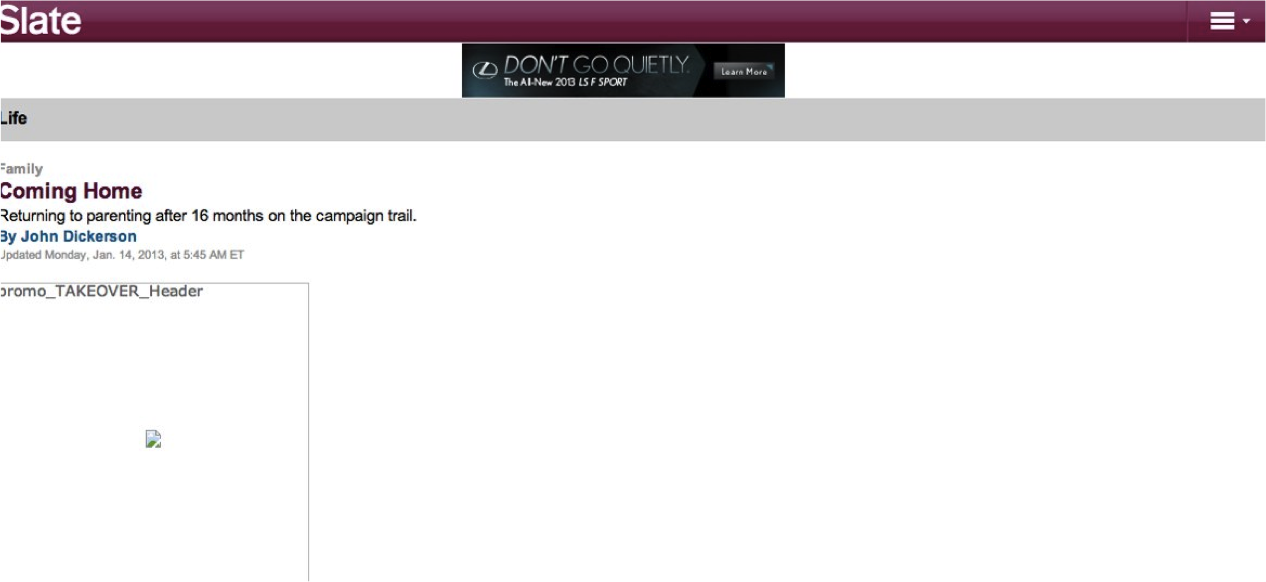


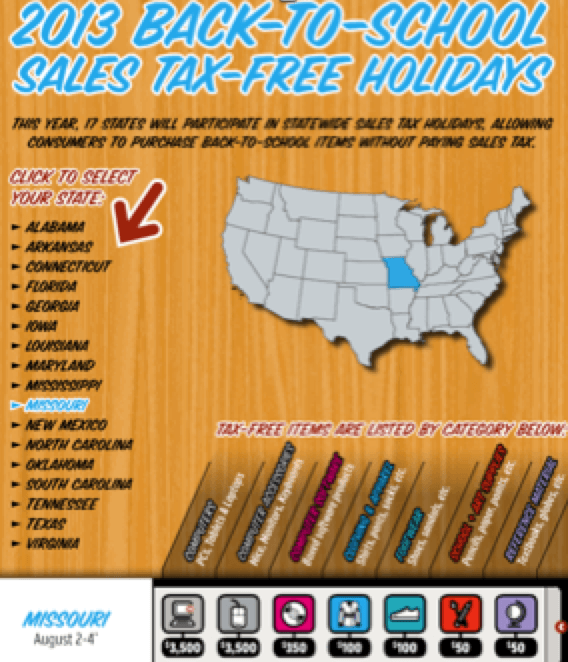


 Just in time for the busy holiday season, Samsung announced its Galaxy Mega smartphone will soon become available in United States. Offering users the convenience of a large display, HD quality graphics, fast processing, and a reliable mobile network, Samsung’s Galaxy Mega is in the running to replace traditional desktop use with its attractive and user-friendly new release. Nokia and Sony agree, as each company is working on its own version of a supersized smartphone.





 At this point, most companies understand that buyers generally research potential products and services online before they do anything else. But beyond that, what does the process of making a purchase decision look like? Let’s check out some of the most recent information on purchase decision theory, as well as some tips for using the process to a sales advantage.
 I’ve listened in on a lot of sales demos. It started as a simple sales research project -- what conversation paths were our prospects taking? How could we optimize those paths, and from a marketing perspective, close the loop to deliver more qualified prospects to our sales team? More educated prospects, shorter sales cycle ... everyone wins!


 A competitor changes one of your prospects needs by providing a product with a capability your solution doesn’t possess. That’s right. It’s something the prospect now says they want, and there’s nothing on the horizon with your R&D department that would suggest you will have that capability anytime soon.


 Once a buyer triggers an alert on your buying process radar, you engage. Often times, if not careful, you could appear as an unwanted pest. When desperation sets in, late night infomercial talk is pounded out of the keyboard. What does your buyer do? They punch "Delete" on the keyboard.


 Companies are investing in growth for 2014. New logo pursuit is front and center for sales leaders. The existing base has been farmed over the past few years. The premium being placed on new logo acquisition is at a high. 'A' player reps are aware of this. They are hearing it from their peers. Recruiters are in active pursuit of your best. Social tools have given reps unprecedented access to answer the question "is the grass greener somewhere else?" You want to avoid putting your best in the job market.