[Read in black and white]
I have various things to say about Trump, and perhaps I will get around to saying a bunch of them.
But what most disturbs me about Trump isn't Trump.
It seems to me that an awful lot of the hand-wringing about Trump – and don't get me wrong, there's much worthy of hang-wringing about Trump – is a distraction, a displacement, a derail from the more uncomfortable thing staring us all in the face.
Sure, he's a terrible human being doing terrible things who will, given the chance, go on to do even more terrible things. But Trump didn't make all those people show up at his rallies. Trump didn't compel them there at gun point. Nor does he have some sort of mind-control device to "brainwash" the masses.
Trump, when informed his "pledge" pose, which he elicited at his rallies, bore a disturbing resemblance to Nazi salute, discontinued it; it was his followers who begged – and may yet still be begging – that he resume it.
Make no mistake: this is grassroots fascism. Trickle-up fascism, if you will.
Trump's genius is not Hitler's gifts of vision or rhetoric – though make no mistake he's a charismatic speaker. Hitler was a kind of intellectual, who convinced a people of his vision for a unified, fascist, triumphant, conquering, genocidal race-nation. Trump has no such vision, much less has he convinced anybody to get on board with one.
No, Trump's genius was is recognizing there was a vast disaffected swath of the American public – possibly enough to carry a national election – who wanted what Hitler had sold. He recognized in the dyspeptic grumblings – about a black president; about job-stealing, terrorist foreigners; about Christian-oppressing gays and abortion-having sluts and welfare queens – a sentiment of wounded entitlement as of that point yet unvalidated by a politician.
Trump's a business man: he saw what those people wanted in exchange for their votes, so he just... took them up on the deal. Trump's genius has always been in recognizing opportunities others didn't, and exploiting them; he is, if you will, a consummate opportunist. The situation he found in American politics was the political equivalent of economists' proverbial hundred dollar bill on the ground.
Trump's genius hasn't been being like Hitler, it has been recognizing that so very many Americans wanted to be like Nazi Germany. They were just waiting for a Führer. He just volunteered for the job.
I'm not suggesting this makes Trump a fine human being or adequate candidate for president of anything. After all, all I'm saying is that while he has no particular desire to murder whole populations, if his "base" does – if he figures it's necessary to keep on the good graces of those whose votes he is courting – he will be entirely willing to go along with it. Hey, gotta break some eggs to make oneself an omelet.
No, what I'm saying is that comparing Trump to Hitler strikes me as less profitable – and much less urgent – than the other comparison it implies: how like to the Nazi enthusiasts of Germany so many of us Americans seem to be.
The problem isn't really him. It's us.
Here's the thing. If I'm right that the situation was a hundred dollar bill on the ground, then Trump, himself, is somewhat immaterial to what is happening. It was almost inevitable. In a nation of 300 million people, we are abundantly blessed, in absolute numbers, with opportunists; for this we need but one with the right skills and resources. Somebody would eventually pick up the hundred dollar bill.
We have to get used to this idea that this is going to happen. In any sufficiently large population, just by the odds, from time to time you're going to have people who stumble across the great idea of pursuing their personal advancement by fomenting inter-group animosity. It's a tried and true recipe, and you can no more hide it from humanity that conceal how fruits ferment to alcohol; where the grapes of wrath flourish, someone will eventually recognize what heady beverage you can make of them. Someone always does.
Perhaps we, as a society, don't need to give them quite so much to work with?
Because, oh, we Americans do – as evidenced by the millions exulting to be lead at last by a candidate who titillates their most bilious fantasies.
This, too, is America, and we have to look it full in the face and not flinch away if we want to have any hope of dealing with it. Talking about the bad individuals who do bad things is not without merit, but too seductive a distraction from the more terrifying problem, which is that millions of Americans like Trump not despite what he says about those they consider others, but because of it.
We can conceptualize this any a number of ways, but I think one of the most useful is to understand it as, at the very least, a widespread critical failure to adhere to – or an outright rejection of – the Golden Rule, in any of its formulations.
I contend this has been writ large on American history all the way along, and if we don't do something about it, it will not go well for us.
This isn't news, right?
Black Americans have been saying this for hundreds of years. For much of the last century, they've been trying to get what MLK termed "white moderates" to just believe them that there is a substantial percentage of the US population that is murderously inclined towards them; for the last quarter century white moderates have had trouble believing even that there are many who are merely uncharitably inclined towards Black people. They (we?) would have probably continued in our obstinacy had it not been for ubiquitous cellphone video cameras.
But white moderates cling fiercely to the idea that there is lots of racism but never any racists. Certainly not like "back then" – explicit, unapologetic racial antipathy is something many racism-despising white people locate in a presumed-uneducated past. The idea that white people maybe were – oh, okay, definitely were – like that once upon a time, but they know better now.
In some ways, recent decades' consciousness-raising about institutional racism, implicit bias, and lingering historical inequities have made for a double-edge sword. It's not that these things aren't real and important; they are. It's that they also, despite being real and important, slot neatly into white people's desire to believe that racists are extinct. These concepts provide a way for people – possibly including you, gentle reader – to grant the existence of racism without having to believe there are (still) white people who feel entitled to treat certain people mortal enemies deserving of no quarter, for no reason but race.
This is, when you really think about it, a curious thing: why is it that so many well-meaning, ostensibly anti-racist white people are emotionally resistant to admitting that that sort of direct, unequivocating, conscious "unreconstructed" racism really exists?
An obvious answer is "racism", and it has some merit. But I could have written the above about sexism and rape culture, too. About homicidal transphobia. About antisemitism and islamophobia. It's a pattern that keeps repeating, and is not specific to any one axis of oppression.
I think there's some better answers. I wrote about one back here: the implications – for your own well-being! – of finding out your society is much, much less just than you thought are terrifying. Another such answer is found by turning the question about, and asking what is it about the idea of people being unapologetically if covertly racist that so many white people find so threatening? What is it about the idea of people being flagrantly misogynist that so many well-meaning men find so threatening that they don't want to admit it's "still" a thing? What is it about this sort of bigotry that the people who do not participate in it but are not targeted by it find so threatening to admit exists?
I think it's this: racists scare them, too, because they recognize in that sort of aggressive, belligerent racism something that their whiteness does not protect them from. Bilious misogyny scares them, too, because they recognize in that sort of aggressive, belligerent sexism something that their maleness does not protect them from.
Think of it this way. You know how black-hating racists are usually totally okay with Native Americans and Latinos, and scrupulously egalitarian in their dealings with women? While women-scorning misogynists are non-judgmental about homosexuality and genderfluidity and really good at respecting the autonomy of the disabled? And culture-warrior homophobes are ardent protectors minority religious faiths? No? What's that? You say that that is usually not how it works?
That. That right there. That thing swimming just under the surface.
We all know that any given individual may have varying degrees of prejudice across differing axes of oppression – that a person may, for instance, be a champion feminist and not have their racism under control. But we also know this other thing. We know that there's this other thing out there, a thing that manifests in a person as a kind of gleeful disdain of any and all sorts of people. A kind of broad-spectrum bigotry.
It's not just racism, or just sexism, or just homophobia, or just xenophobia, or just any one specific prejudice. It's something deeper than any of those, that expresses any or all of them.
I think for most of the sort of people who hang out here and read the sorts of things I write, encounters with this thing I'm describing but not yet naming make one's skin crawl. Makes the hairs on your arms lift.
And it's this that so many well-meaning moderate people who disapprove of oppression and prejudicial unfairness want very, very, very badly to believe doesn't exist.
And it is this that has heaved into the light at last, in the person of Trump's supporters.
I'd like to propose that there are two modes of moral functioning that people seem to have.
They are based on two differing fundamental ideas about how morality is supposed to work. They differ in how extensive morality is understood to be. One holds that morality extends, at least by default, to all interactions between humans. The other holds that morality only extends to interactions with qualified humans.
The first I'll call Mode 1. In Mode 1, one's moral standard of conduct for interacting with other people by default (there can be exceptions) applies to all other human beings, simply for the fact of their being human beings. Given the demographics of who reads my stuff, Gentle reader, this is probably the mode in which you reason, and with which you are most familiar. Mode 1 is the mode of Kant's Categorical Imperative and "I'd Like to Teach the World to Sing" and the idea of the universal brotherhood of man. We could say (though it may be a bit of a projection) that the deep presumption of Mode 1 is that morality's whole purpose is to serve as a universal protocol whereby all people – all people – who follow it would be able to live in a productive and amenable harmony.
In the other, Mode 2, one's moral standard of conduct for interacting with other people by default doesn't include all human beings – and that is considered a feature, not a bug. There is some, somewhat flexible, mental category of people to whom one owes moral conduct – but then there's everybody else. In Mode 2, morality only applies to interactions with people in a certain set, and in dealing with people outside that set, morality doesn't apply.
I don't think Mode 2 is very familiar to most of my readers, because the forces that filter who comes here mostly only admit people of the professional classes, and in that class, the second mode is deeply socially unacceptable. Mode 2 remains more acceptable in other classes, but those who function in that mode know that the professional classes feel very strongly about it, and consequently they're mostly pretty scrupulous about not letting on, lest Mode 1 professionals ostracize them in outrage. Well, until recently.
In Mode 2, we might similarly say that morality has a social organizing function, but where Mode 1 tries to make all humans into one society, Mode 2 is about organizing subsets of humans to out-compete other subsets of humans.
That's a somewhat bloodless way of putting a very bloody idea. In its most benign form, Mode 2 is predicated on the idea that people have a right to band together to vie for limited resources. Imagine two villages racing to sail out to fishing banks first to get the best haul.
Of course, there's a less benign form: since in Mode 2, you owe outsiders no debt of morally moderated conduct, there's nothing saying that folks from your village can't sneak into the other village in the middle of the night and drill holes in their boats.
In fact, in Mode 2, there's not actually anything in morality saying one of the two villages can't just wait for the other village to sail back, holds heavy with catch, then slaughter them in their sleep and take the fish.
Now, the villagers might decide not do that because of fear of retaliation, but that's not the same thing as demurring out of scruples: consider what happens if they suddenly get reason to think they can get away with it.
Mode 2 can also be predicated on the idea that people have the right to band together to kill other bands of people and take their stuff. Also, the right to capture and kidnap outsiders and use them as one will: as laborers, as livestock, as sacrifices to one's gods, as playthings to torture or torment for entertainment, as various props in psychological processes.
We can call these Mode 2a and Mode 2b if you like, though, honestly, from the Mode 1 position they aren't really all that different, in how morality functions. In the Mode 2a example, the villagers in one village feel no moral responsibility about the hunger of the children of the other village, should they succeed in seizing the limited resource and their opponents go home with empty nets. The whole point of Mode 2 morality is that it tells you that this is fine: your moral responsibilities are only to your own village. If some other village's children go hungry, even because your village bested theirs, that's not a wrong that requires you moderate your behavior in response.
And, as I hope is obvious, the line between feeling that one has no moral responsibility not to, through one's actions, cause another village's villagers to starve to death, and feeling that one has no moral responsibility not to just slay them directly and take their stuff is a pretty fine line.
(As a side note we could say there's a 1a and 1b, as well: 1a holds that one should have equal moral responsibilities to all people; 1b holds that one should have a minimum moral standard that applies to all people, but one may, for reasons of group membership, have additional moral responsibilities to specific other people. But I digress.)
The thing about Mode 2 is that it's not just a neutrally held belief that, "Well, it's okay to ignore the consequences of your actions on out-group members if you feel like". It's an entitlement not to have to. It's understood as a kind of right – the right not to have to moderate one's behavior towards out-group members. The right to compete against other groups and win if you can.
Most crucially, it the right to treat other humans – out-group members – as as much a natural resource to be exploited as ore to mine, timber to log, game to hunt, or livestock to domesticate. Mode 2 has in it – or can – a right to subjugate, as an outgrowth of this notion of group self-defense.
In Mode 2 resides this idea of usable outsiders. Morality is predicated on sorting humans into two groups: fellow in-group members to whom one owes a moral standard of conduct (e.g. you may not murder them, you may not steal from them), and out-group members to whom one owes nothing, and consequently of whom one is entitled to make whatever use one can impose by force or fraud.
A bunch of really interesting things follow from this paradigm.
I want to stop here and say that I don't think that in our society (for reasons I'll explain below) that much of anyone functioning in Mode 2 actually consciously thinks this way or thinks of themselves as thinking this way. Mode 1 is much too socially ascendant; Mode 1 morality is the public morality.
Indeed, that's why I expect a lot of readers to find my description of Mode 2 shocking. If you function in Mode 1, and live in a society which reflects back at you your own belief that Mode 1 is what morality is, then my proposition that there are large numbers of people who are morally reasoning in this other way, which is in flagrant contravention of Mode 1 morality, probably seems pretty outlandish. Surely, I hear someone thinking, people don't actually believe that? Surely people don't actually look at other humans beings that way? I mean, sure, in the past, in less developed countries, but here? Now?
*points at Trump rallies* Yes, here. Yes, now.
This paradigm explains why it is that societies seem to toggle so abruptly into a persecutory culture. A society – such as ours – may seem to be entirely committed to Mode 1, but actually have some large faction actually being Mode 2 functioning, who are just playing along with the norms of the Mode 1 majority. Some subset of these may be consider to be just biding their time until they think they can make a successful push for cultural dominance.
People functioning in Mode 2 haven't generally been able come out in public with their real feelings about, say, how we should handle terrorism or the poor or immigrants or minorities, because those opinions were Mode 1 offending. So they paid lip service to Mode 1.
But, of course, Mode 2 leaks out. You can see it in:
• A deep resentment that they are expected (by the norms of Mode 1 functioning people) not to pursue the subjugation of others, i.e. to moderate their behavior towards out-group members in accord with morality. They complain, "Why CAN'T we just bomb them into glass?". The idea of a "war crime" is pretty antithetical to most Mode 2 reasoning; to someone thinking this way, the idea that war has rules, like a game, is a grotesque curtailment of their people's (however construed) collective rights.
• A constant rules-lawyering around any Mode 1 exceptions they can find to "justify" treating out-group members without moral constraints, a la "Well, we're at war with them, so they're our enemies, so they're an exception to 'no torture'.". A lot of what comes across to Mode 1 people as victim blaming, e.g. "Stand your ground! It was self-defense" and "They were here illegally so they got what they deserved", are actually arguments as to why Mode 1 moral obligations should not be considered in force in that particular case – why Mode 2 conduct is not forbidden by Mode 1 in that case. It's Mode 2 functioning people trying to get away with Mode 2 functioning while arguing they're in compliance with Mode 1.
• An indignant fury that they are prevented from exercising what they consider their rights to subjugate, often framed in terms of a right to economic or group existential self-defense, a la "If we don't, they'll overrun us and destroy us all". Complaints about "political correctness" and "over-sensitivity" aren't just complaints about having to change how one speaks, but complaints at changes in what interactions are socially permitted to consist of: they're complaints about not being "able" (it not being considered licit) to be freely verbally aggressive and domineering to out-group members. Consider men clinging to a putative right to wolf-whistle at women on the street, and white people resentful about not being able to use the N word: these are aggressive, dominating behaviors, that are treasured prerogatives because they are aggressive, dominating behaviors.
• Ecstatic relief when someone validates the idea that, contra Mode 1, no, you don't owe outsiders any debt of moral conduct – which is precisely why so many people are greeting Trump as a liberator.
[Continue to Part 2]
This post brought to you by the 96 readers who funded my writing it – thank you all so much! You can see who they are at my Patreon page. If you're not one of them, and would be willing to chip in so I can write more things like this, please do so there.
Please leave comments on the Comment Catcher comment, instead of the main body of the post – unless you are commenting to get a copy of the post sent to you in email through the notification system, then go ahead and comment on it directly. Thanks!
Shared posts

24 Feb 21:50
Key signatures in piano music: the underlying technology
by JessiTRON
Today, sheet music (at least, the major keys) went from magic to technology for me. Magic is spellcasting, is memorization. Technology is understanding, is derivation. Technology takes up so much less space in my head!
If you can read music enough to pick out a simple song but wonder why chords and their weird names seem so obvious to some people, this post is for you.
Those markings at the beginning of the line that show which notes are played as sharps (called a key signature) - I have been trying to memorize their names. This one is called D Major, and it means that all Fs and Cs are to be played as sharps, hit the black key to the right instead of the white key.
 I know how to play music with C# and F#, but why on earth is this called D Major? And why is it a thing?
Today I read a few pages in a book about scales, and now I get it. It takes some history to understand.
See, a long time ago the Greeks made a lyre with four strings, and they tuned the strings into a tetrachord, four notes that sound good. On a piano, a tetrachord is made out of four notes with the following separations: a whole step, then a whole step, then a half step. A whole step goes two keys, counting white and black keys; a half step is one key. Like walking -- right foot, left foot makes a whole step. One easy tetrachord starts with middle C:
 From C to D is a whole step because there is a black key in between. From E to F is a half-step because there is no key in between. The C tetrachord is C, D, E, F.
The same formula makes a tetrachord starting from any key. The tetrachord starting with D goes D, E, F#, G.
 A whole step from D is easy, skip the black key and hit E, a white key. A whole step from E means skipping the next key (F, a white key) and hitting the key after that (F#, a black key). Then a half step means the very next key (G, a white key). This is where the F# in the key signature is coming from.
But wait! There's more!
Put two tetrachords together to get an Ionian scale, also called a major scale. The tetrachords are separated by a whole step. In C, the first tetrachord is C, D, E, F. Take a whole step to G and start the next tetrachord. It goes G, A, B, C.

Eight notes, the last one the same as the first (one octave higher), make a major scale. The keys have this pattern of separations between them, made up of the Ionian scale and tetrachord patterns. Each scale uses a little over half the keys on the keyboard, and ignores the rest. Songs in C major use all white keys and none of the black keys. You want anything else, gotta put a sharp or flat symbol in front of the note.
.svg/510px-C_Major_scale_(up_and_down).svg.png)
What does this mean for D? The D major scale starts with the D tetrachord and adds a second tetrachord: D, E, F#, G; A, B, C#, D.

C# and F#! There they are, the two black keys with numbers on them! The "normal" keys to play in the D scale include C# and F# (black keys), but never C or F (white keys). Putting the D Major key signature in front of the music means that all the keys in the D scale look like ordinary notes.
 With the C# and F# handled by the key signature, any special marking (sharp, flat, or natural) points out a note that is unexpected, that does not fit in with the rest.
The same pattern works for other key signatures; try constructing the Ionian scale for G out of two tetrachords separated by a whole step. You'll find that the only black key used is F#, so this is G major:
 These are historical explanations for the structure of major scales, of seven different notes (plus the same notes in other octaves) that sound good together. There are scientific explanations too, even ratios of wavelengths.
On the piano, this means only 7/12 of the keys are used in any song, ordinarily. Why have the other keys? They bring equality to the different notes: any key can start a scale, because the whole-steps and half-steps are there no matter where you start. C is not special, just convenient. The circle is complete. Actually 12 circles for the 12 keys in an octave. So many patterns are visible to me now!
Now I can name the key signatures and say why they have those names. I don't have to memorize them, because I can derive them. Next I can learn chords and why certain ones like C and F and G7 appear together frequently. All of this from two pieces of vocabulary and some counting. Goodbye magic, hello math.

If you can read music enough to pick out a simple song but wonder why chords and their weird names seem so obvious to some people, this post is for you.
Those markings at the beginning of the line that show which notes are played as sharps (called a key signature) - I have been trying to memorize their names. This one is called D Major, and it means that all Fs and Cs are to be played as sharps, hit the black key to the right instead of the white key.
Today I read a few pages in a book about scales, and now I get it. It takes some history to understand.
See, a long time ago the Greeks made a lyre with four strings, and they tuned the strings into a tetrachord, four notes that sound good. On a piano, a tetrachord is made out of four notes with the following separations: a whole step, then a whole step, then a half step. A whole step goes two keys, counting white and black keys; a half step is one key. Like walking -- right foot, left foot makes a whole step. One easy tetrachord starts with middle C:

The same formula makes a tetrachord starting from any key. The tetrachord starting with D goes D, E, F#, G.

But wait! There's more!
Put two tetrachords together to get an Ionian scale, also called a major scale. The tetrachords are separated by a whole step. In C, the first tetrachord is C, D, E, F. Take a whole step to G and start the next tetrachord. It goes G, A, B, C.

Eight notes, the last one the same as the first (one octave higher), make a major scale. The keys have this pattern of separations between them, made up of the Ionian scale and tetrachord patterns. Each scale uses a little over half the keys on the keyboard, and ignores the rest. Songs in C major use all white keys and none of the black keys. You want anything else, gotta put a sharp or flat symbol in front of the note.

C# and F#! There they are, the two black keys with numbers on them! The "normal" keys to play in the D scale include C# and F# (black keys), but never C or F (white keys). Putting the D Major key signature in front of the music means that all the keys in the D scale look like ordinary notes.
The same pattern works for other key signatures; try constructing the Ionian scale for G out of two tetrachords separated by a whole step. You'll find that the only black key used is F#, so this is G major:
On the piano, this means only 7/12 of the keys are used in any song, ordinarily. Why have the other keys? They bring equality to the different notes: any key can start a scale, because the whole-steps and half-steps are there no matter where you start. C is not special, just convenient. The circle is complete. Actually 12 circles for the 12 keys in an octave. So many patterns are visible to me now!
Now I can name the key signatures and say why they have those names. I don't have to memorize them, because I can derive them. Next I can learn chords and why certain ones like C and F and G7 appear together frequently. All of this from two pieces of vocabulary and some counting. Goodbye magic, hello math.
06 Nov 14:54
Tweetbot 4
by John Gruber
Speaking of indie developers doing great work, Tapbots is on fire. The new Tweetbot 4 for iOS is now a universal app for both iPhone and iPad, and has a slew of great new features. Long story short, Tweetbot for iOS is my single favorite and most-used iOS app. It is remarkably well-designed and well-crafted. The only other app that comes close to it — both in terms of the amount of time I spend using it and my affection for its design and usability — is Mobile Safari.
The regular price will be $10, but for now, Tweetbot 4 is available for just $5 — including for users of Tweetbot 3 or the old non-universal Tweetbot for iPad. This is the closest Tapbots can get to charging for an upgrade on the App Store, and paid upgrades are the only way developers can afford to keep working on existing apps.
$5 for the fruits of all of this talent, hard work, and craftsmanship. If you don’t see that as an absolute bargain, there is no hope for you.
11 Jun 17:20

A statistical problem with “nothing to hide”
by John
One problem with the nothing-to-hide argument is that it assumes innocent people will be exonerated certainly and effortlessly. That is, it assumes that there are no errors, or if there are, they are resolved quickly and easily.
Suppose the probability of a correctly analyzing an email or phone call is not 100% but 99.99%. In other words, there’s one chance in 10,000 of an innocent message being incriminating. Imagine authorities analyzing one message each from 300,000,000 people, roughly the population of the United States. Then around 30,000 innocent people will have some ‘splaining to do. They will have to interrupt their dinner to answer questions from an agent knocking on their door, or maybe they’ll spend a few weeks in custody. If the legal system is 99.99% reliable, then three of them will go to prison.
Now suppose false positives are really rare, one in a million. If you analyze 100 messages from each person rather than just one, you’re approximately back to the scenario above.
Scientists call indiscriminately looking through large amounts of data “a fishing expedition” or “data dredging.” One way to mitigate the problem of massive false positives from data dredging is to demand a hypothesis: before you look through the data, say what you’re hoping to prove and why you think it’s plausible.
The legal analog of a plausible hypothesis is a search warrant. In statistical terms, “probable cause” is a judge’s estimation that the prior probability of a hypothesis is moderately high. Requiring scientists to have a hypothesis and requiring law enforcement to have a search warrant both dramatically reduce the number of false positives.
Related:
You commit three felonies a day
You do too have something to hide
Dan Monego likes this
10 May 19:03
→ Free preview of The Magazine: Issue 16
In this packed issue: mountain life, mountain rescues, red-light cameras, dynamic parking meters, improv fundamentals as life lessons, and Phish’s economics.
06 May 20:03
The Paris Time Capsule Apartment
by John Gruber
Messy Nessy:
★The owner of this apartment, Mrs. De Florian left Paris just before the rumblings of World War II broke out in Europe. She closed up her shutters and left for the South of France, never to return to the city again. Seven decades later she passed away at the age of 91. It was only when her heirs enlisted professionals to make an inventory of the Parisian apartment she left behind, that this time capsule was finally unlocked.
Dan Monego, Jon23516 likes this
02 Apr 20:46
The power of the RSS reader
With the decreasing use of RSS readers over the last few years, which will probably be accelerated by Google Reader’s shutdown in July, many are bidding good riddance to a medium that they never used well.
RSS is easy to abuse. In 2011, I wrote Sane RSS usage:
You should be able to go on a disconnected vacation for three days, come back, and be able to skim most of your RSS-item titles reasonably without just giving up and marking all as read. You shouldn’t come back to hundreds or thousands of unread articles.
Yet that’s the most common complaint I hear about inbox-style RSS readers such as Google Reader, NetNewsWire, and Reeder: that people gave up on them because they were constantly filled with more unread items than they could handle.
If you’ve had that problem, you weren’t using inbox-style RSS readers properly. Abandoning the entire idea of the RSS-inbox model because of inbox overload is like boycotting an all-you-can-eat buffet forever because you once ate too much there.
As I said in that 2011 post:
RSS is best for following a large number of infrequently updated sites: sites that you’d never remember to check every day because they only post occasionally, and that your social-network friends won’t reliably find or link to.
Building on that, you shouldn’t accumulate thousands of unread items, because you shouldn’t subscribe to feeds that would generate that kind of unread volume.
If a site posts many items each day and you barely read any of them, delete that feed. If you find yourself hitting “Mark all as read” more than a couple of times for any feed, delete that feed. You won’t miss anything important. If they ever post anything great, enough people will link to it from elsewhere that you’ll still see it.
The true power of the RSS inbox is keeping you informed of new posts that you probably won’t see linked elsewhere, or that you really don’t want to miss if you scroll past a few hours of your Twitter timeline.
If you can’t think of any sites you read that fit that description, you should consider broadening your horizons. (Sorry, I can’t think of a nicer way to put that.)
Some of my RSS subscriptions that my Twitter people usually don’t link to: The Brief, xkcd’s What If, Bare Feats, Dan’s Data (and his blog), ignore the code, Joel on Software, One Foot Tsunami, NSHipster, Programming in the 21st Century, Neglected Potential, Collin Donnell, Squashed, Coyote Tracks, Mueller Pizza Lab, Best of MetaFilter, The Worst Things For Sale.
Many are interesting. Many are for professional development. Some are just fun.
But none of them update frequently enough that I’d remember to check them regularly. (I imagine many of my RSS subscribers would put my site on their versions of this list.) If RSS readers go away, I won’t suddenly start visiting all of these sites — I’ll probably just forget about most of them.
It’s not enough to interleave their posts into a “river” or “stream” paradigm, where only the most recent N items are shown in one big, combined, reverse-chronological list (much like a Twitter timeline), because many of them would get buried in the noise of higher-volume feeds and people’s tweets. The fundamental flaw in the stream paradigm is that items from different feeds don’t have equal value: I don’t mind missing a random New York Times post, but I’ll regret missing the only Dan’s Data post this month because it was buried under everyone’s basketball tweets and nobody else I follow will link to it later.
Without RSS readers, the long tail would be cut off. The rich would get richer: only the big-name sites get regular readership without RSS, so the smaller sites would only get scraps of occasional Twitter links from the few people who remember to check them regularly, and that number would dwindle.
Granted, this problem is mostly concentrated in the tech world where RSS readers really took off. But the tech world is huge, and it’s the world we’re in.
In a world where RSS readers are “dead”, it would be much harder for new sites to develop and maintain an audience, and it would be much harder for readers and writers to follow a diverse pool of ideas and source material. Both sides would do themselves a great disservice by promoting, accelerating, or glorifying the death of RSS readers.
Philipbrewer and -1 others like this
01 Apr 04:55




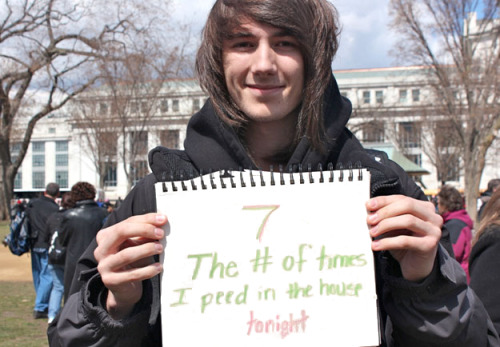




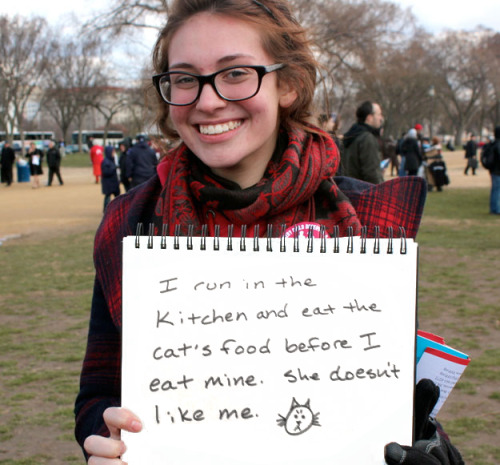
chrismohney: DOMAshaming: pro-DOMA folks + Dogshaming captions,...
DOMAshaming: pro-DOMA folks + Dogshaming captions, a chrismohney + Tag joint.
Little side project of today.
Dan Monego and -1 others like this
23 Mar 01:29
Better Pasta
by John Siracusa
Dan MonegoThis is definitive. There is more to cooking pasta, but from here out it's just opinions and house rules.
I like pasta. I’d like to help people make better pasta. It pains me to think about all the poorly prepared pasta being served and eaten in America. My advice will focus on plain old store-bought dried pasta. Nothing fancy. You’ve probably made some yourself.
I’m specifically not talking about preparing or cooking fresh pasta, how to execute any particular pasta recipe, or why you should never, ever buy pasta sauce in a jar. (You really shouldn’t, though.) This is just about the basics: how to cook and serve dried pasta as part of some larger recipe, the details of which are out of scope, for now.
Here’s my advice, in no particular order.
Do not overcook your pasta.
Please, I beg you, do not overcook your pasta. Every time you serve a pile of starchy, gelatinous mush, an Italian grandmother sheds a single, silent tear. Overcooking is by far the most common pasta sin in America. (As evidence, consider that Olive Garden, the gold standard for incorrectly prepared Italian food, intentionally overcooks its pasta.)
These days, the cooking times on most boxes of dried pasta are in the ballpark, but there are exceptions. Boxed macaroni and cheese and other “children’s” pasta products routinely have cooking times that should be cut in half. But even in the best case, cooking times are just estimates. The actual cooking time will depend on the temperature and humidity of your kitchen, the mass and thermal conductivity of your cookware, the power of your cooktop, and on and on.
As you gain experience, you’ll be able to tell when pasta is ready by “feel” (with a pair of tongs or a stirring spoon). But the old fashioned way is still the most reliable: taste a piece. Drop the pasta in the boiling water (see the next section for more on that), set a timer for 1-2 minutes less than the time on the box of your trusted dried pasta brand, and start tasting when it goes off.
There’s an old saying about cooking eggs: done in the pan, overdone on the plate. The same goes for pasta. It will continue to cook after you remove it from the pot, and even more so when you put it directly into another hot pan or combine it with other hot, moist ingredients.
Dried pasta in hot water cooks from the outside in. The very last part to be cooked is the part that’s the least accessible to the hot water (e.g., the “knot” in the middle of a farfalle bow tie). Once the pasta is “cooked through,” meaning there’s no longer any trace of hard, dried pasta at the center, you’ve probably already waited too long to take it out of the water.
Here’s a good heuristic for string-shaped pasta like spaghetti. Fold the pasta back on itself and pinch it near the end, forming a small loop where it makes a u-turn. If that loops closes easily and completely collapses on itself, leaving no hole at all, you’ve waited too long to remove it from the water.
One last tip on cooking times. Pasta with a lot of surface area (e.g., rotini) cooks faster, and it also overcooks faster. It can take only a few seconds to go from “just right” to “too late.” Be aware of your pasta shape. The more surface area, the smaller the margin for error.
I’m going to continue to my next point, but cooking time will come up again. If you learn only one thing from reading this, it should be that doneness is the most complicated, difficult, and important aspect of cooking pasta.
Cook your pasta in a sufficient amount of boiling, salted water.
How much is a “sufficient” amount? A good rule of thumb is 4-6 quarts of water for each pound of dried pasta. (Most boxes of dried pasta are 1 pound.) You can probably get away with using less, but I think that leads to a pot that feels too crowded.
Fill your pot with cold water from the tap. Hot water is more likely to pick up unpleasant stuff from the pipes. Salt the water until it tastes like the ocean1. (If you don’t know what ocean water tastes like, please take a break now and find out. This blog post will be here when you return.) Nothing other than salt needs to be in the water. Do not add oil.
I’ve heard people say they add oil to the water to prevent the pasta from sticking to itself. This is misguided on multiple levels. First, the pasta will spend most of its time below the surface of the water, far from the oil which will all stay on the surface of the water. Second, you want pasta’s natural, starchy surface to be exposed upon exiting the water so the pasta can absorb the flavorful ingredients you’re about to combine it with. An oil coating would impair that.
As with most kitchen myths, there is a kernel of truth behind the notion of oil in the pasta water: pasta that sticks together is bad. You do not want pasta to stick to other pieces of pasta, or to any part of the pot you’re boiling it in. But the solution to this problem is simple: stir the pasta at a few key points during the cooking process.
Stir right after you dump the pasta into the water. Adding the pasta will decrease the temperature of the water, and may even take it off the boil. This is fine, but it does mean that the bubbling action won’t be there to keep the pasta from settling to the bottom and sticking to itself or the hot surface of the pot.
Stir again as the boil comes back, to confirm that the pieces really are all separate and not sticking to each other. With any luck, the bubbles will keep everything moving and all the pieces of pasta separated for the rest of the cooking time.
Long, stringy pasta shapes require the most stirring later in the cooking process because you can’t agitate them well until they become pliable, and at that point they may have been pressing up against their neighbor strands in hot water for a while. Be vigilant. If a few get away from you, tongs can help separate strands once the boil is rolling along again.
(And please, do not break long, stringy pasta. Cook and eat it at its natural length. You’ll figure out the fork-twirling thing with a little practice.)
Finish cooking your pasta in the sauce.
Pasta should go directly from the hot water where it (mostly) cooked into a vessel where it will be combined with the rest of the ingredients in the finished dish. It could be a traditional tomato sauce, olive oil with garlic, or a complicated multi-ingredient mixture. Whatever it is, the pasta must immediately meet it.
You should use a colander if it will take more than 15 seconds to fish out the pasta with tongs or other utensils. Remember, it’s still cooking! If you do use a colander, do not rinse your pasta. Just think of the colander as a really large utensil for separating the pasta from the water and bringing it to its next vessel.
When combining the pasta with the other ingredients, try to coat each and every piece of pasta. If possible, undercook the pasta slightly (i.e., leave a tiny bit of uncooked dry pasta at the center) and really finish cooking it in the sauce. This is most practical when combining a small amount of pasta with a sauce prepared in a very wide pan, preferably one that contains some liquid. If liquid is lacking, a bit of the water that the pasta cooked in can be added. (A splash of starchy pasta water is a common liquid thickener in many simple pasta recipes.)
Sauce your pasta, but don’t over-sauce it.
In case this doesn’t go without saying, if there’s a large volume of sauce, like a giant simmering pot of tomato sauce, don’t dump the pasta into it. You will need some other pot or pan in which to mix the pasta and just the right amount of sauce.
Once the hot water has been removed from it, the pot the pasta cooked in makes the perfect mixing vessel (and you won’t have to dirty another pot). You may want to put a ladle full of sauce in the bottom of the pot before you dump the freshly drained pasta into it, lest a few pieces stick to the hot bottom. Ladle in more sauce a bit at a time and mix until every piece of pasta is coated.
It seems to be the inclination of Americans to put on too much sauce, so when in doubt, under-do it. Sauce should touch every piece of pasta, but that doesn’t mean every piece should be covered with an opaque red coating.
At the opposite end of the spectrum is the bowl of pale, virgin pasta with a giant mound of tomato sauce on top of it—a tasteless starch ball with a red hat. This is almost as big a sin as overcooking (and is usually combined with it, naturally).
Remember, sauce (or oil or whatever) must touch every piece. You have to mix it in before serving. Yes, even if you plan to provide more sauce on the side for people to add. If you learn only two things from reading this, let the second be that you must never, ever serve a single piece of pasta that looks like it just came out of hot water and never touched another ingredient.
Pasta should be served in warm bowls.
If you plan to put the pasta in a large serving bowl, warm that bowl, and also warm all the individual bowls for each place setting. The easiest way to warm bowls is to pour the hot pasta water into them. If using a colander, line the bottom of your sink with bowls (stacking if necessary) and put the colander into one of them. Then pour the pasta water into the bowls, ending by pouring the last of the water and the pasta itself into the colander. If you have a fancy “warming drawer,” that works too. But you’re going to have a bunch of hot water on hand anyway, so you might as well use it.
This may all sound crazy—warm bowls? really?—but trust me, it makes a difference. Putting hot, freshly sauced pasta into a massive, cold, ceramic dish will instantly suck the life out of it. Warm bowls. Seriously.
Serve and eat immediately.
Baked pasta dishes are an exception; they almost always need to rest a while before serving. But hot pasta mixed with sauce or other ingredients and not put into an oven must be served and eaten as soon as it’s ready. This usually means that the pasta shouldn’t even be dropped into the hot water until everyone is in the process of coming to the table. Some dishes can stand up to a few minutes on the table in a (warm) serving bowl, but the clock is ticking.
Maintain perspective.
If this all sounds pedantic and overwrought, well, it is. But like anything else in cooking, it all becomes second nature if repeated enough times. Just note your mistakes each time and try to do the opposite next time.
I’m sure there are people reading this who have literally never undercooked pasta in their lives. Try that next time. See if you can intentionally undercook some pasta. You may find it harder than you think. Once you’ve done that, go back in the other direction. Eventually, you’ll home in on “just right.”
It’s often the case that the simpler the food, the more important the ingredients and the preparation techniques become. This is true for eggs, and it’s definitely true for pasta.
And speaking of ingredients, please do buy the best you can afford when making pasta dishes. Dried pasta itself is incredibly inexpensive, and you shouldn’t be smothering it in sauce. Spend your money on a little bit of good olive oil, fresh garlic, and real cheese. Yes, parmigiano reggiano is over $20 per pound these days, but a little goes a long way. And when that freshly grated cheese hits the hot surface of that perfectly cooked pasta sitting in its warmed bowl, you’ll know it’s all been worth it.
Bonus tip: pasta in soups.
Many soup recipes include pasta: elbow macaroni, tiny stars, wide noodles, etc. Pasta will overcook in soup just as easily as it will overcook in water. To prevent this, cook the pasta ahead of time, undercooking it slightly. After removing the pasta from the water, do something I just told you never to do: rinse the pasta in cold water to stop the cooking process, coat it in olive oil to prevent it from sticking to itself, then set it aside.
When the time comes to serve the soup, add just the right amount of pasta to each individual bowl. The (relatively) cool pasta will warm up quickly in the hot soup, and finish cooking through by the time the first bite is taken. It will also help lower the temperature of the soup sightly, making it easier to eat with less blowing and potential tongue burning.
-
Well, not really. The “salty as the ocean” rule works because most people under-salt their pasta water, and the right amount tastes like their memory of the sea. For actual percentages, see this article at seriouseats.com. ↩
Dan Monego likes this
22 Mar 14:12


The Wright Way to Teach Engineering
by Brittany
By Wilbur Wright [Public domain], via Wikimedia Commons
We’ve said it before: repair teaches engineering. During a recent trip to the Smithsonian National Air and Space Museum in Washington D.C., I was reminded just how much when I saw the Wright Flyer III: one of the greatest innovations ever born out of repair.
Considered the first airplane, the Wright Flyer III—built by Orville and Wilbur Wright—was a huge step towards modern flight (which seemed especially relevant as I was cruising back from D.C. at 36,000 feet). Of course, the Wright brothers were not the only ones to tackle early aeronautics, but their innovative techniques in engineering—including the Flyer III and first wind tunnel—came from their hands-on experience in repair.
Before becoming famous, the Wright brothers made their livings by manufacturing and repairing bicycles—pretty good business during the bicycle boom at the turn of the century. The revenue from their handiwork funded their experiments and the building of the Flyer.
Orville Wright (right) and Edwin H. Sines working in the Wright brothers bicycle shop. By Wright brothers [Public domain], via Wikimedia Commons
Each brother had a different skill set: Orville was the innovator and Wilbur was the thoughtful leader. But the repair skills both brothers gained in the bicycle business prepared them for one of the greatest engineering feats of the century.
Repair provides insight into the mechanism of devices. Handling parts gives users an idea of what the parts are capable of, if they can be improved, or if they can be repurposed entirely. The Wright brothers used bike wheels to build a wind tunnel. In fact, several bike repair concepts are mirrored in the Flyer: the Wright brothers used a variant of the sprocket drive chain—similar to the one you would find on a bicycle—to power the propellers.
As technology leaps ahead, it becomes harder to to understand how it all works. Repair bridges the gap. Sure, you can’t build a modern Boeing 747 based solely on the basic workings of a bicycle, but maybe what you learn in the middle of your bike repair will inspire you design something new, something better. It did for the Wright Brothers.
Not sure how to repair? Unlike Orville and Wilbur, you’re not flying blind. Whether you want to learn the inner-workings of the latest iPhone or fix a flat, we’ve got tons of guides and tools to help you on the path from repair tech to innovator—or at least get you flying back down a hill on your bike.
21 Mar 23:01

Wanna kiss her so bad you could crush a peach with your bare...
Wanna kiss her so bad you could crush a peach with your bare hands, pit and all. It’s a good thing peaches are out of season because otherwise, otherwise, god damn.
Dan Monego likes this
19 Mar 20:07
Why I like DST
by Dr. Drang
Dan MonegoA great post, but take this into account before blaming everything on programmers: http://infiniteundo.com/post/25326999628/falsehoods-programmers-believe-about-time
I know I’ve said some of this before, but if bloggers didn’t repeat themselves where would their content come from?
I like Daylight Saving Time, and the advantages it brings more than make up for the slight disruption in my schedule. In fact, the most annoying thing to me about the DST changeovers is hearing people complain about them. The “lost hour of sleep” is especially rich. Who are these hothouse flowers who always get exactly the same amount of sleep except for that terrible day in March? To hear them talk, you’d think they never stay up late watching a movie or reading a book. Only prisoners have such regimented lives.
I am sympathetic to parents with small children, because their changing sleep patterns can mess up your day. That problem, though, is worse when we change back to Standard Time in the fall. On what my wife calls The Day That Never Ends, the kids get up according to their internal clock but insist on going to bed according to the clock on the wall. Still, that lasts only a day or two. (Special note to Jason Kottke: If your kids take two weeks to adjust to the change, you’re doing something wrong.)
So what’s good about DST? Go to this page run by the US Naval Observatory, enter where you live, and look at an entire year’s worth of sunrise and sunset time given in Standard Time. Here’s what I get for Chicago:
             o  ,    o  ,                                  CHICAGO, ILLINOIS                           Astronomical Applications Dept.
Location: W087 41, N41 51                          Rise and Set for the Sun for 2013                   U. S. Naval Observatory
                                                                                                       Washington, DC  20392-5420
                                                         Central Standard Time


       Jan.       Feb.       Mar.       Apr.       May        June       July       Aug.       Sept.      Oct.       Nov.       Dec.
Day Rise  Set  Rise  Set  Rise  Set  Rise  Set  Rise  Set  Rise  Set  Rise  Set  Rise  Set  Rise  Set  Rise  Set  Rise  Set  Rise  Set
     h m  h m   h m  h m   h m  h m   h m  h m   h m  h m   h m  h m   h m  h m   h m  h m   h m  h m   h m  h m   h m  h m   h m  h m
01  0718 1631  0703 1706  0625 1741  0533 1816  0447 1850  0418 1919  0420 1929  0445 1909  0517 1824  0548 1732  0623 1645  0659 1621
02  0718 1632  0702 1708  0624 1743  0531 1818  0445 1851  0418 1920  0420 1929  0446 1907  0518 1822  0549 1730  0625 1643  0700 1620
03  0718 1633  0701 1709  0622 1744  0530 1819  0444 1852  0417 1921  0421 1929  0447 1906  0519 1820  0550 1729  0626 1642  0701 1620
04  0718 1634  0700 1710  0620 1745  0528 1820  0443 1853  0417 1922  0421 1929  0448 1905  0520 1819  0551 1727  0627 1641  0702 1620
05  0718 1634  0659 1711  0619 1746  0526 1821  0442 1854  0417 1922  0422 1929  0449 1904  0521 1817  0552 1725  0628 1640  0703 1620
06  0718 1635  0657 1713  0617 1747  0525 1822  0440 1855  0416 1923  0423 1928  0450 1903  0522 1815  0553 1723  0630 1639  0704 1620
07  0718 1636  0656 1714  0616 1748  0523 1823  0439 1856  0416 1924  0423 1928  0451 1901  0523 1814  0554 1722  0631 1638  0705 1620
08  0718 1638  0655 1715  0614 1750  0521 1824  0438 1857  0416 1924  0424 1928  0452 1900  0524 1812  0556 1720  0632 1637  0706 1620
09  0718 1639  0654 1717  0612 1751  0520 1825  0437 1858  0416 1925  0425 1927  0453 1859  0525 1810  0557 1718  0633 1635  0707 1620
10  0718 1640  0653 1718  0611 1752  0518 1826  0436 1859  0415 1925  0425 1927  0454 1857  0526 1808  0558 1717  0634 1634  0708 1620
11  0717 1641  0651 1719  0609 1753  0516 1828  0435 1900  0415 1926  0426 1926  0455 1856  0527 1807  0559 1715  0636 1633  0708 1620
12  0717 1642  0650 1720  0607 1754  0515 1829  0434 1901  0415 1926  0427 1926  0456 1855  0528 1805  0600 1714  0637 1632  0709 1620
13  0717 1643  0649 1722  0606 1755  0513 1830  0432 1902  0415 1927  0428 1925  0457 1853  0529 1803  0601 1712  0638 1632  0710 1620
14  0716 1644  0647 1723  0604 1756  0512 1831  0431 1903  0415 1927  0428 1925  0458 1852  0530 1801  0602 1710  0639 1631  0711 1620
15  0716 1645  0646 1724  0602 1758  0510 1832  0430 1904  0415 1928  0429 1924  0459 1850  0531 1800  0603 1709  0641 1630  0711 1621
16  0715 1646  0645 1725  0600 1759  0509 1833  0429 1905  0415 1928  0430 1923  0500 1849  0532 1758  0604 1707  0642 1629  0712 1621
17  0715 1648  0643 1727  0559 1800  0507 1834  0429 1906  0415 1928  0431 1923  0501 1847  0533 1756  0606 1706  0643 1628  0713 1621
18  0714 1649  0642 1728  0557 1801  0505 1835  0428 1907  0415 1929  0432 1922  0502 1846  0534 1754  0607 1704  0644 1627  0713 1622
19  0714 1650  0640 1729  0555 1802  0504 1836  0427 1908  0415 1929  0433 1921  0503 1844  0535 1753  0608 1703  0645 1627  0714 1622
20  0713 1651  0639 1730  0554 1803  0502 1837  0426 1909  0416 1929  0433 1920  0504 1843  0536 1751  0609 1701  0647 1626  0714 1622
21  0712 1652  0637 1732  0552 1804  0501 1839  0425 1910  0416 1929  0434 1919  0505 1841  0537 1749  0610 1700  0648 1625  0715 1623
22  0712 1654  0636 1733  0550 1805  0459 1840  0424 1911  0416 1929  0435 1919  0506 1840  0538 1747  0611 1658  0649 1625  0715 1624
23  0711 1655  0635 1734  0549 1807  0458 1841  0423 1912  0416 1930  0436 1918  0507 1838  0539 1746  0613 1657  0650 1624  0716 1624
24  0710 1656  0633 1735  0547 1808  0456 1842  0423 1913  0417 1930  0437 1917  0508 1837  0540 1744  0614 1655  0651 1623  0716 1625
25  0709 1657  0631 1737  0545 1809  0455 1843  0422 1914  0417 1930  0438 1916  0510 1835  0542 1742  0615 1654  0652 1623  0717 1625
26  0708 1659  0630 1738  0543 1810  0454 1844  0421 1915  0417 1930  0439 1915  0511 1834  0543 1741  0616 1653  0654 1622  0717 1626
27  0708 1700  0628 1739  0542 1811  0452 1845  0421 1915  0418 1930  0440 1914  0512 1832  0544 1739  0617 1651  0655 1622  0717 1627
28  0707 1701  0627 1740  0540 1812  0451 1846  0420 1916  0418 1930  0441 1913  0513 1830  0545 1737  0619 1650  0656 1622  0718 1627
29  0706 1702             0538 1813  0449 1847  0420 1917  0419 1930  0442 1912  0514 1829  0546 1735  0620 1649  0657 1621  0718 1628
30  0705 1704             0537 1814  0448 1848  0419 1918  0419 1930  0443 1911  0515 1827  0547 1734  0621 1647  0658 1621  0718 1629
31  0704 1705             0535 1815             0419 1919             0444 1910  0516 1825             0622 1646             0718 1630

                                             Add one hour for daylight time, if and when in use.
Sorry about the need to scroll horizontally; that’s just how the results are formatted.
If we stayed on Standard Time throughout the year, sunrise here in the Chicago area would be between 4:15 and 4:30 am from the middle of May through the middle of July. And if you check the times for civil twilight, which is when it’s bright enough to see without artificial light, you’ll find that that starts half an hour earlier.
This is insane and a complete waste of sunlight. Good for a nation of farmers, I suppose, but of no value to anyone in our current urban/suburban society except those people who get up and go running before work. And I see no reason to encourage them.
DST haters often point out “studies that prove” that the DST changeover costs us billions of dollars in lost productivity. There are three problems with these studies:
- First, they’re obvious bullshit and, like all bullshit studies, undermine the public’s confidence in real science and real research.
- Second, do these “studies” ever look into the productivity of people who can’t get a good night’s sleep from May through July because the sun streams into their bedroom at an ungodly hour and the birds start singing outside their window at three-fucking-thirty in the morning? No, they do not.
- And finally, even if it did cause a net loss of productivity, so what? Everything of value in life causes lost productivity: eating, drinking, talking with your friends, playing with your children, looking at the stars, everything.
If, by the way, you think the solution is to stay on DST throughout the year, I can only tell you that we tried that back in the 70s and it didn’t turn out well. Sunrise here in Chicago was after 8:00 am, which put school children out on the street at bus stops before dawn in the dead of winter.1 It was the same on the East Coast. Nobody liked that.
People complain about the complications DST causes in scheduling, especially in our connected world where international phone calls have to be arranged between people in countries whose time changes occur at different points in the calendar. This is a real problem, but only because our vaunted technology has let us down.
The set of rules for calendars, time zones, and clock changes is exactly the sort of thing computers should be good at handling for us, but because of programmer arrogance and incompetence, we end up with problems that shouldn’t exist. In the past few years we’ve had Zunes that wouldn’t boot, Playstations that wouldn’t play, and iPhone alarms that wouldn’t alarm (again and again and again).
Because the rules are already in place, programmers only have to learn what they are and implement them. This is where the incompetence and arrogance come in. Programmers don’t bother to learn the rules and think they can be tossed off in a few lines of code. We end up with devices that promise to keep us on track but are less reliable than a paper calendar and a windup alarm clock.
So instead of signing a stupid petition, agitate for better programmers. And then go have a nice walk after dinner tomorrow; it’ll still be light out.
-
And if you’re wondering why I’m not accounting for predawn light in this case, it’s because winter skies tend to be more overcast and don’t provide as much twilight as summer skies do. ↩
Dan Monego likes this
No more posts. Check out what's trending.