Gpscruise
Shared posts
TikTok star Bryce Halls huge party amid Covid-19 pandemic
Gpscruisei've had some epic parties in my day, like the time, we torched a replica of the empire state building or when we created a new drink called the flaming orange, but never needed to hire strippers....

Trump says he will 'take a look' at pardon for Edward Snowden
Gpscruisethat would fantastic and very unexpected!
President said at press conference he did not know much about whistleblower’s case
Donald Trump said on Saturday that he would look at the issue of giving a pardon to whistleblower Edward Snowden.
Snowden disclosed highly classified information from the National Security Agency in 2013. He revealed the news covertly to the Guardian after he fled to Hong Kong, before flying to Moscow to avoid extradition back to America. He currently lives in Russia.
Continue reading...
Is a successful contact tracing app possible? These countries think so.
Gpscruisei wish technology review website allowed comments. They used to... Chickens!
If contact tracing apps are following Gartner’s famous hype cycle, it’s hard to avoid the conclusion they are now firmly in the “trough of disillusionment.” Initial excitement that they could be a crucial part of the arsenal against covid-19 has given way to fears it could all come to nothing, despite large investments of money and time. Country after country has seen low take-up, and in the case of Norway and the UK, apps were even abandoned.
The US, meanwhile, is very late to the party. Singapore launched its app, TraceTogether, back in March, and Switzerland became the first country to release an app using Google and Apple’s exposure notification system in May.
It took until last week—that is, three months later—for Virginia to become the first US state to launch an app using the Apple-Google system. A nationwide app in the United States seems out of the question given the lack of a coordinated federal response, but at least three more states are planning to launch similar services.
Being a late adopter could have one crucial advantage, though: the opportunity to learn from others’ failures—and their successes.
We talked to the developers behind apps in Ireland and Germany to find out what they had discovered along the way. These two apps rank highly in MIT Technology Review’s Covid Tracing Tracker, a project to monitor the development and rollout of contract tracing apps worldwide.
Ireland’s app has one of the world’s best adoption rates—37% of the population downloaded the app in its first week. Germany’s system, meanwhile, has been downloaded by more than 20% of citizens, and has been lauded as such a success that it’s been advising other governments on how to build their own.
There are caveats. Many decentralized apps don’t collect information on the number of alerts they are sending out as a measure to protect privacy, and that includes both Ireland and Germany’s systems. That makes success hard to define in some cases.
But still, not everyone has seen a rollout as chaotic as the US or UK. So what advice do these countries have for others?
1. Remember every case matters
Firstly, let’s dispel a myth. Digital contact tracing apps do not need to be adopted by the majority of the population to be effective: they can work with lower adoption rates, even if they’re not quite so effective. So we need to stop thinking it’s all or nothing.
Colm Harte is technical director of NearForm, the company that created Ireland’s app, which was downloaded by 37% of the population in its first week. He says that “if you break even a few transmission chains as a result of the app, for me that’s a success.” Preventing just one infection could potentially save a life.
2. Manage expectations
People’s hopes for contact tracing apps were extremely high early on in the pandemic. But apps were never going to end covid-19 on their own. Peter Lorenz, one of the project leads working on Germany’s Corona-Warn-App, says it’s important to put contact tracing apps in their place.
“The clear stance from the German government was that we’d use every tool available to fight this, including traditional methods like testing, distancing, masks, and manual contact tracing, but we’d combine it with technology,” he says.
Likewise, Ireland’s app fits hand-in-glove with its manual tracing program, which is equally if not more important to keeping coronavirus at bay. “If you test positive, the manual contact tracing team will ask you if you use the app, and if so, they ask if you’ll share keys so they can warn any close contacts through the app,” Harte explains.
This approach makes sense. While the manual tracing program is able to track down people who are acquainted with each other—say friends at a dinner party—the app is able to find people who are total strangers, for example people who have shared the same train carriage for an extended period of time.
3. Work in the open (or you won’t gain public trust)
Both Ireland and Germany have made the source code for their apps open for anyone to inspect. “We did that right from the start, so community feedback could go into the code before it went live,” says Thomas Klingbeil, who is responsible for the architecture of the Corona-Warn-App.
“The stance was that we’d use every tool available, including testing, distancing, masks, but we’d combine it with technology.”
Peter Lorenz, Germany’s Corona-Warn-App
Privacy and security concerns loom large for teams building these systems. Germans are particularly savvy about data protection, and developers there were conscious of the example of Norway, which had to suspend use of its app after criticism from its data privacy watchdog. Germany switched from building its own centralized app to one based on the Apple-Google API almost immediately, which proved to be a wise decision. Ireland did the same. And they both designed their apps with privacy in mind from the start, following a principle of “collect as little data as possible.” All of the information gathered by the apps stays on people’s phones rather than being sent to central servers. It is encrypted and automatically deleted after 14 days.
Both teams took a collaborative and cooperative approach, working across multiple agencies and companies, all focusing on a single goal that everyone could work toward. This—plus a healthy dose of goodwill from the public—seems to have made a significant difference to the success of their projects.
Crucially, the team engaged with critics rather than just dismissing them. You need to invest just as much time into transparency and community outreach as developing the technology, says Lorenz. “If people don’t trust it, it’s worthless. You have got to get people to buy into it,” he says.
4. Set the right parameters
Building a contact tracing app is hard. Although Apple and Google took away some of the burden of development, it’s still up to the authority in charge of the app to set the rules and parameters. How long do you have to spend with someone to be deemed likely to have caught coronavirus? Germany settled on 10 minutes. And how close do you need to be? Some countries say one meter, others say two. But these are tough questions given the basic science of transmission isn’t even settled yet. If you make the rules too loose, you end up letting people who might have been exposed to covid-19 slip through the net. On the other hand, if you’re too strict, the app sends off loads of unnecessary notifications, running the risk of irritating people to the point when they uninstall the app.
That’s why Germany’s public health body, the Robert Koch Institute, is running tests to simulate scenarios like cocktail parties or bus journeys. They are trying to fine tune the app’s parameters to the point where they measure exposure as accurately as possible, in order to avoid either of the problems outlined above.
5. Give it time
It’s too early to judge how effective contact tracing apps will be, given the first decentralized app launched just three months ago. And since the rollout coincided with lockdowns and other suppression methods, it has made some efforts look like failures because they aren’t sending many notifications.
But Ireland and Germany’s teams are quietly confident that as time goes on, the apps will prove more effective as part of an overall approach to battling the disease.
“We didn’t have this the first time around. This will make a big difference when the second wave comes,” says Lorenz.
“Am I going crazy or am I being stalked?” Inside the disturbing online world of gangstalking
Gpscruisei wish trump would force websites to validate with visa card to protect kids.
Jenny’s story is not linear, the way that we like stories to be. She was born in Baltimore in 1975 and had a happy, healthy childhood—her younger brother Danny fondly recalls the treasure hunts she would orchestrate and the elaborate plays she would write and perform with her siblings. In her late teens, she developed anorexia and depression and was hospitalized for a month. Despite her struggles, she graduated high school and was accepted into a prestigious liberal arts college.
There, things went downhill again. Among other issues, chronic fatigue led her to drop out. Over the next several years, she moved across the country sporadically and spontaneously—she began bouncing from Florida, where Danny lives, to Baltimore to see her grandmother, to Virginia, to Washington, DC, sometimes living in her car. When she was 25 she flipped that car on Florida’s Sunshine Skyway Bridge in an apparent suicide attempt. At 30, after experiencing delusions that she was pregnant, she was diagnosed with schizophrenia. She was hospitalized for half a year and began treatment, regularly receiving shots of an antipsychotic drug. “It was like having my older sister back again,” Danny says.
For the next five or six years, Jenny led a remarkable and productive life. She worked for the National Association of Mental Illness, was on the board for the National Organisation for Women, volunteered regularly, tutored college kids, and wrote a book. Her friend Lauren describes her as “a beautiful, smart, funny person who deserved a much easier life than the one she had.”
On July 17, 2017, Jenny jumped from the tenth floor of a parking garage at Tampa International Airport. Looking in his sister’s purse after her death, Danny discovered that she had purchased a ticket to Chicago but never boarded the plane. In the years prior to her death, Jenny’s mental health had deteriorated and her delusions had returned—she had begun threatening Danny and his young son, leading him to take out a restraining order against his sister. The judge who granted the order told Jenny she had to get a psychological evaluation within a year. She was dead within two months.
After her death, Jenny’s family searched her hotel room and her apartment, but the 42-year-old didn’t leave a note. “We wanted to find a reason for why she did this,” Danny says. And so, a week after his sister’s death, Danny—a certified ethical hacker, who runs his own small technology business—decided to look for answers on Jenny’s computer.
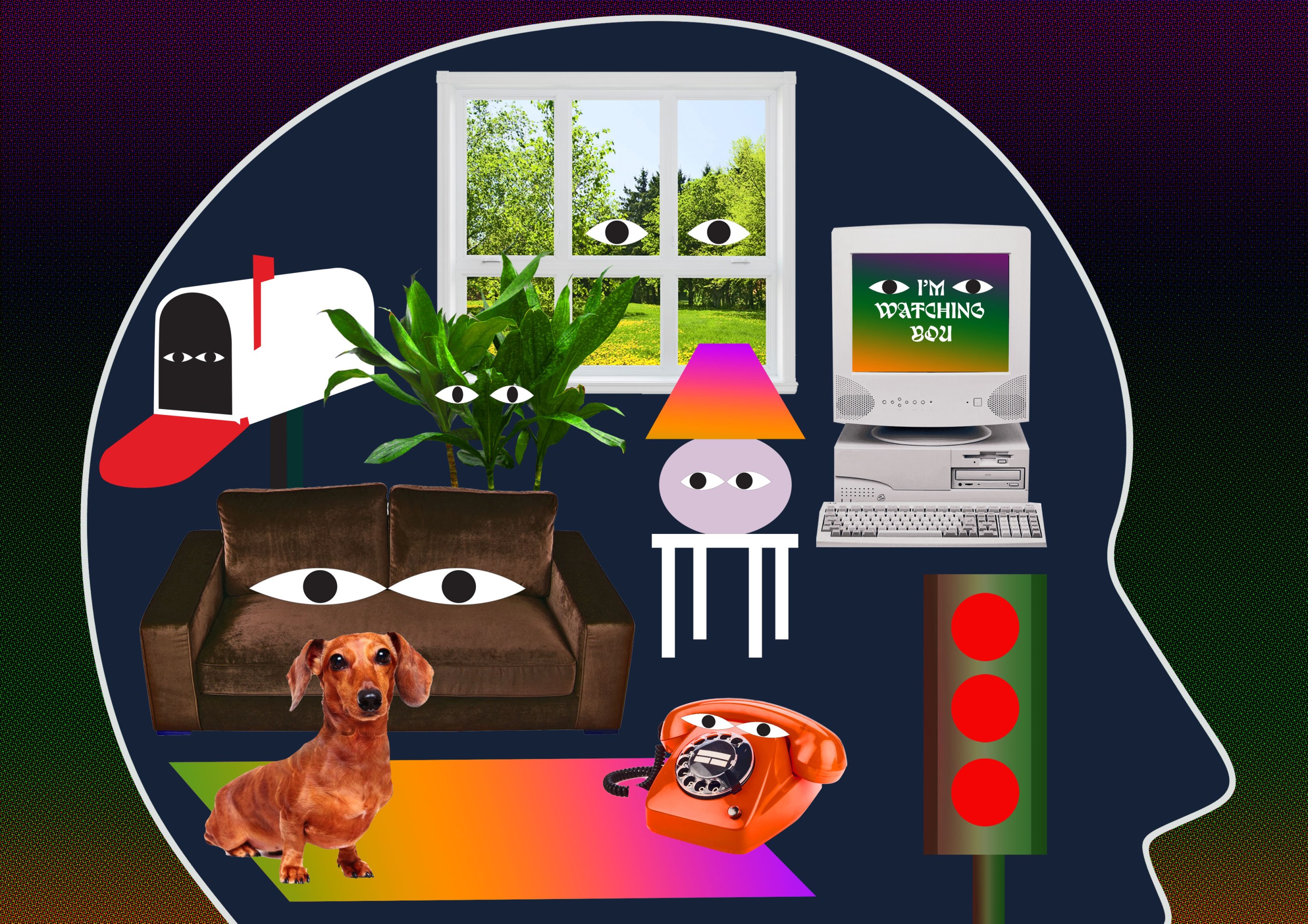
Right now, on Facebook pages, forums, blogs, YouTube channels, and subreddits across the internet, thousands of people are sharing their belief that they are being “gangstalked.” These self-described “targeted individuals” say they are being monitored, harassed, and stalked 24/7 by governments and other organizations. Targeted individuals claim that seemingly ordinary people are in fact trained operatives tasked with watching or harassing them—delivery men, neighbors, colleagues, roommates, teachers, even dogs. And though small compared with the most popular online forums, gangstalking communities are growing quickly; one estimate from 2016 suggested that there might be 10,000 people in such groups across the internet. Today, just one subreddit and one Facebook group adds up to over 22,000—and there are hundreds more groups scattered across different platforms.
The only academic study on gangstalking, a 2015 research article published in The Journal of Forensic Psychiatry & Psychology, involved a questionnaire of 128 gangstalking victims undertaken by forensic psychologist Lorraine Sheridan and stalking expert David James. Sheridan and James found that—compared to people who experienced stalking from an individual—people who believed they were being gangstalked scored more highly on depressive and post-traumatic symptoms, and “had a clear need for psychiatric support.” The authors concluded that gangstalking is “delusional in basis,” with those surveyed making improbable claims about hostile gangstalkers in their children’s schools, traffic lights being manipulated to always turn red, mind-controlled family and friends, and the invasion of their dreams.
Every day, the internet legitimizes these beliefs. A post entitled “confessions from a gangstalker” has been copied-and-pasted widely, while people share their own stories of being targeted by strangers or incapacitated by technology in their homes. Often, people log on looking for help—“Am I going crazy or am i being stalked?” reads a post on a gangstalking subreddit shared at the beginning of 2020 by a teen who claimed to have a schizophrenia diagnosis—and leave with what they believe are the answers. (Editor’s note: we have decided not to link to any of the gangstalking-related posts or forums mentioned in this article.)
As he combed through Jenny’s computer, Danny found his sister subscribed under a series of aliases to what he describes as hundreds of gangstalking groups across Facebook, Twitter, and Reddit. His discovery sparked memories from the months before Jenny’s death, when she had first mentioned the term “gangstalking.” He had registered it as nonsense at the time. Her illness sometimes manifested as elaborate fictions where Jenny was the victim of some shadowy conspiracy—though she had once attempted to join the Church of Scientology, she also believed the organization was monitoring her and using technology of some sort to torture her in her apartment. She thought her family were gangstalkers and she was going to be forced to become a “breeder.”
“It blew my mind to see there was a giant group of people basically reinforcing this,” Danny says of finding the online groups. “Something like that was probably the worst thing she could have seen. If this was 20 or 30 years ago, there wasn’t the internet. If you went up to somebody and said ‘People are gangstalking me,’ they would think you were crazy. But if you’re on the internet, alone in your apartment, you can get a reply of ‘Oh yeah, me too’.”
Let’s be clear: The internet didn’t kill Jenny—suicide has many, often mysterious causes, and those suffering from psychosis are at particular risk. But Danny believes it played a role. According to Danny, Jenny sometimes struggled with her medication. She built up tolerance to her antipsychotics, he says, and her mental health would often deteriorate when she switched medication.
There is plenty of evidence that the online forums Jenny frequented and digital circles she ran in can be damaging. In a Reddit post from two years ago, a user explains how he was diagnosed with schizophrenia and initially attempted to resist the diagnosis due to his belief in gangstalking. He describes his relief upon taking antipsychotics and finding the stalking stopped. “They got you,” another user wrote back; another still said, “I think that you are wrong to say that you have an illness.” Across the subreddit, many posters encourage a distrust of medical professionals and discourage the use of antipsychotics—“They will make your situation infinitely more worse,” reads a post from the beginning of the year. Some claim that gangstalkers are trying to drive their victims mad in order to delegitimize them.
He describes his relief upon taking antipsychotics and finding the stalking stopped. “They got you,” another user wrote back; another still said, “I think that you are wrong to say that you have an illness.”
Harry is a 23-year-old from Texas who began experiencing delusions when he started college (his name has been changed to retain his anonymity). After witnessing a rape at a fraternity, he began losing sleep; his situation was exacerbated by a breakup and school-related stress. Harry came to believe he was being stalked, filmed, and whispered about—on multiple occasions, he screamed at strangers to stop following him. Eventually, he was institutionalized for a month and diagnosed as bipolar.
Online spaces didn’t exacerbate Harry’s delusions—he only found a gangstalking subreddit after he had been treated. Still, the forum made him angry. “If anyone had acted like they believed me or gone along with my delusions, that probably would’ve added another month to breaking out of it,” he says now. “It’s hard enough to break out of it when nobody believes you … but if you have a community of people that are willing to agree with you that the entire world’s against you, it’s bad, bad trouble.”
Harry decided to post on the subreddit to show people “a way out” of their way of thinking. Commenters labelled his diagnosis “irrelevant” and a correlation between mental illness and a belief in gangstalking was immediately dismissed.
While working as a psychiatrist in a New York City hospital just over 15 years ago, Joel Gold encountered five separate people who believed they were the star of their own reality TV program that was broadcast around the world. Everybody else, Gold’s patients believed, were actors employed in the farce. If these beliefs sound familiar, that’s because they borrow heavily from the plot of 1998’s The Truman Show, a dark comedy about a man watched by the world since birth. Gold christened their beliefs “the Truman Show delusion.”

In 2014, Gold—now a professor of psychiatry at New York University School of Medicine—co-authored a book with his brother, Suspicious Minds: How Culture Shapes Madness. In it they argue that delusions are shaped by society, and that the world around us influences the form psychosis takes. “As technology has evolved, people with delusions have absorbed the technology of the day,” Gold says. He argues that it’s natural that people feel they’re under surveillance—thanks to social media and the rise of CCTV cameras, we often are. “So it’s a double hit, if you will,” he says. “There’s an underlying delusion that many people might have come to anyway, and then there are the seeds of reality that people use to build their delusion upon.”
Many who share stories of gangstalking online write of televisions that talk back, hacked computers, microwave weapons, and “voice to skull” technology that allows a harasser to transmit messages directly into the mind of the harassed. Gold says many of his patients with the Truman Show delusion only came to believe they were a TV star after they had watched the movie, with many of them explicitly referencing the film as a moment of enlightenment. It’s possible that some people stumble upon gangstalking sites and these sites influence the form their delusions take.
Gold notes it is obviously “not necessary to be on these chat rooms” in order to develop gangstalking delusions, but from a treatment perspective, he says gangstalking sites “complicate matters.” “If I was seeing someone who believed they were being gangstalked and I gingerly explained why I thought they were suffering from mental illness, they could very simply and confidently point to these chat sites and say, ‘Are we all crazy?’ It becomes much more challenging.”

Then again, he says, these sites could have benefits for some people who believe in gangstalking—it could be soothing for an individual to learn they are not alone. There’s evidence that this happens, or at least that some people are trying to connect in a positive way through these forums. Many posters who do not believe in gangstalking come to offer help to those who believe they’re being stalked, including by sometimes challenging those beliefs. In the Reddit post where the user described antipsychotics stopping his delusions, there were also supportive comments alongside the negative ones. “Congrats! You are speaking very clearly now with such a positive view,” read the most-upvoted comment, in which a user asked questions about medication.
Harry, the young man who tried to offer a voice of dissent on a gangstalking subreddit, says that despite receiving negative comments, a handful of people messaged him privately for help. “A lot of time the people that were posting there had no one to help them, no one to talk to,” Harry says. “Even though there are resources out there, they need help to figure out what those resources are. I thought I could use my experience as a way to help.”
For many experiencing mental illness, the internet can be a lifeline—a resource that allows people to talk freely in a world that still heavily stigmatizes their suffering. Therapy remains unaffordable and inaccessible for many in the US—the National Alliance on Mental Illness reports that the average delay between onset of mental illness symptoms and treatment is 11 years, while 60% of US counties do not have a practicing psychiatrist. “I would just really like to talk—about anything,” wrote one user on a gangstalking subreddit in May, asking users to chat with him about Netflix, the weather, and birds. A couple of users offered to strike up friendship, and it seems the original poster achieved his desire to find, “people who understand you, believe you, just know what it’s like.” In a Facebook group for people who believe themselves to be victims of gangstalking, which has nearly 8,000 members, users discourage suicide, pray for one another, and encourage each other to “stay strong.”

Others argue that any benefits that may come from such sites are outweighed by the real-world harm that could result from stoking belief in gangstalking. Robert Bartholomew is a sociologist and author of A Colorful History of Popular Delusions (in this context, “delusions” refers to social delusions—false beliefs and panics shared by a society, such as the Salem Witch Trials, or the Red Scare—not psychotic delusions).
A few years ago, he joined the mailing list of a man who believed he was a targeted individual. The man’s newsletter went out to over 800 people, and he became increasingly erratic over time. In May 2019, he sent an email using threatening language before claiming he could “could easily break Alexis’ record.” Aaron Alexis was a 34-year-old US Navy contractor who shot and killed twelve people in the Washington Navy Yard in September 2013. He left behind a note on his computer in which he claimed he was being controlled by low frequency electromagnetic waves. When Bartholomew received the newsletter from the man who threatened to imitate Alexis, he (and others) contacted the man’s local police department—he is now in prison.
In a separate instance in 2014, a lawyer in New Mexico filmed a video about his experiences being gangstalked by the government before shooting and injuring three people.
Some on gangstalking forums encourage one another to act on their delusions. In one Reddit post, a user shares tips on how to “fuck with” stalkers (who they call “perps”): cut them off in traffic, bump into them, provoke them to anger. In another, someone threatens to shoot at drones. Bartholomew believes online gangstalking spaces are a “public health issue” but also says, “the genie is out of the bottle and there is no going back.”
There is another genie that has emerged from its bottle over the last decade, one that touches almost everyone who uses the internet: the dangerous impact of online misinformation. According to a March survey by Pew Research Center, 48% of American adults reported seeing made-up news about the Covid-19 virus. In light of the pandemic, social networks have increased their efforts to tackle false news, with Twitter now labelling misinformation and Facebook directing its users to the World Health Organisation’s website.
How can someone distinguish delusions from conspiracies fed by misinformation? In the UK, dozens of phone masts were burned or vandalized in April after misinformation spread on social media that 5G damages people’s health, with some blaming the technology for the coronavirus. Celebrities such as actor Woody Harrelson and boxer Amir Khan have spread the conspiracy, while broadband engineers have been attacked and threatened. In a Facebook group for people who believe they are the targets of gangstalking, an April post read, “Burn all 5g towers down,” to which commenters added, “NO! Burn those who created them!” and “Destroy them or they will destroy us.”
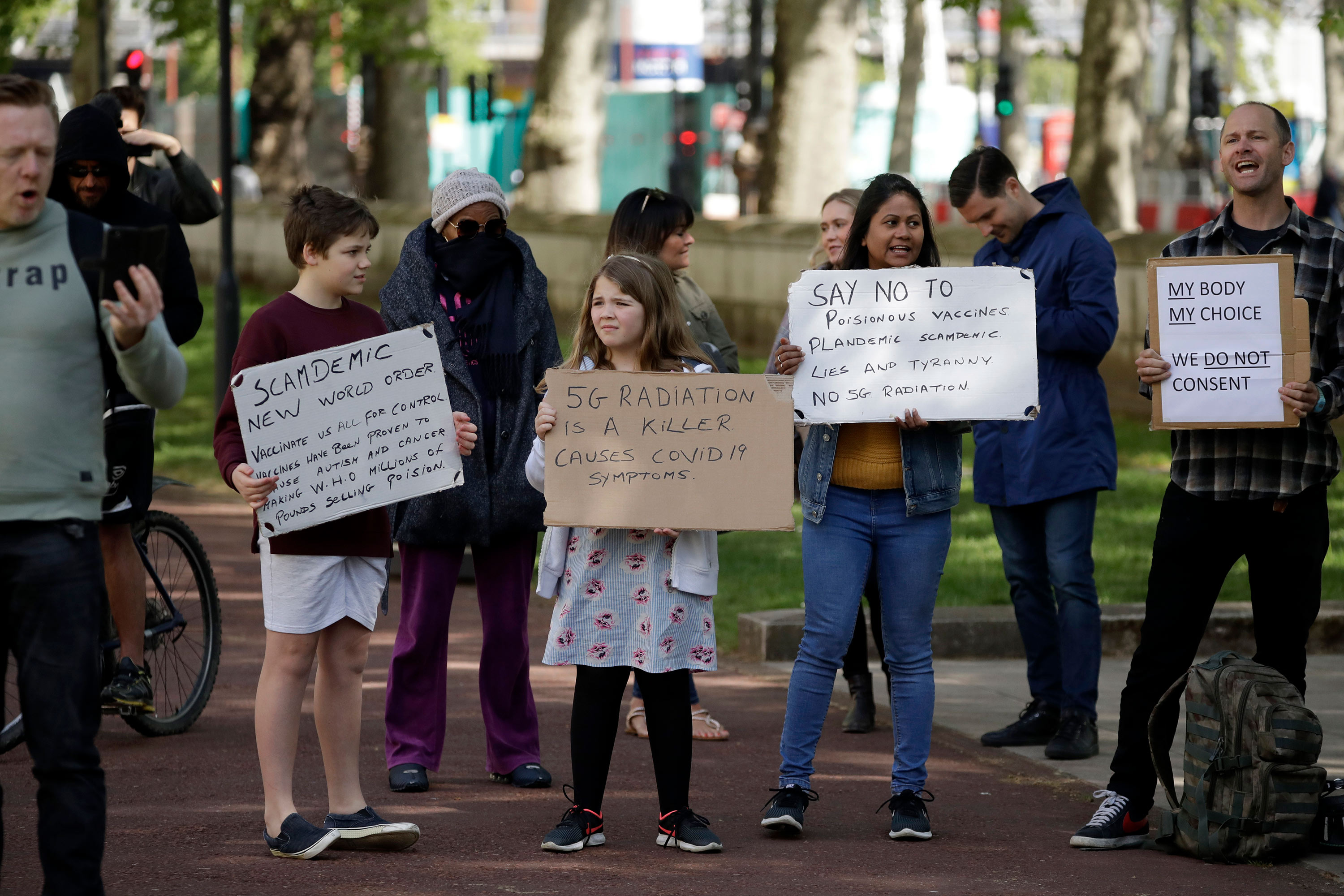
There is a murky overlap between these two worlds, but Bartholomew argues—as the 2015 research paper demonstrated—that most gangstalking beliefs are based on clinically delusional tendencies. “Your run of the mill conspiracy theory believer is not psychotic,” he says. Not everyone who frequents gangstalking forums is clinically paranoid or experiencing persecutory delusions, of course, just as everyone who visits 5G conspiracy forums cannot be declared free of psychosis. Yet both phenomena highlight how the internet can legitimize and spread fringe beliefs.
While Google, Twitter, Facebook, and others have taken steps to combat many sources of misinformation and dangerous content online—Reddit banned the pro-Trump subreddit r/The_Donald in late June for violating several of the site’s policies—activity and discussion around gangstalking continues to fly beneath the radar. If you Google “5G coronavirus,” for example, the first result is a promoted link from WHO “busting myths,” and the first page of results is full of words like “conspiracy theory” and “false.” Searches for “gangstalking” also include news articles questioning the veracity of the phenomenon—but at the time of writing, a worrisome Facebook post from 2013 is still among the top ten results. The 3,000-word screed claims that gangstalking is real, arguing, “If we don’t want to be overpowered, we need to take appropriate measure as soon as possible.”
Danny is legally not allowed access to Jenny’s medical records and therefore doesn’t know if she stopped taking her medication, or a medication change prompted her death. But he believes gangstalking forums played at least some part in his sister’s decline. “From the amount she was reading and subscribed to, it was taking up a really large space in her life,” he says. He estimates that she logged on to at least one gangstalking forum every day.
Danny reported the gangstalking groups he found on Jenny’s computer to Facebook and Reddit, but he never received any response. He remains “pissed off” by the fact these spaces are permitted, and firmly believes they are dangerous. The subreddit’s own sidebar rules say giving specific medical advice is banned. Reddit itself bans subreddits that explicitly encourage or incite violence, but gangstalking subs do not violate any of its current policies. A Facebook company spokesperson said: “We always want people to feel welcome and safe on our platforms which is why we have a set of community standards which set out the limits for acceptable behaviour and content. We will take action against any content which violates our policies, and encourage people to use our reporting tools for any posts they are concerned about.”
Jenny was six years older than her little brother Danny, which means she often babysat him when she was a teen. With fondness, he recalls that she invented a “Sunny Day School” to occupy her younger siblings in the summer holidays—there were lesson plans, costumes, badges, classes, even an anthem. When Danny became a teenager himself and life got tougher, Jenny would drive him to the bookstore or to a movie or to Taco Bell—“literally just driving, the longer the better.” Sometimes, the siblings simply sat in a parking lot and spoke for hours at a time. “She had all of that big sister wisdom,” Danny says. “That’s what I use the most from her now.”
When asked what he thinks about the fact that people like his sister can still participate in gangstalking forums today, he doesn’t mince words. “I think about my sister in her more lucid moments, when she was medicated, when she volunteered to help people who were mentally ill—if she saw what I saw, she would be on the internet every day trying to shut it down .”
Obesity may cause cancer simply because larger organs have more cells
Gpscruiseright in front of our nose....


Do vegetarians really have better sex than meat-eaters?
Gpscruisedouble blind test? Doubtful

- A new study explains the differences in libido and sexual satisfaction between vegetarians and meat-eaters, with vegetarians coming out on top.
- According to this survey, 57 percent of vegetarians claim to have sex 3-4 times per week compared to 49 percent of meat-eaters. Also, 58 percent of vegetarians (compared to 35 percent of meat-eaters) claim to be "givers" rather than "takers" in the bedroom.
- There are many reasons why vegetarians may be having better sex, from a healthier, easier-to-digest diet, to actually appearing physically more attractive due to the benefits of the vitamins in their food.
A 2020 study that surveyed 500 vegetarians (38 percent of which identified as vegans) and 500 meat-eaters has suggested that vegetarians are having better, more fulfilling sexual encounters than meat-eaters.
This survey was conducted by Illicit Encounters, the UK's largest extramarital dating site. According to survey poll results, vegetarians are more likely to enjoy foreplay and dirty talk than their meat-eating counterparts.
The majority of vegetarians polled (57 percent) claimed to have sex 3-4 times per week, whereas most meat-eaters (49 percent) claimed to have sex 1-2 times per week. Additionally, 84 percent of vegetarians reported being satisfied with their sex lives compared to 59 percent of meat-eaters. Surprisingly, the polls showed that 95 percent of strictly vegan participants claimed to be completely satisfied with their sex life.
The survey went even further, diving into what specifically the participants were enjoying about their sex lives the most:
- 58 percent of vegetarians and 35 percent of meat-eaters claim they are "givers" rather than "takers" in the bedroom
- Most vegetarians and meat-eaters enjoy making out (92 percent versus 79 percent) and foreplay (88 percent versus 68 percent)
- Dirty talk was enjoyed by 48 percent of vegetarians compared to 35 percent of meat-eaters
- Bondage was enjoyed by 26 percent of vegetarians and 15 percent of meat-eaters
Vegetarians really could be having better sex...and here's why

Vegetarian or vegan diets can promote optimal body function
"Never underestimate the power of a plant-based diet," writes Delfina Ure in Muscle and Fitness. "Every plant, seed, herb, nut, and fruit has a powerful chemical makeup and nutrient profile that promotes optimal body function for a healthy libido…"
Along with packing a punch with nutrients, eating less meat may also mean you have more energy to burn doing other things (like having sex). "Vegetarians have the one up on digestion with plants being easier on the body than a flank of meat," that same article explains. Plants tend to be easier to break down into nutrients which can give your body a quick energy boost without a heavy feeling.
Erectile dysfunction may be more common in meat-eaters
Studies show around 75 percent of men who suffer from heart disease also suffer from erectile dysfunction. And medical evidence indicates meat-eating can cause impotence because the meat clogs up the arteries going to all the organs, not just the heart.
Diet and digestion can interrupt sleep, which can impact your sex life
A good night's sleep naturally regulates athletic performance, according to Muscle and Fitness. Not only that, but sleep can impact hormone production, mood regulation, memory, and mental functions, and all of those can impact your sex drive. According to research, 1 in 3 Americans struggle with a sleep disorder and among those, the biggest culprit is diet and digestion.
"If you're a heavy meat-eater overloading your body with protein you can't break down, toxins you're not removing and nutrients your body can't get to, over time your body's natural biorhythms will pay the toll…"
Vegetarians may be "more attractive"
According to a 2006 study from Charles University (in the Czech Republic), women may prefer the scent of a man who is vegetarian over the scent of a man who is a meat-eater. This makes sense, considering unprocessed toxins from meat can be released into the bloodstream and large intestines, and then get pushed out of the pores of the skin, causing meat-eaters to have a harsher body odor than vegetarians or those on a plant-based diet.
Someone on a vegetarian or vegan diet may also have better skin. Typical vegetarian diets consist of a lot of vitamins A and C, chlorophyll, and other vitamins/antioxidants that naturally work to clean, detox and revitalize the body (including our skin).

HISTORY DOESN’T REPEAT ITSELF, BUT IT OFTEN RHYMES: ON Friday, the rioters went after the Columbus…
Gpscruisewhatever makes you watch!
HISTORY DOESN’T REPEAT ITSELF, BUT IT OFTEN RHYMES: ON Friday, the rioters went after the Columbus statue in Chicago’s Grant Park. They didn’t succeed. But I’m a Chicago girl, so I’m livid.
A number of people keep comparing our present situation to the Weimar Republic. Since I am not exactly the world’s leading expert on the Weimar Republic, I asked my go-to guy for absurdly detailed knowledge of “commies and nazis”–my friend and colleague Maimon Schwarzschild–how apt the analogy is. Here is his detailed answer:
Germany’s Weimar Republic (1919-1933) was a deeply troubled state throughout much of its 14 year existence. It came into being with defeat in World War I; it was seen by many Germans, especially those on the political Right, as an illegitimate creature of the Versailles Treaty. It endured hyperinflation in the early 1920s, demilitarisation and some loss of territory, persistent unemployment, and an especially harsh experience of the world economic depression after 1929. It was plagued with violence and political street fighting, carried on by what amounted to private armies associated with the political parties in Germany.
There were at least four such private armies: the Communist force (“Rotfront” or Red Front); the Social-Democrats’ Reichsbanner; the “Stahlhelm” or Steel Helmet – a right-wing but originally non-Nazi armed veterans’ troop; and the Nazi SA (“Sturmabteilung” or Storm Troops).
These private armies – and other similar but more ephemeral forces – fought street battles with each other at various times during the 1920s and early ‘30s. There were short-lived take-overs of cities and towns, and attempted coups like the right-wing Kapp Putsch in 1920 and the Nazi Beer-Hall Putsch in 1923. There were local Communist takeovers after the War and in the early 1920s, usually suppressed by right-wing “Freikorps” – unofficial right-wing brigades. (My grandfather Fritz Schwarzschild was a member of the Soviet which ruled Strassburg for about ten days, until chased off by the French Army which recaptured the city after World War I.)
All of this was obviously different – in various ways – from events in the USA in spring and summer 2020. There were private armies on all sides politically in Weimar Germany. They had – and they used – military firearms. Thousands of fighters (and bystanders) were injured and hundreds killed in armed street battles. The fighters were mostly war veterans; the commanders were experienced officers. In fact, there were millions of recently demobilised veterans in Germany, many of them angry and unemployed, embittered by defeat, trained and experienced with weapons.
The riots we have seen in the US in recent days and weeks have not – thankfully – been on the Weimar Republic scale. The violent groups, to the extent they are organised, like the so-called Antifa and some associated BLM groups, are essentially all on one side. (There are said to be right-wing or “white supremacist” militias that exist as well, but they have not been in evidence in the recent violence.) The rioters or fighters are not mainly – if at all – experienced military veterans. The use of firearms has been limited: certainly no large-scale shootouts.
Yet there are some disturbing parallels, or at least echoes, of what happened during the Weimar years. First, the very emergence (or re-emergence) in the US of ideologically inspired rioting, looting, and street violence. Second, the fact that at least some of the violent factions – like Antifa – appear to be systematically organised and funded, with fairly sophisticated recruitment, training, and communications capabilities. Third, there is the truly disturbing fact that violence seems to winked at – if not actively encouraged – by sympathetic office-holders and by the ever-more-politically-one-sided media, in thrall to the political Left.
(In Weimar Germany, too, the political armies represented the political parties, and they were protected by office-holders – and also by the courts – which were sympathetic to them. In the Weimar Republic, it was especially right-wing governments and judges who winked at right-wing or Nazi violence. Hitler, for example, was liable for severe punishment, or even the death penalty, for the Beer Hall Putsch – his attempted coup by armed force in Bavaria in 1923. Instead, after a trial by sympathetic judges, he served less than nine months “fortress confinement” in Landsberg Prison, where he was accommodated comfortably and free to write, or rather to dictate, Mein Kampf.)
Politically-inspired rioting, looting, arson; bitter racial and ethnic grievances and divisions; deepening ideological antipathies. Colleges and universities that foster one-sided extemism. (The Nazis were especially strong in the Weimar-era universities.) Public officials and media who minimise or cover for violence – creating an atmosphere of impunity for one side in the political struggle. None of these are healthy symptoms.
History – thankfully – may not repeat itself. It’s worrisome though, or at least rather creepy, when it begins to rhyme.
So there you have it.
Twitter hack shows why TikTok is so extremely dangerous
Gpscruisesarbaine oxley controls needed there perhaps. Ultimately, people run servers and you cant descriminate only hiring loyalists. Put peer review security in there. QED
Self-employed hairdresser wins right to claim notice, holiday and redundancy pay in 'landmark' case
Gpscruisethis is wide reaching!

China warns UK firms 'retaliation is coming' over Huawei 5G ban
Gpscruiseall they gotta do is open source the code like dd-wrt... They can still make money.

Nearly two-thirds of Americans say Donald Trump has further divided the country: Poll
Gpscruisei like the Cowboys, you like the Steelers. Never changes...

Big 12 schools face devastating financial consequences if no football. What will they do?
Gpscruiseclose em. I have waiting for years for colleges to contract. Too many of them, so much, they import students which take American jobs.
 Big 12 schools might cut sports teams to survive, some experts think.
Trump administration rescinds order blocking foreign students studying online from staying in US
The US is turning away the world’s best minds—and this time, they may not come back
Gpscruisethis is MIT fear mongering. My entire company is 100% foreign born Indians. Plus a hub in Mumbai. Dont push your kids to IT, its not a good future. I applaud Trump on this. You have to occasionally say no.
Editor’s note: On July 14, 2020, the Trump administration said it would reverse an Immigration and Customs Enforcement rule that would have required foreign students to leave the US if they were taking all of their classes online.
For decades, US policymakers have bet that the world’s best and brightest will endure a dysfunctional immigration process for a chance at the opportunities the country offers. And for decades, they have been right. Talented people born outside of the US have continued flocking to America’s schools, companies, and way of life, and staying for good when they can.
The Trump administration is now doubling down on this bet. As it creates a slew of new barriers to skilled immigrants in the wake of the covid-19 pandemic, it assumes that America will continue to be uniquely attractive to foreign talent—attractive enough, at any rate, to satisfy the country’s needs for highly skilled labor. But the odds on this bet are changing.
The latest move in the crackdown came last week, when US Immigration and Customs Enforcement (ICE) decreed that foreign students must leave the country if their schools operate entirely online next semester. ICE’s announcement is part of a trend that began long before the pandemic but has sped up dramatically in the past few months. With new regulations, executive orders, and administrative guidance, federal authorities have made it slower, costlier, and much less certain for immigrants to come to the US.
America’s universities, research labs, and tech companies have watched these developments in disbelief. Research has shown that immigrants are critical to science and technology in the US, fueling (pdf) technological innovation, job creation, and growth that benefit US citizens and noncitizens alike. That’s why tech and business leaders reacted with outrage last month when the White House suspended key visas for skilled workers. Many who spoke out, such as SpaceX and Tesla founder Elon Musk, AI pioneers Andrew Ng and Yann LeCun, and Google CEO Sundar Pichai, are themselves immigrants who first came to the US on temporary visas.
Even president Trump, who claims, contrary to most evidence, that today’s immigration programs displace US-born workers, also acknowledges that immigrants are crucial to American science and technology. And at least some US policymakers understand there are no quick substitutes for the current US immigration system. Building up a skilled domestic workforce is crucial, but that won’t provide the talent the US needs in the short and medium term in fields like AI. Major immigration reform of any sort is a distant dream. If existing US immigration laws and institutions break down, whether by design, neglect, or political stalemate, there’s simply no good backup option.
Meanwhile, for many students and workers, the US just doesn’t have the irresistible pull it once did, and other countries are competing hard to attract them. America’s leading companies and universities are tough to match, but Canada, China, the United Kingdom, Australia, and others now boast flourishing tech hubs, world-class research institutions, and bold public policies to support R&D. For those who want to work on the cutting edge in fields such as AI, quantum computing, and biotech, the US is no longer the only option.
America’s economic competitors are also updating their own immigration systems. They recognize, as one of China’s leading venture capitalists recently put it in an interview with the South China Morning Post, that “while the US is driving talent away, it is the perfect time for us to race to bring them back.” For example, Canada’s Express Entry system can connect highly skilled workers to permanent residency within six to nine months. A job offer helps but isn’t required. From 2017 to 2019, the number of US residents who sought and received “invitations to apply” for Canadian permanent residence through Express Entry almost doubled; most were noncitizens living in the United States on green cards or temporary visas. The program issued thousands of new invitations just last week.
Canada isn’t the only one competing for a global tech workforce. Australia recently launched a Global Talent program that actively recruits STEM talent worldwide. The UK offers fast-track visas for scientists and soon plans to overhaul its immigration system to lower barriers for skilled workers. France has introduced the French Tech Visa—an uncapped, renewable visa for tech workers and entrepreneurs. In sharp contrast to the situation in US, covid-19 hasn’t caused these countries to backtrack; they remain committed to attracting skilled immigrants and are positioning themselves to welcome talent as travel restrictions ease.
It’s too soon to say how much these immigration initiatives may erode America’s historic advantage in technology and other fields. Some countries are better positioned to attract talent than others, and some reforms have had shaky early results. But America’s historic near-monopoly on the global market for foreign talent is fading, and the stakes are getting higher. The US’s long-standing bet on a failing immigration system looks increasingly risky.
Tina Huang and Zachary Arnold are researchers with Georgetown University’s Center for Security and Emerging Technology. Their recent report comparing US immigration policies with those of economic competitors is available here.
'The Rest Of You Are Next': BLM Mob Raids Facebook Page of Mom Killed After Saying 'All Lives Matter'
Gpscruisehere is another story that I would like "TO-FOLLOW" somehow. Perhaps Google-report would feed me this. I will look...
How many house plants do you need to clean the air in a small flat?
Gpscruiseseal all air and see.....
There’s not one reason California’s covid-19 cases are soaring—there are many
Gpscruisethem prisons can sell anitibody-plasma for $$
It’s troubling, though not surprising, to see covid-19 cases spiking across the American South and Southwest, where public officials delayed lockdowns, rushed to reopen businesses, or refused to require people to wear masks.
But what’s the matter with California? The nation’s most populous state was the first to enact statewide shelter-in-place rules, took decisive steps to build up the recommended testing and case tracing capacity, and has hammered the public health message on social distancing and masks.
Yet new cases are rising sharply in pockets throughout the sprawling state, even as they’re flat or falling across much of the East Coast. Positive tests over the last seven-day period have risen 45%, regularly topping 5,000 a day, Governor Gavin Newsom said during a press conference on Monday. Hospitalizations and intensive care unit admissions are both up around 40% over the past few weeks as well, threatening to overwhelm health-care systems.
In turn, Newsom has pressed Imperial County—the southernmost part of the state, where skyrocketing case loads have forced officials to move hundreds of patients to hospitals in neighboring areas—to fully reinstate stay-at-home orders. He’s also recommended or required that more than a dozen counties shut down their bars or keep them closed, including Los Angeles and Santa Clara, the home of Silicon Valley. Meanwhile, San Francisco’s mayor halted the city’s reopening plan on Friday.
So what’s driving the outbreaks in a state that supposedly did things right? Why weren’t its ambitious testing and contact tracing programs adequate to prevent the recent surge in cases?
“It’s not one thing, but four or five,” says George Rutherford, an epidemiologist at University of California, San Francisco, who is leading the university’s training program for the state’s contact tracing task force. “The state is so big—the population of California is larger than Canada—and there’s a lot of different things going on in different places.”
Health officials believe the state’s efforts to boost testing and rapidly track down infections is helping. California’s number of cases per capita—567 per 100,000—is well below the rates for states like Alabama, Arizona, or Florida. And Rutherford says about 85% of the people known to have interacted with positive patients are returning calls or answering questions from the state’s contact tracers, who are tasked with tracking down possible infections and encouraging people to quarantine or isolate themselves.
But clearly not enough people are strictly following these recommendations, and others, from public health officials—sometimes due to carelessness, and sometimes because of financial strains and other constraints.
Here are some of the main drivers at work:
Ethnic disparities
Throughout the state, Latinos make up by far the largest share of cases (56%) and deaths (42%), according to data from the California Department of Public Health. While Latinos make up 39% of the population, whites are a close second at 37% but represent only 17% of covid-19 cases.
These infections appear to be concentrated within low-income communities, where people are often essential workers who can’t do their jobs from home, can’t afford to call in sick and may live in crowded housing conditions, according to information from contact tracing programs as well as other research and reporting. Language, immigration status and financial issues can complicate efforts to successfully reach infected patients or their close contacts in these communities, and convince them to isolate themselves for extended periods.
Early results from a covid-19 screening project in San Francisco’s heavily Hispanic Mission neighborhood found that 95% of those who tested positive were “Hispanic or Latinx” (the difference is explained here). And 90% of infected patients said they couldn’t work from home.
People are becoming cavalier
Another major factor is that people are ignoring safety practices, according to a state breakdown of counties experiencing rising cases. As regions relax stay-at-home rules, families, friends, and strangers are increasingly gathering in homes, bars, restaurants, and other venues. Too often, they’re not wearing masks or staying far enough away from each other, said Mark Ghaly, secretary of California’s Health and Human Services Agency, during the Monday press conference.
Los Angeles County has become the nation’s largest epicenter of the disease, with nearly 98,000 confirmed cases, according to Johns Hopkins University’s coronavirus tracking map.
The Los Angeles County Department of Public Health announced on Sunday that it would heed Newsom’s directive to shut down bars, noting that the region’s sharp increase in cases and hospitalizations directly coincides with the reopening of businesses a few weeks earlier. Those include breweries, pubs, wineries, and other venues “where people remove their face covering to drink while they may be socializing with people not in their households,” the statement read.
“I implore that our residents and businesses follow the public health directives that will keep us healthy, safe, and on the pathway to recovery,” said Barbara Ferrer, the county’s director of public health. “Otherwise, we are quickly moving toward overwhelming our health-care system and seeing even more devastating illness and death.”
Explosions in prison cases
More than 2,500 state and federal prison inmates throughout California are infected with the coronavirus. More than 1,000 prisoners and staff members tested positive in San Quentin State Prison alone during the last few weeks, in an outbreak linked to the transfer of inmates from the California Institution for Men in Chino, where there are more than 500 active cases.
The spillover of patients into local hospitals has forced Marin County, where San Quentin is based, to pause its plans to reopen gyms, hotels, and other businesses.
An influx of cases from elsewhere
A variety of other factors are driving higher case counts, including increasingly widespread testing across the state (which totaled nearly 106,000 on Sunday), continuing outbreaks in nursing homes in several counties, and patients from outside California crowding into counties with better testing and treatment.
Part of what’s driving the soaring case loads in Imperial County is the influx of positive patients from Mexico. State officials say they’re primarily US citizens, hundreds of thousands of whom live in neighboring Baja, crossing back in search of superior health care.
The county has by far the state’s highest case numbers on a per capita basis, 3,414 per 100,000, as well as a positivity rate for tests that’s more than four times the state average.
The different drivers demand different interventions, health experts say. Officials need to make extra efforts to communicate with low-income Latino patients and provide money, food, housing, or other services to help them isolate while they’re infectious. (San Francisco has some programs like this in place, but clearly more are needed throughout the state.) Prison systems need to keep infected inmates isolated, and ensure that they’re no longer spreading the disease across facilities. And nursing homes should test patients and workers more often, and step in more rapidly at the earliest signs of an outbreak.
But pretty much all of this has been known from the start. Californians need to recognize that the dangers haven’t passed, even as regions relax certain rules. Everyone still has to maintain their distance from others, vigorously wash their hands, and abide by the one public health decree that may help the most.
“Wear masks,” UCSF’s Rutherford says.

What is an immunity passport and could it work?
Gpscruiseno one trusts this info. I don't. Why isn't anyone talking about separating kids and old people temporarily? It could be done at separate hotels, or opening kid events like swimming pools.

Weeks into lockdown and with economic indicators signalling a deep global recession, governments around the world are searching for ways to get their countries back up and running.
But emerging from a cocooned state could risk a second spike of coronavirus infections as people start mixing once more. Among the measures being considered by governments including Chile, Germany, Italy, Britain and the US are immunity passports – a form of documentation given to those who have recovered from COVID-19.
In Chile, which looks set to become the first country to put such a scheme into action, the so-called "release certificate" would free holders from all types of quarantine or restriction, Chilean Health Minister Jaime Mañalich said in April.

Premature release?
But the idea has proved contentious, with the World Health Organization (WHO) among those voicing criticism. The root of the concern for many is the unknown degree to which past infection confers future immunity. Until it is understood whether or not people can be reinfected with the disease, and how long any immunity lasts for, the move may be premature.
In Chile's case, the certificate will expire three months after a confirmed infected person has recovered. After this point, they will be considered to have the same risk of infection as anyone else. The government hopes the certificates will encourage diagnosed individuals to report results to the health ministry.
The WHO also raises questions about the validity of results from some of the tests on the market, which it says are not sufficiently sensitive or accurate.
False positives could lead people to think that they are safe from future infection, despite never having had the disease. False negatives would also mean infected people might fail to self-isolate. Advice from the WHO is that immunity certificates may in fact risk continued transmission of the virus, and lead to people ignoring public health advice.

This could be a particular cause for concern given a number of recent studies have demonstrated that a comparatively small population has been infected so far, leaving the vast majority still vulnerable. Many countries are also bowing under the weight of the amount of testing required.
Placing a value on recovery
Some experts think enforcing two-tier restrictions on who can and cannot socialize or go to work also raises legal and practical concerns, and that it could have the adverse effect of incentivizing people to seek out infection to avoid being excluded.
And as such existing inequalities could worsen. Not least the economic divide, potentially exaggerated by some being excluded from work when others aren't.
"By replicating existing inequities, use of immunity passports would exacerbate the harm inflicted by COVID-19 on already vulnerable populations," Alexandra Phelan, a member of the Center for Global Health Science and Security at Georgetown University, writes in The Lancet. Because of this, she says, they would be ripe for corruption.
Phelan also says immunity passports could risk providing some governments with an "apparent quick fix" that could result in them failing to adopt economic policies to protect health and welfare.
Alongside advances in vaccines and creating the infrastructure to deliver them, investment in testing and tracing is seen by many as key to limiting further spread of the virus. The International Labour Organization is among the bodies that say this could play an effective role in getting people back to work.
Reprinted with permission of the World Economic Forum. Read the original article.

Steep NYC traffic toll would reduce gridlock, pollution
Gpscruisea duh
MEASURES TO TAKE WHEN YOU ARE PRONE TO ROAD RAGE
Gpscruisethis was written by a guest student writer on my charity website wikispeedia.org
ROAD RAGE is aggressive or rash behavior shown by motorists through means of verbal abuse, gestures, threats, etc. These means are ways of releasing frustration.
If we or anyone we know have a problem with road rage, several steps can be taken such as:
-Calm and relaxing music can help avoid anger, by keeping you stress free.
-Leaving earlier to reach destinations:
Often one of the major triggers of road rage is the thought of being late for an event. The frustration builds up and causes the rage. Leaving earlier can help you remain calm, as the signals and waits won’t annoy you.
-Drinking alcohol can impair your driving and contribute to the frustration you show on the road
-Take rest, Get enough sleep: The lack of sleep often drives people insane.
-Be aware of the way you drive.

Sometimes people aren’t aware that they themselves are making the mistakes and often indulge in the blame game. Be aware of the rules as follow them accordingly.
-Put pictures of people you love on the dashboard. This way you remember you have to come home safe and sound. This will help you relax and remain stress free.
-Think about the end result. Your actions can have several consequences; remember the problematic consequences as a result of your anger. Think twice. This way you can ensure to not get into trouble.
Following the above steps can ensure a reduction in your rage while driving, and thus be safe.
The post MEASURES TO TAKE WHEN YOU ARE PRONE TO ROAD RAGE appeared first on The only road rage fixer site..
Amazon creates a $2 billion climate fund, as it struggles to cut its own emissions
Gpscruisegood for them! Seriously. They create tons of needless waste. I have renamed my recycling bin as a "packaging-bin"
Amazon launched a $2 billion venture fund to invest in companies developing ways to cut greenhouse-gas emissions, marking the latest corporate effort to allocate major resources to combating climate change.
Investment areas: In a press release, Amazon said the new fund would focus on startups that could help it and other businesses achieve “net zero” emissions by 2040. It will invest across a wide array of industries, including transportation, energy generation, energy storage, manufacturing, materials, and agriculture.
What’s behind the move? The Seattle retail giant has come under growing pressure from the public and its own employees to shrink its environmental footprint as the dangers of global warming grow. Hundreds of workers walked out of the company’s offices last September to join the global climate strike ahead of the UN Climate Summit that month, part of an effort to push Amazon to take more aggressive steps.
Earlier Amazon efforts: Several days later, Amazon committed to achieve “net zero” emissions by 2040, which means it would need to offset any remaining emissions from its operations through investments in carbon removal projects, such as forest restoration or carbon capture machines. In February, chief executive Jeff Bezos, the world’s richest person, announced he would donate $10 billion of his personal fortune to scientists, activists, and NGOs working to address climate change.
Other corporate initiatives: Amazon is following in the footsteps of another Seattle-area tech behemoth. Earlier this year, Microsoft announced it would spend $1 billion on “carbon reduction, capture, and removal technologies,” as part of an effort to offset the software company’s emissions across its entire history. And back in 2016, cofounder Bill Gates established Breakthrough Energy Ventures, a $1 billion fund dedicated to backing green energy startups.
Bottom line: More money for clean technology is always welcome news. But Amazon still has plenty of work to do on reducing its own emissions, which rose 15% last year to more than 50 million metric tons. And relying on carbon removal projects to offset corporate emissions creates serious challenges, given uncertainties about the permanence and effectiveness of various offset practices like planting trees.
Critics will also note that Amazon—which posted nearly $12 billion in profit last year and has nearly $30 billion in cash on hand—could easily afford to invest far more than $2 billion on these problems. And they will be right.
Why New Zealand decided to go for full elimination of the coronavirus
Gpscruisesoo, they will all get it last....
Minority scientists still face many forms of institutional racism
Gpscruiseso? We all have troubles. Move to France.
Freedom fighting, writing, and microdosing LSD
Gpscruisejust jog or swim...

Add event to calendar


Step inside the minds of two of the most exciting and dynamic writers of our times. In this special Big Think Live session, psychologist, New York Times best-selling author, and poker pro Maria Konnikova will lead a conversation with married writers Ayelet Waldman and Michael Chabon. Waldman and Chabon will discuss how they coach one another to new strengths, 100 years of landmark ACLU cases (the subject of their latest book project), Ayelet's experiences with LSD microdosing therapy, plus anything you'd like to know—just ask your questions during the audience Q&A!
Join at 1pm ET on Thursday June 18! Streaming via YouTube and Facebook, and via Big Think Edge (for subscribers only).
--
Ayelet Waldman is the author of A Really Good Day: How Microdosing Made a Mega Difference in My Mood, My Marriage, and My Life, the novels Love and Treasure, Red Hook Road, Love and Other Impossible Pursuits, and Daughter's Keeper, as well as of the essay collection Bad Mother: A Chronicle of Maternal Crimes, Minor Calamities, and Occasional Moments of Grace and the Mommy-Track Mystery series. She is the editor of Inside This Place, Not of It: Narratives from Women's Prisons, Kingdom of Olives and Ash: Writers Confront the Occupation, and recently of Fight of the Century: Writers Reflect on 100 Years of Landmark ACLU Cases. Waldman was a federal public defender and an adjunct professor at the UC Berkeley Law where she developed and taught a course on the legal implications of the war on drugs.
Michael Chabon is a Pulitzer-winning writer whose career has made for unforgettable and original works in not only literature, but also in stage, film, television, graphic novels, young adult and children's publishing, and musical lyrics. Most recently, Chabon and his wife, Ayelet Waldman, edited an anthology in celebration of the 100th anniversary of the American Civil Liberties Union titled Fight of the Century: Writers Reflect on 100 Years of Landmark ACLU Cases. In 2019, Chabon co-wrote (with Ayelet Waldman and Susannah Grant) Unbelievable, a critically lauded limited series on Netflix. Chabon also scripted Star Trek Discovery: Calypso, and is executive producer, writer, and showrunner for the Star Trek series titled Star Trek: Picard starring Patrick Stewart. Chabon and Waldman are currently adapting his Pulitzer Prize-winning novel The Amazing Adventures of Kavalier & Clay for a limited series on Showtime.
Maria Konnikova is the author of two New York Times bestsellers: The Confidence Game, winner of the 2016 Robert P. Balles Prize in Critical Thinking, and Mastermind: How to Think Like Sherlock Holmes, an Anthony and Agatha Award finalist. Her new book, The Biggest Bluff, will be out from Penguin Press on June 23, 2020. While researching The Biggest Bluff, Konnikova became an international poker champion and the winner of over $300,000 in tournament earnings—and inadvertently turned into a professional poker player. She is a regular contributing writer for The New Yorker, and her writing has been featured in Best American Science and Nature Writing and has been translated into over twenty languages. Maria also hosts the podcast The Grift from Panoply Media, a show that explores con artists and the lives they ruin, and is currently a visiting fellow at NYU's School of Journalism. She graduated from Harvard University and received her PhD in psychology from Columbia University.
NIFTY: ‘Hey Siri, I’m getting pulled over’ shortcut makes it easy to record police. Police …
Gpscruiseguys like me dream up apps like that all day long. Camera will never point right. How about this. Have an Uber-esque type light in your back window that tells the world you are being stopped. It will create other videoographers for you...
NIFTY: ‘Hey Siri, I’m getting pulled over’ shortcut makes it easy to record police.
Police body cams are great. Having your own copy is even better.
Elon Musk DENIES having a threesome affair with Amber Heard and Cara Delevingne
Gpscruisethats why i wouldn't fly in his rockets. Too cavalier. Nice guy, but not cardiac-doctor type trustworthy...

Two-thirds of Americans support banning police chokeholds
Gpscruisei have changed my mind on this. It is nearly impossible to subdue a person. They perhaps should just shoot them with ink-dye as they flee and offer a reward.

CMU method makes more data available for training self-driving cars
Gpscruiseclick bait