Gpscruise
Shared posts
NASA Rover Reveals New Evidence on Organic Martian Molecules
Gpscruisethrow a stick of TNT.....
Lawsuit Alleges CDC Manipulated Diagnostic Codes on Death Certificates to Hide Covid Vaccine Connection
Gpscruisehe spoke yesterday. Fascinating what law students can do! https://coffeeandamike.libsyn.com/john-paul-beaudoin-sr-642
The former law student, booted out for not following the covid mandate, took a look Minnesota death certificate data, in a quest to see how reliable the information on that documentation would be, as it relates to covid vaccine connections.
The post Lawsuit Alleges CDC Manipulated Diagnostic Codes on Death Certificates to Hide Covid Vaccine Connection first appeared on Le·gal In·sur·rec·tion.New ‘Twitter Files’ Reveal DNC Flagged Coverage Of Hunter Biden’s Laptop To Twitter For Censorship
Gpscruisewhat twitter file said to "Delete Trumps Twitter Account". Has that been identified?
 New 'Twitter Files' reveal efforts by the DNC to pressure Twitter into censoring accounts that shared coverage of Hunter Biden's laptop.
JAMES PETHOKOUKIS: How small nuclear reactors fit into my pro-progress Up Wing vision: Also: 5 Qui
Gpscruiseproliferation nonsense keeps us in the dark
Ohio Launches Election Integrity Office To Ensure Transparency In Future Elections
GpscruiseLa Rose is a motherfucker. SMOKE
 The Office of Data Analytics and Archives signifies an 'effort ... to adopt a clear and consistent method for retaining election data.'
Mike Lindell starts selling off equipment after $100 million sales decline…
Gpscruisei like his coffee
If You Think All Teachers Are ‘Heroes,’ You’re Part Of The Problem
Gpscruisei taught. It was a big ego trip. 'Walking down a hall and having kids say, "Hi Mr Pruett".
 When we regard teachers as heroes, we shouldn't be surprised when they believe their duties include having discussions normally reserved for parents.
Multitasking with ADHD: How to Reclaim Focus?
Gpscruiseuse paper instead of screens
Around the globe, attention deficit hyperactivity disorder (ADHD) is more common than you might think. It affects roughly 5% of children worldwide. In the United States, a place known for its high rates of diagnosis and treatment, the figures push even higher, landing between 8% and 10%.[1]
But ADHD doesn’t stop at childhood. Though it tends to decline with age, its presence can continue into adulthood. When we account for the global demographic structure in 2020, we find that the prevalence of persistent adult ADHD stands at about 2.58%, with symptomatic adult ADHD at 6.76%. That’s a staggering 139.84 million and 366.33 million adults affected globally.[2]
For people with ADHD, staying focused can feel like trying to catch a gust of wind. You reach out, but it slips through your fingers again and again. This can be particularly challenging in our fast-paced, multitasking world. The typical ADHD tendency to shift attention rapidly from one thing to another[3] can often hamper productivity instead of boosting it.
So, what can we do about it? This article is going to shed some light on the unique challenges faced by individuals with ADHD, particularly with regard to multitasking, and offer effective strategies to reclaim focus.
Understanding ADHD and Multitasking
People with ADHD might find themselves drawn towards environments that demand multitasking, an attribute that might even be viewed as a tolerance or skill. But here’s the rub: despite popular belief, multitasking isn’t the productivity powerhouse it’s often portrayed to be.
In fact, the weight of evidence suggests that it’s a rather inefficient work technique, undermining our capacity for learning and critical thinking.
People with ADHD may be more comfortable with multitasking.
The constant quest for fresh and exciting stimuli typical to ADHD might make a multitasking environment feel comfortable. The inclination towards novelty-seeking and task-switching could create a sense of ease transitioning between different activities.
Interestingly, a 2011 study[4] explored the multitasking abilities of individuals with and without ADHD. The results may surprise you: adults with ADHD didn’t display impaired multitasking performance in the standardized task.
However, these same adults reported better mood and higher motivation when focusing on one task at a time, without the need for frequent task-switching. It suggests that for those with ADHD, a task structure minimizing distractions and reducing executive control demands may be beneficial.
Multitasking is counterproductive though.
When we assume we’re multitasking, juggling multiple tasks at once, we’re usually mistaken. Most of the time, we’re rapidly switching between individual tasks. Each switch forces our brains to refocus, which eats into our mental energy and time.
“When we think we’re multitasking, most often we aren’t really doing two things at once. But instead, we’re doing individual actions in rapid succession, or task-switching.” — Neuropsychologist Cynthia Kubu, PhD[5]
The result? We often face extra costs in terms of time and energy, produce lower quality work, and experience reduced cognitive function. This can be even more challenging for some people with ADHD.
Multitasking demands that we divide attention, prioritize tasks, and shift focus quickly between different activities. People with ADHD often face challenges with their working memory, organizing and planning, and controlling impulses, which can further hamper their ability to retain task-related information, coordinate tasks, and resist impulsive distractions during multitasking.[6]
Since ADHD includes difficulties with attention, impulsivity, and hyperactivity, which can make it tough to effectively manage multiple tasks at once, this can lead to decreased efficiency, increased errors, and trouble organizing thoughts and actions.
Strategies for Reclaiming Focus With ADHD
If you’re living with ADHD, reclaiming focus might seem like trying to capture lightning in a bottle. But don’t lose heart. There are strategies that can help you master the art of focus and build productivity.
It’s about building the right environment, nurturing productive habits, and adopting the right mindset:
First up, let’s think about your workspace.
A calm, clutter-free environment can do wonders for your ability to concentrate. It minimizes distractions, allowing you to direct your attention where it’s needed.
Try creating a workspace that is clean, well-organized, and conducive to focus. Make it a sanctuary for your mind.
Next, build a routine and structure.
ADHD can make your world feel chaotic, but establishing a clear structure can help navigate the chaos.
Routine provides a predictable pattern, creating a rhythm that makes it easier to move from one task to another. Set specific times for certain activities, break bigger tasks into manageable chunks, and use a planner or digital tool to keep track of what needs to be done.
Thirdly, consider breaking down the tasks.
Large tasks can look like intimidating mountains. But remember, even the greatest mountains are climbed step by step.
When you break down a big task into smaller, more manageable parts, it instantly feels less overwhelming. Each segment is a step that leads you closer to your ultimate goal. This tactic not only makes large tasks more achievable but also helps maintain a steady rhythm of progress.
Then, try time-blocking.
Feelings of being overwhelmed often come when we’re facing a multitude of tasks. The trick is to create dedicated slots of time for specific tasks. It’s like building walls around your focus, keeping distractions and other tasks outside.
Time-blocking ensures that you have a clear path to follow, and it can significantly reduce feelings of being overwhelmed, helping you stay on track. Just as you would schedule a meeting or an appointment, schedule your tasks and honor those commitments.
Finally, make mindfulness a habit.
Mindfulness is about being fully present in the moment, paying attention to what you’re doing without getting distracted by the flurry of thoughts and impulses. It can help you stay focused on one task at a time, reducing the need for constant task-switching.
These are just a few of the strategies to stop multitasking, read my other article How to Focus With ADHD: 7 Practical Strategies for more detailed insights into reclaiming focus and boosting productivity.
Final Thoughts
Living with ADHD, in a world that often demands you to multitask, can be akin to sailing through a storm. You’re trying to juggle multiple tasks while your mind pulls you in different directions. It’s challenging and can be draining, but it’s not an unbeatable feat.
Reclaiming focus isn’t just about being more productive. It’s about managing ADHD symptoms and improving your overall well-being. The ability to concentrate on one task at a time can bring calmness, reduce stress, and boost your confidence.
The strategies we’ve discussed can help you navigate the rough waters, maintain your course, and improve your focus abilities.
TL;DR
Don't have time for the full article? Read this.

ADHD affects a significant number of children and adults worldwide, causing challenges in maintaining focus, especially in a multitasking environment.
Multitasking, contrary to popular belief, is an inefficient work technique that often leads to lower quality work, extra time and energy costs, and reduced cognitive function.
For individuals with ADHD, the demands of multitasking can exacerbate difficulties with focus, leading to decreased efficiency and increased errors.
Despite the challenges, people with ADHD may feel more comfortable in a multitasking environment due to their constant quest for new stimuli and a natural inclination towards task-switching.
Studies suggest that adults with ADHD perform better, experience improved mood, and display higher motivation when they focus on one task at a time, without the need for frequent task-switching.
To reclaim focus and improve multitasking abilities in ADHD, read How to Focus With ADHD: 7 Practical Strategies
Reference
| [1] | ^ | National Institute for Health & Care Excellence: Attention deficit hyperactivity disorder:How common is it? |
| [2] | ^ | J Glob Health.: The prevalence of adult attention-deficit hyperactivity disorder: A global systematic review and meta-analysis |
| [3] | ^ | Postgrad Med.: Understanding Attention-Deficit/Hyperactivity Disorder From Childhood to Adulthood |
| [4] | ^ | Atten Defic Hyperact Disord. 2011: Multitasking in adults with ADHD |
| [5] | ^ | Cleveland Clinic: Why Multitasking Doesn’t Work |
| [6] | ^ | Brain Sci.: Do ADHD Symptoms, Executive Function, and Study Strategies Predict Temporal Reward Discounting in College Students with Varying Levels of ADHD Symptoms? A Pilot Study |
The post Multitasking with ADHD: How to Reclaim Focus? appeared first on Lifehack.
HMM: SpaceX Starlink satellites had to make 25,...
Gpscruisewho has the right of way? Can you own an orbit?
HMM: SpaceX Starlink satellites had to make 25,000 collision-avoidance maneuvers in just 6 months — and it will only get worse. “Data compiled by Lewis shows that, in the first half of 2021, Starlink satellites conducted 2,219 collision-avoidance maneuvers. The number grew to 3,333 in the following six-month period ending in December 2021 and then doubled to 6,873 between December 2021 and June 2022. In the second half of 2022, SpaceX had to alter the paths of its satellites 13,612 times to avoid potential collisions. In the latest report to the FCC, the company declared 25,299 collision-avoidance maneuvers over the past six months, with every satellite having been made to move an average of 12 times. “
Here’s What You Need To Know About France’s ‘Summer Of Love’ Riots
Gpscruiseneed robocop
 The ongoing situation in France bears a striking resemblance to the Black Lives Matter and Antifa violence that engulfed American cities following the May 2020 death of George Floyd.
Meta Takes Aim at Twitter With Launch of Rival App Threads
Gpscruisegood video on how zuckerberg and cia worked together to create facebook. https://rumble.com/v2xyw52-julian-assange.html
Jim Ferguson #638
Gpscruisetells about France
Jim Ferguson is a businessman, entrepreneur, farmer and former Parliamentary candidate with the Brexit Party Barnsley. On the podcast we discuss the civil unrest in France, Belgium, and Switzerland, Macron telling law enforcement to stand down, next steps, the attack on the Dutch farmers and much more. PLEASE SUBSCRIBE LIKE AND SHARE THIS PODCAST!!!
Video Version of show
Follow Jim
Twitter- https://twitter.com/jimfergusonuk?s=21&t=wJ_TXcgvhfWdQSmirONGEA
Website- https://jim2win.com/
Follow Me
Twitter- https://twitter.com/CoffeeandaMike
Instagram- https://www.instagram.com/coffeeandamike/
Facebook- https://www.facebook.com/CoffeeandaMike/
Truth Social- https://truthsocial.com/@coffeeandamike
Gettr- https://gettr.com/user/coffeeandamike
Rumble- https://rumble.com/search/all?q=coffee%20and%20a%20mike
Support My Work
Venmo- https://venmo.com/code?user_id=3570365208987017385&created=1658667789.4661531&printed=1
Website- www.coffeeandamike.com
Email- info@coffeeandamike.com
DO TELL: Giving Robots Rights is a Bad Idea. I wonder if the rest of the analysis came from the ca
DO TELL: Giving Robots Rights is a Bad Idea. I wonder if the rest of the analysis came from the campus Confucius Institute, though.
Jack Dorsey says 'running Twitter is hard' but tells Elon Musk it's 'critical to preserve the open internet' after data scraping crackdown
Gpscruiserumble posts everything that isn't violating law. What's the big deal.
Joe Raedle, Michael Gonzalez/Getty Images
- Jack Dorsey said "running Twitter is hard" as users hit out at Elon Musk for imposing "rate limits."
- Dorsey said "I don't wish that stress upon anyone" after Musk capped how many tweets users can see.
- Musk said the limits were "temporary" and walked back on the numbers several times on Saturday.
Heavy is the head that wears the crown – at least that's how it seems Jack Dorsey is feeling.
The Twitter co-founder said Saturday that "running Twitter is hard" after Elon Musk sparked a backlash by announcing "rate limits" on viewing tweets. Many users criticized his decision after he announced the sudden changes.
"I don't wish that stress upon anyone," Dorsey tweeted. "I trust that the team is doing their best under the constraints they have, which are immense. It's easy to critique the decisions from afar … which I'm guilty of … but I know the goal is to see Twitter thrive. It will."
Musk said Saturday that Twitter was placing temporary tweet-viewing rate limits restricting how many posts users can see. He blamed the decision on "extreme levels" of data scraping from AI companies.
The Twitter CEO informed users of the changes hours after there were more than 13,000 reports of outages of the platform in the US and UK, per DownDetector.
Many users got a notification that read: "Sorry, you are rate limited. Please wait a few moments then try again."
It came after Musk said Friday that users would need to sign in to view tweets and that it wouldn't show tweet preview when links are shared on other platforms.
Dorsey also said after the new restrictions were announced that he hopes Twitter will build on "censorship-resistant open protocols" such as Bitcoin, which he said was "good for all, and critical to preserve the open internet."
The former CEO stepped down in November 2021 after leading the company since 2006 and announced Parag Agrawal as his successor, who Musk fired when he acquired Twitter for $44 billion.
Musk walked back on the number of tweets accounts can view a day several times on Saturday. First he said verified accounts could read 6,000 posts per day, while unverified and newly created unverified accounts would be able to see just 600 and 300 posts per day.
A few hours later he said it was increasing the rate limits to "8000 for verified, 800 for unverified & 400 for new unverified" before changing the rules again and saying "now to 10k, 1k & 0.5k."
Twitter did not respond to a request for comment from Insider, as it changed its policy for interacting with the media earlier this year.
New York will enact the first city-based AI laws on Wednesday
Gpscruisei need a howto on how to create a fake social.

New York will enact the first city-based AI laws on Wednesday
Christopher Hutton Video EmbedEmployers in New York City will face new regulations on using artificial intelligence in hiring decisions starting this week.
The city will begin enforcing Local Law 144 on Wednesday, a law banning employers from using automated employment decision tools unless the technology is audited annually for bias and they inform applicants of the screening tool.
CHINA RESTRICTS KEY CHIP METAL EXPORTS IN SEMICONDUCTOR TRADE WAR
The law will be the first city-based AI restriction enacted within the United States and could set the standards for how other cities and states set guardrails for the practice.
The technology is fairly common, according to some local lawyers.
"More than half of all private employers are already using artificial intelligence in one form or another in recruiting and hiring," Nicholas Pappas, a New York-based labor and employment lawyer at Dorsey & Whitney, told the Washington Examiner in a statement.
The affected tools are numerous, including resume scanners that search for keywords, chatbots used for virtual interviews, knowledge tests, and an assortment of other elements that may be used to determine if a subject is an ideal candidate.
The law extends well beyond New York's borders. Pappas noted that the law applies to "not only workers located in New York City but also to applicants located outside of New York City for jobs to be performed in New York City."
CLICK HERE TO READ MORE FROM THE WASHINGTON EXAMINER
The federal government is quickly moving to figure out how to set up guardrails to ensure that AI is reined in. Senate Majority Leader Chuck Schumer (D-NY) announced a new five-point framework for writing AI-related laws in June, set up an AI briefing for senators, and will host forums to ensure the legislative branch properly understands AI. Reps. Ted Lieu (D-CA) and Ken Buck (R-CO) introduced legislation to form a commission on AI.
The National Institute of Standards and Technology also launched a working group to understand the legal and regulatory problems that software such as ChatGPT presents.
© 2023 Washington ExaminerFAA approves first flying car, price tag of $300,000.
Gpscruiseparachute? If not, no thanks
Zuckerberg will never dethrone twitter.
Gpscruisewhat can i do on fb that i cant do on twitter? Could I convince moms to get off fb ??
Check out this old video where a guy sells cupcakes with different prices for Asians, whites, and blacks to show how racist affirmative action was
Gpscruisetotally serious here. If I have a room full of job applicants, I would start to segregate the hiring based on skills. Eg. Blacks go to HR, Women to Marketing, etc. I see that future.

It's always been racist; we just put up with it for decades until our man Clarence Thomas put an end to it. We can now refer to it in the past tense (even though the wokies are gonna try to keep it alive, bless their racist little hearts).
The bag of cocaine discovered at the White House was found in the library. What in the world??
Gpscruisewell, obama gave got his gay suitor an 8ball during sex under the getty museum. Just saying.

According to yesterday's reports, cocaine was found "near" the White House, prompting an evacuation.
Former UPenn prof faked more than 50 figures, says government watchdog
Gpscruisewouldn't it be nice to get an interview with him? This world is so one-sided.

A pharmacy researcher who left the University of Pennsylvania sometime last year has been found guilty of research misconduct in multiple federal grant applications and five published papers, four of which have already been retracted.
As we have reported, William Armstead, who is retired from Penn, was working among other things on the effects of brain injury on piglets – experiments in which the animals were slaughtered. He has had seven papers retracted, and The Philadelphia Inquirer reported in September that he had left the university. Penn did not respond to several requests for comment when we attempted to reach officials there about Armstead’s work.
According to the U.S. Office of Research Integrity, much of that work appears to have been suspect:
ORI found that Respondent engaged in research misconduct by knowingly and intentionally falsifying and/or fabricating fifty-one (51) figures and the methods, data, results, and conclusions reporting on the effects of various vasoactive agents on the neurologic response to traumatic brain injury in piglets of different ages and genders in the following five (5) published papers, one (1) unpublished manuscript, one (1) review article, three (3) posters, three (3) grant applications submitted for PHS funds, and four (4) NIH grant progress reports …
Armstead, who has been part of NIH grants totaling $7.7 million during his career according to NIH records, has agreed to a seven-year ban on U.S. federal funding, as well as from serving as an advisor or consultant to the Public Health Service, which includes NIH peer review committees.
The notice states he also agreed to retraction of a fifth paper, “Translational approach towards determining the role of cerebral autoregulation in outcome after traumatic brain injury,” which appeared in Experimental Neurology in 2019.
Like Retraction Watch? You can make a tax-deductible contribution to support our work, follow us on Twitter, like us on Facebook, add us to your RSS reader, or subscribe to our daily digest. If you find a retraction that’s not in our database, you can let us know here. For comments or feedback, email us at team@retractionwatch.com.
AMAs are the latest casualty in Reddit’s API war
Gpscruisesounds like Reddit is being prepped for sale


Ask Me Anything (AMA) has been a Reddit staple that helped popularize the social media platform. It delivered some unique, personal, and, at times, fiery interviews between public figures and people who submitted questions. The Q&A format became so popular that many people host so-called AMAs these days, but the main subreddit has been r/IAmA, where the likes of then-US President Barack Obama and Bill Gates have sat in the virtual hot seat. But that subreddit, which has been called its own "juggernaut of a media brand," is about to look a lot different and likely less reputable.
On July 1, Reddit moved forward with changes to its API pricing that has infuriated a large and influential portion of its user base. High pricing and a 30-day adjustment period resulted in many third-party Reddit apps closing and others moving to paid-for models that developers are unsure are sustainable.
The latest casualty in the Reddit battle has a profound impact on one of the most famous forms of Reddit content and signals a potential trend in Reddit content changing for the worse.
Melody Wright #637
Melody Wright is a strategist, writer, and technologist. She discusses her latest substack article “Trash, Trophies and the Forgotten American,” the real estate market in Portland, Phoenix and Las Vegas, both commercial real estate and Airbnb collapse, lack of infrastructure, some of her great colleagues and much more. PLEASE SUBSCRIBE LIKE AND SHARE THIS PODCAST!!!
Video Version of show
Follow Melody
Twitter- https://twitter.com/m3_melody?lang=en
YouTube- https://www.youtube.com/@m3_melody
Substack- https://m3melody.substack.com/
LinkedIn- https://www.linkedin.com/in/melody-wright-44204a4/
Follow Me
Twitter- https://twitter.com/CoffeeandaMike
Instagram- https://www.instagram.com/coffeeandamike/
Facebook- https://www.facebook.com/CoffeeandaMike/
Truth Social- https://truthsocial.com/@coffeeandamike
Gettr- https://gettr.com/user/coffeeandamike
Rumble- https://rumble.com/search/all?q=coffee%20and%20a%20mike
Support My Work
Venmo- https://venmo.com/code?user_id=3570365208987017385&created=1658667789.4661531&printed=1
Website- www.coffeeandamike.com
Email- info@coffeeandamike.com
Karma: Harvard Legacy/Donor Admissions Practices Are Racist According To Civil Rights Complaint Just Filed
Gpscruisetwo things i never thought would happen in my lifetime, abortion and quotas.
The colleges and universities that have been the most aggressive and belligerent in defending illegal race-based affirmative action are finding their most cherished and lucrative admissions practices challenged: Legacy and Donor preferences.
The post Karma: Harvard Legacy/Donor Admissions Practices Are Racist According To Civil Rights Complaint Just Filed first appeared on Le·gal In·sur·rec·tion.Hostilities
Gpscruisewritten by a woman, who knew!


Koch Network raises $70 million to defeat Trump.
Gpscruise80million voted for him. Easy peazy
Left Loves The Kochs Again, Now That They’re Reportedly Mounting Anti-Trump 2024 Effort
Gpscruisethanks for the reminder to send Trump some more money.
"The political network established by the conservative industrialists Charles and David Koch has raised more than $70 million for political races as it looks to help Republicans move past Donald J. Trump"
The post Left Loves The Kochs Again, Now That They’re Reportedly Mounting Anti-Trump 2024 Effort first appeared on Le·gal In·sur·rec·tion."You do not have to bake the cake": The Supreme Court continues its winning streak with a major victory for religious liberty ✊
Gpscruisei wanted a bill board in Memphis. They refused our text. Same thing

I'm not sure I can take all this winning. I'm just not sure I can handle it. I may need a break.
Affirmative Action Is Another Nonsense Leftist Position We’ve Been Conditioned To Take Seriously
Gpscruisei talked to my black friend about this. He says as soon as Sabin (UAlabama) can't get the players he wants, affirmative action will be back!
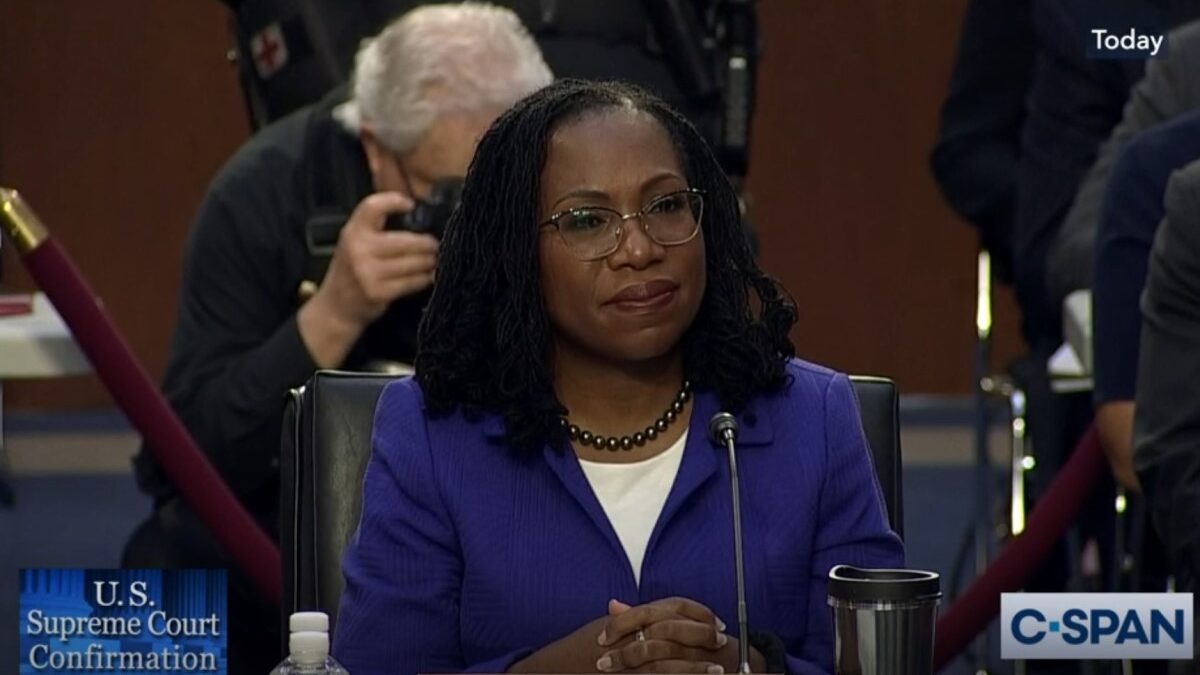 Ketanji Brown Jackson's dissent is an extension of all the other nonsensical, offensive arguments made by the left.
Branson’s Virgin Galactic flies its first commercial mission
Gpscruisebut i paid for first-class...

Enlarge / A camera aboard Virgin Galactic's VSS Unity rocket plane captured this view from the edge of space Thursday. (credit: Virgin Galactic)

Virgin Galactic launched three Italian researchers and three company employees on the suborbital operator’s first commercial flight to the edge of space Thursday.
The six-man crew rocketed to an altitude of more than 279,000 feet, higher than the 50-mile height recognized as the boundary of space by NASA and the Federal Aviation Administration, according to Virgin Galactic, the space tourism firm founded in 2004 by Richard Branson.
The company’s large carrier jet, called VMS Eve, took off from a runway at Spaceport America in New Mexico and climbed to an altitude of about 45,000 feet, where it released the VSS Unity rocket plane at 11:28 am EDT (1528 UTC) to ignite its motor and start the climb to suborbital space.