AT&T is now collecting anonymous information about your account for external marketing and analytics. By default you're opting into the tracking, but it's easy to opt out.

    
|
AT&T is now collecting anonymous information about your account for external marketing and analytics. By default you're opting into the tracking, but it's easy to opt out.
|
|

There are those who feel that Civilization V, as it was first released, was a little thin. The game's first expansion, Gods & Kings, addressed some of that criticism. Its second, Brave New World, transforms the game into one of the best the PC has ever seen.

|
|
The World's End is a standalone movie, but it's also the third movie of Edgar Wright's Cornetto Trilogy, with Simon Pegg and Nick Frost, as this trailer explains. Following up Shaun of the Dead and Hot Fuzz, this movie raises the stakes by ending the world. What do you think?

|
|
JmicalThis is awesome and you should go download it right now.
 |
| Image by Adham Fisher |

Chrome: We've probably all made a regrettable, impulsive buy before. What if there was an app that automatically put such purchases into perspective? There is, and it's called the Dictionary of Numbers.

|
|

One note before I open up this week's mailbag: As last week's "PA" revealed, I am not infallible. I don't know why you would think so, given that I'm a fictional fake postman. I know a lot of junk, but I think I know more than I do, so I rely on you attractive readers to "augment" my answers in the comments. The fake USPS thanks you for your help!

|
|

The Martian Centipede?
No, it’s a trough depression with dunes in an area marked by cratered cones, located in the Northern Plains of Mars.

A new study has effectively doubled the estimated number of life-friendly planets in orbit around red dwarfs. And remarkably, the astronomers attribute the revised figure to the presence of clouds.

|
|

|
|
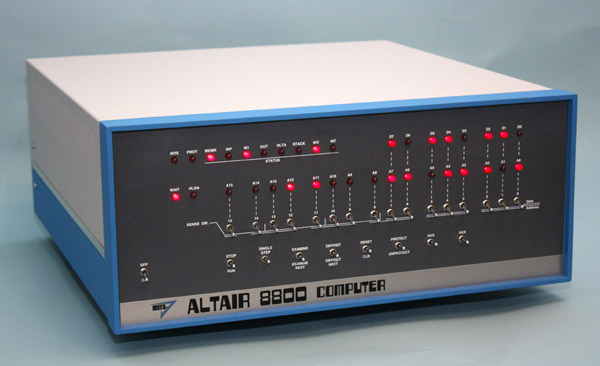
There have been several Altair 8800 remakes and emulations in recent years, but this brand new version by Mike Douglas does a great job of mimicking the impressive look and feel of the original without relying on outdated technology. Instead of a case crammed full of boards, a Microchip microcontroller is used to emulate an 8080A CPU running at 2 MHz with 64K RAM, 16K ROM, along with printer, cassette and floppy disk I/O.
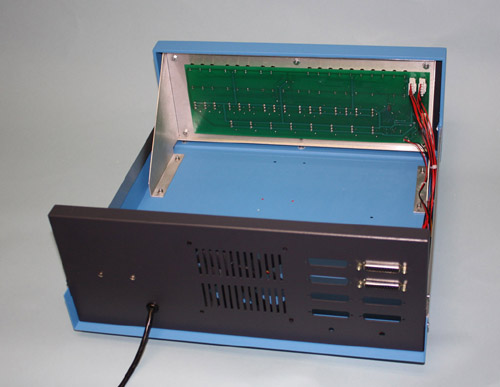
Douglas explains: "The Altair 8800 Clone is a full size, fully functional replica of the computer that started a revolution – the Altair 8800. Whether used for personal or educational purposes, the Altair Clone is a great way to relive this important period in computing history and learn core computer science principles at the same time!
The Altair Clone provides an accurate, hands-on experience without having to worry about damaging a vintage computer. Built with modern hardware on the inside, the Clone is also less expensive and much easier to keep running than a vintage computer.
The Clone is available fully assembled or in kit form. The kit requires installation and soldering of all switches, LEDs and resistors (surface mount components are pre-installed at the factory). The kit also leaves power supply wiring, serial port wiring and mechanical assembly for the user to complete."
The price is the same as the original base unit from 1976, a mere $621. David Greelish of The Classic Computing Blog recently interviewed the creator, and it's a fascinating chat.

Woody Allen on his balcony, Manhattan, NY, 1979. All Images © Mary Ellen Mark
The Weinstein Gallery in Minneapolis is currently showing the work of documentary photographer Mary Ellen Mark. The exhibit, “Seen Behind the Scene/40 Years of Photographing on Set,” presents 40 years of Mark’s backstage photography on movie sets—her “day job.” She was hired by film studios and sometimes magazines to photograph movie sets and has captured behind-the-scenes photos for over 100 films, including Federico Fellini’s Satyricon (1969), Francis Ford Coppola’s Apocalypse Now (1976) and Baz Luhrmann’s Australia (2008). She noted in her book Seen Behind the Scene (Phaidon, 2008) that taking photos of the movie industry has shaped her portrait and documentary work: “My own experience of observing this world has helped me immensely in my work outside of it, whether it’s directing my subjects, finding the best way to use light, working with stylists, or producing a project. I’ve watched the greatest of the great work and they have inspired me.”
Mark has won numerous awards including National Endowment for the Arts fellowships; she was also named “Most Influential Woman Photographer of All Time” in a poll of American Photo readers. To see more of this award-winning artist’s candid shots of Hollywood figures like Jack Nicholson and Sean Penn as well as snapshots of the film industry, visit the Weinstein Gallery before the exhibit closes on July 27.

Federico Fellini touches up a painting for a scene in the Grand Hotel, “Amacord”, Rimini, Italy, 1970

John Belushi, “Blues Brothers”, Chicago, IL, 1979

Clayton Moore, television’s “Lone Ranger”, at home in Los Angeles, CA 1992

Klei Entertainment, makers of recent gems Don't Starve and Mark of the Ninja, have announced their new game. It's a procedurally generated, turn-based tactical espionage game called Incognita. What? Dude. Yes.

|
|

You always want creativity to come naturally but sometimes you need to give it a push. Thoughts and ideas blog the 99u suggests that counterfactual thinking can help give you a boost when you need it.

|
|

In the Total War community, Darthmod occupies a place behind only developers Creative Assembly themselves. For years, his comprehensive (and easy to use) mod packs have transformed the flagship strategy series from "great games with whiffy AI" to "amazing games oh God where is my life going".

|
|
JmicalI want Quantum Mechanics on a t-shirt.





Which team do you play for, physicists?
I like these simple text creations from likeaphysicist. Clean, bright, happy physics.
JmicalBRING BACK PETER MOORE.

Don Mattrick, who's been the public face for all things Xbox for the last few years, will be leaving Microsoft to take a top leadership role at Zynga, reports All Things D.

|
|

Writer Neil Gaiman's first new Sandman comic in a decade will be out on October 30 from Vertigo/DC and will be shipping—sigh—every other month.

|
|
I never posted in /r/gamdev I think - but it seems the topic is of interest. This is a copy/paste from the blog I wrote on this - all graphs can be found on the album there too: http://imgur.com/a/ZllRi
I am sharing this on reddit mostly to get feedback on the Post Mortem itself. Does it look useful, what information is unclear, what is missing? Happy to answer these to the best of my knowledge.
I have promised to write a post-mortem on the Strike Suit Zero Kickstarter for a while now. I haven’t done so for many reasons, but the main one was that I wanted to have the game out and most of the rewards delivered before doing so. The fact that the game has been released is one of the most interesting points here, and a good way to get a complete view of what the Kickstarter did for the game beyond the campaign.
For lots of reasons outside of my control as well as the studio’s, I won’t be able to share sales number for the game. It is unfortunate but hopefully, there will be enough to learn from here to still make it valuable.
As a short side note, I probably need to clarify my role with the studio: I am a Non-Exec Director of Born Ready Games and worked as an executive producer for the title (not hands on, providing on-going feedback on the project). ICO has been providing the PR for the game in Europe since it was first announced (back in 2011).
The Campaign
Back in September last year, the studio realised that while the game development was progressing fast, it wouldn’t be possible to finish it in the timeframe allowed by its cash in the bank. After discussing different options, we decided to take the issue to the existing community (while it was small, it was there and had been built for the past 3-4 months) and see if crowdfunding could help fill in the cash gap needed to finish the game and add some polish.
The campaign was launched on the 18th of October with a $100,000 objective. It was successfully funded on the 17th of November, with a total amount pledged of $174,804 from 4,484 backers.
The game itself was released on the 23rd of January 2013.
During the campaign, different additional content was promised, either in the initial campaign or through stretch goals:
Overall, the studio has nearly completed the project it was raising money for and it will be all done before the end of the summer.
What worked and what were the unexpected benefits
These are just not mine – I asked Benjamin and Chris from the studio to contribute to this list:
Good planning. Ahead of the campaign, we took a lot of time to research other similar projects (scope and theme) and it helped a lot to create the campaign as well as during the campaign itself. Obviously, it wasn’t perfect as the next chapter proves, but it would have been way worse without all the prep.
Dedicated resource. Jamin (the studio’s community manager) was on the campaign full time; talking to the backers, working on updates, keeping track of requests and questions.
Involving the team in the campaign. Getting them in the video and the updates was good for morale but also showed the identity of the studio.
Excellent PR impact. 47 (in the US) and ICO (in Europe) were managing the PR for the game at the time and the coverage the game got during the Kick Starter campaign accelerated massively.. I don’t think that back then being on Kickstarter was a story in itself already, but it helped support one of the key message : space dog fighting games were once huge and needed to be more represented). Word-of-mouth supported this a lot obviously, some backers asked some media that had not been covering the title to talk about the game and they did. “Game X goes to Kickstarter” is not a story anymore, but if you do have a story to go with your campaign, it will make it possible for the message to spread more easily.
Joysticks. I mentioned this at events where I am talking about the campaign, but the addition of the Logitech joysticks during the campaign created a mid-campaign push thathelped a lot. Just check the numbers below. I think backers loved the idea of having a joystick again (tapping in the same nostalgia sentiment that exists for the genre) – and the game was perfect to play with a joystick.
Studio financial health. Without the Kickstarter money, I have no doubt that the game would have been released, but in a poor state (it was still a bit rough and some may say it still is, so imagine what would have happened) and it would have been at the cost of redundancies or possible worse. The extra money then was essential not just to get a better game out, but to give the studio enough rope to release it properly. It is now in a much better shape and was able to self-finance the stand-alone score chaser based on Strike Suit Zero for instance (Strike Suit Infinity).
Junji and Paul were ace. Junji Okubo is the mecha designer behind the Strike Suit and the ships design. Paul Ruskay is the composer of the music. They both gave us incredible support. Paul waved some of his rights to the music for the rewards of the Kickstarter campaign. Junji offered to design mechas for the $10,000 rewards (that nobody backed, but were still really awesome). They also both shared the word about the game and the campaign. I don’t think it is a coincidence that the highest average pledges came from Japan for instance ($80 per backers on average, compared to $40 for the rest of the world).
Merch. An unexpected benefit of the campaign was the sudden access to a number of merchandise opportunities. While the studio hasn’t made any plans to sell them for now, having artbooks and OST CDs is a nice thing. Meeting with potential partners, being able to give the artbook and say “this is the art style of that game we made” makes it easier to break the ice.
Team morale. I couldn’t judge from this first hand, but everyone mentioned to me how it boosted the team’s spirits. Going from “working on a game we think is cool” to “working on a game that people think is cool enough to support” does miracles.
What went wrong and unexpected problems
Paypal. It went live way too late and was difficult to manage. It was put together in a rush and nobody in the studio had proper experience with it. This was a missed opportunity and had we had it up and running earlier the impact on teh overall campaign could have been much larger.
Lack of some skills within the studio. Nobody in the studio has experience putting websites together. The game’s website was a placeholder (and a bad one) for most of the campaign and when the main one went live, it still wasn’t a good website. The current site is much better, but it was needed most back then, when backers were researching the game beyond its Kickstarter page. It probably didn’t help build up the credibility of the project.
Stretch Goals. Because the campaign was to finish the project, not to start it, the studio had very little flexibility on what could be offered as Stretch Goals. When you go to Kickstarter to fill in a gap in your finance to finish the game, you really don’t want to offer to add XYZ that will delay your game again. It limited the capacity for the studio to push for more funds beyond the initial goal. It is still great that the Mod tool could be added as this was a much demanded feature by the community. In retrospect though, maybe more things could have been added, I think we may have been overly cautious there.
Unprepared for the Kickstarter back-end. While this wasn’t the biggest of issues as SSZ wasn’t a multi-million campaign, it was still a massive pain. Larger campaigns that have plans to transition backers from Kickstarter to their own backend are really in a better shape to tackle all the requests and micro-management required. The Kickstarter back-end will do so much for you, you need to find your own tools and you usually learn the hard way about the ones that work and the ones that don’t.
OST CDs. While I think the rewards were well structured and generally working, I will raise my hand for this one and say “I fucked it up”. We limited the OST CDs to a quite high level ($250), while production of those meant we were going to get a lot more than what the backers would need. Like 950 more than needed out of 1,000 CDs produced. We should have kept the signed CD at that relatively high level and offer un-signed CDs at a lower level.
T-shirts and hoodies. While the Insert Coins folks were super supportive, we ended up withtons of delays on the T-shirts. Actually, some have still not been sent as with some sizes, we had quality issues. It mostly comes from inexperience with managing these kind of products – and the delays with them.
Pricing. When planning the campaign, we knew the retail price was going to be about $20 and we thought we had prepared that way. We offered the game at $15 for the early bird backers (limited to 1,000) and at $20 as the first price point where you can get the game otherwise, with a few, very anecdotal perks. BUT – when launching on Steam, you usually do a discount, in our case this was 20% off, meaning the game was at $16 at launch… That went way over our heads back when planning (and while we did research what other projects have done, very few had launched and encountered this issue – I now know that others ran into the same problem) and we got criticized by some backers, who were feeling that they were being punished when they had backed the project before anyone and should been treated better. It felt even more painful as they felt the game was almost ready before the campaign and would have launched without their support (they were wrong on this, but that was their perception). There was also strong support from another part of the backer community which answered the criticism better than the studio could have and basically said they were fine with what happened with the pricing as “Kickstarter is about crowdfunding, not about pre-ordering projects on the cheap”. The plan had always been to be generous and to go beyond what had been promised as rewards, and hopefully it has shown, at least in a small way, with the studio offering discount codes for the new content to the backers for instance. The idea was always to keep backers happy – and the studio has this very much in mind.
Rewards system in Kickstarter. We always knew that we would not be able to edit the rewards after the campaign was launched, and we still made the rookie error of referencing some content as “and all previous rewards”. That meant that when we added the joystick, many backers expected to get this when backing higher level rewards, despite explaining it wasn’t the case at different points on the page. I definitely recommend going with the current best practice to name the rewards and reference them by that name when you need to.
Kickstarter documentation. There are quite a few things that you need to learn as you do them on Kickstarter. The way surveys work and advice on how to maximize their use could use some love on the documentation side. Nowhere on the site (it was true back then and it is still true now) are you told that after the campaign YOU CANNOT CHANGE THE MAIN PAGE ANYMORE… When you were able to reflect a lot of things moment to moment on it, losing this ability over night, without notice, is a big issue. It didn’t create many problems with SSZ, but it was very annoying. I did mention this to Kickstarter and I suspect they are working on a way to address this while protecting the information that was historically provided to the backers before the end of the campaign and avoid scamming.
Overall, the Kickstarter had a positive net benefit for the project and the studio, no question about that.
The numbers and graphs
I love numbers and graphs (you should know that by now), so let me share loads with you:
http://imgur.com/giKc1J4 http://imgur.com/dQ5Rg68
Pledges for physical rewards making 41% of the money raised is nothing to scoff at.
http://imgur.com/VTLMegu http://imgur.com/ab41pI5
The Kickstarter system does send you an email whenever something related to your project happens. It can be overwhelming if you don’t expect it:
That’s about one comment per 10 backers. The project being a ‘help us finish our project’ rather than “help us start our project”, the engagement with the user was quite different. I would expect more comments and more discussions between backers in a “starting a project” campaign.
About 11% of the views watched the video to the end. Not bad, especially as those numbers are current numbers, many months after the campaign is over I suspect views have accumulated during the period after the campaign.
REFERRAL SECTION
Top referral sources (as provided by the Kickstarter dashboard)
http://imgur.com/arwaITv http://imgur.com/WQMnMOV
Backers and funding origins
http://imgur.com/BhUmp1x http://imgur.com/Z02KvuF
Kickstarter backers were overwhelmingly from Anglo-Saxon countries: USA, Canada, United Kingdom and Australia represent 73% of the backers and 76% of the money raised.
REWARDS SECTION
Because the joysticks were managed differently through Logitech, the postage costs doesn’t include them. For reference, the studio sent 385 joysticks around the world – and it cost £3,981/$6,221 all included.
There are still a few things to send (T-shirts mostly) and the final costs for the 3D-printed figures (and their postage) won’t be final until it is actually done, but at the moment, the studio has spent £17,062/$26,641 for the physical rewards. That’s 15.2% of the total raised spent there. Compared to other campaigns, this seems reasonable and within what was expected.
I shared in the past the following graph, that is showing the impact of the campaign on the number of new likes on Facebook: http://imgur.com/xLVDswf
The orange marks are for consumer events (Rezzed, gamescom and Eurogamer Expo), the blue marks are the release of videos (developer diary, Pax Trailer, and a feature on Athene’s channel) and the grey marks are positive articles in some media. Of everything that was undertaken in terms of communication and marketing (and arguably, this being an indie project, there weren’t a large budget allocate to these), none had an impact comparable to the Kickstarter campaign. As I mentioned before, the website at the time wasn’t very well done and we drove all the traffic towards the Facebook page, so this is the best way to measure the campaign impact comparative to other things that were done.
But that’s an incomplete (and old) picture, so here are is another one, reflecting the effect of the launch of the game: http://imgur.com/stdxZWz
Because the time period covered is much longer, I opted for a different graph format. You can still see the impact the Pax Trailer had, but it all pales compared to the launch of the game. I don’t have much to add here, if only to say that the release of the second game seemed to have a much stronger impact on acquiring fans than the launch of the first game. I suspect that the commitment of the studio to create more content is what created this effect, but I have no evidence of this. The Facebook promotion that was running at the same time had a role to play as well, but looking at the numbers very closely, it was marginal compared to the release of Strike Suit Infinity itself.
Ideally, I would conclude with sales numbers and compare them with the numbers from the campaign to draw even better conclusion, but as said in introduction, we can’t. What I can say is that thanks to the Kick Starter campaign, the studio is still around and that, in the end, the backers, so critical in getting the game finished and released, ultimately represent a relatively small proportion of people who are now enjoying the game.
For reference, the original blog post is here: http://www.icopartners.com/blog/archives/3284
ttfn
Is good housekeeping important for civil defense? It is according to this 1954 film, produced by the Federal Civil Defense Administration, which claims that a clean, nicely painted house is more likely to survive a nuclear attack than its dirty, run-down neighbors.

|
|
JmicalIsn't Edelman Digital still Clororx' agency of record?
Laugh out loud.

♦◊♦
Editor’s Note: Earlier this week, in an attempt at humor, Clorox ran an ad called “6 Mistakes New Dads Make.” To be fair, there are a lot more mistakes made by any new parent–parenting is a lifelong learning process. But the ad was more offensive than funny, and Chris Routly of Daddy Doctrines took exception. In 2012, Routly stumbled into becoming an “accidental activist” when he spearheaded the successful petitioning of a major diaper brand to revamp an offensive ad campaign, and has continued to engage with brands wanting to better reflect and connect with modern dads ever since. Jokes about a “Routly Scale” of outrage have even been adopted by certain dad blogger groups in which he participates. Below is the original post from Daddy Doctrines, and here is the report by CNN’s Josh Levs.
♦◊♦
I get sent a lot of links to various and sundry incidents where a brand has stepped over the line when it comes to their depiction of fatherhood. Believe it or not, I post about very few of them.
But today a new article on the official Clorox webpage entitled “6 Mistakes New Dads Make” [*It has now been pulled, but here's a Google cache version*] was brought to my attention, and I just can’t stay quiet about it.
It starts off with a bang:
Saying ‘No-no’ is not just for baby. Like dogs or other house pets, new Dads are filled with good intentions but lacking the judgment and fine motor skills to execute well. Here are a few dangerous no-nos new Dads might make, and some training tips.
No, you did not read that wrong.
Clorox — or some poor social media intern who, at this point used to work for Clorox — actually wrote those words. Dads are like dogs. Well-meaning, but dumb and unable to complete basic tasks.
It continues, listing these “mistakes new dads make,” which are, briefly, as follows:
The post, unbelievably, expounds on these points, but you get the idea. Each of them is so stupid, there is no point in even addressing them specifically, but I will say many of us are already having a laugh about the casino thing. “Sorry, Routly, I would complain to Clorox about that thing, but I’m too busy betting on red. The baby LOVES it when I bet on red!”
Okay so, look, this isn’t some grand Clorox ad campaign. This isn’t the result of a whole bunch of marketing people putting their heads together about a great way to include dads, and failing spectacularly. It’s a dumb blog post (that is failing spectacularly at being funny, I assume), probably written by the same person who thinks that it’s funny to say things like “One thing teenage boys (and let’s be honest, teenage men) can’t seem to master is the tushy wipe.”.
But no matter who wrote it, and why, Clorox has its name on it, and Clorox needs to know that this sort of thing is Not Okay. It’s Not Okay on a new level that might actually make it qualify as a new strain of What-Where-You-Thinking disease.
I imagine that the post will be gone before long [*Update: It has now been pulled*]. But before it goes, please join me in letting Clorox know that we, the families who live here in the 21st century, expect better than this:

If anyone from Clorox is reading this, I want you to know why I feel like this is worth calling out, beyond just its obvious awfulness. And that reason is simple:
I know you know better because I’ve seen the carefully crafted ads that you’ve produced that try to recognize dads as user of your products, who might be goofy, but at least aren’t idiots. I know you know better because I’ve seen you engage with some of the brightest voices in the dad-sphere on campaigns that seek to include dads into the picture in a positive way. I know you know better because you are a company made up of people who are moms and dads that know better what modern families look like.
So this isn’t about asking you to be something you’re not, or get on board with a way of thinking about dads that is foreign to you. It’s about asking to to live up to what and who you say you are.
Update!
Some time after the post was taken down, the official Clorox twitter account contacted me to say the following:

More importantly, with the offending post gone, what would you like to see Clorox do better in the future when it comes to dads (and men in general) in their marketing?
♦◊♦
—for more on other Dumb Dumb Dad Ads, check out:
—for ads that got dads right, check out:
Google Chrome Ad Highlights Awesome Father-Daughter Bond
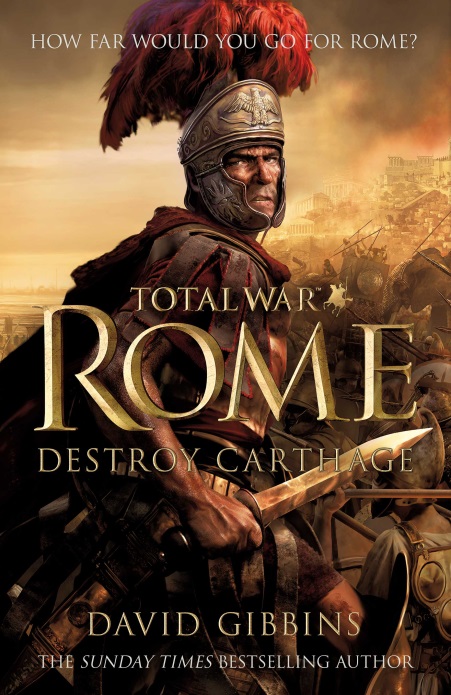
"Carthage, 146 BC. This is the story of Fabius Petronius Secundus – Roman legionary and centurion – and his rise to power: from his first battle against the Macedonians, that seals the fate of Alexander the Great's Empire, to total war in North Africa and the Siege of Carthage.
Fabius's success brings him admiration and respect, but also attracts greed and jealousy – the closest allies can become the bitterest of enemies. And then there is Julia, of the Caesar family – a dark horse in love with both Fabius and his rival Paullus – who causes a vicious feud.
Ultimately for Fabius, it will come down to one question: how much is he prepared to sacrifice for his vision of Rome?
Inspired by Total War: Rome II, the bestselling game, Destroy Carthageis the first in an epic series of novels. Not only the tale of one man’s fate, but is also a journey to the core of Roman times, through the world of extraordinary military tactics and political intrigue that Rome’s warriors and citizens used to cheat death." - Pan Macmillan, publisher
 
|


What happens to churches whose religious residents have left? Often, they become a bit more secular. Here are some of the most gorgeous and surprising architectural afterlives for these houses of worship.

|
|

Video game consoles aren't just for gaming. They also make great set-top boxes that stream video and music into our living rooms, and the new Xbox One and PlayStation 4 are no different. Each console brings a little something different to the table, so now that they're both here, let's take a look at how they bring entertainment other than video games to your living room.

|
|

Before Sid Meier was Sid Meier—the iconic video game designer whose name is stamped on classic titles like Pirates! and Civilization—he was just another computer hacker.

|
|

A team of experts from Ohio’s Great Lakes Brewing Company, along with archaeologists from the University of Chicago, have replicated 5,500-year-old beer from Mesopotamia using clay vessels, a wooden spoon, and an ancient recipe. But the end result left much to be desired.

|
|

Late last year, Canadian astronomer Philip Gregory made the controversial claim that there are three habitable zone super-Earths orbiting the red dwarf star Gliese 667C. Now, in a separate study, a group of European astronomers are saying he was right.

|
|
JmicalHey, Ouya actually shipped, how about that.

Ouya, the Android-powered, crowdfunded indie console, arrives in stores today but shipping snafus mean many backers have yet to receive their consoles, threatening to cast a cloud over a big day for the machine. It could be another two weeks before all backers have their consoles.

|
|

This image reveals something bizarre about our early universe. On a large scale, there are greater temperature fluctuations to the right of the gray line than to the left. Could we be seeing the bruise from an early smashup with another universe? Some physicists think so.

|
|