The beloved but doomed Google Reader is still a healthy source of traffic. Google+, on the other hand…
According to data from the BuzzFeed Network, a set of tracked partner sites that collectively have over 300 million users, Google Reader is still a significant source of traffic for news — and a much larger one than Google+. The above chart, created by BuzzFeed's data team, represents data collected from August 2012 to today. (Yesterday, Google announced that it would close Reader in July.)
We should add that this data isn't complete. Google Reader traffic became much harder to measure last year when Google began defaulting users to SSL encryption in such a way that masked referral data. And this doesn't include data from apps that use Google Reader as a sync service, such as Reeder. In other words, it's likely that we're actually missing some Reader traffic here.
The second graphic* shows measured Reader and Google+ referrals over time. This one, too, requires qualification: The changes in Reader's numbers can be explained mostly by the addition of new sites to BuzzFeed's partner network, not growth in Google Reader (the total number of visitors to partner sites increased, in other words).
But the relative numbers are still surprising: Despite claims that it has over 100m monthly active users, Google+ barely moves the needle for sites across the network, while Reader is a healthy source of readers.
*For reference: in August of 2012, according to the same data, Facebook drove over 70m visitors to sites in the network while Google Reader was well under 10m.
“Reflection model (perfect bliss)” by Japanese artist Takahiro Iwasaki is an incredibly intricate scale model of the Byodo-in, a 10th century Buddhist temple near Kyoto, Japan. The wooden sculpture is a faithful replica with one exception—it has been doubled, with an inverted version of the temple attached seamlessly underneath. The entire sculpture is then suspended with wires for an almost spaceship-like effect.
Shame really should be on the list of deadly diseases. It may not actually murder a physical body, but it has the capacity to barrage the soul to the point of psychological imprisonment. It attacks our sense of self-worth and destroys our ability to be fully alive.
If it were actually effective, I would wholeheartedly join you in your strike against shame, holding signs to keep it out of the psyche and saying, “Shame on you, shame.” But from my experience, it usually just grows into an angry beast. It haunts us day and night until we do something about it.
Pushing away the shame isn’t the answer. So what is?
Sharing the shame with a trusted person is what will heal us.
Think of a time when you have felt shame. Maybe the shame is associated with a word, a fantasy or thought, or an action. Here are some:
“I put on a good facade, as if I have everything together. But I break down and cry when no one is around.”
“I am broke.”
“I think about cheating on my husband.”
“I have cheated on my husband.”
“I am married to a woman but I am more attracted to men.”
“I have a mental illness.”
“I was abused as a child.”
“I am a battered woman.”
“I hate the way I look.”
“I hate my kids sometimes.”
“I cheat to get good grades in school.”
“I got fired.”
“I lied about my age.”
“I dropped out of school.”
“My family was on welfare.”
“I have STDs.”
“I have AIDS.”
“I prostituted for money.”
“I used to steal when I was a kid. I still do.”
“I have an addiction.”
“I take medication for my depression.”
“I dream big but I am lazy.”
If you keep shame inside, it will produce a heavy sensation in your body. But notice what happens when you share it with someone you trust, someone who will not judge you. Most likely, it will be embarrassing at first. But once you share that same story over and over again, the shame will be able to go through transformation.
Ultimately, the shame will no longer have the same power over you. Eventually, you will be able to look back and say to yourself, “I can’t believe that I was so ashamed about that.”
Try using imagery to help you. Imagine shame to be a baby who just looks terrified on the outside but frightened on the inside, sucking on her thumb. Be curious about what this baby is so terrified about. Move toward it and ask it what it needs. Hold it in your arms with great care, curiosity and empathy.
When you give shame attention, you free yourself from being held in captivity. You will be able to feel joy again and walk with confidence. It is the act of letting yourself be who you are that frees you from the pain associated with shame. It is also an ingredient for healthy self-esteem. You will eventually learn that you aren’t such a bad person after all.
Australia's gastric-brooding frog doesn't just hold its young in its mouth, but actually incubates the eggs in its stomach. Or, rather, it did. The species has been extinct since the 80s. But that didn't stop scientists from cloning an embryo from frozen remains:
Even though the gastric-brooding frog has been extinct for decades, it's possible to do this because individual specimens were kept preserved in, believe it or not, everyday deep freezers. When going through somatic-cell nuclear transfer, the eggs began to divide and form into the early embryo stage.
The embryos didn't survive much longer than that, but it was confirmed that these embryos contain genetic information from the gastric-brooding frog--that yes, in fact, they have brought it back to life. The researchers are confident that this is a "technical, not biological" problem at this stage to breed gastric-brooding frogs to adulthood. This is a big step forward for the worldwide attempts to revive extinct animals--the Lazarus Project researchers will soon meet with those working to revive the woolly mammoth, dodo, and other extinct beasties to share what they've learned.
Oh, and in case you were wondering: the gastric-brooding frog lays eggs, which are coated in a substance called prostaglandin. This substance causes the frog to stop producing gastric acid in its stomach, thus making the frog's stomach a very nice place for eggs to be. So the frog swallows the eggs, incubates them in her gut, and when they hatch, the baby frogs crawl out her mouth. How delightfully weird!
Link | Photo: Australian Government Department of the Environment, Water, Heritage and the Arts
We may be celebrating Pi Day here at io9, but we would be irrational to deny that there’s more to mathematical interestingness than simply dividing an object’s circumference by its diameter. Here are seven numbers we love as much as pi.
1. 1
1 may be the loneliest number, but it’s the littlest number that could — the first non-zero integer that displays remarkable properties of self-reliance. Aside from being the first whole number, it is its own square, cube, and factorial. It’s also very stubborn; when you raise 1 to any power — even a number as high as a googolplex (1 followed by 10 to the 100th power, or 10^(10^100)) — you still get 1. It's the first and second number in the Fibonacci sequence. It is neither a composite number, nor a prime number (mathematicians rejected this idea because it complicates fundamental theorems of arithmetic). It is, however, a unit (like -1). And it’s the only positive number that’s divisible by exactly one positive number.
2. i
Any number that doesn’t actually exist, but is still useful, has to be considered cool. Also called the imaginary unit, i is the square root of -1 (i2 = -1). This number cannot exist because no number multiplied by itself can equal a negative number.
At first, imaginary numbers were considered useless (an imaginary number is a number that, when squared, gives a negative result; e.g. 5i = -25). But by the Enlightenment Era, thinkers began to demonstrate its value in math and geometry, including Leonhard Euler, Carl Gauss, and Caspar Wessel (who used it when working with complex planes). They’re useful in that they can be used to find the square root of a real negative number.
Today, i is used in signal processing, control theory, electromagnetism, fluid dynamics, quantum mechanics, cartography, and vibration analysis. The figure j is often substituted in these fields, which is used to represent the electric field current. The imaginary number also appears in several formulas, including the Euler Identity.
As an aside, Isaac Asimov’s short story “The Imaginary” (1942) featured the eccentric psychologist Tan Porus who explained the behavior of a mysterious species of squid by using imaginary numbers in the equations which describe its psychology.
3. Graham's Number
Simply put, this is the largest useful (i.e. non-arbitrary) number known to mathematicians. But it’s an astoundingly large number. Named after Ronald Graham, it’s the upper bound to a certain question that involves Ramsey Theory (a branch of math that studies the conditions under which order must appear). Consequently, it’s the biggest number used for a serious mathematical proof.
It’s so big that it’s physically impossible for our brains to comprehend. AI theorist Eliezer Yudkowsky put it this way:
Graham's number is far beyond my ability to grasp. I can describe it, but I cannot properly appreciate it...My sense of awe when I first encountered this number was beyond words. It was the sense of looking upon something so much larger than the world inside my head that my conception of the Universe was shattered and rebuilt to fit. All theologians should face a number like that, so they can properly appreciate what they invoke by talking about the "infinite" intelligence of God.
Interestingly, if not ironically, the lower bound to the Ramsey problem that gave birth to that number — rather than the upper bound — is probably six. Note: A reader alerted me to this study, which suggests a lower bound raised to 11, and then to 13.
4. 0
The number 0 is totally taken for granted, which, when considering that it represents nothing, is somewhat understandable. But it does serve some important functions, including as an empty place-value in our decimal number system. How else, for example, could we express the year 1906 in the decimal system without it?
Sure, the universe starts to melt when you try to divide by it, but 0 can serve some important roles in equations, including those that involve addition, multiplication, and subtraction. Numbers can also be raised by the power 0, which will always produce the value of 1. And if you raise 0 to power of anything, you still get 0. But, if try to do 0^0, math goes all squirrely again and the answer becomes basically anything (an “indeterminate form”).
Lastly, the sum of 0 numbers is 0, but the product of 0 numbers is 1. And 0 is neither positive, nor negative. It’s not a prime number, and it’s not a unit — but it is an even number.
5. e
Yes, there’s a number called ‘e’, but it’s also known as Euler’s Number. Like pi, it’s an important mathematical constant, an irrational number that goes like this: 2.71828182845904523536...
Named after Leonhard Euler (1707-1783), it’s the base of John Napier’s Natural Logarithms — the logarithm to the base e, where e is an irrational and non-algebraic number (what’s called a transcendental constant, much like pi). Some people refer to it as the natural base. Euler devised the following formula to calculate e:
e= 1+ 1/1 + 1/2 + 1/(2 x 3) + 1/(2 x 3 x 4) + 1/(2 x 3 x 4 x 5) + . . . (alternately: 1 + 1/1 + 1/2! + 1/3! + 1/4! + 1/5!)
Mathematicians have calculated e to over a trillion digits of accuracy.
Euler's interest in e came about when calculating continuously compounded interest on a sum of money. And in fact, the limit for compounding interest can be expressed by the constant e. So, if you invest $1 at an interest rate of 100% per year, and the interest is compounded continuously, you will have $2.71828 (or so) at the end of the year.
e also shows up in probability theory and the Bernoulli trials process (which is helpful for calculating things like probabilities in gambling). Other applications include derangements (the so-called hat-check problem), asymptotics (when describing limiting behavior, a useful concept in computer science), and calculus.
6. Tau
Tau is simply 2pi, or the constant that is equal to the ratio of a circle’s circumference to its radius. Thus, tau is written out like 6.283185...
Tau is the 19th letter of the Greek alphabet and was chosen as the symbol for 2pi by Michael Hartl, a physicist, mathematician, and author of "The Tau Manifesto," along with Peter Harremoës, a Danish information theorist (who knew math could get so political?).
Tau is considered by some to be more useful than pi for measuring circles because mathematicians tend to use radians instead of degrees. According to Kevin Houston from the University of Leeds, the most compelling argument for tau is that it is a much more natural number to use in the fields of math involving circles, like geometry, trigonometry and even advanced calculus.
What this means, of course, is that Tau Day should be celebrated on June 28 (6/28).
7. Phi (φ)
Also called the Golden Number, Phi (rhymes with "fly") is an important mathematical figure that’s written out as 1.6180339887...
Unlike pi, which is a transcendental number, phi is the solution to a quadratic equation. But like pi, phi is a ratio that’s defined by geometric construction. Two quantities fit within the golden ratio if the ratio of the sum of the quantities to the larger quantity is equal to the ratio of the larger quantity to the smaller one. Because of its unique properties, phi is used in math, art, and architecture. The Greeks discovered it as the dividing line in the extreme and mean ratio, and for Renaissance artists it represented the Divine Proportion.
Phi also has interesting equivalent ratios when the number one is introduced, like φ:1 is equal to φ+1:φ, or 1:φ-1. Also, two successive fibonacci numbers, when divided, produce a number close to phi. The further through the series, the more accurate (or detailed) phi becomes.
Special thanks to Calvin Dvorsky for helping me with this article!
Access to steady supplies of clean water is getting more and more difficult in the developing world, especially as demand skyrockets. In response, many countries have turned to the sea for potable fluids but existing reverse osmosis plants rely on complicated processes that are expensive and energy-intensive to operate. Good thing, engineers at Lockheed Martin have just announced a newly-developed salt filter that could reduce desalinization energy costs by 99 percent. More »
Time to stock up on bug spray. “Gallinipper” mosquitoes — one of the world’s largest and most aggressive mosquito species — are expected to descend on Florida this summer. Experts say that the big jump in numbers of gallinippers is related to heavy rains and flooding caused by Tropical Storm Debby last summer. Up to 20 times larger than other mosquito species, these blood-thirsty insects are strong enough to bite through clothing and their bite has been compared to getting stabbed with a knife.
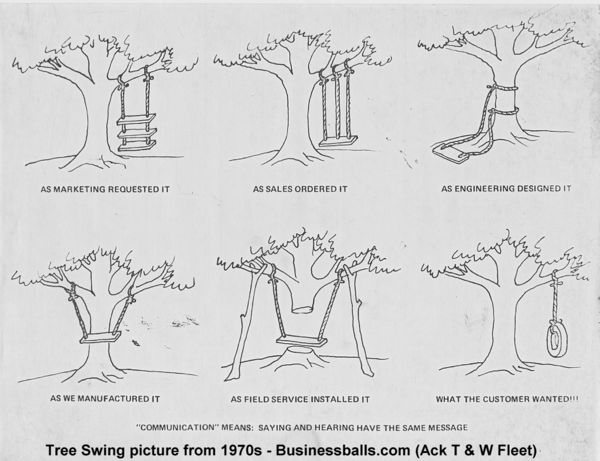
When I was a young naive engineer, I saw this tacked to the beige fabric cubicle wall of an old embittered engineer. It made me like him. Here's a history of this great cartoon.
Cloud services are everywhere, and you probably have at least a few accounts all over the web. Jolidrive takes all those services and rolls them into one, simple interface. More »
Digg feels your Google Reader pain, YouTube Capture comes to iPad, Google Reader has already disappeared from the Play Store, and Apple is now selling mount-ready iMacs. More »
The average human body is covered in millions of hair follicles, and follicle density is particular dense on the head. Whether those follicles are actively pushing out medulla, cortex and cuticle, however, is another story entirely.
In the latest installment of AsapSCIENCE, Mitchell Moffit and Gregory Brown explore the genetics and heritability of hair loss and male pattern baldness — including why your maternal grandfather is a good place to look for answers when you start wondering about the future of your own head of hair. That said, the status of gramps' coif is hardly the last word when it comes to the future of your own head; as the video points out, there are plenty of other factors involved; those with cue-balled forebears need not abandon all hope.
So we're living in the future now, right? And there's no need to use dead trees for anything ever again. At least, that's what the somewhat supercilious chap in this short but hilarious video thinks. Until he runs into a crucial exception.
Sylvia Plath was an iconic American poet who had a very unhappy life. Hence the same of this condition, which describes the association between female poets and mental illness.
Sylvia Plath was, without doubt, a gifted artist, but she didn't attain iconic status until her much-publicized suicide at the age of thirty. Ariel, her posthumously-published book of poetry was considered, by many, a masterpiece. Her much-studied life has been sketched for the public many ways, in order to support many viewpoints; from the political idea of the difficulties of a woman ahead of her time to the purely aesthetic view of the tortured artist. Her name also has come to symbolize a controversial psychological concept.
In 2011, James Kaufman conducted two studies. The first analyzed 1,629 writers for mental illness, and found that female poets were more likely to suffer from mental illness than female prose writers, or male writers of any kind. A second study analyzed women in many careers — most of which would be construed as creative — and found that poets were more likely to suffer from mental illness than any other profession. The convergence of the results of these two studies was called the Sylvia Plath Effect.
The association doesn't imply causation. Artistic impulses don't drive a person mad. Kaufman himself argued that poetry and other artistic professions seem to have more of a tolerance for mental illness than others. Someone who might have been driven out of, for example, business or dentistry, might be allowed more freedom in the arts, and so might find more success. Artistry, then, could be more of a haven for those with mental illness than a cause of their illness. Artistry itself also doesn't seem to demand mental illness — artists respond to treatment and do better after being treated, just like everyone else.
As for the correlation of mental illness with poetry in particular? That's unexplained. But it's also undecided. Female poets may be more willing to submit to such a survey than other writers, so there is the possibility of selection bias. Then again, it's not unlikely that certain personalities are drawn to certain professions.
What do you think? Is it a coincidence, a consequence of the mechanics of the study, or a true correlation?
Well ahead of its shutdown of the Google Reader site, Google has removed the RSS Subscription Browser Extension add-on for its Chrome web browser from the Chrome Web Store. Read more...
We've heard a lot of different theories attempting to explain why the hardy Neanderthals went extinct, but this one's probably the most original, if not the strangest. According to a new study, Neanderthals had extraordinarily good vision — an attribute that came at considerable expense.
Earlier studies showed that Neanderthals featured skulls just slightly different than our own, but not by much. By measuring total cranial volume, paleontologists noticed that Neanderthals and humans shared similar brain volume, so they figured that the internal organization was probably the same.
But this is not the case, say Eiluned Pearce, Chris Stringer, and R. I. M. Dunbar, who argue that Neanderthals had a different visual system — one that, along with greater body mass, resulted in smaller endocranial capacities compared to humans.
In other words, Neanderthals dedicated so much power to their visual systems that their high-level processing was compromised. This prevented them from developing complex social networks, which may have resulted in their inability to thrive.
The research team explored the idea that the ancestor of Neanderthals left Africa and had to adapt to the longer, darker nights and murkier days of Europe. The result was that Neanderthals evolved larger eyes and a much larger visual processing area at the back of their brains.
The humans that stayed in Africa, on the other hand, continued to enjoy bright and beautiful days and so had no need for such an adaption. Instead, these people, our ancestors, evolved their frontal lobes, associated with higher level thinking, before they spread across the globe.
And because Neanderthals evolved at higher latitudes, more of their brain would have been dedicated to vision and body control, leaving less brain to deal with other functions like social networking. As the authors note in their study, this may have affected their “abilities to cope with fluctuating resources and cultural maintenance.”
Check out the entire study at the Proceedings of the Royal Society B.
The longer the task, the more difficult it is to avoid drifting off. But as a new study from the University of Cardiff has shown, people who chew gum have an enhanced ability to concentrate over extended periods of time, along with the added benefit of quicker reaction times.
Chewing gum has been much maligned recently, including a study from last year showing that it negatively impacts short-term memory task performance. But as the new study by Kate Morgan suggests, this may not actually be the case.
For her experiment, Morgan took 38 volunteers and split them into two groups. Both groups had to complete an insanely boring task in which they were fed random numbers for a half hour. Participants were judged on their ability to detect a sequence of odd-even-odd numbers, like 5-4-9 (it's called the Bakan task).
For those who chewed gum during the exercise, they had superior reaction times and more accurate results. Interestingly, people who didn’t chew gum performed better at the beginning of the exercise, but they eventually drifted off.
According to Morgan, chewing gum improves the vigilance decrement — which is the human tendency to experience a decline in focused awareness over extended periods of time, especially when the stimulus is weak. But chewing gum, it would appear, can help us focus on tasks that require continuous monitoring over a longer amount of time.
Moreover, Morgan’s study also shows that it can play a beneficial role in the continuous updating of order memory, which contradicts the study from last year.
Read the entire study at the British Journal of Psychology.
Here are seven instances in which film photography, simply by virtue of being able to capture static images, added to our understanding of the world. Today, in a world where we see constant videos from the depths of the ocean and photos from space appear in our Twitter feeds, much of this seems obvious. But these photos represent both incredible technological achievements and contributions to human scientific knowledge.
1. How Horses' Legs Move When They Gallop
In paintings, it's not uncommon to see a galloping horse with its legs outstretched, all four hooves off the ground. It's a popular image, and one that's entirely wrong. In the late 19th century, the question of whether a horse ever took all four feet off the ground mid-gallop was so hotly debated that industrialist and former California governor (and future university founder) Leland Stanford commissioned photographer Eadward Muybridge—who had already photographed Stanford's horse Occident at racing gait—to settle it once and for all.
To photograph Sallie Gardner, Muybridge set up 24 cameras, with each shutter controlled by a trip wire triggered by the horse's hooves. The jockey rode her across the setup at 36 miles per hour, and thus Muybridge captured his most famous motion series, 1878's Sallie Gardner at a Gallop. He also invented the zoopraxiscope, which let him show the series as a stop-motion film. With that, he finally solved the mystery of the horse's gallop: all four hooves do come off the ground, but while they are all pulled in, not while outstretched. Muybridge went on to create hundreds more motion studies of animals, including humans. Today, scientists, painters, and animators still refer to Muybridge's Animal Locomotion series.
Earlier humans, however, were much better students of animal gait. In comparing artistic representations of animal movement against the actual movements of those animals, a group of Hungarian researchers found that, out of all the pre-Muybridge era artwork they studied, prehistoric cave paintings were the most accurate. So perhaps we might not have needed Muybridges' cameras after all, if only we shared our predecessors' powers of observation.
2. How Cats Land on Their Feet
Étienne-Jules Marey was a physiologist first and a photographer second, but like Muybridge, he used chronological series of photographs taken in rapid succession to study movement. He invented a chronophotographic gun (which resembled a shotgun with a film reel attached), which could capture 12 consecutive frames a second on a single image. He compared his chronophotographs to the anatomy of his subjects so that he could understand not just the exterior movements of each subject, but the movements of their skeletons as well. In fact,
Marey was such a keen observer of animals that he posited the truth about the galloping horse's movement years before Muybridge's motion series.
One of Marey's most famous series has enjoyed a bit of a revival in the age of YouTube because it is commonly called "The First Cat Video." Marey wanted to get a glimpse of how falling cats change their position to land on their feet. In the 1880s, he took numerous sequential photos of cats being dropped and landing on their feet, capturing the way in which a cat twists its body to get into the proper landing position. Marey's photos suggested that cats possessed a physiological mechanism for landing on their feet, but many scientists were skeptical, even with the photo evidence. Henry R. Miller and Lewis H. Weed would eventually prove the falling mechanism beyond a shadow of a doubt in 1916 by dropping blindfolded cats whose balancing vestibular organs had been destroyed in both ears. Those cats dropped straight to the ground with no twisting or turning, confirming what Marey had done 30 years earlier with far less damage to the cats involved.
Cats, for the record, were not the only animals Marey dropped. Like Muybridge, he photographed numerous motion series, and he repeated his cat experiments with bunny rabbits:
3. How Birds, Bats, and Insects Fly
Another particular passion of Marey's was the study of flight and how insects and birds managed to keep themselves aloft. His first explorations were not photographic; he developed an apparatus called an "air pantographe," which he harnessed to birds and dragonflies to trace the path of their flights. In that way, he was able to measure the elliptical trajectory of their wings, contributing greatly to our understanding of flight. But as Marey became increasingly interested in the possibility of human flight, he sought more information on the mechanics of flying animals. (Also, he was a staunch opponent of vivisection, which he felt did not yielded useful information on the workings of a living, squirming animal.)
Marey was excited to see Eadweard Muybridge's "Sally Gardner at a Gallop" in the pages of La Nature, and with visions of ornithopters flapping through his head, contacted the magazine to put him in touch with Muybridge. Marey had, for some time, felt that a visual solution would be the ideal way to solve the mysteries of animal aerodynamics. Muybridge told Marey that photographing birds in flight would be difficult, but that he would try. In the meantime, he attempted to build aircraft, including fixed-wing aircraft, with fell aviation enthusiast Victor Tatin.
Marey eventually returned to his study of birds in flight. He was disappointed in the flight locomotion photos provided by Muybridge, which would lead him to attempt his own experiments in chronophotography. It took a number of experiments and adjustments of his chronophotographic gun, but Marey was finally able to record the visual data that allowed him to more fully study flight. The Wright Brothers credited Marey's 1890 book, The Flight of Birds, which contained photographs, drawings, and diagrams as well as his written research on bird flight, with aiding their own successful flight. Unfortunately, Marey didn't live to see planes fill the skies; he passed away in May 1904, just months after the Wright Brothers' first successful flight.
4. How a Bubble Bursts
Lucien Bull worked as one of Marey's assistants and headed up the Marey Institute after Marey's death. Marey's initial interest in photography may have come from physiology, but his photos also study aspects of physics like wave motion and air dynamics, and Bull continued in that scientific tradition.
Bull invented a high-speed camera that allowed him to capture one of his most famous series, 1904's Soap Bubble Bursting. The images show a pellet shooting through a soap bubble, and, for the first time, offered a clear sequence of the bubble retracting and eventually dispersing. By rendering these almost invisible actions visible, Bull was able to make great contributions to the field of fluid mechanics, giving researchers data they never had access to before.
5. Animals Live on the Ocean Floor, Miles Below the Surface
Like his predecessors in the field of high-tech photography, Harold Edgerton was very interested in motion and capturing moments that are two quick for the human eye to register. He's best known for photo series like "How to Make Applesauce at MIT" (depicting a bullet that has just been shot through an apple), his "Milk Drop" photos (he was especially fond of photographing drops and splashes), and his photos of the first few moments of nuclear explosions. But he was also interested in the ability of the camera to go places humans did not yet go.
Photo from Gail Buckland's First Photographs.
Edgerton collaborated with inventor and famed nautical explorer Jacques Cousteau to build a camera that could withstand pressures of 5 1/2 tons per square inch. They also developed a system of sonic pings that would tell them how far down the camera was from the ocean floor as they lowered it. When, in 1956, they got just above the floor, roughly 24,600 feet down, they snapped a photo, which showed them that even so far down, unseen by human eyes, the ocean teemed with life. At the same time, Edgerton was using sonar technology to create a different kind of image of the ocean floor. In 1960, Jacques Piccard and Don Walsh would personally witness a lower depth, 35,810 feet, while riding in a bathyscaphe, and they would also report seeing plenty of life. Edgerton sent them a camera for the trip, but it didn't make it aboard.
6. What the Beginning of a Nuclear Explosion Looks Like
As mentioned above, Edgerton was well known for his photographs of the early moments of nuclear blasts. After World War II, the Atomic Energy Commission contracted Edgerton, Kenneth Germeshausen, and Herbert Grier to photograph nuclear bomb tests. Because the explosions involved such a huge release of life, the trio needed to devise a camera that captured exposures of far, far shorter duration than anyone had before. Together, they developed the "rapatronic" camera, with a shutter with no moving parts that could shoot photographs with an exposure time of from four- to ten-millionths of a second. The photos had to be shot miles from the detonation site. The photographs provided government researchers with information on nuclear explosions that they would not have been able to obtain without the rapatronic camera.
The first images of the earth taken from space were not beamed back from space, but shot on film and carried back to Earth. In 1935, the Explorer II balloon wouldn't quite make it up to space, but it would travel 13.7 miles above sea level, high enough to photograph the curvature of the Earth. But it wasn't until October 24, 1946, when a V-2 rocket was launched from White Sands Missile Range in New Mexico and reached suborbital space, hitting an altitude of 65 miles, that we got our first look at the Earth from space. Although the scientists at White Sands were excited to see those first images, S. Fred Singer, who was working at the time at the Johns Hopkins University Applied Physics Laboratory, told the Air and Space Magazine that they weren't initially interested in the meteorological significance of the clouds and, in fact, considered them a "nuisance." We wouldn't see the iconic Earth images like "Earthrise" and "The Blue Marble" until we'd send human photographers to take them.
McBride Charles Ryan have designed The Yardmaster’s Building in Melbourne, Australia.
Description from McBride Charles Ryan
The Yardmasters Building confidently presents itself as a ‘public’ entity. Viewed in the round, it offers itself back to the city as an exquisite, mysterious box: a jewel in the junk-heap. The project involved extensive consultation with representatives of the diverse users, their respective union representatives, and management and associated authorities. So that the building’s public interface would not be contingent upon the inevitable machinations of this complex stakeholders mix, the planning was contained within a simple flexible shell.
.
Internally, the building is robust and matter of fact. A rational system of glazing integrated with the repeated external pattern allowed each room to have at least one beautiful and exotic window. The cost and complexity of constructing within a rail environment is considerable. As it ages, the patina of the facade will express its environment, as if it had always been there or simply emerged from the ground.
.
This building is moody. With the Melbourne weather, these moods change rapidly. In providing interest and delight to the rail experience, this ‘Southern Crustacean’ is a building that says that public infrastructure matters and, by extension, that the public matter.
More than a few developers have worked to make web browsing and app use in Android as clean and ad-free as possible, but it seems their efforts haven’t made them any fans at Google. That displeasure was made clear today when a number of developers who have created and maintain ad-blocker apps found their wares unexpectedly (and unceremoniously) removed from the Google Play Store.
It’s hard to say exactly how many apps have seen the business end of the banhammer so far, but at least four prominent programs — AdBlock Plus, AdBlocker, AdAway and AdFree — can no longer be downloaded from the search giant’s content market.
Google began sending out removal notifications a few hours ago, and developer Jared Rummler was among the first to share his letter publicly. So far, they all seem to invoke the same argument — these developers are violating part of the company’s Developer Distribution Agreement. Here’s the snippet of the agreement in question:
4.4 Prohibited Actions. You agree that you will not engage in any activity with the Market, including the development or distribution of Products, that interferes with, disrupts, damages, or accesses in an unauthorized manner the devices, servers, networks, or other properties or services of any third party including, but not limited to, Android users, Google or any mobile network operator. You may not use customer information obtained from the Market to sell or distribute Products outside of the Market.
Fortunately, this doesn’t mean that current users of AdBlock Plus, AdBlocker, AdAway and AdFree will have to stop using their beloved apps — it’s just that these developers can’t list them for download in the Google Play Store anymore. Granted, the Google Play Store is easily the most accessible way for prospective users to access these applications, but some devs have alternate methods of getting their apps out there. The folks at AdBlock Plus, for instance, host a downloadable .apk of its Android app on its website, while the developer of AdAway has made the app available in the F-Droid app repository.
I don’t doubt that the developers behind these ad-blocking apps only did so in an effort to improve the browsing experience for their users, but the (pretty broad) legalese they agreed to when listing their apps seems pretty cut and dried in this case. While the goal may have been an altruistic one, blocking ads that other developers (and Google, of course) rely on for revenue sure looks like a case of interference even if it’s not entirely intentional.
Still, this whole exchange has left a bitter taste in some developers’ mouths. Till Faida, co-founder of AdBlock Plus, told me he didn’t feel the app was in violation of the terms at all: “Users should have a right to control what kind of content they want to allow on their devices just like you can deactivate JavaScript or Flash in your browser if you choose to do so,” Faida argued.
“Google’s alleged differences to Apple in terms of freedom and choice don’t hold up when it comes to revenues,” he added. Google has declined to comment on the matter.
Ever since London’s Battersea Power Station closed in 1983, developers and preservationists have tried and failed to find a new use for the iconic art deco structure. French architecture firm Atelier Zündel Cristea recently came up with a novel proposal for the station: a museum complex complete with roller coaster. The proposal earned 1st place in a design competition hosted by ArchTriumph. It’s unlikely that the power station will ever be home to a roller coaster—the station’s latest owners plan to build residential units in the station complex.
Google just revealed plans to shut down eight of its services as part of what it’s calling an ongoing spring cleaning effort. Some of them are pretty arcane, but among TechCrunch writers, anyway, we’re pretty bummed to see that Google Reader will be shut down on July 1.
“We launched Google Reader in 2005 in an effort to make it easy for people to discover and keep tabs on their favorite websites,” SVP of Technical Infrastructure Urs Hölzle writes in the blog post. “While the product has a loyal following, over the years usage has declined. So, on July 1, 2013, we will retire Google Reader. Users and developers interested in RSS alternatives can export their data, including their subscriptions, with Google Takeout over the course of the next four months.”
As a result, we can probably expect another round of “RSS is dead” posts. RSS as a technology for publishers to distribute content probably isn’t going away anytime soon, but if nothing else, the comments about loyal-but-declining usage suggest that anyone hoping for RSS to become a significant consumer technology can stop hoping. And for folks who like to track lots of news sources, this really sucks. (Seriously, you should see the wailing and moaning in the TechCrunch chat room.)
Google’s declining interest in RSS was already pretty obvious given last fall’s shutdown of AdSense for feeds. At the time, TechCrunch’s Frederic Lardinois wrote:
RSS, as a mainstream consumer technology, is mostly dead today (though it still provides a lot of the backend plumbing for many web and mobile apps). Google itself is barely investing in Google Reader anymore and, as far as we know, pulled virtually all of the Reader team into other projects a long time ago.
Other products being shut down (with various nuances in terms of what will still be available to whom) include:
GUI Builder and five UiApp widgets for AppsScript (September 16)
CalDAV API for non-whitelisted developers (September 16)
Google Building Maker (June 1)
Google Cloud Connect (April 30)
Google Voice App For Blackberry (next week)
Search API for Shopping (September 16)
Snapseed Desktop for Macintosh and Windows (today)
Update: Sarah Perez offers her own thoughts in a follow-up post, which also links to several alternatives.


 Shame really should be on the list of deadly diseases. It may not actually murder a physical body, but it has the capacity to barrage the soul to the point of psychological imprisonment. It attacks our sense of self-worth and destroys our ability to be fully alive.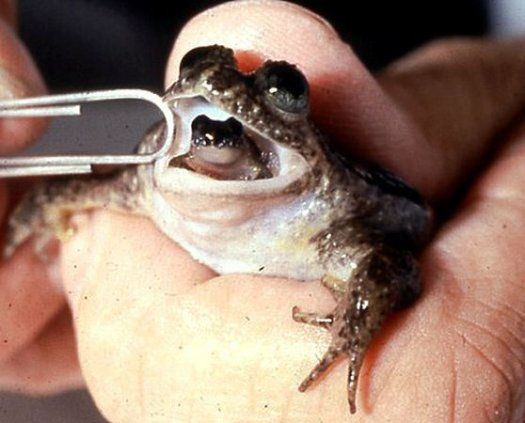




 Well ahead of its shutdown of the Google Reader site, Google has removed the RSS Subscription Browser Extension add-on for its Chrome web browser from the Chrome Web Store.