Host Mitchell Moffit shares a number of scientific facts about cats in “The Science of Cats,” the latest video by AsapSCIENCE.
A. Kachmar
Shared posts
04 Apr 10:26


This is Not a Game, Sculpture of Giant Hands Playing with Life-Sized Tank and Toy Soldiers
by EDW Lynch

“This is not a game” by artist Lorenzo Quinn is a large-scale sculptural installation of giant hands playing with a life-sized tank and toy soldiers. Exhibited on a floating platform at the 2011 Venice Bienalle, the installation featured a 37-ton Russian T-55 tank.
The human figure and especially hands show up frequently in Quinn’s work. In recent years he has created two other more playful installations of hands playing with life-sized toys. The 2010 installation “Vroom Vroom” features a giant hand playing with a Fiat Cinquecento car. “La Dolce Vita” is a 2011 installation of a giant hand playing with a Vespa scooter.


“Vroom Vroom”

“La Dolce Vita”
via My Modern Metropolis, Ian Brooks
Snipergirl, A. Kachmar likes this
04 Apr 10:18


Logic Noir: Ir/rational Investigator
by John Walker

Tom Jubert, game writer on projects like FTL, Penumbra, Driver: San Francisco and many others, has previously impressed us with his self-developed Ir/rational games. Formed from his love of philosophy, and a desire to spread the concepts of clear thinking, the logical deduction game mixes straight thinking with smart writing, and just enough humour. The good news is there’s to be a sequel, Ir/rational Investigator, heading to PC if only it can be rescued from the needless wasteland of the awful Greenlight.
Grooveman.exe, A. Kachmar likes this
04 Apr 09:38


Konstantín Melnikov
by Ethel Baraona Pohl
monumento a la III Internacional
Melnikov no solo fue un conocido arquitecto ruso, también ha sido el principal representante del constructivismo ruso, movimiento vanguardista tanto artístico como arquitectónico que surge en 1914 y cuyo momento de mayor presencia fue después de la Revolución de Octubre.
Otro de los grandes exponentes del constructivismo fue Tatlin, quien combinaba la estética de las máquinas con los componentes de las máquinas para crear arquitectura, su obra más conocida es el Monumento a la III Internacional.
Pero volviendo a Melnikov, quien nació en Moscú en 1890, estudió pintura y luego arquitectura en la Escuela de Pintura, Escultura y Arquitectura de Moscú de donde se gradúa en 1917. A partir de este momento, lo primero que hizo fue desarrollar un plan urbano para Moscú y luego trabajó como maestro hasta 1923 en la misma escuela en la que había estudiado. Es después de este momento cuando se puede apreciar un cambio drástico y radical en su obra y dedica gran parte de su tiempo a estudios de innovación en el campo de la arquitectura.
Pabellón Soviético
Su primera gran obra fue el Pabellón Soviético para la Exposición Internacional de Artes Decorativas e Industrias Modernas en París, en el año 1925. Este trabajo llamó poderosamente la atención internacional al carecer de toda decoración y reflejar la visión más vanguardista de la recién formada U.R.S.S. Las bases del concurso ya establecían que “la construcción debía ser de madera, en una superficie, de unos 325 m2, resuelta en dos niveles. El nivel inferior debía estar dedicado a la variedad étnico-cultural de las naciones que conformaban la Unión y el nivel superior, a mostrar el interior de cuatro espacios significativos: un club obrero, una casa obrera, una sala de lecturas y un hogar infantil, como una manifestación de la nueva sociedad.”
Garage 1,000
A raíz del viaje a París para supervisar la construcción del pabellón, Melnikov conoció a Le Corbusier y también recibió el encargo por parte del ayuntamiento de París para el proyecto del Garage 1000, un aparcamiento para 1000 automóviles, que finalmente no fue construido. Aunque es con la base de estos estudios para aparcamientos con los que logra construir en 1927 los Garages Bakhmetevsky en Moscú, en colaboración con Vladimir Shukhov. El edificio es un claro ejemplo del uso de sistemas industriales aplicados a la arquitectura de vanguardia. Recientemente ha sido restaurado y transformado en una galería de arte.
Club Rusakov
En 1927 comienza lo que el mismo Melnikov llama “su época dorada”, en la que desarrolló varios proyectos de clubes para obreros, siete en total, entre ellos el Club Rusakov, encargado a Melnikov por el sindicato de los obreros tranviarios de Moscú señala con el vértice de su cuerpo de servicios al depósito municipal de transportes metropolitanos. La forma de cuña, base del diseño, dota al proyecto de nuevas posibilidades escultóricas y simbólicas.
Kauchuk Factory Club
Llama la atención también en esta época, el Kauchuk Factory Club, finalizado en 1929 y encargado a Melnikov en un momento en el que el gobierno ruso buscaba sustituir las manifestaciones religiosas por entretenimientos más apropiados a la visión comunista del momento. La planta del club tiene la forma de un cuarto de cilindro y albergaba un teatro para 800 personas. Como la mayoría de edificios de esos años, el Kauchuk Club estaba destinado a ser demolido, hasta que en el año 2007 las propuestas para preservarlo y restaurarlo salieron adelante.
Casa Melnikov
Una de sus obras mejor conservadas es su propia casa, construida también en 1929, es ahora el Melnikov House Museum, una iniciativa que se ha dado a la tarea de restaurar la casa y mantener con sus trabajos, la mayor fidelidad posible a la construcción original.
La casa se localiza en pleno centro de Moscú y fue construida inicialmente como modelo para las casas obreras. Su diseño consiste en dos torres cilíndricas de color blanco con una serie de ventanas hexagonales distribuidas simétricamente a lo largo de toda su fachada. En total son 200 aberturas, la construcción se realizó con madera y ladrillo.
En 1933 creó su propio estudio en Moscú, en unos talleres colectivos llamados Mossovet. Este mismo año tuvo lugar en Milán una exposición dentro del marco de la Trienal de las Artes Decorativas y la Arquitectura, en ella se presentaba el trabajo de 11 conocidos arquitectos, entre los cales, Melnikov era el único ruso.
People’s Commissariat of Heavy Industry
En 1954 comenzó a participar nuevamente en diversos en concurso, el primero para diseñar un Panteón dedicado a prominentes figuras de la historia de Rusia y para celebrar los 300 años de la unión Ruso-ucraniana, pero el desencanto en el que se encontraba sumido lo había hecho volver a las formas casi clásicas y no obtuvo ni una mención. Luego participó en el concurso para el Palacio de los Soviéticos y en el proyecto para People’s Commissariat of Heavy Industry (1934), un proyecto utópico muy interesante por sus bases estéticas.
Melnikov murió a los 84 años, en 1974 dejando un gran legado, no solo por su obra construida, si no por la gran cantidad de proyectos en los que plasmó su mirada innovadora y vanguardista.
Más info:
Konstantín Melnikov originalmente publicado en Plataforma Arquitectura el 02 Abr 2013.
Enviar a Twitter | Compartir en Facebook | ¿Qué opinas del articulo?
02 Apr 18:00


There's something just so cheery about colorful appliances. Baking cupcakes in a pink oven sounds like a dream to me.
Sources (from top to bottom): housetohome, Buk & Nola, The New York Times, unknown, clumsy bird, Deco Photo Blog, Casa De Valentina, Country Living, and Maison & Deco.
INTERIOR INSPIRATION : COLORFUL KITCHEN APPLIANCES.
by Summer Allen
There's something just so cheery about colorful appliances. Baking cupcakes in a pink oven sounds like a dream to me.
Sources (from top to bottom): housetohome, Buk & Nola, The New York Times, unknown, clumsy bird, Deco Photo Blog, Casa De Valentina, Country Living, and Maison & Deco.
Snipergirl and -1 others like this
02 Apr 13:20
 Fourth meal is doing nobody no good. Not only is a healthy weight associated with a full night's sleep, but a recent study shows something more shocking and immediate—cutting down on sleep hours over just a week can lead to immediate weight increase. More »


Losing Sleep for a Week Can Lead to Immediate Weight Gain
by Maggie Lange
Fourth meal is doing nobody no good. Not only is a healthy weight associated with a full night's sleep, but a recent study shows something more shocking and immediate—cutting down on sleep hours over just a week can lead to immediate weight increase. More »
02 Apr 11:53
Saudi Arabia eyes ban on Skype, WhatsApp, Viber is written by Shane McGlaun & originally posted on SlashGear.
© 2005 - 2012, SlashGear. All right reserved.
Saudi Arabia eyes ban on Skype, WhatsApp, Viber
by Shane McGlaun
Back in 2010 the government in Saudi Arabia threatened to institute a ban against BlackBerry services for not complying with rules in the country have new do with the ability to monitor communications. BlackBerry was forced to work very hard to avoid being banned within Saudi Arabia. Officials in Saudi Arabia are now threatening to ban some major VoIP applications.

The reason the new ban is being considered has to do with the Skype, WhatsApp, and Viber VoIP applications not complying with rules within Saudi Arabia that allow for the monitoring of phone calls. Strangely, while the Saudi Arabia and Communications and Information Technology Commission has said that it will take “appropriate action regarding these applications” it hasn’t said specifically which conditions the applications are failing to meet. Reports have indicated that the problem the Saudi Arabia government has is that it’s unable to monitor communications made using those apps.
CNN reported that the threats likely stem from the fact that last week political protests were organized using WhatsApp. This sort of political demonstration is against the law in Saudi Arabia. When the government in Saudi Arabia took offense to communications made using the BlackBerry network, the problem was that the encryption used prevented the government from monitoring the communications channel.
The Saudi Arabian government said that the inability to monitor the channel meant that it could be used to threaten national security. At this time, all three of the apps in question remain available according to reports from within Saudi Arabia.
[via CNET]
Saudi Arabia eyes ban on Skype, WhatsApp, Viber is written by Shane McGlaun & originally posted on SlashGear.
© 2005 - 2012, SlashGear. All right reserved.
02 Apr 10:41

Batman Family Car Decal Set
by Justin Page

“To the Batmobile!”
The Batman Family Car Decal Set consists of three window stickers depicting a very sad Batman and two gravestones honoring his deceased parents (Dr. Thomas Wayne and Martha Wayne). It is available to purchase at ThinkGeek.
Gotham ShowersThe rain beats down.
It floods the filth into the streets
But doesn’t cleanse the city.
I stood in the rain waiting for my parents.
No one came, and my dreams were washed away.-B. Wayne, age 9
“That poem was written by Master Bruce many years ago. I’ve tried everything to make him smile: from finding him new Robins when the old ones get boring (or too old or too dead), to getting him the latest in tech gear, to adding marshmallows to his cocoa. Nothing seemed to work. Until I got him this Batman Family Car Decal Set, that is. Then he smiled, but I suspect it was a sadly ironic smile. Oh well – can’t have everything.”
-Alfred Pennyworth


images via ThinkGeek
02 Apr 10:33

Han Solo’s DL-44 Blaster Pistol Built With LEGOs
by Kimber Streams

Captain Infinity recreated Han Solo’s DL-44 heavy blaster pistol using LEGO bricks for the 2013 MOCathalon contest.


images via Captain Infinity
via Brother’s Brick
Snipergirl likes this
02 Apr 09:53

rolypolydandy: me on my way to overthrow yo country behold the...
me on my way to overthrow yo country
behold the glory. hereby identifying as this gif.
02 Apr 06:20
 Each month this year, we’re exploring a different electronic component, delving into what it is, how it works, and how you use it in projects. Last month we looked at batteries. This month, we’ll tackle the resistor, the job of which is to limit the flow of electricity and thereby [...]


Component of the Month: Resistors
by John Baichtal
Each month this year, we’re exploring a different electronic component, delving into what it is, how it works, and how you use it in projects. Last month we looked at batteries. This month, we’ll tackle the resistor, the job of which is to limit the flow of electricity and thereby [...]
02 Apr 06:19
 Now that Google plans to end support for Google Reader, are you worried about what Google service might be next on the chopping block? More »


Are You Worried About What Google Will Kill Next?
by Walter Glenn
Now that Google plans to end support for Google Reader, are you worried about what Google service might be next on the chopping block? More »
01 Apr 10:59

Japanese Schoolgirls Stage Fake ‘Dragon Ball’ Attacks in Photos
by Rusty Blazenhoff

In a series of photos posted on Twitter, schoolgirls in Japan have been staging fake energy sphere attacks (known as the “Kamehameha“) made popular in the manga and anime series, Dragon Ball. Kotaku has more about this trend.


images via Grimlockt
via Kotaku


01 Apr 06:57


Think your sex life is complicated? Imagine having 7 sexes.
by George Dvorsky

No, this isn't something out of an Octavia Butler novel. It’s Tetrahymena thermophila — a single-celled organism that goes way beyond male and female. It has seven different sexes to choose from. Now a new study published in PLOS has finally made sense of its bizarrely complex and seemingly random sex life.
01 Apr 04:48

Colorful Wave Photos by David Orias
by EDW Lynch

Santa Barbara-based photographer David Orias captures stunningly colorful photos of waves along the coast of Southern California. To capture the unusual bands of color, Orias takes long exposure photos of the waves in early morning light. Cloud cover, wildfire smoke, and other atmospheric conditions cause variations in the colors. For more photos, see his pages on Flickr and 500px.


via Faith is Torment, Colossal
A. Kachmar, Mutatedmonkey likes this
01 Apr 04:30
 Sometimes restraining orders just aren't enough to get ex-boyfriends to stop sending horny middle-aged men to your house. More »


Ex-Boyfriend Uses Craigslist to Send Horny Middle-Aged Men to Former Girlfriend's House
by Max Rivlin-Nadler
Sometimes restraining orders just aren't enough to get ex-boyfriends to stop sending horny middle-aged men to your house. More »
01 Apr 04:06
Unbelievable but true. It happened last Saturday but only now credible reports are beginning to emerge. Peter Higgs, the physicist who first postulated the existence of a boson discovered last year at the LHC, was arrested in the Buenos Aires airport on a way back from a symposium in his honor at the University of Rosario. Reportedly, a total of 1.25kg of cocaine was found sewn into plush models of elementary particles that Higgs carried in his luggage. Higgs denies any involvement in drug trafficking, maintaining that the plush models were a gift from a young woman attending his lecture in Rosario. The whole story bears some resemblance to the case of Paul Frampton, another theoretical particle physicist arrested in Argentina last year.
Given the limited information, one should not jump into conclusions. Higgs might have been a victim of a set-up: it is odd that two British physicists get arrested in Buenos Aires one after another in such similar circumstances. But, maybe, we should pose ourselves the question whether there exists a deeper relationship between the cocaine trade and theoretical particle physics? The recent dramatic events (and some of the particle physics literature too) certainly make such a relationship plausible.
I will update on this story as soon as new facts come to life.
Evening update: This article is an April Fools joke, one in a very bad taste as typical for this blog. Consequently, the current head count of 1 theoretical particle physicist in Argentinian jails remains up to date. So far. On the other hand, I think the idea of smuggling cocaine in plush models of elementary particles is absolutely brilliant :-)
April Fools'13: Peter Higgs arrested in Argentina
by Jester
 |
| Higgs with the corpus delicti. |
Given the limited information, one should not jump into conclusions. Higgs might have been a victim of a set-up: it is odd that two British physicists get arrested in Buenos Aires one after another in such similar circumstances. But, maybe, we should pose ourselves the question whether there exists a deeper relationship between the cocaine trade and theoretical particle physics? The recent dramatic events (and some of the particle physics literature too) certainly make such a relationship plausible.
I will update on this story as soon as new facts come to life.
Evening update: This article is an April Fools joke, one in a very bad taste as typical for this blog. Consequently, the current head count of 1 theoretical particle physicist in Argentinian jails remains up to date. So far. On the other hand, I think the idea of smuggling cocaine in plush models of elementary particles is absolutely brilliant :-)
31 Mar 13:29


Yasutomo 2020 Wa-Ben Wallet
by mark

I recently realized I have never been satisfied with any wallet I’ve ever owned. It was time for that to change.
I thought about the Slimmy (which still looks pretty fantastic), until I remembered reading an interview with William Gibson. He talked about some crazy wallet made out of a material called Cuben.
Now this sounded promising. I headed off to Google and searched for “william gibson wallet.” The top result took me to a review of the Yasutomo Wa-Ben wallet at unfinishedman.com.
Chad’s review convinced me that the Yasutomo 2020 Wa-Ben wallet, made in Hong Kong by Jason Hung and touted as the world’s first Cuben Fiber wallet (specifically, Cuben Fiber CT9K.5), could be exactly what I was looking for.
So I slapped down an electronic $49.50 (post-paid from Hong Kong), and three weeks later I signed for my new wallet at the post office (it seems the people in charge of these decisions deem packages from Hong Kong as untrustworthy).
After carrying it around daily for about a week, I can say it was exactly what I was looking for.
The wallet is extremely light (0.69 ounces, according to the website), extremely thin (you can see through it!), and extremely durable. I often forget I’m even carrying it and have to frantically check my front pocket to see if it’s there. It always is.
It has six credit card pockets, two “hidden” pockets behind the card pockets, and two cash/note pockets, so there’s plenty of room to carry more than enough.
So here’s my short review. The Yasutomo 2020 Wa-Ben wallet is fabulous piece of gear, and I recommend it highly for anyone looking to lighten their everyday carry load.
Yasutomo 2020 Wa-Ben Wallet
$50
Manufactured by Yasutomo 2000
A. Kachmar, Oleg.novikdichko likes this
31 Mar 13:10
 It's useful for blasting dust, crumbs, and other crap off your keyboard and electronics, but those overpriced compressed air cans are almost as big a rip-off as printer ink. So here's a brilliant and relatively simple hack that makes a compressed air can refillable with a standard tire pump. And just to highlight what's probably the most crucial step in this project: you'll want to make sure the can you're using is completely and thoroughly empty before going at it with a drill. [YouTube via Dooby Brain] More »


Hack a Can of Compressed Air So It's Refillable
by Andrew Liszewski
A. KachmarTerrible idea?
It's useful for blasting dust, crumbs, and other crap off your keyboard and electronics, but those overpriced compressed air cans are almost as big a rip-off as printer ink. So here's a brilliant and relatively simple hack that makes a compressed air can refillable with a standard tire pump. And just to highlight what's probably the most crucial step in this project: you'll want to make sure the can you're using is completely and thoroughly empty before going at it with a drill. [YouTube via Dooby Brain] More »
31 Mar 13:02
99 Steps of Progress
by Alex Santoso

French art collective Maentis spoofed the famous March of Progress by Rudolph Zallinger to create the 99 Steps of Progress. Here are some of our favorites:


View more over at Maentis' website: Link
A. Kachmar likes this
31 Mar 12:47
The 10 Most Interesting Numbers in American Culture (Plus or Minus a Few)
by Miss Cellania
 From the number that defeated the Nazis to the one that put a smile on the faces of drunken sailors, here are 10 digits with real value.
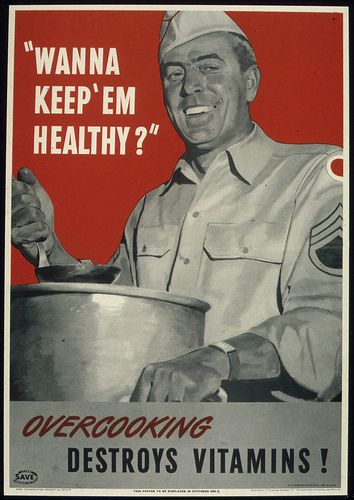
1. 2.3 Milligrams of B1: The Recommendation that Won a War
Food nutrition labels were originally designed to do a lot more than make you feel guilty about eating Cheetos. The dietary recommendations were created in the 1940s to help America accomplish one of the most important missions in its history -- defeating Hitler.
On the brink of entering World War II, U.S. military leaders discovered an unexpected problem. Our soldiers weren't only hungry for victory; they were just plain hungry. After screening some 1 million young men for potential service in the armed forces, the Selective Service discovered that about one in seven candidates suffered from "disabilities directly or indirectly connected with nutrition." The recruits were unfit for duty, and the nation needed a way to turn these malnourished men into Axis-pummeling Captain Americas.
The administration pounced on the problem. President Franklin Roosevelt gathered a committee of nutrition experts to create a practical diet that would keep Americans in shape -- both at home and while fighting abroad. Within months, the committee released its "Recommended Dietary Allowances" for each nutrient. For example, a "very active" man would need 2.3 mg of vitamin B1 per day, while a "very active" woman would need about 1.8 mg.
The system worked, and today, the recommendations have morphed into the nutrition labels now standard on packaged foods. Every few years, the numbers are revised and expanded to reflect new developments in nutrition science, and they've picked up the snazzy name "Dietary Reference Intakes." But don't be fooled by the titling. At their core, they're still the same recommendations that helped a nutrient-starved nation defeat the Nazis.
2. $435: The Price that Humiliated the Pentagon Back in the 1980s, there was one simple way to win any argument about wasteful government spending -- just bring up the Pentagon's infamous $435 hammer. The absurdly priced tool, which made headlines in 1983 following the publication of a federal spending report, became a popular symbol of government excess.
The truth, however, is more complicated. Sure, there were invoices that showed the Pentagon shelling out $435 a piece for hammers, but the documents were more of a testament to the government's odd accounting practices than its wastefulness. Per Pentagon accounting rules, defense contractors were expected to spread their overhead costs evenly across products to simplify bookkeeping. As a result, massive expenses for things such as research and development and factory maintenance were averaged into the costs of everyday office supplies. That meant that while super-expensive items such as missiles came in cheaper on the register, the price of small-ticket items such as hammers were distorted in the other direction. And because "Pentagon Gets Real Bargain on Missile!" makes a lousy headline, the media latched on to the $435 hammer story.
Since then, the Pentagon has changed its accounting rules, but it's still trying to live down the urban legend about the costly tools lurking in its overpriced toolbox.
3. 100 Proof: The Measurement that Gets You Drunk

Proof labels on alcohol bottles were born from the needs of sailors, who wanted assurances about the quality of their booze at sea. Beginning in 1731, members of the British Royal Navy were given an alcohol ration of half a pint of rum per day. (That practice continued, albeit with reduced quantities, until 1970.)
The men loved their rum, but they often became suspicious that their superiors were watering down the goods. To test the rum's potency, sailors would douse a small pile of gunpowder with the liquor and attempt to set it on fire. If the powder lit instantly, the sailors took it as "proof" that the rum was strong enough. But if the powder fizzled, the booze was deemed unfit to drink. Because spirits need to be at least 57.06 percent alcohol to combust, that threshold became known as "100 degrees proof."
The British system eventually made it across The Pond, where Americans simplified the idea by redefining "proof" as twice the percentage of alcohol by volume. Sure, it's not as visually impressive as the sailors' method, but it beats having to take a handful of gunpowder into a bar with you.
4. 6,894,200,000 People (or is it 6,908,688,000)? The Population We Can't Pin Down
 (Image credit: Flickr user John Walker)
During the past century, we've really kicked our world-populating into high gear. In 1950, there were around 2.5 billion of us. Now that number is over 7 billion. But how many? That's a question that plagues even the smartest thinkers. In order to know how many of us there will be in the future (and where to allocate program dollars to make sure those future folks are happy and healthy), we need to know how many of us there are right now.
Unfortunately, answering that question isn't as simple as lining up everyone for a head count. World-population estimates at any given moment are drawn from data collected in national censuses, but a country's census numbers might be several years old. Demographers can use that data to estimate current populations, but those calculations require assumptions about things like mortality, fertility, and migration rates. Additionally, a nation's census data isn't absolutely accurate even when it's fresh. The Chinese census, for instance, boasts a margin of error lower than two percent. That sounds great, until you realize that the discrepancy could represent as many as 27 million people -- or roughly one-and-a-half New York City metro areas -- who may or may not be living somewhere in China.
But none of these shortcomings stop groups from making bold proclamations. In October 12, 1999, the UN Population Fund symbolically named Bosnian baby Adnan Nevic the world's 6 billionth person. The U.S. Census Bureau snapped back, stating that Baby No. 6 Billion had probably been born four months earlier. Congrats to little Adnan's parents, though!
Thanks to all the assumptions required, future projections can vary wildly. In the past decade alone, UN demographers have estimated that the population will peak at 12 billion this century, only to later revise the estimate to 9 billion. With fluctuations like that, it's difficult to know what sort of population boom we should be bracing for.
5. Five Seconds: The Rule that Can Make You Sick
 (Image credit: Greg Williams' WikiWorld)

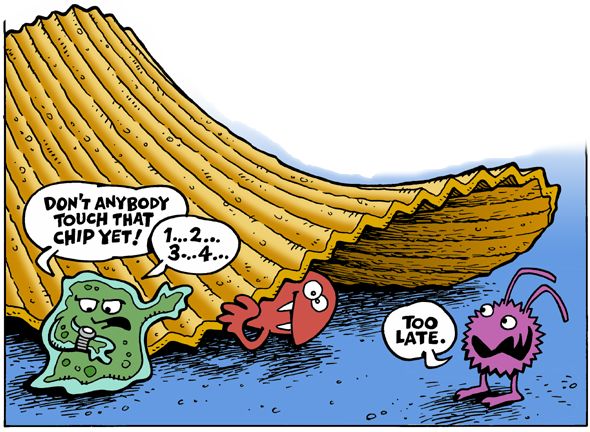
At some time or another, with or without witnesses present, we've all used the five-second rule to justify eating a cookie that's touched the floor. After all, everyone knows that if a tasty treat spends less than five seconds on the ground, it doesn't collect germs.
Well, not exactly. In 2003, high school student Jillian Clarke performed the first known scientific tests on the five-second rule. While interning at the food science laboratory at the University of Illinois at Urbana-Champaign, Clarke tested the theory by placing gummy bears and cookies on ceramic tiles contaminated with E. coli. Her results revealed bad news for clumsy snackers: The munchies picked up the bacteria within the five-second window. Clark's quirky experiment inspired other food researchers to further investigate the matter. One such scientist, Dr. Paul L. Dawson of Clemson University, showed that food actually follows a "zero-second rule," meaning that bacteria such as salmonella transfer onto food instantly upon contact.
Thankfully, the news isn't as dire as it sounds. In a follow-up set of experiments, Clarke tested the bacteria levels of the university's floors. Her team found very little contamination, even in the most highly trafficked areas of campus. As it turns out, most floors at the University of Illinois are so clean you can eat off of them.
6. 55 mph: The Speed that Drove America Crazy During the oil crisis of the 1970s, the U.S. government was desperate to convince Americans to burn less gasoline. Realizing that cars are more fuel-efficient when driven at lower speeds, Congress decided to force people to drive slower. In 1974, it enacted a law that set the national speed limit at 55 mph, along with a threat: Any state that didn't comply with the rule would lose its federal highway funding.
Congress may have set the speed limit, but it was up to individual states to enforce it -- and many states didn't appreciate being bossed around. In fact, some states made a mockery of the law. Nevada, for example, refused to write tickets to speeders unless they were caught traveling more than 70 mph; instead, offenders received laughable $5 "energy wasting" fines.
So, did the lowered speed limit actually accomplish its goal? The answer is still hotly debated. While the law did slash petroleum consumption by 167,000 barrels per day, the savings represented a drop in demand of only one or two percent. Highway fatalities also dropped significantly with the lower speed limit, though some analysts have theorized that this reduction was the result of a general decrease in recreational driving rather than slower speeds.
Nonetheless, both state governments and average citizens whined about the law so much that Congress bumped up the speed limit to 65 mph in 1987, then did away with the law completely in 1995, putting speed limits back in the hands of the states.
7. The Dow at 14,165: The Statistic that Measures the Health of our Economy
Most Americans think of the Dow Jones Industrial Average as the canary of our financial coal mine. But what did it really mean when the Dow hit its record high of 14,165 in October 2007?
To answer that, you have to go back to Charles Dow, legendary newspaper mogul and co-founder of The Wall Street Journal. In 1896, Dow created the first version of the Dow Jones Industrial Average. The idea was to monitor the health of the business sector by tracking the performance of the country's 12 largest firms. The Dow was originally measured in dollars, and calculating it was a breeze; accountants just averaged the 12 stock prices. The first Industrial Average on record was $40.94. When the firms were doing well, that average went up; when they performed poorly, the Dow went down.
The measuring system has become more sophisticated over the years. The modern index includes 30 companies, and the Dow has to account for things like stock splits and spinoffs. Thanks to these adjustments, the Dow is now measured in points rather than dollars. A single dollar increase in any of its current members' share prices causes the Dow to rise by about seven points.
So, how does a company get into the Dow 30? It's a bit like rushing a financial fraternity. A three-person committee (which includes the managing editor of The Wall Street Journal) handpicks the companies, looking for stocks with strong reputations, solid growth, and interest from a broad pool of investors. Of the original 12 companies selected, only General Electric is still in the pool. In fact, the "industrial" in the average's name is a bit of a relic. The current incarnation of the Dow includes non-industrial companies such as American Express and The Home Depot. Still, by telling us how the biggest and most stable American companies are doing, the Dow remains one of the best indicators of the overall health of the U.S. economy.
8. Nine-tenths of a Cent: The Fraction that Makes us Pump More Gas
 (Image credit: Flickr user Paulo Ordoveza)
Every time we fill up our tanks, we wrestle with one of life's thorniest mysteries: Why do gas prices end in 0.9 cents? Unfortunately, the origins of the increment are murky. Some sources attribute the practice to the 1920s and 1930s, when the gasoline tax was nine-tenths of a cent.
Stations would simply slap the extra 0.9 onto the advertised price of a gallon to give Uncle Sam his cut. Others theorize that slashing 0.1 cent off the price undercut competitors back in the days when gas was just a few cents per gallon.
Although most drivers simply ignore the extra 0.9 cents, oil companies certainly don't. In 2009, Americans consumed 378 million gallons of gas per day, and that extra 0.9 cents per gallon was collectively worth nearly $3.5 million a day. On the flip side, you could also argue that customers collectively saved around $340,000 per day, thanks to stations' reluctance to round up to the next penny.
9. 1 in 195,249,054: Your Odds of Living on Easy Street No matter how lucky you’re feeling, your odds of hitting the jackpot in the multi-state Powerball lottery are a don’t-spend-the-money 1 in 195 million. For perspective, your odds of being struck by lightning twice are much more reasonable, at 1 in 39 million.
Still, there are a few justifications for plunking down your hard-earned cash and crossing your fingers. For one thing, it puts you in terrific historical company. When the London Company had to scrape together funding for the Virginia colony in 1612, King James I authorized lotteries to raise capital. More than 150 years later, founding fathers Benjamin Franklin and George Washington ran lotteries to help finance the Revolutionary War and fund new infrastructure. The odds of winning weren’t great, but they beat taxation without representation.
Modern lottery players can’t brag that they’re backing George Washington, but their tickets still serve a civic duty. While dispersals of lottery funds vary across states, the games generally bolster schools’ coffers. For example, California sends its schools around 35 cents from every dollar of a ticket sold. These 35-cent increments add up; California’s schools have raked in more than $20 billion since the state’s lottery started in 1985.
Of course, as long as there’s been a lottery, there have been scoundrels trying to game the system. For the Powerball, cornering the market on the nearly 200 million potential combinations would be logistically impossible and risky. But that doesn’t mean smaller lotteries aren’t susceptible. In 1992, an accountant named Stefan Klincewicz put together a 28-person syndicate to buy up all 1.94 million potential combinations for the Irish lottery. Although lottery officials sniffed out the scheme and put a halt on ticket sales the day before the drawing, Klincewicz and his associates managed to snap up 80 percent of the available tickets. They walked away with roughly $1.8 million USD in winnings, and even though the crew had to split the loot and deduct expenses, they each turned a modest profit.
10. 3.14159265 ...: The Number that Makes Us All a Little Irrational
 (Image credit: The NeatoShop)
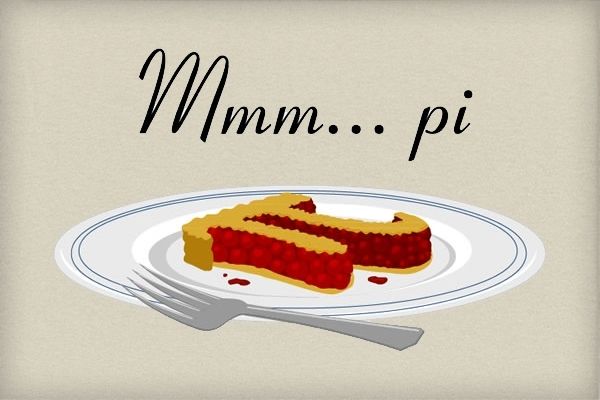
As the ratio of a circle's circumference to its diameter, pi is a mathematical constant. As an irrational number comprised of digits that will never repeat or terminate, pi is a constant source of amusement for math nerds of all stripes.
Computer programmers have even spent ridiculous amounts of time calculating pi out to its five trillionth decimal place (which is a 2, for the record).
If calculating decimal places isn't your idea of fun, you can always memorize them. The current unofficial world record belongs to Japan's Akira Haraguchi, who rattled off 100,000 decimal places in 2006. People who need help remembering digits often fall back on memorizing a "piem," a poem in which the number of letters in each word corresponds to pi's digits.
American mathematician Mike Keith's 2010 book Not a Wake (that's 3-1-4 letters, if you're counting at home) extends this exercise to 10,000 digits. If you start memorizing now, you'll be ready for next year's Pi Day, on March 14.
_______________________
 The article above, written by Ethan Trex, is reprinted with permission from the May-June 2011 issue of mental_floss magazine.
Get a subscription to mental_floss and never miss an issue! Be sure to visit mental_floss' website and blog for more fun stuff! 
31 Mar 12:22

Filed under: Stuff Mom Never Told You Tagged: alcohol, alcoholism, binge drinking, college, drinking, eating disorders, women
Drunkorexia Starves for a Drink
by Cristen Conger

According to a 2011 study, three times more women engage in drunkorexia. (© Turbo/Corbis)
In January 2013, MTV put out a casting call for its show “True Life: I Have Drunkorexia,” searching for twentysomes who intentionally booze on an empty stomach. Despite the deceptively flip nickname, chronic drunkorexia can become a debilitating disorder, per MTV’s symptom checklist from its casting call:
“Do you regularly skip meals so that you can save your calories for nights of binge drinking? Are you concerned about your weight, but not willing to give up partying to live a healthy lifestyle? Do you frequently black out or get into dangerous situations because of it? Do your finances play a role in your decisions to substitute drinking alcohol for food? Do you feel your drinking and health is slipping out of your control? Are your career goals, studies or relationships suffering because of your behavior?”
Despite the verbal play on anorexia, drunkorexia isn’t a formally recognized eating disorder, either, but it has attracted increasing attention in recent years as a legitimate public health concerns. It first made headlines in 2011 with the publication of a University of Missouri-Columbia study “examined the relationship between alcohol misuse and disordered eating, including calorie restriction and purging.” Among the 16 percent of those who reported “saving” meal calories to spend on partying, three times more women than men copped to drunkorexic patterns. Those health economics didn’t stop with weight concerns, either; students were also motivated to drink on an empty stomach in order to get drunk faster and save cash on alcohol purchases in the process.
When women’s blog The Gloss reported on the Missouri-Columbia study, the author took issue with the empty-stomach-drinking nominal association anorexia nervosa, as “it sort of de-legitimizes actual eating disorders, which should be taken seriously, as they kill people.” More recent research out of the University of Florida, however, suggests that the eating disorder connection made with the “drunkorexia” label is a strong — and possibly life-threatening — one. Not to mention that people starving themselves in order to get drunker faster and cheaper certainly sounds like something that “should be taken seriously,” whatever the name it goes by.
Jacoba Urist at The Atlantic reports that UF health education and behavior professor Adam Berry “has compiled the most comprehensive research to date on drunkorexia,” which was published in 2012 in the Journal of American College Health. Analyzing health data from more than 22,000 students from 40 U.S. colleges, Berry found a statistically significant correlation between physical activity and disordered eating habits and binge drinking. Controlling for factors such as Greek affiliation, age and gender, Berry’s study concluded that “highly active college students are more likely to binge drink than their nonactive peers, and highlight the potential of a drunkorexia perspective in explaining the counterintuitive alcohol–activity association among college students.” In plainer speak, highly weight-conscious students were 20 percent more like to down five or more drinks at a time; those who had induced vomiting or taken laxatives to shed pounds were 76 percent more like to binge. And while it’s common knowledge that drinking on an empty stomach isn’t a wise idea, drunkorexia can have longer-lasting effects than a nasty hangover, including heightened risk of violence, risky sexual behavior, alcohol poisoning, substance abuse and chronic disease.
Worse still, as Urist explains, the alcohol industry appears to be capitalizing on drunkorexia with marketing campaigns emphasizing fitness-friendly, low-calorie options, even going so far as to develop slimmer cans for certain lite beers. And who’s the target demographic of diet alcohol ads? Those female students, of course, who are three times as likely to engage in drunkorexic behaviors. David Jernigan, director of the Center on Alcohol Marketing and Youth at Johns Hopkins Bloomberg School of Public Health, told The Atlantic: “There’s no question that the alcohol industry is presenting their goods to women as though they’re diet products. Because that’s what sells.”
Filed under: Stuff Mom Never Told You Tagged: alcohol, alcoholism, binge drinking, college, drinking, eating disorders, women
31 Mar 12:19

The Namiki/Pilot Vanishing Point retractable fountain pen
by Jason Weisberger
A. KachmarThis beats any Montblanc in my opinion and half the price

I used to carry a Parker 51. I'll never let that pen go, but like many fountain pens it was too risky to take on a plane. Pressurized cabins seem the perfect environment to cause a leak. I've tried and tried but many a jacket or shirt pocket bear the stains of my forgetfulness.
Several years ago, I found the Pilot Vanishing Point fountain pen. It is a well-balanced and well-sealing writing instrument that has never let me down. A truly modern take on a the classic fountain design.
The Vanishing Point has a retractable nib, like clicking a Bic. Uniquely, for a fountain pen, when the pen is closed it is closed! The ink and nib are surrounded in a sealed chamber. This has resulted in several hundred thousand miles flown without a single leak.
But how does it write? I like a fine nib and the Pilot comes with a beautifully flexible 18 carat gold one -- it is super fine. The pen is really well balanced and feels solid in my hand. It is heavy but in the best way. Writing is a joy! I find Pilot's cartridge ink to be fast drying and the black is dark enough for me (I'm a long time Quink fan but we can discuss ink all day...)
It is perfect for writing in a Boing Boing moleskine!
The Pilot Vanishing Point retractable fountain pen
 |
 |
A. Kachmar likes this
31 Mar 12:11
Dolphin funeral? Adult dolphin "carries calf around for days," but is it grieving?
by Xeni Jardin
Participants on a "Captain Dave's Dolphin and Whale Watching Safari" off the coast at Dana Point, CA (I've been on a few of them, they're great) witnessed an emotionally moving form of bottlenose dolphin behavior this week: a deceased dolphin calf was being carried around on the back of an adult bottlenose dolphin. To onlookers, it felt like a kind of funeral procession, in the sea.

"I believe this calf has been dead for many days, possibly weeks," said Captain Dave. "You can see the flesh is decaying. In my nearly twenty years on the water whale watching I have never seen this behavior. Nor have I ever seen anything quite as moving as this mother who refuses to let go of her poor calf."
More video, and background, here.
It'd be interesting to hear how marine biologists explain the science behind this apparent mourning behavior. Because it could also be a tasty fermented treat.
[petethomasoutdoors.com via Brian Lam]
|
|
31 Mar 11:21


Smart Wound Dressing Glows in Presence of Unwanted Bacteria (w/video)
by Gene Ostrovsky
Serious burns are horrible enough when they happen, but complications that arise from opportunistic infections can be lethal, particularly in children with weak immune systems. Modern medicine doesn’t currently have a way to spot pathogens incubating within the wound, but researchers at University of Bath in the UK have embedded a fluorescent dye into special nanoparticles which were developed to break open when encountering toxic bacteria.
When used in a wound dressing the dye becomes apparent in the presence of unwanted bacteria, providing an easily seen indicator of unwanted activity within the healing tissue.
31 Mar 11:21


Notre Dame Voice Analysis App for iPad Helps Detect Concussions (w/video)
by Gene Ostrovsky
Subclinical symptoms in brain injuries often go unnoticed and hence can cause long term damage that may be prevented with early medical intervention. Early diagnosis, especially in young athletes, is critical, but using expensive and heavy imaging devices like CT scanners on the sidelines is out of the question in most cases. Currently, simple tools like questionnaires and reaction tests are being used if there’s suspicion of injury, but they are prone to deception or bias by the athletes and are generally not sensitive.
Researchers at Notre Dame developed a new iPad tool that records an athlete’s voice before a match and then compares it to what it sounds like after a suspected injury. Specifically, the software looks for distorted vowels, hyper nasality and imprecise consonants to detect concussion.
31 Mar 11:17
Secrets of the body
From unruly urges to our neglected nooks and crannies, we reveal the body as you’ve never seen it before
|
|
31 Mar 11:15

Gas masks for babies, 1940
by Cory Doctorow

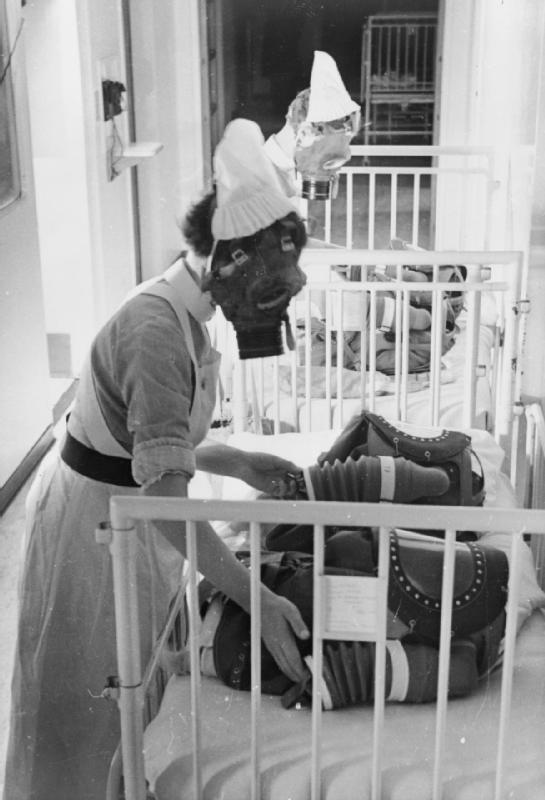 From the Imperial War Museum in London, a couple of incredible photos of nurses testing out infant gas-masks: "Three nurses carry babies cocooned in baby gas respirators down the corridor of a London hospital during a gas drill. Note the carrying handle on the respirator used to carry the baby by the nurse in the foreground."
GAS DRILL AT A LONDON HOSPITAL: GAS MASKS FOR BABIES ARE TESTED, ENGLAND, 1940 (via Kadrey) 
|
|
Snipergirl likes this