Shared posts

22 May 05:23

Alternative Landmarks: 12 Monuments As They Almost Were

by Steph
[ By Steph in Architecture & Public & Institutional. ]

Alternative Monuments Main

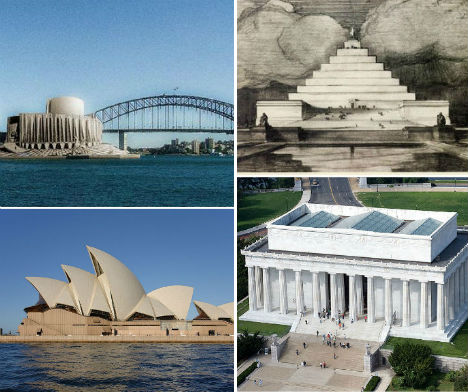
The Sydney Opera House might have been little more than a squat concrete building resembling a factory, and a visit to the statue of Abraham Lincoln at the Lincoln Memorial could have required scaling a massive stepped pyramid. Ranging from close second-place finishes in design competitions to proposals that were little more than pipe dreams, these alternative designs for 12 major iconic landmarks around the world represent radical departures from the monuments we’re accustomed to.

Sydney Opera House
Alternative Monuments Sydney Opera House

(images via: new world wonders, wikimedia commons)

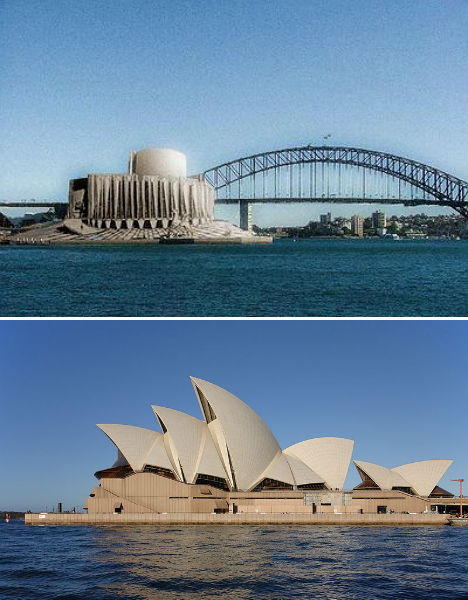
The Sydney Opera House is one of the most recognizable buildings in the world, with a dramatic series of vaults rising from the ground along Sydney Harbour. But Danish architect Jørn Utzon’s now-iconic design was controversial when it was first proposed in 1957, and the design that came in second place may have been more palatable to the public. American architect Joseph Marzella’s design was rather industrial in its appearance, but didn’t seem quite so out there.  It’s hard to imagine the magnificent performing arts venue looking so squat and dull.

Triumphal Elephant in Place of Paris’ Arc de Triomphe
Alternative Monuments elephant 2

Alternative Monuments Arc de Triomphe Real

Alternative Monuments Elephant 1

(images via: wikimedia commons)

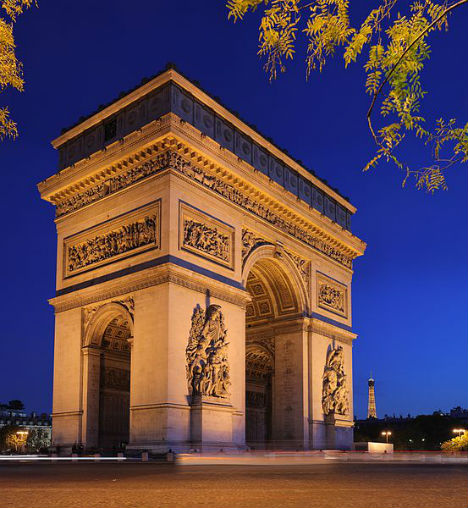
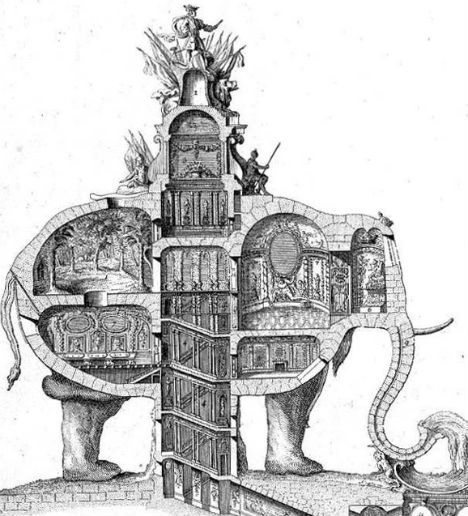
In place of one of Paris’ most famous monuments, the Arc de Triomphe, could have been a three-story elephant monument with a spiral staircase in the underbelly leading to the pinnacle. 18th century architect Charles Ribart offered this monument for the Champs Élysées, complete with a cross-sectional drawing showing the intricate rooms within, but was turned down by the French government.

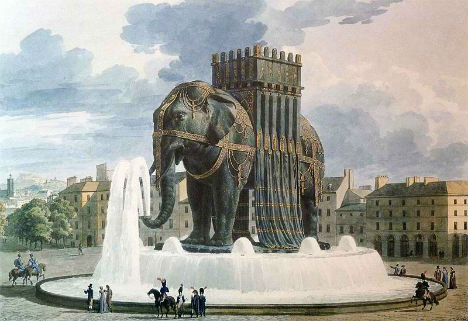
This isn’t even the only massive, ridiculous elephant statue envisioned for Paris. Originally conceived by Napoleon, the imposing Elephant of the Bastille (third photo) was meant to be cast of bronze and placed in Paris’ Place de la Bastille on the site of the old Bastille prison, which was the birthplace of the French Revolution. A stairway set into the legs would give access to the top, and the base would be surrounded by a fountain. However, only a plaster model was built, as memorialized by Victor Hugo in the novel Les Miserables, and eventually the July Column took its place.

Unbuilt Design for the Golden Gate Bridge
Alternative Monuments Golden Gate Bridge

(images via: pbs newshour, wikimedia commons)

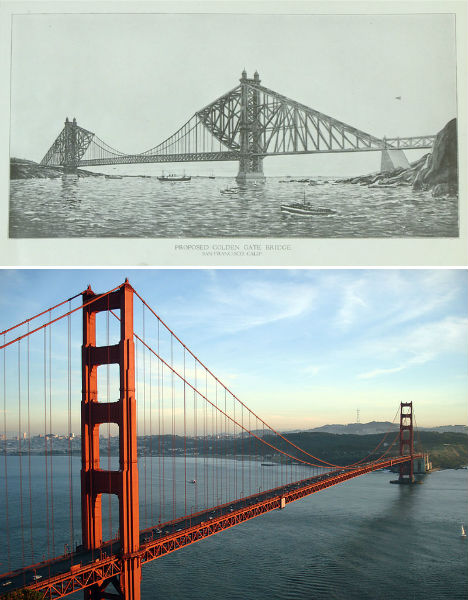
Now 76 years old, the Golden Gate Bridge is an iconic symbol of San Francisco, coated in literally millions of gallons of orange paint. The Art Deco-style bridge is one of the longest suspension bridges in the world, beating many experts’ predictions that it wouldn’t last against gale-force winds in the straight where the San Francisco Bay opens to the Pacific Ocean. But this wasn’t engineer Joseph Strauss’ first design. The original proposal is markedly different, with a heavier look combining cantilevered and suspension designs. It was rejected by the planning committee.

Lincoln Memorial Pyramid
Alternative Monuments Lincoln Memorial

(images via: i own the world, wikimedia commons)

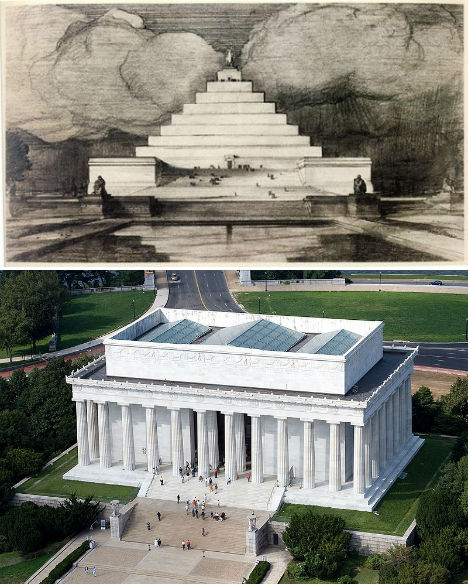
Highlighted at Unbuilt Washington, an exhibition at the National Building Museum in Washington D.C., John Russell Pope’s Lincoln Memorial Proposal replaces the columned rectangular building honoring the 16th president with a pyramid. Anyone who wanted to get up close to Abraham Lincoln’s statue would have had to climb that entire thing to reach it. Some historians believe that this proposal was ridiculous on purpose; Pope wasn’t a fan of the swampy location chosen for the memorial, and may have created this and other absurd designs in an effort to encourage the committee to seek a new setting. Pope went on to successfully design the Jefferson Memorial.

Pyramid Necropolis for London’s Primrose Hill
Alternative Monuments Primrose Hill Necropolis

Alternative Monuments Primrose Hill Real

(images via: andrew gough, wikimedia commons)

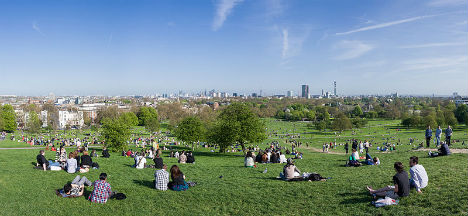
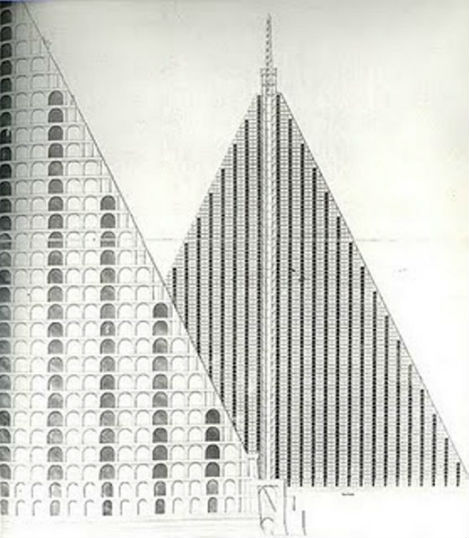
Infused in the Victorian preoccupation with melancholy and inspired by the Egyptian spoils of traveler and tomb-raider Giovanni Battista Belzoni, London architect Thomas Wilson proposed a massive, 15-acre pyramid-shaped necropolis for the city’s Primrose Hill. The granite pyramid would have towered into the air with 94 tiers of tombs in honeycomb shapes and a base measuring 18 acres, casting a gargantuan shadow over the hill many Londoners use for picnics and looking out over the city. Churchyards were so crowded at the time, that graves were bursting out of the ground – but concerns about what to do with London’s dead weren’t enough to convince the public that a necropolis was a good idea.

White House Alterations for President Harrison
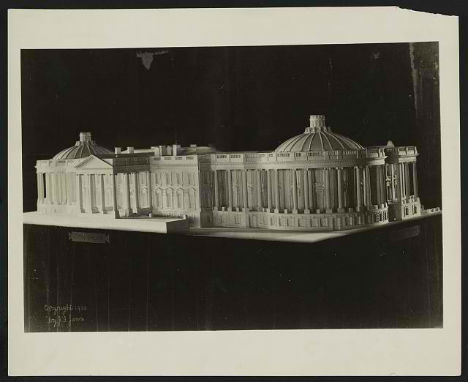
Alternative Monuments White House

Alternative Monuments White House Real

(images via: loc.gov, wikimedia commons)

While he’s not nearly as forgettable as his grandfather, ninth United States President William Henry Harrison – who died after just 32 days in office – many Americans will struggle to recall any of twenty-third President Benjamin Harrison’s achievements during his tenure in the White House. However, Harrison could have made quite a mark. The first President to reside in the White House after it was wired for electricity, Harrison and his First Lady, Caroline Harrison, proposed significant changes to the complex that were never carried out. However, ten years later, Theodore Roosevelt made plenty of changes of his own, including the addition of the West Wing.

Next Page:
Alternative Landmarks 12 Monuments As They Almost Were

Share on Facebook

[ By Steph in Architecture & Public & Institutional. ]

[ WebUrbanist | Archives | Galleries | Privacy | TOS ]


21 May 12:17

Ryan Frayne's Windcatcher Magnifies Human Breath, Enabling Super-Fast Inflation

ryan-frayne-windcatcher.jpg

As we saw with NEMO Equipment's gear, clever design can enable air to play a significant structural role with camping gear. In NEMO's case, that air is provided by a pump.

Portland-based inventor Ryan Frayne is also experimenting with air, but he's zeroed in on a particular element of the user experience: How to get the air into the product. To that end, Frayne has focused on designing a special valve, and the results are pretty impressive. Frayne's Windcatcher design amplifies your exhalation, using physics I don't understand to multiply your air volume by a factor of 10 or 15—with the added benefit that you don't even have to put your mouth on the thing. Observe:

Frayne's Air Pad seems like a good entry-level product design, but we feel it's his valve that will be the killer app. An easy, pump-less way to inflate things could play a major role in everything from disaster relief to life-saving devices.

At press time, the Windcatcher's Kickstarter campaign was at just under $16,000 of a $50,000 target, with 23 days left to pledge.

(more...)


21 May 12:13

Fabrican't Hardly Wait: Manel Torres' Long Road to Commercializing Spray-On Fabric

fabrican-01.jpg

Fabrican is a sprayable fabric that actually contains fibers, and after curing it can be washed and re-worn. It first created an internet stir in 2006, but for reasons only the internet gods know, Fabrican is now resurfacing on social media and often being mistakenly presented as new.

fabrican-02.jpg

Don't get us wrong, Fabrican is amazing. But it is not new, and serves as a reminder of just how long it can take to bring a good idea to market, and how dogged inventors need to be. Manel Torres first conceived of Fabrican way back in 1995, when he was an RCA student studying fashion design, after watching a friend get sprayed with Silly String. Torres began to collaborate with chemical engineers, and by 2000 he'd filed a patent and set up R&D facilities at Imperial College London.

fabrican-03.jpg

Three years later Torres formed Fabrican Ltd., and another three years went by before the blogosphere picked up on the stuff. Here in 2013, seven years later, there are still no announcements for commercialization; the "News" section of Fabrican's website saw its last update in 2010.

fabrican-04.JPG

Has Torres given up? Doesn't look like it, as he's delivered several Fabrican-based TED Talks as recently as last year. We can only speculate as to what's preventing the appearance of Fabrican on store shelves, which is what we'd really like to see; while Torres is proposing industrial solutions targeted at the medical, automotive and fashion design industries, we think selling the stuff in cans and letting you guys figure out what to do with it would be a good way to go.

fabrican-05.jpg

Hit the jump for some videos (one NSFW, if you work in Puritan America) showing the stuff in action.

(more...)


20 May 18:53

Henri Poincaré: Geometría Métrica y Geometría Proyectiva

by arq. Martín Lisnovsky
"One would be tempted to say that metrical geometry is the study of solids, and projective geometry that of light” Henri Poincaré, Science and Hypothesis, 1905
Seleccionado por el arq. Martín Lisnovsky. Fotografía tomada de la web

19 May 17:50

First Clip From New ‘Whose Line Is It Anyway?’

by Rusty Blazenhoff

The first clip has been released for the new version of the improv show Whose Line Is It Anyway? which will premiere on The CW network on Tuesday, July 16, 2013 at 8 PM. The clip is from their special 90210 edition of the show.

video via Richard Pytlik

via Film Thrasher, Pop Culture Brain, Gawker

19 May 12:42

Suicidal behaviour is a disease, psychiatrists argue

Evidence from brain and genetic studies suggests we should regard suicidal behaviour as a disease in its own right, a move that may help prevent suicides


19 May 12:42

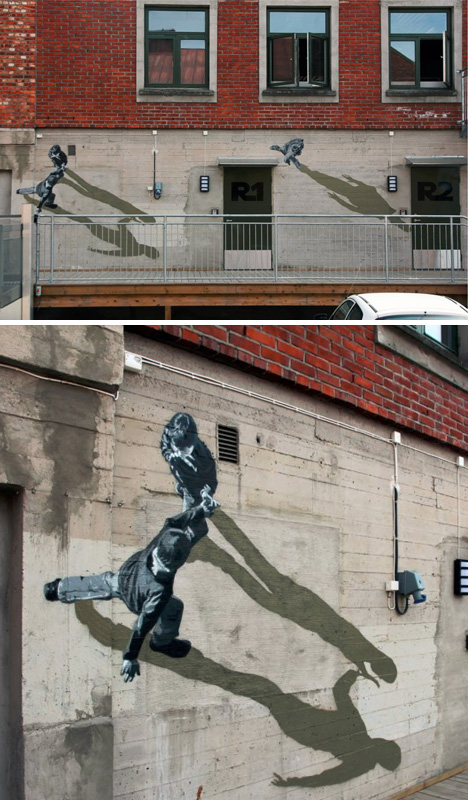
Sideways Street Art: Muralist Makes Figures Walk on Walls

by Urbanist
[ By WebUrbanist in Art & Street Art & Graffiti. ]

wall walking mural figures

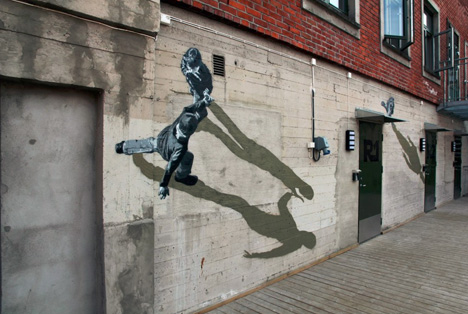
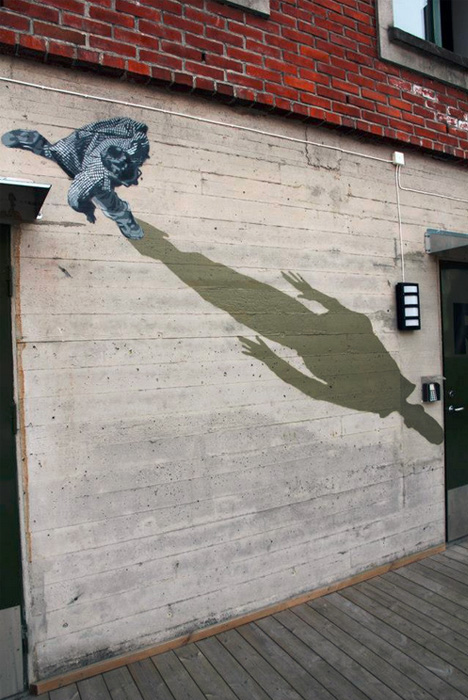
These layered creations are surprisingly realistic, even in black and white, thanks in part to their scale and reinforced by their shadows, but also due to the ordinary nature of the sidewalk scenes being depicted.

wall mural stencil art

Strøk (Anders Gjennestad) is a stencil artist and mural maker from Norway with works in various contexts, from city streets to suburban galleries.

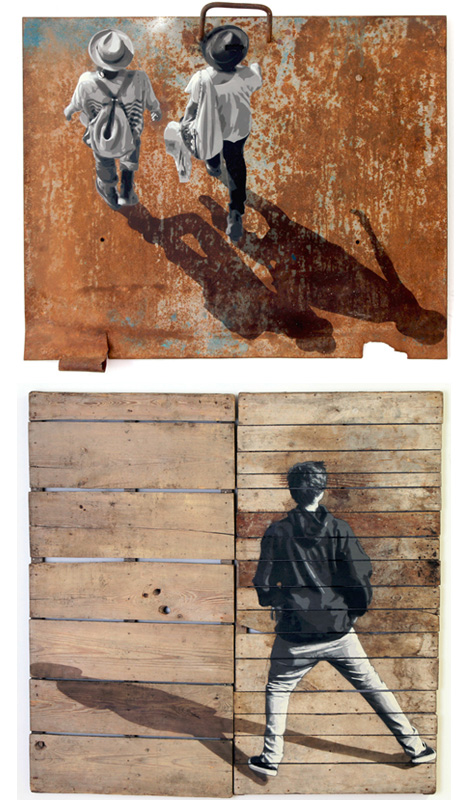
wall gallery street artwork

Some of his gallery works repeat the same themes and similar scenes on scrap objects, from wooden pallets to metal doors, to those he presents on building walls.

wall sketch photo realistic

From the creator’s website: “His hand-cut, multi-layered stencils create photo-realistic imagery with depth and detail that [are] complex, tactile and mentally engagement. The placement and choice of material … painted on rusty metal, gritty walls, shiny glass”


Share on Facebook

[ By WebUrbanist in Art & Street Art & Graffiti. ]

[ WebUrbanist | Archives | Galleries | Privacy | TOS ]


19 May 10:00

The Fundamentals of Shape Design in Adobe Illustrator (Lesson 1)

by Jonathan Patterson

android

It goes without saying that Adobe Illustrator is all about using shapes to create artwork. In this tutorial I’ll cover how to use basic shapes, and tools to create a variety of logos. The more seasoned designer may pick up a fact or two, but this tutorial is perfect for the expert beginner who is working on reaching intermediate status. I’ve also included several animated gifs to help more clearly illustrate how certain steps are performed.

Tutorial Details

  • Program: Adobe Illustrator CS6
  • Difficulty: Beginner
  • Topics Covered: Shape Tools, 3D Tool, Eraser Tool, Pathfinder, Flip & Rotate Tools
  • Estimated Completion Time: 1-1.5 hours

Piece of Cake—Windows 8

Let’s start with the basics. We’ll use the following tools:

  • Rectangle Tool
  • Move Tool
  • 3D Rotate Tool

windows8logo

Step 1

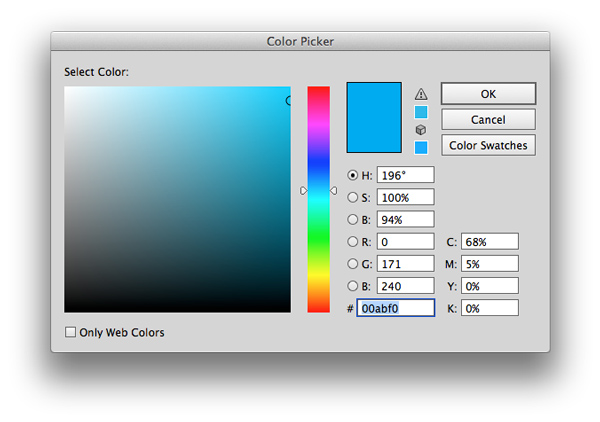
Start by selecting the color of the logo. I’m using 00abf0.

01

Step 2

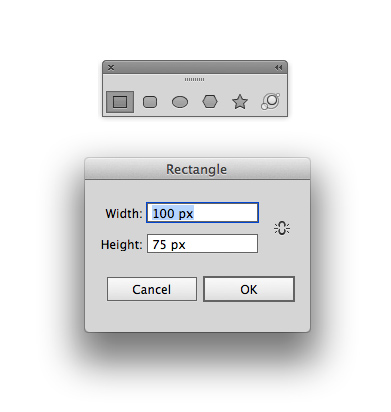
Press M to get the Rectangle Tool. It’s commonplace to simply draw an arbitrary rectangle shape but since we’re making a more specific design, we’ll use Illustrator’s precision to our advantage. To make a shape that has specific dimensions, click once on the Artboard to bring up the dialog box. Enter 100 px X 75 px.

02

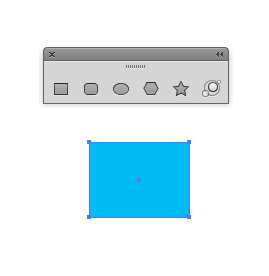
This is your resulting shape.

03

Step 3

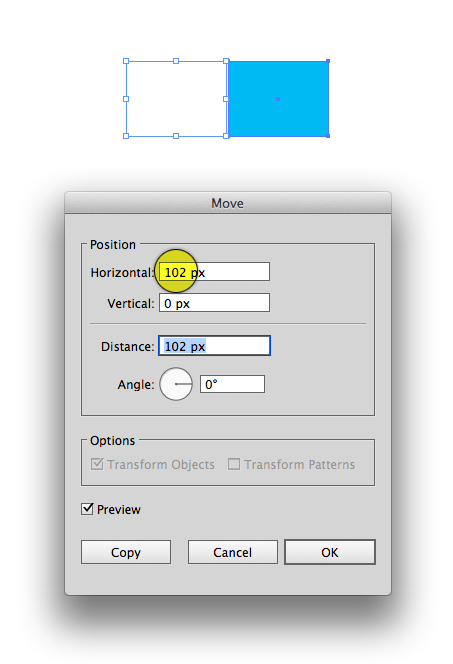
Go to Object > Transform > Move. Since our rectangle is 100 px wide, we’ll move it 102 px to the right which will give us a 2 px gap. Click Copy.

04

Step 4

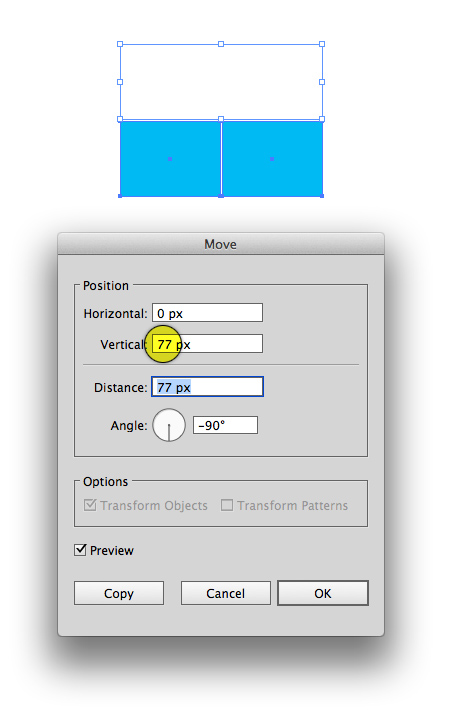
You’ll now have two rectangles. Select both of them and now move them vertically by 77 px. Click Copy.

05

This is your result. You’ll now have a perfect 2 pixel gap both vertically, and horizontally between your shapes.

06

Step 5

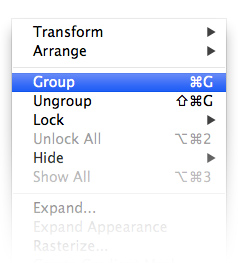
Select all four rectangles and go to Object > Group (Command + G.) If you don’t group your objects the next step will apply a transformation to each rectangle individually. So, make sure not to skip this step!

group

Step 6

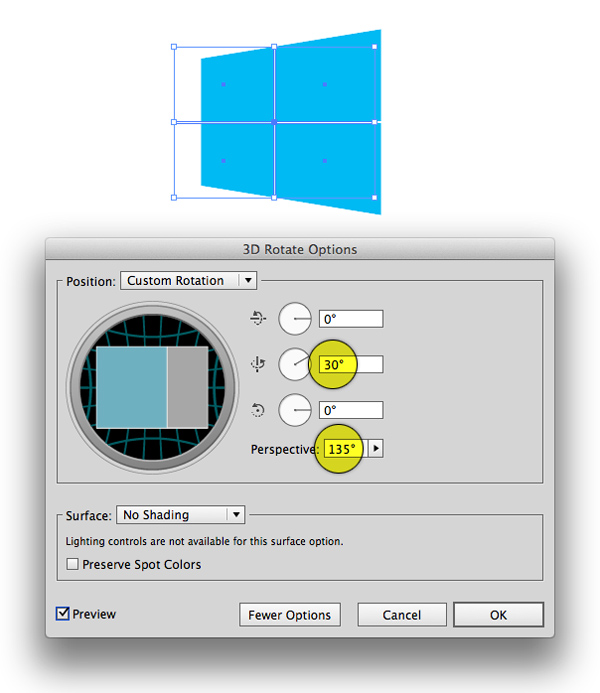
Go to Effect > 3D > Rotate. Enter 30 for the Y Axis and, 0 for the others. Change the Perspective to 135. Click OK.

34


That’s it! Piece of cake, right? I’ll turn up the heat as we move on to the next section.

windows8logo


Let’s Rock—Android

Ok, you made easy work of creating the Windows logo. This Android logo will be a bit harder. This is what I’ll cover:

  • Rounded Rectangle Tool
  • Eraser Tool
  • Rotate Tool
  • Flip Tool
  • Pathfinder

android_logo

Step 1

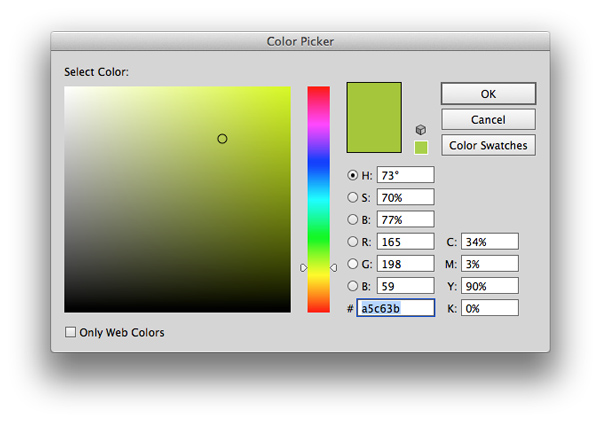
Start by selecting the color of the logo. I’m using a5c63b.

10

Step 2

There are several ways to draw a rectangle with rounded corners. You can use the standard Rectangle Tool (M), and add rounded corners to it. Or, you can use the Rounded Corner Rectangle Tool, shown below.

All Illustrator shape tools have additional options that can be invoked by either double clicking on the tool itself or clicking once on the artboard with the tool selected. Even better, you can use modifier keys like spacebar, option key, and arrow keys to manipulate a shape or its position as you’re drawing it.

Notice below that when I first select the Rounded Corner Rectangle Tool the shape has square corners. I gradually round the corners by holding the up arrow before I release the mouse button.

11

Modifier keys let you manipulate a shape as you’re drawing it.


Step 3

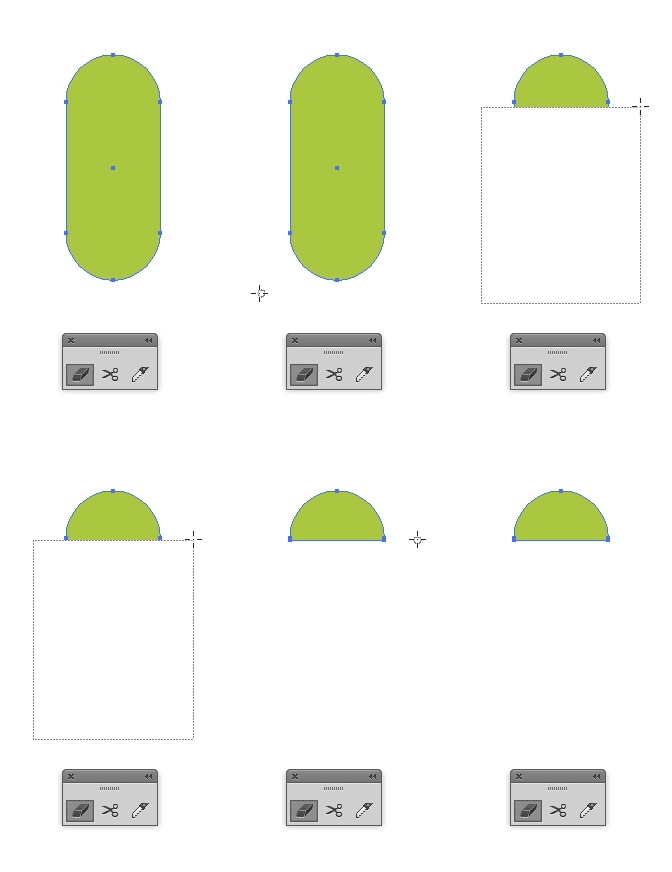
The Eraser Tool can work wonders. Not only can it erase in arbitrary directions and sizes, it can erase entire sections of a shape. To erase a large section, grab the Eraser Tool (Shift + E), then hold down Option and click and drag over the area of a shape you want to erase. It’s that easy!

12

The Eraser Tool (Shift+E) helps you erase large sections of a shape.


Step 4

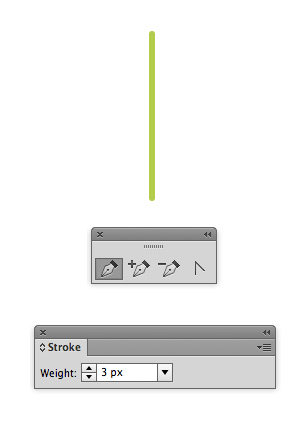
Using the Penn Tool (P) make a line and give it a 3 px Stroke.

13

Hold down Shift to make a perfectly straight line.


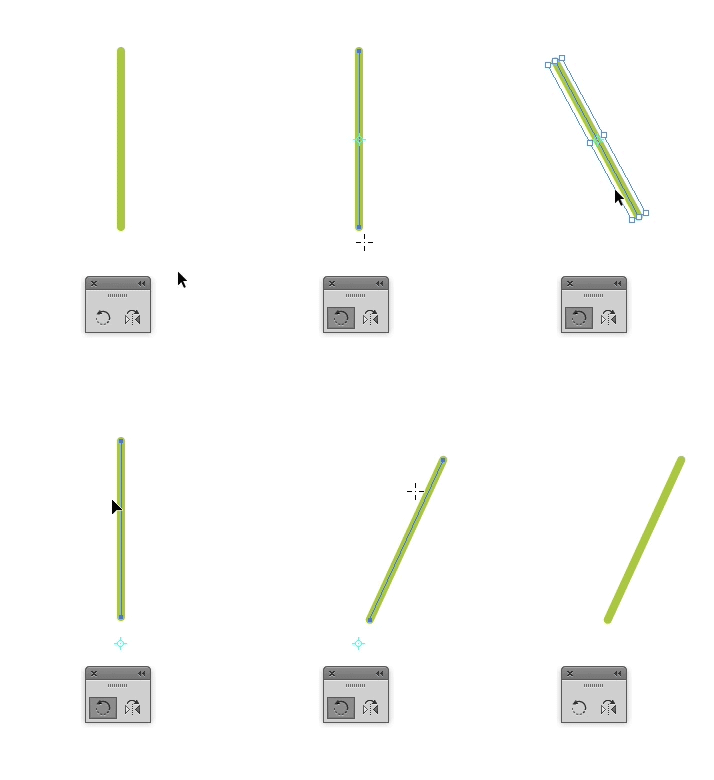
Step 5

Both the Selection Tool (V), and the Rotate Tool (R) can rotate shapes. Below, I’m using the Rotate Tool to change the angle of my shape.

36

The center cross hair determines the pivot of the shape.


Step 6

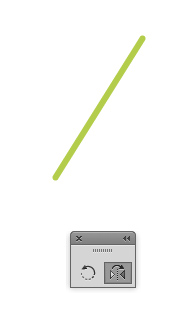
Using the Reflect Tool (O) duplicate the line so that you have a perfect copy and the opposite angle of the first shape.

15

Step 7

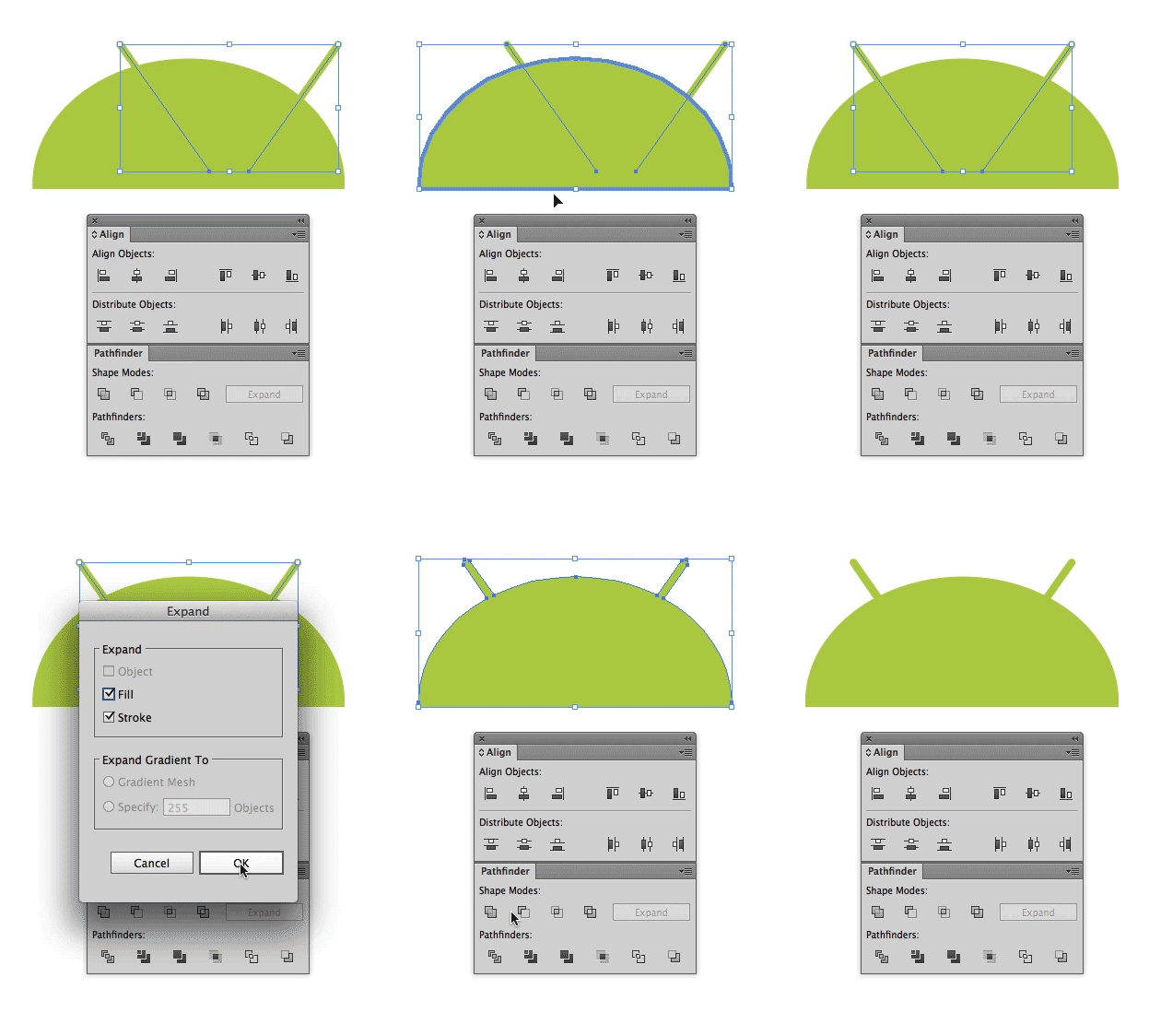
Align the antenna with the head then select the antenna and go to Object > Expand, then click OK. You can align objects to an anchor object by first selecting all the objects that need to be aligned and then clicking once more on the anchor object. As you’ll see below, the anchor object is the head. The two antenna (which have already been grouped together) are aligned to the head shape, then expanded.

Merge all of your shapes together using the Unite option in the Pathfinder Palette.

22

Step 9

Using the Ellipse Tool (L) draw two circles. Make them perfect circles by holding down the Shift key as you draw them. Group both of the circles then center align them to the head shape.

20

Step 10

We’ll again use the Rounded Rectangle Tool, and Eraser Tool to make easy work of creating the Android’s body.

23

Step 11

Use the trusty Rounded Corner Rectangle to make the legs, and arms. That’s it!

25

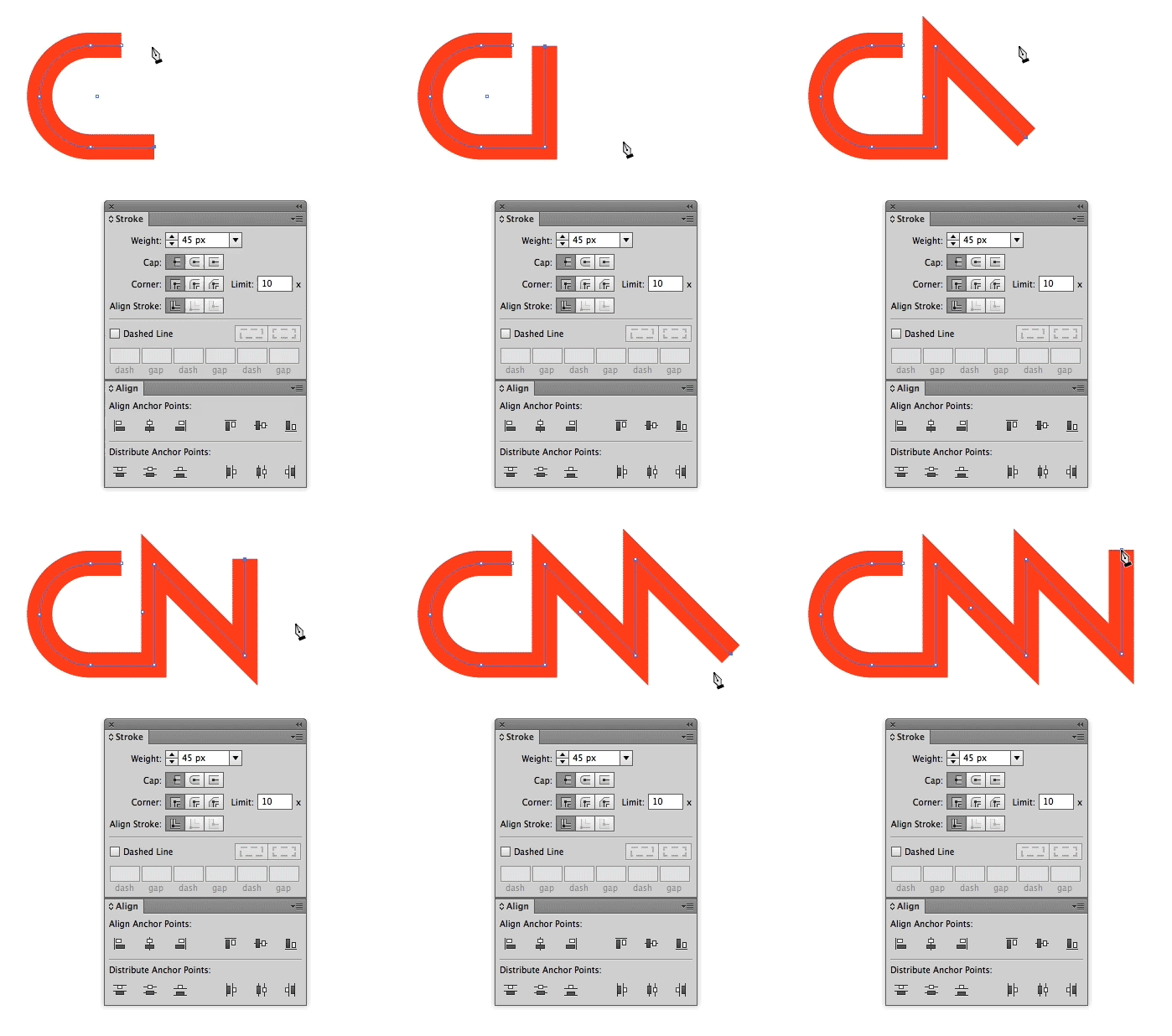
Come Get Some—CNN

As you advance your Illustrator skills it will be critical to have a command of the Pen Tool. This last logo shows you firsthand the power of the Pen Tool and how it can save you valuable time when creating shapes. I’ll use the following tools:

  • Ellipse Tool
  • Pen Tool
  • Direct Selection Tool

cnn-logo

Step 1

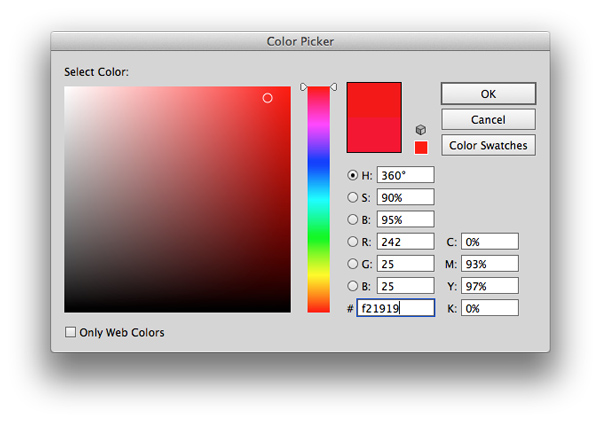
Select your color. I’m using f21919.

26

Step 2

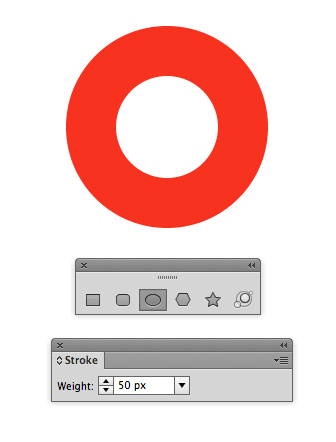
Using the Ellipse Tool (L) draw a perfect circle. Give the circle a substantial Stroke.

35

Step 3

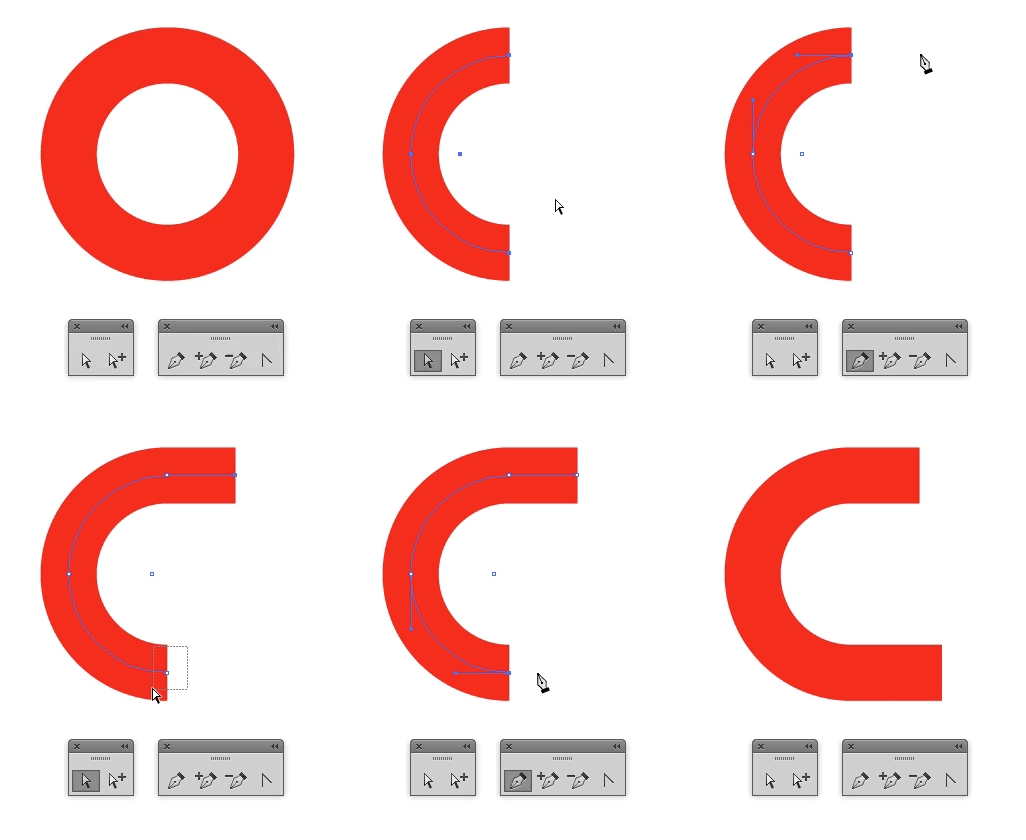
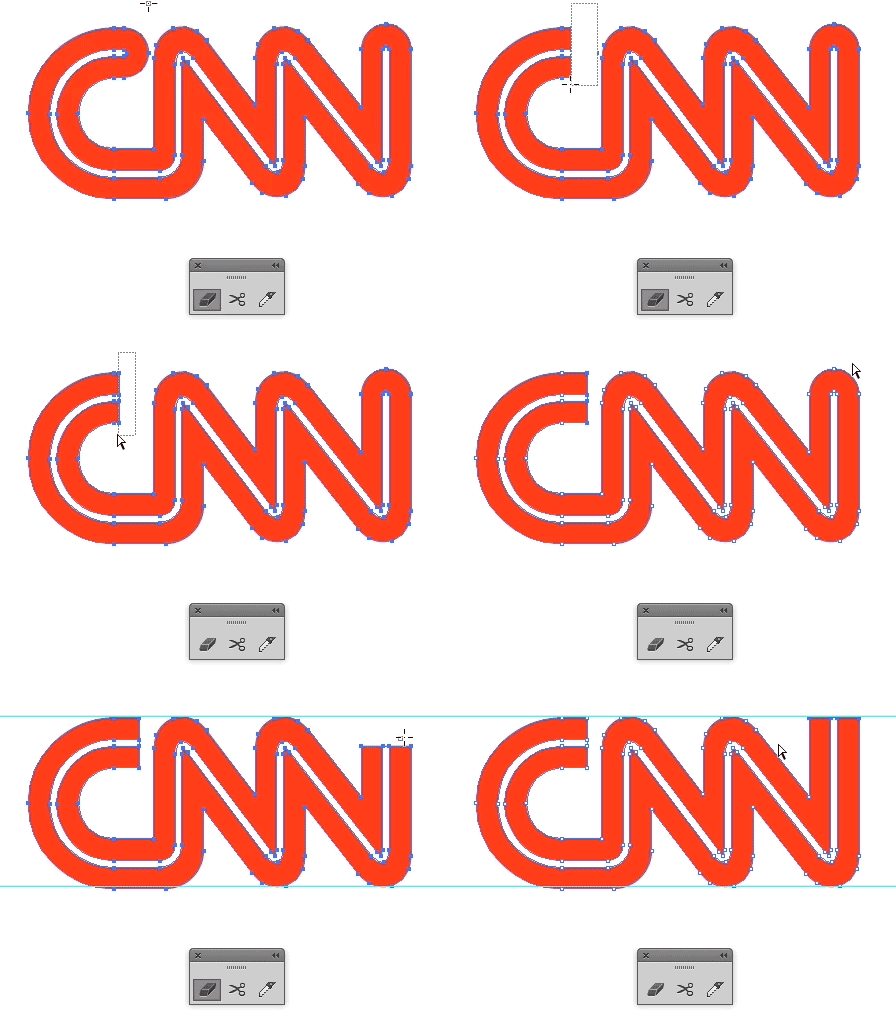
Use the Direct Selection Tool (A) (the white arrow) and delete the right point of the ellipse. Using the Pen Tool (P), click once of the point you want to start drawing from, then click again to create where you want to finish the line. In order to start drawing from a new point you must first deselect the shape or change tools then switch back to the Pen Tool. In everyday work, this is accomplished with a couple quick keystrokes, (Escape, then P to reactivate the Pen Tool) but below I’m physically clicking on the different tools to better illustrate this step.

37

Deselect and reselect your shape (by switching tools) when starting from a new point or your shape will automatically close.


Step 4

Continue using the Pen Tool to lay down the overall shape of the logo. I’m holding down the Shift key when drawing each line so that the vertical lines are completely vertical, and both angled lines on the N’s are at identical 45 degree angles. Even though I may not need 45 degree angles, this way I at least know they’re identical and I can later move those points simultaneously to achieve any slant I need.

29

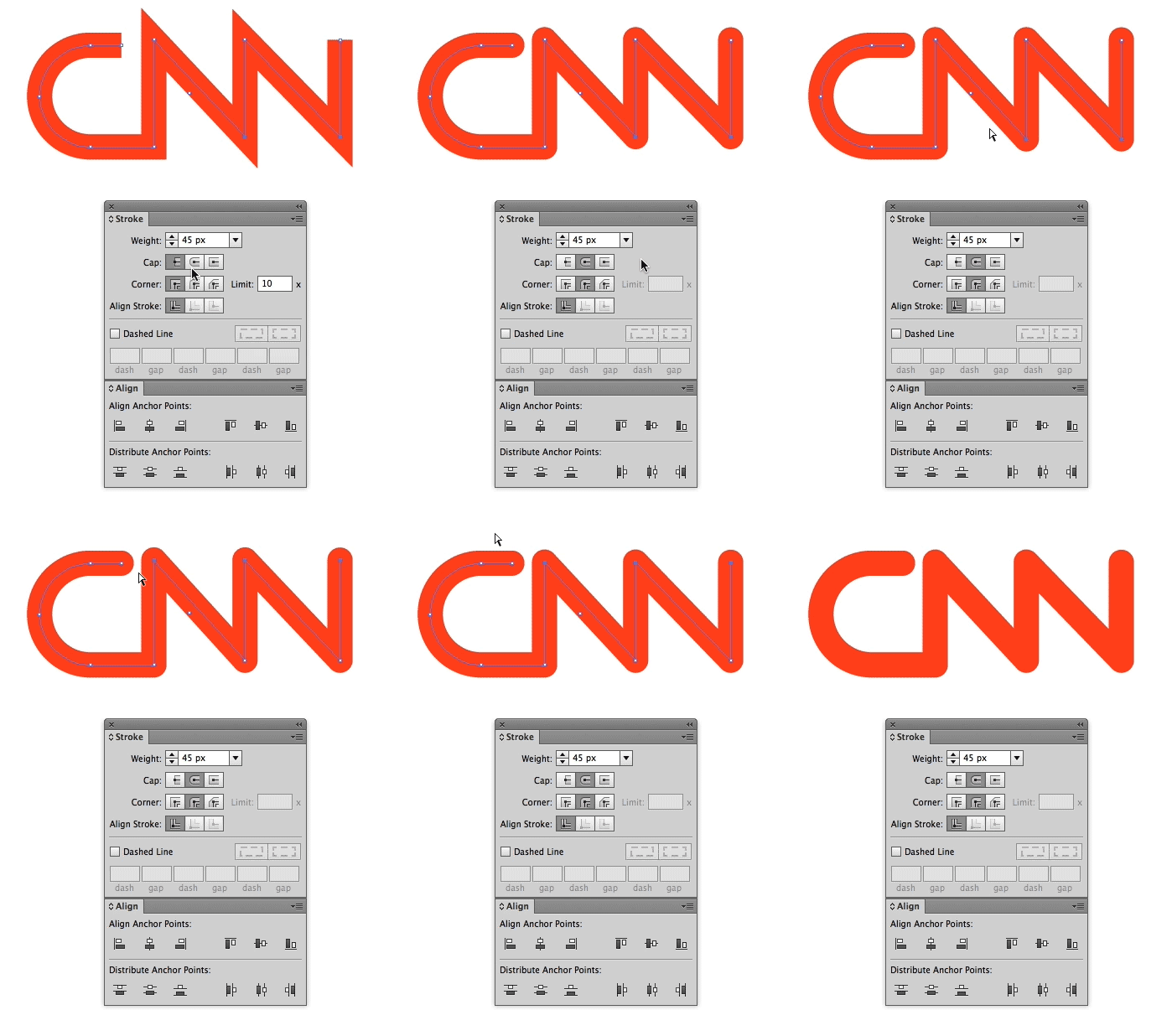
Step 5

Round the Joins and Caps of the shape and use the Direct Selection Tool (A) to select and adjust several points at once. Points can be aligned to one another using the Align Palette, and/or nudging them using arrow keys!

30

Step 6

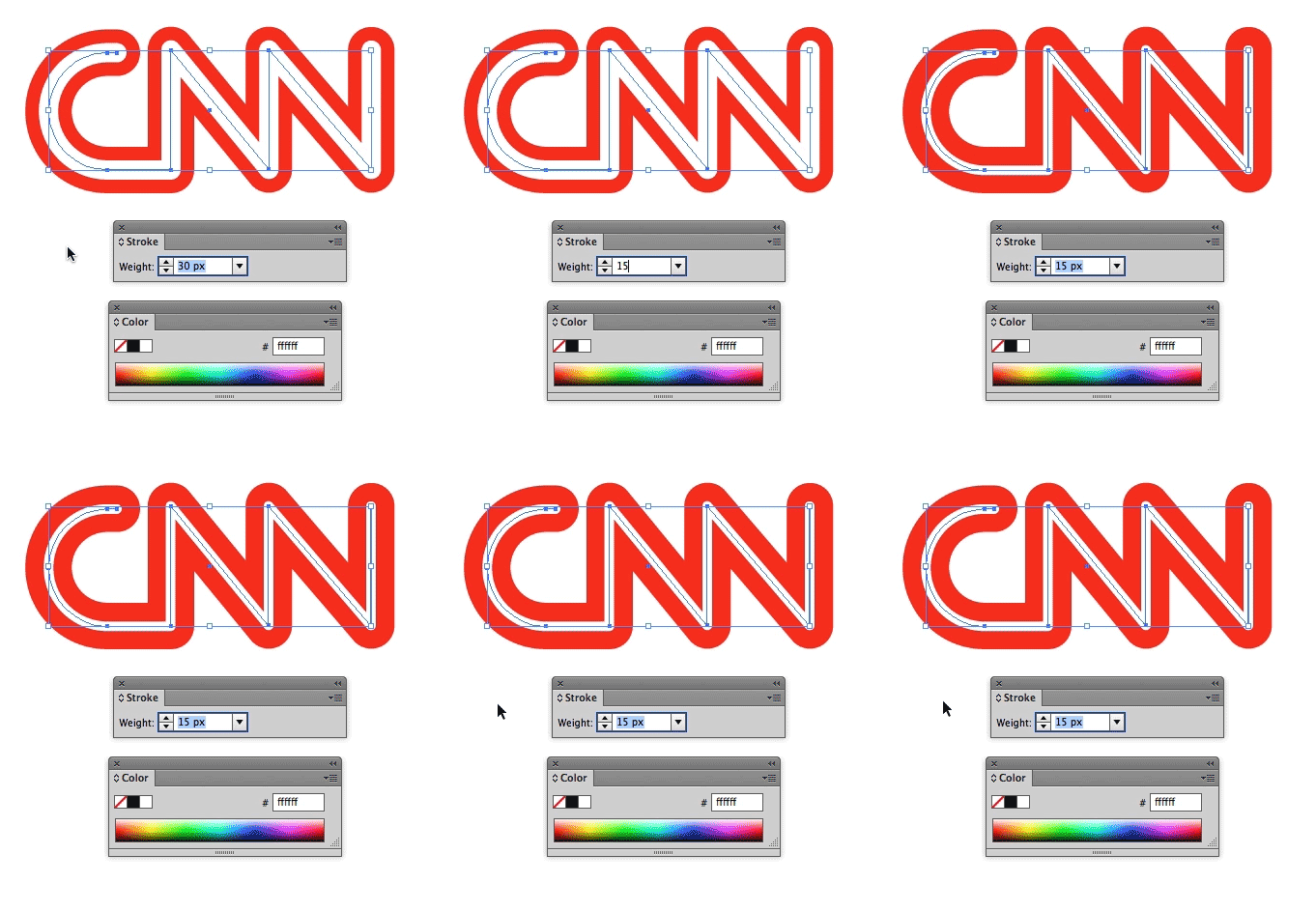
Copy (Command +C), and Paste in Place (Command+F) your shape then change the stroke weight and color.

38

Step 7

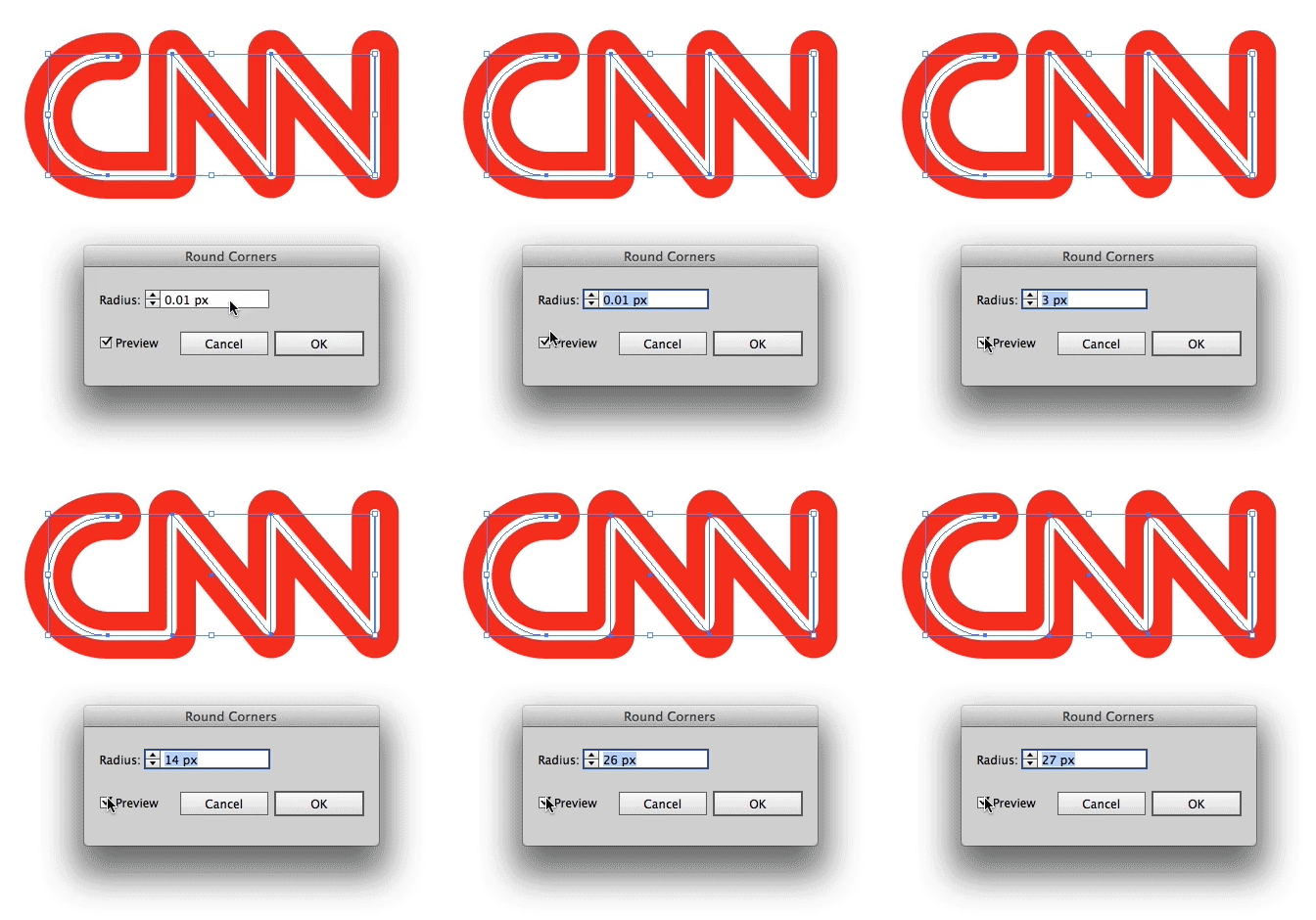
Go to Effect > Stylize > Round Corners to add the proper roundness to the inside white shape. Sidenote, at times, you may be applying a radius to a shape that has multiple radii. When this happens, simply divide the line into several sections and apply the appropriate radius to each section.

32

Use the up or down arrow key to quickly cycle through radii.


Step 8

Make absolutely sure that your overall shape is looking how you want it to before you expand your lines. Below, I’ve expanded both the red and white stroke so that I can do more refined edits.

Use the Eraser Tool (Shift+E) to erase the rounded edges. Notice that the edge of the C has a small amount of space that’s not curved. I’ve specifically deleted just enough of the edge of the shape so that when I use the Direct Selection Tool to extend that edge, I won’t be altering the curve.

39

That’s a wrap! You should now be well on your way to creating fundamental shapes in Adobe Illustrator. Stay tuned for Lesson 2 which will highlight a different set of tools, shapes, and increase in difficulty.

cnn


Jonathan Patterson’s Social Profiles

Dribbble icon Follow him on Twitter: @Jon_Patterson

twitter-icon Follow him on Dribbble: dribbble.com/jon_patterson

The post The Fundamentals of Shape Design in Adobe Illustrator (Lesson 1) appeared first on Vectips.

19 May 08:41

George Takei responds to "traditional" marriage fans

by Xeni Jardin

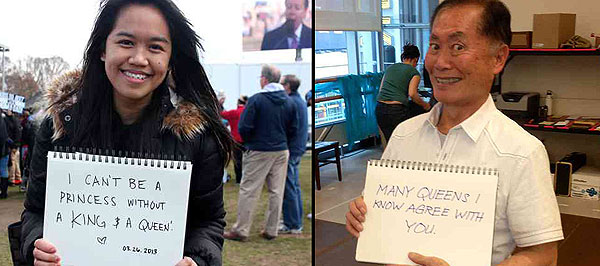
Star Trek star and noted homosexual George Takei responds to bigots who believe in restricting the right to love to straight people only: an image gallery on Imgur. Oh, snap, oh glorious snap.


19 May 05:57

I Wonder Where We’re Going…

by Steve Napierski
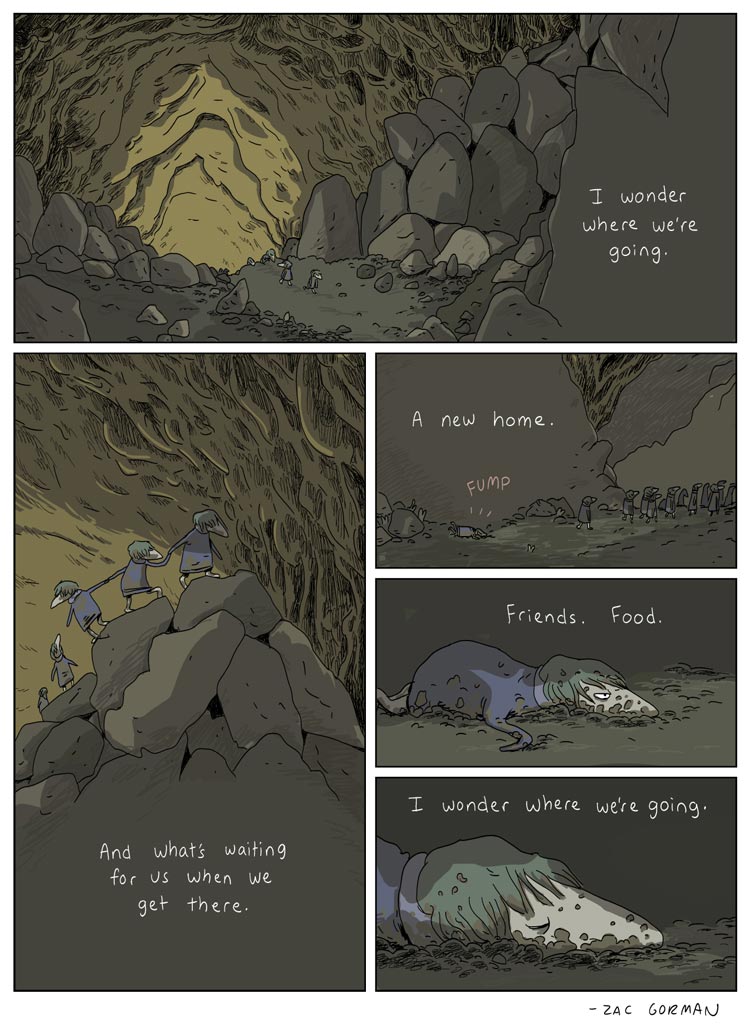
I Wonder Where We're Going

Damn you, Zac Gorman! Making me feel sorry for something that looks like this:

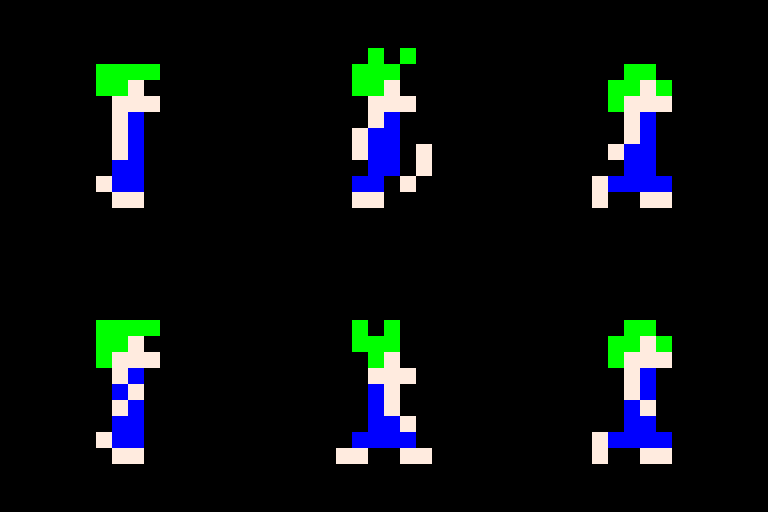
Lemming - Animated GIFLemming – Animated GIF
19 May 05:08

[video] [h/t: cineraria]


[video] [h/t: cineraria]

16 May 06:46

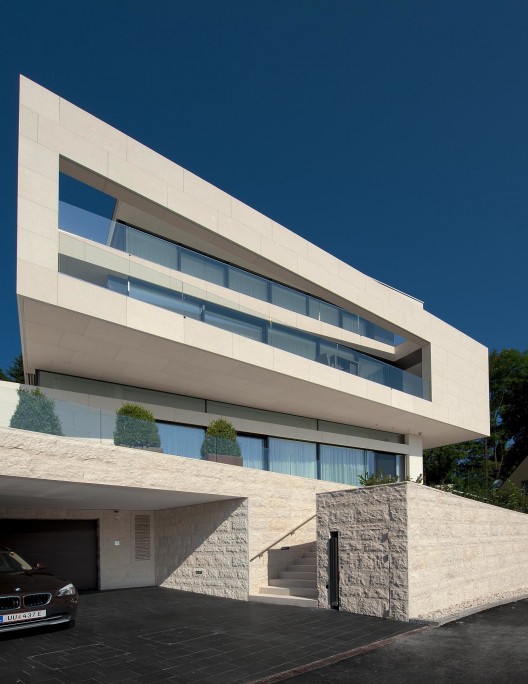
Villa Upper Austria / Two in Box

by Diego Hernandez

Architects: Two in Box
Location: Stein, Austria
Architect In Charge: Christian Stummer, Andreas Fiereder
Year: 2011
Photographs: Dietmar Tollerian-Archipicture

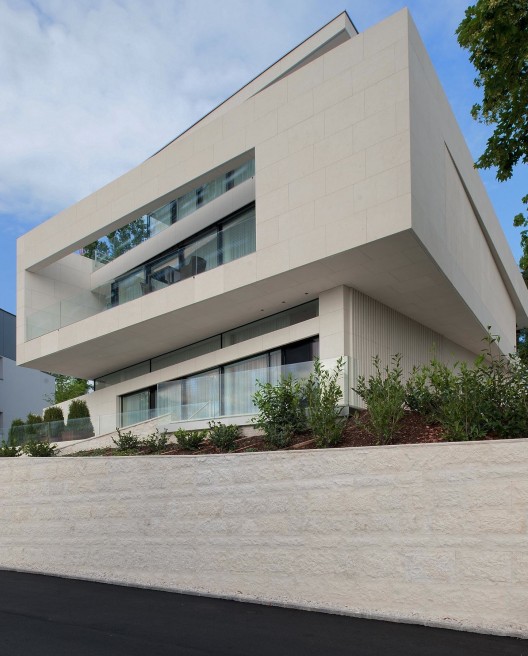
This special location on a steep slope above the state capital of Upper Austria offers a spectacular view of the city.

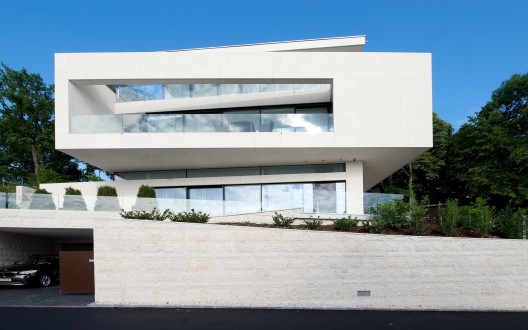
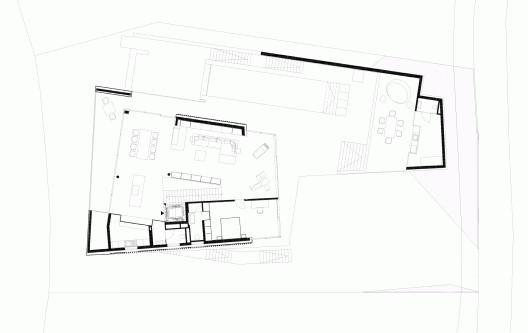
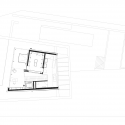
Due to the steep sloping terrain, the view and the direction of the sun special attention was required with regard to the alignment of living rooms and sleeping rooms. The villa has three levels adapted to the line of sight and staggered towards each other on top of a basement garage. The main living floor is west-aligned and built at the slope opening up onto a garden and summer kitchen.  In order to offer a free view of the city from the west-faced garden, the plan view of this floor was pushed to the northern end of the lot giving space for an elongated pool on the south side in front of the living and dining area. Front-mounted pool glazing allows for the horizon to disappear and the swimmer gets a feeling of hovering above the city.

Upon special demand of the owner the whole villa was clad in light limestone. An exciting zoning of the stone cladding was achieved by providing some of the limestone panels with a strongly fluted look. While the panels of the garden walls have a natural rough surface, the higher and further inside one gets the finer the texture of the limestone.

The space of the house seems to flow inside and out as the large-sized stone panels continue from the interior to the exterior traversing the pool and merging all space into a single unit.

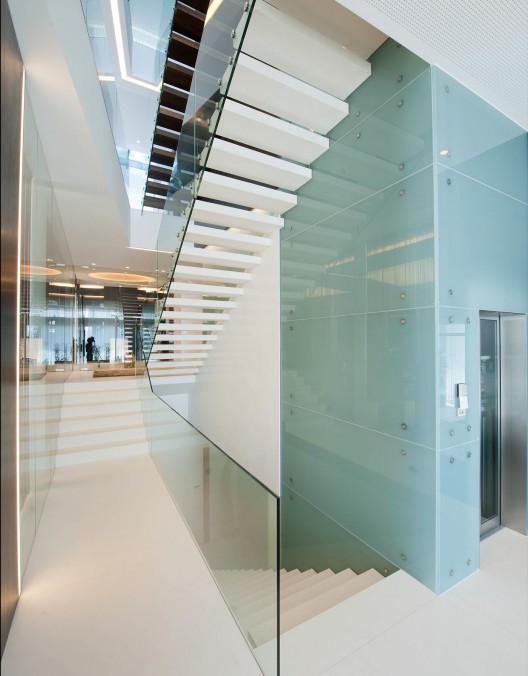
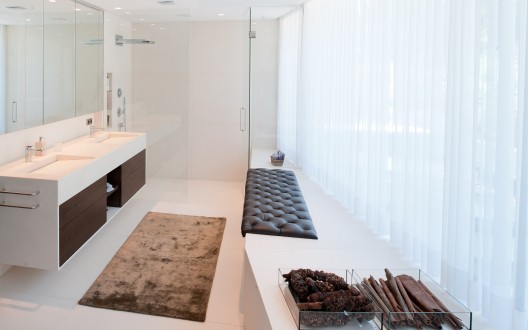
The total design requires only few types of materials. All four floors and the interior design are characterised by the use of dark oak, natural stone, glass and leather. An open and cantilevered staircase with steps of stone and wood combines the floors. The elevator shaft is glazed to the interior and back-illuminated and forms the vertical “backbone” of the house. A centrally positioned multi-storey atrium creates an exciting optical connection. On every floor the glass front opens up a spectacular view of the city.

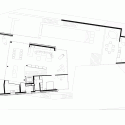
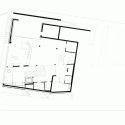
Villa Upper Austria / Two in Box © Dietmar Tollerian-Archipicture Villa Upper Austria / Two in Box © Dietmar Tollerian-Archipicture Villa Upper Austria / Two in Box © Dietmar Tollerian-Archipicture Villa Upper Austria / Two in Box © Dietmar Tollerian-Archipicture Villa Upper Austria / Two in Box © Dietmar Tollerian-Archipicture Villa Upper Austria / Two in Box © Dietmar Tollerian-Archipicture Villa Upper Austria / Two in Box © Dietmar Tollerian-Archipicture Villa Upper Austria / Two in Box © Dietmar Tollerian-Archipicture Villa Upper Austria / Two in Box Plan Villa Upper Austria / Two in Box Plan Villa Upper Austria / Two in Box Plan
15 May 07:57

Bride Reports Groom Missing, Police Find Him with a Hooker

by Neetzan Zimmerman

An Illinois man honeymooning with his new wife in an Orlando-area resort picked the worst possible time to leave her in the room so he could go meet up with a prostitute.

Read more...


15 May 07:56

Following the Heart-Healthy Salt Intake Guidelines Could Kill You

by Hamilton Nolan

For years, doctors have advised people to limit their daily salt intake to 1,500 milligrams in order to protect their hearts. Now, other doctors say that keeping your salt intake that low will hurt your heart. What we can say for sure: salt, heart.

Read more...


15 May 07:37

Wide-Angle Interior Shots of Sagrada Família Church in Barcelona

by EDW Lynch

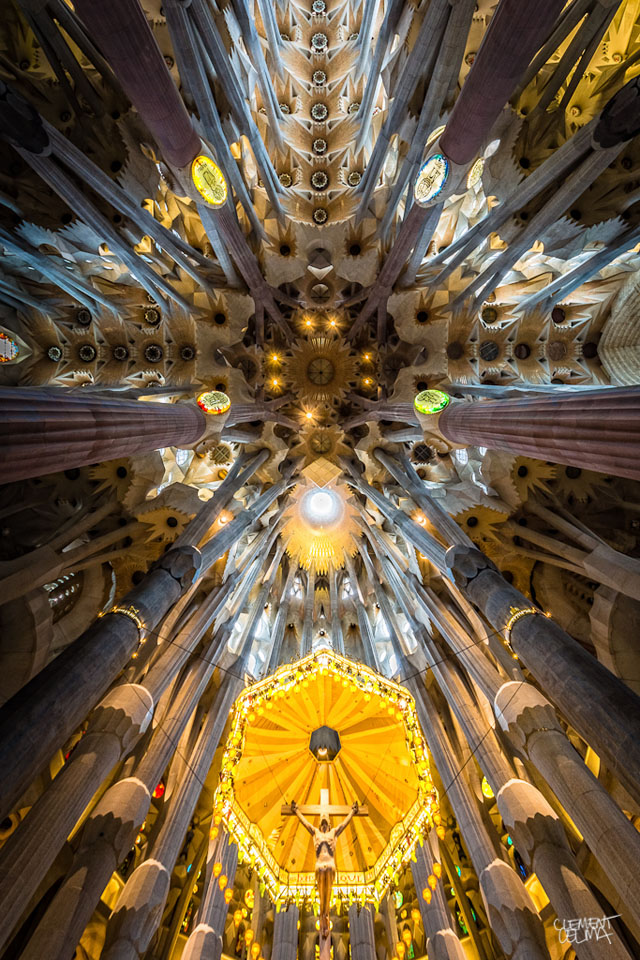
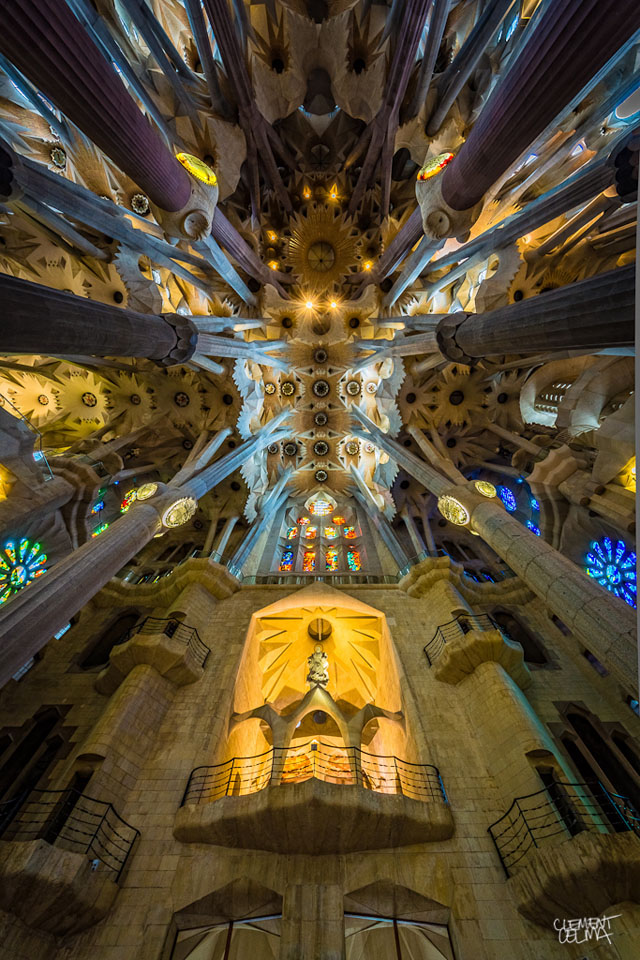
Wide-angle photos of the Sagrada Familia by Clement Celma

The incredible interior of the iconic Barcelona church Sagrada Família is revealed in these wide-angle photos by photographer Clement Celma. Construction of the Sagrada Família, known formally as the Basílica i Temple Expiatori de la Sagrada Família, was started in 1882. In 1883 Spanish architect Antoni Gaudí took over the project, radically redesigning the church in his own style. Gaudí was still working on the church when he died in 1926. The church is still under construction.

Wide-angle photos of the Sagrada Familia by Clement Celma

Wide-angle photos of the Sagrada Familia by Clement Celma

Wide-angle photos of the Sagrada Familia by Clement Celma

Wide-angle photos of the Sagrada Familia by Clement Celma

via Architecture Bucket List, My Modern Metropolis

15 May 05:41

Dog And Human Genomes Evolved Together

by Jane J. Lee

A new study finds that genes for diet, behavior, and disease in dogs and humans have evolved together.

15 May 05:38

Boys Killed Pets to Become Warriors in Early Russia

by Heather Pringle

Archaeologists have dug up evidence that boys in Bronze Age Russia had to slay their own dogs to prove their readiness to become warriors.

15 May 05:15

Skittles sorting machine, version 3

by Mark Frauenfelder

Here's Brian Egenriether's new-and-improved Skittles sorting machine. It's interesting to note that he used machinable epoxy for the parts instead of using a 3D printer. I know 3D printing is the future, but the current crop of home 3D printers make ugly parts. Subtractive fabrication technology makes better looking stuff, at least for now.

This machine sorts Skittles, m&m's and similar candies by color. It is the 3rd revision of the original machine. The inside is now complete and features user-selectable inputs to choose which type of candy to sort. Types not shown include Reese's Pieces and other types of Skittles.

The microcontroller is a BASIC Stamp 2 and the color sensor is made by TAOS. I made most of the parts by hand from a machinable epoxy including the outer case, inner housing, hopper mechanism, 5 way chute, and the the rotating disk inside. The other parts include a piece of PVC, ceramic bowls, telescope parts, wood for the base, and the funnel which was cut from a hummingbird feeder.

Automatic Sorting of Skittles or M&Ms by Colour (Thanks, D.S. Deboer!)


14 May 12:13

Textastrophe, A Blog Dedicated to Trolling People Who Post Their Phone Numbers in Public

by Kimber Streams

Textastrophe

Textastrophe is a Tumblr blog that collects humorous conversations with people who have posted their phone numbers in public, often on Craigslist. The blog’s owner contacts the individuals and trolls them with ironic or downright weird situations and requests.

Next time you post your phone number in a public place, think again. This is a collection of text messages I’ve exchanged with people who have done just that.

Textastrophe

Textastrophe

Textastrophe

images via Textastrophe

Thanks Shelby DeNike!

14 May 12:01

Syrian Rebels May Have Used Sarin, U.N. Investigator Says

United Nations prosecutor Carla del Ponte has told Swiss news outlets that there's evidence pointing at the opposition, not the Assad regime.

» E-Mail This     » Add to Del.icio.us

14 May 10:16

Genes in the brain keep bad time when we are depressed

Brain cells turn out to have a timetable for genetic activity, just like cells elsewhere – but this pattern is out of sync in people with depression


14 May 09:15

Anywhere but Here: Deserted Banking Empire turned Skyscraper Slum

by Archinect

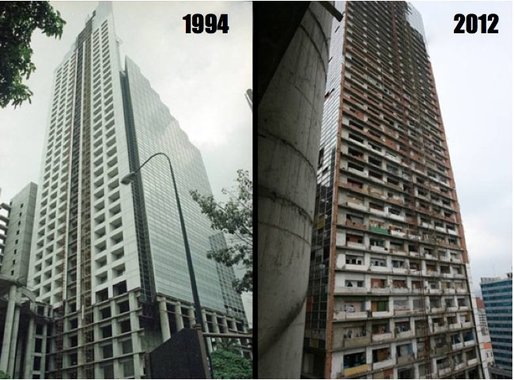
It was built for stockbrokers and bankers in their thousand dollar suits to make million dollar deals, but for nearly two decades it has held the less impressive title of the world’s tallest squat. Welcome to the Centro Financiero Confinanzas, more commonly known as the Torre David (the Tower of David) in Caracas, Venezuela, an unfinished skyscraper which has now been colonised by an ad hoc community of over 700 families.


14 May 04:32

Archivo: Edificios Sustentables

by Karina Duque

© Tord-Rikard Soderstrom

Esta semana en Archivo les presentamos un conjunto de edificios que de distintas e innovadoras maneras son amigables con el medio ambiente. Desde fachadas inteligentes, hasta técnicas pasivas caracterizan a estas 10 ejemplares propuestas de ahorro energético y compromiso medioambiental alrededor del mundo.

La fotografía de portada corresponde al Edificio Kuggen de Wingårdh Arkitektkontor, un edificio sustentable cilíndrico y distintivo, en el centro de la plaza de la ciudad, el cual ofrece una gran cantidad de espacio en relación a la cantidad de superficie de fachadas, y los pisos superiores se proyectan sobre la parte inferior más hacia el lado sur que en el norte, dejando el edificio en sombras parcialmente cuando el sol está en lo alto del cielo.

A continuación 10 que no te puedes perder.

Cámara Regional de Comercio e Industria / Chartier-Corbasson Architects

© R.Meffre & Y.Marchand

Torres Al Bahar / Aedas Architects 

© Aedas

Edificio Gebhartstrasse / Halle 58 Architekten 

© Halle 58 Architekten

Torre Marco Polo / Behnisch Architekten 

© Roland Halbe

Sede Central del Instituto Nacional de Estadística / Ruiz Larrea y Asociados 

© Ángel Baltanás

Kuggen / Wingårdh Arkitektkontor 

© Tord-Rikard Soderstrom

Edificio Cyan / THA Architecture Inc. & GBD Architects 

© Jeremy Bitterman

Neo Solar Power Corporation / J.J. Pan & Partners 

© Cortesía de JJPP

Apilamiento Verde / Vo Trong Nghia Oficinas 

© Hiroyuki Oki

Centrales Zeppelin / Paulíny Hovorka Architekti

© Cortesía de Paulíny Hovorka Architekti

13 May 12:50

Familiar Simpsons’ Names Found in Matt Groening’s Mother’s Obituary

by Rusty Blazenhoff

Obituary

Last month when the mother of Simpsons’ creator Matt Groening, Margaret (aka “Marge”), died, Portland newspaper The Oregonian published her obituary which was filled with names familiar to fans of the animated series. Last year, Matt revealed the namesake of the show’s fictional town of Springfield.

image via Yarrr_piratejackoff

via reddit, SFist

13 May 10:43

Cryptomnesia makes us accidental plagiarists

by Esther Inglis-Arkell

We know that people make up false memories if prompted. But since our brain never stops being a jerk, we can also convert real memories into things we believe we imagined. Cryptomnesia can strike via our own memories, or our memories of things that others tell us. One of the most famous cases of cryptomnesia destroyed the fantasy-writing career of Helen Keller.

Read more...


13 May 09:37

Nothing to see: The man who made a Majorana particle

Physicist Leo Kouwenhoven ended a 75-year hunt for the tricky Majorana fermion – a particle that is its own antiparticle – by creating one on a chip


13 May 08:34

Queuing in India

by John Farrier
A. Kachmar

Well at least the guy in the middle is providing lumbar support to the other guy.

line

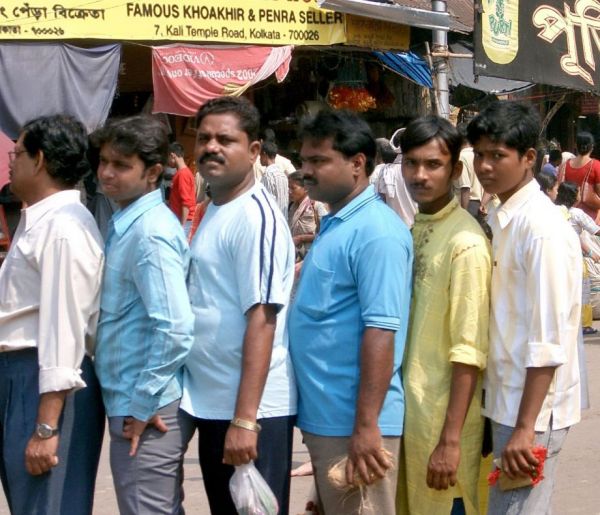
According to several redditors, this photo shows how many people in India queue: very close together. Redditor iwsfutcmd shares a story:

This was a problem when I was travelling in India.

I'm very understanding of other cultures' ideas about personal space and whatnot, but there's a logistical problem:

I'm standing in line for a train ticket, wearing my huge traveller's backpack that's about 3/4 my size. I'm pressed up against the man in front of me (as custom dictates). Man behind me is pressed up against my backpack (again, as custom dictates). I turn sideways to look at something, man behind me moves forward to close the gap made by my backpack vacating precious line space (as custom dictates).

I turn back to how I was, accidentally smashing man behind me with 25 kilos of pain.

"Oh my god, jesus, I'm sorry!"

I turn to help him up, and as I do so, men in line fill gap left by my backpack.

Lather, rinse, repeat.

A 2010 New York Times article describes queuing practice in India:

There is a feline quality to standing in Indian lines. Certain parts of the man behind you — you don’t know which — brush against you in a kind of public square spooning, the better to repel cutters. (Women do less touching.) Still, this is no deterrent to cutters. They hover near the line’s middle, holding papers, looking lost in a practiced way, then slip in somewhere close to the front. When confronted, their refrain is predictable: “Oh, I didn’t see the line.”

But in a churning India, the line has new resilience. Businesses are becoming vigilant about enforcing queues, and a growing middle class, more well-off and less survivalist, is often less eager to cut. In this way, India’s experience seems to feed into a tradition of seeing line etiquette as a marker of modernity, of graduating from chaos to order, whims to rules, brutality to gentility, scarcity to abundance.

What queuing customs have you encountered?

Link -via reddit

(Photo: unknown)

13 May 08:21

Chandelier casts a fantasy forest of shadows against the walls

by Lauren Davis

Designers Hilden & Diaz have created a fixture that can transport you to a dark forest with the flick of a light switch. When you turn on this chandelier, you're suddenly engulfed in a tangle of tree-shaped shadows.

Read more...


13 May 04:51

New Fatal Virus Infects Two in France, Likely Spreads Person-to-Person

by Taylor Berman

A deadly new strain of Coronavirus, a SARS-like respiratory virus, has now spread to France, where it has infected at least two people. But it gets even more exciting. After the French health ministry's confirmation of the second infection, the World Health Organization announced that it's likely that the virus can be passed person-to-person.

Read more...


12 May 09:30

A More Effective CAPTCHA

by John Farrier

bad decision

Well, that would do it. A spambot wouldn't have decided to major in philosophy or buy into that Jamba Juice franchise on credit.

Link