Hey FRANCE! I'm coming your way soon!


As the USD-INR rate hits 61, we get that sick feeling in the stomach that next month, my son’s Lego buy will be that much more expensive. However, the sick feeling in the stomach isn’t ours alone. You have some Foreign Institutional Investors for company, who, after six long years, are seeing returns of –8%, while we rupee folks are up 36%.

The DEFTY is an index tracked by the NSE closely with the Nifty – it is the return of the Nifty but in dollars instead.
From July 2007 till now, the Nifty in rupees is close to it’s all time high. But the Defty is about 40% off its own.

These would have been a forgettable 6 years for the FIIs. India’s GDP has doubled, India’s growth remains among the top even though there’s inflation, but the return from stocks has been, in absolute terms, negative.
For her 1974 book Lighter Side of the Library, Janice Glover asked American librarians to recall titles requested by confused patrons, and the books they turned out to want:
Requested: Who Is Your Schoolmaster?
Book wanted: Hoosier Schoolmaster
Requested: Entombed With an Infant
Book wanted: In Tune With the Infinite
Requested: The Missing Hand
Book wanted: A Farewell to Arms
Requested: The Armored Chinaman
Book wanted: The Chink in the Armour
Requested: King of the Ants
Book wanted: Lord of the Flies
Requested: The Wooden Kid
Book wanted: Pinocchio
Requested: Five Pennies and the Sun
Book wanted: The Moon and Sixpence
And so on: From Here to Maternity; The Merchant of Venus; “Allergy in a Country Churchyard”; My Heart Is Wounded, They Buried My Knee. One inspired library staff finally sent a student home with Homer’s Iliad; he had come in asking for Homeless Idiot.
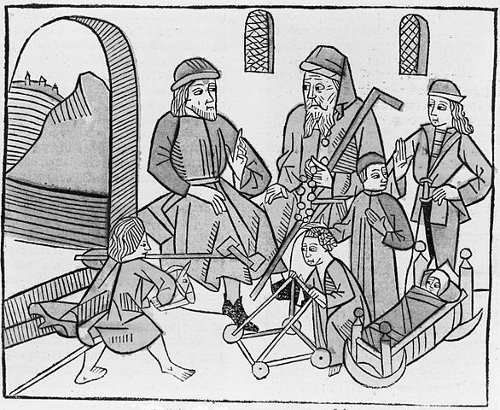
“I believe what really happens in history is this: the old man is always wrong; and the young people are always wrong about what is wrong with him. The practical form it takes is this: that, while the old man may stand by some stupid custom, the young man always attacks it with some theory that turns out to be equally stupid.” — G.K. Chesterton
Mohan K. VROFLMAO

In May 1856, an African teenager named Nongqawuse had a vision: If her people killed all their cattle, she said, their long-dead ancestors would rise and drive out the European settlers.
Word spread quickly, and they did as she urged. In 10 months that followed, the Xhosa nation killed 400,000 cattle, driven by mounting rumor and revelation that great fields of corn would also spring into existence, that their ancient heroes would return to life, and that sickness and old age would disappear. In his Compendium of South African History and Geography of 1877, George McCall Theal records the climax:
At length the morning dawned of the day so long and so ardently looked for. All night long the Kaffirs had watched, with feeling stretched to the utmost tension of excitement, expecting to see two blood-red suns rise over the eastern hills, when the heavens would fall and crush the races they hated. Famished with hunger, half dying as they were, that night was yet a time of fierce, delirious joy. The morn, that a few short hours, slowly becoming minutes, would usher in, was to see all their sorrows ended, all their misery past. And so they waited and watched. It came, throwing a silver sheen upon the mountain peaks, and bathing hill-side and valley in a flood of light, as the ruler of day appeared. The hearts of the watchers sank within them; ‘What,’ said they, ‘will become of us if Mhlakaza’s predictions turn out untrue?’ It was the first time they had asked such a question, the dawn of doubt had never entered their thoughts till the dawn of the fatal day. But perhaps, after all, it might be midday that was meant, and when the shadows began to lengthen towards the east perhaps, thought they, the setting of the sun is the time. The sun went down behind clouds of crimson and gold, and the Amaxosa awoke to the reality of their dreadful position.
The ensuing famine killed 40,000 Xhosa. “Nongqause escaped, and is still living,” Theal wrote. “For prudential reasons she has ever since resided in the colony, where she preserves an unbroken silence concerning the deeds in which she played so prominent a part.”
Mohan K. VAll dispatched, of course, by Dr. Kailasadatan, department head, critical surgery.
Apt names of medical specialists, collected by the MEDLIB-L discussion list in 1998:
Cardiologists: Dr. Valentine, Dr. Hart, Dr. Safety R. First
Chiropractors: Dr. Popwell, Dr. Wack, Dr. Bonebrake, Dr. Bender
Dentists, endodontists and orthodontists: Dr. Pullen, Dr. Fillmore, Dr. Hurt, Dr. Yankum, Dr. Les Plack, Dr. Toothman, Dr. Borer, Dr. Pullman, Dr. Filler, Dr. Harm, Dr. Hurter, Dr. Toothaker
Dermatologists: Dr. Rash, Dr. Pitts, Dr. Skinner, Dr. Whitehead
Family practice, internists: Dr. Kwak, Dr. Blood, Dr. Coffin, Dr. Patient, Dr. Payne, Dr. Slaughter, Dr. A. Sickman, Dr. Deadman, Dr. Will Griever
Hand surgeons: Dr. Palmer, Dr. Nalebuff, Dr. Watchmaker
Medical librarian: Rita Book
Neurologists: Dr. Johnathan Treat Paine, Dr. Brain, Dr. Head
Pediatricians: Dr. Donald Duckles, Dr. Small, Dr. Bunny, Dr. Tickles
Psychiatrists/psychologists/mental health: Dr. Brain, Dr. Strange, Dr. Dippy, Dr. Moodie, Dr. Nutter, Dr. Looney
Surgeons: Dr. Hackman, Dr. Blades, Dr. Klutts, Dr. Graves, Dr. Cutts, Dr. Slaughter, Dr. Kutteroff, Dr. Doctor, Dr. Butcher, Dr. Hurt
More here. In 1977 authors A.J. Splatt and D. Weedon submitted an article on incontinence to the British Journal of Urology. It was accepted.
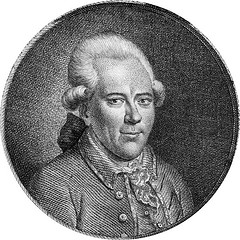
Still more wisdom from German aphorist Georg Christoph Lichtenberg (1742-1799):
See Diamonds and Pearls, From the Notebooks, and The Sage of Göttingen.
Mohan K. VFaaaak...
A problem from the 1999 Russian mathematical olympiad:
Show that the numbers from 1 to 15 can’t be divided into a group A of 13 numbers and a group B of 2 numbers so that the sum of the numbers in A equals the product of the numbers in B.
In 1951 James Thurber’s friend Mitchell challenged him to think of an English word that contains the four consecutive letters SGRA. Lying in bed that night, Thurber came up with these:
kissgranny. A man who seeks the company of older women, especially older women with money; a designing fellow, a fortune hunter.
blessgravy. A minister or cleric; the head of a family; one who says grace.
hossgrace. Innate or native dignity, similar to that of the thoroughbred hoss.
bussgranite. Literally, a stonekisser; a man who persists in trying to win the favor or attention of cold, indifferent, or capricious women.
tossgravel. A male human being who tosses gravel, usually at night, at the window of a female human being’s bedroom, usually that of a young virgin; hence, a lover, a male sweetheart, and an eloper.
Unfortunately, none of these is in the dictionary. What word was Mitchell thinking of?
Mohan K. VThere should be a 2nd y-axis, "Likelihood of crippling insecruity" the rises as 1/douchebaggery
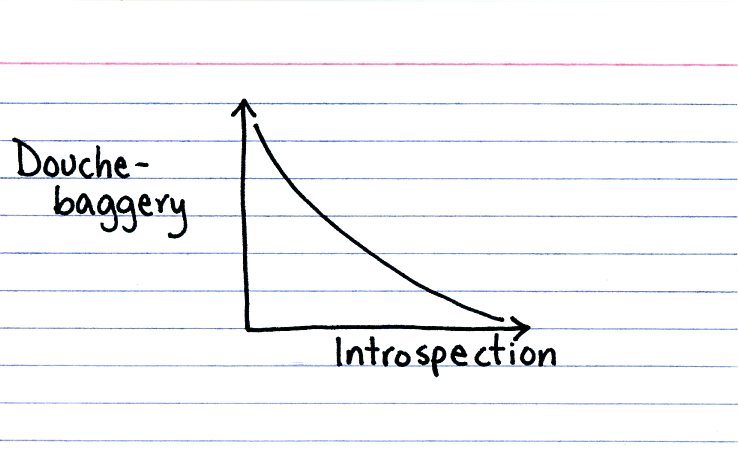


Mohan K. VA booming economy almost never means a good life by itself.
Mohan K. V"you need some sort of flavorful bullshit to make it seem as if there is science to what you do."
A great Reddit thread asked readers for their favorite "intellectual" joke -- some of the high-ranked ones are really good!
Q: What does the "B" in Benoit B. Mandelbrot stand for?
A: Benoit B. Mandelbrot. (balloseater)It's hard to explain puns to kleptomaniacs because they always take things literally. (Watch_Closely
I'd tell you a UDP joke, but you may not get it. (ambivalist)
I prefer IP jokes; it's all in the delivery. (ianschenck)
I could tell you a joke about TCP, but I'd have to keep repeating it until you got it. (Razakel)
Werner Heisenberg, Kurt Gödel, and Noam Chomsky walk into a bar. Heisenberg turns to the other two and says, "Clearly this is a joke, but how can we figure out if it's funny or not?" Gödel replies, "We can't know that because we're inside the joke." Chomsky says, "Of course it's funny. You're just telling it wrong." (Saboot)
What's the most intellectual joke you know? (self.AskReddit) (via Kottke) 
    
|
In memory of computing pioneer Douglas Engelbart, who died last night, please watch this 1968 video of his "Mother of All Demos." Thank you Doug for helping augment human intellect.
"The key thing about all the world's big problems is that they have to be dealt with collectively. If we don't get collectively smarter, we're doomed." - Douglas Engelbart (1925- 2013)

|
|
Mohan K. VFor the awesome demo... and that brilliant quote. That could be said of so many great people!
Douglas Engelbart died at his home in California yesterday at the age of 88. Engelbart invented the mouse, among other things. In 1968, Engelbart gave what was later called The Mother of All Demos, in which he demonstrated "the computer mouse, video conferencing, teleconferencing, hypertext, word processing, hypermedia, object addressing and dynamic file linking, bootstrapping, and a collaborative real-time editor".
Not bad for a single demo. Truly one of the giants of our age.
Update: Bret Victor urges us to remember Engelbart not for the technology he created but for his vision of how people could collaborate and create together using technology.
The least important question you can ask about Engelbart is, "What did he build?" By asking that question, you put yourself in a position to admire him, to stand in awe his achievements, to worship him as a hero. But worship isn't useful to anyone. Not you, not him.
The most important question you can ask about Engelbart is, "What world was he trying to create?" By asking that question, you put yourself in a position to create that world yourself.
(thx, andy)
Tags: Douglas Engelbart obituaries videoMohan K. VLOL
"Give me your tired, your poor, your huddled masses yearning to breathe free." And I'll give them heart disease, high blood pressure, diabetes, and a shorter lifespan. A growing body of research suggests that there is often a high health toll when it comes to coming to America.
Tags: medicine USAA growing body of mortality research on immigrants has shown that the longer they live in this country, the worse their rates of heart disease, high blood pressure and diabetes. And while their American-born children may have more money, they tend to live shorter lives than the parents.
The pattern goes against any notion that moving to America improves every aspect of life. It also demonstrates that at least in terms of health, worries about assimilation for the country's 11 million illegal immigrants are mistaken. In fact, it is happening all too quickly.
Mohan K. VBrilliant!
What if journalists from foreign countries wrote about the US the way US newspapers and magazines cover events in foreign countries?
Tags: journalism USAOn a recent visit to the United States by GlobalPost, signs of the increased security apparatus could be found everywhere.
At all national airports, passengers are now forced to undergo full-body scans before boarding any flights. Small cameras are perched on many street corners, recording the movements and actions of the public. And incessant warnings on public transportation systems encourage citizens to report any "suspicious activity" to authorities.
Several American villagers interviewed for this story said the ubiquitous government marketing campaign called, "If you see something, say something," does little to make them feel safer and, in fact, only contributes to a growing mistrust among the general population.
"I've deleted my Facebook account, stopped using email, or visiting websites that might be considered anti-regime," a resident of the northern city of Boston, a tough-as-nails town synonymous with rebellion, told GlobalPost. It was in Boston that an American militia first rose up against the British empire. "But my phone? How can I stop using my phone? This has gone too far."
Mohan K. VFundamental vs Bayardian
Andrew Blum writes about James Bridle and the New Aesthetic movement for Vanity Fair.
Suddenly everyone who thinks it's a movement either wants to be part of it or wants to destroy it," Bridle reflected one recent afternoon, sitting behind a makeshift desk in his new, windowless studio in a converted factory in the Cambridge Heath neighborhood of London. "Bruce describing it as a movement locks it into an existing idea of historical processes, but there's no such thing as avant-gardes anymore. That's such a ridiculous idea. That's an art-historical construct that just doesn't apply anymore. But it leads to that idea of there being avant-garde figures that are ahead of everything else. But there's not. It's just me, looking at this stuff, and going, 'Have you seen this? Have you actually seen it? Have you really paid attention and thought this stuff through? Because I'm trying to, and it's amazing!'"
More on the New Aesthetic here.
Tags: Andrew Blum art James Bridle New AestheticMohan K. VLOL
Paying Canadians to keep their oil sands in the ground to curb climate change might not sound like an obvious vote winner to a cash-strapped European government.
But it makes more economic sense than people realise, according to Bård Harstad, a Norwegian academic who has just won a prestigious environmental economics prize for a provocative paper suggesting just such a move.
Mr Harstad, 40, has been awarded the Erik Kempe prize, worth SKr100,000, by the European Association of Environmental and Resource Economists for a study called “Buy Coal! A Case for Supply-Side Environmental Policy”.
The FT article is here, and you may recall an earlier MR suggestion that sealing or blowing up especially dirty fuel sources, in a Hotelling intertemporal resource extraction model, is more likely to be effective than many kinds of tax.
Mohan K. VIs this a thing now?
Due to the increasing ubiquity of connected cameras, writes Nick Bilton in the NY Times, photography is shifting away from documentation to communication.
Photos, once slices of a moment in the past -- sunsets, meetings with friends, the family vacation -- are fast becoming an entirely new type of dialogue. The cutting-edge crowd is learning that communicating with a simple image, be it a picture of what's for dinner or a street sign that slyly indicates to a friend, "Hey, I'm waiting for you," is easier than bothering with words, even in a world of hyper-abbreviated Twitter posts and texts.
"This is a watershed time where we are moving away from photography as a way of recording and storing a past moment," said Robin Kelsey, a professor of photography at Harvard, and we are "turning photography into a communication medium."
Dave Pell worries that the realtime availability of all these photos is getting in the way of our experiencing selves.
Tags: Dave Pell Nick Bilton photographyMaybe it was a bad angle. Maybe I didn't get his good side. Maybe he just didn't have that surfer vibe. Whatever it was, the photo wasn't all that cool. Given time to reflect (even the few days I used to get between my own childhood birthdays and my mom picking up a set of 4x6 prints at the local pharmacy), my son probably would've developed a version of that day that had him riding a giant a wave, looking like a cross between Laird Hamilton and Eddie Vedder. Instead, he pretty much looked like a landlocked three year-old on a beach-bound surfboard who was suffering from a rare -- but particularly punishing -- bad hair day.
The instant my son looked at the image, his imagination-driven perception of himself was replaced by a digital reproduction of the moment he had just experienced. He had a few seconds, not nearly long enough, to create is own internal version of what that moment looked -- and by extension felt -- like.
Mohan K. VIt's hilarious how much gloom and doom about the cuts played, even on NPR. Now everyone seems to be just fine.
Mohan K. VThis is really just Keynes' Animal Spirits repackaged.
Malcolm Gladwell on economist Albert Hirschman, who embraced the roles of adversity, anxiety, and failure in creativity and success.
"The Principle of the Hiding Hand," one of Hirschman's many memorable essays, drew on an account of the Troy-Greenfield "folly," and then presented an even more elaborate series of paradoxes. Hirschman had studied the enormous Karnaphuli Paper Mills, in what was then East Pakistan. The mill was built to exploit the vast bamboo forests of the Chittagong Hill Tracts. But not long after the mill came online the bamboo unexpectedly flowered and then died, a phenomenon now known to recur every fifty years or so. Dead bamboo was useless for pulping; it fell apart as it was floated down the river. Because of ignorance and bad planning, a new, multimillion-dollar industrial plant was suddenly without the raw material it needed to function.
But what impressed Hirschman was the response to the crisis. The mill's operators quickly found ways to bring in bamboo from villages throughout East Pakistan, building a new supply chain using the country's many waterways. They started a research program to find faster-growing species of bamboo to replace the dead forests, and planted an experimental tract. They found other kinds of lumber that worked just as well. The result was that the plant was blessed with a far more diversified base of raw materials than had ever been imagined. If bad planning hadn't led to the crisis at the Karnaphuli plant, the mill's operators would never have been forced to be creative. And the plant would not have been nearly as valuable as it became.
"We may be dealing here with a general principle of action," Hirschman wrote, "Creativity always comes as a surprise to us; therefore we can never count on it and we dare not believe in it until it has happened. In other words, we would not consciously engage upon tasks whose success clearly requires that creativity be forthcoming. Hence, the only way in which we can bring our creative resources fully into play is by misjudging the nature of the task, by presenting it to ourselves as more routine, simple, undemanding of genuine creativity than it will turn out to be."
Gladwell's piece is based on Jeremy Adelman's recent biography of Hirschman, Worldly Philosopher.
Tags: Albert Hirschman books economics Jeremy Adelman Malcolm Gladwell Worldly PhilosopherTyler Cowen at Marginal Revolution picks up on a Reddit thread that asks "What's the most intellectual joke you know?" I've always been fond of this one:
Q: What does the "B" in Benoit B. Mandelbrot stand for?
A: Benoit B. Mandelbrot.
And this one:
Knock knock.
Who's there?
Knock knock.
Who's there?
Knock knock.
Who's there?
Knock knock.
Who's there?
Knock knock.
Who's there?
Knock knock.
Who's there?
Phillip Glass
Two of the current favorites in the Reddit thread are:
Jean-Paul Sartre is sitting at a French cafe, revising his draft of Being and Nothingness. He says to the waitress, "I'd like a cup of coffee, please, with no cream." The waitress replies, "I'm sorry, Monsieur, but we're out of cream. How about with no milk?"
And:
Tags: listsIt's hard to explain puns to kleptomaniacs because they always take things literally.
Mohan K. VIn other words, when should I buy into the stock market?
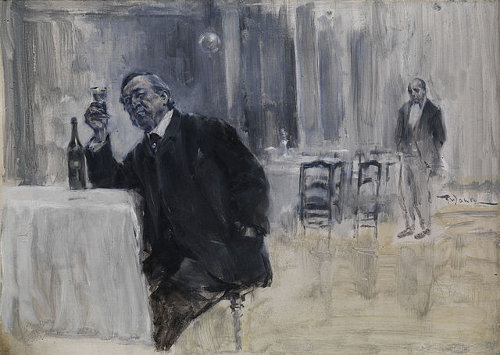
A bottle of fine wine normally improves with age for a while, but then goes bad. Consider, however, a bottle of EverBetter Wine, which continues to get better forever. When should we drink it?
– John L. Pollock, “How Do You Maximize Expectation Value?”, Noûs, September 1983