Shared posts

04 Feb 14:47

Phone No One Uses Will No Longer Carry Game No One Plays

by Bess Levin
Jon Schubin

BrickBreaker is a religion on Wall Street. In my BB days of 2008-2009, you could use high scores as a universal ice breaker akin to the weather. It will be missed.

blackberrybrickbreaker

New versions of the BlackBerry mobile device won’t come equipped with BrickBreaker, a simple game that for years was installed on every BlackBerry and at its peak developed a cult following among traders and Wall Street executives. Richard S. Fuld, the former Lehman Brothers chief executive, became so addicted that in 2006 he had his…

Continue reading »


Follow Dealbreaker on Twitter or become a fan on Facebook.

Tags: BlackBerries, Dick Fuld, except me I actually do still use this POS phone, so that's something, you know what I do miss though? SNAKE

02 Feb 21:12

We Need To Talk About What Happened On "New Girl"

Oh. my. god. Spoilers, spoilers, spoilers ahead!

And some people are really excited about it, while other people are worried that it could ruin the friendly dynamic on the show. But there is only one conclusion that everyone can agree on:

Like, "all you can do is keyboard mash" hot.

Source: www

Chosen from among the Instagrams and Tumblrs and Tweets of a million hot and bothered fans:

View Entire List ›

02 Feb 19:34

Salvador Dali Once Illustrated "Alice In Wonderland"

It was a match made is psychedelic Heaven. Surreal and melty, just watch you'd expect from Dali.

Front Cover

Front Cover

Source: williambennettgallery.com  /  via: neil-gaiman

In 1969, a print run of Alice In Wonderland was released featuring the surreal illustrations of Salvador Dali. The book contained twelve heliogravures according to Brain Pickings, one for each chapter.

A heliogravure is one of the oldest ways to reproduced photographic images, involving an expensive, time-consuming process. You can read all about it over here. The decision to use this technique helped emphasize the lush colors Dali favored.

Only the cover of the was different, a sketched etching in muted tones.

Thanks to the William Bennett Gallery for preserving Dali's work in digital form!

Down The Rabbit Hole

Down The Rabbit Hole

Source: williambennettgallery.com

The Pool Of Tears

The Pool Of Tears

Source: williambennettgallery.com

View Entire List ›

31 Jan 19:11

“Bugger”

by Ben

From an NPR report this morning, about a Washington State man who confronted and then was shot by a gunman in a shopping mall:

“The first word that went through my head was ‘Bugger!’ Clearly, too much British TV.”

I categorize this one as an outlier because, as the gentleman’s comment indicates, the word has not penetrated (pardon the expression) U.S. usage yet, either as an interjection, a verb or an adverb (“And the pain, the hellish pain, of spending all that money, and getting bugger all in return,” The Sunday Times, 2002).


31 Jan 14:42

Trail Tales

by admin

31 Jan 14:33

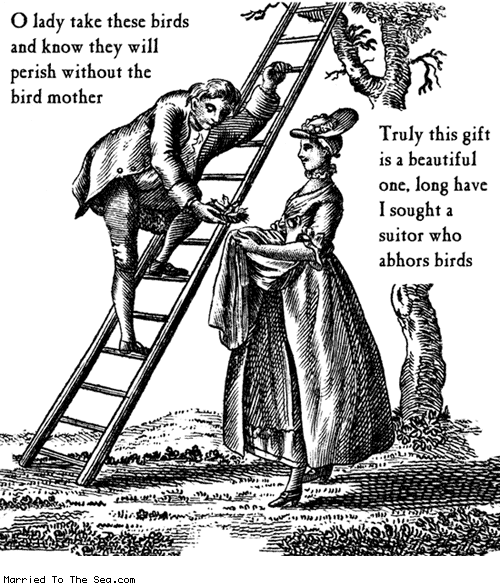
the bird nest

31 Jan 01:18

The origins of snowboarding. 


The origins of snowboarding. 

30 Jan 22:19

How To Dress Well – “& It Was U (Elite Gymnastics Remix)”

by Stereogum

How To Dress Well’s Tom Krell and Elite Gymnastics’ James Brooks are two Midwestern bedroom-studio auteurs who think hard about music that a whole lot of people regard as complete piffle and who twist that music into emotive, insightful music of their own. They are natural fits for one another. Back in 2011, How To Dress Well covered Elite Gymnastics’ “Here In Heaven.” Now, Elite Gymnastics have done something similar, turning “& It Was U,” the disco-flavored highlight of How To Dress Well’s great Total Loss album, into something even dancier, a lush and loopy club jam. Download the remix and the original track below.

Read More...


30 Jan 22:19

Cat Power – “Manhattan (Ryan Hemsworth Remix)” (Feat. Angel Haze)

by Stereogum

On Cat Power’s 2012 album Sun, Chan Marshall flirted with dark, atmospheric electronic pop textures that had never previously touched her music. And on a remix of the Sun standout “Manhattan,” the Canadian dazed-rap producer Ryan Hemsworth has pushed the song’s sonics even further into a drifting, gasping thump. Young pitbull rapper Angel Haze adds a rat-tat-tat opening verse, and the whole thing is just intoxicating. Listen below.

Read More...


30 Jan 18:11

Harlem BBQ Company

by Dave Cook

Kenny Heatley, the executive chef of Londel's Supper Club, soft-opened his new enterprise early this year on the site of the former Sherman's Bar B.Q. For the time being it's takeout only, though a stand-up counter may be added.

Heatley doesn't employ a smoker; he smokes "on the grill" and relies more on "marination and seasoning." Shown: the BBQ beef brisket sandwich ($8) on Texas toast, with cole slaw.

Harlem BBQ Company
2509 Adam Clayton Powell Jr. Blvd. (145th-146th Sts.), Manhattan
212-690-0191

30 Jan 16:16

What Would The Trailer For The Original "Star Wars" Look Like If It Were Directed By J.J. Abrams?

Jon Schubin

Actually really good.

Needs more lens flare. Using original trilogy clips and recreating the Star Trek: Into Darkness trailer is just the beginning of what an Abrams Star Wars might look like.

30 Jan 15:31

People Are Now Reviewing North Korean Gulags On Google Maps

“Best gulag in town. Very accessible and great accommodation!” People are using North Korea's Google Maps listings to rate and review various concentration camps throughout the country.

If you search "gulag" in North Korea on Google Maps you'll be brought to a directory of "gulag" listings.

If you search "gulag" in North Korea on Google Maps you'll be brought to a directory of "gulag" listings.

And a handful of them already have reviews.

And a handful of them already have reviews.

Via: plus.google.com

Via: plus.google.com

Via: plus.google.com

View Entire List ›

29 Jan 20:49

Correction: South Park No Longer Kills Kenny In Every Episode

by Kara Bloomgarden-Smoke

20100107224129!KennyMcCormickIn the Sunday New York TimesDavid Carr wrote about the economics of the South Park empire. But it seems he hadn't watched the show since they stopped killing Kenny back in 2002.  And the result is one of the better corrections we have come across.

"An earlier version of this column misstated a plot point in South Park," today's correction notes. "While the character Kenny was once killed in every episode, that is no longer the case." And, as the correction goes on to note, although Kenny died a a variety of ways, he was not "routinely 'ritually sacrificed.'" We can't believe an editor didn't catch that one, but we suppose that the article wasn't edited by a 12 year-old circa 2003.

"Oh My God! They Killed Kenny!" was once a catch phrase on the Comedy Central show. But the animated South Park elementary school character is no longer killed in every episode. Now, it's more of an occasional thing.  "The old South Park catch phrase up until 2002, when they stopped killing Kenny and he came back from the dead through the help of Chef's parents and yet another lame Rob Schnieder movie," Urban Dictionary explains.

"Don’t worry, they aren’t going to actually kill Kenny, who for years was done away with in every episode," the revised article now reads. No worries, correction appended.

Full correction below:

Correction: January 28, 2013

An earlier version of this column misstated a plot point in “South Park.” While the character Kenny was once killed in every episode, that is no longer the case. The earlier version also misstated the circumstances of his repeated deaths. While he has met his fate in a variety of ways over the years, he was not routinely “ritually sacrificed.”

29 Jan 17:10

Grey, Ugly and Congested: Why are so many Chinese cities so horrible?

by Liuzhou Laowai
Twitt

I don’t do this often but I strongly recommend a read of this article or, even better, the book it comes from.


The typical Chinese city is grey, ugly and congested. It has pointlessly wide roads and squares, and functional, boxy buildings clad in grimy concrete or dirty white tiles. The old parts of town have been demolished, save perhaps for a solitary pagoda, rebuilt and sucked dry of its historical sap. Its roads are jammed, the air filthy, the streets often unwalkable. Pavements and public entrances are blocked by private vehicles, whose owners scream abuse at cyclists and pedestrians for getting in their way. It is, in short, anything but ‘liveable’.


Via The China Story


29 Jan 15:49

Cyclops' Cat

Poor kitty.

And this is why Xavier's School for Gifted Youngsters does not permit pets to board on campus. Here's hoping that this was a Danger Room simulation gone awry...


Illustrated by Phil Jones. Prints available at Society 6.

Source: phildesignart  /  via: pajiba.com

29 Jan 15:33

Maima's Liberian Bistro

by Dave Cook
Jon Schubin

Liberia = So hot right now.

Salon de cuisine?

Many West African countries are well-represented by restaurants in New York; Liberia is not. Apart from an informal outdoor market in Staten Island that surely is dependent on good weather, Maima's might be the city's sole public venue for Liberian food. As of mid-January 2013 this new location, across the street from the restaurant's old digs, still sported the awning of a departed beauty parlor. The interior has already been made over, however — it's brighter and much larger, with room for three dozen diners and the prospect of more seats in the backyard, come summer — and the kitchen is in full swing.

Two standouts are palm butter ($11) and palava sauce ($11), stewlike dishes that incorporate various meats on the bone or seafood in the shell. (Yes, many napkins will be needed.) The first features the oily extract of palm nuts; the second, a leafy green vegetable that also adds color and flavor to chuck rice ($3).

Also shown, from both the current and previous incarnations of the restaurant: pepper chicken ($8) with a side of attieke ($2), grated fermented cassava with a texture like fine couscous, here flavored with chicken bouillon; pepper soup ($11) with fufu and condiments including okra, chili pepper, and a rich sesame paste; a whole red snapper (priced by size); pepper shrimp ($12); chicken gravy ($9); fried plantains ($2); fishball peanut soup ($12). This last dish was enriched both by a peanutty sauce and by bluefish that flavored the coarse-textured fishballs. There were plenty of 'em.

Maima's Liberian Bistro
106-38 Guy R. Brewer Blvd. (South Rd.-107th Ave.), Jamaica, Queens
718-206-3538
www.MaimasLiberianBistro.com

29 Jan 14:37

New York City Employers Can No Longer Ask If You’re Unemployed

by Jane Gayduk
Jon Schubin

Interesting. Requiring people to be "currently unemployed" but some bias towards people who have jobs seem inevitable in reviewing candidates.

Speaker Quinn.

Speaker Quinn.

Today, the New York City Council was the first in the nation to pass a law that prohibits employers from considering an applicant's current employment status while making their hiring decisions.

Job advertisers have long filtered applicants according to their present employment status, selecting only those persons who are currently employed. Now, New York will be the first city in the country providing people with the opportunity to file a lawsuit based on unemployment discrimination such as this.

“Imagine spending every day and night for months upon months upon months looking for a job–only to be told ‘don’t even bother … unemployed need not apply,’” said Council Speaker Christine Quinn, who supported the bill. “We cannot–and will not–allow New Yorkers who are qualified and ready to work have the door of opportunity slammed in their faces.”

The Council cited that 51 percent of unemployed New Yorkers have been job-hunting for over six months, but many job listings require candidates to already be employed.

The bill still specifies that “an employer can consider whether an applicant has a current or valid professional license; a certificate, permit or other credential; or a minimum level of education or training,” but Mayor Michael Bloomberg has made a vow to veto the bill, according to Metro.

Hizzoner called the bill "one of the most misguided pieces of legislation" and claimed it would "damage lots of small businesses" to Capital New York.

Whatever side of the argument you're on, the city has an unemployment rate of 8.8 percent, according to the Bureau of Labor Statistics, and that's a lot of people who need all the help they can get.

29 Jan 05:27

Midtown Media Powerspot Michael's Drops Price of $35 Hamburgular to $18, Son.

Jeff Gordiner of The New York Times today reports that Michael’s, a staple of midtown media power dining, is updating its menus with in vogue dishes like duck confit sliders, Korean fried chicken and — wait of it — SMALL PLATES. The changes come courtesy of chef Kyung Up Lim. But that’s not all folks. We at The Price Hike noticed that some of the prices have dropped by a few dollars or more. 

The Caesar salad, once $16, is now $12. The Long Island duck breast, once $38, is now $25. And the burger, which was $35 this past autumn, is now $18. Will these lower prices attract larger crowds, especially during dinner, when the room can be significantly less than full? We’ll see. And is Michael’s a BUY HOLD OR SELL with thee news dishes and prices? Your call world. But let’s recall Frank Bruni’s zero-star review from 2008:

  • “[Michael’s] certainly charges like a serious restaurant, levying a tariff of $35 for a lunchtime burger that’s not Kobe and doesn’t ooze foie gras. So it should perform at the level of a serious restaurant. These days, it usually doesn’t.”

BEFORE:

image

AFTER: 

image

(second screenshot via New York Times

29 Jan 05:24

Raiders of the Lost R2

by editors

Digging for Return of the Jedi set remnants in the desert.

Jon Mooallem | Harper's | Mar 2009 [Full Story]
29 Jan 03:11

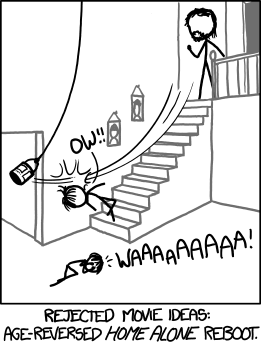
Home Alone

Starring Macaulay Culkin.
28 Jan 22:17

remembrance of kidal

Jon Schubin

So this is a beautiful piece of writing. And a great insight into the cultural forces at play - but necessarily driving - the complex, evolving situation in Mali. Next year in Bamako?


photo: b. conrad lau


“Is it true that during the Tuareg rebellion that started in 1990, he waged war against the Malian government with a Kalashnikov and a Stratocaster strapped across each shoulder? ‘That’s exactly what happened,’ he says softly.”

“Sands of Fate.” Peter Culshaw, Feb. 18 2007

1.

Kidal is just about two miles square. It is a tiny unassuming blip on the map. Insignificant and secreted away in the far Northeastern corner of Mali, it feels shuffled aside, quarantined by empty desert. It’s a misleading image, this figurative isolation and unimportance. Not long ago, the region was the heart of a rebellion that threatened the North of the country. Lying along a major trans-saharan route, truckloads of refugees from war-torn states and smugglers of South American cocaine pass just outside the town in the night. And recently, the surrounding desert has become a haven for the Algerian franchise of Al-Qaedi.

Nestled in the Adrar D’Ifoghas, a massif of craggy black rock mountains and scorched earth, Kidal is the administrative and cultural home of the Malian Tuareg. The Tuaregs have long figured into Western romantic indulgences, mysterious and dangerous “blue men” living in the inhospitable Sahara. The image is one that has been thoroughly explored and exploited, particularly by the French, in that bizarre inversion where former enemies become the celebrated heroes of the new generation.

The most recent fascination with the Tuareg is less about nomads and camels and more to do with guns and guitars. The electrified Tuareg rebel rock, epitomized by the band Tinariwen, has traveled far beyond the city’s edge. Thrust into the world, the musical export has done it’s best to convey a reality, though mired in exoticism and the journalistic hyperbole. Yet the distinctive culture of the guitar continues to thrive, becoming the characteristic sound of the urban Tuareg – and like Kidal, subject to the myriad of forces shaping the town.

2.

Crammed inside our little vessel, we shake and clatter up into the mountains. The vehicle is some modified abomination crafted specifically for the voyage, the bulky engine of a flat bed truck dragging some semblance of a passenger cab onto which teetering baggage has been affixed. The roof bulges and buckles under the loaded weight with a loud metal banging. I try to sleep. The tumultuous kinetics of the vehicle make it difficult. Cemented in claustrophobic immobility amongst sacs of rice, bags of clothing, imported blankets, and plastic coolers of fish, we rumble off to the end of the world.

The journey is slated to take ten hours. Swirling with dust and humid sweat, we continue well through the day and into the evening before we crest the last ridge, a massive boulder-strewn field, to enter Kidal. The mud brick houses lay out in the depression, the same color as the drab earth, as though the town had simply risen from the ground. Though an uninspiring sight, a silent cheer wells up as we roll into town.

The city of Kidal was founded some hundred years ago as a French military fort. The remoteness of the location suggests a colonial Siberia where despondent captains were banished for egregious transgressions. Perhaps they were simply drawn to the silence of the desert. But over the years the city has grown to far surpass the original fort, the remnants of the era resigned to a few crumbling buildings of pale brick, unremarkable and encompassed by the town.

There is a prodigious use of space that is common to desert towns, and the houses sit in huge courtyards behind high mud walls. The blocks are long. Little trickles of drainage from the bath wander out into the street, cutting ravines into the dirt road, pockmarked and uneven. The neighborhoods that radiate from the center of the town, bustle with unofficial commerce. Tired women in shoddy stalls stand watch over shriveled and sunken vegetables, while nearby men slow roast meats and wrap orders in paper torn from old concrete bags. Sonrai and Bambara boutiques populate every corner selling everything and nothing: tea, charcoal, phone credit, and wine bottles of gasoline. The central market is the functional center of the city, alongside a bank, a school, and a small garden of struggling twisted acacia.

Out at the edges of town there are a few of the development and governmental offices of a modern but undeniably paltry construction. Radio antennas sprout from the brackish stucco, satellite links and communication to the greater world. White statuesque SUVs are parked outside, marked with logo and cryptic agency acronyms. A lone guard lounges outside each office with bored indifference, leaning on an elbow while sipping a tepid cup of tea. From there, the city diminishes at the edges of town, to a few lonely houses, before it drops away into the desert. In the distance, the desert ebbs in low foothills, and the west is marked by the peaks of three small mountains.

3.

The sandy streets are crowded for the evening promenade. The sun, relinquishing its grasp on the town, sinks into the narrow band of dust that floats on the horizon. The air is filled movement, puttering motorbikes and scooters, the shuffling walk of the elderly and the hurried pace of youth. The young students wear turbans as an accessory, marching along the street, the girls in subdued shawls that sparkle nonetheless. Hotshot military recruits in pale camouflage tear down the street in gun mounted land cruisers. Chattering maids from Dogon country giggle in unknown languages balancing bags on their heads. Parading through the chaos and clouds of dust, the promenade passes with bold indifference.

Aghaly, one of Kidal’s young musicians, and I pass the center market, with its proliferation of imported Chinese made stuff, its smattering of musty boutiques and leaning stalls descending back into narrow alleys. The commerce has ended for the day and ghostly donkeys mope the abandoned rows amidst the wind tossed trash. Giant trucks, dark green behemoths of flaking rust idle nearby, belching black puffs of smoke. In their shadows, the exhausted drivers slouch on the ground against the heavy wheels, fanning tiny charcoal stoves until the tea froths and boils over to a chorus of clanking metal and cursing.

Aghaly is a tall and lanky character. He punctuates his speaking with exaggerated motions, comic were it not for his overarching cool. Wearing a pristine white tracksuit and sneakers, his gaze is hidden behind a pair of mirrored sunglasses perched on his nose. Aghaly is a member of the guitar band Tamikrest, and as we stroll along he occasionally interrupts with a forgiving grin as he responds to the myriad of salutations, the chattering young girls, and the honks and shouts of passing motorbikes. He exudes the confidence convincing of a local star.

Tamikrest was formed in Kidal but has been recently launched into the international circuit. Their label has dubbed them “spiritual sons of Tinariwen,” suggesting either hopeful ambitions or clever marketing. It is a difficult road to follow in the massive footsteps of their predecessors, and there is no shortage of other bands attempting to do the same. Tuareg guitar is rooted in rock gods Tinariwen, a collective of the musically inclined from the Kidal region who forged their sounds in refugee and military training camps in the 1980s. When they returned home, they settled into the cities and the droning nostalgic guitar integrated itself into the fabric.

Tinariwen themselves are a recent global export with only a decade of international recognition. But here in the desert they are historic figures with nearly thirty years of popularity. Their songs are not simply popular music but literal folk anthems, ingrained in the collective consciousness. Tamikrest has adapted the stylings of their predecessors, the electric guitar with the wistful pentatonic melodies. But rather than rebellion, these are romantic ballads enrapturing and resonating with the youth.

I prod Aghaly to speak to me about music, but our conversation flounders and drifts back to their upcoming European tour. “We’re going to play in Paris,” Aghaly says, his nonchalant fame betrayed by a wide smile spreading over his face. “The other day, I spoke to a journalist…”

We arrive at a friend’s restaurant adjacent to the market. Sitting along the wobbly wooden benches are a few acquaintances of the group, the location one of the common rendez-vous points of the band. Errant goats pick through the strewn trash in the road, dodging the noisy roar of the passing motorbikes.

“Tamanrasset isn’t like this,” Aghaly begins, gesturing despairingly. “There are paved roads, streetlights. I came here in 1996, you know. I didn’t grow up here.”

Aghaly, like many of the youth was raised in forced exile. The inter-ethnic conflicts of the last decades transformed Kidal into a militarized zone, a sort of occupied territory. Many of the Tuareg fled to the larger desert capitals. But in the past years as the city has returned to a tenuous peace prompting a huge return, and in just ten years the population has nearly doubled. The youth have brought a new element to the backwater, sporting new fancy clothing and cellphones, demanding the inevitable Western influences and contagious cultural trappings. There’s a few local Tamashek rap groups that have been experimenting with the sound — Tamikrest themselves recorded one, but it was later cut from the album in an effort to preserve authenticity.

The urban Tamashek youth with their multicolored turbans and sharp clothing are from the desert, but not a few have spend their time in the capitals — the more affluent shooting off to Bamako or Tamanrasset for a brief respite from the desert. And while there is always a brief visit to the desert, the nomad existence couldn’t be further from the life of the town.

“In one of our songs, we tell people to come back. To return to the desert,” he explains. “We say, ‘You’ve quit your life in the desert, and come to the city because you think life is easier. But one day you’re going to regret what you’ve left behind.’”

“You want people to return to the nomadic life?”
I ask.

“No,” he says, confused. “The desert — to return to Kidal.”

A friend nearby laughs. “He means Kidal. Look around, this is the desert.”

“The nomads are the real Tamashek.”
he says. “We’re…bootleg Tamashek.” They laugh.

4.

The nomad Tuareg are spoken of by their cousins in the city with a mixture of mythic reverence and pitying superiority. The Arab word for country person, “ezeebekad”, is used here in the pejorative. They occasionally drift into town, old haggard dusty men, withered and aged with deep lines in their faces. Carrying staffs and rusting swords, they herd terrified braying flocks of goats and sheep through the busy street. In the roar of the city, they seem anachronistic, as though they’ve wandered in from some other world.

Like an island resting in a vacuous wasteland, Kidal easily lends itself to poetic indulgence. The metaphor is an intrinsically attractive one. The borders of town, though unmarked, are dotted by pup tents and armored vehicles, police and customs officers guarding the perimeter from some unknown and unseen enemy. Outside this line, the city suddenly falls away. The buildings and streets devolve into featureless tracks of brush and spindly trees. The roaring hush of emptiness fills the air. Journeying through the empty sands is not unlike being tossed upon the sea. The air even smells of salinity, and one can almost hear the hushing crash of waves just over the next ridge.

At the end of the cold season, I find myself huddled down under a tent in the Sahara. There are but a few families here, a handful of adults and twenty or so children. The camels leave after the first prayer and wont be seen from the camp until sunset. They wander further from home, ambling along and ripping off woody thorns with their mouths and rendering them splinters. The days at the camp drag by at a geological pace. The days are filled with flies. They’re incalculable in number, relentless, incessant. Like most things, after awhile I don’t much notice them anymore.

In the early evening the children gather about my tent. One of the visiting neighbors is fiddling with an ancient cassette deck. He cracks it open and fumbles with the grossly oversized innards, stripping a wire between his teeth. The children sit and watch the operation attentively. The radio sputters to life with a recording of Tamashek guitar. The cassette is old and warped by consecutive seasons of Saharan sun, and the sound warbles in and out.

Later in the evening the stars are spread out over the sky. Over the dark mountain silhouette to the East we can see the faint dissipated glow of Kidal. The younger children have never been there. They reclaim the radio left by the neighbor and the music crackles. Akli and Teyti jump to their feet, pulling their cousins, short little girls all swathed in blue robes. They dance in an imitation of a concert in Kidal, waving their hands in a fury, while the girls clap and yell, crying in ululation. The youngest, Maroniya, has torn a scrap of paper into confetti and she tosses a handful over the dancers while yelling “Money, money!” as the boys laugh. Exhausted, the radio sputters and coughs. The music wails and falls silent. Akli examines it for a moment, then curses something in Tamashek before hurling it out into the darkness.

Before I depart two weeks later, I find the pieces of the radio sticking out of the sand, already buried by the desert. When I return to Kidal the city seems bigger.

5.

We’re sitting around at Ahmed’s compound in the late evening when band member Yusuf arrives. Thin foam cushions have been thrown down in the dirt courtyard in a semicircle around a fire. Shadows dance on the chest high mud walls as a few of the band strum absently at guitars. Yusuf greets the others and slinks into the darkness. A few words are exchanged in Tamashek, followed by a sputtering of laughter. “Yusuf, he has no hair! Touch his head.” Hiding below his turban his thick bouffant has been reduced to nothing, the initiative step of the military recruitment.

Any conversation of Tamashek guitar will inevitably at this point delve into a description of Tuareg rebellion. In its entirety the subject spans decades of nearly incomprehensible geopolitical complexity. Vaguely rooted in long standing ethnic conflicts that plague Africa, the rebellion erupted in the 1960s as the new post-Colonial states divided the historic Tuareg territory. In each country, a minority confined to the inaccessible drought stricken wastes, the Tuareg were quickly marginalized and forgotten. Independence had arrived with promise of autonomy and wealth and they felt deceived. Series of violent rebellions and counter attacks continued, fluctuating in intensity until the present day.

Often the rebels sought refuge in the remote regions encircling Kidal, so as to designate the region as the “heart” of the rebellion. Yet the number of young Tamashek of Kidal in service of the former enemy is a head scratching contradiction. The rebellion may be passe, but the reprehensible acts have yet to be confined to the dustbin of history. Positions in the military account for a staggering majority of jobs for unemployed youth in Kidal. In essence, this is an exact result of the rebellion — one of the stipulations of the peace accords. Secured placement in paid positions, the Malian state gained useful allies in securing the desert.

Yusuf is a quiet shy kid, not hardly the type cut for military engagement. As the band jokes and plays with the guitar, Yusuf plays with his cellphone. He cycles through the videos, the montages and “souvenirs” that are traded via Bluetooth transfers. The early songs of Tinariwen were traded too, albeit in a different fashion, via a network of cassettes. One of the more notable montages is a slideshow of photos of fresh faced Tamashek recruits in Malian state uniform proudly posing with all manner of weapons. Incidentally, the accompanying song is one of the rebel anthems composed in the Libyan training camps — when fighting the Malian state. The images continue in this incredulous fashion as the photos of the military recruits are interspersed with current rebel-in-exile Ibrahim Ag Bahanga, gun mounted beige Toyota Land Cruisers, a United States military tank, even a screen capture from “24” of an anguished Jack Bauer, gun drawn.

If the massive enrollment has accomplished anything, it’s in the dispersal of the youth in a second exodus. But it has also aided in a distinct hyper-militancy, and a fascination with weaponry. The image of the Kalashnikov and guitar is presented to exhaustion by Western journalists, unable to pass on the alluring visceral combination of rebellion and music. But the perpetuating story is not just a Western fabrication, but as a functional mythic ideal even in the desert, in the age of broken rebellions.

“Take the guitar,” someone says, encouraging Yusuf to play for us. Yusuf, the new recruit, takes the guitar and plays a song. Fittingly, it’s one of the old rebel anthems.

6.


“And now what shall become of us without any barbarians?
Those people were some kind of solution.”

- Waiting for the Barbarians, Constantine P. Cavafy

In the blistering sun of midday, we retreat inside. Between thick mud walls, the cavernous dark space is just barely distinguishable. A diffuse light filters through a sheet hanging over the doorway. My eyes slowly adjust to the opium den haze, the room is crowded with youth sprawled out and sitting, half asleep, or playing away the time in the fuzzy haze.

The ishumar (a corruption of chômeur, french for unemployed), have the ability to pass the days in impassive silence and immune from the boredeom from information intensive existences in the west. A unique feature to these slow moving corners of the world. The repetition leaves the days begging for distinction amongst the unrelenting cups of deeply bitter tea, throat searing knock off cigarettes, and giant bricks of brown hashish. Clarification is revealed through the rare punctuated event: the “day of the baptism in Al-youn”, the “night of the Minister’s soiree,” or the “concert in Bellabougou.” Sayni asks me to play back a recording from “the other night, you know, when we made tea…” I make a sarcastic quip that is not acknowledged.

Ahmed is the leader of the group Amanar. He is tall and potentially imposing, but soft spoken and of few words. Always clad in a turban, his age is uncertain and both of his state identifications bear different dates. He “probably lies somewhere in the middle,” which would place him in his late thirties. His compound is divided into two houses. One, where he lives with his wife and two children, and the other, which houses most of the itinerant band members and family members that wander through town. The latter appear and disappear unexpectedly.

A professional musician, he lives by the guitar. The old griots of Kidal, West African traditional bards who serenaded their courtesans for favors are out of fashion, resigned to a historical footnote. Now it is the guitar bands who hold sway, and the few Kidal bands compete in a sometimes vicious struggle for paying gigs. As modern entertainers they are not strictly bound to the rules of the old musical caste and are almost expected to speak candidly. Ahmed goes as far to even critique the elements at the foundation of the musical creation. “I went to Libya, I trained in the camp. What have we gained in the rebellion?” Ahmed scoffs. “The first thing they do after they reach an agreement is send Tamashek into the military. If they really were about helping the Tamashek, they would build a university here.”

In the midst of the inter-ethnic open violence of the rebellions, distinctions were simple. Bambara recruits tramped off into the town and the surrounding brousse, gunning down families, poisoning wells, raping and carrying out the standard ethnic genocidal activities. With the end of the dictatorship, a slow integration of Tuareg into the social order of the state was initiated. Accompanying this was a huge influx of international aide. Kidal soon saw the emergence of a new upper class of Tuaregs, a wealthy elite working for state offices and non governmental foreign agencies.

“People say we should sing about rebellion. Why? So I can tell the young kids to go out into the mountains and grab their guns? Until there are no Tamashek left?” The others in the room sit quietly while he is speaking. “I say that the desert was good before. I say that we need more intellectuals. I say, watch out for the Tamashek who don’t understand the word democracy, especially the politicians.” The youth, the young members of the band sit around in respective silence. It is a one of an old custom still observed as Ahmed speaks. “This,” he says, pausing for effect, “is the real rebellion.”

7.

“My poor little soul who, despite her beauty will disappear one day,
What nostalgia she’ll leave…” “Izelamine” Amanar

As a sound born in exile, the guitar is not from the city. Even the name by which it is often referred, Teshumara, invokes the Tamashek word for the unemployed and wandering voyager. But as the city builds out in the desert, the wail of the guitar has merged with the life of electrified urbanity. Nowhere is this more apparent than the creation of the “guitar” – a word that indicates both the music and the event of live performance.

The dark has fallen over the city when the first quivering notes of the guitar ring out. Crouching around bowls, in the respective pause between grabbing a handful, heads cock slightly, determining the origin of the sound. Ah, guitar, they conclude, with a knowing smile. The sound continues, careening over the little square mud houses with their satellite dishes, over the hill of the slave quarter and the stone grave mounds of the unknown dead, across the sand river and between the swaying palm, past the military barracks before diffusing and disappearing into the vastness of the desert.

As is the custom, a few of the band members have been sent to the venue preceding the concert to announce the guitar to the town. The crash of drums and the bending pitch of a tuned note, the microphone pops and thuds as the equipment is tested and the electricity hums is a call to the city. Music travels far in the night of the desert. In years past, the thump of the tende, the low drum would be used to transmit messages in sound.

To the source of the siren call, the denizens of the town slowly make their pilgrimage. White headlights of motorcycles streak by, the others travel on foot, ghostly shapes carousing through the dark streets. At the “Maison du Luxembourg,” a bright lamp at the far Eastern edge of town, a crowd is forming. As the name suggests, the “Maison” was a gift from the government of Luxembourg and over the past few years has become Kidal’s premier venue. It is a pinkish fortress, the alternating battlement frieze reminiscent of a castle. A wide set of stairs lead to a series of heavy wooden doors, ornate and decorated with insets of etched glistening metal, massive doorknobs of rounded steel. The youth who cannot afford the ticket line the outside, lurking about, bickering with one another and awaiting a momentary lapse of the door security to rush by. The Bambara policemen working the front door is clad in a uniform of royal blue and black beret. He has a long club, and occasionally chases back the youth in a snarl in a continuous game.

Through the door, the crowds of the well dressed of Kidal have gathered in an ornate display. Assiduously applied perfume wafts in the air admist the rustling swish of excessive fabrics. The men are wrapped about in lengthy turbans tied to a perfection — a menagerie of greens, oranges, beige, and pinks, long shirts of sparking bazzin that sway down past their knees. The women are not hidden as much as exuberantly accesorized by the material that hangs around their faces, glistening shawls that ululate in the light. Not the solid dark indigo of the desert, but intoxicating patterns and psychedelic technicolor.

The open air courtyard has been filled with chairs, but for the section directly below the stage. Large mats and rugs have been laid down here, forming a sizable rectangle, a small dancefloor. As the announcer takes the microphone, he makes a call for the next dance group to step to the front, to which a few young men rush forward. He makes an impassioned plea for “three at a time please.” The six men stand their ground stubbornly, each refusing to relinquish his place. The announcer pleads, the band strikes a few awkward riffs. Finally, a few of the party step down and off the mat, blushing and joking. “Merci, merci,” the announcer calls, announcing the group. And the band begins to play.

The men clap their hands and shuffle about for a moment, before a few women jump forward and bustle out of the crowd to accompany them. Standing across from one another, the three couples dance, a respective distance apart, a simple step side to side, waving their arms in striking poses. Turbans flail about as the women deftly turn and trace circles with delicate wrists, sending the billowing fabrics waving. Suddenly, the refrain breaks, and the two sides step towards one another and spin about, switching sides, to the shouts and hollers of the crowd. The band plays on.

The contemporary sound of the city, the soiree continues through until around midnight. The band, noting the hour, breaks into their final song, a trademark track that always seems to indicate the end of the guitar. The floor and the aisles are filled in frenzy as everyone takes to their feet to enjoy the last dance. Not halfway through the song, in a chaotic exit the women pour out the doors and down the steps, the young men in pursuit, vying for the chance to offer a ride home on the back of their polished motorcycles. Before the song is even finished, the “Maison” is nearly empty.

Outside in the night, near the bottom of the steps, an old woman is dancing. She has unkempt grey hair dangling about her bare shoulders, her clothing hanging loosely like her aged skin. She’s shouting and flailing wildly, a wide smile on her face. While in reverie, she pauses occasionally to shout unintelligible declarations and chastise the youth, before turning her eyes upwards and continuing her vigil. She is a fixture in Kidal, like the old fort, the boulders at the edge of town, the ancient crocodile, the mythic ghosts. They say her child was killed in one of the old rebellions, and that it drove her insane. No one pays her too much mind. She keeps dancing into the clamor of the final notes as the youth rush out into the street and fire up their motorcycles, spinning about in wide circles, driving the dust into the sky that glows like the day.

October 2010

The post remembrance of kidal appeared first on sahelsounds.

28 Jan 21:29

Unspeakable Travel Possibilities

by John Pasden

ChinesePod Jenny was telling me that she read about a story told by the CEO of C-trip (携程). C-trip was trying to make a Weibo post about “independent travel” (i.e. not travel with a tour group). In China, this kind of travel is called 自由行. 自由 means “free” (as in freedom), and 行 is an abbreviation of 旅行, which means “travel.”

Well the word for “freedom” tripped the censorship filter, and the post was rejected.

ziyouxing

So they figured that they could alter the word 自由 by using the character 游 instead of 由. 游 is a part of 旅游, another word for “travel.” That way you get 自游行 instead of 自由行. Identical pronunciation, and the meaning still comes across pretty clearly.

The post was rejected again, for having tripped the filter.

The reason is that they had unintentionally created the word 游行, which is the Chinese word for “demonstration” (as in the protest kind).

Whether or not the facts are 100% accurate, Chinese people find this kind of story quite amusing. There’s not much you can do about the current situation but grin and bear it. One does wonder how much longer this particular charade will carry on, though…

[I don't have a link to the original article; please share it if you have it!]

28 Jan 20:17

North Carolina woman admits role in marijuana conspiracy

By Steven Cook
Gazette Reporter

A North Carolina woman accused of trafficking an estimated $3 million worth of marijuana through Saratoga County admitted to her part of the conspiracy Tuesday, authorities said.
28 Jan 17:07

Al Jazeera Is Hiring

by Kara Bloomgarden-Smoke
Jon Schubin

If you are in journalism, and want a job, definitely go here. Great place to work.

AljazeeraLogoLooks like someone is hiring. Al Jazeera just posted a list of over 100 job openings on their website for the soon-to-launch new U.S.-based news channel.

At the beginning of the year, Al Jazeera Media Network announced that it had acquired Current TV, the network founded by Al Gore, and would use the network's distribution system to launch a new U.S.-based news channel for American audiences. The new channel will be headquartered in New York, where all of the current job openings are, although they noted that they were planning to expand throughout the US. The announcement also said that Al Jazeera planned to double the network’s U.S.-based staff to more than 300 employees.

“By acquiring Current TV, Al Jazeera will significantly expand our existing distribution footprint in the U.S., as well as increase our newsgathering and reporting efforts in America," Ahmed bin Jassim Al Thani, Al Jazeera's director general  said in the January 2 announcement.

So, good news for all you job-seeking associate producers, executive producers, executive sports producers, makeup artists, senior makeup artists, graphics producers, investigative reporters, correspondents, news editors, online news editors, interview producers, line producers, online blog editors, online writers, package producers, researchers, social media editors, wardrobe stylists...well, the list goes on for seven pages.

Bottom line, Al Jazeera is staffing up.


28 Jan 16:38

Would You Live in One of Mayor Bloomberg’s 300-Square-Foot Micro-Apartments?

by Matt Chaban
Jon Schubin

Actually a reasonable idea. This is how people want to live. Making apartments artificially big just leads to higher prices and illegal sublets.

New York apartments are notorious for being about as big as a shoe box, but those were typically 19th century tenements. Today, the Bloomberg administration brought tiny apartments into the 21 century with My Micro NY, the winning entry in a competition launched last July to create a miniature housing model for the city.

Currently, it is illegal to build a new apartment smaller than 450 square feet, but the new program seeks comfortable, attractive housing units between 250 and 375 square feet. The city's Department of Housing Preservation and Development received 33 different entries for the project, which will be built on a city-owned site in Murray Hill.

The winning design came from Monadnock Develpment in partnership with the Actors Fund for Housing Development and Capsys, a modular housing builder based in the Brooklyn Navy Yard. The design is by New York firm nArchitects. It will be constructed on a plot at 335 East 27th Street, which the city is selling for $500,000.

The project will also be the first modular development in Manhattan, following on the Atlantic Yards project in Brooklyn, which suggests that prefabricated construction may indeed take hold as a new model for housing development in the city, at least on the low end. Some 40 percent of the units will be set aside for low- and middle-income tenants, with prices ranging from $940 per month to $1,800 per month.

"We've chosen Manhattan because more than three-quarters of its homes are one or two person households," Mayor Bloomberg said. "We already have the population seeking housing for a small number of people, we just don't have the apartments to house them."

(We'll have more details shortly, as the unveiling has just wrapped up, but The Observer is well aware that all you, dear reader, care about, is what these apartments actually look like, so here they are.

28 Jan 15:06

Fight Over Bloomberg’s Soda Ban Gets a Little Bit Racial

by Joe Coscarelli

Time is running out to drink sodas as big as babies, with the city's ban on sugary drinks over sixteen ounces at certain stores and movie theaters set to start in March. As the clock ticks, those who stand to lose money because of the new rules, along with those who see Mayor Bloomberg's quick and quiet "health panel" as undemocratic, are counting on legal challenges. Joining the charge led by the soda lobby and movie theaters at this crucial juncture are the NAACP and the Hispanic Federation, which argue that the ban unfairly affects minority businesses and "freedom of choice in low-income communities."

Yes, these groups realize that obesity is more prevalent among blacks and Hispanics, but in new court papers they suggest more physical education in the city's schools instead, the AP reports. But the bottom line is the bottom line, they claim: "This sweeping regulation will no doubt burden and disproportionally impact minority-owned businesses at a time when these businesses can least afford it." A group of Korean grocers have also sued to block the ban, which would exclude 7-Eleven (and the Big Gulp), along with other supermarkets and convenience stores that don't have to follow city rules.

From another side, five members of the City Council have argued that their legislative body is "the proper forum for balancing the city's myriad interests in matters of public health," not Bloomberg's board of experts, which promptly passed the proposed measure. A court hearing on the ban is scheduled for today, with opponents counting, at least in part, on a diversity of tactics and strength in numbers.

Read more posts by Joe Coscarelli

Filed Under: nanny bloomberg ,soda ban ,naacp ,health

28 Jan 13:59

Why Do Rich People Love Hedge Funds?

by Kevin Roose

Carl Richards has a post over at the New York Times' Bucks blog in which he puzzles over the enduring appeal of hedge funds, despite the fact that they have historically underperformed the S&P 500. Why, he asks, are people paying exorbitant fees to hedge-fund managers who don't even make money for them?

Richards takes a stab at the answer in a few ways. First, he implies that there's an element of groupthink in Hedgistan, with investors all chasing increasingly complex hedge-fund strategies because "the more complicated and secretive and exclusive it is, the better." He also gets at the false correlation between exclusivity and superior returns: "People want to believe there’s a better way of investing that’s only available to a select few."

I think those are both true, to an extent. But I don't think it's correct to draw the sweeping conclusion that rich people are dumb and desperate to get richer, and therefore easily fooled by hedge-fund managers bearing Powerpoint decks and sleek Brioni suits.

First, I question Richards's assumption that "people" — as in individual, high-net-worth investors — are flooding into hedge funds unabated. Look at this chart from a Citi report last year, for example, which shows that the percentage of hedge-fund assets coming from individuals and family offices is actually down since the crisis, while the amount of money hedge funds get from institutional investors like pension funds and endowments has overtaken it.

What this tells us is that the money flooding into the likes of Greenlight Capital and Pershing Square and SAC Capital (well, until recently) is increasingly coming from sources that are forced to invest in those firms. If you're the chief investment officer of CalPERS, a huge California pension fund, and your hedge-fund allocation is 2 percent — meaning that your board has said that 2 percent of your total assets must be invested in hedge funds — you don't have a choice to invest in other stuff instead. You can pick one manager over another, but you're not "choosing" to be in hedge funds as a category, except at the yearly meetings where you and other board members shift around the fund's allocations. (Of course, these allocations rest on their own tenuous logic. But that's another post.)

And contra Richards, who believes that investors are happy to be "paying through the nose for the privilege of investing in hedge funds," I think it's clear that most hedge-fund investors are averse to huge fees and are using their leverage to knock them down. Look at the way Réal Desrochers of CalPERS has used the huge size of his fund to hammer out special fee-lowering arrangements with his private-equity managers. This kind of thing is becoming more prevalent among institutional investors as hedge funds continue to underperform, and it shows that most of the people who invest in hedge funds do care how much they're being charged for the privilege, and are actively trying to bring those fees down in line with performance.

Individuals seem to care about fees, too, a phenomenon best evidenced by the way that the fund-of-funds — a horrible, fee-heavy way of investing in a fund that then invests in other hedge funds, taking its own fees in addition to the ones the hedge funds charge — is mostly dying out. This Citi chart (which Felix Salmon pulled last year) shows the declining popularity of the fund-of-funds, and perhaps implies that investors are wising up:

So, to answer Richards's question ("Why do you think people still invest in hedge funds?"), I think you have, on one hand, a bunch of pension funds and sovereign wealth funds that are duty-bound to make a certain amount of money for their members, and would rather use a single-digit fraction of their cash pile to swing for the fences in Hedgistan (investing in a fund that might gain 80 percent in a year) than eke out 5 or 6 percent gains in plain-vanilla funds. I think you have, on the other hand, a set of high-net-worth individuals who want to invest in hedge funds because it makes them feel special and exclusive and gets them invited to cool parties, but are increasingly trying to scale back their obviously stupid investments (funds-of-funds) in favor of slightly less stupid investments.

There's another obvious part of the hedge-fund equation, which is that hedge-fund managers are — on the whole — pretty smart, and really, really, good at selling you their ideas. Look, for example, at the way Ray Dalio of Bridgewater Associates explains the concept of "risk parity," which he says allow Bridgewater's investors to use leveraged bond derivatives to offset equities losses. It's very convincing, and even though I don't know what risk parity is or how it functions, if I'm the CIO of a midsize pension fund, I'm inclined to give my money to Dalio even if I don't fully understand what he's going to do with it. Investing at the scale of a pension fund is a division of labor, and if I can't fully get my head around Sector X or Bond Derivative Y, I'm inclined to pass that responsibility off to someone who does understand it deeply.

Now, this approach to portfolio management contains flawed logic all its own. But it's hardly as simple as wanting to feel like a VIP at all costs.

Read more posts by Kevin Roose

Filed Under: dispatches from hedgistan ,business ,wall street

25 Jan 23:48

Stop What You Are Doing And Look At Ponies In Sweaters

Look at their adorable high-fashion hairstyles! With Scotland temperatures hovering around freezing, these Shetland ponies are ready to brave the day.

Source: dailymail.co.uk

As part of Scotland's latest tourism campaign, "Visit Scotland," Fivla and Millhouse were commissioned to prance about on camera in these dashing cardigans.

Read more about their style over at the Daily Mail.

Source: dailymail.co.uk

Source: dailymail.co.uk

View Entire List ›

25 Jan 21:04

Downton Abbey Recap: The Tragic Fire and the Hot Footman

by Jen Chaney

At this moment in 2013, it’s not a good time for potentially untrustworthy fighting Irishmen. You all know the reasons. Let’s not rehash them here.

Coincidentally, in Downton Abbey’s version of 1920, it’s also a low moment for a less-than-forthcoming fighting Irishman. That’s because Tom Branson — former Downton chauffeur, husband of Lady Sybil, and an Irish Republican who refuses to wear proper white-tie attire because REVOLUTION! — has gotten himself into some trouble after participating in what I’ll politely call an arson-oriented protest at an aristocratic family’s Dublin castle.

Did Branson start the fire? No, Branson says when first questioned by Lord Grantham, who’s in epically pissed-off mode. Branson wasn’t even there. Well, okay, he was technically there. But he felt really, really bad about it. And it’s not like he planned to set that fancy-pants palace ablaze. Well, except for the part where he went to a bunch of Irish Republican meetings beforehand to discuss how to set the fancy-pants palace ablaze. But, like, Lord Grantham, Tom told everyone it was a super-bad idea.

In summary, to explain all this by slightly altering the words to The Office’s take on a Billy Joel song: “Branson started the fi-ya!” Even if he didn’t light the match, he was an accessory to fire-starting, which — as we all learned that time we played a half-hour Prodigy set at a 1996 company holiday party— is just as bad, especially when it involves fleeing the country, leaving your pregnant wife, and skirting criminal responsibility for burning down a rich man’s house by seeking refuge at another rich man’s house. You can’t blame Lord Grantham for shouting, and I quote: “Good God all mighty! You abandon a pregnant woman in a land that’s not her own? You leave her to shift for herself while you run for it?” (You can blame Lord Grantham, however, for making disparaging comments about Catholics that are apropos of nothing but foreshadowing.)

So is Branson buggin’ you? He doesn’t mean to bug ya, even though he won’t shut up about his politics. Really, he does have every right to feel disdain toward the elites preventing Ireland from securing its independence. It is troubling, though, that he’s channeled that disdain into acts of destruction far, far worse than trying to serve nasty soup to a British general. And we all should be highly frustrated by this simple fact: Given his commitment to his cause, he never should have married Sybil in the first place. A person simply cannot protest the U.K. equivalent of the one percent and also be one of them.

That underlying message was just one part of a Downton Abbey episode that was all about the tension between the haves and have-nots. Sure, that’s basically what Downton Abbey is about every week, but in this fourth hour of the third season, the messy interactions between the blessed and the bereft came into even sharper focus.

Ethel the housemaid-turned-desperate-prostitute gave up her son Charlie to his grandparents, the late Major Bryant’s wealthy and compassionate mum and the late Major Bryant’s wealthy and flagrantly evil dad, who apparently has memorized the names of every client of every bonnet-wearing hooker in town. (Wonder how he knows that, hmmmmm?) It was a heartbreaking development as well as a maddening one because — BING-bong. Cousin Isobel? The doorbell’s ringing and both logic and your conscience are standing there wondering why you didn’t just give this poor woman a job and let her keep her cute little lad and clothe him in wee British rompers from now until he passes his O-levels. Is Isobel trying to keep some separation between herself and Ethel so the other unfortunate women she works with will understand she’s not the Mr. Drummond to their tragically slutty Arnold Jacksons? Is she afraid to take her in because doing so would mean the Crawleys might have to — gasps while clutching her collar in a Mrs. Hughes–like manner — use the word PROSTITUTE on a regular basis at the Downton estate? Or were the Downton Abbey writers just forcing Isobel to be limited in her generosity so we’d all cry when Ethel said good-bye to her boy? If it’s the latter, well, mission accomplished, Julian Fellowes & Co.!

At this point, I could delve into all kinds of details about the snore-inducing excuse for a plot thread between Anna and Mr. Bates. Instead I’ll just say: no letters, sadness, then TONS OF LETTERS. Because who cares about all that “You’ve Got Mail” business when, butter my scones and call me Lady Lovepump, Hot Jimmy has arrived.

Hot Jimmy is Jimmy Kent, the new footman that Carson hired even though Downton is being wildly mismanaged and no one should be hiring anyone. (More on that later.) Ah, Jimmy Kent, your name is the same as every unattainable sixth-grade crush in the history of elementary school romance. Your mouth is even more seductive than the lips of Kemal Pamuk. And your confident swagger makes it quite clear that if Alfred is Downton’s Landry Clarke, then you, Jimmy Kent, are its Tim Riggins, just with shorter hair and, hopefully, less alcohol in your system.

The minute this guy walked into the servants kitchen for the first time, you could practically hear the housemaids’ lady parts sing, “Oh, sweet mystery of life” like Madeline Kahn in Young Frankenstein. When Thomas “accidentally” saw Hot Jimmy without a shirt on, his man parts pretty much did the same thing. That means that unless Jimmy is bisexual and agrees to have an open, steamy relationship with everyone on the Downton premises, including Mrs. Patmore and Molesley — which Jimmy can’t do because that would make him a PROSTITUTE — his presence is going to be a problem. Yes, a dreamy, souffle-serving problem, one that complements the attractive soufflé-making problem called Ivy that clearly has just ruined Daisy’s chances with Alfred.

Actually, for a quick second, I thought Hot Jimmy might give Edith a reason to start prancing around the house wearing lip gloss and popping her chewing gum. But no, the Jilted Crawley Sister has no time for such nonsense because she is now, officially, a suffragette. After the Dowager Countess rightly told her to “stop whining and find something to do,” Lady Edith wrote to the local newspaper (ha!) and advocated for all women to have the right to vote regardless of their age and social status (double ha!) and then the paper’s editors printed the letter even though the men of Downton never thought they would (ha, ha, and quadruple ha, suckas!) The way Lord Grantham exclaimed “God in heaven!” when he read the headline “Earl’s daughter speaks out for women’s rights,” followed by Edith’s look of delighted shock, lands in my top three favorite moments in this episode. (No. 2: The Dowager Countess’s dismissal of gardening as a pasttime. No. 1: Carson’s abject fear of electric toasters.)

But before we all get too excited and start planning a NOW march with Lady Edith as line leader, we have to talk about Matthew. Again.

“I sometimes feel the world is rather different than it was before the war,” Matthew announced during a discussion of Downton affairs with Lord Grantham. Gosh, Matthew, I think we all do because someone on this show says it at least once per episode. But what Matthew really meant was: We need to live more simply here, otherwise I’ll have to inherit even more money from some unexpected source, and I’m kind of running out of deceased fathers of dead ex-fiancées.

Yes, Matthew is quickly realizing that Lord Grantham has no idea how to handle his finances, something we all realized two episodes ago when he invested all the family dough in choo-choos from Canada. So Matthew is poised to potentially feud with his father-in-law as well as his new wife, with whom he already seems to be disagreeing about starting a family. (That nursery scene strongly implied that Mary may not want children ever. Which makes sense. It’s hard to imagine Lady Frosty frolicking with a toddler in a bouncy castle, or even her own, non-bouncy castle.)

Matthew, shrewdly, has already formed an alliance with the Dowager Countess in his little game of Money Management Survivor. But things will undoubtedly get contentious soon at Crawley Central, reminding us that even among the haves who live in fancy houses at which some Irish rebels may wish to throw stones, money can still rip people apart.

Read more posts by Jen Chaney

Filed Under: recaps ,overnights ,tv ,downton abbey

25 Jan 20:52

Eater Inside: Qi Thai Grill, Home to New York's Craziest Bathroom

by Greg Morabito

Click here to view the full photogallery. [Daniel Krieger]

Earlier this month, the owners of the Qi Thai restaurants opened a new outpost in Williamsburg dubbed Qi Thai Grill. The restaurant serves classic Thai dishes, as well as special items from Pichet Ong and Sripraphai Tipmanee.

Also of note: The bathroom has a display case with a bunch of dolls having sex in various positions.


Click here to view the full photogallery. [Daniel Krieger]

Here's the sink area, outside the stalls. It contains an old fashioned bathtub that guests can use to wash their hands, plus a display case full of dolls having sex.

Qi Thai by Eater NY


Qi Thai Grill
176 N. 9th Street, Williamsburg
718-302-1499
www.qirestaurant.com
Certified Open