Shared posts

15 Jul 11:27

"Never Go With Strange Children" public information poster, 1977

by About me

This public information poster was ubiquitous during the mid-1970s when there was a spate of cases involving adults being abducted from leisure centres, building sites and nudist beaches.

The police launched a public manhunt hoping that the perpetrator would be swiftly apprehended, but the crimes went unsolved for nearly two years. Terrified grownups would only go outside in groups of four or five and many pubs refused to open.

It was only when a police medium read the entrails of a recently sacrificed tramp that clues were finally unearthed, leading to the arrest of eight year old Steven Benson who had fed his victims to his tortoise, Admiral Twinkles.

When Steven was taken into state care and Admiral Twinkles escaped, it was suggested that the tortoise, which was an illegal immigrant, had used 'Manchurian Candidate' style psychological techniques to manipulate young Steven into subconsciously carrying out his instructions.
15 Jul 11:27

"Stop The Ripper From Killing Again" Police appeal ads

by About me


This police message appeared in national newspapers and as posters in Scarfolk schools, libraries and community centres for occult cloning.

The Lynch case aside, in the late 1970s there was another manhunt underway for the killer of three actresses. The police, desperate to spark the memories of any potential witnesses, planned a reenactment and hired Jonty Lumm, an actor and model who most resembled police sketches of the killer.

During the reenactment Jonty killed the actress hired to play one of the actress victims and the police quickly realised that they would have to engage another actor to portray Jonty in a future reenactment.

Though Jonty Lumm was never found, police reenactments became popular. Scarfolk prison put on its own charity reenactments in which inmates would replay their own crimes for an enthusiastic audience. The 1979 show raised £7,799 for a charity that helped police men and women learn how to read.
12 Jul 00:01

W. Smith newspapers, magazines, stationery, 1979

by About me
Here's a 1979 shopping carrier bag from W. Smith, a leading newsagent, stationers and music shop.

When Winston Smith retired from the Records Department at the Ministry of Truth, he decided to open his own high-street Records Department in Scarfolk.

Daily newspapers were updated every 3 minutes and anyone possessing an out-of-date edition was arrested, prosecuted for dissent, and declared a "Scarfnot" (An "unperson" in Scarfolk).

Books were also constantly rewritten and "unbook" tokens were available. These tokens could be exchanged for any given book's amended pages. Indeed, some books were corrected so frequently that maintaining a single book could run into hundreds if not thousands of pounds.

A book's contents could change drastically. For example, by 1979, the erotic sci-fi thriller, "Affordable Brothel of the 9th Moon of Jupiter," bore little resemblance to its first edition, which was originally titled the "New Testament," a story about a Galilean carpenter who opens a budget furniture store in Sweden.

Most people found it easier not to buy or read books.


Items for sale week of 06/11/1979:

All magazines/comics - 65p:
Women Weakly (Highlighting the disruptive and damaging role of women in society).
Telescreen Fun (A weekly cartoon strip singling out individual children and deriding them for  personal indiscretions).
Rats 'n' Laughs (Hilarious images of people's expressions when hungry rats in cages are attached to their faces. Plus prisoners' letters).

Music dept:
"It's Inner Party Time!" and other public confession LPs & tapes - £3.99.


30 Apr 13:20

Explaining the peace paradox

by The Heresiarch
Much talk today about the so-called "UK Peace Index", a piece of research put about by something called "Vision of Humanity".  It shows that Britain has become "11% more peaceful" over the past decade.  In particular, there have been dramatic falls in the rate of recorded crime, especially dramatic crime - since the middle of the last decade.  The trend is a global one - at the very least, it is mirrored in other Western countries - but the fall in crime in the UK is particularly marked.

The reports led to much head-scratching among the constitutionally pessimistic media, who rely on everything becoming progressively worse.  "Despite the fall in violent crime across the country, the public tends to perceive that Britain is much more violent than it is in reality," reports the Daily Mail, with a completely straight face.  Why might the British public have an exaggerated fear of crime, I wonder? 

Still, there was a crumb of comfort for the Mail, which was able to report "wide variations between dangerous inner-city areas and far more quiet rural regions" (and to dub Lewisham the violent crime capital of England).  But highlighting these unsurprising statistics misses the point that crime has fallen everywhere, even in Lewisham, which was always going to be more violent than the sleepy Norfolk village identified as the most "peaceful" part of the country.  Midsummer Murders is supposed to be fiction, after all.

So yes, crime has fallen.  But why? When crime was rising in the 1980s, it was fashionable to blame Thatcherism, de-industrialisation, unemployment, rising inequality and other economic causes, but as the tooth-sucking Mark Easton was forced to admit, crime has continued its recent downward path despite the economic woes of the last few years and despite the fact that inequality continues to increase.  Easton however has found another convenient Lefty comfort-blanket:

Could it be that global communication, particularly the internet, is having a civilising and calming effect on people's behaviour? We live in an age when, for the first time in history, people from all backgrounds can get an understanding of how the rest of the world lives without needing to leave the comfort of their living room.

This mass socialising may be changing attitudes. In the UK there is good evidence that people are becoming more tolerant of difference and less tolerant of violence.

What this might have to do with the crime-rate is unclear, though it makes a nice change from the usual tendency to see modern communications as a horrid threat.  The internet has also spread a lot of porn, after all, which isn't usually credited with having a "civilising and calming effect" on people.  But perhaps it does.  As I noted, somewhat facetiously, this morning, most violent crime is committed by young males, who are also the biggest consumers of online pornography.  Are they masturbating themselves into a torpor, and so can't find the energy to go out and bash things about?  It's a definite possibility, I'd say.  At the very least, the figures don't lend any support to fears that a generation reared on violent and misogynistic online porn is a danger to society.

The huge fall in drinking among young people over the past decade, another thing the doom-mongers don't like to talk about, may also be connected with reducing crime-rate; but is it cause or effect, or are they both merely manifestations of an increasingly controlled and conformist society?

More excitingly, perhaps, there's the lead pollution theory put forward by George Monbiot in January.  This is the idea, for which there is surprisingly good evience, that the generation that has grown up since petrol was deleaded is less predisposed to violence than those whose infant brains were subjected to high levels of lead in the environment. 

Lead poisoning in infancy, even at very low levels, impairs the development of those parts of the brain (the anterior cingulate cortex and prefrontal cortex) that regulate behaviour and mood. The effect is stronger in boys than in girls. Lead poisoning is associated with attention deficit disorder, impulsiveness, aggression and, according to one paper, psychopathy. Lead is so toxic that it is unsafe at any level.


Who knows, such a theory might help explain the hyper-violence of the Roman Empire, whose population drank water conveyed in leaden pipes.

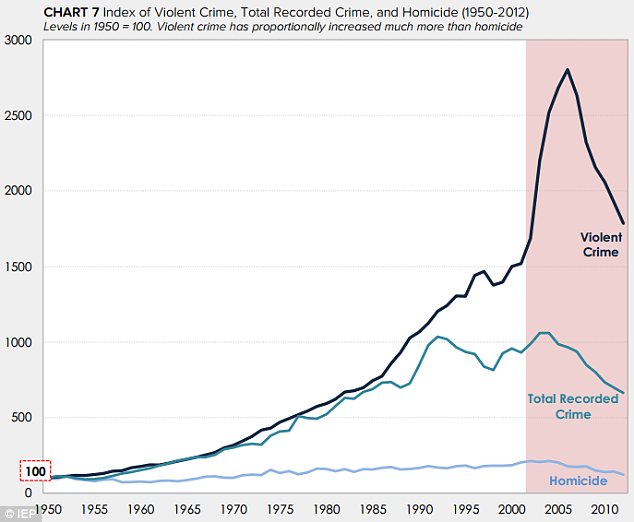
There's an important caveat, though, which has scarcely been noticed in the coverage of the Peace Index.  A trend is not the same as absolute numbers, as this graph (provided by the researchers) shows quite dramatically:


While the graph does show big falls in recent years both in recorded crime as a whole and, most dramatically, in violent crime, these falls come at the end of a decades-long increase in both.  The trend since 1950 (admittedly, a historically low base) was consistently upwards in overall crime and, even more, in violent crime until the end of the last century.  It rose in good times and bad; during the buttoned-up, militarised Fifties and the Flower Power Sixties, under Labour governments and Conservative ones.  The overall crime rate took off in the Seventies and then accelerated further in the Eighties, reaching a peak ten times the 1950 figure about twenty years ago.  It fell off a bit under John Major and before rising under Tony Blair to its previous peak; but then it began falling again, and has fallen consistently for a whole decade. It's now down to levels last seen in the early Eighties, but is still much higher than it once was.

Violent crime shows a different profile, rising even faster with a sharp spike and peaking in 2005 at a level 28 times the 1950 level.  It has fallen sharply since, but is still above 2000 levels.  It's still around three times as high as in 1980 and sixteen times that in 1950.

Crime, then, is still high, and violent crime is still extremely high.  Despite today's superficially good news, modern Britain is still a crime-ridden, ultra-violent hellhole compared with the paradise that is was the 1950s, when Peter Hitchens was growing up and everything was safe and secure.  Nil desperandum.


© 2013 Heresy Corner, all rights reserved.
30 Apr 13:11

And the correct pronunciation of "Kiribati" is...

... to rhyme with "glass", "ti" being pronounced /s/ in Gilbertese. It is said that the Rev Hiram Bingham jr, when he brought "civilisation" to the islands in the 1860s, neglected to ensure that he had enough "s" blocks in his printing set; but this seems to me too good to be true.

As arwel_p pointed out, one of the islands of Kiribati is Kiritimati Island, also known, with nearly the same pronunciation, as Christmas Island.

Posted via LiveJournal app for iPhone.

30 Apr 13:03

“A fully-realized adult person”

by Michael Leddy
John Churchill, Secretary of Phi Beta Kappa, in the Spring 2013 Key Reporter :
There is a powerful push to vocationalize college curricula and to measure the worth of a degree solely in economic terms. This tendency will magnify differences of access to transformative liberal arts experiences. Ironically, students who would benefit most from immersion in the liberal arts and sciences will be increasingly less likely to encounter them. This is a bad thing for America.

It is time to reassert plain facts. College is not only about training for jobs. It is about citizenship. It is about shaping oneself into a fully-realized adult person. It is about learning to cope constructively with questions of meaning and value. In a democracy, we need to take as many of us, as far as possible, down that path.
If powerful and moneyed interests now seeking to reshape higher education have their way, “college” will soon become a two-tier system, with the real thing for a privileged few (MOOC stars have to teach somewhere, right?) and credits and credentials, haphazardly assembled, vocationally themed, for everyone else. If this prospect weren’t in itself appalling, the rhetoric of inevitability that sells it — get on board or be swept away — would be reason enough to object.
You’re reading a post from Michael Leddy’s blog Orange Crate Art. This work is licensed under a Creative Commons 3.0 License.
30 Apr 13:02

Richie Havens (1941–2013)

by Michael Leddy
Andrew Hickey

Shame to hear this.

His performance kicked off the Woodstock Music & Art Fair, but he’s forever side one, track three. The New York Times has an obituary.
You’re reading a post from Michael Leddy’s blog Orange Crate Art. This work is licensed under a Creative Commons 3.0 License.
30 Apr 12:57

LearningCurve, busted

by Michael Leddy

[The correct answer is C: my patience.]

From an educational publisher: “Students love LearningCurve because it allows them to study using a game-like interface and master material in a less linear fashion than simply reading and re-reading.” That’s a sample LearningCurve question above.

I tried LearningCurve’s demo activity yesterday. Was I studying? Hardly. Was it game-like? I felt no fun. I read the questions (about, of all things, memory) and schemed the correct answers as quickly as I could. One was seventy: I picked it as the most reasonable choice of four — not too high, not too low. Seventy what? Couldn’t tell ya. Seventy letters or numbers or words that someone with a Russian name was able to memorize. Another correct answer: ninety, ninety percent of slides that someone showed. People could recognize ninety percent of 250 of them after some period of time. Who showed the slides? I dunno, some guy. All I was after was the right answer. I got every one of them. So much for mastery.

That leaves “less linear,” which seems to me an optimistic way to characterize the element of mindless, loop-the-loop repetition that makes LearningCurve feel miserably regimented. By the end of the demo, I was typing the same answer to different forms of the same damn question again and again — a question I’d been getting right all along. I would much rather have been reading and rereading something, anything, else.

And speaking of reading and rereading (or “simply” reading and rereading): when did they become subject to criticism for being “linear”? Yes, word follows word, and sentence follows sentence, because that’s how words and sentences work, even the words and sentences that form the rudimentary paragraphs of LearningCurve’s questions. But flipping among scattered passages in, say, a novel, offers far greater freedom of movement and far greater opportunities for complex thinking than LearningCurve’s dentist’s chair. (Drill, baby, drill.)

If this blog post were a LearningCurve activity, you’d now be reading the following message: “You’re more than half way through with the blog post!” Yes, LearningCurve feels like a race to get it over with — another way in which it’s different from a genuine game.

I just discovered by chance the following passage in an excellent though painfully dated book, The Lively Art of Writing (1965). Lucile Vaughan Payne now sounds downright counter-cultural in her insistence on education that makes room for invention and self-discovery:
Too often students let themselves become machines, ingesting the information their teachers offer them and then feeding it back, like ticker tape, in the form of rote recitations and answers to examination questions. But a student is no machine when he writes an essay; he is a human being — judging, evaluating, interpreting, expressing not only what he knows but what he is. Thus every attempted essay is a kind of voyage toward self-discovery.
Judging, evaluating, interpreting; reading, rereading, writing: they are the stuff of genuine education. It’s a sad sign of the times that it is necessary to say so.

[I will grant that a student for whom a test looms is likely to move through a LearningCurve activity more deliberately than I did. That student would be, I think, even more miserable. LearningCurve, however, has testimonials to the contrary.]
You’re reading a post from Michael Leddy’s blog Orange Crate Art. This work is licensed under a Creative Commons 3.0 License.
30 Apr 12:23

Broadchurch and How To Spot A TV Murderer

by Alex Wilcock

Did you guess whodunnit in Broadchurch? Having saved it up, Richard and I binged on the whole series over the weekend, and I have a few thoughts on its themes and surprising quality below (with implicit spoilers if you’re good at clues). Or what about other murder mysteries? Have you ever wondered how to spot the murderer in a TV detective series? Or specifically whoprobablydunnit in Sherlock Holmes, Agatha Christie, Father Brown, Inspector Morse and more? I reveal Richard and my (almost) infallible Rules of Suspicion: what’s the number one biggest giveaway of the TV murderer attempting to divert suspicion?

Richard started this long ago when he told me the three general and specific rules for spotting whodunnit in Agatha Christie. He’s right about them, too. Though I did correctly predict Broadchurch’s in Episode Two (albeit after wrongly being convinced Mark and the Rev Paul were shagging, particularly when the former stormed into the latter’s church as if in personal betrayal), I’m usually not a patch on Richard for spotting the murderers. What I am pretty good at is spotting themes in particular authors’ writing. Between us, we’ve come up with three rules that catch bang to rights an awful lot of whodunnits’ off-the-shelf attempts at misdirection, and several more specific ones after watching too much of particular detectives…


Richard and Alex’s Rules of Suspicion

One
Whoever throws around the most vicious accusations is probably the murderer. Any child will be able to tell you the rhyme that warns of this.

Two
Whoever is too nice is probably the murderer. But you don’t come to a murder mystery to stoke your faith in human nature, do you?

Three
Whoever is the victim of a murder attempt but manages to survive when all around them fall is almost certainly faking it to divert suspicion.
If anyone manages to survive an ‘attempt on their life’ while the detective is there as a witness, the chance of their being innocent approaches zero.

Richard and Alex’s Detective-Specific Suspicions

Sherlock Holmes
  • The villain will never be the beautiful young woman*, though there is a fifty-fifty chance of her marrying Watson by the end of the story.
*Except in terrible adaptations that turn Irene Adler into ‘a villain’ because the terrible writers are threatened by an intelligent and independent woman, so she has to be evil.


Agatha Christie
  • Miss Marple – she’s a gimlet-eyed, gossiping spinster; the murderer is likely to be a younger, sexier woman who’s no better than she ought to be.
  • Hercule Poirot – he’s a rather prim retired police officer; the murderer is likely to be an ambitious young man.
  • Or in any Agatha Christie, it’ll be the one person with such a supernaturally perfect alibi they couldn’t possibly have done it.


Father Brown
  • GK Chesterton version and faithful adaptations – the Catholic Church is always right, and anyone who stirs any of Mr Chesterton’s prejudices (particularly if they’re an atheist or, worse, of the wrong Christian denomination [that is, says Father Brown sonorously, not a Christian]) will be proven evil.
  • New BBC version – the Catholic Church was surprisingly liberal in the 1950s, so anyone who stirs any of our own prejudices about prejudice (particularly if they’re a sexist man in a position of power) will be proven evil.


Baldi
  • A priest with a wandering sense of his vocation and a police officer friend too close and too pretty for the Monsignor’s comfort? God, in the person of the omnipresent author, keeps dropping subtle hints about celibacy by making all the murders love gone wrong.


Inspector Morse
  • Richard’s a big fan, but he still suggests the old man usually waits until nearly everyone’s dead and then arrests the survivor.
  • It’s also worth looking at the woman he fancies and acts unprofessionally with in each episode: she’ll either be dead or in the nick by the end of it. I wonder if that’s why Endeavour’s admirer decided not to push her luck with a second go the other night.


SS Sturmbannführer Kessler
  • Depending on your point of view, either hedunnit or he’s unlikely to get his suspects, but eats out well while puzzling over them. Surprisingly good at getting away when it’s his turn.


Midsomer Murders
  • I resisted getting into detective dramas for so many years, but this is so insidious in its quirkiness, bitchy lead detectives and warped country ways that I’ve fallen for it over many classier productions. And yet it’s the odd one out: it has so many writers and so many tones (the weirder and funnier and more AvengerLand the better, for me) that I don’t have a rule for it. But see particularly Rule One above.
  • Mind you, if you’re stuck for spotting the killer, in this inbred county where the actors all look like they’ve been in it before (and have), incest is always worth a punt.


Broadchurch

Implicit spoiler warning: in case you’re just skimming across this article and might pick up something vital at a glance, I’m not going to mention names of suspects when I say something that implicitly implicates or clears a particular person, though you can probably work out who they are if you’re reading more closely.


I have to admit that I came to Broadchurch with some wariness. It was an ambitious drama series with many good actors in it, so I wanted to give it a go; but on the other hand, police procedurals aren’t really my thing (particularly horrible depressing Daily Mail-ish paedo-scare misery-porn), most ITV drama I’ve seen over the past few years has been deeply unimpressive, and Chris Chibnall as a writer has often been much worse than that. I have in the past been so critical of Chris Chibnall’s writing (Torchwood Series One being its nadir) that I came to Broadchurch fearing the worst, though with a little hope from his two Doctor Who episodes last year which while no triumphs for me felt conspicuously like he’d been trying harder and, despite having serious problems with the end of each, I’d quite enjoyed until the last five minutes. In Broadchurch, remarkably, his writing seems to have grown up, even down to a dramatically and morally satisfying conclusion.


The obvious part of the series’ success lies in telling two overlapping stories well: a whodunnit police investigation; more importantly, the harrowing emotional effect that has on a community. And it achieves the latter with generally very effective writing and in letting the various characters in that community breathe, as well as giving most of the recognisable suspects their own moments of suspicion and plenty of what on the surface seem like red herrings. The two leads were, of course, strong performances, with David Tennant seeming like he’d not slept since giving up Doctor Who and Olivia Colman moving from Hot Fuzz to everywoman in much darker places, but none of the actors and few of their actions struck false. The emotional realism reinforced the well-plotted mystery, with almost all the clues feeding back into the eventual pay-off from the in-your-face damaged characters to the intriguingly off-key early question of the deleted messages. For me it made the right choice, too, in the ending being all about the effects on the people, rather than just catching the murderer (something achieved through a combination of chance and, at the last, choice, rather than brilliant policework). It meant the writing was both straightforward in terms of how we understood and empathised, and shot through with ambiguity in no character being plain good or bad – that is, going some way to capture the complexity of life, even if that occasionally led to mixed messages (hugging is fine and natural and you should be ashamed for being suspicious of it / but also a danger sign of suppressed evil, for example).


And yet there were other, slightly postmodern touches for people wanting more layers: references such as naming Wessex Police’s DI “Alec” “Hardy” for Wessex’s Thomas Hardy and one of his best-known characters, Doctor Who quotes in the dialogue (to match the large cast of Doctor Who actors) and the faintest whiff of Twin Peaks that ITV would let you get away with; genre-aware – up to a point – DS Miller hanging a lampshade on her superior’s stereotypical broody detective schtick; the recognition about the viewer that we will recognise certain actors and say ‘Ooh, it’s them – they must be significant’, which the first episode foregrounded by giving us opening minutes of the soon-to-be-bereaved dad’s happy tour of all the famous faces in the village, then closing with a montage of those same faces in the dark, alone, troubled and suspicious, all but slapping on subtitles ‘FAMOUS SUSPECT #1…’


For me, though, the most interesting – and the most successful – extra layer was the thought that had gone into giving it a moral outlook that underpinned the drama without being overpowering.


Broadchurch – The Underlying Themes

What most impressed me about the series was that it dealt with a horrible, tabloid-friendly, always-reported-black-and-white sort of story as a much more thoughtful narrative. Even as the show drew me in, I was sceptical that it was trading on a fictional form of rubbernecking misery porn even as it had its cake and ate it with ‘…But of course journalists are evil reptiles’ to show false piety. But by the end, Broadchurch had shown itself to be something much deeper than that, and perhaps even with a touch of genuine piety.


Rather than just take the easy road of saying how shocking Daily Mail Daily Herald hacks are but subscribing to their worldview, it offered two more unusual turns. Though of course the Daily Mail Daily Herald journo was indeed a repellently cynical parasite, it not only gave her a redeeming feature – in days when even some of the media are strapped for cash, wanting to put the work in rather than just regurgitating or twisting words from press releases (though I scoffed at her apparent shock that her story was sexed up for the front page). More strikingly and more bravely, it implicitly (but no less strongly for that) critiqued not just the form of the Daily Mail Daily Herald but its values. The ‘paedo scare’ was shown as an irresponsible witch hunt that claims an undeserved life; and the ambiguity of the eventual repressed killer leaves further questions hanging, even the possibility that the climate of fear contributed to the killing. And, going back to the main body of the series, it showed throughout how tomorrow’s careless chip paper can harm many people along the way. We’re spared most of the feeding frenzy at the end, but we already know how horrible it will be.


There was a deeper morality to the series than media ethics, however. Broadchurch was at the same time a very modern story and very old-fashioned in its underlying themes, to such an extent that I wonder if the writer has a Christian faith informing his work. Part of it might be the name of show, in plain sight. Part of it was that the vicar for once seemed more or less credible as a vicar – at least in his two sermons, after a piss-poor attempt at the Problem of Evil (perhaps he just bottled giving the line on that to a grieving mother, which you might take as extra motivation to find courage to do the right thing in the penultimate episode even when faced with the worst threat someone can make today). But it was also that as every character’s secrets peeled away, all of those ‘red herrings’ echoed and reinforced each other until at the end it wasn’t just the grammar of whodunnits that made the killer’s identity clear, but the morality of the series that led inevitably to it. Over and over, we were told how destructive adultery was (even in the heart) and that betrayal by your partner was the series’ original sin. It was a murder mystery where you don’t work it out from the clues, but from the themes, asking the viewer by the end: how can you not have known? While the characters themselves weren’t black and white, it’s hard not to see the overwhelming near-universal guilt and the way that almost anything a character vindictively slags off rebounds to be found unwittingly in their own lives as a stern morality from the omnipotent author.


So Broadchurch Wasn’t Perfect…

There was one suspect who, though a decent performance, I found so improbable in concept and their red herring so unconnected to the themes of the rest that their only proper dramatic function appeared to be to illustrate DI Hardy’s gradual collapse. Conversely, we didn’t see enough of Tracey Childs’ rather fabulous police boss with her cool pedeconferencing sporting shades and ice cream, but she was saddled right up front with one of the minor mysteries so awkward that I wondered throughout if it would ever have a payoff (a practical rather than a thematic one): why didn’t Ellie get the job? The series starts with DS Miller returning from three weeks of holiday, scattering presents among the jolly coppers, before being abruptly called away by the Chief Superintendent to be told that she’s not been promoted. Despite being told before she left that they needed a female DI, that she was local and that she was a shoo-in, in her absence the situation had changed and someone else had already been appointed a week ago. A male DI with an apparently conspicuously awful record about which no-one would speak. For a minute, I thought that the explanation had to be that the murder had taken place a week ago, they’d had to get someone in fast, and so Ellie would be the viewer’s point of view in a town suddenly gone horribly wrong – but, no, it was all still to come and there was no motivation at all for dumping on her. That made Hardy’s appointment such a bizarre turnaround that it suggested psychic powers not for Will Mellor but for Tracey Childs, with her able to see into the future of the case or indeed into the minds of TV bosses who might have said, ‘I know we promised the lead to a woman character actor but really we need a big name male star’.


DI Hardy belatedly explaining the missing link (and pendant) in the infamous Sanbrook Case was in many ways necessary – for the drama, for the viewers, giving his motivation, showing he’s a good copper really (or was: seeking redemption through doing another job he’s literally not fit for suggests he no longer is), and to put in place the last major piece of thematic reinforcement for the series’ underlying original sin. But, as he’d been silently taking the blame until now to protect two other people, and as even without naming the guilty party the press are going to find it bleedin’ obvious, why come clean now and ask only for a couple of days’ delay from the local rag? This was so clearly a deathbed confession that, the viewers having heard what we needed to, there was no dramatic need for it to be published as well: you expected his caveat to be not ‘give me a couple of days’ but ‘after I’m dead [in a couple of days]’. Was he scripted to keel over at the moment of triumph, as many earlier scenes had hinted, but then the producers realised they might have a hit on their hands and asked for a rewrite to preserve the unlikely but now promised sequel?


All in all, though, Broadchurch was a surprisingly impressive and thoughtful series, and once again proves the old Sherlock Holmes adage that I’m glad I don’t live in the countryside.


[Oh, joy, Blogger’s doing its thing where it either prints all my text in one splat or gives random massive gaps if I force in breaks again]


30 Apr 12:16

The Tories made their FPTP bed - now they must lie in it

by Mark Thompson
Disappointing piece from Daniel Hannan today in The Telegraph which essentially boils down to:

"Don't vote for UKIP, you'll let Labour in".

Please forgive me if I am somewhat unsympathetic to the current Tory plight. If UKIP do surge and get as many votes as polls are suggesting then yes, it is very likely that eventually it will cost the Conservatives a number of seats that they would otherwise have won and yes the vote on the right could be split in a number of places allowing a more centrist or left-wing candidate to come through the middle.

This section of Hannan's piece leapt out at me:

..consider the recent Eastleigh by-election. Two Right-of-Centre candidates stood on virtually identical platforms. Both wanted an In/Out referendum, and both would have voted to leave. Between them, they secured 53 per cent of the vote, and lost, handing the seat to a Euro-integrationist Lib Dem with 32 per cent.

That is indeed exactly what happened in Eastleigh. It is also exactly what those of us who campaigned for a Yes vote on AV repeatedly tried to explain is one of the major weaknesses of First Past the Post which is eliminated with a preferential system.

But of course the Conservative Party were dead against changing from our current system. So they have to take the consequences under FPTP. If this means they end up losing lots of seats because of a surge to UKIP then so be it.

They've made their bed. They can now lie in it.

30 Apr 11:14

If we’re only monsters on Sundays, is that all right?

by Nick

One of the most interesting features of international treaties and conventions is the loophole clauses that state when they don’t apply. For instance, the Geneva Conventions don’t apply on alternate Thursdays between 7am and 9.30am and there’s a complex formula to determine when the Charter of the United Nations doesn’t apply to certain countries. Obviously, this means that they’re still in force for 99% of the time, so those times when they don’t apply don’t matter, and certainly aren’t used to accomplish all those nasty tasks that can’t be done when the rules are in place.

The previous paragraph is, of course, a complete pack of lies because treaties and conventions, like laws, need to be in place permanently, otherwise everyone who wants to break one of them will just wait until the time they can and go ahead with it. Once you concede that the law is a temporary construct that can be abrogated for convenience, you start to wander down a very dangerous road.

Which is why the idea of the UK temporarily leaving the Council of Europe and/or the European Convention on Human Rights (FT article, requires registration) to facilitate the extradition of Abu Qatada should be a concern to everyone. The purpose of the ECHR is to establish that no government is above the law, a vital principle established in the aftermath of the Second World War (and one that British lawyers were instrumental in implementing). To suddenly change that principle to one that no government is above the law, except on a few occasions when it feels it needs to be, is to make the ECHR useless. If the UK can ignore the ECHR and ‘temporarily withdraw’ when it wants to, then so can anyone else. Belarus could finally sign up to the ECHR, then claim it was ‘temporarily withdrawn’ from it at any time when human rights abuses are complained about there.

If your rights aren’t permanent, then they’re something that can easily be disposed of when it’s convenient for the Government. A temporary withdrawal from the ECHR is being presented as simply an administrative measure to enable one goal to be accomplished, when it’s actually knocking the first hole in the dam. Sure, it’s only one hole and not a very big one, but all the water can flow through it, given enough time. A temporary withdrawal is the government saying that ECHR rights are something we possess only while it’s convenient for the government, and that they can be disposed of whenever they feel like it.

This is why I’m concerned at the following section in the FT report:

An aide to Nick Clegg, deputy prime minister, refused to rule out backing a temporary withdrawal but said it had not been proposed, dismissing it as a “complete hypothetical”. Mr Clegg said last year he would never support permanent withdrawal.

Yet again, we have one of Clegg’s aides saying something silly. There’s no compromise possible here, and Clegg should be completely ruling out the possibility of any withdrawal from the ECHR, whether it be temporary or permanent. Human rights are something that apply to everyone at all times, and that’s a principle the leader of the Liberal Democrats – and his aides – should be standing up for.

30 Apr 10:10

Liberal Mondays 2: Conrad Russell – The Liberal Cause #LibDemValues

by Alex Wilcock

For my second Liberal Mondays selection I’m looking to my old friend and mentor, Conrad Russell, who was through the 1990s the Liberal Democrats’ intellectual guru. I miss him terribly. He had a huge impact on my life and Liberalism, and no doubt I’ll come back to him again: this time I present a selection of quotes from the first booklet of his I ever read, The Liberal Cause. I bought it at my first Lib Dem Conference because I wanted as many Liberal texts as my tiny teenage budget would allow, and this one was marked down to 10p.


Conrad and Me and Name-Dropping

You can skip this bit if you like, but to introduce The Liberal Cause, I didn’t know Conrad when I first read this, nor I think even know of him. In many – but not enough – years later, we got to know each other very well through being on the Liberal Democrat Federal Policy Committee together, with such adventures to follow as drawing him into involvement with the Liberal Democrat Youth and Students (I was, he wasn’t), working at by-elections or in doomed Leadership elections together, and of course always plotting to get a more Liberal line through the FPC. I loved him dearly, and of all the many influences on my philosophy, no other person had such a striking impact in directly shaping my Liberalism as Liberalism. Re-reading it last week, I can see that The Liberal Cause is far from his best work, but elements of it have still stayed with me ever since.

I’ve been suffering crippling headaches for weeks and not been reading or writing much, but thought I’d better attempt another Liberal Monday, with elections on. Conrad was the obvious choice, so I went back to the start with him where I was concerned, and decided to spare myself a bit of both staring at a glaring screen and knackering my hands typing by having another go with the infuriating voice command software that I lose patience with every time I attempt dictation. This time I didn’t even try to train it to understand me, but just went back and corrected the mistakes after reading it all out, which was at least marginally faster than typing the whole thing. Most of the misunderstandings were simply gibberish, but presenting the Whigs as “the whinge party” was mildly amusing, as was making “What has endured in party tradition…” into “What has endured in hottie tradition…” Though the one which most struck me was “Liberals, as has all male and beverage…” See if you can spot what this apparent reference to the Liberator Collective was meant to be when I said it aloud.

I kept on reading aloud to the one-paragraph biography of Conrad at the end, which is how the software came happily to inform me “He is descended from William Hartnell”. In so many ways, so true. That one may give away a bit of which words are stored in my custom dictionary. It’s actually a reference to “William Lord Russell, who was accounted worthy of three ‘w’s in John Locke’s list of the first Whigs,” which will become clear shortly. It also reminded me of one of Conrad’s more endearing stories from one of his more endearing habits: he was an inveterate name-dropper. Unlike most people’s, these were entirely natural lines about his family, just as he might mention something I’d said, or whoever we’d just been arguing with in the Policy Committee, in which he prefaced so many of his observations with a reference along the lines of ‘When this issue was first debated in 1647…’ Here are three that have always stuck in my head from variously private conversation on anti-discrimination laws (referring to Lord John Russell), a speech explaining his attitude to authority (William, Lord Russell) and, most fabulously, a mighty speech to Lib Dem Conference in which he illustrated a point with the best name-drop I’ve ever heard to a Conference hall (Bertrand Russell):
“My great-grandfather succeeded on his third attempt on passing religious toleration through Parliament, though he had to become Prime Minister to do it.” (It sounded a great inconvenience)

“My father took me to see his portrait. On seeing this grand long-haired man staring down at me, I asked my father if he had been a good man. ‘Oh yes,’ he said. ‘A very good man. The King cut his head off.’”

“The point at which my father finally parted company with Lenin…”

Unservile State Papers 35 – The Liberal Cause: The Three-Century-Long Tradition of the Liberal Democrats

I’m presenting a series of extracts from The Liberal Cause, though at just 16 albeit close-typed A5 pages one day I might see who has the copyright and put the whole thing online if they agree. The booklet was produced under the aegis of the Unservile State Group, a sponsor of Liberal philosophy from the 1950s until, as far as I can tell, the early 1990s; this was published in 1990, and was probably among their last. Conrad had recently become the last Liberal and first Liberal Democrat peer introduced to the House of Lords (due to the different stages of assuming a peerage) as the Earl Russell, and was just embarking on his marvellous late flowering as an incisive Lords spokesperson and intellectual powerhouse of Liberalism. His finest work in that regard is his 1999 An Intelligent Person’s Guide to Liberalism, which I would always recommend; The Liberal Cause is a very much shorter and lesser work, but it’s still worth looking out if you happen across a copy.

The point of The Liberal Cause is self-evident from its full title: the Liberals had just merged with the Social Democrats to form what after much internal strife became called the Liberal Democrats, and unlike now, everyone was rather wary of calling the new party either “Liberal” or “Social Democratic” for fear of unpicking the merger and having to go through the whole damn thing all over again. And a lot of Liberals were, less unlike now, very unhappy. Whether it was Conrad’s idea or that of the Unservile State Group, this booklet looked across three centuries to find continuities in our political tradition, see how political issues of the day measured up to our philosophy – primarily, Conrad looks at privatisation from the tail-end of its heyday, and green politics from the early end of its wide acceptance – and implicitly say, ‘The party’s changed its name and taken great evolutionary leaps many times before, so don’t worry about this one’. It’s not as well-structured as some of his work, and less politically punchy, with Conrad still learning late in life how to evolve himself from a great historian into a great politician.
“The Liberal Democrats are the heirs of a continuous institutional tradition over three hundred years old. Liberals and their Social Democrat allies have inherited the machinery, the membership and the goodwill of the Liberal Party as clearly as the Liberal Party inherited the membership, the machinery and the goodwill of the Whigs. The Whig party from which we descend can trace a continuous institutional history back to 1679, and the ‘First Whigs’ were the party for whom John Locke acted as an auxiliary Whip, listing members with ‘v’ for ‘vile’ or ‘w’ for ‘worthy’, graduating to ‘vv’ and ‘ww’ and, in extreme cases, to ‘vvv’ and ‘www’.”
Conrad and I never sat at dinner after an FPC meeting annotating members of the Committee and guests by Locke’s listings. Well, hardly ever.

Having established the Liberal Democrats’ three-century organisational continuity (and, implicitly, his own love of gossip) in the first paragraph, the first page continues by explaining how the party naturally evolved a passion against discrimination despite its biggest initial rally-point being a call to discriminate against a Catholic King. The Whigs’ initial anti-Catholicism is long past but since then, says Conrad:
“What was enduring in party tradition was the chosen means: the commitment to controlling the power of an overweening executive, and the choice of the rule of law as the means by which it should be done. The championship of liberty, and the identification of liberty with the rule of law, would entitle Liberal Democrats today to at least two of John Locke’s ‘w’s.

“During the Eighteenth Century the Whigs increasingly became identified as the party opposed to the monopoly of the Church of England in public life, and that identification also has marked the Liberal tradition in ways that have become indelible. That never meant that Whigs were opposed to the Church of England: it is to the eternal credit of England, the Church of England and the Whigs that a high proportion of their membership always consisted of devout members of the Anglican Church. What distinguished the Whigs was their belief that the Church of England did not enjoy a monopoly of truth, and that those outside it enjoyed an equal claim to citizenship. The Whigs enjoyed an unusual ability to concede equal status to the Church of England and the Church of Scotland. The party rapidly became committed to a degree of religious pluralism unusual by the standards of the day; and from that commitment grew an increasing readiness to divide the spheres of church and state and a steadily deepening commitment to freedom of thought.

“From the battles over the Occasional Conformity Act at the beginning of the Eighteenth Century down to the Race Relations Act in the middle of the Twentieth, the party has felt a steadily deepening dislike of discrimination. As one would expect from the party of Locke and Mill, it has made the intellectual leap from opposing discrimination because it happened not to favour the chosen interest group, whether it was at Nonconformists, blacks or women, to opposing the discrimination because it was discrimination. The four-year-old who denounced the owners of a swimming pool because they did not accept Jews, and who asked, several minutes later, ‘By the way, what is a Jew?’, was showing a Liberal sense of priorities.”
Conrad goes on to assess the Whigs’, Liberals’ and Liberal Democrats’ instinctive understanding of the United Kingdom as a supra-national institution, and how that has meant a commitment both to devolution and to the EEC and the UN, rather than the Tories’ stubborn one-level nation-statism – and how that links to an instinct to check arbitrary power. He carries on to discuss different parties’ class-based economic ideas – critiquing a pre-Blairite Labour Party that still called itself socialist, a strange historical note after two decades of Labour sucking up to the super-rich more than the Tories do – and offer a word of warning about different spheres of freedom: quoting John Stuart Mill, he argues that free trade and freedom itself may well often go together, but they are not the same thing, nor contingent on each other.
“Liberals may, when they think the occasion suitable, defend state intervention in economic questions without any threat to their liberal principles. Economic acts are not, within Mill’s definition, self-regarding. In tackling these questions, we benefit from notions of liberty somewhat enlarged over those of the Nineteenth Century. Liberty does not simply consist in the absence of external impediment: it involves the existence of opportunity, and the freedom to take it. Freedom is not only freedom from outside interference: it is also freedom to attempt to do things we wish to do. It is this second freedom which may be promoted and not hindered by the action of the State.”
I’d say – and I believe Conrad tended to, as well, when writing later and at more length – that the State can be a danger or a boost to both sorts, if more often a threat to the first and a protector of the second, but I think he was simplifying so as to be able to more easily make one a point against the Tories and the other against Labour. You’ll be able to spot my summary of this argument about the relationship between liberty and different sources of power in one of the lines I contributed to Mark Pack’s recent “What the Liberal Democrats Believe” Infographic.
“Liberals, as heirs of Mill and Beveridge, are aware of two sorts of liberty. One is the absence of external restraint, the individual liberty of which freedom of thought and freedom of speech are quintessential expressions. That liberty is hindered by state action, and its defence must often take the form of restraining the power of the state. Yet we are also aware that, as Mill put it, ‘liberty consists in doing what one desires’; and here state action, by creating opportunity, may create a liberty where, before, it effectively did not exist. Education, for example, is a field in which any viable policy must draw equally on both ideals.

“Neither of these ideals of liberty is peculiar to Liberals: what is peculiar to us is our equal attachment to them both. On the whole Conservatives are attached to the first, and Labour to the second. It is only Conservatives who are capable of assuming axiomatically that rolling back the frontiers of the state makes any positive contribution to liberty ipso facto. The rest of us may want to wait and see what opportunities, and what freedoms, are lost by the absence of the State as their guarantor or even their creator. …A Thatcherite rhetoric of creating choice contradicts itself if it simultaneously destroys opportunity.”
Before most British politicians, Conrad takes as a key example here the way ‘freedom of choice’ alone can destroy itself in traffic jams, and the need for the State to intervene for long-term environmental goals.
“Yet as Conservatives tend to ignore the second kind of liberty, Labour tends to ignore the first. They do not see diversity as good in itself, and they therefore do not see the risk that state intervention, by creating uniformity, may destroy opportunity as well as creating it.”


“Just as we cannot regard ‘rolling back the frontiers of the state’ as a good in itself, so we cannot regard extending the frontiers of the state as that. In the area where Labour and Conservatives fight we are, of our very nature, an empirical party. Hearing, for example, a Socialist arguing for the public ownership of banking and insurance, we do not regard it as good because it pushes back the frontiers of capital: that is a battle in which we are neutral. We want to know what concrete harm it will prevent and what concrete good it will do. Out of a natural suspicion of monopoly, Liberals would be inclined to investigate the argument that this might be an area in which competition is a positive good.

“We are also the heirs of a Gladstonian tradition of frugality with public money. This is not a fetish, and we are well aware of the concept of false economy. Yet, just as we reject the Conservative myth of the inexhaustible private purse, so do we reject the Labour myth of the inexhaustible public purse. Public money, before it can be raised through taxation and spent, has to be earned.”
The third sentence in this next passage is one of those that struck a very deep chord with me – and not just on economic distinctions, though those were the most ‘live’ ones when Conrad wrote The Liberal Cause. It turns up right near the top in my latest longer version of “What the Liberal Democrats Stand For”.
“It is of our essence, then, in economic and industrial matters to be an empirical party. We are not in favour of capital and not in favour of labour, nor are we against either. Liberals think it dangerous to have a government which is committed to being ‘against’ any substantial body of its citizens, and would apply that conviction equally to Conservative views on trade unions and to Labour views on the City. We are not in favour of public ownership, as such, or against it. We want to know which view fits the facts of the case…

“The empirical approach is hard work. Liberal Democrats can never come to a privatisation issue knowing what is the ‘left’ or the ‘right’ thing to think: we have to do our homework before making up our minds. Granted that, it is startling how consistently we make them up on any particular issue. More often than one might think it is clear which way an empirical approach points on a particular issue. It is no objection to our approach to say it is hard work: that is what the real world is like. It is a big objection to the approach of the other two parties to say it is not hard work: they tend to know the answers before they know the questions.”


“Thus far the Liberal Democrats have absorbed new ideas from the new problems of the Twentieth Century, while building them on top of principles inherited from previous ages. Where we have absolutely rejected the ideas of the early Twentieth Century is the basing of political allegiance on class. That is a negation of everything the Liberals and Social Democrats have stood for. It is a negation of the autonomy of the human mind, a negation of the independence of belief which is what our creed is all about. It is a reductionism to define a human being in terms of one only among the many attributes which make him up.”
Conrad closes this booklet with an uncompromising defence of the Rule of Law which would have him scorning Theresa May and applauding Nick Clegg this week over her ludicrous proposal to withdraw from the European Convention on Human Rights for just long enough to break it:
“Ideals of liberty have always been closely identified with law, and it is not for us to dismiss the law simply because it does not at the moment happen to favour us. Where the law does not, we may, if it seems just had to do so, campaign to change it. We do not choose to ignore it or to flout it. …Law is an instrument for the preservation of liberty: no doubt, an imperfect instrument, but it is the best we have. Without it, there can only be ‘such a war, as of every man against every man’.”
Richard suggested to me last night that Tory-supporting burglars might put the defence that they entirely supported the English Law and always stayed within it, but had merely decided to abrogate from it for five minutes while they smashed that window. That’s what happens when you decide the Rule of Law is only there when it’s convenient – someone else will always find a point where it’s similarly inconvenient to them and your only protection.

Intriguingly, it wasn’t the Tories back then that Conrad distrusted because he thought they played fast and loose with the Rule of Law, but Labour – and subsequent history showed that the point at which Labour most flagrantly ignored the Rule of Law was, of course, the point when they were most indistinguishable from Conservatives. I can’t help but notice how since they stopped being socialists around the time Conrad wrote this booklet that the only thing dividing Labour from the right wing of the Tory Party is their increasingly shrill shouting of party labels (‘Vote Labour because the Tories are evil!’ ‘One Ed good, Two Eds bad!’ and so on).

Conrad had in previous decades spent some time considering his allegiance between the Liberals and Labour; the last few lines of The Liberal Cause presciently reject Labour because their willingness to throw liberty out of the window means they can’t be regarded as “the appropriate vehicle for opposition to the Conservative Party,” though even Conrad didn’t realise the extent to which, having necessarily jettisoned all their socialist baggage, Labour would see becoming Tories as the only alternative. For all that the LiberaTory Coalition has Liberal Democrats working alongside Conservatives, and that you might be tempted to score some Lib Dem MPs ‘vvv’ rather than ‘www’, it’s still easier to spot philosophical differences between the bulk of the Conservative Party and Lib Dems than between the Tories and Labour, for exactly the reason that Labour has spent twenty years throwing liberty out of the window and still to this day knee-jerkingly marches to the far right of the Coalition on freedom. By the end of the 1990s, the Labour Party had jettisoned so much of what it believed in and borrowed so much of the Liberal Democrat alternative to the Conservatives that the Lib Dems and Labour were at the closest they’d ever been. By then, Conrad was one of the Lib Dems most deeply sceptical of the Labour Party, and his terrific book at the other bookend of that decade ended not by reasserting opposition to Toryism but predicting the need to oppose Labour.

The Liberal Cause isn’t merely to choose an ‘enemy’ out of the other two, nor merely to gain power – it’s to promote liberty. And while either of the other two parties might at some point be an ally for freedom, like any other type of power, they need watching as a potential threat. If you look to liberty over the centuries, it’s not just the cause but because of Liberals.


Featured on Liberal Democrat Voice


29 Apr 14:36

Lib Dem snooper's charter victory is great, but we must be vigilant

by Jonathan Calder
Andrew Hickey

(I was one of those 'monstering' Farron, as were Jennie and a couple of others)

The news that Nick Clegg has vetoed the Communications Data Bill - or snooper's charter - as currently drafted is hugely welcome, and together with this week's reform of the libel law, has done much to restore my faith in the Liberal Democats as a liberal party.

It is particularly welcome if you read the briefing activists were given on this bill a year ago. I find I said at the time that:
My first impression was that it had been produced by a child who had been allowed too much Sunny D. Random phrases are underlined or rendered in bold and some get both treatments.
There does seem to be a pattern here of progress being made only after Lib Dem activists have risen against their leadership.

Think of libel reform, where only 10 days ago a "Liberal Democrat spokesman" was blithely telling the Independent:
"Unfortunately we are in a Coalition and this was one of those areas where we could not get our Conservative colleagues to agree with us."
After that poor Tim Farron was monstered on Twitter, Julian Huppert went to work and substantial reform of the libel law was secured - though I never quite grasped why we didn't simply vote for the full reform package in the Commons to begin with.

And this patter predates Nick Clegg's leadership. Donnachadh McCarthy has an article in the current Liberator recalling how Charles Kennedy was effectively bounced into opposing the invasion of Iraq.

The wisest comment on today's events I have seen is this tweet:
Important thing about #snooperscharter is that it isn't a Tory bill, just as its predecessor wasn't Labour bill. It's a Home Office bill.
— Heresiarch (@Heresy_Corner) April 25, 2013
And that means that the danger has not gone away. The price of liberty is eternal vigilance, and all that.

At least it is encouraging to read the comments below the Conservative Home article by Michael Ellis, the Tory MP for Northampton North. He relies on much the same arguments as the original Lib Dem briefing and they are little better received by that blog's readers.
29 Apr 14:06

Gerrymandering

by Mark Thompson
One of the proposals in the coalition agreement in 2010 was to alter the boundaries of constituencies to ensure more equal numbers of voters in each seat.

As it happens, this policy fell by the wayside in the aftermath of the Tories backing away from reforming the House of Lords. But for a time it looked like the equalisation of constituencies was going to happen.

Labour were dead against this change. They came up with various arguments against it but the term I saw used time and time again was "Gerrymandering". This is a term coined in the 19th century to describe a situation where boundaries are manipulated in order to favour one political party.

I bridle every time I see this word used with respect to the boundary changes. The boundaries in the UK have become so distorted over decades that there are some constituencies with only just over 50,000 voters and some with double that number. The idea that the current boundaries are somehow "fair" is nonsense. The equalisation was intended to ensure that constituencies had roughly the same number of voters (within a tolerance of about 5% around the average).

It was likely that the Conservative Party would have benefitted from the changes. But the current situation is manifestly unfair. How can it be the case that in one area a voter has about twice as much influence in terms of how much their vote counts towards electing an MP? So to use the term gerrymandering in the context of trying to redress a huge historical imbalance is utterly perverse and wrong in my view.

Don't get me wrong. I think there are much better ways of reforming our electoral settlement than tinkering with boundaries under first past the post. But after the debacle of the AV referendum we are stuck with our current system for now. So in that context ensuring the boundaries are more evenly distributed is actually fair. It only didn't happen because of shortsighted Tory MPs assuming they could break one part of the coalition agreement and for there not to be consequences.

One final point. All those Labour politicians and activists who are so quick to cry "gerrymander" at the proposed changes should bear the following in mind (taken from Wikipedia):
Because gerrymandering relies on the wasted vote effect, the use of a different voting system with fewer wasted votes can help reduce gerrymandering. In particular, the use of multimember districts alongside voting systems establishing proportional representation such as Single Transferable Voting can reduce wasted votes and gerrymandering. Semi-proportional voting systems such as single non-transferable vote or cumulative voting are relatively simple and similar to first past the post and can also reduce the proportion of wasted votes and thus potential gerrymandering.
Rather than throwing around inaccurate terms implying political corruption they should redouble their efforts to get behind proper electoral reform. Then any future attempts to gerrymander, perceived or real would have much less effect anyway.

But lots of the dinosaurs in Labour don't want that. Could it be because the current system benefits them so disproportionately? They should be careful about that. They don't want to be accused of gerrymandering now do they?

29 Apr 13:46

I was right: Congress’s attack on the NSF widens

by Scott

Last month, I blogged about Sen. Tom Coburn (R-Oklahoma) passing an amendment blocking the National Science Foundation from funding most political science research.  I wrote:

This sort of political interference with the peer-review process, of course, sets a chilling precedent for all academic research, regardless of discipline.  (What’s next, an amendment banning computer science research, unless it has applications to scheduling baseball games or slicing apple pies?)

In the comments section of that post, I was pilloried by critics, who ridiculed my delusional fears about an anti-science witch hunt.  Obviously, they said, Congressional Republicans only wanted to slash dubious social science research: not computer science or the other hard sciences that people reading this blog really care about, and that everyone agrees are worthy.  Well, today I write to inform you that I was right, and my critics were wrong.  For the benefit of readers who might have missed it the first time, let me repeat that:

I was right, and my critics were wrong.

In this case, like in countless others, my “paranoid fears” about what could happen turned out to be preternaturally well-attuned to what would happen.

According to an article in Science, Lamar Smith (R-Texas), the new chair of the ironically-named House Science Committee, held two hearings in which he “floated the idea of having every NSF grant application [in every field] include a statement of how the research, if funded, ‘would directly benefit the American people.’ “  Connoisseurs of NSF proposals will know that every proposal already includes a “Broader Impacts” section, and that that section often borders on comic farce.  (“We expect further progress on the μ-approximate shortest vector problem to enthrall middle-school students and other members of the local community, especially if they happen to belong to underrepresented groups.”)  Now progress on the μ-approximate shortest vector problem also has to directly—directly—”benefit the American people.”  It’s not enough for such research to benefit science—arguably the least bad, least wasteful enterprise our sorry species has ever managed—and for science, in turn, to be a principal engine of the country’s economic and military strength, something that generally can’t be privatized because of a tragedy-of-the-commons problem, and something that economists say has repaid public investments many, many times over.  No, the benefit now needs to be “direct.”

The truth is, I find myself strangely indifferent to whether Smith gets his way or not.  On the negative side, sure, a pessimist might worry that this could spell the beginning of the end for American science.  But on the positive side, I would have been proven so massively right that, even as I held up my “Will Prove Quantum Complexity Theorems For Food” sign on a street corner or whatever, I’d have something to crow about until the end of my life.

29 Apr 13:02

The irregular restrictive what ?

by Michael Leddy
John McPhee’s “Draft No. 4” (in the April 29 New Yorker) has a passage that puzzled me, about “the irregular restrictive which” (italics mine), a term that McPhee learned from the New Yorker editor William Shawn, who “explained that under certain unusual and special circumstances the word ‘which’ could be employed at the head of a restrictive clause.” In other words, which can sometimes substitute for that.

Which in fact often substitutes for that ; there is no absolute rule that that divides their use. Many writers, however, prefer to reserve that for restrictive clauses, which for nonrestrictive. The distinction brings a small (very small) element of consistency to writing:
There are three magazines on the table. I want to read the magazine that arrived today.

[That introduces a restrictive clause: “that arrived today” identifies magazine.]

There are two pieces of junk mail and a magazine on the table. I want to read the magazine, which arrived today.

[Which introduces a nonrestrictive clause: “which arrived today” is not needed to identify magazine.]
McPhee explains that “the irregular restrictive which” is reserved for sentences in which “words or phrases lie between the specific object and the clause that proves its specificity.” The term “irregular restrictive which” seems to be a Shawn (or Harold Ross?) creation: the only evidence for it that I can find is McPhee’s essay.¹ This use of which, however, goes back at least as far as H. W. Fowler’s Modern English Usage (1926), where it is explained in the entry “That, relative pronoun.” Fowler’s defining and non-defining are the equivalents of restrictive and nonrestrictive:
Each that-clause is, or at least may be meant as, defining; but between each & the actual noun of the antecedent . . . intervenes a clause or phrase that would suffice by itself for identification. In such circumstances a that-clause, though correct, is often felt to be queer, & it is usually possible, though by no means necessary, to regarded it as non-defining & change that to which.
McPhee gives three examples from his recent writing of “the irregular restrictive which.” Here is one:
In 1822, the Belgian stratigrapher J. J. d’Omalius d’Halloy, working for the French government, put a name on the chalk of Europe which would come to represent an ungainly share of geologic time.
Try it the other way:
In 1822, the Belgian stratigrapher J. J. d’Omalius d’Halloy, working for the French government, put a name on the chalk of Europe that would come to represent an ungainly share of geologic time.
I find it hard to see any difference: name seems the obvious antedecent each time. McPhee’s other examples leave me just as confused.

But I found a way out of my muddle by consulting Garner’s Modern American Usage (2009). In the entry "Remote relatives," Bryan Garner addresses “the exceptional which”, his name for what Shawn called “the irregular restrictive which.” Garner presents this use of which as an attempt to avoid ambiguity:
Garner’s final four sentences are a model of clear reasoning about usage. Now I know that I need not spend another second thinking about “the irregular restrictive which.” Clarity!

*

11:21 a.m.: Not done yet. The New Yorker’s Eleanor Gould credited William Shawn:

[Quoted in Barbara Wallraff’s Word Court (2000). The sentence in question referred to “a dispute about language which they would like this column to resolve.”]
¹ Harold Ross, who founded the New Yorker, was a Modern English Usage devotee. From a 1949 letter to Kay Boyle:
We think ourselves into knots over style things around here, although we’ve long since cracked most problems. We’re having one now on when to use which and when to use that that is a little gem. Fowler, in Modern English Usage, differentiates between them and, somehow or other — I don’t know how, so help me — we got to following him in the editing of all house (or unsigned) stuff and then in practically all fact stuff (the writers are around the office and can be talked to from hour to hour), and then in more or less all the fiction, most of the writers falling into line.
Notice that Ross doesn’t use “the irregular restrictive which”:
We’re having one now on when to use which and when to use that that is a little gem.
The logic of “the irregular restrictive which” would have the sentence read:
We’re having one now on when to use which and when to use that which is a little gem.
I found this letter quoted in John Updike’s More Matter: Essays and Criticism (2009).

[I wonder: does “exceptionally well-edited” mean persnickety ?]

You’re reading a post from Michael Leddy’s blog Orange Crate Art. This work is licensed under a Creative Commons 3.0 License.
29 Apr 12:43

Time Reconsidered as a Helix of Semi-Precious Who Eps: #18 RESURRECTION OF THE DALEKS

by pˆnk s lord sükråt cunctør

or “Lytton must be exterminated when it is convenient

… being a show-by-show TARDIS-esque (ie in effect random) exploration of Doctor Who Soup to Nuts, begun at LJ’s diggerdydum community, and crossposted at FT.

degaullekIn which 5IVE and disgruntled chums help a revenant but unrepentent DAVROS to infect his multitudinous metal brood with MORGELLONS the MORVELLAN DISCO VIRUS, as a reward for getting him out of jail. Or something.

[11.10.13: commentary updated below]

A notoriously very-hard-to-follow DO-YOU-SEE allegory for the utter lack of honour among the galactically villainous. Doesn’t help that from the off it’s a switchback of mistaken identity via doubles: meaning that coppers and soldiers and even daleks are not who you immediately think they are. Doesn’t help that I watched it more than a year ago, before various distractions intervened and derailed me, and haven’t revisited (bcz my “method” does not allow me to). So instead of discussing the plot I’m going to bore on abt the Daleks, turning the tables you might say hohoho *sigh*

The setting: two places and two time (Butler’s Wharf and a prison ship in space; 1984 and THE UNSPECIFIED FUTURE ) have been superglued together by a time-corridor. The prison ship is under attack by a space cruiser.

The upshot: a four-or-more sided battle where everyone can seemingly suborn everyone else, no one knows whose masterplan is what, or why anyone is doing anything.

The cast: it is STIFF with cameos from the famous of face — at least one (Leslie Grantham) misleadingly, since Den was not yet Dirty. Plus an ex-Likely Lad battling wildly against typecasting (and losing). And RULA LENSKA.

dalek-clockworkThe story: experts informed me this story was literally incomprehensible. It is certainly very easy to get muddled (in fact some of the characters do). Actually the real problem is an interestingly grown-up one, not that common in pulp SF. Plenty of SF — and plenty of Who — takes the bodysnatcher form: in a threatening us vs them situation, are you still US or are you now THEM? But this is a four-way war: as well as the Doctor, there are two kinds of dalek, and FOUR kinds of human = defenders, attackers, Tegan and Turlough. You absolutely can’t recognise someone’s allegience from their face or uniform (or pimply metal carapace). It’s a fog of doubles: the daleks are busy making zombie-replicas of humans for their purposes; Davros has a kind of USB bodkin clip that converts you (human or dalek) into his bellowing slave. Defender humans disguise themselves as attacker humans to sneak through the lines. And — this became canon but was I think in this ep still something of an emergent surprise? — the Daleks and Davros are really not NOT ON THE SAME SIDE . Anyway, several minor reveals depend on characters not knowing which side someone (human or dalek) is on; problem being, we the viewer often don’t either (I think there are always visual or contextual clues but they are VERY EASY TO MISS).

(Turlough: what can you say about Turlough? He mooches around in a sinister gingerly way, to no apparent purpose. Hurrah!)

dalek-rolykinsThe Daleks: unlike many reading, I am actually older than the doctor, and so for a while lived in a world in which Daleks were unknown. I cannot of course recall this world: I was 3 when they first went on telly, and their cultural omnipresence and readability was instant (cf the “De Gaullek”, from the Daily Mail, Dec 1964). Always when I visited little friends or relatives as a tiny, they would have some little plastic or clockwork dalek that I coveted: my cousins had a magnificently elaborate bath sponge in yellow and blue layered sponge, real Claes Oldenberg stuff. So what so what you ask? This: I love them like anyone my age — in the sense that they are utterly indelibly there in my affective system — but I AM SO OVER THEM AS PRIMARY STORY FUEL. What made them so tremendous so quickly actually cements in tremendous limitations and inflexibility, tactical and strategic, logistical and logical.

The consequence of this is a shifting effect. Because they cannot get more insanely unbendingly genocidal, the only way to make them more “interesting” is to “humanise” them. So you vary the stories by giving them allies, and viewer-interest switches to where the uncertainly — meaning the thrilling peril — lies: the non-Dalek baddies. There’ve been attempts to in-build complexity: Genesis was fascinating anyway, as a “Childhood of the…” type story, but it also brought in two new modes of less-Daleky Dalekdom. Davros was an insane human (ok ok Kaled) who built them as he himself desires to be: a becoming-Dalek, if you like. And (as part of the same plot) we got in under the metal shells to view the organic mutant-Kaled Dalek-baby residue that drives them, all squiggly and yucky and spiteful, but not terribly threatening. Which was a twinned reveal, exciting and intriguing as a variant — and (if anything) even MORE of a tiresome, terrible burden for unboring plot-devisement since. (So much of it DNA-related as well: as in “let me just alter your DNA by standing near you…”)

dalek-adBy Destiny = second series-appearance of Davros, the shine was off the new trick. If you wanted intriguing nuance, deft cunning or conflict-of-passions complexity in or near Dalekdom, or the allure of a character changing his or her mind (except as a transparent ruse), you were certainly looking past him. If anything, his triple-trump trick — UTTER EVIL, UTTER SELFISHNESS, UTTER SCIENTIFIC GENIUS — actually works to make the Daleks en masse slightly more interesting (potentially). They know they have to approach DaddyDavros at tongs-and-plunger length, to use him best — they always seem smarter than him, which suggests they’ve evolved a faint sense of irony. (Dalek-irony: “Davros is an malicious untrustworthy anti-Dalek idiot because he’s EXACTLY LIKE US EXCEPT MORE SO. SELF-EXTERMINATE?”)

Written out, this actually suggests ways the Daleks needn’t be such a colossal bore: if they were treated more as a feature of the landscape than a primary (evil) character. (The way THEY treat Davros!) Our attention anyway wanders towards those non-Daleks palling up to them by choice — such as Commander Lytton here. Assuming he’s not himself a programmed zombie, he must be a mercenary or other villain of independently cynical motive, and MOAR PLZ, such people are watchable and fascinating. (We don’t get much more: he appears in one later story, battling the Cybermen, and dies — bravely enough for the Doctor in question to admit he wasn’t a mere one-note baddie.)

(Actually real name Gustave Lytton, so the internet tells me).

dalek gunAt the heart of all this is the balance of RELIABLE DARK THRILL-POWER (eg cliffhanger reveal of Dalek entering room bellowing exterminate) vs SUSTAINABLE WATCHABILITY. Daleks can’t be allowed to plot-explosition at one another: never exciting (Daleks shout quite slowly). And Dalek-Irony, surely far more scarily fruitful a tool of future mass-death than legless spongy naked unshelled squiggliness, is just way outside canon. Actually — The Master aside — very few Who-villains have any kind of a sense of humour. It’s one way (possibly the main way) that we know it’s OK to watch all these on-screen kids-tv DEATHS: most of them happen to people (or creatures) who are resolutely, programmedly charmless. With — of course — the occasional stark and shocking exception, a companion-death, or a recently encountered and likeable “our side” character. If not Dirty Den, then Rodney Bewes (whose comedy was less in the script than in his resume).

Jokiness — in various modes — has gradually become the default in-TARDIS sensibility. It’s a way of coping (it’s also a wise-ass trope that’s gradually — since Bond in the 60s — eaten into any genre which also features guns and explosions and serial plight). It’s a way — as I’ve just argued — of codedly pre-sorting the deserving-of-death from the rest…

tegan

And it isn’t always enough. Probably the thing this show is best remembered for is the leaving of Tegan, exhausted, fed up of endless violence, and no longer able by camaraderie and banter to hide from her feelings the snuffing out of so many, so many, so many

BELATED UPDATE:

Vaguely feeling I’d undersold this above, I just rewatched it (without rereading the above first — so I kindasorta have maintained my “method”). Some notes:

i: it isn’t actually incomprehensible. Davros is kept (literally on ice) in an underfunded prison ship, its sole prisoner; the Daleks (and their mercenary human allies) have arrived to get him out, because in all the universe only he can tackle the Morgellon Virus, which is devastating them. The virus they are keeping on Earth at a different date (1984), in tumbledown buildings of a deserted Butler’s Wharf, accessed via Time Tunnel, guarded by “duplicated” human slaves mainly dressed as London coppers, so as not attract attention. This does of course attract the Tardis. The attack on the prison succeeds, but — as Davros immediately throws a colossal tantrum, bcz he wants to PUT ON THE SHOW RIGHT HERE, and then begins mindslaving humans AND Daleks for his own entirely (nay psychotically) selfish purposes — the never-exactly patient Daleks are getting ill-tempered at tremendous speed, and their human mercenary allies are getting hinky about the prison ship (which sent out SOSes) being attacked by arriving rescuers. So this alliance is breaking down, and Davros is very evidently not playing along with his Dalek rescuers: more than just a crackle of murderous intra-baddy hostility can be discerned.

ii: The fact that the Daleks have captured the Doctor and are trying to “duplicate” him goes exactly as well as you’d imagine: after a lot of writhing and wiggly shots on the memory machine of old companions and old doctors, he simply turns his turner (Rodney Bewes: whose character is called Stein). The Daleks kidnap the companions to bring on-board and use them against the Doctor — well, Tegan, Turlough was already slinking around on his own mysterious recognisance — but don’t even bother with a welcoming committee once on-board, so that they immediately and inevitably escape. Possibly the duplicate pod-bodies the Daleks have ready for them have confused them: they forgot they hadn’t actually delivered the non-pod bodies to the right office. (Since basically all Dalek defeats to this point in the tale have entailed Doctor and companions let loose inside Dalek headquarters, this doesn’t seem a good move — but they are like bobbled metal Seinfeld in this respect, no hugs no learning…

iii: no less than two massive-destruct weapons are to hand (and get deployed) — the Morgellon Virus and the prison’s BIG RED SPLOSIONBUTTON (tho the dwindling prison guard crew take roughly 3 of 4 eps to work out how to press it, and end up dead, leaving it there for Stein to sacrifice himself pressing). The Virus that the Daleks have stored — for Davros to render inert — is of course used by Davros against the Daleks (and inadvertently himself: his final scene is a tantrum as he denies that he is himself a mere Dalek, which fact the Virus naturally ignores). Meanwhile various human/dalek squads confusedly and confusingly wipe one another out — and Lytton shoots his own sidekick and escapes to be unprincipled another day (except this is never made as much of as it deserves). (Most the name-actor characters are rather wasted in fact.)

iv: intriguing mirror-qualities of Butlers’ Wharf and the prisonship, that both are run-down, shabby, forgotten and therefore wide-open to Dalek exploitation or attack.

v: The multiculturalism of crew and mercenaries? “Gustav” Lytton, Stein — the fact that a lot of the prison security detail are Asian — and of course Rula Lenska? Don’t think (iv) or (v) are deep or anything, though the fact that the Dalek poison gas they use on the prison causes their faces to dissolve with a horrible stench is a um piquant touch.

vi: HUMANITARIAN INTERVENTION KLAXON — Davros does actually give the Doctor pause, when the latter’s made up his mind to assassinate this charmlessly stupid and annoying mass murderer, by implying that he’s going to programme out ruthlessness and repalce it with awareness of the military value of compassion. Davros is of course probably lying (about hugs) rather than learning (about hugs) — but the fact that he’s guessed this lie might work is the key. And possibly why this story has the name it does, which otherwise makes no sense (Davros is defrosted, but no Daleks are resurrected). All this feeds into my little essay above, though: any reboot has to threaten to dilute the Dalek USP, without actually tackling the vast containership full of problems that Dalek culture and Dalek technology have accrued.

vii: No really great quotes. But — just to ram the manifest uselessness point boringly home — when soldiers fending off dalek attack shoot them in the eyestalk, and they spin round repeatedly bellowing “My vision is impaired”, well, you already did the math, long ago. The future-ep teaser is that they have planted left dalek-slaved duplicates all over 1984′s earth, in positions of power, starting with the killer cops, who at story’s end march off into the London distance. Which threat: yes, humans are actually dangerous to humans, in form and mind.

29 Apr 12:39

Cantos Stop Won’t Stop (1-5)

by Tom

Introduction

New series! Recently I have been suffering from insomnia, and to give a sense of routine to my bedtime (which should help) I’m trying to read a short amount before I go to bed every night. To get me into the swing of things I’m reading one Canto per night of the Divine Comedy by Dante Alighieri, in the Oxford World’s Classics Edition translated by CH Sisson.

Because I am a pie-eyed narcissist incapable of having an experience without wanting to blog about it, I’m going to write about this. The only rule is that I have to wait until the next day to do so, and I’m not allowed to check the book. So only the memorable impressions will get through. You can follow the individual posts on Tumblr but I’ll post “digest” versions here too – with comments! I already know I’ve got some completely wrong impressions about Dante and Beatrice (for instance) though I’ll get a chance to correct those.

And that ends the introduction.

Inferno I: There’s A She-Wolf In The Closet

Even if you’ve not read the Divine Comedy you probably know the basic structure, or at least the fact that Dante wrote a book called Inferno and it was about going to HELL. And maybe you know the opening too, which is very matter of fact – “Halfway through the course of my life I found myself in a dark wood” – or something like that, depending on the translation.

This opening stuck with me from an earlier attempt to read the book, when little else did. It’s a very matter-of-fact description of, essentially, a mid-life crisis, and it’s no surprise I’ve picked this book off the self shortly after my own 40th birthday and during a period of directionlessness and self-doubt. I don’t intend to dwell too much on that stuff and I don’t want to turn Dante’s knotty and very personal epic into any kind of self-help book. But it resonates nonetheless.

So he’s in the wood. It’s not a real wood. Except it is also a real wood – the settings have that mythic character of being real and not real at the same time, something the best fairy tales and fantasy fiction have part inherited from the Divine Comedy (or from a more intuitive pre-Enlightenment understanding of allegory, I dunno). The wood is a physical place, the entrance to hell is a physical place, it’s only the means of transport to these places that are obscured by fog. Dante can’t remember exactly how he got there, and he also can’t get out – again, a diagnosis of a dysfunctional mind and spirit as well as a physical set-up.


From “An Inferno Paper Doll Set”

He tries to get out, and this is what the Canto is about – he attempts to take the easy road up the hill of salvation, and gets blocked by a succession of beasts: leopard, lion and a perpetually hungry she-wolf. These are allegorical, not sure of what – there’s a whole Roman thing going on in this book so maybe the She-Wolf is pride or Earthly Power or something – but they work just as well as magical way-guardians in a story, since everything here is its real thing and also its magical self. The poet Virgil turns up – a ghost – and offers Dante an out: take the long way round (THROUGH HELL) and get to Paradise that way. From a storytelling perspective, it’s an admirably rapid set-up.

Inferno II: No Bechdel Test In Paradise

A flashback in this Canto – Dante asks (reasonably enough) why me and why you, and Virgil tells him: the poet in on commission from Dante’s dead ex, who was in Heaven talking with her girlfriends about Dante and noticed he was in trouble in the dark wood.

(I don’t think this really answers the “why Virgil” question, but perhaps I misunderstood it. The “why me” part lets Dante seem humble – important as this is a book of discovery, I guess – and is a clever feint away from the fact that the casting of Virgil, Italy’s original epic poet, is surely a MASSIVE bit of self-promotion on Dante’s part. Which his later reputation justifies – you win this one Dante!)

Dante decides he’s up for the challenge, and through the door to hell they go. That’s about what I can remember from this chapter, so a quick note on the translation.

This translation, for World Classics, is by CH Sisson. He writes a long intro about how he never wanted to translate Dante and would be an idiot to do so but then decided for fun to tackle Canto I and immediately realised he would be amazing at it. The rest of the intro is about how bad most of the other translations have been, so our translator comes across as something of a cock. (But then Dante wasn’t exactly modest, so all’s well.) Anyway, this Wonder Translator’s style is quite dry, very blank verse – I’m usually hard pressed to find any metre – but has the great advantage of really rattling along even when not an awful lot is happening.

Inferno III: Don’t Shilly-Shally

This Canto is AMAZING, and Metal, and AMAZINGLY METAL – it’s our first proper glimpse of Hell (well, just the lobby of Hell really), and it starts with the 9-line inscription on the gates of Hell, which is generally remembered these days only by its final payoff – “Abandon hope all ye who enter here” (Wonder Translator puts it differently because that’s just how badass a translator he is, but it’s the line). The first three lines of the gate inscription are great too – something like “Welcome to the CITY OF PAIN”.

It’s such an effective scene-setting intro and for me really good evidence that this stuff was intended to be read episodically, maybe read aloud episodically. I have forgotten anything I did learn about the way Dante was spread’n’read in his day. You’re surely meant to be thinking, right where were we, Dante and Virgil are going into hell, then WHAM all this “BEYOND ME IS DEATH” stuff comes out of nowhere, And this Canto ends on a cliffhanger for goodness’ sakes – a great hell-wind sweeps up and casts Dante into unconsciousness. (It’s not a GOOD cliffhanger – “And then I knew no more” rarely is – but it is one.)

Between that we get Dante’s horrifying first encounter with the inhabitants of the underworld, except these are the PUSILLANIMOUS, the people who won’t take a side in the struggle between good and evil, and so get it worse than anyone. Or at least that’s what they think now. They’ve ended up as disembodied howlers following a banner endlessly in circles through the lobby of Hell.

This section has the “Who would have thought death had undone so many?” line I remember from The Waste Land, which T S Eliot is using to suggest that the masses of the 20th century are like these feeble Dantean souls, and very high-handed he is about it. Dante would probably have sympathised – the pusillanimous obviously disgust him.

People talk about The Canon and its influence on Western Thought and it’s usually either in an abstracted sense or in this Rock Family Trees diagrammatic “influence” way. But this Canto really gave me the sense of how Dante bleeds into vernacular Western thought – not just in every “Welcome To Hell” scene-setter (it’s on the away player’s entry of Fenerbahce football stadium!) but in the way the religious element to Dante’s viewpoint here (God has no time for fence-sitters!) has leeched out into secular thinking with actual post-death judgement by a Divinity being replaced by a kind of vague “posterity” – the “test of time”. Nobody will remember you unless you STAND OUT (but of course death has undone far more than you can possibly imagine, and few will remember you anyway) Dante’s treatment of the pusillanimous is the underlying revulsion behind every call to GET SHIT DONE. It’s the deaths head behind every motivational quote, and I work in marketing so I’ve seen a few.

Then there’s an encounter with Charon – retconned into a demon – and a nice bit of business where Virgil has to explain to Dante that, duh, Charon not wanting to let you into Hell means you’re not as damned as you think you are. And then hell-wind, unconscious, boom, see you next time

Inferno IV: Hell’s Velvet Rope

My first encounter with the Divine Comedy was at school – we read some of Inferno, and this very first Circle Of Hell was the part which stuck with me. I was an atheist then, and I’m an atheist now, but at 18 I was like most clever atheist boys, i.e. pretty insufferable (Obviously I may still be this). Of all the religious injustices for me to get worked up about, the distribution of souls in an afterlife I didn’t believe in anyway should have been fairly low, but I guess this Canto really rankled with me because I remember it very well.

It’s the circle of the Virtuous Pagans – including everyone who lived and died before Christ, without doing anything particularly terrible, but obviously not being redeemed by him, so they don’t get passage into the higher sections of the Christian afterlife. It also includes virtuous people of other faiths, as we’ll see.

This is also Virgil’s home circle in the afterlife, and he’s understatedly upset about it, pointedly making sure Dante knows about the composition of this circle (whose sufferers aren’t really being actively punished, just enduring eternity without hope of salvation). Dante, on the other hand, as a good 14th century Christian, is basically fine with the arrangement and wants to get through the lower levels as soon as possible. Virgil then leads him to his actual home – a kind of luxury part of the circle where the souls of the REALLY virtuous pagans (great poets, scholars, philosophers and so on) get preferential treatment – cool water, warm grass to sit on – and hang out together in an eternal sausage party. Dante gets to mingle with Homer, Ovid and the other greatest poets of history (who accept him as their equal, according to Dante – no false modesty here!) though leaves the exact details of their conversation to other fanfic writers.
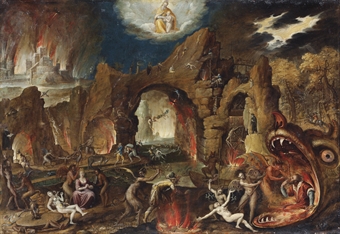
The problem of the Virtuous Pagans must have been a keen one to a man of Dante’s sensibilities and I guess only got keener as the Renaissance got underway. From a Renaissance perspective in particular it’s a thorny injustice: here are people who our declined Earthly civilisation needs to rediscover and draw example from, but from a theological perspective there’s no hope for them. Was the theology ever changed, I wonder? Dante asks whether anyone ever gets out, and Virgil’s reply is the answer to the second part of the VPs problem: what about Abraham, David et al? They get special dispensation, is the answer – Virgil reports that a bit after he ended up in hell, Christ came through and rescued his ancestors, the Old Testament patriarchs, etc – the story of the “Harrowing Of Hell” which was so popular in Medieval Christianity. But before that (and implicitly since) nobody was saved.

I wonder if the VP’s VIP area is a Dantean compromise – he knows his doctrine, and there’s no salvation for Virgil or the other poets and philosophers, but he’s enough of a proto Renaissance man to want to make their stay in Hell as comfy as possible.

For me the most interesting inhabitant of this area is Saladin, the 12th Century Muslim ruler and military commander – shown as a solitary figure standing “off on his own” among the Greeks and Romans. It reflects Medieval fascination with the man – a great enemy of Crusader Europe, but later seen by Europeans as more chivalrous and honourable than most of the Crusaders who fought him (which, given the thuggishness of Medieval Europe and the origins of Crusading as a means to control endemic violence by armoured bandits, wouldn’t have been hard).

You’d think the man who reconquered Palestine for Islam might have been placed lower down by Dante, rather than in First (Circle) Class, but as well as an urge to stress the might of a successful foe, there might have been a dim, highly-filtered awareness of how relatively advanced Arab civilisation was compared to 13th Century Europe (though none of its poets, arithmeticians, etc show up here). And anyway, by 1300 the concept of Crusading was a discredited embarrassment, so poor Saladin gets to enjoy an eternity of being a token Muslim among the Virtuous Pagans, given the side-eye by the Roman and Greek greats.

Inferno V: Cleopatra Comin’ Atcha

We’re now past the people who Dante basically doesn’t want to be punished, and the ones (i.e. the pusillanimous) who he does but has no doctrinal justification for it. So from now on it’s literally torment all the way down, and here to kick it off is MINOS, judge of the damned. Minos’ excellent gimmick is that he has a horrible tail which he lashes round each sinner, and the number of times it twines round you is the circle of Hell you end up in. He gives Dante a warning about how dangerous the journey is, but divine authorisation means he has to let the travellers through.

We’re into the second circle, which is full of wantons and love rats. Faithless and doomed lovers throughout history now swirl around in an implacable tempest (probably representing their inability to control their passions) and we see a few of them. Most of them are women, who – surprise! – seem to get the blame for extramarital badness from Dante more than the men. Cleopatra shows up here, for instance. And Aeneas gets a slot in the Virtuous Pagan Lounge, but Dido (who loved him then killed herself) is dumped in the second circle. (Continuity buffs might have expected Aeneid author Virgil to have something to say about this, but he’s quiet for most of the Canto rather than involve himself in metafictional blame games).

One man I can remember seeing in the initial parade of dead lovers is Tristran (of “Und Isolde” fame), whose adulterous story was a medieval sensation and – OK I checked Wiki for this – particularly popular in Italy. The reason Tristan’s story was such a winner seems to be its invocation of courtly love – a kind of fashionable and glamorised adultery (if memory serves MEANT to be unconsummated, hmmm) whose DIRE CONSEQUENCES are shown in this Canto’s featured interview, with Francesca and Paolo, a pair of Italian lovers and murdered contemporaties of Dante.

Obviously a feature of the Divine Comedy is Dante’s mix of classical allusion and hot Florentine gossip, the latter of which has often faded a bit with age. But Francesca’s testimony is – Minos’ awesome tail aside – the most captivating bit of this Canto,. Francesca’s fatal encounter is spurred by sitting together reading the story of Lancelot and Guinevere. Alas the lovers are heedless of the likely conseqence of reading this intoxicating story, and Francesca’s account is a stylised description of the moment courtly love turns into unfortunately consequential lust. (“We read no more that day”)

It’s corny but sweet, but that – according to the chapter notes, so this may be CH Sisson projecting – is how Dante wants you to react so you see the TERRIBLE TRAP of courtly love: the way you end up led astray by romantic stories and fail to take responsibility (Though at least Francesca stands up for herself – Paolo just floats around blubbing). The real sin in the second circle is the Sin Of Corniness.
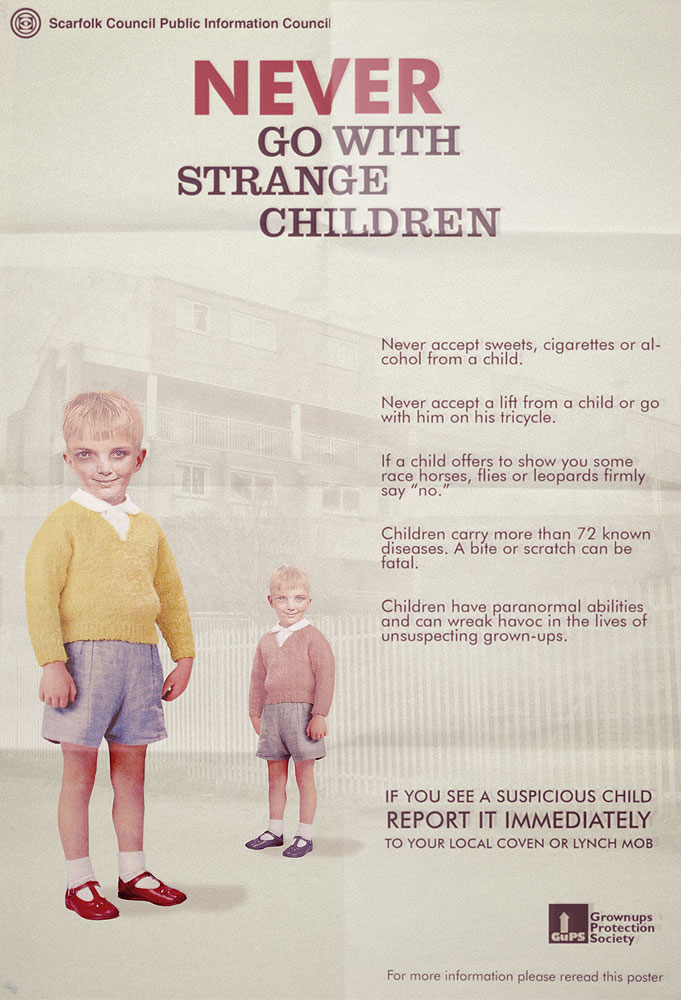
29 Apr 11:07

Changing my mind on nuclear disarmament

by Charlie Stross

I'm a child of the 1970s and 1980s; I grew up under the shadow of the mushroom cloud. Prior to the end of the cold war in 1989-91, I don't believe I ever lived more than 10 kilometres from a strategic nuclear target. (I grew up down the road from the biggest tank factory in Europe; went to university in London: subsequently lived and worked within the blast radius of the M62/M1 motorway junction and a regional airport.)

Trying to explain the psychological effects of this period to the young is difficult—all I can do is point then at Threads. However, despite the Lovecraftian horror lurking in the background—the constant awareness that coolly calculating intellects in distant countries might at any time decide out of game-theoretic considerations to rain thunderbolts and earthquakes on my world, effectively destroying it—I was not a supporter of unilateral nuclear disarmament.

But times have changed and I'm reconsidering my position on that subject. Here's why.

The A-bomb, in 1945, must have been truly shocking; a device that could, with a single bomb, inflict as much damage as a thousand bomber raid. In an era of total war, the Manhattan Project (and its British counterpart, Tube Alloys, which was merged with it in 1943) seemed like a necessity, payback and escalation in the wake of the Blitz. For which we can ultimately thank General Douhet for his theory of air power and the [disproven] idea that shock and awe would cause civilian populations to rapidly cave in time of war.

The A-bomb promised to shorten wars by making it possible to destroy strategic targets such as weapons factories and armoured divisions with a single strike. But then it turned out to be surprisingly, dismayingly easy for other countries to build such devices. The focus switched from the A-bomb to the delivery system—first strategic bombers, then ballistic missiles, and finally cruise missiles and artillery. And in the meantime, better ways of destroying strategic targets came along: the H-bomb made possible the destruction of just about any hardened target, and then of an entire capital city. The term "balance of terror" was coined; by the time the USA and USSR began to gradually step back from the brink in the mid-1970s with the SALT arms limitation talks, the US nuclear forces were targeting individual sub-post-offices in Moscow with quarter megaton nukes.

The UK was caught in an odd position. It had proven, during the second world war, to have a vital strategic role as America's unsinkable aircraft carrier and resupply depot, moored 50 kilometres off the coast of Europe. In any US/Soviet war scenario, the UK played a critical role. Nor were the British political elite necessarily opposed to this. The Conservatives hated and feared the threat of Soviet communism; the Labour Party leadership hated and feared the Soviets even more (as first cousins once removed in the family tree of left wing ideology, they were seen as class traitors by the first generation of Bolsheviks). A post-war consensus saw the British government devote significant resources to developing nuclear weapons, and indeed the first British A-bomb test took place in 1952.

But the UK was the head of an empire in long-term decline. In 1956 the political elite in both the UK and France faced a crisis after the Suez crisis effectively slammed on the brakes on British imperial influence east of the Nile; the USA had asserted the primacy of its own interests. What to do? To paint with a very broad brush, the French response was, "we cannot rely on the perfidious Americans to back us up: we need to preserve the capability to act independently at all costs". The British response was, "we can no longer act alone without American support, so we need to preserve a good relationship with the Americans at all costs."

Prior to 1956, the British nuclear deterrent had the goal of preventing the USSR from threatening the UK by promising a nuclear counter-attack, in the absence of third-party support: it was independently built and operated, carried by the independently designed and operated V-bomber force. Their job, in accordance with established strategic bombing doctrine and the balance of terror theory, was simple: destroy Moscow. It made a certain sense, when the chief occupant of that city was a hyper-paranoid dictator with proven territorial ambitions; the point was to make the cost of direct aggression against the UK unthinkably high.

After 1960, however, the direction of British strategic nuclear thought shifted. The USSR was now run by committee, headed by a first among equals who could be deposed (as indeed Nikita Kruschev was in 1964); it was perhaps more stable and less likely to launch a surprise invasion, but deadly crises could still arise through miscalculation. Meanwhile, the significance of the Special Relationship continued to gather weight in the minds of British strategic planners. A decision was taken to replace the V-Force in the mid-1960s with a less vulnerable-to-missiles submarine force, carrying American-built Polaris missiles with British MRV warheads. And in the early 1980s, at the height of the Cold War, Margaret Thatcher's government decided to replace the aging Polaris submarines with new boats carrying the Trident D5. Again, the goal remained unchanged: "maintain the capability to destroy Moscow, independent of the United States, in order to deter the USSR from acts of aggression against the UK". (Note the "independent of the United States" clause. The constant fear of British war planners during the Cold War was that in some recondite USA/USSR stand-off, the USA might sacrifice their allies in order to avoid direct conflict with the enemy.)

And that's how things stood during the Cold War.

From my point of view as a native of Airstrip One, the existence of the British strategic deterrent didn't seem to make things significantly worse. Unilateral disarmament, though superficially attractive (was it conceivable that anyone would ever willingly use those missiles other than in a second strike? No. Would a second strike bring back the dead? No. So what's the point?), had the worrying problem that it wouldn't take the UK out of the firing line. Soviet nuclear doctrine, as we now know, saw nuclear war as a winnable battle; they expected to fight with nukes from the outset, and merely being part of the enemy alliance would be enough to draw down a tactical nuclear bombardment on the UK.

But then the Cold War ended. And we continued to maintain the Trident boats, even as the proximate justification for their existence went away. New justifications came along: we needed the capability in case a new threat emerged—a nuclear-armed China, or maybe Iraq, or even North Korea. (Leaving aside the fact that China is more interested in trade, Iraq was a paper tiger, and the UK has had no actual involvement in the Korean peninsula for the past sixty years.)

Meanwhile, it became apparent that the Vanguard boats were serving as an unofficial annex to the US Navy's Trident capability; the START treaties permit the US to operate 12 such submarines, but the UK effectively gives them another 4. The Royal Navy Trident rockets are maintained and refurbished from the same depot as the US Navy's missiles. The warheads are, according to some, built in the UK from designs supplied directly from the United States, and are effectively interchangeable with the American payloads. There are even rumours that some years ago the UK stopped independently building and maintaining warheads and now shares a common pool with the United States, complete with US built and operated permissive action links on the "British" missiles.

And in the meantime, the nature of warfare changed.

Let's remember those thousand-bomber raids and their original purpose: to put strategic targets out of operation. They were necessary because bombers were inaccurate. Horrendously so. In 1940, the RAF calculated that bombs dropped during night raids fell, on average, within 5 kilometres of their target. If that's an A-bomb, it may do some good; if it's a 500lb high explosive device, it's a joke. By the end of the war they had substantially improved their accuracy, but it still took either a huge raid or a highly trained elite squadron to put a major target out of commission.

Then came the new technologies. First LGBs; a single bomb that could take out a bridge, replacing multiple-squadron strength bomber forces with unguided bombs. Then came JDAMs. Cheap, droppable in any weather, harder to jam than an LGB. A single bomber with JDAMs could strike many targets scattered over a range of kilometres with a single pass! In the wake of the Kosovo war, which featured the first major bombing campaign mediated by stealth aircraft with JDAMs, I'm told that some bright sparks calculated what it would have taken to recapitulate the strategic impact of the RAF/USAAF 1943-45 heavy bombing campaign against Germany, and came up with the figure of: one squadron of F-117A Nighthawks with JDAMs, and six weeks, with a 50/50 probability of one hull loss.

As strategic weapons, it seems to me that nuclear weapons are obsolescent. Yes, they could do the door-breaking job of destroying factories and cities. But there are cheaper, less destructive ways of doing the same job—and the other methods are politically acceptable. Any nation that actually used strategic nuclear weapons in war-fighting these days would be a pariah state thereafter, with incalculable long-term consequences (none of them good). H-bombs only serve one purpose these days: state terrorism.

You can't use H-bombs in war. You can use JDAMs and LGBs and drones. So why is David Cameron so keen on spending £70Bn on replacing an aging weapons platform that is of no actual use to the British military and which sucks vital resources away from the bits of the Royal Navy that actually do things?

In claiming that North Korea could launch a nuclear strike at the UK, Cameron inadvertently blew the cover on why the current British political elite support maintenance of a vastly expensive nuclear weapons force. It's not to serve British interests; rather, it's to shore up the special relationship by supporting US interests. North Korea, outside of its immediate neighbours, is very much a US political shibboleth. The idea of a North Korean nuclear strike on the UK is so ludicrous as to be laughable; why would they bother, when Seoul is so much closer? (Or Tokyo, if they want to look for hated former colonial oppressors.)

The political purpose behind the drive to replace the V-class submarines is to provide a 25% boost to the US Navy's Trident force. And the thrust behind the construction of the Queen Elizabeth class Aircraft Carriers (the largest ships ever built for the Royal Navy, just as the UK is declining to clear second-rank status as a global power) is to provide fill-in support for the US Navy's carrier force, which itself appears to be in long-term decline. And if it isn't obvious to you, I'd just like to note that this is a complete reversal of the pre-1956 logic underpinning the British independent nuclear deterrent—a shift from independent capability to its opposite.

As to why this might be, it's the logic of Suez coming home to roost: having given up on the idea of a UK that can operate without US support, our political elite have enthusiastically adopted Americanophilia as an ideological assumption. If they can just be American enough, maybe the Americans will forget that they're foreigners? Something like that. It wasn't a bad idea, in the wonder years of the 1950s to 1960s, when the United States could send Navy aviators to play golf on the Moon and bestrode the Earth like an economic colossus. But the United States today is visibly recapitulating the usual path of imperial decline, losing relative advantage in a 21st century that is now clearly coming into view: hot, crowded, dense, multipolar, dominated by international capital and labour flows. The idea of the monolithic anglophone superpower is a dangerous mast to nail your colours to, if you're a small island nation that lost its empire a lifetime ago.

Anyway, this is a long-winded explanation of how I've come to change my views on the British nuclear deterrent. I think that during the 1960s to 1980s, the Campaign for Nuclear Disarmament were wrong, although I'll give them credit for idealism. But in the 21st century, I can see no convincing case for the UK retaining nuclear weapons. We should at most maintain a plutonium stockpile and a pool of expertise such that we could design and build new bombs from scratch if given a couple of years' notice, if circumstances change: but we don't need actually-existing nuclear weapons any more, and the money would be better spent elsewhere.

29 Apr 09:44

Outside The Government 9 (This Town Will Never Let Us Go)

by noreply@blogger.com (Philip Sandifer)
If you missed yesterday's mini-post, I'm releasing Wednesday's entry on Rose (over 13k and as good as I hoped it would be) as a backer-exclusive update on Kickstarter if we reach $10k there. So if you want to see it early, please consider our wide variety of inexpensive reward tiers. Also, if you've never bought any of my books, I've got a new reward tier that gets you all the existing ones in ebook form for $5 less than they usually cost. Plus you can pre-order the Logopolis book via Kickstarter. It's all right over here.


So here we are. A spinoff of a spinoff. Doctor Who’s own planet Dust - the furthest extension of its narrative reach. The single most remote object that can possibly be called Doctor Who. Faction Paradox. Its effect on the world is vanishingly small. It could be wiped from history, completely removed from Doctor Who’s warp and weft, and the observable effects would be exactly zero. Faction Paradox has had no visible influence on Doctor Who, or, for that matter, on much of anything save perhaps itself. Its writers are marginal, its ideas arcane, and, notably, even Lawrence Miles hasn’t bothered to write for it in years.

The Faction, of course, wouldn’t have it any other way. Authorized ghosts, given free license to operate in the shadow of the greater text, Faction Paradox has never been more at home. This is their nature - the parodic, mocking reflection of the established order of things. The idea of Faction Paradox as a monster hit of mainstream culture isn’t just ludicrous on the face of it - because really, who would want to read this crap - it’s wrong. That’s not what Faction Paradox is designed to do. They’re designed to lurk in the shadows. Even here, in the book named after them, they do not appear as such. It’s never quite clear who, in the story, actually is Faction Paradox. All three main characters might be Faction Paradox agents. None of them might be. Faction Paradox is too obscure and marginal even for the most marginal thing in Doctor Who history.

To revisit one question there, who would want to read this crap? Well, the answer, in practical fact, isn’t Doctor Who fans. At least not in any substantial body of them. Faction Paradox gives every appearance of being just barely profitable enough to publish, bouncing among several small presses over the years. It’s compelling enough to keep gong, in no small part because it’s obvious that many of the people working within it are absolutely fascinated by it, but its readership is tiny. I mean, I outsell Faction Paradox. Coming up with potential readerships is perhaps easier - reading This Town Will Never Let Us Go almost constantly reminds one of Grant Morrison. More than anything actually published under the Doctor Who name, up to and including Morrison’s Doctor Who work, this is the Doctor Who-related piece one can hand to a fan of The Invisibles and say “here, you’ll like this.”

That (along with his longstanding connections to the comics industry) accounts for Lars Pearson’s effort to spin Faction Paradox off into a comic series out of Image, where it lasted for two issues. We should note that when a comic dies after two issues its quality is almost immaterial. Only about 7500 copies of the first issue were sold in the first place. The second one fell off to under 5000. That’s it. You’re done after that no matter how good your comic is, because it got such a vote of no confidence from retailers that it never got the chance to be seen by anyone. As a comic, Faction Paradox was dead before its first issue shipped. If we wanted to be cheeky we could suggest that this is hardly surprising, as a comic by an unknown writer and the former artist of Aquaman that’s designed to appeal to the audience of a comic whose appeal was sufficiently marginal that its creator had to organize a magical ritual in which his fans masturbated to increase sales is not, strictly speaking, what you’d call commercial gold.

But again, this seems like what Faction Paradox wants. And if ever there was a fictional concept one could talk sensibly about the desires of, it is surely Faction Paradox. If you’re the sort of person who creates a spin-off of a quasi-sentient metafiction based around the idea of subversive parodies and weaponized deconstruction then you’re the sort who knows that it’ll have a mind of its own. These processes must be treated with respect. Of course Faction Paradox wants to be a marginal text that’s shifted around publishers and that never quite manages to define itself in a coherent manner. Otherwise people might do something dangerous like take it seriously, or, god forbid, define it.

Like everything, of course, Faction Paradox has had to quietly reinvent itself since 9/11. It’s what happens when you toss around phrases like The War - sometimes you actually get one. One that is exactly as described: an all-encompassing cultural war with the stakes being the nature of history. And Miles incorporated it big time. Even back in The Book of the War Miles was pinning 2001 down as the point where human progress stopped, and he doubled down on it in his review of Rose in 2005, saying “with one drastically potent and lethal act, a new bunch of Smiling Arabs made sure the western world became more terrified and more inward-looking than ever. More terrified, more inward-looking, and as a result more stagnant. This is not a society in which anybody wants to risk speaking, let alone exploring. In September 2001, we went into retreat.” And this logic is not so much present as the whole point of This Town Will Never Let Us Go, in which a war that cannot be questioned or even understood permeates every aspect of the world and is used as the pretext for a continual dullification of everything.

(Here’s a fun fact - there are exactly 911 words in this entry prior to this parenthetical. This is how magic and ritual work - the hazy realm of coincidence and the shape of things, such that the image becomes.)

The primary force opposing the dullification is Inangela, self-proclaimed ritualist, who is trying to raise some hazily defined Great Beast lurking beneath the city via a ritual involving tagging traffic cameras in the shape of a pentagram over a slightly rearranged map of the city. Again, firmly Invisibles territory here - this is straightforward chaos magic. The word “alchemy” gets thrown around a couple of times. We’re not in some subtle territory here. This is a book that is overtly working along the basic conceptual processes of this blog. Magic consists of symbolic manipulation, which just so happens to also be what the world largely consists of.

Except there’s this lingering and downright aggressive pessimism through it. Miles’s position is that human culture is screwed. He grants all the premises of chaos magic and ritual, and then casually declares that it’s no good and the War - now a War that is blatantly the War on Terror (not that it ever was anything different - it’s been a metaphor for the War on Terror since Alien Bodies. We just couldn’t have known it until after 9/11) - is a completely intractable problem. The world will get less and less interesting. Humanity has fallen, and will stay fallen for millions of years, after which post-humanity will finally arise. All is lost, and Faction Paradox were spectacularly ineffective in doing a single thing about it. Master narratives win, and the strangeness of the singular vanishes.

The result is absolutely bewildering. It’s the anarchic visionary approach of Morrison and Moore, only without the belief in an imminent utopian apocalypse that grounds both of them in something relatively usable. There’s a cynicism here that makes Robert Holmes look like Fred Rogers. Miles weaves a situation in which there is absolutely nothing that we can do. The only character who seems to have anything resembling a meaningful shot at agency is Tiffany Korta, a pop star of sufficient importance that she is capable of rendering the culture more interesting. Inangela’s ritual fails miserably, and more importantly fails in a way that implicates the entire system of Faction Paradox and magic, suggesting that what she does is a fundamentally pointless act. Only people like Tiffany Korta - the important people - can accomplish anything, and they probably won’t either, because, again, humanity is doomed to millennia of non-apocalyptic dullness.

All of which comes unsettlingly close to the most damning auto-critique imaginable. For all its cleverness - and let’s be clear, This Town Will Never Let Us Go is a delightfully clever and interesting book - it reads like an aggressive refutation of the possibility of its ever doing anything worthwhile. The book seems an extended argument for its own irrelevance - not least because it rejects its own namesake, relegating Faction Paradox itself to the permanent margins of society such that it is difficult to articulate any clear way in which there might be a way out. This is a chronic problem for Miles, who, of course, previously proved unable to articulate what the competing visions of history that underpinned his war might actually be. Now he’s setting up needed revolutions with no sense of how to carry them out.

I mean, I don’t want to be completely unreasonable. Having a detailed plan for a successful revolution is not a prerequisite for writing revolutionary novels any more than a relatively philosophical writer has to successfully detail every single point and idea to the level of academic precision. But Lawrence Miles tends to make his absences conspicuous and present. The Enemy is not merely unexplained in The Book of the War, it’s conspicuously absent, every entry on their nature having been seemingly deleted, with Miles going out of his way to never name them. Likewise, it is not merely that This Town Will Never Let Us Go fails to solve the problem of magickal revolution - after all, it’s not like The Invisibles solves it as such. It’s that This Town Will Never Let Us Go visibly and spectacularly marches off the playing field declaring that there’s no solution and that we’re all doomed. This, to say the least, rather more than just leaving things unexplained.

Which raises the very real possibility that Lawrence Miles is, contrary to all expectations, the sort of person who writes something like Faction Paradox and doesn’t actually expect its inevitable consequences. He does, after all, have his odd blind spots with relation to Doctor Who. No matter how much he insists on wanting out from it, as we’ve previously observed, virtually everything he’s ever written lands inside Doctor Who’s shadow. Faction Paradox can’t escape from the gravity of Doctor Who. This town will never let us go. And so it exists permanently in the margins, as it was designed to, whether consciously or not.

But if Lawrence Miles is suspicious of the value of the margins we need not be - after all, if there is one thing that is increasingly clear it is that Lawrence Miles fundamentally does not understand the magic he plays with. This is the strange paradox of him: on the one hand, he thinks he’s playing with something trifling when he’s not, and on the other he thinks that he’s further outside the shadow of the thing than he is. So Miles rejects the power of the margins even as he invokes it desperately. No matter. Because the margins do have power.

This is the secret of the wilderness years. Culturally irrelevant and largely left on the ash heap of Doctor Who’s history, the bulk of their content out of print seemingly indefinitely, they nevertheless had a strange power in that they could attempt things that could never be done with Doctor Who while it remained in the mainstream. Much like The Web Planet was valuable in part for the fact that it explored a frontier of what Doctor Who could do, the wilderness years, in a variety of ways, found the edges of Doctor Who’s capabilities. But there’s more to it than that. Even if Doctor Who proper never goes anywhere close to as far as This Town Will Never Let Us Go, the fact that its edges have been mapped that far has changed the edges. Doctor Who is, subtly, something different after the experience. That’s the power of the margins. It’s not just that the wilderness years tended to Doctor Who when nobody else would. It’s that they changed what Doctor Who was. Not in any sense as crass as influence, but in a sense of alchemy - of changing the symbol to affect the thing.

One does not need to speak the change. To do so is, in many ways, too obvious anyway. Let us instead simply bring ourselves to the cusp of it - allow the coincidence to spark, half-seen, at the edges of this essay. This Town Will Never Let Us Go concerns, in part, a girl who circles the shadowed edges of a town as a ritual to raise some buried horror from the depths. It is itself circling the shadowed edges of a town. What horror, in September of 2003, might its release be taken as awakening?
29 Apr 09:20

If you have not read the comments after my last Doctor Who review, the following will probably not make much sense to you

by Andrew Rilstone
Furthermore, if you have read the comments after my last Doctor Who review, the following will probably still not make very much sense to you.


1: 

Is the problem that we are using "empirical" and "rational" as if they were the same when actually they are very nearly opposites? 

(Rational: Only what a man in dark room with no knowledge of the world could work out from first principles is really real; Empirical: Only what you can see and touch and weigh and measure is really real.) 

2: 

I think that the existence of this question is more interesting than which side is right. 

Remember C.S Lewis's use of Haldane’s paradox. (My reason tells me that my brain is composed of atoms; if my brain is composed of atoms than my thoughts are the result of non rational chemical atomic and subatomic processes, if my thoughts are the product of non rational processes then I have no reason to believe what they tell me, therefore I have no reason to think my brain is composed of atoms.) One side thought that the problem was unresolvable, the other side couldn't see what the problem was. 

(We all know the story about how the philosophix pulled this argument apart when Lewis tried to use it to disprove the non-existence of miracles; what's often missed is that she thought that it was a proper grown up philosophical argument and that his second version was a great improvement. A.N Wilson delivers an impressive punch to Lewis when he points out that Lewis only became convinced by this argument after he became a Christian.) 

3: 


Some people say that there is nothing apart from what can be weighed and measure and expressed to four significant figures, or proved logically from first principles. 


Those people often say that beliefs about how you should live and how you should act (in particular the ones they don’t agree with) are superstitious or literally meaningless...something we should all have grown out of, like the belief that bears will eat you if you stand on the cracks in the pavement. 

So if I say that it should not be permissible for a physician to kill a patient (even if that patient is very sick and wants to be killed) (which I wouldn’t necessarily say, i incidentally) they say that i only think this because I believe in various entities who’s existence cannot be proved from first principles or weighed and measured and expressed to for significant figures -- the soul, angels, god, morals. The nice ones say that its quite okay for me to believe in such things in the privacy of my own homes, laws should only be based on things which you can weigh and measure and prove. What some of us sometimes find confusing is that it often turns out that those very same people have very strong beliefs that are very important to who they are -- that hurting people is wrong even when it is useful; that men and women should be treated the same; that you shouldn't eat horses or show your willy to strangers; that Wagner and Dylan and Picasso have a sort of floaty goldy magic regeneration stuff in them that One Direction basically don’t. When you say “but hang on a minute, you didn't find those things out by weighing and measuring or by working it out from first principles “ they often literally don’t understand the question and say “Oh, i suppose you think that only people who believe in the tooth fairy can be good, do you?”


4: 
When Mr Spock talks about logic, he is sometimes actually talking about logic, in the sense of deriving conclusions from premises. He would have no problem with saying that if I believe in such and such a thing, I would also have to believe in such and such another thing and behave in such and such a way, without committing himself on whether it was right of me to believe in the original thing or not. Vulcans are often portrayed as having very strong mystical beliefs and a very strong sense or personal honour (they are, after all, mutant Romulans, or possibly vice versa.) But they follow through on the implications of those beliefs, like an orthodox Rabbi who regards the Torah as non-negotiable but will take on all-comers in a rational debate on what it means and how you apply it. Nimoy was Jewish. 

But very often, "Logical" just means "sensible", or "scientific" or simply alien. (If Spock describes some aspect of human behaviour as illogical, he often just means "I don't understand this" or "I don't approve of this". Nimoy recorded a song, god help us, in which he argued that it was highly illogical that 

a: if a lot of people own cars and use them for short trips, they sometimes find it hard to find a place to park them and 

b: however much two people love each other, when they have lived together for a long time, each of them can start to find the other irritating. 

Terry Nation (or was it Terrence Dicks, or even Douglas Adams) thought that being logical meant being stupid. Davros, like a very primitive computer, could draw conclusions from premises but could not conceive that those premises were false. Which is true as far as it goes: I can't find out from a maths book how much money is left in my current account. But I imagine that a brilliant scientist, however mad, might have spotted that you need accurate data to work from. 

5: 
The Doctor's collywobbles about wiping out the Daleks is a bit mixed up, of course. Partly, he's worried about interfering in history at all: he doesn't really know what a history of the universe rewritten without the Daleks in it would be better or worse. Partly, it's based on the idea of absolute values -- you don't kill children or commit genocide no matter what. Partly, I suppose, it is about empathy: Sarah thinks of the Daleks as being like a deadly virus; the Doctor at some level thinks of them as people. At the beginning he accepts the Time Lord's judgement that the Daleks will eventually wipe out everything else in the universe and that this would be a bad thing. But how is that any more than an aesthetic judgement? -- it would be bad because variety is more pleasing than uniformity, it would be bad because humming birds are prettier than Daleks. If Darwinian logic says that eventually the race most perfectly adapted to survive is the only race which survives, how is that different from Newtonian logic telling us that eventually the the universe will run out of energy and there will be nothing at all? 

Forty years of fandom has inscribed Genesis of the Daleks with a meaning that Terry Nation never really intended it to have. It's all about Time Lord self interest. A Dalek dominated universe would be bad for the Time Lords so they used the Doctor as their pawn to strike the first blow in the great time war. 

6: 
When I said that I might have been happier if Clara's leaf had been defined as a "magic" leaf I think I was thinking of Tolkien and or Lewis's definition of magic as "objective efficacy which cannot be further analysed". The Key to Time is clearly magical: rules established early on state that "if you put these six bits of crystal together and make a cube, time will stop. It just will." I don't think anything would have been gained by expanding on that and saying that its made of Timestopanium which will cause the the higgs boson wifi quantum to atrophy... 

I think that the difference here is between those of us who think that if you believe in morals at all, you must believe that morals are magical, like the Key to Time: things which are there because they are there and can't be further analysed; and those who think that people worked them out or divided them or constructed them based on something else. Do you say that you should follow the Golden Rule because you should follow the Golden Rule because it is a good rule and you should follow good rules because it is good to follow good rules; or do you say that the Golden Rule is a sort of approximation, based on trial and error, of the kind of behaviour which will, all things being equal, make you and those around you fairly happy, most of the time, probably. As a matter of fact following traditional morality probably will make you and those around you fairly happy, most of the time; but if a moral rule is a moral rule and not a sort of actuarial utilitarian estimate then you have to apply it even on days of the week when it is going to make you and those around you miserable. That's why magistrates always asked pacifists whether they would stand aside if a German officer was about to kill their children: they were prepared to excuse him from military service if he really believed "Thou Shalt Not Kill" was a rule -- not if he turned out to actually think it was more of a guideline. 


7: 
The great theologian Johnny Cash said that he hoped that his preference for dark coloured clothes would draw attention to those people who didn't know about Jesus "path to happiness through love and charity". The idea that Jesus offered agape as a sort of self help system, on the lines of "a path to weight loss through yoga and cabbages" is completely off the wall: only one step up from the fellow who says "become a Christian so that your business will prosper." (Terrific song, though.) 

8: 
So the problem is not that there is an opposition between "rationality" and "morality." The problem is with people who say. "There are no magical things. Everything can either be worked out from empirical observation or derived from first principles -- oh, apart from that thing over there. That's a magical thing, obviously." 

9: 
Sadists and racists often tell the following story. 

A dusky skinned foreigner from a non-specific middle-eastern country has planted an atomic bomb under a skyscraper. He is now in the custody of a special agent who has only (for the sake of argument) twenty four hours to find the bomb. The dastardly terrorists, while brilliant in many ways, were not clever enough to train their guy hold out under torture for a short period of time, or to move the bomb to a new location should their operative be captured. So: is our special agent (lets call him "Jack" to simplify things) entitled -- indeed, morally obligated -- to horribly torture the dusky skinned foreigner in order to force him to disclose the location of the bomb? Is he, entitled -- indeed, morally obligated -- to horribly torture the dusky skinned foreigner's five year old son (who is conveniently also in his custody) in order to force him to disclose the location of the bomb. And if the suspect were to say "Actually, I can deal with torture, but like all dusky skinned followers of queer native religions I am a colossal paedophile, so if you will allow me to brutally molest your five year old son for an hour or two, I will happily tell you the location of the bomb" is Jack morally obliged to hand the little boy over. (The third example, you will note, is exactly the same as the first two, unless you have smuggled in the idea that the terrorist suspect deserves to be hurt for being a terrorist suspect and the terrorist subjects son deserves to be hurt for being the son of a terrorist suspect -- or, indeed, that white kids matter more than dusky skinned foriegn kids.) Logically, one screaming child is preferable to six thousand screaming children. But when people talk about "morals" they generally mean "I don't care if it useful or not. Torturing children is off the agenda."
29 Apr 09:12

Cold War [7:9]

by Andrew Rilstone

Today I unveil a new metric for the testing of New Who episodes: the Ril-Moff scale.

Every Doctor Who story gets a rating based on how many minutes I was able to accept and enjoy the story on its own terms for, before giving up and yelling "Oi! Moffat! Stop!" compared with the overall length of the episode.

Cold War scores an impressive 84%.


From time to time, someone sends me an e-mail saying something along the lines of "Oh, writing a critical assessment of Lord of the Rings, are we; well, until you have written a thousand page fantasy novel with made up dialects and really boring descriptions of forests and changed the course of twentieth century Beowulf scholarship, you should just shut up about it." I regard them as being on about the same level as the ones who can't tell the difference between comparisons and analogies.

But on the other paw.

I have over the last few months occasionally idled away the odd minute by strumming on a ukulele, and no, that is not a euphemism for anything at all. This has greatly increased my tolerance for musical support acts. The fellow singing the not terribly good songs about American ladies, trains and whisky before the act that I paid money to hear may not be all that good, but he generally shows signs of knowing more than three chords, and being able to do one thing with his left hand while doing an entirely different thing with his right hand, and often singing at the same time. 

"Well" I often find myself saying "I certainly couldn't do that."

I came around some time ago to the idea that while I was quite clever at doing things with words, I didn't have the knack for arranging them into stories or scripts. And this makes me slightly nervous about accusing someone who can clearly construct a script, write dialogue and get it commissioned and filmed of being a rank amateur who I could do better than.

He clearly isn't and I clearly couldn't. I even quite like Sherlock.

But for goodness crying out loud sake!

Yeah, I get the idea of doing Alien with an Ice Warrior, and I get the idea of it doing it on a nuclear sub so you can turn the jeopardy up to 11 and I get that it has to be a Russian sub because a Brit or American sub would be too obvious and I get (obviously) that if that's what you are doing then it has to be in the 1980s when T.B.W was trying terribly hard to help Reagan (who believed in the literal truth of the book of Revelation) to start a nuclear war.

But honestly...you couldn't think of a better way of reminding the young people that this is the olden days than by having the elderly, Russian scientist obsessed by young English people's music? 

At least Clara resisted the temptation to say "What was a 'tape' Doctor".

I wish I'd been a giant maggot on the wall during the script read through. I don't have to read this rubbish. I was King Lear and the Cardasian in that episode of Next Gen.


Is this the story where a monster gets loose on the Russian nuclear submarine? Or is it the one in which an Ice Warrior gets loose on a Russian nuclear sub-marine? Or is it the one where an ICE WARRIOR does some stuff somewhere or other, it doesn't really matter, a nuclear sub will do?

How exciting, basically, do you find the arrival of an Old Monster?


Daleks, Cybermen, Ice Warriors. Daleks and Cybermen and Ice Warriors go together like lions and tigers and bears. The Daleks appeared, what, fifteen times? The Cybermen appeared seven or eight times. The Ice Warriors appeared twice, in a very good story imaginatively called The Ice Warriors, which the BBC have lost, and in a rather weak one officially called the Seeds of Doom, but usually known as Invasion of the Bubble Bath (by me, at any rate.)

They also had a supporting role as one of a number of alien races attending a parish council meeting in The Monster and Curse of Peladon. Their function in that story is to be Old Monsters; former enemies of the Doctor who the Doctor naturally suspects of murdering the Lord Chancellor, even though the Hound of the Baskervilles dunnit.

It's almost as if the Ice Warriors whole job is to be Old Monsters. Iconic monsters. (I wonder if this is really because the kinds of people who drew the Doctor Who Monster Book and the Weetabix Picture Cards grew up during the Troughton era?)

There is no reason why, when the Ice Warrior comes on stage ten minutes the Doctor shouldn't say "Ice Warriors...Ice Warriors...who the hell are they?" as we presumably did when the Macra appeared at the end of the one with Father Dougal. But he doesn't. He says "We go way, way back" and it's one of those old fan validation moments. 

"So do we" we all cry out "So do we!"

I think that what Cold War wants to be is THE ONE WHERE AN ICE WARRIOR TAKES OFF ITS ARMOUR. If you are in the fan party, then you have been waiting to know what a naked Ice Warrior looks for forty years. At least, the episode seems to have been constructed on the assumption that you have. I am not sure I ever even realized that the Ice Warriors were wearing armour. I think I thought it was shell. I think I thought they were ancient warlike Martian turtles. Still, I thought the final scene where the Warrior takes off his armour so he could look the Doctor in the eye was rather nice, and the creature was both alien and sinister and pathetic.

I think that maybe the original brief was "Do Alien, but set on a Soviet Nuclear Sub." The problem with that brief is that the Aliens in Alien are slithery lizard-like spider-like vagina-like penis-like things you can hardly see whereas Ice Warriors are great big clunking space vikings who talk like Worf. 

No problem, says Gatiss, we'll detach the Ice Warrior from his armour, and have him slithering along corridors like a green slithery thing. He can have big long scary fingers which can hug people's faces like an Alien Face Hugger. And we can do that scene where someone says everything's all right, and then a big alien hand comes down and grabs them from above. And then we can do it again.  And then we can do it again.

On the other hand, maybe Moffat looked at the first draft, in which an Alien Soldier was trapped on a sub with Human Soldiers (and was eventually beaten by the Doctor holding his nerve and threatening to blow everybody up) and said "This is great Mark, really really great: it's just that in Doctor Who, everyone including evil green space vikings has to have a sensitive side. And I really, really like the idea of reintroducing an Iconic Alien Race by just showing how threatening one single individual who thinks he is the last of his kind can be. But we did that once before. Could you go and dig up the first season story with the Dalek in it and make this one more like that?" 

Which would explain why Ice Warriors have become scary pathetic creatures in a big metal suits; and why "what does the Ice Warrior look like?" was done as a big reveal, and why the situation was finally resolved through dialogue, and why we had the wholly gratuitous and nonsensical scene in which the companion is locked in a dark room with a chained up monster just before it gets loose.

If you were going to do the Naked Ice Warrior plot, wouldn't it have been cleverer to have a green slimy thing running loose around the sub for 30 minutes, and then finished Act III by revealing as a total out of the blue surprise that actually it's an Ice Warrior? But that, I suppose would have risked the mainstream audience crying out "An Ice what?


Mostly, I really liked it. It was an old fashioned, traditional Doctor Who story, made in a modern style with modern special effects and modern sensibilities. Put this Ice Warrior alongside a Troughton-era Ice Warrior, and it would be very clear that we were looking at a new version of the original creature: jazzed up a bit, more animatronics, and, of course, in colour, but definitely the same beast. The New Silurians and the New Cybermen really only had a coincidental similarity to the original versions. (This is also true of the Daleks, except insofar as anything with a dome and a sink plunger is unmistakably Dalekoid.)

The look and feel of the story — the individual shots, the pictures we see on our magic screens — were far prettier and far more atmospheric than anything that ever happened in the original series. I felt this was how the original series would have looked if it had had the time and the money. Doctor Who not as it was but as it should have been. Doctor Who as we remember it being if we are the sort of people who embellish old TV in our heads or only know Fury From the Deep from the novelisation. The Doctor and the Ice Warrior facing off in extreme close up; the Russian commander's finger, and the the Warrior's claw, hovering over the big red button; the sheer smallness and wetness of the sub — I kept thinking that it looked like and exceptionally high quality 1980s fanzine, when fans with pen and ink could pull off special effects that the BBC couldn't.


Doctor Who has been a lot of things in its time. It has been costume drama and nerdy sci-fi and action adventure and whacky and unpindownable surreal stuff with Douglas Adams and a robot dog. But if we say "This is a Doctor Who story" I think we know the kind of story we are talking about. Aliens invading London; plucky soldier boys trying to help, boffins saving the day. Big galactic empire at war; broken down freighter ship caught in the middle; Doctor mistaken for a spy. Moonbase full of scientists besieged by nasty robots. Polar base full of scientists besieged by nasty robots. Oil rig full of scientists besieged by nasty sea-weed. Lighthouse full of Victorians besieged by nasty balloon.

I do not think that the return of the Ice Warriors is a Good Thing In Itself. But once I spotted that Cold War was going to follow the good old Base Under Siege format, I certainly stood up and cheered "Hooray! Proper Doctor Who! At last!"

The attempt to do a very traditional Doctor Who story shows how wrong New Who has been allowed to go — at any rate, how far it as departed from its original format. I myself would be happy for the Doctor to be trapped in some interesting environment — submarine, temple, space ship — full of interesting non-player characters  threatened by interesting monsters on an almost weekly basis. I think that would be much better than running through five different styles in five episodes. But the Base Under Siege is no longer Doctor Who's natural storyline; Horror of Fang Rock and the Web of Fear are simply not tell-able in Moffat-style. Moffat has killed the thing he loved.

And that's OK, change is good and only the dead don't change and  a stopped clock gather no moss and so on;  but we should all accept that this is what has happened and move on. We shouldn't keep harkening back to forty year old stories in a style we've decided to jettison. Old Who was about a boffin with a magic box that he couldn't steer, who was stuck wherever it put him with nothing but his wit and his companions to help him. New Who is about a god-brat with a magic wand and an infinite supply of fairy dust. The New Doctor could have taken Skaldac back in time 5,000 years, dropped him off on Mars, fixed the submarine (or nipped back in time to a point before it was broken) and been on his way before the opening credits rolled. To set up the trapped claustrophobic scenarios that used to be the Doctor Who hallmark, there had to be a silly plot device to put the TARDIS our of action and a silly plot device to separate the Doctor from the sonic screwdriver to say nothing of a really silly plot device (and what the TV Tropes People would call a Gilligan Cut) to engineer a scene in which Clara gets to be heroic and important and the equal of the Doctor in every respect.

The B.U.S format emerged in a world of four and six part serials, long on atmosphere and suspense, punctuated by cliffhangers. There is, I grant you, some good dialogue between Clara and the Prof. I get the impression that we are meant to think that there is a sub-plot about the young Russian Officer who thinks that triggering nuclear Armageddon would be a good career move, but it gets too little screen time for us to really notice. It's structured and paced far more like a trailer for an episode than an actual story.

This is okay, too: the manic pacing works really well for mad stories like Let's Kill Hitler and silly stories like Dinosaurs on a Spaceship. But it completely prevents this kind of suspense / horror story from being either suspenseful or horrific.


Unless, of course, I missed the point again and it wasn't meant to be a suspense / horror story but a serious human drama about the futility of war which happened to borrow part of its form from the suspense / horror genre?


You may remember that Patrick Troughton never appeared in a story entitled The Slightly Different But Probably Equally Valid World View of the Daleks. During the golden age of Doctor Who monsters were evil and that was that. Some corners of the galaxy have bred the most terrible things; they had to be fought. But that doesn't work in the touchy feely 21st century emotionally literate version of Doctor Who. The Ice Warrior can't be defeated and obliterated. It has to be shown the error of its ways; and we have to have a go at seeing things form his point of view. 

I have spent the last eight years complaining that the Doctor too often defeats enemies by having a special Enemy Defeating Device in his back pocket. So I am hardly going to complain that this week the Doctor defeats his enemy by talking to it and persuading it that it doesn't really want to be quite so evil after all. 

As a matter of fact, I really liked this scene. It made sense on its own terms and in terms of the metaphor about the "ice warrior" and the "cold warriors" (and the fellow from the Red planet being trapped with the Red soviets). The idea of nuclear weapons and mutually assured destruction has been spelled out to those of us who haven't got that far in our history lesson yet. The Ice Warrior has spotted that by firing a single nuke, it can trigger a war that will wipe out the whole of the human race. Declaring war on a whole planet because one human prodded you seems a bit harsh, but he is the baddie. So when the Doctor announces (once he gets his sonic screwdriver back) that he would rather blow up the submarine himself, it makes perfect sense. It's the only way he can think of (deprived of his magic box but reunited with his magic wand) to save the earth. It's his own version of mutually assured destruction. The Ice Warrior takes off his mask, looks the Doctor in the eye and asks who will blink first. It was a really good ending. It really pleased me.

Thirty eight minutes. I'd been on board up to this point. Thirty eight minutes.

First, bloody Clara intervenes, and instead of appealing to the Ice Warrior's military honour, or facing him down tactically, she appeals to his sense of mercy and family ties. You aren't really a soldier, deep down, she says, you are really a cuddly fluffy bunny who wants to skip through the dead Martian meadows singing Ultravox songs.

I suppose that this is the only, and I used the term advisedly, politically correct ending available. If the Doctor's plot had worked it would have meant that in the end M.A.D was right and T.B.W won the cold war by outfacing Communists with nukes, but because in the end everyone decided that they'd just rather be nice. 


"Okay" says the Ice Warrior "Fair point. I won't blow up your planet after all" and is instantly beamed up by a passing Ice Warrior mothership. This is almost exactly as believable as a frozen Alexander the Great being discovered at the North Pole, and the first thing he does after he's been defrosted is send out a carrier pigeon and 40 minutes later a Greek Aircraft Carrier arrives at the North Pole to take him home. 

Yes, I know it's not meant to be real.

Third, we find out why the TARDIS vanished. This is so appalling it's actually brilliant. The Doctor has been fiddling with the TARDIS and has accidentally switched on a plot device which makes the TARDIS fly away whenever there is danger. He calls this the Hostile Action Displacement System. What is utterly wonderful is that the HADS were alluded to in once before, forty four years ago, in a story called the Krotons. (The Krotons was the only extant four part Patrick Troughton story until another one was discovered, so it was the one shown in 1981 as part of a repeat season to commemorate the departure of Tom Baker. So fans of a certain age know about the HADS.) The genius of this is that older fans, who are the only ones still paying attention, are so busy jumping up and down in excitement that they don't actually have time to notice that this was the Worst Plot Device Ever. Why did the TARDIS vanish? Because it did. But never mind. He referenced the Krotons!

Good concept, good execution, tolerable script, terrible ending, shows that classic Old Who Stories don't really fit into the New Who Format any more and the Clara's natural accent is Northern. But that's okay. Lots of planets have a North. Move on.
29 Apr 08:56

The reason Doctor Who is the best thing on TV

by Mike Taylor

Here’s the real reason that Doctor Who is, by a huge margin, the best thing on television. Even a rather forgettable episode like The Rings of Akhaten can provoke such different reviews as (in chronological order) Millennium’s, Andrew Whickey’s, mine and Andrew Rilstone’s.

Meet_the_brand_new_Doctor_Who_aliens_from_The_Rings_of_Akhaten

None of us was blown away (“It definitely wasn’t anything like as terrible as the previous episode” — Andrew Hickey) and we all had significant criticisms. But we all found interesting things to discuss about it. And this is the important point: we all somehow landed on different interesting things.

Even when Doctor Who is off its game, it generates discussion like no other program: not just discussion of the plot-speculation kind (“what is Clara?”) but investigations of the nature of drama, of metatextuality, of morality, of the nature of the “soul”, of whether scientific and moral worldviews are in opposition or mutually reinforcing, and so much more.

Much as I love Veronica Mars, The West Wing and Arrested Development, none of them do this. I admire all those shows more than Who, but I don’t love them as much. No other show throws out so many issues for the unsuspecting viewers to chew on, or catalyses anything like the same breadth of discussion.

Dcotor Who, I salute you!


29 Apr 08:55

Liberal Mondays 1: Alfred Russel Wallace #LibDemValues

by Alex Wilcock

If you saw Bill Bailey’s Jungle Hero on BBC2 last night, you’ll suddenly know quite a bit about Victorian naturalist and natural selection theorist Alfred Russel Wallace. You may not know that he was a prominent Liberal, contributing to Andrew Reid’s 1885 Why I Am A Liberal. I’ve just re-read Duncan Brack’s 1996 follow-up collection Why I Am A Liberal Democrat, which includes extracts from the earlier book. So, followed by my reaction to that edition, here’s Mr Wallace’s Liberal creed – with ideals familiar to modern Lib Dems, even down to complaining the party doesn’t live up to them…
“Although very slow to act upon its convictions, the Liberal Party recognises fundamental principles as a basis of reform, and aims at unbought justice and equal freedom for all as the ultimate goal of political progress.”
I’ve always loved the Why I Am A Liberal Democrat selection, and, Duncan, if you’re reading – or Mark Pack, perhaps – isn’t it about time there was a new edition? Regular readers will know that I’ve been asking a related question of today’s Liberal Democrats, and will I hope soon be publishing more of them: both the Nineteenth and the Twentieth Century versions of the book carried a lot of crossover between the personal testaments and the statements of what the party stands for.

Although Alfred Russel Wallace’s line is probably just an excerpt, as I don’t have Mr Reid’s book and Duncan’s is clearly selective in his reprints of earlier contributors and their contributions, I was inspired by the coincidence of having come across him on the page mere hours before the documentary about him on the telly (the second half next Sunday). So this may be the first in a series of Liberal quotations… Or it may not, as I’ve been worse than usual recently, horribly ill and knocked out and not written anything at all for three weeks.


Andrew Reid’s Why I Am A Liberal Vs Duncan Brack’s Why I Am A Liberal Democrat

I won’t review Why I Am A Liberal Democrat – there are 155 entries, and I’d feel like commenting on all of them – but, though it and the Victorian original are long out of print, it’s worth searching for and, again, could really do with a new edition. I did notice a few interesting things about each, though.

Both books had several Liberal ideas in common for many of those writing, over a century apart – an emphasis on freedom, first, on equality, and on not being in the pay of classes or other groups. Both were internationalist, though it was the 1885 version that was strikingly more in tune with the passionate anti-aggression of Liberal Democrats from just a few years after 1996, in the wake of Labour’s illegal invasion of Iraq. But there were differences, too.

Andrew Reid’s Why I Am A Liberal is rather grandly subtitled Being Definitions and Personal Confessions of Faith by the Best Minds in the Liberal Party, and from that you can deduce that it has a far higher religious content than that from more secular Britain a century later, with many of the writers seeing their faith as the wellspring of their politics. As I’ve said, for the Imperial power of the time there was great scepticism of using that power in military adventures, and – rooted in the history of the time – a clear opposition both to Tories (I have to admit to a double-take on seeing an entry from the MP George Osborne… [next line] …Morgan) and to revolutions. The plain Why I Am A Liberal Democrat saw a much greater passion for Europe and proportional representation, each of which I suspect might be lower down in the mix were a new edition to be gathered today. But for me the most interesting difference was in the favourite ideological line of the time; quite a few contributors saw the purpose of politics as:
“The greatest happiness of the greatest number.”
By contrast, the most-quoted line of 1996 Liberal Democrats was my own favourite (with Duncan’s afterword, like my What the Lib Dems Stand For, written largely around the three words):
“No-one shall be enslaved by poverty, ignorance or conformity.”
In this change of repeated rallying-cry, you can see a change of generations of favoured Liberal philosophers. In part literally, from James Mill’s utilitarianism to his son John Stuart Mill’s Liberalism. I have to admit I have my own problems with the superficially attractive summary of utilitarianism: its implicit ‘the ends justify the means’ puts a chill up my spine. To me attempts to quantify happiness to ‘give’ to a majority sound at best more like New Labour – targets for what can be measured rather than what actually matters to people, and dumping people who don’t fit – than Liberal. It’s clear that the party has gone through a similar evolution to that of John Stuart Mill, who while not openly abandoning the word and his dad kept trying to make it mean something very different. When he stopped listening to Jeremy Bentham (not that one) and started writing with Harriet Taylor, modern Liberalism was born. From Mill and Taylor we get freedom rooted in knocking down conformity; rather more from the New Liberals of the early Twentieth Century we get the cry against poverty; and from both, opposition to ignorance. Between them, that universal appeal to freedom is social Liberalism, and it’s no surprise that still, today, it’s at the heart of the Liberal Democrats.


Featured on Liberal Democrat Voice


21 Apr 21:48

Compulsory science fiction reading in West Virginia?

by Tobias Buckell

Interesting. Though I hate forcing kids to read. Much more of a ‘offer them a cornucopia of interesting titles and get them addicted’ sort of person. The ‘compulsory’ in any reading, even my favorite titles, makes me feel icky.

But encouraging reading SF to interest kids in all sorts of wild ideas? Yeah, dude, I’m all about that.

Just not sure this way.

“A bill calling for science fiction to be made compulsory reading in schools has been proposed by a politician in West Virginia in order to ‘stimulate interest in the fields of math and science’.

Ray Canterbury, a Republican delegate, is appealing to the West Virginia board of education to include science fiction novels on the middle school and high school curriculums. ‘The Legislature finds that promoting interest in and appreciation for the study of math and science among students is critical to preparing students to compete in the workforce and to assure the economic well being of the state and the nation,’ he writes in the pending bill.”

(Via Bill for compulsory science fiction in West Virginia schools | Books | guardian.co.uk.)

21 Apr 21:41

Chechens, Czechs, whatever

by Mark Liberman

"Statement of the Ambassador of the Czech Republic on the Boston terrorist attack", 4/19/2013:

As many I was deeply shocked by the tragedy that occurred in Boston earlier this month. It was a stark reminder of the fact that any of us could be a victim of senseless violence anywhere at any moment.

As more information on the origin of the alleged perpetrators is coming to light, I am concerned to note in the social media a most unfortunate misunderstanding in this respect. The Czech Republic and Chechnya are two very different entities - the Czech Republic is a Central European country; Chechnya is a part of the Russian Federation.

As the President of the Czech Republic Miloš Zeman noted in his message to President Obama, the Czech Republic is an active and reliable partner of the United States in the fight against terrorism. We are determined to stand side by side with our allies in this respect, there is no doubt about that.

Petr Gandalovič
Ambassador of the Czech Republic

Some examples of the problem:

More here.

And here are driving directions from Prague to Grozny:


View Larger Map

21 Apr 19:27

Mr Lloyd George’s Favourite Pudding

by noreply@blogger.com (Simon Titley)
Due to some serendipity on Amazon’s website, I came across an inexpensive little booklet called Lloyd George’s Favourite Recipes, which arrived in the post yesterday.

The title is misleading, since it contains only three pages of Lloyd George’s favourite recipes (five recipes at the beginning of the booklet plus a further five missing from earlier editions and restored in an appendix). The booklet is no less interesting for that.

It would doubtless have sold less well if it had been titled more accurately. It is nevertheless one of those fascinating locally-published Women’s Institute collections of family recipes. The edition I received was published in 1996, being a reprint of Lloyd George’s Favourite Dishes published in 1974, in turn a new edition of a collection first published in 1919 and originally titled The Criccieth Women’s Institute Cookery Book; including Recipes for the Favourite Dishes of the Prime Minister (The Right Hon. D. Lloyd George, M.P.).

You will of course want to try one of Lloyd George’s favourites, and in 1919 there was none of that nonsense about healthy eating:
Mr Lloyd George’s Favourite Pudding
1 lb flour, 1 lb raisins stoned, ½ lb suet, a pinch of salt, mix all together and moisten with milk. Put the mixture into a basin and boil for four hours. Serve with sauce or sugar.
21 Apr 15:24

The Rings of Akhaten (7.8)

by Andrew Rilstone
Here's the problem. If the Rings of Akhaten had been a Tom Baker four-parter, we would have quite liked it at the time and now think that it was about due for a thorough critical reappraisal. It would have been the weird, sentimental month of the six months of Doctor Who we were allowed each year — in between the funny month, the gothic month, the UNIT month and the genuinely not very good month. Some of the subordinate characters would have been better developed, and some of the more obvious wrinkles in the plot would have been straightened out. This would have militated against doing such a heavily symbolic story to begin with. 


But nowadays, when we are only allowed nine episodes of Doctor Who a year, every one of them has got to be sensational, particularly when Steve Moffat spends quite so much time telling us that every one of them is going to be sensational. And it's all over and done with too quickly to be sensational. It feels...there is no other way of saying this...slight. If you are doing a story about some Victorians on a lighthouse, you can afford to feel slight. If you are doing a big epic about gods and time and religion and the nature of memory and the soul and grief, you probably can't.

Yes, I know that we are all supposed to close our eyes and pretend very hard that we are still watching Season 7. You can say that the six stories we got in 2012 and the nine stories we're getting in 2013 are all part of the same season all you like, and it will remain true that the BBC is making less Who than it used to. It will also remain true that this block of stories, while not, definitely not, being a new season, does have a new theme tune, a new title sequence, a new TARDIS design, a new costume for the Doctor and introduce a new plot "arc.". (When Hislopp printed the story about the BBC cutting back on Who, Moffat went all flouncy. It turned out to be largely true.)

And here's the problem. There is the character Matt Smith is actually actually playing, the young old schoolboy, owing almost as much to Peter Davison as William Hartnell, thrilled by the universe, but out of his depth in it, who knows he is the Doctor and knows that he can't ever quite live up to being the Doctor, always thinking that the next threat is the one he can't actually cope with. Of course he can never really be out of his depth: it will always turn out that he has a thing and that thing is the exact thing he needs to save the day. In fairness, this was also true in the olden days when the world was black and white, but the writers used to take slightly more trouble to cover their tracks. Increasingly, the Doctor has not even needed to produce a canister of Antiplastic from his Doctor Utility Belt when he is fighting the Plastic Monster. Increasingly, what he pulls out of his pocket is himself: the very fact of his Doctorness defeats the enemy. (Like everything else in New Who, this can be traced back to Curse of Fatal Death: the Doctor is finally and irrevocably dead, but rises again because the universe itself can't bear to be without him.) The Doctor doesn't have a deus ex machina: the Doctor is a deus ex machina. But Matt Smith is so much more luminous and entertaining when he's being the bumbling uberboffin than when he's trying to be the messianic god-brat. 

And that's a shame, because otherwise I rather liked the story. 

*

Last week we had the the silly one where the Doctor tries on new clothes, meets a new companion and defeats an alien invasion by typing really, really quickly. This week we had the sensible one set in the not very well lit metaphor, where there is a huge monster-shaped plot device intended to reveal the Doctorness of the Doctor. (It all turns on compassion, especially compassion to children.) I wouldn't be surprised if next week we had the one that put an iconic monster in the middle of an historical war.

I think that this kind of metaphorical fantasy is very much the thing that Doctor Who should be doing because it is very much the kind of thing that only Doctor Who does. 

I think that Doctor Who started out as a costume drama and should go back to being a costume drama from time to time. 

I think that its nice that the Doctor is actually going to wondrous alien planets instead of just talking about them. 

I liked the final cut from the defeat of the big alien monster thing to Clara's front door, without any wrap up or exposition. 

I quite liked the use of music, although honestly an alien lullaby that's been going on for a million years ought to sound more like Gregorian chant or the Muslim call to prayer and less like something that that Andrew Lloyd Weber put in the shredder in 1986. 

I even quite liked the metaphysics although I do think that allowing someone called Cross to write about the Magical Power of Stories when the week after next you've got Neil Gaiman is a little like buying a humanoid alien dog creature called Doreen and then barking yourself. 

I did not like the pre-cred about the Leaf. The idea that this leaf is the most important leaf in the universe because it caused Clara's parents to meet is quite a nice one, and sort of kind of made sense at the denouement of the story, but the idea that Clara's father should actually say "This is the most important leaf in the universe" to Clara's Mum seemed a little bit completely impossible to swallow and not at all the kind of thing people actually say, ever. I wasn't completely convinced by the "every individual human being is unique and therefore miraculous and this refutes the idea that a purely materialistic world view is ultimately value-free" when it was put forward by a giant with a big blue willy; I wasn't any more convinced when we reprised it twice in one episode of Who.

I liked the idea that the soul is made of stories, but this only works if you equivocate shamefully about what you means by "soul" and, indeed, "story". "Soul" is a sort of a metaphor — a tool of thought — for whatever makes you "you". [*] When we talk about "souls" we mostly mean "how we think about human beings when we think of them holistically, rather than as collections of atoms and organs". So when the Doctor says that the soul is made of stories he is saying that what makes you you is the sum total of your memories and experiences. But the episode only makes sense because the word "soul" can also do service as meaning "a sort of invisible ghost that hides in your body somewhere but is separate from it". Golden glowy regeneratey stuff that vampire monsters can suck out of you and feed on, in other words. 

Nothing wrong with having a religious view of the soul hanging around in scientific universe. Nothing wrong with the Doctor respecting both ways of looking at things. But no-one had thought it through. At the start, he seems to be respectful of the aliens' religious beliefs: when Clara asks him whether all life in the universe really originated on Akhaten he replies "Well, it's a nice story." But five minutes later he is proposing wobbly scientific rationalism to the girl as a better story. Which it isn't. We don't value scientific rationalism because it's a more aesthetically pleasing narrative (which is what "good story" means) but because it is truer and more useful, for certain values of truth and usefulness. People without no imagination might say that the very quality of being true make it a better story by definition, but only because they don't understand what "story" means. And that doesn't fit in with the Doctor liking alien religions because of their aesthetic beauty and any way, I don't see how Merry being unique in a Dr Manhattan sense (unrepeatable specific arrangement of atoms and chemicals) confers on her the sort of glowy floaty soul that  aliens can eat. 

It's the same cop out as in Daemons where the Doctor debunks all kinds of faith — Jo's Aquarianism, Mrs Hawthorn's wiccanism, both the Satanism and the Anglicanism of the villagers — and then says at the end, when everyone starts Morris Dancing and drinking beer, that it's okay, there is still magic in the world after all. To which the answer is "only because you've decided to use 'magic' in two different senses, you over-dressed old phony". 

I think that this contradiction in the Doctor's personality — how the ultra-scientific, ultra-rationalist is combined with the ultra-romantic and ultra-moralistic is worth thinking about. But I am not sure that "each individual leaf, each individual little girl, each individual stereotyped welsh coal miner, each individual snow flake and presumably each individual cancer cell and each individual turd is unique, unrepeatable and infinitely valuable" actually gets us very far. 

The twists are clever, but they are arbitrarily clever. They sit there being clever twists. Clara meets a little girl who is afraid: we assume that she is afraid of baddies who want to hurt her but she is actually afraid of officials who want her to give a public performance. The Doctor says "we never walk away from trouble" but it turns out that he means that sometimes they have to run. We are led to believe that the alien mummy is the god; but it's actually the whole planet that they are in orbit around. I am told that anyone with a basic knowledge of musical theory can be taught how to write a catchy tune; I suspect that if you went to a creative writing course to learn how to write a TV script, this the kind of TV script they could teach you to write. 

The solution was rather clever, sort of, a little like one of those folk tales where the only thing bigger than the very big thing turns out to be the very small thing. (Like the one about the two cafes in the bidding war: the first one puts up a notice saying "Best coffee on this street" and the second one says "Best coffee in this town" and it escalates ... the best in the state, the best in the USA, the best on earth, the best in the galaxy, the best in the Universe. The first one thinks for a bit and realise he can still win by going back to "The best coffee on this street.") It was playing off our expectations of how Doctor Who stories work nowadays. The Doctor goes from being out of his depth, having no idea how to solve the problem, but thinking he'd better have a go because he's the Doctor, to suddenly going into one of his "I am the oncoming storm, I killed the time Lords, I have a big pointy hat and I'm not afraid to use it" speeches. I cannot help feeling we have seen this once too often. In the one with the weeing angels, and the one with the big metal cube and in the one where he first met Amy. More problematically, we've seen it parodied in the Lodger. ("No violence, not while I'm around, not today, not ever. I'm the Doctor, the oncoming storm... and you just meant beat them in a football match, didn't you?") When a series starts parodying its own cliches, it needs to find another set of cliches. Unless it can come out the other side and be post-modern about it, which it appears that it can't. 

Structurally, I liked it: the soul-eating monster wakes up and wants to feed; the little girl, who knows all the stories and histories of the planet, wants to sacrifice herself, but the Doctor won't let her; he tries to sacrifice himself (with all his infinite knowledge of the whole universe) but this doesn't satiate the Monster, so instead Clara offers her mother's pressed leaf, which we have already established is the most important leaf in the universe. The trouble is that the leaf is only the most important leaf in the universe because he father once said so; and this being Doctor Who and at least nominally science fiction, we have to at least have a stab at a better explanation than that. So we claim that while the Doctor may have memories of practically everything which ever happened in the universe, which is vast, the leaf contains all the things which were lost when Clara's mother died, which is infinite. 

I get the idea that when people invest an object with significance, they somehow invest them with Psychic Energy. I get that people have Psychic Energy inside them, and people with more memories (the Doctor, the little girl) have more of the stuff than people who have led sheltered lived. I get that the leaf could be exceptionally potent because it is exceptionally important to Clara. But I don't buy that because it is of infinite importance to Clara it actually contains an infinite amount of energy. Obviously Clara's parents are the more important to her than the whole universe but only is so far as everybody's loved ones are more important to everybody than the whole universe, in which case there is so much psychic energy available that the big monster thing would have died of indigestion a long time ago. 

"But Andrew: if, as you say, the story is based on a metaphor, isn't it unfair to be complaining that it didn't make logical sense."

Well, yes and no. I would have been relatively happy if we had said that it was a magic leaf and left it at that. But the Matt Smith has to talk for several minutes on why the leaf is more powerful than his memories, or indeed the memories of an entire civilisation, and the more he talks, the more obvious it is that he is talking rubbish and the whole episode is predicated on a metaphysical cheat. 

*

Clara brings nothing to the table which Amy didn't also bring. She has a thing. You may remember that Captain Jack also had a thing. Captain Jack's thing was that he had been kicked out of the time police and lost his memory. We never found out the solution to this thing. But then he got a new thing. His new thing was being immortal. The solution to that thing was that he was immortal because he had been made immortal by an immortal-making-you-thing. Amy's thing was that she had a crack in wall. I don't think we ever heard the solution to that one, either. Clara's thing is that the Doctor keeps meeting people who look like her and have similar names. He wants very badly to find out why. It isn't quite clear whether this is a cosmic thing, because he thinks that she's important to the universe, or a personal thing, because he feels bad for not saving souffle lady and is looking for a stand-in. The solution will be plucked out of the air in the final episode of the season. That solution will be the plot of the big fiftieth anniversary story. There is no point in trying to guess it because it will be made up on the spot.

As well as a thing, Clara has a personality. Clara's personality is that she wants to see the universe but also feels that she has responsibilities on earth. This was also Amy's personality. She is spunky and wise-cracky and can do one-liners and stand up to the Doctor and give him silly nick names. This was also also Amy's personality. Clara has a book called 101 Things To See. I have a horrible terrible feeling that the solution to the book will be that a malicious fairy put a curse on it so that she cannot die before she sees all the things in her book, so the Doctor, by showing her the universe, is actually killing her, but that's okay because better is one day in the TARDIS than a thousand years elsewhere. 

In the olden days, when the companion was basically a confident for the Doctor, this would not have been that big a deal. There was the one who asked the Doctor questions and said "groovy" a lot, and the one who asked the Doctor questions and went on and on about women's lib, and the one who asked the Doctor questions and stabbed people. Now the programme is a proper serious human drama about the relationship between two equally important characters it would help if you could tell the difference between this season's supporting cast and next season's supporting cast. (Sorry,   between the first half of this season and the second half of this season.) Or maybe the format is now about the Doctor and the wisecracking spunky girl and we are intended to forget that Clara is not Amy in the same way that we were meant to forget that the second lady policemen in Juliet Bravo wasn't technically the same person as the first lady policemen in Juliet Bravo. 

*

The Doctor last visited Akhaten with his grand-daughter. The aliens call their soul sucking alien god-planet "Grandfather". Just saying.


[*] Some people don't think that there is anything which makes you "you" and pretend that when anyone says "soul" they always really mean "glowy ghosty thing that lives invisibly in you brain" even when they don't
21 Apr 13:59

April 20, 2013


Maybe my favorite shirt design ever?

20 Apr 22:24

Comic for April 20, 2013