Shared posts

06 Jun 09:38

Tiling Agents for Self-Modifying AI (OPFAI #2)

Submitted by Eliezer_Yudkowsky • 51 votes • 179 comments

An early draft of publication #2 in the Open Problems in Friendly AI series is now available:  Tiling Agents for Self-Modifying AI, and the Lobian Obstacle.  ~20,000 words, aimed at mathematicians or the highly mathematically literate.  The research reported on was conducted by Yudkowsky and Herreshoff, substantially refined at the November 2012 MIRI Workshop with Mihaly Barasz and Paul Christiano, and refined further at the April 2013 MIRI Workshop.

Abstract:

We model self-modication in AI by introducing 'tiling' agents whose decision systems will approve the construction of highly similar agents, creating a repeating pattern (including similarity of the offspring's goals).  Constructing a formalism in the most straightforward way produces a Godelian difficulty, the Lobian obstacle.  By technical methods we demonstrate the possibility of avoiding this obstacle, but the underlying puzzles of rational coherence are thus only partially addressed.  We extend the formalism to partially unknown deterministic environments, and show a very crude extension to probabilistic environments and expected utility; but the problem of finding a fundamental decision criterion for self-modifying probabilistic agents remains open.

Commenting here is the preferred venue for discussion of the paper.  This is an early draft and has not been reviewed, so it may contain mathematical errors, and reporting of these will be much appreciated.

The overall agenda of the paper is introduce the conceptual notion of a self-reproducing decision pattern which includes reproduction of the goal or utility function, by exposing a particular possible problem with a tiling logical decision pattern and coming up with some partial technical solutions.  This then makes it conceptually much clearer to point out the even deeper problems with "We can't yet describe a probabilistic way to do this because of non-monotonicity" and "We don't have a good bounded way to do this because maximization is impossible, satisficing is too weak and Schmidhuber's swapping criterion is underspecified."  The paper uses first-order logic (FOL) because FOL has a lot of useful standard machinery for reflection which we can then invoke; in real life, FOL is of course a poor representational fit to most real-world environments outside a human-constructed computer chip with thermodynamically expensive crisp variable states.

As further background, the idea that something-like-proof might be relevant to Friendly AI is not about achieving some chimera of absolute safety-feeling, but rather about the idea that the total probability of catastrophic failure should not have a significant conditionally independent component on each self-modification, and that self-modification will (at least in initial stages) take place within the highly deterministic environment of a computer chip.  This means that statistical testing methods (e.g. an evolutionary algorithm's evaluation of average fitness on a set of test problems) are not suitable for self-modifications which can potentially induce catastrophic failure (e.g. of parts of code that can affect the representation or interpretation of the goals).  Mathematical proofs have the property that they are as strong as their axioms and have no significant conditionally independent per-step failure probability if their axioms are semantically true, which suggests that something like mathematical reasoning may be appropriate for certain particular types of self-modification during some developmental stages.

Thus the content of the paper is very far off from how a realistic AI would work, but conversely, if you can't even answer the kinds of simple problems posed within the paper (both those we partially solve and those we only pose) then you must be very far off from being able to build a stable self-modifying AI.  Being able to say how to build a theoretical device that would play perfect chess given infinite computing power, is very far off from the ability to build Deep Blue.  However, if you can't even say how to play perfect chess given infinite computing power, you are confused about the rules of the chess or the structure of chess-playing computation in a way that would make it entirely hopeless for you to figure out how to build a bounded chess-player.  Thus "In real life we're always bounded" is no excuse for not being able to solve the much simpler unbounded form of the problem, and being able to describe the infinite chess-player would be substantial and useful conceptual progress compared to not being able to do that.  We can't be absolutely certain that an analogous situation holds between solving the challenges posed in the paper, and realistic self-modifying AIs with stable goal systems, but every line of investigation has to start somewhere.

Parts of the paper will be easier to understand if you've read Highly Advanced Epistemology 101 For Beginners including the parts on correspondence theories of truth (relevant to section 6) and model-theoretic semantics of logic (relevant to 3, 4, and 6), and there are footnotes intended to make the paper somewhat more accessible than usual, but the paper is still essentially aimed at mathematically sophisticated readers.

179 comments
05 Jun 22:55

Firewalls, Burning Brightly

by Sean Carroll

The firewall puzzle is the claim that, if information is ultimately conserved as black holes evaporate via Hawking radiation, then an infalling observer sees a ferocious wall of high-energy radiation as they fall through the event horizon. This is contrary to everything we’ve ever believed about black holes based on classical and semi-classical reasoning, so if it’s true it’s kind of a big deal.

The argument in favor of firewalls is based on everyone’s favorite spooky physical phenomenon, quantum entanglement. Think of a Hawking photon near the event horizon of a very old (mostly-evaporated) black hole, about to sneak out to the outside world. If there is no firewall, the quantum state near the horizon is (pretty close to) the vacuum, which is unique. Therefore, the outgoing photon will be completely entangled with a partner ingoing photon — the negative-energy guy who is ultimately responsible for the black hole losing mass. However, if information is conserved, that outgoing photon must also be entangled with the radiation that left the hole much earlier. This is a problem because quantum entanglement is “monogamous” — one photon can’t be maximally entangled with two other photons at the same time. (Awww.) The simplest way out, so the story goes, is to break the entanglement between the ingoing and outgoing photons, which means the state is not close to the vacuum. Poof: firewall.

You folks read about this some time ago in a guest post by Joe Polchinski, one of the authors (with Ahmed Almheiri, Don Marolf, and James Sully, thus “AMPS”) of the original paper. I’m just updating now to let you know: almost a year later, the controversy has not gone away.

You can read about some of the current state of play in An Apologia for Firewalls, by the above authors plus Douglas Stanford. (Those of us with good Catholic educations understand that “apologia” means “defense,” not “apology.”) We also had a physics colloquium by Joe at Caltech last week, where he masterfully explained the basics of the black hole information paradox as well as the recent firewall brouhaha. Caltech is not very good at technology (don’t let the name fool you), so we don’t record our talks, but Joe did agree to put his slides up on the web, which you can now all enjoy. Aimed at physics students, so there might be an equation or two in there.

Just to point out a couple of intriguing ideas that have come along in response to the AMPS proposal, one paper that has deservedly received a lot of attention is An Infalling Observer in AdS/CFT by Kyriakos Papadodimas and Suvrat Raju. They consider the AdS/CFT correspondence, which relates a theory of gravity in anti-de Sitter space to a non-gravitational field theory on its boundary. One can model black holes in such a theory, and see what the boundary field theory has to say about them. Papadodimas and Raju argue that they don’t see any evidence of firewalls. It’s suggestive, but like many AdS/CFT constructions, comes across as a bit of a black box; even if there aren’t any firewalls, it’s hard to pinpoint exactly what part of the original AMPS argument is at fault.

More radically, there was just a new paper by Juan Maldacena and Lenny Susskind, Cool Horizons for Entangled Black Holes. These guys have tenure, so they aren’t afraid of putting forward some crazy-sounding ideas, which is what they’ve done here. (Note the enormous difference between “crazy-sounding” and “actually crazy.”) They are proposing that, when two particles are entangled, there is actually a tiny wormhole connecting them through spacetime. This seems bizarre from a classical general-relativity standpoint, since such wormholes would instantly collapse upon themselves; but they point out that their wormholes are “highly quantum objects.” They claim there is evidence that such a conjecture makes sense, although they can’t confidently argue that it gets rid of the firewalls.

I suspect further work is required. Good times.

Share

05 Jun 22:35

Breaking out of the Tory trap.

by septicisle
Trying to get your head around where Labour stands less than two years away from the election isn't easy. In theory, the party looks to be in decent shape: ahead in the polls, Ed Miliband the most secure main party leader, however strange that seems, and proven right about austerity choking off growth, as even the EU has now acknowledged.

And yet, things could clearly be better. The poll lead is shallow to say the least, Ed Miliband's ratings are as bad as Cameron's, and the party isn't trusted on the economy, despite the coalition's abject failings. Labour Uncut at times reads like a journal of despair. The pessimists know how difficult it is to defeat a government after a single term, even one as unconventional as our unholy coalition, while the optimists cling to the fact that the governing party hasn't succeeded in increasing their share of the vote at the next election since 1974.

If there is one message coming through loud and clear from the electorate at the moment, it's contempt for politicians in general. Nor is this surprising when the economy's lousy, wages are falling in real terms and when there isn't any real alternative on offer from the opposition, let alone the promise of something better to come. It doesn't exactly inspire then when Ed Balls comes out and all but commits to keeping to the level of spending set out by the coalition for 2015/16 should Labour win the election.

For that was the real story to come out of the speech Balls made yesterday morning.  This wasn't the first time that Balls had all but suggested the party would do so, only the last time he did there was such a (justified) outcry from the unions that the subject wasn't broached again.  Yesterday, apart from a few noises from the GMB union, there was no such protest.  Partially, that's down to how things have changed since and how catastrophic the coalition's helming of the economy has been.  An economy that was beginning to recover in 2010 has since stagnated, making the next government's inheritance potentially even worse than the one the coalition had in 2010 and which they have made so much of ever since.  It's also a recognition though that regardless of widespread discontent, there hasn't been anything approaching a unified protest against austerity, unlike on the continent.

It's exceptionally close to being a paradox.  The often heard complaint is that politicians are all the same, and it's certainly true that on most domestic measures there's little real difference between the main three.  At the same time though voters tell pollsters they don't trust a party that's offering a subtle but significant difference to the government's economic policy, leading that party to move to reassure voters they can be trusted by signing up to their overall spending plan.  That doesn't mean they'll spend on the same things, just that the same overall amount will be splashed out.  This, Labour's thinking goes, will be the message that gets through.

Except as we saw, through also looking for specific spending to cut in an attempt to respond to Tory jibes about opposing everything, the media focused on means testing winter fuel payments.  Balls also suggested stopping free schools from opening in areas where there's plenty of secondary capacity already, abolishing police commissioners and cancelling "titan" prisons as other areas where savings could be made, but these strangely didn't have the same impact as stopping payments to well-off pensioners.  Much nonsense was spoken about how this could be the beginning of the end of universal benefits, or how the Tories might exploit Labour's change of position, when it's clear this was designed to be a gesture and little more.

Deserving of far more concern is that Balls floated the idea of having an overall welfare cap that differs according to the cost of housing around the country, meaning effectively it should be higher in London where prices are silliest, very one nation, and that on Thursday Ed Miliband is due to give a speech that is being briefed as Labour agreeing with the Tories on the need for a "structural" cap on welfare spending.  There's no point whatsoever in saving £100m by stopping payments to comfortable pensioners if there are then further cuts to working age benefits that have already been so squeezed by the coalition, as the IFS today made clear.

All this feeds into Labour's biggest problem: the party hasn't worked out where it intends to stand and fight come the election.  Despite the sloganising, Miliband still has failed to set out exactly how he intends to tame predator capitalism, nor has he attempted to define what he means by One Nation Labour.  He and Balls have said they want to bring back the 10p tax rate, but not explained how that would fit in with changes made under the coalition.  The party rightly opposed the 1% freeze on benefits, yet now seems to have decided to give in and ape the Tories.  With the rise of UKIP politics is undoubtedly being pulled further towards the right, and there are plenty within Labour who are perfectly happen to continue with the old policy of triangulation, epitomised by the murmurings over allying with the Tories to get the communications bill through in the face of Lib Dem opposition.

Needed most of all is a vision that contradicts the Tory myth of being in a global race where the only way to compete is by slashing hard won rights and protections.  We already know how the Tories intend to fight in 2015: attack Miliband as a creature of the unions, say all Labour want to do is borrow more, and claim they are incapable of taking tough decisions.  The best possible answer to that is for Miliband to set out how he intends to govern, as the knowledge that he couldn't possibly be as terrible at it as the coalition isn't going to cut it.  Nor is Ed Balls' message that the answer to too much is austerity is more austerity going to suffice.  Labour can win in 2015, but will fail miserably if the best the two Eds can offer is that they'll be the Tories with a kinder face.
05 Jun 16:23

“We have an incredible ability to make people less than us”: Dagger of the Mind

by noreply@blogger.com (Josh Marsfelder)
Dammit Jim, I'm a doctor! What do I look like, a cat burglar?

We began in a zoo and we end in an insane asylum.

While certainly not a finale in any traditional sense, “Dagger of the Mind” is an ending of sorts, being the last episode of Star Trek produced solely by Gene Roddenberry, who decided to essentially step down as showrunner after this episode was filmed. Contrary to popular belief, Roddenberry was only ever significantly involved in operating and managing Star Trek for these first eleven episodes. He was never really put in this exact position again, and his influence on all subsequent Star Trek is somewhat dialed back. This doesn't mean, I hasten to add, that he's not relevant to future Star Trek-He very much is, but the role he plays is a different one than that of a hands-on, day-to-day showrunner. Starting next episode, Roddenberry will slip into the part he's actually far more comfortable in: An honourary executive producer who supervises things from a distance and vets ideas. From here on out, the actual creative decisions are on the whole made by other people; Roddenberry preferring to only get actively involved occasionally and veto things every once in awhile as he sees fit.

Since “Dagger of the Mind” arguably marks the end of Roddenberry's “purest” version of Star Trek (though I maintain the core work is and always will be nothing more and nothing less than “The Cage”) it seems appropriate to use this post to look back on what, exactly, the Roddenberry Star Trek actually is. I've spent a great deal of time trying to piece that together in the preceding essays, but this seems like the appropriate place to try and summarise and draw some conclusions. And it's fitting, as “Dagger of the Mind” is also one of the better executions of this structure: It doesn't redeem it, of course, at least not as a standalone text, (some combination of “The Corbomite Maneuver”, “Mudd's Women”, “The Enemy Within” and “Balance of Terror” has collectively shown that to be impossible) and it has unique problems all of its own, but it has a solid core concept worth engaging with.

Let's start with the plot first though, or rather the “moral”: Every Roddenberry-produced episode of Star Trek has had some explicitly didactic lesson it's trying to teach. “Dagger of the Mind” wasn't penned by Roddenberry himself, nor was it even a script Roddenberry took off someone else and completely rewrote in their name without telling them, but it does have one and it's an interesting one. Moving closer to the more complex areas travelled by “Balance of Terror” and away from overly simplistic things like “absolute power corrupts absolutely” and “we must control our emotions”, “Dagger of the Mind” takes a surprisingly candid, at least for the time, look at mental health facilities. Though the debate over ethical treatment of the mentally ill wasn't as open in 1966 as it is today, One Flew Over The Cukoo's Nest had already been published earlier in the decade so there must have been some. Also, two years after this episode aired, CBS would run an expose on Pennhurst State School and Hospital in Spring City, Pennsylvania revealing the mistreatment and abuse mental patients suffered in it and institutions like it, so Star Trek doing an episode like this isn't entirely unheard of.

The idea behind the Neural Neutralizer is, naturally, a suitably disquieting one: It works by forcibly making patients forget unacceptable thoughts, memories and behaviours and replaces them with ones considered sociable and proper. This is a great idea to base a dystopian thriller around, because it touches on one of the biggest demons of Western society: The concept of “normalization”. Normalization is a word that gets bandied about a lot, and typically not without good reason, but it's also a word that does not mean what most people think it means. The pop interpretation of the phrase “to normalize” seems, at least to me, to be “to make normal”, and while that's technically true it also misses the majority of the nuanced critique the phrase carries with it.

See, the concept of what is “normal” is a particularly marginalizing, and peculiarly Western, idea. In Western cultures, “the normal” is interpreted as “the mean”, or “the average”, often conveyed visually by the famous bell curve. It's also Scientistic, as those on either extreme are seen as outliers that can be disregarded (especially if you happen to be unfortunate enough to fall into the “below average” category of your normal curve of choice). When we say something like rape culture or any other form of institutionalized sexism or misogyny is being “normalized”, we're not saying it's being glossed over and “made normal” when in truth it's not normal at all, we're saying the entire concept of “normal” is an artificial construct produced by the interaction of Western power structures that actively work to privilege some and exclude others unfairly and that this also works to disguise how unjust something like rape culture actually is.

The same is of course true for mental health issues: Those with certain mental conditions are seen as “abnormal” or “below average” and need to be “conditioned” and “acclimated” to function in “normal” society, even though no two people can seem to agree on what an “average”, “normal” person is supposed to look like (and those who can are most likely operating from the privileged position of some power relationship, whether they are aware of it or not or as an authority with a vested interest in keeping that power structure exactly the same). In that regard making the primary threat of “Dagger of the Mind” an institutionalized mental health medical system that reshapes people with “suitable” and “acceptable” thoughts and personalities that people outside the institution either don't know about or think is “in their best interests” is brilliant.

The only problem is it doesn't quite go far enough: The show's main problem with the Neural Neutralizer seems to be that Doctor Adams is basically cartoonishly evil and is using it to turn his patients into hypnotic slaves (which also brings me to the tangential point that this episode clearly has no idea how hypnosis works or that no hypnotist can actually make people do this sort of thing, but nobody in pop culture does either so singling Star Trek out here seems a bit unfair). Thankfully, Helen Noel does get a number of good scenes when she and Kirk are experimenting with the machine and she denounces it on the grounds that the emotions and memories it leaves people with are false and artificial, but she doesn't enough lines in this vein and one can't help but wish writer Shimon Wincelberg had followed up on this theme a little more.

Then we have the usual raft of Roddenberry-era concerns: Kirk and Spock seem altogether too shocked to find out Noel is a woman, she's by far the most gullible and obstinate person in the episode and it seems her fantasy is to be dramatically “swept off her feet” by Kirk, but compared to something like “Mudd's Women” and “The Enemy Within” this is peanuts. It also helps Noel is clearly a professional and nobody questions her credentials, competence and special expertise: Along with Uhura she's probably the best female character we've seen on the show so far and it's a shame we never see her again. That aside though, there's relatively little for me to actually complain about here, which is a nice change of pace.

Which leaves me with trying to sum up Roddenberry's tenure and make some statement about Star Trek under him. Although my core argument remains in my post on “The Cage” and my biggest criticisms of Roddenberry have been outlined already (that his micromanaging causes problems for the franchise on more than one occasion is a thread that begins here, not ends here) “Dagger of the Mind” is a decent showcase of what the show's become over the past two years, for good and bad. The Enterprise shows up to deliver a solid, yet simplistic moral (though it's not as blunt and shallow at this as it has been in the past) and is very clearly part of some interstellar police force (Adams' line about how people like Kirk are “just as naked without a gun as we are without our medkits” is telling, as is the fact that, just as in “The Cage”, the Enterprise is still running errands between Earth colonies). We have a noticeable amount of casual sexism, not outright misogyny, but things someone should have known better than to let through. We also have a tremendous amount of ham: William Shatner, of course, but also Morgan Woodward who plays Simon Van Gelder: He's so unbelievably crazed and over-the-top he apparently had to go home and recuperate for three days after filming wrapped. It's definitely a performance to see.

Then there's Leonard Nimoy as Spock, who delivers another wonderfully complex performance. This episode sees the debut of the famous Vulcan Mind Meld, and not only is it a delightful bit of mystical embellishment, the way the scene plays out is golden: It feels every bit as intimate and sacred as Nimoy says it is, and the way he and Woodward convey the shared minds effect is chillingly well done and actually quite lovely. It's Spock who has very easily asserted himself as the soul of the show by now: As fun to watch as Kirk is, everything that makes him memorable is solely due to William Shatner. Remove Shatner, and Kirk just becomes Jeffrey Hunter's Christopher Pike: A gruff, testosterone-charged military action hero.

But Spock's inner turmoil over balancing his Vulcan logic and human emotion seems like something Gene Roddenberry was fascinated by, especially given the fact Spock's role was originally intended for Majel Barrett's Number One. Perhaps counterintuitively though, this works better with Spock, not simply because Nimoy is sublime, but also because Number One was written from a place of ignorance about patriarchal hegemony: Had the role stayed with her, I very much believe this would have proven to be a distraction. Strange as it may seem, Spock allows for more interesting gender role fluidity: Setting Number One aside for a moment, it's worth bearing in mind the first person the very much symbolically sexual Mind Meld was used on was a man. Paradoxically, between William Shatner's camp and Leonard Nimoy's early, hesitant exploration of gendered issues Star Trek is indeed starting to pave the way towards a more open and liberated sexual discourse, but women are being left behind. It will be many, many more years before the franchise finally figures out how to bring them along.

Gene Roddenberry didn't give us a utopia or a series of ideals, at least he hasn't yet and won't by himself. What he's done instead is shown us some issues that were important to him and conveyed them in a way he felt would be exciting, entertaining and easy to swallow. His show betrays his positionality to an almost painfully obvious extent and he's not really an exceptionally good writer on the whole if we're being brutally honest, but his ideas aren't entirely misguided or unworkable either. The problem is literally every other aspect of the show aside from him is clawing at the walls, desperate to be allowed to grow into something bigger, grander and more beautiful. Roddenberry's own limitations, not only as a writer but in terms of his personality and experiences, are holding Star Trek back and keeping it from truly becoming great (or even consistently adequate for that matter). If anything is going to come of this, Roddenberry badly needs outside help. Thankfully, he's about to get it. It may turn out to be too little and too late for this particular show, but there's a way out of any cage and we'll find it in time.
05 Jun 15:32

Profumo – He did enjoy his life

by noreply@blogger.com (Alun Wyburn-Powell)

Today is the 50thanniversary of Jack Profumo’s resignation, in the wake of the famous scandal. But the more times that the story is told, the more the detail and the lessons from it seem to become obscured.

Profumo did not excel academically, gaining a pass degree from Oxford, at a time when there were not just first, second and third class degrees, but a fourth class as well. Gaining a fourth had cachet, but Profumo didn’t do well enough to get one. However, he did do well at pole-vaulting and horse-riding instead.

He was elected to Parliament on 6 March 1940 under the wartime electoral truce, so he did not face a Labour or Liberal candidate. He easily beat his one opponent, a Workers’ and Pensioners’ Anti-War candidate.

Two weeks later, on 20 March 1940, Profumo became an Italian baron, on the death of his father. Somewhat inconveniently though, Italy declared war on Britain on 10 June 1940 and Profumo wisely decided to forgo using the title.

Profumo was the youngest MP in the House at that time, but on 8 May he was bold enough to vote against his own party in the Norway debate which ended Chamberlain’s premiership.

So, between March and May 1940, Profumo became an MP, lost his father, gained a title and helped to unseat the prime minister.

But, it was the early 1960s for which Profumo is mainly remembered. In 1960 Profumo, who had reached the rank of brigadier in the army during the war, was appointed Secretary of State for War. In many sources Profumo is described as a cabinet minister, but this post was actually outside the cabinet.

Profumo resigned from his ministerial post on 5 June 1963, over a sexual liaison which had actually ended nearly two years earlier and which almost certainly did not involve any risks to national security. The fact that he lied to Parliament was regarded as the unforgivable element of the whole debacle.

However, by the time he died in 2006, at the age of 91, his reputation was high, as a result of decades of charitable work.

In many ways, the most remarkable aspects of Profumo’s life are that the scandal did not cost him his marriage and that his son, David, has been able to write a remarkably balanced and insightful book, Bringing the House Down, about his parents and his early life.

How many of us can be sure that our children could write such a fair and balanced account of our lives? And how many of us will be able to echo Profumo’s sentiment ‘You know, I have enjoyed my life!’

Jack Profumo – someone to aspire to!
05 Jun 14:47

Do Authors Deserve a Higher eBook Royalty Rate?

by Passive Guy

From Galleycat:

Publishers Marketplace covered an “investor day” report at News Corp. . . . where investors got a closer look at the profit margin for digital books at HarperCollins.

Over at the AARdvark blog, DeFiore and Company founder Brian DeFiore shared the most important stats (chart embedded above): a “$27.99 hardcover generates $5.67 profit to publisher and $4.20 royalty to author” and a “$14.99 agency priced e-book generates $7.87 profit to publisher and $2.62 royalty to author.”

Link to the rest at Galleycat and thanks to Anthea for the tip.

PG notes the contrast between publishers’ mantra at BEA that ebook growth has plateaued and the news for investors that ebooks are rapidly growing.

Click to Tweet/Email/Share This Post

05 Jun 11:09

Labour and Tory MPs have a new twist on an old game. Block democratic reform. Then criticise lack of democratic reform

by Stephen Tall

clegg on levesonLabour and Tory MPs have a new favourite hobby. It’s one they’ve been practising for decades, but they’ve really refined their art in the last three years.

Basically it works like this…

A political scandal happens. Abuse of expenses by MPs or cash-for-questions/honours/favours, that sort of thing. Everyone demands reform. This must never happen again, they say. Cross-party talks are immediately convened. Then re-convened a few months later once the pressure’s off a bit. And finally they’re abandoned once they’re sure people have got bored with it all and the news agenda has moved on. Everything can go back to normal. Hurray!

So far, so usual. We’ve grown used to this deliberate Labservative inertia. What’s changed since 2010 is that the government minister now trying to break this log-jam of vested interests is the Deputy Prime Minister, Nick Clegg. And if there’s one thing that unites Labour and Tory MPs — besides keeping the current system just as it is because it suits them — it’s an intense dislike of the Lib Dems and of Nick Clegg. And so the decades-old hobby has a new and delicious twist.

Basically it works like this…

Nick Clegg proposes a reform. An elected Lords, fairer party funding, a register for lobbyists, that sort of thing. Labour and Tory MPs block the reform. Each and every one, in turn. And then they pop along to the House of Commons to throw bricks at Nick Clegg for not making more progress.

Such sport!

And then everything goes back to normal.

Here’s Labour MP Kevin Brennan at Deputy Prime Minister’s Questions yesterday, for example, criticising the current (woefully unambitious) Lords reform proposals:

When did the scale of his ambition as the greatest constitutional reformer since 1832 reduce to the level of housekeeping?

Nick Clegg tartly pointed out the contradiction:

It was when the hon. Gentleman’s party abandoned its historical commitment to giving the people a say. It used to be the people’s party and now it is the party of privilege all over again.

And to another Labour MP who later joined in the game:

That is pretty rich, coming from a Front Bencher of a party which, despite its own long-standing manifesto commitment in favour of democracy in the House of Lords, could not even bring itself to support a timetable motion to make that a reality.

Labour and the Tories are quite content to see calls for democratic reform go round and round in circles: it disorientates and exhausts while keeping everything rooted in the same place. It’s a game they’ve mastered, devising the rules, thwarting any attempts to update them, while mocking those who try.

What japes!

* Stephen Tall is Co-Editor of Liberal Democrat Voice, a Research Associate for the liberal think-tank CentreForum, and also writes at his own site, The Collected Stephen Tall.

05 Jun 08:22

The Problems with CALEA-II

by schneier

The FBI wants a new law that will make it easier to wiretap the Internet. Although its claim is that the new law will only maintain the status quo, it's really much worse than that. This law will result in less-secure Internet products and create a foreign industry in more-secure alternatives. It will impose costly burdens on affected companies. It will assist totalitarian governments in spying on their own citizens. And it won't do much to hinder actual criminals and terrorists.

As the FBI sees it, the problem is that people are moving away from traditional communication systems like telephones onto computer systems like Skype. Eavesdropping on telephones used to be easy. The FBI would call the phone company, which would bring agents into a switching room and allow them to literally tap the wires with a pair of alligator clips and a tape recorder. In the 1990s, the government forced phone companies to provide an analogous capability on digital switches; but today, more and more communications happens over the Internet.

What the FBI wants is the ability to eavesdrop on everything. Depending on the system, this ranges from easy to impossible. E-mail systems like Gmail are easy. The mail resides in Google's servers, and the company has an office full of people who respond to requests for lawful access to individual accounts from governments all over the world. Encrypted voice systems like Silent Circle are impossible to eavesdrop on—the calls are encrypted from one computer to the other, and there's no central node to eavesdrop from. In those cases, the only way to make the system eavesdroppable is to add a backdoor to the user software. This is precisely the FBI's proposal. Companies that refuse to comply would be fined $25,000 a day.

The FBI believes it can have it both ways: that it can open systems to its eavesdropping, but keep them secure from anyone else's eavesdropping. That's just not possible. It's impossible to build a communications system that allows the FBI surreptitious access but doesn't allow similar access by others. When it comes to security, we have two options: We can build our systems to be as secure as possible from eavesdropping, or we can deliberately weaken their security. We have to choose one or the other.

This is an old debate, and one we've been through many times. The NSA even has a name for it: the equities issue. In the 1980s, the equities debate was about export control of cryptography. The government deliberately weakened U.S. cryptography products because it didn't want foreign groups to have access to secure systems. Two things resulted: fewer Internet products with cryptography, to the insecurity of everybody, and a vibrant foreign security industry based on the unofficial slogan "Don't buy the U.S. stuff -- it's lousy."

In 1993, the debate was about the Clipper Chip. This was another deliberately weakened security product, an encrypted telephone. The FBI convinced AT&T to add a backdoor that allowed for surreptitious wiretapping. The product was a complete failure. Again, why would anyone buy a deliberately weakened security system?

In 1994, the Communications Assistance for Law Enforcement Act mandated that U.S. companies build eavesdropping capabilities into phone switches. These were sold internationally; some countries liked having the ability to spy on their citizens. Of course, so did criminals, and there were public scandals in Greece (2005) and Italy (2006) as a result.

In 2012, we learned that every phone switch sold to the Department of Defense had security vulnerabilities in its surveillance system. And just this May, we learned that Chinese hackers breached Google's system for providing surveillance data for the FBI.

The new FBI proposal will fail in all these ways and more. The bad guys will be able to get around the eavesdropping capability, either by building their own security systems -- not very difficult -- or buying the more-secure foreign products that will inevitably be made available. Most of the good guys, who don't understand the risks or the technology, will not know enough to bother and will be less secure. The eavesdropping functions will 1) result in more obscure -- and less secure -- product designs, and 2) be vulnerable to exploitation by criminals, spies, and everyone else. U.S. companies will be forced to compete at a disadvantage; smart customers won't buy the substandard stuff when there are more-secure foreign alternatives. Even worse, there are lots of foreign governments who want to use these sorts of systems to spy on their own citizens. Do we really want to be exporting surveillance technology to the likes of China, Syria, and Saudi Arabia?

The FBI's short-sighted agenda also works against the parts of the government that are still working to secure the Internet for everyone. Initiatives within the NSA, the DOD, and DHS to do everything from securing computer operating systems to enabling anonymous web browsing will all be harmed by this.

What to do, then? The FBI claims that the Internet is "going dark," and that it's simply trying to maintain the status quo of being able to eavesdrop. This characterization is disingenuous at best. We are entering a golden age of surveillance; there's more electronic communications available for eavesdropping than ever before, including whole new classes of information: location tracking, financial tracking, and vast databases of historical communications such as e-mails and text messages. The FBI's surveillance department has it better than ever. With regard to voice communications, yes, software phone calls will be harder to eavesdrop upon. (Although there are questions about Skype's security.) That's just part of the evolution of technology, and one that on balance is a positive thing.

Think of it this way: We don't hand the government copies of our house keys and safe combinations. If agents want access, they get a warrant and then pick the locks or bust open the doors, just as a criminal would do. A similar system would work on computers. The FBI, with its increasingly non-transparent procedures and systems, has failed to make the case that this isn't good enough.

Finally there's a general principle at work that's worth explicitly stating. All tools can be used by the good guys and the bad guys. Cars have enormous societal value, even though bank robbers can use them as getaway cars. Cash is no different. Both good guys and bad guys send e-mails, use Skype, and eat at all-night restaurants. But because society consists overwhelmingly of good guys, the good uses of these dual-use technologies greatly outweigh the bad uses. Strong Internet security makes us all safer, even though it helps the bad guys as well. And it makes no sense to harm all of us in an attempt to harm a small subset of us.

This essay originally appeared in Foreign Policy.

05 Jun 08:19

Slapstick in Action

by LP

113th Congress, 2nd Session

H.R. 7162 IN THE SENATE OF THE UNITED STATES — June 4, 2013

AN ACT To deter and punish acts of comedic violence in the United States and around the world, and to further control and prevent the occurence of slapstick-related deaths and injuries by means of law enforcement and other factors.

Be it enacted by the Senate and House of Representatives of the United States of America in Congress assembled,

SECTION 1. SHORT TITLE AND TABLE OF CONTENTS.

(a) SHORT TITLE — This Act may be cited as the ’2013 Slapstick Terror Operations Ordnance and General Enactment Statute (3-STOOGES) Act of 2013′.

TITLE I — ENHANCING DOMESTIC SECURITY AGAINST SLAPSTICK VIOLENCE.

Sec. 101. Counter-shenanigans fund.

Sec. 102. Sense of Congress condemning discrimination agains Polish and Catskill-Americans.

Sec. 103. Increased funding for the transportation of glass panes across busy city thoroughfares.

Sec. 104. Requests for military assistance to enforce order at fraternity parties, society cotillions and ‘the big game’.

Sec. 105. Expansion of National Workplace Safety Initiative to eliminate eye-pokings, nose-pullings and use of the phrase ‘knucklehead’ as acceptable disciplinary action by plumbers, carpenters or window-washers.

Sec. 106. Enhanced security for college deans.

TITLE II — ENHANCED SURVEILLANCE & PREVENTION PROCEDURES.

Sec. 201. Authority to intercept wire, oral and electronic communications containing the words ‘prank’, ‘zany’, ‘wacky’, ‘scheme’ or ‘mule’.

Sec. 202. Authority to intercept wire, oral and electronic communications relating to hijinks and monkeyshines.

Sec. 203. Authority to place repeat offenders on double-secret probation.

Sec. 204. Clarification of maritime law to detect and prevent imminent submersion of stuffy authority figures in lakes, ponds or swimming pools.

Sec. 205. Employment of translators (Nerd, Geek, Hipster, Greek, Generic Asian, Unidentified Eastern European) by the Federal Bureau of Investigation.

Sec. 206. Roving surveillance authority on construction sites, busy kitchens and public beaches under the Banana Peel Act of 1964.

Sec. 207. Duration of FISA surveillance of non-United States citizens who are found to ‘sputter’ under interrogation. (Cf. HR 7127, the ‘Well I Never’ Act.)

Sec. 208. Designation of chumps, suckers and straight-men.

Sec. 209. Seizure of 2x4s, oversized shoes and cream pies.

Sec. 210. Scope of procedure for moving pianos and large safes to upper floors of buildings in urban areas.

Sec. 211. Clarification of the Clean Seltzer Water Bill.

Sec. 212. Emergency combination of this Act with the testicular injury clause of the RACKO Act of 1978.

04 Jun 22:11

Worst Date Ever.

by Peter Watts

“Catch.”

He turned, flinched, brought his hands up barely in time to catch the box sailing towards him. It might have held a large pizza, judging by size and shape; maybe three of them, stacked. Scasers, adhesives, bladders of synthetic blood nestled in molded depressions under the lid. Some kind of bare-bones first-aid kit.

“Fix it.”

Somehow Valerie had already stripped down to her coverall, geckoed her abandoned spacesuit to the wall like a crumpled wad of aluminum foil. Her left arm was extended, wrist up, sleeve rolled back. A Victorian junkie awaiting an injection. Her forearm bent just slightly, halfway down its length. Not even vampires had joints there.

“What— how did—”

“The ship breaks. Shit happens.” Her lips drew back. Her teeth looked almost translucent in the glassy light. “Fix it.”

“But— my ankle—”

Suddenly they were eye-to-eye. Brüks reflexively dropped his gaze: a lamb in a lion’s presence, no recourse beyond obeisance, no hope beyond prayer.

“Two injured elements,” Valerie whispered. “One mission-critical, one ballast. Which gets priority?”

“But I don’t—”

“You’re a biologist.”

“Yes but—”

“An expert. On life.”

“Y—yes…”

“So fix it.”

He tried to meet her eyes, and couldn’t, and cursed himself. “I’m not a medical—”

“Bone are bones.” From the edge of vision he saw her head tilt, as if weighing alternatives. “You can’t do this, what good are you?”

“There must be some kind of sick bay on board,” he stammered. “A, an infirmary.”

The vampire’s eyes flickered to the hatch overhead, to the label it framed: Maintenance & Repair. “A biologist,” she said, something like mirth in her voice, “And you think there’s a difference.”

This is insane, he thought. Is this is some kind of test?

If so, he was failing it.

He held his breath and his tongue, kept his eyes on the injury: closed fracture, thank Christ. No skin breaks, no visible contusions. At least the break hadn’t torn any major blood vessels.

Or had it? Didn’t vampires— that’s right, they vasoconstricted most of the time, kept most of their blood sequestered in the core. Valerie’s radial artery could be ripped wide open and she might never even feel it until she went into hunting mode…

Maybe give her prey a fighting chance, at least…

He tamped down on the thought, irrationally terrified that she might be able to see it flickering there in his skull. He focused on the bend instead: leave it, or try to reseat the bone? (Leave it, he remembered from somewhere. Keep movement to a minimum, reduce the risk of shredding nerves and blood vessels…)

He pulled a roll of splinting tape from the kit, snapped off a few 30-cm lengths (long enough to extend past the wristit was starting to come back). He laid them down equidistantly around Valerie’s arm (God she’s cold), pressed gently into the flesh (don’t hurt her, don’t fucking hurt her) until the adhesive took and hardened the splints into place. He backed away as the vampire flexed and turned and examined his handiwork.

“Not set straight,” she remarked.

He swallowed. “No, I thought — this is just tempor—”

She reached across with her right hand and broke her own forearm like a sapling. Two of the splints snapped with a sound of tiny gunshots; the third simply ripped free of the flesh, tearing a divot in the skin.

The fascia beneath was bloodless as paraffin.

She extended the re-fractured arm. “Do it again.”

Holy shit, Brüks thought.

Fuck fuck fuck.

Not a test, he realized. Never a test, not with this thing. A game. A sick sadistic game, a cat playing with a mouse…

Valerie waited, patient and empty, less than two meters from his jugular.

Keep going. Don’t give her an excuse.

He took her arm in his hands again. He clenched tight to keep them from shaking; she didn’t seem to notice. The break was worse now, the bend sharper; bone pushed up from beneath the muscles, raised a kotty little hillock under the skin. A purple bruise was leaking into existence at its summit.

He still couldn’t meet her eyes.

He grabbed her wrist with one hand, braced against the cup of her elbow with the other, pulled. It was like trying to stretch steel: the cables in her arm seemed too tough, too tightly sprung for mere flesh. He tried again, yanked as hard as he could; he was the one who whimpered aloud.

But the limb stretched a little, and the broken pieces within ground audibly one against another, and when he let go that lumpy protuberance had disappeared.

Please let this be enough, he prayed.

He left the broken splints in place, laid down new lengths of tape adjacent. Pressed and waited as they grew rigid.

“Better,” Valerie said. Brüks allowed himself a breath.

Crack. Snap.

“Again,” Valerie said.

What’s wrong with you?” The words were out before he could catch them. Brüks froze in their wake, terrified at the prospect of her reaction.

She bled. The bone was visible now beneath stretched skin, like a jagged deadhead in murky water. The contusion around it expanded as he watched, a bloody stain spreading through wax. But no, not wax, not any more; the pallor was fading from Valerie’s flesh. Blood was seeping from the core, perfusing the peripheral tissues. The vampire— warmed

She’s vasodilating, he realized. She’s switching into hunting mode. Not a game after all, not even an excuse.

A trigger…

04 Jun 21:59

A "child pornographer", according to the police.

A "child pornographer", according to the police.
04 Jun 20:47

Updated: The journey to equality continues: Same Sex Marriage Bill passes first Lords stage

by Caron Lindsay

mark and ros at equal marriage vigilThe Same Sex Marriage Bill received its Second Reading in the House of Lords this evening after Lord Dear’s wrecking amendment was defeated by a much larger than expected majority of 390-148 after two days of debate.

While this is obviously welcome news for the Bill’s supporters, there is still virtually limitless potential for their Lordships to make mischief with its provisions.

It will be very important to keep talking to Lords in the run-up to the next stage of the Bill. It will now be considered line by line by a Committee, which will then report back to the House. At that stage all sorts of amendments can be tabled.

The lovely picture on the right was taken by Lord (Richard) Allan of Hallam at the bright, fun and highly enjoyable equal marriage vigil which Ed Fordham had such a big hand in organising. The London Gay Men’s Chorus provided entertainment which could apparently be heard in the Chamber itself. Perhaps when the Bill finally passes, we’ll have a New Zealand type moment.

I will update this post either later tonight or tomorrow when the Lords division results are posted to let you know how Liberal Democrat peers voted.

Update: From the Lords Division result page we can see that 73 Liberal Democrat peers voted against the wrecking amendment and 2 voted for it. Those two were Baroness Nicholson and Lord Methuen. That is a good turnout and marginally better than Richard says below in the comments. As I said above, the potential for further unhelpful amendments to be tabled at the next stage is high and it will be important for those in favour of the Bill to keep in touch with our Lords to persuade them to carry through their vote. We were able to hold on to most of our Commons votes between Second and Third Reading and our aim should be the same in the Lords.

* Caron Lindsay is Co-Editor of Liberal Democrat Voice and blogs at Caron's Musings

04 Jun 20:47

16 Liberal Democrats rebel and vote for 2030 decarbonisation target

by Caron Lindsay
Andrew Hickey

Not so much rebels, then, as Lib Dems...

Battersea Power StationAn amendment to the Energy Bill which would have set a target for carbon emissions target for the power industry was defeated by just 23 votes tonight. 16 Liberal Democrat MPs backed the amendment while 30 voted against it.

10 of the 16 are already on the Friends of the Earth website (plus Mike Hancock, who temporarily withdrew from the Whip last night).

They are:

Andrew George

Greg Mulholland

Julian Huppert

John Hemming

John Leech

Martin Horwood

Roger Williams

Andrew Stunnell

Mark Williams

Adrian Sanders

In addition, Tim Farron and Gordon Birtwistle supported it and Mike Thornton in his first act of rebellion since his election and Charles Kennedy tweeted their support.

I’m with @timfarron in backing a 2030 decarbonisation target. A Lib Dem policy which I hope my colleagues will join me in supporting.

— Charles Kennedy (@charles_kennedy) June 4, 2013

#2030decarb target narrowly defeated in Commons- I voted FOR a target. Thanks to all those that have been in touch to show their support.

— Mike Thornton MP (@Mike4Eastleigh) June 4, 2013


The final rebels, and thanks to Duncan Borrowman and James King for telling me so on Twitter, were Annette Brooke and John Pugh.

The rebels’ votes were consistent with policy passed at Party Conference last September.

UPDATE: In fact, although Charles supported the target, he didn’t take part in the vote. Our 16th rebel, as you can see from the comments below, was Stephen Williams, making his first vote against the whip.

* Caron Lindsay is Co-Editor of Liberal Democrat Voice and blogs at Caron's Musings

04 Jun 17:56

A Labour-Conservative Coalition? – They’re not laughing now

by noreply@blogger.com (Alun Wyburn-Powell)

In the 1951 election the Labour and Conservative parties between them won 96.8% of the votes and all but 9 of the 625 seats at Westminster. We really did have a two-party system.

However, even this two-party adversarial system did not produce a yawning chasm between the policies of the parties. In fact most historians now regard this period as a time of political consensus, although politicians would have denied it at the time.

The electoral arithmetic has now changed and we have a multi-party system. At the last election in 2010 the Labour and Conservative parties won only 65.1% of the vote and 86 seats went to other parties or to independents.

This trend looks set to continue with the rise of the Ukip vote and the electoral breakthroughs of the Greens, Respect and Alliance parties.

With the dissipation of votes away from the Labour and Conservative parties, another coalition government is calculated to be at least 50% likely after a future general election.

So, could we ever see a Labour-Conservative government? We already have. The Labour and Conservative parties worked successfully together in coalition in both world wars.

Yesterday’s announcement on the Labour Party’s economic policies clearly positions the party closer to the Conservatives than it was. Tony Blair’s government adopted Conservative spending plans for the first two years after their election in 1997. So, these parties do not find each other’s policies completely unpalatable. The debate over the ‘Snoopers’ Charter’ has produced a Labour-Conservative alliance against Lib Dem opposition. Labour and Conservative policies on education, HS2 and immigration are also very similar.

In local government there is increasing collaboration between the Labour and Conservative parties, as illustrated by the arrangements on Warwickshire County Council after May’s election. The Conservatives lost their majority, but through a deal with the Labour Party, retained control of the council.

The Labour and Conservative parties never acknowledged that their policies were so similar in the 1950s and they will focus intensely on their areas of difference leading up to the next election. However, alternative policies put forward by other parties such as the Greens, Ukip, Respect and in some areas, such as immigration and nuclear weapons, by the Lib Dems are likely show that the Labour and Conservative policies differ relatively little and that the radical ideas come from outside the biggest parties.

So, will we ever see a Labour-Conservative coalition? Once, the idea was laughable. They’re not laughing now.
04 Jun 16:09

Quick and Dirty Math: How Many Self-Published Authors Are Making a Living?

by Passive Guy

From author Ed Robertson at Failure Ahoy:

David Gaughran has estimated indie books make up 30% or more of Amazon’s numerous bestseller lists. His work was indirectly backed up by a press release from Nook Press that 25% of their sales were indie. Another recent quote from Kobo put their indie authors at 20% of total unit sales, but they’re the new kids on the block and their discoverability isn’t all that great yet. I’m sticking with 25%.

Next, let’s look at potential earnings. How many sales does it take to earn, say, $1000 a month? For a $4.99 book (a little on the high end, for indies, but common enough), your royalties at 70% are going to be $3.50. Not all sales are at 70%–some are to markets that only pay 35%, like Australia. Up to 10% of my sales are to 35%-royalty territories. Treating that as a rule of thumb, we need to adjust our $3.50 figure, multiplying it by 0.95. In other words, for every sale of a $4.99 book, the author can expect to take home about $3.33.

Neat how that works out, because $1000 / $3.33 = 300 sales/month. 10/day. On Amazon.com, selling 10 books/day will give you a Kindle rank of about #12,000.

So at any given moment, 12,000 books are hitting that baseline of 300/month. And maybe something like 25% of those titles are indie. Meaning, at any given moment, something like 3000 indie books are earning $1000+/month on Amazon.com.

. . . .

Note I’m saying “books,” not “authors.” That’s because translating this from books –> authors is very complicated and I’m not sure I can take a reasonable stab at it. But let’s pretend, for the moment, the two are equivalent.

Now, the numbers above are just for Amazon.com. Amazon UK is something like 15% the size of the US store. Amazon DE is an order of magnitude smaller, and the other stores barely register (for indie English-language sales, anyway), so let’s lump them all together and call it an extra 20%. That gives us the following numbers:

  • ~3600 KDP books might make $1000+/month
  • Of those, ~1800 might make $2000+/month
  • And ~720 indie titles might make $5000+/month

. . . .

[M]ost successful indie authors have more than one book. Most have three or seven or twenty. That means the 3600 books capable of making $1000/month are unlikely to be doing so for 3600 different authors. The real number is more like, I don’t know, 1500-2500 authors.

But this also means many indie authors are capable of making nontrivial money with ranks much worse than #12,000. They just have to have more than one book.

. . . .

If a #2000 rank is good for $5000/month, that means about 500 indie books are doing that well on Amazon–but the ones on the upper end are doing much, much better. An indie with a $2.99 book ranked #100 is making something along the lines of $1000-1500 a day.

Much of that top money will wind up repeatedly skewed to the top indies, of course. But for illustrative purposes, if you can launch a new $2.99 book to #100 and stick it there for 30 days, you’ve just made something like $30,000, minimum. On one book for one month. It doesn’t have to sell a single extra copy for you to get by for the next year in most parts of the US.

Link to the rest at Failure Ahoy and thanks to Ant for the tip.

Click to Tweet/Email/Share This Post

04 Jun 13:06

The same mistakes.

by septicisle
I'm sorry (I'm not sorry), but haven't we gone through this pitiful shit beforeI could have sworn that it was only a little over a year ago that the Tory treasurer Peter Cruddas had to resign after he told hacks from the Sunset Times that for a mere £250,000 they could have some real swell gala lunches with either the prime minister or the chancellor.  Prior to that, we had those three Blairite goons, Byers, Hewitt and Hoon prostrating themselves before reporters from Dispatches, all eager to stuff their pockets prior to their leaving parliament at the election.  And before that, we had another four Labour lords (a leaping?) done up like proverbial kippers, all of whom were willing to try and change legislation in exchange for the largesse of lobbyists.

That's not to include the incredibly sad defenestration of Liam Fox thanks to the activities of his dear friend Adam Werritty, the antics of Tim Collins of Bell Pottinger, or the related but slightly different revelation that Baron Ashcroft had taken his seat in the Lords despite breaking his promise to become domiciled in this country as opposed to the tax haven of Belize.  Now we have Patrick Mercer and another three lords to add to the roll call of those tempted by the lucre on offer from people who suddenly emerge from out of the blue.

There are three obvious things to take from this.  Firstly, that MPs and Lords keep getting caught out by the same old tricks suggests either they're not very bright, or there are loads of people with wads of cash wandering about Whitehall trying to gain influence.  Second, that some politicians are extremely cheap dates: bung Mercer £500 in used notes and he'll happily shill for whichever crappy little country it is you're from.  Third, that doing this every year simply doesn't change anything but also isn't close to being indicative of the true extent of corruption at the heart of our democracy.

If the phone hacking scandal should have taught us anything, it's that the ultimate way to win friends and influence people is to subtly assimilate yourself into their inner circle.  Witness how Rebekah Brooks went from being close to Blair and Blunkett to being BFF with Dave 'n' Sam.  Yes we cam! If you don't want to make the effort to do that, and who could possibly blame you, then there are easier ways.  Regardless of how the Tories were stung by the difficulty with Cruddas, the party is still completely up front about just what you get in return for a hefty donation.  For a cool £2,000 a year you join "Team 2000", "who support and market the Party’s policies in Government, by hearing them first hand from the Leader and key Conservative politicians through a lively programme of drinks receptions, dinner and discussion groups".  If you're feeling a bit more flush, £5,000 gets you into the Front Bench Club, chaired by Fatty Soames, which promises lunches (natch) and receptions with MPs.  Add another nought to that figure, and you join the leader's group itself, complete with access to Dave.

It comes as absolutely no surprise whatsoever then to learn that the suggested legislation to deal with this inequity in our politics also includes measures that will attempt to do over Labour and the unions.  Think what you like about our buddies at the TUC, at least it's mostly obvious what they want from Labour and they don't attempt to hide it.  The donate to the Conservatives page on their lovely website doesn't so much have a "help us make the country make a better place" theme as a "help us put one over on the evil lefties" motif.  Labour's, by contrast, simply says "help us campaign for a fairer Britain".

The real problem here isn't so much that we have a problem with some politicians taking what they can get, which is close to being inevitable, it's more that we have a second legislating chamber made up primarily of old MPs pensioned off so the new blood can take their vacant seats.  Those who were previously ministers then almost equally inevitably find themselves wanted by companies to continue the cycle whereby they lobby their replacements.  It's why we get the likes of Lord Reid constantly whining about the terrorist threat, having worked for G4S and since set up his own advisory firm, and why Lord Warner is so in favour of the privatisation of the NHS, considering his declared interests.

To call it a vicious circle doesn't really cover it.  Any reform of the funding of political parties flounders because Labour is screwed without the unions which the Tories and Lib Dems want to heavily restrict; reform of the Lords hasn't happened because the Tories hate the Lib Dems and dinosaurs on all sides want somewhere comfy to continue claiming expenses; reform of the constituency boundaries hasn't happened because the Lib Dems hate the Tories and the Tories want to screw over Labour; and reform of the voting system hasn't happened because the Lib Dems picked the worst possible alternative system and the yes campaign then settled on luvvies rather than co-opting Farage.  Lobbying by contrast is relatively easy to fix.  It still won't happen.
04 Jun 12:34

Archbishop of Canterbury Gets What He Wants In The Marriage (Same-Sex Couples) Bill

by noreply@blogger.com (Jae Kay)
The Archbishop of Canterbury intervened in the debate over same-sex marriage with this little gem.

"The concept of marriage as a normative place for procreation is lost. The idea of marriage as covenant is diminished. The family in its normal sense predating the state and as our base community of society is weakened.

For these and many other reasons those of us in the churches and faith groups, who are extremely hesitant about the bill in many cases, hold that view because we think that traditional marriage is a cornerstone of society and rather than adding a new and valued institution alongside it for same gender relationships, which I would personally strongly support to strengthen us all, this bill weakens what exists and replaces it with a less good option that is neither equal nor effective."

Of course, the concept of marriage as a normative place for procreation has been lost a long time ago. Unless you are to force reckless opposite-sex couples to marry before (or even after) they procreate there really is little one can do to put the genie back in the bottle. Certainly it is simply not regarded as "normative" to get married and then have children within most parts of our society nowadays.

And exactly what is Welby's "normal sense" of the family? The nuclear family that the defenders of "traditional marriage" usually (but I accept not always) seem to defend tends to imply that prehistoric hunter-gatherers were wandering around in pairs with 2.4 children or that communal living arrangements were not common at most points before the industrial revolution. Our traditional sense of the family is woeful as we fail often to look back beyond the Victorians nor outside of our own borders when insisting "it is the same everywhere and for all time". Yes, children have always had mothers and fathers (regardless of what input they had in their lives) and a majority of those mothers and fathers will have been joined together in something akin to marriage. But there is little we can say beyond this, and thus this concept of a "traditional" form of the family is simply silly.

One of the prime problems with what Welby is saying here is that he completely ignores the fact that not only do LGBT people in relationships have children in their care, often they are procreating them too. Maybe not with each other, but that is similar to many step-families in this country today. What is meant to happen with these children in a world where divorce is possible? If procreation and the upbringing of children is so central to marriage why on Earth would you wish to deny this to same-sex parents?

Ultimately it always boils down to the belief these sort of people have that same-sex couples shouldn't be "allowed" children, as if the children we have have been acquired by malicious means (rather than, shockingly, often being flesh and blood descendants of one partner at least). Well I'm afraid we've had this argument before and same-sex couples are allowed to have children and, don't tell the Catholics, are allowed to adopt them. The battles on divorce and same-sex parenting have been fought and, especially on divorce, the church has gone remarkably silent about them. Arguments against same-sex marriage which fail to spell out your determination to make divorce illegal and ban same-sex parenting are arguments that are either flawed or dishonest. Let us see the Church of England tell the world it will no longer marry divorcees. Come on Welby, take a stand for the traditional family!

Remarkably the Archbishop appears not to have understood the implications of the (flawed) bill itself. It is not creating equality, he is quite right to point this out, and is instead creating a new creature known as "same-sex marriage" which is quite independent of "traditional marriage" with its concepts of consummation and adultery. But isn't this what he wanted? "A new and valued institution" is what is being created and in no way are opposite-sex marriages going to be "weakened". Unlike in every jurisdiction other than South Africa where same-sex couples marry under the same law as heterosexuals with true equality, here we will not. The Archbishop said he'd support this, yet remarkably fails to do so.

So yes, I'm little aghast to see Christian fanboys crying out with joy about how fantastic the Archbishop's arguments are. They fail to defend this thing he calls "traditional marriage" and they fail to make any logical sense with regards to the bill itself. His arguments amazingly end up more flawed than the legislation he is arguing against.
04 Jun 10:23

How to Deal with Your Shortcomings

by Scott Meyer

Thanks as always for using my Amazon Affiliate links (USUKCanada).

04 Jun 10:22

Comic for June 4, 2013

04 Jun 10:21

On "geek" versus "nerd".

On "geek" versus "nerd".
04 Jun 09:56

My Daughter’s Transistor Radio

by John Scalzi

While I was out on tour my daughter’s non-smart phone imploded, coincidentally right around the time she was eligible for an upgrade. We got her an iPhone, on the thinking it would actually be useful to her now. It is, although not as a phone; I don’t think I’ve actually seen her talk on it even once. What she does with it? Mostly, as far as I can tell, she uses it as a transistor radio: She fires up the Pandora app, selects her curated pop music station, and plays it as she moves around the house. She doesn’t use headphones, which I am actually fine with (too much time with earphones equals hearing damage over time); she just lets the music play through the iPhone’s speaker. It comes out tinny and mono — the exact experience of a transistor radio, minus a bit of static and commercials, and with the occasional bleep when there’s an incoming text.

I find this use of the iPhone endearing, actually, and a reminder that most teenagers, regardless of era, like their music immediate rather in brilliant 7.1 fidelity. It’s also a reminder that pop music is designed to be consumed fast and freely, on tiny, cheap speakers. It sounds better there. Maybe that’s just me. But tell me I’m wrong.


04 Jun 09:55

#940; In which Coffee is chosen

by David Malki !

'The Fallacy of Expecting Me to Just Blindly Agree When You Look Down Your Nose and Tell Me I'm Doing Something Wrong'

03 Jun 18:17

One Hundred THOUSAND Years Of Solitude

03 Jun 16:49

The First Margaret of British Politics

by noreply@blogger.com (Alun Wyburn-Powell)

Today is the anniversary of the Louth by-election of 1920, held five days after the constituency had been inundated by a flood which had claimed 23 lives.

This Lincolnshire seat had been held by the Conservatives, but the by-election was won by Thomas Wintringham for the Liberals. Wintringham died the following year, triggering another by-election.

The Liberal candidate at the 1921 by-election was Thomas Wintringham’s wife, Margaret, who held the seat for the Liberals.

Margaret Wintringham thus became the first ever female Liberal MP, only the third ever female MP for any party and only the second to take her seat in the Commons. Margaret campaigned for the equalisation of the franchise and equal pay for women. The first of which was achieved by 1928. The second has been achieved in theory, but still not in practice.

Among her successors, Louth hosted Jeffrey Archer as the constituency’s MP from 1969 to 1974, although he is now more famous for his scandals, his writing and his imprisonment.
03 Jun 16:47

#481 Battlecar Robotica

by noreply@blogger.com (treelobsters)
03 Jun 16:41

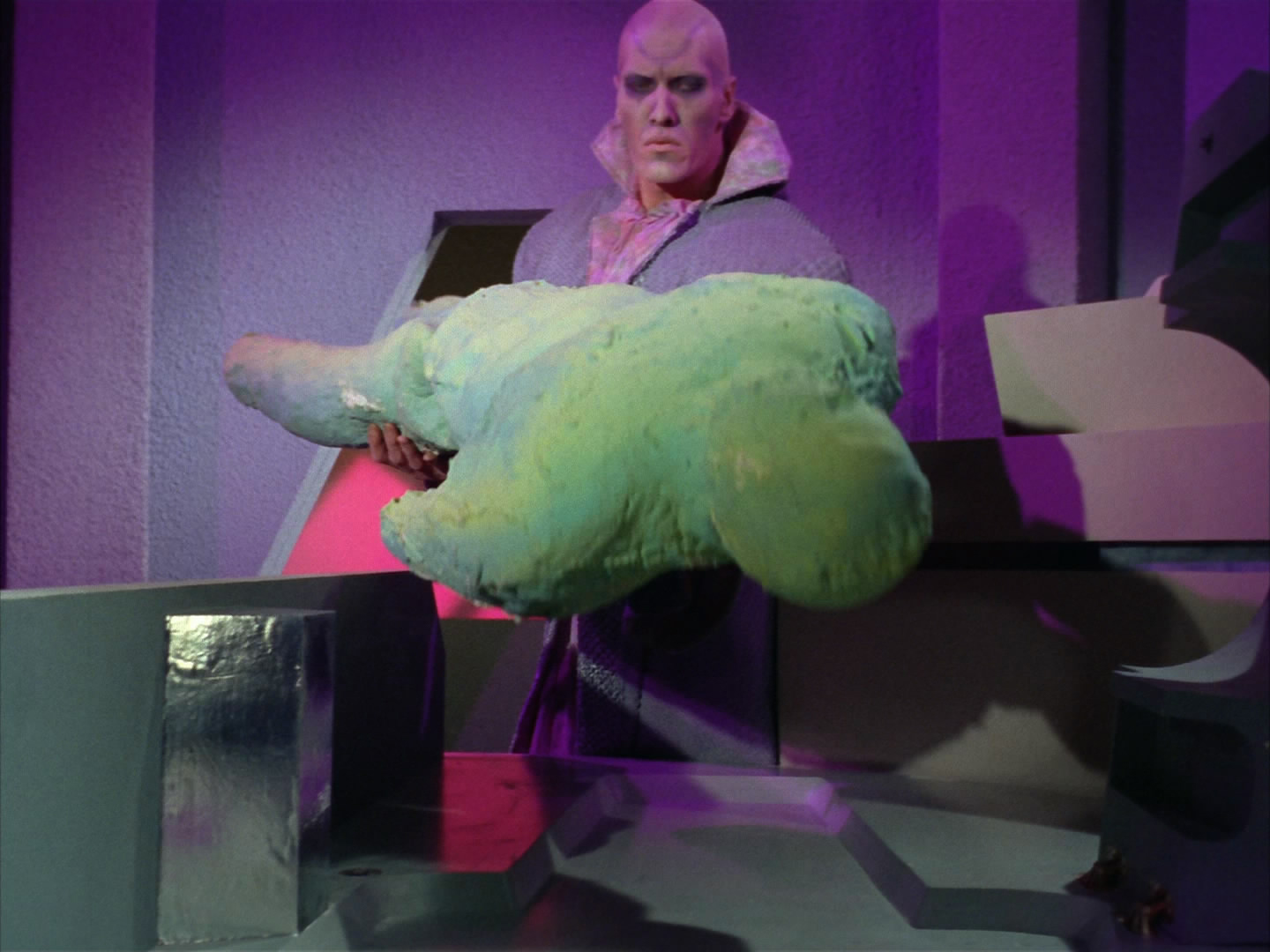
Rise of the Machines: What Are Little Girls Made Of?

by noreply@blogger.com (Josh Marsfelder)

And here we have the blow-up doll division. They're like collectibles; you're supposed to find them all.
Only Star Trek would have the gall to do the exact same goddamn story twice in the same month.

Of course, me having to deal with “What Are Little Girls Made Of?” here is mostly my fault, a result of me deciding to follow the show roughly in production order. This episode was filmed after “Balance of Terror” but aired long before, the latter show being pushed several weeks back such that it aired with material produced under the next showrunner. Really though this actually fits: “Balance of Terror” has far more in common with that crop of episodes than it does with this one, which is pure Gene Roddenberry, down to him doing a last minute hectic rewrite that actually ran contiguous with filming as he felt the script was unworkable. Of course you know where this is going: We follow up the greatest episode in the entire Original Series with a third-rate rehash of every second-rate, half-baked concept the show's done to date. Another logic versus emotions debate? Yup. An evil duplicate of Kirk who fools the crew? You got it. Theiss Titillation Theorem? This episode gives us the poster child! Sexism that ranges from the mild to the straight-up blunt? Of course. Loads and loads of Majel Barrett? Do you even have to ask?

We're not quite back into “The Enemy Within” territory of awfulness with this one, though there are several moments that come close. No, “What Are Little Girls Made Of?” just feels haggard, tired and spent, as if it's just halfheartedly going through the motions and re-covering old ground, which you might recognise as decidedly not the most healthy position for a show to be in ten episodes into its first season. So, not only do we have Roddenberry writing again, we don't even get Roddenberry at the top of his game. Delightful. One could argue I should go easy on this episode because of its tumultuous history: After all, Robert Bloch's original story was by all accounts never any good to begin with. One would be mistaken in making that argument. Poor quality at the start is a sign you should rethink the way you field story pitches, not the cue to give it to Gene Roddenberry and force it through production. That said, regardless of whether or not this episode *should* have been made (it shouldn't have), the fact remains it exists, I had to watch it and now I have to come up with something to say about it.

The only remotely interesting thing “What Are Little Girls Made Of?” adds to the very, very well-worn territory of logic debates and “what makes us human?” musings comes through what can only be described as drunkenly stumbling into personal identity theory. The core ethical debate of the episode is whether or not the androids actually are human. Korby seems to think that if the androids can “pass” as human that's enough and in fact argues they are superior because they are infinitely reparable and have superhuman strength. The key moment comes when Korby reveals he has discovered how to essentially upload someone's consciousness into an android body, and that's akin to crafting a superior version of oneself. This actually falls into some basic intro level personal identity theory, namely, a classic puzzle that is often posed to undergrad philosophy students. The conundrum goes something like this: If you were in a devastating accident of some sort that rendered you either a paraplegic or on the verge of death, but your brain was undamaged, and the technology existed to transplant your brain into a new, healthy body such that this duplicate would have the same memories, experiences and experiential identity (that sense of being within your body and experiencing the world through it) you do, would that new person be you? This is in fact the exact scenario Korby faces in this episode.

This being Star Trek, the show naturally makes a right mess of this. As someone who actually took personal identity theory as an undergrad and was given this same puzzle to work with, I can safely say the show doesn't have any idea how to handle this. The solution my professor gave us at the time, and one I'm inclined to agree with, is that no matter what your conception of the self, it actually doesn't matter whether the duplicate is “you” in the technical sense or not because the fact it has the same memories, personality and experiences things in the same manner you do means the duplicate is for all practical purposes you anyway and anything more is just tedious semantics (it may also be worth pointing out my professor was a Buddhist philosopher who didn't believe in free will or individuality either). But Roddenberry seems to think this is some horrible, dehumanizing thing, and we're never really shown any evidence that it is.

Kirk's primary objection seems to be that the androids, namely Andrea and Ruk, can be programmed, thus reducing them to unfeeling logic machines with no soul (well, that and the actually hilarious fear that the androids will rise up and overthrow their masters which not only made me literally laugh out loud from its blatant absurdity also means Roddenberry has gone and done Terminator 20 years early). But this is totally at odds with what we've seen from Roddenberry so far, who seems to on the whole favour distant logic to passionate emotion, or at the very least he does when it's dramatically convenient. Also, aside from this being a complete slap in the face to Spock, Kirk is also being incredibly facile here: Korby rightfully points out that Andrea and Ruk are constructed service drones built from the ground up to basically be computers, which is an entirely different thing than a human transplanted into an android body.

On top of that, the show can't even keep its own ethics straight, let alone Korby's: A big part of the climax involves Kirk “confusing” Andrea by displaying affection for her (alright, he does it by forcing himself on and sexually assaulting her) and pointing out to Ruk that he's acting out of vengeance, not orders to protect. This would seem to imply that the androids *are* in fact capable of human emotions and experiences, they just need to learn about them, so this invalidates basically everybody's arguments. Furthermore, the fact Data on Star Trek: The Next Generation is an android and nobody on that show (well, none of the regulars anyway) ever questions his sentience, experiential self or capacity to be human just makes me resent this episode all the more.

A saner objection for Kirk to raise might be concern that the androids have bodies that are built out of digital machines instead of being naturally occurring parts of the universe, but, as Captain Picard will also one day point out, human bodies are still machines of a sort: We're just machines built out of biochemistry instead of positronics. No matter which way you argue, however, the fact remains “What Are Little Girls Made Of?” is hinging its core ethics debate on wildly fantastic speculative future technology that places it about as far away from saying something remotely contemporary or relevant as it is possible to be. Even from a purely philosophical perspective instead of a futurist one, personal identity theory is a fun thought experiment, but I'm far more interested in the lived experiences of real people and material social progress and this episode has none of that.

What it does have is some solid acting from Majel Barrett, who clearly appreciates finally having a part of some significance to work with. She's good enough at conveying Chapel's conflicted affections for Korby we almost overlook the fact Chapel's presence here makes absolutely no narrative sense. The script writes her, and Barrett plays her, as still very much in love with Korby and the denouement shockingly seems to imply Chapel was ready to abandon her post on the Enterprise to live with him. But the last time we saw Chapel she was confessing her love for Spock (who she seems to have no feelings for in this episode at all) and gave no indication she was dealing with being engaged to someone she hadn't seen in a decade. Once again, the show gives Barrett a highly emotional scene she sells quite well, but gives it absolutely no context, history, development or follow-up.

On a different note, it is more than a little suspect that this script, which was predominantly written by Roddenberry, gives Chapel (Barrett) a complex love story with a man she swears she knows inside and out (which is admittedly there to sell the android plot) and than has her become immediately jealous and catty as soon as Andrea shows up (indeed, Korby even straight up says “I cannot love Andrea! There's no love there!” which is as hilariously on-the-nose as it is painful to watch). I was kind of hoping I could redeem Chapel's confusing and contradictory romantic aspirations by retroactively making her polyamorous, but thanks to her scenes with Andrea I can't. No, what this feels like to me is Roddenberry's and Barrett's relationship details slipping into the show, which is frankly nothing anybody really needs to or wants to see. As for the rest of the cast, William Shatner has settled into a groove and is just doing his job at this point. His job is to be a gloriously over-the-top ham sandwich, but we expect that of him now. Everyone else is either absent or barely gets any screentime.

“What Are Little Girls Made Of?” is tough to get too angry about. It's bad, but it was probably always going to be bad given the hectic behind-the-scenes situation during filming. Stress and sloppiness are no excuse for the ethical missteps it makes, of course-if anything that's even more reason to condemn it. But it's honestly not as bad in these areas as Roddenberry has been in the past, and it's frankly refreshing to finally have a script from him with which I can have a reasoned, academic disagreement instead of screaming incoherently until I pass out about how horrifically privilege blind it is. More to the point, we're rapidly approaching the end of Roddenberry's tenure as showrunner of Star Trek, and while some of these problems never quite go away they'll at least very soon cease to be quite as central to how the show works (we'll have some new problems to worry about, but one thing at a time here). And, if nothing else, this episode does give us some more of the show's iconic moments: Andrea is one of the most memorable characters in the Original Series, as is the penis-shaped rock Kirk uses to attack Ruk. If I've learned anything about this show, it's that setpieces like this will live on far longer than any philosophical questions it raises, or indeed my pillorying it for not being up to my standards.
03 Jun 12:17

Sex and Violence in SF Fandom

by Stuart Douglas
I was going to post my inane ramblings about Patrick Troughton today, but I just read this post by a sf author called Ann Aguirre, and it's left me actually gobsmacked and - in my autistic way - spitting feathers of rage on her behalf. 

http://www.annaguirre.com/archives/2013/06/02/this-week-in-sf/

I don't know the writer or her work, but I don't need to; both the post itself and the emails she quotes from - let's not beat about the bush here - absolute fucking scumbags are enough to make me want to vomit.

Combine that with a conversation I had with a very talented writer (who will remain nameless) the other day about a certain well-known author of Dr Who books who threatened to punch her for daring to criticise his nasty, misogynstic pile of shit tie-in novel (and whose fans sent her death threats), and I'm left feeling more than a little sick to the back teeth of the plethora of wankers who infest science fiction.

Makes me even more glad that Kate's doing an all female sf book for Obverse.

Quick Update - I should have mentioned that many people other than Ms Aguirre reacted negatively to the initial SFWA Bulletin piece by messrs Malzberg and Resnick.  There's a decent round-up of just a smattering here: http://www.jimchines.com/2013/06/roundup-of-some-anonymous-protesters-sfwa-bulletin-links/

And you can view the initial articles which led to Malzberg and Resnick complaining, like foolish old men, about 'lberal fscists' here: http://www.slhuang.com/blog/2013/05/31/dear-mike-resnick-barry-malzberg-and-the-sfwa-for-giving-you-a-platform-fuck-you/

Quick Question - How does Ms Aguirre's experience compare to that in sf in other countries?  In the UK, say, or Australia?  Anyone?
03 Jun 09:56

FLASH HARRY Release Date Announced: CD (with Bonus Tracks) & Limited Edition Vinyl - NOW AVAILABLE FOR PRE-ORDER

by Willard ICorp

It's been 33 years since it first came out, but on August 13th Varese Sarabande Records will re-release Harry Nilsson's final album, Flash Harry, for the very first time on compact disc. Originally issued on Mercury Records in 1980 (only overseas, never in the United States), the CD version will include four bonus tracks - "Old Dirt Road (alt. version)," "Feet," "Leave The Rest To Molly" and "She Drifted Away." The last three being previously unreleased outtakes from the sessions - which took place at Cherokee Studios in Los Angeles, and featured Lowell George, Fred Tackett and Bill Payne (all of Little Feat), Ringo Starr, Van Dyke Parks, Jim Keltner, Jim Gordon, Klaus Voormann, Dr. John, Donald "Duck" Dunn and others. The album (save the opening track - a demo created independently by Monty Python's Eric Idle) was produced by Steve Cropper and Bruce Robb. Plans are to include an eight page booklet, with additional liner notes by Jerry McCulley. There will also be a vinyl version of Flash Harry (limited to 2,500 units) that will replicate the original 1980 LP's track listing (no bonuses) and artwork, including Derek Taylor's original liner notes. Flash Harry is now available for pre-order at Amazon, CD (HERE) and vinyl (HERE).

CD & VINYL TRACK LIST
1 Harry - by Eric Idle and Charlie Dore (Eric Idle)
2 Cheek To Cheek (Lowell George/Van Dyke Parks/Martin Fydor Kibbee)
3 Best Move (Harry Nilsson/Van Dyke Parks/Michael Hazlewood)
4 Old Dirt Road (John Lennon/Harry Nilsson)
5 I Don’t Need You (Rick L. Christian)
6 Rain (Harry Nilsson)
7 I’ve Got It! (Harry Nilsson/Perry Botkin, Jr.)
8 It’s So Easy (Harry Nilsson/Paul Stallworth)
9 How Long Can Disco On (Harry Nilsson/Ringo Starr)
10 Bright Side Of Life (Eric Idle)
CD BONUS TRACKS
11 Old Dirt Road (alt. version) (John Lennon/Harry Nilsson)
12 Feet (Danny Kortchmar) - Previously Unreleased
13 Leave The Rest To Molly (Allen Toussaint) - Previously Unreleased
14 She Drifted Away (John Lawrence Agostino) - Previously Unreleased

03 Jun 09:23

SECRET WARS II 2!

by Calamity Jon
As part of the 30 Days project, I’ll be reviving Gone&Forgotten for a short article every day throughout the month. It’s June 2, and Your Humble Editor is revisiting a previous subject, it’s…


I covered Secret Wars 2 many years ago in this very same blog and walked away from that one dissatisfied; I actually enjoy most of the comics which I review on this site (Solson excluded, across the board, hanging’s too good for’em), if not for raw enthusiastic incompetence then at least for an ambition which trumps ability. In my review of Secret Wars 2, I came away only with a keen, baffled sense of unease. The only high point of the review, by my recollection, involved me trying to cuss the staples right off the spine.


Recently, tho, I came across a comment regarding Chris Tucker’s portrayal of Ruby Rhod in Luc Besson's The Fifth Element - legitimately one of my favorite films – which gave me pause to reconsider Secret Wars 2. Specifically, the author suggested that Ruby Rhod was Besson's vision of the heterosexual male sex symbol of the future, a complete inversion of the macho, gruff, silent hero as portrayed in that same film by contemporary action hero Bruce Willis.


Luckily The Beyonder understands our human concept of "holding it"
I’m not saying I subscribe to the theory completely –I’ll save the specifics for the blog I run about arguing the semiotics and portrayal of race in Luc Besson films, which is to say nowhere – but at the very least it was an epiphany. I understood for the first time was author/editor Jim Shooter was trying to accomplish.


That put me in the mind of this: When The Beyonder chooses to incarnate himself in a human body in Secret Wars 2, he makes a duplicate of Captain America’s alter-ego, the blonde, blue-eyed brick shithouse Steve Rogers. He takes the body of this classically handsome, muscular idealized hetero-masculine male figure and spends the remainder of the series and crossovers either inverting or caricaturizing its paradigm. By the end, he’s got Rogers’ beefy body jeri-curled and decked out in bleach-white pleather tracksuit so that he looks like an enormous singular white male Klymaxx immediately following an enormous multiple white male climax.


This is how the story meetings went
With the idea that Shooter was tickling the underside of paradigm, Secret Wars 2 seems to have been intended as a broad cultural and social satire - the immediate Trust Fund offspring of the thoughtful and lurid work produced under the influence in the 1970s by Bullpen writers like Moench, Starlin and Gerber. If there are any significant distinctions between the purple prose of Marvel’s Seventies catalog and Shooter’s pet crossover project it lies in the scope, scale and the fact that all those other writers spent their teenage years expanding their consciousness with mind-altering drugs and Shooter spent his teenage years being terrorized by Mort Weisinger.


As a satire, its ambition is breathtaking, not only because it audaciously takes place as a multi-issue major crossover involving the company’s best-selling books well inside canon, but also because of the scale of the cultural and philosophical parody; Suburban domesticity, the entertainment industry, fandom, fast food, limousine liberalism, agnostic holisticism, asceticism, a potshot at airplane seats and that’s just in the first issue.  He’ll go on to cover pop culture, conspicuous consumerism, solipsism, hedonism, existentialism, criminal ethics, abortion (!), spiritual morality, secular ethics, transcendentalism and generally the folly of the human condition while making hay of the tropes of the super-hero genre all in the company of well-meaning but tunnel-visioned human helpers (including a watered-down version of Funky Flashman who was himself an amped-up version of Stan Lee so … Stan Lee).


That none of it is done very well is almost beside the point, the ambition is so tremendous as to be noteworthy. A major round of applause for a glorious catastrophe, Secret Wars 2…


03 Jun 09:16

Some reading advice to breathless reporting about job-stealing robots

by Tobias Buckell

Pro tip, everyone getting ready to talk about robots and economics should read Jack Williamson’s ‘With Folded Hands’ and ‘Midas World’ by Frederik Pohl.

Which is to say, you all should interview some SF/F writers. We’ve been thinking on this shit for half a century, at least.

“It’s the same around the world. Western manufacturing jobs used to go to Chinese workers; now they’re increasingly going to Chinese robots, such as the million new robots that Foxconn is deploying.

Think you’re safe because you don’t work in a factory? Guess again. ‘In a move that could put millions of teenagers around the world out of their first job, Momentum Machines is creating a hamburger-making machine that churns out made-to-order burgers,’ reports Gizmag. A Cornell robot can learn how and when to pour you a beer. Well, never mind food service, how about social services? …Oh. Other robots have been shown ‘wiping the mouth of a disabled man and adjusting a blanket.’”

(Via After Your Job Is Gone | TechCrunch.)