Shared posts

11 Jul 17:08

Hulking Metaphors

by Jack Graham
From the January 2012 issue of Panic Moon.  Slightly edited.


There’s no ambiguity about the dinosaurs in 'Invasion of the Dinosaurs'. They’re rubbish. In other respects, however, this is a deeply ambiguous tale. The ambiguity allows the script to make some scathingly ironic political observations, but ultimately leads us to a very bleak and bitter place.

In this story, contrasting with other scripts from the period, the eco-activists are the ‘baddies’. It’s like Malcolm Hulke, influenced by the decline of the radicalism of the 60s and early 70s, was reacting against the whole idea of changing the world. It’s possible to read the people on the (space)ship of fools as a jaundiced parody of the left: a tiny, closed-off, self-appointed vanguard who plan to “guide” others while ruthlessly policing their own internal orthodoxy. But they’re also like Daily Mail  readers, with their “pure bread”, their plaintive cries of “I sold my house!” and their TV room where they can go to tut at the modern world. The film in the Reminder Room blames protestors even as it shows them being truncheoned. Ruth seems more worried by “moral degradation” and “permissiveness” than she is by the mercury in the fish.

The script is full of such queasy ironies. For instance, the conspirators oppose and blame technology, but their plans depend upon it. Whitaker’s Time Scoop is high-tech stuff, powered by a nuclear reactor. We need hardly comment on the absurdity of a man sitting in a spaceship (as he thinks), waggling hand-made wooden kitchenware as proof of his non-technological simplicity! Such idealising of the pre-industrial is undermined by the medieval peasant accidentally caught in the Time Scoop. He speaks of getting his priest to burn a ‘witch’. Meanwhile his king is off sacking the Holy Land. Some Golden Age! But then feudal standards of law and order would probably be quite convivial to General Finch, a man eager to use live rounds on looters.

Are these people radicals or reactionaries? Seemingly, they’re both. However, the leaders of the conspiracy can be summed up by their prefixes. Rt Hon, General, Professor, Captain. They hide in a bunker designed to protect the government during a nuclear war. They will emerge safely after they have obliterated the world, just as the politicians of the Cold War planned to. They are the establishment, the powerful, the privileged. This is the brontosaurus in the room. Even the fake spaceship is run by ‘Elders’, one of whom is a peer.
 
But who are the REAL dinosaurs?  Eh?  Hmm?  Yeah?  Makes you think, doesn't it.

Moreover, the plan of the ship-people sounds like colonialism. In the novelisation, Sarah even compares them to the Pilgrim Fathers. They will, so they think, “guide” the “simple, pastoral people” of “New Earth”. These refugees from civilisation will bring civilisation to the natives. They assume that right. They despise the ‘evils’ of modernity, yet take it for granted that they won’t replicate them because – and this is the unspoken basis of their whole plan – those evils are somebody else’s fault. Looters, meanwhile, can be shot for their “greed”, the abstract original sin (in others) that the conspirators seem to blame for everything.

This story doesn’t counterpose establishment reactionaries with middle-to-upper class hippydom; it depicts them as intertwined, as equally cynical or deluded. A disillusioned ex-Communist might’ve come to see a similar deluded cynicism in his own political background. This, I think, is why the ship-people are simultaneously vulgar Leninists, Puritans (complete with Biblical names), Mary Whitehouse types and ringers for that couple in The Good Life. A spectrum of ideologies – blue, red, Green - are tacitly implicated as lumbering dinosaurs: outdated, ungainly, but deadly. One dinosaur might fight another, but they’re all essentially monsters (deeply unconvincing ones at that), and people get squashed under their scaly feet as they rampage through the world.

This is Hulke’s darkest, most nihilistic story. It contrasts sharply with 'The War Games', which he co-wrote during a high point of worldwide protest. Hulke’s last Who script reeks of disappointment. In it, the Doctor proclaims (as tritely as the conspirators) that the real problem is “greed”. However, the script seems to say that the real real problem is belief. Belief in anything.
18 Jun 20:13

Recommended Reading

by evanier

Kevin Drum on how John Boehner may let immigration reform pass but in a way that allows many members of his party to condemn it.

This kind of thing is not new. A lot of our Congressfolks and Senators are secretly for a lot of things they say they’re against and vice-versa. Years ago, after Tip O’Neill stepped down as Speaker of the House, he appeared on an interview show — I’m thinking it was Lou Gordon’s — and he discussed this. Said Tip, one of the secrets to his job was being able to count votes in order to be able to give the guys on his side (Democrats) permission to vote contrary to the party position. There was a bill — I don’t recall what it was — that Democrats wanted to pass and Republicans didn’t…but there were Southern Democrats who’d pay a price for that at the ballot box. So O’Neill said something like, "I had to make sure we had enough votes so certain Democrats could vote against it and scream about it but it would still pass. Every one of those guys wanted it to pass and would have voted for it if that had been necessary. But in their districts, it was not popular and…well, they were pretty damn happy when I could tell them, ‘I’ve got enough votes locked up. You can vote against it.’ One of them went out and denounced it as a monstrosity and an affront to human decency."

18 Jun 16:08

The Unluckiest Prime Minister

by noreply@blogger.com (Alun Wyburn-Powell)


Some prime ministers are luckier than others. Tony Blair was probably the luckiest post-war prime minister. During his 10 years in power he faced a succession of struggling Conservative Party leaders, he won an overall majority in 2005 on only 35.2% of the vote, the economy grew, inflation stayed low and his health held out.

This week though sees the anniversary of the election of, arguably, the unluckiest of all post-war prime ministers – Ted Heath. Heath was not expected to win the 1970 general election. Opinion polls put his Labour rival, Harold Wilson, in the lead. However, on 18 June 1970 Ted Heath won the election with 330 seats to Wilson’s 288. Heath had served as leader of the opposition for five years and so had had time to plan his premiership. His ministerial team almost all had experience of their portfolios in opposition. His cabinet was the most leak-proof of all post-war cabinets. What could possibly go wrong?

The first disaster was when Heath’s Chancellor of the Exchequer, Iain Macleod, collapsed and died from a heart attack after exactly one month in the post. During that month he had already been rushed to hospital for 11 days with appendicitis. Macleod was highly regarded on all sides of the House of Commons for his oratory and incisive views. He had previously served as Minister of Health in the early 1950s, but did not take his own advice. In 1952 he announced to the world that Richard Doll had discovered the link between smoking and lung cancer: Macleod chain-smoked throughout the press conference.

Heath’s luck went from bad to worse. His time in office saw ‘Bloody Sunday’ in Northern Ireland in which British troops shot and killed 14 (eventually established to be innocent) civilians, an oil crisis, the collapse of Upper Clyde Shipbuilders and Rolls Royce which he was forced to nationalise, high inflation and two miners’ strikes, the second of which led to the Three-Day week.

Eventually, after less than four years in office, Heath called an election, posing the question ‘Who governs?’ In terms of votes, Heath won the February 1974 election, but in terms of seats, he lost – the third time in the twentieth century that the party with the most votes did not have the most seats (the others being 1929 and 1951). Heath held abortive coalition discussions with Liberal leader, Jeremy Thorpe, but left office on 4 March 1974, never to return.

Ted Heath remains something of an enigma. He never married and never revealed the existence of any partner. His hobbies were playing the piano and sailing, which added to his image of an aloof and remote man. Towards the end of his life, he was reckoned to have no living relatives at all.

Heath remained in the House of Commons until 2001, having sat for longer after his premiership than before. His post-prime ministerial period has been described as ‘the longest sulk’ in British political history, while he watched his successor, Margaret Thatcher, win three consecutive elections. However, he did stay long enough to see her departure, on which he was reported as exclaiming ‘Rejoice, rejoice!’ He later corrected the record, saying that he had actually said ‘Rejoice, rejoice, rejoice!’

The one significant achievement for which Heath could be remembered was taking the UK into the EEC. For some reason though, the Conservative Party don’t seem to mention this very often!
18 Jun 16:06

Supreme Court of the US mostly abolishes the right to remain silent.

Supreme Court of the US mostly abolishes the right to remain silent.
18 Jun 14:49

Old Things Fall Apart...

by noreply@blogger.com (Paul Magrs)

I really like the way the paperbacks gradually fall apart.


18 Jun 14:45

This is Not a Dream (The Last War in Albion: Introduction)

by noreply@blogger.com (Philip Sandifer)
This is not a dream.” - Alan Moore, “Shadowplay,” in Brought to Light, 1988.

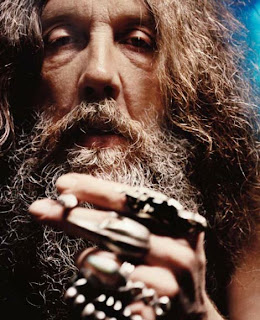
Figure 1: The Great Bearded Wizard of Northampton
The Last War in Albion is a history of British comics. More specifically, it is a history of the magical war between Grant Morrison and Alan Moore, a war that is on the one hand entirely of its own invention and on the other a war fought in the realm of the fictional, rendering its actual existence almost but not entirely irrelevant. The war in question is not the scant material residue of their verbal feud in various interviews over the years. This exists and will be picked over, but it is not the meat of the discussion.

Rather it is a more fundamental issue: how is it that two comics writers of nearly the same generation, with such a clear overlap in interests, who grew up a mere three-hundred-and-forty miles apart - no greater than the distance from New York to DC - a mere seven years in age difference (no larger than the age difference between J.R.R. Tolkien and C.S. Lewis) are not friends and have not a hint of warmth in their relationship? This is almost as improbable as Morrissey and Robert Smith hating each other’s guts.

And yet it is the case. Underneath this fact is a story: one of how the British comics industry unexpectedly produced a small generation of some of the most important writers of the 1980s and 90s, and in turn had a huge cultural legacy in both the US and UK. So much so that the number three grossing movie of all time, Joss Whedon’s The Avengers is massively and documentably indebted to what was, prior to the arrival of people like Alan Moore, Grant Morrison, Warren Ellis, Neil Gaiman, and a constellation of significant (and at times better) but less influential writers, the minor backwater of the lowest order of the British comics industry.

Figure 2: The Thrice-Named Warrior Monk of Glasgow
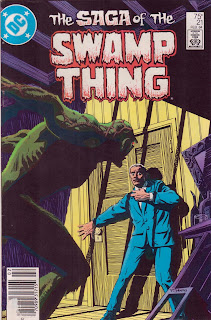
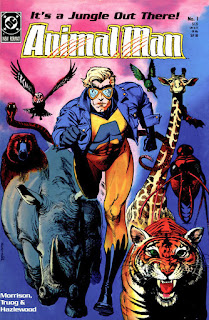
Within that story there are two figures that appear almost identical to an even casual observer. One, Alan Moore, is a heavily bearded self-proclaimed magician who made his name with DC Comics in 1984 writing Swamp Thing, an envrionmental-themed superhero-horror comic. The other, Grant Morrison, is a bald self-proclaimed magician who made his name with DC Comics in 1988 writing Animal Man, an environmental-themed superhero-horror comic. These two men are not friends. There are sensible reasons for this. Despite their intense similarities, there are fundamental aesthetic differences between Grant Morrison and Alan Moore that place them at diametric opposites of a host of issues with profound social, political, historical, and magical implications. 

This latter adjective is worth remarking upon, as it is central to their differences. Both men believe in a system by which the manipulation of symbols creates material change in the real world. Both explicitly use their creative work in multiple media as an attempt to cause such change. Their comics are magic spells hurled into the culture wars, trying in their own way to reshape reality. And they are opposed.

This is the story of what happens as a result of this. This is the story of the Last War in Albion.

Figure 3: Saga of the Swamp Thing #21, 1984
Understanding this event as a war has several consequences. It does not entirely mean that it is a story of two generals marshalling their forces and battling on the astral plane. It is not Harry Potter versus Voldemort (it is much more Hagrid versus Snape). Alan Moore and Grant Morrison are combatants, and major battles revolve around their actions, but their role is that of Austria and Serbia in World War I. The actual war is much larger and diffuse, more akin to those wars described by Lawrence Miles and other writers of the Faction Paradox franchise, a cracked mirror spinoff of Doctor Who

Nevertheless, The Last War in Albion will approach this war through the lens of Alan Moore and Grant Morrison. The mildly hostile interplay of their entwined careers will be understood as the beginning of its story. There is, of course, backstory and foreshadowing to be had, but its chronological playing out from 1978 to the present day forms the primary plot, if you will, of the project. It is in this regard comparable to Neal Stephenson’s treatment of the Newton-Leibnitz feud in The Baroque Cycle, his three-thousand page magnum opus, except probably longer.

Its structure is self-consciously different from TARDIS Eruditorum, the project to which it is most obviously compared. That project is structured as an episode guide - a series of short essays on successive episodes of Doctor Who. The Last War in Albion is, at least initially, structured as a single essay. Paragraph transitions will be maintained across entries. Figures are numbered consecutively across posts. The language of blogs is in this case deliberate. The Last War in Albion is a book in its structure, albeit ones ill-suited to the mechanics of print publishing, but it is not published like that and at present there are no plans to do so. It is a blog. Its structure is serialized and temporal. Past entries may be amended, but will only be substantially rewritten under rare circumstances. 

Figure 4: Animal Man #1, 1988
It is not going to linearly cover every Grant Morrison and Alan Moore comic in publication order with distinct entries for each, although as near to every comic by both writers as it is logistically feasible to discuss will be discussed. Rather, it will take longer and more oblique paths. It will inevitably return to the basic narrative of 1978 to the present day, but it will not do so on an entry-by-entry basis. An entry that talks about a seven-page comic in an anthology may be followed by one talking about 1960s new wave science fiction, followed by one about 1973 trash cinema, followed by one about a different comic published off and on from the year of the seven-pager to 1989, followed by one about William Blake, before finally moving on to the original writer’s other major comics work of that year, a thirty-four page small-format space adventure comic. All of these entries may contain any number of other topics, including topics from other entries. 

That was not an arbitrary example. This format owes considerable debt to The Hitchhiker’s Guide to the Galaxy, or, less boastfully, Lawrence Sterne’s The Life and Opinions of Tristram Shandy, Gentleman. All of which said, the blog is not necessarily the only format The Last War in Albion will exist in. The story it tells is not one that takes place in linear time, and its telling alters with the format it is told in. As the project develops other formats of The Last War in Albion may appear, pending appropriate financial conditions. For the time being it will be an occasional feature - it will make sporadic chains of appearances in amidst other blogposts, then disappear for a time, then reappear with another set of six or seven entries. This structure is recognizably that by which classics like Zenith and The Ballad of Halo Jones were published in 2000 A.D.

The remaining nature of the war will be revealed in the telling. All that remains is the task of selecting a beginning point and commencing the narrative proper. [continued]
17 Jun 22:46

No confidence in "Confidence and Supply"

by Mark Thompson
Liam Byrne has come out in favour of a minority Labour government if there is a hung parliament where Labour are the largest party after the 2015 general election.

His view is that he thinks a minority Labour administration could achieve more than a coalition and also that the current government has "given coalitions a bad name".

In some ways this view is unsurprising. In the political memory of almost everyone in the contemporary PLP (at least in the Commons) they have never had to share power. Their experiences in government between 1997 and 2010 were of sole stewardship of the levers of government and it is hardly surprising that elements within would want to repeat that, even if the electorate did not want to give them a majority.

But there is an implicit assumption built into this idea from Byrne. For a minority government to have any stability it would require minor parties (likely including the Lib Dems) to be willing to agree a "Confidence and Supply" arrangement with Labour. This would mean them promising to support Labour in any confidence motion and also to allow budgets to pass.

I have previously detailed my views on confidence and supply explaining how I think it would give all of the downsides of a coalition but without many of the benefits. This would apply just as much in a potential arrangement with Labour as it would with the Conservatives.

I do not think my views on this are unusual. There are plenty in my own party who feel similarly, indeed that is one of the main reasons that the 2010 coalition went ahead as the alternatives were all worse in the views of the key negotiators.

So if Byrne's view prevails within Labour and they as the largest party in a hung parliament try to go for a minority government that is predicated on some pretty big assumptions about how smaller parties will fall into line and provide the day to day support needed to even perform the basic functions of a government. It is far from clear that would be forthcoming and it is somewhat arrogant in my view for Byrne to simply assume that it would and that somehow it would mean Labour could achieve more than it could in a coalition. In fact this is the same arrogance that Adonis betrayed in his book "5 Days in May" (that I reviewed here) where he and other senior Labour figures were convinced a coalition with the Lib Dems could work despite the maths not favouring such an arrangement based on a series of assumptions about how all the other parties would back them.

To an extent I can understand Byrne's wish to find a "better way" to govern were there to be a hung parliament. There is no denying that coalition has been tough and from the outside looking in to Labour politicians I can see why they might balk at such an arrangement themselves.

But the idea that a minority government would be better strikes me as tribalistic and short-sighted. Any minority government is unlikely to last more than a year or two and parties who show they are unwilling to work with others may well find they are punished at the ballot box at least as much if not more than those who are willing to take the risk of going into coalitions.

17 Jun 20:32

"Over the summer, your child could fall two months behind other classmates!"

by Jonathan Calder
Last year I wrote a sceptical (and rather repetitive) post about summer schools, which have turned out to be a large part of Nick Clegg's much-heralded pupil premium:
I am sure that summer schools could be good for children. And as Baden-Powell showed, if you get things right, children will come running. 
But, as the it stands at the moment, the Pupil Premium seems to promise a world in which middle-class children in good schools go on holiday while working-class children in bad schools go to summer school. 
As a Liberal (and as a former poor child) that is not a world I find particularly attractive.
I need not have worried about the class angle. Today in leafy Market Harborough I saw a poster advertising a tutoring service under the slogan "STOP THE SUMMER SLIDE". It went on: "Over the summer, your child could fall 2 months behind other classmates! We can help..."

There is research suggesting that children from poorer homes can fall behind over the summer, but what we see here is a generalised anxiety. The danger is a sort of educational arms race that will see children who are doing perfectly well under current arrangements denied a proper summer holiday.
17 Jun 19:28

“The following program contains material that may be disturbing. Viewer discretion is advised.”: The Menagerie

by noreply@blogger.com (Josh Marsfelder)

"In the not-too-distant future, next Sunday, A.D...."

WARNING: THE HISTORICAL EVENTS HEREIN DESCRIBED HAVE BEEN DECLARED PART OF A FIXED POINT IN TIME BY THE UNITED FEDERATION OF PLANETS TEMPORAL INTEGRITY COMMISSION UNDER THE TEMPORAL ACCORDS. NO STARSHIP, AGENT OR OTHER ACTOR IS TO APPROACH THESE EVENTS FOR ANY REASON OR PURPOSE. ANY TEMPORAL INCURSION DURING THESE EVENTS WILL BE CONSIDERED A LEVEL TEN EMERGENCY. THE TIMELINE MUST BE PRESERVED.

So what we have here a grossly overspent production budget forcing the show to hastily retool “The Cage” into a clip show interspersed with footage filmed using sets, costumes and indeed the entire actual plot recycled from “Court Martial”. Incidentally, we've also now had to stretch the already tortoiselike pacing of “The Cage” to a two-parter to accommodate the new framing device which we've turned over to Gene Roddenberry again to write the script for. Miraculously, however, despite all of this and almost by complete accident, this is a story so gratuitously oversignified it shoots the show straight into the symbolic stratosphere. “The Menagerie” may not be the best episode of the original Star Trek, but it may well be the most archetypical.

It is worth noting this was not the original plan for “The Cage”: Roddenberry had hoped to turn it into a full-length movie with a new first half depicting the crash of the Columbia. It was Bob Justman who convinced Roddenberry to adapt it into “The Menagerie” because the show had run out of both scripts and money, and the fact Roddenberry had wanted to take a story that had already somehow managed to be simultaneously too crammed full of details and concepts for only an hour and too ponderously paced to be especially enjoyable television and make it into a feature film probably tells you everything you need to know about Roddenberry at this point. It would be both easy and churlish of me to call the framing device Roddenberry writes for this episode “predictably terrible” as we have in fact seen more than a few solid outings from him, but even so this has got to be one of his worst efforts at least from a purely structural perspective: The new material is absolutely riddled with yawning, cavernous plot holes that threaten to leave “The Menagerie” actually incoherent as a text at numerous points and the justification for forcing the court to sit through a Star Trek rerun is more than a little flimsy. At least Roddenberry doesn't introduce any new major female characters this time so we're thankfully spared his usual gender issues.

But getting bogged down in silly little things like “plot”, “narrative logic” and “coherence” is the wrong approach to take with something like “The Menagerie”. This is one of the single most iconic stories in the Original Series, and rightly so in my opinion. The first thing to note is that “The Menagerie” is clearly trying to be just as much about honour, duty and procedure as “Court Martial” was. While it lacks the grandiose, sweeping Aubrey-Matarin pomposity we got last time, it could perhaps be argued the theatrical theme we've been building over the past few weeks exists here in the form of Roddenberry himself, who seems here to be doing a halfway decent impersonation of Don M. Mankiewicz. And, just like “Court Martial”, the framing device segments of “The Menagerie” can be read as the show taking its original premise as far as it can possible go.

The definition of a narrative collapse story is one where both textual and metatextual elements conspire together in an attempt to destroy the text's ability to tell its own stories. At first it seems like this is what “The Menagerie” is trying to do: Spock lies and betrays Kirk and the crew, commits high treason, commandeers the Enterprise, kidnaps Pike and takes the ship on a course to the one world it is absolutely forbidden to visit, a standing order whose violation is punishable by death. But, upon closer inspection, that's really not what's going on here: Rather, what “The Menagerie” is doing is continuing “Court Martial”'s conviction to pushing Star Trek to its logical limit. The biggest evidence for this reading is Spock himself, who has always had an air of suspicion about him. We always worried he might attempt something like this, and it's even more fitting that when he actually does he does so out of logic and duty. two concepts that have been absolutely central to both his character and the show at large since the beginning. As this is a militaristic setting there is of course legal drama aplenty (just like last time), but here we have a script that (at first, at least) invites us to question honour and loyalty, as pursuing those ideals has led Spock to violate everyone's trust in him.

Furthermore, this time the show is taking its introspection and self examination to the extreme by literally going back to its own beginning: We not only return to Talos IV but we get to see the actual pilot play out in front of us once again.

WARNING: THE HISTORICAL EVENTS HEREIN DESCRIBED HAVE BEEN DECLARED PART OF A FIXED POINT IN TIME BY THE UNITED FEDERATION OF PLANETS TEMPORAL INTEGRITY COMMISSION UNDER THE TEMPORAL ACCORDS. NO STARSHIP, AGENT OR OTHER ACTOR IS TO APPROACH THESE EVENTS FOR ANY REASON OR PURPOSE. ANY TEMPORAL INCURSION DURING THESE EVENTS WILL BE CONSIDERED A LEVEL TEN EMERGENCY. THE TIMELINE MUST BE PRESERVED.

Indeed it's what “The Menagerie” does to “The Cage” that's the most immediately interesting thing on display here from my perspective. Although not the first time the original pilot had been seen outside NBC (Roddenberry aired both it and “Where No Man Has Gone Before” at the Cleveland, Ohio World Science Fiction Convention in early 1966) this was the first time the vast majority of people had seen it, so it must have been a sort of television event. The contrast between the set design and cinematography of “The Cage” and what Star Trek had become by this point alone must have been impressive to see, and I'd imagine adequately conveyed the illusion the show had more money and resources than it actually did. Furthermore, from an ethical standpoint, the way this episode handles the concept of the Talosians' power of illusion is far more satisfying than what we originally got.

What Pike is suffering from in this episode can best be described as a kind of sci-fi version of total locked-in syndrome, a rare condition where a patient's entire voluntary muscular system is completely paralyzed, rendering them fully awake and conscious but unable to move or communicate. Pike is very lucky to exist in a world where the technology exists, even at a rudimentary level, to restore him some ability to speak with others. What this allows the show to do is shift the meaning of the cage metaphor: Where previously it had been a literal description of the Talosian zoo as a way to express how humans detest even a gilded cage, here it becomes a symbolic extension of Pike's imprisonment in his own body, thus immediately bringing to mind transhumanistic issues. McCoy even gets a line in part 1 where he just about states this word-for-word, making the link explicit.

Transhumanism is a popular subject for the kind of science fiction Star Trek occasionally find itself a part of, and the idea that humanity somehow needs to transcend its mortal shackles is a reoccurring theme in futurist writing of this type. This has as much capacity to become a rewarding thread of discourse as it does to become a highly problematic and contentious worldview: One does get the sense with some transhumanist writing that being physical entities is somehow not enough, and that nature is somehow holding humans back. This begins to touch on spiritualist concerns I'm not quite prepared to talk about yet, but for now let's return to a thread we first touched on in the post on “What Are Little Girls Made Of?”. Even if you posit that the self and consciousness are purely material things, it is still certainly possible to conceive of a model of it that conceptualises the experiential self as a product of that materialism: Even something like Buddhist ego death does not by definition preclude this. That our physical existence is somehow a hindrance to enlightenment would seem to smack of Cartesian Dualism, which is descended from a very classical, traditional kind of Christian intellectual tradition that has gone out of vogue even in contemporary Western philosophy.

(There is an additional wrinkle here unique to Star Trek and it's position during the end of the Space Age concerning the fact some sci-fi writers and thinkers of the period reasoned transhumanist enlightenment, though it wasn't called that at the time, had to be found in outer space as we hadn't found it on Earth yet, but we'll pick that up in 1969 with the most obvious Sensor Scan entry yet).

Thankfully for Captain Pike his condition seems far more straightforward: Spock's decision to return him to Talos IV so he can live out the rest of his natural life with the illusion of full mobility and the ability to communicate, and the opportunity to go anywhere his mind desires, seems like the obvious solution. That said, were it me I'd far prefer to go dig up Doctor Korby and ask him to show me how to upload myself into an android body: “The Menagerie” doesn't quite manage to break free of “The Cage”'s Platonic cave message. But what this also manages to do is

WARNING: THE HISTORICAL EVENTS HEREIN DESCRIBED HAVE BEEN DECLARED PART OF A FIXED POINT IN TIME BY THE UNITED FEDERATION OF PLANETS TEMPORAL INTEGRITY COMMISSION UNDER THE TEMPORAL ACCORDS. NO STARSHIP, AGENT OR OTHER ACTOR IS TO APPROACH THESE EVENTS FOR ANY REASON OR PURPOSE. ANY TEMPORAL INCURSION DURING THESE EVENTS WILL BE CONSIDERED A LEVEL TEN EMERGENCY. THE TIMELINE MUST BE PRESERVED.

re-position “The Cage” in Star Trek's evolving mythos, or perhaps to be more accurate try to give it a position at all. The events of the pilot are retconned to be thirteen years prior to those of the framing device and Pike's Enterprise is now explicitly a part of Starfleet, not the Earth based Space Air Force. If I'm allowed one of my more cynical observations, I'd say this is probably the primary reason this episode is beloved by fans so much as it helps streamline the original pilot into a kind of Star Trek “canon”, which it is otherwise completely irreconcilable with.

But, once again, it's Star Trek's commitment to justifying its existence over these past few weeks that makes this all worthwhile. No matter how stilted the plot devices to get us to this point are, the fact remains we have an entire episode dedicated to watching Kirk, Spock, McCoy and Scott watching Pike, Number One, Colt, Spock and Tyler on television. We have Star Trek's present not only watching it's own past, but critiquing it. This isn't Spock on trial, it's Roddenberry: This is Gene Coon's Star Trek evaluating and judging Gene Roddenberry's Star Trek. In that regard, the scenes where Kirk, Uhura or Commodore Mendez keep interrupting the broadcast or get impatient with Spock and complain about how much time the transmission is wasting are actively hilarious. As I said in my essay on “The Conscience of the King” I'm positive Coon's team was not ridiculing or being dismissive of the show at all, but taken within the context of the terse behind-the-scenes climate it does feel like the tensions onscreen are a painfully fitting reflection of those on the Desilu lot.

Which brings me to perhaps the most curious thing about “The Menagerie”: Why, exactly, is contact with Talos IV so explicitly forbidden to the point where a violation of Starfleet General Order 7 is punishable by death? It's true the Talosians' illusory powers have the potential to be quite dangerous and that they expressed some concern about what might happen if they fell into the wrong hands, but I was under the impression the whole point of “The Cage” was that Pike showed the Talosians reality is more important than illusion and that humanity's abhorrence of imprisonment meant they were unsuitable for the planetary reconstruction effort. If the Talosians had no further interest in humans, why would Starfleet consider them to still be dangerous, let alone dangerous enough to justify imposing the death penalty on anyone who visits their homeworld?

Although I remain at a loss for a diegetic explanation, perhaps the answer may lie with the extradiegetic: Perhaps the reason it is forbidden to travel to Talos IV is because to return there is to return to the origin of Star Trek. Roddenberry's “Cage” didn't just trap Captain Pike, it trapped the show, and from the moment Star Trek went to series it's been more than clear that its being held back by baggage left over from the original pilot. Gene Coon's entire tenure so far has been defined by a desire to push the boundaries of what the show can do in every direction, and that includes showing us the consequences of being slavishly loyal to the show's original premise. Following that thread to its conclusion yields not just entrapment, but death. Star Trek has nowhere to go from there: It's a non-starter, a narrative dead end. Returning to Talos IV means returning to “The Cage”, and that would be death sentence for Star Trek. Also note Starfleet Command dropped all charges against Spock and the Enterprise crew after watching the transmission and judging their actions to be in keeping with the spirit of exploration: The show has found a way to avoid that death, at least for now. And with the last of its demons accounted for, if not quite exorcised, Coon is finally free to continue to shepherd the Star Trek franchise's journey toward its own enlightenment.

WARNING: THE HISTORICAL EVENTS HEREIN DESCRIBED HAVE BEEN DECLARED PART OF A FIXED POINT IN TIME BY THE UNITED FEDERATION OF PLANETS TEMPORAL INTEGRITY COMMISSION UNDER THE TEMPORAL ACCORDS. NO STARSHIP, AGENT OR OTHER ACTOR IS TO APPROACH THESE EVENTS FOR ANY REASON OR PURPOSE. ANY TEMPORAL INCURSION DURING THESE EVENTS WILL BE CONSIDERED A LEVEL TEN EMERGENCY. THE TIMELINE MUST BE PRESERVED.

THE TIMELINE MUST BE PRESERVED.

THE TIMELINE MUST BE PRESERVED.
17 Jun 16:11

There are almost no films about women.

There are almost no films about women.
17 Jun 16:09

Advanced bash scripting guide.

Advanced bash scripting guide.
17 Jun 14:28

Dumbing down doesn’t liberate

by noreply@blogger.com (Simon Titley)
Yesterday’s Observer included an entertaining dialogue with the art critic Brian Sewell, who contends that the BBC’s factual programmes are “an insult to the nation”.

Sewell may push his point too far but he still has a point. There seems an overwhelming anxiety at the BBC to make everything ‘relevant’ and ‘accessible’. In practice, this means a resort to demotic language and visual gimmicks. The effect is to trivialise important subjects.

This type of broadcasting may seem more democratic and less ‘elitist’ but it is actually the opposite. Dumbing down tells the audience to limit their aspirations. It makes less rigorous demands of them. It tells them that intelligent concepts are beyond their grasp. This does not open up opportunities but limits social mobility.

The BBC’s original remit was not to “give them what they want” but to give them what they never knew they might like. But in broadcasting as in politics, leadership has been replaced by followership. The tragedy in both politics and broadcasting is that decision-makers are mesmerised by numbers. As with politicians and opinion polls, when broadcasters slavishly follow the approval ratings, the result is not a growth in approval but a steady decline in the audience. In their desperation to please, they cannot understand why they continue to lose popular trust.

In the meantime, Sewell ended the discussion by declining to appear in Top Gear’s ‘Star in a Reasonably Priced Car’:
I don’t think that’s a good idea. I’d be terribly rude in the interview.
A pity. That is one bit of dumbed down television that would definitely be worth watching.
17 Jun 14:22

Where do the Liberal Democrats go from here?

by Jonathan Calder
I’m buggered if I know.

That’s not really enough, is it? No wonder this blog is slipping down the rankings. But let’s try to write the sort of post the punters want.

Earlier this week Stephen Tall wrote about the need for a distinctive Liberal Democrat narrative for the 2015 general election:
For sure we all know the on-message-in-volume-over-time mantra by now: “A stronger economy, a fairer society, enabling everyone to get on in life.” But that’s not ... a narrative. It’s fine as a slogan and I’m not claiming I could better it. But I strongly suspect that if you blind-tested it with voters they would be unable to distinguish it from the Labour or Tory slogans.
The leadership's answer seems to be more of the same, in the shape of the A Million Jobs campaign.

It is good to see us engaging with such a central economic issue - our concerns can seem a little recherche to those outside the party. Indeed, when given the chance to argue for electoral reform in the AV referendum we seemed mystified as to how to argue for it.

But do we really expect voters to say in 2015: "I'm going to vote Liberal Democrat because, unlike the other parties, they believe in creating jobs"? That seems overoptimistic.

The Guardian quotes on of those unnamed, ubiquitous Liberal Democrat 'sources' as saying:
"The government as a whole has not told the jobs story. We as Liberal Democrats have been central to the growth of jobs through industrial strategy, regional growth policies and green jobs. This is a story that is going to take a year to build up."
That is true, but the Conservatives have an equal claim to this territory and it would be remarkable if they did not try to stake a claim there too. Besides, if you look into the detail of the 'Million Jobs" site you will find a lot that is about house building rather than industrial strategy or growth policies.

Today David Boyle wrote about an issue that is equally central to the economy but where there is a distinctively Liberal position to be expressed.

Writing of George Osborne's plans to return the Royal Bank of Scotland to the private sector, he said:
Britain is crying out for a small banking infrastructure like our competitors. The unbalanced state of the economy demands it. The coalition agreement promises to "foster diversity, promote mutuals and create a more competitive banking industry". How can the coalition justify returning the RBS monolith to the market without making it a useful and effective supporter of business recovery again? ...
The Treasury can go ahead with a sell-off and ignore the Commission if it wants to, but it can't ignore the Lib Dem half of the coalition. It seems to me a clear cut case for the Lib Dems here: vetoing early privatisation until RBS can be returned to the market as a useful and effective lending infrastructure, which it manifestly isn't at the moment. 
That alone would justify the party's involvement in the coalition. The prize could not be more important: providing the UK with an effective lender to expanding business which is so urgently needs.
This campaign would be right, popular and help make us distinct from the Conservatives. By its own it would not be enough, and "we stopped the wicked Conservatives doing X" always invites a question as to why we went into coalition with them in the first place if they are so wicked.

But this just the sort of issue that should form part of that distinctive Liberal Democrat narrative for 2015.
17 Jun 14:09

The Ghost in the Quantum Turing Machine

by Scott

I’ve been traveling this past week (in Israel and the French Riviera), heavily distracted by real life from my blogging career.  But by popular request, let me now provide a link to my very first post-tenure publication: The Ghost in the Quantum Turing Machine.

Here’s the abstract:

In honor of Alan Turing’s hundredth birthday, I unwisely set out some thoughts about one of Turing’s obsessions throughout his life, the question of physics and free will. I focus relatively narrowly on a notion that I call “Knightian freedom”: a certain kind of in-principle physical unpredictability that goes beyond probabilistic unpredictability. Other, more metaphysical aspects of free will I regard as possibly outside the scope of science. I examine a viewpoint, suggested independently by Carl Hoefer, Cristi Stoica, and even Turing himself, that tries to find scope for “freedom” in the universe’s boundary conditions rather than in the dynamical laws. Taking this viewpoint seriously leads to many interesting conceptual problems. I investigate how far one can go toward solving those problems, and along the way, encounter (among other things) the No-Cloning Theorem, the measurement problem, decoherence, chaos, the arrow of time, the holographic principle, Newcomb’s paradox, Boltzmann brains, algorithmic information theory, and the Common Prior Assumption. I also compare the viewpoint explored here to the more radical speculations of Roger Penrose. The result of all this is an unusual perspective on time, quantum mechanics, and causation, of which I myself remain skeptical, but which has several appealing features. Among other things, it suggests interesting empirical questions in neuroscience, physics, and cosmology; and takes a millennia-old philosophical debate into some underexplored territory.

See here (and also here) for interesting discussions over on Less Wrong.  I welcome further discussion in the comments section of this post, and will jump in myself after a few days to address questions (update: eh, already have).  There are three reasons for the self-imposed delay: first, general busyness.  Second, inspired by the McGeoch affair, I’m trying out a new experiment, in which I strive not to be on such an emotional hair-trigger about the comments people leave on my blog.  And third, based on past experience, I anticipate comments like the following:

“Hey Scott, I didn’t have time to read this 85-page essay that you labored over for two years.  So, can you please just summarize your argument in the space of a blog comment?  Also, based on the other comments here, I have an objection that I’m sure never occurred to you.  Oh, wait, just now scanning the table of contents…”

So, I decided to leave some time for people to RTFM (Read The Free-Will Manuscript) before I entered the fray.

For now, just one remark: some people might wonder whether this essay marks a new “research direction” for me.  While it’s difficult to predict the future (even probabilistically :-) ), I can say that my own motivations were exactly the opposite: I wanted to set out my thoughts about various mammoth philosophical issues once and for all, so that then I could get back to complexity, quantum computing, and just general complaining about the state of the world.

17 Jun 12:58

Short Story: Bit Rot

by Charlie Stross

Neptune's Brood is due on bookshelves in just over two weeks' time. (And some of you lucky people will probably be able to get your hands on paper copies of it a bit earlier.)

It's set in the same universe as Saturn's Children, but a whole lot later. That one was originally written as a stand-alone novel, so why am I going back to the setting?

Well, "Saturn's Children" was indeed a stand-alone when I wrote it, but over the next couple of years I didn't notice any huge holes in the world-building. I had no plans to re-visit it, mind you, but unlike the Eschaton series there was no reason why I couldn't go back there in principle.

Then Jonathan Strahan got in touch. Jonathan is a talented editor, and among the things he edits is a series of theme anthologies. In this case, he wanted to commission a story for an anthology titled Engineering Infinity. "I want hard SF stories, for a new century," he said (I'm going from memory here). Which gave me a headache thinking about it, but then I realized I had a loose end left over from "Saturn's Children", and read a write-up of a funky new phenomenon in high-energy astrophysics in "New Scientist", and suddenly ... bingo! I had "Bit Rot". And more importantly, I had the realization that there was room for another novel in this universe—because if I could write a short story, I could tackle a more ambitious project.

So, without further ado, here's the missing link between "Saturn's Children" and "Neptune's Brood":

Bit Rot (epub format ebook)

Bit Rot (Kindle format ebook)

Bit Rot (read it online as HTML)

17 Jun 12:38

Dame Judi Dench does swear word embroidery

by Tobias Buckell

Day. Made.

“Dame Judi Dench does needlework embroidery during movie shoots. And the embroidery is all swear words.

‘She makes these like needlework embroideries on set in the tedium of filming’, says MacFadyen, ‘but they are all: ‘You Are a Cunt’”

(Via Tonight in Things I Did Not Know Before….)

16 Jun 18:44

The BBC's factual television is an insult to the nation.

The BBC's factual television is an insult to the nation.
16 Jun 08:13

The Real Issues With The Proposed Amendments To The Same-Sex Marriage Bill

by noreply@blogger.com (Jae Kay)
Next week the Lords will be discussing marriage equality in the (full house) committee stage of the bills progression through the House of Lords.

A few of the proposed amendments have now been published and I find them quite revealing in their prejudices. Here are a couple just to give you a flavour (full listings here and here)

After Clause 1
LORD DEAR
Insert the following new Clause— “Protecting belief in traditional marriage: public authorities
(1) A public authority, or any person exercising a public function, shall have regard to the following—

(a) that prior to the coming into force of this Act, marriage was the union of one man and one woman for life to the exclusion of all others (“traditional marriage”);
(b) that belief in traditional marriage is a belief worthy of respect in a democratic society;
(c) that no person should suffer any detriment because of their belief in traditional marriage.
(2) In this section, a public authority is a person who is specified in Schedule 19 to the Equality Act 2010, and a public function is a function that is a function of a public nature for the purposes of the Human Rights Act 1998.”
You might think that those of us who value religious, and individual, freedom would be happy to see such a clause in the bill. But if you do think that you have a rather 2D view of the world. For is it not true that it is actually those who are in favour of equal marriage who stand at more risk of censure once this bill passes? The Catholic Church has made it clear that voicing a belief in marriage equality would be enough to get you fired. If our opponents truly believed in individual freedom they would be introducing amendments that protect those they disagree with as well as those they agree with. Unfortunately they clearly only value freedom for those who share their views. Certainly tells us all we need to know about them, in my opinion.

BARONESS O’LOAN
LORD SINGH OF WIMBLEDON
Page 4, line 9, at end insert—
“( ) For the purposes of section 149 of the Equality Act 2010, no regard may be had by any public authority to—
(a) any decision by a person whether or not to opt-in, conduct, be present at, carry out, participate in, or consent to the taking place of, relevant marriages;
or (b) the expression by a person of the opinion or belief that marriage is the union of one man with one woman.”
An excellent one here. Note the use of "relevant marriages", a description that would limit this freedom only to refusing to conduct same-sex marriages. Do these people not truly believe in freedom? Why should a Christian registrar marry atheists or Muslims? Or why can't an atheist turn away any Christians who for whatever reason marry in a registry office (such as divorced Catholics)? What is the difference? Again you see here that for all these talk of protecting people they are simply protecting discrimination against one group rather than supporting actual freedom.

LORD DEAR
Page 56, line 6, at end insert—
“39A After section 26 (harassment) insert— 
“26A  Discussion or criticism of same sex marriage
For the purposes of this Act, and for the avoidance of doubt, discussion or criticism of same sex marriage shall not be taken of itself to be discrimination or harassment.”"
That is fine Lord Dear as long as everyone else is protected in criticising "traditional marriage" and protesting outside churches that conduct such marriages whilst they are being conducted will not be harassment? That okay? No? WHY?

The Lesbian and Gay Christian Movement has spotted something I hadn't noticed. Under the current bill registration of religious buildings for same-sex marriages will be separate from registration for opposite-sex ones and will cost the same as registration for civil partnerships (which are prohibitively expensive and more than for opposite-sex marriages). Which bears out my previous concerns that what we are getting with this bill is gay marriage and not marriage equality.
16 Jun 07:46

Foreign Affairs

by evanier

I had a friend once who always predicted every new TV show would flop. He didn’t base this on viewing their pilots or early episodes or reading scripts or anything. Indeed, he didn’t know what most of the shows were about. If you said to him, "Hey, NBC is putting a new series on at 8:30 on Tuesday night," that was all he needed. Didn’t matter who was in it or who produced it or what it was called. He’d predict its quick failure.

Why? Because, he explained to me once, if you predict every single TV show will fail, you’ll be right an amazing percentage of the time. You will very likely equal or outdo those who study the shows carefully and predict this one will definitely succeed and this one might and these three probably won’t, etc. I’m not sure the math didn’t bear this out. Sure, he was wrong about a lot of smash hits…but there were a lot more instances where he was right.

I got to thinking about him today as I read up about Syria, a situation I don’t pretend to understand. And maybe I don’t need to because, you know, it’s not like anyone’s going to make policy because a guy who used to write Yogi Bear comics expressed his opinion. I’m thinking of ignoring, to the extent possible, all these matters. And if I just say, every time the U.S. gets involved in the internal affairs of some country, "We’ll regret this, especially after our involvement escalates beyond what now seems like the extent of our commitment," I’ll be wrong now and then. But I’ll be right an amazing percentage of the time.

15 Jun 21:25

Prosecuting Snowden

by schneier

Edward Snowden broke the law by releasing classified information. This isn't under debate; it's something everyone with a security clearance knows. It's written in plain English on the documents you have to sign when you get a security clearance, and it's part of the culture. The law is there for a good reason, and secrecy has an important role in military defense.

But before the Justice Department prosecutes Snowden, there are some other investigations that ought to happen.

We need to determine whether these National Security Agency programs are themselves legal. The administration has successfully barred anyone from bringing a lawsuit challenging these laws, on the grounds of national secrecy. Now that we know those arguments are without merit, it's time for those court challenges.

It's clear that some of the NSA programs exposed by Snowden violate the Constitution and others violate existing laws. Other people have an opposite view. The courts need to decide.

We need to determine whether classifying these programs is legal. Keeping things secret from the people is a very dangerous practice in a democracy, and the government is permitted to do so only under very specific circumstances. Reading the documents leaked so far, I don't see anything that needs to be kept secret. The argument that exposing these documents helps the terrorists doesn't even pass the laugh test; there's nothing here that changes anything any potential terrorist would do or not do. But in any case, now that the documents are public, the courts need to rule on the legality of their secrecy.

And we need to determine how we treat whistle-blowers in this country. We have whistle-blower protection laws that apply in some cases, particularly when exposing fraud, and other illegal behavior. NSA officials have repeatedly lied about the existence, and details, of these programs to Congress.

Only after all of these legal issues have been resolved should any prosecution of Snowden move forward. Because only then will we know the full extent of what he did, and how much of it is justified.

I believe that history will hail Snowden as a hero -- his whistle-blowing exposed a surveillance state and a secrecy machine run amok. I'm less optimistic of how the present day will treat him, and hope that the debate right now is less about the man and more about the government he exposed.

This essay was originally published on the New York Times Room for Debate blog, as part of a series of essays on the topic.

15 Jun 19:04

From the E-Mailbag…

by evanier

From Craig W. comes this question which I’ve received before in various forms but which I don’t think I’ve ever really answered…

You say you’ve been a freelance writer since 1969. I don’t really understand how someone can make a living that way. As I understand that, it means you write things and sell them to different customers but you don’t really have an ongoing job. Is this by choice? Wouldn’t you rather have a staff job at D.C. Comics or at a studio or someplace like that? I’ve been working for my present employer for twelve years now. Before that, I had little temporary jobs like working at Arby’s or a summer I spent handing the stock room at a drugstore. I knew those were temp jobs and was happy when they went away and I got my permanent one. I can plan my life around that because I know what my income will be and when I’ll be getting vacation time. Can you have any stability in your life when you don’t know what your income will be six months from now?

I’m going to answer Craig in two different ways — the way I would have responded to him if he’d asked me this in 1983 and the way I’d answer it now. First, let’s go back to 1983, Mr. Peabody…

Craig, I chose to work in creative fields…mainly comic books or television. These are fields that never have much stability and to get into them and expect stability is like becoming a beekeeper and assuming you’ll never get stung. I have actually never found jobs like a staff position at D.C. Comics to be very stable — there have been times the position had the life expectancy of a fruit fly — and when you’re in such a gig, you’re usually either contractually or effectively exclusive to that job and that firm. When I freelance, I usually work for several companies in several areas. I have personal and creative reasons for not wanting to get locked into doing one thing for one employer…and times when I just plain don’t want to commute to an office each day. But I’ve also found that for financial reasons, it’s usually wise of me to diversify and to not put all my eggs into one of those straw things that people put eggs in.

Okay, that was how I’d have answered in 1983. Here’s my 2013 reply…

Craig, the way the economy has been going the last ten or so years, we’re all turning into freelancers and temp workers. Some of us just don’t know it. I know very few people who currently work a job with any reasonable confidence of being in it three years from now. The ones who do usually have some sort of ownership position there so it’s kind of like if the business is there in three years, they’ll be there with it. Maybe it’s not as acute in fields other than the ones in which I labor…but, you know, I used to have friends who had staff jobs at Disney that didn’t pay particularly well. They’d say, "Yeah, the money may suck but at least I know with Disney, I’ll still be working here in twenty years." Not one of those people is still with Disney and most of them didn’t make twenty years. We’re in a world where companies change ownership (or management teams) rapidly…or the marketplace changes due to technological innovations so the job descriptions there keep changing.

I suppose it would be nice to be able to look ahead and know what I’ll be doing and what I’ll be making next year but I’m used to not knowing. I’m also spending a lot of time holding the hands of friends who are not used to it. It’s kinda like C.P.R. You may never need to use it but you oughta learn it…just in case.

15 Jun 18:59

#942; The Secret Questions

by David Malki !

WE AT TRASH-DAY.URL KNOW EVERYTHING ABOUT THE THINGS DISPOSED OF BY THE WORLD OF MAN

We have seen similar problems before.

15 Jun 18:58

#943; Don’t Give it to Me Straight

by David Malki !

The closets are trash chutes. The garage is an old well. The doors are simply holes in the ground. At some point it becomes less a question of being confused about quotes as it is being confused about a lot of things.

15 Jun 18:57

There Is No Classical World

by Sean Carroll
Caltech’s Institute for Quantum Information and Matter is a fun place. It’s led by people like John Preskill, Jeff Kimble, and Alexei Kitaev — some of the world’s great scientists — so you know the physics is going to be … Continue reading →
15 Jun 18:01

My sexy werewolf novel got the most awesome review ever – from a US judge

by Passive Guy

From The Guardian:

When you write fiction there’s only one thing you really want: feedback. OK, before that there’s JK Rowling style levels of treehouse-building remuneration, but once that hope has been dashed by a disappointing advance or a crushing royalty statement, then it’s feedback. This can take many forms, from thoughtful broadsheet reviews to eclectic Amazon comments to emails from readers. Of course, if you write in a genre called werewolf erotica you might find the former a little thin on the ground. Then again, you might receive a 30-page court document assessing whether or not your work has literary merit, instead.

. . . .

[F]rom 2003 until 2008 I wrote six novels for erotica “by women for women” imprint Black Lace Books using the pseudonym Mathilde Madden. Three of those novels were a trilogy about werewolves and werewolf hunters and their tragic, forbidden, hairy love.

The books did OK, which at this level of publishing is almost indistinguishable from them sinking utterly and without trace. And they gained a tiny number of (mostly) dismissive reviews on Amazon. But I liked them, I was proud of them and that was that.

. . . .

Until yesterday, when an article popped up in my Facebook news feed revealing that a Californian prison inmate called Andres Martinez had won a two-year legal battle to be allowed to read one of my books, The Silver Crown, in prison. After Martinez’s request for the book had been denied because of its depictions of sex and violence, he had gone to court and an American judge had carefully worked his way through the whole thing to deduce whether or not it had literary merit. And then ruled that it did. I’m not a lawyer, but I assume that means that it is now the law that I have literary merit.

The court report includes a full plot synopsis, that is probably more detailed and well put together than the one I produced when I proposed the actual book. It goes on to ask the opinion of a creative writing teacher, who seems to like it, and is quoted as saying its themes of freedom are proof of its “literary merit” and that it has “characteristics of literary fiction”. And “considerable effort went into the creation of the book, and the plot is more than a sham.”

Link to the rest at The Guardian and thanks to Shiv for the tip.

Click to Tweet/Email/Share This Post

15 Jun 17:06

Are we trapped in the 1970s?

by noreply@blogger.com (Alun Wyburn-Powell)

Steve Richards has rightly pointed out in the Guardian some of the similarities between the current political situation and the 1970s, especially the lack of confidence of the major political parties in winning an election. We have many echoes of the 1970s – a hung parliament, a focus on the relationship between the Conservatives and the Liberals/Lib Dems, rows over the influence of trades unions, unrest in the Middle East, a looming European referendum and even a new Bowie song.

But there is one significant difference. In the 1970s many people were seriously worried that Britain was becoming ‘ungovernable’. Now, far fewer people seem to worry about the government.

There are several reasons for this. We have gone through what has technically been the worst recession in over 100 years, but fewer people have lost their homes than in the early 1990s, fewer people are unemployed than in the 1980s. People are not panicking about fuel shortages and power cuts as they were in the 1970s. The fear factor is largely missing.

We also no longer have the fear of a hung parliament. We have now had over three years of a coalition government, which was supposed to be weak, unstable and unlikely to last. It has lasted, and if it is not universally popular, that is more to do with the toughness of the cuts, rather than its weakness.

We have a wide range of competent politicians, but we are short of good leaders. It is clearer than ever that no political party has a monopoly of talent. In the 1970s, only the Labour and Conservative Parties had any realistic claim to administrative experience and competence. Now, a total of 10 different parties have been in power across Westminster and the devolved administrations in Northern Ireland, Scotland and Wales. All 10 seem to have been up to the task; none has failed to rise to the challenge.

Political parties need to be awake to the danger of falling into one of two categories at the moment – nervous, downbeat, backward-looking parties arguing over fine details of past mistakes or simplistic, over-confident radical alternatives that deal with fragments of problems and provide solutions which do not stand up to scrutiny.

Despite their differences in philosophy, there is one thing which unites those leaders who seem to be popular at the moment – confidence. This is probably the one thing that links Boris Johnson, Nigel Farage, George Galloway and Alex Salmond. But on the track record of the 10 parties who have been in power, all leaders should be displaying more confidence in their own abilities.

No party owns any of the controversial issues, but most appear to think that they have no-go areas, where they dare not tread. Ukip does not own Europe, the Greens don’t own renewable energy, the Conservatives do not own defence, Labour does not own health, the Lib Dems do not own liberty. Political leaders need to shed their fears and step into the controversies, making bridges between issues. Let’s hear Ukip talking about the NHS, the LibDems talking about defence, Labour talking about Europe, the Conservatives discussing renewable energy.

The 1970s were not a period which politicians can look back on with pride. Let’s not fall into the trap of the fearful 70s - let’s see some confidence that each of the parties really believes that it is up to the job of government. They have the track record to prove that they are.

But maybe we are stuck in the 1970s. We still don’t know for sure if there is life on Mars.
15 Jun 17:05

I Shouted Out “Who Killed the Kennedys?”

by LP

Mr. Speaker, Mr. Chief Justice, President Obama, Vice President Biden, Senator McConnell, Dr. von Hellish, fellow citizens:

We observe today not a victory over death but a celebration of life — symbolizing an end as well as a beginning; signifying renewal as well as change. My return to the world of the living takes place exactly fifty years after my abrupt and unexpected withdrawal from it.

The world is very different now. For man holds in his mortal hands the power to abolish all forms of human death and all forms of human life. We face a future in which computers can deliver us information at the speed of light, and in which man can walk on the surface of distant planets, but in which the specter of terrorism hangs over every land, disease and pollution stalk the globe, and even former presidents find themselves inexplicably craving the gamey tang of human flesh.

We dare not forget today that we have a responsibility to every one of our fellow men, be they young or old, male or female, alive or undead. Let the word go forth from this time and place, to friend and foe alike, that the torch has been passed to a new generation of Americans — born in the previous century, killed in that same century, slowed by assassination, revived in this century by little-understood necrotechnology, and disciplined by a hard and bitter period of lying insensate in a steel box. I come to you proud of of my newfound heritage, and unwilling to witness or permit the rapid undoing of my human rights — rights to which this nation should find itself committed, and to which I am committed today to the exclusion of all else, even finding out who put a rifle shell through my melon when I was at my most charismatic.

Let every nation know, whether it wishes me well or ill, that I shall pay any price, bear any burden, meet any hardship, support any friend, oppose any foe to assure the survival and the success of the recently formerly deceased as a class. This much I pledge–and more.

To my old allies whose friendship I share, I pledge the loyalty of faithful companions. In philosophical terms this means a union from which nothing cannot be accomplished; in practical terms it means that I almost certainly will not feast upon your still-living organs and muscles. I come back from the dead today not as someone seeking to split your bodies asunder, but to bind them together for a common purpose to meet a powerful challenge.

To those newly arisen whom I welcome to the ranks of the no-longer-dead, I pledge my word I shall be your tireless advocate: I will be president of the dead with all the dedication and intensity that I was president of the living. But I shall always hope to find you strongly supporting your own freedom — remembering that it’s one thing to eat at a buffet, and another thing to open your own restaurant, if you know what I’m saying and I think you do.

To those people in the huts and villages of half the globe struggling to break the bonds of mass misery, I pledge my best efforts to help them help themselves, for whatever period is required — not because I seek their votes, but because it is right. That said, if the everyday pressures of living in seemingly perpetual squalor and struggle prove too burdensome, no one will fault you. Consider a career in food service, which I predict with the boldness of newly reawakened consciousness, startling in degree for one missing such large parts of his brain, will soon be the growth industry of this new century.

Finally, to those individuals who would make themselves our adversaries, we offer not a pledge but a request: that both sides begin anew the quest for mutual cooperation and access to unwanted surplus population, before the dark powers of destruction unleashed by science engulf all humanity in planned or accidental self-destruction. Mostly planned. That’s not a threat. I’m a uniter.

I do not shrink from the responsibility of being the first dead former president to be brought back by eldritch machines to haunt the White House as a living corpse — I welcome it. I do not believe that any of us should waste time in recriminations against the still-deceased Vice President Johnson, the soon-to-be-deceased children and grandchildren of certain mob figures, or the deliciously spicy Fidel Castro. Let us move on to the problems of today, and let the conspiracies of yesterday be washed away down the drain like so much offal, bone chips and human hair. The energy, the faith, the devotion which we bring to our endeavors will light our country and all who serve it — and the glow from that fire can truly light the world much better than an actual fire, which I would like to point out now frightens and alarms me.

And so, my fellow Americans: ask not what your zombie can do for you — ask what you can do for your zombie.

15 Jun 17:00

http://beasthouse-lm2.blogspot.com/2013/06/actual-screencap-from-countdown-makes.html

by Lawrence
Actual screencap from Countdown: makes a good warning sign when discussing future episodes on newsgroups.
15 Jun 15:09

Saturday Waffling (June 15th, 2013)

by noreply@blogger.com (Philip Sandifer)
Howdy all. I'm in New York this weekend visiting friends (Alex Reed, actually, and his equally fabulous wife Meredith), and also seeing Frankenstein Upstairs by Mac Rogers, the fine gentleman I did those Slate pieces with. So that will all be very fun.

Also, you may notice that there's now a TARDIS Eruditorum page up top - that includes a live-updating table of contents, an explanation of the project, and a very half-assed stab at the oft-requested glossary of idiosyncratic terms. Thanks to Anna Wiggins, who is ostensibly hacked together in Perl, but is actually mostly written in Lisp.

Let's chat.

Obviously there are rumors of a "massive" missing episode find. That's interesting. But none of us know anything, and nobody who does know anything tells the likes of us anything, so there's not much to talk about in terms of the mechanics of the missing episode hunt as a phenomenon.

Still, let's think for a bit about the idea of the missing episodes. At this point we have audio releases and reconstructions of all of them. It is trivial to watch a missing story. No, you don't get the original story, but you get something that tells you a lot about what happened in the original story and is perfectly fun to enjoy. It's easy to have informed opinions about Enemy of the World without seeing more than the 25 minutes that exist. It's perfectly reasonable to believe Power of the Daleks to be one of the great television stories of the 1960s, and deserves to be mentioned along with Cathy Come Home and The Prisoner.

It's also possible to watch and enjoy them. My wife and I watched Power of the Daleks. She loved it. It was a fun way to spend a few evenings. The reconstructions are perfectly enjoyable things to watch. They are lacking, yes, but they are not inadequate. And this is an important thing to realize about the status of the missing episodes.

All of which is to say that just about the least interesting thing about the missing episodes is that we can finally watch the stories, as though that is some magic and enjoyable event. If you want to watch Evil of the Daleks, go do it. It's easy. Don't wait until November. Yes, the publicity of a big release would get more eyes to the stories, and that's neat, but the interesting thing about a missing episode find is not the release of new fun into the world.

It is instead the addition of information to the history. The fact of the matter is that the people these are of interest to right now are knowledgeable fans with research interests, whether professional or hobbyist. What we're interested in are things like what the Rills looked like and which delegate is which, or the subtleties of Hartnell's acting in The Massacre. Or seeing that Zaroff/Troughton scene in The Underwater Menace Part Two.

Which is to say, quite separate from the question of what Hartnell and Troughton-era stories you like or don't like, and without speculation of whether we're ever going to see any more missing episodes, what are your thoughts about the idea of a massive episode find? What does it mean for what we know about the program?

On a less dramatic note, James has sent me some fabulous design work for the Hartnell book and for the mug/t-shirt version of the Hartnell design that the Kickstarter funded. More on that soon, but for now, other than mugs and t-shirts, is there any sort of TARDIS Eruditorum merchandise you desperately want? Do you have a burning need for a print of James's Troughton cover, or have you always felt the Pertwee design would look amazing on a throw pillow? Knowing to ask these questions is now part of being a writer. Tell me your answers.

(As a guide, we're going to go with a Zazzle storefront, and can in theory make anything they make. If you think a TARDIS Eruditorum iPhone case is a thing that should exist in the world, you can basically make it happen by saying you want to buy it.)
15 Jun 15:06

New ebook DRM will change the text of a story to prevent piracy

by Passive Guy

From Paid Content:

Germany’s Fraunhofer Institute is working on a new ebook DRM dubbed SiDiM that would prevent piracy by changing the actual text of a story, swapping out words to make individualized copies that could be tracked by the original owner of the ebook.

Reports about the work first popped upon German blogs this week, with one blogger revealing examples that include changing wordings like “invisible” to “not visible” and “unhealthy” to “not healthy.” Other examples included sentences in which the order of words was changed, or in which hyphens were added to words.

The idea behind SiDiM is similar to the way rights holders have been trying to protect music and video for some time. Instead of trying to lock down copies through technical measures that prevent copying, so-called fingerprinting measures simply add markers to a work that make it possible to identify the original purchaser. In theory, this prevents people from sharing their works for the fear of being caught.

Link to the rest at Paid Content and thanks to Patricia for the tip.

Sometimes PG can’t stop being a lawyer. The first thing he thought about was what would happen if the DRM program changed a word that resulted in a passage being defamatory when it would not have been without the change. Who pays?

While PG doubts enough books will use the program for this to become statistically likely, he will bet that none of the German programmers have thought about the possibility.


Click to Tweet/Email/Share This Post