The gods of online blessed us with a New Year’s Day miracle Sunday by presenting 2017’s first piece of viral art: in the dead of night, Los Angeles’ iconic Hollywood sign was vandalized to read “Hollyweed.*” That’s right—as in drugs. Pot drugs.
This means that thousands of Angelenos woke up January 1, parted their curtains, and were greeted by the broad-scale, 420 equivalent of carving “Korn” into a bar bathroom stall there in the Hollywood hills. It looked like this:
The feat was accomplished by hanging black cloth over sections of the pre-existing O’s and draping white cloth across their centers to create the illusion of a lower-case E. It was no small task according to the LAPD:
Security footage recorded at 3 a.m. Sunday showed a “lone individual” climbing up the mountain, scaling the sign’s ladders and hanging tarpaulins over the O’s to change them to E’s, said Sgt. Guy Juneau of the Los Angeles Police Department’s Security Services division.
It could have been a New Year’s Eve prank, Juneau said, or the work of “a thrill seeker.”
Now I’m all for a good joke—and lord knows I love performance art—so I’d give this piece a 10/10 on the pleasing scale, but I still have one quick thought that the rest of the media seems to be neglecting to notice: there is no way a weed-doer would be capable of pulling this off.
For starters, the sign’s location is in conflict with the drug’s fundamental sensibilities. According to Hollywoodsign.org, the site boasts “a tall perimeter fence with razor wire, 24 hour electronic surveillance by City of Los Angeles authorities, infrared lights and cameras that can see equally as well in the day and on a moonless night, monitoring microphones and bullhorns, web cameras, motion sensors, [and] regular patrol visits by city police and park ranger helicopters.” Has anywhere ever sounded more arduous and paranoia-inducing to get to? On weed you build a nest of blankets and watch five episodes of Animal Cops: Houston, or you chat too long with the bodega cashier about “the best flavor of sour straws” even though you’re pretty sure he “knows [you’re] high”—you don’t pack a bag of supplies and leave your neighborhood to do some transgressive cardio.
To commit this crime, the artist had to scale a fence and avoid the razor wire to then climb a mountain in the dead of night while being closely monitored by surveillance equipment and executing a premeditated crime that largely hinges on dexterity and accurate positioning of large textiles. This is a coke project if I’ve ever seen one, or an amphetamine project. Those are the people awake and willing to start a new activity at 3 a.m. on January 1. The potheads all zonked out on Brian’s couch at 10:30 to New Years Rockin’ Eve, they’ll hear about Hollyweed in the morning.
Plus, nearly $1M of the Hollywood sign property was protected by a 2010 donation from Hugh Hefner—a man who rarely leaves his own home because he is too busy walking around in a red velvet robe with a pipe and chilling in a grotto with his wild array of monkeys, tropical birds, and too-hot girlfriends. That’s weed as fuck. What pothead in his right mind would knowingly deface a monument protected by such a dude when they’re so busy trying to cultivate his lifestyle in their half of the apartments they’re renting? It seems more likely that this piece is an homage to California’s signature highbrow-lowbrow culture than a celebration of any one particular drug.
No matter what, though, wordplay’s fun. And at the end of the day who really cares if the artist is a pot-doer when the net-net is that the glamor of showbusiness and the sweatpants of recreational substances have been briefly married to one another in our public consciousness? Hollyweed is a splashy, victimless act of civil disruption, and a welcome break from the nightmarish crap that’s making headlines otherwise—it just might’ve been a little truer to form if the word had been spelled out in Combos and Fruit Snacks on a dirty coffee table and then posted to Instagram—you know, the traditional tools of the medium.
________
*Not too important, but just fun to know that the sign was vandalized to read Hollyweed once previously in 1976 by a Cal State student.
The Clintons will join former Presidents George W. Bush and Jimmy Carter, who have also announced that they will attend. George and Laura Bush said today that they would be present “to witness the peaceful transfer of power.”
NY Mag reports that Clinton decided to attend “out of a sense of duty and respect for the American democratic process.”
Hillary Clinton won the popular vote by more than 2.8 million.
I am very interested in learning as much I can about every route to impeachment! Please share anything you find that is interesting!
I’ve been wondering about this question, and the internet isn’t much help (here is background from Jonathan Adler if you are starting from scratch). Say a foreign power pays money to my publisher, agent, or speaker’s bureau — does that count? Intuitively, I would think so, even though the income is legally domestic. But then it seems the clause is very difficult to define. If I own an overseas business, or receive overseas royalties, or sell intellectual property overseas, must I trace the identity of every customer? What if Angela Merkel bought a copy of one of my books translated into German? Am I then, through the medium of royalties, taking money from a foreign power? What if the Chinese government bought up a million copies of one of my books? What if it is a Chinese shell company of unknown origins (they are common), which might be either state-owned or private, did so? Or what the company is private, but itself owned by a state-owned company? 49 percent? 51 percent? What if a state-owned Chinese company makes a large grant to a private individual, who then buys a million copies of a book? Don’t library systems buy books, and aren’t most of them state-owned?
Print sales, dominated by the country’s 580 state-owned publishing houses, are now worth 44 billion yuan ($7 billion).
Of course much of the income for the Obamas, during his time in office, came from royalties from book sales, including abroad and also in China. For instance:
A large portion of the royalties came from sales overseas, an indication of the president’s popularity abroad. The tax return indicates that $1.6 million of the total book income was taxable in “various” foreign countries.
I cannot trace whether Obama’s Chinese publishers are state-owned companies, but most likely they are. Some of the other Obama foreign publishers might be too. Does that count as a violation of the clause? Presumably there are foreign translations of some of Trump’s books too, or there will be. JFK also had published books before he became president, and likely there were foreign rights sales of those too.
I get that this is a smaller issue, quantitatively speaking, than Trump’s foreign ventures, though foreign income was significant for President Obama in 2009 as a share of the total. (Not to mention the difference in transparency or other possible differences in administration…I am not not not not not saying this is equivalence, so please don’t throw your weak-minded, question-begging, mood affiliated doctrine of “false equivalence” at me!) And besides, the constitutional clause doesn’t say the payment has to be a large one. At the time, I don’t recall anyone, myself included, thinking this was a violation of the emoluments clause, so again I am back to wondering what the clause exactly means. In any case, you can imagine critics charging, rightly or wrongly, that a president might try too hard to be popular abroad.
Is selling intellectual property somehow different than selling hotel rooms? Or is the unorthodox, Putin-oriented, “in your face” side of the Trump administration why we are framing the cases so differently?
“To whom” does a payment really go anyway? And what is a “foreign power”? What is a “state-owned company”? The people at the WTO will tell you such questions can make your head spin.
Is the future equilibrium simply that future American presidents can be bribed through the sale of book and other IP rights, combined with aggressive “marketing” from foreign state-owned companies? I would gladly learn more about this topic, and I am afraid that this year I am about to.
While attempting to do a commercial for the chicken pot pie at Dysart’s Restaurant in Maine, this gentleman has a little problem with saying his lines. This just gets funnier and funnier as it goes on, and it is imperative that you watch until the very end. This is the hardest I’ve laughed all week.
P.S. If you live in New England, you can get a Dysart’s pie shipped right to your house. Fruit pies only, but they presumably still have that buttery crispy crun- … dammit! (via @heyadamroberts)
Actor and comedian Tom Arnold (right) claims he has The Apprentice outtakes of Donald Trump using highly offensive language.
In October, shortly after footage was released of Trump making vulgar remarks to Billy Bush about women, former The Apprentice producer Bill Pruitt tweeted that recordings exist of Trump saying “far worse.”
Speaking last Friday, Arnold said that the outtakes show Trump saying “every bad thing ever, every offensive, racist thing ever.”
According to MyNorthwest, when asked by radio host Dori Monson why he didn’t release the tapes prior to the November election, Arnold says:
“I’ll tell you why. Because when the people sent it to me, it was funny. Hundreds of people have seen these. It was sort of a Christmas video they put together. He wasn’t going to be President of the United States. It was him sitting in that chair saying the N-word, saying the C-word, calling his son a retard, just being so mean to his own children. Oh, this is so funny, this is this guy.
“The Sunday before the election, I get a call from Arnold’s CAA agent, sitting next to Hillary Clinton. They said, ‘I need you to release him saying the N-word.’ I said, ‘Well, now these people – two editors and an associate producer — are scared to death. They’re scared of his people, they’re scared of they’ll never work again, there’s a $5 million confidentiality agreement.”
When asked if he believes the tapes would have hurt Trump’s campaign, Arnold said:
“I don’t think so. I think if the people that like him saw him saying the N-word, he’s sitting matter-of-factly in front of there has to be 30 people there, and he’s matter-of-factly saying all of this stuff. So I think they would have liked him more, the people. For being politically incorrect.”
He added that although he has know Trump for a long time, he “can’t stand” the president-elect:
“Once somebody’s nice to me, it’s over so I have to stay away from him. I’ve known him for maybe 25 or 30 years. Here’s the thing, so he calls the house the last time and I hang up the phone and my wife’s like, ‘Why did you say you’d do the show?’ I go, ‘I didn’t say I’d do the show.’ She goes, ‘The last thing you said to him is, ‘I’ll see you in New York.’’ I go, ‘What, I did? Oh my God, have my agent call immediately, I’m not gonna.’ But he charms you and I didn’t even realize I’d said that. So, it’s frightening.”
He also said that billionaire Mark Cuban has offered to employ anyone who releases the tapes and that a Vanity Fair writer has offered to go to prison to protect the anonymity of anyone who releases the outtakes.
’Tis the season to give yourself a holiday gift. Book your trip to Las Vegas and experience unparalleled shopping, delicious dining and luxurious accommodations.
First, take care of everyone on your holiday list. Las Vegas is filled with spacious and lavish outlet malls, specialty stores, souvenir shops, trendy boutiques, and more.
Choose from the exclusive retailers such as Louis Vuitton, Gucci, Ermenegildo Zegna, Dolce & Gabbana, and Prada when you visit The Shops at Crystals, the 500,000-square-foot retail and dining district.
Fashion Show Las Vegas has nearly 2 million square feet of holiday shopping heaven, including Neiman Marcus, Dillard’s, Macy’s, Saks Fifth Avenue and Nordstrom. Town Square, south of the Las Vegas Strip, is a 1.5 million-square-foot, open-air shopping, dining and entertainment center that includes such shops as H&M, Abercrombie & Fitch, Express, and more.
For more great deals, head over to the Las Vegas North Premium Outlets downtown, which hosts A|X Armani Exchange, American Apparel, Banana Republic, Polo Ralph Lauren and many more.
When it’s time to call it a day, Las Vegas has the perfect accommodations for every taste. The lavish Downtown Grand is a great place to stay while experiencing everything that downtown Las Vegas has to offer. Or head down to the Strip and visit SLS Las Vegas or Delano Las Vegas.
Great buys are in store this holiday season, no matter where you shop, dine or stay in Vegas! Plan your next amazing Las Vegas getaway today at LasVegas.com!
I’ve been saying lately that liberals and the left have a big problem with being unwilling to lay out, in simple and direct terms, their values, their evidence, and their reasoning. In particular, I think the sneering, eye-rolling tendency in both cultures is a major political problem – the tendency to argue as if everyone already knows the right answer to every political question.
So in the interest of being constructive, I’m asking today, particularly of liberals and leftists: what political questions are difficult? What sort of conflicts inspire legitimate controversy, where there are no easy answers, no clear heroes and villains? On which issues is “the other side” (whoever that might be) most likely to make a fair or compelling point? What are the contemporary political conflicts for which you have no stock response, the ones where you feel compelled to sort through difficult issues, and which require you to think the most deeply about contrary opinions? What aren’t you sure about?
Long as hell, haven't read yet, easiest autoshare of my life.
“They’re a rotten crowd,” I shouted across the lawn. “You’re worth the whole damn bunch put together.”
— F. Scott Fitzgerald, The Great Gatsby
I.
“Love Will Make You Do Wrong”
In the waning days of President Barack Obama’s administration, he and his wife, Michelle, hosted a farewell party, the full import of which no one could then grasp. It was late October, Friday the 21st, and the president had spent many of the previous weeks, as he would spend the two subsequent weeks, campaigning for the Democratic presidential nominee, Hillary Clinton. Things were looking up. Polls in the crucial states of Virginia and Pennsylvania showed Clinton with solid advantages. The formidable GOP strongholds of Georgia and Texas were said to be under threat. The moment seemed to buoy Obama. He had been light on his feet in these last few weeks, cracking jokes at the expense of Republican opponents and laughing off hecklers. At a rally in Orlando on October 28, he greeted a student who would be introducing him by dancing toward her and then noting that the song playing over the loudspeakers—the Gap Band’s “Outstanding”—was older than she was. “This is classic!” he said. Then he flashed the smile that had launched America’s first black presidency, and started dancing again. Three months still remained before Inauguration Day, but staffers had already begun to count down the days. They did this with a mix of pride and longing—like college seniors in early May. They had no sense of the world they were graduating into. None of us did.
The farewell party, presented by BET (Black Entertainment Television), was the last in a series of concerts the first couple had hosted at the White House. Guests were asked to arrive at 5:30 p.m. By 6, two long lines stretched behind the Treasury Building, where the Secret Service was checking names. The people in these lines were, in the main, black, and their humor reflected it. The brisker queue was dubbed the “good-hair line” by one guest, and there was laughter at the prospect of the Secret Service subjecting us all to a “brown-paper-bag test.” This did not come to pass, but security was tight. Several guests were told to stand in a makeshift pen and wait to have their backgrounds checked a second time.
Listen to the audio version of this article: Download the Audm app for your iPhone to listen to more titles.
Dave Chappelle was there. He coolly explained the peril and promise of comedy in what was then still only a remotely potential Donald Trump presidency: “I mean, we never had a guy have his own pussygate scandal.” Everyone laughed. A few weeks later, he would be roundly criticized for telling a crowd at the Cutting Room, in New York, that he had voted for Clinton but did not feel good about it. “She’s going to be on a coin someday,” Chappelle said. “And her behavior has not been coinworthy.” But on this crisp October night, everything felt inevitable and grand. There was a slight wind. It had been in the 80s for much of that week. Now, as the sun set, the season remembered its name. Women shivered in their cocktail dresses. Gentlemen chivalrously handed over their suit coats. But when Naomi Campbell strolled past the security pen in a sleeveless number, she seemed as invulnerable as ever.
Cellphones were confiscated to prevent surreptitious recordings from leaking out. (This effort was unsuccessful. The next day, a partygoer would tweet a video of the leader of the free world dancing to Drake’s “Hotline Bling.”) After withstanding the barrage of security, guests were welcomed into the East Wing of the White House, and then ushered back out into the night, where they boarded a succession of orange-and-green trolleys. The singer and actress Janelle Monáe, her famous and fantastic pompadour preceding her, stepped on board and joked with a companion about the historical import of “sitting in the back of the bus.” She took a seat three rows from the front and hummed into the night. The trolley dropped the guests on the South Lawn, in front of a giant tent. The South Lawn’s fountain was lit up with blue lights. The White House proper loomed like a ghost in the distance. I heard the band, inside, beginning to play Al Green’s “Let’s Stay Together.”
“Well, you can tell what type of night this is,” Obama said from the stage, opening the event. “Not the usual ruffles and flourishes!”
The crowd roared.
“This must be a BET event!”
The crowd roared louder still.
Obama placed the concert in the White House’s musical tradition, noting that guests of the Kennedys had once done the twist at the residence—“the twerking of their time,” he said, before adding, “There will be no twerking tonight. At least not by me.”
The Obamas are fervent and eclectic music fans. In the past eight years, they have hosted performances at the White House by everyone from Mavis Staples to Bob Dylan to Tony Bennett to the Blind Boys of Alabama. After the rapper Common was invited to perform in 2011, a small fracas ensued in the right-wing media. He performed anyway—and was invited back again this glorious fall evening and almost stole the show. The crowd sang along to the hook for his hit ballad “The Light.” And when he brought on the gospel singer Yolanda Adams to fill in for John Legend on the Oscar-winning song “Glory,” glee turned to rapture.
De La Soul was there. The hip-hop trio had come of age as boyish B-boys with Gumby-style high-top fades. Now they moved across the stage with a lovely mix of lethargy and grace, like your favorite uncle making his way down the Soul Train line, wary of throwing out a hip. I felt a sense of victory watching them rock the crowd, all while keeping it in the pocket. The victory belonged to hip-hop—an art form birthed in the burning Bronx and now standing full grown, at the White House, unbroken and unedited. Usher led the crowd in a call-and-response: “Say it loud, I’m black and I’m proud.” Jill Scott showed off her operatic chops. Bell Biv DeVoe, contemporaries of De La, made history with their performance by surely becoming the first group to suggest to a presidential audience that one should “never trust a big butt and a smile.”
President Obama onstage at BET’s “Love & Happiness” event in October 2016, the last in a series of concerts the first couple hosted at the White House (Lawrence Jackson / White House)
The ties between the Obama White House and the hip-hop community are genuine. The Obamas are social with Beyoncé and Jay-Z. They hosted Chance the Rapper and Frank Ocean at a state dinner, and last year invited Swizz Beatz, Busta Rhymes, and Ludacris, among others, to discuss criminal-justice reform and other initiatives. Obama once stood in the Rose Garden passing large flash cards to the Hamilton creator and rapper Lin-Manuel Miranda, who then freestyled using each word on the cards. “Drop the beat,” Obama said, inaugurating the session. At 55, Obama is younger than pioneering hip-hop artists like Afrika Bambaataa, DJ Kool Herc, and Kurtis Blow. If Obama’s enormous symbolic power draws primarily from being the country’s first black president, it also draws from his membership in hip-hop’s foundational generation.
That night, the men were sharp in their gray or black suits and optional ties. Those who were not in suits had chosen to make a statement, like the dark-skinned young man who strolled in, sockless, with blue jeans cuffed so as to accentuate his gorgeous black-suede loafers. Everything in his ensemble seemed to say, “My fellow Americans, do not try this at home.” There were women in fur jackets and high heels; others with sculpted naturals, the sides shaved close, the tops blooming into curls; others still in gold bamboo earrings and long blond dreads. When the actor Jesse Williams took the stage, seemingly awed before such black excellence, before such black opulence, assembled just feet from where slaves had once toiled, he simply said, “Look where we are. Look where we are right now.”
This would not happen again, and everyone knew it. It was not just that there might never be another African American president of the United States. It was the feeling that this particular black family, the Obamas, represented the best of black people, the ultimate credit to the race, incomparable in elegance and bearing. “There are no more,” the comedian Sinbad joked back in 2010. “There are no black men raised in Kansas and Hawaii. That’s the last one. Y’all better treat this one right. The next one gonna be from Cleveland. He gonna wear a perm. Then you gonna see what it’s really like.” Throughout their residency, the Obamas had refrained from showing America “what it’s really like,” and had instead followed the first lady’s motto, “When they go low, we go high.” This was the ideal—black and graceful under fire—saluted that evening. The president was lionized as “our crown jewel.” The first lady was praised as the woman “who put the O in Obama.”
Barack Obama’s victories in 2008 and 2012 were dismissed by some of his critics as merely symbolic for African Americans. But there is nothing “mere” about symbols. The power embedded in the word nigger is also symbolic. Burning crosses do not literally raise the black poverty rate, and the Confederate flag does not directly expand the wealth gap.
Much as the unbroken ranks of 43 white male presidents communicated that the highest office of government in the country—indeed, the most powerful political offices in the world—was off-limits to black individuals, the election of Barack Obama communicated that the prohibition had been lifted. It communicated much more. Before Obama triumphed in 2008, the most-famous depictions of black success tended to be entertainers or athletes. But Obama had shown that it was “possible to be smart and cool at the same damn time,” as Jesse Williams put it at the BET party. Moreover, he had not embarrassed his people with a string of scandals. Against the specter of black pathology, against the narrow images of welfare moms and deadbeat dads, his time in the White House had been an eight-year showcase of a healthy and successful black family spanning three generations, with two dogs to boot. In short, he became a symbol of black people’s everyday, extraordinary Americanness.
Whiteness in America is a different symbol—a badge of advantage. In a country of professed meritocratic competition, this badge has long ensured an unerring privilege, represented in a 220-year monopoly on the highest office in the land. For some not-insubstantial sector of the country, the elevation of Barack Obama communicated that the power of the badge had diminished. For eight long years, the badge-holders watched him. They saw footage of the president throwing bounce passes and shooting jumpers. They saw him enter a locker room, give a businesslike handshake to a white staffer, and then greet Kevin Durant with something more soulful. They saw his wife dancing with Jimmy Fallon and posing, resplendent, on the covers of magazines that had, only a decade earlier, been almost exclusively, if unofficially, reserved for ladies imbued with the great power of the badge.
For the preservation of the badge, insidious rumors were concocted to denigrate the first black White House. Obama gave free cellphones to disheveled welfare recipients. Obama went to Europe and complained that “ordinary men and women are too small-minded to govern their own affairs.” Obama had inscribed an Arabic saying on his wedding ring, then stopped wearing the ring, in observance of Ramadan. He canceled the National Day of Prayer; refused to sign certificates for Eagle Scouts; faked his attendance at Columbia University; and used a teleprompter to address a group of elementary-school students. The badge-holders fumed. They wanted their country back. And, though no one at the farewell party knew it, in a couple of weeks they would have it.
On this October night, though, the stage belonged to another America. At the end of the party, Obama looked out into the crowd, searching for Dave Chappelle. “Where’s Dave?” he cried. And then, finding him, the president referenced Chappelle’s legendary Brooklyn concert. “You got your block party. I got my block party.” Then the band struck up Al Green’s “Love and Happiness”—the evening’s theme. The president danced in a line next to Ronnie DeVoe. Together they mouthed the lyrics: “Make you do right. Love will make you do wrong.”
Video: The Making of a Black President
II.
He Walked on Ice but Never Fell
Last spring, I went to the White House to meet the president for lunch. I arrived slightly early and sat in the waiting area. I was introduced to a deaf woman who worked as the president’s receptionist, a black woman who worked in the press office, a Muslim woman in a head scarf who worked on the National Security Council, and an Iranian American woman who worked as a personal aide to the president. This receiving party represented a healthy cross section of the people Donald Trump had been mocking, and would continue to spend his campaign mocking. At the time, the president seemed untroubled by Trump. When I told Obama that I thought Trump’s candidacy was an explicit reaction to the fact of a black president, he said he could see that, but then enumerated other explanations. When assessing Trump’s chances, he was direct: He couldn’t win.
This assessment was born out of the president’s innate optimism and unwavering faith in the ultimate wisdom of the American people—the same traits that had propelled his unlikely five-year ascent from assemblyman in the Illinois state legislature to U.S. senator to leader of the free world. The speech that launched his rise, the keynote address at the 2004 Democratic National Convention, emerged right from this logic. He addressed himself to his “fellow Americans, Democrats, Republicans, independents,” all of whom, he insisted, were more united than they had been led to believe. America was home to devout worshippers and Little League coaches in blue states, civil libertarians and “gay friends” in red states. The presumably white “counties around Chicago” did not want their taxes burned on welfare, but they didn’t want them wasted on a bloated Pentagon budget either. Inner-city black families, no matter their perils, understood “that government alone can’t teach our kids to learn … that children can’t achieve unless we raise their expectations and turn off the television sets and eradicate the slander that says a black youth with a book is acting white.”
Perceived differences were the work of “spinmasters and negative-ad peddlers who embrace the politics of ‘anything goes.’ ” Real America had no use for such categorizations. By Obama’s lights, there was no liberal America, no conservative America, no black America, no white America, no Latino America, no Asian America, only “the United States of America.” All these disparate strands of the American experience were bound together by a common hope:
It’s the hope of slaves sitting around a fire singing freedom songs; the hope of immigrants setting out for distant shores; the hope of a young naval lieutenant bravely patrolling the Mekong Delta; the hope of a mill worker’s son who dares to defy the odds; the hope of a skinny kid with a funny name who believes that America has a place for him, too.
This speech ran counter to the history of the people it sought to address. Some of those same immigrants had firebombed the homes of the children of those same slaves. That young naval lieutenant was an imperial agent for a failed, immoral war. American division was real. In 2004, John Kerry did not win a single southern state. But Obama appealed to a belief in innocence—in particular a white innocence—that ascribed the country’s historical errors more to misunderstanding and the work of a small cabal than to any deliberate malevolence or widespread racism. America was good. America was great.
Over the next 12 years, I came to regard Obama as a skilled politician, a deeply moral human being, and one of the greatest presidents in American history. He was phenomenal—the most agile interpreter and navigator of the color line I had ever seen. He had an ability to emote a deep and sincere connection to the hearts of black people, while never doubting the hearts of white people. This was the core of his 2004 keynote, and it marked his historic race speech during the 2008 campaign at Philadelphia’s National Constitution Center—and blinded him to the appeal of Trump. (“As a general proposition, it’s hard to run for president by telling people how terrible things are,” Obama once said to me.)
But if the president’s inability to cement his legacy in the form of Hillary Clinton proved the limits of his optimism, it also revealed the exceptional nature of his presidential victories. For eight years Barack Obama walked on ice and never fell. Nothing in that time suggested that straight talk on the facts of racism in American life would have given him surer footing.
Obama’s keynote address at the 2004 Democratic National Convention launched his rise from Illinois state senator to president of the United States. (David L. Ryan / The Boston Globe / Getty)
I had met the president a few times before. In his second term, I’d written articles criticizing him for his overriding trust in color-blind policy and his embrace of “personal responsibility” rhetoric when speaking to African Americans. I saw him as playing both sides. He would invoke his identity as a president of all people to decline to advocate for black policy—and then invoke his black identity to lecture black people for continuing to “make bad choices.” In response, Obama had invited me, along with other journalists, to the White House for off-the-record conversations. I attempted to press my points in these sessions. My efforts were laughable and ineffective. I was always inappropriately dressed, and inappropriately calibrated in tone: In one instance, I was too deferential; in another, too bellicose. I was discombobulated by fear—not by fear of the power of his office (though that is a fearsome and impressive thing) but by fear of his obvious brilliance. It is said that Obama speaks “professorially,” a fact that understates the quickness and agility of his mind. These were not like press conferences—the president would speak in depth and with great familiarity about a range of subjects. Once, I watched him effortlessly reply to queries covering everything from electoral politics to the American economy to environmental policy. And then he turned to me. I thought of George Foreman, who once booked an exhibition with multiple opponents in which he pounded five straight journeymen—and I suddenly had some idea of how it felt to be the last of them.
Last spring, we had a light lunch. We talked casually and candidly. He talked about the brilliance of LeBron James and Stephen Curry—not as basketball talents but as grounded individuals. I asked him whether he was angry at his father, who had abandoned him at a young age to move back to Kenya, and whether that motivated any of his rhetoric. He said it did not, and he credited the attitude of his mother and grandparents for this. Then it was my turn to be autobiographical. I told him that I had heard the kind of “straighten up” talk he had been giving to black youth, for instance in his 2013 Morehouse commencement address, all my life. I told him that I thought it was not sensitive to the inner turmoil that can be obscured by the hardness kids often evince. I told him I thought this because I had once been one of those kids. He seemed to concede this point, but I couldn’t tell whether it mattered to him. Nonetheless, he agreed to a series of more formal conversations on this and other topics.
The improbability of a black president had once been so strong that its most vivid representations were comedic. Witness Dave Chappelle’s profane Black Bush from the early 2000s (“This nigger very possibly has weapons of mass destruction! I can’t sleep on that!”) or Richard Pryor’s black president in the 1970s promising black astronauts and black quarterbacks (“Ever since the Rams got rid of James Harris, my jaw’s been uptight!”). In this model, so potent is the force of blackness that the presidency is forced to conform to it. But once the notion advanced out of comedy and into reality, the opposite proved to be true.
Obama’s DNC speech is the key. It does not belong to the literature of “the struggle”; it belongs to the literature of prospective presidents—men (as it turns out) who speak not to gravity and reality, but to aspirations and dreams. When Lincoln invoked the dream of a nation “conceived in liberty” and pledged to the ideal that “all men are created equal,” he erased the near-extermination of one people and the enslavement of another. When Roosevelt told the country that “the only thing we have to fear is fear itself,” he invoked the dream of American omnipotence and boundless capability. But black people, then living under a campaign of terror for more than half a century, had quite a bit to fear, and Roosevelt could not save them. The dream Ronald Reagan invoked in 1984—that “it’s morning again in America”—meant nothing to the inner cities, besieged as they were by decades of redlining policies, not to mention crack and Saturday-night specials. Likewise, Obama’s keynote address conflated the slave and the nation of immigrants who profited from him. To reinforce the majoritarian dream, the nightmare endured by the minority is erased. That is the tradition to which the “skinny kid with a funny name” who would be president belonged. It is also the only tradition in existence that could have possibly put a black person in the White House.
Obama’s embrace of white innocence was demonstrably necessary as a matter of political survival. Whenever he attempted to buck this directive, he was disciplined. His mild objection to the arrest of Henry Louis Gates Jr. in 2009 contributed to his declining favorability numbers among whites—still a majority of voters. His comments after the killing of Trayvon Martin—“If I had a son, he’d look like Trayvon”—helped make that tragedy a rallying point for people who did not care about Martin’s killer as much as they cared about finding ways to oppose the president. Michael Tesler, a political-science professor at UC Irvine, has studied the effect of Obama’s race on the American electorate. “No other factor, in fact, came close to dividing the Democratic primary electorate as powerfully as their feelings about African Americans,” he and his co-author, David O. Sears, concluded in their book, Obama’s Race: The 2008 Election and the Dream of a Post-Racial America. “The impact of racial attitudes on individual vote decisions … was so strong that it appears to have even outstripped the substantive impact of racial attitudes on Jesse Jackson’s more racially charged campaign for the nomination in 1988.” When Tesler looked at the 2012 campaign in his second book, Post-Racial or Most-Racial? Race and Politics in the Obama Era, very little had improved. Analyzing the extent to which racial attitudes affected people associated with Obama during the 2012 election, Tesler concluded that “racial attitudes spilled over from Barack Obama into mass assessments of Mitt Romney, Joe Biden, Hillary Clinton, Charlie Crist, and even the Obama family’s dog Bo.”
This photograph of a 5-year-old boy patting the president’s hair in 2009 became an icon of the Obama White House. (Pete Souza / White House)
Yet despite this entrenched racial resentment, and in the face of complete resistance by congressional Republicans, overtly launched from the moment Obama arrived in the White House, the president accomplished major feats. He remade the nation’s health-care system. He revitalized a Justice Department that vigorously investigated police brutality and discrimination, and he began dismantling the private-prison system for federal inmates. Obama nominated the first Latina justice to the Supreme Court, gave presidential support to marriage equality, and ended the U.S. military’s Don’t Ask, Don’t Tell policy, thus honoring the civil-rights tradition that had inspired him. And if his very existence inflamed America’s racist conscience, it also expanded the country’s anti-racist imagination. Millions of young people now know their only president to have been an African American. Writing for The New Yorker, Jelani Cobb once noted that “until there was a black Presidency it was impossible to conceive of the limitations of one.” This is just as true of the possibilities. In 2014, the Obama administration committed itself to reversing the War on Drugs through the power of presidential commutation. The administration said that it could commute the sentences of as many as 10,000 prisoners. As of November, the president had commuted only 944 sentences. By any measure, Obama’s effort fell woefully short, except for this small one: the measure of almost every other modern president who preceded him. Obama’s 944 commutations are the most in nearly a century—and more than the past 11 presidents’ combined.
Obama was born into a country where laws barring his very conception—let alone his ascendancy to the presidency—had long stood in force. A black president would always be a contradiction for a government that, throughout most of its history, had oppressed black people. The attempt to resolve this contradiction through Obama—a black man with deep roots in the white world—was remarkable. The price it exacted, incredible. The world it gave way to, unthinkable.
III.
“I Decided to Become Part of That World”
When Barack Obama was 10, his father gave him a basketball, a gift that connected the two directly. Obama was born in 1961 in Hawaii and raised by his mother, Ann Dunham, who was white, and her parents, Stanley and Madelyn. They loved him ferociously, supported him emotionally, and encouraged him intellectually. They also told him he was black. Ann gave him books to read about famous black people. When Obama’s mother had begun dating his father, the news had not been greeted with the threat of lynching (as it might have been in various parts of the continental United States), and Obama’s grandparents always spoke positively of his father. This biography makes Obama nearly unique among black people of his era.
In the president’s memoir, Dreams From My Father, he says he was not an especially talented basketball player, but he played with a consuming passion. That passion was directed at something more than just the mastering of the pick-and-roll or the perfecting of his jump shot. Obama came of age during the time of the University of Hawaii basketball team’s “Fabulous Five”—a name given to its all-black starting five, two decades before it would be resurrected at the University of Michigan by the likes of Chris Webber and Jalen Rose. In his memoir, Obama writes that he would watch the University of Hawaii players laughing at “some inside joke,” winking “at the girls on the sidelines,” or “casually flipping lay-ups.” What Obama saw in the Fabulous Five was not just game, but a culture he found attractive:
By the time I reached high school, I was playing on Punahou’s teams, and could take my game to the university courts, where a handful of black men, mostly gym rats and has-beens, would teach me an attitude that didn’t just have to do with the sport. That respect came from what you did and not who your daddy was. That you could talk stuff to rattle an opponent, but that you should shut the hell up if you couldn’t back it up. That you didn’t let anyone sneak up behind you to see emotions—like hurt or fear—you didn’t want them to see.
These are lessons, particularly the last one, that for black people apply as much on the street as they do on the court. Basketball was a link for Obama, a medium for downloading black culture from the mainland that birthed the Fabulous Five. Assessing his own thought process at the time, Obama writes, “I decided to become part of that world.” This is one of the most incredible sentences ever written in the long, decorated history of black memoir, if only because very few black people have ever enjoyed enough power to write it.
Historically, in black autobiography, to be remanded into the black race has meant exposure to a myriad of traumas, often commencing in childhood. Frederick Douglass is separated from his grandmother. The enslaved Harriet Ann Jacobs must constantly cope with the threat of rape before she escapes. After telling his teacher he wants to be a lawyer, Malcolm X is told that the job isn’t for “niggers.” Black culture often serves as the balm for such traumas, or even the means to resist them. Douglass finds the courage to face the “slave-breaker” Edward Covey after being given an allegedly enchanted root by “a genuine African” possessing powers from “the eastern nations.” Malcolm X’s dancing connects him to his “long-suppressed African instincts.” If black racial identity speaks to all the things done to people of recent African ancestry, black cultural identity was created in response to them. The division is not neat; the two are linked, and it is incredibly hard to be a full participant in the world of cultural identity without experiencing the trauma of racial identity.
Obama is somewhat different. He writes of bloodying the nose of a white kid who called him a “coon,” and of chafing at racist remarks from a tennis coach, and of feeling offended after a white woman in his apartment building told the manager that he was following her. But the kinds of traumas that marked African Americans of his generation—beatings at the hands of racist police, being herded into poor schools, grinding out a life in a tenement building—were mostly abstract for him. Moreover, the kind of spatial restriction that most black people feel at an early age—having rocks thrown at you for being on the wrong side of the tracks, for instance—was largely absent from his life. In its place, Obama was gifted with a well-stamped passport and admittance to elite private schools—all of which spoke of other identities, other lives and other worlds where the color line was neither determinative nor especially relevant. Obama could have grown into a raceless cosmopolitan. Surely he would have lived in a world of problems, but problems not embodied by him.
Instead, he decided to enter this world.
“I always felt as if being black was cool,” Obama told me while traveling to a campaign event. He was sitting on Air Force One, his tie loosened, his shirtsleeves rolled up. “[Being black] was not something to run away from but something to embrace. Why that is, I think, is complicated. Part of it is I think that my mother thought black folks were cool, and if your mother loves you and is praising you—and says you look good, are smart—as you are, then you don’t kind of think in terms of How can I avoid this? You feel pretty good about it.”
As a child, Obama’s embrace of blackness was facilitated, not impeded, by white people. Obama’s mother pointed him toward the history and culture of African Americans. Stanley, his grandfather, who came originally from Kansas, took him to basketball games at the University of Hawaii, as well as to black bars. Stanley introduced him to the black writer Frank Marshall Davis. The facilitation was as much indirect as direct. Obama recalls watching his grandfather at those black bars and understanding that “most of the people in the bar weren’t there out of choice,” and that “our presence there felt forced.” From his mother’s life of extensive travel, he learned to value the significance of having a home.
That suspicion of rootlessness extends throughout Dreams From My Father. He describes integration as a “one-way street” on which black people are asked to abandon themselves to fully experience America’s benefits. Confronted with a woman named Joyce, a mixed-race, green-eyed college classmate who insists that she is not “black” but “multiracial,” Obama is scornful. “That was the problem with people like Joyce,” he writes. “They talked about the richness of their multicultural heritage and it sounded real good, until you noticed that they avoided black people.” Later in the memoir, Obama tells the story of falling in love with a white woman. During a visit to her family’s country house, he found himself in the library, which was filled with pictures of the woman’s illustrious relations. But instead of being in awe, Obama realized that he and the woman lived in different worlds. “And I knew that if we stayed together, I’d eventually live in hers,” he writes. “Between the two of us, I was the one who knew how to live as an outsider.”
After college, Obama found a home, as well as a sense of himself, working on the South Side of Chicago as a community organizer. “When I started doing that work, my story merges with a larger story. That happens naturally for a John Lewis,” he told me, referring to the civil-rights hero and Democratic congressman. “That happens more naturally for you. It was less obvious to me. How do I pull all these different strains together: Kenya and Hawaii and Kansas, and white and black and Asian—how does that fit? And through action, through work, I suddenly see myself as part of the bigger process for, yes, delivering justice for the [African American community] and specifically the South Side community, the low-income people—justice on behalf of the African American community. But also thereby promoting my ideas of justice and equality and empathy that my mother taught me were universal. So I’m in a position to understand those essential parts of me not as separate and apart from any particular community but connected to every community. And I can fit the African American struggle for freedom and justice in the context of the universal aspiration for freedom and justice.”
Throughout Obama’s 2008 campaign and into his presidency, this attitude proved key to his deep support in the black community. African Americans, weary of high achievers who distanced themselves from their black roots, understood that Obama had paid a price for checking “black” on his census form, and for living black, for hosting Common, for brushing dirt off his shoulder during the primaries, for marrying a woman who looked like Michelle Obama. If women, as a gender, must suffer the constant evaluations and denigrations of men, black women must suffer that, plus a broad dismissal from the realm of what American society deems to be beautiful. But Michelle Obama is beautiful in the way that black people know themselves to be. Her prominence as first lady directly attacks a poison that diminishes black girls from the moment they are capable of opening a magazine or turning on a television.
The South Side of Chicago, where Obama began his political career, is home to arguably the most prominent and storied black political establishment in the country. In addition to Oscar Stanton De Priest, the first African American elected to Congress in the 20th century, the South Side produced the city’s first black mayor, Harold Washington; Jesse Jackson, who twice ran for president; and Carol Moseley Braun, the first African American woman to win a Senate race. These victories helped give rise to Obama’s own. Harold Washington served as an inspiration to Obama and looms heavily over the Chicago section of Dreams From My Father.
Washington forged the kind of broad coalition that Obama would later assemble nationally. But Washington did this in the mid-1980s in segregated Chicago, and he had not had the luxury, as Obama did, of becoming black with minimal trauma. “There was an edge to Harold that frightened some white voters,” David Axelrod, who worked for both Washington and Obama, told me recently. Axelrod recalled sitting around a conference table with Washington after he had won the Democratic primary for his reelection in 1987, just as the mayor was about to hold a press conference. Washington asked what percentage of Chicago’s white vote he’d received. “And someone said, ‘Well, you got 21 percent. And that’s really good because last time’ ”—in his successful 1983 mayoral campaign—“ ‘you only got 8,’ ” Axelrod recalled. “And he kind of smiled, sadly, and said, ‘You know, I probably spent 70 percent of my time in those white neighborhoods, and I think I’ve been a good mayor for everybody, and I got 21 percent of the white vote and we think it’s good.’ And he just kind of shook his head and said, ‘Ain’t it a bitch to be a black man in the land of the free and the home of the brave?’
“That was Harold. He felt those things. He had fought in an all-black unit in World War II. He had come up in times—and that and the sort of indignities of what you had to do to come up through the machine really seared him.” During his 1983 mayoral campaign, Washington was loudly booed outside a church in northwest Chicago by middle-class Poles, Italians, and Irish, who feared blacks would uproot them. “It was as vicious and ugly as anything you would have seen in the old South,” Axelrod said.
Obama’s ties to the South Side tradition that Washington represented were complicated. Like Washington, Obama attempted to forge a coalition between black South Siders and the broader community. But Obama, despite his adherence to black cultural mores, was, with his roots in Kansas and Hawaii, his Ivy League pedigree, and his ties to the University of Chicago, still an exotic out-of-towner. “They were a bit skeptical of him,” says Salim Muwakkil, a journalist who has covered Obama since before his days in the Illinois state Senate. “Chicago is a very insular community, and he came from nowhere, seemingly.”
Obama compounded people’s suspicions by refusing to humble himself and go along with the political currents of the South Side. “A lot of the politicians, especially the black ones, were just leery of him,” Kaye Wilson, the godmother to Obama’s children and one of the president’s earliest political supporters, told me recently.
But even as many in the black political community were skeptical of Obama, others encouraged him—sometimes when they voted against him. When Obama lost the 2000 Democratic-primary race against Bobby Rush, the African American incumbent congressman representing Illinois’ First Congressional District, the then-still-obscure future president experienced the defeat as having to do more with his age than his exoticism. “I’d go meet people and I’d knock on doors and stuff, and some of the grandmothers who were the folks I’d been organizing and working with doing community stuff, they weren’t parroting back some notion of ‘You’re too Harvard,’ or ‘You’re too Hyde Park,’ or what have you,” Obama told me. “They’d say, ‘You’re a wonderful young man, you’re going to do great things. You just have to be patient.’ So I didn’t feel the loss as a rejection by black people. I felt the loss as ‘politics anywhere is tough.’ Politics in Chicago is especially tough. And being able to break through in the African American community is difficult because of the enormous loyalty that people feel towards anybody who has been around awhile.”
There was no one around to compete for loyalty when Obama ran for Senate in 2004, or for president in 2008. He was no longer competing against other African Americans; he was representing them. “He had that hybridity which told the ‘do-gooders’—in Chicago they call the reformers the do-gooders—that he was acceptable,” Muwakkil told me.
Obama ran for the Senate two decades after the death of Harold Washington. Axelrod checked in on the precinct where Washington had been so loudly booed by white Chicagoans. “Obama carried, against seven candidates for the Senate, almost the entire northwest side and that precinct,” he said. “And I told him, ‘Harold’s smiling down on us tonight.’ ”
Ian Allen
Obama believes that his statewide victory for the Illinois Senate seat held particular portent for the events of 2008. “Illinois is the most demographically representative state in the country,” he told me. “If you took all the percentages of black, white, Latino; rural, urban; agricultural, manufacturing—[if] you took that cross section across the country and you shrank it, it would be Illinois.”
Illinois effectively allowed Obama to play a scrimmage before the big national game in 2008. “When I ran for the Senate I had to go into southern Illinois, downstate Illinois, farming communities—some with very tough racial histories, some areas where there just were no African Americans of any number,” Obama told me. “And when we won that race, not just an African American from Chicago, but an African American with an exotic history and [the] name Barack Hussein Obama, [it showed that I] could connect with and appeal to a much broader audience.”
The mix of Obama’s “hybridity” and the changing times allowed him to extend his appeal beyond the white ethnic corners of Chicago, past the downstate portions of Illinois, and out into the country at large. “Ben Nelson, one of the most conservative Democrats in the Senate, from Nebraska, would only bring in one national Democrat to campaign for him,” Obama recalls. “And it was me. And so part of the reason I was willing to run [for president in 2008] was that I had had two years in which we were generating enormous crowds all across the country—and the majority of those crowds were not African American; and they were in pretty remote places, or unlikely places. They weren’t just big cities or they weren’t just liberal enclaves. So what that told me was, it was possible.”
What those crowds saw was a black candidate unlike any other before him. To simply point to Obama’s white mother, or to his African father, or even to his rearing in Hawaii, is to miss the point. For most African Americans, white people exist either as a direct or an indirect force for bad in their lives. Biraciality is no shield against this; often it just intensifies the problem. What proved key for Barack Obama was not that he was born to a black man and a white woman, but that his white family approved of the union, and approved of the child who came from it. They did this in 1961—a time when sex between black men and white women, in large swaths of the country, was not just illegal but fraught with mortal danger. But that danger is not part of Obama’s story. The first white people he ever knew, the ones who raised him, were decent in a way that very few black people of that era experienced.
I asked Obama what he made of his grandparents’ impressively civilized reception of his father. “It wasn’t Harry Belafonte,” Obama said laughingly of his father. “This was like an African African. And he was like a blue-black brother. Nilotic. And so, yeah, I will always give my grandparents credit for that. I’m not saying they were happy about it. I’m not saying that they were not, after the guy leaves, looking at each other like, ‘What the heck?’ But whatever misgivings they had, they never expressed to me, never spilled over into how they interacted with me.
“Now, part of it, as I say in my book, was we were in this unique environment in Hawaii where I think it was much easier. I don’t know if it would have been as easy for them if they were living in Chicago at the time, because the lines just weren’t as sharply drawn in Hawaii as they were on the mainland.”
Obama’s early positive interactions with his white family members gave him a fundamentally different outlook toward the wider world than most blacks of the 1960s had. Obama told me he rarely had “the working assumption of discrimination, the working assumption that white people would not treat me right or give me an opportunity or judge me [other than] on the basis of merit.” He continued, “The kind of working assumption” that white people would discriminate against him or treat him poorly “is less embedded in my psyche than it is, say, with Michelle.”
In this, the first lady is more representative of black America than her husband is. African Americans typically raise their children to protect themselves against a presumed hostility from white teachers, white police officers, white supervisors, and white co-workers. The need for that defense is, more often than not, reinforced either directly by actual encounters or indirectly by observing the vast differences between one’s own experience and those across the color line. Marty Nesbitt, the president’s longtime best friend, who, like Obama, had positive interactions with whites at a relatively early age, told me that when he and his wife went to buy their first car, she was insistent on buying from a black salesperson. “I’m like, ‘We’ve got to find a salesman,’ ” Nesbitt said. “She’s like, ‘No, no, no. We’re waiting for the brother.’ And I’m like, ‘He’s with a customer.’ They were filling out documents and she was like, ‘We’re going to stay around.’ And a white guy came up to us. ‘Can I help you?’ ‘Nope.’ ” Nesbitt was not out to condemn anyone with this story. He was asserting that “the willingness of African Americans [in Chicago] to help lift each other up is powerful.”
But that willingness to help is also a defense, produced by decades of discrimination. Obama sees race through a different lens, Kaye Wilson told me. “It’s just very different from ours,” she explained. “He’s got buddies that are white, and they’re his buddies, and they love him. And I don’t think they love him just because he’s the president. They love him because they’re his friends from Hawaii, some from college and all.
“So I think he’s got that, whereas I think growing up in the racist United States, we enter this thing with, you know, ‘I’m looking at you. I’m not trusting you to be one hundred with me.’ And I think he grew up in a way that he had to trust [white people]—how can you live under the roof with people and think that they don’t love you? He needs that frame of reference. He needs that lens. If he didn’t have it, it would be … a Jesse Jackson, you know? Or Al Sharpton. Different lens.”
That lens, born of literally relating to whites, allowed Obama to imagine that he could be the country’s first black president. “If I walked into a room and it’s a bunch of white farmers, trade unionists, middle age—I’m not walking in thinking, Man, I’ve got to show them that I’m normal,” Obama explained. “I walk in there, I think, with a set of assumptions: like, these people look just like my grandparents. And I see the same Jell‑O mold that my grandmother served, and they’ve got the same, you know, little stuff on their mantelpieces. And so I am maybe disarming them by just assuming that we’re okay.”
What Obama was able to offer white America is something very few African Americans could—trust. The vast majority of us are, necessarily, too crippled by our defenses to ever consider such a proposition. But Obama, through a mixture of ancestral connections and distance from the poisons of Jim Crow, can credibly and sincerely trust the majority population of this country. That trust is reinforced, not contradicted, by his blackness. Obama isn’t shuffling before white power (Herman Cain’s “shucky ducky” act) or flattering white ego (O. J. Simpson’s listing not being seen as black as a great accomplishment). That, too, is defensive, and deep down, I suspect, white people know it. He stands firm in his own cultural traditions and says to the country something virtually no black person can, but every president must: “I believe you.”
IV.
“You Still Gotta Go Back to the Hood”
Just after Columbus Day, I accompanied the president and his formidable entourage on a visit to North Carolina A&T State University, in Greensboro. Four days earlier, The Washington Post had published an old audio clip that featured Donald Trump lamenting a failed sexual conquest and exhorting the virtues of sexual assault. The next day, Trump claimed that this was “locker room” talk. As we flew to North Carolina, the president was in a state of bemused disbelief. He plopped down in a chair in the staff cabin of Air Force One and said, “I’ve been in a lot of locker rooms. I don’t think I’ve ever heard that one before.” He was casual and relaxed. A feeling of cautious inevitability emanated from his staff, and why not? Every day seemed to bring a new, more shocking revelation or piece of evidence showing Trump to be unfit for the presidency: He had lost nearly $1 billion in a single year. He had likely not paid taxes in 18 years. He was running a “university,” for which he was under formal legal investigation. He had trampled on his own campaign’s messaging by engaging in a Twitter crusade against a former beauty-pageant contestant. He had been denounced by leadership in his own party, and the trickle of prominent Republicans—both in and out of office—who had publicly repudiated him threatened to become a geyser. At this moment, the idea that a campaign so saturated in open bigotry, misogyny, chaos, and possible corruption could win a national election was ludicrous. This was America.
The president was going to North Carolina to keynote a campaign rally for Clinton, but first he was scheduled for a conversation about My Brother’s Keeper, his initiative on behalf of disadvantaged youth. Announcing My Brother’s Keeper—or MBK, as it’s come to be called—in 2014, the president had sought to avoid giving the program a partisan valence, noting that it was “not some big new government program.” Instead, it would involve the government in concert with the nonprofit and business sectors to intervene in the lives of young men of color who were “at risk.” MBK serves as a kind of network for those elements of federal, state, and local government that might already have a presence in the lives of these young men. It is a quintessentially Obama program—conservative in scope, with impacts that are measurable.
“It comes right out of his own life,” Broderick Johnson, the Cabinet secretary and an assistant to the president, who heads MBK, told me recently. “I have heard him say, ‘I don’t want us to have a bunch of forums on race.’ He reminds people, ‘Yeah, we can talk about this. But what are we going to do?’ ” On this afternoon in North Carolina, what Obama did was sit with a group of young men who’d turned their lives around in part because of MBK. They told stories of being in the street, of choosing quick money over school, of their homes being shot up, and—through the help of mentoring or job programs brokered by MBK—transitioning into college or a job. Obama listened solemnly and empathetically to each of them. “It doesn’t take that much,” he told them. “It just takes someone laying hands on you and saying, ‘Hey, man, you count.’ ”
When he asked the young men whether they had a message he should take back to policy makers in Washington, D.C., one observed that despite their best individual efforts, they still had to go back to the very same deprived neighborhoods that had been the sources of trouble for them. “It’s your environment,” the young man said. “You can do what you want, but you still gotta go back to the hood.”
He was correct. The ghettos of America are the direct result of decades of public-policy decisions: the redlining of real-estate zoning maps, the expanded authority given to prosecutors, the increased funding given to prisons. And all of this was done on the backs of people still reeling from the 250-year legacy of slavery. The results of this negative investment are clear—African Americans rank at the bottom of nearly every major socioeconomic measure in the country.
Obama’s formula for closing this chasm between black and white America, like that of many progressive politicians today, proceeded from policy designed for all of America. Blacks disproportionately benefit from this effort, since they are disproportionately in need. The Affordable Care Act, which cut the uninsured rate in the black community by at least a third, was Obama’s most prominent example. Its full benefit has yet to be felt by African Americans, because several states in the South have declined to expand Medicaid. But when the president and I were meeting, the ACA’s advocates believed that pressure on state budgets would force expansion, and there was evidence to support this: Louisiana had expanded Medicaid earlier in 2016, and advocates were gearing up for wars to be waged in Georgia and Virginia.
Obama also emphasized the need for a strong Justice Department with a deep commitment to nondiscrimination. When Obama moved into the White House in 2009, the Justice Department’s Civil Rights Division “was in shambles,” former Attorney General Eric Holder told me recently. “I mean, I had been there for 12 years as a line guy. I started out in ’76, so I served under Republicans and Democrats. And what the [George W.] Bush administration, what the Bush DOJ did, was unlike anything that had ever happened before in terms of politicized hiring.” The career civil servants below the political appointees, Holder said, were not even invited to the meetings in which the key hiring and policy decisions were made. After Obama’s inauguration, Holder told me, “I remember going to tell all the folks at the Civil Rights Division, ‘The Civil Rights Division is open for business again.’ The president gave me additional funds to hire people.”
The political press developed a narrative that because Obama felt he had to modulate his rhetoric on race, Holder was the administration’s true, and thus blacker, conscience. Holder is certainly blunter, and this worried some of the White House staff. Early in Obama’s first term, Holder gave a speech on race in which he said the United States had been a “nation of cowards” on the subject. But positioning the two men as opposites elides an important fact: Holder was appointed by the president, and went only as far as the president allowed. I asked Holder whether he had toned down his rhetoric after that controversial speech. “Nope,” he said. Reflecting on his relationship with the president, Holder said, “We were also kind of different people, you know? He is the Zen guy. And I’m kind of the hot-blooded West Indian. And I thought we made a good team, but there’s nothing that I ever did or said that I don’t think he would have said, ‘I support him 100 percent.’
“Now, the ‘nation of cowards’ speech, the president might have used a different phrase—maybe, probably. But he and I share a worldview, you know? And when I hear people say, ‘Well, you are blacker than him’ or something like that, I think, What are you all talking about?”
For much of his presidency, a standard portion of Obama’s speeches about race riffed on black people’s need to turn off the television, stop eating junk food, and stop blaming white people for their problems. Obama would deliver this lecture to any black audience, regardless of context. It was bizarre, for instance, to see the president warning young men who’d just graduated from Morehouse College, one of the most storied black colleges in the country, about making “excuses” and blaming whites.
This part of the Obama formula is the most troubling, and least thought-out. This judgment emerges from my own biography. I am the product of black parents who encouraged me to read, of black teachers who felt my work ethic did not match my potential, of black college professors who taught me intellectual rigor. And they did this in a world that every day insulted their humanity. It was not so much that the black layabouts and deadbeats Obama invoked in his speeches were unrecognizable. I had seen those people too. But I’d also seen the same among white people. If black men were overrepresented among drug dealers and absentee dads of the world, it was directly related to their being underrepresented among the Bernie Madoffs and Kenneth Lays of the world. Power was what mattered, and what characterized the differences between black and white America was not a difference in work ethic, but a system engineered to place one on top of the other.
The mark of that system is visible at every level of American society, regardless of the quality of one’s choices. For instance, the unemployment rate among black college graduates (4.1 percent) is almost the same as the unemployment rate among white high-school graduates (4.6 percent). But that college degree is generally purchased at a higher price by blacks than by whites. According to research by the Brookings Institution, African Americans tend to carry more student debt four years after graduation ($53,000 versus $28,000) and suffer from a higher default rate on their loans (7.6 percent versus 2.4 percent) than white Americans. This is both the result and the perpetuator of a sprawling wealth gap between the races. White households, on average, hold seven times as much wealth as black households—a difference so large as to make comparing the “black middle class” and “white middle class” meaningless; they’re simply not comparable. According to Patrick Sharkey, a sociologist at New York University who studies economic mobility, black families making $100,000 a year or more live in more-disadvantaged neighborhoods than white families making less than $30,000. This gap didn’t just appear by magic; it’s the result of the government’s effort over many decades to create a pigmentocracy—one that will continue without explicit intervention.
Obama had been on the record as opposing reparations. But now, late in his presidency, he seemed more open to the idea—in theory, at least, if not in practice.
“Theoretically, you can make obviously a powerful argument that centuries of slavery, Jim Crow, discrimination are the primary cause for all those gaps,” Obama said, referencing the gulf in education, wealth, and employment that separates black and white America. “That those were wrongs to the black community as a whole, and black families specifically, and that in order to close that gap, a society has a moral obligation to make a large, aggressive investment, even if it’s not in the form of individual reparations checks but in the form of a Marshall Plan.”
The political problems with turning the argument for reparations into reality are manifold, Obama said. “If you look at countries like South Africa, where you had a black majority, there have been efforts to tax and help that black majority, but it hasn’t come in the form of a formal reparations program. You have countries like India that have tried to help untouchables, with essentially affirmative-action programs, but it hasn’t fundamentally changed the structure of their societies. So the bottom line is that it’s hard to find a model in which you can practically administer and sustain political support for those kinds of efforts.”
Obama went on to say that it would be better, and more realistic, to get the country to rally behind a robust liberal agenda and build on the enormous progress that’s been made toward getting white Americans to accept nondiscrimination as a basic operating premise. But the progress toward nondiscrimination did not appear overnight. It was achieved by people willing to make an unpopular argument and live on the frontier of public opinion. I asked him whether it wasn’t—despite the practical obstacles—worth arguing that the state has a collective responsibility not only for its achievements but for its sins.
“I want my children—I want Malia and Sasha—to understand that they’ve got responsibilities beyond just what they themselves have done,” Obama said. “That they have a responsibility to the larger community and the larger nation, that they should be sensitive to and extra thoughtful about the plight of people who have been oppressed in the past, are oppressed currently. So that’s a wisdom that I want to transmit to my kids … But I would say that’s a high level of enlightenment that you’re looking to have from a majority of the society. And it may be something that future generations are more open to, but I am pretty confident that for the foreseeable future, using the argument of nondiscrimination, and ‘Let’s get it right for the kids who are here right now,’ and giving them the best chance possible, is going to be a more persuasive argument.”
Obama is unfailingly optimistic about the empathy and capabilities of the American people. His job necessitates this: “At some level what the people want to feel is that the person leading them sees the best in them,” he told me. But I found it interesting that that optimism does not extend to the possibility of the public’s accepting wisdoms—such as the moral logic of reparations—that the president, by his own account, has accepted for himself and is willing to teach his children. Obama says he always tells his staff that “better is good.” The notion that a president would attempt to achieve change within the boundaries of the accepted consensus is appropriate. But Obama is almost constitutionally skeptical of those who seek to achieve change outside that consensus.
Obama visited North Carolina A&T State University in early October for a conversation about My Brother’s Keeper, his initiative for disadvantaged youth. (Chip Somodevilla / Getty)
Early in 2016, Obama invited a group of African American leaders to meet with him at the White House. When some of the activists affiliated with Black Lives Matter refused to attend, Obama began calling them out in speeches. “You can’t refuse to meet because that might compromise the purity of your position,” he said. “The value of social movements and activism is to get you at the table, get you in the room, and then start trying to figure out how is this problem going to be solved. You then have a responsibility to prepare an agenda that is achievable—that can institutionalize the changes you seek—and to engage the other side.”
Opal Tometi, a Nigerian American community activist who is one of the three founders of Black Lives Matter, explained to me that the group has a more diffuse structure than most civil-rights organizations. One reason for this is to avoid the cult of personality that has plagued black organizations in the past. So the founders asked its membership in Chicago, the president’s hometown, whether they should meet with Obama. “They felt—and I think many of our members felt—there wouldn’t be the depth of discussion that they wanted to have,” Tometi told me. “And if there wasn’t that space to have a real heart-to-heart, and if it was just surface level, that it would be more of a disservice to the movement.”
Tometi noted that some other activists allied with Black Lives Matter had been planning to attend the meeting, so they felt their views would be represented. Nevertheless, Black Lives Matter sees itself as engaged in a protest against the treatment of black people by the American state, and so Tometi and much of the group’s leadership, concerned about being used for a photo op by the very body they were protesting, opted not to go.
When I asked Obama about this perspective, he fluctuated between understanding where the activists were coming from and being hurt by such brush-offs. “I think that where I’ve gotten frustrated during the course of my presidency has never been because I was getting pushed too hard by activists to see the justness of a cause or the essence of an issue,” he said. “I think where I got frustrated at times was the belief that the president can do anything if he just decides he wants to do it. And that sort of lack of awareness on the part of an activist about the constraints of our political system and the constraints on this office, I think, sometimes would leave me to mutter under my breath. Very rarely did I lose it publicly. Usually I’d just smile.”
He laughed, then continued, “The reason I say that is because those are the times where sometimes you feel actually a little bit hurt. Because you feel like saying to these folks, ‘[Don’t] you think if I could do it, I [would] have just done it? Do you think that the only problem is that I don’t care enough about the plight of poor people, or gay people?’ ”
I asked Obama whether he thought that perhaps protesters’ distrust of the powers that be could ultimately be healthy. “Yes,” he said. “Which is why I don’t get too hurt. I mean, I think there is a benefit to wanting to hold power’s feet to the fire until you actually see the goods. I get that. And I think it is important. And frankly, sometimes it’s useful for activists just to be out there to keep you mindful and not get complacent, even if ultimately you think some of their criticism is misguided.”
Obama himself was an activist and a community organizer, albeit for only two years—but he is not, by temperament, a protester. He is a consensus-builder; consensus, he believes, ultimately drives what gets done. He understands the emotional power of protest, the need to vent before authority—but that kind of approach does not come naturally to him. Regarding reparations, he said, “Sometimes I wonder how much of these debates have to do with the desire, the legitimate desire, for that history to be recognized. Because there is a psychic power to the recognition that is not satisfied with a universal program; it’s not satisfied by the Affordable Care Act, or an expansion of Pell Grants, or an expansion of the earned-income tax credit.” These kinds of programs, effective and disproportionately beneficial to black people though they may be, don’t “speak to the hurt, and the sense of injustice, and the self-doubt that arises out of the fact that [African Americans] are behind now, and it makes us sometimes feel as if there must be something wrong with us—unless you’re able to see the history and say, ‘It’s amazing we got this far given what we went through.’
“So in part, I think the argument sometimes that I’ve had with folks who are much more interested in sort of race-specific programs is less an argument about what is practically achievable and sometimes maybe more an argument of ‘We want society to see what’s happened and internalize it and answer it in demonstrable ways.’ And those impulses I very much understand—but my hope would be that as we’re moving through the world right now, we’re able to get that psychological or emotional peace by seeing very concretely our kids doing better and being more hopeful and having greater opportunities.”
Obama saw—at least at that moment, before the election of Donald Trump—a straight path to that world. “Just play this out as a thought experiment,” he said. “Imagine if you had genuine, high-quality early-childhood education for every child, and suddenly every black child in America—but also every poor white child or Latino [child], but just stick with every black child in America—is getting a really good education. And they’re graduating from high school at the same rates that whites are, and they are going to college at the same rates that whites are, and they are able to afford college at the same rates because the government has universal programs that say that you’re not going to be barred from school just because of how much money your parents have.
“So now they’re all graduating. And let’s also say that the Justice Department and the courts are making sure, as I’ve said in a speech before, that when Jamal sends his résumé in, he’s getting treated the same as when Johnny sends his résumé in. Now, are we going to have suddenly the same number of CEOs, billionaires, etc., as the white community? In 10 years? Probably not, maybe not even in 20 years.
“But I guarantee you that we would be thriving, we would be succeeding. We wouldn’t have huge numbers of young African American men in jail. We’d have more family formation as college-graduated girls are meeting boys who are their peers, which then in turn means the next generation of kids are growing up that much better. And suddenly you’ve got a whole generation that’s in a position to start using the incredible creativity that we see in music, and sports, and frankly even on the streets, channeled into starting all kinds of businesses. I feel pretty good about our odds in that situation.”
The thought experiment doesn’t hold up. The programs Obama favored would advance white America too—and without a specific commitment to equality, there is no guarantee that the programs would eschew discrimination. Obama’s solution relies on a goodwill that his own personal history tells him exists in the larger country. My own history tells me something different. The large numbers of black men in jail, for instance, are not just the result of poor policy, but of not seeing those men as human.
When President Obama and I had this conversation, the target he was aiming to reach seemed to me to be many generations away, and now—as President-Elect Trump prepares for office—seems even many more generations off. Obama’s accomplishments were real: a $1 billion settlement on behalf of black farmers, a Justice Department that exposed Ferguson’s municipal plunder, the increased availability of Pell Grants (and their availability to some prisoners), and the slashing of the crack/cocaine disparity in sentencing guidelines, to name just a few. Obama was also the first sitting president to visit a federal prison. There was a feeling that he’d erected a foundation upon which further progressive policy could be built. It’s tempting to say that foundation is now endangered. The truth is, it was never safe.
V.
“They Rode the Tiger”
Obama’s greatest misstep was born directly out of his greatest insight. Only Obama, a black man who emerged from the best of white America, and thus could sincerely trust white America, could be so certain that he could achieve broad national appeal. And yet only a black man with that same biography could underestimate his opposition’s resolve to destroy him. In some sense an Obama presidency could never have succeeded along the normal presidential lines; he needed a partner, or partners, in Congress who could put governance above party. But he struggled to win over even some of his own allies. Ben Nelson, the Democratic senator from Nebraska whom Obama helped elect, became an obstacle to health-care reform. Joe Lieberman, whom Obama saved from retribution at the hands of Senate Democrats after Lieberman campaigned for Obama’s 2008 opponent, John McCain, similarly obstructed Obamacare. Among Republicans, senators who had seemed amenable to Obama’s agenda—Chuck Grassley, Susan Collins, Richard Lugar, Olympia Snowe—rebuffed him repeatedly.
The obstruction grew out of narrow political incentives. “If Republicans didn’t cooperate,” Obama told me, “and there was not a portrait of bipartisan cooperation and a functional federal government, then the party in power would pay the price and they could win back the Senate and/or the House. That wasn’t an inaccurate political calculation.”
Obama is not sure of the degree to which individual racism played into this calculation. “I do remember watching Bill Clinton get impeached and Hillary Clinton being accused of killing Vince Foster,” he said. “And if you ask them, I’m sure they would say, ‘No, actually what you’re experiencing is not because you’re black, it’s because you’re a Democrat.’ ”
But personal animus is just one manifestation of racism; arguably the more profound animosity occurs at the level of interests. The most recent Congress boasted 138 members from the states that comprised the old Confederacy. Of the 101 Republicans in that group, 96 are white and one is black. Of the 37 Democrats, 18 are black and 15 are white. There are no white congressional Democrats in the Deep South. Exit polls in Mississippi in 2008 found that 96 percent of voters who described themselves as Republicans were white. The Republican Party is not simply the party of whites, but the preferred party of whites who identify their interest as defending the historical privileges of whiteness. The researchers Josh Pasek, Jon A. Krosnick, and Trevor Tompson found that in 2012, 32 percent of Democrats held antiblack views, while 79 percent of Republicans did. These attitudes could even spill over to white Democratic politicians, because they are seen as representing the party of blacks. Studying the 2016 election, the political scientist Philip Klinkner found that the most predictive question for understanding whether a voter favored Hillary Clinton or Donald Trump was “Is Barack Obama a Muslim?”
In our conversations, Obama said he didn’t doubt that there was a sincerely nonracist states’-rights contingent of the GOP. And yet he suspected that there might be more to it. “A rudimentary knowledge of American history tells you that the relationship between the federal government and the states was very much mixed up with attitudes towards slavery, attitudes towards Jim Crow, attitudes towards antipoverty programs and who benefited and who didn’t,” he said.
“And so I’m careful not to attribute any particular resistance or slight or opposition to race. But what I do believe is that if somebody didn’t have a problem with their daddy being employed by the federal government, and didn’t have a problem with the Tennessee Valley Authority electrifying certain communities, and didn’t have a problem with the interstate highway system being built, and didn’t have a problem with the GI Bill, and didn’t have a problem with the [Federal Housing Administration] subsidizing the suburbanization of America, and that all helped you build wealth and create a middle class—and then suddenly as soon as African Americans or Latinos are interested in availing themselves of those same mechanisms as ladders into the middle class, you now have a violent opposition to them—then I think you at least have to ask yourself the question of how consistent you are, and what’s different, and what’s changed.”
Racism greeted Obama in both his primary and general-election campaigns in 2008. Photos were circulated of him in Somali garb. Rush Limbaugh dubbed him “Barack the Magic Negro.” Roger Stone, who would go on to advise the Trump campaign, claimed that Michelle Obama could be heard on tape yelling “Whitey.” Detractors circulated emails claiming that the future first lady had written a racist senior thesis while at Princeton. A fifth of all West Virginia Democratic-primary voters in 2008 openly admitted that race had influenced their vote. Hillary Clinton trounced him 67 to 26 percent.
After Obama won the presidency in defiance of these racial headwinds, traffic to the white-supremacist website Stormfront increased sixfold. Before the election, in August, just before the Democratic National Convention, the FBI uncovered an assassination plot hatched by white supremacists in Denver. Mainstream conservative publications floated the notion that Obama’s memoir was too “stylish and penetrating” to have been written by the candidate, and found a plausible ghostwriter in the radical (and white) former Weatherman Bill Ayers. A Republican women’s club in California dispensed “Obama Bucks” featuring slices of watermelon, ribs, and fried chicken. At the Values Voter Summit that year, conventioneers hawked “Obama Waffles,” a waffle mix whose box featured a bug-eyed caricature of the candidate. Fake hip-hop lyrics were scrawled on the side (“Barry’s Bling Bling Waffle Ring”) and on the top, the same caricature was granted a turban and tagged with the instructions “Point box toward Mecca for tastier waffles.” The display was denounced by the summit’s sponsor, the Family Research Council. One would be forgiven for meeting this denunciation with guffaws: The council’s president, Tony Perkins, had once addressed the white-supremacist Council of Conservative Citizens with a Confederate flag draped behind him. By 2015, Perkins had deemed the debate over Obama’s birth certificate “legitimate” and was saying that it “makes sense” to conclude that Obama was actually a Muslim.
By then, birtherism—inflamed in large part by a real-estate mogul and reality-TV star named Donald Trump—had overtaken the Republican rank and file. In 2015, one poll found that 54 percent of GOP voters thought Obama was a Muslim. Only 29 percent believed he’d been born in America.
Still, in 2008, Obama had been elected. His supporters rejoiced. As Jay-Z commemorated the occasion:
My president is black, in fact he’s half-white,
So even in a racist mind, he’s half-right.
Not quite. A month after Obama entered the White House, a CNBC personality named Rick Santelli took to the trading floor of the Chicago Mercantile Exchange and denounced the president’s efforts to help homeowners endangered by the housing crisis. “How many of you people want to pay for your neighbor’s mortgage that has an extra bathroom and can’t pay their bills?,” Santelli asked the assembled traders. He asserted that Obama should “reward people that could carry the water” as opposed to those who “drink the water,” and denounced those in danger of foreclosure as “losers.” Race was implicit in Santelli’s harangue—the housing crisis and predatory lending had devastated black communities and expanded the wealth gap—and it culminated with a call for a “Tea Party” to resist the Obama presidency. In fact, right-wing ideologues had been planning just such a resistance for decades. They would eagerly answer Santelli’s call.
One of the intellectual forerunners of the Tea Party is said to be Ron Paul, the heterodox two-time Republican presidential candidate, who opposed the war in Iraq and championed civil liberties. On other matters, Paul was more traditional. Throughout the ’90s, he published a series of racist newsletters that referred to New York City as “Welfaria,” called Martin Luther King Jr. Day “Hate Whitey Day,” and asserted that 95 percent of black males in Washington, D.C., were either “semi-criminal or entirely criminal.” Paul’s apologists have claimed that he had no real connection to the newsletters, even though virtually all of them were published in his name (“The Ron Paul Survival Report,” “Ron Paul Political Report,” “Dr. Ron Paul’s Freedom Report”) and written in his voice. Either way, the views of the newsletters have found their expression in his ideological comrades. Throughout Obama’s first term, Tea Party activists voiced their complaints in racist terms. Activists brandished signs warning that Obama would implement “white slavery,” waved the Confederate flag, depicted Obama as a witch doctor, and issued calls for him to “go back to Kenya.” Tea Party supporters wrote “satirical” letters in the name of “We Colored People” and stoked the flames of birtherism. One of the Tea Party’s most prominent sympathizers, the radio host Laura Ingraham, wrote a racist tract depicting Michelle Obama gorging herself on ribs, while Glenn Beck said the president was a “racist” with a “deep-seated hatred for white people.” The Tea Party’s leading exponent, Andrew Breitbart, engineered the smearing of Shirley Sherrod, the U.S. Department of Agriculture’s director of rural development for Georgia, publishing egregiously misleading videos that wrongly made her appear to be engaging in antiwhite racist invective, which led to her dismissal. (In a rare act of cowardice, the Obama administration cravenly submitted to this effort.)
In those rare moments when Obama made any sort of comment attacking racism, firestorms threatened to consume his governing agenda. When, in July 2009, the president objected to the arrest of the eminent Harvard professor Henry Louis Gates Jr. while he was trying to get into his own house, pointing out that the officer had “acted stupidly,” a third of whites said the remark made them feel less favorably toward the president, and nearly two-thirds claimed that Obama had “acted stupidly” by commenting. A chastened Obama then determined to make sure his public statements on race were no longer mere riffs but designed to have an achievable effect. This was smart, but still the invective came. During Obama’s 2009 address on health care before a joint session of Congress, Joe Wilson, a Republican congressman from South Carolina, incredibly, and in defiance of precedent and decorum, disrupted the proceedings by crying out “You lie!” A Missouri congressman equated Obama with a monkey. A California GOP official took up the theme and emailed her friends an image depicting Obama as a chimp, with the accompanying text explaining, “Now you know why [there’s] no birth certificate!” Former vice-presidential candidate Sarah Palin assessed the president’s foreign policy as a “shuck and jive shtick.” Newt Gingrich dubbed him the “food-stamp president.” The rhetorical attacks on Obama were matched by a very real attack on his political base—in 2011 and 2012, 19 states enacted voting restrictions that made it harder for African Americans to vote.
Yet in 2012, as in 2008, Obama won anyway. Prior to the election, Obama, ever the optimist, had claimed that intransigent Republicans would decide to work with him to advance the country. No such collaboration was in the offing. Instead, legislation ground to a halt and familiar themes resurfaced. An Idaho GOP official posted a photo on Facebook depicting a trap waiting for Obama. The bait was a slice of watermelon. The caption read, “Breaking: The secret service just uncovered a plot to kidnap the president. More details as we get them …” In 2014, conservatives assembled in support of Cliven Bundy’s armed protest against federal grazing fees. As reporters descended on the Bundy ranch in Nevada, Bundy offered his opinions on “the Negro.” “They abort their young children, they put their young men in jail, because they never learned how to pick cotton,” Bundy explained. “And I’ve often wondered, are they better off as slaves, picking cotton and having a family life and doing things, or are they better off under government subsidy? They didn’t get no more freedom. They got less freedom.”
That same year, in the wake of Michael Brown’s death, the Justice Department opened an investigation into the police department in Ferguson, Missouri. It found a city that, through racial profiling, arbitrary fines, and wanton harassment, had exploited law enforcement for the purposes of municipal plunder. The plunder was sanctified by racist humor dispensed via internal emails among the police that later came to light. The president of the United States, who during his first year in office had reportedly received three times the number of death threats of any of his predecessors, was a repeat target.
Much ink has been spilled in an attempt to understand the Tea Party protests, and the 2016 presidential candidacy of Donald Trump, which ultimately emerged out of them. One theory popular among (primarily) white intellectuals of varying political persuasions held that this response was largely the discontented rumblings of a white working class threatened by the menace of globalization and crony capitalism. Dismissing these rumblings as racism was said to condescend to this proletariat, which had long suffered the slings and arrows of coastal elites, heartless technocrats, and reformist snobs. Racism was not something to be coolly and empirically assessed but a slander upon the working man. Deindustrialization, globalization, and broad income inequality are real. And they have landed with at least as great a force upon black and Latino people in our country as upon white people. And yet these groups were strangely unrepresented in this new populism.
Christopher S. Parker and Matt A. Barreto, political scientists at the University of Washington and UCLA, respectively, have found a relatively strong relationship between racism and Tea Party membership. “Whites are less likely to be drawn to the Tea Party for material reasons, suggesting that, relative to other groups, it’s really more about social prestige,” they say. The notion that the Tea Party represented the righteous, if unfocused, anger of an aggrieved class allowed everyone from leftists to neoliberals to white nationalists to avoid a horrifying and simple reality: A significant swath of this country did not like the fact that their president was black, and that swath was not composed of those most damaged by an unquestioned faith in the markets. Far better to imagine the grievance put upon the president as the ghost of shambling factories and defunct union halls, as opposed to what it really was—a movement inaugurated by ardent and frightened white capitalists, raging from the commodities-trading floor of one of the great financial centers of the world.
That movement came into full bloom in the summer of 2015, with the candidacy of Donald Trump, a man who’d risen to political prominence by peddling the racist myth that the president was not American. It was birtherism—not trade, not jobs, not isolationism—that launched Trump’s foray into electoral politics. Having risen unexpectedly on this basis into the stratosphere of Republican politics, Trump spent the campaign freely and liberally trafficking in misogyny, Islamophobia, and xenophobia. And on November 8, 2016, he won election to the presidency. Historians will spend the next century analyzing how a country with such allegedly grand democratic traditions was, so swiftly and so easily, brought to the brink of fascism. But one needn’t stretch too far to conclude that an eight-year campaign of consistent and open racism aimed at the leader of the free world helped clear the way.
“They rode the tiger. And now the tiger is eating them,” David Axelrod, speaking of the Republican Party, told me. That was in October. His words proved too optimistic. The tiger would devour us all.
VI.
“When You Left, You Took All of Me With You”
One Saturday morning last May, I joined the presidential motorcade as it slipped out of the southern gate of the White House. A mostly white crowd had assembled. As the motorcade drove by, people cheered, held up their smartphones to record the procession, and waved American flags. To be within feet of the president seemed like the thrill of their lives. I was astounded. An old euphoria, which I could not immediately place, gathered up in me. And then I remembered, it was what I felt through much of 2008, as I watched Barack Obama’s star shoot across the political sky. I had never seen so many white people cheer on a black man who was neither an athlete nor an entertainer. And it seemed that they loved him for this, and I thought in those days, which now feel so long ago, that they might then love me, too, and love my wife, and love my child, and love us all in the manner that the God they so fervently cited had commanded. I had been raised amid a people who wanted badly to believe in the possibility of a Barack Obama, even as their very lives argued against that possibility. So they would praise Martin Luther King Jr. in one breath and curse the white man, “the Great Deceiver,” in the next. Then came Obama and the Obama family, and they were black and beautiful in all the ways we aspired to be, and all that love was showered upon them. But as Obama’s motorcade approached its destination—Howard University, where he would give the commencement address—the complexion of the crowd darkened, and I understood that the love was specific, that even if it allowed Barack Obama, even if it allowed the luckiest of us, to defy the boundaries, then the masses of us, in cities like this one, would still enjoy no such feat.
These were our fitful, spasmodic years.
We were launched into the Obama era with no notion of what to expect, if only because a black presidency had seemed such a dubious proposition. There was no preparation, because it would have meant preparing for the impossible. There were few assessments of its potential import, because such assessments were regarded as speculative fiction. In retrospect it all makes sense, and one can see a jagged but real political lineage running through black Chicago. It originates in Oscar Stanton De Priest; continues through Congressman William Dawson, who, under Roosevelt, switched from the Republican to the Democratic Party; crescendos with the legendary Harold Washington; rises still with Jesse Jackson’s 1988 victory in Michigan’s Democratic caucuses; rises again with Carol Moseley Braun’s triumph; and reaches its recent apex with the election of Barack Obama. If the lineage is apparent in hindsight, so are the limits of presidential power. For a century after emancipation, quasi-slavery haunted the South. And more than half a century after Brown v. Board of Education, schools throughout much of this country remain segregated.
There are no clean victories for black people, nor, perhaps, for any people. The presidency of Barack Obama is no different. One can now say that an African American individual can rise to the same level as a white individual, and yet also say that the number of black individuals who actually qualify for that status will be small. One thinks of Serena Williams, whose dominance and stunning achievements can’t, in and of themselves, ensure equal access to tennis facilities for young black girls. The gate is open and yet so very far away.
Obama campaigning in central Florida before the unthinkable—Donald Trump’s victory—happened (Ian Allen)
I felt a mix of pride and amazement walking onto Howard’s campus that day. Howard alumni, of which I am one, are an obnoxious fraternity, known for yelling the school chant across city blocks, sneering at other historically black colleges and universities, and condescending to black graduates of predominantly white institutions. I like to think I am more reserved, but I felt an immense satisfaction in being in the library where I had once found my history, and now found myself with the first black president of the United States. It seemed providential that he would give the commencement address here in his last year. The same pride I felt radiated out across the Yard, the large green patch in the main area of the campus where the ceremony would take place. When Obama walked out, the audience exploded, and when the time came for the color guard to present arms, a chant arose: “O-Ba-Ma! O-Ba-Ma! O-Ba-Ma!”
He gave a good speech that day, paying heed to Howard’s rituals, calling out its famous alumni, shouting out the university’s various dormitories, and urging young people to vote. (His usual riff on respectability politics was missing.) But I think he could have stood before that crowd, smiled, and said “Good luck,” and they would have loved him anyway. He was their champion, and this was evident in the smallest of things. The national anthem was played first, but then came the black national anthem, “Lift Every Voice and Sing.” As the lyrics rang out over the crowd, the students held up the black-power fist—a symbol of defiance before power. And yet here, in the face of a black man in his last year in power, it scanned not as a protest, but as a salute.
Six months later the awful price of a black presidency would be known to those students, even as the country seemed determined not to acknowledge it. In the days after Donald Trump’s victory, there would be an insistence that something as “simple” as racism could not explain it. As if enslavement had nothing to do with global economics, or as if lynchings said nothing about the idea of women as property. As though the past 400 years could be reduced to the irrational resentment of full lips. No. Racism is never simple. And there was nothing simple about what was coming, or about Obama, the man who had unwittingly summoned this future into being.
It was said that the Americans who’d supported Trump were victims of liberal condescension. The word racist would be dismissed as a profane slur put upon the common man, as opposed to an accurate description of actual men. “We simply don’t yet know how much racism or misogyny motivated Trump voters,” David Brooks would write in The New York Times. “If you were stuck in a jobless town, watching your friends OD on opiates, scrambling every month to pay the electric bill, and then along came a guy who seemed able to fix your problems and hear your voice, maybe you would stomach some ugliness, too.” This strikes me as perfectly logical. Indeed, it could apply just as well to Louis Farrakhan’s appeal to the black poor and working class. But whereas the followers of an Islamophobic white nationalist enjoy the sympathy that must always greet the salt of the earth, the followers of an anti-Semitic black nationalist endure the scorn that must ever greet the children of the enslaved.
Much would be made of blue-collar voters in Wisconsin, Pennsylvania, and Michigan who’d pulled the lever for Obama in 2008 and 2012 and then for Trump in 2016. Surely these voters...
Jump scares are the easiest way for hack moviemakers to get the audience’s blood flowing: a quick cut accompanied by a loud noise. But it’s a cheap trick, more or less the same one employed by tweens to scare hiccups out of each other.1 But as this video shows, jump scares can be employed to serve the plot, heighten tension, and to “make the calm moments of the movie scary”.
P.S. Why are trailers for horror/action/sci-fi/drama movies so terrible? Because they’re all jump scares.
Speaking of quick cuts, a slight hiccups interlude. I’ve never placed much stock in hiccup cures — breathing into a paper bag, a sudden scare, drinking from the opposite side of a glass — but my son had the hiccups a few months ago and after 25 minutes, they just weren’t going away. After combing through various cures online, we settled on trying a spoonful of honey. One swallow and the hiccups instantly vanished. Like *snap*.↩
I'm so proud of my majors children!!!!!!!!!!!!!!!!! <3 <3 <3
L: What if your butthole had a tongue? We’re going to go around and talk about this. Sam’s drawn a horrifying picture, which I will take a picture of right now to include along with this article. Okay. Initial thoughts. Sam?
S: Okay, so I guess you have to define what a tongue is. If it’s a thing that has tastebuds, then I’m against it, but if it’s just a slippery muscular appendage then I’m for it.
J: My gut says I’m against it no matter what. But frankly if this was the way, if everyone had a little butt tongue, then sure, it’d probably be an improvement on the human body.
CJ: My question isn’t one of definition, like Sam’s, but more mechanics. Would the tongue be contained fully within your butt, or would it be more like this drawing where the tongue just kind of hangs out of your butthole?
L: Well here’s the thing, my first thought. Before we even get into the functions of the tongue, would it be uncomfortable? Thinking about my own tongue in my mouth, I’m not really aware of it except sometimes, if I’m really paying close attention. You know what I mean? Would it be the same, would it just kind of be there and you wouldn’t really notice it unless, you know…I guess you couldn’t really bite it, but maybe if you wiped too hard or something…
CJ: Your mouth is much wider than your anus.
L: That’s true. So would it be a much smaller tongue in proportion?
CJ: Maybe?
S: That’d be a very tiny tongue.
J: A tiny tongue just for your anus? The, like, sphincter that is closed most of the time? Would it just be cinched up inside your butthole?
L: I don’t know! I guess your butthole isn’t just gaping and open, like your mouth might be.
J: Your mouth can be open and closed very easily.
S: I think it would be useful for guiding poop into the toilet.
L: Well yeah here’s the thing, if we’re talking about functions, the big thing for me would be it would be able to lick itself clean.
J: Would it be clean though, cause wouldn’t all the shit just end up on the tongue?
L: Well–
CJ: The tongue would be covered in shit!
L: Then you could just wipe the tongue.
J: Your butt tongue.
L: Right?
J: Yeah but then aren’t you just wiping your asshole?
L: Ugh, these were things I didn’t think about before.
CJ: But tongues are dirty, mouths are dirty, what’s the difference?
S: You’d use a tongue scraper, obviously.
L: Yeah.
S: That’s a real thing, and you would use one to wipe the shit off your tongue after you use it to clean your butthole, when you take a poop.
[laughter]
L: So I think we’re all pretty in agreement that we would not want it to taste, right?
CJ: No.
J: It tasting would be a deal breaker of sorts. That’s no good.
L: Well if we consider other tongue functions, tongues are used to speak…do you think your butt could approximate speech?
J: Oh I think 100% there would be…I’m going to call them “artists” – pure artists – who would be able to speak purely by farting.
L: Interesting.
J: And oh my god, the music we could have from this?
S: Ooooh!
J: The entire genre, untouched.
CJ: I was thinking about it and – wouldn’t you need a vocal box to speak with your butt tongue? But no, you would just need gas, you would just need the vibrations of your intestines, and you could maybe make words, kind of like Daniel Radcliffe in Swiss Army Man.
J: Yeah!
L: A little bit.
S: I love that movie.
L: Uhhh, what else do you do with your tongue? You might kiss another person?
S: Ooooh.
L: This would be used quite frequently, sexually, wouldn’t it?
J: Constantly in sex.
CJ: It’d be mostly a sex thing.
J: Mostly a sex thing, as I’m pretty sure we all understand.
L: Buttholes could kiss other buttholes, buttholes could kiss other mouths, I guess, though that’s a little bit more gross…but some people probably would do it.
J: Get someone to tongue around while you’re rimming.
S: You need something to play with back there, you know?
[laughter]
S: Okay I mean yeah, totally. Um…
J: I mean, and that’s the thing, I think this goes back to this whole question of where is the tongue…
L: Right.
J: Are you like, sticking your tongues out of your anuses at each other, or are they just sort of there as you generally rub butts together, as you always do in sex?
L: Right.
S: Oh! Would you be able to use your own butt tongue to lick your own balls or vagina?
L: Well…I think it might be too short of a tongue?
J: Maybe you would be able to, if you had a longer tongue?
L: Well for people who are aroused by butt play, would they get aroused just by having the tongue there…able to like, lick their own butthole?
J: Could you masturbate that way?
S: But like, pushing your tongue around your mouth doesn’t feel like you’re kissing somebody…
L: That’s true. I guess the sensation would be different.
J: Many teens would experiment with it.
S: You could get it pierced.
L: That would be a whole new fad.
CJ: I would not want to get my butt tongue pierced.
S: I probably wouldn’t, but I would appreciate a partner who did.
J: I honestly would probably demand it of my partner.
S: Right, cause you demand them to get piercings on their face and tongue that they do have.
L: Yes.
J: Yeah. Not at all. But…tongue. Would it salivate? How wet would this tongue be? Your butt doesn’t really produce…
L: I don’t think it would really need to? Your mouth needs to, obviously.
J: So your thought here, is that you want a tongue that just sort of dryly licks the shit off of your asshole?
L: Well I mean, maybe it would salivate a little bit.
S: Have you ever dipped your face tongue into like, Gold Bond, and then just had like a dry tongue in your mouth?
L: No!
CJ: Oh no, dry tongue is bad.
J: That’s awful.
S: It feels weird, but if the inside of your mouth is dry, that could be kind of a cool feeling. But my question is, since we’re made in God’s image, does that mean that God would have a butt tongue, if we all had butt tongues?
L: I mean, why not?
CJ: Almost certainly.
L: Would you refuse to worship a god that had a butt tongue?
S: I’d be more hesitant to do it, honestly.
CJ: Is there an orifice that God has that doesn’t have a tongue in it?
L: What do you mean? You think that God has multiple tongues?
S: Little ear tongues?
J: Has tongues out of every orifice, it seems.
CJ: I believe in a God with many tongues.
J: A many-tongued God.
L: Well, to each their own.
J: Pinteresting.
S: Do you plug our Pinterest on your articles, Lia? The Men of the Sea Pinterest?
L: Oh we don’t have one. Should we start one?
CJ: No.
J: No, we should not.
S: We could. I’ve never made one of my own…
J: No idea what it is or why you would do it.
L: This post is sponsored by Pinterest!
[laughter]
J: Sure, why not.
S: Why don’t you let us make some free accounts, Pinterest, in exchange for this? Oh wait – they’re all free. You could make a free Pinterest page right now, if you wanted to! Just go to Pinterest.org!
[laughter]
S: Pinterest.com is a phishing site! It’ll steal all your information! Don’t go to Pinterest.com.
L: Well, any other thoughts?
CJ: I would want my butt tongue to taste if it meant I could eat through my asshole.
S: OOOH!
J: Oh, we did not consider that. Does this add the mechanic of eating through your butt?
L: Well, your digestive system isn’t really set up to handle that. I guess now we’re asking, would there be other body modifications that came along with the second tongue, in order for your butthole to function as a second mouth?
S: Like a reverse umbilical cord, that comes out of your stomach.
L: …What?
S: If you eat out of your butt, you poop out of your stomach.
L: …Okay.
S: Out of your bellybutton. It contracts and expands, your sphincter bellybutton.
L: Well you can throw up out of your mouth too, I don’t know if I agree that you would have to poop out of a different place if you were also eating out of your butthole…
S: It’s just a gravity thing.
L: Okay.
S: Our digestive system uses the force of gravity to pull food down through our body, so if it had to come the opposite way I feel like it wouldn’t make it. So you just have to shit out of your bellybutton.
[laughter]
J: Listen, I can’t say I have any idea what Sam is talking about, but I agree with him.
S: Mhm.
L: Alright.
S: Farts would be funnier.
J: A lot funnier.
L: Yeah, your tongue would flap around between your buttcheeks!
J: That’s what I’m saying! Music, song, great speeches, delivered entirely through butt!
S: I wonder if it becomes strong enough, if you could use it…you know like bivalves, clams and mussels and things? They move using their big, like, foot…would you be able to just scooch yourself…
L: That would be a completely different situation, because that would have to be a much larger, more powerful tongue.
S: What if the tongue was just the size of your leg?
J: What?
L: Oh my god. Now we’re getting into it. What if you had a tail, coming from your butthole, that was a powerful muscle!
S: Retracts and lives inside your butthole when you’re not using it.
L: Oh my god, so it can shoot out like a gecko’s tongue!
S: It’s very slow, I think.
L: So when it’s coming out of your butt you’re just shitting out a really long tongue, for like 5 minutes?!
S: Yeah!
J: Yeah, pretty much!
S: It just moves very slowly along the floor! That’s how I picture it. But maybe it is very fast, like a frog’s tongue…
L: It can dart in and out? If that were the situation, I would prefer it to dart in and out. I wouldn’t want to have to stand, waiting for the tongue to ram itself back inside my butthole like an escalator going up.
J: I’m thinking a tape measure kind of thing? Where you can pull it out normally, but then you can just whip it back in? Just like, makes a cracking whip noise as it flaps back in there.
[laughter]
J: Oh, how do we feel about pants versus no pants in this world?
CJ: I think assless chaps would become a lot more acceptable.
J: Yeah! You just gonna trap your tongue up in your butt all day?
L: But if it was a tiny little tongue like we were talking about before, I think pants would be fine if it lived inside your anus.
S: Giving little butt tongue butterfly kisses.
L: Oh boy.
[laughter]
CJ: I expect my butt tongue to be able to be contained within my anus.
L: So I guess the only thing is, you know, what if it couldn’t? What if your tongue was just out, flapping…
S: Is that what distended means? If your butt tongue was just distended? Prolapsed?
L: A prolapsed butthole tongue. I guess what if your anus is prolapsed? What does that mean for the tongue?
CJ: Then your tongue is just hanging out.
S: Probably covered by the sleeve of your butthole.
L: I’ve never wanted to hear the phrase “the sleeve of your butthole,” ever.
[laughter]
L: But I got to tonight, and that’s what’s so magical about having a group of friends like these!
S: Yeah, I probably don’t want a butt tongue.
J: I almost certainly don’t want a butt tongue, as I said at the top of this.
S: I mean, all of this taken into account, it probably can still taste, cause it’s a tongue.
[laughter]
J: 100%. A defining aspect of a tongue is taste, so I think this is definitely a tongue that is tasting my own asshole all day long.
S: No, of course I don’t want one.
CJ: I’m probably a toss-up.
[laughter]
L: CJ, what’s the toss-up for you?
J: More like a salad toss-up, am I right?
CJ: Exactly. I’m in it for the sexual thrill. None of you engage in nearly as much butt play as I do.
L: …Do you want me to include that in the article?
CJ: Yeah, fuck it, why not.
[laughter]
CJ: But once I had it, would I probably get bored of it? Almost certainly.
L: I’m also a toss-up. I do not think that it would be something that I would enjoy. But also, you know, life is a monotonous drag, and maybe this would be the thing to finally liven things up and make me feel again.
S: You know what? If that’s what does it for you, you should probably go and get that surgery done. Save up and make it happen, if that’s what’ll bring the light back into your life.
J: We should probably all get butt tongues.
L: Listen to the next episode of Spoiling Ourselves to find out if we’ve all had elective surgery to install butt tongues into our ass pockets. Goodnight, everybody! I don’t know if you’re reading this in the nighttime. You might be reading this during the day.
Poverty is higher among Appalachians than the national average, but not by much — Kentucky has a poverty rate of 18.5% and West Virginia 17.9%, compared to a national average of 14.7%.
That is from Bill Easterly. The difference of course would be smaller yet if we adjusted the poverty level by regional rather than national CPIs.
I just had to share this because I realized as I was scrolling through my feed I literally thought "oh wow, what great news," because a zoo burning down is good news these days, as long as no animals were injured.
by Jennifer Campbell
Seattle fire is continuing to fight fire in the attic of nocturnal bldg. Media staging ground Northwest entrance of zoo. pic.twitter.com/Mu8dijgnl0 — Seattle Fire Dept (@SeattleFire) December 15, 2016
Two firefighters were injured while putting out a blaze at the Woodland Park Zoo. A building that once contained the attraction's nocturnal animals exhibit caught on fire around 3:15 Thursday. The exhibit was closed in 2010 due to financial problems and the zoo initially said there were no animals inside the building at the time of the blaze, though later stated that there were six small turtles inside. Visitors have been evacuated and animals in nearby exhibits have been relocated to protect them from the flames and heavy smoke.
Video posted on Facebook by KIRO 7 shows the smoke pouring out a hole in the roof of the building:
BREAKING: A large fire is burning at the Woodland Park Zoo. One person was injured; the extent of their injuries is unknown. Some animals have been transported for their safety & assessment.
LIVE: kiro.tv/StreamingNow WHAT WE KNOW: kiro.tv/WoodlandParkZooFire Posted by KIRO 7 News on Thursday, December 15, 2016
The two firefighters sustained minor injuries and the condition of the turtles is currently unknown. No other animals were hurt, though they still, at last check, live in a zoo.
UPDATE: Here's a statement from the Woodland Park Zoo.
There were early indications that no animals were harmed, however, it was later learned that six small turtles were in a hibernation chamber in the Night Exhibit building; their condition is unknown at this time. We know this is hard to hear and we will update you as soon as we have more information. Zoo staff have retrieved all the animals from the Day Exhibit, which sits next door and houses reptiles, amphibians and a tree kangaroo. Heat was lost in the building and these animals were evacuated because they are temperature-sensitive. Our staff have moved these animals to safe, warm spaces in other areas of the zoo for temporary holding.
I’m not a clairvoyant, but I’m gonna guess you’re experiencing an atypical level of stress in your life right now. Maybe some unforeseen pressure or dread? I’m going to prescribe you some ASMR (or, autonomous sensory meridian response) content. Essentially, ASMR is videos of people making extremely gentle sounds in order to create that same tingly sensation you get when someone lightly drags their fingers across your skin.
The particular video I’m interested in showing you is from YouTuber Maple ASMR, who took one for the team this week by uploading something her commenters had demanded she attempt: the entire script to Bee Movie, whispered. The result is a one hour, six minute experience, jam packed with as many flatly-delivered bee puns as one body can handle.
“I did NOT skip ONE word,” she ensures us in the video’s description, and I believe her.
Why should you watch it? Idk, do you like memes? Feeling calm? The comedy of ’90s icon Jerry Seinfeld? There’s probably something here for you.
It’s not just for the uninitiated, either—I’ve seen the original movie a handful of times, but experiencing the script in this new format makes it feel fresh. You notice different things about a work of art when a disembodied mouth is whispering it into your ears at a low decibel. Take, for instance, the moment at around 8:52 when she says, “What do you think, pretty boy, are you bee enough?” Within the film, that’s more of a throwaway line—something that happens in a conversation that makes you go, “Heh,” but not laugh. In this video, though? I chuckled. “Bee enough.” Silly stuff!
Treat it like a guided meditation; light a candle, take a deep breath, and allow yourself to be carried away to a world where Jerry Seinfeld is a bee who falls in love with a woman and takes a bees’ rights case to court. You deserve it.
Shh, The Bees Are On was originally published in The Awl on Medium, where people are continuing the conversation by highlighting and responding to this story.
Taran Killam is set to make his Broadway debut, and it’s in a show you might have heard about. Killam has officially joined the cast of Hamilton, and his first performance is set for Tuesday, January 17th. Killam will be replacing Rory O’Malley — whose last performance is on the 15th — in the role […]
“Bias incidents on both sides have been reported. A student walking near campus was threatened with being lit on fire because she wore a hijab. Other students were accused of being racist for supporting Mr. Trump, according to a campuswide message from Mark Schlissel, the university’s president.”
1. “People described 2016 as being a time of great upheaval. One woman, a refugee from a long, bloody civil war, reported arriving on dry land after days in a crowded raft at sea. “When I had the first sip of water I’d had in three days, I felt like I was walking into the gates of heaven,” she said. Another woman, halfway across the globe, sat in her kitchen, shaking her head slowly, thinking back on her own year as she picked at a tin of Trader Joe’s Jingle Jangle. “We added on to the house, and suddenly, boom — my bedroom is twice as far away from the laundry room as it used to be.” She shrugged. “But what do we do? We adapt.” She smiled philosophically. “We have no choice.””
2. “Low-income drivers report safety concerns with old, damaged vehicles that often put them in fear for their lives. “Sometimes my steering freezes up. The whole back end is pretty much tied on with old string,” one man said. “But I have to get to work, and I can barely afford maintaining this car — so buying a new one? Forget it.” Still, wealthy drivers are not immune from concerns the safety of their automobiles. One described — with visible anxiety — a poorly adjusted rear view mirror in his brand-new Chevy Malibu. “Everyone says, “Bob, just reach up and adjust it.” He shook his head. “But for some reason, I haven’t done it yet.””
3. “Girls reported feeling that the school didn’t feel like a supportive place to them. “My math teacher told me I would never understand algebra because I was a girl,” said one ninth grader, “And my gym teacher said I had to take tap dancing instead of weight lifting, because ‘my legs might get too big.’” But boys didn’t feel that the school supported them either. A tenth boy recalled being ordered to turn off his phone when class started. “I don’t get it,” he said defiantly. “I mean, it’s my phone.””
4. “East side residents say the varnish factory has to close. “When the factory is operating, my kids can’t go outside. It smells too awful, and sometimes their noses bleed,” said an East side resident, who also fears that the cancer she and four out of five of her closest neighbors have is a result of years of exposure in both the air and ground water. But a West side resident insisted that closing down the factory is not the answer. “The CEO lives right next door to me, when he’s not at work, he likes to putter around in the yard. Sometimes, if I’m puttering around in my yard, he says hello to me, and sometimes, if I don’t know he’s there, he makes me jump right out of my skin. ” She shook her head. “It really annoys me that people on the East side won’t look at the bigger picture.””
5. “Environmentalists say that continued use of fossil fuels will continue to increase the amount of carbon dioxide in the air, threatening the health, safety and indeed the very existence of all life on earth. They are particularly concerned about offshore drilling. “The more we leave in the ground, the better,” said one prominent climate scientist. “Also, accidents are common on offshore rigs, and these accidents cause further harm to already vulnerable marine ecosystems.” But there are others who insist offshore drilling can be beneficial to certain species. “The other day I must have seen ten seagulls hanging out on a rig, just chilling out,” said a random guy. “What if these environmentalists got their way and that rig was suddenly gone? Where would those seagulls go?” The climate scientist hypothesized that ten seagulls would be likely to have little trouble finding another place to go. But the random guy shook his head. “You say that,” he said. “But with all due respect, can you prove it?” The climate scientist shrugged. The random guy nodded. “I rest my case,” he said.
Gotta Hear Both Biases was originally published in The Awl on Medium, where people are continuing the conversation by highlighting and responding to this story.
Here’s a interesting breakdown of the Trump-Clinton vote from Jim Tankersley at the Washington Post.
According to the Brookings analysis, the less-than-500 counties that Clinton won nationwide combined to generate 64 percent of America’s economic activity in 2015. The more-than-2,600 counties that Trump won combined to generate 36 percent of the country’s economic activity last year.
Clinton, in other words, carried nearly two-thirds of the American economy.
That’s another way of saying city versus rural, more educated versus less educated and so forth but it’s an interesting way of thinking about cities, geography and the division in US politics.
Looking at what’s left of the Republican field it occurs to me that, you know what, why wouldn’t Donald Trump be my choice for the nomination? I mean, as someone who hopes that the Democratic candidate wins, he strikes me as the most beatable? And even if bad things happen and the Republicans pull this one out, is it at all possible that Trump would somehow be worse than Rubio or Cruz? Look, I say a lot of stupid shit for effect—sometimes just to see how it sounds! I know what it’s like to shout out something you don’t mean just because you know it’ll get a reaction. Is Donald Trump racist and will be he terrible about immigration? Maybe. If you take him at his word, sure. But what would a Cruz or Rubio administration do differently? Trump at least wouldn’t be beholden to the party whose ticket he is running on. You think he gives a shit about abortion or the gays or any other social issue, really? Isn’t it an even chance that Donald Trump might be responsible for a couple of abortions? The fuck does he care? He’ll probably get distracted or bored! Okay, but what about starting a bunch of dumb wars with his big mouth? It’s possible, I guess. Let me ask you: Do you think the other guys won’t start them with their pretty little ones? I mean, yes, it’s probably bad to be like, “Well, this guy is full of shit, so at least the possible upside is that he won’t be the total nightmare that the other two will certainly be because he doesn’t mean it.” But where we’re at at the moment I have to believe that this is the best choice we’ve got. And if the worst case scenario comes to pass, and he actually follows through on whatever it is he’s said, the end of the world is going to be a lot zippier and filled with humor than the way the rest of the field would manage to bring it about. So, yeah, sure, why not, let’s have Donald Trump as the GOP nominee. I fully support that. And I’m proud that New Jersey governor Chris Christie agrees with me. Now I know for sure I’m on the right side. What an amazing age in which we live, for however much longer that continues to be the case.






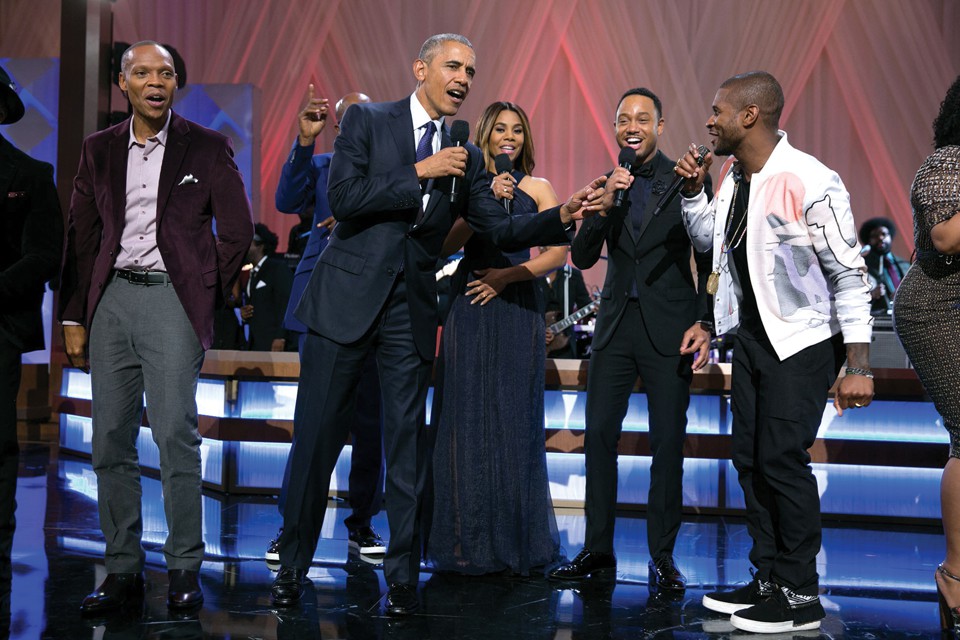
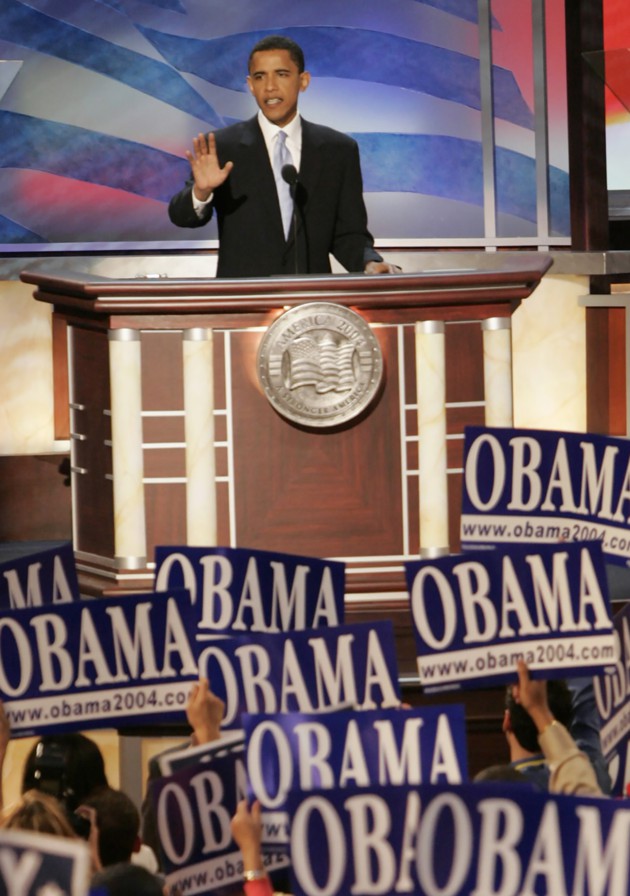
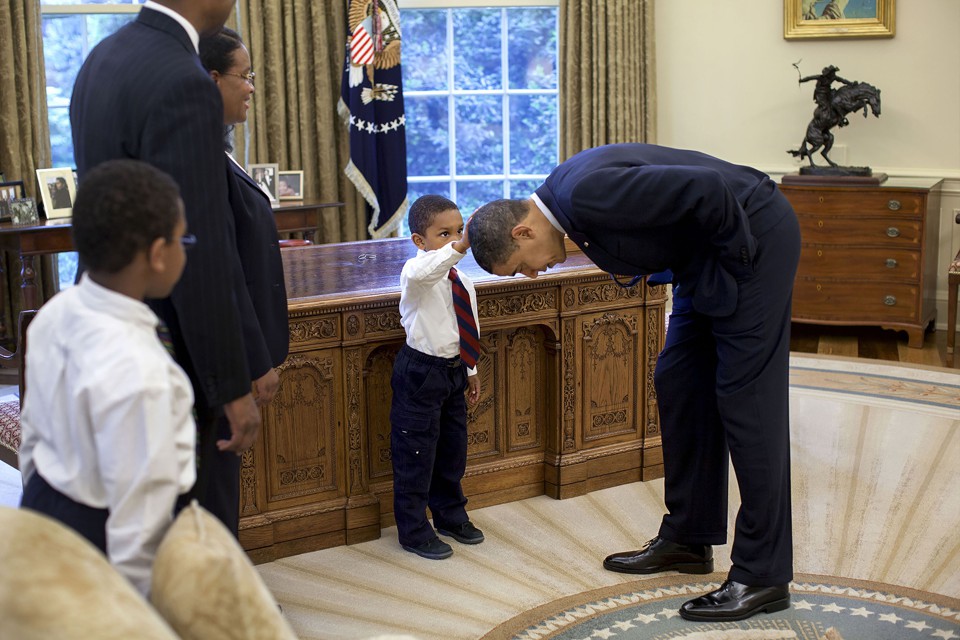
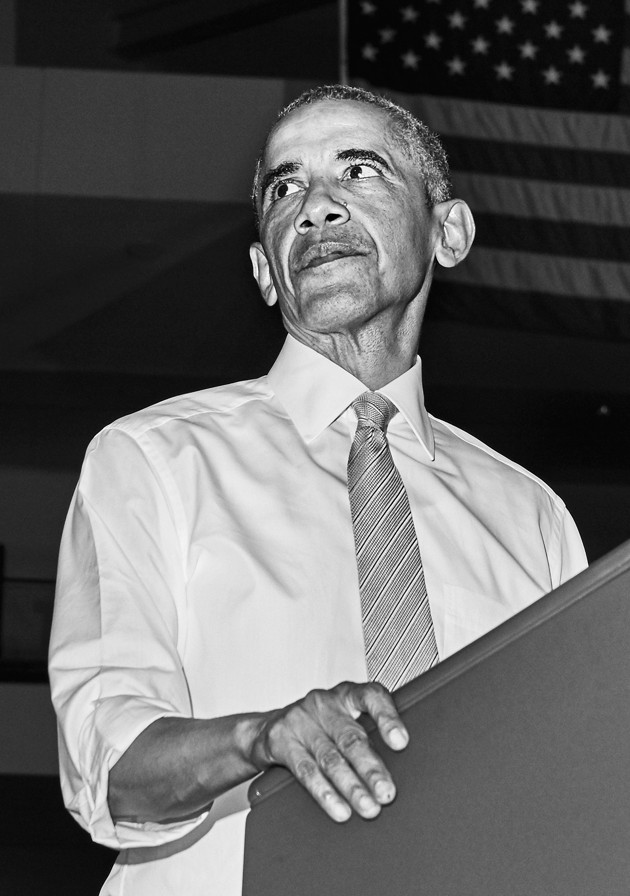
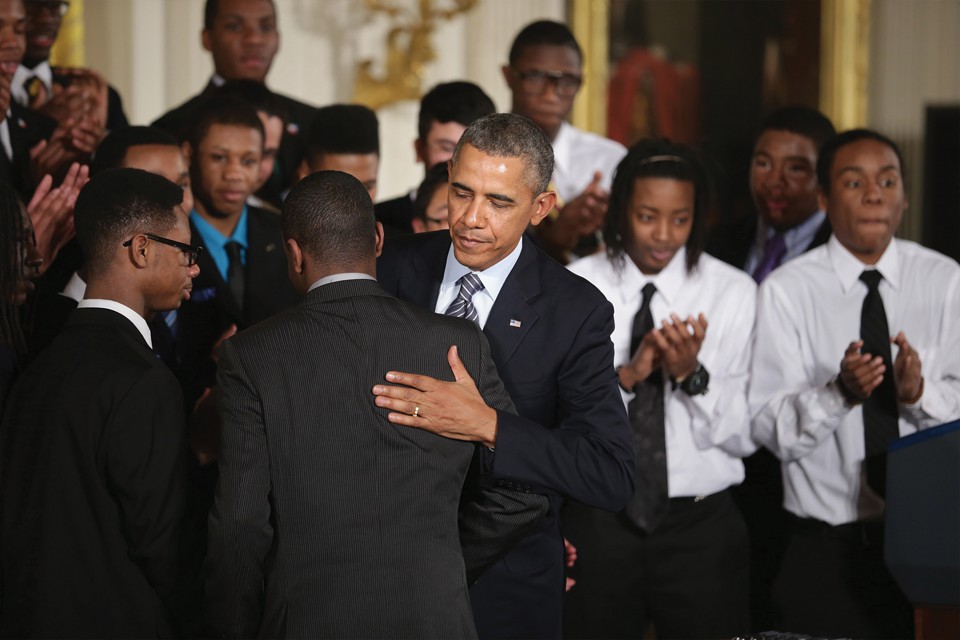
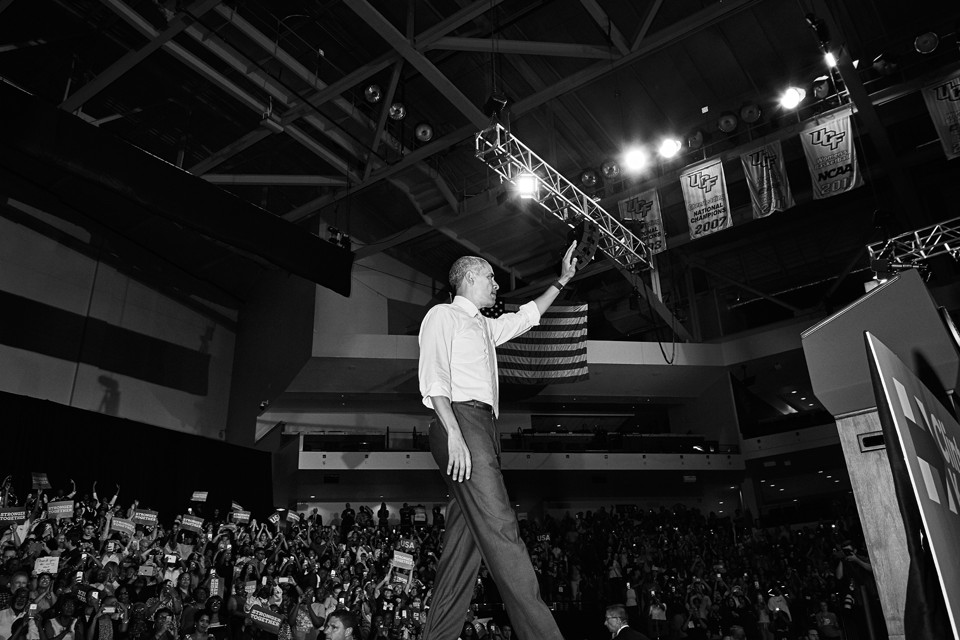






 Looking at what’s left of the Republican field it occurs to me that, you know what, why wouldn’t Donald Trump be my choice for the nomination? I mean, as someone who hopes that the Democratic candidate wins, he strikes me as the most beatable? And even if bad things happen and the Republicans pull this one out, is it at all possible that Trump would somehow be worse than Rubio or Cruz? Look, I say a lot of stupid shit for effect—sometimes just to see how it sounds! I know what it’s like to shout out something you don’t mean just because you know it’ll get a reaction. Is Donald Trump racist and will be he terrible about immigration? Maybe. If you take him at his word, sure. But what would a Cruz or Rubio administration do differently? Trump at least wouldn’t be beholden to the party whose ticket he is running on. You think he gives a shit about abortion or the gays or any other social issue, really? Isn’t it an even chance that Donald Trump might be responsible for a couple of abortions? The fuck does he care? He’ll probably get distracted or bored! Okay, but what about starting a bunch of dumb wars with his big mouth? It’s possible, I guess. Let me ask you: Do you think the other guys won’t start them with their pretty little ones? I mean, yes, it’s probably bad to be like, “Well, this guy is full of shit, so at least the possible upside is that he won’t be the total nightmare that the other two will certainly be because he doesn’t mean it.” But where we’re at at the moment I have to believe that this is the best choice we’ve got. And if the worst case scenario comes to pass, and he actually follows through on whatever it is he’s said, the end of the world is going to be a lot zippier and filled with humor than the way the rest of the field would manage to bring it about. So, yeah, sure, why not, let’s have Donald Trump as the GOP nominee. I fully support that.


