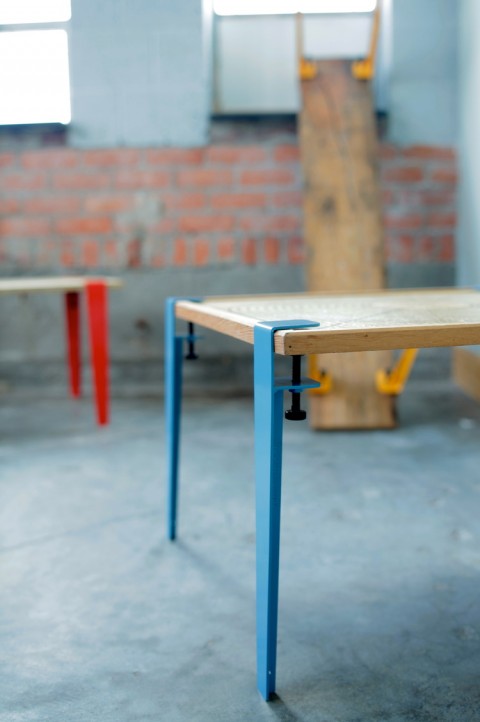
Love the brilliantly simple system behind The Floyd Leg. Ideal for people that move often.
(via Krissy)
Love the brilliantly simple system behind The Floyd Leg. Ideal for people that move often.
(via Krissy)
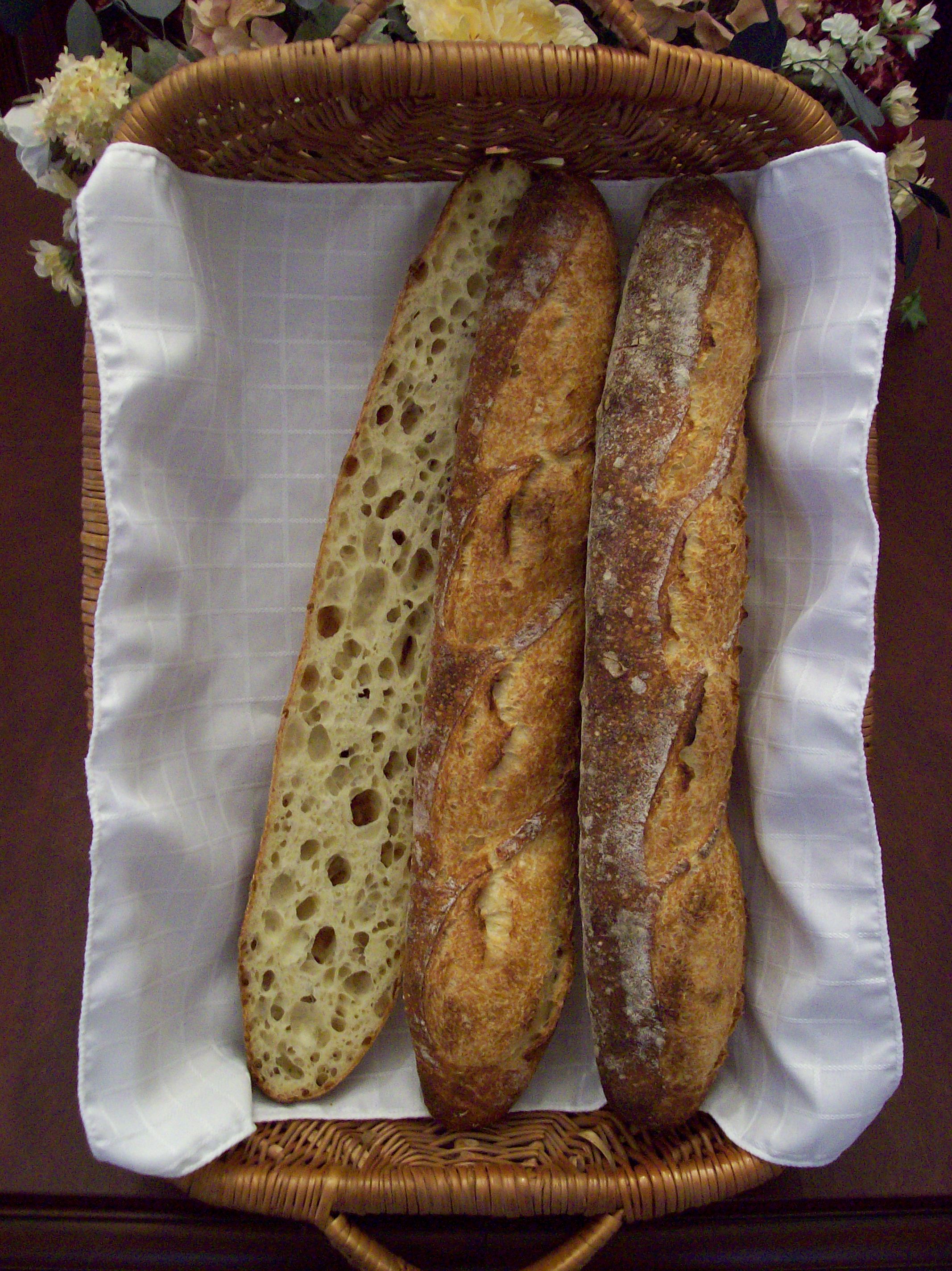
When I first started learning how to bake bread a few years ago, my goal then, as it is to this day, was to be able to bake breads with superior flavor, texture and aesthetics. Most of the bread books I’d read at the time, as well as most of the professional bakers with whom I’d spoken, had emphasized the use of a preferment, whether it be a pte fermente, poolish or levain, to bring out the maximum flavor of the bread. Somewhere lost in the conversation was the fact that the use of preferments evolved as more of a time-saving and scheduling convenience for commercial bread production (see comment by Judson below) and that their use was not, in fact, a necessity for the production of a full-flavored bread. The use of direct dough methods, containing a long, slow fermentation step, could also produce incredibly flavorful breads.
I was recently having this very discussion with Helen, author of the food blogBeyond Salmon, who was well aware of the virtues of extended fermentation and was in the process of investigating its use in the baking of ciabatta. As part of her investigation into the extended fermentation of hand mixed, high hydration doughs, I suggested to Helen that perhaps she might want to have a look at the method used by Anis Bouabsa to create baguettes that wonLa Meilleure Baguette de Paris (The Best Baguette in Paris) for 2008. The original method was first described by good friend and bread baker extraordinaire Jane, author of the blog …Au Levain!, and makes use of a first fermentation time of 22 total hours! The method below was modified to incorporate an autolyse and a double hydration step in order to more efficiently develop the gluten during hand mixing of the 75% hydration dough.
Final Dough
- 500 g La Meunerie MilanaiseOrganic All-Purpose Flour
- 375 g Water
- 10 g Salt
- tsp. Instant Yeast
The flour, salt and yeast are all mixed together in a large bowl. A central well is then formed in the flour mixture and 325 g of the water is added to the well. The water is gently stirred with one hand, gradually drawing in all of the flour mixture until a rough dough is formed. The bowl is then covered with plastic wrap and the dough is allowed to rest for an autolyse period of 30 minutes.
After the autolyse, the dough is tipped onto a work surface and hand-mixed using the slap-and-fold technique (see Musings on Mixing…). Approximately 200 slap-and-folds were required to reach a moderate level of gluten development (further development will occur during subsequent folding and extended fermentation). The dough is then placed back into its bowl and the remaining 50 g of water is added. The water is then incorporated into the dough by further hand mixing, this time through the stretch-and-fold technique, as demonstrated here for pain au levain dough. At the beginning of the mixing, the dough will be very wet and slosh around the bowl, but the mixing is continued until all the water is incorporated. The bowl is then once again covered with plastic wrap and the dough is allowed to undergo a 1 hour fermentation at ambient temperature, with 6-8 stretch-and-folds being performed every 20 minutes during the 1 hour period. After the one hour ambient temperature fermentation, the dough is placed in the refrigerator and allowed to ferment for an additional 21 hours at 40F.
After the 21 hour fermentation period, the dough is removed from the refrigerator and allowed to warm to ambient temperature for 1 hour. The dough is then divided into two pieces of equal weight and each piece is pre-shaped into a short cylinder. The dough pieces are then covered with a plastic sheet and allowed to rest for 15 minutes. Each piece is then shaped into a baguette using the shaping technique shown here, laid onto a floured coucheand allowed to proof at 78F for 45 minutes. The baguettes were then scored and baked in a 480F oven for 20 minutes, the first 10 minutes of which were under steam.