Sonos today announced a series of new commitments that are meant to demonstrate the company's "renewed focus" on software quality and customer experience. The announcement and an accompanying video from Sonos CEO Patrick Spence come as Sonos tries to ameliorate the negative experience customers have had with the May Sonos app update.
Going forward, Sonos says that it isn't just going to fix its app mistake, but also build a better Sonos experience. To that end, Sonos made seven pledges:
Unwavering focus on customer experience with ambitious quality benchmarks, and a promise to not launch products that don't meet the standards customers expect.
More stringent pre-launch testing with a broader range of customers to resolve issues before new software comes out.
No more all-at-once app releases. Any new major changes to the Sonos app will be released gradually, and customers will be able to opt-in to test new features before they become default.
There will be a new Quality Ombudsperson role that will give employees a clear path to raise concerns regarding quality and customer experience.
Home speaker products currently under warranty will have their warranty extended for an additional year.
App updates will come every two to four weeks to "optimize and enhance" the app experience. This includes after the current issues are fixed.
Sonos is establishing a Customer Advisory Board to provide feedback and insights from a customer perspective to shape and improve products before they launch.
Sonos says that its Executive Leadership Team will not accept any bonus payout for the October 2024 to September 2025 fiscal year unless Sonos is able to improve the quality of the app and rebuild customer trust.
According to Sonos, more than 80 percent of the missing features from the app have now been reintroduced, and the company expects to be at close to 100 percent in the coming weeks.
Recent reports have suggested that Sonos employees raised an alarm prior to when the redesigned Sonos app launched in May. The app was an immediate disappointment to customers because it was riddled with bugs and missing many key Sonos features, and there was significant outcry over the downgrade. Sonos was not able to roll back the changes, and has spent 2024 trying to fix the app.
Sonos has delayed new product launches to focus on software, and as a result, will miss its annual revenue target by $200 million.
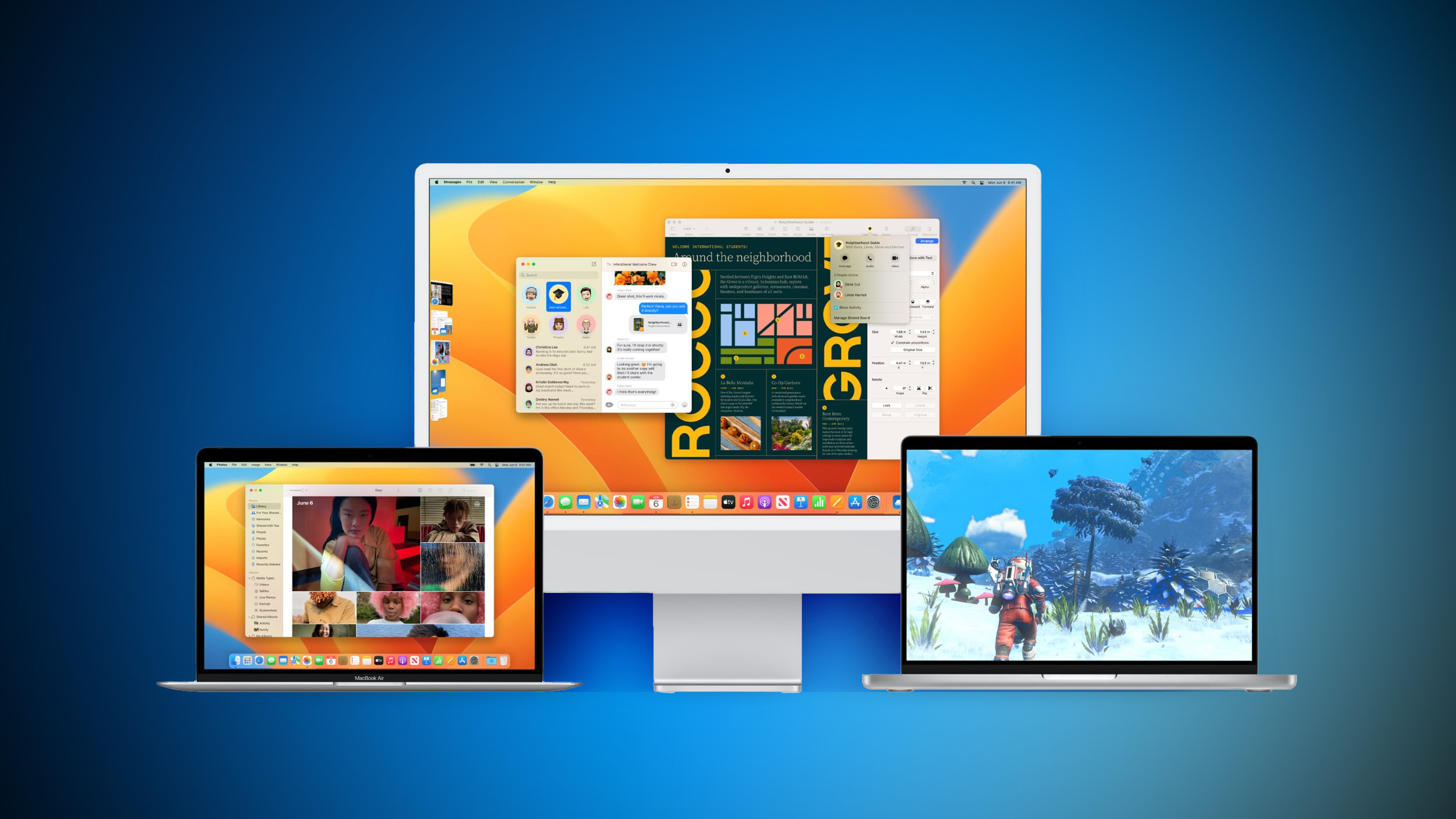
With the release of the first macOS Ventura beta in the hands of developers, early adopters continue to discover smaller changes in the new version of Apple's Mac operating system. Below are some of the more notable differences that have since come to light since Monday.
Share Sheet Popover
In the first developer beta of macOS 13, Apple no longer displays an item's sharing options in a standard menu.
Another macOS Ventura Tidbit:
Sharing options are now displayed in a popover instead of a right-click-style menu. pic.twitter.com/hracOK2HZK
The "Share..." option is still there in the right-click contextual menu, but selecting it now causes a standalone popover menu to appear over the item in Finder or on the Desktop, with Message contacts listed above other sharing options, similar to the Share Sheet in iOS. The same popover appears whenever you click the Share button in an app window.
Spotlight Search Improvements
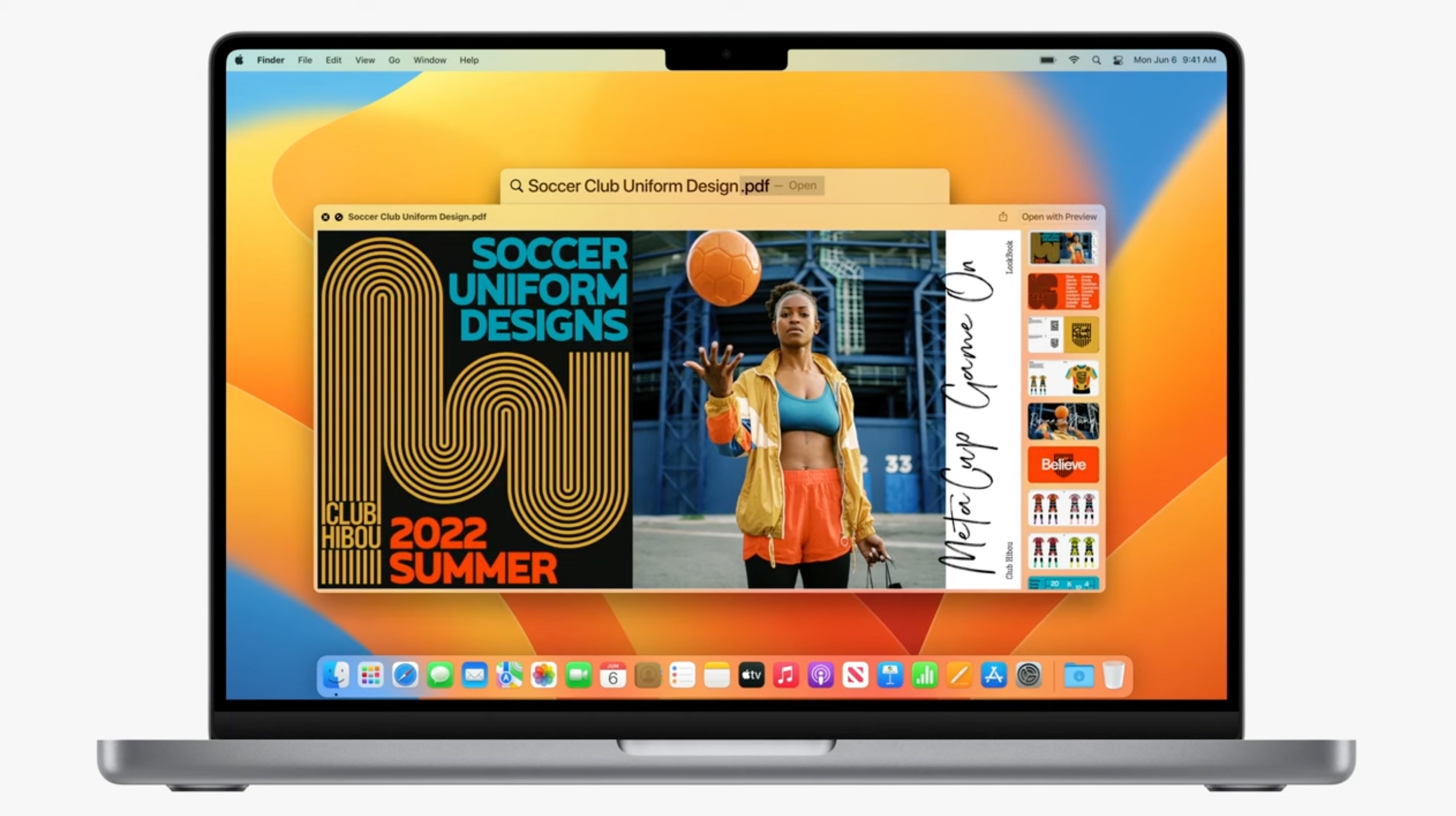
In macOS 13, Apple has integrated Quick Look into Spotlight Search, allowing you to get a quick peek at a file that appears in your search results, without opening it wholesale in its associated app.
Quick Look also continues to support text-based clipboard actions, so you can now copy and paste content from documents after searching for them using Spotlight.
In other improvements, Spotlight now leverages the full search window to display information-rich web results, and it can also retrieve results from your photo library, with full Live Text support meaning you can even Spotlight search for text that appears in your images.
Rich Links in Mail
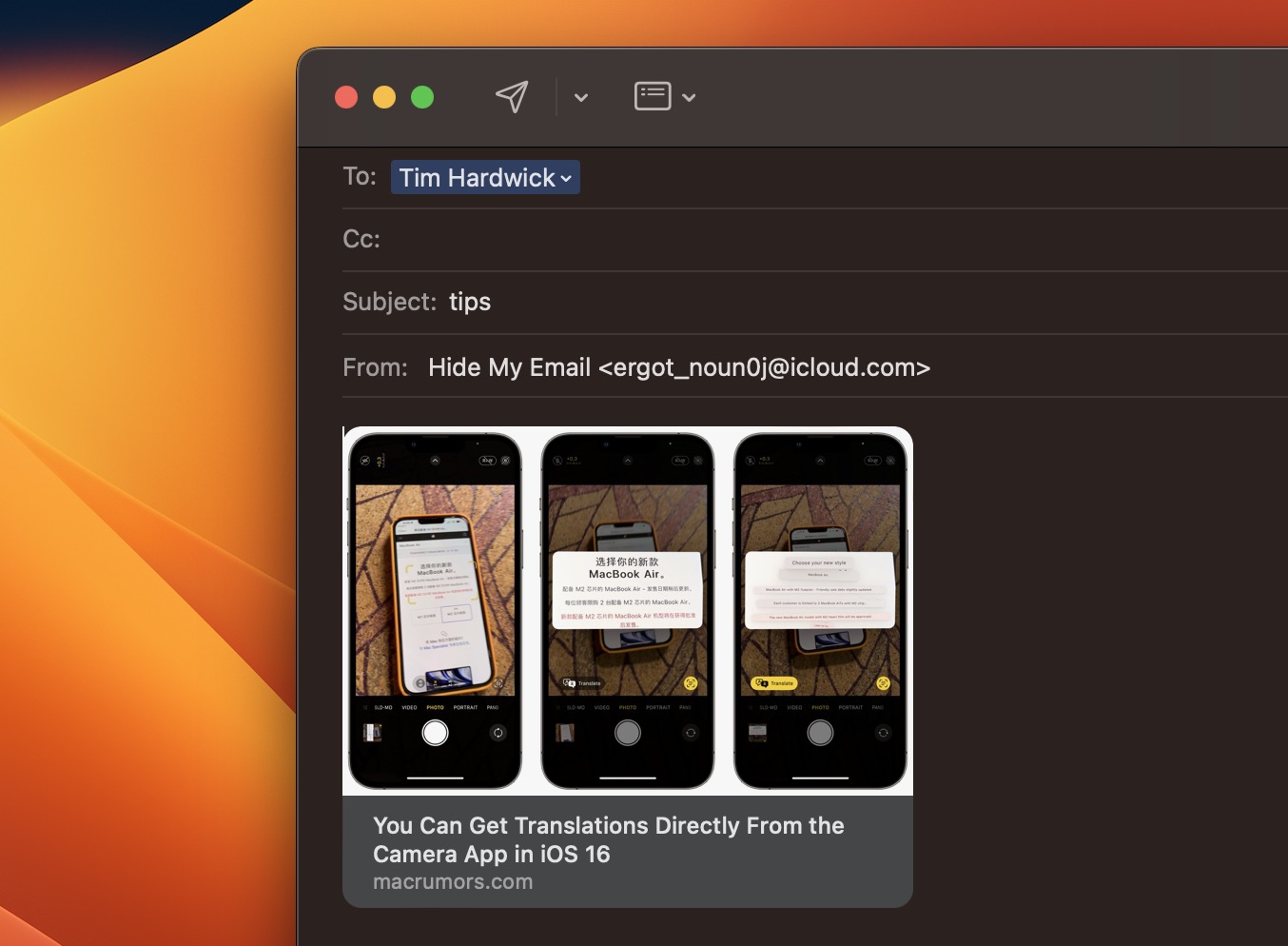
When you paste a web link into a Mail message in macOS 12, only the web address is shown in the message content, providing the recipient with no information about what's being linked to beyond what's included in the URL.
By contrast, macOS 13 inserts rich link previews in emails. Rich links display a preview of the website being linked to, giving recipients an idea of the content they can be expected to see if they click to open the webpage.
Stage Manager Works With Multiple Desktops
One of the big features of macOS 13, Stage Manager is Apple's latest attempt to solve the clutter that can occur on the desktop when you have multiple apps and app windows open at the same time.
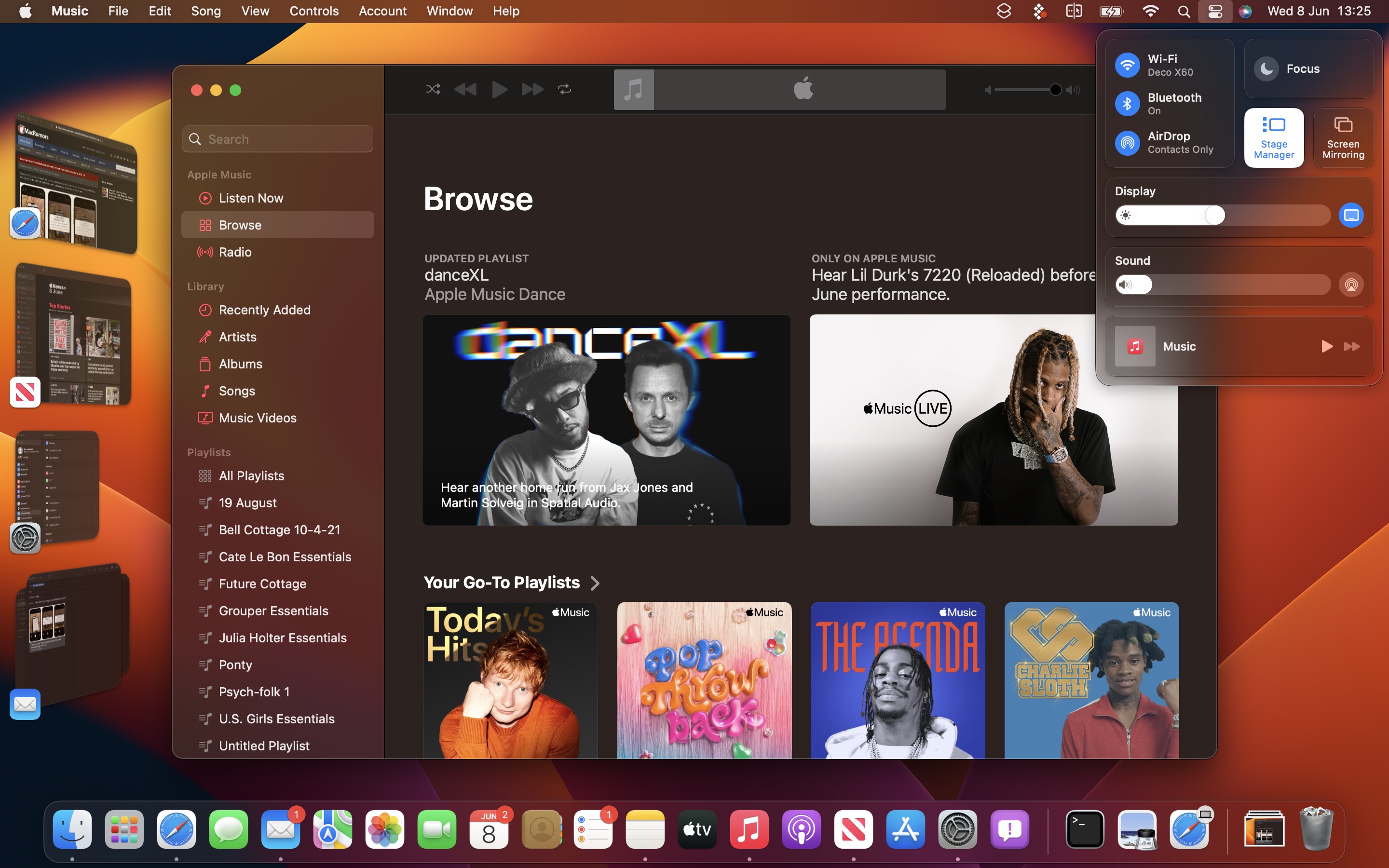
Stage Manager works by moving all open background applications over to the left, leaving the most recently opened and active app front and center on the screen. Clicking another app in the side column switches it with the current centered app, and so on.
Stage Manager also works with separate Desktop Spaces, so you can have multiple instances of Stage Manager organizing several groups of apps on different desktop screens. It's also possible to hide the Stage Manager column of apps by increasing the size of the active app window or moving the window over to the left of the screen. A submenu option in Control Center lets you do the same thing.
Continuity Camera in QuickTime Player
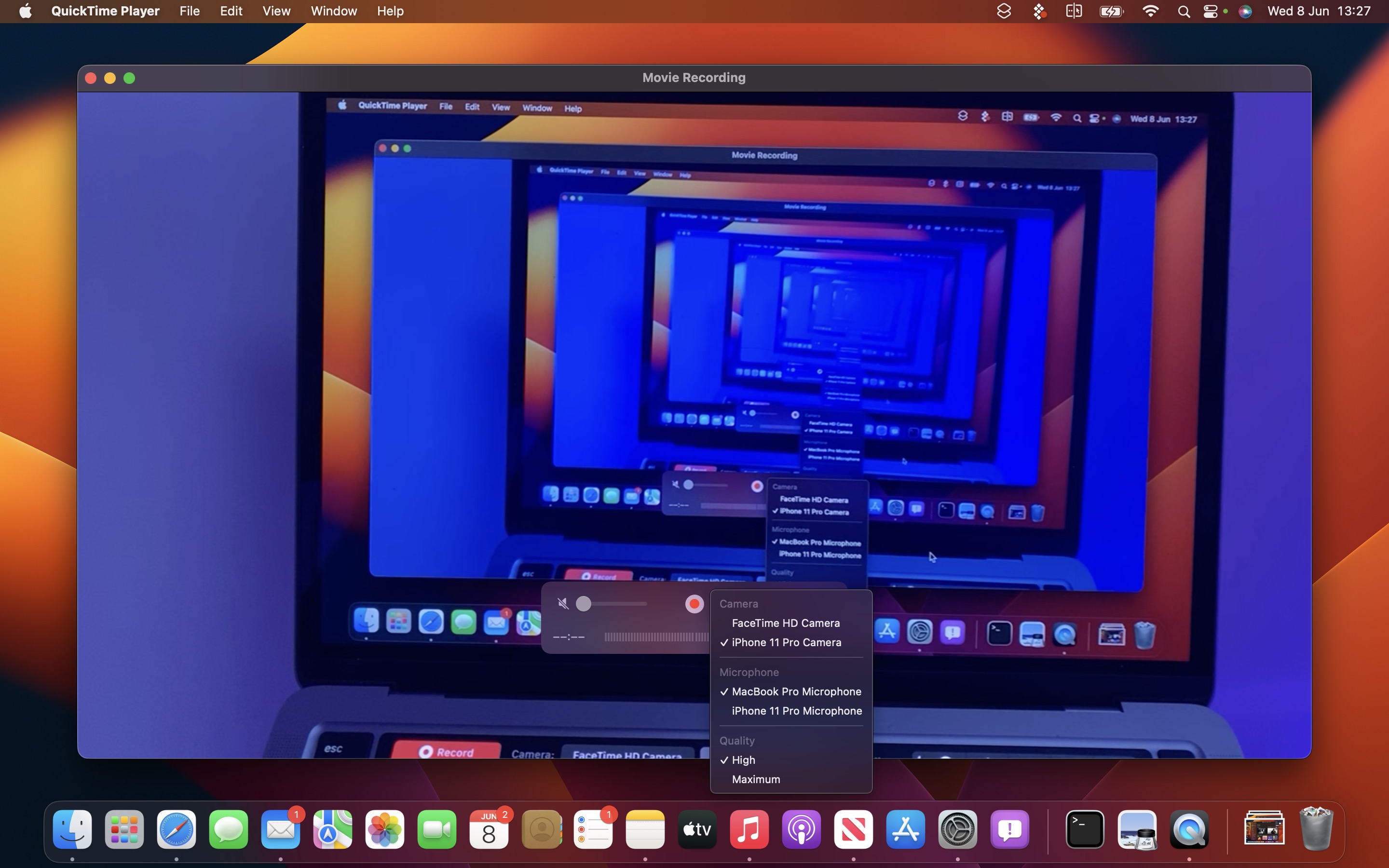
Continuity Camera gives Mac owners the ability to use their iPhone as a webcam in FaceTime, Zoom, Teams, and other third-party video conferencing apps. It also works natively in QuickTime player, allowing users to record movies and control several recording settings.
In QuickTime, users can opt to record from the iPhone's microphone or the Mac's microphone, making it possible to record the video from the iPhone and the audio from the Mac, for example.
In addition, Continuity Camera brings your iPhone's Center Stage functionality to your Mac even if it isn't natively supported. The same goes for Studio Light and Portrait Mode.
The billboards started popping up around Minneapolis in June. “Uptown reels after gunfire, bloodshed.” “Multiple shootings in metro area overnight.” Referencing quotes from local newspapers and TV stations, the signs were part of an ad campaign aimed at turning concerns over a spike in gun violence into a pro-police political movement.
The city of Minneapolis had a long, exhausting spring and summer. COVID-19 lockdowns starting in March were followed by the release of a graphic video showing a police officer killing George Floyd, sparking massive protests against police brutality — some of which turned violent and made news around the world. Then came the heat wave. And a withered job market that disproportionately affected Black residents. In August, another, smaller bout of unrest broke out after a murder suspect shot himself and community members initially believed that he’d been killed by police.
Through it all, crime ticked upward. By September 1, the city’s violent crime rate was 16.8% higher than the previous five-year average.
It’s a neat explanation, but here’s the catch: We don’t actually know why crime went up this year. To be fair, we don’t truly know why crime goes up … well, ever. Nor do we know how to make it go down in the long term. Despite — or perhaps because of — half a century of modern criminology data keeping and analysis, all researchers have to go on are correlations — and none of them clearly explain all the times crime has gone up.
But politicians continue to claim they know how to bring down crime, even though no single political policy can reduce crime or stop it from rising in the first place. When political figures push solutions to crime, they’re effectively trying to build a platform on the deck of a ghost ship — and their proposals and prevarications are often about something other than crime itself.
1964
DENVER POST VIA GETTY IMAGES
It all started with Goldwater
On September 10, 1964, Barry Goldwater flew a chartered jet to Minneapolis to warn the people of the city about crime in the streets. The speech was part of the senator’s presidential campaign, and crime was a major feature of his platform. Crime wasn’t just a safety problem for America, Goldwater told voters; it was part of an identity problem. “[N]othing prepares the way for tyranny more than the failure of public officials to keep the streets safe from bullies and marauders,” he said in his speech accepting the Republican nomination. America was in danger. Americans, personally, were in danger, and the federal government needed to do something about it.
This campaign marked the first time crime became a national issue in American society, said Katherine Beckett, a professor of sociology at the University of Washington. Sure, Americans had thought about crime on a national scale before — during the Prohibition era, the federal government created an entire agency to enforce a federal law banning alcohol sales. But Goldwater was the first national politician to turn local crime into a national issue solvable by the executive branch.
Crime was trending upward in 1964. In 1960, the violent crime rate — murder and nonnegligent manslaughter, rape, robbery and aggravated assault — had been about 161 offenses per 100,000 people. By the year of the presidential election, it was up to about 191, according to the FBI’s Uniform Crime Reports, a collection of data from thousands of local law enforcement agencies used to estimate national averages.
The fact that crime was rising in the mid-1960s did not come as a huge surprise to criminologists, said Richard Rosenfeld, a professor of criminology at the University of Missouri-St. Louis. Even today, experts seem to treat this particular increase in crime as almost boring. That’s because it correlated strongly with demographic shifts.
The perpetration of crime isn’t evenly distributed across our lifespans. Instead, it’s a curve, peaking in our late teens and early 20s. Why that happens so reliably is a question that could fill a whole other article, but suffice it to say, a population that is disproportionately young is one of the very few variables that can consistently predict a rise in crime. In other words, Goldwater should have blamed the Baby Boomers.
1976
DENVER POST VIA GETTY IMAGES
The simple explanations aren’t the right ones
But there’s never just one thing that causes crime to go up or down. The national crime rise of the mid-1960s is probably the most straightforward, everybody-agrees situation we have on record, but even there, a swell of young people wasn’t the only thing going on that could have led to an increase in crime.
“What do you need for a crime to happen?” asked Gary LaFree, a professor of criminology at the University of Maryland. “Someone willing to do it. Things like legitimacy really play into that.” To LaFree, it matters that during the mid-to-late 1960s many Americans were questioning and challenging the legitimacy of police and government. “In the ’60s, respect for police was so low,” he said. “It wasn’t uncommon in Baltimore for a body to show up at 2 a.m. with no witnesses and no one willing to work with the system.”
This and other, confounding factors wipe away the possibility of demographic determinism as a neat, tidy explanation for crime. And that’s even before you get to the far steeper crime increase of the mid-1980s (which experts told us no one saw coming) or the crime decline of the mid-1990s (ditto). Neither cleanly fits with the Youth Cause Crime theory of the 1960s.
This is the main problem with all theories of what causes a crime wave: Everything is based on correlation. And — as we’re contractually obligated to remind you — finding a correlation ain’t the same thing as identifying a cause.
“There’s no way to conduct a randomized controlled experiment on changes in aggregate-level crime rates, and even if we could, we shouldn’t,” Rosenfeld said.
One way to really poke at crime-cause theories is by comparing the correlations in the U.S. with those in similar nations, such as Canada. That’s what Franklin Zimring, a professor of criminology at Berkeley Law, did in the mid-2000s. He was looking at the massive decline in crime that began in the U.S. around 1994 and found that Canada had a large increase in crime about the same time, and a large decrease that also closely tracked the timing in the U.S. Between 1990 and 2000, crime fell by 35 percent in the U.S. and 33 percent in Canada. But many of the things that experts have proposed as causes of crime decline in the U.S. — the falling popularity of crack, a booming economy in the ’90s, higher abortion rates in the’70s and’80s, increased imprisonment rates, more police on the street — didn’t necessarily happen in Canada. Canada’s unemployment rate, for example, peaked much higher in the early 1990s and never recovered to the extent that it did in the U.S. Why would two countries that share a border and many cultural characteristics have a decline in crime but no obvious shared correlational causes?
The mystery eventually led Zimring to suspect that crime is cyclical. It’s going to go up, and it’s going to go down. And eventually it will go up again. When we told him we didn’t understand how that explained anything, he was cheerfully blunt. “Neither do I! When you see that cyclicality, what I’m telling you is to be puzzled,” he said.
2016
SAMUEL CORUM / ANADOLU AGENCY / GETTY IMAGES
How politicians fill the void
All of this leaves a vacuum that politicians are more than happy to fill. More often than not during a crime wave, they want to deter crime by imposing stricter punishments. But talk to social scientists and they’ll probably tell you that because we don’t know what the primary driver of crime is, we should be expansive in our solutions. That includes thinking about nonpunitive measures that appear to help reduce crime — like education, health care access or after-school programs — in addition to more standard responses like putting more police on the streets.
It’s not that we have no idea what helped drive the decline in violence, after all. Research by Patrick Sharkey, a sociology professor at Princeton University, has indicated that a huge expansion of nonprofits and neighborhood groups contributed to the crime decline in the 1990s. But the expansion of police forces and mass incarceration also seem to have had an impact, and even changes like the growth of surveillance technology and cellphone ownership appear to have helped drive down property crime like car thefts. The trouble for researchers trying to pick apart what was the biggest driver is that none of those effects happened independently of one another.
“The efforts of nonprofits to take back parks and playgrounds would probably have been less effective if the police hadn’t been cracking down at the same time,” Sharkey said. “But similarly, it wasn’t just that the police came in and kicked ass and cleared the streets of troublemakers. It was also that residents were out in public spaces demanding that those communities would no longer be places where kids were not allowed to go outside at night, or not allowed to go to a park.” Trying to untangle which of those factors was responsible for more of the decline, he said, is a “misleading exercise.”
1970
OLIVA FALL / THE DENVER POST VIA GETTY IMAGES
But politicians tend to gravitate toward law-and-order solutions — a trend that dates back to the first push to make crime a national issue.
Think back to that Goldwater speech in Minneapolis in 1964. His rhetoric didn’t leave space for a mixture of increased law enforcement and nonpunitive measures. That’s because he saw things like government-funded social-welfare programs as the cause of crime. “If it is entirely proper for government to take from some to give to others, then won’t some be led to believe that they can rightfully take from anyone who has more than they?” Goldwater said.
His law-and-order speeches freely bounced between people committing illegal acts of violence, civil rights activists participating in lawful protest and people participating in riots linked to racial injustice. At the time, it was enough for the executive secretary of the NAACP to warn that a Goldwater win would likely lead to the creation of a police state.
This, too, tracks with research. Researchers have found that as crime rose in the late 20th century, so did Americans’ support for punitive measures. Peter K. Enns, a political scientist at Cornell University who studies public opinion, analyzed Americans’ attitudes toward crime and punishment from the 1960s through the 1990s and found that the public grew significantly more enthusiastic about harsher disciplinary responses to crime on a variety of metrics, including the death penalty.
Part of that was in response to genuine anxiety about crime. But those fears were amplified by the fact that crime became a fixture of media coverage during this period and a common refrain from politicians. Michael Fortner, a political science professor at the City University of New York Graduate Center, told us that the rising crime rates created the backdrop for politicians to focus on crime. The crime wave, he said, “allow[ed] political elites to develop narratives and programs and use them strategically,” so even if people weren’t personally affected by crime, their fear could be “mobilized for political purposes.”
Over this period, politicians were focused primarily on punitive solutions. There were some grassroots efforts to push for more comprehensive reform, according to Lisa Miller, a political science professor at Rutgers University who studies the politics of crime. But it was harder for those complicated responses to gain traction, in part because responses to crime tend to be handled at the local level. (This is, to some extent, why nationalized police reform remains a near political impossibility — it’s just difficult for the federal government to force the country’s 18,000 police departments to play by the same rules.) Meanwhile, Miller said, “it’s not that hard to push money down from the federal government to build new prisons and hire more police” — which is exactly what happened.
2020
STEPHEN MATUREN / GETTY IMAGES
And the politics of crime — something that’s never really been free of racial dimensions — became hopelessly entangled with the backlash to the civil rights movement, which was happening just as the first crime wave was taking off. According to Beckett, both Goldwater and Nixon conflated protest and crime in their presidential campaigns. “I don’t believe their law-and-order rhetoric was rooted in any careful observation of the data,” she said. “With a sleight of hand they combined [protest and crime] and equated all protests and riots with crime and violence.” Over the following decades, crime became a code word for much more than homicide or property crime — politicians used it to harness white voters’ racial fears and resentments. “It was an effective way of tapping into and amplifying racial tensions in a way that affords [a politician] protection if someone calls you out for being racist,” Beckett said. And it still is. Research shows that, regardless of actual crime levels, Americans report feeling less safe in their neighborhoods if more young black men also live there.
All of this helps explain why law and order is resurfacing as one of the major themes of the 2020 campaign. A summer of simultaneously spiking crime rates and nationwide protests against racialized police brutality makes for a brew that’s similar to what we saw in the late 1960s, when Nixon successfully capitalized on rising racial resentment, protests and riots across the country, and an actual crime wave in his presidential campaign. Then — as now — Nixon, Goldwater, and other politicians didn’t really know why crime was rising, or whether the trend would continue. They also didn’t know what would bring the crime rate down. But that didn’t stop them from turning the nascent trend to their political advantage — something that could have long-term consequences.
If the crime spike of this summer turns into a wave, we’ll have to grapple with the fact that although the punitive responses of the 1980s and 1990s are now largely regarded as a mistake, they probably did something to reduce crime. Adaner Usmani, a sociologist at Harvard University who studies crime and punishment, said that it’s too easy to forget that a policy can be at least partially effective and also the wrong choice to make. “I’m in agreement with many people that [criminal justice] policy choices over the last 30 years have been disastrous. But there’s a lot of good evidence that they’ve had the effect that, narrowly speaking, politicians and the public hoped they would have,” he said.
That’s not a politically easy answer — that our past response to crime may have worked, but at a cost too great to repeat. That’s the trouble with responses to crime, though, Sharkey said. There’s no incentive for politicians, thinking about their next reelection cycle, to prioritize the long-term investments in communities that could keep crime rates down. Instead, there are potentially great political rewards for using crime as a dog whistle for other things, like mobilizing racial resentment.
The irony is that this political pattern may actually worsen crime itself, insofar as it makes certain communities less likely to trust politicians and political institutions, and resources aren’t directed to the parts of communities that can actually prevent crime from rising. Remember LaFree’s theories about how the loss of institutional legitimacy can lead to crime — if people in a community don’t trust the police to treat them fairly, they’re also unlikely to report crimes or work with police in ways that could prevent crime.
The stories politicians tell us about why crime matters, how much it matters and what to do about it have not done a great job of matching up with reality, Miller said. The consequence is that our view of potential solutions to crime gets narrower — punishment starts to seem like the silver bullet, but anyone with an eye on the data knows it is not.
And the more that picture of the world narrows, the more people of color get crushed by it. From Goldwater to Minneapolis (and long before) law and order has affected those groups differently than it has white Americans. After half a century of dog whistles, it’s hard to disentangle tough-on-crime rhetoric from white fears about Black and brown people. And it’s impossible to impose tough-on-crime solutions without disproportionate (and unfair) impacts on their lives. It matters that we get the story on crime right, in all its complexity, because there are people at that other end of society’s sticks and carrots.
“We just sort of fill in with whatever causal explanation is most recent and most at the ready, which I guess is just how our brains work,” Miller said. “But if we get the causal story wrong, they’re the ones who will [bear] the brunt.”
Mother's Day is coming up on Sunday, May 10, in the United States and other countries, and ahead of the event, Apple has put together a Mother's Day gift guide filled with Apple product recommendations for moms.
The gift guide highlights the 7th-generation iPad or the iPad Air and their accessories that include Smart Keyboard and Apple Pencil, plus the Apple Watch Series 3 and Series 5 models.
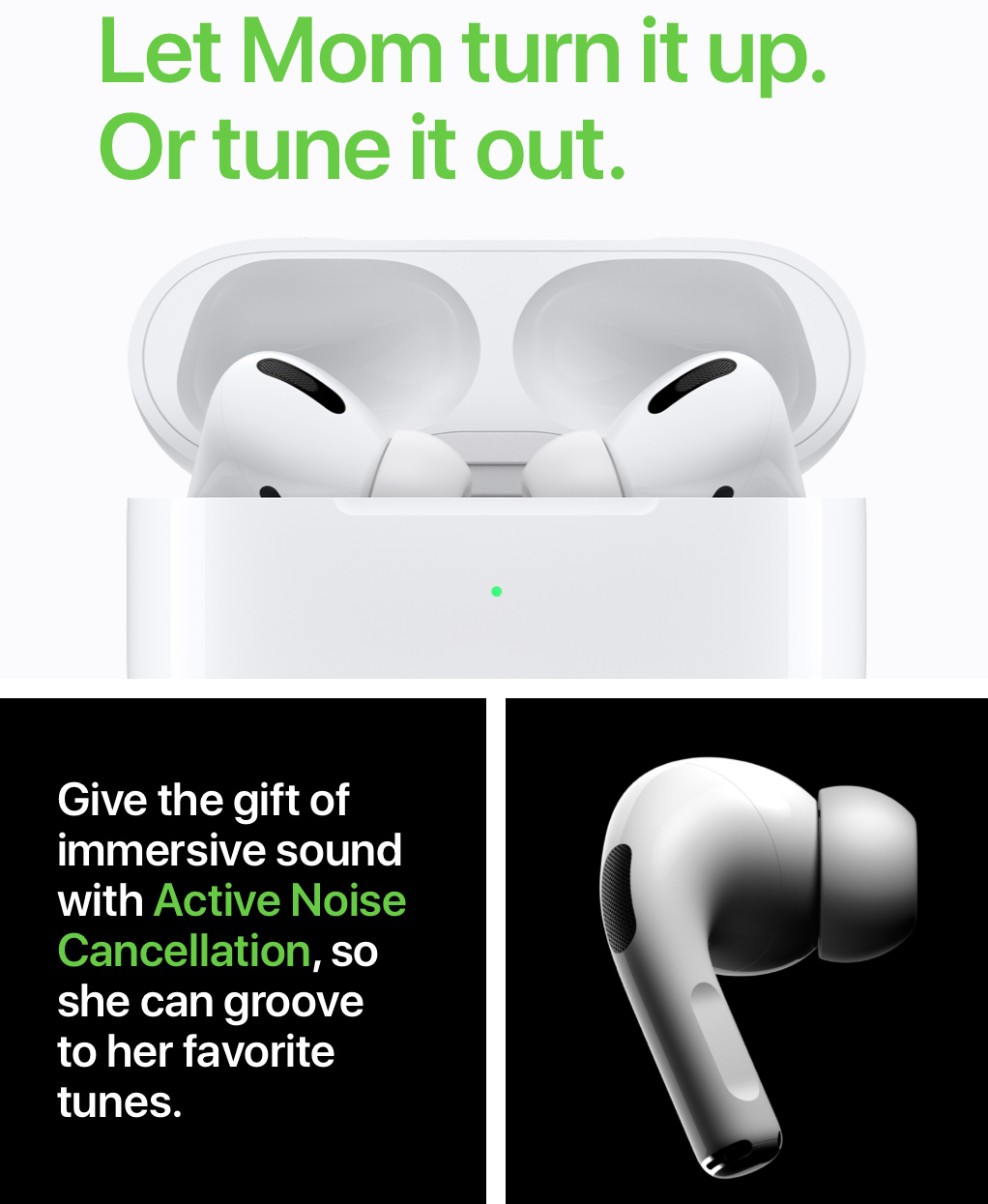
It also features the AirPods and the AirPods Pro, with a mention of Apple's engraving feature so gifts can include a sweet emoji message.
The gift guide suggests the iPhone 11 with its dual-lens camera system along with mentions of the iPhone SE, 11 Pro, and iPhone case accessories. Apple's full gift guide can be viewed on the Apple online store website.
Apple recently introduced an all new design for App Store apps on the web, with a new, cleaner interface that puts screenshots and critical information front and center.
You can see the new redesigned interface by accessing or searching for any iOS or Mac app while on the web. With iOS apps, you'll see a clear notice that you need to open up the App Store to download the app, while with a Mac app, you'll get a notice letting you know you need to open up the Mac App Store.
App listings include the app's name, icon, and screenshots, along with information like star rating, ranking, purchase price and whether or not there are in-app purchases.
While an app's description used to be the first thing that came up when accessing an app on the web, it's now listed underneath screenshots, which, as 9to5Mac points out, are iPhone X screenshots. App Store webpages also include a listing of what's new, select reviews, app size, and a list of related apps.
The change to the way apps are displayed on the web comes following the launch of iTunes 12.7, which entirely eliminated the built-in App Store for iOS apps. With no App Store in iTunes, iOS apps can only be downloaded directly on an iPhone or iPad, rather than downloaded on a Mac and then transferred to an iOS device.
When making the change, Apple didn't really alter the way apps were displayed on the web, which had the potential to be confusing. The new look is much more streamlined and makes it clearer how apps can be downloaded on an iOS device.
Because of the elimination of the App Store in iTunes 12.7, some users have decided to continue using iTunes 12.6.3, which does include App Store functionality. Apple made iTunes 12.6.3 available for its educational and business customers who need iTunes to install apps, but it is also available to the general public.
Google Keep has a new interface powered by Material Design. Google also added some new features: sharing notes, real-time collaboration and search filters.
Just like in the old Google Notebook, you can share notes with other people and allow them to read your notes and edit them. Notes update automatically when other people edit them and there's no way to revert the changes. You can't share a note in read-only mode.
"Searching for your notes is simpler now too. You can filter notes by color and other attributes such as whether they're shared, have a reminder, are lists, or have an image or audio," explains Google.
With the growing popularity and declining cost of solid-state drives (SSDs) for Macs and other personal computers, users have becoming increasingly interested in putting third-party SSDs into their machines. But one issue Mac users have been running into involves support for TRIM, a system-level command that allows the operating system and the drive to communicate about which areas of the drive are considered unused and thus ready to be erased and rewritten to.
Without TRIM, writes to the drive can see significant slowdowns as the system must read and erase each block on the fly before writing new data. But unfortunately for users looking to install third-party SSDs into their machines, Apple only officially supports TRIM on Apple-branded SSDs. Workarounds such as Trim Enabler have naturally been developed to enable TRIM on non-Apple SSDs, but a new lineup of SSDs released earlier this month by Austrian firm Angelbird claims to be the first third-party SSD to support TRIM right out of the box with no need for additional software tweaking.
Exactly how Angelbird has achieved native TRIM support on Mac is unclear, as the company has not responded to requests for comment. French site MacBidouillereports [Google Translate], however, that Angelbird's SSDs appear to simply be masquerading as genuine Apple SSDs, thereby qualifying for native TRIM support. While the method appears rather questionable and likely to draw Apple's attention, the drive could still be an appealing option for users looking for the easiest possible solution for upgrading to an SSD
OS X Yosemite has added yet another wrinkle for third-party SSD users, as the new kext signing security measure included in the new operating system means that Yosemite systems will refuse to load modified drivers such as those used by TRIM-enabling software. Cindori, the company behind Trim Enabler, is for now recommending that users interested in enabling TRIM on third-party SSDs with Yosemite disable the kext-signing check entirely. The company acknowledges that turning off this global setting is far from ideal and "for most users it will not be worth it", but for now it is the only solution.
Angelbird has not specified whether its SSDs bypass the Yosemite TRIM issues, but if the drives do indeed simply qualify as Apple SSDs due to the way the model number is presented, it is possible that native TRIM support may still function under Yosemite. Angelbird's SSD wrk lineup is available in three capacities: 128 GB, 256 GB, and 512 GB starting at an MSRP of $99.99.







 With the growing popularity and declining cost of solid-state drives (SSDs) for Macs and other personal computers, users have becoming increasingly interested in putting third-party SSDs into their machines. But one issue Mac users have been running into involves support for TRIM, a system-level command that allows the operating system and the drive to communicate about which areas of the drive are considered unused and thus ready to be erased and rewritten to.