Shared posts

17 Apr 17:01

Regina Coeli: témoigner de la résurrection par des «gestes de solidarité»

(RV) Le Pape François a récité ce lundi 17 avril 2017, «lundi de l'Ange», la prière du Regina Coeli, qui remplace celle de l’Angélus durant le temps pascal. À cet occasion, le Saint-Père a appelé les fidèles réunis place Saint-Pierre à être «des hommes et des femmes de résurrection» en posant «des gestes de solidarité et d’accueil». Mais nous ne sommes pas seuls pour cela: Marie, «témoin silencieuse de la mort et de la résurrection de son fils», est là pour nous aider. Le compte-rendu de Samuel Bleynie.

Comme l’ange l’avait demandé aux femmes devant le tombeau vide, nous sommes à notre tour invités «rapidement» à «aller» sur les routes, pour annoncer aux hommes et aux femmes de notre temps ce «message de paix et d’espérance» proclamé hier, jour de Pâques. «D’espérance, d’espérance certaine, estime même le pape, puisque depuis que Jésus crucifié est ressuscité à l’aube du troisième jour, le tombeau, la mort n’ont plus le dernier mot: c’est la vie!»

«Admirable mystère du salut» qui transforme «les cœurs et la vie

Renforcés de cette réelle «nouveauté de l’histoire et de l’univers», nous sommes appelés à être des hommes et des femmes «nouveaux» par l’Esprit, «en affirmant la valeur de la vie». Au milieu des «événements qui tourmentent le monde» et de la «mondanité qui éloigne de Dieu», il nous faut poser «des gestes de solidarité, des gestes d’accueil, nourrir le désir universel de paix et l’aspiration à un environnement non dégradé». Ces simples gestes seront d’autant plus efficace «que le Christ est vivant et œuvre dans l’histoire grâce à son Esprit Saint: il rachète nos fautes, il rejoint chaque cœur humain et redonne espérance aux oppressés et aux souffrants.»

Dans cette mission, nous sommes aussi soutenus par Marie rappelle François. «Témoin silencieuse de la mort et de la résurrection de son fils Jésus», elle nous aide à croire en la Résurrection, en la présence du Christ parmi nous, en cet «admirable mystère du salut» qui a le pouvoir de «transformer les cœurs et la vie». Elle nous aide encore, poursuit le pape, à être des «signes clairs» du ressuscité, afin que ceux qui sont en difficulté ne restent pas victimes du «pessimisme et de la défaite, de la résignation», mais trouvent en nous «soutien et consolation».  Enfin, François conclut en évoquant les chrétiens persécutés et oppressés. Marie intercède «d’une manière particulière» pour ces communautés «qui sont aujourd’hui dans tant de parties du monde, appelées à un témoignage plus difficile et courageux».

(SBL)

(Tratto dall'archivio della Radio Vaticana)
22 Aug 14:50

Des chercheurs créent par hasard l’alliage de l’armure d’Iron Man

by Myrtille Delamarche
A défaut de son armure, dont le mini-réacteur Ark reste un mystère, il sera peut-être possible d’avoir bientôt la prothèse de hanche d’Iron Man. Des chercheurs de la Rice University aux Etats-Unis ont créé l’émoi chez les amateurs de science-fiction en perçant le secret du mystérieux alliage d’or et […] Lire l'article
25 Jan 23:09

Matignon s'invite à Munich au gotha européen de la Défense

by RP Defense
photo MSC 25.01.2016 François Clemenceau - Le Journal du Dimanche Manuel Valls est partout. Après avoir volé la vedette à Emmanuel Macron au Forum de Davos, il se rendre à la Conférence annuelle sur la sécurité de Munich, rendez-vous habituellement réservé...
08 Oct 22:14

What Happens in Vegas?

by Conor Friedersdorf

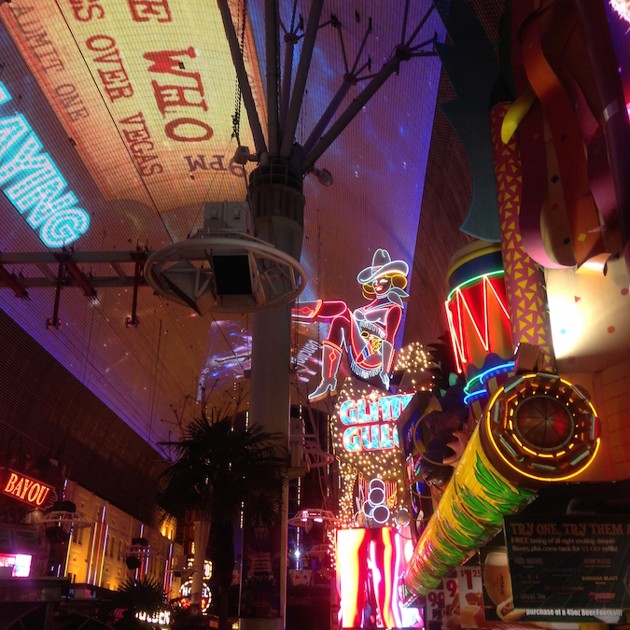
Over the last year or two, I’ve accidentally become fascinated with Las Vegas, Nevada, a city that some people love to hate and perhaps even more people hate to love. I’ve traveled there for bachelor parties, to meet friends from the East for a weekend of hanging out, and to watch my wife compete in a desert obstacle course race. I’ve ventured off the strip to talk to locals, eat Thai food, and explore strip malls.

“What is this place?” I keep asking myself.

Can you help me figure it out?

If you’ve ever visited, I’d be eager to hear your Las Vegas stories (and happy to protect your anonymity in telling them, if need be). If you’ve ever lived there I’d be grateful for your thoughts and insights about the municipality, or for your personal story.

What makes Las Vegas distinct? What are the best and worst things about it? To understand Las Vegas, where should one visit? What should one read? To whom should one talk? If you have strong feelings about the city, pro or con, what are they? And what questions or curiosities do you have about Las Vegas?

All correspondence to conor@theatlantic.com is encouraged.

I offer my thanks in advance, and leave you with one of many photographs I’ve taken there in the last year: a shot of “downtown” that sorta seems like a scene from Blade Runner.

Conor Friedersdorf


07 Sep 22:13

Powder Kegs Exploding: Violence Escalates In Turkey, Yemen As Mid-East Tips Towards Chaos

by Tyler Durden

On Friday we checked in on two of the world’s most important conflicts: 1) that which is unfolding in Turkey where President Recep Tayyip Erdo?an has effectively granted Washington access to Incirlik (you know, for “anti-terror” sorties) in exchange for NATO’s acquiescence to a brutal crackdown on the Kurds as AKP looks to usurp Turkey's fragile deomcracy, and 2) that which is unfolding in Yemen, where a Saudi-led coalition is fighting to restore the government of Abd Rabbuh Mansur Hadi. 

In Turkey, Erdogan has successfully undermined the coalition building process necessitating new elections in November when he hopes the escalation of violence across the country will prompt voters to restore AKP’s parliamentary majority allowing the President to rewrite the constitution and consolidate his power. Journalists are being arrested, a terror “tip line” has been set up, a 24-hour Erodgan Presidential TV channel is in the works, and the country has, for all intents and purposes, been plunged into civil war with ISIS acting as a smokescreen for Erdogan’s power grab. 

As for Yemen, the Iran-backed Houthis have been driven back by Saudi and UAE troops but the problem, as WSJ noted last week, is that the ragtag militia in Aden is “a motley group that spans the spectrum from southern secessionists to ultraconservative Salafi Islamists to supporters of al Qaeda." In other words, it doesn't seem all that far-fetched to suggest that should restoring Hadi ultimately prove to be impossible, an independent South Yemen could end up falling into the hands of extremists, which would be ironic not only for the fact that it would represent the latest example of US foreign policy gone horribly awry, but also because according to at least one source, the Saleh government - whose fighters are now allied with the Houthis - for years worked with AQP while accepting US anti-terror funding. Notably, were Yemen to split in two, it would also effectively create a permanent Iranian colony on Saudi Arabia's southern border.

In the two days since we detailed the latest on the two conflicts, both situations have deteriorated meaningfully. In Turkey, roadside bombs killed several Turkish soldiers on Sunday prompting a swift response from Ankara. Here’s more from Rudaw:

Several Turkish soldiers were killed or wounded Sunday by roadside bombs blamed on the Kurdistan Workers’ Party (PKK) in Turkey’s Kurdish southeast, the official Anadolu Agency reported.


It said the Turkish air force had launched air raids on PKK targets in the country’s Kurdish southeast following the attack. 


“Explosives reportedly planted by PKK terrorists on a road in the southeastern Hakkari province on Sunday have killed and wounded several soldiers,” AA reported.


It said the attack took place in the town of Daglica in Yuksekova district on Sunday evening. The bombs reportedly went off near two Turkish military vehicles carrying soldiers.


Security sources said several soldiers were killed or wounded, AA reported, adding there was no official statement on casualties.


PKK’s armed wing the Peoples Defence Force (HPG) however, said in a statement that the roadside bomb killed 15 Turkish soldiers.


“Guerrillas conducted an action against Turkish soldiers in Geliye Doske (Dagl?ca) area in Hakkari's Gever (Yuksekova) district today afternoon, which left 15 soldiers dead,” said the HPG.


The group added that a number of weapons seized in the ambush.


Turkish President Recep Tayyip Erdogan told the private ATV channel that the war on terror would be waged “with much greater determination” since the attack.

Yes, "much greater determination", which means more violence and more crackdowns on the media and anyone deemed to be a PKK sympathizer. Case in point, from AFP:

Supporters of Turkey's ruling Justice and Development Party (AKP) on Sunday stormed the headquarters of the Hurriyet newspaper in Istanbul after accusing the daily of misquoting President Recep Tayyip Erdogan, the publication said. 


A group of 150 people chanting slogans supporting the AKP pelted the offices of Hurriyet in Istanbul's Bagcilar district with rocks, knocking out windows and the front door.

It’s worth noting that a military campaign waged with “much greater determination” also means traders will continue to pressure the lira and Turkish stocks - and they too, will employ “much greater determination”: 

“One thing that all market participants agree on is continued volatility in the Turkish markets on global turmoil and political and geopolitical risk in Turkey,” Gulsen Ayaz, a director of institutional equity sales at Deniz Yatirim in Istanbul, told Bloomberg by e-mail. “Yesterday’s attack by the PKK has once again heightened the latter and the markets are pricing this.”

Of course as Erdogan will be happy to tell you, this could all have been avoided if voters had simply cast their ballot for AKP in June. Again, from AFP

"If a party had got 400 seats in the elections and reached the required number in parliament to change the constitution, the situation would be different," he said in a live interview with pro-government A-Haber channel. 

The violence and market turmoil comes on the heels of a two-day G20 meeting in Ankara. 

Meanwhile, in Yemen, the Houthis carried out the deadliest strike yet on the Saudi coalition killing 45 UAE troops when a missle hit a weapons depot in Marib province on Friday. “The sands of Marib are swallowing the invaders and their mercenaries," a Houthi official purportedly said on Twitter.

That attack - which also killed 10 Saudis - has precipitated stepped up airstrikes and now, the deployment of more thatn 1,000 troops from Qatar. Here's Bloomberg

Gulf Arab nations are expanding the ground war in Yemen, pouring more troops into the country to defeat Houthi rebels they say are backed by regional rival Iran.


About 1,000 troops from Qatar entered Yemen on Sunday from the Wadia post on the border with Saudi Arabia, the Qatari-owned Al Jazeera television reported. The soldiers, backed by armored vehicles and missile launchers, were on their way to Yemen’s oil-rich central Marib province, it said. Qatar’s foreign ministry didn’t immediately respond to calls seeking comment.


The deployment comes after 45 troops from the United Arab Emirates and 10 Saudi soldiers were killed in Marib on Friday, the worst setback to date for the Saudi-led coalition since it began its offensive in March. Mounting losses will test the will of the Gulf states to extend their involvement after helping the internationally recognized government of President Abdurabuh Mansur Hadi retake parts of southern Yemen.


Expanding the ground war carries a “huge risk of heavy casualties” for the Gulf Arab monarchies, said Ibrahim Fraihat, senior foreign policy fellow at the Brookings Doha Center. “Yemen has historically proved to be a very tough spot for foreign armies to fight and win.”

Maybe so, but if the coalition doesn't score a decisive victory over the Houthis it won't be for lack of trying because after all, the establishment of an Iranian proto-state on Saudi Arabia's southern border is absolutely out of the question in Riyadh's eyes. 

So as the coalition drives towards Sana'a - which the Saudi-owned al-Hayat newspaper says will be "liberated" after a "decisive battle" in Marib - and as Turkey, the US, Saudi Arabia, Jordan, and Qatar mull options for the final push to oust Assad in Syria, the only remaining question is whether Iran will remain on the sidelines and allow the Houthis to be routed and Assad deposed, or whether, like Moscow, Tehran finally decides that the time for rheotric has come to an end. 

And on that note, we'll close with the following from AP:

Iran's foreign minister on Monday criticized demands for the resignation of Syrian President Bashar Assad, saying such calls have prolonged the Arab country's civil war.


Mohammad Javad Zarif went so far as to say that those who have in the past years demanded Assad's ouster "are responsible for the bloodshed in Syria."


11 Apr 08:49

Chammal : Point de situation au 9 avril

by RP Defense
photo EMA 09/04/2015 Sources : État-major des armées Cette semaine, la force Chammal a réalisé 61 sorties, dont 10 aboutissant à des frappes. Celles-ci ont permis la destruction de quinze objectifs, incluant principalement des matériels logistiques, des...
26 Mar 09:35

L'Australie lance un appel d'offres à 35 milliards d'euros pour des sous-marins

L'Australie a formellement invité le 25 mars l'Allemagne, la France et le Japon à concourir pour un contrat portant sur le renouvellement de sa flotte de sous-marins, donnant le coup d'envoi à un projet de 50 milliards de dollars australiens (35,37 milliards d'euros) qui est devenu un enjeu politique à Canberra.

Lire l'article
16 Mar 08:29

Valeo veut atteindre 20 milliards d'euros de chiffre d'affaires en 2020

Valeo a annoncé ce dimanche 15 mars viser plus de 20 milliards d'euros de chiffre d'affaires à l'horizon 2020, terme de son nouveau plan stratégique, contre 12,7 milliards l'an dernier, grâce à sa stratégie axée sur l'Asie et les outils électroniques d'optimisation de la consommation et d'aide à la conduite des véhicules.

Lire l'article
09 Mar 07:41

Beaulieu-sur-mer: le bon coût de la Réserve

by Gilles Pudlowski
Le bistrot de la Réserve est arrivé. Alain Angenost, notre correspondant de la côte l’a testé pour vous. Jean-Claude Delion, c’est, derrière un fort caractère, une sentimentalité qu’il cache avec force. Il est comme ça et on ne le changera pas. Élevé à la dure, à Saint-Eloy-les-Mines, dans les Combrailles, au coeur du Puy de […]
05 Mar 22:00

Val d’Isère: Chevallot, pâtissier star malgré lui

by Gilles Pudlowski
Il est devenu président de l’office de tourisme de sa station d’adoption. Ce natif de St Dizier (Haute Marne), MOF pâtissier 1993, rallié à Val d’Isère dès les années 1960, est devenu la star d’ici malgré lui. On se précipite dans son mini salon moderne pour le gâteau de Savoie, la tarte aux pralines, la […]
05 Mar 07:13

Pour François Hollande, cette fois, «la reprise est là»

Le chef de l'Etat s’applique à pointer les «nombreux signes qui montrent que l’économie repart». Il tente d’insuffler la confiance pour doper une reprise encore timide.Cette fois, c’est sûr, François Hollande est en persuadé....
23 Feb 10:06

Ce n’est plus Patrice Quéréel

by Michel Perdrial
23 février 2015
Oui, Quéréel ne l’est plus (je ne suis pas mécontent de mon jeu de mot qui évite celui que d’un commun accord les gens du cru font ce dimanche matin : Quéréel a pris du champ). Le voilà mort lui aussi, le spécialiste bouffon et autoproclamé de l’œuvre de Marcel, d’un cancer, à soixante-huit ans. C’est vrai que depuis un moment, je ne le voyais plus, se dit-on dans ce cas-là.
Souvent, nous nous croisions au Clos Saint-Marc, les jours de marché, ou alors dans la ruelle quand il faisait conférence devant une poignée de bourgeoises (et passait aussi la nuit) à La Page Blanche, en face de là où j’habite.
Il venait à moi de sa placide démarche d’éléphant rose et me saluait d’un « Comment vas-tu ? », étant une exception en ce qu’il ne me tenait pas rigueur (comme on dit) de toutes les moqueries et méchancetés que j’ai écrites sur son compte. Après l’échange de quelques mots, chacun de nous allait vers son but.
La dernière fois où j’ai discuté un peu longuement avec lui, c’était pour qu’il me raconte la mort de Marcel Duchamp. J’avais une idée derrière la tête. Je voulais savoir si ce qu’écrit et dessine Philippe Katerine dans son livre Doublez votre mémoire (Denoël) était exact, que lorsqu’on a incinéré Marcel on a trouvé dans le tas de cendres ses clés qui étaient restées dans sa poche. C’était vrai. Je lui ai demandé s’il connaissait Katerine. Non, évidemment.
Me levant à six heures, je ne le verrai plus à travers ma fenêtre, déjà debout dans l’appartement d’en face, installé à une table, un livre ouvert devant lui, l’image même de la solitude. Resteront aussi les bons souvenirs, quand j’étais bien accompagné, de la visite guidée de Rouen érotique, à l’occasion de la sortie de son livre sur le sujet, et de la journée passée à Nolléval en son Cimetière Mondial de l’Art, du déjeuner sur l’herbe après l'enterrement de quelques œuvres.
A ton tour d’être incinéré, Quéréel. Que trouvera-t-on dans ton tas de cendres ?
 

17 Feb 22:10

American Sniper : déception possible

by mamouth leader
Le livre de Chris Kyle (1) sur sa vie de sniper chez les Navy Seals proposait une immersion
Plus d'infos »
26 Dec 15:51

L’Aquitaine se réjouit de grandir avec Poitou-Charentes et Limousin

La future grande région Aquitaine-Poitou-Charentes-Limousin, qui représente un PIB de 153 milliards d’euros (en 2012) et compte 7,4 millions d’habitants, suscite l’adhésion des milieux économiques

Lire l'article
12 Sep 06:07

Loi Taubira : Hollande a tenu cette promesse alors qu’il n’en était pas convaincu

by Michel Janva

Page 131 de son ouvrage, Valérie Trierweiler évoque le changement de civilisation qu'est la loi Taubira :

M"Je ne suis pas dupe non plus : dans certaines circonstances, me mettre en avant l’a arrangé. Comme lors du mariage pour tous. François n’a pas reculé malgré les manifestations monstres. Il a tenu cette promesse alors qu’il n’en était pas convaincu au fond de lui, évoquant même « la liberté de conscience des maires ». En découvrant cette formule, je lui ai envoyé un message dans la seconde pour l’avertir que la phrase ne passerait pas. Et effectivement, devant le tollé, il l’a retirée. Dans ce combat, je suis allée en première ligne, avec son assentiment, et peut-être même à sa place. Sans doute parce qu’il voit le mariage comme une porte qui se ferme, François n’a jamais compris, sinon de manière théorique, la portée de cette réforme emblématique de la gauche, qui restera peut-être sa seule marque dans l’Histoire de France. C’est un joli pied de nez du destin. Je ne doute pas une seconde que le mariage pour tous sera la dernière grande réforme de gauche. Je suis sûre qu’il n’ira pas jusqu’au bout de son engagement d’accorder le droit de vote aux immigrés aux élections locales, annoncé et promis maintes fois. Manque de conviction, trop d’obstacles, le cheval se cabrera."

22 May 14:27

Le français Asco Industries reprend Ascométal

Le tribunal de commerce de Nanterre (Hauts-de-Seine) a retenu l'offre du français Asco Industries, écartant la candidature du brésilien Gerdau, l’autre prétendant crédible à la reprise du sidérurgiste français Ascométal.

Lire l'article
11 May 10:07

Network surveillance: Qosmos, a tool provider for Syria’s leader al-Assad

by kitetoa

Translation from this paper in french by legum, Turquoise, SwissTengu, 4k and four anonymous plus one mysterious eraser

Syria's President Bashar al-Assad answers journalists after a meeting at the Elysee Palace in Paris

Mediapart and Reflets.info start together a three part inquiry on Qosmos, a french company that sells a digital intelligence tool known as DPI. Qosmos is now within the scope of a legal investigation in France for « complicity of torture » : the firm is suspected to have provided a mass-monitoring tool in Syria back in 2011.

November 2011: Bloomberg unveils that a French company, Qosmos, leader on net surveillance tool known as Deep Packet Inspection (DPI), is a subcontractor of German corporation Utimaco, which is itself outsourcing for Area Spa – an Italian firm – for a contract on a massive network monitoring system for Bashar al-Assad. Qosmos’ brand image is worsening, as the local revolution begun in Syria nine months before had already killed 3000 people.

To avoid further bad press troubles, Qosmos announced the end of the project and still claims today that its equipment have never been operational in the country. Will this line withstand the inquiry open by the three investigating judges of the Genocides and Crimes against humanity section, after Human Rights League and International Federation for Human Rights complaint?

In any event, Qosmos has developed its massive interception tool thanks to this contract. Dictators’ money has no smell in the French surveillance industry. Another of its leading figures, Amesys, was in business with Gaddafi : its Eagle solution had led to tortures in Libya. Eagle was also developed thanks to Gaddafi’s money.

Informations gathered by Mediapart and Reflets.info show that, even under a « loosen form« , Qosmos products have effectively been set up in Syria, even though the company has retired from the contract. Moreover, Qosmos has kept commercial relations with Utimaco at least up to november 2012. These relations may not have concerned Syria, but Utimaco had an access to new versions of Qosmos products long after Asfador’s project end, and the German could have refined the Syrian solution by itself.

Furthermore, it is hard to believe that Qosmos, who has strong relationships with French secret services – its businesses have Defense clearance – could have work on this project without the highest authorities’ approval.

Thibaut Bechetoille, PDG de Qosmos © extrait d'une vidéo de Tivipro.tv

Thibaut Bechetoille, PDG de Qosmos © extrait d’une vidéo de Tivipro.tv

The Bloomberg’s disclosure of the Asfador case had put the company in the limelight. A little while after the Amesys scandal (a Bull subsidiary at that time) implying the sale of a global surveillance system to Moammar Gaddafi’s Lybia (inquiries by Mediapart and Reflets.info), the general public discovered that Qosmos had delivered equipment allowing to spy on Syrian population. Selling a surveillance tool, able to monitor e-mails, live communications, Web history of dictatorship’s citizens is not a business that would make our great Republic shine on these countries, that mostly need more liberties and less spy probes. France is leader in these fields… not liberty or democracy, but in providing watching systems… massive ones.

In July 2012, human rights leagues LDH and FIDH whipped the French hypocrisy in a letter to the prosecution authority (le Parquet), asking for the opening of an inquiry against Qosmos. Two years later, the Vice Prosecutor in charge of Human Rights Violations, Aurelia Devos, has decided to start a judicial investigation for « complicity of torture« . Three investigating judges of the Genocides and Crimes against Humanity Section have been appointed to clarify two main points :

- Have Qosmos’ products ever been usable?

- Were society executives aware, while signing the contract, that their technologies could have been used by a dictator as a spying tool to identify, and arrest dissidents?

For its part, Qosmos has always denied its products have ever been usable, and claims having never sold solutions to Syria, being a simple subcontractor for the German society Utimaco, itself outsourcing for Italian consortium Area Spa.

The contract in issue has been signed in 2009. At this time, Qosmos is booming. Becoming a worldwide leader in DPI techs, the company commits in a fruitful covenant: it becomes the probe supplier for Utimaco, a German society specialized in telecommunications legal interceptions.

Soon after, Qosmos employees start working on a mysterious project, developed with their new partner Utimaco, as part of a consortium led by Italian company Area Spa. The project’s name is Asfador, and aims to endow al-Assad’s regime with a tool allowing to spy on every communications in the country.

DPI, an almighty mobile customs for the networks

What Qosmos brought in the system, is the keystone of such an architecture : probes. Those that monitor traffic, pump it into giant databases that can be exploited by human operators. All you need is a name, or an e-mail address to isolate ones’ flow. You can also draw relational graphic charts to identify partnerships, to know who talks with your target. If John spoked to Georges, you can extract Georges’ content too. And if Georges talked to Jerry about John, peruse Jerry’s mails may be useful. Just in case…

In a dictatorship or in a police state, Deep Packet Inspection is the ultimate weapon to find opponents. It is easy to see why the Genocides and Crimes against Humanity Section takes a closer look to these technologies, which will soon be the best assistant of executioners all around the world, if nothing is done quickly to regulate them in the strongest way. Moreover, global interception may not only seem desirable to tyrants. People that deal that kind of tool know it well, even if democracies cannot theoretically, due to legal issues, monitor their entire population.

How a Qosmos probe works © Qosmos

How a Qosmos probe works © Qosmos

Qosmos pretends selling simple « probes » that are a small part of a larger monitoring technology. These probes can be as used in a country-wide surveillance system as in basic network hardware (in routers that dispatch data to their target, for example). In fact, the company describes its products as « technological building bricks », that customers choose among others. Thus Qosmos rarely works directly with the buyer, but acts mostly as a subcontractor.

That being said, following the user demand doesn’t let Qosmos ignore the final use of its systems. Technical requirements for web usage analysis (statistics) or mass supervision are not the same. Furthermore, basic knowledge generally allows a quick valuation of the « democratic level » of a given country. Ethics thoughts mentioned by Qosmos CEO Thibaut Bechetoille in October 2011, while explaining the reasons he had to stop Asfador project, could easily be highlighted as soon as the customer’s name got known. In fact, at the very beginning of the project.

To get to grips with Qosmos activities, we have to understand what is Deep Packet Inspection : a neutral technology, quite common, with standard uses that could be easily considered as harmless. In the near future, more and more hardware will need DPI, in a routine manner. Let’s start with thinking of Internet as a road grid, with its tolls and jams… DPI could be represented as mobile customs, able to dismantle your car, reroute traffic, or even totally block it. What would draw a distinction between mobile customs and DPI is that the latter can be massive, systematic and nearly foolproof, if you know where to put your agents. Those could take your vehicle apart and restore it instantly, without any need to stop the car or even warn you.

But this versatile technology, is very close to nuclear power, with which you can generate electricity or build weapons. Deep Packet Inspection is to networking what neutron is to atomic energy: neither good nor evil. It all depends on how you use it.

And that’s exactly what has been criticized for Qosmos, suspected to knowingly provide this technology to countries not really trustworthy.

Now let’s imagine : every main route of our grid lead to one point, where our customs stand. And this is precisely the architecture of the Syrian network, where the Syrian Network Establishment (STE), the state-owned company, government’s ISP under al-Assad’s complete control, links every operator connectivity. The STE, which is the final contractor of Asfador project, has been presented many times on Reflets.info.

Even before 2011′s Syrian revolution, in 2009, another French corporation, SOFRECOM, which mainly targets not-so democratic markets (Congo, Viet Nam, Thailand, Syria, Ethiopia, Mauritania, Ivory Coast, Tchad, Gaddafi’s Lybia, Morocco or Ben Ali’s Tunisia) was helping the STE to improve its telecoms systems. SOFRECOM is a subsidiary of Orange. Orange is the French historical network operator. So incumbent that it maintains strong relationships with secret services, inside and outside. SOFRECOM, and more widely Orange are by the way implanted in, or near every place where France has economic, military or intelligence interest… to stay close to the enemy.

These dubious cooperations, like Amesys in Lybia, Qosmos with Syria, but also Alcatel in Myanmar are in fact so common, that one question comes in mind : are these contracts backed up by the highest authorities, in order to improve foreign intelligence collection, with the help and blessing of others countries?

Qosmos’ defence : Asfador has never been « operational »

Qosmos’ CEO Thibaut Bechetoille, in a 2011 Bloomberg’s interview, affirmed that his society decided « in October 2011 to cease every work on Asfador project, before any press disclosure« . « This decision was immediately applicable, and Qosmos’ softwares never operated in Syria ». Bloomberg’s paper has been issued on November 4th, and covers CEO’s words : he would have decided to withdraw four weeks before, around October 14th. Nevertheless, Qosmos’ marketing director Erik Larsson, quoted in the story too, outlines that « getting out of such an operation is technically and contractually complex« . In any case, Syrian revolution had spread to the whole country since March 2011, namely eight months ago…

The formal decision to stop Asfador project was taken at a Qosmos’ board meeting from which, however, there is no record. The project itself has not been mentioned in a specific contract, thus there is no proof of termination either. The Utimaco company has meanwhile confirmed the version of his former partner, namely that the probes were not operational and that deliveries have definitively ceased in November 2011, in a July 2013 statement, written at Qosmos’ request.

Only the Syrian authorities themselves could tell if the Asfador project has ever been operational, as Thibault Bechetoille claims it. However, several things are certain. First of all, the Qosmos probes were actually delivered, and equipment has been installed, according to our information, during the summer of 2011, hence five months after the beginning of disorders. All in all, between 5 and 10 information collecting servers aimed at Syrian users have been installed in the country. At the time Bloomberg unveiled the case, the project was actually not fully operational. The question remains to what extent… In fact, versions differ according to the interlocutors.

A company internal document dated September 8th, 2011 we could obtain, shows that at this date the Phase 2 of the project was in receipt state – namely, the validation step. The customer and the supplier check together, by a series of tests, that everything works as expected. The document refers to nearly incoming phases two and three. Receipt step indicates, at least, that the project is quite advanced.

September 8th 2011 document

September 8th 2011 document


At this time, the infrastructure sold to Bashar al-Assad was not « operational » in the sense of an active deployment for population global surveillance, but in receipt step – which is an essential phase before the delivery to the final customer in an IT trade. Qosmos also indicates that the probes able to reach GSM traffic (GTP protocol ) would be delivered on December 29th. Furthermore, September 29th, 2011 is referred to as the delivery deadline of the MSRP protocol listening ability. MSRP is a protocol used, among other things, for IP telephony and mobile phone multimedia file exchange. Another internal paper also evokes a MSRP and GTP technical informations delivery in May 2012.

A Qosmos engineer adds: « For me, the project wasn’t operational, because we didn’t know how to do for such flow rates. Between the boxes you check in a tender procedure and what you can really do, sometimes there is a difference. »

For other employees, the project could be at least partially operational, at least enough to be used later by the Syrian authorities, with patches and updates. The problem in this case is that, officially, the Asfador project has no existence. Indeed, it has no specific contract, and has always been a simple piece of the partnership agreement signed between Qosmos and Utimaco. And the latter has continued well, and until the end of year 2012.

Deliveries until the end of June 2012

This is what’s shown in other documents Mediapart and Reflets could get : though Asfador project was officially stopped, Qosmos continued delivering its products to Utimaco. In a work document dated first quarter of 2012, giving status on some running contracts, Utimaco name appears multiple times, with delivery dates forcasted for May and June 2012.

livraisons-qosmos

Even if Qosmos and Utimaco could have worked on other projects than the Syrian one, Utimaco had a direct access to Qosmos’ mass interception products updates. But there’s no need of any delivery, in the basic meaning, to operate a system like Asfador : clients, in this case Utimaco, have a special dedicated server where they can download new improved software versions. According to the documents gathered by Mediapart and Reflets, Qosmos has effectively delivered its products to Utimaco, although the « Asfador » project’s name never appears.

If Qosmos probes weren’t working in Syria, as Thibaut Bechetoille says, it’s quite interesting that his enterprise kept on delivering information on setup procedures, about nine months after Qosmos supposed withdrawal… Especially about specific protocols required by STE, the Syrian enterprise, for Asfador project.

The possibility remains of other projects, in addition to Asfador, carried out in partnership with Utimaco. According to our information , the leaders of Qosmos thus referred to the existence of other customers of the German company in Canada or Australia… However, among the various employees interviewed, none remembers, at that time, any other project than Asfador and Utimaco. « For me the two have always been linked and to be honest, I never knew the difference between the two», says one of them.

Another certainty is that, although its leadership is hiding behind its partnership with Utimaco , Qosmos was in fact perfectly aware of the way the Syrian regime could use its probes. Since the beginning of the project, the goal was clear : in addition to conventional monitoring network activities, Qosmos had to deliver probes able to do phone calls interception, mobile phone user geolocation, voice recognition and even taking control of personal computers or launch cyber attacks.

Furthermore, Qosmos’ board was aware that these weapons were intended to Bashar al- Assad’s mass surveillance project. In September 2013, the journalist Jean-Marc Manach stated, in a press article on Rue89 – at the time of Wikileaks’ Spyfiles publication, that a Qosmos employee visited Damascus : « A Qosmos engineer made a trip to Syria on January 2011, as a subcontractor for the Utimaco company, itself subcontractor of company Area Spa. This travel involved technical meetings with operators, in pre-project study framework. »

This engineer, Sébastien Synold, according to our informations, is the current head of the Qosmos’ U.S. office, could absolutely not ignore what use could be done of his company’s products. He knew the end customer (STE) and its specific demands on wiretapping types. Even more so, Thibaut Bechetoille could not ignore what its probes would be used for. Add that the protocol models, shown in company’s documents, mention what was expected. One more time, you don’t need the same things when making audience measurement and mass surveillance. Moreover, the tools mentioned in the Qosmos documents for Utimaco project are dressed as the symbol « LI » : Lawful Interception.

This, by the way, is a very specific vision of what a lawful interception is. In fact, recover user names, users’ passwords of the Syrian Internet, read their mail, know which Web pages they visit, etc. doesn’t look like lawful interception, as it can be conceived in a democracy – in a legal process.

Contacted to speak on these issues, the company refuses to answer : « Qosmos holds firmly and denies, as we have consistently done, false and slanderous accusation we have been charged for several months » as explained in an e-mail. « Indeed, we reaffirm that none of our equipment or software has been operational in Syria. We wish to recall that we have, as soon as September 2012, filed a complaint for slander against FIDH and LDH. For the rest, a judicial investigation is ongoing, we keep our answers for the court. »

Meanwhile, the Deputy Attorney Aurélia Devos, who studied for nearly two years the evidences adduced by the FIDH and LDH in their denunciation, and who conducted her own hearings, has notwithstanding decided to open a judicial information. Now three judges entered the record, to determine whether Qosmos should be sued for « complicity in torture. »

Likes(3)Dislikes(0)
14 Mar 17:31

Jacques Biot part à la rencontre des Anciens élèves

by astrid.lange@polytechnique.edu (Astrid L'Ange)

Dans cette optique, il se rendra également à New York le 7 avril.


Cette présentation, suivie d’une séance de questions-réponses et d’un cocktail, aura lieu le lundi 31 mars à partir de 18h30, à HSBC, 78 Saint James’s Street, London SW A1JB.

L’inscription, libre pour les anciens élèves, se fait en se rendant ici !

Pour plus d'informations sur l'événement, contacter Céline Morel
24 Dec 09:23

Premiers battements pour le coeur artificiel de Carmat

L'Agence nationale de sécurité du médicament avait autorisé, le mardi 24 septembre, l'implantation du cœur artificiel développé par Carmat sur quatre patients, dans le cadre d'une première étude clinique de faisabilité. La première implantation du coeur artificiel sur un patient a été réalisée avec succès le 18 décembre à l'hôpital européen Georges Pompidou de Paris. Une première mondiale. Retrouvez les analyses de nos journalistes spécialisés qui suivent cette pépite technologique française depuis ses débuts. Notre journaliste a pu visiter l'atelier de Vélizy où sont fabriqués les coeurs artificiels. Découvrez également les secrets de la technologie de Carmat en vidéo.

Lire l'article