Shared posts



A reporter looked into how headlines change our thinking. You won't believe what happened next.

"By now, everyone knows that a headline determines how many people will read a piece, particularly in this era of social media," writes Maria Konnikova at the New Yorker. "But, more interesting, a headline changes the way people read an article and the way they remember it." A great read for anyone who works in social media.
Insects are having sex in your coffee beans. Seriously.

See that cup of coffee you grabbed this morning?
That delicious, life-sustaining beverage comes from coffee beans. And before those beans were roasted, insects were having sex in them.
According to a recent study published in the Journal of Insect Behavior, coffee berry borers (Hypothenemus hampei), which are native to Africa, spend a good deal of their lives in coffee beans, which means, writes Discovery News, "kinky sex takes place in many coffee beans before they are roasted."
As The Week points out, the sex is also incestuous sometimes. When females aren't reproducing through parthenogenesis (i.e. by herself) then they "have to be copulated by their sibling males before leaving the native coffee fruit to improve their chances of successful colonization," writes study co-author Weliton Dias Silva.
These insects, which are tiny beetles, are incredibly small, with the females averaging slightly larger lengths (.07 inches) than males (.06 inches). Because the males are smaller, they're called "dwarves."
So how do the insects find their way into the actual coffee beans? According to Discovery, they find their way into the beans "after sniffing out chemicals released by coffee plants." Females leave the beans at 15 days old, but males stick around, which means, yeah, your roasted coffee beans could have male insects in them.
If you're worried about using sex-ruined coffee beans, here are two tips for avoiding them. If the coffee beans seem more hollow than others, or if there are tiny, beetle-sized holes in them, avoid them. And if you like Arabica beans, find a new flavor because that seems to be the most infested bean.
Granted, writes The Week, you probably shouldn't be too worried about the sexual history of your coffee beans as most of the infected ones are taken off the market. That's good news for coffee-drinkers, but bad news for farmers. According to estimates from the USDA, these losses can add up to more than $500 million annually.
You can see a slide show about coffee berry borers over at Discovery News.
Here’s where "white" Americans have the highest percentage of African ancestry

Many Americans who call themselves white might be surprised to find out that they have some African ancestry. Especially in the South.
(23 and Me)
In a study published in the American Journal of Human Genetics in December 2014, researchers used the ancestry data compiled by the commercial genetic testing company 23and Me to measure the percentage of African ancestry of people who self-identified as white. It turns out that self-identified white people who live in the South have the highest concentrations of African DNA.
(Read more: How a biracial woman grew up thinking she was white)
In South Carolina and Louisiana — the states shaded the darkest green on the map above — researchers found that one in 20 people who called themselves white had at least 2 percent African ancestry. And in a lot of the South, about 10 percent of people who identified as white turned out to have African DNA.
Racial mixture represents African female/European male couplings
The researchers also used genetic information to determine the genders of the specific people who were responsible for some Americans' mixed ancestry. They found that many more (19 percent) of the ancestors of self-identified black people were European male, while only 5 percent were European females. They could even pin down the timing: the mixture generally occurred in the early 1800s, when slavery was legal. That, of course, reflects what historians know about white slave owners raping enslaved women who descended from Africa.
Where black Americans have the most African ancestry
Just like white people in the South had the most African ancestry, so did black people. The lowest percentage of African heritage in people who called themselves black was found in West Virginia. Next: Washington State.
(23 and Me)
28 percent: the tipping point for identifying as black?
(23 and Me )
Comparing ancestry data to how people self-identified, the researchers found that Americans tended to identify as European-American, rather than African-American, when they had less than 28 percent African ancestry.
h/t Quartz
Further reading:
This insanely detailed map proves race is a social construct
Researchers have been thinking about race wrong
WATCH: '220 years of population changes in one map'
How Kentucky Fried Chicken became Japan's favorite Christmas tradition

One of the world's quirkier holiday traditions is now upon us. Every December 24, thousands and thousands of people in Japan leave the house and head to Kentucky Fried Chicken for the traditional Christmas Eve meal:
/cdn0.vox-cdn.com/uploads/chorus_asset/file/2875424/332555513_0f46e94451_o.0.jpg)
A line outside the Okamoto Kentucky Fried Chicken on December 24, 2012. (David Kawabata/Flickr)
Yes, that Kentucky Fried Chicken. KFC is so popular in Japan on Christmas Eve that there are often lines stretching down the block outside stores. Some people reserve their KFC "Christmas Party Barrels" up to two months in advance so as not to miss out. A party barrel goes for ¥4,090, or $38, and includes a Christmas cake:
/cdn0.vox-cdn.com/uploads/chorus_asset/file/2878070/Screen_Shot_2014-12-23_at_4.19.13_PM.0.png)
The Christmas party bucket from KFC in Japan — yours for only ¥4,090, or $38 (KFC)
Having grown up in Tokyo, I can confirm that this is a real phenomenon. It's not uncommon to see celebrity-filled commercials reminding people to pre-order their holiday chicken buckets. KFC officials have said they sell more chicken in Japan on December 23, 24, and 25 than they do in half a regular month. Stores are so packed that back-office executives reportedly have to help out behind the counter.
The origins of "Kentucky for Christmas"
What makes this so unexpected is that Christmas isn't even an official holiday in Japan. Rather, it's the result of a savvy marketing operation that's been going on for decades.
It all dates back to a savvy marketing campaign from the 1970s
According to KFC's Japanese website, the tradition started in the early 1970s — shortly after the fast-food chain had opened a few initial stores in Nagoya, Kobe, and Tokyo. As the story goes, an expat came into a store in Aoyama on Christmas, complained that turkey was impossible to find in Japan, but was happy to settle for fried chicken instead.
A store employee suggested to his bosses that there was potential here. And in 1974, KFC launched its "Kurisumasu ni wa kentakkii!" (Kentucky for Christmas!) campaign. As so many Western multinational firms do, KFC was always looking for subtle ways to adapt to foreign markets.
At the same time, Japan was adapting Christmas for its own purposes. Less than 1 percent of Japan's population is Christian, so very few people celebrate the holiday for religious reasons. But starting around the 1960s, the country — particularly its department stores — began fully embracing the more festive, commercial aspects of Christmas that are prevalent in the West.
Every winter, Japanese stores now break out the plastic trees, snowmen, and Santas. Cities festoon their streets with lights. Holiday jingles become ubiquitous. Gift-giving is common. And there are few unique twists — Christmas Eve has become a popular romantic occasion in Japan, akin to Valentine's Day, and couples often go out for dinner dates that night.
/cdn0.vox-cdn.com/uploads/chorus_asset/file/2877382/342585244_40506f7c50_b.0.jpg)
KFC found a way to fit into this all (it presumably helps that Colonel Sanders makes an excellent Santa Claus). Back in 2010, the Financial Times reported that other fast-food chains in Japan — like Mos Burger — were trying to get in on the action by offering their own Christmas chicken dinners. But it hasn't quite worked. Christmas means KFC. And KFC means Christmas.
Black truffles contain 'bliss molecules' not unlike those found in cannabis
This $30 device helps African-Americans not get shot by cops
[via]
Manga cartoonist arrested for her whimsical vagina sculptures
Rokudenashiko, a 42-year-old cartoonist from Japan was arrested this summer for distributing 3-D printable data of her vagina. Now she's in trouble with the law again, this time for an “obscene” art display of whimsical sculptures at a store in Tokyo.
Read the restCancer and cannabis: How I learned to stop worrying and love medical marijuana
 For cancer patients, the “medical” part of marijuana is no joke. Cannabis is a magic plant. And it helped save my life. Read the rest
Meet the Dogged Researchers Who Try to Unmask Haters Online | Technology Review | Dec. 18, 2014 | 16 Minutes (4,212 words)
A Computer Gets Delivered in 1957: Great Moments in Schlepping History
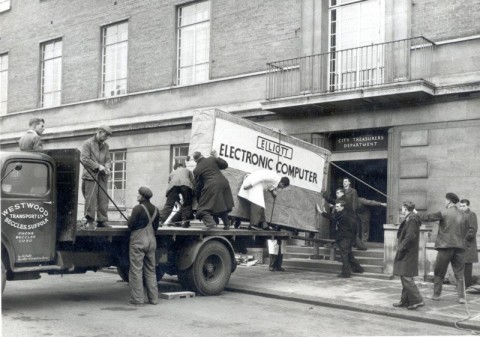
Photograph via Norfolk Record Office
Once upon a time, computers with less horsepower than your mobile phone, were big. Real big. How big? This big.
From the Norfolk Record Office comes a description of the photo you see above:
Norwich City Council’s first computer, being delivered to the City Treasurer’s Department in Bethel Street, Norwich in 1957. The City of Norwich, and its forward-thinking Treasurer, Mr A.J. Barnard, were pioneers in the application of computer technology to the work of UK local authorities and businesses. In 1953-4, Mr Barnard and his team began looking for an electronic system to handle its rates and payroll. They began discussions with Elliott Brothers of London in 1955, and the City Council ordered the first Elliott 405 computer from them in January 1956. It was delivered to City Hall in February 1957 and became operational in April 1957. The event was celebrated by a demonstration of the machine in front of the Lord Mayor of Norwich and the press on 3 April 1957.
For more vintage moments in computing, please enjoy some of the “relateds” below.
Related Content:
Watch the World’s Oldest Working Digital Computer — the 1951 Harwell Dekatron — Get Fired Up Again
A Short History of Romanian Computing: From 1961 to 1989
“They Were There” — Errol Morris Finally Directs a Film for IBM
The Internet Arcade Lets You Play 900 Vintage Video Games in Your Web Browser (Free)
Free Online Computer Science Courses
Harvard’s Free Computer Science Course Teaches You to Code in 12 Weeks
A Computer Gets Delivered in 1957: Great Moments in Schlepping History is a post from: Open Culture. Follow us on Facebook, Twitter, and Google Plus, or get our Daily Email. And don't miss our big collections of Free Online Courses, Free Online Movies, Free eBooks, Free Audio Books, Free Foreign Language Lessons, and MOOCs.
The post A Computer Gets Delivered in 1957: Great Moments in Schlepping History appeared first on Open Culture.
“A Man His Own Grandfather”
The following remarkable coincidence will be read with interest: Sometime since it was announced that a man at Titusville, Pennsylvania, committed suicide for the strange reason that he had discovered that he was his own grandfather. Leaving a dying statement explaining this singular circumstance, we will not attempt to unravel it, but give his own explanation of the mixed-up condition of his kinsfolk in his own words. He says, ‘I married a widow who had a grown-up daughter. My father visited our house very often, fell in love with my stepdaughter, and married her. So my father became my son-in law, and my step-daughter my mother, because she was my father’s wife. Some time afterwards, my wife gave birth to a son; he was my father’s brother-in-law, and my uncle, for he was the brother of my step-mother. My father’s wife — i.e. my step-daughter — had also a son; he was, of course, my brother, and in the mean time my grandchild, for he was the son of my daughter. My wife was my grandmother, because she was my mother’s mother. I was my wife’s husband and the grandchild at the same time. And as the husband of a person’s grandmother is his grandfather, I was my own grandfather.’ After this logical conclusion, we are not surprised that the unfortunate man should have taken refuge in oblivion. It was the most married family and the worst mixed that we ever heard of. To unravel such an entangling alliance could not have resulted otherwise than in an aberration of mind and subsequent suicide.
— Littell’s Living Age, May 9, 1868
(Yes, I know about the song!) (Thanks, Dave.)
Monkey See, Monkey Speak
-- Read more on ScientificAmerican.com
Science explains why cops shoot black men
Online Spirograph

Look at the pretty design I made using Nathan Friend's elegant Inspirograph site.
No charges for Japanese man who dumped a quarter-ton of porn in a park

70 year old Hideaki Adachi said he was disposing of the porn for a sick friend, and he assumed that the park's population of homeless people (with whom he volunteers) would arrange for its disposal.
(via JWZ)
Secret languages of twins
"Cryptophasia" is the term for the secret languages that apparently 40 percent of identical twins develop. Nautilus investigates:
The most famous example of cryptophasia is identical twins Ginny and Grace Kennedy from California.
Read the restWATCH: Funny videos about weird apartment neighbors
Jackie Jennings makes and stars in these videos about nutty apartment neighbors who come by to bug her.
The day I met a creationist at the science conference

The last place you expect to meet a creationist is at the annual American Geophysical Union conference. I don't know how I got so lucky.
Read the restNoam Chomsky Almost Appeared on Saturday Night Live During the 90s
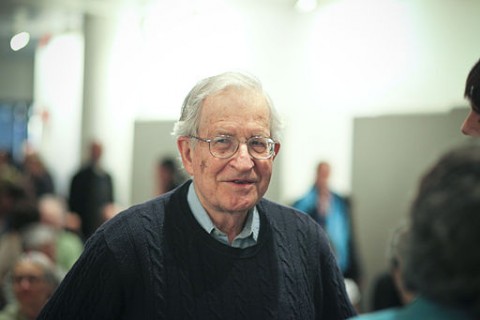
Image by jeanbaptisteparis
There are those guest hosts on Saturday Night Live who immediately become exemplary cast members they fit in so well. I’m thinking mostly of Alec Baldwin. Then there are those—certain pop stars and athletes—who are too awkward even to make for unintentional humor. Sometimes the show will choose a host for obvious cultural or political reasons, whether or not that person has any sense of humor whatsoever. Lorne Michaels even once considered asking notoriously stiff then-presidential candidate Mitt Romney to host in 2012, a prospect that excited no one except maybe Romney.
Given the show’s many questionable choices, it’s maybe not too surprising that it would consider asking an academic to host. Some extroverted public intellectuals, like Cornell West and Slavoj Zizeck, are natural entertainers. But that they would think of Noam Chomsky—known for his rumpled sweaters and incisive, unsparing geopolitical analysis, delivered in the driest monotone this side of Ben Stein’s Ferris Bueller’s Day Off character—is, well, pretty odd.
It does make a little bit more sense considering that they only asked Professor Chomsky to play himself on the show, not deliver a monologue or do impersonations. According to his assistant Bev Stohl, the show called sometime in the late 90s and told her that the “writers had written a loose script for Noam. The only thing he needed to do was show up on the set and play it straight, answering the questions that were put to him. Sort of like, ‘I’m Noam Chomsky, and I play myself on TV.’” Mostly, writes Stohl on her blog, “I liked the idea of Noam appearing in mainstream media, something that was just beginning to happen in small ways in the 1990’s.”
And how did Chomsky himself feel about the request? It seems he was vaguely familiar with the show and open to the idea. His wife, on the other hand, was not. “After a brief exchange” with her, writes Critical Theory, “he informed Stohl that ‘Carol says no.’” We’ll never know if we were “robbed of either the greatest SNL skit ever” or spared “another terribly unfunny segment,” but the question of whether Chomsky can be funny is still an open one. Matthew Alford at The Guardian writes that during the Q&A after a lecture he attended, “Chomsky was successful not only at conveying his radical political message but also at raising belly laughs from the audience with dark-laced, insightful humour about his politics.” Alford says he measured “a laugh every couple of minutes—very high for a public intellectual but of course not close to the professional comic’s benchmark of one gag every 20 seconds.” He offers some typical Chomsky-an one-liners, such as:
“[The Bush administration’s] moral values are very explicit: shine the boots of the rich and powerful, kick everyone else in the face, and let your grandchildren pay for it.”
“If you’ve resisted the temptation to tell the teacher ‘you’re an asshole’ which maybe he or she is, and if you don’t say ‘that’s idiotic’ when you get a stupid assignment… you will end up at a good college and eventually with a good job.”
And “It’s to the point where Ronald Reagan could put on his cowboy boots and cowboy hat and declare a national emergency because the national security of the United States was in danger from the government of Nicaragua… whose troops were two days from Texas.”
Above, you can catch a glimpse of the lighter side of Chomsky.
via Critical Theory
Related Content:
Noam Chomsky Went Gangnam Style … Ever So Briefly?
Filmmaker Michel Gondry Presents an Animated Conversation with Noam Chomsky
Noam Chomsky Spells Out the Purpose of Education
Josh Jones is a writer and musician based in Durham, NC. Follow him at @jdmagness
Noam Chomsky Almost Appeared on Saturday Night Live During the 90s is a post from: Open Culture. Follow us on Facebook, Twitter, and Google Plus, or get our Daily Email. And don't miss our big collections of Free Online Courses, Free Online Movies, Free eBooks, Free Audio Books, Free Foreign Language Lessons, and MOOCs.
The post Noam Chomsky Almost Appeared on Saturday Night Live During the 90s appeared first on Open Culture.
How dads improve their kids' lives, according to science

story,interview
When Paul Raeburn became a father for the first time, he had one piece of advice to go on. "The most important things to do," a colleague told him, are "to tell your kids you love them and to spend time with them." Several years later, he remarried, had a second set of kids, and was determined to learn more about fatherhood than the basic guidelines he'd followed the first time around.
"We all think we know a lot about fathers and what they do for their kids, but what do we really know?" he told me in an interview.
A science writer who'd published books on mental illness and space exploration, Raeburn did a comprehensive survey of scientific research on fatherhood. The result is his book Do Fathers Matter?. Raeburn found that fathers play a huge role in their children's lives, even before they're born.
"Fathers have much more effect on children than even I would have guessed — and I was biased in favor of fathers to start with," he said.
Raeburn also had to confront the dark flipside of a father's influence on his kids: what happens when he's not involved in their lives. The problem of disengaged dads is real, and there isn't a clear solution for how to fix it.
Fathers offer tremendous benefits to their children
Do Fathers Matter? is structured as a timeline of a child's life. Early chapters address conception and pregnancy, and then the book journeys through infancy, early childhood, and adolescence. For each stage of development, Raeburn describes how a father contributes.
In pregnancy, genes passed along by the father help a fetus draw in more nutrients from its mother. These genes allow the fetus to release hormones that elevate its mother's blood pressure, increasing the amount of blood that goes to the fetus, and to raise its mother's blood sugar so more sugar-rich blood goes through the placenta.
"The fetus is not just passively receiving nutrients from its mother," he said. "It's actually sending out control signals, and it got that ability from genes that it got from its father."
After the child is born, the father's presence — not only his genes — matters. Raeburn cites research from Nadya Panscofar of the the College of New Jersey and Lynne Vernon-Feagans of the University of North Carolina. They found that fathers have a greater impact than mothers in expanding their children's vocabulary.
"What they think is going on there is that families where mothers spend more time with their kids, they're much more attuned to the kids' language," he said. "So they don't use words that the kids don't know as often. Fathers, who might spend less time, are more likely to use many more words, and that stretches kids."
And then comes adolescence. One of the more striking findings described in the book shows how good fathers help their daughters transition from childhood to adulthood. Girls whose fathers are absent or almost always absent go through puberty sooner than their peers whose fathers are present.
The book discusses research by University of Arizona's Bruce J. Ellis, who first established this connection, and has since attempted to find out why it happens. Is it genetic or environmental? Ellis answered this question by studying families with two daughters, some with divorced parents and some with parents who remained married. He found that younger sisters in divorced families with badly behaved fathers — in other words, girls who'd spent more time without their father present — got their first periods about a year earlier than their older sisters.
"The conclusion was that growing up with an emotionally or physically distant father in early to middle childhood could be a ‘key life transition' that alters sexual development," Raeburn wrote.
Raeburn also highlights the crucial role that involved fathers play throughout their kids' lives: financial support. For a long time, of course, this was considered the primary — if not the only — benefit that children got from their fathers. We now know that fathers help meet their children's emotional and social needs as well as their material needs. And mothers are increasingly likely to be partial or even primary breadwinners in their families. But Raeburn cautions against losing sight of the importance of a father's contribution to his children's financial well-being.
"Poverty is without question the worst thing that can happen to children," he said. "We shouldn't shortchange the father who works 50 hours a week to support his family and takes on extra shifts. That person may not be the wonderful father who makes every school field trip that we might think is an ideal. But he's doing something very important for his children."
Probably my favorite passage in Do Fathers Matter? comes when Raeburn steps back for a moment from his impressive research review to reflect on why he wants to be around his children. It's not because he wants to boost their IQs or keep their hormones in check. It's because he loves his children and enjoys being with them.
"I'm glad to know my involvement is a good thing," he wrote. "But that's not why I spend time with my kids. I do it because I like it."
Raeburn is not alone: fathers are spending more and more time with their children.
"In 1965, fathers spent on average two and a half hours a week with their children," Raeburn said. "In more recent polling and surveys, they report spending 7.3 hours with their children. Fathers spend a lot more time with their children than they once did."
But a large number of children do not experience these benefits
Even as some fathers are spending more time with their children than they did a half-century ago, other fathers becoming less involved. More than a quarter of children in America live apart from their fathers, up from 11 percent in 1960. And of those fathers who don't live with their children, between a third and a half never or almost never see their children. A Pew report from 2011 called these diverging patterns "a tale of two fathers."
"The extent of the problem is larger than I would have expected," Raeburn said.
And it's a problem that he, as a divorced father, can empathize with.
"Having been divorced myself, there were times when my relationships with my children were very tenuous," he said. "It's very sad that it happens so frequently."
A father's absence can have lasting negative repercussions. Do Fathers Matter? includes a list of the consequences of absent fathers, provided by Rutgers University's David Popenoe: juvenile delinquency, teen pregnancy, lower academic achievement, depression, substance abuse, and poverty.
So what do you do if your father's not around?
Nevertheless, Raeburn emphasizes that while fathers are important, they are not essential. He points to two of the most prominent Americans who grew up with absent fathers: President Barack Obama and former President Bill Clinton. Clearly, an involved father is not a prerequisite for a rich, successful life. And, of course, a father who is present but abusive can have a disastrous effect on his children. Children and the parents who raise them are individuals, not statistics, and what is true in the aggregate is not necessarily true of a specific family under a specific set of circumstances.
Over the past few years many single mothers have written passionately about the ways their children thrive in their nontraditional — though no longer unusual — family structure. In the New York Times, Katie Roiphe celebrated her household for being "messy, bohemian, warm." Last year in Slate, single mother Pamela Gwyn Kripke argued that her children are tougher and more resilient as a result of being raised in a one-parent family. Stacia L. Brown, who founded an online community for single mothers of color called Beyond Baby Mamas, has written about the many reasons different women raise children on their own — and all these reasons focus on what's best for their kids.
Raeburn describes a conversation he had with a friend who is a single mom. Upon hearing that he was writing a book about fathers, she asked him, "What do I need to know?"
"That's the kind of reaction that I hope people will have," he said. "Some researchers have suggested for example that single mothers try to involve a male father figure with their children. It may be a brother or uncle or you know somebody in the family. It could be a male figure that spends a lot of time with the kids — it could be a close friend. That's not always possible. But it's one good piece of advice for single mothers."
He also points back to the language study that showed fathers help expand their children's vocabulary.
"That doesn't mean that in families where kids don't have a father that kids won't learn to talk," he said. "But it does suggest to single mothers that they might want to be a little more conscious of that and push their children a little more to encourage that kind of language development."
Are there policies that could help encourage dads to be more involved in their kids' lives?
One of Raeburn's goals in writing Do Fathers Matter? was to inspire a more informed policy conversation about fatherhood.
"What I've tried to do here is collect a lot of the new and recent research that says, ‘Here's what fathers really do for their children,'" he said. "And once we know that, then we can talk about all the things we want to say about fathers and social policies and political issues and everything, on a basis of what we really know, not on a basis of how we think fathers behave."
The book doesn't include many policy recommendations, but Raeburn can think of one that he believes is vitally important: a strong family leave policy.
"There are four countries in the world that do not require parental leave, and the US is one of them," he said. "Parental leave starts things off on the right foot, and it's crazy that we don't do that."
But parental leave, as crucial as it is, would only help already-engaged dads become even more engaged. It wouldn't affect dads who have no interest in their kids, or dads who are in prison, or dads who have such a troubled relationship with their ex-wives or ex-girlfriends that they never see their children.
Reducing the number of children who grow up without their fathers would require a whole host of changes: a stronger jobs market for men with lower education levels; a rethinking of the child-support system, which in its current form often drives fathers away from their children; well-designed mentorship and apprenticeship programs; prison reform.
And all this addresses only the practical obstacles that prevent many men from being present fathers. There's also widespread emotional healing that needs to take place. Children of divorce are more likely to grow up to have relational challenges as adults. Many of today's absent fathers were themselves let down by their dads. For them, committing to fatherhood means committing to a job they've seen done really badly in the past. And that is deeply, deeply, challenging.
Perhaps Raeburn's book can have some part in this emotional work — in convincing men that they do have a role to play, even if their own fathers weren't perfect.
"There are differences in the way mothers and fathers parent, and that's a good thing," Raeburn said. "We can use that to raise happy and healthy children. It's actually a pretty good biological system."
Eleanor Barkhorn: Lots of people have written books about fathers: Michael Lewis, Bill Cosby, Barack Obama, to name just a few. What makes your book distinctive?
Paul Raeburn:There have been thousands of books written by fathers about how wonderful their children are. And there have been many books written by children about how wonderful their fathers are. And all those things are good. I think my kids are the greatest kids in the world, too, just like most parents do. But I didn't think we needed another book like that. I wanted to step around all those books and say, "yes we all think we know a lot about fathers and what they do for their kids, but what do we really know based on scientific research?" So what I've tried to do here is collect a lot of the new and recent research that says, "Here's what fathers really do for their children." And once we know that, then we can talk about all the things we want to say about fathers and social policies and political issues and everything, on a basis of what we really know, not on a basis of how we think fathers behave.
Eleanor Barkhorn: What's an example of something you learned about how fathers contribute to their children's lives?
Paul Raeburn In general fathers have much more effect on children than even I would have guessed — and I was biased in favor of fathers to start with. It turns out that fathers have all kinds of effects on their children, and children have all kinds of effects on their fathers. Some of what's interesting is what happens during pregnancy, for example.
Men's testosterone levels drop when their partners are pregnant. Our hormonal systems are fundamental parts of our biology. They're not easily tinkered with. So the fact that a man's testosterone drops during his partner's pregnancy is quite interesting. It's surprising. And it happens with no physical connection to the child. There's a physical connection to the partner, but not in a way that would obviously affect hormones. So not only does testosterone fall, but prolactin in men rises. And if you've heard of prolactin at all, it's because we associate prolactin with nursing. Why it would rise in fathers during pregnancy is a mystery. But the thinking is, these hormonal changes in fathers during pregnancy change men from competitors seeking mates into more nurturing individuals ready to raise a child. Now the science is, the hormones change. The speculation is, it happens because it's changing men into more nurturing figures for their children. The reason I'm making that point is, I'm trying to be very careful about what we know and what we don't know. There's interesting speculation associated with these things.
Another interesting example: we know a father's genes contribute to hair color and eye color and maybe how tall or short their children are, and all those obvious things. It also turns out that genes from fathers also give the developing fetus the ability to control the mother's blood pressure, control her blood sugar levels, and to control its own growth. And so the fetus is not just passively receiving nutrients from its mother. It's actually sending out control signals, and it got that ability from genes that it got from its father.
Eleanor Barkhorn: What about after the child is born? What sort of a role do fathers play?
Paul Raeburn: The amount that fathers spend with their children has tripled since the 1960s. In 1965, fathers spent on average two and a half hours a week with their children. In more recent polling and surveys, they report spending 7.3 hours with their children. So fathers spend a lot more time with their children than they did. It's also true that if you add up the total amount of paid and unpaid work that mothers and fathers do, fathers spend 54.2 hours per week working--paid and unpaid work--mothers spend 52.7. So they're both about the same. All mothers and fathers have had a tough time in the last decade or two because the economy has been changing, more women have been working, they've been working more hours, and those kinds of changes put stresses on everybody involved. But fathers are contributing more to their children than they often get credit for.
Eleanor Barkhorn: The book also describes what happens when a father isn't around.
Paul Raeburn: The extent of the problem is larger than I would have expected. It turns out that depending on what study you look at - these things are not terribly precise - something like a third to a half of divorced fathers never or almost never see their children. That's shocking to me. But I also have to say, having been divorced myself, there were times when my relationships with my children were very tenuous. Fortunately we didn't quite fall into that scenario, but I can sort of see how it happens. It's very sad that it happens so frequently.
There's a series of studies that show children are more likely to be involved in delinquency and criminal behavior and do more poorly in school if their fathers aren't present. There's a conversation that says it's because fathers aren't present, and others say that it's more related to the poverty that is often faced by families when fathers aren't present.
But here's a newer piece of research I found that's quite interesting but again shows how intense the bonds can be between fathers and children. And it turns out that when the father is absent, or almost always absent, daughters go into puberty about a year earlier on average than they would have otherwise. The question is, what's going on here? And the thinking is that when daughters grow up in a secure family, they're protected, their basic needs are supplied, and everything is fine. Then there's no great rush for them to mature and go out and think about forming their own families. When the father is absent -- the daughter is not aware of this of course -- something is triggering their hormonal systems to begin puberty early because their hormonal systems are getting a signal from their environment that their family situation is not secure, and that they might do better to seek out their own families where they might have a more secure situation. So not only do they go into puberty sooner -- they're more likely to engage in risky sexual behavior, more likely to get pregnant, more likely to get sexually transmitted diseases. So again it's a profound connection between fathers and daughters in this case that until recently nobody knew existed.
Eleanor Barkhorn: It's hard to read these studies without getting really upset, considering how many children grow up without their fathers actively involved in their lives. Can single mothers, or children who are growing up with absent fathers, read this book and not feel despair?
Paul Raeburn: The point here is that fathers are important for children but not essential.
One single-mother friend of mine, her question was, "What should I do?" In other words, "What do I need to know that might be missing here that I could compensate for?" And that's the kind of reaction that I hope people will have. Some researchers have suggested for example that single mothers try to involve a male father figure with their children. It may be a brother or uncle or you know somebody in the family. It could be a male figure that spends a lot of time with the kids - it could be a close friend. That's not always possible. But it's one good piece of advice for single mothers.
Another example relates to language development: some researchers at North Carolina looked at fathers and mothers and the language ability of three- and four-year-olds. And they discovered a strong correlation between fathers' involvement with children and the children's language abilities. Interestingly they found no correlation between mothers' involvement and children's language abilities. So what they think is going on there is that families where mothers spend more time with their kids, they're much more attuned to the kids' language, so they don't use words that the kids don't know, as often. Fathers, who might spend less time, are more likely to use many more words, and that stretches kids and puts them along. That doesn't mean that in families where kids don't have a father that kids won't learn to talk. But it does suggest to single mothers that they might want to be a little more conscious of that and push their children a little more to encourage that kind of language development.
Eleanor Barkhorn: What do you want parents to take from this book?
Paul Raeburn: I hope the book will start a conversation, and that we'll recognize that there are differences in the way mothers and fathers parent, and that's a good thing. We can use that to raise happy and healthy children. We shouldn't try to fight it. The facts are what the facts are. It's actually a pretty good biological system.
Eleanor Barkhorn: And what are the broader policy implications of your book? What can we do as a society to encourage more fathers to be part of their kids' lives?
Paul Raeburn: I didn't do a lot of policy things. I tried to put the information about the importance of dads out there so that people could take that where they wanted to take it. But clearly there are three countries in the world that do not require parental leave, and the US is one of them. So parental leave and specifically paternal leave is something we need to make a policy priority here. This is the kind of thing that can not only help children with a lot of the psychological and social factors we talked about, but it has the potential to help reduce violence in urban communities, to improve behavior at school - a whole series of things that happen when fathers become engaged. The evidence shows that if fathers are engaged in the early years, they'll continue to be more involved later on. Parental leave starts things off on the right foot, and it's crazy that we don't do that.
WHISKER DAM | MUSTACHE PROTECTOR

Whisker Dam is an ingenious invention that keeps your beloved mustache dry while drinking! The premium piece has been handcrafted to perfection, it is made from 100% Copper, dressed with a timeless patina and coated with a non-toxic barrier. It easily attaches to a pint of beer and almost any drinking vessel, guarding your perfectly groomed stash from the fluid elements. A great gift that comes packed in a beautiful vintage looking carrying box. via
"One of the things that linguists have noticed is that if you want to combine two things with “and”,..."
One of the things that linguists have noticed is that if you want to combine two things with “and”, they have to be the same part of speech: two nouns, two verbs, etc. So it’s fine to say:
Wash the dishes and sweep the floor. (2 verbs+objects)
Wash the dishes and the floor. (2 nouns)
Clean and press these pants. (2 verbs, same object)
But when it comes to fuck, things get, well, fucked up:
*Wash the dishes and fuck you.
*Fuck you and sweep the floor.
*Describe and fuck communism. (Remember, this was written in the sixties.)
-
A Linguist Explains the Syntax of “Fuck”
I’m on The Toast talking about the classic article “English Sentences Without Overt Grammatical Subject" and several further investigations into the syntax of "fuck" and other swears.
Median white household in U.S. has 13 times more wealth than median black household, 10 times more than median Latino
Wittgenstein and Hitler Attended the Same School in Austria, at the Same Time (1904)
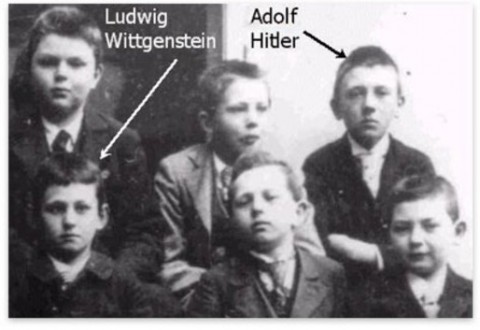
One thing is for sure: Before Ludwig Wittgenstein and Adolf Hitler took very different paths in life, they were, as young teenagers, students at the same school — the Realschule in Linz, Austria. According to the Historical Dictionary of Wittgenstein’s Philosophy, the young philosopher and dictator crossed over at the Realschule in 1904. (The overlap is also cited in Brian McGuinness’ 2005 biography, Young Ludwig: Wittgenstein’s Life, 1889-1921. Ditto A.C. Grayling’s short bio of the philosopher.) Although born only six days apart, Wittgenstein and Hitler weren’t in the same grade. Wittgenstein was already academically a year ahead of other students his age, and Hitler, a year behind. As for whether they knew one another, opinions vary. In a controversial 1998 book, The Jew of Linz, Kimberley Cornish argues that Hitler got into a schoolboy spat with Wittgenstein (whose ancestry was 3/4 Jewish), and somehow that spat proved to be a defining moment in the development of Hitler’s anti-semitism. Scholars like University of Michigan’s Laurence Goldstein have put a certain amount of stock in Cornish’s argument. However, Ray Monk, author of Ludwig Wittgenstein: The Duty of Genius, discredits it, saying there’s no proof the two ever crossed paths. And Monk is the most knowledgeable and credible authority in this area.
Then there’s the photo above. Some say it shows Wittgenstein and Hitler separated by just one student. A tantalizing thought, to be sure. But the historical record casts that into doubt. If you head over to the German Federal Archives, then type “Hitler” and “1901” and “1902” into the search boxes, you will see that the image was taken in 1901 — two years before Wittgenstein first started attending the school. Wikipedia has more on the photo. A copy of the complete school picture appears here.


So where does this leave us? It looks like Wittgenstein and Hitler did indeed walk the same halls for a year (circa 1904), but most likely without ever taking real notice of one another, or posing in the same photograph. Ultimately it’s not a sensational historical factoid, but still intriguing enough.
Addendum: I did some additional research and it appears that Hitler attended the Realschule in Linz from 1901 through the end of the school year in 1904. The troubled student was then expelled. Meanwhile, scholars consistently put Wittgenstein’s time at the school from 1903-1906. If there’s a crossover year, it looks to me like it was the academic year 1903-1904.
Related Content:
Wittgenstein Day-by-Day: Facebook Page Tracks the Philosopher’s Wartime Experience 100 Years Ago
Ludwig Wittgenstein’s Tractatus Gets Adapted Into an Avant-Garde Comic Opera
See the Homes and Studies of Wittgenstein, Schopenhauer, Nietzsche & Other Philosophers
Wittgenstein and Hitler Attended the Same School in Austria, at the Same Time (1904) is a post from: Open Culture. Follow us on Facebook, Twitter, and Google Plus, or get our Daily Email. And don't miss our big collections of Free Online Courses, Free Online Movies, Free eBooks, Free Audio Books, Free Foreign Language Lessons, and MOOCs.
The post Wittgenstein and Hitler Attended the Same School in Austria, at the Same Time (1904) appeared first on Open Culture.
Teachers describe the terrible state of American education

Teachers from across America (including a Philly elementary school with a $160 annual budget for 400 students!) wrote to Gawker to explain what the No Child Left Behind, charter movement, and the overall war on teachers and education has turned America's classes into.
Read the rest