Researchers from the Georgia Institute of Technology took measurements of eyes and their lashes from 22 mammals, everything from an armadillo to a warthog, and discovered a remarkable consistency in their data. And when they made them longer in a simulated environment, the results were grim, as the video above shows.
Shared posts
24 Mar 03:19
Texas considers allowing students to carry guns at public universities
by Jason Weisberger
22 Mar 19:36
Soon, you'll finally be able to play Nintendo games on your smartphone or tablet
by Leigh Alexander
Nintendo today announced it would partner with Japanese mobile game giant DeNA to create new games based on the company's brands. Read the rest
Vvicked, Luke.stirling likes this
21 Mar 15:14
Some European Languages Came by Steppe
A new genetic analysis reveals a massive migration from the central Asian grasslands into Europe 4,500 years ago—implying that some languages followed. Christopher Intagliata reports
-- Read more on ScientificAmerican.com


-- Read more on ScientificAmerican.com
21 Mar 15:14
Why Does Snow “Squeak” When Stepped On?
As much as we know about the white stuff that has blanketed much of the U.S. this winter, the sound that snow makes when trod underfoot remains something of a mystery
-- Read more on ScientificAmerican.com

-- Read more on ScientificAmerican.com
17 Mar 01:16


The Corpse of the Panopticon Creator Now Has an All-Seeing Eye
by Adam Clark Estes
Jeremy Bentham was an eccentric guy. The 18th century British philosopher is known for designing the Panopticon, a type of prison building with an all-seeing eye. He also asked for his skeleton to be dressed and put on public display. And that display now has an all-seeing eye of its own.
14 Mar 19:26

Watch this Indian kid compute math astonishingly fast with an unusual method
by Xeni Jardin
I can't even begin to understand how this little boy's brain is working, or exactly what the method is, but it's fascinating. (more…)
Boumji likes this
13 Mar 23:44
Why Macs have millions of tiny files
by Rob Beschizza
Glenn Fleishman answers questions about the digital dark matter OSX keeps around. Blame Unix.
13 Mar 23:42

Alex Honnold's death-defying ropeless cliff climbs
by Mark Frauenfelder

The New York Times profiles 29 year old Alex Honnold, who climbs sheer cliffs without using ropes. Read the rest
13 Mar 23:39
Ground-level video of 2011 Japan tsunami
by Mark Frauenfelder
I've not seen this particular video of the 2011 Japan tsunami, but it shows just how nightmarishly devastating it was.
13 Mar 23:36

How to make a mealworm farm
by Mark Frauenfelder
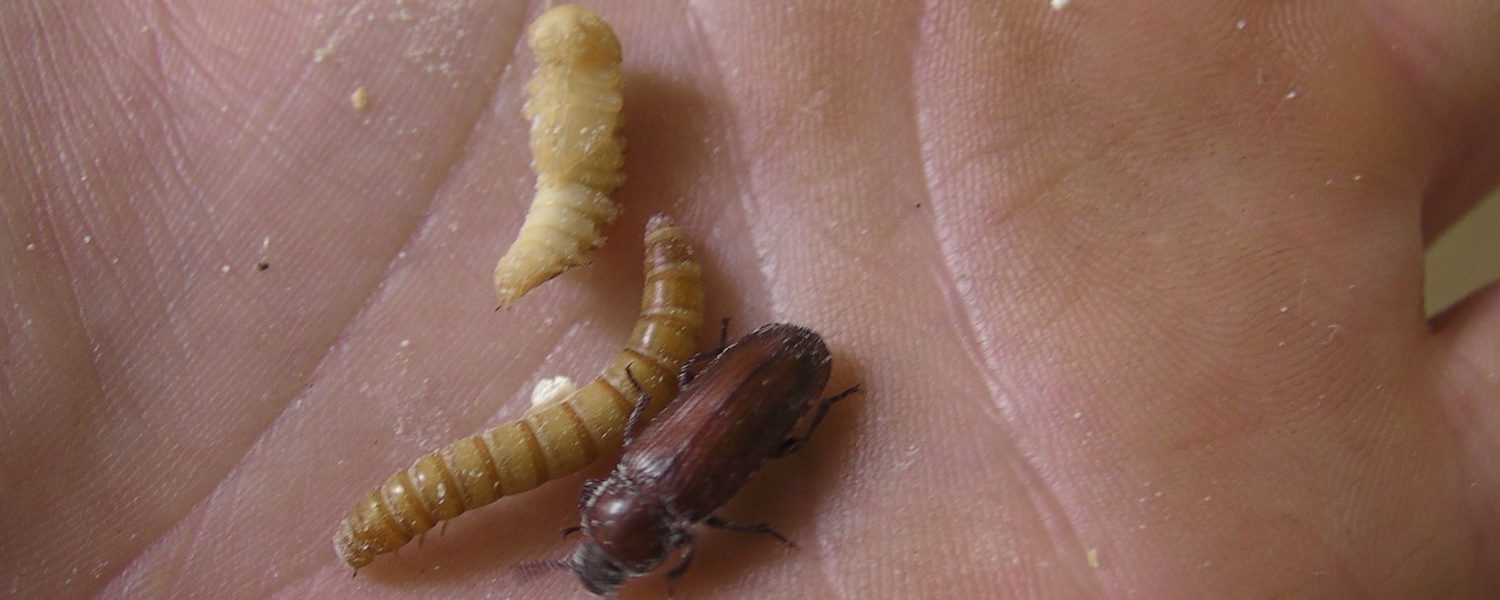
"Mealworms are one of the easiest, cheapest, and most space efficient ways to raise protein for you or your animals." (more…)
Bwescott.bw, Erin likes this
06 Mar 20:32
Building a Website using Pandoc, Markdown, and Static HTML
I’m kind of a nerd about websites. I’m not content to use Dreamweaver, or just write some code. I always want my websites to be a lightweight and optimal as they can be.
When it comes to web publishing, I’ve always been a bit of a minimalist. Over time, I moved this blog from a hosted solution, to a Wordpress install, and then eventually, to Jekyll (that migration process is explained in detail here).
I started off creating my personal site using Jekyll. This was rather a waste, considering that Jekyll’s made for blogs, and that site is really just styled text at its core, with nothing temporal, and no need of fancy tags or pagination. But I still wanted to be able to write in Markdown and style it with CSS afterwards.
So, I got the idea to write everything in markdown, style with CSS, use Pandoc to convert it to HTML, then just drop it onto the server.
Oh, simple!
Actually implementing this was one of those things that’s easy to do once working, but takes forever to get exactly right. The core of it is a single shell script (viewable here, slightly de-identified) which converts the markdown to HTML, then uploads it.
The hardest part of setting all this up was figuring out the syntax of the below command, applied to each folder:
find . -name \*.md -type f -exec pandoc -B includes/spcvhead -A includes/spcvfoot -o {}.html {} \;
In English, it finds any file which ends with “.md” (a markdown file), then executes the pandoc command, including spcvhead (containing the header info, overarching style info, etc) (B)efore the file , then spcvfoot (A)fter. Then it outputs the rest as .html files. If you want different headers/footers in different parts of the site, just run the command on each folder with a different set of includes.
This gives you folders full of .md.html files, due to a quirk of how Pandoc operates. It then goes through and changes those back to .html files with the below command:
find . -depth -name '*.md.html' -execdir bash -c 'mv -i "$1" "${1//md.html/html}"' bash {} \;
Then, it uploads the contents of the site folder (html, css, etc.) to the server using rsync, and goes through and removes the newly generated .html files (to keep the local folder tidy).
This allows me to write pages, posts, and essays using mostly markdown, with occasional dashes of HTML/CSS to style particular elements (page titles, lists, images).
It works great, and is the closest a CMS has ever come to simply getting out of my way. Hopefully this description (and the shell script that makes it work) will prove useful to others.
06 Mar 20:32
How to write a dissertation in LaTeX using Markdown
My particular form of procrastination is optimization. You can tell I don’t want to cut two bags of potatoes when I’m sharpening the kitchen knives. You can tell I’m uninterested in laundry when I ‘m cleaning the dryer barrel. And when I didn’t quite know where to go with my dissertation prospectus, well, I decided that I needed to develop a more graceful way to do so.
For the last few years, I’ve written all my large papers in XeLaTeX (using XeLaTeX for unicode support, making IPA much easier). I love LaTeX, love BibTeX, and love not worrying about formatting. But writing long sections of text in LaTeX kind of sucks, because it’s rather clunky and there are no good editors for LaTeX on mobile devices.
In LaTeX, making text bold requires you to wrap the word or phrase in eight characters worth of tags. Section headings are ugly, and also have accompanying tags. Every %, & or _ must be escaped. LaTeX is powerful for doing complex things, but while writing prose, it just gets in the way.
Why Markdown?
I decided that I’d rather write in Markdown. Markdown is an easy syntax for writing, where you can define section headings as easily as:
# This is a section heading
## Subsection Heading
### Subsubsection heading
Bold, italic, and bold-italic are as easy as:
**bold**, *italic*, ***bold italic***
Most importantly, it’s designed to be quick to use and type using available symbols. So, in short, writing Markdown doesn’t suck, but I wanted to still use the best of LaTeX, for things like dynamic numbering, BibTeX automatic bibliographies, and easy creation of nice tables.
So, I hacked together a solution using Pandoc, the same software I use to generate this site from Markdown.
Turning Markdown into LaTeX
First, I created two documents which had the preamble code for LaTeX in one (everything up until the first section heading), and the footer info in the other (the bibliography).
Then, I created a markdown file for the meat of the paper, which I’ll later convert into LaTeX and stick between the header and footer. I stuck this markdown file in my Dropbox folder and I edit that markdown file to write the paper, whether on a Mac (using TextMate), or on an iPad or iPhone (using Editorial). You can make individual chapter files and concatenate them, if you’d prefer, but I stuck to one mega-file.
The beautiful thing about this approach is that I can write Markdown, which is readable and pleasant, 95% of the time, and then switch into LaTeX in the same file to add something fancy, such as a \cite{Paper Citation}, a \ref{reference} to a \label{labeled section} or a \footnote{}.
I can also include LaTeX tables, throw in \input{} commands to read other tables in, and use \vspace{} where needed. There’s no penalty to going back and forth, and I have the power of LaTeX when needed, and the easy-pretty of markdown when I’m just writing.
This also allows me to use Stargazer, a package for the R Statistics Suite which allows you to directly output data as pretty LaTeX tables. I just have Stargazer output to a .tex file, then \input{} that .tex file. It’s both wonderful and reproducible, because all of my figures, tables, and models are generated directly by R, so no “copy-paste” errors are possible.
How?!
Well, the joy is in the script that creates the data. When I’d like to see a final version, I run a script in the terminal (or hit Cmd+Option+Control+Shift+PageDown, triggering it through KeyboardMaestro.
Although you’ll want to look at the script itself, which is extensively commented, basically, it does the following:
- It copies all of the text from Markdown files, and all of the analysis scripts, into a single place.
- It turns the Markdown into a LaTeX file using Pandoc.
- It cleans up the output a bit.
- It tacks a custom header and footer onto the output, which contains all my style information.
- It builds the document and bibliography in LaTeX
- It opens the PDF copy in a PDF reader, and copies the latest PDF version to my dissertation folder
- It builds a .tar.gz archive containing the complete text and analysis scripts, and saves it to a “backups” folder by date.
- This way, if I mess something up, I can always go back to the last version(s), and I’ve got a way to compare changes if I need to.
It combines the best parts of simple plaintext writing with the best parts of LaTeX, and allows me to be as productive on my phone or iPad as I can be at home (with the exception of rendering a new PDF, and using PocketBib for reading and finding citekeys). In short, it allowed me to write 72,000+ words of dissertation, and not hate my life. I’ve since moved my guide to using Praat to a similar workflow, so I can write it using Markdown too!
Most importantly, though, I’ve found a way to make writing a dissertation geekier than it already was. And that, my friends, is my real accomplishment.
28 Feb 00:06
Which direction do wugs face?
sunmuffin42 replied to your photoset “What do you do when you come across a giant outdoor Lite Brite? Why,…”
For some reason I feel like canon wugs are always facing right??? I just realized that and it’s quite weird
It’s true. But I actually consistently draw wugs facing left, and then I don’t realize it until later, for reasons that might have to do with handedness bias (I’m left-handed though) or general human biases.
28 Feb 00:03

The Chicago "which" hunt - Papers from the Relative Clause Festival

You take the high node, and I'll take the low node - Papers from the Comparative Syntax Festival
A linguist friend sent in these two covers of the 1972 and 1973...
The Chicago "which" hunt - Papers from the Relative Clause Festival
You take the high node, and I'll take the low node - Papers from the Comparative Syntax Festival
A linguist friend sent in these two covers of the 1972 and 1973 proceedings of the Chicago Linguistics Society. Two questions:
1) Why aren’t we still using pun-filled names like this?
2) Can we go back to calling conferences “festivals”?
25 Feb 00:43
‘Generation rent’? We’ve been here before
by Danny Dorling
A home-owning majority in Britain was a one-generation blip. But if we are becoming a renting country again, we’ll need better regulation
Sometimes cliches get repeated so frequently that we no longer question their relevance. “An Englishman’s home is his castle” – the idea that an obsession with home ownership is somehow in our national DNA – is one of them. In fact, there is no age-old British tradition of merry men all owning their own homes.
As newspapers rejoice upon learning that the average UK home rose in value by about £22,000 last year, it is about time we recognised that the average young UK family is never going to be able to afford to buy that home. To find out when a home of your own was last as unaffordable as it is today, and to come up with some ways of exploring that new reality, one could do worse than turn towards the UK’s best-housed family: the royals.
Continue reading...
25 Feb 00:42
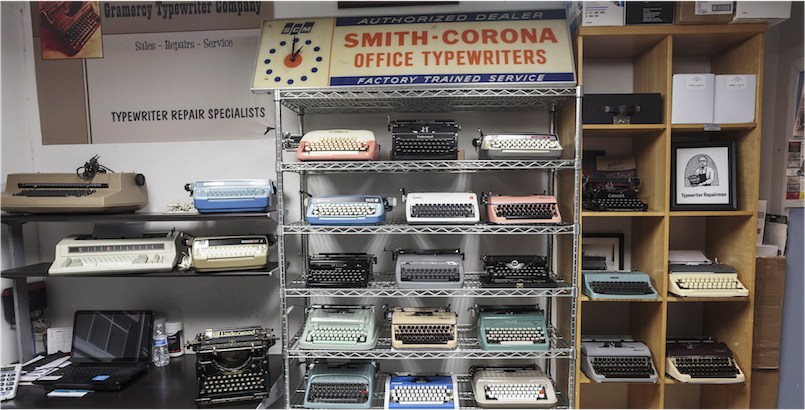

Paul Schweitzer, 76, is a typewriter repairman. Still.
by David Pescovitz
Over at Backchannel, Mary Pilon on the last of the typewriter men who are fighting against obsolesence. Read the rest
25 Feb 00:41

Discrimination against women is a real problem in college admissions
by Libby Nelson
Two generations ago, women were in the minority in higher education. Now they're dominating it.
In 1960, women earned 35 percent of all bachelor's degrees. They crossed the 50 percent mark in the late 1970s and just kept going.
Women now make up 59 percent of all college students. In 2011, they earned 62 percent of all associate degrees, 57 percent of all bachelor's degrees, and 60 percent of all master's degrees. They now even earn the majority of doctorates — the last bastion of male domination in higher education.
Women are so dominant, in fact, that some colleges — particularly private colleges — overtly or covertly give men a boost in the admissions process. If you're hoping to be admitted to a prestigious private college that doesn't specialize in engineering, it helps to be male.
Discrimination against women is an open secret at some private colleges
Evidence has mounted in recent years: at some colleges, although not all, men can get in with less impressive credentials. A push for gender balance on campus means accomplished young women end up competing with each other rather than crowding out less accomplished young men.
About 25 percent of admissions directors surveyed by Inside Higher Ed in 2014 said colleges should admit men with lower grades and test scores than other applicants to create a gender balance.
A 2005 study of 13 liberal arts colleges found that when women made up a majority of the application pool, admissions officers went easier on men.
And last year, the Washington Post analyzed admissions data for 128 colleges and universities with admissions rates under 35 percent. They found that 64 of them admitted men at a higher rate than women.
It's rare, but some admissions directors or college presidents publicly admit that they're harder on women applicants because they want a gender balance. In 2007, Henry Broaddus, the dean of admissions at the College of William and Mary, said admitting men was important because it's "the College of William and Mary, not the College of Mary and Mary." The comment went viral, and although Broaddus says he regrets the phrasing, he stands by the underlying idea: colleges "that market themselves as coed, and believe that the pedagogical experiences they provide rely in part on a coed student body, have a legitimate interest in enrolling a class that is not disproportionately male or female," he wrote in the Washington Post.
In 2006, Jennifer Delahunty Britz, then the dean of admissions and financial aid at Kenyon College, wrote an op-ed in the New York Times headlined "To All the Girls I've Rejected." In the opaque world of college admissions, Britz's op-ed laid out the situation candidly: talented female applicants at Kenyon were a dime a dozen, and highly qualified male applicants were rarer. It was simply harder to get in as a young woman than a young man.
"The elephant that looms large in the middle of the room is the importance of gender balance," Britz wrote. "Should it trump the qualifications of talented young female applicants?"
The US Commission on Civil Rights began an investigation in 2009 into whether colleges favored men at the expense of women, but the inquiry never went anywhere, in part due to problems getting accurate data.
How many women is too many women?
Gender preferences in college admissions are frequently described as affirmative action for men. But that's not really accurate — at least not the way affirmative action works for other groups. What colleges really have is a quota system for women.
The Supreme Court allows affirmative action based on race to achieve a critical mass of students of color at a university. The idea is that a college should be diverse enough that students experience the diversity of thoughts and life experiences within different races as well as among them. It's meant to avoid a situation where students of color are so rare that they become tokens who must represent an entire race or ethnicity on their own.
Whether you find that a convincing rationale for admissions preferences or not, it's hard to argue that colleges today lack a critical mass of men. Men might be underrepresented in college relative to their numbers in society as a whole, but they're hardly in danger of becoming isolated tokens.
So colleges aren't restricting women's opportunities to achieve critical mass with an underrepresented group. They're just putting a ceiling on the number of women they admit.
Sometimes this is done through giving less qualified male applicants a boost. Eleven percent of admissions directors in the Inside Higher Ed survey said they admit male students with lower grades and test scores than other applicants because they want a gender balance.
In other cases, colleges have policies that might not intend to disadvantage women but have the same effect — weighing SAT scores as more important than high school grades, for example. (Girls get better grades in high school, but boys still outscore girls on the SAT. High school grades predict college grades better than SAT scores, although the best predictor is still the two factors combined.)
And sometimes colleges try to make themselves more attractive to men: adding a Division III football team is a strategy some small colleges are embracing. It boosts enrollment and tuition revenue in general, and it boosts male enrollment in particular.
The rationale isn't that male applicants need a leg up because they're at some kind of disadvantage. It's much simpler. Colleges don't want too many women on campus, because they're afraid a college that's too female will struggle to attract both women and men.
"Once you become decidedly female in enrollment, fewer males and, as it turns out, fewer females find your campus attractive," Britz wrote.
This mindset shows up best in a 2010 article in the New York Times focused on the University of North Carolina, where 58 percent of students are women; the women quoted bemoaned their ability to get a date given the lopsided ratio, and the male reporter described UNC as among colleges that "at times feel eerily like women's colleges." (Women's colleges with a very healthy population of men, apparently.)
But it's not clear that college students value a 50/50 gender split as much administrators assume they do. Nor do we know if women students would prefer to be rejected at the admissions stage rather than attend a college where it's slightly more difficult to find a boyfriend. American University is 61 percent women, and the gender ratio doesn't appear to be driving applicants away. It's gotten more selective, not less, in the past decade.
A 50-50 gender ratio at colleges might really be a worthwhile societal goal. But the way colleges practice admissions now, it looks a lot more like a marketing ploy based on outdated stereotypes.
25 Feb 00:41

7 surprising facts about cannibalism
by Phil Edwards
Cannibalism can show up at the most unexpected points in history.
Most people don't associate cannibalism with the Soviet Union. But as Timothy Snyder describes in his book Bloodlands, the 1933 Stalin-imposed famine in Ukraine was so severe that cannibalism became surprisingly prevalent. The state had to set up an anti-cannibalism squad, and hundreds of people were accused of eating their neighbors or, in some cases, their family members. (Ron Rosenbaum shares many of the gruesome details in a book review for Slate.)
The grisly episode makes vivid the deprivations of the early Soviet era. That many Americans may have never heard of it illustrates another fact about cannibalism — it's something no one ever wants to think about. It's relegated to disgust, tabloid voyeurism, and lame jokes, and those all contribute to a general ignorance of the subject.
Historians and anthropologists, however, have tried to study the history and science of cannibalism over the years: why it happens, when it occurs, and who's affected. It tests the ultimate boundaries of cultural relativism, health, and ritual. Though this list isn't at all comprehensive, it catalogs some of the unusual things about cannibalism you might have missed.
Turns out there are a lot of myths about cannibalism — and how it's been practiced over time. Here are a few surprising things experts have learned:
1) Humans are mostly hard-wired against cannibalism — but not always
There's a good biological reason why cannibalism is taboo in virtually every culture: Eating other humans can make you sick.
Specifically, eating the brain of another human being can cause kuru — a brain disease that's similar to mad cow disease. Kuru occurs because our brains contain prions that transmit the disease. Symptoms begin with trembling and end in death.
What's surprising, though, is that this isn't always the case. Among anthropologists, the Fore people in Papua New Guinea are known for cannibalism. Up until the late 1950s, they ate the bodies of relatives to cleanse their spirits. Thousands of Fore contracted kuru and died ("kuru" actually comes from the Fore word for shaking). But not all of them fell victim to the disease: Over the last 200 years, some Fore have also developed a genetic mutation that protects them from the prions that transmit kuru.
The Fore were adapting to cannibalism — with natural selection possibly playing a role in reducing their susceptibility to disease. Scientists have been trying to study this further, but in recent decades, cannibalism has been declining among the Fore because of changing social mores and laws. If that continues, kuru may be wiped out entirely.
2) Animals are mostly hard-wired against cannibalism — but not always
A cane toad. (Ian Waldie/Staff/Getty Images)
Cannibalism is rare in the animal kingdom — except when it isn't.
A few years ago, Natalie Angier of the New York Times chronicled the tales of the cane toad, caecilian, redback spider, and other animals that eat their own species. The cane toad, for instance, actually prefers cane toad eggs to other options.
How can that possibly be a good idea? Here's Angier: "Researchers propose three motives. The practice speeds up maturation; it eliminates future rivals who, given a mother toad’s reproductive cycle, are almost certainly unrelated to you; and it means exploiting an abundant resource that others find toxic but to which you are immune."
Those evolutionary imperatives extend to a wide range of organisms — even including occasional cannibalistic dalliances from animals like the sloth bear. As Mary Bates described in Wired, it's not unknown for sloth bears to eat members of their own family (possibly because they're under stress).
These human and animal cases are more than curious footnotes. They show that evolution can work in ways that run counter to our cultural values. Evolution happens through natural selection and doesn't always line up with things we might value as a society, and evolved cannibalistic behavior illustrates that important distinction.
3) "Cannibalism" was named after people who might not have been cannibals
Caribs depicted as cannibals. ( MPI/Stringer/Getty Images)
A few basic questions about cannibalism are difficult for historians to answer: How many groups practiced cannibalism? When did it start? And how common is it? Those questions are tough because "cannibalism" has been used throughout time to describe many different things. That's also the reason most modern anthropologists and scientists prefer the term "anthropophagy" to "cannibalism."
There are cultures that engaged in cannibalism as a ritualistic practice, but there are also times when people resorted to cannibalism during famine. And at times, the word "cannibalism" has been used to describe all sorts of tactics — and people — seen as savage. Cannibalism is occasionally descriptive, occasionally circumstantial, and occasionally an indirect ethnic slur.
Case in point: The word "cannibalism" itself comes from the name that the Spanish gave to the Caribs (Caníbales). The Spanish accused the Caribbean tribe of ritualistically eating their enemies, but modern-day scholars have doubts that it actually happened. Because the Caribs were engaged in an anti-colonial battle with a host of European powers, many historians now argue that the cannibalism rumors were just a propaganda tactic by the Spanish meant to stir up fears.
On the other hand, we have some evidence the Caribs used body parts as trophies, so cannibalism is a possibility — especially as an intimidation measure or act of war. However, most of our initial testimony comes from Columbus, who had many reasons, both personal and political, to make the Caribs seem as savage as possible.
4) Cannibalistic rituals could be surprisingly complex
An engraving depicting the Tupi. (DeAgostini/Getty Images)
One of the first prominent European accounts of cannibals appeared in Montaigne's late-1500s essay Of Cannibals. In addition to being an invaluable anthropological record of the Tupi people in what is now Brazil, the essay sheds light on the intricate practice of cannibalism at the time. Sometimes, the Tupi lived with their captives for months before they were eaten. And they sang to each other.
As Montaigne recorded, the captors taunted captives by "entertain[ing] them with threats of their coming death." And the captives replied in a fashion that was like a song or chant. Montaigne writes:
I have a song composed by a prisoner which contains this challenge, that they should all come boldly and gather to dine off him, for they will be eating at the same time their own fathers and grandfathers, who have served to feed and nourish his body. "These muscles," he says, "this flesh and these veins are your own, poor fools that you are."
Musicologist Gary Tomlinson, who wrote about the Tupi in The Singing of the New World, describes it as an "economy of flesh" that passed through the warring tribes for generations.
"It was a transaction across generations in these warring societies," Tomlinson says. "They were saying, 'In the future, you will be captured by my people, and we will eat you.' The transaction goes on and on."
5) Cannibalism was practiced in Colonial America
Archaeologists with a reconstruction of the Jamestown cannibalism victim. (The Washington Post/Getty Images)
Many people might think of cannibalism in distant history and undeveloped countries. But cannibalism was a feature of early American history too.
In 2013, archaeologists revealed they'd found evidence of cannibalism in Colonial Jamestown — an indication of just how desperate early Colonial life had been. Specifically, they discovered markings on the skull of a 14-year-old girl that strongly indicated she'd been eaten by settlers during the particularly difficult winter of 1609.
It was more concrete evidence for something historians had read stories about for years. As Howard Zinn excerpted in A People's History of the United States, one government report painted a grim picture of that winter:
Driven thru insufferable hunger to eat those things which nature most abhorred, the flesh and excrements of man as well of our own nation as of an Indian.
6) The Donner Party wasn't solely about cannibalism
An illustration depicting the desperate journey of the Donner Party. (Fotosearch/Stringer/Getty Images)
When most people think of cannibalism in America, they probably think of the Donner Party — the famous travelers who resorted to the practice when they were stuck in the snowy Sierra Nevada mountains while traveling west in 1846.
What's surprising, however, is contemporary accounts of the trip focused less on the lurid accounts of cannibalism and more on the breadth of hardship that the party endured. As Donner Party historian Kristin Johnson notes: "Out of the more than 300 newspaper articles about the Donner Party published in 1847, the most common headline is a variation of 'From California' ... a mere seven [headlines] contain the word 'cannibalism.'" Accounts tended to highlight the fact that the party only resorted to cannibalism after eating boiled animal bones, hides, and even a beloved dog, Uno.
What's more, many people were just as interested in legends about the Donner Party's buried treasure as they were in the cannibalism. In the 1890s, a Sacramento newspaper reported that treasure rumors made the people of Truckee, California, "feverish with excitement" and included discoveries that would "delight the heart of a numismatist."
The treasure was probably a myth, but it shows that the story was considered far more complicated — and less purely shocking — than it is today.
7) Cannibalism was sometimes used as a medical treatment
There are many horrifying examples of cannibalism in Europe throughout history. But one of the most bizarre is that cannibalism was occasionally seen as a remedy. To pick one example, in Germany from the 1600s to 1800s, executioners often had a bizarre side job that supplemented their income: selling leftover body parts as medicine.
As described in Kathy Stuart's Defiled Trades and Social Outcasts, human fat was sold as a remedy for broken bones, sprains, and arthritis. Usually, this human fat was rubbed as a balm, not eaten. However, apothecaries regularly stocked fat, flesh, and bone, and there are also examples of a human skull being ground into a fine powder and mixed with liquid to treat epilepsy.
That treatment may sound strange, but remember that eating placenta has become a modern-day health fad. Most of the time, the popular verdict on cannibalism is clear — don't do it. But occasionally, what's cannibalism and what isn't has been surprisingly hard to define.
Further reading: For a more detailed story about cannibalism, try this one about the disappearance of Michael Rockefeller.
Watch: The fascinating process of human decomposition
25 Feb 00:40

Why you should always use "transgender" instead of "transgendered"
by German Lopez
Questions of language are deeply ingrained in the fight for transgender rights and equality. It's not just a matter of being polite. If someone calls a trans man a woman, it fundamentally cuts against the person's gender identity.
But there are still big barriers, even among traditionally liberal media outlets, toward getting the basics of trans-inclusive vocabulary right. A recent story in the New Republic referred to trans people as "transgendered," "transman," and "transwomen" — all of which are offensive to many trans people.
BuzzFeed LGBT Editor Saeed Jones echoed some of the offense in a recent tweet:
Also, it’s "transgender," not "transgendered." "Transgendered" is the linguistic equivalent of describing someone as "blacked."
— Saeed Jones (@theferocity) February 17, 2015
Getting this right isn't just a matter of being inclusive toward trans people, although that should be reason enough. It can also help readers become familiar with the correct terms.
As New York Times Public Editor Margaret Sullivan explained last week, one of the major challenges for news outlets is that most readers just aren't familiar with how to correctly refer to people with non-traditional gender identities. And in some cases, referring to someone with the correct terms can be a little confusing — calling Chelsea Manning, a transgender soldier who's in prison for leaking secret US documents, "she" after years of addressing her in news stories as "he" may have confused some readers, even though using the correct pronoun for Manning is the right editorial call.
Of course, there are ways around this. A writer could explain what the terms mean within a story. News outlets could link readers to clear definitions, similar to what BuzzFeed does with its house style guide. Stories could also point readers to more in-depth glossaries, like the GLAAD Media Reference Guide or UC Berkeley Gender Equity Resource Center's definition of terms.
Most importantly, media outlets have to first get the terms right for themselves. But two common mistakes persist, as seen in the New Republic's use of the terms "transgendered," "transman," and "transwoman." Here's why those terms are not just inaccurate but can cause such great offense when they're used.
Transgender vs. transgendered
People march in support of LGBT rights. (Shutterstock)
The umbrella term for people who identify with a gender different than the one assigned to them at birth is "transgender" or "trans." These words are adjectives, not nouns. Additionally, the word "transgendered" is offensive to trans people and unnecessarily confusing.
As trans advocate Joanne Herman noted in the Huffington Post, calling someone transgendered is a bit like calling someone "colored." "One problem with this label was that it implied something happened to make the person 'of color,' which denied the person's dignity of being born that way," Herman wrote. Similarly, transgendered suggests that being trans is something that happens to someone, as opposed to an identity someone is born with.
The implication behind transgendered flies in the face of science: people can know their gender identity at a very young age. A recent study from the TransYouth Project found that transgender children as young as five years old respond to psychological gender-association tests, which evaluate how people view themselves within gender roles, as quickly and consistently as those who don't identify as trans.
Transgendered is also unnecessarily long and confusing. LGBT group GLAAD explained: "The adjective transgender should never have an extraneous '-ed' tacked onto the end. An '-ed' suffix adds unnecessary length to the word and can cause tense confusion and grammatical errors. It also brings transgender into alignment with lesbian, gay, and bisexual. You would not say that Elton John is 'gayed' or Ellen DeGeneres is 'lesbianed,' therefore you would not say Chaz Bono is 'transgendered.'"
Trans men and trans women vs. transmen and transwomen
The LGBT pride flag. (Shutterstock)
A trans man is someone who identifies as a man but was designated female at birth. A trans woman is someone who identifies as a woman but was designated male at birth. Some trans people prefer to leave the word transgender or trans out altogether, since they only identify as a man or woman.
Writers shouldn't use "transman" or "transwoman." The word trans is an adjective that helps describe someone's gender identity, and it should be treated like other adjectives. Merging the adjective and the noun risks suggesting that a trans man or woman is more (or less) than just a man or just a woman, which goes against how many trans people identify themselves.
Further reading
23 Feb 14:23
Waytools Textblade Keyboard
by swissmiss
As someone who tries not to type anything longer than one or two sentences on my phone, I could see myself using this keyboard by Waytools when on the go.
(via shoeboxdwelling)
22 Feb 17:15
Scottish Historian Finds a Lost Sherlock Holmes Story by Arthur Conan Doyle While Searching Around in His Attic
by Lori Dorn


The Book o’ the Brig
A Scottish historian named Walter Elliot recently unearthed a “lost” Arthur Conan Doyle story while he was looking around in his attic. The story, “Sherlock Holmes: Discovering the Border Burghs and, by deduction, the Brig Bazaar“, was part of The Book o’ the Brig, a compilation of stories written to raise money to rebuild Bannerfield’s Bridge, a wooden bridge in Selkirk, Scotland after a great flood wiped it out in 1902.
It is believed the story – about Holmes deducing Watson is going on a trip to Selkirk – is the first unseen Holmes story by Doyle since the last was published over 80 years ago. Mr Elliot, a great-grandfather, said: “In Selkirk, there was a wooden bridge that was put up some time before it was flooded in 1902. “The town didn’t have the money to replace it so they decided to have a bazaar to replace the bridge in 1904. They had various people to come and do things and just about everyone in the town did something.


Bannerfield Bridge
The full text of the story is available online.
images via SWNS
via SWNS, Telegraph UK
20 Feb 20:27

NomadClip is the new Nomad product, it?s an USB cable that?s been fitted into a carabiner, the world known metal loop with a spring metal on it and that has lots of possible uses...Nomad now has made a new one that you can use as a keychain, but also as a phone charger, through the USB port. You have two options, the micro USB on one end, for most Android or WindowsPhone devices, and the Apple lightning end. It?s rugged and tough, and will make sure you?ll always have an USB cable on you, to charge or sync your mobile device on the go.
Learn more from Nomad, or purchase now from Amazon
Available for purchase in Europe here


NOMADCLIP
by NOMADCLIP
NomadClip is the new Nomad product, it?s an USB cable that?s been fitted into a carabiner, the world known metal loop with a spring metal on it and that has lots of possible uses...Nomad now has made a new one that you can use as a keychain, but also as a phone charger, through the USB port. You have two options, the micro USB on one end, for most Android or WindowsPhone devices, and the Apple lightning end. It?s rugged and tough, and will make sure you?ll always have an USB cable on you, to charge or sync your mobile device on the go.
Learn more from Nomad, or purchase now from Amazon
Available for purchase in Europe here
20 Feb 20:14

"Let's Learn Japanese": the 1984 language-teaching video series still holds up
by Colin Marshall
Foreign residents of Tokyo: have you ever run into Yan-san? If so, did you buy him a drink? I've heard that described as standard practice for anyone who began their lifelong Japanese language-learning odyssey with Let's Learn Japanese, a 1984 production of The Japan Foundation.
Read the rest
Stephanie.hammell and -1 others like this
20 Feb 20:10

Saudi cleric: Earth does not revolve around Sun, moon landing was faked, because religion
by Xeni Jardin
This video of some very unscientific remarks recently made by Sheikh Bandar al-Khaibari, a Muslim cleric from Saudi Arabia, has gone viral. In it, the sheikh rejects the relatively well-established scientific fact that the Earth revolves around the Sun. He believes the opposite is true. The internet disagrees. Read the rest
19 Feb 22:24
Carnegie Mellon erroneously sends computer science admission letters to 800, because computers
by Xeni Jardin
“You are one of the select few, less than 9 percent of the more than 1,200 applicants, that we are inviting," read the first email. “Welcome to Carnegie Mellon!” Oops. Read the rest
19 Feb 21:55


A Single Cable With Swappable Connectors Wants To Replace All Your Wires
by Andrew Liszewski
Traveling for work usually involves bringing along a small mountain of electronics, each with cables that need to tag along too. But a new Kickstarter promises to replace them all—power, video, and audio—with a single multi-headed cord that can handle any connection that wireless hasn't already replaced.
19 Feb 21:54

Audiophile Micro SD Card
by Rob Beschizza
If you've been telling yourself that Sony's $1200 Walkman is actually a highly-polished, premium product—say, the audio equivalent of a professional DSLR camera—know that it is also making a $155 SD card to use with it for "premium sound." Consider yourself informed what sort of person Sony thinks you are, if you are thinking of buying that Walkman. [via @chrisheinonen]
Read the rest
19 Feb 10:31
American Kids Try Breakfast from Other Countries
by swissmiss
The Cut created the above video featuring American children testing out breakfast foods they’ve never experienced before. The video was inspired by this NYTimes article. So many priceless expressions.