Shared posts

21 Mar 13:42

Will's History of Spacing Out on Learning

by Will Thalheimer

As you know, if you've dabbled into my work for a few years, I've closely followed the research finding, "The Spacing Effect," both from a research perspective and a practical perspective. Indeed, I was one of the first in the workplace learning field to recognize its practical significance, which I wrote about as early as 2002. In 2006 I published the research-to-practice report entitled Spacing Learning Over Time, which should -- if there was justice in the world (LOL) or viable trade organizations (OUCH) -- be enshrined in the Learning and Development Hall of Fame. Snickers are welcome. Taza Chocolate even better. A few years ago, still wanting to advocate for the practical use of the spacing effect, I began speaking about Subscription Learning at conferences and I developed a website (SubscriptionLearning.com) to encourage folks in the learning field to utilize the spacing effect in their learning designs. 

I am grateful to the enlightened organizations who have supported my work over the years and specifically to the individuals who continue to encourage the reading of the 2006 research report. Feel free to share yourself (http://willthalheimer.typepad.com/files/spacing_learning_over_time_2006.pdf)

Now in 2017, I am grateful to another organization, Learning Technologies (in the UK) who is sponsoring me to speak on the spacing effect at their conference starting in a few weeks. As part of my efforts, I am developing a new presentation and I am updating my research compilation on the spacing effect. Stay tuned to this blog as I'm likely to share a few of my findings as I dig into the research.

Indeed, the research on spacing is some of the most interesting I've studied over the years. The first thing that fascinates is that there is so much damn research on the spacing effect, also referred to as spaced learning, distributed practice, and interleaving. In 1992, Bruce and Bahrick counted up the number of scientific studies on spacing and found over 300 articles at that time. Every year, there are more and more scientific articles published on spacing. By my rough count of journal articles cited on PsycINFO (a primary social-science database), over the last three years there have been 31 new articles published on the spacing effect (7 in 2014, 14 in 2015, and 10 in 2016).

One of the main reasons that so many research articles are published on the spacing effect is that the phenomenon is so intriguing. Why would spacing repetitions over time produce so much more remembering than giving the learners the exact same repetitions but simply massing them all at once or spacing them with less time in between? Freakin' fascinating! So researchers keep digging into the complexities.

Harry Bahrick and Lynda Hall announced in 2005 that, “The spacing effect is one of the oldest and best documented phenomena in the history of learning and memory research.” And, just last year in a scientific review article, Geoffrey Maddox wrote, Because of its robustness, the spacing effect has the potential to be applied across a variety of contexts as a way of improving learning and memory.”

Stay tuned, I'll be spacing my research compilations over time...


Research

Bahrick, H. P., & Hall, L. K. (2005). The importance of retrieval failures to long-term retention: A metacognitive explanation of the spacing effect. Journal of Memory and Language, 52, 566-577.

Maddox, G. B. (2016). Understanding the underlying mechanism of the spacing effect in verbal learning: A case for encoding variability and study-phase retrieval. Journal of Cognitive Psychology, 28(6), 684-706.

Thalheimer, W. (2006, February). Spacing Learning Events Over Time: What the Research Says. Available at: http://work-learning.com/catalog.html.


 

06 Feb 13:25

Learning Technologies 2017 – audio diary

by Martinc
Over the next couple of days we’ll be capturing audio interviews from the Learning Technologies conference 2017. We’ll list them all hear.
06 Feb 13:22

Long distance collaborative teaching – evaluation and recommendations

by Geraldine Foley

LTI Grants aim to test new forms of teaching, learning, and assessment at LSE through the use of technology, with the aim of diversifying student experience.  Last year LTI worked with the department of Government to run a multi-institution collaborative teaching project.  The project evaluation provided recommendations for future implementation and is summarised below.

The project

2015/16 LTI grant winner, Dr Francisco Panizza from the Department of Government worked with LTI to set up a collaborative long distance course on the politics and political economics of the BRICS* countries.  The transAtlantic course ran weekly as an elective pilot for students in the Michaelmas term 2015.

Francisco Panizza

Francisco Panizza

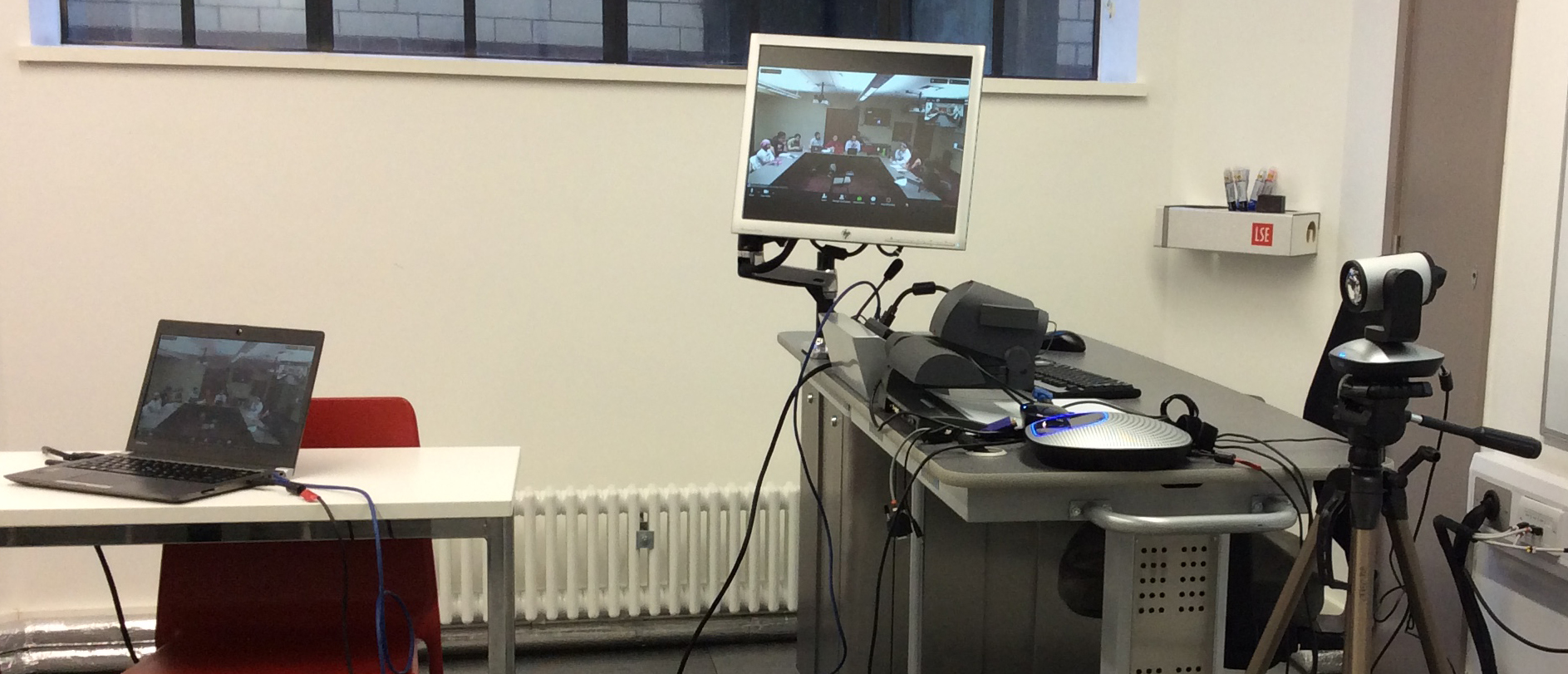
brics-tech-set-up-cropped
Tony Spanakos

Tony Spanakos

Using video conferencing technology, Dr Panizza delivered joint lectures with Tony Spanakos, Associate Professor in Department of Political science and Law at Montclair State University, USA.

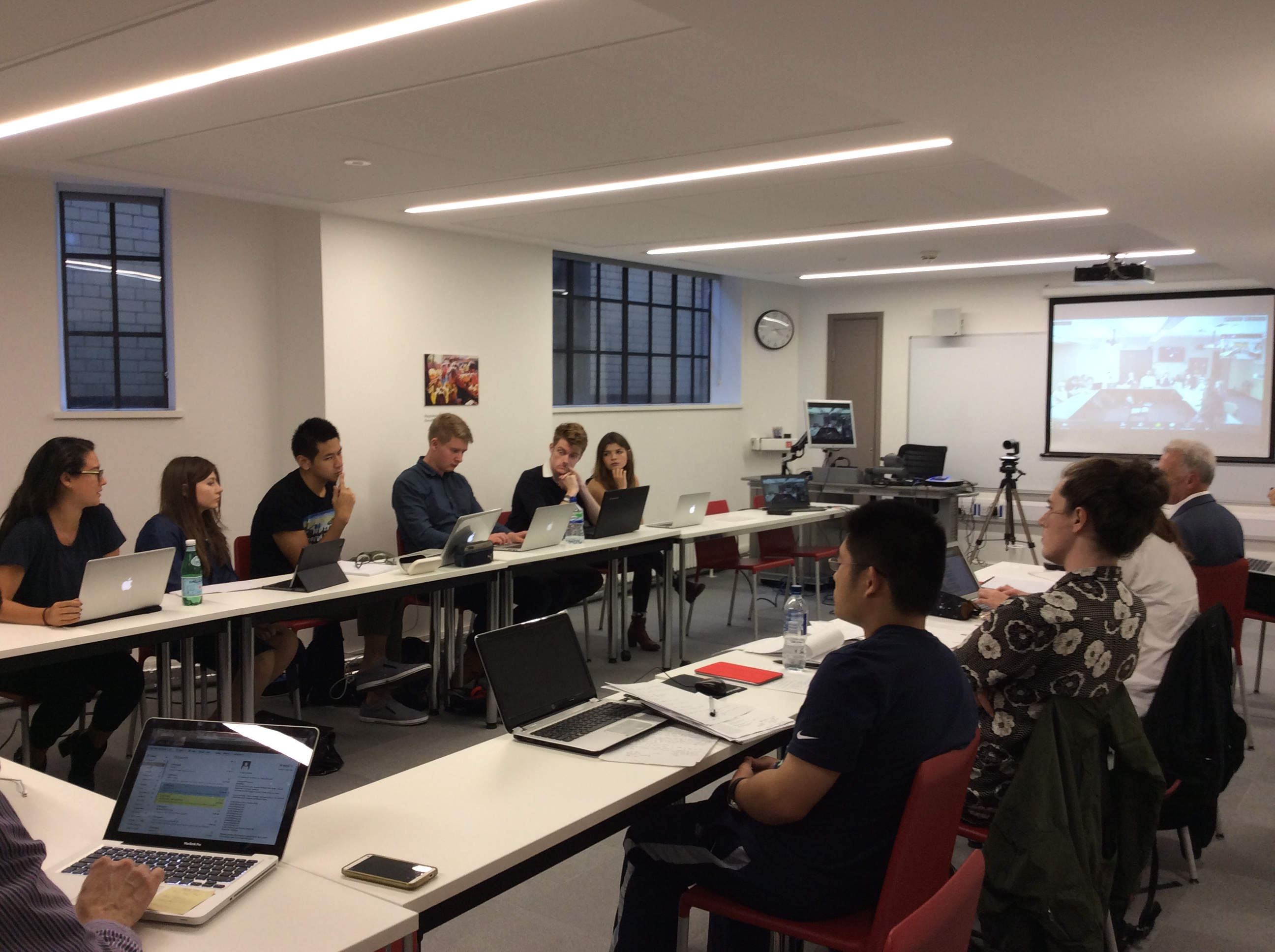
Despite a 5 hour time difference LSE students were able to view their American counterparts in real time and contribute to discussions in the joint classroom, allowing them to benefit from a variety of viewpoints and experiences. The  technology also enabled additional speakers to guest lecture including Professor Lucius Botes, from the University of the Free State in South Africa.

Each two-hour session was based on a case study of a BRICS country.  Students were asked to work in cross University groups on a summit presentation and used the VLE (Virtual Learning Environment) Canvas to plan and discuss presentations.  Despite being a voluntary course double the number of LSE students applied to take part than were spaces available.

Course evaluation surveys indicated that students were very interested in the course content, non-Western accounts of the global South are not usually part of the undergraduate curriculum.  The interdisciplinary approach of the course and opportunity to work with students from another university were also stated as reasons for applying to take part.

brics-classroomThe lecturers aimed to ‘diversify and deepen the learning experience by allowing students the opportunity to hear and engage with multiple perspectives on a common theme’, and engage with the politics of the BRICS in a ‘far more diverse context than would have been possible otherwise’.  The students reported that the opportunity to have two professorial voices in one classroom was appreciated and the Q&As were very stimulating.  The lecturers noted that several students developed meaningful interactions with them and were able to broaden their advice for essays.  However careful preparation is required to allow for a seamless experience with technology.  Classes are easily delayed if video conferencing technology is not set up in advance and there are any technical problems.  The time difference is another factor that has to be taken into account.


Adapting the pedagogical approach

The evaluation of the BRICS project highlighted the need to develop new teaching methods and forms of student participation that take full advantage of new communication technologies.

As Senior Learning Technologist Kris Roger notes:

“As soon as you introduce the element of distance to a course, then you need to fundamentally rethink how you go about your teaching. […].  Not replicate exactly what we do as a face to face class. It’s like really embedding the distance, the technology, into practice rather than just focusing on preparing the class and the content and switching on the video and getting started”

The evaluation highlighted that the traditional LSE format of a lecture followed by a seminar did not translate well into this pilot, as lectures took over the collaboration time between LSE and MSU students.  Not only did more class time need to be devoted to enabling student collaboration but students needed more support with the initial forming and communicating in groups.  Lecturers reported assuming that students would be more comfortable choosing their own technology to communicate with each other; however, students found the multiplicity of platforms and lack of guidance confusing.  Once the platform Canvas had been selected for collaboration, students’ began effective discussions online and often reverted to using their own tools such as Whatsapp, Skype and Google Docs. This supports findings by LSE SADL that although students may be comfortable with using technology in their personal lives they are not familiar with applying these tools to their academic work.

Recommendations and next steps

Collaborative teaching and learning is a new area for LSE and as Dr Panizza noted “we only scratched the surface of a teaching experience full of possibilities”.  You can read the reflections of the course lecturers on the LTI blog.

One of the issues that was raised in the evaluation of this project was the role of LTI and how to better communicate our expertise as learning technologists.  Our aim is to ensure that where technology is used it extends teaching opportunities, enriches the student learning experience.  We now plan to embed training for collaborative teaching within future projects to support lecturers to adapt a more student centred approach.  Some of the recommendations for future collaborative projects are listed below:

  • Adopt a student-centred approach with emphasis on collaboration.
  • Clear information from the start: centralised platform or communication channel with information on the course; project goals, choice of technology and links between students’ contributions and evaluation need to be communicated.
  • Form and introduce the groups and the collaboration platform to be used at the start of the project. Students may still choose their own platform if they wish.
  • Clear instructions including roles and responsibilities along with a discussion on role norms and social etiquette for students working on collaborative projects.
  • Use of a structured grading rubric to enable monitoring and encourage participation and collaboration.
  • Sustain Learning Activities such as writing, reviewing and revising throughout the learning process.

It is hoped that more collaborations can take place and we can develop our experience of working with other institutions.  If you would be interested in working on a collaborative project or have another idea for innovation with technology for the pedagogic benefit of students then contact LTI.  LTI grants applications are now open for 2017 for more details see the LTI website.


*BRICS (Brazil, Russia, India, China and South Africa)

06 Feb 13:11

Silo APIs?

by Clark

I was in a conversation with my colleague Charles Jennings about organizational innovation, and one of the topics that arose was that of barriers to successful organizational function. In particular, we were talking about how the division of responsibility between organizational development (OD), leadership development, and learning & development is a problem. And I think the problem is bigger. Separating out functions into silos makes sense in a deterministic world, but that doesn’t characterize our current environment.

Now, separation of functions can be useful. Certainly in software engineering, having application program interfaces (APIs) have led to the ability to connect powerful capabilities.  A program can call a function and get data returned via an API, and the software doesn’t have to care how the function’s carried out.

In the org equivalent we could have a business unit request a course, for example, and L&D responds with said course. In fact, that’s not atypical.  Yet it’s problematic in human terms. The business unit may not have done the due diligence, the performance analysis, that ensures a course is the right solution.

Ok, we could change it: the business unit could indicate the performance problem and L&D could respond. However, again there’s a problem. Without understanding how things are done, L&D’s solution won’t be contextually accurate.  Any intervention won’t reflect how things are done unless interactions occur.

And that’s the point. Any meaningful work – problem-solving, trouble-shooting, improvement, innovation, research, design etc – any learning, is complex. And, done right, they inherently require engagement and interaction.  Moreover, we also know that the best solutions come from creative friction, people interacting.  Communication and collaboration is key!

Engagement between silos works best when you mix members from each.  Or, to put it another way, breaking down the silos is the only way to get the best outputs for the important work, the work that will advance the organization whether removing errors, creating new products or processes, etc.

People are complex (the human brain is arguably the most complex thing in the known universe).  Solutions that tap into that complexity, instead of trying to avoid it, are bound to yield the best insights. We’ve now got a lot of insight into processes that facilitate getting the best outcomes. It’s time to engage with it, to the benefit of the organization.

The post Silo APIs? appeared first on Learnlets.

06 Feb 12:58

Global workforce fears it won’t adapt fast enough to the digital workplace

by Sara Bean

Workers across the globe are excited by the potential for technology to enhance their work lives and create new career opportunities, but over a third (40 percent) fear that they won’t be able to keep up with the rate of change required by digital business, claims a new survey. Across Europe 77 percent of workers acknowledge that disruption and increased competition will require more people with digital skills in order to compete on a global scale; however, the level of encouragement employees believe they are currently receiving to drive change in the workplace varies greatly throughout the world. Only 64 percent of respondents in the US saying they feel empowered by their company culture to lead innovation, whereas 90 percent of employees in Mexico feel their workplaces encourages them to drive change. The BMC study of over 3,200 office workers in 12 countries worldwide found that 88 percent of office workers across the world strongly believe that employers must create an innovative culture to retain staff and enable them to be successful with increasingly digital roles and responsibilities.

Paul Appleby, EVP of Digital Transformation at BMC, said: “The massive digital disruption we are experiencing is forcing societies and businesses to create new learning environments to train their labour forces so they are able to meet the demands of digital industry. The study also shows that employees want to be ‘digital change agents’ and are looking to acquire new skills, but are asking for employers to offer more training opportunities to meet requirements of the digital era. To put it simply, businesses that take the initiative to lead today will be those that others follow tomorrow.”

The BMC survey found that roughly 47 percent of global workers believe they will have to learn how to use new software and apps. Recognising that digital industry is enabling machines to take a larger role in the workforce, many employees (33 percent) expect that some of their tasks will become automated by 2020, especially in countries with prevalent manufacturing interests such as China (48 percent).

Faced with dynamic changes in how employees work as digital society evolves, the research suggests that many workers are also keen to embrace change and seize new opportunities, and 74 percent feel empowered to do so, with the highest number of responses by Argentinian (96 percent) and Mexican (93 percent) workers. That flexibility requires a work environment where responsive and responsible leaders foster innovative cultures. 71 percent of respondents also described their workplaces as inspiring, with Brazil (80 percent), New Zealand (75 percent) and Canada (74 percent) leading the category. But not everyone sees the pace and change being brought by digital business as positives for their roles.

This raises the question of who is responsible for providing the tools and skills required to transform the way employees work in the digital economy. For example, Chinese respondents do not believe it is their own responsibility to ensure they have the latest digital skills (39 percent). Latin American respondents feel they must take ownership of their skill sets, and a higher than average percentage of respondents (62 percent) from that region would also seek training on their own time outside of the office to personally address a digital skills gap. Responsive leaders will either ensure their workers are enabled to succeed, or make it their own responsibility to acquire and embrace new digital skills.

The study also highlights that the frequency with which management seeks ideas for change and how much employees feel listened to also influences how encouraged or empowered they are to drive change in their roles. 57 percent of US workers feel that leadership in their organisations only provide the opportunity to suggest changes during performance reviews, while Europeans (39 percent) instead are asked to provide more feedback via surveys. US and UK workers feel among the least empowered to drive change (64 percent and 47 percent, respectively) in their roles.

The substantial risk is that businesses that do not proactively enable their employees with the skills necessary for digital industry, or develop new, continuous methods for engaging employees to suggest and drive change, are likely to face extinction.

Click on “Mission: Launch a Digital Workplace” for more information on digital workplace initiatives.

The post Global workforce fears it won’t adapt fast enough to the digital workplace appeared first on Workplace Insight.

06 Feb 12:25

Designing E-Learning For Health – a free open online course

by H Whitehead

The University of Nottingham is again running a Health Open Online Course (HOOC) Designing E-Learning for Health.
Designing E-Learning for Health is a free 5 week course aimed at anyone inside and outside of the University who has an interest in designing e-learning resources. Colleagues in the School of Health Sciences will introduce their tried and tested methodology which can also be adapted to other areas of teaching, not just in healthcare education.

The course starts on 13th February 2017 and requires a time commitment of around 3 hours per week from participants. Designing eLearning for Health is open for sign up now via the FutureLearn platform. The course is free to access and anyone is welcome to sign up regardless of educational background or level of knowledge in the area.

Sign up to join in in February

More information

03 Feb 11:02

7 Tips To Incorporate Informal Learning Into Your Corporate eLearning Strategy

by Nikos Andriotis

Informal learning is impromptu. But that doesn’t mean you should exclude it from your structured corporate eLearning program. In fact, this unscheduled training approach may be just what your employees need to broaden their knowledge. In this article, we’ll share 7 tips to use informal learning into your training strategy.

How To Incorporate Informal Learning Into Your Corporate Training Strategy

Informal learning usually takes the form of causal knowledge-seeking and spontaneous problem-solving. Corporate learners look for online training resources that can help them achieve their goals, independently of scheduled training sessions.

However, it can also play a prominent role in your corporate eLearning program. Employees should have the opportunity to explore topics organically instead of just attending mandatory training. Here are 7 tips to help you incorporate informal learning into your corporate eLearning program.

1. Create A Goal-Centered Game Plan

Informal learning is usually initiated by the learner. For example, they run into a problem during their day-to-day activities. This prompts them to hop online and look up relevant videos, articles, and cheat sheets.

However, informal learning in a corporate environment must also support the learning objectives, such as bridging performance gaps or improving workplace efficiency. Therefore, you need to build your corporate eLearning strategy around targeted goals. Meet with your L&D team to identify your primary learning objectives and then develop informal learning activities that support them.

2. Offer A Microlearning Repository For “Moment Of Need” Support

Informal learning occurs when employees need to solve a problem or overcome an obstacle. So, why not replicate this in your own corporate eLearning program? Provide employees with a “just-in-time” microlearning online repository that features interactive exercises, videos, and online product demos.

Make it mobile-friendly so that they can access it whenever the need arises. In addition, create a categorized central hub where they can find all of the online training materials. For example, a list that contains hyperlinks arranged by department, task, or skill set.

3. Get Managers Actively Involved

Managers work with your employees daily. As such, they are in a unique position to facilitate informal learning opportunities. For example, a supervisor notices that a member of their team is struggling to complete a task. They have the ability to point employees in the right direction by recommending online support resources or demonstrating the task.

Thus, the employee is able to improve their work practices and fix unfavorable behaviors almost immediately, instead of having to wait until the next scheduled online training course. However, you must provide managers with the support they need to facilitate informal learning.

Host regular meetings to keep everyone in the loop, and ensure that your leadership team has access to online training tutorials and materials. You might even consider a blog or online forum that is exclusively for managers, supervisors, and department heads.

4. Develop A Mentorship Online Training Program

One of your most valuable informal learning resources is your staff, especially those members who have been with the organization for years and have a wealth of experience. These employees are able to share their knowledge and expertise with their coworkers in an online mentorship program.

In turn, the mentees have the opportunity to share their own insights. For example, a seasoned sales employee has mastered negotiation skills. However, they may be able to learn a thing or two about technology and your POS software from a new hire.

Find a reliable video conferencing system and encourage employees to use a Project Management platform to streamline the process. You should also create a set of guidelines so that everyone knows their roles and expectations. For example, how often the mentor/mentee should communicate and how they will evaluate their progress.

5. Set Up Dedicated Social Media Groups

Social media groups give employees a more private forum to discuss important topics and ideas. This is particularly true for closed groups with limited membership. For example, only customer service employees can join the group, or those who are trying to upskill in order to climb the corporate ladder.

To get the ball rolling, you might consider setting up a starter group so that everyone has a chance to acclimate. This also allows you to test out different approaches. For instance, should you post a new prompt each week to encourage online discussions? Or are employees best left to their own devices?

6. Create A Corporate eLearning Blog

Online discussions and corporate eLearning blogs are ideal for knowledge sharing and feedback. In the case of blogs, you might consider a posting schedule that features a different question or prompt every week. For forums, it’s often wise to moderate the online discussion to ensure that it stays on-topic.

Whichever route you choose, every employee should feel welcomed. As such, you may want to create specific guidelines that stress the importance of mutual respect and open communication. There should also be a section devoted to conflict resolution and “off-limits” topics.

Lastly, use your corporate eLearning blog to update employees and provide them with current online training resources. For instance, post a link to the latest online tutorial that explores more efficient ways to accomplish a task.

7. Incorporate Real World Activities

Real activities foster self-guided exploration. For example, employees must interact with virtual characters and complete work-related tasks to progress through the simulation, or embark down different decision-making paths to make it through the branching scenario.

This gives them the real world experience they need to build their skills and expand their knowledge. More importantly, they have the opportunity to learn from their mistakes so that they don’t repeat them on-the-job. For instance, an employee discovers that they’ve been performing a task incorrectly. As a result, they’re able to seek out additional online training resources to improve their performance and fill in the gaps.

Informal learning and structured corporate eLearning can work together harmoniously, especially if you use these 7 tips to provide your employees with spontaneous learning opportunities. The key is pointing them in the right direction, setting some ground rules, and then letting them explore the subject matter at their own pace.

Will your employees get more excited with social learning instead of informal? Do you really know the difference between the two? Read the article Social Learning Vs Informal Learning: Can You Tell The Difference? and discover the key distinctions between these two popular eLearning approaches.

The post 7 Tips To Incorporate Informal Learning Into Your Corporate eLearning Strategy appeared first on eFront Blog.

03 Feb 11:01

The Flatter Organisational Structure Of The Future

by Doug Belshaw

My third of three posts for The Nasstarian has now been published. Entitled The Flatter Organisational Structure Of The Future, it’s a look at organisations that do very well because of less organisational hierarchy (and bureaucracy).

Here’s an excerpt:

The three examples below are primarily from the world of technology: these are fast-moving organisations who can’t let layers of middle-management get in the way of getting a product or service to market. What I hope this overview of flatter hierarchies inspires you to do is to think carefully about your next re-organisation. Instead of shuffling the deckchairs, could you instead introduce one of these approaches?

Click here to read the post in full!

Note: I’ve closed comments here to encourage you to comment on the original post.

03 Feb 11:00

Trends to look-out for at Learning Technologies 2017

by eLN Chair

Photo Credit: Paul Townsend @ Flickr

This article is a shortened and adapted version of the webinar I delivered with Aurion Learning at the end of 2016. It’s not a forecast but an exploration of some of the ‘new’ stuff you will probably hear about at the upcoming Learning Technologies show. Some of these things will gain traction in 2017 others may die a quiet death….come back next year to see which is which!

Microlearning
This could go two ways in 2017. Initially I thought micro learning was just an excuse to build shorter and shorter e-learning modules in order to meet learners desire to access learning on the go or at the point of need. Many people still see it like that but where I think microlearning could gain ground is where the micro elements are linked together in an effective learning pathway – one that can be accessed over time to coach the learner in improving their competency. So check out any platforms that support the microlearning plus learning pathway approach while you are at LT.

Brain Friendly Learning Design
As we learn more and more about how our brain works we will continue to get insights into how we learn and that will feed into the way we design and build digital learning. For a start read ‘Why Don’t Students Like School?‘ by Daniel Willingham and ask content providers and custom developers at LT if their designs are brain friendly.

Interactive Video
In my book there are two types of digital lessons – video or interactive. Video lessons are passive – in that you just watch them – usually you watch either the teacher or their slides though sometimes they may have nice graphics and animations. Video lessons feature big on most e-learning marketplaces such as Udemy, or Pluralsight or in MOOCS a such as those from Coursera or FutureLearn. Interactive lessons allow the learner to interact via an interaction technology (usually Flash or HTML5). As learning designers we mainly work with interactive stuff so although video is a cool medium its lack of interactivity has been a big stumbling block. Well that is set to change as we see interactive video become more affordable and widespread. Now learners can interact with video content – for example to branch to another section or to answer a question and get feedback. There are issues over the type of technologies used and the fact that most platforms are proprietary but as uptake improves so should the options for building and deploying interactive video. Check out the talk ‘Interactive video, a new hope?‘ in Theatre 6 on Day1 at LT. And to see what interactive video can do in a learning context check out H5P.

Adaptive and Personalised
One thing e-learning is NOT is adaptive or personalised. Not adaptive or personalised in the sense that you can choose your role or type your name into it but that the content is shaped depending upon who you are and what you already know. True adaptive learning needs to establish what you already know and also what context you know it in before matching you with any content. This can be done either by a clever diagnostic, or by supporting a self-directed approach or more interestingly by working out the sort of stuff you’ve been interested in before (think those annoying ads you see on web pages because you recently browsed some products at Amazon). In practice ALL of these techniques should probably be used in a truly adaptive system but it’s early days and most affordable platforms probably focus on one with maybe a little sprinkling of the others. To see what a basic adaptive system can do check out the Filtered platform at Learning Technologies

Responsive e-Learning Design
More and more e-learning will be developed using a responsive approach in 2017, and not just because it’s more mobile friendly but because it feels a lot fresher than the conventional slide by slide, click next approach. And with the increasing demand comes better (and cheaper) tools. Even Articulate has added a responsive tool to its 360 toolkit. Rise is simple but effective but can’t beat Evolve, Elucidat or GoMo for sheer functionality. Whatever you do in 2017 make sure one of your e-learning projects is responsive.

Games and Gamification
Games and gamification will still feature large in 2017. Games if you have the creativity and the budget, gamification if you don’t! And for those who are both creatively and financially challenged there will be increasing numbers of structural gamification solutions – that’s gamification at the platform (LMS) level.

Augmented Reality (AR) and Virtual Reality (VR)
AR and VR are the really cool buzzwords in digital learning at the moment. If you’ve just bought Storyline then you’re probably not ready to take on the design of a full virtual reality immersive environment but for specific applications the power of VR is clearly key (surgeons are using VR to learn how to operate for example). If you don’t have a need for VR then AR is much more affordable and down to earth. Want to show mechanics where the test points are in a modern diesel engine – VW used AR to guide engineers around a real car. Overlaying digital information onto the real world is a cool and very simple idea. One that most of could probably use tomorrow. There are a few free seminars on VR and AR; try Adding virtual reality to your 2017 learning strategy in Theatre 1 on Day 2. To have a play with AR in the flesh check out HP Aurasma.

For all list of all free seminars at the show see the FREE seminar programme.

Don’t forget to visit the eLN on Stand S3 – we’re celebrating our 30th birthday this year!

John Curran

eLN Director

31 Jan 16:08

SCONUL Summer Conference 2016 presentations

by sitmuing

The SCONUL Summer Conference took place at Mercure Cardiff Holland House Hotel on 23-24 June.


The theme was "Library Transformation".

Conference agenda and presentations

Keynote speech: Fostering effective learning

[...]
30 Jan 09:58

South African e-learning to reach excluded

Digital learning is helping to meet the demand for better education in South Africa.
30 Jan 09:58

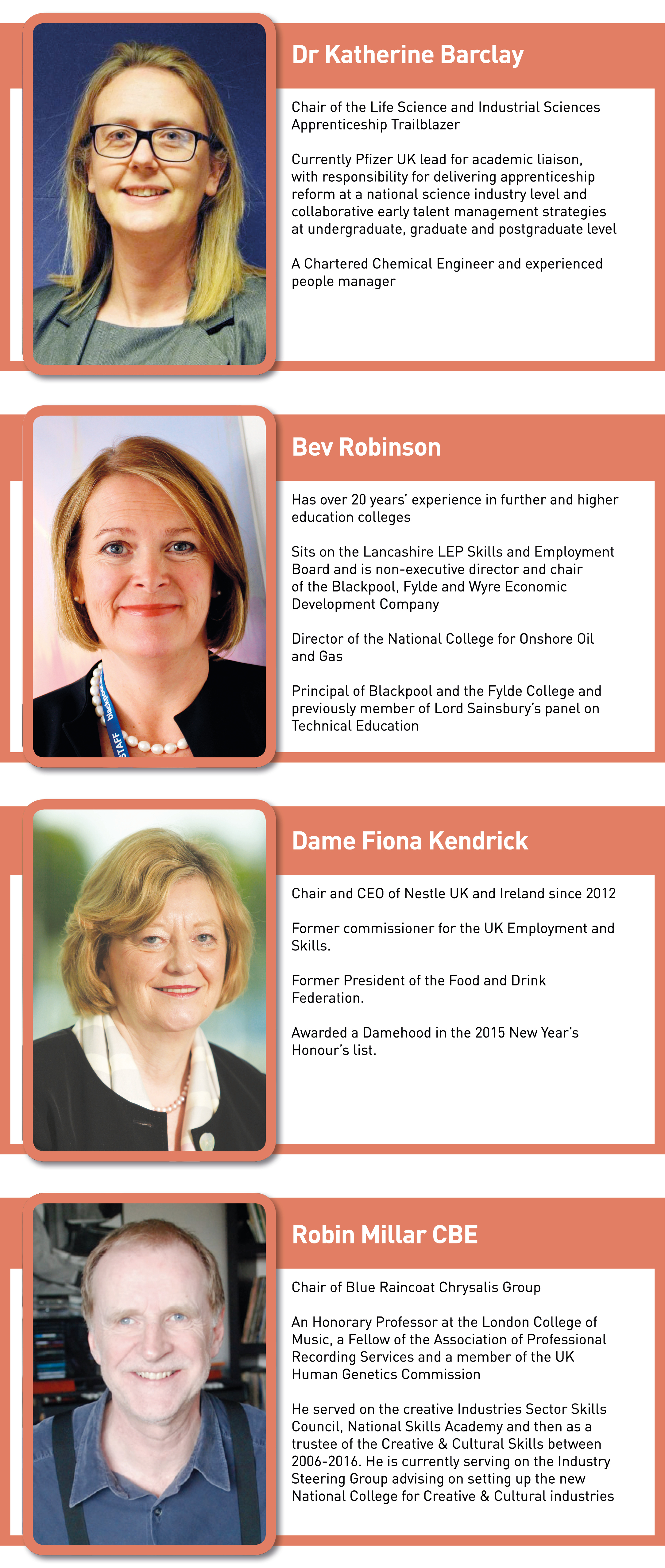
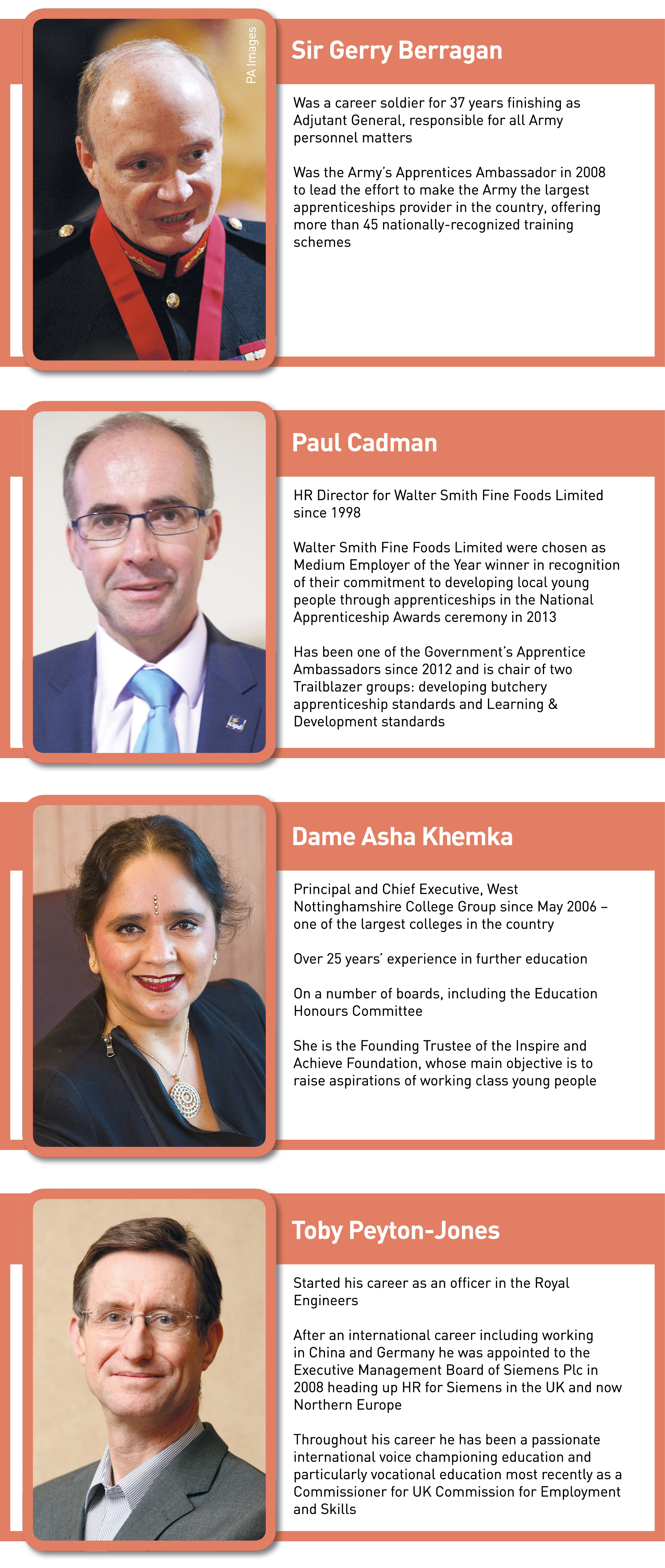
Introducing the Institute for Apprenticeships board members

by Paul Offord

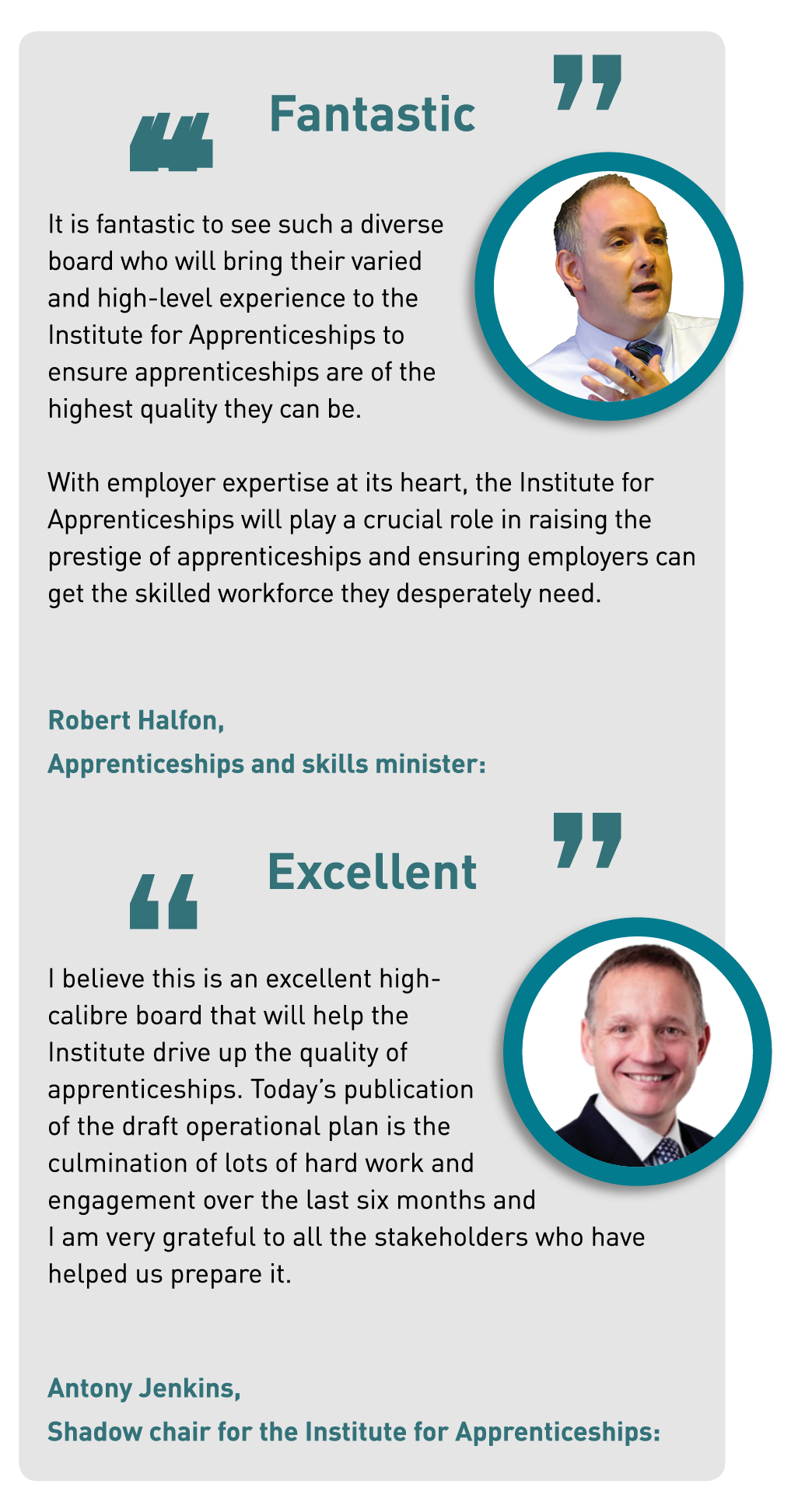
The government has finally announced the eight Institute for Apprenticeships board members (listed below), with the chair to be confirmed at a later date.

This will come as a relief to the sector after FE Week’s front page last week reported concern that the government remained silent on board members and other permanent leadership posts, under three months before the Institute become “fully operational”.

The Department for Education advertised for paid board members last June, and they comprise of a majority of employers as planned, but two are serving college principals.

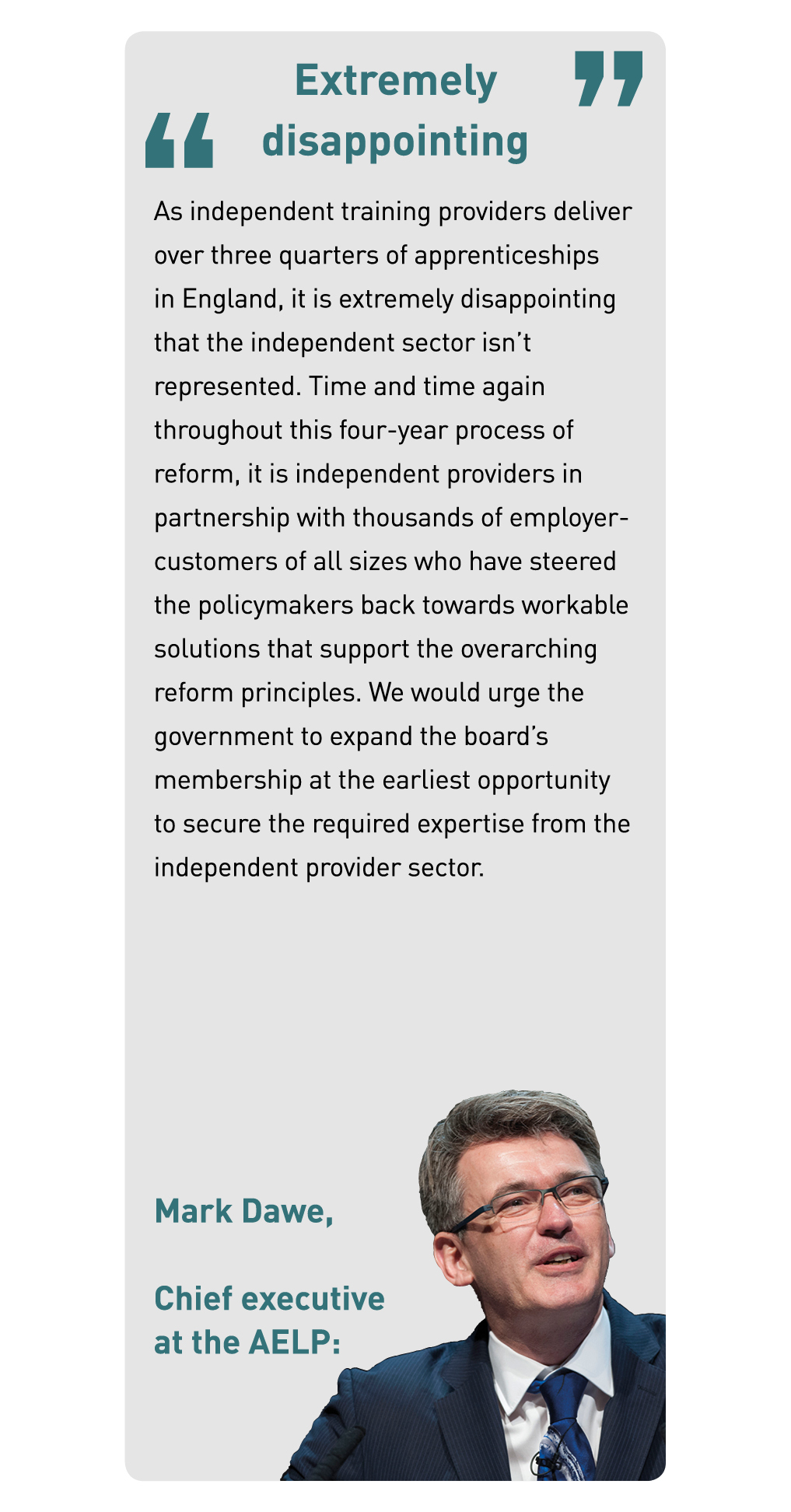
This has been welcomed by chief executive of the Association of Colleges David Hughes, but the immediate response from the independent training provider sector was one of disappointment that it is not represented (see quotes below).

The government has also published the long-awaited IfA operational plan which “sets out how the Institute for Apprenticeships will take forward the programme of reform and raise the quality of apprenticeships.”

A spokesperson for the Department for Education said: “One of the Institute’s main jobs when it starts operating in April 2017 will be to support the government’s drive to deliver three million quality apprenticeships by 2020 and that businesses get the skilled workforce they need to prosper, so it is vital that employers are well represented. That is why the board will be made up primarily of employers, business leaders and their representatives.”

FE Week can also reveal that the first deputy director for the new apprenticeships policing body has been appointed.

Anastasia (Ana) Osbourne, formerly employed in the Enterprise Directorate at the Department for Business, Innovation and Skills, was introduced as the IfA’s new ‘deputy director of approvals’, to an audience of over 100 delegates at a private Trailblazer Conference.

The conference, which was run by the Department for Education, took place in Birmingham and was attended by employers who have been designing apprenticeship standards.

According to the Department for Education’s deputy director job pack, the deputy director of approvals will carry out four main functions.

Ms Osbourne will be expected to “coordinate and support the operation of the approvals process for apprenticeship standards and technical education standards”.

She will also “work with route committees and others to ensure excellent quality assurance practice governs the approvals process including induction, standardisation, monitoring, review, risk assessment and feedback mechanisms”.

Finally, her position awards her responsibility for building “effective relationships with stakeholders” and working with “analysts and others to develop occupational maps”.

Reactions


30 Jan 09:57

EXCLUSIVE: Institute for Apprenticeships appoints first director

by Alix Robertson

The first permanent employee of the Institute for Apprenticeships has finally been appointed, after ongoing delays and an absence of information about who would run the important new body. 

Anastasia (Ana) Osbourne, formerly employed in the Enterprise Directorate at the Department for Business, Innovation and Skills, was introduced as the IfA’s new ‘deputy director of approvals’, to an audience of over 100 delegates at a private Trailblazer Conference on January 24.

The conference, which was run by the Department for Education, took place in Birmingham and was attended by employers who have been designing apprenticeship standards.

The lucky audience witnessed both a welcome to the event and a presentation from Ms Osbourne in her new post, which is just one of six deputy director positions that will help to ensure the Institute fulfils its role of ‘policing’ apprenticeships.

Individuals appointed to the other five jobs will cover assessment and quality; corporate effectiveness; data; funding; and standards, creation and review.

According to the Department for Education’s deputy director job pack, the deputy director of approvals will carry out four main functions.

Ms Osbourne will be expected to “coordinate and support the operation of the approvals process for apprenticeship standards and technical education standards”.

She will also “work with route committees and others to ensure excellent quality assurance practice governs the approvals process including induction, standardisation, monitoring, review, risk assessment and feedback mechanisms”.

Finally, her position awards her responsibility for building “effective relationships with stakeholders” and working with “analysts and others to develop occupational maps”.

Delegates at the DfE conference were also informed that operational plan for the IfA would be published and its board members announced “before the end of the month”.

However, FE Week now understands that both of these announcements are expected tomorrow (January 27).

Check back with FE Week then for further details.

Shadow skills minister Gordon Marsden recently attacked the government’s creation of the IfA as “a complete shambles”, claiming in an exclusive FE Week expert piece that it was “in danger of becoming a huge scandal”.

He said: “Even though it will be charged with implementing a flagship policy, it has yet to advertise for a permanent chief and deputy chief executive, and we now have less than three months before it goes live.

“The muddle has been there from day one … What is paralysing the department?”

However, when challenged by FE Week on the reasons for delaying hires to the IfA, the DfE refused to admit that deadlines had been missed.

“The roles of permanent chief executive and deputy at the IfA will be publicly advertised in due course, following the appointment of the board members,” said a spokesperson.

“The current post-holders were appointed on an interim basis to drive forward the creation of the IfA ahead of its launch in April.”

25 Jan 12:21

A new generation of Chromebooks, designed for millions of students and educators

by Naveen ViswanathaGoogle for Education

Editor’s Note: At Bett, one of the largest education technology conferences in the world, we're announcing new Chromebooks designed for education. Check out @GoogleForEdu and #BETT2017 to follow along.

When I was a student, I juggled different tools throughout my day—a paper notebook for history, a shared desktop for writing, and a graphing calculator for math. In the years since, computers have begun to replace the need for those various tools—what we did on that calculator can now be done with an app, for example—allowing new possibilities for teaching and learning. Through our tools and devices, we try to help these possibilities come to life. Today both Chromebooks and Classroom are used by more than 20 million teachers and students, and we’re excited to announce that more than 70 million people actively use G Suite for Education.

Chromebooks have been the device of choice for educators because of their simplicity, security, shareability and low cost. And at Bett this week we're introducing a new generation of Chromebooks designed to adapt to the many ways students learn. Look out for new Chromebooks from Acer, Asus, HP, Dell, and Lenovo in addition to the recently announced Samsung Chromebooks—a powerful option for educators. With new apps, stylus and touch capabilities, we expect our partners will continue to build an even wider variety of Chromebooks in the future, including detachables and tablets.

More versatile Chromebooks

At Bett we’re featuring two devices: the Acer Chromebook Spin 11 and the Asus Chromebook C213, arriving late spring. We worked with educators and partners to design these Chromebooks for the specific needs of schools:

  • Stylus capability: Both Chromebooks come with an intelligent, affordable stylus for student note-taking and drawing. The low-cost pens resemble #2 pencils with a unique eraser for correcting mistakes and don’t need charging or pairing, so they can be shared and easily replaced if lost. These Chromebooks use an input prediction model built using Google's machine learning to ensure writing is extremely responsive. And with Optical Character Recognition in apps like Google Keep you can easily search handwritten notes.

Our math department was keen to get tablets so students could write out equations. Stylus on Chromebooks will be a massive help for mathematics. Roger Nixon, ICT Director Wheatley Park School, Oxford

  • World-facing camera: Schools everywhere have asked for world-facing cameras so students can use Chromebooks to capture photo and video from all directions. We carefully designed the camera on the keyboard side, so when a Chromebook is flipped, the camera faces outwards and students can hold it like a tablet.
  • USB-C charging: We heard from educators that multiple chargers and slow charging wastes precious time for students. Going forward, all Chromebooks will have standard super-fast USB-C charging, so one Chromebook cart can charge any device quickly.

Acer_creative_20.jpg
students_2017_8.jpg
students_2017_5.jpg

A world of content on Chromebooks

Now educators have even more ways to find great educational content on Chromebooks:

From teaching design concepts to visual storytelling, Adobe apps on Chromebooks will open up avenues for our students. Kelly Kermode, Teacher Forest Hills Public Schools, Michigan
  • Creative apps: Today we‘re also announcing that creative apps on Chromebooks—WeVideo, Soundtrap, and Explain Everything—are available in the U.K. and Nordics at a discount from resellers XMA, Lin Education and Avalon Solutions when purchased as a bundle.

Recent updates to Google Classroom

On all Chromebooks, students and educators can use Google Classroom to collaborate, stay organized and save time. The Classroom Android app, now available on Chromebooks, opens up new possibilities to students in how they use their devices. With the help of a stylus-enabled Chromebook, students can complete their math homework by hand or sketch a visual for a science project by annotating documents directly in the Classroom app.

Students, teachers and administrators can also use their Chromebooks to try out the new Classroom features we rolled out earlier this month. Now, teachers can assign work to a subset of students, rather than just the entire class, and use new types of Classroom notifications to manage assignments. For administrators, we now offer more insight into how Classroom is used, with Classroom metrics in Admin Console reports.

We believe in the power of technology to help students learn how they learn best and teachers teach the way they find most effective. We’ll continue to work with educators in 2017 to build tools that support the important work they do every day.

24 Jan 16:56

CILIP invites expressions of interest to help develop library and information apprenticeship standards

by Cat Cooper

CILIP is offering the opportunity to shape future apprenticeships and vocational qualifications for the library, information and knowledge management profession through the creation of employer-led standards and is looking for interest and representation from across the whole profession.

Nick Poole CILIP Chief Executive said, “There are so many fantastic opportunities working in libraries and information management supporting communities, businesses and Government with their information needs. Having a successful apprenticeship scheme is critical to attract, retain and develop a broad range of talented people with the right attitude and skills.”

As the UK’s library and information association, CILIP is responsible for developing the library and information workforce of the future and is ideally placed to facilitate employers with this task. This includes working with employers and learning providers to open up new pathways into the profession.

CILIP is now seeking expressions of interest in working with us to develop standards and frameworks for apprenticeships in libraries, information and knowledge management.  This will include the current National Occupational Standards and their future relevance under new policies; a new standard (or sets of standards) for apprenticeships; and a review and updating of current NVQ frameworks where feasible.

The standards will be co-developed by employers.  CILIP’s role is to facilitate and support this process, whilst gaining a better understanding of how to work with employers to deliver excellent workforce development opportunities through these work-based programmes.

Opportunities to get involved:

Core working group –  10-12 employers will be invited to represent the broad scope of the library and information sector. The group will have a hands-on role in developing the new standards. We anticipate the commitment to be up to 4 meetings over an 8-10 month timeframe. The first meeting will be at CILIP London Wednesday 22nd March 2017.

Corresponding group  – a list of interested stakeholders who will be updated on the project and review the work undertaken, particularly the new standards drafted. This provides an opportunity to inform the core working group and shape the project by giving feedback and suggestions.

Circulation list – this group will receive periodic updates on the project

Next steps:

Email memberservices@cilip.org.uk by Monday 30th January 2017 with the subject line:  Apprenticeship interest. In the email outline your preferred level of involvement:

  • Core working group*
  • Corresponding group
  • Circulation list

* We anticipate demand for places on the core working group to be high. If you are interested in joining the core working group, please include a short statement (up to 150 words) setting out your background, interest and potential contribution.

The first working group meeting is currently planned for 22nd March 2017. 
Other meeting dates include 25th May and 3rd August 2017.

24 Jan 16:50

Digital Apprenticeship Service will go live in February

by Paul Offord

The new Digital Apprenticeship Service is ploughing ahead, and all levy-paying employers will be able to register next month.

Having been given a thorough “private beta assessment” by the Government Digital Service, the online service, which lets levy-payers access their accounts and make payments online, has been cleared for use, the Department for Education has said.

The next step, a DfE spokesperson told FE Week, will be to invite “some employers” to register on the system “over coming weeks”.

She said: “We will work with these employers to continue testing and improving the service, before we invite all levy-paying employers to register in February 2017.”

It is understood that levy-payers will be able to set up accounts on the DAS, choose the types of apprenticeships they want to run, the number of apprentices they take on, and appropriate training providers.

The levy will only be paid by businesses with a payroll of more than £3 million, which represents less than two per cent of employers in the country. The money will be ring-fenced, so it can only be spent on training apprentices.

The next step will be to invite “some employers” to register on the system “over coming weeks”

Gary Tucker, DAS’ service manager, explained the rigorous process his team went through to make sure it would meet employers’ needs before handing it over to GDS in a blog in December.

“Over the past three months, the service has been thoroughly tested from end to end by 100 employers and their provider partners.”

This testing covered, for example, registration, the process of “adding an apprentice to reflect the agreement between the employer and the provider”, and “submitting provider data to evidence training and trigger payments”.

FE Week revealed last October that the government expected to spend at least £12.5 million on delivering the DAS.

This would cover the costs both to the Skills Funding Agency and to suppliers of services such as web development and user research.

Sector leaders will be hoping the new service is more successful than the SFA’s FE Choices website, which was shut down in October 2015 after just three and a half years in operation.

The website performed one of the DAS’ functions in allowing users to compare the performance of providers – though this was aimed towards the public, rather than as a service specifically for employers.

An FE Week exclusive six months after it launched in January 2012 revealed that only 6,230 people had accessed it. Our Freedom of Information inquiry also revealed that FE Choices had cost the taxpayer over £2.3 million.

The website itself had cost £630,000 to build, with the remaining £1.7 million spent on gathering and producing of data.

The high cost was picked up on by Private Eye, which asked whether FE Choices “may be one of the most expensively pointless government websites yet”.

18 Jan 11:18

Microsoft is Finally Bringing an E-Book Store to Windows 10

by Paul Thurrott
Microsoft is Finally Bringing an E-Book Store to Windows 10

A new report appears to confirm that Microsoft's long-expected e-book store experience will debut in the Windows 10 Creators Update.

The post Microsoft is Finally Bringing an E-Book Store to Windows 10 appeared first on Thurrott.com.

17 Jan 09:16

The 2016 Totara Awards celebrate the best of the year’s Totara projects

by Kayleigh Tanner
Following a hugely successful year, Totara Learning has selected the winners of the Totara Awards 2016. Over 70 projects were...
17 Jan 09:16

Microsoft Patents a Phone with Foldable Screen

by Paul Thurrott
Microsoft Patents a Phone with Foldable Screen

A newly-discovered Microsoft patent indicates that the software giant is investigating a new Continuum form factor: A phone wth a foldable screen.

The post Microsoft Patents a Phone with Foldable Screen appeared first on Thurrott.com.

17 Jan 09:08

School support staff 'tired and stressed'

Support staff in Scotland's schools are feeling exhausted, undervalued and stressed as a result of cuts, according to a trade union.
16 Jan 11:55

Librarians are the greatest weapons against fake news

13 Jan 16:45

8 L&D trends you can't ignore

by Marijn
9th Jan 2017
0
Like any other field, Learning & Development has been influenced a lot by the omnipresence of smartphones nowadays. But there are more...
By
Marijn
13 Jan 16:45

Laureate Education raises $383m, forges ahead with IPO plans

by Beckie Smith

Global higher education giant Laureate Education has announced plans to raise $383m through selling stock to a group of investors ahead of a planned initial public offering.

Raising money through the sale of stock was part of a plan to launch an IPO that Laureate disclosed to the US Securities and Exchange Commission more than a year ago.

“We want to best ensure that we always have capital to grow”

The process has since stalled due to financial market tumult and a series of hurdles including changing regulations in foreign markets and a student lawsuit, but the investment and an updated filing with the SEC indicate the company is forging ahead with its plans to go public.

The six-strong group of investors includes Apollo Global Management, owner of McGraw-Hill Education. Apollo also signed a deal last year to take over Apollo Education, which owns for-profit higher education provider BPP.

Also in the group is the Abraaj Group, a Dubai-based private equity firm that previously backed GEMS Education.

The two funds are set to each invest $127m in Laureate in its offering of 400,000 shares.

Laureate Education first registered with the SEC for an IPO in October 2015. At that time, the company said it would sell stock on the public market in order to pay down some of its $4.3bn debt.

However, challenges reported to have delayed the IPO include a federal lawsuit filed by two students alleging that one of Laureate’s institutions, Walden University in the US, unnecessarily prolonged students’ study in order to garner greater tuition fees.

The company also came under scrutiny last summer when it was reported that it had paid $17.6m to Bill Clinton, who was its honorary chancellor from 2010 until soon before Hillary Clinton’s presidential bid announcement in 2015.

The company will trade under the name LAUR, and in a recent update to the SEC filing, Laureate revealed the sale would take place on the Nasdaq exchange.

The company aims to raise $100m in the IPO, according to the filing, though this figure is sometimes used as a placeholder and may be updated in future.

The company also raised around $398m through the sale of some of its European universities, the filing adds.

The company is selling stock to pay down some of its $4.3bn debt

Laureate was a publicly traded company between 1993 and 2007, when it was acquired by an investor group led by the company’s founder and CEO, Douglas Becker, and Citigroup Private Equity.

In a letter to prospective investors filed on the SEC’s website, Becker wrote: “We went private with the intention of accomplishing some very specific objectives and, having achieved these goals, we believe it is time for us to re-establish ourselves as a publicly traded company.

“Being public brings the highest level of transparency, and will enable us to more easily raise capital to support our mission which, at its core, is about expanding access to higher education through greater scale.”

In an effort to reassure investors who might be worried that some public companies are focused on short-term results, he stressed: “we hope that it is very clear to them that this is not our approach”.

“We want to best ensure that we always have capital to grow and bring the benefits of our education programs to more students.”

Underwriters for the offering include Credit Suisse, Morgan Stanley, Barclays, JPMorgan, BMO Capital Markets, Citigroup, KKR and Goldman Sachs.

Founded in 1989 as Sylvan Education Systems, Laureate teaches around a million students every year at more than 70 education institutions worldwide.

Institutions under the Laureate umbrella include the University of Technology and Management in India, Kendall College in the US and Mexico’s largest private university, Universidad del Valle de México.

It also has multiple partnerships for online course delivery, with institutions including the University of Roehampton in the UK.

The post Laureate Education raises $383m, forges ahead with IPO plans appeared first on The PIE News.

13 Jan 16:45

Institute for Apprenticeships consultation launched

by FE Week Reporter

This morning the government launched their long awaited Institute for Apprenticeships consultation.

With a January 31 deadline, you have less than four weeks to give your view on the Draft Strategic Guidance to the Institute for Apprenticeships.

Key functions for the Institute for Apprenticeship, which will be launched in April:

Standards development and approval
Currently the government manage the standards development and approval process. This will be taken on by the Institute.
> Ensure as swift a process for approving standards as possible
> Take on Government’s current role of quality assurance of standards
> Ensure that standards and assessment plans have been examined by ‘an independent third party’ before they can be approved
> Proactive support to employers who are developing standards and assessment plans to be a priority
> Take into account the Department for Education’s development of technical education routes  to ensure there is no duplication

Quality assurance of apprenticeship assessments
The Institute will play a role in checking quality and consistency of assessments offered by different assessment organisations against the same standard
> The Institute will be the external quality assurance (EQA) organisation in instances where alternatives (processes developed by employer groups, a Professional Body or Ofqual.
> The strategy states: “The Institute should consider how best to ensure that effective and high-quality EQA processes are available and are applied to all end-point assessments. It will need to satisfy itself that all options will ensure consistent assessment and require a high standard from all apprentices.”

Apprenticeship certification
This month the Skills Funding Agency took on responsibility for the certification of standards.
> The Strategy says the Institute will need to “assist in this oversight role, setting the parameters for the SFA to operate within, designing the certificate and ensuring the overall integrity and quality of the system. We will write to the Institute separately on the specific tasks we would like it to carry out in relation to certification.”

Funding advice
The Institute will provide the government with advice and assistance on apprenticeship funding, including:
> allocating individual apprenticeship standards to funding bands, both for new standards and in the context of Technical Education route reviews
> the current allocation of existing frameworks to funding bands and the effectiveness of additional support payments, such as those for younger apprentices
> how the allocation of apprenticeship standards to funding bands might be undertaken in the future

Policing the system
> “We would expect the Institute – through the way in which it fulfils its statutory duties – to discourage behaviour seeking to make a profit by delivering services that are not necessary and do not add value, and work to ensure the system as a whole is fair and consistent with the principles of the reforms.”

Other functions
> Annual reporting and success criteria. “The Institute may find it helpful to set out a number of success criteria to help them measure their progress, and the progress of the system overall, which can be supported by data and evidence”
> Review of Apprenticeship standards. “While there is flexibility and it is up to Institute to decide how it carries out these reviews, we would expect them to be comprehensive, including details of completions, destinations and progression, wage uplift, and feedback from providers, apprentices, assessment organisations and employers in particular. We would also expect that they check how the standard fits with the latest version of the relevant occupational map. The Institute should also consider how well the system as a whole is delivering successful apprenticeships which respond to the skills needs outlined in the industrial strategy and wider Government priorities like social mobility.”
> “Assisting with certain elements of the registers of training providers and assessment organisations” – although “the SFA will maintain responsibility for administration” of the register
> Working with partners, including  Ofsted, Ofqual, SFA, HEFCE and QAA and, in future, the Office for Students in a “leadership role in the context of apprenticeships”. Also working “with the devolved administrations to ensure the needs of employers who work across boarders are considered when standards are developed”.
> “Perhaps” setting up an ‘Apprenticeship Panel’ which reports directly to the Institute Board, “to ensure that Apprentices have an opportunity to have their say about the education and training they receive during their apprenticeships, and the chance to improve the experience of those who come after them.”


13 Jan 16:38

Recognition by promotion rather than reward, is key driver in job satisfaction

by Sara Bean

Recognition rather than reward is a key driver in job satisfaction

Nearly two-thirds of respondents in a global survey (63 percent) said they would prefer to get a promotion with no salary increase than a salary increase with no promotion this year.  One reason for this, the research from Korn Ferry suggests, is that many organizations are not doing an adequate job of creating clear advancement opportunities for professionals. More than half (56 percent) of respondents who did not get a promotion within the last 12 months cited “bottleneck or nowhere to go” as the main reason. Nearly one-fifth (19 percent) said office politics got in their way of moving up the ladder, and while 39 percent said they did receive a promotion within the last year, less than half (45 percent) said they expect to receive a promotion in the coming year. Also, 84 percent said that if they were passed over for a promotion, the No.1 action they would take was to identify the reason and work to improve. The vast majority (88 percent) said that if they wanted a promotion, the No. 1 action they would take would be to have a conversation with their boss and identify growth areas that would enable them to move into the next role.

“Study after study shows the incredible importance of recognition for one’s contribution is a key driver in job satisfaction, while salary is rarely near the top,” said Dennis Baltzley, Korn Ferry senior partner and the firm’s global head of leadership development. “To retain the best and the brightest, organizational leaders need to put development and clear career pathing plans in place, not just for top leaders but for those across the organization.”

Recruitment and talent experts say professionals should be mindful of when and how they ask for a promotion.

“The last thing any boss wants is to have an employee demand a promotion or lament that they were not chosen for a role,” said Peter Keseric, a managing consultant at Korn Ferry Futurestep. “Conversations should start early on and include details on the exact key performance indicators (KPIs) that need to be achieved to earn a promotion, and there should be regular meetings to ensure progress is being made.”

According to the Korn Ferry survey, when asked on average how long they should stay in a role before being promoted, the No. 1 response (38 percent) was 2-3 years. Interestingly, an aggressive 5 percent of respondents said they expect to be in a role for a year or less before being promoted.

“The key is ongoing development and feedback to ensure the professional is ready to take on added responsibility in a role,” said Baltzley. “And as this survey shows, knowing that a promotion is a possibility is an excellent way to retain top talent.”

The post Recognition by promotion rather than reward, is key driver in job satisfaction appeared first on Workplace Insight.

13 Jan 16:27

Durham Blackboard Users Conference 2017

by Danny Monaghan
I.gardner.gb

I do miss my old annual trip to Durham!

Last week was the annual Durham Blackboard Users Conference, and once again I was lucky enough to be able to attend. As it’s a conference organised by and for users, it is always a very useful and productive event and over the last few years I have brought back so many great ideas to build on. My turn at the usergroupPhoto by Maria Tannant On the day before the conference there are a number
09 Jan 09:57

Apprentice levy 'will harm small council schools'

Apprenticeship plans for England will hit school budgets, with small council-run schools unfairly affected, say town hall bosses.
04 Jan 08:58

Employment law changes, 2017

We look at the key legislative changes, cases, consultations, holidays and pay forecasts for 2017.
21 Dec 16:39

NHS Library and Knowledge Services in England Policy

by Alison Day
The NHS library and knowledge services in England Policy was approved by the Health  Education England Executive on the 29th November 2016. The policy sets out for the first time our approach to delivering on the key objective of enabling access to knowledge and evidence for healthcare decision makers. The policy states that Health Education … Continue reading NHS Library and Knowledge Services in England Policy →
16 Dec 09:14

KPMG first UK firm to publish socio-economic make-up and diversity of staff

by Sara Bean

KPMG first UK firm to publish socio-economic profile of staffThe first business in the UK has published detailed workforce data outlining the socio-economic make-up of the firm as a way of understanding its workforce diversity. KPMG has published data, which measures employees’ parental occupation and education and the type of school employees attended along with graduate and school leaver socio-economic data from the past three years. It reveals that the vast majority of the workforce – 74 percent of respondents – received a state school education: 60 percent attended a non-selective state school and 14 percent attended a selective state school, with 23 percent receiving private education.  Additional detail on parental education shows that 48 percent have a parent or guardian with a university degree, while 43 percent do not. On parental occupation, 58 percent have parents in a higher managerial, administrative and professional occupation, 16 percent have parents employed in a manual occupation and 11 percent have parents in intermediate occupations. KPMG is the first business in the UK to share details of the parental occupation of its workforce, which is recognised by social mobility experts as a strong indicator of socio-economic background.

Melanie Richards, Vice Chair at KPMG, said: “When we talk about diversity, people immediately think of gender or race, but social background is equally as important.  Professional services firms have often been cited as bastions of the so called social elite and it’s important we consign this stereotype to the past. We recruit from a wide range of schools and universities and while we do require a level of academic ability, we need personal qualities such as adaptability and curiosity, to help our clients analyse and respond to complex challenges.

“While the traditional milk round will always have a part to play, we have rethought the way we recruit, introducing new entry routes into the firm for those who want to join us earlier and learn at work rather than university.

“Now we need to assess the progress we are making and these statistics will play a vital role in helping us interrogate the socio-economic make up of our workforce.  As well as forming an evidence base for change, we hope this data will enable government and third parties to evaluate the effectiveness of policy in the workplace.  We need others to do the same and report their workforce data too to more effectively benchmark and track whether or not business is making progress on this issue.”

Experts at the Bridge Group advised the organisation on the most relevant data points to measure social mobility and analysed the data, delivering a statistical overview.

Nicholas Miller, Director of the Bridge Group said “Understanding workforce diversity is essential to underpin any activity aimed at improving it, and this is most complex in relation to socio-economic background. KPMG have undertaken the most comprehensive collection of workforce data of any business to date, with evidence showing they are making positive progress with their school leaver and graduate recruits, and the inclusion of parental occupation provides particularly important insights.”

The post KPMG first UK firm to publish socio-economic make-up and diversity of staff appeared first on Workplace Insight.