As is well known, however, Don is a rabid, free-market economist with ideological blinders who has been captured by corporate interests. So let’s ignore what Don says and consider what William MacAskill, author of Doing Good Better (reviewed earlier this week) has to say. No one can fault MacAskill’s charitable bona-fides:
MacAskill’s own pledge is to donate everything he earns above about $35,000 per year, adjusted using standard economic measures for inflation and cost of living, to the organizations that he believes will do the most good. Since his bar is roughly at the UK median income—such that half the population earns more each year, and half the population earns less—he’s certainly not condemning himself to a life of hardship; rather, he is pre-committing to staying roughly in the middle of the national income distribution even as his earnings go up over time.
That said, his pledge means giving away 60 percent of his expected lifetime earnings.
When I ask him the inevitable questions about whether this isn’t rather a lot to sacrifice for one person, MacAskill shrugs modestly and smiles broadly. “Imagine you’re walking down the street and see a building on fire,” he says. “You run in, kick the door down—smoke billowing—you run in and save a young child. That would be a pretty amazing day in your life: That’s a day that would stay with you forever. Who wouldn’t want to have that experience? But the most effective charities can save a life for $4,000, so many of us are lucky enough that we can save a life every year through our donations. When you’re able to achieve so much at such low cost to yourself…why wouldn’t you do that? The only reason not to is that you’re stuck in the status quo, where giving away so much of your income seems a little bit odd.”
So what are MacAskill’s views on Fair Trade? Why they are the same as Don’s!
…when you buy fair-trade, you usually aren’t giving money to the poorest people in the world. Fairtrade standards are difficult to meet, which means that those in the poorest countries typically can’t afford to get Fairtrade certification. For example, the majority of fair-trade coffee production comes from comparatively rich countries like Mexico and Costa Rica, which are ten times richer than the very poorest countries like Ethiopia.
….In buying Fairtrade products, you’re at best giving very small amounts of money to people in comparatively well-off countries. You’d do considerably more good by buying cheaper goods and donating the money you save to one of the most cost-effective charities…
1. Novelist: Help! I do own a copy of Sarah Nović’s Girl at War, but haven’t yet read it.
2. Basketball player: Toni Kukoc, the “Croatian sensation.”
3. Painting: There was an active school of Naive painting in Croatia, from Hlebine near the Hungarian border. Perhaps my favorite from the group was Ivan Generalic, but Mirko Virius was very good too.
4. Inventor: Nikola Tesla. Before you go crazy in the comments section, however, here is a long Wikipedia page on to what extent we can justly claim that Tesla was Croatian. Here are further debates, Croat or Serb? Or both?
5. Pianist: How about Ivo Pogorelić? Here is his Petrushka.
7. City: Split, not Dubrovnik. I am here for two days right now, then on to Belgrade for a conference/salon.
I cannot name a Croatian movie or composer or pop star. I have the feeling they have many more famous athletes. Don’t they have a lot of beautiful models? Aren’t they the world’s most beautiful people? Has anyone set a movie here?
At the time of his accident, Nick's wife was eight months pregnant with their second child. Over lunch, he says: "I joke I can't smell my daughter's diaper. But I can't smell my daughter. She was up at 4 o'clock this morning. I was holding her, we were laying in bed. I know what my son smelt like as a little baby, as a young kid. Sometimes not so good, but he still had that great little kid smell to him. With her, I've never experienced that."
Much of the article focuses on research about how smell can send signals we are not aware of (e.g. body odor can "smell" like stress), but my favorite thing about smell is its connection to memory...which makes the quote above all the more poignant. There are certain scents that when I smell them, they zap me so vividly back to when I was a kid or in college...it's like time travel.
As something of an expert on the topic, I thought this New York Magazine piece about spending time alone in the Big Apple is pretty good. The opening of the piece gets at why busy, crowded NYC is actually a good place for an introvert to be:
Being alone here is a state of mind, a perpetual choice, and an occasional imposition, a burden, and a gift -- and sometimes the very best way to meet a fellow stranger. "Every form of human expressiveness is on display," Vivian Gornick writes of walking the streets by herself, "and I am free to look it right in the face, or avert my eyes if I wish."
And this tip on the Empire State Building is one for the ol' bucket list:
A lot of people don't know this, but the Empire State Building is open until 2 a.m. The last elevator leaves at 1:15. If you go up then, it's empty, it's beautiful, and the city sounds like the ocean.
Before I decided to teach high school, I made a list of the things I enjoy doing: discussing books and movies, playing music, being around kids, basketball, cooking. I ruled out a few career paths immediately. I knew from working restaurant jobs as a teenager that the lifestyle of a chef wouldn't suit me. No professional basketball league was pathetic enough to let me in. I'd toured with some bands, but they were winding down, not up.
Soon, though, one profession emerged as an obvious choice: teaching. I envisioned sparking debates about important books and nurturing young writers. Maybe I'd even coach basketball or mentor teenage musicians. I entered UCLA's master's in education program and student-taught in Compton. Since then, I've worked at charter and public high schools in both Los Angeles and the Bay Area, teaching ninth, 10th, and 12th grade English, as well as journalism and, for one year, something heinous called "Grammar Lab." I have primarily worked with low-income students, although recently my classroom has diversified to include more affluent kids as well.
As a teacher, I've learned a lot about education, but it's also been a lens through which I've learned about everything else. Here are some important lessons I have taken away.
1) Teaching has made me smarter
Every year, I face 150 individuals with unique talents and backgrounds. Many will be first-generation college-goers. At home, some contend with abuse, addiction, gangs, and fractured families. I want them to leave my classroom smarter, kinder, and more self-possessed. I want their successes to contribute to a more equitable society. This effort inspires and challenges me. I know many of my teacher peers feel the same way.
Many years I teach the same books, but my approach depends on what's happening outside the classroom. This past year, I taught Toni Morrison's Beloved for the first time, using slave narratives, an excerpt from The New Jim Crow by Michelle Alexander, and articles examining the legacy of slavery in America. We read about a new slavery museum and George Washington's documented obsession with pursuing runaway slaves.
Few of my Latino and white students had thought seriously about black identity and experience in America. This investigation was the goal of the unit, not simply getting through an important novel. In 2016, the unit will accommodate the aftermath of the Charleston shootings, including President Obama's eulogy, but who knows what else will beg for inclusion before March? I add a bookmark to the Beloved folder a few times a week.
To teach this way, I read and watch obsessively. I stir at 3 am with my mind racing and tap notes into my phone. Everything I learn is filtered through the possibility that it might be taught.
2) I became a much better teacher when I put my students in charge
When I started out, I saw teaching as a performance, a 10-month riff on a fluid script. I was good because I knew my stuff and could hold students' attention. That's not unusual: Many teachers have egocentric tendencies.
But if you rattle off 60-minute monologues peppered with witty asides, you might end up being not just a memorably strange teacher, but an ineffective one too.
While theatrics have a place, I learned that students learn best when class is interactive, a dialogue — not a one-sided transmission. At the end of my first year, I asked students for advice, and a precocious stoner wrote, "Make us talk more" in fat block letters on his suggestion card.
I'd learned this in grad school, of course, but I'd also placed a lot of stock in my ability to make a story like The Odyssey resonate with ninth-graders. I'd congratulated myself on cleverly painting Telemachus as a rebellious teen struggling with his absentee father's heavy shadow. I'd joked about rock star Odysseus's meandering 10-year tour home, complete with drugs and groupies. I'd noticed students laughing. I'd also seen them falling asleep.
Now I let students perform skits, create posters, and participate in panel discussions. I have them teach mini-lessons to the class. I wrap up the conversation with a flourish if necessary, but I let them drive most of the way home. This approach makes my students feel valuable (which too many teenagers don't) and helps build a community.
3) Standards like the Common Core do real harm in the wrong hands
I don't hate the new Common Core State Standards. The high school English standards make some sense when reasonably applied: English teachers should teach a lot of nonfiction; teaching students how to think critically, argue, and support opinions is important; science and history classes should build reading and writing skills, too.
Still, the standards can be damaging when implemented irrationally.
Standards are too often treated as a replacement for what teachers once considered good teaching. The standards come with software, materials, curricula, and standardized tests. Consultants may come to school to explain what everyone should be doing in their classrooms.
Some administrators may demand to see a Common Core standard written on the board for every lesson and pop into class without warning to make sure it's there. They may require teachers to give more Common Core–aligned practice tests and examine the data to see if students (and teachers) are progressing. Meetings may end up addressing test data a lot more than the actual practice of teaching. In the frenzy, at some schools, at some point, talented, experienced teachers may lose classroom autonomy if, under increasingly watchful eyes, they can't jump through the new hoops fast enough.
4) Teachers act like teenagers
High school teachers spend so much time around teenagers that they sometimes start to act like them. They doodle and text in staff meetings, pass notes during assemblies, and chat over a district official's feeble defense of an unpopular software program. They gossip about administrators and other teachers. They gossip about students, too, though usually with affection or bewilderment as opposed to contempt. They bristle at a hint of micromanagement. They jam the copiers and slip out so they won't have to take responsibility for their actions.
Needless to say, these are all behaviors we'd condemn in our classes. But we engage in them anyway.
5) The cult of the superteacher has got to go
I was at a party in Los Angeles with a friend who knows some people in the film business. He introduced me to an agent who, upon discovering that I taught, brought up the documentary Waiting for 'Superman,' which follows the stories of children entering a charter school lottery. "The problem is the unions," he said, releasing his date's arm so he could gesticulate more exuberantly. "The movie explains it! Schools get stuck with the bad teachers! It's criminal!"
A Hollywood guy taking cues from a movie wasn't surprising. Too many people think the problem with education hinges on the laziness and incompetence of teachers.
Enter the cult of the superteacher.
Common at charter schools, would-be superteachers are smart, sometimes masochistic 23-year-olds working 18-hour days to pump up test scores for a few years before moving on to administrative positions, law school, or nervous breakdowns. They embrace an unsustainable load. They tutor on Saturdays. They come in two hours early and stay until 10 pm.
The cult thrived where I once taught. Teachers were given Superman shirts at a staff meeting. The lounge was decorated with posters of Spider-Man and the Avengers. These icons symbolized the ridiculous expectation that, like caped vigilantes protecting a whole city, individual teachers should single-handedly fix society's most pressing problems. I expect teachers to be great and reflect on ways to be greater. But when the school population swells by 30 percent in one year, with new ninth-graders coming in mostly from disastrously underperforming middle schools, making class sizes balloon, bad teaching isn't likely to blame for a dip in test scores.
The cult of the superteacher encourages young teachers to forgo sleep and free time in order to keep their jobs. Many burn out and quit before they've really learned how to teach. High teacher turnover means potentially good teachers abandon the profession. It also destroys schools' academic culture and rattles students.
In reality, students need more than a superteacher to succeed in school. Along with robust school budgets and well-prepared teachers, the real solution, especially for America's most marginalized students, includes livable wages, access to affordable child care, and law enforcement genuinely building trust in communities to make them safer. Reducing the problems in education to teacher performance ignores reality. Cults are all about that.
VIDEO:As if being a teacher wasn't hard enough, they're expected to fix poverty, too
6) Summer vacations aren't really breaks
When teachers complain about lesson-planning marathons and stacks of papers to grade, non-teacher friends call attention to summer vacation. Sure, the school year is rough, the argument goes, but then you get two whole months off. Not working for two months surely makes up for working so hard the rest of the year.
Here's how summer vacation really unfolds for many of us.
For the first few weeks, we catch up on Netflix, read four or five books, stop shaving, drink beer in bed, enjoy air conditioning in excess, visit the pool, and text pictures of ourselves doing nothing to our non-teacher friends.
We go to the dentist and doctor.
In late June or early July, we travel somewhere. Halfway through the trip, we adopt austerity measures to make it through to our next paycheck in late September.
Then we read the emails our department head sent in late May. And that's when reality really sets in.
We're going to teach 10th grade, which we've never taught. We have to buy five new books, read them, take notes, build units and the skeletons of actual lessons, and find supplemental texts for each, as well — an article addressing the historical context, a poem commenting on a central theme, a documentary featuring the author. This all takes time.
When we're piloting a new class, taking on a different grade, or simply changing, for fun or necessity, what we teach, we end up working much of the summer. Teachers also attend summer conferences and professional trainings, often paying their own way.
Just like artists and entrepreneurs — or anyone deeply committed to what they do — most teachers don't stop working on vacation, even when they spend the other 10 months of the year logging 65 hours a week.
7) Teaching has made me a better person
Teaching is a humbling experience, an opportunity to be educated in empathy and human possibility. I have had to engage all manner of students — dark, teary kids who fill lined paper with open-hearted scribbles, gawky science dudes who can't speak in public without covering their eyes with a palm, recent immigrants working 30 hours a week to help support their families, angry kids with violent parents, kids who try, with hoodies and downcast eyes, to be invisible. I've had to accept that they do not always respond well to my efforts.
The temptation, of course, is to not devote so much attention to the challenging kids — to focus on the stellar athlete who shreds on the saxophone and grins like Tom Cruise circa 1986. Circa '86 Tom Cruise doesn't need anyone's help to become a doctor. He brims with self-assured charisma. I can't count the number of times I have heard a teacher marvel over a student who writes like a graduate student with zero guidance. I marvel, too, at the teenage grad students.
But I've realized how important it is to make time for the vulnerable kids who can't hide their idiosyncrasies. When I was a kid, I was more like some of them than I was '86 Tom Cruise. The longer I teach, the more I remember how much I needed support and validation when I was their age — and the more I am compelled to give them that support, no matter how hard it can be sometimes.
I am pretty sure that most of my students benefit from the encouragement I give them. But I am absolutely certain that my work has dramatically changed the life of one person in particular: me. Since I became a teacher, I've grown much more patient with adults. When I played in bands, I alienated collaborators because I saw our partnership as an opportunity to impose my will. I was a raging control freak, agonizing over our songs and touring plans until I suffered anxiety attacks.
When I worked at law firms, I treated a partner with poor social skills with total disdain. If I was out at a bar with friends and a new acquaintance voiced an opinion I thought ridiculous, I said so, loudly.
Teaching, thankfully, has helped me judge everyone less readily. Now, in conversations, I try to talk less and listen more. I have realized that self-confidence and trust breed comfort and productivity in working relationships. Teaching may be about elevating the opportunities and talents of others, but I've still yet to find a better way to work toward becoming a better person.
Andrew Simmons is a high school teacher in California. He has written for the New York Times, the Atlantic, San Francisco Chronicle, and the Believer.
When I meet an ethicist for the first time – by ‘ethicist’, I mean a professor of philosophy who specialises in teaching and researching ethics – it’s my habit to ask whether ethicists behave any differently to other types of professor. Most say no.
I’ll probe further: why not? Shouldn’t regularly thinking about ethics have some sort of influence on one’s own behaviour? Doesn’t it seem that it would?
To my surprise, few professional ethicists seem to have given the question much thought. They’ll toss out responses that strike me as flip or are easily rebutted, and then they’ll have little to add when asked to clarify. They’ll say that academic ethics is all about abstract problems and bizarre puzzle cases, with no bearing on day-to-day life – a claim easily shown to be false by a few examples: Aristotle on virtue, Kant on lying, Singer on charitable donation. ...
In a series of empirical studies – mostly in collaboration with the philosopher Joshua Rust of Stetson University – I have empirically explored the moral behaviour of ethics professors. As far as I’m aware, Josh and I are the only people ever to have done so in a systematic way.
Here are the measures we looked at: voting in public elections, calling one’s mother, eating the meat of mammals, donating to charity, littering, disruptive chatting and door-slamming during philosophy presentations, responding to student emails, attending conferences without paying registration fees, organ donation, blood donation, theft of library books, overall moral evaluation by one’s departmental peers based on personal impressions, honesty in responding to survey questions, and joining the Nazi party in 1930s Germany. ...
Ethicists do not appear to behave better. Never once have we found ethicists as a whole behaving better than our comparison groups of other professors, by any of our main planned measures. But neither, overall, do they seem to behave worse. ...
What, in that case, is moral reflection good for? Here’s one thought. Perhaps it gives us the power to calibrate more precisely toward our chosen level of moral mediocrity. ...
I was enjoying dinner in an expensive restaurant with an eminent ethicist, at the end of an ethics conference. I tried these ideas out on him.
Last month, the US Supreme Court affirmed the rights of same-sex couples to marry. The decision was a major achievement for a liberation movement that began nearly half a century ago. Throughout the struggle for marriage equality, supporters drew parallels with the oppression of African Americans, be that anti-miscegenation laws or legalised segregation. Yet one […]
Paul Krugman went to a concert in Brooklyn and left wondering about the aesthetics of hipsters.
I’m perfectly OK with topknots and tattoos, but obviously a lot of employers won’t be. So where do all these people work? They can’t all be baristas …
But that, surely, is part of the point. Probably not an original observation, but surely one main goal of personal styling is to make it clear that the person so styled is not, in fact, part of the workaday bourgeois world, that he or she doesn’t work at a 9-5 office job during the week and put on trendy attire for the weekend.
I think that gets the point of the hipster aesthetic slightly wrong. In this post and in a follow-up, Krugman suggests that hipsters are signaling a rejection of the workaday bourgeois world by flouting conventional dress codes. I think the truth is closer to the opposite: They're signaling a mastery of the workaday bourgeois world by flouting conventional dress codes.
You can find a gentler version of this in Silicon Valley, where hackers proved their skills so valuable that they won the right to dress however they wanted. Eventually, shorts and sandals became something weirdly close to a uniform. To wear a tie to work came to signal that you weren't good enough at coding, and thus didn't have the market power and independence to not wear a tie to work. As venture capitalist Peter Thiel writes in Zero to One, "Never invest in a tech CEO that wears a suit."
I suspect something similar is going on with topknots and tattoos. The trappings of the urban hipster don't signal the absence of a job but rather the presence of the right kind of job — the kind of job that values your individual, creative talents enough that you can be covered in ink and a lumberjack's beard and still pull down a comfortable wage.
That's particularly true when you spy the aesthetic in the hipper parts of Brooklyn, which have become wildly expensive places to live. In a city otherwise full of people who became rich at the cost of becoming boring, it makes sense that the residents would develop a way to aggressively signal that they had become rich without becoming boring.
Whether the signal is actually true is, of course, a whole different issue.
VIDEO: The impact of pop culture on popular belief
Each year, I keep a running list of exceptional nonfiction that I encounter as I publish The Best of Journalism, an email newsletter that I send out once or twice a week. This is my annual attempt to bring some of those stories to a wider audience. I could not read or note every worthy article that was published last calendar year and I haven't included any paywalled articles or anything published at The Atlantic. But everything that follows is worthy of wider attention and engagement.
"After college, as my friends left Michigan for better opportunities, I was determined to help fix this broken city by building my own home in the middle of it."
“A small tumour has been detected in Tom's brain. It's not known yet whether it is malignant but that is possible. It needs taking out and he'll be operated on in about a week. We don't know yet what any of this means, in terms of further problems or none, or possible side effects from the operation. It's a very uncertain time for us.”
“This was just my life: I lived it and sometimes had sex with people. Sometimes I wanted to commit to people, or them to me, but in the past two years no such interests had fallen into alignment. I had started on this behaviour more or less by accident, still thinking that I would find someone I loved and begin a relationship. Now I sought out sex even when it would lead nowhere. I thought of it as an important way to connect with friends. I saw good sex and bad sex as equally valuable. But there were still some problems, I said. I still didn’t feel as free as I wanted to. Sometimes I couldn’t cross the barriers that keep people from expressing their desires. Rejection didn’t hurt any less, although it didn’t hurt more, and I knew better now how to work through it, mostly by having sex with other people.”
"Decline and disaster impend, but my thoughts don’t linger there. It shouldn’t surprise me if at this time next week I’m surrounded by family, gathered on short notice... to help decide, after what’s happened, what’s to be done with me now. It must be this hovering knowledge, that two-ton safe swaying on a frayed rope just over my head, that makes everyone so glad to see me again.”
"...rather than the pain of her youth hobbling her such that more pain was all she had left to offer, she decided early in her life that her sorrows were evidence of too much heartache in the world as it was."
“Tubing, more than any narcotic, fundamentally changes your perception of time. The trip downriver takes almost five hours, but that’s only by the clock. As soon as you leave your last earthly point of reference—the bright, sandy piece of beach you rolled your tube down to start the trip—you slip into a state of religious, mystic timelessness.”
“I don’t look polite. I am big and droopy and need a haircut. No soul would associate me with watercress sandwiches. Still, every year or so someone takes me aside and says, you actually are weirdly polite, aren’t you? And I always thrill. They noticed.”
“She rarely learned her schedule more than three days before the start of a workweek, plunging her into urgent logistical puzzles over who would watch the boy. Months after starting the job she moved out of her aunt’s home, in part because of mounting friction over the erratic schedule, which the aunt felt was also holding her family captive. Ms. Navarro’s degree was on indefinite pause because her shifting hours left her unable to commit to classes. She needed to work all she could, sometimes counting on dimes from the tip jar to make the bus fare home. If she dared ask for more stable hours, she feared, she would get fewer work hours over all.”
“I was staying only a mile from Tinder’s offices in West Hollywood, and within forty-eight hours both founders showed up on my Tinder feed. Other memorable appearances on my feed in Los Angeles included a guy holding a koala bear, a guy and his Yorkshire terrier, in matching sweaters, and a pipe-smoking dandy with a Rasputin beard, horn-rimmed glasses, and a gold ring the exact shape and size of a cicada.”
“Besides a couple of freelance writing assignments, my only source of income for more than a year had come from teaching yoga, for which I got paid $40 a class. In 2011 I made $7,000. During that $7,000 year I also routinely read from my work in front of crowds of people, spoke on panels and at colleges, and got hit up for advice by young people who were interested in emulating my career path, whose coffee I usually ended up buying after they made a halfhearted feint toward their tote bag–purses.”
“The initial impression was that this was a silly game with an even sillier name. Who would possibly want to play a game where a tiny red plumber must rescue his beloved princess by hopping over obstacles tossed in his way by an obese gorilla?”
“Starting a company was once an urge felt only by the blindly ambitious and slightly unsound, but in the Valley it’s been ostensibly transformed into a scheduled path one can simply elect and apply for, rather as one might choose law school or Wall Street. And the promise of professionalized entrepreneurship has had a particular allure in recent years, since finance has been tarnished and a career in law made increasingly uncertain. Starting a company has become the way for ambitious young people to do something that seems simultaneously careerist and heroic.”
“...in 1985, a 12-year-old in Michigan finished reading Tesla's biography and cried. That was Larry Page. In that moment, Page realized it wasn’t enough to envision an innovative technological future. Big ideas aren’t enough. They need to be commercialized. If Page wanted to be an inventor, he was going to have to start a successful company, too.”
“The aluminum beverage can is a marvel of industrial design. Everything about it is designed to please you. It’s easy to stack, satisfying to open, easy to grip with your thumb and forefinger, convenient to purchase in quantity. The can never rusts, due to the non-ferrous properties of aluminum, and its byproduct from exposure to air is a protective layer. The can is easy to crush when empty and nearly impossible to crush when sealed. Its cylinder will withstand up to ninety pounds of direct pressure. Four six-packs of beer can support a two-ton car. With its perfect seal and imperviousness to light, the can will shelter its contents from sun and air.”
"He is not quite capable of living independently and needs help with various life tasks, especially with things involving small motor skills, but otherwise he is good to go, with appropriate supervision. He was cleared for a Community Based Work Assessment. Now all we had to do was to figure out what kind of job he might be able to do.”
The most important tool of global trade that you never think about: the humble palette.
VIRGINIA QUARTERLY REVIEW / Losing Sparta by Esther Kaplan
"The Sparta facility was named by IndustryWeek as a Best Plant of the year, one of the top ten in North America. It won Best Plant within Philips’s global lighting division as well as the firm’s global 'Lean Challenge.' That summer, plant managers invited state officials and legislators to Sparta to celebrate. Then, one morning in November 2010, a Philips executive no one recognized drove up and walked into the plant, accompanied by a security guard wearing sunglasses and a sidearm.”
“Other countries have spied on American companies, and they have stolen from them, but this is likely the first time—occurring months before the late November attack on Sony Pictures Entertainment (SNE)—that a foreign player simply sought to destroy American corporate infrastructure on such a scale. Both hacks may represent the beginning of a geopolitically confusing, and potentially devastating, phase of digital conflict. Experts worry that America’s rivals may have found the sweet spot of cyberwar—strikes that are serious enough to wound American companies but below the threshold that would trigger a forceful government response. More remarkable still, Sands has managed to keep the full extent of the hack secret for 10 months.”
“Like Humphrey Bogart saying, ‘Play it again, Sam,’ Tom Cruise jumping on a couch is one of our mass hallucinations. But there's a difference. Bogart's mythological Casablanca catchphrase got embedded in the culture before we could replay the video and fact-check. Thanks to the Internet, we have video at our fingertips. Yet rather than correct the record, the video perpetuated the delusion.”
“We are living in a time of Great Change, and also a time of Not-So-Great Change. The tidal wave of innovation that has swept out from Silicon Valley, transforming the way we communicate, read, shop, and travel, has carried along with it an epic shit-ton of digital flotsam. Looking around at the newly minted billionaires behind the enjoyable but wholly unnecessary Facebook and WhatsApp, Uber and Nest, the brightest minds of a generation, the high test-scorers and mathematically inclined, have taken the knowledge acquired at our most august institutions and applied themselves to solving increasingly minor First World problems.”
THE NEW YORK REVIEW OF BOOKS / Find Your Beach by Zadie Smith
“The pursuit of happiness has always seemed to me a somewhat heavy American burden, but in Manhattan it is conceived as a peculiar form of duty.”
"Avenue de France marks a divide between two neighborhoods, and the human remains belong to those who have, for one reason or another, strayed too far in the wrong direction."
"Inside one of the world's largest, most shadowy criminal trafficking networks – from the jungles of Cameroon to the black-market bazaars of Beijing."
THE SAN FRANCISCO CHRONICLE / A Changing Mission by Joe Garofoli and Carolyn Said
“A new group of settlers is arriving on 24th Street, known to some as El Corazón de la Misión, the heart of the Mission. Wealthier than previous residents, they are choosing the Mission’s bustling cultural mosaic over the city’s stodgier, old-money neighborhoods. Over eight months interviewing residents and merchants whose lives revolve around the block, The Chronicle observed a situation more nuanced than the past narrative of rich newcomers forcing out longtime residents.”
“An armored convoy would be spotted by Guzmán’s lookouts well before it arrived at its destination. And if a Blackhawk helicopter was dispatched to attack his outpost he would hear it thundering across the valley from miles out, leaving plenty of time to flee.”
“It’s not possible to shoot more efficiently from outside the penalty area than many players shoot inside it. It’s not possible to lead the world in weak-kick goals and long-range goals. It’s not possible to score on unassisted plays as well as the best players in the world score on assisted ones. It’s not possible to lead the world’s forwards both in taking on defenders and in dishing the ball to others. And it’s certainly not possible to do most of these things by insanely wide margins.”
“The sophistication with which neighborhood groups wield San Francisco’s arcane land-use and zoning regulations for activist purposes is one of the very unique things about the city’s politics. But the city’s political leadership doesn’t want to change it, because it fears backlash from powerful neighborhood groups, which actually deliver votes. Also, parts of the progressive community do not believe in supply and demand.”
“One of the few people willing to give interviews in the hours and days after the explosion—willing, in fact, to give them over and over again—was a young man named Bryce Reed. Heserved as a volunteer firefighter and paramedic in West, which gave him the authority to speak from the very center of the tragedy.”
"A boy was accused of taking a backpack. The courts took the next three years of his life." The injustice of what happened to this kid is put to readers like a visceral blow.
“A year and a half after the FBI took 18 L.A. sheriff’s department deputies into custody for abusing inmates and visitors to county jails, former L.A. County undersheriff and current mayor of Gardena Paul Tanaka has been indicted for obstructing a federal probe into inmate abuse.”
“Over the next nine hours, the troopers slaughtered up to 200 people, at least two-thirds of them noncombatants, then mutilated the dead in unspeakable fashion. The Sand Creek Massacre scandalized a nation still fighting the Civil War and planted seeds of distrust and sorrow among Native Americans that endure to this day.”
“Since the outset of the war, the scale of the United States’ encounters with chemical weapons in Iraq was neither publicly shared nor widely circulated within the military. These encounters carry worrisome implications now that the Islamic State, a Qaeda splinter group, controls much of the territory where the weapons were found. The American government withheld word about its discoveries even from troops it sent into harm’s way and from military doctors. The government’s secrecy, victims and participants said, prevented troops in some of the war’s most dangerous jobs from receiving proper medical care and official recognition of their wounds.”
“...more than 100 people have won court judgments or settlements related to allegations of brutality and civil rights violations. Victims include a 15-year-old boy riding a dirt bike, a 26-year-old pregnant accountant who had witnessed a beating, a 50-year-old woman selling church raffle tickets, a 65-year-old church deacon rolling a cigarette and an 87-year-old grandmother aiding her wounded grandson.”
“In 2005, there were an estimated 81,600 prisoners in solitary in the US; this month’s Senate Subcommittee Hearing puts the numbers at about the same. That’s 3.6 per cent of the 2.2 million presently incarcerated, many of whom, like King, were put in there for random acts of non-violent rule-breaking. Some, like him, shuttle in and out of solitary; others remain locked up for decades. Prison authorities in every state are running a massive uncontrolled experiment on all of them. And every day, the products of these trials trickle out on to the streets, with their prospects of rehabilitation professionally, socially, even physiologically diminished.”
“Miami Gardens police records reveal broad policy of stopping and questioning citizens: 8,489 kids and 1,775 senior citizens caught up in city’s version of ‘stop and frisk.’”
“The NY Federal Reserve is supposed to monitor big banks. But when Carmen Segarra was hired, what she witnessed inside the Fed was so alarming that she got a tiny recorder.”
“The young man’s thick leather coat was useless as the shipwrecked men floated in the freezing water. Turkish authorities had quarantined the ship for weeks, refusing to accept Jews on their soil and forcing the passengers to wait onboard while the ship’s engine was repaired. It was unlikely that anyone from shore would come to their rescue.”
"Stories of schools struggling with what to do with misbehaving kids. There's no general agreement about what teachers should do to discipline kids. And there's new evidence that some of the most popular punishments actually may harm kids."
"Inside the caverns of an old Pennsylvania limestone mine, there are 600 employees of the Office of Personnel Management. Their task is nothing top-secret. It is to process the retirement papers of the government’s own workers. But that system has a spectacular flaw. It still must be done entirely by hand, and almost entirely on paper.”
“Like its black urban counterparts, the Big White Ghetto suffers from a whole trainload of social problems, but the most significant among them may be adverse selection: Those who have the required work skills, the academic ability, or the simple desperate native enterprising grit to do so get the hell out as fast as they can, and they have been doing that for decades. As they go, businesses disappear, institutions fall into decline, social networks erode, and there is little or nothing left over for those who remain.”
“The Villages may be the fastest growing city in America. It’s a notorious boomtown for boomers who want to spend their golden years with access to 11 a.m. happy hours, thousands of activities, and no-strings-attached sex, all lorded over by one elusive billionaire.”
"Hundreds of families have moved to Colorado in hopes of healing their sick children—conventional medicine has failed. They’re turning to a liquid form of marijuana that has helped some, but not all. This is the story of 12-year-old Preston and his mother, Ana.”
“We think of certain events as life-altering. Getting married or emigrating to a new country, say. But you can always get divorced, and you can almost always move back. Taylor is weighing a life decision from which there would be no turning back.”
“Congress had more pride than greed, and the unexpected gift rankled: not only was it that of a reviled Brit, but a Brit who dared demand he be acknowledged in perpetuity. Moreover, it was earmarked for a purpose Americans never would have chosen themselves.”
“Robert Kennedy, who was closer to his brother and knew more about his many enraged detractors than anyone else, told a friend that the Mafia was principally responsible for what happened November 22.”
“Given how successful autocorrect is, how indispensable it has become, why do we stay so fixated on the errors? It's not just because they represent unsolicited intrusions of nonsense into our glassy corporate memoranda. It goes beyond that...”
"For whatever reason, I felt compelled to go looking for the origins of the fancy toast trend. How does such a thing get started? What determines how far it goes? I wanted to know. Maybe I thought it would help me understand the rise of all the seemingly trivial, evanescent things that start in San Francisco and then go supernova across the country—the kinds of products I am usually late to discover and slow to figure out. I’m not sure what I expected to turn up. Certainly nothing too impressive. But what I found was more surprising and sublime than I could have possibly imagined."
“Like the sun, the cloud will go nuclear. The zooming hydrogen atoms, in a state of extreme kinetic excitement, will slam into one another, fusing to form a new element—helium—and with each atomic coupling explosive energy will be released: intense heat, gamma rays, X rays, a torrential flux of fast-moving neutrons propelled in every direction. There isn’t a physical substance that could contain such a thing.”
“Oosterlaken is in the midst of a high-stakes, government-mandated experiment: Can large-scale meat production succeed without routine use of antibiotics?”
“It's hard to start a conversation with a stranger—especially when that stranger is, well, different. He doesn't share your customs, celebrate your holidays, watch your TV shows, or even speak your language. Plus he has a blowhole. In this episode, we try to make contact with some of the strangest strangers on our little planet: dolphins. Producer Lynn Levy eavesdrops on some human-dolphin conversations, from a studio apartment in the Virgin Islands to a research vessel in the Bermuda Triangle.”
“Every year, more than 500 Americans will be struck by lightning—and roughly 90 percent will survive. Though they remain among the living, their minds and bodies will be instantly, fundamentally altered in ways that still leave scientists scratching their heads.”
“During daylight, we go about our lives. Walt rides his bike to school... Cornelia manages the house, the bills, the overloaded schedules of the kids. I am editing and writing for The Journal, putting on my suit and subwaying to the bureau. No one knows we’re all living double lives. At night, we become animated characters.”
“I’m standing between two stacks of what looks like industrial shelving that are three times taller than I am. The spaces between the shelves are lightly webbed with thin metal bars. Behind the bars are thousands of 31-day-old broiler chickens.”
“Once, upon hearing that some jurors in his mid-’80s trial had stolen towels from the hotel where they were sequestered, he deadpanned, ‘I have been judged by a jury of my peers.’”
"It seemed natural that a 40-year-old athlete might want to retire, but I couldn’t believe he could do it without anyone writing the sort of admiring, curtain-closing piece on his career that I thought he deserved. Could the world’s greatest juggler really slip into anonymity with hardly anyone noticing?"
"For 30 years, a phantom haunted the woods of Maine. Unseen and unknown, he lived in secret, creeping into homes in the dead of night and surviving on what he could steal. To the spooked locals, he became a legend—or maybe a myth. They wondered how he could possibly be real. Until one day last year, the hermit came out of the forest."
“About a year after they had started working with him, they persuaded Mr. Clark’s mother to hand over guardianship of her son.Their goal was to remove their star player from an unstable environment, giving him an opportunity to flourish.”
“He is considered one of the most influential figures in comedy — despite a body of work consisting of just 37 pitch-black songs and a career that stopped abruptly when the counterculture he helped spawn eclipsed him. You can ask him why he quit, but good luck getting an answer.
"I believe that hunters are being sincere when they say they harbor no ill will toward the animals they shoot. Not being a hunter myself, I subscribe to an admittedly sissyish philosophy whereby I only wish brain-piercing bullets upon creatures I dislike. I’ve truthfully promised Jeff Rann that I’m not here to write an anti-hunting screed, merely to chronicle the hunt coolly and transparently. But I’m a little worried that some unprofessional, bleeding-heart sympathies might fog my lens when the elephant gets his bullet. So I’m trying to muster up some prophylactic loathing for the animals out here. I want to be properly psyched when the elephant goes down."
“... because of the naive convention of collapsing the space between the nonfiction narrator and the implied author, authorial persona is in some ways more important for the nonfiction writer.” Pair with Kerry Howley’s fantastic Thrown, as beautifully written and innovative a nonfiction book as was published last year.
"There is no helpline for pedophiles who want to get treatment before they act. So a teen with a terrible secret had to find his own way to save himself and others like him.”
“I’ve just asked him if he was involved in the creation of Bitcoin. The 57-year-old man’s almost imperceptible eye movement is his only way of telling me that he was not, and that I’ve spent the last week caught in the same futile windmill-tilting that has ensnared so many other reporters trying to solve the puzzle of Bitcoin’s mysterious creator.”
“In 265 years, 69 men have been promoted to yokozuna. Just 69 since George Washington was a teenager. 2 Only the holders of sumo’s highest rank are allowed to make entrances like this. Officially, the purpose of the elaborate dohyo-iri is to chase away demons. (And this is something you should register about sumo, a sport with TV contracts and millions in revenue and fan blogs and athletes in yogurt commercials — that it’s simultaneously a sport in which demon-frightening can be something’s official purpose.) But the ceremony is territorial on a human level, too. It’s a message delivered to adversaries, a way of saying This ring is mine, a way of saying Be prepared for what happens if you’re crazy enough to enter it.”
At its core, this is an environmental story, but I love the way that the embedded audio clips bring readers into a subculture that few have ever seen or heard before.
“The two-and-a-half decades since the collapse of the Soviet Union are the longest period of depopulation, and also the first to occur, on such a scale, in peacetime, anywhere in the world.”
“During the last years of the Cold War, a teenager with only about 50 hours of flying experience rented a Cessna and departed on a two week trip. His goal was to fly over the Iron Curtain and land in Moscow.”
“If Yemen weren't in permanent crisis, the city would be awash in archaeologists, one of whom might even settle the question of how long people have lived here. Like Damascus or Jericho, Sana’a has a credible claim to be the oldest continuously inhabited city in the world. But what truly makes this place unique isn't its age, but its astonishing buildings. Old Sana’a looks like a gingerbread tribute to Manhattan.”
“An extraordinary political experiment took place in Iceland: anarchists governed the capital city of Reykjavik for four years – and the amateurs achieved some astonishing successes.”
“Southern elephant seals max out at approximately 6,600 pounds. In other words, the four humans and several dozen animals of the Islands of Refreshment went through around 8,000 to 10,000 pounds of oil-laden elephant seal meat and blubber per week. Which, though presumably sustaining, doesn’t sound particularly refreshing.”
"Suddenly, before they understood where they were, they had entered the tsunami zone. There was no advance warning, no marginal area of incremental damage. The wave had come in with full force, spent itself and stopped at a point as clearly defined as the reach of a high tide. Above it, nothing had been touched; below it, everything was changed.”
“The setting sounded like a frontiersman’s idyll, a renegade preserve run on marijuana profit. Driving up from San Francisco, I saw that Dan wasn’t overstating it. Public Humboldt makes a powerful impression on the viewer, private Humboldt even more so. Some of the vistas on Ethan’s farm look staged, like compilations of mountain sceneries, all very pretty, lined up in panoramic excess.”
“In falconry, perhaps more than in any other of the alliances we force on animals, it is the human that must bend his life around the hawk. The bird transforms only subtly, and only insofar as the human is transformed in its own eyes.”
“In the hands of a less accomplished historian, Japan’s Great Zoo Massacre might be a simple tragedy, an evil perpetrated by warmongers against defenceless creatures… But Ian Jared Miller’s close reading unlocks its potential for understanding the cross-currents of Japanese politics and society as the war situation went from bad to worse.”
“I want to take these pieces of moss, cleaned, dried and simmered in juniper broth, and sprinkle them with dried berries, forest plant, juniper oil, cep oil, thyme oil—anything delicious from the woods.”
NPR / Demolished by David Eads and Helga Salinas with photos by Patricia Evans
“Threats of rape, death, and stalking can overpower our emotional bandwidth, take up our time, and cost us money through legal fees, online protection services, and missed wages. I’ve spent countless hours over the past four years logging the online activity of one particularly committed cyberstalker, just in case. And as the Internet becomes increasingly central to the human experience, the ability of women to live and work freely online will be shaped, and too often limited, by the technology companies that host these threats, the constellation of local and federal law enforcement officers who investigate them, and the popular commentators who dismiss them—all arenas that remain dominated by men, many of whom have little personal understanding of what women face online every day.”
“As women’s colleges challenged the conventions of womanhood, they drew a disproportionate number of students who identified as lesbian or bisexual. Today a small but increasing number of students at those schools do not identify as women, raising the question of what it means to be a “women’s college.” Trans students are pushing their schools to play down the women-centric message... At many schools, they have also taken leadership positions long filled by women: resident advisers on dorm floors, heads of student groups and members of college government. At Wellesley, one transmasculine student was a dorm president. At Mills College, a women’s school in California, even the president of student government identifies as male.”
“Any woman who is raped, on campus or off, deserves a fair and thorough investigation of her claim, and those found guilty should be punished. But the new rules—rules often put in place hastily and in response to the idea of a rape epidemic on campus—have left some young men saying they are the ones who have been victimized. They are starting to push back. In the past three years, men found responsible for sexual assault on campus have filed more than three dozen cases against schools. They argue that their due process rights have been violated and say they have been victims of gender discrimination. Their complaints are starting to cost universities.”
“...even as online feminism has proved itself a real force for change, many of the most avid digital feminists will tell you that it’s become toxic. Indeed, there’s a nascent genre of essays by people who feel emotionally savaged by their involvement in it—not because of sexist trolls, but because of the slashing righteousness of other feminists.
“The gay wing at Men’s Central Jail is an exceptionally rare, if not unique, subculture, the only environment of its kind in a major U.S. city. Nothing like it exists in America’s 21 largest urban jails.”
“A couple months ago, a friend handed Julia a scrap of paper with a phone number on it. One night, bored and maybe a little tipsy, she called it up. This is who she met.”
“If I can be driven out by any man in the grip of unrequited attachment, if I can be driven out again for seeking legal redress, equality under the law is a fiction: I may need to pay twice for housing and lose a year’s income, maybe more, at any time. At eight stone, I can even the odds only if I can come to the door with a gun and say, ‘Make my day.’”
POST AND COURIER / Till Death Do Us Part by Doug Pardue, Glenn Smith, Jennifer Berry Hawes and Natalie Caula Hauff
“More than 300 women were shot, stabbed, strangled, beaten, bludgeoned or burned to death over the past decade by men in South Carolina, dying at a rate of one every 12 days while the state does little to stem the carnage from domestic abuse. More than three times as many women have died here at the hands of current or former lovers than the number of Palmetto State soldiers killed in Iraq and Afghanistan combined.”
"I could tell you I got an abortion one February or heart surgery that March—like they were separate cases, unrelated scripts—but neither one of these accounts would be complete without the other. One procedure made me bleed and the other was nearly bloodless; one was my choice and the other wasn’t; both made me feel the incredible frailty and capacity of my own body; both left me prostrate under the hands of men, and dependent on the care of a man I was just beginning to love."
"These laws make parents responsible for what they did not do. Typically, people cannot be prosecuted for failing to thwart a murder; they had to have actually helped carry it out. But child abuse is an exception, and the logic behind these laws is simple: Parents and caregivers bear a solemn duty to protect their children."
“The villagers became convinced he was possessed by evil spirits, and were about to chain him upside down to a tree to be ‘healed’ by the local soothsayer. He only narrowly avoided this treatment by agreeing to leave the village. It was a terrible price to pay.”
Did I miss an exceptional piece of journalism published in 2014? Email oversights to conor@theatlantic.com
An excellent collection, edited by Jonathan Anomaly, Geoffrey Brennan, Michael C. Munger, and Geoffrey Sayre-McCord, self-recommending. If I wanted a one-stop collection on PPE for teaching purposes, this exactly what I would use.
Ann Friedman recently created The Disapproval Matrix to better understand where criticism comes from and how to deal with it.
Frenemies: Ooooh, this quadrant is tricky. These people really know how to hurt you, because they know you personally or know your work pretty well. But at the end of the day, their criticism is not actually about your work-it's about you personally. And they aren't actually interested in a productive conversation that will result in you becoming better at what you do. They just wanna undermine you. Dishonorable mention goes to The Hater Within, aka the irrational voice inside you that says you suck, which usually falls into this quadrant. Tell all of these fools to sit down and shut up.
Novelist E.L. Doctorow, best known for his works of historical fiction set in the early 20th century, has died at the age of 84. His widely admired books include "Ragtime" and "Billy Bathgate."
Brief, powerful extract from Between The World And Me. “I would, from time to time, sit in the humble homes of black people who were entering their tenth decade of life. Their homes were filled with the emblems of honorable life — citizenship awards, portraits of husbands and wives passed away, several generations of children in cap and gown. And they had drawn these accolades by cleaning big houses and living in one-room shacks”
“I’m in somebody else’s house. How did I get here?” says an elderly man, with deepening fear. He’s blind and deaf, scooting himself across a dusty floor on his knuckles, his voice growing more urgent as his thin fingers reach out to touch the walls of his own home. “Help me,” he cries. “I’ve wandered into a stranger’s house ... He’s going to beat me up!”
There are any number of scenes like this in Joshua Oppenheimer’s breathtaking new documentary The Look of Silence, in which a 44-year-old optometrist named Adi Rukun confronts the men who killed his brother in the 1965 Indonesian genocide of more than a million alleged Communists. The film is laden with similar moments: symbolic and resonant, but rooted in a grim reality. The man crawling on the floor is Adi’s father, who suffers from dementia and is trapped in a surreal nightmare.
The film, which opened for a limited U.S. release Friday, is the companion to 2012’s Oscar-nominated The Act of Killing, which offered a harrowing look at the aging perpetrators of the U.S.-backed genocide in Indonesia. Today, many of those men are still in power. Celebrated as national heroes, they brag openly about the mass murders they committed, reenacting for Oppenheimer in detail how they strangled, tortured, and beheaded people.
The first movie attempts to understand the circumstances that created an environment for such men to be revered, how the killers truly see themselves, and whether they’re capable of repenting for their actions. Released three years later, The Look of Silence switches to the perspective of the survivors and the victims’ families. It follows Adi, whose brother, Ramli, was among those murdered by paramilitary groups two years before Adi was born. With the help of Oppenheimer, who remains a largely invisible force behind the camera, Adi finally confronts his brother’s killers face-to-face. The documentary looks at what it’s like to live surrounded by the people who murdered your family—and how dangerous it can be to seek truth and healing in a country with a legacy of lying about and defending atrocities.
Though Adi didn’t witness firsthand the choking effects of violence, he grew up in a village that did. He learned of Ramli’s death from his mother (the only person who would speak about him), and, later, from Oppenheimer’s on-camera interviews with the perpetrators. The audience, in some ways, learns and processes facts alongside him. In scenes interspersed throughout the film, Adi sits quietly in an empty room before an old TV set. In one, he’s watching an excerpt from a 1967 NBC News report, where an Indonesian man tells a receptive American journalist how beautiful his country is now that it’s been cleansed of Communists. In other scenes, Adi watches two old men reenact with glee how they’d slit people’s throats, castrate them, and drag them through the fields to be dumped into the river.
But in the film’s most gripping scenes, Adi sits with his brother’s killers in real life—often while testing their eyesight—and asks them to take responsibility for their crimes. Before knowing Adi’s identity, most eagerly profess their deeds. One admits to bringing a woman’s head into a store to frighten the Chinese owners, and others to drinking their victims’ blood because it was the only way to avoid going crazy. “Both salty and sweet, human blood,” the death-squad leader, Inong, tells Adi, unprompted, during their exchange. “Excuse me?” Adi asks, as if unsure he’d heard correctly. “Human blood is salty and sweet,” Inong repeats.
After enough of these kinds of unimaginable details—both The Act of Killing and The Look of Silence are rife with them—it’s easy as a viewer to feel numb. Not from desensitization, but from the exhaustion of being pulled apart by competing emotions: horror, disgust, and disbelief on one hand, and admiration and empathy for Adi on the other, who never once even raises his voice with his guests. His bravery—there’s no other word for it—causes his family to balk once he tells them he’s been meeting with Komando Aksi death squad leaders. “Think about your children!” his wife warns him. His mother advises him to carry a butterfly knife or a club, and to not drink anything he’s offered in case there’s poison in the cup (“Tell them you’re fasting,” she says.)
Drafthouse Films
In The Look of Silence, “blood-thirsty,” has literal meaning. “Eviscerating” and “heartrending,” too. To say that the film cuts deeply feels wrong, after hearing veteran executioners discuss how they removed the limbs of their victims. And so it’s no surprise that when the film ends, for many viewers, the only response that might feel right is to say nothing at all for a while.
But to do that is to do an injustice to the movie. Neither Adi nor Oppenheimer are passive witnesses to what they discover. While Adi’s job is to correct the vision of others, he also tries to rectify their flawed vision of themselves and their place in history. He tells the killers that their truth is mere “propaganda.” He tells his son that his teachers are lying when they say the Communists were evil and had to be crushed.
Oppenheimer’s own hand in the film is invisible but critical. Adi encouraged him to collect the stories of the killers, but Oppenheimer also paved the way for Adi to meet with them safely by ingratiating himself to leaders and paramilitary groups. After speaking with dozens of perpetrators, he came to understand their revisionism as a symptom of collective ignorance. “Because they’ve never been removed from power ... they try to take these bitter, rotten memories and sugarcoat them in the sweet language of a victor’s history,” Oppenheimer told me. If The Act of Killing strips away the facade to reveal the killers’ hypocrisy, The Look of Silence looks at the lies both the perpetrators and victims have told themselves for decades in order to survive.
Even for a film that chooses to convey horror in close-up, The Look of Silence’s message finds broad relevance across geopolitical lines. The film doesn’t shy away from the U.S.’s role in the genocide: In one scene, a murderer says he should be rewarded with a trip to the U.S. for his work; in another, a perpetrator says, “We did this because America taught us to hate Communists.” The Indonesian genocide, Oppenheiemer said, is as much America’s history as the mass killing of Native Americans. He thinks the film should also prompt viewers to think of America’s involvement in other wrongdoings, past and present, that allows its citizens to lead comfortable lives with cheap electronics, clothes, and oil.
And yet. “It’s very moving to me that the film is coming out in the United States this summer, after a particularly traumatic year in which we’ve been reminded again and again ... in unmistakable ways, of the open wound of race right here,” Oppenheimer said. The last thing he wants is for people to see The Look of Silence as “as a window into a far-off place about which we know little and care less.” The spirit of Indonesia’s anti-Communist killings, which lasted from 1965-1966, isn’t so foreign: Oppenheimer describes America’s history of racism in more global terms. White supremacists and the Klan were effectively “neo-Nazi paramilitary mobs” who carried out “state-sanctioned terrorism ” through lynchings and other acts of violence against blacks. He recalls his own childhood, going to high school in suburban Maryland, where his mostly white magnet school within a majority-minority school was effectively legal “apartheid.”
Drafthouse Films
An American listening to Oppenheimer might feel defensive, or ashamed. But The Look of Silence is about how this impulse to turn away from blunt truths—about one’s country and history—harms progress and reconciliation. In Adi’s case, people would chastise him for bringing up “politics” or for “opening a wound” every time he talked about his brother, whose name had become verboten in his village as shorthand for the entire genocide. Before change can unfold at the top, transformation needs to happen at the bottom. “You can’t have democracy without community, and you can’t have community if everyone’s afraid of each other,” Oppenheimer said.
And change is happening. After The Act of Killing was nominated for an Academy Award, the Indonesian government finally acknowledged the genocide, saying that the country would deal with it in its own time. The Look of Silence has been screened over 3,500 times to more than 300,000 people in Indonesia, Oppenheimer said. Many of those people will be relatives of the killers, but the film offers a hopeful blueprint for how generations living in the shadow of past crimes can come together, and move forward.
All these lessons take time to materialize fully. The Look of Silence is an inherently political film, but not one that ends with a lengthy text crawl imploring the audience to do their part and change the world. Like its predecessor, it’s a devastatingly beautiful film about the power of cinema, and its ability to testify to some aspect of human nature with a veracity and elegance that escapes other mediums. Every scene weighs on the audience. But Oppenheimer and Adi manage to locate a lightness as well that lessens the burden.
Yes. “I’ve spent much of the past year digging into the evidence. Here’s what I’ve learned. The deeper you dig, the more fraud you find in the case against GMOs. The people who tell you that Monsanto is hiding the truth are themselves hiding evidence that their own allegations about GMOs are false. They’re counting on you to feel overwhelmed by the science and to accept, as a gut presumption, their message of distrust”
Laura Poitras is one of the most celebrated documentary filmmakers of our age. Her work has earned her a MacArthur Foundation "genius grant," a Pulitzer Prize, and an Academy Award. In 2013, she helped National Security Agency whistleblower Ed Snowden release classified documents to journalists.
And between 2006 and 2012, Poitras, an American citizen, was detained and questioned at airports more than 50 times. The US government has refused to explain why. So now she's suing the government to release documents related to these detentions.
Many of Poitras's detentions were much more intrusive than the "enhanced" pat-downs ordinary travelers endure at airports. On one occasion, Poitras says that her laptop, video camera, and cellphone were seized for 41 days. She would be taken to off-site locations and questioned for more than an hour. On some trips, she would be detained once before boarding a plane and then a second time upon her arrival. She says she was detained on every international trip she took between July 2006 and April 2012.
It's not hard to figure out why the government is interested in Poitras. Her journalism has consistently focused on topics that make America's national security establishment uncomfortable. She had made a 2006 film about the American occupation of Iraq and a 2010 film about two men with ties to al-Qaeda. She met with WikiLeaks founder Julian Assange during work on a film about the US state surveillance. During her work on these films, she undoubtedly talked to many people who are of interest to US authorities.
On the other hand, the United States is supposed to be a nation that protects freedom of the press and the rule of law. In most circumstances, the Fourth Amendment prevents the government from arbitrarily searching or detaining journalists or members of the general public. If an American police officer pulled over Poitras in her car, detained her for questioning, and seized all of the files on her laptop, she'd be able to challenge it as a violation of the Fourth Amendment.
But the courts have effectively stripped Americans of Fourth Amendment protections at airports and international borders. In these places, the authorities have broad latitude to detain, search, and question travelers.
Poitras's lawsuit isn't challenging the constitutionality of her many detentions. She's seeking something more basic: information. Over the past two years, she has submitted Freedom of Information Act requests to nine government agencies seeking documents related to her detention. The agencies have ignored her requests, claimed not to have any relevant documents, or refused to hand them over. So now she's suing for their release.
"I’m filing this lawsuit because the government uses the U.S. border to bypass the rule of law," Poitras said on Monday. "This simply should not be tolerated in a democracy. I am also filing this suit in support of the countless other less high-profile people who have also been subjected to years of Kafkaesque harassment at the borders. We have a right to know how this system works and why we are targeted."
Eric Schwitzgebel and Fiery Cushman have an interesting paper (pdf, pubished Cognition version here) which raises that question rather directly:
We examined the effects of framing and order of presentation on professional philosophers’ judgments about a moral puzzle case (the “trolley problem”) and a version of the Tversky & Kahneman “Asian disease” scenario. Professional philosophers exhibited substantial framing effects and order effects, and were no less subject to such effects than was a comparison group of non-philosopher academic participants. Framing and order effects were not reduced by a forced delay during which participants were encouraged to consider “different variants of the scenario or different ways of describing the case”. Nor were framing and order effects lower among participants reporting familiarity with the trolley problem or with loss-aversion framing effects, nor among those reporting having had a stable opinion on the issues before participating the experiment, nor among those reporting expertise on the very issues in question. Thus, for these scenario types, neither framing effects nor order effects appear to be reduced even by high levels of academic expertise.
I wonder to what extent economists do better at treating sunk costs as sunk? The pointer is from Michelle Dawson.
"The pentaquark is not just any new particle," said LHCb spokesperson Guy Wilkinson. "It represents a way to aggregate quarks, namely the fundamental constituents of ordinary protons and neutrons, in a pattern that has never been observed before in over fifty years of experimental searches. Studying its properties may allow us to understand better how ordinary matter, the protons and neutrons from which we're all made, is constituted."
Here's the paper, with more than 680 authors. Between New Horizons zipping past Pluto earlier today (look at this pic!) and this, what a day for science.
This morning, the New Horizons probe zinged safely1 past Pluto. Before it did, it transmitted the best photo we've seen of Pluto so far...the last one we'll get before we get the really good stuff. Look at this:
The probe's "I'm OK!" message will reach Earth around 9pm ET tonight and we'll start seeing photos from the flyby Wednesday afternoon...there's a NASA press conference scheduled for 3pm ET on July 15. So exciting!
Update: The photo above is also the best full-disk image of Pluto that we will get...the rest will be close-ups and such. So that's the official Pluto portrait from now on, folks.
Well, hopefully. The probe is due to transmit a "I'm OK!" message back to Earth later today (at around 9pm ET). *fingers crossed*↩
Prosopagnosia is a disorder where you're unable to recognize faces. Neurologist Oliver Sacks and artist Chuck Close are both face-blind. This is a really interesting interview with a woman who suffers from prosopagnosia so completely that she cannot recognize her own daughter or even herself (sometimes).
The researchers concluded that I'm profoundly face-blind. One thing I find very difficult to get across is that it's not as if I can't recognize anybody at all -- it's that it can take me up to five minutes before I can figure out who they are. I have to wait for the signs. The other thing I have discovered is that there is a specific expression people have when they see somebody they know.
I call it the "I know you face" -- it's sort of a surprised micro expression. I'm convinced that it's completely involuntary. It looks a little like surprise. The eyebrows go up, and usually the mouth opens like they're about to say something. When I see it, I say hello, and then when I start interacting with them, I'll remember who they are. That's just one of a whole set of observational skills I've developed. Another is when I'm meeting somebody in public, I'll arrive early so they'll approach me.
I'm always looking for visual hooks. My daughter has a particular thing she does with her mouth. If there's several people who could be her, I look for the mouth thing. If she's nervous, or she's irritated, one side of her mouth goes up. She's done it since she was a baby. She doesn't like having her photograph taken, so when I look at a group photo, I look for the kid with the smirk and I know it's my daughter.
But her face-blindness is sometimes an advantage:
I'm also a very good listener because the tone of voice and body language are what I always pay attention to. I'm good at calming people down, because I can tell when they're starting to freak out.
And she's also less quick to notice things like race or gender:
When I worked at a homeless shelter, I was often praised for the way I interacted with my African-American clients. I couldn't figure out what I was doing differently from the other white workers, but I was allowed into their circle and they bonded with me. When we lived in Louisiana, I was always being asked by African-American women if my husband was black.
When I was tested at Dartmouth, I scored low on unconscious racism. Apparently babies show a preference for their own race at about nine months because that's when they start being able to recognize faces. My head doesn't do this.
Gaudi was so self-assured and committed to executing his designs without intervention from clients or bureaucrats that he ignored not only criticism but building codes. The municipal architect Rovira i Trias refused to approve the plans for the Palau Guell; Casa Calvert was higher than regulations allowed; work on Casa Batillo was halted as it had begun without authorization; the dimensions of Casa Mila exceeded permitted limits, and a column at street level blocked pedestrian traffic. Unfazed by these issues, the architect responded in each case by confronting the authorities. It must be said that government officials ultimately celebrated his excesses and made exceptions to accomodate Gaudi’s designs.
Whether you found it brilliant or offensive, Louis C.K.’s Saturday Night Live monologue from May’s season finale made it abundantly clear that things were very different in the 1970s. Racism was as pervasive as polyester, and the average suburban neighborhood was only mildly ruffled by the presence of a child molester on the block. C.K.’s town predator never took a particular shine to the comedian, he recalled, but did try and lure a number of his boyhood friends with the promise of McDonalds. “This is a true story,” C.K. said, hardly suppressing his own chuckles.
By the end of the bit, the audience’s uncomfortable groans had overpowered their laughter. “How do you think I feel? This is my last show probably,” C.K. quipped. The bit earned mixed responses on social media, with many claiming he’d crossed a line by comparing child molestation to eating candy bars. Closing out the show’s 40th season, the material was certainly edgier than anything audiences had seen on SNL in a while, but that’s not necessarily saying much.
In June, the film critic A.O. Scott suggested in a piece for The New York Times that America is in a “humor crisis.” “The world is full of jokes and also of people who can’t take them,” he wrote. “We demand fresh material, and then we demand apologies.” Fittingly, just a few days after the article’s publication, Jerry Seinfeld appeared on ESPN and declared political correctness to be comedy’s mortal enemy. This prompted polarized responses, from a Daily Caller piece titled “The Left’s Outrage at Jerry Seinfeld Proves His Point” to a critique by Salon’s Arthur Chu. “Yes, a stand-up comedian is crying political oppression because people didn’t laugh at his joke,” Chu wrote, “and because his infallible comic intuition tells him the joke, in a world undistorted by politically correct brainwashing, would be objectively hilarious.”
Given the renewed frenzy in the debate surrounding the (mis)placement of comic boundaries, the history of two great American comedic institutions are ripe for exploring how sensibilities have changed when it comes to humor. One is, of course, SNL, which considered its approach to comedy revolutionary when it began in 1975. The other is the show’s one-time contemporary, the influential but now-defunct National Lampoon magazine, which gave SNL some of its biggest early stars. A pair of new documentaries about the respective humor behemoths—Bao Nguyen’s Live From New York! and Douglas Tirola’s Drunk Stoned Brilliant Dead—offer some timely and compelling context for understanding how social changes and technological shifts have changed the milieu for contemporary American comedy. As both films show, today’s artists aren’t saying anything more shocking than their predecessors: The history of comedy over the past 50 years is steeped in offensiveness, but it’s that willingness to cross lines that has led to some of the most meaningful subversion in popular culture.
* * *
Though perhaps best remembered for producing films like Animal House and Family Vacation, the National Lampoon began in 1970 as an offshoot of the Harvard Lampoon. A wild mix of bawdy boys-club humor and sharp political satire, the magazine reached its apex in the mid-‘70s, spawning album recordings, a live theater show, and its nationally syndicated radio hour. There’s a telling little nugget in Drunk Stoned Brilliant Dead that credits the brand’s failure to put John Belushi on retainer as the primary reason for SNL’s early success. It’s an oversimplification, to be sure, but it many ways it was a classic case of video killed the radio star: Once Belushi was poached by NBC, Gilda Radner, Chevy Chase, head writer Michael O’Donoghue, and eventually Bill Murray followed suit. The National Lampoon Radio Hour died out completely and the magazine began to unravel, before going out of circulation in 1998.
But at its inception, the Lampoon began with the goal of using humor to take on (and take down) the establishment. In the midst of Vietnam and the Watergate scandal, the magazine’s original staff—mostly young, whip-smart (white) men, firmly believed that America was in desperate need of a stern wake up call and that offending people was merely an inescapable part their job as humorists. Comedy was a means of sublimating their rage against the country’s policy makers and power structures. As O’Donoghue puts it in an archival interview in Drunk Stoned Brilliant Dead, “We’re doing this instead of hitting you in the face.”
And people noticed. Despite the recent outcry over the dangers of political correctness, the National Lampoon saw plenty of backlash during its day: The host of talking heads in Tirola’s film fondly recalls angry letters accusing them of being sexist, racist, and generally a bunch of filthy animals. But for them, getting a rise out of people was precisely the goal, and the magazine was steadfast in its dedication to what it saw as a decidedly non-partisan approach to humor. For the writers, it was important to make fun of everyone and everything with equal impudence—Jews, African Americans, Catholics, Muslims, homosexuals and heterosexuals, the political left and the political right. Taboos were meant to be talked about, and nothing was off limits—sex, race, religion, incest, or abortion.
Like its spiritual successor, SNL, National Lampoon was at its best when it focused its energy on the social and political hypocrisies of the time. One particularly noteworthy piece of satire from the magazine’s early years was the “Vietnamese Baby Book” whose pages were marked with important milestones like “baby’s first wound” and “baby’s first funeral.” There was also a segment featuring children’s letters to the Gestapo (“Dear Heinrich Himmler: How do you get all those people into your oven? We can hardly get a pork roast into ours”) and a faux advertisement asking for donations to help bolster the sadly dwindling funds of the Klu Klux Klan (“The Klu Klux Can … with your help.”)
National Lampoon’s idea of good comedy also came with the implicit mandate of punching up, not down—or the idea of targeting those in positions of power in society, as opposed to the defenseless or already downtrodden. Take, for example, the mock vice-presidential campaign ad featuring an image of Nelson Rockefeller gleefully blowing someone’s head off with a pistol. The caption reads: “Bye Fella! I’m Nelson Rockefeller and I can do whatever I want!”
Things become more complicated when jokes broach subjects like race, religion, and gender. At one point in Drunk Stoned Brilliant Dead, the discussion turns to a particularly cringe-worthy cover with a grotesque cartoon titled “Kentucky Fried Black People.” The editors had intended the cartoon as a comment against racism not as a racist work, but how do you measure the intent of a joke? Distinguishing between “solidarity and aggression” is difficult, as Scott points out in his Times piece: “It can be virtually impossible to make a joke about racism that isn’t also a racist joke.”
* * *
Catering to the same demographic, SNL in many ways picked up where the Lampoon’s Radio Hour left off—and the show has, quite remarkably, managed to stay relevant for nearly half a century. As Nguyen’s documentary shows, SNL was born out of a very specific time and place—namely, New York City in the 1970s: a time when CBGB was a booming venue and young talent could actually afford to rent spacious lofts with high ceilings. As the former writer Anne Beats (also a Lampoon transplant) notes in an interview in the film: “People actually came here to make it.” Indeed, Beats—as well as cast members such as Radner, Murray and Chase—was already settled in New York and happily working for the Lampoon’s Radio Hour by the time the show launched in 1975.
Like its spiritual successor, SNL, National Lampoon was at its best when it focused its energy and attention on the social and political hypocrisies of the time.
The medium, of course, is a huge part of SNL’s message. When the show entered the scene in 1975, the television landscape was largely sterile, scripted, and for the most part, whitewashed. Considered against the backdrop of primetime TV, SNL aimed to be revolutionary by airing live. There was a “sense that it was time to destroy TV,” former cast member Chevy Chase says in the film, and that late-night slot provided the perfect space for contained subversion.
Consider the well-known word-association skit from SNL’s inaugural season: Chase is interviewing Richard Pryor for a job, and the final task involves a psychological test in which Pryor is instructed to blurt out the first word that comes to mind based on a prompt. Chase moves from benign nouns like “rain” to racial slurs like “tarbaby” before escalating to “the N-word,” meanwhile Pryor, his face twitching with rage, matches Chase with his own insults—“honky,” “cracker,” and eventually “honky honky!” By the end of the skit, Chase’s character is so overcome with white guilt that he not only gives Pryor’s character the job, he raises his salary and gives him two weeks paid vacation before he even starts. “It’s funny how things have changed,” Nguyen told me. “They had the word-association sketch back in the day, and they said the n-word on television. Nowadays that would be totally censored.”
And he has a point: While the show’s format has remained remarkably consistent for 40 years, the way in which viewers consume it has changed dramatically. It’s redundant at this point to state that comedy, like everything else, lives on (and largely for) the Internet. With bite-sized highlights available on Hulu and YouTube the morning after, the deviant appeal of SNL’s midnight time slot, not to mention the immediate thrill of live television, has been all but obliterated. A notably bummed-out Amy Poehler sums it up nicely in the film: “SNL: the show your parents used to have sex to that you now watch from your computer in the middle of the day. Is that good?”
Whether or not it’s good is perhaps beside the point—it certainly makes things more complicated. As Scott points out, the ubiquity of the Internet has ensured that we’re now all in the same room together at all times, and joke-telling is no longer the comfortably segregated business it once was. “The guys at a stag smoker could guffaw at dirty jokes about women without the awkwardness of having real women present,” Scott writes. “Racist humor could flow freely at country clubs where the only black faces belonged to waiters and caddies. With a few exceptions, African-American humorists plied their trade on the chiltlin circuit, and Jews mostly stuck to the borscht belt.”
Considered against the backdrop of primetime TV, SNL aimed to be revolutionary by airing live.
In one of the most telling scenes in Live From New York!, the camera catches up with the current cast member Leslie Jones directly after she performs a controversial bit on “Weekend Update” in which she theorizes that had she lived in the days of slavery, she would’ve had a better sex life. Not that she wants to go back there, she clarifies—of course not. All she’s saying is that as a tall, strong, woman, she would have been considered “master’s choice breeder” and been set up with the best men on the plantation. It’s touchy material to say the least, but Jones, who recently joined the cast after working as a writer on the show since 2013, explains backstage the importance of using comedy as a means of exorcising very deep pain. She was prepared for angry tweets, but was dismayed that the fury came primarily from the black community—precisely who she imagined her target audience would be.
The intricacies of interpersonal awareness and private sensitivities, collectivism, and exclusion, extend far beyond the reach of the blanket term “political correctness,” which for all its pervasive use of late has become virtually meaningless. “Fighting about what is or isn’t funny is our way of talking about fairness, inclusion, and responsibility.” Scott writes. “Who is allowed to tell a joke, and at whose expense? Who is supposed to laugh at it? Can a man tell a rape joke? Can a woman? Do gay, black, or Jewish comedians—or any others belonging to oppressed, marginalized, or misunderstood social groups, or white ones for that matter—have the exclusive right to make fun of their own kind, or do they need to be careful, too?”
If the reactions to recent unpopular or controversial bits are any indication, the answers to those questions are growing less clear-cut. Audiences don’t seem as bothered, for example, when Amy Schumer jokes about sleeping with a minor as they were with Louis C.K.’s foray into pedophilia. Comedians and audiences alike are learning in real time how much humor is changing year to year. As Live From New York! and Drunk Stoned Brilliant Dead both illustrate, decades of social movements and shifting values can add new context to old jokes, change the stakes for current ones, and reinvent the blueprint for future humorists.
At the end of his monologue in May, C.K. took a deep breath, looked out at his audience, and sighed, “Alright, we got through it.” It’s perhaps a fitting statement for the SNL’s 40th season as a whole: The major overhaul of the cast and writing team following the departure of the likes of Seth Meyers, Bill Hader, and Kristin Wiig has left the current players struggling to find their footing, and with no presidential election to provide an immediate anchor of relevance, the show has felt a bit scattered. But even as SNL works to adapt to changes in how humor is produced, shared, and digested, C.K.’s monologue at the very least reminded viewers that Saturday Night Live, and comedy as a whole, is at its most powerful when it gives viewers something to talk (or tweet) about, gasp at, and unravel—even if they’re not all laughing at the same joke.
Traffic accidents kill more than twice as many people as war and murder combined — about 1.3 million deaths each year. Even to speak of “accidents” is misleading. We know how to make roads safer. “Globally there is nothing to invent”. The return on preventing traffic deaths would be far higher than the return on trying to prevent terrorism. But we are used to traffic deaths. In effect, millions of people are dying of banality
The Library of Congress has compiled its best pictures of peoplecooling off before the popularization of air conditioning (window units didn't become available until the 1930s). People beat the heat in lots of creative ways, including licking giant blocks of ice like animals, as seen in this picture from the early 1910s:
Other ice solutions were probably more common. This picture shows what we'd call shaved ice today: a man selling scraped ice, with some flavors available. The ice was scraped straight off the block:
And there were other unusual institutions that had surprisingly high demand in the 1910s. This picture shows a huge crowd outside a building in New York's Tompkins Square Park:
That long line was for the ... milk house. A milk house was a place where families could buy cold — and fresh — milk instead of the rotten, warm milk often sold on the streets.
This summer, be grateful we don't need ice blocks or milk houses — ice cream works just fine.
Last week at the Aspen Ideas Festival, Michael Eisner stirred up controversy during his on-stage conversation with actress Goldie Hawn, a friend and former colleague of his. My colleague Spencer Kornhaber reported the remarks:
“From my position, the hardest artist to find is a beautiful, funny woman,” [Eisner] said. “By far. They usually—boy am I going to get in trouble, I know this goes online—but usually, unbelievably beautiful women, you [Goldie Hawn] being an exception, are not funny. […] In the history of the motion-picture business, the number of beautiful, really beautiful women—a Lucille Ball—that are funny, is impossible to find.
Below you can listen to the full remarks and the context leading up them:
Eisner emailed a response to Spencer’s piece:
In the context of a public conversation with Goldie Hawn in which I was complimenting her on being both beautiful and funny, I said such a combination is hard to come by in Hollywood. I certainly did not say Goldie was the only one. My point was simply that Goldie, unlike many, has not been defined exclusively as one or the other.
But the outrage had already spread far and wide. On Twitter, Hollywood producer Megan Ellison and comedic actresses Mindy Kaling and Elizabeth Banks slammed Eisner’s remarks. Cable news programs “Fox & Friends” and “The Ed Show” brought on panelists of female comedians to scrutinize the subject. Comedian Kathy Griffin commented at length:
Influencers and decision-makers who share the views that Eisner was stupid enough to say out loud actually decide whether or not I work, my career and sometimes my personal fate. People who share his views, and all the other men who think the things about women that he is expressing verbally, should simply be subjected to a panel of women — women of my choosing — who decide his career fate and legacy based on his physical appearance.
The panel might include Amy Schumer, Julia Louis-Dreyfus, Tina Fey, and Patricia Arquette:
Schumer, by the way, recently made a whole episode, “12 Angry Men Inside Amy Schumer,” parodying the way men sometimes judge the beauty of female comedians. (Watch one of the brilliant scenes here.) Eisner’s comments also got a lot of scrutiny this week from writers such as Ann Friedman, Amanda Marcotte, and Catherine Rampell. The latter had the strongest original point:
If Eisner really had been hell-bent on casting comic beauties, he was, in his heyday, almost uniquely positioned to locate this supposedly missing talent. Or rather, to create it. He did after all helm Disney during its animation renaissance, when the studio churned out classics such as “The Lion King,” “Aladdin,” “Beauty and the Beast” and “The Little Mermaid.” But even in these beloved animated films, wherein female characters’ appearances could be drawn to any comely specification imaginable, the comic roles were still dominated by dudes. Where, pray tell, was the lady version of Pumbaa? Better yet, where was the hot lady version of Pumbaa?
Indeed, in this list of “Disney's 10 Funniest Comic Relief Characters,” the only female one is Vanellope von Schweetz in Wreck-It Ralph. The writer openly wonders, “Why are so few comic sidekicks female?”
Regarding Eisner’s remarks, Atlantic readers had a discussion in the comments section that was more nuanced and substantive than the public debate. Here’s SAlfin:
I could list lots of funny, beautiful women: Diane Keaton, Jane Fonda, Sofia Vergara, her co-star Julie Bowen, Jane Curtain, Kaley Cuoco, Mary Tyler Moore, Cybill Shepherd, Jane Krakowski, Debra Messing, Megan Mullally, Julia Louis-Dreyfuss—heck, I could do this all day. The issue isn’t “beauty cancels out funny.” The issue is that Hollywood has made roles for women one-dimensional so the ingenue can’t be funny; she just has to look pretty.
Truth is, roles for women in general in movies and TV have always been handicapped by the fact that most writers are men, most directors are men and most film executives are men. The reason a lot of men were even attracted to film in the first place was to hook up with sexy girls by occupying a power position in an industry notorious for exploitation.
But many of our readers didn’t find the remarks especially offensive or simply gave Eisner the benefit of the doubt. Here’s Paxmelanoleuca:
Eisner’s observation wasn’t totally unreasonable, although you don’t see many smoking hot male comedians either. A lot of comedy comes from awkwardness and discomfort that people experience as part of their feelings of not meeting society’s unwritten expectations, socially or physically. Maybe it’s an experience that beautiful people don’t have that often.
Davis MacCaulay also looks at the issue in gender neutral terms:
Attention is a fairly basic need while growing up, so it stands to reason that physically attractive people (male or female) aren’t generally going to feel the need to strive in areas other than “being attractive,” since that gets the job done.
It seems clear that struggling with adversity is one way to become a great comic, and being a funny-looking guy is one way, but being a woman (beautiful or funny-looking) can provide you with a good deal of adversity.
In the counterfactual, Eisner would be having the conversation with a very handsome comic actor, someone like George Clooney. And probably the same problem would be there because not many people are that good looking and not many people are that funny in general, so it is a rare combination.
Duncan Tweedy discusses how male comedians often downplay their looks for comedic cred:
When Louis C.K. portrays himself as a young man, he invariably describes a younger version of the way he looks now, i.e. sorta fat and pudgy and kind of ugly. He apparently doesn’t want to admit that when he was a young man doing stand-up, he was a generally handsome and physically fit guy. There's plenty of footage from those days to confirm this.
If Louis C.K. was still a good-looking guy, would half his material connect nearly so effectively? I think not. Losing his good looks was a fantastic boon to his career.
Self-deprecating humor just doesn’t connect as well when it comes from a beautiful person. And as difficult as it might be for an audience to sympathize with a good-looking man, that difficulty will be an order of magnitude worse for a woman. An “unbelievably beautiful woman”* does not elicit the same extreme reactions as a beautiful man (outside a gay bar anyway). People will trip over themselves to offer beautiful women all sorts of advantages—nor are all these reactions beneficial, as Hawn’s Al Capp story illustrates. [Listen to that disturbing story here, retold by Hawn to Eisner at the A.I.F.] People both revere and resent beauty, and that undercuts opportunities for comedy.
I don’t think Eisner should be excoriated for this comment. He wasn't saying women aren’t funny, which is a stupid and indefensible argument. He was merely noticing that “unbelievable” physical beauty makes being a successful female comedian much more difficult. I think there’s plenty of evidence for this.
* Some complicating factors bear taking a closer look at. I think Amy Poehler and Kristen Wiig are “unbelievably beautiful” (see also Lucille Ball). However, if you compare them to A-list female movie stars, you see that there’s a difference, if not in quantity of beauty, certainly in quality. I’m laughing just remembering the dopey faces Poehler and Wiig (and Ball) use to great comedic effect. Anne Hathaway or Jennifer Lawrence, great actresses though they are, just couldn’t pull that off. Most of what makes an A-list actress beautiful is very similar to a top model’s beauty. Most of what makes Poehler, Wiig, and Ball beautiful is in the twinkle of their eyes and the funny expressions they make.
Herein lies the confusing convergence: In a very real way, funny is beautiful.
What do you think? Email hello@theatlantic.com and I’ll update the post with any original points. And regarding our last reader’s point about Louis CK downplaying his looks for comedic effect, be sure to check out a piece Ashley Fetters wrote for us a few years ago, “Why Do So Many Pretty Female Comedians Pretend They’re Ugly?” Update from a reader, Beverly Haynes, via email:
Men are mesmerized by extreme female beauty. The thought process necessary to perceive humor and deliver laughter is interfered with, broken by beauty. Also, the ability to make people laugh is powerful, and women tend to not want to give drop-dead gorgeous women more power than they already have.
Update from another reader, Susan Silver, who wrote for The Mary Tyler Moore Show and asked Hawn a question about ageism at the Aspen Ideas Festival talk:
As the former Casting Director of Laugh-In, I was so happy to see Goldie again. And I had worked for Michael a few times. I was surprised more at the answer he gave to my question about ageism, particularly towards women in the business. He sort of side-stepped it, saying something like “When we were young we had success ...” The way I took it, he implied that now it was others’ chance. Huh?
Ageism is the new sexism. A few years ago, we members of the Writer’s Guild who were affected got a very nice financial settlement and acknowledgement that studios and agencies were ageist. So I’m not sure what Michael meant as far as beautiful women not being funny; we know that is not true.
Oh well, Goldie was great and is involved in a very important project with education and children’s brains.
More on that project here. And below is the full audio of Silver’s question to Hawn about ageism (Eisner’s odd response starts at the 2:50 mark):
Another email comes from Dawn Sesta in L.A.:
A problem exists with our definition of beauty. Michael Eisner is defining beauty in the traditional, passive sense. It is a quality someone possesses effortlessly that is of no utility, only aesthetic pleasure. Comedy is not passive. Comedy is active and reactionary, moving, conversational, living and breathing. When a woman is funny she makes herself a player of the game, not a prize to be acquired. And I don’t think the way beauty is being defined here is able to exist in a realm where everyone is on the same field.
Parents, grateful for ways to calm disruptive children and keep them from interrupting their own screen activities, seem to be unaware of the potential harm from so much time spent in the virtual world.
The grandparent who is persuaded that screens are not destroying human interaction, but are instead new tools for enabling fresh and flawed and modes of human interaction, is left facing a grimmer reality. Your grandchildren don't look up from their phones because the experiences and friendships they enjoy there seem more interesting than what's in front of them (you). Those experiences, from the outside, seem insultingly lame: text notifications, Emoji, selfies of other bratty little kids you've never met. But they're urgent and real. What's different is that they're also right here, always, even when you thought you had an attentional claim. The moments of social captivity that gave parents power, or that gave grandparents precious access, are now compromised. The TV doesn't turn off. The friends never go home. The grandkids can do the things they really want to be doing whenever they want, even while they're sitting five feet away from grandma, alone, in a moving soundproof pod.
As a writer for screens, someone who spends a tremendous amount of time each day staring at screens, and an involved parent of two grade-schoolers, this is precisely where my professional and personal lives meet, so I've done a bit of thinking about this recently. Here's what I've come up with and am attempting to actually believe:
People on smartphones are not anti-social. They're super-social. Phones allow people to be with the people they love the most all the time, which is the way humans probably used to be, until technology allowed for greater freedom of movement around the globe. People spending time on their phones in the presence of others aren't necessarily rude because rudeness is a social contract about appropriate behavior and, as Hermann points out, social norms can vary widely between age groups. Playing Minecraft all day isn't necessarily a waste of time. The real world and the virtual world each have their own strengths and weaknesses, so it's wise to spend time in both.
Interview. Germany is “the single best example of a country that, throughout its history, has never repaid its external debt. Neither after the First nor the Second World War”. It has “no standing to lecture other nations”. Germany’s post-war economic miracle was a product of the 1953 London Debt Agreement which cancelled 60% of German foreign debt. Without that agreement Germany “would still be repaying [its] debts”
A study of the chestnut-crowned babbler bird from Australia revealed a method of communicating that has never before been observed in animals.
The bird combines sounds in different combinations to convey meaning.
The findings could help in the understanding of how language evolved in humans, researchers report in the online journal PLOS Biology.
Co-researcher Dr Andy Russell from the University of Exeter said: “It is the first evidence outside of a human that an animal can use the same meaningless sounds in different arrangements to generate new meaning.
“It’s a very basic form of word generation – I’d be amazed if other animals can’t do this too.”
There is more here. You will find further coverage here.


/cdn0.vox-cdn.com/uploads/chorus_asset/file/3905420/107296986.0.0__1_.0.jpg)






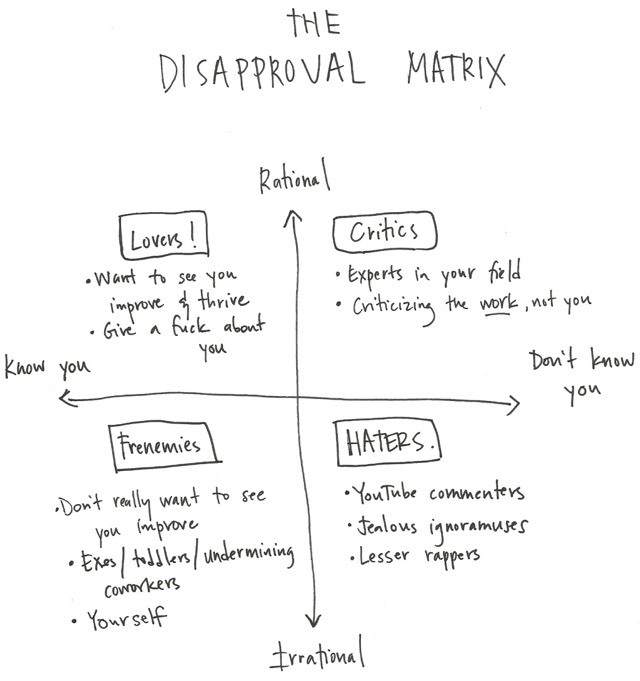


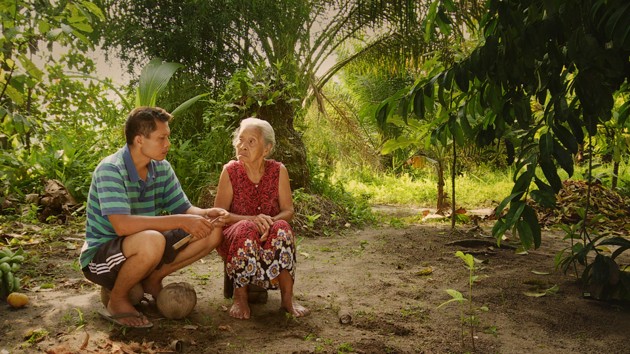
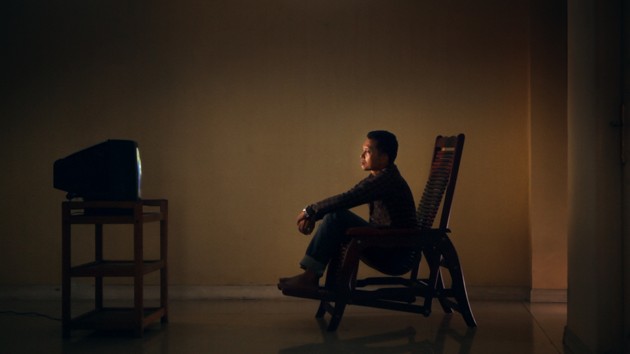





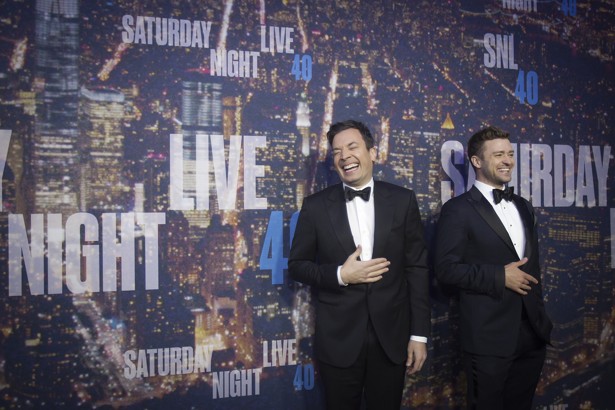


/cdn.vox-cdn.com/uploads/chorus_asset/file/3861522/iceblocklicking.jpg)
/cdn.vox-cdn.com/uploads/chorus_asset/file/3861602/thescrapediceseller.jpg)
/cdn.vox-cdn.com/uploads/chorus_asset/file/3861564/hugelineoutsidethemilkhouse.jpg)

