We sometimes complain that we are bored, and so we need to “change up” our products, services, and life habits. We often says this is due to our general preference for variety. But we are actually quite selective in when we want variety. In many areas of our lives we have little variety, and that doesn’t bother us much.
Toothpaste and mouthwash have flavors, but I use the same flavors for months at a time. My breakfasts are mostly alone, and have only minor variations from day to day. Dinners I usually eat with my wife, and we rotate between maybe a dozen different standard dishes. I often eat lunch out with a half dozen colleagues, and we rotate between a half dozen or so places, and in each place I vary what I order. When we host someone who visits from out of town, we go to a wider range of places.
The clothes I sleep in vary very little, and the clothes I wear around the house vary less than the clothes I wear to the office, which vary less than the clothes I wear to special occasions. Under-clothes vary less than more visible clothes. In my home, when we’ve repainted, or bought new furnishings or wall fixings, we tend to change things more often in our more visible rooms. We change the yard the most often, and the living room and entryway the next most often.
Products like cars, couches and refrigerators vary more on the outsides that more people can see than they do on the insides that few people see. We more often rearrange visible things like the placement of furniture compared to less visible things like where clothes are located in our chests or closets, or where dishes sit in kitchen cabinets. Advertising can change the images and attitudes associated with products, even when products don’t physically change, and we have more ads for types of products whose use is more visible to more people.
The general pattern here seems to be that variety is social – we prefer variety more for things that have wider social scopes. It is as if we personally don’t care much for variety, but we need our larger social circles to see that we can afford and tolerate a great deal of variety.
If you pulled over one hundred people on the street, and asked them to state a religious belief they hold, I’m not sure you would get any answer more plausible than “the pyramids were built for the storage of grain.” Would you now?
Yet we mock Ben Carson for this, but we do not make fun of those who believe openly in the Trinity, Virgin Birth, ex cathedra, and many other beliefs which are to my mind slightly less plausible claims. It’s not so different from the old prejudice that Mormon beliefs are somehow “weirder” than those of traditional Christians, except now it is secularists picking and choosing their religious targets on the supposed basis of sophistication. The Seventh Day Adventists, Carson’s church, are of course weirder yet.
I doubt the storage claim is true as a dominant explanation, but should there not be some storage — of something — in a profit-maximizing or rent-maximizing model of pyramid supply and inventory management? Maybe Ben’s economic intuition confirmed what he had heard in church. And what about Coase’s durable goods monopoly model? In that treatment the monopolist stores grain, admittedly for the pyramids variable Coase was hermetic in his exposition, perhaps properly so given how much is at stake here. And “remains of storage pests have been found in grain recovered from pyramid tombs.” Further argumentation along these lines can be found in F. Zacher’s classic 1937 article “Vorratsschädlinge und Vorratsschutz, ihre Bedeutung für Volksernährung und Weltwirtschaft” (Cowen’s Second Law), which by now has been cited over nineteen times (twenty in fact).
The Quran notes that the pyramids were made of baked clay, when instead according to many standard accounts much of the pyramids are made of quarried limestone (yet even that question is murky and I would not entirely count out the Quranic exposition). Presumably many Muslims, who ascribe a holy status to the Quran, would defend the baked clay proposition in some manner. How often is that thrown in their faces?
Might Joe Lieberman, an Orthodox Jew, possibly hold some views about Joseph which are not literally true? After all, those stories do come from the Torah.
What Ben Carson has done is to commit the unpardonable sin of talking about his religion as if he actually takes it seriously.
Loyal MR readers will know that I am myself a non-believer. But what I find strangest of all is not Ben Carson’s pyramids beliefs, but rather the notion that we should selectively pick on some religious claims rather than others. The notion that it is fine to believe something about a deity or deities, or a divine book, as long as you do not take that said belief very seriously and treat it only as a social affiliation or an ornamental badge of honor.
Bully for Ben Carson for reminding us that a religion actually consists of beliefs about the world. And if you’re trying to understand his continuing popularity, maybe that is the place to start.
René Girard was “the new Darwin of the human sciences”. He argued that conflicts are caused more by the sameness of human beings than by the differences between them. Our desires are not our own; we want what others want. Duplication of desires leads to rivalry and violence, which individuals and societies can resolve by offloading blame on to an outsider, a scapegoat, whose elimination restores unity
I meant to blog about many of these individually, but after two months it has not happened, so here is a list of impressions. Not all the books are excellent. They run from the best to the least worth reading, but all are worth reading (I don’t blog about the duds).
The Party by Richard McGregor. Best book I read this year. A former FT journalist in China gives you the fascinating inner workings of the Communist party. I am not a China expert, so I can’t say if any of this is accurate, but it was the most thought-provoking book on the politics of development I can recall in a while. How corruption and cronyism produce growth when the political system is durable yet flexible. Best paired with this article by Chang Tai Hsieh: “Crony Capitalism with Chinese Characteristics“
Between the World and Me by Ta-Nehisi Coates. I did not find the whole “letter to my son” device as skillful or convincing as others, and the writing is not his best, but more important than any of that: the book is full of powerful ideas and insights. Also, this is the only book about black people that every white liberal intellectual in the country has read, and they’re going to talk about it all the time as if they are experts on oppression. So you might as well know what they are bullshitting about.
Three Body Problem by Cixin Liu. A Chinese science fiction novel translated into English. The writing is a bit awkward at times, which might be the writer or the translator. But worth it in the end.
Seveneves by Neal Stephenson. A much better science fiction novel, even if it sometimes feels like a worse Cloud Atlas.
The Black Count by Tom Reiss. Alexandre Dumas (author of The Count of Monte Cristo and The Three Musketeers, had a father who was Haiti-born, black, and one of the greatest generals of revolutionary France. A history of the slave trade and the revolution, but written well enough you actually want to read it.
Minute Zero by Todd Moss. Book two about an Ivy league political science professor who runs conflict regressions and then unwittingly saves the world with the help of the CIA. I mean, what’s not to love (from a purely self-interested perspective)?
The Fishermen by Chigozie Obioma. Nigeria is probably one of the countries with the most interesting and innovative 21st century fiction. This book is a novel about a Nigerian boy, beautifully written. It cannot be accused of sounding like Adichie or Achebe, which I mention only because there’s a rule that every review of a Nigerian author has to mention those two people.
The UnAmericans by Molly Antopol. Short stories on American immigrants, with a common Eastern European thread running through many.
A Primate’s Memoir by Robert Sapolsky. An irritating neuroscientist/primatologist recounts his experiences and exploits among baboons. His insights into primates and his academic field are good enough that they are worth listening to his self-congratulatory stories. Also, throughout the book I kept thinking, “Maybe when I am 70 I too will write a memoir, and no doubt I too will sound like a complete ass to someone 30 years my junior.” So all is forgiven. And in 30 years please forgive me.
Ezra Klein, founder of Vox.com and Wonkblog, went to the World Bank to tell them when and how to popularize research. I learned about modern media lot by watching. I recommend it for that reason alone.
For researchers, there’s an obvious point, which is “don’t write badly”. This is not a helpful comment for most academics, since they are not going to become great writers overnight.
Fortunately I heard a few ways to change style and get better at writing for a wider audience right away.
Building suspense does not work. Like many academics, I back load the big insight. I give background and context and try to build interest and suspense. I get to the big finding at the end. That might be a good idea for a journal article, but it’s a terrible idea for every other form of communication in the universe. Klein’s advice: Tell people what’s new and surprising right away, and tell them immediately what they should walk away thinking.
In fact, start telling people why they should read in the title. I was interested to hear Klein say he actually liked clickbait titles. That they were better than what we usually do, which is generic statements of the topic or (worse) titles that are inside jokes. This might fine for the journal article, where the aim is to show the 20 people who will read it just how smart we are. It does not work for everyone else.
Find the hook to what people care about. Sometimes what makes the issue important to you will make it important to others, and that is enough. I buy Klein’s philosophy: that the public and policymakers are actually intelligent and curious, and the main reason no one reads research is that it’s communicated terribly. But it helps to link your work to the broader issues that people care about. A gazillion people shared my foreign aid post this past week partly because they love cool maps. But they also shared it because a lot of people care about foreign aid and poverty, and how US politics warps our help. So what’s the big issue you tap into?
People like and share things that help them establish or reinforce an identity. Why did I share an article last week about a Chick-fil-a franchise owner who defies his company by supporting an LGBT event? Because I get to polish my own self-image as an LGBT supporter. Why read and share this technical article? Because it makes me feel smart. This is the most revealing point Klein made about social media: that we burnish our self-image by what we like or retweet. I personally don’t want to cater to this baser part of our nature, but it’s really helpful to understand that’s how it works.
1. C.E. Cubitt, A Life of Friedrich August von Hayek. How come you don’t hear of this book more often? It is an extensive, rambling meditation on Hayek’s last years, full of anecdotes about Hayek’s medical ailments, arguments with his wife, and which groups he did not like. It is also short on any kind of formal documentation. But what could be more of a document than this book itself? Self-published by Hayek’s last private secretary, it seems too detailed and too strange to be entirely made up. You can pull out a random sentence and get something like “He [Hayek] liked women, he told me, providing they were not hirsute and did not offend his sensitive nose, and on one occasion even told me that he was “a little in love” with one of the waitresses in the Colombi Hotel.” Or we read that Hayek was obsessed with euthanasia, and in his last years carried around a razor blade in case it might be needed on short notice. It’s like absorbing a Thomas Bernhardt novel without the literary skill but with real stakes in the history of ideas. Ultimately I found this one unreadable, though it is consistent with my view that intellectual history is first and foremost a matter of biography. And what about the biography of Charlotte Cubitt herself? That is the real mystery here.
The year was 1938. Six years earlier, Phibunsongkhram, better known as Phibun in Western historical accounts, had played a prominent role as a military officer in a coup that stripped Thailand’s monarchy of its absolute powers. A year later, he became the equivalent of the Minister of Defense after crushing a rebellion launched by royalists, and in 1938, he became prime minister. ...
Worried about his country’s independence, disintegration, and, most of all, support for his rule, Phibun decided to transform the country’s culture and identity. ...
As part of his campaign, Phibun ordered the creation of a new national dish: pad Thai. ...
The exact origins of pad Thai remain contested. According to some accounts, Phibun announced a competition to create a new, national dish. Phibun’s son, however, toldGastronomica that his family cooked the dish before Phibun made it government policy, although he does not remember who invented it. ...
By releasing a pad Thai recipe and promoting it, Phibun turned one potential take on stir-fried noodles into a national dish. He believed that pad Thai would improve the diet of people who ate mostly rice, and that cooking pad Thai in clean pans would improve national hygiene.
Most of all, Phibun wanted to unify the country by promoting a uniquely Thai dish. ...
Within several years, vendors selling pad Thai filled Thailand’s streets. Phibun’s son called it “Thailand’s first fast food.” ...
The Public Welfare Department distributed recipes and a great number of carts for selling pad Thai, while Phibun banned Chinese and other foreign food vendors as part of his “Buy Thai” campaign. Propagandists launched a campaign with the slogan “Noodle is your lunch.” ...
As for food, history is full of examples of seemingly quintessential dishes with short histories. When we think of Italian food, we think of pizza and spaghetti. Yet tomatoes are not native to Italy and only reached Europe after conquistadors brought them back from South America.
No food is more Irish than potatoes. Except that when potatoes first reached Britain, people thought that they, like all roots, were only fit for animals. “The poor of Europe,” Rachel Laudan, author of Cuisine and Empire, has said, “had to be bludgeoned into adopting the potato in the 17th and 18th century.”
“How long does it take to create a cuisine?” writes Laudan. “Not long: less than fifty years, judging by past experience.”
Game of Thrones' Outstanding Drama win at the Emmys this year indicates a new era of perceived legitimacy for its genre, and I'm not talking about fantasy: GOT completely operates as a soap. All the scheming and vindictiveness would be perfectly at home on Melrose Place; the disguises, acceptance of the paranormal, and the absence and reemergence of obscure characters can all be found on Passions. (Cersei Lannister and Alexis Carrington would have plenty to talk about.) Soap is not a dirty word, and shows like GOT are helping reposition soapiness as a desirable attribute, not a vice.
I've had this theory for awhile that for fans of dramas, all but the very best are indistinguishable from soap operas by season three. As a viewer, you get so caught up in the "what's gonna happen", you stop caring so much about how it's happening, if the show is even any good, or what higher-level themes the producers might be expressing. And the show's producers feel the need to top themselves with each season, and so the stakes get higher, the plot gets more implausible, the characters get bigger, and themes are increasingly marginalized. This happened, in varying degrees, with Lost, Homeland, Six Feet Under, Boardwalk Empire, Girls, and House of Cards. Even Mad Men and Breaking Bad veered in and out of soap opera territory, but the shows were so good that they never completely went there. And let's not even talk about season 5 of The Wire.
The title says it all. That is the new book by Shane Greenstein of Harvard Business School, the subtitle is Innovation, Privatization, and the Birth of a New Network. This extensive history is the best counter I know to the view that the internet as we know it was most of all a government project. Definitely recommended.
This might be the best TV episode about clinical depression ever made.
In "There Is Not Currently a Problem," the seventh episode and midpoint of its second season, FXX comedy You're the Worst does something I'm not sure I've ever seen TV do so well: It makes clinical depression understandable.
It does so by grounding that depression in a character we already love, who's always been troubled but basically fine. And it adds a nasty edge to one of the things that's always been funniest about her, her ability to immediately find the worst thing about someone, the point where they feel the weakest, and turn it into a snide joke. It makes depression at once sympathetic and terrifying, and it shows just how exhausting living with the condition can be.
It also brings the series to another level. You're the Worsthas been dancing around this revelation for a while. The first six episodes of this season indicated something was wrong with Gretchen (the series' female lead, played by Aya Cash), but not specifically what.
But even in season one, her hugely messy apartment and her occasionally erratic demeanor suggested she was suffering from something far more extreme than garden-variety self-loathing.
Now, though, her secret's out in the open. Her boyfriend, Jimmy (Chris Geere), knows, and he's determined to fix it. But if Gretchen knows anything, it's this: She can't fix this. She can only manage it. Maybe.
Television is a horrible medium for talking about mental illness
Showtime
Homeland's Carrie Mathison (Claire Danes) has had her bipolar disorder presented in mostly consistent fashion. Many fans wish the show would just leave it alone already.
One of the things about mental illness is that it never truly leaves a person. It can be medicated, and talk therapy can definitely help. But if someone is clinically depressed, she's always going to be clinically depressed. She'll have peaks and valleys, sure, but you can't tell a story that's all peaks. That's just bad drama.
This is absolute anathema to television, which thrives on change and on characters either overcoming their obstacles or eventually falling prey to them through means of their own making. As an example, consider The Sopranos, where Tony's panic attacks gradually subsided as the series went on, because he was unable to confront the real roots of his anxiety and depression. To do so would be to admit his own weaknesses and his own culpability in egging on those conditions. So he drifted on, blithely trying to keep a cork in a big, rage-filled bottle.
Television generally takes that approach to dealing with mental illness. It's a problem, and maybe the characters always know it's a problem, but they also can't constantly be struggling with the same problem week after week, lest the viewer become exhausted. On the '90s soap Party of Five, for instance, Kristen, one of the main character's love interests, fell into a bout of depression, but it was largely treated as something she would overcome with proper care and treatment. The idea that it might never go away is just too much for a TV show to deal with.
For an example of a show that I think generally handles mental illness well, turn to Showtime's Homeland, where the lead, Carrie Mathison, struggles with bipolar disorder. The show too often suggests that Carrie's fits of mania drive much of her spycraft prowess, and "my mental illness makes me a great crime solver!" is an unfortunate TV trope. But when it digs into how horrible Carrie can be to those around her, and to herself, in her depressive phases, the show finds the long, grinding process of learning to live with mental illness.
Plenty of viewers have complained about this (especially connected to a recent episode where Carrie went off her meds yet again), but there's an admirable stubbornness to it. This is what it's really like to have bipolar disorder. Most people look away. Will you?
You're the Worst tries to make this funny — and somehow succeeds
FXX
Gretchen tells off all her friends in excruciating detail.
The centerpiece of "Problem" is a scene in which Gretchen tells every single one of her friends exactly what she thinks of them. Now, it's not actually what she thinks of them. It's her depression feeding her the worst thoughts she's ever had about them, then blowing them up even further. It's her brain causing her to drop a nuclear bomb on her life. (Amusingly, one character who's an improv comedian seems to treat the whole thing as just another comedy game.)
But this scene will ring devastatingly true to anyone who suffers from depression or loves and cares about someone who does. These moments of seemingly over-the-top rage happen, and they're usually followed by even deeper trough of self-loathing. Gretchen doesn't really hate all of her friends. She hates herself.
What makes the episode work until the centerpiece scene is how expertly writers Stephen Falk (also creator and showrunner) and Philippe Iujvidin convey that something's not right, even as everything, outwardly, seems to be just fine. This is an impeccably crafted episode of television, one that takes place in a single location and includes lots and lots of little motifs that indicate things are going very wrong.
In particular, there's a mouse that Jimmy becomes obsessed with catching. It could too cutely stand in for his need to fix the problems in Gretchen's life — he doesn't yet know she's depressed, but does know she goes out at night to cry in her car — but when the episode ends, the mouse, which he believed to be dead at his hand, skitters back into the wall. You can't get rid of these things. You can only turn a blind eye to them, until they're staring you in the face.
But in terms of raising tension, the episode also lets Gretchen be off, wearing sunglasses inside and drinking too much and dancing to music that's not even playing. She's staving off something that's chasing her, but she won't be able to forever. You can't escape depression.
The centerpiece shouting match is followed by a sweet scene where Gretchen's oldest friend, Lindsay, who's received many of Gretchen's worst insults, goes into her bedroom to ask her if it's "back," if this will be like sophomore year, when she didn't leave her dorm room for weeks. Gretchen, tearfully, nods. Jimmy can't find out, she says. But Lindsay points out that Gretchen's shared more of herself with Jimmy than with anybody else. He needs to know about this if they're going to have a real relationship.
That's the cost of loving someone with clinical depression. It's understanding that they will go out of their way to make you feel, at times, like the smallest person on the planet, and then having to overcome that to realize they're not really yelling at you for who you are, but for loving them. Lindsay knows that. Jimmy is about to find out.
Depression is a ravenous beast that slumbers, sure, but never really goes away. When you're in a relationship with someone who suffers from it, it's the unspoken third in the relationship, the thing you try not to talk about. Maybe, if you're lucky, it will go hide in the wall for a while. But it always comes back out. It has to.
You're the Worst airs Wednesdays on FXX at 10:30 pm Eastern. Watch previous episodes on Hulu and FXNow.
When Hillary Clinton and Bernie Sanders debated the future of the Democratic Party earlier this week on CNN, they talked about the usual global hotspots, places like Syria, Iraq, Iran, and China. But they also talked about a country that doesn't come up a lot in big-time American politics: Denmark.
Sanders cited it as a model of the kind of democratic socialism he'd like to bring to the United States. Clinton expressed considerable skepticism about the viability of turning America Danish, but nonetheless allowed, "I love Denmark." Tellingly, though the digression on Denmark doubtless took many viewers by surprise, moderator Anderson Cooper was sufficiently prepared for it that he was able to cite the country's exact population on the spot.
That's because Denmark — though small and of limited geopolitical significance — punches way above its weight in public policy circles. When left-wing Scottish nationalists were campaigning for independence from the UK, they said their new Scotland would be modeled on Denmark. And as Jonathan Cohn wrote in 2007, "Even as the pundits wring their hands at Europe's economic decline, a growing number of American economists have begun looking across the pond for inspiration — to Scandinavia and, especially, to Denmark." In his most recent book, Francis Fukuyama uses the phrase "getting to Denmark" as the shorthand for the ideal form of social and political development.
Denmark, in short, looms large in the imaginations of the English-speaking left even if most Americans don't actually know anything about it. But even though Denmark really does look like a significant success story, in many ways the real story of Danish public policy doesn’t line up as neatly with the US progressive agenda as some of the Nordic social model’s American fans like to think.
1) What is a Denmark? Is it full of Dutch people?
Dutch people, confusingly, live in the Netherlands. Denmark is full of Danes. Mark (or "march" in English, hence the Marcher lords who guard the frontier with Dorne in George R.R. Martin's Song of Ice and Fire) is a medieval Germanic term for a borderland, and sixth-century Roman sources refer to the general area of present-day Denmark as being inhabited by a tribe called the Dani. Hence Denmark, a border area full of Danish people.
Google Maps
Modern-day Denmark is divided between two primary landmasses, one that sticks out like a little hat on top of Germany and one that's a big island off the coast of Sweden. The island part contains Copenhagen, the capital and largest city, and is directly connected via bridge to the medium-size Swedish city of Malmö.
Denmark's history as a state is both unusually long (dating back to the eighth century, while Germany and Italy arose in the late 19th century and even Spain only goes back to the 1400s) and unusually dull by European standards. There was no great Danish Revolution, and though Denmark participated in the wars sparked by the French Revolution, it was never conquered and subject to externally directed institutional reform. Instead, over time Denmark gradually evolved the institutions of liberalism, then democracy, then egalitarian social democracy.
Denmark did have a run as something of a world power, featuring possessions on the west coast of Sweden, control over Norway, control over some German-speaking territory, and even a small colonial empire comprising a few Caribbean islands and Greenland. The loss, over time, of these possessions (save the barely populated Greenland) served to render Denmark a deeply homogeneous country. It contains no national minority groups and has a relatively small immigrant population.
2) Why do American liberals like to talk about Denmark?
People on the left in the United States and other English-speaking countries are fond of citing the Nordic states — Denmark, Sweden, Norway, Finland, and Iceland — as examples of countries with higher taxes and less inequality than Anglophone nations that nonetheless enjoy a high level of prosperity. Of the five Nordics, Denmark is the second richest. Norway, the richest, has a ton of oil and gas relative to its tiny population, so it doesn't seem like quite as good a model to cite as Denmark.
The Nordics also tend to score very well on subjective measures of well-being like happiness surveys.
Danish mothers enjoy 18 weeks of guaranteed maternity leave at 100 percent of their ordinary pay. Danish students leave college free of debt. Everyone is covered by a national health insurance system and can take advantage of subsidized child care; plus, thanks to a generous welfare system, Denmark's child poverty rate is about a quarter of America's.
Denmark is also an environmental model, a country in which 25 percent of electricity is generated by wind turbines; bicycles account for 40 percent of commuting trips in Copenhagen.
In a world where Republicans routinely deride taxes and spending as job killers, income redistribution as the mother of indolence, and tax cuts as a growth miracle, quietly prosperous Denmark stands as a powerful counterexample.
In the United States, state, local, and federal taxes combine to amount to about 25 percent of national income.
In the more generous German welfare state, it's more like 37 percent.
In Denmark, it's 49 percent.
It's natural for Americans to think of ourselves over here in the Western Hemisphere enjoying the fruits of liberty in contrast to "European-style" welfare states. But the gap between Denmark and Germany is exactly as big as the gap between Germany and the United States. And those are not small gaps!
In part, this gusher of tax revenue is obtained by taxing the rich. Taking into account all forms of taxation, a high-income Dane can pay up to a 57 percent marginal tax rate. That's about what a wealthy resident of California would pay (combining state and federal income taxes with Medicare taxes) but considerably higher than the rates charged in most of the country. But this alone does not suffice to pay for the Danish system.
Denmark also has:
A 25 percent value added tax — basically a form of sales tax
4) Yikes! How do people survive in this overtaxed dystopia?
If you visit Denmark, you will be shocked by how expensive banal consumer goods are. Restaurant meals, cab rides, sodas, etc. all cost a bundle by American standards. And so do bigger-ticket items. A 64GB iPhone 6S costs a hefty $849 in the United States, but its Danish price is more than $1,000 at current exchange rates.
Apple.dk
And don't even think about buying a beer; hefty alcohol excise taxes drive prices into the stratosphere.
The flip side is that if you actually live in Denmark, then things like child care, college tuition, and health care are all much cheaper than they are in the United States. In total, Danes and Americans consume a similar quantity of taxes and services. But because of high levels of taxation and spending, the nature of the consumption is quite different. People enjoy more social and personal care services, and fewer cars and other consumer goods. The upper middle class has less, and the poor and the working class have more.
But on the whole, Denmark's high taxes have not prevented it from being a wealthy, happy society.
5) Scandinavia has lots of great music, right? How about a Danish music break?
But Denmark does have its moments, including the 1997 novelty hit "Barbie Girl" (that the band is Danish explains why the pronunciation of "Barbie" is somewhat off), plus my personal favorite Danish band the Raveonettes.
6) Is Bernie Sanders right? Should we be like Denmark?
Most people would find Danish weather unpleasant, but one good way to think about this is with a table that Demos's Matt Bruenig made based on Luxembourg Income Survey data. The table looks at disposable household income (i.e., after taxes and transfer payments) at different deciles of the income distribution, showing the United States and countries that rank ahead of the United States:
The upshot is that people in the bottom third of the Danish income distribution have more disposable income than people in the bottom third of the US income distribution, but for the more privileged the reverse is the case.
According to utilitarian moral theory, that probably makes Danish institutions superior, since the value of an extra dollar in terms of well-being is higher for people at the bottom of the income distribution than for those at the top. And according to the academically popular moral theory of John Rawls's A Theory of Justice,the Danish institutions are certainly superior, since Rawls argues that the distribution of economic resources should be organized so as to maximize the welfare of the least privileged.
Of course, in brass tacks political terms you need to try to appeal to a majority of voters, and the Danish disposable income stats fails that test (a problem that's exacerbated by the fact that many low-income Americans are noncitizens and that low-income citizens vote at a lower rate than richer ones). But note that this is only a measurement of disposable cash income and doesn't include the value of in-kind public services like free health care and college. Nor does it count the fact that the typical Danish worker enjoys about 150 extra hours of leisure time per year.
For the middle class, then, the question of Denmark versus the USA comes down to these trade-offs. A typical American has more cash but worse public services and less time.
7) Isn't Denmark ridiculously small?
During the debate, CNN's Anderson Cooper reacted with incredulity to Sanders's waxing about Denmark, observing that it's a country with just 5.6 million residents. And it's true there's an enormous difference in scale between United States and a country with a population somewhat smaller than Wisconsin's.
But the direct applicability of this point to the welfare state is not obvious.
Indeed, on some level the small size of Nordic countries cuts the other way. A place as small as Denmark might worry more reasonably than the United States that highly skilled individuals would simply flee to avoid taxes, or that companies would refuse to do business there. Due to America's larger size, this kind of concern about the possible downside of high tax rates would be attenuated.
On the other hand, in a small country tax dollars tend to be spent close to home, ensuring that the people who pay also receive the benefits. In a big country, money can be taxed and then spent in far-off places, which might make people more reluctant to pay the tax in the first place, as well as making it more difficult to verify that the money is being spent well.
8) Isn't Denmark ridiculously homogeneous?
Modern-day Nordics are not quite as homogeneous as Americans sometimes seem to believe. Sweden, in particular, actually has a higher share of its population born abroad than does the United States, with many coming from Eastern Europe and Iraq rather than from its rich neighboring countries. But Denmark is considerably less diverse than Sweden, and all things considered Sweden contains significantly less racial diversity than the United States.
This point is often raised, but it can really be interpreted in two different ways.
1) Ethnic diversity is a political problem for the welfare state
In their 2001 paper "Why Doesn't the United States Have a European-Style Welfare State?" Alberto Alesina, Ed Glaeser, and Bruce Sacerdote argue that the racial diversity of the United States leads to public skepticism of redistributive policies. "Voters will dislike giving money to the poor if, as in the United States, the poor are perceived as lazy," they write. "In contrast, Europeans overwhelmingly believe that the poor are poor because they have been unfortunate."
They show that "across countries, racial fragmentation is a powerful predictor of redistribution" and "within the United States, race is the single most important predictor of support for welfare." Donald Kinder and Cindy Kam mount a similar argument in their book US Against Them: Ethnocentric Foundations of American Opinion.
US liberals tend to read this argument as saying that redistribution is a good idea that Americans refuse to embrace because they are racist. But the statistical evidence is also consistent with the opposite hypothesis — that redistribution is a bad idea whose shortcomings the Nordics are blind to because of excessive in-group solidarity. This data doesn't really bear on the merits of redistribution.
2) Nordic people — not institutions — explain Nordic success
Another form of argument follows Nima Sanandaji in noting, "Median incomes of Scandinavian descendants are 20 per cent higher than average US incomes. ... Scandinavian Americans have lower poverty rates than Scandinavian citizens who have not emigrated."
Scandinavian people, on this view, have superior cultural or genetic attributes that lead them to enjoy higher incomes than non-Scandinavians. But Scandinavians enjoy higher incomes under American institutions than they do under Nordic ones.
This is an interesting observation, though by no means a dispositive one — emigration from Scandinavia to the United States was not randomly assigned, and the families who chose to move might well have been disproportionately ambitious, hardworking, or skilled. And if people of Nordic stock are culturally or genetically superior to non-Nordic peoples, that naturally raises the question of why this superiority would not extend to the choice of social institutions.
8) How do left-wing Danish parties keep winning elections?
They don't. Various right-of-center coalitions have governed Denmark for about 11 of the past 15 and 21 of the past 33 years, meaning that the general trend toward neoliberalism inaugurated in the early 1980s by Ronald Reagan and Margaret Thatcher has also impacted Denmark. The current sky-high (by American standards) levels of Danish taxation actually reflect significant tax cutting under the conservative governments that ran Denmark in the aughts, and the most recent left-wing government of Denmark was a relatively short-lived and unhappy one in which Prime Minister Helle Thorning Schmidt largely found herself implementing an austerity budgeting agenda.
The key difference came in the past. Between 1929 and 1982, there were nine years of right-of-center governments, three years of occupation by Nazi Germany, and about 40 years' worth of Cabinets led by the Social Democratic Party.
The main reason the Nordic welfare state is so large today is not that conservative parties can't win, but that universal social welfare institutions tend to be "sticky." The UK Conservative Party has never dismantled the National Health Service, various right-of-center Canadian governments leave their single-payer heath-care system in place, and neither Ronald Reagan nor George W. Bush eliminated Social Security. Even if left-wing governments lose future elections, their accomplishments remain.
9) What do American liberals get wrong about Denmark?
American fans of the Nordic social model tend to overlook three points that differentiate Danish policy from the conventional progressive agenda:
America's openness to low-skilled immigration is a significant benefit to needy people.
Nordic welfare states tax the middle class much more heavily than the United States.
"Getting to Denmark" entails more attention to the quality of public services and not just their existence or funding level.
On immigration, the point is not so much that generous welfare provision can only exist in homogeneous country, but that one should not overlook the distinctive virtues of the United States of America. There are countries that are more open to immigrants than the United States, but basically nowhere is more open to the immigration of low-skilled workers from poor countries. This relative openness is an enormous benefit to the people who manage to take advantage of it. But due to compositional effects, it tends to make social conditions look worse than they really are. Guatemala has a per capita GDP of about $3,500. A person who moves to the United States and earns triple that is going to register as falling below the poverty line. Preventing that person from moving would cut the US poverty rate but would not actually benefit anyone — it would simply push a poor person off the US's books and onto Guatemala's.
The points about taxation and service quality are linked.
It's not that Denmark doesn't tax the rich — it does, and generally more heavily than the US does — but that the gap in taxation of the 50th or 75th percentile is generally larger than the gap between taxation of the 75th percentile and taxation of the top 1 percent. American progressives typically try to sell the middle class on expanded public services with the argument that someone else will pay for it, while the Danish idea is more that the middle class should agree to pay high taxes because public services are more valuable than additional private consumption.
One consequence that follows is Danes care a lot about trying to deliver services cost-effectively.
In Copenhagen, for example, the metro is driverless, the suburban rail network features one-man train crews, and many urban bus lines are run by private companies. These are all kinds of measures that US labor unions would normally oppose, and the US debate tends to be sharply polarized between liberal coalitions with labor interests at their heart and a conservative coalition that simply wants to cut spending and service levels. The idea of reducing labor costs in order to improve service frequency without increasing spending tends to go missing. Similarly, the Øresund Bridge from Copenhagen to Malmö was constructed at a drastically lower price than the United States is prepared to spend to replace the Tappan Zee Bridge in New York even though the Nordic bridge is substantially longer and includes a major train component along with the roadway.
In other words, while at times it's the case that Denmark is able to deliver superior public services because it is willing to spend more money (you can't have a paid parental leave program without someone footing the bill, for example) the causation also goes in the other direction. Danish political economy places a greater emphasis on identifying and eliminating waste, which both improves the quality of public services and fosters greater willingness to pay for them. The United States is in a different political equilibrium where the service providers themselves are often the key political constituency for services, which makes it difficult to focus on cost-effectiveness, while conservatives prefer eliminating programs to trying to improve them.
They’re consistently my only true night of the week to do exactly what I want. These carefree nights can happen, in theory, on any night, but Saturdays are when they happen most often, with the fewest consequences. Fridays also used to be like that — remember Friday nights? Unfortunately, the weight and stress of the workweek typically rears its head around 8:30 p.m. on said Friday, causing the body to crave a night of Blu-ray and Chill, regardless of whether you obey your body’s wishes.
I say all this because I care about what manifests on my Saturday nights. Which is why this past Saturday was notable, because I acted very out of character. As in, I left Brooklyn at 6:30 p.m., en route to Newark, New Jersey. And I did this act of self-treason alone. And I did this for work, to cover a concert. And I did this alone, for work, to cover a concert by Korean pop boy band BigBang, a group from which I had heard only one song prior to my trip, and that song I had heard only twice, and I wasn’t even convinced I liked it.
The assignment self-haze is a part of my occupational DNA. I’m no stranger to it, for it also takes me to amazingly dark places that result in occasionally fun pieces for a reader who lucked out by not being the one who trolled themselves.
My approach to Newark’s Prudential Center was by car. And as the car got closer, I realized that I was surrounded by fewer and fewer normal cars. To the front, to the back, and immediately to the right of me, limousines. SUV-size limosines. I felt like a chemistry teacher tailing drunk students to senior prom. What should have been horror in this realization actually begat humor. It was clear I was about to walk into a madhouse. When I got out of the car and attempted to find will call, all I could do was find new lines of people. And each line was long, but none was the line I needed. Sometimes, as I got closer to another line of people — people who always looked younger than me, but weren’t always “young” — I would occasionally hear English being spoken. Typically, however, I didn’t. Because I knew this was a boy band, I expected the gender split to be about 90 percent female, 10 percent male. From what I’d seen, however, it was pretty close to 50-50. There was an excitement in the lines, but also a panic. Because this show was set to start at 8:00, it was 7:50, and there were probably a thousand people outside.
Will call was a poorly marked door. And for some reason no one was going into this door, but a long line was positioned in front of it, waiting in the general admission line. Feeling the rush of adulthood and an obnoxious “I don’t wait in lines”–ness come over me, I walked right to that door, opened it, and confidently walked in. About 50 kids in line followed me, which caused mayhem inside. I turned around and gave the security lady an apology shrug as I went to get my ticket.
By the time I’d entered, it was 8:05. I was told the show was starting exactly at eight, but its running late was welcome and not surprising. I needed a drink, and maybe two, and was happy to learn there was zero line for every alcohol kiosk in the arena, because teens. As I paid for my two very cold tallboys, I heard the first arena-wide shriek. It was showtime. Turning to look for a stairwell, I was almost knocked over by a crew of eight teens racing to their seats. Their faces weren’t filled with joy but with terror — the terror of missing a second of BigBang.
I felt bad for them but even worse for the hundreds of people still outside. Who knew when they were going to get in?
When I asked a guard how to get to my seat, I was told to find the escalator. But I couldn’t find it, so I took the stairs — which led me to the wrong floor, which was probably why she told me to take the escalator. As I stood on the wrong floor, however, I had a balcony-like vantage point on the entrance, which was an ebb and flow of people racing to their seats, screaming at the air. It was incredible.
And then, just like that, a second arena-wide scream. It must have been song two. I needed to get to my seat — I didn’t come out to Newark to miss a concert, after all.
When I made it up to the third level and walked into the arena, very little made sense.
The lights were mostly up, the room was half full, and, most importantly, no one was onstage. There was a music video playing and people were singing to it, but that didn’t add up to the insanity I heard as I wandered the halls of the Prudential Center.
Two minutes later, when that music video ended, it all made sense. Another music video started and the place erupted, as if the five BigBang members were actually onstage. This increasingly filled room was freaking out over very large music videos. Because of course they were. Because this was a boy band, after all, and that’s what happens. It was almost as if I didn’t grow up on TRL and witness what happened when Brian and Kevin would walk up to the glass three floors up from the street and just look down, causing teens to scream, and then cry, and then faint.
This was becoming a salvageable Saturday night. Five more music videos played, and each time, the reaction was the same when the music video began, but each time louder because by the fifth video, general admission was packed and the available seats were nearly filled.
When the lights finally dimmed, they — we — were ready. It’s rare to find you’re in the middle of a phenomenon but have no idea what it is. Suddenly, it was pitch-black, and everyone down below had some sort of light source that they were ready to wave. And then the strobe lights appeared, followed by some second cousin of “Zombie Nation,” which I later learned was just BigBang’s first song of the evening, “Bang Bang Bang.”
Sitting there in awe for the next five minutes, I couldn’t get over the song, their live spectacle, their moves, the crowd, and the overall eccentricities of each member.
♦♦♦
BigBang is made up of five members: T.O.P., Taeyang, Daesung, Seungri, and G-Dragon. All five are in their twenties, so none are actually boys. And you can tell that when you watch them perform, because they very much have the confidence of adults. But not in the “let me shed my boyish innocence” way (which would pertain to them, since they’ve been a unit since 2006). More in the “we’re fly, and we know that because we’ve been told that by little girls, grown women, little boys, and grown men, the end” sense. As a group, they have found a sizable amount of success, winning awards in Korea, Japan, and throughout Europe. In the United States, G-Dragon has had the most crossover appeal, but throughout Asia all five have found success beyond BigBang, be it in music, acting, or as personalities.
As BigBang, all five can sing, all five can dance, and a few (most notably, T.O.P. and G-Dragon) rap. And they do all of these things very well.
Three songs into the show, I was completely sold on BigBang. And I had 16 songs left. But as my interest increased, it wasn’t really because of the songs (only a few words throughout this show were in English, just to give some idea of how good things have to be when you don’t know what is being said at you). To put in plainly, it’s because they are the perfect boy band for 2015.
When it comes to boy bands, there are rules. And certain rules can never be broken, even if they are highly inefficient. One of those rules is that each member of the band gets a moment. Obviously, some bands have true stars and what ends up shaking out is a lead member and backup singers, but at some point, even the lowest member of the boy band totem pole gets some moment to do something. And not because of fairness for him — because even that last guy is someone’s favorite.
And that fan paid good money to see their favorite have a moment in the sun.
BigBang followed these rules, almost to a fault. On three occasions during the concert, a good 10 minutes was dedicated to each member walking up to the front of the stage, with the other four looking on, and giving the crowd similar prompts.
“How are you, New Jerz?”
“I Love Jerz.”
“Make Some Noise”
“I Love Your Energy”
“You Give Us Energy”
“Jerz”
Even by the fifth iteration of this, the fans did not tire. And that’s because BigBang is at equal strength at each position. It’s terrifying how good each member is. It’s like the ’92 Dream Team starting five, but with unlimited R1 turbo.
When you watch it for the first time, you want to immediately think of the Backstreet Boys or ’N Sync or Boyz II Men or New Kids on the Block or New Edition, but none is the right comparison.
If BigBang has one evolutionary ancestor, it’s most certainly the Floaters.
You see, the Floaters are not the greatest boy band/man group of all time, but “Float On” might be the most beautiful creation a group of four to five boy-men with equal talent have ever made. It’s a simple song, with each member getting a verse of equal length, with the “Float, Float On” hook between each. But as each begins his verse, he alerts the world to his astrological sign, followed by his name, followed by what he offers the world (and how he wants to take you to Love Land).
First, Ralph.
Aquarius and my name is Ralph
Now I like a woman who loves her freedom
And I like a woman who can hold her own
And if you fit that description, baby, come with me
Take my hand, come with me, baby, to Love Land
Let me show you how sweet it could be
Sharing love with me, I want you to
Second, Charles
Libra and my name is Charles
Now I like a woman that’s quiet
A woman who carries herself
Like Miss Universe
A woman who would take me in her arms
And she would say, Charles, yeah
And if you fit that description
This is for you especially
Third, Paul.
Leo and my name is Paul
You see I like all women of the world
You see to me all women are wild flowers
And if you understand what I’m sayin’
I want you to
Mmm, take my hand
Come with me, baby, to Love Land
Let me show you how sweet it could be
Sharing love with me, I want you to
The first three are great. And some people’s person is Paul or Charles or Ralph. I know this because I have aunts. The fourth verse, however, while not enough to overwhelm the other three, is admittedly a standout.
It’s Larry.
Cancer and my name is Larry, huh
And I like a woman
That loves everything and everybody
Because I love everybody and everything
And you know what, ladies,
If you feel that this is you
Then this is what I want you to do
Ooh, yeah, take my hand
Let me take you to Love Land
Let me show you how sweet it could be
Sharing your love with Larry, listen
To be fair, G-Dragon is probably Larry from the Floaters. But in the same way Paul, Ralph, and Charles are also beloved and not far behind (and the favorites of many in their own right), so are T.O.P. and Taeyang and Daesung and Seungri. I know this because I watched and listened to the individualized screams from their constituencies, whenever it was their time to make a statement, rap a verse, do a dance move, be the center of attention.
This equal spread of adoration and talent and style that BigBang has is what makes them a great boy band. But what makes their presence perfect in this moment is that they buck one of the main tenets of boy band-dom: the crutch that is choreography.
Let it be known: BigBang certainly has choreography. And when they do it, it is clean and sharp and very appreciated. But when BigBang really gets going on a song, they are not front and center, doing the same moves. They are covering surface area, doing their own moves, dripping with their own concoction of indivudualized swagger, each living his best life off in his own corner of the stage.
It was truly a sight to see — a boy band that in reality is a supergroup. In one song, you have G-Dragon doing the nae-nae, T.O.P. calmly standing with his cane holding court, Taeyang running up a catwalk in a manic way, Daesung jumping up and down, and Seungri off doing moves with the background dancers. Whichever caught your eye, you were suddenly looking at the coolest guy in the room and the most talented guy in the band. Watching it, I understood why their audience was made up of people who could only dream of being them or being with them. And as they went through their catalogue, doing both group BigBang songs and solo numbers, hopping from rap to R&B to pop to EDM to dubstep to a country-esque ditty to a song that I swear could be the no. 1 Christian rock song in history (“Wings,” the solo song by Daesung), they found a way to be everything. They found a way to make it seem like Drake, Usher, Katy Perry, and Taylor Swift concerts all in one night. It was quite a sight to behold.
As I walked out of the show, I didn’t know what to do. Standing with a group of friends and fellow music writers, I began to word vomit excitement. As I spoke, one response to my excitement was this:
If you think they’re good, you also have to hear the new BigBang, Teen Top.
I was disgusted. I didn’t want to hear that. I wasn’t ready to “explore the genre” right now. I was #BigBangHive now, and I wanted nothing more than to embrace this moment, this show, these men, this perfect Saturday night.
That is the new, magisterial and explicitly Whiggish book by David Wootton, with the subtitle A New History of Scientific Revolution.
I wish there were a single word for the designator “deep, clear, and quite well written, though it will not snag the attention of the casual reader of popular science books because it requires knowledge of the extant literature on the history of science.” Here is one excerpt, less specific than most of the book:
My argument so far is that the seventeenth-century mathematization of the world was long in preparation. Perspective painting, ballistics and fortification, cartography and navigation prepared the ground for Galileo, Descartes and Newton. The new metaphysics of the seventeenth century, which treated space as abstract and infinite, and location and movement as relative, was grounded in the new mathematical sciences of the fifteenth and sixteenth centuries, and if we want to trace the beginnings of the Scientific Revolution we will need to go back to the fourteenth and fifteenth centuries, to double-entry bookkeeping, to Alberti and Regiomontanus. The Scientific Revolution was, first and foremost, a revolt by the mathematicians against the authority of the philosophers.
Hail, Caesar! is the name of the Coen brothers' new movie. It stars George Clooney as a movie star (what casting!) who is kidnapped during the shooting of a epic Roman gladiator picture called Hail, Caesar! This one looks fun. And with the exception of The Big Lebowski, the Coen's fun movies are underrated,...I quite enjoyed both Intolerable Cruelty and Burn After Reading.
Gary Collins, a London police constable, is extraordinarily gifted at recalling people's faces. He's a super recognizer.
Friends call Constable Collins Rain Man or Yoda or simply The Oracle. But to Scotland Yard, London's metropolitan police force, he is known as a "super recognizer." He has a special gift of facial recall powers that enables him to match even low-quality and partial imagery to a face he has seen before, on the street or in a database and possibly years earlier. The last time he had come face to face with Mr. Prince was during a fleeting encounter in 2005.
Aside from Collins, Scotland Yard now employs more than 150 super recognizers who scan the streets and crowds for known criminals.
Admirably padding-free guide to differentiating these two members of the camel family. Alapacas are shorter and lighter; they have smaller ears and blunter faces. Alpacas have finer hair than llamas and produce more fleece, but that seems to be due to selective breeding. “Alpacas are very much herd animals … [and] tend to be a bit more skittish than llamas, which are often used as guard animals for alpacas.” That’s about it
Every year I feel a little defensive when trying to explain the intellectual contributions of the winner of the Nobel prize in economics. Non-economists want to know: “What big discovery did he make or what big question did he solve?” But professional economists are are more interested in questions like: “In what ways did he develop the theory and the empirical evidence to increase our understanding of economic behavior and the economy?”
An extended meditation on facing death, blending together the stories of children on a pediatric cancer ward and inmates on death row (“Capital punishment means those without capital get the punishment”, says one). Sometimes the subject seems beyond the reach of language – “physical pain does not simply resist language but actively destroys it” – and “nothing can make injustice just but mercy.” But what exactly is “mercy”?
Superlative meditation on motherhood, the lives of women, happiness, and meaning. Rebecca Solnit was “raised by unhappy, unkind people,” and “wanted neither to replicate their form of parenting” nor have children who felt the same. Our society’s obsession with happiness ignores other life goals — “honor, meaning, depth, engagement, hope.” We receive “one-size-fits-all recipes” which “become prisons and punishments”
A Japanese mathematician created a minor academic storm when, with little fanfare, he published a 500 page solution to the 27-year-old “ABC conjecture.” Mathematicians grappling with the enormity of this discovery simultaneously face a challenge: almost no one understands it. “It’s not enough if you have a good idea: you also have to be able to explain it to others.” This, Mochizuki is discovering, is not as simple as ABC
Yesterday, Tu Youyou became one of three scientists to win this year's Nobel Prize for medicine for her discovery of what has become a standard antimalarial treatment, artemisinin. But, remarkably, the public had no idea about Tu's lifesaving achievement until just four years ago.
The backstory behind the 84-year-old Chinese pharmacologist's work is incredible: In 1967, Chairman Mao Zedong set up a secret mission ("Project 523") to find a cure for malaria. Hundreds of communist soldiers, fighting in the mosquito-infested jungles of Vietnam, were falling ill from malaria, and the disease was also killing thousands in southern China.
After Chinese scientists were initially unable to use synthetic chemicals to treat the mosquito-borne disease, Chairman Mao's government turned to traditional medicine. Tu, a researcher at the Academy of Traditional Chinese Medicine in Beijing, had studied both Chinese and Western medicine, according to a New Scientist profile, and was hand-plucked to search for an herbal cure.
(Xinhua via Getty Images)
Tu Youyou, right front, a pharmacologist with the China Academy of Chinese Medical Sciences, studying traditional Chinese medicine, in the 1950s.
"By the time I started my search [in 1969] over 240,000 compounds had been screened in the US and China without any positive results," she told the magazine. But, she added: "The work was the top priority, so I was certainly willing to sacrifice my personal life."
And the work was absolutely painstaking. Along with three assistants, she reviewed thousands of traditional Chinese remedies, testing them in mice. One compound — from the leaves of the Chinese wormwood plant, Artemisia annua, seemed to vanquish malaria parasites in the blood. But they didn't find their fix just yet, according to New Scientist:
The team carried out further tests, only to be baffled when the compound’s powers seemed to melt away. Tu reread the recipe, written more than 1600 years ago in a text appositely titled "Emergency Prescriptions Kept Up One’s Sleeve". The directions were to soak one bunch of wormwood in water and then drink the juice.
Tu realised that their method of preparation, boiling up the wormwood, might have damaged the active ingredient. So she made another preparation using an ether solvent, which boils at 35 °C. When tested on mice and monkeys, it proved 100 per cent effective. "We had just cured drug-resistant malaria," Tu says. "We were very excited."
Tu then had to test the treatment in humans — and tried it on herself first to make sure it was safe. After enduring no side effects, she organized clinical trials for people with malaria, and the participants were cleared of the disease within little more than a day. Tu's discovery remains the fastest acting antimalarial, and artemisinin-based combination therapies are recommended by the World Health Organization as the first-line treatment for uncomplicated malaria.
"Tu was the first to show that this component, later called artemisinin, was highly effective against the malaria parasite, both in infected animals and humans," according to the Nobel Committee.
For years, Tu's role in unlocking artemisinin was shrouded in secret — until researchers at the National Institutes of Health looked into the drug’s history and realized that Tu deserved credit for her work. Only in 2011, when she won the prestigious Lasker prize for medical research, did the Chinese Communist Party move to preserve her childhood home.
In a statement, Tu called artemisinin "a gift for the world’s people from traditional Chinese medicine," and urged researchers to turn to herbs in the search for cures for infectious diseases.
Some researchers have shown that the stress and preoccupation from being poor causes people to think differently and make worse decisions. Because of this, some colleagues and I started thinking what might fear do to the brain and behavior–fear of violence, of crime, of a repressive regime.
Coincidentally, a couple of months ago I picked up Ta-Nehisi Coates’s Between the World and Me, one of the most talked-about books of the year. It’s a book about what it means to be black in America today: fearful. Fearful of police. Fearful of thugs on the streets. All because, says Coates, there are people who have the power to destroy your body.
To be honest, Coates didn’t connect with me. Now, there are obvious reasons this might not connect with me (not the least of which is that I grew up a white man in suburban Canada). But I have spent a lot of my career working with people fearful of violence, and so I’m not completely disconnected.
Then my sister-in-law, a successful model and theologian (that’s a different story) heard about my research project and told me I should read Howard Thurman’s Jesus and the Disinherited. Thurman was an African American theologian who deeply influenced Martin Luther King Junior. And what I read connected more than any book I’ve read this year.
Fear is one of the persistent hounds of hell that dog the footsteps of the poor, the dispossessed, the disinherited. There is nothing new or recent about fear—it is doubtless as old as the life of man on the planet. Fears are of many kinds—fear of objects, fear of people, fear of the future, fear of nature, fear of the unknown, fear of old age, fear of disease, and fear of life itself. Then there is fear which has to do with aspects of experience and detailed states of mind.
Our homes, institutions, prisons, churches, are crowded with people who are hounded by day and harrowed by night because of some fear that lurks ready to spring into action as soon as one is alone, or as soon as the lights go out, or as soon as one’s social defenses are temporarily removed.
The ever-present fear that besets the vast poor, the economically and socially insecure, is a fear of still a different breed. It is a climate closing in; it is like the fog in San Francisco or in London. It is nowhere in particular yet everywhere. It is a mood which one carries around with himself, distilled from the acrid conflict with which his days are surrounded. It has its roots deep in the heart of the relations between the weak and the strong, between the controllers of environment and those who are controlled by it.
When the basis of such fear is analyzed, it is clear that it arises out of the sense of isolation and helplessness in the face of the varied dimensions of violence to which the underprivileged are exposed. Violence, precipitate and stark, is the sire of the fear of such people. It is spawned by the perpetual threat of violence everywhere. Of course, physical violence is the most obvious cause. But here, it is important to point out, a particular kind of physical violence or its counterpart is evidenced; it is violence that is devoid of the element of contest. It is what is feared by the rabbit that cannot ultimately escape the hounds.
Also this:
…There are few things more devastating than to have it burned into you that you do not count and that no provisions are made for the literal protection of your person.
…Fear, then, becomes the safety device with which the oppressed surround themselves in order to give some measure of protection from complete nervous collapse. How do they achieve this? In the first place, they make their bodies commit to memory ways of behaving that will tend to reduce their exposure to violence.
The tragedy is that modern social science has very little to say about any of this. If you try to discuss the notion of fear with a normal economist or political scientist, they will look at you oddly, and tell you this is not serious. I speak from recent experience. Unless you make up some stuff about neuroscience or somehow link it to Danny Kahneman, a psychologist who, when invoked, magically bestows legitimacy on all manner of weird ideas. (Then that normal economist or political scientist is still skeptical but no longer thinks you’ve lost your bearings as a scientist)
I got exactly the same reaction when I started running surveys in conflicts ten years ago, studying why rebel groups would abduct children, and what long term effect this had. My dissertation proposal committee told me not to do it. But I believed, and still believe, that you can’t really understand much about the world if you don’t understand violence. Now I would extend this statement to fear. This is the kind of raw material that young scholars, not just Ta-Nehisi Coates, should be mining not scorning.
Months after winning a national title, Harvard’s debate team has fallen to a group of New York prison inmates.
The showdown took place at the Eastern Correctional Facility in New York, a maximum-security prison where convicts can take courses taught by faculty from nearby Bard college, and where inmates have formed a popular debate club. Last month they invited the Ivy League undergraduates and this year’s national debate champions over for a friendly competition.
The Harvard debate team was crowned world champions in 2014. But the inmates are building a reputation of their own. In the two years since they started a debate club, the prisoners have beaten teams from the US military academy at West Point and the University of Vermont. The competition with West Point, which is now an annual affair, has grown into a rivalry.
At Bard, those who helped teach the inmates were not particularly surprised by their success.
And what did they debate?
Against Harvard the inmates had to defend a position they opposed: they had to argue that public schools should be allowed to turn away students whose parents entered the US illegally. The inmates brought up arguments that the Harvard team had not considered. Three students from Harvard’s team responded, and a panel of neutral judges declared the inmates victorious.
How the very things we create to protect ourselves, like money market funds or anti-lock brakes, end up being the biggest threats to our safety and wellbeing.
Here is one excerpt:
The experiment found that people with no impairment to the brain’s emotional center were much more conservative. After losing money on one coin toss, only 40 percent of them agreed to invest on the next — but 85 percent of the brain-damaged patients did. By the end of the game, the brain-damaged patients had earned an average of $25.70 while the healthy players averaged $22.60.
And another:
By Spellberg’s reckoning, the odds of an adverse reaction to an antibiotic, such as an allergic reaction, are about 1 in 10, whereas the odds that someone will suffer because antibiotics were wrongly withheld are about 1 in 10,000. Nonetheless, most physicians do not want to run the risk of letting a patient suffer when an antibiotic could help…His research in Nepal produced the depressing finding that antibiotic resistance was highest in communities with the most doctors.
Spellberg thinks trying to persuade doctors not to prescribe antibiotics is a doomed strategy. Better, he says, to develop tests that rapidly identify what bug a patient has and thus whether an antibiotic is needed.
Strongly recommended, devoured my copy in a single sitting right away, due out this coming Tuesday. By the way here is the FT review by Andrew Hill.
For most Americans, seeing the manic doctor Ken Park kiss his wife, Allison, on the new ABC comedy Dr. Ken, or watching the semi-successful restauranteur Louis Huang smooch his better half, Jessica, on the returning hit Fresh Off the Boat is nothing remarkable. Sitcom parents have engaged in public displays of affection on primetime for as long as there have been family sitcoms, after all.
But for those of us who grew up with parents born and raised in Asia—and, based on a 2012 Pew survey, that’s a growing number of us—these lip-lock moments are mind-blowing. Because not only have we rarely seen Asian American parents kiss on TV, many of us have never seen them do it in real life either.
It’s not necessarily because our parents don’t love each other. Yes, many immigrant parents are together out of pragmatism rather than passion—betrothed by family, bonded by shared work and responsibility, or beholden to custom and tradition. But behind the codependency (and occasional squabbling) that marks many immigrant-parent relationships is often a surprising depth of affection—and yes, even romance.
My mother, shortly before I left home for college, shared with me how she and my dad first met: He was a young physician-in-training, and as she prepared to come to the U.S. for graduate school, she was helping to manage her family’s business (a neighborhood newspaper-distribution service). His path to the hospital went by their office, and he would regularly sit on their stoop, reading from the stacks and racks of publications without purchasing anything.
Day after day, my mom was sent to go shoo him away—until eventually he got up the nerve to explain that he wasn’t actually there for the free newspapers, he was just finding an excuse to talk to her. (She later said that, in retrospect, she thinks he really was there for the free newspapers. But she was charmed by his words regardless; enough that they’ve been married for nearly half a century, anyway.)
Of course, my sister and I didn’t see that side of their relationship. My parents are task mates and complementary life partners—even more now that they’re older. But they never kissed, or hugged, or held hands, or snuggled on the couch when we were growing up. They rarely expressed that kind of physical affection with us either; quick goodbye hugs and hesitant pecks on the cheek for special occasions were more their style. Affection came in the form of food, copious amounts of it, and high expectations: “If I didn’t care about you, I wouldn’t be so convinced you could do better.” You see that sensibility in Louis and Jessica’s parenting of their three boys (including my real-life son, Hudson, who plays the eldest kid, Eddie).
Not only have we rarely seen Asian American parents kiss on TV, many of us have never seen them do it in real life either.
But you also see them sharing quiet, tender moments, talking about their personal history (sometimes a bit too intimately!) and yes, hugging, cuddling, and kissing. And from the very first episode of Dr. Ken, which aired just last Friday, between Ken and his wife Allison, you see even more—the kind of sly banter and verbal flirtation that suggests they have more than just a domestic collaboration, but a sex life that’s active and healthy enough to gross out their adolescent children.
Which for Asian Americans watching prime-time television is a shocking new frontier. We know our parents had sex (well, most of us do; in a Twitter discussion after Dr. Ken aired, the Korean American film and TV writer Young-Il Kim said that based on what he saw of his parents growing up, he assumed his birth had been the product of immaculate conception); we’ve just never seen that depicted, even by way of innuendo, on primetime television.
Will wonders never cease? We’re poised to soon see even other aspects of life, love, and relationships depicted from our community’s traditionally absent perspective: In Fresh Off the Boat, Eddie has already had his first schoolboy crush, his first heartbreak, and in upcoming episodes, he’ll have his first date … and first girlfriend. It’s all an example of how this new wave of diversity in Hollywood is the gift that keeps on giving, sweeping aside the stereotypes and caricatures of the past, and leaving in their place something that all of us can recognize, regardless of where we come from and who we are: our humanity.
In the NYT, Sherry Turkle provides the backup data to confirm what you already know about the digital age: Stop Googling. Let's Talk.
Studies of conversation both in the laboratory and in natural settings show that when two people are talking, the mere presence of a phone on a table between them or in the periphery of their vision changes both what they talk about and the degree of connection they feel ... Even a silent phone disconnects us.
Tyler and Harvard economist Dani Rodrik discuss premature deindustrialization, the world’s trilemmas, the political economy of John le Carré, what’s so special about manufacturing, Orhan Pamuk, RCTs, and why the world is second best at best.
Here is one excerpt from Rodrik, on why Turkey and some comparable countries did not fully modernize:
…my general sort of question would be 50 percent structure, 50 percent agency, which is to say you start with a lot of initial conditions that aren’t very favorable. Going back to the 19th century, you start on the wrong end of the global division of labor. Everybody else is industrialized and you’re not, plus, then, the British come and they open up your trade regime and all the craft industries you have in the 18th century are just decimated because of imports from Britain and other Western Europeans.
Then you get defeated in a world war. You start in very inauspicious circumstances.
Then agency. What happened, for example, under Mustafa Kemal Atatürk, who was the leader who made Turkey, who took Turkey from the ashes of the Ottoman Empire, erected the Turkish republic on top of that. He did a lot of very good things and a lot of very silly things, and we’re still living with the consequences of many of those things, including the good things.
I asked him this:
You were born in Turkey, you grew up in Turkey. I have so many questions about Turkey to ask you, but let me just try two or three. Let’s take the Turkish city of Konya. I’ve been to Konya. Outsiders sometimes call Konya the bible belt of Turkey. I’m not sure that’s a good comparison, but it’s a more religious city than Istanbul. It’s a kind of heartland city in Turkey.
Just a little simple question. I would put it this way. Do you trust the median voter in Konya?
And a short one from Rodrik again:
Culture is back in economics. I still have to be convinced that it’s actually adding a significant amount to what we learn.
In terms of economic prospects, he picks Brazil as the most underrated country and India as the most overrated. And you can see what he thinks of the idea of an independent Catalonia…
I am delighted to have been reading this 2001 history, which is now one of my favorite books on China. It is perhaps the best background I know for understanding current Chinese foreign policy, even though it does not focus on foreign policy per se. Do you wish to understand why the 19th century was so traumatic for China? How the Opium Wars and Taiping rebellion fit together? Why Manchuria was once such a flash point for global affairs? (Has any region fallen out of the major news so dramatically?) How is this for a good sentence?:
The 1929 Sino-Soviet conflict is perhaps China’s least studied and understood war.
I learned something from every page, you can buy the book here.
The flash reading of the Caixin China general manufacturing purchasing managers’ index dropped to 47 points in September, down from 47.3 in August, marking the worst performance for the sector in 78 months.
A reading above 50 indicates improving conditions while a reading below 50 signals deterioration. The index has now indicated contraction in the sector for seven consecutive months.
How quickly do services have to be expanding for the entire Chinese economy to be growing at anything close to six percent?
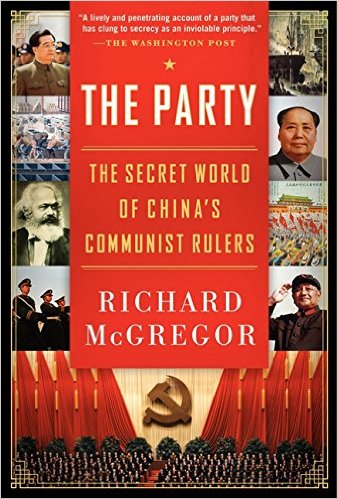

/cdn0.vox-cdn.com/uploads/chorus_asset/file/4187851/superpowers.jpg) Showtime
Showtime
/cdn0.vox-cdn.com/uploads/chorus_asset/file/4187861/YTW_207_1763d_hires1.jpg) FXX
FXX

/cdn0.vox-cdn.com/uploads/chorus_asset/file/4159896/denmark%20map.png) Google Maps
Google Maps
/cdn0.vox-cdn.com/uploads/chorus_asset/file/4160280/Screen%20Shot%202015-10-14%20at%2012.13.54%20PM.png)
/cdn0.vox-cdn.com/uploads/chorus_asset/file/4161120/Screen%20Shot%202015-10-14%20at%202.09.59%20PM.png) Apple.dk
Apple.dk
/cdn0.vox-cdn.com/uploads/chorus_asset/file/4161184/wheretobepoor.png)


/cdn0.vox-cdn.com/uploads/chorus_asset/file/4130340/GettyImages-491452698.jpg)